discografieën

Tutto nel mondo è burla… tutti gabbati…. Falstaff!

“Tutto nel mondo è burla… tutti gabbati!” Or in other words, “Everything in the world is a joke… we are all deceived.” It’s a bit of a tile saying, but old Verdi and his librettist Boito knew very well what they were doing.

In Falstaff, they show a world where everyone cheats everyone else. But that’s the way it is; we just have to accept it. So let’s laugh about it… This is how one of the best operas ever ends: with a smile and a big wink.

HERBERT VON KARAJAN


Recordings of Falstaff are legion on CD as well as DVD. One you absolutely can’t do without is the interpretation from Herbert von Karajan from 1956 (Warner 0190295935092). Under the supervision (direction?) of Walter Legge, the recording immediately became legendary and so it has remained.

Karajan had access not only the absolute best singers, but also a fantastic studio and recording director, the likes of which are no longer found. Titto Gobbi was born to sing Falstaff and a more beautiful Fenton than Luigi Alva simply doesn’t exist. I find the mannerisms of Elisabeth Schwarzkopf not always to my liking, but she is a convincing Alice, while Ford is sung by Rolando Panerai, who completely fits the bill. And then also Fedora Barbieri as Quickly… delicious.

COLIN DAVIS

Colin Davis’ 1991 recording for RCA (now Sony 8869745801-2) came pretty close, but does not quite match Karajan. This is partly down to the Bayerischen Rundfunks orchestra, but also to the recording quality.

Davis’ vocal ensemble is particularly strong, certainly by today’s standards, but apart from Marylin Horne, who can easily match Barbieri, the cast is still a rung lower. Rolando Panerai, with Karajan a Ford out of thousands, does less well as the ‘cosy fat man’, especially when compared to Gobbi.

Fantastic, on the other hand, are the supporting roles: with Piero de Palma (Dr Cajus), Davis brought in one of the best comprimari ever. In the small role of Pistola, we hear none other than Francesco Ellero d’Artegna.

JAMES LEVINE
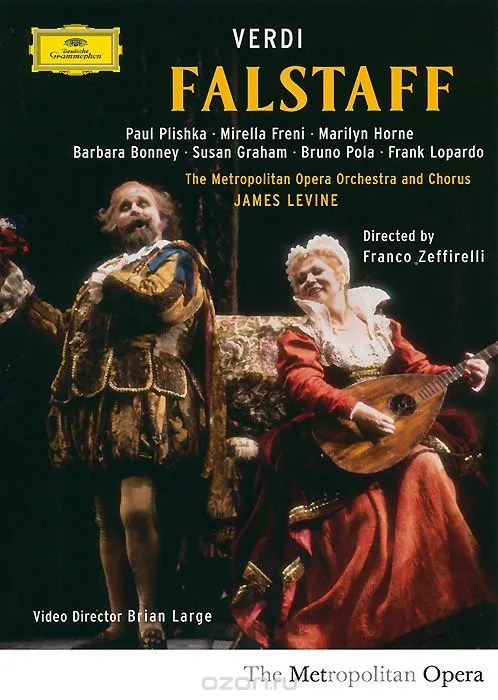
Frank Lopardo, Marylin Horne and Piero de Palma feature not only with Colin Davis, but also in the Zeffirelli production recorded in 1992 at the Metropolitan Opera in New York (DG 0734532). A dazzling performance!

Young Levine steers the music in all directions; it is as if there were not one, but four conductors in front of the orchestra. So much energy makes you gasp.

Paul Plishka is a delightful Falstaff and the rest of the cast just makes you crow for joy: Mirella Freni is Alice, as Meg we hear the very young Susan Graham and Marylin Horne is a Quickly in thousands. Add to that the truly delightful singing young lovers (Barbara Bonney and Frank Lopardo) and don’t forget the two comprimari: the inimitable Di Palma (Dr Cajus) is joined here by another great, Anthony Laciurra (Bardolfo). And whatever you think of Zefirelli: watching his productions is always a treat!

Below finale of the opera:

TULIO SERAFIN

One look at the cast is enough to make an opera lover’s mouth water. The cast is almost identical to von Karajan’s, but now, with added visuals, it is simply not to be dismissed.

Falstaff was Giuseppe Taddei’s star role, with which he achieved the greatest successes all over the world. His powerful, dark baritone, enormous empathy, extraordinary acting talent and great sense of humour made him a fantastic Falstaff, still inimitable and now legendary.

In the 1956 RAI production (VAI 4333), he was surrounded by the very best colleagues in the Italian opera profession. Rosanna Carteri was a beautiful, hot-blooded Alice, Scipio Colombo a virile Ford and Fedora Barbieri an impressive Mrs Quickly. Anna Moffo and Luigi Alva provided the most beautiful lyrical moments, and all this was conducted by none other than Tulio Serafin.

Anna Moffo sings ‘Sul fil d’un soffio etesio’

BERNARD HAITINK
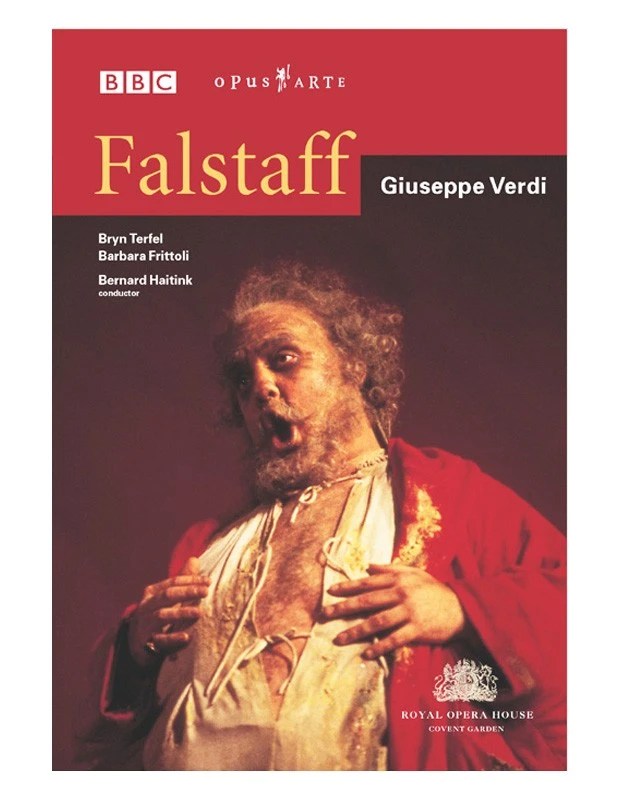
Graham Vick’s production (Opus Arte OA 0812 D) ushered in the revamped Covent Garden in 1999, and neither money nor effort was spared to make it as enjoyable as possible. The costumes are truly dazzling, the scenery witty, and though the whole thing looks a bit like the theatre of laughter (e.g. Falstaff “wears” a yellow-green striped codpiece under his belly), you forget the whole world around you.

Barbara Frittoli shines in the role of Alice Ford and the rest of the cast is also unquestionably good. The lead role is sung by the then 34-year-old (!) Bryn Terfel, who really does everything to convince us that he can portray the perfect Falstaff. Did he succeed? Yes and no. Terfel is (and even then was) undoubtedly one of the best singers and actors of our time. His facial expressions, his movements, everything is perfected to the extreme. And with the help of the grime and costume department, he manages quite well to look like a fat old, goat. But his youthful hubris and eye gaze betray his age and that is a pity

Haitink may not be my first choice, for me he conducts a little too stately, but it all sounds really great.

VLADIMIR JUROWSKI

Old nobility versus nouveau riche, that’s also partly what Falstaff is about. Even before the first bars of ‘Falstaff’ (Opus Arte OA 1021 D), recorded in Glyndebourne in 2009, have sounded, you already know which direction the director is going to take you. A gigantic tapestry hangs, with the necessary cross-stitches yet to be embroidered on it.

Richard Jones places the action in the 1940s, right after the war. There are still soldiers walking around (Fenton is an American GI), scouts and annoying housewives. The Fords and their neighbours are the nouveau riche. Their houses are neat and giant vegetables grow in their gardens – neatly lined up.

Falstaff is fantastically sung by Christopher Purves. He not only impresses with his voice, his whole performance is beyond amazing. Marie-Nicole Lemieux (Mistress Quickly) is also a delight. In her guise as a plump scout leader, she gets plenty of laughs.

The rest of the cast is variable. Adriana Kučerova is a lovely Nannetta and Bülent Bezdüz a sweet Fenton, but Tassis Christoyannis is not macho enough for Ford. If you like English humour (think series like ‘ Dad’s Army’ or ‘Keeping up Appearences’), this Falstaff is definitely for you.

Below Christopher Purves and Marie-Nicole Lemieux:ntastic.sio’

And as a bonus ‘Quando ero paggio’ sung by seven different baritones:
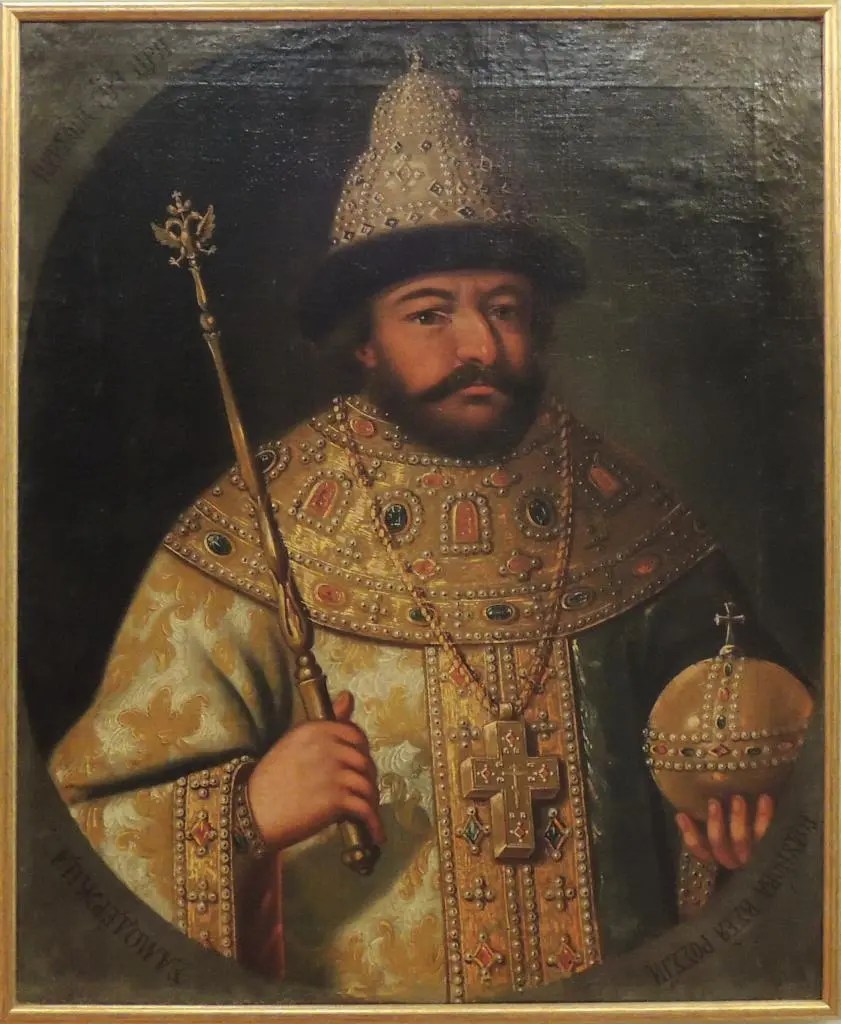


Boris Godunov: attempt to write a discography

I am not going to bore you with a detailed explanation of the various versions of Boris Godunov – two of them by Mussorgsky himself. Enough has already been written about it and if you want to know more, you can find some on the internet. Besides: really getting sidetracked by this doesn’t work, I’m afraid. Hence I judge these few selectively chosen recordings purely on performance (and direction).

ANDREI TARKOVSKY

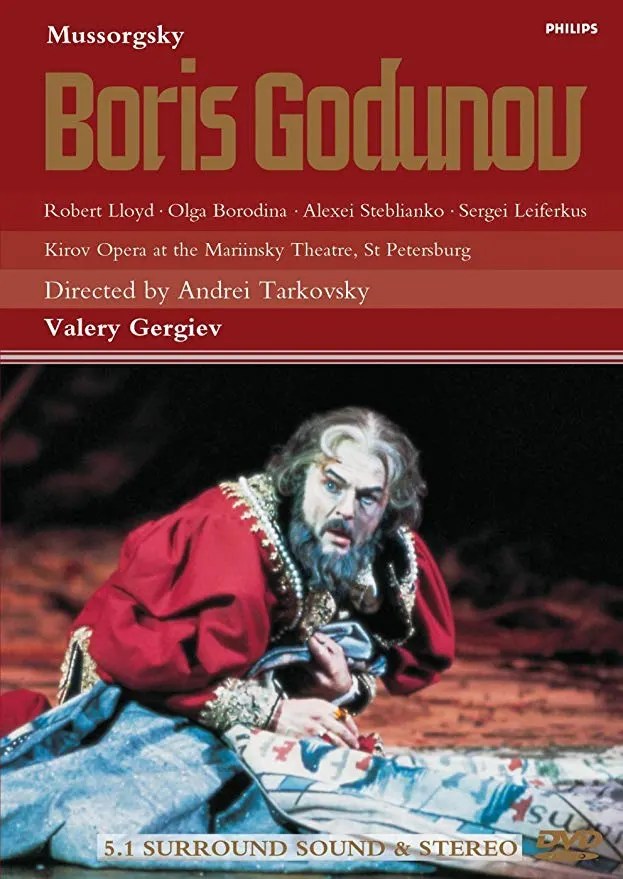
In 1983, Andrei Tarkovsky staged ‘Boris Godunov’ for Covent Garden. It was his first opera direction and also his last. Something very regrettable because his vision of Mussorgsky’s magnum opus is truly breathtaking.

The staging exudes the same style so characteristic of all his films: visionary and poetic. The whole shows itself as a colourful film with lots of Christian symbolism, images in slow motion and an enormous attention to every detail. In 1990, the production was taken on by the Mariinsky theatre and broadcast live on English television, a first at the time.

The lead role was also performed in London by the English bass, Robert Lloyd, and his interpretation is among the most impressive I have ever seen in my life. His voice was still truly great then, both in volume and timbre, and in his acting he was not inferior to the best stage actor. In the process, he managed to hold his own excellently among the otherwise exclusively Russian cast.

About the cast by the way, which apart from Lloyd includes (among others) Olga Borodina, Alexei Steblianko and Sergei Leiferkus. Nothing but praise, by the way. Valery Gergiev has the opera at his fingertips. An absolute must. (Philips 0750899)

WILLY DECKER

Filmed in Barcelona in 2004, Willy Decker’s production had already been presented in Amsterdam in 2001. The direction is heavily centred around the protagonist: for Decker, the drama is psychological rather than historical. The setting betrays Russia of the early 20th century, just before the revolution, and the scenery is very minimalist.

The chairs and tiny houses, Decker’s trademark are obviously present, a giant seat dominates the mise-en-scéne from the start. It makes for some very nice scenes – the ascent to the throne, for instance.

Eric Halfvarson is a bit of a weak Pimen, but the rest of the cast, with Matti Salminen (Boris), Anatoli Kotscherga (Varlaam) and Philip Langridge (Shuisky) leading the way is truly outstanding.

And then there’s Fyodor sung by the unforgettable Brian Asawa, who left us far too soon.

Alex Grigoriev deserves special mention for his superb performance in the role of Yuriodivy. (Arthaus Musik 107 237)

CALIXTO BIEITO

Sometimes I suspect that opera directors imagine themselves to be some kind of modern-day dictator, trying to force their own opinions down our throats. And if we don’t want to swallow it then we are mistaken for stupid.

That the abuse of power is a product of all times is clear; even toddlers know that these days. The news, whether we want it or not, invades our households and there is no shortage of images – on Youtube or otherwise. So I don’t think we need a director to tell us yet again that Putin or Blair (?) is the new Godunov, with the gory images included, otherwise the opera won’t do any more.

If I want to watch Boris Godunov by Mussorgsky, I don’t expect Putin and I don’t expect Pussy Riot. I expect the boyars, the monks, the ‘Old Believers’ and the church bells of St Petersburg. I can make the link to the present myself.

You get the point: Calixto Bieito’s Boris Godunov (Munich 2013) just cannot charm me, and I am putting that mildly here.

I prefer Willy Decker’s production, which was also shown in Amsterdam. It also had better singing.(BelAir BAC102)he role of Yuriodivy. (Arthaus Musik 107 237)

FILM

‘Boris’ was filmed in Russian studios in 1954. It was directed by Vera Stroyeva, a grand lady of Soviet cinema, who captured the opera in the best social-realist (think Eisenstein!) traditions.

It is a mix of all versions with many cuts but it doesn’t matter: you must have seen it at least once. Just for the atmosphere the film exudes, which really brings you frighteningly close to the story.

And it features insanely good singing by the likes of Alexander Pirogov, Georgi Nelepp and Ivan Kozlovsky, the then stars of the Bolshoi. Legendary (VAI 4253).

Boris’ death scene

CDS

Martti Talvela

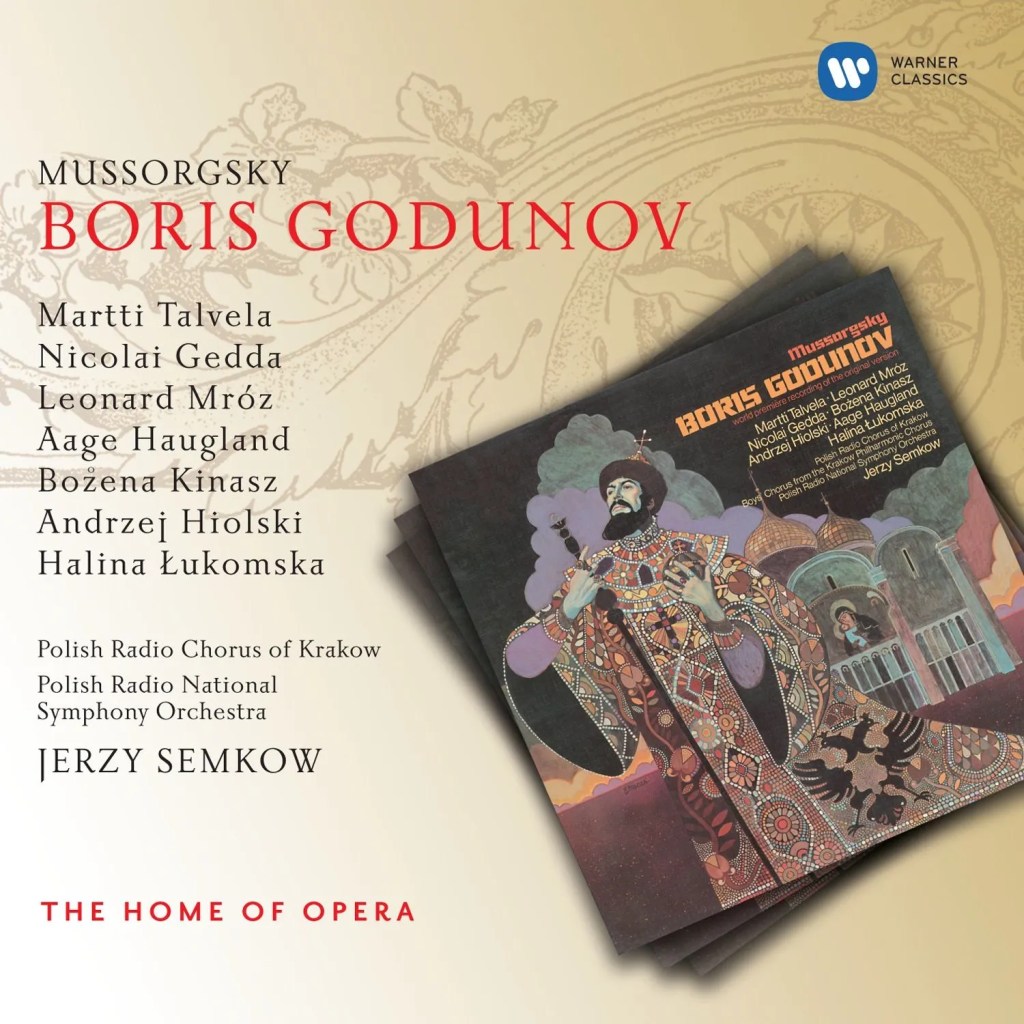
The first ever recording of Mussorgsky’s original score, (the revised version from 1872) was made in 1976. Anyone familiar with Rimsky-Korsakov’s polished arrangement(s) (which at the time was most of us) was in for a shock by the rough-hewn sounds. But once you adjust to the shock, you could not help but give in. Less beautiful, though it may be, it fits the story much better.

The all-Polish cast, except Martti Talvela (Boris), Aage Haugland (Varlaam) en Nicolai Gedda (Grigori/Dimitri) is more than up to the job, but not quite thrilling under the direction of Jerzy Semkow.

Boris Christoff

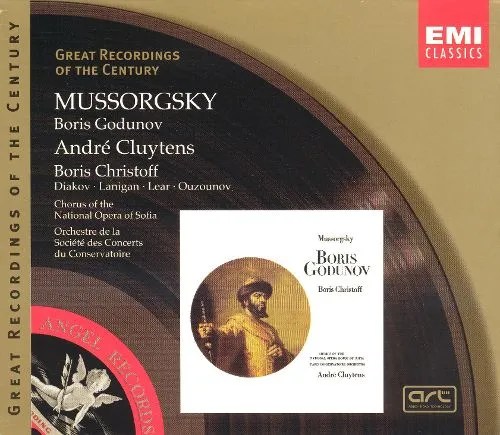
We cannot ignore Boris Christoff, one of the all-time great Borises. He has recorded the role several times, of which the performance under André Cluytens is dearest to me.

Here, apart from Boris, he also sings Pimen and Varlaam, which is a bit confusing at times, but gives him the opportunity to showcase different possibilities of his fantastic bass. The version is of course by Rimsky-Korsakov, and the 1962 recording still sounds fine. (once EMI 5678772)

Speaking of Boris Christoff, not long ago the budget label Andromeda reissued a 3-CD box set of all the songs of Mussorgsky he sang. The recordings, with both piano and orchestral accompaniment were made in 1951, 1955, 1957 respectively. Unfortunately no lyrics, nor any liner notes. (ANDRCD 5098)

Bonus: George London as Boris:

Isn’t it time to talk about Lady Macbeth of Mtsensk?

Lady Macbeth of Mtsensk illustration by B.M. Kustodiyev

It was supposed to be a four-part opera, an operatic tetralogy dedicated to the position of women in Russia in different eras.

A Soviet Russian Ring des Nibelungen, of which part one, `Lady Macbeth of Mtsensk’ would be a kind of Rheingold. But alas, it was not to be. Though initially no one could have suspected any impending doom.

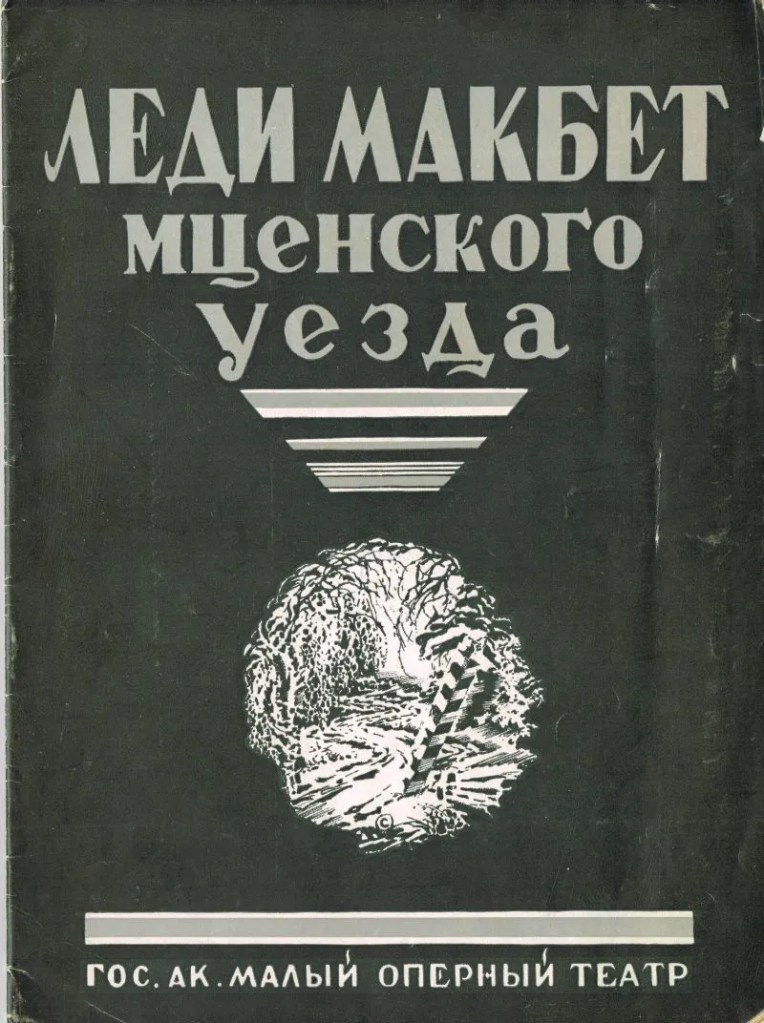
Premiere poster 1934 QED Art and press from the USSR and Central Europe


The premiere on 22 January 1934 at the Maly Theatre in Leningrad was a tremendous success, and for two years the opera was performed several times a week both in Leningrad and Moscow. The opera was also very succesful abroad: after Cleveland the New York City Opera followed , and then Stockholm, Prague and Zurich.

Until Stalin attended a performance in January 1936 and left early. The next day, an article appeared in Pravda under the headline ‘Chaos instead of music’.

It was signed by a certain Zaslavsky, but according to Shostakovich, it was written by Stalin himself. The opera was immediately dropped from the programmes and the composer was labelled an ‘enemy of the people’.


After Stalin’s death, Shostakovich revised his opera, and under a new title, Katerina Ismailova, it was first performed in Moscow in 1963. Prague and Zurich.

Shostakovich loved his heroine. To Solomon Volkov, he confessed: “Although Yekaterina Lvovna is a murderess, she is not yet lost as a human being. Her conscience torments her, she keeps thinking about the people she killed. I have sympathy for her. […] I wanted to show a woman who morally stands much higher than all the people around her. Because around Yekaterina there are only villains. She lives like in a prison and this is how she has been suffering for five years.”

“Her life is sad and uninteresting. But then comes love, a great passion. And it turns out that this passion is worth a crime to her. After all, it doesn’t matter, since otherwise life makes has no meaning to her.” (From Testimony. Memoirs of Dimitri Shostakovich.)

The opera, about the tragic fate of Katerina, who after marrying a rich merchant ends up in a kind of prison, from which she believes she can escape through her passionate love for Sergei and then ends her life in an icy river in Siberia, is a mix of tragedy and satire, seriousness and humour, lyrical melodies and – yes, indeed – chaos.

With a dizzying pace, the atmosphere changes from touching melancholy (Katja’s lament ‘Zherebyonok k kob’lke toropotsa’) to sexually charged (seduction scene), to end in actually pornographic sounds – Shostakovich has succeeded in describing ‘the deed’ through music in detail.


The premiere on 22 January 1934 at the Maly Theatre in Leningrad was a tremendous success, and for two years the opera was performed several times a week both in Leningrad and Moscow. The opera was also very succesful abroad: after Cleveland the New York City Opera followed , and then Stockholm, Prague and Zurich.

Until Stalin attended a performance in January 1936 and left early. The next day, an article appeared in Pravda under the headline ‘Chaos instead of music’.

It was signed by a certain Zaslavsky, but according to Shostakovich, it was written by Stalin himself. The opera was immediately dropped from the programmes and the composer was labelled an ‘enemy of the people’.
After Stalin’s death, Shostakovich revised his opera, and under a new title, Katerina Ismailova, it was first performed in Moscow in 1963. Prague and Zurich.

Shostakovich loved his heroine. To Solomon Volkov, he confessed: “Although Yekaterina Lvovna is a murderess, she is not yet lost as a human being. Her conscience torments her, she keeps thinking about the people she killed. I have sympathy for her. […] I wanted to show a woman who morally stands much higher than all the people around her. Because around Yekaterina there are only villains. She lives like in a prison and this is how she has been suffering for five years.”

“Her life is sad and uninteresting. But then comes love, a great passion. And it turns out that this passion is worth a crime to her. After all, it doesn’t matter, since otherwise life makes has no meaning to her.” (From Testimony. Memoirs of Dimitri Shostakovich.)

The opera, about the tragic fate of Katerina, who after marrying a rich merchant ends up in a kind of prison, from which she believes she can escape through her passionate love for Sergei and then ends her life in an icy river in Siberia, is a mix of tragedy and satire, seriousness and humour, lyrical melodies and – yes, indeed – chaos.

With a dizzying pace, the atmosphere changes from touching melancholy (Katja’s lament ‘Zherebyonok k kob’lke toropotsa’) to sexually charged (seduction scene), to end in actually pornographic sounds – Shostakovich has succeeded in describing ‘the deed’ through music in detail.


GALINA VISHNEVSKAYA, 1978


Shortly after the composer’s death, his friend, the cellist and conductor Mstislav Rostropovich, found the original score of Lady Macbeth. In 1978, the opera was recorded in full for the first time (Warner 0825646483204). Rostropovich conducted and the leading roles were performed by the best singers from the Russian tradition.
Galina Vishnevskaya is a phenomenal Katerina. In her interpretation, you can hear her character’s full range of emotions and character developments. She is bored, in love and passionate, and her despair at the end is the very deepest.

Nicolai Gedda portrays a very attractive and masculine Sergei, and Dimiter Petkov and Werner Krenn are matched as father and son Ismailov. Robert Tear is (as always, by the way) extremely convincing in his character role as the shabby labourer and only Birgit Finnila (Sonyetka) sounds a little too old-fashioned for me.

Rostropovich conducts with an eye for all the details and emphasises the contrasts. All in all: a better CD recording is unthinkable. Not that you have a choice: the only real competitor on CD, a DG recording (4375112) with Maria Ewing and Sergei Larin conducted by Myung Whun Chung, has now been dropped.


NADINE SECUNDE, Barcelona, 2002


EMI (5997309) once released a production from Barcelona (May 2002) on DVD, which may be called convincing to say the very least. It was directed by a former actor from Norway, Stein Winge, who made a very moving, mainly personal drama of it.

The setting suits the opera’s period of origin. The stage is dominated by a giant bed, which is prominently displayed even during the first bars of the music. Above it, a window with clouds, too high to see through, and too high to escape from. Good find.

Katerina’s arioso:


The staging is quite realistic without being vulgar. The lovemaking scene is particularly beautifully portrayed. Katerina ties the endless sheets to the legs of the bed, creating a kind of sea. She and Sergei disappear under it, and the commentary is left to the music (and our own imaginations), which is very evocative.

Nadine Secunde is a fine Katerina, very believable and extremely convincing both vocally and scenically. Christoper Ventris seems born for the role of Sergei: extremely attractive and very macho, he lives up to his reputation that no woman can resist him.

The rest of the cast is also phenomenal. Most impressive to me is the veteran Yevgeny Nesterenko in the small role of the old forced labourer.

And yet I still have a side note: the end of the opera. I won’t give it away to you, but it’s different from the libretto (for the umpteenth time already). Where does the new fashion of changing an opera’s ending come from anyway?


EVA-MARIA WESTBROEK, Amsterdam, 2006


In October 2006, Eva-Maria Westbroek made her widely acclaimed debut at London’s Royal Opera House as Katerina Izmailova. It was even spoken of as ‘one of the most important debuts at Covent Garden ever’

.
But we, the Dutch opera lovers, already knew it, because at the Holland Festival in June 2006, Westbroek made her debut at the Netherlands Opera in the same role, in a performance that received nothing but overenthusiastic reactions.


The production also saw Martin Kušej, a not uncontroversial Austrian opera director, make his debut in our country. In his concept, sexuality and power are closely linked and the opera is a terrible abyss, which can only be described with words like orgasm and manslaughter.

Katerina lives in a glass cage with a hundred pairs of shoes, guarded by dogs and surrounded by mud. Her longing for love and security is never satisfied, because what Sergei has in store for her is pure sex, devoid of any affection.


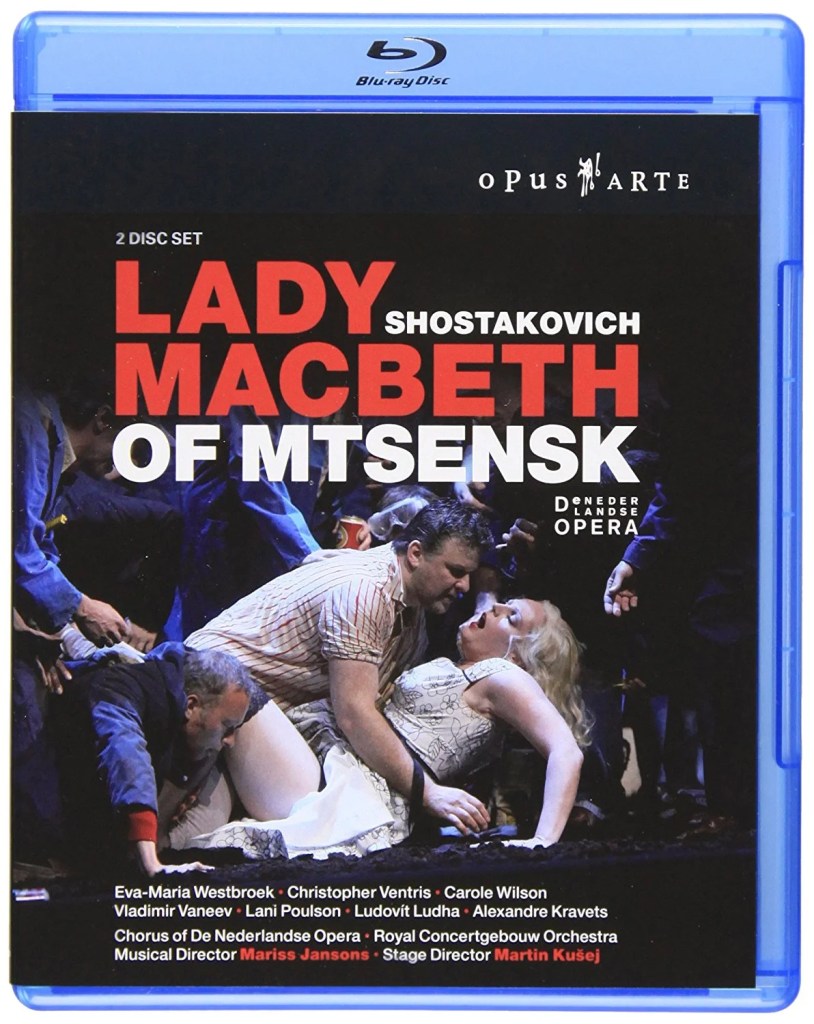
The musical mix of tragedy and satire, seriousness and humour, lyrical melodies and hard porn was perfectly portrayed scenically by KuÅ¡ej, which was only enhanced by the phenomenally playing Concertgebouw Orchestra conducted by Mariss Jansons. As a bonus, you get an extremely interesting ‘the making of’ documentary (Opus Arte OA 0965).


GLORIA LANE, Rome, 1976


To my knowledge, only one recording exists of Katerina Ismailova’s 1963 adaptation of Lady Macbeth, on the budget label Opera D’Oro (OPD 1388). It is an RAI recording of a broadcast on 29 May 1976 in Rome.

The differences from the original are noticeable right from the first bars: it is milder, without the biting irony, with more melancholy and sadness. The biggest differences are in the intermezzi. The first, for instance, has been replaced by completely different music. Even in the big seduction scene, the bulk of the music has been killed off and almost all the high notes have disappeared from Katerina’s music.

The performance, conducted by Yuri Ahronovich, is most certainly adequate, although I have trouble with William Cochran’s Sergei. It may be just me, but I experience his tenor as pinched rather than sexy. In the lead role, another one of those forgotten greats of yesteryear: Gloria Lane. Her Katerina is very dramatic and full of passion.he making of’ documentary (Opus Arte OA 0965).

Finally, the very interesting documentary Shostakovich against Stalin by Larry Weinstein was once released on Philips (Philips 0743117) with very much historical footage and even more music. The docu can also be found in its entirety on You Tube


Il Trovatore. Little discography


Caterina Mancini, 1951


Have you ever heard of Catarina Mancini (10 November 1924 – 21 January 2011)? This soprano, born at Genzano di Roma had the true ’voce Verdiana’: she combined a beautiful height and pure coloratura with a drama that even La Divina might have envied her for.

Never heard of her? Then it’s time to make up for the damage, because I promise you a voice out of thousands. And this is exactly how her Leonora sounds in the recording from 1951 Rome (Warner Fonit 2564661890). Extraordinary.

Her Manrico was sung by the very heroic sounding (then already nearly 60 years old) Giacomo Lauri-Volpi and a very charismatic Carlo Tagliabue sang the role of di Luna. Miriam Pirazzini (Azucena) completed the cast and the whole was very impressively conducted  by Fernando Previtali.

Here are Mancini, Lauri-Volpi and Tagliabue in the trio of the first act:

Highlights on Spotify:

Price and Corelli, 1961


With their 1961 performance recorded live for Sony, both Leontyne Price and Franco Corelli made their debuts at the Metropolitan Opera. For me, Corelli, alongside Del Monaco and Domingo, is the best Manrico ever. Very masculine and very sexy, you can hardly resist that as a woman.

Mario Sereni and Irene Dalis are more than adequate as Luna and Azucena respectively, and it is a great joy to discover none other than Teresa Stratas in the small role of Inez. And Charles Anthony as Ruiz should not be forgotten

Price and Domingo, 1970


The recording made 19 years later for RCA shows a more mature Price, but her sound is still that of an excited teenager, with just about the most perfect Verdian ‘morbidezza’. Her ‘D’amor sull’ali rosee’ seems like a little prayer, weeping so beautifully.

This Trovatore was the very first opera that Plácido Domingo, then 28(!), recorded in the studio. Fiorenza Cossotto shines as Azucena, but what really makes the recording indispensable, at least for me, is one of the most delightful Lunas ever: Sherrill Milnes (88883729262).

Below Price, Domingo and Milnes in ‘E deggio e posso crederlo’:

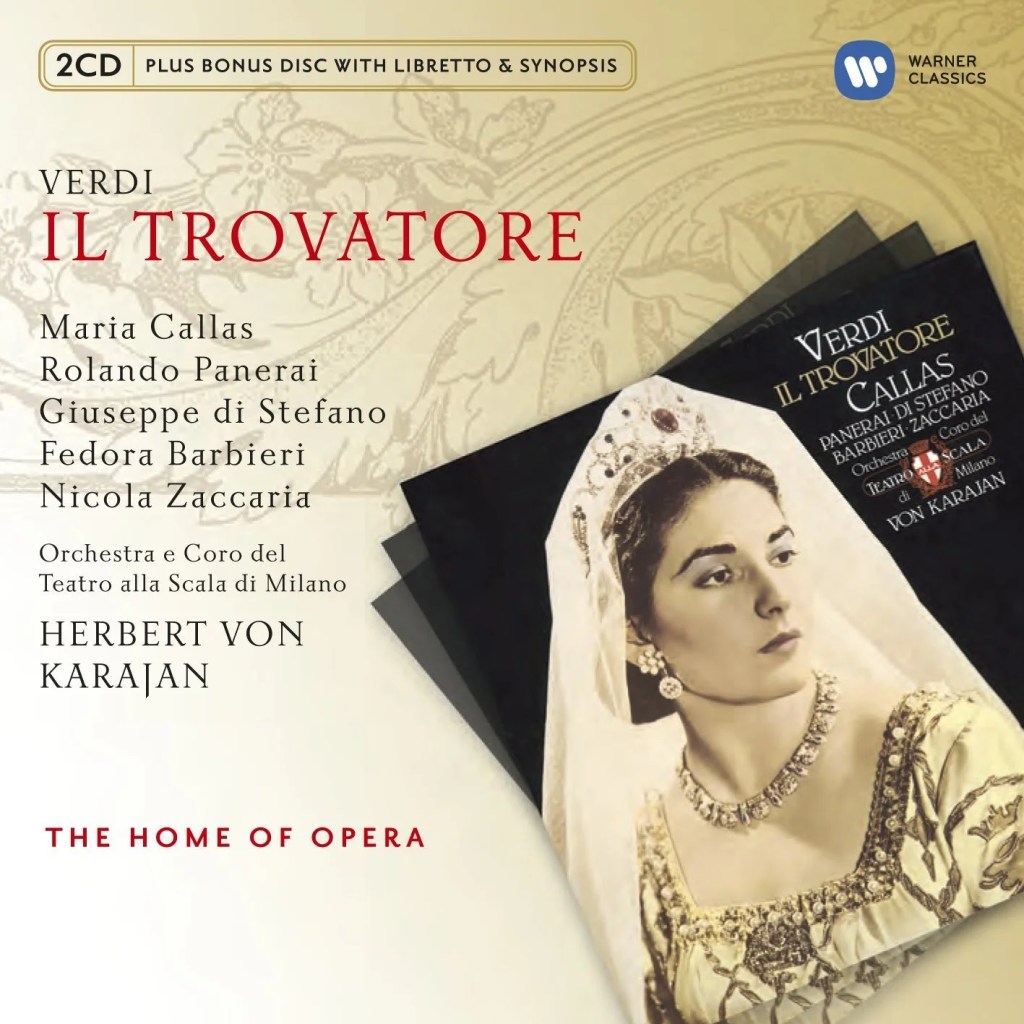
Maria Callas, 1956


A problem in the 1956 recording conducted by Herbert von Karajan very excitingly is Giuseppe di Stefano. Beautiful though he is, for Manrico he lacks power.

Fedora Barbieri comes into her own even better here than on the Myto recording, which may be partly due to the much better sound quality. Rolando Panerai is a solid Luna, but his “Il balen” neither makes me hot nor cold, especially with Bastianini and Milnes to my ears.

And Maria Callas? Callas remains Callas. Overdramatic. Her Leonora is anything but an adolescent in love. Her ‘D’amor sull’ali rosee’ is more than beautiful, perfect almost, but it leaves me utterly cold (Warner 5099964077321).

Below Callas in D’amor sull’ali rosee’:

Leyla Gencer, 1957


I don’t think I need introduce you to Leyla Gencer. The Turkish diva enjoys a cult following comparable only to that of Olivero and Callas. Her supple, round and clear voice – with pianissimi with which she could rival Montserrat Caballé – made her exceptionally suited to Verdi operas. Her Leonora is simply perfect: you can’t get any more beautiful than that.

Nor do I think there has ever been a better, more beautiful and impressive Luna than Ettore Bastianini. Del Monaco is otherwise a very macho Manrico. His radiant height in ‘Di quella pira’ compensates for his sometimes lacklustre interpretation.

Fedora Barbieri impresses as Azucena and Plinio Cabassi is a Ferrando to kiss. The recording was made in Milan in 1957 (Myto 00127).


Gré Brouwenstijn, 1953


It is almost unbelievable, but there were times when even an opera like Il Trovatore could be cast with only Dutch singers. You can also hear them all in the performance recorded live by Osteria (OS-1001) at the Amsterdam Schouwburg in 1953.

Annie Delorie’s Azucena disappoints me a little, but Gerard Holthaus, unknown to me (is there anyone who can tell me more about him?), is a surprisingly beautiful Luna.

Gré Brouwenstijn is definitely fantastic as Leonora. And yet… her ‘Tacea la notte placida’ doesn’t really penetrate my soul. Mario Cordone was unfortunately not among the very best conductors in the world, which is a pity: sometimes I get the feeling that he is a hindrance to the singers.


Cristina Deutekom, 1976


Give me Cristina Deutekom! In the 1976 recording (Gala GL 100.536), she manages to convince me completely and penetrate deep into my heart. Unlike Callas who remains just Callas in everything she sings, she is Leonora. With her feathery coloraturas, she sounds exactly how I imagine a Leonora to be: a young girl in love with a strong tendency to exaggerate. The latter in the best sense of the word.

Jan Derksen is also a Luna to be reckoned with and secretly I think he may be even better than Bastianini and Milnes. His “Il bales” is among the best versions of the aria I had ever heard.

Carolyne James is an okay Azucena, but the reason the recording is not my absolute number one is because of the very dickish (sorry!) sounding Juan Lloveras (Manrico).

Below, Cristina Deutekom and Lloveras in ‘Miserere’:

Raina Kabaivanska 1978


Il trovatore was one of Von Karajan’s favourite operas. In 1962, he directed a series of performances in Salzburg, which were taken over and televised in Vienna in 1978. It is a very old-fashioned and static performance, with realistic sets and costumes.

Terribly underrated outside Italy, Raina Kabaivanska portrays a flesh-and-blood Leonora: her voice is dark, with an old-fashioned vibrato and clearly lined phrasing.

Domingo was a last-minute substitute for the angry runaway Bonisolli. For his ravishing ‘Ah si, ben mio’, sung with radiant top notes, he was rewarded by the audience with a minute-long ovation.

Cossotto’s Azucena has since become legendary: like no other singer, she left a mark on that role (Arthouse Music 107117)

Below Domingo, Kabaivanska, Cappuccilli and Cossotto in ‘Prima che d’ altri vivere’:

Di quella pira


For those who cannot get enough of ‘Di quella pira’: Bongiovanni (GB 1051-2) has released a CD with no fewer than 34 performances of the tenor hit, recorded between 1903 (Julian Biel) and 1956 (Mario Filipeschi).
Lauri-Volpi, here in a recording from 1923 (!), displays a radiant and long-held high c. However, he is surpassed by Aureliano Pertile: what a sound!

Helge Rosvaenge is disappointingly dull, but Richard Tauber’s 1926 recording (in German) is a delightful curio (yes, he can do it!).

Jan Kiepura can’t get enough of trills and welds them into everything, but what a ringing sound he has! Even Gigli ventures into it: something he had better leave out. The best of them all I think is Jussi Björling from 1939. Please let me know who your favourite was?


Gigliola Frazzoni


For dessert, I give you ‘Tacea la notte placida’, sung by Gigliola Frazzoni, one of Minnie’s best (La fanciulla del West). It was recorded in Amsterdam, on 16 October 1954. Marijke van der Lugt sings Ines and the Amsterdam Broadcating Orchestra (?) is conducted by Arture BasileDanny

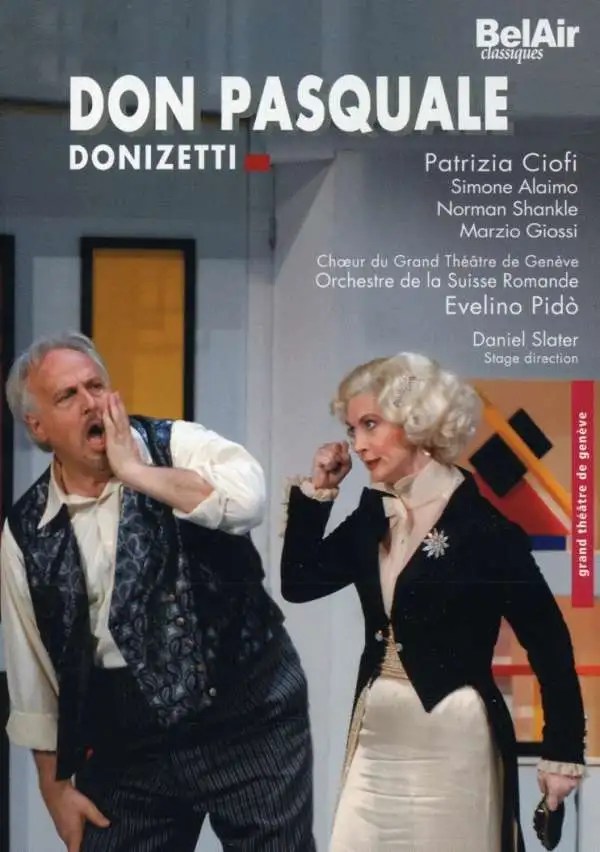
Two Don Pasquales that no one should miss

An unmissable Don Pasquale from La Scala

Almost immediately, within the first bars of the overture, I spring to my feet: this will be a delight! Muti starts firmly and immediately afterwards the mood changes into an unparalleled lyricism. His tempi are generally on the high side, but nowhere do they degenerate into panting.

Stefano Vizioli’s direction is a textbook example of what an opera should look like. His conventional, 1994 staging is truly sparkling, exciting, innovative and inspiring. Comical and sentimental at the same time and with great attention to detail.

The costumes are dazzlingly beautiful and correspond to the characters of all the characters. The emergence of the good-for-nothing Ernesto (phenomenally played by Gregory Kunde) is truly precious: in slippers and a silk dressing gown, he lies down on the sofa, sipping his espresso, waiting for the luck to come by itself or with the help of Malatesta (Lucio Gallo at his best).

Ferruccio Furlanetto is a Don Pasquale in a thousand and Nuccia Focile a delightful Norina. Everyone sings and acts at an all-time high and the orchestra could charm the stars from heaven.

No sooner has it happened to me that I couldn’t find a minus point anywhere: for me it is one of the best opera’s on DVD I have ever seen, don’t miss it!

Don Pasquale from Geneva: a must-see not just for painting lovers

Admittedly, the staging sometimes seems too contrived, but isn’t that how it usually goes, with concepts? Surrender to it, I would say, and your evening can’t go wrong, because the production is just incredibly fun (do keep watching until the end!)

Daniel Slater, aided by designer Francis O’Connor moves the action to 1920s Paris of ‘Oh la la!’, cafes, street painters, the avant-garde and psychoanalysis. Images of Picasso and Magritte are liberally sprinkled and the third act is all Mondrian. Wonderful to watch and you can immediately test your art knowledge.

Simone Alaimo is a fantastic don Pasquale. He sings and acts like hell, delightful! Together with Marzio Grossi (Doctor Malatesta), he provides many a hilarious moment.

Only in Patrizia Ciofi (Norina) do they have to acknowledge their superiority, but then she is the uncrowned queen of (dramatic) bel canto and dominates the stage from her first appearance. She portrays a woman of the world, whom it is better not to mock. Ernesto (a nice Norman Shankle) might also find that out painfully.

Aida and Plácido Domingo


Radames was among Domingo’s favourite roles. No wonder. Here he could really ‘show it all’, because the hero is very complex. He is a ‘macho with a lot of muscles’ and a vulnerable boy at the same time, and he is torn between duty and passion. Unfortunately, the two are not compatible.


To sing Radames well you need not only a cannon of a voice but also an intellectual ability. And he has both.


He made his debut with Aida in 1968 in Hamburg and he has since sung the opera thousands of times. There are many recordings on the market, both studio and live. I would like to dwell on a recording that will not evoke an ‘aha’ moment for most of you – also because at first glance the cast is not idiomatically perfect.

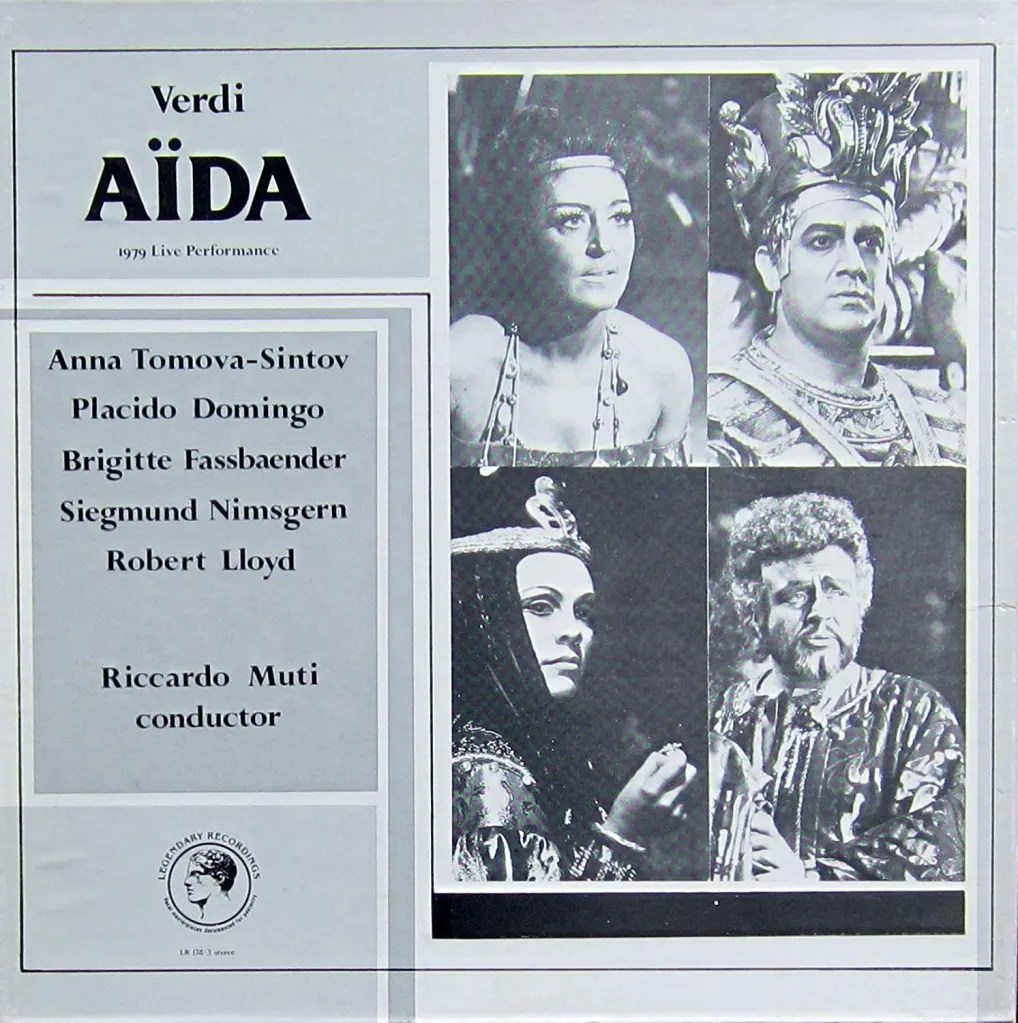
The fact that Anna Tomowa-Sintow was one of Karajan’s favourite singers had its advantages and disadvantages. She was a welcome guest in Salzburg and her name appears on many recordings conducted by the maestro. But it also meant that she was primarily rated as a Mozart and Strauss singer, while she had so much more to offer. Her Desdemona and Amelia were legendary and after her Munich Aida, Leonie Rysanek praised her performance for its pure beauty.

Fassbaender is really surprising and particularly convincing as Amneris. Just listen to what she does with the single word ‘pace’ at the end of the opera. The opera was recorded by Bayeriche Rundfunk on 22 March 1979 and released on Orfeo (C583 022).


Also noteworthy is the recording from Munich 1972, with a now almost forgotten Verdi singer, Martina Arroyo. As Amneris, we hear Fiorenza Cossotto and Cappuccilli and Ghiaurov complete the excellent cast conducted by Claudio Abbado.


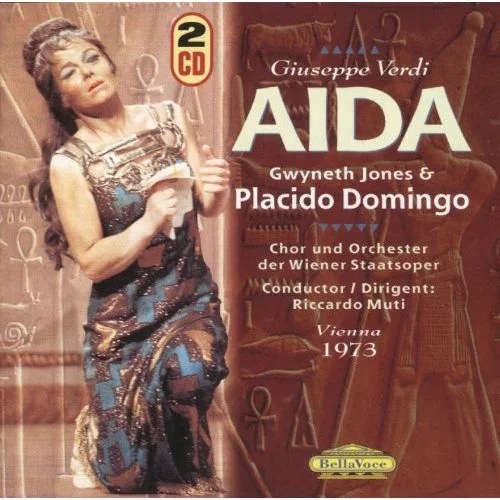
The recording from Vienna 1973 (Bela Voce BLV 107.209), under Riccardo Muti, is also of particular interest. In the leading role we meet Gwyneth Jones and Amneris is sung by an exceptional mezzo: Viorica Cortez.

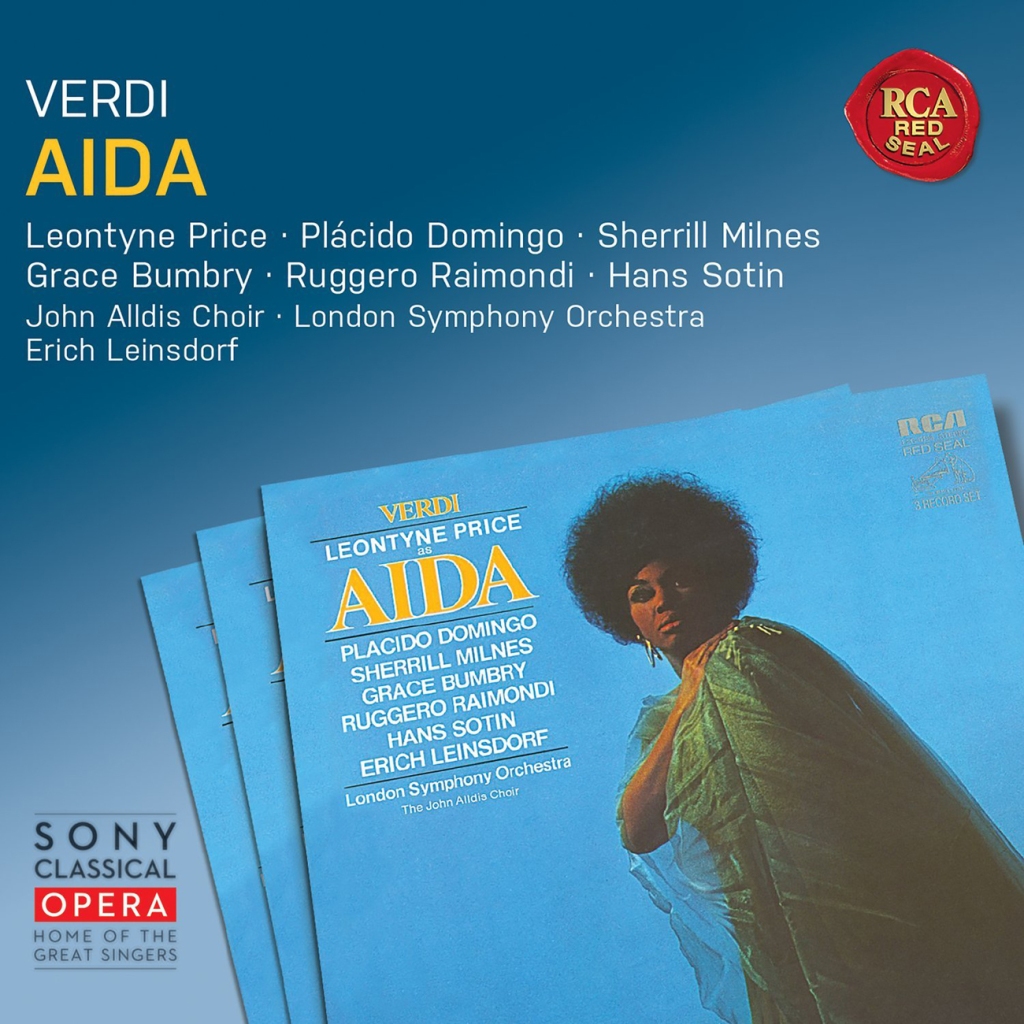
Of Domingo’s studio recordings the 1970 RCA release (probably from the catalogue), is probably the best. How could it be otherwise, when you know that the conductor is Erich Leinsdorf and the other roles are sung by Leontyne Price, Sherrill Milnes, Grace Bumbry and Ruggero Raimondi. The whole thing almost pops out of your speakers.

If you want to have the future: close the door behind your past. Korngold’s Die Tote Stadt in a few recordings

“Forgetting forms a part of all actions,” Nietsche wrote in one of his pamphlets. “To (over)live, one must sometimes destroy one’s past.” Korngold should know, because with those very words you can sum up the real themes of his most famous opera, Die Tote Stadt.

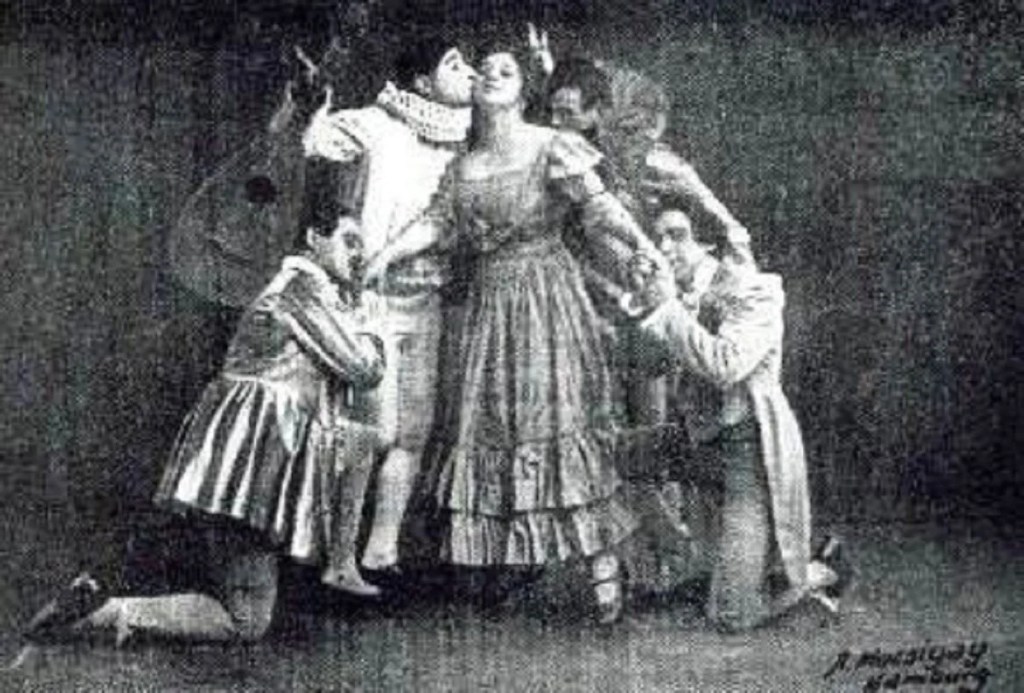
“A scene from the original 1920 Hamburg production of Die tote Stadt. From left to right: Walter Diehl (Graf Albert); Josef Degler (Fritz) Anny Münchow (Marietta); Felix Rodemund (Gaston); and Paul Schwartz (Victorin).”

Die Tote Stadt had its world premiere simultaneously in Cologne (directed by Otto Klemperer) and Hamburg on 4 December 1920, after which the whole world followed. Before the war, it was the most played of all contemporary operas.

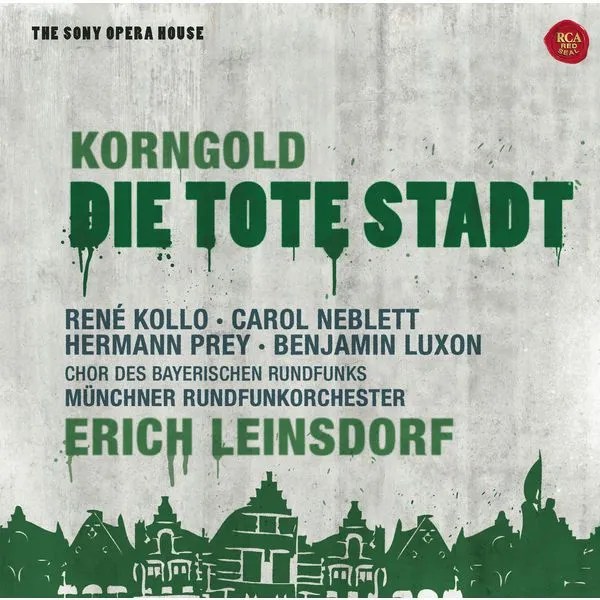
RENÉ KOLLO (once RCA, now Sony)

“After 1938, Die Tote Stadt was no longer performed. Only in the 1970s did a cautious comeback begin. The first studio recording of the opera dates from that time (1975).

Unfortunately, the text booklet (which is otherwise well cared for with the well reproduced synopsis and the complete libretto in two languages) does not tell the ‘why’ of that release. I would have liked to know who exactly conceived the idea of recording Die Tote Stadt, all the more so since the work was still considered inferior at the time.

Even Leinsdorf never concealed the fact that he did hold the work in high esteem. And yet he conducts it as if it were a masterpiece. Perhaps he gradually came to believe in it? He gives the opera the grandeur of a monument and the lustre of gold. Particularly exciting and energetic, he leads the brilliantly playing Munich Radio Orchestra through the score. At the end of the first act, when Marie’s portrait comes to life, you imagine yourself in the middle of the dream scene from Hitchckock’s ‘Spellbound’, and even without the image the tension is up for grabs.

There is also excellent singing, although I have a bit of trouble with Kollo in his demanding role of Paul. During the recording he shuttled between Munich and Bayreuth, where he was singing Parsifal at the time, so his voice sounds a bit tired.

Moreover, I prefer a more lyrical tenor in that role, but one with enough power to rise above the orchestra. Fritz Wunderlich could have been ideal, but he had been dead for almost a decade by then, and no one had thought of Gösta Winbergh at the time.

Carol Neblett is a fantastic Marie/Marietta, her creamy soprano possesses many colours and is well-stabilised in height. Benjamin Luxon portrays a warm and fatherly Frank and Herman Prey (Fritz) brings paradise closer with his sweetly sung Tanzlied.

Below, Herman Prey sings “Mein Sehnen, mein Wähnen”

The small role of Brigitte is also phenomenally sung by Rose Wagemann, perhaps the best Brigitte I have heard so far.

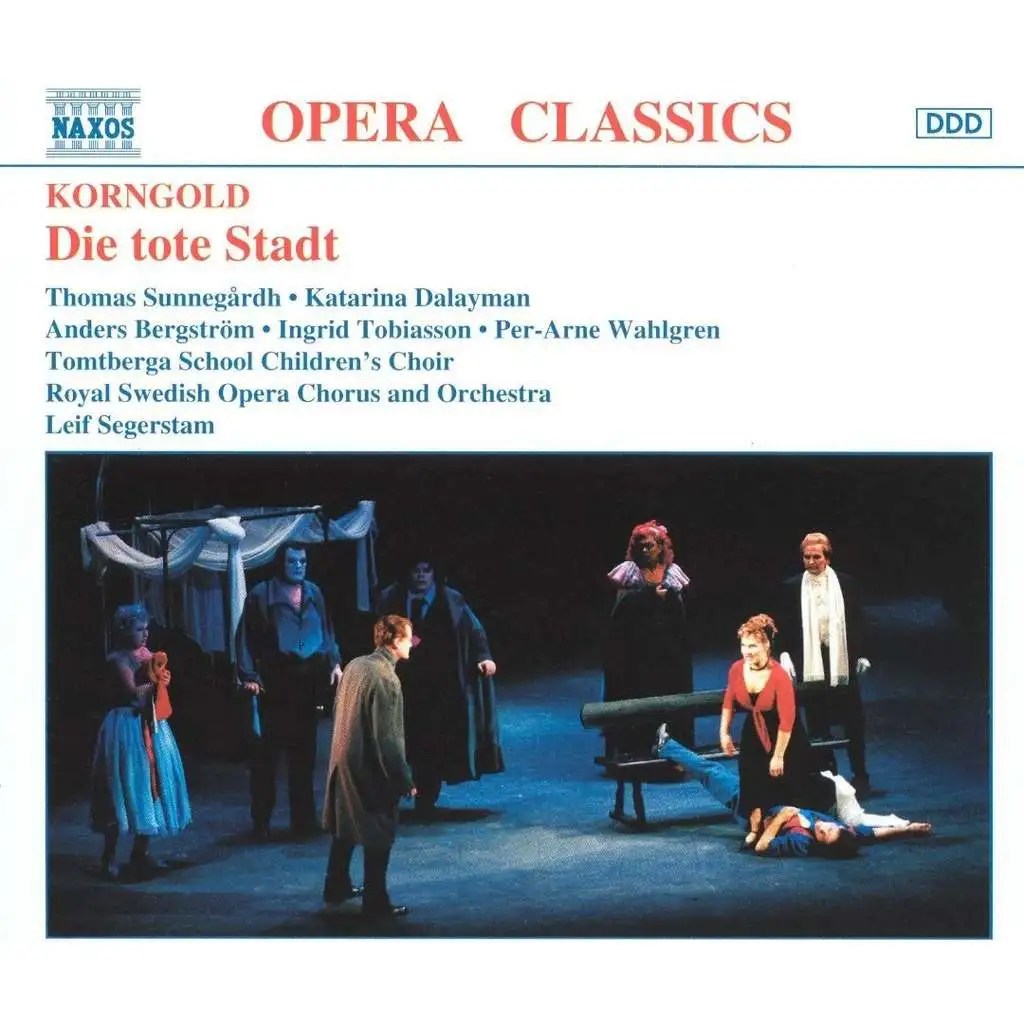
THOMAS SUNNEGÅRDH (Naxos 8660060-1)

In 1996, Die Tote Stadt was put on the repertoire at the Royal Swedish Opera House in Stockholm. Two of the performances were recorded live by Naxos and released on CD. The result is definitely not bad, one feels the excitement of the theatre which in fact is always a plus. The stage noise is audible, it does not bother me, quite the contrary. Leif Segerstam conducts calmly and it is due to a few cuts that the whole thing is almost 15 minutes shorter with him than with Leinsdorf.

Paul is sung by Thomas Sunnegårdh, a Wagner tenor who impresses mainly by his volume: occasionally he degenerates into sprechgesang and the lyricism is nowhere to be seen. Superbly, on the other hand, Katarina Dalayman as Marie/Mariette and Anders Bergström (Frank) and Per-Arne Wahlgren (Fritz) also portray their roles convincingly.

TORSTEN KERL

DVD

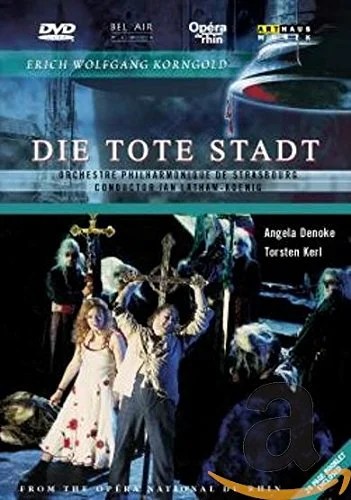
Opéra National du Rhin in Strasbourg staged Die Tote Stadt in April 2001. The highly controversial production by Inga Levant was released on DVD by Arthaus Musik (100 342).

If you thought the story of Die Tote Stadt is set in Bruges in the late nineteenth century, you are wrong. True, Korngold based his masterpiece on Rodenbach’s ‘Bruges-la-morte’ and that medieval city, with its fog and symbolism, put its stamp on both the libretto and the music, but Inga Levant knows better. So we end up in Hollywood where anything is possible and Marietta resembles not only Marie but also Marylin Monroe.

The whole thing is loaded with quotes from Fellini’s films, but fusion is in and anything goes. So I resignedly accept that ‘Mein Sehnen, mein Wänen’ is not sung by Pierrot but by the barman – played brilliantly and with a sufficient dose of schmalz by Stephan Genz

But if the libretto is violated, my patience and tolerance end. So I don’t accept Paul’s suicide because not only does he commit suicide, but also the entire opera.

Torsten Kerl (Paul) and Angela Denoke (Marie/Mariette) sing well, but the latter convinces mainly through her overwhelming stage presence and acting ability

CD Orfeo C 634 042

In the summer of 2003, this opera was performed at the Salzburg Festival. It was directed by Willy Decker and the leading roles were sung by Torsten Kerl, Angela Denoke (they seemed to have a patent on it) and Bo Skovhus. The performances were received with enormous enthusiasm by both the audience and the press, and the entire cast was rewarded with a standing ovation.

The 18 August performance was recorded live by ORF and released on CD. Why not DVD? The lack of images misses an important aspect of the performance, all the more so as the director had the roles of Frank and Fritz performed by the same singer which may have worked optically in the directorial concept, but is particularly confusing without images.

Torsten Kerl is clearly at his vocal limits, which manifests itself mainly in his pinched height. But he also has many beautiful and lyrical moments, something that cannot be said of Angela Denoke: without visuals, nothing remains of her.

The opera can also be heard on You Tube:

But I can’t get excited about Bo Skovhus either, something that is particularly hard for me: he was once one of my beloved baritones. He sings matte, without soul and his reading of “Mein Sehnen, mein Wänen” is downright pale. Too bad, because that he can do better he already showed at the beginning of his career on one of his first CD recordings:

Maria Jeritza who created the role of Marie/Mariette:

Mini discography of Leoncavallo’s Pagliacci: to sob or not to sob?

Paljas

©Bibliotheque de l’Opera Garnier

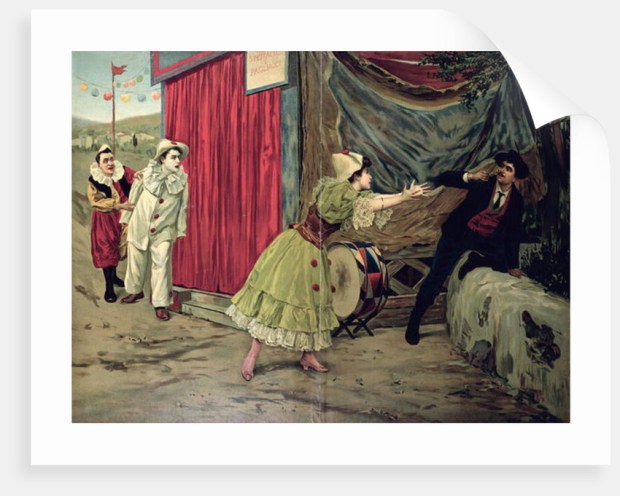
Pagliacci by Ruggiero Leoncavallo is almost always paired with Mascagni’s Cavalleria Rusticana, and has been for over a hundred years. Not that it was ever intended to be, but it makes sense. Both (short) operas were written by two very gifted young composers who were at the very beginning of their careers. Both works were created at the same time- but independently of each other – and both are set in the scorching heat: Pagliacci in Calabria and Cavalleria in Sicily.  In both regions love is unconditional and adultery is punishable by death.
Even in the studios, the operas were often recorded together and presented as duo packages, many times with the same singers, which did not always turn out well.

CD’s

RENATO CELLINI


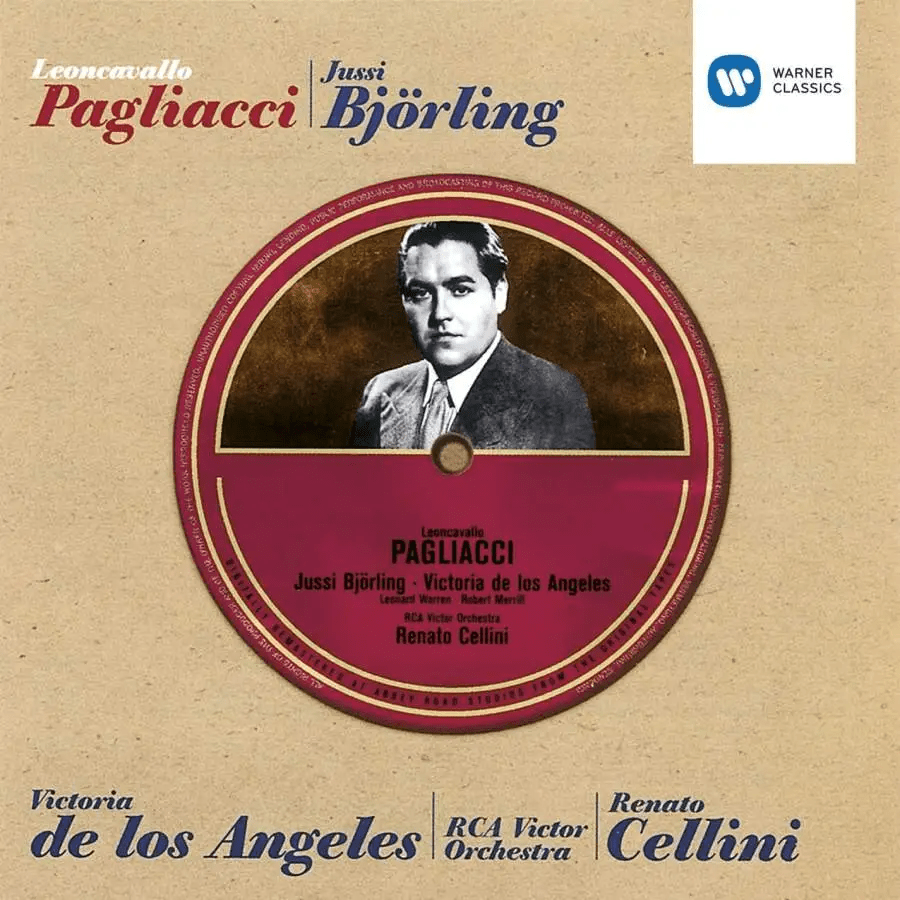
On the 1953 recording conducted by Renato Cellini (Warner Classics 5856502), Jussi Björling sings a memorable Canio and Victoria de los Angeles is a lovely, although not quite adequate Nedda. What makes the recording really special is the contribution of both baritones: Lenard Warren (Tonio) and Robert Merrill (Silvio). Just listen to Warren’s ‘Si pui…’  It makes me cry… How beautiful!
— 

TULIO SERAFIN


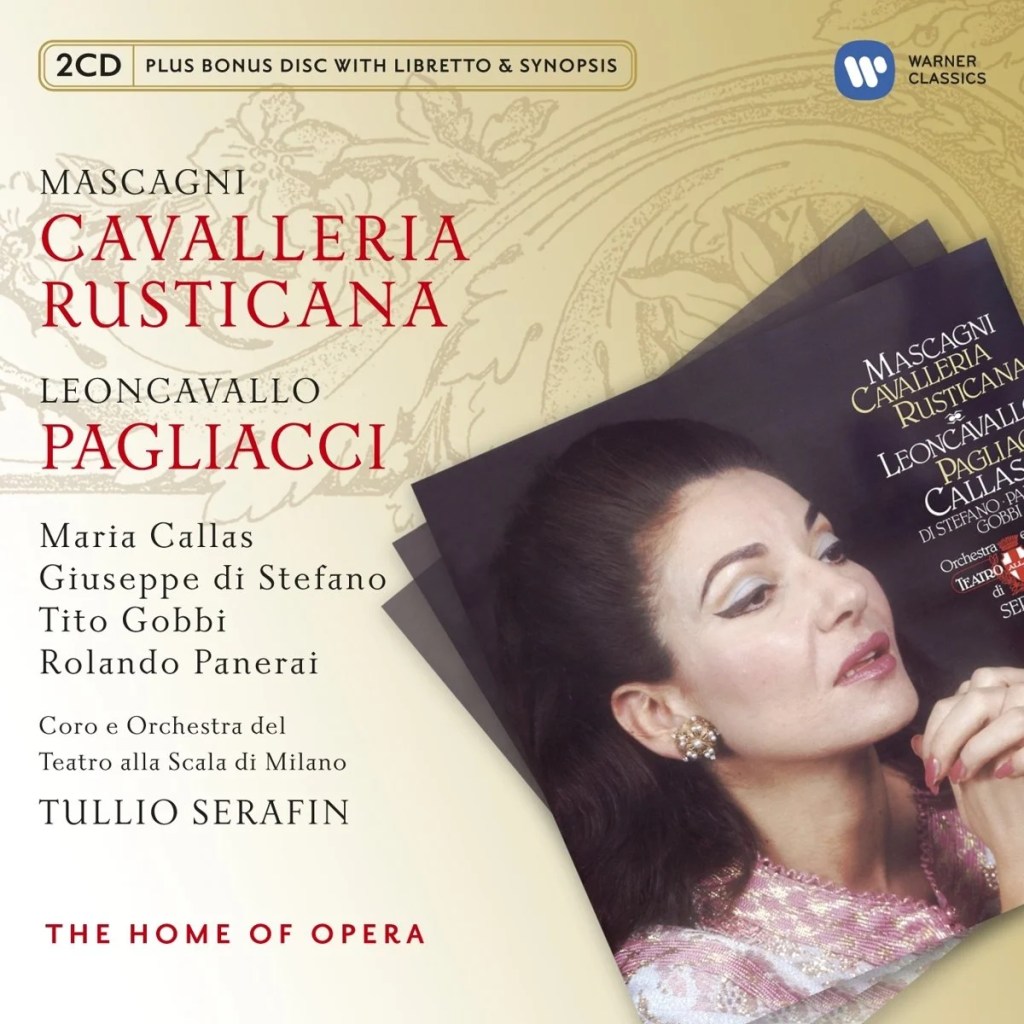
In 1955, Maria Callas recorded the roles of Santuzza and Nedda. As always, she is irresistible, although I find her Santuzza slightly more successful than her Nedda. With the latter she has audibly less affinity, which is not just down to the coloraturas. Then again, she was not particularly fond of adulterous women. As her Canio (and Turiddu) we hear Giuseppe di Stefano. Beautifully sung that is, but for me far too light and with too little profile. Tito Gobbi (Tonio), on the other hand, is nothing short of brilliant. legendary even. Tulio Serafin makes it into a real drama, his direction is very exciting.


RICCARDO MUTI


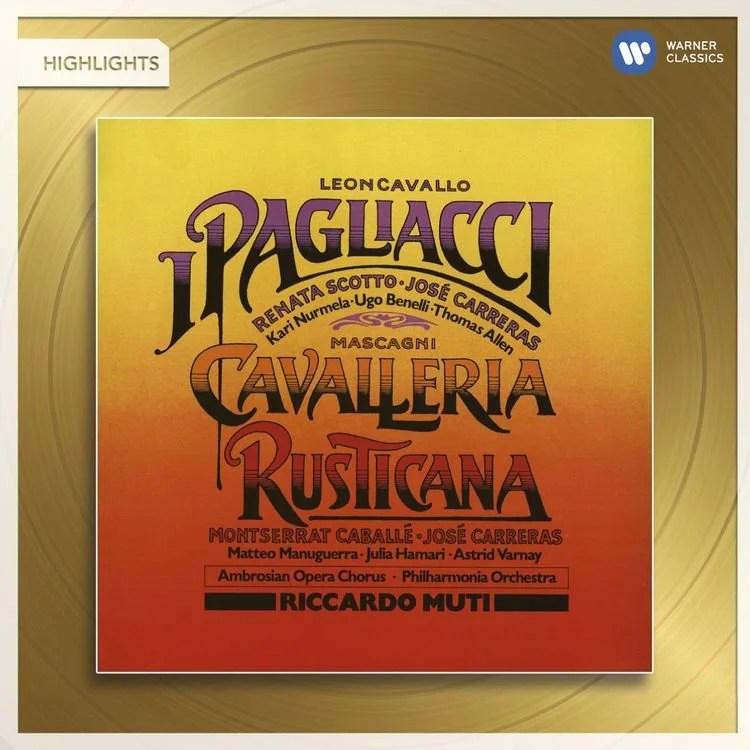
In Riccardo Muti’s recording from 1987 (EMI 7636502) José Carreras is the star connecting the two operas. I find him too light for both roles, but his interpretation of especially Canio is well thought through and believable. Montserrat Caballé is a beautiful Santuzza and Renata Scotto a ditto Nedda, though both fail to fully convince me.  Kari Nurmela (Tonio) and Matteo Manuguerra (Alfio) are just boring, but Thomas Allen is an outstanding Silvio. Riccardo Muti’s direction is detached and understated.


RICCARDO CHAILLY


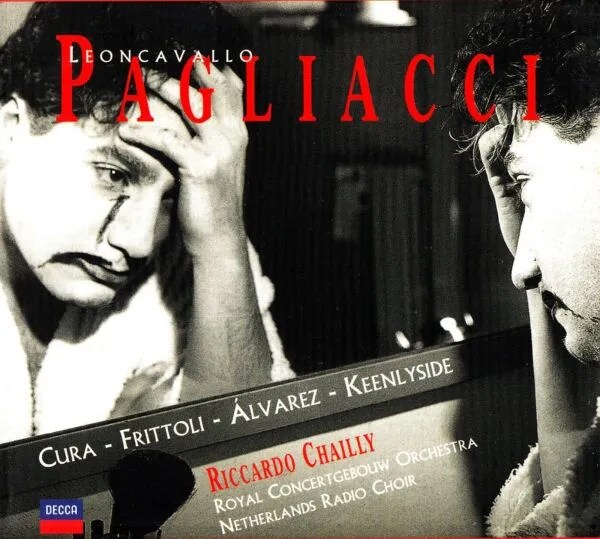
Do not forget the recording Riccardo Chailly (Decca 4670862) made during the Christmas matinee in the Concert Gebouw in 1999. José Cura was still very promissing then and his Canio was really good. The rest of the cast (Barbara Frittoli as Nedda, Carlos Álvarez as Tonio en especially Simon Keenlyside as Silvio) was also very strong.


DVD


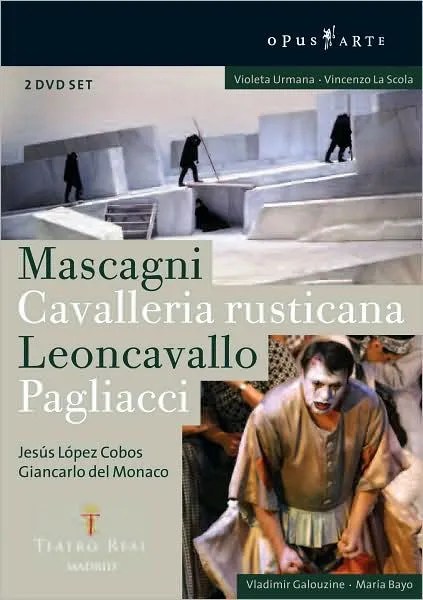
One does not immediately expect innovation, modernisation or concepts from Giancarlo del Monaco, but with the staging of ‘Cav/Pag’ filmed in Madrid in February/March 2007, he manages to surprise everyone. Not that it is that daring: Pagliacci is fairly traditional, although he had moved the action to the 1950s/60s. The life-size posters from ‘La Dolce Vita’ and all the busy activity evoke the atmosphere of a film set, which is del Monaco’s intention; it is his homage to Fellini.

Truly innovative is the presentation of both one-acts: del Monaco sees them as intertwined Siamese twins, forever united with each other. The performance thus begins with the prologue from Pagliacci; according to del Monaco the manifesto of verism, which then flows seamlessly into Cavalleria Rusticana. The last and first scenes of both operas also blend together: among the crowd, that had first come out to greet the comedians, Turiddu’s body is being carried. The black and white Cavalleria does contrast greatly with the colourful and sensual ‘Pagliacci’. The performance is nice, but no more than that.


FILM


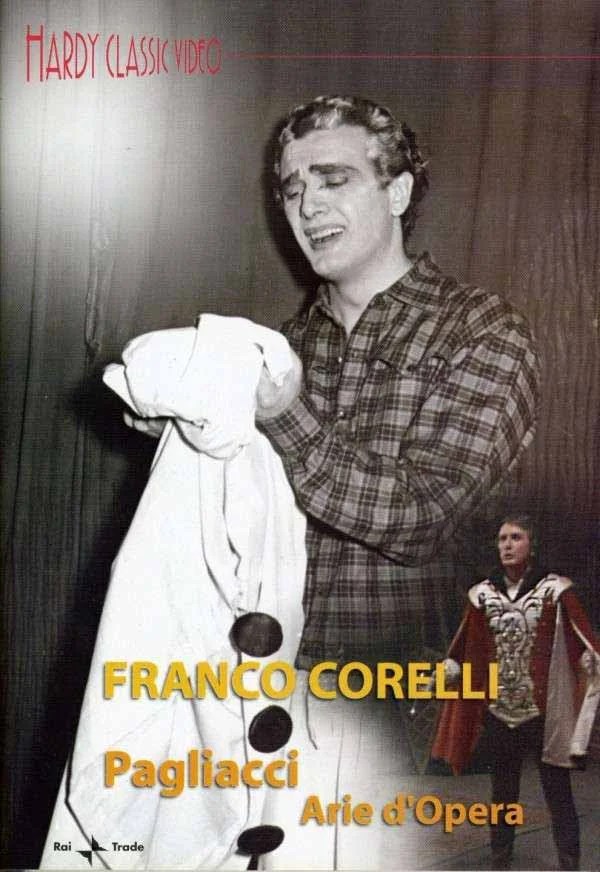
Canio was not Franco Corelli’s favourite role. He sang it for the first time in 1954, in the studio of Italian Television. The performance was taped there in that year and was released on DVD some time ago (Hardy Classics HCD 4016). His looks work somewhat against him (too handsome, too young), but then again his interpretation will leave only a heart of stone unmoved. Mafalda Micheluzzi is, also optically, a very good Nedda and with Tito Gobbi we get not only a singer and actor, but also a real Miracle Man presenting a thousand different faces.


Pagliacci’s story in which reality and theatre intertwined and also influenced each other was apparently strong enough to be of interest to the film industry. Leoncavallo himself wrote his libretto, which, by his own admission, was inspired by a real event he witnessed when he was a child,
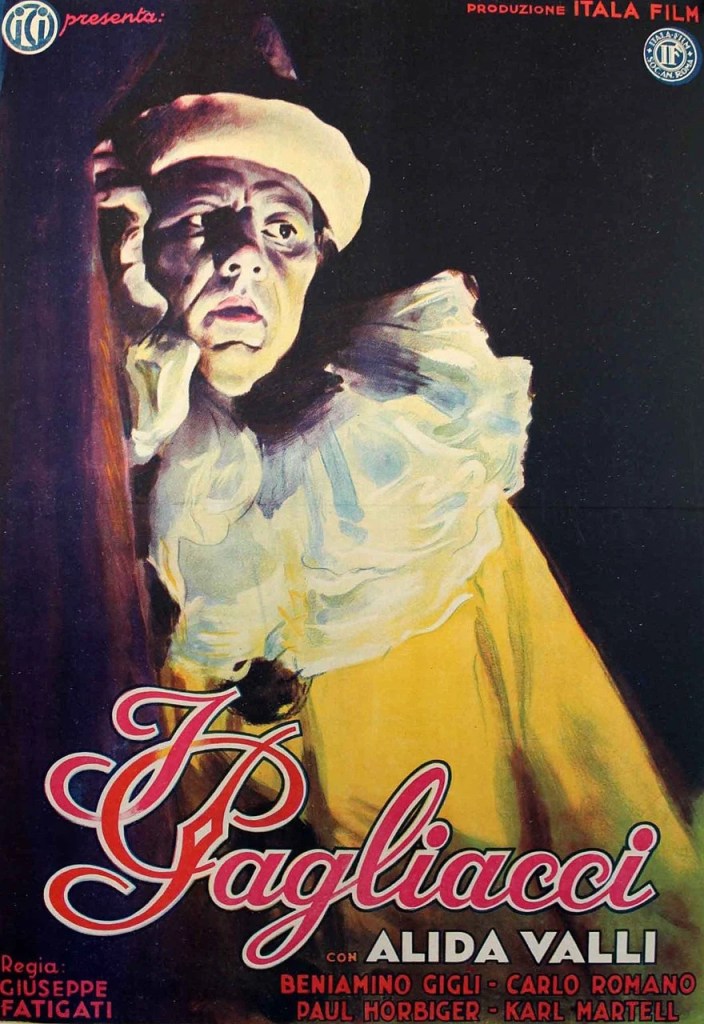
In 1942, the story was filmed (directed by Giuseppe Fatigati) as part of another story: Canio is released from prison, goes in search of his daughter and tells his life story to a young composer, who then promptly turns it into an opera.


The ‘real’ Canio is played by Paul Hörbiger and his operatic alter ego by Beniamino Gigli. Alida Valli, then an Italian sex symbol is Nedda. It was released on DVD about 20 years ago (BCS D0513), in black and white and with English subtitles, but a little knowledge of Italian won’t hurt – the subtitles are not always easy to see.

VARIA


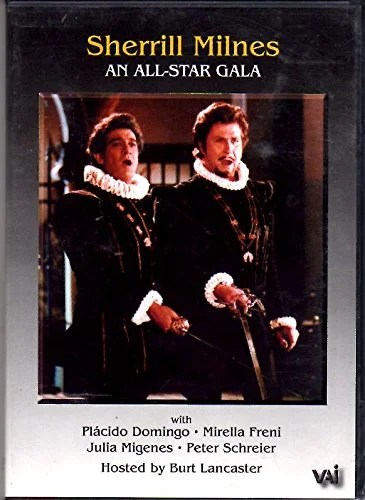
Years ago, when classical music was not yet a taboo on television and programmes about opera singers were as popular as those about pop stars, a German TV team made a portrait of American baritone Sherrill Milnes. The whole thing was commented upon by Burt Lancaster and a few fellow singers also participated: Plácido Domingo, Mirella Freni, Peter Schreier and Julia Miguenes. It began very symbolically with the prologue from Pagliacci, and ended with the Credo from Otello, two of the best roles of this great singer-actor’s career (VAI 4355)


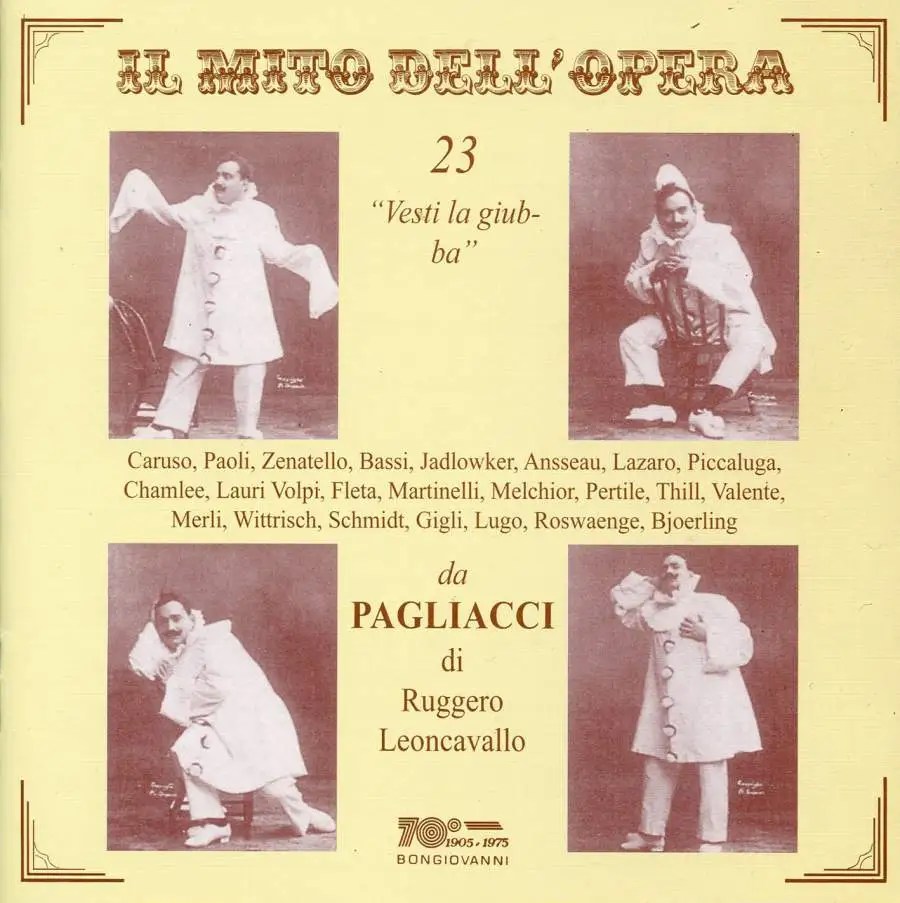
Of ‘Vesti la giubba’, the tenor aria of all time, the performances are uncountable. Most charming is a CD by Bongiovanni (GB 1071-20) on which 23 tenors give their take on it. The very first recording dates from 1907 (Antonio Paoli, the original Canio, plus Enrico Caruso), the last is from 1944 (Jussi Björling). There is singing in several languages and it is more than fun to hear who is and who is not sobbing. Note: Paoli is!


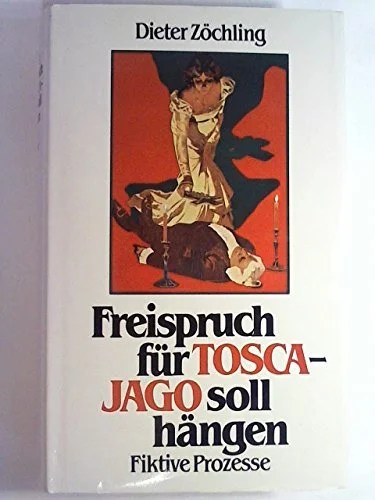
About 25 years ago, German judge and a great opera connoisseur Dieter Zöchling  wrote a book about fictional trials of murderers on the operatic stage. All the major characters from the operas in question appear before the witness stand, providing additional background stories, insanely funny. Canio was sentenced to 20 years in prison!
Dieter Zöchling; Freispruch für Tosca – Jago soll hängen. Fiktive Prozesse.
ISBN 3784421288


Teschek, bedien dich! Arabella… A fairy tale or…?

arabella-uesuleac

Richard Strauss met de allereerste Arabella (Viorica Ursuleac) en Mandryka (Alfred Jerger)

“Teschek, bedien dich”!
You really cannot escape the fact that Mandryka’s words, endlessly repeated by Graf Waldner, settle in your ears like the proverbial earworm. ‘Teschek, bedien dich‘ sings Mandryka as he pulls out his thick wallet and holds out banknotes, like chocolates, in front of his father-in-law-to-be.

For those not so familiar with “Viennese”, Teschek is not only a person who is always on the losing end, but also a card game and perhaps a “delicate” reference to the count’s addiction, which has left the family financially ruined, the youngest daughter having to go through life dressed as a boy and the eldest, Arabella, to be sold to the highest bidder. Well, in a manner of speaking.

How well do you know the opera? Honestly! I’m the first to admit it: until recently, I knew this opera only so-so. Once I saw it (and forgot about it), once I heard something wonderful on the radio (Lucia Popp and Bernd Weikl! I still haven’t managed to get hold of that recording), a snippet here and there …. Nothing more. Nice little snippet,  though.

But now, after a few weeks on “an Arabella diet” I have become a real worshipper. Why is that? Mainly because of the libretto, I think. The opera is seen as a light comedy, a kind of fairy tale where everything is going to be all right at the end. But is that really the case? I think not. Actually, it’s not a fun opera at all. Because let’s face it: everybody is cheating on everybody here and the chances of anyone ending happily ever after are just as high as in Snow White.

To start with Zdenka, the almost “discarded” daughter: do you actually think Matteo has suddenly come to love her? Well, I don’t! He has to marry her because she lured him into her bed. And that, even though he thought she was a man. Anyway, Mandryka is paying, and since everything in this opera is about money…

Anyway, relax and sit back, because the opera is more than worth it. And there are so many good performances out there!


Otto Schenk 1

If you have never seen the opera, you would do well to start with Otto Schenk’s 1977 film (DG0743255). Larger than life, with lifelike sets. Of course, no ordinary live performance can compete with that.

Gundula Janowitz is a delightful Arabella. Perhaps not the best actress in the world, but her high notes are so very beautiful. Sona Ghazarian is a good Zdenka, but what really makes the recording, alongside the very erotic playing of the Wiener Philharmoniker (Solti!), more than worthwhile, is Bernd Weikl’s Mandryka. Any woman would certainly want to be kissed awake by him.

The minor roles are also fantastically cast: René Kollo is a Matteo out of thousands and I know of no better Fiakermilli than the young Gruberova. Add to this the very young (30!) Kurt Rydl as Lamoral and Margarita Lilova (Adelaide).  It is definitely very good.

Below Gundula Janowitz and Bernd Weikl in the last act:


Otto Schenk 2


We stay with good old Otto Schenk for the moment: his production was recorded at the Met in 1995 (DG 0730059). Kiri te Kanawa is an exemplary Arabella; there are few singers who can match her in this role. Strauss has always been a bit like her personal composer and optically, of course, she is a dream Arabella.

Her sister Zdenka (Marie McLaughlin) is also wonderful, something that cannot be said of Wolfgang Brendel (Mandryka). He doesn’t succeed in making my female heart beat any faster. Thielemann conducts well, but he lacks the sensuality of Solti.

Below is a scene with Kiri te Kanawa and Marie McLaughlin:


Renée Fleming


And then there is Renée Fleming (Decca 074363). Optically just about the most beautiful Arabella ever. Not only beautiful but also very full of herself; you can almost see her asking, “mirror, mirror on the wall….”

Impossible to ask Strauss now, but I suspect she could have modelled Arabella for him. Her vervet soft tones too; as if you are resting below the softest down comforter.

Julia Kleiter is a good Zdenka, but Morten Frank Larsen (Mandryka) is just a Dane. He looks Danish and sings Danish. A pity, because Götz Friedrich’s direction  (Zürich 2007) is really exciting.


Below a scene with Renée Fleming and Julia Kleiter:


Sven-Eric Bechtolf


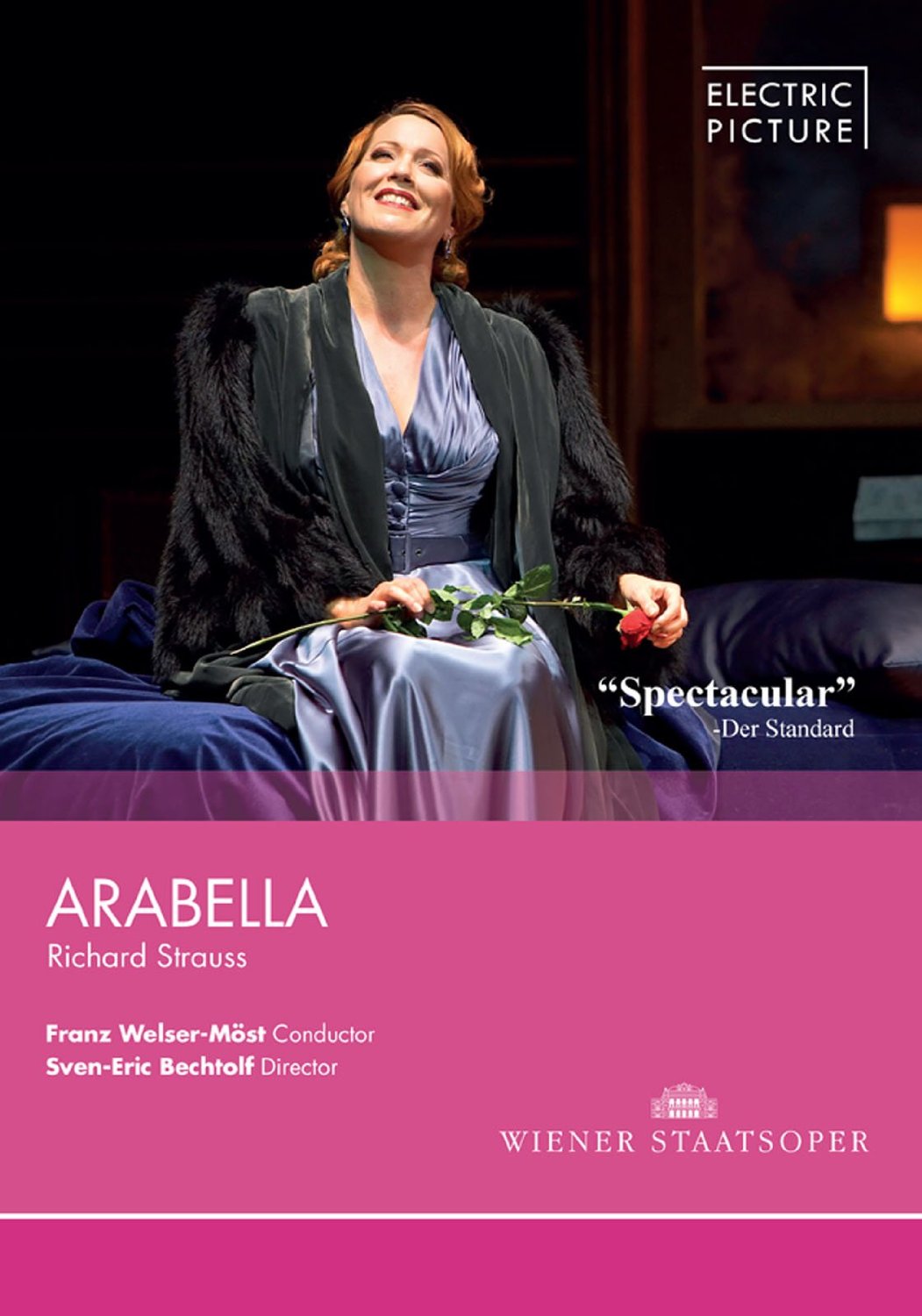
The latest production on my list comes from Vienna (BD EPCO 48D). Sven-Eric Bechtholf has surprised me. He adheres well to the libretto and everything just looks very beautiful.

Emily Magee lacks the sensuality of a Fleming or te Kanawa, but she does hold her own very well. Genia Kühmeier is a sensational Zdenka and Tomasz Konieczny an (indeed) “East European guest worker” with a lot of money. In terms of voice, he can easily match Weikl.

Trailer of the production:


Lisa Della Casa


And now back in time. For me, Lisa Della Casa is the Strauss singer pur sang. Just listen to her interpretation of the Vier letzte Lieder! Starting out as a very good Zdenka, she grew into a great Arabella.

In 1958, she recorded the role under Solti (Decca 4781400). I can never get enough of that. Hilde Güden is her sister and the duet of the two girls is of an unparalleled beauty. Two voices coming together and embracing each other almost as if they were not sisters, but lovers. You really rarely achieve such perfection.

And then the very erotic way Solti handles the score… It is all so sensual and fairy-like. Not only in terms of the singing, but also in terms of the orchestral sound. And George London sings Mandryka. Need I say more?


Montserrat Caballé


Montserrat Caballé as Arabella… Strange? Well no – she was one of the best Salome’s ever, did you know? She is also a fantastically sensual Arabella (BLV 107225). Don’t ignore the recording, especially since Zdenka is sung here by the very moving Oliviera Miljakovic.

Below Caballé and Miljakovic in the duet ‘Er ist der richtige’:


English Arabella


‘Arabella’ in English? (Andromeda andrcd 5013). Why not? Unimaginable how different the opera sounds in this language. It’s like listening to, say, Vanessa. Something to think about.

Eleanor Steber lacks the velvet in the voice, but her involvement makes you understand a little more of the woman. Hilde Güden also sounds different here. It is as if she gains volume and eloquence. I love it. And then George London with his ‘I am the Mandryka, no one else’. Why do I find it even more impressive in English than in German? Rudolf Kempe is conducting.


Kiri te Kanawa


And then, finally, we have Kiri te Kanawa on CD (Decca 4783460). I find Zdenka (Gabriele Fontana) too heavy and in the duet she drowns out her sister – it not very beautiful. Tate conducts unevenly. But what a Matteo! Peter Seiffert is more than delightful to listen to. And Franz Grundhebber (Mandryka) also makes the recording very much worth listening to.


Lulu by Wedekind and Alban Berg. A mystery? A phantom?


Who is Lulu? What do we know about her? Does she really exist or is she nothing more than a fantasy?

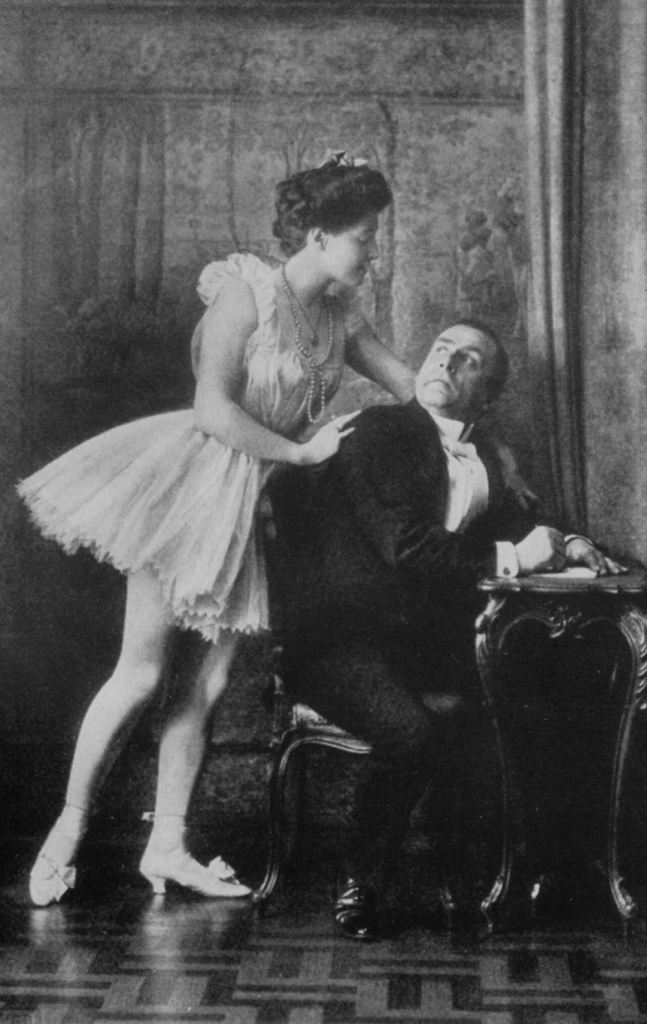
Wiedekind als Dr.Schön en zijn vrouw Tilly als Lulu in’Der Erdgeist’ ©Bildarchiv EFWFrank

A portrait of her is painted in the first act, which then runs like a thread through the whole opera, much like the portrait of Dorian Gray. Whatever happens to Lulu, her portrait remains unchanged.

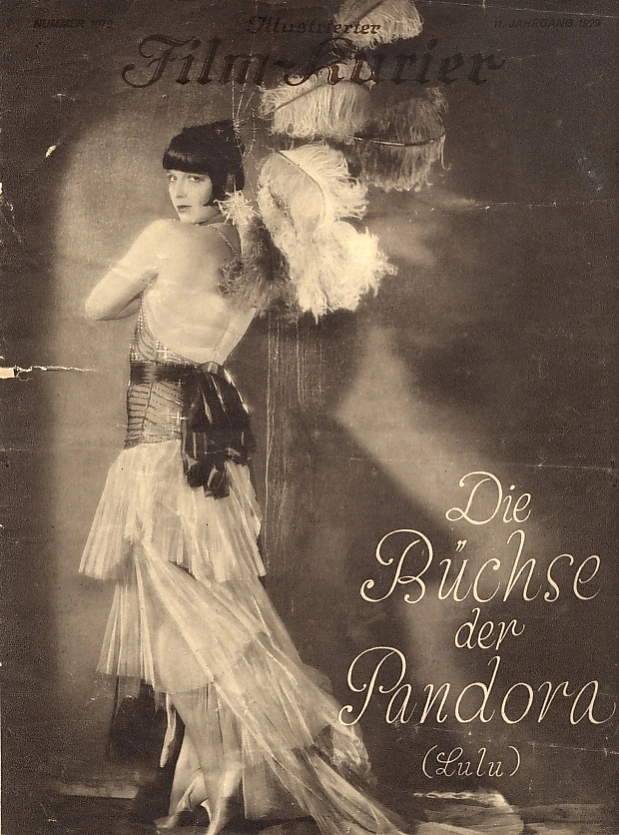
Alban Berg was quite obsessed with her character, taken from Wedekind’s plays Der Erdgeist and Die Büchse der Pandora.

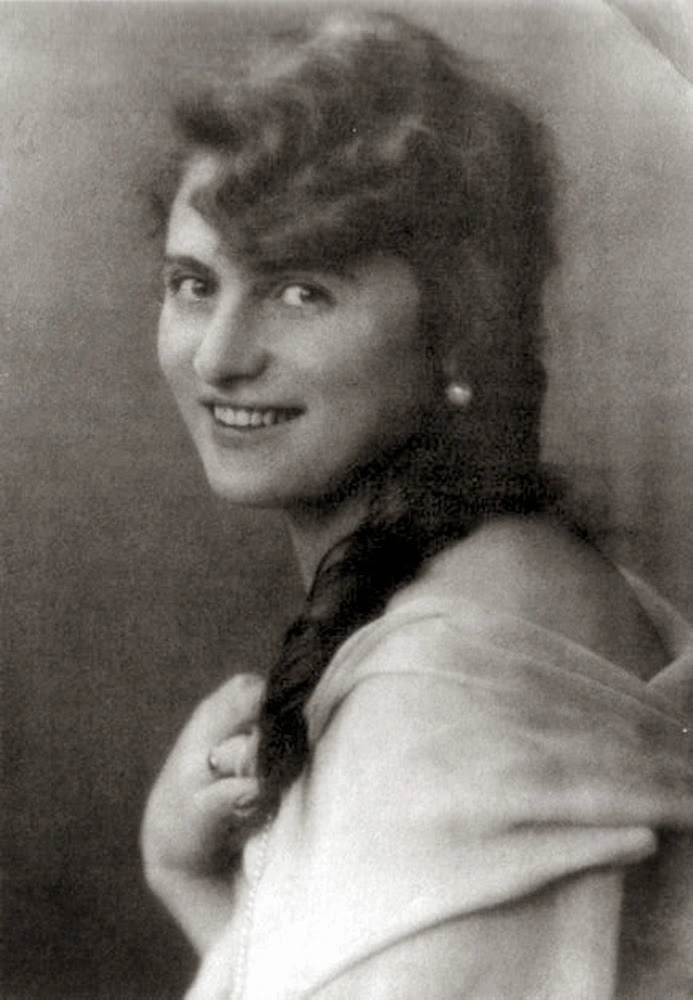
Hanna Fuchs

This may also have had to do with his personal life. She might be the personification of Czech Hanna Fuchs, Berg’s last great love. But there are also music psychologists who want to see Berg himself in Lulu

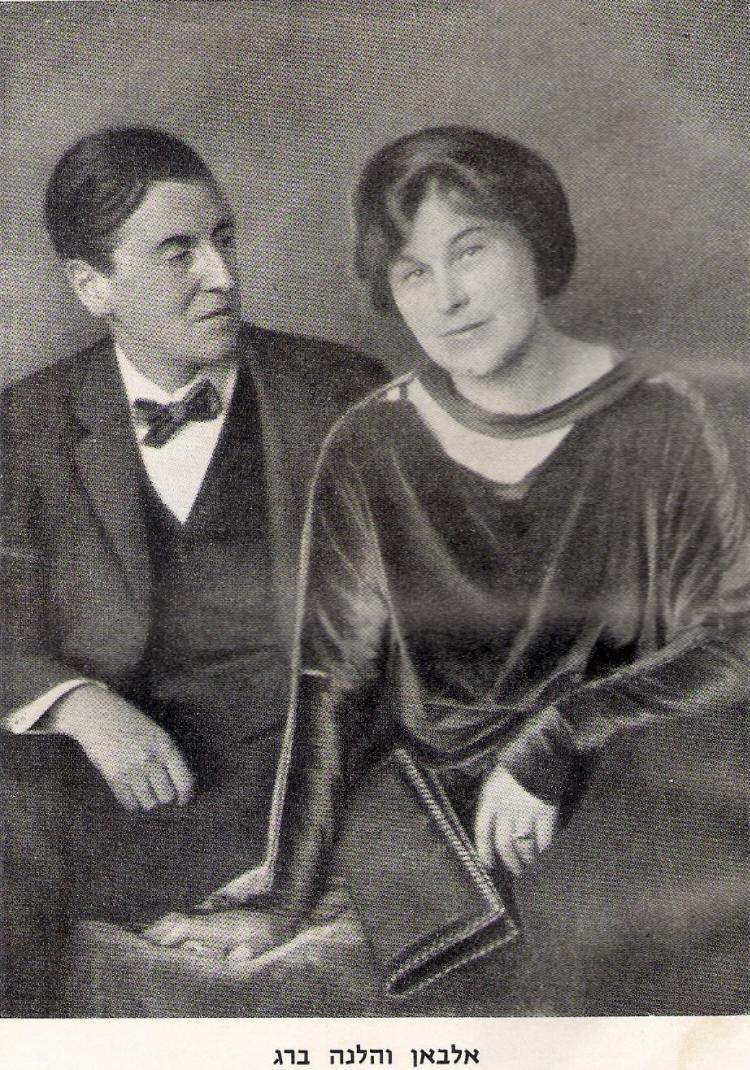
Berg and his wife

Berg did not finish his opera: when he died in 1935, the third act consisted only of sketches.

It was the Austrian composer Friedrich Cerha who orchestrated 1979’s unfinished third act; until then, only the first two acts were being performed.

CD’S

Teresa Stratas

You simply cannot live without the very first recording of the complete opera with the third act, as it was finalized by Cerha. Deutsche Grammophon made a studio recording in 1979 immediately after the Paris premiere (DG 4154892).

All fantastic Lulu’s notwithstanding, no one can match Teresa Stratas. Even without the textbook, you will not only clearly hear but also really understand every word. Robert Tear is a delightfully naive painter and Franz Mazura an unrivalled Dr Schön. Kenneth Riegel’s Alwa is a matter of taste, but his empathy is just about perfect.

Pierre Boulez’s seemingly cool and analytical approach makes the drama sizzle even more.

You can also watch the complete recording with Stratas on YouTube:

Anneliese Rothenberger

The recording made by EMI in 1968 (91233028) should really not be missing from any collection. Anneliese Rothenberger is a very light, bouncy Lulu, truly an innocent girl.

Forget about Gerhard Unger (Alwa), but Toni Blankenheim’s surprisingly light and sarcastic Dr Schön (Schigolch with Boulez) is really irrisistable.

What makes the recording extra desirable is Benno Kusche in the small role of Tierbändiger. The recording itself also sounds surprisingly good.

Ilona Steingruber

Ilona Steingruber’s name does not ring a bell these days, but in her time she was a celebrated soprano, whose repertoire included Mahler, Korngold, Strauss and Alban Berg.

On the 1949 recording directed by Herbert Häfner (including Archipel Desert Island Collection ARPCD 0540), Steingrubber sings a very sensual Lulu: erotic and exciting in her singing and remarkably childlike in the dialogues.

Otto Wiener is a very authoritarian Dr Schön and Waldemar Kmentt a not very idiomatic but very present Maler. The confrontation between the two, ‘Du hast eine halbe Million geheiratet’, is therefore particularly exciting.

DVD’S

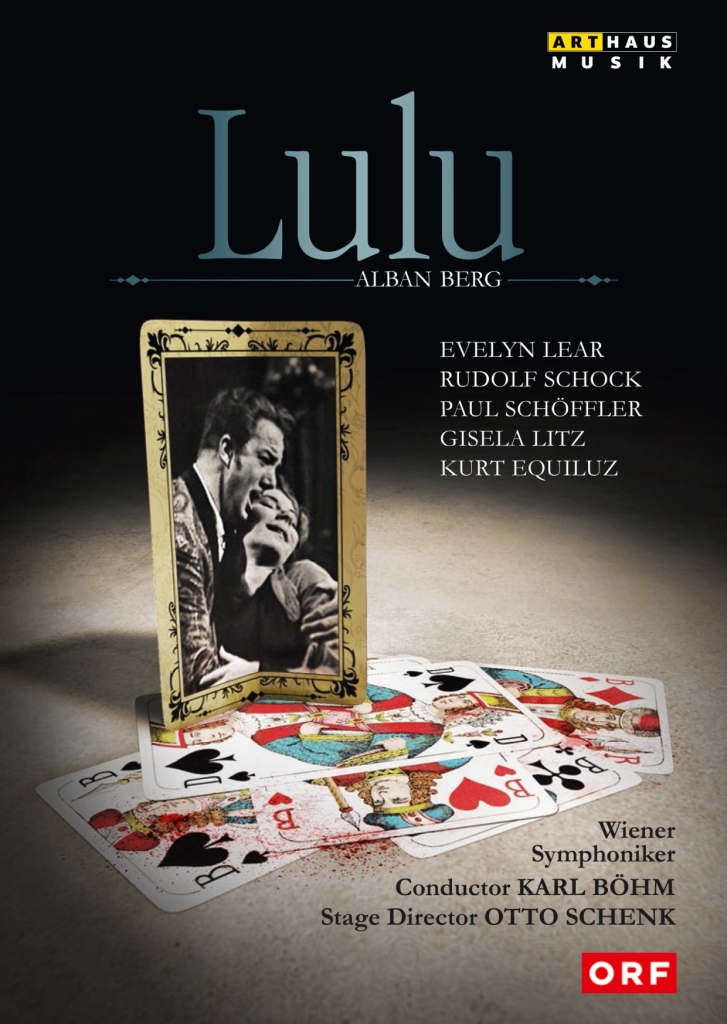
Evelyn Lear

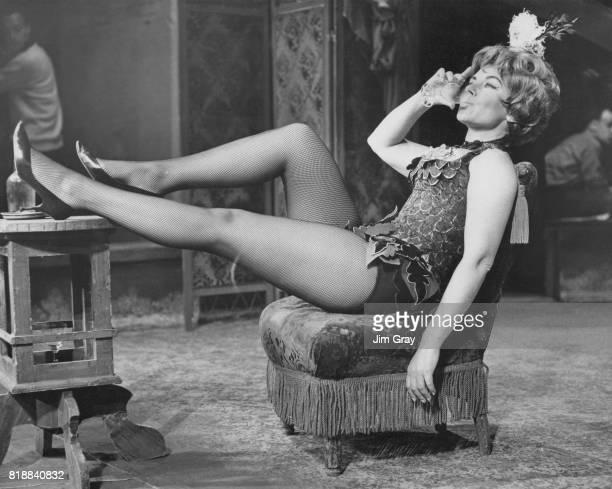
With her movie-star looks and angelic voice, Evelyn Lear has been referred to in the press as ‘Elisabeth Taylor meets Elisabeth Schwarzkof’. Personally, I find the American soprano, very popular in the 1960s to 1980s, much more interesting than her German colleague.

Lear was one of the greatest and best advocates of modern music. On 9 June 1962, she sang the role of Lulu in the first Austrian production of the work, at the newly reopened Theater an der Wien.

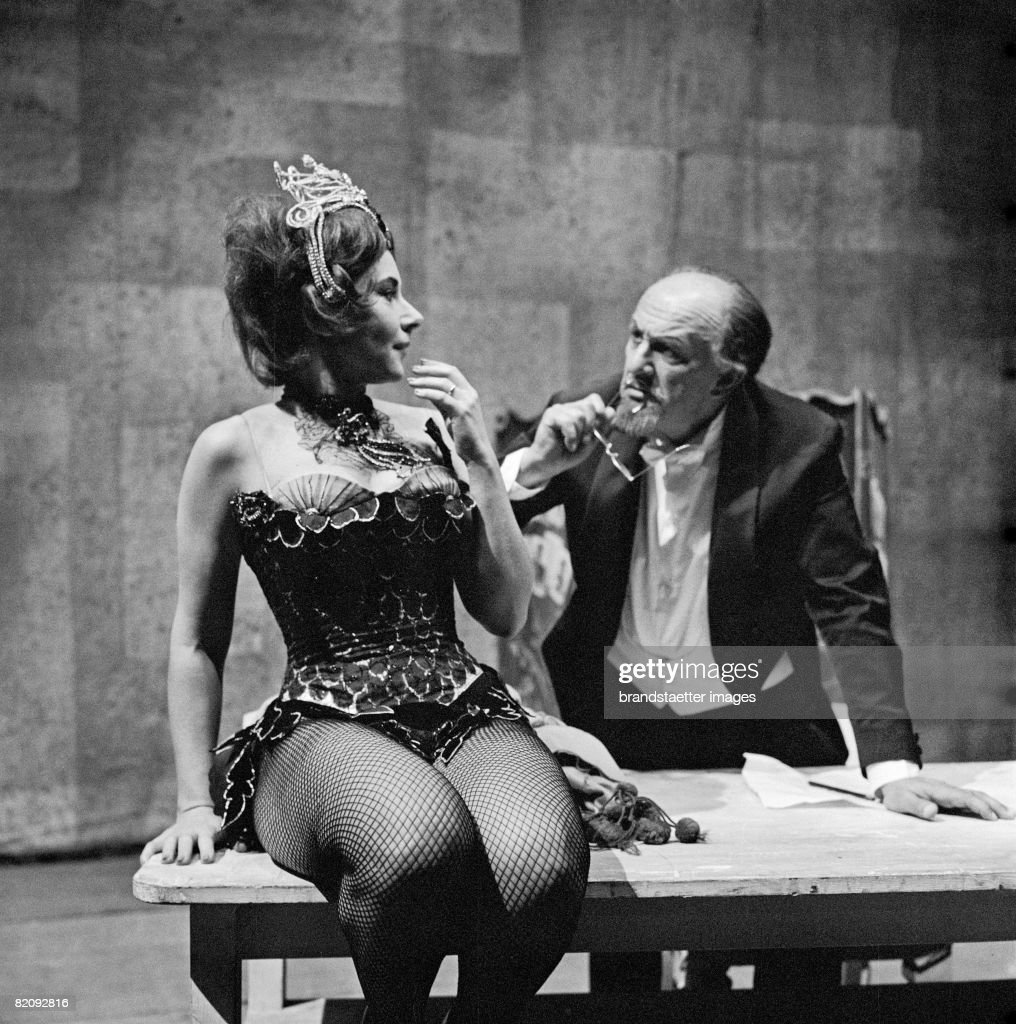
I can imagine that the posh premiere audience may have been a bit surprised to see a prima donna dressed only in a tight-fitting corset and fishnet stockings, but if so, nobody showed it.

It was directed by the then very young Otto Schenk, who followed the libretto closely. That Paul Schöffler (Dr Schön ) reminded me of Professor Unrath from Der blaue Engel is, of course, no coincidence. Nor is his resemblance to Freud.

The last scene, beginning with Geschwitz’s plea followed by images of Jack the Ripper, could just as well have been taken from one of the best Hitchcock films. Especially since Gisela Lintz, who sings the role of the Countess, looks a lot like one of the director’s beloved actresses.

Watching Karl Böhm conducting is also extremely exciting. I have never seen him gesticulating so violently. An absolute must (Arthaus Musik 101 687).

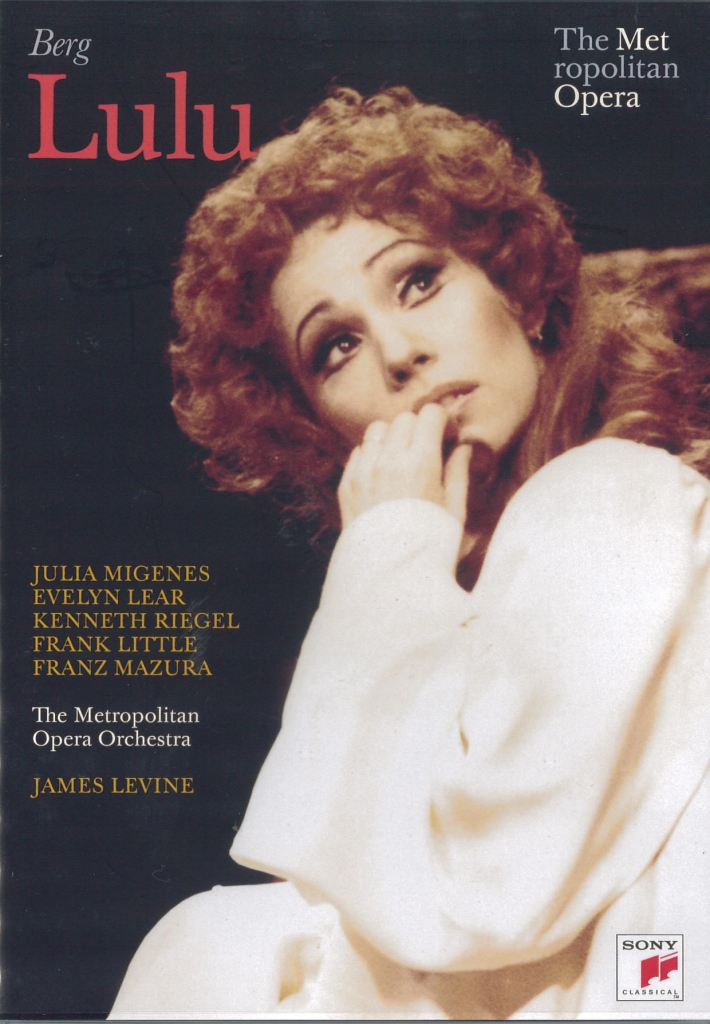
Julia Migenes


I have never understood why Julia Migenes wasn’t allowed to sing ‘real’ operas more often. She was a big star on Broadway and she triumphed in several musical films, but to my knowledge, apart from Lulu, she has performed very few other opera roles on the stage. Both her appearance and acting are so formidable that one can readily forgive her for not always singing cleanly.

Franz Mazura is a phenomenal Dr Schön. In the scene where he writes the farewell letter to his fiancée, you can almost smell his sweat. What a performanc

As Geschwitz, the now older but still gorgeous Evelyn Lear is convincing in every way. John Dexter’s very fine production was recorded at the Metropolitan Opera in 1980 (Sony 88697910099).

The complete recording can be viewed here:

https://www.operaonvideo.com/lulu-met-1985-levine-migenes-mazura-riegel-lear/

Agneta Eichenholz

This totally unadorned production by Christof Loy was recorded at London’s Royal Opera House in June 2009. Loy has stripped the opera completely and reduced it to its pure essence, something I find very fascinating.

His minimalist approach allows all attention to be paid to the characters, their motivations and their development. Whatever you think of the direction: musically it is spot on. Antonio Pappano really works wonders with the orchestra; you will rarely hear this music so transparent and at the same time so emotionally charged.

Klaus Florian Vogt cannot really convince me as Alwa, but Jennifer Larmore is an exceptionally attractive Geschwitz. And Agneta Eichenholz (with her big eyes pretty much the reincarnation of Audrey Hepburn) is a beautiful Lulu in every way. Michael Volle is for me, after Franz Mazura, the best Dr Schön (Opus Arte OA 1034 D).

Below is an excerpt from the production:

Patrizia Petibon

I am not a fan of Patrizia Petibon: I find her posturing is rather irritating. Her voice is also on the small side, so she often has to force it. Not conducive to the very high and difficult notes Berg has his lead singer sing. I also find her physically ill-suited for the role. She is not a ‘Lolita’, but an adult whore dressed like a little girl with ditto behaviour.

I also have trouble with Geschwitz (Tanja Ariane Paumfartner, an unknown to me), but the rest of the singers are more than excellent, with the unsurpassed Michael Volle as the inimitably good Dr Schön.

Thomas Piffka is an outstanding Alwa, unmistakably a composer who is constantly working on his opera. Pavol Breslik is a horny Maler, Grundhebber a fantastic Schigolch and Cora Burggraaf a sparkling Gymnasian.

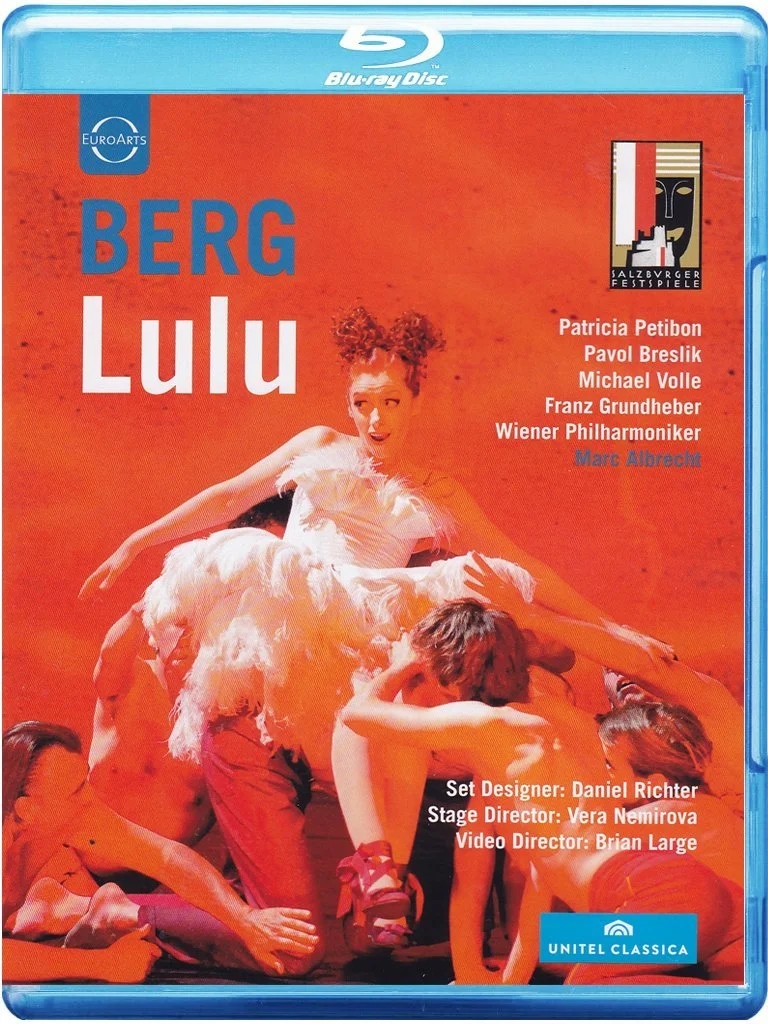
Vera Nemirova’s production (Salzburg 2010) is colourful and highly expressionistic. Marc Albrecht is a perfect conductor for the work: under his direction, the Vienna orchestra shows its very best side (Euroarts 2072564).

Below the trailer:

Mojca Erdmann

Whoever came up with the unholy idea of having an unknown and unremarkable composer (have you ever heard of David Robert Coleman?) recompose Lulu for this production in Berlin in 2012, I don’t know, but I am not at all grateful.

Only the third act was adapted, because they dared not touch the real Berg. At least… the prologue has been scrapped, which totally ruins the opera. In its place we get a man, lying down quoting Kierkegaard: “Alles Erlebte tauche ich hinab.” Well well…??

Andrea Breth, by now on my no-no list of directors shows her worst side here. The production is deadly dull. Neither the ethereally singing Mojca Erdmann, nor the scorching Deborah Polaski, nor Michael Volle or Thomas Piffka can undo this cruel murder of a masterpiece (DG 0734934).


lGevloerd door Lulu van Krzysztof Warlikowski in Brussel 2012