English

Le rossignol et la rose : interview with Chen Reiss

Chen Reis

© Paul Marc Mitchell

In march 2015 Chen Reiss appeared on the stage of the National Opera in Amsterdam. She kindly took some time off from her heavy rehearsal schedule to answer my questions.

The evening we meet in the canteen of the National Opera, Chen Reiss is tired, very tired. It was a long day of rehearsals, from 10:30 until 18:00!!! With a break, but nonetheless…

She had arrived in Amsterdam six weeks earlier to study Pamina in Die Zauberflöte, and Simon McBurney’s staging requires great physical efforts of the entire cast.

Not easy, especially not if you happen to be a mother as well, travelling with a daughter who is almost two years old. It is impossible to keep up with the daily news this way, which is a blessing, in a way, because most of that news does not exactly cheer Reiss up.
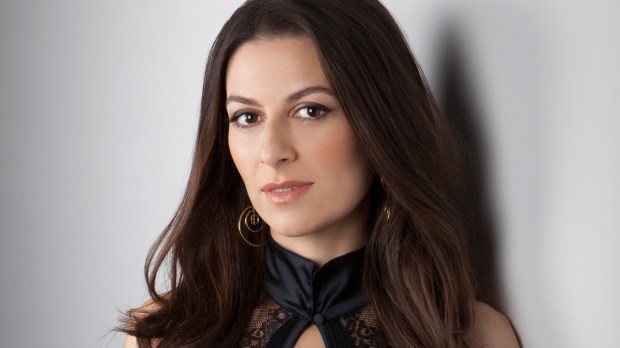
Chen

© Paul Marc Mitchell

“I am extremely pessimistic and scared. As a Jewish and an Israeli woman I feel less and less at home in Europe. I am deeply worried, and fear everything will go awry. Not a very nice perspective, certainly not for a parent. Fortunately enough I am too busy to listen to the news. I have breakfast at eight, with my daughter, after which rehearsals start. In the evening, when I get home, it is simply too late. I am tired, and often I need to study…”

“I love Mozart with all of my heart: his sacred music perhaps even more than his operas. Those works I love singing above everything else, the music is so beautiful! Full of passion, but stylish and elegant at the same time. Which Mozart roles I love the most? Ilia (Idomeneo), I think, but in fact I love them all equally!”

Chen Reiss reveales her Top 5 Mozart soprano arias:

“Pamina passive? I don’t believe so, on the contrary! She is extremely brave and full of initiative. So much is happening to her. First she is kidnapped, then almost raped. Then her mother tells her to kill her own father. When she refuses she is scorned and cursed. She then escapes rape for a second time…  Just when you think not much else could happen to her the man she loves no longer wants to speak to her! She goes to hell and back and gets so desperate she can only think of suicide. The decision to undergo the trials and follow the man she loves to the end was made entirely by herself.  She is a hard act to follow!”

Wolfgang Ablinger-Sperrhacke (Monostatos), Chen Reiss (Pamina)

Wolfgang Ablinger-Sperrhacke (Monostatos), Chen Reiss (Pamina) © Hans van den Bogaard

Is it eternal love, I ask?
My question makes her laugh out loud. In opera, which love is not eternal, after all?

Reiss finds the Amsterdam production by Simon McBurney truly charming. “It all looks very exciting and beautiful, and in addition I work with fantastic colleagues. And this is the third time I get to fly!
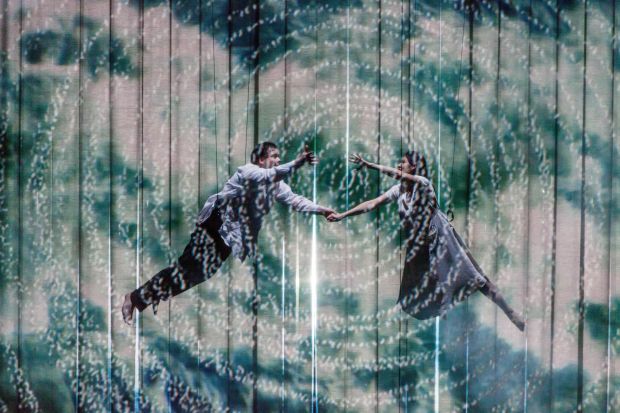
Maximilian Schmitt (Tamino), Chen Reiss (Pamina)

Maximilian Schmitt (Tamino), Chen Reiss (Pamina) © Hans van den Boogaard

In Vienna I was a very high flying Waldvogel in Siegfried, which not only gave me high anxiety quite a bit but made it hard for me to follow the conductor as well ….  In my last Idomeneo production I was lifted into the air for a moment, which was rather fun.

Trailer of the Viennese Idomeneo:

“Do I ever refuse a role? Yes, surely, but only when it does not suit my voice. It is harder to decide which productions you should avoid. Often you do not know the concept until a week before rehearsals start. Then it is too late to refuse. Refusing anyhow is difficult, because you no longer will be booked, especially if you are a young singer.

This also happens to great stars, by the way. Anna Netrebko recently left a production because she could not agree with the director. Apparently it is easier to replace a world famous singer than a director. The director is felt to be the most important figure, and everything revolves around him or her.”

“I was once made to wear a very heavy hat, which physically I could not do. Not even a letter from my doctor helped: I was fired, and the concept remained. Will this ever change? Who knows. Perhaps if people would stop buying tickets?”

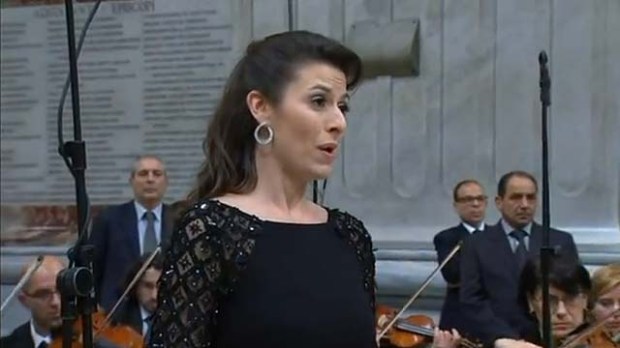
Chen Reiss is also very popular with audiences who never go to the opera or to classical concerts. She sang  Et Incarnatus Est  in 2014 in front of the Pope during the Christmas Eve Mass in the Vatican. One of the papers the next day came up with the following headline:  ‘How a Jewish Israeli soprano found holiness in front of the Pope’.
Chen-Reiss Vaticaan

Chen Reiss performing at the Christmas Mass at the Vatican’s St. Peter Basilica.

“It was a special experience, yes. I only met the Pope very briefly, not longer than thirty seconds, but he sent me a long thank you letter afterwards. Really special. It moved me a lot, and gave me a warm feeling. I also believe the Pope genuinely loves music, he knows so much about it!”

“Why I was invited? Two years ago I sang that piece during the Sacred Music Weeks in Vienna, and I believe he heard me there. Or someone told him about me, because shortly afterwards I got the news I was selected to sing during the mass.”

Reiss singing during the Christmas Eve Mass:

Reiss’s discography includes five solo albums, amongst others. One of them is Le Rossignol et la Rose. I tell her how incredibly beautiful and moving I find that CD. She is genuinely happy with the compliment.

“I selected the songs and made the program myself, which is all about love, pain and sadness, but about happiness as well. When I was selecting the program I was happily in love, but during the recording sessions my partner and I broke up. I was devastated, and even thought of giving up entirely, but I did finish the recording. That was the right decision, because the recording sessions had a therapeutic effect on me which was beneficial. They helped me so much, in fact, that I opened up to something new and met my current husband. So things have come full circle. For this reason, the CD is very dear to me.

I would love to record more, which is something I will soon do, in fact: first Bach cantates, followed by more Lieder. Yes, all for Onyx. Such a great company! They are very helpful and sweet, they simply let me do whatever I wanted for the Rossignol disc.

In the future I intend to focus more on concerts and recitals. I have discovered that that is what I love doing the most. I will sing the Sieben frühe Lieder by Berg soon, and then perhaps the Vier Letzte Lieder by Strauss.”

Chen Reiss Photo artefakt-berlin.de

© artefact-berlin.de

“I love Amsterdam dearly. On my first visit here I sang Mahler’s Fourth Symphony, with the Radio Philharmonic Orchestra under Markus Stenz. He is such an incredibly lovely conductor!

 Chen Reiss in Mahler’s Fourth Symphony:

At that time I already wished I could stay a little longer in the city. It is so strikingly beautiful, for me it is the most beautiful city in Europe, perhaps even in the world. There is so much culture too: the Concertgebouw, the museums…. And the people here are very friendly. I enjoy all of that very much.

Le rossignol et la rose

Chen Reiss rossignol_hr

This recital-cd is a fine example of a perfectly put together recital. Like a nightingale and a rose, it is a match made in heaven.
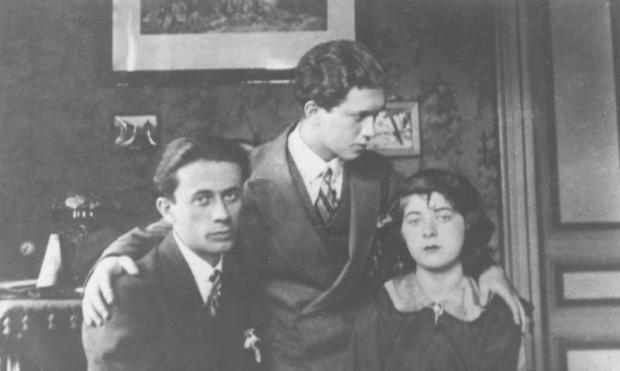
The recital’s motto: “The nightingale has sung throughout the night, making the roses spring up by the sweet sound of her echoing song” introduces a story in five chapters; a story of love, longing, loneliness and sorrow. And humor too, because even in foggy romanticism funny things do occur occasionally.
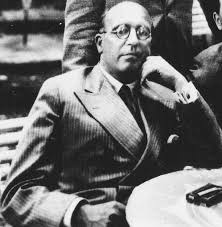
The title of the CD is taken from Saint Saëns’s vocalise. In this song Reiss presents her full potential on a platter, which is quite something.

‘Le rossignol et la rose’ by Saint-Saens, illustrated with fragments from old movies:

I was particularly moved by ‘Die Nachtigall’ by Krenek, a song I did not know, and would not associate with this composer straight away. The beautiful text is by Karl Kraus, a poet who, according to Krenek,  had a great influence on him. Reiss makes you gasp in admiration, her high notes are both impeccable and sweet.

Bellini’s ‘Vanne o rosa fortunata’ is a lovely piece of fluff, but it is impossible not to be moved by ‘La Rosa y el sauce’ by Guastavino. It is a song about a rose which blossomed in the shadow of a willow, but which was plucked by a young girl, leaving the willow to mourn. Reiss grieves with the willow, and so do we.

In ‘Shnei shoshanim’ by Mordechai Zeira Reiss shows the darker side of her voice. She reminds me a little of Nethania Devrath, one of the most famous Israeli sopranos from the sixties, with Victoria de los Angeles not looming far in the background.

Pianist Charles Spencer is truly the saving angel here. He is much more than just an accompanist. Listen to his intro to Krenek’s ‘Die Nachtigall’ or to his pearly notes in Meyerbeer’s ‘Rosenblätter’. BRAVI!

Le Rossignol et la Rose
Purcell, Hahn, Mahler, Meyerbeer, Strauss, Bellini, Guastavino, Berg a.o.
Chen Reiss (soprano), Charles Spencer (piano)
Onyx 4104 • 72’

English translation: Remko Jas

Interview with Joseph Calleja

Calleja-Simon-Fowler-Decca-1

© Simon Fowler /Decca

Joseph, finalmente mio!

An unconventional opening of an interview, perhaps, but I had good reasons for it. Our Amsterdam appointment was cancelled twice, leaving Facebook and Skype the only remaining option. Even that way, it took me quite a while to finally get hold of him.

Calleja Malta Simon Flowler

© Simon Fowler/Decca

Him being Joseph Calleja, one of the famous tenors of his generation, with a busy current schedule and an even busier future. He was born in Malta, and had turned thirty-five just before our interview in the last week of January 2013.

“January is an outstanding month for tenors,”  he laughed.  “Mario Lanza, Domingo, my teacher, me…. There must be something special in the January air.”

To settle all disputes: his name is pronounced ‘Kaleja.’ Not the Spanish way, or the Italian or Portuguese way. Well, that is easy for the Dutch to get right then, I say, which makes him laugh again.

Calleja has close ties to the Netherlands. After all, his international career started in this country. At age nineteen (sic!) he sang Leicester in Donizetti’s Maria Stuarda for the Nederlandse Reisopera. Quite a feat, with which he impressed a lot of people. His voice was very light and sweet at that time;  his high notes supple and pure, almost like Tagliavini.

Calleja as Leicester in Bergamo in 2001:

In 2004, at the age of twenty-six he made his debut with the Dutch National Opera as the Duke of Mantua in Verdi’s Rigoletto. He had already sung the part before, in 2001, at an open air performance in the port of Rotterdam.

He still has a lot of friends from his Dutch period, and even remembers a sentence in Dutch: “eet mijn konijn niet op” (Do not eat my rabbit),

He laughs heartily at this. The anecdote is well known in the meantime, but he does not mind repeating it once more. He was seeing a Dutch girl at the time. When he visited her, he told her little sister that it was a Maltese custom to eat a lot of rabbit. The little girl grabbed her rabbit in shock, exclaiming ” eet mijn konijn niet op!”  He has always remembered the phrase since.

Joseph Calleja sings “To the canals of Amsterdam I have pledged my whole heart” at the 2013 rendition of the Grachtenfestival (Canal Festival)  accompanied by the Royal Concertgebouworchestra directed by Antonio Pappano:

Nine years ago you told me that of all current tenors the voice of Pavarotti felt closest to yours. You said: “If I were to die tomorrow, and could listen to one voice, the final voice of my life, that would be Pavarotti. He is my biggest favourite, my true idol. There have been, and there are, other big and beautiful voices, but Pavarotti remains number one for me.” Do you still feel the same?

“Yes, I do, in fact, although I have to admit I admire Jussi Björling more and more every time I listen to him. It is very well possible this has something to do with how my own voice develops.”

Your voice is often compared to that of great singers of the past In addition your career develops in an astonishingly rapid tempo. How do you feel about that yourself?

“It is true. It can be a little scary at times, everything happens so fast, which can be a burden. The audience expects you to be in top form every evening, which is impossible because the human voice is no violin. But on the other hand I would never want to miss all these fantastic experiences.”

I was speaking to Marilyn Horne a while back. She encouraged young singers to take their time, and never to rush things.

“I know, but this so difficult nowadays! I believe you do have to rush, but in a clever way. Meaning to study like crazy and work hard, but to be cautious in choosing your repertoire at the same time.”

Coming up the next four months are several radically different roles: Tebaldo in I Capuletti e i Montecchi in Munich, Rodolfo in La Bohème in Chicago, Gustavo in Un Ballo in Maschera in Frankfurt and Nadir in the Pearl Fishers in Berlin. Not to mention the concert performances of Simon Boccanegra and the Verdi Requiem. How does he switch from the lyrical Nadir to Gustavo who is definitely more dramatical?

Calleja ballo

As Gustavo in Ballo in Maschera at ROH © Catherine Ashmore

“I do not believe you need to sing Gustavo in Ballo differently than Duca in Rigoletto or Manrico in Trovatore. All those roles were written for the same type of tenor. True, the orchestras were smaller then, and the tuning was lower. That does put extra pressure on a tenor nowadays. You have to sing higher and louder than intended. Every singer goes his own path, and you make mistakes on the way, but it is possible to learn from those mistakes.”

“Certainly, I made some mistakes myself. My first La Bohème came too soon, and I have also sung a few other roles too early. But like I said, you learn from that. What helps are a good, solid technique, and good advice.”

Unlike many of his colleagues you don’t mind modern stagings.

“Respect is all I demand. I do my job, a director hopefully does his. I need to trust the director, believe that he knows what he does, and why he is doing it. I leave judging a director to the audience and the critics. Singers are not supposed to do that. We do not have to agree on everything, but we do need to respect each other.”

What if a director wants to put you on stage naked? As a singer you are already vulnerable fully dressed! Would you go that far?

“I would not know, honestly. Luckily nobody has ever asked me to strip, although I did sing a Duca in my boxer shorts once.”
Kidding aside: “if you only did the things you liked, you would be out of work ten out of twelve months. So I only say no when something can harm my voice.”

callejalanzacd

In January and February 2013 Calleja toured Europe with the program of his CD Be my love – A Tribute to Mario Lanza. Pavarotti, Domingo, Carreras; almost all tenors of hat generation idolized Mario Lanza and his movies. But you were not even born yet when he died. How does someone of your age got to know him?

“When I was young I played in a rock band. My uncle felt I had to listen to some good music, so he made me watch all these Lanza movies. That is how my love for opera started. What a fabulous singer! On his own, he had the charisma of four or five tenors. I also have all his CD’s. And I do not care one bit he sang with a microphone.”

“I have nothing against crossovers, especially not when done right. What does crossover even mean? For me it means having fun, making good music. I am not Mick Jagger or Robbie Williams. I am and will always remain an opera singer. But when done the way the three tenors did it, for example, I love it!”

“Why does an opera house have to be the only place where opera is sung? In the past men in Italy, and in Malta too, used to bring serenades by singing opera arias. The women stood in their open windows, like in a opera box. That is the way my teacher met his wife. Were not opera singers hundred years ago the pop singers of now? Well, on Malta they certainly were!”

I tell him I dreamt the night before our interview that we met in the lobby of a large hotel. He was sitting there with all his brothers and sisters and told me he would start to include folk songs in his recitals. Does he actually sing folk music?

“Our folk music is not really suitable for a trained tenor voice. Malta is like Sardinia: the music is raw. Italian music is part of our folk tradition. We grew up in the Italian tradition, the canzoni form part of our culture.”

Calleja op Malta

© Simon Fowler/Decca

Which languages do you speak at home? English, Italian of Maltese?
“Hahaha. All of them, and all of them together at the same time!”

What do you find harder? Singing opera, or touring with a recital?
“Touring, without a doubt. You pack your luggage, unpack it, go on stage and sing, go to sleep and pack your stuff again. Sometimes you can rest for a few days in between concerts, but often you are supposed to give interviews, or show up for some event, or sing something. All of that is very tiring.”

Does that explain why I had to wait so long for my interview?
”Hahahahahaaa! I am not commenting on that!”

Calleja sings

© Michele Agius

Why do you sing, actually?

“Why do I sing?”  He ponders for a moment, apparently the question is harder than it seems. “I sing because I can express all great emotions through it: love, sadness, anger…. everything!”

English translation: Remko Jas

In het Nederlands: Interview met Joseph Calleja

Meyerbeer’s ‘LE PROPHÈTE’ in Essen: great singing in an okay production

le Prophete Anna Osborn

Le Prophète in Essen. Drawing by Anna Osborn

As Heinrich Heine supposedly once said: “When the end of the world comes make your way to the Netherlands. Everything happens fifty years later there.” Probably nothing more than a (witty) bon mot, but “se non è vero, è ben trovato”……

Fact is we do tend to remain on the sidelines waiting to see what happens in foreign opera houses. These houses have programmed many forgotten or rarely performed operas like Król Roger long before we did. Now Giacomo Meyerbeer finally has been (re)discovered abroad, we can cherish the hope the Master of Grand Opéra will soon frequent our opera houses as well. France, Great Britain, Belgium and Germany have preceded us. In  Germany one can even speak of a genuine ‘Meyerbeer revival.’

Hopefully the wait will not be as long as in Paris, where fans of the composer had to wait for twelve years for their next ‘Meyerbeer’ after Les Huguenots. If it does take that long, trips abroad will be the only option, something Meyerbeer enthousiasts have been doing for years.

Personally, I jumped at the first opportunity, and travelled to the Aalto-Theater in Essen, where in April and May 2017 an unforgettable production of Le Prophète took place.

Le_prophète_Act4_sc2_1849_-_NGO3p1147

Le-prophete-1849

After Robert le Diable and Les Huguenots, Le Prophète was the third Meyerbeer setting of a libretto by Eugène Scribe. Scribe based his story of (religious) fanaticism, sectarianism and abuse of power loosely on the life story of the Dutch Anabaptist John of Leiden, adding the necessary romantic entanglements and  amorous adventures.

Le Prophete Jan_van_Leiden_by_Aldegrever

Le Prophete Jan_van_Leiden_by_Aldegrever

Scribe got his inspiration from two novels by Carl Franz van der Velde, ‘Die Wiedertäufer’ and ‘Die Lichtensteiner’. From the latter stems the character of Fidés, Jean’s mother.  This role, created by the famous mezzo-soprano Pauline Viardot,  made the mother-son relationship one of the most important themes of the opera.

In the opera Fidés is depicted as a strong woman, who counterbalances Jean’s megalomania very well. She was brought to life superbly by Marianne Cornetti.

10731_13069_Le_Prophete_Jung_Matthias09

Jean (John Osborn) and Fidés (Marianne Cornetti © Matthias Jung

The American mezzo has a big, booming voice, able to move from low to high notes and back down again without problems. With her immense involvement she conveys her deepest feelings to the audience. I don’t know how Pauline Viardot sounded, but I have little doubt Cornetti approaches that ideal as close as possible.

10739_13085_Le_Prophete_Jung_Matthias17

‘Ô prêtres de Baal’ . John Osborn & Marianne Cornetti © Matthias Jung

Cornetti moved me to tears in “Ah, mon fils, sois béni!”, the scene in the second act where she finds out her son spares her life by handing over his beloved to Oberthal.  Her “Ô prêtres de Baal” did not leave me unmoved either.

We know John Osborne mainly from his belcanto roles, but his voice has developed a lot in the direction of French heroic roles. Who does not remember his formidable Benvenuto Cellini in Amsterdam?

10734_13075_Le_Prophete_Jung_Matthias12

Til Faveyts ( Zacharie), John Osborn (Jean) & Pierre Doyen (Mathisen) © Matthias Jung

Meyerbeer is not new to Osborn. In 2011 he sang an outstanding Raoul (Les Huguenots) in Brussels. I thought he sang incredibly well then, but it was nothing compared to this Jean.

10726_13059_Le_Prophete_Jung_Matthias04

John Osborn © Matthias Jung

I have heard singers like Gedda and Domingo sing Jean, both fantastic in different ways, but Osborn outdid both of them. He combined his wonderful and pure height with the intensity of Domingo, and sang with the musicality and the intelligence his two predecessors were so famous for. To give the final performance a little extra oomph, Osborn treated his audience to a couple of added high notes, which were received with much gratitude.

10724_13055_Le_Prophete_Jung_Matthias02

Lynette Tapia (Berthe) © Matthias Jung

This was the first time I heard Lynette Tapia live, and I must admit she impressed me a lot. Her voice is not exactly big, which might cause problems in larger opera houses, but in Essen she could give the role of Berthe everything it needs.

10745_13097_Le_Prophete_Jung_Matthias23

‘Voici le souterraine’. Lynette Tapi, Marianne Cornetti & John Osborn


The way Tapia coloured her voice in order to project all her different moods was just as beautiful as her coloratura. She was so courageous in “Voici le souterraine” that it was hard to believe this was the same woman who at the start of the opera was all joy because she was going to marry her beloved. Or how firm she sounded when she realised her beloved Jean and the hated prophet were one and the same person!

10741_13089_Le_Prophete_Jung_Matthias19

Tijl Faveyts, Karel Ludvik, Albrecht Kludszuweit © Matthias Jung

Karel Ludvik was an outstanding Count Oberthal. The Canadian bass-baritone, who lives in the Netherlands possesses a beautiful, even voice that is begging for more belcanto roles.

10733_13073_Le_Prophete_Jung_Matthias11

Tijl Faveyts, Albrecht Kludszuweit & Pierre Doyen © Matthias Jung

The three Anabaptists were excellently cast with Albrecht Kludszuweit, Pierre Doyen and Tijl Faveyts. I am amazed a bass with the exceptional qualities of Faveyts does not sing in all the big opera houses.

10735_13077_Le_Prophete_Jung_Matthias13

Til Faveyts (Zacharie) © Mathias Jung

Giuliano Carella conducted with love, and gave the singers the room to sing out.

10729_13065_Le_Prophete_Jung_Matthias07

John Osborn © Matthias Jung

The staging by Vincent Boussard did not bother me. No psychologizing, no multiple layers or difficult to understand symbols. With this topic, moving the opera to a caliphate would have been an easy way out, saving Boussard a lot of trouble, but luckily he stayed faithful to the libretto. The ballet was a drag, but at least it was well integrated into the total. The lighting designed by Guido Levi was simply breathtaking, with images that looked like paintings. The videos in the background formed a (at times very moving) background that did not distract from the music.

10744_13095_Le_Prophete_Jung_Matthias22

John Osborn © Matthias Jung

The bad news: if you were not there you have missed an unforgettable performance.

The good news: the German firm Oehms has recorded the performance live for a future release on cd: Bravo Oehms!

A trailer of the production can be found on the website of the Aalto Theater Essen:

http://www.aalto-musiktheater.de/premieren/le-prophete.htm

Photos of the final curtain (© Lieneke Effern):

Performance reviewed: May 14th, 2017 in the Aalto-Musiktheater, Essen

English translation: Remko Jas

Original Dutch: MEYERBEER: LE PROPHÈTE. Essen 2017

Giacomo Meyerbeer
Le Prophète
John Osborn, Lynette Tapia, Marianne Cornetti, Karel Ludvik, Albrecht Kludszuweit, Pierre Doyen, Tijl Faveyts
Opernchor, Extrachor und Kinderchor des Aalto-Theaters
Essener Philharmoniker under the direction of Giuliano Carella
Staging: Vincent Boussard

Interview with Jennifer Larmore

Jenny in Geneva

Jennifer Larmore © Audra Melton

Summer in Amsterdam seemed to have taken a vacation, but the afternoon we met in the canteen of the National Opera it was terribly stuffy. That did not seem to bother Jennifer Larmore in the least: the warmer the better!

She had come to our capital to sing Gräfin Geschwitz in Alban Berg’s Lulu, a role she has sung previously in London and Madrid, in a production by Christof Loy that I greatly admired.

jennifer

Jennifer Larmore & Mojca Erdmann in Amsterdam

The opera is brutal, and her role is heavy, but she had little time to recover. In between performances she was studying the part of Mère Marie in Poulenc’s Dialogues des Carmélites. The extremely complex part of the rather unsympathetic and radical nun was new to her, and she was totally immersing herself in it, even though there was only one performance scheduled.

Belcanto

“That is a bit of a shame, because I think the music is gorgeous, and the opera truly moves me”, she says. “I have absolutely no problems with learning a role for only one performance. I have done that before, when I was recording for the Opera Rara label.  I studied many unknown operas knowing I would never sing them again afterwards. But I was young and curious, and highly ambitious.”

The rehearsals were long, and the recording sessions always ended with a one-off concert performance. What pleasure they gave me! Besides, without those recordings, I probably would have never gotten the chance to get to know operas such as Rossini’s Elisabetta, regina d’Inghilterra or Pacini’s Carlo di Borgogna, let alone sing them! And the music is gorgeous!”

“Di Gioia Sorse Il Di,” aria from Carlo di Borgogna. When Opera rara brought out this  recording opera connoisseurs called it the ‘belcanto recording of the millennium.’

“Quant’e grato all’alma mia,”  from Elisabetta, regina d’Inghilterra.

In the meantime, Larmore has left the period of singing (unknown) belcanto roles behind her. “It was time to close that chapter. Once you are over forty, you are no longer a young girl. Simple as that! Even though your voice still sounds youthful, and you still sing very well: it no longer works, you need to be credible as well, and remain credible.”

Larmore as Rosina in Il Barbiere di Siviglia in Amsterdam:

It has always been my biggest dream to sing Marschallin in Strauss’s Rosenkavalier. I think the music is incredibly beautiful – Sometimes I secretly think it is the most beautiful opera in the world. It’s a role I definitely would love to sing. So… who knows? For Octavian it is simply too late.  That is the same story as with the Rosina’s and all the other belcanto heroines: I no longer have the proper age for them.

“Does this perhaps have something to do with the visualisation of opera?”   “Most certainly! The new media and the live movie-theater transmissions have given an extra dimension to the brand opera: credibility. It is no longer possible to sing Mimi when you are 65 like Mirella Freni did, even though your voice is still fresh. Looks are important too, especially with all those close-ups all the time.

Lulu, Loy and Kentridge

The part of Geschwitz took Larmore a very long time to prepare. What was more difficult for her: the text or the music?

“Good question! When I first laid eye on the score I thought: O my God, I cannot do anything with that, how awful! But you need to find a key for yourself. Once you connect with the work, everything goes by itself, you no longer have doubts. Then it is possible to concentrate more on the text, and you start to grasp the entire package.”

“I still remember my first Lulu rehearsal in London. We all had our doubts. Very nervously, I asked: has anyone sung this before? A huge silence followed. Then someone said: ‘Not me.’ and ‘Me neither.’  We all stood there, in a circle, afraid for what was to come. Until Tony Pappano arrived and reassured us with one hand gesture.”

“It is difficult to compare both Lulu productions. I love both of them. From the reviews I read, and from what I heard from people who saw the Amsterdam Lulu too much was going on on stage. There was too much to see, apparently, it was too busy, and because of that it was hard to recognize the opera. It did not feel like that to us. We were right in the middle of it, and formed part of the furniture.”

William Kentridge is of course a director who in the first place is visually oriented. He is mainly interested in the outside, the form, and in stimulating the senses. As a director, he gave us a lot of  freedom, also to improvise, which I like.”

“Christof Loy had a totally different approach. For him, the psychology and the motivation of the characters were the most important. Also the interaction. He is a person who knows exactly what he wants, and how to get there. It is true that with him the personality of Geschwitz was clearer. You found out more about what went on in her head.”

jennifer-lulu-cg

As Gräfin Geschwitz at the Royal Opera House in London

“But I love the Amsterdam production as well. We have all worked on it with so much fun. Conductor Lothar Zagrosek was also responsible for that atmosphere. He joined us at a very late stage, two weeks before opening night, but from day one on he worked intensively on the production, with the orchestra and the singers. He attended every rehearsal, and was always there. I had never worked with such a great, kind and understanding person before.”

jennifer-geschwitz

In her costume as Gräfin Geschwitz at the National Opera in Amsterdam

Jenůfa

Jenny Jenufa

With Hanna Schwarz in Jenufa at the Deutsche Oper Berlin

“Another role I am very happy with is Kostelnička in Janáček’s Jenůfa. It is very emotional role, remarkably similar to Geschwitz. Both women are deeply humane, and their love is so great it surpasses all boundaries. They really go too far in that! I believe for both parts you need someone who has lived a life herself. That type of role gives me a lot of satisfaction.”

Opus Five

Jenny IMG_0535

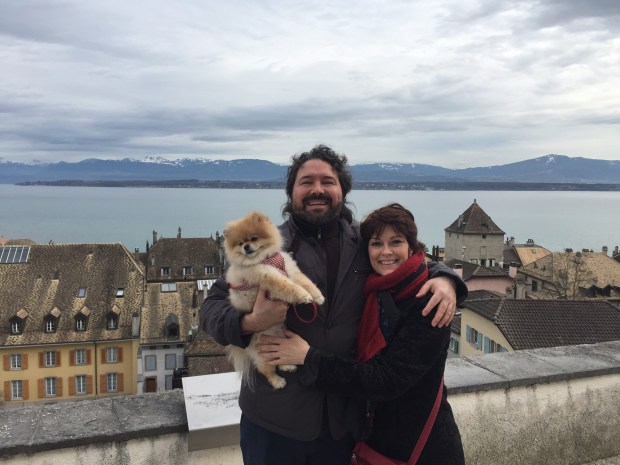
Jennifer Larmore with her husband Davide Vittone and dog Buffy

In 2008 my husband Davide Vittone, who plays the contrabass,  and I founded the ensemble Jennifer Larmore & Opus Five. By combining the sound of my voice with that of five string players we can experiment in different ways.

At our concerts we do everything: from purely classical concerts to ‘happenings’ with poetry, wine tastings, popular songs, crossovers….  Everything is possible. We perform all over the world: Dublin,  Bregenz, Mallorca, you name it. It often depends on Davide and his contracts.”

Trailer of the movie Le digressioni armoniche di Jennifer Larmore, in which a performance by Jennifer Larmore & Opus Five is combined with a choreography of Erica Cagliano.

Future plans

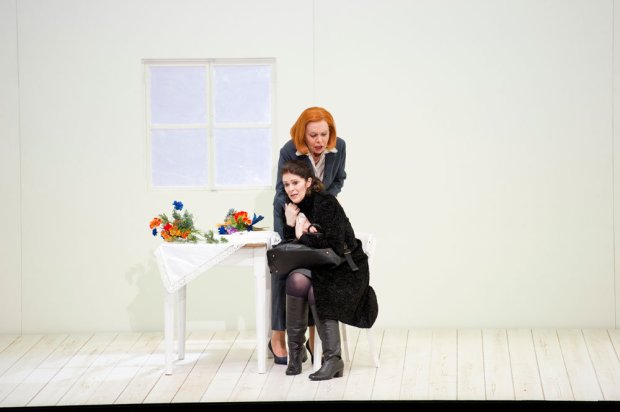
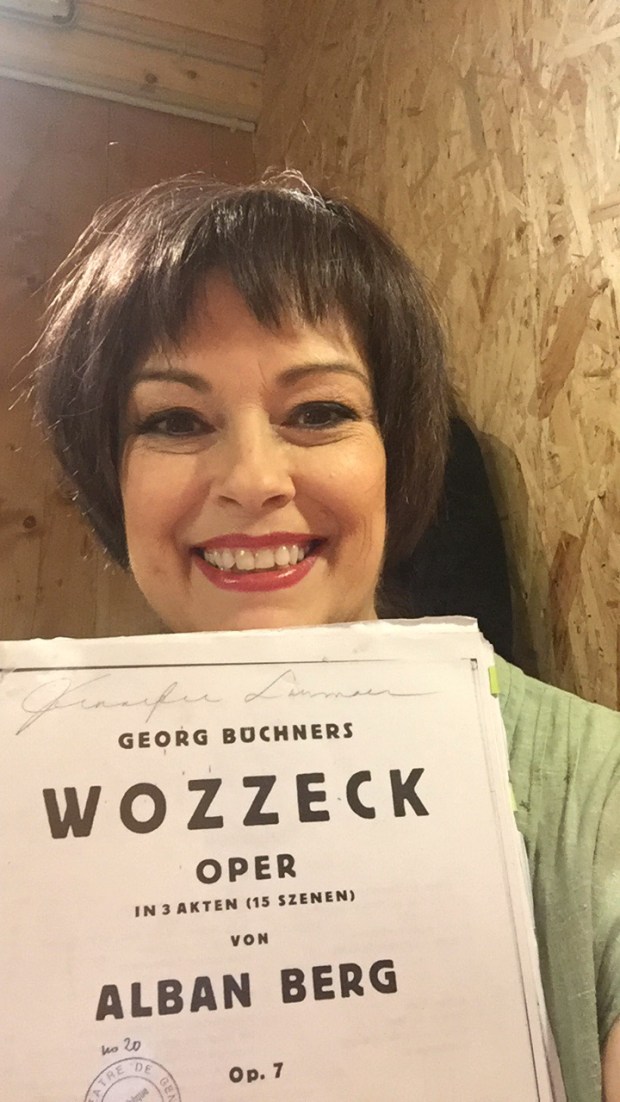
“I am studying hard at the moment! In the 2016/7 season I will add two new roles to my repertoire: Donna Elvira (in Don Giovanni) at the Theater an der Wien and Marie (Wozzeck) in Geneva.

Jenny MG_0476

Jenny marie ldd-GTG©CaroleParodi-8992

As Marie in Wozzeck in Geneva © Carole Parodi

Jenny 5182_Don_Giovanni_071 Werner Kmettisch

as Elvira at the Theater an der Wien © Werner Kmettisch

After that I will repeat my Geschwitz: the Amsterdam production will travel on to the Opera di Roma in May. But first a concert in Tuscany with Jennifer Larmore & Opus Five and then off to Luxembourg for a week of masterclasses. My book Una Voce will be presented there as well.”

Jenny boek

“I was asked for the role of Baba the Turk in Stravinsky’s The Rake’s Progress in Aix, a production that will travel to Amsterdam afterwards, but the director decided otherwise. Simon McBurney, who will stage the opera, came up with the idea to use a countertenor for the part, something with which the Aix direction saw no problems.”

“Nowadays directors have all the power. It used to be singers who had the final call,  but that was way before my time. It is a sign of the times: tickets have to be sold, and halls need to be filled. That seems impossible without creating a little spectacle. We live in a society that is highly oriented towards the visual, wanting more and more all the time. As long as it is sensational or crazy, because only then you get attention. Things have been like that for a long time, but never as much as now. I prefer the “less is more” approach, which you hardly encounter anymore these days.

English  translation: Remko Jas

Interview in Dutch: JENNIFER LARMORE

See also:

JENŮFA van Christoph Loy

LULU van Kentridge

LULU: discografie

Joseph Beer: Polnische Hochzeit. What a discovery!

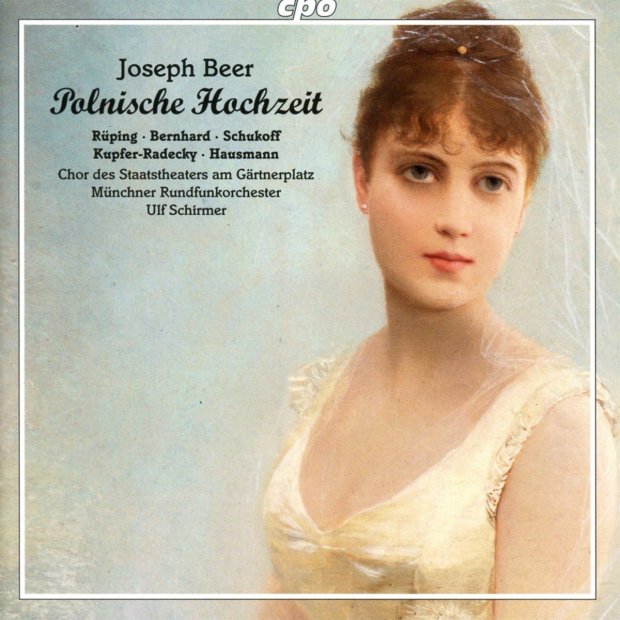
beer-cover

“In der Heimat blüh’n die Rosen – nicht für mich den Heimatlosen”, sings Count Boleslav in his first big solo in Polnische Hochzeit: “In my home country roses are blossoming, but not for me, I am without a homeland.” These are words from the 1937 show, premiered in Switzerland, that could just as easily come from the biography of the composer himself.

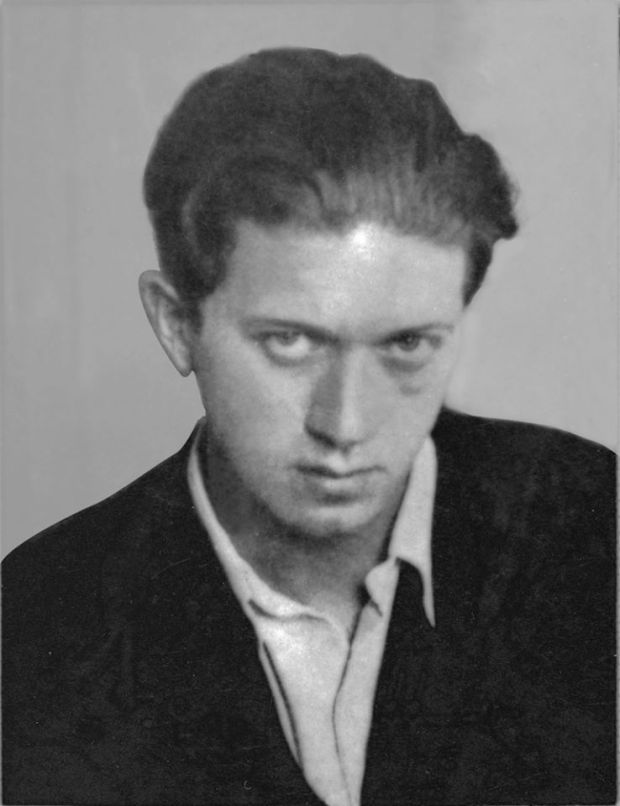
beer-jong

Joseph Beer in Vienna

Joseph Beer was born in 1908 in Lemberg (Lwów, Lviv). Back then, this was part of the Austrian-Hungarian empire, but 10 years later it was to become one of the most important cities of Poland. Beer studied in Vienna, after the “Anschluss” in 1938 he fled to France.

beer-and-his-siblings

Joseph Beer with his siblings

He first went to Paris. Helped by the director of the Théâtre du Châtelet he earned his living by writing music for the film Festival du Monde. After failing to reach the Unites States, he ended up in Nice. During his years in hiding Beer composed Stradella in Venice there, an opera in the verismo style (premiere Zurich, 1949), which turned out to be his final one. After the war Beer got the news that his parents were killed in Auschwitz. Also his friend, mentor and librettist of Polnische Hochzeit, Fritz Löhner-Beda, had not survived the camps.

beer-fritz-lohenr-beda

Fritz Löhner-Beda

In the early fifties Beer married Hanna Königsberg, also a Holocaust survivor (Königsberg fled Germany as a child, with her parents). Together with her and their two daughters he remained in Nice until his death in 1987.

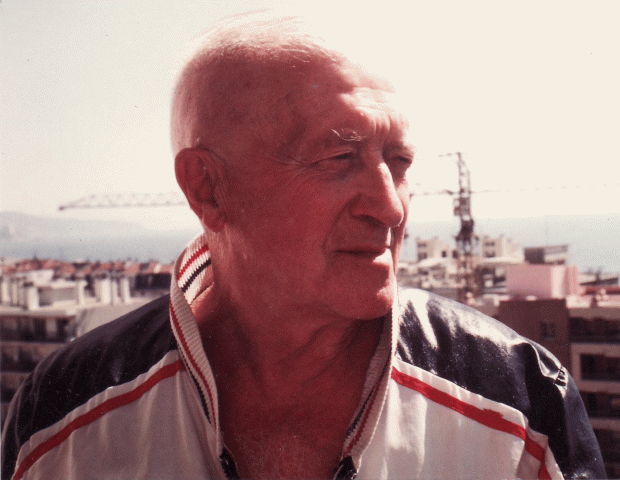
beer-1986

Joseph Beer in 1986 at his balcony in Nice

Beer never got over the sad news of the loss of his family. He withdrew from public life and stopped composing. Instead, he threw himself into studying musicology. In 1966 he defended his thesis: ‘The Evolution of Harmonic Style in the Work of Scriabin.’

After the war, Polnische Hochzeit was never performed again. Beer himself refused to give permission. We can only guess why he did so, but apparently the confrontation with the operetta was too painful for him. The operetta and its subject matter were too close to his heart.

But Beer never denied his roots. According to his daughter Béatrice he always felt a Jew in the first place, and immediately after, a Pole. Not an Austrian, please, but also not a Frenchman. He lived in France for almost fifty years, and was declared a French citizen after the war, but his heart remained in Lwów, although he never saw that city again. He also spoke Polish fluently, which no doubt helped him to get the rhythms in his score right.

beer-polnische-hochzeit-poster-world-premiere

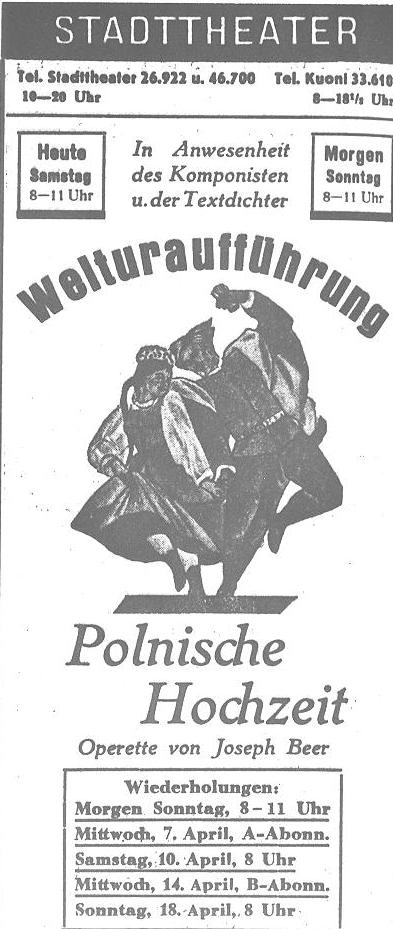
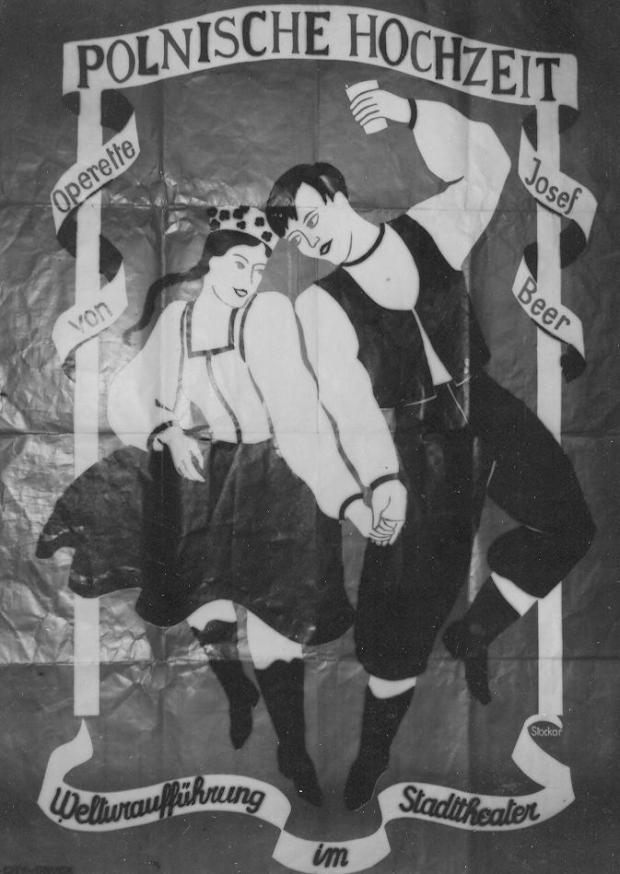
It is hard to believe, but Beer composed Polnische Hochzeit in only three weeks. Because of the difficult theater situation in Austria, the show was first presented in Switzerland – with a libretto by Kalman’s and Lehár’s co-authors Alfred Grünwald and Fritz Löhner-Beda, who also collaborated with Abraham. The premiere in 1937 in Zurich was an immediate hit. It was translated into eight languages and had 40 subsequent productions elsewhere, outside of Nazi Germany.

beer-poster-world-premiere-polnische

Under the title Les Noces Polonaises the new production of the opera was planned for October 1, 1939, in the Théâtre du Châtelet. Jan Kiepura and Martha Eggerth were supposed to sing the leading roles, but a month before opening night the Nazis started World War II.

Polnische Hochzeit is a voluptuous operetta in the Viennese tradition. One can detect echoes of Emmerich Kálmán and Paul Abraham, but the score is also filled by Polish folk dances and Jewish melodies. But there are also many “modern” syncopated numbers, e.g. the duet “Katzenaugen” (Cat’s Eyes), a veritable Charleston.

What sets Polnische Hochzeit apart is the patriotic story set in 1830 Poland, a country occupied by the Russians. Childhood sweethearts Boleslav and Jadja meet once more when Boleslav returns home. Jadja is now engaged to Boleslav’s rich uncle Staschek, but the witty maid Suze (a female sort of Figaro) finds a way to untangle the engagement and get Boleslav and Jadja together in the end. Just think of Don Pasquale..

Nikolai Schukoff is someone I encounter more and more often in operettas, and that makes me very happy. His tenor is very suited for the genre, much more than for his usual Wagnerian repertoire which has left traces in his voice. They are not dramatic, but he needs time to vocally warm up (it’s a live recording). By the time he sings the mazurka “Polenland, mein Heimatland” (Poland, my home country) he – and his voice – are in full swing. He dazzles with some glorious top notes and demonstrates a great sense of rhythm. In this, he is perfectly supported by conductor Ulf Schirmer. And the longing and passionate way Schukoff sings “Du bist meine große Liebe” (You are my big love) is something even colleagues like Nicolai Gedda couldn’t top.

Teaser for the cpo CD “Polnische Hochzeit” by Joseph Beer with Nikolai Schukoff:

Martina Rüping is a wonderful Jadja. She sings “Wenn die Mädel zu Mazurka gehen” with warm soprano tones, and she adds a certain melancholy that is touching, as is the song itself. Just like the duet “Herz and Herz” (heart to heart). I melted away.

Michael Kupfer-Radecky is an impressive Count Staschek, and Susanne Bernhard a wonderful as Suze.

It’s certainly one of the best CPO operetta releases.

The 1st page of the young heroin Jadja’s gorgeous aria (Wunderbare Träume)beer-aria-jadjaBéatrice Beer (composer’s daughter) sings Wunderbare Träume:
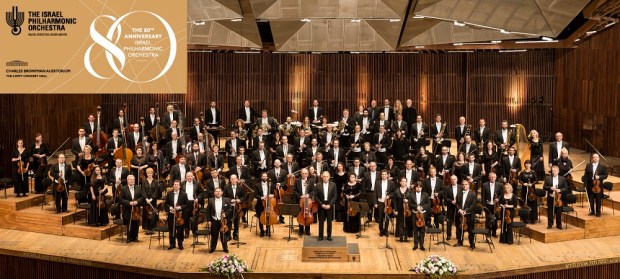
 

Joseph Beer
Polnische Hochzeit
Martina Rüping, Susanne Bernhard, Nikolai Schukoff, Michael Kupfer-Radecky, Mathias Hausmann e.a.
Chor des Staatstheater am Gärtnerplatz; Münchner Rundfunkorchester olv Ulf Schirmer
CPO 5550592

English translation: Kevin Clarke and Remko Jas

In Dutch:POLNISCHE HOCHZEIT van JOSEPH BEER

More Schukoff:
EINE FLORENTINISCHE TRAGÖDIE/GIANNI SCHICCHI. Amsterdam november 2017

DER ZIGEUNERBARON


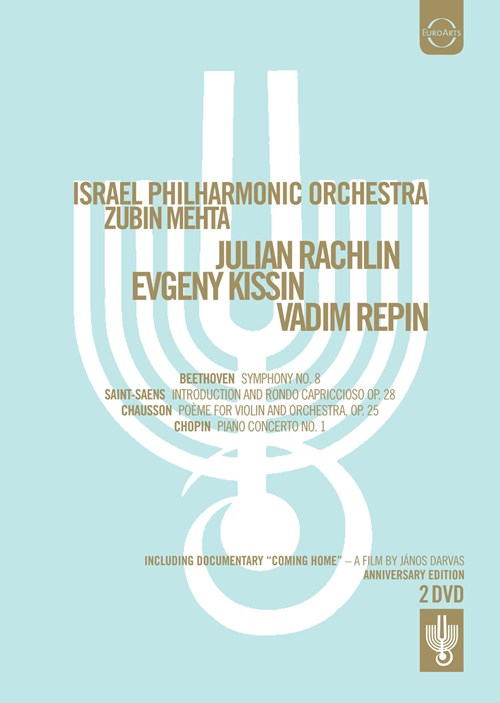
Coming home: Israel Philharmonic Orchestra

 For English translation: scroll down

israel-80

Op 24 december 2011 werd het Israel Philharmonic Orchestra vijfenzeventig jaar oud. Het verjaardagsfeest werd uitbundig gevierd met een concert waar je alleen maar van kan watertanden. De feestelijkheden vonden plaats in het Hangar 11 in Tel Aviv, een meer dan een prachtige locatie gesitueerd in de oude haven van de stad

israel

Allereerst was er Zubin Mehta. De van oorsprong Indiase dirigent heeft zijn hart en ziel aan het orkest heeft verpand en als dank werd hij in 1981 door het orkest met “levenslang” beloond als hun artistiek directeur. Zijn uitvoering van de achtste symfonie van Beethoven  stond als een huis, maar de bijdragen van de solisten hebben het puur orkestrale overschaduwd.

evgeny-kissin

Evgeny Kissin schitterde in het eerste piano concert van Chopin. De klank was onmiskenbaar Pools, de romantiek volop aanwezig en de toeschouwers hadden tranen in hun ogen. En ik, gezeten op mijn gemakkelijke bank ik Amsterdam vond het beeld verdacht wazig worden.

De beide violisten, Julian Rachlin en Vadim Repin waren op hun eigen manier geniaal en aan elkaar gewaagd. Tegenover Rachlins een beetje dik aangezette, volbloed romantische klank stond een slanke toon van Repin. Nu is de door Repin gespeelde Poème van Chausson van een iets ander kaliber dan Introduction et Rondo Capriccioso van Saint-Saëns, maar de Sarabande uit de tweede Partita van Bach was in Rachlins handen als was zo kneedbaar.

israel-huberman

Bronislaw Huberman

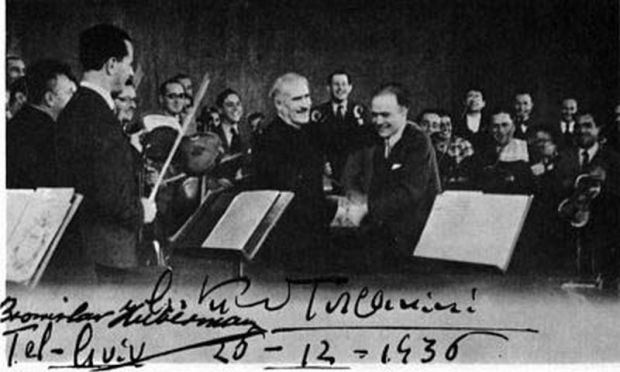
En dan is er de documentaire, over de beginjaren van het orkest. Wat je te zien krijgt is van een onschatbare waarde. Bronisław Huberman en zijn idealistisch plan, waarmee hij niet alleen één van de beste orkestra’s ter wereld heeft gecreëerd maar ook honderden levens heeft gered. Arturo Toscanini in actie. Jonge Bernstein spelend voor het jonge leger. Ontroerende familieverhalen…..

Trailer:

Ik denk niet dat de documentaire ooit op onze TV komt. Ga naar de winkel en koop de dvd. Ga er rustig voor zitten, neem er de tijd voor, geniet er van en laat je ontroeren.

Israel Philharmonic at 75
Solisten: Julian Rachlin, Vadim Repin (viool), Evgeny Kissin (piano)
Werken van Bach, Beethoven, Chopin, Chausson en Saint-Saëns
Euroarts 2059094 • 95’(concert) + 52’(documentaire)

Eén van de mooiste opnamen van het Sinfonia Concertante van Mozart, met Itzhak Perlman en Pinchas Zukerma werd opgenomen tijdens het Huberman Festival in 1982. Het Israel Philharmonic staat onder leiding van Zubin Mehta.

ENGLISH

Israel Philharmonic

The Israel Philharmonic Orchestra turned 75 years old on december 24, 2011. The anniversary was celebrated abundantly with a concert that was enough to make anyone’s mouth water. The festivities took place in Hangar 11 in Tel Aviv, an exceptionally beautiful location situated in the old port of the city.

First of all, there was Zubin Mehta. The conductor of Indian origin has devoted heart and soul to the orchestra, for which he was rewarded by being named Music Director for Life in 1981. His performance of Beethoven’s Eighth was rock solid, but the contributions of the soloists surpassed the orchestral virtuosity.

Evgeny Kissin was brilliant in Chopin’s First Piano Concerto. The sound, unmistakably Polish and highly romantic brought the audience to tears. As for me, on my comfortable couch in Amsterdam, my TV screen got suspiciously hazy.

Both violinists, Julian Rachlin and Vadim Repin were genial in their own way, and a match for each other. In contrast to Rachlin’s slightly emphatic, full-blooded, romantic sound,  Repin’s tone was more transparent. I need to add that Chausson’s Poème played by Repin is in a different league than Saint-Saëns‘ Introduction et Rondo Capriccioso, but the Sarabande from Bach’s second Partita was as wax in Rachlin’s hands.

In addition there is a documentary on the early years of the orchestra. What we get to see here is invaluable. Bronisław Huberman and his idealistic plan, with which he not only created one of the greatest orchestras in the world but saved hundreds of lives as well. Arturo Toscanini in action. A young Bernstein performing for the young army. Moving family histories….

I doubt this documentary will ever be shown on Dutch TV. So go to the store and buy the dvd. Put your feet up, take the time for it, enjoy, and be moved.

English translation: Remko Jas

Zie ook: International Arthur Rubinstein Piano Master Competition. Wedstrijd met menselijk gezicht

Offenbach’s Bavarian Romp “FANTASIO” – Finally On Disc And Complete

fantasio_front_cover_final

Offenbach aficionados may rejoice. Here is the first complete recording of his opéra comique in 3 acts, 4 tableaux, Fantasio It is based on Alfred de Musset 1834 stage play of ther same title. The musical version was not a big success at the time of its premiere at the Salle Favart in Paris, in January 1872, but like so many Offenbach titles, Fantasio was nonetheless produced at the Theater an der Wien a month later, it was also seen in Graz and Prague in October 1872, and Berlin in 1873. A revival, in a new version, was mounted in Magdeburg in June 1927 as Der Narr der Prinzessin. Then, it seems, it was forgotten for a long time.

Offenbach later re-used the chorus of students from the first act of Fantasio in The Tales of Hoffmann, where it becomes the famous student chorus in the prologue, and the voice of Antonia’s mother in act 3 of Hoffmann enters with a theme from the overture of Fantasio. So at least two tunes from Fantasio have become very well known, in a new context.

12 years ago, Anne Sofie von Otter recorded two numbers from Fantasio for her wonderful Offenbach album on Deutsche Grammophon. I remember thinking, back then, how much I would love to hear the complete score after von Otter’s dazzling rendition of the “Ballad to the Moon” and the big love duett. What fascinating music!

It was only a question of time, I guess, till someone heard my prayers and answered them. Master of Offenbach reconstructions, Jean-Christophe Keck, had also taken an interest in Fantasio. It had been revived in October 2000 at the Opéra de Rennes in a version reassembled by him. The production by Vincent Vittoz went to Tours as well, then onto Nantes and Angers. The show was also performed at the summer festival of Opernbühne Bad Aibling in 2003.

Keck argues that one reason for the long neglect of Fantasio was that it has been difficult to locate a performing edition; only a vocal score was published at the time of the premiere, along with a “corrupt” and re-orchestrated German version.

Keck went back to the first Parisian version from 1872. His “final” re-assembled score was performed live in December 2013 London, in a concert organized by Opera Rara. They then sent their team into the studio to record the show. Just in time for christmas, the label now released the double disc. Thus making Fantasio available for all the world to hear.

The story, in a nut shell, is this: to be close to his love, Princess Elsbeth, the young Munich student Fantasio dresses up as a court jester and enters the palace. En passant he stops the war with Mantua (on the other side of the Bavarian Alps), a deed for which he is given a royal title in the end.

Sarah Connolly is a warm, melancholic and at times decisive Fantasio. Not particularly “Bavarian,” nor typically French. But a joy to listen to. As her Elsbeth, Opera Rara could not have chosen a more beautiful soprano voice than Brenda Rae. In their big duet, the voices melt into one, caress one another and glow next to each other. It is breathtakingly beautiful to listen to them!

All other soloists are also wonderful to listen to, I find, together with the great Opera Rara Chorus they are fabulously accompanied by Sir Marc Elder and the Orchestra of the Age of Enlightenment.

All of you who enjoyed L’Etoile (1877) at De Nationale Opera in Amsterdam: listen to the number “Quand l’ombre des arbres,” that starts with the chorus and is followed by Elsbeth’s aria “Cachons l’ennui” at the start of act 2. You’ll realize where most of Chabrier’s great ideas come from. For operetta and Offenbach fans, this double CD is a must have.


English translation: Kevin Clarke

For the oiginal Dutch/ versie in het Nederlands:

FANTASIO

MIECZYSŁAW WEINBERG: THE PASSENGER

 61bf1t6tdfl-_sl1000_

Time: early sixties. The war not yet forgotten, perhaps, but  definitely over. It is possible to be happy again, and enjoy life.

vlcsnap-passengerneostf00001

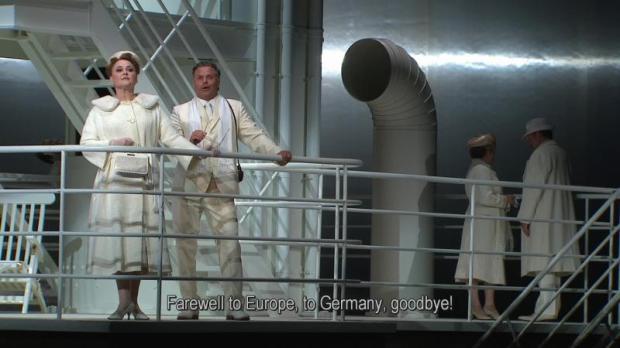
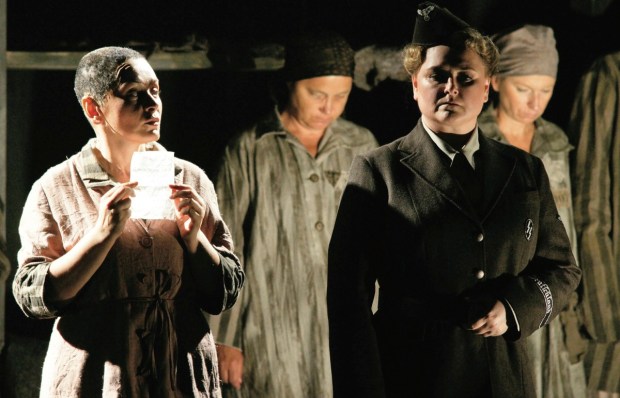
Amongst the passengers on the ocean liner is a German diplomat, on his way to Brazil with his wife Lisa to occupy an important diplomatic position.  Suddenly,  a strange woman appears and  confronts Lisa with her past. Completely shattered, Lisa feels forced to confess her past to her husband. She was an active SS member, and worked as an Aufseherin in Auschwitz. The strange woman reminds her of Martha, a Polish prisoner whose death she thinks she is responsible for.

vlcsnap-passengerneostf00011

Whether the strange woman really is Martha, or guilt makes Lisa imagine it remains uncertain. In her mind Lisa returns to the Hölle and relives the events of the past.

SONY DSC

“Die Passagerin” (Пассажирка) was the first opera by Mieczysław Weinberg, a Polish Jew who fled to the Soviet Union in 1939.

The Russian libretto (author: Alexander Medvedev) is based on an autobiographical novella by the Polish author Zofia Posmysz. Posmysz wrote her – partly fictional – meeting with her former Aufseherin in the “I” form, but from the perspective of the guard.

Weinberg composed the opera in 1968, when antisemitism in Poland and Russia again was at its height. This might have been the main reason the opera received its premiere performance only in 2006, in concert form.

The stage premiere took place in Bregenz in 2010 in an outstanding production by David Pountney. Together with set designer Johan Engels he had created a gigantic ship, with the action taking place on two levels. Present events took place on the top deck, where white and blue (heaven?) were the predominant colours.  The dark past was consigned to the lowest levels of the ship, like the subconscious.

passengerstagehdl416

Most of the opera is sung in German and Russian, but Martha sings her two big arias in Polish. We also briefly hear Czech, French and Greek.

Nothing in the opera leaves you cold, but the emotional highpoint for me is the moment Bach’s Chaconne in D is played instead of the Waltz ordered by the camp commander, with which Tadeusz (Martha’s fiance) seals his faith.

passenger

Teodor Currentzis has never been my favorite conductor, but he surpasses himself here. I had never heard him conduct with so much competence and passion.

Every role (and there are many!) is sung admirably. Elena Kelessidi is a most moving Martha. Artur Rucinski’s Tadeusz shows why he has made it to the top list of baritones. Svetlana Doneva (Katja) and Roberto Saccà (Walter) also manage to impress me.

But they all pale in comparison to Michelle Breedt. Her perfectly used voice has every human feeling in it. Love, fear, superiority or damaged ego, she is able to depict all of them equally. For her role as Lisa alone she definitely deserves an Oscar!

 English translation: Remko Jas

Mieczysław Weinberg
The Passenger
Michelle Breedt, Roberto Saccà, Elena Kelessidi, Artur Rucinski, Svetlana Doneva a.o.
Wiener Symphoniker conducted by Teodor Currentzis
Director: David Poutney
Arthaus 109080

For the Dutch version see: DIE PASSAGERIN (Пассажирка)

Interview with Michelle Breedt: MICHELLE BREEDT interview in English

Interview with Michelle Breedt

breedt

I have a huge fondness for South-African mezzo-soprano Michelle Breedt. I admire her charisma, how she embodies the life of a character, and her voice, of course: soft, round and warm. With the high register of a soprano, but with darker colours, and a calm, unforced lower register. Unmistakably a mezzo.

In 2004 (revival: 2011) the Netherlands got to hear her live on stage for the first time. She sang Octavian in Der Rosenkavalier by Richard Strauass at the National Opera. One of the most famous pants roles so many mezzos seem to play their fair share of.

breedt-met-schwanewilms

Michelle Breedt (Octavian) and Anne Schwanewilms (Marschallin) in Amsterdam. Foto: Monika Rittershaus

Besides Octavian, Breedt has other (young) men and boys in her repertory. Cherubino, of course, but also Chérubin by Massenet, Stefano (Roméo et Juliette), Nicklausse (Contes d’Hoffmann), Idamante (Idomeneo) and Annio (La Clemenza di Tito).

She also sings Carmen, of course, and Charlotte, Brangäne and Mélisande, but what really sets her apart from her colleague mezzos is the number of modern and contemporary roles in her repertory. Roles in modern and forgotten operas which she studies with a dedication that is typical of her and which she brings to life so memorably. Roles that demand a bigger than usual acting ability because her characters often move between good and evil.

Take for example Mère Marie in Poulenc’s Dialogues des Carmélites (a role she sang in november 2015 at the National Opera in Amsterdam), a woman who, for many people,  stands for religious fundamentalism.


michelle-breedt-marie

Michelle Breedt (Mère Marie), Sally Matthews (Blanche) Amsterdam, 2015.  Foto: Hans van de Boogaard

Is that really the case, though? What does Breedt think of this herself?  Of Marie, but also of those other two unconventional characters: Lisa in Die Passagierin  by Weinberg, and Cayetana, Duchess of Alba in Goya by Menotti.

The day we spoke to each other, Breedt was in Spain, singing Fricka at the Oviedo Summer Festival.

breedt-fricka

Michelle Breedt as Fricka

“I am not very fond of Fricka. It is a wonderful role, of course, very dramatic too in her confrontation with Wotan. To me, Fricka is too one-dimensional, too certain of herself and her own truth. Only she knows what is good. No, if it has to to be Wagner, give me Brangäne. Brangäne has doubts, which make her react spontaneously and emotionally. I can do so much more with that.”

Breedt (Brangäne) with Iréne Theorin (Isolde):

Breedt has been singing for many years at the largest opera houses of the world, but she gained special recognition for the part of Lisa, a former SS guard in Auschwitz, in Mieczysław Weinberg’s Die Passagierin . Breedt created the part at the world premiere in 2010 in Bregenz and repeated it in 2011 (in English) at the English National Opera, and in 2014 at Houston Grand Opera.

 breedt-passenger

“In Bregenz I met Zofia Przesmysz, the author of the book the opera is based on, but I did not discuss the role with her. I also did not read the book.  I specifically did not want to do that.  I wanted to remain open to the role as much as possible, because I needed to transmit the reality of the opera. Also people who had not read the book or did no see the movie should be able to understand the opera. My starting point was Weinberg’s music, which I studied intensely. I wanted to be as faithful to his music as possible. His music is truly magnificent. I had to stay faithful to the role he wanted. His music speaks a natural language. In addition to the music, I had the libretto. I did a lot of research on my own too. An American book on German female camp guards was extremely helpful. I had to be careful not to make Lisa into a caricature: after all, the libretto is written from her perspective.”

“I am from South-Africa and I have lived through the Apartheid. I know from experience you don’t know everything, cannot know everything, even if you are right in the middle of it.  So I can more or less understand people who say they did not know anything about it.” After a short silence she softly sings:  “I wanted to help them and they really liked me” … “The ship is a metaphor for practically everything. You are locked up, and cannot escape, but you sway on just like the sea.”

 breedt-lisa

Breedt also sang the role in English. Did that make a difference? “O yes! I really hated singing it in English. The opera is very sensitive to language, and English makes Lisa sound too nice. It is really a language thing, German simply sounds harder.”


Another world premiere on Michelle Breedt’s repertory is Goya by Menotti, in which she sang Doña Cayetana, the Duchess of Albas.

Goya

Michelle Breedt (Cayetana) with Plácido Domingo (Goya)

” I am always curious and eager to learn and do a lot of background reading before I undertake a role. I try to get my inspiration from the historical context. So I studied the entire house of Alba, and the period they lived in. Cayetana was a free spirit, very brave as well, but she was also a manipulator. A highly complex personality of great psychological interest.”

In answer to my question whether she considers Mère Marie a manipulator as well she immediately said yes. But things are complicated.
“The libretto does not do her justice. She is certainly controversial, but she stands for what she believes in, her religion. I mean, how many people are prepared to die for their ideals?  For their faith? And no, of course you cannot compare her to the suicide attackers of today, because they want to take along as many innocent people as possible.  That is not the intention of true martyrdom.”

Trailer from Amsterdam:


“Marie has a very strong character, she would rather die as a nun than renounce her faith. The libretto is not fair to her, because it does not say what happens to her afterwards. It is her biggest tragedy that she cannot die together with the others, that she has to keep on living. That is her martyrdom. In fact, she is a deeply sad figure who has to continue living while all she wanted was to find death.” Breedt herself grew up in a religious family, can she identify with Marie? “I can identify more or less with the religious aspect, but the thought of a convent is alien to me. For me, that is one step too far. Shutting yourself off from the world is not for me. You miss out on life itself that way, which goes against my life’s philosophy. I love challenge, I love life.”

As opposed to many mezzos Breedt does not sing much Händel. Not much Verdi either. She does sing a lot of modern repertory, though.
“I am not a coloratura mezzo. My voice is different from that of Cecilia Bartoli. I am more someone of the long lines. There are not many Verdi roles that fit me either. Apart from Eboli, that is, and I have indeed sung her. I recorded a lot of modern and ‘Entartete’ music when I worked frequently with Gerd Albrecht. We did not have a lot of time, but it was too important not to do it, to leave it. I am extremly happy I did, because the operas are now documented.”

“My dream role?  Regardless whether I could sing it?”
“Oooo… don’t laugh!” she exclaims, chortling. “All those gorgeous Italian tenor favorites! Nessun dorma, Donna non vidi mai…
Seriously: “Kundry, perhaps. Or Sieglinde. Or Marie in Wozzeck. I would like to try out more “zwischenfach” roles. I am a real mezzo-soprano in the true meaning of the word: between soprano and alto.”

Michelle Breedt gives Masterclass in Bayreuth:

English translation: Remko Jas

Interview in Dutch: MICHELLE BREEDT

Review of The Passenger: MIECZYSŁAW WEINBERG: ‘THE PASSENGER’. English traslation

Interview with Carmen Giannattasio

carmen-grazia-fortuna-ward-victor-santiago

Photo: Victor Santiago

She is a strong woman. Like Leonora in Il trovatore, the role she performed in October 2015 at the National Opera in Amsterdam. A conversation with the Italian soprano Carmen Giannattasio. “I don’t owe anybody anything. I did it all by myself.”

Unter recently Dutch operagoers mainly knew her as the strict museum director in Damiano Michieletto’s production of Il Viaggio a Reims for the National Opera.

carmen-giannattasio-viaggio-a-reims-clarchen-matthias-baus

Photo: Clärche & Matthias Baus

Trailer from Michieletto’s production:

But Carmen Giannattasio’s fame extends far beyond that. She is one of the most famous belcanto sopranos emerging over the last few years.

The soprano, born on April 24, 1975, in Avellino, southern Italy, has a repertory consisting of dozens of familiar and less familiar roles, and her discography is much larger than one would expect. In October 2015 Giannattasio returned to Amsterdam for Leonora in Verdi’s Il Trovatore, a role she has sung previously in Zürich, Venice, and New York.

carmen-trov

As Leonora in Amsterdam with Francesco Meli as Manrico. Photo: Ruth Walz

Giannattasio studied the role of Leonora with Leyla Gencer, her teacher and mentor. It was also Gencer who prepared her for her La Scala debut in 2001, while she was still a student at the conservatory.

“Leyla Gencer perhaps was the most important person in my life. She coached and stimulated me. She believed in me unconditionally, and gave me the extra push I needed to go to La Scala. She was present when I made my debut there as Giulietta in Il Giorno di Regno.

Music in the convent

“I was two years old when I first discovered music. I’ll never forget that day, it will be etched on my memory forever.”

“It happened in a convent. I went to nursery school there, and was bored to death. You have to understand that I was a difficult child at the time, not very social. “Peculiar” would probably describe me best.  Our family had just been blessed with a new child, and I was fiercely jealous of my baby brother. I teased him, and nothing could be done with me. My parents wanted me to become more sociable, and learn how to get on with other children, that is why they sent me to nursery school at such an early age. And right there, in that convent nursery school, I heard music for the very first time.”

“It came from behind a closed door. When I opened it, I saw a piano. Sitting at it, was mother superior. It was she who was responsible for those divine sounds. I wanted to be able to do that too: I wanted to be part of the enchantment. So I kept begging for piano lessons at home until my parents gave in.”

“It was my piano teacher who discovered my voice, and who sent me to the conservatory. I was not so certain myself.  It did not help I did not care much for opera, which did not really touch me. I greatly preferred the piano! My father agreed with me: as a piano teacher at least I could make a living. It took three years before I suddenly saw the light. From that moment on, I acquired a real taste for singing.”

“Music was never enough for me. I also studied English and Russian literature, and even got my degrees. I speak Russian very well, and would love to sing Russian operas. Unfortunately, I am never asked to do so. Apparently people think those works can only be sung by Russians, and Italians can do no justice to them. A pity!”

carmengiannattasio-top

Photo: Opera Base


Operalia and Opera Rara

At the Operalia-contest in Paris in 2002 Giannattasio won both the first prize, and the audience prize. Did this help her to get on?

“Let me put it this way: everything you achieve, you do by yourself. Plácido Domingo is very kind and supportive, and after I won, he invited me to Los Angeles to participate in a gala, where I sang Desdemona in the fourth act of Otello, with Roberto Alagna. But in fact I don’t owe anybody anything. I did it all on my own, without any help from others.”

Carmen Giannattassio at the Operalia 2002:

The phrase ‘nobody has ever helped me, I did it on my own’ is repeated like a mantra throughout our conservation. Giannattasio repeats it once more when we discuss the unfamiliar Belcanto roles she has recorded for Opera Rara.

“I am really very proud I have done those recordings. Not everyone is willing to, for a good reason. You have to work extremely hard for just one performance, and one recording.”

“It is rather weird to study roles you will never sing a second time. You know it is a one-off, and after that, basta. Well, in most cases, anyhow. But I did it with a lot of pleasure. I was very young then, and more than willing to do it.  And I am really proud of that. I did it!”

Carmen Giannattasio discusses her recording of Bellini’s Il pirata for Opera Rara:

Elisabetta and Leonora

One of her most important recent roles is Elisabetta in Donizetti’s Maria Stuarda. She sang the role in London and Paris, in the same production, but with two different partners: in London, mezzo-soprano Joyce DiDonato, and in Paris the (light) soprano Aleksandra Kurzak. Does she sing and colour the role differently with another partner?

“No, of course not. The role remains the same, after all. You sing the notes and the words, and your partner is just your partner. Nothing changes. Well, perhaps a little, but not for me. DiDonato is a mezzo, and they transposed the score down for her. To me, that did not matter at all. Kurzak is a very temperamental woman. She is bursting with energy, and I like that very much, because it is important to have a partner who challenges you.”

Giannattasio and Kurzak in Maria Stuarda:

Giannattasio’s interpretation of Leonora reminds me a lot of Leyla Gencer, and I am not alone in that. On YouTube an admirer wrote under a video from Zürich: “Degna studentessa della Gencer… È stata una Leonora belissima. Finalmente una voce veramente verdiana. Mamma, è divino senza più aggettivi.”

I am particularly struck by the determination in her voice. Is Leonora a strong woman?

“O yes, certainly! But more importantly, she is young, not older than seventeen, eighteen at the most. Leonora is a teenager, and teenagers are the same throughout history. The moment they are in love, they think it is the most important thing in the world. Their love is everything to them! On top of it, they are impulsive, and think the world comes to an end when something stands between them and their love. And of course they all want to die, to die of and for love. Adolescents! Don’t forget Leonora is extraordinarily fascinated by a mysterious man she hardly knows anything about, not even his real name.”

‘The fondest memories I have of Il Trovatore are of a Metropolitan Opera production in 2012. David McVicar is a director I greatly admire. He is not really traditional, quite progressive, actually, but in his case, everything makes sense.  I have nothing against updating, by the way! It just as well possible to sing a role in a T-shirt and jeans, that does not affect the character at all.”

“I love to be challenged, otherwise things can get monotonous. You cannot endlessly repeat yourself. There are limits, however. Don’t touch the music or the libretto, those things should never be tampered with. Also, I don’t like extremes. I don’t think I would do anything a director asks of me, but I am willing to go far, yes. Fortunately, I have never been asked to cross my own boundaries yet.”

Trailer from Il Trovatore in Amsterdam:


Fashion and the future

carmen-it

Photo courtesy The IT Magazine

Giannattasio is one of the few opera stars who also works as a model. She is the face of Alberta Ferretti, Antonio Riva en Antonio Grimaldi, amongst others.

“Yes, I guess you could say I am a fashionista. I am fortunate there are people around who want to invest in me, and that certain brands have made me their ambassador. I am not really a model, and do not look like a model. I am a normal woman, like millions of others.”

Future plans? Dreams?

“I speak Russian, English, French, and Spanish. Not German, so no German repertoire for me. I could never sing an opera in a language I do not speak. Doing that, you are nothing more than a parrot, which is not for me. But I am still young, and who knows what will come on my path.”

“Norma always has been my dream role, because you can prove yourself with it not only as a singer, but as an actress as well. Now I have learned Norma, I don’t have any big wishes left anymore. One day I might sing Lady Macbeth, or Tosca, but not for the moment.”

Giannattasio sings ‘Casta Diva’ from Norma:

“I am more than happy with how my life, including my personal life, looks right now. I am also extremely proud of myself, because I did everything myself, no one ever helped me. Life is short, and I don’t want to plan anything.  I live by the day, and it feels just great like that.”

English translation: Remko Jas