Month: april 2019

Nabucco bij ZaterdagMatinee: een feest van gouden kelen

Nabucco Vassallo

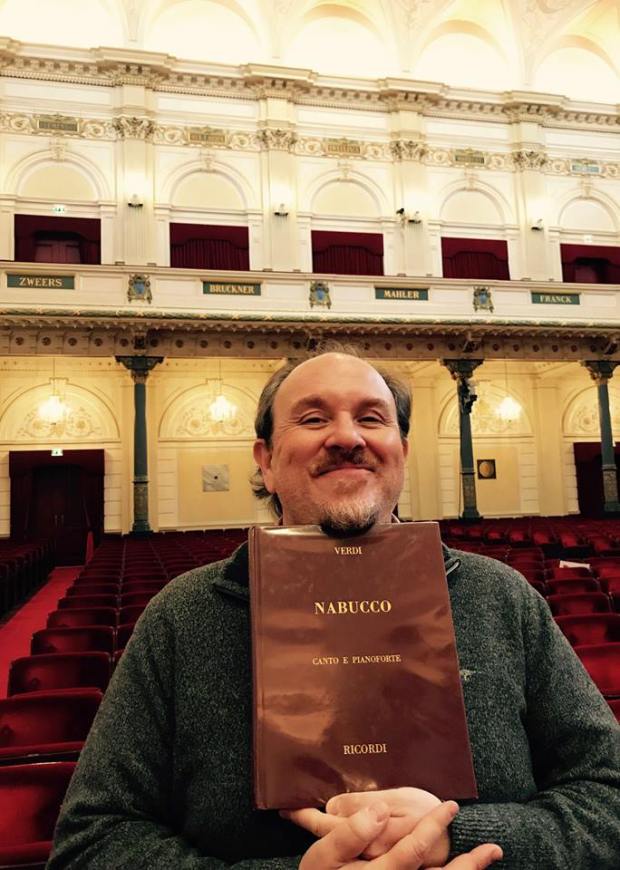
Franco Vassallo (Nabucco) in het Concertgebouw (credits: Facebook)

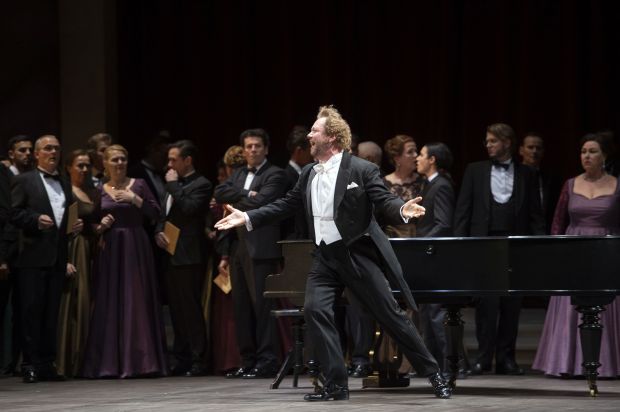
U gelooft mij waarschijnlijk niet, maar ik heb Nabucco, toch één van de bekendste opera’s van Verdi zaterdag 13 april 2019 voor het eerst _live_ gehoord. En ik was de enige niet. Hoe dat komt? Tja… Omdat de programmeurs van onze operahuizen het te min vonden? Te grote ‘meezing-gehalte’?  Omdat regisseurs er niets mee konden, de opera leent zich immers niet goed voor het updaten? Niet dat het tegenwoordig als argument kan worden gebruikt. Wat dan ook: eindelijk, eindelijk, eindelijk kwam Nabucco op bezoek naar Amsterdam. Het was het wachten waard, want de uitvoering in het Amsterdamse Concertgebouw was gewoon waanzinnig goed.

De uitvoering was godzijdank concertante, waardoor we niet gestoord werden door niet ter zake doende beelden en konden ons volledig op de geniale muziek concentreren. De première in La Scala in 1842 was een groot succes, zo groot zelfs dat ‘Va, pensiero…’ werd het officieuze volkslied van Italië.
Nabucco koor

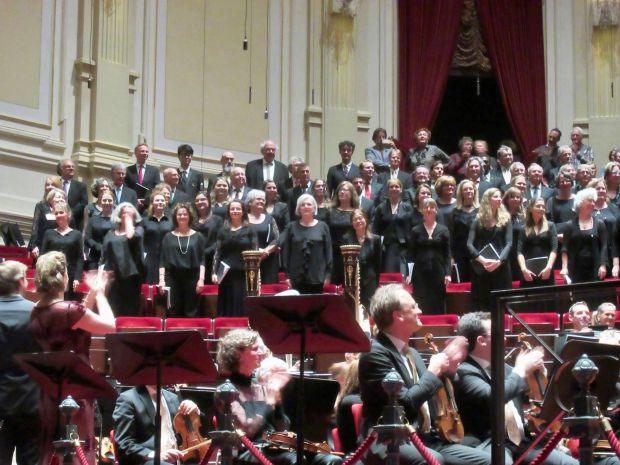
Het Groot Omroepkoor Foto: Lodi Lamie

Het was voor Groot Omroepkoor (instudering Klaas-Jan de Groot) een enorme uitdaging, want wie kent het slavenkoor niet? Ik denk, nee, ik weet zeker dat het de beroemdste koor-aria is die ooit werd gecomponeerd. Ik vermoed dat iedereen daar zat op te wachten, al biedt de opera uiteraard veel en veel meer. Welnu: de uitvoering was in één woord gewoon TOP! Formidabel. Met ogen dicht waande ik mij aan de oevers van Eufraat en droomde mee over de terugkomst naar Jeruzalem, naar Sion. Naar huis. Bravi.

Gelukkig heeft Giancarlo Andretta hier geen rustpauze ingelast waardoor we meteen door gingen met de handeling. En waardoor het niet ontspoorde in een (op dit moment in de opera niet echt gewenst) applaus. En waardoor ‘Niuna pietra’, de grote aria van Zaccaria nu alle aandacht kreeg die het verdiende.
Nabucco meer Relyea in Minnesota

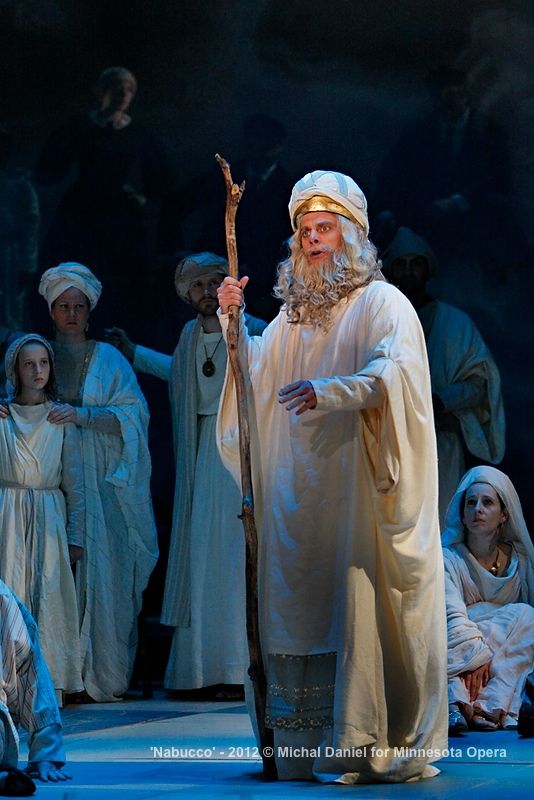
John Relyea als Zaccaria in Minnesota

Zaccaria werd gezongen door de Canadese bas, John Relyea. Het was de tweede keer dat ik hem live hoorde. De eerste keer, in het Requiem van Verdi werd ik een beetje teleurgesteld en die indruk heeft hij nu ruimschoots goedgemaakt. Zijn bas is immens groot en beschikt over veel kleuren. Onvoorstelbaar prachtig hoe hij al die verschillende emoties met zijn stem wist te uiten. Streng, troostend, hoopgevend, treurend… Alles zat er in. Schitterend.

John Relyea over Nabucco :

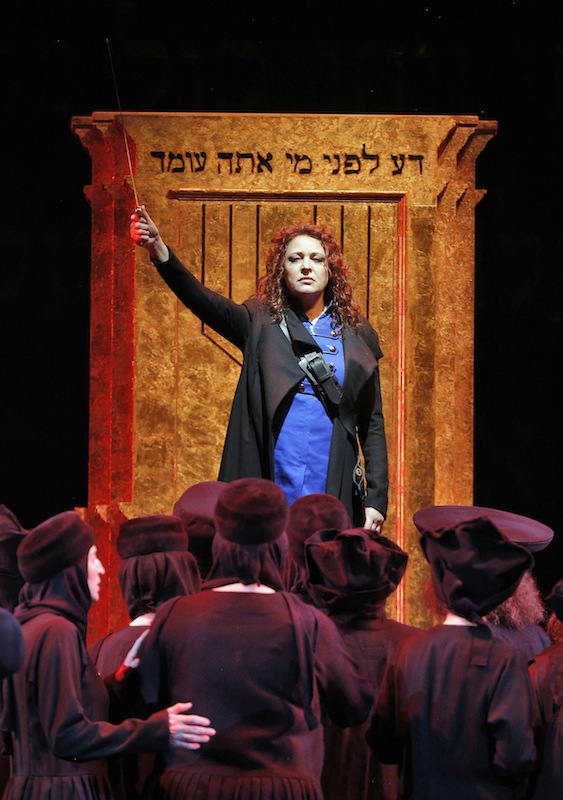
Een goede Nabucco valt of staat met de juiste zangers voor de twee hoofdrollen: Nabucco en Abigaile en zijn niet gauw gevonden. Abigaile is een killer van een rol die van haar vertolkster een dijk van een stem met een enorm bereik (van het lage mezzo tot de hoogste regionen van het dramatische sopraanregister) verlangt. Heel wat zangeressen hebben hun stem daar kapot op gezongen, om te beginnen met Giuseppina Strepponi, haar eerste vertolkster en de latere mevrouw Verdi. Laat het maar aan Tatjana Serjan over! Wat een strot! Wat een volume! En wat een inlevingsvermogen! En nu denk niet dat zij voortdurend forte en fortissimo zong (al vereist die rol het best vaak), want Serjan beschikt ook over prachtige fluisterende tonen en in haar berouwaria wist zij mijn hart diep te raken met haar piano en pianissimo
NABUCCO_TATIANA-SERJAN_

Tatiana Serjan als Abigaille in de Lyric Opera in Chicago. ©: Cory Weaver

Nabucco werd gezongen door de Italiaanse Franco Vassallo. Ook voor hem was het niet de eerste keer dat hij de rol zong en dat was goed te horen. Ooit dacht ik dat de echte dramatische Verdi-baritons uitgestorven waren, bleek er toch eentje de operawereld onveilig te maken. Daarbij moet ik toegeven dat hij als Nabucco veel beter op zijn plaats is (was) dan als Don Carlo (La Forza del Destino).

Iris van Wijnen was een mooie lyrische, licht getimbreerde Fenena. Een klein beetje onzeker in het begin, wat eigenlijk die rol goed ten pas kwam. Zeker in haar gebed in de laatste acte wist zij mij buitengewoon te ontroeren. Maar in haar confrontatie scène met Abigaile liet zij horen dat haar mooie mezzo meer te bieden heeft dan lyriek alleen.

De Italiaanse tenor Giordano Lucá was een zeer goede Ismaele. Wellicht minder lyrisch dan die rol doorgaans wordt gezongen, maar met de mooie kleurschakeringen in zijn stem wist hij mij goed te overtuigen.

Jeannette van Schaik was zeer goed in haar kleine rol van Anna en Jasper Leever leverde een uitzonderlijke prestatie als Il Gran Sacerdote. Wat boffen we toch in Nederland met zo veel groots zangtalent!
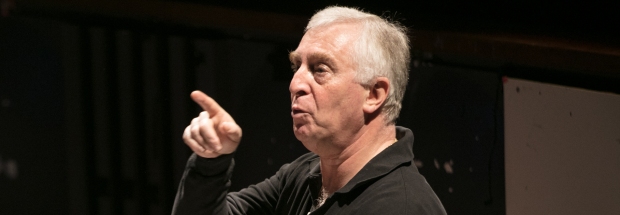
Nabucco giancarlo-andretta-foto-mats-b-ckernieuw

Giancarlo Andretta © mats-b-ckernieuw
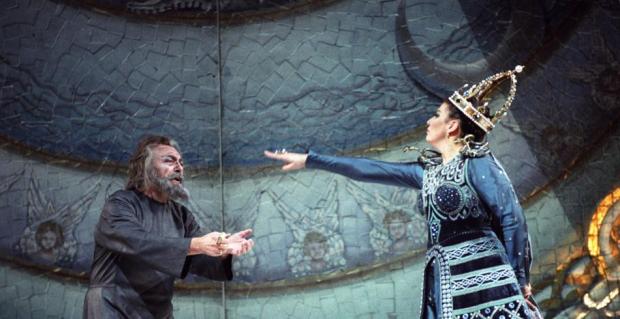
Het Radio Filharmonisch Orkest was goed op dreef. Onder de zeer inspirerende leiding van Giancarlo Andretta speelden ze de noten alsof hun leven ervan afhing. Soms misschien een beetje té: het geluid, zeker voor de pauze was soms niet te harden! Al met al: alweer een Matinee om nooit te vergeten!

Gehoord op 13 april 2019 in het Concertgebouw in Amsterdam

Over Abigaille’s van Maria Guleghina

nabucco-1996-con-guleghina-351672lmn

Renato Bruson (Nabucco) en Maria Guleghina (Abigaile). La Scala 1996

Nabucco, één van de populairste en meest geliefde opera’s van Verdi, werd de laatste – twintig? dertig? – jaar helemaal niet zo vaak uitgevoerd, zeker niet in de grote en gerenommeerde operahuizen, Arena di Verona daargelaten. Dat komt, denk ik – onder andere – door de regisseurs die er geen raad mee weten want echt updaten lukt de opera niet. Tenzij je een absurd politiek sausje aan wilt geven (hopelijk breng ik niemand op een idee).

Een beetje ligt het ook aan Abigaile, een killer van een rol die van haar vertolkster een dijk van een stem met een enorm bereik (van het lage mezzo tot de hoogste regionen van het dramatische sopraanregister) verlangt. Heel wat zangeressen hebben hun stem daar kapot op gezongen, om te beginnen met Giuseppina Strepponi, haar eerste vertolkster en de latere mevrouw Verdi.
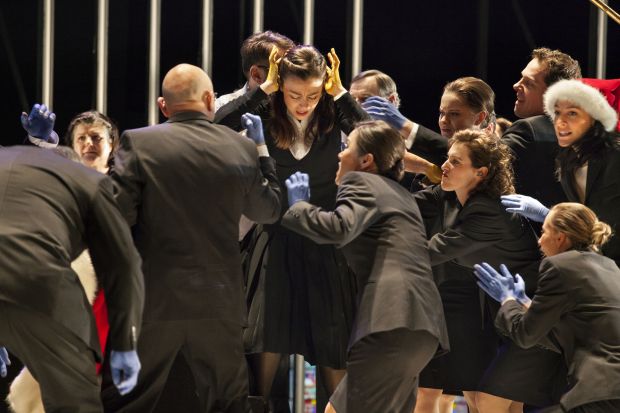
Juist met die rol heeft Maria Guleghina in 1996 haar debuut in Verona gemaakt en sindsdien werd het haar paradepaardje. Terecht. Met haar bitchy en zelfverzekerde uitstraling is ze het prototype van Abigaile. Haar kernachtige, metalige stem met een goede laagte en een stralende hoogte, met fantastische registerovergangen en voldoende overtuigingskracht, lijkt er zowat voor geschapen.

Nabucco Tokyo

In 1998 zong ze haar in Tokyo, met naast zich een zeer ontroerende Renato Bruson in de hoofdrol, een autoritaire Ferrucio Furlanetto (Zaccaria) en de toen nog zeer lyrische Fabio Armiliato (Ismaele). Guleghina heeft een speciale band met Japan, ze wordt daar zowat op handen gedragen, en het enthousiasme van het publiek is op de live opgenomen cd’s duidelijk hoorbaar (Naïve V 5158)


Nabucco Guleghina New York

In 2002 zong zij Abigaille in een mooie, zij het iets statische productie van Elijah Moshinsky in de Metropolitan Opera in New York. James Levine koos voor nogal langzame tempi, en Samuel Ramey (Zaccaria) heeft duidelijk zijn beste tijd gehad. Maar Juan Pons in de hoofdrol was bij vlagen zeer ontroerend en Gwyn Hughes Jones zong een stralende Ismale. Het Slavenkoor werd gebisseerd, toen nog een unicum in de MET. (DG 0730779)

Guleghina zingt ‘Anch’io dischiuso un giorno’ en ‘Salgo già del trono aurato’ in New York:

Twenty years after his death: Rolf Liebermann In Memoriam

Liebermann

Rolf Liebermann © Claude Truong-Ngoc (1980

The Swiss composer Rolf Liebermann (14 September 1910 – 2 January 1999) is nowadays seen as the father of Regietheater, although he meant something different from the current conceptualism in which the boundary between the permissible and the ridiculous is explored and often crossed.

Under his leadership, the Hamburg State Opera, where he ruled for fourteen years between 1959 and 1973, grew into one of the best and most talked-about opera houses in the world. Liebermann created a good, solid and varied repertoire with special attention to contemporary works, built a fantastic artists’ ensemble and attracted foreign stars and would-be stars (Plácido Domingo’s world career began in Hamburg). Arlene Saunders, William Workman, Raymond Wolansky, Franz Grundhebber, Tom Krause, Hans Sotin, Toni Blankenheim – they all formed a solid and close-knit ensemble, with the occasional addition of a bigger (read: more familiar to the general public) name: Lucia Popp in Fidelio and Zar und Zimmerman, Cristina Deutekom, Dietrich Fischer-Dieskau and Nicolai Gedda in Die Zauberflöte, Sena Jurinac in Wozzeck.

Liebermann boek

Liebermann also regularly commissioned compositions. In the years of his management no less than 28 operas and ballets had their world premiere, a number many an opera house should be jealous of. Later, in his autobiographical book ‘Opernjahre’, Liebermann described his time at the Hamburg State Opera as the happiest time of his life. I can imagine that. If you were able to realise so much beauty at such a high level, you can only be intensely happy.

Luckily for us, who have not (consciously) experienced those years, Liebermann was also thinking about the future and had director Joachim Hess record thirteen productions for television. Most of the recordings took place in a studio. With the means available at the time, it was impossible to record sound and images at the same time. This meant that first a musical soundtrack had to be pre- recorded, after which the singers could mime to it in the studio very precisely, so everything was in sync.

Liebermann box

About ten years ago, Arthaus Musik released these operas on DVD. Of course, by today’s technical standards, it’s all far from perfect. The sound is mono and the camera is rather static, but for the enthusiast there is a lot to enjoy, not in the least because of the repertoire.

PENDERECKI: DIE TEUFEL VON LOUDUN

Liebermann Penderski

In 1967 Liebermann approached Krzysztof Penderecki with the request to compose an opera for Hamburg. The result was Die Teufel von Loudun, for which the composer himself had written the libretto. The story is based on a true event: in Loudun (France) in 1634, a Prioress of the Ursuline Order accused a priest of diabolical practices for which he was sentenced to be burned at the stake.

The opera had its world premiere on 20 June 1969 and shortly afterwards it was filmed. The leading role of mother Jeanne was performed in a very impressive way by Tatiana Troyanos, another great star whose career began in Hamburg (after she had received a grant from the Rockefeller Foundation to further her education in Europe, she auditioned in Hamburg where Liebermann immediately offered her a contract). Her portrait of the hunchbacked demonically possessed nun with sexual visions is breathtaking. Everything about her, from head to toe, acts. Her facial expression changes with every phrase she sings and her voice chills you to the bone.

The horror-like music with its many glissandi and octave leaps evokes a feeling of unease and makes the opera, despite the immense tension, rather uncomfortable to watch. The staging, with a lot of nudity and explicit sex scenes, is very progressive for that time and I can imagine it was experienced as shocking!

First act of DIE TEUFEL VON LOUDUN:

Speaking of music: did you know that William Friedkin used music by Penderecki for his film The Exorcist?

GIAN CARLO MENOTTI: HILFE, HILFE DIE GLOBOLINKS!

Liebramann Globolinks

Especially for Hamburg, the Italian-American composer and director Gian Carlo Menotti composed Hilfe, Hilfe Die Globolinks!, an opera ‘for children and for those who love children’. The premiere took place in 1968 and a year later it was filmed in the studio.

I must confess that I’m not a big fan of children’s operas, but I’ve been shamelessly enjoying this one. It is an irresistible fairy tale about aliens (Globolinks) who are allergic to music and can only be defeated by means of music.

The images are very sensational for that period, full of colour and movement and the forest little Emily (the irresistible Edith Mathis) has to go through with her violet to get help is really frightening. The aliens are a bit of a let-down according to modern standards, but that doesn’t matter, it gives the whole a cuddly shine. The work is bursting with humour and irony; musical barbarians are lashed out at: the school principal who doesn’t like music turns into an alien himself.

There are also a lot of one-liners (“music leads you to the right path” or “when music dies, the end of the world is near”). It is incomprehensible a work like this is not performed all the time in every school (and I don’t mean just for the children), the subject is (and remains) very topical.

None of the roles, including the children, could be better cast, and this once again proves the high standard of the Hamburg ensemble. In which other city would you find so many great singers/actors who can perform so many different roles on such a high level?


Translated with the http://www.DeepL.com/Translator

In Dutch: Rolf Liebermann In Memoriam

Betoverende Little Night

little Night Music

 een daverend slotapplaus voor cast en orkest van ‘A little night music’, Stadsschouwburg Utrecht, 9 april 2019 © Sander Boonstra

TEKST: SANDER BOONSTRA

Hoe bijzonder is het om het beste van meerdere werelden voorgeschoteld te krijgen? A little night music door de Reisopera gaf het het Nederlandse publiek de afgelopen weken. Met een cast samengesteld uit de werelden van opera, musical en toneel sloten ze gisteren hun tour af in een bijna uitverkochte Utrechtse stadsschouwburg. Inclusief het Gelders Orkest.

A Little night music

© Marco Borggreve

En wat een betoverende avond. Afgezien van het feit dat Sondheim’s lyrics en muziek, samen met het verhaal van Hugh Wheeler voor zich spreken, de enscenering van Zack Winokur klopt in alles. Decor (Charlap Hyman & Herrero) en prachtige kostuums (Cynthia Talmadge) vullen aan om het tot één geheel te maken. Artistiek leider Nicolas Mansfield schrijft in het programmaboekje, dat hij bewust heeft gekozen voor “een artistiek team dat afkomstig is uit de Verenigde Staten”. En dat werpt absoluut zijn vruchten af. De scherpe woordspelingen worden meer dan prima door de cast geïnterpreteerd en neergezet, al wil de Nederlandse vertaling nog wel eens de plank misslaan. Toch een typisch gevalletje van taalidioom. Aan de andere kant heeft Mansfield volledig gelijk, dat de overwegend jonge castleden Sondheimkenners zijn, iets wat mijn Sondheimhart sneller doet kloppen!

De cast is energiek, enthousiast en van ongekend hoog niveau. Niemand die er echt bovenuit steekt, daarvoor zijn de achtergronden te verschillend en vind ik het moeilijk vergelijken. En zonder andere castleden tekort te doen, omdat iedereen het simpelweg fantastisch doet, toch een paar bijzondere vermeldingen: Susan Rigvava-Dumas als Desirée voor haar uitvoering van het alom bekende ‘Send in the clowns’ (een muisstille zaal tot tranen geroerd) en haar fantastische acteerwerk; Job Greuter, de benjamin van de cast, als zoon Henrik Egerman die zichzelf begeleidt op cello in ‘Later’, en overtuigt in zijn twijfel tussen God en zijn stiefmoeder (en andere vrouwen); Paul Groot, die een prachtige Fredrik Egerman neerzet, waar nodig gelardeerd met de nodige humor, die we zo van hem gewend zijn; Laetitia Gerards als de jonge Anne Egerman, die sprankelt in alles wat ze doet. En dan Inez Timmer als Madame Armfeldt: de wijze waarop zij ‘Liaisons’ vertolkt, wil ik zelfs een minnaar hebben.

Susan Rigvava-Dumas (Desiree Armfeldt) en Paul Groot (Fredrik Armfeldt) in het prachtige  ‘Send in the Clowns:

Het Gelders Orkest onder leiding van Ryan Bancroft (die net als Winokur debuteert bij de Reisopera) heeft de partituur in de vingers en laat de zangers zweven op de noten. Hij heeft de touwtjes stevig in handen en verslapt geen moment. En je hoort aan alles, dat iedereen van deze samenwerking geniet. Het pauzefinalenummer ‘A weekend in the country’ is muzikaal gezien één van de hoogtepunten van de avond.

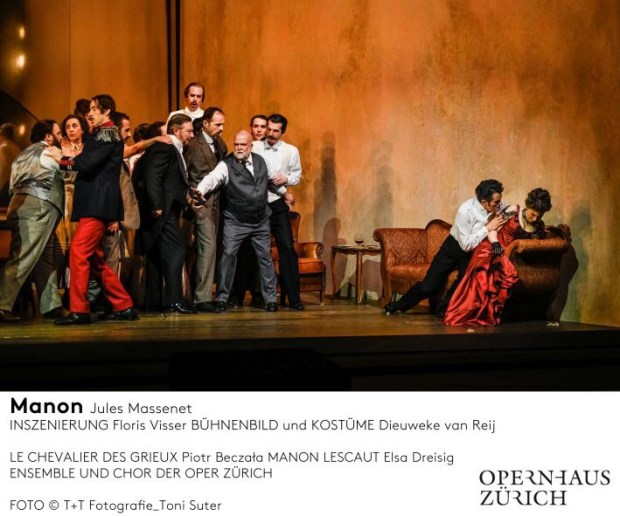
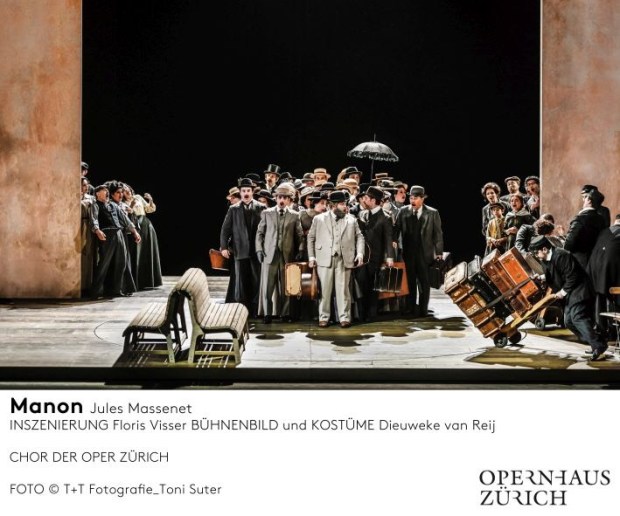
Manon-Premiere Oper Zürich 7.4.2019: Man hat schon Schlimmeres gesehen

Manon Zurich

Text Mordechai Aranowicz


Die Premiere von Jules Massenets Oper Manon am Opernhaus Zürich geriet zu einer etwas zwiespältigen Angelegenheit, bei der der Funke nicht so recht überspringen wollte. Das lag zum einen sicherlich am Dirigat von Marco Armiliato, der Massenets Musik wenig französisch, weitgehend spannungsarm, sowie farb- und leidenschaftslos abspulte. Im Mittelpunkt der Aufführung stand dagegen Piotr Beczala als des Grieux, dessen Auftritte an seinem einstigen Züricher Stammhaus selten geworden sind.

Beczala, der die Rolle 2011 bereits an der Met an der Seite von Anna Netrebko gesungen hatte, überzeugte rundum mit seinem in allen Lagen perfekt geführtem Tenor und charmantem Spiel, besonders in der Kirchenszene des dritten Aktes. Er versuchte, dem insgesamt sehr trägen Bühnengeschehen etwas Leben einzuhauchen. Dass Beczala dem des Grieux stimmlich  eigentlich bereits entwachsen ist, war bei einem Sänger, der demnächst den Radames in sein Repertoire aufnehmen wird, nicht anders zu erwarten.

Elsa Dreisig brauchte in der Titelrolle einige Zeit um stimmlich warm zu werden, überzeugte dann allerdings im Cours de la Reine-Bild mit glockenhellen Koloraturen, Darstellerisch blieb die Sängerin allerdings leider über weite Strecken blass.

Blass und stimmlich wenig präsent waren auch Yuriy Yurchuk als Lescaut, Eric Huchet als Guillot de Morfontaine und Alastair Miles als Comte des Grieux. Letzterer sang seinen Part  mit den Resten, seines einst so imposanten Basses.  Die übrigen Rollen waren insgesamt solide bis sehr gut besetzt.

Das am Premierenabend so wenig Stimmung aufkam lag auch an der Inszenierung von Floris Visser. Anders als bei zahlreichen Neuinszenierungen tat Visser dem Werk keine Gewalt an und überliess der Musik den Vorrang. Warum man jedoch, das Werk aus dem 18. Jahundert in die Enstehungszeit der Oper verlegen musste blieb unklar und erschien insgesamt ein eher willkürlicher Einfall, der nichts zum tieferen Verständnis der Oper beitrug.

Manon Zurich 1

Das Bühnenbild von Dieuweke van Reij war insgesamt funktional und machte es Dank Deckelung den Sängern akustisch einfach. Leider blieb dieser Rahmen jedoch insgesamt ziemlich stimmungslos, wozu auch die eintönige Lichtregie von Alex Brook verantwortlich war. Die auch von der Bühnenbildnerin entworfenen Kostüme waren zwar ästhetisch, grenzten die einzelnen Charaktere aber untereinander zu wenig ab, sodass gerade die Nebenrollen in den Massenszenen teilweise untergingen und man in diesen Momenten die Sänger in der Masse kaum wahrnahm. Hier wäre eine geschicktere Personenregie von Chor und Statisten wünschenswert gewesen.

Am Ende gab es für alle Beteiligten freundlichen Applaus, der nur für Elsa Dreisig und Piotr Beczala deutlich zunahm, beim Erscheinen des Regieteams dagegen deutlich abnahm. Buhrufe gab es jedoch keine.

Fazit: Diese Inszenierung ist zwar kein Ärgernis, aber auch nicht wirklich gut. Immerhin erhalten die Sänger der Hauptrollen genug Freiraum ihre Rollen zu gestalten, wobei sich das ganze Ensemble noch einspielen muss.

Trailer:

https://www.facebook.com/opernhauszuerich/videos/1773444599422066/

Love without sensuality is not love. A few thoughts about Tannhäuser

Tannhäuser_en_el_Venusberg,_por_John_Collier

In the Venusburg (Tannhauser), 1901 (oil on canvas) by John Collier

Text: Peter Franken

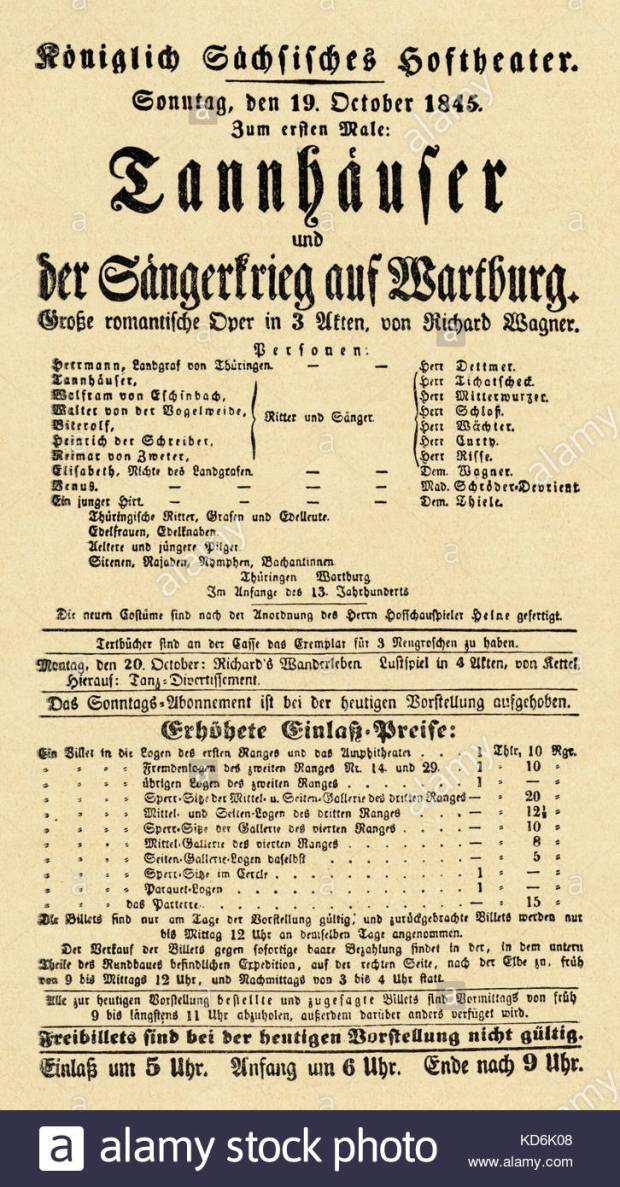
Wagner’s opera Tannhäuser und der Sängerkrieg auf Wartburg premiered on 19 October 1845 in Dresden. The composer had been working on the opera since 1842 and was actually never able to complete it to his own satisfaction. Shortly before his death in 1883 Wagner admitted that he owed the world another Tannhäuser.

Tannhauser premiere dreseden

In 1875 he had conducted a performance in Vienna himself, which had not entirely been to his liking. That performance included the virtuoso music for the violins composed for Paris, making it in fact a Viennese version of the work.

Performance practices

Tannhauser Paris

The fact that Wagner continued to tinker with the score for a large part of his life was mainly caused by performance practices. He was never really satisfied with how the work was played, mainly because singers could not cope with their role but also because of the lack of quality of the performing orchestras. In 1860 a revised edition of the score appeared. A year later the ill-fated performances in Paris took place. Here Wagner had the overture lead directly into a stormy scene in the Venusberg, the bacchanale. The performances in Paris were sung in French. What is now known as the ‘Pariser Fassung’ is a retranslation into German.

Because the singer who was cast as Walther von der Vogelweide proved to have insufficient qualities, his contribution to the singing contest had to be cut. That omission defines the later performance practices of the Paris version and it is a serious loss. A ‘schwärmerisch’ type like Walther, who sings about the pure wells of love that one can only sip from, adds much to the contrast between Tannhäuser and his fellow singers. Now he only has Wolfram as an opponent, Biterolf’s contribution is of a very different nature, which calls for violence.

All in all, there are 36 variants in the score that can be identified, all of which stem from the problems Wagner encountered in making his opera ‘performable.’ Continuing to speak of a Dresden and a Paris version is outdated as there are many more. Nevertheless, in general one sticks to these two main versions because of the recognisability, mainly found in the overture and the subsequent bacchanale. However, it is not unusual to play a hybrid of both versions, for example by having Walther sing his aria in what otherwise is the Paris version.

The story

Tannhäuser’s time in a den of sensual pleasures sends him on a pilgrimage to redeem his soul.
Wikimedia Commons

As usual, Wagner wrote the libretto himself. In it he combined the legend of the Minnesänger Tannhaüser with the legendary singing contest at the Wartburg. The work deals with the disruption of a rigid, introverted environment by the arrival of an uninhibited outsider.

In this social environment, people do not know how to deal well with sexuality and eroticism, which has led to the glorification of spiritual love. Minnesänger Tannhaüser, however, has had very different experiences at the well, the Venus cave. Spiritual love is like infertile earth: no flowers grow in it. Love without sensuality is not love.

Tannhäuser

Tannhäuser_1845

Joseph Tichatschek (Tannhäuser) and Wilhelmine Schröder-Devrient (Venus); premiere in 1845

From the story it can be concluded that Heinrich Tannhaüser is a Minnesänger who previously lived at the court of the Landgrave of Thuringia. At some point the straitjacket of this court life must have become too tight and he left, without anyone knowing where.

It is clear that he is very much missed, especially by Elisabeth, the niece of the landgrave. And by his colleagues, who may have lost a competitor but cannot take advantage of it because Elisabeth has decided to no longer attend singing competitions. Competitions, therefore,  have largely petered out.

At the start of the opera Tannhaüser has been with the goddess of love Venus and her servants for quite some time. In terms of eroticism and sex, our hero does not lack anything, in fact, he gets overfed with it. And of course too much is not good: ‘all sex and no play makes Heinrich a dull boy.’

Tannhauser-et-Venus-par-Otto-Knille-1873-©-Nationalgalerie-der-Staatlichen-Museen-zu-Berlin

Tannhäuser et Vénus, par Otto Knille, 1873 © Nationalgalerie der Staatlichen Museen zu Berlin

Venus loses her temper when he tactfully tells her that he wants to go out into the open air again. What on earth does he want there, in that chilly, rigid environment in which people are permanently working as robots to protect the supposed salvation of their souls? He hadn’t fled all this for nothing, had he Heinrich, the free bird? But it doesn’t help, Tannhaüser is not only bored but afraid of his place in the afterlife as well. Venus mocks him for this but she cannot hold on to him.

Once in the open field, the Minnesänger meets his former colleagues, who lead him along to Wartburg with the main argument that Elisabeth is waiting for him there. For them he functions as a kind of job guarantee.

Wolfram

Wolfram von Eschenbach is the singer who is closest to Tannhaüser. Wolfram clearly has his eyes on Elisabeth, but she lives with the idealised memory of Tannhaüser and has no eye for other men. By confronting Elisabeth with his rival and thus making him an average person again, he hopes to increase his own chances with her.

He brings Tannhaüser to Elisabeth when she is swooning in the Great Hall of Song (Dich, teure Halle, grüß’ ich wieder) and remains in the background to keep an eye on their encounter. Although these two almost immediately recognise love in each other’s eyes, Wolfram does not have to worry, Tannhaüser manages to make himself spectacularly impossible before the eyes of the entire court. But contrary to expectations, Elisabeth continues to cherish him and only allows Wolfram in her vicinity as a ‘good friend.’ What remains for him is a ‘Will and Grace relationship.’

Hermann Prey as Wolfram:

Elisabeth

tannhauser-elisabeth-2011 Camilla Nylund

Camilla Nylund as Elisabeth in 2011

At court, this seemingly chaste lady is the figurehead of spiritual love, the first prize for him who can best pretend to sincerely believe in it. Wolfram and Walther von der Vogelweide strive to express their claims as well as possible during the singing contest. But she only has eyes for her secret love Heinrich. All she has to do is let him win the contest and he belongs to her. If only he doesn’t do anything stupid…..

It is clear that Elisabeth is not infertile earth under her stiff appearance. She does want flowers to bloom: ‘all song and no sex makes Elisabeth a dull girl.’

But expressing this openly takes her effort, actually she is just a little shy, nothing more.

Inspired by his stay with Venus and challenged by Wolfram and Walther, Tannhaüser gives his all. Everything and everyone falls over him, his life is in danger. And it is Elisabeth who saves him. It is unnecessary to talk about this in such important terms as sacrifice and Erlösung, she just loves him and does not let him fall.

Below ‘Dich, teure Halle,’ sung by Leonie Rysanek:

The pilgrims

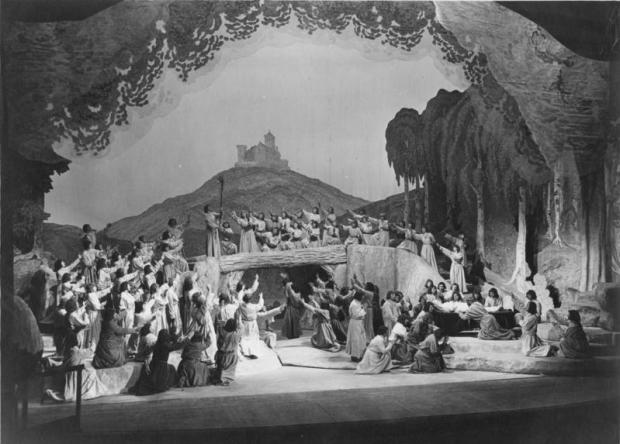
Bayreuth, Festspiele, "Tannhäuser", Schluss

Scherl: Von den Bayreuther Festspielen 1930. Tannhäuser Schlusszene.

The pilgrim’s chorus is one of the most famous melodies of the opera. These people play an important role in the background. They pass the Wartburg at the time of Heinrich’s discomfiture and he is pressed to go with them to Rome to ask forgiveness for his sins. And these sins are great by church standards: he has had extramarital sex and prides himself on it. That is tantamount to ignoring social codes and his presence is therefore perceived as a threat to society. From a social point of view, he is a wrong-way driver, someone who flouts the rules and thereby endangers others.

When the pilgrims return, Tannhaüser does not appear to be amongst them to Elisabeth’s despair. His absence from the group indicates that he was not absolved by the Pope. And that means that he will remain an outcast at court. The latter is Elisabeth’s final blow, she can no longer take it and dies.

Venus

Tannhäuser appears and tells the bewildered Wolfram the story of his failed pilgrimage. He wants to return to Venus since life in this form has nothing more to offer him and there is little point in hoping for a heavenly afterlife. Venus hears of this and sees her prediction confirmed. She had told him so. What should a man do with Mary if he can be with Venus, forever? She seductively sings to him: ‘Willkommen ungetreuer Mann.’

Tannhaueser The_Redemption_of_Tannhauser_1890

At the very last minute, Wolfram managed to save him for an  ecclesiastical life. He points out Elisabeth to him, praying in heaven for the salvation of his soul. In the end, Venus cannot compete with that. Her Dionysian world is defeated by the Apollonian world of medieval Christianity.

Translated with http://www.DeepL.com/Tran

Tannhäuser in Amsterdam: Wolfram wint

tannie-1

© Monika Rittershaus/DNO

Vergeet de middeleeuwen, de minnenzangers, de pelgrims… We zijn in negentiende-eeuwse Parijse theaterwereld beland en bevinden ons in een exclusieve herensociëteit Jockey Club, waar rijke heren in rookkostuums zich met ballerina’s vermaken. Die ballerina’s die lijken zo te zijn weggelopen van de schilderijen van Degas, maar algauw gaan de tutu’s, de rokjes en de smokings uit en men ‘vermaakt zich’.

tannie-3

© Monika Rittershaus/DNO

Nu is daar iets voor te zeggen. Wagner componeerde zijn opera voor Parijs en dat betekende dat het ballet er een grote rol in moest spelen. In die tijd was het ‘gebruikelijk’ dat de balletmeisjes na afloop van de voorstelling de heren van dienst moesten zijn. Maar, allerbelangrijkste: volgens het libretto bevinden we ons in de grot van Venus waar juist de bacchanalen plaatsvinden. Ik vond het een beetje gedoe en een beetje saai, maar ach..

Tannie4

Svetlana Aksenova (Elisabeth) en Daniel Kirch (Tannhäuser) © Monika Rittershaus/DNO

De tweede acte was beslist beter, spannender ook. Goed, logisch was het allerminst, maar er waren zeer goed geslaagde scénes (opkomst van Elisabeth!) en de zangwedstrijd zorgde voor minutenlang prachtige muziek en goede zang, en daar komen we toch voor naar de opera!

tannie-9

Daniel Kirch (Tannhäuser) en Ekaterina Gubanova (Venus) © Monika Rittershaus/DNO

In de derde acte vond een soort ‘symbiose’ tussen de zinnelijkheid en de verheven geestelijkheid plaats. Zo ging Elisabeth onder de bontmantel van Venus de oneindigheid van de heilige dood in, en boven haar lichaam verenigde Wolfram zich met de liefdesgodin in een eeuwigdurende omhelzing. Waarna iedereen het ‘goed vond’ met iedereen.

tannie-7

Svetlana Aksenova en Björg Bürger (Wolfram) © Monika Rittershaus/DNO

Ondanks de zware symboliek die ik niet altijd begreep (waarom moest één van de danseressen gewurgd worden?) vond ik de derde acte buitengewoon ontroerend. Het ligt voornamelijk aan de muziek, uiteraard, aan de hemels mooie Wolframs aria, aan het Pelgrimskoor, aan de opoffering scène van Elisabeth en aan de ‘Romerzählung‘, het monoloog van Tannhäuser. Allemaal muziek die ik niet met droge ogen kan aan horen.

De Nationale Opera 2019 Tannhäuser - credits Monika Rittershaus 322

Daniel Kirch (Tannhäuser) © Monika Rittershaus/DNO

Voor mij is Tannhäuser een echte Italiaanse opera, belcanto eigenlijk, met echte aria’s. Gegeven dat mijns inziens om ‘Italiaanse zangers’ vraagt, waarmee ik niet de nationaliteit bedoel. De italianitá, dat miste ik in de vertolking van de hoofdrol door Daniel Kirch. Zijn grote stem droeg prima, maar het ontbrak hem aan lyriek en subtiliteiten. Wat hij zong klonk minder als minnezanger en meer als Siegfried. Maar als acteur kon hij mij honderd procent overtuigen. En: hij heeft het volgehouden!

De Nationale Opera 2019 Tannhäuser - credits Monika Rittershaus 355

© Monika Rittershaus/DNO

Svetlana Aksenova was een prachtige Elisabeth. Zowel met haar verschijning, als met haar zang en haar acteren kon zij mij behoorlijk bekoren. Haar eerste aria zong zijn een beetje onzeker maar naarmate de opera vorderde werd zij sterker en ontroerender. Het is amper te geloven, maar het was haar eerste Elisabeth. Sterker: het was haar eerste Wagner. Brava!

https://www.facebook.com/DeNationaleOpera/videos/311568592815059/

tannie-8

Ekaterina Gubanova (Venus) © Monika Rittershaus/DNO

Ekaterina Gubanova was een prima Venus, aantrekkelijk en verleidelijk, maar een beetje onderkoeld. Haar zingen kon ook iets erotischer, maar ach… Het was een uitstekende prestatie.

Stephen Milling zette een imposante Langraf neer. Zijn ronde, ferme bas was welluidend en warm, met een niet gespeelde vaderlijke bezorgdheid naar zijn nicht toe. Maar daar waar nodig klonk hij afschrikwekkend. Fantastisch.

tannie-5

Svetlana Aksenova (Elisabeth) en Björg Bürger (Wolfram) © Monika Rittershaus/DNO

Maar allemaal verbleken ze bij de fenomenale Wofram van de jonge Björn Bürger. In jaren heb ik de rol niet beter, niet mooier, niet sensitiever horen zingen. Hij zag de rol, hij acteerde de rol en hij zong de rol. Zijn bariton is vederlicht maar met voldoende volume en een tenorale timbre. Van hem gaan we veel meer horen.

Helaas kon Kay Stieferman (Biterolf) mij niet echt bekoren, ik vond zijn stem schriel en weinig subtiel. Attilio Galser daarentegen zong een mooie Walther

Grote bravo’s voor de debuterende leden van De Nationale Opera Studio: Lucas van Lierop (Heinrich der Schreiber) en de zoetgevooisde Armeense sopraan Julietta Aleksanyan (Ein junger Hirt, hier vermomd als een serveerster). Wat een potentie!

Maar eerlijk is eerlijk, er kan maar één de winnaar zijn en dat is (naast Aksenova en Bürger) het Koor van de Nationale Opera (instudering Ching-Lien Wu). Ik weet het, ik weet het, ze zijn altijd fantastisch, maar nu hebben ze zich ruimschots overtroffen. Hun lezing van de ‘Pelgrimskoor’ is voor altijd in mijn oren gegriefd. Bedankt!

Enorme bravo ook voor het fenomenaal spelende Nederlands Filharmonisch Orkest. Wagner is natuurlijk koren op de molen van Marc Albrecht, maar ook hij heeft zich ditmaal overtroffen. De zoete, zachte tonen in de inleiding tot Avondster, de ijzige spanning aan het begin van de ‘Romerzählung’….

Mensen: gaat dat zien! Probeer het niet te begrijpen (al moet ik zeggen dat de personenregie van Loy echt prima was en nergens tegen de muziek in) en laat je voeren door de muziek en de fenomenale vertolkers.

Bezocht op 6 april 2019
Voor meer informatie en speeldata: website DNO

Over Tannhäuser in de niet voor de hand liggende opnamen

Liefde zonder zinnelijkheid is geen liefde. Het een en ander over Tannhäuser

In gesprek met Svetlana Aksenova

La Juive at the Israeli Opera in Tel Aviv

juive-opera

Israeli Opera in Tel Aviv

Didn’t have time to eat before the opera? Don’t worry, at least not if you visit a performance at the Israeli Opera in Tel Aviv. In the huge foyer downstairs there are at least fifty food stands and each floor counts dozens more. You can enjoy everything the good earth (and the cook) has to offer: sushi, sashimi, pasta, pizzas, grilled salmon, sandwiches, salads, fruit, cakes, chocolate ….. As a Jewish proverb says: “They tried to killed us, we survived, let’s eat”.

Surviving at any cost, also (or perhaps mainly?) to be able to avenge your attackers afterwards – that’s what it’s all about, among other things, in Halévy’s La Juive. Especially in David Pountney’s production, which was first performed two years earlier in Zurich.

juive-halevy

Jacques Fromental Halevy

Eleazar is not an amiable man. Like Shakespeare’s Shylock, he is repulsive and pitiful at the same time. He is filled with resentment and is looking for retribution for which he is prepared to sacrifice anything, even that which he loves most. But has he always been like that, or are it circumstances that have made him like that? Moreover, he too knows his doubts – in his great aria he sincerely asks himself (and God) whether he has acted well.

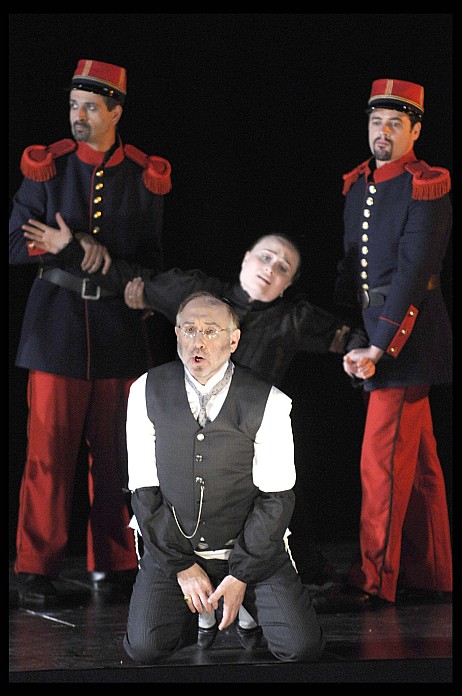
Poutney has moved the action to nineteenth century France, at the time of the Dreyfuss affair, and he is very consistent in that. The production is very realistic, with overwhelming scenery and costumes. On stage there is a kind of rotating puppet theatre, with the cathedral, Eleazar’s workshop, Eudoxie’s sleeping quarters, the prison and the street with the mobs of people. If necessary, the scenes are enlarged, allowing more emphasis to be placed on details.

juive-scene

© Yossi Zwecker

Every scene starts behind a transparent curtain, which makes the image blurred like a kind of veil and therefore a bit unreal. After a few minutes the curtain is lifted and the image not only becomes clear, but it also hurts your eyes.  Well thought out.

The ballet (choreography Renato Zanella) is an essential part of the story. In a very realistic (and very logical) way a story of persecution and intolerance is told and a link is made between the devil and the Jew. Devil is Jewish, expelling the devil means destroying Jews. It is painful for the Israeli public, after all, they have experienced quite a lot here.

The fact that the premiere took place one day after Yom Hashoa (Holocaust Day) makes it all even more complicated. The emotions are not only tangible but also visible. Let’s say: it is an experience to see the opera right here.

There were no less than 10 performances, they worked with a double cast and for the role of Eleazar even three tenors were engaged.

The premiere on 13 April 2010 was sung by a cast one can only dream of.

juive

© Yossi Zwecker

Neil Shicoff is probably the best Eleazar in the world at the moment. He seems to have a patent on that role and has grown so much that you sometimes forget that he is not Eleazar. His voice – slightly nasal and with a cantoral timbre – may not be the most beautiful anymore, but what he does with it is extremely impressive. After his big aria he got (rightly so!) a quarter of an hour of applause and many a handkerchief was brought out.

Annick Massis was born to sing Eudoxie. She tosses of her coloratura with effortless brilliance and her height was pure and scarily beautiful.

Roberto Scandiuzzi (Cardinal Brogni) did not only impress with his deep, dark bass, his entire appearance was impressive and his actions deeply human.

Robert McPherson has a beautiful, light tenor with a ‘Flórez-timbre.’ He did beautiful things with it, but he was one size too small for Leopold’s role.

The star of the evening was the performer of the title role, Marina Poplavskaya. Her voice has grown considerably, and has also become darker. The way she shaped the role was unbelievable, and her entire appearance and acting skills are of an unprecedented quality. Her Rachel was brittle but also determined. Sad and proud at the same time. Not only the victim but also a real heroine. BRAVA!

juive-yossi-zwecker

© Yossi Zwecker

The orchestra, slightly messy at the start, was skilfully conducted by Daniel Oren. That he is a real singer conductor was clearly visible (and audible), he breathed (and sang) with them.

Oren cancelled the performance on 16 April and was replaced at the last moment by his assistant, also choral conductor, Yishai Steckler. He was certainly acceptable and inoffensive, but the performance lacked the tension of the Oren one.

Also the second, quite good cast did not reach the insanely high level of the premiere. Except for the Leopold – Mario Zeffiri had an even bigger and stronger voice, very agile as well. But as an actor he had to acknowledge his superior in McPherson.

John Uhlenhopp has a beautiful, dramatic tenor, but Eleazar came too soon for him, he still has to grow into the role. The same goes for Dmitry Ulyanov (Cardinal). He has a voice out of thousands, but is simply too young for that role. Moreover, between him and Rachel (a truly beautiful Karine Babajanyan, she can’t help Poplavskaya set the bar so high!) there was no chemistry at all, so one of the most moving scenes made little impression.

Neil Shicoff as Eleazar in Vienna 2013 (production of Günter Krämer):

JACQUES FROMENTAL HALÉVY
LA JUIVE
Neil Shicoff /Francisco Casanova/John Uhlenhopp, Marina Poplavskaya/Karine Babajanyan, Robert McPherson/Mario Zeffiri, Roberto Scandiuzzi/Dmitri Ulyanov, Annick Massis/Jessica Pratt and others.
The Israeli Opera Chorus and The Israel Symphony Orchestra Rishon LeZion conducted by Daniel Oren/Yishai Steckler
Directed by: David Pountney

Visited in Tel Aviv on 13 and 16 April 2010

Translated with http://www.DeepL.com/Translator

La Juive, discography

Anathema over en weer in grootse La Juive

Tekst: Peter Franken

Juive-34a7317

© Annemie Augustijns

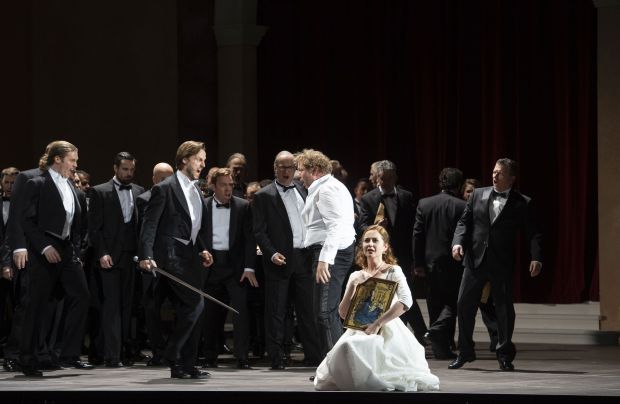
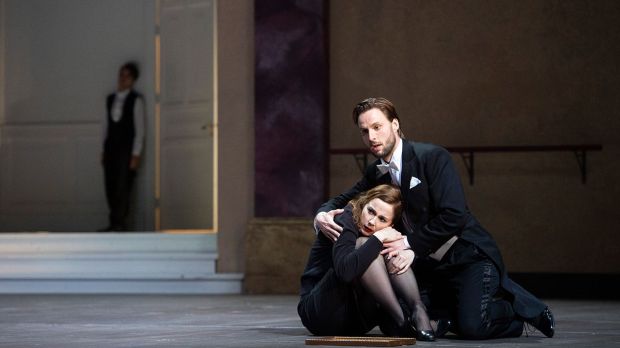
Peter Konwitschny regisseerde vier jaar geleden een nieuwe productie van Halevy’s meesterwerk La Juive voor Opera Vlaanderen. Dit seizoen wordt dat succesnummer hernomen met voorstellingen in Antwerpen en Gent. Op het toneel vindt een ‘clash of fundamentalisms’ plaats in een grootse muzikale setting.

Juive Gent7

© Annemie Augustijns

La Juive gaat over Rachel die als voor dood achtergelaten baby uit een uitgebrand pand is gered door de joodse goudsmid Éléazar nadat deze uit Rome was verbannen door de magistraat de Brogny. Het huis blijkt zijn buitenhuis te zijn, de baby is zijn dochter. Éléazar weet dat maar de Brogny denkt dat ze dood is, net als de rest van zijn gezin.

Behalve een verbanning heeft onze magistraat ook de executie van Éléazars twee zonen op zijn conto. Als beide heren elkaar veel later treffen in Konstanz aan de vooravond van het concilie, heeft Éléazar weinig reden om zijn oude vijand in de armen te sluiten. Deze is tot de clerus toegetreden en heeft het (connecties natuurlijk) in relatief korte tijd tot kardinaal geschopt en doet nu in vergeving in plaats van verbanning. Voor de goudsmid is dat een gepasseerd station.

Juive Gent5

© Annemie Augustijns

Konwitschny probeert nadrukkelijk dit joods christelijk familiedrama naar een algemener plan te tillen. Met het monotheïsme is het alleenrecht op het grote gelijk in de wereld gekomen, en het gelijk van de bovenliggende partij is de wet. Bij een botsing tussen fundamentalistische religies of ideologieën (wat is het verschil) kan van enig toegeven nooit sprake zijn. Het programmaboek illustreert dit met een toepasselijk citaat van Voltaire: ‘Fanatisme is een monster dat zichzelf kind van het geloof durft te noemen’.

Juive Gent3

© Annemie Augustijns

Het volk is in deze productie de verpersoonlijking van het fanatisme van de bovenliggende partij. Éléazar is een toonbeeld van oudtestamentische rechtlijnigheid, liever dood dan toegeven aan de vijand. Zijn adoptief dochter Rachel moet er ook aan geloven, weliswaar na een handenwringend ‘Rachel, quand du Seigneur’ maar door haar te verklappen dat ze de dochter van een christen is, had hij haar leven kunnen sparen. Nu verkiest ze de dood om haar vermeende geloof niet af te vallen.

Juive -34a7217

© Annemie Augustijns

In het werk is flink gecoupeerd waardoor uitsluitend datgene getoond wordt dat overeenkomt met de meest gangbare synopsis. Uitweidingen in de vorm van extra koormuziek en uiteraard een groot ballet in de derde akte ontbreken. Het komt de kracht van het verhaal zeer ten goede. De derde akte eindigt met een koor waarin ook de solisten participeren. Daarbij staat men aan een productieband voor bomgordels, het visitekaartje van het hedendaagse fundamentalistische fanatisme.

De boodschap is duidelijk, Konwitschny is niet zozeer geïnteresseerd in de dodelijke vijandschap tussen jodendom en christendom maar in het gemak waarmee de massa ertoe gebracht kan worden elke ratio uit te schakelen en te veranderen in een allesverslindend monster. In dat opzicht is hij volledig in zijn opzicht geslaagd, zijn lezing van La Juive is een oefening in zelfreflectie voor elke toeschouwer die nog in staat is enigszins zelfstandig te denken. Voor de personages die op het toneel worden uitgebeeld is dat al te laat.

Juive Gent2

© Annemie Augustijns

Prins Léopold is in de handeling tot een bijfiguur geworden, waardoor hij er nog slechter vanaf komt dan oorspronkelijk het geval was. Dit boegbeeld van het christendom, overwinnaar in een veldtocht tegen de ketterse Hussieten in Bohemen, heeft zich voorgedaan als jood om Rachel te verleiden. Daarbij is hij ook nog eens getrouwd met prinses Eudoxie, de nicht van de keizer. Dubbel bedrog zogezegd, daar kan de hertog van Mantua nog wat van leren. Maar Rachel is geen Gilda en ze bijt flink van zich af als haar geliefde toegeeft christen te zijn, dat hij getrouwd is bewaart hij voor later. In de grote scène tussen beiden zingt Rachel vanuit de zaal. Zo ontstaat er letterlijk een kloof tussen beiden.

Sopraan Corinne Winters benutte daarvoor parterrerij zes en stond geruime tijd pal voor mijn neus middenin dat paadje te zingen. Een betere indruk van haar prestaties is moeilijk te krijgen, groot volume, zeer beheerst, nooit ook maar enigszins geforceerd, prachtig timbre zonder een spoor van vibrato. Een Rachel om te zoenen, ook letterlijk overigens.

Juive Gent8

© Annemie Augustijns

Later stond haar vader korte tijd op dezelfde plek tijdens zijn ‘Quand du Seigneur’ maar dat pakte minder goed uit. Zo dichtbij kon ik duidelijk merken dat tenor Roy Cornelius Smith zichzelf wat overschreeuwde. Een krachtig stemgeluid paste overigens wel bij de wijze waarop hij door de regie was getypeerd. Geen onderdanige schichtige outcast maar een mannetjesputter die graag de confrontatie met de vijand opzocht: mijn gelijk is nog groter dan dat van jullie, so there.

Léopolds serenade in de eerste akte ‘Loin de son amie’ was geschrapt waardoor het feit dat hij oprecht verliefd is op Rachel buiten beeld blijft. Voor zijn personage is dat funest aangezien dat het enige is dat zijn handelen enigszins geloofwaardig maakt, dubbel bedrog en al. Tenor Enea Scala wist zijn optreden als bijfiguur, de katalysator in het drama, met verve gestalte te geven. Zijn duet met Rachel kwam uitstekend uit de verf, prima optreden. Winters was in de onthullingscène overigens ook acterend zeer sterk, ze probeerde als het ware het publiek mee te krijgen in haar blijk van ongeloof en ik kreeg de indruk dat ze bijna op het punt stond Léopold in rap Italiaans de les te lezen.

Juive Gent6

© Annemie Augustijns

Enig comic reliëf is de productie sowieso niet vreemd, vaak door de reacties van betrokkenen wat zwaar aan te zetten. Goed voorbeeld is de afloop van het Norma Aldagisa duetje tussen Rachel en haar rivale Eudoxie. Beide dames verzoenen zich om Léopolds leven te redden en vieren dat met een rondedansje.

Juive Gent

© Annemie Augustijns

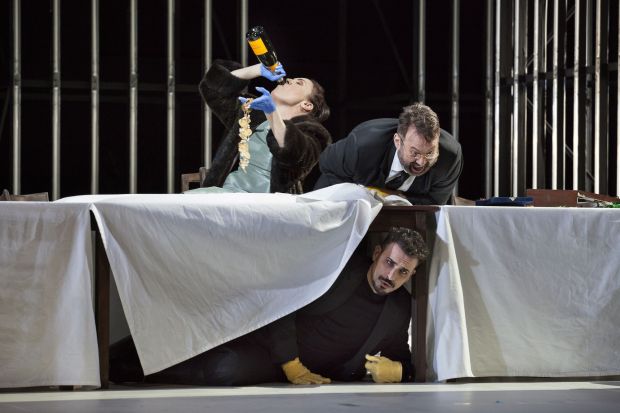
Minder geslaagd was de scène waarin Eudoxie dronken bij Éléazar binnenwandelt om een sieraad te bestellen, zo nu en dan uit een fles drinkend. Gewoon opgetogen acteren, wat ze ook deed in de derde akte, was echt wel toereikend geweest. Laat die dronkenschap maar waar het verplicht is, in Russische opera’s. Sopraan Nicole Chevalier zong een fraaie Eudoxie, ze was de enige uit de cast van vier jaar geleden die ook nu weer was aangetrokken.

Le Cardinal de Brognie werd tot leven gebracht door de bas Riccardo Zanellato, mooi gezongen maar een beetje licht in de laagte. Het koor, ingestudeerd door Jan Schweiger vervulde een glansrol. Het is een van die schaarse keren dat je als toeschouwer de gehele opera een hekel hebt aan die lui, hoe goed ze ook zingen. En dat is een compliment.

De algehele muzikale leiding was in handen van Antonino Fogliani. Naast uitbundige bijval voor koor en solisten was er ook voor hem en zijn orkest afloop veel applaus.

Trailer van de productie:

Bezocht op 2 april 2019 in Gent

Herinneringen aan La Juive in Amsterdam

LA JUIVE: discografie

LA JUIVE Tel Aviv 2010

La Juive, discography

Juive Halevy


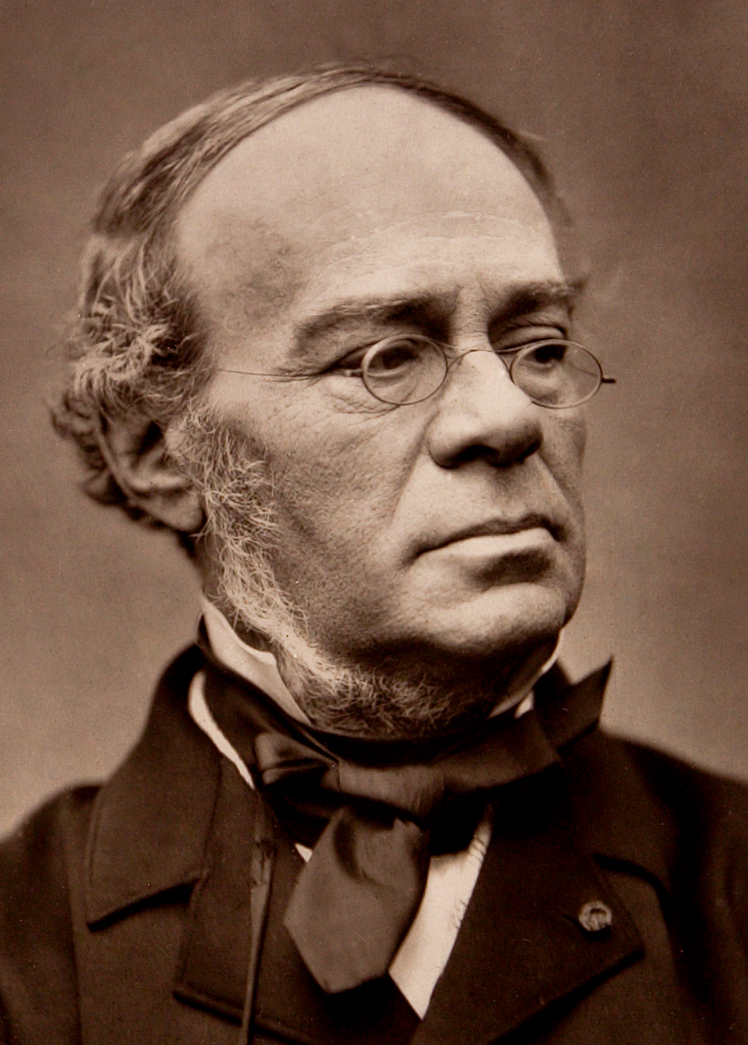
Jacques Fromental Halévy (1799-1862) was a much loved and celebrated composer during his lifetime. He composed about forty operas, of which at least half were quite successful. Yet: none of his works has ever matched the popularity of La Juive.


Juive_Act1_set_1835_-_NGO2p927

La Juive: setting for the first act from the original production in 1835.

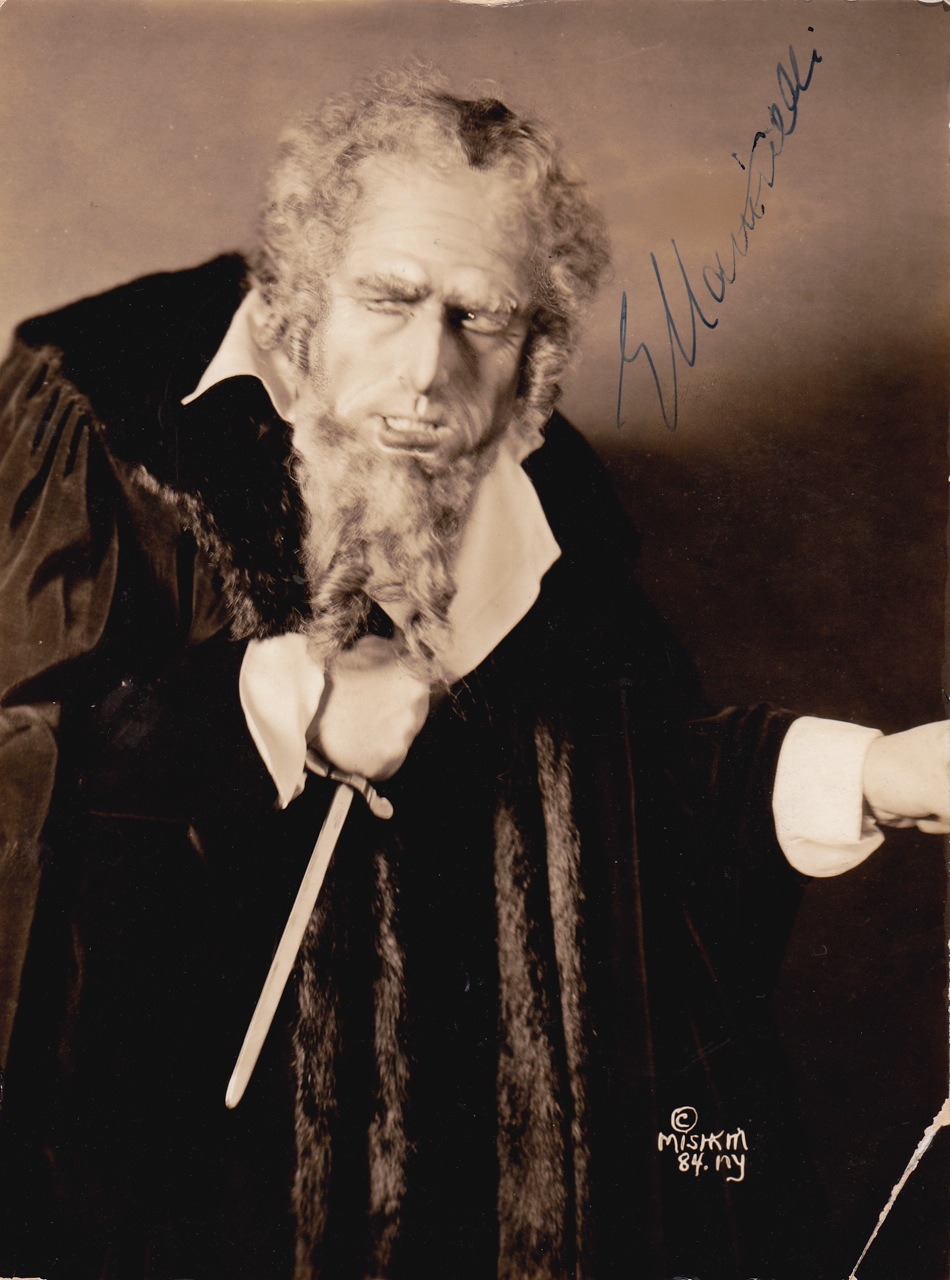
La Juive, ‘The Jewess’ once was an absolute audience favourite and until the thirties of the last century the piece was performed with great regularity. The role of Éléazar was sung by the greatest and most famous tenors of the time: Caruso, Leo Slezak, Giovanni Martinelli… Who not?

Juive carusoterracota3

Terracota portrait of Caruso as Éléazar, made by Onorio Ruotolo in 1920.

Enrico Caruso in a recording made on 14-09-1920:


Leo Slezak (in German) in a 1928 recording:


Juive Martinelli foto

Giovanni Martinelli as Éléazar

I could not find an example of Martinelli on Youtube, but a live recording from 1936 of the second act exists (with Elisabeth Rethberg as Rachel), plus some fragments of the fourth act, from 1926 (SRO 848-1).


Juive_opéra_d'Halévy_et_[...]Maleuvre_Louis_btv1b7001613w

Adolphe Nourrit, interpreter of the first Éléazar


Éléazar is not an amiable man. Like Shakespeare’s Shylock, he is repulsive and pitiful at the same time. He’s full of resentment and insists on retaliation for which he’s prepared to sacrifice anything, including what he loves most. But has he always been like that, or have circumstances made him like that? Moreover, he too has his doubts – in his great aria he sincerely asks himself (and God) whether he has acted well.

Actually, you can see him as a male equivalent of Azucena. Both have lost their own child(ren) and both have taken care of a child of their enemy and raised it as their own flesh and blood. As a result, Manrico became a gypsy boy and Rachel a Jewess. With all the consequences that follow.


RICHARD TUCKER


Juive Tucker Legato

In the 1930s Halévy was labelled ‘degenerate’ and, together with his opera, ended up in the big garbage dump of what the Nazis called ‘Entartete Musik.’

Nowadays La Juive is staged by all the major opera houses and in 2009 she even visited Amsterdam – in a magnificent production by Pierre Audi. However, it is not so long ago that Halévy was known as the composer of one aria and his opera was a real curiosity, especially in Europe. I wonder, therefore, what would have happened to La Juive if there had not been someone like Richard Tucker.

Tucker (1913-1975), one of the greatest tenors of his time, was not only the star singer at the Metropolitan Opera, but also the cantor at the New York main synagogue. Éléazar was his dream role and with his star status he could afford to get the opera on stage with different companies in different countries, if only in concert.

His greatest dream, however, was to sing La Juive in the Met, completely staged. In January 1975 he was told that the opera was planned for the 1975/1976 season. Bernstein would conduct and the other roles would be sung by Beverly Sills (Rachel), Nicolai Gedda (Léopold) and Paul Plischka (the cardinal).

It was not meant to be: on January 8, a day before the production talks were to start, Tucker suffered a heart attack, from which he died.

You can get the heavily cut La Juive with Tucker on several labels (mine is on Legato Classics LCD-120-2). The (pirate) recording was made in London, in 1973. The sound is poor and the rest of the singers are only so-so, but because of Tucker it is an absolute must.


Juive Tucker Moffo

In 1973 RCA (now Sony 88985397782) recorded highlights from the opera with Tucker, Anna Moffo and Martina Arroyo in the studio.

I have strong suspicions that the reason for this recording was Moffo (Eudoxie). At that time she was one of the stars of the firm. A literally gorgeous soprano, who not only presented herself well on the cover but also was not the worst singer. With her light, agile voice she was extremely suitable for young girl’s roles, but Eudoxie was also a good fit for her.

Martina Arroyo is a fine Rachel and Bonaldo Giaiotti a great cardinal, but the real star of the recording is – next to Tucker – the conductor. Antonio de Almeida has a clear feeling for the work.

Tucker and Martina Arroyo in the ‘Seider scene’:


JOSE CARRERAS

Juive Carreras Tokody
I have never been able to understand why José Carreras added the role of Éléazar to his repertoire. It did fit in with his desire to sing heavier, more dramatic roles. Roles that were one size too large for his beautiful, lyrical tenor. Which absolutely does not mean that he could not sing the role! He succeeded quite nicely and the result is more than worth listening to, but he doesn’t sound truly idiomatic.

In the live recording from Vienna 1981 Carreras also sounds too young (he was only thirty-five then!), something that is particularly noticeable in the Seider-evening scene. It is sung beautifully, but due to a lack of weight he tends to shout a bit.

José Carreras sings ‘Rachel, quand du Seigneur’:

Ilona Tokody is a Rachel of a Scotto-like intensity (what a pity she never sang the role onstage!) and Sona Ghazarian sings an excellent Eudoxie.

But, to be honest: nobody, but nobody can measure up to Cesare Siepi in his role as Cardinal Brogni. After his first big aria he is justifiably rewarded with a long ovation.

Below Cesare Siepi in ‘Si la rigeur’:

Chris Meritt (Léopold) may not have the most beautiful of all tenor voices, but he has all his high notes. Although they sometimes came out a little squeezed. The heavily cut score was conducted with great love by Gerd Albrecht (Legato Classics 224-2).

Juive Carreras Philips

La Juive, recorded by Philips in 1989, marked the first studio recording Carreras made after his illness. His voice was now less sweet and smooth than before, but sounded much more alive, which improved his interpretation of the role.

Julia Varady is a beautiful Rachel, perhaps one of the best ever and Eudoxie is in excellent hands with June Anderson.

Dalmacio Gonzales is a more than decent Léopold, in any case much better than Chris Merrit and the French-American-Portuguese conductor Antonio de Almeida shows he has a real affinity with the opera. (Philips 475 7629)

FRANCISCO CASANOVA

Juive Casanova

We know Eve Queler not only as one of the first famous female conductors, but also as one of the greatest champions of the unknown opera repertoire. On 13 April 1999 she conducted a very exciting performance of La Juive in New York’s Carnegie Hall.

Paul Plishka was a good cardinal and Jean-Luc Viala and Olga Makarina sounded excellent as respectively Léopold and Eudoxie.

Francisco Casanova – after Tucker and Shicoff – in my opinion is perhaps the greatest Éléazar of our time. His robust tenor sounds tormented and passionate but also extremely lyrical. The Rachel, sung by Asmik Papian with sizzling passion, fits in perfectly with this. So beautiful, I have no words for it.

If you manage to get the CDs: buy them right away! Also, because the recording is almost complete. (House of Opera CD 426)

Below Francisco Casanova sings ‘Dieu que ma voix tremblante’:

NEIL SHICOFF

Juive Shicoff Isokoski

Neil Shicoff, like Tucker, has made Éléazar the role of his life. The first time he sang him was in Vienna, in 1998. The performance, with an excellent cast (Soile Isokoski as Rachel, Zoran Todorovich as Léopold and Alastair Miles as the cardinal Brogni), was recorded live and released by RCA on CD (RCA 795962).

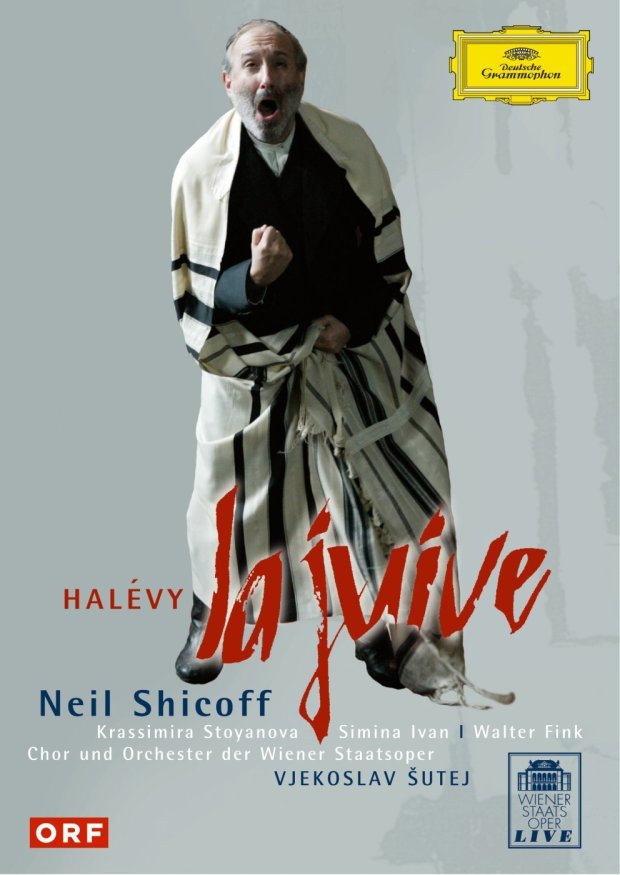
The same production (with Shicoff and Isokoski) travelled to the Met in 2003 and a few months later returned to Vienna, where the opera was recorded on DVD (DG 0734001). Shicoff was still present, but the other singers were replaced.

Juive Shicoff dvd

Rachel was sung by a breathtaking Krassimira Stoyanova (what a voice, and what radiance!), Eudoxie was in good hands with Simina Ivan, but Jianyi Zhang was a little problematic in his role of Léopold.

“The role that Shicoff was born to sing,” was the headline of the program booklet and that was certainly true. As the son of a cantor he was not only at home in the Jewish tradition and singing, but his voice, slightly nasal and with a tear, also sounded very Jewish.

The production by Günter Krämer was updated: no Constance in 1414, but clearly 1930s and the rise of National Socialism. And although it was not explicitly mentioned anywhere, the choir dressed in German hunter’s suits spoke volumes.

Éléazer was portrayed as a fanatic with little or no sympathetic qualities, the cardinal on the other hand was all love and forgiveness – a proposition I had quite a hard time with.

As a bonus, the DVD features an interview with Shicoff and we follow his preparations for the role. Extremely interesting and fascinating, but what a bag of nerves that man is!

Below Shicoff sings ‘Rachel, quand du Seigneur’:


La Juive at the Israeli Opera in Tel Aviv

Anathema over en weer in grootse La Juive