Month: april 2019

Discovering Karol Rathaus

A forgotten composer, and not just because of the Nazis
RathausJune041byPiano-1

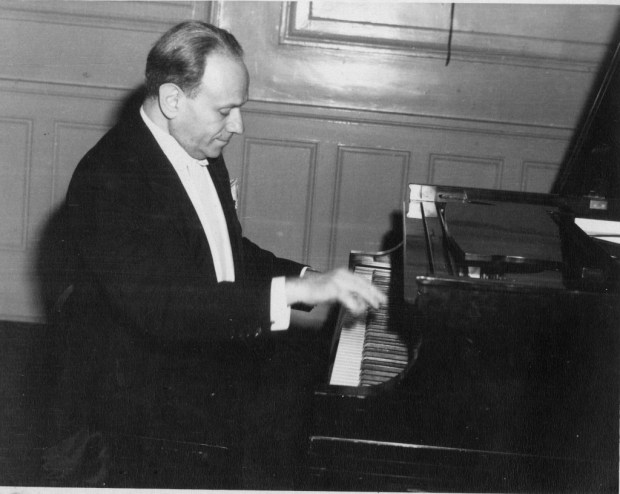
Karol Rathaus, circa 1952 (from Rathaus’ family archive

A demo/promo/proof-of-concept video for documentary film ‘Discovering Karol Rathaus’:

With his equally fascinating and individual music, Karol Rathaus met with little approval. He felt misunderstood, was actually nowhere at home, and also in the musical landscape surrounding him he sat between all chairs – and styles. His piano works have been now released on CD, for the first time.

Rathaus cd

What do we know about Karol Rathaus (1895-1954)? He was born in 1895 in Ternopol, a city now in Western Ukraine but then part of the Austro-Hungarian monarchy. He spoke Polish at home and German at school, a language he mastered better than the native speakers. He studied in Vienna, emigrated to Berlin in 1926, to France in 1932 and from there to the United States. No wonder that his first biographer openly wondered whether Karol Rathaus was a Jewish, Polish, Austrian or American composer. He based himself not only on Rathaus’s life but also on the letters he wrote to his friends, in which he said that he found it difficult to adapt to his new countries and often ended up in an identity crisis. His compositions were rarely performed, something he was very bitter about.
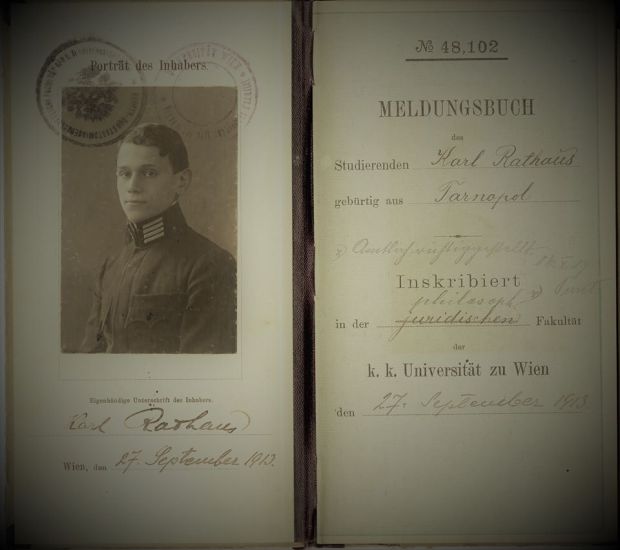
Rathaus

Dance from Uriel Acosta  from 1930, played by Orquesta Filarmonica Cuidad de Mexico conducted by Jascha Horenstein (live, Mexico City, 28 March 1951). The orchestra on this recording included Sally van den Berg (oboe) and Louis Salomons (bassoon), who played in the Concertgebouw before the war:

As he wrote in a letter to Jascha Horenstein in 1950: “My problem is that of the ignored independent and individual composer. My name is known, but nobody performs my works. I have no embassies, no consulates that stand behind me – no propaganda machine – in the country where I live very happily, I’m considered a non-native.“

 Jascha Horenstein conducts Rathaus. World premiere, recorded on March 13, 1956 in “Farringdon” studio, BBC

The fact that Rathaus has been so forgotten is not just the fault of the Nazis. Michael Haas, the former producer of the ‘Entartete Musik’ series by Decca, one of the first to record a CD with works by Rathaus, including his ballet Der Letzte Pierrot, had a clear explanation for this: “The young generation of composers was left with feelings of guilt after the war. It was never to happen again, so they found a cure for it. We had to work on building objective music, devoid of any sentiment and subject to strict rules. Music had to become universal. Serialism was born. In Darmstadt, the past was dealt with, including composers from the 1930s”.

It is because of Michael Haas that the young Canadian pianist Daniel Wnukowski came into contact with the music of ‘Entartete composers’ (Haas prefers to speak of ‘Forbidden composers’). How did it all start?
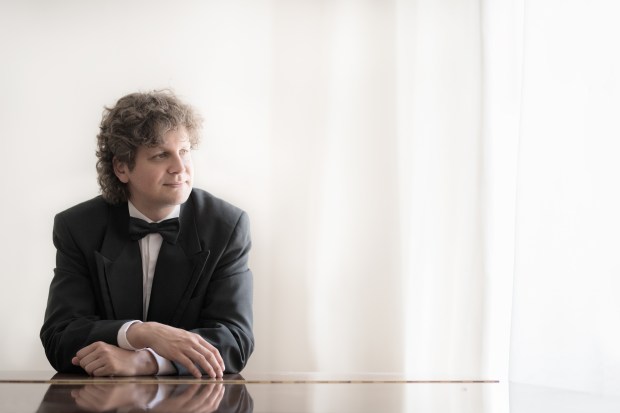
Rathaus Wnukowski

Daniel Wnukowski, photo by Claudia Zadory

Wnukowski: “Michael Haas introduced me to a fascinating person he had met in his role as a senior researcher on the topic Holocaust music – Walter Arlen. Walter was apparently looking for a pianist to record his complete solo piano and vocal works, together with one small work for violin and piano. He had already recorded one CD set with another Viennese-based pianist Danny Driver, but for a variety of reasons beyond the scope of this note, Danny was no longer available to record the remainder of Walter’s works. “

“It was a life changing experience to learn about this man’s unique story of survival, his harrowing journey of escape to America. It was an exceptionally inspiring and moving experience to have had the composer present at all times during the entire session. I can only say that the encounter with this fascinating man was a ‘life-changing experience’ for me.”

Rathaus Daniel

Daniel Wnukowski, photo by Claudia Zadory

“My paternal grandparents were from Lublin. They became forced labourers on workers camps but escaped to Canada at the end of WWII in 1945, as the camps were liberated by allied forces. They kept quiet about their WWII experiences until they were well over 90 years of age. Even then, trying to pull out any details of their life experiences was a moot point. They simply wanted my father and the rest of the family to have a ‘traditional’ North American upbringing – a spacious suburban home and hockey played out on the street.

My maternal grandparents, on the other hand, remained in Lublin after the war and were much more secretive, strongly discouraging any discussion on the topic of the war in the household. My mother mentioned that it was strictly taboo to discuss any aspect of the family’s origins, throughout her entire upbringing. The situation became particularly tense in 1968, when state-backed anti-semitism launched a massive campaign to depart all Jews to Israel. My mother was only 17 at the time.

My Jewish identity plays a huge role in my current work as a pianist. I honor every drop of my Jewish blood, which has been a passionate, driving force in my overall musical activities as a concert pianist. I want to continue my efforts to keep the stories of Holocaust survivors alive at a crucial time when many of them are approaching 100 years of age and dying off at alarming rates.”

Daniel Wnukowski plays ‘Der Letzte Pierrot’:

As far as I know, this CD is the very first recording of Rathaus’s piano works. All these compositions were written between 1924 and 1931. Besides the Fünf Klavierstücke, the second piano sonata and three Mazurka’s there are also – arranged for the piano by the composer himself – two fragments from the ballet Der Letzte Pierrot and three pieces from the film music from Der Mörder Dimitri Karamasoff. These are fascinating works with very pronounced rhythms. Harmonious, but with some dissonances. Irrespectfully said: Bartók meets Szymanowski. No, Rathaus is neither Polish, nor Austrian, nor American. His music is unique, different, just… Rathaus.


Karol Rathaus
5 Klavierstücke, Piano Sonata No. 2, 3 Mazurkas, 3 Stücke aus dem ballet Der letzte Pierrot, 3 Excerpts from the Film Music for The Murderer Dimitri Karamazov
Daniel Wnukowski, piano
Toccata Classics TOCC 0451

BETWEEN TWO WORLDS

More about Rathaus:

‘Alien Soil’ and the Slow Death of Karol Rathaus

Fremde Erde– Prescience as Opera


Het leven is kort! Over La vida breve van Manuel de Falla

La Vida Breve

Hij heeft maar één opera geschreven, maar: wat voor één! La Vida Breve van Manuel de Falla verenigt alles waar een echte kunstliefhebber van kan dromen. Klassieke noten worden gecombineerd met rauwe gitaarklanken en flamenco gaat hand in hand met het Italiaanse verisme. Wat je krijgt is een Spaanse Cavalleria Rusticana, alleen de in de steek gelaten Santuzza heet nu Salud en zij is het die het verraad van haar geliefde met de dood moet bekopen.

Ik kende de opera van de oude opname onder Rafael Frühbeck de Burgos met Victoria de los Angeles als Salud. Een uitvoering de ik altijd als de ultieme vertolking van de opera heb beschouwd.


Daar brengt de nieuwe uitgave op Chandos niet echt verandering in mee. Toegegeven: geluidskwaliteit is waanzinnig goed, de gitarist (Vicente Coves) onnavolgbaar, de koren rauw en het orkest meer dan meeslepend. Maar …

Maar Salud is geen Santuzza. Salud zij is in feite een klein en broos meisje en de werkelijk fantastisch zingende Nancy Fabiola Herrera heeft te veel kracht in haar stem. Waardoor het kwetsbare naar de achtergrond verdwijnt.

Aquiles Machado is geen subtiele tenor, veel van wat hij zingt ontaardt in schreeuwerig ‘machismo’, maar in de rol van Paco is hij voortreffelijk op zijn plaats.


MANUEL DE FALLA
La Vida Breve
Nancy Fabiola Herrera, Aquiles Machado, Cristina Faus, José Antonio López, Raquel Lojendio, Josep Miquel Ramon
Vicente Coves (gitaar)
RTVE Symphony Chorus, BBC Philharmonic olv Juanjo Mena
Chandos CHAN 20032

After the Darkness

Haags strijktrio cover

De titel van deze cd is ontleend aan het gelijknamige boek van Auschwitz- overlevende Elie Wiesel, ‘After the Darkness: Reflections on the Holocaust’.

Gideon Klein en Hans Krása

Krasa-kleinKrasa

Hans Krása(1899-1944) en Gideon Klein (1919-1945) belandden in het concentratiekamp Terezín (Theresienstadt) waarvandaan ze naar Auschwitz werden gedeporteerd en daar vermoord. Maar voor het zo ver was zijn ze, zo goed als het ging blijven componeren. In Terezín, ja. Daar zijn zowel Passacaglia & Fuga en Tanec (Dans) van Krása ontstaan, alsook het waanzinnig mooie Strijktrio van Gideon Klein.

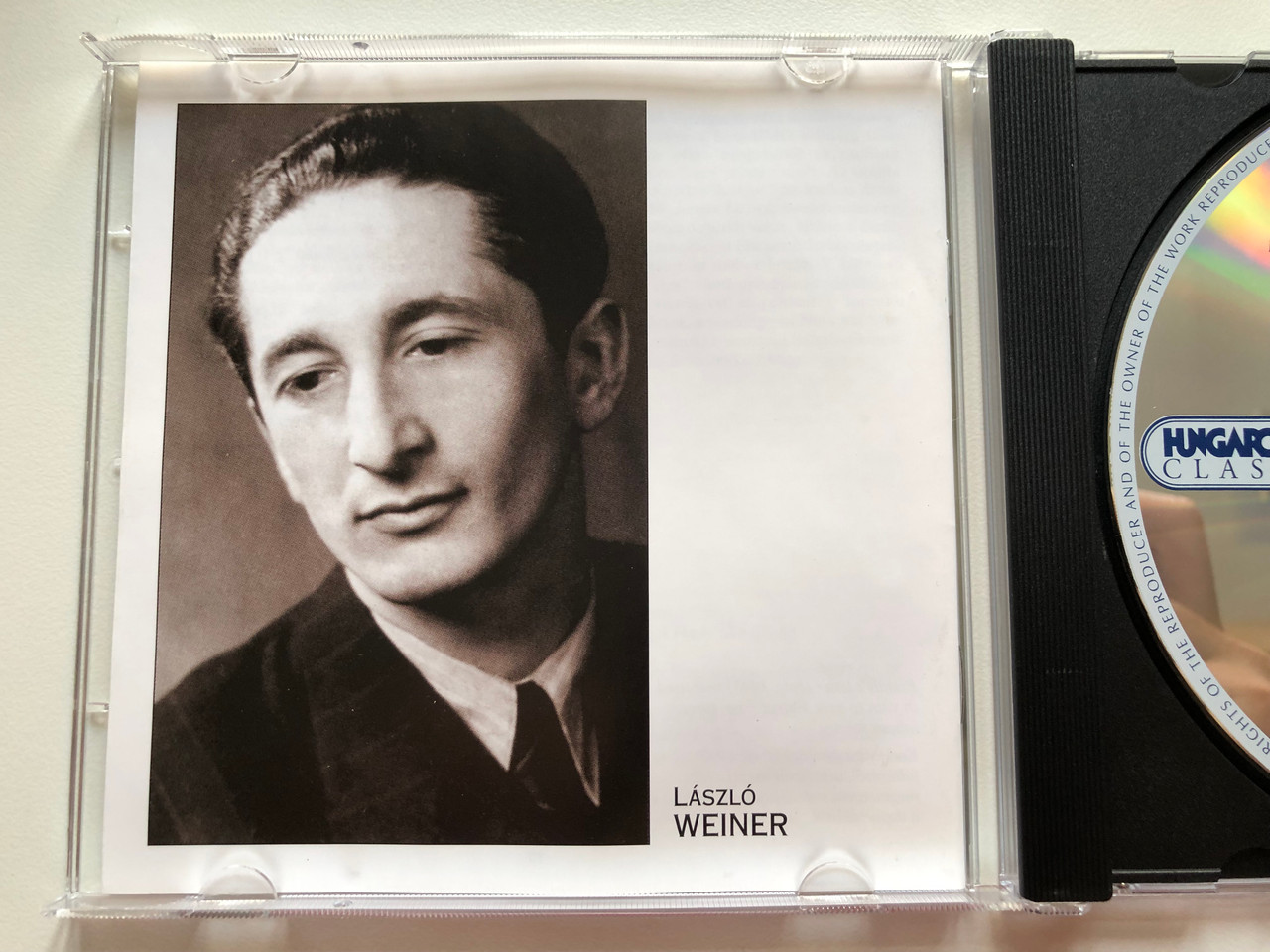
László Weiner – Chamber Music With Viola / Dirk Hegemann, Monika  Hölszky-Wiedemann, Lars Jönsson, Tatjana Ruhland, Erik Borgir, Members Of  Stuggart Radio Symphony Orchestra / Hungaroton Classic Audio CD 2009 Stereo  / HCD 32607 - bibleinmylanguage

De Hongaarse Lászlo Weiner (1916-1944) werd in februari 1943 gedeporteerd naar het werkkamp in Lukov (Slovakije), waar hij een jaar later werd vermoord. Zijn Serenade voor strijktrio uit 1938 heb ik niet eerder gehoord. Waarom eigenlijk? Het is gewoonweg prachtig!

Afbeeldingsresultaat voor Dick Kattenburg

Ook de Nederlander Dick Kattenburg (1919-1944) overleefde de oorlog niet: op 19 mei 1944, werd hij naar Auschwitz gedeporteerd. Zijn Trio à cordes beleeft hier zijn wereldpremière. Ik kan hier niet met droge ogen naar luisteren. Ja, ik weet het, ik weet het, men moet zich tot de muziek sec beperken, maar soms is het zo verdomd moeilijk! Maar neem van mij aan dat de kwaliteit van het gebodene van de grootste kwaliteit is en dat het nog steeds zo weinig wordt uitgevoerd ligt aan… Aan wat eigenlijk? Onwil? Schuldgevoel?

In 2019 was het precies honderd jaar geleden dat Klein, Weiner, Kattenburg en Weinberg werden geboren. Je zou toch minstens iets van (kleine) herdenkingsconcerten verwachten?

Haags strijktrio

Het Haags Strijktrio (Justyna Briefjes, Julia Dinerstein en Miriam Kirby) werd opgericht in 2006. In het tekstboekje vertellen ze dat After The Darkness een project is dat ze na aan het hart ligt en dat is te horen. “Wij voelen het als een voorrecht de muziek van deze componisten te laten horen en een blijvende nalatenschap te creëren, zodat hun stemmen nooit vergeten worden.” Bedankt!


Krása: Passacaglia & Fuga – Tanec (Theresienstadt 1944)
Klein: Strijktrio (Theresienstadt 1944)
Weiner: Serenade (1938)
Kattenburg: Strijktrio (1937/39)
Weinberg: Strijktrio op. 48 (1950)
The Hague String Trio
Cobra Records 0065

The voice of the Viola in Times of Opression: de altviool als stem voor de vervolgden

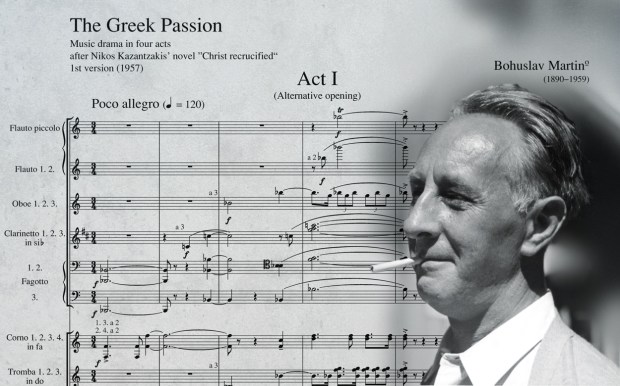
Why don’t we see Martinů’s Greek Passion more often?

Greek Passion martinu-600 Universal Edition Magazine

Once, years ago I begged the gods (and the staff of DNO) to put by Bohuslav Martinů’s The Greek Passion on the repertoire list. In vain. It doesn’t even have to be a new production, on the contrary! There is a beautiful staging made by David Pountney. It was first performed in 1999 in Bregenz (this was the first version of the opera), and a few years later at the Royal Opera House in London.

I saw the production in London and was very moved by it. In the performance I attended, the main parts were played by Christopher Ventris as Manolios (Christ) and Douglas Nasrawi as Panait (Judas), and since then I have hoped that one day a DVD will be released. In vain, so it seems …

‘Christ was crucified again’

Greek Passion Kazantzakis

Nikos Kazantzakis © Universal Edition Magazine

The subject: refugees, corruption, religious fanaticism, humanism and the search for identification was, is and will always remain topical. Bitter, tragic, but also beautiful and very humane. Martinů himself wrote the libretto for it, based on the novel ‘Ο Χριστός ξανασταυρώνεται’ (Christ was crucified again) by Nikos Kazantzakis. The book (and the opera) tells a story of the survivors of a Turkish massacre who seek shelter in a Greek village where the local population is preparing for their annual ‘Passion performances’.

FILM

Greek Passion film

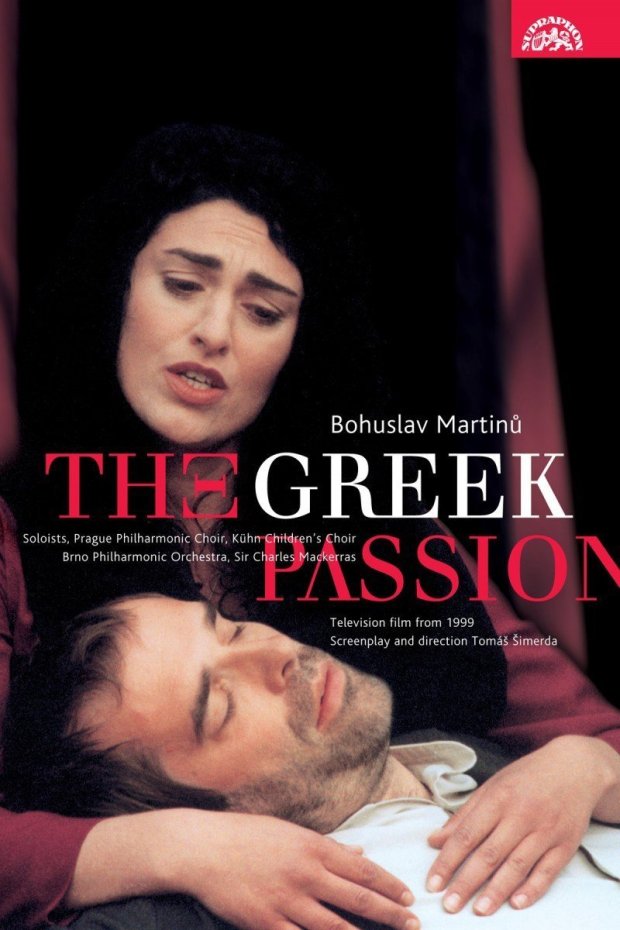
There are two versions of the opera. The original version was rejected by the then management of the Royal Opera House in 1957. The score, which was drastically adapted by Martinů, was not performed until 1961 in Zurich, after the composer’s death. This ‘revision’ was recorded by Supraphon in 1981 and filmed for television in 1999 (Supraphon SU 7014-9).

For the time being, we should be satisfied with that, at least as far as the image is concerned. Not that it’s bad, on the contrary, because there’s a lot to enjoy, but it’s a film and the roles are played by professional actors who really do their best to make us believe that they’re singing too.

The film is strongly reminiscent of Zeffirelli. If you have seen his Cavalleria Rusticana, you know what I mean. There are beautiful images of the arid landscape and the heat and drought are almost palpable.

The soundtrack comes from the recording by the Brno Philharmonic Orchestra conducted by Charles Mackerras (need I say more?) with a cast including John Tomlinson as the priest Grigoris, John Mitchinson as Manolios, Helen Field as Katerina and the soloists of the Welsh National Opera.

CD

Greek Pasion Kaftan

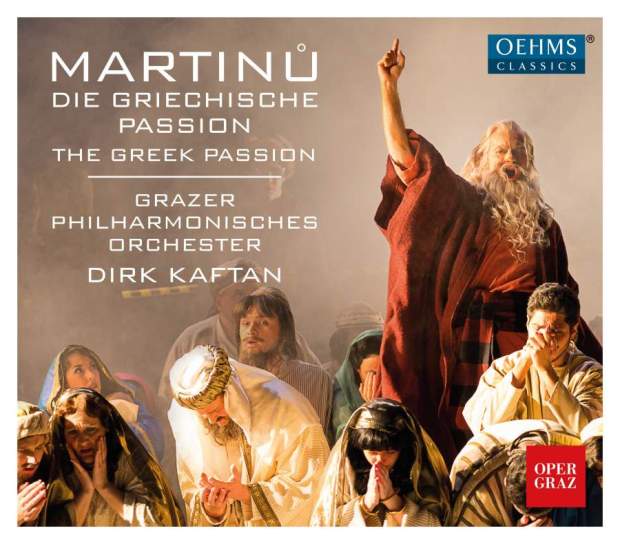
Recently, the first, original version of the opera was published on Oehms (OC 967), recorded live in Graz in March 2016. The performance is definitely good. The Swiss tenor Rolf Romei is a very moving Manolios and Dshamilja Kaiser a convincing Katerina. The Grazer Philharmonisches Orchester is conducted very idiomatically and very appealingly by Dirk Kaftan.


Judging by the pictures in the textbooklet (and the fragments on You Tube) the production was also beautiful to see. Why is this not on DVD?

In Dutch: BOHUSLAV MARTINŮ: The Greek Passion

Translated with http://www.DeepL.com/Translator

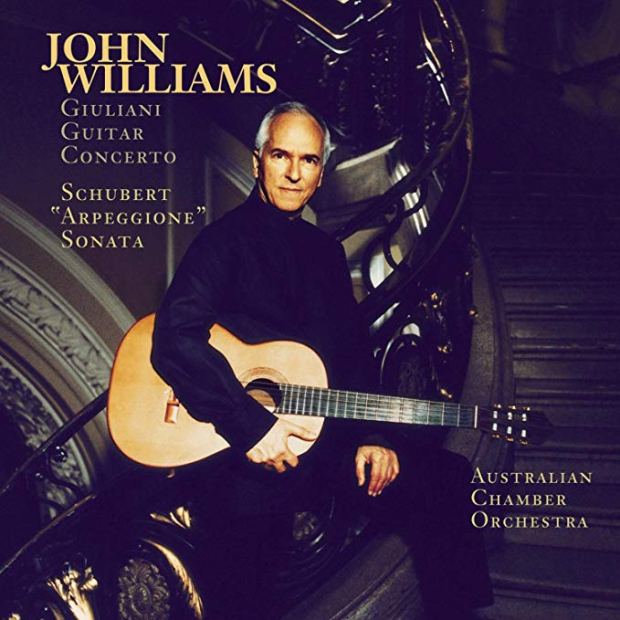
John Williams speelt gitaarconcerten van Giuliani en Schubert

Schubert John Williams

Niet schrikken! Het ligt echt niet aan u, Schubert heeft heus geen gitaarconcert geschreven. Arpeggione, een muziekinstrument dat maar kort in het gebruik was aan het begin van de negentiende eeuw werd ook gitaarvioloncel genoemd. De keuze om het meesterwerk van Schubert op een gitaar te spelen is dus minder vreemd dan u denkt en meer voor de hand liggend dan de bewerkingen voor fluit of klarinet bij voorbeeld.

Het concert van Mauro Giuliani werd al eerder door Williams opgenomen, in 1968. Sindsdien is er het een en ander in de muziekopvattingen veranderd en het gebruik van de authentieke instrumenten werd bijna een must. Op deze opname uit 1999 bespeelt Williams een Guadagnini uit 1814. Hij gebruikt ook de oorspronkelijke partituur, dat alles onder de supervisie van Carlo Barone, een expert op het gebied van de Italiaanse gitaarmuziek uit die tijd.

John Williams behoort beslist tot de beste en meest veelzijdige gitaristen uit onze tijd. Met net zoveel gemak verzorgt hij de plaatpremières van hedendaagse composities, maakt hij uitstapjes naar de jazz en bezorgt kippenvel aan de liefhebber van de romantische muziek van Tárrega. Ook op deze opname worden wij niet teleurgesteld, al hoor ik de Arpaggione het liefst gespeeld op de cello, met de pianobegeleiding. En dan graag  door het duo Maisky/Argerich.


John Williams gitaar
Australian Chamber Orchestra olv Richard Tognetti
Sony SK63385

Walk like Egyptian: Verdi’s Aida door Robert Wilson

Aida Wilson

Verwacht geen olifanten in deze Aida uit Brussel. Ook geen grote massa scènes en – voornamelijk – verwacht geen emoties. Bij Robert Wilson moet alles minimalistisch en esthetisch verantwoord, wat ontegenzeggelijk leuke plaatjes oplevert maar in discrepantie blijft met de muziek. De zangers bewegen zeer langzaam, bijna in slow motion en hun (spaarzame) gebaren zijn gestileerd naar de oud-Egyptische tekeningen.

Niemand raakt niemand aan, sterker: er wordt niet eens naar elkaar gekeken. Alle personages zijn voornamelijk met zichzelf en hun eigen leed bezig, wat volgens de regisseur wellicht de sleutel is tot het drama. Voor mij te ver gezocht.

De enscenering wordt gedomineerd door de kleuren zwart en blauw, er zijn amper decors en/of rekwisieten. Dodelijk saai.

De, werkelijk geweldige zangers lijken gevangen te zitten in een keurslijf van emotieloos acteren, al lukt het Ildiko Komosi (Amneris) af en toe een gebaar te smokkelen. Samen met Norma Fantini (Aida) zorgt zij voor de meeste spanning en ontroering, en hun duet in de eerste acte is vocaal een hoogtepunt.

Marco Berti is een prima Radames met een prachtige hoogte en een vleugje ‘Pavarotti’ in zijn timbre, en ook de rest van de bezetting is eersteklas. Kazushi Ono dirigeert bedaard, met alle aandacht voor de details.

Terugkerend naar de regisseur: Robert Wilson lijkt zich keer op keer te herhalen. Heb je ooit een enscenering van hem gezien, dan heb je ze allemaal gezien. Hoezo ‘opera is geen museum’?

Giuseppe Verdi
Aida
Norma Fantini, Marco Berti, Ildiko Komlosi e.a.
Symphony Orchestra&Choire of La Monnaie-De Munt olv Kazushi Ono
Opus Arte OA 0954 D

Madama Butterfly: drie (cd) opnamen waar ik niet zonder kan

Butterfly

Female Attendant Helps Madama Butterfly to Dress Giclee Print by C.d. Weldon | Art.com

Het leven van een operaliefhebber is incompleet zonder minstens één Madama Butterfly op de plank – tenzij u natuurlijk een Puccini-hater bent (ze bestaan echt!), maar in dit geval leest u het toch niet….

RENATA SCOTTO

Butterfly Scotto

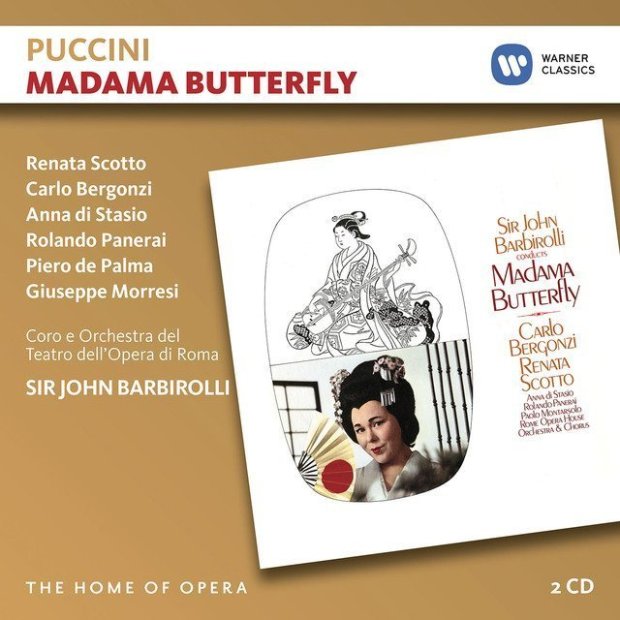
Voor mij een absolute ‘numero uno’ is de in 1966 bij EMI (tegenwoordig Warner 0190295735913) verschenen opname onder Sir John Barbirolli. Renata Scotto bewonder ik niet alleen vanwege haar prachtige stem, maar ook (en misschien voornamelijk) vanwege haar totale identificatie met iedere rol die ze ooit gezongen heeft.

Begonnen als een lyrische coloratuursopraan, schitterde ze voornamelijk in opera’s van Bellini en Donizetti, om in de jaren zestig langzamerhand ook zwaardere rollen op haar repertoire te zetten. Madama Butterfly was er één van, en daarmee zette ze een standaard die nog steeds niet is geëvenaard.

Hieronder: privé opname van het liefdesduet met Renata Scotto en Giacomo Giacomini

Je kan je een lyrischer of juist een meer dramatische Cio Cio San indenken; eentje met minder metaal in haar stem of eentje met kinderlijker stem. Maar geen andere zangeres wist zo het complexe wezen van het meisje te doorgronden en haar verandering van een naïef kind in een volwassen, door immens verdriet gebroken vrouw zo te karakteriseren.

Hieronder: Scotto zing ‘Con onor muero’ in Arena di Verona in 1987

Vijftien is Cio Cio San als de opera begint en nog maar achttien bij haar tragische einde, maar in die drie jaar heeft zij een ontwikkeling doorgemaakt, waar een gewoon iemand een heel leven voor nodig heeft. En dat alles hoor ik in Scotto’s interpretatie.

Carlo Bergonzi is een prachtig gezongen, een ietwat afstandelijke Pinkerton en Rolando Panerai een zeer warme Sharpless.


CLARA PETRELLA

Butterfly Petralla

Op nummer twee op mijn lijstje staat een Italiaanse Rai-opname uit 1953 (Urania URN22.311) met in de hoofdrol Clara Petrella. Deze verschrikkelijk ondergewaardeerde sopraan is een zeer dramatische Butterfly, met een intensiteit die je bij het beluisteren gewoon pijn doet.

Feruccio Tagliavini roept met zijn zoete, lyrische stem een sfeer van liederen van Tosti op: dit is een Pinkerton om verliefd op te worden.


VICTORIA DE LOS ANGELES

Butterfly de los Angels

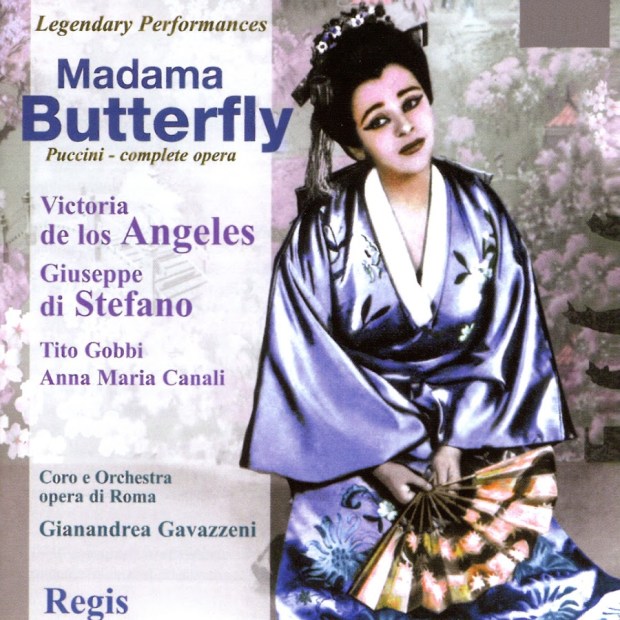
Op nummer drie ook een oudje: een in 1954 door EMI opgenomen en inmiddels op Regis (RRC 2070) heruitgebrachte opname met Victoria de los Angeles en Giuseppe di Stefano. De los Angeles is een Butterfly met een kinderlijke warmte, broos, breekbaar. Haar te kwetsen voelt alsof je de Madonna zelf gekwetst hebt. Daar past Giuseppe di Stefano met zijn zeer macho tenor wonderwel bij.


Is verismo dead? Part 1: Cavalleria Rusticana

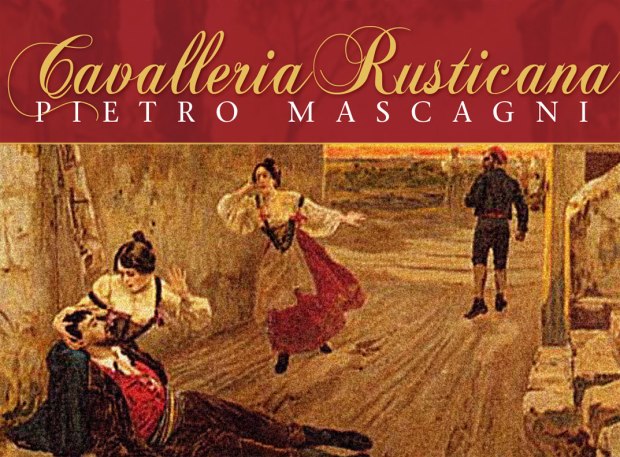
cavalleria-rusticana-mascagni


La Morte de Verismo: Verismo is dead. In recent years, this heartfelt cry has been the subject of intense discussion on opera mailing lists, in opera groups on Facebook and during emotional conversations and discussions among many fans of the genre. But is it true? Is verismo dead?

People say verismo and think: Mascagni and Leoncavallo. Rightly so? Cavalleria Rusticana and certainly Pagliacci are among the most popular operas ever. The most tragic as well. But that is not only because of their content. They are about passion, love, jealousy, revenge and murder, but that and also the rough realism does not make them more violent than Carmen. And we have also experienced ‘ordinary people’ and ‘present time’ in operas before, in La Traviata for example.

No, what actually makes these operas so tragic is the fate of their creators. Both works caused a huge sensation and left their creators with a blockbuster they could never equal again. Not that they composed nothing else or that the quality of their later operas leaves much to be desired. On the contrary. La Bohème by Leoncavallo or L’Amico Fritz by Mascagni, for example, are true masterpieces.

The ‘why’ is difficult to answer, although many explanations have been given. Mascagni would not have remained true to his style and started to compose in the romantic style again. But that is not true: Cavalleria contains many passages that are just as lyrical as L’Amico Fritz, for example,  and Cavalleria is no more dramatic than lets say Iris.


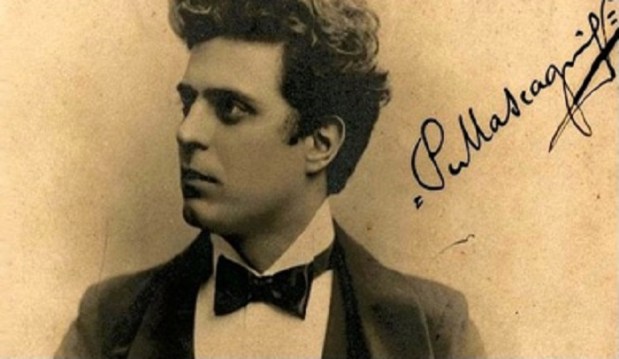
pietro-miscagni-bbc-archives

Pietro Mascagni. Photo courtesy BBC archives


“Crowned before I became king”, Mascagni sarcastically remarked (‘Cavalleria’ was his first opera, composed when he was 26 years old), and that goes for Leoncavallo as well. Whatever the cause may be, both composers have, inseparably linked, gone down in history as composers of only one opera.

The same thing happened to their contemporaries and/or contemporaries of style (they preferred to call themselves ‘La Giovane Scuola’ – ‘The Young School’). The few people who have heard of Giordano, Catalani, Franchetti or Cilea probably cannot name more than one opera. Or even worse: one aria.

It is difficult to say what caused this, and is worth exploring, but the fact is that after the thirties and forties (and also the early fifties) the genre suddenly became ‘not done’. Intellectuals considered the genre as beneath themselves and the sobs in the aria ‘Vesti la giubba’ from Pagliacci became the example of bad taste.

Cavalleria Rusticana and Pagliacci have always remained popular with audiences, though. The real lovers have never taken any notice of this intellectual criticism (especially the eighties and nineties of the last century were ruthless for verismo).


CAVALLERIA RUSTICANA


mascagni


The premiere of Cavalleria Rusticana took place in 1890, three years after Otello and three years before Falstaff by Verdi. The leading roles were sung by Gemma Bellincioni as Santuzza and her husband Roberto Stagno as Turiddu.


cavalleria-bononcioni-met-man


Thanks to Edison and his invention we know how the first Santuzza sounded, because in 1903 Bellincioni recorded ‘Voi lo sapete, o mamma’  (SRO 818-2). What do we hear? Bellincioni has a light soprano, with an easy height, but with a dramatic core. It seems that she had had little success with the then standard repertoire, but her presence, her acting and interpretation made her very suitable for the new operas composed in the verist style.


Bellincioni sings ‘Voi lo sapete o mamma’:


How does a perfect Santuzza sound? You have to have power, that is clear. You also have to be able to act, especially with your voice, because few roles have so much duality in them: her eternal nagging gets on your nerves and you get tired of it, but at the same time she is pitiful and you have sympathy for her. As in real life, and that real life must also be reflected in the interpretation, which cannot be achieved by just singing beautifully.

That’s why the greatest singing actresses have recorded the best Santuzzas. You notice that too when looking at the list of Santuzzas: Giannina Arangi-Lombardi, Zinka Milanov, Carla Gavazzi, Eileen Farrell, Giulietta Simionato, Maria Callas, Elena Souliotis, Renata Tebaldi, Renata Scotto. And Lina Bruna Rasa of course, the beloved Santuzza of Mascagni.


cavallerie-bruna-rasa-cav


Milan 1940

In 1940 the 50th anniversary of Cavalleria was celebrated with special performances at La Scala, after which the whole cast went into the studio to make a recording of it. The line-up was the best possible, with next to Lina Bruna Rasa, Benjamino Gigli as Turiddu, Gino Becchi as Alfio and Giulietta Simionato as Mamma Lucia (strangely enough Simionato often sang the role of Santuzza afterwards).


cavalleria-1940


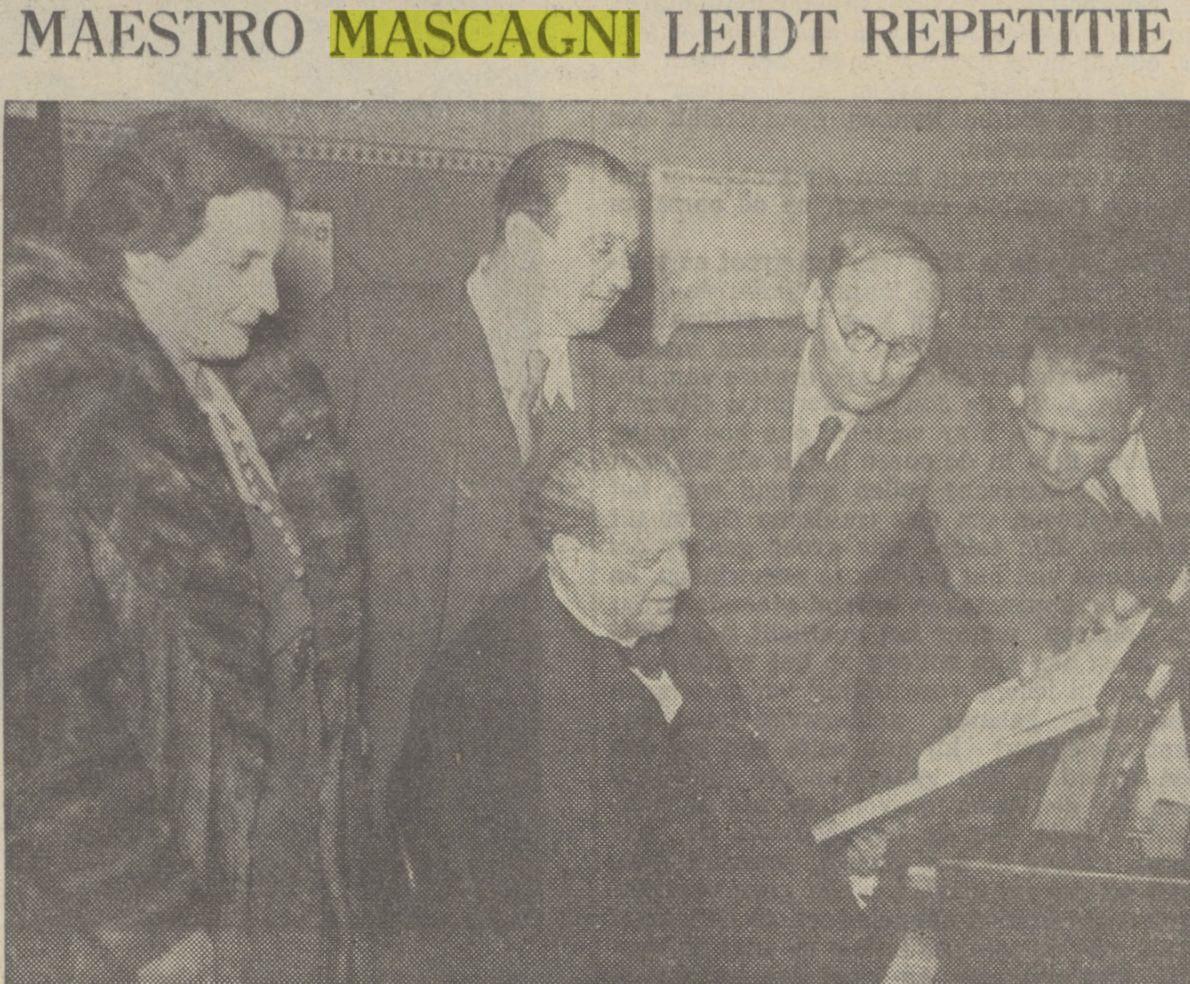
The first thing that stands out in Mascagni’s conducting is the emphasis he places on lyricism and a lilting tone , which makes the melodic lines stand out more clearly. On no other recording does the prelude sound so idyllic, and nothing better indicates the drama that is about to take place, which contrasts sharply with the Santuzza – Turiddu duet.  It makes the drama more poignant, more intense.

Gigli was one of the best Turiddu’s in history: seductive and frivolous, and (sorry, but it is true) only in Domingo did he get a worthy competitor. Because neither Giuseppe di Stefano (too light), nor Jussi Björling (too nice), nor Mario del Monaco (too roaring), nor José Carreras (although he comes close) could give Turiddu a hint of three-dimensionality.

Gigli as Turiddu. Recording from 1927:


At the time of the recording Bruna Rasa was 33 years old and since a few years she suffered from terrible depressions. The first symptoms of a mental illness had also manifested themselves and she had trouble remembering the text. Yet there was no question that anyone else would sing that role, and Mascagni helped her as much as he could.


Lina Bruna Raisa sings’ Voi la sapette o mamma’:


The original recording appeared on 2 CDs on EMI which were filled up with arias from other Mascagni operas sung by Gigli. Unfortunately on the re-release on Naxos (8110714-15) some orchestral preludes and intermezzi from different operas, all performed by the Berlin State Opera Orchestra conducted by Mascagni are added instead. Both EMI and Naxos start with a short speech by the composer.


Below the complete opera, conducted by the composer:


The Hague 193

Two years earlier, in 1938, the widow of Maurice De Hondt brought Mascagni and his opera to The Hague. The performance of 7 November was recorded live and was released on CD 


The live recording sounds pretty good, especially for its age, and the stage sounds (including a very audible prompter) and the coughing audience are not really disturbing. The tempi are a bit faster than on the Naxos recording, but still a little on the slow side.


Cavalleria Bruna Raisa NL


The line-up is slightly less spectacular than two years later, but still very good. Antonio Melandri is a baritone Turiddu and Alfro Poli gives excellent shape to Alfio. Of course Mascagni had brought Bruna Rasa, and what she shows here surpasses everything: so intense, so desperate, so heartbreaking, like no other Santuzza ever sounded. Because of her interpretation alone, this special document is invaluable.


Franco Zefirelli


cavalleria-domingo


This part movie/part studio recording of Franco Zefirelli (DG 0734033) could have been the ultimate adaptation if it had not been for Elena Obraztsova who plays the role of Santuzza. That she is a bit older and unattractive – ok, that fits the story. But her voice is lumpy, sharp and her chest register is painful to the ears. She also suffers from over acting which makes her an extremely unsympathetic Santuzza.

One can’t blame Turiddu (Domingo at his best) for preferring to look at Lola (nice Axelle Gall). Just look at his eyes and his corners of the mouth, which speak volumes! For the rest nothing but praise for this recording, which (how could it be otherwise?) is coupled with ‘Pagliacci’, with again Domingo in top form and an excellently acted Nedda by Teresa Stratas.


In 1956 in the Rai studios one of the most beautiful Cavallerias was recorded, with Carla Gavazzi, Mario Ortica and Giuseppe Valdenga.


This recording can now be found on Youtube:


DOMENICO MONLEONE


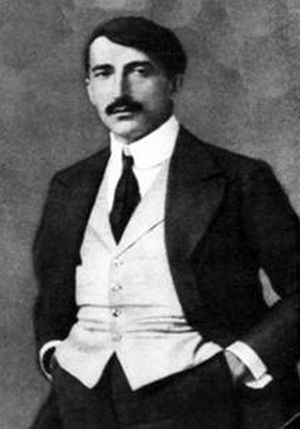
cavalleria-monleone-portret


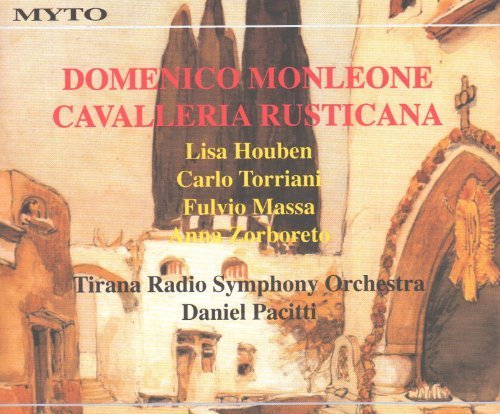
What many people don’t know: there are actually two (and even three if you include La Mala Pasqua by a certain Stanislao Gastaldon from 1888) Cavalleria Rusticana’s. Domenico Monleone (1875 – 1942), a composer not unknown  at the time, also used the story of Giovanni Verga for his one-acter, which his brother Giovanni converted into a libretto.


cavalleria-monleone-painting

Illustration Gamba Pipein. Courtesy Boston Public Library, Music Department


Sonzogno, Mascagni’s publisher, accused Monleone of plagiarism (and indeed: careful study shows that Monleone’s libretto is closer to Mascagni than to Verga’s original story), after which the opera was not performed anywhere for a long time.

Until 1907, when Maurice de Hondt brought Monleone to Amsterdam, where his opera had its belated premiere. Coupled with … yes! Cavalleria Rusticana.

Both works were directed by their composers: it apparently did not bother Mascagni that his colleague had ‘borrowed’ his libretto from him.


cavalleria-monleone


Il Mistero


cavalleria-il-mistero


Nevertheless, Monleone had to accept the court ruling, which meant that he had to find a new libretto for his music.

It was changed into Il Mistero, another story by Verga, and this time the author himself had helped Giovanni Monleone with the libretto.

Both operas with the same music but on two different libretto’s were released by Myto on CD’s (Cavalleria: 012.H063; Il Mistero: 033.H079). In both works the leading role (Santuzza/Nella) is sung by Lisa Houben, originally from the Netherlands.

Duet Santuzza/Turiddu, sung here by Denia Mazzola-Gavazzeni and Janez Lotric. Recording was made in Montpellier, in 2001:


An amusing video: eight times ‘A te la mala Pascua’:


Translated with http://www.DeepL.com/Translator

In Dutch: IS VERISMO DOOD? Deel 1: Cavalleria Rusticana


Het geheim van Susanna

Il Segreto di Susanna

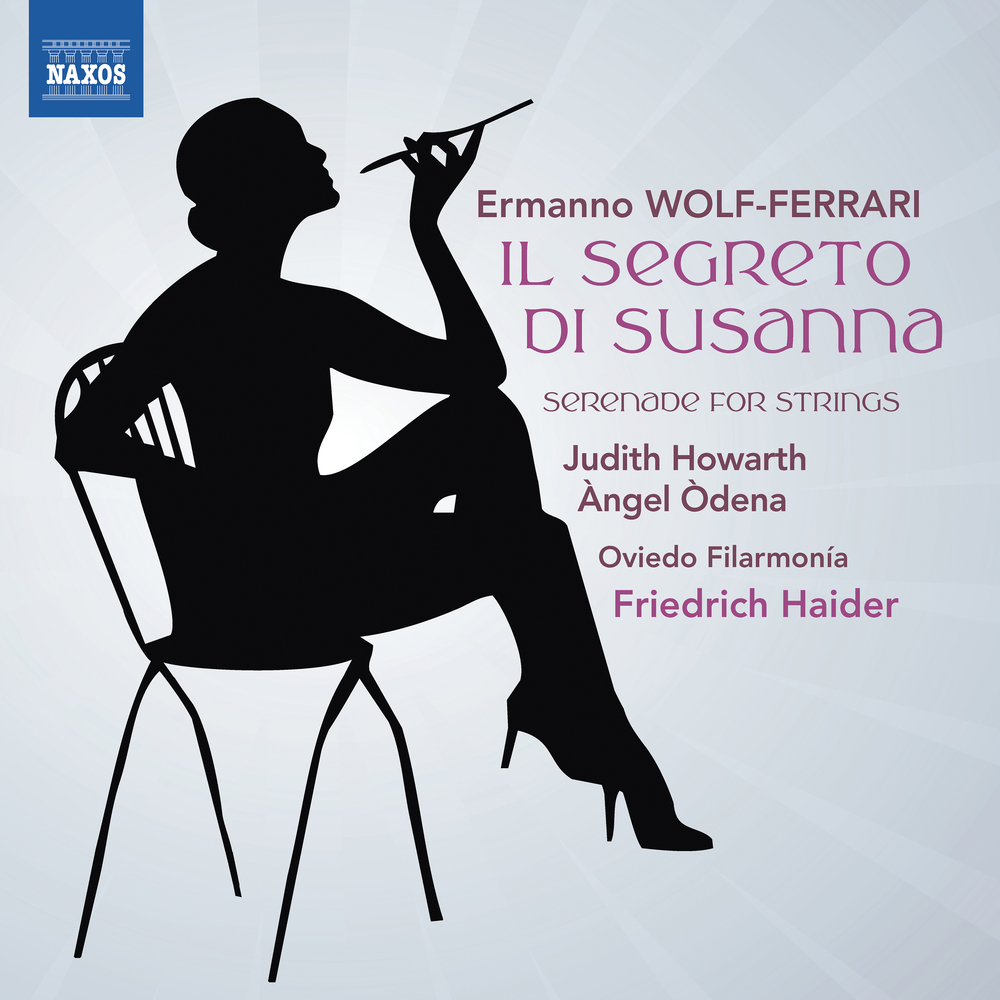
Susanna heeft een geheim. Heeft zij een minnaar? Dat is precies wat haar jaloerse echtgenoot Gil denkt. In het huis hangt een rookgeur, dus..? Nou, nee. Susanna heeft geen minnaar en de sigaretten, die rookt zij zelf. Dat is dus haar geheim. Het is een gegeven van niets, maar Ermanno Wolf-Ferrari wist van het niemendalletje één van de leukste komische opera’s ooit te maken.

Zijn muziek is goddelijk mooi. Meer, eigenlijk. In zijn noten wist hij alle gemoedstoestanden te vangen. Boos, blij, verontrustend, kwaad, gelukkig… Je hoort het. Geniaal. Dat de opera nog maar zelden wordt uitgevoerd heeft alles te maken met onze verachting van alles wat naar verisme ruikt. Voor de gemoedsrust van de verisme-haters: nee, Il Segreto di Susanna is geen veristische opera, het is meer een commedia dell arte. Of, plat gezegd, een heerlijk tussendoortje.

De – live – opname uit 2006 is uitstekend. Ángel Ódena is een meer dan de overtuigende echtgenoot en Judith Howarth een zoetgevooisde Susanna. Dat laatste is voor mij meteen (het enige) minpunt van de opname: Susanna mag toch best wat meer uitgesproken zijn! Wie de opname met Renata Scotto kent weet wat ik bedoel.

Als bonus krijgen we Wolf-Ferrari’s jeugd werk, een Serenade voor strijkers. En mooi dat het is! Het  uitstekend spelende Oviedo Filarmonia staat onder de zeer enthousiasmerende leiding van Friedrich Haider.


ERMANNO WOLF-FERRARI
Il Segreto di Susanna
Serenade voor strijkers
Judith Howarth, Àngel Òdena
Oviedo Filarmonia o.l.v. Friedrich Haider
Naxos 8.660385

Ermanno Wolf-Ferrari: TALITHA KUMI

La Damnation de Faust: Rattle doet het goed, maar Davis deed het beter

Faust Berlioz Rattle

Opera? Geen opera? Of toch wel? Berlioz zelf gaf zijn compositie de naam ‘dramatische legende’, dat als een concertstuk uitgevoerd diende te worden. Maar nu we zelfs het Requiem van Verdi of de Matthäus Passion van Bach scenisch opvoeren, ach… waarom niet? En toch is er veel voor te zeggen, voor ‘akoestisch only’, voor het kiezen voor muziek sec, zonder (veelal) verstorende beelden.

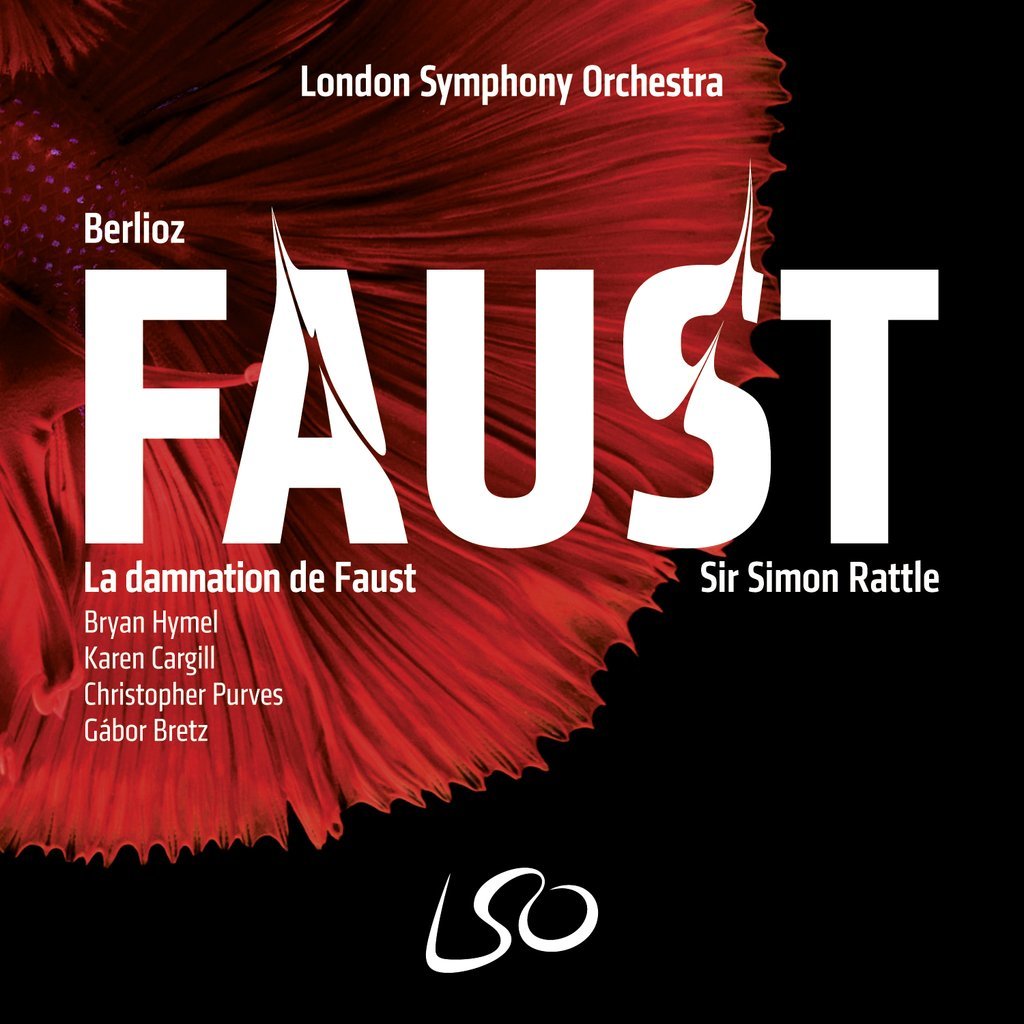
De voorliggende live opname uit Barbican in Londen (opgenomen in september 2017) is daar het klinkende bewijs van. Het London Symphony Orchest is gepokt en gemazeld in het oeuvre van Berlioz. Hun eerste opname van La Damnation de Faust onder Pierre Monteaux stamt al uit 1962 en we mogen natuurlijk Colin Davis niet vergeten: hij nam het werk twee keer op, in 1973 en 2001. De nieuwe opname onder Simon Rattle bevestigt nogmaals de verwantschap die de Londenaren met Berlioz hebben. Het is zonder meer prachtig, al prefereer ik lichtelijk de visie van Davis.


Wat deze opname tot een echte ‘must have’ maakt is de werkelijk onnavolgbaar schitterende Marguerite van Karen Cargill. Haar ‘D’amour l’ardente flamme’ zingt ze met een tot tranen toe roerende inleving, ik althans hield het niet droog.

Bryan Hymel is een uitstekende Faust en Christopher Purves een goede Mefisto.


HECTOR BERLIOZ
La Damnation de Faust
Karen Cargill, Bryan Hymel, Christopher Purves
Tiffin Boys’Choir, Tiffin Girls’ Choir, Guildhall School Singers,
London Symphony Choir- and Orchest o.l.v. Simon Rattle
LSO Live LSO 0809