English

André Previn and ‘A Streetcar named desire’

I had been playing with the idea of writing about modern American operas, because nowhere in the world is opera as alive as it is there. Romantic, minimalistic, dodecaphonic: something for everyone.

But ask the average opera lover (the diehards know Heggie, Barber and Menotti) to name an American opera composer: bet that they will not get beyond Philip Glass and John Adams. Why is that? Because we, Europeans, have a nose for American culture and feel superior in everything. That’s why


Streetcar affiche


September 2018 it was exactly twenty years ago that an important American opera had its premiere in San Francisco: A Streetcar named desire by André Previn, after the play by Tennesee Williams. I was there.
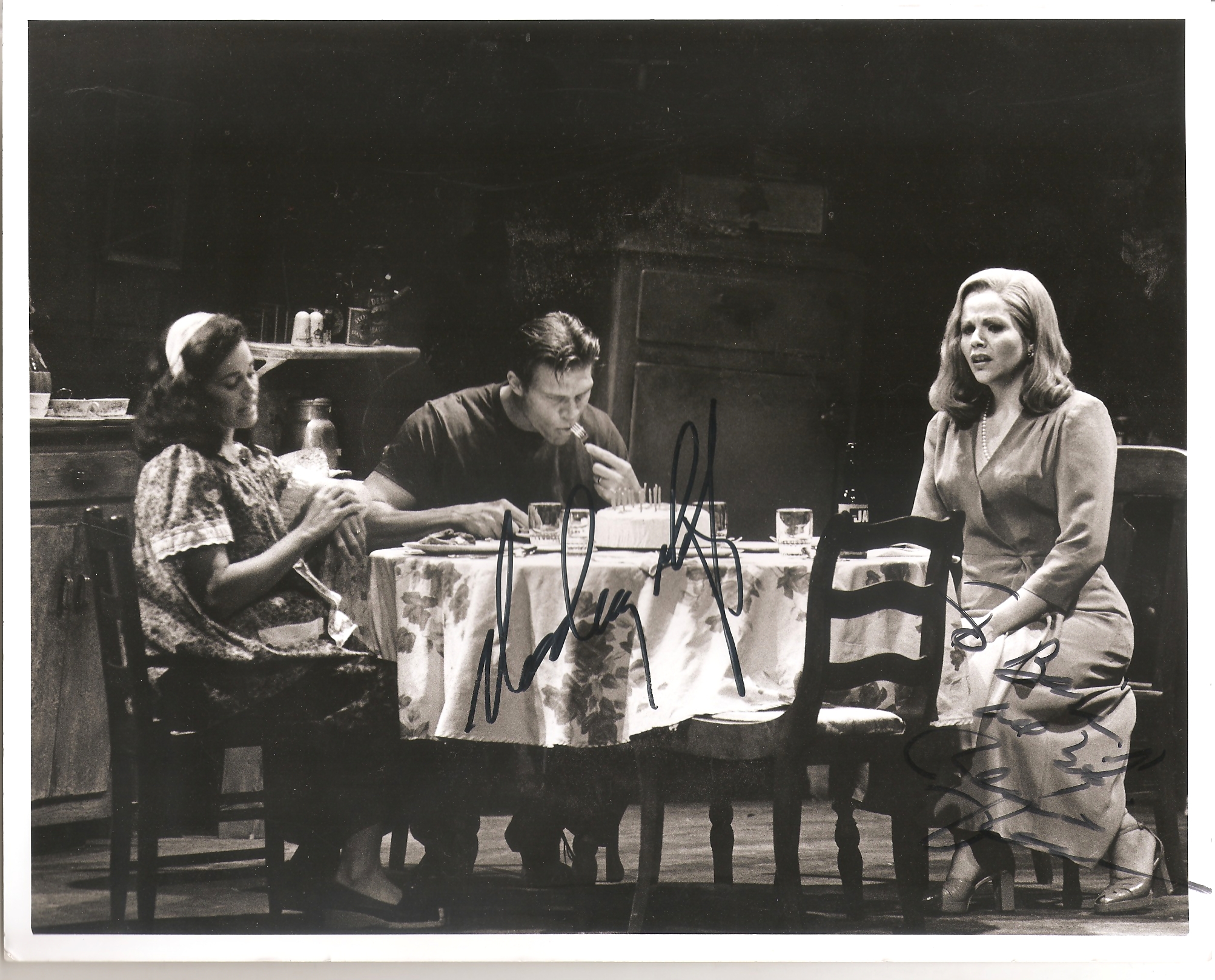
 

Streetcar scene

Elisabeth Futral (Stella), Rodney Gilfrey (Stanley) and Renée Fleming (Blanche) © Larry Merkle


THE PREMIERE

Expectations were high. Tennesee Williams’ A Streetcar Named Desire is one of the best known and most important American plays. Its adaptation by Elia Kazan in 1951 not only earned the play worldwide recognition but also a real cult status; and the main characters – curiously enough except for Marlon Brando – were all rewarded with an Oscar.

Streetcar film

The play was made into a film twice more, without success.  Not surprisingly, there are few films – or dramas – so intensely linked to the actors’ names. Still, it was the ultimate dream of Lotfi Mansouri, the then boss of the San Francisco Opera, to turn ‘Streetcar’ into an opera. Leonard Bernstein was approached but showed no interest.

The choice eventually fell on André Previn, a choice that seemed a bit strange to some, after all he had never composed an opera before.

Philip Littel, an old hand in the trade, wrote the libretto. He was best known for The Dangerous Liaisons, an opera that premiered two years earlier with great success. Colin Graham was the director and for the leading roles, great singer-actors were cast.

The libretto closely follows the play  and does not shy away from even the most difficult details. Small cuts have been made and Littel allowed himself a small addition: the Mexican flower saleswoman with her sinister ‘Flores, flores para los muertos’ returns at the end of the third act, with a clear message for Blanche. To me this felt slightly superfluous.

The stage images resembled those from the film. The first scene already: mist, a little house with the stairs to the upstairs neighbours and Blanche, carrying her little suitcase, singing ‘They told me to take a streetcar named Desire…” A feast of recognition for the film lover.

Renée Fleming sings I can smell the sea air:


You recognise fragments of Berg, Britten, Strauss and Puccini in the music, which is easy on the ears. The atmosphere is partly determined by strong jazz influences and you hear many trumpet and saxophone solos. Logical, after all, it takes place in New Orleans.

The opera is through-composed, but contains numerous arias: Stella and Mitch get one, there is a duet for Stella and Blanche, and Blanche herself is very richly endowed with solo’s. All attendees speculated what notes Stanley would get to sing with his famous “Stelllllaaa!!!

None, as it turned out. Rodney Gilfrey (Stanley), just like Marlon Brando in the movie stood at the bottom of the stairs and shouted. And just like in the movie Stella came back. The next morning she woke up humming. And she responded to Blanche with a beautiful big aria “I can hardly stand it”.
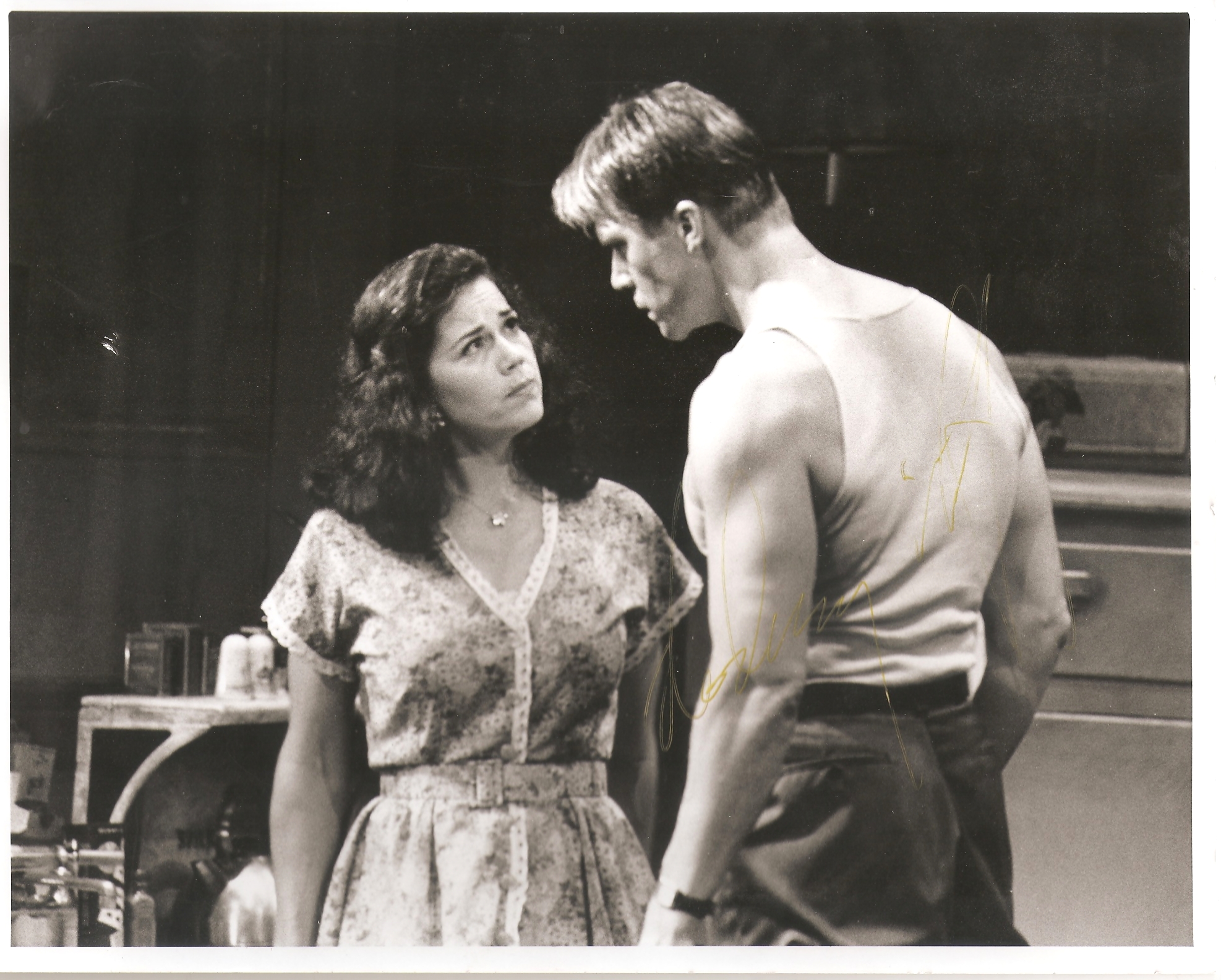
Streetcar Stanley

Elisabeth Futral (Stella) and Rodney Gilfrey (Stanley) © Larry Merkle


Elisabeth Futral provided a true sensation in her role of Stella. Blessed with a brilliant, light, agile soprano, she sang the stars from the sky and was ovationally applauded by the press and the public.
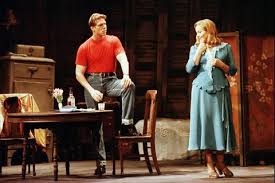
Streetcar rode hemd

Stanley Kowalski’s role was Rodney Gilfrey’s own. He even did me, even if it had been forgotten Brando for a while. I don’t know how he did it, but he could sing and chew gum at the same time! He looked particularly attractive in both the torn white T-shirt and the “red silk pajamas”. Unfortunately Previn didn’t give him an aria to sing, which made him even more unsympathetic as a person.

Mitch was sung very sensitively by the then unknown tenor Anthony Dean Griffey, and Blanche…..  André Previn wrote the role especially for Renée Fleming and you could hear that. Sensational.


Meanwhile Fleming has added her large aria ‘I Want Magic’ to her repertoire and recorded it in the studio for the CD with the same name.

https://my.mail.ru/video/embed/3374349646045150


CD
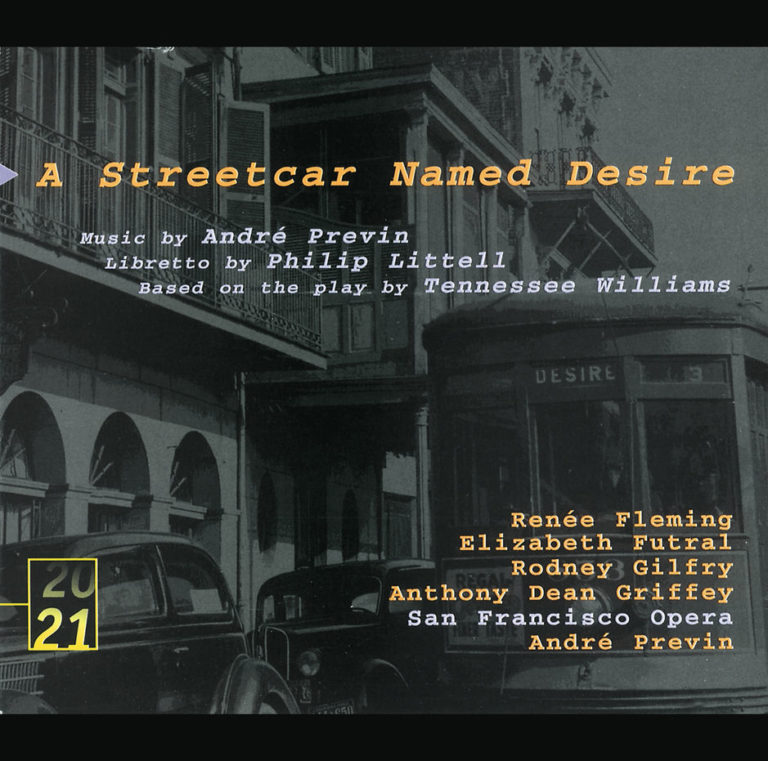
Streetcar-Named-Desire-768x761cd

The opera was recorded live by DG and brought on the market in the series 20/21 (music of our time).


DVD
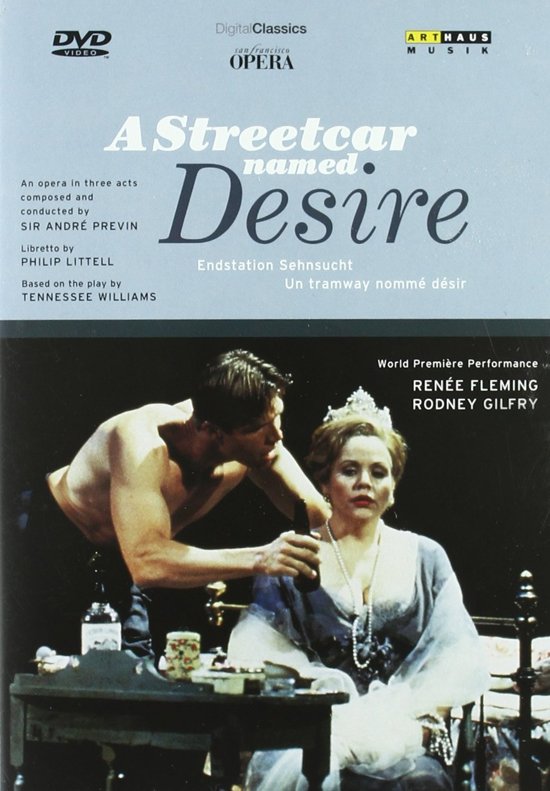
Streetar dvd

The opera has now become a classic and is performed in many opera houses in many countries, but the chance that you will ever see the opera in the Netherlands is virtually nil. Fortunately it was also recorded on DVD (Arthaus 100138). Not so long ago I have watched it again.

“Whoever you are – I have always depended on the kindness of strangers” sings Blanche Du Bois (Fleming), disappearing into the distance. She is led away by a psychiatrist, whom she sees as a worshipper.

Her words echo on, a trumpet plays in the distance, and strings take over the blues. The heat is palpable, the curtain falls and I look for a handkerchief. Before that I spent two and a half hours on the edge of my chair and even forgot the glass of whiskey I filled at the beginning of the opera.

People: buy the DVD and get carried away. It is without a doubt one of the best operas of the last twenty years.

Renée Fleming in conversation with André Previn about the opera:


THE KINDNESS OF STRANGERS

The kindness of Strangers’ is also the title of a film about André Previn, made by Tony Palmer

DVD WRAP.QXD (Page 1)


The kindness of Strangers’ is also the title of a film about André Previn

Translated with https://www.deepl.com/Translator

In Dutch: André Previns ‘A Streetcar named desire’ twintig jaar na de première

Meet Sir Thomas Allen

                 LET BEAUTY AWAKE!

Allen portret gubelkian

In my opinion Thomas Allen is one of the greatest singers of the past half century. His balmy voice with its warmth, colours and nuances makes me happy every time I hear it. It even feels comforting, like a warm bath. The English have the perfect description for this: “meltingly beautiful singing.” Yes, I am a fan!

This all-around baritone, equally at home in opera, art song, oratorio, musical theatre and even movies is held in high esteem all over the world. Except in the Netherlands, where he is barely known. Small wonder: apart from a few rare visits to the Concertgebouw he never sang here. The reason is simple: he was never asked.

DON PASQUALE

Allen recording

Recording Don Pasquale in Munich. Sir Thomas Allen, Renato Bruson, Eva Mei, Frank Lopardo © Wernard Neumeister

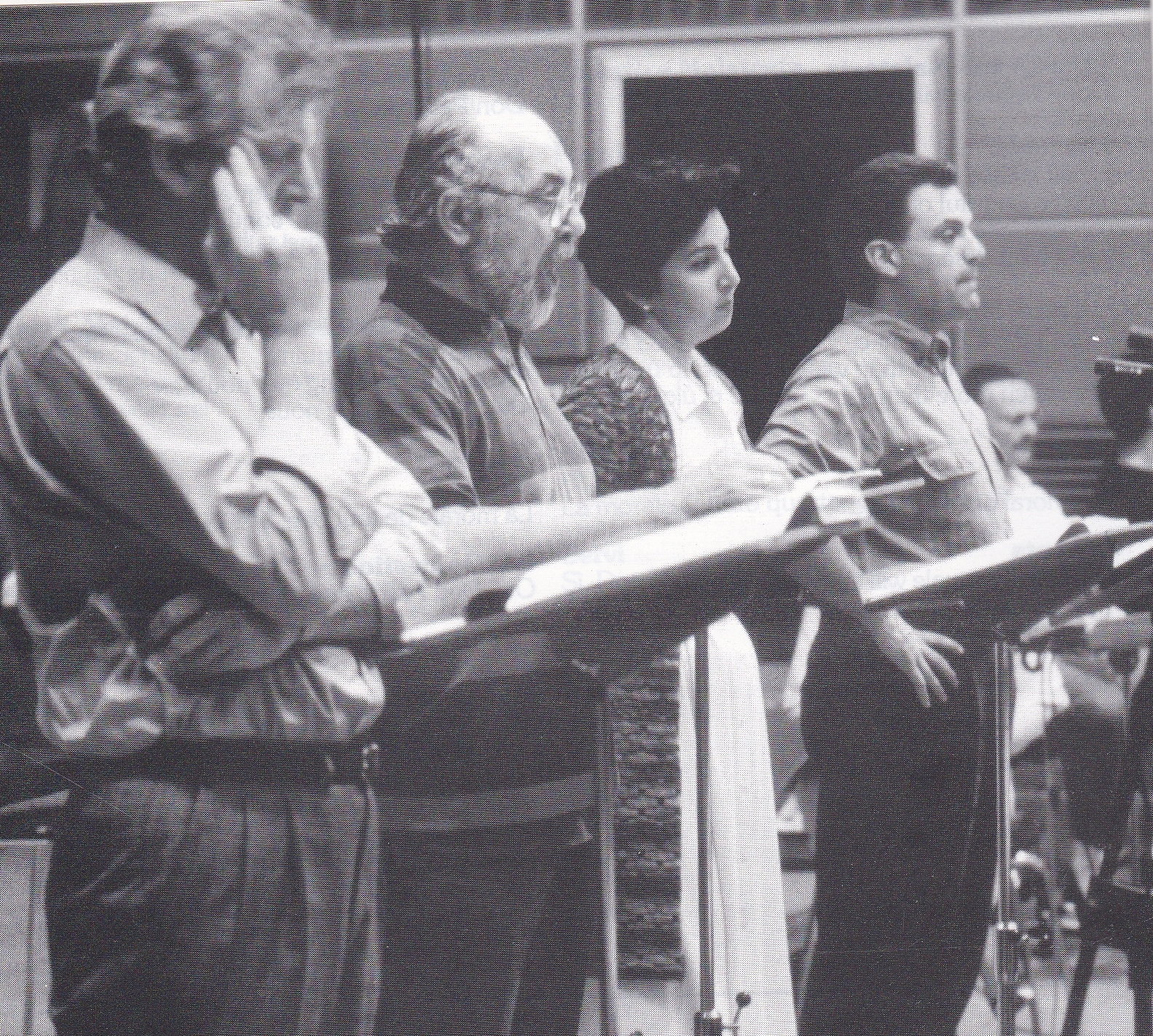
I first met Thomas Allen in December 1993 in London, after his recital in St James’s Church where he sang Die Schöne Müllerin.  We never really talked until a few weeks later in the BMG Studios in Munich, where he was recording Malatesta in Donizetti’s Don Pasquale.

I was allowed to attend the recording sessions. In a small corner I looked and listened, deeply admiring this beautiful singer. He sang the hardest coloratura passages in one long breath, and repeated them endlessly. His hands made elegant gestures. Everything about him, in fact, was acting. What a contrast with the recital in London a few weeks earlier, which had moved me to tears. There he stood motionless on stage, focused, acting only with his eyes.

How can he do that?

ACTING

“How I can do that …  “

“When you are recording the visual element is, of course, absent. The only thing you have is your imagination. When I think about Malatesta, I imagine an elegant man in a beautiful suit. My hands then start to move automatically, which helps me find the colours I need to sound convincing.”

“It works somewhat differently with art songs, I think. I cannot stand singers who move around too much on stage. It makes me feel uncomfortable. Art songs need to be done with a certain discipline, with restraint. I do not permit myself more than eye expressions. Now you have to understand, this is how I feel, it fits my personality, but it will not work for everybody.

You know what my secret is when I sing art songs? It starts in your heart and then it rises to the head …. it is a combination of heart and brain.  Somewhere in between – through the throat – it comes out….”

FISCHER-DIESKAU

“I learned to sing by looking at my older colleagues. I am like a parrot, I imitate everything. My great example was Dietrich Fischer-Dieskau. In fact, he was more of an idol than an example. In art song, at least. My God, how have I admired that man!”

“Over the times I have come to think a little more nuanced about him. I have more experience now, which has also influenced my thinking. I still admire his Wolf and his Pfitzner. Much more so than his romantic repertoire like Schubert and Schumann.”

“A couple of years ago I first met him, and believe me, I shook in my boots like a complete novice! That man has been an idol and an example to me for years.  And not just to me! For the entire generation of singers of thirty, forty and even fifty years ago he was the ideal. So when critics compared me to him I took that as a huge compliment.”

“In opera I never had a similar role model. I learned the profession, as I said, like a parrot. You start with copying a singer, afterwards you learn to interpret a piece of music. My technique kept improving over the years. There has been a time in my life I was seriously hooked on opera. I hardly sang art songs, never gave recitals. I honestly must say that was the saddest period of my life. It was not healthy for me. Fortunately everything ended well.”

“Singing art songs has in fact helped me with operatic acting. It made me more relaxed and my acting quieter. I used to run from one end of the stage to the other, always moving. Singing art songs gave me greater focus on the opera stage.

DIRECTORS

“Yes, the director is important. How far do I go? Until it becomes ridiculous or clashes with the text. Then I stop. I am not a difficult person, more cooperative, in fact, but I cannot stand people who ignore the libretto simply because of their own ideas. Or because of what they want to see themselves. “

Alen Almaviva

Thomas Allen as Almaviva in Le Nozze di Figaro

“I will give you an example. A few years ago, in Le Nozze di Figaro, I had to disappear through a trapdoor at the moment I sang ‘Son tutti contenti’. That was ridiculous, so I asked the director why. Almaviva is no Don Giovanni, after all. But he did not know himself. „C’est une idée“, he said. So I refused to do it. A director who cannot explain something is reason enough for me to say no.”

“What really upsets me is they believe singers have nothing to say! And that we are manipulated all the time, either by directors or by conductors. But singers are no idiots. They have learned a lot over the years. They have a lot of experience and are very good at their profession. They can contribute a lot to a production. Directors should listen to singers more often.”

REPERTOIRE

Allen als mooie Giovanni

Thomas Allen as Don Giovanni

Over the years Thomas Allen has built up a comprehensive repertoire. He sings Monteverdi, Purcell and Gluck, and contemporary music as well, including world premieres of pieces by Thea Musgrave and John Casken.

He has sung all the great opera roles by Mozart, Strauss, Wagner, Donizetti, Rossini, Verdi and Puccini. His Billy Budd is legendary.

He still is one of the most beautiful Hamlets (Thomas) and

Evgenij Onegins: both in English and Russian.

Thomas Allen has also appeared in Mrs Henderson Presents and other movies.

In 1993 he published his autobiography ‘Foreign Parts – A Singer’s Journal.’

Allen made his professional debut in 1969 at the Welsh National Opera and in October that year he sang his first big role: Figaro in Il Barbiere di Siviglia. In 2009 he celebrated his forty years on stage. For the occasion a fan made a compilation of his greatest roles until then.

Sir Thomas Allen on performing different roles at the Royal Opera House:

English translation: Remko Jas

In Dutch: Let Beauty Awake: SIR THOMAS ALLEN

BETWEEN TWO WORLDS

Entartete Musik swing

WALTER BRAUNFELS

Braunfels

In 1933 Walter Braunfels was dismissed from his post as director of the Hochschule für Musik in Cologne. Until then he had been, with Richard Strauss and Franz Schreker, one of the most frequently performed contemporary composers.  He retired to the Bodensee region (in his biography this is beautifully described as an “inner emigration’). After the war, on special request of Chancellor Adenauer, Braunfels returned to Cologne. The attention he received was limited to a few performances of his works. Disillusioned, he moved back to the Bodensee

BERTHOLD GOLDSCHMIDT

Entartet Beatrice Cenci

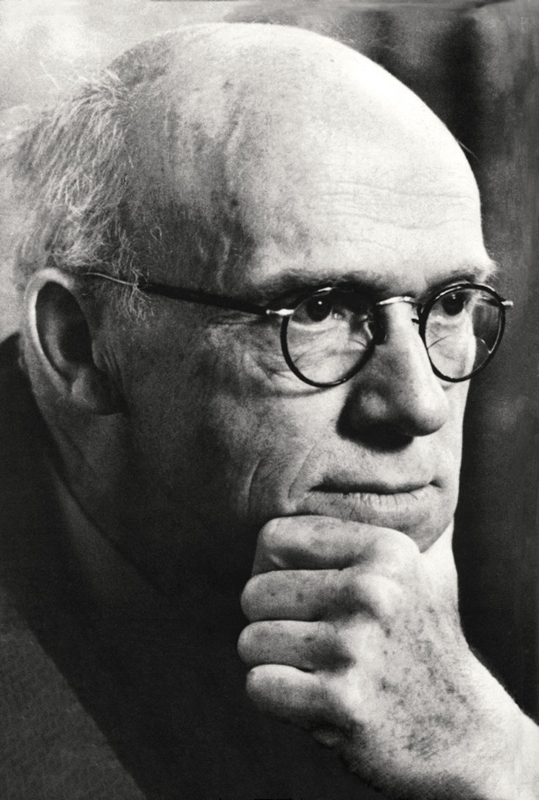
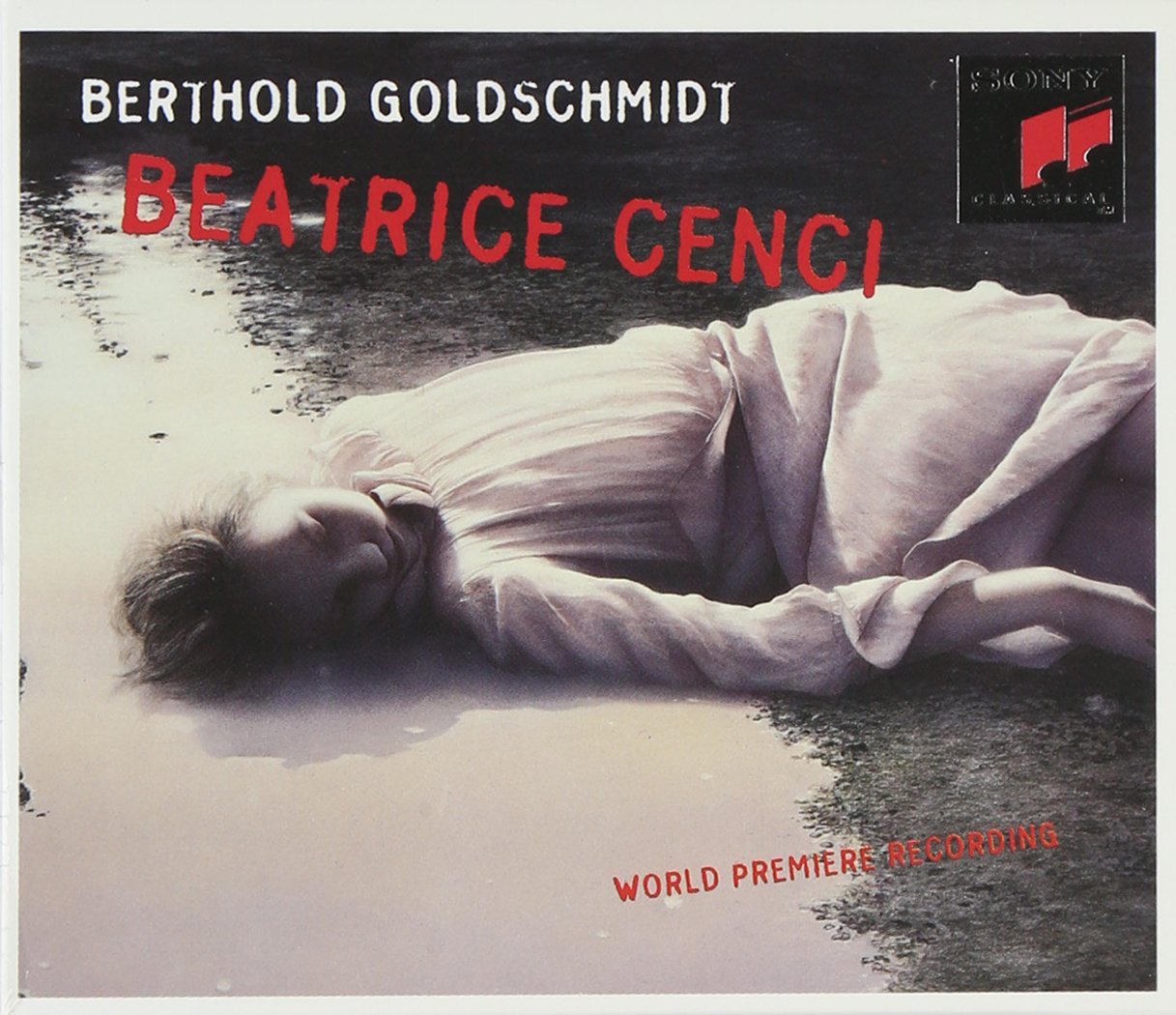
In 1935 Berthold Goldschmidt (1903-1996) left Germany and travelled to London. Against his better judgement he kept composing, but his works remained unperformed. In 1951 Goldschmidt won an opera composition contest with Beatrice Cenci, which had to wait until 1988 for its first concert performance.

In the 1980s, stimulated by the renewed interest in his work, Goldschmidt started to compose again. His Rondeau from 1995, written for and performed by Chantal Juilliet,  was recorded by Decca, together with his beautiful Ciaccona Sinfonica from 1936. This CD has been out of print for years now, and the composer’s works have all but disappeared from the concert platform.


Korngold, Braunfels, Goldschmidt, Zemlinsky, Ullmann, Schreker, Schoenberg, Toch, Weill, Krenek, Spoliansky, Holländer, Grosz, Waxman, Haas, Krasa, Schulhoff, Klein… a litany of names. Labelled “entartet” and banned by the Nazis, vilified, driven away, murdered. The composers who survived the war were forgotten, just like those who were murdered. Has this all really been the fault of the Nazis?

Entartet Goldschmidt en haas

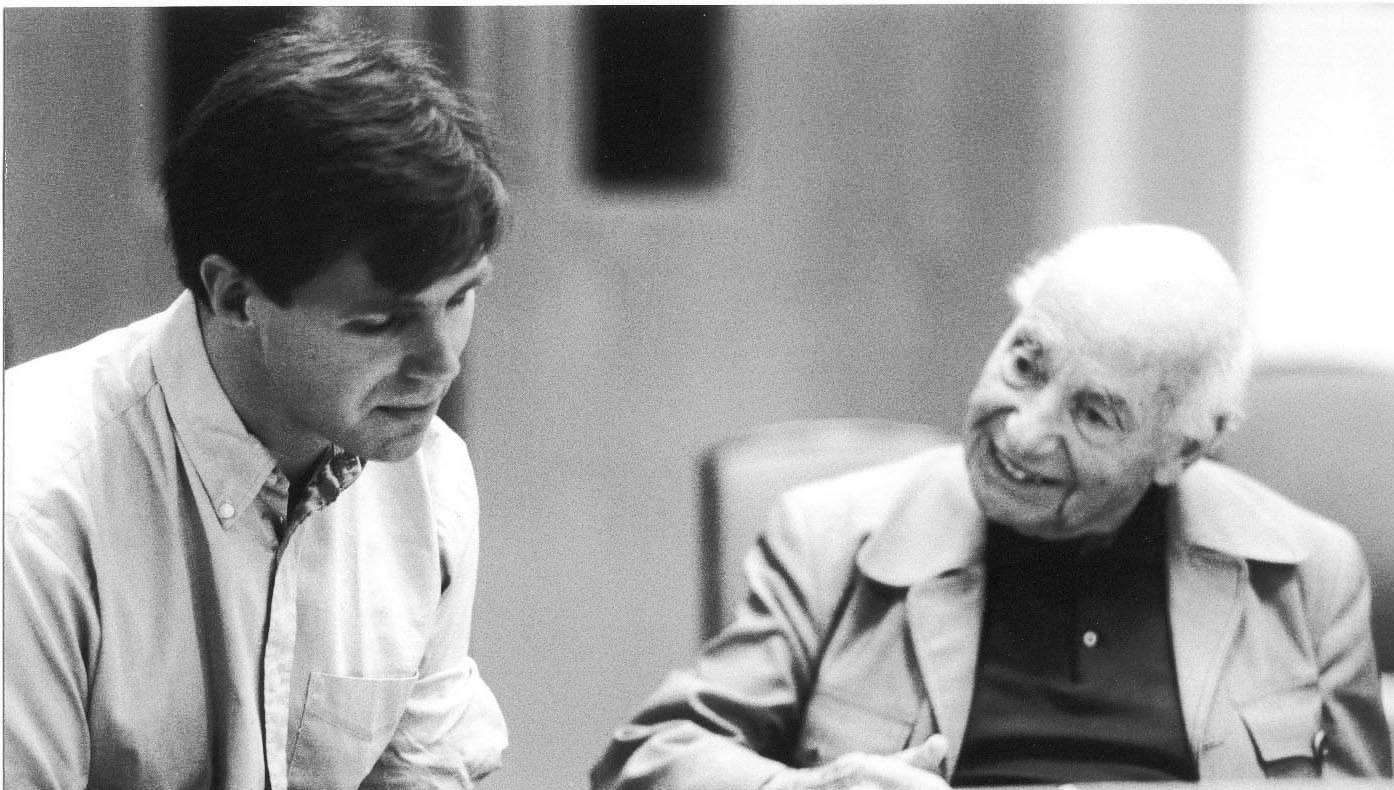
Michael Haas and Berthold Goldschmidt

Michael Haas, the producer of Decca’s recording series Entartete Musik had a logical explanation. “After the war the new generation of composers felt a sense of guilt. Something similar should never happen again, and they found a remedy for that. They thought it was necessary to create objective music, without sentiment and subjected to strict rules. Music had to be universal. Serialism was born. In Darmstadt, the past was dealt with, including the composers from the 1930s. They were too romantic and sentimental, or borrowed too much from jazz and popular music. The Darmstadt school of composers became dominant, which meant an important link between the music of Mahler and Berio was lost. The bridge between the 1920s and the 1950s, the post-Schoenberg generation of composers.”

“My research started with a Weill project that unfortunately failed to take off. In the archives I discovered operas that were composed and performed in the 1920s and 1930s with immense success. I started to search for the scores, and my gut feeling was right. All of them were great compositions that deserved to be performed and recorded. Music history got back its logical order. “

WILHELM GROSZ

Enetartet Grosz

In the 1920s old values were shaken. The Great War had just ended. Countries had become independent, or had just lost their independency. Powerful new influences like jazz, blues, and exotic folklore appeared. Boundaries between classical and popular music were fading.

Of all the composers from that period, Wilhelm Grosz was perhaps the most versatile. He was born in Vienna in 1894 into a wealthy Jewish family. In 1919 he graduated from the Viennese Music Academy, where he was taught by, amongst others, Franz Schreker. In 1920 he finished his musicological studies at the Vienna University.

Grosz composed songs, operas, operettas, ballet music and  chamber music, and was a famous pianist as well. In 1928 he was appointed the artistic director of the Ultraphon record company in Berlin.

In 1929, commissioned by the prestigious Radio Breslau, he composed the song cycle Afrika Songs on lyrics by African-American poets.

Afrika Songs was premiered on 4 February 1930 and enthusiastically received. The cycle also became known as the  Jugendstil Spirituals, which probably is the most fitting description for it. There are jazz and blues influences, but the songs were also quite heavily influenced by the music of Zemlinsky, Mahler and … Puccini (compare Tante Sues Geschichten with Ho una casa nell’ Honan from the second act of Turandot!).

When he Nazis came to power, Grosz returned to Vienna. In 1934 he was forced to flee again, this time to London. There his popular works grew more distinct from his serious ones. His name became forever attached to a series of world wide hits. The Isle of Capri, for example, was the big hit of 1934.

ALONG THE SANTA FE TRAIL

Entartet Gosz Santa Fe

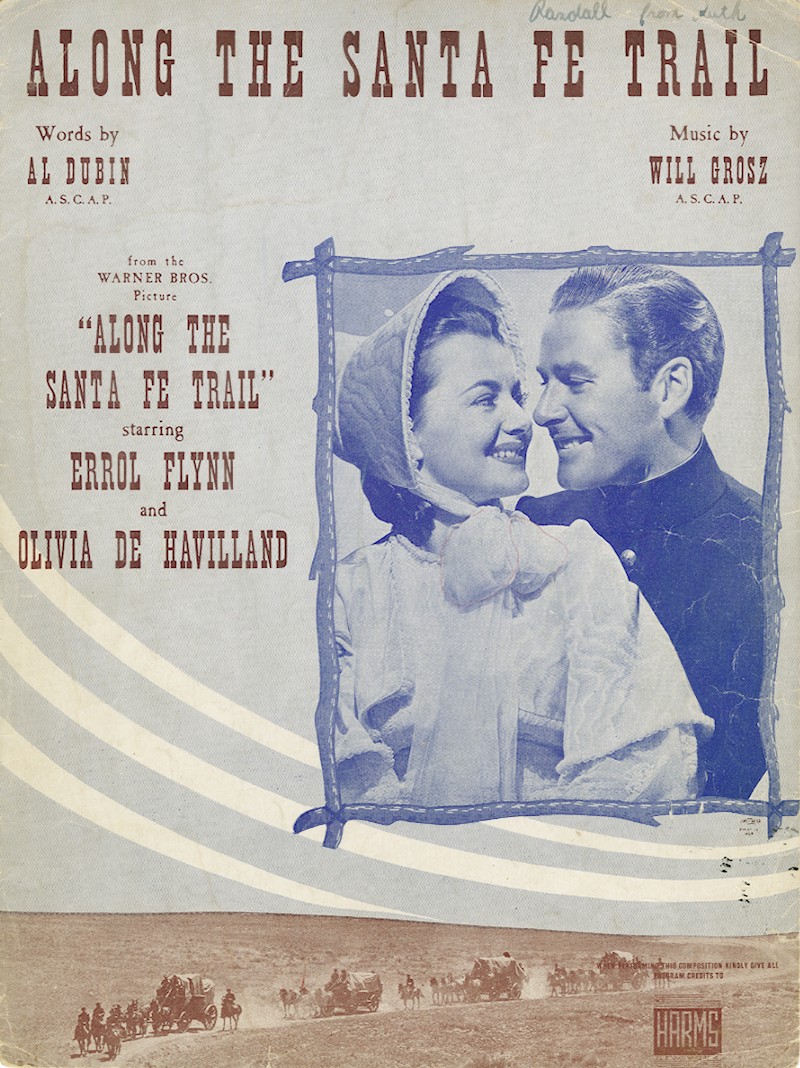
In 1938 Grosz left for Hollywood. He composed the music for Along the Santa Fe Trail, a movie with Errol Flynn, Olivia de Havilland and Ronald Reagan in the leads. He had a heart attack in 1939 and died, aged only 45.


AFRIKA SONGS AND MORE

Entartete Gosz Africa

After almost sixty years Grosz was rediscovered, although only briefly. It is hard to believe, but the Afrika Songs were not recorded until 1996! The Matrix Ensemble performed them for the firs time at the Proms in 1993. The CD also includes the song cycle Rondels, Bänkel und Balladen and the hits Isle of Capri, When Budapest Was Young and Red Sails in the Sunset, songs we all know but never knew who composed them.

Vera Lynn sings Red Sails in the Sunset in 1935

Mezzo Cynthia Clarey and baritone Jake Gardner are splendid in the Afrika Songs and Andrew Shore makes a party of Bänkel und Balladen. Nothing but praise for the  Matrix Ensemble.


UTE LEMPER

Entartet Lemper

We meet the Matrix Ensemble again, this time accompanying Ute Lemper on a recording of Berlin cabaret songs. Cabaret in Berlin in the 1920s and the 1930s.  Countless books and articles have been written about it, and it has inspired many movies. Cabaret really was a world of its own, with the venerable Rudolf Nelson as its undisputed king. Pretty soon the younger generation made its mark on the cabaret scene:  Mischa Spoliansky and Friedrich Holländer. The lyrics (mainly by Marcellus Schiffer, but also by Tucholsky) scrutinised the spirit of the times. Everything was mocked, but serious topics were not eschewed either.

Ute Lemper sings Der Verflossene by Berthold Goldschmidt

Lemper’s choice of material is outstanding. Apart from a few widely known schlagers (Peter, Wenn die beste Freundin, Raus mit den Männern) she sings lesser known repertoire, amongst others a composition by Berthold Goldschmidt, Der Verf‌lossene. Goldschmidt was present during the recording sessions, just like the daughters of Spoliansky and Holländer.

Korngold, Braunfels, Goldschmidt, Zemlinsky, Ullmann, Schreker, Schoenberg, Toch, Weill, Krenek, Spoliansky, Holländer, Grosz, Waxman, Haas, Krasa, Schulhoff, Klein… a litany of names.  With the naming of these names the documentary from the 1990s on Entartete Musik started.  I doubt the DVD is still for sale somewhere…


It is probably remaindered, like the entire prestigious Decca recording series. No money could be made from it. As Michael Haas remarked: “The series is very successful, it wins awards and it is praised. But it does not sell.”

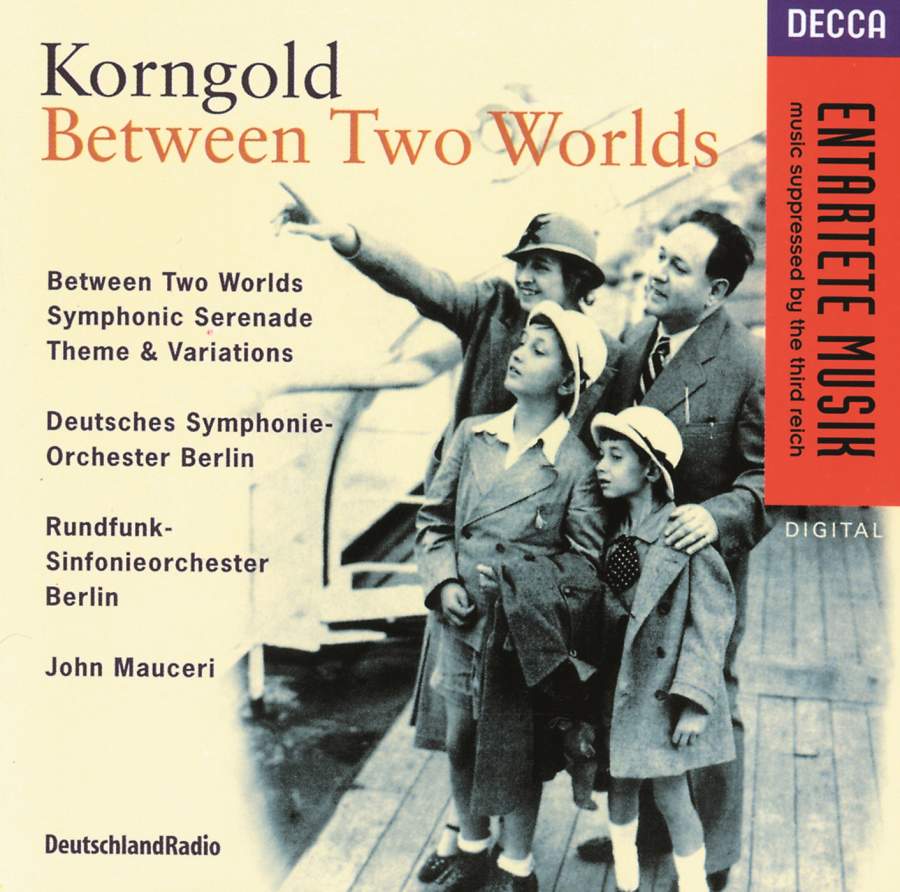
BETWEEN TWO WORLDS

Entartete Betwee two worlds

In 1944 Korngold wrote music for the movie Between two worlds. It was to be one of his last movie compositions. In London, during World War II, a concert pianist tries to leave by boat to the United States but is refused an exit permit. He then decides to commit suicide. His wife joins him.

Those who commit suicide are refused at the gates of heaven. The pianist and his wife are therefore doomed to remain on a mysterious ship where the dead come to be judged.


Almost thirty years after the rediscovery of the once banned and rarely performed composers we still find ourselves between two worlds. The world of great fame and that of oblivion.

I really wonder one day listeners will again appreciate this music purely for the quality of it? I was optimistic then, but much less so nowadays.

English translation: Remko Jas

In Dutch: TUSSEN TWEE WERELDEN

More Entartete Music in English:
Forbidden Music in World Word II: PAUL HERMANN
SZYMON LAKS. MUSIC OF ANOTHER WORLD
JOSEPH BEER: POLNISCHE HOCHZEIT.
Worshipped, ignored, forgotten: about Erich Wolfgang Korngold and ‘Die Tote Stadt’.

In German:
Entartete Musik, Theresienstadt und Channel Classics. Deutsche Übersetzung

“THEY COULD HAVE BEEN BIRDS” *

Burkhardt Söll:  Kinderdinge. A requiem for an old doctor and his orphans

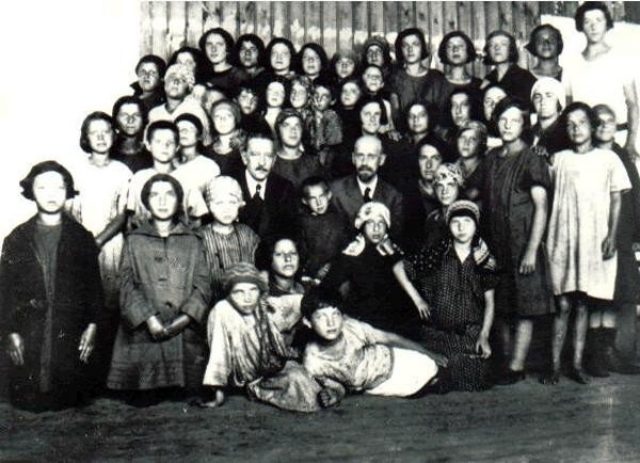
Korczak met de kinderen

Korczak with the children

Korczak’s real name was Henryk Goldszmit. He first used his pen name Janusz Korczak in 1898 when he participated in a literary contest organised by Ignacy Paderewski, the famous pianist and future Prime Minister of Poland.

Korczak

Janusz Korczak

Korczak was born in Warsaw into an assimilated Jewish family.  After studying medicine he briefly practiced pediatrics until 1912 when he became director of Dom Sierot, an orphanage for Jewish children.  He carried out his utopian vision of a children’s republic there:  a community of children, with its own parliament, court and newspaper, all run by the children themselves. After World War I Korczak founded a second orphanage: Nasz Dom (Our House).

Korczak Krochmalna_Street_orphanage

Korczak Krochmalna_Street_orphanage

As well as being a doctor and director of an orphanage,  Korczak was also a pedagogue, teacher, writer and Bible scholar. He worked for the Polish radio and gave lectures. His fame was immense, and not confined to Poland. He was published abroad too, to great critical acclaim, and his pedagogical methods were used all over Europe.

Korczak en kinderen

Korczak and children.

In November 1940 the orphanage was forced to relocate to the Warsaw Ghetto. At the beginning of August 1942 the children, together with Korczak and his deputy Stefania Wilczynska, were put on a transport to Treblinka. Even the Nazis respected the famous pedagogue and offered Korczak the opportunity to save his own life. He refused and chose to die with his children instead of compromising his principles. They were all murdered in the gas chambers of Treblinka shortly after arriving there on August 7, 1942.

Korczak den de kindern Yad_Vashem_BW_2

Monument “Janusz Korczak and the children” in Yad Vashem

About Korczak:

In 1972 Korczak was posthumously awarded the prestigious Peace Prize of the German Book Trade. Books have been written about him, and his life story has been the subject of several biographical movies. In the 1990s the German-Dutch composer Burkhardt Söll composed a piece in memory of Korczak and his children: Kinderdinge. Manuela du Bois-Reymond, a sociologist and pedagogue who is also married to the composer, wrote the lyrics to the songs.

Burkhardt Söll: Kinderdinge

KOrczak KInderdinge

This stunningly beautiful composition consists of short pieces (children’s scenes) flowing into each other. The first scene Canto d’amore  is followed by the sound of clappers (The Only Instruments). There are quotes from Klezmer music and Yiddish songs. We hear train sounds, a grim March of Suitcase, shoes and coats and several songs.

Song I is about fear. Song II about children’s furniture that no longer inspires trust, and Song III about being locked in a dark closet. A closet so small there is only room for one leg. All three songs are filled with immense fear and darkness and death (“bei den Toten ist mein Haus und in der Finsternis is mein Bett gemacht”).

The fourth and final song (The End. What really happened) is based on the eyewitness report by Marek Rudnicki, which was published in the Polish Tygodnik Powszechny in 1988.

Kinderdinge is a concert version of Söll’s earlier piece of musical theatre Ach und Requiem from 1994/1995, which in turn was preceded by Little Requiem composed in 1991.

Korczak Söll

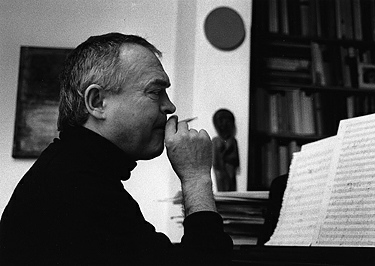
Burkhardt Söll

What interested me was why Söll wrote a piece of musical theatre on Korczak? Where did his interest in the fate of the old doctor and his children come from? Is it at all possible to tell his story in music? These questions were enough reason to visit the composer in Leiden where he has lived since 1977.

Burkhardt Söll was born in Marienberg in 1944. His mother was Jewish. During his first violin lessons, which he took from his aunts, he was allowed to play klezmer music by the one, but not by the other!

Söll studied viola with the famous Rudolf Kolisch. Already in school he composed for the school orchestra. He continued his training at the Hochschule der Künste in Berlin where he studied composition with Boris Blacher and Paul Dessau and painting with Horst Antes. Afterwards, he was the assistant of Bruno Maderna and later of Otmar Suitner at the Berlin Staatsoper Unter den Linden.

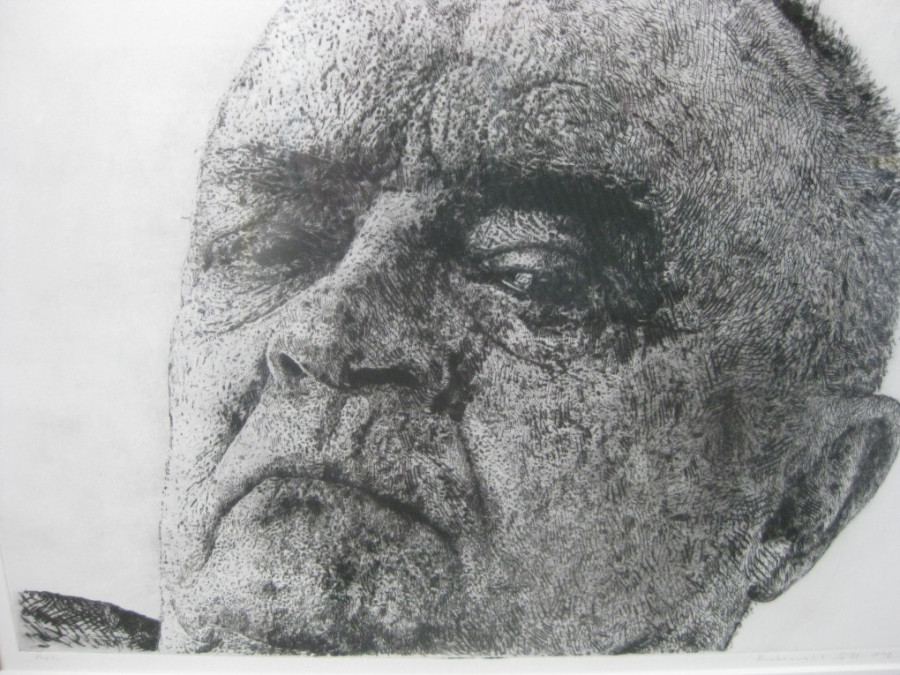
Korczak Söll zelfportret

Burhardt Söll self portrait

In the seventies Söll took part in a research project on children’s aesthetics. He developed a teaching strategy combining music composition with painting. In 1985 he was appointed as a teacher at the Utrecht School of the Arts. His paintings were exhibited in Berlin, Frankfurt, Paris, The Hague, and other places.

korczak king Matt

Söll has known Janusz Korczak and his books since his early childhood. Krol Macius I (King Matt the First) is still his favourite book. The life of the old doctor has always fascinated him: someone who put his life at the service of (orphan) children and remained faithful to his own ideals until death.

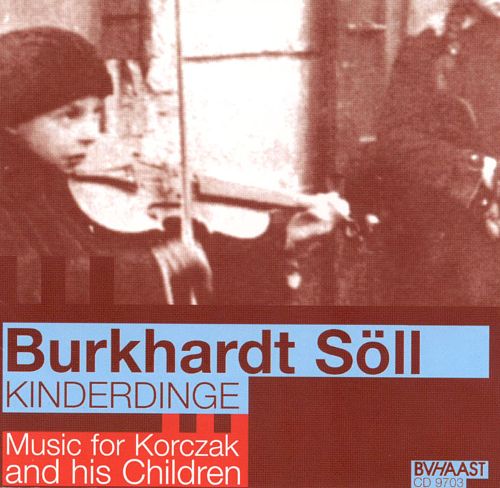
Reinhart Büttner’s designs for black and misshapen children furniture inspired Söll to write his piece of musical theatre. Ach und Requiem was performed only once in 1995, but luckily a recording exists. It is a shame the textbook, with a Jewish child playing the violin on its cover, is almost illegible. The letters are too small, and the colour combination (dark brown and light blue) makes it even harder to read.

Fragments can be listened to here:

https://www.muziekweb.nl/Link/AEX1367/Kinderdinge-music-for-Korczak-and-his-children

*Taken from the Dutch novella by Karlijn Stoffels We hadden vogels kunnen zijn,  inspired by a song Dos Kelbl. The song became a global hit in the sixties under the tile Donna, donna.

English translation: Remko Jas

Original Dutch: “ZIJ HADDEN VOGELS KUNNEN ZIJN” *

Burkhardt Söll
Kinderdinge
Music for Korczak and his children
Djoke Winkler Prins (soprano),
Mary Oliver (viola), Alison McRae (cello), Huub van de Velde (double-bass), Jörgen van Rijen (trombone),Wilbert Grootenboer (percussion), Dil Engelhard (flute), Jan Jansen (clarinet), Henri Bok (saxophone)
Conductor: Peter Stamm
BVHAAST CD 9703

Fascinated by the unknown: a visit to Opera Rara

Opera Rara

Times have changed. Not that long ago anything in the recording industry seemed possible.  The major record companies released one opera after the next. Money was not an issue. Great new stars were introduced, and just as easily dropped. Yet another Aida and Traviata, the hundredth Rigoletto, the two hundredth Tosca or Don Giovanni…..

Smaller labels targeted the niche market of classical music enthusiasts. These collectors were interested in lesser-known works by Donizetti or Bellini, in long forgotten scores and in composers like Meyerbeer, Pacini and Mayr, who enjoyed considerable renown in the past.

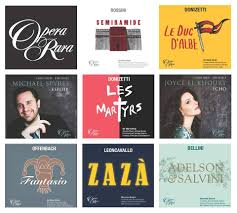
One of those labels – fortunately still active today – was Opera Rara. It started out as a small business run by just two men. In their pioneering years their records were issued directly to subscribers. When Opera Rara planned to record an opera, those subscribers had to pay first. After a wait that could take as long as a year, the records were distributed. Highly exclusive! Over the years, Opera Rara became what is probably the largest (and certainly the most important) opera label.

opera rara poster

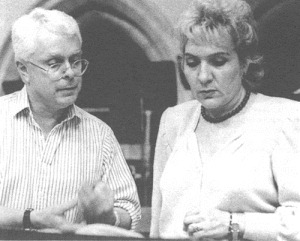
Twenty years ago I visited Opera Rara in London, where I met Patric Schmid* and conductor David Parry. Schmid was one of the founders of Opera Rara and its recording executive. Since the death of his partner Don White he also was the label’s artistic director.

It is raining quite heavily as I step out of Liverpool Street station. I have a few hours to spend and intend to visit a few bookstores. Because I get lost everywhere, it seemed a safer idea to first carefully map out my route. It turns out I am much closer by than I had thought.

Still, when I make my way there fifteen minutes before my appointment I get lost once again. The weather has turned completely, the sun shines and it is hot. Covered in sweat I enter the building on Curtain Road where Opera Rara resides.

I am received by Stephen Revell, the very friendly assistant of Patrick Schmid, who leads me into an enormous room. In the middle a grand piano, covered under a yellow sheet. On the shelves, thousands of scores, books and records.

We sit at a large wooden table. Patric Schmid enters: a handsome man in his fifties, with grey hair. He apologises David Parry has been delayed and will join us later. Coffee and tea are served, and the story behind the most adventurous opera label begins.

Opera Rara Nelly en Patrick

Patric Schmid with Nelly Miricioiu  © Voix des Arts

The love for belcanto started with Chopin. Schmid, as a young pianist, came under the spell of his enthralling  music and went on a search for more. A search that eventually led to belcanto. His fascination with belcanto became so big that he wanted to change the fact that this music was hardly ever performed. To achieve this, he founded an opera company in 1970 with his friend, the musicologist Don White, called Opera Rara.


The search for unknown opera’s was not easy. Schmid himself uses the expression “to dig up.” And since there were no photocopiers at the time, everything had to be produced by hand.

opera rara crociato

Pirate edition of Il Crociato in Egitto © Hans van Verseveld

In 1972 their first opera was performed: Myerbeer’s Il Crociato in Egitto. Several problems occurred. Shortly before opening night the tenor cancelled. Where on earth do you find a replacement for a highly obscure work on such short notice? Fortunately William McKinney saved the production by taking over the role two days before the premiere.

opera rara hugo

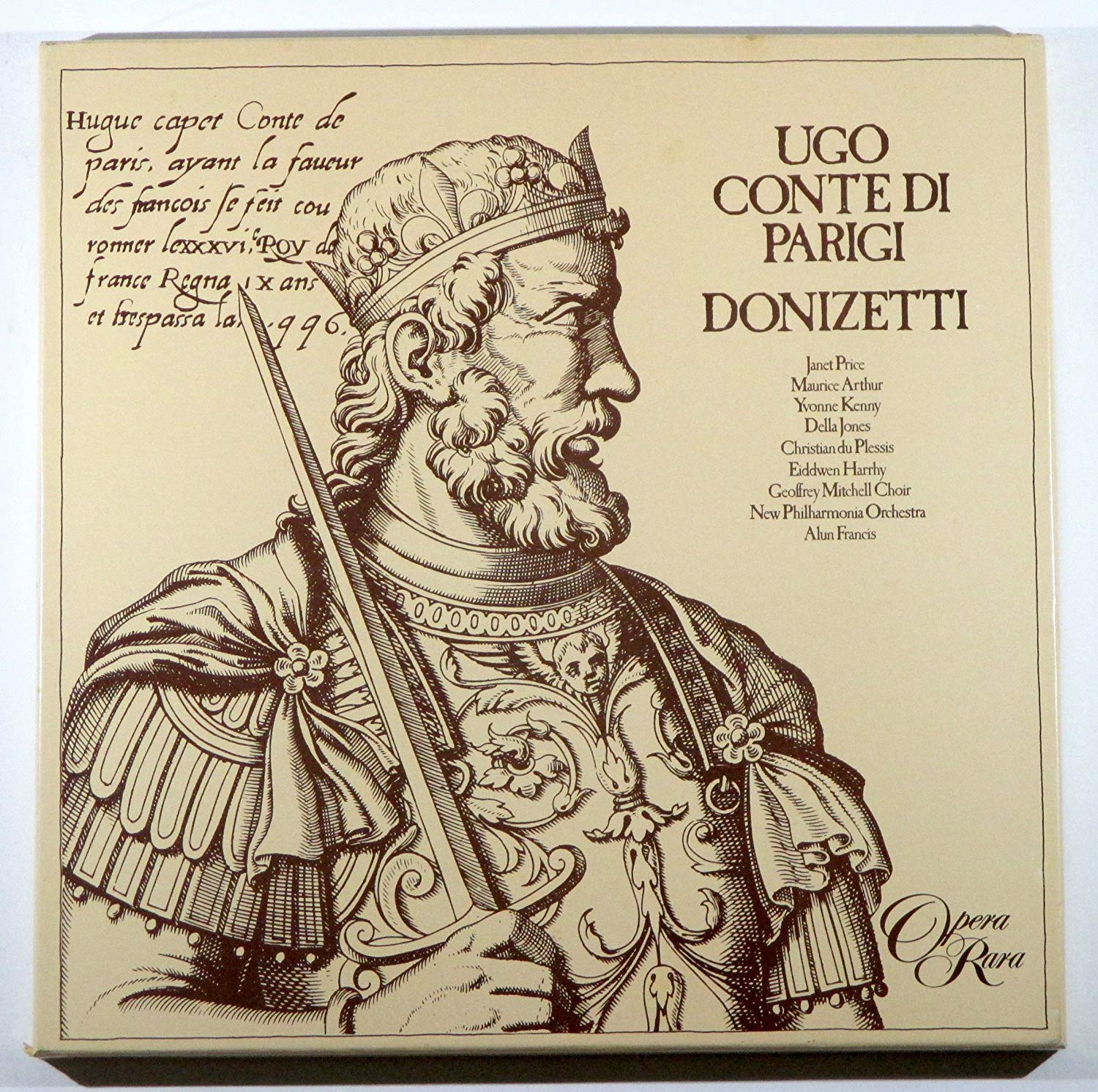
All the operas performed by Opera Rara were broadcast by the BBC. Afterwards, these performances were issued by various pirate labels.  In 1977 Schmid and White decided to record the operas themselves and founded the record label Opera Rara. The money to make the recordings was collected directly from their supporters on a subscription basis. The first recording was Donizetti’s Ugo Conte di Parigi, made in July 1977.  The conductor was Allun Francis, who has been one of their two regular conductors since.

Janet Price sings Bianca’s aria “No, che infelice appieno….” from the Donizetti rarity Ugo Conte di Parigi:


The other host, conductor David Parry, meanwhile has arrived and joins our conversation with much animation. This former pupil of, amongst others, Celibidache, started his career as a rehearsal pianist, something he believes to be absolutely indispensable for a conductor. His conducting career began in 1973 in Wexford. In 1975 he worked as a conductor’s assistant there in the first performance in 93 years of Orazi e Curiazi by Mercadente, an opera he would record twenty years later for Opera Rara.

Nelly Miricioiu sings ‘Di quai soavi palpiti’ from Orazi e Curiazi:

Not only conductors remain faithful to Opera Rara, singers as well. No wonder: they get the opportunity to make recordings, learn new repertory and work in a relaxed atmosphere. The greatest and most famous stars have worked (and still work) on their projects: Nelly Miriciou, Annick Massis, Jennifer Larmore, Joyce El-Khoury, Bruce Ford, Alaister Miles, Michael Spyres, Carmen Giannattassio  – just to name a few.

Opera Rara David Parry Courtain Road 98

Patric Schmid & David Parry © Basia Jaworski for Basia con fuoco

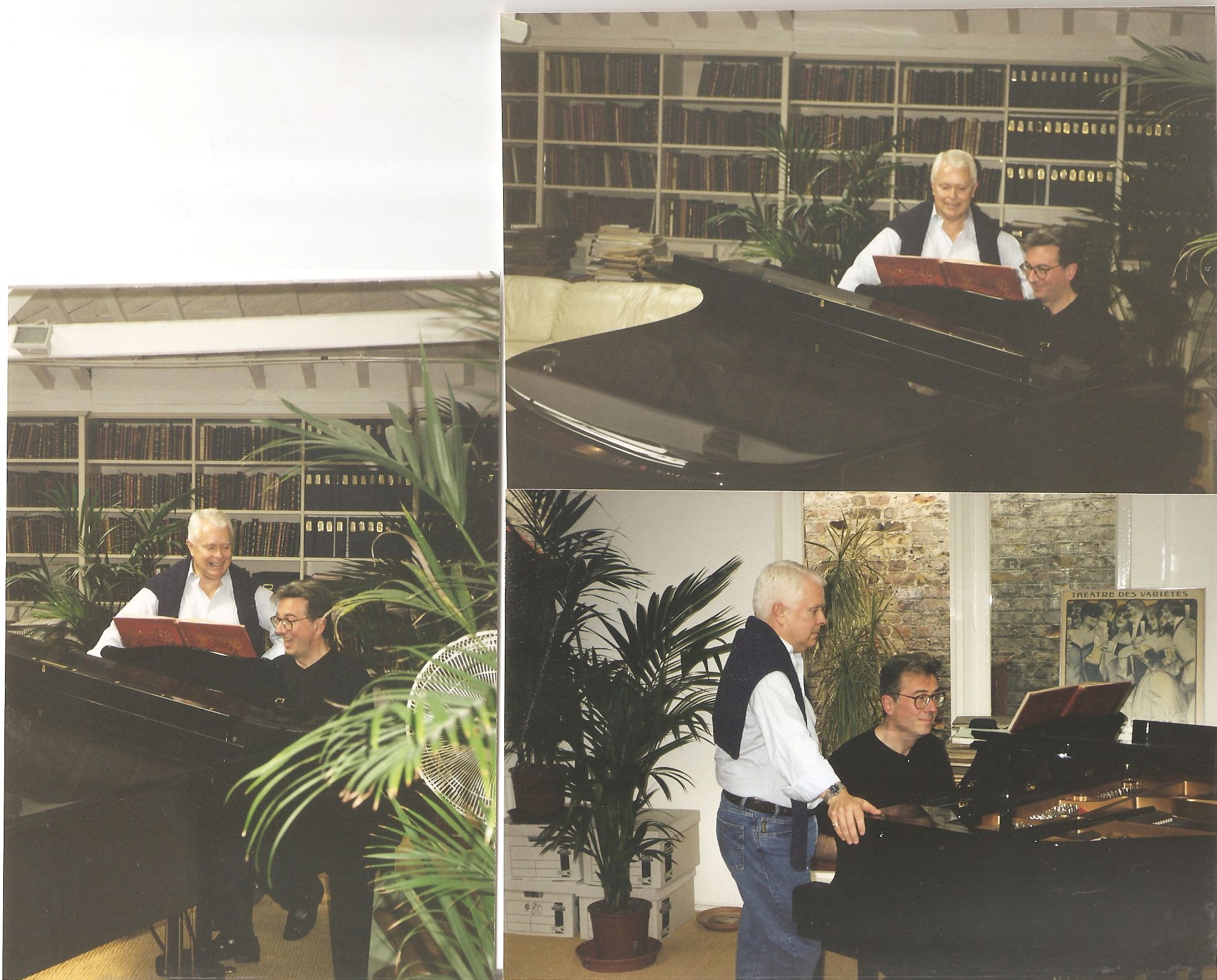
As a farewell I receive a special gift: the yellow sheet is removed from the grand piano, David Parry picks out a score and plays (and sings, helped by Patric Schmid) an aria from Margherita d’Anjou by Meyerbeer** for me.

*Patric Schmid died suddenly on November 6th, 2005. He was only 61 years old

**Margherita d’Anjou was issued in October 2003. It was one of Meyerbeer’s first operas, still from his Italian period. No complete score of the opera was preserved, so a lot was reconstructed, or “dug up” in the words of Patric Schmid. The excellent cast is headed by Annick Massis, Bruce Ford, Daniela Barcellona and Alastair Miles, and the London Philharmonic Orchestra under the inspired direction of David Parry (ORC25).

English traslation: Remko Jas

See also interviews (in English):

JENNIFER LARMORE interview (English translation)

Interview with JOYCE EL-KHOURY (English translation)

CARMEN GIANNATTASSIO interview in English

and in German:

Nelly Miricioiu – Keizerin van de ZaterdagMatinee

JOSEPH ACHRON, MUSIC TO FALL IN LOVE WITH

Achron in Petersburg


Joseph Achron in Saint Petersburg  © Courtesy of the Department of Music, Jewish National & University Library, Jerusalem, Achron Collection.

Arnold Schoenberg firmly believed that Joseph Achron was the most underrated composer of his generation. Schoenberg praised his originality and claimed Achron’s music was destined for eternity. Yet, despite his enthusiastic praise, Joseph Achron never became a household name.

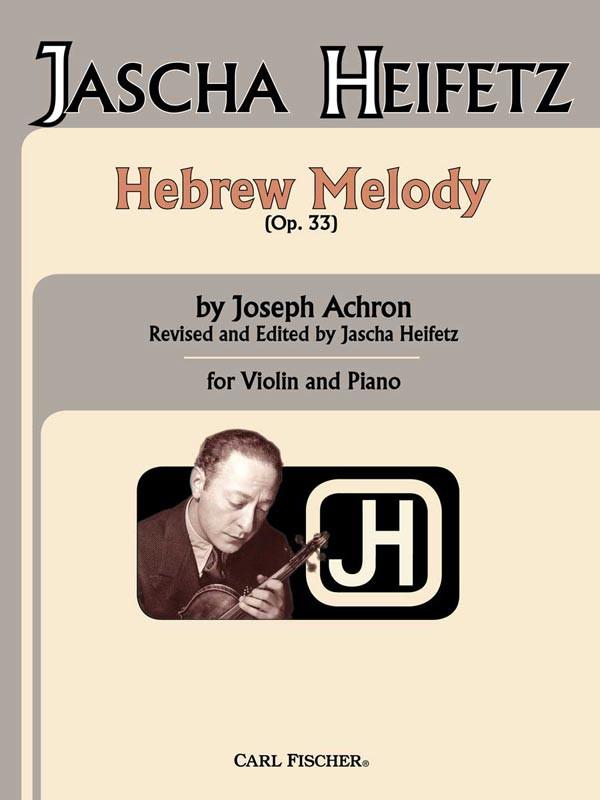
Achron Hebrew melody

Violin buffs no doubt know his Hebrew Melody, a much loved encore of many violinists, starting with Heifetz.

Achron Heifetz.jpg

Hebrew Melody, here played by Josef Hassid:

Hebrew Melody is inspired by a theme Achron heard as a young boy in a synagogue in Warsaw. It is one of his earliest compositions,  dating from 1911, and his first “Jewish” work.  In the year he composed it Achron joined the Society for Jewish Folk Music.

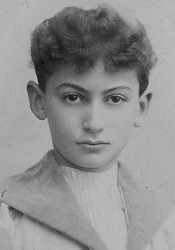
Achroon kind

Joseph Achron as a child in Warsaw

But let’s start at the beginning. Joseph Achron was born in 1886 in Russia and died 57 years later in Los Angeles. His mother was an estimable singer, and his father was a cantor who also played the violin. Joseph received his first violin lessons from him, but soon he was replaced by professional teachers. At age eight he gave his first performance, and by the time he was eighteen, he had finished his first compositions.

Achron -Living-Hall-of-Fame-of-Music-Leopold-Auer-354

© Milchen Archive

His career as a composer properly started in the twenties of the last century.  In Saint Petersburg, Achron joined the composers of the “New Jewish School.” Several years later he moved to Berlin, where he got acquainted with the works of the French impressionists, and the Second Viennese School.

In 1924 he made a trip of several months to Palestine. He not only performed there, but also collected a huge variety of folk music he discovered there. The notes he took during this trip were later used for several of his compositions. In his Violin Concerto No. 1,  Op. 60 (1925) several Yemenite themes can be heard.

Achron-with-Members-from-The-Golem-295.jpg

Joseph Achron (right) with members of the cast of The Golem. H. Leivick (center), New York.
Credit: Courtesy of the Department of Music, Jewish National & University Library, Jerusalem, Achron Collection.

In 1925 he moved to New York where he was invited to compose music for the Yiddish theatre. Achron wrote the music for several of their productions, including Stempenyu, a play by Sholem Aleichem about a Jewish violinist.

The Stempenyu Suite, performed by Karen Bentley Pollick and Jascha Nemtsov:

In the thirties Joseph Achron moved to Hollywood, where he died in 1943.

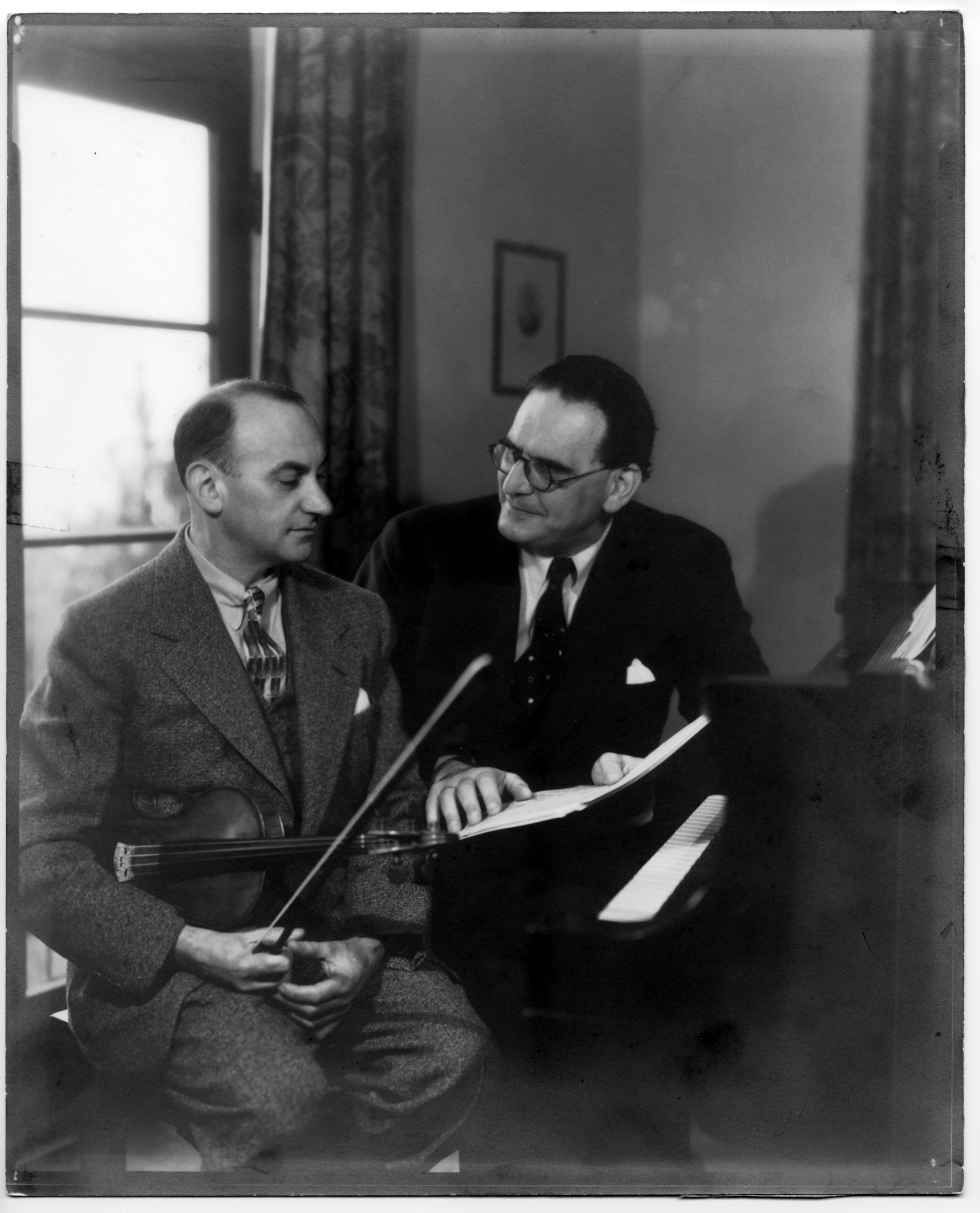
Achron metKlemperer

Joseph Achron with Otto Klemperer (right). Klemperer conducted the premieres of Achron’s second and third violin concertos with the Los Angeles Philharmonic. © Courtesy of the Department of Music, Jewish National & University Library, Jerusalem, Achron Collection

Much of Achron’s music still awaits discovery by wider circles, although numerous attempts have been made to rekindle interest in it. Since the nineties of the last century two CDs came out with compositions for violin and piano. Different as they are, both interpretations are highly valuable, if only for the opportunity they provide to finally get to know – and appreciate – his compositions.

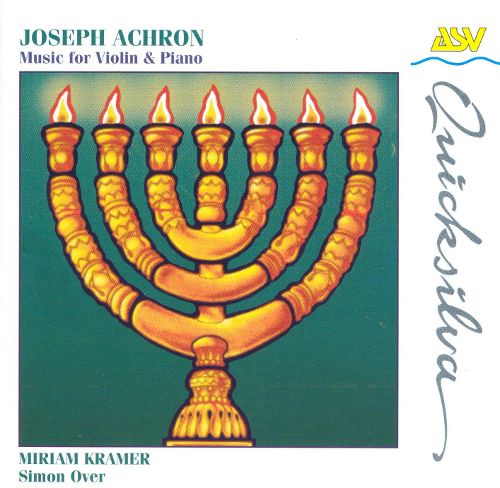
Achron Miriam Kramer ASV

On the ASV label we hear Miriam Kramer, a young English violinist, once named ‘United Kingdom’s Performer of the Year’. Her CD starts with a slightly hesitant rendition of the 1ère Suite en Style Ancien from 1906 ( a world premiere recording). From Sonata No. 1, Op. 29 onwards her tone gets steadier and in Children’s Suite it is possible to enjoy her without any reservations. Her pianist, the Dutch Simon Over, provides excellent support. The reason I am not overenthusiastic lies not with Kramer, but with Hagai Shaham, the soloist on the second Achron CD.

 (Joseph Achron: Music for Violin & Piano; Miriam Kramer, Simon Over; ASV CD QS 6235)

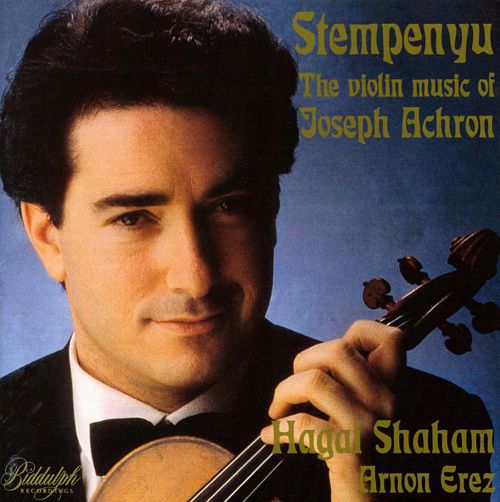
Achron Shaham Biddulph

Hagai Shaham (not related to Gil) is an Israeli from the school of the famous violin teacher Ilona Feher. His tone is warm and dark and he plays with bravura and agility, and plenty of schmaltz when necessary. Unashamed enjoyment from start to finish! If you do not fall in love with this CD, then I give up.

Shaham’s regular accompanist is Arnon Erez, also from Israel. The textbook is in two languages: English and Yiddish (Stempenyu. The violin music of Joseph Achron; Hagai Shaham, Arnon Erez; Biddulph LAW 021)

Achron Shaham Hyperion

Fifteen years after their Biddulph recording Hagai Shaham and Arnon Erez turned their attention to Achron’s music for a second time. In 2012 they recorded the Complete Suites for Violin and Piano for Hyperion, including the Stempenyu Suite and, of course,  the Hebrew Melody (Hyperion CDA67841).

English translation Remko Jas

BARBARA HANNIGAN : “I SING EVERYTHING AS IF IT WERE MOZART”

Barbara Hannigan Conductor-SingerPhoto: Marco Borggreve

© Marco Borggreve

Barbara Hannigan is the undisputed prima donna of modern music. Her musicianship commands great respect, her technique is flawless, and her possibilities (think of those extreme high notes) are almost endless.

On a beautiful and sunny late afternoon end of September 2011 we meet for the first time. Contrary to my habit I am five minutes late, but I do have an excuse. My first question, even before I start making apologies, might be a little odd, but she responds with laughter. “Barbara, do you love cats?”

Yes, she loves cats. Living on the road, unfortunately, makes it impossible for her to have one. Her beautiful eyes sparkle, but I can see question marks forming in them as well.

Hannigan reizen

© Barbara Hannigan website


I explain to her right before I wanted to leave the house, my black monster jumped on my desk, shoving all sorts of things off of it, including my phone and my voice recorder. That breaks the ice, and our meeting turns into a relaxed and cosy afternoon.

A week or so later, we meet again. This time I do carry my notebook and pen, and notes are written down.

Hannigan Boulez

with Pierre Boulez © Barbara Hannigan Website


After she sang Boulez’s Pli selon pli in London, the British critic Ivan Hewett (The Telegraph)  wrote: ,,She does the kind of high-wire acrobatics with her voice that very few singers can manage, and she does it with a bravura that stops you dead in your tracks. All this is joined to a startling stage presence and cool blonde beauty that contrasts interestingly with the heat in her voice.”


Hannigan in Pli selon pli in Amsterdam:


VIBRATO

According to Hewett she could have had a big career as a queen of coloratura, but instead Hannigan decided to specialize in  contemporary music.

Hannigan Elmer de Haas

© Elmer de Haas

“I chose modern music all by myself,” Hannigan says. “I found it thrilling.  It is exciting to  collaborate with composers, although I do not always enjoy everything I have to sing.

The ‘non vibrato,’ for example, is absolute horror to me. It goes against the natural way of singing.  Vibrato is the soul of singing, it transmits emotions. I did it on special request of a composer (no, no names), but without pleasure. ” She adds decidedly: ,,It takes away the personality of the voice.”

She thinks it is nonsense modern music should be sung differently from the classics. “Modern music, in fact, is a form of belcanto. Without technique it is impossible to do. It is my repertoire, and it is indeed hard, but it gives me a sense of intense gratification.”

“Of course I am careful. But as a rule I sing everything as if it were Mozart. I do need to protect my high notes, though. So if I sing Stravinsky’s Le Rossignol, for example, I make sure I combine it with less extreme pieces. ” Laughing: “One day, I would not mind singing Donizetti’s La Fille du Régiment, and if Juan Diego Flórez could be my partner….

Hannigan sings Le Rossignol:

CONDUCTING

Barbara-Hannigan04750-photocredit-MarcoBorggreve

© Marco Borggreve

She continues in a serious mood: “I would love to do so many more things! I am always hungry, I want so much, but I cannot accept everything people offer me. I used to be known as a singer who could be easily booked , but at the moment I am booked for quite a few years ahead. I sing fifty or sixty performances a year. In the last season I also conducted five or six concerts.”

Conducting is not the first thing that springs to mind when thinking of a soprano. “It was pointed out to me that when I sing my body language resembles conducting. In addition, I have always thought about how an orchestra should sound, also while I sing. So at a certain moment I started to take lessons, with several dear colleagues. It was all very private, so I cannot give any names.”

Hannigan conducts and sings Gershwin:

Actually, Hannigan does do many more things. At the moment she dances a lot. And like everything she does, she does it at a high level. With Sasha Waltz, with whom she did a few important projects in the past (Matsukaze by Toshio Hosokawa, for example), she will sing and dance Dusapin’s Passion. Hannigan has already performed this dance-opera several times. In 2010 she appeared in it at the Holland festival in Amsterdam, in Audi’s “mise en space.”

Matsukaze:

“It was the first time I worked with Audi, and I have fond memories of it.  Imagine the entire production being done in just two days! I have worked on it with a lot of pleasure. But now I really look forward to the Sascha Waltz production. Very exciting, also because this time I really get to dance.”


Her favorite composer? “Ligeti! I admire him tremendously. His music truly brings out everything I have in me!”

György Ligeti Mysteries of the Macabre 2015 Barbara Hannigan:

BARBARA IN PRIVATE

Hannigan backstage-torontotour

Hannigan backstage-torontotour
© Barbara Hannigan website

In what sort of a family was she raised? “My family was  certainly musical, but on an amateur level. My sister still plays the cello, and I had to choose at age seventeen between the piano, hobo or singing. I chose singing.”

She started her studies in Toronto and later went to London. “In 1995 I decided to move to The Hague. I had heard a lot about an outstanding teacher there. I immediately felt at home, also because of the musical climate, so I stayed.”

“Sometimes I miss my country and my family very much. I hardly ever see them. Often a year goes by before I get a chance to see them. Skype helps, but it is a surrogate.”

Does she have any time left for hobbies? “I love to cook. That is also the reason I always rent an apartment, even if it is only for a couple of days. I always bring my own knives. And my herbs. At home I always cook, although my husband is quite good at it also. But I am better, so he gets to clean up, which he happily does. Wonderful, but difficult when I am on my own, because then I have to do everything myself. The dishes as well, which I am not used to.

GEORGE BENJAMIN AND WRITTEN ON SKIN

Hannigan Benjamin

withe George Benjamin in Aix-en-Provence  © Barbara Hannigan website

Barbara Hannigan is the muse of many contemporary composers, including George Benjamin. He composed Written on Skin with her voice in mind. It was clear from the beginning she should sing Agnes. In July 2012 Hannigan sang the world premiere of Written on Skin.

During the preparations and in between the performances Hannigan kept me informed by an “e-mail diary.”

“George Benjamin and I met three years ago in his house.  I was supposed to show him the possibilities of my instrument. We played a little composer-singer game without words, “composing” together. It gave me the opportunity to show him how my voice moves most comfortably.”

The first rehearsals took place in London, after which we moved to Aix-en-Provence, where the word premiere would be. The whole “making of” process was quite intense.  My role is very demanding. Looking at the score you might think: finally a composer who does not take advantage of Barbara Hannigan’s high notes, or make her into a stratospheric trapeze artist.  But the music still is extremely demanding.

The vocal lines lie very high and are long, spread out and loud. Rather difficult for the quick moving core of my voice. I had to approach the part very carefully. Particularly from the moment on when the tension in the opera slowly starts to increase, scene by scene, until the final climax, when I sing my big aria.

A few months before I received the score George changed a few notes for me – something he has sworn never to do for anybody! He rewrote several passages in my score by hand, which has helped me enormously.”

“I really think my role is phenomenally good. It feels like a fantastic preamble and the greatest preparation for Lulu, who I will sing in October for the first time. Agnes ends were Lulu begins. A sexually liberated woman with no problems with herself. A gift of a role!

One of the highlights for me was the “Sitzprobe” with the orchestra. It was the first time George heard his entire piece, with orchestra and singers. It was two weeks before opening night and we were all very nervous. But the entire cast stood behind him and his fabulous score. It was a very moving and emotional day.

All my colleagues (not only the singers, but the extras as well) were fantastic and we all got along marvelously. George had composed the music specifically for each one of us. A lot was demanded from us, not only vocally, but dramatically as well, but we all supported each other.”

Hannigan written on skin


“I think the production is unequalled and I adore Katie Mitchell, the director. It was the first time I worked with her. She pays a lot of attention to details, providing a lot of background information to the artists on stage. The public never notices that, but it had a tremendous influence on our performance. Working with Katie was a sensation, and I hope one day she will direct me in Lulu. “

“I loved the sensual scenes which were combined with violent ones. We had a special “fight director”  who taught us to act as realistically as possible without hurting each other. I believe that was quite unique for an opera production. You also need a lot of trust in your colleagues.

I have to say: Agnes is a dream role, and I thought it was fantastic I got the chance to play her. All the reviews were full of praise, and the public was enthusiastic as well. It really was a dream.”

“I had been in Aix-en-Provence before, in 2008, for the first version of Pascal Dusapin’s Passion. That performance was staged by Giuseppe Frigeni. In 2010 Sasha Waltz directed it. With her production we opened the season of the Théâtre des Champs Elysées.“

In 2008 we performed in the Théâtre du Jeu de Paume – small and very intimate.  Very beautiful too. Because of the dimensions it is rather limited in its possibilities, though. For Written on Skin we were programmed in the biggest theatre of the festival, the Grand Théâtre de Provence. Very unusual for a modern, ‘fresh from the pen’-opera. Opening night, as you know, was a huge success, and all the subsequent performances were sold out.

I love the city. Aix is fabulous and so easy-going. The city encourages you to relax, even while you are hard at work. The festival is truly special. No highbrow business like you see at some other festivals. There is a true mix of different styles and types of performances. Symphonic music as well as chamber music.

They also have a fabulous young artists program, and I truly appreciate their efforts to get rid of the elitist stamp art has, particularly opera. Art truly can be real, and it can appeal to anyone.

I think Katie Mitchell and her team have tried with Written on skin to not only avoid stock opera gestures, but also to create something that actually did happen and that touches you. Something many of us have experienced personally, certainly women.”

Trailer of the Aix production:

English translation Remko Jas

More Barbara Hannigan:

BARBARA HANNIGAN betovert in liederen van HENRI DUTILLEUX. Concertgebouw Amsterdam, oktober 2013

LULU van Krzysztof Warlikowski. Brussel 2012

PLI SELON PLI. Amsterdam 2011

LET ME TELL YOU ZaterdagMatinee

Satie, Hannigan en de Leeuw


Forbidden Music in World War II: Paul Hermann

For English translation scroll down

Hermann cd

De exacte datum en de plaats van zijn dood zullen voor altijd onbekend blijven. Het laatste wat we van Paul Hermann (1902 – 1944) hebben vernomen is dat hij opgepakt werd tijdens een grote straatrazzia in Toulouse in april 1944 en via het doorgangskamp Drancy overgebracht werd naar Auschwitz en verder naar Litouwen. Sindsdien werd er niets meer van hem vernomen.

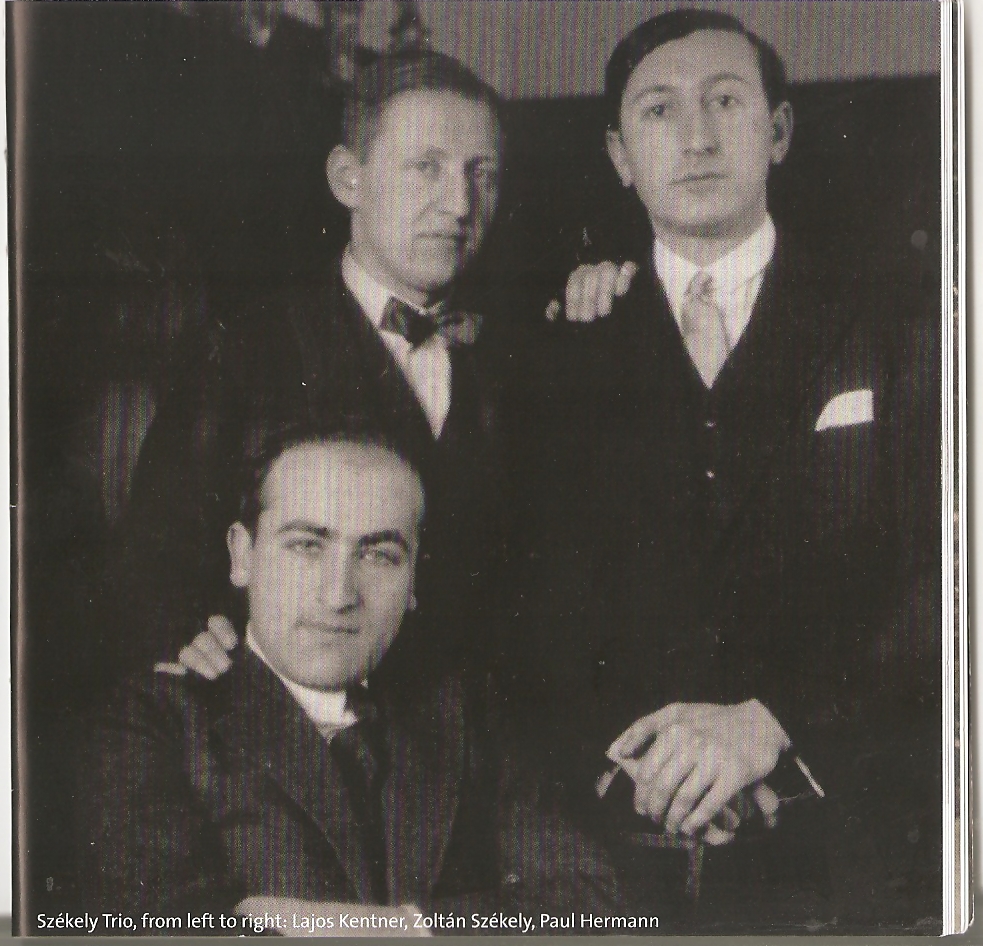
Hermann en Székely

Paul Hermann en Zoltán Székely

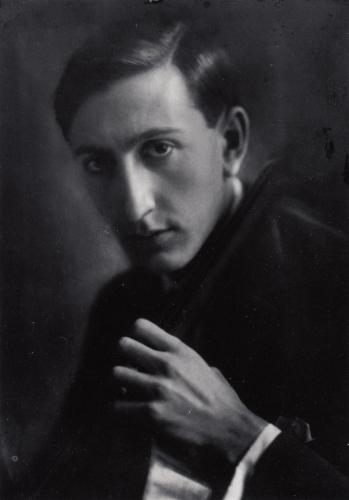
De Joodse Hermann werd geboren in Boedapest, waar hij aan de Franz Liszt Academie studeerde bij o.a. Adolf Schiffer (cello), Zoltán Kodály (compositie) en Léo Weiner (kamermuziek). Sinds die tijd dateert ook zijn innige vriendschap met violist Zoltán Székely en pianist Géza Frid.

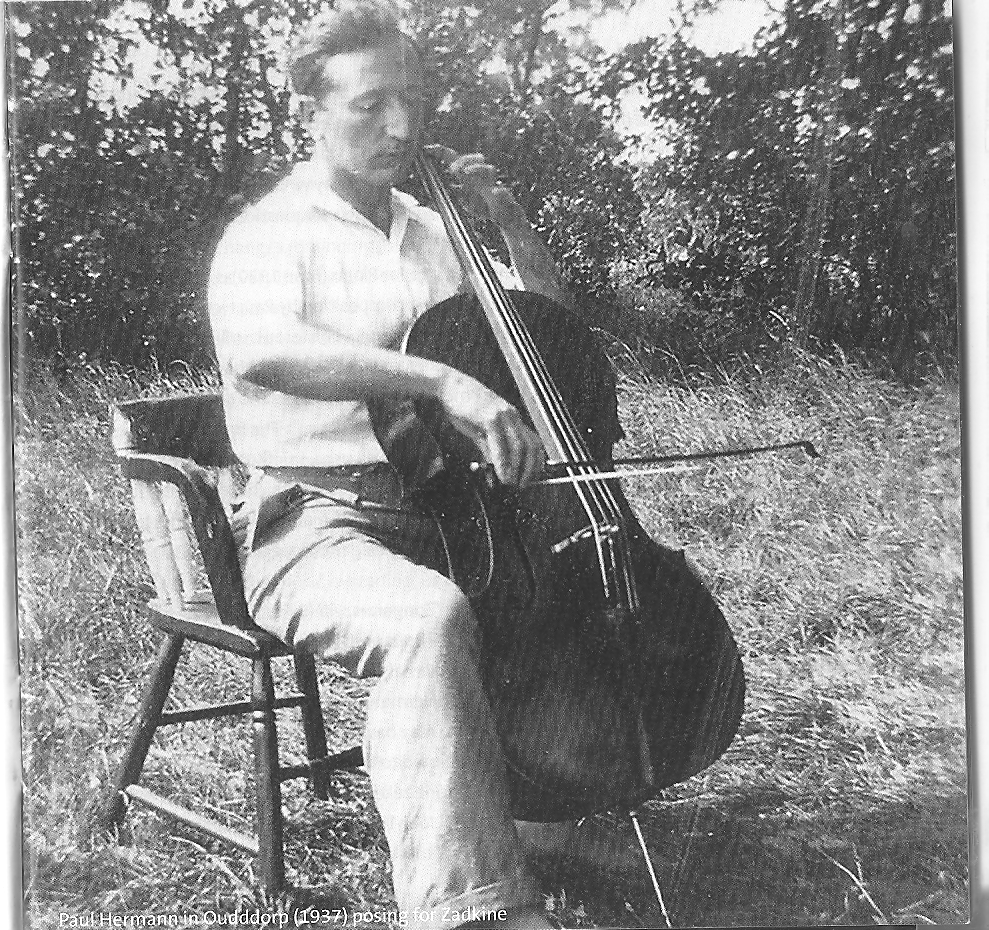
Hermann cello

Tijdens een optreden in Nederland maakte hij kennis met de Nederlandse Ada Weevers met wie hij trouwde en met wie hij tot 1933 in Berlijn woonde. Toen Hitler aan de macht kwam, vestigde het gezin zich in Oudorp in Nederland (leuk weetje: Hermann sprak en schreef voortreffelijk Nederlands). Na de tragische dood van zijn vrouw verhuisde Hermann eerst naar Brussel en later naar Parijs.

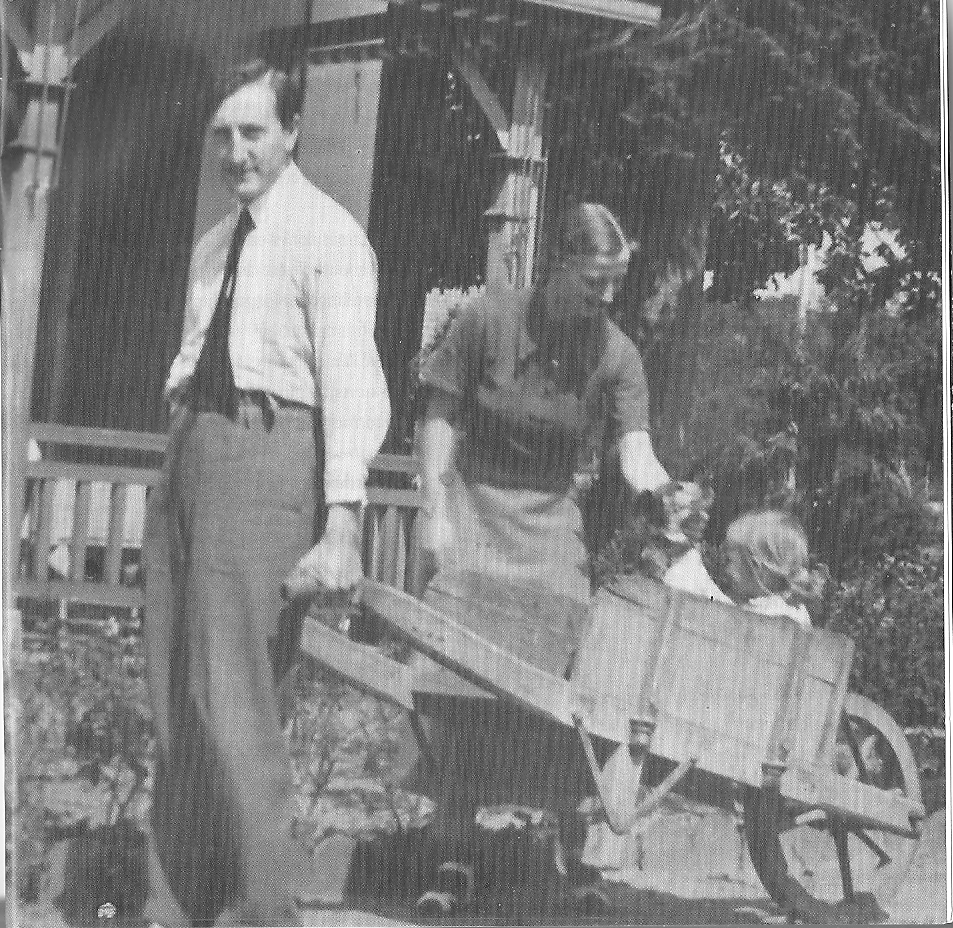
Hermann vrouw

Hermann met vrouw en dochter

Hermann was voornamelijk beroemd als cellist (hij werd de ‘Hongaarse Casals’ genoemd), zo speelde hij de wereldpremière van solocellosonate van Kodály en eind jaren dertig trad hij vaak op in het Concertgebouw in Amsterdam; maar hij was ook een begenadigd componist. Na de oorlog raakte hij – net als zovele van zijn lotgenoten – in de vergetelheid.

Portretten van componisten die vervolgd en verboden zijn in Nederland tijdens Wereldoorlog 2:

Het is dankzij de Leo Smit Stichting dat wij nu kennis kunnen maken met zijn muziek, waarvoor DANK! Zijn Grand Duo uit 1930, oorspronkelijk gecomponeerd voor en uitgevoerd met Zoltan Szekely, krijgt nu een uitstekende vertolking van Burkhard Maiss en Bogdan Jianu. Wat een ongekend prachtig werk is het toch!

De Strijktrio en de Pianotrio stammen uit het begin jaren twintig, toen Hermann nog aan het Liszt-Academie studeerde. Dat er in beide, zeer prettig in het oor klinkende werken een prominente rol aan de cello is toebedeeld is nogal wiedes.

De droevige liederen die Hermann in impressionistische stijl na de dood van zijn vrouw componeerde worden zeer ontroerend gezongen door Irene Maessen.


ENGLISH TRANSLATION

Hermann lowres.medium

The exact date and place of his death still remain unknown. The last that was heard of Paul (Pál) Hermann (1902-1944) was that he got arrested during a big street razzia in Toulouse in April 1944 and was deported from the Drancy transit camp to Auschwitz, and from there on to Lithuania.  After that, no trace of Hermann was ever found.

The Jewish Hermann was born in Budapest, where he studied at the Franz Liszt Academy with, amongst others, Adolf Schiffer (cello), Zoltán Kodály (composition) and Leó Weiner (chamber music). His close friendships with violinist Zoltán Székely and pianist Géza Frid originated during these years.

Hermann Szekely Trio

After a concert in the Netherlands Hermann met the Dutch Ada Weevers whom he married, and with whom he lived in Berlin until 1933. After Hitler’s rise to power, the family moved to Ouddorp in the Netherlands (interesting fact: Hermann spoke and wrote excellent Dutch). After the tragic death of Hermann’s wife he first moved to Brussels, then to Paris.

Hermann klein

Although Hermann was most widely known as a cellist he was a talented composer as well. He made his international breakthrough with Kodály’s Sonata for solo cello. Dutch newspapers would call him the “Hungarian Casals” when he regularly performed at the Concertgebouw in the late 1930’s.

After the war, as so many of his fellow victims,  he was forgotten.

Portraits of persecuted composers in Netherlands during World War II:

Thanks to the Leo Smit Foundation it is now possible to listen to his music again, for which I would like to say a big thank you!

His Grand Duo from 1930, originally composed for and performed by Zoltan Szekely, now gets an outstanding performance by Burkhard Maiss and Bogdan Jianu, What an unbelievably beautiful work this is!

Hermann Thibaud trio

Burkhard Maiß, Bogdan Jianu and Andrei Banciu © 2018 The Jacques Thibaud Trio

The String Trio and the Piano Trio date from the early 1920’s when Hermann still was a student at the Liszt-Academy. It comes as no surprise that both works, which fall easy on the ears, have a prominent role for the cello.

The sad songs Hermann composed in an impressionistic style after his wife’s death are sung very movingly by Irene Maessen.

English translation Remko Jas

All photos:  © courtesy Leo Smit Foundation

More about Hermann:
http://www.forbiddenmusicregained.org/search/composer/id/100027


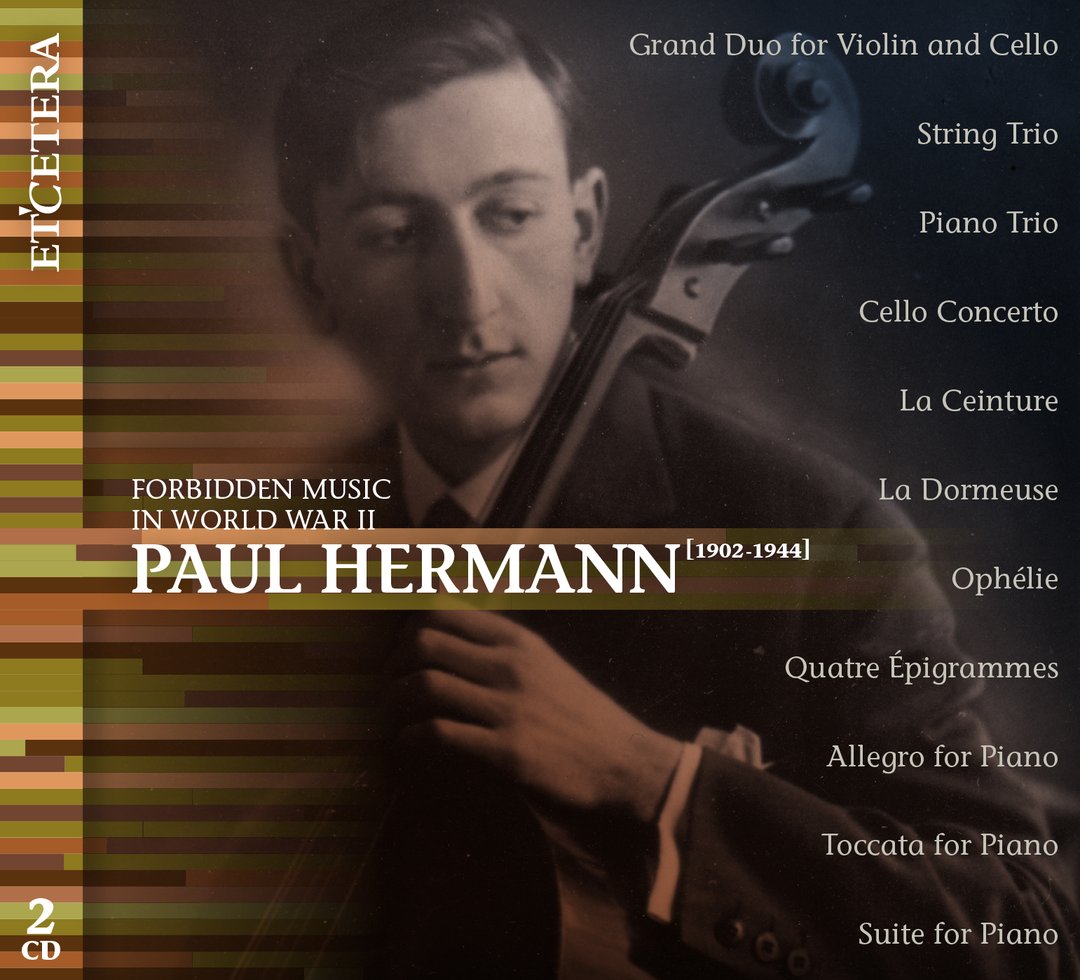
FORBIDDEN MUSIC IN WORLD WAR II
PAUL HERMANN
Grand Duo for violin and Cello, String Trio, Piano Trio, Cello Concerto, Songs, Quatre Épigrammes, Allegro for Piano, Tocata for Piano, Suite for Piano
Burkhard Maiss (violin); Hannah Strijdbos viola), Bogdan Jianu, Clive Greensmith (cello); Andrei Banciu, Beth Nam (piano); Irene Maessen (soprano)
Et’cetera KTC 1590 (2 cd’s)

Great recording of Donizetti’s Les Martyrs

martyrs

Les Martyrs, an almost forgotten grand opera by Donizetti started its life as Poliuto. The French libretto by Eugène Scribe was based on Polyeucte by Pierre Corneille from 1642 which was impregnated by the vision of its author that free will is a deciding factor in life.

Martyrs Polyeuctus_of_Meletine_in_Armenia_(Menologion_of_Basil_II)

Polyeuctus of Melitene in 10th-century Byzantine miniature from the Menologion of Basil II

Because of the choice of the topic – the life and martyrdom of Saint Polyeuctus – the censor had Poliuto banned, and opening night was cancelled. It was forbidden to show the persecution of Christians on stage in Naples at the time.

After Donizetti arrived in Paris he commissioned a new libretto from Scribe and rewrote and expanded the overture and composed several new arias for the title character.

He also changed the first act finale and added the required ballet music. He then considerably toned down the romantic entanglements and stressed the religious aspects even more.

In his big aria at the end of the second act Poliuto complains about the supposed disloyalty of his wife and speaks about the jealousy that torments him. His “Let me die in peace, I do not want anything to do with you, you have been unfaithful to me” from Polyeucte has been changed to the credo (now at the end of the third act): “I believe in God, the almighty father, creator of heaven and earth….”

Despite its early successes the Martyrs failed to hold the stage. Instead Poliuto made it’s return, albeit on few occasions. After 1920 the opera was performed only sporadically (a remarkable fact: in 1942 Poliuto was performed on the occasion of Hitler’s visit to Mussolini, the title role sung by Benjamino Gigli).

Thanks to Callas, who rediscovered the opera in 1960,  a short revival came about. Her live recording from La Scala with Franco Corelli left me cold. The reason for that I only understood later when I heard the live recording with Katia Ricciarelli and José Carreras. In an opera with vulnerability as its main theme big dramatic voices sound out of place.

In October 2016 Opera Rara recorded Les Martyrs in the studio, followed by a concert performance in November.

53b45-les-martyrs-joyce-el-khou-012

Joyce El-Khoury and Michael Spyres

Joyce El-Khoury, clearly following in the footsteps of Leyla Gencer, is the perfect Pauline: dreamy, loving and fighting like a lioness (nomen est omen) for the life of her husband who turned into a Christian. A husband she does not even love. Only because she believed her former fiancé was dead she has agreed to be married off to her father’s protégé.

In “Qu’ici ta main glacée” she sounds very vulnerable,  moving me to tears (her pianissimi!). “Dieux immortels, témoins de mes justes alarmes,” her confrontation scene with Sévère, her lover she believes to be dead (a very impressive David Kempster) is simply heartbreaking.

Michael Spyres is a very heroic Polyeucte. In “Oui, j’irai dans leurs temples” he sings a fully voiced, perfect high “E.”

The orchestra under Sir Mark Elder is on fire. The three ballet scenes halfway though the second act lighten up the mood a little, however briefly.

Much praise as well for the perfect singing of the Opera Rara Chorus (chorus master Stephen Harris).


English translation: Remko Jas

GAETANO DONIZETTI
Les Martyrs
Joyce El-Khoury, Michael Spyres, David Kempster, Brindley Sherratt, Clive Bayley, Wynne Evans a.o.
Opera Rara Chorus; Orchestra of the Age of Enlightenment under Sir Mark Elder
Opera Rara ORC52

Interview with Joyce El-Khoury: Interview with JOYCE EL-KHOURY (English translation)

See also: POLIUTO

Interview with Joyce El-Khoury

Joyce Behamou

Joyce El-Khoury © Julien Benhamou

The first time I met Joyce El-Khoury was by coincidence. We happened to sit next to each other during opening night of Gounod’s Faust at the National Opera and started an animated conversation, which continued during intermission and after the opera had ended. We got along so well, in fact, that we soon made an appointment to continue our conversation elsewhere.

Joyce Michael

Joyce El-Khoury with Michael Fabianoin Amsterdam © Basia Jaworski

A few days afterwards we meet at an almost deserted outdoor café on Rembrandt Square. The weather is gorgeous – the sun reflecting itself in our wine glasses. El-Khoury loves Amsterdam, and cannot get enough of the city.

In November 2014 El-Khoury will return to Amsterdam for Musetta (La Bohème) and the prospect to spend six entire weeks there already makes her happy. She immediately discards my remarks on the weather in November and December.

“I simply love the city, regardless the weather. The atmosphere is unique and the people are so friendly! I love Amsterdam.  Everyone is free here, or at least seems to be. The city is a huge inspiration to me. The only problem are the bikers, they scare me a little!”

The Canadian soprano, born in Beirut, is a star in the making. Opera News wrote about her: “Canadian Soprano Joyce El-Khoury’s sound is enormously satisfying — a full lirico-spinto soprano with a genuine radiance about it”.

Joyce Violetta

As Violetta (La Traviata) at the Dutch National Opera

The Dutch public can attest to this. In May 2013 El-Khoury made an unexpected and overwhelming debut as Violetta in La Traviata at the National Opera. In May 2014 she stole the hearts of the NTR Saturday Matinee audience with a deeply moving performance of Rusalka in Dvorak’s opera of the same name.

“The Matinee is even better than sinking into a warm bath. The public is so incredibly sympathetic and kind, you can feel their love, which really makes you feel good, feel loved.  You feel like … no, this feeling cannot be described. Also the organisers, the rehearsal assistants … The most beautiful moment to me came when the orchestra started to play and our voices blended with the sound of the orchestra for the first time.”

“And then we had James Gaffigan to conduct us …. I have no words for him. He breathed along with us. He was one of us, and stood above us at the same time. But also next to us. This Rusalka has been the highlight of my life thus far. Singing is a privilege, but singing at the Matinee in Amsterdam. I had the time of my life…”

Beirut and Canada

Joyce El-Khoury was born in Beirut and moved to Canada when she was six years old.

“I am a Canadian and I feel at home in Canada, but my soul, my heart, my everything stayed behind in Lebanon. Most of my family, for example, lives there. If my grandparents would not spend half of their time here, and half the time in Lebanon, I would miss them terribly. My heart is Lebanese, and I hope to spend some more time there one day.

“My father had a beautiful voice, but it was my grandfather George who was the famous singer. Well, famous, when he walked down the street people yelled Kyrie Eleison at him. I sang in the chorus as well, it helped me a lot when we first settled in Ottawa. Everything was new there, and I missed Beirut terribly, but singing comforted me.”

“I never thought about making singing my profession, I wanted to be a doctor. Or a nurse. I even worked in a children’s hospital for a while. My parents did not think that was a very good idea, though. “You have such a perfect and beautiful voice, you really need to do something with it” they said. They not only stimulated me, but also helped me to find my path in the manner that suited me. Unconditional love, indeed.”

“I function best under stress, I need to be challenged. I am sort of a workaholic: even on vacation I always take my score with me.”

El-Khoury’s current repertoire includes many classical and less famous roles by composers like Donizetti, Verdi and Puccini. Language does not seem to play a role for her.

“I have been very lucky: languages, to me, come quite easily. Learning a language almost goes by itself, it is all very natural for me. Maybe because I was raised bilingual (Arabic and French), with English added later.

I have an affinity with languages, and I love to sing in Czech or in Russian. ”

Rusalka

joyce-rusalka

Rusalka in Amsterdam © Lieneke Effern

“Rusalka is in love, like someone who is in love for the first time. She dreams and believes her dreams are the truth. She is invisible to the prince, nothing more than a wave. She can only be united with him in the foam on the waves, but she wants to be seen too!”

“I am not sure whether the prince loves her…. I think he is fasc

inated by her. She is a great unknown, a beauty, a mystery. But she does not speak, so he does not know what to think anymore. You may think that is horrible, but you can hardly blame him. She is weird, which scares him a little.”

“Rusalka becomes truly human the moment she forgives. By forgiving she transforms into a human being. I think the opera enables us to study human emotions.”

Finale third act Rusalka from Amsterdam:

La Boheme

joyce-musetta

Musetta (La Boheme) in Amsterdam ©Lieneke Effern

“There is not a lot of difference between Musetta and Mimi, I think. I have sung both parts, and I love them equally. Musetta may appear more superficial, but she is not. She is just better at hiding her emotions and feelings. To the world she is happy and strong, and a big flirt as well, but inside she is a little bird. She genuinely loves Marcello, and is afraid of being hurt. It all shows in the final scene.”

With Michael Fabiano during rehearsals for La Boheme in Ottawa, El-Khoury sings Mimi

“The most emotional moment in the opera, to me, comes in  the second act, when Mimi says: “”Io támo tanto.”  My voice always breaks there for a moment.”

“I need to feel something. I need to have a connection with a role, and understand the character. I have to be challenged emotionally. When I do not feel anything, it  becomes too mechanical and detached. I also think you need to keep your emotions in check, though, however hard that may be. Otherwise your throat blocks, and you cannot sing.”

Trailer of the Amsterdam production, El-Khoury sings Musetta:

Suor Angelica

When I am banned to the moon and can only take one opera with me that would be Suor Angelica! For the drama, but also for the music. The music comforts me, and gives me a warm and good feeling. And then there is that beautiful ending,  the wonder that everything ends well!”

“This role also brought me where I am now. I was hired to sing Loretta in Gianni Schicchi during the Castleton Festival in 2010, but I was also the understudy for the singer who sang Angelica. She fell ill during opening night, and very gladly I took over. Under the circumstances they reversed the order: first Schicchi and then Angelica. Maestro Lorin Maazel was most helpful.”

“Later Maazel took me to Munich and even to China! I will miss him terribly: he was my mentor, teacher, supporter and friend.”

Final scene from Angelica, Castleton:

La Traviata

“I have learned a lot from Renata Scotto, mainly about body language: the things you do when you not sing. We have worked together in Palm Beach on a Traviata she directed in which I sang the lead. ”

“I sang my very first Violetta in 2012 in Wales, then Amsterdam followed. I thought the Amsterdam production was very beautiful.  I had watched the DVD many times, and understood the clock straight away, but the business with the couch had to be explained to me. I thought it was a tremendous experience.”

La Traviata from Palm Beach directed by Renata Scotto:

What is your dream role?

“Thaïs! Preferably with the gorgeous costumes they had in Los Angeles. I also love Butterfly. The part lies slightly higher than other Puccini roles, but I think it suits me. I also want to sing all three Tudor queens.”

Joyce Maria S

As Maria Stuarda in Seattle

“I am not sure it will ever happen, but I would love to sing Salome” she adds with hesitation. “Actually, I would love to be a conductor, I love being in charge!”

English translation: Remko Jas

Interview in Dutch: JOYCE EL-KHOURY
About Les Martyrs: DONIZETTI: LES MARTYRS (English translation)