Gabriela_Beňačková

Otto Schenk In Memoriam

©Ian Ehm /News

Otto Schenk, one of the greatest opera directors died 9 January 2025 at the age of 94. This is brief summary of few of his many productions, arranged alphabetically

ANDREA CHÉNIER

For me, Andrea Chénier is one of the best and most beautiful operas ever. I think the music is nothing less than divine and the story is timeless. It remains current, perhaps now more than ever. The tyrant must be cast off his throne and the people must take control. Surely, we all agree on that?

If only it were that simple! If only it were that simple! Anyone who grew up in a post-revolutionary totalitarian regime knows how much horror it brings. One terror is replaced by another. This, at least for me, is the main theme in Giordano’s biggest hit. I don’t think the real lead role is the actual poet, André Chénier It is the French Revolution, which, as Gérard (once Maddalena’s houseboy and now one of the revolutionary leaders) bitterly observes, devours its own children.

I myself think the role of the poet/revolutionary fits Placido Domingo like a glove. Passion for love and enormous involvement in everything that happens in the world were – and still are – his trademarks.

In 1981 the opera in Vienna was recorded for TV. That recording has since been released on DVD. Gabriela Beňačková, one of the most underrated singers in history, sings a Maddalena of flesh and blood. Horrifyingly beautiful and moving.

Piero Cappuccilli is a Gérard among thousands and the small roles are also filled by great singers: Madelon is sung by none other than Fedora Barbieri. Otto’s Schenk’s production is a feast for the eyes (DG 073 4070 7).

ARABELLA

Film 1977:
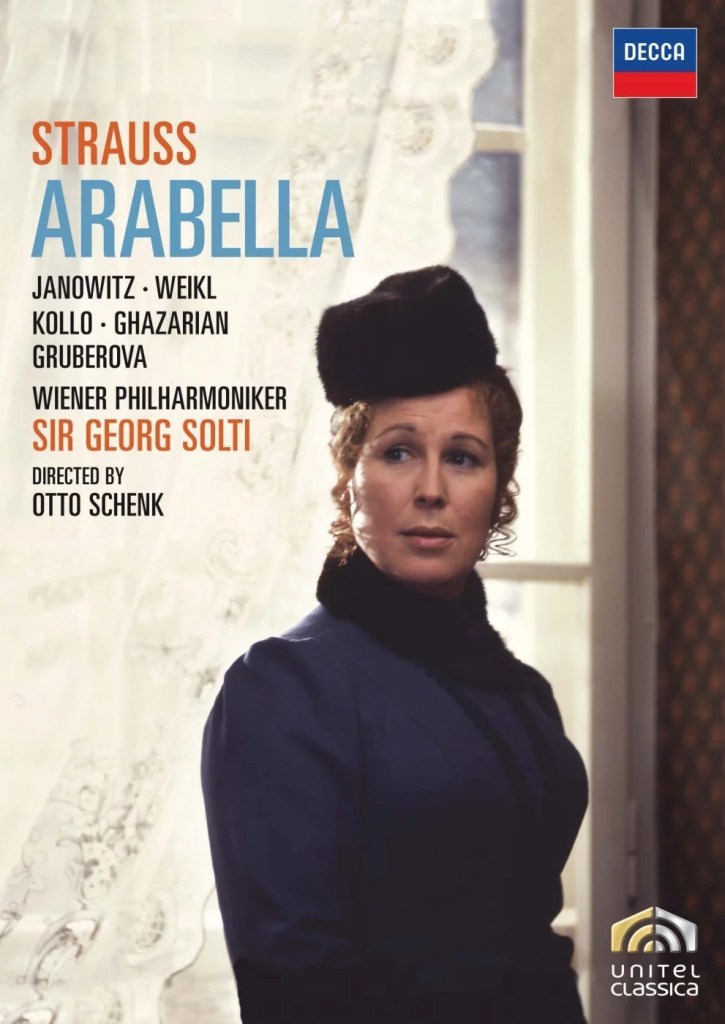


If you have never seen the opera, you would do well to start with Otto Schenk’s 1977 film (DG0743255). Larger than life, with lifelike sets. Of course, no ordinary live performance can compete with that.

Gundula Janowitz is a delightful Arabella. Perhaps not the best actress in the world, but her high notes are so very beautiful. Sona Ghazarian is a good Zdenka, but what really makes the recording, alongside the very erotic playing of the Wiener Philharmoniker (Solti!), more than worthwhile, is Bernd Weikl’s Mandryka. Any woman would certainly want to be kissed awake by him.

The minor roles are also fantastically cast: René Kollo is a Matteo out of thousands and I know of no better Fiakermilli than the young Gruberova. Add to this the very young (30!) Kurt Rydl as Lamoral and Margarita Lilova (Adelaide).  It is definitely very good.

Below Gundula Janowitz and Bernd Weikl in the last act:


Metropolitan 1995:
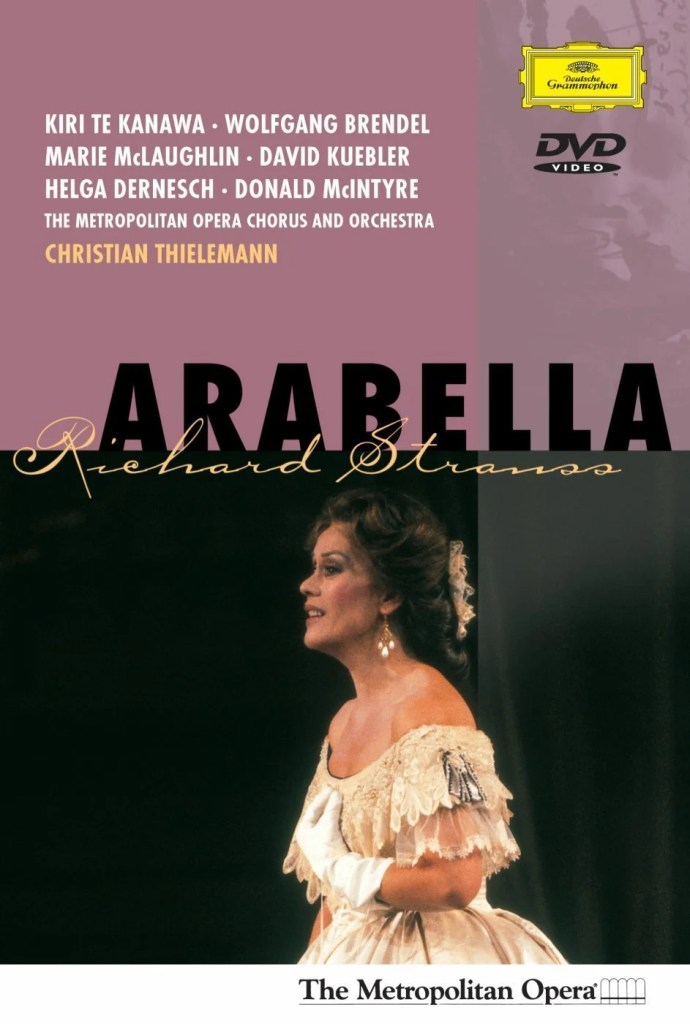
Kiri te Kanawa is an exemplary Arabella; there are few singers who can match her in this role. Strauss has always been a bit like her personal composer and optically, of course, she is a dream Arabella.

Her sister Zdenka (Marie McLaughlin) is also wonderful, something that cannot be said of Wolfgang Brendel (Mandryka). He doesn’t succeed in making my female heart beat any faster. Thielemann conducts well, but he lacks the sensuality of Solti.  (DG 0730059).

Below is a scene with Kiri te Kanawa and Marie McLaughlin:


BALLO IN MASCHERA


The Royal Opera House production released by Opus Arte (OA 1236D) dates from early 1975. The sound is a little dull, but you will forget that as soon as you hear the beautiful voices of the singers.

Katia Ricciarelli is one of the most moving Amelias I know. The sound that she produces is perhaps not really ‘Verdian’, and perhaps her voice is a little too light, (she has sadly destroyed her voice by singing this type of role), but the pianissimi that she spins deserve a prize for sheer beauty, and her fragility is palpable.

The kindly anxious, loving, but also playful tenor of the young Placido Domingo fits the role of Gustavo like a glove. Piero Cappuccilli is an excellent Renato and Reri Grist an Oscar such as you do not often hear them anymore. Her performance alone is worth buying the DVD.
Claudio Abbado (how young he was then!) conducts lightly and keeps the tempi sparkling, resulting in an effervescent orchestral sound.


The direction by Otto Schenk is effective. Conventional and yet surprising. And like no other, he exposes the comic aspects of the opera.

Trailer of the production:

DIE FLEDERMAUS

For me, the performance recorded at the Wiener Staatsoper on New Year’s Eve 1980 is by far one of the best, if not THE best. The production was then one year old and it was directed by Otto Schenk, a famous Viennese actor, who himself had played the role of Frosch 29 times. In a rich and detailed setting, an intrigue full of lies unfolds, which is at once exciting, comic and sad.

The cast simply could not be better: Bernd Weikl portrays the dissolute and primal Eisenstein with the necessary wink and humour, Lucia Popp is delightful as the bored housewife Rosalinde, and Brigitte Fassbaender irresistible as Orlovsky. But the very best is the young Edita Gruberova (Adele): she coquettes, makes us laugh at her mock accent, and moves us with her naivety. And all this with perfectly sung colouratura, brava!
Theodor Guschlbauer shows already in the overture that it is going to be an evening of masterfully performed beautiful melodies. Delightful.

DIE MEISTERSINGER VON NÜRNBERG
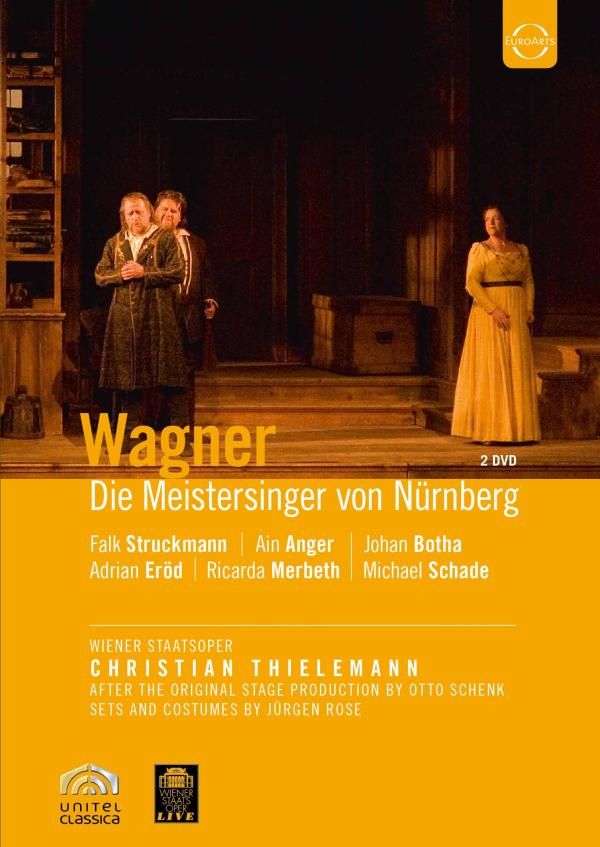

If you want a really beautiful Die Meistersinger on DVD, I can recommend Otto Schenk’s production. The wonderful performance was remade and recorded in Vienna in 2008. (Euroarts 0880242724885). HUGE! You really hardly ever get an experience like this; everything is in its context: the sets, the costumes, the story….

You may not believe it, but even Johan Botha (Walther) does some acting in this production! For that alone, the DVD is a must-see…But there is more. How about Falk Struckmann as Sachs (OK, the man can do no wrong with me)? And the deliciously vile Adrian Eröd (Beckmesser)? And if you know that the conductor’s name is Christian Thielemann … well!

Trailer:

LULU
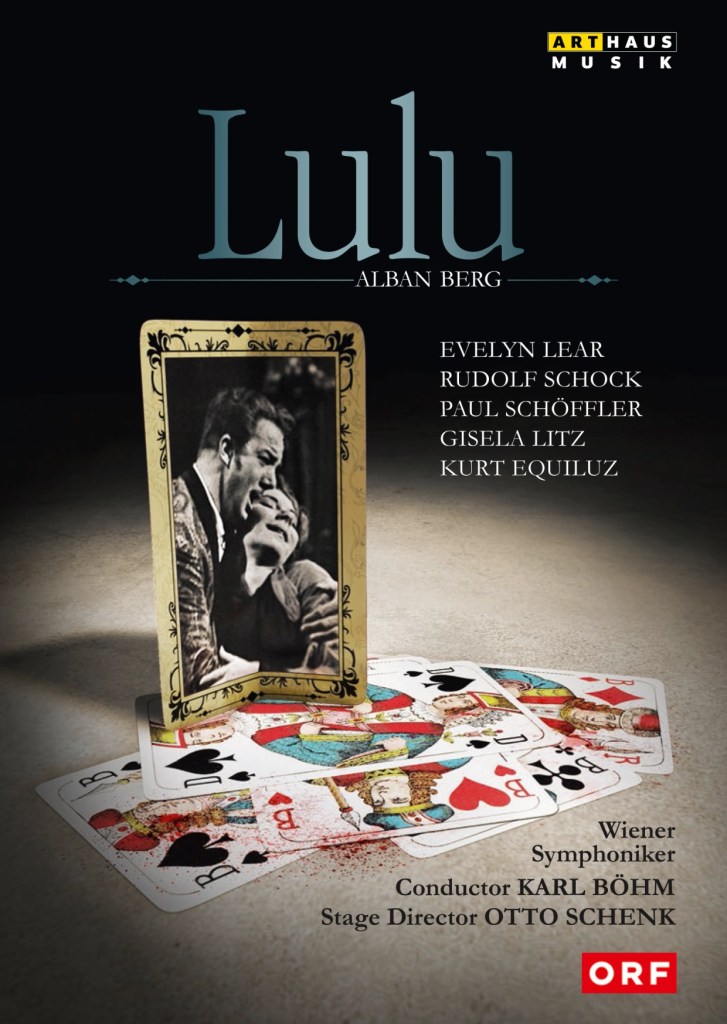
With her movie-star looks and angelic voice, Evelyn Lear has been referred to in the press as ‘Elisabeth Taylor meets Elisabeth Schwarzkof’. Personally, I find the American soprano, very popular in the 1960s to 1980s, much more interesting than her German colleague. Lear was one of the greatest and best advocates of modern music.
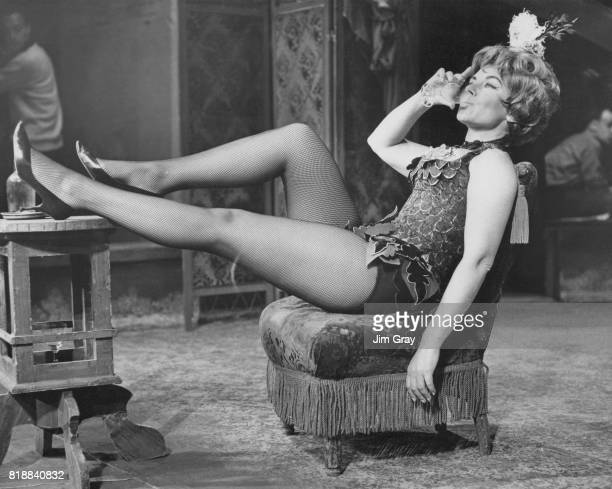
Opera singer Evelyn Lear of the Hamburg State Opera Company in the title role of the opera ‘Lulu’ at Sadler’s Wells in London, UK, 3rd May 1966. (Photo by Jim Gray/Keystone/Hulton Archive/Getty Images)

On 9 June 1962, she sang the role of Lulu in the first Austrian production of the work, at the newly reopened Theater an der Wien. I can imagine that the posh premiere audience may have been a bit surprised to see a prima donna dressed only in a tight-fitting corset and fishnet stockings, but if so, nobody showed it. It was directed by the then very young Otto Schenk, who followed the libretto closely.

UNSPECIFIED – CIRCA 1970: Evelyn Lear and Paul Sch?ffler in Lulu by Alban Berg in the Theater an der Wien, , Photography, 1962 (Photo by Imagno/Getty Images) [Evelyn Lear und Paul Sch?ffler in “Lulu” von Alban Berg im Theater an der Wien, Photographie, 1962]

That Paul Schöffler (Dr Schön ) reminded me of Professor Unrath from Der blaue Engel is, of course, no coincidence. Nor is his resemblance to Freud.

The last scene, beginning with Geschwitz’s plea followed by images of Jack the Ripper, could just as well have been taken from one of the best Hitchcock films. Especially since Gisela Lintz, who sings the role of the Countess, looks a lot like one of the director’s beloved actresses.

Watching Karl Böhm conducting is also extremely exciting. I have never seen him gesticulating so violently. An absolute must (Arthaus Musik 101 687).

TANNHAUSER
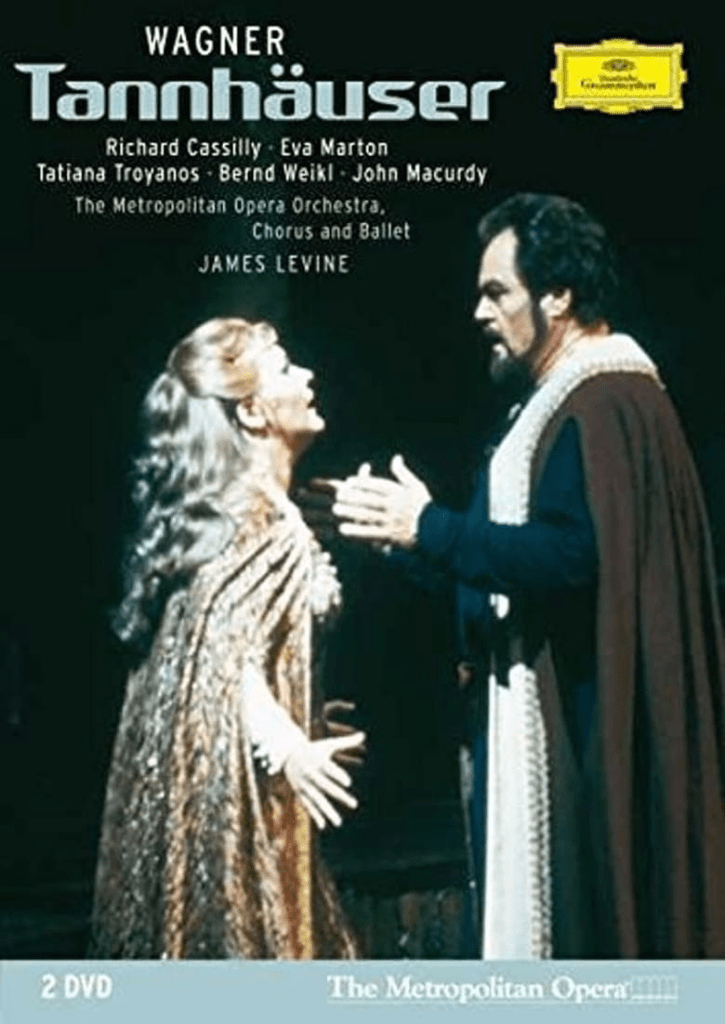


Otto Schenk’s insanely beautiful 1982 production, recorded at the Metropolitan Opera in New York (DG 0734171) dates from 1977. If you like very realistic, lavish sets and ditto costumes (I do) you can have a lot of fun with this. Just about the entire Venus grotto from Schloss Neuschwanstein was recreated for the opening scene, and the ballet presents us with a truly orgasmic Bacchanal. The orchestra, conducted by James Levine, plays mostly lyrical and light, there is nothing to criticise at all.

Eva Marton is a fine Elisabeth, Tatiana Troyanos a wonderfully sensual and seductive Venus.
Bernd Weikl, one of my favourite baritones sings an irresistible Wolfram, although he messes up his great aria by trying to give his (in principle) lyrical voice too much volume, making his voice unsteady.

And although the Landgrave (John Macurdy) is really terrible, I would not have had a problem with that recording, provided … yes … provided the tenor had not been so awful. The textbook mentions “the very highest standard”, well, I’m not so sure about that. Richard Cassilly is a physically very unattractive Tannhäuser with a pinched voice and a total lack of lyricism, giving the impression of having wandered

into the wrong opera.

Goodbye Otti! We will never forget you!
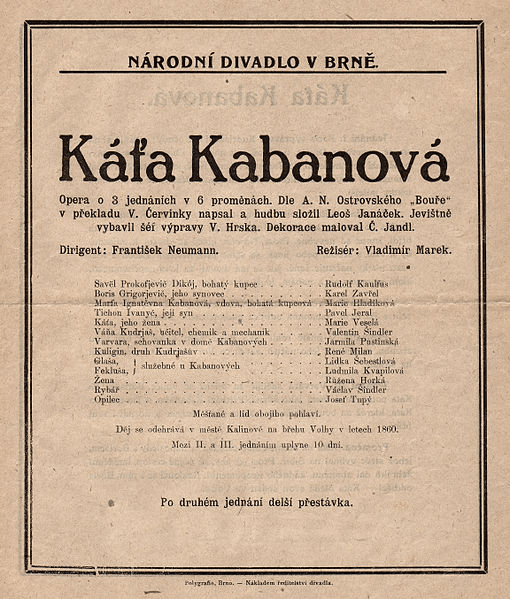


Kát’a Kabanova, discography


DVD

Robert Carsen


For most Russians, the Volga, the longest river in Europe, is the symbol for everything, including life itself. It is celebrated in many songs, and in many stories and poems it plays the leading part.

In Ostrovsky’s Storm, on which Janaček’s opera is based, and also in the opera itself, the river mirrors the soul of the unhappy Kát’a , whose life ends in the Volga. You can hear the river in the music also.

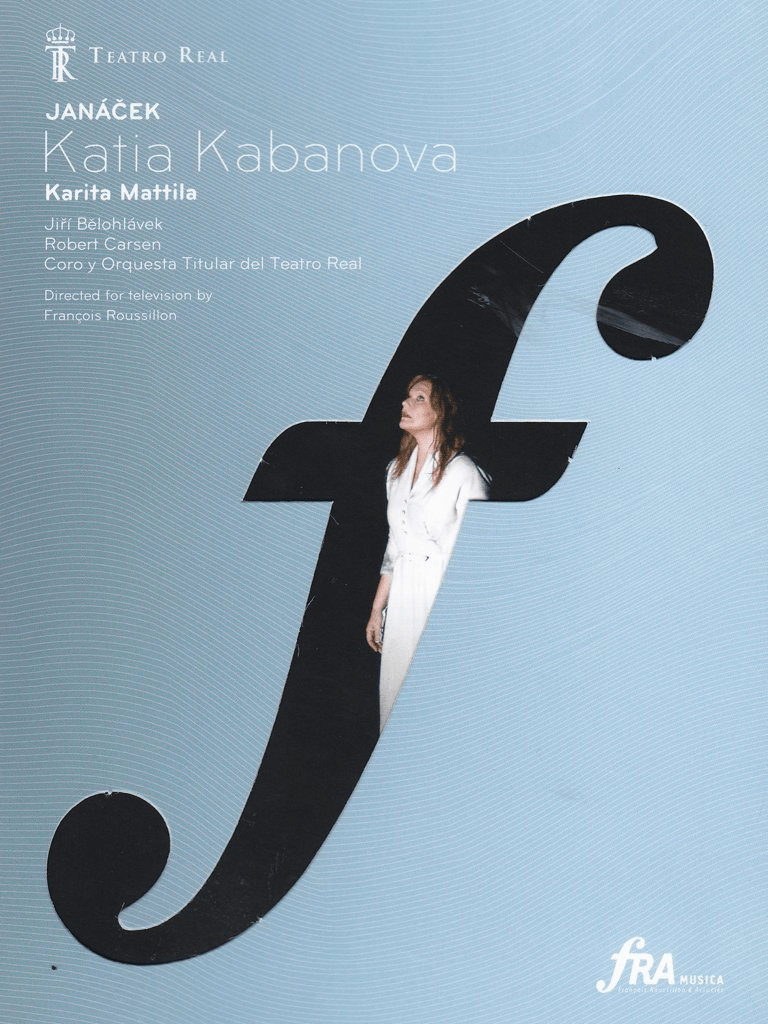
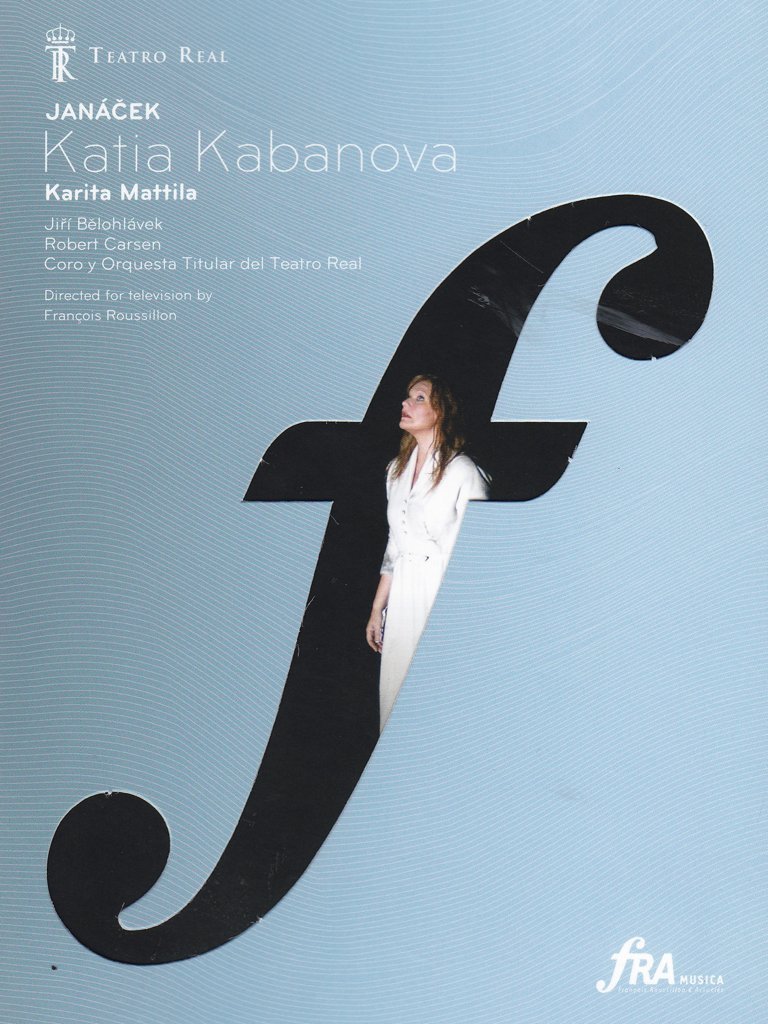
Robert Carsen understood this very well; in his 2004 Antwerp production he had the entire stage covered with water and the story played out on platforms. I thought it was the most beautiful production of the work ever. It was taken over by the Teatro Real in Madrid in 2008 and released on DVD not long ago (Fra Musica 003).

I must honestly confess that I was really scared to see it again. Would I still find it so very beautiful? The answer is a resounding yes! It is even more beautiful than I remembered it.

Karita Mattila is a Kát’a to fall in love with and Jiří Bělohlávek is, next to Mackerras, the best advocate for the opera. Do you want my honest opinion? Buy it, because it is as beautiful as it gets!


Act Three: The Storm


Christopher Marthaler


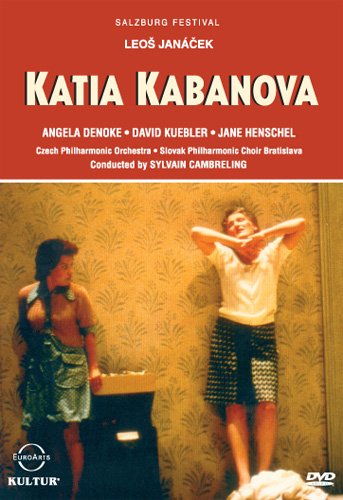
Believe it or not, to most opera lovers Kát’a Kabanova belongs to the standard repertoire, but in Salzburg it was not performed until 1998. The fact that the production was received with mixed feelings at the time, was not due to the music or the singers, or the orchestra or the conductor.

Sylvain Cambreling took care of Janaček’s  masterpiece with the necessary love and understanding. The overture already made my throat close and my eyes fill with tears.

But alas, there was also a director. Marthaler set the action somewhere in the Eastern Bloc of the 1960s, clearly drawing his inspiration from the Czech film hits of the time. Those who have ever seen Miloš Forman’s Love of a Blonde know what I mean.

There is no river anywhere (a picture on the wall does not really count) and that is something I find absolutely unacceptable, because Kát’a  Kabanova without the Volga is to me like Die Zauberflöte without the flute.

A lover of modern, conceptual directing theatre might enjoy it though, because musically it is really well put together. It is clear that he had a particularly long rehearsal time at his disposal: the singers were moulded into a formidable ensemble.

The singing was also superb. Angela Denoke portrayed a vulnerable Kát’a and Dagmar Pecková shone as the rebellious Varvara. David Kuebler and Rainer Trost were perfectly cast as Boris and Kudrjas respectively, and they all deserved their bravos. For us Dutch, it is also nice to see our own national pride, Henk Smit, in action.
In the struggle between direction and music, the latter won.

https://my.mail.ru/video/embed/9182112244547190945


Nicolaus Lehnhoff


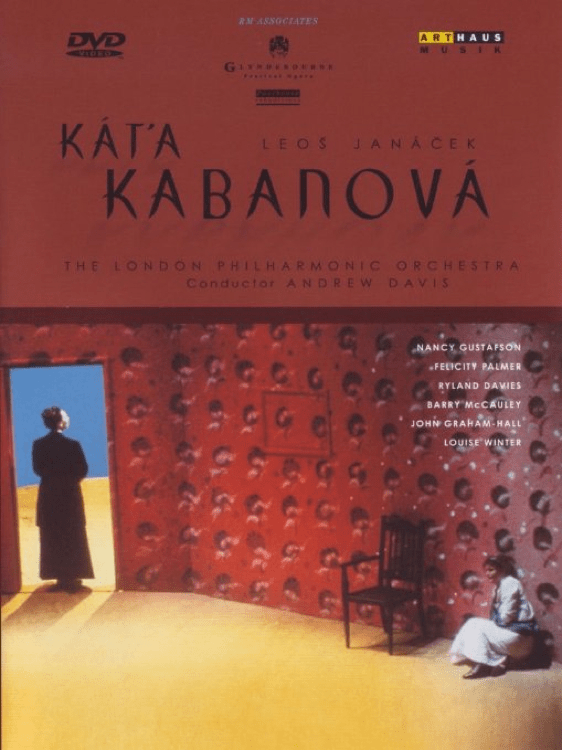
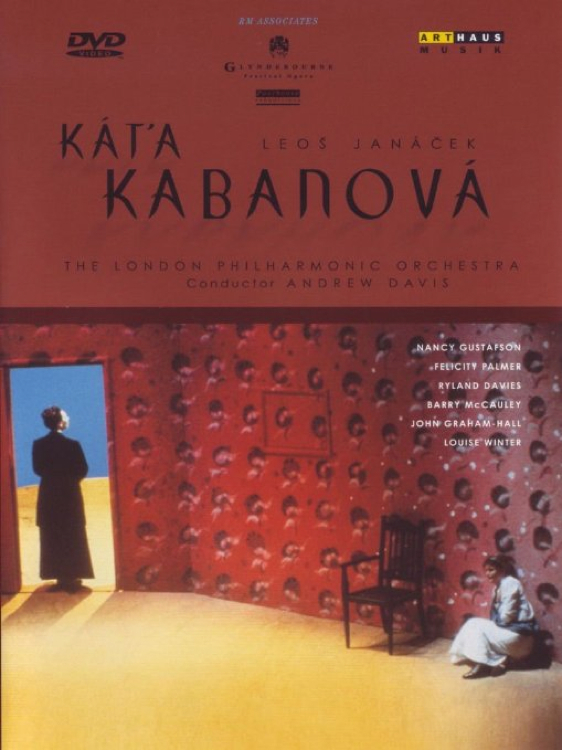
Lehnhoff belongs to those directors who like to give their own twist to a performance, but in Glyndebourne he delivered a rather traditional production (Arthaus 100158). Very austere, but with great attention to detail and to the psychological development of the characters.

He emphasises all aspects of Kát’a’s character, including her piety, penetrates deeply into her tormented soul and makes her misery palpable. There is a feeling of complete abandonment, which is reinforced by the beautiful, bright colours that are sometimes strongly reminiscent of paintings by Münch.

Musically, too, there is no reason to complain: Nancy Gustafson is a wonderful Kát’a and Barry McCauley an excellent Boris.

Trailer:


CD


Both CD recordings conducted by Charles Mackerras starring respectively Elisabeth Söderström on Decca (4218522) and Gabriela Beňačková on Supraphon (SU3291-2 632) are very good and I would not like to miss either of them, although I have a slight preference for Beňačková .

Peter Straka is as credible as Petr Dvorsky as Boris and Nadĕžda Kniplova and Eva Randová (Kabanicha) are a match for each other.


The Divine Emma /Božská Ema …

emmy-destinn-the-greatest-czech-soprano-dv

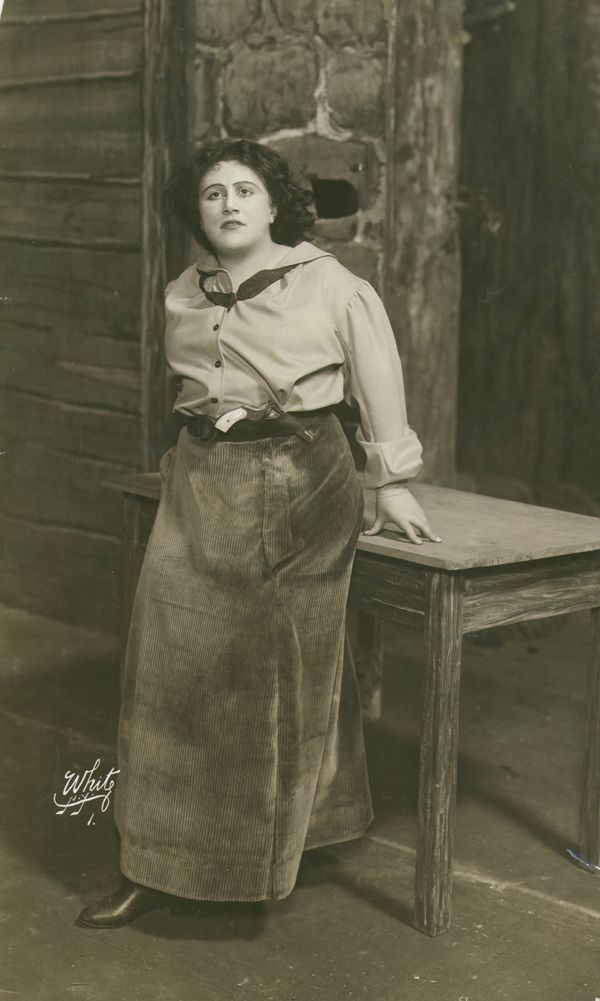
Emílie Pavlína Věnceslava Kittlová (February 26, 1878 – January 28, 1930) or, as the world knows her: Emmy Destinn. She is considered to be one of the greatest sopranos of the first twenty years of the twentieth century. She celebrated triumphs in Berlin, Paris, London and New York, she performed with Enrico Caruso, who had once proposed to her, and together they sang the world premiere of La Fanciulla del West, an opera that Puccini had composed with her voice in mind.

Emmmy Fanciulla

In her homeland, Bohemia, she was mainly loved for her patriotism, which even earned her a three-year house arrest during the First World War. The Czech documentary about her life is both interesting and irritating.

Emmy Dinh

Interesting because it recounts many unknown facts about her life and it provides us with beautiful images, photos and film clips and special acoustic recordings (including a real rarity: the Czech national anthem, sung in Czech together with her, then, lover, the Algerian baritone, Dinh Gilly):

Irritating, because it is put together as a very old-fashioned, extremely sentimental filmic portrait, full of seagulls flying overhead, windblown cornfields, a recurring hourglass and larded with staged fictional images. And all that to the sounds of Chopin’s Nocturne.

But the worst thing is that they had Destinn’s voice replaced with that of Gabriela Beňačková! So a great singer is not even allowed on- screen, because the leading part is – of course – intended for a beautiful young lady.

And here the _real_ Emmy:

The Greatest Czech Soprano
Supraphon, SU7006-9

Carsens Mefistofele verdient een cultstatus

Tekst: Peter Franken

mefisto-dvd

De opera waar ik vorig jaar het meeste naar uitkeek was degene waar DNO in september het seizoen mee zou openen: Boito’s Mefistofele, een van mijn favorieten. In een nostalgische opwelling trok ik zodoende de opname met Samuel Ramey uit de kast, een bijna legendarische productie uit 1989.

Robert Carsen volg ik al sinds het begin van zijn Puccini cyclus in Antwerpen. Die startte met een productie van Manon Lescaut die Carsen voor Parijs had gemaakt, een kostuumdrama compleet met koets waaruit een stroom juwelen kwam toen Geronte haar vlucht wist te verijdelen. Daarna werden zijn producties steeds meer ingehouden, op het sobere af. Zozeer dat ik zijn Idomeneo kort geleden als voorbeeld gaf hoe op verantwoorde wijze nieuwe producties kunnen worden gebracht in de financieel moeilijke tijden die de opera, na het onder controle brengen van de corona pandemie, te wachten staan. Ik was helemaal vergeten hoe Carsens enscenering voor San Francisco er ook al weer uitzag. Het is moeilijk voorstelbaar dat hij 30 jaar voor die Idomeneo zoiets gemaakt kon hebben. Maar ik vond het geweldig. Natuurlijk zal decorontwerper Michael Levine hierin een grote rol hebben gespeeld temeer daar Carsen toen nog maar net kwam kijken. Hoe het ook zij, die twee hebben een waar operamonument gecreëerd en de opname met Samuel Ramey in de titelrol verdient wat mij betreft een cultstatus.

Op het toneel van de San Francisco Opera is een baroktheater nagebouwd, we zien loges in een hoefijzervorm en op meerdere verdiepingen. Die worden hoofdzakelijk gebruikt voor engelen om het gebeuren beneden te bekijken en zingend van commentaar te voorzien. Ze zijn gekleed in lange witte gewaden en geanonimiseerd door witte maskers die slechts de ogen, neus en mond onbedekt laten, een geïnverteerd coronamasker zogezegd. Allemaal dragen ze een gouden kroontje, ook Faust krijgt er na zijn verscheiden haastig eentje opgezet als hij door hen wordt afgevoerd

De zangers krijgen regelmatig een spot op zich gericht, alsof er een theatervoorstelling op het toneel aan de gang is. Het kinderkoor, de engelen die door Mefistofele geïrriteerd worden aangeduid als een zwerm bijen, zingt gewoon op het toneel

Het meest exuberant is de productie tijdens de dorpsscène waarin Pasen wordt gevierd. Het is een combinatie van carnaval met uitzinnige kostuums, een processie van heiligenbeelden en een pantomime van Adam en Eva die elkaar leren kennen in de bijbelse zin van het woord. Mefistofele duikt hier op als monnik, hoofd diep weggestoken in zijn kap. De scène waarin Faust het dorpsmeisje Margerita weet te verleiden is daarentegen heel simpel gehouden en speelt zich af om en uiteindelijk op een rond grasveldje dat als een draaimolen door een toneelknecht met een zwengel in beweging wordt gebracht.

De heksensabbat op de Brocken is vooral een fraai stukje koorwerk, veel zingen maar weinig liederlijkheid, het was natuurlijk bedoeld voor het Amerikaanse publiek. Margerita’s kerker is feitelijk een open ruimte maar oogt als een gothic nightmare.

In de antieke wereld verzucht Mefistofele (in de Engelese vertaling) ‘I’m out of my depth here’. Logisch want zijn personage is een uitvinding van het christendom en ten tijde van Helena bestond hij nog niet. Aardig detail dit.

Gabriela Benacková zingt zowel Margerita als Helena en oogt en klinkt in haar drie scènes totaal verschillend. Zo geeft zij zeer overtuigend invulling aan het onzekere verliefde dorpsmeisje, de ongelukkige jonge vrouw die in ontkenning verkeert, niet waar wil hebben dat zij twee moorden op haar geweten heeft, en tenslotte de zeer koninklijke Helena die door Faust wordt verrast met een roos.

Als Faust Margerita probeert mee te tronen uit haar kerker traineert ze de zaak en uiteindelijk zingen het aandoenlijke duetje ‘Lontano Lontano’. Dennis O’Neill moet vervolgens door Mefistofele worden meegesleurd als hij tenminste niet ook zijn hoofd wil verliezen. Het is een mooi moment dat echter de overgang naar de scène met Helena wat abrupt maakt. Maar ach, we maken Faust alleen maar mee in zijn omgang met een maagd en een godin. Mefistofele zal hem vast wel meer hebben laten beleven in de tussentijd waarbij hij vermoedelijk een spoor van geruïneerde levens heeft getrokken.

De Faust van O’Neill vind ik voortreffelijk maar uiteindelijk draait alles hier om de fenomenale Mefistofele van Samuel Ramey, de duivel in persoon. Met zijn voorkomen en bijpassend stemgeluid ga je gemakkelijk mee in zijn personage, zo overtuigend heb ik het nergens op het toneel gezien, viermaal in totaal.

Ik keek uit naar Tatjana Gürbaca’s lezing van dit werk omdat ik in het recente verleden al een aantal zeer geslaagde producties van deze uiterst sympathieke regisseur heb gezien. Eerst was er de teleurstelling dat ze had afgezegd voor de Ring in Bayreuth. En nu dit weer. Hopelijk komt deze coproductie met Parijs alsnog in een volgend seizoen naar Amsterdam.

De ‘Faust’ van Arrigo Boito: Mefistofele

The Divine Emma /Božská Ema …

emmy-destinn-the-greatest-czech-soprano-dv

Emílie Pavlína Věnceslava Kittlová (26 februari 1878 – 28 januari 1930) of, zoals de wereld haar kent: Emmy Destinn wordt beschouwd als één van de grootste sopranen uit de eerste twintig jaar van de twintigste eeuw. Ze vierde triomfen in Berlijn, Parijs, Londen en New York, trad op met Enrico Caruso die haar ooit een aanzoek had gedaan en samen met hem zong ze de wereldpremière van La Fanciulla del West, een opera, die Puccini met haar stem in zijn hoofd componeerde.

Emmmy Fanciulla

In haar vaderland, de Bohemen, was ze voornamelijk geliefd omwille van haar patriottisme, wat haar tijdens de eerste Wereldoorlog zelfs een driejarig huisarrest heeft opgeleverd. De Tsjechische documentaire over haar leven is tegelijkertijd interessant en irritant.

Emmy Dinh

Interessant, want het vertelt over veel onbekende feiten uit haar leven, laat prachtige beelden, foto’s en filmfragmenten zien en bijzondere akoestische opnamen (onder andere een echte rariteit: het Tsjechische volkslied, in het Tsjechisch gezongen samen met haar toenmalige geliefde, de Algerijnse bariton, Dinh Gilly) horen:

Irritant, want opgebouwd als een zeer ouderwets, oer sentimenteel filmisch portret, vol met overvliegende meeuwen, opwaaiende korenvelden, een steeds terugkerende zandloper en gelardeerd met in scène gezette fictieve beelden. En dat alles op de klanken van de Nocturne van Chopin.

Maar het aller, allerergste is dat zij de stem van Destinn vervangen hadden door die van Gabriela Beňačková! Een geweldige zangers die zelf niet eens in beeld mag komen want de hoofdrol is – uiteraard – bedoeld voor een mooie, jonge deerne.

En hier de echte Emmy:

The Greatest Czech Soprano
Regie: Petr Skala
Supraphon, SU7006-9

3 x RUSALKA: Kristine Opolais, Gabriela Beňačková en Ana María Martinéz

Kristine Opolais

rusalka-opolais

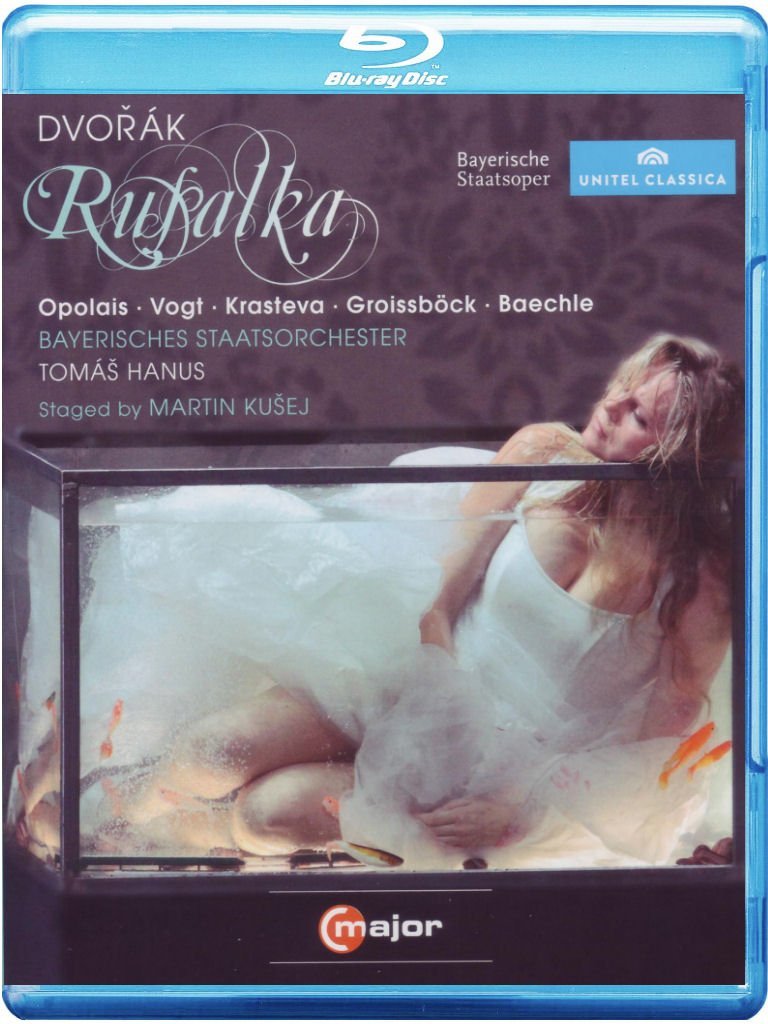
Regisseur Martin Kušej creëerde in 2010 een nieuwe Rusalka voor de Bayerische Staatsoper in München. Met de nadruk op nieuw, want de opera zelf was amper meer te herkennen. De zieke enscenering zette de ijzersterke cast helaas op het tweede plan.

Het label Cmajor (706408) heeft de opera op dvd opgenomen en daar ben ik niet echt blij mee. De regisseur Martin Kušej heeft het drama naar de Oostenrijkse Amstetten verhuisd. Weet u nog wie Josepf Fritzl was? Juist ja.

Hoe ziek moet je brein zijn om Rusalka, één van de allermooiste, maar ook één van de allerdroevigste sprookjes ooit, met het gruweldrama in het Oostenrijkse Amstetten te vergelijken? Hoe ziek moet je brein zijn om van Watergeest, de allerbeminnelijkste en liefhebbendste ‘sprookjesvader’, de psychopaat Joseph Fritzl te maken? Hoe ziek moet je geest zijn om van de naïeve, kinderlijke waternimf een krolse kat te maken?

Nee, dat staat niet in het libretto. En het staat ook niet in de muziek. De kleine Rusalka heeft haar hart en ziel aan een menselijk wezen verpacht. En in ruil voor het menselijk lichaam offert ze aan de heks Ježibaba het mooiste wat zij heeft – haar stem.

In het sprookje van Andersen loopt het niet goed af, en niet anders is het in het sprookje van Dvořak. Maar: voor ze haar stem kwijtraakt, zingt Rusalka het ‘lied aan de maan’, zowat het mooiste wat er ooit is gecomponeerd.

Maar kan het de regisseur wat schelen? Als hij maar scoren kan! Wat een zonde van de prachtige opera! En wat een zonde van de werkelijk fantastische zangers.

Kristine Opolais (Rusalka) is om te zoenen zo mooi. Letterlijk en figuurlijk. Klaus Florian Vogt is een goede prins en zingt beter dan ik van hem gewend ben.

Günther Groissböck is met zijn diepe, warme bas absoluut één van de beste keuzes voor Wodnik. Hij doet zijn best om de enge Fritzl te verbeelden. Dat wat hij zingt en wat hij doet in geen enkel geval met elkaar sporen, is zijn schuld niet.

Soms wens je jezelf terug naar het cd-tijdperk.


Gabriela Beňačková

rusalka-benackovaDe wegen (en de programmering) van sommige operahuizen zijn ondoorgrondelijk. Want waarom de ene opera wel en de andere niet?
Rusalka, toch een groot succes in veel operahuizen ter wereld, bereikte Wenen pas in 1987, 86 jaar na de première. Waarom? Dat weet niemand, maar de voorstelling was het grote wachten meer dan waard. Al op de premièreavond sprak men (terecht!) van een legendarische uitvoering.

Gelukkig voor ons werd de voorstelling toen voor de radio opgenomen en later op cd uitgebracht. De muziek werd met twintig minuten ingekort (de scènes met de boswachter en de koksjongen). Jammer eigenlijk, maar niet meer dan dat.

De hoofdrol werd gezongen door mijn geliefde Rusalka allertijden: Gabriela Beňačková. Haar stem was een juweel op zich: licht, teder en toch intens en vol van emoties. Het lied aan de maan heeft nog nooit ontroerender geklonken: onschuldig, maar al vol met passie.

Schitterend was ook de Prins van Peter Dvorsky. Wat een mooie, lyrische stem! Jevgenij Nesterenko was zeer indrukwekkend en ontroerend in zijn rol van de smartelijke Watergeest.

Eva Randova imponeerde in haar dubbele rol van de heks Ježibaba en de Vreemde Prinses, al is de keuze om beide rollen door dezelfde zangeres te laten zingen nogal vreemd en verwarrend. Het Weense orkest onder Václav Neumann speelde zeer bezield (Orfeo C638 0421)

Hieronder zingt Beňačková het ‘lied tot de maan’, tijdens een concert in Praag, 1988:


Ana María Martinéz

rusalka-martinez

Het Glyndebourne Festival zette in 2009 Dvořáks Rusalka op het toneel en toen ook meteen live voor cd opgenomen. Een jaar later bracht het festival een opname van de productie uit op haar eigen label (GFOCD 007-09)

Men kan zich afvragen waarom er geen dvd van gemaakt is (de foto’s zien er prachtig uit), maar misschien is het ook maar beter zo. Want nu kunnen we ons geheel op de muzikale kant concentreren. En geloof me: zo’n prachtig orkestspel hebt u nog nooit gehoord. Al bij de ouverture ziet u wat er gebeurt, ondanks het gebrek aan beeld. U ziet het meer, omgeven door bossen, u ziet de dansende nimfen en de heldere maan. De betovering, die is voornamelijk aan het London Philharmonic Orchestra te danken en aan de magische directie van Jíří Bělohlávek.

De hoofdrol van de ongelukkige waternimf, wier liefde voor de man haar fataal werd, wordt hier gezongen door Ana María Martinéz. Zij combineert de Slavische, ietwat hysterische vibrato met de Latijnse passie. Minder romig dan wij van een bepaalde zangeres zijn gewend, maar met veel meer gevoel en onverholen droefheid. Aan de ene kant nog de maagdelijke nimf, maar aan de andere al de liefhebbende vrouw van vlees en bloed.

Larissa Diadkova is Ježibaba uit duizenden en Brandon Jovanovich een zeer mannelijke prins.

Kát’a Kabanova.Discografie

DVD

ROBERT CARSEN

katja-mattila

Wolga, de langste rivier in Europa, is voor de meeste Russen het symbool voor werkelijk alles, inclusief het leven zelf. In ettelijke liederen wordt zij bezongen, en in vele verhalen en gedichten speelt zij de hoofdrol.

Ook in De storm van Ostrovski, waar de opera van Janaček op is gebaseerd, en zo ook in de opera zelf: in haar spiegelt zich de ziel van de ongelukkige Kát’a, die haar leven dan ook in Wolga laat eindigen. Je hoort haar ook in de muziek

Dat heeft Robert Carsen in zijn Antwerpse enscenering in 2004 goed begrepen: hij liet de hele bühne door water bedekken en het verhaal zich op vlonders afspelen. Ik vond het de aller-allermooiste productie van het werk. Het is in 2008 door het Teatro Real in Madrid overgenomen en niet zo lang geleden ook op dvd uitgebracht (Fra Musica 003).

Ik moet u heel eerlijk bekennen dat ik echt bang was om het terug te zien. Zou ik het nog steeds zo mooi vinden? Het antwoord is volmondig: ja! Sterker. Het is nog veel mooier dan ik het mij kon herinneren.

Karita Mattila is een Kát’a om verliefd op te worden en Jiří Bělohlávek is, naast Mackerras, de beste pleitbezorger voor de opera. Wilt u mijn eerlijke mening weten? KOPEN, want mooier bestaat niet!

Derde akte: de storm


CHRISTOPHER MARTHALER


katja-marthaler

Geloof het of niet: voor de meeste operaliefhebbers behoort Kát’a Kabanova tot het standaardrepertoire, maar in Salzburg beleefde zij haar première pas in 1998. Dat de productie toen met gemengde gevoelens werd ontvangen, lag niet aan de muziek of de zangers, noch aan het orkest of de dirigent.

Sylvain Cambreling ontfermde zich over Janačeks meesterwerk, met de nodige liefde en begrip. Al bij de ouverture zat mijn keel dicht en liepen mijn ogen vol met tranen.

Maar helaas, er was ook een regisseur. Marthaler plaatste de handeling ergens in het Oostblok van de jaren zestig, zijn inspiratie duidelijk puttend uit de Tsjechische filmhits uit die tijd. Degenen die ooit Liefde van een blondje van Miloš Forman hebben gezien, weten wat ik bedoel.

Er is nergens een rivier te bekennen (een foto op de muur telt niet mee) en dat is iets wat ik absoluut onacceptabel vind, want Kát’a Kabanova zonder Wolga is voor mij als de Die Zauberflöte zonder fluit.

Een liefhebber van het moderne, conceptuele regietheater kan er misschien plezier aan beleven, want muzikaal zit het werkelijk goed in elkaar. Het was duidelijk, dat hij over een bijzonder lange repetitietijd kon beschikken: de zangers waren gekneed tot een formidabel ensemble.

De zang was ook superieur. Angela Denoke zette een kwetsbare Kát’a neer en Dagmar Pecková schitterde als de opstandige Varvara. David Kuebler en Rainer Trost waren perfect gecast als respectievelijk Boris en Kudrjas, en allemaal hebben ze hun bravo’s wel verdiend. Voor ons Nederlanders is het bovendien leuk om twee Nederlandse zangers: Henk Smit (Dikoj) en Hubert Delamboye (Tichon) in actie te kunnen zien. In de strijd tussen regie en muziek won de laatste het.


NICOLAUS LEHNHOFF


Дерек Бейли (Derek Bailey) – биография, фильмография. Режиссер

Lehnhoff behoorde tot de regisseurs die graag een eigen draai aan een voorstelling gaven, maar in Glyndebourne heeft hij een vrij traditionele productie geleverd (Arthaus 100158). Zeer sober, maar met veel oog voor details en voor de psychologische ontwikkeling van de personages.

Hij benadrukt alle aspecten van Kát’a’s karakter, ook haar piëteit, dringt diep door in haar gekwelde ziel en maakt haar ellende voelbaar. Er heerst een gevoel van algehele verlatenheid, wat door de prachtige, felle kleuren, die af en toe sterk aan schilderijen van Münch doen denken, versterkt wordt.

Ook muzikaal is er geen reden om te klagen: Nancy Gustafson is een prachtige Kát’a en Barry McCauley een uitstekende Boris.


CD

katja-decca


Beide door Charles Mackerras gedirigeerde cd-opnames met respectievelijk Elisabeth Söderström op Decca (4218522) en Gabriela Beňačková op Supraphon (SU3291-2 632) in de hoofdrol zijn heel erg goed en geen van beide zou ik willen missen, al heb ik een lichte voorkeur voor Beňačková.

Kata Kabanova Benackova

Peter Straka (Supraphon) is als Boris net zo geloofwaardig als Petr Dvorsky (Decca) en Nadĕžda Kniplova en Eva Randová (Kabanicha) zijn aan elkaar gewaagd.


https://open.spotify.com/album/00ecyvNzFFwrv3y9fnjEZn?si=FDH0cmHFTZOCYYtuJ2pciA