Norman Treigle as RevOlin Blitch in Susannah by Carlison Floyd
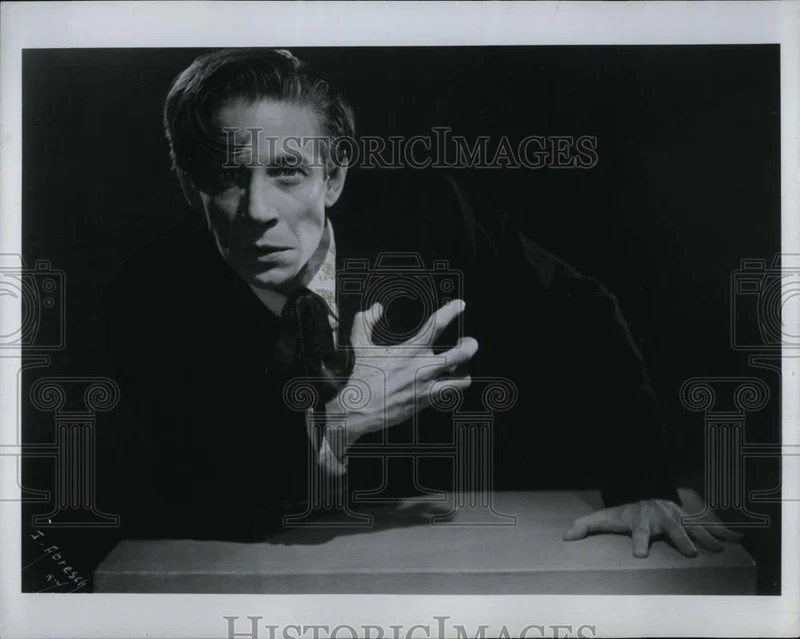
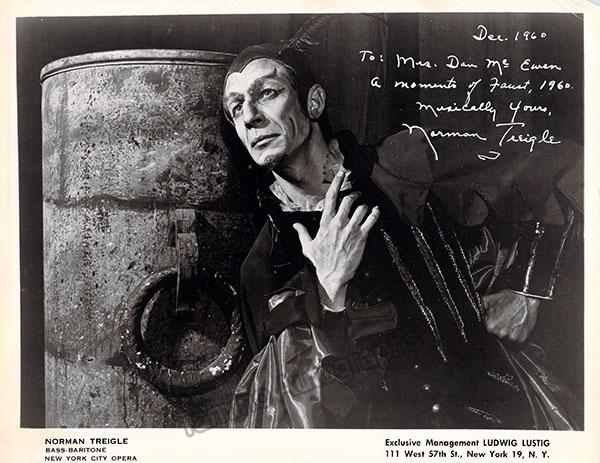
Norman Treigle, one of the greatest American bass-baritones was born in New Orleans March 6, 1927. In 1953 he joined the New York City Opera, making his debut there in March 1953, as Colline in La Boheme. Three years later, he scored his first great success, in the New York premiere of Floyd’s Susannah, as the Reverend Olin Blitch. In 1958, he made his European debut in this opera, at the Brussels World’s Fair.
In the fall of 1974, he made his Covent Garden debut, in Faust.
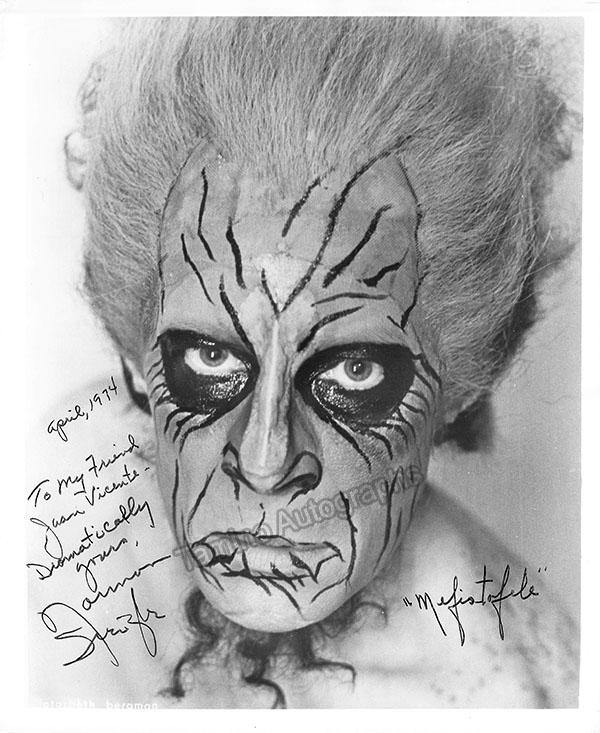
Treigle was acclaimed as one of the world’s greatest singing-actors, specialising in roles that evoked villainy and terror. Perhaps his finest roles were in Faust, Carmen, Susannah, Les contes d’Hoffmann and Mefistofele
Mefistofele
There have been several famous performers of the role: Chaliapin, for instance, who made his European debut with it (La Scala, 1901) and his American debut six years later. Or the two great basses from Bulgaria: Boris Christoff and Nikolai Ghiaurov. And yet, none left as much of a mark on the role as Norman Treigle.
The American bass, who died young (he died of an overdose of sleeping pills in 1975, not yet 48 years old), was a star at New York City Opera, and the production of Boito’s opera was created especially for him in the 1960s-’70s – this to exploit his enormous talent.
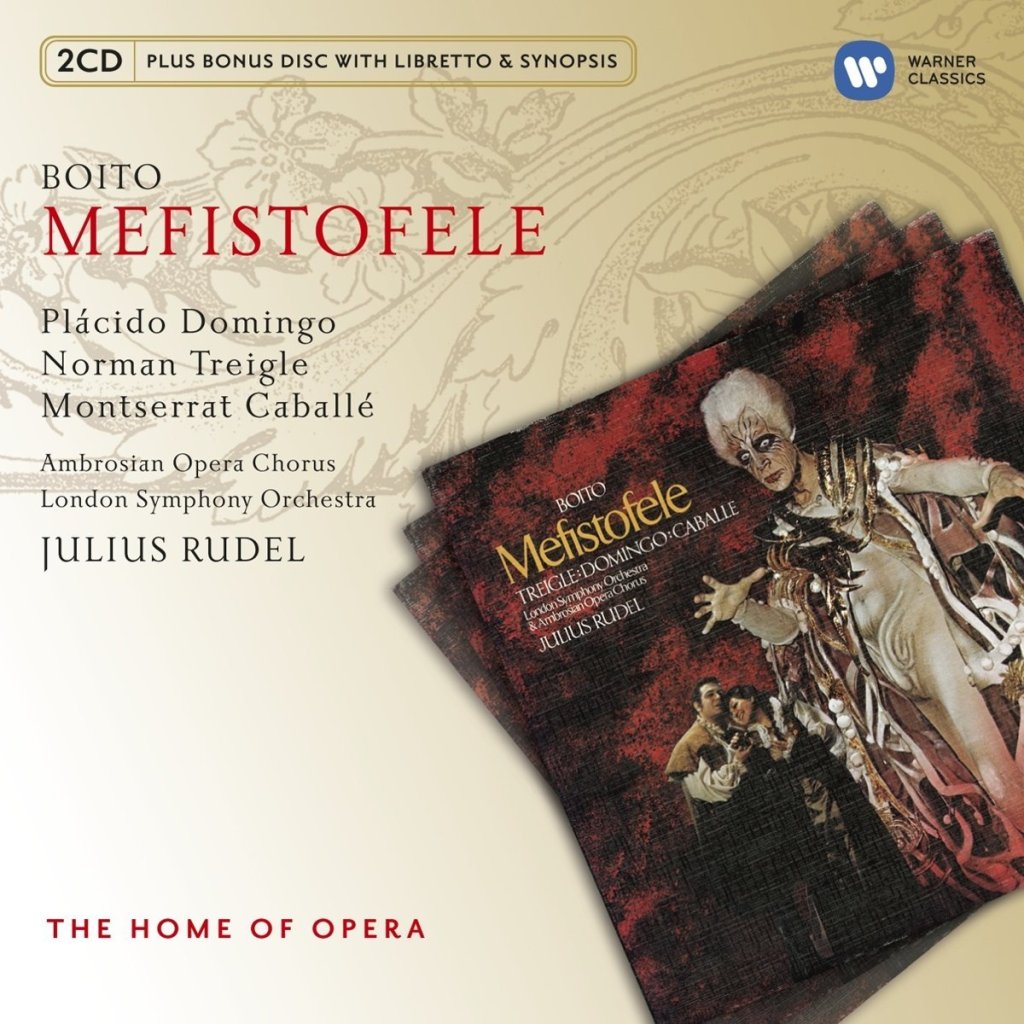
In 1973 he was also allowed to record the role in the studio under the direction of Julius Rudel, the same maestro who accompanied him at the NYCO . That the two were well matched can be heard right from the first notes of ˜Ave, Signor”, there is no mistaking it. A duet of the singer with his conductor, with the orchestra serving as a natural backdrop, a very rare experience.
˜Son lo spirito che nega”, a devilish Credo (was Boito maybe a little more involved in ‘Otello’ than is now known?), evokes reminiscences of Iago, a human devil from another opera. Treigle does not sing a devil, no; he is a devil, a chilling reincarnation of the evil genius.
Treigle sings “Ecco il monde” recorded live in 1969
For the roles of Faust and Margherita, the then very young but already world-famous singers were engaged: Montserrat Caballe and Plácido Domingo. Caballe’s Margherita is innocence itself, but with the requisite ‘spunk’. A virgin still, yet already a woman of flesh and blood. From her, you believe it, she will have done anything to spend a night with her lover. And in her madness, she moves with her colouratures – pianissimo, pianissimo, and oh so heartbreaking. Domingo’s Faust is still young and naive, he is deluded, but also enjoys it. His love for Margherita is genuine, but just as genuine is his admiration for the beautiful Helen of Troy
Otto Schenk, one of the greatest opera directors died 9 January 2025 at the age of 94. This is brief summary of few of his many productions, arranged alphabetically
ANDREA CHÉNIER
For me, Andrea Chénier is one of the best and most beautiful operas ever. I think the music is nothing less than divine and the story is timeless. It remains current, perhaps now more than ever. The tyrant must be cast off his throne and the people must take control. Surely, we all agree on that?
If only it were that simple! If only it were that simple! Anyone who grew up in a post-revolutionary totalitarian regime knows how much horror it brings. One terror is replaced by another. This, at least for me, is the main theme in Giordano’s biggest hit. I don’t think the real lead role is the actual poet, André Chénier It is the French Revolution, which, as Gérard (once Maddalena’s houseboy and now one of the revolutionary leaders) bitterly observes, devours its own children.
I myself think the role of the poet/revolutionary fits Placido Domingo like a glove. Passion for love and enormous involvement in everything that happens in the world were – and still are – his trademarks.
In 1981 the opera in Vienna was recorded for TV. That recording has since been released on DVD. Gabriela Beňačková, one of the most underrated singers in history, sings a Maddalena of flesh and blood. Horrifyingly beautiful and moving.
Piero Cappuccilli is a Gérard among thousands and the small roles are also filled by great singers: Madelon is sung by none other than Fedora Barbieri. Otto’s Schenk’s production is a feast for the eyes (DG 073 4070 7).
ARABELLA
Film 1977:
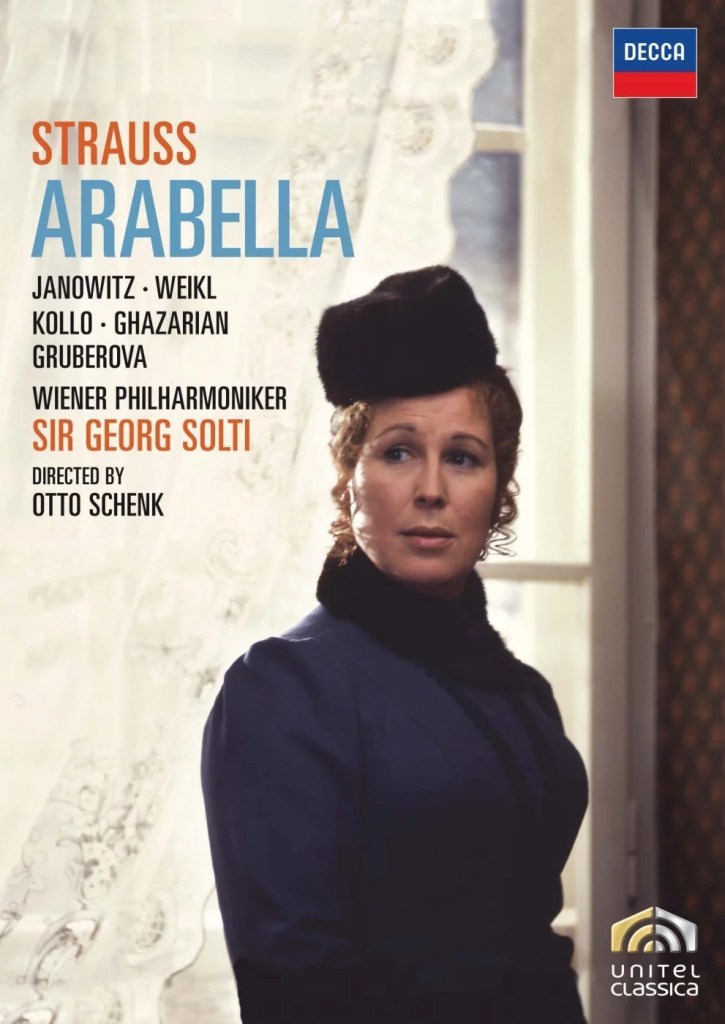
If you have never seen the opera, you would do well to start with Otto Schenk’s 1977 film (DG0743255). Larger than life, with lifelike sets. Of course, no ordinary live performance can compete with that.
Gundula Janowitz is a delightful Arabella. Perhaps not the best actress in the world, but her high notes are so very beautiful. Sona Ghazarian is a good Zdenka, but what really makes the recording, alongside the very erotic playing of the Wiener Philharmoniker (Solti!), more than worthwhile, is Bernd Weikl’s Mandryka. Any woman would certainly want to be kissed awake by him.
The minor roles are also fantastically cast: René Kollo is a Matteo out of thousands and I know of no better Fiakermilli than the young Gruberova. Add to this the very young (30!) Kurt Rydl as Lamoral and Margarita Lilova (Adelaide). It is definitely very good.
Below Gundula Janowitz and Bernd Weikl in the last act:
Metropolitan 1995:
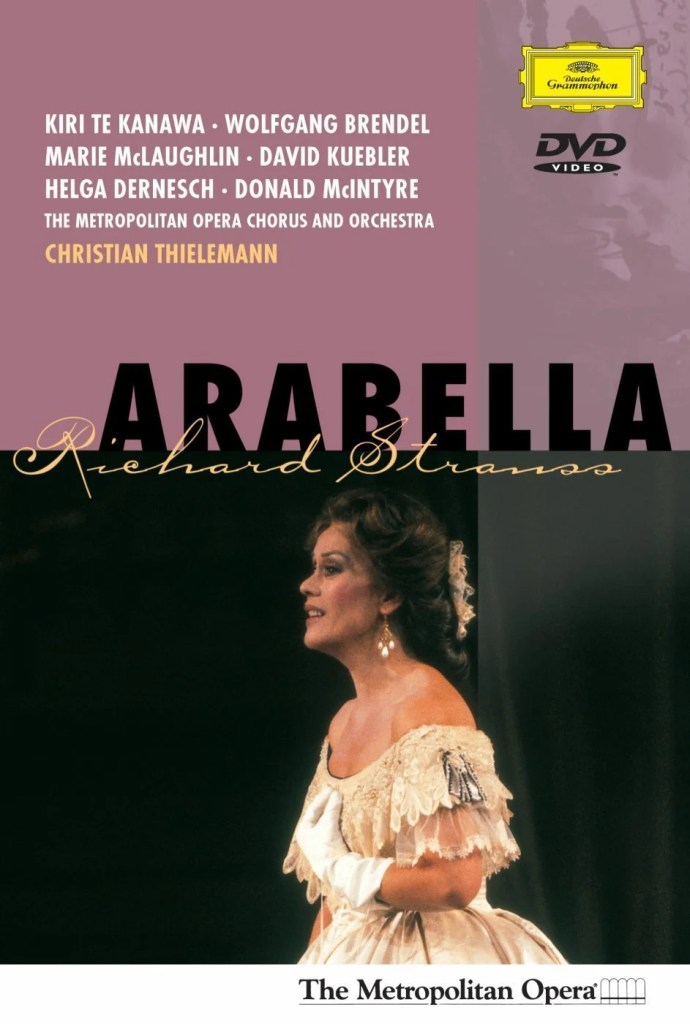
Kiri te Kanawa is an exemplary Arabella; there are few singers who can match her in this role. Strauss has always been a bit like her personal composer and optically, of course, she is a dream Arabella.
Her sister Zdenka (Marie McLaughlin) is also wonderful, something that cannot be said of Wolfgang Brendel (Mandryka). He doesn’t succeed in making my female heart beat any faster. Thielemann conducts well, but he lacks the sensuality of Solti. (DG 0730059).
Below is a scene with Kiri te Kanawa and Marie McLaughlin:
BALLO IN MASCHERA
The Royal Opera House production released by Opus Arte (OA 1236D) dates from early 1975. The sound is a little dull, but you will forget that as soon as you hear the beautiful voices of the singers.
Katia Ricciarelli is one of the most moving Amelias I know. The sound that she produces is perhaps not really ‘Verdian’, and perhaps her voice is a little too light, (she has sadly destroyed her voice by singing this type of role), but the pianissimi that she spins deserve a prize for sheer beauty, and her fragility is palpable.
The kindly anxious, loving, but also playful tenor of the young Placido Domingo fits the role of Gustavo like a glove. Piero Cappuccilli is an excellent Renato and Reri Grist an Oscar such as you do not often hear them anymore. Her performance alone is worth buying the DVD. Claudio Abbado (how young he was then!) conducts lightly and keeps the tempi sparkling, resulting in an effervescent orchestral sound.
The direction by Otto Schenk is effective. Conventional and yet surprising. And like no other, he exposes the comic aspects of the opera.
Trailer of the production:
DIE FLEDERMAUS
For me, the performance recorded at the Wiener Staatsoper on New Year’s Eve 1980 is by far one of the best, if not THE best. The production was then one year old and it was directed by Otto Schenk, a famous Viennese actor, who himself had played the role of Frosch 29 times. In a rich and detailed setting, an intrigue full of lies unfolds, which is at once exciting, comic and sad.
The cast simply could not be better: Bernd Weikl portrays the dissolute and primal Eisenstein with the necessary wink and humour, Lucia Popp is delightful as the bored housewife Rosalinde, and Brigitte Fassbaender irresistible as Orlovsky. But the very best is the young Edita Gruberova (Adele): she coquettes, makes us laugh at her mock accent, and moves us with her naivety. And all this with perfectly sung colouratura, brava! Theodor Guschlbauer shows already in the overture that it is going to be an evening of masterfully performed beautiful melodies. Delightful.
DIE MEISTERSINGER VON NÜRNBERG
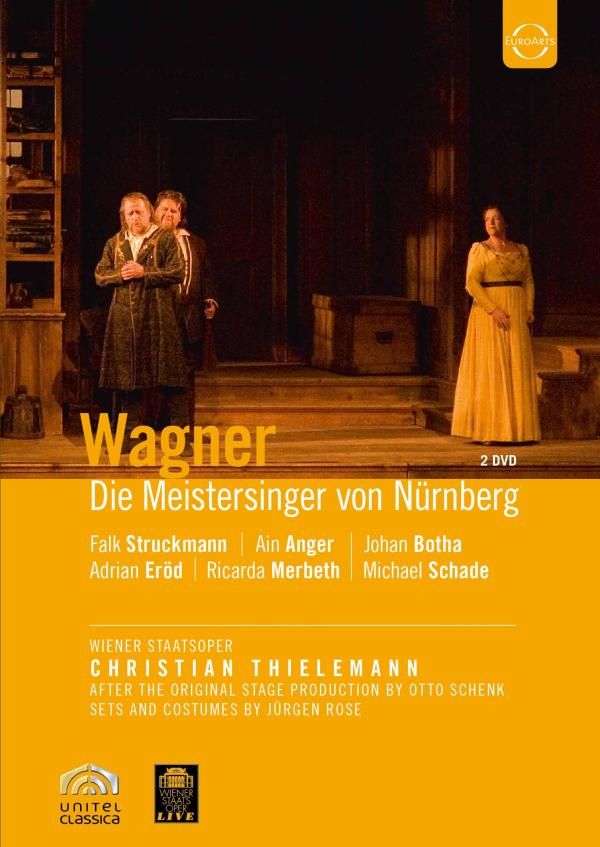
If you want a really beautiful Die Meistersinger on DVD, I can recommend Otto Schenk’s production. The wonderful performance was remade and recorded in Vienna in 2008. (Euroarts 0880242724885). HUGE! You really hardly ever get an experience like this; everything is in its context: the sets, the costumes, the story….
You may not believe it, but even Johan Botha (Walther) does some acting in this production! For that alone, the DVD is a must-see…But there is more. How about Falk Struckmann as Sachs (OK, the man can do no wrong with me)? And the deliciously vile Adrian Eröd (Beckmesser)? And if you know that the conductor’s name is Christian Thielemann … well!
Trailer:
LULU
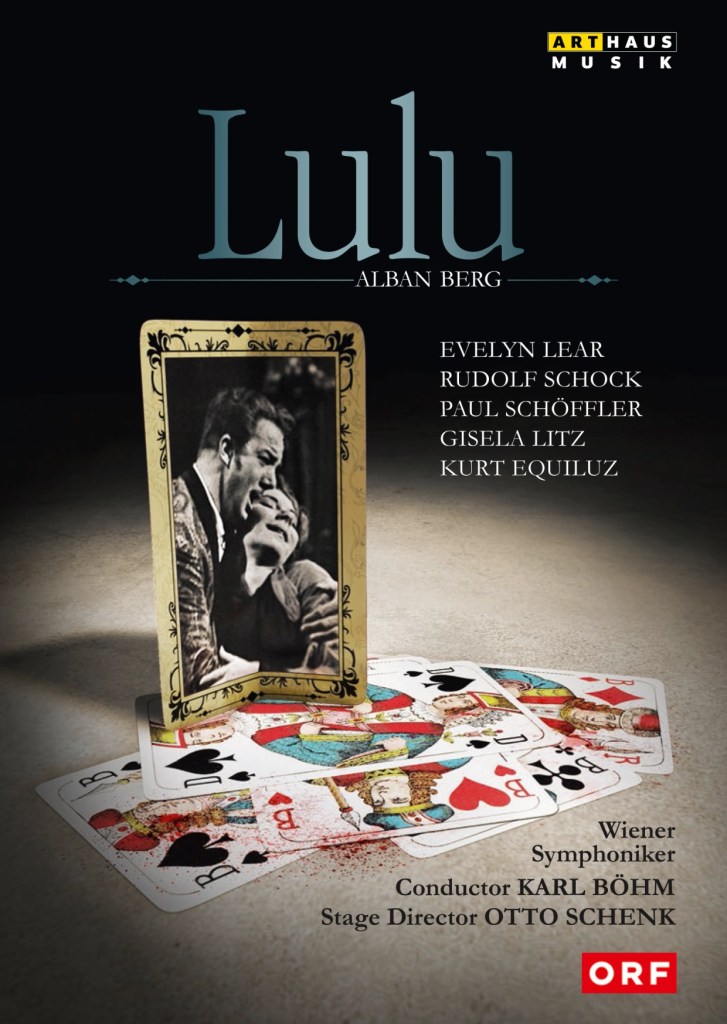
With her movie-star looks and angelic voice, Evelyn Lear has been referred to in the press as ‘Elisabeth Taylor meets Elisabeth Schwarzkof’. Personally, I find the American soprano, very popular in the 1960s to 1980s, much more interesting than her German colleague. Lear was one of the greatest and best advocates of modern music.
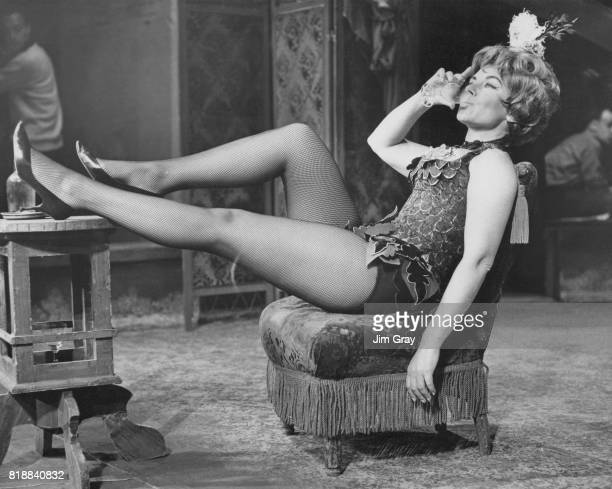
Opera singer Evelyn Lear of the Hamburg State Opera Company in the title role of the opera ‘Lulu’ at Sadler’s Wells in London, UK, 3rd May 1966. (Photo by Jim Gray/Keystone/Hulton Archive/Getty Images)
On 9 June 1962, she sang the role of Lulu in the first Austrian production of the work, at the newly reopened Theater an der Wien. I can imagine that the posh premiere audience may have been a bit surprised to see a prima donna dressed only in a tight-fitting corset and fishnet stockings, but if so, nobody showed it. It was directed by the then very young Otto Schenk, who followed the libretto closely.
UNSPECIFIED – CIRCA 1970: Evelyn Lear and Paul Sch?ffler in Lulu by Alban Berg in the Theater an der Wien, , Photography, 1962 (Photo by Imagno/Getty Images) [Evelyn Lear und Paul Sch?ffler in “Lulu” von Alban Berg im Theater an der Wien, Photographie, 1962]
That Paul Schöffler (Dr Schön ) reminded me of Professor Unrath from Der blaue Engel is, of course, no coincidence. Nor is his resemblance to Freud.
The last scene, beginning with Geschwitz’s plea followed by images of Jack the Ripper, could just as well have been taken from one of the best Hitchcock films. Especially since Gisela Lintz, who sings the role of the Countess, looks a lot like one of the director’s beloved actresses.
Watching Karl Böhm conducting is also extremely exciting. I have never seen him gesticulating so violently. An absolute must (Arthaus Musik 101 687).
TANNHAUSER
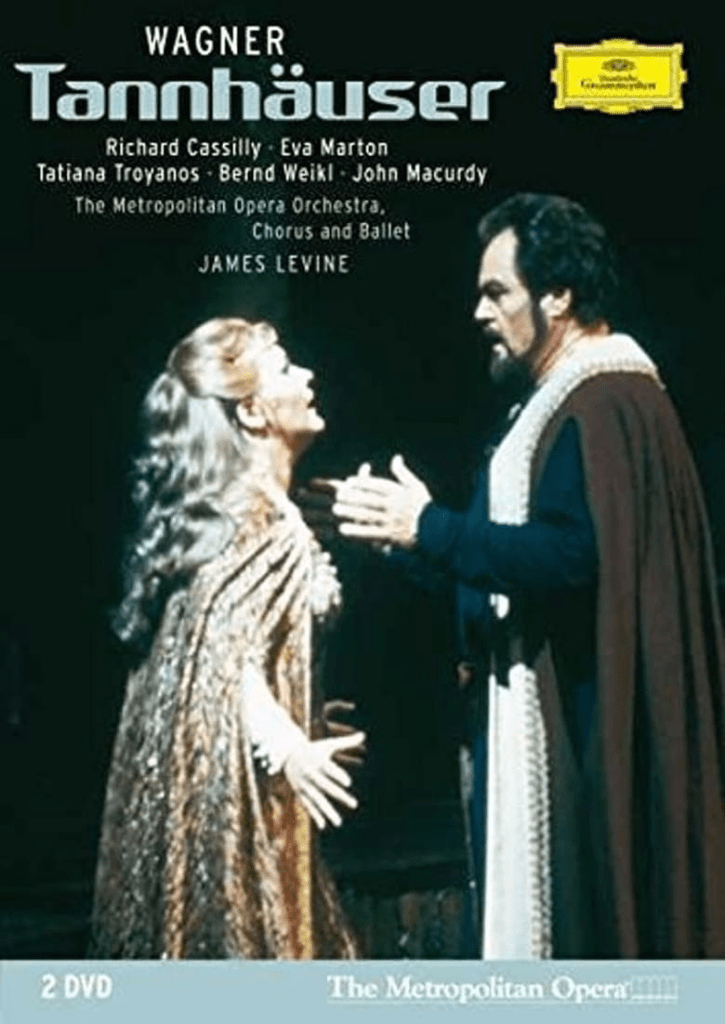
Otto Schenk’s insanely beautiful 1982 production, recorded at the Metropolitan Opera in New York (DG 0734171) dates from 1977. If you like very realistic, lavish sets and ditto costumes (I do) you can have a lot of fun with this. Just about the entire Venus grotto from Schloss Neuschwanstein was recreated for the opening scene, and the ballet presents us with a truly orgasmic Bacchanal. The orchestra, conducted by James Levine, plays mostly lyrical and light, there is nothing to criticise at all.
Eva Marton is a fine Elisabeth, Tatiana Troyanos a wonderfully sensual and seductive Venus. Bernd Weikl, one of my favourite baritones sings an irresistible Wolfram, although he messes up his great aria by trying to give his (in principle) lyrical voice too much volume, making his voice unsteady.
And although the Landgrave (John Macurdy) is really terrible, I would not have had a problem with that recording, provided … yes … provided the tenor had not been so awful. The textbook mentions “the very highest standard”, well, I’m not so sure about that. Richard Cassilly is a physically very unattractive Tannhäuser with a pinched voice and a total lack of lyricism, giving the impression of having wandered
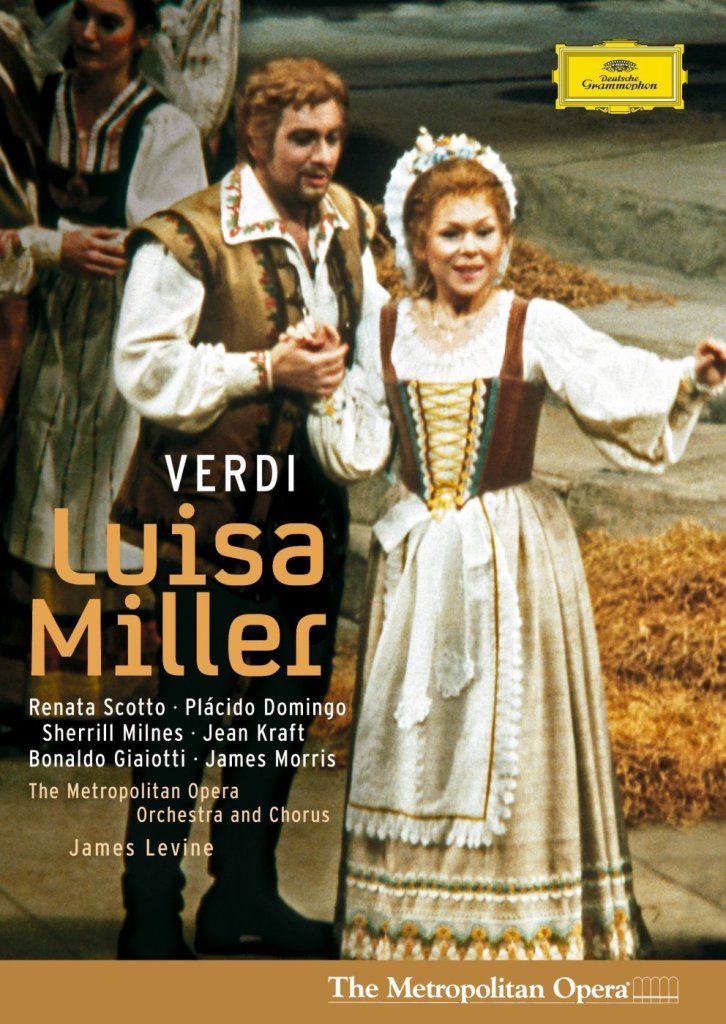
In 1979, Renata Scotto sang her first Luisa at the Metropolitan Opera and she did so with her usual devotion. But before she could start her first big aria, a ‘joker’ caused a scandal by shouting ‘brava Maria Callas’ at the top of his lungs.
Sherrill Milnes, here in the guise of Luisa’s father, took the emotional Scotto in his arms and so saved her concentration. And the performance. And the day.
All this was broadcast live on TV and thus it ended up on the pirate videos in circulation. I had been cherishing mine for years, and now the performance has been released on DVD by Deutsche Grammophon, with the necessary cuts, including that famous incident. A pity, but after all it is not about the incidents but about the opera and the performance. And there is absolutely nothing wrong with that.
Nathaniel Merrill’s staging is a bit old-fashioned and Domingo looks like hell with his blonde hair, but you quickly forget that because the singing and acting are of absolute top quality and maestro James Levine conducts masterfully (DG 0734027
In the video below, the main actors (Scotto, Domingo, Milnes and Levine) discuss Verdi’s opera and the 1979 production:
DARINA TAKOVA
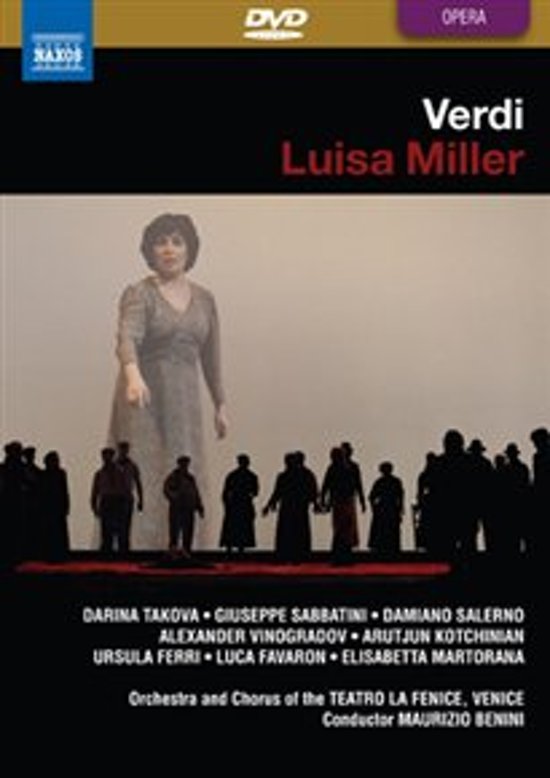
For his production of Luisa Miller (originally performed at the Nationale Reisopera in 2004, recorded for this DVD in Venice in 2006), director Arnaud Bernard was inspired by Bertolucci’s Novocento. But the influence of the Italian neorealists is also unmistakably present.
Bernard situates the action in the Italian countryside in the 1920s, giving ample coverage not only of class divisions but also of rising fascism. The stage setting is abstract and apart from a few realistic props and metre-high photographs of women, the stage is almost bare.
Luisa Miller was the third of the four operas Verdi based on a play by Schiller. Like all his operas from his ˜middle period”, the work is bursting with wonderful arias and ensembles, and it possesses perhaps the most beautiful overture ever written – a challenge for conductors.
Mauricio Bennini is on fine form with the Teatro La Fenice’s orchestra, although I find his tempi a bit on the slow side at times.
The – mostly young – cast is fine, but I think Ursula Ferri is an irritating Frederica. Her voice is flat and wobbly and her acting is completely off.
Giuseppe Sabbatini (Rodolfo) has an old-fashioned beautiful, slender tenor with good top notes and Darina Takova is a moving, highly imaginative Luisa (Naxos 2110225-26).
It has been said that ‘The Woman Without a Shadow’ is a kind of remake of The Magic Flute. There is something in that, because in this, very moralistic, fairy tale, too, the main characters are subjected to the most terrible ordeals, which, if endured well, will make them better persons. You can also detect a ˜Pelleas-like” symbolism, and Das Rheingold and Siegfried are nowhere far away either. But, simply put, this opera is mainly a kind of glorification of married life enriched with many children
˜FROSCH”, as the opera is called in the corridors, is considered Strauss’ most difficult opera to cast – one of the reasons why it is almost always cut. I think this is a pity, all the more so since the ˜melodrama” (the Empress’ outburst when she realises that the Emperor is already almost completely turned into stone), among other things, is also cut, and I think that (along with the beginning of the third act) it is one of the opera’s most exciting and dramatic moments.
DVD’S
GEORG SOLTI, 1992
In 1992, Solti conducted a totally complete performance of the work in Salzburg. Götz Friedrich’s direction was considered particularly strong at the time, but I do not find it entirely satisfactory. The mise-en-scène is undoubtedly excellent, but he falls short in the direction of the characters, leaving the singers a bit awkwardly bouncing around on the stage..
The beautifully designed stage setting is lovely with very minimalist but realistic scenery, but the costumes are a bit bizarre at times. There is a lot of use of strobe lighting, which combined with violent musical passages can come across as rather too much.
Cheryl Studer is a dream of an Empress. Her voice, with its very recognisable timbre and beautiful pitch, is soaring, transparent almost, innocent and erotic at the same time. Thomas Moser is an attractive Emperor, perhaps a touch too light for this role, which occasionally causes him breathlessness and forced notes, but his singing is fine.
Robert Hale (Barak) was already far past his prime here, at less than 50 years old. A pity, because his portrayal is very charismatic. Eva Marton hurts the ears, but is so committed that you forgive her. Her aria of despair at the beginning of the third act is touching and gives you goosebumps.
The palm of honour, however, goes to Marjana Lipovšek, who portrays a truly phenomenal Amme. What this woman has at her disposal in terms of colour nuances and how she handles her (very warm) mezzo borders on the impossible. On top of that, she is also a gifted actress; I could not take my eyes off her. (Decca 0714259
WOLFGANG SAWALLISCH, 1992
Six months later, FROSCH was presented in Japan. It was the very first time the opera was performed there, so expectations were high. The production was in the hands of an all-Japanese team led by Ennosuke Ichikawa, a famous director and stage actor of the Kabuki theatre. What he and his colleagues have achieved is simply mesmerising. FROSCH translates wonderfully to the rules of Kabuki, it gets even more convincing – it gains credibility and tension because of these rules. Lipovšek is even meaner here, even more evil than with Solti. Her movements are now smaller and more subdued which, curiously, makes them more expressive, and she can do even more with her voice.
Peter Seiffert is an excellent Emperor, his voice is rich, elegant, warm, sensitive and pliable, and all his high notes sound like a bell. Unfortunately, the Empress is not of the same level. Luana DeVol intones very broadly, her soprano sounds shrill and is totally bereft of lyricism (why didn’t they include Studer?), but she is a very convincing actress.
Alan Titus and Janis Martin may be a touch less intense than Hale and Marton with Solti, but their voices sound much more pleasant. They can also act, and how! Moreover, Martin looks very attractive, which is not unimportant for the role. I find the orchestra led by Sawallisch even more beautiful than Solti’s, more fairy-like, more transparent too, and more sultry… A truly phenomenal production. (Arthaus Musik 107245)
CD’S
KARL BÖHM 1955
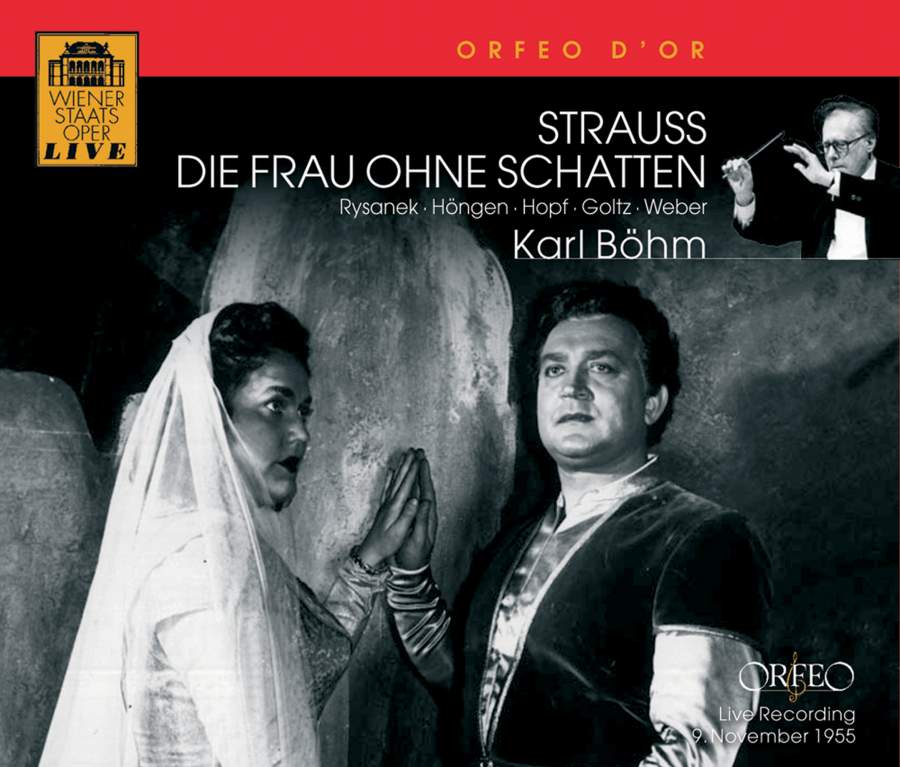
The very first recording of the opera dates from 1955. It was recorded live in Vienna, and has been amazingly polished by the Orfeo team.
Leonie Rysanek is the very best Empress I have ever heard. She dares to take risks, taking her beautiful, lyrical soprano to the limits of the impossible. With this role, she set a standard that is not easy to match. Hans Hopf (Emperor) has a kind of ˜heroic” way of singing that I don’t really like, but I imagine he is considered as ideally cast by many fans. It is a matter of taste, I would say.
Elisabeth Höngen is a vile Amme, and Christel Glotz an impressive, if not always cleanly intoned Färberin Böhm conducts very lovingly (Orfeo D’Or 668053)
HERBERT VON KARAJAN, 1964
In 1964, on the occasion of Strauss’ 100th birthday, von Karajan conducted a very inspired FROSCH at the Wiener Staatsoper. Christa Ludwig’s scoring of the Färberin is not exactly idiomatic, but her high notes and her reading of the role are very impressive to say the least.
In terms of vocal beauty, Walter Berry (then also in real life her husband) is probably the finest Barak, unfortunately is Jess Thomas (Emperor) a bit disappointing. Leonie Rysanek repeats her magnificent reading of the Empress, even more intense, and even more fused with the role.
The luxurious scoring of the minor roles by Fritz Wunderlich (the Jüngeling ) and Lucia Popp (a.o. Falke), makes the recording even more appealing. Von Karajan conducts as we have come to expect from him – narcissistic but oh so impressive and with a great sense of nuance. (DG 4576782)
GEORG SOLTI 1987-1990
You cannot avoid Solti’s studio recording (it took him three years, between 1987-1990), if only because he recorded every note as it had been written by Strauss.
The scoring of the Emperor by Plácido Domingo was considered an attack on the work by many ˜purists” at the time. Unjustly so. His voice is in every way ideal for the role, and with his musicality, the colours in his voice and his more than ordinary vocal acting skills, he portrays a very humane and vulnerable Emperor.
Julia Varady is, as far as I am concerned, along with Studer, the best Empress after Rysanek, what a voice, and what a performance! Hildegard Behrens is a torn Färberin , her complete identification with the role is limitless. (Decca 4362432)
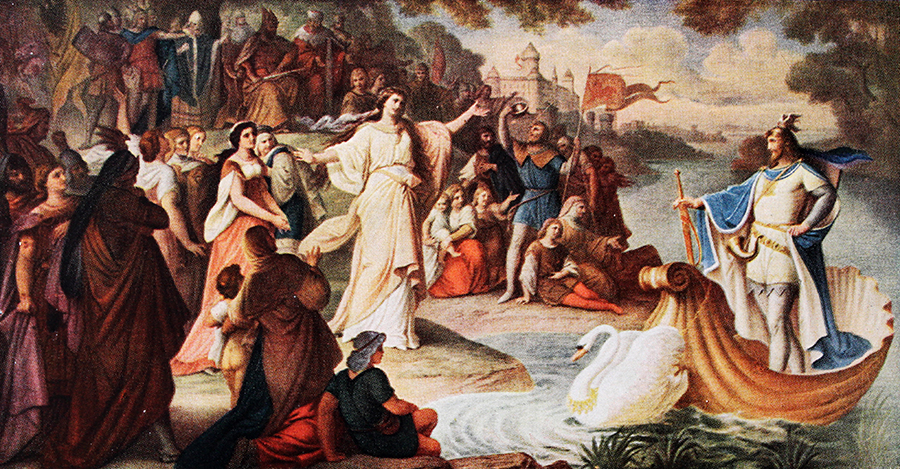
Lohengrin arrives in Antwerp, painting from the Lohengrin mural cycle, by August von Heckel , Neuschwanstein Castle
For me (definitely not a Wagnerian!), Richard Wagner’s Lohengrin ranks as high as his Tannhäuser : I can never get too much of it. No wonder my Lohengrin shelf is well-stocked. A selection of recommendations and turn-offs.
CD’S
GEORG SOLTI
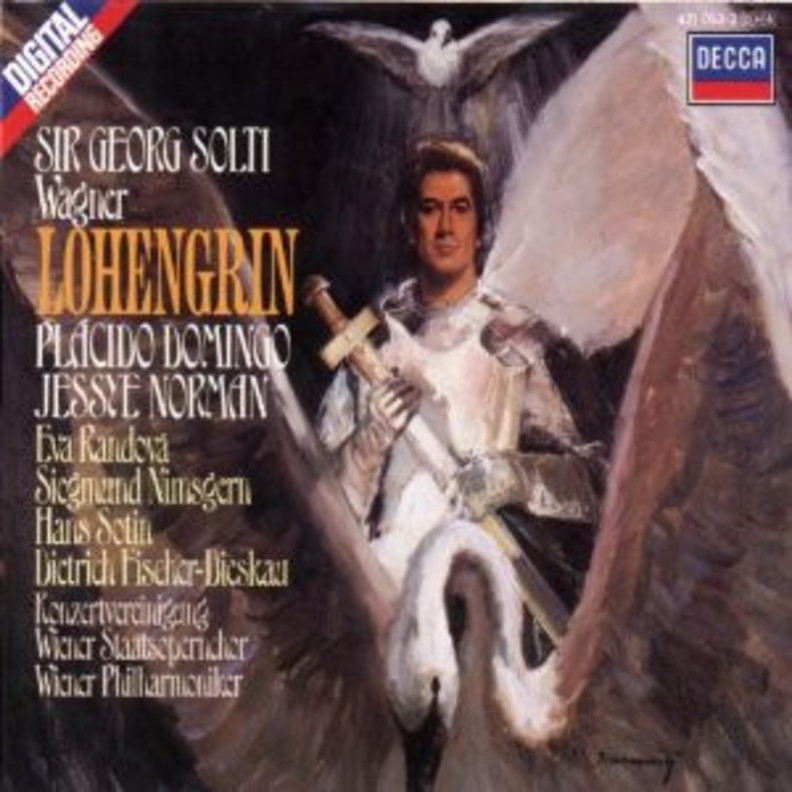
My favourite CD recording is the one conducted by Georg Solti (Decca 4210532), mainly because of the conductor. It starts already with the overture: very mysterious yet with both feet on the ground. Very sensitive, but also emphatically real without any sectarianism; no Hare Krishna here, but no Halleluja either.
Despite all the swans, Lohengrins do not usually fall out of the sky. Before officially recording the role Domingo had been preparing for it for almost twenty years. His Lohengrin is loving and warmblooded.
Jessye Norman was the perfect Elsa in those days; young and innocent with a voice that completely blows you away. Fischer-Dieskau’s Heerrufer is a matter of taste, but Siegmund Nimsgern and Eva Randová are a perfectly vicious pair!
Domingo’s baptism of fire in the role of Lohengrin was in Hamburg in 1968. He was then 27 (!) years old. It was not only his first Wagner, it was also the very first time he sang an opera in German, a language he did not yet master.
Fragments of the performance have been preserved (e.g. Melodram MEL 26510). His voice sounds like a bell, with a lot of bronze and a golden shine. The high notes are high and sung in full. Where can you still experience a Lohengrin like this? So beautiful that it makes you want to cry.
His Elsa was Arlene Saunders, at that time a much-loved prima donna in Hamburg, today she is totally forgotten. How unjust! Saunders was not only an amazingly good singer, she was also a beautiful woman and an exemplary actress.
MAREK JANOWSKI
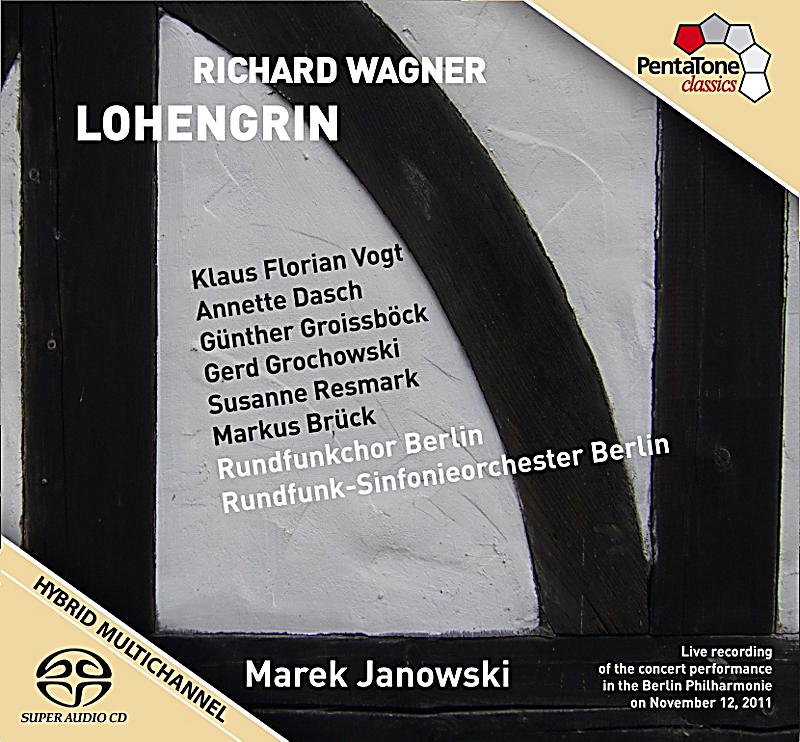
Marek Janowski is considered one of the best Wagner conductors of our time, but his Lohengrin, recorded live in Berlin in November 2011 (PentaToneClassics PTC 5186403) is a little disapppointing to me.
Janowski conducts very carefully, too carefully for me, making the overture most like an overly- stretched mush. Fortunately, he soon recovers and in the second act he makes the menace palpable. In the Wedding March, he makes the notes flow nicely into each other and he succeeds very well with his choice of tempi, all the while neatly restraining the orchestra. Yet I cannot escape the impression that he loses himself into the details.
I am not a fan of Annette Dasch, I find her voice a bit ‘ordinary’, but perhaps it does suit the character of Elsa? Susanne Resmark is a decent Ortrud, with a big voice and a nice dark timbre. But her ample vibrato is sometimes annoying.
The rest of the singers are certainly superb, but there is one problem: they do not blend. Klaus Florian Vogt’s sound is very ‘white’, his timbre quite sweet and his approach very lyrical. Beautiful, yes, but frankly I’ve had it by now with the same thing over and over again: he doesn’t develop. Moreover, he cannot compete with the deep low sound of Günther Groisböck (Heinrich) and the truly phenomenal volume of Gerd Grochowski (Telramund). In the ensembles, he simply shrinks away to nothing.
Below Günther Groisböck sings the ‘Gebet des König Heinrich’
BERTRAND DE BILLY
One of the newer Lohengrins, at least on CD, was conducted by Bertrand de Billy and recorded live at the Frankfurter Opern in March 2013 (OEHMS classics OC946). Judging by pictures in the textbook, we are to be happy that the production was not released on DVD but on CD!
Camilla Nylund is a wonderful Elsa, for me perhaps the best Elsa of recent years. Michaela Schuster, meanwhile, has made Ortrud into one of her showpieces, although there is something in her interpretation that displeases me a little. For Falk Struckman (King Heinrich) I am willing to commit murder, so I will forgive him for his voice becoming a bit unstable. The German-Canadian tenor Michael König (Lohengrin) is new to me. His voice and interpretation really make me quiet, so beautiful and so moving! Just because of him and Nylund, I am going to cherish this recording!
ERICH LEINSDORF
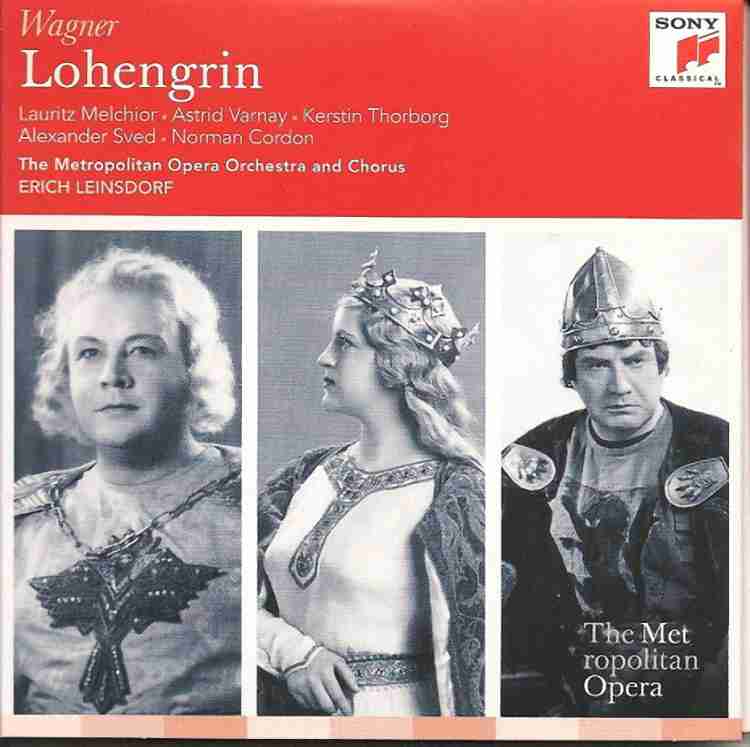
Back in time for a moment. In 1943, Erich Leinsdorf conducted a wonderful Lohengrin at the Metropolitan Opera in New York (Sony 88765 42717 2). The overture is to die for, just like a fairytale. I can’t get enough of it.
Lauritz Melchior is of course the Lohengrin of the era and Astrid Varnay sounds surprisingly lyrical. It’s a pity that she pronounces the consonants so very emphatically, something I don’t like. Alexander Sved is a very authoritative Telramund and Kerstin Thorborg a good Ortrud.
FRITZ STIEDRY
Opposite Leinsdorf’s recording is a 1950 recording under Fritz Stiedry (Walhall WLCD 0146). His approach is very down-to-earth, straightforward, which is also amplified by the poor sound quality. But it is undeniably beautiful and very surprising.
The singers also: Helen Traubel is a delightful Elsa and Astrid Varnay has been promoted from Elsa to a very impressive Ortrud after those seven years. And then Herbert Janssen’s Telramund: what a voice and what an impressive interpretation.
DVDS
AUGUST EVERDING
Even on DVD there is no shortage of good, not so good or even ridiculous performances (long live the director!). I start with an undoubtedly fine performance from the Metropolitan Opera, recorded in 1986 (DG 0734176) .
August Everding’s production is very traditional, with ditto costumes and sets. It is very beautiful, but for me there is something missing, as if the soul has been taken out of the performance.
But then there is Leonie Rysanek (Ortrud) and you have to keep looking at her with fascination. Just watch her glance at Elsa’s accusation. Delightful! James Levine conducts with verve and gives all the shine to the score, truly magnificent. Watching his face while he conducts is also fascinating; it shows complete commitment to the music.
Below, Leonie Rysanek as Ortrud:
GÖTZ FRIEDERICH
It was August Everding who first recognised Götz Friedrich’s enormous qualities. It was also he who ensured that Friedrich was appointed chief producer in Hamburg after his escape from the GDR.
Contrary to what is written about him, Friedrich never saw himself as a representative of ‘Regietheater’. On the contrary, his productions are very faithful to the libretto and the music. Do not expect strange concepts from him.
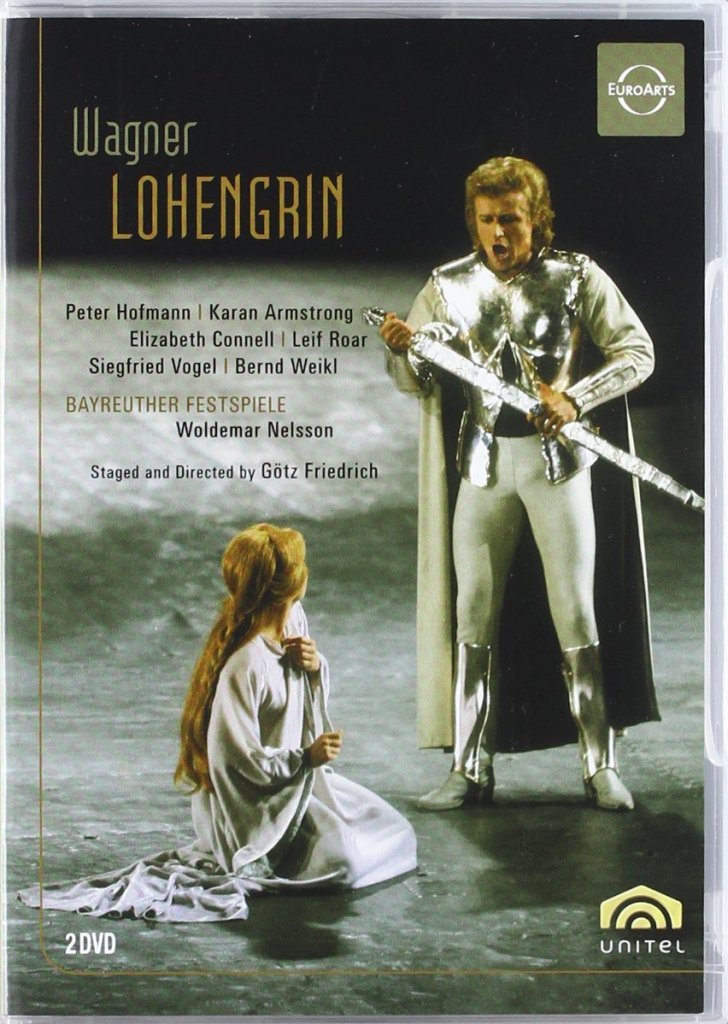
The Lohengrin he made in Bayreuth in 1982 (Euroarts 2072028) is, for me, among the opera’s finest productions. It moves between harsh reality and the utopian dream world of an adolescent girl. Karan Armstrong is a beautiful woman and a great actress, but her tremolo is very annoying at times. Peter Hofmann is in every way a dream Lohengrin: with his handsome looks, clad in white and silver, he seems to have literally stepped out of a girl’s reveries. Elisabeth Connell is an impressive Ortrud and Bernd Weikl a terrific Heerrufer.
Below is a short excerpt from the production:
NIKOLAUS LEHNHOFF
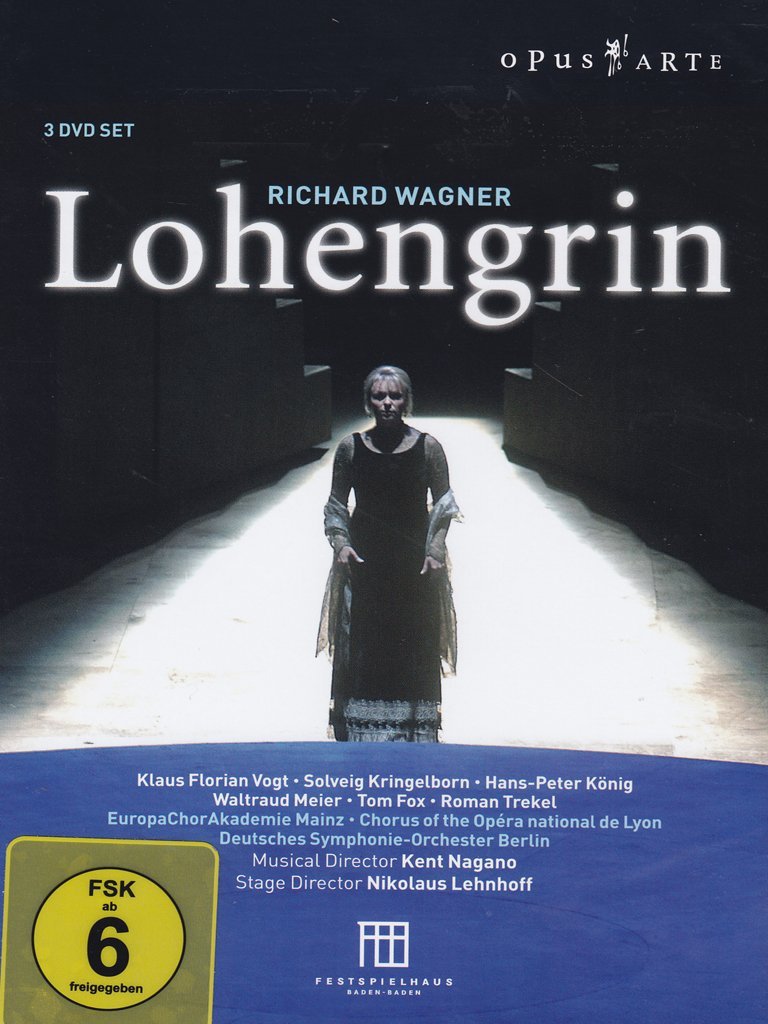
That Nikolaus Lehnhoff was very familiar with Friedrich’s production is obvious. Like Friedrich, he omits the swan. Lohengrin (Klaus Florian Vogt in one of his best roles) is preceded by a ray of light, giving him the allure of a 1950s pop star. Talk about girlish dreams!
Light and soft, like the first rays of the rising sun, this is how the first bars of the overture sound. In the middle of the stage, shrouded in shades of dark blue and black, Elsa ( a very poignant Solveig Kringelborn) comes up, her hands on a chair. This chair will remain the centre of her universe, and her only foothold, from now until the end of the opera. The feeling of loneliness takes hold of you, and you realise that things will never work out, all the knights and swans notwithstanding. The most striking thing about this brilliant Baden-Baden production is its matchless lyricism. The singers seem to have walked straight out of Bellini operas and even Ortrud, in the interpretation of the phenomenal Waltraud Meier, is like a Lady Macbeth with human traits. After Götz Friedrich, this is for me the best Lohengrin on DVD (Opus Arte OA 0964D)
Below is a scene between Elsa and Ortrud:
RICHARD JONES
Does the libretto speak of a regime? Dictatorship? Persecution and/or lack of democracy? Yes? Hup, then we simply move the action to the 1930s. So banal, and so clearly a lack of inspiration! I blame Richard Jones especially for the latter. His Lohengrin, in its banality, is not only weird, but also predictable and uninspired. At least for me.
Right at the start the beautiful overture, sublimely and sensitively played by the Bayerischer Staatsorchester under Kent Nagano, is totally destroyed by the picture. We see a girl with dark braids, dressed in green dungarees, sitting at a drawing table, drawing a house.
Lohengrin (Jonas Kaufmann) is a hippy dressed in jeans. He emerges, with under his arm, a big, white plastic swan, which is also mechanically controlled: it pecks around and into its feathers. I find it tacky.
The Munich production, July 2009 (Decca 0743387), marked Kaufmann’s debut in the role of Lohengrin. Did he succeed? Yes and no. His voice is naturally powerful and lyrical at the same time and with a big volume. He does not have to force anything and his highs and lows are beautifully balanced. Yet I miss something in his performance, that little ‘etwas’… Maybe it’s because it’s his debut, but on me he makes a not too happy impression.
Anja Harteros is a heartbreaking Elsa. She plays the role very impressively and manages to combine girlishness with a budding femininity.
Michaela Schuster did not know how to be portray Ortrud at the time, but Wolfgang Koch (Telramund) makes up for a lot. Such a beautiful voice! Deep, grand, supple, lithe, majestic and authoritative. He also manages to impress particularly as an actor. Evgeny Nikitin is a convincing Heerrufer.
Below is the trailer of the production:
HANS NEUNFELS
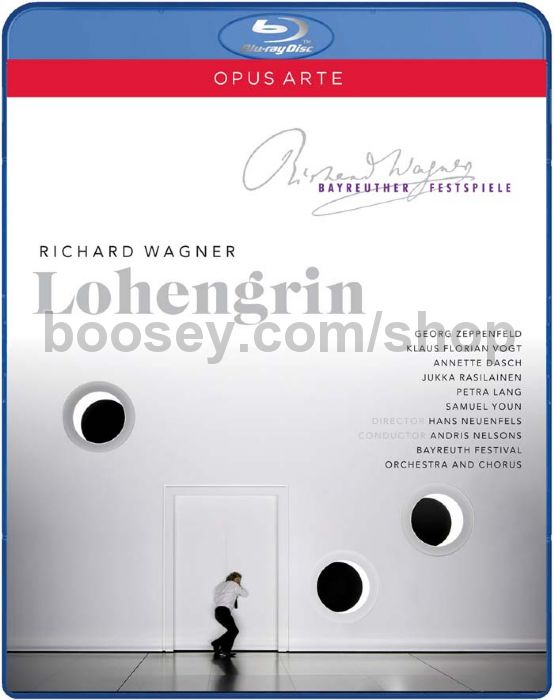
Recorded in Bayreuth in 2011, Hans Neuenfels’ production (Opus Arte OA 1071 D) is a bit obscure. Because, what are rats doing in Lohengrin? Now… here’s the thing: the Brabanders have been turned into rats by failed experiments and Lohengrin comes to help them, like someone from the animal liberation front. Something like that. Sort of. No, I didn’t think it up and I wouldn’t have been able to understand it if I hadn’t read the reviews. But apparently the enthusiastic (yes, the production was enthusiastically received!) fellow reviewers are either clairvoyant, or they had a special sit-down with the director. Even the overture is teeming with (animated) rats in pink, white and grey. And that’s just the beginning. And to also give away the ending: Elsa’s little brother is a just-born fat baby with the umbilical cord still on…. Annette Dasch looks beautiful and innocent and acts well and Klaus Florian Vogt sings beautifully and lyrically. Once and never again.
Antônio Carlos Gomes (1836-1896) has sometimes been called the ‘Brazilian Verdi’. Not without reason: not only his music, but also his strongly nationalistic themes are strongly reminiscent of his Italian colleague.
Il Guarany
I am a great lover of his operas and I don’t think I am the only one. I am therefore very surprised that his operas do not enjoy the fame they deserve. While he was very successful during his lifetime, nowadays he is pretty much completely forgotten, although his operas dó still get performed here and there.
Plácido Domingo has always been the greatest champion of Gomes’ music and it is only thanks to him that Il Guarany was performed in Bonn in 1994 and recorded live by Sony (66273).
Admittedly, the libretto is occasionally a bit ridiculous. Just imagine two rival Indian tribes, both fighting Portuguese nobles, Spanish adventurers and each other. Cannibals also pass by, gold mines are robbed and castles set on fire, and in between, a beautiful white woman runs off with the Indian chief, but first, of course, he has to be baptised. It is impossible to recreate, but the music is so divine!
Domingo sings Pery, the Guarany chief with a tremendous sense of style that automatically makes you sit up and listen. A dragon of a role, but he makes it believable.
I have never been a great admirer of Verónica Villaroel (Cecilia) and here too she sounds a bit pinched. Carlos Ãlvarez, on the other hand, is very good as Gonzales and the rest of the cast is also fine.
Below is the opera’s finale:
Maybe I’m a bit biased (I was there!), but I highly recommend the recording to all of you.
Colombo
The Italian company Bongiovanni (GB 2429-2) released Gomes’ Colombo in 2008. The ‘Brazilian Verdi’ composed the work, a four-part cantata, to mark the 400th anniversary of the discovery of America. Colombo is a very surprising work. The music is so evocative that even without the libretto – enclosed in a very informative textbook – you can imagine exactly what the story is about.
The work was recorded live at Teatro Massimo in Catania in May 2006, starring the highly charismatic baritone Alexandru Agache.
Have you ever heard of Catarina Mancini (10 November 1924 – 21 January 2011)? This soprano, born at Genzano di Roma had the true ’voce Verdiana’: she combined a beautiful height and pure coloratura with a drama that even La Divina might have envied her for.
Never heard of her? Then it’s time to make up for the damage, because I promise you a voice out of thousands. And this is exactly how her Leonora sounds in the recording from 1951 Rome (Warner Fonit 2564661890). Extraordinary.
Her Manrico was sung by the very heroic sounding (then already nearly 60 years old) Giacomo Lauri-Volpi and a very charismatic Carlo Tagliabue sang the role of di Luna. Miriam Pirazzini (Azucena) completed the cast and the whole was very impressively conducted by Fernando Previtali.
Here are Mancini, Lauri-Volpi and Tagliabue in the trio of the first act:
Highlights on Spotify:
Price and Corelli, 1961
With their 1961 performance recorded live for Sony, both Leontyne Price and Franco Corelli made their debuts at the Metropolitan Opera. For me, Corelli, alongside Del Monaco and Domingo, is the best Manrico ever. Very masculine and very sexy, you can hardly resist that as a woman.
Mario Sereni and Irene Dalis are more than adequate as Luna and Azucena respectively, and it is a great joy to discover none other than Teresa Stratas in the small role of Inez. And Charles Anthony as Ruiz should not be forgotten
Price and Domingo, 1970
The recording made 19 years later for RCA shows a more mature Price, but her sound is still that of an excited teenager, with just about the most perfect Verdian ‘morbidezza’. Her ‘D’amor sull’ali rosee’ seems like a little prayer, weeping so beautifully.
This Trovatore was the very first opera that Plácido Domingo, then 28(!), recorded in the studio. Fiorenza Cossotto shines as Azucena, but what really makes the recording indispensable, at least for me, is one of the most delightful Lunas ever: Sherrill Milnes (88883729262).
Below Price, Domingo and Milnes in ‘E deggio e posso crederlo’:
Maria Callas, 1956
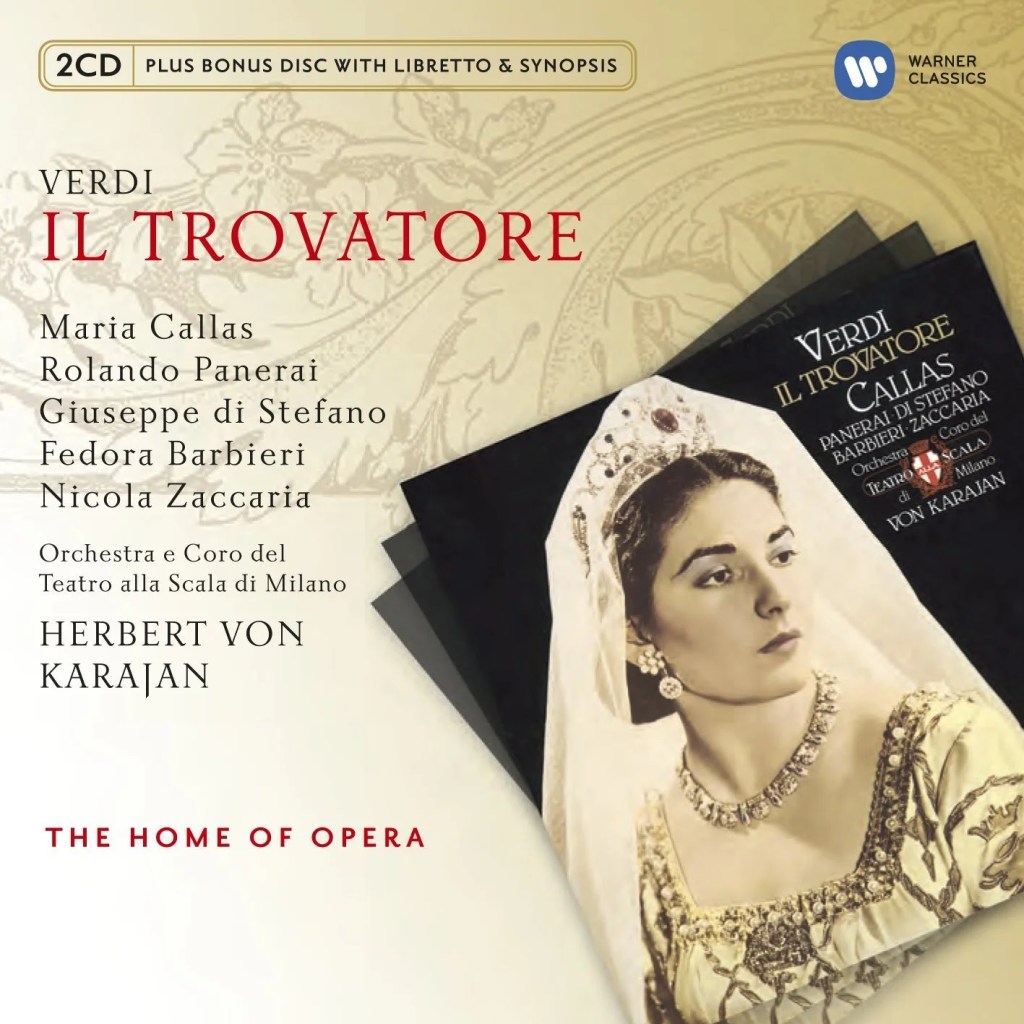
A problem in the 1956 recording conducted by Herbert von Karajan very excitingly is Giuseppe di Stefano. Beautiful though he is, for Manrico he lacks power.
Fedora Barbieri comes into her own even better here than on the Myto recording, which may be partly due to the much better sound quality. Rolando Panerai is a solid Luna, but his “Il balen” neither makes me hot nor cold, especially with Bastianini and Milnes to my ears.
And Maria Callas? Callas remains Callas. Overdramatic. Her Leonora is anything but an adolescent in love. Her ‘D’amor sull’ali rosee’ is more than beautiful, perfect almost, but it leaves me utterly cold (Warner 5099964077321).
Below Callas in D’amor sull’ali rosee’:
Leyla Gencer, 1957
I don’t think I need introduce you to Leyla Gencer. The Turkish diva enjoys a cult following comparable only to that of Olivero and Callas. Her supple, round and clear voice – with pianissimi with which she could rival Montserrat Caballé – made her exceptionally suited to Verdi operas. Her Leonora is simply perfect: you can’t get any more beautiful than that.
Nor do I think there has ever been a better, more beautiful and impressive Luna than Ettore Bastianini. Del Monaco is otherwise a very macho Manrico. His radiant height in ‘Di quella pira’ compensates for his sometimes lacklustre interpretation.
Fedora Barbieri impresses as Azucena and Plinio Cabassi is a Ferrando to kiss. The recording was made in Milan in 1957 (Myto 00127).
Gré Brouwenstijn, 1953
It is almost unbelievable, but there were times when even an opera like Il Trovatore could be cast with only Dutch singers. You can also hear them all in the performance recorded live by Osteria (OS-1001) at the Amsterdam Schouwburg in 1953.
Annie Delorie’s Azucena disappoints me a little, but Gerard Holthaus, unknown to me (is there anyone who can tell me more about him?), is a surprisingly beautiful Luna.
Gré Brouwenstijn is definitely fantastic as Leonora. And yet… her ‘Tacea la notte placida’ doesn’t really penetrate my soul. Mario Cordone was unfortunately not among the very best conductors in the world, which is a pity: sometimes I get the feeling that he is a hindrance to the singers.
Cristina Deutekom, 1976
Give me Cristina Deutekom! In the 1976 recording (Gala GL 100.536), she manages to convince me completely and penetrate deep into my heart. Unlike Callas who remains just Callas in everything she sings, she is Leonora. With her feathery coloraturas, she sounds exactly how I imagine a Leonora to be: a young girl in love with a strong tendency to exaggerate. The latter in the best sense of the word.
Jan Derksen is also a Luna to be reckoned with and secretly I think he may be even better than Bastianini and Milnes. His “Il bales” is among the best versions of the aria I had ever heard.
Carolyne James is an okay Azucena, but the reason the recording is not my absolute number one is because of the very dickish (sorry!) sounding Juan Lloveras (Manrico).
Below, Cristina Deutekom and Lloveras in ‘Miserere’:
Raina Kabaivanska 1978
Il trovatore was one of Von Karajan’s favourite operas. In 1962, he directed a series of performances in Salzburg, which were taken over and televised in Vienna in 1978. It is a very old-fashioned and static performance, with realistic sets and costumes.
Terribly underrated outside Italy, Raina Kabaivanska portrays a flesh-and-blood Leonora: her voice is dark, with an old-fashioned vibrato and clearly lined phrasing.
Domingo was a last-minute substitute for the angry runaway Bonisolli. For his ravishing ‘Ah si, ben mio’, sung with radiant top notes, he was rewarded by the audience with a minute-long ovation.
Cossotto’s Azucena has since become legendary: like no other singer, she left a mark on that role (Arthouse Music 107117)
Below Domingo, Kabaivanska, Cappuccilli and Cossotto in ‘Prima che d’ altri vivere’:
Di quella pira
For those who cannot get enough of ‘Di quella pira’: Bongiovanni (GB 1051-2) has released a CD with no fewer than 34 performances of the tenor hit, recorded between 1903 (Julian Biel) and 1956 (Mario Filipeschi). Lauri-Volpi, here in a recording from 1923 (!), displays a radiant and long-held high c. However, he is surpassed by Aureliano Pertile: what a sound!
Helge Rosvaenge is disappointingly dull, but Richard Tauber’s 1926 recording (in German) is a delightful curio (yes, he can do it!).
Jan Kiepura can’t get enough of trills and welds them into everything, but what a ringing sound he has! Even Gigli ventures into it: something he had better leave out. The best of them all I think is Jussi Björling from 1939. Please let me know who your favourite was?
Gigliola Frazzoni
For dessert, I give you ‘Tacea la notte placida’, sung by Gigliola Frazzoni, one of Minnie’s best (La fanciulla del West). It was recorded in Amsterdam, on 16 October 1954. Marijke van der Lugt sings Ines and the Amsterdam Broadcating Orchestra (?) is conducted by Arture BasileDanny
Radames was among Domingo’s favourite roles. No wonder. Here he could really ‘show it all’, because the hero is very complex. He is a ‘macho with a lot of muscles’ and a vulnerable boy at the same time, and he is torn between duty and passion. Unfortunately, the two are not compatible.
To sing Radames well you need not only a cannon of a voice but also an intellectual ability. And he has both.
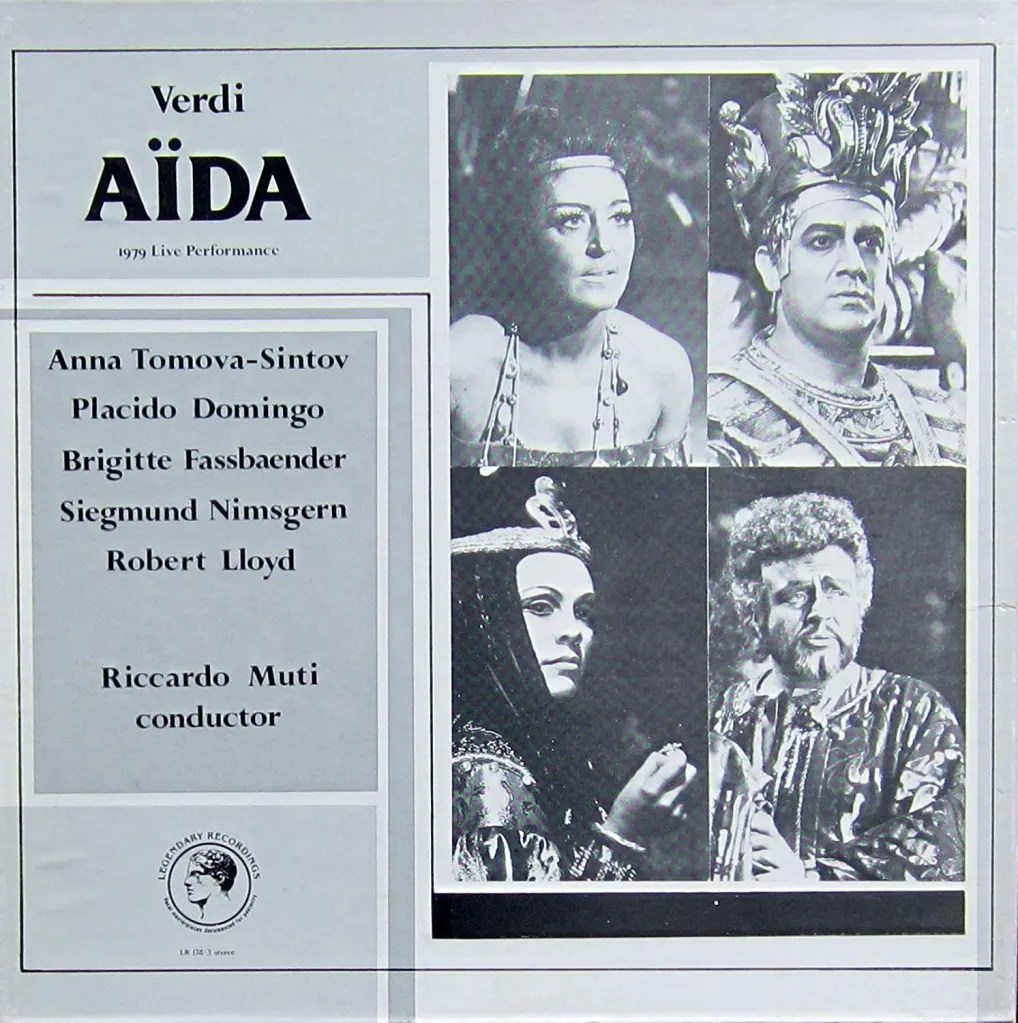
He made his debut with Aida in 1968 in Hamburg and he has since sung the opera thousands of times. There are many recordings on the market, both studio and live. I would like to dwell on a recording that will not evoke an ‘aha’ moment for most of you – also because at first glance the cast is not idiomatically perfect.
The fact that Anna Tomowa-Sintow was one of Karajan’s favourite singers had its advantages and disadvantages. She was a welcome guest in Salzburg and her name appears on many recordings conducted by the maestro. But it also meant that she was primarily rated as a Mozart and Strauss singer, while she had so much more to offer. Her Desdemona and Amelia were legendary and after her Munich Aida, Leonie Rysanek praised her performance for its pure beauty.
Fassbaender is really surprising and particularly convincing as Amneris. Just listen to what she does with the single word ‘pace’ at the end of the opera. The opera was recorded by Bayeriche Rundfunk on 22 March 1979 and released on Orfeo (C583 022).
Also noteworthy is the recording from Munich 1972, with a now almost forgotten Verdi singer, Martina Arroyo. As Amneris, we hear Fiorenza Cossotto and Cappuccilli and Ghiaurov complete the excellent cast conducted by Claudio Abbado.
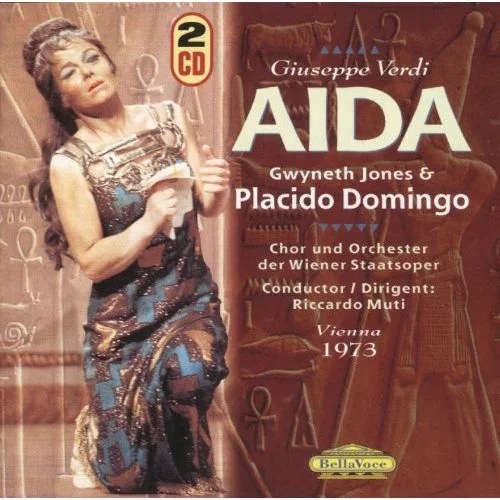
The recording from Vienna 1973 (Bela Voce BLV 107.209), under Riccardo Muti, is also of particular interest. In the leading role we meet Gwyneth Jones and Amneris is sung by an exceptional mezzo: Viorica Cortez.
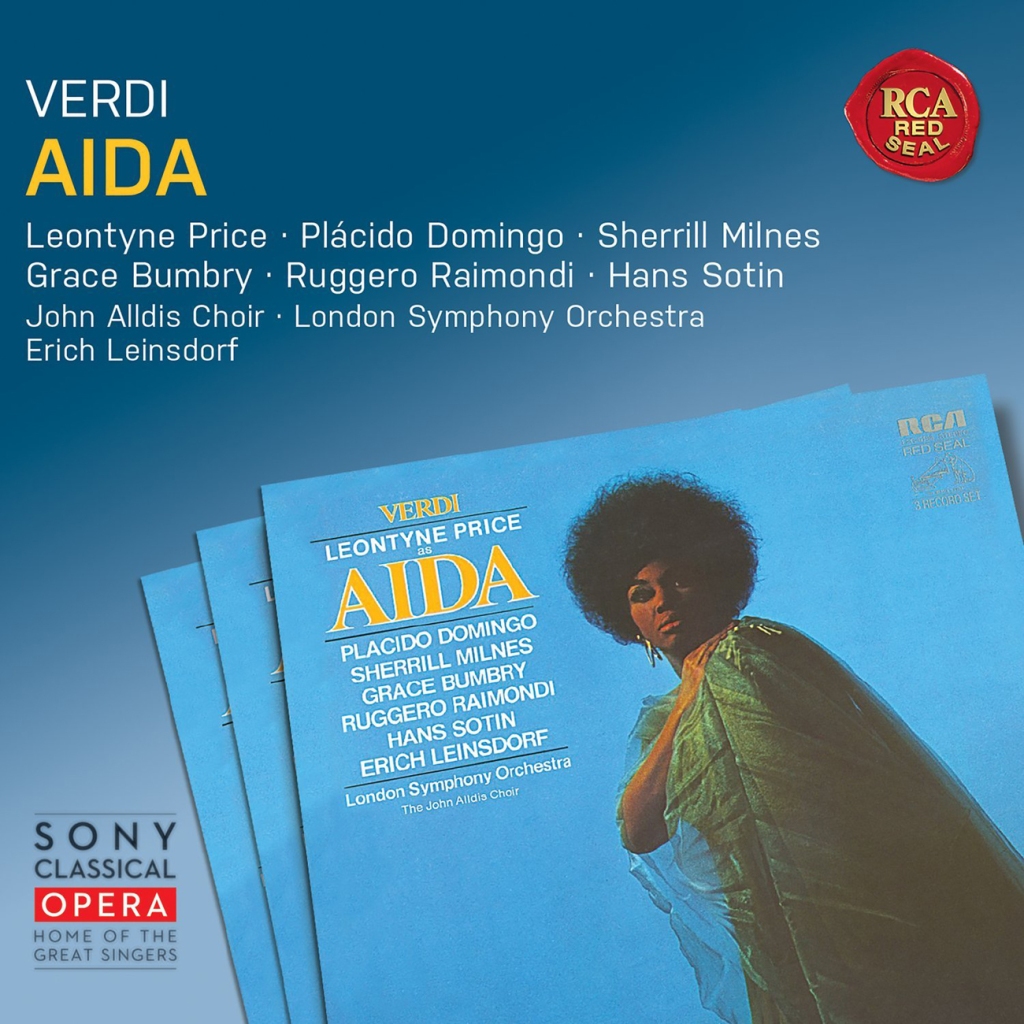
Of Domingo’s studio recordings the 1970 RCA release (probably from the catalogue), is probably the best. How could it be otherwise, when you know that the conductor is Erich Leinsdorf and the other roles are sung by Leontyne Price, Sherrill Milnes, Grace Bumbry and Ruggero Raimondi. The whole thing almost pops out of your speakers.
What started with a Chilean novel in 1983 turned into an opera in Los Angeles in 2010. Composer Daniel Catán followed the success of the book and two film adaptations with a wonderfully lyrical and poetic opera: Il Postino. Highly recommended.
First there was a novel, Ardente Patience (Burning Patience), written by Chilean Antonio Skármeta. The book became widely known when it was filmed in 1983, by the author himself. The film won a large number of national and international awards, including Le Grand Prix du Jury in Biarritz.
However, it did not become a real hit until 1994, when it was filmed for the second time by Michael Radford, this time under the title Il Postino (The Postman). The film gained cult status – you didn’t count if you hadn’t seen it.
It is a (fictional) story about a young postman Mario who discovers the world of poetry. Inspired and encouraged by his only “customer”, an exiled world-famous poet and communist activist (Pablo Neruda), Mario writes poems to his beloved Beatrice.
Years later, during his return to Cala di Scotto, once his place of exile, Neruda meets Pablito, Mario’s little son, who never knew his father – he was killed during a communist demonstration.
The delightfully nostalgic and moving “feel-good movie”, in which tears also flow profusely, has also conquered the world of classical music. In 2010, the opera Il Postino had its world premiere in Los Angeles, with none other than Plácido Domingo in the role of Neruda.
Daniel Catán
It was the last opera by Mexican composer Daniel Catán, who died in 2011 at 61. Catán himself produced the libretto for his opera.
With its flowing melodies and recognisable arias and duets, Catán’s music is nothing short of beautiful. Not only for us, the audience, but also for the singers. I quote George Loomis, one of the New York Times’ music critics: “His operas let singers do what they have been trained to do, and what they do in the theatre when not performing operas by contemporary composers.
And so it is, although, especially with Il Postino, I myself would prefer to use the word “poetic”. Not because one of the main characters is a famous poet, but mainly because of the language used in the libretto, to which the music is “moulded”.
Just listen to the duet “Metaforas”, in which Neruda explains to the young postman the art of using metaphors. “Is the whole world just a metaphor then?” asks Mario, who discovers that he too can write poetry… “You’ll get the answer tomorrow,” says Neruda, but we can already read it on his face.
The super-romantic love duet between Mario and Beatrice melts your heart. It could have walked right out of La bohéme and I love that. Indeed, I am touched by it.
In one of the opera’s first scenes, we are introduced to Neruda and his wife Matilde. Endearingly, he sings of how she managed to turn their “asylum” into a home (the duet ‘Los Manos’).
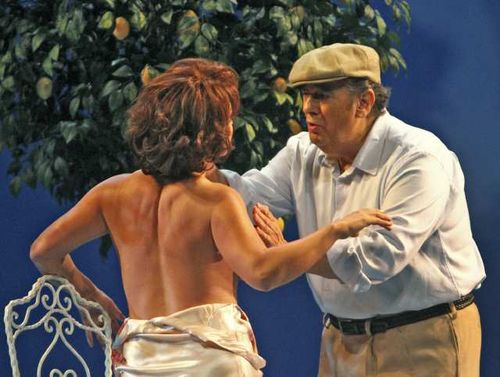
In a very erotic aria ‘Desnuda’, he sings of her beauty and undresses her with his eyes. What follows is a very poetic love scene, in which we are shown just enough to tickle our fancy.
Domingo is a dreamy Neruda. His very warm voice is full of love and passion, he transports, inspires and endears. He has hundreds of facial expressions at his disposal… and he can tango!
Cristina Gallardo-Domas (Matilde) occasionally sounds a little shrill in the upper registers, but her intensity and her role interpretation make up for everything. She is also a beautiful woman, a prototype of a South American with too big eyes and too big a mouth, behind which you can suspect one and all passion.
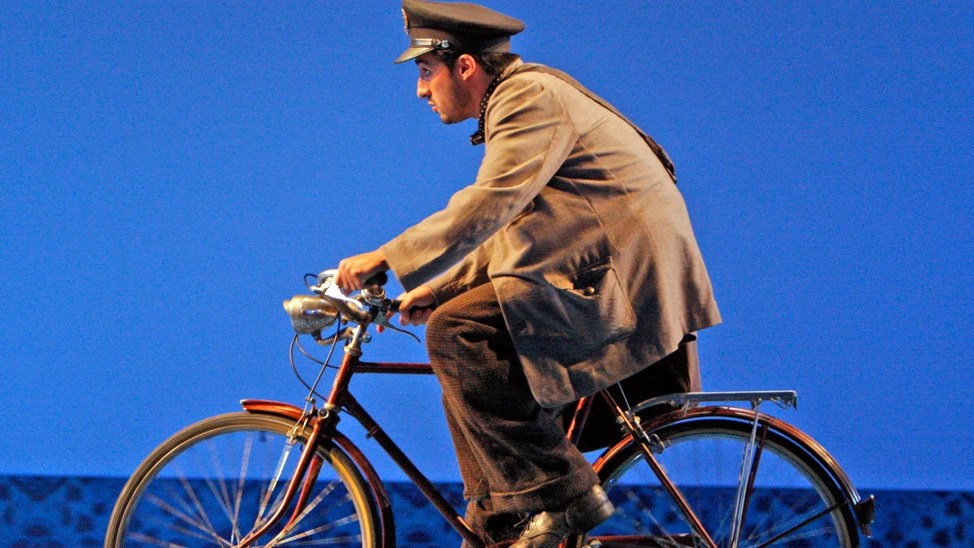
In Mario, Charles Castronovo has found the role of a lifetime. With his lyrical tenor – and his acting talent! – he portrays a real-life young man: shy and romantic but one with many ambitions and perseverance to achieve his goal.
Amanda Squitieri is a sparkling Beatrice and Ron Daniels’ direction is definitely sublime – his character direction is to die for! The production is very cinematic and a little reminiscent of de Sica’s Italian neorealism with Almodovár’s colours.
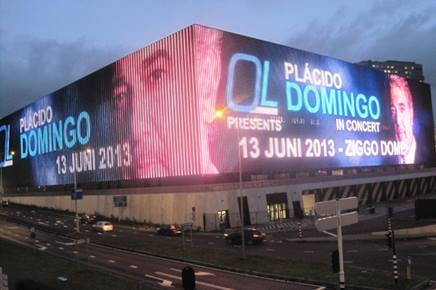
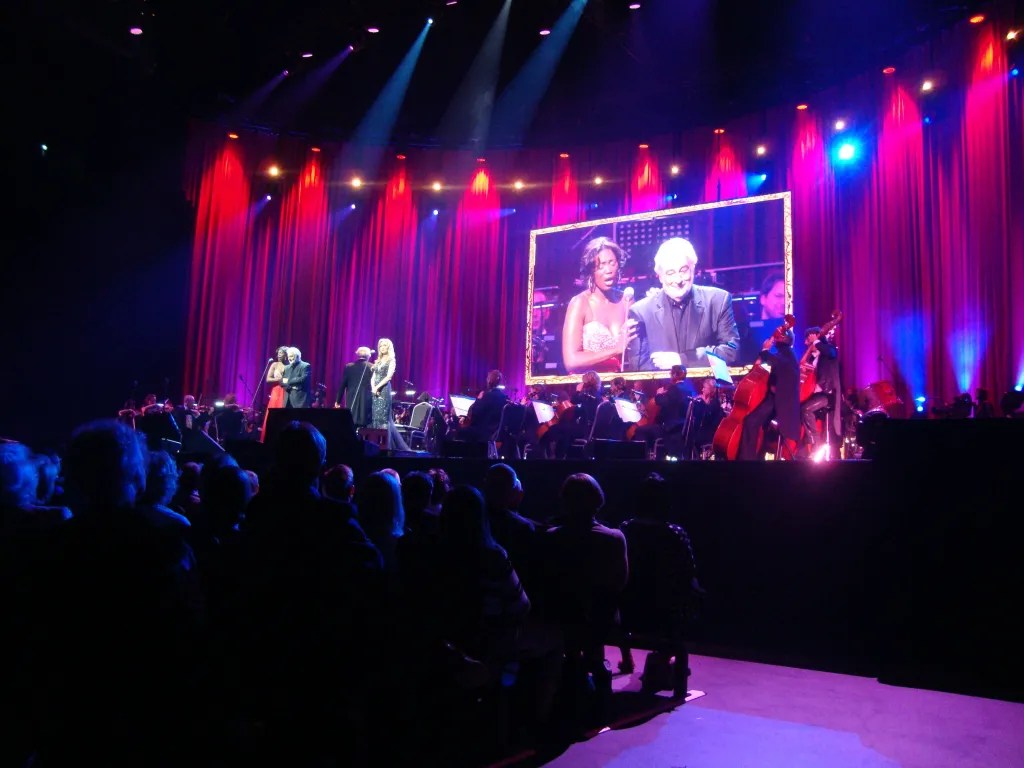
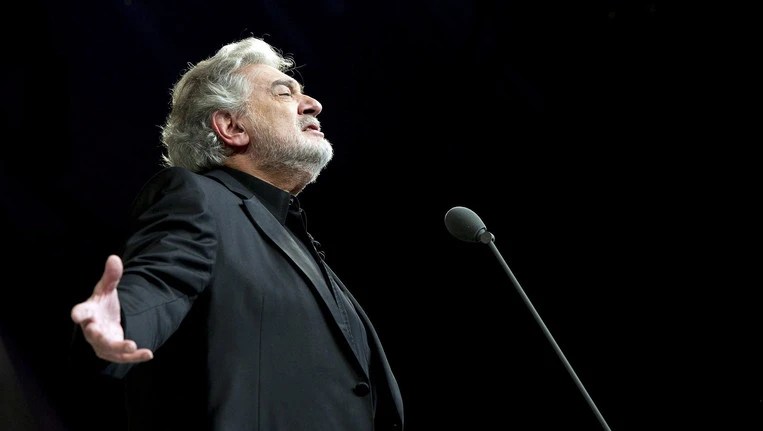
Veni vidi vici. Plácido Domingo could rightly have said these famous words after Thursday night, 13 June 2013. The sold-out Ziggo Dome (yes, you read it correctly, the huge hall was filled to capacity!) went wild as if it were a pop concert. Rightly so. Although the maestro is no longer the youngest, his voice does not want to know anything about getting older.
The evening was full of surprises, which only added to the fun:
1. Despite the despairing reports in the newspapers, the hall was almost completely full.
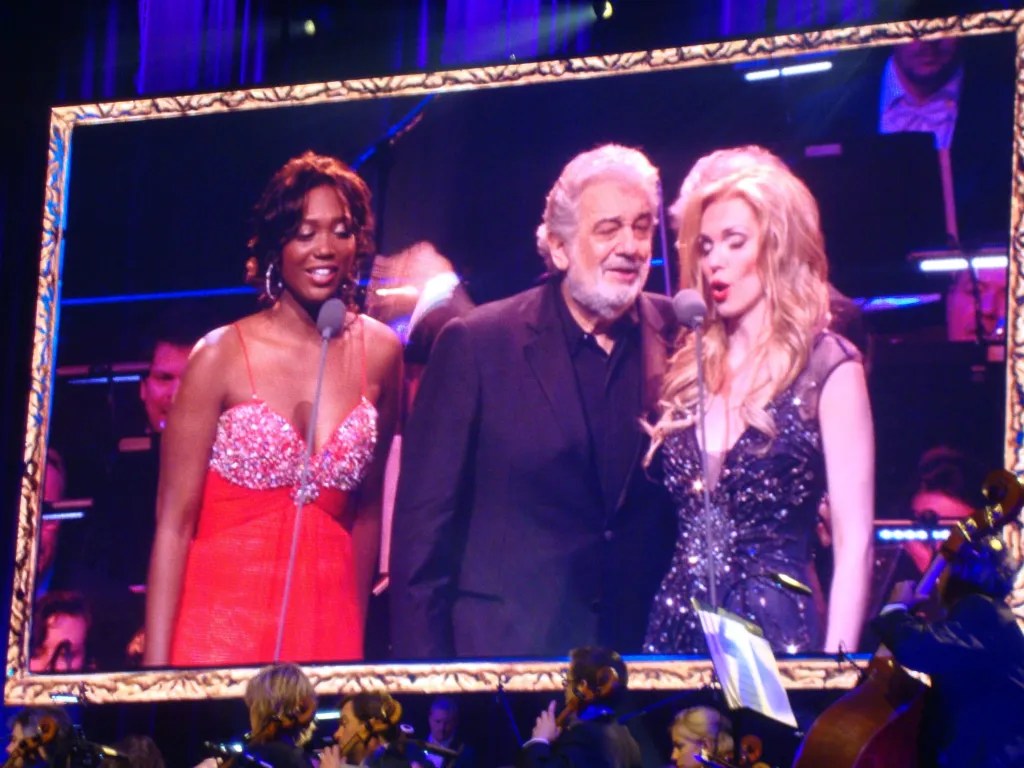
2. There was no programme booklet. The names of the two guest sopranos were projected on the screen, and what were they singing?: the guessing contest was on
3. The Orkest der Lage Landen, an orchestra I had never heard of before, amazed me. Led by Walter Proost, they played the stars from the sky.
Already with the very first song, the overture of Der fliegende Holländer, I was on the edge of my seat. The Nabucco overture was more than compelling and the lighter genre (Leichte Kavallerie by Franz von Suppé) also involved the audience. Proost turned and conducted the audience, who clapped along with the orchestra.
4. I was highly surprised at how many people had actually dressed up! Sure, the obligatory jeans were more than represented, but I also noticed ladies in evening wear. Like it or not: it’s always mood-enhancing.
5. The repertoire. No one took it too lightly. We went from Wagner to Verdi and via operetta and zarzuela we ended up with some musicals. And all at top level!
6. It was a night out in a temple to the lighter muse, so we got something of a show to go with it. Lights, more lights, and beams of light; a veritable lightshow.
Is Domingo the world’s best tenor? For me, yes, especially when we’re talking about the last 30 years of the previous century and the first 10 of this one. Now that his high notes are failing, he has turned to baritone roles and he does so with his usual abandon and musicality.
No, he is not a baritone, his timbre is still that of a tenor, but he manages to be more convincing in this repertoire. Perhaps we should just conclude that he is the most musical of all the tenors? A phenomenon born only once every hundred years?
His Siegmund still stands like a house and the Verdi duets ( La Traviata and Il Trovatore, no easy fare for a baritone) proved not only his musicality, but also the humane side of the man and the artist Domingo. Every time his partner was ‘speaking’, he took a step back and let her shine in the spotlight.
After the break, it was time for some light(er) music. ‘Dein is mein ganzes herz’ was met with cheers from the audience right from the first bars and then the fun was unstoppable.
‘So muss allein ich bleiben’ from Die Fledermaus was just about the funniest I have ever heard. Up went the legs in a cheerful dance and the audience participated with gusto!
After the wonderfully beautiful ‘De España vengo’ (El niño Judío by Pablo Luna), sung by Angel Blue, and a duet from Luisa Fernanda, we arrived at ‘Amor, vida de mi vida’ (Maravilla by Moreno) via the delightful ‘Tarantula’ from La Tempranica. Here I had to shed a tear, but that didn’t last long, because then came the encores.
‘I could have danced all night’, ‘Besame mucho’ (hmm… I wouldn’t have anything against that), ‘Yes I can, no you can’t’ from Annie get your gun and, to conclude, the ‘If I loved you’ from Carousel, sung by all three soloists – I loved it.
The two young sopranos accompanying Domingo, Angel Blue and Micaëla Oeste, were a delight. My preference was for the very charismatic Blue. She managed to convince me not only in the lighter genre but also in ‘Dich, teure Halle’ from Tannhaüser.
Who is afraid of Ziggo Dome? I, at least, no longer am. The venue is indeed immense, but somehow it feels intimate and the acoustics are really very good. Of course the singers sang with a microphone – there is no other way – but strangely enough, it hardly bothered me at all. The sound came across very naturally
























 Basia con fuoco