cd/dvd recensies

Een paar woorden over ‘Porgy en Bess’ door Simon Rattle

porgy cd warner

Dertig jaar oud en nu al een klassieker? Zeker. De Porgy and Bess die Simon Rattle in 1988 dirigeerde in Glyndebourne is zelfs legendarisch te noemen. De dirigent had een prachtig spelend en verrassend goed swingend orkest (London Philharmonic Orchestra op zijn best) tot zijn beschikking, én een cast om je vingers bij af te likken (Warner Classics 0190295900649)


De opname uit 1988 heeft ettelijke prijzen en onderscheidingen gewonnen. In 1992 werd de productie (in vrijwel dezelfde bezetting) in Covent Garden herhaald en daarna in een studio voor de video vastgelegd, waarbij gebruik werd gemaakt van de vier jaar oudere geluidsopname.
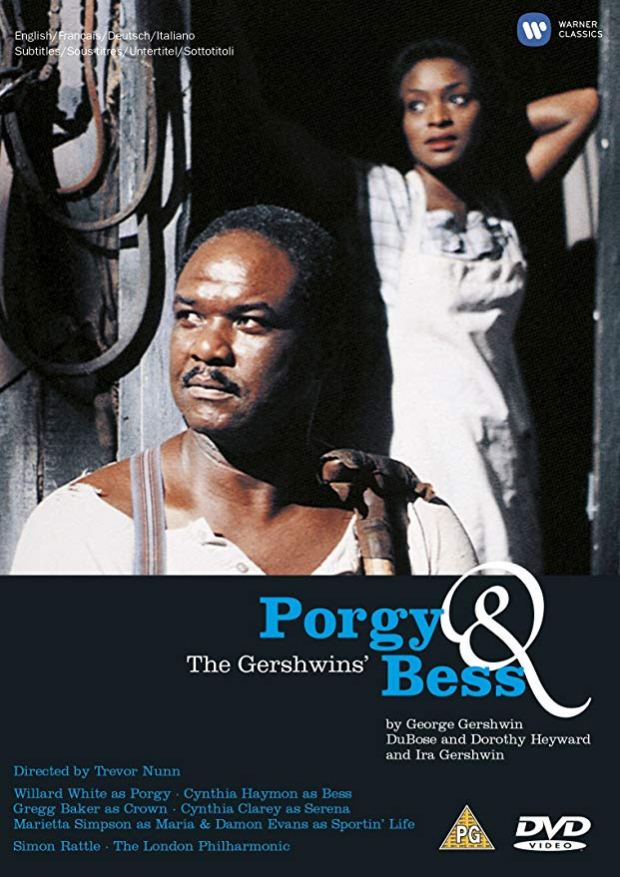
porgy dvd warner

Het levert af en toe een beetje discrepantie tussen beeld en geluid op, maar een kniesoor die daarover klaagt. (Warner 0724349249790)

Willard White is een sensitieve Porgy. Met zijn sonore bas straalt hij zowel autoriteit als kwetsbaarheid uit. Cynthia Haymon is een ontroerende en letterlijk zeer mooie Bess.

De door Harolyn Blackwell kinderlijk naïef, maar ook zeer sensueel gezongen ‘Summertime’ klinkt als een slaapliedje voor volwassenen en Trevor Nunns realistische regie zorgt voor prachtige, zeer tot het hart sprekende beelden.

 

THE GERSHWIN MOMENT


Decca’s Most Wanted Recitals. Part 2

Decca-s-Most-Wanted-Recitals 2

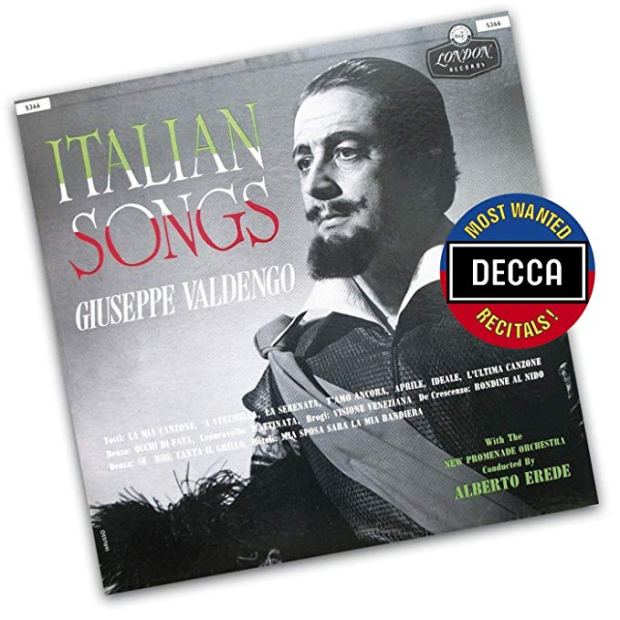
GIUSEPPE VALDENGO

Decca Valdengo

In May 2014 Giuseppe Valdengo would have turned 100 years old. A fact that has escaped everyone, because the baritone born in Turin is now almost completely forgotten. How sad! And then to think that he was one of the beloved singers of Arturo Toscanini! He can still be admired on live radio recordings of Aida, Otello and Falstaff, led by the great maestro.

Opera News wrote about Valdengo: “Although his timbre lacked the innate beauty of some of his baritone contemporaries, Valdengo’s performances were invariably satisfying – bold and assured in attack but scrupulously musical. How true!

Below is a tribute to the baritone, made on the occasion of his hundredth birthday:

I knew him from his performance in the film Great Caruso with Mario Lanza, but he really impressed  me with his role of Alfio in the RAI filmed Cavalleria rusticana, with the inimitable Carla Gavazzi as Santuzza.

Alfio is missing on the 1949 CD recorded for London, but his Tonio from Pagliacci, a role with which he celebrated unprecedented triumphs, is included. Furthermore, two very moving arias from Rigoletto, plus the Italian sung Hamlet and Valentin (Faust), sound very touching.

Most of his recital, however, is taken up by Italian songs by Tosti, Brogi, Denza and Leoncavallo. Repertoire that fits him like a glove.


MADO ROBIN

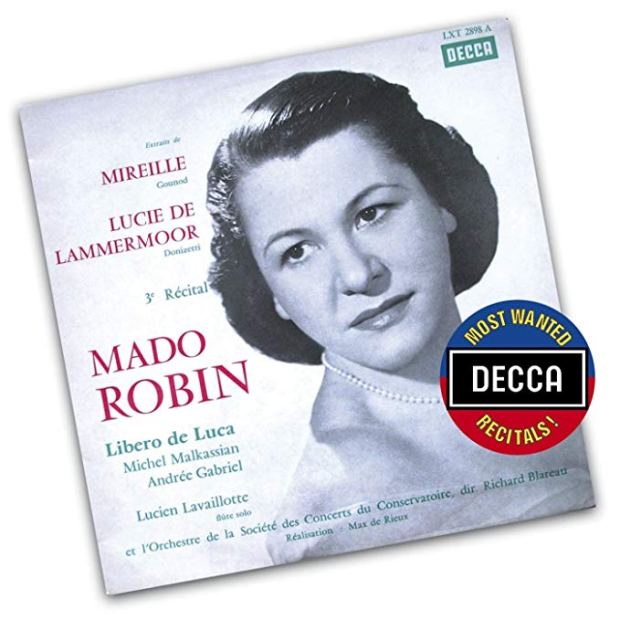
Decca Robin

The French coloratura soprano could actually be considered the eighth world wonder Her voice was of the soubrette type with a very pleasant girlish timbre and her coloratura technique more than sublime, but there was more: her high notes were extremely high. With her voice she not only reached the F4, but even had the C4 within her reach without any problems, one of the highest notes ever sung by a human voice.

All her high notes in a row, with the description:

In the fifties she was a very celebrated radio and TV star in France, but her fame reached far beyond her national borders. She celebrated her greatest triumphs as Lakmé and Leïla (Pearl Fishers), but her Lucia and Olympia were also proverbial.

Gounod’s Mireille is not really a role we would expect from her, but it fits wonderfully well with her childishly naive timbre. I enjoyed these fragments the most, much more than her Lucia and Bellinis.


GERARD SOUZAY

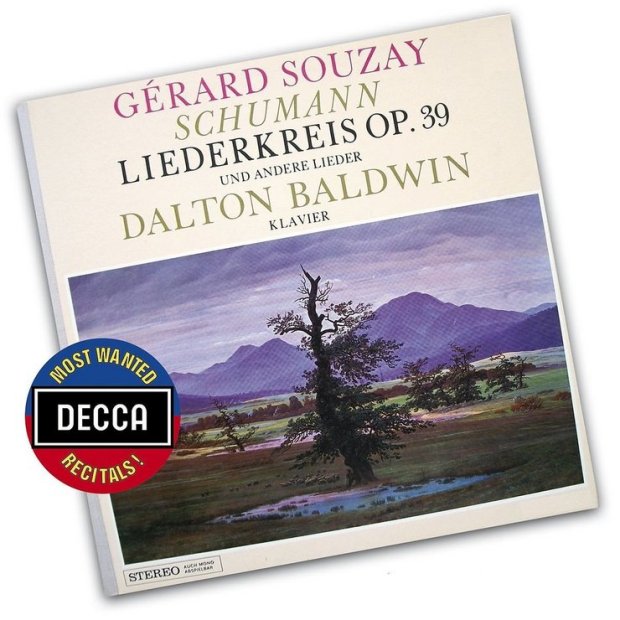
Decca-Souzay-Liederkreis-op.-39

The in all respects beautiful baritone Gérard Souzay has made the big mistake to sing on for far too long. His last Philips recordings are unlistenable and with his hair dyed pitch black he looked rather pathetic. A great pity, because if you listen to his earlier recordings, you can only fall in love with him and his voice.

Souzay was without a doubt one of the greatest performers of French song and his Faurés and Ravels are a delight. But don’t underestimate his German lieder either! Listening to his recording of Schumann’s Liederkreis from 1965, one cannot escape the thought that this music should go like this, and not otherwise. Just listen to his ‘In der Fremde’; I want to bet you cannot escape the feeling of being displaced yourself.

Below Liederkreis:

His Dichterliebe is just as beautiful: with his light baritone and his sweet, sweet sound he makes you actually fall in love. The recording dates from 1953 and in addition to the cycle we get three separate Schumann songs, including an interpretation of ‘Nussbaum’, which moves me to tears.

In these recordings Souzay’s then regular accompanist Jacqueline Bonneau accompanies him. After 1954 she gave way to Dalton Baldwin (Bonneau did not like travelling). Souzay had a kind of musical marriage with Baldwin. Their collaboration guarantees ultimate beauty.

Below is Dichterliebe:

VIRGINIA ZEANI

decca zeani

Born in 1925, Zeani made her debut at age 23 as Violetta in Bologna, a role that would become her trademark. She had no less than 69 roles on her repertoire, many of which were premieres – she created the role of Blanche in 1957 in Dialogues des Carmélites by Poulenc. Her repertoire ranged from Haendel, Bellini, Donizetti, Massenet and Gounod to Wagner. And of course the necessary Verdis and Puccinis.

Her Puccini arias, recorded in 1958 under the direction of Giuseppe Patané, have – together with a recital by Graziella Sciutti – been released earlier by Decca; but her Donizettis, Bellinis and Verdis from 1956 (conductor: Gianandrea Gavazzeni) have their CD premiere.


INGVAR WIXELL

Decca Wixell

The Swede Ingvar Wixell was and remains a more than phenomenal Verdi baritone, and his Rigoletto ranks among the best creations of the role.

Below Ingvar Wixell sings ‘Cortigiani, vil razza dannata’ in Jean-Pierre Ponnelle’s 1982 Rigoletto film:

He had a sonorous sound most reminiscent of a firm oak, at first sight unshakable and yet sensitive to wind and rain. You can hear it best in ‘Tregua è cogi’ from Attila:


HILDE GUEDEN

Decca Gueden

Together with Lisa Della Casa, Hilde Gueden was one of the best performers of Richard Strauss songs. On this CD, flanked by none other than pianist Friedrich Gulda, she makes my heart sing with pleasure. The mono recording was made in 1956 in the famous Sofiensaal in Vienna, under the supervision of the legendary John Culshaw.


As a bonus we hear Gueden’s delicious Zdenka, in duet with Lisa Della Casa as Arabella, from a less known recording of highlights from the Strauss opera under Rudolf Moralt (1953). There are also two scenes from one of the most beautiful Rosenkavalier recordings I know, the one under Silvio Varviso from 1964.

Below the final scene from that recording. Besides Gueden, we hear Régine Crespin and Elisabeth Söderström:

Decca’s Most Wanted. Part one

THE STEPSISTERS OF MARIA CALLAS

Decca’s Most Wanted. Part one

Decca-s-Most-Wanted-Recitals

In April 2014 the series ‘Decca’s Most Wanted Recitals’ was launched: fifty albums by legendary singers, often never released on CD before. It’s a true treasure chest and it’s to be hoped that it is still available.

It was all the ‘fault’ of Victor Suzan. This employee of Universal Mexico went through the old Decca archives and lovingly restored no less than fifty albums never released on CD before.He digitized and remastered them, adding bonuses where possible and utilising the artwork from the original LP issues. Nostalgia at its bests, and moreover of the highest quality…

Fortunately, all Universal branches responded more than enthusiastically to her initiative. EDC/Hannover picked it up and so the series ‘Decca’s Most Wanted Recitals’ was born. The first batch consisting of twenty titles appeared on the market in early April 2014. Fifteen more titles followed in June and the last fifteen in September of that year.

These are treasures. Real treasures. For many, certainly younger voice lovers there is plenty to (re)discover. Enough also to shake up their world view, because in the fifties and sixties the word “crossover” did not yet exist and musicals were just as much appreciated as Wagner and Verdi.

I have selected ten titles from the collection and divided them into two parts in random order.

GEORGE LONDON (4808163)

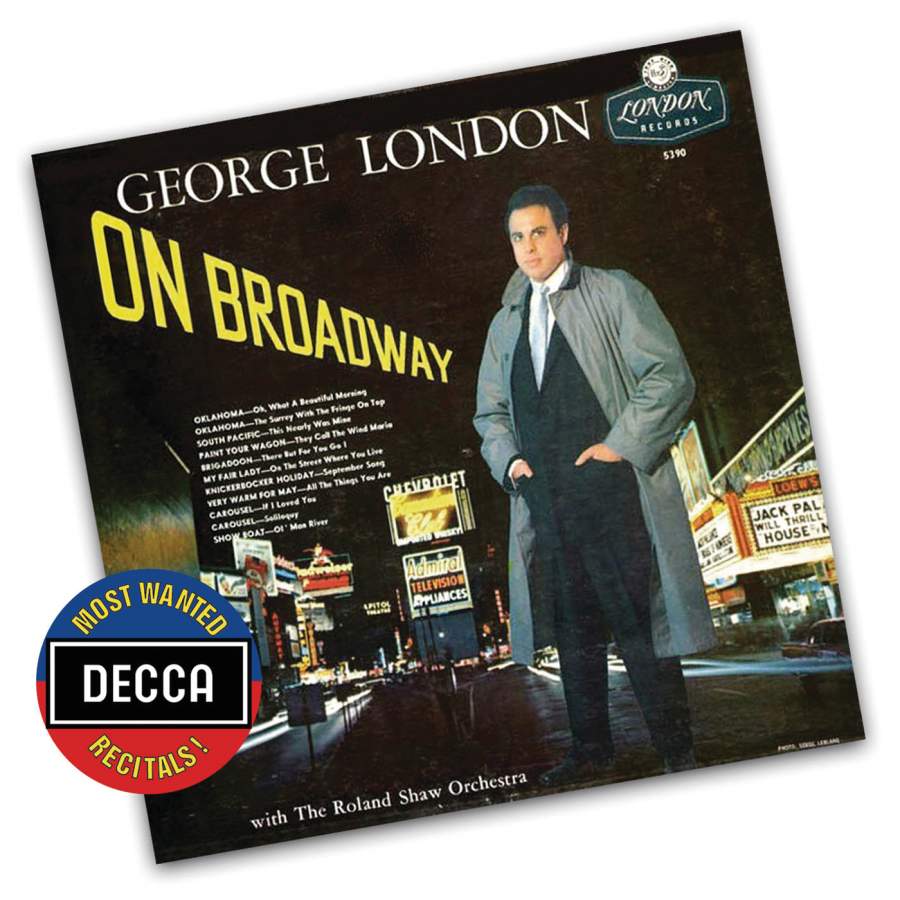
Decca London

Let’s start with George London. He was the very first American who sang Boris Godunov (in Russian!) at the Bolshoi in Moscow and was considered one of the best Wotans/Wanderers of his time. His Scarpia was also legendary during his lifetime.

Below is George London (in a perfect Russian!) as Boris, recording from a concert from 1962


He started his career in the early forties as a member of the ‘Bel-Canto Trio’, with soprano Frances Yeend and … Mario Lanza as the other two members.

On the CD On Broadway he gives a masterclass how to sing the music of musical composers Rogers, Kern and Loewe.

Below London sings ‘f I loved you’ by Rogers and Hammerstein.


You get Wagner as a bonus.


CESARE SIEPI: Easy to love (4808177)

Decca Siepi broadway


Not only Americans considered Broadway as something to take seriously. The Don Giovanni and one of the biggest Verdi-basses of the second half of the last century, Cesare Siepi, didn’t look down on the musical theatre either.

His CD on which he gives his vision on the songs of Cole Porter is called Easy to Love. It sounds ‘easy’ indeed, but it is not at all. Porter’s music benefits from simplicity, coupled with the best vocal chords in the world, and Siepi has it all.

His interpretation of ‘Night and Day’ is one of the most beautiful ones I’ve heard in my life. Not to mention ‘So in love’ or the delicious ‘Blow, Gabriel blow’ from Anything Goes.


As a bonus we get to hear some of his best Verdis: Nabucco, Philip II and a Boccanegra like you don’t hear anymore.


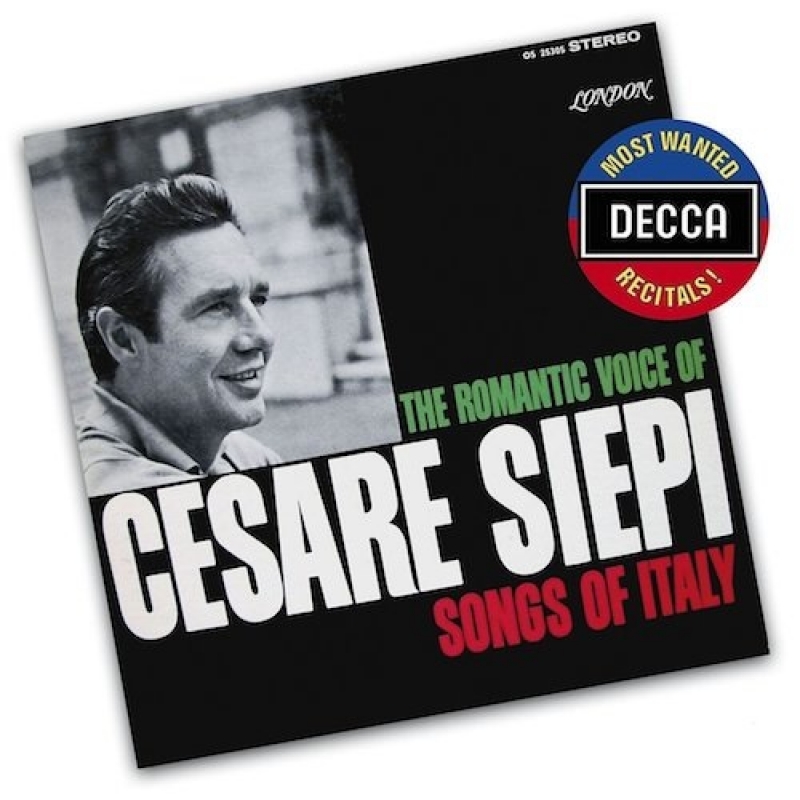
CESARE SIEPI: The romantic voice of Cesare Siepi (4808178)

Decca Siepi italiaans


This CD is entitled The romantic voice of Cesare Siepi and that is exactly what you get: a beauty of a voice that awakens all the romantic feelings in you!

No Broadway here anymore, but popular Italian songs that fit Siepi  like a glove: just delicious.

What really makes the CD special are the bonus tracks, with arias from Meyerbeers Robert le Diable and Les Huguenots, La Juive by Halévy and – for most people a real rarity – an aria from Salvator Rosa by Antônio Carlos Gomes. My goodness, what beautiful music! I ask (again): when do we get to see another opera by Gomes? After the performances of his Il Guarany in 1994 in Bonn it has remained silent for much too long around this Brazilian Verdi.

Below ‘Di Sposo Di Padre Le Gioie Serene’ from Salvator Rosa van Gomes, 1954:


The album was recorded in 1961 (songs) and in 1954 (arias) and the sound is excellent. In the arias Siepi is accompanied phenomenally well by the Orchestra dell’Accademia di Santa Cecilia and Alberto Erede. At that time Erede was considered a ‘decent’ conductor, but now he would be considered one of the greatest opera conductors of all. He gives his soloist all the space he needs and allows the orchestra to breathe with him.


ARNOLD VAN MILL (4808167)

Decca van Mill

The Dutch bass Arnold van Mill is almost completely forgotten nowadays. How unfair! His voice is a bit reminiscent of the young Kurt Moll, which of course is also due to the repertoire. Beautiful!

Below is the duet from Der Fliegende Holländer. Arnold Van Mill sings Daland and George London Der Holländer:


Van Mill was mainly famous for his Wagner roles. Unfortunately they are not on this CD. But his smooth bass was also very suitable for Singspiel and operetta. His Lortzing, Cornelius, Nicolai and Weber (all present on this CD) are a pure delight for the ear. All real collector items. Thank you, Decca!


The CD is complemented by Russian songs, sung by the Bulgarian bass Raphael Arié. (not available on YT anymore). The combination isnot really a happy one: not only does the repertoire differ like day and night, the voices are incomparable as well; which does not prevent me from enjoying him enormously! Hopefully Decca will have more of Arié on the shelf, because my wish list with his recordings is quite long!

Below Arié sings ‘Ella giammai m’amo’ from Don Carlo

and the death scene from Boris Godunov:

Decca’s Most Wanted Recitals. Part 2

It all started with Paganini: DYNAMIC celebrates its fortieth birthday

DynamicThe genesis of Dynamic can be read as a real fairy tale. The label was founded  forty years ago by Pietro Mosetti Casaretto (1925-2012), a violin-playing surgeon with an enormous passion for classical music. Initially, only chamber music works were recorded, all performed by the many friends (including Salvatore Accardo and Bruno Cannino) of the founder.

Mosetti Casaretto, a sincere admirer of violin music in general and of Paganini in particular, set himself the goal of recording Paganini’s complete oeuvre, which he more or less succeeded in doing. The catalogue mentions 35 Paganini titles, many of them performed on the famous violin of the composer/virtuoso.

In 1996, however, there was a turnaround: Dynamic signed a cooperation contract with the opera festival in Martina Franca. With live recordings of weird and unknown operas and of lesser known versions of Macbeth and Lucia di Lammermoor, for example, Dynamic quickly became popular among opera lovers.

Nowadays they also work with other (small) Italian opera houses, such as Teatro La Fenice (Venice), Teatro Lirico di Cagliari and Teatro Regio di Parma. The company initially focused mainly on DVDs, nowadays all titles are offered on both DVD and CD.

With a few different titles, chosen by myself mainly for their high rarity, I settled down on the couch: the party could begin. What struck me immediately was that most of the operas were directed by Pier Luigi Pizzi. Coincidence?

Dynamic Pizzi

Pier Luigi Pizzi © Studio Amati Bacciardi

According to Stefano Olcese (production supervisor), it had indeed been pure coincidence at first. “But”, he adds, “Pizzi was so enthusiastic about what we were doing that he wanted us to join him when he directed another opera”. And so it happened.

I’ll start right away with two Pizzi operas – productions for which he also designed the costumes and sets.


Les Pêcheurs de Perles (Bizet)

Dynamic parelvissers

A production with a lot of ballet, and that bothers me a lot. When yet another dancer floats through the famous duet and thus hides the singing gentlemen from my eyes, I want to give up and read a book.

Yet it won’t let me go, so I watch again. I don’t regret it, although it is still hard for me to persevere. The blame lies mainly (except for the ballet) with the tenor: Yasu Nakajima is mainly meaningless and superficial. Too bad.

But Annick Massis is a truly enchanting Léïla. Only in her place I had chosen the baritone (good Luca Grassi). All in all: provided you do not hate ballet, it is a reasonable recording of that opera on DVD.

Below Annick Massis and Yasu Nakajima in ‘O Dieu Brama!


Hans Heiling (Marschner)

Dynamic Hans Heiling

Somewhat hesitantly I started Hans Heiling. Never before did I hear it, let alone see it. From Marschner I only knew Les Vampyrs. Besides: after all the hassle with the ballet in Les Pêcheurs de Perles I fear the worst. Well, that was a surprise! I immediately recognized Pizzi: his predilection for colour (mainly red in all its shades), excesses and physicality is evident here too, but it really works here.

Hans Heiling (Jan Svatos in Czech) was a legendary king of spirits, his name is often found in Czech and German legends. He falls in love with an earthly girl and swears off his magic power to marry her.

However, she is in love with an ordinary boy and rejects him. Disillusioned (only a man can try his luck on earth) Heiling returns to his underground kingdom. A male equivalent of Rusalka, but without the tragic end.

There is insanely good singing and acting, there is not a single weak role. I already knew how formidable Anna Caterina Antonacci can be, but the (also to the eye) very attractive Markus Werba is a true discovery. Very exciting and dazzling. Recommended.

Below a fragment of the production:


Alfonso und Estrella (Schubert)

Dynamic Schubert

Another surprise! I love it: a romantic fairy tale about an old king, who is thrown off the throne by his rival, and about his son who falls in love with the daughter of his father’s rival.

After some complications (there is also a real bad guy) everything goes well: Alfonso and Estrella get married and the old king gets his throne back, which he then promptly hands over in favour of the young couple. And there is also a moral: a really big man forgives his enemies.

The music is very beautiful. No, it’s not a masterpiece, but still … it’s unmistakably Schubert. There are a few incredibly beautiful ballads: a song by Froila about the cloud girl, for example. Or a touching ‘Wo ist sie’ by Mauregato, who thinks he has lost his daughter.

Eva Mei, Rainer Trost, Alfred Muff, Markus Werba and Jochen Schmeckenbacher play and sing exceptionally well, and I also think the staging (directed by Luca Ronconi) is a great success. In a setting of string instruments only, the opera is played out two-dimensionally: on stage and on the platform behind it, where puppets play the scenes.

In the first act the singers are dressed in evening dress (suggesting a song recital?), in the second and third act they wear period costumes from the region  (Spain in the eighteenth century).

Like Hans Heiling, the piece was performed in 2004 in Cagliari, an opera house that is not afraid of unknown repertoire.

More Dynamic (a selection):
Il Matrimonio segreto, a somewhat forgotten niemendalletje
LALO: LE ROIS D’YS
GIOVANNI BOTTESINI: Requiem

In Dutch:
Het begon met Paganini… Dynamic viert zijn veertigste verjaardag

Translated with http://www.DeepL.com/Translator

Het een en ander over Otello van Verdi en Domingo. Maar niet alleen…

otello domingootello

Voor mij is er geen twijfel mogelijk: Plácido Domingo is de grootste vertolker van Otello, zeker in de laatste dertig jaar van de twintigste eeuw. Niet alleen als zanger, maar ook als acteur weet Domingo zich fantastisch aan zijn partners aan te passen, waardoor zijn interpretatie altijd boeiend en nooit hetzelfde is.

Sir Laurence Olivier, één van de allergrootste Britse acteurs, heeft ooit gezegd: ‘Domingo plays Othello as well as I do, and he has that voice!’

Domingo’s fascinatie met Otello is al vroeg begonnen. In 1960 maakte hij zijn debuut in de opera, maar dan als Cassio. In 1962 – het was tevens de laatste keer dat hij de rol zong – stond hij tegenover de Otello van Mario del Monaco. In zijn memoires schrijft hij dat hij toen al wist dat Otello zijn ‘droomrol’ ging worden.

otello-placido-domingo-katia_1_8e94452a005bdde991cf21943c48cdb0

Zijn allereerste ‘Moor uit Venetië’ zong hij in Hamburg, op 28 september 1975. Hijzelf noemt het één van de belangrijkste data in zijn carrière. Desdemona werd toen gezongen door de piepjonge Katia Ricciarelli en het werd gedirigeerd door James Levine. De complete opera is tegenwoordig op You Tube beschikbaar:

Een jaar later kwam de opera in de Milanese Scala. Het was de eerste samenwerking tussen Domingo en Carlos Kleiber (buiten de studio). Mirella Freni zong Desdemona en Piero Cappuccilli Jago. Het werd live op de Italiaanse tv uitgezonden en inmiddels staat ook op You Tube

Er bestaat ook een geluidsopname van. Het is inmiddels op verschillende piratenlabels uitgebracht en is ook op Spotify te vinden. Het is eigenlijk verplichte kost, en dat ondanks de povere geluidskwaliteit en het ontbreken van een paar maten uit de derde akte (er was iets in het publiek voorgevallen).


otello domingo en price
Een andere fantastische live-Otello komt uit Londen, opgenomen op 19 februari 1978. Carlos Kleiber was weer van de partij, maar Desdemona werd nu gezongen door Margaret Price en Silvano Carroli was Jago. Zeer spannend.

otello rca
Van al zijn studio-opnamen van Otello is die – ooit RCA, tegenwoordig Sony – uit 1978 mij het meest dierbaar. Desdemona werd gezongen door Renata Scotto en zij gaf de rol een extra dimensie. Zij was niet alleen maar onschuldig, maar ook hoorbaar boos, verdrietig en bang. Sherrill Milnes was een duivelse Jago en het geheel stond onder leiding van James Levine.


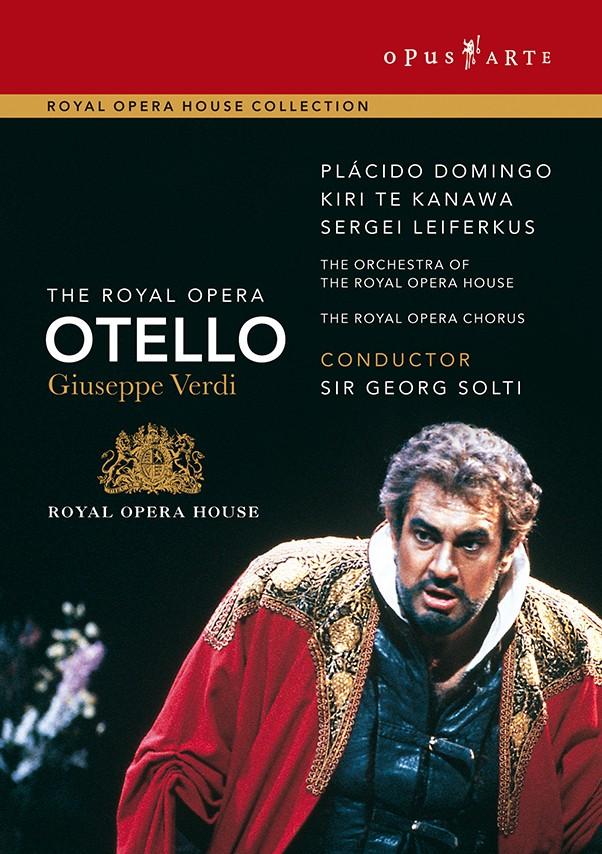
otello kiri

Opus Arte (OA R3102) heeft een ouderwets mooie voorstelling uit Covent Garden uitgebracht (regie: Elijah Moshinsky). Het werd in oktober 1992 opgenomen. Met haar mooie, lyrische sopraan is Kiri Te Kanawa een droom van een Desdemona. Haar passiviteit past goed bij de rol, zeker in het concept van de regisseur. Sergei Leiferkus (Jago) is niet echt idiomatisch, maar hij zingt en acteert goed en het orkest onder de ferme leiding van Georg Solti speelt de sterren van de hemel.

otello fleming

Dezelfde productie werd in 1996 in de Metropolitan Opera in New York uitgevoerd en door Deutsche Grammophon opgenomen (0730929). Het was een mijlpaal in de operageschiedenis, want met Desdemona maakte Renée Fleming haar ongeëvenaarde debuut in die rol.

Ze deed mijn hart sneller kloppen van smart en ontroering. Haar ‘Wilgenlied’ met de sterk geaccentueerde herhalingen van ‘cantiamo’, haar engelachtige ‘Ave Maria’, haar o zo menselijk gespeelde wanhoop, ongeloof en verdriet – dat kon niemand onberoerd laten.

De lyrische tenor Richard Croft was ook visueel goed gecast als Cassio, en het geheel stond onder de zinderende leiding van maestro Levine

Hieronder een fragment:

ALEKSANDRS ANTONENKO (CSO-resound CSOR 901 1301)

otello antonenkoNu moet u mij eerlijk vertellen: hoeveel goede Otello’s kent u, zeker als u zich tot de laatste 40 jaar beperkt (na Vickers en zeker Domingo, die zich de rol eigen heeft gemaakt)?
Het is niet dat er geen pogingen werden ondernomen. De meest geslaagde vond ik nog die van José Cura, maar ook zijn invulling van de rol vond ik niet meer dan goed. De rol vereist namelijk een kanon van een stem, een enorm uithoudingsvermogen, een solide laagte en een buitengewoon ontwikkeld middenregister. En dan heb ik het niet eens over de terecht beruchte ‘Esultate’, met de op volle sterkte gezongen hoge noten, die je paraat moet hebben zonder enige opwarming vooraf. En je moet kunnen acteren, echt goed acteren, al is het alleen maar met je stem.

Aleksandrs Antonenko had dat allemaal. Toen de in 2011 in Chicago opgenomen cd werd uitgebracht  was ik oprecht heel erg blij en vond hem de eerste na Domingo die de rol geloofwaardig neerzette. Zijn krachtige tenor is (of moet ik zeggen ‘was’?) gezegend met een zeer aangenaam vleugje metaal, zonder dat er aan warmte wordt ingeboet. In alle registers, die ook nog eens soepel overlopen, klinkt hij zuiver en nergens forceert hij. Daarbij verliest hij de humane kant van zijn held niet uit het oog: de opkomst en de ondergang van de ‘Leeuw uit Cyprus’ weet hij zeer overtuigend over te brengen.

Hieronder Antonenko in ‘Dio mi potevi’, opgenomen in Salzburg 2008.

Krassimira Stoyanova is, naar mijn mening, de beste Desdemona van vandaag. Haar interpretatie stijgt boven het gemiddelde uit. Ze is meer dan een onschuldig meisje, ze is een liefhebbende vrouw, die ook begaan is met het lot van anderen en die niet tegen onrecht kan. Haar verdriet om een ander in ‘Salce’ gaat perfect over in het verdriet om haar eigen lot in ‘Ave Maria’. Angstig? Ja, maar nergens berustend. Daar ben ik stil van geworden.

Een beetje moeite heb ik met Carlo Guelfi. Voor mij klinkt hij niet gemeen genoeg, wellicht omdat zijn Jago niet slim genoeg is? Hij is een schurk, maar dan één van een laag allooi. Meer een doener dan een denker. Een gewone schurk, geen ‘brein erachter’. Het ligt een beetje aan zijn stem. Zijn op zich prachtige bariton mist verleidelijke noten – een eigenschap die een Milnes of Diaz juist zo afstotend en gevaarlijk maakte.

Juan Francisco Gatell is een goede Cassio met een (voor mij) iets te feminine klank – iets meer machismo zou de rol wat meer sieren. Wellicht had Michael Spyres (Roderigo) die rol moeten zingen?

Het orkest onder de voortreffelijke leiding van Riccardo Muti speelt alsof hun leven ervan afhangt en de spanning is werkelijk om te snijden.


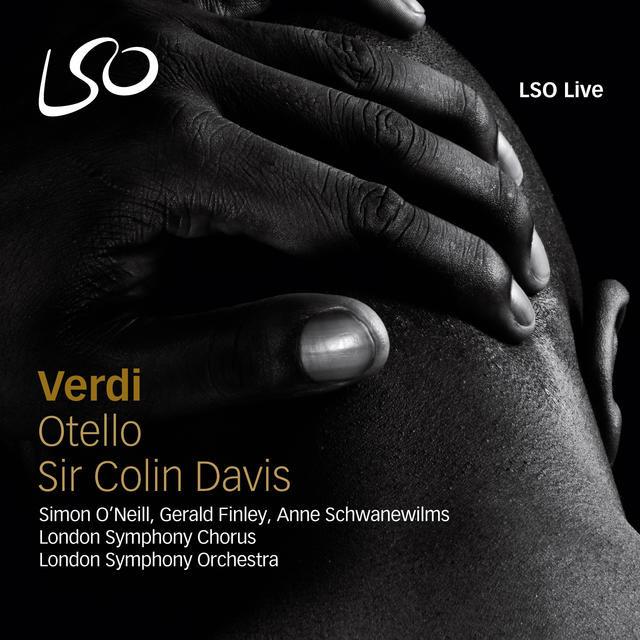
SIMON O’NEILL (LSO Live LS 00700 (2SACD)

otello davisOp papier zag het er niet echt idiomatisch uit. Een Nieuw-Zeelandse tenor als Otello, een Duitse sopraan als Desdemona, een Canadese bariton als Iago en een Engels orkest onder leiding van een Engelse dirigent. Mijn verwachtingen waren dan ook niet hooggespannen toen ik de, in december 2009 in het Londense Barbican live opgenomen Otello ging beluisteren.
Deels kwamen mijn verwachtingen uit. Simon O’Neill (Otello) heeft een iel, dun geluid. Nergens klinkt hij als een veldheer en in zijn liefdesduetten klinkt hij eerder monotoon dan lyrisch. Maar hij was een ‘last minute’-vervanger voor Torsten Kerl en dan wil je veel door de vingers zien.

Anne Schwanewilms (Desdemona) is voor mij een regelrechte misbezetting. O ja, zij heeft een prachtige, romige sopraan, maar ik mis de onschuld, de angst, de liefde, de oprechtheid. Zij intoneert niet helemaal zuiver en heeft bovendien een nare gewoonte om de tonen naar boven te trekken.

Maar Gerald Finley maakt als Iago erg veel goed. Wat een verrassing! Zijn bariton klinkt echt Verdiaans en hij kleurt en speelt met zijn stem dat het een lieve lust is. Alleen al voor hem zou ik de opname niet meer willen missen.

Het London Symphony Orchestra zet Verdi’s partituur onder leiding van Sir Colin Davis ferm neer. Wat een tempo voor 82-jarige dirigent!


Rolf Liebermann In Memoriam

Liebermann

Rolf Liebermann © Claude Truong-Ngoc (1980)

De Zwitserse componist Rolf Liebermann (14 september 1910 – 2 januari 1999) wordt tegenwoordig gezien als de vader van het regietheater, alleen bedoelde hij er iets anders mee dan het huidige conceptualisme waarin de grens tussen het toelaatbare en belachelijke opgezocht en vaak overschreden wordt.

Onder zijn leiding groeide de Hamburgse Staatsopera, waar hij tussen 1959 en 1973 veertien  jaar de scepter zwaaide tot één van de beste en spraakmakendste operahuizen ter wereld. Liebermann zorgde voor een goed, gedegen en gevarieerd repertoire met extra veel aandacht voor de hedendaagse werken, bouwde een fantastisch artiestenensemble op en trok buitenlandse sterren en would-be sterren (in Hamburg begon de wereldcarrière van Plácido Domingo) aan. Arlene Saunders, William Workman, Raymond Wolansky, Franz Grundhebber, Tom Krause, Hans Sotin, Toni Blankenheim – allemaal vormden ze een vast en hecht ensemble, waar af en toe een grotere (lees: voor het grote publiek bekendere) naam aan werd toegevoegd: Lucia Popp in Fidelio en Zar und Zimmerman, Cristina Deutekom, Dietrich Fischer-Dieskau en Nicolai Gedda in Die Zauberflöte, Sena Jurinac in Wozzeck.

Liebermann boek

En hij gaf compositie opdrachten. In de jaren van zijn managent beleefden maar liefst 28 opera’s en balletten hun wereldpremière, een score waar menig operahuis jaloers op zou moeten zijn. Zijn tijd aan de Hamburgse Staatopera beschreef Liebermann later in zijn autobiografische boek ‘Opernjahre’ als de gelukkigste tijd van zijn leven. Daar kan ik me wel iets bij voorstellen. Als je zoveel moois op zo’n hoog niveau wist te realiseren kan je niet anders dan intens gelukkig zijn.

Gelukkig voor ons, die de jaren niet (bewust) hebben meegemaakt, dacht Liebermann ook aan de toekomst en liet regisseur Joachim Hess dertien producties voor de tv vastleggen. De meeste opnamen vonden plaats in een studio. Met de toen beschikbare middelen was het onmogelijk om geluid en beeld tegelijk op te nemen, dus werd eerst de soundtrack gemaakt, waardoor de zangers het in de studio zeer precies konden na-mimen, zodat alles synchroon liep.

Liebermann box

Een jaar of tien geleden werden de opera’s door Arthaus Musik op dvd’s uitgebracht. Naar de hedendaagse technische maatstaven is het allemaal uiteraard verre van perfect. Het geluid is mono en de cameravoering nogal statisch maar voor de liefhebber valt er waanzinnig veel te genieten, niet in de laatste plaats vanwege het repertoire.

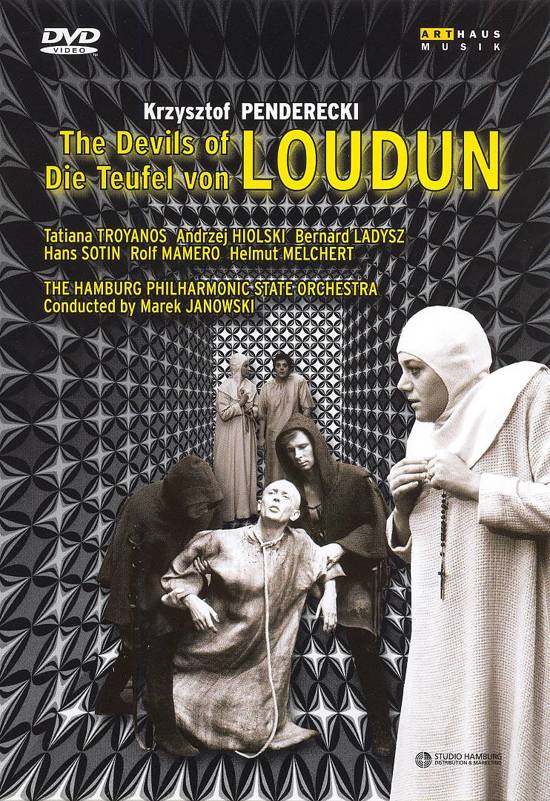
PENDERECKI: DIE TEUFEL VON LOUDON

Liebermann Penderski

In 1967 benaderde Liebermann Krzysztof Penderecki met het verzoek een opera voor Hamburg te componeren. Het werd Die Teufel von Loudun, waarvoor de componist zelf het libretto had geschreven. Het verhaal is gebaseerd op een ware gebeurtenis: door het toedoen van een priores van de Ursulinenorde werd in het Franse Loudun in 1634 een priester van duivelse praktijken beschuldigd en tot de brandstapel veroordeeld.

De opera beleefde zijn wereldpremière op 20 juni 1969 en kort erna werd hij verfilmd. De hoofdrol van moeder Jeanne werd op een zeer indrukwekkende manier vertolkt door Tatiana Troyanos, een andere grote ster wiens carrière in Hamburg was begonnen (toen ze een beurs van de Rockefeller Foundation had gekregen om zich in Europa verder te bekwamen, deed ze auditie in Hamburg waar Liebermann haar meteen een contract aanbood). Haar portrettering van de door duivels geplaagde gebochelde non met seksuele visioenen is duizelingwekkend. Alles aan haar, van top tot teen, acteert. Haar gezichtsuitdrukking verandert met elke gezongen frase en haar stem gaat door merg en been.

De horrorachtige muziek met haar vele glissandi en octavensprongen roept een gevoel van onbehagen op en maakt dat je, ondanks de immense spanning, toch wel ongemakkelijk in je stoel blijft zitten. De enscenering, met veel bloot en expliciete seksscènes is voor die tijd zeer vooruitstrevend en ik kan me voorstellen dat het toentertijd als shockerend werd ervaren.

De eerste acte van de opera:

Over muziek gesproken: wist u dat William Friedkin muziek van Penderecki gebruikte voor zijn film The Exorcist?

GIAN CARLO MENOTTI: HILFE, HILFE DIE GLOBOLINKS!

Liebramann Globolinks

Speciaal voor Hamburg heeft de Italiaans-Amerikaanse componist en regisseur Gian CarloMenotti  Hilfe, Hilfe Die Globolinks!, een opera ‘voor kinderen en voor hen die van kinderen houden’ gemaakt. De première vond plaats in 1968 en een jaar later werd het in de studio verfilmd.

Ik moet u bekennen dat ik niet zo’n liefhebber van kinderopera’s ben maar hier heb ik toch schaamteloos van zitten genieten. Het is een onweerstaanbaar sprookje over aliens (Globolinks) die allergisch zijn voor muziek en alleen door middel van muziek bestreden kunnen worden.

De beelden zijn voor die tijd zeer sensationeel, vol kleur en beweging en het bos waar de kleine Emily (onweerstaanbare Edith Mathis) met haar viooltje doorheen moet om hulp te gaan halen is werkelijk beangstigend. De aliens zijn volgens de hedendaagse begrippen een beetje knudde, maar het geeft niet,  het geeft het geheel een aaibare glans. Het werk zit barstensvol humor en ironie, er wordt naar de muziekbarbaren uitgehaald: de schooldirecteur die muziek niks vindt verandert zelf in een alien.

Er wordt ook rijkelijk met oneliners gestrooid (“muziek leidt je naar de juiste weg” of “als de muziek sterft is het eind van de wereld nabij”). Onbegrijpelijk dat zoiets niet standaard voor alle scholen (en ik bedoel hiermee niet alleen de kinderen) wordt opgevoerd, het onderwerp is (en blijft) zeer actueel.

De bezetting van alle rollen, inclusief de kinderen, kan gewoon niet beter, en bewijst nog eens de hoge standaard van het Hamburgse ensemble, want waar vind je nog zoveel geweldige zangers/acteurs bij elkaar, die zoveel verschillende rollen op zo’n hoog niveau kunnen brengen?

ALBAN BERG: Wozzeck. Discografie.

LE NOZZE DI FIGARO deel 2

Amati Ensemble zet strijkkwartetten van Paganini op de kaart

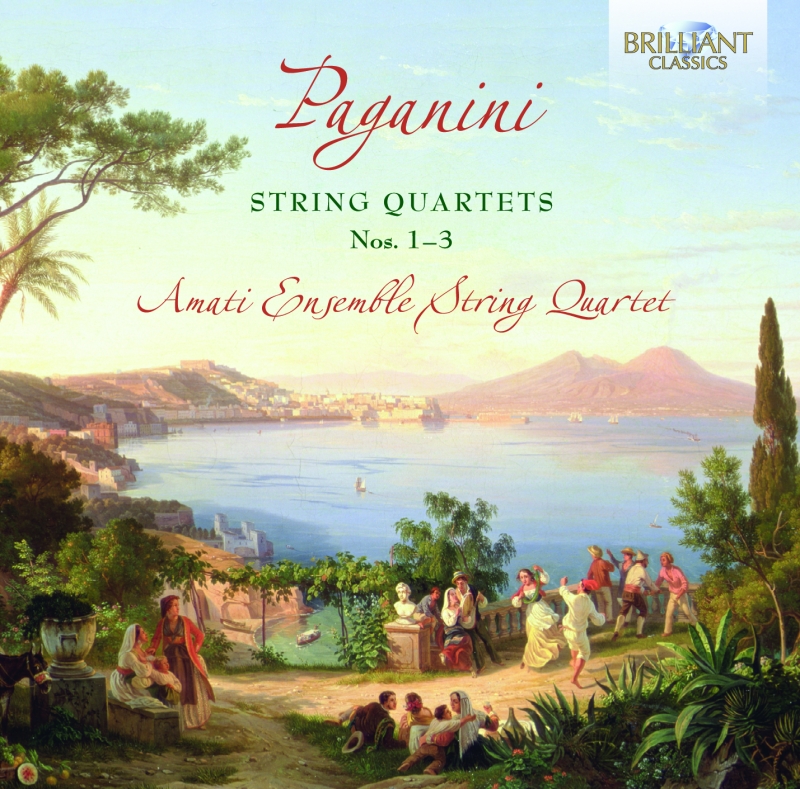
Paganini AmatiWat weet een gemiddelde muziekliefhebber van en over Nicoló Paganini?
Dat hij een duivelskunstenaar was en wellicht zelfs een ‘vioolspelende duivel’? De schepper van ‘Cappriccio’s’ die iedere violist hoofd- en vingerbrekens bezorgen alleen al als zij er aan denken? De componist van de hondsmoeilijke vioolconcerten en duetten voor viool en gitaar?

De maestro uit Genua had veel meer in zijn mars en op zijn notenbalken. Onder andere heerlijke, overromantische strijkkwartettten. Niet dat ze zo makkelijk zijn om te spelen maar bij de luisteraar komen ze meer dan gemoedelijk over. Niemendalletjes? Zonder twijfel, maar zo, zo ontzettend lekker! Zeker als het zo aanstekelijk uitgevoerd wordt.

Het Amati Ensemble dat in een steeds wisselende samenstelling, maar altijd onder de meer dan bezielde leiding van de sterviolist Gil Sharon (ooit de concertmeester van het Limburgs Symfonie Orkest) optreedt, doet de naam van de uitgever alle recht aan. Briljant!

Heeft u een winterdiep? Slecht geslapen? Is uw minnaar met de dochter van de buurman ervandoor? Ik weet een remedie! De strijkkwartetten van Paganini. Mensen: ren naar de winkel, koop de cd of bezoek Spotify. Ga lekker achterover zitten en schaamteloos genieten. Wedden, dat al uw problemen, net als de sneeuw, tegen die tijd zijn gesmolten?


Nicolò Paganini
Strijkkwartetten 1 t/m 3
Amati Ensemble String Quartet: Gil Sharon, Sonja van Beek, Ron Ephrat & Floris Mijnders
Brilliant Classics 94287

Die Lustige Witwe en The Merry Widow

DIE LUSTIGE WITWE

Witwe Gilfrey

De operette mag weer gezien en gehoord worden en zelfs in de deftigste opera huizen komt ze tegenwoordig op het repertoire voor. Vaak wordt er voor Die Lustige Witwe gekozen en niet zonder reden: dit is een prachtig werk, vol stervensmooie melodieën en geestige dialogen.

Helmuth Lohner, aanvankelijk een film- en toneelacteur en operettezanger legt zich de laatste jaren toe op het regisseren en dat doet hij voortreffelijk. Zijn uit 2004 daterende productie uit Zurich is zeer traditioneel, rijk aan kleuren en bewegingen, en zijn satirische karakterisering van de personages is zeer logisch.

Wel permitteert hij zich een kleine ‘aanpassing’: na het mannensextet ‘Wie die Weiber’ laat hij de  vrouwen een equivalent ervan zingen.

Aanvankelijk had ik een beetje moeite met de ietwat schrille Dagmar Schellenberg (Hanna), maar gaandeweg wordt zij alleen maar beter en revancheert zich met een perfect uitgevoerd Vilja-lied. en Rodney Gilfrey is een onweerstaanbaar charmante en sexy Danilo


Ute Gferer een kittige Valencienne en Piotr Beczala doet met zijn prachtige, lyrische tenor de goede oude tijden van een Kiepura herleven (Arthaus Music 100451)


THE MERRY WIDOW

Witwe Skovhus

Ja, het is in het Engels. So what? De ‘unvergessenliche süsse melodien’ klinken er niet minder mooi om. Deze productie van Franz Lehárs Die Lustige Witwe door de San Francisco Opera is gewoon wonderschoon.

The Merry Widow was in 2003 de laatste productie van Lotfi Mansouri, sinds meer dan veertig jaar het gezicht van de San Francisco Opera. Voor die gelegenheid werd een nieuwe Engelse vertaling van het libretto gemaakt, althans van de Franse versie ervan. Hierin speelt de laatste akte zich niet bij Hanna thuis, maar in het echte ‘Maxim’.

Mansouri ziet Hanna als een al wat rijpere vrouw, die gezongen dient te worden door een zangeres die Marschallin al heeft vertolkt. In dit concept past Yvonne Kenny, die hiermee haar roldebuut maakt, wonderwel. Ze beschikt over een schitterende charisma, haar stem is romig, fluwelig en betoverend.

Ook Bo Skovhus is een Danilo naar Mansouri’s hand: jeugdig en onweerstaanbaar aantrekkelijk. Zijn stem klinkt als een klok, hij is een begenadigd acteur en een voortreffelijke danser.

„Ik doe wat ik kan”, antwoordt hij op Hanna’s: „U danst goddelijk”. Nou, hij kan echt zeer veel en het verbaast me dus niet dat hij niet alleen dé Danilo maar ook één van de belangrijkste baritons van de laatste tien van de vorige en de eerste tien jaar van deze eeuw was geworden. De te zware rollen hebben zijn stem inmiddels een beetje aangetast maar hij blijft een belangrijke bühne-persoonlijkheid.

Angelika Kirschschlager en Gregory Turay excelleren als Valencienne en Camille, en ook de rest van de cast is voortreffelijk. Een wonderschone productie (Opus Arte OA 0836 D)


Kerst Operette-Gala’s uit Dresden

HEART’S DELIGHT. Piotr Beczała zingt operette


Gustav Klimt domineert Die Fledermaus uit Glyndebourne

Fledermaus Glyndebourne Allen

Het is allemaal de schuld van de champagne, zeggen ze. Zou best kunnen, want het bruist, bubbelt, schittert en spettert dat het een lieve lust is. De bubbels zijn ook letterlijk ‘omnipresent’ in deze schitterende productie van Die Fledermaus, die in augustus 2003 in Glyndebourne werd opgenomen (Opus Arte OA 0889D).

Het geheel is zeer Art Deco en Jugendstil, met decors die lijken te zijn ontworpen door Otto Wagner en geschilderd door Gustav Klimt. Die laatste is eveneens alomtegenwoordig, ook in de kleding: van de jurk van Rosalinde tot de ‘schlafrok’ van von Eisenstein, waarin de arme Alfred de gevangenis ingaat.

Voor deze productie zijn nieuwe dialogen geschreven (de regisseur, Stephen Lawless, ziet het stuk als een toneelstuk met muziek), makkelijk te volgen dankzij de Nederlandse ondertitels.

Thomas Allen zet een kruidige Von Eisenstein neer, die duidelijk aan een midlifecrisis lijdt in een ietwat ingeslapen huwelijk. Pamela Armstrong is een pittige Rosalinde.

Malena Erdmann is een fantastische Orlofsky en Lybov Petrova en kittige Adele. Eigenlijk zijn ze allemaal fantastisch, inclusief de dirigent – de sprankelende Vladimir Jurowski – die ook actief deelneemt aan de actie.

Zet de champagne maar vast koud, geniet en drink. Niet noodzakelijk met mate.

Sir Thomas Allen over Eisenstein:


DRIE ‘FLEDERMAUSEN’ DIE NIEMAND MAG MISSEN

Let Beauty Awake: SIR THOMAS ALLEN

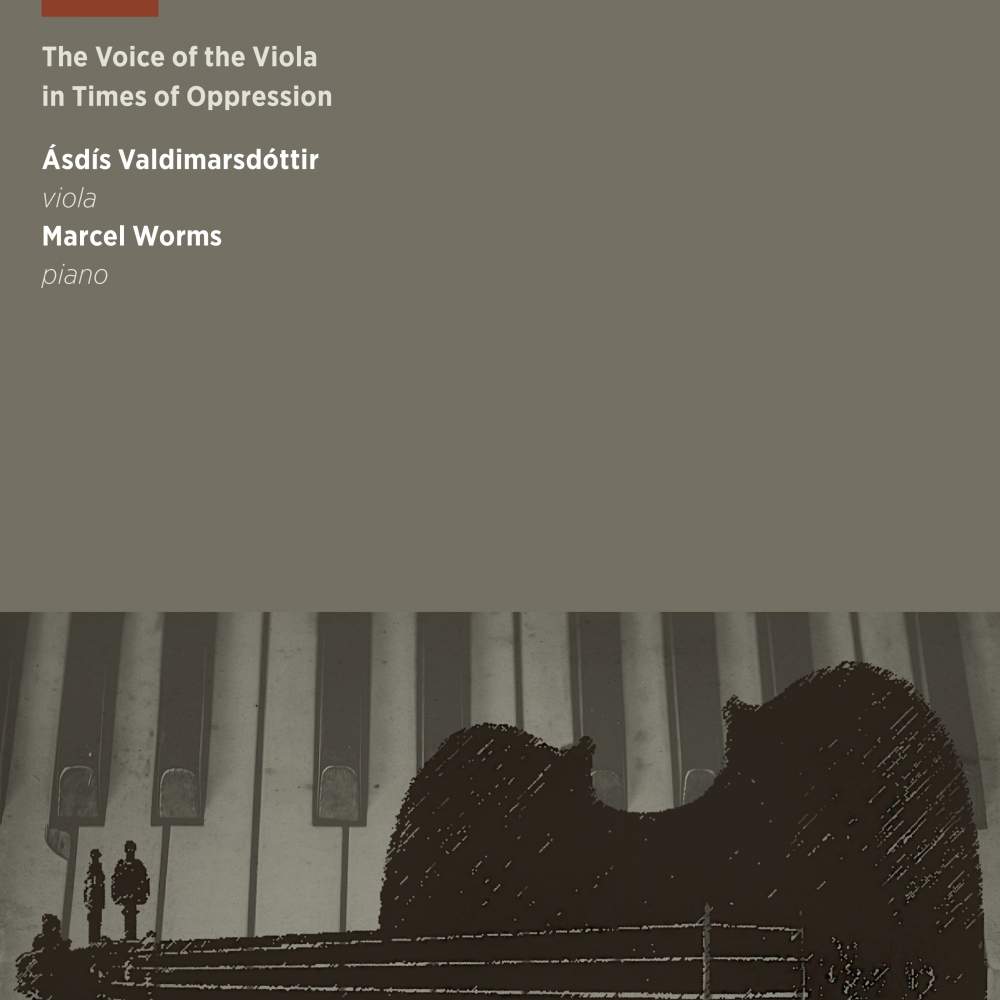
The voice of the Viola in Times of Opression: viola as a voice for the persecuted

altviool voice of the viola

The viola sonata by Dick Kattenburg (1919-1944) consists of only one movement, allegro moderato. The reason is simple: before Kattenburg could complete the work, he was arrested during a raid in a cinema and sent to Westerbork on 5 May 1944. Two weeks later, on 19 May 1944, he was deported to Auschwitz, where he was murdered. Kattenburg was only 24 years old.

Max Vredenburg (1904 -1976) is now mainly known as co-founder of the National Youth Orchestra. In the 1920s he left for Paris where he studied with Paul Dukas and Albert Roussel, composers who influenced him greatly. In 1941 he fled to Batavia and in 1942 he ended up in a Japanese camp. He survived the war but a large part of his family was murdered in Sobibor and Auschwitz. He composed the Lamento in 1953 in memory of his sister Elsa.

altvioool VredenburgMax1

Max Vredenburg © Maria Austria MAI

The sonata by Mieczysław Weinberg, originally composed for clarinet and piano, is perhaps the most complex of all the other works on this CD. It is also the only composition that is not only sad: you can also recognize fragments of klezmer and Jewish folklore in it.

And if you think you recognize the opening measures of Beethoven’s Mondscheinsonate in ‘Adagio’, you are right. Those notes are indeed in it. Just as in the adagio, the final movement of Dmitri Shostakovich’s sonata. The work, dating from 1975, was his last composition, and shortly after the completion of the sonata he died of lung cancer.

I can only be brief about the performance: the absolute TOP! The sound that Ásdís Valdimarsdóttir elicits from her viola is of a rare beauty. It is so beautiful that it hurts. Listen to the Adagio of Weinberg’s sonata. Terrifying.

Marcel Worms, surely one of the greatest pianists/accompanists of our time, keeps himself a bit in the background, giving his Icelandic colleague all the honour of wearing glasses. But just listen carefully and experience how compassionate his contribution is. That’s what I think is called ‘partners in crime’. I can’t describe it any better.

Mieczysław Weinberg, Dick Kattenburg, Max Vredenburg, Dmitri Shostakovich
The voice of the Viola in Times of Opression
Ásdís Valdimarsdóttir (viola), Marcel Worms (piano)
Zefir Records ZEF 9657

Translated with www.DeepL.com/Translator

Article in Dutch: The voice of the Viola in Times of Opression: de altviool als stem voor de vervolgden

Forbidden Music in World WAR II: PAUL HERMANN