After Hvorostovsky won the Cardiff Competition in 1989, record companies were queuing up to sign a contract with him. Philips was chosen and promptly a small number of recitals and a few complete operas were recorded with him.
Hvorostovsky in Cardiff:
It was all too premature, Hvorostovsky was not ready: he did not speak any languages but his own, and his repertoire was much too limited. His contract was not renewed, and things went downhill for him.
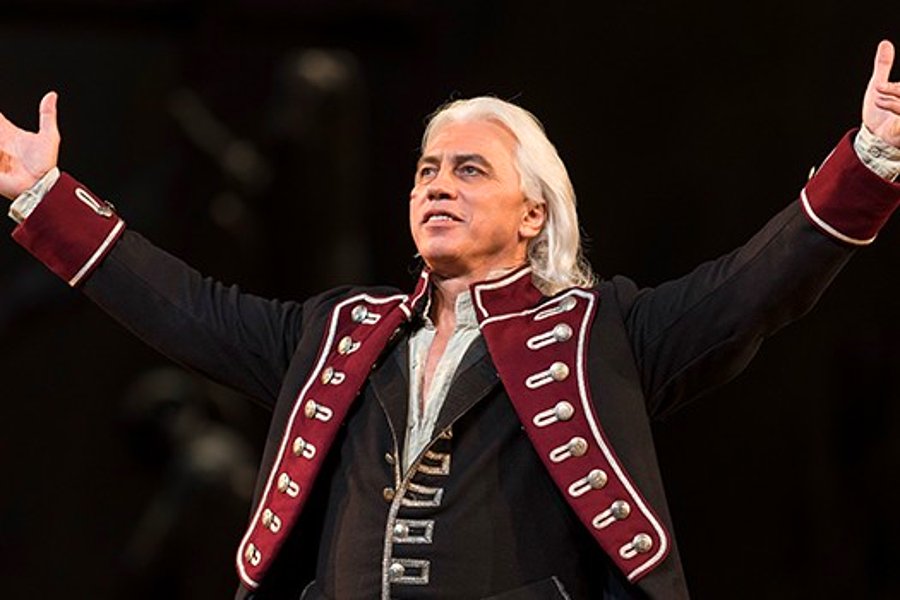
But he redeemed himself in a big way! On 18 July 1998, he gave a recital for thousands of enthusiastic listeners at the Festival de Lanaudière. He sang the Songs and Dances of Death by Mussorgsky, followed by a number of arias.
I have to confess that I had been planning to read a book to help me pass the time, but I never did. Instead I listened breathlessly to his velvety voice, his matchless legato and his flawless interpretation, which moved me to tears. As Hvorostovsky is such a very charismatic singer, it is a pure unadulterated pleasure to be watching him.
Hvorostovsky and Charles Dutoit in Rossini’s ‘Largo al Factotum’ (Barbiere di Seviglia by Rossini):
Russian Songs from the war years (VAI 4318)
Patriotism has become an old-fashioned word. Everything has to be international, global, multicultural and cosmopolitan, and maybe that’s for the best. The Second World War ended seventy-five years ago, and it seems so long gone….
Yet there are still people alive who experienced ‘The Great Patriotic War’. There are still (personal) stories. And then there are the songs. I grew up with them; the Russian songs from that time. My mother, who had fought in the Red Army throughout the war, sang them instead of lullabies, and they made me dream about the lonely accordionist looking for his beloved.
None other than Dmitri Hvorostovsky brought them back to the concert hall, and on 8 April 2003 he performed them for no less than 6,500 spectators in the Kremlin Palace.
Below, Hvorostovsky sings “Журавли” (Cranes) from the film “When the cranes fly over”, by Mikhail Kalatozov:
The arrangements have been slightly altered; they sound less over the top, they have been loosened up a little and they are foremost nostalgic. There is no ‘hurrah patriotism’.
Hvorostovsky sings in a clearly relaxed way, with a mild smile around his mouth, without any vocal exaggeration or obvious articulation. A bit like a crooner, a Sinatra or a Bing Crosby.
The audience sniffles softly and mouthes the words, soundlessly singing along. I too become fascinated and feel a tingling sensation in my eyes. Nostalgia? My Dutch friend, born on Curaçao, was just as moved. Very touching.
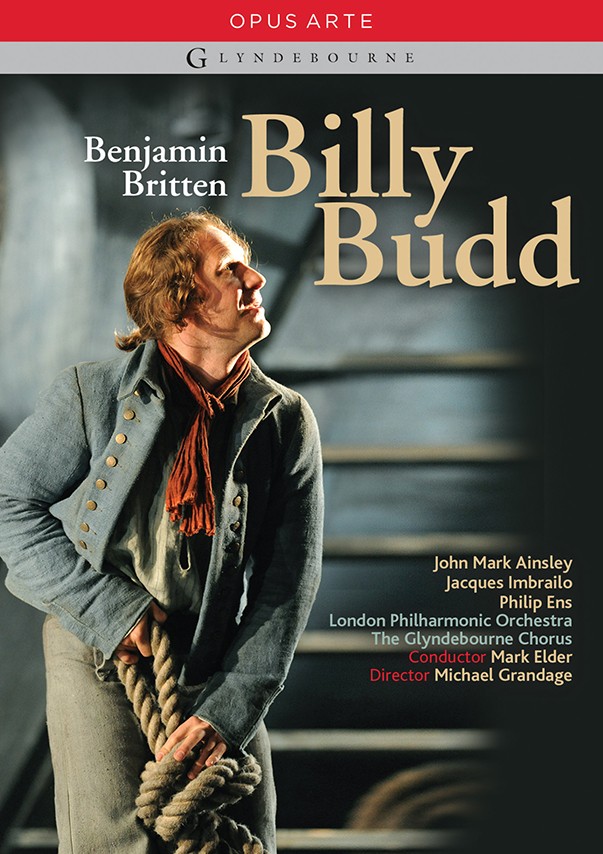
Een schitterend geënsceneerde naturalistische productie van Brittens zeeliedenopera uit Glyndebourne was voor Peter Franken aanleiding zich te verdiepen in wat er nu eigenlijk speelt tussen de drie hoofdpersonen. Het betreft de opname op Opus Arte uit 2010 met Jacques Imbrailo in de titelrol.
Dit mooie maar verontrustende werk zag ik een aantal malen in het theater en elke keer heb ik het verloop van het verhaal als onbevredigend ervaren. Een simpele tegenstelling als die tussen goed en kwaad spreekt me niet aan. Als je een personage neerzet als de duivel zelf hoef je natuurlijk niets uit te leggen, daar staat iemand op het toneel die het stichten van kwaad als enige bestaansdoel heeft. Hoezo uitleggen? Maar we kunnen het in elk geval eens proberen.
Billy Budd
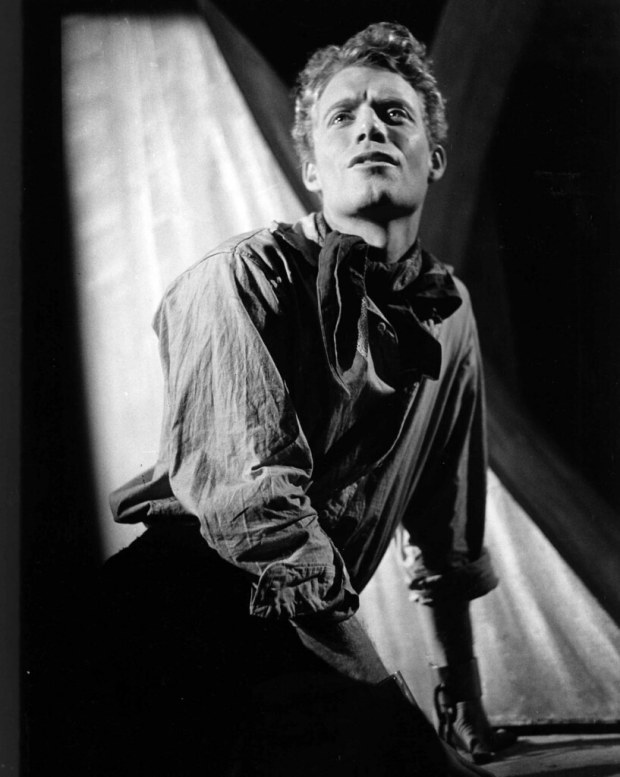
Theodor Uppman, de eerste Billy
Ondanks dat hij een vondeling is heeft zijn omgeving hem kennelijk een redelijke start in het leven gegeven. Billy is een naïeve mooie sterke jongeman waar iedereen gemakkelijk mee weg lijkt te lopen. Binnen de kortste keren heeft hij aan boord de bijnaam Baby. Hij is ook bereid zijn schamele bezittingen te delen zoals uit de scène met de oude Dansker blijkt. Door de librettisten Forster en Crozier wordt hij neergezet als de verpersoonlijking van ‘het goede’ in de mens. En voor wie het nog niet heeft begrepen laat men hem ook naar de Indomitable overkomen vanaf een koopvaardijschip met de provocerende naam The rights of man. Als Billy zijn schip vaarwel toezingt en die naam noemt maakt hij zich ongewild verdacht. We zitten immers in 1797 op het hoogtepunt van de Eerste Coalitie Oorlog die op zee vooral tussen Frankrijk en Engeland wordt uitgevochten. De First Lieutenant geeft zijn Master at Arms onmiddellijk opdracht die nieuwe matroos in de gaten te houden.
John Claggart
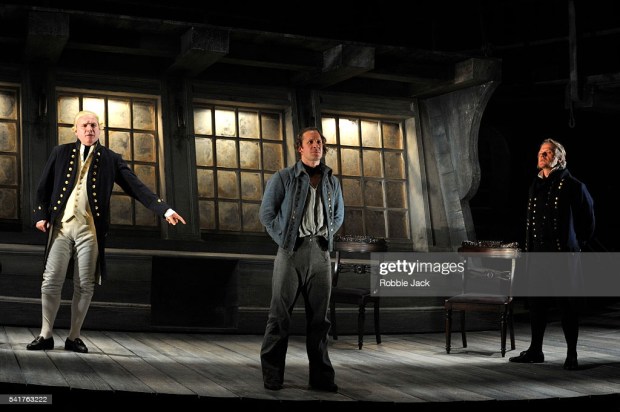
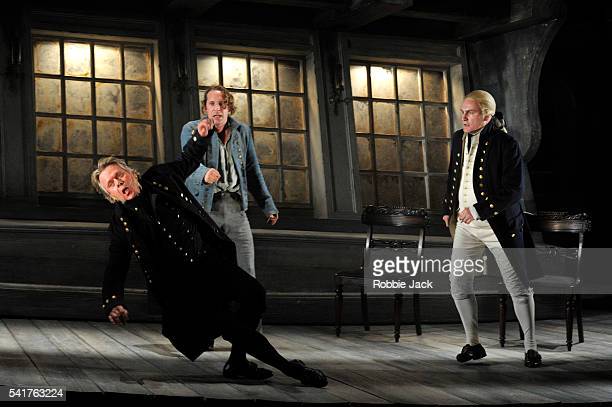
John Mark Ainsley as Captain Vere, Jacques Imbrailo as Billy Budd and Phillip Ens as Claggart in the Glyndebourne production of Benjamin Britten’s “Billy Budd” directed by Michael Grandage and conducted by Mark Elder at Glyndebourne. (Photo by robbie jack/Corbis via Getty Images)
De Master at Arms van de Indomitable vormt de verbindende schakel tussen de officieren en de zeelui. Zijn macht is vrijwel onbeperkt en als die wordt gebruikt om strenge straffen op te leggen om kleinigheden, wekt dat kwaad bloed. Op de Indomitable hebben alle manschappen een hekel aan Claggart en ook de officieren mijden hem maar het liefst.
Claggart zingt in een lange monologue intérieur over zichzelf: ‘Would that I lived in my own world always, in that depravity to which I was born. There I found peace of a sort, there I established an order such as reigns in Hell.’
Hij wekt de indruk als het ware in een morele afgrond geboren te zijn, dus niet daar later in te zijn beland. Dat kan eigenlijk alleen maar duiden op homoseksualiteit, typisch een ‘afwijking’ waarvoor iemand in die tijd het etiket ‘depraved’ kreeg opgeplakt. Doordat Claggart zijn hele leven zich ten opzichte van andere mannen benadeeld en buitengesloten zal hebben gevoeld, zal hij zich in zijn eigen beperkte leefwereld sterk hebben gemaakt door alles en iedereen die daarin doordringt met de grond gelijk te maken. Het is zijn permanente wraak op zijn eigen gemankeerde bestaan.
En als daar plotseling zo’n knappe jongeman opduikt, werkt dat zeer ontregelend. Hij zingt:
‘The lights shines in the darkness comprehends it and suffers. O beauty, o handsomeness, goodness! Would that I had never seen you! Having seen you, what choice remains to me? None, none! I’m doomed to annihilate you.’ Alleen zo kan Claggart de rust en zekerheid in zijn eigen kleine universum herstellen.
Deze analyse zal niet iedereen kunnen overtuigen maar verdient mijns inziens de voorkeur boven de dooddoener Claggart is de duivel in persoon. Daarom nog een citaat: “‘If love still lives and grows strong where I cannot enter, what hope is there in my own dark world for me? No! I cannot believe it! That were torment to keen.’
Edward Fairfax Vere
Phillip Ens as Claggart, Jacques Imbrailo as Billy Budd and John Mark Ainsley as Captain Vere in the Glyndebourne production of benjamin Britten’s “Billy Budd” directed by michael Grandage and conducted by Mark Elder at Glyndebourne. (Photo by robbie jack/Corbis via Getty Images)
De kapitein van de Indomitable wordt door de crew op handen gedragen. Starry Vere noemen ze hem en iedereen is bereid voor hem door het vuur te gaan. Als Claggart bij hem komt en Billy van muiterij beschuldigt, vertrouwt Vere hem niet. Hij waarschuwt hem zelfs door erop te wijze dat valse beschuldigeigen met de dood worden bestraft.
Tegelijkertijd maakt hij zich wel degelijk zorgen over het gevaar van muiterij na het gebeuren op de Nore, the floating republic. Maar Billy kent hij inmiddels, prima jongen. Daarop stelt Claggart nogal uitdagend: ‘You do but note his outwards, the flower of masculine beauty and strength.’ Zinspeelt hij erop dat Vere een voorkeur heeft voor mooie jongens?
Hoewel Vere ervan overtuigd is dat Claggart liegt over Billy, laat hij die arme jongen toch zijn eigen kastanjes uit het vuur halen. Billy moet zichzelf maar verdedigen tegen die monsterlijke beschuldigingen en dan kan Vere in alle rust een besluit nemen. Hij ziet Claggart als het ware al aan de yard-arm hangen.
Maar doordat Billy zich in hoogste nood niet verbaal kan uiten als gevolg van zijn stotter en zijn vuist laat spreken, gaat die vlieger voor Vere niet op. Die laat Billy vervolgens als een hete aardappel vallen. Zijn officieren moeten rechtspreken en hun dringende verzoek om opheldering over de mogelijke beweegredenen van Claggart, wimpelt hij af.
Vere zou Billy vermoedelijk niet van de dood hebben kunnen redden, de Articles of War bieden geen enkele ruimte, maar hij doet zelfs geen enkele poging daartoe. Dat Billy hem prijst voor hij de dood ingaat zegt iets over zijn naïeve kijk op de wereld, Vere zou zich maar beter heel klein moeten maken in een hoekje.
Regisseur Michael Grandage speelt dit goed uit door Vere na het uitspreken van het doodvonnis helemaal buiten de handeling te plaatsen. En wat mij betreft heeft Vere alle reden in zijn latere leven op deze episode met een gevoel van schaamte terug te kijken.
Voorstelling
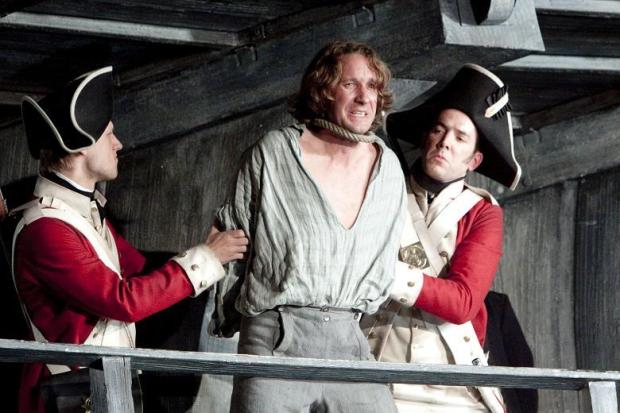
Alles is levensecht in deze productie, de contouren van een scheepsruim en dek, de kapiteinshut, de kostuums en de kanonnen. Erg confronterend wordt dit als op het toneel uitgerekend door Dansker de strop wordt gewikkeld, gewoon uit een willekeurig touw. En vervolgens houden Billy’s beste vrienden het touw vast waaraan hij komt te bungelen over de yard-arm. Ze zetten zich schrap als hij valt. Het is het meest aangrijpende moment van de hele voorstelling.
Muzikaal is het een topuitvoering met zoals gezegd Jacques Imbrailo als Billy. Vere wordt vertolkt door Joh Mark Ainsley en Claggart komt voor rekening van de zeer overtuigende Philip Ens. Mooie bijrol van Jeremy White als Dansker.
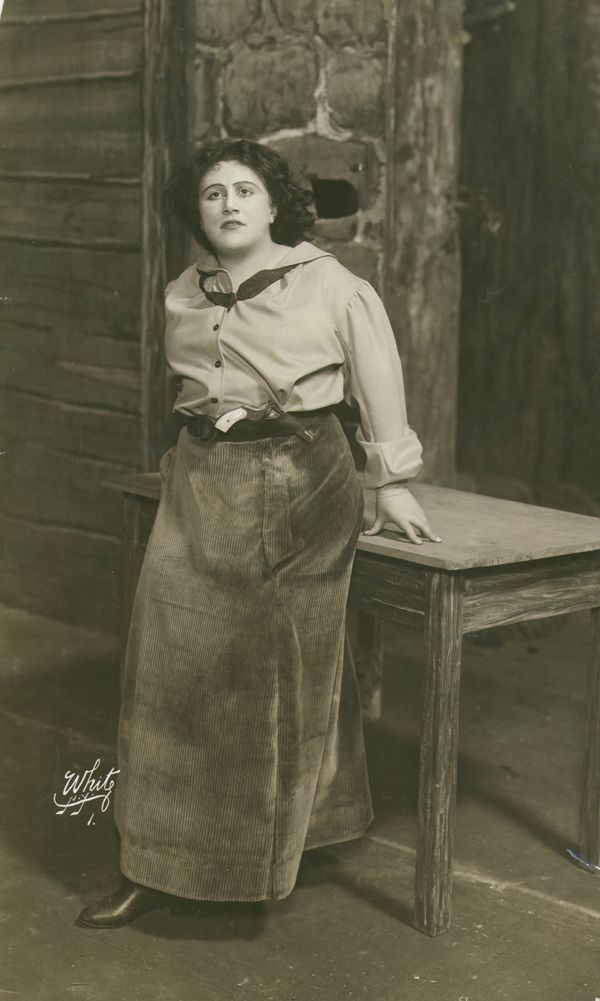
Emílie Pavlína Věnceslava Kittlová (February 26, 1878 – January 28, 1930) or, as the world knows her: Emmy Destinn. She is considered to be one of the greatest sopranos of the first twenty years of the twentieth century. She celebrated triumphs in Berlin, Paris, London and New York, she performed with Enrico Caruso, who had once proposed to her, and together they sang the world premiere of La Fanciulla del West, an opera that Puccini had composed with her voice in mind.
In her homeland, Bohemia, she was mainly loved for her patriotism, which even earned her a three-year house arrest during the First World War. The Czech documentary about her life is both interesting and irritating.
Interesting because it recounts many unknown facts about her life and it provides us with beautiful images, photos and film clips and special acoustic recordings (including a real rarity: the Czech national anthem, sung in Czech together with her, then, lover, the Algerian baritone, Dinh Gilly):
Irritating, because it is put together as a very old-fashioned, extremely sentimental filmic portrait, full of seagulls flying overhead, windblown cornfields, a recurring hourglass and larded with staged fictional images. And all that to the sounds of Chopin’s Nocturne.
But the worst thing is that they had Destinn’s voice replaced with that of Gabriela Beňačková! So a great singer is not even allowed on- screen, because the leading part is – of course – intended for a beautiful young lady.
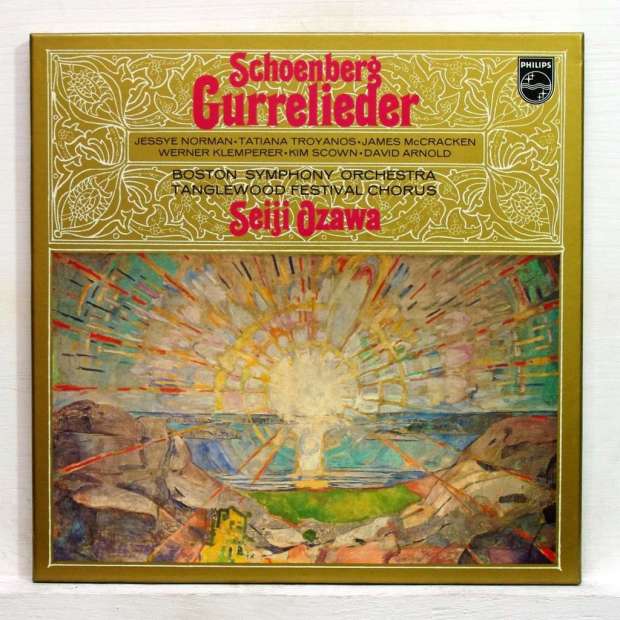
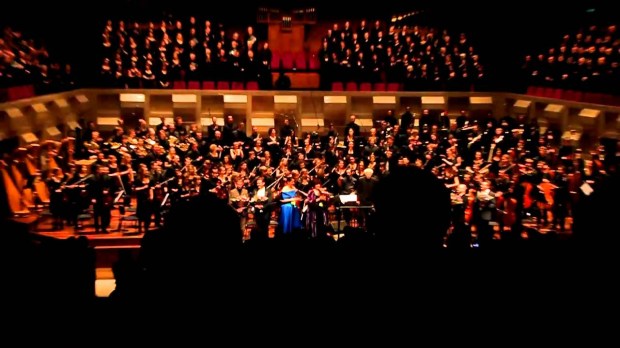
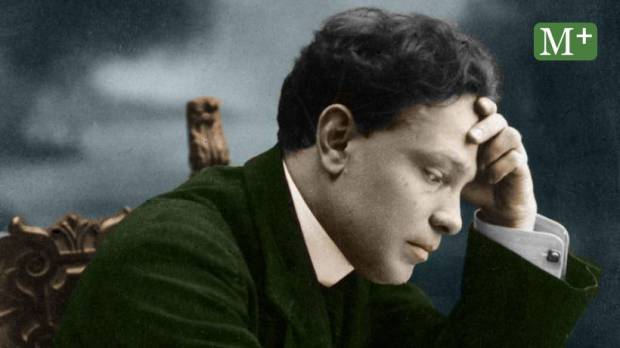
For me Gurre-Lieder is one of the most beautiful works ever composed. From the moment the music gently begins to swell, I am in heaven. The music, like a Dybbuk, takes hold of me completely and there is no escape possible.
Not that I mind. Feeling completely immersed in something, identifying with something, will give you a surreal feeling of being set afloat. A bit scary, yes, but also a bit like an initiation. Love, murder, an immense sadness that drives you mad, the fight against God, the power of nature: everything is there and it is fully integrated into the music.
The famous Viennese critic Julius Korngold called the work “a flowering cactus”. A beautiful metaphor.
In ‘Sehnt die Sonne’, the last piece of the cantata, Schönberg achieves something truly unprecedented, although he does not (yet) know it himself: he is building a bridge between past and present. Think of the finale of Iris by Mascagni. And think of Schönberg’s own masterpiece, A Survivor from Warsaw, composed after the war.
Below, ‘Sehnt die Sonne’ in the performance of the (not discussed here) Berliner Philharmoniker olv Simon Rattle:
The premiere, on February 23, 1913, in Vienna, was conducted by Franz Schreker, with 757 musicians participating. The Dutch premiere, conducted by Schönberg himself, took place in March 1921. The idea of performing the work scenically did come up; apparently there were plans for it as early as 1927, but Schönberg has always resisted the idea.
It’s a cliché, I know, but you must hear the Gurre-Lieder live at least once in your life. No recording, no matter how great, can match the overwhelming power of a live concert.
LEOPOLD STOKOWSKI 1952
The very first commercial recording, as far as I know, is from 1932. None other than Leopold Stokowski conducted the American premiere of the work on April 8 that year. It was recorded by RCA and with a bit of a search you may be able to find it (though I did not succeed).
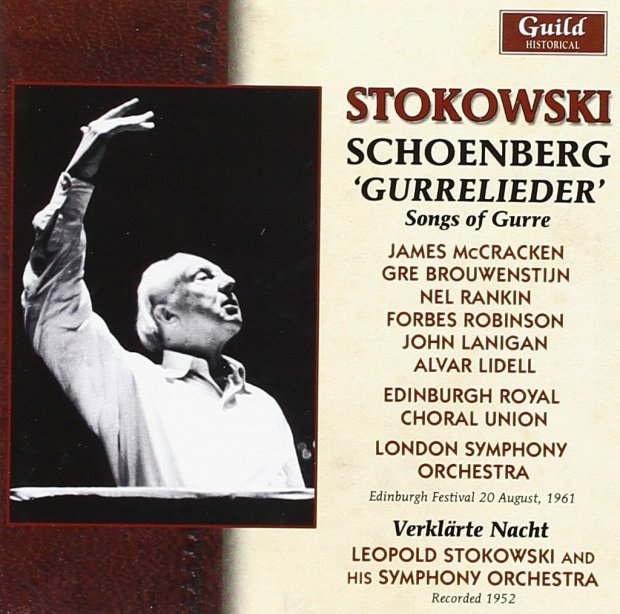
In 1961, Stokowski took the Gurre-Lieder to Edinburgh, where it caused a sensation. The performance was recorded by radio and later released on Guild (GHCD 2388/89). His affinity with the work is clearly audible, it is as if it were his love child: his approach is caressing, stroking, cuddling, but with justified outbursts of anger when the child wants to be unruly. I think that is wonderful, really wonderful.
Gré Brouwenstein is a good Tove. Nice voice, although I find her a bit distant at times. James McCracken is a bit of a heavy Waldemar, but he never degenerates into roaring, something that later marred many of his recordings. Personally, I prefer a voice that is more agile, but Stokowski’s lyrical approach also transfers to his soloists, including McCracken.
The concert begins with the announcement of the BBC presenter, after which ‘God save the Queen’ is given. Quite nice and adding to the atmosphere. Below the Prelude, followed by Waldemar’s first song (James McCracken):
SEIJI OZAWA 1979
In 1979, Mc Cracken was long past his prime. A pity, because it is the only blemish on an otherwise splendid performance by Seiji Ozawa (Philips 4125112).
The young Jessye Norman could do anything she wanted with her voice, and her dark soprano with its enormous width is very sensual. A little dominant, it is true, not really an innocent lady, but I like it.
Jessye Norman sings ‘Du sendest mir einen Liebesblick’ :
Tatjana Troyanos is a very heartfelt Waldtaube. The whole was recorded live at the Boston Symphony Hall.
RICCARDO CHAILLY 1985
I find the rendition by Riccardo Chailly (Decca 4737282) somewhat disappointing. It is a ‘studio’ recording (recorded in 1985 in Jesus-Christus-Kirche in Berlin), but the sound does not really come across. I also find Chailly a bit noisy, with few nuances.
Siegfried Jerusalem just sounds Wagnerian, and that is, in this case, not a compliment. Also Susan Dunn (Tove), at the time a Chailly protégé, is not really adequate, sometimes it seems as if she does not know what she is singing. But then Brigitte Fassbaender (Waldtaube) comes along and any doubts are gone!
ESA-PEKKA SALONEN 2009
In 2009, Esa-Pekka Salonen (SIGCD173) caused a sensation with his performance at the Royal Festival Hall in London. And rightly so. The performance is really sizzling and the soloists, with foremost Soile Isokoski as the most beautiful Tove ever, are fantastic.
Stig Andersen is certainly a good Waldemar and Monica Groop a heartbreaking Waldtaube. Unfortunately, the recording is abominable. There is no sound balance whatsoever, you have to adjust your volume buttons all the time. I do not have a SACD player, but my speakers could not cope with it. A pity.
MARKUS STENZ 2014
The performance recorded in June 2014 under Markus Steinz for Hyperion (CDA68081/2), is in my opinion among the best available. The Gürzenich-Orchester Köln evidently feels like a fish in water in the late Romantic idiom and – reinforced by the six different choirs – they do not shy away from any means of getting through to the listener and his heart. The “Zemlinsky years” of James Conlon are apparently in their genes forever…..
The, in itself, warm mezzo of Claudia Mahnke (Waldtaube) unfortunately has some sharp edges. For me, I would have liked it to be a bit more lyrical – less Wagner and more Zemlinsky, so to speak – but her performance is more than impressive. A real voice actress.
The Dutch soprano Barbara Haveman is a very sensual Tove, but best of all is Brandon Jovanovich. As Waldemar, he is pushing his limits, but he never oversteps them. Very masculine and at the same time very fragile. For me, his performance is more than sensational.
The baritone Johannes Martin Kränzle is a fantastic speaker. His presentation is devoid of any mannerisms, something many performers of this role are guilty of (Sunnyi Melles in Amsterdam!).
REINBERT DE LEEUW 2011
Before I reveal my absolute favourite (we all like a bit of suspence, don’t we?), a word about Reinbert de Leeuw’s performance, recorded by KRO on March, 26, 2011 in a sold-out Dr Anton Philipszaal in The Hague. The orchestra was “halved”, there were “only” 356 musicians. I did not really like the soloists , but it is still a homegrown document. The Internet offers enough (pirate) recordings. Otherwise, just search for it on youtube.
Reinbert de Leeuw speaks about the Gurre-lieder:
AND THE WINNER IS: RENÉ LEIBOWITZ 1953
René Leibowitz. Have you ever heard of him? In the 1950s, he was one of the best conductors, the ones who put their own stamp on everything they undertook. In 1953, he conducted “Gurre-lieder” in Paris. When I received the CD (Preiser 90575), I thought: interesting, let it come… Well… a few hours later I knew: better, more beautiful, more moving than this does not exist, at least not for me. With Leibowitz you can even hear the flapping of the dove’s wings!
Richard Lewis sings a Waldemar as I have always wanted to hear him: sensitive and delicate. Ethel Semser (Tove) was well acquainted with Schoenberg’s oeuvre; she had already recorded his Pierrot Lunaire.
Nell Tangemann (Waldtaube) remains a great unknown, despite the roles she has created: Mother Goose, for example. Or Dinah, in the world premiere of Bernstein’s “Trouble in Tahiti”. Ned Rorem has also composed a few things for her. Unfortunately, no recordings of this exist, so you can consider the Gurre-lieder as a document and a tribute to the unknown mezzo-soprano who honestly deserved better. An absolute must.
BONUS
A curiosity: Schoenberg conducting his ‘Lied der Waldtaube’, here sung by Rose Bampton. The recording dates from 1934:
Kirsten Harms, Intendantin der Deutschen Oper Berlin 2004–2011, Foto: Bernd Uhlig
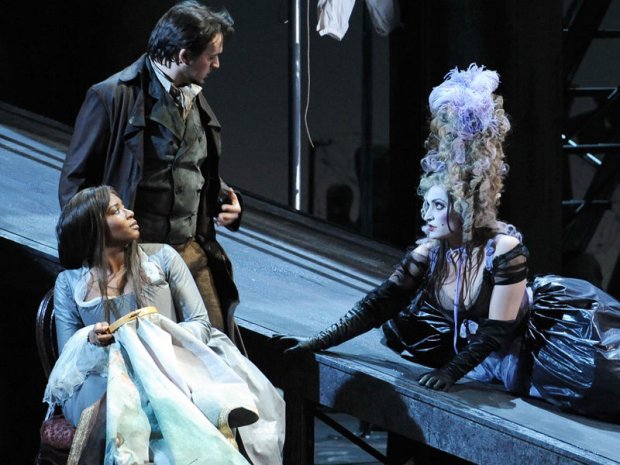
In de tijd dat Kirsten Harms intendant was van de Deutsche Oper Berlin stond er een kleine reeks ‘revolutie-opera’s’ op het programma te weten Andrea Chénier, Les dialogues des Carmélites, Germania en Marie Victoire. De laatste twee worden gerekend tot Harms’ Ausgrabungen van vergeten werken.
Marie Victoire van Ottorino Respighi (1879-1936) is een echte rariteit. Het werd gecomponeerd in de periode 1912-1914 maar beleefde pas op 27 januari 2004 in Rome zijn première. Het libretto van Edmond Guirod past helemaal in de reeks opera’s die de Franse Revolutie als achtergrond hebben zoals Chénier en Dialogues.
De opera begint in 1793, vier jaar na het begin van de revolutie. Graaf Maurice de Lanjallay en zijn vrouw Marie wonen nog steeds in hun landhuis en zijn min of meer gevrijwaard gebleven van de gevolgen van de revolutie. Als Maurice elders verblijft om zijn vader bij te staan, wordt Marie gearresteerd, samen met de Chevalier Cloriviere, een jeugdvriend van het echtpaar Lanjallay. Zij worden ter dood veroordeeld door een revolutionair tribunaal. De nacht voor de executie bezwijkt Marie voor de avances van Cloriviere: echtelijke trouw lijkt plotseling zo futiel nu ze de dood in de ogen kijkt. Maar uitgerekend dan wordt Robespierre gedood en de Terreur beëindigd. Marie behoudt haar leven maar maakt zichzelf verwijten: ze is nu een gevallen vrouw.
Zes jaar later woont gravin Lanjallay in Parijs. Ze noemt zichzelf nu Marie Victoire, heeft een zoontje uit de liefdesnacht met Cloriviere en drijft een hoedenwinkel. Plotseling duikt Marie’s dood gewaande echtgenoot Maurice op. Kort daarna is een explosie te horen: Cloriviere heeft een aanslag op Napoleon gepleegd, die echter is mislukt. Hij wil zich verbergen in Marie’s winkel en treft daar Maurice die hem wegstuurt. Vervolgens geeft deze zichzelf aan bij de politie. Voor het gerecht probeert Marie haar man ertoe te bewegen zijn valse bekentenis in te trekken. Ook vertelt ze hem over haar misstap. Hij vergeeft haar maar houdt verder zijn mond. Dan staat Cloriviere op uit het publiek en bekent schuldig te zijn aan de aanslag op de Eerste Consul. Onder het zingen van Marie Antoinettes lievelingsliedje ‘Il pleut, il pleut, bergère’ schiet hij zichzelf door het hoofd.
De hoofdrollen werden in Berlijn vertolk door de Amerikaanse sopraan Takesha Meshé Kizart als Marie, bariton Markus Brück als Maurice en de tenor Germán Villar als Cloriviere.
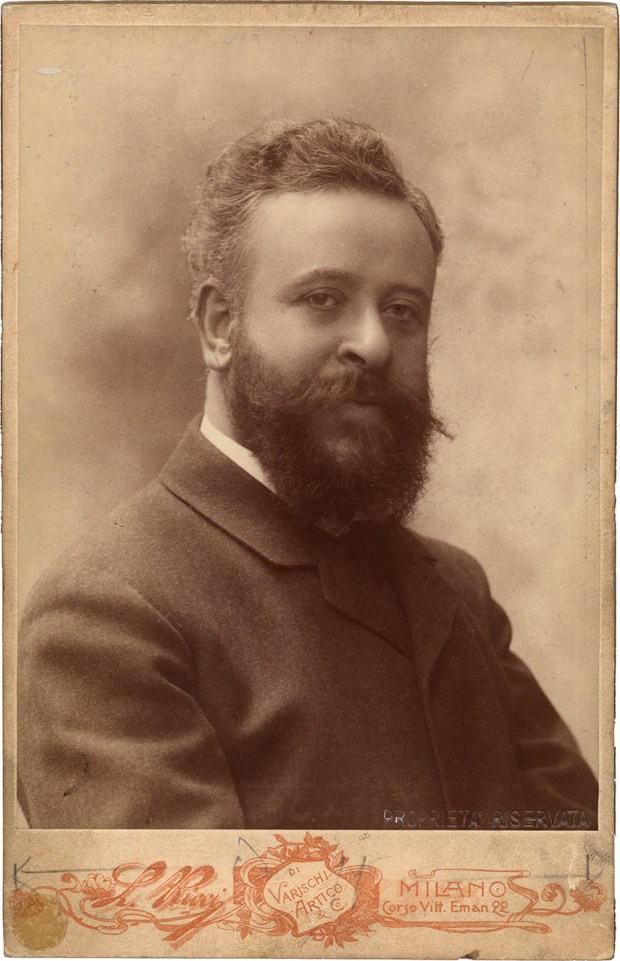
Deze opera van Alberto Franchetti (1860-1942) ging op 15 maart 1902 in La Scala in première. Het libretto is van Luigi Ilica, bekend van de tekstboeken voor Andrea Chénier en Tosca. Beide libretti waren oorspronkelijk voor Franchetti bestemd maar kwamen uiteindelijk bij zijn collega’s Giordano en Puccini terecht.
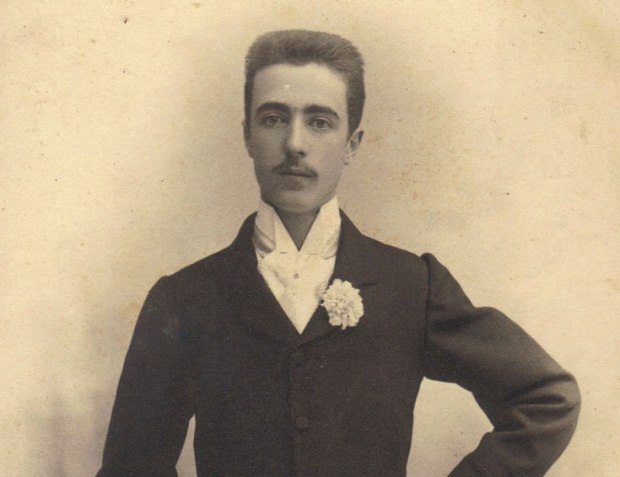
Franchetti was afkomstig uit een zeer welgestelde bankiersfamilie en kon zich permitteren het componeren louter als hobby te bedrijven. In 1888 huurde zijn vader voor hem het theater in Reggio Emilia af voor de première van zijn zoons eerste opera: Asrael. In 1892 volgde Cristoforo Colombo en tien jaar later Germania, waarbij Toscanini dirigeerde en Caruso zong. Het werk had aanvankelijk veel succes en werd in alle grote huizen gespeeld. Na een jaar of twintig raakte het echter op de achtergrond en werd vrijwel volledig vergeten.
Hieronder: Caruso zingt ‘Studenti! Udite’
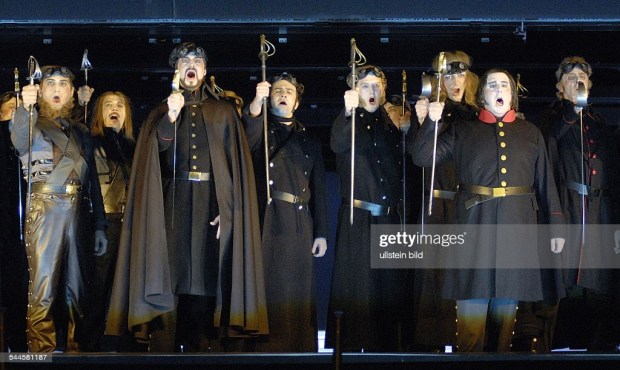
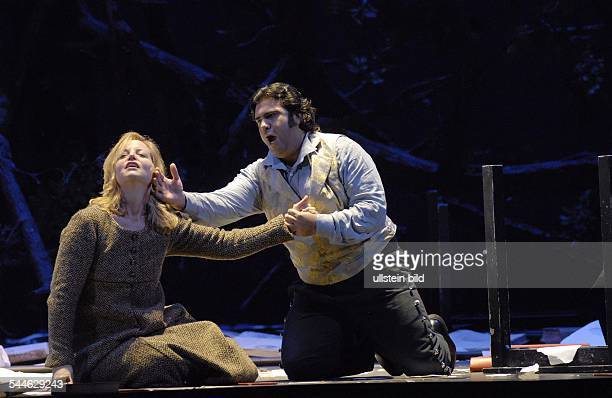
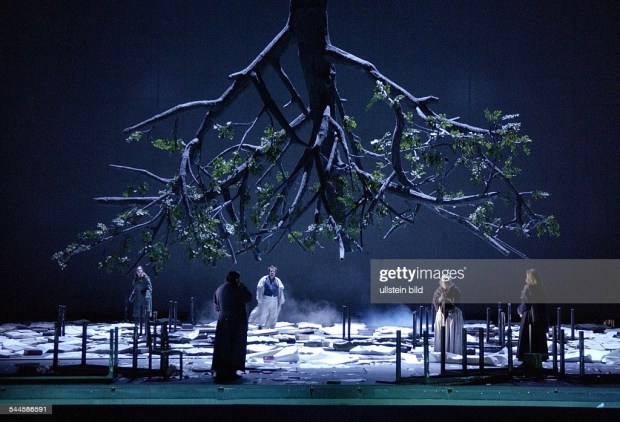
De Duitse versie die in Berlijn werd vertoond paste uitstekend in het rijtje ‘Ausgrabungen’ door de toenmalige intendant van DOB, Kirsten Harms. De opera begint in 1806 in de omgeving van Neurenberg. Een groep studenten houdt de uitgever Johann Philipp Palm verborgen voor de politie. Deze is naar hem op zoek, in opdracht van de Franse bezettingsmacht. Hij heeft een geschrift verspreid waarin de vernedering van Duitsland aan de kaak wordt gesteld en de Fransen alsmede de Duitse vorsten die hen steunen, scherp worden aangevallen. In een subplot wordt Palm verraden door een jongen die later amnestie krijgt als hij zich bij de vrijheidsstrijders voegt.
De studenten zoeken naar mogelijkheden om het land in opstand tegen de bezetters te brengen. Hun aanvoerder Karl Worms wil de vreedzame weg bewandelen, zijn vriend en tegenstrever Friedrich Löwe is voorstander van een gewelddadige aanpak. Het gaat echter niet alleen om de pen tegen het zwaard.
Wat de verhouding tussen beide mannen compliceert is het feit dat Worms tijdens de afwezigheid van Löwe een verhouding heeft gehad met diens verloofde Ricke. Worms bezweert de vertwijfelde Ricke hierover te zwijgen. Als de strijd losbarst komt het bericht dat Worms is gesneuveld, tot kortstondige opluchting van Ricke die haar innerlijke rust terug hoopt te vinden. Maar op de huwelijksdag van Löwe en Ricke duikt Worms plotseling op, weliswaar zwaargewond maar nog in leven. Als hij ziet dat zijn geliefde is getrouwd met zijn rivaal, gaat hij er vandoor. Ook Ricke neemt de benen met achterlating van een brief waarin ze de affaire opbiecht en om vergeving vraagt.
Jaren later treffen we de protagonisten opnieuw, deze keer in Königsberg. Men maakt zich op voor de strijd om Duitsland te bevrijden van Napoleon. Worms leeft nog steeds en Löwe daagt hem uit voor een duel. Een vooraanstaand revolutionair weet hen ervan te overtuigen hun energie te richten op het grotere belang: de vrijheidstijd. Onder het uitroepen van ‘leve de dood’ gaat de hele groep op pad. Bij de daarop volgende Volkerenslag in Leipzig sneuvelt Worms. Löwe is stervende als Ricke hem op het slagveld terugvindt. Zij gaat bij hem liggen om alsnog een huwelijksnacht met haar echtgenoot te beleven.
Ik bezocht een voorstelling van deze opera tijdens de Revolutions Wochen in 2006, waarin ook Andrea Chenier en Marie Victoire waren geprogrammeerd.
Bariton Bruno Caproni gaf een goede vertolking van Worms, zijn tegenpool en rivaal in de liefde Löwe was in goed handen bij de tenor Carlo Ventre, sterk optreden. Het meisje ‘tussen hun twee vuren’ werd vertolkt door de dramatische sopraan Lise Lindstrom, bij vlagen zeer ontroerend.
Renato Palumbo had de muzikale leiding.
Trailer van de productie:
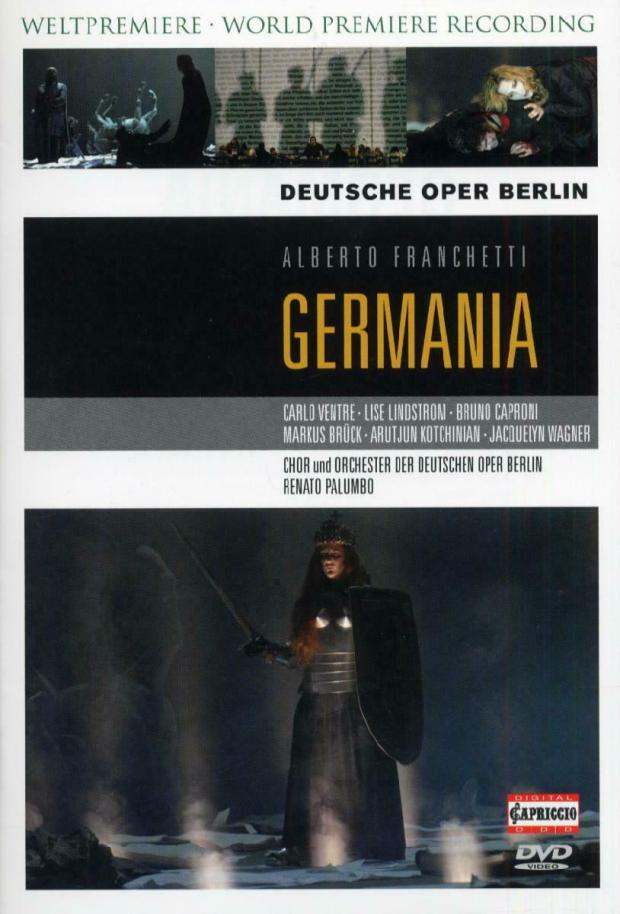
Van de voorstelling is een opname uitgebracht op dvd (Cappricio 93518)
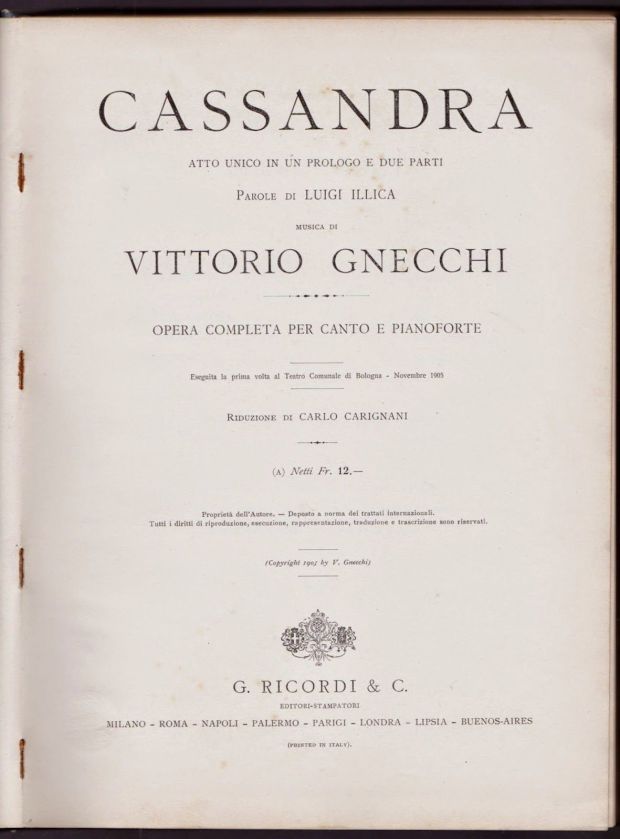
Deze minder bekende opera is geschreven door Italiaanse componist Vittorio Gnecchi (1876 – 1954). Hij kwam uit een rijke familie en was daardoor financieel niet afhankelijk van zijn composities. Op 25 jarige leeftijd componeerde hij dit werk op een libretto van de befaamde Luigi Illica. De opera werd uitgegeven door Ricordi waarna op 5 december 1905 in het Teatro Communale di Bologna de première plaatsvond onder Arturo Toscanini. Gelet op al die klinkende namen en de daardoor gegenereerde aandacht zou het niet vreemd zijn geweest als Cassandra op zijn minst een plekje op het tweede plan binnen het repertoire had verworven. Het mocht echter niet zo zijn.
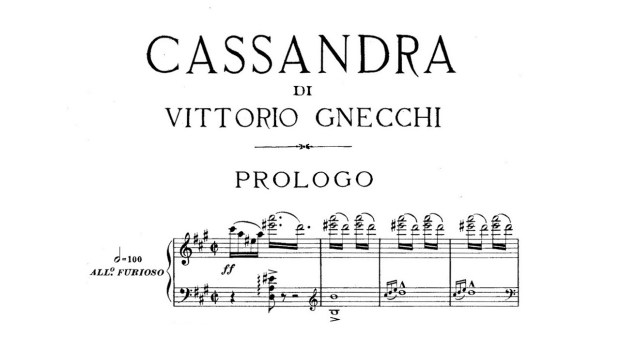
Bij gelegenheid van de première in Italië in 1906 van Strauss’ opera Salome gaf Gnecchi, waarschijnlijk uit bewondering voor zijn oudere succesvolle collega, hem een piano uittreksel van Cassandra. Toen een paar jaar later zowel Cassandra als Elektra op het programma stonden in Dresden constateerde men in het programmaboek ‘opmerkelijke overeenkomsten’ tussen beide werken. Het begint al met de zeer karakteristieke opening van Elektra (drie tonen waardoor verderop de tekst Aga-mem-non wordt gedragen) die vrijwel gelijk is aan de eerste maten van Cassandra. De status van Strauss, die van gevestigd, beroemd, bejubeld componist, gaf vervolgens een vreemde wending aan het geheel. De onbekende Gnecchi werd van plagiaat beschuldigd, waarbij gemakshalve werd vergeten dat diens opera al vier jaar eerder tot uitvoering was gebracht. Het is nooit meer goed gekomen met het werk en goed beschouwd ook niet met de componist.
Het is goed mogelijk dat het publiek eventuele overeenkomsten op muzikaal gebied heeft uitvergroot doordat de onderwerpen van beide opera’s direct in elkaars verlengde liggen. Cassandra is gebaseerd op het eerste deel van de Oresteia van Aeschylus getiteld Agamemnon. In Elektra wordt de stof behandeld uit het tweede deel, de Offerplengsters. Het derde deel behandelt de verdere ‘trials and tribulations’ van Orestes op een wijze die overigens afwijkt van hetgeen Euripides beschrijft in zijn stukken Orest en Iphigineia in Tauris. De opera Orest van Manfred Trojahn (nomen est omen) over dit deel van de nasleep van de Trojaanse oorlog die bij DNO zijn wereldpremière beleefde, is overigens gebaseerd op het stuk van Euripides.
Na het vertrek van de Grieken richting Troje blijft de jonge koningin Klytämnestra alleen achter met haar nog kleine kinderen Elektra en Orestes. Ze begint een verhouding met Aegisthus, een neef van haar echtgenoot, deels uit wraak voor het feit dat Agamemnon hun dochter Iphigenia heeft geofferd en deels ongetwijfeld ook uit onvervuld sexueel verlangen. Dat laatste wordt althans gesuggereerd door het liefdesduet dat beiden ten gehore brengen aan het begin van de opera. In geen enkel opzicht worden de twee protagonisten hier neergezet als een hedonistisch koppel zoals in Elektra. Het valt de toeschouwer niet zwaar om enige sympathie voor hen op te vatten.
Als Agamemnon na tien jaar eindelijk thuiskomt heeft hij de Trojaanse prinses Cassandra in zijn gevolg. Zij is zijn bijslaap en volgens sommige bronnen heeft hij inmiddels ook al een tweeling bij haar, de jongens Teledamus en Pelops. Het is een lange reis van Troje naar Mycene! Cassandra waarschuwt Agamemnon dat hij vermoord zal worden en hij gelooft haar. Daarmee is de ban verbroken die veroorzaakte dat haar voorspellingen nooit voor waar zouden worden gehouden. De keerzijde is dat zij, als gevolg van Apollo’s vervloeking, nu zelf ook zal sterven. En zo gebeurt het: Agamemnon wordt door Klytämnestra vermoord terwijl Aegisthus Cassandra voor zijn rekening neemt. Stervend roept Cassandra: ‘Orestes, Orestes’ daarmee vooruitwijzend naar het vervolg waarin Klytämnestra de verandering zal ondergaan in een oudere vrouw die ‘keine gute Nächte’ heeft.
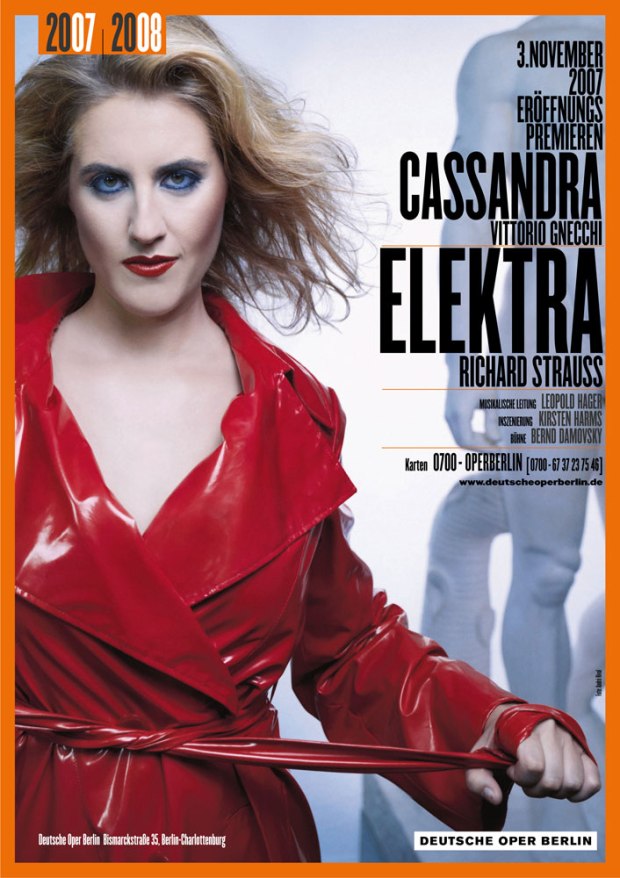
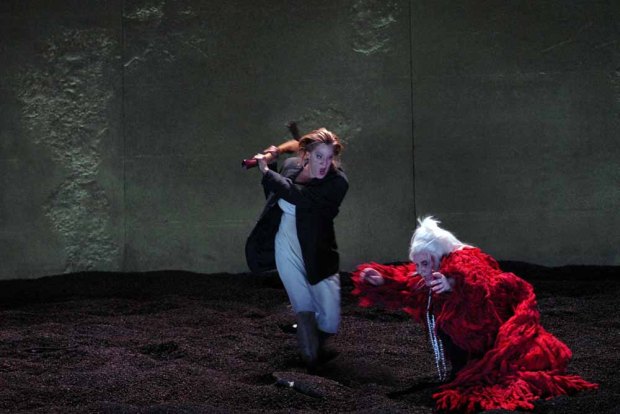
Een gecoupeerde versie van Cassandra werd enige tijd geleden toen Kirsten Harms nog Intendantin was bij de Deutsche Oper Berlin aldaar gespeeld als proloog van Elektra. Beide opera’s gebruikten hetzelfde decor, een door een halfronde hoge muur begrensde ruimte, met goud bekleed (immers Mycene) met de mogelijkheid zowel op de muur als beneden te verblijven.
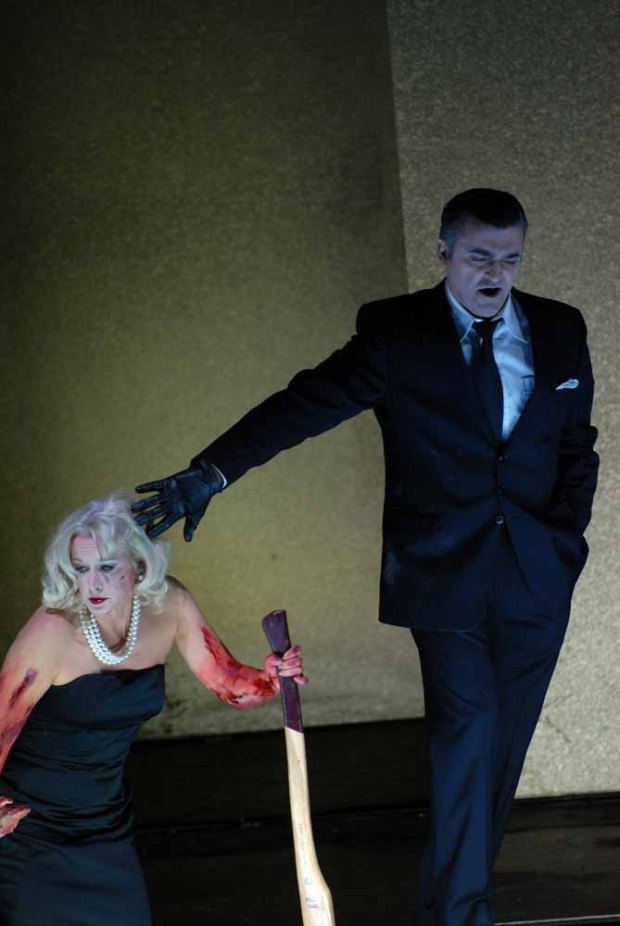
De kostumering was modern met als meest opvallend detail Susan Anthony als een jeugdige Klytämnestra in een zwart cocktailjurkje op naaldhakken, die voortdurend een grote bijl losjes achter haar rug meedraagt alsof het een kledingsaccessoire is.
Gustavo Porta vertolkte Agamemnon en Malgorzata Walewska tekende voor de titelrol. Gelet op het feit dat Cassandra pas laat in de opera opkomt en Klytämnestra van begin tot eind een centrale rol in de handeling vervult, had laatstgenoemde eigenlijk beter de titelheldin kunnen zijn.
De muziek doet denken aan zowel Strauss als Puccini en werd onder leiding van Leopold Hager overtuigend ten gehore gebracht. Het geheel was een groot succes en in mijn beleving een prachtige aanvulling op Elektra.
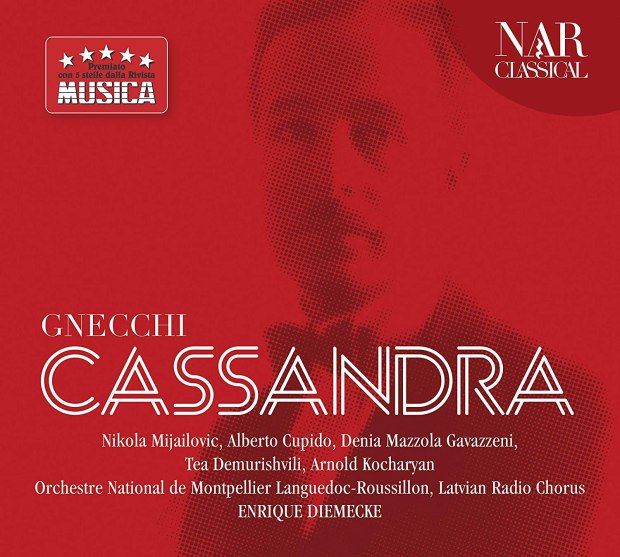
Van de opera is geen dvd beschikbaar, wel is er een cd met onder andere Alberto Cupido. Hoewel natuurlijk geen Strauss verdient Cassandra toch tenminste een plekje als voetnoot in de historie.
We will stay with Gegam Grigorian, who would have turned 70 on 29 January. In addition to the Russian repertoire, he also frequently sang the great Italian opera roles. One of those is Don Alvaro from Verdi’s La forza del destino. Grigorian sang this role in 1998 in a remarkable production of the Mariinsky Theatre under Valery Gergiev. The director this time was the renowned Elija Moshinsky who died on 14 January this year, six days after his 75th birthday.
Elijah Mochinsky
In this very fine production, Moshinsky limited himself to directing, nothing more, nothing less. The stage setting is a meticulously recreated copy by Andreas Roller of the original work by set designer Andrey Voitenko, who had been responsible for the stage set at the 1862 premiere of Forza in St. Petersburg. At the start of each scene, an image showing Roller’s work is briefly projected, immediately followed by the reconstructed version. It is very cleverly done and miraculously brings back to life the premiere of the very first version of the opera.
For the music the choice is also on the little-performed St. Petersburg version. In my opinion, the biggest difference with the later Milan version of 1869 lies in the much shorter overture. Here it ends very quickly, whereas the later version seems to drag on endlessly. Other changes pale into insignificance compared to the countless cuts that have plagued performances of Forza over the years.
Gergiev is presenting a complete original version and the result is astounding. The all-Russian cast, soloists, chorus and dancers, are magnificently dressed in costumes derived from the period in which the work was created. Although the story is set a 100 years earlier, (in the mid-18th century), it still feels quite authentic to a contemporary audience.
A modern viewer will also be more alert to the racism that characterises the libretto of this opera. Don Alvaro is a half-breed, admittedly of Inka nobility, but still an indian. The furious way in which the Marquis of Calatrava and his son Don Carlo pour out their anger and indignation on Alvaro goes far beyond the classic case of ‘daughter elopes with a nobleman and we want our revenge.’ Here it is all about the alleged ‘pollution of the bloodline’; the ultimate affront to the Marquis and his hot-tempered son.
Prima donna Galina Gorchakova sings an almost spotless Donna Leonora. Her hesitations, fears, despair and agony are all perfectly dosed, and nowhere is her acting forced or overemphasised. She’s the whole package.
Marianna Tarasova is an, also outwardly, attractive Preziosilla. Her volume in the low register leaves something to be desired, but overall it is a fine performance. Tarasova’s acting is very strong; even had she not actually sung it, she would still have been able to recognisably perform the role.
Georgy Zastavny knows how to hold back as Fra Melitone; his monk is a somewhat frustrated, quick-tempered man who takes himself very seriously: Moshinsky clearly does not go for a buffo rendition. Melitone’s superior Padre Guardiano is in good hands with Sergei Alexashkin, a beautiful bass. A young Yevgeny Nikitin in the small role of the Alcalde is also quite pleasing.
Nikolai Putilin’s Don Carlo reminded me, particularly in the first two acts, of Detective Andy Sipowicz in the NYPD Blue series, a man with an extremely unreliable looking “ugly mug.” Also a matter of transference of course: Don Carlo does indeed lie about everything and anything. His make- up in the later acts is clearly different; now he is the revenge-seeking nobleman who has made the killing of his sister and her lover his life’s purpose. Putilin sings and acts a very convincing Don Carlo, someone you quickly come to dislike, and that is a compliment. His role fits perfectly in the line of ‘heroic baritones’ that Verdi has patented.
As so often with Verdi, the hero tenor does not get the girl, hardly even gets to sing a real duet with her and only meets his lost lover at the very end for a very brief moment of recognition and happiness. On the other hand, Don Alvaro does have very beautiful solos to sing, not as an intimate lover but more as a desperate romantic.
It is all made for Gegam Gregorian. It is the only recording I have of him singing in Italian and I can well imagine that in his glory years he took the international stage by storm. This Don Alvaro is absolutely top-notch; I am glad that, on the occasion of Grigorian’s seventieth birthday, I finally played that DVD again after at least 15 years.
Gergiev is the overall musical director and he turns it into a festive occasion. This recording comes six years after Pique Dame and it is clear that the overexploitation, that he subjected himself to during those few years, has aged him by 20 years. He has, of course, succeeded in his mission: to bring back the Mariinsky Theatre to the world stage.
Armenian tenor Gegam Grigorian died in 2016 shortly after his 65th birthday. Today he would have turned 70. For that reason, a memorial performance took place on 28 January in the Mariinsky Theatre where Grigorian achieved so many great successes under Gergiev in the 1990s. His now world-famous daughter Asmik sang the role of Lisa in Pique Dame, the opera in which her father so often starred as Herman.
For over 20 years, after travel restrictions were lifted due to the collapse of the Soviet Union, Grigorian had an unparalleled international career that took him to all the leading opera stages. He sang almost every major tenor role in the Russian repertoire, but also many others. His Italian repertoire included Radames, Renato, Don Carlo, Alfredo, Il Duca, Manrico, Otello, Pinkerton, Loris, Cavaradossi, Pollione, Count Almaviva, Maurizio, Canio and Turridu.
I am not sure that I have ever heard him sing live. In 1996, Gergiev came to The Hague with the Mariinsky for two performances of Prince Igor, a production that he had recorded for Philips. On this recording Grigorian sang Vladimir Igoryevich, but I cannot find out if he was actually present in The Hague. On other recordings that I possess, he sings Pierre Besuchow in War and Peace and Don Alvaro in La forza del Destino.
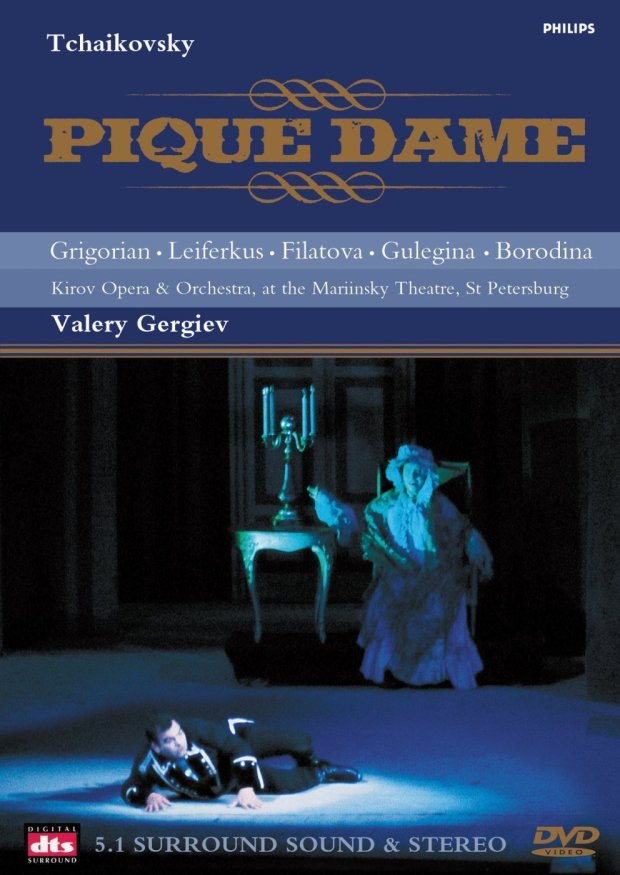
But in view of the choice that the Mariinsky made for the memorial concert, I thought it appropriate to take another look at the 1992 recording of Pique Dame. It is a live performance from the Mariinsky under a very young Valery Gergiev. The credits still refer to the Kirov Opera, as the performance took place shortly after the revolution.
Yuri Temirkanov’s production is extremely classical, both in terms of the costumes from the time of Catherine the Great and the manner of staging. Everything is done exactly as prescribed by the libretto, down to the smallest details. The cast is representative for the top quality that characterised the company in those days; there are the big names in all the leading roles.
There is the luxurious cast of Olga Borodina as Pauline and Sergei Leiferkus as Count Tomsky. Leiferkus is emphatically present; you can hardly ignore him because of his somewhat ‘over the top’ costume. His two arias about the three cards and the little birds that are allowed to sit on his branch are performed with humour and verve. Ludmilla Filatova as the Countess is rather a caricature, especially when she is given a nightcap to wear. Vocally, her contribution is adequate. The same applies to Alexander Gergalov’s Prince Yeletsky who, all considered, has only one chance to make himself heard. His declaration of love is moving, but Lisa walks away without any perceptible reaction immediately after the last note.
Lisa is sung by Maria Gulegina, and she gives an excellent performance. In her big solo in the last act, she does have to force herself a bit, but that may be blamed on the composer rather than the soprano. I would have liked to hear Asmik in this role; if anyone can handle these passages well, it is she.
But the reason I am reviewing this DVD is, of course, the Herman of the company’s star tenor at the time, Gegam Grigorian. He is 42 years old and in very good shape, Hochform as they say in Germany. His simple black costume, a kind of uniform, makes him stand out from the other men, who look a bit like tropical ornamental birds in a cage. This makes him instantly recognizable as an outsider. For that matter, Lisa’s dress is also remarkably sober, so simple indeed that she also stands out from her own entourage and thus is immediately paired up visually with Herman.
Grigorian’s Herman gets more and more touching towards the end. First he leaves his troubled Lisa to her fate and then he enters the gaming room. His behaviour is that of someone almost haunted, he is no longer in control of himself. After his winning card, the seven, he sings ‘What is our life? A game’. He is about to make a fortune, but it does not really matter to him any more. The death scene at the end, where, with his last breath, he asks Prince Yeletsky for forgiveness, reminds me of Fedora in the opera of the same name that I saw in Stockholm with daughter Asmik in the leading role. Gegam once sang the role of Fedora’s lover Loris.
I am determined to see his Forza del Destino again, not only because Grigorian sings Don Alvaro, but also because of the director of this production: the recently deceased Elijah Moshinsky. Also someone who will be sorely missed.
Sometimes I think that Placido Domingo must be the reincarnation of Puccini. Not because they look so similar (although they are very much alike in the photos), but because of the music. It seems to have been created for Domingo’s timbre. It is as if Puccini composed with Domingo’s voice in mind.
And yet (or perhaps because of this): there is no other repertoire that shows as clearly whether a role suits him or not. He was never a memorable Rodolfo and his Pinkerton was not noteworthy. Even as Calaf, despite the great performances, he did not really identify with the role. He was too friendly, too kind, too human.
TOSCA
Domingo sang his very first Cavaradossi on 30 September 1961 and since then he has sung more performances of Tosca than of any other opera. This is the role he researched with the utmost care. He even added some qualities to the painter’s character that are not really there, in my opinion.
Personally, I find Cavarodossi’s flirtation with the revolution no more than a whim, but Domingo takes it dead serious and sees himself not only as the lover but also as the freedom fighter. From the start, he knows that the execution is actually going to take place, but he is playing along with the lie to spare his beloved Floria. Very humane and very moving.
He sang his first Tosca at the Metropolitan Opera in 1969. It was not planned: he took over at the last minute for the sick Sándor Kónya. Birgit Nilsson was Tosca. In her memoirs, she stated that she found his acting ‘superb’ and his singing ‘gorgeous’.
It was indeed a memorable performance, not least because of Nilsson’s ‘scream’.
Fortunately, the performance was recorded for radio and was released on CD (Nuova Era 2286/870).
Of the studio recordings, two are very dear to me. On Warner Classics (5665042), Renata Scotto meticulously sings all the notes prescribed by Puccini ( her colleagues are not always as scrupulous) and Renato Bruson is very ‘courteously dangerous’ as Scarpia.
RCA (88697448122) has recorded one of the best Scarpias ever: Sherrill Milnes. I once heard him live in the role and it was a real experience! Leontyne Price is a sultry Tosca.
On DVD, I find the Decca film version (0434909) by far the most impressive. It was shot on location in 1976, which was not very common at the time. Well, location… The Palazzo Farnese was then home to the French Embassy, so filming was not allowed inside.
Milnes was once again present and the lead role was sung in a very tormented way by Raina Kabaivanska.
Domingo is so beautiful it makes you want to cry, but what gives the film that little bit extra is the tiny role of the little shepherd. It is sung by Placido junior, then 10 years old.
MANON LESCAUT
Another Puccini role that fits him like a glove is Des Grieux in Manon Lescaut. Of this opera with Domingo, there are many recordings, both studio and live. Not all of them are worth listening to and in most cases it is the interpreter of the title role who presents the problem. It is nothing new: when a record company had a new ‘star’, he or she just had to record everything available. With often disastrous results.
In 1970, Domingo sang Des Grieux in Verona, with Magda Olivero in the title role. Quite bizarre when you consider that Olivero made her professional debut eight years before Domingo was born. And yet: her portrayal of the young heroine is utterly convincing. Indeed, most of her colleagues still cannot match it! My copy was released on Foyer, but better quality editions are now available.
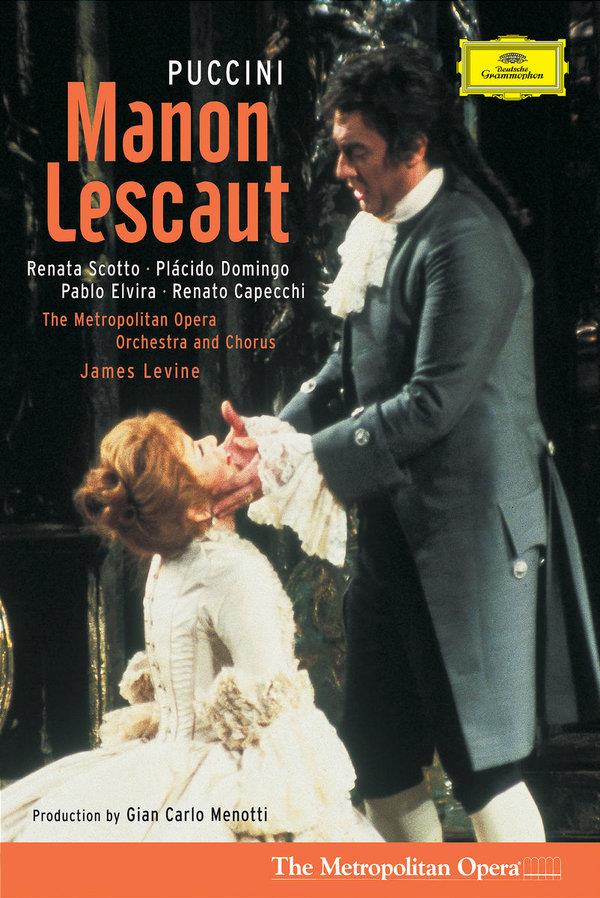
In 1980, the opera was broadcast on TV. That recording is now available on DVD. Believe me: there is no better. Scotto sings and acts Manon like no one else has done before, and together with Domingo, she makes us cry with the beauty and the sadness of it all. Menotti’s very realistic, true to life and very exciting direction simply could not be better. A MUST (DG 073424)
IL TABARRO
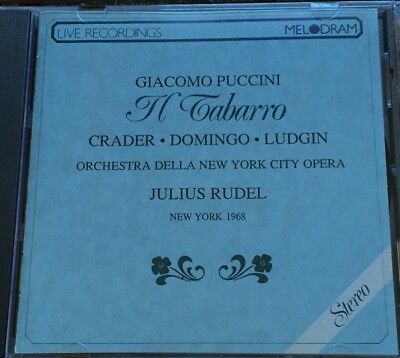
Luigi in Il Tabarro was also a role after Domingo’s own heart. His recording from 1968 with the New York City Opera, conducted by Julius Rudel (Melodram 17048) is splendid, with Jeannine Crader as Giorgietta, a wonderful singer who sadly never made it in Europe.
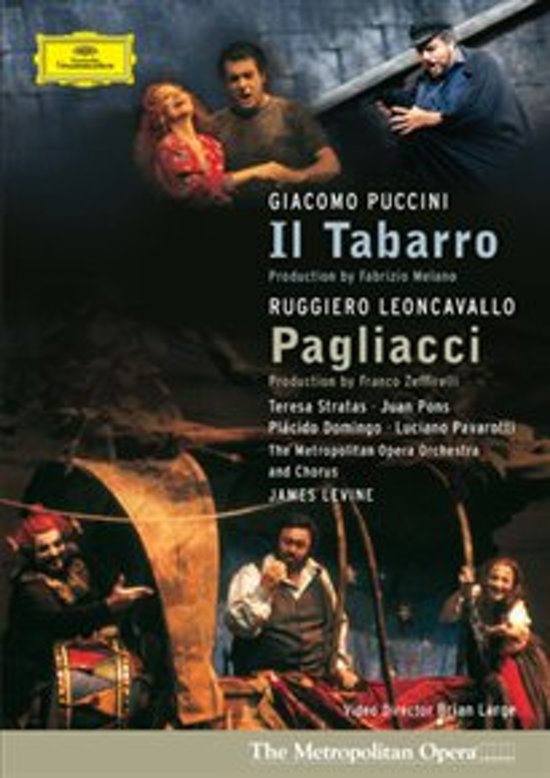
On DVD, there is a fine Zeffirelli production from New York, recorded in 1994. Giorgietta is sung by Teresa Stratas. Unfortunately, it is coupled with Pagliacci with Pavarotti and again with Stratas, in the leading roles. Not really my ‘cup of tea’ (DG0734024).
Below a curiosity: a duet from Il Tabarro with Domingo and Beverly Sills from 1967
EDGAR
There are at least two good reasons to welcome the 2006 Edgar (DG 4776102): it is the very first studio recording of the work and it is the first time that Domingo sings the role, the only one still missing from his Puccini discography.
I never understood why the opera was so unloved. Musically, it is in line with Verdi, but one can already hear tentative fragments of the ‘real’ Puccini: a vague promise of Manon Lescaut, a study for La Bohème and creative exercises for Turandot.
With Adriana Damato and Marianne Cornetti, we can welcome a new generation of phenomenal singers and Domingo is, as always, very musical and committed.
LA FANCIULLA DEL WEST
For me, the very best is a 1978 DG recording (4748402), with an underrated Carol Neblett as a very fierce Minnie. Domingo is a languorous and surprisingly lyrical Johnson, and Sherrill Milnes sounds like he’s in a real western.
Two worthwhile recordings have appeared on DVD. One with Mara Zampieri and Juan Pons (Opus Arte OA LS3004 D) from La Scala, 1991, in a beautiful, colourful direction by Jonathan Miller.
The other is with Carol Neblett and Silvano Carroli (Kultur Video 2038) from the Royal Opera House, 1982.
SONGS
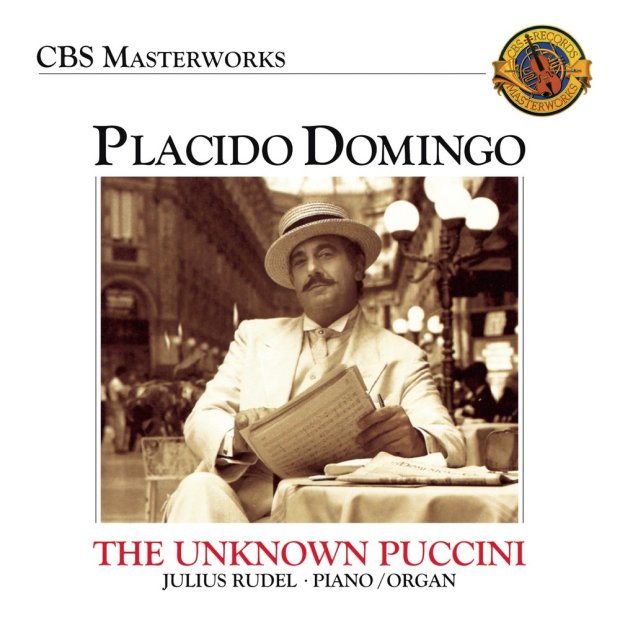
There were once plans to make a feature film about Puccini, in which Domingo would play the composer. It did not go ahead. In preparation for the project, Domingo recorded all Puccini’s songs in 1989, under the title Unknown Puccini (Sony 44981).
For the cover, he is made to look like Puccini and there he is: dressed in white, hat on his head and the moustache prominent on his face. Puccini to the life!
Anyway, it is all about the music and it is a must- have for anyone interested in Puccini. Most are first ever recordings and gradually you follow the composer on his path towards his Manon’s, Tosca’s and other ‘girls’. The renowned conductor Julius Rudel accompanies Domingo on piano and organ.








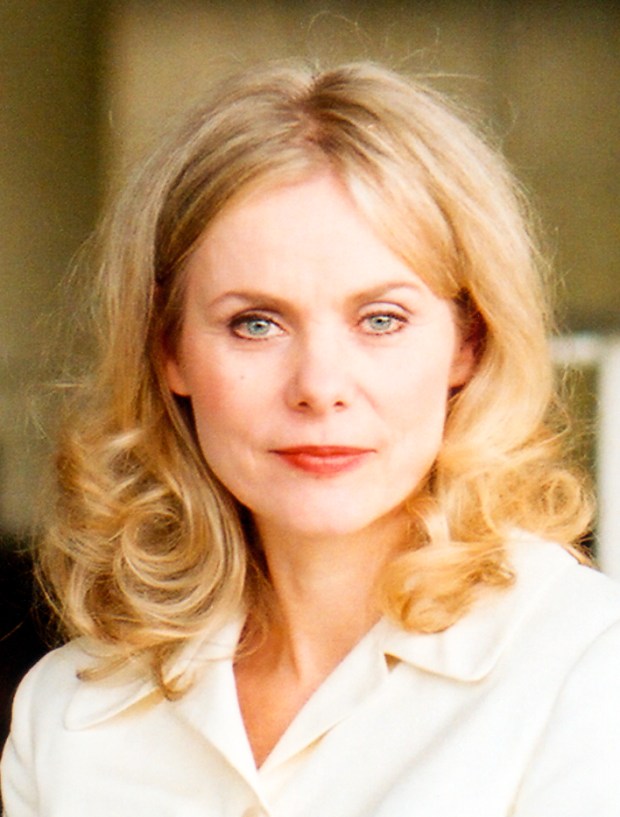
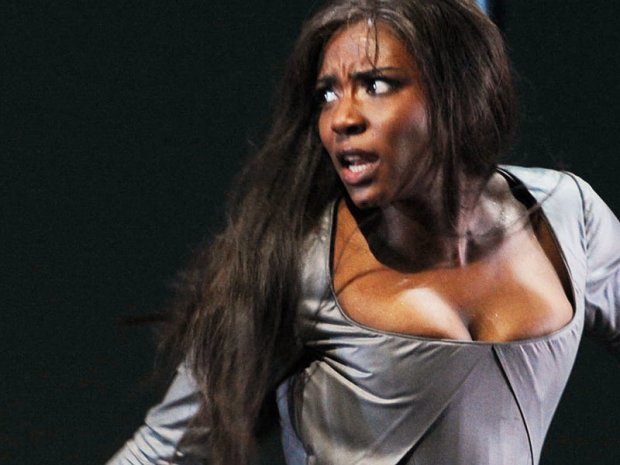 Takesha Meshe Kizart . ©Barbara Aumuller










 Basia con fuoco