The sea is no more to be mocked than fate itself. Both take their toll, regardless of circumstances, entreaties or attempts at bribery.
Young Ivo is under a curse: as soon as his wife becomes pregnant, he will be devoured by the sea. So it happened to his father, so it happened to his twin brother. Anyone who has ever heard of Oedipus knows that you cannot escape your fate, and if it is written in the stars that your life will end in the waves, you will drown, even if there is no sea nearby. In a manner of speaking, this, since the sea is audibly present in The Children of the Sea.
With the first notes of the overture, it rustles and swells and storms… How visual do you want your music to be? It couldn’t be more explicit, it’s expressionism at its finest.
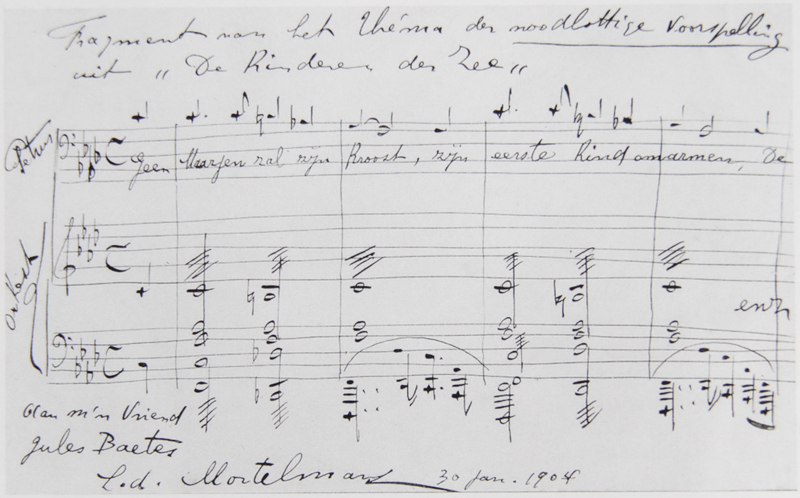
Lodewijk Mortelmans
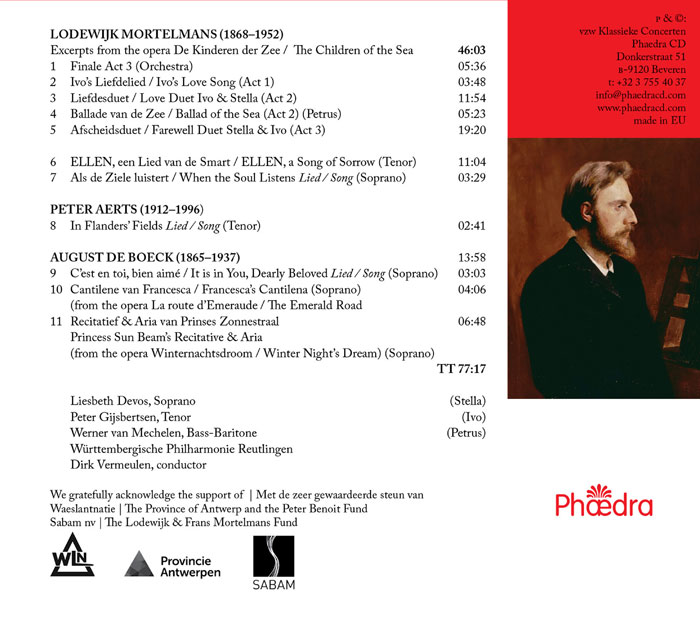
The Children of the Sea by Belgian composer Lodewijk Mortelmans (1868-1952) had its premiere – unsuccessfully – in 1920, and the disillusioned composer adapted it into a 90-minute suite, half of which has now been recorded by Phaedra. The late-Romantic idiom is very appealing to me, as is the story in verse by Raf Verhulst. Indeed, I am quite impressed.
The performance is more than sublime. Dirk Vermeulen makes the Württembergische Philharmonie Reutlingen play as if their lives depend on it, it is breathtaking!
Liesbeth Devos (Stella) is a true discovery for me. Her crystal-clear soprano is extremely pleasant to listen to and her vocal acting admirable.
Peter Gijsbertsen sings a moving Ivo, in this role he is truly inimitable for me. How beautiful and warm his voice has become! Werner van Mechelen (Peter) completes this stellar cast.
Werner van Mechelen sings Ballade van de Zee (Ballad of the See)
˜Ellen” on lyrics by Frederik van Eeden (Gijsbrecht) and ˜Als de Ziele luistert”/ “When the Soul listens” (Devos) complete the ˜Mortelmans segment”, but there are also songs and arias by Peter Aerts and August de Boeck.
Liesbeth Devos sings Als de Ziele luistert/When the Soul listens:
Liesbeth Devos sings Francesca’s Cantilene from August de Boeck’s La Route d’Emeraude:
Jules Massenet’s Manon has, since its now legendary performance starring Anna Netrebko and Rolando Villazon (Berlin, April 2007), become a real hype. Anyone who had ever seen the performance could sincerely ask, like Verdi’s Ford (‘Falstaff’): ‘e sogno o realta’?
It was a reality that turned out to be a dream after all, as Netrebko found a new love, leaving Villazon with heart and voice problems. It was also not entirely clear until the last day of rehearsals whether he would sing the, scheduled for June 2007, performances of Manon in Barcelona.
He did come, and although he sang below his usual level, he managed to completely convince everyone with his acting and (sometimes a little too) intense commitment.
His Manon is brilliantly portrayed by a spectacularly singing and acting, Lulu-like, Natalie Dessay.
Manuel Lanza is a fine Lescaut, but for Samuel Ramey, a singer I greatly admire, Comte des Grieux unfortunately comes too late in his career.
The mise-en-scène and character direction by David McVicar, for me still really one of the best contemporary directors, were more than excellent. The costumes were beautiful to behold and the (traditional) staging was often really surprising, all the more so as McVicar managed to give it a contemporary twist from time to time.
A major downside of this release is the lack of synopsis and track list. But as a bonus, you do get a ‘peek inside’. Through a truly fascinating documentary, you can follow the stars during their rehearsals with McVicar.
And, when speaking of the “moderndays productions”…. don’t forget Netrebko and Beczala!
Operetta may be seen and heard again, and even in the poshest opera houses it appears in the repertoire these days.
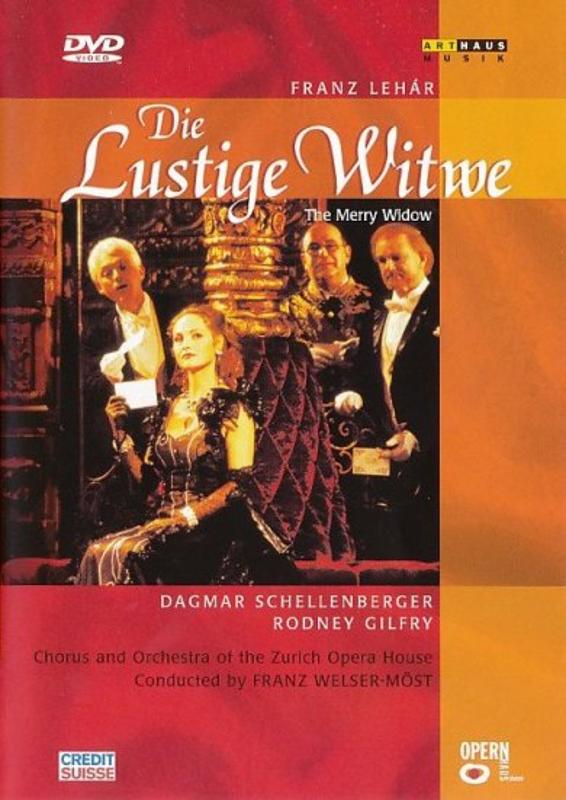
Die Lustige Witwe is often chosen, and not without reason: this is a beautiful work, full of wonderful melodies and witty dialogue.
Helmuth Lohner, originally a film and stage actor and also an operetta singer has been concentrating on directing in recent years and he does so superbly. His 2004 production from Zurich is very traditional, rich in colour and movement, and his satirical characterisation of the characters makes perfect sense.
He does allow himself a small ˜adaptation”: after the men’s sextet ˜Wie die Weiber”, he has the women sing an equivalent of it.
Initially I had a bit of trouble with the somewhat shrill Dagmar Schellenberg (Hanna), but gradually she gets better and better and she really redeems herself with a perfectly performed Vilja song.
Rodney Gilfrey is an irresistibly charming and sexy Danilo, Ute Gferer a kitschy Valencienne, and Piotr Beczala revives the good old days of a Kiepura with his beautiful, lyrical tenor (Arthaus Music 100451)
THE MERRY WIDOW
Yes, it’s in English. So what? The ˜unvergessliche süsse Melodien” sound no less beautiful. This production of Franz Lehár’s Die Lustige Witwe by San Francisco Opera is simply wonderful.
In 2003, The Merry Widow was the last production by Lotfi Mansouri, the face of San Francisco Opera for more than forty years. A new English translation of the libretto, of its French version!, was produced for the occasion. In it, the last act does not take place at Hanna’s home, but in the real ˜Maxim’s”.
Mansouri sees Hanna as an already somewhat mature woman, who should be sung by a singer who has already been performing the Marschallin. Into this concept Yvonne Kenny fits wonderfully and she makes her role debut with it. She possesses a brilliant stage personality, her voice is creamy, velvety and enchanting.
Bo Skovhus, too, is a Danilo true to Mansouri’s vision: youthful and irresistibly attractive. His voice rings like a bell, he is a gifted actor and a superb dancer.
Angelika Kirschschlager and Gregory Turay excel as Valencienne and Camille, and the rest of the cast is also outstanding. A wonderful production (Opus Arte OA 0836 D)
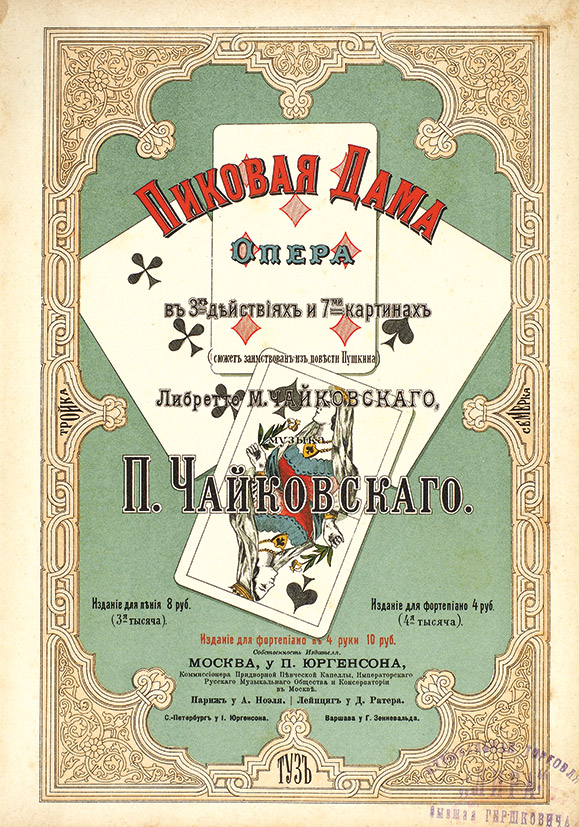
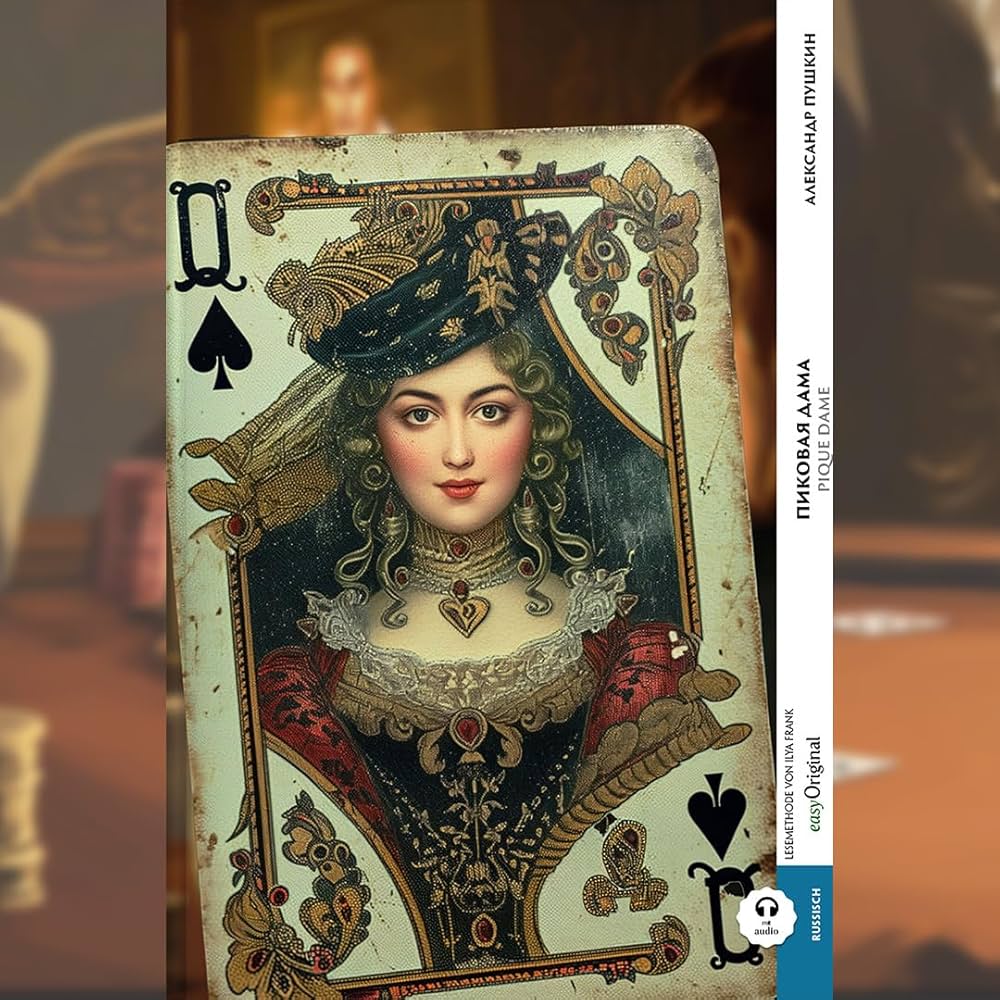
The Queen of Spades has always had something unsettling for me. I did not trust her. After all, she lacked the sweetness of Hearts, the wisdom of Diamonds and the sadness of Clubs. I experienced her as threatening
In Tchaikovsky’s opera, she symbolises the once blood-loving countess who, as legend has it, lost her entire fortune in a card game in her youth and regained it with the help of black magic.
The opera may be named after the countess’s ˜card alter ego”, but the real leading role belongs to Herman. A rather strange young man with obsessive eyes, of whom we know little to nothing. Fortunately, I would say, because this only adds to the suspense and mystery.
In Pushkin’s novel, on which the Tchaikovsky brothers based their opera, Herman is a German who at the end does not commit suicide but goes insane and is admitted to a mental institution.
Lisa (in the book not a granddaughter but companion of the countess) survives her misspent affair and marries a rich man. Do you need to know it all before going to the opera?
No, you do not! Hence also why I always sincerely hope that the directors who take Pique Dame in hand ignore the novel and stick to what the opera is about: a musical dissection of obsessions.
It is about an addiction carried to the utmost absurdum; to gambling, to love, to money, to power, to everything really. And about an all-pervading madness to which Lisa too falls prey, making her behave as if she were possessed by the devil. This is what the score also says.
GEGAM GRIGORIAN
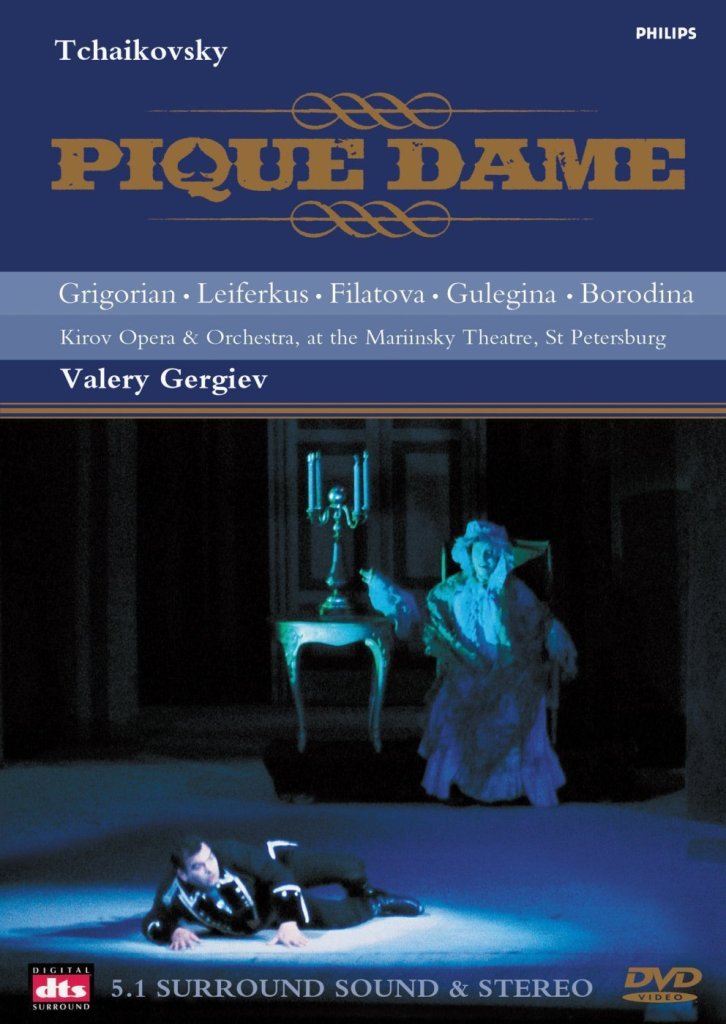
This 1992 Mariinsky production is a feast for the lover of traditional staging, where there is no room for updating and searching for hidden intentions. All the sets are super realistic, extensive attention has been paid to all the details and the costumes too seem to have been pulled out from under the dust.
That the whole thing nevertheless does not come across as very corny is due not so much to the director (Yuri Temirkanov, the renowned conductor and former artistic director of the Kirov), but to the truly superior team of singers.
Armenian tenor Gegam Grigorian, who died in March 2016, makes Herman a little brother to Otello, a true achievement.
Maria Gulegina, despite minor intonation problems, is a brilliant Lisa: tearful and heartbreaking.
Sergei Leiferkus puts on a solid Tomsky and Ludmila Filatova impresses as the old countess. Only Alexander Gergalov’s understated Yeletsky is not up to par, but he is soon forgiven, after all he has only the one aria to ruin.
Gergiev conducts animatedly, though he is not the subtlest. (Philips 070434-9)
VLADIMIR GALOUZINE
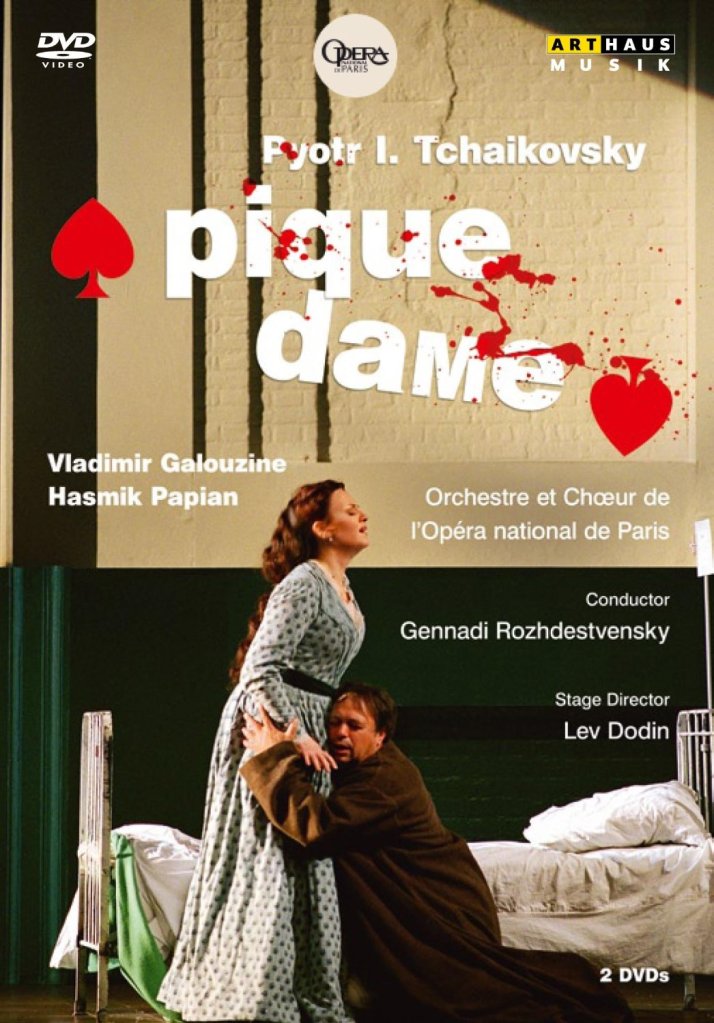
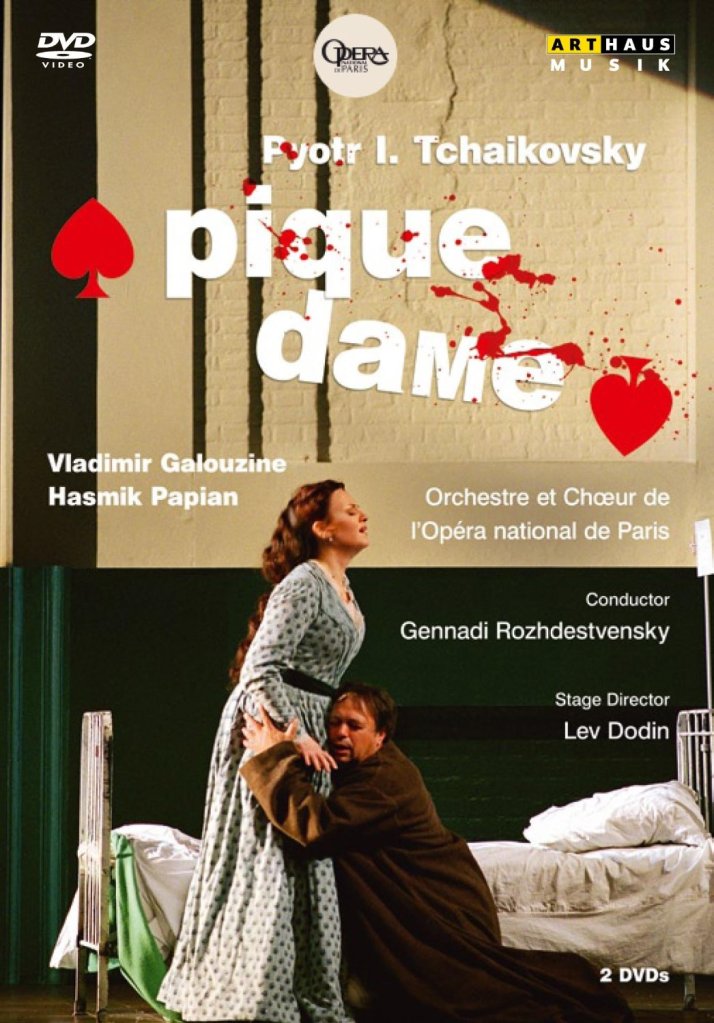
We experienced Lev Dodin’s recorded in Paris production of 2005 a few years earlier in Amsterdam: DNO staged it back in 1998.
Lev Dodin is a renowned playwright and a great Pushkin enthusiast, which is why he wanted to return to the original story (here we go again!), which he felt was thoroughly botched by the Tchaikovsky brothers.
He came up with a formula that was ˜logical” in itself, in which the whole story exists only in the memories of the mentally ill Herman. I think I could probably live with it if Dodin had not subordinated the music to his concept and had not cut into the score: he deleted some 20 minutes of Tchaikovsky’s music and added a spoken text. I consider this a real crime.
The music that remains, however, is spot on. Rozhdestvensky has the score in his fingertips and there is also a lot of excellent singing, mainly by Vladimir Galouzine as Herman. He seems utterly fused with the role and commands admiration for his brilliant performance, both vocally and theatrically.
Hasmik Papian is a moving Lisa and as Polina we hear the young Christianne Stotijn (Arthouse Music 107317)
MISHA DIDYK.
This made me really go quiet This because of the unimaginably beautiful traditional production directed by Gilbert Deflo, which faithfully follows both the libretto and the score in every detail, while also being challenging and unusually exciting (Barcelona 2010).
The conductor (Michael Boder) handles the music with velvet gloves, steering it in the right direction and creating an atmosphere where pastoral scenes, sweet songs and folk dances alternate with horror, fear and death.
I fall silent too when hearing the singers, who give everything that even the most discerning person can desire. Micha Didyk ís Herman. He looks like Herman, he acts like Herman and he sings the role as only the real Herman can: passionate, obsessed and driven to madness. Truly: I don’t think there is any singer these days who can match him in the role. Peerless.
Nor can I imagine a better countess than Ewa Podleś : impressive. Superb also are the two baritones Lado Atanelli (Tomsky) and Ludovic Tézier (Yeletsky) and the warm Russian mezzo Elena Zaremba (Polina). Add the veteran but certainly not forgotten Stefania Toczyska in the small role of the governess…. Top.
I dó have a little bit of trouble with Emily Magee: she looks and sounds a little too old for the role. When I think of Lisa, I think of Natasha (War and Peace) or Tatyana (Yevgeny Onjegin): an excited young girl and not a mature woman.
Nevertheless: an absolute must-see. (Opus Arte OA BD 7085) an excerpt:
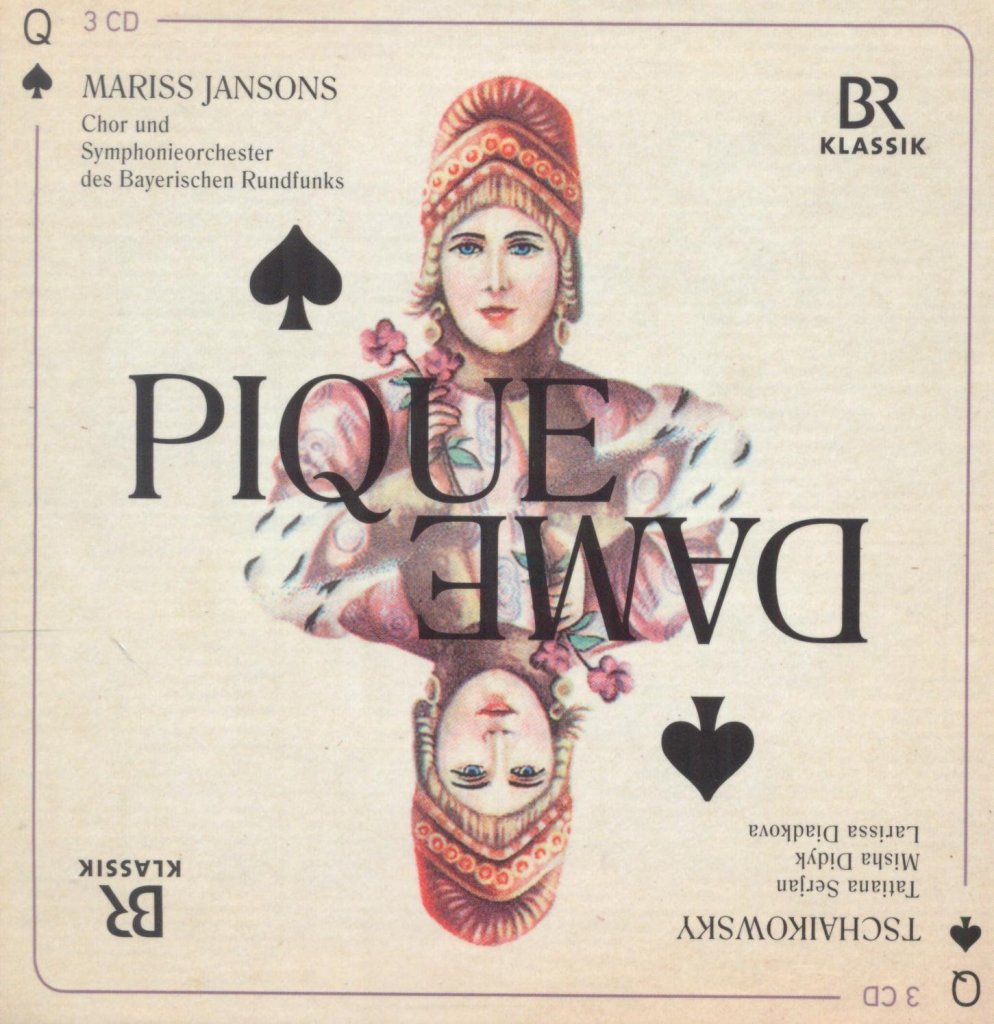
With the images of the production in your mind, you can sit back and listen to the recording under Mariss Jansons. In a manner of speaking, then, because even with Jansons the tension is cutting edge. Larissa Diadkova is an outstanding countess, very moving in her great aria ‘Je crains de lui parler la nuit’. Tatiana Suryan is a firm yet fragile Lisa and in the duet with Polina (beautiful Oksana Volkova) their two voices melt into a harmonic unity, worthy of sisters. Even without vision, Mischa Didyk is the best Herman around. The recording, recorded live in Munich in October 2014, sounds more than excellent (BR Klassik 900129)
VLADIMIR ATLANTOV
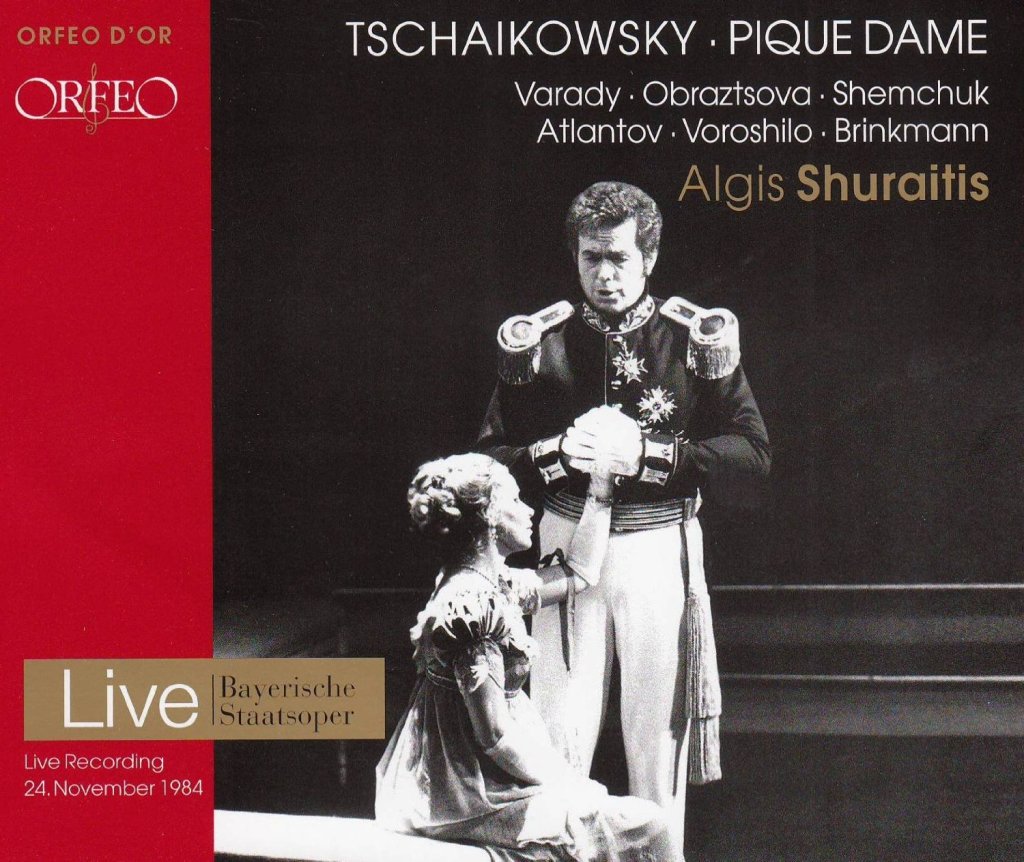
Julia Varady and Vladimir Atlantov were once a ˜match made in heaven”. In Munich in November 1984, they sang just about the most ideal Lisa and Herman in history, although I also have my reservations about Atlantov.
Atlantov has a cannon of a voice, which makes everything seem so unimaginably easy with him. Very beautiful, but his Herman sounds a bit too heroic and under-tormented for me.
Varady is a perfect Lisa in every way: vulnerable, insecure and in love. Lisa’s aria ‘Otkúda eti slyózy’ and the subsequent duet with Herman ‘Ostanovítes’ is breathtaking and of a touching beauty. Elena Obraztsova is a very impressive countess.
Algis Shuraitis conducts with little subtlety, but his reading is extremely exciting with a very cinematic ending (Orfeo D’Or C8111121).
Atlantov in ‘What is our life’ Recording from a performance at Mariinsky (not on DVD to my knowledge):
LEYLA GENCER
Version 1.0.0
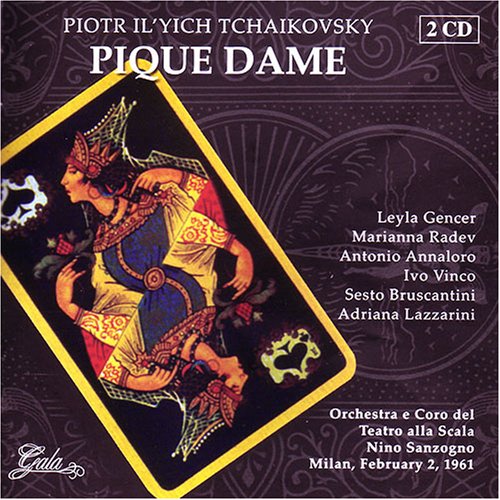
You really should have this recording, of course, because of the Turkish Diva. It is in Italian and the 1961 recording sounds pretty dull, but a collector takes it all for granted.
A totally unknown for me, Antonio Annaloro, does what he can and that, unfortunately, is very little. His uninspired Herman is a real crier and sounds like a Domenico Modugno in a mini format. Soon forgotten.
But Marianna Radev’s Countess is worthy of note. And ‘Da quando il core mi donasti’ aka ‘Ya vas lyoublyu’ by Sesto Bruscantini (Yeletski) is delightful and is rewarded with a very deserved ovation.
Nino Sonzogno revives a verist heaven, though not quite rightly so here (Gala GL 100.792)
Eternal life, don’t we all secretly want it? Especially if you will stay young, beautiful and healthy in the process? And especially if you are an opera singer and you will be able to perfect your voice during all those hundreds of years of your life. Unfortunately, there is also a downside: you will certainly become cynical and then nothing will interest you anymore, not even sex. After all: you’ve seen it all?
Emilia Marty (or Elina Makropoulos, or Eugenia Montez, or any of the other of her former alter egos) brings turmoil to everyone’s lives, but she herself remains calm thoughout it all. Once she loved, yes, but even that was more than a hundred years ago. Now her end seems closer anyway, so she must find the elixir once invented by her father. But maybe death is the solution after all?
Janáček’s Věc Macropulos (The Makropoulos Case) is an extraordinary opera, providing much food for thought. A ˜gefundenes fressen” for a director, you might say, especially since the libretto (by Janáček himself and based on the story by Karel Čapek ) is truly genius and provided by the composer with equally genius music.
DVD
But when your name is Christoph Marthaler, you prefer to put your own stamp on the production, and he does just that. The opera begins with ˜silent” dialogue, which you can follow through subtitles. No, it’s not in the libretto, but apparently this director thought it was exciting. It took me a few hours to figure out that it wasn’t because of the DVD!
Whether it adds any value? You have to judge that for yourself. For me, it doesn’t; the opera’s message was more than clear without it. But once you get the hang of it, it is undeniably exciting, although I wonder if the audience on the left of the hall could see anything except the subtitles.
I have absolutely nothing against modern theatre, especially if it is done well and intelligently. As theatre, then, the production is certainly engaging. But Janáček it is not, also because the orchestra has too little affinity with him. Janáček is not modern, Mr Salonen! Even in this horribly inverted fairy tale, he does not lack lyricism. And the accents, the typical ‘Janáček accents’, I don’t hear them anywhere either. What a misunderstanding!
The singing is undeniably good to very good. Johan Reuter is a fantastic Prus and Raymond Very a really endearing Gregor. Angela Denoke is a fenomenal artist and although I don’t really like her voice, in her role she is more than convincing.
The reviews were almost all very complimentary. People praised the drama and the singers. Even Salonen was applauded, so the final verdict is yours.
Behind the scenes:
CDS
The 30-year-old classic conducted by Charles Mackerras still sounds great and it leaves very little room for improvement, unfortunately it is not available separately (anymore?). Decca has compiled all the Janáček operas recorded by Mackerras and put them in a 9-CD box set (4756872).
Fine in itself, especially considering the price; unfortunately you don’t get the libretto with it. But the performance is very pleasing indeed. Elisabeth Söderström is an excellent Emilia, Peter Dvorský a fine Albert and Václáv Zítek an impressive Baron Prus.
In 2006, Mackerras conducted the opera at English National Opera, in English. The (live) recording appeared on Chandos (CHAN 3138), and it is good to have it there. Cheryl Barker sings a beautiful, cool Emilia, perhaps less lived-in than Söderström, but certainly no less sophisticated. And the English is something you just have to get used to.)
Ernest Bloch was born in Geneva in 1880 to an assimilated Jewish family. Before the war, he was among the most played and appreciated composers. People even called him the fourth great ˜B,” after Bach, Beethoven and Brahms. It is not that people now no longer know his name, but they usually do not get any further than his cello concerto.
The symphonic poems Hiver-Printemps are very evocative. Together with the beautiful song cycle ‘Poèmes d’Automne’, composed for the texts of Béatrix Rodès, Bloch’s lover at the time, and sung very emotionally by Sophie Koch (Kleenex at hand?), they form, as it were, a kind of ˜Seasons”, from which only the summer is missing.
The suite for viola is among Bloch’s best compositions and one cannot imagine a better performance than Tabea Zimmermann’s.
The CD’s title, ˜20th Century Portraits” is somewhat misleading because most of the works were composed between 1905 and 1919 and their idiom is strongly anchored in late romanticism and the Fin de Siècle. Only the overwhelming ‘Proclamation’ for trumpet and orchestra dates from 1950.
The Deutches Symphonie-Orchester Berlin, conducted by Steven Sloane, plays in a very animated way.
Songs by Chopin… Many a song lover looks down on them with a bit of condescension. They seem so simple, so ˜no big deal”. One opens one’s throat and voila, they come rolling out naturally and easily.
That nothing could be further from the truth was proved not so long ago by Dawn Upshaw, surely one of the best song singers of our time. She approached them in completely the wrong way, creating an unintelligible mush that had nothing to do with the Polish genius’s beautiful melodies.
That you don’t really need to be Polish to understand them (should Schubert be sung exclusively by the Austrians and Rachmaninoff solely by the Russians?), had been proved long ago by one of the best performers of the songs, Elisabeth Söderstrom. Layla Gencer (admittedly, she was half Polish) also did an excellent job.
Elisabeth Söderstrom sings Chopin with Vladimir Askenazy (piano)
Leyla Gencer sings Chopin with Nikita Magaloff (piano):
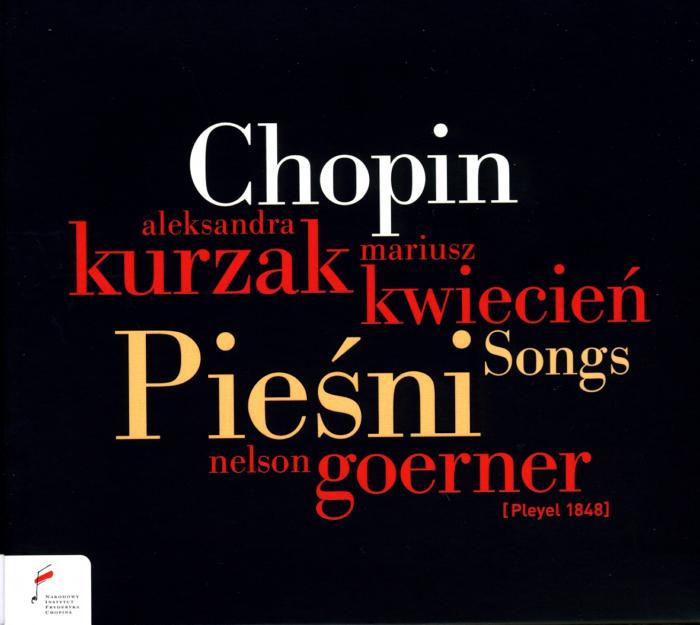
In 2010, the ˜Chopin year” (he was born in March 1810), a recording of all his songs was made by the Fryderyk Chopin Institute ((NIFCCD 016). As performers, two of the most successful Polish singers worldwide (why did no one think of Piotr Beczala?) were engaged: Aleksandra Kurzak and Mariusz Kwiecien.
Aleksandra Kurzak with Jeff Cohen (piano):
The first thing that stands out is their obvious, natural way of singing. They left behind their Polish predecessors’ very irritating habit of pressing on the consonants – especially the “Ł” (sounds like the English W) had always been pronounced very unnaturally, Russian-style, before them.
I have always had my doubts about Kwiecien being a true Lieder singer (he sometimes gives song recitals) and I still have those doubts. He is an excellent actor and also does fantastic things with his voice, but sometimes it’s a bit too much. And I miss the lyricism. He also colours too little and sometimes goes over the top, like a whole cavalry of soldiers.
But Aleksandra Kurzak is simply irresistible. Her beautiful, lyrical soprano has a lovely silvery sheen, it is truly delightful. Her girlish timbre seems created for singing Chopin’s simple-sounding melodies, and her delivery is exquisite. And her voice… Ah, it simply cannot be more beautiful! If that does not make a person happy!
But don’t forget the pianist: Argentine Nelson Goerner is an excellent Chopin interpreter and an wonderful accompanist.
Bonus: Teresa Zylis-Gara and Halina Czerny-Stefanska:
In 1938, Zemlinsky fled to New York. In his suitcase was the unfinished opera Der Köning Kandaules. Once in New York, he hoped it would be performed at the Metropolitan Opera.
André Gide
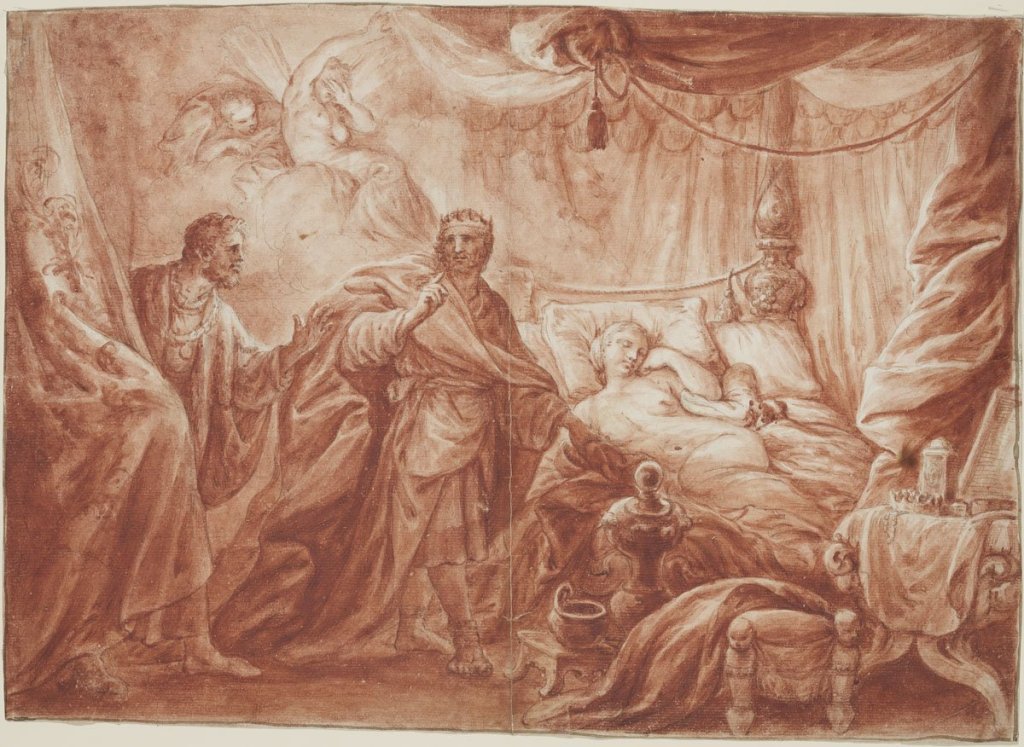
The libretto, based on André Gide’s play, was about a sex scandal that shook an entire royal house and meant the end of an entire dynasty. According to the Greek historian Herodotus, it happened in Lydia in the 7th century BC, when King Kandaules widely spread the word of his wife’s utter beauty as he wanted to share his happiness and also his wife’s loveliness with everyone.
Encouraged by the king and aided by an invisibility ring, Gyges, his beloved bodyguard spends a night with the queen. When she finds out the true facts, she urges Gyges to kill the king after which he himself is crowned king.
Herodotus:
“Gyges,” The queen said, as soon as he presented himself, “there are two courses open to you, and you may may take your choice between them. Kill Candaules and seize the throne, with me as your wife; or die yourself on the spot, so that never again may your blind obedience to the king tempt you to see what you have no right to see. One of you must die: either my husband, the author of this wicked plot; or you, who have outraged propriety by seeing me naked.” (Livius.org)
Antony Beamont
The libretto proved too daring for American audiences, and when Zemlinsky died in 1942, his opera was still unfinished.
Much later the English musicologist and Zemlinsky biographer Antony Beaumont completed the score. In October 1996, the opera was performed in Hamburg, with enormous success. The performance was recorded live and released on the Capriccio label (600712).
The performance conducted by Gerd Albrecht is undoubtedly excellent, and the leading roles are very adequately cast with James O’Neal (Kandaules), Monte Pederson (Gyges) and Nina Warren (Nyssia). In the minor role of Nicomedes, we hear a young debutant, Mariusz Kwiecień.
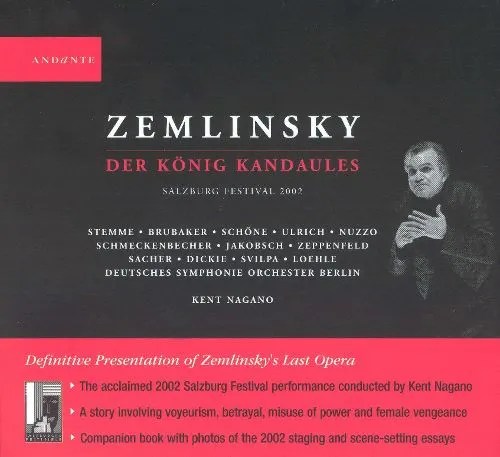
Salzburg staged the opera in 2002 and the phenomenally cast, live-recorded, performance was released in a very well-crafted edition on 2 CDs (Naïve 3070). The role of Kandaules was sung assiduously by Robert Brubacker and Wolfgang Schöne was an excellent Gyges. Sweden’s Nina Stemme, then still in the lyrical ˜fach”, sang a fine Nyssia. The Deutsche Symphonie Orcherst conducted by Kent Nagano sounds very exciting.
Part 1:
Part 2:
Our unsurpassed Saturday Matinee performed the opera concertante in November 2007, unfortunately no recording of it exists. A pity, because the conductor Bernhard Kontarsky conducted with great abandon and Stuart Skelton and Jeanne- Michèle Charbonnet were unforgettable as the royal couple.
Gyges (or was it Zemlinsky himself?): ˜Der, der ein Glück hält, soll sich gut verstecken! Und besser noch, sein Glück vor Andern”.
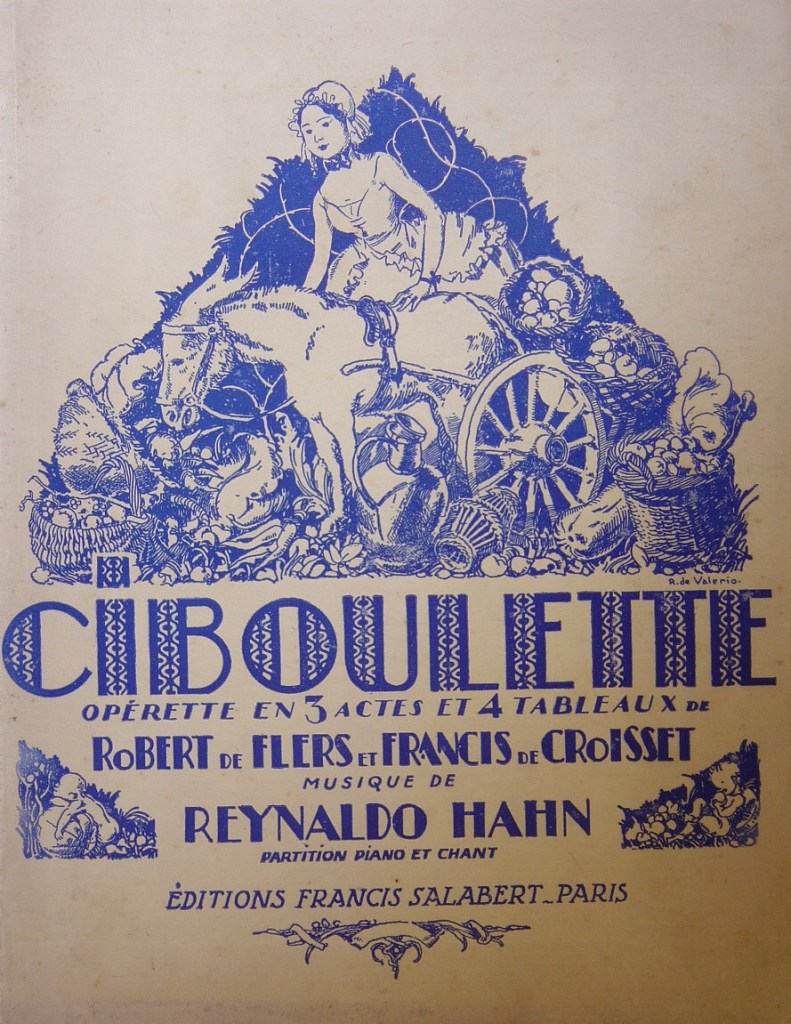
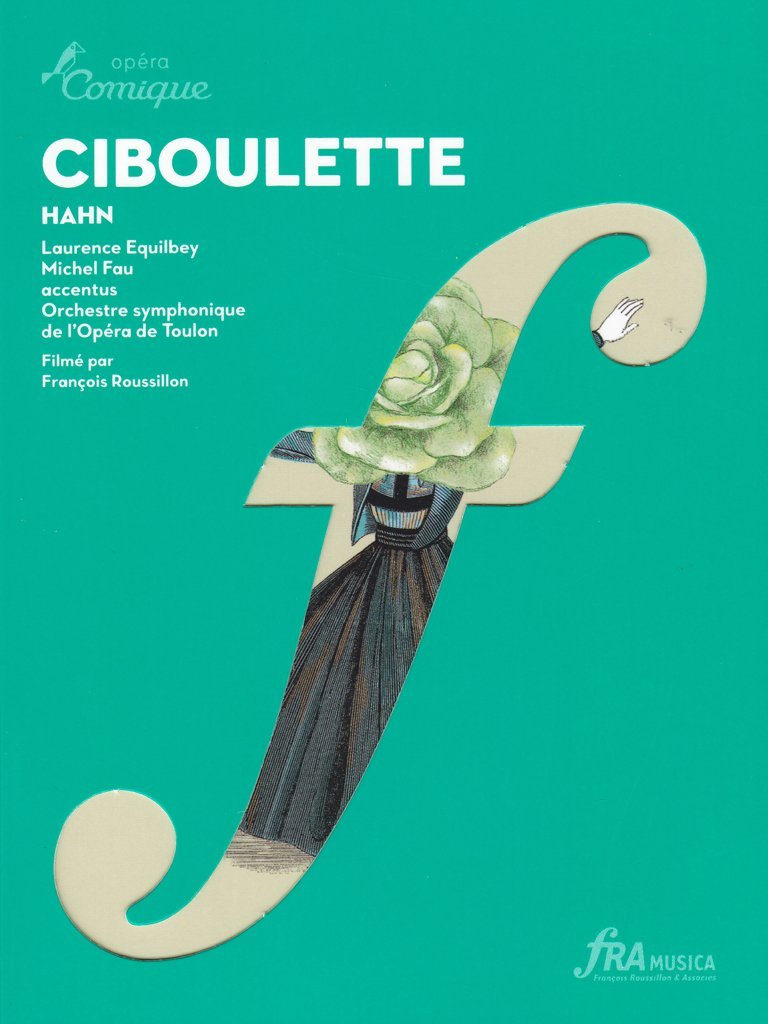
Has anyone ever wondered what happened to Rodolfo after Mimi’s death? To be honest, I hadn’t. Until I came across him in Reynaldo Hahn’s operetta Ciboulette.
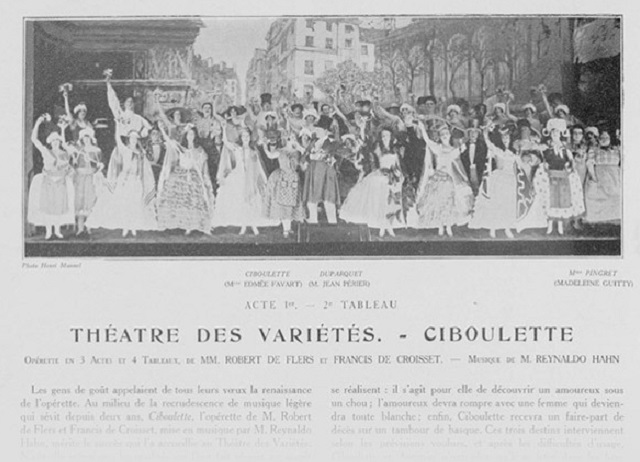
Rodolfo has renounced love and poetry, joined the Commune and works under the name Duparquet as a market supervisor at Les Halles in Paris. Like a good fairy, he helps a vegetable seller to find the love of her life: the rather dull but young and very rich Antonin de Mourmelon, who is himself suffering from heartbreak because his beloved has exchanged him for a macho and virile hussar.
In this direction by Michel Fau, the first act of Ciboulette is shrouded in shades of black-grey-white and it exudes an atmosphere of the early years of cinema. It is only with the arrival of Ciboulette that colour also enters the story. The effect is grand: it is as if the invisible, drab curtain behind which the fairy colours have been hiding, is pushed aside.
Jean-François LapoinCoiste is irresistible as Duparquet. Effortlessly he switches from hilarious dialogues and an upbeat duet with Ciboulette (very catchy “Nous avons fait un beau voyage”)
to the very moving sung “C’est tout ce qui me reste d’elle”, in which he reminisces about Mimi. And, am I mistaken or do I hear there, softly and far away in the background, snatches of Puccini’s music?
Julien Behr’s tenor (Antonin de Mourmelon) is not particularly beautiful, he is also a bit stiff, but it suits the role.
Eva Ganizate is a delightful grisette Zénobie and Bernadette Lafont provides some extra fun with her role of Madame Pingret.
Ciboulette is sung by young French soprano Julie Fuchs. Her beautiful, spring-like appearance and her light, agile voice make her an exemplary “happy-go-lucky” girl who does not yet know what she wants until she meets the real thing.
At the end, we get a real sing-along that sticks into your ears even if you don’t know the operetta or even the language!
Suffering from the winter blues? Hounded, stressed, abandoned by a loved one? Buy the DVD and be cheered up! What a feast!
Glyndebourne is closer than you think. You can even – if you do your best – go there, see the show and then fly back home, all in one day. You take the plane to Gatwick (less than an hour), then the train to Lewes (half an hour), and there the shuttle bus is already waiting to take you to the opera (10 minutes).
The bus costs £6 (you can get a taxi for a pound more) and for that money you also get the return trip. You have to make haste, because the bus leaves right after the performance.
It is not for me. I don’t like to have to hurry, besides, this is my first visit to the famous Festival, so I fly to London the day before and I return the day after.
Lewes is a small (16 thousand inhabitants), hilly town in the county of East Sussex, you can take a lovely walk and admire the picturesque cottages and wide views, and I take plenty of time for that too.
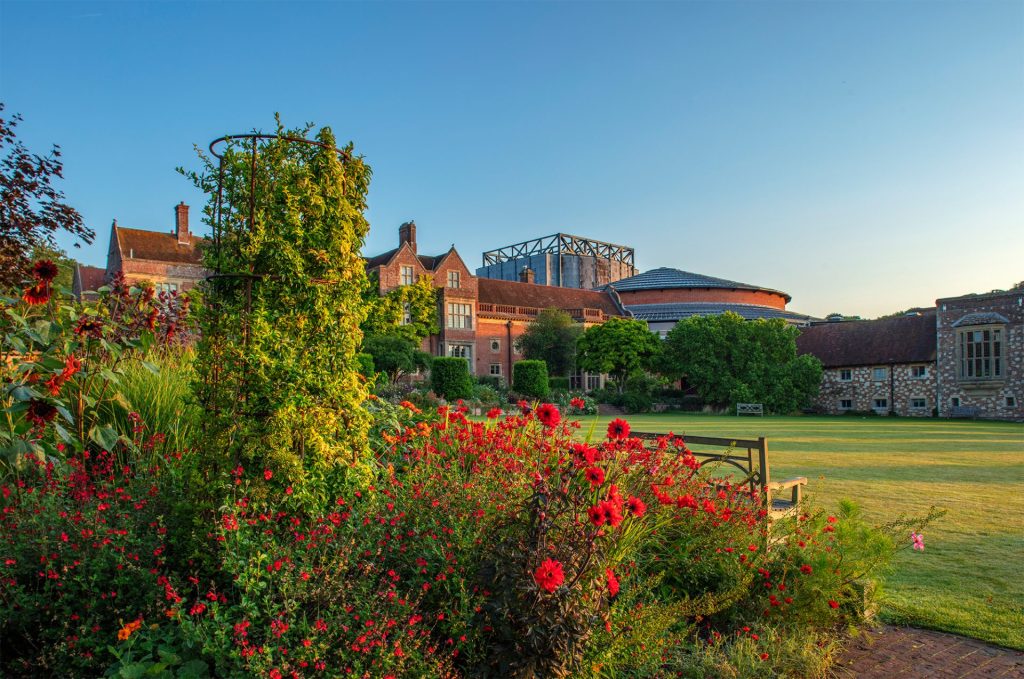
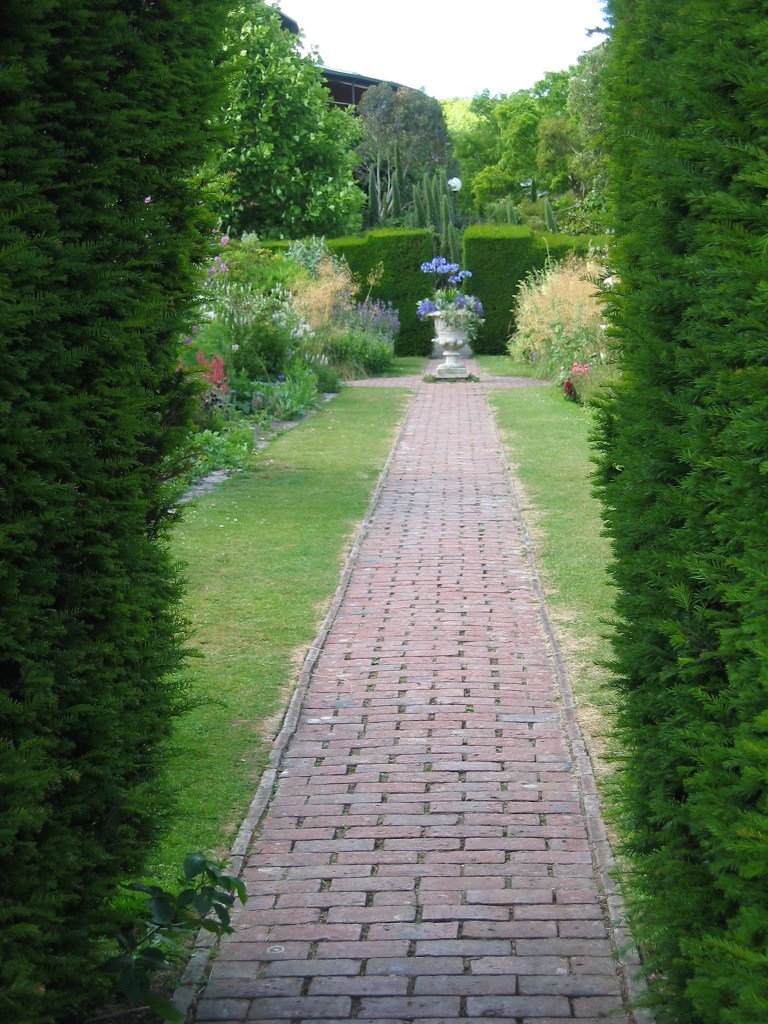
Glyndebourne itself is nothing more than a huge mansion (the opera house), lush gardens and fields of sheep. I stroll around and think about the genesis of what has grown over the years into one of the most prestigious Opera Festivals in the whole world
HISTORY
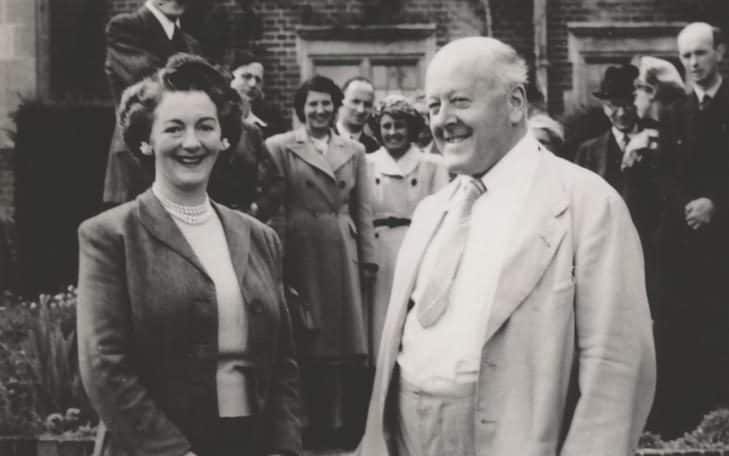
The Glyndebourne estate belonged to the very wealthy John Christie, who inherited it in 1920 and, together with his wife, the singer Audrey Mildman, turned it into a magnificent opera house. They conceived the idea during their honeymoon, which took them to Salzburg and Bayreuth, among other places.
Initially, only Mozart operas were performed there, but nowadays even Wagner is performed. The theatre was rebuilt and adapted several times, until it, so to speak, almost burst at the seams. In 1992 it was closed and demolished, and on 28 May 1994, exactly 60 years after the very first performance, the public was allowed to admire a completely new opera house: more modern and larger, but still with the great acoustics.
The performances at Glyndebourne are always very long ones. There are many intermissions, one of which is over an hour and a half long – and people go on picnics. Now imagine all those posh people, ladies in evening gowns and men in dinner jackets, they sit at tables, or quietly whip out a rug in the middle of the grass and feast on the tastiest snacks, full meals and bottles of champagne.
You order the baskets (with contents) in advance and collect them when the break starts. But you can also bring your own basket, which is a lot cheaper, although I don’t think the audience (who have already spent a lot!) will care much. My eye is caught by a beautifully dressed elderly lady, with one hand on a walker, and the other one holding a glass of pink champagne.
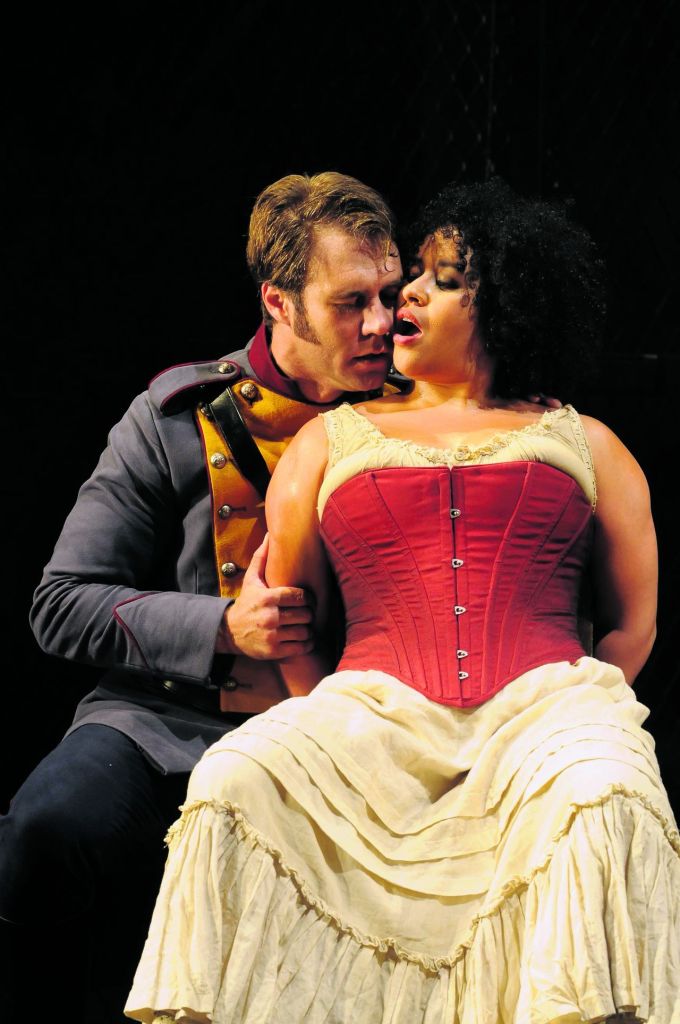
I have Tania Kross to thank for getting me there: she invited me to attend her debut as Carmen at Glyndebourne. Well – you don’t say ‘no’ to that, do you?
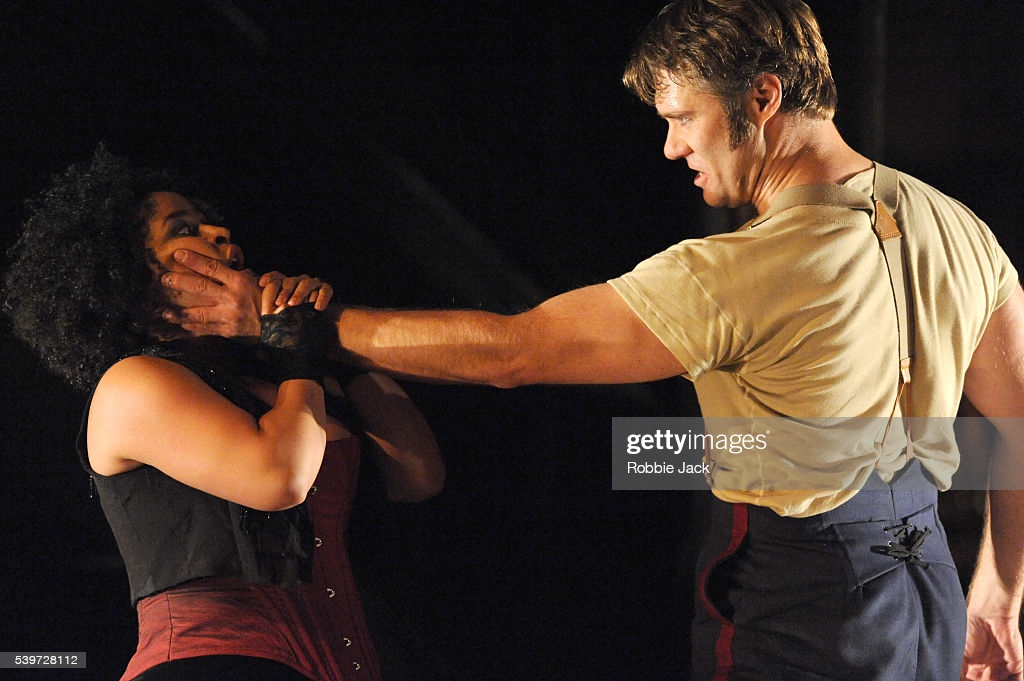
Tania Kross (as Carmen) and Brandon Jovanovich ( as Don Jose) in Georges Bizet opera “Carmen” directed by David McVicar at Glyndebourne. (Photo by robbie jack/Corbis via Getty Images)
I really liked McVicar’s production. I already knew it; it was broadcast live on TV in 2003 and then released on DVD. I liked it then, but in real life you really get to experience the whole. The stage in Glyndebourne is quite small, so it is a bit crowded, especially in the first and second acts. The third act started with a foggy atmosphere, very cinematic, and very emotional, and in the fourth act you got everything it takes to populate Seville: the toreros, the matadors, the beautifully dressed Spanish Doñas and Dons complete with all the trimmings… it is breathtaking. And Carmen’s death was thriller-like suspense.
Stéphane Denéve conducted more than superbly, very French, with a great sense of rhythm, but also with an eye to lyricism. Tania Kross was an excellent Carmen: agile, sexy and provocative. Both the conductor and the director thought she was an ideal Carmen.
Afterwards, everyone ended up in the pub. The bus had long since left, but I was promised a lift back to London. It was an experience never to be forgotten.















 Basia con fuoco