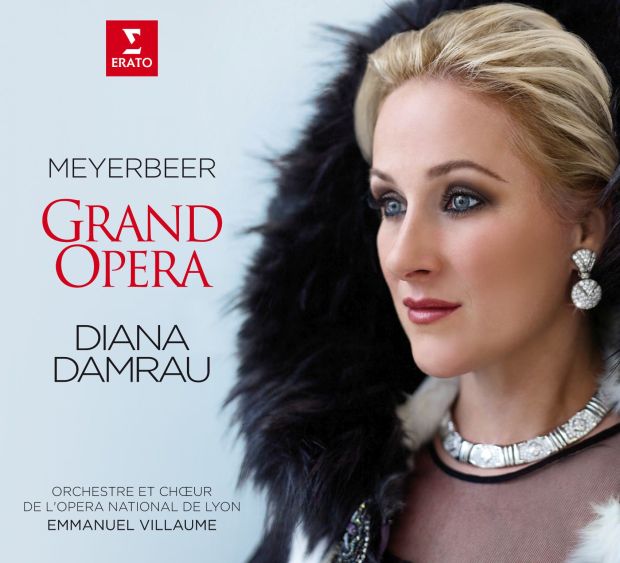
Ik zit in dubio en kom er niet uit. Ik ben dol op Giacomo Meyerbeer, een componist die al sinds de jaren dertig van de vorige eeuw niet alleen gruwelijk ondergewaardeerd, maar ook smartelijk vergeten was. Een volle 81 minuten met zijn muziek voelt dan ook als een duur geschenk. Zeker als de uitgave zo verzorgd is en de aria’s gezongen worden door één van ’s werelds grootste coloratuursopranen.
Daar komt nog bij dat veel van de aria’s vrijwel onbekend zijn en als je geen diehard Meyerbeer-verzamelaar bent dan heb je er waarschijnlijk niet eens van gehoord. Maar er is meer: aria’s uit Alimelek, oder Die beiden Kalifen en Ein Feldlager in Schlesien beleven hier hun plaatpremière. En toch….
Ik heb het echt geprobeerd en er mijn best voor gedaan en toch kan ik die cd niet mooi vinden. Ligt het aan Diana Damrau of aan mij dat ‘Robert toi que j’aime’, het zielsroerende aria van Isabelle (Robert le Diable) niet smekend genoeg klinkt en mij onberoerd laat? Of dat ik, luisterend naar ‘Ombre légère’ (Le pardon de Ploërmel) mij erop betrap dat ik naar Natalie Dessay verlang?
Het is allemaal verschrikkelijk virtuoos en bewonderenswaardig wat Damrau doet maar het laat mij volstrekt koud. . . En toch maakt de uitgave mij gelukkig.
Richard Strauss was nog maar zeventien jaar oud toen hij zijn Serenade voor dertien blazers componeerde, en dat hoor je. Het werk is nogal classicistisch van stijl, alsof Mozart zelf om de hoek keek en de jongen af en toe wat noten influisterde.
De serenade is een (heerlijk) niemendalletje, maar vergis je niet! Het mocht dan wel makkelijk in het gehoor liggen maar om het goed te kunnen spelen heb je eersteklas musici nodig. Laat het maar aan de blazers van het Koninklijk Concertgebouworkest over en je krijgt een verbluffend resultaat.
De sonatine met een leuke bijnaam ‘Fröhliche Werkstatt’ stamt uit 1945. In de vijfenzestig jaar tussen de twee composities is meer gebeurd dan één mensenleven kan bevatten. Denk alleen aan de twee wereldoorlogen, waarvan de tweede Strauss de componist persoonlijk heeft geraakt en ook zijn reputatie heeft aangetast. Niet dat je het in die Sonatine kunt horen, hoor! Zelf vind ik het werk best aan de zonnige en vrolijke kant.
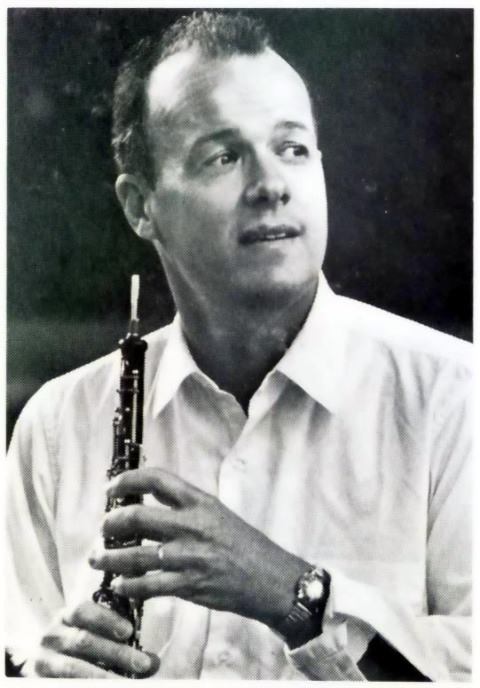
John de Lancie
Het hoboconcert is een verhaal apart. Strauss componeerde het op verzoek van John de Lancie, een Amerikaanse militair, in het civiele leven hoboïst in het Pitsburgh Symphony Orchestra die na de oorlog in Duitsland was gelegerd en Strauss geregeld thuis heeft bezocht
Alexei Ogrintchouk, de van oorsprong Russische solohoboïst van het Koninklijk Concertgebouworkest behoort tegenwoordig tot de grootste elite hobospelers. Zijn toon lijkt van fluweel, zo zacht en zo lief klinkt dat.
De Letse dirigent Andris Nelsons was, voordat hij aan zijn studie directie begon solotrompettist in het orkest van de opera Riga. Zijn ‘blaasverleden’ verloochent zich niet, zoveel affiniteit met de musici en door hen gespeelde werken hoor je niet vaak. Het is mijn muziek niet, maar als het toch moet, dan graag zo uitgevoerd!
RICHARD STRAUSS
Oboe Concerto; Wind Serenade; Wind Sonatine No.2
Alexei Ogrintchouk (hobo)
Royal Concertgebuw Orchestra olv Andris Nelsons
BIS 2163 • 74’
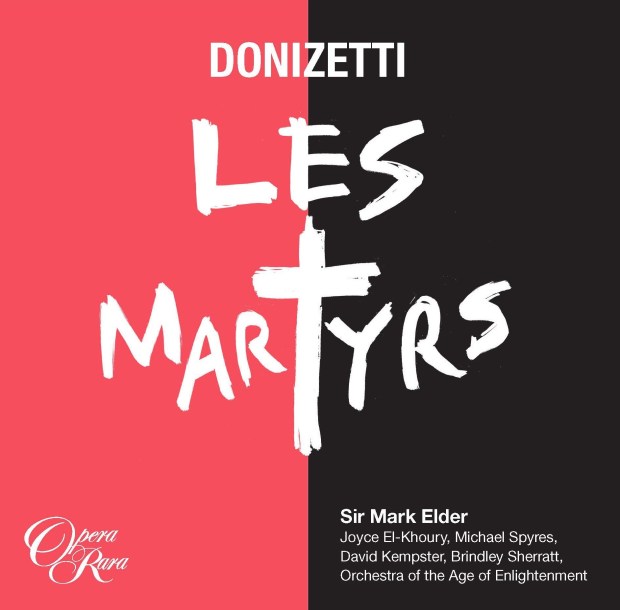
Les Martyrs, an almost forgotten grand opera by Donizetti started its life as Poliuto. The French libretto by Eugène Scribe was based on Polyeucte by Pierre Corneille from 1642 which was impregnated by the vision of its author that free will is a deciding factor in life.
Polyeuctus of Melitene in 10th-century Byzantine miniature from the Menologion of Basil II
Because of the choice of the topic – the life and martyrdom of Saint Polyeuctus – the censor had Poliuto banned, and opening night was cancelled. It was forbidden to show the persecution of Christians on stage in Naples at the time.
After Donizetti arrived in Paris he commissioned a new libretto from Scribe and rewrote and expanded the overture and composed several new arias for the title character.
He also changed the first act finale and added the required ballet music. He then considerably toned down the romantic entanglements and stressed the religious aspects even more.
In his big aria at the end of the second act Poliuto complains about the supposed disloyalty of his wife and speaks about the jealousy that torments him. His “Let me die in peace, I do not want anything to do with you, you have been unfaithful to me” from Polyeucte has been changed to the credo (now at the end of the third act): “I believe in God, the almighty father, creator of heaven and earth….”
Despite its early successes the Martyrs failed to hold the stage. Instead Poliuto made it’s return, albeit on few occasions. After 1920 the opera was performed only sporadically (a remarkable fact: in 1942 Poliuto was performed on the occasion of Hitler’s visit to Mussolini, the title role sung by Benjamino Gigli).
Thanks to Callas, who rediscovered the opera in 1960, a short revival came about. Her live recording from La Scala with Franco Corelli left me cold. The reason for that I only understood later when I heard the live recording with Katia Ricciarelli and José Carreras. In an opera with vulnerability as its main theme big dramatic voices sound out of place.
In October 2016 Opera Rara recorded Les Martyrs in the studio, followed by a concert performance in November.
Joyce El-Khoury and Michael Spyres
Joyce El-Khoury, clearly following in the footsteps of Leyla Gencer, is the perfect Pauline: dreamy, loving and fighting like a lioness (nomen est omen) for the life of her husband who turned into a Christian. A husband she does not even love. Only because she believed her former fiancé was dead she has agreed to be married off to her father’s protégé.
In “Qu’ici ta main glacée” she sounds very vulnerable, moving me to tears (her pianissimi!). “Dieux immortels, témoins de mes justes alarmes,” her confrontation scene with Sévère, her lover she believes to be dead (a very impressive David Kempster) is simply heartbreaking.
Michael Spyres is a very heroic Polyeucte. In “Oui, j’irai dans leurs temples” he sings a fully voiced, perfect high “E.”
The orchestra under Sir Mark Elder is on fire. The three ballet scenes halfway though the second act lighten up the mood a little, however briefly.
Much praise as well for the perfect singing of the Opera Rara Chorus (chorus master Stephen Harris).
English translation: Remko Jas
GAETANO DONIZETTI
Les Martyrs
Joyce El-Khoury, Michael Spyres, David Kempster, Brindley Sherratt, Clive Bayley, Wynne Evans a.o.
Opera Rara Chorus; Orchestra of the Age of Enlightenment under Sir Mark Elder
Opera Rara ORC52
Toegegeven, de omstandigheden waren alles behalve optimaal. Het begon met de afzegging van de stertenor Jonas Kaufmann. Op zich niet echt een ramp, zijn stem is niet echt geschikt voor Gerontius.
Kaufmann werd vervangen door Toby Spence, een zowat ideale vertolker van die rol. Helaas, ook Spence zegde af en Andrew Staples stapte in. Prima tenor, zonder meer, maar zijn stem past beter bij werken van Mozart en Bach. Op het laatste moment liet ook Sarah Connoly het afweten en de rol van Angel werd overgenomen door Catherine Wyn-Rogers.
Geen van de twee nieuwe solisten voldeed aan de hoge eisen van het werk. Wyn-Rogers intoneert niet zuiver en haar ruime vibrato is een marteling om naar te luisteren. Van de oorspronkelijk voorgestelde bezetting bleef alleen Thomas Hampson over, maar in zijn eentje kon hij de uitvoering echt niet dragen.
Daniel Barenboim heeft altijd veel affiniteit met de muziek van Elgar gehad, het is ook niet de eerste keer dat hij het mystieke meesterwerk dirigeert. Helaas is het resultaat nu gewoon knudde. Het orkest is te zwaar en het koor klinkt te Duits. Ik snap best dat je de geplande voorstellingen en radio-uitzendingen niet zo maar kunt cancelen, maar moest het povere resultaat dan ook op cd’s uitgebracht worden?
EDWARD ELGAR
The Dream of Gerontius
Catherine Wyn-Rogers, Andrew Staples, Thomas Hampson
Staatsopernchor Berlin, RIAS Kammerchor; Staatskapelle Berlin olv Daniel Barenboim
SIR JOHN BARBIROLLI AND SIR ADRIAN BOULT
Gelukkig: aan goede uitvoeringen geen gebrek. Het mooist vind ik de opname onder John Barbirolli uit 1964 (Warner 0724357357920) , niet in de laatste plaats vanwege de onnavolgbare bijdrage van Janet Baker:
Maar ook Sir Adrian Boult (Warner 0724356654020 ) uit 1975 is niet te versmaden!
Alleen al vanwege Nicolai Gedda’s meer dan ontroerende ‘I went to sleep’:
Het repertoire voor piano vierhandig lijkt bijna onuitputtelijk en toch hoor je het niet vaak in de concertzalen. De reden is nogal logisch: vind nou eens een tweetal gelijkgestemde pianisten van formaat, tweelingen en/of andere familieleden daargelaten, die het podium en alle aandacht bereid zijn te delen! Anders is het met de studio-opnamen gesteld, die zijn namelijk niet te tellen.
Dat er dan bijna altijd om de Hongaarse Dansen van Brahms en de Slavische Dansen van Dvořák gaat is niet meer dan begrijpelijk. Het zijn fantastische, emotionerende stukken, makkelijk verteerbaar en met een grote oorwurmfactor.
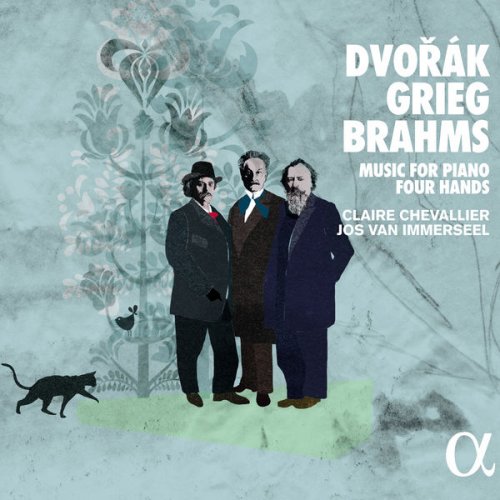
Het duo Claire Chevallier en Jos van Immerseel is een grote uitdaging aangegaan om al die andere opnamen zo niet te overtroeven dan zeker van een verrassingsfactor te voorzien. Dat laatste is ze zonder meer gelukt. Van Immerseel en Chevallier bespelen een Bechstein uit 1870, een concertvleugel met parallel–besnaring (gewone hedendaagse instrumenten hebben een kruis-besnaring), waardoor, onder andere, de bas-kant veel transparanter klinkt.
En dat klopt aardig, de klank is inderdaad zeer transparant en helder, waardoor het zeer prettig is om er naar te luisteren. Je zou zelfs kunnen stellen dat de opname een zekere rust ademt. Heerlijk, dat wel, maar zijn rust en de – zeker de Hongaarse – dansen niet een contradictio in terminis?
JOHANNES BRAHMS, EDVARD GRIEG, ANTONÍN DVOŘÁK
Music for piano four hands
Claire Chevallier & Jos van Immerseel • 71’
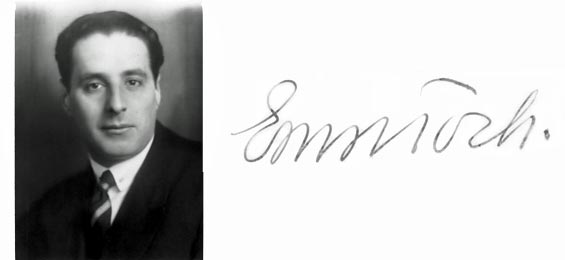
Ernst Toch (Wenen 1887 – Santa Monica 1964) was, naast Paul Hindemith, Hanns Eisler en Ernst Krenek één van de voornaamste vertegenwoordigers van de Nieuwe Zakelijkheid. Of de Nieuwe Objectiviteit zoals de stroming ook werd genoemd.
De stroming ontstond in de jaren na de Eerste Wereldoorlog als een soort ‘anti-romantische reactie tegen het expressionisme’. Denk aan het Bauhaus in de architectuur en verisme (én het magisch realisme) in de schilderkunst.
Toch zei hij over zichzelf dat hij “the most forgotten composer of the XXth century” was en dat klopt aardig. Want zeg nou eerlijk: heeft u ooit zijn muziek in een concertzaal gehoord? Een frappant feit eigenlijk, want zijn muziek werd best vaak opgenomen. Zijn symfonieën en zijn kamermuziek verschenen (onder anderen) op CPO en Naxos en zijn ‘Joodse’ composities werden uitgebracht door het Amerikaanse Milken Archive. Al die opnamen kan ik u zonder meer aanbevelen.
En nu heeft Toch een nieuwe verdediger van zijn muziek er bij gekregen: de jonge Oostenrijkse pianiste Anna Magdalena Kokits. Kokits is sinds jaren een vurig voorvechtster van hedendaagse muziek, met een sterke voorkeur voor de minder bekende of vergeten repertoire van met name Joodse componisten. Naast haar Toch-project (Kokitis gaat al zijn pianowerken opnemen) staat ook een cd met kamermuziek van Mieczysław Weinberg in de planning.
Alle werken die op haar eerste cd staan zijn gecomponeerd tussen 1923 en 1931. Al die composities zijn buitengewoon fascinerend, want bij al zijn zakelijkheid wist Toch de emoties niet uit de weg te gaan. Zoals hij het zelf zo mooi formuleerde: “we kunnen niet ontkennen dat de muziek in essentie romantisch is. Waarbij we de emoties niet mogen verwarren met sentimentaliteit“.
En dat is precies wat Kokitis ook doet. Haar spel is niet alleen virtuoos (luister even naar de derde Burlesque ‘Der Jongleur’ of de hondsmoeilijke ‘Zehn Mittelstufen-Etuden’: wedden dat u naar adem gaat snakken?) maar ook bijna kinderlijk lief in ‘Kleinstadtbilder’. Een aanwinst.
ERNST TOCH
Burlesken op.31, Capricetti op.36, Kleinstadtbilder op.49, Drei Klavierstücke op.32, Sonate op.47, Etüden
Anna Magdalena Kokits, piano
Capriccio C5293 • 61’
In march 2015 Chen Reiss appeared on the stage of the National Opera in Amsterdam. She kindly took some time off from her heavy rehearsal schedule to answer my questions.
The evening we meet in the canteen of the National Opera, Chen Reiss is tired, very tired. It was a long day of rehearsals, from 10:30 until 18:00!!! With a break, but nonetheless…
She had arrived in Amsterdam six weeks earlier to study Pamina in Die Zauberflöte, and Simon McBurney’s staging requires great physical efforts of the entire cast.
Not easy, especially not if you happen to be a mother as well, travelling with a daughter who is almost two years old. It is impossible to keep up with the daily news this way, which is a blessing, in a way, because most of that news does not exactly cheer Reiss up.
“I am extremely pessimistic and scared. As a Jewish and an Israeli woman I feel less and less at home in Europe. I am deeply worried, and fear everything will go awry. Not a very nice perspective, certainly not for a parent. Fortunately enough I am too busy to listen to the news. I have breakfast at eight, with my daughter, after which rehearsals start. In the evening, when I get home, it is simply too late. I am tired, and often I need to study…”
“I love Mozart with all of my heart: his sacred music perhaps even more than his operas. Those works I love singing above everything else, the music is so beautiful! Full of passion, but stylish and elegant at the same time. Which Mozart roles I love the most? Ilia (Idomeneo), I think, but in fact I love them all equally!”
Chen Reiss reveales her Top 5 Mozart soprano arias:
“Pamina passive? I don’t believe so, on the contrary! She is extremely brave and full of initiative. So much is happening to her. First she is kidnapped, then almost raped. Then her mother tells her to kill her own father. When she refuses she is scorned and cursed. She then escapes rape for a second time… Just when you think not much else could happen to her the man she loves no longer wants to speak to her! She goes to hell and back and gets so desperate she can only think of suicide. The decision to undergo the trials and follow the man she loves to the end was made entirely by herself. She is a hard act to follow!”
Is it eternal love, I ask?
My question makes her laugh out loud. In opera, which love is not eternal, after all?
Reiss finds the Amsterdam production by Simon McBurney truly charming. “It all looks very exciting and beautiful, and in addition I work with fantastic colleagues. And this is the third time I get to fly!
In Vienna I was a very high flying Waldvogel in Siegfried, which not only gave me high anxiety quite a bit but made it hard for me to follow the conductor as well …. In my last Idomeneo production I was lifted into the air for a moment, which was rather fun.
Trailer of the Viennese Idomeneo:
“Do I ever refuse a role? Yes, surely, but only when it does not suit my voice. It is harder to decide which productions you should avoid. Often you do not know the concept until a week before rehearsals start. Then it is too late to refuse. Refusing anyhow is difficult, because you no longer will be booked, especially if you are a young singer.
This also happens to great stars, by the way. Anna Netrebko recently left a production because she could not agree with the director. Apparently it is easier to replace a world famous singer than a director. The director is felt to be the most important figure, and everything revolves around him or her.”
“I was once made to wear a very heavy hat, which physically I could not do. Not even a letter from my doctor helped: I was fired, and the concept remained. Will this ever change? Who knows. Perhaps if people would stop buying tickets?”
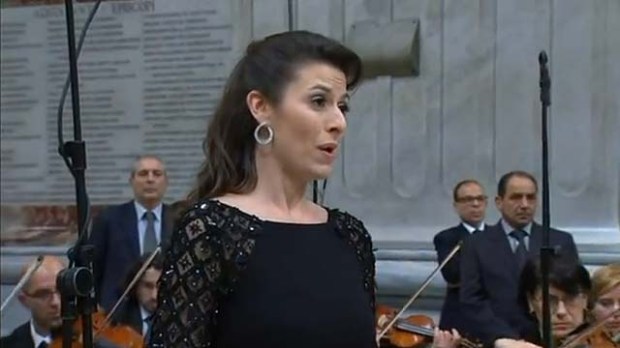
Chen Reiss is also very popular with audiences who never go to the opera or to classical concerts. She sang Et Incarnatus Est in 2014 in front of the Pope during the Christmas Eve Mass in the Vatican. One of the papers the next day came up with the following headline: ‘How a Jewish Israeli soprano found holiness in front of the Pope’.
Chen Reiss performing at the Christmas Mass at the Vatican’s St. Peter Basilica.
“It was a special experience, yes. I only met the Pope very briefly, not longer than thirty seconds, but he sent me a long thank you letter afterwards. Really special. It moved me a lot, and gave me a warm feeling. I also believe the Pope genuinely loves music, he knows so much about it!”
“Why I was invited? Two years ago I sang that piece during the Sacred Music Weeks in Vienna, and I believe he heard me there. Or someone told him about me, because shortly afterwards I got the news I was selected to sing during the mass.”
Reiss singing during the Christmas Eve Mass:
Reiss’s discography includes five solo albums, amongst others. One of them is Le Rossignol et la Rose. I tell her how incredibly beautiful and moving I find that CD. She is genuinely happy with the compliment.
“I selected the songs and made the program myself, which is all about love, pain and sadness, but about happiness as well. When I was selecting the program I was happily in love, but during the recording sessions my partner and I broke up. I was devastated, and even thought of giving up entirely, but I did finish the recording. That was the right decision, because the recording sessions had a therapeutic effect on me which was beneficial. They helped me so much, in fact, that I opened up to something new and met my current husband. So things have come full circle. For this reason, the CD is very dear to me.
I would love to record more, which is something I will soon do, in fact: first Bach cantates, followed by more Lieder. Yes, all for Onyx. Such a great company! They are very helpful and sweet, they simply let me do whatever I wanted for the Rossignol disc.
In the future I intend to focus more on concerts and recitals. I have discovered that that is what I love doing the most. I will sing the Sieben frühe Lieder by Berg soon, and then perhaps the Vier Letzte Lieder by Strauss.”
“I love Amsterdam dearly. On my first visit here I sang Mahler’s Fourth Symphony, with the Radio Philharmonic Orchestra under Markus Stenz. He is such an incredibly lovely conductor!
Chen Reiss in Mahler’s Fourth Symphony:
At that time I already wished I could stay a little longer in the city. It is so strikingly beautiful, for me it is the most beautiful city in Europe, perhaps even in the world. There is so much culture too: the Concertgebouw, the museums…. And the people here are very friendly. I enjoy all of that very much.
Le rossignol et la rose
This recital-cd is a fine example of a perfectly put together recital. Like a nightingale and a rose, it is a match made in heaven.
The recital’s motto: “The nightingale has sung throughout the night, making the roses spring up by the sweet sound of her echoing song” introduces a story in five chapters; a story of love, longing, loneliness and sorrow. And humor too, because even in foggy romanticism funny things do occur occasionally.
The title of the CD is taken from Saint Saëns’s vocalise. In this song Reiss presents her full potential on a platter, which is quite something.
‘Le rossignol et la rose’ by Saint-Saens, illustrated with fragments from old movies:
I was particularly moved by ‘Die Nachtigall’ by Krenek, a song I did not know, and would not associate with this composer straight away. The beautiful text is by Karl Kraus, a poet who, according to Krenek, had a great influence on him. Reiss makes you gasp in admiration, her high notes are both impeccable and sweet.
Bellini’s ‘Vanne o rosa fortunata’ is a lovely piece of fluff, but it is impossible not to be moved by ‘La Rosa y el sauce’ by Guastavino. It is a song about a rose which blossomed in the shadow of a willow, but which was plucked by a young girl, leaving the willow to mourn. Reiss grieves with the willow, and so do we.
In ‘Shnei shoshanim’ by Mordechai Zeira Reiss shows the darker side of her voice. She reminds me a little of Nethania Devrath, one of the most famous Israeli sopranos from the sixties, with Victoria de los Angeles not looming far in the background.
Pianist Charles Spencer is truly the saving angel here. He is much more than just an accompanist. Listen to his intro to Krenek’s ‘Die Nachtigall’ or to his pearly notes in Meyerbeer’s ‘Rosenblätter’. BRAVI!
Le Rossignol et la Rose
Purcell, Hahn, Mahler, Meyerbeer, Strauss, Bellini, Guastavino, Berg a.o.
Chen Reiss (soprano), Charles Spencer (piano)
Onyx 4104 • 72’
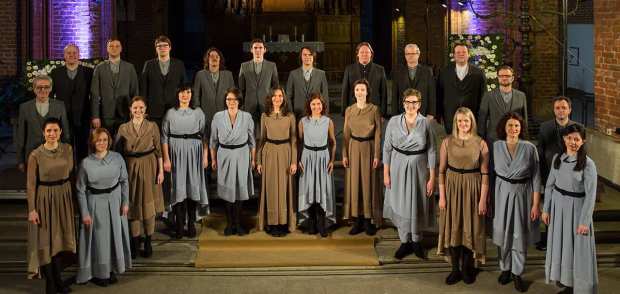
Baltische landen hebben iets met het zingen. Veel beroemde zangers komen daarvandaan, en er bestaat ook een enorme koorcultuur: men schijnt er het zingen als één van de grootste hobby’s te koesteren. Stelt u zich voor: alleen in Riga bestaan meer dan honderd koren!
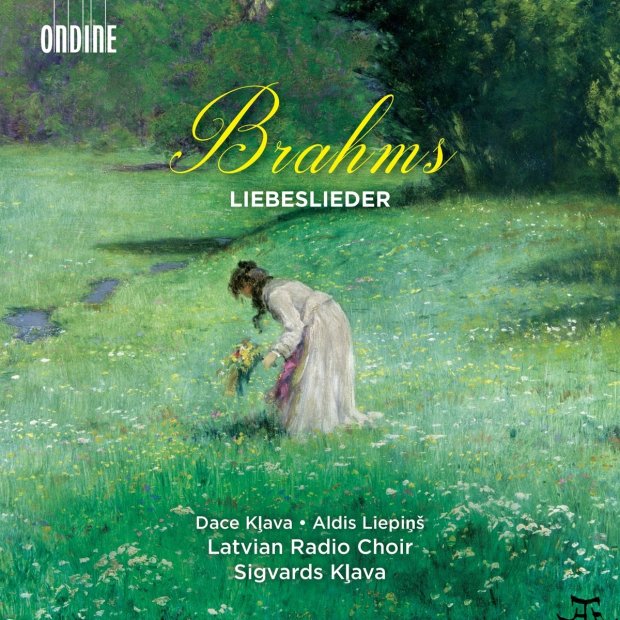
Geen wonder dat het in 1940 opgericht Lets Radiokoor gerekend kan worden tot de beste kamerkoren ter wereld. Dat ze daadwerkelijk ‘bedwelmend’ klinken, zoals The Times ze ooit roemde, daar kon een ieder zich van overtuigen tijdens hun tournee door Nederland dit jaar, waarbij zij onder anderen ook de Liebeslieder van Brahms ten gehore brachten.
Wie er toen niet bij was kan zich nu zelf van hun spectaculaire doch zeer verfijnde en pure manier van zingen overtuigen: Ondine heeft bijna 50 minuten van Brahms’ ‘koormuziek’ vastgelegd.
Nu zijn noch de Liebeslieder noch de andere op die cd opgenomen werken voor een koor bedoeld, zelf ken ik ze alleen in uitvoeringen door een zangers-kwartet. Iets, wat ik zonder meer prefereer. De volksmuziekachtige liederen zijn meer gebaat bij wat meer speelse benadering, denk ik, waarbij de stemmen hun individualiteit behouden, ook tijdens de samenzang. Maar wat de Letten hier laten horen is zonder meer van het hoogste niveau.
Johannes Brahms
Liebeslieder:
Drei Quartette op.64; Vier Quartette op.92; Liebeslieder-Walzer op.52; Neue Liebeslieder Op.65
Dace Kļava & Aldis Liepiņš (pianos)
Latvian Radio Choir olv Sigvards Kļava
De Turandot-productie van regisseur Andrei Serban voor het Royal Opera House in Londen dateert van 1984, maar heeft allerminst aan pracht en kracht ingeboet. In 2013 heeft Opus Arte de voorstelling op dvd vastgelegd.
Heeft u ook zo’n hekel aan Calaf? Voor mij behoort hij tot de meest onsympathieke operahelden: egoïstisch, egocentrisch en belust op geld en macht, in staat om alleen maar van zichzelf te houden. Of denkt u werkelijk dat hij verliefd is op Turandot?
Soms verdenk ik Puccini ervan dat hij met opzet zijn opera niet had afgemaakt, want: hoe brouw je een happy end aan een sprookje dat een aaneenschakeling is van martelingen, moorden en zelfmoorden?
Wellicht ben ik de enige niet. Regisseur Andrei Serban laat de opera na de dood van Liu één lange minuut stoppen, waarin alle handelingen bevriezen. Daar ben ik hem bijzonder dankbaar voor, want de hartenkreet van Timur (“word wakker Liu, het is al ochtend”) echoot zo na in je hoofd.
De dertig jaar oude productie – die, na de halve wereld te zijn afgereisd, in 2013 weer eens terugkeerde naar Covent Garden – heeft niets aan pracht verloren en boeit nog steeds van het begin tot het eind. De voorstelling is met zijn prachtige choreografie een lust voor het oog: wervelend en kleurrijk, met een zeer dominante kleur rood.
Marco Berti is een prima hoewel wat statige Calaf en Lise Lindstrom zingt een zonder meer overtuigende Turandot. Iets wat ik helaas niet kan zeggen van Eri Nakamura (Liu).
De jonge Henrik Nánási heeft zo te horen nog een lange weg te gaan voordat hij zich een ‘Puccini-dirigent’ mag noemen. Nu ontbreekt het hem (nog?) aan een dosis gezond sentiment. Maar kundig is hij wel.
Dit is niet de beste uitvoering van Turandot die er is, maar wellicht, voor mij althans, wel één van de mooiste om te zien.
Hieronder trailer van de productie:
Giacomo Puccini
Turandot
Lise Lindstrom, Marco Berti, Eri Nakamura, Raymond Aceto e.a
Royal Opera Chorus, Orchestra of the Royal Opera House olv Henrik Nánási
Regie: Andrei Serban
Opus Arte OA 1132 A
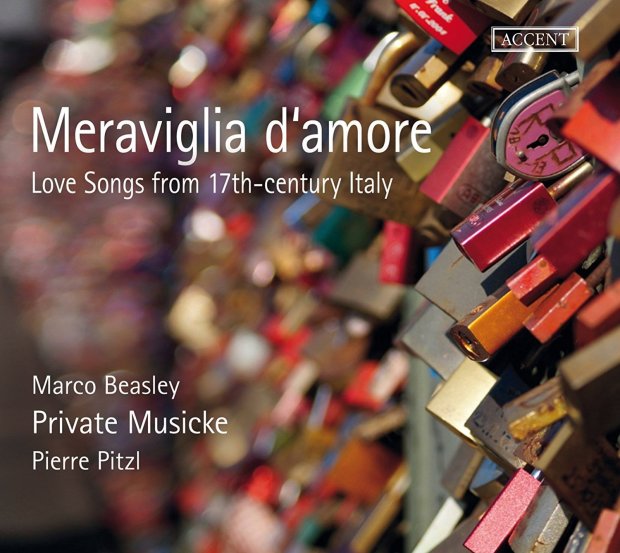
De stem van de Italiaanse tenor Marco Beasley behoort tot de categorie ‘lighter than light’. Daar moet je van houden, maar met zijn zeer natuurlijk timbre en zijn fijngevoelige en liefdevolle voordracht klinkt hij zeer aangenaam in de oren. Toch valt er niet te ontkennen dat het op den duur een beetje monochroom kan worden.
Gelukkig staat hij daar niet in zijn eentje. Bij die opname van de vroeg zeventiende-eeuwse Italiaanse liefdesliedjes wordt hij bijgestaan door een ensemble van uiterst bekwame musici. Samen bereiken ze een zowat volmaakte schoonheid, helemaal naar de idealen van de late renaissance. Luister naar ‘O del cielo amor’ van Sigismondo d’India of ‘Alma mia’ van Girolamo Kapsberger en waan je in de zevende hemel.
Het boekje is helaas aan de summiere kant. Er staat een geanimeerd gesprek in tussen ene Bernardo en ene Pietro, maar nergens staat vermeld wie de heren zijn. De liedteksten zijn dan wel in twee talen afgedrukt, maar er is geen informatie te vinden over de voortreffelijke musici, die bij mij een gevoelige snaar weten te raken.
Prachtige cd, zeer geschikt voor de lange avonden bij de ondergaande zon, hand in hand met je geliefde.
Meraviglia d’amore
Love Songs from 17th-century Italy
Sigismondo D’India, Girolamo Kapsberger, Biagio Marini e.a.
Marco Beasley (tenor)
Private Musicke: Luciano Contini (archlute, theorba), Hugh Sandilands (baroque guitar), Claire Pottinger-Schmidt (violoncello) olv Pierre Pitzl (baroque guitar, viola da gamba)
Accent Acc 24330








 Basia con fuoco