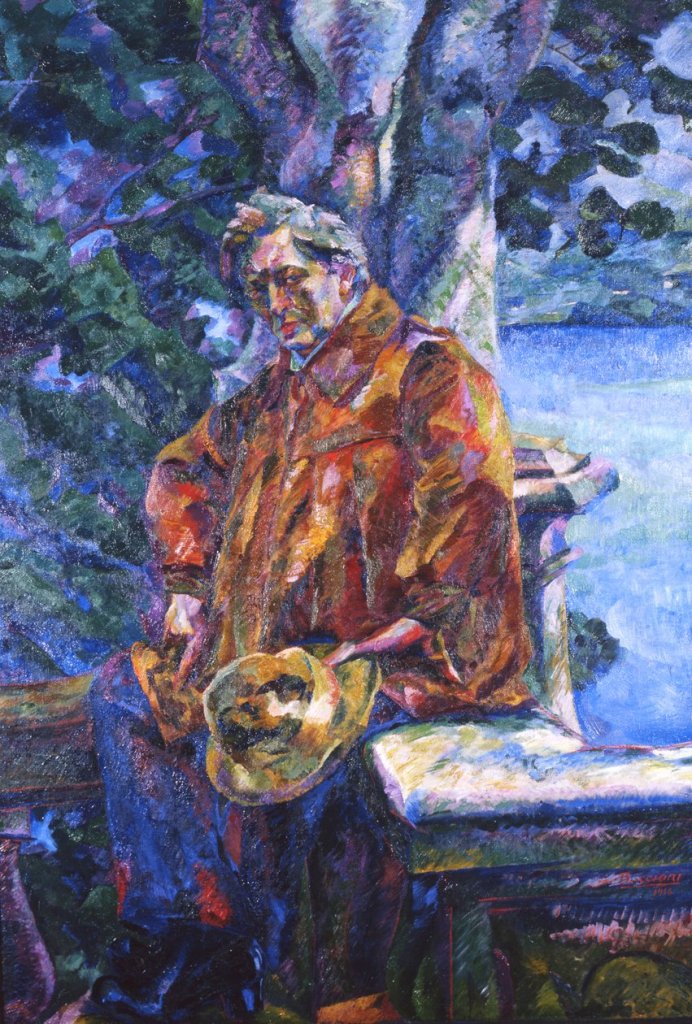
Feruccio Dante Michelangelo Benvenuto Busoni is, I think, one of the greatest cosmopolitan composers in the history of music. His father was an Italian and his mother a German. Busoni studied in Austria, married a Russian-Swedish lady and went on to live in Berlin. Well, most of the time, as he also lived in Vienna, Zurich and Bologna. And, oh yes, he also had Jewish roots. Not to mention all of those first names!
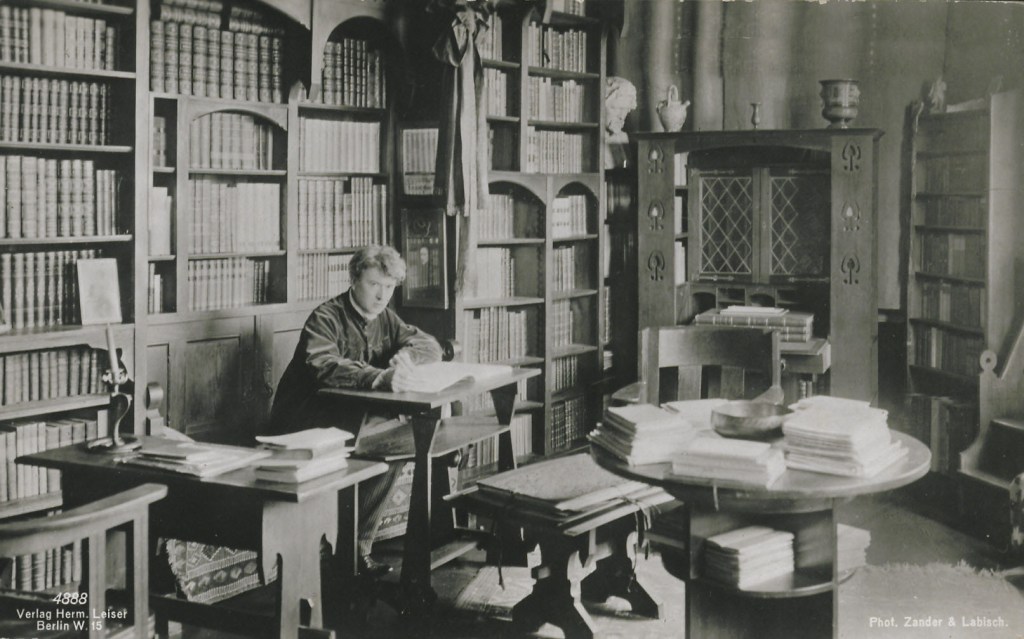
It seems he had a book collection that could have rivaled most libraries: no wonder he knew his classics! Busoni was also a great connoisseur and admirer of Carlo Gozzi, and after composing the incidental music for Gozzi’s play Turandot, Busoni decided to turn the whole into an opera.
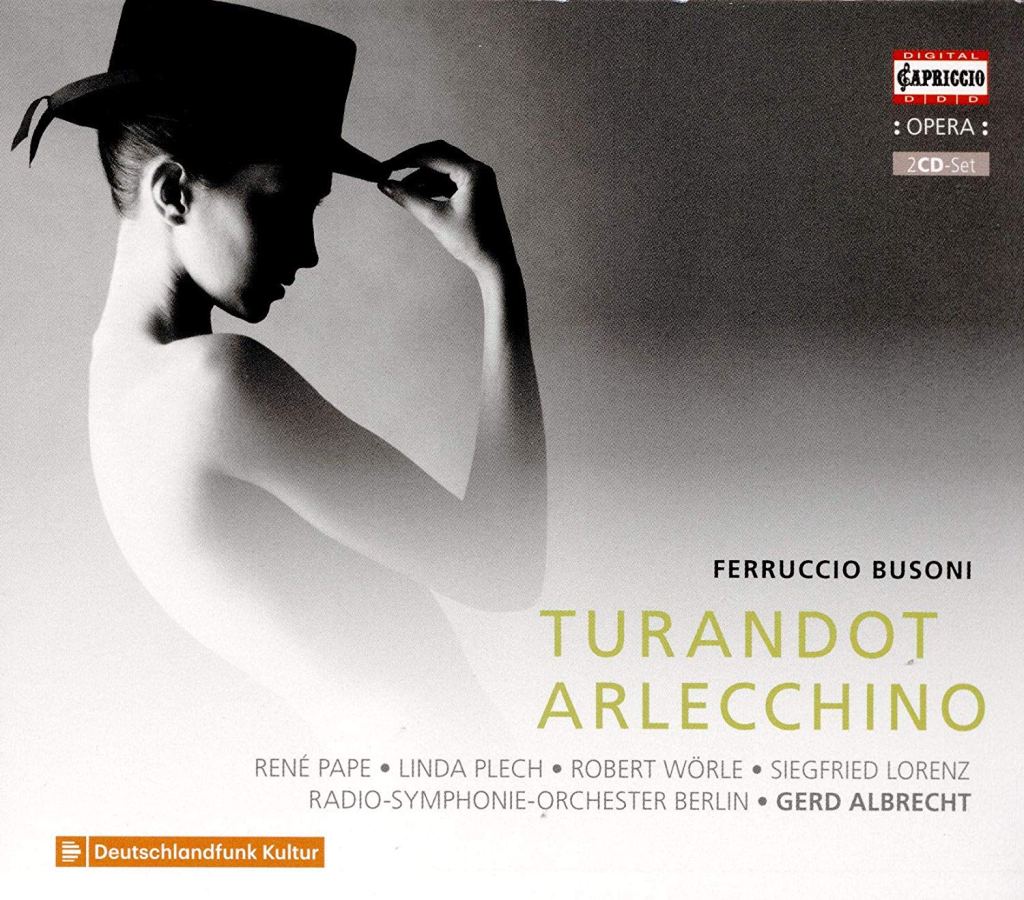
At the same time (1916), he also composed Arlecchino, an opera based on a character from the Commedia dell’ Arte. The (German-language) libretto with many spoken dialogues was written by the composer himself. Both operas, which Busoni called ‘La Nuova Commedia dell’ Arte’, had their world premiere on 11 May 1917 at Zurich’s Stadttheater, conducted by the composer himself.
In 1992, the operas were recorded in Berlin and they were now being marketed (for the first time?). Joseph Protschka is a warmly timbred Kalaf and Linda Plech excels as Turandot. Gerd Albrecht conducts very involved, paying close attention to the score.
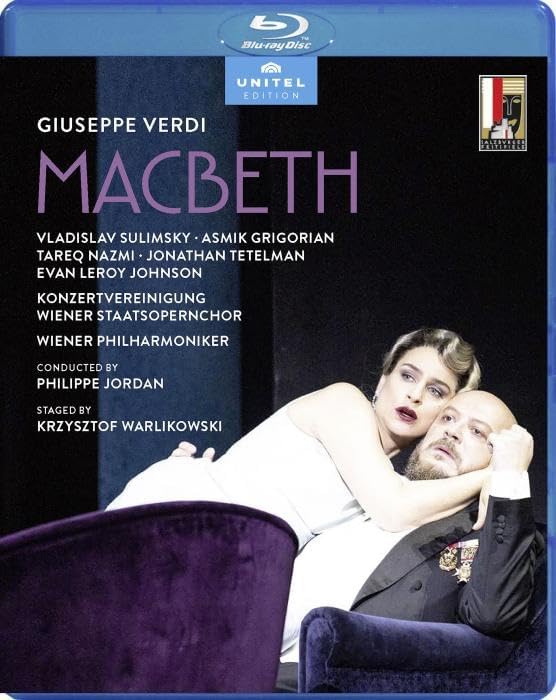
In 2023 stond er tijdens de Salzburger Festspiele een nieuwe productie van Macbeth op het programma in de regie van Krzysztof Warlikowski en decors en kostuums van Małgorzata Szczęśniak. Een opname van een van de voorstellingen is door Unitel uitgebracht op dvd.
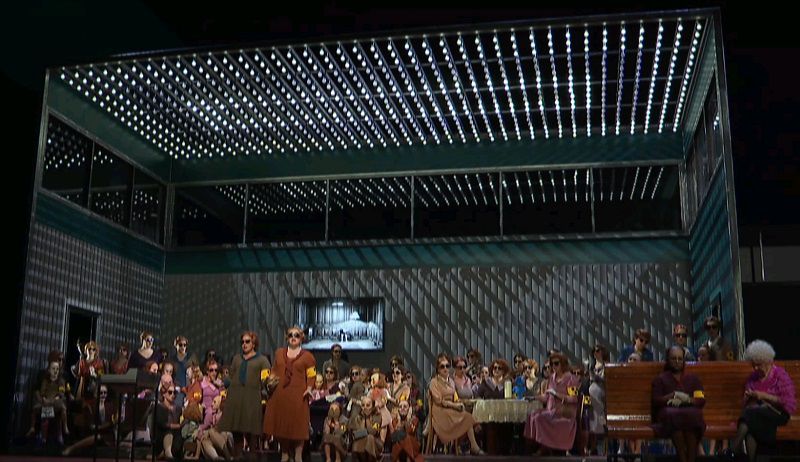
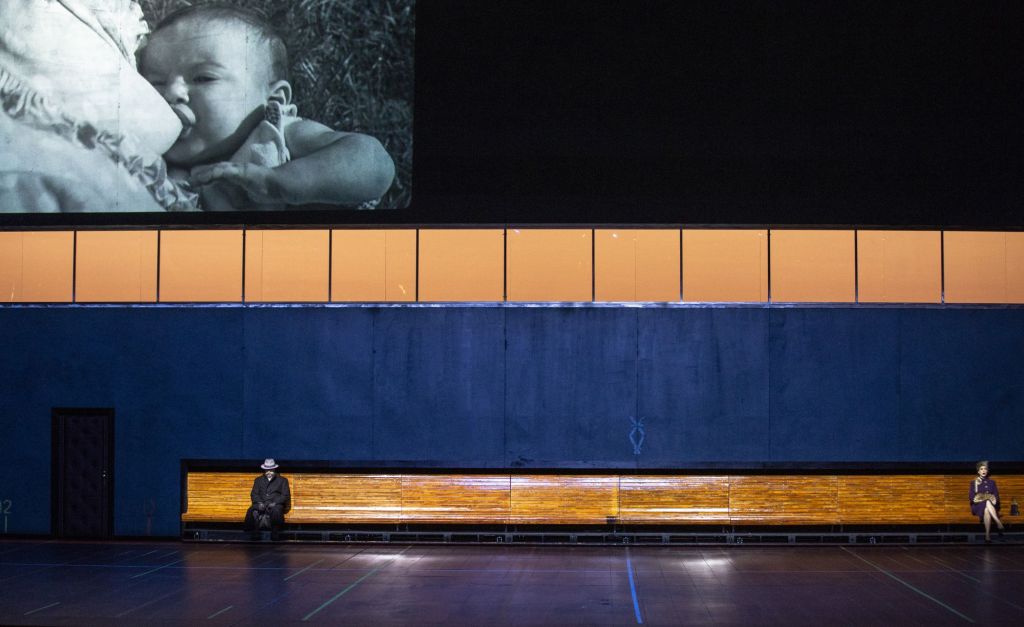
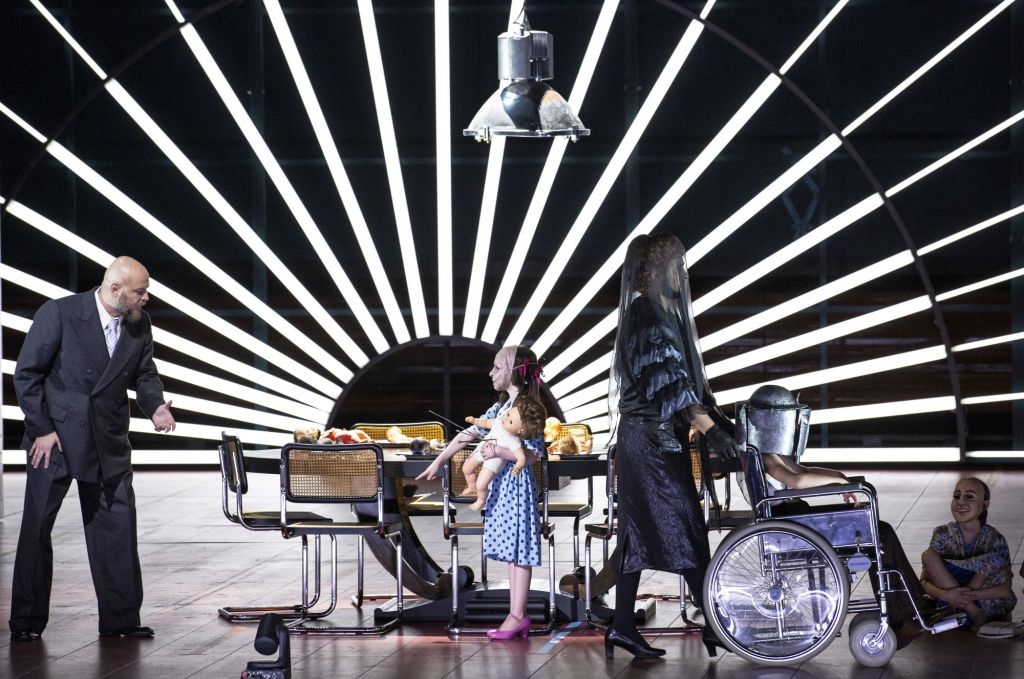
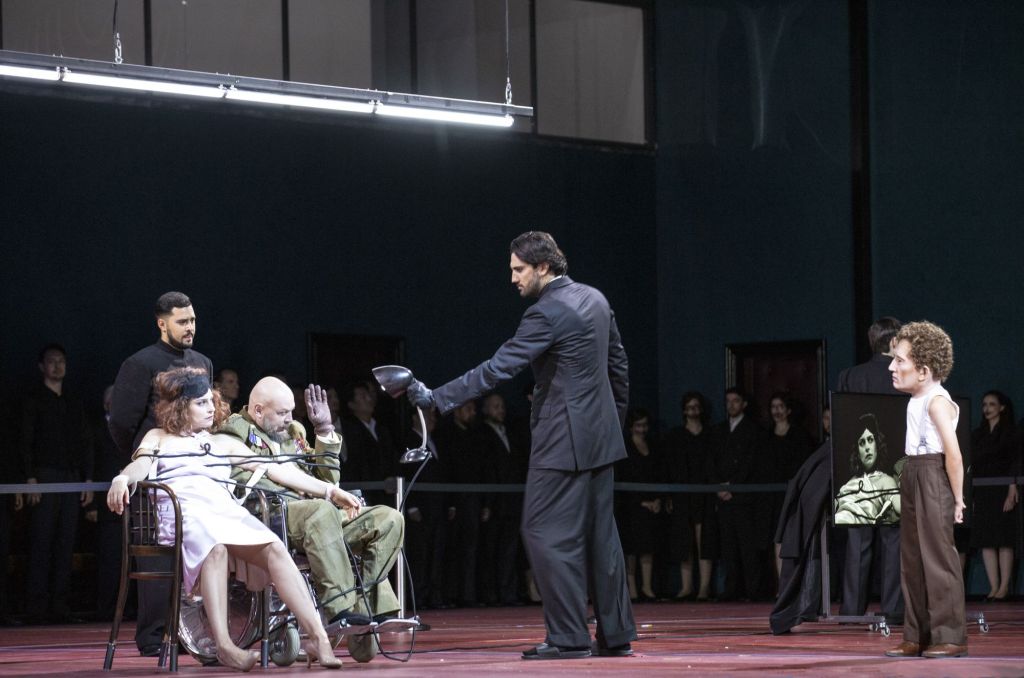
De productie toont de gebruikelijke stijlkenmerken van dit roemruchte tweetal: verrijdbare doorzichtige ruimtes waarbinnen zich scènes afspelen die feitelijk elders gesitueerd moeten worden, veel kinderen als figurant, een veelheid aan acteerwerk van personen die tijdelijk buiten de directe handeling vallen; vaak ook nog aangevuld met videobeelden. Verder een mix van tijdsgewrichten om de spanning erin te houden. Je komt ogen tekort op het enorme toneel van het Großes Festspielhaus, zeker als videokijker.
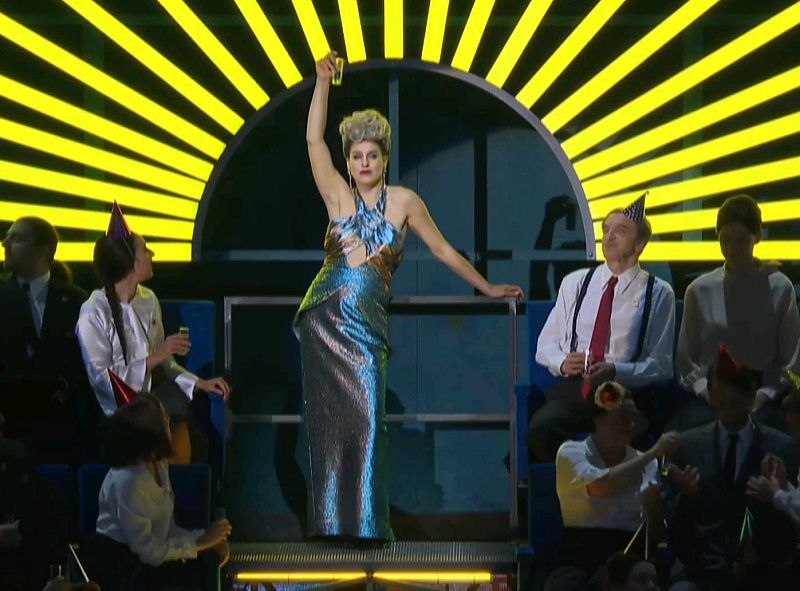
Asmik Grigorian komt op als de Lady, prachtig gekleed en gekapt in de stijl van een jaren ’30 filmdiva uit Babelsberg. Ze neemt plaats op een extreem lange bank van het soort dat vroeger in stationswachtkamers stond, maar dan langer. Dan komt een man in een witte jas haar halen en verdwijnt ze achter een gordijn. Je krijgt nog net te zien dat ze in een grote stoel gaat zitten. Het betreft een gynaecologisch onderzoek en de uitslag bevalt haar in het geheel niet: infertiliteit.
Ze verscheurt het onderzoeksrapport en verbrandt de snippers in een wasbak, ondertussen het ene na het andere zang technische hoogstandje ten beste gevend. Acteren en zingen gaan voor Grigorian altijd samen. Ik had haar in deze uitmonstering graag in een film van Zarah Leander willen zien terwijl ze zingt ‘Kann denn Liebe Sünde sein?’ of ‘Eine Frau wird erst schön durch die Liebe.’
De gasten bij het banket zitten voor het merendeel op een tribune. Slechts een klein aantal mag plaatsnemen aan een eenvoudige tafel. Macbeth raakt volledig de kluts kwijt als hij het gezicht van Banco op en ballon ziet, mooi geacteerd door Vladislav Sumlinsky. Met hem gaat het hierna snel bergafwaarts, zijn Lady blijft nog wat langer overeind maar ook haar wacht de volledige onttakeling. Prachtig om te zien hoe Grigorian gaandeweg verandert van kille berekenende vrouw in een psychisch wrak, geholpen natuurlijk kostumering, kap en grime.
De heksen zijn talrijk, blind maar ziende en gemaskerd. Voor de moord op de kinderen van Macduff laat Warlikovski er een stuk of twintig aanrukken, gekleed in wit ondergoed. Hun moeder wordt getoond als een lookalike van Magda Goebbels en ze laat dan ook getrouw haar evenbeeld een beker met gifdrank rondgaan. Als laatste neemt ze zelf een paar slokken.
De titelrol wordt vertolkt door de bariton Vladislav Sulimsky die meer oogt als bureaumanager dan als krijgsman wat hem goed van pas komt in het uitbeelden van iemand die niet overloopt van blind vertrouwen in de toekomst, reden voor zijn vrouw om hem lafheid te verwijten. Ten onrechte natuurlijk en voor een deel slechts bedoeld om hem niet te veel te laten overpeinzen. Het loopt slecht met hem af: hij eindigt als castraat in een rolstoel. Vocaal is hij de evenknie van zijn Lady en met Salzburgs eigen diva Grigorian naast je wil dat wel wat zeggen.
Banco, vertolkt door Tareq Nazmi heeft betrekkelijk weinig te zingen en zijn aria ‘Come dal ciel precipita’ is dan ook de belangrijkste bijdrage van dit personage. Heel fraai gezongen, je ziet deze bas node gaan zo vroeg in de opera.
Met zijn ‘Ah, la paterna mano’ weet Jonathan Tetelman als Macduff tijdelijk de show te stelen, wat een geweldige tenor is dat.
Ster van de voorstelling is zoals verwacht Asmik Grigorian als Lady Macbeth al moet ze die eer delen met Sulimsky. ‘De weg naar de macht is geplaveid met misdaden; wee hem wiens schreden onzeker zijn of die onderweg omkeert’, aldus Lady Macbeth. Aanvankelijk is zij het die de drijvende kracht is in het streven naar macht en het behouden daarvan. Maar al die moorden beginnen haar geestelijke weerbaarheid te slopen en dat ‘maakt haar schreden onzeker’. Uiteindelijk komt ze al slaapwandelend aan haar einde.
Grigorian zet de toon in ‘Vieni, t’affretta’ en laat haar Lady onbeschaamd triomf vieren in ‘La luce langue’ en ‘Si colmi il calice’.
La luce langue:
Vanaf dat moment raakt ze de controle kwijt en verandert ageren in reageren tot het moment dat ze aan het slaapwandelen slaat, geen schim meer van zichzelf. Grigorian is schitterend in die grote scène: ‘Una macchia è qui tuttora’ waarbij ze een bureaulamp aan een lang snoer met zich mee sleept. Een aardig detail: die lamp staat immers in het libretto?
Tijdens de Festspiele van 2025 zal deze productie worden hernomen in Salzburg en dan is Asmik weer van de partij.
De Wiener Philharmoniker staan onder leiding van Philippe Jordan
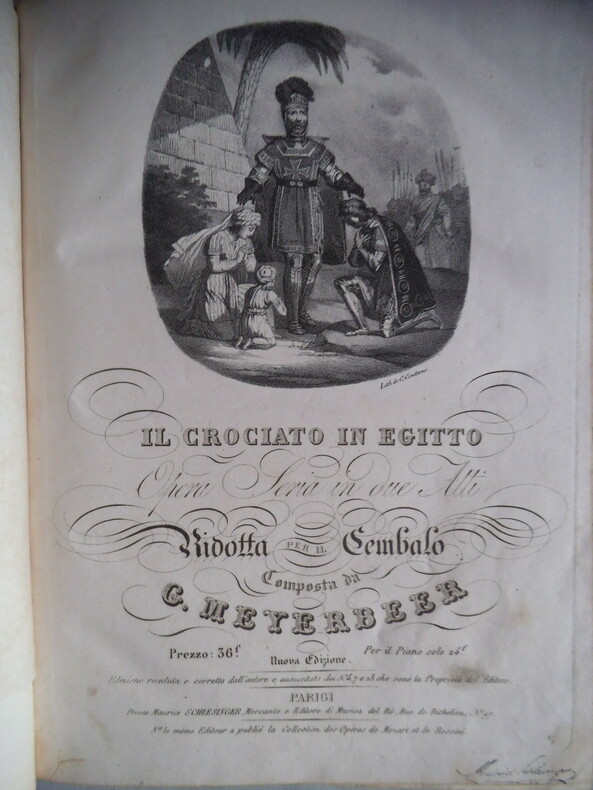
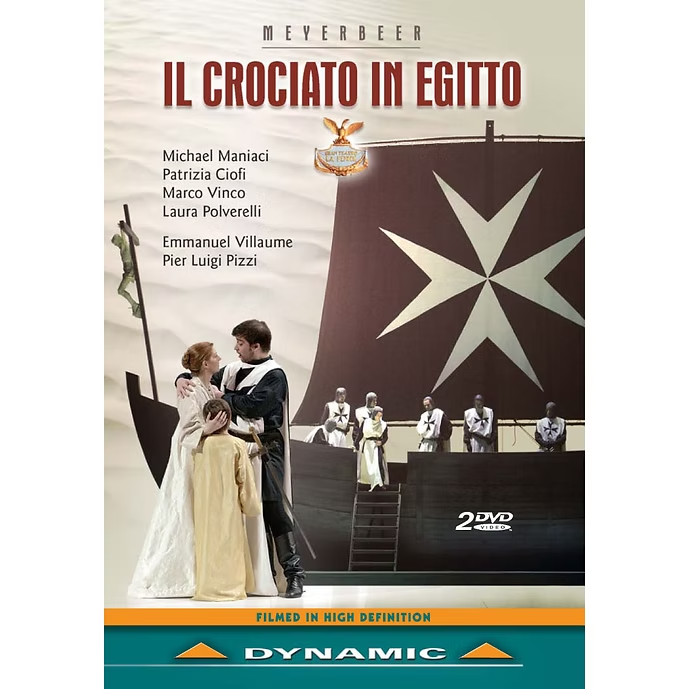
Het label Dynamic scoort al jaren hoge ogen waar het gaat om de uitgave van onbekende opera’s die ooit succesvol zijn geweest. Il crociato in Egitto, een in vergetelheid geraakt werk uit 1823, past prima in die rij die door vele liefhebbers wordt gekoesterd.
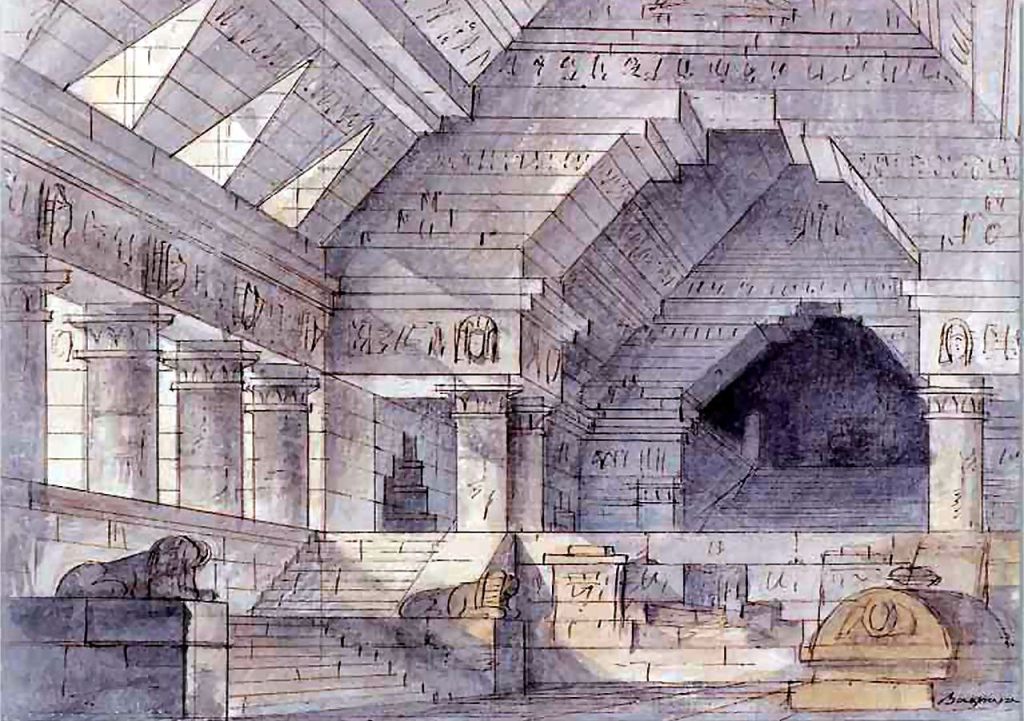
Decorat (1824) de Francesco Bagnara pour Il crociato in Egitto (Acte II, escena 4)
Wie zegt Meyerbeer zegt Grand Opéra, althans zo verging het mij tot ik op dit relatief vroege werk stuitte dat de afsluiting vormt van Meyerbeers Italiaanse periode. Il crociato in Egitto leunt muzikaal op de barok waar het eindeloze aria’s met een overmaat aan volstrekt onnodige coloraturen betreft. De opera verscheen echter in de periode dat Rossini met zijn historische opera’s Maometto Secondo en Semiramide kwam. En in die trend past Meyerbeers creatie perfect waar het gaat om de overige muzikale aspecten en vooral ook de keuze van het onderwerp.
De opera bestaat uit twee aktes en verhaalt over het wel en wee van kruisvaarders en hun eeuwige tegenstrevers de Mohammedanen, twee partijen die elkaar ‘infidels’ plegen te noemen. Uiteraard zit er wel een stukje persoonlijk drama in maar daarmee voldoet het libretto nog lang niet aan het formaat van de grand opéra, het genre waaraan Meyerbeer zijn blijvende roem dankt. Al was het maar omdat het verplichte grote ballet ontbreekt en dat het goed afloopt met het liefdespaar.
Centraal staat het personage Elmireno, een kruisridder waarvan wordt aangenomen dat hij in de strijd tegen sultan Aladino op de kust voor Damietta is gesneuveld. Hij was echter niet dood en heeft zich op wonderbaarlijke wijze weten in te dringen in die vijandelijke omgeving en is als een soort Mozes de favoriet en belangrijkste legeraanvoerder van de sultan geworden. Die ziet hem als zijn zoon en hij is voorbestemd Aladino op te volgen. Uiteraard zal hij dan trouwen met diens dochter Palmide.
Dat huwelijk liet zo lang op zich wachten dat Elmireno en Palmide er alvast een voorschot op hebben genomen. Ze zijn in het geheim getrouwd volgens de christelijke rite en hebben een zoontje van een jaar of drie dat buiten het oog van de wereld in de harem leeft en door alle vrouwen wordt gekoesterd.
Engraved portrait showing the singer Signor Velluti as Armando in Il Crociato in Egitto (The Crusader in Egypt), by Giacomo Meyerbeer (1791– 1864) , with a libretto by Gaetano Rossi (1774 – 1855), ca.1828. Harry Beard Collection.
Elmireno is in werkelijkheid Armando d’Orville, de favoriete neef van Adriano di Montfort, het hoofd van de Ridders van Rhodos en voorbestemd hem op te volgen. Hij heeft voor hij uit de Provence vertrok een trouwbelofte gedaan aan zijn geliefde Felicia. Die heeft zich inmiddels bij Adriano in Rhodos gemeld en gaat gekleed als kruisridder.
Als Adriano zich met een gevolg van kruisridders waaronder Felicia meldt in Damietta voor een vredesmissie zijn de rapen gaar voor Elmireno alias Armando. Hij heeft zo ongeveer alles en iedereen bedrogen: de sultan Aladino, diens dochter Palmide, zijn verloofde Felicia en zijn oom Adriano. Verder leeft hij als moslim in het paleis van de sultan en is dus in de ogen van de kruisridders ook nog eens een afvallige.
Dat is geen situatie waaruit iemand zich op eigen kracht kan bevrijden. De enige mogelijkheid is om ’eervol’ zelfmoord te plegen of hopen dat zowel Aladino als Adriano hem opnieuw in genade aannemen, iets dat volledig tegenstrijdig is maar uiteindelijk na veel verwikkelingen en eindeloos durende aria’s toch gebeurt. De opera duurt in totaal ruim 200 minuten en gaat goed beschouwd nauwelijks ergens over. Maar muzikaal zijn er mooie momenten en in twee sessies op achtereenvolgende dagen is het beslist een aardige tijdbesteding de dvd’s eens af te spelen.
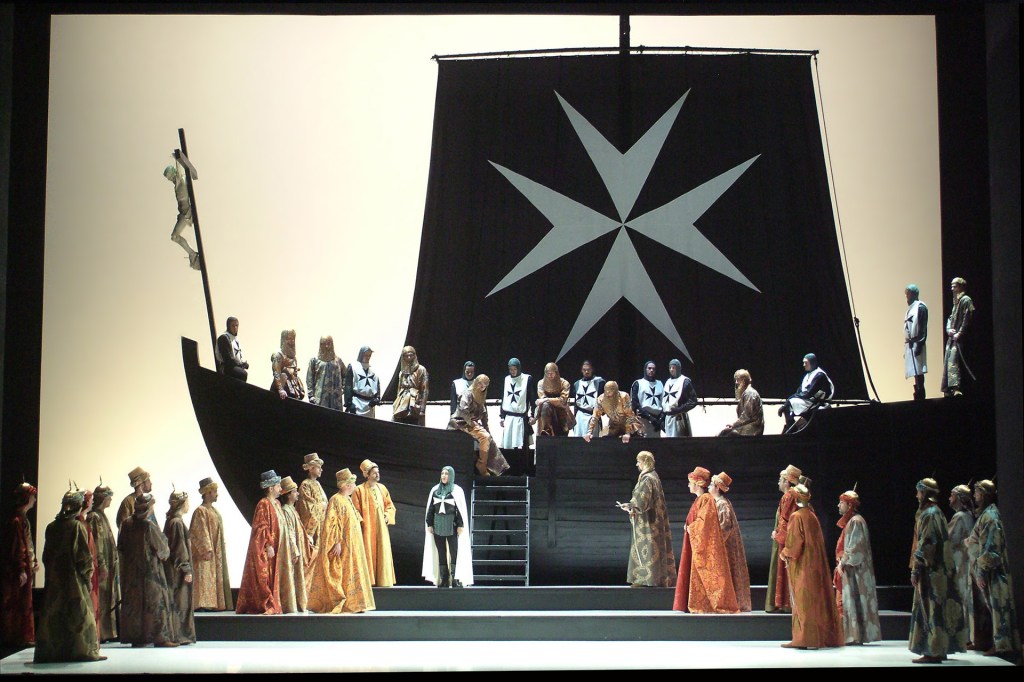
De opname komt uit 2007 en is gemaakt in Teatro la Fenice in Venetië. Het is een productie van Pier Luigi Pizzi die behalve voor de regie ook verantwoordelijk was voor de kostuums en de decors. Het ziet er smaakvol uit en Pizzi weet uit de schaarse handelingsmomenten nog wel de nodige actie te destilleren. Het blijft natuurlijk vreemd dat twee groepen elkaar met de dood bedreigen en dan gewoon het toneel aflopen zonder dat er iets gebeurt.
Elmireno wordt gezongen door ‘male soprano’ Michael Maniaci, uitstekend gedaan maar ik hou er niet van, zo’n kerel die een hoge stem opzet. Naar verluidt stond Meyerbeer op deze casting en was hij not pleased toen de rol bij een herneming werd gezongen door een tenor.
Degene die het meeste baat heeft bij de keuze van de componist is Adriano d Montfort. Die rol is nu de belangrijkste tenor partij en Fernando Portari maakt er iets moois van.
De rol van sultan Aladino is natuurlijk een bas. Hij heeft een klein groepje kruisvaarders in zijn macht en kan beschikken over leven en dood. Verder is hij een Mohammedaan en dus van de tegenpartij in de ogen van het 19e eeuwse publiek. Marco Vinco overtuigt door zijn zang en de boze blik die hij alles en iedereen toewerpt. Het libretto geeft hem nauwelijks ruimte om te acteren, daar moeten we het dus maar mee doen.
En dan de vrouwen. Coloratuursopraan Patrizia Ciofi is in haar element in de rol van de bedrogen Palmide maar mijn voorkeur gaat uit naar mezzo Laura Polverelli en niet alleen omdat ze zo’n mooie naam heeft. Ze weet vrij goed raad met de coloraturen waarmee Meyerbeer ook Felicia heeft opgezadeld maar overtuigt vooral in de rest van haar optreden. Ook acterend is haar nog wel het een en ander vergund, haar personage laat zelfs enige ontwikkeling zien.
De overige rollen zijn goed bezet, vooral die van Osmino die ook een oogje heeft op Padina, gezongen door tenor Iorio Zennaro. Koor en orkest van La Fenice staan onder leiding van Emmanuel Villaume.
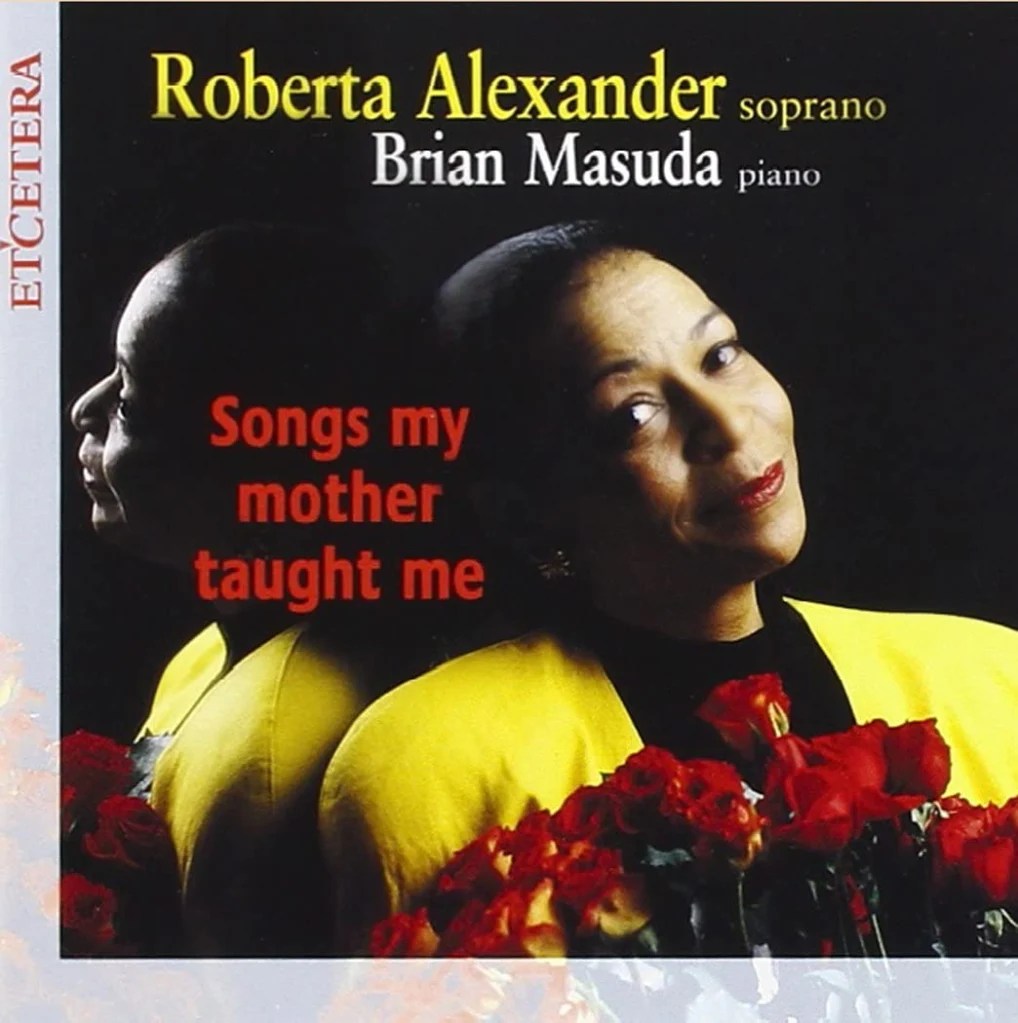
In 1998, Roberta Alexander had already been exclusively associated with the Dutch label Et’cetera for 15 years and this had to be celebrated lavishly. This, of course, also included a nice present. A present for Roberta, but also (or mainly) for us, the music lovers and her big fans.
The idea behind the CD came from Alexander herself. She collected songs that her mother, also Roberta Alexander and herself a celebrated singer, used to sing at her recitals. The daughter faced an almost impossible task: which songs to include and which not? No, not easy.
Most of the songs belong to the ˜lighter genre”: encores, spirituals and arrangements of folk songs, and most of the composers, except a few, were virtually unknown at the time. The biggest surprise for me was Richard Hageman. Born in Leeuwarden (Netherlands) he achieved great success in America as a composer (his opera Caponsacchi was performed at the Metropolitan Opera in New York in 1937), conductor and accompanist. His composition ˜Do not go, my love” on a poem by Rabindranath Tagore, is among the very best songs on this CD, and all of them are beautiful!
Actually, you should listen to this CD on your own (or with your lover), with a lit candle, a glass of red wine in your hand and your eyes closed. Roberta Alexander creates a very intimate atmosphere, she sings with restrained emotion. Moving.
Brian Masuda, her partner on the piano, joins in, leaving the listener simply spellbound. This CD can go with you to a desert island.
Because it was an anniversary, Et’cetera added another present: a CD with the highlights of the singer’s collaboration with her label: Roberta Alexander … a retrospective.
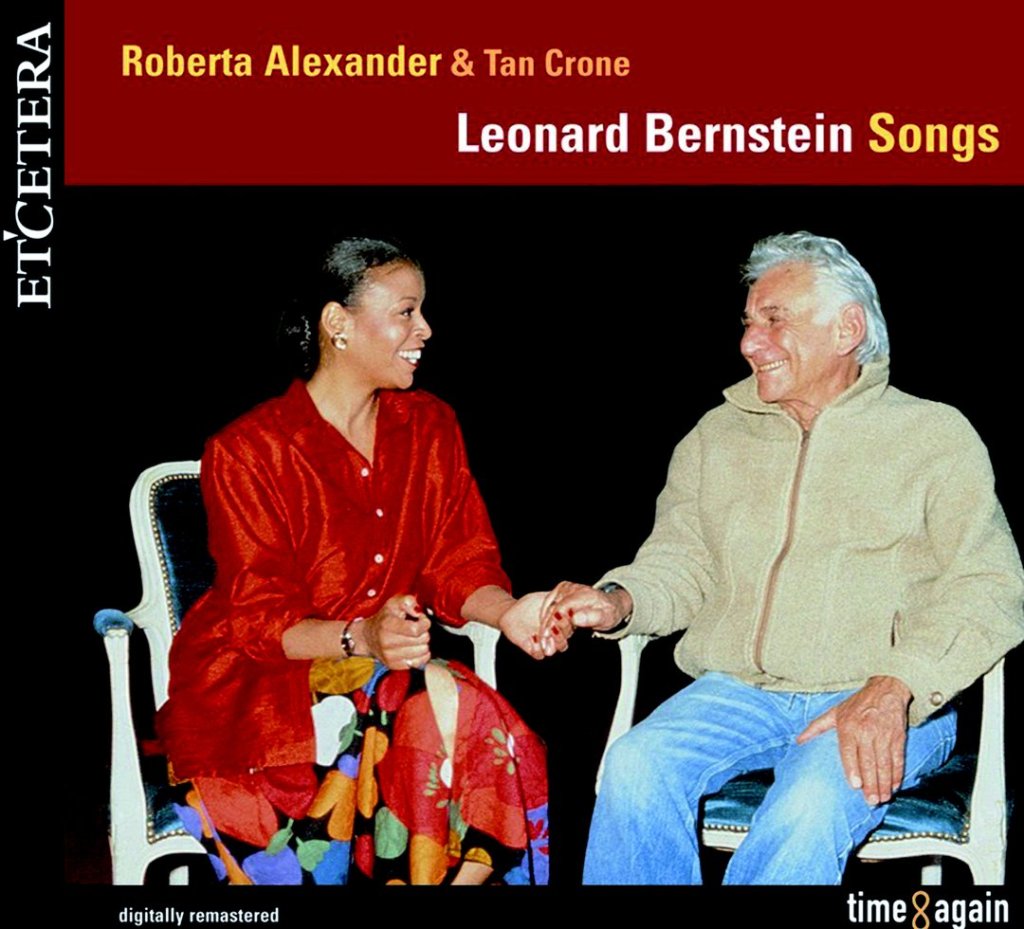
In the 15 years Roberta Alexander worked with Klaas Posthuma, who died in 2001, she recorded no fewer than 12 recitals for the company Et’Cetera, which he founded, including the one with songs by Leonard Bernstein.
It was recorded back in 1986, but almost 20 years later, in 2004, it experienced its second youth, as it was then re-released by Et’cetera as a tribute to its founder. Whatever the reason: most importantly, the CD was finally available in the shops again, because it is truly a wonderful recital.
I don’t know what the reason is (too American?), but Bernstein’s songs are still too little performed and too little recorded. A pity! They are witty and beautiful, and, if performed well and with a sense of rhythm and humour, – but isn’t that true of everything? – they give the listener tremendous pleasure.
Roberta Alexander possesses a lyrical soprano with a well- grounded core and a high dose of drama, which once made her exceptionally suited to roles such as Vitellia in La Clemenze di Tito, Elvira in Don Giovanni and Jenůfa. She had previously shown her affinity with
For most people, Switzerland is a beautiful, but boring country. Everything is perfectly regulated there and even the cows’ udders produce real chocolate- milk right away. Right? Anything and everything will always thrive there and nothing ever really happens.
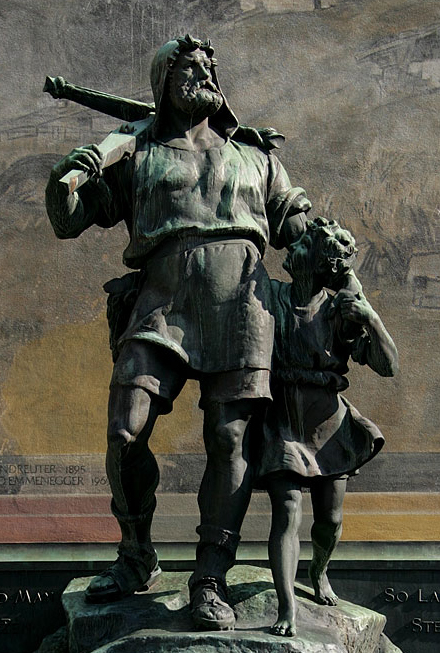
But even the Swiss have experienced something of an uprising, and they too have their national hero, although it is not entirely certain that he ever existed (take it from me: he did not).
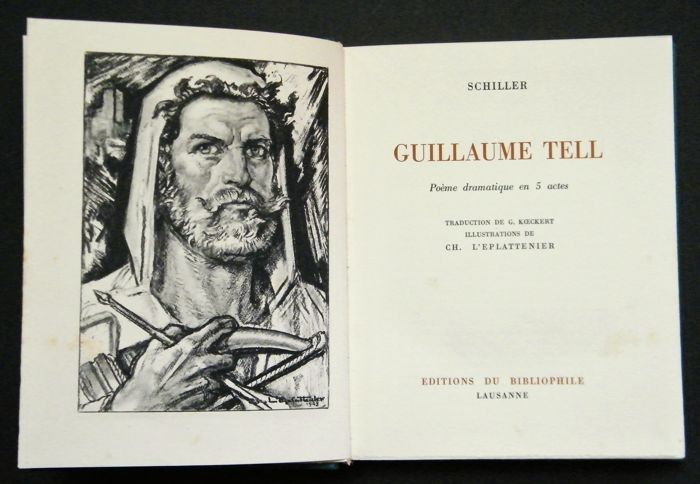
William Tell, the Swiss national pride and freedom fighter, owes his fame mainly to the play by Friedrich Schiller, who, as we might expect from a Romantic poet, did not take the truth very seriously.
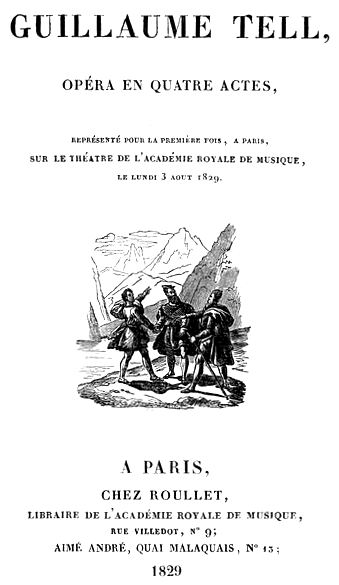
William Tell became even more famous because of an opera by Rossini. Although…. The opera wasn’t really well known until recently but: who doesn’t know the overture? Even my cat can meow it.
CDs
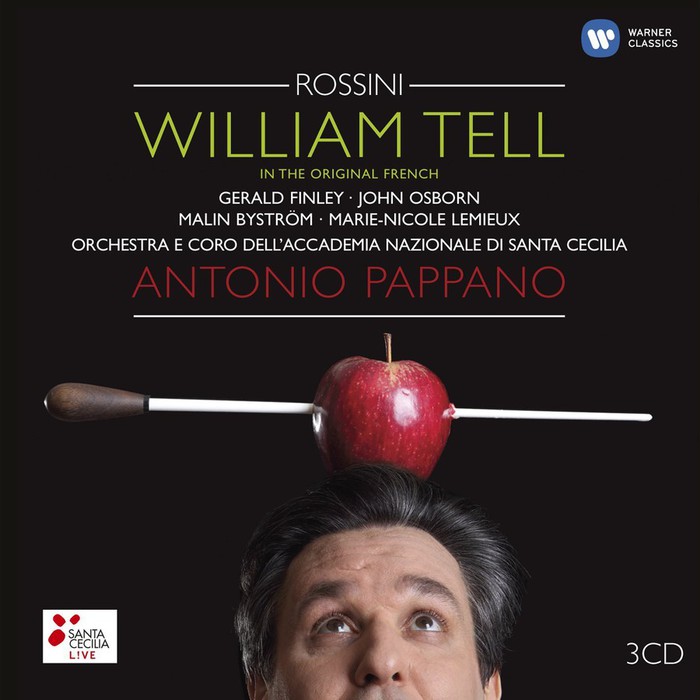
Antonio Pappano’s 2011 recording with the Orchestra e Coro dell’ Accademia Nazionale di Santa Cecilia Roma is far from complete. A shame and a missed opportunity, especially since the performance is really good.
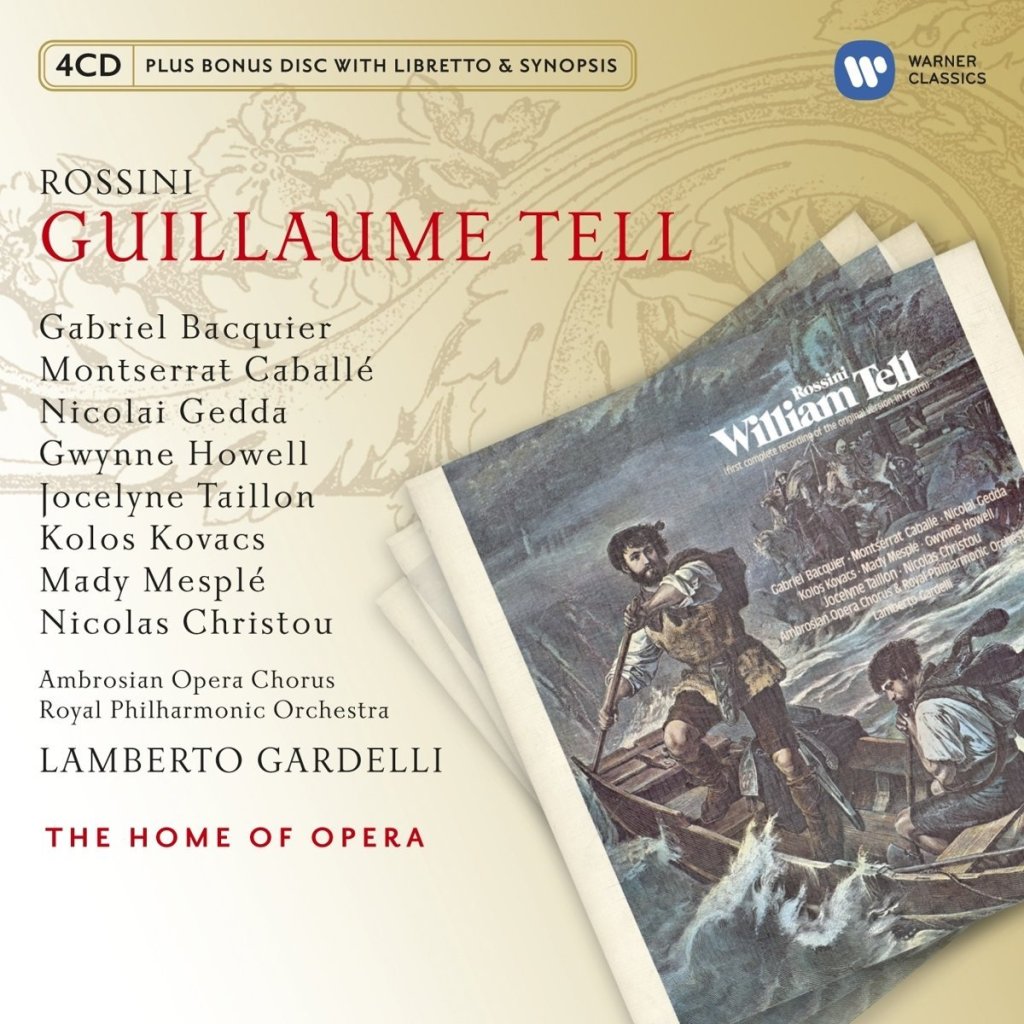
Gerald Finley is a very good Tell (is there anything he can’t sing?), yet something is lacking. For me, at least. I can’t describe it, it’s more like an instinctive response, but I do get that ˜something” when I listen to Gabriel Baquier, on the old 1973 EMI recording.
The cast of that recording, led by the very spirited Lamberto Gardelli, has even more ˜plusses”. The biggest is Montserrat Caballé’s Mathilde. I suppose I don’t need to tell you how beautiful and flowing her notes are, how she ˜waves” through them, as it were, and how whispery her pianissimo is. No, Malin Byström (Pappano,) although good enough, really can’t compete with that! Her colouratures may be pure, but that’s all there is to it.
Another big plus is Mady Mesplé’s Jemmy, the real ˜veteran” in the ˜birdsong profession”. So incredibly beautiful! And Nicolai Gedda of course, a singer once called ˜a chameleon among singers” by one of my colleagues (do you know any other tenor who managed to sing so many different roles with so much talent?). And to all that you can add the playing time of almost 238 minutes versus Pappano’s ramshackle 208 minutes.
But if you think I am rejecting Pappano, you are wrong! Orchestrally, he is definitely superior to Gardelli. His choir sounds more beautiful and subtle, and on top of that comes the sound quality. The greatest asset of the Pappano recording, however, is John Osborn, a tenor who throws out the very highest notes as if they were child’s play. It was he who helped make the Saturday Matinee performance unforgettable. The (concertante) recording was done live, which heightens the atmosphere, especially with all those ˜bravos”.
What never came out on CD (shame!) is the absolutely complete performance in the unsurpassed NTR ZaterdagMatinee. Without cuts. A long sitting of almost five hours, but such unforgettable hours! The audience was delirious and just about broke down the Concertgebouw.
The power of the performance lay in the fact that every role was brilliantly cast, right down to the smallest. Paolo Olmi conducted a great cast of really fantastic singers: Michele Pertusi, Marina Poplavskaya, Ilse Eerens and John Osborn. The Groot Omroepkoor performed its leading role in the opera with verve. So, there is no CD (cursing softly for a moment), but many fond memories.
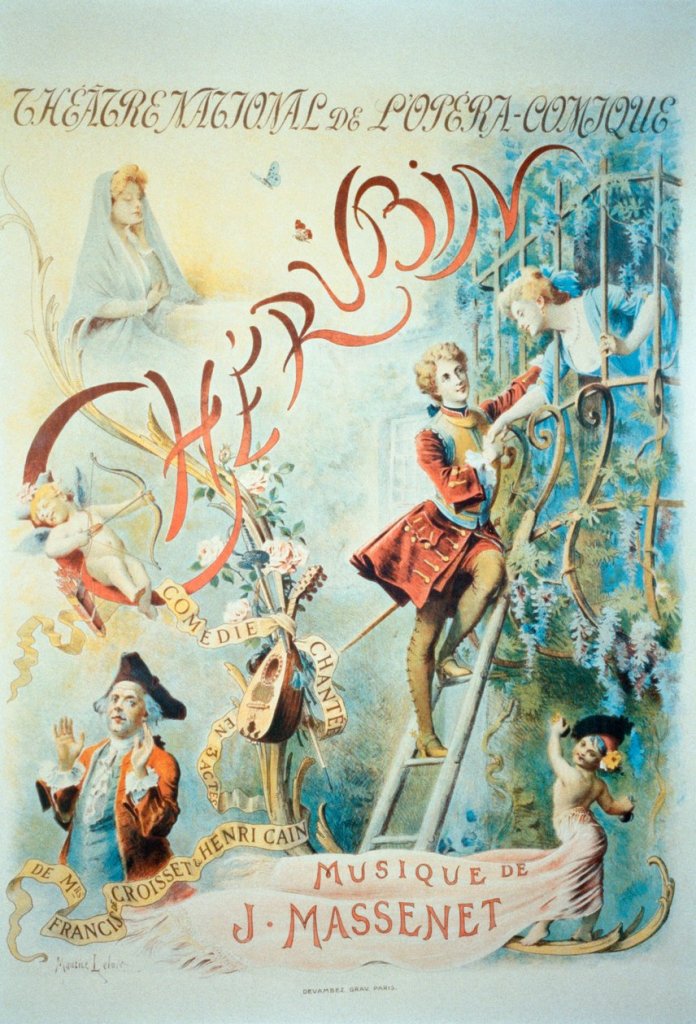
In de catalogus van het label Dynamic vond ik een opname uit 2006 van Massenets opera Cherubin. Het betreft een voorstelling uit Teatro Lirico Cagliari met Michelle Breedt in de titelrol. Het verhaal is flinterdun maar de muziek maakt veel goed, ik heb er met plezier naar gekeken.
Cherubin kennen we als het knaapje Cherubino die in Le Nozze di Figaro als een volleerd 13 jarige achter elke vrouw aanholt waarvan hij de feromonen opsnuift. Bij Massenet zijn we aangeland op zijn zeventiende verjaardag en dat is einde 18e eeuw de leeftijd die definitief de jongens van de mannen scheidt. Kennelijk heeft hij flink geërfd in de tussentijd want deze jongeman heeft een kasteeltje met landerijen en daarnaast nog een aardig vermogen. Hij kan het zich permitteren zijn onderhorigen voor een jaar alle financiële verplichtingen kwijt te schelden om hen te laten delen in de feestvreugde.
De eerste akte speelt zich af op dit kasteeltje, de tweede in een hotel waar om onbekende redenen de uitgenodigde gasten verblijven, ook de hooggeplaatsten. Hoewel nu toch echt een volwassen man gedraagt Cherubin zich nauwelijks anders dan die hitsige puber uit Nozze.
Hij heeft zijn peetmoeder uitgenodigd, jawel, de gravin uit Nozze en haar immer achterdochtige echtgenoot is natuurlijk ook van de partij. Verder een barones die eveneens haar echtgenoot heeft meegesleept. Daarnaast is er nog een hertog die een oogje in het zeil houdt vanwege zijn pupil Nina die verliefd is op Cherubin. Als Cherubin opschept dat hij de favoriete van de koning, de danseres L’Ensoleillad die furore maakt aan het Teatro Real, heeft uitgenodigd om op zijn feest te komen dansen, lachen de drie heren hem in zijn gezicht uit.
Cherubin heeft een liefdesgedicht in een wilgenboom verstopt en fluistert zijn peetmoeder in waar ze dat kan vinden. De graaf vangt dit natuurlijk op en is haar voor. Hij zwaait met het gevonden papier en wil direct duelleren. Nina heeft dat gedicht echter al eerder van Cherubin gekregen en redt de gravin door het woordelijk te citeren. Daarmee is bewezen dat het voor haar was bedoeld. De gravin is opgelucht en beledigd tegelijk.
Nina bezingt haar emoties in een aandoenlijk mooie aria ‘Lorsque vous n’aurez rien à faire’ waarin duidelijk wordt dat Cherubin zich slechts een beetje met haar heeft verloofd omdat hij op dat moment niets te doen had.
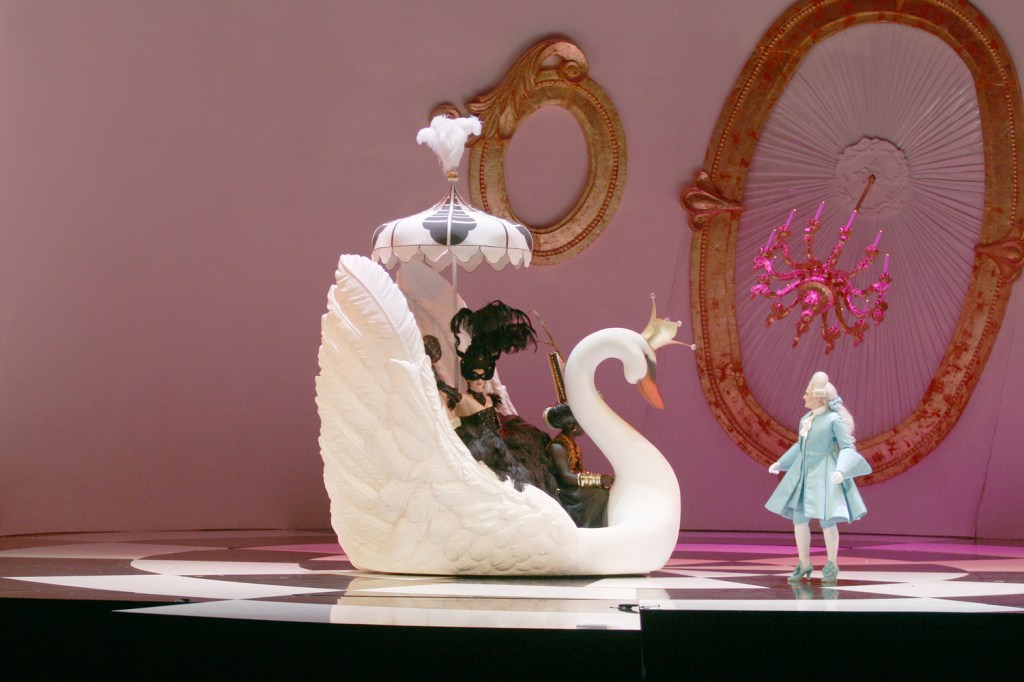
In de tweede akte treedt er een nogal verwarrende complicatie op. Nu zijn er plots een paar heren aanwezig die Cherubin willen verwelkomen in hun regiment, zonder hem overigens serieus te nemen. Als L’Ensoleillad tegen alle verwachting in haar opwachting maakt, ze komt in een ‘zwaan’ het toneel oprijden, zien de barones en de gravin er een extra concurrente bijkomen.
Een van Cherubins nieuwe collega’s wil met hem duelleren omdat hij aan zijn maîtresse heeft gezeten. Cherubins leraar en de herbergier weten dat te sussen. Als na de nodige verwikkelingen waaronder natuurlijk een serenade van Cherubin gericht aan L’Ensoleillad zowel de baron als de graaf zich beledigd voelen omdat zij denken dat het voor hun echtgenotes was bedoeld en de hertog daarbij aansluit omdat hij zich namens de koning verantwoordelijk voelt voor diens favoriete, dreigen er drie duels de volgende ochtend.
In de derde akte zien we Cherubin zijn testament opmaken. Hij laat Nina zijn ring na omdat ze immers een beetje verloofd waren. L’Ensolleilad waarmee hij een liefdeservaring heeft gehad die nacht krijgt zijn geldelijke bezittingen. Zijn leraar het kasteeltje en de landerijen. De leraar probeert hem uit de put te helpen: hij heeft een eerste ervaring op het gebied van de liefde gehad en lijdt nu als een man, dus niet het vijf minuten verdriet van een rond vlinderende puber.
Uiteindelijk neemt niemand het erg serieus, iedereen gaat gewoon naar huis en Cherubin krijgt te maken met emotionele chantage van Nina die komt vertellen dat ze in een klooster gaat. Hij pakt de draad op van het begin: met haar zal hij trouwen. Maar de jarretel en het lint dat hij van de L’Ensolleilad en de gravin als teken van liefde toegeworpen kreeg na zijn serenade wil hij houden. De leraar kijkt het aan en voorziet voor Nina hetzelfde lot als dat van Donna Elvira.
Paul Edwards was verantwoordelijk voor het decor en de kostuums en heeft er een feestelijk gebeuren van gemaakt, leuk om naar te kijken. Vooral de kostuums zijn nogal exuberant. Regisseur Paul Curran houdt de touwtjes strak in handen waardoor de chaos altijd georganiseerd blijft. Hij verzorgde ook de choreografie van de dansers en danseressen.
Patrizia Ciofi vertolkt de rol van L’Ensoleillad, goed maar niet bijzonder. Kan ook aan de partij liggen die Massenet voor die rol heeft geschreven. De mooiste muziek wordt gezongen door Carmela Remigio als de ongelukkige Nina. Erg melancholiek en dat werkt altijd goed bij Massenet.
Michelle Breedt is zeer overtuigend in de Hosenrolle van Cherubin, ze draagt de voorstelling zoals het een titelfiguur betaamt. De kleinere rollen zijn adequaat tot goed bezet.
Wie een indruk wil krijgen van deze opera moet natuurlijk bekend zijn met Massenets oeuvre. Mijn oordeel is dat het melodisch volledig aansluit bij de zes opera’s die ik van hem in het theater heb gezien. Meer specifiek: een hybride van Manon en Cendrillon.
Mede dankzij koor en orkest van Teatro Cagliari onder leiding van Emmanuel Villaume is de opname beslist de moeite waard.
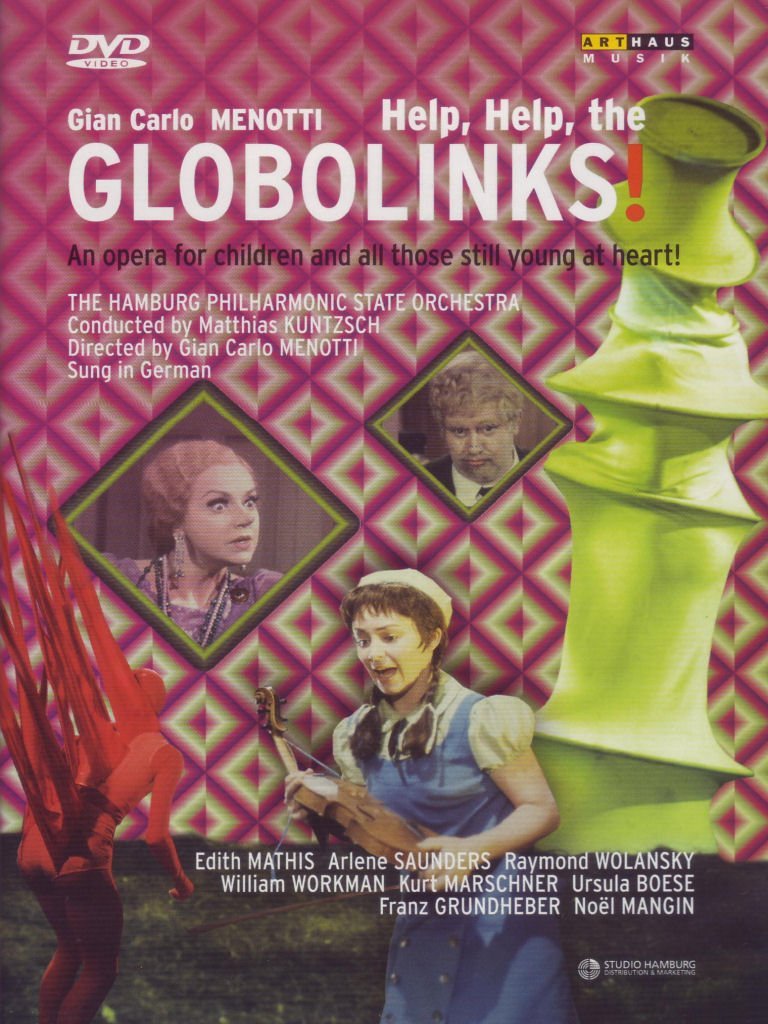
Especially for Hamburg, the Italian-American composer and director Gian Carlo Menotti composed Hilfe, Hilfe Die Globolinks!, an opera ‘for children and for those who love children’. The premiere took place in 1968 and a year later it was filmed in the studio.
I must confess that I’m not a big fan of children’s operas, but I’ve been shamelessly enjoying this one. It is an irresistible fairy tale about aliens (Globolinks) who are allergic to music and can only be defeated by means of music.
The images are very sensational for that period, full of colour and movement and the forest little Emily (the irresistible Edith Mathis) has to go through with her violet to get help is really frightening. The aliens are a bit of a let-down according to modern standards, but that doesn’t matter, it gives the whole a cuddly shine. The work is bursting with humour and irony; musical barbarians are lashed out at: the school principal who doesn’t like music turns into an alien himself.
There are also a lot of one-liners (“music leads you to the right path” or “when music dies, the end of the world is near”). It is incomprehensible a work like this is not performed all the time in every school (and I don’t mean just for the children), the subject is (and remains) very topical.
None of the roles, including the children, could be better cast, and this once again proves the high standard of the Hamburg ensemble. In which other city would you find so many great singers/actors who can perform so many different roles on such a high level?
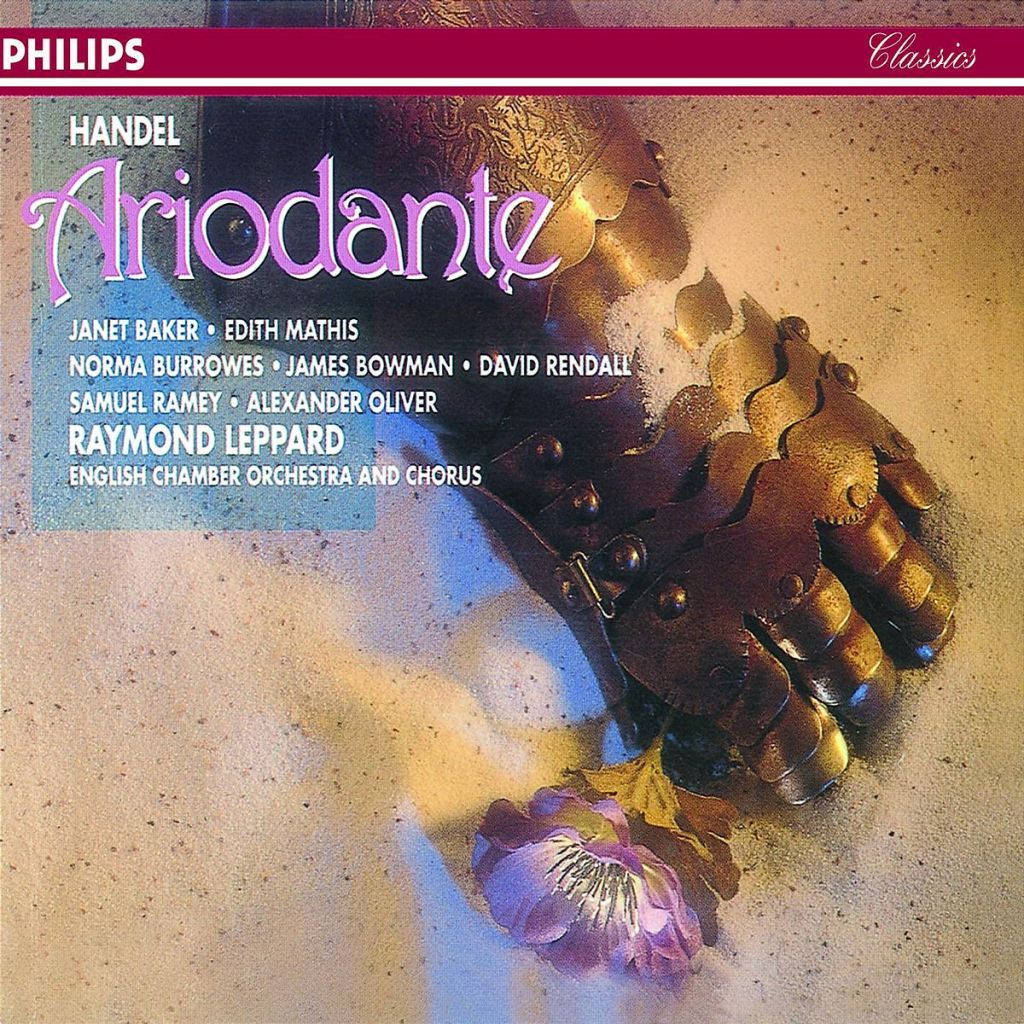
Ariodante (Ginevra)
Listening to Janet Baker is always a feast. Her Ariodante sounds old-fashioned heartwarming.
Warm-blooded too. And sopranos Edith Mathis (Ginevra) and Norma Burrowes (Dalinda) are a pure joy to listen to.
Edith Mathis sings “Si, morrò, ma l’onor mio”:
Nozze di Figaro (Susanna)
This reconstructed production of Die Hochzeit des Figaro (yes, it is sung in German) is of great historical value. But it has more to offer; the production is magnificent, the orchestra of the Hamburg Opera under conductor Hans Schmidt-Isserstedt is excellent and the singers are all idiomatic.
The American baritone Heinz Blankeburg is a droll Figaro and as Susanna, Edith Mathis is simply wonderful. I would actually like to shout it from the rooftops: this is how Susanna is meant to be! The young Tom Krause is a more than delightful Count and Arlene Saunders as the Countess, is a real match for him (and his timbre).
Cherubino
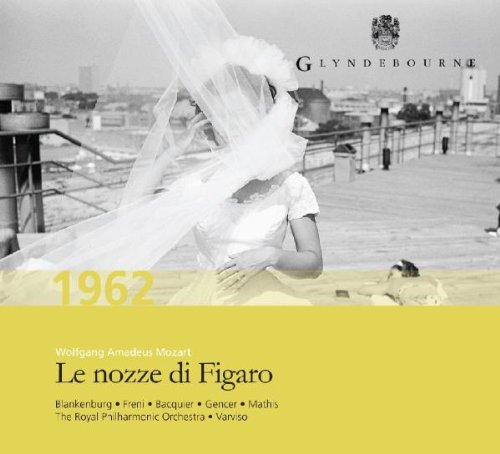
From 1960 on, all operas performed at Glyndebourne were recorded live. The more-than-valuable archive began to be polished off and transferred to CDs in 2008.
It was no coincidence that it was precisely Figaro’s Wedding that inaugurated the new series: after all, that opera gave the go-ahead to the new festival in 1934, which is now among the most prestigious in the whole world.
Gabriel Bacquier does not immediately associate you with Almaviva, and the Contessa is not the role you think of in connection with Leyla Gencer, but they both sing beautifully, with a great sense of nuance. The rest of the cast is also fantastic, headed by Mirella Freni (Susanna), then still at the beginning of her career, and the very young Edith Mathis as the ideal soprano-Cherubino
Salzburg Festival 1966 directed by Karl Böhm:
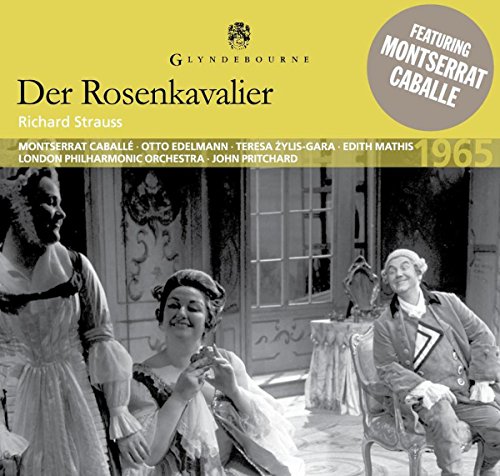
Rosenkavalier (Sophie)
Montserrat Caballé (Marschallin) is a beautiful, young and spirited Marschallin, who enriches the role ‘at his Caballés’ with the most beautiful pianissimos and legatos.Teresa Zylis-Gara is a wonderfully light-sounding Octavian and Edith Mathis a Sophie who sounds like a 15-year-old girl. Otto Edelmann (Ochs) completes the fantastic recording
Edith Mathis as Sophie, here with Tatiana Troyanos (Octavian) in Salzburg 27 July 1969:
Zauberflöte (Pamina)
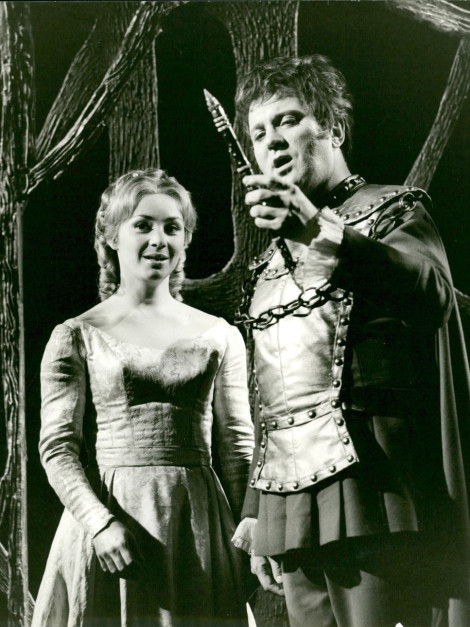
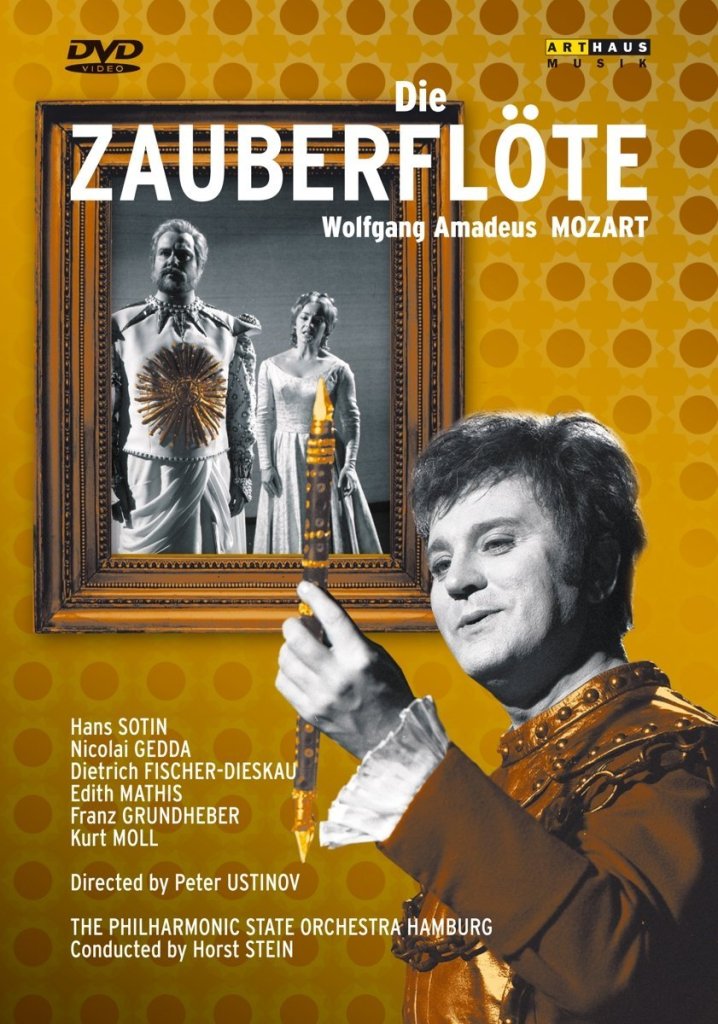
I think it’s one of the most important Magic Flutes ever, especially because of the singers! Shall I name them? Nicolai Gedda, Hans Sotin, the young Franz Grundhebber, Edith Mathis, Kurt Moll; Fischer-Dieskau, Kurt Moll , the very underrated William Workman and ….. last but not least! YES! Our ‘own’ Deutekom in her parade role.
Edith Mathis & Nicolai Gedda in „Mein, o welch ein Glück!’
Edith Mathis died 9 Februari 2025, only three days before her 86th birthday Rest in Peace Grandiosa!
The sea is no more to be mocked than fate itself. Both take their toll, regardless of circumstances, entreaties or attempts at bribery.
Young Ivo is under a curse: as soon as his wife becomes pregnant, he will be devoured by the sea. So it happened to his father, so it happened to his twin brother. Anyone who has ever heard of Oedipus knows that you cannot escape your fate, and if it is written in the stars that your life will end in the waves, you will drown, even if there is no sea nearby. In a manner of speaking, this, since the sea is audibly present in The Children of the Sea.
With the first notes of the overture, it rustles and swells and storms… How visual do you want your music to be? It couldn’t be more explicit, it’s expressionism at its finest.
Lodewijk Mortelmans
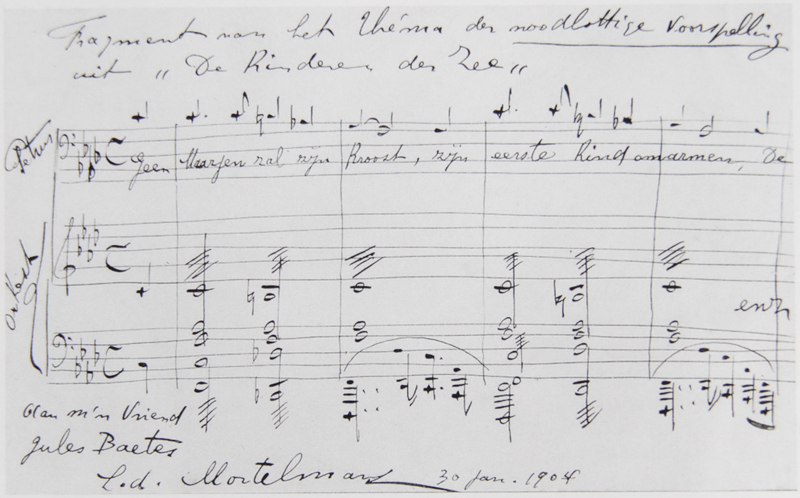
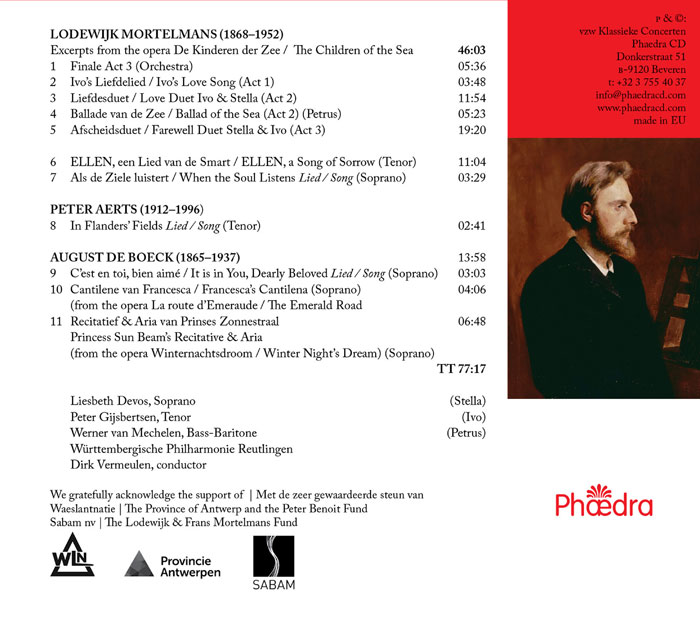
The Children of the Sea by Belgian composer Lodewijk Mortelmans (1868-1952) had its premiere – unsuccessfully – in 1920, and the disillusioned composer adapted it into a 90-minute suite, half of which has now been recorded by Phaedra. The late-Romantic idiom is very appealing to me, as is the story in verse by Raf Verhulst. Indeed, I am quite impressed.
The performance is more than sublime. Dirk Vermeulen makes the Württembergische Philharmonie Reutlingen play as if their lives depend on it, it is breathtaking!
Liesbeth Devos (Stella) is a true discovery for me. Her crystal-clear soprano is extremely pleasant to listen to and her vocal acting admirable.
Peter Gijsbertsen sings a moving Ivo, in this role he is truly inimitable for me. How beautiful and warm his voice has become! Werner van Mechelen (Peter) completes this stellar cast.
Werner van Mechelen sings Ballade van de Zee (Ballad of the See)
˜Ellen” on lyrics by Frederik van Eeden (Gijsbrecht) and ˜Als de Ziele luistert”/ “When the Soul listens” (Devos) complete the ˜Mortelmans segment”, but there are also songs and arias by Peter Aerts and August de Boeck.
Liesbeth Devos sings Als de Ziele luistert/When the Soul listens:
Liesbeth Devos sings Francesca’s Cantilene from August de Boeck’s La Route d’Emeraude:
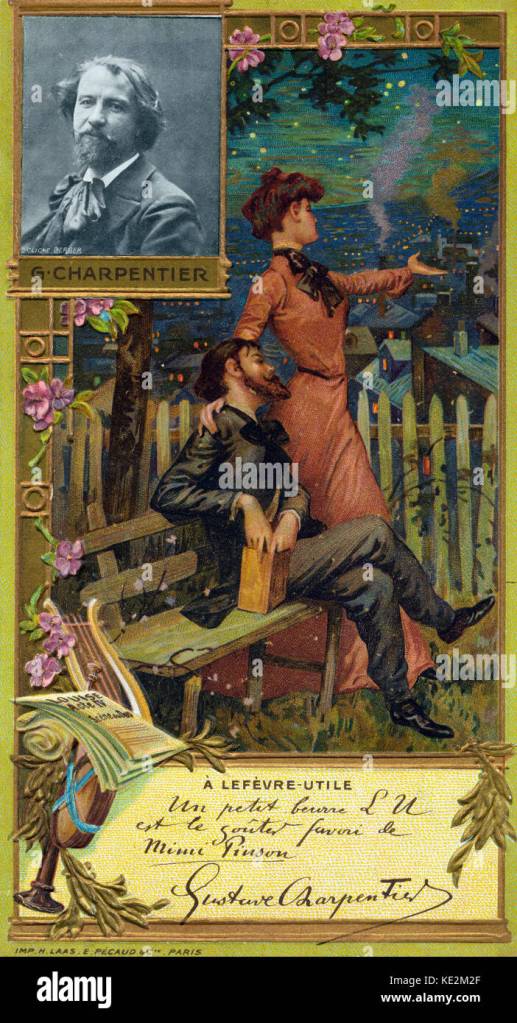
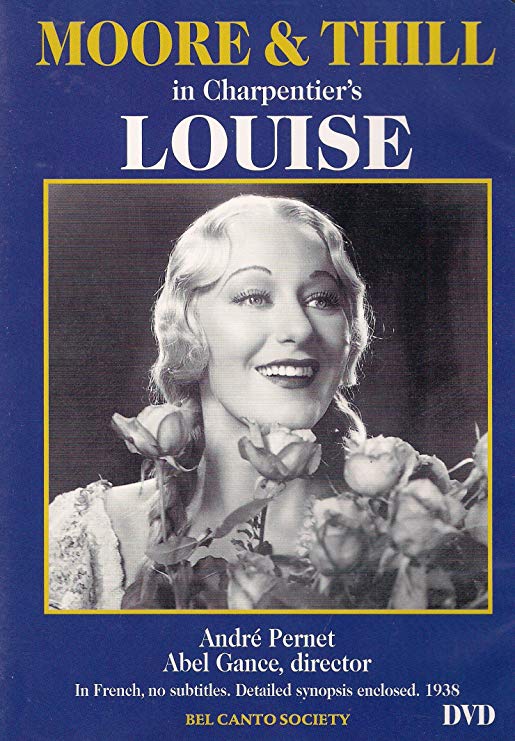
In 1938 the great Abel Gance filmed the opera Louise of Gustave Charpentier. The leading part was played and sung by Grace Moore, perhaps the most famous Louise ever, who also made a great career in Hollywood as a film star.
Grace Moore sings Depuis le jour:
The charismatic French tenor Georges Thill (Julien) also played in several films and, besides having a singing career on stage, also made a name for himself as a great film actor.
Georges Thill and Grace Moore:
There are many cuts, but since the film was supervised by the composer, we can assume that he agreed with them. Unfortunately, the film is not subtitled, but the booklet contains an extensive synopsis with a detailed description of all the scenes.
Bonus:
Grace Moore and Ezio Pinza in Act IV: Tout être à la droit d’être libre) MET 1943 Sir Thomas Beecham :
Cd-recording with Ileana Cotrubas and Plácido Domingo under Georges Prêtre:
Louise with Nino Vallin and Georges Thill, recorded in 1935
Jules Massenet’s Manon has, since its now legendary performance starring Anna Netrebko and Rolando Villazon (Berlin, April 2007), become a real hype. Anyone who had ever seen the performance could sincerely ask, like Verdi’s Ford (‘Falstaff’): ‘e sogno o realta’?
It was a reality that turned out to be a dream after all, as Netrebko found a new love, leaving Villazon with heart and voice problems. It was also not entirely clear until the last day of rehearsals whether he would sing the, scheduled for June 2007, performances of Manon in Barcelona.
He did come, and although he sang below his usual level, he managed to completely convince everyone with his acting and (sometimes a little too) intense commitment.
His Manon is brilliantly portrayed by a spectacularly singing and acting, Lulu-like, Natalie Dessay.
Manuel Lanza is a fine Lescaut, but for Samuel Ramey, a singer I greatly admire, Comte des Grieux unfortunately comes too late in his career.
The mise-en-scène and character direction by David McVicar, for me still really one of the best contemporary directors, were more than excellent. The costumes were beautiful to behold and the (traditional) staging was often really surprising, all the more so as McVicar managed to give it a contemporary twist from time to time.
A major downside of this release is the lack of synopsis and track list. But as a bonus, you do get a ‘peek inside’. Through a truly fascinating documentary, you can follow the stars during their rehearsals with McVicar.
And, when speaking of the “moderndays productions”…. don’t forget Netrebko and Beczala!
















 Basia con fuoco