Glyndebourne is dichterbij dan je denkt. Je kan zelfs – als je je best doet – erheen gaan, de voorstelling bezoeken en daarna naar huis terugvliegen, alles in één dag. Je neemt het vliegtuig naar Gatwick (nog geen uur), daarna de trein naar Lewes (een half uur), en daar staat de pendelbus al klaar om je naar de opera te rijden (10 minuten).
De bus kost 6 pond (voor een pond meer heb je al een taxi) maar voor dat geld mag je er ook mee terug. Je moet dan wel een beetje opschieten, want de bus vertrekt meteen na afloop van de voorstelling.
Niets voor mij. Ik houd niet van haasten, bovendien is dit mijn eerste bezoek aan het fameuze Festival, dus ik vlieg een dag eerder naar Londen en kom een dag later terug.
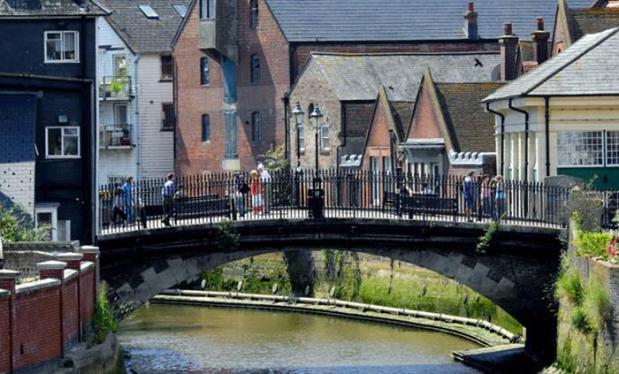
Lewes is een klein (16 duizend inwoners), heuvelachtig stadje in het graafschap East Sussex, je kunt er prachtig wandelen en de pittoreske huisjes en wijde uitzichten bewonderen, en daar neem ik ook uitgebreid de tijd voor.
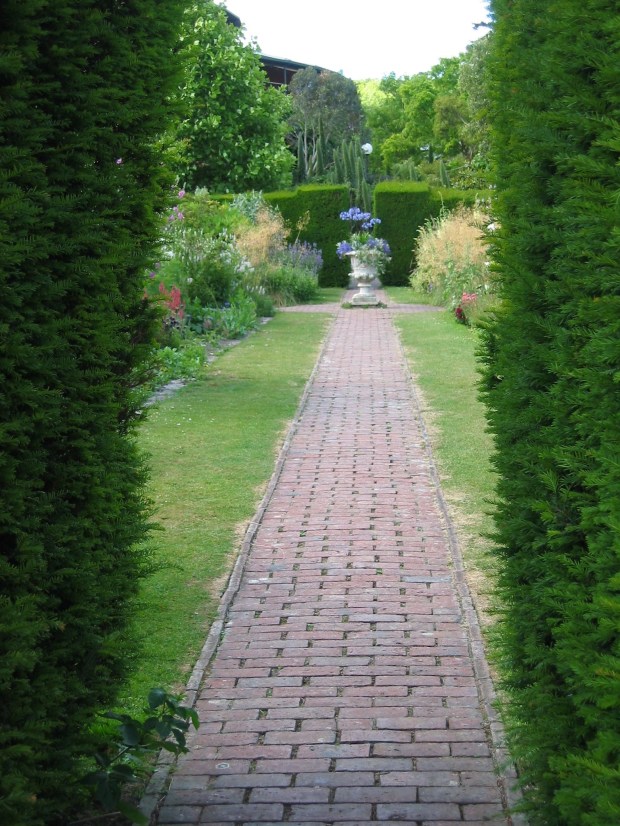
Glyndebourne zelf is niets meer dan een enorm landhuis (het operahuis), weelderige tuinen en velden met schapen. Ik loop wat rond en denk aan de ontstaansgeschiedenis van wat er in de loop der jaren uitgegroeid is tot één van de meest prestigieuze Operafestivals in de hele wereld.
GESCHIEDENIS
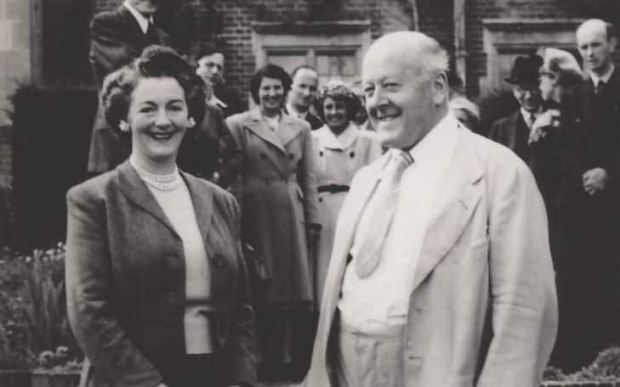
Het landgoed Glyndebourne behoorde toe aan de steenrijke John Christie, die het in 1920 erfde en samen met zijn vrouw, de zangeres Audrey Mildman, tot een prachtig operahuis omtoverde. Het idee vatten ze op tijdens hun huwelijksreis, die ze onder meer langs Salzburg en Bayreuth voerde.
Aanvankelijk werden er alleen maar opera’s van Mozart opgevoerd, maar tegenwoordig komt zelfs Wagner voorbij. Het theater werd verschillende keren verbouwd en aangepast, totdat het uit zijn voegen barstte. In 1992 werd het gesloten en gesloopt, en op 28 mei 1994, exact 60 jaar na de allereerste voorstelling, mocht het publiek een geheel nieuw operahuis bewonderen: moderner en groter, maar nog steeds met de geweldige akoestiek.
VOORSTELLINGEN
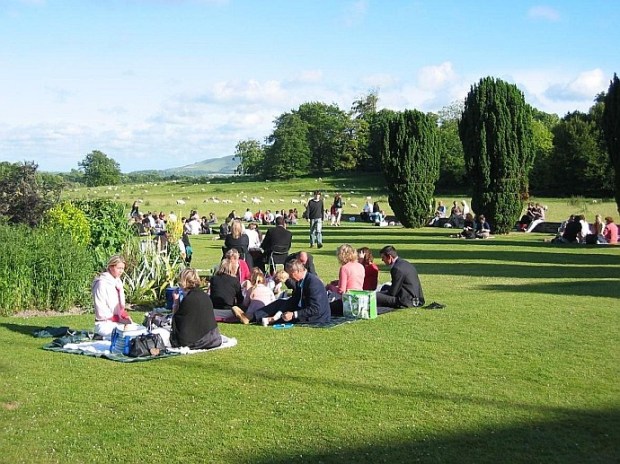
De voorstellingen duren in Glyndebourne altijd heel erg lang. Er zijn veel pauzes, waarvan er één van ruim anderhalf uur – men gaat picknicken. Nu moet u zich al die deftige mensen, dames in het lang en mannen in smoking, voorstellen die niet alleen aan tafels plaatsnemen, maar ook rustig een kleedje midden op het gras uitkloppen en zich aan de lekkerste hapjes, volledige maaltijden en flessen champagne laven.
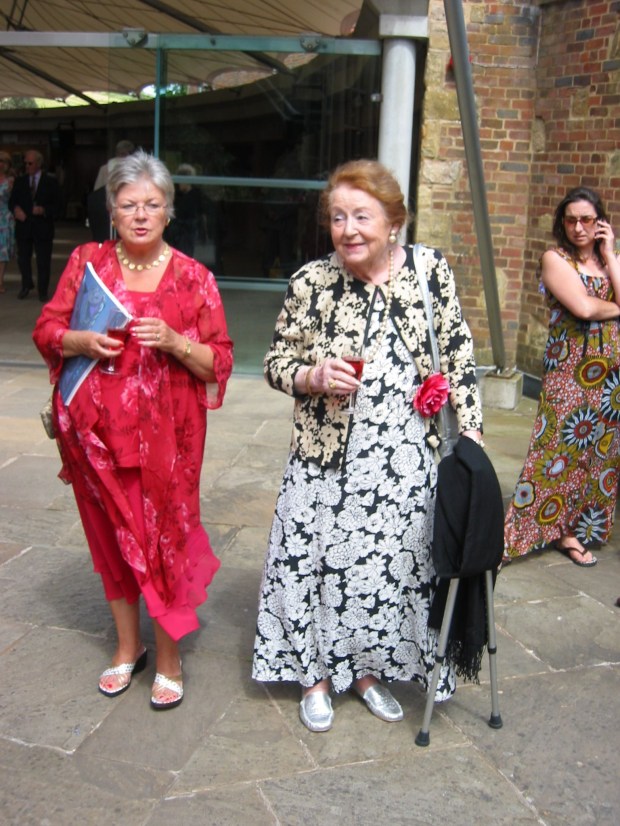
De manden (met inhoud) bestel je van tevoren en als de pauze begint haal je ze op. Maar je kan ook zelf je eigen mand meenemen, wel een stuk goedkoper, al denk ik niet dat het publiek (dat toch al honderden euro’s heeft uitgegeven) het veel kan schelen. Mijn oog wordt getrokken door een prachtig geklede bejaarde dame, met een rollator aan haar ene hand, en een roze champagne in de andere.
Dat ik er kwam heb ik Tania Kross te danken: zij nodigde mij uit om haar debuut als Carmen in Glyndebourne bij te wonen. Nou – daar zeg je toch geen ‘nee’ tegen?
De productie van David McVicar vond ik heel erg mooi. Ik kende hem al, het werd in 2003 live op TV uitgezonden en daarna op DVD uitgebracht. Ik vond hem toen al mooi, maar in het echt onderga je hem. Het toneel in Glyndebourne is best klein, dus het is er behoorlijk druk, zeker in de eerste en de tweede acte. De derde acte begon mistig, zeer filmisch, en zeer ontroerend en in de vierde acte kreeg je alles wat nodig is om Sevilla te bevolken: de torero’s, de matadors, de prachtig geklede Spaanse Doña’s en Donnen met alles daarop en daaraan … adembenemend. En de dood van Carmen was is thrillerachtig spannend.
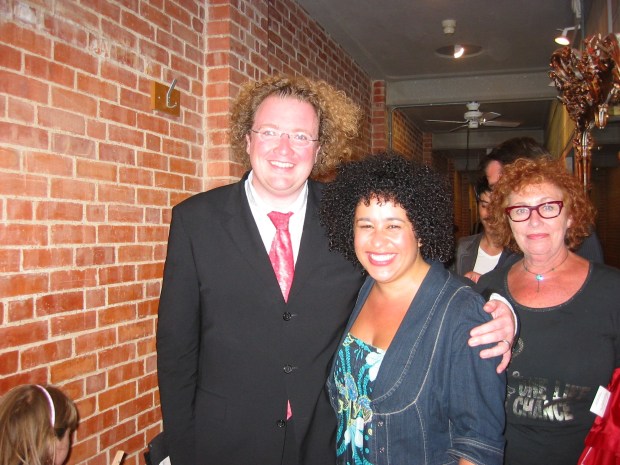
Stéphane Denéve en Tania Kross
Stéphane Denéve dirigeerde meer dan fantastisch, zeer Frans, met veel gevoel voor ritmes, maar ook met het oog voor de lyriek. Tania Kross was een uitstekende Carmen: beweeglijk, sexy en uitdagend. Zowel de dirigent als de regisseur vonden haar een ideale Carmen.
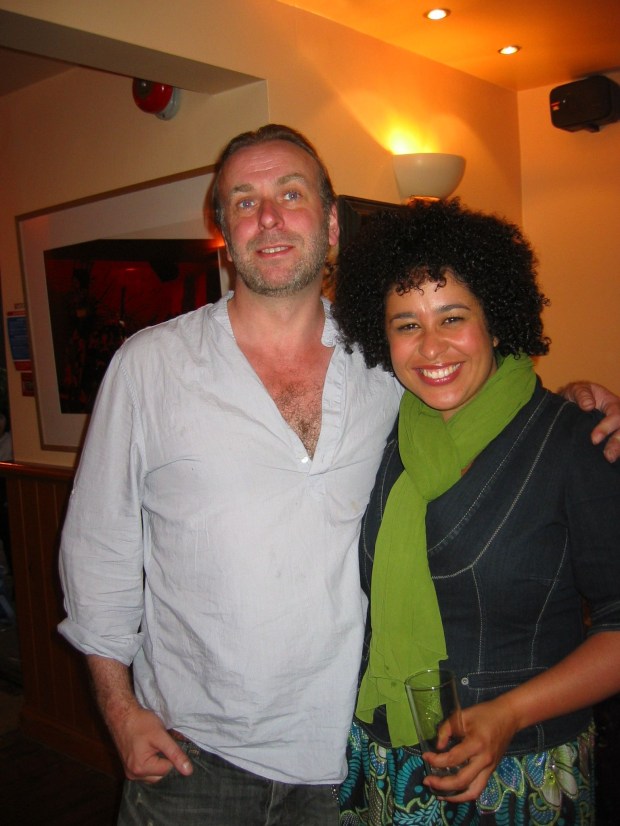
David McVicar en Tania Kross
Na afloop was iedereen in de kroeg beland. De bus was inmiddels allang vertrokken, maar mij was een lift terug naar Londen beloofd. Het was een ervaring om nooit te vergeten.
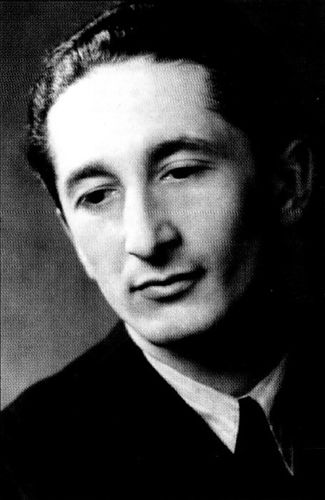
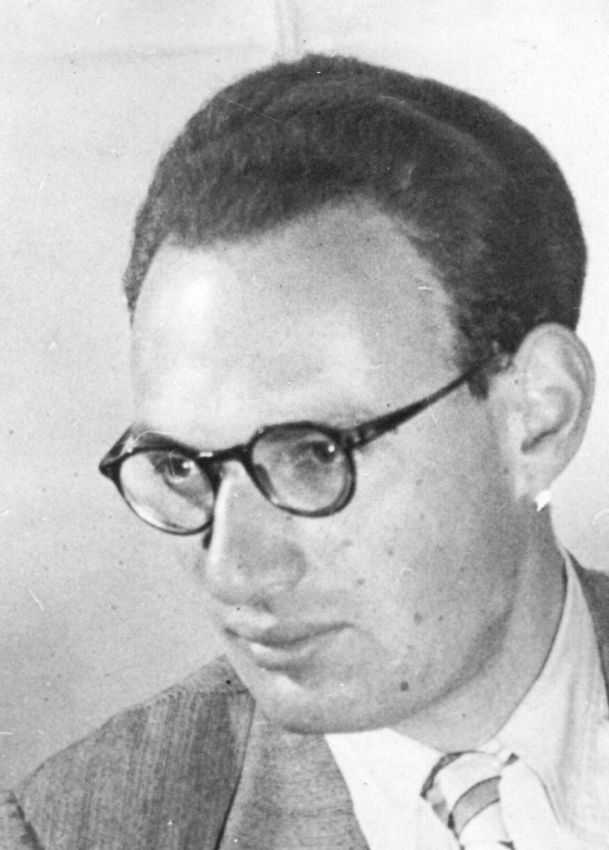
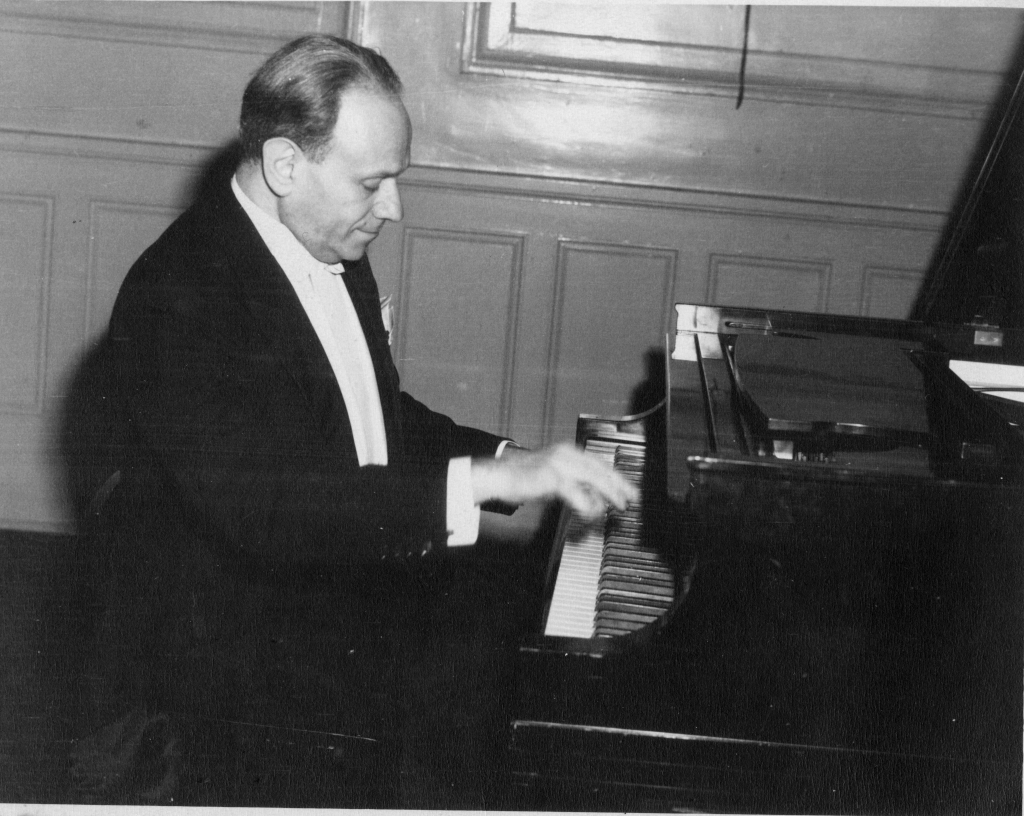
Karol Rathaus, circa 1952 (from Rathaus’ family archive)
Zijn fascinerende muziek in zijn geheel vond weinig weerklank. Hij voelde zich miskend, was eigenlijk nergens thuis en ook in het landschap van muzikale stijlen raakte hij tussen wal en schip. Nu zijn pianowerken van Rathaus voor het eerst op cd verschenen
Wat weten we van Karol Rathaus (1895–1954)? Hij werd geboren in 1895 in Ternopol, een stad dat nu in West Oekraïne ligt maar toen een onderdeel was van de Oostenrijks-Hongaarse monarchie. Bij hem thuis werd er Pools gesproken, maar zijn opleiding volgde hij in het Duits, een taal die hij beter beheerste dan de ‘native speakers’. Hij studeerde in Wenen, emigreerde in 1926 naar Berlijn, in 1932 naar Frankrijk en daarvandaan naar de Verenigde Staten. Geen wonder dat zijn eerste biograaf zich openlijk afvroeg of Karol Rathaus, een Poolse, Oostenrijkse of Amerikaanse componist was. Hij baseerde zich niet alleen op zijn levensloop maar ook op de brieven die Rathaus schreef aan zijn vrienden, waarin hij vertelde dat hij het moeilijk vond zich aan zijn nieuwe landen aan te passen en vaak in een identiteitscrisis belandde. Zijn composities werden amper opgevoerd, iets waar hij zeer verbitterd over was.
In 1950 schreef Rathaus aan dirigent Jascha Horestein: “Mijn probleem is dat van de genegeerde, eigengereide componist. Mijn naam is bekend, maar niemand voert mijn werken uit. Ik heb geen ambassades, geen consulaten die achter me staan, geen propagandamachine en in het land waar ik heel gelukkig leef, word ik beschouwd als een buitenlander. “
Jascha Horenstein dirigeert Rathaus. Deel 1:
Vierde deel:
ENTARTETE MUSIK
Dat Rathaus zo in vergetelheid is geraakt is niet alleen de schuld van de Nazi’s. Michael Haas, de voormalige producent van de ‘Entartete Musik’-serie van Decca, één van de eersten die een cd met werken van Rathaus heeft opgenomen, met o.a. zijn ballet Der Letzte Pierrot, had hiervoor een duidelijke verklaring: “De jonge generatie componisten bleef na de oorlog met schuldgevoelens zitten. Het mocht nooit meer gebeuren, dus hebben zij daar een remedie voor gevonden. Er moest gewerkt worden aan het bouwen van objectieve muziek, gespeend van ieder sentiment en onderworpen aan strenge regels. Muziek moest universeel worden. Het serialisme werd geboren. In Darmstadt werd afgerekend met het verleden, dus ook met componisten uit de jaren dertig”.
Dance from Uriel Acosta from 1930, played by Orquesta Filarmonica Cuidad de Mexico conducted by Jascha Horenstein (live, Mexico City, 28 March 1951). The orchestra on this recording included Sally van den Berg (oboe) and Louis Salomons (bassoon), who played in the Concertgebouw before the war:
LIFE CHANGING EXPERIENCE
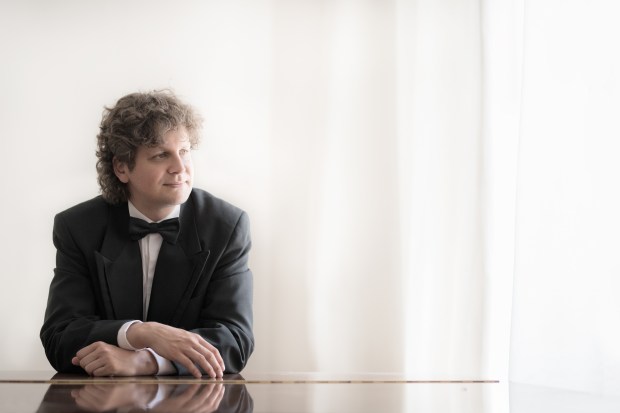
Daniel Wnukowski, photo by Claudia Zadory
Het is door Michael Haas dat de jonge Canadese pianist Daniel Wnukowski in aanraking kwam met de muziek van ‘Entartete componisten’ (Haas spreekt liever van ‘Forbidden composers’). Hoe het allemaal begon?
Wnukowski: “Haas bracht mij in contact met een zeer bijzondere man, de componist Walter Arlen. Arlen was op zoek naar een pianist die voor hem zijn piano- vocale en kamermuziekwerken kon opnemen. Het eerste deel van zijn project nam hij op met de Oostenrijkse pianist Danny Driver, die wegens andere verplichtingen niet meer beschikbaar was. In oktober namen we de cd op en ik kan alleen maar zeggen dat de ontmoeting met die fascinerende man voor mij een ‘levens veranderende ervaring’ was.”
Wnukowski speelt ‘Der Letzte Pierrot’:
“Ik ben Joods. Mijn familie van zowel mijn moeders als vaderskant komt oorspronkelijk uit Lublin (Polen). Het is de ouders van mijn vader gelukt om in 1945 naar Canada te vluchten. Tot hun negentigste wilden ze nooit over hun oorlogservaringen spreken, zij wilden mijn vader een ‘normale’ Noord-Amerikaanse opvoeding geven. Mijn andere grootouders bleven na de oorlog in Polen waar ze hun Joodse identiteit krampachtig verzwegen. Het was een taboe. Tot 1968, toen als gevolg van een antisemitische campagne de meeste nog in Polen levende Joden gedwongen werden om het land te verlaten. Mijn moeder was toen 17. Mijn Joodse identiteit speelt een grote rol in mijn leven. Het is een drijvende kracht achter mijn loopbaan van een concertpianist en ik doe mijn best om de verhalen over de overlevenden van de Holocaust levend te houden. “
Voor zo ver ik weet is deze cd de allereerste opname van pianowerken van Rathaus. Al deze composities werden geschreven tussen 1924 en 1931. Behalve de Fünf Klavierstücke, de tweede pianosonate en drie Mazurka’s staan er ook – door de componist zelf voor de piano gearrangeerde – twee fragmenten uit het ballet Der Letzte Pierrot en drie stukken uit de filmmuziek uit Der Mörder Dimitri Karamasoff. Het zijn fascinerende werken met zeer geprononceerde ritmes. Harmonisch, maar wel met nodige dissonanten. Oneerbiedig gezegd: Bartók meets Szymanowski. Nee, Rathaus is noch Pools, noch Oostenrijks, noch Amerikaans. Zijn muziek is uniek, anders, gewoon… Rathaus.
Karol Rathaus 5 Klavierstücke. Piano Sonata No. 2. 3 Mazurkas. 3 Stücke aus dem ballet “Der letzte Pierrot.” 3 Excerpts from the Film Music for “The Murderer Dimitri Karamazov”
Daniel Wnukowski, piano Toccata Classics TOCC 0451
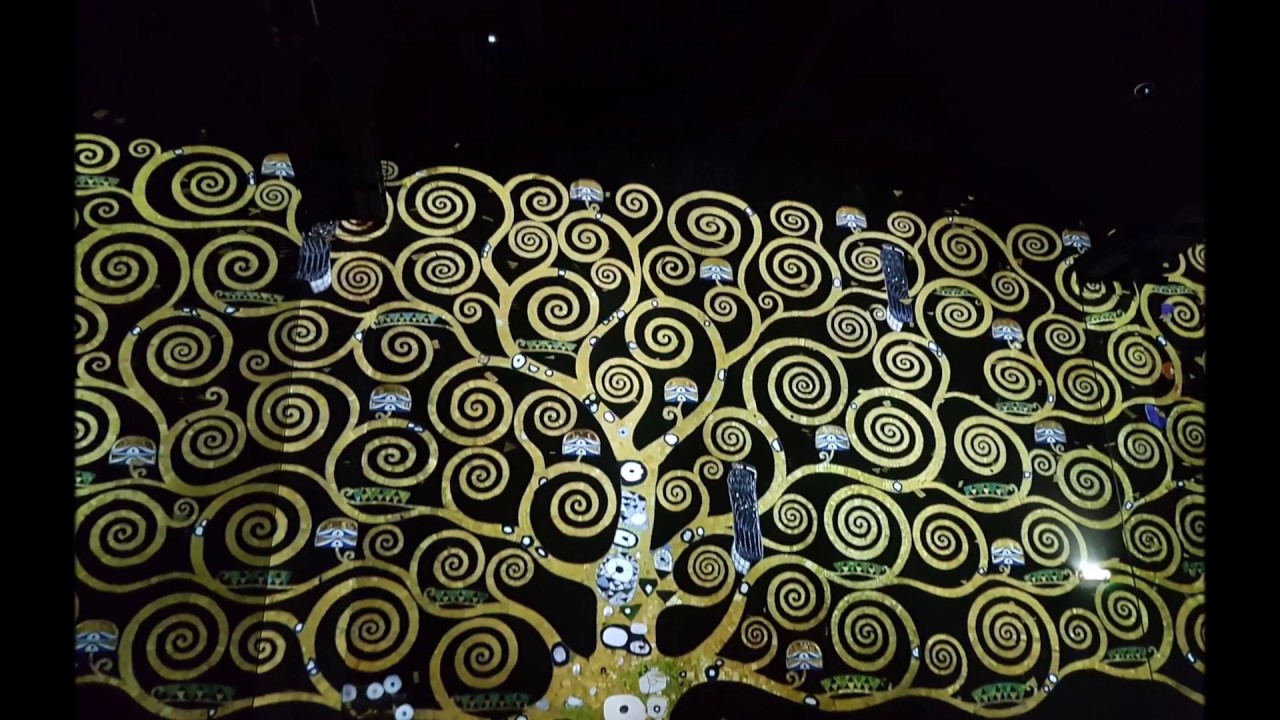
Sight & Sound Experience of Gustav Klimt – Atelier des lumières Paris
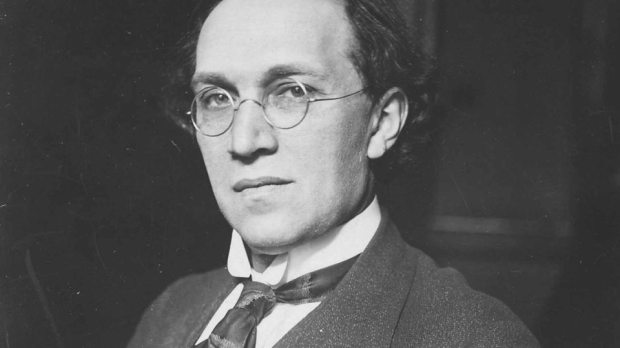
Op de drempel van de twintigste eeuw lieten veel kunstenaars zich in hun werk leiden door het verlangen – en het zoeken – naar een volmaakte wereld. Het had, onder anderen met de tijdgeest te maken en heeft veel schilders, schrijvers, dichters en componisten in hun werk beïnvloed. Maar bij niemand was dat zo prominent aanwezig als bij Franz Schreker (1878-1934). De zoektocht naar ‘de’ klank beheerste zijn hele leven, daar was hij door gefascineerd en geobsedeerd. Een klank die vanzelf afstierf, maar dan niet heus, want die moest nog na blijven klinken – al was het alleen maar in je gedachten. Het moest een pure klank zijn, maar dan één met orgastisch verlangen en vervlochten met visioenen. Narcotiserend. In zijn muziek hoor ik de zo door hem verlangde volmaakte klank echt en dat maakt mij intens gelukkig.
Voor Schreker kan je mij midden in de nacht wakker maken. De samensmelting van de onbeschaamde emoties met de onverholen erotiek en intense schoonheid maakt van mij een ‘Alice in wonderland’. Daar wil ik steeds meer en meer van. Noem mij maar een junkie. Zijn opera’s vind ik, naast die van Puccini en Korngold het mooiste wat er bestaat.
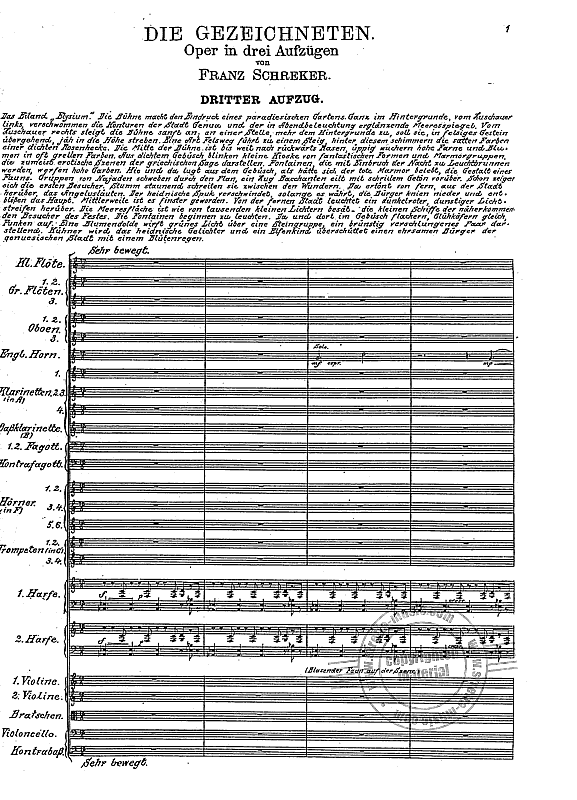
DIE GEZEICHNETEN
Het idee kwam van Zemlinsky: hij wilde graag een opera componeren over – zijn obsessie -een lelijke man en het libretto bestelde hij bij Schreker. Eenmaal klaar met zijn werk viel het Schreker zwaar om afstand te doen van zijn tekst. Gelukkig zag Zemlinsky van de opera af en zo sloeg Schreker zelf aan het componeren.
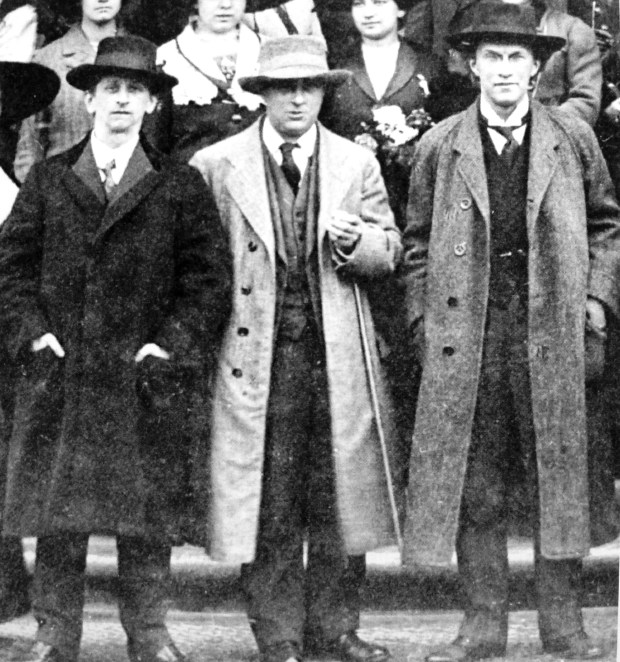
Zemlinsky, Schoenberg and Schreker in Prague 1912
Net als Der Ferne Klang, wellicht zijn bekendste werk, gaat ook De Gezeichneten over de zoektocht naar onbereikbare idealen. Alviano, een mismaakte rijke edelman uit Genua droomt van schoonheid en volmaaktheid. Op een eiland laat hij ‘Elysium’ bouwen, een plek waar hij zijn idealen hoopt te verwezenlijken. Wat hij niet weet, is dat de edelen zijn eiland misbruiken: zij houden er zich bezig met orgieën, verkrachtingen en zelfs met moorden.
De titel van de opera is dubbelzinnig. Niet alleen zijn de hoofdpersonen ‘getekend’ (Alviano door zijn monsterlijke uiterlijk en Carlotta door een dodelijke ziekte), ook maakt Carlotta een tekening van Alviano, waarin zij zijn ziel probeert te vangen
Alviano: foto uit de première in Frankfurt 1918
Deze prachtige opera, rijk aan duizenden kleuren en zwoele klanken (luister alleen maar naar de ouverture, kippenvel!) wordt de laatste tijd steeds vaker op de planken gebracht.
ENTARTETE MUSIK
Toen de nazi’s aan de macht kwamen werd Schreker bestempeld als ‘entartet’. Zijn werken werden verboden en nergens meer uitgevoerd. In 1933 werd hij van al zijn betrekkingen ontslagen en op non-actief gesteld. Schreker was gebroken. In december dat jaar kreeg hij een hartaanval dat hem fataal werd. Maar ook na de oorlog werd Schreker nog amper gespeeld. Hem wachtte hetzelfde lot als (o.a.) Korngold, Braunfels, Goldschmidt, Zemlinsky, Waxman…. Een onnoemelijk aantal componistennamen. Ooit door de Nazi’s als ‘Entartet’ bestempeld en verboden, verguisd, verdreven, vermoord. Vergeten. En dat was niet alleen de schuld van de Nazi’s.
Na de oorlog wilde de jonge generatie componisten niet meer van emoties weten. Muziek moest gespeend zijn van ieder sentiment en aan strenge regels worden onderworpen. Muziek moest universeel worden: het serialisme werd geboren. Er werd afgerekend met het verleden, dus ook met componisten uit de jaren dertig.
Het is pas de laatste dertig jaar dat de ooit verboden componisten hun stem hebben teruggekregen. Daar heeft ZaterdagMatinee een grote rol in gespeeld en daar dank ik ze op mijn blote knieën voor.
On the threshold of the twentieth century, many artists were guided in their work by the desire – and the search – for a perfect world. It had to do with the spirit of the times, among other things, and it influenced many painters, writers, poets and composers in their work. But with no other artist it was as prominent as with Franz Schreker (1878-1934). The search for ‘the’ sound dominated his entire life, he was fascinated and obsessed with it. A sound that would die of its own accord, but not really, because it had to continue to be heard – if only in your thoughts. It had to be a pure sound, but one with orgasmic desire and interwoven with visions. Intoxicating. Narcotic. In his music I really hear the perfect sound that he so desired which makes me intensely happy.
For Schreker you can wake me up in the middle of the night. The fusion of shameless emotions with undisguised eroticism and intense beauty turns me into an ‘Alice in wonderland’. I want more and more of it. Call me a junkie. I consider his operas to be the most beautiful in existence, alongside those of Puccini and Korngold.
DIE GEZEICHNETEN
The idea came from Zemlinsky. He wanted to compose an opera about an ugly man – his obsession – and commissioned the libretto from Schreker. After finishing his work, it was hard for Schreker to give up his text. Fortunately, Zemlinsky abandoned the opera so Schreker started to compose himself.
Zemlinsky, Schoenberg and Schreker in Prague 1912
Like Der Ferne Klang, perhaps his best-known work, Die Gezeichneten also deals with the search for unattainable ideals. Alviano, a deformed rich nobleman from Genoa, dreams of beauty and perfection. On an island he has ‘Elysium’ built, a place where he hopes to realize his ideals. What he doesn’t know is that the noblemen abuse his island: they are engaged in orgies, rapes and even murders.
The title of the opera is ambiguous. Not only are the main characters ‘marked’ (Alviano by his monstrous appearance and Carlotta by a deadly illness), Carlotta also makes a drawing of Alviano, in which she tries to capture his soul.
Alviano: photo from the premiere in Frankfurt 1918 via Green Integer Blog
This beautiful opera, with its thousands of colours and sensual sounds (just listen to the overture, goosebumps!), is being staged more and more nowadays. In 1990 it was performed at the Saturday Matinee, with an ugly singing but very involved and therefore very vulnerable William Cochran as Alviano and a phenomenal Marilyn Schmiege as Carlotta (Marco Polo 8.223328-330).
ENTARTETE MUSIC
When the Nazis came to power, Schreker was labelled an ‘entartet’. His works were banned and no longer performed. In 1933 he was dismissed from all his engagements and suspended. Schreker was devastated. In December of that year he suffered a heart attack which became fatal to him. But even after the war Schreker was hardly ever performed. The same fate awaited him as (among others) Korngold, Braunfels, Goldschmidt, Zemlinsky, Waxman …. An unprecedented number of names of composers. They were once labeled ‘Entartet’ by the Nazis and banned, reviled, expelled and murdered. Forgotten. And that was not just the fault of the Nazis.
After the war, the young generation of composers did not want to know about emotions anymore. Music had to be devoid of any sentiment and subject to strict rules. Music had to become universal: serialism was born. The past was dealt with, including composers from the 1930s. It is only in the last twenty years that the once forbidden composers have regained their voices. The Saturday Matinee has played a major role in this and I thank them on my bare knees for that.
LISTENING SUGGESTIONS:
Vorspiel zu einem Drama’, a Prelude created by the composer himself for ‘Die Gezeichneten’:
Evelyn Lear (Carlotta) and Helmut Krebs (Alviano), scene from the second act:
On Spotify you can find several performances of the complete opera.
If you want to have images as well: below you will find the recording from Salzburg 2005.
The title of this CD is taken from the book with the same name by Auschwitz survivor Elie Wiesel, ‘After the Darkness: Reflections on the Holocaust’.
Gideon Klein and Hans Krása:
Hans Krása (1899-1944) and Gideon Klein (1919-1945) ended up in the Terezín concentration camp (Theresienstadt), before being deported to Auschwitz where they were murdered. But until that time they continued to compose as well as they could. In Terezín, yes. That is where both Krása’s Passacaglia & Fugue and Tanec (Dance) were composed, as well as Gideon Klein’s incredibly beautiful String Trio.
The Hungarian Lászlo Weiner (1916-1944) was deported in February 1943 to the labour camp in Lukov (Slovakia), where he was murdered a year later. I had not heard his Serenade for string trio from 1938 before. Why is that? It’s just beautiful!
Dick Kattenburg
The Dutchman Dick Kattenburg (1919-1944) did not survive the war either: on May 19, 1944, he was deported to Auschwitz. His Trio à cordes sees its world premiere here. I can’t listen to this with dry eyes. Yes, I know, I know, one has to limit oneself to the music, but sometimes it is so damn difficult! But trust me, the standard of what is on offer is of the highest quality and that the work is still performed so infrequently is due to… What actually? Uwillingness? Guilt?
The Hague String Trio performs Trio à Cordes byDick Kattenburg
This year it is exactly seventy nine years ago that Klein, Weiner, Kattenburg and Weinberg were murdered. You would expect at least something in the form of (small) memorial concerts, wouldn’t you?
The Hague String Trio (Justyna Briefjes, Julia Dinerstein and Miriam Kirby) was founded in 2006. In the booklet they tell us that After The Darkness is a project close to their heart, which certainly can be heard. “We feel it is a privilege to bring the music of these composers to life and to create a lasting legacy, so that their voices are never forgotten”. Thank you!
Hans Krása: Passacaglia & Fugue – Tanec (Theresienstadt 1944) Gideon Klein: String trio (Theresienstadt 1944) Lászlo Weiner: Serenade (1938) Dick Kattenburg: String Trio (1937/39) Mieczyslaw Weinberg: String trio on. 48 (1950) The Hague String Trio Cobra Records 0065
A forgotten composer, and not just because of the Nazis
Karol Rathaus, circa 1952 (from Rathaus’ family archive
A demo/promo/proof-of-concept video for documentary film ‘Discovering Karol Rathaus’:
With his equally fascinating and individual music, Karol Rathaus met with little approval. He felt misunderstood, was actually nowhere at home, and also in the musical landscape surrounding him he sat between all chairs – and styles. His piano works have been now released on CD, for the first time.
What do we know about Karol Rathaus (1895-1954)? He was born in 1895 in Ternopol, a city now in Western Ukraine but then part of the Austro-Hungarian monarchy. He spoke Polish at home and German at school, a language he mastered better than the native speakers. He studied in Vienna, emigrated to Berlin in 1926, to France in 1932 and from there to the United States. No wonder that his first biographer openly wondered whether Karol Rathaus was a Jewish, Polish, Austrian or American composer. He based himself not only on Rathaus’s life but also on the letters he wrote to his friends, in which he said that he found it difficult to adapt to his new countries and often ended up in an identity crisis. His compositions were rarely performed, something he was very bitter about.
Dance from Uriel Acosta from 1930, played by Orquesta Filarmonica Cuidad de Mexico conducted by Jascha Horenstein (live, Mexico City, 28 March 1951). The orchestra on this recording included Sally van den Berg (oboe) and Louis Salomons (bassoon), who played in the Concertgebouw before the war:
As he wrote in a letter to Jascha Horenstein in 1950: “My problem is that of the ignored independent and individual composer. My name is known, but nobody performs my works. I have no embassies, no consulates that stand behind me – no propaganda machine – in the country where I live very happily, I’m considered a non-native.“
Jascha Horenstein conducts Rathaus. World premiere, recorded on March 13, 1956 in “Farringdon” studio, BBC
The fact that Rathaus has been so forgotten is not just the fault of the Nazis. Michael Haas, the former producer of the ‘Entartete Musik’ series by Decca, one of the first to record a CD with works by Rathaus, including his ballet Der Letzte Pierrot, had a clear explanation for this: “The young generation of composers was left with feelings of guilt after the war. It was never to happen again, so they found a cure for it. We had to work on building objective music, devoid of any sentiment and subject to strict rules. Music had to become universal. Serialism was born. In Darmstadt, the past was dealt with, including composers from the 1930s”.
It is because of Michael Haas that the young Canadian pianist Daniel Wnukowski came into contact with the music of ‘Entartete composers’ (Haas prefers to speak of ‘Forbidden composers’). How did it all start?
Daniel Wnukowski, photo by Claudia Zadory
Wnukowski: “Michael Haas introduced me to a fascinating person he had met in his role as a senior researcher on the topic Holocaust music – Walter Arlen. Walter was apparently looking for a pianist to record his complete solo piano and vocal works, together with one small work for violin and piano. He had already recorded one CD set with another Viennese-based pianist Danny Driver, but for a variety of reasons beyond the scope of this note, Danny was no longer available to record the remainder of Walter’s works. “
“It was a life changing experience to learn about this man’s unique story of survival, his harrowing journey of escape to America. It was an exceptionally inspiring and moving experience to have had the composer present at all times during the entire session. I can only say that the encounter with this fascinating man was a ‘life-changing experience’ for me.”
Daniel Wnukowski, photo by Claudia Zadory
“My paternal grandparents were from Lublin. They became forced labourers on workers camps but escaped to Canada at the end of WWII in 1945, as the camps were liberated by allied forces. They kept quiet about their WWII experiences until they were well over 90 years of age. Even then, trying to pull out any details of their life experiences was a moot point. They simply wanted my father and the rest of the family to have a ‘traditional’ North American upbringing – a spacious suburban home and hockey played out on the street.
My maternal grandparents, on the other hand, remained in Lublin after the war and were much more secretive, strongly discouraging any discussion on the topic of the war in the household. My mother mentioned that it was strictly taboo to discuss any aspect of the family’s origins, throughout her entire upbringing. The situation became particularly tense in 1968, when state-backed anti-semitism launched a massive campaign to depart all Jews to Israel. My mother was only 17 at the time.
My Jewish identity plays a huge role in my current work as a pianist. I honor every drop of my Jewish blood, which has been a passionate, driving force in my overall musical activities as a concert pianist. I want to continue my efforts to keep the stories of Holocaust survivors alive at a crucial time when many of them are approaching 100 years of age and dying off at alarming rates.”
Daniel Wnukowski plays ‘Der Letzte Pierrot’:
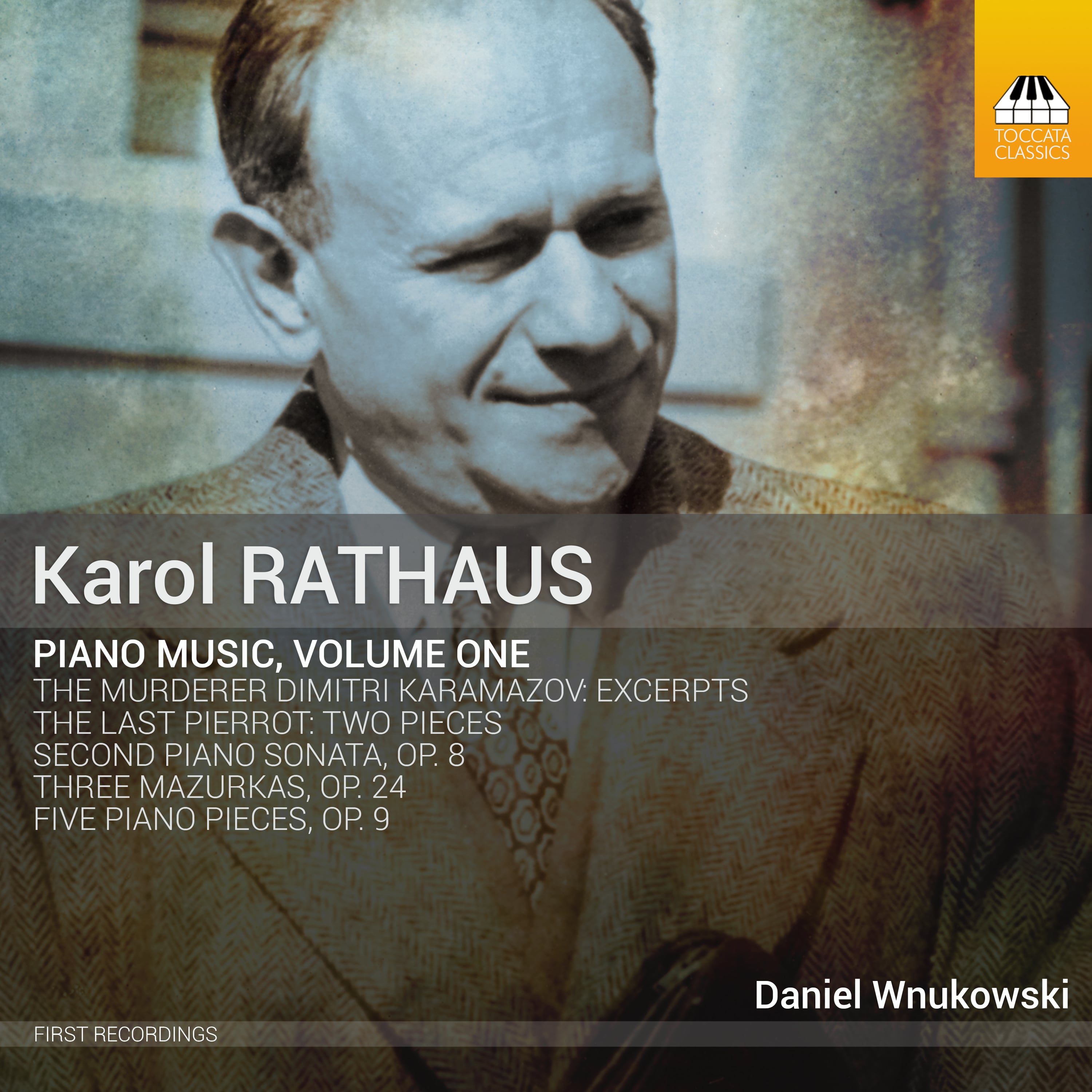
As far as I know, this CD is the very first recording of Rathaus’s piano works. All these compositions were written between 1924 and 1931. Besides the Fünf Klavierstücke, the second piano sonata and three Mazurka’s there are also – arranged for the piano by the composer himself – two fragments from the ballet Der Letzte Pierrot and three pieces from the film music from Der Mörder Dimitri Karamasoff. These are fascinating works with very pronounced rhythms. Harmonious, but with some dissonances. Irrespectfully said: Bartók meets Szymanowski. No, Rathaus is neither Polish, nor Austrian, nor American. His music is unique, different, just… Rathaus.
Karol Rathaus 5 Klavierstücke, Piano Sonata No. 2, 3 Mazurkas, 3 Stücke aus dem ballet Der letzte Pierrot, 3 Excerpts from the Film Music for The Murderer Dimitri Karamazov
Daniel Wnukowski, piano Toccata Classics TOCC 0451
Once, years ago I begged the gods (and the staff of DNO) to put by Bohuslav Martinů’s The Greek Passion on the repertoire list. In vain. It doesn’t even have to be a new production, on the contrary! There is a beautiful staging made by David Pountney. It was first performed in 1999 in Bregenz (this was the first version of the opera), and a few years later at the Royal Opera House in London.
I saw the production in London and was very moved by it. In the performance I attended, the main parts were played by Christopher Ventris as Manolios (Christ) and Douglas Nasrawi as Panait (Judas), and since then I have hoped that one day a DVD will be released. In vain, so it seems …
The subject: refugees, corruption, religious fanaticism, humanism and the search for identification was, is and will always remain topical. Bitter, tragic, but also beautiful and very humane. Martinů himself wrote the libretto for it, based on the novel ‘Ο Χριστός ξανασταυρώνεται’ (Christ was crucified again) by Nikos Kazantzakis. The book (and the opera) tells a story of the survivors of a Turkish massacre who seek shelter in a Greek village where the local population is preparing for their annual ‘Passion performances’.
FILM
There are two versions of the opera. The original version was rejected by the then management of the Royal Opera House in 1957. The score, which was drastically adapted by Martinů, was not performed until 1961 in Zurich, after the composer’s death. This ‘revision’ was recorded by Supraphon in 1981 and filmed for television in 1999 (Supraphon SU 7014-9).
For the time being, we should be satisfied with that, at least as far as the image is concerned. Not that it’s bad, on the contrary, because there’s a lot to enjoy, but it’s a film and the roles are played by professional actors who really do their best to make us believe that they’re singing too.
The film is strongly reminiscent of Zeffirelli. If you have seen his Cavalleria Rusticana, you know what I mean. There are beautiful images of the arid landscape and the heat and drought are almost palpable.
The soundtrack comes from the recording by the Brno Philharmonic Orchestra conducted by Charles Mackerras (need I say more?) with a cast including John Tomlinson as the priest Grigoris, John Mitchinson as Manolios, Helen Field as Katerina and the soloists of the Welsh National Opera.
CD
Recently, the first, original version of the opera was published on Oehms (OC 967), recorded live in Graz in March 2016. The performance is definitely good. The Swiss tenor Rolf Romei is a very moving Manolios and Dshamilja Kaiser a convincing Katerina. The Grazer Philharmonisches Orchester is conducted very idiomatically and very appealingly by Dirk Kaftan.
Judging by the pictures in the textbooklet (and the fragments on You Tube) the production was also beautiful to see. Why is this not on DVD?
La Morte de Verismo: Verismo is dead. In recent years, this heartfelt cry has been the subject of intense discussion on opera mailing lists, in opera groups on Facebook and during emotional conversations and discussions among many fans of the genre. But is it true? Is verismo dead?
People say verismo and think: Mascagni and Leoncavallo. Rightly so? Cavalleria Rusticana and certainly Pagliacci are among the most popular operas ever. The most tragic as well. But that is not only because of their content. They are about passion, love, jealousy, revenge and murder, but that and also the rough realism does not make them more violent than Carmen. And we have also experienced ‘ordinary people’ and ‘present time’ in operas before, in La Traviata for example.
No, what actually makes these operas so tragic is the fate of their creators. Both works caused a huge sensation and left their creators with a blockbuster they could never equal again. Not that they composed nothing else or that the quality of their later operas leaves much to be desired. On the contrary. La Bohème by Leoncavallo or L’Amico Fritz by Mascagni, for example, are true masterpieces.
The ‘why’ is difficult to answer, although many explanations have been given. Mascagni would not have remained true to his style and started to compose in the romantic style again. But that is not true: Cavalleria contains many passages that are just as lyrical as L’Amico Fritz, for example, and Cavalleria is no more dramatic than lets say Iris.
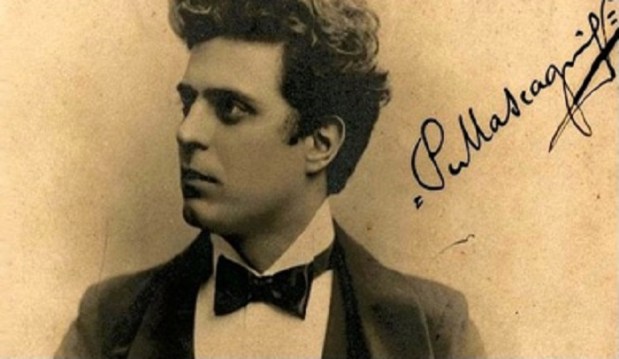
Pietro Mascagni. Photo courtesy BBC archives
“Crowned before I became king”, Mascagni sarcastically remarked (‘Cavalleria’ was his first opera, composed when he was 26 years old), and that goes for Leoncavallo as well. Whatever the cause may be, both composers have, inseparably linked, gone down in history as composers of only one opera.
The same thing happened to their contemporaries and/or contemporaries of style (they preferred to call themselves ‘La Giovane Scuola’ – ‘The Young School’). The few people who have heard of Giordano, Catalani, Franchetti or Cilea probably cannot name more than one opera. Or even worse: one aria.
It is difficult to say what caused this, and is worth exploring, but the fact is that after the thirties and forties (and also the early fifties) the genre suddenly became ‘not done’. Intellectuals considered the genre as beneath themselves and the sobs in the aria ‘Vesti la giubba’ from Pagliacci became the example of bad taste.
Cavalleria Rusticana and Pagliacci have always remained popular with audiences, though. The real lovers have never taken any notice of this intellectual criticism (especially the eighties and nineties of the last century were ruthless for verismo).
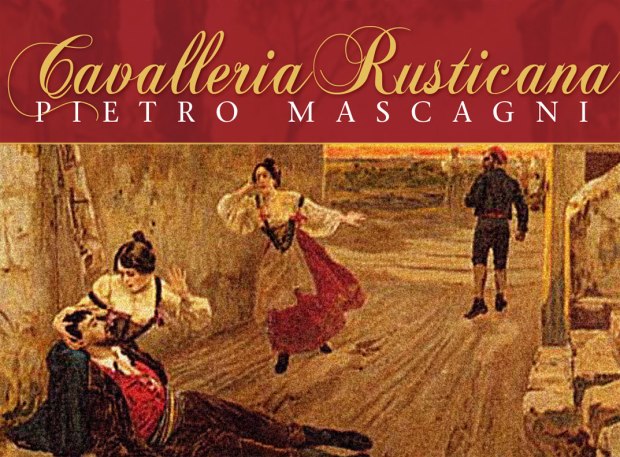
CAVALLERIA RUSTICANA
The premiere of Cavalleria Rusticana took place in 1890, three years after Otello and three years before Falstaff by Verdi. The leading roles were sung by Gemma Bellincioni as Santuzza and her husband Roberto Stagno as Turiddu.
Thanks to Edison and his invention we know how the first Santuzza sounded, because in 1903 Bellincioni recorded ‘Voi lo sapete, o mamma’ (SRO 818-2). What do we hear? Bellincioni has a light soprano, with an easy height, but with a dramatic core. It seems that she had had little success with the then standard repertoire, but her presence, her acting and interpretation made her very suitable for the new operas composed in the verist style.
Bellincioni sings ‘Voi lo sapete o mamma’:
How does a perfect Santuzza sound? You have to have power, that is clear. You also have to be able to act, especially with your voice, because few roles have so much duality in them: her eternal nagging gets on your nerves and you get tired of it, but at the same time she is pitiful and you have sympathy for her. As in real life, and that real life must also be reflected in the interpretation, which cannot be achieved by just singing beautifully.
That’s why the greatest singing actresses have recorded the best Santuzzas. You notice that too when looking at the list of Santuzzas: Giannina Arangi-Lombardi, Zinka Milanov, Carla Gavazzi, Eileen Farrell, Giulietta Simionato, Maria Callas, Elena Souliotis, Renata Tebaldi, Renata Scotto. And Lina Bruna Rasa of course, the beloved Santuzza of Mascagni.
Milan 1940
In 1940 the 50th anniversary of Cavalleria was celebrated with special performances at La Scala, after which the whole cast went into the studio to make a recording of it. The line-up was the best possible, with next to Lina Bruna Rasa, Benjamino Gigli as Turiddu, Gino Becchi as Alfio and Giulietta Simionato as Mamma Lucia (strangely enough Simionato often sang the role of Santuzza afterwards).
The first thing that stands out in Mascagni’s conducting is the emphasis he places on lyricism and a lilting tone , which makes the melodic lines stand out more clearly. On no other recording does the prelude sound so idyllic, and nothing better indicates the drama that is about to take place, which contrasts sharply with the Santuzza – Turiddu duet. It makes the drama more poignant, more intense.
Gigli was one of the best Turiddu’s in history: seductive and frivolous, and (sorry, but it is true) only in Domingo did he get a worthy competitor. Because neither Giuseppe di Stefano (too light), nor Jussi Björling (too nice), nor Mario del Monaco (too roaring), nor José Carreras (although he comes close) could give Turiddu a hint of three-dimensionality.
Gigli as Turiddu. Recording from 1927:
At the time of the recording Bruna Rasa was 33 years old and since a few years she suffered from terrible depressions. The first symptoms of a mental illness had also manifested themselves and she had trouble remembering the text. Yet there was no question that anyone else would sing that role, and Mascagni helped her as much as he could.
Lina Bruna Raisa sings’ Voi la sapette o mamma’:
The original recording appeared on 2 CDs on EMI which were filled up with arias from other Mascagni operas sung by Gigli. Unfortunately on the re-release on Naxos (8110714-15) some orchestral preludes and intermezzi from different operas, all performed by the Berlin State Opera Orchestra conducted by Mascagni are added instead. Both EMI and Naxos start with a short speech by the composer.
Below the complete opera, conducted by the composer:
The Hague 193
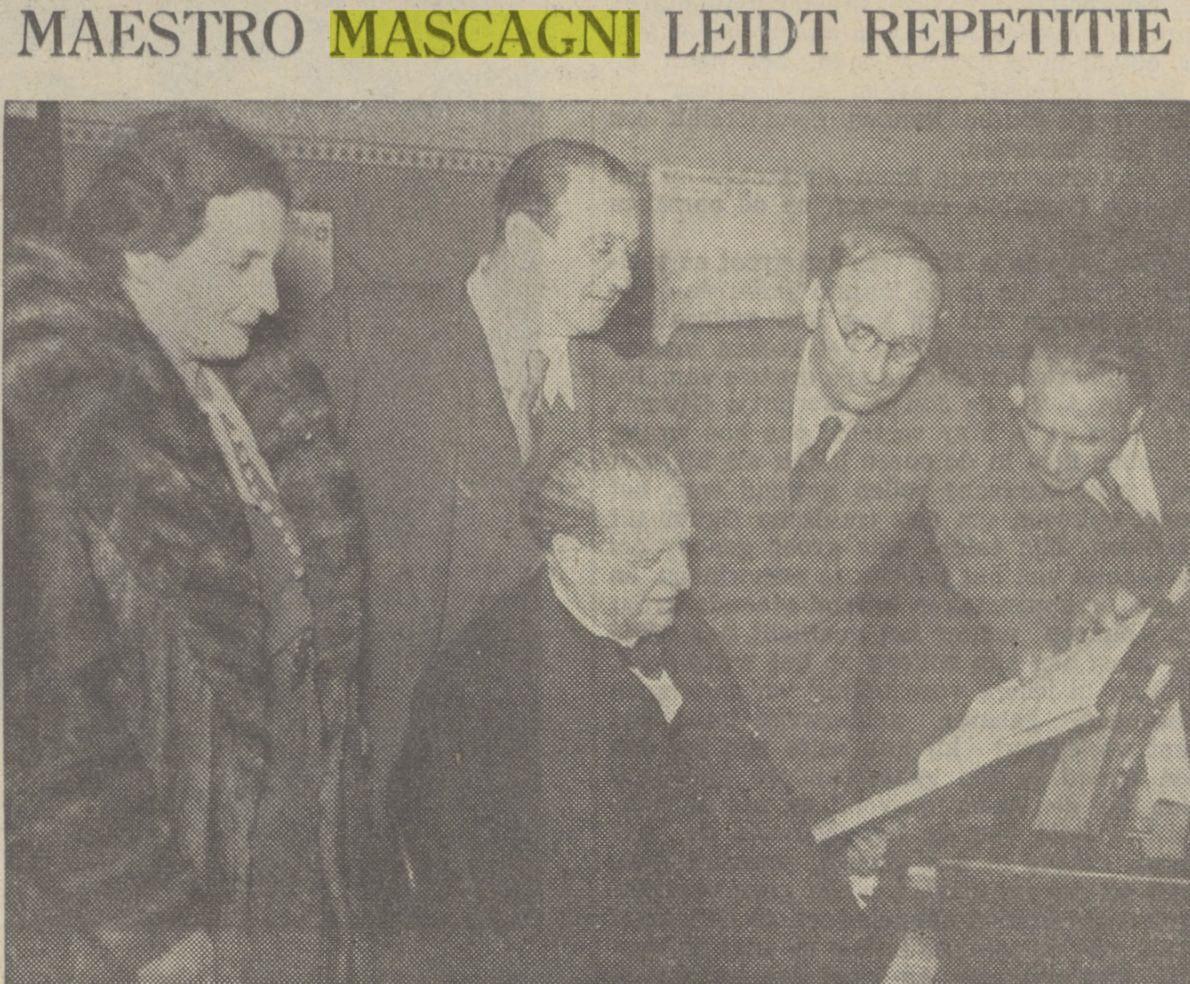
Two years earlier, in 1938, the widow of Maurice De Hondt brought Mascagni and his opera to The Hague. The performance of 7 November was recorded live and was released on CD
The live recording sounds pretty good, especially for its age, and the stage sounds (including a very audible prompter) and the coughing audience are not really disturbing. The tempi are a bit faster than on the Naxos recording, but still a little on the slow side.
The line-up is slightly less spectacular than two years later, but still very good. Antonio Melandri is a baritone Turiddu and Alfro Poli gives excellent shape to Alfio. Of course Mascagni had brought Bruna Rasa, and what she shows here surpasses everything: so intense, so desperate, so heartbreaking, like no other Santuzza ever sounded. Because of her interpretation alone, this special document is invaluable.
Franco Zefirelli
This part movie/part studio recording of Franco Zefirelli (DG 0734033) could have been the ultimate adaptation if it had not been for Elena Obraztsova who plays the role of Santuzza. That she is a bit older and unattractive – ok, that fits the story. But her voice is lumpy, sharp and her chest register is painful to the ears. She also suffers from over acting which makes her an extremely unsympathetic Santuzza.
One can’t blame Turiddu (Domingo at his best) for preferring to look at Lola (nice Axelle Gall). Just look at his eyes and his corners of the mouth, which speak volumes! For the rest nothing but praise for this recording, which (how could it be otherwise?) is coupled with ‘Pagliacci’, with again Domingo in top form and an excellently acted Nedda by Teresa Stratas.
In 1956 in the Rai studios one of the most beautiful Cavallerias was recorded, with Carla Gavazzi, Mario Ortica and Giuseppe Valdenga.
This recording can now be found on Youtube:
DOMENICO MONLEONE
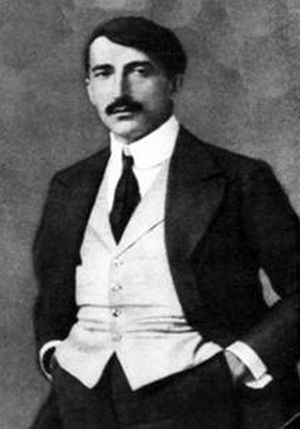
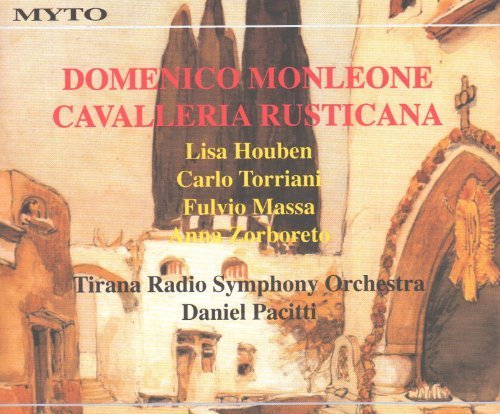
What many people don’t know: there are actually two (and even three if you include La Mala Pasqua by a certain Stanislao Gastaldon from 1888) Cavalleria Rusticana’s. Domenico Monleone (1875 – 1942), a composer not unknown at the time, also used the story of Giovanni Verga for his one-acter, which his brother Giovanni converted into a libretto.
Illustration Gamba Pipein. Courtesy Boston Public Library, Music Department
Sonzogno, Mascagni’s publisher, accused Monleone of plagiarism (and indeed: careful study shows that Monleone’s libretto is closer to Mascagni than to Verga’s original story), after which the opera was not performed anywhere for a long time.
Until 1907, when Maurice de Hondt brought Monleone to Amsterdam, where his opera had its belated premiere. Coupled with … yes! Cavalleria Rusticana.
Both works were directed by their composers: it apparently did not bother Mascagni that his colleague had ‘borrowed’ his libretto from him.
Il Mistero
Nevertheless, Monleone had to accept the court ruling, which meant that he had to find a new libretto for his music.
It was changed into Il Mistero, another story by Verga, and this time the author himself had helped Giovanni Monleone with the libretto.
Both operas with the same music but on two different libretto’s were released by Myto on CD’s (Cavalleria: 012.H063; Il Mistero: 033.H079). In both works the leading role (Santuzza/Nella) is sung by Lisa Houben, originally from the Netherlands.
Duet Santuzza/Turiddu, sung here by Denia Mazzola-Gavazzeni and Janez Lotric. Recording was made in Montpellier, in 2001:
An amusing video: eight times ‘A te la mala Pascua’:
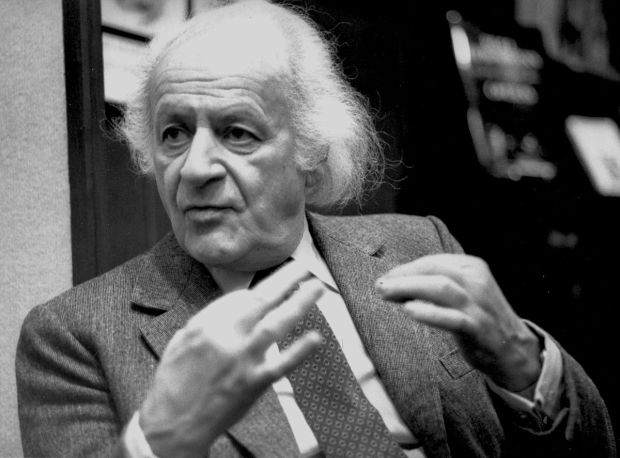
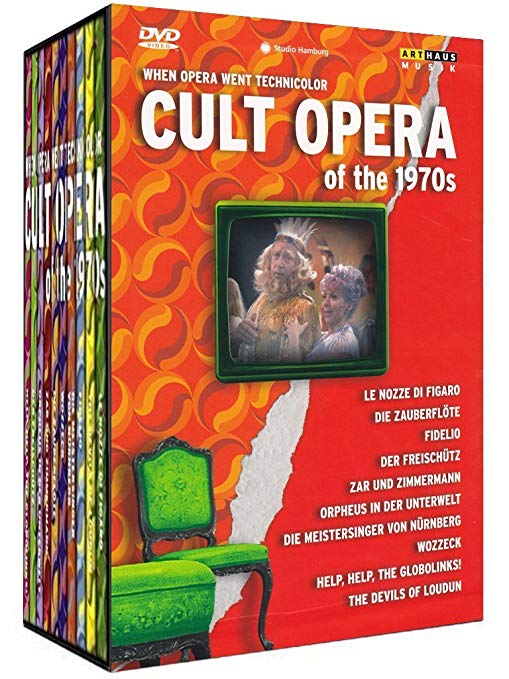
The Swiss composer Rolf Liebermann (14 September 1910 – 2 January 1999) is nowadays seen as the father of Regietheater, although he meant something different from the current conceptualism in which the boundary between the permissible and the ridiculous is explored and often crossed.
Under his leadership, the Hamburg State Opera, where he ruled for fourteen years between 1959 and 1973, grew into one of the best and most talked-about opera houses in the world. Liebermann created a good, solid and varied repertoire with special attention to contemporary works, built a fantastic artists’ ensemble and attracted foreign stars and would-be stars (Plácido Domingo’s world career began in Hamburg). Arlene Saunders, William Workman, Raymond Wolansky, Franz Grundhebber, Tom Krause, Hans Sotin, Toni Blankenheim – they all formed a solid and close-knit ensemble, with the occasional addition of a bigger (read: more familiar to the general public) name: Lucia Popp in Fidelio and Zar und Zimmerman, Cristina Deutekom, Dietrich Fischer-Dieskau and Nicolai Gedda in Die Zauberflöte, Sena Jurinac in Wozzeck.
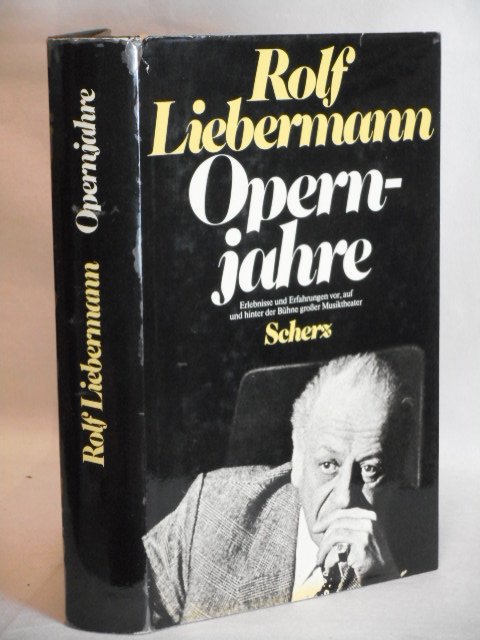
Liebermann also regularly commissioned compositions. In the years of his management no less than 28 operas and ballets had their world premiere, a number many an opera house should be jealous of. Later, in his autobiographical book ‘Opernjahre’, Liebermann described his time at the Hamburg State Opera as the happiest time of his life. I can imagine that. If you were able to realise so much beauty at such a high level, you can only be intensely happy.
Luckily for us, who have not (consciously) experienced those years, Liebermann was also thinking about the future and had director Joachim Hess record thirteen productions for television. Most of the recordings took place in a studio. With the means available at the time, it was impossible to record sound and images at the same time. This meant that first a musical soundtrack had to be pre- recorded, after which the singers could mime to it in the studio very precisely, so everything was in sync.
About ten years ago, Arthaus Musik released these operas on DVD. Of course, by today’s technical standards, it’s all far from perfect. The sound is mono and the camera is rather static, but for the enthusiast there is a lot to enjoy, not in the least because of the repertoire.
PENDERECKI: DIE TEUFEL VON LOUDUN
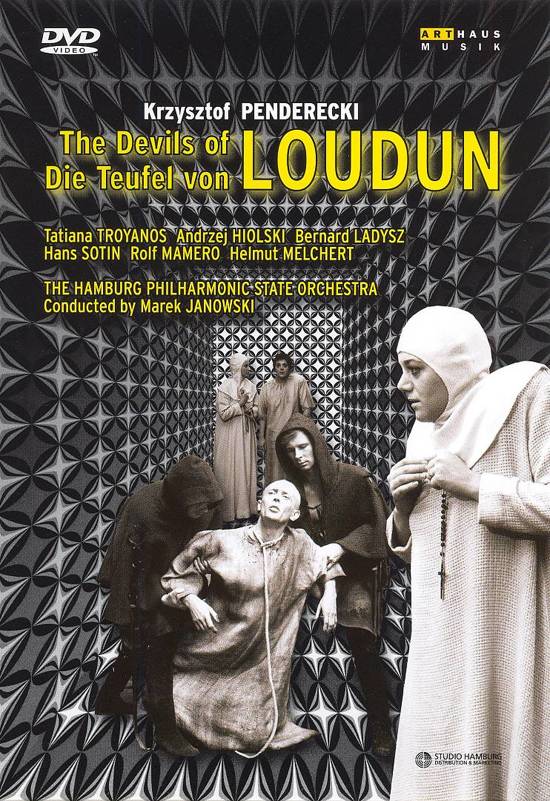
In 1967 Liebermann approached Krzysztof Penderecki with the request to compose an opera for Hamburg. The result was Die Teufel von Loudun, for which the composer himself had written the libretto. The story is based on a true event: in Loudun (France) in 1634, a Prioress of the Ursuline Order accused a priest of diabolical practices for which he was sentenced to be burned at the stake.
The opera had its world premiere on 20 June 1969 and shortly afterwards it was filmed. The leading role of mother Jeanne was performed in a very impressive way by Tatiana Troyanos, another great star whose career began in Hamburg (after she had received a grant from the Rockefeller Foundation to further her education in Europe, she auditioned in Hamburg where Liebermann immediately offered her a contract). Her portrait of the hunchbacked demonically possessed nun with sexual visions is breathtaking. Everything about her, from head to toe, acts. Her facial expression changes with every phrase she sings and her voice chills you to the bone.
The horror-like music with its many glissandi and octave leaps evokes a feeling of unease and makes the opera, despite the immense tension, rather uncomfortable to watch. The staging, with a lot of nudity and explicit sex scenes, is very progressive for that time and I can imagine it was experienced as shocking!
First act of DIE TEUFEL VON LOUDUN:
Speaking of music: did you know that William Friedkin used music by Penderecki for his film The Exorcist?
GIAN CARLO MENOTTI: HILFE, HILFE DIE GLOBOLINKS!
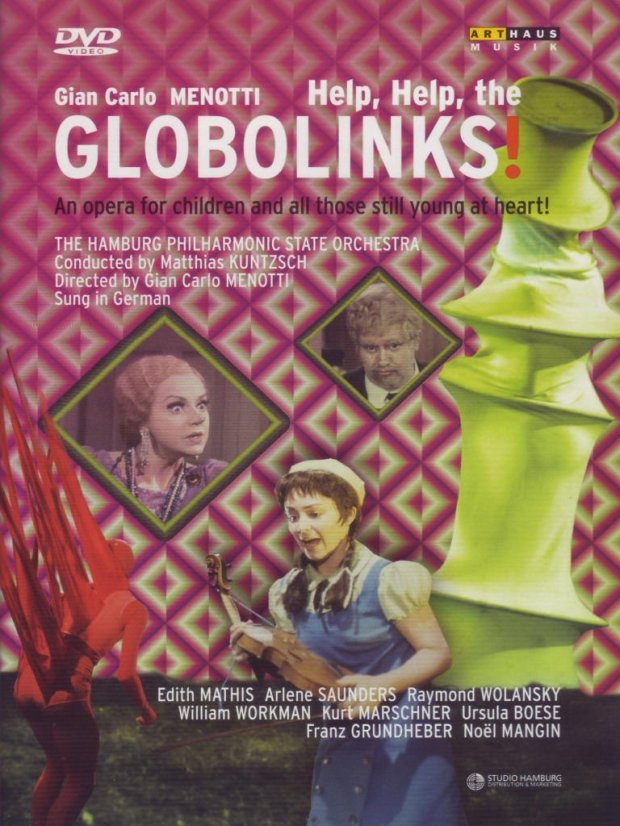
Especially for Hamburg, the Italian-American composer and director Gian Carlo Menotti composed Hilfe, Hilfe Die Globolinks!, an opera ‘for children and for those who love children’. The premiere took place in 1968 and a year later it was filmed in the studio.
I must confess that I’m not a big fan of children’s operas, but I’ve been shamelessly enjoying this one. It is an irresistible fairy tale about aliens (Globolinks) who are allergic to music and can only be defeated by means of music.
The images are very sensational for that period, full of colour and movement and the forest little Emily (the irresistible Edith Mathis) has to go through with her violet to get help is really frightening. The aliens are a bit of a let-down according to modern standards, but that doesn’t matter, it gives the whole a cuddly shine. The work is bursting with humour and irony; musical barbarians are lashed out at: the school principal who doesn’t like music turns into an alien himself.
There are also a lot of one-liners (“music leads you to the right path” or “when music dies, the end of the world is near”). It is incomprehensible a work like this is not performed all the time in every school (and I don’t mean just for the children), the subject is (and remains) very topical.
None of the roles, including the children, could be better cast, and this once again proves the high standard of the Hamburg ensemble. In which other city would you find so many great singers/actors who can perform so many different roles on such a high level?
In the Venusburg (Tannhauser), 1901 (oil on canvas) by John Collier
Text: Peter Franken
Wagner’s opera Tannhäuser und der Sängerkrieg auf Wartburg premiered on 19 October 1845 in Dresden. The composer had been working on the opera since 1842 and was actually never able to complete it to his own satisfaction. Shortly before his death in 1883 Wagner admitted that he owed the world another Tannhäuser.
In 1875 he had conducted a performance in Vienna himself, which had not entirely been to his liking. That performance included the virtuoso music for the violins composed for Paris, making it in fact a Viennese version of the work.
Performance practices
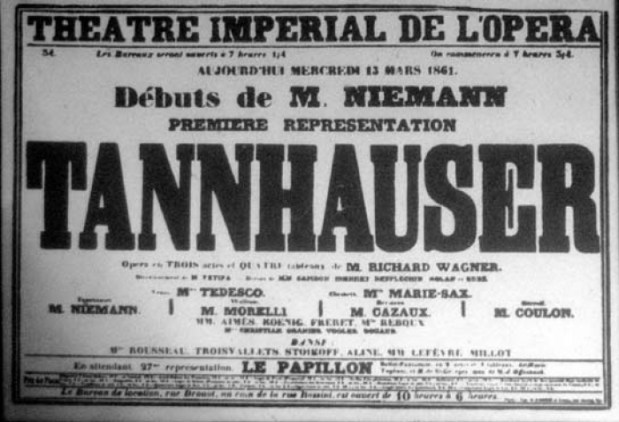
The fact that Wagner continued to tinker with the score for a large part of his life was mainly caused by performance practices. He was never really satisfied with how the work was played, mainly because singers could not cope with their role but also because of the lack of quality of the performing orchestras. In 1860 a revised edition of the score appeared. A year later the ill-fated performances in Paris took place. Here Wagner had the overture lead directly into a stormy scene in the Venusberg, the bacchanale. The performances in Paris were sung in French. What is now known as the ‘Pariser Fassung’ is a retranslation into German.
Because the singer who was cast as Walther von der Vogelweide proved to have insufficient qualities, his contribution to the singing contest had to be cut. That omission defines the later performance practices of the Paris version and it is a serious loss. A ‘schwärmerisch’ type like Walther, who sings about the pure wells of love that one can only sip from, adds much to the contrast between Tannhäuser and his fellow singers. Now he only has Wolfram as an opponent, Biterolf’s contribution is of a very different nature, which calls for violence.
All in all, there are 36 variants in the score that can be identified, all of which stem from the problems Wagner encountered in making his opera ‘performable.’ Continuing to speak of a Dresden and a Paris version is outdated as there are many more. Nevertheless, in general one sticks to these two main versions because of the recognisability, mainly found in the overture and the subsequent bacchanale. However, it is not unusual to play a hybrid of both versions, for example by having Walther sing his aria in what otherwise is the Paris version.
The story
Tannhäuser’s time in a den of sensual pleasures sends him on a pilgrimage to redeem his soul. Wikimedia Commons
As usual, Wagner wrote the libretto himself. In it he combined the legend of the Minnesänger Tannhaüser with the legendary singing contest at the Wartburg. The work deals with the disruption of a rigid, introverted environment by the arrival of an uninhibited outsider.
In this social environment, people do not know how to deal well with sexuality and eroticism, which has led to the glorification of spiritual love. Minnesänger Tannhaüser, however, has had very different experiences at the well, the Venus cave. Spiritual love is like infertile earth: no flowers grow in it. Love without sensuality is not love.
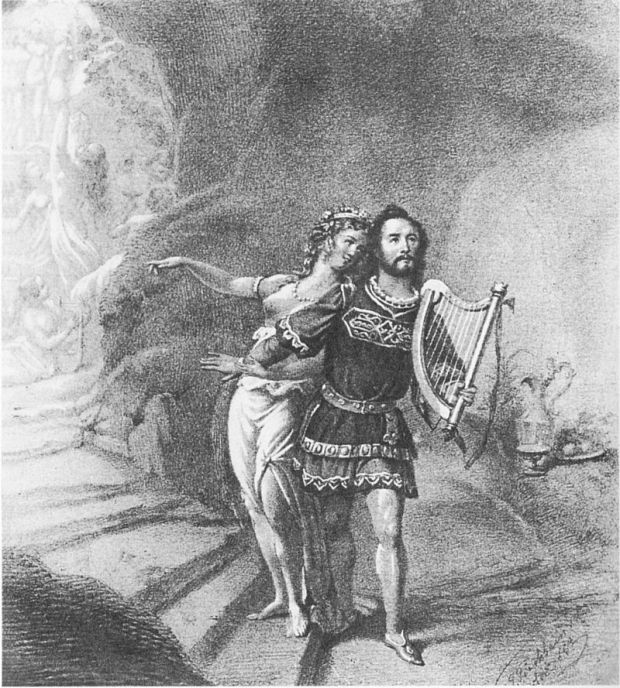
Tannhäuser
Joseph Tichatschek (Tannhäuser) and Wilhelmine Schröder-Devrient (Venus); premiere in 1845
From the story it can be concluded that Heinrich Tannhaüser is a Minnesänger who previously lived at the court of the Landgrave of Thuringia. At some point the straitjacket of this court life must have become too tight and he left, without anyone knowing where.
It is clear that he is very much missed, especially by Elisabeth, the niece of the landgrave. And by his colleagues, who may have lost a competitor but cannot take advantage of it because Elisabeth has decided to no longer attend singing competitions. Competitions, therefore, have largely petered out.
At the start of the opera Tannhaüser has been with the goddess of love Venus and her servants for quite some time. In terms of eroticism and sex, our hero does not lack anything, in fact, he gets overfed with it. And of course too much is not good: ‘all sex and no play makes Heinrich a dull boy.’
Venus loses her temper when he tactfully tells her that he wants to go out into the open air again. What on earth does he want there, in that chilly, rigid environment in which people are permanently working as robots to protect the supposed salvation of their souls? He hadn’t fled all this for nothing, had he Heinrich, the free bird? But it doesn’t help, Tannhaüser is not only bored but afraid of his place in the afterlife as well. Venus mocks him for this but she cannot hold on to him.
Once in the open field, the Minnesänger meets his former colleagues, who lead him along to Wartburg with the main argument that Elisabeth is waiting for him there. For them he functions as a kind of job guarantee.
Wolfram
Wolfram von Eschenbach is the singer who is closest to Tannhaüser. Wolfram clearly has his eyes on Elisabeth, but she lives with the idealised memory of Tannhaüser and has no eye for other men. By confronting Elisabeth with his rival and thus making him an average person again, he hopes to increase his own chances with her.
He brings Tannhaüser to Elisabeth when she is swooning in the Great Hall of Song (Dich, teure Halle, grüß’ ich wieder) and remains in the background to keep an eye on their encounter. Although these two almost immediately recognise love in each other’s eyes, Wolfram does not have to worry, Tannhaüser manages to make himself spectacularly impossible before the eyes of the entire court. But contrary to expectations, Elisabeth continues to cherish him and only allows Wolfram in her vicinity as a ‘good friend.’ What remains for him is a ‘Will and Grace relationship.’
Hermann Prey as Wolfram:
Elisabeth
Camilla Nylund as Elisabeth in 2011
At court, this seemingly chaste lady is the figurehead of spiritual love, the first prize for him who can best pretend to sincerely believe in it. Wolfram and Walther von der Vogelweide strive to express their claims as well as possible during the singing contest. But she only has eyes for her secret love Heinrich. All she has to do is let him win the contest and he belongs to her. If only he doesn’t do anything stupid…..
It is clear that Elisabeth is not infertile earth under her stiff appearance. She does want flowers to bloom: ‘all song and no sex makes Elisabeth a dull girl.’
But expressing this openly takes her effort, actually she is just a little shy, nothing more.
Inspired by his stay with Venus and challenged by Wolfram and Walther, Tannhaüser gives his all. Everything and everyone falls over him, his life is in danger. And it is Elisabeth who saves him. It is unnecessary to talk about this in such important terms as sacrifice and Erlösung, she just loves him and does not let him fall.
Below ‘Dich, teure Halle,’ sung by Leonie Rysanek:
The pilgrims
Scherl: Von den Bayreuther Festspielen 1930. Tannhäuser Schlusszene.
The pilgrim’s chorus is one of the most famous melodies of the opera. These people play an important role in the background. They pass the Wartburg at the time of Heinrich’s discomfiture and he is pressed to go with them to Rome to ask forgiveness for his sins. And these sins are great by church standards: he has had extramarital sex and prides himself on it. That is tantamount to ignoring social codes and his presence is therefore perceived as a threat to society. From a social point of view, he is a wrong-way driver, someone who flouts the rules and thereby endangers others.
When the pilgrims return, Tannhaüser does not appear to be amongst them to Elisabeth’s despair. His absence from the group indicates that he was not absolved by the Pope. And that means that he will remain an outcast at court. The latter is Elisabeth’s final blow, she can no longer take it and dies.
Venus
Tannhäuser appears and tells the bewildered Wolfram the story of his failed pilgrimage. He wants to return to Venus since life in this form has nothing more to offer him and there is little point in hoping for a heavenly afterlife. Venus hears of this and sees her prediction confirmed. She had told him so. What should a man do with Mary if he can be with Venus, forever? She seductively sings to him: ‘Willkommen ungetreuer Mann.’
At the very last minute, Wolfram managed to save him for an ecclesiastical life. He points out Elisabeth to him, praying in heaven for the salvation of his soul. In the end, Venus cannot compete with that. Her Dionysian world is defeated by the Apollonian world of medieval Christianity.


























 Basia con fuoco