achtergrondartikelen

Domingo and Wagner

TANNHÄUSER

domingo tannhauser

I have never been a ‘Wagnerian’. I could never muster the patience to sit through hours of his operas. I found them bombastic. Pathetic. And even though I had to admit that there were some beautiful melodies, I felt that I really needed a pair of scissors and radically shorten them

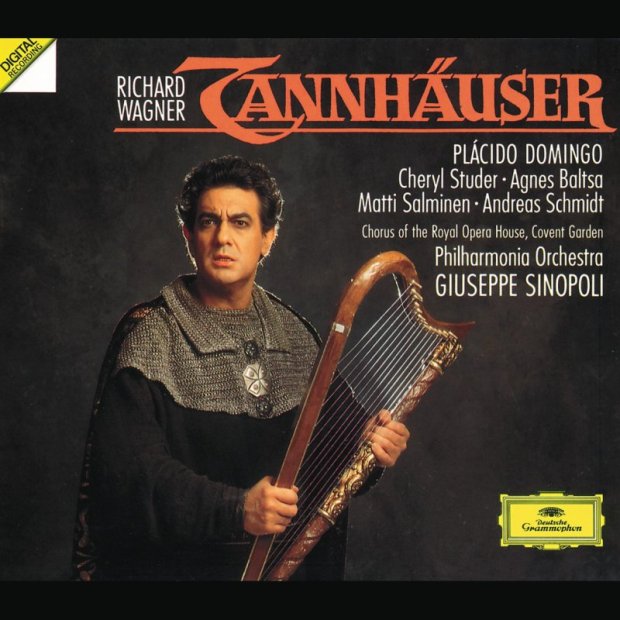
That this feeling has totally changed, I owe to Domingo. In my collector’s mania (I had to have everything he had done), I bought the recently released Tannhäuser (DG 4276252) in 1989. And then it happened: I became addicted.

At first, it was mainly Domingo who was to ‘blame’, whose deeply human interpretation of the title role gave me the goose bumps. His words:  “Wie sagst du, Wofram? Bist du denn nicht mein Feind?” (sung with emphasis on ‘mein’ and ‘Feind’ and with a childish question mark at the end of the phrase) caused me to burst into tears.

Later, I learned to appreciate the music for itself and to this day, Tannhäuser is not only a very beloved Wagner opera, but also one of my absolute favourites.

I still consider this recording, conducted very sensually by Giueseppe Sinopoli, to be one of the best ever. Also because all the roles (Cheryl Studer as Elisabeth and Agnes Baltsa as Venus, such wealth!) are excellently cast. At the time, in the eighties and early nineties, this was not necessarily a given.


ERIK

Fliegende Hollander Sinopoli
For the 1998 recording of Der Fliegende Holländer (DG 4377782), Domingo added the role of Erik to his repertoire. His Erik is attractive and charming, he sings the role not only with great commitment but also very idiomatically.

This recording is particularly dear to me, not only because of Domingo, but also because of Cheryl Studer, at the time perhaps the most beautiful Senta imaginable. Her delightful lyrical soprano with its easy and sensual height is perfect for the role.

The Holländer is sung by Bernd Weikl. A little past his prime, but the role suits him and Peter Seiffert is wonderful as Der Steuerman.


LOHENGRIN
domingo lohengrin-solti
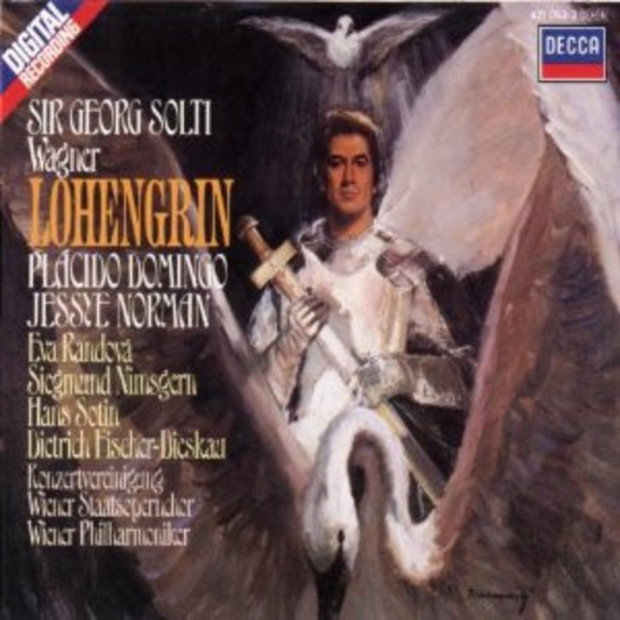
Despite all the swans, Lohengrins do not usually fall out of the sky. Before officially recording the role in 1985 (Decca 4210532), Domingo had been preparing for it for almost twenty years. And the result was worth it.

At the time, the Puritans were all up in arms: a Germanic hero performed by a Spanish bel canto singer, and with an accent too – no, that was unacceptable. I can still vividly remember the reviews from those days, written by the renowned music critics (no, I’m not going to mention any names). They not only cried shame, but also knew for sure that his career was about to end, because this was destroying his voice. Well…

Today, almost 40 years later, we know better.  Not only is his voice undamaged, but nowadays it is readily admitted that this was a formidable presentation, by one of the best tenors of the last century. His Lohengrin is not only heroic, but loving and warm-blooded, less god, more of a man.

Jessye Norman was the perfect Elsa in those days: young and innocent. And when you know that the conductor is called Solti…. Simply wonderful!


domingo lohengrin hamburg

Domingo’s baptism of fire in the role of Lohengrin was in Hamburg in 1968. He was then 27 (!) years old. It was not only his first Wagner, it was also the very first time he sang an opera in German, a language he did not yet master.

Fragments of the performance have been preserved (e.g. Melodram MEL 26510). His voice sounds like a bell, with a lot of bronze and a golden shine. The high notes are high and sung in full. Where can you still experience a Lohengrin like this? So beautiful that it makes you want to cry.

His Elsa was Arlene Saunders, at that time a much-loved prima donna in Hamburg, today she is totally forgotten. How unjust! Saunders was not only an amazingly good singer, she was also a beautiful woman and an exemplary actress.

PARSIFAL

domingo parsifal-0028947760067

In 2006, Domingo sang his last Parsifal (officially at least). It was recorded live in Vienna by Deutsche Grammophon (DG 4776006). Although he is audibly not a spring chicken anymore, he still manages to be utterly convincing, which is actually also true of Waltraud Meier’s Kundry.

Franz-Josef Selig is a fantastic Gurnemanz. His warm bass with its splendid legato seems created for all the long monologues. Falk Struckmann also is a splendid Amfortas.

It has been said of the conductor Christian Thielemann that he is a worthy successor to Furtwängler, and there is a lot of truth in that. He makes no secret of his predilection for the great German composers and his interpretations of them are rightly praised.

He also shares his capriciousness and wilfulness with his illustrious predecessor. His interpretations are therefore often controversial. I like that, because it forces the listener to listen attentively. In Parsifal, he emphasises the human aspect of the work rather than its mysticism. The truly brilliant orchestra follows closely behind.


domingo parsifal heilie graal
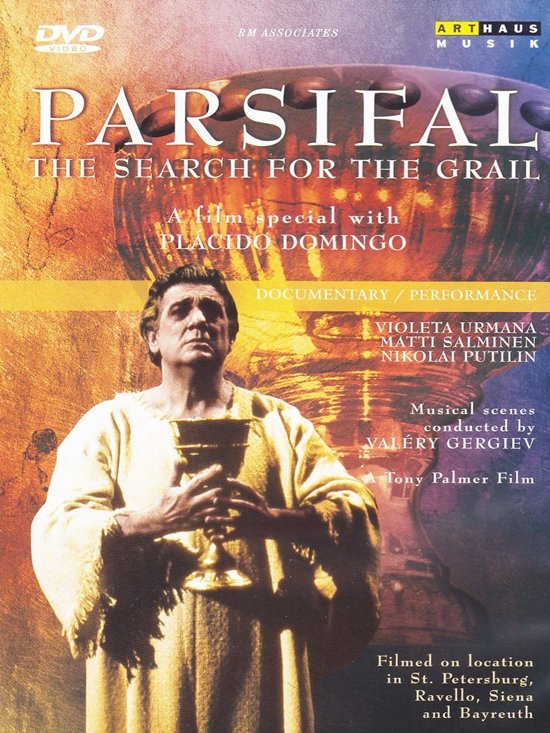
In 1998 Tony Palmer made a very fascinating film titled Parsifal – The Search for the Grail (Arthaus 100610). Domingo is our host and he explains not only the work, but he also tells us the history of the Holy Grail.

It is a very fascinating and enjoyable quest, illustrated by excerpts from Indiana Jones and Monty Python, among others, and from a performance in the Mariinski Theatre, with, alongside Domingo, Violeta Urmana as Kundry and Matti Salminen as Gurnemanz. Gergiev conducts.

TRISTAN
untitled

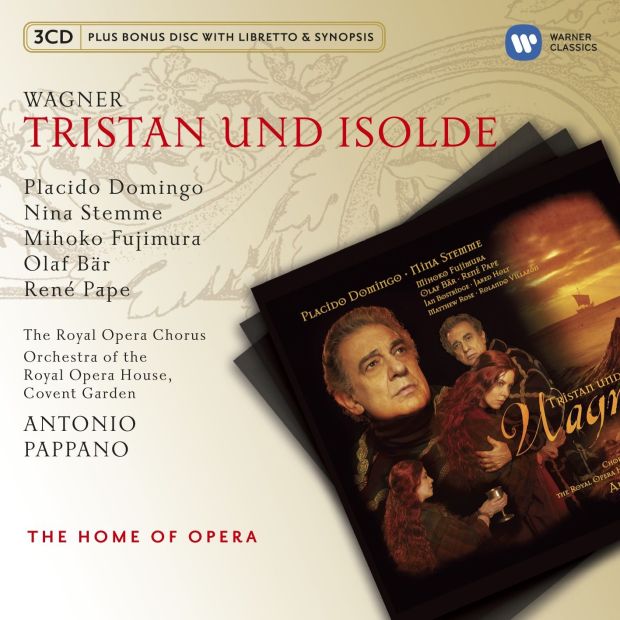
In the winter of 2004/2005 the moment had finally come: the crowning glory of Domingo’s long career. Tristan had been on his wish list for a long time and twice it had almost come true (Bayreuth and Vienna), but in the end he dared not go through with it. But he seized the opportunity to record it with both hands.

EMI (now Warner Classics 5099996686423) immediately made a true feast of it and went all out – it is said that the project cost almost a million euros!

The result is overwhelming. Nina Stemme sings a young and vulnerable Isolde and René Pape is one of the best Markes I have ever heard. His monologue ‘Tatest du’s wirklich’ is among the most beautiful and moving moments of the opera.

Domingo is a Tristan to fall in love with. He is a man, a human being of flesh and blood, if necessary heroic and strong, but also weak and fragile. He is loyal, but mostly in love, until, finally, death comes for him.

His interpretation bears little resemblance to that of other great Tristans in history. That is not surprising: he is not a heroic tenor. But singing is what matters most to me, and does he sing! Peter Alward (EMI’s outgoing A&R producer and the mastermind behind the recording) in an interview once said, that he would not be surprised if a whole future generation of Wagner tenors committed mass harakiri after listening to Domingo in the role.


SIEGMUND

domingo siegmund                                             Domingo als Siegmund in Washington in 2007.

By now, Domingo pretty much identifies himself with Siegmund (Die Walküre), and it was also his most frequently performed Wagner role. I heard him sing it in London, at the Proms, an experience never to be forgotten.

There are plenty of recordings in circulation, official and less official, so I assume you will have at least one of them. If you are interested, that is.

fragment of his debut in the role (Vienna 1992) with Waltraud Meier as Sieglinde:

SIEGFRIED

domingo ring scenes

No. He has never tried Siegfried, at least not on the stage, and it is very unlikely that he will do so in the future, but with Domingo you never know. After all he surprises us every year with at least one new role, no small feat when you turn 80!

On a CD with the title Scenes from the Ring (once EMI 5572422, probably not available anymore) he sings all the great music from both Siegfried and Götterdämmerung and he is doing it great. Just listen to ‘Nothung’ or ‘Dass mein Vater nicht ist’, not to mention ‘Brünnhilde! Heilige Braut!’. Can it get any more impressive? What a pleasure to hear him in this role.


Plácido Domingo and his French roles

Domingo jose


Bizet: Carmen


Domingo carmen-wiener-staatsoper-kleiber


I never used to like opera. I loved violin concerts and piano solo works, very early on I learned to appreciate chamber music and when I got a bit older, songs also came my way. But opera? The mere idea that an old, fat lady would try to portray a young girl dying of TB, gave me the giggles. Talk about prejudice!

Until one memorable evening in 1982, when I turned on the TV to watch Carmen. I only did it to please my then boyfriend and then it happened! From that night on, the world was forever changed and my life gained a great love.

For years I cherished this Carmen, although I only had a badly copied but very expensive mc (does anyone remember what it was?). It was later released on various ‘pirate labels’ and finally on DVD (Arthaus Musik 109096).


Many years and a lot of experience have passed, but I still find the recording irresistible. First of all because of Domingo. Listen to his ‘La fleur que tu m’avais jetée’: if that doesn’t give you goose bumps, I don’t know what will. And also because of Carlos Kleiber, a conductor, the likes of whom do not exist anymore these days.


Domingo Camen berganza


The most beautiful CD recording, at least to me, is the one with Teresa Berganza under Claudio Abbado (DG 4196362). It was recorded in the studio in 1978, but only after a series of live performances, and it is all the better for that! Ileana Cotrubas (Micaela) and Sherrill Milnes (Escamillo) complete the excellent cast.


https://http2.mlstatic.com/bizet-carmen-solti-domingo-troyanos-3-cd-box-set-D_NQ_NP_396505-MLA25049663221_092016-F.webp

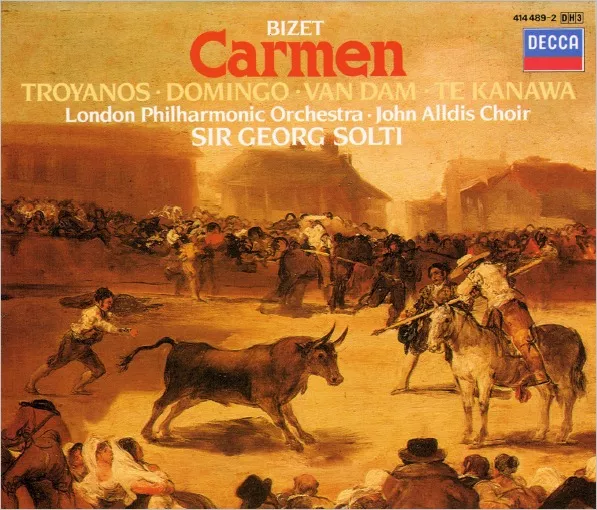
Two years earlier, Domingo also recorded the opera in the studio (Decca 4144892), but I am less enthusiastic about it. Solti conducts superbly and Tatiana Troyanos as Carmen is one in a thousand, perhaps she is even better than Berganza, but José van Dam is no Escamillo and the whole lacks the atmosphere of the theater.


Domingo Camen Resnik


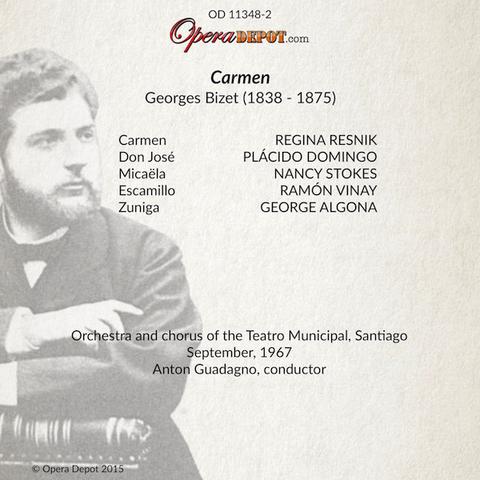
The very first recording I know, dates from 1967. It is from the Teatro Municipal de Santiago and is conducted by Anton Guadagna (Legato LCD 194-2). Regina Resnik is an excellent Carmen, but what makes the recording truly memorable is the Escamillo of Ramon Vinay, once a Don José of note himself.


Domingo Carmen Verrett


Also interesting is the recording from Covent Garden, 1973 (Arkadia MP 498-3). Mainly because of Shirley Verrett in the leading role and the very young Kiri te Kanawa as Micaela.


Massenet: Werther


Domingo Werther


Werther was one of the young Domingo’s favourite roles. Unfortunately, little of it has been documented. On 18 December 1977, the opera was recorded by the Bayerische Rundfunk in Munich. This recording has been released on CD (Orfeo C 464 982).
Charlotte was sung by Brigitte Fassbaender, not really a singer one would associate with the role… Well! Allow yourself to be surprised, because what happens here, happens very rarely: drama, passion, love, despair… She and Domingo really bounce from your player.
An excerpt:

Domingo Werther Chailly

A studio recording of the opera was made in 1979, under Riccardo Chailly, with a totally miscast Elena Obraztsova as Charlotte. It is quite exciting, but lacks the necessary poetry.


Massenet: Manon


Domingo Manon


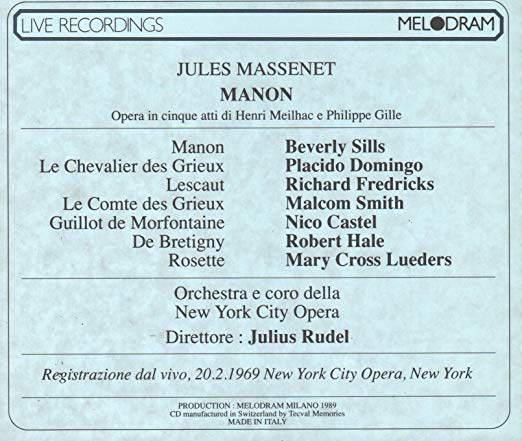
Yes, Manon was once part of Domingo’s repertoire. The only recording I know is on Melodram (MEL 27054). It was recorded live at the New York City Opera on 20 February 1969. Manon is sung by the truly irresistible Beverly Sills. Julius Rudel conducts.


Massenet: Le Cid


Domingo Le Cid


An oddity, certainly, but such a beautiful oddity! Sony (7454942 – check the number to be sure, they change so quickly!) recorded the concert performance in New York, 1989, live. Eve Queler conducts and Grace Bumbry shines as Chimene.


Gounod: Faust


Domingo Faust Freni


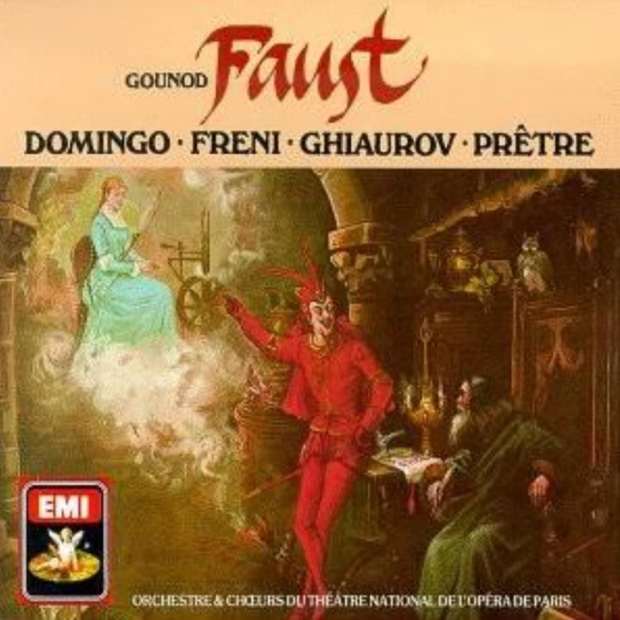
Fortunately there is a good studio recording of Domingo’s Faust. It was recorded in 1979 by EMI (now Warner) and it is easily one of the best recordings of the work. The orchestra of the Paris Opera is conducted by Georges Prêtre, one of the best conductors of French repertoire.

The cast is finger-licking gorgeous: Mirella Freni is a fragile and sensual Marguerite and Nicolai Ghiaurov a very impressive Méphistophélès. In the small role of Valentin we hear none other than Thomas Allen.


Saint-Saëns: Samson et Dalila


Domingo Samson Warner


EMI (now Warner) recorded the opera in Paris in 1991. The conductor was Myung-Whun Chung and there is the rub: he does not really know the opera. But he was not the only culprit! Someone came up with the unfortunate idea of having Dalila sung by Waltraud Meier. Forget it.


Domingo Samson Borodina


The other studio recording, this time on DVD (DG 0730599), also has a Dalila that just doesn’t work for me: Olga Borodina. It was recorded at the Metropolitan Opera in 1998. I was there and didn’t like it – and I still don’t like it.


Domingo Samson Verrett


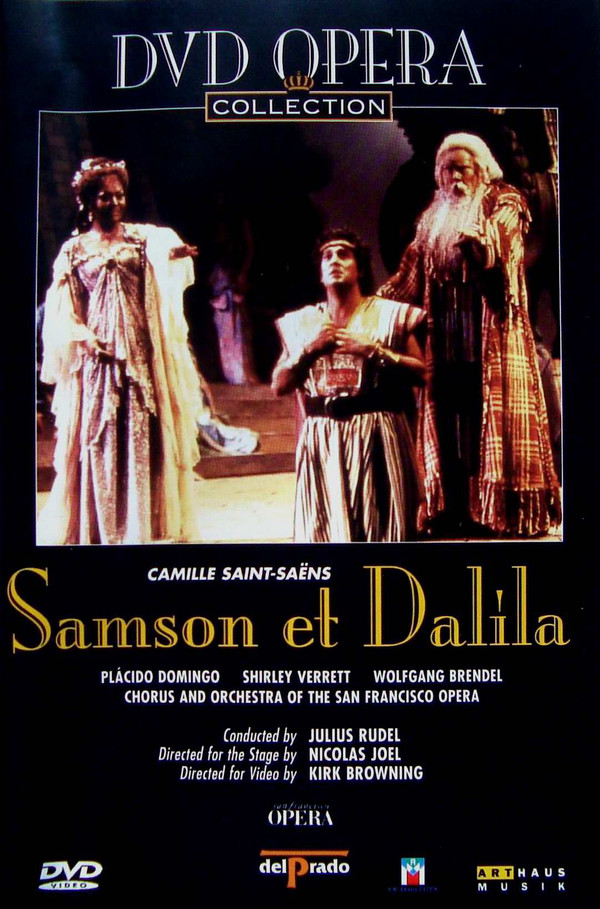
But, I’ll go for the San Francisco recording every time! It was directed by Nicolas Joel and Dalila was sung by the really sexy Shirley Verrett (Arthaus Video 100 202)


Offenbach: Les Contes d’Hoffmann


https://images-na.ssl-images-amazon.com/images/I/71wSWOvWrHL._SL1367_.jpg

Hoffmann was one of Domingo’s greatest roles. As far as I am concerned, no other singer even comes close to him.

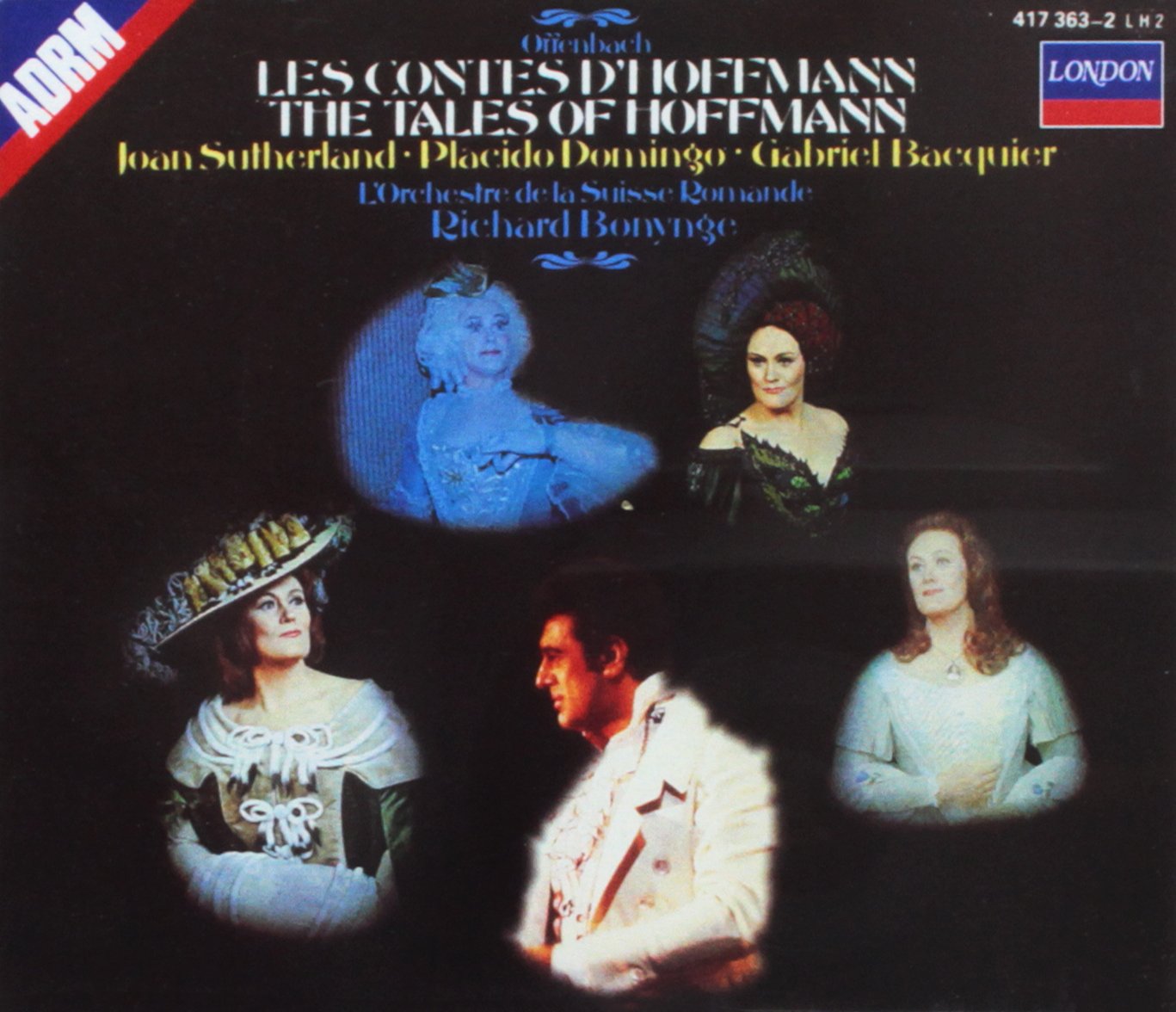
If you want the opera on CD, the Decca recording conducted by Richard Bonynge, with Dame Joan Sutherland in all three female roles (4173832) is highly recommended.


A rarity: Domingo with Beverly Sills

John Adams en zijn post-style-style

Merkwaardige man, die Adams, maar componeren kan hij als geen ander. Hij is één van de meest succesvolle en het vaakst uitgevoerde hedendaagse componisten en dat is niet zonder reden: zijn muziek is zeer toegankelijk en prettig in het oor liggend, zonder dat het meteen aan klanktapijt of muzak doet denken.

Zijn inspiratie haalt Adams uit “de landschappen en hun relatie met de menselijke psyche” (zijn eigen woorden!) en beschouwt zijn muziek als “etnisch, maar dan beïnvloed door jazz en pop”.  Zijn stijl noemt hij zelf ‘post-style-style’ en zegt dat zijn meeste composities een celebratie zijn van de Amerikaanse cultuur.

Hij houdt van Amerika en haar dichters. Zijn (volgens mij) mooiste werk, The Wound dresser, heeft hij bij een gedicht van Walt Whitman gecomponeerd.


‘Hail Bop’, de documentaire van Tony Palmer over John Adams is mooi, spannend en informatief. Er zijn veel muziek- en operafragmenten, er zijn interessante interviews, en prachtige beelden van het door Adams zo geliefde Amerikaanse landschap.

Ik kan mij het gebeurtenis namelijk nog steeds meer dab goed herinneren

Moeite heb ik alleen met de fragmenten van de verfilmde versie van ‘Death of Klinghoffer’. Ik heb de opera nooit als antisemitisch of zelfs anti-Israëlisch ervaren, maar de overrealistiche beelden van de met stenen gooiende Palestijnse kinderen en schietende Israëlische soldaten vind ik te veel van het goede en niet ter zake doend: de opera werd gecomponeerd in 1991, bijna tien jaar voor de uitbarsting van de tweede Intifada. Maar goed, daar hoeft u het niet met mij eens te zijn (Warner Music Vision 50-51011-4857-2-5)

Placido Domingo and Verdi

https://i1.wp.com/s3-eu-west-1.amazonaws.com/beta.lagenda/styles/image1000x1000/s3/programacion/placido_domingo_ernani.jpg


ERNANI

https://basiaconfuoco.com/wp-content/uploads/2019/09/domingo-ernani.jpg?w=1024
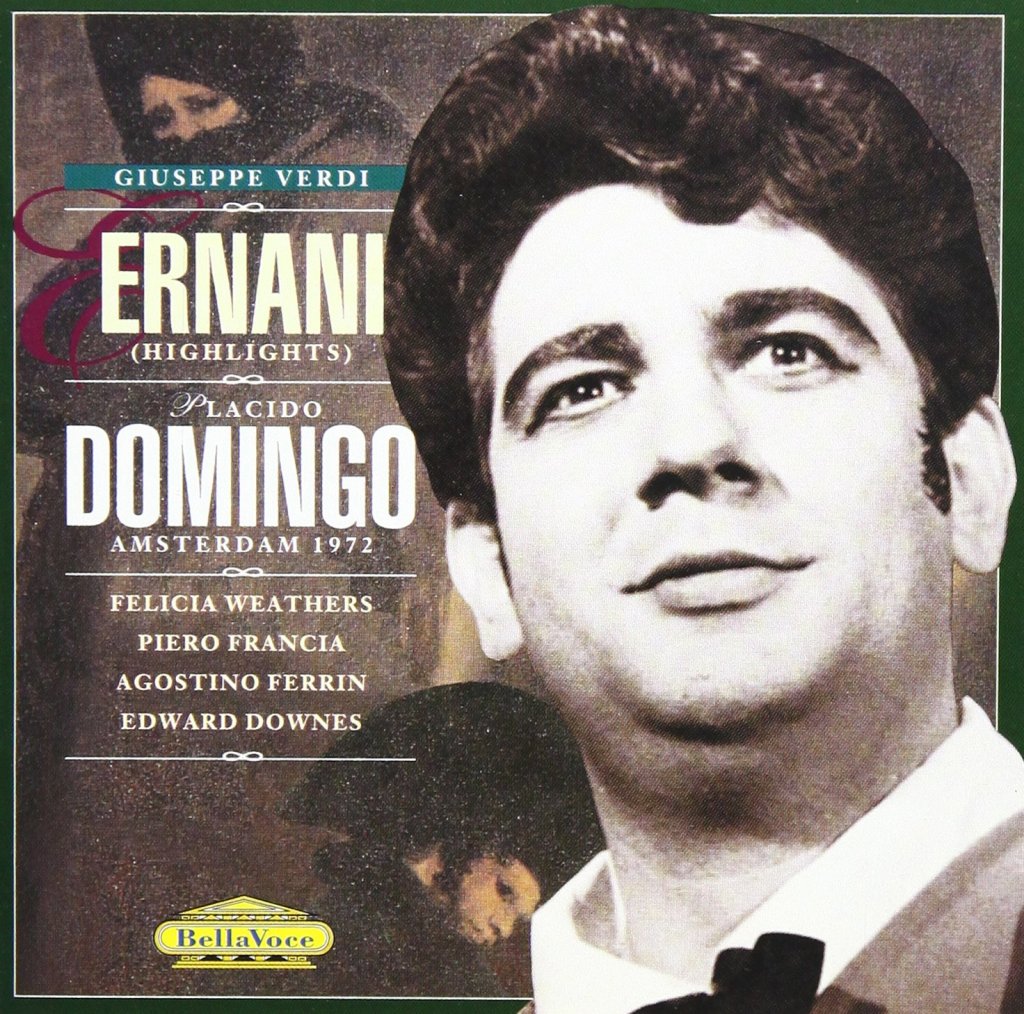
Ernani is an important opera to a Domingo collector. Domingo made his debut with it at La Scala on 7 December 1969. It was also the only opera he sang in Amsterdam, on 15 January 1972. Concertante, of course (yes, during the Matinee, where else?). Unfortunately, no complete recording exists, so we have to make do with fragments only (Bella Voce BV 107.004). Felicia Weathers, who sang the role of Elvira, had a terrible head cold and neither Piero Francia nor Agostino Ferrin are names to remember, but it remains an important document.

https://image.ceneostatic.pl/data/products/52169421/i-ernani-votto-kabaivanska-domingo-cd.jpg
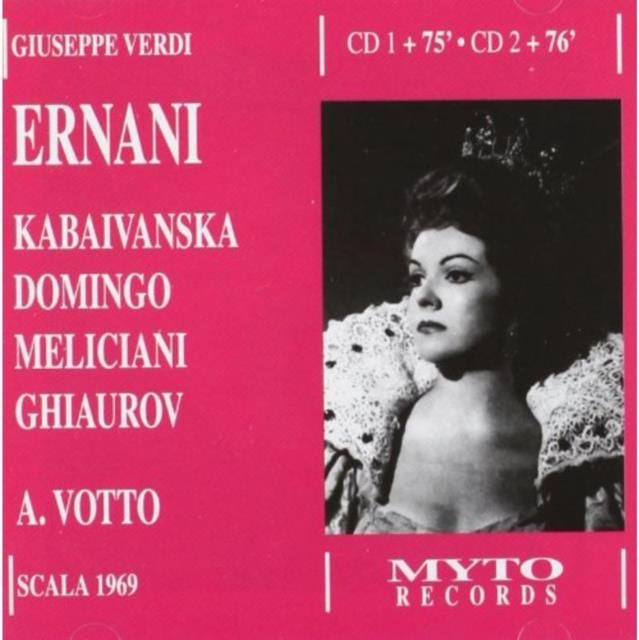
At La Scala, besides Domingo, there were two other greats of bygone days: Raina Kabaivanska and Nicolai Ghiaurov. Unfortunately, Cappuccilli had to cancel due to illness, but his replacement, Carlo Meliciani, really gives his best. Add to this the truly sublime direction of Antonino Votto and you know that you can expect a special ‘evening’ of opera.

AIDA

https://i.pinimg.com/originals/87/f7/c6/87f7c6b151bcfb204e063c976a5beb4f.jpg
Radames was among Domingo’s favourite roles. No wonder. Here he could really ‘show it all’, because the hero is very complex. He is a ‘macho with a lot of muscles’ and a vulnerable boy at the same time, and he is torn between duty and passion. Unfortunately, the two are not compatible. To sing Radames well you need not only a cannon of a voice but also an intellectual ability. And he has both.

Domingo verdi Aida
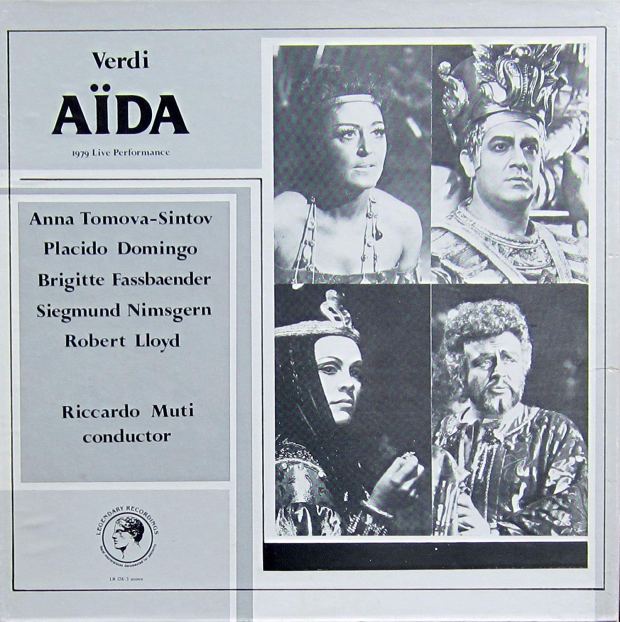
He made his debut with Aida in 1968 in Hamburg and he has since sung the opera thousands of times. There are many recordings on the market, both studio and live. I would like to dwell on a recording that will not evoke an ‘aha’ moment for most of you – also because at first glance the cast is not idiomatically perfect.

The fact that Anna Tomowa-Sintow was one of Karajan’s favourite singers had its advantages and disadvantages. She was a welcome guest in Salzburg and her name appears on many recordings conducted by the maestro. But it also meant that she was primarily rated as a Mozart and Strauss singer, while she had so much more to offer.
Her Desdemona and Amelia were legendary and after her Munich Aida, Leonie Rysanek praised her performance for its pure beauty.

Fassbaender is really surprising and particularly convincing as Amneris. Just listen to what she does with the single word ‘pace’ at the end of the opera. The opera was recorded by Bayeriche Rundfunk on 22 March 1979 and released on Orfeo (C583 022).

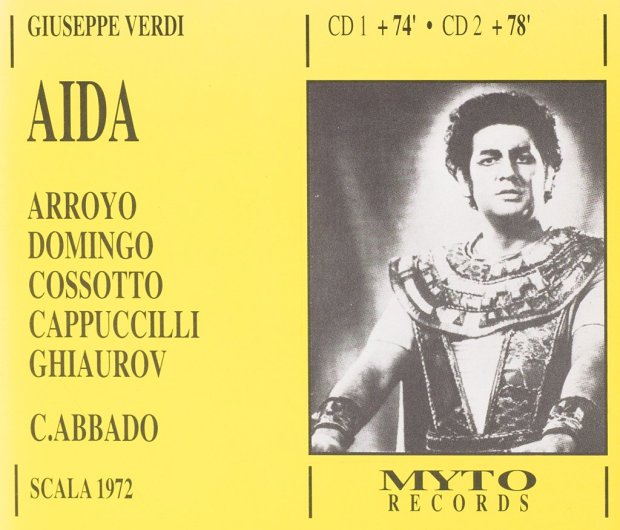
Also noteworthy is the recording from Munich 1972, with a now almost forgotten Verdi singer, Martina Arroyo. As Amneris, we hear Fiorenza Cossotto and Cappuccilli and Ghiaurov complete the excellent cast conducted by Claudio Abbado.

Domingo Verdi Arroyo


Domingo-Disco-Aida-Jones
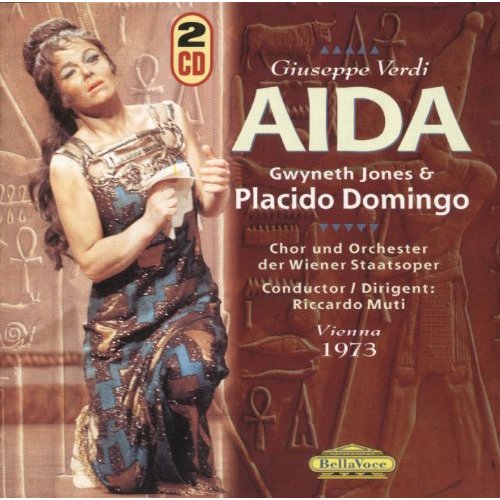
The recording from Vienna 1973 (Bela Voce BLV 107.209), under Riccardo Muti, is also of particular interest. In the leading role we meet Gwyneth Jones and Amneris is sung by an exceptional mezzo: Viorica Cortez.


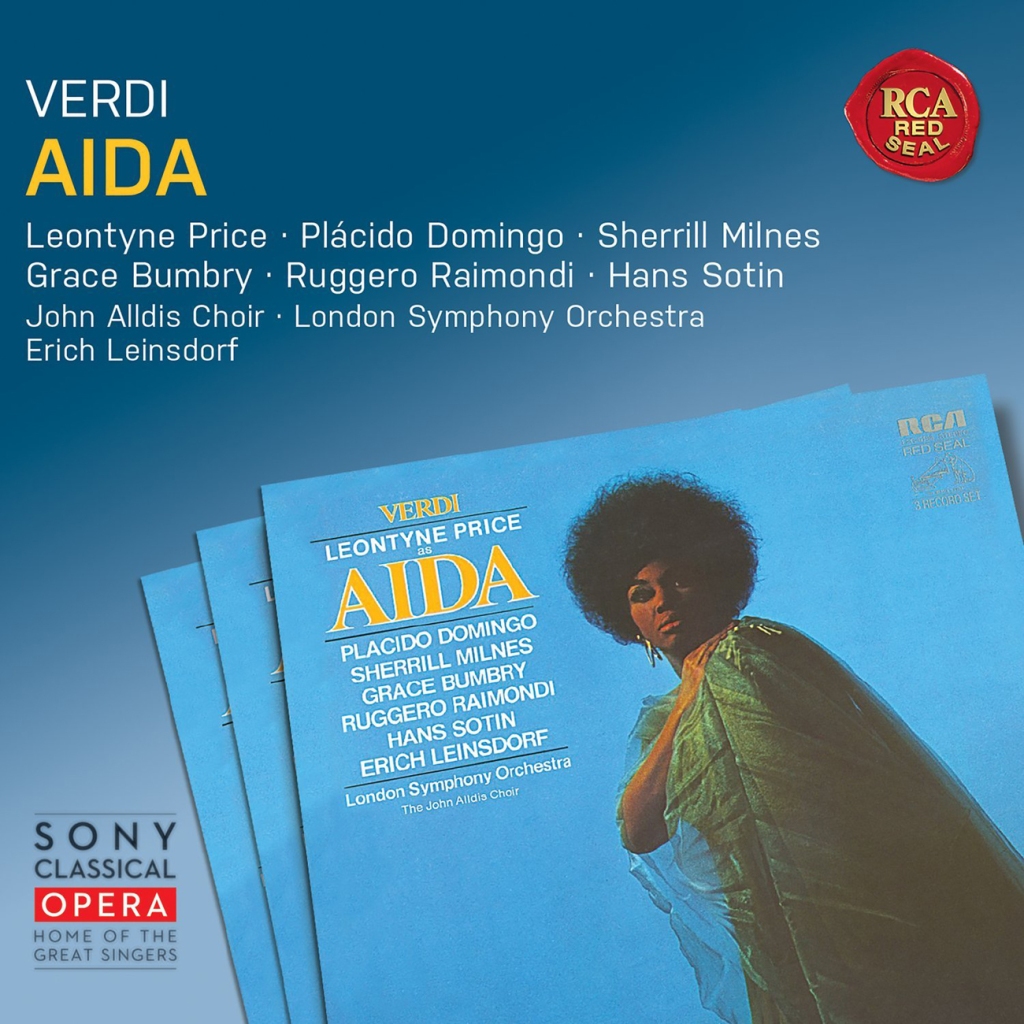
Of Domingo’s studio recordings the 1970 RCA (now Sony)release, is probably the best. How could it be otherwise, when you know that the conductor is Erich Leinsdorf and the other roles are sung by Leontyne Price, Sherrill Milnes, Grace Bumbry and Ruggero Raimondi. The whole thing almost pops out of your speakers.


IL TROVATORE


trovatore-price-d
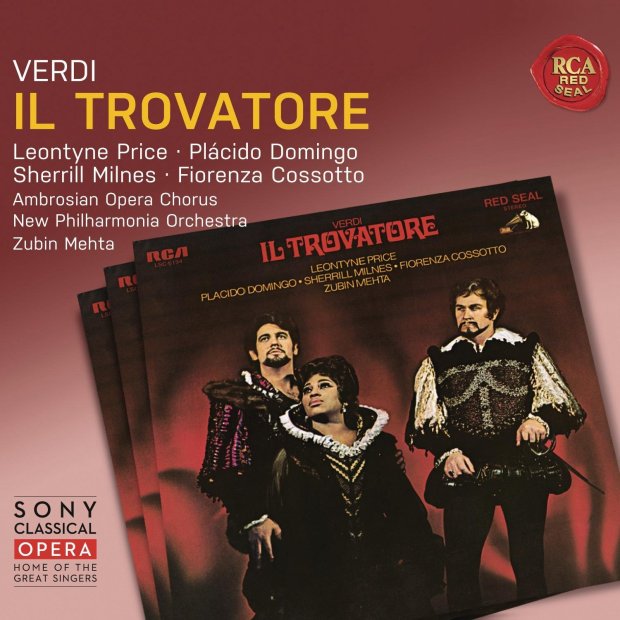
Il Trovatore was the very first opera Placido Domingo, then 28 years old (!), recorded in the studio in 1970. Fiorenza Cossotto stars as Azucena, but the recording is really indispensable because of one of the most riveting Lunas ever: Sherrill Milnes .

Below: Price, Domingo and  Milnes in ‘E deggio e posso crederlo?’

trovatore-dvd

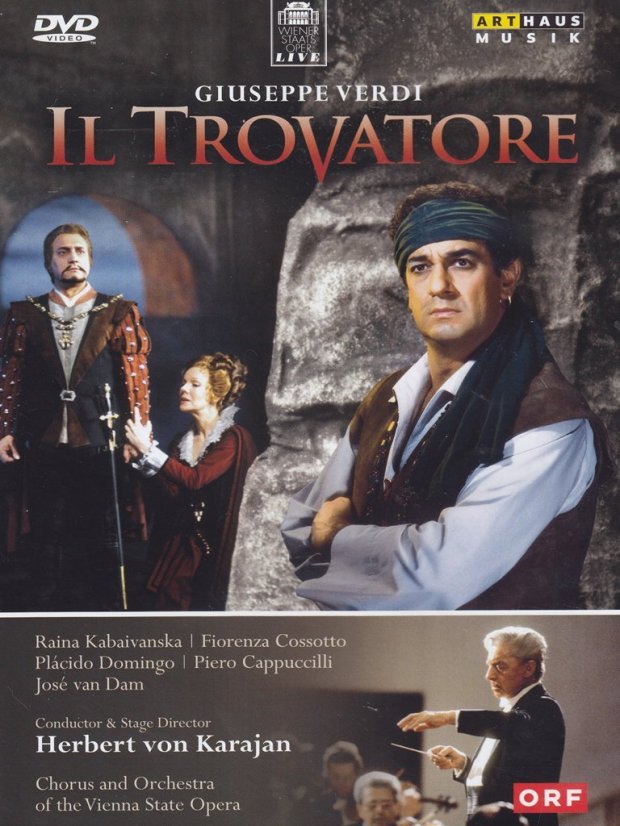
Il trovatore was one of Von Karajan’s favorite operas. In 1962 he directed a series of performances in Salzburg, those were taken over by Vienna in 1978 and broadcast on television.

Domingo was a last minute replacement for Franco Bonisolli, who had left the production in a fit of temper.  Domingo’s delightful, radiant topnotes in ‘Ah si, ben mio’ earned him an ovation that lasted for many minutes.

Cossotto’s Azucena is now legendary: like no other singer she put her mark on the role (Arthouse Music 107117).

Below:  Domingo, Kabaivanska, Cappuccilli en Cossotto in ‘Prima che d’ altri vivere’

BALLO IN MASCHERA

Ballo Abbado Schenk ROH

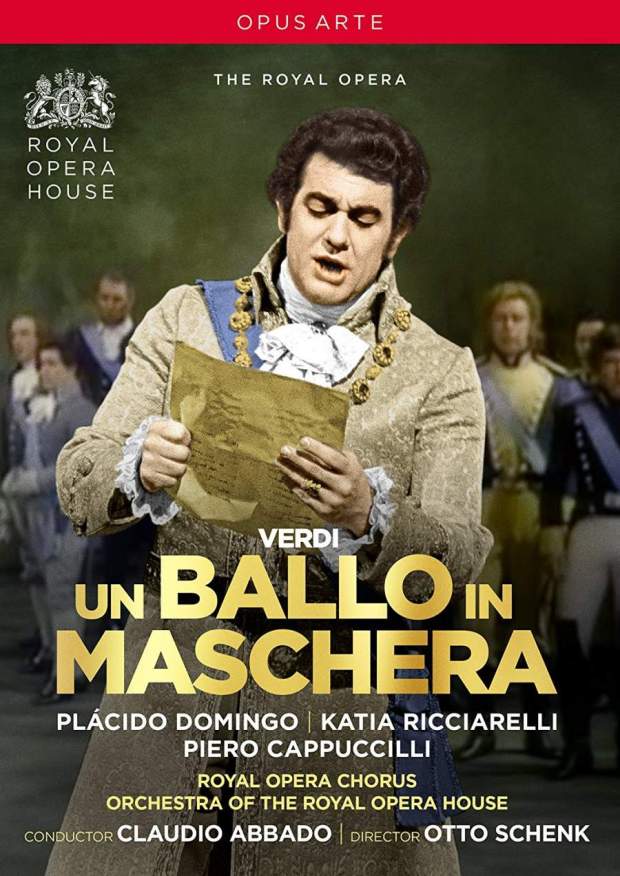
The Royal Opera House production released by Opus Arte (OA 1236D) dates from early 1975. The sound is a little dull, but you will forget that as soon as you hear the beautiful voices of the singers.

Katia Ricciarelli is one of the most moving Amelias I know. The sound that she produces is perhaps not really ‘Verdian’, and perhaps her voice is a little too light, (she has sadly destroyed her voice by singing this type of role), but the pianissimi that she spins deserve a prize for sheer beauty, and her fragility is palpable.

The kindly anxious, loving, but also playful tenor of the young Placido Domingo fits the role of Gustavo like a glove. Piero Cappuccilli is an excellent Renato and Reri Grist an Oscar such as you do not often hear them anymore. Her performance alone is worth buying the DVD.

Claudio Abbado (how young he was then!) conducts lightly and keeps the tempi sparkling, resulting in an effervescent orchestral sound.

The direction by Otto Schenk is effective. Conventional and yet surprising. And like no other, he exposes the comic aspects of the opera.

Trailer of the production:

Ballo Solti Schelsinger

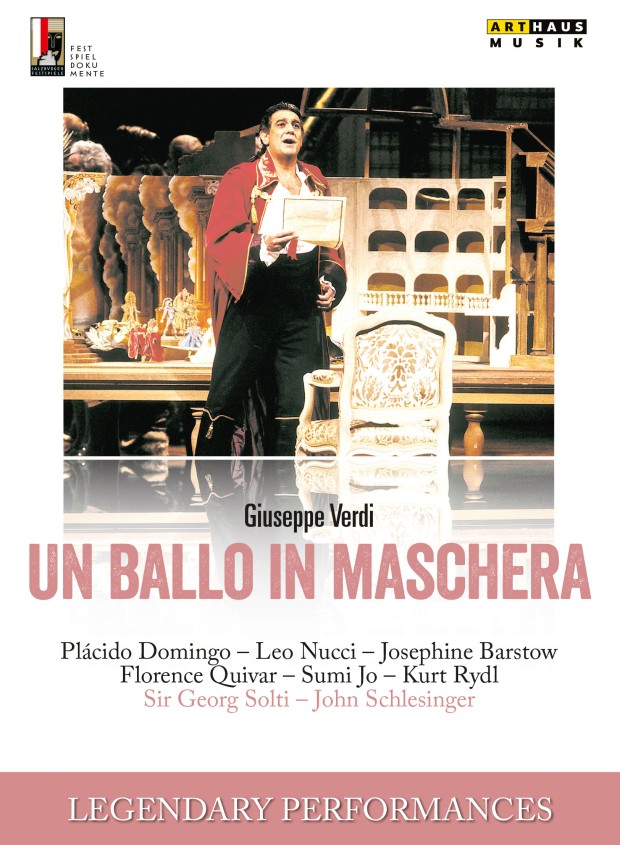
Fifteen years later, Domingo is already a seasoned Gustavo. His king is now more mature, more serious too… But although he says he doesn’t believe Ulrica’s predictions, you can still see something like terror in his eyes. It could so easily be true…
This production includes also a more mature Amelia. Now she is not a dreamy girl, but a woman with intense desires. Josephine Barstow certainly lives up to this interpretation. She is a torn Amelia, full of love, sorrow, pain and tears. In ‘Ecco l’orrido campo’, her fear is physically palpable and in ‘Morro’ you think you may die with her. Leo Nucci shines as Renato and Sumi Yo is a light, bouncy Oscar.

The direction lies in the hands of the famous film director John Schlesinger. The end result is devastating: overwhelming, true-to-life sets, beautiful costumes and dazzling mass scenes. The picturesque image is occasionally reminiscent of enormous tableaux-vivants, and the direction of the characters is- as you would expect from a renowned director – phenomenal.
At the opera’s finale, when the dying king gathers his last strength and, gasping for breath, bids farewell to his beloved, his subjects and the fatherland, no one can suspect that with his last ‘addio’ an entire era is also coming to an end.
It would be Herbert von Karajan’s last production in Salzburg. He died just before the premiere in 1989 and was replaced by Solti, who also conducted the revival of the opera in 1990 (Arthaus Musik 109105).


Refice’s Cecilia: music cutting through the soul

cecilia

There are those operas you just don’t know what to do with. You find them beautiful, divinely beautiful even, and you are moved to the depths of your soul. And that without understanding even a single word. Apparently the composer knows how to hit a sensitive chord, because as you listen you keep hoping that the heavenly music will never stop.
Heavenly is perhaps indeed the best word with which to describe Cecilia by Licinio Refice (1883 – 1954), an opera that most resembles a mystery play.
I am not insensitive to the miraculous, I grew up as a Jewish girl in a strongly Catholic Poland. But even as a child I was already aware that all those miracles were unattainable to me and therefore I found them extremely exciting and attractive.

cecilia-heilig

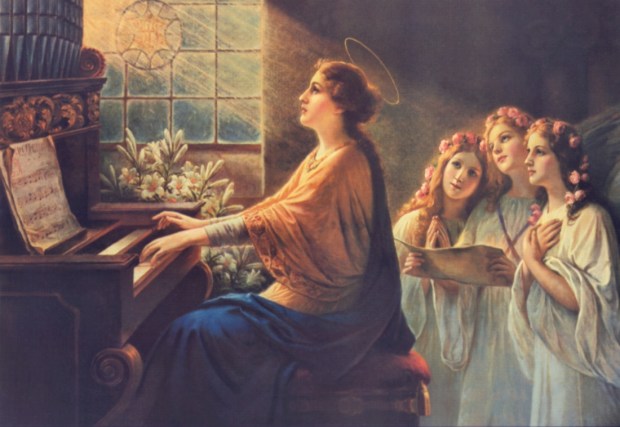
We know Saint Cecilia as the patron saint of music and church music, which, according to many hagiographers, is based on a misunderstanding. What we know of her comes mainly from the Legenda Aurea by Jacopo da Voragine, a reference book on the lives of saints, written in the thirteenth century. That book was the starting point for Refice’s opera. Refice, who was not only a composer and a conductor, but also a priest!

The legend (and the libretto) in short: the stunningly beautiful Cecilia went to martyrdom as a virgin, but not before she had persuaded her husband Vergilio (whom she never de facto made her husband) and his brother Tiburzio to come to the true faith. Both gentlemen share the same fate as Cecilia (beheading), with Cecilia being tortured first, which she endures in a miraculous way.

The premiere in Rome in 1934 was an unprecedented success and the opera was performed more than a thousand times until the rational took over from the mysterious. Cecilia’s  musical language is blatantly veristic, with sentiment increased to exeptional heights. You recognize fragments from Butterfly, but the rousing chords and the scents of roses and lilies, as captured in notes, remind me most of Zandonai and his Francesca da Rimini. One also tastes the atmosphere of Byzantium, that of La Fiamma of Respighi. I love it very much and I can completely lose myself in this music.

Until recently I only knew the opera from two shortened recordings, one with Renata Scotto and one with Renata Tebaldi, and from two arias sung by Claudia Muzzio.

Renata Scottio sings ‘Per amore di Gesù’:

The performance, recorded live in the Cathedral of Monte Carlo in 2013, is, as far as I know, the first complete commercial recording of the work and I am sorry to say that the performance is no more than satisfactory.

cecilia-denia

                                             Denia Mazzolla Gavazzeni

Denia Mazzolla Gavazzeni has for years been the greatest advocate of obscure and little-known veristic operas and for that alone she deserves the greatest praise. She has never been the best opera singer of the world; there was always a frayed edge to her voice and her high notes could sound unpleasantly metallic. But I could (and can!) forgive her these flaws. She was always able to strongly identify with her roles and her performances could be scorching at times. But now that her voice has lost its freshness, her Cecilia cannot convince me of her unearthly beauty. To produce the heavenly sounds he composed for Cecilia, Refice needed someone to sing with ‘God in the throat’. And that is lacking here.

Giuseppe Veneziano is a decent Valeriano, Corrado Cappitta is convincing in the double roles of Tiburzio and Amachio and Serena Pasquini sounds angelic enough for the “L’annunzio” sung by God’s Angel. Everyone really is trying their best, it is just not good enough for a top performance, which may also be due to the very prosaic and down to earth direction of Marco Fracassi.

Below: Claudia Muzio in two scenes from Cecilia: the prologue ‘Per amor di Gesu’, recorded in 1934, and the death scene, ‘Grazie, sorelle’, from 1935:

The fact that Refice has not yet been completely forgotten is due to ‘Ombra di Nube’ (Shadow of the clouds) a song that is still being sung and recorded, a.o. by Jonas Kaufmann:

And here again is Claudia Muzzio, for whom Refice originally composed the song. Now you can hear what Refice meant by ‘God in the throat’, this singer can and does give a tangible feeling to his deep faith and she is also able to make you believe that the ‘dark clouds will disappear naturally, making life beautiful again’.

Plácido Domingo and his belcanto roles

Domingo 21


Domingo and Belcanto? Surely that was more something for his colleagues Pavarotti, Carreras and Kraus? And yet: certainly at the beginning of his career Domingo was also a Belcanto singer, although his high notes were not always really that high. For him, the interpretation of both the music and the text was essential. That is why even in this repertoire he was looking for the roles in which the character had more to offer than just ‘clean’ singing.


Lucia di Lammermoor

Domingo Lucia POns

Domingo made his international debut at the age of 21, as Edgardo in Lucia di Lammermoor in Dallas. A special event, because his Lucia was then sung by 61-year-old Lilly Pons, who said her farewell to the operatic stage with this role.


Domingo Lucia Suth

In 1970 he sang Edgardo at the Metropolitan Opera, with none other than Joan Sutherland as Lucia. Gala (GL 100.571) released the highlights, combined with excerpts from La Traviata, from December that same year (also with La Stupenda). The sound is very poor, but it is definitely a noteworthy document.


Domingo Lucia Stider

It was only in 1993 that Domingo sang the role in the recording studio. The result is not entirely satisfactory. Which is not his fault. His Edgardo sounds less lyrical than twenty years earlier, but with such passion!

Cheryl Studer, who at that time was recording anything and everything soprano, was no real Lucia. She was a great Strauss and Mozart singer and her Wagners and Verdi’s were outstanding, but Lucia was too ambitious for her. Understand me well: she did have the high notes and they were very solid, but that’s exactly what you do not want for Lucia. The notes shouldn’t stand rock solid, they should shine, sparkle, sprint if necessary, and she couldn’t do that.

However, the real ‘culprit’ is the conductor. He is rushing things along and never ever stops. Still, the recording is very worthwhile, especially if you want to hear something else from Domingo and appreciate the quality of the sound.


Roberto Devereux


Domingo Roberto

A reviewer from the New York Times wrote that it was without a doubt the most exciting event of the musical year 1970, and that I can totally believe. The performance of 24 October 1970 was recorded live and we are very lucky to have it.

Julius Rudel (well, where have all these great maestros gone?) conducts with a firm hand and with great love for the work. To cry so beautiful.

Domingo’s voice sounds like a bell and his performance causes ecstatic ovations. And about Beverly Sills (Elisabetta) I can be brief: overwhelming! No one, but no one has ever sung the part better than she has. She surely is Elisabetta. Everybody should see or hear her in this role (there’s also a DVD, unfortunately without Domingo). The applause after her ‘L’Amor suo mi fé benata’ seems to last forever.


Anna Bolena


Domingo Bolena

Anna Bolena is considered to be the first important Romantic Italian opera and for Donizetti it was his big breakthrough. For Domingo too, Anna Bolena was a milestone: with the role of Percy he made his debut in New York.

He was then (can you believe it?) 25 years old, but his voice was completely ‘mature’: full, firm, soft, hard, begging, determined, with all the nuances in between. Talk about phenomenon!

The leading role was sung by Elena Souliotis, then 23. An almost forgotten singer now (her career didn’t last), but her intensity can only be compared to that of Maria Callas. A fun fact: La Divina was in the audience at the time!

Giovanna was sung by Marylin Horne and their duets will surely give goosebumps to the devotees. Janet Baker also made her American debut in the role of Smeton.
The opera was recorded live at Carnegie Hall in 1966. My copy is by Legato (LCD-149-3), but the recording is now also available on other labels.


Norma


Doingo Norma

Pollione is one of the shining roles of the young Domingo. No wonder. A warlord and a lover: that’s what he is all about. In Norma he could show it all.
He took the role in 1973 (once RCA GD 86502) and I think that’s a bit premature. Oh yes, his voice is crystal clear and so beautiful that it almost hurts, but he yet has to gain more of the needed authority.
Nevertheless: recommended, not in the least because of Montserrat Caballé, who sings the leading part.

Some words about Domingo and Otello:

otello domingootello
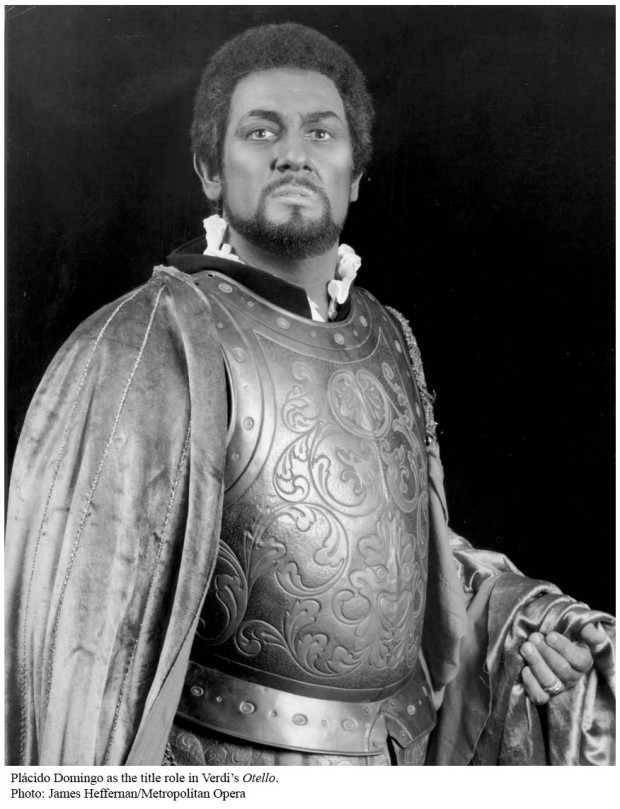
There is no doubt in my mind that Plàcido Domingo is the greatest interpreter of Otello, especially in the last 30 years of the twentieth century. Not only as a singer, but also as an actor Domingo knows how to adapt to his partners in a really brilliant way, thus his interpretation always fascinates and it is never the same twice. Sir Laurence Olivier, one of the greatest British actors, once said: ‘Domingo plays Othello as well as I do, and he has that voice!’

Domingo’s fascination with Otello started early on. In 1960 he made his debut in this opera, but as Cassio. In 1962 – it was also the last time he sang the role – he sang opposite Mario del Monaco’s Otello. In his memoirs he writes that he already knew then that Otello was going to be his ‘dream role’.

otello-placido-domingo-katia_1_8e94452a005bdde991cf21943c48cdb0
He sang his very first ‘Moor from Venice’ in Hamburg, on 28 September, 1975. He himself says it is one of the most important dates in his career. Desdemona was sung by the very young Katia Ricciarelli and the opera was conducted by James Levine. The complete production is now available on You Tube:

A year later the opera was performed at the Milanese Scala. It was the first collaboration between Domingo and Carlos Kleiber (outside of studio production). Mirella Freni sang Desdemona and Piero Cappuccilli Jago. It was broadcast live on Italian TV.
A little fragment:||

There is a sound recording also. It has been released on various pirate labels and can also be found on Spotify. It is actually mandatory for lovers of the opera, despite the poor quality of the sound and the abcense of a few bars from the third act (something happened in the audience).


otello domingo en price
Another fantastic live Otello comes from London, recorded on 19 February 1978. Again with Carlos Kleiber, but Desdemona was sung by Margaret Price and Silvano Carroli was Jago. Very exciting.

otello rca
Of all his studio recordings of Otello, the one from – once RCA now Sony- released in 1978, is the one I hold most dear. Desdemona was sung by Renata Scotto and she gave the role an extra dimension. She was not only innocent, but also audibly angry, sad and scared. Sherrill Milnes was a devilish Jago and the whole was led by James Levine.


otello kiri
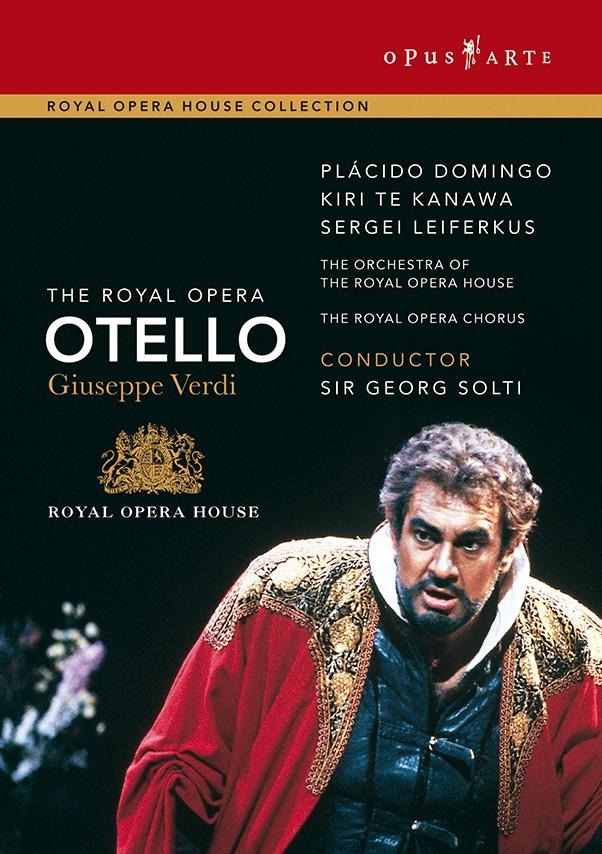
Opus Arte (OA R3102) has released an old-fashioned, beautiful performance from Covent Garden (director Elijah Moshinsky). It was recorded in October 1992. With her beautiful lyrical soprano, Kiri Te Kanawa is a dream of a Desdemona. Her passivity fits the role well, especially as it is also very much within the director’s concept. Sergei Leiferkus (Jago) is not really idiomatic in Italian, but he sings and acts well and the orchestra, under the firm leadership of Georg Solti, plays the stars from the sky.

otello fleming
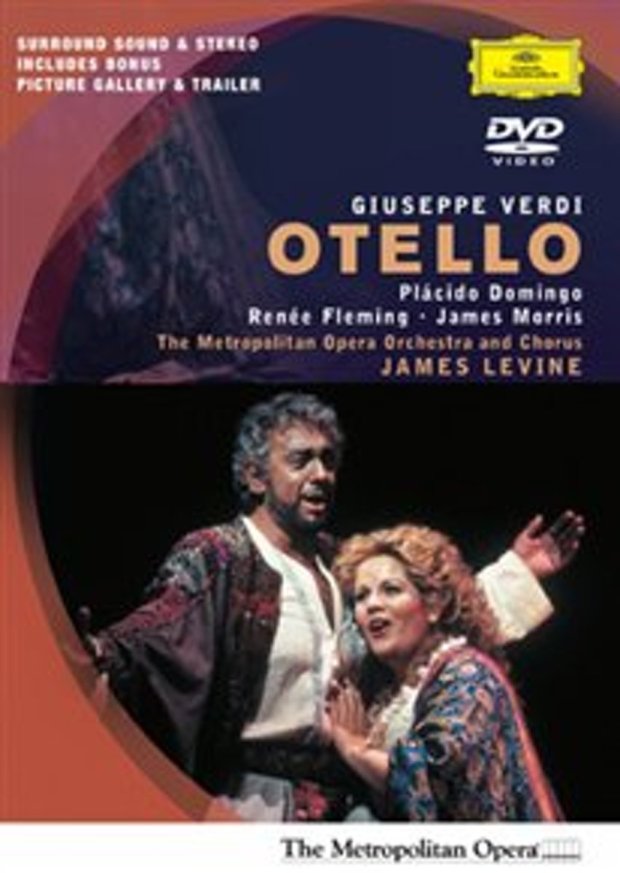
The same production was given at the Metropolitan Opera in New York in 1996 and recorded by Deutsche Grammophon (0730929). It was a milestone in opera history, because Renée Fleming made her unparalleled debut in the role of Desdemona.

She really made my heart contract with sorrow and emotion. Her ‘Willow Song’ with the strongly accentuated repetitions of ‘cantiamo’, her angelic ‘Ave Maria’, her oh-so-human played despair, disbelief and sorrow – no one could remain unmoved.

The lyrical tenor Richard Croft was also visually well cast as Cassio, and the whole production was under the thrilling leadership of maestro Levine.

Here is an excerpt:

Plácido Domingo as Andrea Chénier

chenier-portret
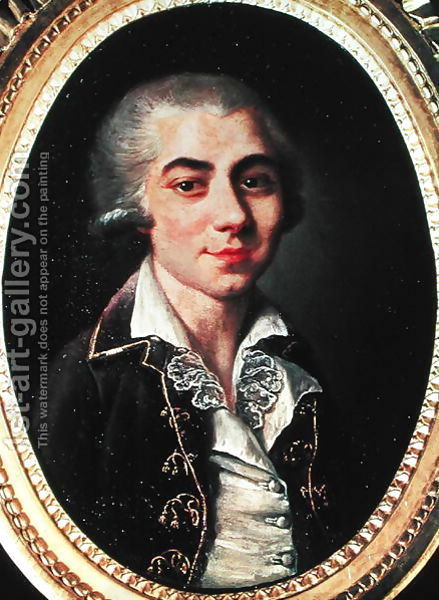
André Chénier


For me, Andrea Chénier is one of the best and most beautiful operas ever. I think the music is nothing less than divine and the story is timeless. It remains current, perhaps now more than ever. The tyrant must be cast off his throne and the people must take control. Surely, we all agree on that?

If only it were that simple! Anyone who grew up in a post-revolutionary totalitarian regime knows how much horror it brings. One terror is replaced by another.

This, at least for me, is the main theme in Giordano’s biggest hit. I don’t think the real lead role is the actual poet, André Chénier (did you know that Giordano used Chénier’s poems in his arias?) nor his beloved Maddalena. It is the French Revolution, which, as Gérard (once Maddalena’s houseboy and now one of the revolutionary leaders) bitterly observes, devours its own children.

To my great surprise, I read that Domingo didn’t much like the part of Andrea Chénier. He loved the opera, but the role, one of the toughest in the ‘lirico-spinto’ repertoire, was not really interesting for him dramatically. For him, Chénier was ‘an idealist who always has his head in the clouds’. And yet it was one of the operas he loved to sing!

I myself think the role of the poet/revolutionary fits him like a glove. Passion for love and enormous involvement in everything that happens in the world were – and still are – his trademarks.

Domingo sings ‘One of all’azzurro spazio’:


He sang his first Cheniér in 1966 in New Orleans, as the last-minute replacement for Franco Corelli, but that was not his first performance of the opera. In the 1960/61 season he sang The Incredible and The Abbot, in Mexico.


chenier-domingo-cd


My favourite CD recording was recorded in 1976 by RCA (GD 82046). The cast is delectable. Renata Scotto sings Maddalena, Sherrill Milnes is Gérard and in the small roles we hear, among others, Jean Kraft, Maria Ewing, Michel Sénéchal and Gwendolyn Killebrew. James Levine, who conducts the National Philharmonic Orchestra, understands exactly what the opera is about. Tear jerkingly beautiful.

Scotto sings ‘La Mamma morta’:


chenier domingo dg


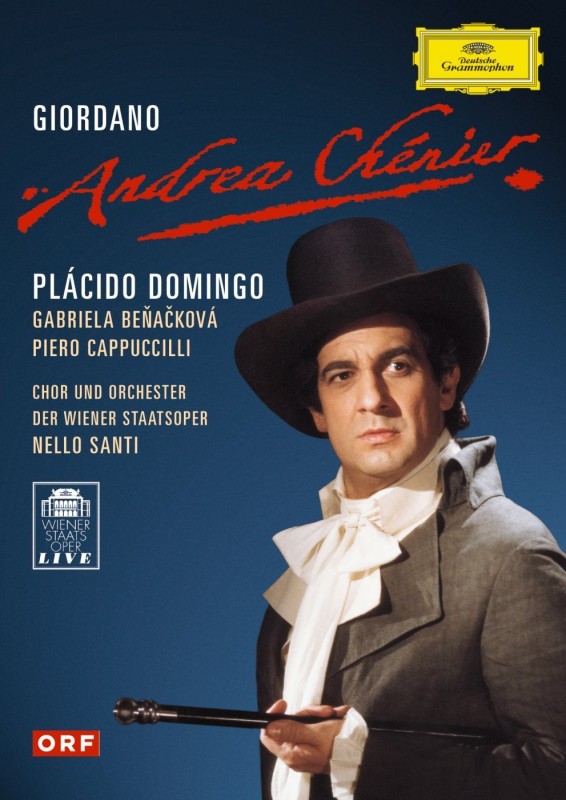
In 1981 the opera in Vienna was recorded for TV. That recording has since been released on DVD (DG 073 4070 7). Gabriela Beňačková, one of the most underrated singers in history, sings a Maddalena of flesh and blood. Horrifyingly beautiful and moving.

Piero Cappuccilli is a Gérard among thousands and the small roles are also filled by great singers: Madelon is sung by none other than Fedora Barbieri. Otto’s Schenk’s production is a feast for the eyes.


English translation: Douglas Nasrawi

Een jongeling is een volwassen man geworden: Thomas Quasthoff en Die Schöne Müllerin

“1 meter 34 groot, korte armen, zeven vingers – vier rechts, drie links -, groot vrij goed gevormd hoofd, bruine ogen, prominente lippen. Beroep: zanger”. Zover Thomas Quasthoff over Thomas Quasthoff. Nee, gevoel voor humor kan je hem niet ontzeggen. Ook het vermogen om te relativeren, of een buitengewone intelligentie en een enorme muzikaliteit. Maar het allerbelangrijkste is zijn stem: donker, warm en fluwelig, waarmee hij met gemak de allergrootste zalen ter wereld kan vullen.

Nooit vergeet ik de eerste keer dat ik hem live hoorde, een jaar of 24 geleden. Ik kende zijn cd met liederen van Loewe dat net uit was (EMI, thans niet meer in de handel) en waar ik meer dan kapot van was. Ik wist, dat hij een softenonkind was en toch schrok ik toen hij waggelend het podium betrad. Hij klom op een stoeltje en toen gebeurde het. Zodra hij begon te zingen vergat ik alles en kon de hele wereld mij gestolen worden. Zijn stem was zeer groot, te groot voor de Kleine Zaal, en van een ongekende schoonheid. Ik wentelde mij in zijn geluid. Het voelde als een warm bad: vertrouwd en lekker.

Als toegift zong hij een aria uit….(?) en dat deed mij pijn. Want; welke rollen zou hij kunnen zingen, vooropgesteld dat hij überhaupt een operabühne zou kunnen betreden? Rigoletto was uiteraard te wrang. En ik mijmerde over een operazanger die ons ontnomen werd voordat hij überhaupt begon

Maar wat heb ik me toen vergist! Quasthoff bewees eens te meer dat zijn doorzettingsvermogen en zijn wilskracht groter dan groot zijn, en is inderdaad opera gaan zingen. In het theater. Ik denk nog steeds aan zijn Amfortas in de Wiener Staatsoper.

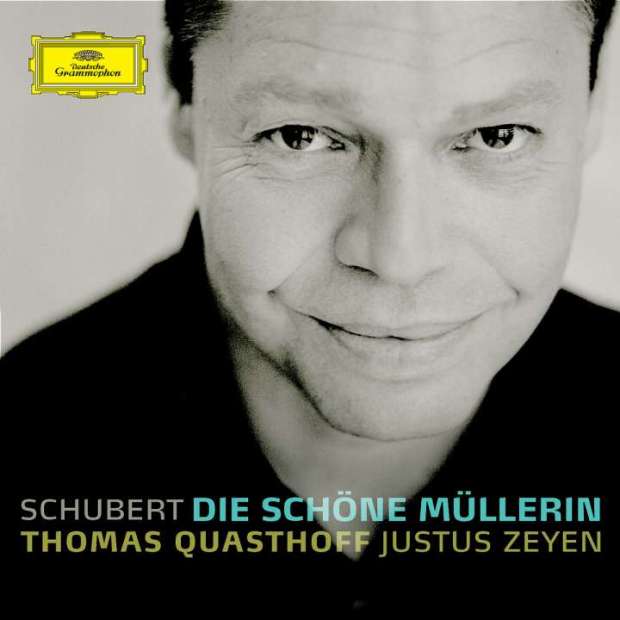
Maar hij bleef voornamelijk liederen zingen. In 2005 had hij zijn interpretatie van de Die Schöne Müllerin vastgelegd, een cyclus die hij al sinds het begin van zijn carrière op het repertoire had staan. Best jammer dat hij het niet eerder had opgenomen, het zou fascinerend kunnen zijn om te vergelijken in hoeverre zijn visie op Schuberts verklanking van Müllers gedichten is veranderd.

In 2005 was Quasthoff geen naïeve jongeling meer. Hij was toen al veertig en had en grote zangcarrière en daarmee gepaarde successen achter de rug. Zou hij nu anders kijken tegen de eerste verliefdheid? Jaloezie? Liefdesverdriet? Daar komen we niet achter.

In en interview met Thomas Voigt zei hij dat hij veel meer wilde dan alleen maar een mooi geluid maken. Hij wilde alle kleuren gebruiken die zijn stem ter beschikking had om de inhoud van gezongen teksten te kunnen duiden. Want: hoe kan je recht doen aan een tekst dat over helse jaloezie gaat als je alleen maar mooi zingt?

En opnieuw vraag ik me af of zijn zingen vroeger meer ingetogen was? Hoe hij ‘Der Müller und der Bach’ destijds had gezongen? Verstilder wellicht? Zo jammer dat ik het niet kan vergelijken met de, met zijn volle stem gezongen versie van nu.

Ik zet die cd nogmaals op en luister naar het verhaal dat hij mij wil vertellen. In zijn interpretatie bestaat de cyclus uit minidrama’s, in een keurslijf van een liedcyclus gegoten. Geen kamermuziek meer, maar een opera. Weliswaar één in een miniatuurformaat, maar toch. Een jongeling is een volwassen man geworden. En die zelfmoord aan het eind, ach, misschien komt hij tot bezinning en doet hij het niet? Als je ouder wordt weet je dat alles ooit overgaat. Ook het allergrootste liefdesverdriet.


Between Gods and Demons: George London

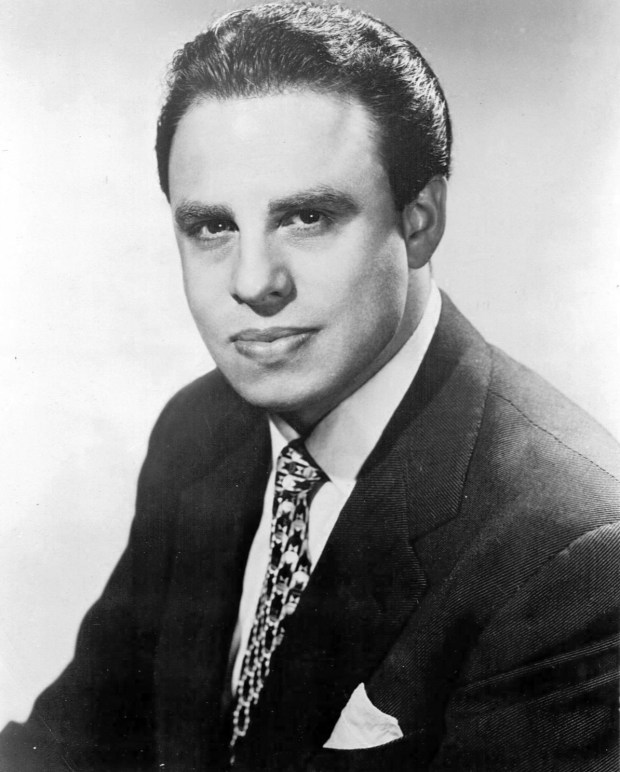
And now I would like to tell you about George London. Born as George Burnstein into a family of Russian Jewish immigrants in Montreal, Canada in May 1920, he grew up in Los Angeles and began his career in the 1940s in the Bel-Canto Trio. The other two were soprano Frances Yeend and … Mario Lanza!

                                                              with Mario Lanza


London was the very first American to sing Boris Godunov (in Russian!) at the Bolshoi in Moscow and was considered one of the best Wotans/Wanderers of his era. His Scarpia was also already legendary during his lifetime.

Here is a wonderful recording from a 1962 concert of George London (in perfect Russian!) as Boris,


In addition to his Boris Godunov and Scarpia, London was mainly renowned for his Don Giovanni. Everyone agreed about his Don Juan that if you ooze that much sex appeal, it can be demonic. Definitely something to think about! As far as I know, there is no complete film of the opera with him in it. All the more reason to recommend to all of you the portrait of the singer that came out a couple of years ago at Arthaus Musik (101473). The title of the documentary says it all, Between Gods and Demons.

About a decade ago, the budget label Walhall re-issued two historic recordings of Tannhäuser on CDs, one a Berlin performance in 1949 conducted by Leopold Ludwig (WLCD 0145) with Ludwig Suthaus (Tannhäuser), Martha Musial (Elisabeth) and a very young Fischer-Dieskau (Wolfram), and the other a performance at the Met (WLCD 0095) conducted by Rudolf Kempe in 1955. Except for the not very idiomatic Astrid Varnay as Elisabeth, it featured a magnificent array of the greatest singers of the day, Blanche Thebom, George London, Jerome Hines and Ramon Vinay. Here is George London singing ‘O du mein holder Abendstern’:


Decca London

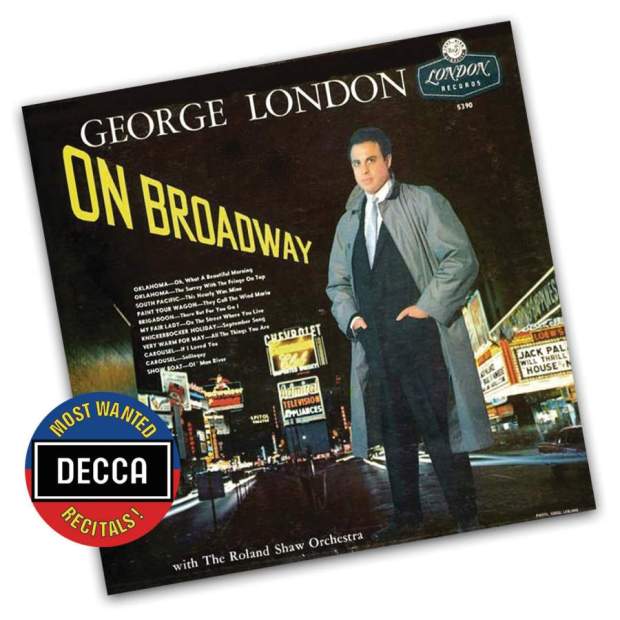
But he was also a real entertainer who took popular music seriously, to him they were all ‘artificial art songs’. On the CD On Broadway (Decca 4808163) he gives us a lesson on how to sing the songs of musical composers Rogers, Kern and Loewe.

Below London sings Rogers and Hammerstein’s If I Loved You:

And you get Wagner as a bonus.


English translation: Sheila Gogol