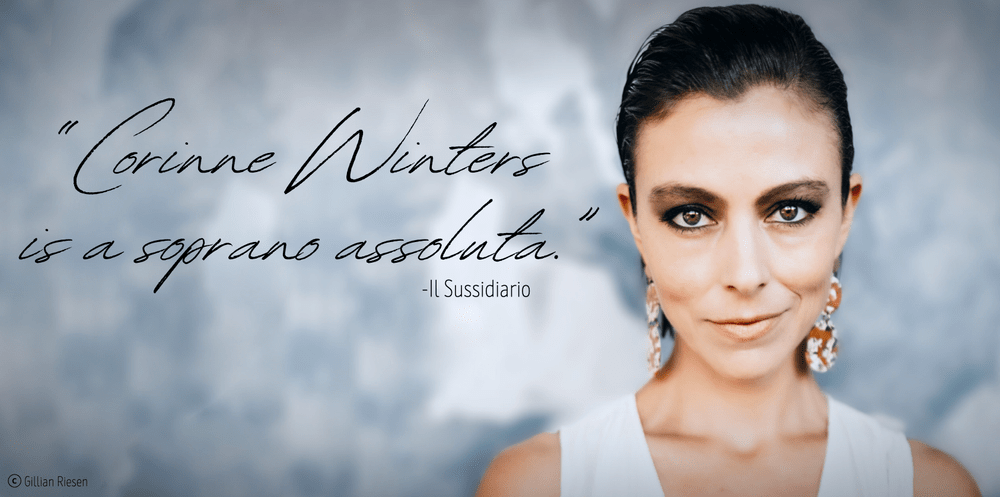
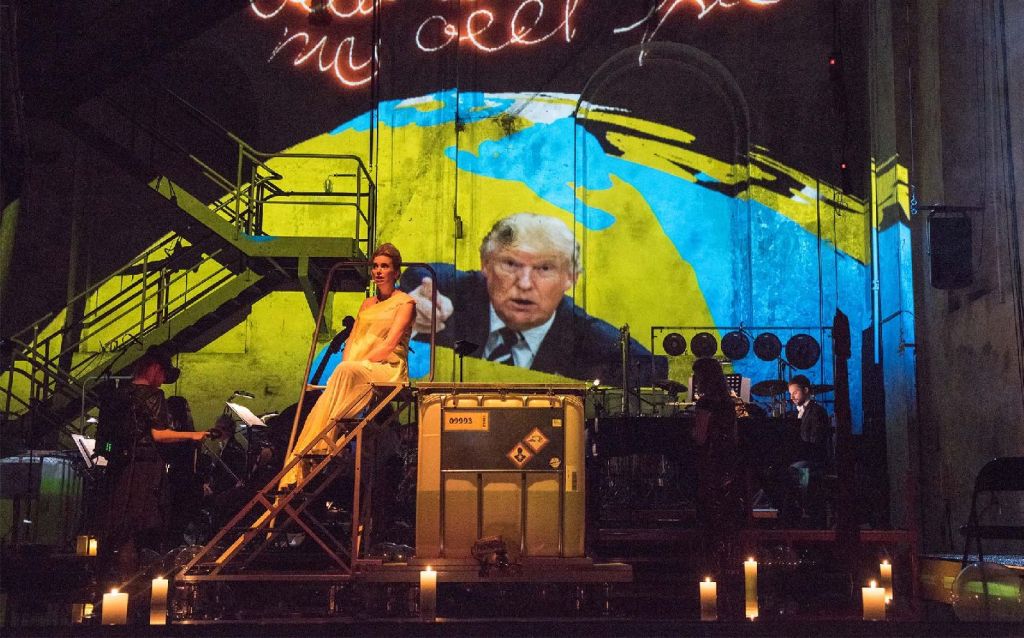
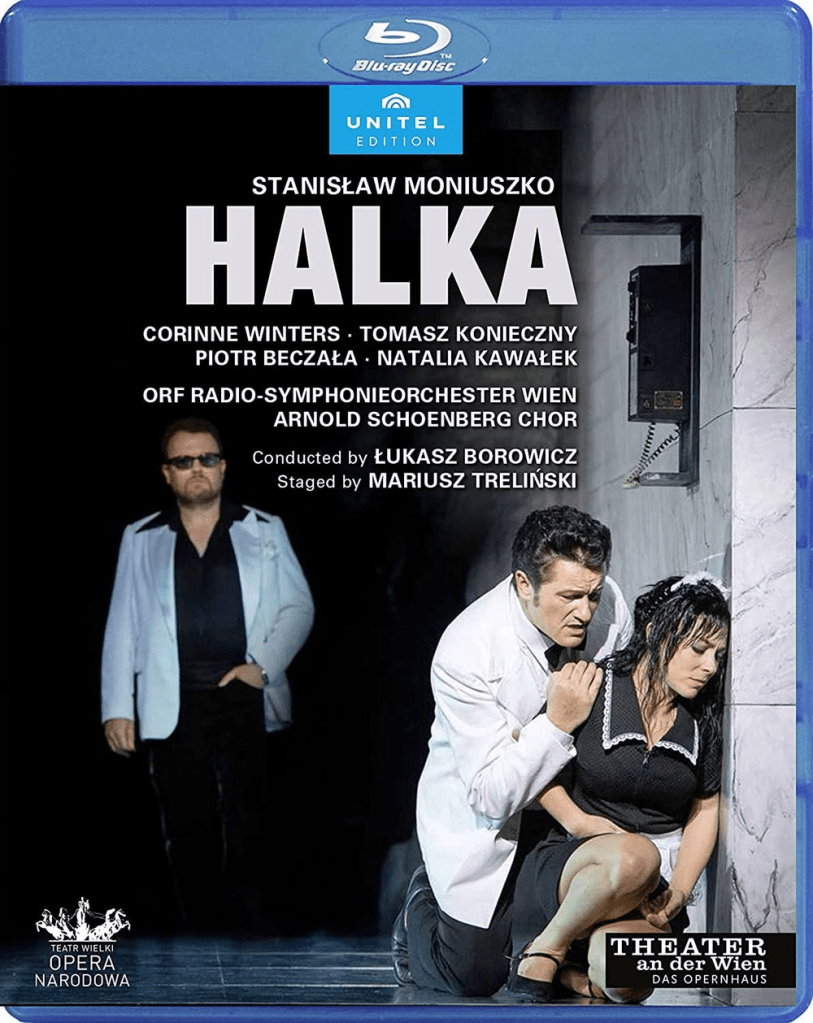
A recording of Halka from the Theater an der Wien was released on DVD in January 2022. In the title role American soprano Corinne Winters, who had been steadily gaining fame in Europe in previous years. The recording dated from 2019 and Winters’ career had been at a low ebb since then as a result of the Covid epidemic. But 2022 was going to be a great year for her. For those not yet really familiar with Corinne Winters, now first a retrospective.
Born in 1983, she first performed in a professional production in ….. 2011. That was a late career start and this fill-in for a pregnant Mélisande in St.Louis turned out to be the starting point for a real catch-up. Winters was advised to audition for ENO and in 2013 she sang Violetta there in Konwitschny’s production of La traviata. There seem to have been quite a few casting directors and intendants in the premiere audience, including reportedly Sophie de Lint. Be that as it may, her performance attracted strong attention. Bachtrack wrote about it: ‘Corinne Winters was an outstanding Violetta, who proved capable of controlling the various aspects of vocal technique demanded by Verdi’s operatic tour de force.’ And on the Planet Hugill blog we read: ‘Winters is a lyric soprano, but one with the resources to not only sing La traviata without an interval but to take her through Act 3 with flying colours. She did everything asked of her and more, and was simply mesmerising. She has quite a bright voice, without excessive vibrato so that it was a beautifully clean expressive performance. I do hope that we hear her again soon in the UK.’
Winters with Michael Spyers in Benvenuto Cellinii in the ENO
The wait didn’t last too long: in 2014 Winters sang in that madcap production Terry Gilliam made of Berlioz’s Benvenuto Cellini. Bachtrack: ‘Corinne Winters, returning to the Coliseum after her spectacular debut as Violetta last season, wowed us once again as Teresa. Her Act I aria “Hearts full of love” was wonderfully sung, but the cabaletta which followed treated us to a cascade of coloratura, glittering with diamonds. Winters displayed bags of personality, including a knack for comedy.’
Interest in Winters was piqued among European casting directors and engagements at Opera Vlaanderen followed as Donna Anna and Desdemona, and then also the role she had already performed in America: Mélisande. A recording of that performance in Zurich has been released on DVD. Soon after, she made her debut at the Royal Opera House as a brilliant Fiordiligi in Cosi fan tutte, also released on DVD. From then on, she has definitely managed to add Europe and the very best opera houses to her field of activity.
Of course, there were also performances in the United States, including, in 2017, her role debut in Seattle as Katia in Janáček’s Katia Kabanova, which would become her signature role. A review said: ‘Maryland soprano Corinne Winters was vocally secure and dramatically intense, in the challenging role of Katya. Winters conveyed the soul-searing turmoil of a woman with deeply-held religious belief that extra-marital sexual thoughtsare mortal sins, yet who accedes to a liaison with Boris while her husband is away.’ ‘
My first meeting with Corinne Winters dates from 2019 when I saw her as Rachel in Halevy’s La Juive. It was a production by Konwitschny which I saw in Gent. I wrote about it: ‘In the big scene with her rival Eudoxie, Rachel sings from the auditorium. This creates a literal rift between the two. Soprano Corinne Winters used the parterre row 6 and was immediately in front of me. She had a very big voice, never forced herself and was always in control, with her wonderful timbre and no trace of any vibrato. In the revealing scene her acting was also very strong, she was truly convincing the audience of her disbelieve and I got the impression that she was on the verge of berating Léopold in a very ranting Italian.’
La Juive:
Shortly afterwards came Halka and what immediately stands out in that production is her great range. She initially ‘was’ a mezzo and decided to make the transition to the soprano profession. But this has not come at the expense of the low register. Most of the time, as Halka, she is just a real mezzo who can also handle the heights effortlessly. And, what I find so important: she can sing very softly in all registers
I have never heard and seen her as Butterfly but I can hardly imagine her Cio-Cio-San cutting through the soul even more than Halka does. It is the most moving performance I know of her to date.
Meanwhile, we are back in that stellar year 2022 when I got to experience Corinne Winters as Giorgetta and Suor Angelica. This was a production of Il trittico at La Monnaie Brussels. Due to the Covid epidemic the premiere was sung by a colleague but fortunately I was in the audience for the last performance and she totally lived up to my expectations.
Those Puccini heroines were all role debuts and right after followed another: Jenufa in the opera of the same name. This was a production by Tatjana Gürbaca in Geneva, where Winters would return later in the year for Gürbaca’s Katia Kabanova. That it would become her signature role has been proven by now, especially after her debut as Katia at the Salzburg Festival where she was so very successful. We will surely see her there more often in the future, be it not in 202
Kat’a Kabanóva:
Jenufa:
:
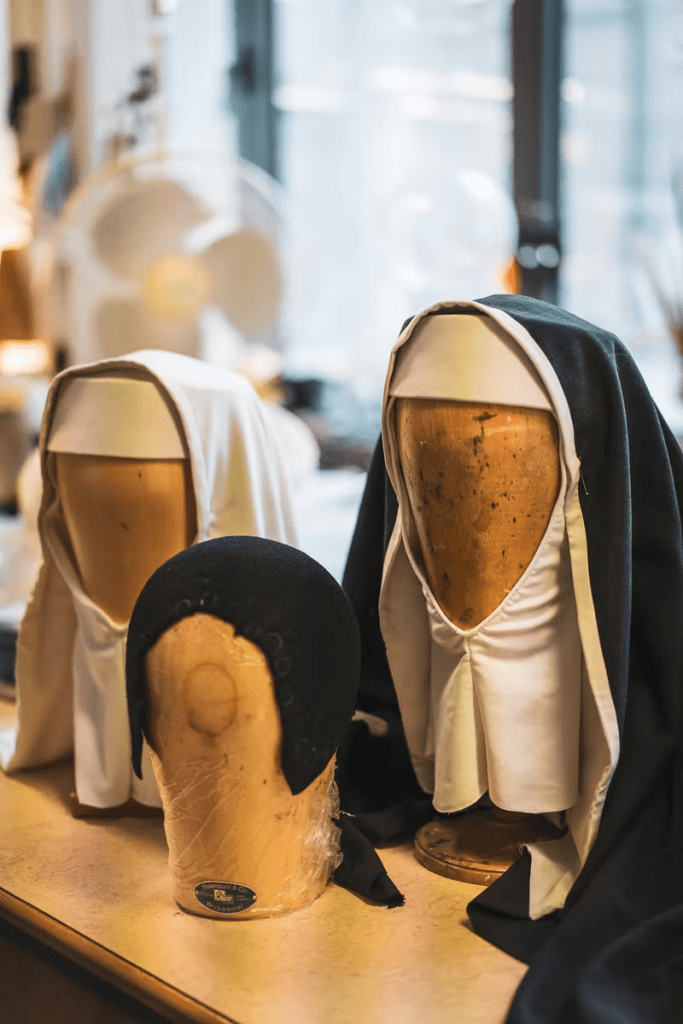
The year ended with Les dialogues des Carmélites in Rome. She sang Blanche de la Force there in a production by Emma Dante, and with great success. Jenufa is scheduled for januari 2023 in Valencia but since she was already there she had to jump in last minute as Mimi in La Bohème at the end of December ’22. This lady is a real jack of all trades and although Katia has become her calling card, I hope that in the future she will give us many more performances of all the other roles in her repertoire: Yolanthe, Tatjana, Fiordiligi, Desdemona and so on.
Les dialogues des Carmélites;
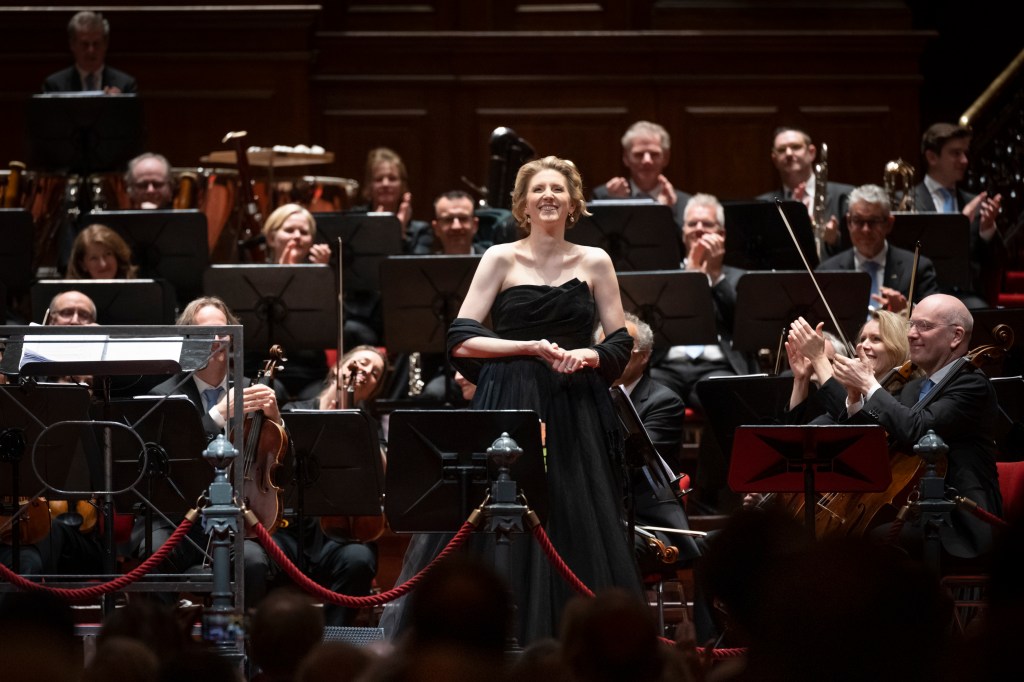
When asked, she was able to tell on her fanpage that a DVD of Katia in Salzburg will probably be released in due course: ‘stay tuned’. That is something to look forward to and in the meantime, of course, there are those recordings with her Mélisande, Fiordiligi and Halka. Corinne Winters has made it all the way and that is worth some heartfelt congratulations.
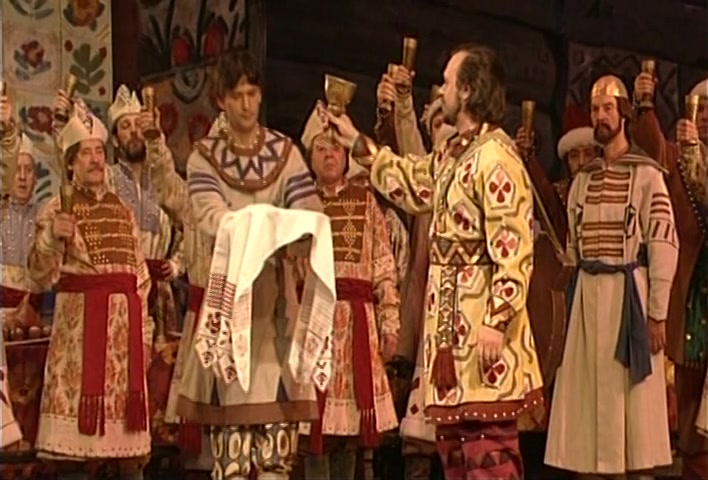
Wilt u een Russisch sprookje zien in al haar pracht en praal, met alles daarop en daaraan, dan kunt zich het beste tot Sadko wenden, in 1996 in Mariinski live voor dvd opgenomen (Philips 0704399).
Ik krijg er niet genoeg van, al heb ik de DVD al tig keren bekeken. Het is een lust voor het oog, maar ook het oor komt niets te kort. Vladimir Galutsin, Gegam Grigorian, Sergei Aleksashkin, Larissa Diadkova, Marianna Tarasova, Gennadi Bezzubenkov (als Bard te bewonderen in de Amsterdamse ‘Kitesj’), mooier en beter kan je het niet verzinnen.
Het verhaal, over een koopmaan die, ondanks dat hij getrouwd is verliefd wordt op de dochter van de zee-tsaar, is inderdaad een echt sprookje. De koopman wordt rijk, keert naar zijn echtgenote terug en de tsaar’s dochter verandert in een rivier, tot groot genoegen van de bewoners van Novgorod. Eind goed al goed..
Sadko is, denk ik, de bekendste opera van Rimski-Korsakov, niet in de laatste plaats vanwege de waanzinnig mooie tenoraria van de ‘Indian Soul’.
Een van de allermooiste versies van de aria werd volgens mij ooit gezongen door de legendarische tenor Sergei Lemeshov:
Imagine: you are young, beautiful and secretly in love with a revolutionary, who unfortunately is on his deathbed. Your relationship is “not done” and marriage is out of the question. You live in a small town, where there is no future for you.
One day, a prince presents himself. It is true: he is old and worn out. His beard and moustache are false, he wears a wig and he is a bit childish. But he is rich and actually quite nice. With his money you will be able to afford sending your lover to the Spanish sun, where he will definitely get better. And when the prince dies, there is nothing stopping you from marrying whoever you want. For this you are quite willing to sacrifice yourself, aren’t you?
Marja Alexandrowna is a cunning woman. She knows how to get her daughter Sina to agree to her little plan to hook the prince (albeit reluctantly). The prince is served a substantial meal, liberally sprinkled with wine. Sina sings an aria, the prince gets another liqueur, and yes: he asks for Sina’s hand. Alas, everything goes haywire.
Both Paul, a distant relative of the prince and in love with Sina, and Nastassja, a poor relative of Maria Alexandrowna and herself interested in the prince, throw a spanner in the works.
When the prince awakens from his nap, he readily accepts Paul’s explanation that his proposal only took place in a dream. Meanwhile, Nastasia makes sure that all the ladies of the town are informed of the incident. Mother and daughter are laughed at, Sina confesses the premeditated plan, the prince forgives her and leaves. And meanwhile, Sina’s lover dies.
Verlobung im Traum is an unusual opera. The action is captured within a frame narrative. The story is told to us by an archivist of Mordasov. In the prologue, he introduces the main characters to us; in the epilogue, we hear how things continue with Sina and her mother.
The story, literally after Dostoevsky’s “Uncle’s Dream” was adapted into a libretto by Rudolf Fuchs and Rudolf Thomas.
Trailer from Karlsruhe in 2014:
Verlobung im Traum was awarded the State Prize for Composition in 1933 and in the same year it was also performed: first for the Prague Radio and a few months later at the German Theatre in Prague. Georg Szell conducted and Hilde Konetzny sang Sina. The success was great, but further performances were out of the question. After all, it was already 1933.
The music is nowhere atonal, one detects strong influences of Poulenc, but Mahler is also quite close.
Krása sprinkles liberally with jazz influences and the saxophone takes a prominent place in the orchestra. Perhaps most remarkable is the “revenge duet” at the end of the first act: an ironic replacement for the usual “love duet”?
Anda-Luise Bogsa sings Sina:
And then we come to “Casta Diva”: Sina, in her attempt to seduce the prince, sings the beautiful aria from Bellini’s “Norma”. Instead of the original chorus, we get a quartet: the mother, the prince and, behind-the-scene, the eavesdropping Nastassja and Paul are each commenting on Sina’s singing….
Hans Krása in Teresienstadt
Born in 1899, the composer was a true “bon-vivant”. He spent his days at the coffee house, at the opera or playing chess with his friend Thomas. Little time was left for composing.
Krása spent a short time in Paris (at the invitation of his kindred spirits from “Les Six”), but nostalgia for Prague was stronger and so he returned to his homeland, just in time to be sent to Teresienstadt. On 17 October 1944, he was gassed in Auschwitz, along with Ullmann, Haas and Klein.
“Das schönste sind im Leben diese Träume, die erfüllen, was unerfüllbar ist”
Hans Krása Verlobung im Traum Christianne Berggold, Charlotte Hellekant, Juanita Lascarro, Jane Henschel, Albert Dohmen Ernst Senff Chor Deutsches Symphonie-Orchester Berlin olv Lothar Zagrosek Decca 4555872
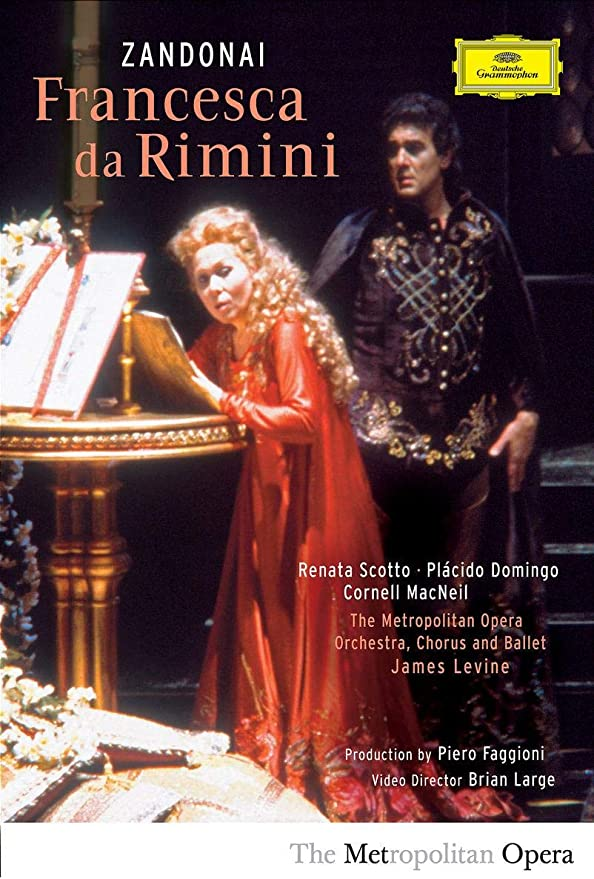
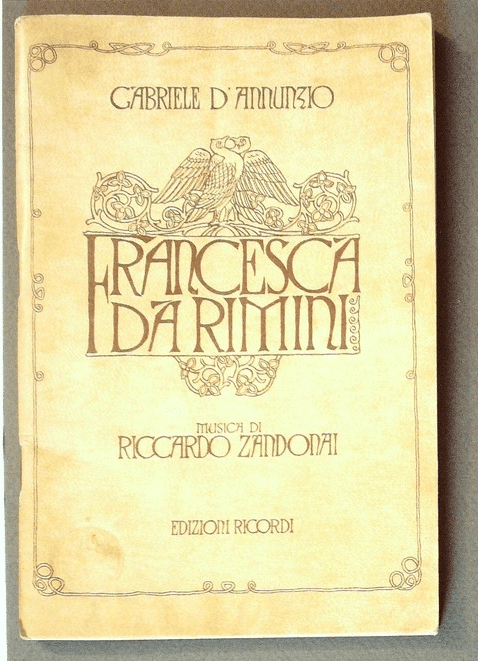
Plácido Domingo heeft een enorme staat van dienst in de Metropolitan Opera en vertolkte daar vele rollen uit het ijzeren repertoire. Maar daar bleef het niet bij, in 1984 stond de befaamde tenor op het toneel als Paolo in Zandonai’s weinig gespeelde opera Francesca da Rimini.
Dit werk ging in 1914 in première en heeft sindsdien een leven in de luwte geleid. In New York was de opera elfmaal te zien tijdens het seizoen 1916-17. Daarna zou het tot 1984 duren vooraleer de Met het opnieuw probeerde, met twee wereldsterren als het gedoemde liefdespaar: Renata Scotto en Placido Domingo. Een opname uit die reeks is op dvd uitgebracht door DG.
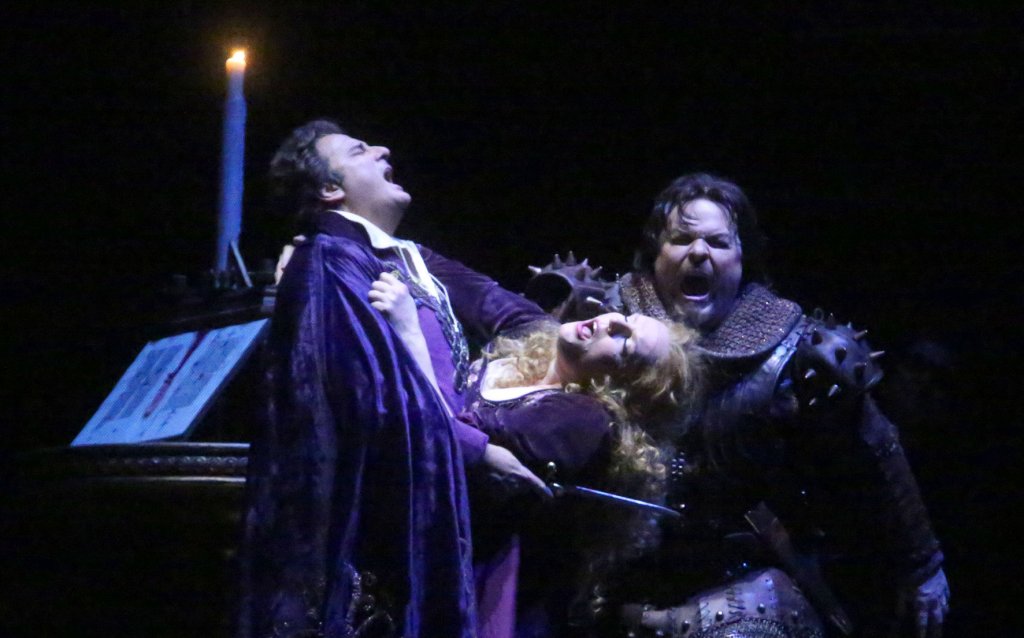
Het verhaal van Francesca da Polenta en Paolo Malatesta is gebaseerd op personages uit de 13e eeuw. Paolo, bijgenaamd Il bello, wordt naar Francesca gestuurd als huwelijksmakelaar voor zijn oudere broer, de weinig aantrekkelijke manke Giovanni. De twee worden op slag verliefd en beginnen een affaire. Ze worden echter ontmaskerd door Malatestino, de jongste broer van het stel en die zorgt ervoor dat Giovanni het koppel in flagrante weet te betrappen. Beiden worden samen aan het zwaard geregen en sterven in hun laatste omhelzing.
Francesca wordt wel de Italiaanse Tristan genoemd. Ook hier de aantrekkelijke jonge man die een bruid moet werven voor een onaantrekkelijke partij. Giovanni in de rol van Marke en Malatestino als Melot. Saillant detail is echter dat in de literatuur geen nadrukkelijk moreel oordeel over die liefdesrelatie wordt geveld. Dit in tegenstelling tot die van Francesca en Paolo, met dank aan Dante en zijn Goddelijke Komedie. Dante plaatst het tweetal in Canto 5 in de Tweede Kring van de hel, op zich ver verwijderd van Canto 34 in de Negende Kring waar Lucifer te vinden is, maar evengoed in de hel. Het is de straf voor diegenen die zich niet hebben kunnen beheersen en zich overgaven aan wellust. In een wervelende wind is het liefdespaar voor eeuwig aan elkaar gekoppeld, ze delen het verblijf in de hel. Daarmee vergeleken is het aardse huwelijk een korte flirt. Een plekje in het Purgatorio zou ons vandaag de dag voor Francesca wat meer geëigend hebben geleken.
Francesca heeft vele componisten geïnspireerd tot het schrijven van een opera. Als ik goed heb geteld was die van Zandonai nummer 26. Zijn librettist Tito Ricordi baseerde zich op een toneelstuk van Gabriele d’Annunzio waarbij hij zich vooral concentreerde op de liefdesaffaire van de protagonisten. Bij Ricordi komt Paolo er een stuk slechter af dan Francesca. Eerst bedriegt hij haar om zijn oudere broer een dienst te bewijzen en vervolgens dringt hij zich zo aan haar op, zonder acht te slaan op smeekbeden haar met rust te laten, dat ze door de knieën gaat. Francesca valt weinig te verwijten, ze heeft zich tot het uiterste tegen zijn avances geweerd. Paolo verdient eerder een plek in de Achtste Kring, ergens in Canto 18 of 23, in elk geval de straf voor bedrog en verleiding.
Francesca da Rimini’s Act II battle between the Guelphs and the Ghibellines, with Paolo, Gianciotto and Malatestino on the ramparts and Francesca below (Plácido Domingo as Paolo, Cornell MacNeil as Gianciotto, William Lewis as Malatestino and Renata Scotto as Francesca
De productie van Pierro Fagioni is overdadig en verzuipt bijna in de naturalistische details. De kostumering is een parade van laat middeleeuwse clichés. In de tweede akte zien we een groot aantal figuranten die de belegering van het slot van de Malatesta’s aanschouwelijk moeten maken. Hier spreken van een librettogetrouw kostuumdrama is bijna een eufemisme.
De cast is goed verzorgd, over de volle breedte. Van de hofdames en de intriganten tot de drie broers Malatesta en hun gemeenschappelijk liefdesobject Francesca, immers Malatestino is ook verliefd op haar. Nicole Lorange heeft een aardig optreden in de eerste akte als het jongere zusje Samaritana die bij Francesca op de kamer slaapt, het zijn duidelijk nog tieners die twee.
Isola Jones is een prachtige Smaragdi, in beeld en geluid. Een echte eyecatcher die als Francesca’s huisslavin door haar relatief eenvoudige kledij veel overtuigender overkomt dan al die opgetutte vrouwen om haar heen.
Bariton Cornell Macneil als Giovanni is een griezelige potentaat, je begrijpt direct dat alleen bedrog een huwelijk met de jonge mooie Francesca mogelijk heeft kunnen maken. Iets waar overigens beide families volledig aan mee hebben gewerkt. Zijn zang is dienovereenkomstig, overheersend en bedreigend. Hij doodt zijn broer Paolo en krijgt vermoedelijk van Dante een plaatsje in de Zevende Kring.
Het liefdespaar komt zoals gezegd voor rekening van Scotto en Domingo. Scotto gaat voluit in haar poging een geloofwaardige Francesca op het toneel te zetten maar ik kan er niet echt van onder de indruk raken. Domingo weet zich beter raad met de rol van de verliefde jongeman die net als Tristan het daglicht ziet als zijn vijand en het liefst alleen nog maar ’s nachts wil leven. Er zit zeker in de vierde akte erg veel Tristan in het libretto, het is bijna een commentaar op Wagners verhaal. Goed beschouwd is Domingo’s optreden de enige reden om deze opname nog eens te bekijken.
De muzikale leiding is zoals gebruikelijk in handen van James Levine.
Finale:
Voor wie dit op prijs stellen: 10 beste Francesca’s op een rijtje althans volgens Opera News
The French coloratura soprano, born on 29 December 1918 in Yzeures=sur-Creuse could actually be considered the eighth world wonder. Her voice was of the soubrette type with a very pleasant girlish timbre and her coloratura technique more than sublime, but there was more: her high notes were extremely high. With her voice she not only reached the F4, but even had the C4 within her reach without any problems, one of the highest notes ever sung by a human voice
.
All her high notes in a row, with the description:
She was star of television and radio in the 1950s the fifties, was a very celebrated radio and TV star in France, but her fame reached far beyond her national borders. She celebrated her greatest triumphs as Lakmé and Leïla (Pearl Fishers), but her Lucia and Olympia were also proverbial.
Mado Robin hits C7 Lucia di Lammermoor:
Gounod’s Mireille is not really a role we would expect from her, but it fits wonderfully well with her childishly naive timbre. I enjoyed these fragments the most, much more than her Lucia and Bellinis.
1 Moby Dick, or, The Whale Een draaikolk van totaaltheater, – muziek, -beeldende kunst, – film waarin alle thema’s in Herman Melvilles klassieker uit de opkomende industriële maatschappij van de negentiende eeuw die nog steeds een rol spelen, uitbuiting, verpaupering en racisme, maar ook obsessiviteit en queer-erotiek aan bod komen. Muziek Caroline Shaw, Andrew Yee, Asma Maroof, regie Wu Tsang, tekst Sophia Al-Maria, dirigent Kevin Griffiths.
3 And here I am/a Lonely Woman van Huba de Graaff. Het unieke werk en leven van de Iraanse dichteres Foroukh Foroukhzad verklankt in punk-rock band stijl, verweven met met beelden uit Foroukhzads indringende experimentele film The House is Black over een lepra-oord.
4 NOMAD Sidi Larbi Cherkaoui eigenlijk al een voorstelling van drie jaar ervoor, maar door corona opgehouden. Ik heb nooit mooiere woestijnen, donderwolken, stortbuien en vloedgolven gezien op het toneel, realistisch en toch theatraal, in een meeslepende voorstelling over mensen op drift
5 Le Vin Herbé Ulrike Quade Capella Amsterdam Emio Greco. Frank Martins indringende versie van Tristan und Isolde, op het toneel zo eenzaam gemaakt als ze in Frank Martins opera zijn, midden in Corona tijd in verplicht halflege zalen, verbeeld als tragikomische poppenopera. Wanneer komt Ulrike Quade iets uitvoeren bij De Nationale Opera?
6 Ex aequo twee nieuwe Amerikaanse opera’s bij DNO, waartussen ik niet kan kiezen; gelukkig maar. Blue met muziek van Jeanine Tesori, libretto Tazewell Thompson, dirigent Kwamé Ryan. Barber meets Ellington meets Puccini meets Grant Still in een overtuigend verklankt en verbeeld eigentijds drama over raciale thema’s die niet alleen in de VS actueel zijn. En Denis en Katya, muziek Philip Venables, libretto en regie Ted Huffmann, over twee jeugdige Russen die na dood en verderf te hebben gezaaid zelf de dood verkiezen. Kwam bij toeval uit kort na de Russische inval in Oekraïne, en de somberte van het werk kreeg daardoor een huiveringwekkend actualiteit. Michael Wilmering en Inna Demenkova vulden met hun tweeën het hele immense toneel van de Stopera.
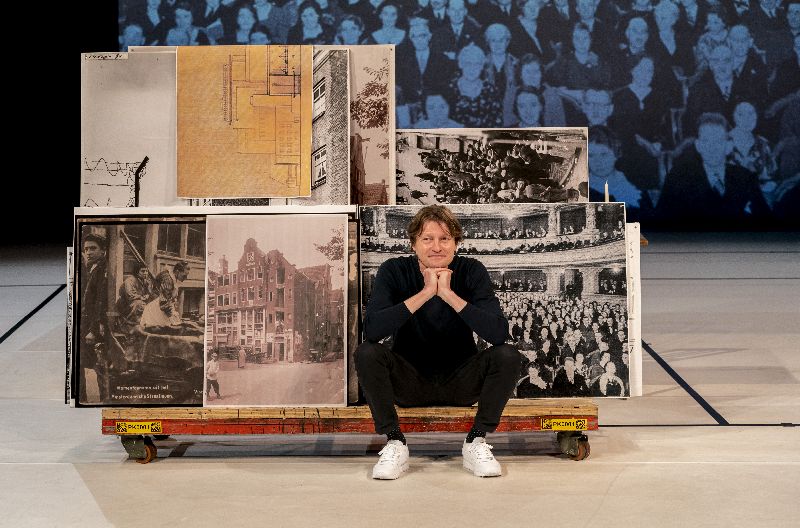
7 Een nog kleinere productie van DNO, Boekman Michiel de Regt, Erik van der Horst DNO, over de vooroorlogse socialistische wethouder cultuur Emanuel Boekman, die, zelf geboren in arme Joodse familie in de Pijp, in zijn functie bij de gemeente dagelijks van zijn huis in Zuid door de Waterloopleinbuurt naar het toenmalige gemeentehuis aan de OZ Voorburgwal fietste, en toen al de wens had Amsterdam van een operagebouw te voorzien. Alleen niet op de plek waar het nu staat, op de plaats van de oude Joodse buurt. Ik zal nooit meer vergeten dat onder elke stap die je in en rond het Stadhuis en het Operagebouw zet de tragische geschiedenis van de Joodse gemeenschap in Amsterdam te vinden is.
Boekman, Nationale Opera,
Spel en tekst: Harpert Michielsen,
Muziek en Spel: Erik van der Horst,
Regie: Michiel de Regt,
Dramaturgie: Wout van Tongeren,
Oorspronkelijke muziek (versie2021): Bart Sietsema
8 Der Ring Necati Öziri HF Een hilarische, maar tegelijkertijd oprecht betrokken kijk op Wagners Ring binnen de context van moderne sociale verhoudingen, man-vrouw, patriarchaat, matriarchaat en Wagners ideeën over een nationalistisch ‘wij’ en wie daar dan wel en niet bij mogen horen.
Ik had uit het Holland Festival ook Kein Licht op van teksten Elfriede Jelinek, muziek Philippe Manoury en regie Nicolas Stemann kunnen kiezen, voor mij het derde hoogtepunt van het afgelopen Holland festival.
9 Katia Kabanova Janacek NTR ZaterdagMatinee ook fraai semi-geënsceneerde uitvoering van het werk. Ik had ook L’Italiana in Algeri kunnen kiezen, idem uitgevoerd, maar Janacek is gewoon een stuk substantiëler. Of de Rheingold in authentieke bezetting. Ik vind een goede Wagner altijd geweldig, maar vond het concept voor een deel ook lood om oud ijzer; Boulez’ aanpak was verhelderender. Maar Die Walküre komt er ook aan en daar zal het idee zich echt kunnen bewijzen.
10 Königskinder Humperdinck DNO Half in de vergetelheid geraakt bijna-meesterwerk met een fascinerende ontstaansgeschiedenis en een fascinerend vervolg (Joods Duitsland ontmoet antisemitisch Duitsland), op een overtuigende manier afgestoft, in muzikale aanpak en enscenering.
en Het Barre Land van Sinfonietta/ISH, Layegh, Stravinsky, Berg, Džajkovski, Nyman, Dessner, Avison, Ronner, Karaindrou, Casals, Pärt, Say & Sylvestrov, allebei ook fraai.
Het kan zijn de ingrepen in of eigenlijk juist het weglaten uit Turandot in de productie van DNO de voorstelling in de herinnering zullen doen rijpen. In de nawerking overtuigt het idee dat de voorstelling moest stoppen waar Puccini moest stoppen meer en meer.
Ik heb CDs en concerten buiten beschouwing gelaten, anders had ik het zeker ook moeten hebben over de motetten van Vicente Lusitano op CD door het Marian Consort, kippenvel bij Graindelavoix en het Huelgas Ensemble in het Festival Oude Muziek, klankpracht en sensualiteit met Dallapicola, Respighi en Rick van Veldhuizen bij het KCO en het NedPho, en, een beetje in de lijn van het kerstverhaal zelf, is er ook geen plaats voor het verpletterende kerstconcert als drama met Vox Luminis in de Matinee.
Hoewel de eerste maanden van 2022 nog sterk bepaald werden door de gebruikelijke ‘corona beperkingen’ kon ik het recenseren van live voorstellingen het voorbije jaar gelukkig weer aardig oppakken. Mijn top tien van 2022 voor Basia con fuoco bestaat dan ook voornamelijk uit theaterrecensies. Maar wel aangevuld met andere artikelen die ik beslist in het rijtje wilde opnemen.
1 Giulio Cesare
De Reisopera kwam begin dit jaar met een zeer geslaagde productie van Giulio Cesare. Het gezelschap zette door ondanks dat er aanvankelijk sprake was van een zeer beperkte zaalbezetting. Dankzij de versoepeling van de maatregelen kon ik op de valreep nog de voorstelling in Amare bijwonen, in een goed gevulde zaal. De voorstelling staat op nummer 1 zowel vanwege de productie zelf als de durf en het doorzettingsvermogen van de Reisopera in die moeilijke tijd. De herinnering vervaagt snel, ik kan me nauwelijks nog voorstellen hoe het er toen aan toeging. Gelukkig maar.
Il trittico in De Munt werd geplaagd door corona besmettingen waardoor sopraan Corinne Winters de première moest missen. Gelukkig kon ik naar de dernière waar ik haar zag en hoorde als Suor Angelica en Giorgetta.
Diezelfde Corinne Winters zong de titelrol in Moniuszko’s opera Halka, een productie uit Theater an der Wien. Daarvan kwam dit jaar een opname op dvd uit. Naar verwachting zal komende zomer een opname verschijnen van haar Katia Kabanova, de rol die ze in 2022 zong tijdens de Salzburger Festspiele. Iets om naar uit te kijken.
Live from the Met zag ik Hamlet, een nieuwe opera van Brett Dean. Het werk ging in 2017 in première in Glyndebourne in dezelfde productie en met grotendeels dezelfde cast. Alan Clayton gaf een zeer verdienstelijke vertolking van de titelrol. ‘Een speciale vermelding verdient hier “movement director” Denni Sayers voor de wijze waarop hij Hamlet als een bijna ongeleid projectiel liet rond stuiteren maar vooral voor de choreografie van Ophelia’s madscene. Fenomenaal wat hij met Brenda Rae ervan had weten te maken. Zij zong met het gemak van een Zerbinetta en bewoog als Rosalba Torres Guerrero, de danseres die door Warlikowski in meerdere opera’s werd gecast (The Bassarids, Lulu).’
Scènes uit Der Freischütz van DNO was natuurlijk geen ‘echte’ Freischütz maar niettemin een zeer vermakelijke voorstelling die artistiek en muzikaal beslist geslaagd kon worden genoemd.
Iets dergelijks gold Bruid te koop van de Reisopera. Het arme kind had twee jaar lang staan kleumen in een winkelwagentje maar dit voorjaar was het eindelijk zo ver. Smetana’s opera werd muzikaal conform het origineel uitgevoerd maar de soms wat zwaar aangezette Nederlandse teksten maakten er een heel ander werk van. Leuke voorstelling.
DNO wist uit te pakken met een voorstelling voor het gehele gezin: Operettaland was weliswaar geen echte operette maar een leuke pastiche van alle denkbare clichés die het genre zo aantrekkelijk maken. De bordkartonnen decors stalen de show.
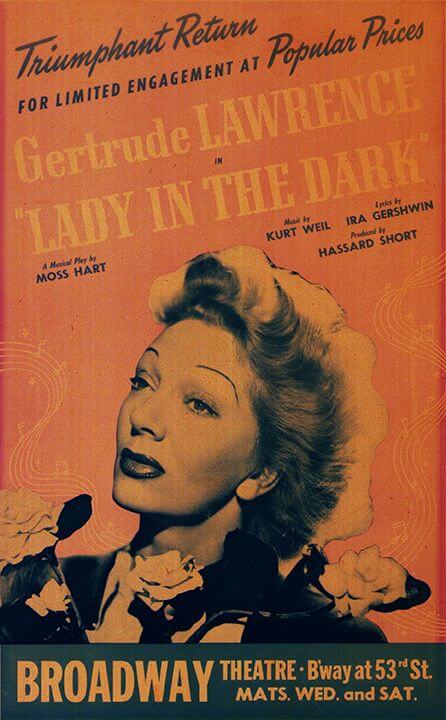
Opera Zuid bleef hier niet bij achter en kwam eveneens met een spetterende voorstelling. Ditmaal een musical in Broadway stijl: Kurt Weill’s Lady in the dark met een glansrol van Maartje Rammeloo.
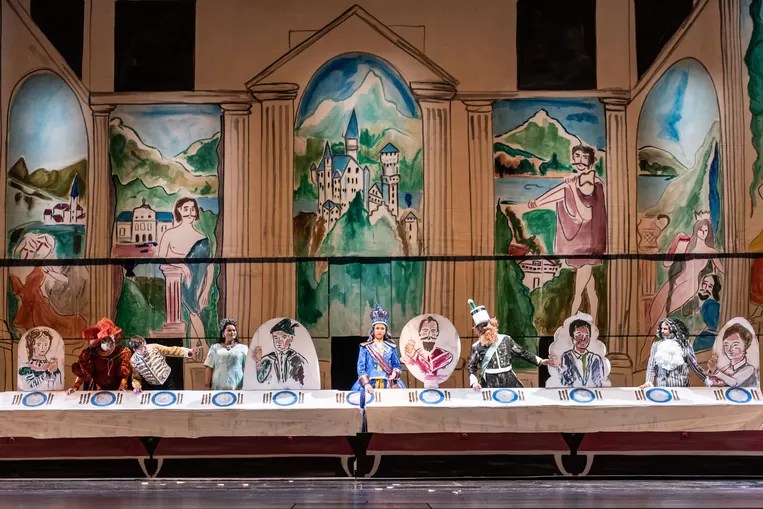
Kurt Weill stond ook bij Opera Vlaanderen in de belangstelling met een nieuwe productie van Mahagonny. Aardig om die twee te kunnen vergelijken: de Duitse versus de Amerikaanse Weill.
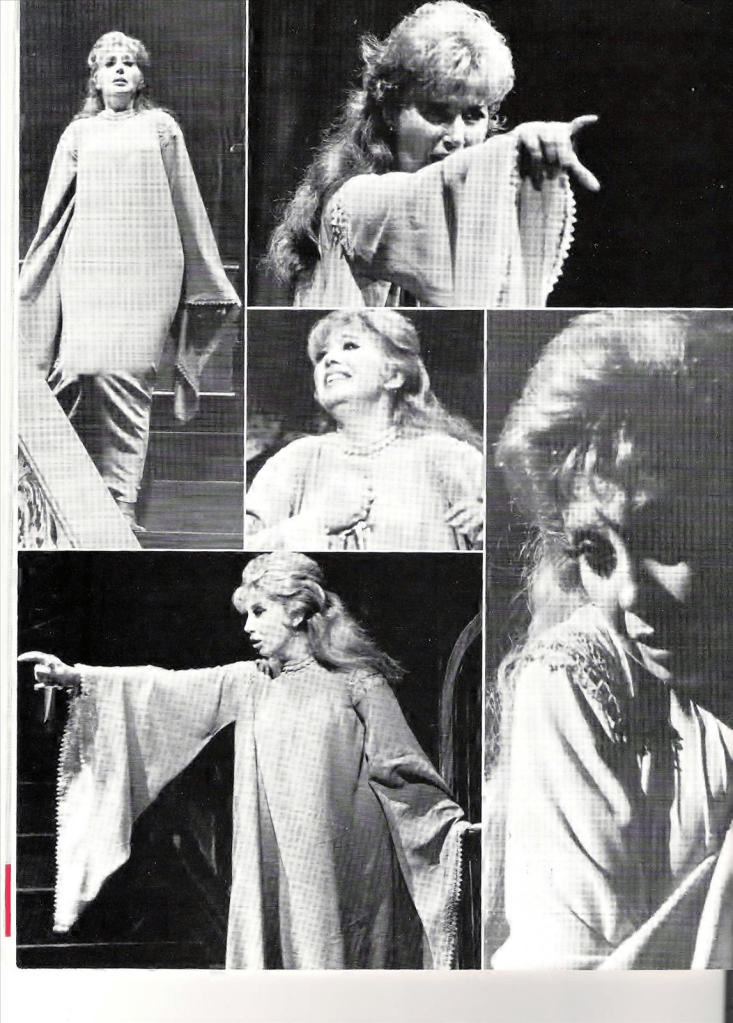
Ik sluit af met een afwijkend item. Naar aanleiding van haar overlijden schreef ik een ‘in memoriam’ gewijd aan Maria Ewing. Zou er in het verleden al een top tien als deze hebben bestaan dan had ik daar meerdere van haar voorstellingen in opgenomen, zoveel is zeker. RIP ‘jaargenoot’ Maria.
First of all, my apologies: this year I have hardly posted any new reviews. This was for personal reasons
I was forced to limit myself to translations but I did a lot of portraits of singers who deserved to be featured again.
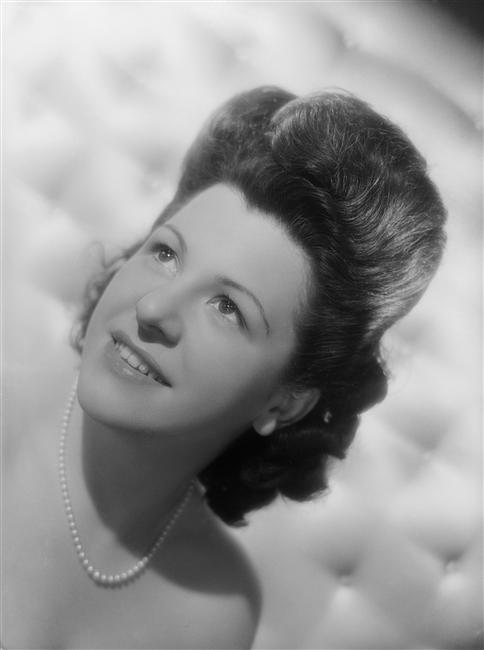
Renata Scotto had her birthday on 24 February
Renata Scotto, ‘la mia Divina Assoluta’ made her opera debut at the age of eighteen as Violetta (La Traviata). Her ‘official’ debut was the next day in Milan. Shortly afterwards, she sang Madama Butterfly in Savona.
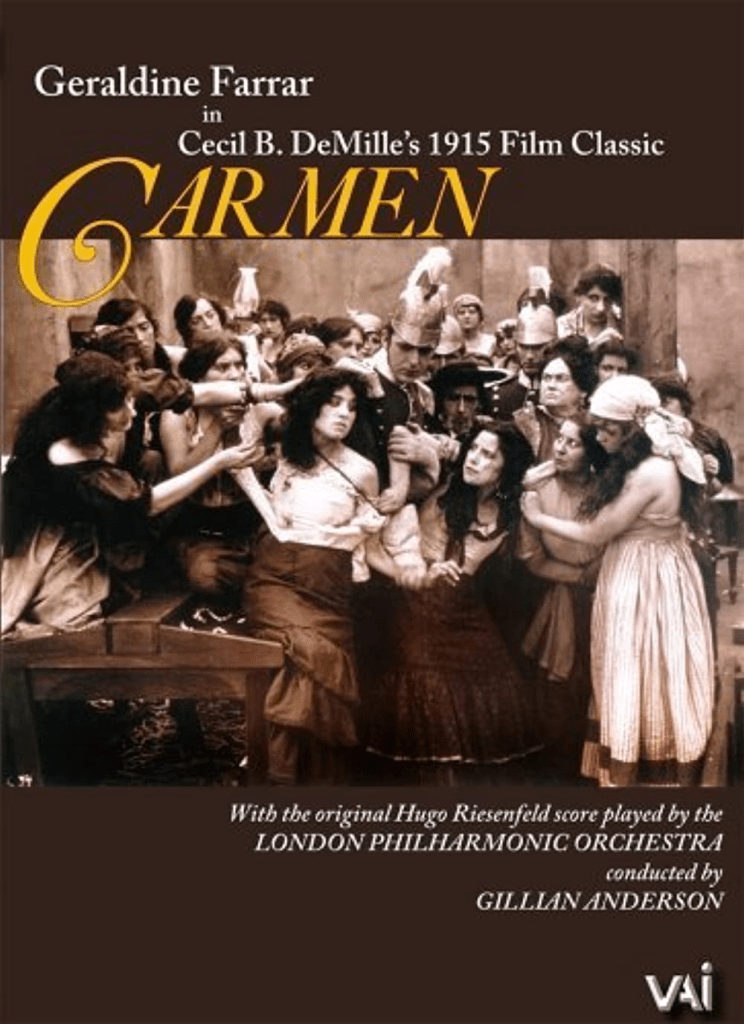
In 1915, Cecil B. DeMille filmed the opera again, this time with Geraldine Farrar as the man-eating gypsy. Now, Farrar was not only one of the greatest sopranos and MET legends of the early 20th century, her beautiful appearance and excessive acting talent also enabled her to build a career as a Hollywood actress.
Beverly Sills was born in Brooklyn as Belle Miriam Silverman. Her parents were Jewish immigrants from Odessa and Bucharest. As a child, she spoke Yiddish, Russian, Romanian, French and English. Although she had an enormous repertoire, that ranged from Handel and Mozart to Puccini, Massenet and Verdi, she was best known for her interpretations of coloratura soprano roles. Her radiant high D’s and E-flats sounded seemingly effortless and natural.
Scuderi sang in the most important theatres of the day, both in Italy and abroad, most notably in the Netherlands! She had a contract at La Scala where she received high praise for her interpretations of the most well-known operas.
High coloratura soprano is one of the most admired voice types. It’s only logical, because what these ladies do falls a bit into the category of “nightingale on a trapeze”.
But, but…. I made an article about King David and music
King David…. One of the Bible’s most inspiring and appealing personalities. But did he really exist? We live in a time when all sorts of things are being doubted, and that is alright.
Aanbidding door de Herders, Gerard van Honthorst (1592 – 1656)
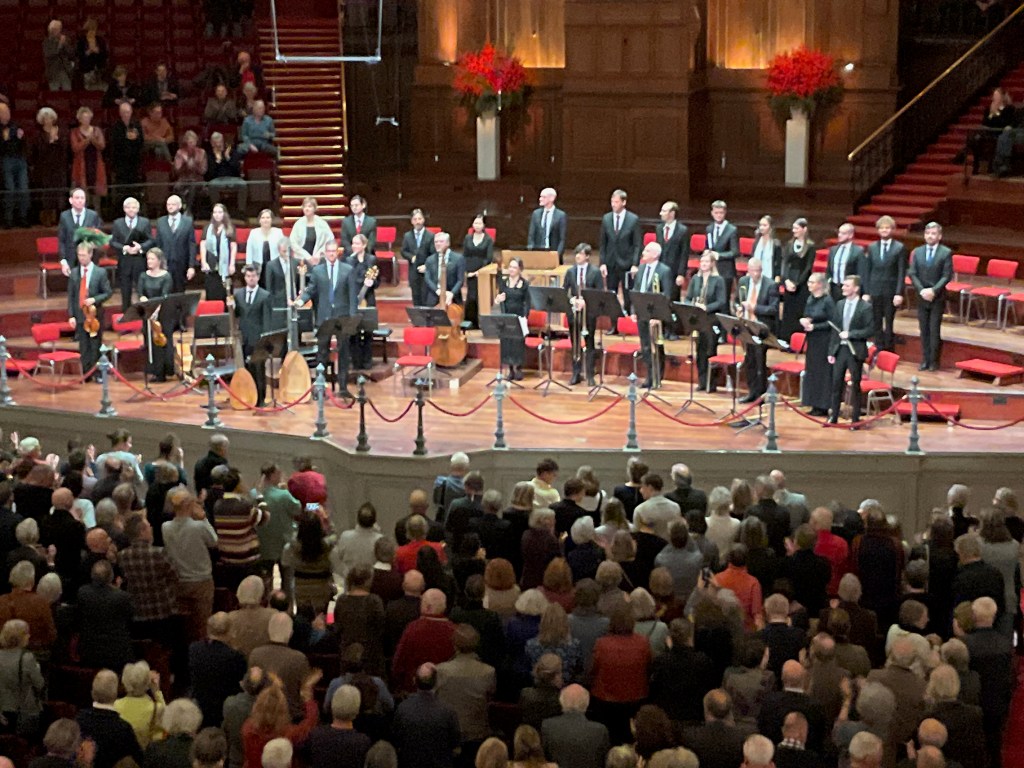
Het Concertgebouw was passend in stijl verlicht: zonder kerstkitsch, maar met subtiele gebruikmaking van de bestaande belichting, met name de kroonluchters en de kaarsverlichting langs de zijwanden en speciale verlichting van de rozetten tussen de naamboordjes rondom, aangevuld met twee grote kerstroos-boeketten aan weerszijden van het podium.
Aankondiging aan de herders, Maître des Cortèges ca. 1630
Vox Luminis, opgericht door de in Frankrijk geboren, in Namen woonachtige en momenteel in Brugge werkzame Lionel Meunier, trad aan met een vocaal en instrumentaal ensemble, meet heel veel Frans en Vlaams klinkend namen. Al met al, zoals zou blijken, de goede mix voor de benadering van protestantse Duitse, maar zwaar door vroege Italiaanse barok beïnvloede kerkmuziek. Zoals Matinee-directeur Kees Vlaardingerbroek vertelde werkten er tijdens Schütz’ aanstelling in Dresden (waar de keurvorsten op zeker moment toch weer katholiek werden om het koningschap van Polen in de wacht te kunnen slepen) zowel Duitse als Italiaanse musici. En Schütz schreef zowel muziek op teksten in het Duits als in het Latijn. En trouwens ook in de Protestantse kerkelijke eredienst in Duitsland waren vrouwelijke zangers taboe, en naar verluidt waren aan het hof in Dresden niet alleen jongenssopranen maar zelfs Italiaanse castraten aan het werk.
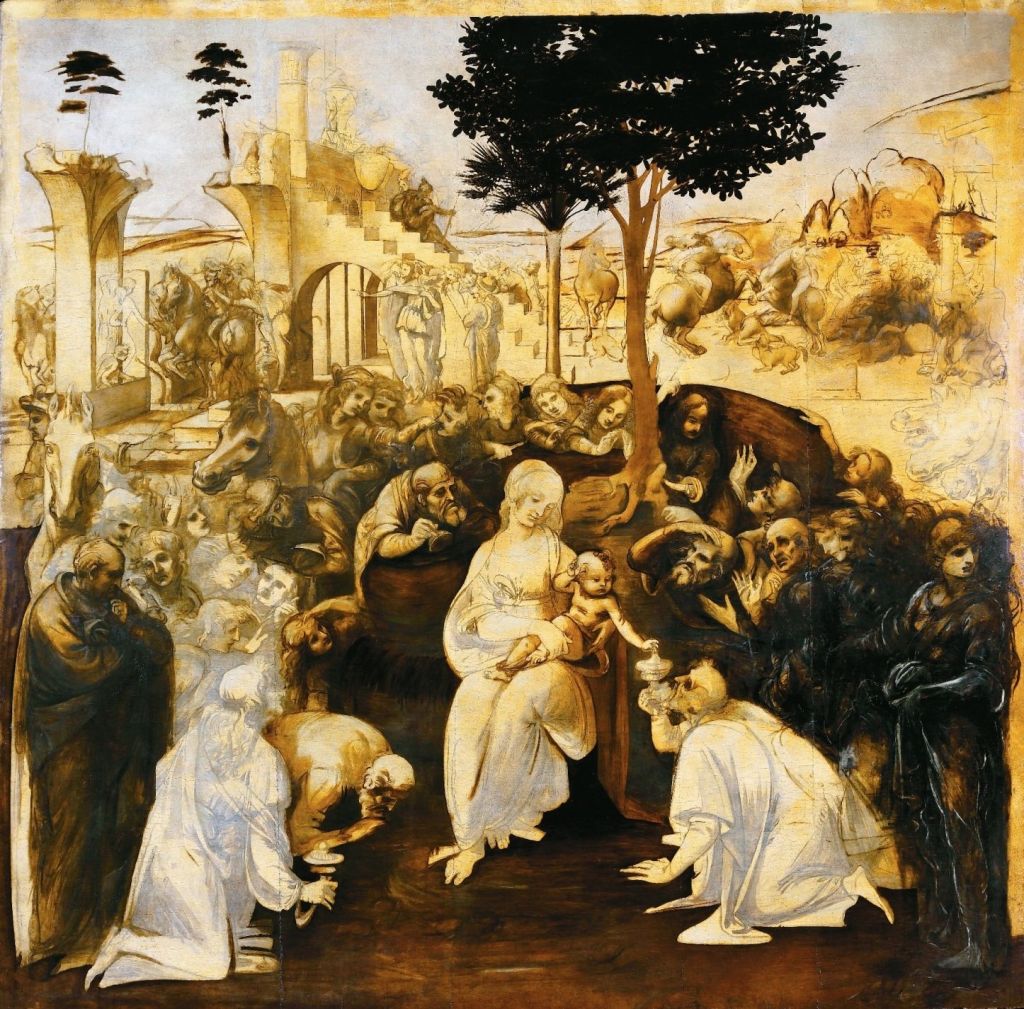
Aanbidding door de Wijzen, Leonardo da Vinci (1452 – 1519)
De vroege Duitse barok heeft zowel voor kerst als de goede-vrijdag en pasen een ongekende hoeveelheid aan prachtige muziek opgeleverd. In de lijdensmuziek is de weg vanaf Schütz naar de passies van Bach zonneklaar, al doen we die ontwikkelingsgang met onze eenzijdige nadruk op Bachs passies te kort.
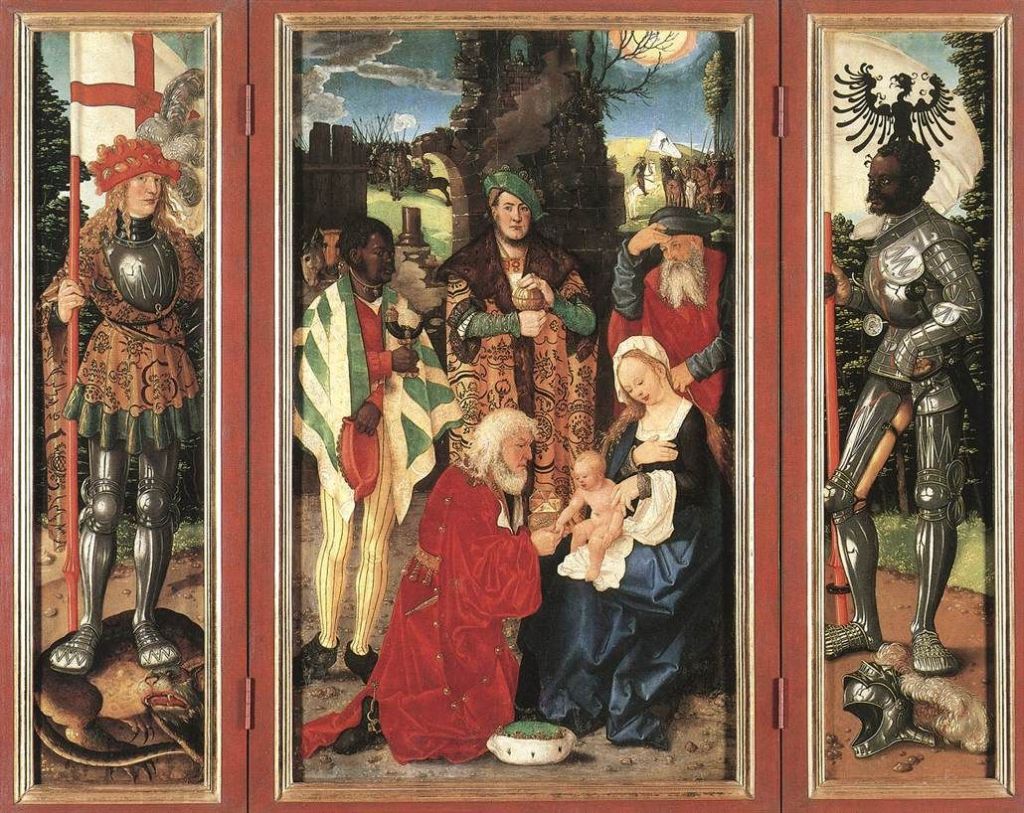
Aanbidding door de Wijzen, Hans Baldung Grien (1484/5 – 1545)
In kerstmuziek is het al helemaal jammer dat we de nadruk laten liggen bij Bachs Weihnachtsoratorium, dat geen oratorium is maar een verzameling tamelijk eenvormige cantates, en bij de Messiah van die nare man Händel. In nog geen half uur weet Schütz in zijn Weihnachtshistorie het hele kerstverhaal uit de doeken te doen. Hammerschmidts Alleluja! Freuet euch en zijn Freude, Freude, grosse Freude zijn ideaal om eens een keer in de plaatste komen van het eeuwige jaarlijkse Jauchzet Frohlocket van Bachs Weihnachtsoratorium. En qua jubeltoon is er weinig mooiers dan Rosenmüllers Magnificat.
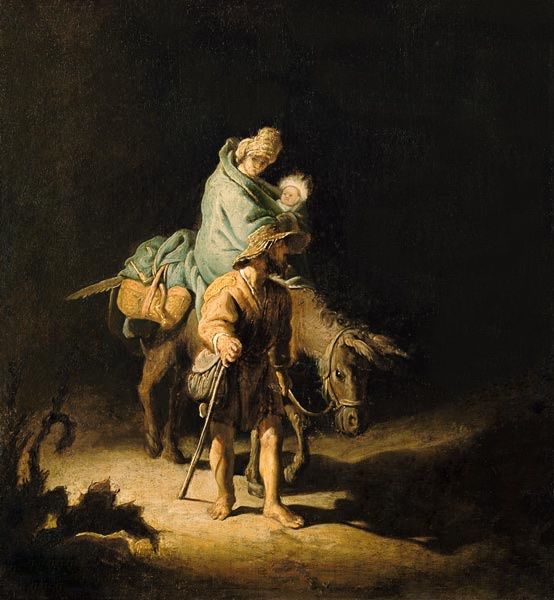
Vlucht naar Egypte, Rembrandt (1606 – 1669)
Bij Schütz (1585, een eeuw dus voor Bach! – 1672, dit jaar is zijn 250e sterfjaar) hoor je al vroeg in zijn oeuvre dat hij naar Venetië was geweest, op zijn 24e, om in 1609 bij Giovanni Gabrieli, de huiscomponist van de San Marco, te studeren, en misschien maakte hij ook kennis met de vroege werken van Monteverdi, wiens operas Orfeo en Arianna in resp. 1607 en 1608 in Mantua in première waren gegaan, en die hij bij een tweede reis naar Italië in 1628/1629 mogelijk ook persoonlijk ontmoette. (Schütz zou in 1627 zelf ook een opera schrijven, Dafne, die helaas net als Monteverdi’s Arianna verloren is gegaan, in dit geval tijdens de Dertigjarige Oorlog.)
In het uitbundige openingsstuk van het concert Magnificat uit 1650 past Schütz een reeks muziekdramatische effecten toe in de muziek. Vox Luminis voegt daar nog een aantal huiveringwekkende geregisseerde theatrale effecten aan toe. De uitvoering begint met een solo voor orgel waarbij de andere instrumentalisten op het toneel zitten. Van vier kanten komen de zangers op, over de trappen van boven naar beneden rechts en links en vanaf de zaal links en rechts het podium op, als bij het begin van een processie die naar een kerkelijk ritueel leidt.
Heinrich Schütz door Vox Luminis:
Dat theatrale komt echter nog veel sterker tot uiting in de Weihnachtshistorie. In dit werk uit 1660, geschreven dus toen Schütz rond de 75 jaar was, liet Schütz zich duidelijke leiden door een combinatie van folkloristische Duitse kerstspelen en de recitatievenstijl van de Italiaanse opera. Er komen zelfs gedramatiseerde personages voor, met allereerst een grote partij voor de evangelist. De tweede afzonderlijk rol is voor de engel, die namens de hemel aanwijzingen geeft aan het paar Jozef en Maria, de herders in het veld de weg naar de kerststal wijst, de wijzen uit het Oosten instrueert om anders dan ze beloofd hadden op de terugweg van de stal geen rapportage uit te brengen bij de koning Herodes en daarmee de verblijfplaats van het kindeke Jezus te verraden, en die Jozef maant om met Maria en de pasgeboren Jezus naar Egypte te vluchten. Als een derde afzonderlijk personage zien we Herodes, die van plan is de pasgeboren ‘koning de Joden’ te laten vermoorden en voor alle zekerheid alle pasgeboren kinderen in Bethlehem laat doden.
Kindermoord in Bethlehem Giotto (1267 – 1337)
Dit alles werd door Schütz uitgebeeld alsof hij een Orfeo aan het schrijven was, en Vox Luminis laat de zangers solo of in ensemblevorm van achteren naar voren komen en vice versa, en op het podium van het Concertgebouw speelt zich bijna een miniopera af.
Kindermoord in Bethlehem Duits ca. 1350
Uiteindelijk, als Herodes is overleden, laat de engel weten dat de kust weer veilig is en kan de heilige familie naar Jozef en Maria’s geboortestad Nazareth vertrekken. De rest is geschiedenis. In onze tijd waarin vluchtelingen dagelijks in het nieuws zijn krijgt dit verhaal extra dramatiek.
Kindermoord in Bethlehem Pieter Brueghel de Oude, ca 1566, protest tegen de gruweldaden van het Spaanse leger (1564 – 1638)
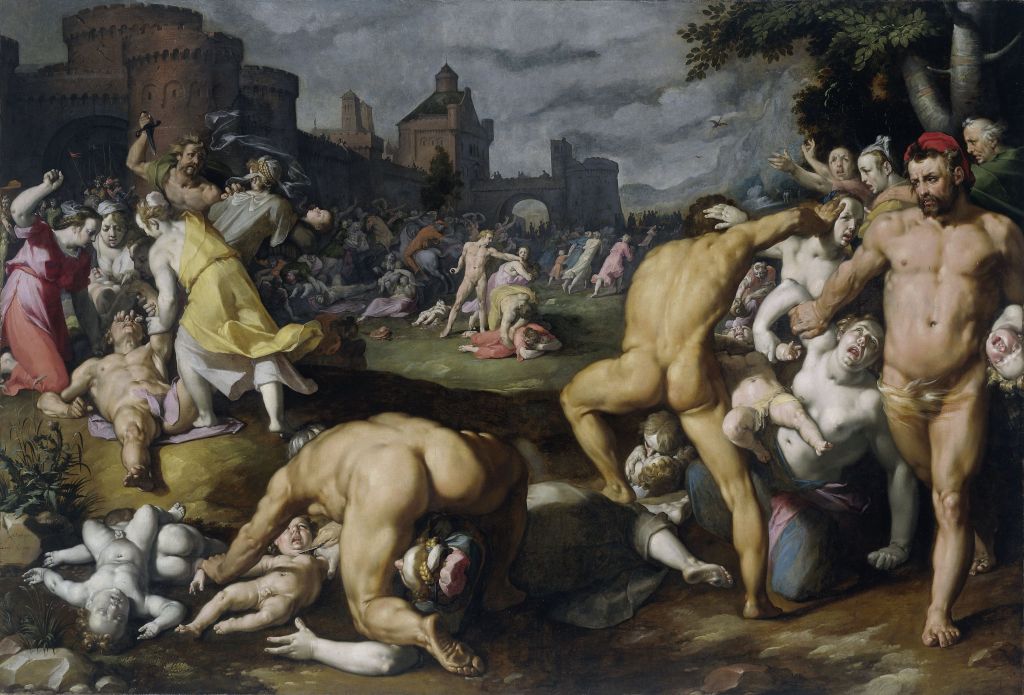
Kindermoord in Bethlehem Cornelis van Haarlem, ca 1590 (1572 – 1638)
Dat geldt trouwens ook voor de biografieën van de twee andere componisten die in het programma aan bod kwamen. Dat protestantse familie van Andreas Hammerschmidt was uit het katholieke Bohemen gevlucht. Hij kwam terecht in Zittau, tegenwoordig helemaal in het uiterste zuidoosten oostelijk Duitsland, tegen Polen en Tsjechië aan gedrukt.
Freude Freude grotte Freude van Andreas Hammerschmidt door Vox Luminis:
Later bij de zevenjarige oorlog van 1756 tot 1763 van tussen Pruisen en Oostenrijk, dat samen met Spanje en Frankrijk Silezië op Pruisen wilde veroveren, is een deel van Hammerschmidts composities en persoonlijke archieven verloren gegaan. Door dit alles weten weet niemand precies wanneer hij is geboren, waarschijnlijk in 1611 of 1612. Bij zijn dood in 1675 was hij echter beroemd en heette hij de Orpheus van Zittau. Je hoort hoe Hammerschmidt al lang voor Bach intensief gebruik maakte van dansritmen in de kerkmuziek, wat ook eerder al door Monteverdi was toegepast.
Een geheel aan Hammerschmidt gewijde CD van Vox Luminis:
Dat Bach deze muziek van zijn Duitse voorgangers bewonderde moge ook blijken uit zijn veelvuldig gebruik van hun muziek, zoals het koraal ‘Welt, ade! ich bin dein müde’ in Bachs gelijknamige cantate, een koraal dat oorspronkelijk werd geschreven door de laatste componist in het programma, Johann Rosenmüller.
Bach heeft het koraal overgenomen in cantate BWV 27 :
Bach heeft de tekst ook verwerkt in een aria uit de cantate BWV 15 “Der Friede sei mit dir“, hier uitgevoerd door Dietrich Fischer Dieskau met niemand minder dan Lorin Maazel als dirigent en op viool:
Van Rosenmüller (1619 – 1684) werd het veel vreugdevollere, zij het ook grotendeels in mineurtoonsoorten gecomponeerde achttienstemmig Magnificat ten gehore gebracht. Het werk stoelt op de polyfonie van de Renaissance, maar tegelijkertijd de moderne monodische compositiepraktijk volgt zoals Monteverdi en in diens navolging Schütz dat deden, met instrumentale passages tussendoor.
Rosenmüllers Welt ade! ich bin dein müde, dat door Bach werd geadopteerd”
Rosenmüller bracht het tot organist en cantor van de Nikolaikirche in Leipzig maar vluchtte Duitsland uit toen hij in 1655 in opspraak raakte wegens homoseksualiteit. Hij week uit naar Venetië en werd organist van niet minder dan de San Marco en was ook verbonden aan de Ospedale della Pietà, waar Vivaldi later werkzaam was. Twee jaar voor zijn dood keerde Rosenmüller terug naar Duitsland. Ondanks alles kreeg hij de bijnaam “Alpha & Omega Musicorum”. In dit Magnificat komen alle Mediterrane en noordelijke elementen samen, en we horen in de ‘Sicut Erat’-passage zowaar een aanzet tot een fuga waarvoor Bach zich niet had hoeven schamen.
Het ensemble 1684 met o.m. Rosenmüllers Magnificat. Het wachten is nu op een opname door Vox Luminis, die het toch nog beter deden.
Na een ovationeel applaus, in de uitverkochte grote zaal van het Concertgebouw, was er een passende toegift, een ingetogen uitvoering van het Duitse van de Duitste kerstgezangen, Es ist ein Ros’ Entsprungen, in de meerstemmige zetting van Michael Praetorius. Een geweldig einde van een concert dat nog veel langer had mogen duren.
Es ist ein Ros’ Entsprungen door Vox Luminis:
Er zijn nog zoveel componisten uit die tijd. Naast Schütz de twee andere Sch’s Schein en Scheidt, en verder Matthias Weckman, Johann Krieger, Franz Tunder, Thomas Selle en iets later Johann Theile, wiens fenomenale Matthäus Passion ik precies een jaar geleden tijdens kerst voor het eerst hoorde.
Ik realiseerde me tijdens het concert dat al deze muziek zo aanspreekt door een combinatie van verfijnd raffinement en bijna kinderlijke oprechtheid, de naïviteit in de Nativité zogezegd, iets wat na deze periode pas weer terugkeert in Mendelssohns oratoria en, paradoxalerwijs, in L’Enfance du Christ van agnost Berlioz. Ook ik voel me bij deze muziek teruggezogen naar mijn jeugdjaren van Christelijke kerstbeleving.
Kerst met Vox Luminis Heinrich Schütz: Magnificat Weihnachtshistorie Florian Sievers evangelist Sebastian Myrus Herodes Caroline Tandiono Engel O bone Jesu, fili Mariae
Andreas Hammerschmidt: Alleluja! Freuet euch, ihr Christen alle Freude, Freude, grosse Freude Ehre sei Gott in der Höhe
First, attention for two live recordings from the New York Met: from 1947, under Giuseppe Antonicelli and from1958, conducted by Thomas Schippers. Both were released on Sony some time ago and both are well worth listening to.
Bidú Sayão 1947
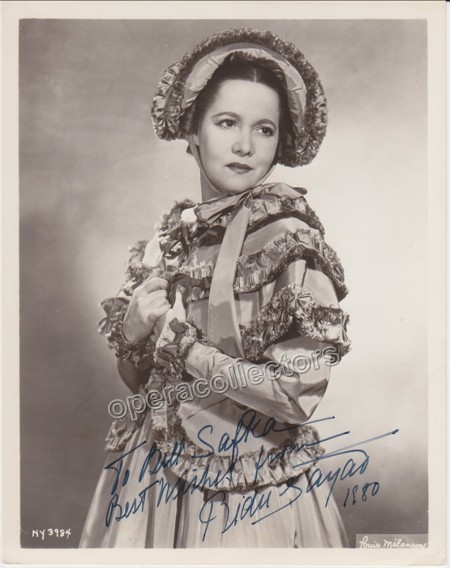
Brazilian Bidú Sayão was considered one of the most beautiful sopranos at the Met, and not just literally. Her voice is feathery light and reminiscent of women’s voices in the old movies from the early days of the “talking movies,” which definitely suits the role of Mimi.
Personally, I prefer rounder voices with slightly dramatic undertones, but this really makes me happy. Combined with the young Richard Tucker, she sounds very delicate and needy. Giuseppe Antonicelli’s conduction is fast-paced (Sony 74646762)
Below Richard Tucker, Bidu Sayao, Mimi Benzell and Frank Valentino in the quartet “Dunque e proprio finita” from the third act:
Licia Albanese 1958
A warning is in order: the sound is not great. It is sharp and dull and occasionally the radio waves are humming rebelliously, but it also has something quite endearing. As if a time machine takes you back to the afternoons of yore, when the whole family settled down in front of the radio to listen to the latest invention, the live broadcast.
The performance, too, is old-fashionedly delicious. Not that the voices are all that exceptional, apart from Carlo Bergonzi who is at his finest, the other roles could have been better cast.
Licia Albanese (almost fifty by then, which is not at all audible) was a real crowd pleaser, especially in New York. Thomas Schippers conducts very vividly (Sony 8697804632)
STUDIO
Victoria de los Angeles 1956
Do you want to cry, from the very beginning? If so, you have come to the right place. Thomas Beecham really does his best to make the RCA orchestra sound a little detached, but the musicians are real human beings and they have no reservations concerning true love. Completely unashamedly, they allow all feelings, including a healthy dose of sentimentality. So you may cry all you want to!
The first meeting between Rodolfo and Mimi already… his ‘così’ when pouring his ‘po’ di vino’ and then her ‘grazie, buona sera’…. Folks, anyone here who doesn’t instantly forget about the rest of the world has no heart!
Jussi Björling is a dream Rodolfo: sensitive, sensible, sweet and so damn attractive! That Victoria de los Angeles (Mimi) falls for him we can’t blame her for, after all, so do we. But we grant him to her wholeheartedly because of her voice, it is so terribly beautiful that it almost hurts. As if she were the Madonna herself who has her extinguished candle lit by her neighbor. In which we conveniently forget that she probably blew out the candle herself. That, then, is the only downside of the recording: Mimi was no Madonna.
For the rest: a must. Also because of the irresistible Marcello by Robert Merrill (Naxos 8.111249/50)
Maria Callas 1956
This recording will not go with me to the “desert island.” It is not because of the conductor, nor the splendidly playing orchestra from La Scala: Antonino Votto conducts smoothly and excitingly and his attention to all the details is truly brilliant,
Rolando Panerai (Marcello) and Giuseppe di Stefano (Rodolfo) are a match for each other, their voices suit each other excellently, although I find di Stefano a bit on the screaming side at times. I also like young Anna Moffo’s very sensual Musetta. The problem – at least for me – lies with La Divina.
Mimi is not a role with which we associate Callas, and rightly so. She has therefore – wisely enough – never sung her on stage. No matter how hard she tries (and she really does!) nowhere does she manage to convince me that she is a poor seamstress, her voice is just too regal for that. Frantically she tries to keep her voice small which makes her sound quite artificial. But I’m sure her fans would disagree with me.
The recording still sounds surprisingly good (Warner Classics 0825646341078)
Renata Tebaldi 1958
Actually, I also find Tebaldi’s voice a bit too heavy for Mimi, a tad too dramatic too, but there is no denying that her interpretation is very exciting. You have to keep listening to it.
Carlo Bergonzi is an insanely beautiful Rodolfo; secretly, I think he is the real star of the recording. Ettore Bastianini is a very charming Marcello, but Gianna d’Angelo is not a beautiful Musetta. Her singing has nothing sensual and is vulgar at times.
Tulio Serafin conducts more than superbly and the orchestral sound is brilliant. Remarkable actually how wonderful that recording still sounds! (Decca 4487252)
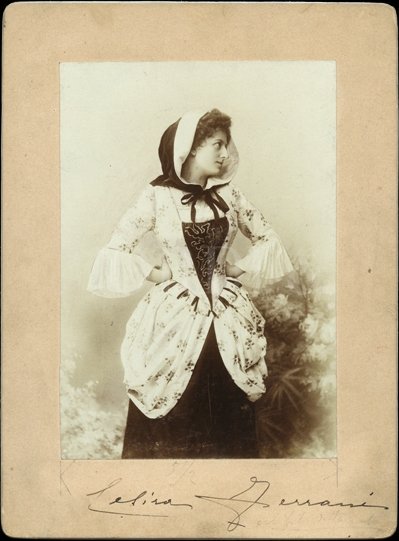
Cesira Ferrani
Would you like to know what the first Mimi sounded like? You can. Cesira Ferrani who created the role in 1896 recorded two minutes from Mimi’ in 1903 (Creators’ Records SRO 818-2).
Cesira Ferrani (Mimi) and Evan Gorga (Rodolfo) at the premiére 1 februari 1896
It still sounds surprisingly good, thus we know that Mimi’s soprano was very light, but far from soubrette. Ferrani was also the first Manon Lescaut, Micaela and Melisande, so you can suspect some deeper things under the veneer of an “innocent” girl. As it should be.
Also on Spotify, are a few of her recordings taken from The Harold Wayne Collection and released on Symposium. Here, in addition to “Si mi chiamamo Mimi,” you will also find “Donde lieta usci. And – a real oddity! – an aria from Lohengrin sung in Italian.
Moonstruck
And then there’s (go ahead, it’s almost Christmas anyway) one of all-time’s greatest feel-good movies: Moonstruck.
The story itself has little to do with the real opera, except that the main characters attend a performance of La Boheme at the Metropolitan – it’s good old Zeffirelli – after which we fast-forward to the movie’s happy ending. But in that scene, we too, along with both protagonists are allowed to shed a few tears. The fact that Puccini’s music resounds not only at the credits but also throughout the film is a nice touch.
Trivia: the old man (Loretta’s grandfather) is played by Feodor Chaliapin junior, the son of the great Russian bass.
Scene in the opera. The voices you hear are those of Renata Tebaldi and Carlo Bergonzi.




























 Basia con fuoco