Marc_Minkowski

Armide: Christoph Willibald Gluck considered it his best work.

Do you agree?

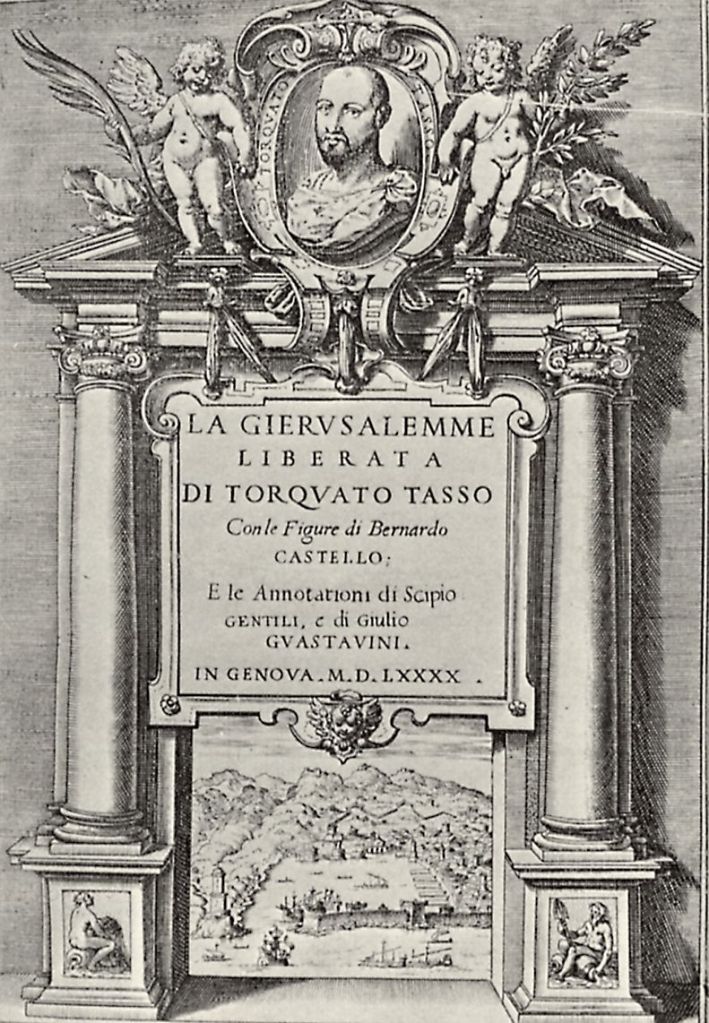
Agostino Carracci (su disegno di Bernardo Castello), Frontespizio della prima edizione illustrata della Gerusalemme Liberata, Genova, 1590


One might wonder why Torquato Tasso’s Gerusalemme liberata has inspired so many different composers from so many centuries. And not the entire epic, but specifically the Armida episode. Is it because of the magical-realistic story full of undisguised hatred, revenge, anger and passion? With characters (human or witch) torn apart by their conflicting feelings, their inner struggle between love and duty? I cannot say. Can you?


The first Armida that remains known to the general public was composed by
Jean-Baptiste Lully, based on the libretto by Philippe Quinault. Gluck used the same libretto a hundred years later for his fifth “French” opera. He himself considered Armide to be his very best work, but the public (and history) thought otherwise.


I myself have never been particularly fond of it either. But the longer I have been involved with opera, the more I have come to appreciate it.
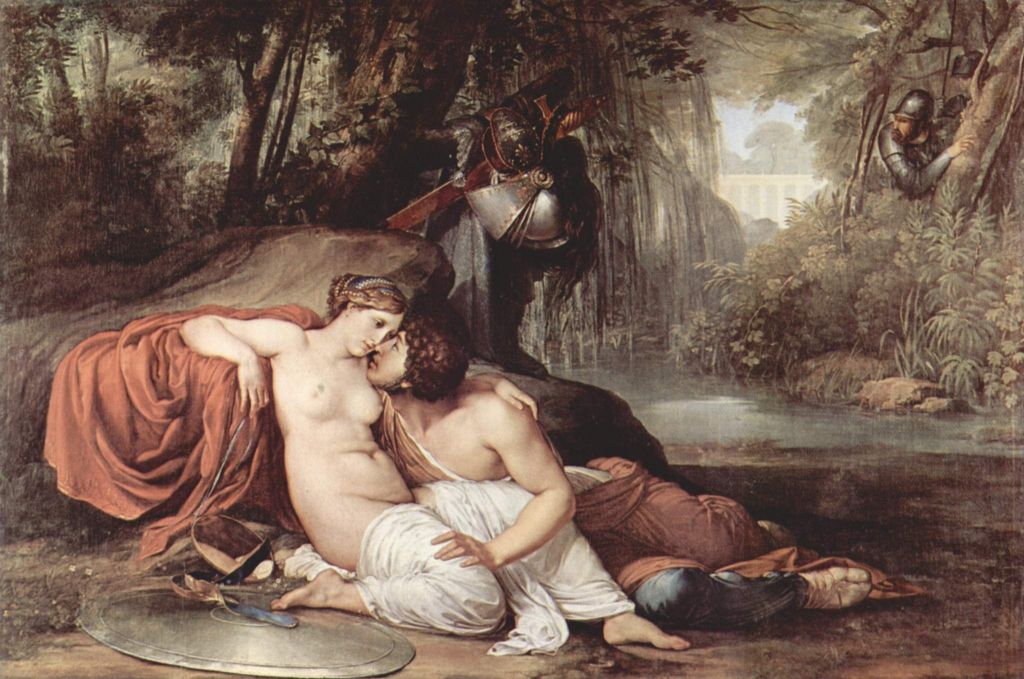
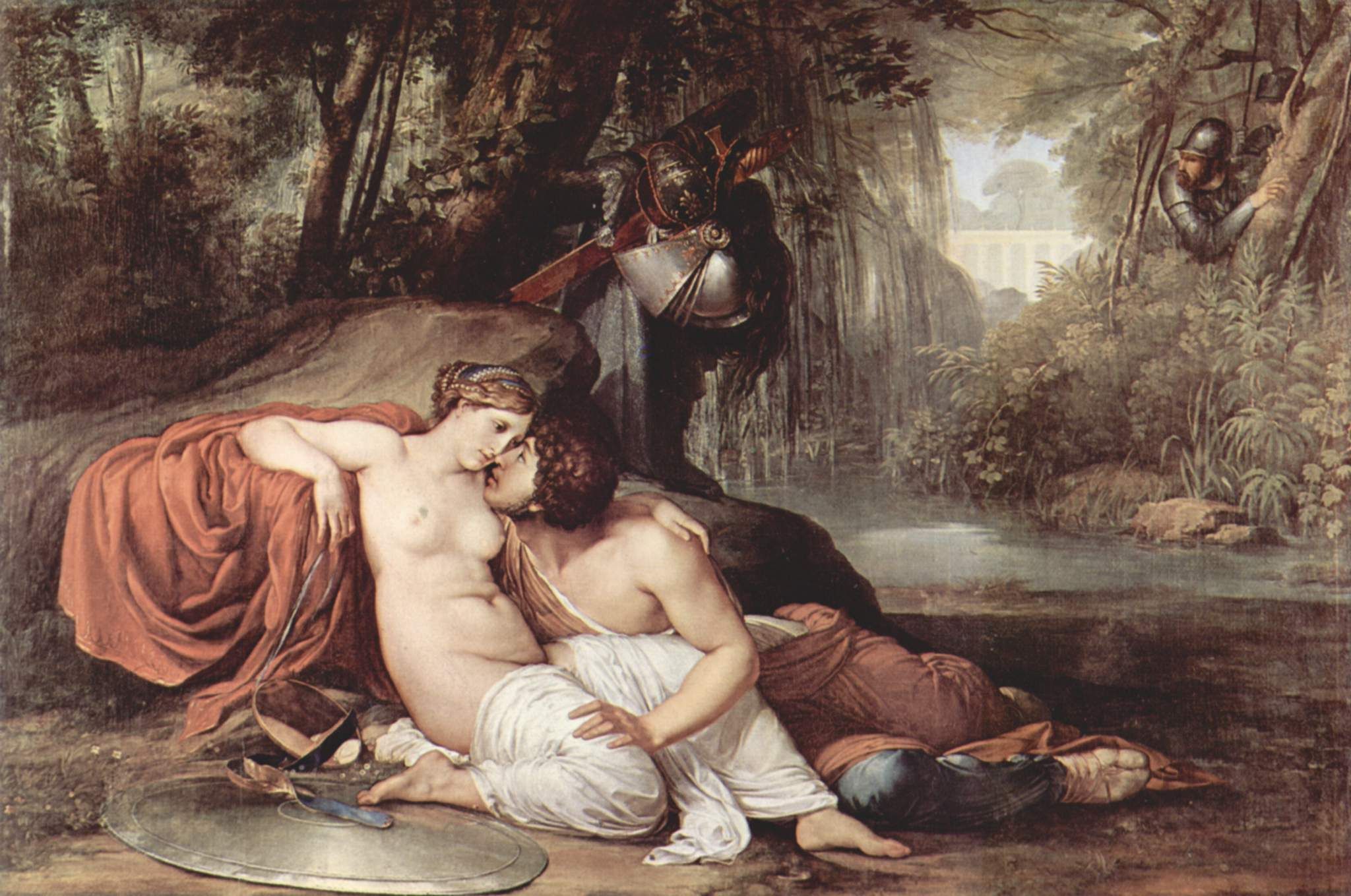
Francesco Hayez, “Rinaldo en Armida”


The opera has some magnificent arias and ensembles, with the heart-rending ‘Enfin, il est en ma puissance’ as an absolute highlight. It is a hysterical cry from the heart of the furious sorceress Armide, who has fallen in love.

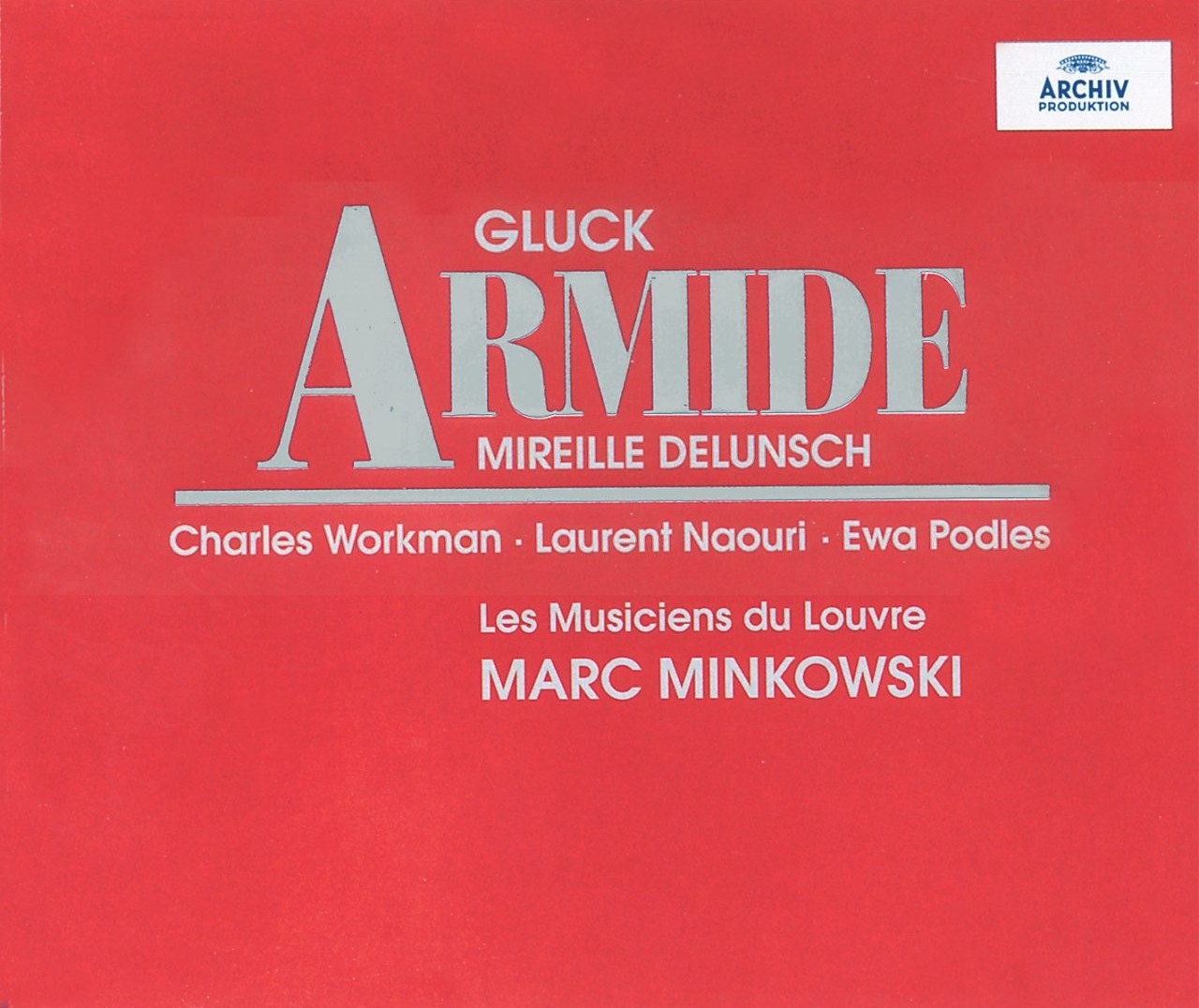
I know of only two complete recordings of Gluck’s work: one conducted by ichard Hickox on EMI (6407282) and one conducted by Marc Minkowski on Archiv (4596162). This is remarkable, considering that the opera is being erformed quite often these days.
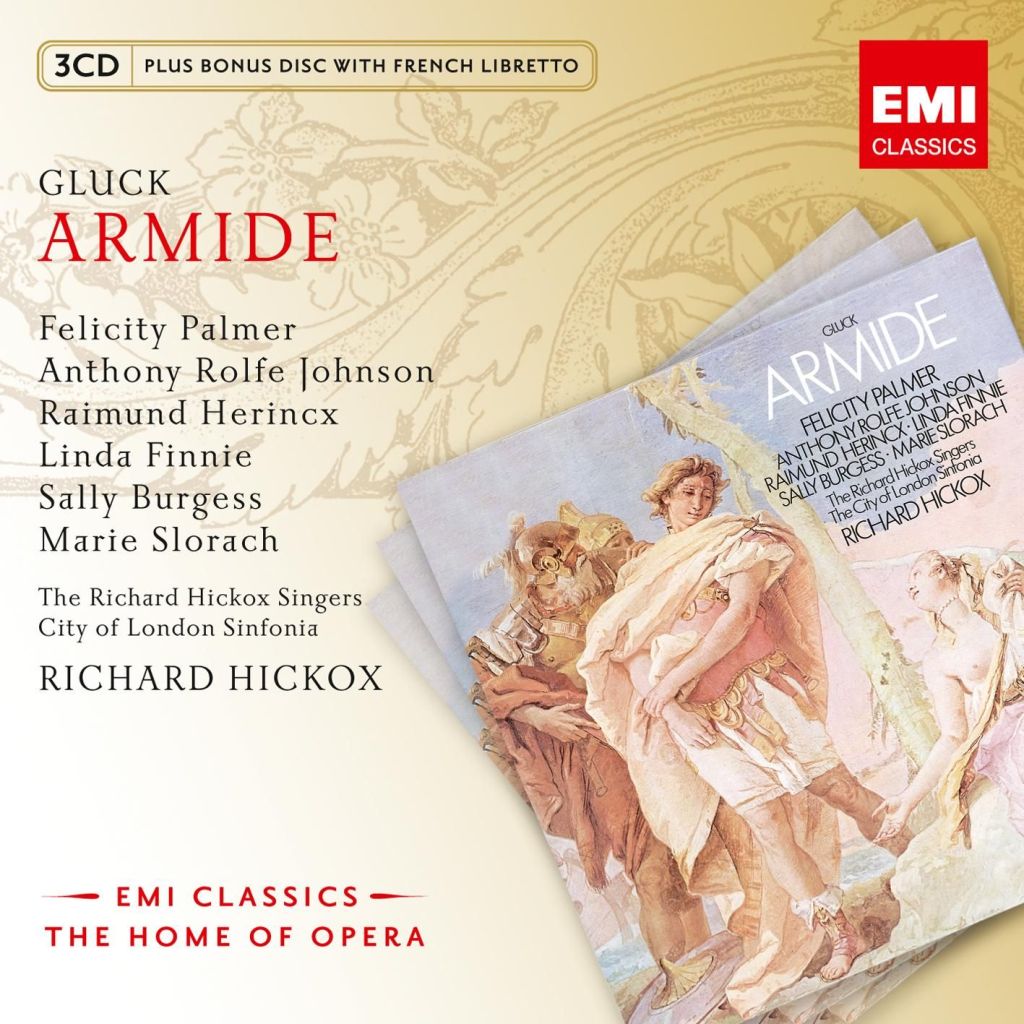


Hicox’s recording (3 CDs) is over 26 minutes longer than Minkowski’s. I don’t know the opera well enough to be able to say whether Minkowski has made any cuts, but to be honest, I don’t think so. His tempi are simply on the fast side – except for the overture, where he is proceeds with some caution.


Hickox’s sluggishness becomes quite irritating after a while and I simply dozed off a few times. The thirty-year-old recording still sounds beautiful, although the sound does not match the clarity and
transparency of Minkowski’s.
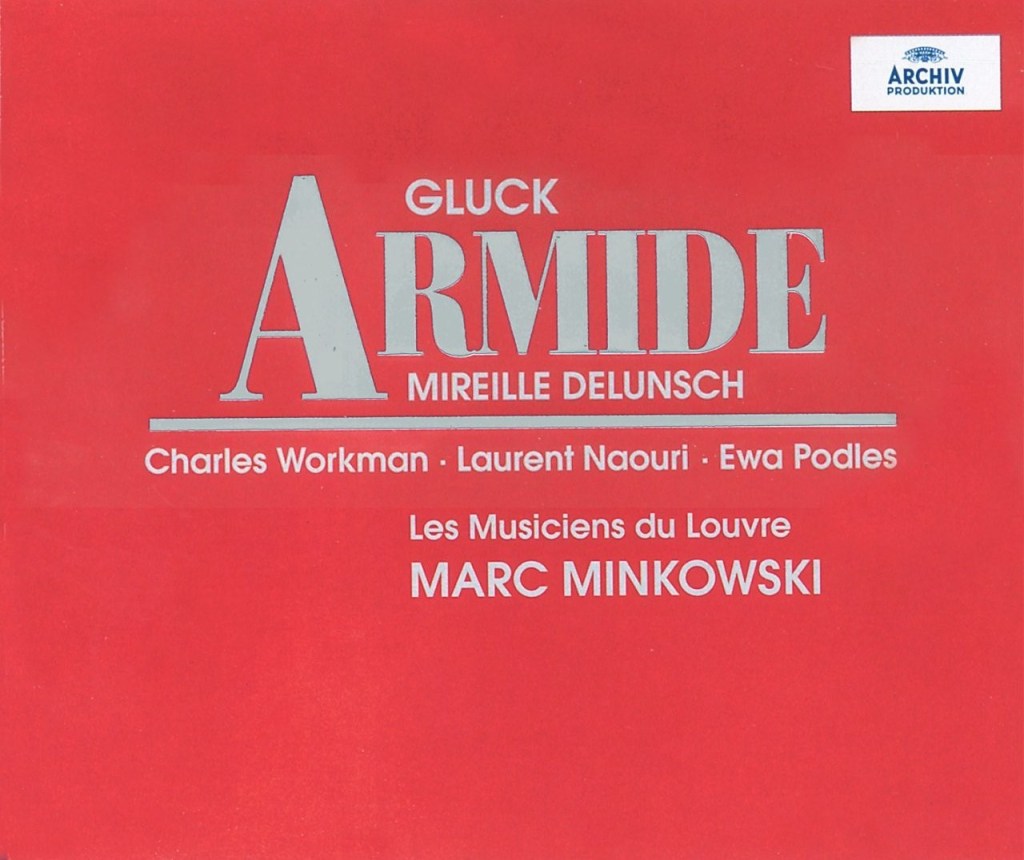

When it comes to the singers, the Frenchman easily beats his English colleague. I’m not a big fan of Mireille Delunsch, and I think her “Enfin il est en ma puissance” on Minkowski’s recording falls short of the interpretations by, for example, Véronique Gens or Anna Catarina Antonacci (why was the performance with Antonacci never officially recorded?). Nevertheless, despite her perfect diction and impeccable understanding of the text, Felicity Palmer (Hickox’s recording) is nomatch for her.


Charles Workman (Renaut) strikes a perfect balance between the heroic and the more lyrical – even my beloved Anthony Rolfe Johnson cannot compete with that.

Laurent Naouri is a very macho Hidraot, but what gives Minkowski’s recording that “superplus” is Ewa Podles’ performance in the small role of La Haine (Hate). Her voice and delivery will make your head spin. She is without peers: an alto with such a deep sound, with all the high notes at her disposal and she will leave you speechless with her interpretation!

HIckox:

Minkowski:


And a curiosity: a complete Armide from Madrid, 1985, with Montserrat ArmideCaballé:
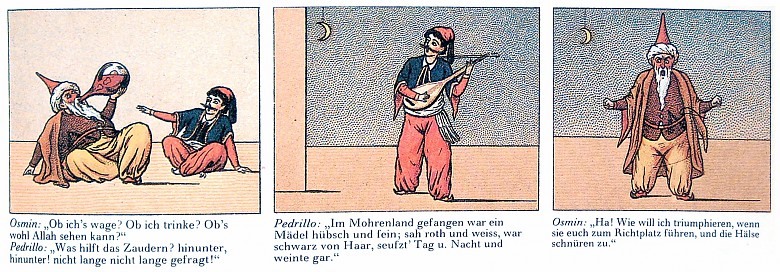
Mozart’s Orient Express: Die Entführung aus dem Serail in three recordings

Szenenbilder aus “Die Entführung aus dem Serail”, 1914, © Foto: Julia Teresa Friehs

CD

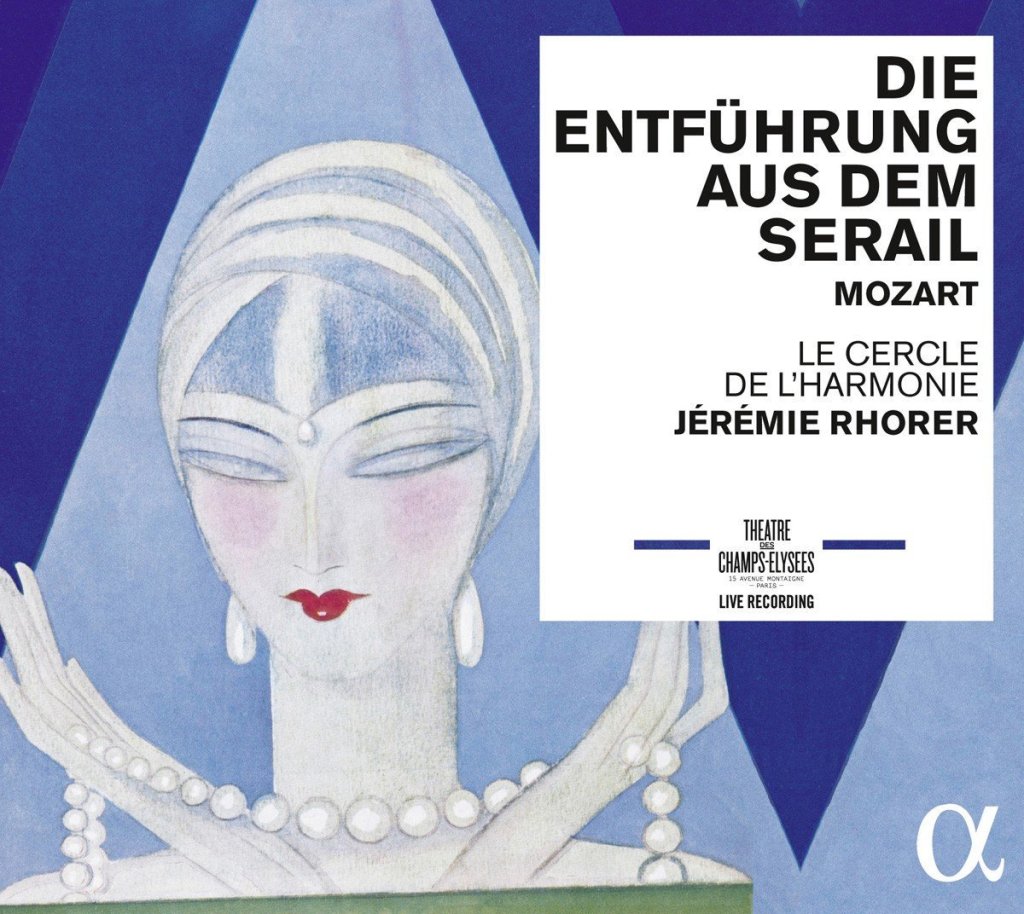
There is no shortage of recordings of Die Entführung aus dem Serail, but really good ones may be counted on the fingers of one hand. Moreover,you often have to go quite far back in time to find the real gems. But the performance recorded live at the Théâtre des Champs-Élysées on 21 September 2015 – and conducted very vividly by Jérémie Rhorer – is, for me, among the very best.

David Portillo is an extraordinarily fine Pedrillo. Light and airy,entertaining and amusing; and meanwhile singing utterly brilliantly…. Superb.

Rachelle Gilmore is a delightful Blonde. Just listen to “Welche Wonne,welche Lust”, which she sings with impeccable height and crystal-clearcolouratura! Breathtaking.

Mischa Schelomianski shines as Osmin. That he sings the role with a thick Russian accent is anything but disturbing here. It is quite right for Osmin. Jane Archibald (Konstanze) sounds a bit shrill at times, but as soon asshe starts singing “Ach ich liebte” I surrender completely.

Only Belmonte (Norman Reinhardt) I have heard better. His voice iscreamy and his timbre pleasant, but he lacks a bit of suppleness, which prevents him from being really satisfying in his “Wenn der Freude Tränen liessen”. Fortunately, “Ich baue ganz auf deine Stärke” succeeds much better, but I continue to have trouble with his ornamentation.

It’s not perfect, no, but live performances never are. It is one of the reasons why they are so much fun; after all, nothing beats live theatre! The tempi are on the brisk side but nowhere rushed, and the orchestra sparkles like a cosy fire. And there is no director to ruin it for me. This is how I want my opera’s (Alpha 242)

DVD

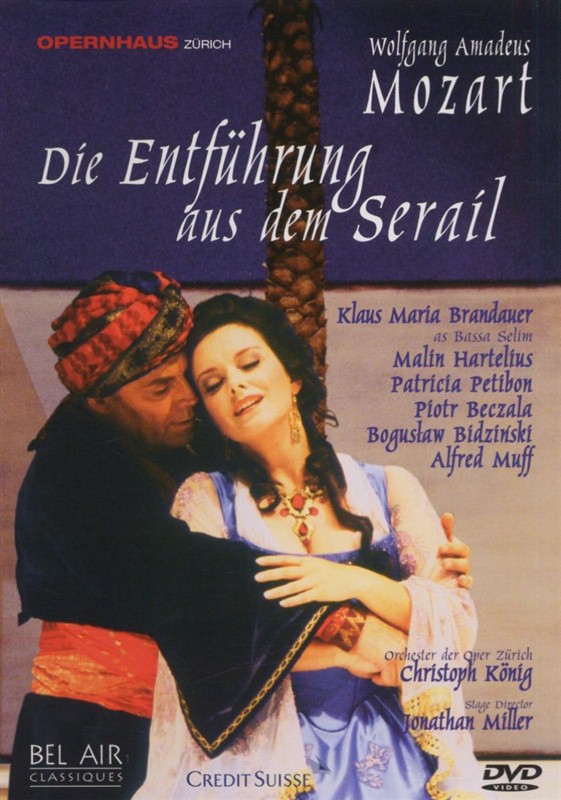
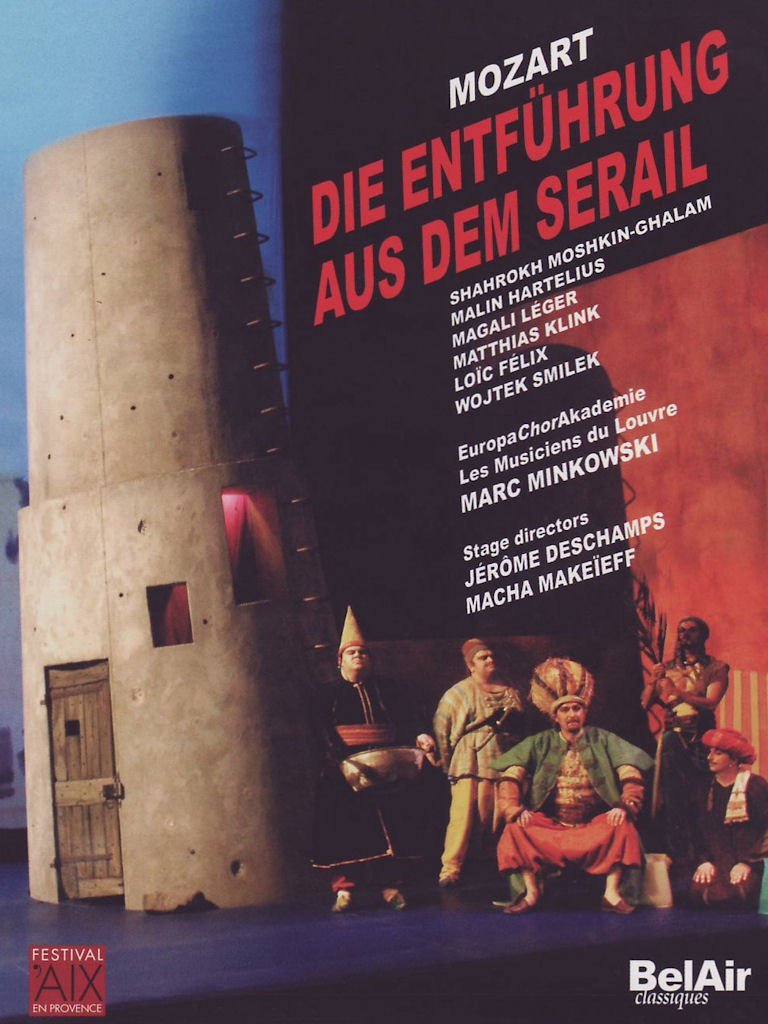
The ways of record companies are sometimes inscrutable and so it couldhappen that two different performances of Entführung aus de Serail were released within a short space of time by the same company, BelAirClassics. These are respectively a production by Jonathan Miller made for the Zürcher Festspiele in 2003 (BAC007) and a performance filmed in Aix-en-Provence in 2004, directed by Jérome Deschamps and Macha Makeïeff and conducted by Marc Minkowski (BAC028). There is aworld of difference between the two productions, it just goes to show what good (or, if you like, bad) direction can do to an opera.

Zürcher Festspiele 2003

Jonathan Miller, normally a pretty big deal, simply fails. Nothing happens. There is a palm tree in the middle and the singers come up, lean against it and sing their aria.They are totally left to their own devices, which for most results in clichéd gestures and gestures. With Patricia Petibon (Blonde), just the opposite happens: she exaggerates like her life is depending on it and she is overacting. In short: here are six characters looking for a director.

Patricia Petibon sings “Durch Zartlichkeit und Schmeicheln”:

I am not enthusiastic about the singing either, as even Piotr Beczala (Belmonte) and Malin Hartelius (Konstanze) perform far below their level.

There is one plus though: Klaus Maria Brandauer in the speaking role of Bassa Selim. Every scene with him in it turns into pure theatre. He doesn’t act, no, he just gives a masterclass in acting.

https://www.srf.ch/play/tv/tagesschau/video/mozarts-entfuehrung-aus-dem-serail-im-opernhaus-zuerich?urn=urn:srf:video:e04bd1c3-523a-4944-a440-004dd187a6a4

Aix-en-Provence 2004

The production from Aix-en-Provence can be described in one word: precious. As soon as you see the orchestra (all wearing turbans and other exotic headgear) and the entrance of a broadly smiling Minkowski, you know you are going to be amused.

The stage is populated by a motley collection of rather weird characters in oriental costumes, one joke follows another, with no cliché shunned. It is no longer comedy, it is slapstick. And why not? Mozart can take it, especially when it comes to a singspiel.

The dancing emergence on the stage of Bassa Selim (a fantastic Shahrokh Moshkin-Ghalam, a dancer and actor very famous in France) is a story in itself. His German is abominable, but he must be forgiven, because everything else he does with the role (including a spectacular disappearing act at the end) is breathtaking

Malin Hartelius shows what a fantastic Kostanze she is. Magali Léger (Blonde), Matthias Klink (Belmonte), Loïc Félix (Pedrillo) and Wojtek Smilek (Osmin) are all fine, the orchestra fierce and Minkowski on target. But be warned: it is packed with Mohammed jokes.

Entführung aus dem Serail in Antwerpen: Islamitische Staat avant la lettre?

Strehlers Entführung uit La Scala uitgebracht op BluRay

Een beetje aangeschoten… Anne Sofie von Otter zingt Offenbach

“Ach, wat was dat voor een lekker etentje, en wat voor een exclusieve wijn” zingt von Otter in de gedaante van de Peruaanse la Périchole. Zij is duidelijk aangeschoten, en zo voel ik me ook. 70 minuten lang heb ik me kunnen laven aan het mooiste wat Offenbach te bieden heeft, en dat is inderdaad met de beste wijn vergelijkbaar.

De echte naam van Offenbach was Jakob Eberst. Hij werd in 1819 geboren als het zevende kind van Isaac Judah Eberst, een verdienstelijk amateur violist die in zijn kost voorzag met het geven van muziek- en zang lessen. Toen vader Eberst aangesteld werd als de voorzanger in een Keulse synagoge, veranderde hij zijn naam in Offenbach, naar zijn geboorteplaats.

Ook Jakob was met vioollessen begonnen, maar algauw wisselde hij van instrument, om definitief voor de cello te kiezen. In 1833 stuurde zijn vader hem naar Parijs, om hem daar aan het conservatorium te laten studeren. Daar aangekomen, speelde Offenbach – inmiddels geen Jakob meer maar Jacques – enkele jaren cello bij het Opéra-Comique.

Offenbach as cello virtuoso / Alexandre Laemlein, 1850

Offenbach was een echte cello virtuoos die verliefd was op zijn instrument. Hij schreef ettelijke composities voor zijn instrument en was vijf jaar werkzaam als dirigent aan het Théatre Français. In 1855 kwam zijn droom in vervulling: aan de Champs Elysées opende hij zijn eigen theater, Bouffes-Parisiens.

Advertising poster for the Théâtre des Bouffes-Parisiens 1865 season / Nada

Na zijn overlijden werd Offenbach geroemd als de vader van de operette. Rossini noemde hem niet voor niets  “de kleine Mozart van de Champs-Elysees”! In zijn leven componeerde hij meer dan 600 werken maar het gros bleef niet uitgegeven. Enkele van zijn operettes werden her en der opgevoerd, maar tot aan 1999, toen er een monumentale editie met al zijn werken in de oorspronkelijke versie werd uitgebracht, was er geen sprake van revival en het grote publiek kende hem voornamelijk als de schepper van Les Contes d’Hoffman, een opera die hij niet eens afmaakte.

Het was niet de eerste keer dat Minkowski zich met Offenbach bezighoudt. In 2001 dirigeerde hij in Parijs een spectaculaire uitvoering van La Belle Hélène

die concertante ook in Londen en Keulen te horen was, en daarna door Virgin werd opgenomen

Het was ook Minkowski, die op von Otter’s voorstel om samen een cd met franse aria’s op te nemen, voor Offenbach had gekozen.

Les Musiciens du Louvre, het orkest dat in 1982 door Minkowski werd opgericht, speelt zowel op authentieke, als op moderne instrumenten. Voor zijn Offenbach project heeft Minkowski gekozen voor het moderne instrumentarium, maar reduceerde zijn orkest tot 40 musici. Uit de nieuwe kritische editie van Jean-Christophe Keck koos hij de op te nemen scènes, en engageerde nog  zeven andere zangers. Wat als een enkel cd-project was geboren, eindigde in december 2001 in Théatre du Chatelet in Parijs als een wervelende show. En die cd kwam er toch, want het geheel werd in 2002 door DG live opgenomen.

Anne Sofie von Otter is vanaf haar debuut in 1982 nog steeds “hot item”, een stem virtuoos die thuis is in alle vocale gebieden, al beslaat het geven van liedrecitals het belangrijkste deel van haar carrière. Von Otter is een familiemens en wil niet al te lang van huis zijn, iets wat helaas onlosmakelijk verbonden is met de wereld van de opera en de eindeloze repetities die erbij horen. Van Offenbach zong zij ooit Nicklausse in de Hoffman’s Vertellingen

Anne Sofie von Otter en Stéphanie d’Oustrac in ‘Belle nuit, ô nuit d’amour’ uit Les contes d’Hoffm\


En het is te hopen, dat die samenwerking met Minkowski haar interesse in nog meer Offenbach heeft kunnen opwekken en dat er nog meer komt.

Ik in ieder geval ben de eerste om bijvoorbeeld een complete Fantasio * toe te juichen, want de hier gepresenteerde ballade en het duet smaken naar meer, wat een mooie muziek is dit!

Het “samenzweerders sextet” uit Madame l’Archiduc is meer dan kostelijk, en doet voor de beste Rossini niet onder.

Van ‘Symphonie de l’avenir’, een geestige Wagner parodie afkomstig uit  “Le carnaval des revues” moest ik schaterlachen, en die champagne stemming bleef ik tot het eind van de cd houden.

Het publiek was duidelijk enthousiast, net als ik. En ik vraag mij nog steeds af of het teveel is gevraagd om zoiets ook naar Nederland te halen. Het is een retorische vraag

Anne Sofie van Otter, Gilles Ragon, Magali Léger, Laurent Naouri, Jean-Christophe Keck, Jean-Christophe Henry, Christophe Grapperon, Stéphanie d’Oustrac; Les Musiciens du Louvre olv Marc Minkowski
DG 4715012

From Tragédiennes to Visions. Véronique Gens, a mini portrait

In 1999, Véronique Gens was named singer of the year by the French ‘Victoires de la Musique’, but her career began 13 years earlier, when she was introduced to William Christie.


Her voice was not yet trained and that was exactly what he was looking for. In 1986, she made her debut as a member of his famous baroque ensemble Les Arts Florissants. Very quickly she became an established singer of baroque music and she worked with the biggest names in the circuit: Marc Minkowski, Philippe Herreweghe, René Jacobs, Christophe Rousset and Jean-Claude Malgoire.


Gens sings ´Ogni vento´ from Hàndel’s Agrippina, conducted by Malgoire


It was Malgoire who gave her her first Mozart roles: Cherubino (Le Nozze di Figaro) and Vitellia (La Clemenza di Tito), but if anyone had predicted to her 20 years ago that she would one day sing the Contessa from Le Nozze or Elvira (Don Giovanni), she would surely not have believed it.


Véronique Gens as Donna Elvira in Barcelona:


She always wanted to sing, but her family of almost exclusively doctors and pharmacists didn’t like it. No steady income, no pension… So she studied English in her hometown Orléans, and then at the Sorbonne.


Since then, she has made hundreds of recordings – many of them award-winning – and her repertoire is constantly expanding: after Mozart came Berlioz – she sang the role of Marie in L’enfance du Christ, for instance – and for her recording of Les Nuits d’été she was chosen as the ´Editor’s Choice´ by English Gramophone.

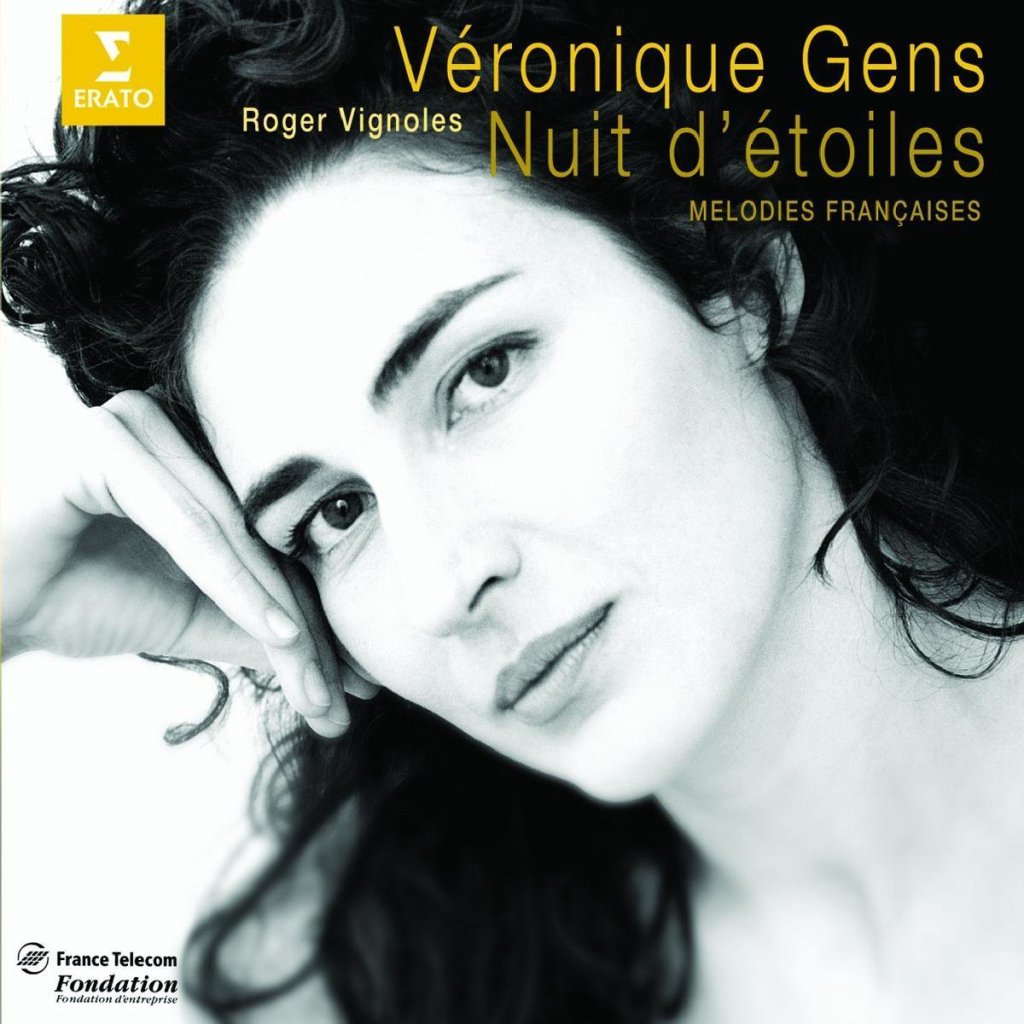
Her CD titled Nuit d’étoiles with songs by Fauré, Poulenc and Debussy was also very enthusiastically received everywhere.


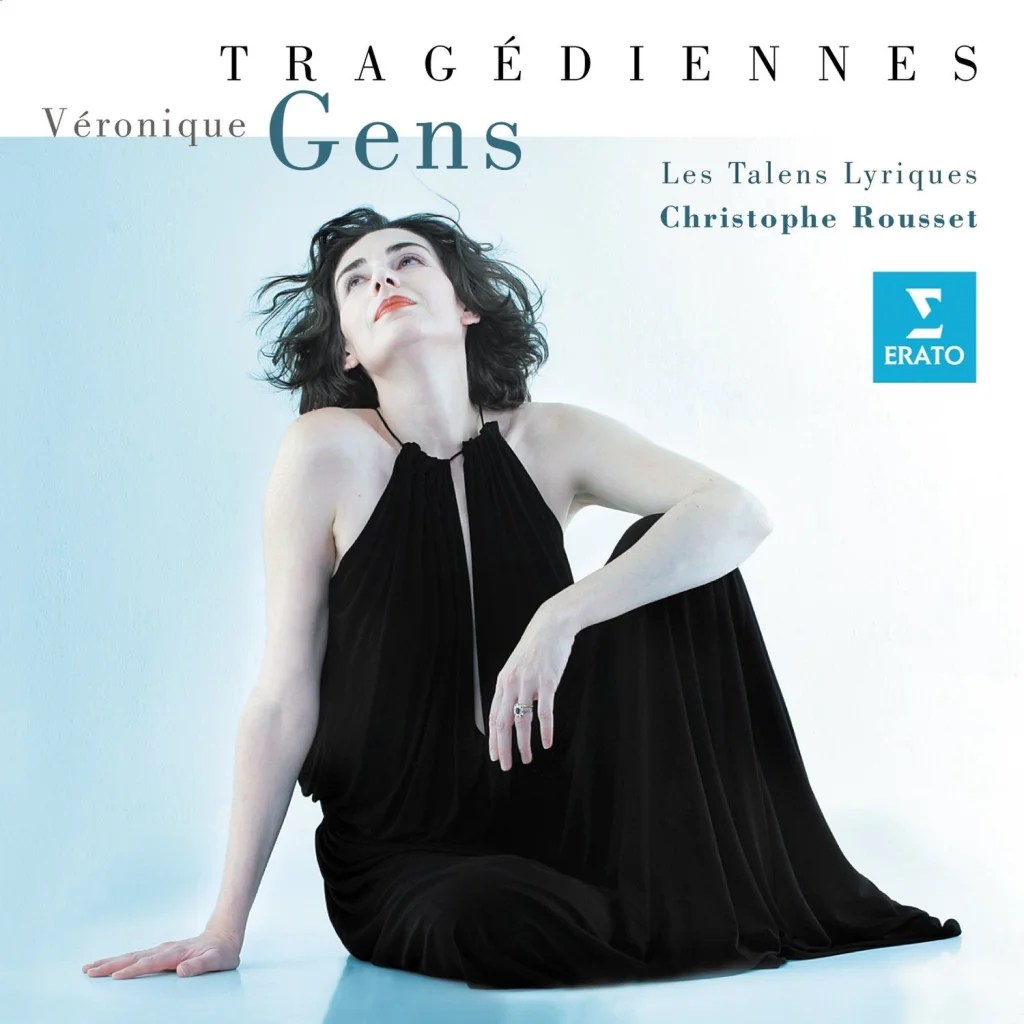
Tragédiénnes


For Virgin, she had embarked on a voyage of discovery through the mostly unknown treasures of the French Baroque in 2006, and the result is quite something.

Accompanied by the Ensemble Les Talens Lyriques, conducted by Christophe Rousset, she recorded arias from the operas of Lully, Campra, Rameau, Leclair, de Mondonville, Royer and Gluck. The so-called “tragédie-lyrique” was inspired by the great classical plays, in which the tragic element was considered the most important. It also contained long dramatic scenes, which allowed the divas of the time to display the whole range of emotions.


It fits her all like a glove. She takes us on a journey of discovery, in which a lot of forgotten gems provide immense pleasure. But however wonderful they all are, she reaches the absolute climax in ‘Dieux puissants que j’atteste…’, Clytamnestra’s poignant cry of the heart for her daughter, from Gluck’s Iphigénie and Aulide.

There she soars with the speed of a rollercoaster to enormous heights, leaving the listener gasping and palpitating. Brava.


Tragédiennes
Arias from early French operas by Lully, Campra, Rameau, Mondonville, Leclair, Royer, Gluck; Les Talens Lyriques conducted by Christophe Rousset. Virgin 346.762


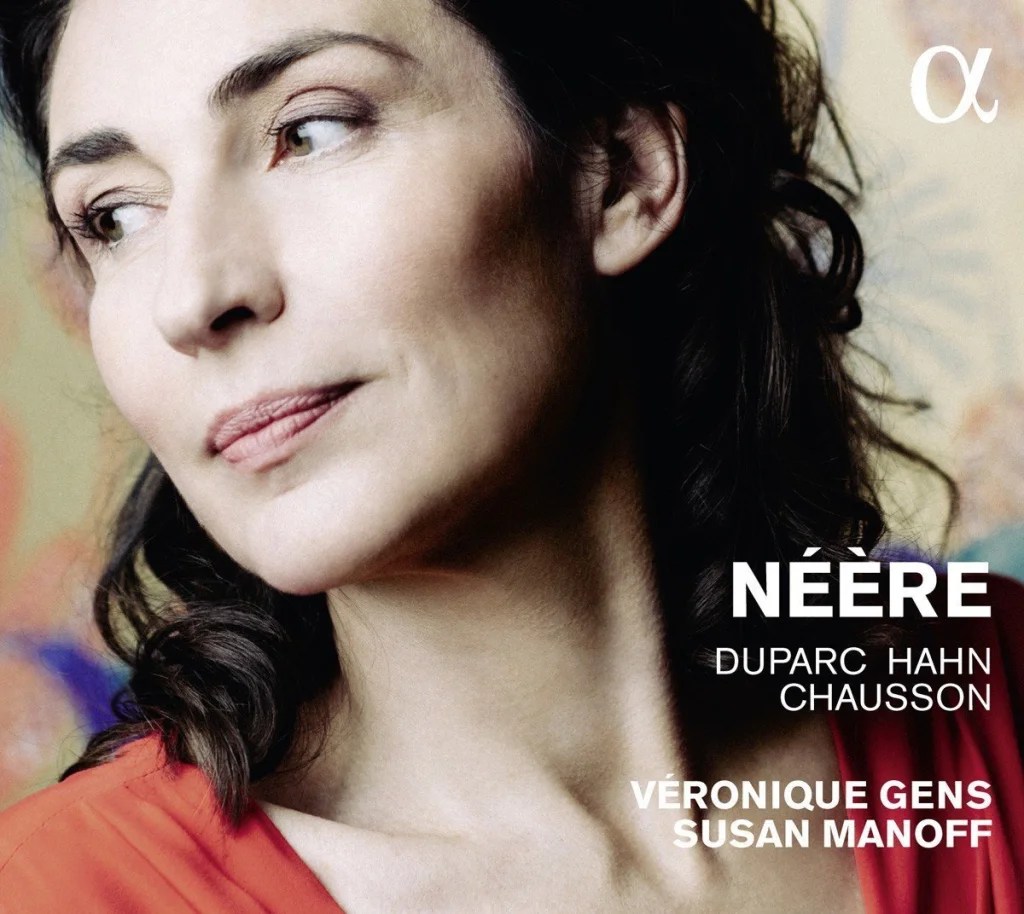
Néère


For her album Néère, named after the title of Reynaldo Hahn’s opening song, Veronique Gens has made a more than brilliant selection of the most beautiful songs by Reynaldo Hahn, Henri Duparc and Ernest Chausson.

They cannot be called cheerful: they all exude a very wistful and melancholic atmosphere and are – how could it be otherwise when the French talk about ‘amour’? –  all ‘tristesse’.

The beautiful mélodies fit Gens’s dark-toned and slightly-veiled voice with its sensual undertones like a velvet glove.

Trailer:


Nothing but praise too for the pianist. Susan Manoff plays more than sublime and in her accompaniment she sounds like Gens’ twin sister: the perfection with which she manages to transpose the rich colours so present in the singer’s voice (and there are many!) to the keys is truly unimaginable.


Rare beauty.


Néère; Songs by Reynaldo Hahn, Henri Duparc and Ernest Chausson, Alpha 215


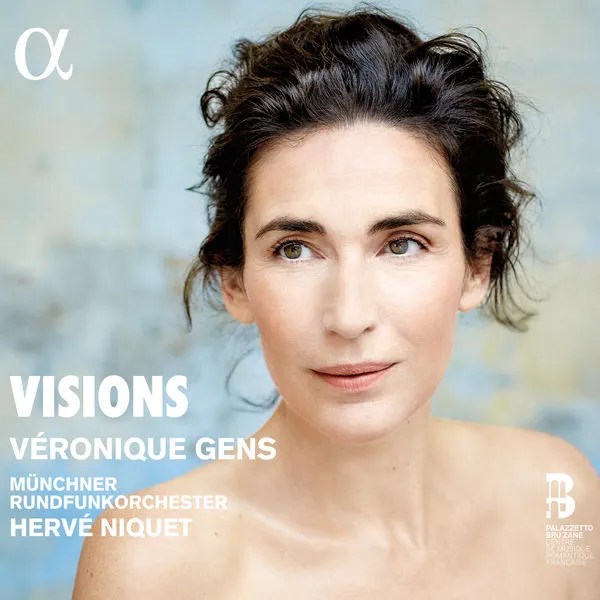
Visions


No one can possibly ignore this CD. Palazetto Bru Zane is long overdue for a fame that transcends all countries and borders! Just look at their programming and all their releases! They are so very special!

Not only is their repertoire extremely rare and extraordinarily fascinating, their releases are done to perfection. Something that deserves not just kudos but the highest awards.

Their latest project, Visions, also exceeds all expectations and desires. At least mine. The CD is bursting with unknown arias from unknown operas and oratorios by largely lesser-known and/or forgotten composers. All the pieces collected here have the motto ‘religious visions’ and exude an atmosphere bordering on sanctuary and martyrdom but served up with the extremely grand gesture that only opera can offer.


Trailer of the recording:


Véronique Gens sings the arias with a great élan and an enormous empathy. Her delivery is dramatic, sometimes even a tad too much. That the arias call for a healthy dose of hysteria is rather obvious, but a little more devotion and piety would have made the result even better, even more impressive.


There is no point in speculating what a singer like Montserrat Caballé could have done with all this material: first, she has never sung it (apart from Massenet’s La Vierge) to my knowledge, and second, singers of her calibre really don’t exist anymore.


Montserrat Caballé sings ‘Rêve infini, divine ecstasy’ from Massenet’s La Vierge:


In this context, Véronique Gens is more than up to the task. Not only because of her exemplary diction and intelligibility, but also because her voice has developed into a true ‘Falcon soprano’ and has reached a level that more than lends itself to this repertoire.


Visions; Arias from the operas by Alfred Bruneau, César Franck, Louis Niedermeyer, Benjamin Godard, Félicien David, Henry Février, Camille Saint-Saëns, Jules Massenet, Frometal Halévy, Georges Bizet; Munich Radio Orchestra conducted by Hervé Niquet; Alpha 279

Ariodante: een opera voor Händel haters?

Ariodante Illustration_of_Canto_5,_Orlando_Furioso,_by_Gustave_Dore

Dalinda disguised as Ginevra admits Polinesso to her bedroom, engraving by Gustave Doré

Volgens kenners is Ariodante dé Händel opera om mee te beginnen. De handeling is helder, makkelijk te volgen en zelfs (min of meer) logisch. Alle succesvolle ingrediënten: liefde, jaloezie, seks en verraad zijn volop aanwezig. Tel daarbij het happy end en je komt zowat bij een Hollywood-sprookje terecht.

De muziek is een verhaal apart: Händel-liefhebber krijgt genoeg stof om van te smullen en bij ‘Dopo notte’ gaat zijn hart sneller kloppen. En een Händel-hater moet toch wel even een traantje wegpinken bij ‘Scherza infida’.

Ann Murray

Ariodante dvd

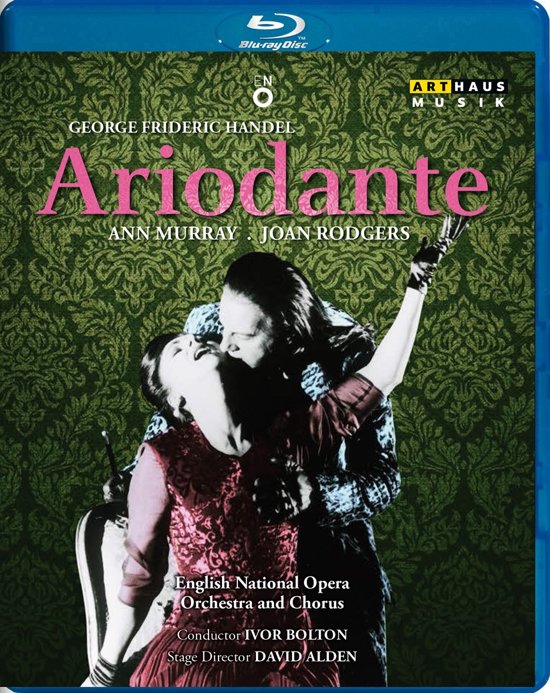
Ik ken maar één opname op dvd (BluRay in mijn geval) en daar ben ik niet echt gelukkig mee. De productie van David Alden (English National Opera, 1996) werd zeer enthousiast ontvangen en nog steeds zijn de (voornamelijk Engelse) critici er dol op. Voor mij is de productie te Freudiaans en te weinig subtiel.

Christopher Robson is een horror als Polinesso. Nog afgezien van het idiote idee om de rol met een countertenor te bezetten – de partij is gecomponeerd voor een vrouwelijke alt – voldoet zijn stem niet. Meer wil ik er niet over kwijt..

Joan Rogers is een mooie Ginevra en Lesley Garrett een nog mooiere Dalinda, maar de rest van de rollen is niet echt adequaat bezet. Behalve Ariodante zelf, dan. Ann Murray stelt nooit teleur en dat doet zij hier ook niet.

Het English National Opera Orchestra onder leiding van Ivar Bolton klinkt gewoon saai. Voor wie dat op prijs stelt: er zijn Nederlandse ondertitels (Arthaus Music 108126)

Janet Baker

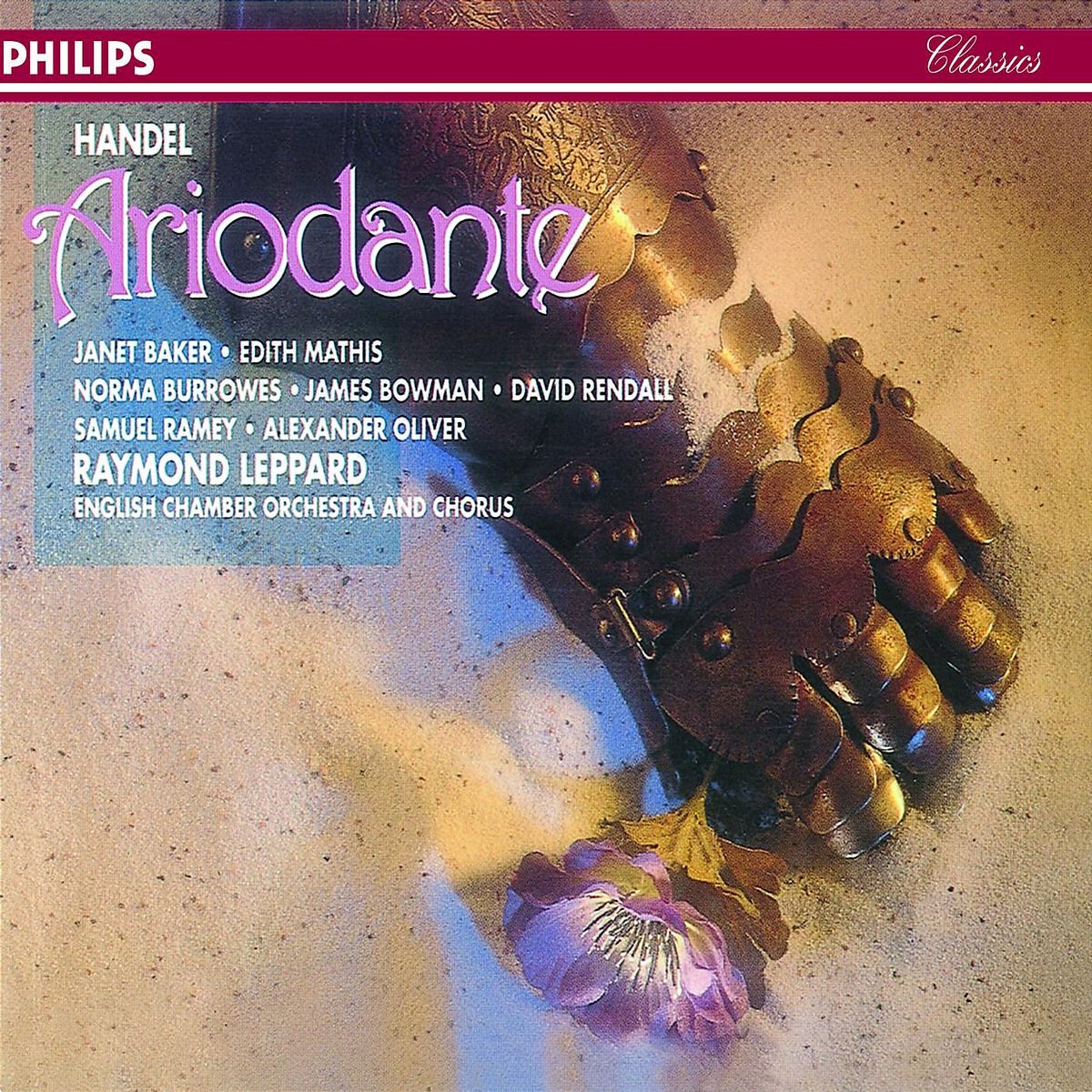
ariodante Baker

Luisteren naar Janet Baker is altijd een feest. Haar Ariodante klinkt ouderwets warm. Warmbloedig ook. Ook de sopranen Edith Mathis (Ginevra) en Norma Burrowes (Dalinda) zijn een echt plezier om naar te luisteren.

James Bouwman (alweer een countertenor!) als Polinesso is gewoon een vergissing, het zij hem vergeven. Maar de jonge Samuel Ramey is werkelijk fantastisch als de koning. Raymond Leppard dirigeert bedeesd en aangenaam. (Philips 4739552)


Anne Sofie von Otter

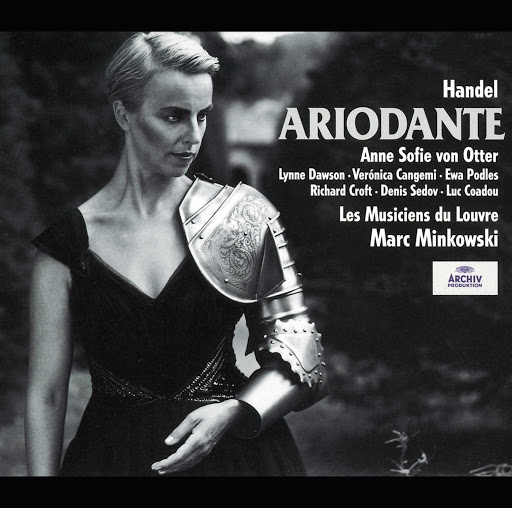
Ariodante Minkowski

Wat mij betreft de mooiste opname die er is, voornamelijk vanwege Marc Minkowski en zijn formidabel spelende Musiciens du Louvre. Luister maar naar de heerlijk dansante ouverture: hier wordt een mens (deze mens, althans) blij van.

Ewa Podles is de beste Polinesso ooit, daar komt niemand in de buurt. Ook Richard Croft (Lurcanio) heeft eigenlijk geen concurrent: zijn zeer aangename, lyrische tenor klinkt verliefd en om verliefd op te worden.

Hieronder Von Otter en Minkowski over ‘Scherza infida’ en het door Minkowski gekozen tempo:

Anne Sophie von Otter is een ontroerende Ariodante (haar ‘Scherza infida’!). Haar stem mengt ook erg mooi met Lynne Dawsons Ginevra (Archiv 457 271-2)


Joyce DiDonato

5099907084423_clamshell_Layout 1

Alan Curtis dirigeert veel behoedzamer dan Minkowski. Minder dansant ook en minder transparant. En de blazers klinken soms een beetje vals.

Joyce DiDonato (Ariodante) en Anne Sophie von Otter zijn aan elkaar gewaagd. De eerste klinkt wat feller en standvastiger, ook in haar grief, terwijl de tweede de droefheid zelve is. De eerste is een in zijn eer gekrenkte held, de tweede een brok verdriet. Maar in ‘Dopo notte’ is DiDonato echt niet te verslaan. Bovendien vind ik haar voordracht mooier en accurater.

Marie Nicole Lemieux is een fantastische Polinesso en Karina Gauvin een zeer vrouwelijke Ginevra (Warner Classics 50999 07084423).


Armide. Christoph Willibald Gluck vond het zelf zijn beste werk. U ook?

Armida Agostino_Carracci,_Frontespizio_della_prima_edizione_illustrata_della_Gerusalemme_Liberata,_1590


Agostino Carracci (su disegno di Bernardo Castello), Frontespizio della prima edizione illustrata della Gerusalemme Liberata, Genova, 1590

Men kan zich afvragen waar het aan ligt dat juist Gerusalemme liberata van Torquato Tasso zo veel verschillende componisten uit zo veel eeuwen heeft geïnspireerd. En dan niet het hele epos, maar specifiek de Armida-episode. Ligt het aan het magisch-realistische verhaal vol onverholen haat, wraak, woede en passie? Met personages (mens of heks) die verscheurd worden door hun tegenstrijdige gevoelens, hun innerlijke strijd tussen liefde en plicht? Ik zou het niet durven zeggen. U?

Armida 7dd1839cd61799f99af3d9a583eaa105

Francesco Hayez, “Rinaldo en Armida”

De eerste bij het grote publiek bekend gebleven Armida werd gecomponeerd door Jean-Baptiste Lully, op het libretto van Philippe Quinault. Hetzelfde libretto heeft Gluck een kleine honderd jaar later gebruikt voor zijn vijfde ‘Franse opera’ Hijzelf beschouwde Armide als zijn allerbeste werk, maar het publiek (en de geschiedenis) dachten er iets anders over.

Zelf ben ik er ook nooit zo van gecharmeerd geweest. Maar hoe langer ik mij met de opera heb beziggehouden, hoe meer ik hem heb leren te waarderen.  De opera kent een paar schitterende aria’s en ensembles, met als een absoluut hoogtepunt het hartverscheurende ‘Enfin, il est en ma puissance’, een hysterische hartenkreet van de verliefd geworden furieuze tovenares Armide.

Armide-EMI

Ik ken maar twee complete opnamen van Glucks werk: onder Richard Hickox op EMI (6407282) en onder Marc Minkowski op Archiv (4596162). Merkwaardig eigenlijk als je bedenkt dat de opera tegenwoordig best vaker wordt uitgevoerd.

De opname van Hicox (3 cd’s) duurt ruim 26 minuten langer dan Minkowski. Ik ken de opera niet zo goed om te kunnen constateren of er bij Minkowski coupures zijn aangebracht, maar dat denk ik eerlijk gezegd niet. Zijn tempi zijn simpelweg behoorlijk aan de snelle kant – behalve de ouverture dan, daar is hij behoedzaam in.

Armide-Minkowski

Dat slepende van Hickox is op den duur behoorlijk irritant en ik ben een paar keer gewoon ingedut. De dertig jaar oude opname klinkt wel nog steeds mooi, al haalt de klank het heldere en transparante van Minkowski niet.

Ook wat de zangers betreft wint de Fransman het ruimschoots van zijn Engelse collega. Nou ben niet zo’n fan van Mireille Delunsch en ik vind haar ‘Enfin il est en ma puissance’ op Minkowski’s opname behoorlijk achterblijven bij de interpretaties van bijvoorbeeld Véronique Gens of Anna Catarina Antonacci (waarom is de voorstelling met Antonacci nooit officieel opgenomen?) Niettemin is Felicity Palmer (Hickox’ opname) ondanks haar perfecte dictie en onberispelijk tekstbegrip geen match voor haar.

Charles Workman (Renaut) weet een perfecte balans tussen de heldhaftige en de meer lyrische vinden – daar kan zelfs mijn geliefde Anthony Rolfe Johnson niet tegen op.

Laurent Naouri is een zeer macho Hidraot, maar wat de opname van Minkowski dat ‘superplus’ geeft, is het optreden van Ewa Podles in de kleine rol van La Haine (de Haat). Van haar stem en voordracht gaat het u duizelen. Vind maar eens een alt met een diepere klank, één die ook nog eens alle hoge noten paraat heeft en je met haar interpretatie sprakeloos achterlaat!

Hickox:


Minkowski:


En hieronder een curiositeit: een complete Armide uit Madrid, 1985, met Montserrat Caballé:
Lady Rattle in 2004, when she was called Magdalena Kožená…

kozena

It all starts rather unfortunately. First of all, I forget about the time difference with England and call too early. One hour later I am told that she is not at home, and that I should try her on her mobile. The time is not right, she says, she’s in a museum, and besides, she didn’t know anything about the interview. So we make a new appointment right away.

Three times is a charm. This time she is at home and extremely friendly. First of all she wants to apologize, something must have gone wrong. It doesn’t matter, I say. These things happen. Her speaking voice resembles her singing voice: silvery, warm and quiet. Dark too, which sounds very attractive with that touch of a Czech accent.

First of all I would like to talk about her latest CD.

– Who chose the program?

“I did. DG wanted to make a CD with more instruments than just a piano. They proposed Il Tramonto by Respighi, the rest I have chosen. Yes, it sounds a bit melancholic, but I think it also has to do with the period, most of those compositions were written between the two world wars. The saddest music is that of Schulhoff, but he was also a tragic figure. A Jew, who died in a concentration camp. For me, his songs also have something of the Slavic melancholy.”

– On that CD you sing songs in five different languages, do you also speak them?

“More or less, yes. I learned Russian at school, I speak English and French fluently. My Italian is also good and I learned German when I lived in Vienna for a few years”.

– On your recordings, and there are quite a few of them, you sing music from Bach to Martinů, and from Gluck to Verdi. Also on stage?

Laughing: “Well, no. Certainly not Verdi. But it’s completely different when you put together a recital with opera arias. It is extremely difficult to bring so many different characters to life within 5 minutes, you need an entire opera to do that. That’s why, or so I think, you have to make it as varied as possible, otherwise it will be boring. The idea of Verdi came from Marc Minkowski. At first we even argued about it, but in the end he managed to convince me. He explained that this aria (by Eboli from Don Carlos) sounds like a Spanish folk song, and I think he was right.”

“Minkowski was the first great conductor I met, about seven years ago. He means a lot to me, he’s my music buddy. Nowadays we don’t see each other very often anymore, but in the beginning, we did 4 to 5 projects a year together. I learned a lot from him. When you are a beginner you try to sing as beautifully as possible. He taught me that music is so much more than just beauty.”

For a long time we talk about her Zerlina in Salzburg, two years ago, in 2002. I was there and say that I loved her but hated that production. And again she has to laugh: “I loved that production! When I was offered that role, I only accepted it because it was Salzburg. And Harnoncourt. Zerlina was always synonymous with a stupid blonde for me, but here she got a little more character.”

– Actually, I think your voice is very suitable for the French repertoire, especially Massenet. Do you ever intend to sing it on stage?

“I would love to, especially Cendrillon, but it is so rarely performed, even in France. Most people still like to see me in operas by Mozart and Händel.”

She lives in Paris, but is very rarely at home, the last year only 40 days. She usually meets her husband, a French baritone, somewhere on the road.

Does she think about children?

“I like the idea, but then I have to give up a lot of my life, especially when the children have to go to school”.

For the time being, she is full of plans.

Kozena Schulhoff

This is an extremely interesting CD with an unusual program. Uncommon, because apart from Ravel’s Chansons Madécasses and, perhaps also Respighi’s Il Tramonto, the rest is unknown to most listeners. All songs were composed in the first half of the last century in five different European countries, and radiate a strong melancholy and nostalgia.

The accompagnement is also exceptional, the songs are not only accompanied by the piano, but also by violin, string quartet, flute, cello and piano. Each and every one of them special compositions, sung by Kožena with great understanding of the text. I myself have a bit of trouble with her Russian, for me it is a bit over-articulated, but this is actually nit-picking.

In Il Tramonto I prefer to hear a darker and slightly more dramatic voice, but as she performs it is also possible. In her interpretation the piece gets something girly, with a different colour of sadness.

I consider the three songs by Schulhoff to be the undisputed highlight, they are three small masterpieces and it is to be hoped that Kožena will keep them in her repertoire.


Ravel, Shostakovich, Respighi, Schulhoff, Britten
Magdalena Kožená (mezzo-soprano),
Malcolm Martineau (piano), Paul Edmund-Davies (flute), Christoph Henschel (violin), Jiří Bárta (cello), Henschel Quartet (DG 4715812)

Kozena Martinu

This made me silent. The melancholy of Dvořák, the typical rhythm of Janáček’s language, the idiosyncrasy of Martinů, all of which makes it impossible to disengage from all this.

What I find most interesting is the cycle Songs for a friend of my country from Martinů, which is having its album premiere here. Martinů composed it in 1940 in Aix-en-Provence, during his flight from the Nazis that would bring him to America, and it is dedicated to Edmond Charles-Roux. The cycle was only discovered in 1996. It is an immense asset to the song repertoire, but: who else sings it? Very moving.

Dvořák, Janáček, Martinů
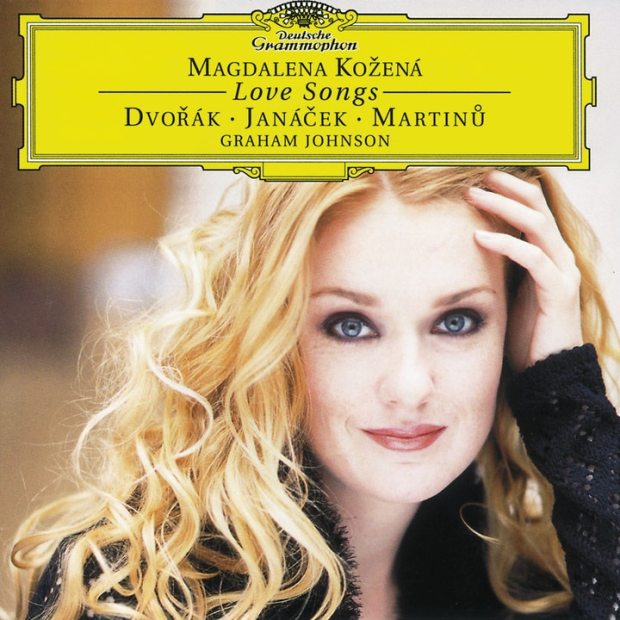
Love songs
Magdalena Kožená mezzo-soprano, Graham Johnson piano (DG 4634722)

Prachtige nieuwe cd van Magdalena Kožená en Yefim Bronfman

Il trovatore van Dmitri Tcherniakov, naar de opera van Verdi

https://exlibris.azureedge.net/covers/3760/1153/0408/6/3760115304086xxl.jpg

Een gewaarschuwd mens telt voor twee, dus ik ben in juni 2012 niet naar Brussel gegaan om daar de in álle opzichten nieuwe Il trovatore – naar de opera van Verdi – te gaan aanschouwen. De waarschuwing kwam van Marina Poplavskaya, de sopraan die Leonora zong. Op haar Facebook-pagina schreef ze: “Je wilt niet zien wat wij het publiek hier gaan voorschotelen.”

Nu ligt de opera in mijn dvd-speler en nog voordat ik eraan begin, krijg ik een tweede waarschuwing. Deze keer van het operahuis zelf. “Om te beantwoorden aan het dramaturgische concept van de regisseur zijn de rollen van Ines en Ruiz, alsook bepaalde tussenkomsten van het koor toegewezen aan andere zangers van de productie.”

Het nieuwe verhaal: er is ooit iets gebeurd, jaren geleden. Om het verhaal erachter te ontrafelen en de ware toedracht te leren kennen, brengt Azucena alle betrokkenen bij elkaar en sluit ze op in een flat. Zo beginnen we aan een nachtmerrieachtige reis, waarin het verleden en het heden door elkaar lopen.

Trovatore Brussel scenefoto


© Bernd Uhlig 2012

Regisseur Dmitri Tcherniakov is een meester in het creëren van spanning en zijn personenregie is weergaloos. Ik zit ademloos te kijken. Alleen: het heeft helemaal niets maar dan ook niets met Il trovatore van Verdi te maken.

Er wordt ontegenzeggelijk goed gezongen in de voorstelling. Misha Didyk is een perfecte Manrico. Groots en stralend en gezegend met een perfecte hoogte. Ook Marina Poplavskaya kan mij bekoren, al gaat er iets duidelijk mis in ‘D’amor sull’ali rosee’ (aanwijzingen van de regisseur?).

Scott Hendricks is een zeer betrouwbare bariton, die je in alle mogelijke rollen kunt inzetten. Zeker ook omdat hij zo’n voortreffelijke acteur is. Ook als Luna stelt hij niet teleur en op zijn ‘Il balen del suo sorriso’ valt weinig aan te merken, al had ik er meer ‘morbidezza’ in willen horen.

Sylvie Brunet-Grupposo is een zeer indrukwekkende Azucena. Ze heeft een grote, diepe stem en een sterke présence. Een beetje moeite heb ik met haar registerovergangen, in mijn oren klinkt het alsof ze met twee stemmen tegelijk zingt.

Ook Giovanni Furlanetto levert goed werk af in de rol van Ferrando (hier onherkenbaar toegetakeld als een boekhouder op leeftijd). Met zijn mooie, diepe bas en dito voordracht completeert hij het vijftal protagonisten.

Het orkest speelt onder leiding van Marc Minkowski zonder meer goed. Ik zou alleen wat meer passie willen horen. Het uitmuntend zingende koor is naar de orkestbak gedelegeerd, dus eigenlijk bestaan ze niet. Of alleen in de verbeelding, of zo.

Mijn meeste collega’s waren zeer enthousiast over de productie. Ze roemden de spanning en de deconstructie, en daar ben ik het met ze eens. Alleen: waarom werd de opera niet omgedoopt tot Vijf slachtoffers van misverstanden van Tscherniakov, in plaats van door te gaan als Il trovatore van Giuseppe Verdi?

Hieronder de eerste tien minuten van de opera:

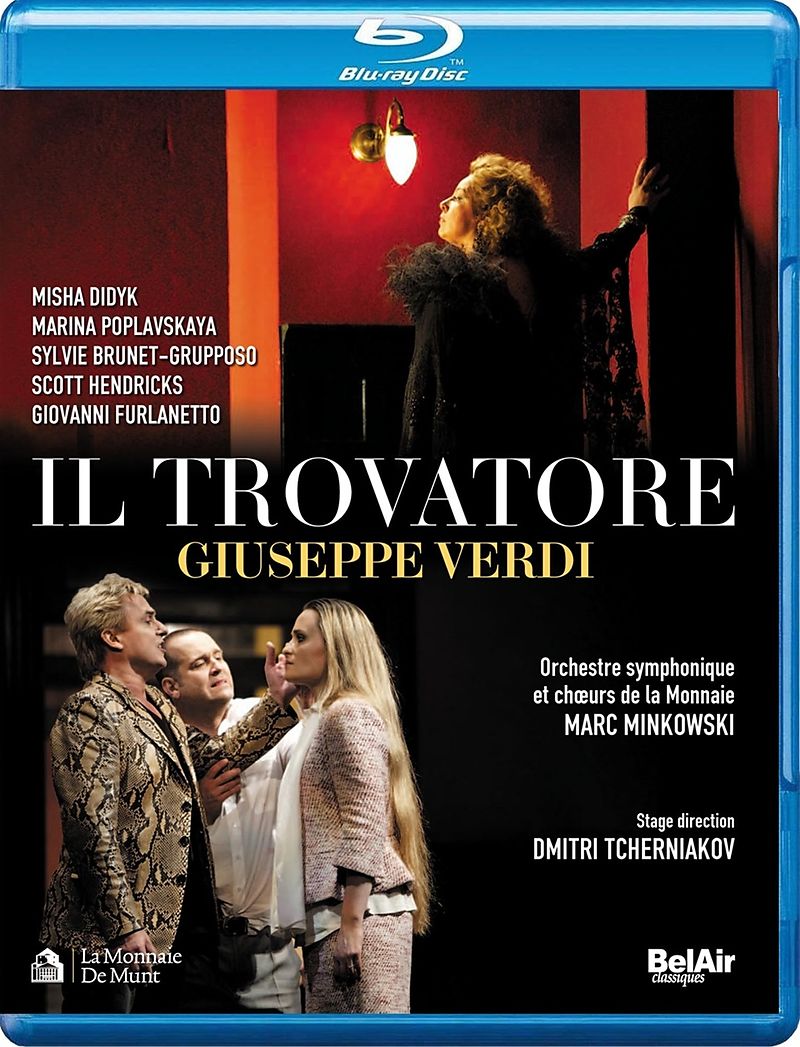
Giuseppe Verdi
Il Trovatore
Misha Didyk, Marina Poplavskaya, Scott Hendricks, Sylvie Brunet-Grupposo, Giovanni Furlanetto
Choirs de la Monnaie (Chorus master Martino Faggiani) en Orchestre symphonique de la Monnaie onder leiding van Marc Minkowski
Regie: Dmitri Tcherniakov
BelAir Classiques BAC 108

IL TROVATORE. Discografie

IL TROVATORE in Amsterdam 2015

Onweerstaanbare Mireille van Gounod

mireille

Het heeft lang geduurd, maar in 2010 werd er eindelijk dvd met Gounods Mireille uitgebracht.

Echt succesvol is de opera nooit geweest – waar een behoorlijk gerommel met verschillende versies debet aan zal zijn geweest. In 2009 zette Nicolas Joel, die dat jaar baas van de Opéra National de Paris werd, de opera echter op het toneel van het Palais Garnier, als opening van het seizoen.

Gounod’s muziek is zeer theatraal, wat door de regie en de betoverende belichting alleen maar werd onderstreept. Hier geen concepten (wat een verademing!), wel een voortreffelijke personenregie en geweldige mise-en-scène.

Het bühnebeeld doet mij aan het begin een beetje denken aan Sound of Music. Maar het pastorale, bijna serene begin verandert gaandeweg in een horror story met een Manon Lescaut-achtig einde. Ik was in tranen!

Inva Mula (Mireille) vind ik een ware ontdekking. Zowel qua stem als qua uiterlijk en gebaren doet zij mij aan drie van de grootste zangeressen van de laatste 50 jaar denken: Scotto, Freni en Cotrubas.

Charles Castronovo zingt een lichte maar in alle opzichten prettige Vincent en Alain Vernhes imponeert als Mireilles vader.

De dirigent, regisseur en dramaturg vinden Mireille een meesterwerk en daar kan ik het, na het bekijken van dvd, alleen maar mee eens zijn.

Charles Gounod
Mireille
Inva Mula, Charles Castronovo, Alain Vernhes, Franck Ferrari, Sylvie Brunet, Anne-Catherine Gillet
Orchestre et Choir de l’Opéra National de Paris olv Marc Minkowski
Regie Nicolas Joel
FRA (002)

José van Dam neemt afscheid van De Munt met Don Quichotte van Massenet

Don Q

©Johan Jacobs/De Munt La Monnaie

Het moet een ultieme nachtmerrie zijn voor de baas van een operahuis: je hebt een belangrijke première, het orkest en de zangers staan in de startblokken en het publiek, inclusief een koninklijke gast (hier in de gedaante van de Belgische kroonprinses Mathilde) zit al in de zaal. En dan laat de techniek het afweten.

Het overkwam Peter de Caluwe, algemeen directeur van De Munt in Brussel, vlak voor de première van Don Quichotte van Massenet. ,,Vanmiddag werkte alles nog perfect”, verontschuldigde De Caluwe zich tegenover zijn gasten. ,,Maar nu laat de computer ons in de steek.”

Vervelend. Maar in de operabusiness, net als in het echte leven, kan altijd van alles misgaan. En live is live, wat eigenlijk ook zijn charme heeft. Ingeblikte perfectie betekent niet automatisch het ultieme genot. Het publiek is een en al begrip en in afwachting van wat er komen gaat, verplaatst het zich massaal richting foyer en drankjes.

Een uur later kan het feest dan eindelijk beginnen. En het werd een feest.

qu

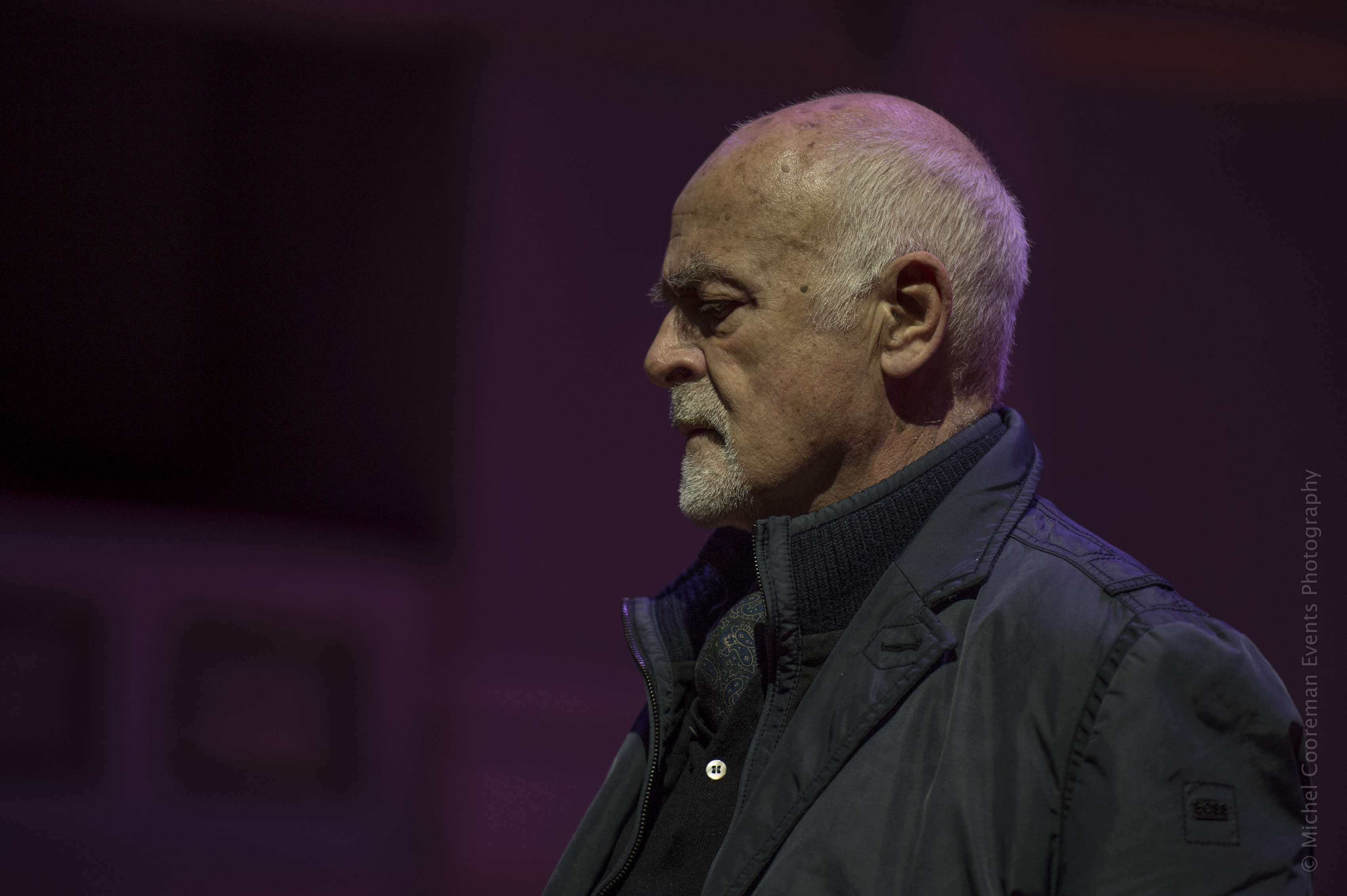
José van Dam ©Michel Cooreman Events Photography

De voorstelling was in meerdere opzichten een echte verjaardag. Het was precies 100 jaar geleden dat Don Quichotte voor het eerst werd uitgevoerd in Brussel en met de rol van de dolende ridder nam José van Dam (dat jaar 70), één van de grootste Belgische zangers ooit, op een magistrale manier afscheid van De Munt, het operahuis waar hij 30 jaar aan was verbonden en waar hij zeer verschillende rollen heeft gezongen. De nieuwe productie werd dan ook speciaal voor hem gemaakt.

In zijn toelichting zei regisseur Laurent Pelly dat een voorstelling een droom is, waarin we binnenstappen. ,,De dromer, dat kan de toeschouwer zijn, of de auteur of het personage.”

Don Q

© Johan Jacobs/De Munt La Monnaie

Bij de aanvang van het stuk zit ‘de dromer’ in zijn stoel. Hij lijkt sprekend op Massenet zoals we hem van de foto uit die tijd kennen. Hiermee wordt meteen de link gelegd tussen de componist zelf (Massenet was toen hij de opera componeerde tot over zijn oren verliefd op Lucy Arbell, een 27-jarige mezzo die de rol van Dulcinée zong) en zijn held.

Hij is een dromer en een dichter. Hij is de toeschouwer, maar hij gaat ook een actieve deelnemer worden van de actie. Sterker nog: hij gaat de actie sturen, waardoor dingen gebeuren die anders nooit zouden zijn gebeurd. Hij is (ook in zijn aankleding) half ridder/half dichter. Half hier en half daar. Waar het ook moge zijn. Hallucinerend.

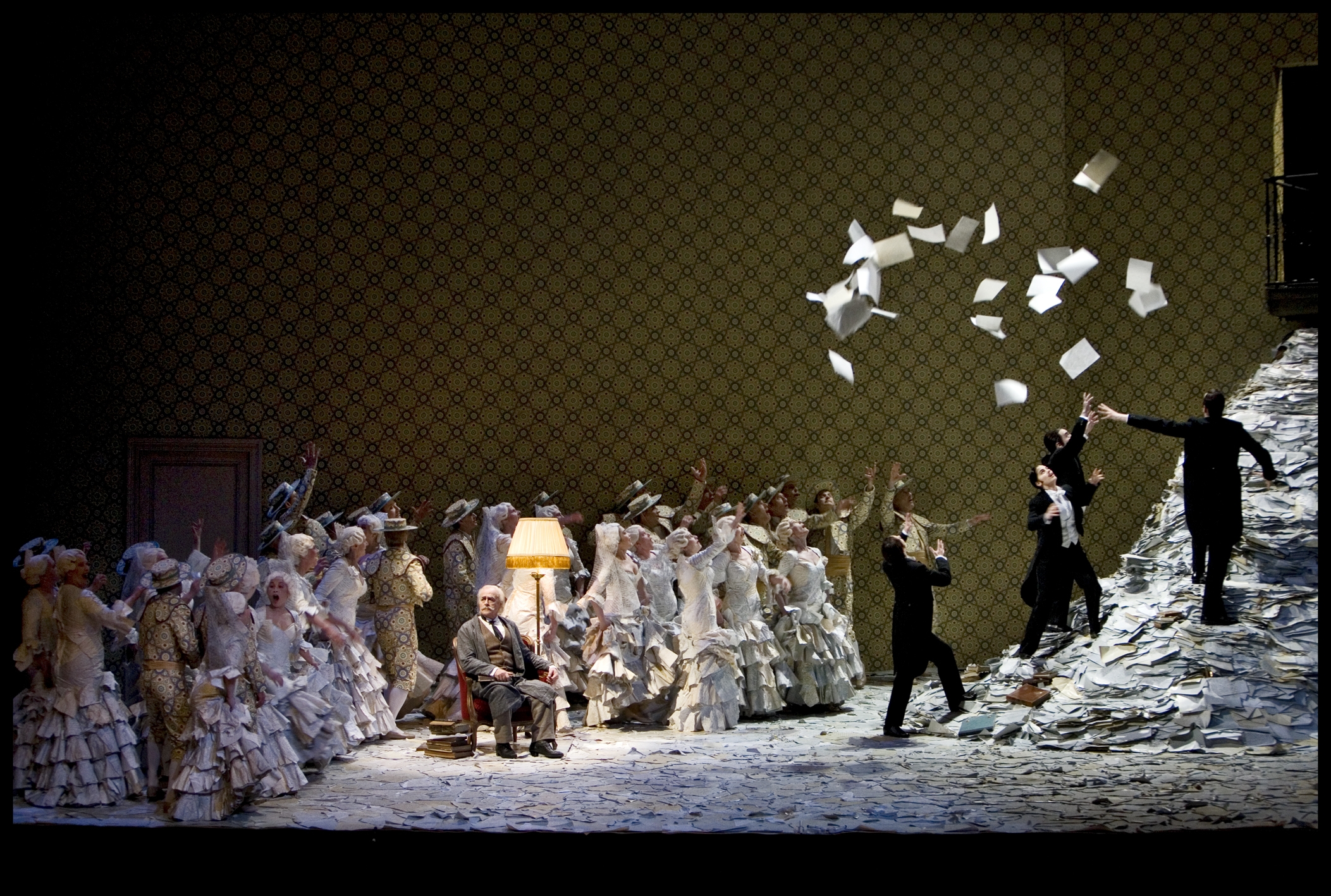
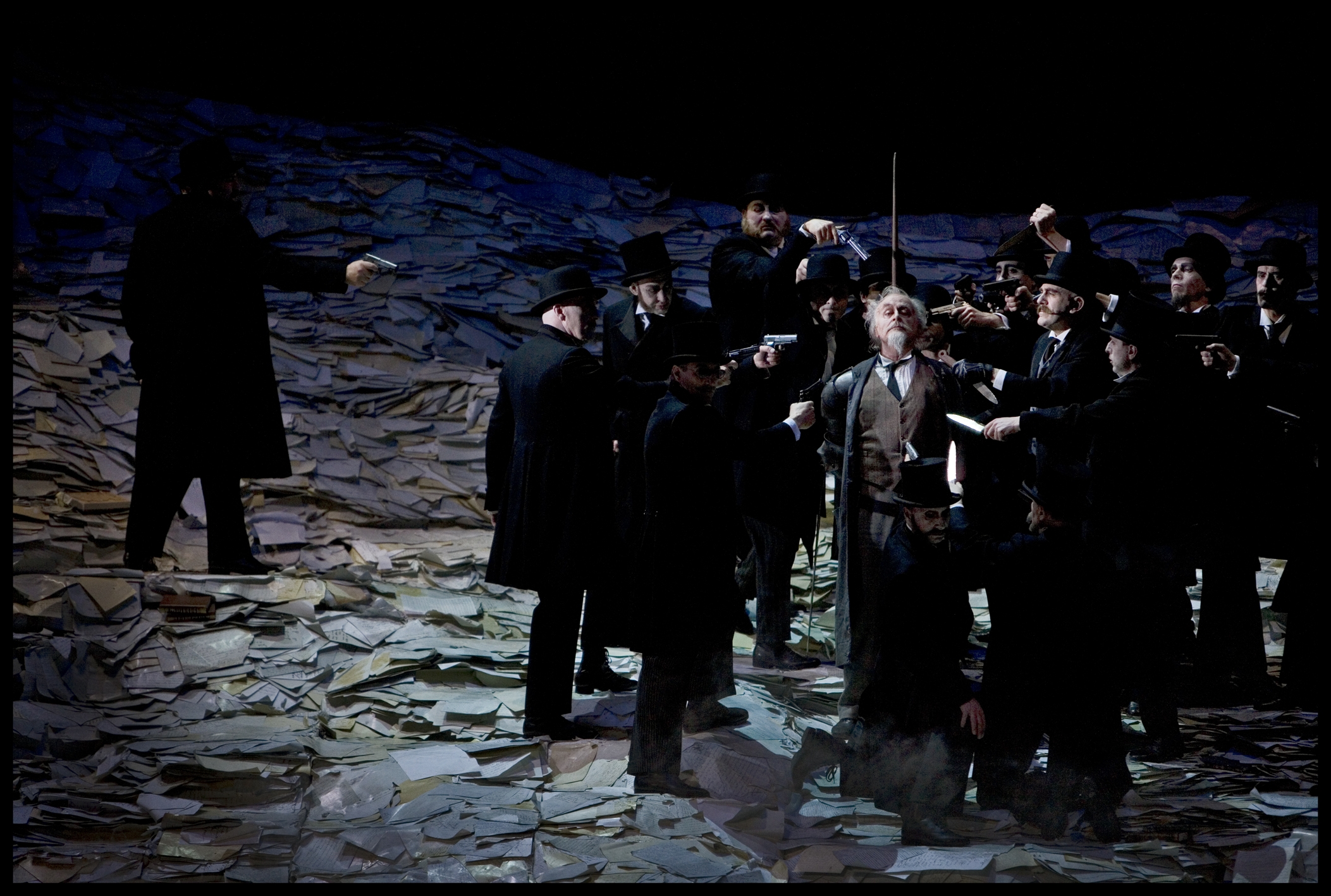
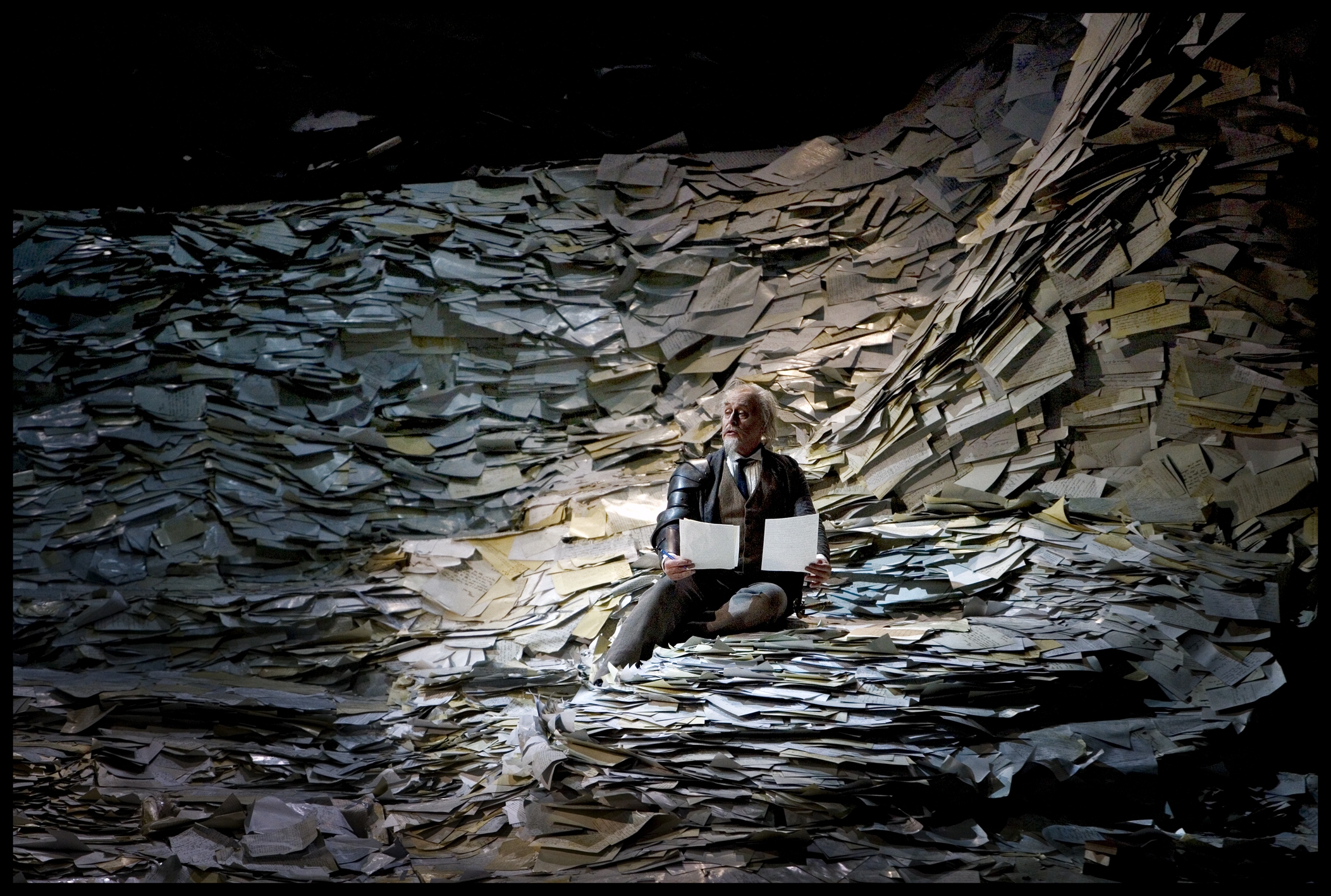
Het decor (Barbara de Limburg) bestaat voornamelijk uit stapels papier. Het zijn de ettelijke liefdesbrieven die Don Quichotte aan zijn geliefde schreef. Papierbergen die zich onder het balkon van de schone Dulcinea opstapelen. Siërra’s van liefdesbrieven waarop de echte en gedroomde gevechten plaatsvinden.

Don Q

© Johan Jacobs/De Munt La Monnaie

De muziek is zeer onderhoudend en onmiskenbaar Spaans. Of wat wij als Spaans ervaren, met heel erg veel fandango en ‘olé’. Doorgecomponeerd, maar met aria’s. Verbazingwekkend energiek, maar ook waanzinnig lyrisch. Niet echt dagelijkse kost.

Het vereist dan ook een dirigent van formaat die met al die schakeringen weet om te gaan. Dat allemaal is Marc Minkowski op het lijf geschreven. Hij heeft meer lyriek in zijn linkerpink dan menig dirigent in zijn hele lichaam.

Het geluid dat hij het orkest wist te ontlokken was niet minder dan grandioos. Hij schuwde de sentimentaliteit niet en waar nodig zorgde hij voor de humoristische noot. Zo mooi, zo spannend, zo uitdagend heb ik de muziek nog nooit eerder gehoord. Het moet gezegd: hij heeft mijn hart gestolen.

Ook de cellist (het programmaboekje vermeldt helaas zijn naam niet) die voor de ontroerende solo in de Entr’acte tussen het vierde en vijfde bedrijf heeft gezorgd, verdient een eervolle vermelding.

Don Q

© Johan Jacobs/De Munt/La Monnaie

Werner van Mechelen (Sancho Panza) was voor mij de held van de avond. In zijn grote aria in de vierde akte (‘Riez, alle, riez de pauvre idéologue’) toonde hij zich niet alleen een stemkunstenaar van een superieure kwaliteit, maar ook een acteur waar je U tegen zegt. Bravo!

Don Q

© Johan Jacobs/De Munt La Monnaie

Silvia Tro Santafé (La Belle Dulcinéé) heeft mij lichtelijk teleurgesteld. Ze deed het beslist niet slecht, maar ik vond haar stem niet kruidig, niet sexy genoeg (luister maar eens hoe Teresa Berganza die rol vertolkte!). Voor mij was haar uitstraling ook niet erotisch genoeg. In de prachtige jurken, ontworpen door Pelly zelf, zag zij er beeldig uit, maar alleen daarmee breng je de harten van het hele dorp niet op hol.

Don Q

© Johan Jacobs/De Munt La Monnaie

José van Dam is Don Quichotte en Don Quichotte is José van Dam. Ik ken geen zanger die meer uit de rol wist uit te halen (Schaliapin daargelaten, maar voor hem werd de opera gecomponeerd). De keren dat hij de rol heeft gezongen zijn niet te tellen, gelukkig heeft hij het ook opgenomen.

Zijn stem is niet zo fris meer, het kan ook niet anders, maar hij heeft nog steeds de kracht. En zijn portrettering is werkelijk formidabel. Men leeft met de arme man en zijn wanen mee. Zijn sterfscène bezorgde mij kippenvel en tranen liepen mij over de wangen.

Bezocht op 4 mei 2010

DVD (Naïeve DR 2147)

quichotte-dvd

Tot mijn grote vreugde heeft de feestelijke productie een welverdiende uitgave op dvd gekregen. Koop de dvd en laat u verleiden door het werk, door de zangers, de prachtige en intelligente regie van Laurent Pelly en niet in laatste instantie door het orkest en de dirigent Marc Minkowski.

José van Dam, Silvia Tro Santafé, Werner van Mechelen, e.a.
Orchestre et Choers de la Monnaie olv Marc Minkowski
Regie: Laurent Pelly.