Do you agree?
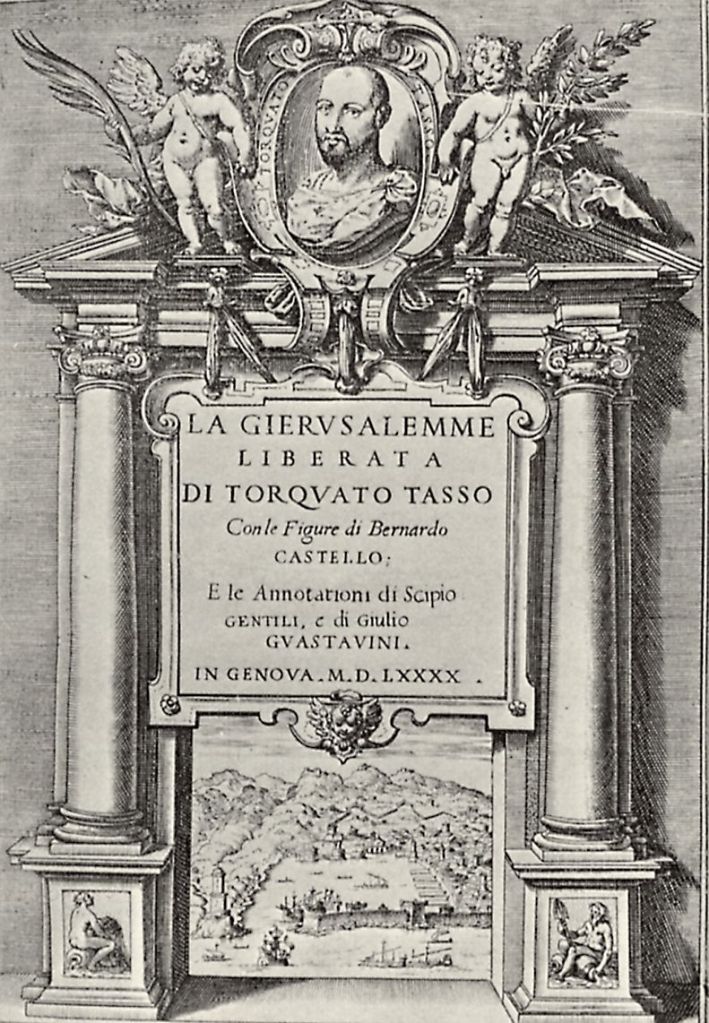
Agostino Carracci (su disegno di Bernardo Castello), Frontespizio della prima edizione illustrata della Gerusalemme Liberata, Genova, 1590
One might wonder why Torquato Tasso’s Gerusalemme liberata has inspired so many different composers from so many centuries. And not the entire epic, but specifically the Armida episode. Is it because of the magical-realistic story full of undisguised hatred, revenge, anger and passion? With characters (human or witch) torn apart by their conflicting feelings, their inner struggle between love and duty? I cannot say. Can you?
The first Armida that remains known to the general public was composed by
Jean-Baptiste Lully, based on the libretto by Philippe Quinault. Gluck used the same libretto a hundred years later for his fifth “French” opera. He himself considered Armide to be his very best work, but the public (and history) thought otherwise.
I myself have never been particularly fond of it either. But the longer I have been involved with opera, the more I have come to appreciate it.
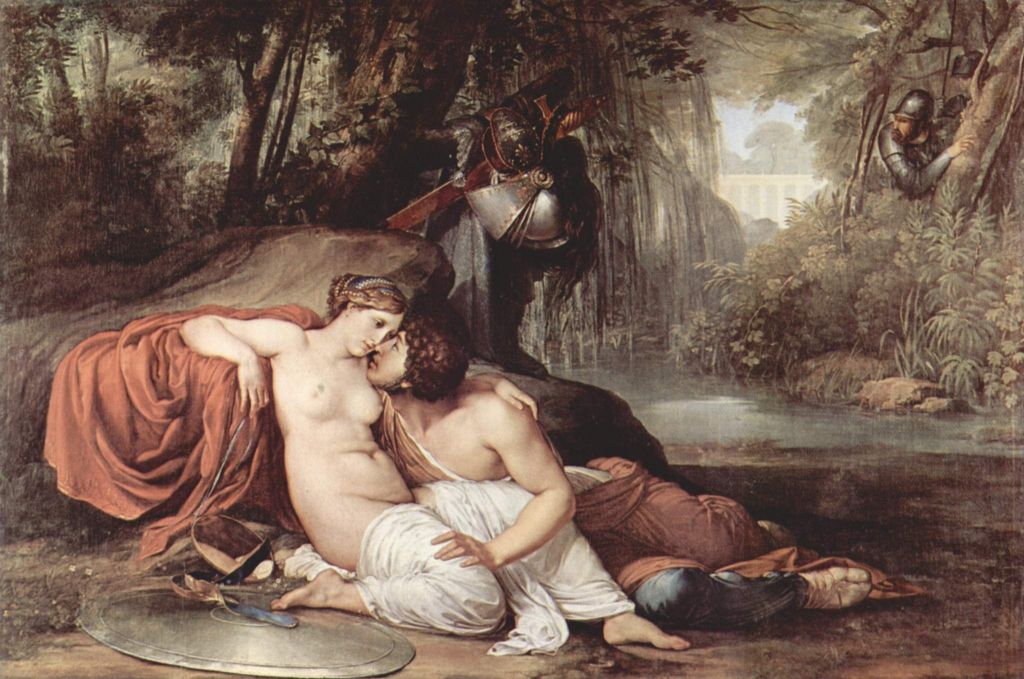
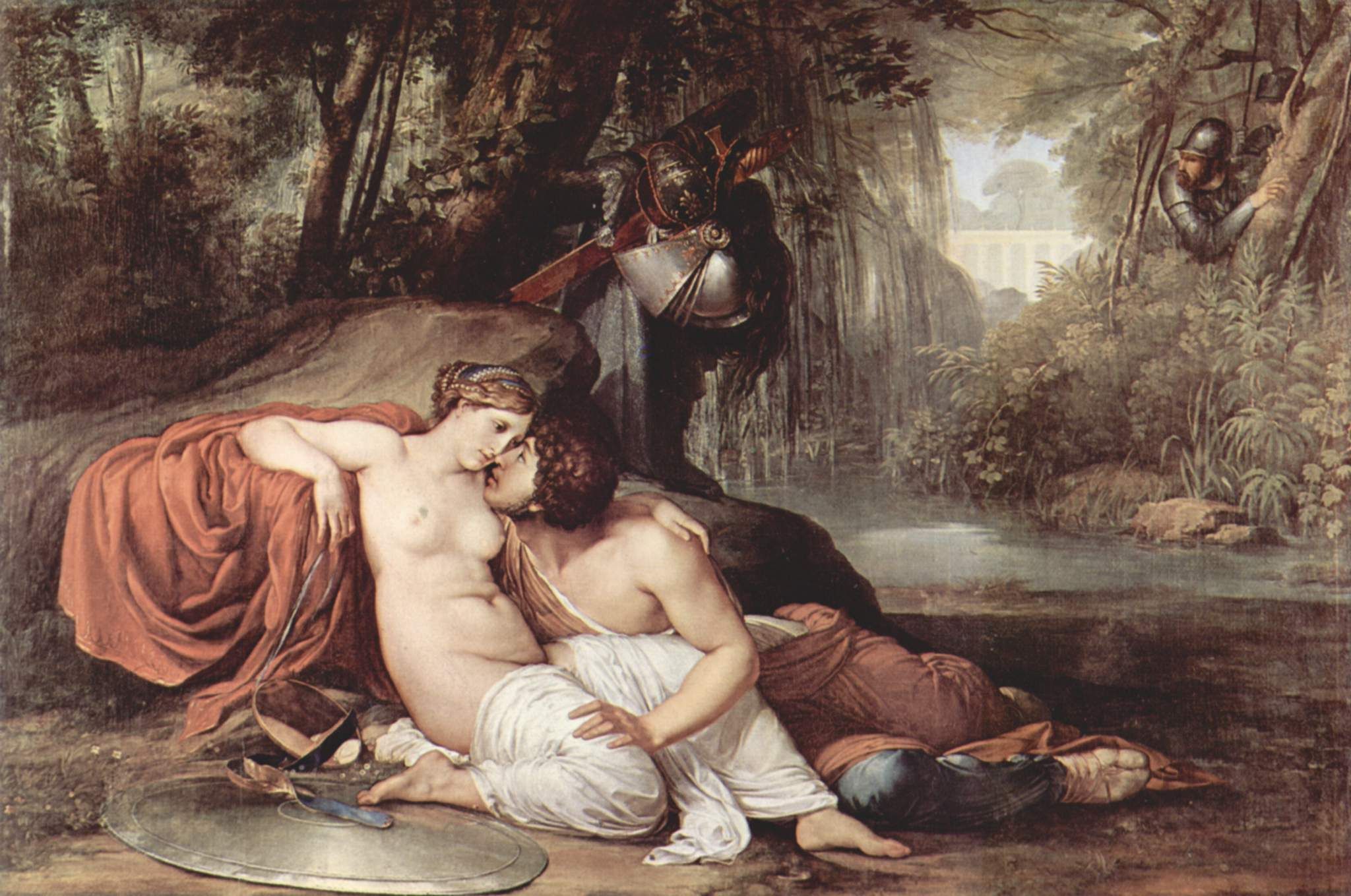
Francesco Hayez, “Rinaldo en Armida”
The opera has some magnificent arias and ensembles, with the heart-rending ‘Enfin, il est en ma puissance’ as an absolute highlight. It is a hysterical cry from the heart of the furious sorceress Armide, who has fallen in love.
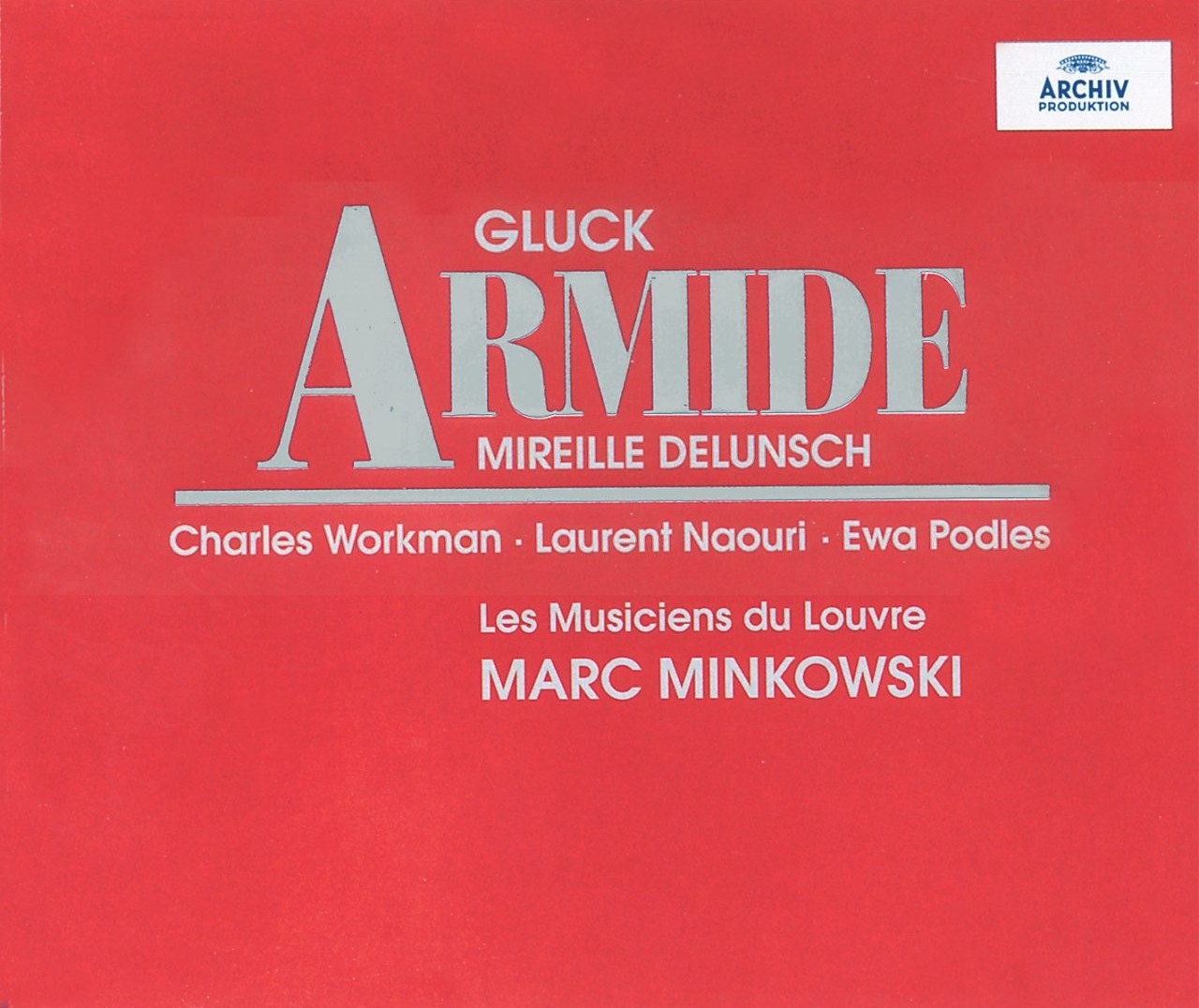
I know of only two complete recordings of Gluck’s work: one conducted by ichard Hickox on EMI (6407282) and one conducted by Marc Minkowski on Archiv (4596162). This is remarkable, considering that the opera is being erformed quite often these days.
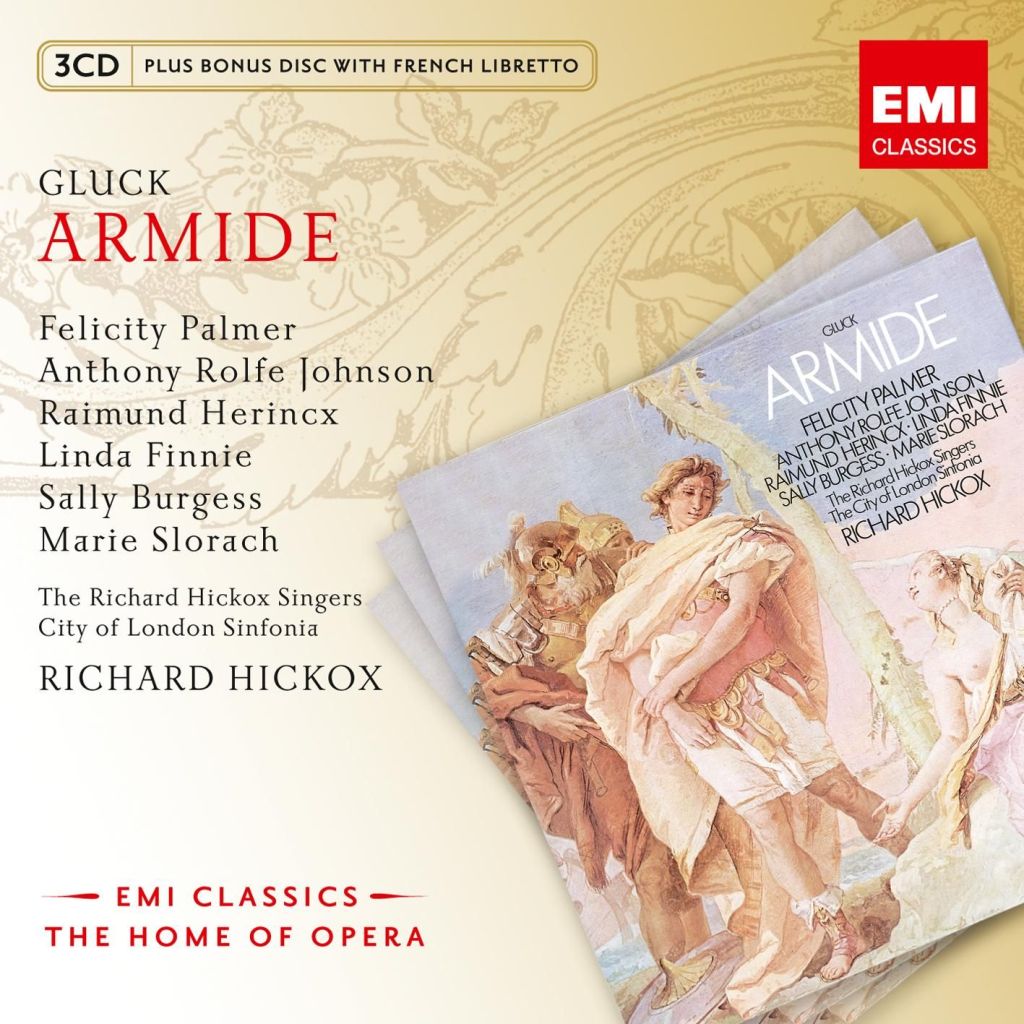
Hicox’s recording (3 CDs) is over 26 minutes longer than Minkowski’s. I don’t know the opera well enough to be able to say whether Minkowski has made any cuts, but to be honest, I don’t think so. His tempi are simply on the fast side – except for the overture, where he is proceeds with some caution.
Hickox’s sluggishness becomes quite irritating after a while and I simply dozed off a few times. The thirty-year-old recording still sounds beautiful, although the sound does not match the clarity and
transparency of Minkowski’s.
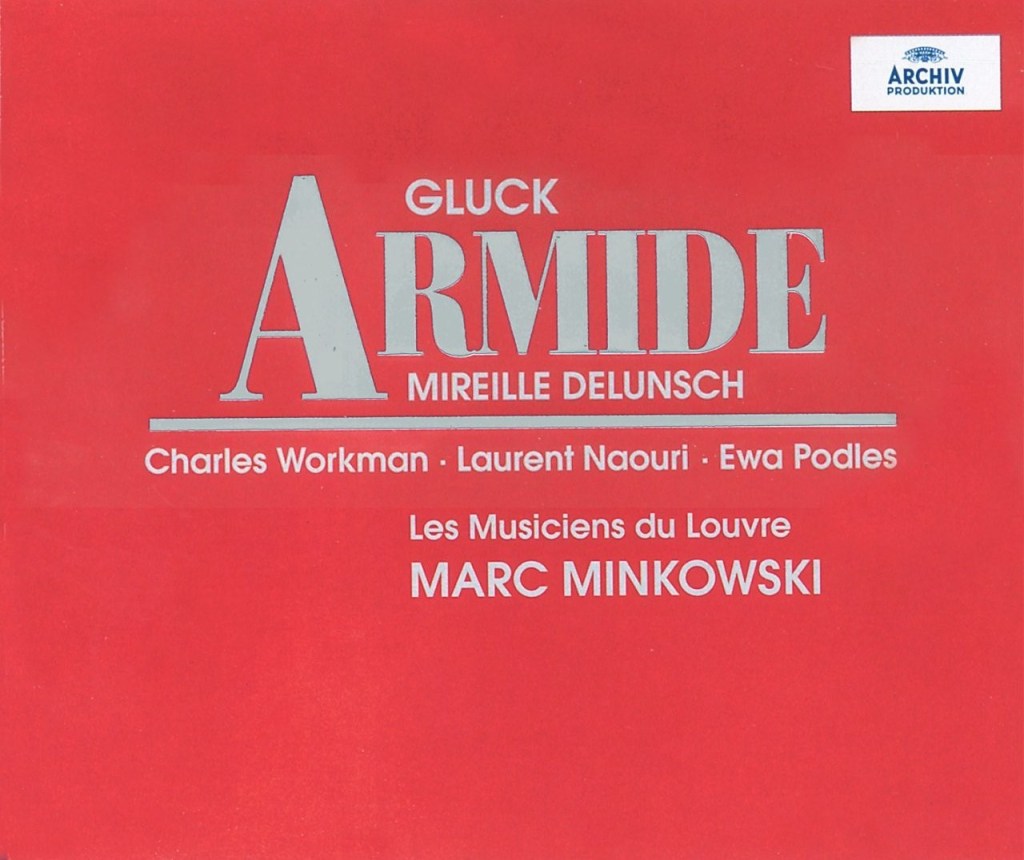
When it comes to the singers, the Frenchman easily beats his English colleague. I’m not a big fan of Mireille Delunsch, and I think her “Enfin il est en ma puissance” on Minkowski’s recording falls short of the interpretations by, for example, Véronique Gens or Anna Catarina Antonacci (why was the performance with Antonacci never officially recorded?). Nevertheless, despite her perfect diction and impeccable understanding of the text, Felicity Palmer (Hickox’s recording) is nomatch for her.
Charles Workman (Renaut) strikes a perfect balance between the heroic and the more lyrical – even my beloved Anthony Rolfe Johnson cannot compete with that.
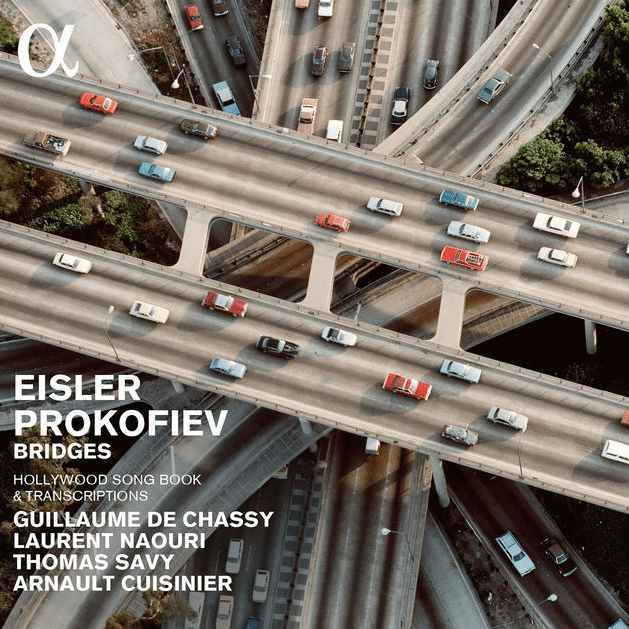
Laurent Naouri is a very macho Hidraot, but what gives Minkowski’s recording that “superplus” is Ewa Podles’ performance in the small role of La Haine (Hate). Her voice and delivery will make your head spin. She is without peers: an alto with such a deep sound, with all the high notes at her disposal and she will leave you speechless with her interpretation!
HIckox:
Minkowski:
And a curiosity: a complete Armide from Madrid, 1985, with Montserrat ArmideCaballé:














 Basia con fuoco