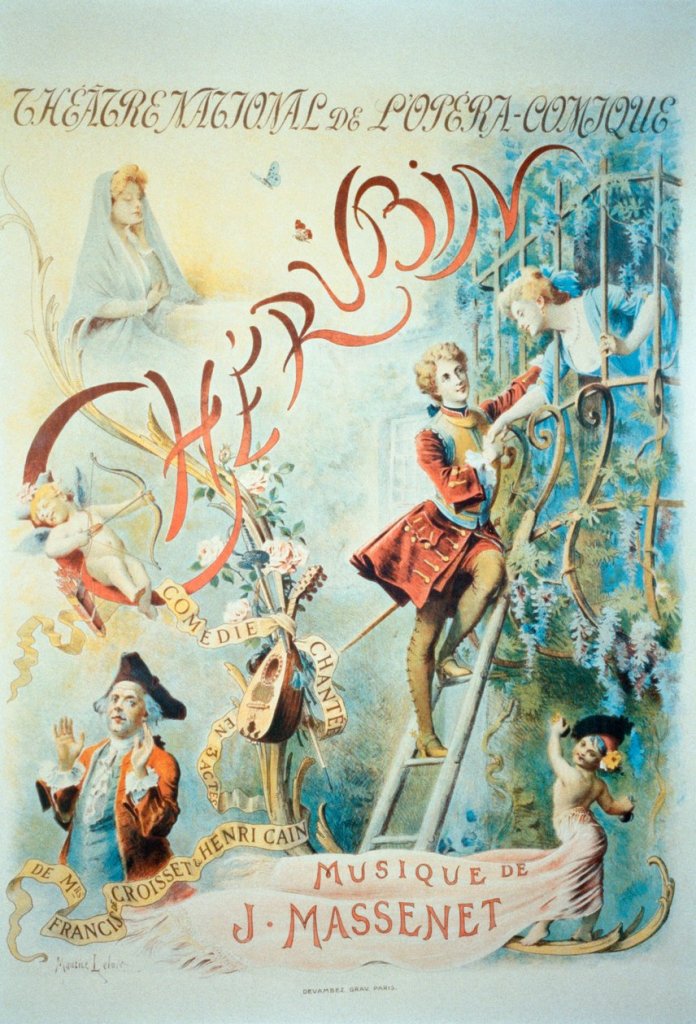
In de catalogus van het label Dynamic vond ik een opname uit 2006 van Massenets opera Cherubin. Het betreft een voorstelling uit Teatro Lirico Cagliari met Michelle Breedt in de titelrol. Het verhaal is flinterdun maar de muziek maakt veel goed, ik heb er met plezier naar gekeken.
Cherubin kennen we als het knaapje Cherubino die in Le Nozze di Figaro als een volleerd 13 jarige achter elke vrouw aanholt waarvan hij de feromonen opsnuift. Bij Massenet zijn we aangeland op zijn zeventiende verjaardag en dat is einde 18e eeuw de leeftijd die definitief de jongens van de mannen scheidt. Kennelijk heeft hij flink geërfd in de tussentijd want deze jongeman heeft een kasteeltje met landerijen en daarnaast nog een aardig vermogen. Hij kan het zich permitteren zijn onderhorigen voor een jaar alle financiële verplichtingen kwijt te schelden om hen te laten delen in de feestvreugde.
De eerste akte speelt zich af op dit kasteeltje, de tweede in een hotel waar om onbekende redenen de uitgenodigde gasten verblijven, ook de hooggeplaatsten. Hoewel nu toch echt een volwassen man gedraagt Cherubin zich nauwelijks anders dan die hitsige puber uit Nozze.
Hij heeft zijn peetmoeder uitgenodigd, jawel, de gravin uit Nozze en haar immer achterdochtige echtgenoot is natuurlijk ook van de partij. Verder een barones die eveneens haar echtgenoot heeft meegesleept. Daarnaast is er nog een hertog die een oogje in het zeil houdt vanwege zijn pupil Nina die verliefd is op Cherubin. Als Cherubin opschept dat hij de favoriete van de koning, de danseres L’Ensoleillad die furore maakt aan het Teatro Real, heeft uitgenodigd om op zijn feest te komen dansen, lachen de drie heren hem in zijn gezicht uit.
Cherubin heeft een liefdesgedicht in een wilgenboom verstopt en fluistert zijn peetmoeder in waar ze dat kan vinden. De graaf vangt dit natuurlijk op en is haar voor. Hij zwaait met het gevonden papier en wil direct duelleren. Nina heeft dat gedicht echter al eerder van Cherubin gekregen en redt de gravin door het woordelijk te citeren. Daarmee is bewezen dat het voor haar was bedoeld. De gravin is opgelucht en beledigd tegelijk.
Nina bezingt haar emoties in een aandoenlijk mooie aria ‘Lorsque vous n’aurez rien à faire’ waarin duidelijk wordt dat Cherubin zich slechts een beetje met haar heeft verloofd omdat hij op dat moment niets te doen had.
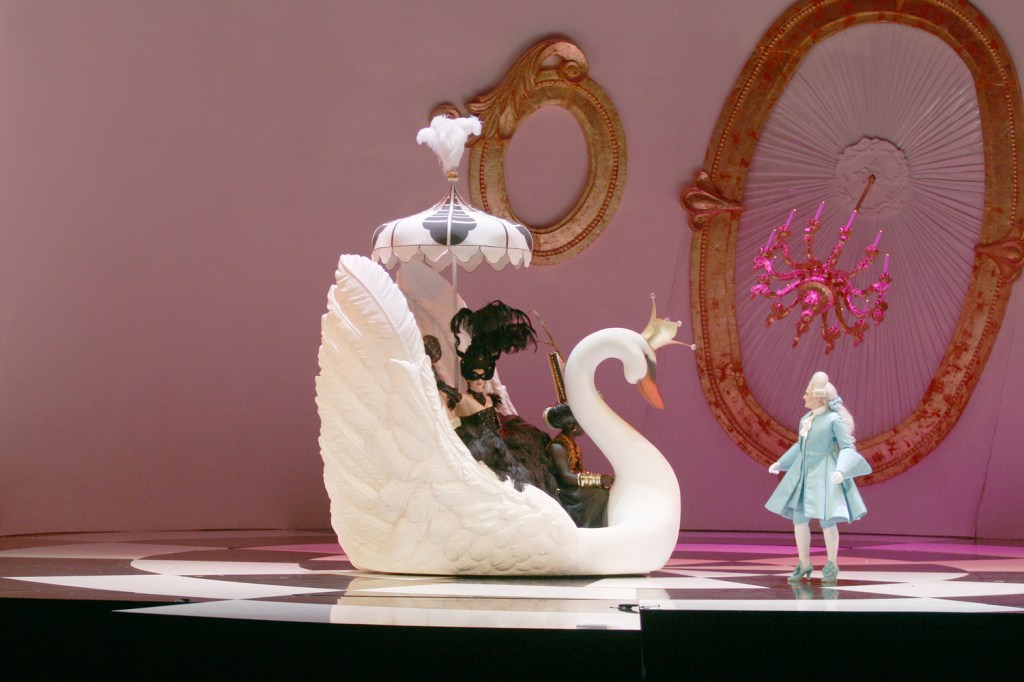
In de tweede akte treedt er een nogal verwarrende complicatie op. Nu zijn er plots een paar heren aanwezig die Cherubin willen verwelkomen in hun regiment, zonder hem overigens serieus te nemen. Als L’Ensoleillad tegen alle verwachting in haar opwachting maakt, ze komt in een ‘zwaan’ het toneel oprijden, zien de barones en de gravin er een extra concurrente bijkomen.
Een van Cherubins nieuwe collega’s wil met hem duelleren omdat hij aan zijn maîtresse heeft gezeten. Cherubins leraar en de herbergier weten dat te sussen. Als na de nodige verwikkelingen waaronder natuurlijk een serenade van Cherubin gericht aan L’Ensoleillad zowel de baron als de graaf zich beledigd voelen omdat zij denken dat het voor hun echtgenotes was bedoeld en de hertog daarbij aansluit omdat hij zich namens de koning verantwoordelijk voelt voor diens favoriete, dreigen er drie duels de volgende ochtend.
In de derde akte zien we Cherubin zijn testament opmaken. Hij laat Nina zijn ring na omdat ze immers een beetje verloofd waren. L’Ensolleilad waarmee hij een liefdeservaring heeft gehad die nacht krijgt zijn geldelijke bezittingen. Zijn leraar het kasteeltje en de landerijen. De leraar probeert hem uit de put te helpen: hij heeft een eerste ervaring op het gebied van de liefde gehad en lijdt nu als een man, dus niet het vijf minuten verdriet van een rond vlinderende puber.
Uiteindelijk neemt niemand het erg serieus, iedereen gaat gewoon naar huis en Cherubin krijgt te maken met emotionele chantage van Nina die komt vertellen dat ze in een klooster gaat. Hij pakt de draad op van het begin: met haar zal hij trouwen. Maar de jarretel en het lint dat hij van de L’Ensolleilad en de gravin als teken van liefde toegeworpen kreeg na zijn serenade wil hij houden. De leraar kijkt het aan en voorziet voor Nina hetzelfde lot als dat van Donna Elvira.
Paul Edwards was verantwoordelijk voor het decor en de kostuums en heeft er een feestelijk gebeuren van gemaakt, leuk om naar te kijken. Vooral de kostuums zijn nogal exuberant. Regisseur Paul Curran houdt de touwtjes strak in handen waardoor de chaos altijd georganiseerd blijft. Hij verzorgde ook de choreografie van de dansers en danseressen.
Patrizia Ciofi vertolkt de rol van L’Ensoleillad, goed maar niet bijzonder. Kan ook aan de partij liggen die Massenet voor die rol heeft geschreven. De mooiste muziek wordt gezongen door Carmela Remigio als de ongelukkige Nina. Erg melancholiek en dat werkt altijd goed bij Massenet.
Michelle Breedt is zeer overtuigend in de Hosenrolle van Cherubin, ze draagt de voorstelling zoals het een titelfiguur betaamt. De kleinere rollen zijn adequaat tot goed bezet.
Wie een indruk wil krijgen van deze opera moet natuurlijk bekend zijn met Massenets oeuvre. Mijn oordeel is dat het melodisch volledig aansluit bij de zes opera’s die ik van hem in het theater heb gezien. Meer specifiek: een hybride van Manon en Cendrillon.
Mede dankzij koor en orkest van Teatro Cagliari onder leiding van Emmanuel Villaume is de opname beslist de moeite waard.
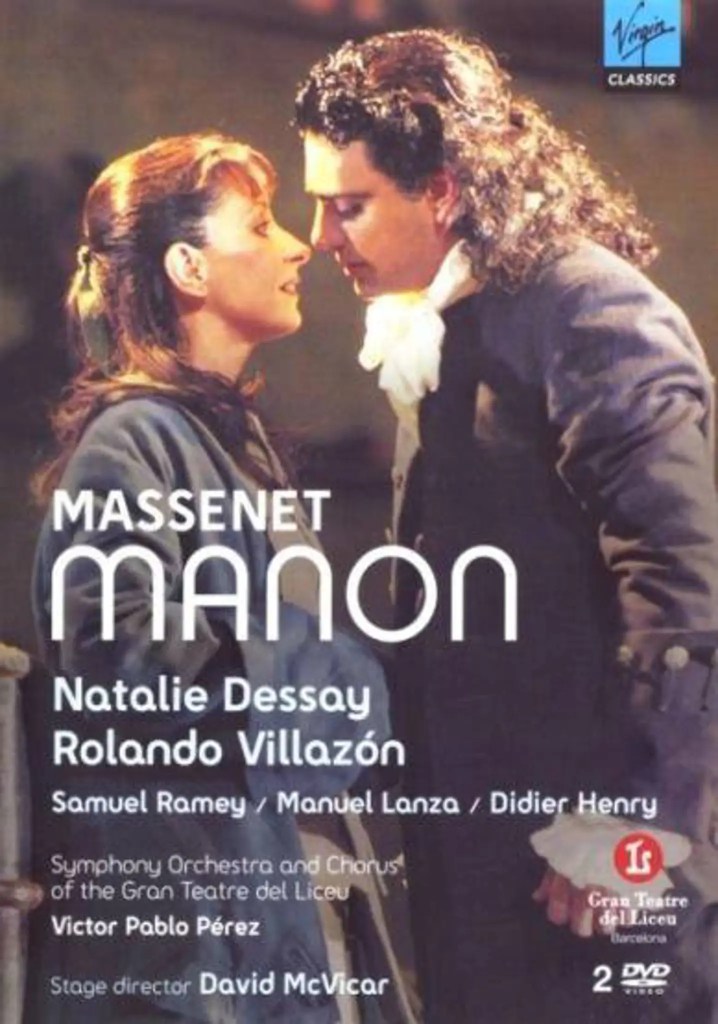
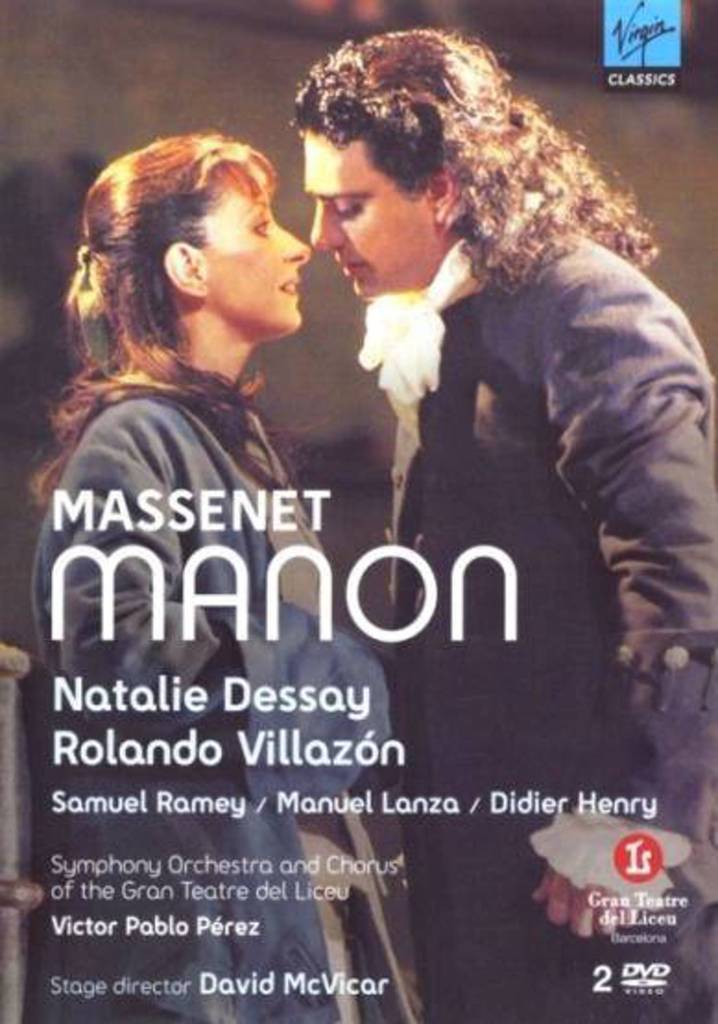
Jules Massenet’s Manon has, since its now legendary performance starring Anna Netrebko and Rolando Villazon (Berlin, April 2007), become a real hype. Anyone who had ever seen the performance could sincerely ask, like Verdi’s Ford (‘Falstaff’): ‘e sogno o realta’?
It was a reality that turned out to be a dream after all, as Netrebko found a new love, leaving Villazon with heart and voice problems. It was also not entirely clear until the last day of rehearsals whether he would sing the, scheduled for June 2007, performances of Manon in Barcelona.
He did come, and although he sang below his usual level, he managed to completely convince everyone with his acting and (sometimes a little too) intense commitment.
His Manon is brilliantly portrayed by a spectacularly singing and acting, Lulu-like, Natalie Dessay.
Manuel Lanza is a fine Lescaut, but for Samuel Ramey, a singer I greatly admire, Comte des Grieux unfortunately comes too late in his career.
The mise-en-scène and character direction by David McVicar, for me still really one of the best contemporary directors, were more than excellent. The costumes were beautiful to behold and the (traditional) staging was often really surprising, all the more so as McVicar managed to give it a contemporary twist from time to time.
A major downside of this release is the lack of synopsis and track list. But as a bonus, you do get a ‘peek inside’. Through a truly fascinating documentary, you can follow the stars during their rehearsals with McVicar.
And, when speaking of the “moderndays productions”…. don’t forget Netrebko and Beczala!
Who does not know ‘Méditation’, the sentimentally sweet but oh-so-beautiful piece of violin music? Most often it will make you cry.
Méditation in Josef Hassid’s performance:
However, not many people have ever heard, let alone seen, the opera in which this piece acts as a kind of interlude in the second act.
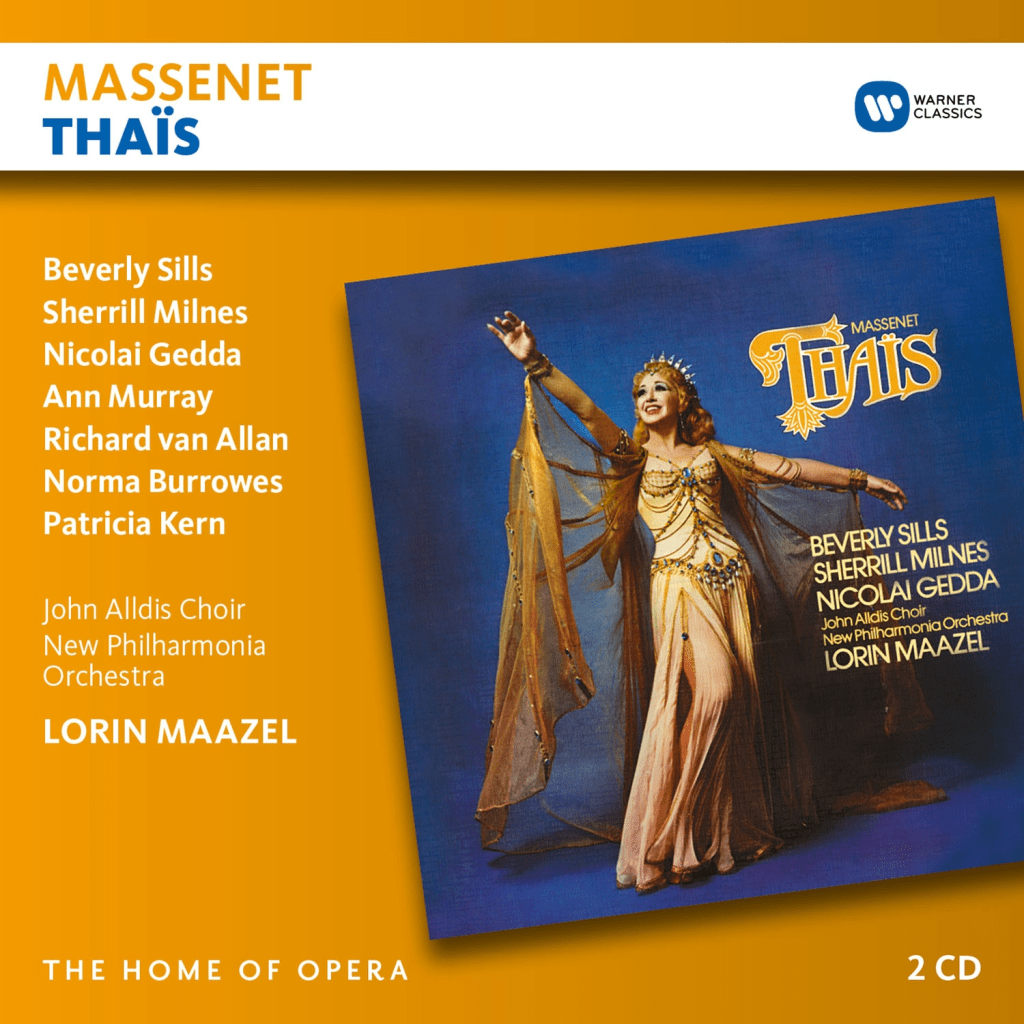
Recordings of the complete work are still scarce, I only know of three myself (with Anna Moffo, Beverly Sills and Renée Fleming), of which the one with Sills, Sherrill Milnes and Nicolai Gedda (Warner 0190295869069) is dearest to me.
Below Beverly Sills and Sherrill Milnes in the final scene of the opera:
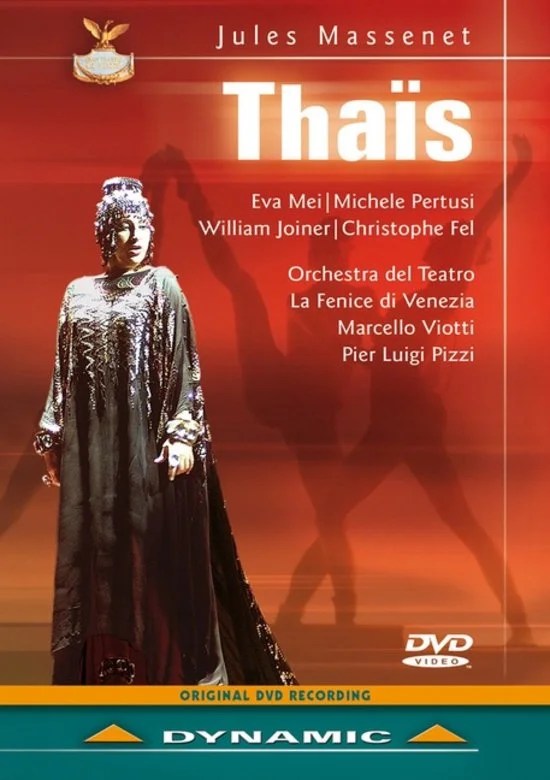
Pier Luigi Pizzi’s production from La Fenice had previously been released on CD and I found it particularly strong musically and mainly vocally. I was therefore particularly curious as to whether the visuals added anything to it on Dynamic’s DVD. To which I can now say a resounding “yes”.
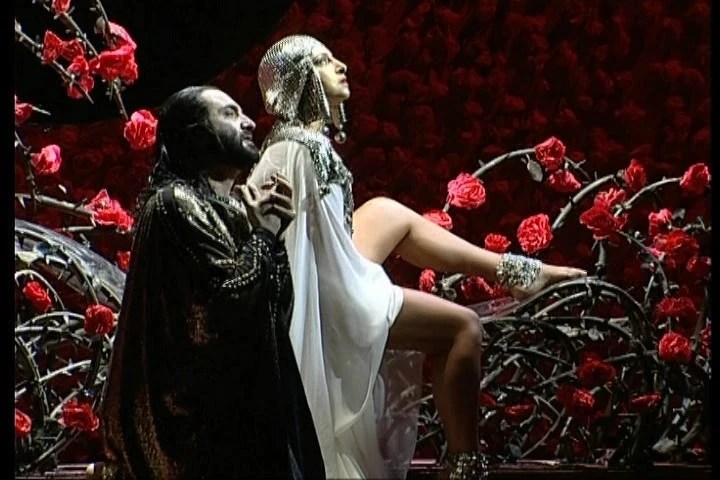
The sets are sparse, yet the stage seems to be completely full of them. Because of the colours (with very predominant red) perhaps, but also because of the dominant place they occupy on stage. For instance, Thaïs’ rose-covered bed, on which she – as if she were the Venus of Urbino or one of the versions of Danaë, also by Titian – lies very voluptuously. This bed is very prominently in the centre of the stage.
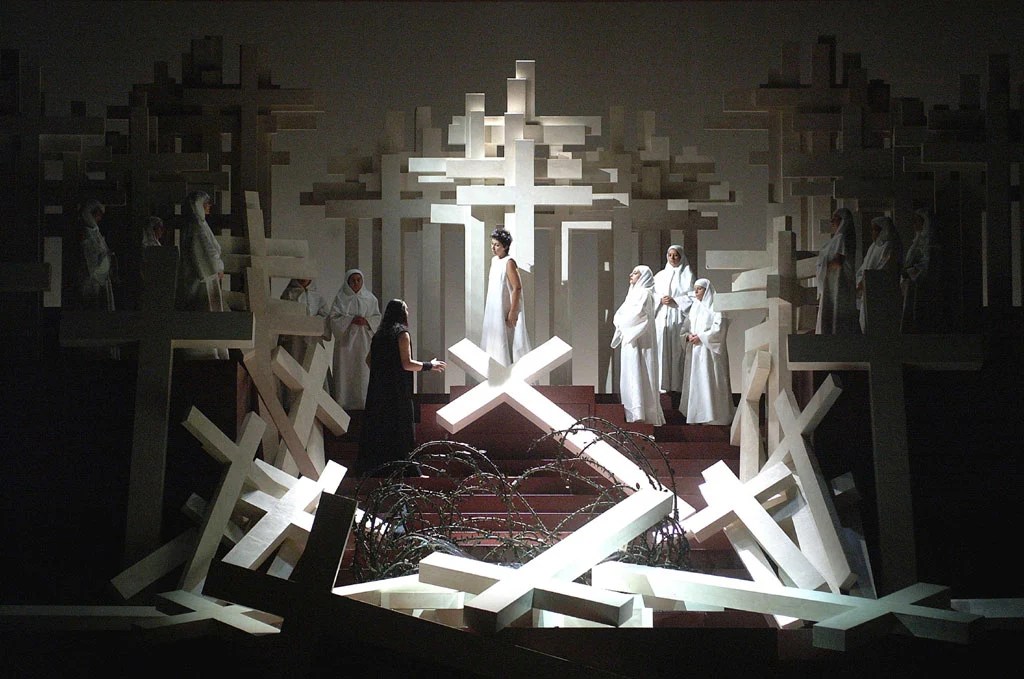
In the third act, when the fun life has ended and the penance begins, the roses are nowhere to be seen (a bed of thorns?) and her posture is as chaste as her white robe.
The costumes are a story apart: very opulent, oriental and barely concealing. Eva Mei doesn’t go as far as her colleague Carol Neblett, who went completely out of her clothes in New Orleans in 1973, but her see-through little nothing of a dress, from which her breasts keep escaping almost unnoticed, leaves nothing to the imagination.
Perhaps she was inspired by the very first Thaïs, Sybil Sanderson, whose breasts were also ‘accidentally’ visible during the premiere performance in 1894? Then again, it is all about the greatest (and most beautiful) courtesan in Alexandria!
Eva Mei is very virtuoso and very convincing as Thaïs . So is Michele Pertusi as Athanael. There is a lot of ballet, though. Also where it really shouldn’t be, which is very distracting at times.
Thaïs from Toronto: unearthly beautiful orchestral playing
Recordings of Thaïs are still scarce so any new releases are more than welcome. Especially if the performance is good, and this new recording on Chandos most certainly is. At least: to some extent.
The Toronto orchestra sounds so incredibly beautiful that you cannot help falling in love with it. Sir Andrew Davis truly extracts the impossible from his musicians: I have not heard the score performed so beautifully before. The pianissimi, the way they manage the quiet passages to perfection, the subcutaneous tension. Hats off! Hats off also to the violinist who manages to add new layers to the ‘Meditation’. So beautiful!
Unfortunately, the singers lag a bit behind. Erin Wall is a beautiful soprano with a crystal-clear voice, but a ‘Whore of Babylon’? More like a rather childishly naive girl.
Joshua Hopkins has the right voice for Athanael but he goes the wrong way when it comes to ‘earthly desires’. Andrew Staples is a good Nicias but he too fails to fully convince me.
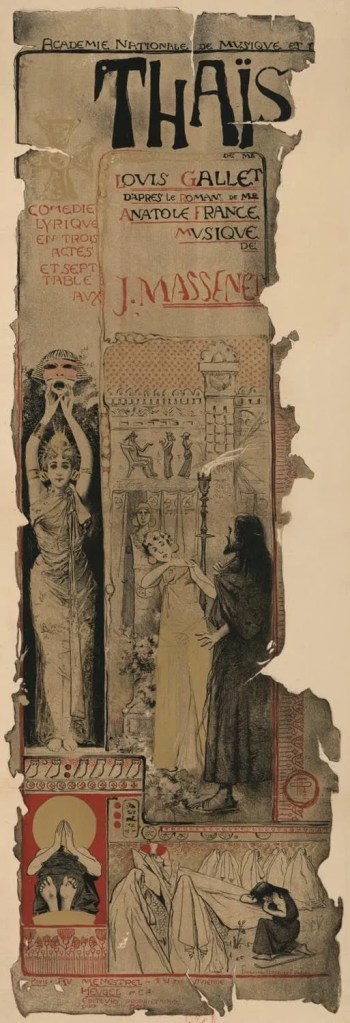
In 2021 ging in Wenen een nieuwe productie van Massenets opera Thaïs. De regie was in handen van Peter Konwitschny. Decors en kostuums kwamen voor rekening van Johannes Leiacker. Dit gerenommeerde duo stond voor de taak om ondanks alle corona gerelateerde beperkingen een volwaardige productie af te leveren. Daar zijn ze redelijk in geslaagd. Een opname zonder publiek is op Bluray uitgebracht door Unitel.
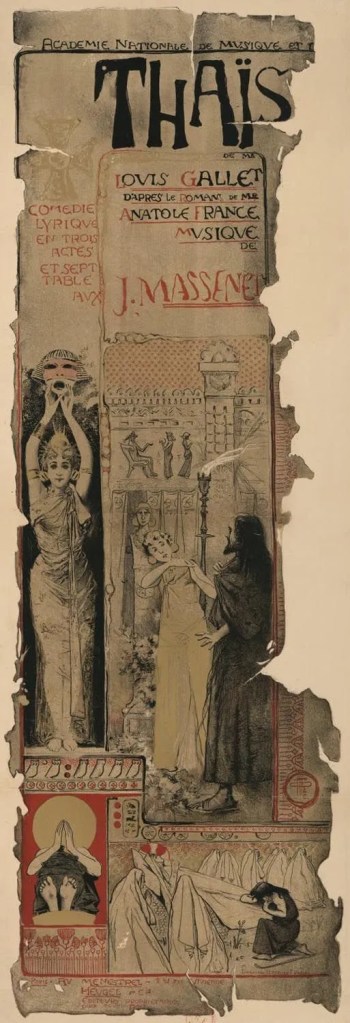
Het libretto van Thaïs is gebaseerd op de gelijknamige roman van Anatole France uit 1890. Daarin wordt het losbandige leven, de bekering door toedoen van een doortastende monnik en de boetedoening van de legendarische courtisane Thaïs beschreven. Deze vermoedelijk historische figuur leefde in de vierde eeuw in Alexandrië en werd later heilig verklaard. Santa Thaïs heeft een reputatie die ruwweg te vergelijken is met die van Maria Magdalena.
Anatole France voegde een geheel nieuwe dimensie aan het verhaal toe door de monnik in kwestie verliefd te laten worden op zijn ‘bekeringsproject’ waardoor hij weliswaar haar ziel redt maar de zijne verspeelt. ‘Eeuwig leven en zielenheil, wat doet het er toe. De enige echte liefde is die tussen levende mensen’ zingt hij vertwijfeld.
De handeling speelt zich in Wenen af op een vrijwel leeg toneel met een groot gordijn als achterdoek. Door dit gedeeltelijk opzij te schuiven of op te halen kunnen personages of zelfs een geheel koor snel opkomen en afgaan.
Athanaël maakt zijn opwachting in Alexandrië bij zijn jeugdvriend Nicias die toevallig net ten koste van zijn complete (?) vermogen een week exclusieve aandacht van Thaïs heeft weten te verwerven. Het wordt zijn laatste avond met haar en hij is niet te beroerd die verdwaasde monnik aan haar voor te stellen.
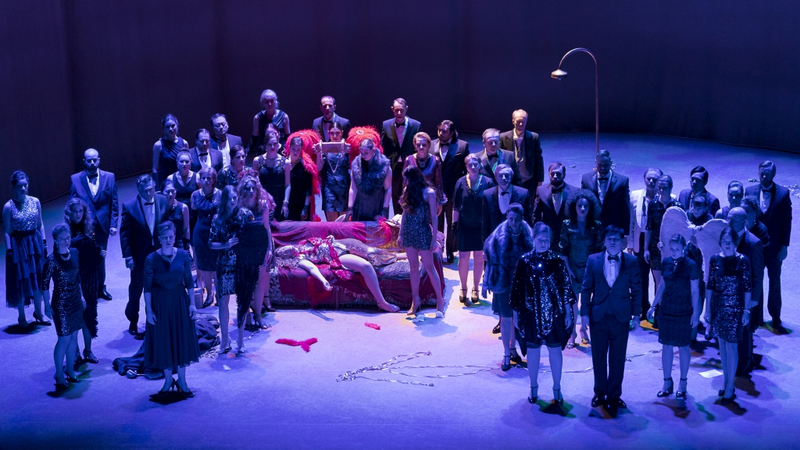
Het huis van Thaïs wordt slechts geduid door een kleurige sofa. Haar rijkdom moeten we aflezen aan een exuberant kostuum, getooid met rode vleugels. Alle anderen lopen ook met vleugels rond maar die ogen veelal wat meer ingehouden. De menigte is modern stemmig gekleed, met witte vleugels. Ter onderscheid lopen alle monniken rond in het zwart met bijpassende vleugels. Wellicht wordt hier bedoeld dat je niet perse in een klooster hoeft te leven om een engel te kunnen zijn.
Athanaël begint voortvarend aan zijn missie om Thaïs terug tot het christelijk geloof te brengen door haar levenswijze af te kraken en haar een prachtig bestaan in het hiernamaals voor te spiegelen. Konwitschny heeft echter zo zijn twijfels over wat er in het hoofd van die monnik omgaat.
Athanaël gaat zo tekeer dat hij Thaïs angst inboezemt. Zij zingt ‘Pitié, ne me pas de mal’. De regie laat hem haar zonder pardon verkrachten en vervolgens wordt hij door haar bereden. Dat gebeurt natuurlijk niet in werkelijkheid maar zo wordt op niet mis te verstane wijze getoond dat hij niet denkt wat hij zegt. Later geeft hij dat toe: ‘Het was een leugen. Er is geen hiernamaals, alleen het leven telt.’
Aanvankelijk wil Thaïs er allemaal niets van weten maar tijdens een droom, begeleid door de overbekende vioolsolo ‘Meditation’, komt ze tot inkeer en laat zich door Athanaël wegvoeren naar de woestijn met achterlating van al haar bezittingen. Dat gaat niet zonder slag of stoot. Ze wil een beeldje meenemen dat Eros voorstelt. Het wordt hier voorgesteld door een klein jongetje met een pijl en boog dat zo nu en dan gezellig bij Thaïs op schoot kruipt. Als Athanaël hoort dat ze het ooit van Nicias heeft gekregen, dat verdorven heidense individu, ontsteekt hij in woede en schiet het jongetje neer.
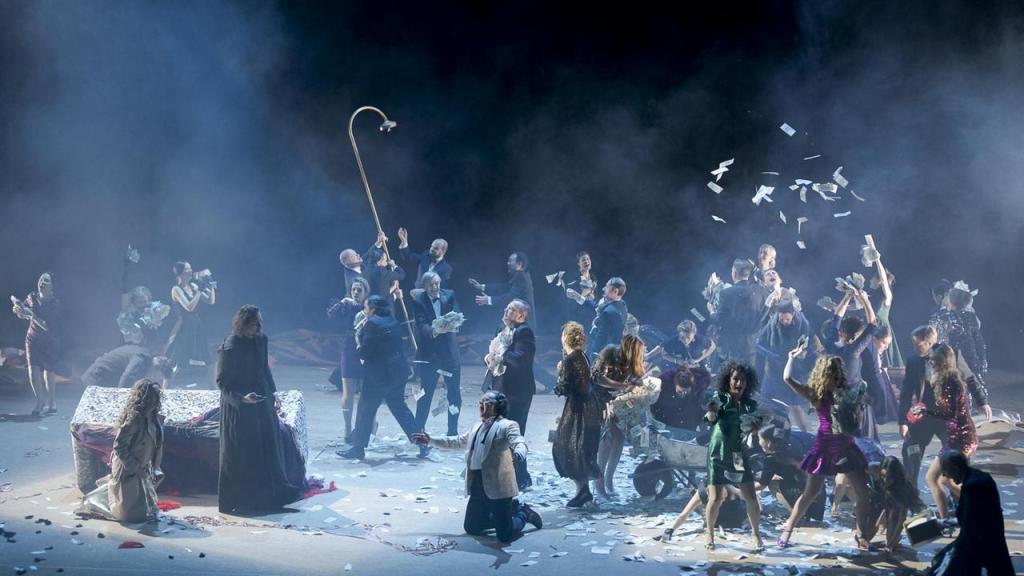
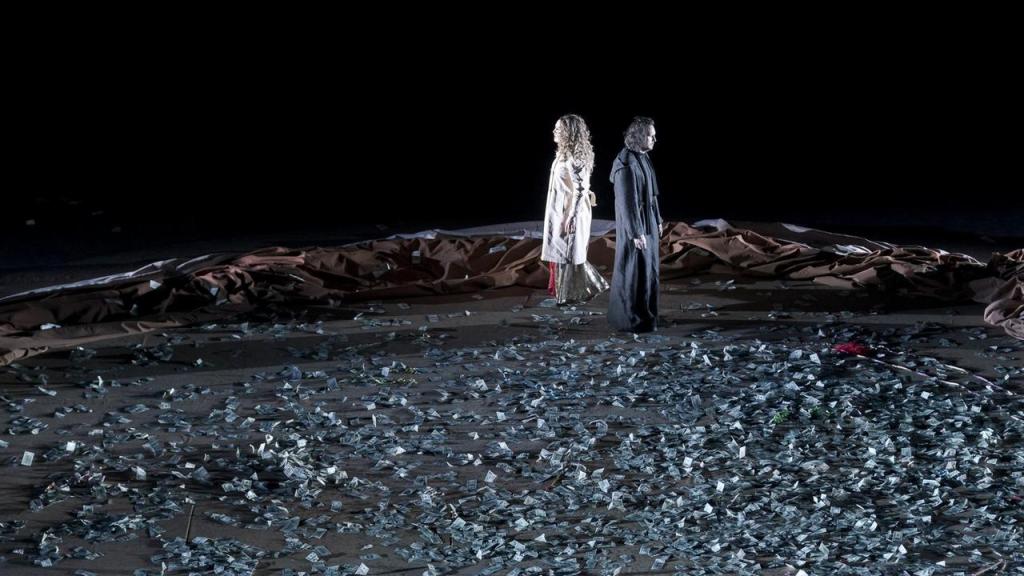
De menigte krijgt lucht van Thaïs’ vermeende ontvoering en wil die beletten. Athanaël schiet wild in het rond om hen op afstand te houden maar het volk komt pas tot bedaren als Nicias arriveert met een kruiwagen vol geld dat hij begint rond te strooien. Kennelijk had hij nog iets achter de hand gehouden.
Muzikaal doet Thaïs me zo nu en dan denken aan Manon, een van Massenets grote succesnummers. Als ze zichzelf in de spiegel bekijkt en zingt ‘Dis-moi que je suis belle’ hoor ik echo’s van ‘Je marche sur tous les chemins’. Ook scenisch is er een parallel: beide dames slepen zich aan het einde voort door een woestijn. Manon sterft, Thaïs bereikt nog net het nonnenklooster waar Athanaël haar naar toe brengt. De scène waarin hij terugkeert in zijn eigen klooster is gecoupeerd. We zien en horen hem direct aansluitend van zijn geloof afvallen.
Nicole Chevalier is niet helemaal opgewassen tegen de eisen die de titelrol aan haar stelt maar houdt zich toch vrij goed staande. Hetzelfde kan worden gezegd van Josef Wagner als Athanaël. Roberto Sacca geeft een goede vertolking van Nicias. De overige rollen zijn adequaat bezet.
Dirigent Leo Hussain geeft leiding aan het Arnold Schoenberg Chor en het ORF Radio-Symphonieorchester Wien. Al met al toch een wat tegenvallende Thaïs, ik had me er in elk geval meer van voorgesteld.
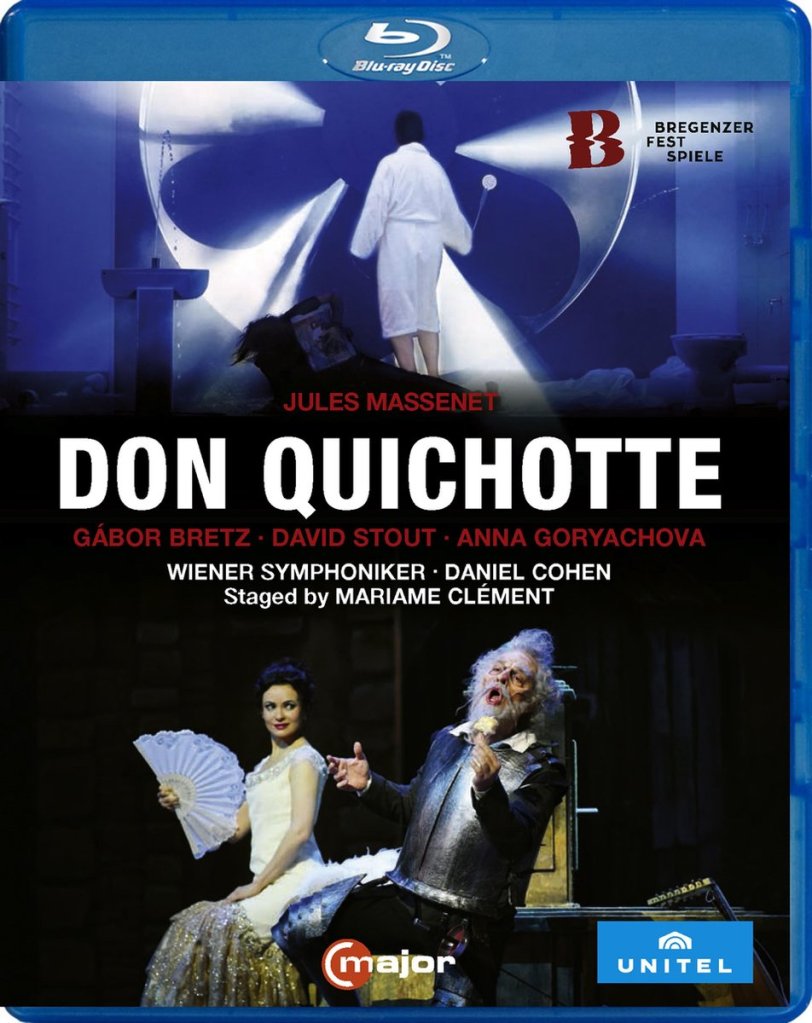
Een productie van regisseur Mariame Clément voor de Bregzenzer Festspiele van 2019 werd op Blu-ray uitgebracht door Unitel. De comédie héroïque Don Quichotte was de voorlaatste opera van Jules Massenet die tijdens zijn leven première had. Het is zeker niet zijn meest gespeelde werk maar een must voor liefhebbers die verder kijken dan Werther en Manon. Gábor Bretz vertolkt de titelrol.
Clément kwam in 2018 met een Salome voor de Aalto Opera die zwaar leunde op een #metoo concept. Daar was ze in 2019 duidelijk nog niet van los, getuige de belerende mini documentaire waarmee de voorstelling wordt geopend. Het blijkt een reclamefilm van Gilette te zijn met als thema ‘toxic masculinity’ waar een toeschouwer in de zaal zeer negatief op reageert.
Voorspelbaar krijgt deze in het publiek geplaatste acteur weinig bijval, men wacht rustig af tot de voorstelling echt begint. Overigens is de enige scène die Clément ter rechtvaardiging van deze opening kan aanvoeren de vrouwonvriendelijke monoloog van Sancha Panza ‘Comment peut-on penser du bien’ in de tweede akte, die de regie hem laat zingen gezeten op een toiletpot. Dat detail was wat mij betreft wel afdoende geweest.
Track 2 is het feitelijk begin van de eerste akte, geheel vormgegeven als kostuumdrama met allerhande Spaanse clichés en tongue in cheek acting. Don Quichotte wordt door Dulcinea op een queeste gestuurd, hij moet haar gestolen parelketting terughalen bij een bandiet die dit waardevolle object haar ontnomen heeft.
In akte twee zien we Don Quichotte en Sancho Panza in een badkamer. De Don scheert zich en Sancho kraakt het vrouwelijk geslacht af. Plotseling krijgt de Don oog voor een ventilator, hoog in de muur. Hij ziet er een reus in die verslagen moet worden. Heel inventief laat de regie de kijker meebeleven hoe de dolende ridder dit ervaart. De wanden schuiven opzij en er wordt een enorme ventilator zichtbaar die de Don met een toiletborstel te lijf gaat.
Na dit kijkje in de verwarde belevingswereld van Don Quichotte komt zijn verschijnen als Spiderman in de derde akte niet als een verrassing. De superheld die alles en iedereen denkt aan te kunnen. Het decor toont een achterbuurt met graffiti op een muur en de bandieten zijn eigentijdse hoodlums. De aanvoerder zwicht voor Spidermans charisma, zo lijkt het. De queeste heeft zijn doel bereikt.
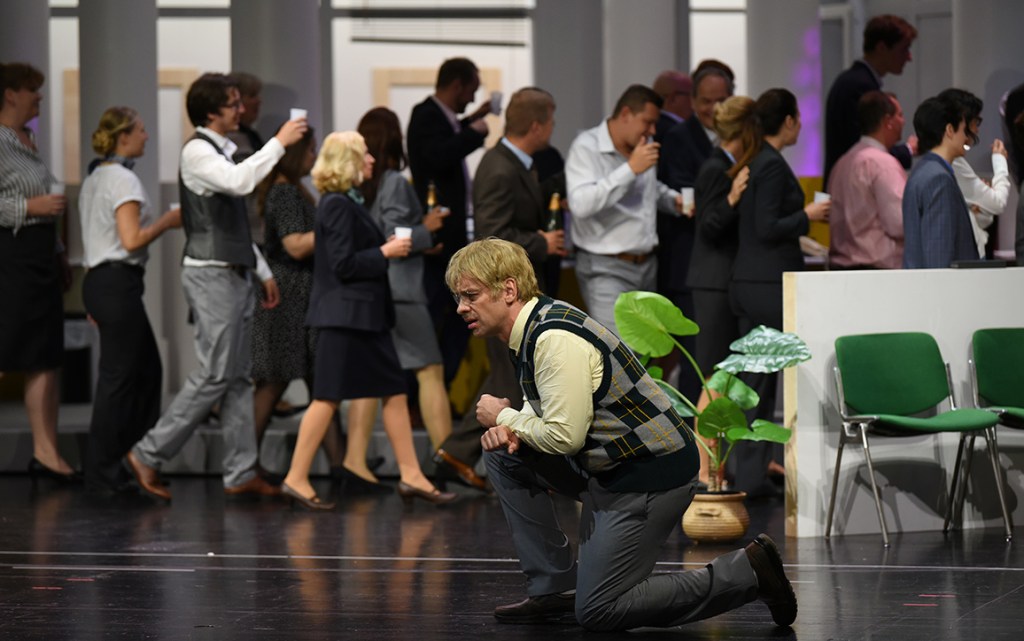
De vierde akte toont een kantoor met Dulcinea als manager. Alle mannelijke medewerkers lopen letterlijk achter haar kont aan, maar die loze aandacht verveelt haar. Ook een verjaardagspartijtje met werknemers van andere afdelingen erbij kan haar niet blij maken.
Opkomst Sancho die de komst van zijn heer aankondigt. Beiden zijn uitgemonsterd als grijze muizen, kantoortypes die voor hun collega’s vrijwel onzichtbaar zijn. Je zou bijna denken dat de regie een scène uit Debiteuren Crediteuren heeft willen kopiëren. Don Quichotte maakt een opmerking die meer dan alle voorgaande scènes inzicht geeft in zijn perceptie van de werkelijkheid. Als Dulcinea toch wat verrast is door zijn terugkeer, met ketting, mompelt hij: ‘Elle a douté’.
Zij wijst hem af maar zoekt later toch weer kort enige toenadering. Ze is hem niet waard, wil hem niet teleurstellen. In de liefde volgt ze haar hormonen en niet haar hart, dat kan ze hem niet aandoen.
In de laatste akte neemt Don Quichotte afscheid van het leven, bij een bordpapieren boom voor een decor met een landschap erop. Niets is echt in zijn wereld, alles is slechts zijn fantasie. Maar wel een fantasie die hem groots en meeslepend heeft laten leven.
De veelal als ‘vrouwelijk’ getypeerde muziek van Massenet is hier minder prominent. Hier en daar hoor je vlagen van de grote emoties uit Werther maar die momenten zijn zeker niet bepalend voor het geheel. Typische Massenet momenten ervaar ik vooral in ‘Elle m’aime et va me revenir’ (Don Quichotte) aan het einde van de eerste akte, ‘Lorsque le temps d’amour a fui’ en ‘Oui, je souffre votre tristesse’ (Dulcinea) in akte 4 en ‘O mon maître, ô mon grand!’ (Sancho Panza) in akte 5.
Muzikaal is dit zeker niet Massenets sterkste werk, vind ik. Maar de combinatie van het beroemde verhaal van Cervantes en de versie waarin de naar knoflook stinkende keukenmeid Dulcinea is getransformeerd tot femme fatale, maakt deze opera tot een must voor alle liefhebbers van zijn werk. Die keukenmeid komt overigens uit de koker van Clément die in een interview laat merken het eigenlijk maar niks te vinden dat Massenet geen muziek kon schrijven voor een vrouw uit het gewone volk.
De drie hoofdrollen zijn prima bezet met mezzo sopraan Anna Goryachova als een goed zingende Dulcinea. Haar bereik in de laagte is net aan, maar ze komt er mee weg. Je zou bijna denken dat Massenet een alt in gedachten had voor deze rol. Haar streng ogende uiterlijk als manager maakt invoelbaar dat al die mannelijke collega’s nieuwsgierig zijn naar wat er onder die bepantsering op ontdekking ligt te wachten.
Bariton David Stout excelleert als sidekick Sancho Panza, de schakel tussen de steeds vreemder wordende belevingswereld van zijn meester en die van hemzelf en zijn omgeving. Hij verdedigt hem naar de anderen in zijn overtuigend gebrachte ‘Riez, allez, riez du pauvre idéologue’. Van het publiek krijgt Stout het meeste applaus, terechte waardering.
De bas Gábor Bretz zong in augustus 2019 een aantal malen Jochanaan in Salzburg. Ik vond hem toen tamelijk onopvallend, ook doordat de regie hem nauwelijks liet zien. In Bregenz nam hij in juli van dat jaar deze Don Quichotte voor zijn rekening. Vermoedelijk liepen de repetities wel een beetje door elkaar. In deze productie is hij natuurlijk nadrukkelijk aanwezig, in steeds weer andere uitmonstering, met een opzetstuk dat hem een oud gezicht geeft in de eerste en de laatste akte. Zijn zang is goed verzorgd maar maakt op mij weinig indruk, zeker adequaat maar niet bijzonder.
Opvallend dat alle drie hoofdrollen voor rekening komen van lage stemtypes. Een enkele tenor zingt slechts een kleine bijrol. Daniel Cohen heeft de muzikale leiding, goed spel van de Wiener Symphoniker en een prima verzorgde bijdrage van het Praag Philharmonisch Koor.
Jules Massenet was the most prolific and, artistically as well as commercially, also the most successful French opera composer between 1870/71 and World War I, the belle Epoque of the Third French Republic. He is best known for his operas, of which he wrote more than thirty. The two most frequently staged are Manon and Werther
MANON
Jules Massenet’s Manon has, since its now legendary performance starring Anna Netrebko and Rolando Villazon (Berlin, April 2007), become a real hype. Anyone who had ever seen the performance could sincerely ask, like Verdi’s Ford (‘Falstaff’): ‘e sogno o realta’?
It was a reality that turned out to be a dream after all, as Netrebko found a new love, leaving Villazon with heart and voice problems. It was also not entirely clear until the last day of rehearsals whether he would sing the, scheduled for June 2007, performances of Manon in Barcelona.
He did come, and although he sang below his usual level, he managed to completely convince everyone with his acting and (sometimes a little too) intense commitment. His Manon is brilliantly portrayed by a spectacularly singing and acting, Lulu-like, Natalie Dessay.
Manuel Lanza is a fine Lescaut, but for Samuel Ramey, a singer I greatly admire, Comte des Grieux unfortunately comes too late in his career.
The mise-en-scène and character direction by David McVicar, for me still really one of the best contemporary directors, were more than excellent. The costumes were beautiful to behold and the (traditional) staging was often really surprising, all the more so as McVicar managed to give it a contemporary twist from time to time.
As a bonus, you do get a ‘peek inside’. Through a truly fascinating documentary, you can follow the stars during their rehearsals with McVicar.
WERTHER FOR BARITONE
In 1902, ten years after the premiere, Massenet produced a new version of his Werther, this at the request of Italian baritone Mattia Battistini, who was eager to sing the lead role. Massenet did not change the key, but rewrote the vocal lines of Werther’s music, making the arias, ‘Pourquoi me réveiller’ included, barely recognisable.
The “baritone version” of the opera was and remains an oddity; no original manuscript of the score even exists. In recent times, with its penchant for ever new challenges, there was also an increased interest in alternative versions of well-known operas. The baritones, tired of singing the villains, are rediscovering the repertoire, in which they can release all their lyrical melancholy.
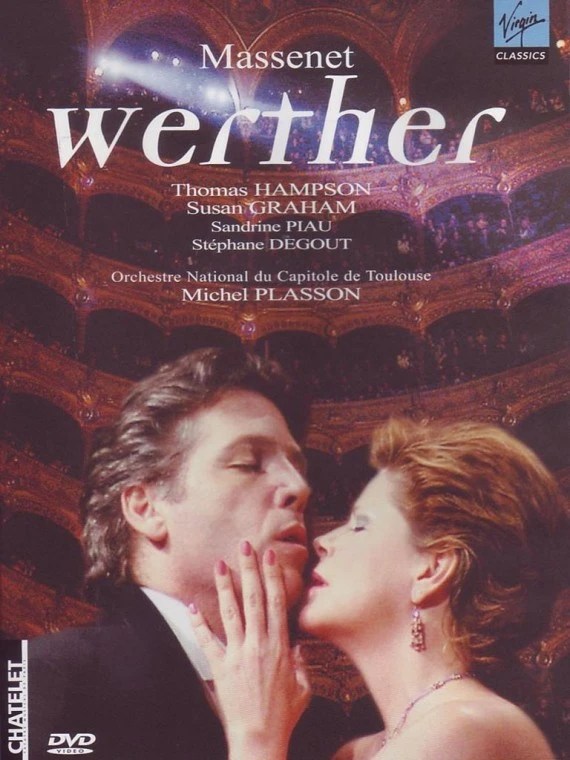
Thomas Hampson has always been an explorer of lesser-known paths and he first performed the role of Werther back in 1989. In 2004, he sang a concert performance of it at the Paris Chatelet, and that performance has been released by Virgin on two DVDs. He does an excellent job, but the manic-depressive is a bit off.
His Charlotte is sublimely sung by Susan Graham, who also performed the role in Amsterdam some years ago, where she moved the audience and press to tears. Michel Plasson has all the drama at his fingertips as you can hear.
“Pourquoi me réveiller” by three tenors
Alain Vanzo :
Sergei Lemeshev in Russian:
Jonas Kaufmann:
Piotr Beczala:
THAÏS
Who does not know ‘Méditation’, the sentimentally sweet but oh-so-beautiful piece of violin music? Most often it will make you cry.
Méditation in Josef Hassid’s performance:
However, not many people have ever heard, let alone seen, the opera in which this piece acts as a kind of interlude in the second act.
Recordings of the complete work are still scarce, I only know of three myself (with Anna Moffo, Beverly Sills and Renée Fleming), of which the one with Sills, Sherrill Milnes and Nicolai Gedda (Warner 0190295869069) is dearest to me.
Below Beverly Sills and Sherrill Milnes in the final scene of the opera:
DVD from La Fenice
Pier Luigi Pizzi’s production from La Fenice had previously been released on CD and I found it particularly strong musically and mainly vocally. I was therefore particularly curious as to whether the visuals added anything to it on Dynamic’s DVD. To which I can now say a resounding “yes”.
The sets are sparse, yet the stage seems to be completely full of them. Because of the colours (with very predominant red) perhaps, but also because of the dominant place they occupy on stage. For instance, Thaïs’ rose-covered bed, on which she – as if she were the Venus of Urbino or one of the versions of Danaë, also by Titian – lies very voluptuously. This bed is very prominently in the centre of the stage.
In the third act, when the fun life has ended and the penance begins, the roses are nowhere to be seen (a bed of thorns?) and her posture is as chaste as her white robe.
The costumes are a story apart: very opulent, oriental and barely concealing. Eva Mei doesn’t go as far as her colleague Carol Neblett, who went completely out of her clothes in New Orleans in 1973, but her see-through little nothing of a dress, from which her breasts keep escaping almost unnoticed, leaves nothing to the imagination.
Perhaps she was inspired by the very first Thaïs, Sybil Sanderson, whose breasts were also ‘accidentally’ visible during the premiere performance in 1894? Then again, it is all about the greatest (and most beautiful) courtesan in Alexandria!
Eva Mei is very virtuoso and very convincing as Thaïs . So is Michele Pertusi as Athanael. There is a lot of ballet, though. Also where it really shouldn’t be, which is very distracting at times.
Thaïs from Toronto: unearthly beautiful orchestral playing
Recordings of Thaïs are still scarce so any new releases are more than welcome. Especially if the performance is good, and this new recording on Chandos most certainly is. At least: to some extent.
The Toronto orchestra sounds so incredibly beautiful that you cannot help falling in love with it. Sir Andrew Davis truly extracts the impossible from his musicians: I have not heard the score performed so beautifully before. The pianissimi, the way they manage the quiet passages to perfection, the subcutaneous tension. Hats off! Hats off also to the violinist who manages to add new layers to the ‘Meditation’. So beautiful!
Unfortunately, the singers lag a bit behind. Erin Wall is a beautiful soprano with a crystal-clear voice, but a ‘Whore of Babylon’? More like a rather childishly naive girl.
Joshua Hopkins has the right voice for Athanael but he goes the wrong way when it comes to ‘earthly desires’. Andrew Staples is a good Nicias but he too fails to fully convince me.
CENDRILLON
A fairy tale has its own rules. Much is interchangeable, but what must never be compromised is the “happy ending”. So: the ugly duckling becomes a beautiful swan and Cinderella becomes a princess. All evil spirits are punished and we can sleep peacefully.
Sometimes I pray to those I don’t really believe in: give us back our fairy tales, because these days everything has to be totally true to nature and as realistic as possible. Fortunately, my prayers are sometimes heard and so it came to pass that I was able to enjoy an old-fashioned evening; with my cat on my lap and Cinderella on my screen.
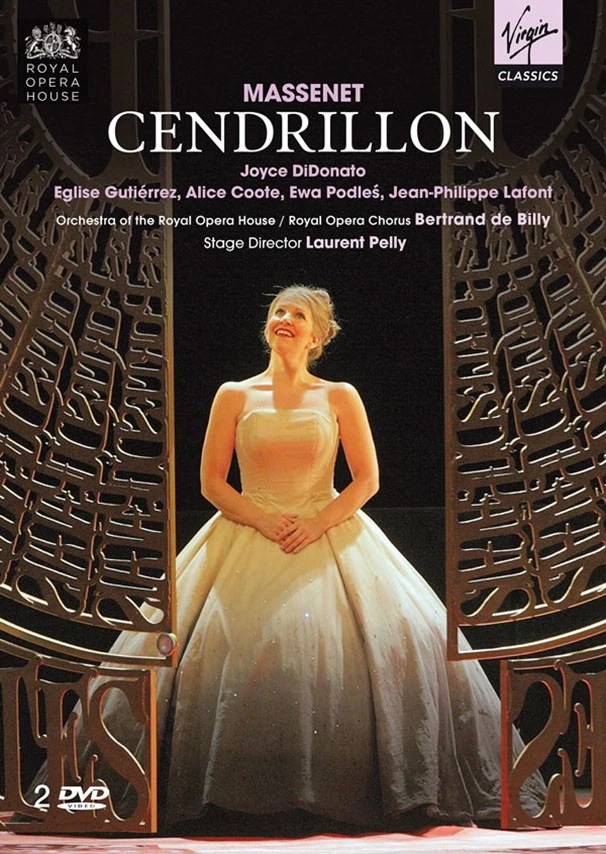
Laurent Pelly is undoubtedly one of the best contemporary directors: he puts a modern spin on everything he does, but he stays true to the libretto and the music. In the process, his staging is extraordinarily witty. As is the delightful Cendrillon, recorded at London’s Royal Opera House in 2011.
I no longer need to recommend Joyce DiDonato (Cendrillon) to anyone – she is easily the greatest ‘zwischenfach singer’ of our time. Ewa Podleś is a more than delightful stepmother and Alice Coote the most charming ‘Prince Charmant’. And to this you may add the truly idiomatic conductor (Bertrand de Billy)…. Life really can be beautiful sometimes
Trailer of the productie
HERODIADE
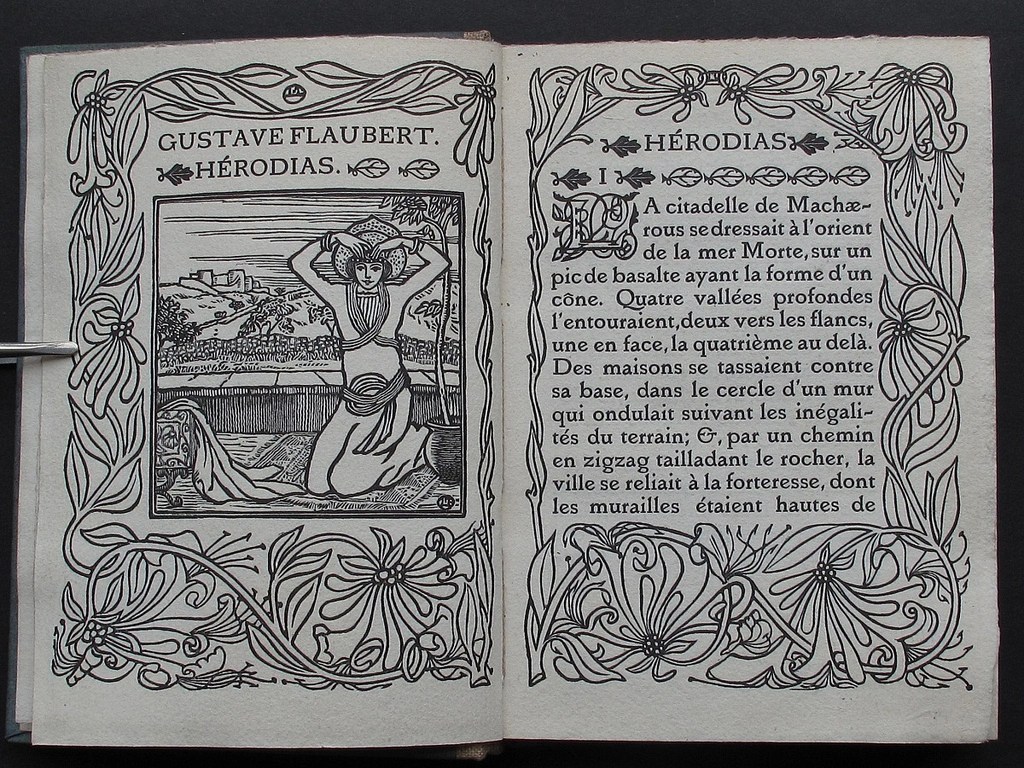
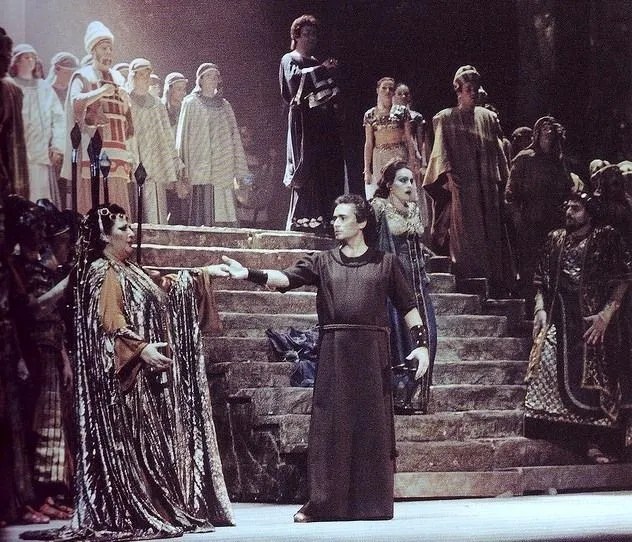
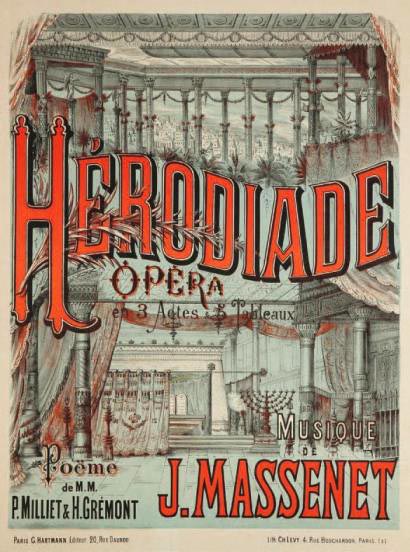
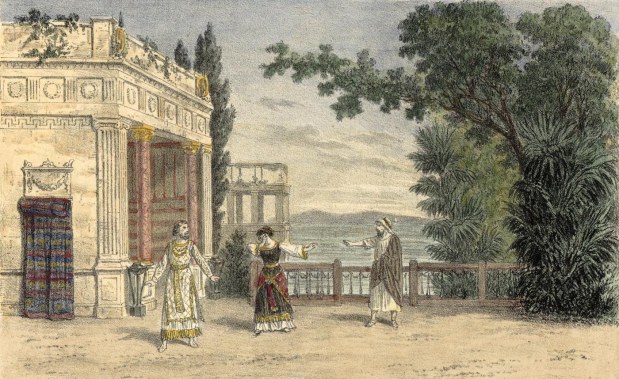
Richard Strauss composed his world hit Salome to a play by Oscar Wilde; and the latter drew his inspiration from a short story by Flaubert, ‘Herodias’. Paul Milliet and Henri Grémont also based their libretto for Massenet’s opera Herodiade on this story. Neither Wilde nor Milliet and Grémont were very faithful to Flaubert. Whereas the French novelist more or less limited himself to the biblical narrative, enriched with his poetic language and descriptions, the playwright and librettists added entirely new aspects and twists to the story.
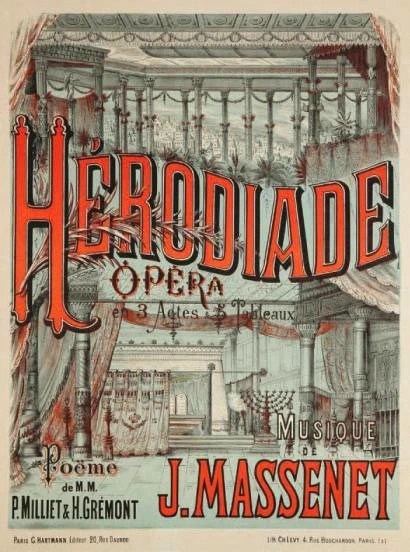
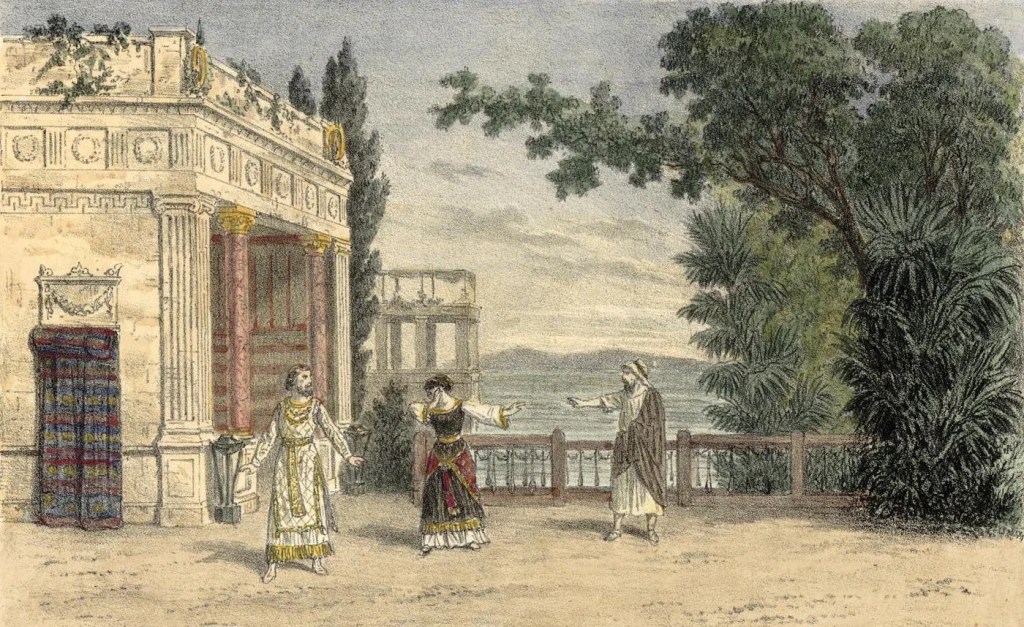
Hérodiade was first performed in the Royal Theatre of Brussels on 19 December 1881. Anyone expecting animal eroticism, blood and sweat, as with Richard Strauss, will be disappointed. Massenet’s Salome is a truly innocent and devout girl. When her mother left her to marry Hérode, she was given shelter by Jean (John the Baptist), with whom she fell in love. A love that proved to be mutual.
No opera is complete without complications: Hérode has a crush on Salome, Hérodiade becomes jealous of her and Jean is beheaded. Salome sees Hérodiade as the instigator of all evil and wants to kill her. Hérodiade whispers “I am your mother” and Salome commits suicide.
The music already exudes a hint of the perfume of Massenet’s later works, but with all those choruses, exotic Oriental scenes and elaborate ballet scenes, it is nothing less than a real Grand Opera in the best Meyerbeer tradition.
One of the earliest recorded fragments of the opera is, I think, the famous aria of Hérode ‘Vision Fusitive’ by the French baritone Maurice Renaud, made in 1908:
And from the recording Georges Thill made in 1927, we know what an ideal Jean should sound like:
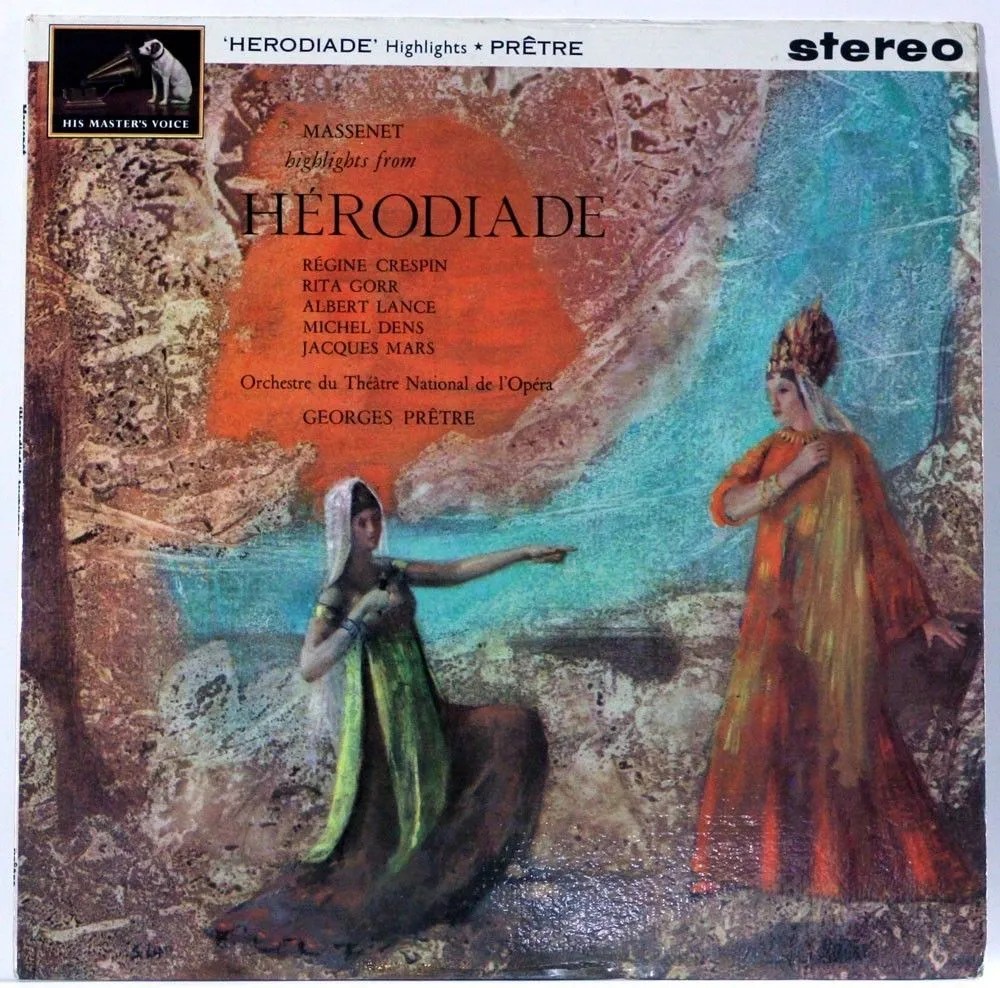
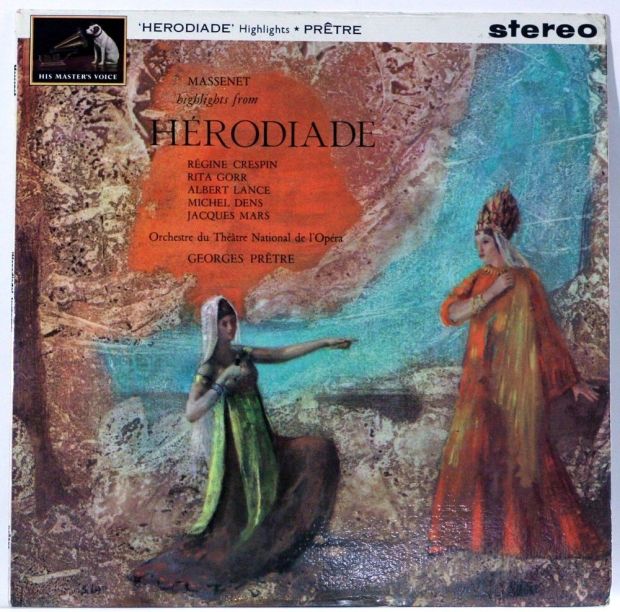
Regine Crespin 1963
If you are in possession of this performance, you need look no further. It doesn’t get any better than this. There is only one problem: this recording does not exist. At least not of the complete opera.
In 1963, EMI recorded the highlights of Hérodiade with the best French singers of the time (and of today, for that matter) and the answer to the “why not complete ????” will probably never be given.
Georges Prêtre conducts the orchestra of the Theater National de Paris as if his life depends upon it and every role is more than excellently cast.
Regine Crespin sings ‘Il est doux, il est bon’:
Regine Crespin’s Salomé is unequalled and so is Rita Gorr’s Hérodiade. Albert Lance (Jean) shows how that role should really be sung in the tradition of Georges Thill, and for Michel Dens as Hérode we really cannot find the right words. Such singers no longer exist.
Hopefully, Warner will one day release the recording on CD.
Montserrat Caballé (Barcelona 1984)
This recording also may only be obtained via a pirate (or You Tube), but then it is complete and moreover with (admittedly bad) images!
Dunja Vejzovic portrays a deliciously mean Hérodiade and Juan Pons is a somewhat youthful but otherwise fine Hérode. A few years later, he will become one of the best “Hérodes” and you can already hear and see that in this recording.
Montserrat Caballé is a fantastic Salomé, the voice alone makes you believe you are in heaven and José Carreras is very moving as a charismatic Jean.
Below, Carreras sings ‘Ne pouvant réprimer les élans’:
None of the protagonists is really idiomatic, but what a pleasure it is to watch a real Diva (and Divo)! They really don’t make them like that any more
The whole opera on you tube:
Reneée Fleming 1994
In the mid-1990s, Herodiade enjoyed a short-lived revival. The opera was then performed in several opera houses and it was even recorded – officially – three times: once in the studio and twice live.
I must admit that I was a bit concerned about Gergiev as the director, but he really did an excellent job. Under his baton the opera sounds like a real Grand Opéra, grand, fiery and compelling.
Plácido Domingo (Jean) is perhaps a touch too heroic, but his voice sounds youthful and contageous, worthy of a true prophet.
Personally, I find Dolora Zajick (Hérodiade) a bit on the (too) heavy side, but her singing is undeniably excellent and there is nothing wrong with her interpretation.
Juan Pons is an excellent Hérode, but I would have liked Phanuel (Kenneth Cox) to be a bit more idiomatic. Something that also applies to the Salomé of Renée Fleming: she sings beautifully but in this role she can not totally convince me.
Nancy Gustafson 1995
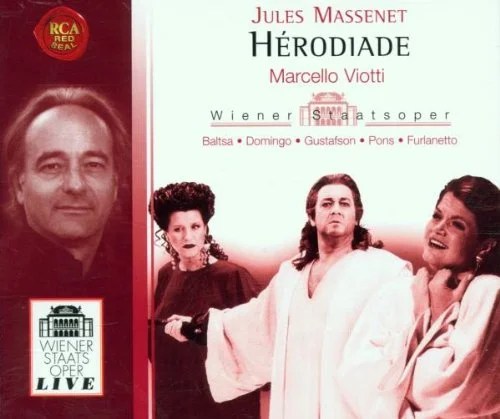
The performance in Vienna was highly praised, and that this praise was justified is proved by the recording made live in the house by ORF.
First of all, there is Agnes Baltsa’s brilliant title role: fierce and dramatic. If you ask me: apart from Rita Gorr probably the best Hérodiade ever.
Placido Domingo sings ‘Ne pouvant réprimer les élans’:
Domingo, in the role of Jean, is even more impressive here than on Sony and also Juan Pons (Hérode) actually convinces me yet more on this recording. His rendition of ‘Vision Fugitive’ is very, very moving. Unfortunately, Nancy Gustafson (Salomé) must acknowledge the superiority of Fleming (Sony), but both pale in comparison to Cheryl Studer (Warner). Not to mention Regine Crespin!
Judging by the photos in the text booklet and the sparse clips on YouTube, we should be glad that the recording appeared on CD and not on DVD.
Finale of the opera:
In any case, the sound is excellent and the Vienna Opera orchestra under the direction of Marcello Viotti plays with great passion.
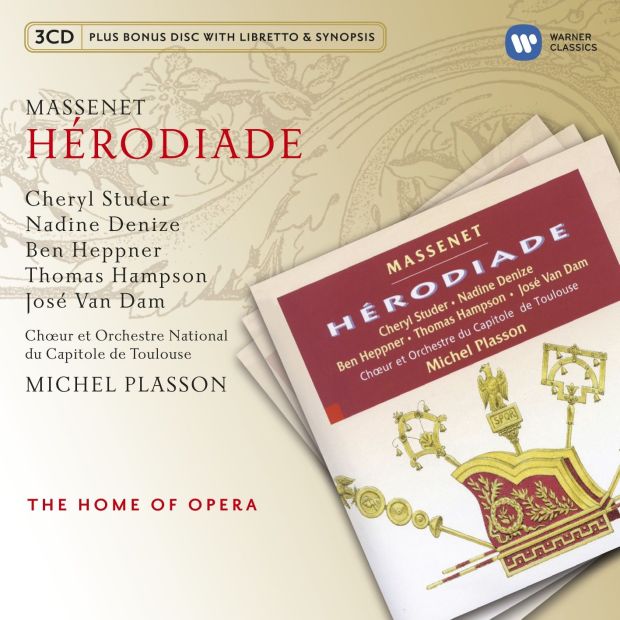
Cheryl Studer 1995
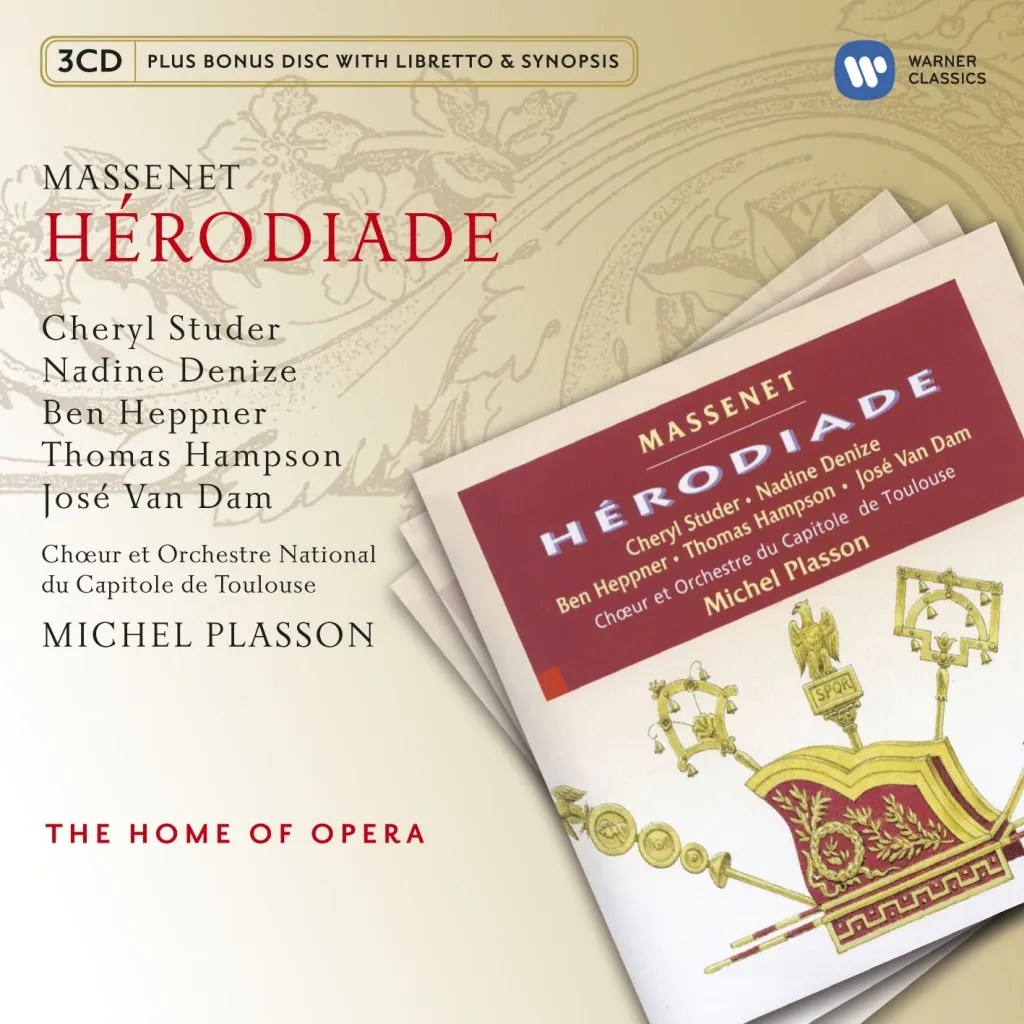
Orchestrally, this recording is really top-notch. Michel Plasson conducts the orchestra from Toulouse very energetically, with a lot of verve and drive, and he also knows how to allow space for all the subtleties. Exciting and beautiful. That is how I like to hear opera.
José van Dam is an impressive Phanuel and Nadine Denize an excellent Hérodiade., although her intonation is not always pure.
Hérode is not really a role for Thomas Hampson, but he sings it very beautifully. Something that unfortunately cannot be said of Ben Heppner’s Jean. A heroic tenor in that role is nothing but a terrible mistake.
Cheryl Studer, on the other hand, is a Salomé of everyone’s dreams: girlish, innocent and naive. Her voice shines and sways and her final words “Ah! Darned Queen, if it is true that your cursed loins have given birth to me, look! Take back your blood and my life!” leave you shuddering and desperately weeping. Brava.
Manon van Jules Massenet is, sinds de inmiddels legendarische opvoering met Anna Netrebko en Rolando Villazon in de hoofdrollen (Berlijn, april 2007), een ware hype geworden. Wie de voorstelling ooit gezien had, kon zich oprecht, net als Verdi’s Ford (‘Falstaff’), afvragen: ‘e sogno o realtà’?
Het was een realiteit die achteraf toch een droom bleek te zijn, want Netrebko vond een nieuwe liefde en liet Villazon met hart- en stemproblemen achter. Het was ook tot de laatste repetitiedag niet helemaal duidelijk of hij de, voor juni 2007 geplande voorstellingen van Manon in Barcelona zou zingen.
Hij kwam wel, en al zong hij onder het niveau dat we -toen- van hem gewend waren, hij wist met zijn spel en (soms iets te) intense betrokkenheid iedereen volledig te overtuigen.
Zijn Manon wordt schitterend geportretteerd door een spectaculair zingende en vooral acterende, Lulu-achtige, Natalie Dessay.
Manuel Lanza is een prima Lescaut, maar voor Samuel Ramey, een zanger die ik zeer bewonder, komt Comte des Grieux helaas te laat in zijn carrière.
De mise-en-scène en personenregie van David McVicar, voor mij toch echt één van de beste hedendaagse regisseurs, waren meer dan voortreffelijk. De kostuums waren fraai om te zien en de (traditionele) enscenering was vaak echt verrassend, des te meer daar McVicar er af en toe een eigentijdse draai aan wist te geven.
Een groot minpunt van deze uitgave is het ontbreken van de synopsis en de tracklist. Maar als bonus krijgt u wel een ‘kijkje in de keuken’. Door een werkelijk fascinerende documentaire kunt u de sterren volgen tijdens hun repetities met McVicar.
Richard Strauss composed his world hit Salome to a play by Oscar Wilde; and the latter drew his inspiration from a short story by Flaubert, ‘Herodias’. Paul Milliet and Henri Grémont also based their libretto for Massenet’s opera Herodiade on this story. Neither Wilde nor Milliet and Grémont were very faithful to Flaubert. Whereas the French novelist more or less limited himself to the biblical narrative, enriched with his poetic language and descriptions, the playwright and librettists added entirely new aspects and twists to the story.
Hérodiade was first performed in the Royal Theatre of Brussels on 19 December 1881. Anyone expecting animal eroticism, blood and sweat, as with Richard Strauss, will be disappointed. Massenet’s Salome is a truly innocent and devout girl. When her mother left her to marry Hérode, she was given shelter by Jean (John the Baptist), with whom she fell in love. A love that proved to be mutual.
No opera is complete without complications: Hérode has a crush on Salome, Hérodiade becomes jealous of her and Jean is beheaded. Salome sees Hérodiade as the instigator of all evil and wants to kill her. Hérodiade whispers “I am your mother” and Salome commits suicide.
The music already exudes a hint of the perfume of Massenet’s later works, but with all those choruses, exotic Oriental scenes and elaborate ballet scenes, it is nothing less than a real Grand Opera in the best Meyerbeer tradition.
One of the earliest recorded fragments of the opera is, I think, the famous aria of Hérode ‘Vision Fusitive’ by the French baritone Maurice Renaud, made in 1908:
And from the recording Georges Thill made in 1927, we know what an ideal Jean should sound like:
REGINE CRESPIN 1963
If you are in possession of this performance, you need look no further. It doesn’t get any better than this. There is only one problem: this recording does not exist. At least not of the complete opera.
In 1963, EMI recorded the highlights of Hérodiade with the best French singers of the time (and of today, for that matter) and the answer to the “why not complete ????” will probably never be given.
Georges Prêtre conducts the orchestra of the Theater National de Paris as if his life depends upon it and every role is more than excellently cast.
Regine Crespin sings ‘Il est doux, il est bon’:
Regine Crespin’s Salomé is unequalled and so is Rita Gorr’s Hérodiade. Albert Lance (Jean) shows how that role should really be sung in the tradition of Georges Thill, and for Michel Dens as Hérode we really cannot find the right words. Such singers no longer exist.
Hopefully, Warner will one day release the recording on CD.
MONTSERRAT CABALLÉ (Barcelona 1984)
This recording also may only be obtained via a pirate (or You Tube), but then it is complete and moreover with (admittedly bad) images!
Dunja Vejzovic portrays a deliciously mean Hérodiade and Juan Pons is a somewhat youthful but otherwise fine Hérode. A few years later, he will become one of the best “Hérodes” and you can already hear and see that in this recording.
Montserrat Caballé is a fantastic Salomé, the voice alone makes you believe you are in heaven and José Carreras is very moving as a charismatic Jean.
Below, Carreras sings ‘Ne pouvant réprimer les élans’:
None of the protagonists is really idiomatic, but what a pleasure it is to watch a real Diva (and Divo)! They really don’t make them like that any more
The whole opera on you tube:
RENÉE FLEMING 1994 (Sony 66847)
In the mid-1990s, Herodiade enjoyed a short-lived revival. The opera was then performed in several opera houses and it was even recorded – officially – three times: once in the studio and twice live.
I must admit that I was a bit concerned about Gergiev as the director, but he really did an excellent job. Under his baton the opera sounds like a real Grand Opéra, grand, fiery and compelling.
Plácido Domingo (Jean) is perhaps a touch too heroic, but his voice sounds youthful and contageous, worthy of a true prophet.
Personally, I find Dolora Zajick (Hérodiade) a bit on the (too) heavy side, but her singing is undeniably excellent and there is nothing wrong with her interpretation.
Juan Pons is an excellent Hérode, but I would have liked Phanuel (Kenneth Cox) to be a bit more idiomatic. Something that also applies to the Salomé of Renée Fleming: she sings beautifully but in this role she can not totally convince me.
NANCY GUSTAFSON 1995 (RCA 74321 79597 2)
The performance in Vienna was highly praised, and that this praise was justified is proved by the recording made live in the house by ORF.
First of all, there is Agnes Baltsa’s brilliant title role: fierce and dramatic. If you ask me: apart from Rita Gorr probably the best Hérodiade ever.
Placido Domingo sings ‘Ne pouvant réprimer les élans’:
Domingo, in the role of Jean, is even more impressive here than on Sony and also Juan Pons (Hérode) actually convinces me yet more on this recording. His rendition of ‘Vision Fugitive’ is very, very moving. Unfortunately, Nancy Gustafson (Salomé) must acknowledge the superiority of Fleming (Sony), but both pale in comparison to Cheryl Studer (Warner). Not to mention Regine Crespin!
Judging by the photos in the text booklet and the sparse clips on YouTube, we should be glad that the recording appeared on CD and not on DVD.
Finale of the opera:
In any case, the sound is excellent and the Vienna Opera orchestra under the direction of Marcello Viotti plays with great passion.
CHERYL STUDER 1995 (Warner 55983525)
Orchestrally, this recording is really top-notch. Michel Plasson conducts the orchestra from Toulouse very energetically, with a lot of verve and drive, and he also knows how to allow space for all the subtleties. Exciting and beautiful. That is how I like to hear opera.
José van Dam is an impressive Phanuel and Nadine Denize an excellent Hérodiade., although her intonation is not always pure.
Hérode is not really a role for Thomas Hampson, but he sings it very beautifully. Something that unfortunately cannot be said of Ben Heppner’s Jean. A heroic tenor in that role is nothing but a terrible mistake.
Cheryl Studer, on the other hand, is a Salomé of everyone’s dreams: girlish, innocent and naive. Her voice shines and sways and her final words “Ah! Darned Queen, if it is true that your cursed loins have given birth to me, look! Take back your blood and my life!” leave you shuddering and desperately weeping. Brava.
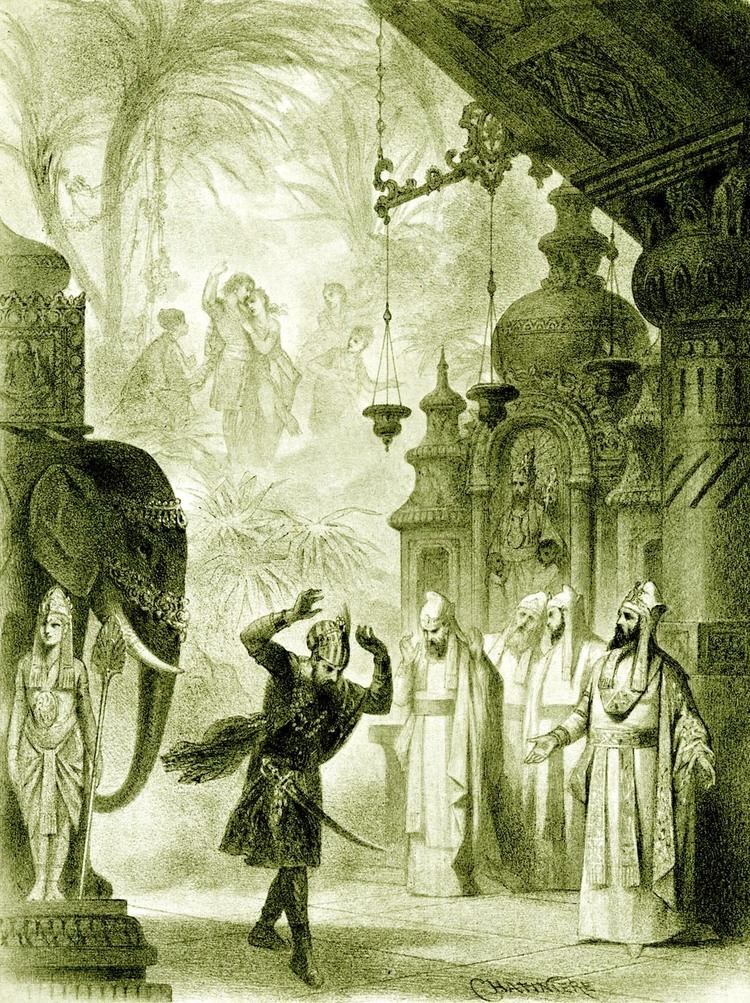
affiche pour la création du Roi de Lahore par Antonin Chatinière
In 1877 ging in het Palais Garnier voor de tweede maal een nieuw geschreven grand opéra in première, Le Roi de Lahore van Jules Massenet. Met dit werk wist Massenet zijn reputatie als operacomponist te vestigen en dat werd hoog tijd, hij was al 34 jaar oud en hoewel al zijn tiende theaterwerk was Le Roi de Lahore het eerste dat het grote podium bereikte.
Jules Massenet door Jules-Clément Chaplain (1839-1909)
Massenet had eindelijk de wind mee. Jeanne d’Arc van Auguste Mermet had het in Garnier niet verder gebracht dan 15 voorstellingen en was daarna geheel van het toneel verdwenen. Het schitterende nieuwe gebouw uit 1872 was feitelijk gebouwd ter meerdere eer en glorie van de Franse grand opéra en nu leek de toevoer op te drogen. Zodoende werd Massenet een kans geboden en die gok pakte goed uit. En binnen korte tijd was Le Roi de Lahore ook in tal van grote theaters buiten Frankrijk te zien, tot tegen het einde van de eeuw de opvoeringen schaars werden.
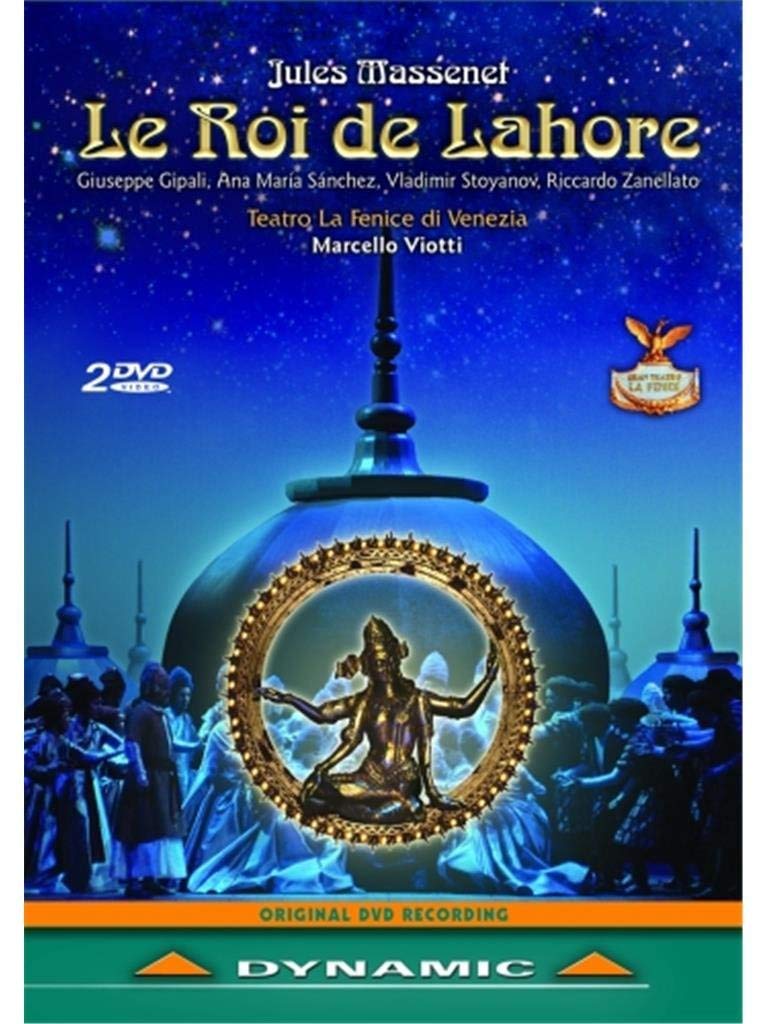
De nieuwe productie uit 2004 van Teatro La Fenice zal hierin wel geen verandering brengen maar de opname die op Dynamic werd uitgebracht is voor liefhebbers een waardevol document.
In sommige opzichten is Le Roi de Lahore de voorloper van Lakmé. De handeling speelt zich af in het verre oosten tegen de achtergrond van een hindoe gemeenschap met voor 19-eeuwse westerlingen ondoorgrondelijke rituelen en regels. Massenet voegt hier de voor een grand opéra vereiste politiek historische component aan toe in de vorm van de strijd die de hindoes in Lahore moeten voeren om zich de moslims van het lijf te houden.
Alles draait om de priesteres Sita die een geheime liefde koestert voor een onbekende minnaar die haar ’s avonds bezoekt en op een afstandje met haar praat. Erg onschuldig natuurlijk maar als haar oom Scindia, de eerste minister van het koninkrijk Lahore, er lucht van krijgt veinst hij professionele verontwaardiging maar ziet in werkelijkheid het eigen plan gedwarsboomd om zijn nichtje uit de tempel weg te halen en te trouwen.
Uiteraard speelt de hogepriester Timour een belangrijke rol in het verdere gebeuren. Zijn priesteres in ‘onrein’ geworden en als blijkt dat de geheime minnaar de koning zelf is, zijn de poppen echt aan het dansen. Als boetedoening moet deze Alim onmiddellijk met al zijn troepen oprukken naar het oosten om de moslims te verslaan. Dat mislukt jammerlijk en Alim wordt ook nog eens in het krijgsgewoel neergestoken door Scindia die vervolgens de officieren weet te overreden de koning ontrouw te worden omdat deze de goden tegen zich heeft ingenomen.
Alim sterft maar aangekomen in het hiernamaals weet hij de god Indra te overreden hem zijn leven terug te geven. Zodoende wordt hij kort herenigd met Sita die Scindia heeft kunnen ontvluchten. Als deze haar met geweld probeert terug te halen naar het gereedstaande bruidsbed, doorsteekt ze zich. Daarmee sterft ook Alim en bemerkt Scindia ten langen leste dat ook hij niet tegen de wil van de goden is opgewassen.
We zitten hier in het pre Moghul tijdperk en dat geeft problemen op het punt van decors en kostuums, men heeft maar weinig aanknopingspunten. Het ziet er een beetje fantasie-oriëntaals uit allemaal. Voor de tempel heeft men een aardige oplossing gevonden in de vorm van een halfopen bol waarop een klein puntig torentje is geplaatst. Met de gesloten kant naar voren zijn we buiten, wordt hij gedraaid dan zijn we binnen en zien we een beeld van Shiva in de ‘ring of fire’. Hij wordt niet in dansende positie afgebeeld maar zittend, met twee van zijn vier armen steunend op de grond.
In de derde akte pakt men flink uit met een ballet dat zich afspeelt tijdens een feest in de Orangerie of het Petit Palais in Parijs. Veel glas en een metalen raamwerk, in elk geval een beeld dat strookt met de ontstaansperiode van het werk. De bezoekers zijn allen in avondkleding en het is er een gezellige boel. Dit is het hiernamaals en de god Indra wordt binnengereden op een olifant op wieltjes. Hij staat de nieuweling Alim te woord en laat hem gaan onder de voorwaarde dat hij op aarde aan Sita vast zit, of ze nu trouw is geweest of ontrouw. En als zij sterft is het voor hem ook afgelopen en zullen ze tot het einde der tijden samen in het hiernamaals moeten doorbrengen. Dat heeft Alim er graag voor over.
De eerste akte heeft een moeizaam begin, een langdurig duet van een bas (Timour) en een bariton (Scindia) is geen ideale binnenkomer. Met de verschijning van Sita gaat het beter al vind ik dat Massenet in dit werk beslist nog niet die vloeiende stijl met veel opborrelende emoties heeft die latere werken zo aantrekkelijk maakt, zoals Manon en Werther. Er wordt vooral veel verbale strijd gevoerd waarbij alle protagonisten gehinderd worden door de nogal hoge ligging van hun partij. Gelukkig is er een nadrukkelijke bijdrage van het koor dat daar in het geheel geen last van heeft en het ballet is zonder meer leuk om naar te kijken.
Tenor Giuseppe Gipali en sopraan Ana Maria Sanchez vormen het liefdespaar Alim en Sita dat conform de basisregels van de grand opéra een tot mislukken gedoemde strijd om persoonlijk geluk voert. Hun bijdragen zijn bepalend voor het succes van de voorstelling. Riccardo Zanellato geeft een redelijke invulling aan de rol van de barse eendimensionale Timour. Scindia komt voor rekening van de bariton Vladimir Stoyanov, heel overtuigend als de kwaaie pier in het verhaal en ook goed gezongen.
De muzikale leiding is in handen van Marcello Viotti. De maestro overleed vrij kort na de opname op 51-jarige leeftijd. De dvd is daarom speciaal aan hem opgedragen.
Op Youtube zijn er geen videoclips beschikbaar maar de cd-opname staat op Spotify:
In 1902, tien jaar na de première, maakte Massenet een nieuwe versie van zijn Werther, dit op verzoek van de Italiaanse bariton Mattia Battistini, die de hoofdrol graag wilde zingen. Massenet veranderde de toonsoort niet, maar herschreef de vocale lijnen van Werthers muziek, waardoor de aria’s, ‘Pourquoi me réveiller’ incluis, nauwelijks te herkennen zijn.
De ‘bariton versie’ van de opera was en blijft een rariteit, er bestaat zelfs geen origineel manuscript van de score. De laatste tijd, met zijn hang naar steeds nieuwe uitdagingen, kwam er ook een verhoogde belangstelling voor de alternatieve versies van de bekende opera’s. De (hoge) baritons, het zingen van de slechteriken beu, herontdekken het repertoire, waarin zij al hun lyrische melancholie kwijt kunnen.
Thomas Hampson is altijd al een bewandelaar van minder bekende paden geweest en de rol van Werther heeft hij al in 1989 voor het eerst vertolkt. In 2004 zong hij een concertante uitvoering ervan in het Parijse Chatelet, en die uitvoering is door Virgin op twee dvd’s uitgebracht. Hij doet het uitstekend, maar het manisch-depressieve is een beetje weg.
Zijn Charlotte wordt subliem gezongen door Susan Graham, die de rol enkele jaren geleden ook in Amsterdam heeft vertolkt, waarbij zij het publiek en de pers tot tranen toe had geroerd. Michel Plasson heeft de drama in zijn vingertoppen en dat hoor je.
Jules Massenet
Werther
Thomas Hampson, Susan Graham, Sandrine Piau, Stéphane Degout
Orchestre National du Capitole de Toulouse olv Michel Plasson
Virgin 3592579






















 Basia con fuoco