Beverly_Sills

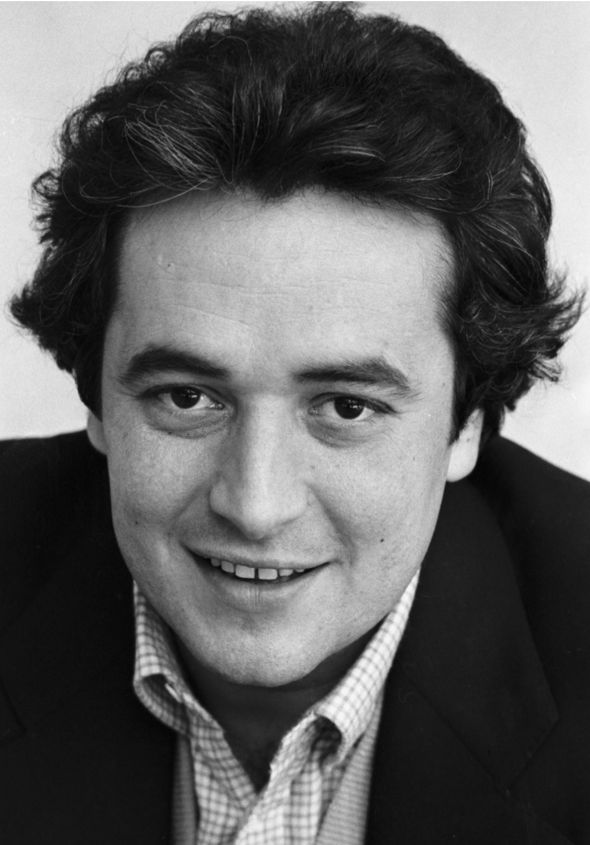
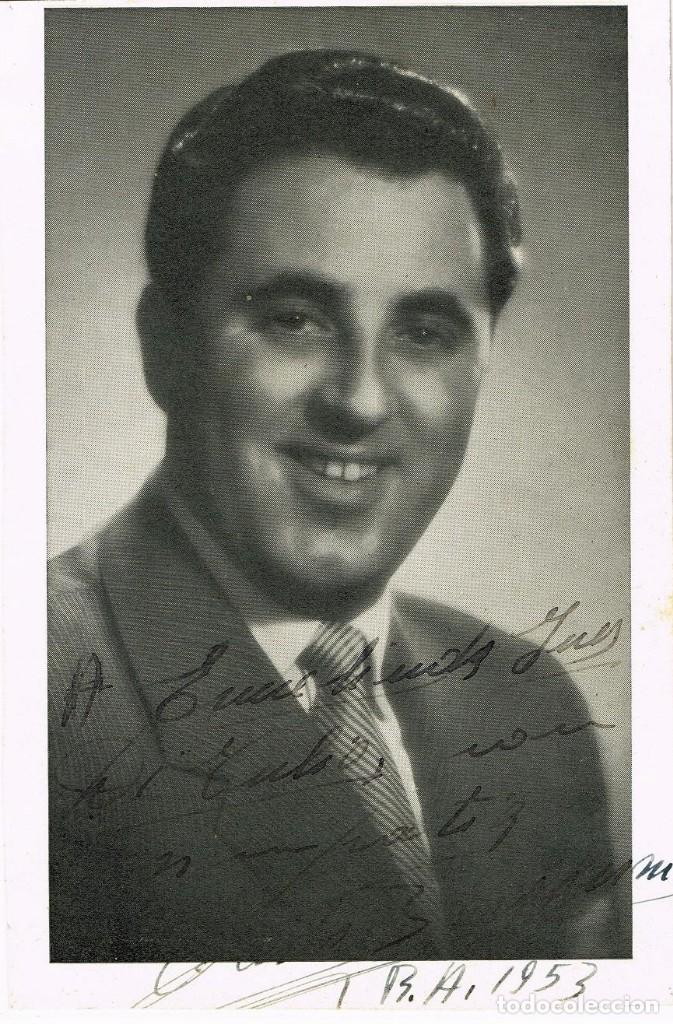
Carlo Bergonzi: from belcanto to verismo in just a few recordings

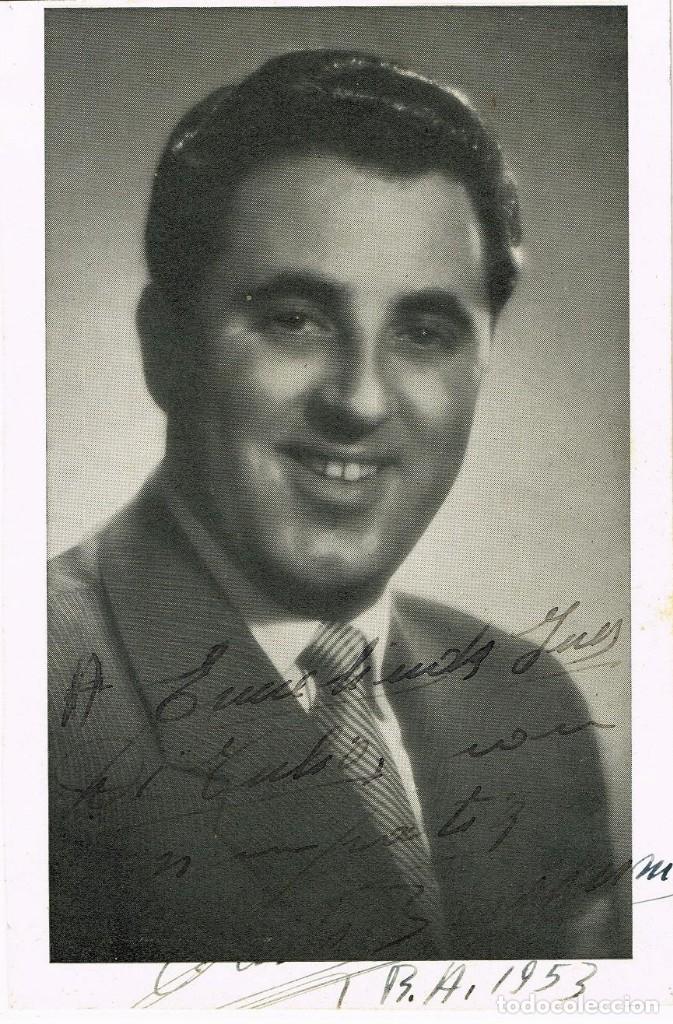
©https://cloud10.todocoleccion.online/autografos-antiguos-cantantes-musicos/tc/2021/08/05/19/279594008.jpg

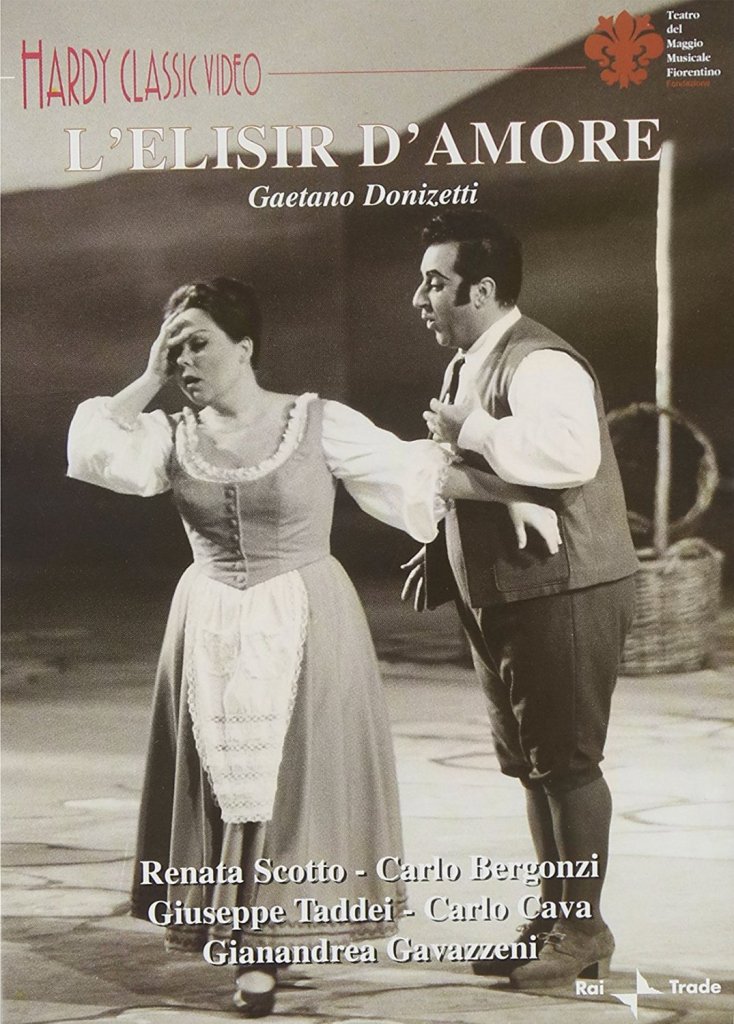
L’ELISIR D’AMORE


To the younger generation I would especially recommend the DVD with Renata Scotto, Carlo Bergonzi and Giuseppe Taddei (Hardy Classic Video HCD 4014). It is not only the beautiful voices of the past that impress (Scotto, Bergonzi, Taddei – who can still sing like them?), the eye is also given a lot to enjoy.

Do not think that they just enter the stage, sing an aria facing the audience and then take a bow. It is theatre pur sang and a better acting singer than Scotto has yet to be born.

The picture is black and white (the recording was made during Maggio Musicale Fiorentino in 1967) and the scenery is cardboard, but who cares?

LUCIA DI LAMMERMOOR

Renata Scotto 1967
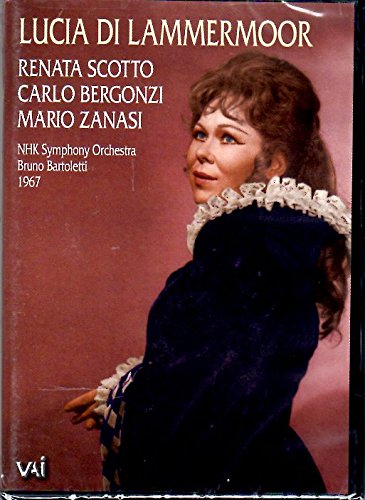

This production of Lucia di Lammermoor was recorded in Tokyo in 1967 and is available on DVD (VAI 4418). It circulated for years on pirate video, but since the sound and picture quality was particularly poor, the commercial release has made many opera lovers very happy. The sound is a little sharp, making Scotto’s high notes sound even more metallic than usual, but who cares?

Her interpretation is both vocally and scenically of an unprecedented high level. With a childishly surprised expression (my brother does this to me?) on her face, she agrees, albeit not without grumbling, to the forced marriage with Arturo (an Angelo Marchiandi who is hideous in every way).

After her mad scene, you tend to pull the plug, because everything that comes after it can only feel like a cold shower. But you are wrong about that. Edgardo’s two arias, sung by Carlo Bergonzi, will take you straight to (singer’s) heaven.


Afterwards, you can’t help but be a little sad, because where have they gone, yesterday’s singers? Small, tall, fat, skinny, with or without acting talent… None of them was a ballet dancer, but could they sing! And it was through their voices alone that they were able to convey all of the feelings that now require a whole ‘artistic team’. In spite of the cuts that were common at the time, this is an absolute must.

Below, Bergonzi sings ‘Fra poco a me ricovero’

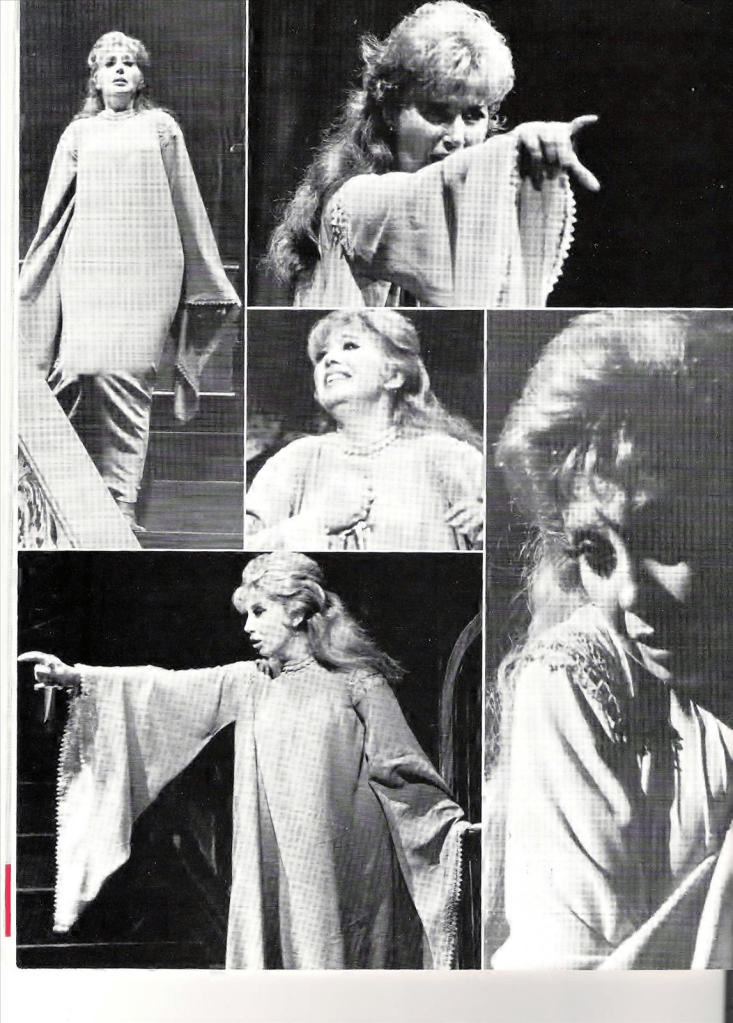
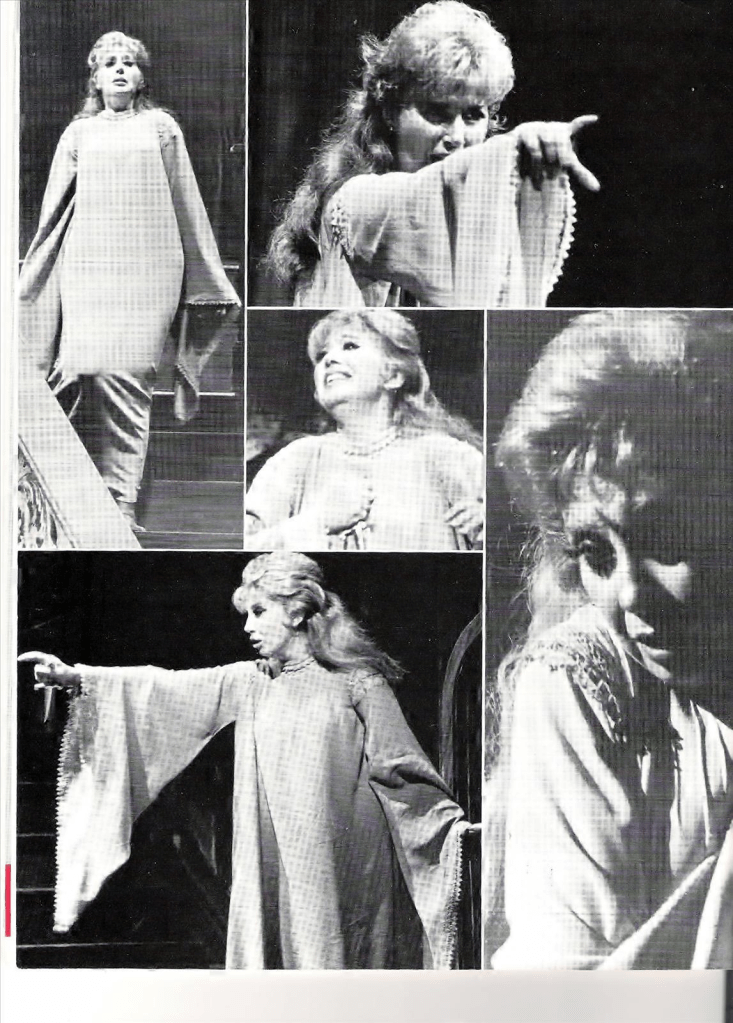
Beverly Sills 1970
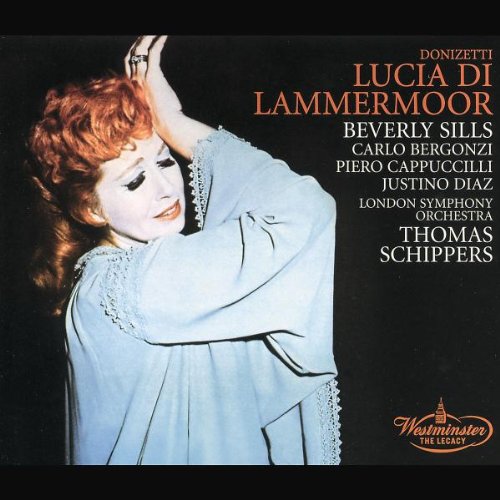


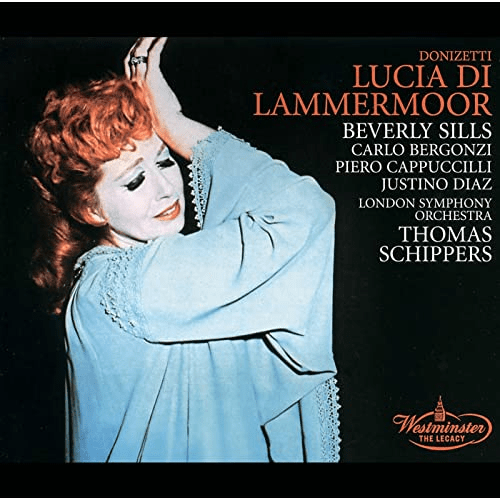
Sills’ Lucia (Westminster 4712502) for me remains one of the best interpretations ever, especially talking about studio recordings. Her portrayal unites the best of Callas and Suitherland: the virtuosity, vocal beauty and pure intonation of la Stupenda and the great acting of la Divina. Not really a great tragédienne (but then, neither is Lucia), she is more of a passive child-girl who just lets it all happen. Carlo
Sills’ Lucia (Westminster 4712502) for me remains one of the best interpretations ever, especially talking about studio recordings. Her portrayal unites the best of Callas and Suitherland: the virtuosity, vocal beauty and pure intonation of la Stupenda and the great acting of la Divina. Not really a great tragédienne (but then, neither is Lucia), she is more of a passive child-girl who just lets it all happen. Carlo Bergonzi sings an elegant and outraged Edgardo and Piero Cappuccilli a brutal and cruel Edgardo and Thomas Schippers conducts very firmly.

But what makes this recording really special is the use of a glass harmonica in the madscene, exactly as Donizetti had originally prescribed it


LA BOHEME

Renata Tebaldi 1958
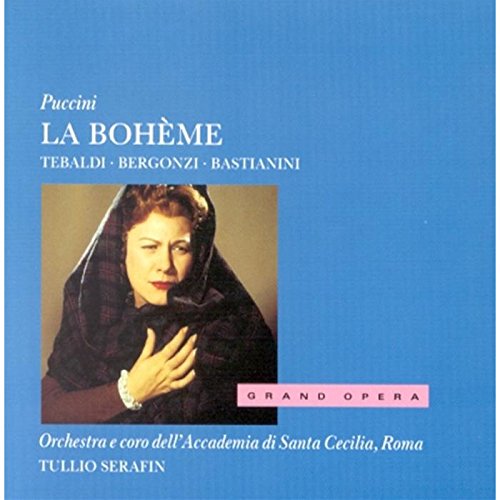


Actually, I also find Tebaldi’s voice a bit too heavy for Mimi, a tad too dramatic too, but there is no denying that her interpretation is very exciting. You have to keep listening to it.

Carlo Bergonzi is an insanely beautiful Rodolfo; secretly, I think he is the real star of the recording. Ettore Bastianini is a very charming Marcello, but Gianna d’Angelo is not a beautiful Musetta. Her singing has nothing sensual and is vulgar at times.

Tulio Serafin conducts more than superbly and the orchestral sound is brilliant. Remarkable actually how wonderful that recording still sounds! (Decca 4487252)

Licia Albanese 1958
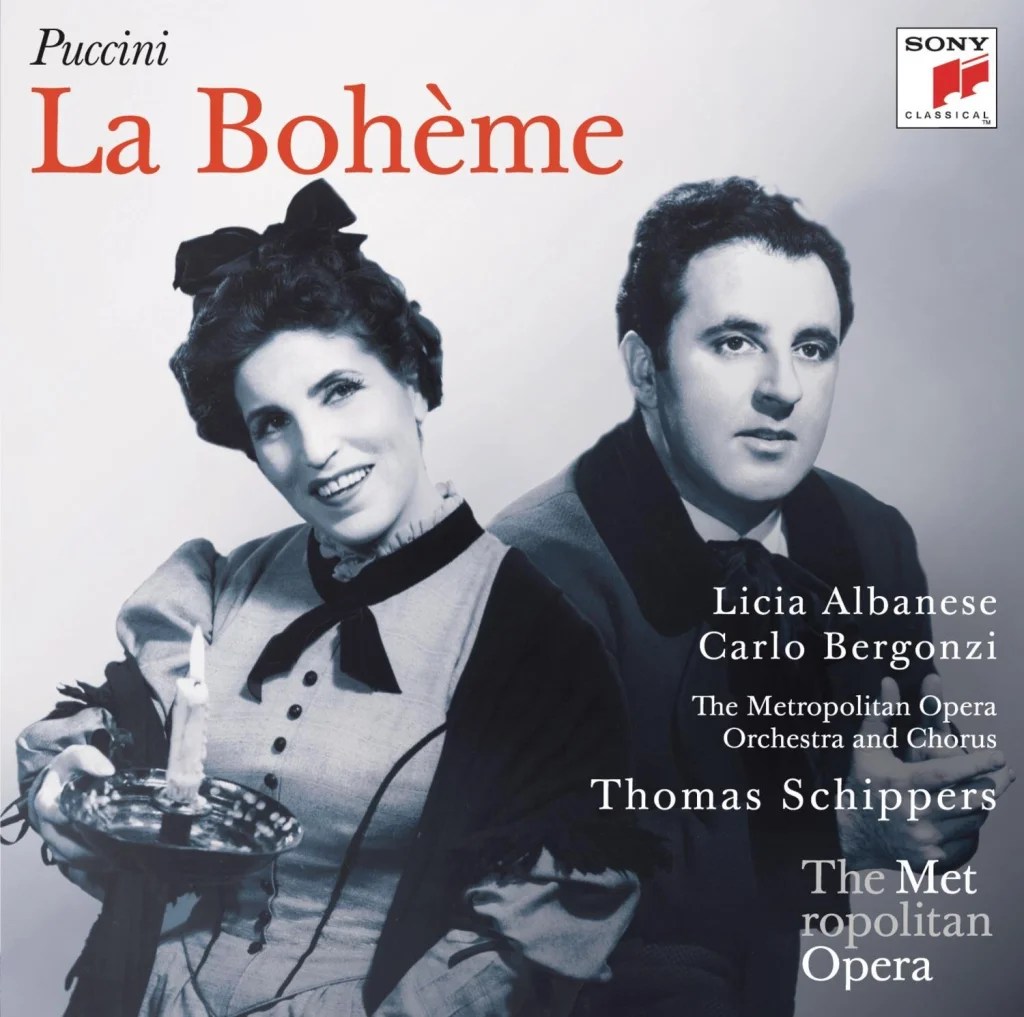
A warning is in order: the sound is not great. It is sharp and dull and occasionally the radio waves are humming rebelliously, but it also has something quite endearing. As if a time machine takes you back to the afternoons of yore, when the whole family settled down in front of the radio to listen to the latest invention, the live broadcast.

The performance, too, is old-fashionedly delicious. Not that the voices are all that exceptional, apart from Carlo Bergonzi who is at his finest, the other roles could have been better cast.

Licia Albanese (almost fifty by then, which is not at all audible) was a real crowd pleaser, especially in New York. Thomas Schippers conducts very vividly (Sony 8697804632)

MADAMA BUTTERFLY
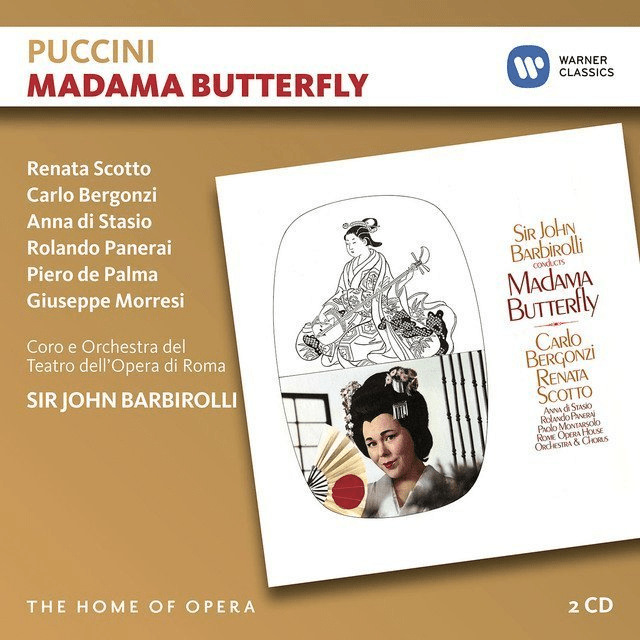
For me an absolute ‘numero uno’ is the 1966 recording by EMI (now Warner 0190295735913) under Sir John Barbirolli. One might imagine a more lyrical or alternatively a more dramatic Cio Cio San; one with less metal in her voice or maybe one with a more childlike voice. But no other singer was able to grasp the complex nature of the girl so well and to characterise her change from a naive child into an adult woman, broken by immense grief, so impressively

Carlo Bergonzi is a beautiful, lyrical Pinkerton, singing with glorious, golden ton and Rolando Panerai a very warm Sharpless.
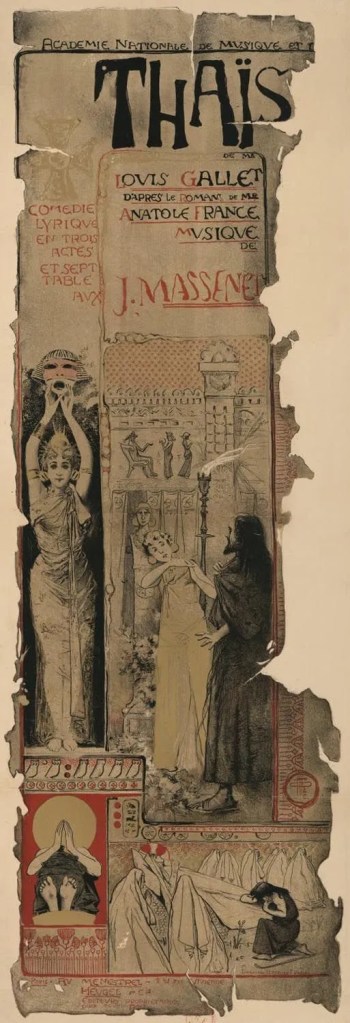
Thaïs or how the whore of Babylon became the saint


Who does not know ‘Méditation’, the sentimentally sweet but oh-so-beautiful piece of violin music? Most often it will make you cry.

Méditation in Josef Hassid’s performance:


However, not many people have ever heard, let alone seen, the opera in which this piece acts as a kind of interlude in the second act.


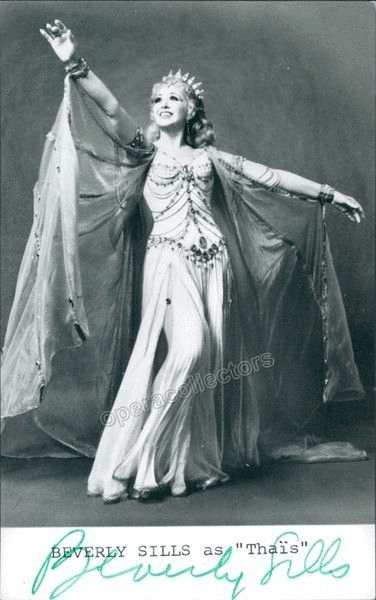
Recordings of the complete work are still scarce, I only know of three myself (with Anna Moffo, Beverly Sills and Renée Fleming), of which the one with Sills, Sherrill Milnes and Nicolai Gedda (Warner 0190295869069) is dearest to me.

Below Beverly Sills and Sherrill Milnes in the final scene of the opera:


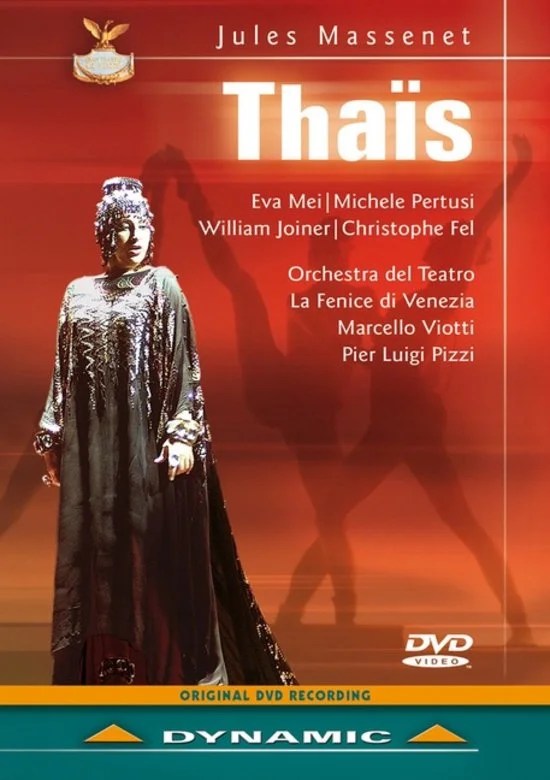
Pier Luigi Pizzi’s production from La Fenice had previously been released on CD and I found it particularly strong musically and mainly vocally. I was therefore particularly curious as to whether the visuals added anything to it on Dynamic’s DVD. To which I can now say a resounding “yes”.


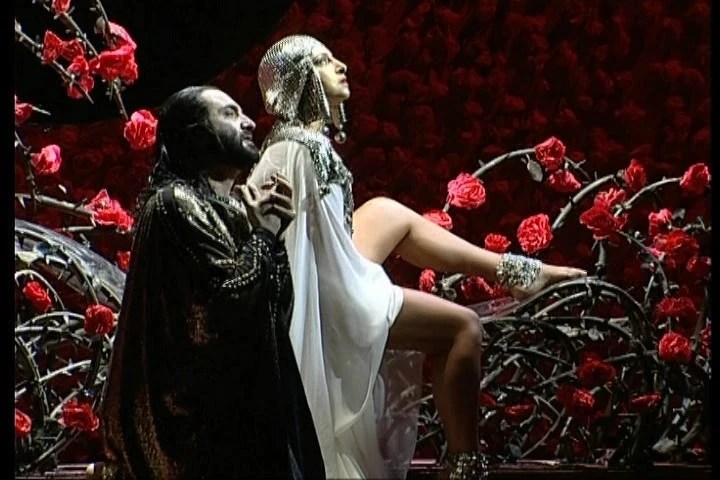
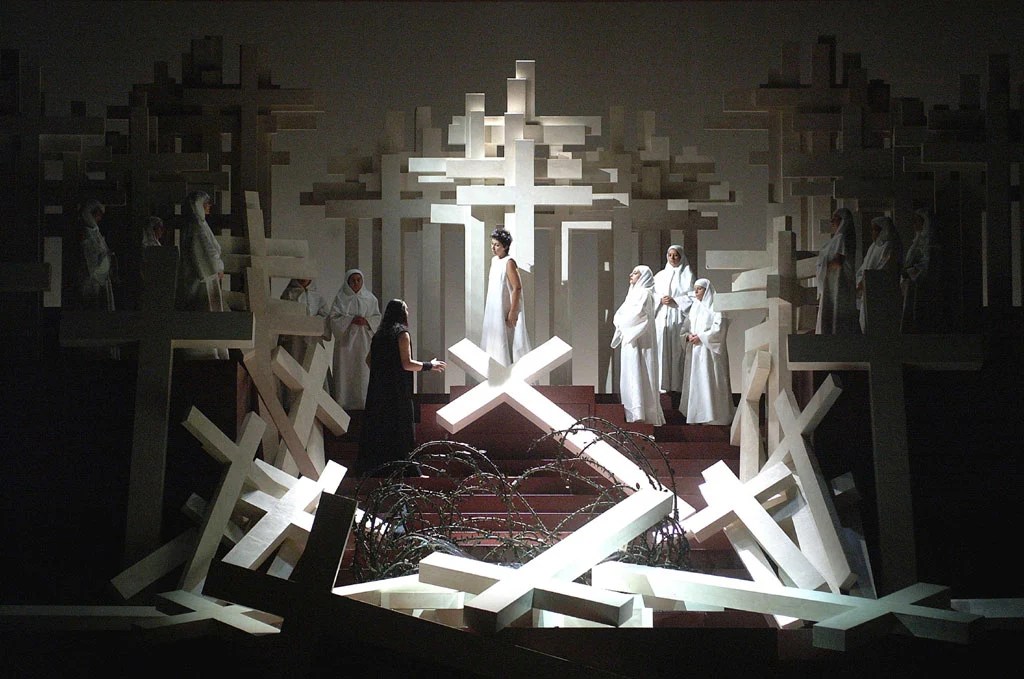
The sets are sparse, yet the stage seems to be completely full of them. Because of the colours (with very predominant red) perhaps, but also because of the dominant place they occupy on stage. For instance, Thaïs’ rose-covered bed, on which she – as if she were the Venus of Urbino or one of the versions of Danaë, also by Titian – lies very voluptuously. This bed is very prominently in the centre of the stage.


In the third act, when the fun life has ended and the penance begins, the roses are nowhere to be seen (a bed of thorns?) and her posture is as chaste as her white robe.


The costumes are a story apart: very opulent, oriental and barely concealing. Eva Mei doesn’t go as far as her colleague Carol Neblett, who went completely out of her clothes in New Orleans in 1973, but her see-through little nothing of a dress, from which her breasts keep escaping almost unnoticed, leaves nothing to the imagination.

Perhaps she was inspired by the very first Thaïs, Sybil Sanderson, whose breasts were also ‘accidentally’ visible during the premiere performance in 1894? Then again, it is all about the greatest (and most beautiful) courtesan in Alexandria!

Eva Mei is very virtuoso and very convincing as Thaïs . So is Michele Pertusi as Athanael. There is a lot of ballet, though. Also where it really shouldn’t be, which is very distracting at times.


Thaïs from Toronto: unearthly beautiful orchestral playing


Recordings of Thaïs are still scarce so any new releases are more than welcome. Especially if the performance is good, and this new recording on Chandos most certainly is. At least: to some extent.

The Toronto orchestra sounds so incredibly beautiful that you cannot help falling in love with it. Sir Andrew Davis truly extracts the impossible from his musicians: I have not heard the score performed so beautifully before. The pianissimi, the way they manage the quiet passages to perfection, the subcutaneous tension. Hats off! Hats off also to the violinist who manages to add new layers to the ‘Meditation’. So beautiful!

Unfortunately, the singers lag a bit behind. Erin Wall is a beautiful soprano with a crystal-clear voice, but a ‘Whore of Babylon’? More like a rather childishly naive girl.

Joshua Hopkins has the right voice for Athanael but he goes the wrong way when it comes to ‘earthly desires’. Andrew Staples is a good Nicias but he too fails to fully convince me.


s

Kind of Top Ten 2022

First of all, my apologies: this year I have hardly posted any new reviews. This was for personal reasons

 I was forced to limit myself to translations but  I did a lot of portraits of singers who deserved to be featured again.

Renata Scotto had her birthday on 24 February


Renata Scotto, ‘la mia Divina Assoluta’ made her opera debut at the age of eighteen as Violetta (La Traviata). Her ‘official’ debut was the next day in Milan. Shortly afterwards, she sang Madama Butterfly in Savona.

Geraldine Farrar 28 February

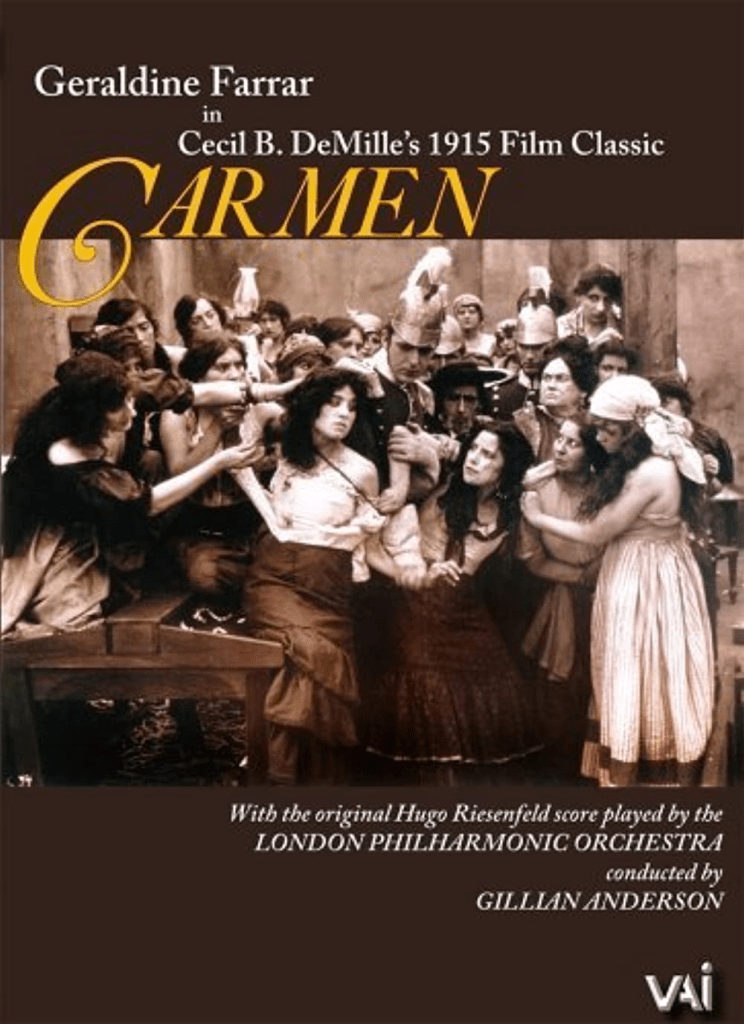
In 1915, Cecil B. DeMille filmed the opera again, this time with Geraldine Farrar as the man-eating gypsy. Now, Farrar was not only one of the greatest sopranos and MET legends of the early 20th century, her beautiful appearance and excessive acting talent also enabled her to build a career as a Hollywood actress.

Beverly Sills was born on 25 May

Beverly Sills was born in Brooklyn as Belle Miriam Silverman. Her parents were Jewish immigrants from Odessa and Bucharest. As a child, she spoke Yiddish, Russian, Romanian, French and English. Although she had an enormous repertoire, that ranged from Handel and Mozart to Puccini, Massenet and Verdi, she was best known for her interpretations of coloratura soprano roles. Her radiant high D’s and E-flats sounded seemingly effortless and natural.
José Carreras became  76 at 5th December

About just few of his many roles

Sara Scuderi was born 11 December

Scuderi sang in the most important theatres of the day, both in Italy and abroad, most notably in the Netherlands! She had a contract at La Scala where she received high praise for her interpretations of the most well-known operas.

Rita Streich 18 december

High coloratura soprano is one of the most admired voice types. It’s only logical, because what these ladies do falls a bit into the category of “nightingale on a trapeze”.

And November 22th it was  it was  five years that Dmitri Hvorostovsky died, only 60 years old

But, but…. I made an article about King David and music

King David…. One of the Bible’s most inspiring and appealing personalities. But did he really exist? We live in a time when all sorts of things are being doubted, and that is alright.

And in Dutch

Bubbles for Beverly. Lest we forget

Beverly Sills, the American ‘coloratura queen’, never reached the high status that colleagues Callas and Sutherland had in Europe. In fact, many people did not even know she existed. The reason? Lack of an exclusive contract with an important company. And: she did not travel. As the mother of two severely handicapped children, she wanted to be with her children as much as possible.


Beverly Sills (25 May 1929 – 2 July 2007), was born in Brooklyn as Belle Miriam Silverman. Her parents were Jewish immigrants from Odessa and Bucharest. As a child, she spoke Yiddish, Russian, Romanian, French and English.

Although she had an enormous repertoire, that ranged from Handel and Mozart to Puccini,, she was best known for her interpretations of coloratura soprano roles. Her radiant high D’s and E-flats sounded seemingly effortless and natural.

She was most associated with Donizetti’s operas: Lucia di Lammermoor, La fille du régiment and the three ‘Tudor queens’. Her Elisabetta in Roberto Devereux is simply the best ever.
But also her Manon and Thaïs(Massenet) are unforgettable, as is her Violetta (La Traviata) and all three female roles in Offenbach’s Les contes d’Hoffmann. Yes, she sang all three in one evening.


At the age of three, Sills won a ‘Miss Beautiful Baby’ contest, singing ‘The Wedding of Jack and Jill’. From the age of four, she performed professionally on the Saturday morning radio show ‘Rainbow House’ under the name Bubbles Silverman.

When she was seven years old, she started taking singing lessons with Estelle Liebling, who remained her only singing teacher. A year later she sang in the short film Uncle Solves It (filmed in August 1937, released in June 1938 by Educational Pictures), by which time she had adopted her stage name, Beverly Sills.


LUCIA DI LAMMERMOOR


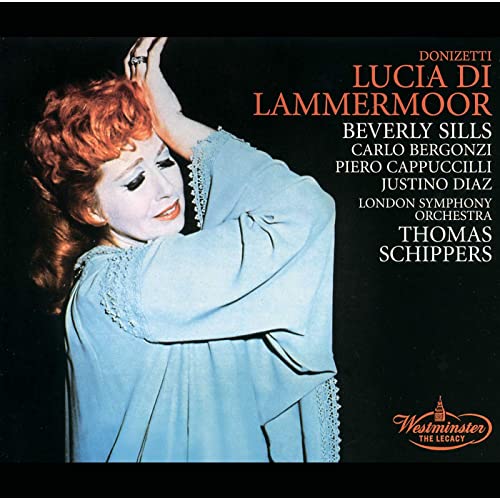
Sills’ Lucia (Westminster 4712502) for me remains one of the best interpretations ever, especially talking about studio recordings. Her portrayal unites the best of Callas and Suitherland: the virtuosity, vocal beauty and pure intonation of la Stupenda and the great acting of la Divina. Not really a great tragédienne (but then, neither is Lucia), she is more of a passive child-girl who just lets it all happen. The rest of the cast (Carlo Bergonzi, Piero Cappuccilli, Justino Diaz) is also of a very high level and Thomas Schippers conducts very firmly. But what makes this recording really special is the use of a glass harmonica in the madscene, exactly as Donizetti had originally prescribed it


ROBERTO DEVEREUX


A New York Times reviewer wrote that it was undoubtedly the most exciting event of the 1970 musical year and I believe that immediately. The performance of 24 October 1970 was recorded live and we are more than lucky to have it.


Julius Rudel (well, what happened to the days we had such maestros?) conducts firmly and with a great deal of love for the work. So beautiful that it makes you want to cry.


Domingo’s voice sounds like a bell and his performance causes ecstatic ovations. And I can be brief about Sills’ Elisabetta: overwhelming! No one, no one has ever sung the role better. She is Elisabetta. You must see and hear this, if only once! The applause after her ‘L’Amor suo mi fé benata’ seems to last for ever.


Below Beverly Sills in the last scene of Roberto Devereux:


THAÏS


Below Beverly Sills and Sherrill Milnes in the final scene of the opera:


MANON


Sills also sang in German.

Below she sings ‘Ruhe sanft, mein holdes Leben’ from Mozart’s Zaide. In my opinion the best interpretation of that aria ever:


And she sang songs too
Below, ‘Breit über mein Haupt’ from Strauss:


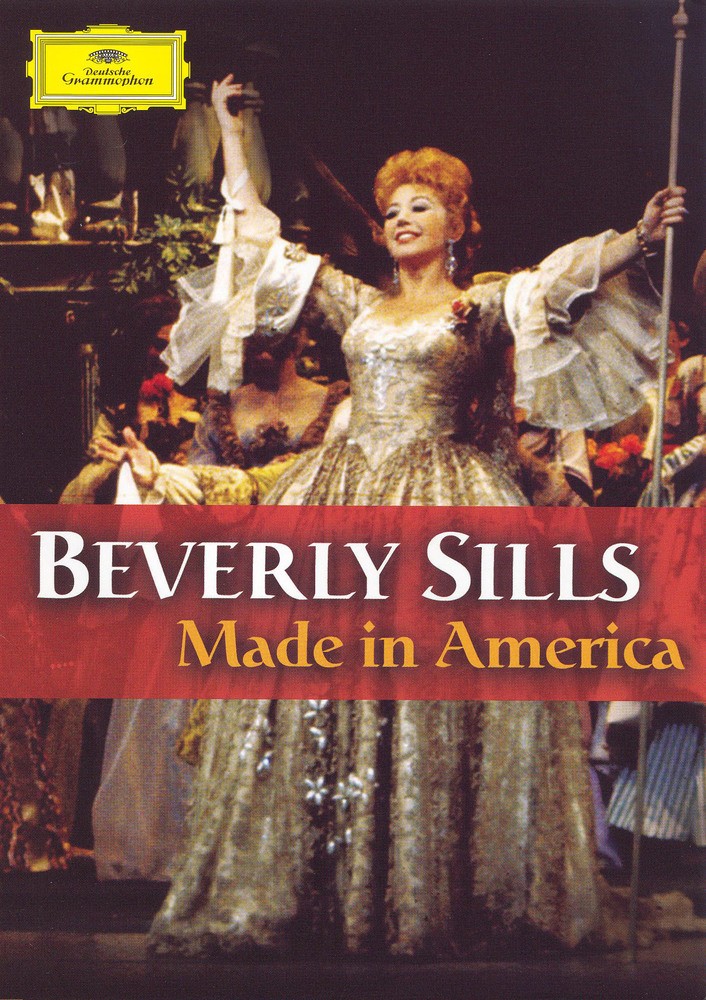
Don’t miss the wonderful homage to Beverly Sills, ‘Made in America’ (DG 0734299), with a selection of brilliant archive footage, including La Traviata with Ettore Bastianini.


In this 75-minute portrait, Beverly Sills talks openly and honestly about her life and career. The portrait is illustrated with rare recordings and photographs from the Charles Mintzer Collection.


Below is Beverly Sills’ farewell performance, where as an encore she sings the Portuguese folk song ‘Tell Me Why’ that Estelle Liebling, her only singing teacher, provided her with  when she was ten. As a tribute to Liebling, Sills ended each recital with this song.

Bubbles. Voor Beverly Sills op haar verjaardag

Beverly Sills, de Amerikaanse ‘coloratuurkoningin’ heeft in Europa nooit de status van haar collega’s Callas en Sutherland gehad. Sterker: veel mensen wisten van haar bestaan niet eens af. De reden daarvoor? Gebrek aan een exclusief contract met een belangrijke firma. En: zij reisde niet. Als moeder van twee zwaar gehandicapte kinderen wilde ze zo veel mogelijk bij haar kinderen zijn.

Beverly Sills (25 mei 1929 – 2 juli 2007), werd geboren in Brooklyn als Belle Miriam Silverman. Haar ouders waren Joodse immigranten uit Odessa en Boekarest. Als kind sprak ze Jiddisch, Russisch, Roemeens, Frans en Engels.

Hoewel ze een enorm repertoire had die van Händel en Mozart tot Puccini, Massenet en Verdi reikte, was ze vooral bekend om haar vertolkingen in coloratuursopraanrollen. Haar stralende hoge D’s en E-flats klonken schijnbaar moeiteloos en vanzelfsprekend.

Het meest werd zij geassocieerd met de opera’s van Donizetti: Lucia di Lammermoor, La fille du régiment en de drie ‘Tudor-koninginnen’. Haar Elisabetta in Roberto Devereux is gewoon de beste ooit.

Maar ook haar Manon en Thaïs (Massenet) zijn onvergetelijk, net als haar Violetta (La Traviata) en alle drie de vrouwenrollen in Les contes d’Hoffmann van Offenbach. Ja, ze zong ze alle drie op een avond.

Op driejarige leeftijd won Sills een ‘Miss Beautiful Baby’ wedstrijd, waarin ze ‘The Wedding of Jack and Jill’ zong. Vanaf haar vierde trad ze professioneel op in het zaterdagochtend radioprogramma ‘Rainbow House’ onder de naam Bubbles Silverman.

Toen ze zeven jaar oud was begon ze  met zanglessen bij Estelle Liebling, die haar enige zanglerares bleef. Een jaar later zong ze in de korte film Uncle Solves It (gefilmd in augustus 1937, uitgebracht in juni 1938 door Educational Pictures), tegen die tijd had ze haar artiestennaam aangenomen, Beverly Sills.


LUCIA DI LAMMERMOOR

Sills’ Lucia (Westminster 4712502),  blijft voor mij één van de beste vertolkingen ooit, zeker als we het over studio-opnames hebben. Haar portrettering verenigt het beste van Callas en Suitherland: de virtuositeit, stemschoonheid en zuivere intonatie van la Stupenda en het grote acteren van la Divina. Niet echt een grote tragédienne (maar dat is Lucia ook niet), meer een passief kindmeisje dat het allemaal over zich heen laat komen. Ook de rest van de cast (Carlo Bergonzi, Piero Cappuccilli, Justino Diaz) is van zeer hoog niveau en Thomas Schippers dirigeert zeer ferm. Maar wat die opname werkelijk bijzonder maakt, is het gebruik van een glasharmonica in de waanzinscène, precies zoals Donizetti het oorspronkelijk had voorgeschreven.

ROBERTO DEVEREUX

Een recensent van de New York Times schreef dat het zonder twijfel het meest opwindende evenement was van het muzikale jaar 1970 en dat geloof ik onmiddellijk. De voorstelling van 24 oktober 1970 werd live opgenomen en daar mogen we ons meer dan gelukkig mee prijzen.

Julius Rudel (ach, waar zijn de tijden van zulke maestro’s gebleven?) dirigeert ferm en met heel erg veel liefde voor het werk. Om te huilen zo mooi.

Domingo’s stem klinkt als een klok en zijn optreden zorgt voor extatische ovaties. En over Elisabetta van Sills kan ik kort zijn: overweldigend! Niemand, maar dan ook niemand heeft de rol ooit beter gezongen dan zij. Zij is Elisabetta. Dat moet je ooit gehoord of gezien hebben Het applaus na haar ‘L’Amor suo mi fé benata’ lijkt eindeloos te duren.


Hieronder Beverly Sills in de laatste scène uit Roberto Devereux:

THAÏS


Hieronder Beverly Sills en Sherrill Milnes in de finale van de opera:

MANON

Sills zong ook in het Duits.

Hieronder zingt zij ‘Ruhe sanft, mein holdes Leben’ uit Mozarts Zaide. Mijns inziens de beste vertolking van die aria ooit:


En zij zong ook liederen

Hieronder ‘Breit über mein Haupt’ van Strauss:


Mis de prachtige hommage aan Beverly Sills, ‘Made in America’ (DG 0734299) niet,  met een keur aan schitterende archiefbeelden, waaronder ook  La Traviata met Ettore Bastianini.


In dit ruim 75 minuten durende portret praat Beverly Sills open en eerlijk over haar leven en carrière. Het portret wordt geïllustreerd met zeldzame opnamen en foto’s uit de Charles Mintzer collectie.

Hieronder Beverly Sills’ afscheidsoptreden, waar zij als toegift het Portugese volkslied ’Tell Me Why’ zingt dat Estelle Liebling, haar enige zanglerares, haar gaf toen ze tien was. Als eerbetoon aan Liebling eindigde Sills elk recital met dit lied.

I Puritani: mini discography

puritani

It is said of I Puritani that it is a true soprano opera, but that is not really quite the case. Elvira may be the pivot around which everything revolves, she is also one of the most passive opera heroines I know. Everything that happens around her and to her, happens in spite of her; because apart from loving and going mad, she doesn’t seem to be able to do much of anything at all.

It is the bass (her uncle Giorgio) who devises all sorts of plans to steer the action in the desired direction, and for this he is rewarded by Bellini with a most beautiful aria (‘Cinta di fiori’).

Nicolai Ghiaurov:

In order to save the mad soprano from certain death, he asks the baritone to spare the tenor’s life, which ends in a gorgeous duet (‘Suoni la tromba’), a real show-stopper.

Samuel Ramey and Sherrill Milnes:

The tenor also, who in a fit of patriotinic frenzy seems to send the whole thing into disarray, gets to sing a lot of beautiful (and high!) notes.

John Osborn with Mariola Cantarero from Amsterdam 2009:


All these roles require an excellent bel canto technique, with good coloratura, leggiero and legato. And don’t forget a sense of pure drama, because Bellini (and his librettist!) have created a lot of havoc for the poor soprano: first she becomes delirious with joy, then she loses her mind. She then regains it, only to lose it again immediately. Are you still there? Because it’s not over yet: her mind comes back once more and immediately she’s delirious with joy again. Ouch… Fortunately, the opera stops here, because poor Elvira apparently has to repeat such tricks a few times a day


CD’S

JOAN SUTHERLAND

puritani-suth


Elvira, like Lucia, was a showpiece for Maria Callas and Joan Sutherland, both of whom recorded it several times. In 1974, Richard Bonynge (Decca 4175882) made a peerless recording of the opera, besides Sutherland, there was the sublime male trio: Luciano Pavarotti, Nicolai Ghiaurov and Piero Cappuccilli. Sutherland sounds like a little heap of misery, and her virtuosity knows no limits. Pavarotti still possessed all his glorious long high notes in those days and he pops them out with no effort at all.


MARIA CALLAS

puritani-calls

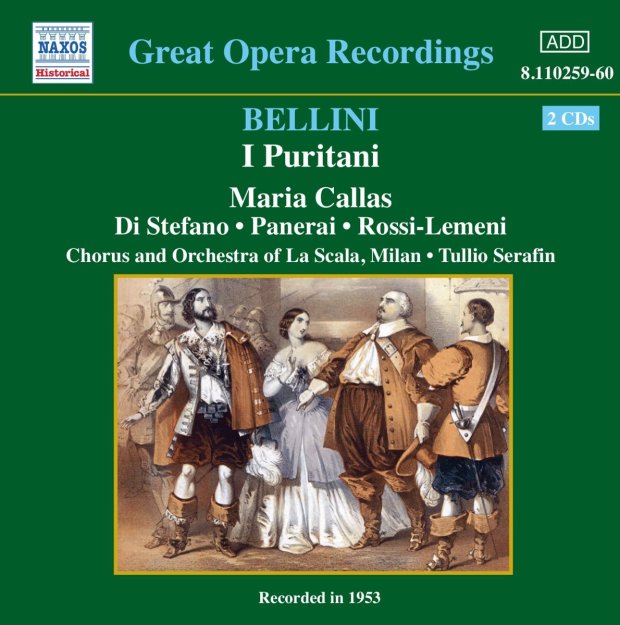
The recording with Callas from 1953 (Naxos 8110259-60) is weighed down by the fact that Giuseppe di Stefano is totally unfit to sing Arturo. But Nicola Rossi-Lemeni (Giorgio) and Rolando Panerai (Riccardo) are excellent, and Tulio Serafin conducts with verve and theatricality. Unfortunately, the score is not complete.


BEVERLY SILLS

puritani-sills

A good (and complete!) alternative is the 1973 recording under Julius Rudel (Westminster 4712072), with a very virtuoso Beverly Sills. Arturo is sung in an extraordinarily beautiful and elegant way by Nicolai Gedda. His approach to the high notes is delightful, and personally I find it very pleasant to listen to him.


Conclusion;  you are best off with the Decca and Westminster recordings. You get all the music, all the high notes and the best male voices. But since Naxos’ recording with Callas is in the budget class, why not buy it! Because of the conductor, because of the bass, but mainly because of La Divina. Because let’s be honest – nobody else can go so deliciously mad.


DVD’S

ANNA NETREBKO

puritani-nebs


It gets more difficult if you want to buy the work on DVD, because I cannot recommend either of the performances I watched without any reservations.

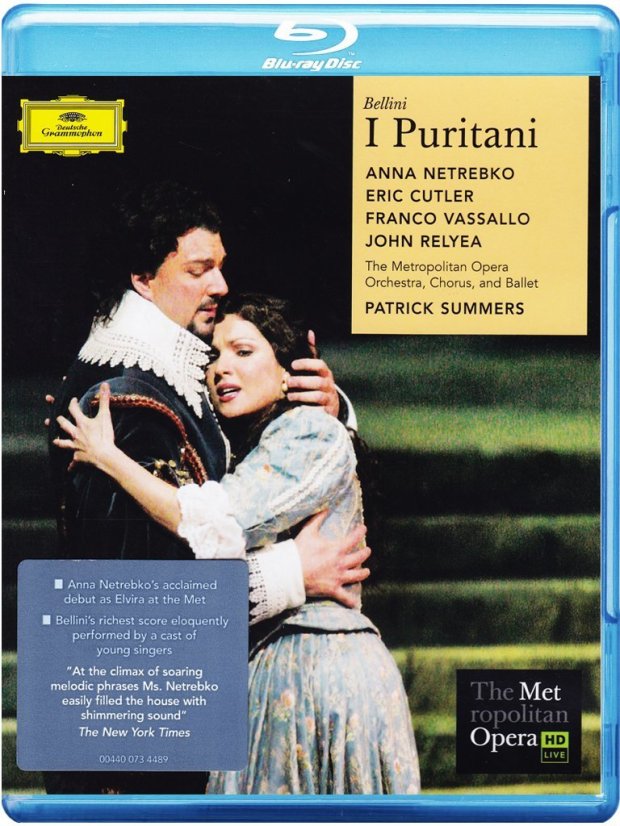
The Metropolitan Opera production, filmed in January 2007 (DG 0734421), is over 30 years old and was originally made for the Sutherland/Pavarotti duo. Perhaps this explains its total lack of personal direction?

There are these monumental tableaux-vivants , in which nobody seems to be allowed to move. The sets are ‘larger than life’ and all the costumes ‘historically accurate’. Anna Netrebko is a very imaginative Elvira. And although she lacks trills, her top notes are there and her presentation (charisma?) is more than convincing.

Both the bass (John Relyea) and the baritone (Franco Vassallo) are reasonable, but no more than that. Eric Cutler (Arturo) has a pleasant timbre and he reaches (albeit with difficulty) the high notes, but it is not really spectacular.

Netrebko sings ‘Deh Vieni al Tempio’ from the first act:

EDITA GRUBEROVA

puritani-grub


But Cutler is much better than the totally miscast José Bros in the fifteen-year-old production from Barcelona (ArthouseMusik 107267). His voice is at least a size too small for Arturo. Edita Gruberova is a matter of taste. I do not like her ‘pussy-mouthed ways’ and I do not really want to watch her, but with my eyes closed there is little to complain about, because yes, she can sing bel canto.

Carlos Álvarez is a first-class Riccardo, but the rest of the cast …. Ah, let’s not talk about it. Andrei Serban’s direction, on the other hand, is truly sublime and exciting, I enjoyed it a lot. A friend I was watching with summed it up like this: Netrebko is for straight men and Gruberova (because of Álvarez) for gays and women, but of course it is not that simple. If only we could cut and paste!


BELLINI-BOX

puritani-box


A 25-cd Bellini box set is an absolute must. For 90 euros only, you get all of Bellini’s operas, two of which (La Sonnambula, Norma) are also available in two different versions. Many well known names too: Callas, Caballé, Scotto, Ciofi, Bernstein…

Most recordings are live and the sound and performance quality vary, but who cares? Among them, of course, is I Puritani, recorded in Catania in 1989, with Mariella Devia as Elvira. In the beginning, she is a bit of a disappointment, but gradually she gets better. Not only does she have all the top notes at the ready, she also brings in a lot of (her own) embellishments, and if that is not part of the art of bel canto, then I don’t know what is.

Mariella Devia:

Unfortunately, the men are not of the same level, although Paulo Washington is a moving and very imaginative Giorgio. A special CD-ROM contains all the libretti. A MUST! (Dynamic CDS 52/1-25)

VAImusic, or: Open Sesame!

VAImusic

VAI (Video Artist International) was founded in 1988 by Ernie Gilbert. It was born out of pure idealism and enthusiasm and Gilbert’s intention was to release interesting concerts as well as opera and ballet performances on video.

First of all, ballet films from Russia, featuring Maya Plisetskaya, one of the greatest ballerinas of all time, were brought out.

VAI Promo Image bnd

Below, Maya Plisetskaya in an excerpt from the second act of Swan Lake:


The catalogue was soon further supplemented with performances by Rudolf Nureyev and Margot Fonteyn, mouthwatering names for many ballet lovers

VAI Lucia

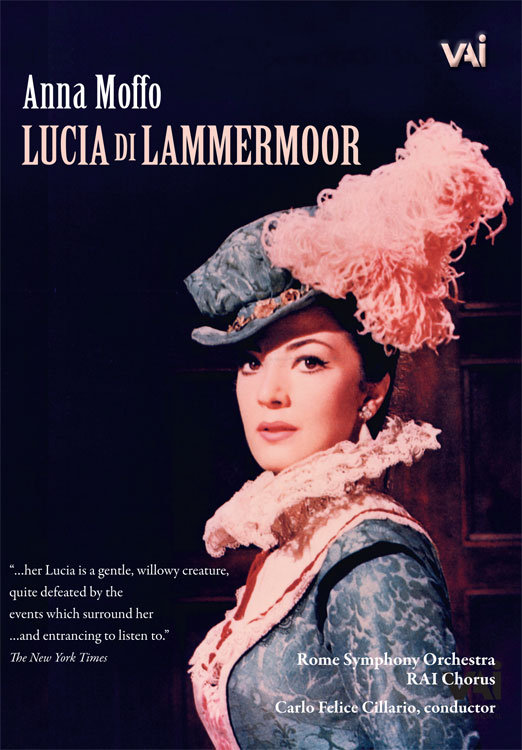
The first operas to be released were Lucia di Lammermoor (with Anna Moffo and Lajos Kozma) and The Medium by Giancarlo Menotti, followed by Tosca with Tebaldi and three titles with Beverly Sills, the uncrowned American queen of bel canto.

Below, Beverly Sills in the last scene of Roberto Devereux by Donizetti:

For the many fans of opera stars, VAI is a real Sesame, full of unsurpassed treasures, because where else do you get the complete operas of Corelli, Kraus, Caballé, Bergonzi or Tagliavini? Or recitals by Scotto, Eleanor Steber, John Vickers or Leontyne Price, to name but a few?

VAI L. Price

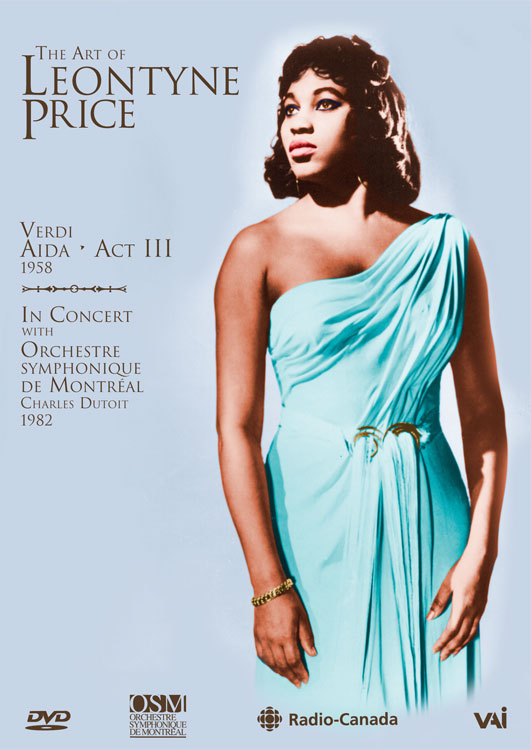
About ten years ago, a very attractive DVD was released with Leontyne Price singing the complete third act from Aida, recorded by Canadian television in 1958, plus a recital from 1982 with arias from Cosi fan tutte and Madama Butterfly, among others. With the added bonus of three arias from Il Trovatore, Aida and La Forza del Destino, taken from her performances in the legendary ‘Bell Telephone Hour’ from 1963-67 (VAI 4268).

Leontyne Price sings ‘O patria mia’:


However, VAI’s catalogue is not limited to opera and ballet; it also gives us recitals and concerts by many famous instrumentalists and conductors, including Oistrach, Menuhin, Barbirolli, Munch, Martha Argerich, Arturo Benedetti Michalengeli, William Kapell, Joseph Hoffman… An Arthur Rubinstein DVD was brought out with his recitals from 1950 and 1956, together with a selection of works by Chopin, and the (abbreviated) Rhapsody on a Theme of Paganini by Rachmaninoff (VAI 4275).

Vaimusic trailer:

<iframe width=”560″ height=”315″ src=”https://www.youtube.com/embed/JyZl0RGrsNg&#8221; frameborder=”0″ allow=”accelerometer; autoplay; encrypted-media; gyroscope; picture-in-picture” allowfullscreen></iframe>

ARAM KHACHATOURIAN

VAI Khachatourian

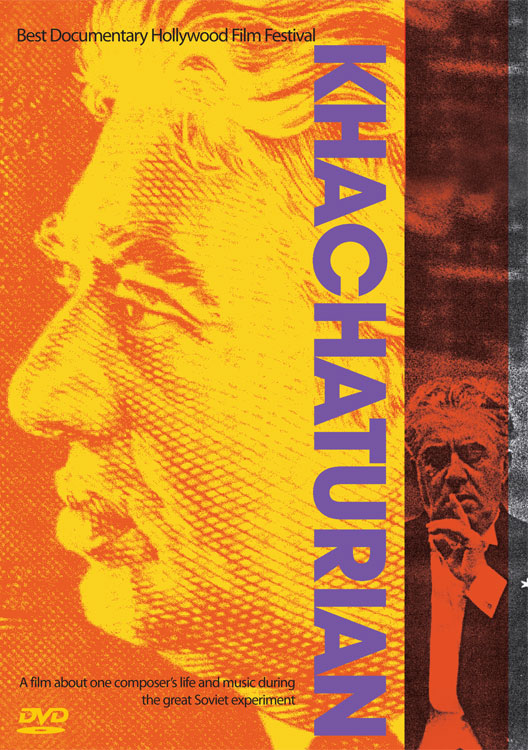
Peter Rosen’s film about the Armenian composer Aram Khachatourian, which was awarded the prize for best documentary at the Hollywood Film Festival, is exceptionally fascinating. It begins with his funeral and then, in chronological order and in the first person, sketches the life of a man whose history ran parallel to that of the Soviet Union. It contains unique archive images in black and white, breathtaking film images of the Armenian landscapes, interesting interviews, fragments of his ballets and, as a bonus, the complete performance of his cello concerto by Mstislav Rostropovich (VAI 4298).

Below: Mstislav Rostropovich playing Khachatourian’s cello concerto


PLEA FOR GIANCARLO MENOTTI AND HIS THE CONSUL

VAI Consul

Giancarlo Menotti. For most Dutch opera lovers, he is no more than a vaguely familiar name. His operas have never been very popular here and performances can be counted on one hand.

A pity, really, because not only is his music exceptionally beautiful (think of a combination of Mascagni and Britten), but the subjects he deals with in his (self-written) libretti are  socially engaged and they address current topics.

A newspaper article of February 12, 1947 on the suicide of a Polish emigrant whose visa for the USA had been rejected, was seen by Menotti, who sadly remembered the fate of his Jewish friends in Austria and Germany (his own partner, the composer Samuel Barber, was also Jewish). He took this sorry tale and used it as a basis for his first full-length opera. The subject has – unfortunately – lost none of its actuality and The Consul is and remains an opera that cuts right through your soul.


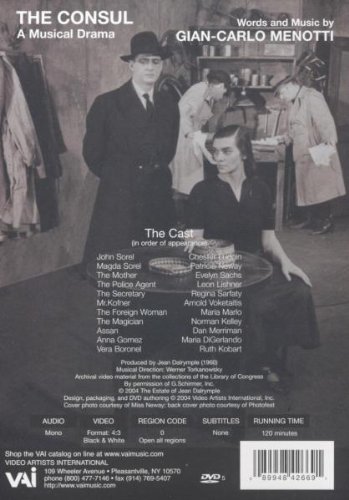
In 1960, it was produced for television, and that registration has been released on DVD by VAI (4266 ). In black and white, without subtitles (don’t be alarmed, there is very clear singing) and extremely dramatically portrayed by Jean Dalrymple.

Patricia Neway sings ‘To This We’ve Come’:

Plácido Domingo and Puccini: a match made in heaven

Puccini Domingo

Sometimes I think that Placido Domingo must be the reincarnation of Puccini. Not because they look so similar (although they are very much alike in the photos), but because of the music. It seems to have been created for Domingo’s timbre. It is as if Puccini composed with Domingo’s voice in mind.

And yet (or perhaps because of this): there is no other repertoire that shows as clearly whether a role suits him or not. He was never a memorable Rodolfo and his Pinkerton was not noteworthy. Even as Calaf, despite the great performances, he did not really identify with the role. He was too friendly, too kind, too human.


TOSCA

Afbeeldingsresultaat voor Domingo Puccini"

Domingo sang his very first Cavaradossi on 30 September 1961 and since then he has sung more performances of Tosca than of any other opera. This is the role he researched with the utmost care. He even added some qualities to the painter’s character that are not really there, in my opinion.

Personally, I find Cavarodossi’s flirtation with the revolution no more than a whim, but Domingo takes it dead serious and sees himself not only as the lover but also as the freedom fighter. From the start, he knows that the execution is actually going to take place, but he is playing along with the lie to spare his beloved Floria. Very humane and very moving.

tosca Nilsson

He sang his first Tosca at the Metropolitan Opera in 1969. It was not planned: he took over at the last minute for the sick Sándor Kónya. Birgit Nilsson was Tosca. In her memoirs, she stated that she found his acting ‘superb’ and his singing ‘gorgeous’.

It was indeed a memorable performance, not least because of Nilsson’s ‘scream’.


Fortunately, the performance was recorded for radio and was released on CD (Nuova Era 2286/870).

Tosca Scotto

Of the studio recordings, two are very dear to me. On Warner Classics (5665042), Renata Scotto meticulously sings all the notes prescribed by Puccini ( her colleagues are not always as scrupulous) and Renato Bruson is very ‘courteously dangerous’ as Scarpia.

Tosca Price

RCA (88697448122) has recorded one of the best Scarpias ever: Sherrill Milnes. I once heard him live in the role and it was a real experience! Leontyne Price is a sultry Tosca.

Tosca Kabaivanska

On DVD, I find the Decca film version (0434909) by far the most impressive. It was shot on location in 1976, which was not very common at the time. Well, location… The Palazzo Farnese was then home to the French Embassy, so filming was not allowed inside.

Milnes was once again present and the lead role was sung in a very tormented way by Raina Kabaivanska.

Domingo is so beautiful it makes you want to cry, but what gives the film that little bit extra is the tiny role of the little shepherd. It is sung by Placido junior, then 10 years old.

MANON LESCAUT

Manon Domingo

Another Puccini role that fits him like a glove is Des Grieux in Manon Lescaut. Of this opera with Domingo, there are many recordings, both studio and live. Not all of them are worth listening to and in most cases it is the interpreter of the title role who presents the problem. It is nothing new: when a record company had a new ‘star’, he or she just had to record everything available. With often disastrous results.

Manon Domingo Olivero


In 1970, Domingo sang Des Grieux in Verona, with Magda Olivero in the title role. Quite bizarre when you consider that Olivero made her professional debut eight years before Domingo was born. And yet: her portrayal of the young heroine is utterly convincing. Indeed, most of her colleagues still cannot match it! My copy was released on Foyer, but better quality editions are now available.

Manpn Domingo Scotto

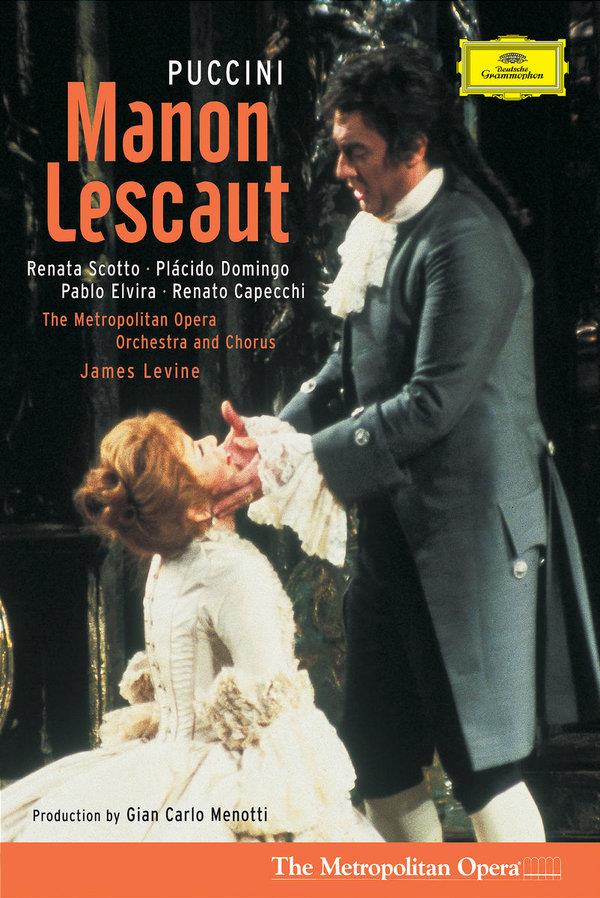
In 1980, the opera was broadcast on TV. That recording is now available on DVD. Believe me: there is no better. Scotto sings and acts Manon like no one else has done before, and together with Domingo, she makes us cry with the beauty and the sadness of it all. Menotti’s very realistic, true to life and very exciting direction simply could not be better. A MUST (DG 073424)


IL TABARRO

Tabarro-Melodram-Crader


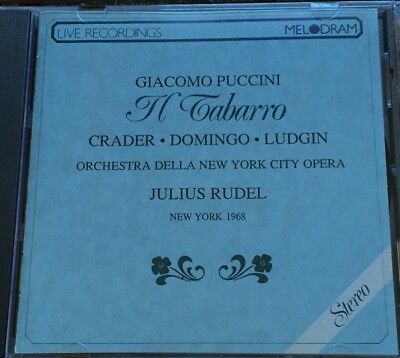
Luigi in Il Tabarro was also a role after Domingo’s own heart. His recording from 1968 with the New York City Opera, conducted by Julius Rudel (Melodram 17048) is splendid, with Jeannine Crader as Giorgietta, a wonderful singer who sadly never made it in Europe.

Il Tabarro


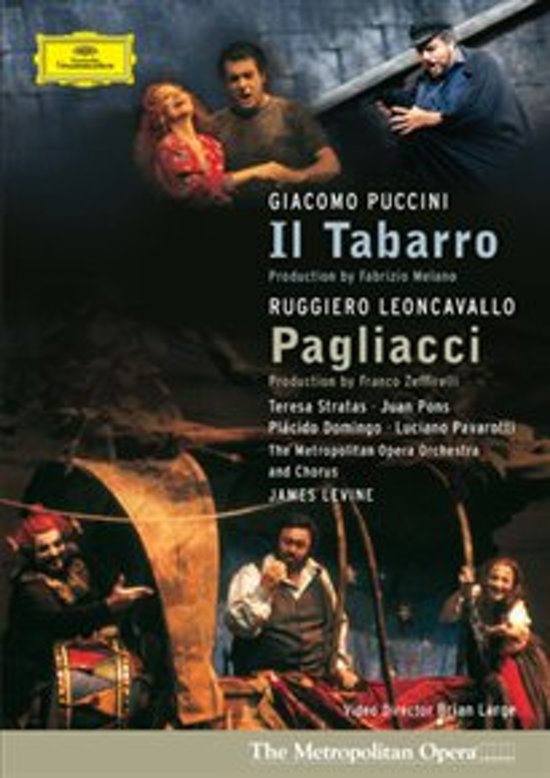
On DVD, there is a fine Zeffirelli production from New York, recorded in 1994. Giorgietta is sung by Teresa Stratas. Unfortunately, it is coupled with Pagliacci with Pavarotti and again with Stratas, in the leading roles. Not really my ‘cup of tea’ (DG0734024).


Below a curiosity: a duet from Il Tabarro with Domingo and Beverly Sills from 1967


EDGAR

Puccini Edgar

There are at least two good reasons to welcome the 2006 Edgar (DG 4776102): it is the very first studio recording of the work and it is the first time that Domingo sings the role, the only one still missing from his Puccini discography.

I never understood why the opera was so unloved. Musically, it is in line with Verdi, but one can already hear tentative fragments of the ‘real’ Puccini: a vague promise of Manon Lescaut, a study for La Bohème and creative exercises for Turandot.

With Adriana Damato and Marianne Cornetti, we can welcome a new generation of phenomenal singers and Domingo is, as always, very musical and committed.

LA FANCIULLA DEL WEST

La Faciulla Dominfgo Neblett cd

For me, the very best is a 1978 DG recording (4748402), with an underrated Carol Neblett as a very fierce Minnie. Domingo is a languorous and surprisingly lyrical Johnson, and Sherrill Milnes sounds like he’s in a real western.

La Fanciulla Domingo Zam[ieri dvd

Two worthwhile recordings have appeared on DVD. One with Mara Zampieri and Juan Pons (Opus Arte OA LS3004 D) from La Scala, 1991, in a beautiful, colourful direction by Jonathan Miller.

La Fanciulla Domingo Neblett dvd

The other is with Carol Neblett and Silvano Carroli (Kultur Video 2038) from the Royal Opera House, 1982.

SONGS

Dommingo Puccini

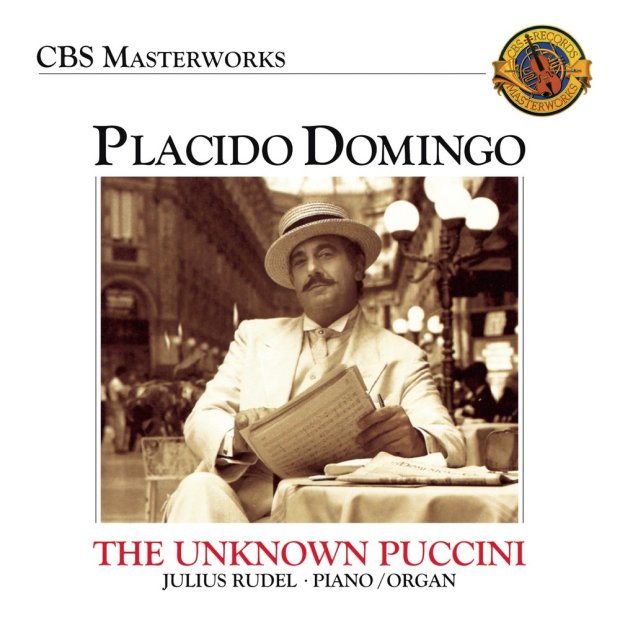
There were once plans to make a feature film about Puccini, in which Domingo would play the composer. It did not go ahead. In preparation for the project, Domingo recorded all Puccini’s songs in 1989, under the title Unknown Puccini (Sony 44981).

For the cover, he is made to look like Puccini and there he is: dressed in white, hat on his head and the moustache prominent on his face. Puccini to the life!

Anyway, it is all about the music and it is a must- have for anyone interested in Puccini. Most are first ever recordings and gradually you follow the composer on his path towards his Manon’s, Tosca’s and other ‘girls’. The renowned conductor Julius Rudel accompanies Domingo on piano and organ.


Plácido Domingo and his French roles

Domingo jose


Bizet: Carmen


Domingo carmen-wiener-staatsoper-kleiber


I never used to like opera. I loved violin concerts and piano solo works, very early on I learned to appreciate chamber music and when I got a bit older, songs also came my way. But opera? The mere idea that an old, fat lady would try to portray a young girl dying of TB, gave me the giggles. Talk about prejudice!

Until one memorable evening in 1982, when I turned on the TV to watch Carmen. I only did it to please my then boyfriend and then it happened! From that night on, the world was forever changed and my life gained a great love.

For years I cherished this Carmen, although I only had a badly copied but very expensive mc (does anyone remember what it was?). It was later released on various ‘pirate labels’ and finally on DVD (Arthaus Musik 109096).


Many years and a lot of experience have passed, but I still find the recording irresistible. First of all because of Domingo. Listen to his ‘La fleur que tu m’avais jetée’: if that doesn’t give you goose bumps, I don’t know what will. And also because of Carlos Kleiber, a conductor, the likes of whom do not exist anymore these days.


Domingo Camen berganza


The most beautiful CD recording, at least to me, is the one with Teresa Berganza under Claudio Abbado (DG 4196362). It was recorded in the studio in 1978, but only after a series of live performances, and it is all the better for that! Ileana Cotrubas (Micaela) and Sherrill Milnes (Escamillo) complete the excellent cast.


https://http2.mlstatic.com/bizet-carmen-solti-domingo-troyanos-3-cd-box-set-D_NQ_NP_396505-MLA25049663221_092016-F.webp

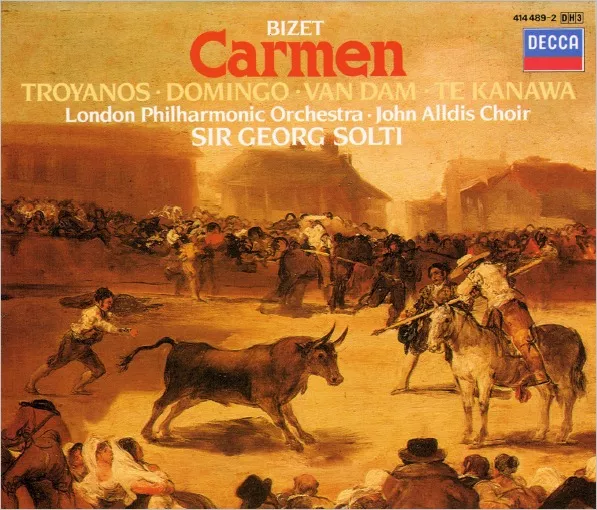
Two years earlier, Domingo also recorded the opera in the studio (Decca 4144892), but I am less enthusiastic about it. Solti conducts superbly and Tatiana Troyanos as Carmen is one in a thousand, perhaps she is even better than Berganza, but José van Dam is no Escamillo and the whole lacks the atmosphere of the theater.


Domingo Camen Resnik


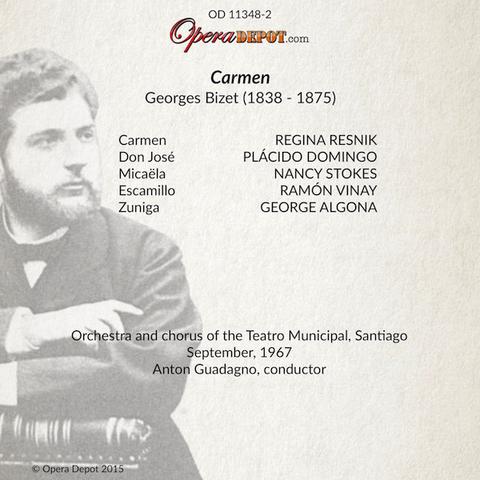
The very first recording I know, dates from 1967. It is from the Teatro Municipal de Santiago and is conducted by Anton Guadagna (Legato LCD 194-2). Regina Resnik is an excellent Carmen, but what makes the recording truly memorable is the Escamillo of Ramon Vinay, once a Don José of note himself.


Domingo Carmen Verrett


Also interesting is the recording from Covent Garden, 1973 (Arkadia MP 498-3). Mainly because of Shirley Verrett in the leading role and the very young Kiri te Kanawa as Micaela.


Massenet: Werther


Domingo Werther


Werther was one of the young Domingo’s favourite roles. Unfortunately, little of it has been documented. On 18 December 1977, the opera was recorded by the Bayerische Rundfunk in Munich. This recording has been released on CD (Orfeo C 464 982).
Charlotte was sung by Brigitte Fassbaender, not really a singer one would associate with the role… Well! Allow yourself to be surprised, because what happens here, happens very rarely: drama, passion, love, despair… She and Domingo really bounce from your player.
An excerpt:

Domingo Werther Chailly

A studio recording of the opera was made in 1979, under Riccardo Chailly, with a totally miscast Elena Obraztsova as Charlotte. It is quite exciting, but lacks the necessary poetry.


Massenet: Manon


Domingo Manon


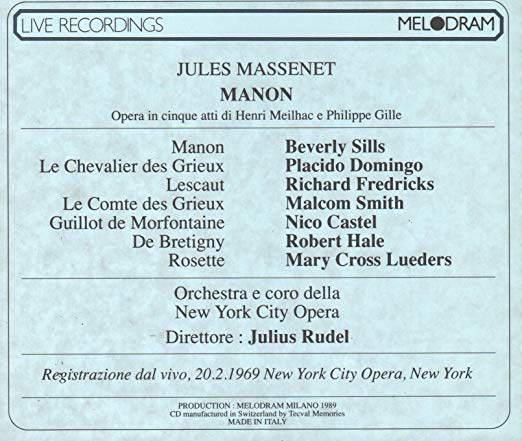
Yes, Manon was once part of Domingo’s repertoire. The only recording I know is on Melodram (MEL 27054). It was recorded live at the New York City Opera on 20 February 1969. Manon is sung by the truly irresistible Beverly Sills. Julius Rudel conducts.


Massenet: Le Cid


Domingo Le Cid


An oddity, certainly, but such a beautiful oddity! Sony (7454942 – check the number to be sure, they change so quickly!) recorded the concert performance in New York, 1989, live. Eve Queler conducts and Grace Bumbry shines as Chimene.


Gounod: Faust


Domingo Faust Freni


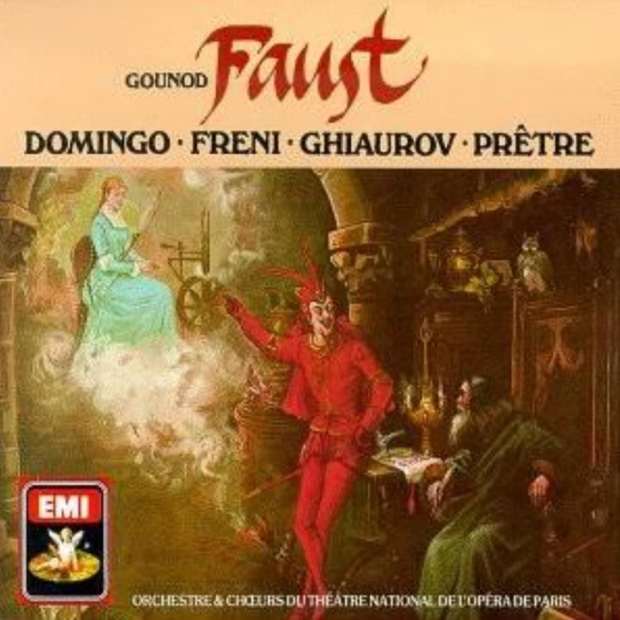
Fortunately there is a good studio recording of Domingo’s Faust. It was recorded in 1979 by EMI (now Warner) and it is easily one of the best recordings of the work. The orchestra of the Paris Opera is conducted by Georges Prêtre, one of the best conductors of French repertoire.

The cast is finger-licking gorgeous: Mirella Freni is a fragile and sensual Marguerite and Nicolai Ghiaurov a very impressive Méphistophélès. In the small role of Valentin we hear none other than Thomas Allen.


Saint-Saëns: Samson et Dalila


Domingo Samson Warner


EMI (now Warner) recorded the opera in Paris in 1991. The conductor was Myung-Whun Chung and there is the rub: he does not really know the opera. But he was not the only culprit! Someone came up with the unfortunate idea of having Dalila sung by Waltraud Meier. Forget it.


Domingo Samson Borodina


The other studio recording, this time on DVD (DG 0730599), also has a Dalila that just doesn’t work for me: Olga Borodina. It was recorded at the Metropolitan Opera in 1998. I was there and didn’t like it – and I still don’t like it.


Domingo Samson Verrett


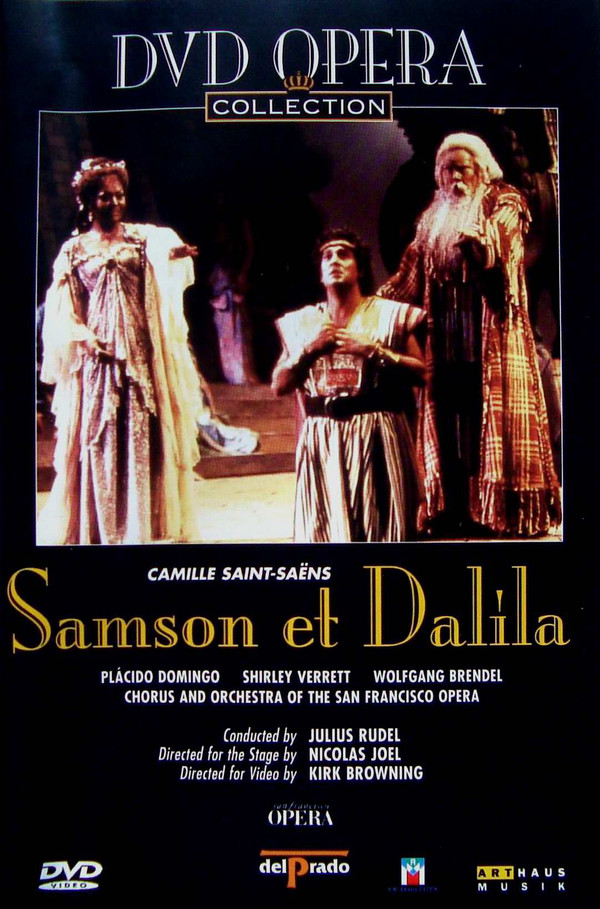
But, I’ll go for the San Francisco recording every time! It was directed by Nicolas Joel and Dalila was sung by the really sexy Shirley Verrett (Arthaus Video 100 202)


Offenbach: Les Contes d’Hoffmann


https://images-na.ssl-images-amazon.com/images/I/71wSWOvWrHL._SL1367_.jpg

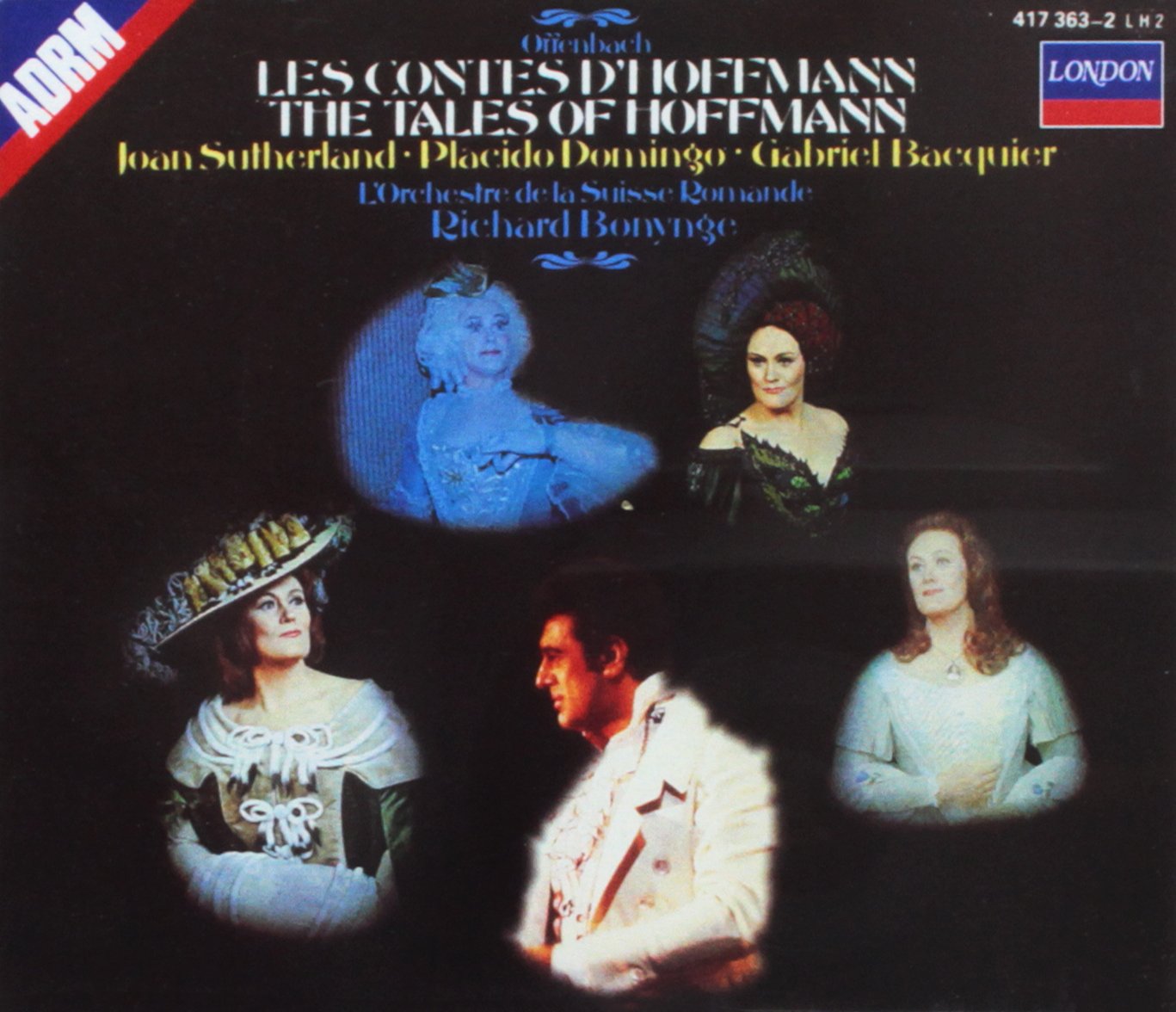
Hoffmann was one of Domingo’s greatest roles. As far as I am concerned, no other singer even comes close to him.

If you want the opera on CD, the Decca recording conducted by Richard Bonynge, with Dame Joan Sutherland in all three female roles (4173832) is highly recommended.


A rarity: Domingo with Beverly Sills

Plácido Domingo and his belcanto roles

Domingo 21


Domingo and Belcanto? Surely that was more something for his colleagues Pavarotti, Carreras and Kraus? And yet: certainly at the beginning of his career Domingo was also a Belcanto singer, although his high notes were not always really that high. For him, the interpretation of both the music and the text was essential. That is why even in this repertoire he was looking for the roles in which the character had more to offer than just ‘clean’ singing.


Lucia di Lammermoor

Domingo Lucia POns

Domingo made his international debut at the age of 21, as Edgardo in Lucia di Lammermoor in Dallas. A special event, because his Lucia was then sung by 61-year-old Lilly Pons, who said her farewell to the operatic stage with this role.


Domingo Lucia Suth

In 1970 he sang Edgardo at the Metropolitan Opera, with none other than Joan Sutherland as Lucia. Gala (GL 100.571) released the highlights, combined with excerpts from La Traviata, from December that same year (also with La Stupenda). The sound is very poor, but it is definitely a noteworthy document.


Domingo Lucia Stider

It was only in 1993 that Domingo sang the role in the recording studio. The result is not entirely satisfactory. Which is not his fault. His Edgardo sounds less lyrical than twenty years earlier, but with such passion!

Cheryl Studer, who at that time was recording anything and everything soprano, was no real Lucia. She was a great Strauss and Mozart singer and her Wagners and Verdi’s were outstanding, but Lucia was too ambitious for her. Understand me well: she did have the high notes and they were very solid, but that’s exactly what you do not want for Lucia. The notes shouldn’t stand rock solid, they should shine, sparkle, sprint if necessary, and she couldn’t do that.

However, the real ‘culprit’ is the conductor. He is rushing things along and never ever stops. Still, the recording is very worthwhile, especially if you want to hear something else from Domingo and appreciate the quality of the sound.


Roberto Devereux


Domingo Roberto

A reviewer from the New York Times wrote that it was without a doubt the most exciting event of the musical year 1970, and that I can totally believe. The performance of 24 October 1970 was recorded live and we are very lucky to have it.

Julius Rudel (well, where have all these great maestros gone?) conducts with a firm hand and with great love for the work. To cry so beautiful.

Domingo’s voice sounds like a bell and his performance causes ecstatic ovations. And about Beverly Sills (Elisabetta) I can be brief: overwhelming! No one, but no one has ever sung the part better than she has. She surely is Elisabetta. Everybody should see or hear her in this role (there’s also a DVD, unfortunately without Domingo). The applause after her ‘L’Amor suo mi fé benata’ seems to last forever.


Anna Bolena


Domingo Bolena

Anna Bolena is considered to be the first important Romantic Italian opera and for Donizetti it was his big breakthrough. For Domingo too, Anna Bolena was a milestone: with the role of Percy he made his debut in New York.

He was then (can you believe it?) 25 years old, but his voice was completely ‘mature’: full, firm, soft, hard, begging, determined, with all the nuances in between. Talk about phenomenon!

The leading role was sung by Elena Souliotis, then 23. An almost forgotten singer now (her career didn’t last), but her intensity can only be compared to that of Maria Callas. A fun fact: La Divina was in the audience at the time!

Giovanna was sung by Marylin Horne and their duets will surely give goosebumps to the devotees. Janet Baker also made her American debut in the role of Smeton.
The opera was recorded live at Carnegie Hall in 1966. My copy is by Legato (LCD-149-3), but the recording is now also available on other labels.


Norma


Doingo Norma

Pollione is one of the shining roles of the young Domingo. No wonder. A warlord and a lover: that’s what he is all about. In Norma he could show it all.
He took the role in 1973 (once RCA GD 86502) and I think that’s a bit premature. Oh yes, his voice is crystal clear and so beautiful that it almost hurts, but he yet has to gain more of the needed authority.
Nevertheless: recommended, not in the least because of Montserrat Caballé, who sings the leading part.