English

Castellucci’s Salome from Salzburg released on DVD and Blu-ray

Salome Asmik coverBy Peter Franken

Romeo Castelluci’s production of Salome was a remarkable success at the Salzburg Festival in 2018. Not least because of the phenomenal interpretation of the title role by Asmik Grigorian. The premiere was broadcast live on TV and, supplemented with material recorded during two subsequent performances, recently released on DVD and Blu-ray. Last summer, the production was repeated three times, again with great success, after which the visitors could have their previously purchased copies signed by Frau Grigorian.

A production by Romeo Castelluci is in fact a Gesamtkunstwerk. He directs and designs the costumes and the scenery. Only for the choreography does he allow someone else into his world. Castellucci is said to be not so much a director of persons as one who stages the entire space. His Salome therefore does not lend itself very well to wide-ranging interpretations, but can best be experienced as it is.

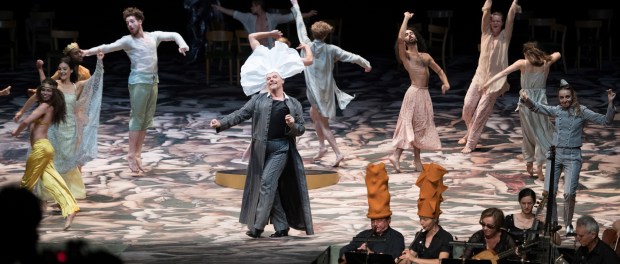
The broad, shallow stage of the Felsenreitschule is used in its entirety. The arches in the back wall have been closed, so that the audience is looking at a closed, greyish back wall, which contributes to the oppressive atmosphere. The stage is empty, with the exception of a number of gold-coloured objects, which sometimes play a role in the action, sometimes not.

The floor is shiny gold, making the light reflect in such a way that the players seem to be standing behind a transparent curtain. This is a small disadvantage of a recording in HD, the public in the auditorium did not notice it, as I know from my own experience. A large opening in the floor gives access to the cistern where Jochanaan is kept prisoner.

The costumes are fairly uniform: men in dark suits with faces partially painted in red. It is difficult to distinguish between the different characters; all of them are merely secondary figures in the drama that takes place between the three protagonists. Herodias, with green makeup, is also emphatically kept in the background.

Salome appears in a white dress holding a royal white cloak with a crown in her hand.  A red spot suggests that she is menstruating, emphasizing that although she is unmarried, she has more than reached the age of marriage. Moreover, this makes her extra untouchable for the prophet; she is in all respects an impure woman. When Narroboth gives in and has the Prophet brought up, he remains largely shrouded in darkness. We only see a black shadow. Salome speaks to him, he answers and curses her.

So far, the libretto is followed fairly closely. But after Jochanaan has retreated to his dungeon, the action takes a remarkable turn. During the overwhelming musical interlude, Salome lies on her back and performs a complex, erotically tinted ballet with her legs. Cindy van Acker’s choreography is sublime and the mastery with which Grigorian performs this ballet is phenomenal. The eroticism of course relates to the excitement generated by the encounter with the prophet. He grossly rejected her and even cursed her, an entirely new experience for this luxurious creature. At the same time, a horse wanders around the cistern, a reference to the fascination of young girls with large animals. A bit of a cliché, but very effective.
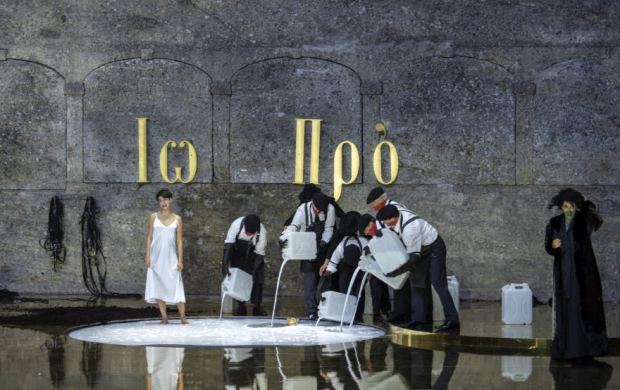
Sallome asmik-grigorian-r-castellucci-rezisuotoje-salomejoje-5b6078eedf35d

Salzburgerfestspiele © ruth waltz

On the front curtain the text “Te Saxo Loquuator” was written, meaning “what the stones may say to you”. Castellucci uses this reference to the supposed strenghth and power of stones to give a different meaning to Salome’s dance. At the beginning she is hidden from view by a group of extras and suddenly appears lying almost naked in a fetal position on a golden block, on which SAXO is written in large letters.

During the musical intermezzo, a large block slowly descends from above and threatens to crush her. Instead, however, Salome is enveloped by the descending block, hidden from view. She has turned to stone, a gem, but still. The enormity of what she intends to do has made her an undead in advance.

Dramaturge Piesandra di Matteo gives the following explanation:  „In ihrer Eigenschaft als Objekt verweigert sich die Figur“, so erlischt der Trieb, wodurch sich neues Potenzial erschließt.“  Be that as it may, the above mentioned ‘ballet’ clearly ends with the suggestion of an orgasm, so ‘Trieb’ will play less of a role by now. There is no longer any question of revenge sex with the head, it is now about the revenge of ‘a woman scorned’.
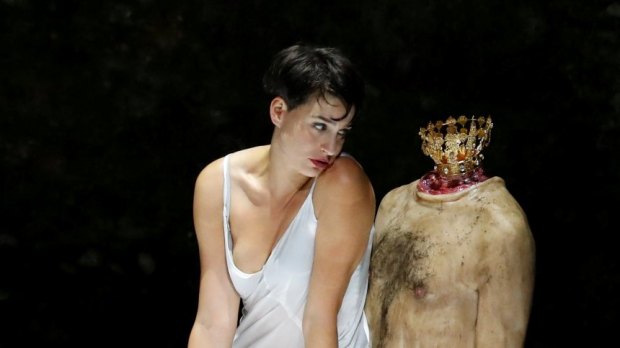
Opera singer Grigorian performs during a dress rehearsal of Richard Strauss' opera "Salome" in Salzburg

Opera singer Asmik Grigorian performs as Salome during a dress rehearsal of Richard Strauss’ opera “Salome” in Salzburg, Austria July 24, 2018. Picture taken July 24, 2018. REUTERS/Leonhard Foeger

While Herod wringing his hands tries to get Salome to change her mind, she bathes in a large puddle of milk. He gives in, but instead of Jochanaan’s head Salome does not unexpectedly first receive a horse’s head and only later the body of the dead prophet. Salome’s final monologue is directed at Jochanaan’s torso. She also briefly puts the horse’s head on it. Finally she goes down into a second cistern and we only see her head when Herod gives the order to kill her.

Salome really is an orgy of sound and visuals, an overwhelming theatre play. And it only really comes into its own when there is a Salome on stage who is in charge of everything and everyone, including the huge orchestra, no matter how loud they play. This makes Asmik Grigorian the ideal Salome. She has a large voice, with which she is able to cut through the orchestra at any moment, without forcing it for a single moment. A Salome should have everything: an Isolde, but also a Chrysothemis and a Zdenka. With her clear, agile voice, Grigorian can convincingly perform these different types. What makes her a unique interpreter of the famous title character, however, is her ability to make singing and acting an organic whole.

John Daszak is vocally a strong Herod, but cannot make much of an impression: it’s all about Salome here. Even Jochanaan remains, literally, in her shadow. Bass-baritone Gabor Bretz is above all a strongly singing shadow. The only time he appears is when he is sprayed clean with a garden hose by a couple of helpers.

The Vienna Philharmonic Orchestra, the house orchestra of the Salzburger Festspiele, under the direction of Franz Welser-Möst, provides a hugely successful musical support, claiming the leading role here and there during the interludes.

This recording by (C-major 801704) is an absolute must for lovers of this masterpiece by Richard Strauss.

Trailer of the production:

Asmik Grigorian, John Daszak, Anna Maria Chiuri, Gábor Bretz, Julian Prégardien
Vienna Philharmonic Orchestra conducted by Franz Welser-Möst
Directed by: Romeo Castelluci

In Dutch:
Castellucci’s Salome op dvd en Bluray uitgebracht

Translated with http://www.DeepL.com/Translator

Verismo at the Amstel: we missed Sicily but we had voices!

pagliacci-dena-us5mb_5794

Brandon Jovanovich (Canio) (© The National Opera / photo BAUS

Let’s clear up a misunderstanding: Cavalleria Rusticana by Mascagni and Pagliacci by Leoncavallo have almost always and almost everywhere been billed as a diptych but they are certainly not that. It was just a convenient solution: two short operas that matched each other in terms of musical language and emotions could easily be programmed on one evening. The fact that the composers were more or less the same age and that their operas were created at the same time was also a bonus. But to say that they belong together and that they should always stay together? No.

Also the order: first Cavalleria and then Pagliacci is not really fixed. That too, after more than a hundred years just became tradition. A tradition that no longer has been strictly followed for years. So there is nothing revolutionary about changing the order. Personally, I’ve seen several performances that started with the ‘Prologo.’ Something that seems quite logical to me.

Robert Carsen is one of the greatest opera directors in the world. His theatre-in-theatre vision is still valuable, after all he became famous for it, but with this staging he went back, as it were, to his early years in Antwerp. Everything that worked as an eye-opener at the time now looks quite old-fashioned and second hand. How many times before have we seen rows of empty chairs? Sigh.

pagliacci-dena-usdsc_5720

© De Nationale Opera / photo BAUS

And yet… He is and remains perfect at Personenregie. His mise en scène, although sometimes I don’t care for it it, is certainly of the highest level. Above all, his staging of Pagliacci is nothing less than phenomenal. The fact that the stage is almost bare doesn’t matter, because that magnifies the emotions of the characters, also because Carsen allows the singers to play out the ‘veristic’ aspects which really works very well. So good, in fact, that at the intermission I left the auditorium with a tearful face.

Compared to the first half, Cavalleria Rusticana was a cold shower. Here, all emotions were degraded to below zero, as people were only rehearsing for the performance of – how do you guess? – Cavalleria Rusticana. Interesting, though, but haven’t we seen that a thousand times before? Think of Carsens Don Giovanni for La Scala. Or his Hoffmann for Paris. So second-hand.

The story itself was mutilated so terribly that at a certain moment I lost my mind and thought that Santuzza’s aria was cut in half. It wasn’t, but it reflects the confusion. I’m not going to complain about it anymore, but forget about Sicily, forget about Easter Sunday. ‘A te la mala Pascua’, for me the key to the opera, was translated as ‘I wish you a miserable day.’  It felt just as strange as Puccini would be played by a small baroque ensemble with Emma Kirkby as Tosca. Every period has its own rules and verismo is about raw reality.

Pagl Lorenzo

Lorenzo Viotti © Ron Jacobi

With this ‘diptych’ Lorenzo Viotti, our new chief conductor, made his debut with the National Opera almost two years earlier than scheduled. It was more than exciting: for us, for the orchestra but most of all for Viotti himself. I have to say that the acquaintance made me quite happy. Not that everything went so fantastically and flawlessly, that wasn’t possible either.  Imagine standing in his shoes!

I think Viotti has more affinity with Pagliacci than with Cavalleria and that was audible. His Pagliacci was extremely exciting. He did not shy away from big outbreaks but also took the time for moments of reflection. All these emotions were audible in the orchestra pit, which reinforced the sensation.

For ‘Cavalleria’ the music was on a low heat and the famous Intermezzo was played so faintly that nobody applauded, despite the small break, meant for the applause that did not come. But perhaps it also had to do with the concept of Carsen? Hard to say.

Anyway, enough complaining, because the most important thing in the opera is the singing, which was simply terrific! What we got was no less than the ‘sternstunde’ you’ve been experiencing so rarely these days. And to think that the most protagonists made their debut in their roles!

First and foremost: kudos to the chorus of the National Opera. They carried the opera on their shoulders (sometimes literally). They played, they acted, they walked in and out of the auditorium, and in Pagliacci they even became the spectators: as it should be. And ‘in between’ they sang, and how! I really do take my hat off to that.

PAGLIACCI

pagliacci-dena-us5mb_5783

Brandon Jovanovich (Canio) (© De Nationale Opera / photo BAUS)

Brandon Jovanovich made his double debut: it was his first Canio and it was the first time he sang with the DNO. Why did we have to wait so long to hear this great American tenor in real life? His portrayal of the clown who does not want to be a clown was of the highest level. And, let me tell you: I cried at his ‘ Vesti la giubba. ‘ I really cried. And that’s what the opera is about, isn’t it? Thanks Brandon!

pagliacci-dena-usdsc_5909

© De Nationale Opera / photo BAUS

His Nedda was sung by a now major star on the opera firmament: Ailyn Pérez. What can I say? That her fame is not undeserved and that it has not come out of the blue? Her quicksilver coloraturas were a delight to the ear and her performance worthy of a movie star.

pagliacci-dena-us_23m6365

© De Nationale Opera / photo BAUS

Mattia Olivieri was a beautiful, sensual Silvio. With his creamy baritone he managed to convey his feelings for Nedda. Although I personally think it was more lust than anything else (don’t tell! #metoo listens in!).

pagliacci-dena-us_csl4380

(© De Nationale Opera / photo BAUS)(© De Nationale Opera / photo BAUS)

I was very pleased to be introduced to the young tenor Marco Ciaponi (Beppe). His role was small, but I heard great potential!

And then we arrive at Tonio/Taddeo/prologo: Roman Burdenko. I am not often lost for words, but this time I was really speechless after the performance of this baritone. It was even more impressive because after intermission he continued as Alfio, in:

CAVALLERIA RUSTICANA

cavalleriarust-us5mb_6005

Roman Burdenko (© De Nationale Opera / photo BAUS)

And if you list all the roles he sang in one evening without a break, you can’t help but bow your head in admiration.

cavalleriarust-us5mb_5976

Brian Jagde (Turiddu) and Anita Rachvelishvili (Santuzza) (© De Nationale Opera / photo BAUS

I had heard Brian Jagde (his name is pronounced the German way) twice before. Once live, in Verdi’s Requiem. The second time was on the DVD recording of Das Wunder der Heliane by Korngold, where he performed about the best Stranger in history. I was more than anxiously awaiting his debut as Turiddu. Not in vain. Jagde was the Turiddu of many girl’s dreams: attractive, seductive, macho, but with a small heart. Wonderful.

cavalleriarust-us_dsc5551

Rihab Chaieb (Lola) and Brian Jagde (Turiddu) © De Nationale Opera / photo BAUS

Rihab Chaieb was a Lola as we remember from old Italian films. Her dress, her hairstyle, her presence resembled none other than Gina Lollobrigida. Very sensual and provocative, as it should be. We’ll hear more of her.

cavalleriarust-us_csl4547

(© De Nationale Opera / photo BAUS

Elena Zilio (mama Lucia) sang incredibly well, but her character didn’t really come into its own. Actually she was totally left to her own devices by Carsen and that’s a pity.

But the real star of the evening was the Georgian mezzo-soprano Anita Rachvelishvili. My God, how wonderful she was! I would have liked to hear her in a different, more realistic staging of the opera. One, where she can let go of all her emotions – and she has them all ready – without the armour of ‘the rehearsal’.

All in all: don’t miss it. Even if it is only because of the singers!

Trailer of the production:

Final applause (© Ron Jacobi)

Ruggero Leoncavallo: Pagliacci
Pietro Mascagni: Cavalleria rusticana
Brandon Jovanovich, Ailyn Pérez, Roman Burdenko, Mattia Olivieri, Anita Rachvelishvili, Brian Jagde, Elena Zilio, Rihab Chaieb
Netherlands Philharmonic Orchestra and Choir of the National Opera (rehearsal Ching-Lien Wu) conducted by Lorenzo Viotti.
Directed by Robert Carsen

Seen on 5 September 2019

In Dutch:
Verisme aan de Amstel mist Sicilië, maar de zangers maken alles meer dan goed

About Cavalleria Rusticana:
Is verismo dead? Part 1: Cavalleria Rusticana

Translated with http://www.DeepL.com/Translator
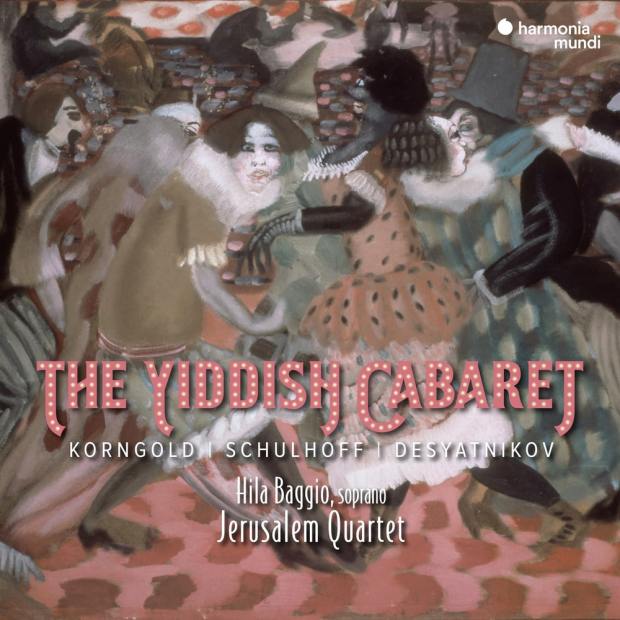
The Yiddish Cabaret: Jerusalem Quartet’s tribute to their grandparents

Jiddish CabaretThe Jerusalem String Quartet never disappoints. Never. Whatever they play. It’s not just about perfection, but also, or perhaps mainly, about their attention to the story behind the notes. For their involvement in the pieces they play. And their search for the truth that may not even exist. But with this album they have gone far above themselves and their own standards. Something that might have to do with the fact that they were allowed to choose the works themselves, none of which are commonplace?

With their choice they have also made a statement. Something we all know but still don’t want to admit out loud because we feel uncomfortable about it? About the influence of Jews and their contribution to our Western culture?

These days, Schulhoff and certainly Korngold are no longer curiosities, although of the latter mostly his operas are performed these days. Yet his chamber music compositions are not to be sneezed at. Listen his second string quartet, for example! At the first notes you get the nostalgic feeling of an unattainable lover and an intense desire. Beautiful and painful at the same time. Not only are the notes divinely beautiful, it is also the performance. Yearning and full of desire.

The five pieces for Erwin Schulhoff’s string quartet are a  link to the title of the album: the Jewish Cabaret. Leonid Desyatnikov composed his ‘Yiddish’ in 2018. These five songs are based on the Yiddish songs from the Polish interbellum, the period between the two world wars, which were sung in the cabarets in Warsaw and Lódz. The soprano Hila Baggio manages to strike the right tone in the songs. Light-footed. Think of the very young Lotte Lenya.

The album is dedicated to the grandparents of the members of the quartet. I allow myself to include my own grandparents that I have never known.


The Yiddish Cabaret
Erich Wolfgang Korngold: String quartet no. 2 on. 26
Erwin Schulhoff: 5 Pieces for string quartet
Leonid Desyatnikov: Yiddish – 5 Lieder for Stem and Stem Quarter (2018)
Hila Baggio (soprano), Jerusalem Quartet
Harmonia Mundi HMM 902631

Translated with http://www.DeepL.com/Translator
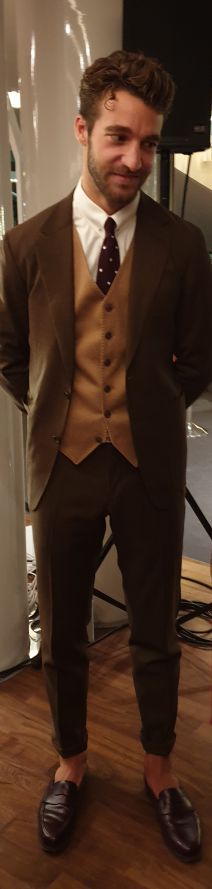
Marcel Beekman: as a character tenor I am able to conquer the world!

MARCEL BEEKMAN - photo © Sarah Wijzenbeek

Marcel Beekman © Sarah Wijzenbeek

Marcel Beekman flies around the world to perform, as far as the Middle East. The tenor cannot be praised enough. We knew (or should have known!) for a long time that he is an all-rounder in his profession. His voice seems to know no boundaries and sometimes climbs esoterically high, but with a spectrum of colours. He doesn’t only feel the music, he sometimes seems to be connected to it in a compelling way.

Beekman calliope-tsoupaki-ruud-jonkers-02

Calliope Tsoupaki © Ruud Jonkers

According to Calliope Tsoupaki, the new Composer Laureate of the Netherlands, he is the best Dutch tenor. And she should know, because he has sung in many of her compositions. She composed the 1-minute opera Vesuvius 1927 for him, based on the text of P.F. Thomése, which had its premiere on the Dutch TV show ‘De Wereld Draait Door’:

But he also sang in her famous St. Luke’s Passion and saved the performance of her Greek Love Songs, performed at the Holland Festival in 2010. In June 2014 he also appeared in her opera Oedipus

Beekman oidc3adpous-calliope-tsoupaki-foto-janiek-dam

© Janiek Dam

And now she is composing a big new work for him – and for the countertenor Maarten Engeltjes. In addition to the singers, an instrumental ensemble, PRJCT, Maarten Engeltjes’ own ensemble, is also taking part. This work will have its premiere at November Music 2019 and may be programmed in other cities as well.

Other Dutch composers such as Jeff Hamburg, Elmert Schönberger and Martijn Padding (to name but a few) have written compositions with his voice in mind as well.

THE BEGINNING

The first time we met five years ago in his beautiful house in the Blaeu Erf, a kind of courtyard in a side street of the exceedingly busy Gravenstraat, right behind the Nieuwe Kerk. It is an oasis of peace, where hardly any sounds penetrate. We had tea (his secret mixture, which tasted very good to me) and talked about his early years, the discovery of opera and his many foreign performances, which even brought him to countries in the Middle East.

“I come from a provincial town and studied at a small conservatory, which meant that I was actually destined to become an oratorio singer. Or a teacher. At that time, no one thought of opera, not even I did. That only came when I was asked to do the opera/musical Jona de Neezegger by Willem Breuker. It came as a bit of a shock and I started to develop a taste for it. I wanted more!”

bEEKMAN JOna

In Jona de Neezeger © Pieter Boersma

You sing both old and new music. Did you consciously choose to do that or did it happen that way?

“I am indeed fluttering between the old and the modern. I’m pragmatic and communicative and I find it particularly exciting to work on a new score. The aspect of the new is like creating a new prism. You are not only a performing medium, but also a bit of a creative artist. It’s also nice to be able to talk to the composer, and yes – they also want to listen to you and change the notes. Sometimes I ask for extra high notes, they laugh about that, they like it.”

“I don’t mind being a kind of ‘tool’ in the hands of a composer, so if I’m required to be non-vibrato then I will. And I have to honestly say that sometimes I find it very beautiful, it has something pure, something natural.”

DIRECTORS

“Let me start with a cliché: rehearsals can be very different. The real eye-opener for me was Salome under Simon Rattle at the Salzburg Osterfestspiele. Rattle wanted us to come to Berlin first to read the score. That worked really well, because most of the time you hear the orchestral sound for the first time when the first ‘sitzprobe’ comes. A revelation.

I used to like Stuttgart, especially working with Jossi Wieler and Sergio Morabito. They are friendly, everything is done with mutual agreement and the atmosphere is pleasant. And – most important of all – they are so very respectful. Not only does that make things pleasant, but it also makes you open up. When you are treated like this, your heart opens and you want to do everything for them. The other way around, your door closes, and then you shut down. Of course you cooperate, you have to open up, otherwise you might as well sit behind the cash register at Lidl.”

Marcel Beekman WOZZECK

As Hauptmann in Wozzeck at DNO © Ruth Waltz

In the 2016/17 season we were able to admire Beekman in two major productions at the National Opera in Amsterdam: Wozzeck by Alban Berg and Salome by Richard Strauss. Especially Wozzeck, in which he sang both the Hauptmannn and the Narr, was very important for the tenor in that season, the recording of that production was recently released by Naxos (21110582).

SALZBURG 2019

Beekman BarrieKosky

Barrie Kosky © Gunnar Geller

Today, Beekman is one of the most famous and sought-after character tenors in the world, with a busy schedule. His 2019/2020 season has just been revealed and it’s indeed full He mentions the most important productions:

“In 2019 I will sing Pluton (Orphée aux Enfers by Jacques Offenbach) in Salzburg, in the new production of Barrie Kosky, the Australian director who is best known for his work at the Comic Oper in Berlin. The premiere will be on August 14th during the Salzburger Festspiele. Enrique Mazzola conducts the Vienna Philharmonic and as colleagues I get a.o. Kathryn Lewek (Euridice), Joel Prieto (Orfeo) and Anne Sophie von Otter (L’Opinion Publique). I’m really looking forward to that. I’ve never worked with Kosky before but I really admire his work. And then the idea that there will be an operetta in Salzburg! And of course Pluton is a real role for me.”

Beekman Pluto

Lustspiel in Luxus-Ausstattung: Marcel Beekman als Pluto (links) mit Martin Winkler. © apa/Neumayr/Leo

“German composer Christian Jost is currently writing the opera Voyage vers l’Espoir in which I will perform several roles. The premiere will take place at the end of March 2020 at the Grand Théâtre de Genève”.

Beekmanjost-christian

Christian Jost © Dutch Philharmonic Orchestra\\

In 2019, Les Arts Florissants celebrates its 40th anniversary: the reason for William Christie to program a grand international festive tour in December 2019. The programme includes works by Lully and Rameau, among others, and in addition to Beekman, several soloists, including Sandrine Piau and Christophe Dumaux, will be present.

BeekmN Platee-in-Paris-I-2014-Vincent-Pontet

Marcel Beekman as Platée in Paris © Vincent Pontet

Rameau’s Platée, directed by Carsen, one of Beekman’s biggest roles, will be performed in three different countries in December 2020. Unfortunately, the Netherlands is not one of them. His other starring role, Nutrice (L’Incoronazione di Poppea by Monteverdi from Salzburg 2018) has fortunately been recorded for DVD and will be released by Harmonia Mundi in September 2019.

Marcel Beekman L'INCORONAZIONE DI POPPEA

Marcel Beekman as Nutrice © Andreas Schaa

His schedule also mentions many separate projects, including a tour with Israel Camerata in June 2019 with the 1940 Cantata for Shabbath by the Israeli composer Mordechai Seter (1916-1994).

Beekman M_Seter

Mordechai Seter

Beekman: “I look forward to that. I love that country and every time I’m there, there’s a bit of recognition”. “I’m looking into my past. It is not for nothing that I feel so at home in Israel. The Jewish, that appeals to me. Is there anything in the past? There was once a Beckman, with a “c”… But does it matter? Not really. I feel involved with minorities”.

“I’ve refocused my accents and changed my priorities, adjusted them. That included selling Blaeu Erf. I don’t care about the money, I sold the house to live, to enjoy. I don’t have a partner and do I want one? I don’t know, but I am happy this way: my life is on the right track and it brings me what I love most: music, art, life! It took me a while to find my way, but as a character tenor I am able to conquer the world!

For the complete schedule of Marcel Beekman see his  website.

Translated with www.DeepL.com/Translator

Interview in Dutch: Marcel Beekman: als karaktertenor kan ik de hele wereld veroveren!

A frank conversation with Pablo Heras-Casado

pablo-burkhard-scheibe

© Burkhard Scheibe

For some people different standards apply than for ordinary mortals and everything they touch turns into gold, and they don’t get caught up in it. Pablo Heras-Casado is such a homo universalis. The young Spaniard (Granada 1977) was voted the ‘2014 Conductor of the Year’ in December 2013 by the prestigious Musical America’s. Rightly so? Premature? Considered on potential growth?

pablo

Heras-Casado masters all genres of classical music: from baroque to modern and from chamber music to opera. He conducts the largest symphony orchestras of the world, but he is equally fond of the Freiburger Barochokester and the Ensemble Intercontemporain.

The conductor is therefore busy. Very busy. Today he is, so to speak, still in New York, tomorrow in Amsterdam and the day after in Freiburg. Or Madrid, Vienna, Barcelona, Brussels… If you look at his diary, you’ ll start to feel dizzy.

He doesn’t like Skype, hates e-mails and the telephone connection fails twice. But three times is a charm and that’s where we are now: me in Amsterdam and him in Neumarkt, where he is on a Schumann tour with his “Fabulous Freiburger BarockOrchester” and his “dream team” with Isabelle Faust, Alexander Melnikov and Jean-Guihen Queyras. Then comes Carmen in St. Petersburg, a concert with all modernists in New York and Die Zauberflöte (the successful Amsterdam production of Simon McBurney) at the Festival d’Aix-en-Provence.

He started his career as a singer and his roots lie in early music. What made him decide to conduct? And, since he’s an all-rounder, does he have a preference for a particular style? Period? Genre?

“Singing has always been prominent in my life, that’s how it started. It was (and still is) the most important factor in my life and in my career. Why did I start conducting? Because I wanted to share my ideas, my energy. Besides singing, I also play the piano and violin, but conducting gave me the opportunity to really open up to the outside world and to make my mark on a work. In this way I was able to make my voice be heard better, that was also what I insisted on. I made the decision when I was 14, 15, so I was a very curious boy.”

“I have no preferences. I am a musician, that’s how I feel and I want – and I hope, that I can do it – to embrace all music. I can’t say that Schumann, a composer who is now on my menu every day and whom I adore, is a bigger composer than, for example, de Victoria. Or Praetorius.”

“I love everything, I’m really an omnivore and I want to try everything. I don’t tell you anything new when I tell you that I love most what I’m doing right now. Right now it’s Shostakovich, I’ve come to love him sincerely and for the time being I can’t get enough of him.”

pablo-heras-casado-2014-01-11

© ZaterdagMatinee

You made your debut at the Met with Rigoletto, it was a revival and the orchestra and the choir had already rehearsed the work with someone else, perhaps at a completely different tempo. It strikes me as very difficult…

“I have very few rehearsals, yes. Actually only one orchestral rehearsal and then the two dress rehearsals. And a special rehearsal with the singers. But it wasn’t difficult at all. We are talking about a world class orchestra and Rigoletto is part of the standard repertoire: it has to be possible. And don’t forget that every performance is actually different! Even if we’ve already had the premiere, you can still control things, which is quite nice.”

Nowadays you hear many singers complain that because the orchestras play so loudly, they get into trouble if they want to sing softly. In an interview, Samir Pirgu, a young Albanian tenor, quoted a statement by Harnoncourt, in which the latter said that it is actually difficult for orchestras to play piano. Forte and fortessimo are much easier.

“It is indeed a problem, the orchestras often play too loudly. And many conductors have no idea at all about singers and their possibilities. I think it’s different for me, also because I started out as a singer myself.”

“You can’t escape a conflict that needs to be resolved, especially when you’re working on a large project, which is always the case with opera. Working with a director also requires diplomacy. Still, I think that you can solve all problems and disputes through dialogue, there must always be a way to get closer together. But you have to be open-minded and I am, I’m open to everything.”

pablo-domingo

As part of the Verdi year, you recorded a CD with Plácido Domingo’s baritone arias together with him. How did you get involved in that project?

“It was the maestro himself who asked me for the project. It was really amazing to be able to discover Verdi’s beautiful music that way. We had a lot of time for it and we took a lot of that time. It was the chance of my life to get to know Verdi through Domingo.”

Trailer of Making of:

“For Archiv, the label for which I have now become the ‘ambassador’, I am going to record a lot of early music, a lot of unknown works, also many premieres. Including a lot of music by of all the Praetoriuses.”

“I find it very exciting, it is also a huge challenge. As I said, I love to be challenged and to try everything. That’s how I felt about the very first project I did for Archiv, El Maestro Farinelli.

pablo-farinelli

 I actually find the title misleading. The CD is called Il Maestro Farinelli and there are only two vocal numbers on it, even though Farinelli was in fact a singer? You’ d expect some more vocal fireworks, wouldn’t you?

“It’s a little complicated. Of course Farinelli was the greatest singer of his time! But it’s all about connecting. Farinelli has sung everywhere: in several Italian cities (Milan, Florence, Venice), but also in Munich, Vienna, London. He had signed a contract with the London group of Nicola Porpora, at the time the most notorious rival of Handel, but his connection with Spain was of a different, and also very emotional, nature.”

“In 1737 he broke his London contract to come and sing at the personal request of Queen Elisabeth Farnese for her manic-depressive husband, Philip V. Every evening he serenaded the king (he sang ‘Alto Giovane’ by Porpora for him) and a miracle happened: the king was cured. Farinelli stayed in Spain and until his death in 1745 he continued to sing for the king.”

“But of course his merit was much greater. Not only did he cure the king of his melancholy, but he also established a connection between Italian and Spanish – and German – music. The enormous repertoire, the diversity of works and composers, the enormous musical boost, we all owe that to him. You could say that Farinelli was a factotum between Italian and Spanish music.”

“I wanted to put forgotten composers on the map, hence José de Nebra, after all he was the father of the Spanish opera and the zarzuela. It is unbelievable that this beautiful music is almost never performed any more! Or take the Armida overture by Tommaso Traetta: the music is infectiously beautiful! Of course, these are not all pure masterpieces, but: should they?”

trailer of his Farinelli CD:

In the NTR documentary that the Dutch TV has made on you, you come across as very energetic. Do you owe it to the countless double espressos that you knock back one after the other? Are they meant to keep you awake?

Laughing: “I really love espresso, I love the taste and the smell. And – yes, I need it too, it keeps me alert. It has also become a kind of routine, without which I don’t go on, I need my espresso. I do drink it a lot, but I don’t drink it all day! And certainly not in the evening, then I prefer something else”.

The NTR documentary about Pablo Heras-Casado can be found on the website of NTR Podium.

Interview in Dutch:
Een openhartig gesprek met PABLO HERAS-CASADO

Sterke debuut van Pablo Heras-Casado bij ZaterdagMatinee

The final word on Turandot has not yet been spoken

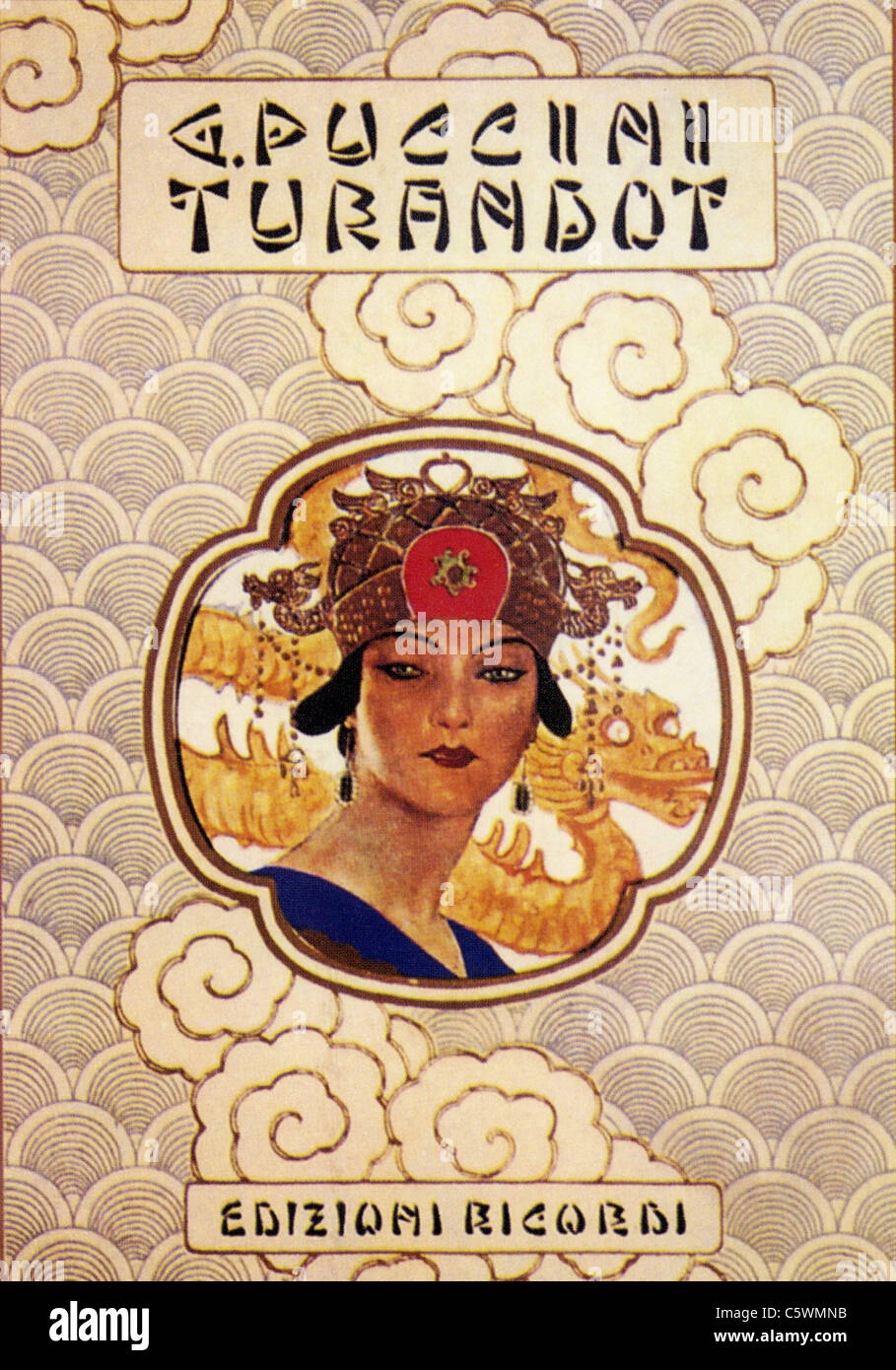
https://c8.alamy.com/comp/C5WMNB/turandot-poster-for-the-1926-production-of-puccinis-opera-at-la-scala-C5WMNB.jpg

VIENNA 1983

Turandot Carreras

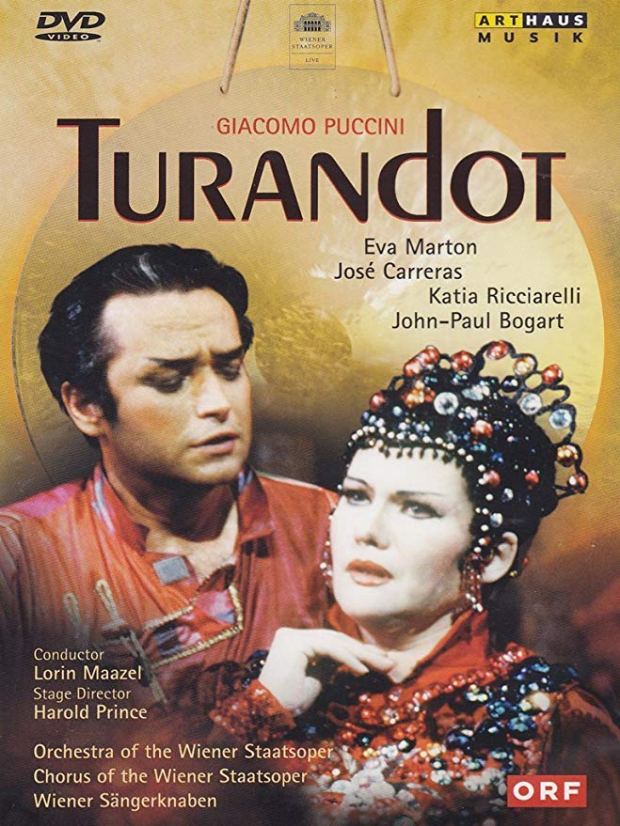
Harold Prince, with no less than 21 Tony Awards to his name, one of the biggest (if not the biggest) musical producers/directors, tackled ‘Turandot’ (Arthaus Musik 107319) in 1983, with very impressive results. He created a world of illusion ruled by fear, where the inhabitants, dressed in dazzling costumes, hide themselves (and their true feelings) behind masks. Beautiful and terrifying at the same time.

Eva Marton sings a phenomenal Turandot and Katia Ricciarelli is a fragile, pitiful Liù. Her “Signore ascolta” spun out with the most beautiful pianissimi is heartbreaking.

And José Carreras… He makes me cry too, because at the age of 37 he had one of the most beautiful (lyrical) voices in the world. But Calaf was not his role. He sings it beautifully, but one hears him crossing his own boundaries. And yet …. His hopeless macho behaviour, which goes against all odds, not only fits the concept of the director, it also illustrates Calaf’s character perfectly. At least for me.

The orchestra from Vienna is conducted by Lorin Maazel. Not my favourite conductor, but in this case, I have no reason to complain.

NEW YORK 1987

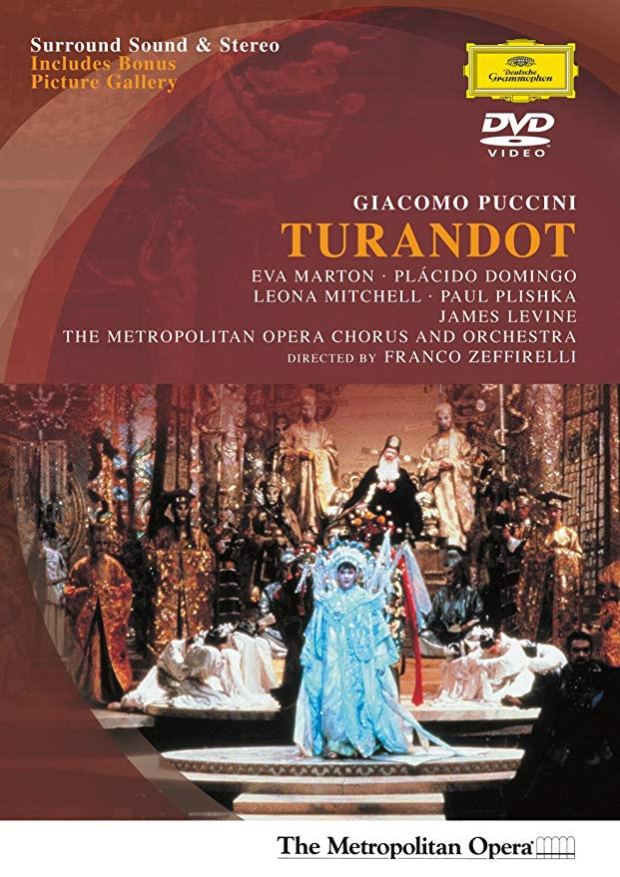
Turandot Domingo

There was a period when I thought I’d had enough of the larger than live productions by Franco Zefirelli. I only thought so, because now I yearn to see them again. All the more so because it was not just pomp and circumstance: Zefirelli was undeniably a very good personal director, with him the interaction between the characters was always perfectly timed as well.

Plácido Domingo is a different story. As many of you know (if not, you know it now) he is my absolute hero and idol, but he is so kind! And sweet! He sings the role better than Carreras (incidentally – neither gentlemen was a champion of high notes). His voice is bigger and stronger, but in terms of drawing a character Carreras wins.

Leona Mitchell (what happened to her?) is a very moving Liù. And her skin colour means you can feel for her as a slave (so not good enough for Calaf).

VALENCIA 2008

For lovers of fairy tales, stunningly beautiful and colourful costumes, overwhelming sets, and opera ‘as opera is supposed to be’: the production from Valencia, recorded in May 2008, will make your heart beat faster and even with your ears closed, you will enjoy it immensely.

The famous Chinese film director Chen Kaige (a.o. ‘Farewell to my Concubine’) pulls out all the stops and lets you gasp for breath from the very first moment. There is no lack of visual pleasure, which does not mean that it is musically not good.

Maria Guleghina is not the most subtle of contemporary sopranos. She always remains a bit unapproachable and cold, but she has a huge voice and her high notes are as solid as a rock: here we have the perfect interpreter of the title role. Marco Berti is the prototype of an ‘old-fashioned Italian tenor’: straightforward, little movement. However, his sound is also unmistakably ‘old-fashioned Italian’: grand, ringing, with a touch of Bergonzi in his timbre and a beautiful height.

Alexia Voulgaridou is a very moving Liù and the three ministers are extremely convincing.

The orchestra (Orquestra de la Comunitat Valenciana) under maestro Mehta does its best to sound as Chinese as possible, which they do wonderfully well (C Major BD 700404/DVD 700308).

ARENA DI VERONA 2010

Turandot Licitra dvd

I’m having a hard time with this. I watch and listen to Salvatore Licitra and cannot control my tears. He has never been my favourite tenor, but knowing  that you are watching and listening to what was probably his very last recording (in September 2011 he had a fatal accident on his native island, Sicily), makes judging, let alone ‘enjoying’ this very difficult.

Turandot Licitra

Salvatore Licitra courtesy of San Diego Opera

And what can I say about the production itself? It’s a good old Zefirelli, with all the frills, although he does change things a little here and there. But the atmosphere in Verona is to be jealous of, so beautiful.

The moon is lit and you imagine yourself in the middle of a fairy tale. The images are undeniably beautiful and it remains a fascinating spectacle, especially if you are sensitive to it.

And the execution? Maria Guleghina was the reigning Turandot at the time and she is doing very well, but she has also grown older and a certain routine has crept into her voice and her portrayal. I also hear a frayed edge in her heights.

Luiz-Ottavio Faria is a very moving Timur and Tamar Iveri a beautiful, if not really memorable Liu. Difficult (BelAir BAC066).

ROYAL OPERA HOUSE LONDON 2013

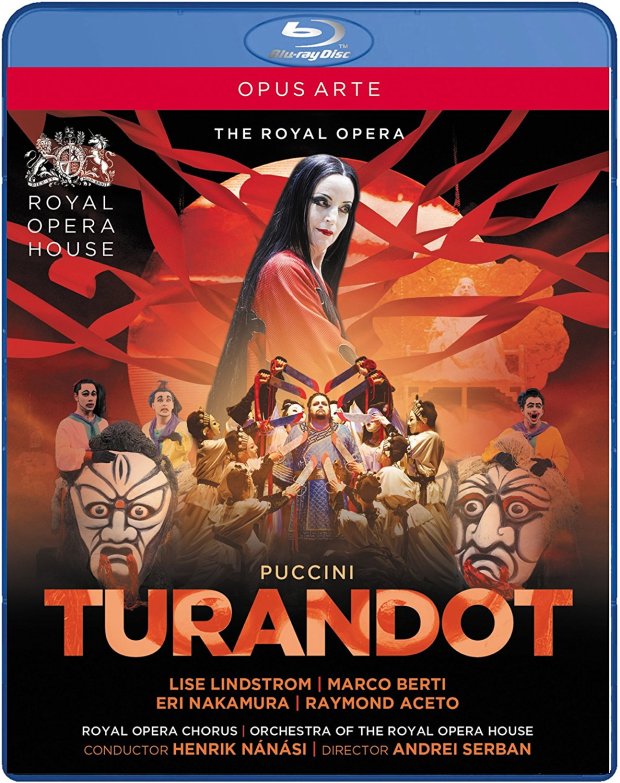
turandot Serban

Do you hate Calaf as much as I do? He has to be one of the most unsympathetic opera heroes: selfish, egocentric and keen on money and power, capable only of loving himself. Once started he can’t be stopped by anything or anyone: neither by the supplications of Liu and his father, nor by the wise words of Ping, Pang and Pong. The world to which he wants to belong is one of glitter and false appearances, where only the outside counts.

Or do you really think he is in love with Turandot?

Sometimes I suspect Puccini deliberately didn’t finish his opera. How do you create a happy ending to a fairy tale that is a series of tortures, murders and suicides?

Maybe I’m not the only one. Director Andrei Serban stops the opera for one long minute after Liu’s death, in which all actions freeze. I am very grateful to him for this, because Timur’s cry for help (“wake up Liu, it’s morning already”) resonates so strongly in your head.

The thirty-five year old production – which, after travelling half the world, returned to Covent Garden in 2013 – has lost none of its beauty and still fascinates from start to finish. The performance, with its beautiful choreography, is a feast for the eyes: dazzling and colourful, with a very dominant colour red.

Marco Berti is a fine although somewhat stately Calaf and Lise Lindstrom sings an absolutely convincing Turandot. Something I unfortunately can not say of Eri Nakamura (Liu).

The young Henrik Nánási has a long way to go before he can call himself a ‘Puccini conductor’. He still lacks a dose of healthy sentiment. But he is capable.

This is not the best performance of Turandot, but perhaps, at least to me, it is one of the most beautiful to watch.

Below is a trailer of the production:

AND ON CD

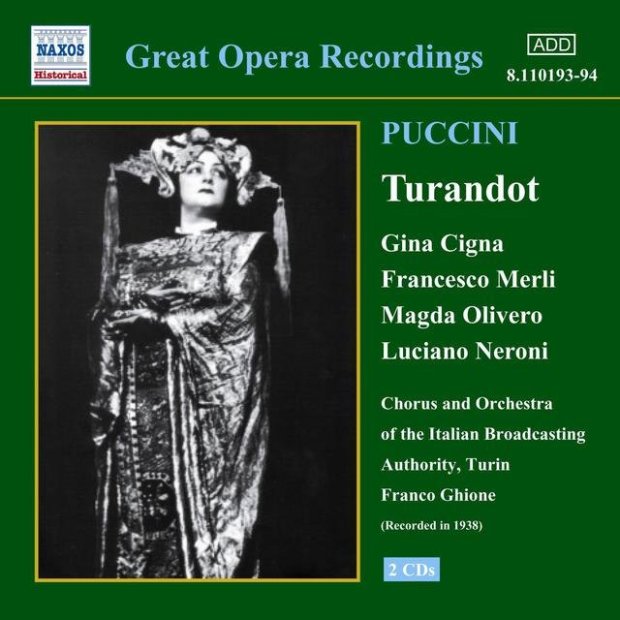
Turandot Cigna

For years the recording with Birgit Nilsson, led by Francesco Molinari-Pradelli (once EMI 7693272) was my absolute favorite. It couldn’t and can’t be better, basta. Until a while ago I re-listened an old CD with Gina Cigna (Naxos 8.110193-94) I had not heard in ages and now I am not so certain any longer.


Both Nilsson and Cigna have great voices with which they can easily handle the role, but Cigna has much more ‘italianitá’. On the other hand there is the icy chill in Nilsson’s timbre, which makes her a personification of the ice princess.

Franco Corelli and Francesco Merli are equally matched: macho and powerful. But Merli sounds a little more distant than the warmer and very seductive Corelli.

Turandot Scotto

Renata Scotto is a very fragile and moving Liu, but so is the young Magda Olivero. Difficult. The choice is yours. Although: who says you should choose?


ALFANO

Turandot Alfano en Puccini

Franco Alfano with Puccini

Finally, a few words about the ‘Alfano ending’. Twenty-five years ago (does time go so fast!?) it was performed at the Vlaamse Opera in Antwerp and since then I’ve become a real fan of it. It’s such a shame that it was never officially recorded!

The CD on which Josephine Barstow sings the original Alfano ending with Lando Bartolini (Decca 4302032) has unfortunately been out of print for years. It really deserves to be re-issued.

Translated with http://www.DeepL.com/Translator
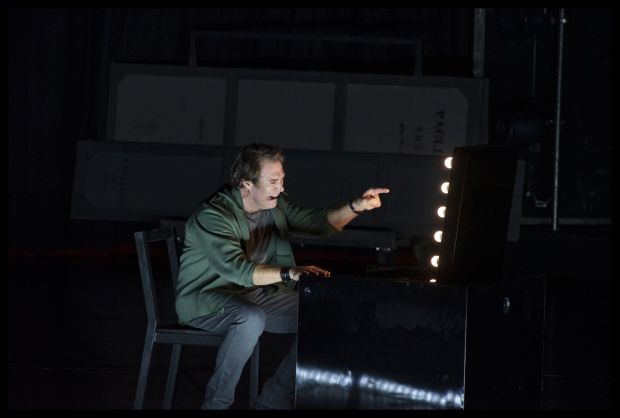
In Dutch:
Het laatste woord over Turandot is nog niet gezegd

Rosa Raisa: from the Bialystok ghetto to La Scala in Milan

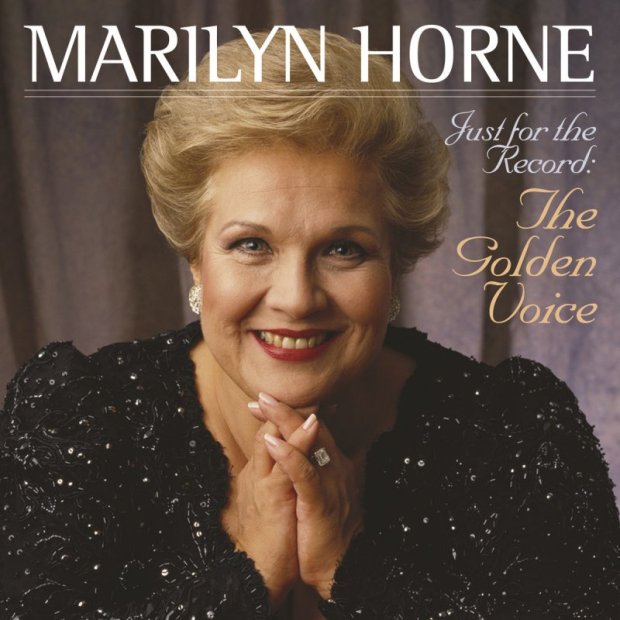
In conversation with Marilyn Horne

Horne

It’s so simple: you dial a phone number. A dark, warm, sweet voice answers the call with: “Hello, with Marilyn”. And gone are the nerves. We talk much longer than the half hour time limit I’ve got. And there is plenty of laughter.

On 16 January 2003 she turned seventy and at the same time she celebrated her official debut fifty years ago. To mark the occasion, she released a CD, which she compiled herself. ” Have you heard it yet?” she asks. ” I’ m quite proud of it. It contains both studio and live recordings. All chosen by myself”.

Horne cd 70

“Seventy, my God, where did the time go? I made my debut in opera when I was twenty years old, but I sang my entire life. I actually made my debut when I was two years old, so I’ve been singing for almost 50 years. My father was a semi-professional singer, a tenor with a beautiful voice. He was my first teacher, my mentor. I started singing lessons when I was 5 years old, something I won’t recommend to anyone. Too early.”

When she was twenty her father died. And she left for Europe. Was there any connection?
“Pure coincidence. My European plans were already fixed for some time. He developed an acute form of leukaemia, and at that time you died of it quickly. He was diagnosed on Sunday and was already dead on Wednesday. But I was on my way to Europe. With a Dutch ship by the way, which was called ‘Maasdam’.”

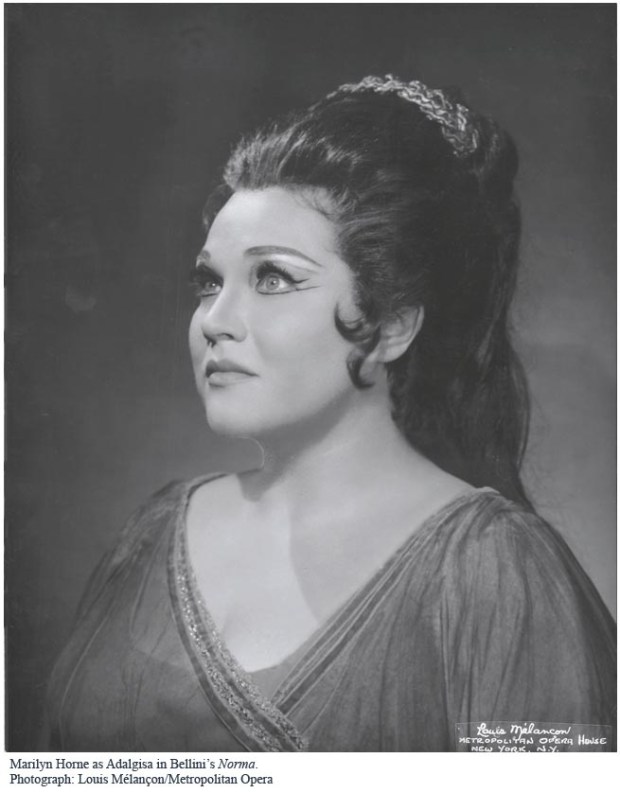
HorneNorma

Marylin Horne started out as a soprano and then became one of the greatest mezzo’s in history.
“Young girls don’t have low notes, and I was a young girl. As I got older, I was asked more and more if I was sure that I was a soprano, well, I was sure of that. In the Gelsenkirchen opera I sang heavy soprano roles, like Minnie in La Fanciulla del West. And Marie in Wozzeck, a role that brought me fame and happiness. I sang it in Covent Garden, and later in Los Angeles. Luckily there are pirate recordings so I can listen to them now. I am very grateful to the ‘pirates’ because I never recorded my own performances. And it’s live. When you’ re an opera singer, you sing opera live, on stage.”

Marilyn Horne sings Marie in Wozzeck in a pirate recording from 1966:

Her repertoire is huge: from Gesualdo to contemporary music, opera, songs and musicals.

“And film” she adds. “In fact, I sang everything that was possible. I was a kind of chameleon, able to change the necessary colours. Looking back at my career, I wonder: why was I in such a hurry? I strongly advise my students against that.”

More good advice?
“Work on your technique, that’s the most important thing”.

Did she have an example? An idol?
“In my childhood Lily Pons. Especially in her aria from Lakmé. And in my puberty, Renata Tebaldi. Still, by the way.”

Does she have an explanation for the immense popularity of opera in recent years?
“Yes, I do! The subtitles!”

The subtitles?
“Absolutely! Listen, a few days ago I was in the MET, for La Bohème. I myself once sang both Mimi and Musetta and now for the first time I could follow what the others had to say”.

Marilyn Horne sings Musetta in 1962:

She laughs and starts coughing. She didn’t catch a cold, did she?
“A little bit. But I do take care of myself. And in a moment I get in a cab and drive to the pool, because I’m addicted to aquarobics”.

Will she ever come to the Netherlands again?
“I’d love to, because it’s been so long! I don’t even remember when it was last! But you have to be asked for that first, don’t you?”

Marilyn Horne sings ‘Somewhere’ from Bernstein’s West Side Story:

Translated with http://www.DeepL.com/Translator

Benjamin Frankel: from watchmaker’s apprentice to the sound wizard

Benjamin Frankel, by Lida Moser, 1953 - NPG x45316 - © National Portrait Gallery, London


In 1957 Benjamin Frankel moved to Switzerland. In England, his homeland, he was mainly known as a film composer. No wonder, because to his name is music for more than 100 films, including classics such as The Seventh Veil,


The Night of the Iguana :


and  Curse of the Werewolf:


In Switzerland he finally found the peace to engage in serious(er) music. In 15 years (Frankel died in 1973) he composed eight symphonies and one opera.

Benjamin Frankel was born in London in 1906 into a Polish-Jewish family. At the age of fourteen he was apprenticed to a watchmaker. Luckily for him, his talent was soon discovered. For a while he played with the idea of becoming a Jewish composer alla Bloch. He considered himself an ‘English Jew’ or a ‘Jewish Englishman’, which did not prevent him from marrying a non-Jewish woman. An act that caused a break with his family.

His musical language is not easy to describe. In the fifties he studied serialism and regularly applied it in his own compositions, yet his works do not sound atonal anywhere. Perhaps the best example of this is the viola concerto, which is very melodic, romantic and yet uses the twelve-tone technique.


Frankel composed his violin concerto – at his request – for his friend Max Rostal. The premiere took place in 1951 at the Festival of Britain. The concert is entitled In Memory of Six Million and embodies Frankel’s personal commitment to the fate of the European Jews.

The beginning reminds me of Korngold’s violin concerto and in the fourth movement I encounter Mahlerian ‘tunes’: there is also a quote from ‘Verlorne Müh’ from his Wunderhorn songs.


Live recording by Max Rostal:


Ulf Hoelscher, who rehearsed the concerto with Max Rostal, plays it virtuoso and with an intense involvement.


frankel-front


Benjamin Frankel
Concerto for Violin and Orchestra op.24 (In memory of the six milion)
Viola concerto op.45
Serenata Concertante for Piano Trio and Orchestra op.37
Ulf Hoelscher (violin), Brett Dean (viola), David Lale (cello)
Queensland Symphony Orchestra conducted by Werner Andreas Albert
CPO 9994222


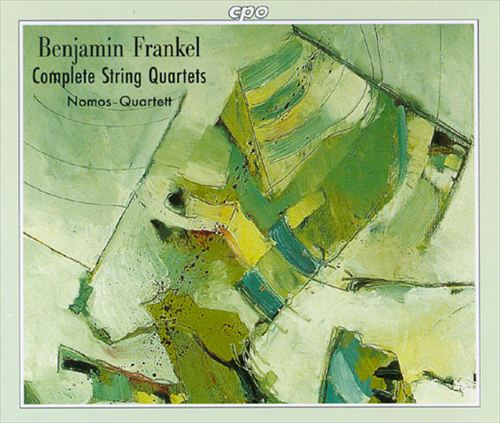
frankel-kw


Frankel’s first three string quartets were first performed by the Blech Quartet in 1947 and 1949 respectively, and the fourth was premiered in 1949 by the very young Amadeus Quartet (where were the recording engineers then?).

Frankel’s gift for a light-hearted approach to serialism can be heard in his fifth string quartet. The work, which dates from 1965, is an example of the composer’s unique ability to transform the atonal into a melody.

The unsurpassed company CPO, which revealed Frankel’s music to the world, deserves all praise; also for the splendid explanations with music examples written by Buxton Orr, Frankel’s pupil and friend.


Benjamin Frankel
Complete String Quartets
Nomos Quartett
CPO 999420

In Dutch:
Benjamin Frankel: van horlogemakersleerling tot de klanktovenaar

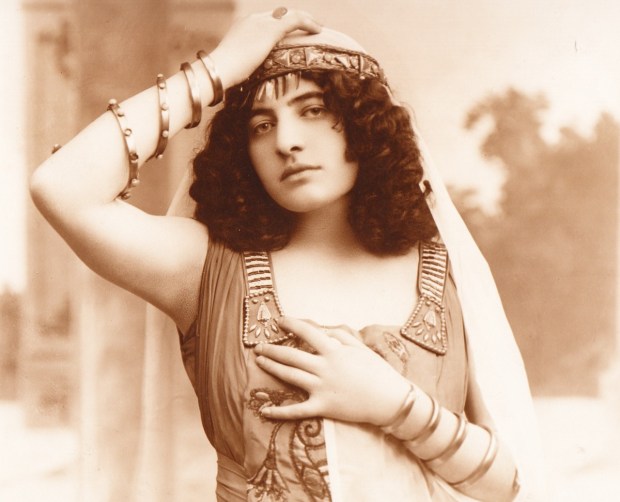
Rosa Raisa: from the Bialystok ghetto to La Scala in Milan

rosa-raisa-francesca-da-rimini-copy

Rosa Raisa as Francesca da Rimini

It is now quite some time ago that I visited a very dear (and very sick) friend, who was once a celebrated opera singer. When she asked me what I was working on at the moment, I started to hum ‘L’altra notte’ from Boito’s Mefistofele. She joined me and sang the whole aria out loud, with her – still intact, beautiful, voice. She said: “Yes, that is a great aria to sing. You can put all your emotions into it”.

It is indeed a very emotional aria, so it is no wonder that almost every soprano has it in her repertoire. Callas, Tebaldi, Price, Miricioiu, Gheorghiu …… all of them have sung or recorded it at some point.

But I would like to dwell for a moment on the singer who was once world-famous but who is now almost forgotten and whose interpretation of that aria always reminds me of my – now deceased – friend: Rosa Raisa.

Raisa recorded the aria in 1923 and it has been released on several labels in the meantime. Her singing is intense, according to the best veristic traditions, but still light. Her coloratura and high notes are exemplary, and yet they do not degenerate into ‘beautiful singing’ in itself. No wonder she was the best Norma of her generation.

Raisa sings ‘Casta Diva’ in a 1920 recording:

TURANDOT

Rosa_Raisa_as_Turandot,_1926

I think even the biggest opera novice knows Puccini’s Turandot. If not the entire opera then at least ‘Nessun Dorma’ one of the best known tenor arias ever. The premiere took place on 25 April 1926 at La Scala in Milan and the demanding role of the ice-cold Chinese princess whose heart thaws after a warm kiss from an unknown prince was created by the famous Italian soprano Rosa Raisa.

Raisa Turandot poster

Below: Rosa Raisa teaches the announcer how to pronounce the name ‘Turandot’:

Well, Italian…  Raisa (Raitza Burchstein), daughter of Herschel and Frieda Leia Krasnatawska) was born on 30 May 1893 in Bialystok. After the great pogrom in 1906 (when Raisa was not yet fourteen) she managed to escape from Poland with her cousin and his family and ended up on the island of Capri. There she met Dario Ascarelli and his wife Esther, who not only discovered her talent but also paid for her studies at the Conservatory of Naples.

At the age of twenty she was hired by the opera house in Parma where she had great successes in Verdi’s Oberto and Ballo in Maschera, among others. The same year she was engaged by the Chicago-Philadelphia Opera Company and with them she made her North American debut as Mimi (La Bohème) in Baltimore. Her partner was Giovanni Martinelli of the Metropolitan Opera.

Rosa_Raisa_as_Aida_(1914)

Rosa Raisa as Aida

In 1914 she made her debut as Aida at the Royal Opera House in London, with Enrico Caruso at her side. Her next role there was Helen of Troy  (Boito’s Mefistofele), with Claudia Muzio, John McCormack and Adamo Didur.

REPERTOIRE

Rosa Raisa Rachel

Rosa Raisa as Rachel (La Juive)

Her repertoire was immense, just think of such diverse operas (I will only mention a few) as Il Trovatore, La Juive, La Fanciulla del West, Suor Angelica, La Battaglia di Legnano, Francesca da Rimini, Falstaff, Don Giovanni, Lohengrin, Tannhäuser, Les Huguenots, Isabeau, Die Fledermaus and La Fiamma. She also sang art songs.

Below Raisa sings ‘None but the Lonely Heart’ by Tchaikovsky in a recording from 1920:

In 1915 she met the Italian baritone of Sephardic Jewish descent Giacomo Rimini, whom she married five years later. Together they sang hundreds of concerts, mainly in the USA. They always concluded their performance with ‘La ci darem la mano’ (Don Giovanni). She invariably ended her solo concerts with the Yiddish ‘Eili, Eili’.

Below ‘Eili Eili’ and ‘Oyfn pripetshik’. Both recordings were made in 1918:

In 1936 in Detroit she sang the role of Leah in Il Dibuk by Lodovico Rocca. It was one of her last performances. Raisa died of bone cancer in 1963. It is difficult to judge her voice purely from her recordings: one misses the visuals and the magic of her charisma. Her contemporaries described her stage presence as nothing less than thrilling.

Anyone who wants to know more about her should read ‘Rosa Raisa. A Biography of a Diva’ written by Charles Mintzer.

Raisa boek

Below is Rosa Raisa in an interview with her biographer:

Rosa Raisa on Spotify:


interview met

Mirga Gražinytė -Tyla lifts Weinberg’s autobiography to unprecedented heights

Weinberg Grazynite

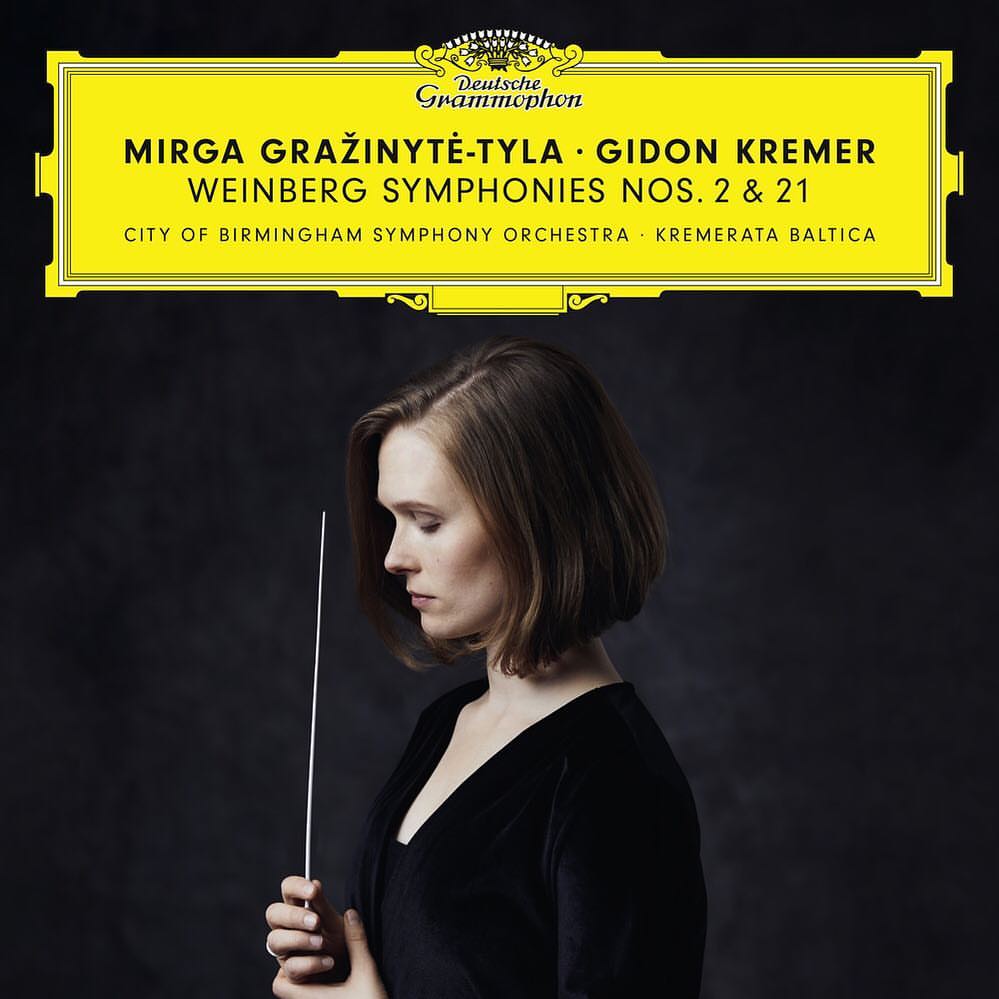
Weinberg’s 21st symphony is not a work you can simply listen to. It presents itself as Weinberg’s autobiography: his escape from the Warsaw Ghetto, his arrival and stay in the Soviet Union and his fight with the authorities and the memories. The structure of the symphony is incredibly complex – irreverently one could say that it is unbalanced, because all kinds of things happen in it. Chopin (‘Ballade in g’, ‘Marche Funèbre’), Mahler’s ‘Mutter, ach Mutter’ from his Des Knaben Wunderhorn, a klezmer tune carried by a solo clarinet that turns into a Requiem.

However, aren’t our memories like that? Disordered, one emotion evoking another? Weinberg dedicated his ‘Kaddish’ (one of the most important prayers in the Jewish liturgy that is pronounced after the death of a parent) – symphony from 1991 to the victims of the Warsaw ghetto. Distressing. Just like the life of Weinberg himself.

But do not forget the second symphony! The Adagio is an eleven-minute sadness that hurts so much that it can only lead to a satirical outburst in part three, the Allegretto. My God, what music. What a composer.

I can be brief on the performance. Brilliant. Mirga Gražinytė-Tyla confirms her reputation as one of the best young conductors of today. Under her leadership the City of Birmingham Symphony Orchestra sounds like I haven’t heard it in years, not since the very young and unknown Simon Rattle first took over the reins there. It is therefore gratifying that she has been awarded an exclusive contract with DG.

That she chose Weinberg’s Kaddish for her first recording on the ‘yellow label’ is significant. Knowing her (and her preferences) we can expect exciting recordings of unknown and lesser known works. Go, Mirga, go!

Translated with http://www.DeepL.com/Translator
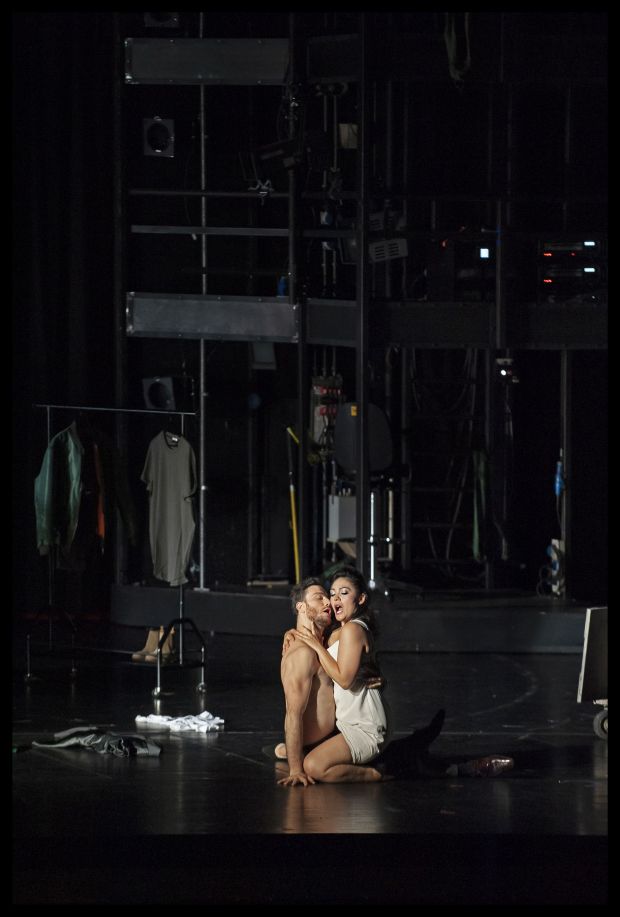
MIECZYSŁAW WEINBERG
Symphony no. 2 on. 30; Symphony no. 21 op. 152 (Kaddish)
Gidon Kremer (violin), Maria Barns (soprano), Oliver Janes (clarinet), Georgijs Osokins (piano), Iurii Gavryliuk (double bass)
City of Birmingham Symphony Orchestra, Kremerata Baltica conducted by Mirga Gražinytė -Tyla
DG 48365661Kreme

In Dutch: Mirga Gražinytė -Tyla tilt Weinbergs autobiografie tot de ongekende hoogten