achtergrondartikelen

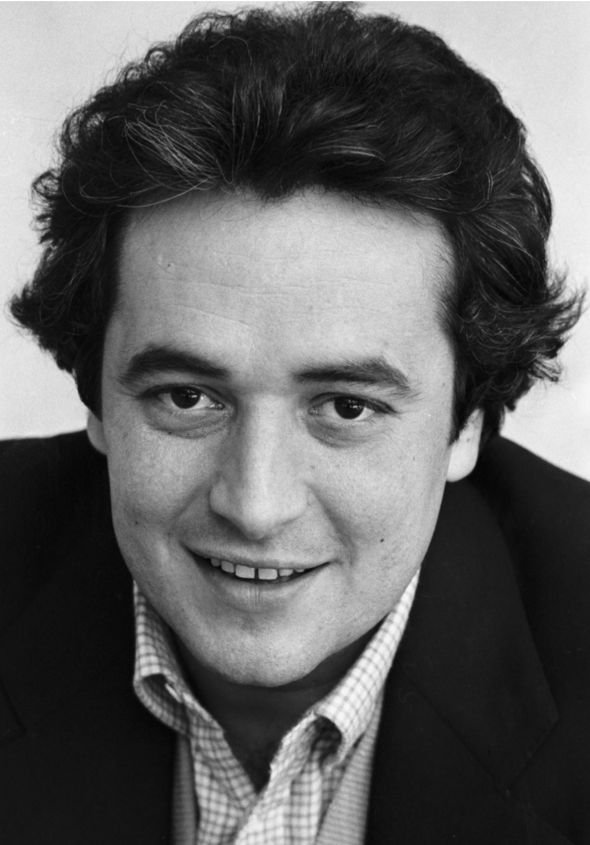
José Carreras in just few of his many roles

LA TRAVIATA Tokyo 1973
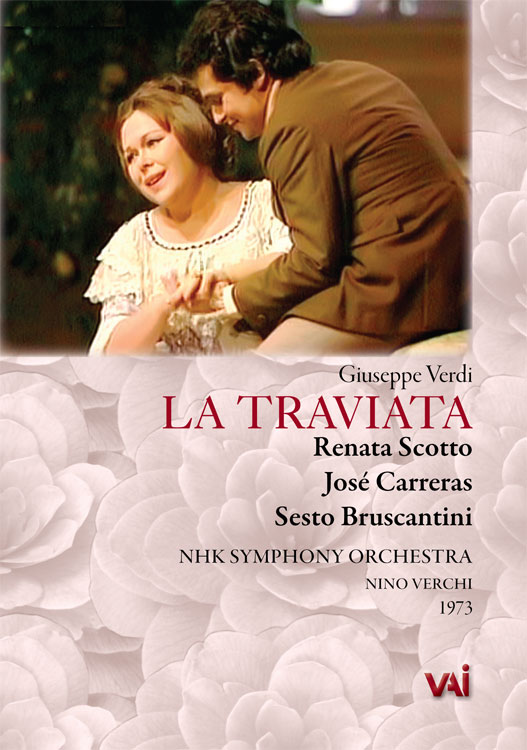

Don’t think that in the old days, when everything was done by the book, the performances were static and boring! In 1973, La Scala was on tour in Japan, and there, in Tokyo, a legendary performance of La Traviata was recorded (VAI 4434).

The leading roles were played by the then still ‘curvy’ Scotto and 27-year-old (!) José Carreras. DVD does not mention the name of the director, perhaps there was none, and the singers (and the conductor) did it all themselves? Anyway, the result is really beautiful, moving and to the point. I am not going to say any more about it, because this recording is an absolute must for every opera lover.

Finale of the opera:

L’ELISIR D’AMORE 1976

My beloved CD recording of L’elisir is live and, to be honest, far from perfect (Legato Classics LCD 218-2). Yasuko Hayashi is only so-so as Adina, she is no more than average and the use of her voice is too heavy.

But the men! José Carreras is a dream of a Nemorino – silly and hopelessly in love. On him the potion is actually well spent, it really makes him happy and elated.

Geraint Evans is a delightful Dulcamara, more than a bit exaggerated, but entirely in the spirit of the character. Thomas Allen is a very potent Belcore and the Covent Garden orchestra and choir are very spiritually and engagingly conducted by John Pritchard.

The recording (London, 1976) sounds fine. As a bonus, we get a recital that Carreras gave at Carnegie Hall 30 November 1980, on which he also sings some lesser-known arias and songs, including parts from Leoncavallo’s Lady Chatterton and Rossini’s Pietra del Paragone.

SIMON BOCCANEGRA 1977

In 1971, Claudio Abbado conducted a magisterial and now legendary performance of Boccanegra at La Scala. It was directed by Giorgio Strehler and the beautiful sets were designed by Ezio Frigerio. In 1976, the production was shown at the ROH in Covent Garden. Unfortunately, no official (there are ‘pirates’ in circulation) video of it was made, but the full cast did fortunately go into the studio, and thus the ultimate ‘Simone’ was recorded in 1977 (DG 4497522).

Abbado treats the score with such love and such reverence as if it were the greatest masterpiece of all time, and under his hands it really does transform into a masterpiece without parallel. Such tension, and with all those different nuances! It is so, so beautiful, it will make you cry.
The casting, too, is the best ever. Piero Cappuccilli (Simon) and Nicolai Ghiaurov (Fiesco) are evenly matched. Both in their enmity and reconciliation, they are deeply human and always convincing, and in their final duet at the end of the opera, their voices melt together in an almost supernatural symbiosis:

Before that, they had already gone through every range of feeling and mood, from grievous to hurtful, and from loving to hating. Just hear Cappuccilli’s long-held ‘Maria’ at the end of the duet with his supposedly dead and now found daughter (‘Figlia! A tal nome palpito’).

José van Dam is an exquisitely vile Paolo and Mirella Freni and Jose Carreras are an ideal love couple. The young Carreras had a voice that seems just about created for the role of Adorno: lyrical with a touch of anger, underlining Gabriele’s brashness. Freni is more than just a naive girl; even in her love for Adorno, she shows herself to be a flesh-and-blood woman

HERODIADE 1984
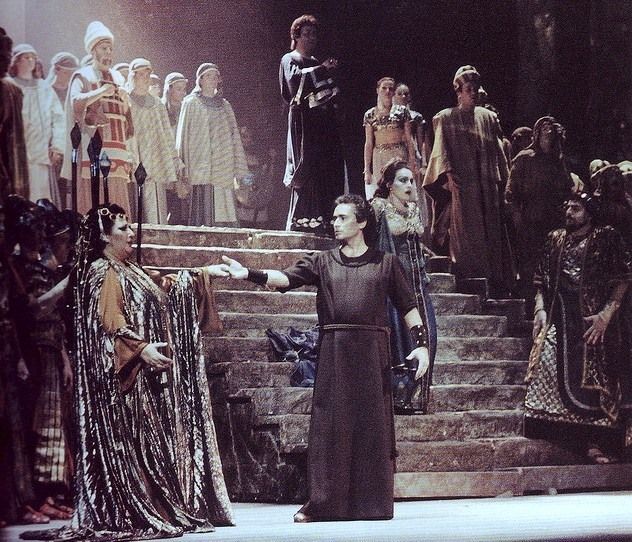

 This recording also may only be obtained via a pirate (or You Tube), but then it is complete and moreover with (admittedly bad) images!


Dunja Vejzovic portrays a deliciously mean Hérodiade and Juan Pons is a somewhat youthful but otherwise fine Hérode. A few years later, he will become one of the best “Hérodes” and you can already hear and see that in this recording.

Montserrat Caballé is a fantastic Salomé, the voice alone makes you believe you are in heaven and José Carreras is very moving as a charismatic Jean.

Below, Carreras sings ‘Ne pouvant réprimer les élans’:


None of the protagonists is really idiomatic, but what a pleasure it is to watch a real Diva (and Divo)! They really don’t make them like that any more

The whole opera on you tube:

LA JUIVE Vienna 1981
I have never been able to understand why José Carreras added the role of Éléazar to his repertoire. It did fit in with his desire to sing heavier, more dramatic roles. Roles that were one size too large for his beautiful, lyrical tenor. Which absolutely does not mean that he could not sing the role! He succeeded quite nicely and the result is more than worth listening to, but he doesn’t sound truly idiomatic.

In the live recording from Vienna 1981 Carreras also sounds too young (he was only thirty-five then!), something that is particularly noticeable in the Seider-evening scene. It is sung beautifully, but due to a lack of weight he tends to shout a bit.

José Carreras sings ‘Rachel, quand du Seigneur’.

Ilona Tokody is a Rachel of a Scotto-like intensity (what a pity she never sang the role onstage!) and Sona Ghazarian sings an excellent Eudoxie.

LA JUIVE Studio recording 1989

La Juive, recorded by Philips in 1989, marked the first studio recording Carreras made after his illness. His voice was now less sweet and smooth than before, but sounded much more alive, which improved his interpretation of the role.

Julia Varady is a beautiful Rachel, perhaps one of the best ever and Eudoxie is in excellent hands with June Anderson.

Dalmacio Gonzales is a more than decent Léopold, in any case much better than Chris Merrit and the French-American-Portuguese conductor Antonio de Almeida shows he has a real affinity with the opera. (Philips 475 7629)

LA BOHEME Metropolitan Opera New York 1982
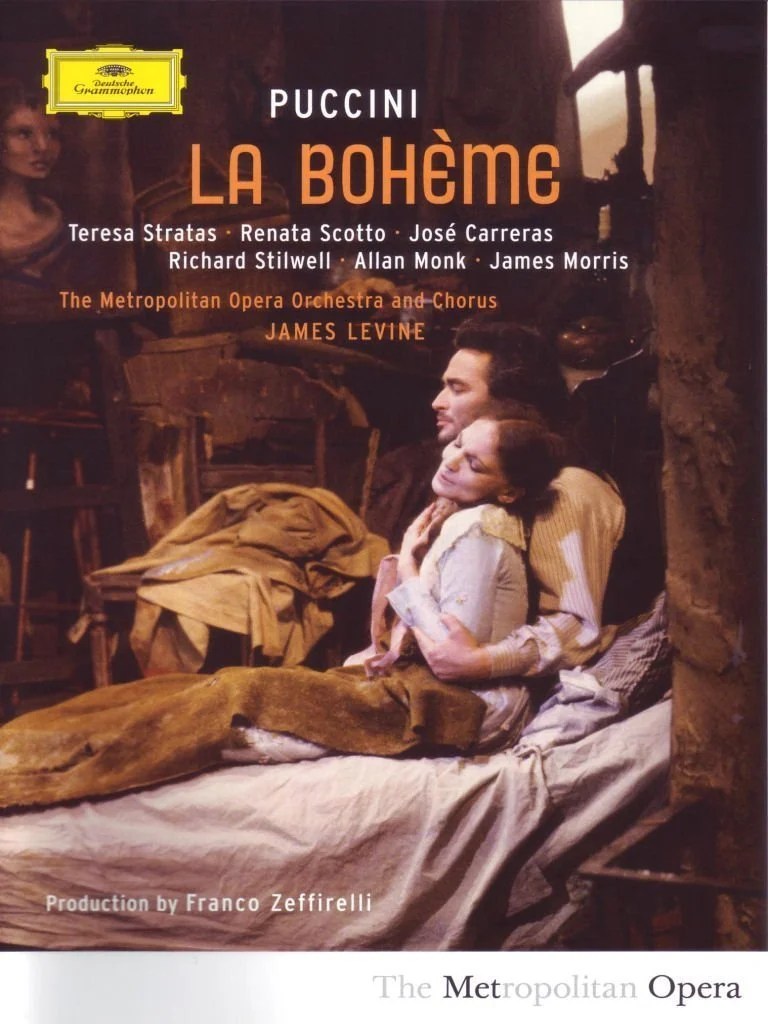

Musetta was not really a role with which we associate Scotto. Neither did she herself, but she accepted the challenge with both hands. In the Zefirelli Met production of 1982 alongside the very moving José Carreras and Teresa Stratas La_Juive

SimonIlona_she sang a Musetta to die for. (DG 073 4539 9).


TURANDOT 1983
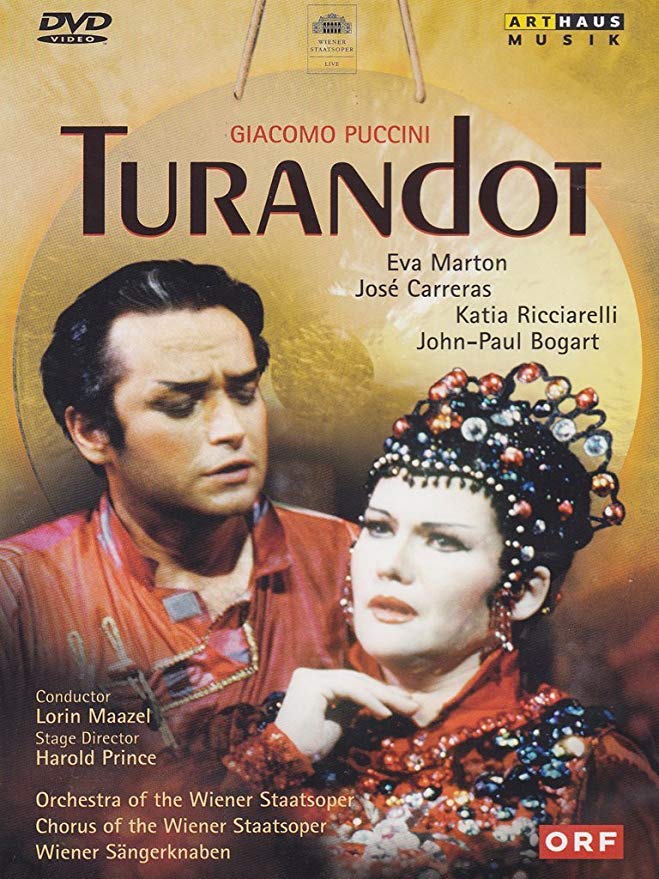
Harold Prince, with no less than 21 Tony Awards to his name, one of the biggest (if not the biggest) musical producers/directors, tackled ‘Turandot’ (Arthaus Musik 107319) in 1983, with very impressive results. He created a world of illusion ruled by fear, where the inhabitants, dressed in dazzling costumes, hide themselves (and their true feelings) behind masks. Beautiful and terrifying at the same time.

Eva Marton sings a phenomenal Turandot and Katia Ricciarelli is a fragile, pitiful Liù. Her “Signore ascolta” spun out with the most beautiful pianissimi is heartbreaking.

And José Carreras… He makes me cry too, because at the age of 37 he had one of the most beautiful (lyrical) voices in the world. But Calaf was not his role. He sings it beautifully, but one hears him crossing his own boundaries. And yet …. His hopeless macho behaviour, which goes against all odds, not only fits the concept of the director, it also illustrates Calaf’s character perfectly. At least for me.

The orchestra from Vienna is conducted by Lorin Maazel. Not my favourite conductor, but in this case, I have no reason to complain.

Eight lesser-known operas by Donizetti

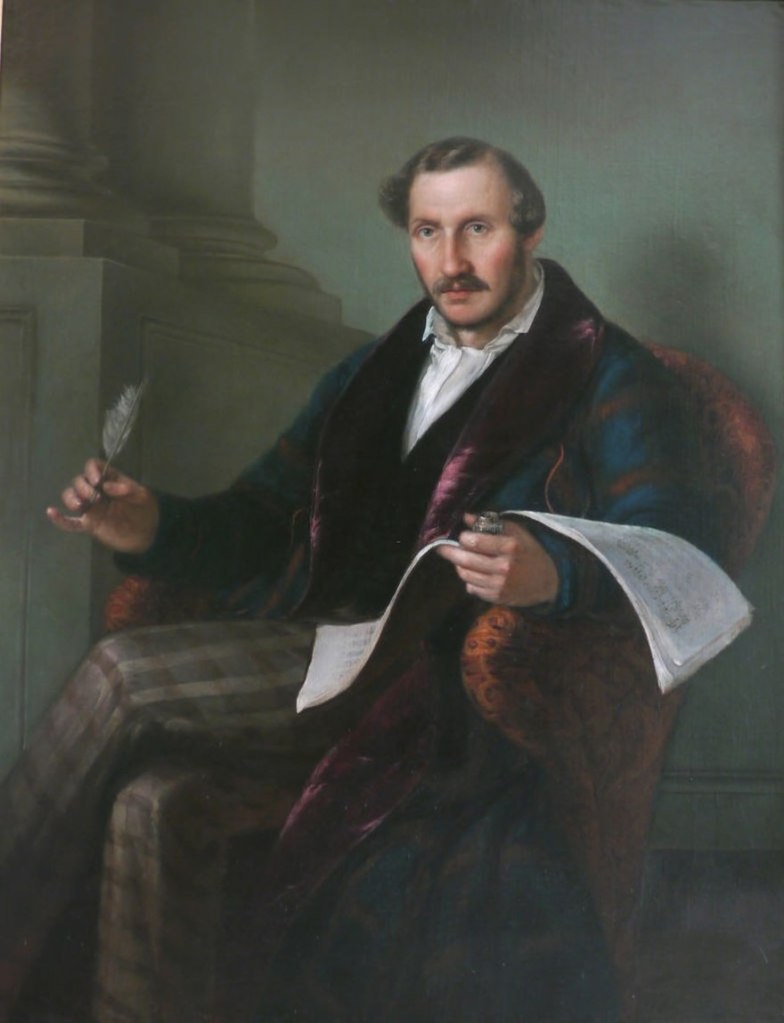
Portrait of the composer Gaetano Donizetti (1797-1848). Found in the Collection of Museo Teatrale alla Scala. (Photo by Fine Art Images/Heritage Images/Getty Images)


75 operas he wrote, the bel canto giant from Bergamo. Seventy-five! Add to that, I quote: 16 symphonies, 19 string quartets, 193 songs, 45 duets, 28 cantatas and some solo concertos, sonatas and chamber music. And how much of all that beauty do we hear these days? An average music lover gets no further than Lucia di Lamermoor, L’Elisir d’amore, Don Pasquale… Perhaps the Tudor triptych (Anna Bolena, Maria Stuarda and Roberto Devereux). And, oh yes, La Fille du Regiment, because of all those high Cs in a row.


PIA DE’ TOLOMEI


Set against the backdrop of a war between Florence and Siena, this story by Salvatore Cammarano, author of Maria di Rudenz and Il Trovatore, among others, about a castle lord’s wife unjustly accused of adultery, has been provided by Donizetti with the most beautiful arias and duets.
The cast, with a truly peerless Majella Cullagh as Pia and Manuela Custer as her brother Rodrigo, is, as always at Opera Rara, truly sublime (ORC 30).


ROSMONDA D’INGHILTERRA


The story is set in twelfth-century England. King Henry II is married to Leonora of Aquitaine, but also keeps a mistress. This mistress (Rosmonda) is locked in a tower, and the page Arturo, who is supposed to look after her, has fallen in love with her himself. A – delightful, that is – dragon of a story, but the music is divinely beautiful: lyrical passages alternate with fierce ensembles.

Renée Fleming is the sweet-voiced Rosmonda, and Nelly Miricioiu the embittered Queen Leonora. Both ladies meet in the final scene, resulting in one of the most thrilling duets. (ORC 13)


PARISINA

Reuse… No one used to be averse to that, including Donizetti. Especially when the premiere was imminent and the libretto was long overdue. For Parisina he borrowed some of his own music, and for convenience he ‘cut and pasted’ the (brilliant, by the way) overture he had already composed earlier for Ugo, Conte di Parigi. Despite the tight composition time (it took Donizetti no more than a few weeks), the opera was very enthusiastically received and remained regularly on the repertoire, including abroad. Rightly so. Felice Romani was a truly gifted poet, and with Parisina he delivered one of his finest librettos. It has everything in it: love, murder, sacrifice, deceit … And with Donizetti’s beautiful cantilenes added, one cannot help but sniffle and enjoy.

Parisina has been married off against her will to an old man, Azzo. For years she has been in love (reciprocally, though platonically) with Ugo, who, it later turns out, is the son of Azzo and his first wife, who had been murdered by him out of jealousy. Parisina betrays her feelings while sleeping (can you remember Cassio’s dream in Verdi’s Otello?), Ugo is killed and she dies of grief.

Carmen Giannattasio, José Bros and Dario Solari sing their roles very creditably. An essential CD for a Donizetti (and not only) collector

LES MARTYRS

Les Martyrs started its life as Poliuto. The French libretto by Eugène Scribe was based on Polyeucte by Pierre Corneille from 1642 which was impregnated by the vision of its author that free will is a deciding factor in life.

Because of the choice of the topic – the life and martyrdom of Saint Polyeuctus – the censor had Poliuto banned, and opening night was cancelled. It was forbidden to show the persecution of Christians on stage in Naples at the time.

After Donizetti arrived in Paris he commissioned a new libretto from Scribe and rewrote and expanded the overture and composed several new arias for the title character.

He also changed the first act finale and added the required ballet music. He then considerably toned down the romantic entanglements and stressed the religious aspects even more.

In his big aria at the end of the second act Poliuto complains about the supposed disloyalty of his wife and speaks about the jealousy that torments him. His “Let me die in peace, I do not want anything to do with you, you have been unfaithful to me” from Polyeucte has been changed to the credo (now at the end of the third act): “I believe in God, the almighty father, creator of heaven and earth….”

Despite its early successes Les Martyrs failed to hold the stage. Instead Poliuto made it’s return, albeit on few occasions. After 1920 the opera was performed only sporadically (a remarkable fact: in 1942 Poliuto was performed on the occasion of Hitler’s visit to Mussolini, the title role sung by Benjamino Gigli).

Thanks to Callas, who rediscovered the opera in 1960,  a short revival came about. Her live recording from La Scala with Franco Corelli left me cold. The reason for that I only understood later when I heard the live recording with Katia Ricciarelli and José Carreras. In an opera with vulnerability as its main theme big dramatic voices sound out of place.

In October 2016 Opera Rara recorded Les Martyrs in the studio, followed by a concert performance in November.

Joyce El-Khoury, clearly following in the footsteps of Leyla Gencer, is the perfect Pauline: dreamy, loving and fighting like a lioness (nomen est omen) for the life of her husband who turned into a Christian. A husband she does not even love. Only because she believed her former fiancé was dead she has agreed to be married off to her father’s protégé. a

In “Qu’ici ta main glacée” she sounds very vulnerable,  moving me to tears (her pianissimi!). “Dieux immortels, témoins de mes justes alarmes,” her confrontation scene with Sévère, her lover she believes to be dead (a very impressive David Kempster) is simply heartbreaking.

Joyce El-Khoury: becoming Pauline:

Michael Spyres is a very heroic Polyeucte. In “Oui, j’irai dans leurs temples” he sings a fully voiced, perfect high “E.”

The orchestra under Sir Mark Elder is on fire. The three ballet scenes halfway though the second act lighten up the mood a little, however briefly.

Much praise as well for the perfect singing of the Opera Rara Chorus (chorus master Stephen Harris).
Opera Rara ORC52


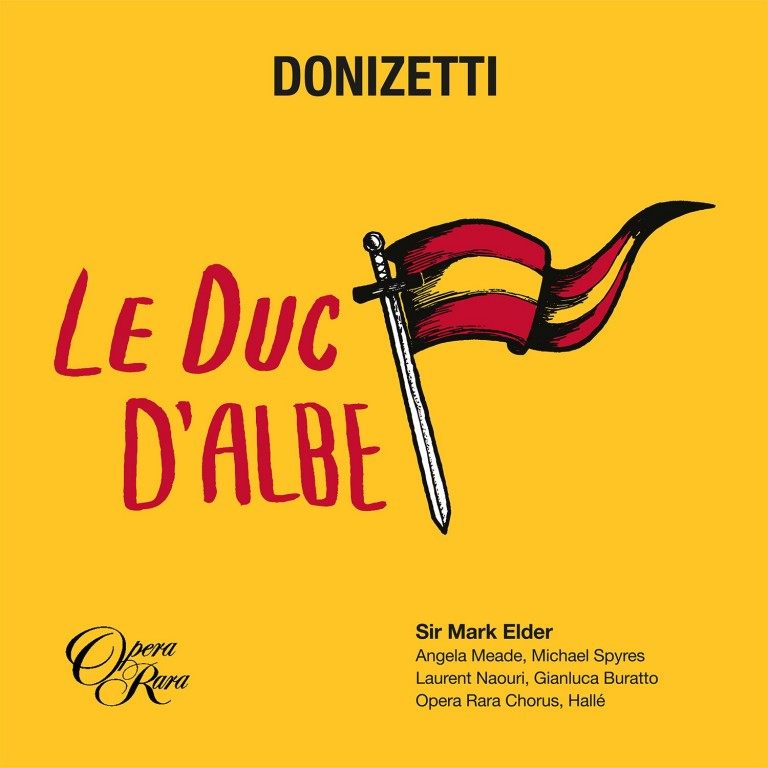
LE DUC D’ALBE

The story in short: Duke Alva, King Philip’s bloody emissary, rules Flanders with an iron hand. He has the Count of Egmond beheaded, and Hélène, Egmond’s daughter, swears revenge. Her lover Henri de Bruges turns out to be really Alva’s son, and when Hélène wants to kill the tyrant, he intervenes. Henri dead, Hélène bewildered and Alva leaving for Lisbon desperate with grief. End of opera. If the libretto seems somewhat familiar to you, you are correct. Verdi also used it inhis Les vêpres siciliennes.

Donizetti composed the opera in 1839 for Paris, but the work remained unfinished. Already a few years after the composer’s death, attempts were made to complete the opera: the Italian translation of the libretto was taken as a starting point. Here and there performances were given, but the opera never became really popular. Too bad really, because this work paved the way to Verdi and his Don Carlo.

With this recording, Opera Rara (Opera Rara ORC54) limits itself to the unfinished original, so the story ends with the arrest of Henri. The rest is left to the imagination.

With Laurent Naouri, the role of Alva is more than perfectly cast. His baritone sounds authoritarian and at times terrifying. But also imploring. You could even feel sorry for him!

Angela Meade is a very firm Hélène. Her coloratures are firm and precise but don’t expect a fainting heroine like Lucia or Elvira: this lady has guts! Which is not to say she can’t also be tender and sweet with her beloved, but that revenge is her priority is rather obvious. Listen for a moment to the love duet in the second act: “Ah! Oui, longtemps en silence” and the subsequent heroic “Noble martyr de la patrie,” in which Hélène prevails.

Michael Spyres’ Henri, despite his heroic timbre, is the softest character. Not in his singing performance, oh no, because with his role he sets a new benchmark for bel canto in French; but as a character. In the confrontation with his father, he shows his most sensitive side. The
scene, by the way, is one of the opera’s highlights. Donizetti at his best, this is something Verdi would not have been ashamed of.


ENRICO DI BORGOGNA


What makes the recording truly irresistible is the staging. Now ‘theatre in the theatre’ is not really anything new, but Silvia Paoli knows how to put her own spin on it and the result is not only hilarious but also really good. And those gorgeous costumes…. Stunning!

What is the opera about? Love, revenge and justice, of course. Enrico’s father had been dethroned by his brother Ulrico whose son Guido now wants to keep not only the throne but also Elisa, Enrico’s lover. Are you still here? Good, because rest assured: all will be well.

But it’s not just the staging that makes the recording so incredibly worthwhile, the singers too are unquestionably good. Anna Bonitatibus sings an excellent Enrico and his opponent Guido is excellently portrayed by Levy Sekgapane. Sonia Ganassi sings a very virtuoso Elisa.
Alessandro de Marchi and the Academia Montis Regalis give a smashing performance. (Dynamic 37833)

Hvorostovsky, Verdi, Tchaikovsky en de klokken

LA TRAVIATA

De productie uit Venetië in november 2004 in de regie van Robert Carsen werd gemaakt voor de heropening van de acht jaar eerder totaal afgebrande La Fenice. Er werd gekozen voor de eerste versie van de opera, uit 1853. Goed bedacht, daar de (toen mislukte) première van wat Verdi’s meest geliefde opera ooit zal worden, juist daar had plaatsgevonden. De grootste verschillen met de ons bekende, één jaar latere versie zitten in het duet tussen Violetta en vader Germont, en de twee laatste nummers van de derde akte.

Als geen andere opera kán Traviata geactualiseerd worden. Het was overigens Verdi’s wens om haar in hedendaagse kostuums op te voeren. In de regie van Carsen draait alles om geld, en de dollars vallen ook als bladeren van de bomen. Hij verplaatst de tijd van handeling naar de jaren tachtig van de vorige eeuw, de tijd van opkomende megasterren, supermodels, gigaparty’s, maar ook junks, kraakpanden en aids. Zoals altijd bij hem, is alles zeer logisch en consequent doorgevoerd..

Een absoluut hoogtepunt is het beginscène van de laatste acte, waarin de inmiddels totaal (ook letterlijk!) aan de grond geraakte Violetta een video van haar verleden bekijkt. Een video die op bepaald moment stopt en alleen maar “sneeuw” vertoont. De scène grijpt je naar je keel en laat je nooit meer los. Het toppunt van de goede moderne regie.

Violetta wordt zeer aangrijpend vertolkt door de zowel vocaal als scenisch imponerende Patricia Ciofi. Als Alfredo komt de Italiaans-Duitse tenor Roberto Sacca zeer overtuigend over en Dmitri Hvorostovsky is een voortreffelijke vader Germont (Arthaus Musik107227 )

Laatste zeven minuten van de productie:

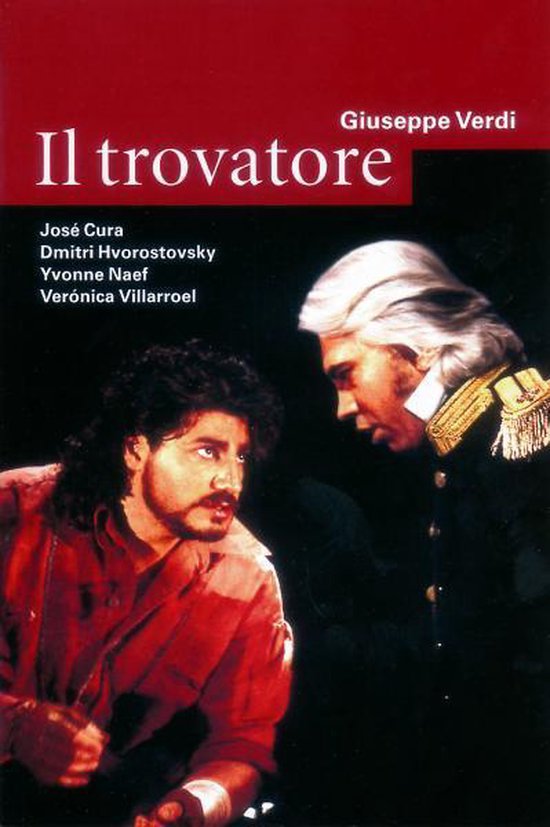
IL TROVATORE


Sommige opera’s zouden herdoopt moeten worden. Il Trovatore van Verdi zou eigenlijk ‘Azucena’ moeten heten, want per slot van rekening is zij degene die de scènes beheerst, vanaf het eerste moment dat zij opkomt.

Het is Azucena die de touwtjes in handen heeft en alleen zij kan alle personages redden of breken. Door haar zucht naar wraak vernielt zij alles en iedereen, en daar is geen doorsnee bariton tegen opgewassen. Nou ja, doorsnee?

In zijn roldebuut als Luna heeft Dmitri Hvorostovsky me in deze productie van het Royal Opera House meer dan verrast. Begin jaren negentig had ik nog mijn twijfels over hem, maar ik herroep alles wat ik in die tijd over hem heb gezegd. Nooit gedacht dat er nog een bariton bestaat die zo ontroerend ‘In balen del suo sorriso’ kan zingen. En inderdaad, bij de ‘Sperda il sole d’un suo sguardo…’ moest ik zelfs een traantje wegpinken, zo mooi was het.

EVGENI ONEGIN


Ik ben (of moet ik zeggen was?) een enorme Robert Carsen-adept en vind (vond) bijna alles geweldig wat hij deed. Zo ook deze Onegin , de productie die hij voor de Metropolitan Opera in New York maakge en die  in februari 2007 werd opgenomen (Decca 0743298).

Zijn enscenering is zeer realistisch en volgt het libretto nauwkeurig. In de eerste akte is de bühne bezaaid met herfstbladeren, maar voor de rest is alles eigenlijk kaal en is er bijna geen decor. Een bed voor de ‘briefscène’, verder wat stoelen in de tweede en derde akte. Bij het duel is de bühne helemaal leeg.

Het is niet storend. Integendeel. De kostuums zijn werkelijk prachtig, maar zeker in de eerste akte doen ze mij meer aan Engelse Jane Austen-verfilmingen dan aan het Russische platteland denken. Echt storend is het niet, het oog wil ook wat, maar Renée Fleming is te glamoureus voor een boerentrien, waardoor haar omschakeling naar een trotse prinses minder indruk maakt.

Onegin (Dmitri Hvorostovsky) is hier voornamelijk een dandy, zeer met zijn uiterlijk bezig. Nou is Dima in alle aspecten een buitengewoon aantrekkelijke zanger, maar in zijn confrontatiescène met Tatyana doet hij meer aan pappa Germont dan aan Onegin denken.

Ramón Vargas behoorde in 2007 tot één van de beste lyrische tenoren, maar Lensky was hij niet. Hij doet werkelijk zijn best, hij ziet er ook uit als een heuse dichter, maar die rol heeft wat meer smachten nodig.

Carsens personenregie is werkelijk onovertroffen en zelfs Fleming lijkt af en toe te ontdooien. Jammer genoeg is haar Russisch totaal onverstaanbaar.

Fleming en Hvorostovsky in de laatste scène van de opera:

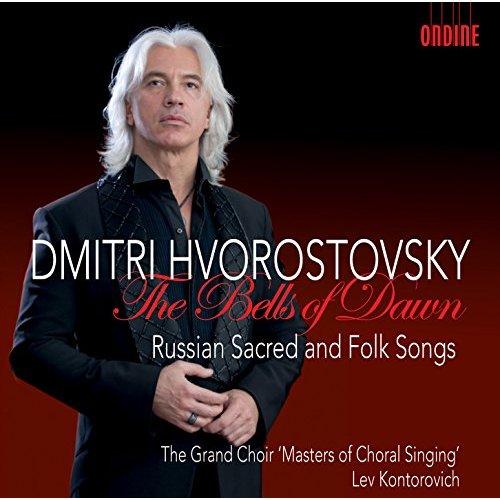
THE BELLS


Dat deze cd mij enigszins teleurstelt ligt niet aan de uitvoering, want noch op de stem, noch de zang of de interpretatie van Dmitri Hvorostovsky valt er iets om aan te merken. Die zijn gewoon perfect

Het is werkelijk onvoorstelbaar hoe mooi het geluid is dat uit zijn keel komt. Het is niet minder dan de belichaming van een volmaakte schoonheid.

Wat mij het meest imponeert bij Hvorostovsky is, naast zijn heerlijke bronzen geluid, zijn prachtige pianissimo. Bij vlagen klinkt hij bijna breekbaar, wat een fraai contrast oplevert met de zwaarder aangezette passages.

Dat hoor je goed in de solo ‘Prostchay, radost’ (Farewell, My Joy). De stemmingen wisselen elkaar af, maar wat blijft, is een allesomvattend gevoel van totale eenzaamheid. Hierna kun je niet anders dan de muziek even stopzetten voor een moment stilte.

The Grand Choir ‘Masters of Choral Singing’ is zeer op de achtergrond opgesteld en is onder dirigent Lev Kontorovich vooral dienstbaar aan de solist.

Hieronder één van de mooiste nummers van de cd, ‘Vyhozhu odin ya na dorogu’ van Elizaveta Shashina:


Ondine ODE 1238-2

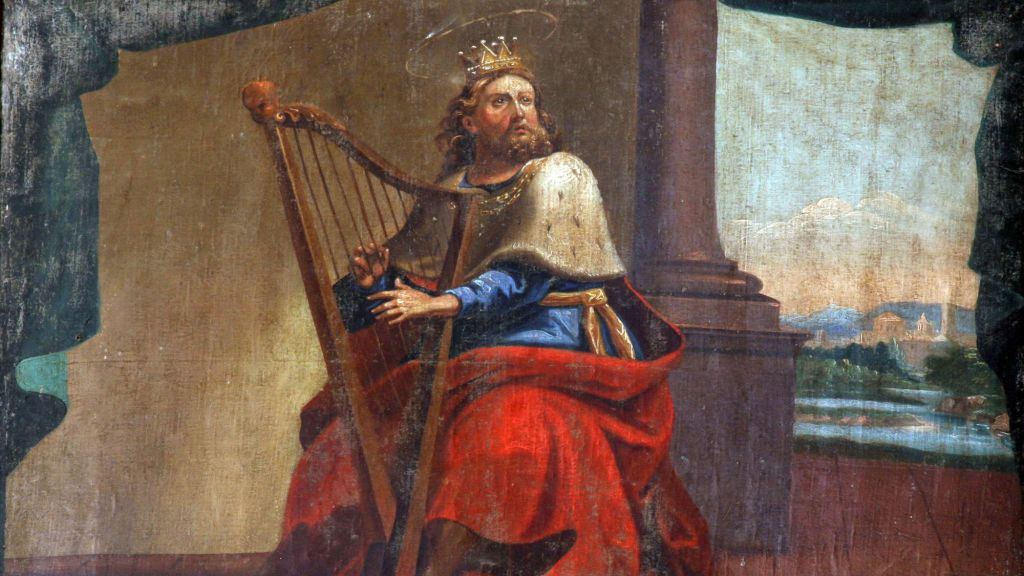
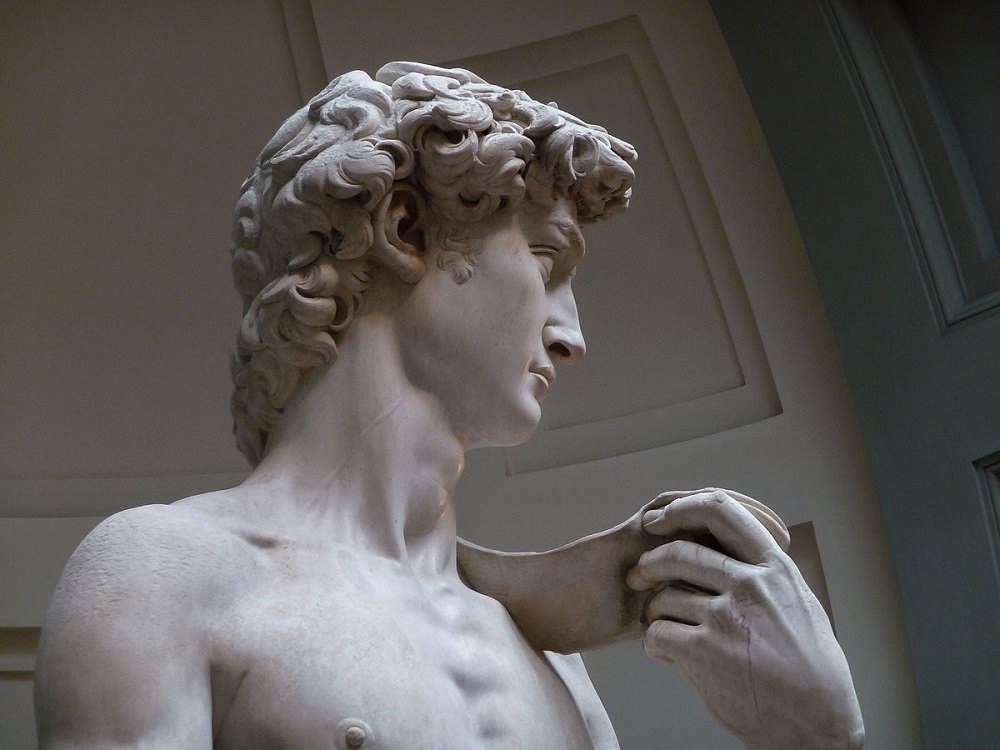
King David and the music

King David…. One of the Bible’s most inspiring and appealing personalities. But did he really exist? We live in a time when all sorts of things are being doubted, and that is alright.


Some historians assume that King David actually existed, but that (as with King Arthur, for example) many of the stories about his life are more likely to be apocryphal and they should not be considered hard historiography. So what? There is still such a thing as faith. And it is a reassuring and lovely story, which is so much needed in our troubled times.

King David, besides being a good man, a naughty husband and a harpist, was also a brilliant poet. His psalms are still among the finest that poetry has ever produced. His influence on art and certainly on music was and is immense. His psalms have therefore been set to music by many composers, think Bach, Allegri, Schütz, Strawinski, Kodaly, among others…. which is one of the reasons I started looking into David again. Whether or not he existed does not really matter. Inspiration does not need scientific evidence and art does not need to be tested against facts.


A small (with an emphasis on ‘small’!) selection of what’s out there. The order is random.

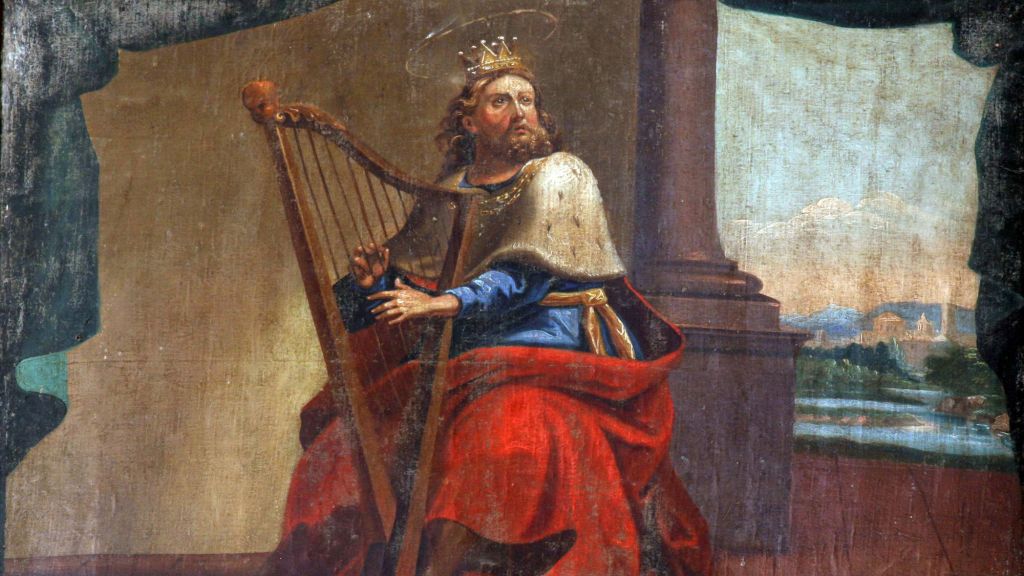
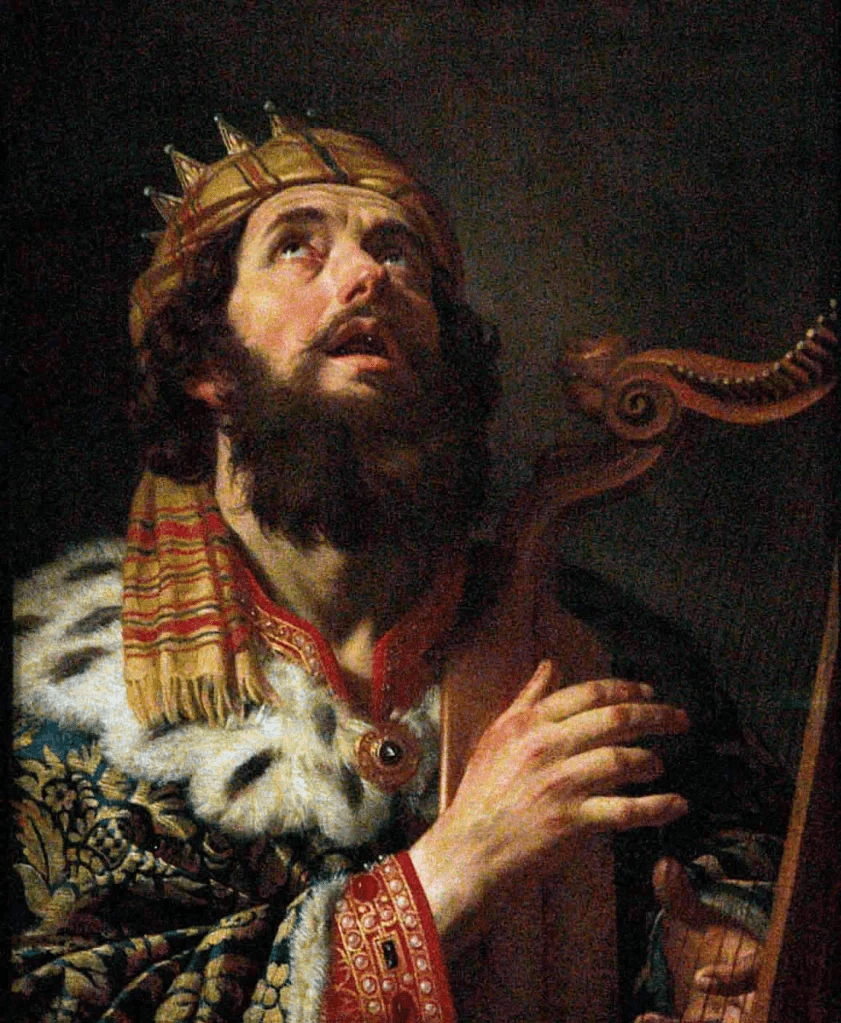
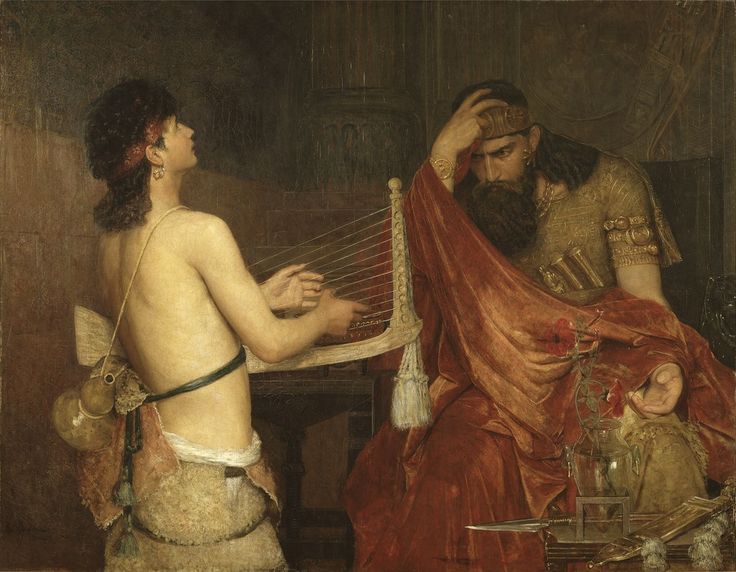
David’s harp playing soothed Saul’s mind and spirit.
Gerrit van Honthorst (1590-1656), King David Playing the Harp (1611), Centraal Museum, Utrecht, Holland


Michael Levy wonders: what would his harp have sounded like? He posted a ‘live’ performance of the traditional Hebrew song “Zemer Atik” (track 5 of his 2008 album, “King David’s Lyre; Echoes of Ancient Israel”):


Zoltan Kodaly, Psalmus Hungaricus:


Schumann’s Davidsbündlertänze played by Andras Schiff:


Paul Schoenfield and his beautiful viola concerto ‘King David dancing before the ark’:


Sarah Connolly sings King David by Herbert Howells:


King David’s Suite by Lionel Hampton, first performance, 1957:


and recorded in Munich on the occasion of the Munich Summer Piano Festival in 1994. The St Petersburg State Orchestra is conducted by Alexander Tschernuschenko, Lionel Hampton plays vibraphone:


Franz Liszt, Psalms of David


Igor Stravinsky, Symphony of Psalms performed by the Radio Philharmonic Orchestra and Great Broadcasting Choir:


Krzysztof Penderecki, Psalm of David recorded at Carnegie Hall:


DAVID AND SAUL


Handel:

David symphony for Harp (act I, scene V) Sara Águeda, arpa doppia:


Aria of David:


Carl Nielsen, the entire opera:


Paul Ben-Haim, Sweet Psalmist of Israel. David before Saul.:


DAVID AND JONATHAN


Jonathan was the son of Saul, king of Israel, from the tribe of Benjamin. David was from the tribe of Judah. Once rivals for the crown, they became friends and probably more, but the Bible does not explicitly portray the true nature of David and Jonathan’s relationship. The traditional interpretation of their friendship emphasises platonic love, an example of ‘homosociality’. Something later described as strong personal friendships between men. Today, there is often an emphasis on what some see as homoeroticism in the story


David et Jonathas by Charpentier, recording from Ais-en-Provence:


Trudy Labij: ‘What I’ve been reading’ from the musical Foxtrot (4), 1977:


For Joan Sutherland on her Birthday

Alcina


The fact that the opera has become so incredibly popular and has been performed so very frequently in recent decades is largely thanks to Joan Sutherland. Back in 1957, she brought Alcina to life in London and directed by Zefirelli. Unfortunately, we do not have a video recording of it, but La Stupenda sang and recorded the role several times afterwards and there are many both official and pirate recordings of it in circulation.


Personally, I have a soft spot for the 1959 live recording (DG, made to mark the 200th anniversary of Handel’s death), not least because of Fritz Wunderlich, who sings the role of Ruggiero. Last but not least, Dutch soprano Jeannette van Dijck sings the role of Morgana. And believe it or not, the Cappella Coloniensis, led by Ferdinand Leitner, is already playing on authentic instruments. In 1959!


The score has been considerably shortened. Thus, pretty much the entire role of Oberto has been dropped. And yet… opera is mostly about voices, isn’t it? And Sutherland’s ‘Tornami a vagheggiar’ and Wunderlich’s ‘Mi lusinga il dolce affetto’ are simply second to none. (DG 4778017)

Norma

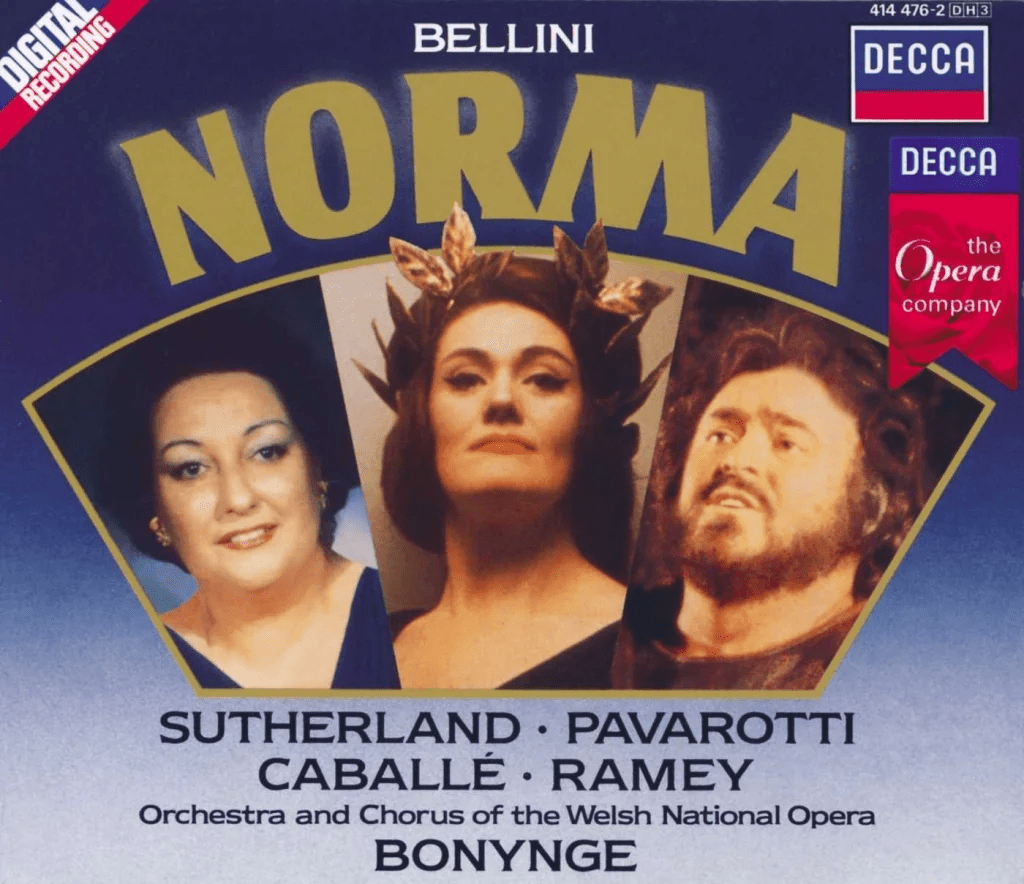
Joan Sutherland recorded Norma twice (officially). Her first recording from 1965 (Decca 4704132) caused a real sensation. It was the very first recording of Bellini’s complete music, without any cut. Moreover, it was the first recording in the original key (Bellini composed his opera in G, but before the premiere he changed it to F).

In those days, Sutherland was considered the belcanto specialist par excellence. Her voice knew no limits and seemed to be made of elastic. High, higher, highest, and with coloraturas that sound almost inhumanly perfect.


Adalgisa was sung by Marilyn Horne, Sutherland’s alter ego in the mezzo voice. The result is dazzling, but it lacks the necessary drama, all the more so because John Alexander (Pollione) has a beautiful but insipid voice.


The orchestral playing is excellent, however, and if you like pure singing, high notes and coloratura, this recording is the best choice.


Dame Joan Sutherland Marilyn Horne Bellini, Norma: Mira o Norma chard Bonynge; Sydney Opera House – 1986


Twenty years later, Sutherland recorded the role again, this time with Montserrat Caballé (Adalgisa) and Luciano Pavarotti (Pollione). Let’s call it a mistake, although Caballé’s Adalgisa is at least interesting. It’s a pity it wasn’t thought of sooner.


Lucia di Lammermoor

Lucia di Lammermoor has always been, perhaps even more than Norma, a point of contention between the supporters of Maria Callas and Joan Sutherland. The performances of both ladies are indeed fantastic and, moreover, totally different. Which of the two should you own? That is not easy. A matter of taste, shall we say?


Joan Sutherland is unprecedentedly virtuoso and her coloraturas so perfect that they hurt. And yet I remain untouched by her. Why? Perhaps because it is too perfect? I do not know. It could just be me.

Lucia from Amsterdam 1982:

I Puritani

Elvira, like Lucia, was a showpiece for Maria Callas and Joan Sutherland, both of whom recorded it several times. In 1974, Richard Bonynge (Decca 4175882) made a peerless recording of the opera, besides Sutherland, there was the sublime male trio: Luciano Pavarotti, Nicolai Ghiaurov and Piero Cappuccilli. Sutherland sounds like a little heap of misery, and her virtuosity knows no limits. Pavarotti still possessed all his glorious long high notes in those days and he pops them out with no effort at all.

Les Huguenots


 Les Huguenots, once one of the most successful operas in the history of the Paris Opera, had the misfortune, along with its creator, to be labelled ‘Entartet’ (degenerate) by the Nazis. One of the reasons why the work was ignored for decades and was only sporadically performed.

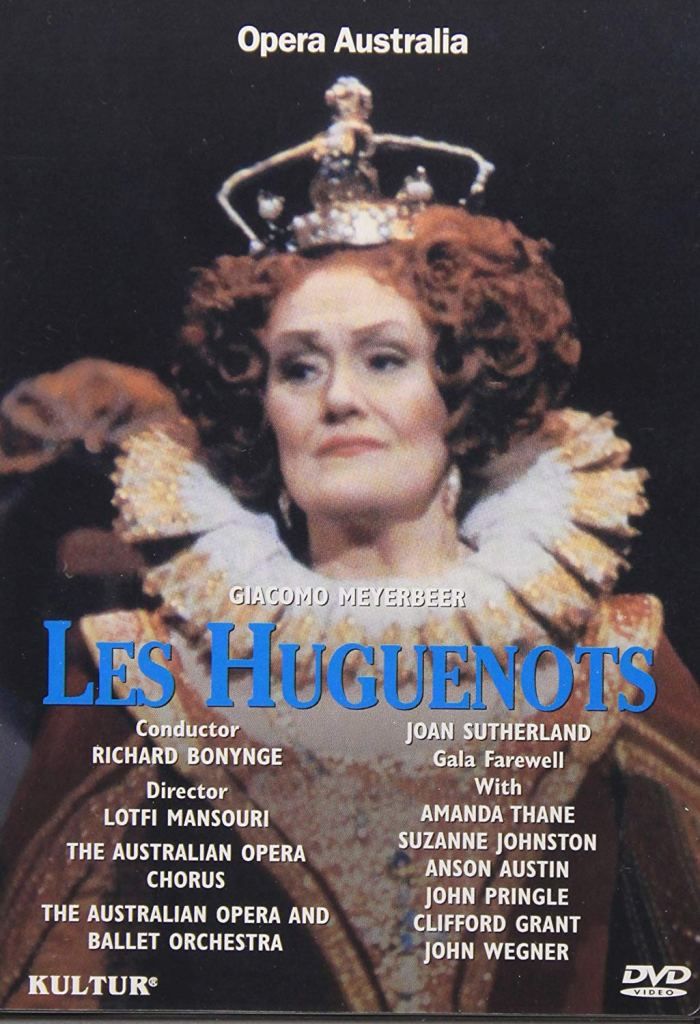
Marguerite de Valois has always been one of Joan Sutherland’s favourite roles, she sang her in 1962 at La Scala, and she chose to sing her in her last opera production on stage, on  October 2, 1990 in Sydney.

The voice of the over 60-year old La Stupenda is not so solid anymore, but her height and her coloratura are still very much present, and apart from Amanda Thane (Valentine) and the really splendid Suzanne Johnston (Page), none of the singers manage to perform at her level. The acting is very good and the inevitable ballet is anything but irritating.

The costumes and the scenery are true-to-life and evocatively beautiful, and the entire stage most resembles a large, seventeenth-century painting. The very traditional production is not only beautiful to look at, but also insanely exciting: this is proof that a good director (Lotfi Mansuri) does not need concepts

Vicente Lusitano, de eerste componist van Afrikaanse komaf in Europa? (Althans de eerste die in notenschrift componeerde en wiens muziek is gedrukt?)

Tekst: Neil van der Linden

Portret van een Afrikaanse man (mogelijk Christophle le More, mogelijk edelman of hoveling aan het hof van Margaretha van Oostenrijk in Mechelen of Brussel), Jan Mostaert van Haarlem, ca. 1530, Rijksmuseum

Die vraag of hij de eerste componist van Afrikaanse komaf in Europa was kom je sinds enige jaren vaker tegen als het over de zestiende-eeuwse componist Vicente Lusitano gaat. Over hem is niet heel veel bekend, behalve dat hij rond 1520 werd geboren en dat het laatste tot nu toe gevonden teken van leven uit 1562 stamt. De naam Lusitano duidt erop dat hij uit Portugal komt. Maar binnen het Portugese taalgebied zou ‘Portugees’ als tweede naam zo weinig specifiek zijn dat we mogen aannemen dat hij oorspronkelijk niet zo heette.

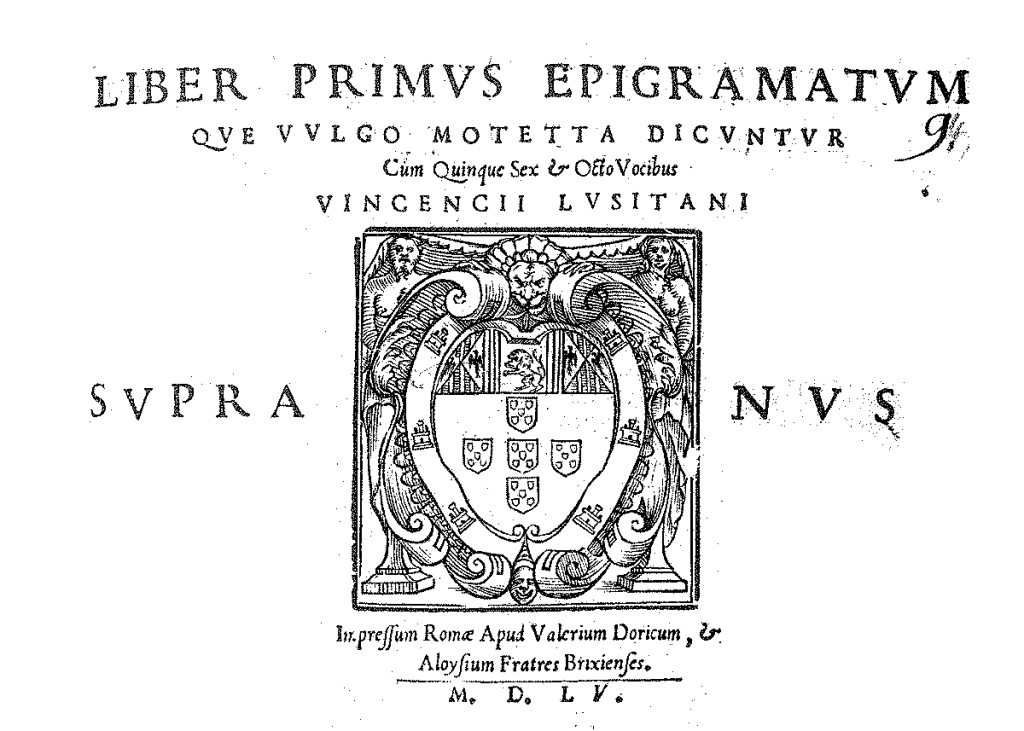
Van zijn composities zijn alleen een aantal motetten bewaard gebleven in het in Rome in 1551 gedrukte Liber primus epigramatum plus een losstaand motet Heu me Domine als onderdeel van een theoretische verhandeling, waarover verderop meer, maar dat zijn tot nu toe bekendste werk is geworden. Op de titelpagina van dat Liber primus epigramatum staat als naam Vincencii Lvsitani, ‘van Vincent de Portugees’. Vandaar Lusitano. In Rome was de aanduiding ‘de Portugees’ een stuk specifieker.

Hoe zit het met die Afrikaanse komaf? In een achttiende-eeuwse bron wordt hij aangeduid als ‘pardo’, een Portugees woord voor iemand van gemengd Afrikaans-Europese komaf, in het Spaans een mulato.

Er zijn aanwijzingen dat de componist een moeder van Afrikaanse komaf had. Meer weten we niet. Merk op dat in de tijd waarin Lusitano geboren werd was de slavernij van Afrikanen in Amerika nog niet op gang was gekomen. Wel is er sinds 1470 gedocumenteerd transport van slaafgemaakten van Afrika naar Portugal. Wat de mogelijke status van die eventuele moeder van Lusitano was is daarom vooralsnog niet duidelijk. Portugal bedreef wel slavernij vanaf Oost-Afrika naar zijn koloniën in India en Sri Lanka/Ceylon.  

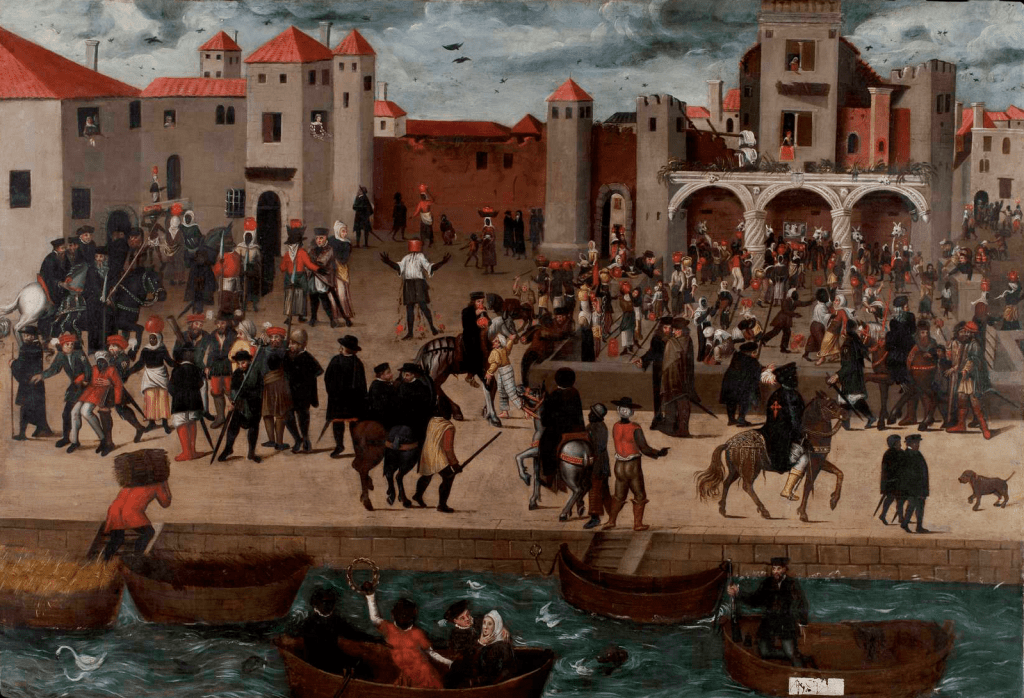
Maar misschien was ze een nazaat van Moorse Afrikanen, misschien was haar familie van over de Sahara geëmigreerd. Misschien stamde ze ook af van diplomaten. Verderop bespreek ik een schilderij van Lissabon uit de tweede helft van de zestiende eeuw waarop Lissabon wordt afgebeeld als een multiculturele samenleving, met zowel witte als zwarte bewoners in de hogere en de lagere standen.

Het laatste dat we over Lusitano weten is dat hij in 1561 naar Stuttgart reisde, dat hij inmiddels getrouwd was en dat hij – terwijl hij daarvoor ook te boek stond als priester in de Roomse kerk- Protestant was geworden, mogelijk met de bedoeling een aanstelling te krijgen bij een Protestants Duits hof. NB Hij bekeerde zich opmerkelijkerwijs tot het Calvinisme, niet tot het in Duitsland gangbare Lutheranisme. Uit 1562 dateert nog een motet, Beati Omnes (dus wel in het Latijn), gepubliceerd in een Zuid-Duitse bundel voor de Protestantse eredienst.

Jarenlang bestond Lusitano’s discografie voornamelijk uit opnamen van dat ene motet Heu me Domine dat niet uit het Liber primus epigramatum afkomstig is. Bijvoorbeeld zoals voorbeeldig opgenomen door het Paul van Nevel met het Huelgas ensemble op het album: Canções, Vilancicos e Motetes Portugueses séculos XVI – XVII uit 1994

Er staat een instrumentale versie op een CD van Myrna Herzog en het Phoenix Ensemble die is gewijd aan de muziek van de Portugese kolonisatoren in Brazilië. Al is het de vraag of Lusitano’s muziek daar ooit is gespeeld. Mooi is het in elk geval. Op de CD ‘As Brazil was discovered’ staat Lusitano broederlijk tussen Josquin, Isaac, Susato, Alfonso el Sabio, de Hugenoot Gaudimel (zijn psalm V, die werd uitgevoerd in Rio 1557; Gaudimel werd vermoord in de St Bartholomeus-nacht in 1572) en Sefardische muziek.

Heu me Domine was dus waarschijnlijk eigenlijk minstens half bedoeld als academische demonstratie van Lusitano’s ideeën over contrapunt en melodie, en let eens op de spectaculair stijgende en dalende chromatisch zanglijnen. Heu me Domine stamt namelijk uit een traktaat geheten Tratado de canto de organo. Lusitano betoonde zich daarin één van de pioniers van de moderne diatonische toonladder, die het mogelijk maakt om van zonder microtonen polyfoon te zingen, ongeacht de toonsoort en intervallen.

Een ander stokpaardje van Lusitano was het geïmproviseerde contrapunt, en hij moet op grond van zijn theoretische ideeën in Rome gezag hebben gehad. Samen met een andere theoretische verhandeling van zijn hand, Introduttione facilissima et novissima (Rome 1553), beleefde Tratado de canto de organo indertijd een flink aantal herdrukken. Bijzonder is dat dat misschien niet eens zozeer voor uitvoering bedoelde Heu me Domine vooruit bliky naar Gesualdo en Monteverdi op hun chromatisch en hun dissonant.

Toch baarde ook in elk geval één ander werk van hem indertijd opzien. Op grond daarvan raakte hij zelfs verwikkeld in een verwoed debat, met ene Nicola Vicentino, vanwege zijjn motet Regina caeli en toelaatbare chromatiek en de toepassing van de antieke Griekse genera in de toenmalige muziekpraktijk, in het bijzonder of toenmalige muziek kon worden verklaard in termen van het diatonische genus alleen (zoals Lusitano beweerde) of (zoals Vicentino beweerde) als een combinatie van de diatonische, chromatische en enharmonische geslachten, waarvan de laatste een microtoon bevatte.

Een panel met onder meer leden van de Sixtijnse Kapel gaf Lusitano gelijk. Toch bleek het een Pyrrusoverwinning. In 1555 publiceerde Vicentino een verslag van het debat dat destijds als misleidend werd beschouwd, maar desalniettemin generaties Italiaanse componisten zou beïnvloeden.

Na deze verwikkelingen verdwijnt Lusitano weer uit de annalen, tot hij in 1561 in Duitsland opduikt, getrouwd blijkt en tot het Protestantisme bekeerd. Waarna hij in 1562 echter helemaal uit de geschiedschrijving verdwijnt.

Lusitano was blijkbaar een groot bewonderaar van Josquin des Prez (ca 1450-1521). Enkele van zijn motetten zijn zelfs regelrecht van diens composities afgeleid. Zo breidt hij de vijf afzonderlijke stemmen van Josquins motet Inviolata uit tot acht. ‘Terwijl het onmiskenbaar schatplichtig is aan Josquins vijfstemmige zetting, is het ook radicaal anders,’ schrijft Rory McCleery, oprichter en artistiek directeur van het Marian Consort, in het programmaboekje van de eerste CD geheel gewijd aan werk van Lusitano. ‘De relatief sobere stemmenweefsels uit het begin van de zestiende eeuw worden ingeruild voor de vollere, caleidoscopische polyfonie van Lusitano’s generatie. Hij behoudt Josquins verdeling van de tekst in drie verschillende muzikale secties, maar weeft er een canon doorheen die is gebaseerd op de Gregoriaanse melodielijn, met intervallen van een kwint telkens op drie dubbele noten afstand.  Het is een staaltje compositorische bravoure die echter niets afdoet aan de pure schoonheid van het stuk.’ 

In het eveneens op Josquin gebaseerde Salve regina voegt Lusitano twee altstemmen toe, waarbij hij één stem de complete originele Gregoriaanse zanglijn voor haar rekening laat nemen terwijl hij fragmenten van die melodie over de andere stemmen verdeelt. Het resultaat is een bijna hallucinogeen repetitief effect waarbij vergeleken Reich en Glass natuurlijk verbleken!

Met dit alles is de muziek van Lusitano ongekend vloeiend en melodieus. We gaan klankmatig al duidelijk richting Tomas Luis de Victoria (Spaans componist 1568 – 1611) of Duarte Lobo (Portugees componist 1565 – 1646). Soms lijkt Byrd (1540-1623) niet eens ver weg. Lusitano maakt temidden van die vloeiende bewegingen ook gebruik van fraaie onverwachte, snijdende dissonanten die Vlaamse voorgangers als Obrecht en Isaac in herinnering brengen maar muzikaal ook vooruitwijzen naar de vroege barok. We moeten concluderen dat Lusitano al deze elementen tot een eigen stijl heeft omgesmeed. De vraag dringt zich dan op of hij een ten dode gedoemde muzikale zijtak was, of dat je hem, mede gezien het succes van zijn academische geschriften, als minstens een essentiële overgangscomponist mag beschouwen, die je, net als bijvoorbeeld met Carl Philip Emanuel Bach, een eigen plaats in de muziekgeschiedenis mag toekennen.

Het Marian Consort zingt dit oeuvre fraai, Engels, maar niet té. Niet te klinisch dus, met genoeg kleuring in de stem, een beetje alsof het bij het Huelgas Ensemble in de leer is geweest. Door het karakter van de stemmen, de enkelvoudige bezetting en de niet te ruime akoestiek van de kleine All Hallows’ Gospel Oak kerk krijgt het geheel een intiem karakter. (Opnamen van het Schotse label Linn zijn technisch altijd puik.) Het lijkt mij dat het ensemble een vaste plaats verdient in de wereld van de Renaissance-muziek.

Het ensemble liet de CD voorafgaan door een Youtube-clip met het Inviolata.

Artistiek leider Rory McCleery had al eens een mooie discussie georganiseerd over Lusitano in een Spotify-podcast.

De hele CD staat op Spotify.

Dit is het omstreden ‘prijslied’ Regina Caeli

Vergelijk Lusitano’s Salve Regina a 6

met het eerdere (ook prachtige) van Jacob Obrecht (1457/58-1505), hier door Capilla Flamenca.

Op deze Spotify-lijst wordt Lusitano’s Inviolata tegenover dat van Josquin gezet

.

Website van het ensemble over de CD:

https://www.marianconsort.co.uk/lusitano-motets

Er wordt wel eens beweerd dat de geschiedenis Lusitano heeft verdrongen vanwege zijn mogelijke huidskleur.

Een recent artikel uit de Guardian artikel neemt daar sterk stelling in.\:

‘Vicente Lusitano: Why was the first Black published composer just a footnote in histories?’

‘A BLM (Black Lives Matter – NvdL) placard in New York encouraged a conductor in London to discover more about this 16th-century pioneer of European classical music.’

https://www.theguardian.com/music/2022/jun/16/vicente-lusitano-first-black-composer-music-published-chineke-voices-joseph-mchardy

Maar ja, aangezien we zo weinig weten over Lusitano is dit ook maar een hypothese. Hij was bovendien niet de enige Renaissance componist van wie we weinig weten en van wie waarschijnlijk een belangrijke deel van zijn oeuvre verloren is gegaan.

Misschien zijn zijn partituren en overige levenstekenen wel in een Duitse Beeldenstorm of ander oorlogsgeweld verloren gegaan. Of misschien is hij onderweg door Duitsland beroofd, of erger. En er was ook nog de pest.

Ik merkte al op dat het tijdperk van de trans-Atlantische slavernij nog niet was begonnen. Portugal bedreef wel slavernij vanaf de kust van Oost-Afrika naar koloniale nederzettingen in India en Ceylon.

Toch is er dat prachtige anoniem schilderij met een panorama van Lissabon, vermoedelijk geschilderd door een Nederlander, waarop opvalt dat mensen van verschillende etnische komaf vrijelijk met elkaar omgaan, met zowel Afrikaanse als ‘witte’ personen van hoog tot laag in maatschappelijke rang.

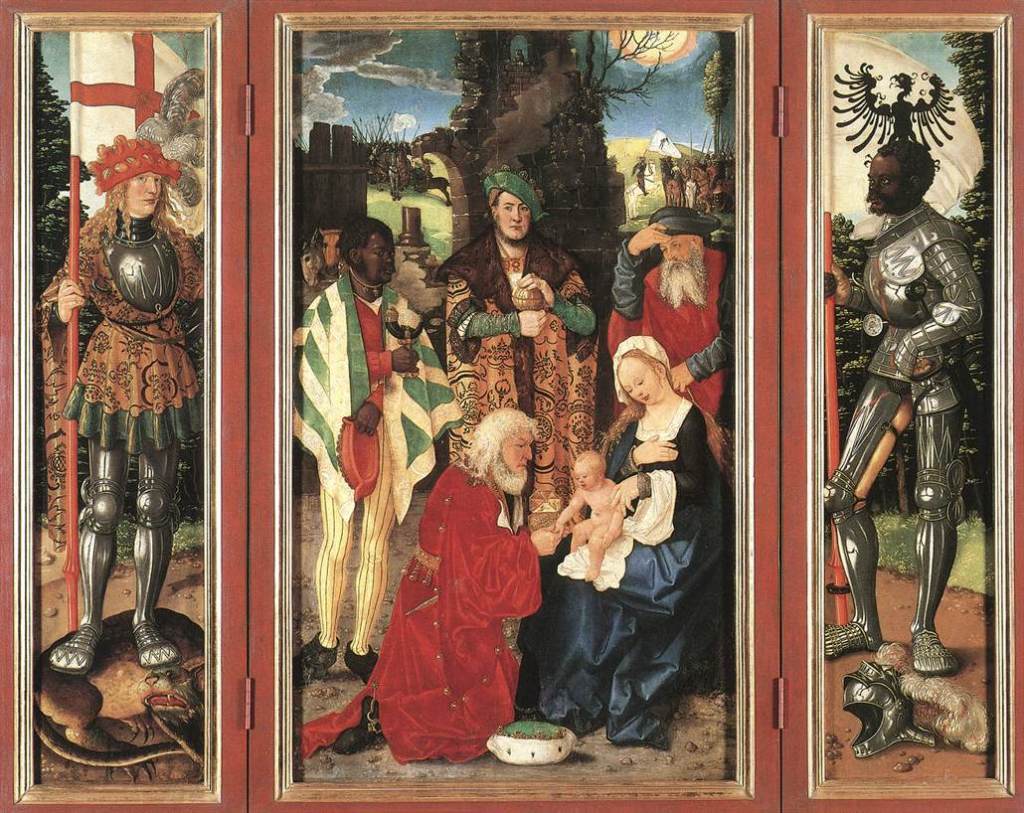
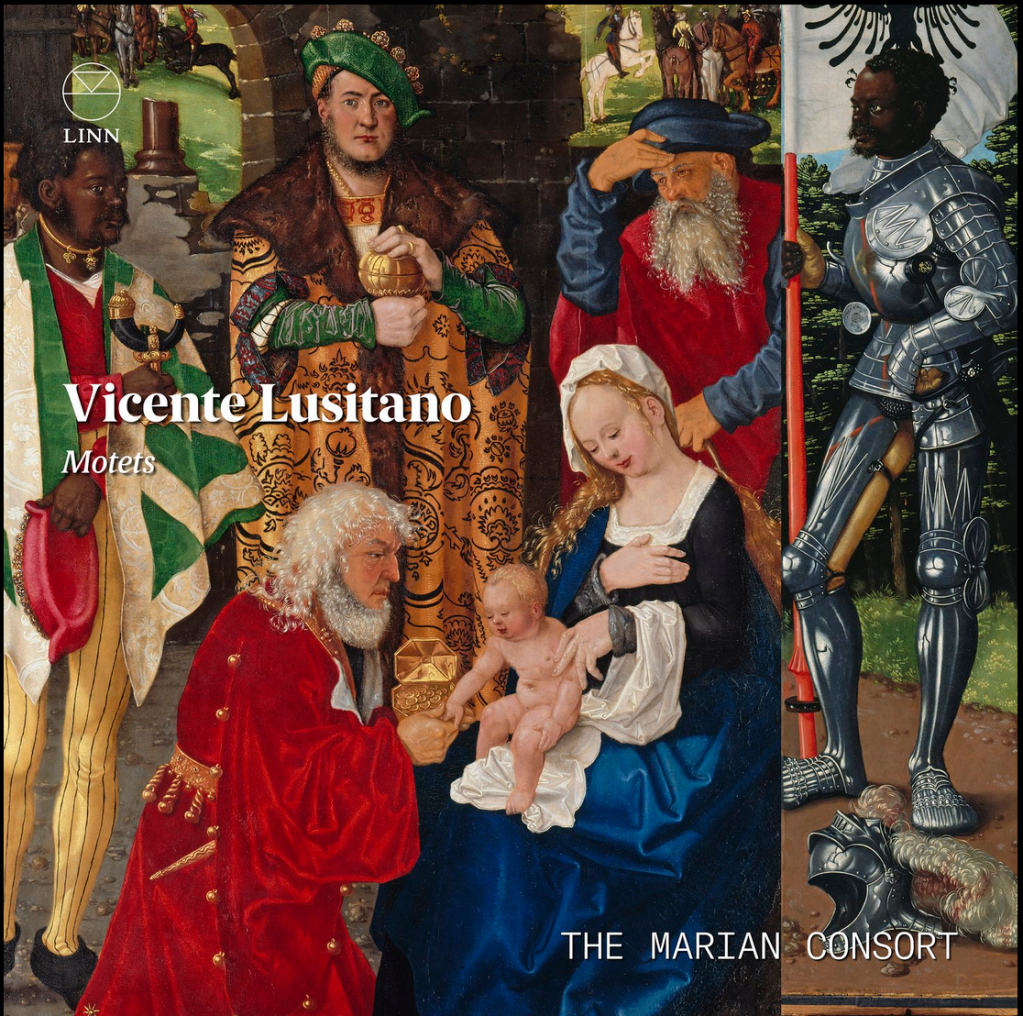
Let ook op het schilderij dat het Marian Consort voor de voorkant van het CD-boekje heeft gekozen, Aanbidding door de Wijzen uit het Oosten uit 1507 van Hans Baldung (c.1484-1545). Baldung leefde in Baden-Württemberg, dus in de buurt van Stuttgart waar Lusitano voor het laatst is gesignaleerd. Opmerkelijk is dat naast de persoon achter in het midden, mogelijk gemodelleerd naar een opdrachtgever, twee mannen van Afrikaanse komaf het meest natuurgetrouw geschilderd zijn, de ene één van de wijzen, de andere een ridder. Baldung was al gestorven lang voordat Lusitano in 1561 in Duitsland arriveerde. In elk geval is van belang dat blijkens dit schilderij men ook in Midden-Europa goed op de hoogte was van Afrikaanse fysionomieën.

Er is echter ook een intrigerend Nederlands schilderij uit grofweg deze zelfde tijd, dat in het Rijksmuseum hangt: een portret van een vooralsnog onbekende Afrikaanse man door Jan Mostaert (ca. 1474-ca.1552) uit Haarlem, gemaakt ergens tussen 1525 en 1530. Uit zijn kleding en de broche op zijn hoofddeksel zouden we kunnen afleiden dat hij een voorname eigentijdse persoon was, mogelijk een hoveling aan het hof van onze landvoogdes Margaretha van Oostenrijk, de tante van Karel V, in Mechelen of Brussel. Zijn insignes wijzen erop dat hij een bedevaart had gemaakt naar een nabijgelegen bedevaartsoord. Het is één van de meest realistische werken van Mostaert, en de persoon zou zomaar heden ten dage voor ons kunnen staan. Ook op dit schilderij was er nog geen spoor van slavernij-verhoudingen.

Vanwege het academische karakter van Heu me domine hebben ook veel musicologische ensembles zich op het werk gestort. Niet altijd per se geweldig, maar het bracht de naam van Lusitano in elk geval weer tot leven. Hier het Australian Chamber Choir.


Soms zijn zulke incidentele uitvoeringen van Lusitano juist erg geslaagd. Hic est Michael archangelus door het St. Andrew & St. Paul Chamber Choir corona resistent uitgevoerd.


Het lijkt wel alsof Corona Lusitano goed heeft gedaan. Hier:

Regina Caeli – Lawrence University Concert Choir, met mondkapjes.


En hier:

Boston Baroque — Vicente Lusitano’s “Aspice Domine”, instrumentaal door het X-tet

Een Zoom conferentie over Lusitano

NB de sprekers waren blijkbaar niet op de hoogte van Paul van Nevels pionierende opname van Heu me Domine uit 1994.

Nog een fraaie obscure opname, van Inviolata door Cantum Mensurable, nog nieuwer dan die van het Marian Consort. Ook heel mooi.

Heu me Domine Reimagined is een bewerking voor fluit en electronica door Isabel Lepanto Gleicher

En tenslotte een promo van het Marian Consort zelf

Met dank aan Vincent Kuyvenhoven, die mij een aantal jaren geleden op Lusitano heeft gewezen.

Koning David en de muziek

Koning David…. Een van meest inspirerende en tot de verbeelding sprekende figuren uit de Bijbel. Maar bestond hij echt? Wij leven in een tijd waar van alles aan getwijfeld wordt en dat mag. Het is niet verkeerd, tenzij je gaat beweren dat de aarde plat is en een aanhanger van de complottheorieën bent..

Sommige historici nemen aan dat koning David daadwerkelijk heeft bestaan, maar dat (net als bijvoorbeeld bij Koning Arthur) veel van de verhalen over zijn leven eerder tot de mythen behoren en niet als harde geschiedschrijving moeten worden beschouwd. Iedereen weet dat de bijbel niet door de historici is geschreven. So what? Er bestaat nog zoiets als geloof. Als geruststellend sprookje, Zeker in onze warrige tijden hebben we het nodig.

Koning David was, behalve een brave man, stoute echtgenoot en een harpist ook een geniale dichter. Zijn psalmen behoren nog steeds tot het mooiste dat de dichtkunst ooit heeft opgeleverd. Zijn invloed op de kunst en zeker op muziek was en is immens is. Zijn psalmen zijn dan ook door verschillende componisten op muziek gezet, denk aan o.a. Bach, Allegri, Schütz, Strawinski, Kodaly…. Een van de redenen dat ik mij weer eens in David ging verdiepen. Of hij wel of niet bestaan heeft doet het er niet toe. Inspiratie heeft geen wetenschappelijke bewijzen nodig en kunst hoeft niet getoetst worden aan feiten.
Een kleine (met een nadruk op ‘kleine’!) selectie van wat er allemaal te vinden is. De volgorde is willekeurig.


Gerrit van Honthorst (1590-1656), King David Playing the Harp (1611), Centraal Museum, Utrecht, Holland


Michael Levy vraagt zich af: hoe zou zijn harp geklonken hebben? Hij postte een ‘live’ uitvoering van het traditionele Hebreeuwse lied “Zemer Atik” (track 5 van zijn album uit 2008, “King David’s Lyre; Echoes of Ancient Israel”):

Zoltan Kodaly, Psalmus Hungaricus:

Schumanns Davidsbündlertänze gespeeld door Andras Schiff:

Paul Schoenfield en zijn prachtige altvioolconcert ‘King David dancing before the ark’:

Sarah Connolly zingt King David van Herbert Howells:

King David’s Suite by Lionel Hampton, first performance, 1957:


en opgenomen in München ter gelegenheid van Munich Summer Piano Festival in 1994. Het St. Petersburg State Orchestra staat onder leiding van Alexander Tschernuschenko, Lionel Hampton speelt vibrafoon:

Franz Liszt, Psalms of David:

Igor Stravinsky, Symphony of Psalms uitgevoerd door het Radio Filharmonisch Orkest en Groot Omroepkoor:


Krzysztof Penderecki, Psalm of David opgenomen in Carnegie Hall:


DAVID EN SAUL


Händel:

David symphony for Harp (act I, scene V) Sara Águeda, arpa doppia

Aria van David


Carl Nielsen, de hele opera:


Paul Ben-Haim, Sweet Psalmist of Israel. David before Saul:

DAVID EN JONATHAN

Jonathan was de zoon van Saul, koning van Israël, afkomstig van de stam Benjamin en David kwam van de stam Juda. Ooit de rivalen voor de kroon werden ze vrienden en waarschijnlijk meer, maar de Bijbel geeft de werkelijke aard van de relatie tussen David en Jonathan niet expliciet weer. In de traditionele interpretatie van hun vriendschap wordt er nadruk gelegd op de platonische liefde, een voorbeeld van ‘homosocialiteit’. Iets wat later werd omschreven als een sterke persoonlijke vriendschappen tussen mannen. Tegenwoordig wordt er vaak de nadruk gelegd op wat sommigen zien als homo-erotiek in het verhaal

David et Jonathas van Charpentier, opname uit Ais-en-Provence:

Trudy Labij: ‘Wat ik nou toch heb gelezen’ uit de musical Foxtrot (4), 1977:


.

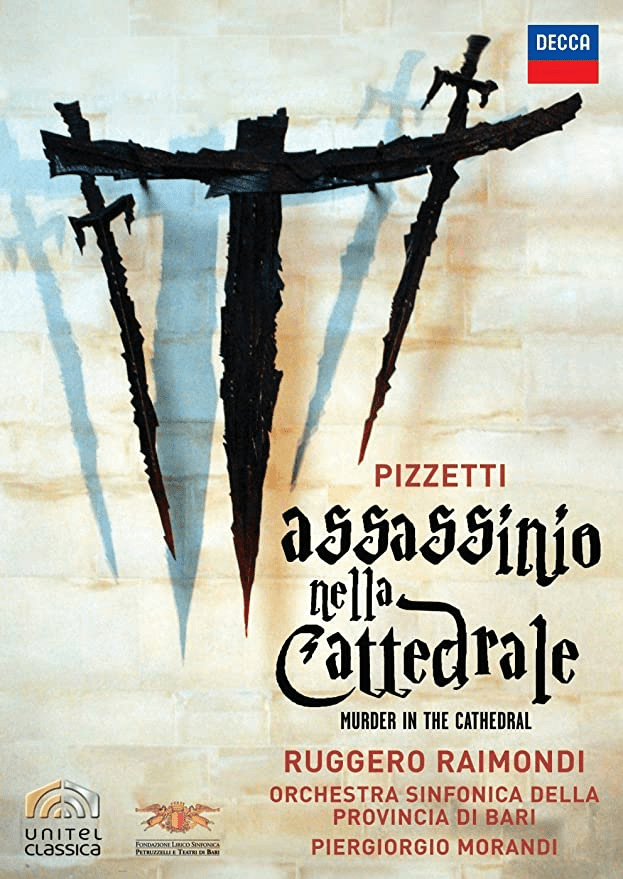
Ildebrando Pizzetti: Murder in the cathedral. And more

Ildebrando Pizzetti – along with Respighi, Zandonai, Alfano and Malipiero, among others – belonged to the so-called ‘Generazione dell’80’, a group of Italian composers born around 1880. What they all had in common was a certain leaning towards neoclassicism and an interest in Renaissance and Byzantine music.


All this is prominent in Assassinio nella Cattedrale, a musical drama based on T.S. Elliott’s play Murder in the cathedral, for which Pizzetti himself wrote the libretto. I think it is a beauty of a piece, with a very strong libretto, beautiful choral parts and a perfectly crafted leading role that gives a good bass-baritone all the room it needs to shine. Incredible really that the opera is still so rarely performed.

This Decca recording was filmed in December 2006 in the dazzling Basilica di San Nicola in Bari. It all makes it feel very authentic, although I think it must have been more impressive live than on DVD. Logical, really.

The performance itself is fine, not overwhelming, but certainly sufficient. The Archbishop’s rise does make a huge impression, it’s a lot like Scarpia’s first rise; that makes you quiet. Especially when the singer in question is called Ruggero Raimondi. His voice has become a bit dry, but he is a real theatre animal and puts down a very impressive Thomas Becket


NICOLA ROSSI-LEMENI AND LEYLA GENCER/VIRGINIA ZEANI


The premiere of Assassinio nella Cattedrale took place at La Scala in Milan, in March 1958. The leading roles were sung by Nicola Rossi-Lemeni for whom Pizetti composed the opera and Leyla Gencer.


Shortly after its premiere, the opera was recorded live in Turin. Absolutely indispensable for the ‘Generazione dell’80’ and verism lover (Stradivarius STR 10067/57)

Virginia Zeani in an aria from the recording:


Should you want to hear more from Pizzetti (which I can well imagine), I can recommend the recording of Debora e Jaele. The cast is to please, with the very impressive Clara Petrella leading the way in the role of Jaele. The opera was recorded inMilan in 1952, Gianandrea Gavazzeni conducted (GOP 66.354)

Bubbles for Beverly. Lest we forget

Beverly Sills, the American ‘coloratura queen’, never reached the high status that colleagues Callas and Sutherland had in Europe. In fact, many people did not even know she existed. The reason? Lack of an exclusive contract with an important company. And: she did not travel. As the mother of two severely handicapped children, she wanted to be with her children as much as possible.


Beverly Sills (25 May 1929 – 2 July 2007), was born in Brooklyn as Belle Miriam Silverman. Her parents were Jewish immigrants from Odessa and Bucharest. As a child, she spoke Yiddish, Russian, Romanian, French and English.

Although she had an enormous repertoire, that ranged from Handel and Mozart to Puccini,, she was best known for her interpretations of coloratura soprano roles. Her radiant high D’s and E-flats sounded seemingly effortless and natural.

She was most associated with Donizetti’s operas: Lucia di Lammermoor, La fille du régiment and the three ‘Tudor queens’. Her Elisabetta in Roberto Devereux is simply the best ever.
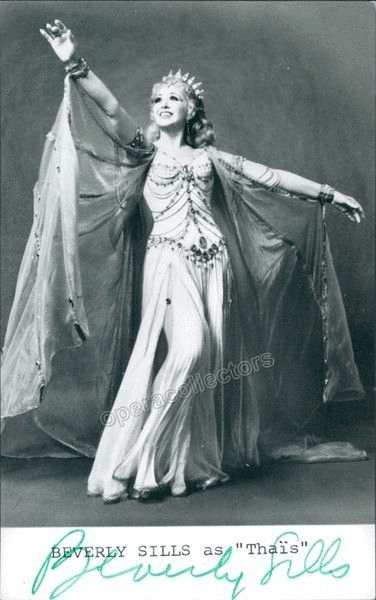
But also her Manon and Thaïs(Massenet) are unforgettable, as is her Violetta (La Traviata) and all three female roles in Offenbach’s Les contes d’Hoffmann. Yes, she sang all three in one evening.


At the age of three, Sills won a ‘Miss Beautiful Baby’ contest, singing ‘The Wedding of Jack and Jill’. From the age of four, she performed professionally on the Saturday morning radio show ‘Rainbow House’ under the name Bubbles Silverman.

When she was seven years old, she started taking singing lessons with Estelle Liebling, who remained her only singing teacher. A year later she sang in the short film Uncle Solves It (filmed in August 1937, released in June 1938 by Educational Pictures), by which time she had adopted her stage name, Beverly Sills.


LUCIA DI LAMMERMOOR


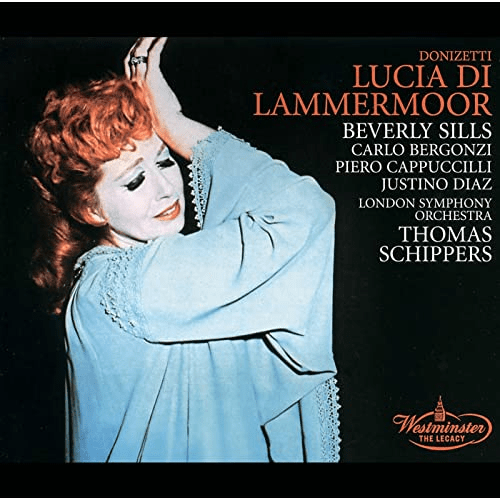
Sills’ Lucia (Westminster 4712502) for me remains one of the best interpretations ever, especially talking about studio recordings. Her portrayal unites the best of Callas and Suitherland: the virtuosity, vocal beauty and pure intonation of la Stupenda and the great acting of la Divina. Not really a great tragédienne (but then, neither is Lucia), she is more of a passive child-girl who just lets it all happen. The rest of the cast (Carlo Bergonzi, Piero Cappuccilli, Justino Diaz) is also of a very high level and Thomas Schippers conducts very firmly. But what makes this recording really special is the use of a glass harmonica in the madscene, exactly as Donizetti had originally prescribed it


ROBERTO DEVEREUX


A New York Times reviewer wrote that it was undoubtedly the most exciting event of the 1970 musical year and I believe that immediately. The performance of 24 October 1970 was recorded live and we are more than lucky to have it.


Julius Rudel (well, what happened to the days we had such maestros?) conducts firmly and with a great deal of love for the work. So beautiful that it makes you want to cry.


Domingo’s voice sounds like a bell and his performance causes ecstatic ovations. And I can be brief about Sills’ Elisabetta: overwhelming! No one, no one has ever sung the role better. She is Elisabetta. You must see and hear this, if only once! The applause after her ‘L’Amor suo mi fé benata’ seems to last for ever.


Below Beverly Sills in the last scene of Roberto Devereux:


THAÏS


Below Beverly Sills and Sherrill Milnes in the final scene of the opera:


MANON


Sills also sang in German.

Below she sings ‘Ruhe sanft, mein holdes Leben’ from Mozart’s Zaide. In my opinion the best interpretation of that aria ever:


And she sang songs too
Below, ‘Breit über mein Haupt’ from Strauss:


Don’t miss the wonderful homage to Beverly Sills, ‘Made in America’ (DG 0734299), with a selection of brilliant archive footage, including La Traviata with Ettore Bastianini.


In this 75-minute portrait, Beverly Sills talks openly and honestly about her life and career. The portrait is illustrated with rare recordings and photographs from the Charles Mintzer Collection.


Below is Beverly Sills’ farewell performance, where as an encore she sings the Portuguese folk song ‘Tell Me Why’ that Estelle Liebling, her only singing teacher, provided her with  when she was ten. As a tribute to Liebling, Sills ended each recital with this song.

Ivan van Kalmthout: Music has always played an important role in my life

The 52nd edition of the International Vocalists in 2018 was the last competition for director Annett Andriesen. After twelve years of incredible dedication and fantastic leadership (something for which she was honoured with speeches, a standing ovation, a wealth of flowers and a ‘modest’ bouquet of twelve roses), she handed over the baton to Ivan van Kalmthout.

Ivan van Kalmthout and Annett Andriessen

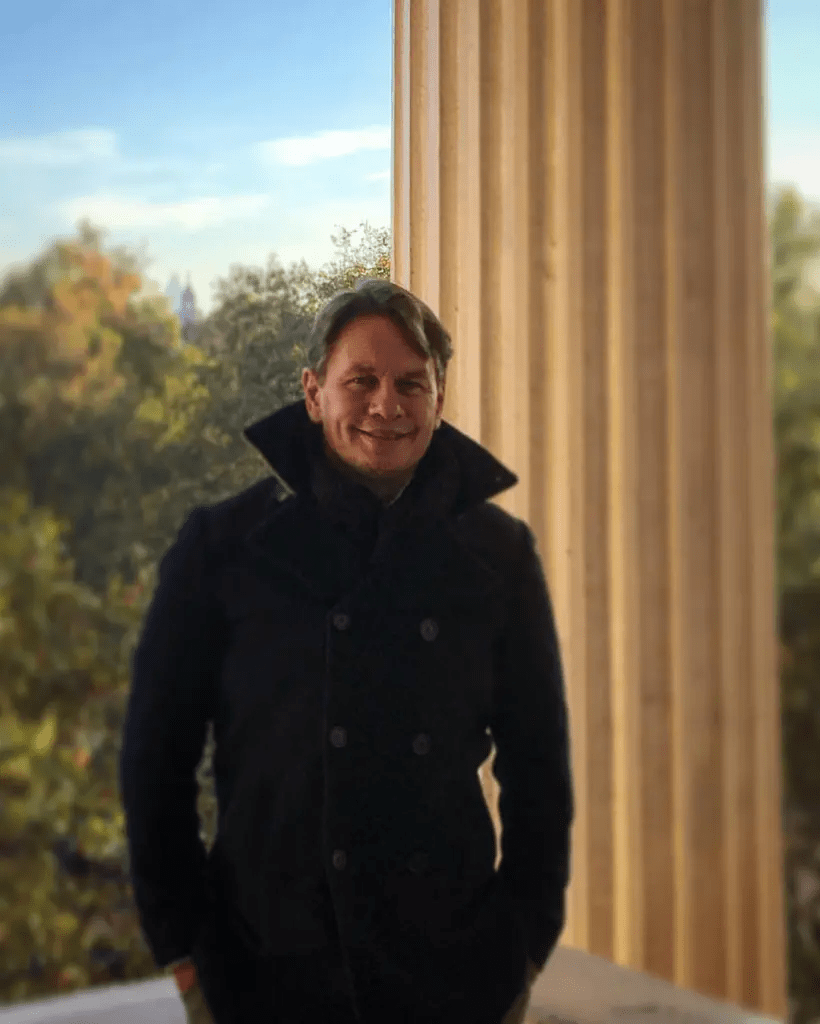
Van Kalmthout had previously worked as interim director of the Liceu Opera House in Barcelona and as director of the Berliner Staatsoper in Berlin, and in 2017 he joined the IVC board. Time for an interview.

Van Kalmhout is a true Brabander. He was born in Etten in 1968. His father’s family comes from Zegge and his mother, who comes from a Moluccan KNIL family, grew up in Zundert.

Ivan van Kalmhout with his mother


“About my family… My grandmother was Moluccan. You can’t see it in me, but my grandmother was very dark. My grandfather came from Tilburg. He was stationed in Tjimahi and that is where they met. My mother and my sister are really exotic looking. When I saw all the portraits of regents in the Rijksmuseum for the first time, it became clear to me that my appearance has nothing to do with Indonesia. I might have been born in the Netherlands in the 17th century! “


And what about the music?

Ivan Kalmhout: “Music has always played an important role in my life. My grandfather played the piston in the local brass band and he could also sight-read the music. My mother would probably have become a successful soprano if she had had the chance. She certainly has the voice and the temperament for it! I myself was fascinated by the violin as a child and studied it for quite a while.”

“Through a LP record with a piece by Wieniawski played by Emmy Verhey, I first heard a solo aria, sung by Hebe Dijkstra. ‘Mon coeur s’ouvre a ta voix’ from Samson et Dalila. I already knew some symphonic music with vocals and also the ‘Ride of the Valkyries ‘ but this was a new experience. I remember that I could not quite place it. But I found it fascinating. And after listening to it for a few times, I was ‘sold’ on the genre. I think that’s why it’s so important for children and young people to have the opportunity to come into contact with classical vocal music. We’re also trying to emphasise this aspect in the new Opera3Daagse.”

“A bit later I discovered Maria Callas and that was like a bolt of lightning to me. What I’ve inherited from that passion is a great fondness for the combination of text and music. When a singer is able to express the deeper truth of a text, it really touches me. Opera is not a literary genre, of course, but when the poetic truth is grasped by an interpreter, it has more impact than any other top-level theatrical text. When a singer sings technically perfectly but has clearly only looked at the notes, I can often do little with it. But sensing what is going on with sometimes very banal texts and being able to give the same word, repeated three times, a different meaning three times (‘amour’ in Carmen, for example) is for me one of the greatest gifts an interpreter can bring.”

Ivan van Kalmhout with Eva-Maria Westbroek


After secondary school, van Kalmhout studied business administration and management at Nyenrode Business University in Breukelen, after which he joined Pieter Alferink and his Artists Management. In 1991, he was asked by Marc Clémeur to join the Flemish Opera in Antwerp (and Ghent). There he worked as assistant artistic planning, together with Hein Mulders.

The next step was the Staatsoper in Hamburg and the Liceu in Barcelona. In 2011, van Kalmthout was appointed opera director and artistic director of the Deutsche Staatsoper in Berlin. Here he joined forces with the conductor Daniel Barenboim and the intendant Jürgen Flimm.

Van Kalmthout: “It was a privilege to be able to work in Berlin at the Staatsoper im Schillertheater. For three years I was back in the repertory theatre system with an enormous amount of productions and a very interesting opera studio, where I was allowed to work with new young talents in the first year. The concert programme of the Staatskapelle was also a parade of musical highlights with first-class instrumentalists. Daniel Barenboim’s inexhaustible curiosity and work ethic amazes everyone around him.”

“When the opportunity came to temporarily fill in for Joan Matabosch in Barcelona after Gerard Mortier had to leave Madrid prematurely due to illness, I gladly returned to the theatre and the city where I had had such a good time. I was able to successfully whip into shape a very difficult year (both organisationally and artistically) for the Liceu. It was a privilege to be there for another year but it was also clear that the direction that the Liceu was headed to was a completely different one from that of the ten golden years before my Berlin time.”

© Swinkels en van Hees


When it became known that Annett Andriessen was leaving, Van Kalmthout immediately applied. He knew the competition and its atmosphere well, after all, he himself had participated twice as a member of the jury. He is therefore sure that he will be very well able to continue its tradition. I think so too. TTT Ivan van Kalmthout!