achtergrondartikelen

Montserrat  Caballé as Norma, Salome and Salome. And herself

Norma

Metropolitan Opera’s production of “Norma” starring Montserrat Caballé, John Alexander, Fiorenza Cossotto, and Giorgio Tozzi in February 1973. Photo by Jack Mitchell/Getty Images

Caballé is a kind of cross between Callas and Sutherland: wonderful top notes, incredibly beautiful legato arches, perfect trills, and moreover a pianissimo that none of her colleagues could match. She was a much better actress than Sutherland, moreover she had great charisma. She never went to extremes like Callas or (later) Scotto, but her performances were always very convincing.


In 1973 she recorded the role for RCA and the result was very decent (GD 86502). Her Pollione, a very young Plácido Domingo, was vocally crystal clear and sounded like a bell. However, he lacked dominance, making him sound far too young for the role.

Fiorenza Cossotto in her role of Adalgisa looked more like Azucena than a young girl, but her singing as such was flawless. Unfortunately, the orchestra sounds uninspired and hurried, which must surely be blamed on the conductor, Carlo Felice Cillario.


In 1974 she sang Norma in the Roman amphitheatre in Orange (Provence). It was a very windy evening, and everything blew and moved: her hair, veils and dresses. A fantastic sensation, which added an extra dimension to the already great performance. It was filmed by French television (what luck!), and has now appeared on DVD (VAIV 4229).

Caballé sings ‘Casta Diva’:


Caballé was in superb voice, very lyrical in ‘Casta Diva’, dramatic in ‘Dormono etrambi’ and moving in ‘Deh! Non volerli vittime’. Together with Josephine Veasey, she sang perhaps the most convincing ‘Mira , o Norma’ – of all, at least in a complete recording of the opera. As two feminists avant la lettre, they renounce men and transform from rivals into bosom buddies.


John Vickers (Pollione) was never my cup of tea, but Veasey is a fantastic (also optically) Adalgisa and Patané conducts with passion. Of all the recordings on DVD (and there are not many), this is definitely the best.

Herodiade


This recording may only be obtained via a pirate (or You Tube), but then it is complete and moreover with (admittedly bad) images!


Dunja Vejzovic portrays a deliciously mean Hérodiade and Juan Pons is a somewhat youthful but otherwise fine Hérode. A few years later, he will become one of the best “Hérodes” and you can already hear and see that in this recording.

Montserrat Caballé is a fantastic Salomé, the voice alone makes you believe you are in heaven and José Carreras is very moving as a charismatic Jean.


None of the protagonists is really idiomatic, but what a pleasure it is to watch a real Diva (and Divo)! They really don’t make them like that anymore

The whole opera on you tube:

Salome


Montserrat Caballé as Salome? Really? Yes, really. Caballé sang her first Salome in Basel in 1957, she was only 23 at the time.

Salome was also the first role she sang in Vienna in 1958 and I want to (and can) assure you: she was one of the very best Salome’s ever. Especially on the recording she made in 1969 under the blistering direction of Erich Leinsdorf.

Her beautiful voice, with the whisper-soft pianissimi and a velvety high even then, sounded not only childlike but also very deliberately sexually charged, a true Lolita.

The Jochanaan, sung very charismatically by Sherrill Milnes, has an aura of a fanatical sect leader, and Richard Lewis (Herod) and Regina Resnik (Herodias) complete the excellent cast (Sony 88697579112).

Caballé as Salome in 1979:


<

What’s the difference between a terrorist and a diva? ‘Caballé, beyond music’

“We all owe a great deal to music (…) It is a form of expression that originates not so much from thinking as from feeling”. These words come from one of the greatest singers of the twentieth century, Montserrat Caballé.

In his film Caballé Beyond Music, Antonio Farré portrays the diva*, her life and her career, talking to her, her family and her colleagues. The documentary also contains a lot of wonderful (archival) footage, starting with Caballé’s debut in Il Pirata in 1966 in Paris.

The film is interspersed with fun anecdotes such as how she smashed a door because she was not allowed to take time off (Caballé wanted to attend a performance of Norma with Maria Callas). How she had stopped a dress rehearsal in La Scala because she noticed that the orchestra was not tuned well. About her debut at the Metropolitan Opera in New York, the discovery of José Carreras (how beautiful he was!), her friendship with Freddy Mercury ….

About her Tosca in the ROH in London in the production that was made for Callas. She wasn’t happy with that, it didn’t feel good, but no one wanted to change it. Caballé called Callas, it was exactly eight days before her death, and complained about her fate. “But of course it doesn’t feel right”, said Callas. “I am tall and you are not, I am slim and you are not, I have long arms and you have not. Tell them to call me, I will convince them that you are not me”.

And so the production was adapted for Caballé. “Copies are never good,” Caballé says, and I agree with her. This is a fascinating portrait of a fascinating singer. Very, very worthwhile.

* London taxi driver: “What is the difference between a terrorist and a diva? You can negotiate with a terrorist”.

Caballé beyond music
With José Carreras, Plácido Domingo, Joan Sutherland, Cheryl Studer, Giuseppe di Stefano, Freddie Mercury, Claudio Abbado and others.
Directed by Antonio A. Farré, EuroArts 2053198

The other Cavalleria Rusticana

People say verismo and think: Mascagni and Leoncavallo. Rightly so? Mascagni’s Cavalleria Rusticana and Leoncavallo’s  Pagliacci are among the most popular and most frequently played verist opera’s ever. What many people don’t know: there are actually two (and even three if you include La Mala Pasqua by a certain Stanislao Gastaldon from 1888) Cavalleria Rusticana’s.

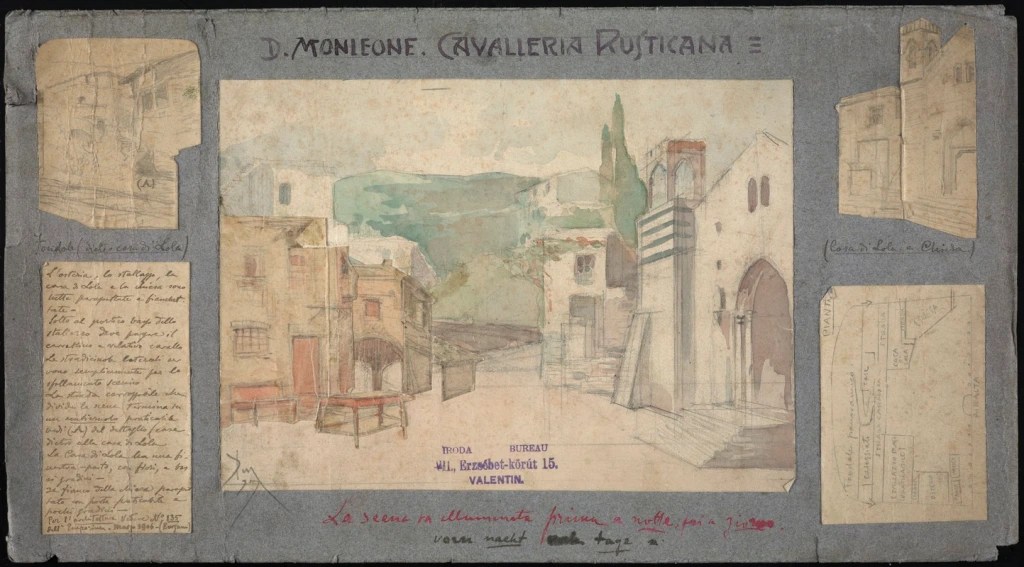
Domenico Monleone (1875 – 1942), a composer not unknown at the time at the time, also used the story of Giovanni Verga for his one-acter, which his brother Giovanni converted into a libretto.

Illustration Gamba Pipein. Courtesy Boston Public Library, Music Department

Sonzogno, Mascagni’s publisher, accused Monleone of plagiarism (and indeed: careful study shows that Monleone’s libretto is closer to Mascagni than to Verga’s original story), after which the opera was not performed anywhere for a long time.

Until 1907, when Maurice de Hondt brought Monleone to Amsterdam, where his opera had its belated premiere. Coupled with … yes! Cavalleria Rusticana.

Both works were directed by their composers: it apparently did not bother Mascagni that his colleague had “borrowed” his libretto from him.

Cavalleria Rusticana

Intermezzo played by Hauser:

And the whole opera:

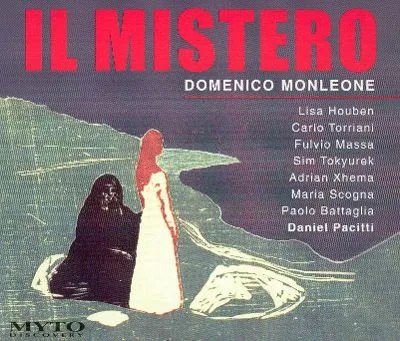
Il Mistero


Nevertheless, Monleone had to accept the court ruling, which meant that he had to find a new libretto for his music

It was changed into Il Mistero, another story by Verga, and this time the author himself had helped Giovanni Monleone with the libretto.

Both operas with the same music but on two different libretto’s were released by Myto on CD’s (Cavalleria Rusticana: 012.H063; Il Mistero: 033.H079). In both works the leading role (Santuzza/Nella) is sung by Lisa Houben, originally from the Netherlands.

Duett (romance e scena): Santuzza & Nunzia – Il dì che andò soldato…

The whole Il Mistero:

An ‘encore’: duet Santuzza/Turiddu, sung here by Denia Mazzola-Gavazzeni and Janez Lotric. Recording was made in Montpellier, in 2001:

Mario Castelnuovo-Tedesco: more than just a composer of guitar works

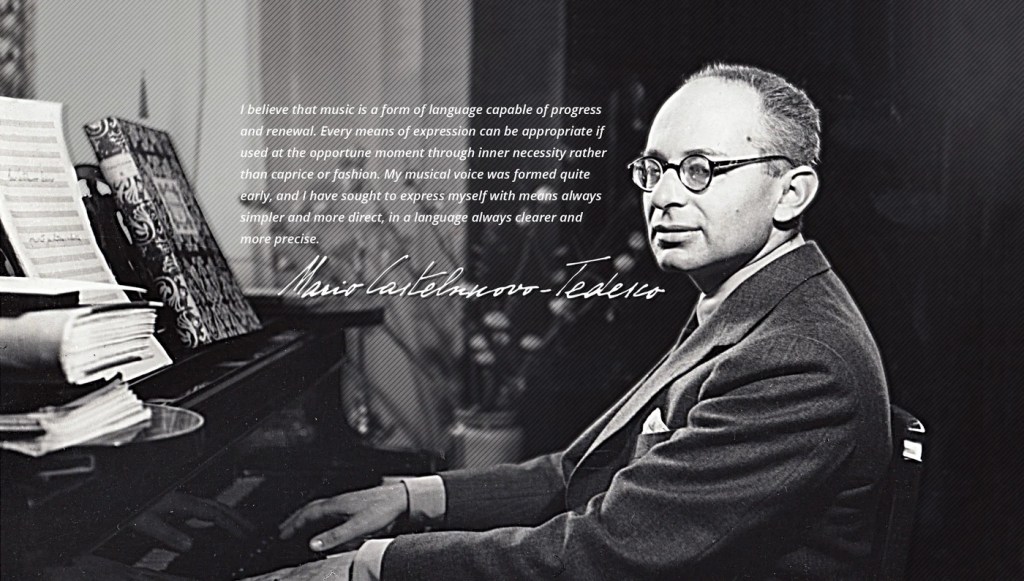
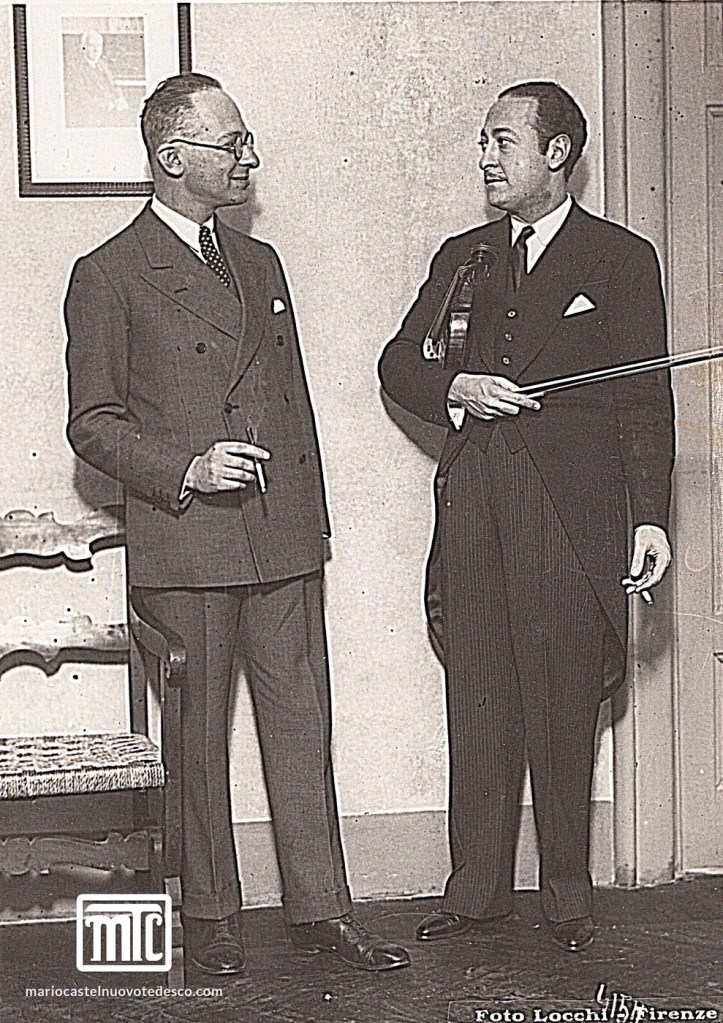
Mario Castelnuovo-Tedesco (Florence, 3 April 1895 – Beverly Hills, 16 March 1968) was born into a Jewish family of Sephardic descent (Jews expelled from Spain in 1492). He was extraordinarily creative, to his credit he worked on all sorts of things: piano works, concertos, operas…. His compositions were played by the great: Walter Gieseking, Gregor Piatigorsky, Jascha Heifetz, Casella.


Heifetz plays Mario Castelnuovo-Tedesco’s second violin concerto: ‘I Propheti’. Recording from 1954:


Today, we know him mainly for his guitar works, nearly a hundred in all, mostly written for Andres Segovia.
Segovia plays the Guitar Concerto No.1 in D major, Op. 99; live recording from 1939:


In the beginning of the 1930s the composer began to explore his “Jewish Roots”, which was intensified by the rising of fascism and the racial laws. His music was not performed anymore. Helped by Arturo Toscanini, Castelnuovo-Tedesco and his family were able to leave Italy just before the beginning of World War 2.


Like most Jewish composers who fled Europe, Castelnuovo-Tedesco ended up in Hollywood. Where, thanks to Jascha Heifetz, he was appointed composer of film music by Metro-Goldwyn-Mayer.


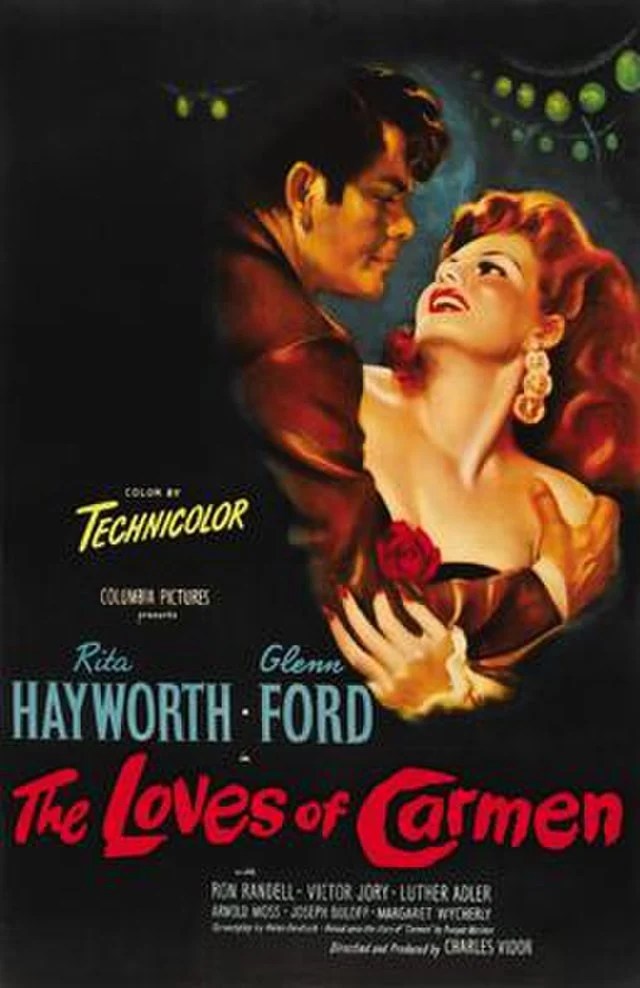
At Rita Hayworth’s special request, he composed music for the film The Loves of Carmen starring Hayworth and Glenn Ford. Below is the dance scene from the film:


During this time, Castelnuovo-Tedesco also composed new operas and vocal works inspired by American poetry, Jewish liturgy and the Bible: America offered him opportunities to deepen and develop his Italian musical heritage and his Jewish spirituality. He dreamed of hearing his Sacred Service “once in the synagogues of Florence”. It was premiered in 1950, at New York’s Park Avenue Synagogue.


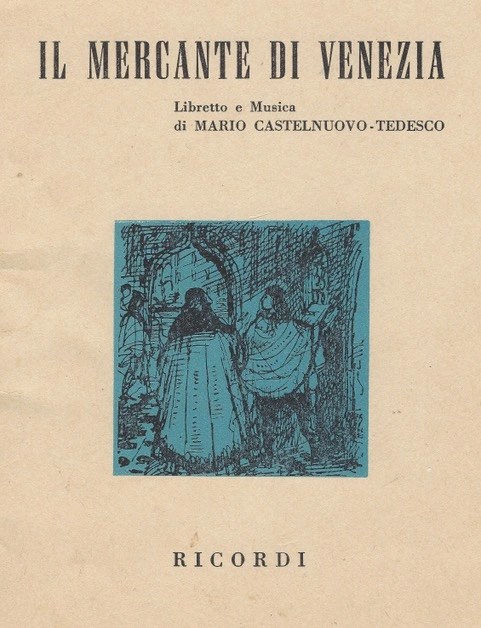
Dating from 1956, the opera Il Mercante di Venezia after Shakespeare’s The Merchant of Venice (Castelnuovo-Tedesco was a great Shakespeare lover) was performed at Maggio Musicale in Florence in 1961. Toscanini conducted and the leading roles were sung by Renato Capecchi (Shylock) and Rosanna Carteri (Portia).


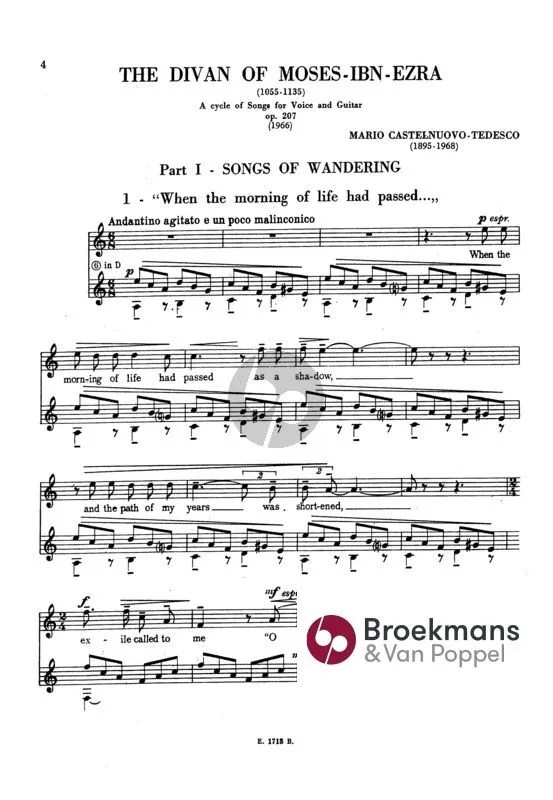
In 1966, he composed The Divan of Moses Ibn Ezra. It is a setting of nineteen poems by Rabbi Moses ben Jacob ibn Ezra, also known as Ha-SallaḠ(‘writer of penitential prayers’).


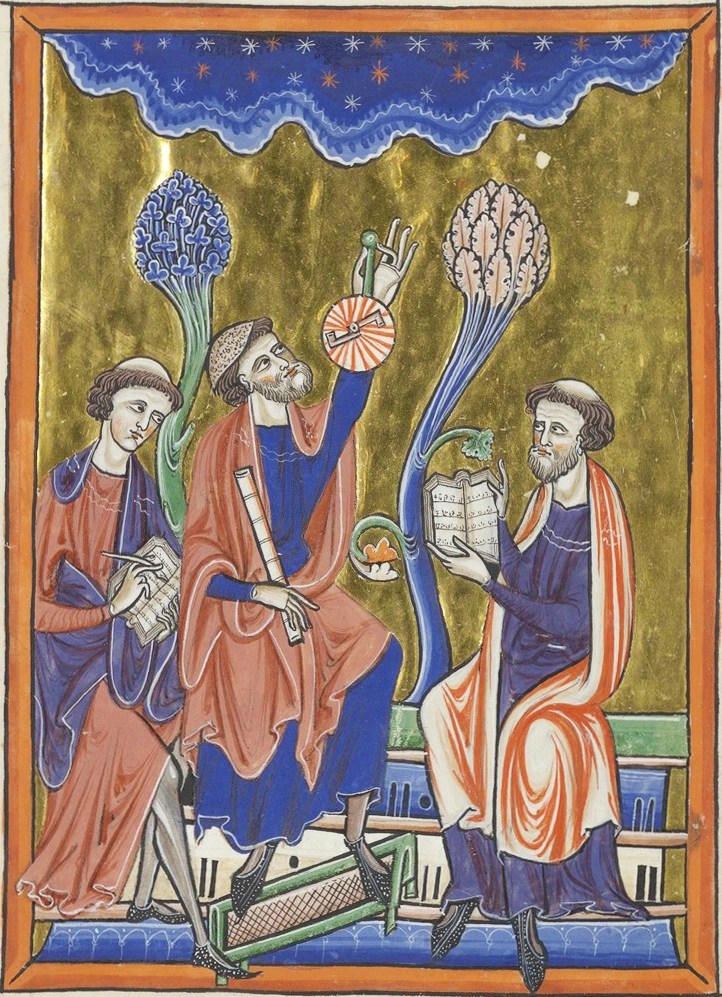
An illustration of Ibn Ezra (centre) using an astrolabe


Born in Granada around 1055 – 1060, Ibn Ezra died after 1138 and is considered one of Spain’s greatest poets. He also had a huge influence on Arabic literature. Castelnuovo-Tedesco composed the ‘Divan’ (meaning; a collection of poems) to the modern English translation.


Roberta Alexander sings The Divan of Moses Ibn Ezra


Channa Malkin and Izhar Elias in ‘Fate has blocked the way’:


The composer wrote his Cello Concerto for Gregor Piatigorsky, the premiere took place in 1935, with Arturo Toscanini conducting the New York Philharmonic. And that was it. Since then, the concerto was totally forgotten for all of eighty years. Until Raphael Wallfisch took it on.


Raphael Wallfisch plays the Allegro Moderato from Castelnuovo-Tedesco’s Cello Concerto


After World War II, Castelnuovo-Tedesco, like several Jewish composers who were forced to flee and seek refuge in Hollywood, was accused of conservatism and sentimentality. That he was inspired by Spanish folklore in many of his works, was not appreciated either.

Song of Songs


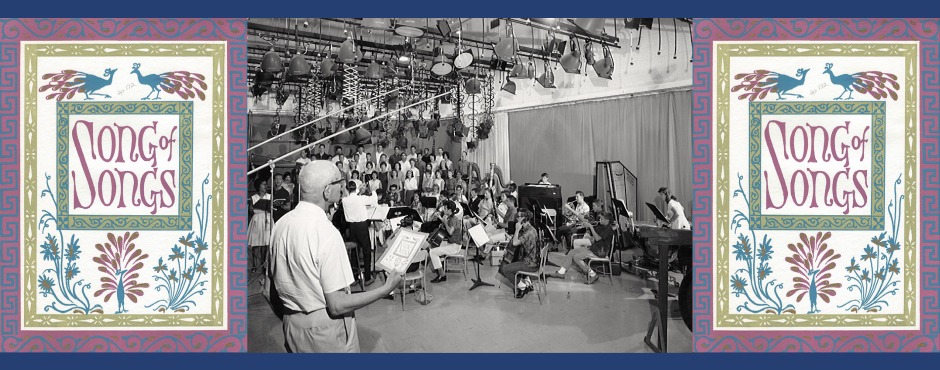
In 2022, in celebration of Castelnuovo-Tedesco’s birthday on 3 April his official website presented a long-buried treasure: a recording of the world-premiere of The Song of Songs, which took place in Los Angeles on 7 August 1963

More information:

https://mariocastelnuovotedesco.com/song-of-songs-a-hidden-treasure/?fbclid=IwAR1VjUytiv8h9TnAxMbUwlffBlgU-YeLaXRxeD-XUVJbf6bXAxVmewBhyMc


Castelnuovo-Tedesco:
“In my life I have written many melodies for voice and published 150 of them (many others remaining unpublished) on texts in all the languages I know: Italian, French, English, German, Spanish and Latin. My ambition and, indeed, my deep motivation has always been to unite my music with poetic texts that stimulated my interests and feelings, to express its lyricism.”


In 2019, his biography was filmed in the movie Maestro. Below is the trailer:


Official website of Mario Castelnuovo -Tedesco:

https://mariocastelnuovotedesco.com/

:

De Nationale Opera presenteert seizoen 2023/24


Het nieuwe seizoen is bekend gemaakt. Ik heb er een paar dagen over gedaan om er iets van te vinden, want eigenlijk vond ik er niets van. Een oneliner? Ja, zeker, vandaar dat ik ga toelichten. Want: moeten we juichen? Nee. Mogen we teleurgesteld zijn? Ja. Zijn er veel herhalingen en te veel van hetzelfde? Ja. Zijn er dan helemaal geen verrassingen en leuke dingen? Ja, die zijn er, maar heus?

Om met de ‘verrassingen’ te beginnen: we krijgen voor het eerst sinds… dertig ? Veertig jaar ? Il Trittico van Puccini.  Ik heb het in ieder geval hier nog nooit gezien, althans niet op de planken, want Riccardo Chailly bracht Puccini’s juweeltjes mee naar de Kerst Matinees (waar is die tijd gebleven?)

Wel hebben wel Gianni Schicchi gehad, als onderdeel van een “Florentijns tweeluik”. Het was een mooie productie, dat wel, maar zo hoort het niet. Althans zo denk ik… Puccini heeft het niet voor niets aan elkaar geknoopt en daar had hij zijn bedoelingen mee. Maar wie heeft er nog een oog (en oor) voor de bedoelingen van de schrijver, componist, schilder? Juist.

Hoe de productie gaat worden, dat moeten we maar afwachten, maar met de wetenschap  wat Barrie Kosky met Tosca en Turandot heeft geflikt hou ik mijn hart vast. Maar wie weet? Weet hij ons te verrassen? Een ding is zeker: de cast is om te zoenen!

EINE FLORENTINISCHE TRAGÖDIE/GIANNI SCHICCHI. Amsterdam november 2017

Waar ik persoonlijk echt naar uit kijk, is de Innocnce van Kaija Saariaho. Ik hou immens veel van deze Finse componiste en wat ik over haar nieuwste opera heb gehoord (en gelezen, het ging in Aix en Provence in première) belooft veel spanning, goed libretto en fantastische muziek. Goede bezetting ook.


We krijgen ook Oedipus Rex van Stravinsky, die hebben wij, bij mijn weten hier ook nooit gehad. De cast ziet veelbelovend uit  en het wordt gekoppeld aan Antigone, een nieuwe opera van de mij onbekende Samy Moussa, in ieder geval iets om in de gaten te houden

Ook Agrippina van Händel is hier nooit eerder geweest. Regie is in handen van Barrie Kosky, afwachten dan maar. Maar gezien de foto.. Ik zwijg

En dan komt deel drie van de ‘Tudor-trilogie’, Roberto Devereux. Op Ismael Jordi na ken ik de andere zangers niet. Of niet goed en de foto doet mij denken aan mierikswortel.

Verder?  
Die meer dan afschuwelijke  La Traviata  van Tatjana Gürbaca mag weer lekker terug.
Peter Franken had het al gezien:

Gürbaca’s Traviata is spijkerhard

Die Zauberflöte in de regie Simon McBurney komt nu voor de vierde (vijfde? keer terug  . Ik heb er nooit iets aan gevonden, maar mensen hebben gelachen.


Ook Beethovens Fidelio komt weer eens langs. Weliswaar een nieuwe productie, maar die opera hebben we hier al zo vaak gehad!
De regisseur ken ik niet. En Eric Cutler als de heldentenor?


En dan Lohengrin, toch een van mijn geliefde Wagners komt voor de zoveelste keer terug. Weliswaar in een nieuwe productie van Loy die ik zeer waardeer  maar ik had hem graag tegen Andrea Chenier gewisseld. Of Fedora. De cast is, althans op papier, ook niet om over naar huis te schrijven


Terug naar het begin. De allereerste productie is Kurt Weill’s  Mahagony, geregisseerd  door Ivo van Hove, geleend uit Antwerpen. Daar was Peter van Franken niet echt blij mee

Redelijk geslaagde Mahagonny bij Opera Vlaanderen

Maar er is ook goed nieuws: voor het eerst sinds 40 jaar krijgen we Der Rosekavalier niet!


Voor meer info, details en speeldata kijk op de site van DNO

https://www.operaballet.nl/nieuws/nationale-opera-ballet-presenteert-seizoen-20232024


Franz Schreker deserves Eternal Life in The Distant Perfect Sound

THE SOUND

Sight & Sound Experience of Gustav Klimt – Atelier des lumières Paris

On the threshold of the twentieth century, many artists were guided in their work by the desire – and the search – for a perfect world. It had to do with the spirit of the times, among other things, and it influenced many painters, writers, poets and composers in their work. But with no other artist it was as prominent as with Franz Schreker (1878-1934). The search for ‘the’ sound dominated his entire life, he was fascinated and obsessed with it. A sound that would die of its own accord, but not really, because it had to continue to be heard – if only in your thoughts. It had to be a pure sound, but one with orgasmic desire and interwoven with visions. Narcotic. In his music I really hear the perfect sound that he so desired which makes me intensely happy.

For Schreker you can wake me up in the middle of the night. The fusion of shameless emotions with undisguised eroticism and intense beauty turns me into an ‘Alice in wonderland’. I want more and more of it. Call me a junkie. I consider his operas to be the most beautiful in existence, alongside those of Puccini and Korngold.

When the Nazis came to power, Schreker was labelled an ‘entartet’. His works were banned and no longer performed. In 1933 he was dismissed from all his engagements and suspended. Schreker was devastated. In December of that year he suffered a heart attack which became fatal to him. But even after the war Schreker was hardly ever performed. The same fate awaited him as (among others) Korngold, Braunfels, Goldschmidt, Zemlinsky, Waxman …. An unprecedented number of names of composers. They were once labelled  ‘Entartet’ by the Nazis and banned, reviled, expelled and murdered. Forgotten.

And that was not just the fault of the Nazis.  After the war, the young generation of composers did not want to know about emotions anymore. Music had to be devoid of any sentiment and subject to strict rules. Music had to become universal: serialism was born. The past was dealt with, including composers from the 1930s. It is only in the last thirty years that the once forbidden composers have regained their voices. The Saturday Matinee has played a major role in this and I thank them on my bare knees for that.

DER FERNE KLANG

, The premiere of Der ferne Klang, in Frankfurt in 1912, was very enthusiastically received. In the Frankfurter Zeitung, critic Paul Bekker wrote that “the audience could identify with the central metaphor of Schreker’s work. Everyone hears that enigmatic sound at some point”.

The protagonist is a composer with only one desire: to discover the perfect sound. On his quest for it, he rejects his beloved Grete and leaves everything he loves behind. Only at the end, when it is already too late, does he realise that he could only find the enchanting “distant sound”, along with happiness, in his love for Grete.

There are not many official recordings of the opera on the market. I myself know only one: live recording from Berlin 1991, on Capriccio (60024-2). I’ve never been devastated by that and quietly hoped that NTR will release their September 2004 performance, with Anne Schwanewilms and others. Alas.

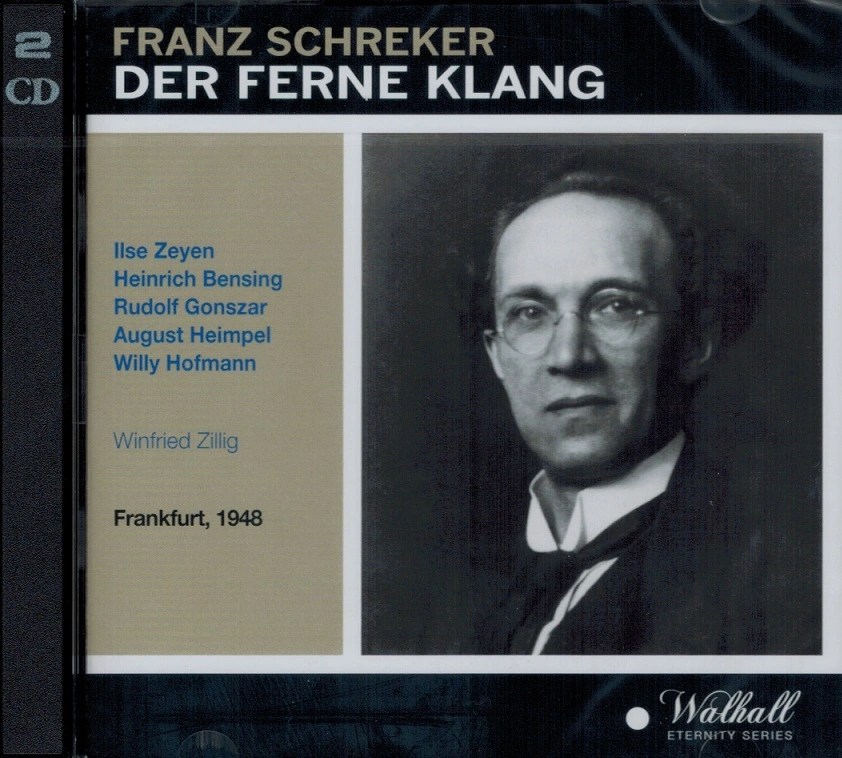
Fortunately, Walhall is now coming out with a live radio recording from Frankfurt 1948, and I am very happy about that. It is a fantastic recording, with exceptionally good sound quality for the time.

I did not know any of the singers, the greater the surprise for me. Der Ferne Klang is an opera that is not easy to cast. Both main roles require big voices that are also distinctly lyrical, and Ilse Zeyen (Grete) and Heinrich Bensing (Fritz) are very much so.

The Frankfurt radio orchestra is sublimely conducted by Winfried Zillig, a very well-known German composer, musict heorist and conductor at the time.

Excerpts can be heard here:

https://www.jpc.de/jpcng/classic/detail/-/art/Franz-Schreker-Der-Ferne-Klang/hnum/2994743

DIE GEZEICHNETEN

The idea came from Zemlinsky. He wanted to compose an opera about an ugly man – his obsession – and commissioned the libretto from Schreker. After finishing his work, it was hard for Schreker to give up his text. Fortunately, Zemlinsky abandoned the opera so Schreker started to compose himself.

Zemlinsky, Schoenberg and Schreker in Prague 1912

Like Der Ferne Klang, perhaps his best-known work, Die Gezeichneten also deals with the search for unattainable ideals. Alviano, a deformed rich nobleman from Genoa, dreams of beauty and perfection. On an island he has ‘Elysium’ built, a place where he hopes to realize his ideals. What he doesn’t know is that the noblemen abuse his island: they are engaged in orgies, rapes and even murders.

Alviano: photo from the premiere in Frankfurt 1918 via Green Integer Blog

The title of the opera is ambiguous. Not only are the main characters ‘marked’ (Alviano by his monstrous appearance and Carlotta by a deadly illness), Carlotta also makes a drawing of Alviano, in which she tries to capture his soul.

This beautiful opera, with its thousands of colours and sensual sounds (just listen to the overture, goosebumps!), is being staged more and more nowadays. In 1990 it was performed at the Saturday Matinee, with an ugly singing but very involved and therefore very vulnerable William Cochran as Alviano and a phenomenal Marilyn Schmiege as Carlotta (Marco Polo 8.223328-330).

Evelyn Lear (Carlotta) and Helmut Krebs (Alviano), scene from the second act:


On Spotify you can find several performances of the complete opera, but if you want to have images as well: below you will find the recording from Salzburg 2005:

IRRELOHE

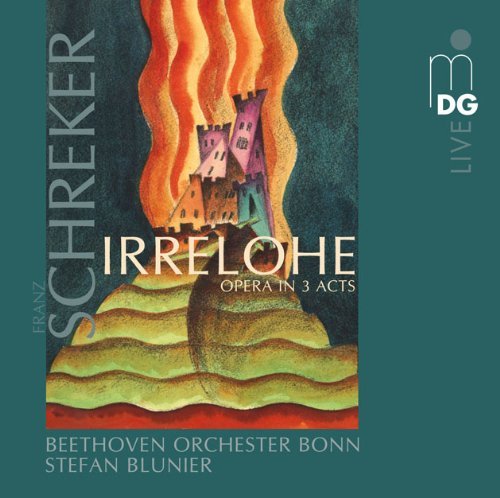
In 2010, The Opera in Bonn started a Schreker revival. Kudos! In 2010, Irrelohe was put on the stage there and recorded live by MDG (9371687-6).

The story most resembles a real horror movie. The lords of the Irrelohe castle are cursed. On their wedding day, they go mad and rape a virgin, a curse they pass on to their first-born son. Only a fire and its flames can lift the curse. And those flames do come, at the end, when the beautiful Eva (Ingeborg Greiner) prefers Count Heinrich (irresistible Roman Sadnik) to the bastard Peter (Mark Morouse). You get the idea: Peter is the first-born son of the rapist; Heinrich (who is his half-brother) was born 30 days later. All’s well that ends well, but first we shudder, shiver and enjoy…….


Roman Sadnik in scenes from Irrelohe:


Of the opera there already existed a recording on Sony, recorded live in Vienna in 1989. The Wiener Symphoniker was conducted by Peter Gülke and maybe it is his fault that it does not sound very exciting. The singers (including Luana de Vol and Monte Pederson) are certainly not to blame, although they are nothing to write home about.


Worth knowing:
Schreker wrote the libretto in a very short time (it took him only a few days) in 1919. The work takes its name from a railway station called Irrenlohe which Schreker passed by on a trip to Nuremberg in March 1919.


DER SCHMIED VON GENT


I had in my possession a pirate recording of Schrekers’s last opera, Der Schmied von Gent from Berlin 1981, but I wasn’t particularly fond of it: neither the sound nor the performance could really please me. Moreover, the opera was hard to follow without a synopsis.

So I was eagerly awaiting the first commercial release of it and lo and behold: there it is! ‘The Smith’ was recorded live in Chemnitz in 2010 and released on CPO (777 647-2), kudos!

It is a “Grosse Zauberoper” with a story a bit close to ‘Der Freischütz’, it also features a devil, as well as Saint Peter and … Alva (it takes place during the Eighty Years’ War). And yes, it all works out.

The cast, including a fantastic Oliver Zwarg in the role of Smee, is excellent.

VOM EWIGEM LEBEN

I don’t think it was wise to include ‘Ekkehard’, a work Franz Schreker wrote while still in his youth. And certainly not to place it at the beginning of the CD. The symphonic overture has little to say, sounds incoherent, is boring and deters rather than invites listening. ‘Phantastische Ouvertüre’ on 15 is hardly any better and even I, a diehard Schreker fan, really had to force myself to keep listening to it.

But it could also be a bit down to the young English conductor Christopher Ward. He conducts very skilfully but lacks a real drive. Nor can I escape the impression that he doesn’t quite understand the ‘Schrekian idiom’, because somewhere between all the very neatly played notes he has quite lost the eroticism. You hear it best in Schreker’s best-known piece, his ‘Vorspiel zu einer grossen Oper’.

Fortunately, on that CD you will also find two songs; two settings to the poem by Walt Whitman, (translated into German by Hans Reisiger) entitled ‘Vom Ewigen Leben’ and here you hear the real Schreker. Sensual and languorous. That my final verdict is not negative is therefore thanks  to these songs being sung beautifully, with much sehnsucht, by Australian soprano Valda Wilson.

SONGS


The unsurpassed Reinild Mees took the initiative and (of course) got behind the piano herself, to accompany and record two CDs full of Schreker’s songs. It features Jochen Kupfer, Ofelia Sala and Anne Buter and the result is truly outstanding (Channel Classics CCS 12098 and CCS 14398)


Also highly recommended is a release by Koch Schwann (3-6454-2), hopefully still for sale, which includes, in addition to the prelude to Irrelohe and ‘Vorspiel zu einer grossen Oper’, again the truly irresistible song cycle ‘Vom ewigen Leben’, after Walt Whitman’s poems.


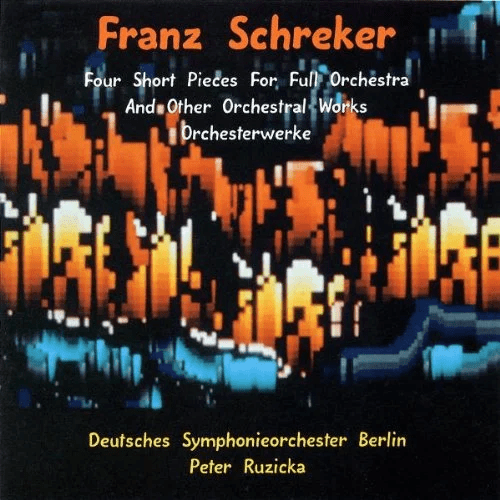
It is phenomenally sung by Claudia Barainsky – for her alone, with her radiant height and tremendous understanding of the text, you really must have the CD. Not to mention the fantastically playing Deutsche Symphonie-Orchester Berlin. The conductor, Peter Ruzicka understands exactly what Schreker’s music is all about.


For dessert, one of the most beautiful instrumental works by my beloved composer: Vorspiel zu einem Drama from 1913. The BBC Symphony Orchestra is conducted by Jascha Horenstein:

A new arrival:


Christoph Eschenbach and Chen Reiss

“Christoph Eschenbach conducts this generous survey of the sumptuous, hyper-Romantic music of Austrian composer Franz Schreker. Not only was he the pre-eminent opera composer of his generation, he also, says Eschenbach, “took Mahler’s symphonic writing to a whole new level”. The album includes the ecstatic “Nachtstück” from Der ferne Klang, the exquisite Chamber Symphony and some ravishing orchestral songs, featuring Chen Reiss and Matthias Goerne”(© DG)

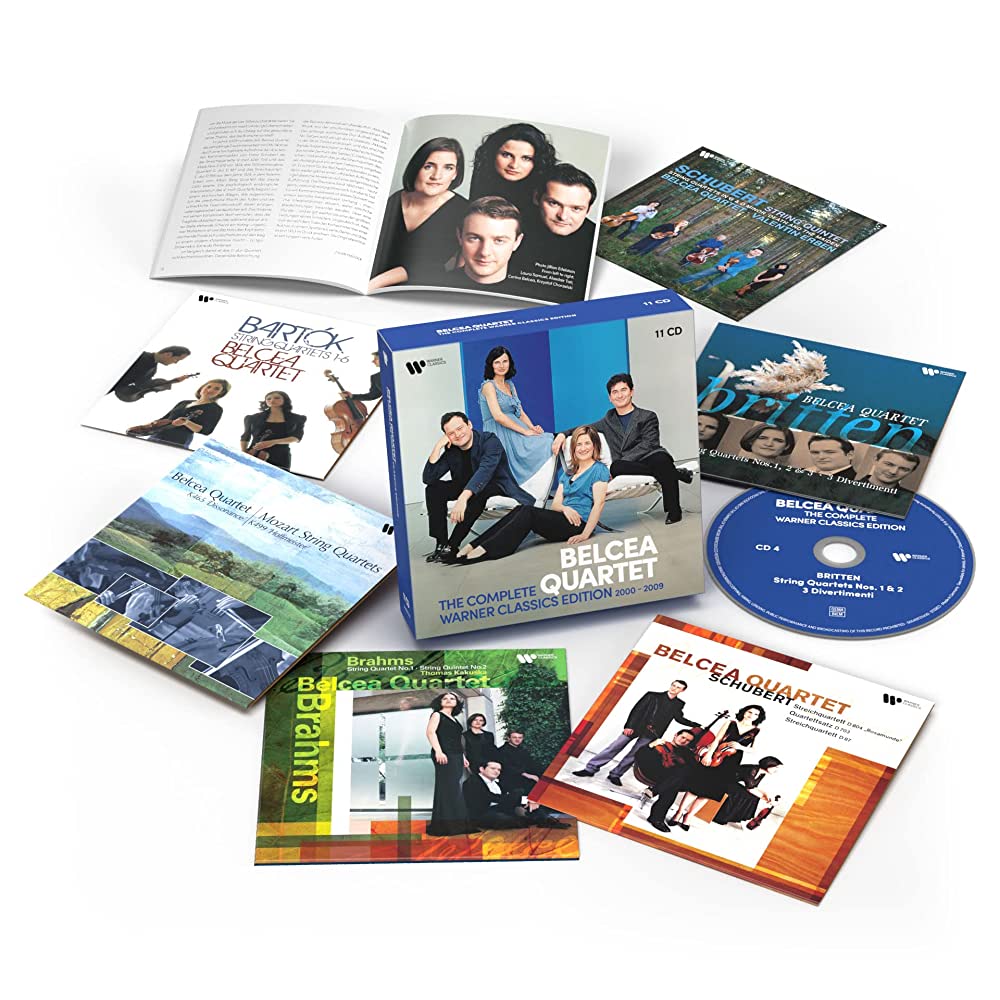
The Belcea Quartet spotlighted

It was about 25 years ago, I think, that I first became acquainted with the then very young Belcea Quartet. They had then recently made their debut in the Rising Stars series in the Concertgebouw’s Kleine Zaal, the programme included string quartets by Schubert and Thomas Adès. I also got the opportunity to speak at length with (the members of) the quartet.

© Ronald Knapp


At eleven o’clock in the morning, I rang the doorbell at hotel Verdi in Amsterdam, where the quartet was staying. The intention was to have a bite to eat with Corina Belcea and Krzysztof Chorzelski. And to talk about the quartet, of course.

Unfortunately, Corina had fallen ill so they suggested they’d stay in the hotel breakfast room.

Corina, frail and girlish, coughing heavily, and looking so pitiful that I wonder how she will be able to play that night.

And yet she leads the conversation, just as she leads the quartet – very briskly and confidently.

Corina Belcea was born in Romania in 1975. She won a few violin competitions, including Yehudi Menuhin’s, which had earned her a scholarship to the music school of the same name in London.
Why did she choose to play quartet and not a solo career?

“In the Yehudi Menuhin music school where I started studying in 1991, chamber music was the main item on the agenda. Everyone was doing it, so I was too. And I loved it.”

“When I started my studies at the Royal College in 1994, I decided to start a string quartet with three friends from my school days. After a year and a half, exactly a week before an important competition, our viola player dropped out. Then I asked Krzysztof, who was my best friend, if he was up to the challenge. He was a violinist at the time and had never played even a single note on the viola.”

Did it take a long time to learn to play the viola?
Chorzelski, laughing: “I’m still learning!”

Their repertoire includes a lot of modern music. Not that they are going to specialise in that, but at a concert they want to play at least one quartet from the 20th century. And they order new works, one per season, which they then actually perform. For instance, they have performed five compositions written especially for them, including Two movements for String Quartet by Simenon ten Holt, which they love. Very expressive.

And Thomas Adès’ quartet, which they will play later that evening?
“Oh, but that one is already quite a few years old! Adès was only 22 at the time but the work is really unprecedented and so incredibly beautiful. We consider it one of the greatest works in the modern repertoire.”

“The composer himself is also an extraordinary person, very inspiring. A few times we have played with him, and a while back we recorded Schubert’s Piano Quintet together (Warner Classics 5576642)


They always choose their repertoire together, “democratically”.
“We almost always agree with each other. Besides, we can’t play something, which we don’t like, anyway”.
What do they like most?
“Schubert. Beethoven. Mozart. And Janaček.”

And Shostakovich?


“Hmmm… Let’s say we’re not there quite yet”


It took a few years but by now Shostakovich has also become well known to the Belceas. In the previous few years, they have played just about all his string quartets live but never put his work on CD before.

And now they have!
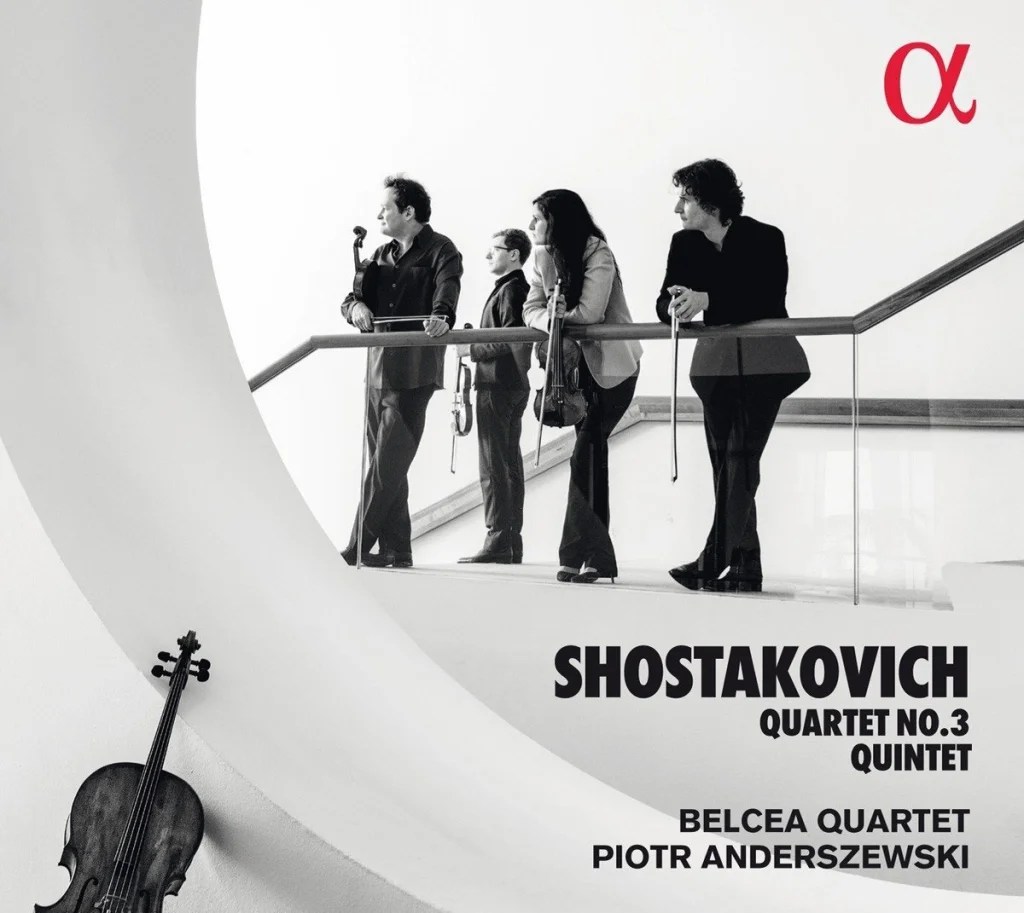
For Belgian Alpha, they have recorded the third string quartet and, reinforced by Polish pianist Piotr Anderszewsk, the piano quintet, and the result is undoubtedly excellent but with a few caveats.

The piano quintet dates from 1940. Its premiere, by the Beethoven Quartet with the composer himself at the piano, was greeted very enthusiastically by all. It earned Shostakovich the Stalin Prize, plus a considerable sum of money.


How different things were with the third string quartet! Again, it was premiered by the Beethoven Quartet, in 1946. The work was initially censored by the Soviet regime. Critics found the note with which the piece ends ‘ambiguous’ and Shostakovich was even accused of hiding coded messages against Stalin in it!


Shostakovich String Quartet no.3


The Belcea Quartet’s performance is milder than what I am used to. It’s not that the sting has been taken out, as the bitterness is still very prominent. But now you can listen to it several times in a row, without your ears getting tired. In a manner of speaking, that is.

Even the quintet, surely one of Shostakovich’s ‘sunniest’ compositions, sounds even more pleasant than usual to my ears. Incredibly beautiful, yes, but what I miss a little is the undertone – always present with Shostakovich – that makes it less pleasant for the listener.

Peanuts really. The four strings and the pianist feel each other very well, forging it into a beautiful, homogeneous whole. Without a doubt an asset!

‘Prehistoric’ Ligeti brilliantly performermed


For me, Leoš Janáček’s string quartets form the absolute opus magnus of the genre. Call me sentimental, but at the very first bars of number two my eyes fill with tears and I am really swept up in all the emotions. Over the years, many excellent versions have appeared on the market, of which the DG recording, by the then still very young Hagen Quartet, is the most precious to me.

It is not the first time that Belcea tried their hand at the string quartets: already in 2001, they recorded them for Zig Zag Territoires (ZZT 010701). I was not exactly over the moon then, somehow I did not feel they got to the core of the music. Still, I cherish the recording: I am a real ‘Belcea fan’.

I find the recording on Alpha Classis refreshing. The tempi are a bit fast, but that does not hurt. The players somewhat control their emotions, so that a lot of underground tension can be felt. Nice.

But what makes the CD a real must is the performance of Ligeti’s first string quartet. The Hungarian master composed it in 1954, two years later he had to flee the country, after which he referred to this composition as a ‘prehistoric Ligeti’.

Prehistoric or not: I think it is genius. It keeps you nailed to your seat and you can’t help but listen: preferably with all doors and windows closed, so you will not be disturbed.
The string quartet, which for a good reason bears the name Métamorphoses nocturnes (yes, call it programmatic), is not performed very often, but of all the performances I have heard so far, the Belceas’ is definitely at the top.


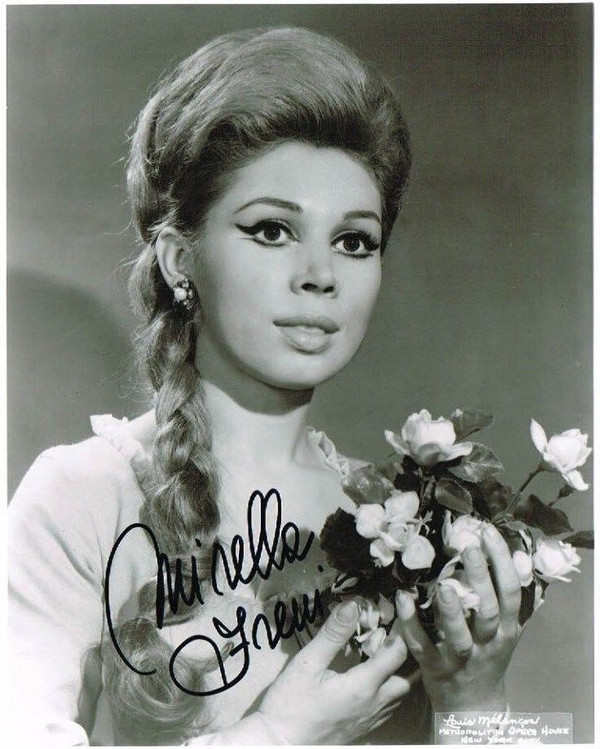
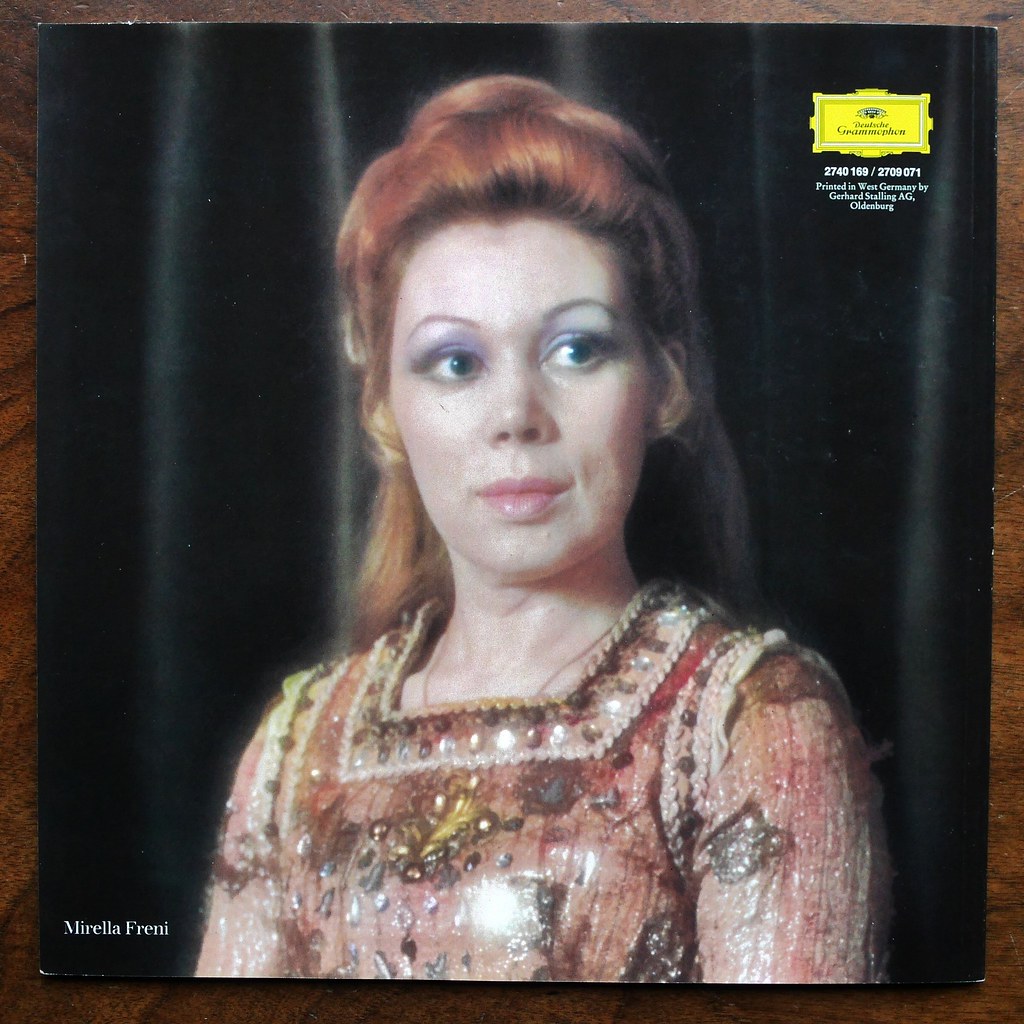
Mirella Freni as Susanna, Mimi, Adina, Amelia, Marguerite and Fedora

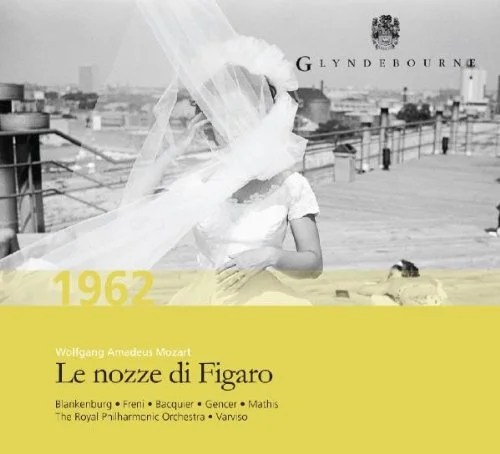
Le Nozze di Figaro Glyndebourne 1962

From 1960 on, all operas performed at Glyndebourne were recorded live. The more-than-valuable archive began to be polished off and transferred to CDs in 2008.

It was no coincidence that it was precisely Figaro’s Wedding that inaugurated the new series: after all, that opera gave the go-ahead to the new festival in 1934, which is now among the most prestigious in the whole world.

photo © Houston Rogers


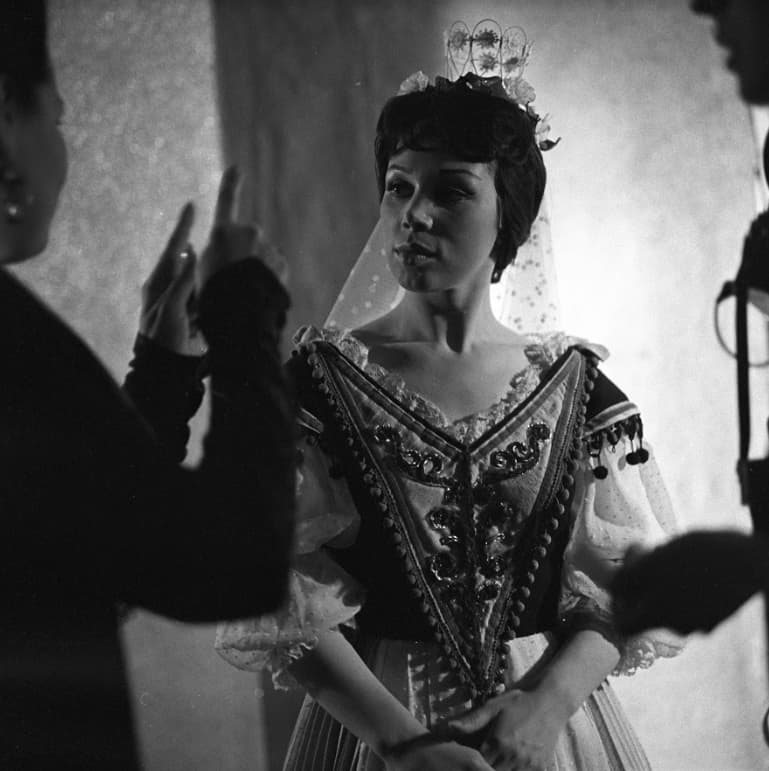
Gabriel Bacquier does not immediately associate you with Almaviva, and the Contessa is not the role you think of in connection with Leyla Gencer, but they both sing beautifully, with a great sense of nuance. The rest of the cast is also fantastic, headed by Mirella Freni (Susanna), then still at the beginning of her career, and the very young Edith Mathis as the ideal soprano-Cherubino. (GFOCD 001-62))


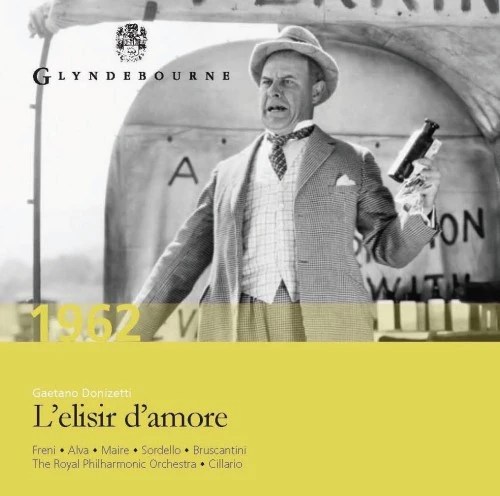
Elisir d’Amore Glyndebourne 1962


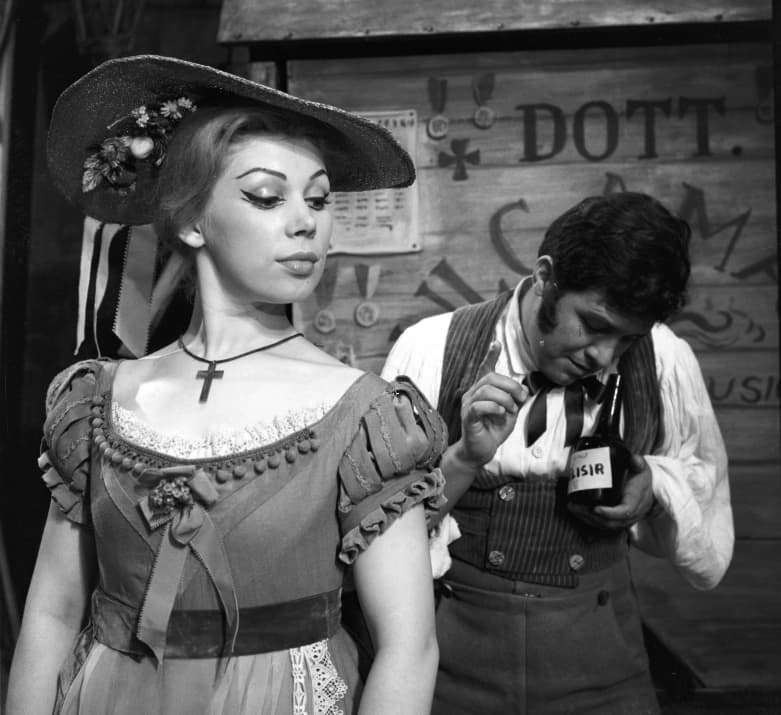
Adina marked Mirella Freni’s international breakthrough. Understandable, when you hear how beautifully she gives shape to the role: charmingly and wittily she lets her beautiful lyrical young girl soprano blossom and her height is radiant.


Luigi Alva’s velvety timbre and perfect coloratura technique made him a Mozart and Rossini tenor who was much in demand at the time, and Donizetti also fits him like a glove. His ‘Una furtiva lagrima’ may sound slightly less sweet-voiced than Tagliavini’s or Schipa’s, but his interpretation of the character of Nemorino is formidable.

Sesto Bruscantini is easily one of the best Dulcamaras in history and Enzo Sordello a very masculine Belcore.

La Bohème

MET 1965


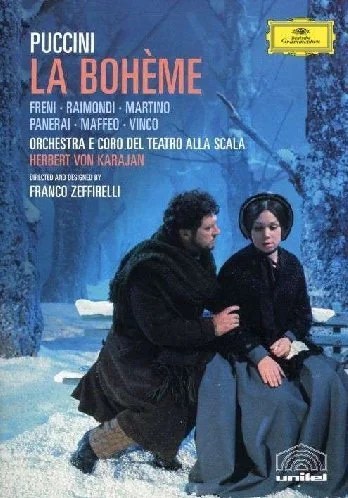
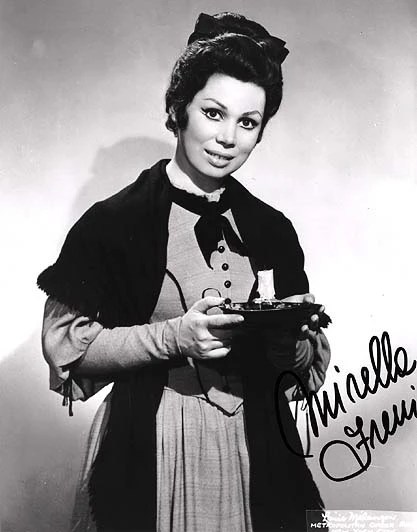
Mirella Freni made her debut as Mimì at the Metropolitan Opera in September 1965. Her Rodolfo was another debutant: the (how unfair!) nowadays almost completely forgotten Italian tenor Gianni Raimondi. For me, he is preferable to Pavarotti. I find his voice more pleasant and elegant. And he could act!


Freni’s and Raimondi’s renditions were captured on a wonderful film, directed by Franco Zeffirelli and conducted by Herbert von Karajan. An absolute must (DG 0476709).


“O Soave Fanciulla” with Freni and Raimondi:

MET 1973


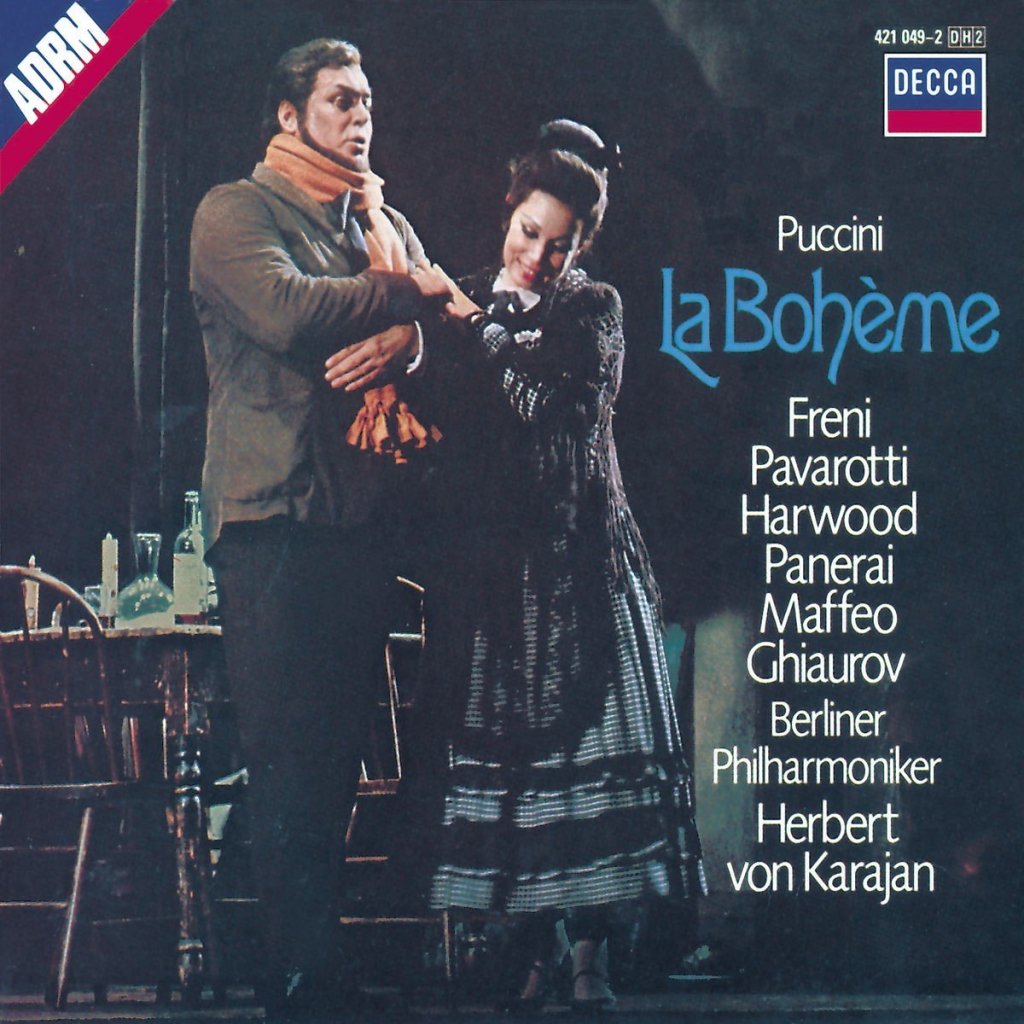
Many opera lovers will probably agree on one thing: one of the best Bohèmes ever is the 1973 version recorded by Decca under von Karajan. With Mirella Freni and Luciano Pavarotti.


Rodolfo has always been Pavarotti’s calling card. For years he was considered the best interpreter of the role – his fantastic legato, the smoothness and naturalness with whih he sang the high notes are truly exemplary. Incidentally, as befitted a typical Italian tenor of the time, he sang the end of “O soave fanciulla” at the same height as the soprano. Not prescribed, but it was tradition!


Freni was undoubtedly one of the most beautiful Mimi’s in history. Tender and fragile, with her heartbreaking pianissimi and legato arches she managed to move even the greatest cynics to tears.

Von Karajan conducted theatrical and passionate way, with ample attention to the sonic beauty of the score. As the Germans would say “das gab’s nur einmal.”


In 2008 we celebrated not only Puccini’s 150th birthday, but also von Karajan’s 100th. Moreover, it was 35 years since the famed conductor recorded La Bohème: a cause for celebration! And lo and behold – Decca has released the opera in a limited deluxe edition (Decca 4780254). On the bonus CD, Mirella Freni talks, among other things, about her relationship with von Karajan and about singing Puccini roles. It is really fascinating.


SIMON BOCCANEGRA 1977

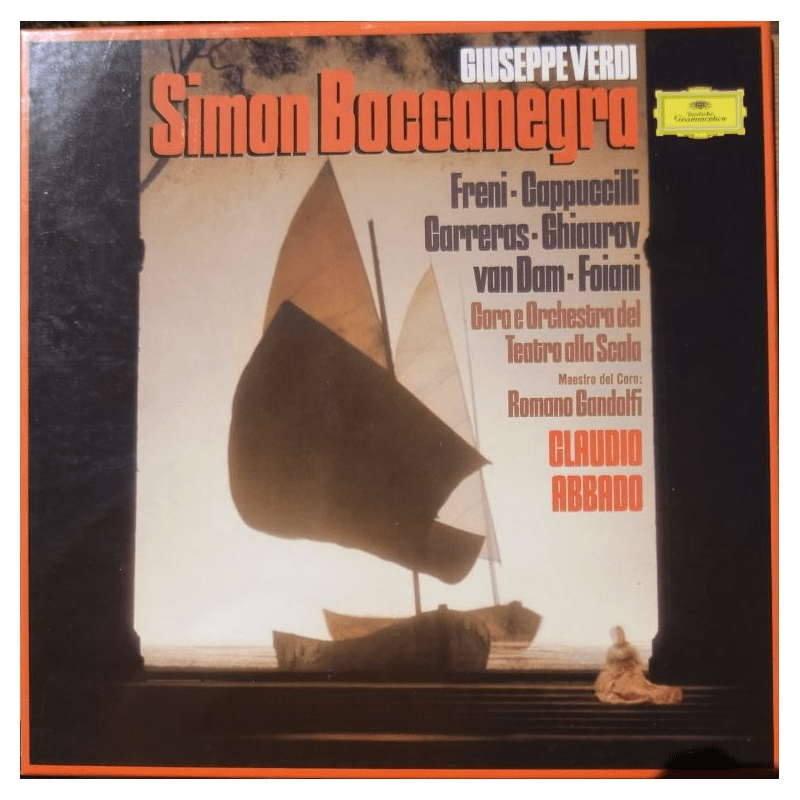
In 1971, Claudio Abbado conducted a magisterial and now legendary performance of Boccanegra at La Scala. It was directed by Giorgio Strehler and the beautiful sets were designed by Ezio Frigerio. In 1976, the production was shown at the ROH in Covent Garden. Unfortunately, no official (there are ‘pirates’ in circulation) video of it was made, but the full cast did fortunately go into the studio, and thus the ultimate ‘Simone’ was recorded in 1977 (DG 4497522).

Abbado treats the score with such love and such reverence as if it were the greatest masterpiece of all time, and under his hands it really does transform into a masterpiece without parallel. Such tension, and with all those different nuances! It is so, so beautiful, it will make you cry.


The casting, too, is the best ever. Piero Cappuccilli (Simon) and Nicolai Ghiaurov (Fiesco) are evenly matched. Both in their enmity and reconciliation, they are deeply human and always convincing, and in their final duet at the end of the opera, their voices melt together in an almost supernatural symbiosis:

Before that, they had already gone through every range of feeling and mood, from grievous to hurtful, and from loving to hating. Just hear Cappuccilli’s long-held ‘Maria’ at the end of the duet with his supposedly dead and now found daughter (‘Figlia! A tal nome palpito’).

José van Dam is an exquisitely vile Paolo and Mirella Freni and Jose Carreras are an ideal love couple. The young Carreras had a voice that seems just about created for the role of Adorno: lyrical with a touch of anger, underlining Gabriele’s brashness. Freni is more than just a naive girl; even in her love for Adorno, she shows herself to be a flesh-and-blood woman

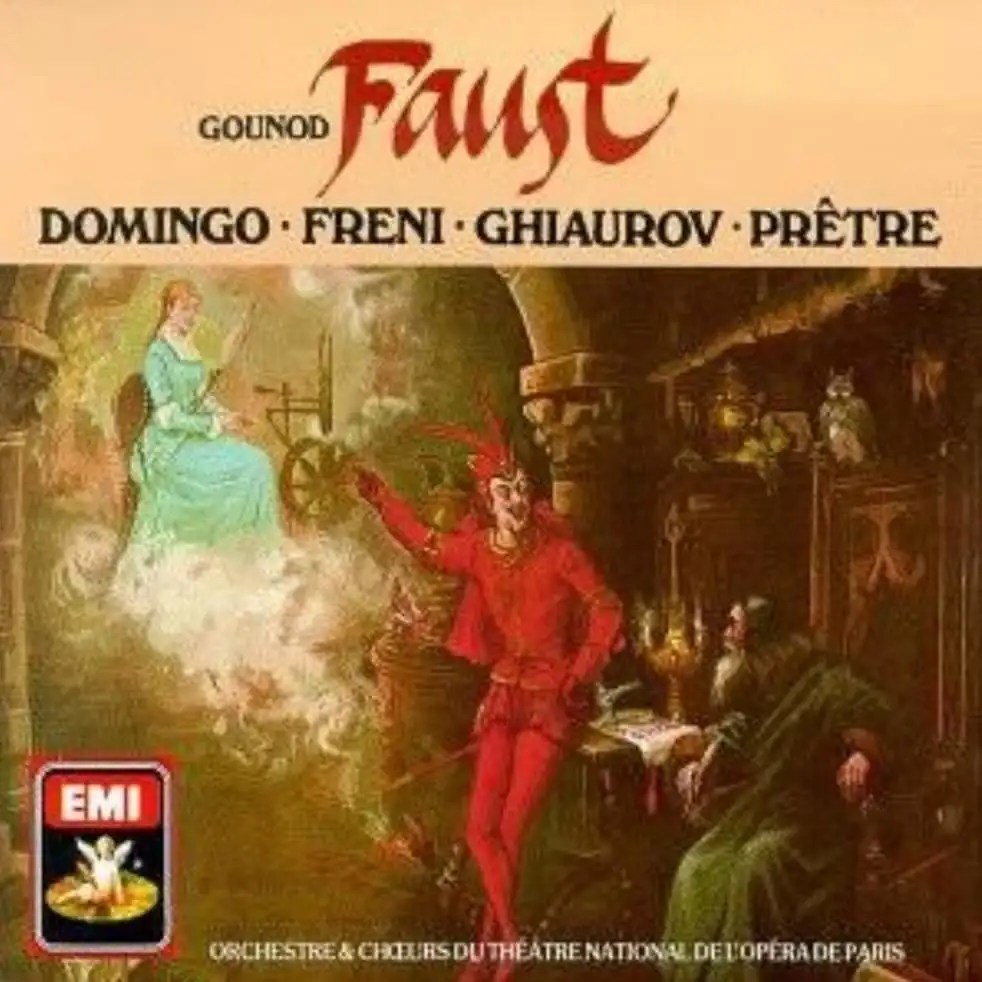
Gounod: Faust


Gounod’s Faust with Plácido Doming, Mirella Freni and Nicolai Ghiaurov was recorded in 1979 by EMI (now Warner) and it is easily one of the best recordings of the work. The orchestra of the Paris Opera is conducted by Georges Prêtre, one of the best conductors of French repertoire.

The cast is finger-licking gorgeous: Mirella Freni is a fragile and sensual Marguerite and Nicolai Ghiaurov a very impressive Méphistophélès. In the small role of Valentin we hear none other than Thomas Allen.

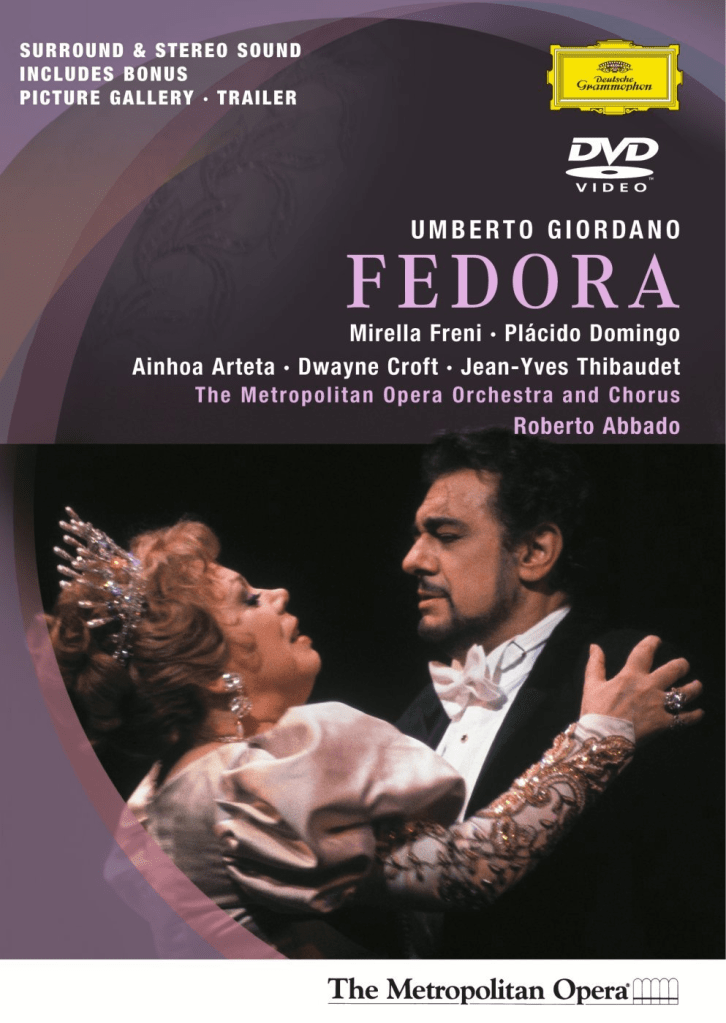
Fedora 1996

When she was sixty, Mirella Freni included Fedora in her repertoire and she gave a series of performances in Italy and Spain, finally coming to the Met in 1996. It became an enormous success. No wonder, because La Freni’s voice was extraordinary. I have never before seen her act with such intensity; it is a performance of the highest level.


Ainhoa Arteta is truly delightful as the flirtatious, spirited Olga; her performance provides the necessary comic note. As the Polish pianist, Boleslao Lazinski, the real piano virtuoso appears: Jean-Yves Thibaudet. Not only can he play the piano very well, but throughout his performance he convinces as a real primadonna, it is very entertaining to watch.
Domingo also portrays a perfect Loris: tormented and oh so charming!

The staging is conventional, with lavish, larger-than-life sets and real snow behind the stage-sized windows. It is just beautiful (DG 0732329).

— 

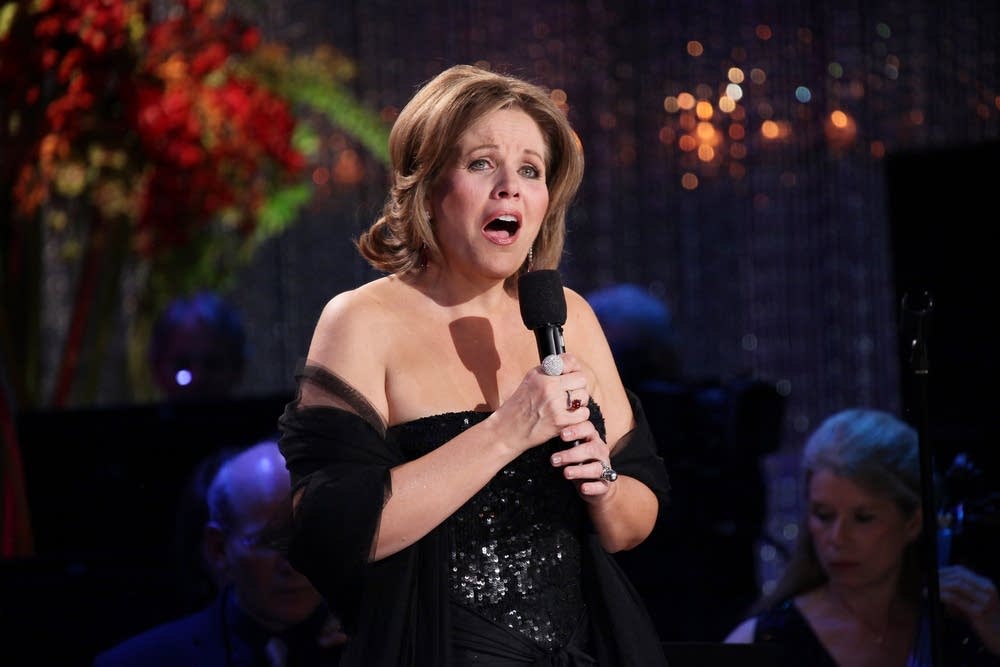
For Renée Fleming on her Birthday

Bel Canto


When this CD came out in 2010, it was greeted with quite a lot of suspicion, but the combination is really less strange than you think. Nowadays, Fleming is mainly associated with Mozart and Strauss, but her career began with singing (among others) Bellini, Donizetti and Rossini.

Fleming grew up in a musical family; both her parents were singing teachers. It was also her mother, who gave her her first singing lessons. She achieved her first major success in 1988 in Houston, as the Contessa in Nozze di Figaro, but her international breakthrough came in 1993, when she performed Armida at the Rossini festival in Pesaro, a role she subsequently repeated at Carnegie Hall. She has also not only recorded, but also performed scenically, the lead roles in Maria Padilla, La Sonnambula, Il Pirata and Lucrezia Borgia.

“When I started singing, I thought bel canto operas were the foundation of every singer’s repertoire. All the singers I admired then: Sutherland, Callas, Caballé, Sills, Scotto sung them. It was quite shocking to discover that in the professional world of opera there was such a thing as a ‘Mozart/Strauss soprano’, and that that soprano never sang bel canto.”

“If I had to count them, there are seven complete bel canto roles I have sung live. I learnt most of them in the early years of my career, when I often worked with Eve Queler. But I also learnt a lot from Montserrat Caballé. We sang together in Il Viaggio a Reims and we discussed the repertoire many times. Marilyn Horne also meant much to me and I learned my high notes from Joan Sutherland at her home”.

The “Bel Canto” CD is just wonderful. The music is magnificent and Fleming’s interpretations superior. Her creamy soprano and exquisite height may be widely known, but her colouraturas and expressiveness are just as fine. Her fabulous breathing technique allows her to spin out the longest arches into the finest pianissimi.

Philip Gossett is a specialist in nineteenth-century opera. He has worked with Renée Fleming many times before and especially for her he ‘reconstructed’ the ornamentation in the well-known cabalettas, including those from La Sonnambula. The result is very surprising and exciting, although one has to get used to those different notes.


ARABELLA


Optically, Fleming is just about the most beautiful Arabella ever. Not just beautiful, but so full of herself: you can see her asking the mirror “mirror, mirror on the wall”, so to speak….
I can no longer ask Strauss, of course, but I suspect she could have been the model Arabella for him. Also her velvety way of singing as if you landed under a down duvet….

Julia Kleiter is a good Zdenka, but Morten Frank Larsen (Mandryka) is simply Danish. He looks Danish and he sings Danish. Too bad, because the direction by Götz Friedrich (Zurich 2007) is extremely exciting.

Below is a scene with Renée Fleming and Julia Kleiter:


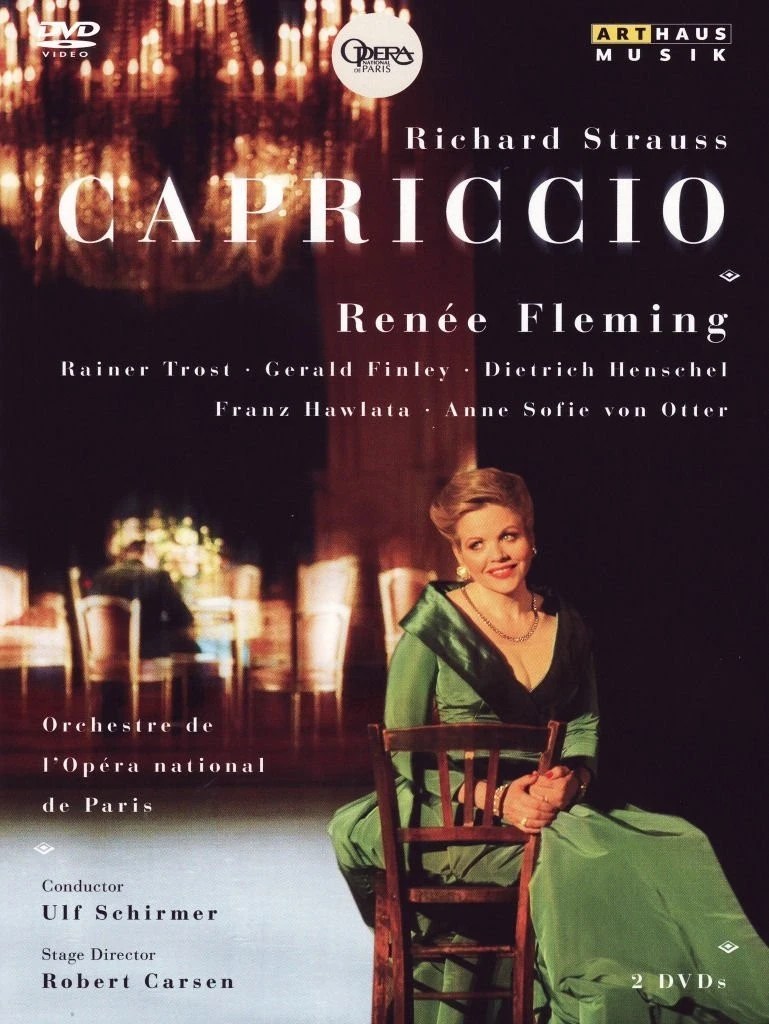
CAPRICCIO


Carsen moved the action to Nazi-occupied Paris in 1942, the time of the opera’s creation. The setting is the entire Palais Garnier, including the majestic staircase, the long corridors and the boxes in the auditorium. I assume video technology was used, but I don’t really get how it is done. So it is with bated breath that I watch the Countess, who looks admiringly from her box at her alter ego singing on stage. A truly ingenious invention for the final scene, in which she was originally supposed to sing her long final monologue in front of the mirror.

The opera’s final scene:


It is mentioned at the beginning of the opera that the text and the music are like brother and sister, and so too are the two rivals, the composer Flamand and the poet Olivier; they end up sitting fraternally in the opera’s lounging sofa, looking tenderly at their joint child: a symbiosis of words and notes. An opera.

A better Madeleine than Renée Fleming can hardly be imagined. With her endless legato, her round, creamy soprano and (not least) her scenic presence, she portrays a countess with narcissistic traits: beautiful, self-conscious, aloof and very admirable.
Her brother, portrayed by Dietrich Henschel, is a match for her, and though he does not physically resemble her, his traits betray the family ties.

It is difficult, if not impossible, to choose between the two gentlemen in love, as both Gerald Finley (Olivier) and Rainer Trost (Flamand) look very attractive in their well-groomed suits, and neither their voices nor their acting can be faulted.

Franz Hawlata is a phenomenal La Roche, and the delightful Robert Tear portrays an entertaining Monsieur Taupe.

Anne Sofie von Otter is unrecognisable as the “diva” Clairon – her entrance, with which, accompanied by a Nazi officer, she causes a lot of commotion, evokes memories of the great actresses of the 1940s.

The direction is so brilliant that you simply forget that this is an opera, and not the real world. Everyone moves and acts very naturally, and the costumes are dazzlingly beautiful. Were it not for the occasional, but very prominently portrayed, Nazis, one could imagine oneself in a utopian world of serene tranquillity.

Was this what Richard Strauss’ world looked like back then? Perhaps that was the message? I leave the conclusion to you.


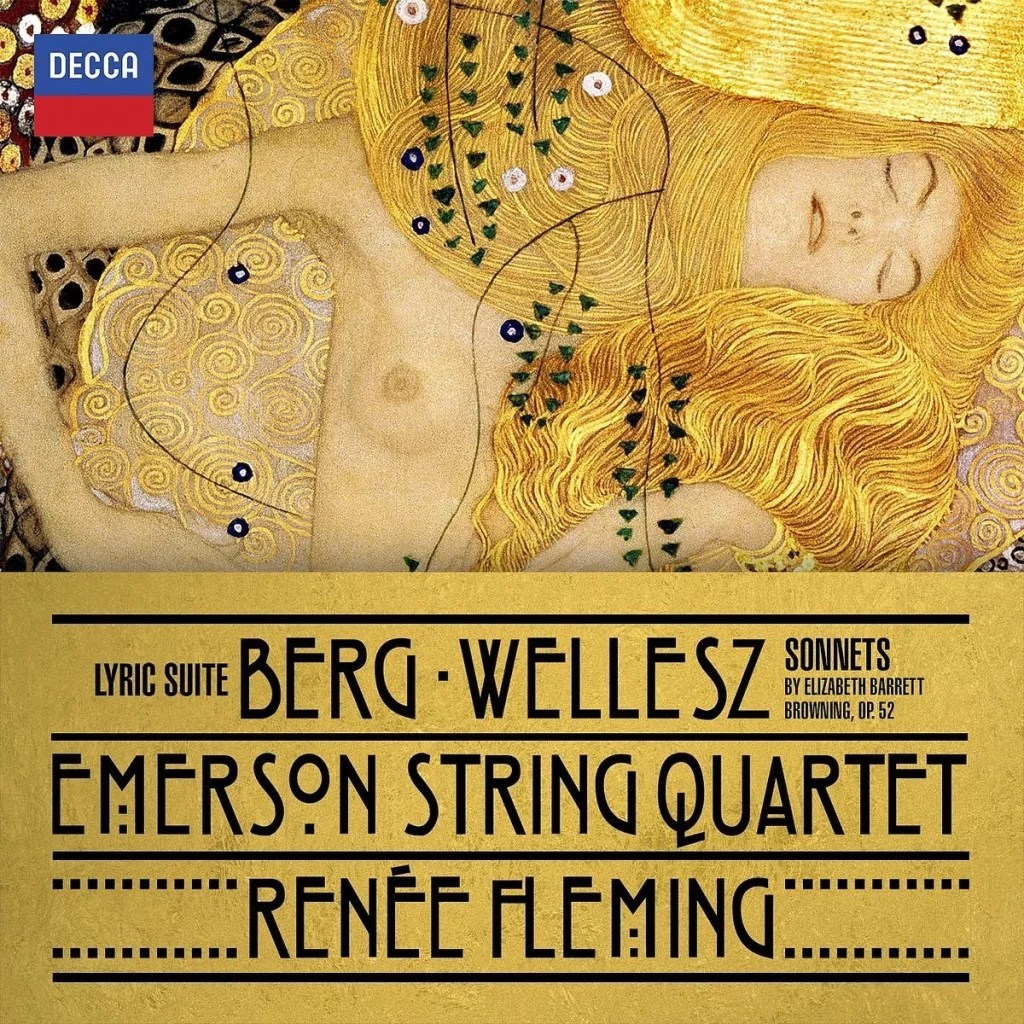
Renée Fleming sings Berg, Wellesz and Zeisl. A must buy!


There is no shortage of recordings of Berg’s Lyric Suite. Both in the version for string quartet and in the version for chamber orchestra: the choices are many. Whether it was Berg’s intention we cannot really know for certain, but we assume it was: the last movement, the Largo Desolato,  may also be sung.

Theodor Adorno, Berg’s pupil and confidant, considered the work to be an almost latent opera and that makes sense. Adorno was one of the few who knew about Berg’s affair with the married Hanna Fuchs, for whom he composed the work. For Berg, Fuchs was not only his lover and muse, but also his Isolde and his Lulu.

It is not the first time, by the way, that the poem by Baudelauire, the source of inspiration for the last part of the quartet, is actually sung. The Kronos Quartet and Dawn Upshaw had already recorded the version in 2003, there is also a recording by Quator Diotima with Sandrine Piau. The “Emerson”, however, offer us both versions: with and without vocals.

The decision to link Berg’s Lyric Suite to the songs of Egon Wellesz is nothing less than genius. Both composers had received their training from Schönberg, who had taught them not only the twelve-tone technique, but also to use a large dose of expressionism. Something you hear very clearly in the cycle Sonette der Elisabeth Barrett Browning.

That the songs are not performed more often is not only strange, but also a great shame. Of course, this has everything to do with the “once forbidden and then forgotten” attitude, which has also been fatal for Eric Zeisl. His short song Komm Süsser Tod makes us long for more: couldn’t there be some Zeisl added to the CD? It’s not the lack of space: at just 56 minutes, the CD is very short.

Renée Fleming’s creamy, cultured soprano and her mannerism fit the songs like a glove. The result is a beautiful cross between Gustav Klimmt and Max Beckmann. The very imaginative and expressive performance by the Emerson String Quartet adds to the overall experience. A must.

Decca 4788399


Ladies and Gentlemen, Miss Renée Fleming


The life of an opera star is no bed of roses. You are born with a voice that you then try to mould into an instrument that will always obey you. Throughout your life, you work on your technique, take language and acting lessons and you keep your body in shape because appearance is also very important, especially for a woman. And should you not only be wanting a career but also a family life, then things get tough. No wonder that at some point you start to question what is most important in your life and where your priorities really lie.

In the wonderful documentary by Tony Palmer (the maker of more wonderful documentaries, just think of the film about Maria Callas), Renée Fleming, one of the greatest opera singers of our time, talks at length about her fears and doubts. We see her during rehearsals and performances, we admire her dresses, watch home videos showing an apparently happy family life and wipe away a tear listening to her rendition of ‘Amazing Grace’ at Ground Zero.

At the presentation of a new creation from the master pastry chef: a chocolate treat called ‘La Diva Renée’, we get slightly moved. And she well deserves it.

Another one whom we forgot: Karl Weigel and the Viennese tradition

Karl Weigl, ca. 1910; the photograph was featured in Die Musik (1910) to accompany Richard Specht’s essay “Die Jungwiener Tondichter.


Karl Ignaz Weigl was born in 1881 in Vienna into an assimilated Jewish family. In 1938, he fled to New York, where he died ten years later. He was important contributor to the ferment of musical styles in Vienna in the early twentieth century. His compositions, which are still rarely being performed, are very traditional, anchored in a ‘Viennese sound’.

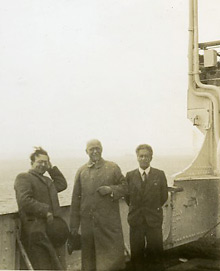
Karl Weigl on board the S.S. Statendam during the transatlantic crossing from Southampton to New York in October 1938.


That his symphonies are occasionally reminiscent of Mahler is not so surprising: Weigl worked closely with Mahler as his personal assistant at the Vienna Court Opera. But Brahms, too, is never far away.

In 1938 Arnold Schönberg wrote: ‘I have always regarded Dr. Weigl as one of the best composers of the old school; one of those who continued the glittering Viennese tradition’. No one could have put it better.rl Weigl on board the S.S. Statendam during the transatlantic crossing from Southampton to New York in October 1938.rl Weigl on board the S.S. Statendam during the transatlantic crossing from Southampton to New York in October 1938


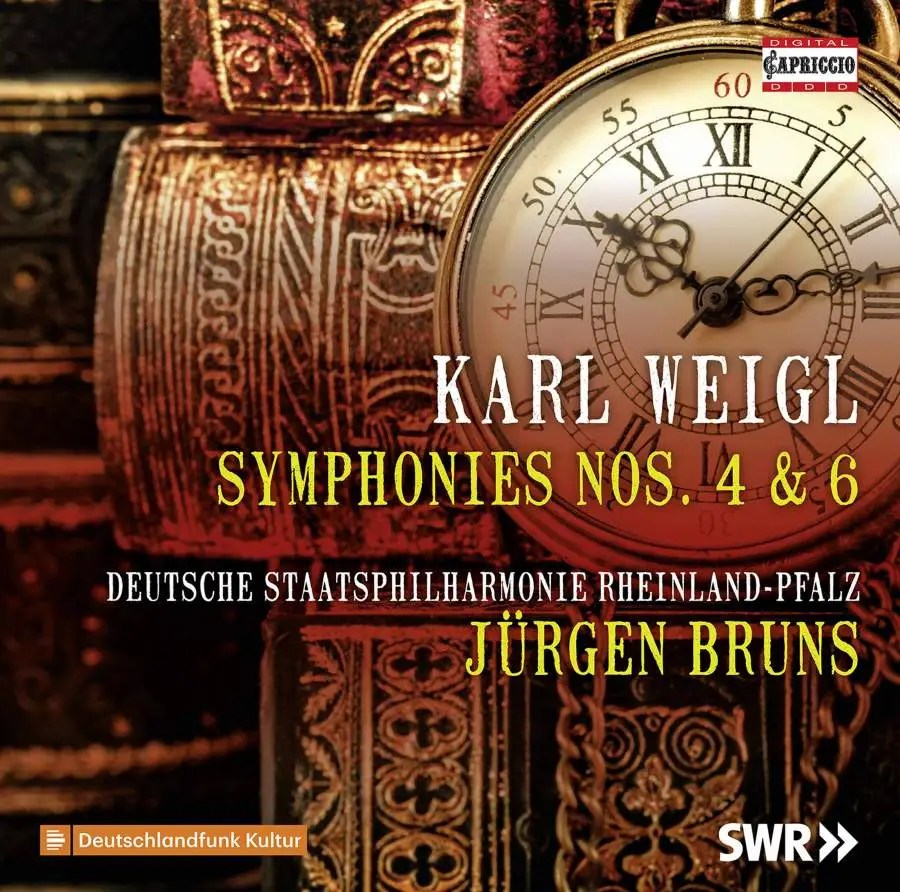
Weigl studied with Zemlinsky, who held his pupil’s compositions in very high esteem. His works were performed by the most distinguished musicians, like Furtwängler and Georg Szell. It is truly unimaginable that he was so utterly forgotten: it was only after the year 2000 that record companies began to take some interest in his music. So huge kudos to Capriccio that, it seems, is in the process of creating a real Weigl (and more forgotten composers)-revival.


Weigl composed his fourth symphony in 1936. When I put the CD on, I first thought I was dealing with an unfamiliar version of Mahler 1; the resemblance is more than striking. But even the sixth symphony has its ‘Mahler moments’: think of the seventh!  The performance by the Deutsche Staatsphilharmonie Rheinland-Pfalz conducted by Jürgen Bruns is outstanding


The ‘glittering Viennese tradition’ is Weigl’s main trademark. To put it irreverently, his music may be seen as sort of a gateway. A kind of corridor that runs from a classical Beethoven via a soul-stirring Schubert and an underground erotic Zemlinsky to finally end up in Weigl’s calm waters, and from there it finds its way to our hearts.

Weigl is not a composer I have heard much of (no, it’s not my fault) and apart from his, by the way, wonderful songs and a few of his chamber music compositions, I did not know him very well. So this CD is more than welcome, especially because the musicianship is so incredibly good.

I am most charmed by the violinist David Frühwirth. His tone is very sweet, as sweet as a Viennese Sachertarte. You can hear it best in the very Schubertian piano trio, but make no mistake! Just listen to the allegro molto, the third movement of the second violin sonata from1937 and you discover the complexity of the ‘Wiener-sound’.

And I feel free to use another quote, this time from Pablo Casals: “His music will not be lost, after the storm we will return to it, one day we will return to those who wrote real music.” It has taken a while and we are still far away, but a beginning has been made.

Detail of Karl Weigl diary entry, summer, 1937.

.

A few words about Mara Zampieri, one of the greatest soprano’s of the last thirty years of the 20th century

© Tamino autographs

IL GIURAMENTO


Some forty years ago, I paid a real fortune for those two badly copied cassette tapes of Saverio Mercadante’s Il Giuramento, recorded live in Vienna on September 9, 1979. And now that the Austrian broadcaster ORF is digging up one after the other live recorded opera from their archives and transferring them to CDs, this splendid opera also came on the market – for little money and in an excellent sound quality (Orfeo C 6800621).

Il Giuramento is, just like La Gioconda, based on Victor Hugo’s play ‘Angelo, Tyrant de Padoue’, but there is a world of difference between the two works. La Gioconda is a very passionate, at times overwhelming, opera and contains a selection of (over)famous arias. Think of ‘Suicidio’ or ‘Cielo e mare’. Il Giuramento is smaller and more intimate. Think of Bellini with a touch of early Verdi.

The whole opera is really nothing but a succession of the most beautiful melodies, which force you to listen without even wanting to sing along. Or it must be ‘Compita è ormai la giusta e terribil vendetta’, a beautiful aria sung with much melancholy and elan by Domingo.


Domingo rehearsed the role, which was completely new to him, in four days (!) and stepped in – after only one rehearsal – for the sick Peter Dvorsky. Who else would be capable of pulling this off?

Mara Zampieri, unlike many of her contemporary colleagues, had a very individual sound that you may or may not like, but you cannot not possibly confuse her with anyone else. Her silver-coloured, sensuous soprano blends in beautifully with the golden velvet of Agnes Baltsa (then still without the ugly register break that marred her later performances so much) and in ‘Oh! Qual nome pronunziaste’ their voices melt together into a wonderful unity that is so beautiful it hurts.


ATTILA


There are those performances where everything is just in perfect harmony and you get the feeling that it could not be any better. People keep talking about them and they become legends.

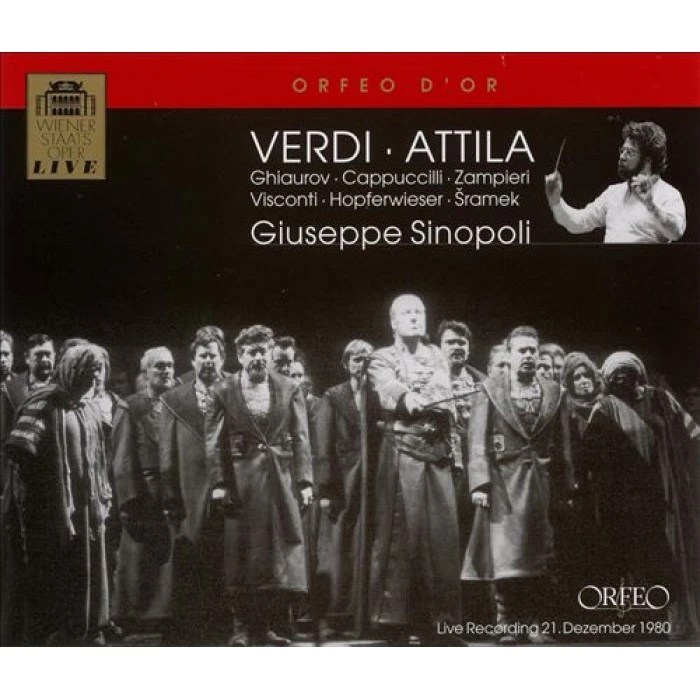
Verdi’s Attila was such a performance, at the Vienna State Opera on 21 December 1980. It was Giuseppe Sinopoli’s debut in the house, his name was still virtually unknown, but the initial reluctance of the audience turned into frenzied enthusiasm from the very first bars. Verdi’s score – not the strongest – has never been heard before with such warmth, fervour and tenderness.

Nicolai Ghiaurov was a great Attila. With his sonorous bass, he gave the character not only the allure of a general but also the gentleness of a loving man.

In her role as Odabella, Mara Zampieri proved that she is not only a fantastic singer with a radiant height and a dramatic attack, but also a great actress.

The stretta ‘E gettata la mia sorte’ in the second act requires the baritone to sing the high b flat. Piero Cappuccilli hit it with ease and suppleness, and then was forced to encore by the frenzied audience, something one seldom experiences in opera. A rare occurrence.


Met Plácido Domingo in La Fanciulla del West

Mara Zampieri sings verismo

And try to find this one, You can’t live without this recording, believe me!
Just  few examples