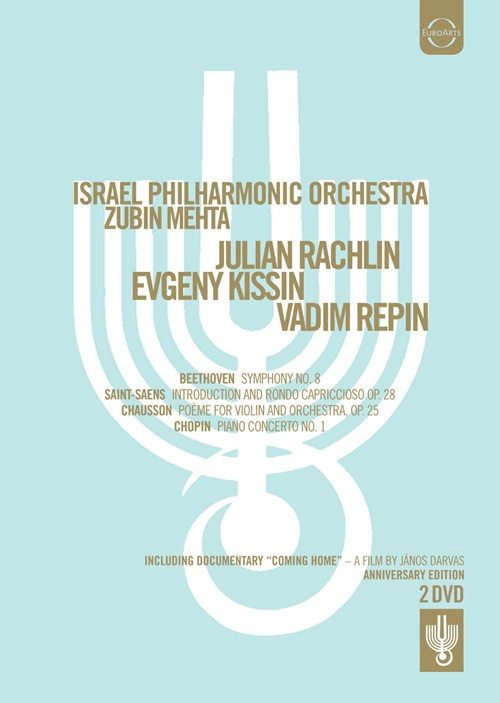
The Israel Philharmonic Orchestra turned 75 years old on december 26, 2011 The anniversary was celebrated abundantly with a concert that was enough to make anyone’s mouth water. The festivities took place in Hangar 11 in Tel Aviv, an exceptionally beautiful location situated in the old port of the city.
First of all, there was Zubin Mehta. The conductor of Indian origin has devoted heart and soul to the orchestra, for which he was rewarded by being named Music Director for Life in 1981. His performance of Beethoven’s Eighth was rock solid, but the contributions of the soloists surpassed the orchestral virtuosity.
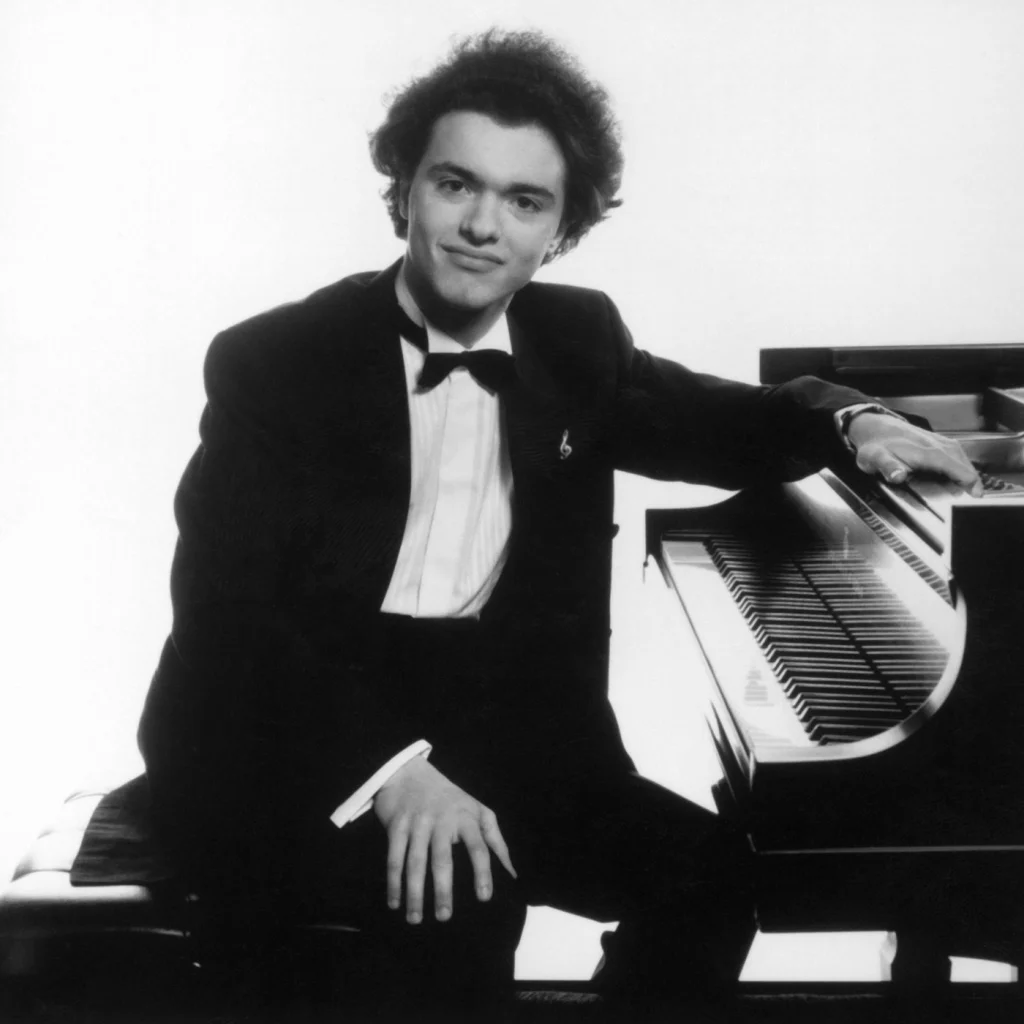
Evgeny Kissin was brilliant in Chopin’s First Piano Concerto. The sound, unmistakably Polish and highly romantic brought the audience to tears. As for me, on my comfortable couch in Amsterdam, my TV screen got suspiciously hazy.
Both violinists, Julian Rachlin and Vadim Repin were genial in their own way, and a match for each other. In contrast to Rachlin’s slightly emphatic, full-blooded, romantic sound, Repin’s tone was more transparent. I need to add that Chausson’s Poème played by Repin is in a different league than Saint-Saëns‘ Introduction et Rondo Capriccioso, but the Sarabande from Bach’s second Partita was as wax in Rachlin’s hands.
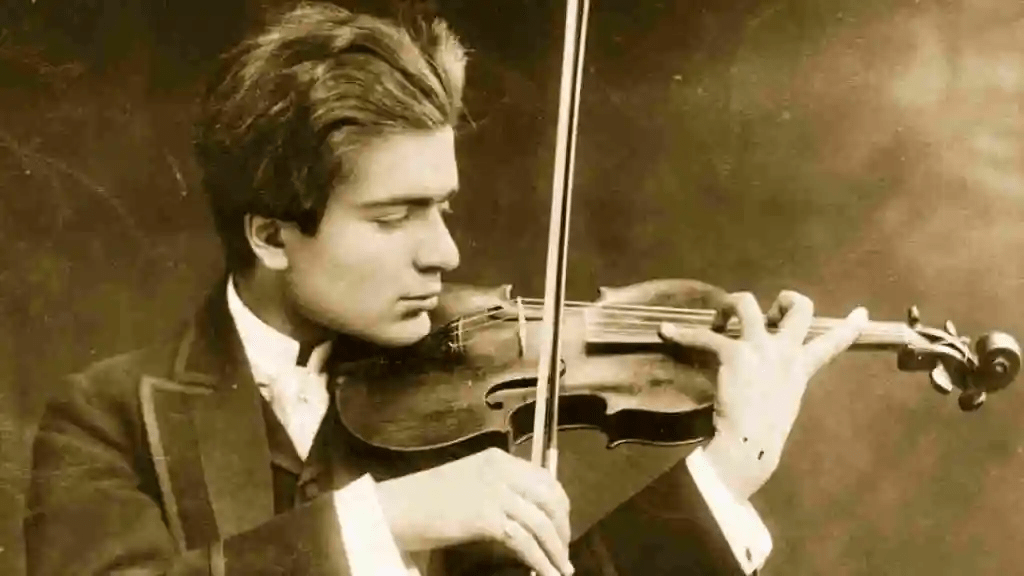
Bronislam Huberman
In addition there is a documentary on the early years of the orchestra. What we get to see here is invaluable. Bronisław Huberman and his idealistic plan, with which he not only created one of the greatest orchestras in the world but saved hundreds of lives as well.
Arturo Toscanini in action:
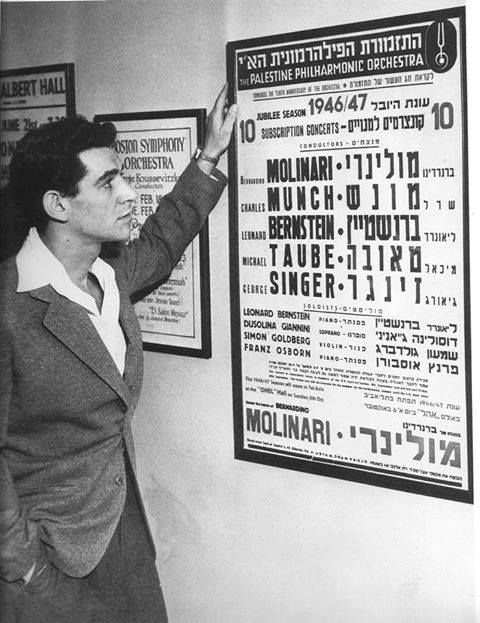
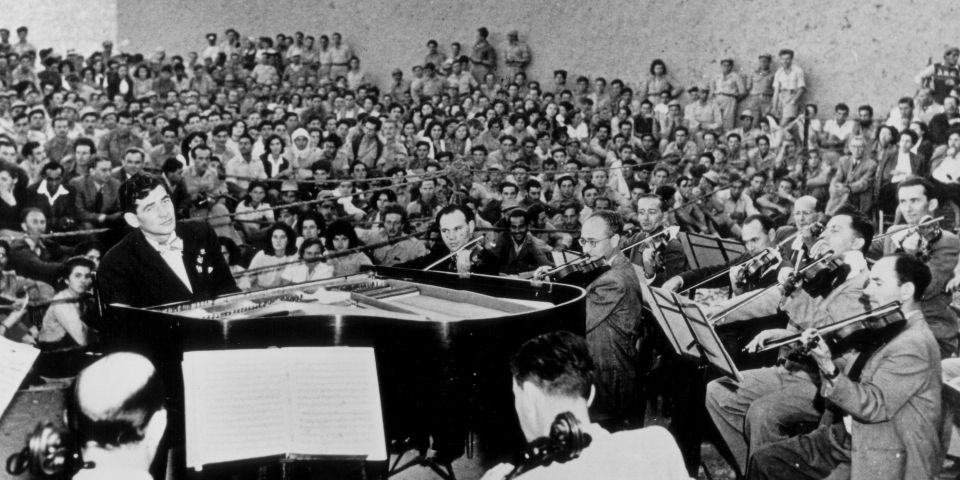
Bernstein and the orchestra
A young Bernstein performing for the young army. Moving family histories….
On 20.11.48, a few days after its liberation, the IPO performed a moving concert on Beer Sheba’s dunes and senior orchestra members remember the young Leonard Bernsten playing and conducting the orchestra before 5,000 soldiers within earshot of the retreating Egyptian forces.”
I doubt this documentary will ever be shown on TV. So go to the store and buy the dvd. Put your feet up, take the time for it, enjoy, and be moved.
Trailer:
SAINT-SAËNS, BACH, CHOPIN, CHAUSSON, BEETHOVEN Julian Rachlin, Vadim Repin (viool), Evgeny Kissin (piano) Israel Philharmonic Orchestra olv van Zubin Mehta Euroarts 2059094 • 95’(concert) + 52’(documentaire)
One of the finest performances of Mozart’s Sinfonia Concertante, with Itzhak Perlman and Pinchas Zukerman, made at the 1982 Huberman Festival. The Israel Philharmonic is conducted by Zubin Mehta:
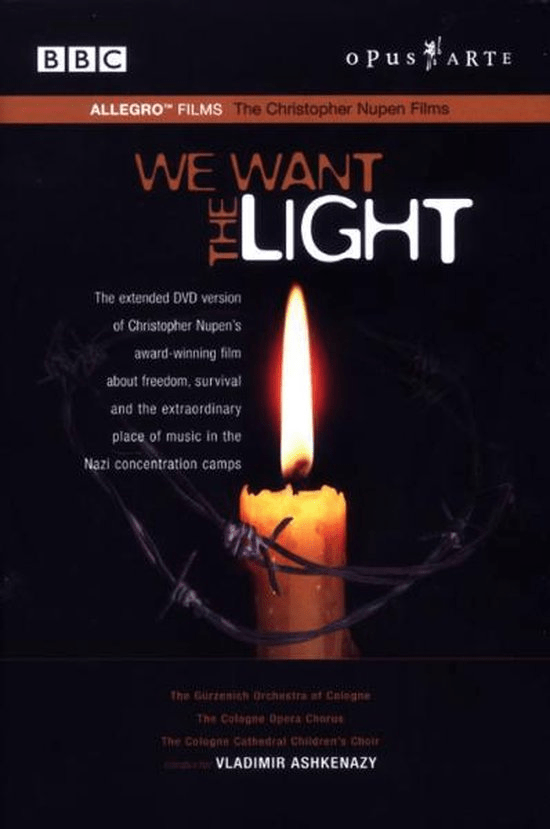
It is not easy to put into words a five-hour long, important documentary. So let’s make it very short,
By means of interviews, music fragments and archive films, Christopher Nuppen sketches a picture of the role that Jews have played in German culture: art, literature and music. Their urge for assimilation, inspired among others by Lessing, could only end in tragedy, because “that symbiosis had taken place inside our minds but not in the minds of the Germans”.
Wagner’s role in bringing about the Holocaust is also being examined. Norman Lebrecht says that “he is the one most to blame”, but the mayor of Rishon L’tzion (where, in October 2000, the first performance of Wagner’s music by an Israeli orchestra took place) denies this: “we will not let them take away the music from us, it has nothing to do with it”.
The survivors talk about the great significance that music has had in their lives: “if you could play you felt happy and healthy, the music gave us strength” says the then 98-year old Alice Summer.
The title of Christopher Nupen’s film, We want the light, is taken from a poem written in Theresienstadt by a 12-year-old girl, Eva Pickova.
Vladimir Ashkenazy:
Producer Christopher Nupen talks about the characteristics of his films, the power of music and introduces his film “We Want The Light”.
We want the light film by Christopher Nupen Vladimir Ashkenazy, Daniel Barenboim, Evgeni Kissin, Zubin Mehta, Itzhak Perlman, Pinchas Zukerman, Alice Summer and others. Opus Arte OA CN0909 D (3 DVDs)
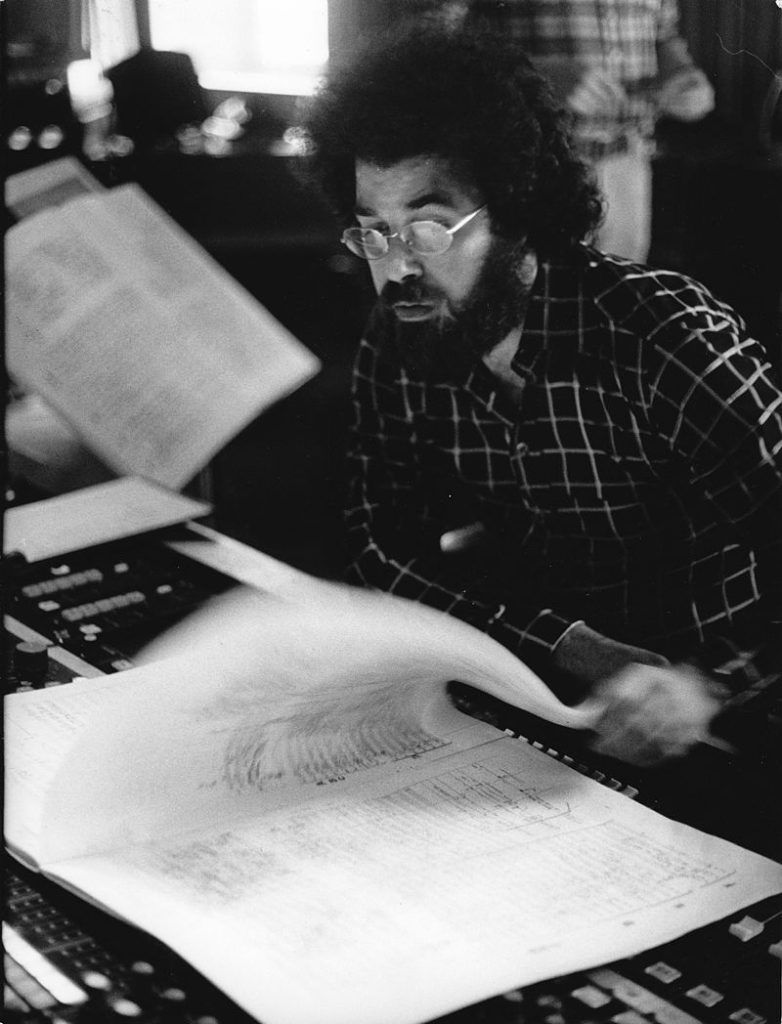
On 20 April 2001 Giuseppe Sinopoli died of a heart attack while conducting Aida in Berlin. He had just started the third act when he lost consciousness…… Sinopoli was 54 years old.
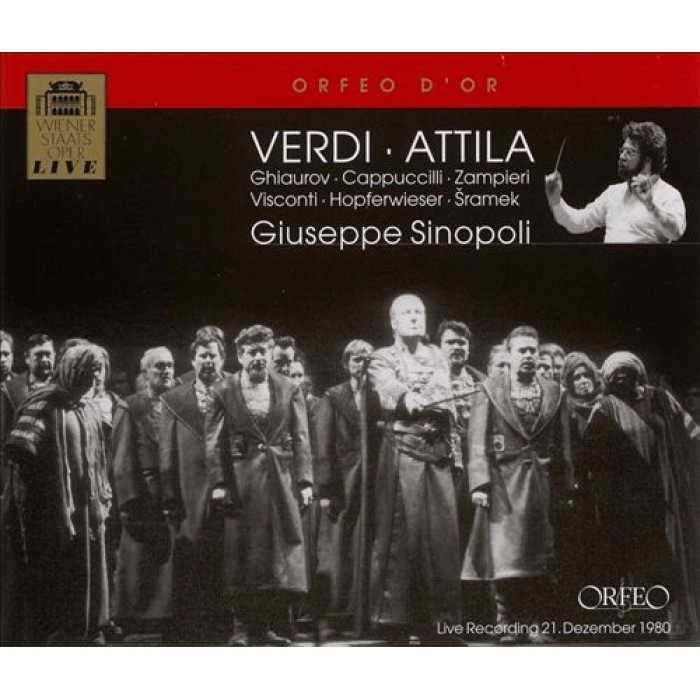
ATTILA
There are those performances where everything is just in perfect harmony and you get the feeling that it could not be any better. People keep talking about them and they become legends.
Verdi’s Attila was such a performance, at the Vienna State Opera on 21 December 1980. It was Giuseppe Sinopoli’s debut in the house, his name was still virtually unknown, but the initial reluctance of the audience turned into frenzied enthusiasm from the very first bars. Verdi’s score – not the strongest – has never been heard before with such warmth, fervour and tenderness.
Nicolai Ghiaurov was a great Attila. With his sonorous bass, he gave the character not only the allure of a general but also the gentleness of a loving man.
In her role as Odabella, Mara Zampieri proved that she is not only a fantastic singer with a radiant height and a dramatic attack, but also a great actress.
The stretta ‘E gettata la mia sorte’ in the second act requires the baritone to sing the high b flat. Piero Cappuccilli hit it with ease and suppleness, and then was forced to encore by the frenzied audience, something one seldom experiences in opera. A rare occurrence.
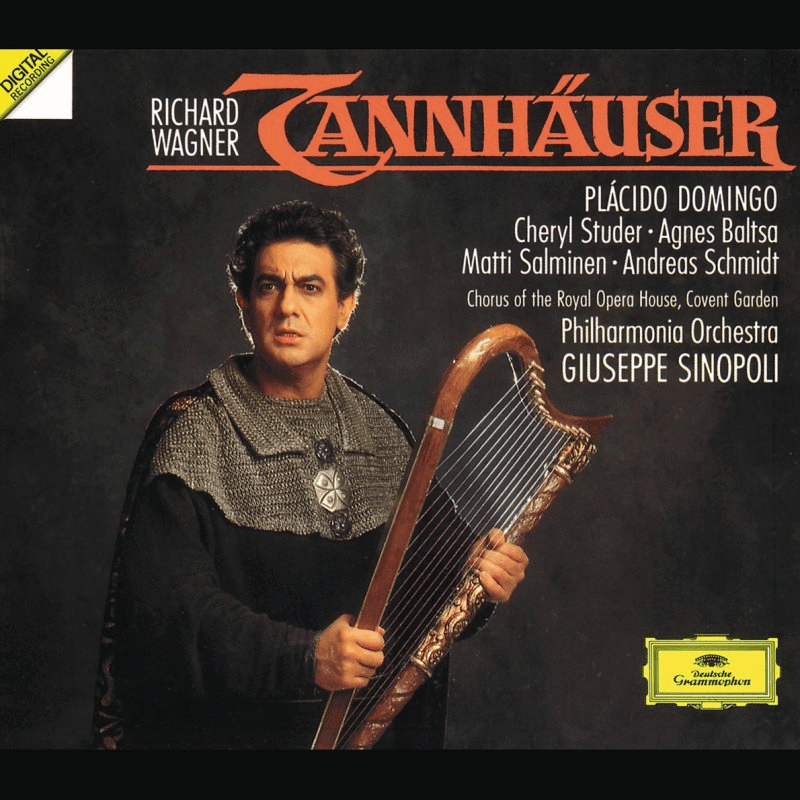
TANNHÄUSER
I have never been a ‘Wagnerian’. I could never muster the patience to sit through hours of his operas. I found them bombastic. Pathetic. And even though I had to admit that there were some beautiful melodies, I felt that I really needed a pair of scissors and radically shorten them
That this feeling has totally changed, I owe to Domingo. In my collector’s mania (I had to have everything he had done), I bought the recently released Tannhäuser (DG 4276252) in 1989. And then it happened: I became addicted.
At first, it was mainly Domingo who was to ‘blame’, whose deeply human interpretation of the title role gave me the goose bumps. His words: “Wie sagst du, Wofram? Bist du denn nicht mein Feind?” (sung with emphasis on ‘mein’ and ‘Feind’ and with a childish question mark at the end of the phrase) caused me to burst into tears.
Later, I learned to appreciate the music for itself and to this day, Tannhäuser is not only a very beloved Wagner opera, but also one of my absolute favourites.
I still consider this recording, conducted very sensually by Giueseppe Sinopoli, to be one of the best ever. Also because all the roles (Cheryl Studer as Elisabeth and Agnes Baltsa as Venus, such wealth!) are excellently cast. At the time, in the eighties and early nineties, this was not necessarily a given.
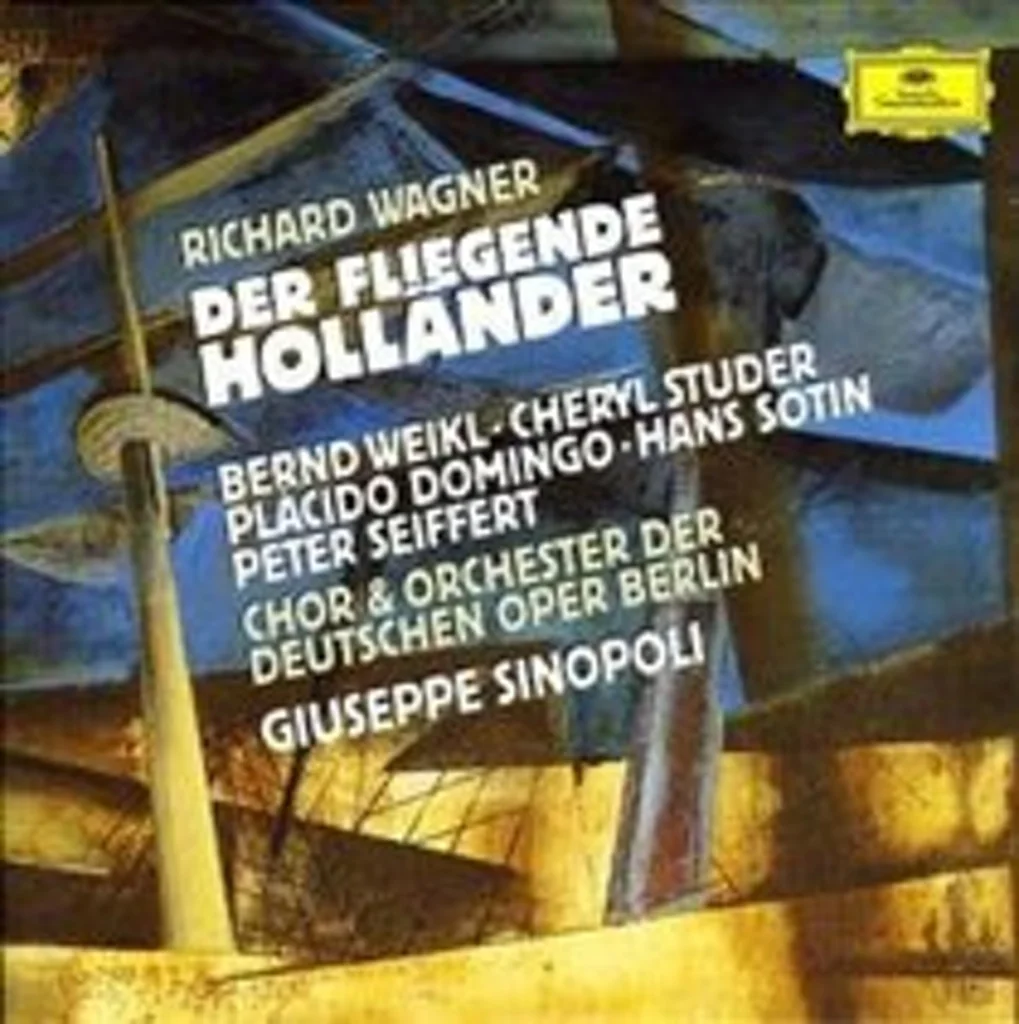
DER FLIEGENDE HOLLÄNDER
This CD recording from 1998 (DG 4377782) is particularly dear to me. First of all because of Cheryl Studer, at the time probably the most beautiful Senta one could imagine. Her wonderfully lyrical soprano with its easy and sensual height seemed made for the role.
The Holländer is sung here by Bernd Weikl. Not really the youngest anymore and you can really tell, but still very suitable for the role. Peter Seiffert is a splendid Steuerman, and in the role of Erik we hear none other than Plácido Domingo, a luxury!
But best of all is the orchestra: under the truly inspired leadership of Giuseppe Sinopoli, the Orchester der Deutsche Oper Berlin performs in a really magnificent way.
SALOME
I realise that many of you will not agree with me, but for me Cheryl Studer is the very best Salome of the last fifty years. At least on CD, because she has never sung the complete role on stage (DG 4318102). Like few others, she knows how to portray the complex character of Salome’s psyche. Just listen to her question ‘Von wer spricht er?’ after which she realises that the prophet is talking about her mother and then she sings in a surprised, childishly naive way: ‘Er spricht von meiner Mutter’. Masterly.
Bryn Terfel is a very virile young Jochanaan (it was, I think, the first time he sang the role), but most beautiful of all is Giuseppe Sinopoli’s very sensual, wide- sounding conducting.
“Die Zeit, die ist ein sonderbar Ding […] sie ist um uns herum, sie ist auch in uns drinnen. (Hugo von Hoffmanstal)
Yes, time is really something special, it goes by whether you want it to or not, and resigning yourself to it is an art in itself. But sometimes time returns, often too late and usually in a dream. Or as a memory.
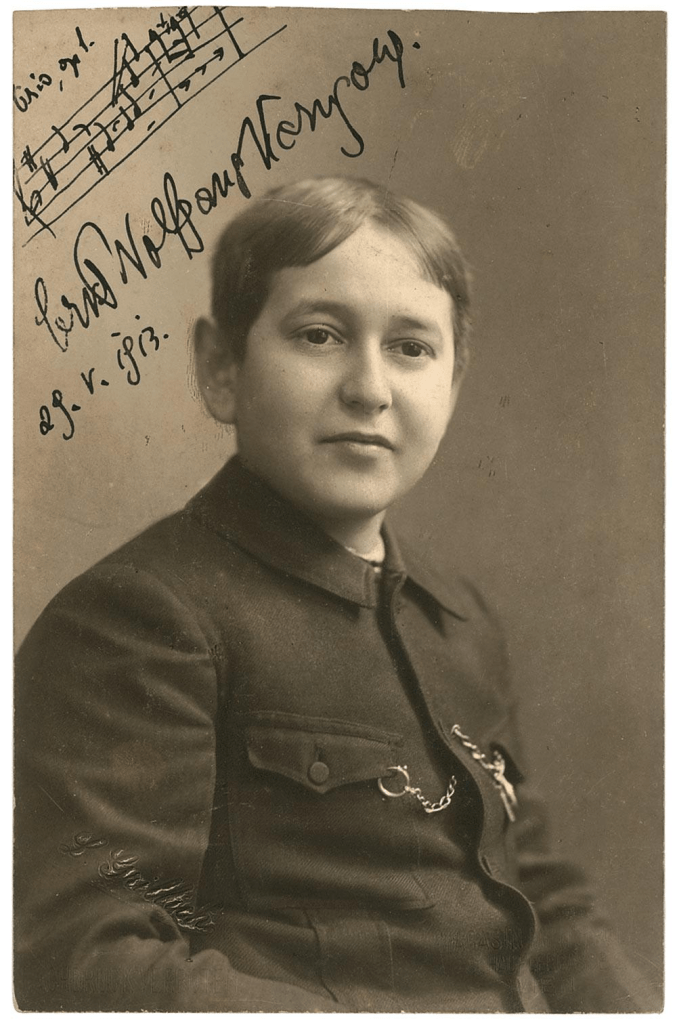
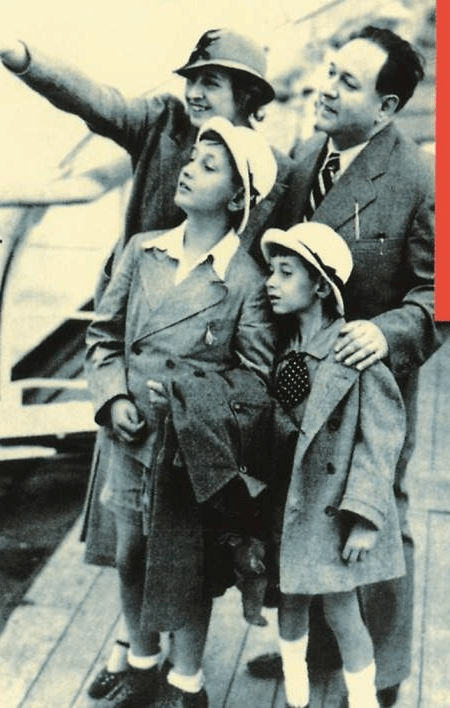
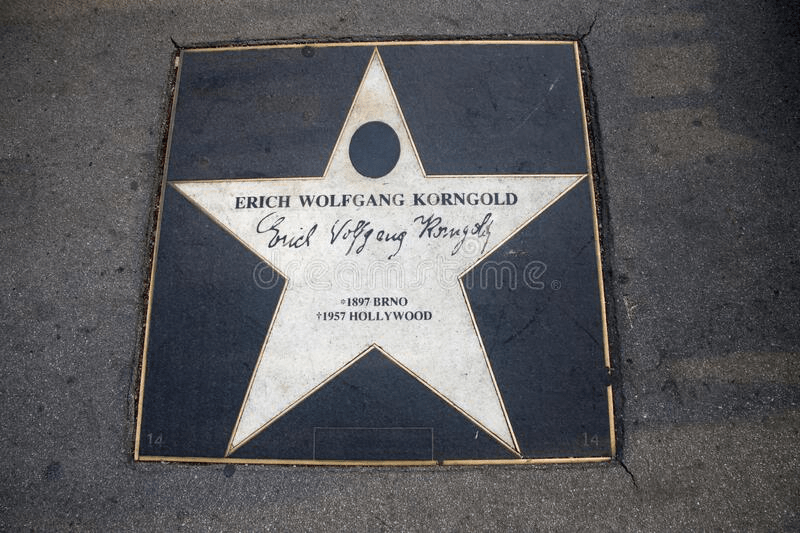
Think of Erich Wolfgang Korngold, a child prodigy who at the age of 20 was already world-famous and established as a composer. In 1934, he left for Hollywood to compose music for A Midsummer Night’s Dream. The film was a huge success and the management of Warner Bros. offered Korngold a really fantastic contract. Who thought at the time that it would save his life?
Korngold with his wife and children
In early 1938, he received a telegram asking if he could be back in Hollywood in ten days. Korngold considered it an omen: on the very last ship, on 29 January of that year, he left his beloved Vienna. And Europe.
(Original Caption) Erich Wolfgang Korngold, his son and his wife, pictured as they arrived in New York City, aboard the S.S. Normandie.
He was doing well in America and was very successful there, but he did not feel at home. His heart and soul remained in Vienna. In 1949 he travelled back to the city of his dreams, but nobody there knew him anymore. Forgotten. In just over ten years, he had become a nobody. Disillusioned, he returned to Hollywood, where he literally died of a broken heart seven years later.
Until the 1980s, he went from being a celebrated composer of countless operas, songs, concertos, symphonies, quartets and whatnot to a reviled ‘film composer’ of kitsch music.
Time… And suddenly people found out – or remembered – what a great composer he had been. Korngold was rediscovered. Today, his violin concerto is one of the most played (and recorded) violin concertos and his operas are on the bill in every opera house in the world. Rightly so, but too late for him.
Time… Just look at his string quartets. Korngold composed his second string quartet in 1933, when nothing was supposedly happening as yet, although you could already hear (and not even very far away) lightning and thunder and there were already some signs on the wall.
Korngold wrote his third string quartet twelve years later. Not only did a lot of time pass between the second and third string quartets, but a lot of things had also happened. Well, a few things…… Fascism, anti-Semitism, Kristallnacht, Anschluss, pogroms, the Second World War and the Shoah.
Time…. The second string quartet still has the schwung of the old Viennese tradition. A bit like a ‘Mozart-kugel’, or a ‘Sachertarte’. Delicious and irresistible. What a difference with the third! Korngold composed it in 1945 and you feel nostalgia and bitterness. And resignation.
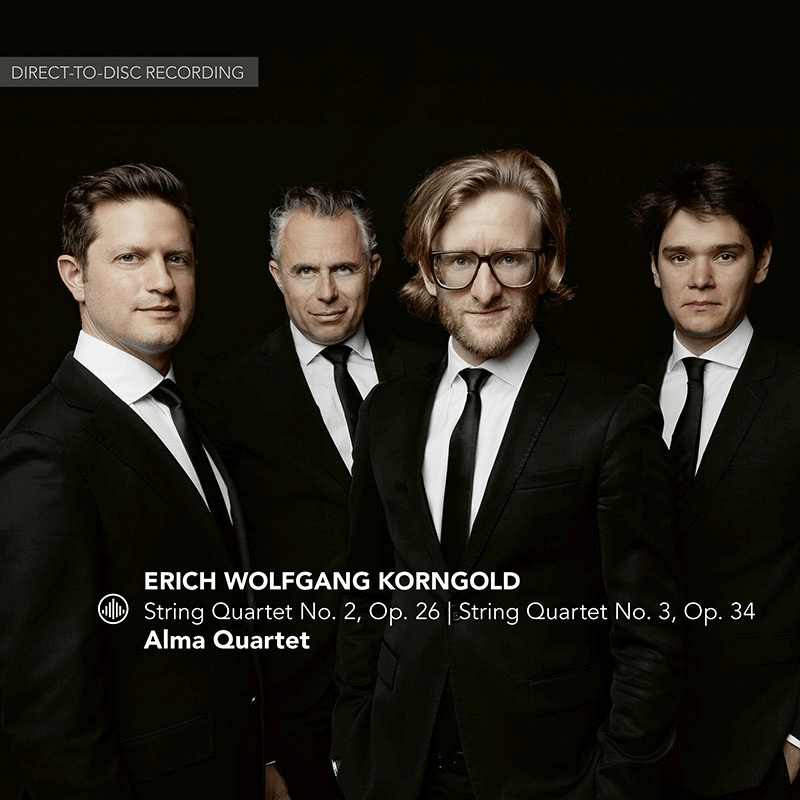
Alma String Quartet
We have long known that the Alma Quartet has a great affinity with ‘Entartete composers’. Their recording of the quartets by Schulhoff is simply the best I have ever heard.
\
And now there is Korngold. Just as I expected: fascinating, breathtaking and speaking to your heart and soul. Virtuoso, perfect and emotional. Phenomenal, in other words. That is how I prefer to hear my Korngold.
But there is more to it. Again; time… The Almas recorded the string quartets ‘direct-to-disc’. Live and without edits. No modifications: directly onto the record (CD).
In the announcement: “Because in this old recording technique, there is no digital track between the microphone and the record, there can be no editing. What you get is studio quality, but the sensation of a live performance. To reinforce that feeling, the quartet decided to play two pieces by Erich Wolfgang Korngold in concert attire”.
The first quartet is still to come: I can hardly wait!
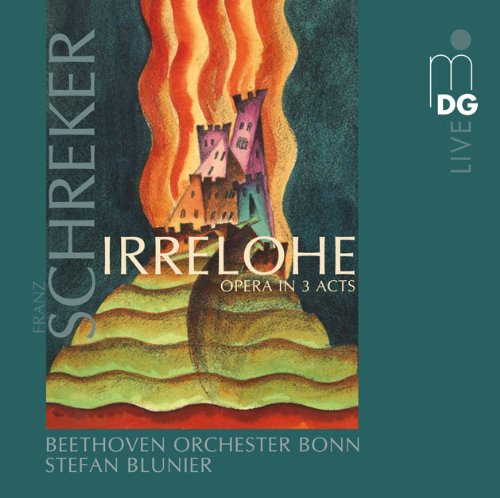
In 2010, The Opera in Bonn started a Schreker revival. Kudos! In 2010, Irrelohe was put on the stage there and recorded live by MDG (9371687-6).
The story most resembles a real horror movie. The lords of the Irrelohe castle are cursed. On their wedding day, they go mad and rape a virgin, a curse they pass on to their first-born son. Only a fire and its flames can lift the curse. And those flames do come, at the end, when the beautiful Eva (Ingeborg Greiner) prefers Count Heinrich (irresistible Roman Sadnik) to the bastard Peter (Mark Morouse). You get the idea: Peter is the first-born son of the rapist; Heinrich (who is his half-brother) was born 30 days later. All’s well that ends well, but first we shudder, shiver and enjoy…….
Roman Sadnik in scenes from Irrelohe:
Of the opera there already existed a recording on Sony, recorded live in Vienna in 1989. The Wiener Symphoniker was conducted by Peter Gülke and maybe it is his fault that it does not sound very exciting. The singers (including Luana de Vol and Monte Pederson) are certainly not to blame, although they are nothing to write home about.
Worth knowing: Schreker wrote the libretto in a very short time (it took him only a few days) in 1919. The work takes its name from a railway station called Irrenlohe which Schreker passed by on a trip to Nuremberg in March 1919.
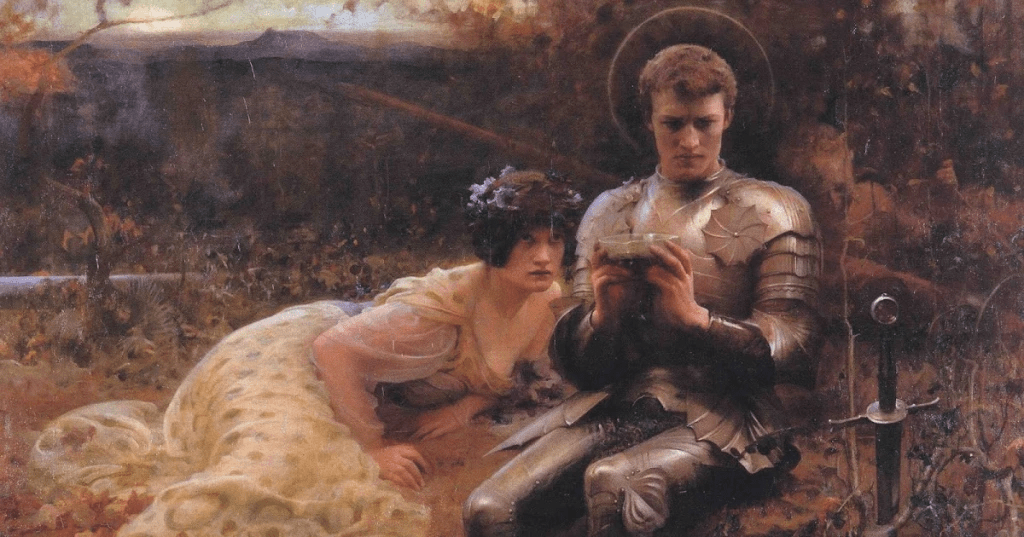
I don’t think ‘Parsifal’ is the most difficult Wagner opera to sing, at least not for the tenor. All right, the ages-long duet between Kundry and the title hero requires an enormous stamina, but try to compare it to a Siegfried or a Tristan!
It is a tough job for a director, because how do you deal with all the very heavy symbolism that almost makes the work collapse? Do you strip it down to the bare bones to avoid all sentimentality, or do you go for the opposite and create the utmost in drama ?
DVD’s
Stephen Langridge
Amfortas being admitted to the ICU of a hospital, hooked up to all sorts of tubes and infusions, it really doesn’t surprise me. A bald Kundry? Yawn. I’ve seen that so many times. That her hair grows as the opera progresses? Apparently miracles are still part of this world. That there are women walking around, while we are dealing with a very strict “men only” sect … oh well.
Everything you see in this Parsifal, recorded in London in 2013, has absolutely nothing to do with the libretto. But that’s nothing new by now. Stephen Langridge strips the story of all its Christian symbolism and brings it down to the ordinary world of ordinary mortals, he says. He himself talks about ‘humanising’ it. One thing he must explain to me: whatever is the young man in a loincloth, who has taken the place of the Holy Grail, doing there?
Innovative theatre? Very well. But Parsifal? No. Turning off the image is not very helpful in this case: none of the singers really appeal to me. Gerald Finley is a fine actor, but he is not Amfortas. There is something missing in his singing; it sounds as if he wants to make it sound as beautiful as possible. But it is not inconceivable that the direction is getting in his way. Anyway, without images, nothing at all is left of the role.
Willard White (Klingsor) lacks the necessary villainy and whoever had the unfortunate idea of casting Angela Denoke as Kundry! (and even worse: as the “voice from above”) …..Even René Pape’s sound is monochromous, as if he is playing his role mechanically.
And Parsifal (Simon O’Neill)? Oh well. He does the best he can. A pressing question: does anyone actually know why singers always have to move like they are suffering from severe spasms these days?
But the orchestra of the ROH, under Antonio Pappano, is playing in a nothing less than divine way, surely an important plus! (Opus Arte OA 1158)
Nikolas Lehnhoff
Lehnhoff, a director I greatly admire and who I count as one of the best contemporary Wagner directors, has turned the story around. In his vision, the Grail Knights are not fighting against destructive forces, no, they themselves are the destructive force.
Once founded with the best of intentions to bring people closer together, time had caused them to lose all their humanity and to become a kind of sect, ossified and rusty in their old habits. It seems inevitable that they are all doomed to die with Amfortas; if they are to survive, they must go with Parsifal, and with Kundry, through the tunnel, into a new future. It is an open ending, different from what Wagner would have wanted, but very logical and explainable, and as such more than acceptable.
The cast is excellent. Christopher Ventris is a very convincing Parsifal. Waltraud Meier is a one of a kind Kundry and Thomas Hampson is very moving as a tormented Amfortas. Matti Salminen (Gurnemanz) and Tom Fox (Klingsor) are also brilliant.
The costumes are splendid and the choreography (the dancing flower girls and the seduction scene in particular) is very fine. The very sensually playing Deutsches Symphonie-Orchester Berlin is conducted by Kent Nagano. This splendid production was originally made for the ENO in London, after which it was performed in San Francisco and Chicago. From Chicago it was then brought to Baden Baden, where it was filmed in 2005 (Opus Arte OA 0915 D).
CDs
Jaap van Zweden
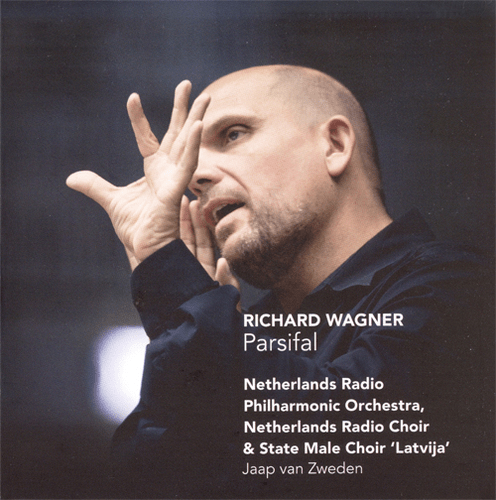
Operas by Wagner, conducted by Jaap van Zweden on the ZaterdagMatinee, it has become a household name. After the performances of Lohengrin and Die Meistersinger von Nürnberg, which were received with great acclaim, it was a foregone conclusion that Parsifal also would prove to be a veritable feast.
We were not disappointed, because what happened that afternoon, 11 December 2010, in the Amsterdam Concertgebouw was nothing less than a brilliant. Fortunately, the opera was recorded live and it has been released (Challenge Classics CC72519). The beautifully designed, compact box contains, besides 4 SACDs, a DVD with images of the highlights of the opera and an extensive booklet with explanatory notes, synopsis and libretto.
It is perhaps not the best Parsifal ever: in my opinion, van Zweden begins a little too cautiously and soberly, but along the way it just keeps getting better and better. Klaus Florian Vogt is a light Parsifal, just as I imagine a foolish young man to be, and Katarina Dalayman a more than convincing, seductive Kundry. Falk Struckman’s Amfortas sounds very tormented, but the palm of honour goes to Robert Holl’s Gurnemanz.
Here is the first act:
Marek Janowski
Janowski is a very experienced Wagner conductor. His Ring, which he recorded for RCA in the 1980s, is rock solid. In 2010, he and the Rundfunk-Sinfonieorchester Berlin embarked on a cycle of 10 Wagner operas, all of which will be recorded live by the Dutch label PentaTone Classics.
I really like the Parsifal (PTC 5185 401 ) recorded in April 2011, albeit with a few side notes. Elke Wilm Schulte (Klingsor) sounds nice and mean and the truly fantastic Franz Josef Selig sings a very impressive, but at times also moving Gurnemanz.
Michelle deYoung (Kundry) is a matter of taste. Personally, in this role I prefer a fuller sound with better height, less breast tones and a little less vibrato, but she still manages to convince me. So too the tormented Amfortas by the then very young Russian baritone, Evgeni Nikitin. I must admit that I find it hard to like the interpreter of the title role, Christian Elsner. He reminds me a little of the Wagner tenors of the past, one of the reasons why I was so late to Wagner. I find his voice sharp, moreover he tends to shout and I don’t care for that.
I don’t have an SACD, but even with an ordinary CD player, the sound enters your room in a truly grandiose way. As if you are surrounded by it, very natural and with beautiful dynamics.
Christian Thieleman
Christian Thielemann is said to be a worthy successor to Furtwängler, and that may certainly be true. He does not hide his love of the great German composers, and his interpretations of them are rightly praised.
He also shares his capriciousness and wilfulness with his illustrious predecessor, so his interpretations are often controversial. I like that, because it forces the listener to listen attentively. I like his Wagner interpretations best, they are often exuberant and elaborate. In that respect, he did not disappoint me with the Parsifal (DG 4776006), recorded live in Vienna ten years ago. He emphasises the human aspect of the work rather than its mysticism, and the truly brilliant orchestra closely follows suit.
It was Domingo’s last Parsifal, a role he had (rightly) dropped, and although he has audibly aged, he still manages to convince completely. This also applies to Waltraud Meier’s Kundry.
Franz-Josef Selig is a fantastic Gurnemanz, his warm bass with the beautiful legato seems made for the long monologues, and Falk Struckmann plays a magnificent Amfortas.
Tony Palmer
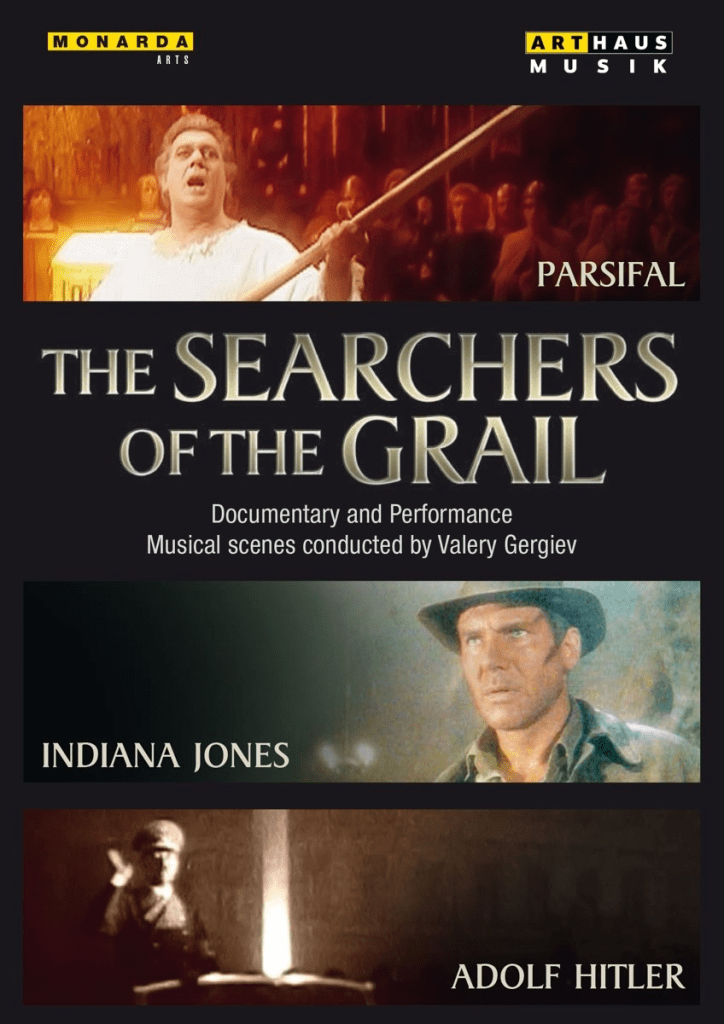
In 1998 Tony Palmer made a fascinating film entitled Parsifal – The Search for the Grail (Arthaus 100610). Domingo is the host and tells not only about the work itself, but also about the history of the Holy Grail. It is a very fascinating and enjoyable quest, illustrated by excerpts from Indiana Jones and Monty Python, amongst others. And with the performance of the opera at the Mariinski Theatre, with, alongside Domingo, Violeta Urmana as Kundry and Matti Salminen as Gurnemanz.
Wagner and Stephen Fry
A small detour. Any film and theatre lover knows Stephen Fry of course, one of the greatest English actors of the last decades. But Fry is more than that. By talking very openly about his homosexuality and his psychological problems (he suffers from manic-depressive disorder, about which he has made a film, The Secret Life of the Manic Depressive), he has made himself extremely vulnerable.
He is also a huge Wagner fan, something that has reinforced his “bipolarity”: Fry is Jewish and the majority of his family were murdered in the Holocaust. He also made a film about this, Wagner & Me (1102DC).
The documentary has won awards at various festivals. Quite rightly so, because the result is not only enormously fascinating because of the internal conflict, which a Jewish Wagner lover has to fight within himself, but also shows us the images that an ordinary “mortal” never gets to see: even if you’d ever manage to get tickets to Bayreuth – you would never ever find yourself behind the stage.
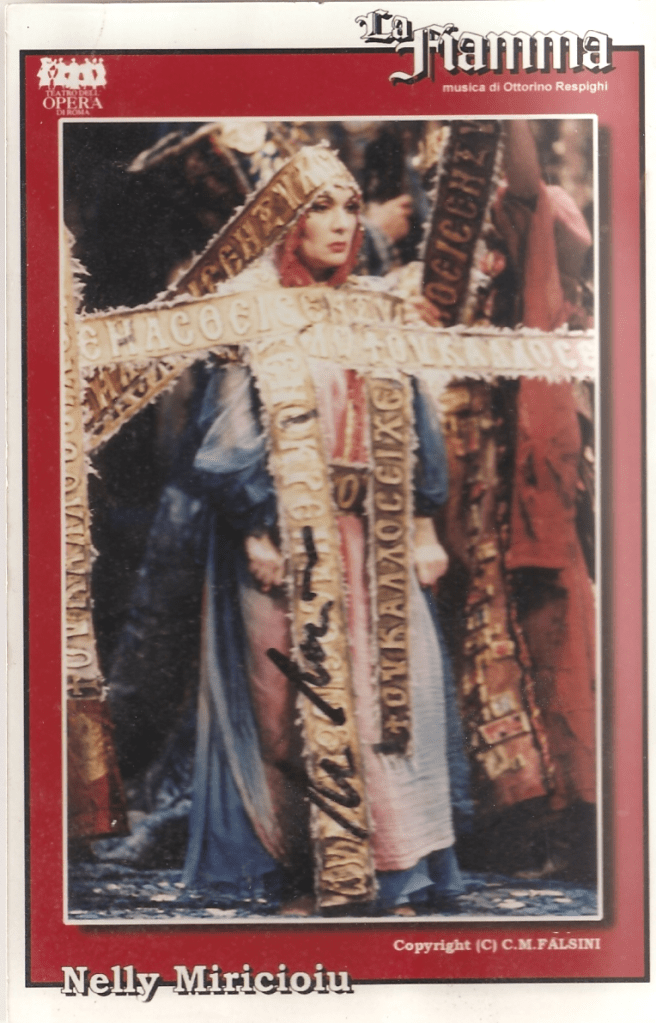
I cannot imagine opera life without Nelly Miricioiu. With her spicy soprano, her very characteristic timbre and her perfectly controlled vibrato, from the 1980s she belonged to the dying class of real divas, like Callas, Scotto or Olivero.
Nelly Miricioiu and John Bröcheler in the last scene of Thaïs (live recording from The Concertgebouw in Amsterdam, 1985)
My earliest opera memories bring me back to Thais by Massenet. With Nelly Miricioiu. After that, I have admired her for 25 years in the Great Hall of the Concertgebouw, during the unforgettable Saturday Matinees, where she sang 17 different roles. By Rossini, Bellini, Donizetti and Verdi. But also by Puccini, Zandonai and Mascagni.
I have also admired her on the stage in Brussels as Anna Bolena and in Antwerp as Magda (La Rondine) and Anna (Le Villi).
But between her and the DNO, things did not really work out. Luisa Miller, with Neil Shicoff at her side, succumbed to a stupid direction and with Norma she fell ill and suffered from vocal problems. A great pity, because Miricioiu is not only a very gifted singer, but also a phenomenal actress.
Below: Nelly Miricioiu as Anna Bolena in Amsterdam 1989:
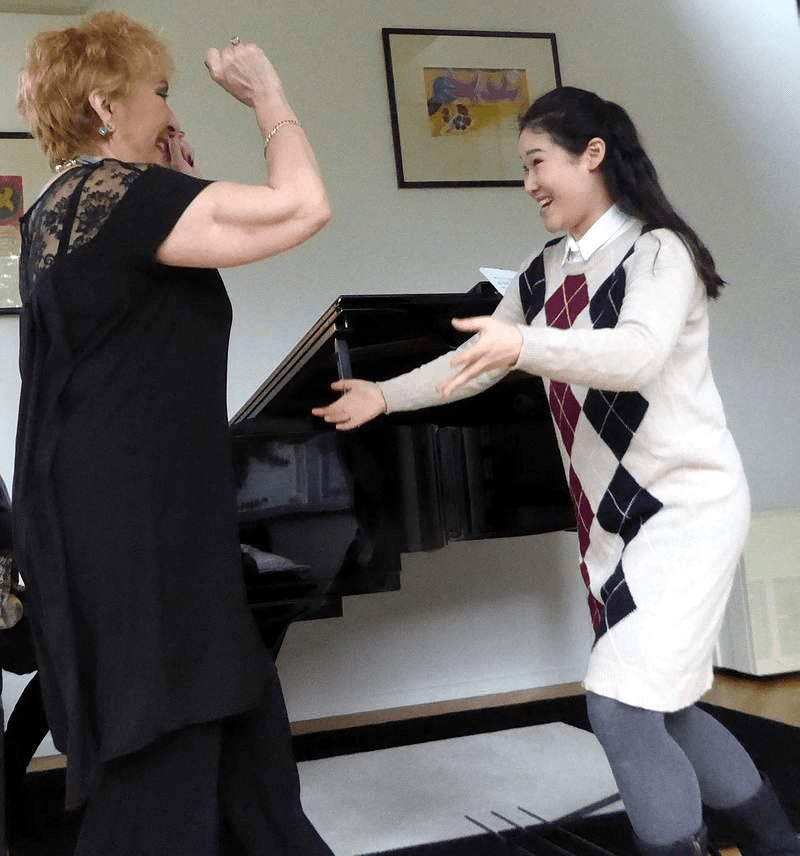
In March 2016, Miricioiu was in Amsterdam for a few days to give masterclasses to young, promising singers. I was allowed to attend one of her lessons and watched breathlessly as she tried to prepare the young South Korean Jihae Shin for the bel canto profession.
Miricioiu is a very physically present teacher. She sings a lot herself and lets her student feel how the muscles react to certain sounds. How to produce those sounds better, make them more impressive or just more true. She puts her hand on Shin’s belly and shakes her head: no, that’s not how it works.
“Just feel,” she says and puts Shin’s hand on her own belly. The whole face is also involved in the lesson: from the temples, eyes and cheekbones to the chin. The lips must be pulled further apart, the mouth must be wider, much wider! Does she hear now what a difference it makes?
Jihae Shin is a good and complient student, she remembers everything well and obediently imitates what she is told.
“Brava”, the teacher cries, “but that coloratura (they are rehearsing ‘Caro nome’ from Rigoletto), it has to be different! You shouldn’t accentuate that “haha haha haha”, that’s what Reinild (the pianist Reinild Mees, who not only accompanies but also physically takes part in all the lessons) is doing. That has to come from the piano, but you have to glide over it smoothly, you have to show off your technique. And don’t forget your smile, your lips, your lips…”.
She demonstrates and everything falls back into place. Just like a little later with ‘Ah! non credea mirarti’ from La Sonnambula. The pupil does a fantastic job, but it is only when the teacher is talking that emotion strikes hard.
How do you find it, teaching? And: isn’t it terribly tiring?
“I love it. Not every good singer is a good teacher, but I think I am doing well. It is a fact that many of my pupils go really far and I am proud of that.
“You cannot compare a master class with real teaching, of course, but even then you hope that you can convey something essential. Something that sticks. And, above all, helps. I often attend master classes given by my colleagues, that way I also learn something myself. I am still eager to learn.”
Look: it’s not just about the voice. Or the talent, hard work and/or charisma. It’s about the whole picture. Good looks are a bonus of course, but for me you have to convince me with your voice and not with your looks. On the other hand… Yesterday I saw Il Matrimonio Secreto by Cimarosa, with really fantastic young singers who also looked their roles. An ideal situation.
There are few really good teachers and singers have sadly become disposable. The only thing that matters is the competition, but there is also a lot of fear. Because if you don’t want to do something or don’t do it as expressely wished for, there are dozens if not hundreds of others who are already lining up to take your place. I’ve experienced auditions where the singer was told: you’re really great, but there are many more who are just as great as you are, next!”
How do you feel about the many competitions out there?
“I think they are very important. Without a doubt. You really can’t do without them. If you want to profile yourself as a young singer, if you want to show yourself, you have to. And sometimes you hop from one competition to another in the hope of winning and being discovered.
What doesn’t help is that many of the competitions can’t decide who they are actually meant for. Do they want to be a career stepping stone for young and starting singers or do they want to provide the already establishedsingers with a bit more fame and better roles?
This is where the IVC stands out in a very positive sense. You get all the attention you need and it is ensured that you come away ‘richer’, even if you don’t win anything. You get masterclasses and good advice. And the atmosphere is very friendly, convivial.”
What do you think of super-realistic scenes on stage, increasingly common these days? Scenes with violence and explicit sex? “There is nothing against realistic images, but does it have to be there in every detail? Shocking for the sake of shocking, showing everything because it can be seen on TV? I know rape exists, but do I have to see it happen on stage?”
“Vulgarity on the stage, I have never understood it. And there is no need for it. I remember the production of La Fiamma by Respighi with the fantastic Romanian tenor and my very dear colleague Gabriel Sadé. The director wanted to portray the night of love as realistically as possible: naked, in other words. That didn’t feel right; that way I would never be able to concentrate on the role and certainly not on the singing. I didn’t want that. It was then decided to give us a sort of ‘second skin’. It looked very realistic, but for me I had something on, I wasn’t naked.”
Below is the third act from La Fiamma, it begins with the love duet:
Let’s talk about verismo. A movement that is so terribly neglected these days. There are also few singers who can sing in the verismo style. Why would that be? Is it not performed a lot because there are no singers for it? Or are there no verist singers because it is not being performed?
“Both, of course. Verismo is considered not ‘intellectual’ enough, it is looked down upon nowadays. We live in a time that is poor in real emotions, real feelings: love, empathy, faith. Showing emotions is considered old-fashioned, you can’t use that when you work conceptually. There are no nuances any more, we have discarded them.
But there are also few singers who can sing it, that is true. During training, too much emphasis is placed on technical perfection and too little on individuality.
Fashion and hype also play a not inconsiderable role. In the past, you couldn’t sing a Rossini opera properly; nowadays, there are plenty of Rossini and bel canto specialists.
Sometimes it seems as if there are only two possibilities: old music and early bel canto and Wagner. Somewhere along the way, we have lost not only verismo but also Verdi. It is easier to sing Tristan than Macbeth. That is food for thought. But – and this should not be underestimated – the choice also lies with conductors and their priorities. The orchestras are large and with a Wagner piece, the conductor can ‘score’ more easily. “
I have a verist nature, it’s in me, my body is screaming for emotions. Of all my roles I love Iris the most, I think. She is, together with Silvana in La Fiamma and Francesca da Rimini, one of my favourite roles”.
Speaking of emotions, below Miricioiu sings ‘Io son l’umile ancella’ from Adriana Lecouvreur by Cilea:
I owe everything I have achieved to Jan Zekveld, Mauricio Fernandez (the former boss and casting director of Zaterdag/Matinee) and Patrick Schmid (co-founder and director of Opera Rara). They understood my character and discovered what I could do, everything that was possible. They both saw my potential and made me the way I am. They were my godfathers.”
He was twenty-four. Twenty-four. That was all the Nazis allowed him. Who knows what he would have been capable of? What operas could we have had from him? Who knows, maybe he would have surpassed maybe he would have surpassed Wagner, the composer who was not so keen on Jews? Or he might have gone in a totally different direction and become a jazz giant?
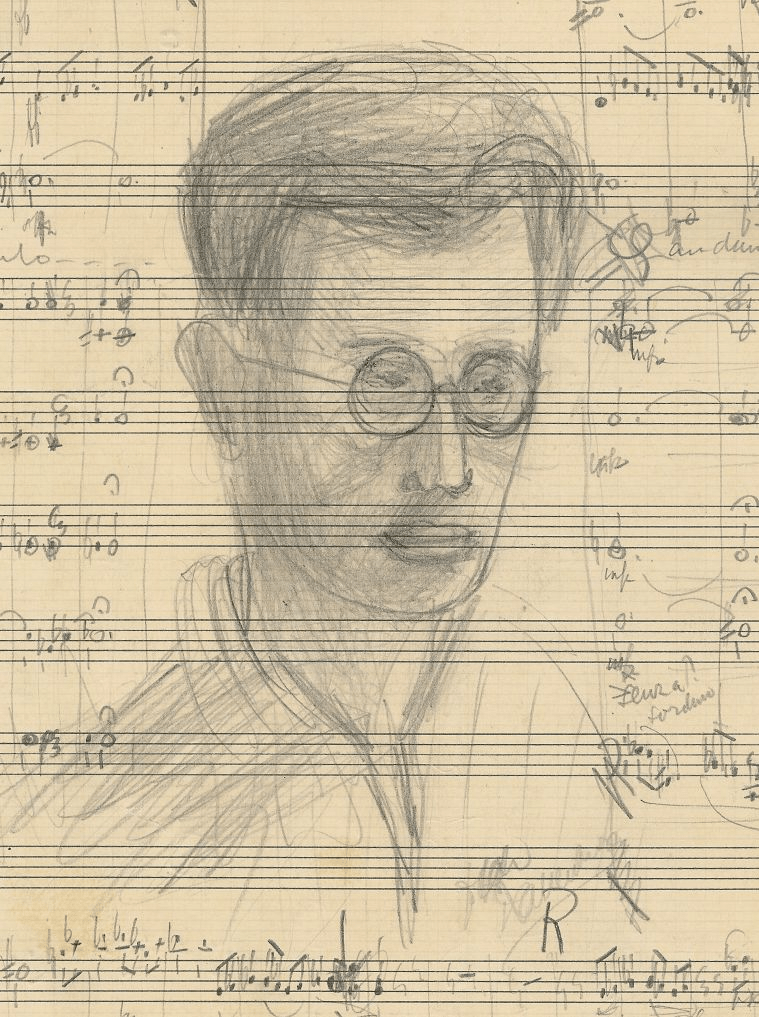
Kattenburg: self portrait made in 1937
We will never know, because he only lived to be 24 and when the war broke out he was not even 20 yet. But he had already made a name for himself as a violinist. But also as a composer, because composing was his true love and something he did on a daily base. Even while he was in hiding.
Kattenburg by GregorySinger
He had to move often because he was in danger of being betrayed, but he continued to compose. How he was arrested is not entirely clear. Perhaps during a raid? What we do know is that on 14 May 1944 he was put on a transport to Auschwitz. A death certificate, dated 30 September 1944, states that he died in Central Europe. That is all we have to go on.
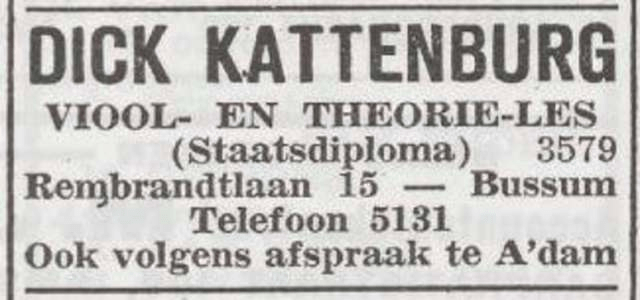
At one time he also wanted to become a music teacher, as is shown by an advertisement in Het Joodsche Weekblad (a publication of the Jewish Council) of 7 September 1941, in which he offered himself as a teacher of music theory and violin pedagogy. Only recently, he had successfully passed the state examination of theory and violin with Willem Pijper, which enabled him to establish himself as a teacher. He lived in Naarden with his mother, his younger brother, his sister and her husband.
Kattenburg never denounced his Jewish background. He arranged a large number of Hebrew melodies, which appeared in his manuscripts with titles written in Hebrew and he also used dating according to the Jewish calendar. In 1942, the Star of David even appeared symbolically in his manuscripts.
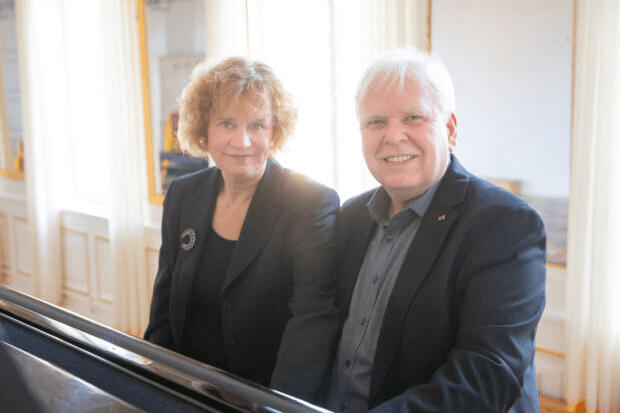
Not long ago, a CD was released with Kattenburg’s “All that jazz”, something we owe to a German piano duo, Friederike Haufe and Volker Ahmels.
The ‘Overture for two pianos’ from 1936 is the only work Kattenburg wrote for two pianos (i.e. not for piano four hands). Tap dance’ also dates from the same period and for this a tap dancer was actually needed to perform.
Kattenburg even made a very successful drawing of the tap dancer in the manuscript. On this new album, Tonio Geugelin has been perfectly fitted to this special role.
You really have to buy this CD. Please do. It is insanely good. And so incredibly important! That this CD has a short playing time, a little over 21 minutes is not important. There is simply nothing more.
Friederike Haufe: “We wondered if it would be possible to market a CD of such short duration, especially when most people want quantity next to quality… but Donemus and Medien Kontor, labels we worked with, asked us to leave it this way. So it has become a kind of metaphor for the tragedy of his short life …
Stolen Melodies Works for two pianos and piano four hands by Dick Kattenburg Piano duo Friederike Haufe and Volker Ahmels (piano) with Tonio Geugelin (tap dance)
For most Russians, the Volga, the longest river in Europe, is the symbol for everything, including life itself. It is celebrated in many songs, and in many stories and poems it plays the leading part.
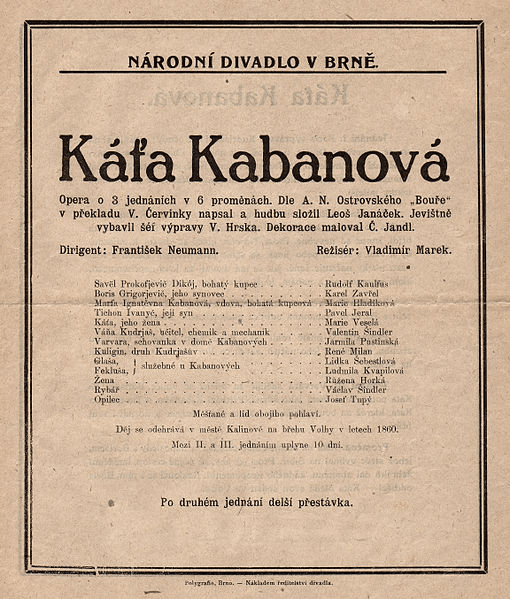
In Ostrovsky’s Storm, on which Janaček’s opera is based, and also in the opera itself, the river mirrors the soul of the unhappy Kát’a , whose life ends in the Volga. You can hear the river in the music also.
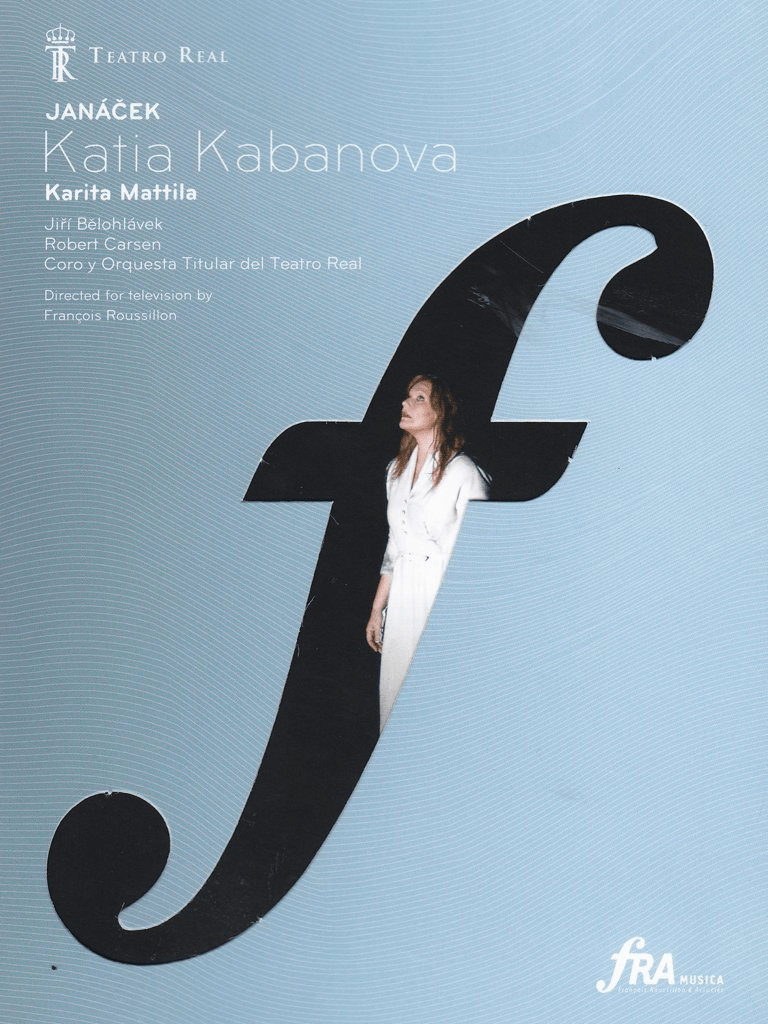
Robert Carsen understood this very well; in his 2004 Antwerp production he had the entire stage covered with water and the story played out on platforms. I thought it was the most beautiful production of the work ever. It was taken over by the Teatro Real in Madrid in 2008 and released on DVD not long ago (Fra Musica 003).
I must honestly confess that I was really scared to see it again. Would I still find it so very beautiful? The answer is a resounding yes! It is even more beautiful than I remembered it.
Karita Mattila is a Kát’a to fall in love with and Jiří Bělohlávek is, next to Mackerras, the best advocate for the opera. Do you want my honest opinion? Buy it, because it is as beautiful as it gets!
Act Three: The Storm
Christopher Marthaler
Believe it or not, to most opera lovers Kát’a Kabanova belongs to the standard repertoire, but in Salzburg it was not performed until 1998. The fact that the production was received with mixed feelings at the time, was not due to the music or the singers, or the orchestra or the conductor.
Sylvain Cambreling took care of Janaček’s masterpiece with the necessary love and understanding. The overture already made my throat close and my eyes fill with tears.
But alas, there was also a director. Marthaler set the action somewhere in the Eastern Bloc of the 1960s, clearly drawing his inspiration from the Czech film hits of the time. Those who have ever seen Miloš Forman’s Love of a Blonde know what I mean.
There is no river anywhere (a picture on the wall does not really count) and that is something I find absolutely unacceptable, because Kát’a Kabanova without the Volga is to me like Die Zauberflöte without the flute.
A lover of modern, conceptual directing theatre might enjoy it though, because musically it is really well put together. It is clear that he had a particularly long rehearsal time at his disposal: the singers were moulded into a formidable ensemble.
The singing was also superb. Angela Denoke portrayed a vulnerable Kát’a and Dagmar Pecková shone as the rebellious Varvara. David Kuebler and Rainer Trost were perfectly cast as Boris and Kudrjas respectively, and they all deserved their bravos. For us Dutch, it is also nice to see our own national pride, Henk Smit, in action. In the struggle between direction and music, the latter won.
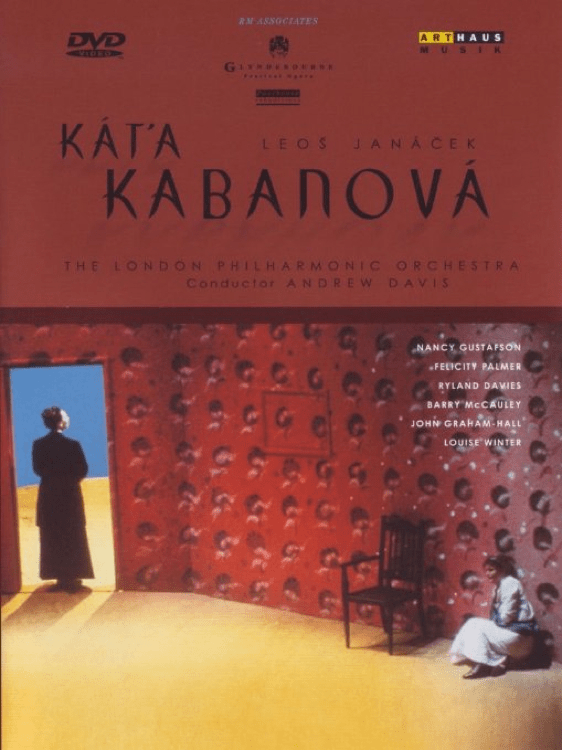
Lehnhoff belongs to those directors who like to give their own twist to a performance, but in Glyndebourne he delivered a rather traditional production (Arthaus 100158). Very austere, but with great attention to detail and to the psychological development of the characters.
He emphasises all aspects of Kát’a’s character, including her piety, penetrates deeply into her tormented soul and makes her misery palpable. There is a feeling of complete abandonment, which is reinforced by the beautiful, bright colours that are sometimes strongly reminiscent of paintings by Münch.
Musically, too, there is no reason to complain: Nancy Gustafson is a wonderful Kát’a and Barry McCauley an excellent Boris.
Trailer:
CD
Both CD recordings conducted by Charles Mackerras starring respectively Elisabeth Söderström on Decca (4218522) and Gabriela Beňačková on Supraphon (SU3291-2 632) are very good and I would not like to miss either of them, although I have a slight preference for Beňačková .
Peter Straka is as credible as Petr Dvorsky as Boris and Nadĕžda Kniplova and Eva Randová (Kabanicha) are a match for each other.
The highest praise must go to the small labels! It is thanks to them that we finally get repertoire into our homes and out of our speakers that we could only dream of before. For example, Korngold’s Die Stumme Serenade, released on CD by CPO three years ago.
Die Stumme Serenade is Korngold’s last opera and was only known to the general public (well, not so general really) through the Serenade. To honour the fiftieth anniversary of his death, the opera was staged in Munich in 2007, the first time since the production was recorded for Austrian radio in 1951 (Korngold himself conducted from behind the piano) and the totally unsuccessful premiere in 1954. Two years later it was repeated in St. Gallen and then again in Freiburg, with all young people in the leading roles. And there it was recorded live.
The story is thin. It is basically a snippet about a celebrated actress and the fashion designer in love with her, who claims to have come to her house to perform a serenade for her. But since nobody has heard of it, it is called the ‘Stumme’ (Silent) Serenade.
All the Korngoldian elements are present: Viennese bonbons, languor, melody and a little (well, a lot) “schmalz”. It is a bit musical-like, in the old-fashioned sense of the word. Think of Fred Astaire and Bing Crosby. And yes, it is somewhat sweet. Think Lehár also. Actually, it is a mix of opera, operetta and revue, nothing wrong with that!
Sarah Wegener is a delightful Silvia Lombardi. Birger Radde (Andrea) is not really a high-flyer, but actually I do not mind, as I am so happy to finally own the recording.
I think it is a pity that the production has not been released on DVD, because seeing the trailer made my mouth water (unfortunately it is no longer available on You Tube).
But – something is better than nothing, so: thanks CPO!






















 Basia con fuoco