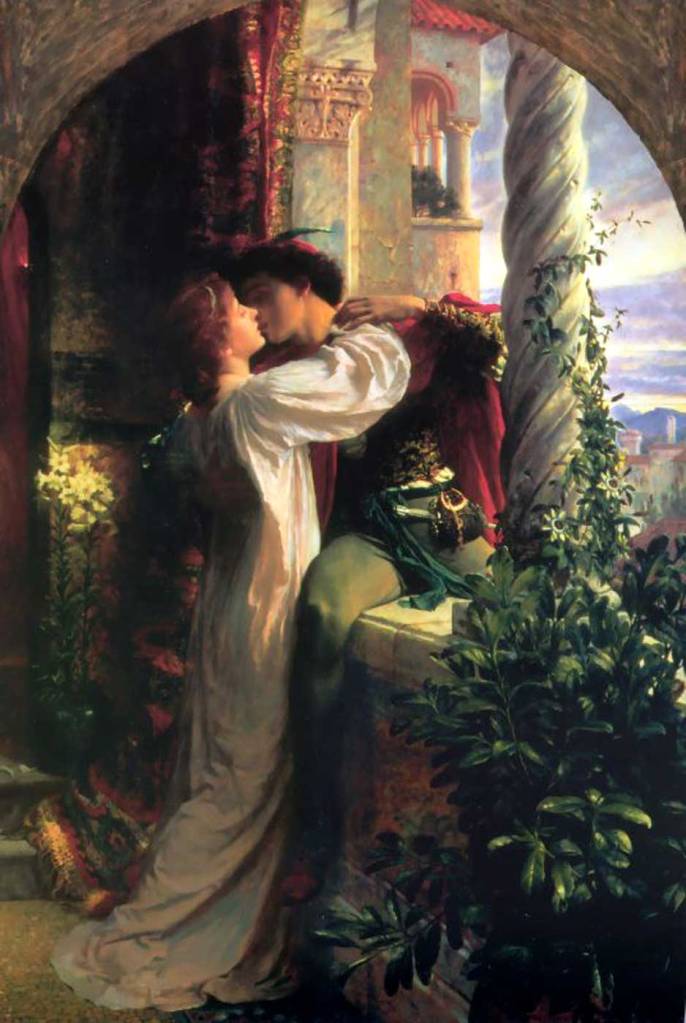
Romeo and Juliet, painting by Frank Bernard Dicksee, 1884
Throughout the centuries, unhappy love stories have been the greatest source of inspiration for writers, poets, painters and composers. This is logical, because what could be more moving than the sad fate of two people who, out of love for each other, choose death over life? It is the height of romance, and most people enjoy a good cry.
Shakespeare’s Romeo and Juliet are perhaps the most famous lovers of hem all. Plays, films and ballets have been based on and/or inspired by hem. And operas, of course.
Everyone knows Gounod’s Romeo et Juliette. Berlioz also makes an appearance here and there. But did you know that Bellini also wrote an opera about it? No? And why not? Because it is hardly ever performed anymore? And this while his I Capuletti e i Montecchi is so breathtakingly beautiful!
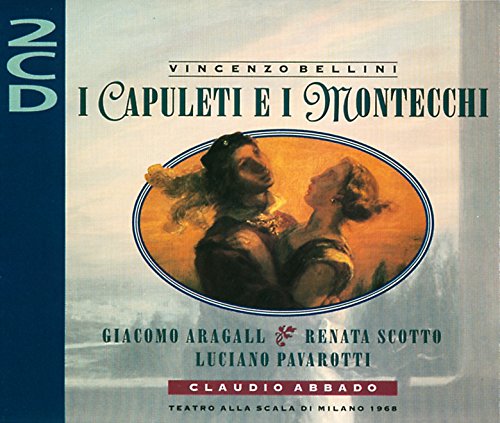
My favourite performance was recorded live at La Scala in Milan in 1968, with a tenor (Giacomo Aragal at his best!) as Romeo and Renata Scotto as Giulietta. Tebaldo was sung by (what a treat!) a young Luciano Pavarotti And Claudio Abbado conducted (Gala GL 100.517)
Aragall and Scotto in ‘Si, fuggire!… Vieni ah! vieni, e in me riposa:
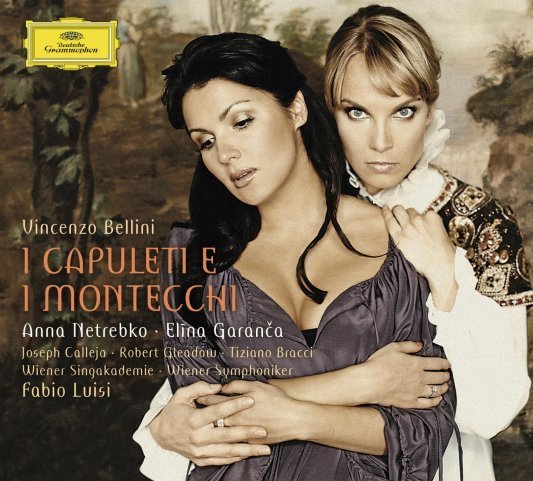
In 2009, a new recording was released featuring none other than Anna Netrebko and Elina Garanca in the leading roles. As Tebaldo, you will hear Joseph Calleja (DG 4778031), at the time a newname, now a famous tenor. Definitely worth listening to.
In the Dynamic box set (CDS 552/1-25) containing all Bellini’s operas (if you don’t already own it, go out and get it right away!), Julia is sung by Patricia Ciofi. What a singer! Not only does she hit all the notes and deliver all the witty remarks (and all “a punto”), she is also a particularlyconvincing voice actress. The recording was made in Martina Franca in 2005.
Patrizia Ciofi in “Oh! quante volte” from the production of I Capuleti e i Montecchi in Barcelona in 2016:
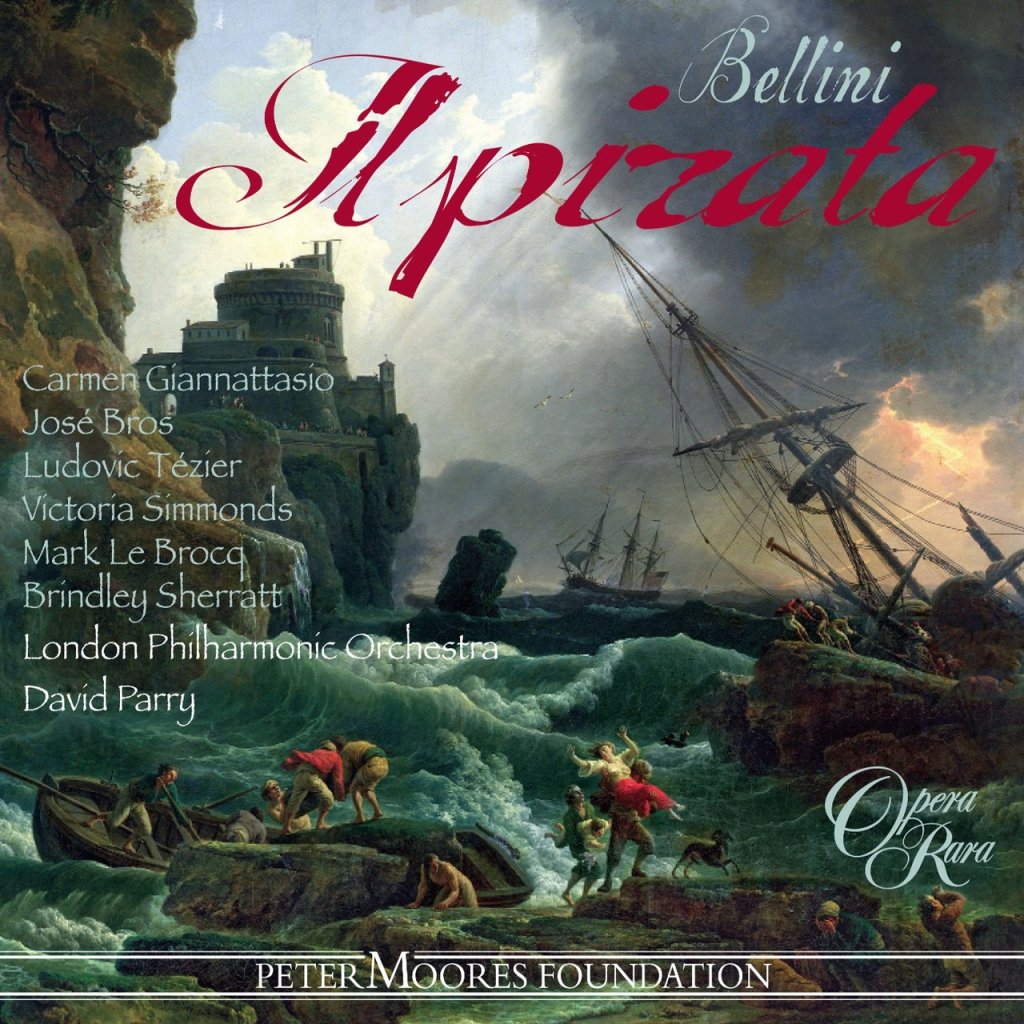
Il Pirata, for me one of Bellini’s most beautiful operas, is for many people nothing more than a title. Understandable, as it is rarely performed nowadays and (studio) recordings are scarce. Incomprehensible, because this opera is not only indescribably beautiful but also incredibly good!
Take the final scene alone: it is among the best Bellini ever wrote. You can already hear Donizetti’s Lucia di Lammermoor in it. And the opening chorus from the third act, “Che rechi tu”, can be found again, almost exactly the same, in Verdi’s Macbeth and Luisa Miller.
Until recently, I was only familiar with three studio recordings of the opera, featuring Montserrat Caballé, Maria Callas and Lucia Aliberti as Imogene. For convenience, I am not including the Saturday Matinee performance with Nelly Miricioiu, as it was never released (a shame!).
Carmen Giannattasio’s timbre is much lighter and less dramatic than Callas’s and much more rigid than Caballé’s, but if you do not think about their voices for a moment, you cannot help but admi tthat she has a lot to offer, especially in her mad scene.
I have more difficulties with the gentlemen. Ludovic Tézier is an excellent singer, but bel canto… no, his baritone is just not supple enough. In the parts where he has less coloratura to sing and can simply be authoritative, he is nevertheless thoroughly convincing.
José Bros was once considered one of the most promising young bel canto singers of his generation, but he never really fulfilled that promise. He has excellent high notes and good coloratura, but his voice occasionally sounds constricted.
David Parry, one of today’s greatest bel canto specialists, conducts with great enthusiasm.
Whole opera with Montserrat Caballé:
Maria Callas sings “Oh! S’io potessi”:
And Happily, there is a YouTube recording of Nelly Miricioiu in Amsterdam!
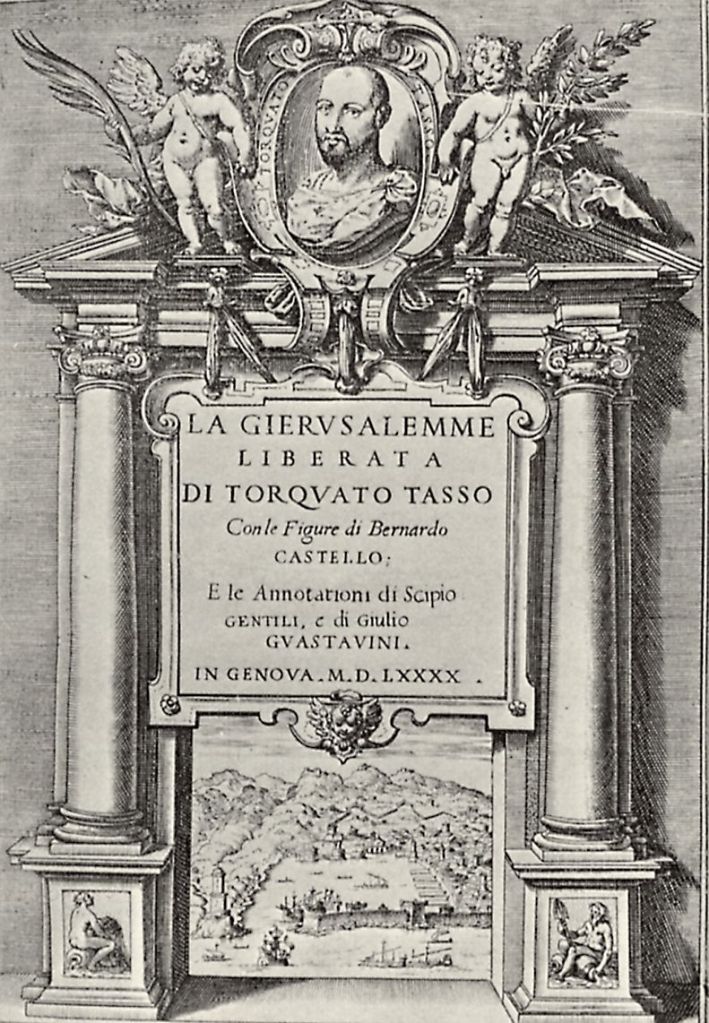
Agostino Carracci (su disegno di Bernardo Castello), Frontespizio della prima edizione illustrata della Gerusalemme Liberata, Genova, 1590
One might wonder why Torquato Tasso’s Gerusalemme liberata has inspired so many different composers from so many centuries. And not the entire epic, but specifically the Armida episode. Is it because of the magical-realistic story full of undisguised hatred, revenge, anger and passion? With characters (human or witch) torn apart by their conflicting feelings, their inner struggle between love and duty? I cannot say. Can you?
The first Armida that remains known to the general public was composed by Jean-Baptiste Lully, based on the libretto by Philippe Quinault. Gluck used the same libretto a hundred years later for his fifth “French” opera. He himself considered Armide to be his very best work, but the public (and history) thought otherwise.
I myself have never been particularly fond of it either. But the longer I have been involved with opera, the more I have come to appreciate it.
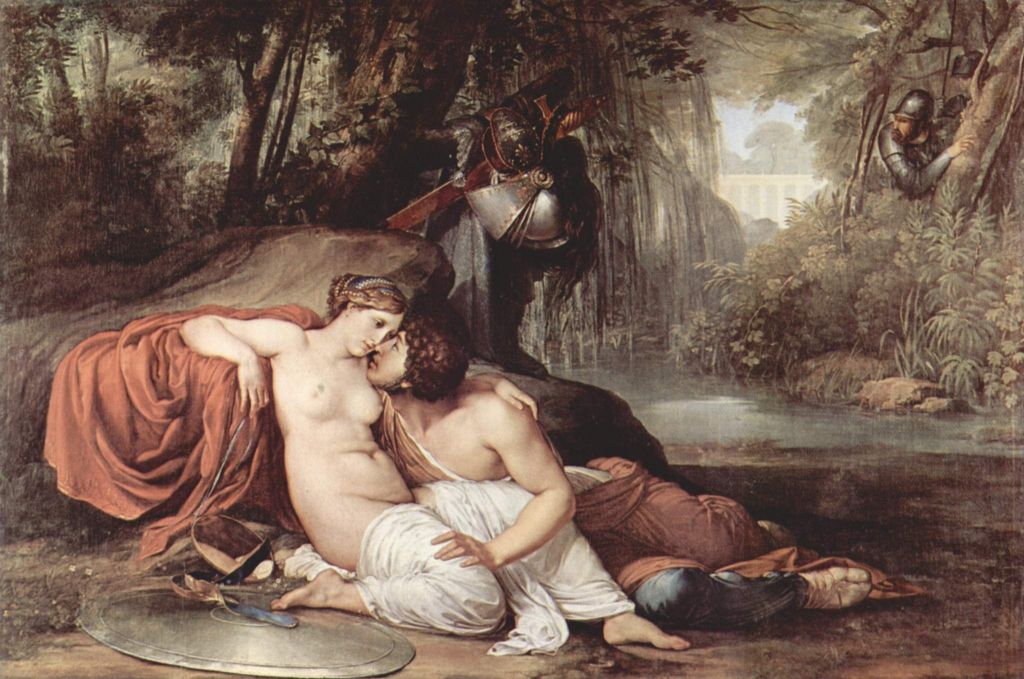
Francesco Hayez, “Rinaldo en Armida”
The opera has some magnificent arias and ensembles, with the heart-rending ‘Enfin, il est en ma puissance’ as an absolute highlight. It is a hysterical cry from the heart of the furious sorceress Armide, who has fallen in love.
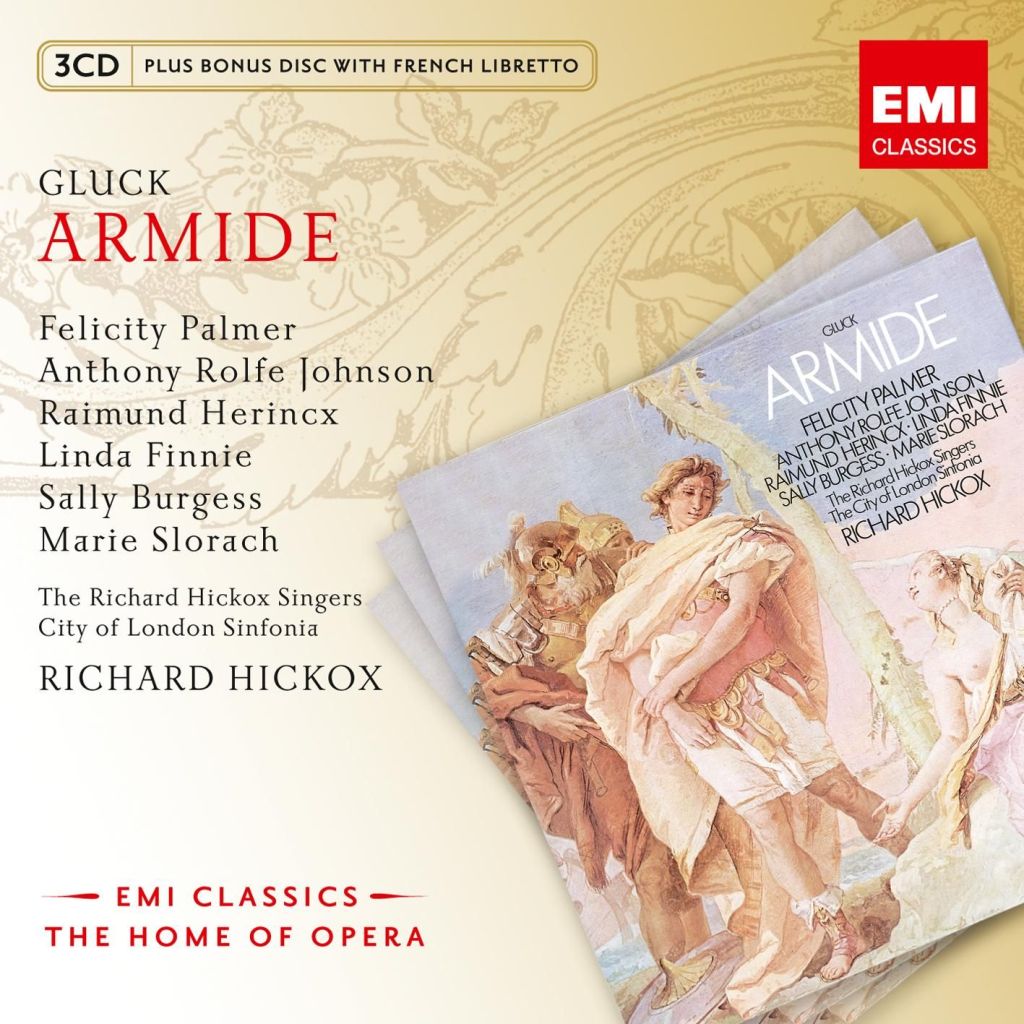
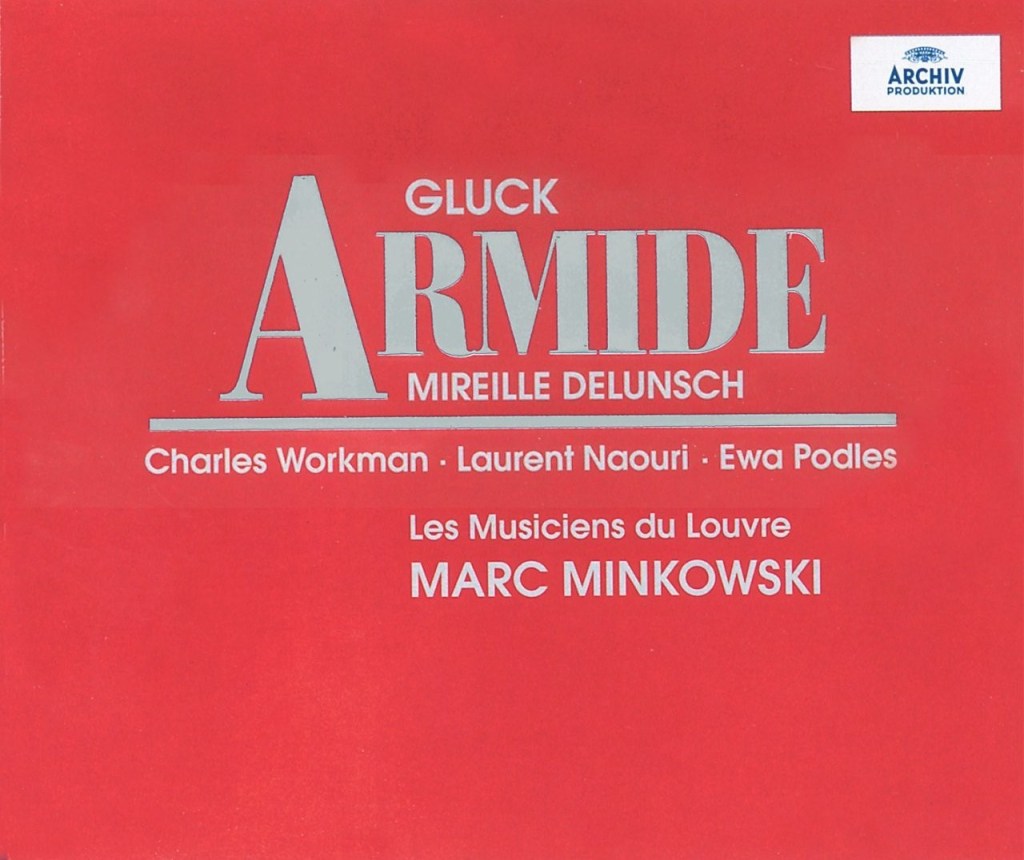
I know of only two complete recordings of Gluck’s work: one conducted by ichard Hickox on EMI (6407282) and one conducted by Marc Minkowski on Archiv (4596162). This is remarkable, considering that the opera is being erformed quite often these days.
Hicox’s recording (3 CDs) is over 26 minutes longer than Minkowski’s. I don’t know the opera well enough to be able to say whether Minkowski has made any cuts, but to be honest, I don’t think so. His tempi are simply on the fast side – except for the overture, where he is proceeds with some caution.
Hickox’s sluggishness becomes quite irritating after a while and I simply dozed off a few times. The thirty-year-old recording still sounds beautiful, although the sound does not match the clarity and transparency of Minkowski’s.
When it comes to the singers, the Frenchman easily beats his English colleague. I’m not a big fan of Mireille Delunsch, and I think her “Enfin il est en ma puissance” on Minkowski’s recording falls short of the interpretations by, for example, Véronique Gens or Anna Catarina Antonacci (why was the performance with Antonacci never officially recorded?). Nevertheless, despite her perfect diction and impeccable understanding of the text, Felicity Palmer (Hickox’s recording) is nomatch for her.
Charles Workman (Renaut) strikes a perfect balance between the heroic and the more lyrical – even my beloved Anthony Rolfe Johnson cannot compete with that.
Laurent Naouri is a very macho Hidraot, but what gives Minkowski’s recording that “superplus” is Ewa Podles’ performance in the small role of La Haine (Hate). Her voice and delivery will make your head spin. She is without peers: an alto with such a deep sound, with all the high notes at her disposal and she will leave you speechless with her interpretation!
HIckox:
Minkowski:
And a curiosity: a complete Armide from Madrid, 1985, with Montserrat ArmideCaballé:
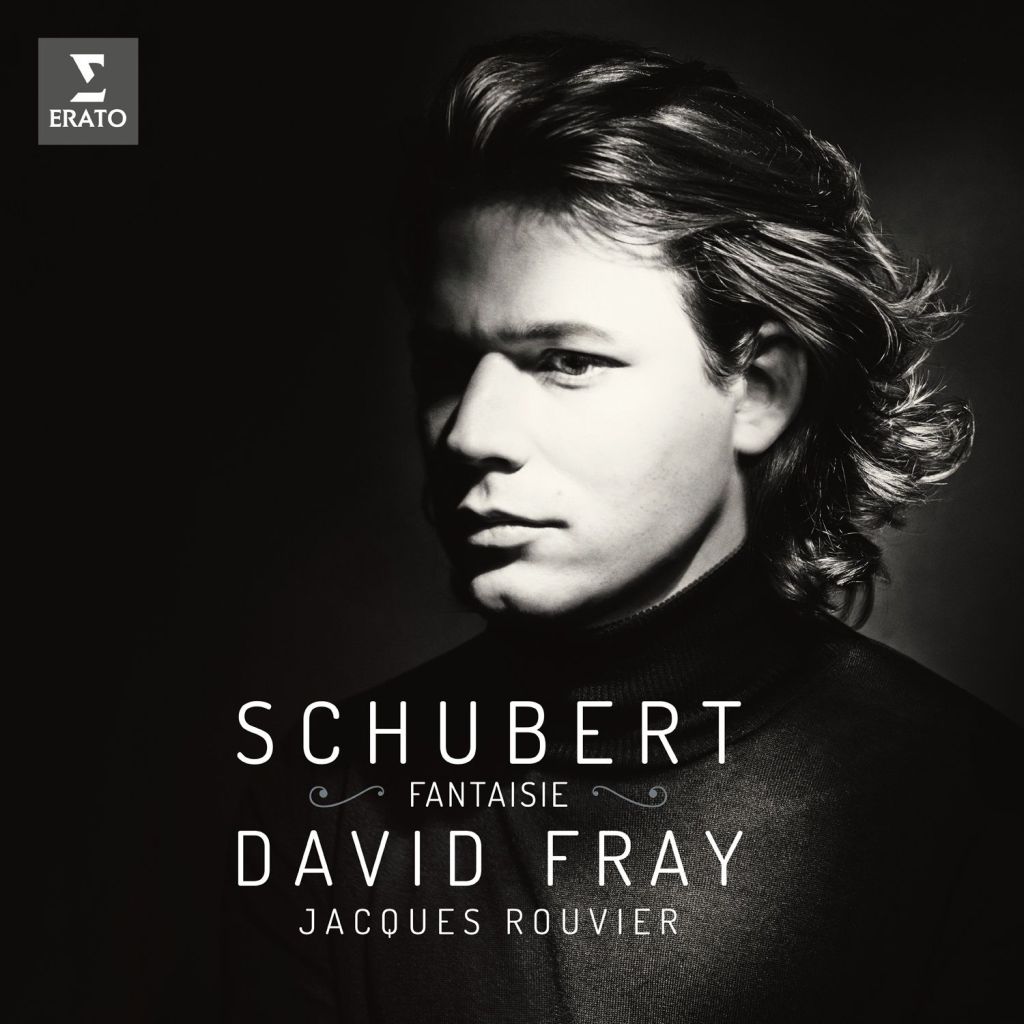
Fantasy: that is the name of the CD by David Fray, one of the most remarkable young pianists of recent times. It is a provocative title that is perhaps also a bit superfluous, because the fantasy and enchantment that music, especially Schubert’s, can evoke are always closely linked. ‘Fantasy’ is also the nickname of the great G Major sonata, which sounds remarkably milder and less “crazy” in Fray’s hands than it does when played by many of his colleagues.
His performance of Fantasia D 940, Schubert’s most famous and undoubtedly most beloved work for piano for four hands, together with his former teacher Jacques Rouvier, rivals the performance by Murray Perahia and Radu Lupu, which I still consider the benchmark.
Fray and Rouvier’s interpretation sounds less dreamy and more down to earth, which may be due to the faster tempi, but the poetry and enchantment are still intact. What makes their sober approach even more appealing is the recognisability of the keys used, which keeps your attention focused all the time. To put it bluntly, played this way, it is also less like a “musical earwurm”.
In the three-minute-long but oh-so-beautiful Hungarian Melody, Fray also shows his down-to-earth poetic side. Anyone who has ever become attached o András Schiff’s interpretation will have to take a deep breath (again, the fast tempo!), but after repeated listening, you will come to the conclusion that it can be done this way and still remain irresistible.
Maybe a matter of using your imagination?
In an interview, the very charismatic young Frenchman once said: “I want to let the piano speak and sing”, and he certainly succeeds in doing so.
Leonard Bernstein with Felicia Cohn Montealegre at their wedding on Sept. 9, 1951. Bernstein’s suit had previously belonged to Serge Koussevitzky. (Courtesy Music Division/Library of Congress
During his honeymoon in 1951 Bernstein started composing his first opera, Trouble in Tahiti. He wrote not only the music, but also the libretto, which, according to his biographer Humphrey Burton, was highly autobiographical and based on his parents’ marriage. Bernstein himself described it as a “light work, inspired by popular songs” and dedicated the piece to his good friend Marc Blitzstein, who had taught him the basics of musical theatre.
Bernstein with composer and friend Marc Blitzstein. Photographer unidentified. (Music Division)
The work may be light, but it is certainly not light-hearted. Consider it a satirical caricature of the life of an average American couple in the suburbs in the 1950s. To the outside world, they appear to be a happy couple, but in reality they are deeply unhappy, both with each other and with the life they lead, despite achieving prosperity.
The opera begins with – and is commented on by – a vocal trio singing about the idyllic life of the American middle class. A kind of contemporary Greek chorus that is reminiscent of the Andrews Sisters, or the radio commercials of that era.
British director Tom Cairns filmed the opera for television in 2001 in the style so characteristic for the 1950s comedies starring Doris Day.
Karl Daymond is not to be dismissed as a vocally and scenically inimitable Sam, and Stefanie Novacek is a more than convincing Dinah.
Tom Randle, Toby Stafford-Allen and Mary Hegarty (the Greek chorus) sing and act at the highest possible level.
The Orient! What did we know about it in those far gone days? It was exotic, adventurous and exciting. All the men there were macho, super attractive and potent. And they smoked opium. All the women were beautiful, graceful, mysterious and seductive. It smelled of amber and wild jasmine….
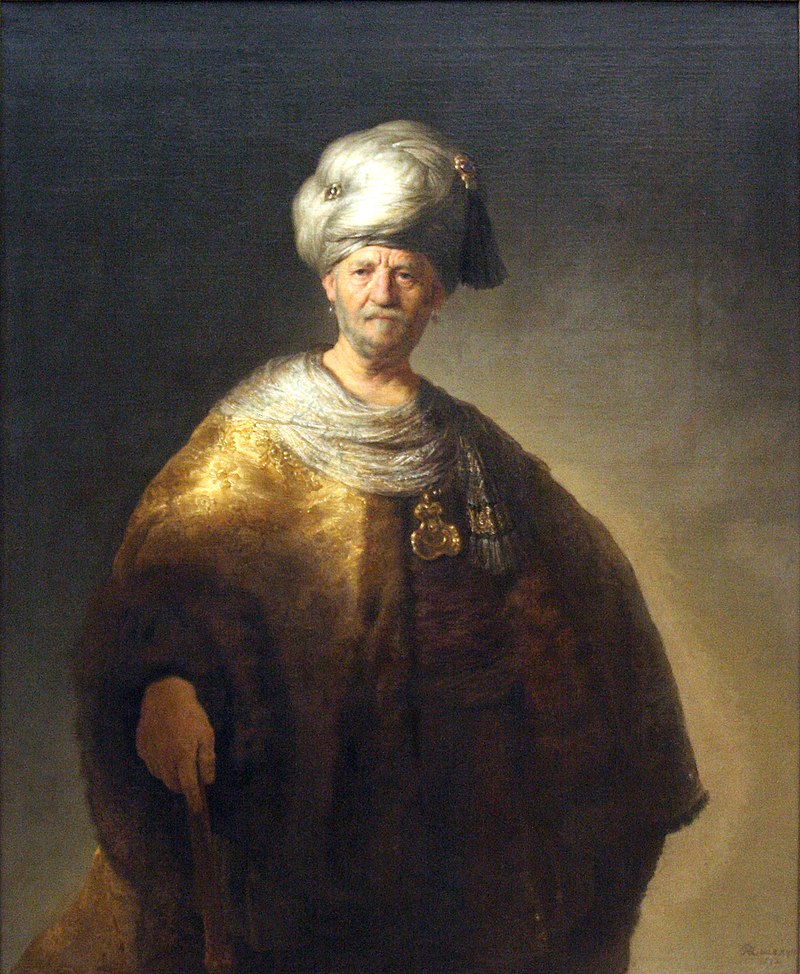
Man In Oriental Costume (“The Noble Slav”), oil on canvas, by Rembrandt, 1632. A significant example of European emulation of Ottoman dress for the purpose of portraying a dignified, elite appearance.
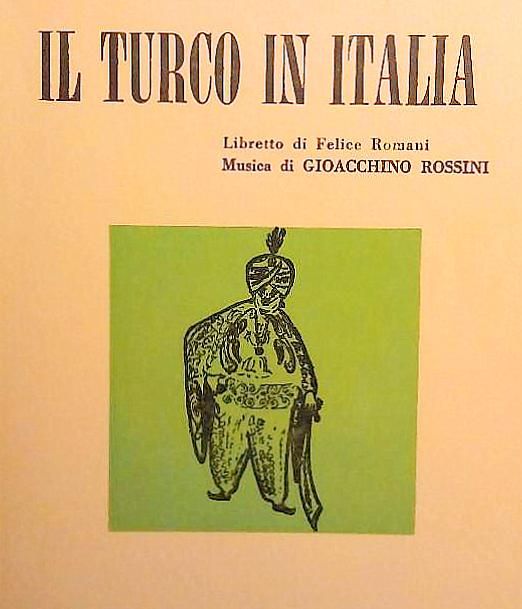
It was so incredibly far away and unknown – no wonder we were enchanted by it. No wonder, too, that our dreams sometimes ran wild. But the dreams turned out to be good for something, because they gave us the most beautiful works of art, including operas. Rossini’s Il Turco in Italia is one of them.
Believe it or not (believe it!), Turco is very similar to Mozart’s Cosi van tutte. Even the music is often reminiscent of it. The story: a Don Alfonso-like poet without inspiration, a kind of evil genius really, devises an intrigue in which he then manipulates all the characters as if they were puppets, so that everyone ends up with (almost) everyone else, but in the end everything does turn out well. Or not. In any case, our Prosdocimo tells a wonderful story.
I wonder what the ideal Fiorilla should sound like. On the recordings known by me, she is sung by all voice types: from a super light coloratura soprano to a dark coloratura mezzo with chest tones. Somehow, none of the ladies really appeal to me, not even Maria Callas, although she comes close to what I would like to hear in this role.
DVD’S
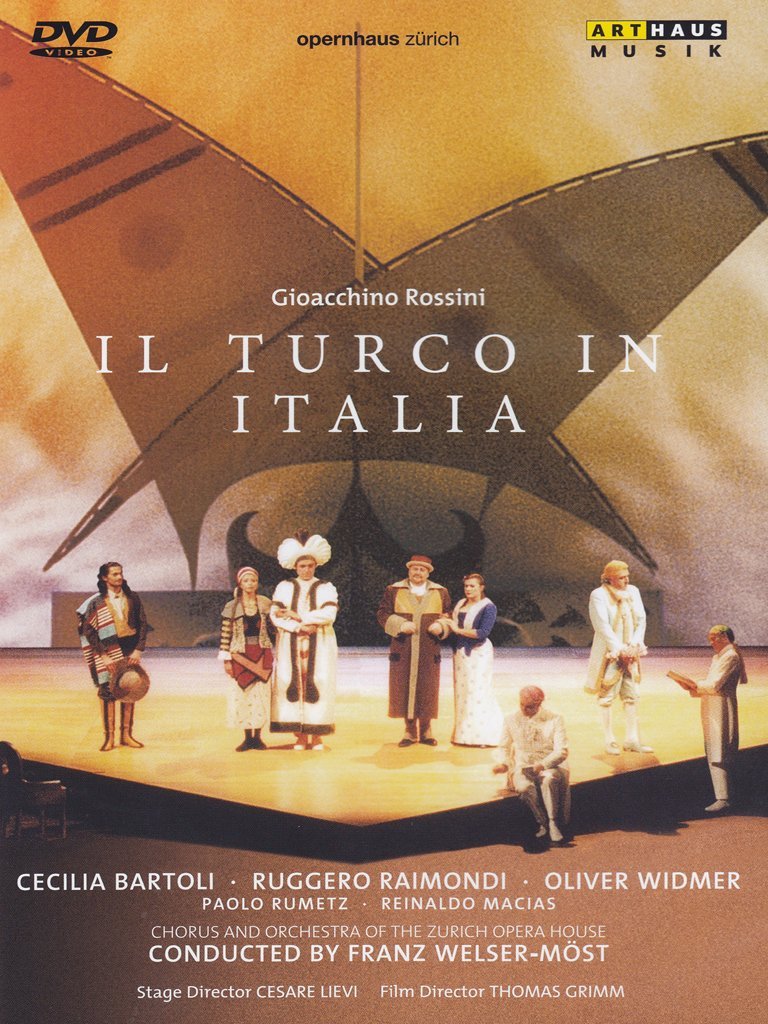
Zurich, 2002
In 2002, Il Turco was staged in Zurich. The lead role was played by an old hand, Ruggiero Raimondi. His Selim is undoubtedly exciting and erotic, and he compensates for the wear and tear of his voice with overwhelming acting and tremendous charisma.
Oliver Widmer is in fine form as the cynical poet Prosdocimo, and Paolo Rumetz plays a delightfully dim-witted Geronio. The problem is Cecilia Bartoli. (Please don’t hit me, it’s just my opinion!) She is undoubtedly a virtuoso, but I find her mannerisms very irritating and her dark timbre completely unsuitable for the role.
The whole thing is cheerful, with bright colours and crazy costumes: the gypsies look like a combination of Volendam people and Peruvians (Arthaus Musik 100 369).
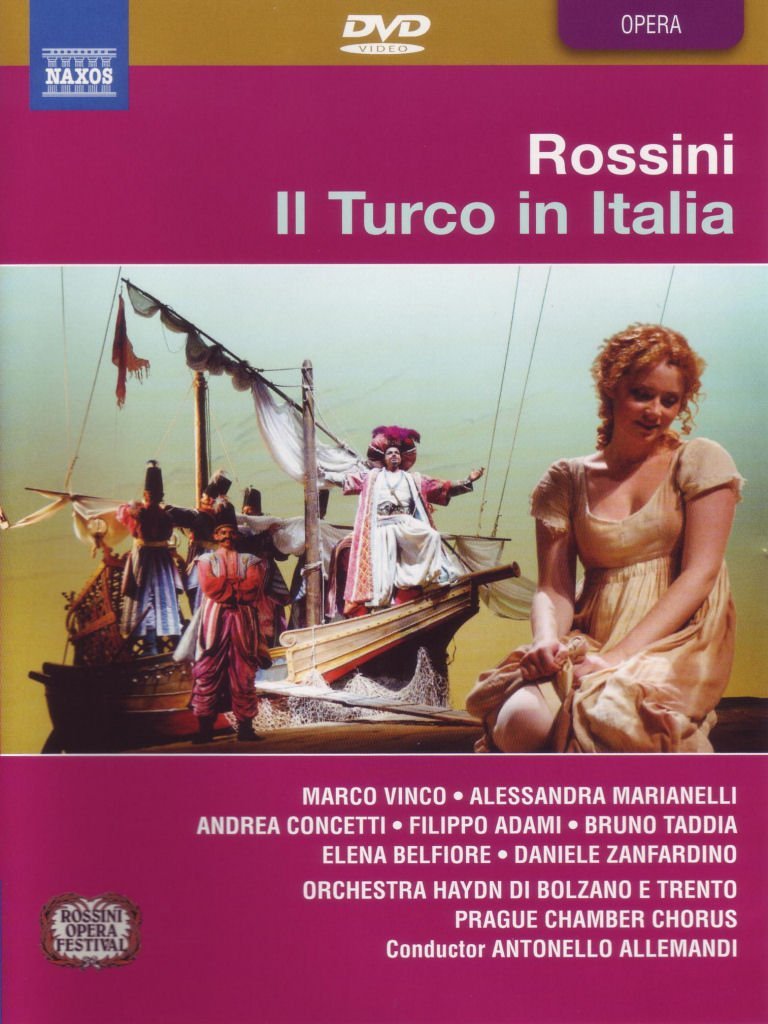
Pesaro 2007
In Pesaro in 2007, a very naturalistic-looking Turco was recorded, with only young, unknown singers in the leading roles. The fact that they, with the possible exception of Marco Vinco (Selim), have remained unknown, does not say everything, but it does say a lot.
Nevertheless, there is much to enjoy. The characters are wonderfully recognisable, the colours are beautiful and the action follows the libretto closely. Definitely enjoyable! (Naxos 2.110259)
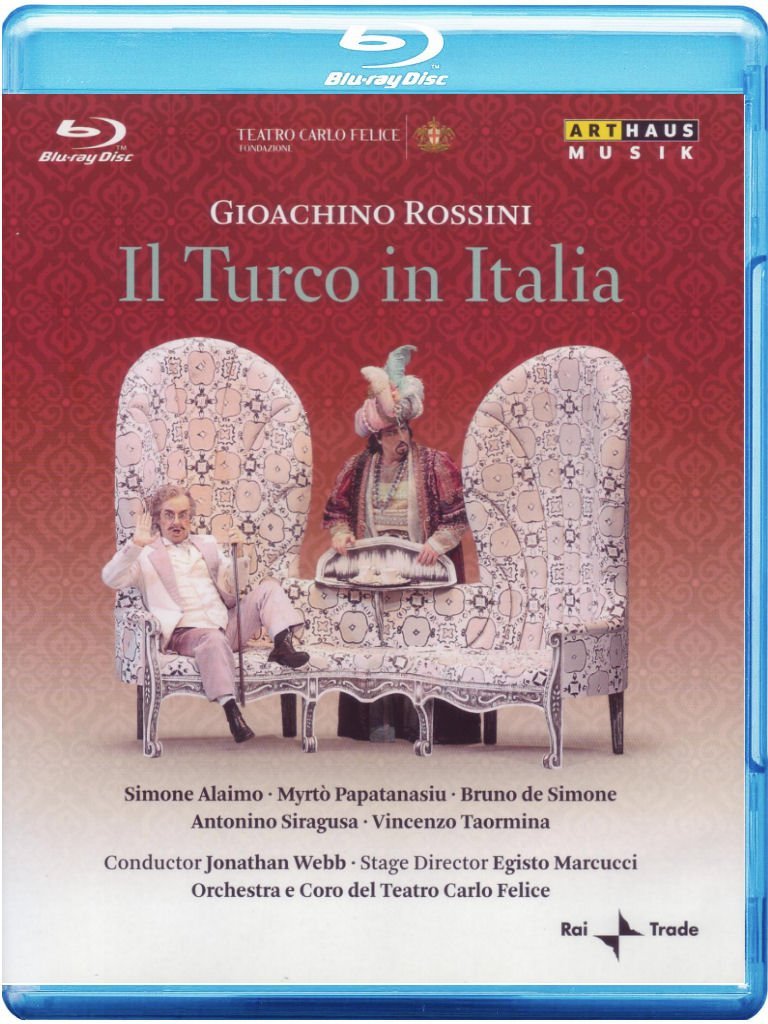
Genoa, 2009
One of the newer recordings on DVD is from 2009 at the Teatro Carlo Felice in Genoa. Well, new… the production is more than 40 years old and was first seen in 1983.
That’s okay, because it’s still very entertaining, although I must admit that I sometimes feel a little dizzy from everything that’s happening on the stage: acrobats, fire-eaters, ballerinas, Arlecchinos and so on. Commedia dell’Arte at its best.
Myrtò Papatanasiu is a beautiful Fiorilla and Simone Alaimo a delightful Selim, although I think he is performing slightly below his usual high standard. Antonino Siragusa is also a tiny bit disappointing as Narciso (Arthaus Musik 101 39).
CD’s
Milan, 1954
.
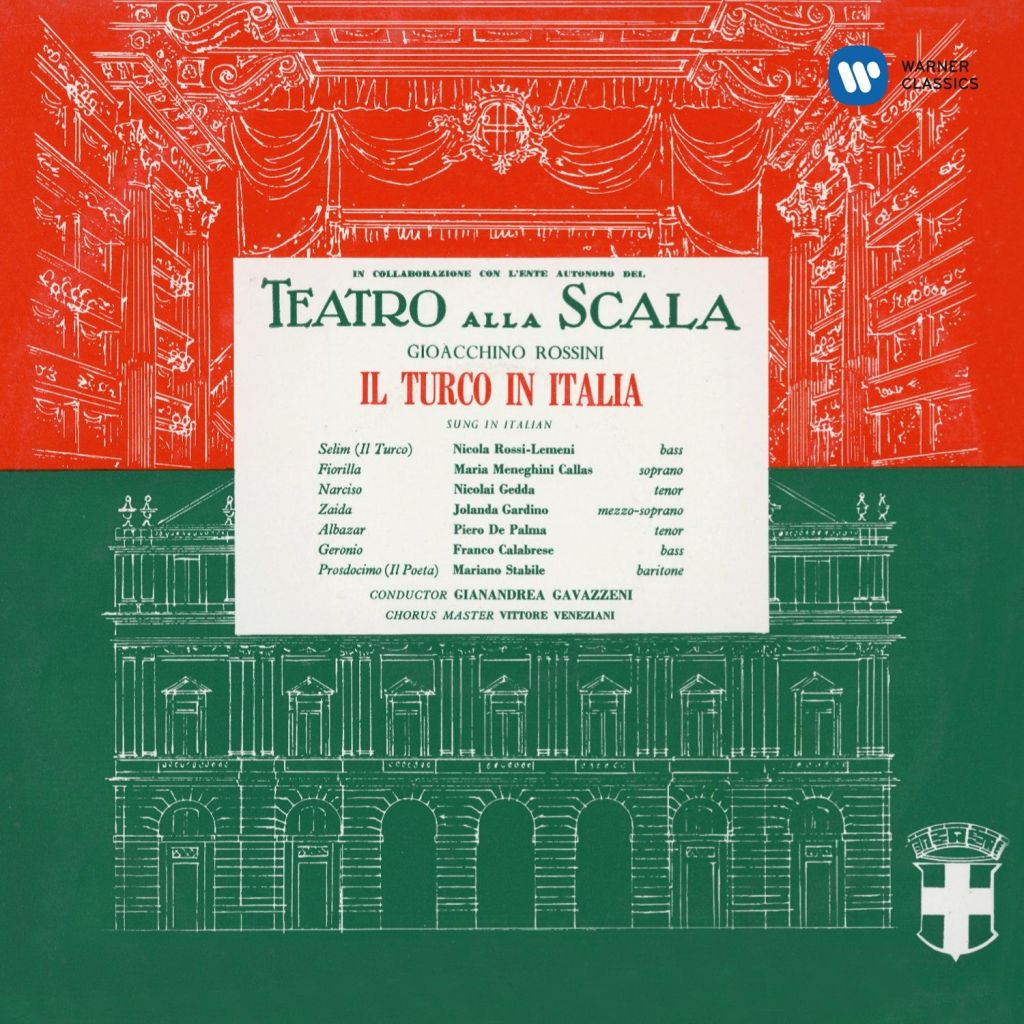
Maria Callas sang the role of Fiorilla in Rome in 1950 and four years later recorded it in the studio with La Scala in Milan. Gianandrea Gavazzeni conducted an “all-star cast” – most of the names make our mouths water today. But, apart from the fact that they were all truly fantastic, we have to ask ourselves whether it still sounds adequate to our ears.
Yes, Nicola Rossi-Lemeni would still be able to do it today, but the rest, including La Divina? With her, I often get the feeling that I am in the wrong opera and that I’m really listening to Anna Bolena. (Warner 0825646340880)
Milan, 1958
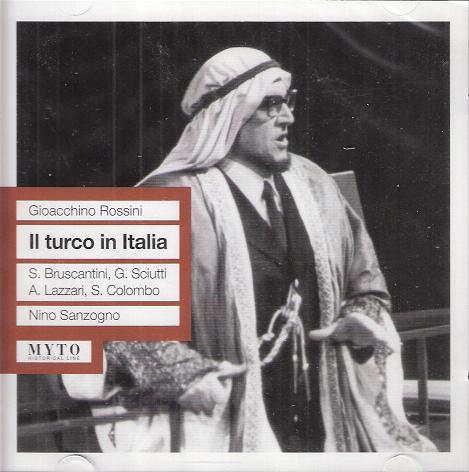
I absolutely cannot ignore Sesto Bruscantini who is a truly irresistible Selim. Scipio Colombo is delightful as the (in his interpretation) comic villain Prosdocino, and as Donna Fiorilla we hear one of the most delightful light sopranos of the time: Graziella Sciutti. A little soubrette-like, but so agile, and with such a wonderful timbre! The rest of the voices are good, but not exceptional, but Nino Sanzogno’s conducting – light and sparkling – does the opera justice. The live recording from 1958 (Milan) is rather dull. Nevertheless, it is a special document of a time that is now truly gone (Myto 00193).
Sesto Bruscantini and Graziella Sciutti in “Credete alle femmine”:
The good news: the overture is played with the curtain closed! The overture is the best-known piece of the entire opera, so it goes without saying that it is given plenty of space. Otherwise, Béatrice et Bénédict is not exactly what you would call a box office hit. No wonder: the opera is not particularly exciting, which is partly due to the endless stretches of spoken text.
The story (Berlioz himself wrote the libretto based on Shakespeare’s Much Ado About Nothing) is insignificant, but the music is at times enchantingly beautiful.
The 2016 Glyndebourne production is very disappointing to me. Laurent Pelly is one of my favourite opera directors, but he has overreached himself here. He has taken the main characters’ “thinking outside the box ” too literally, and the end result is as dull and grey as the colours of the sets, the costumes and even the singers’ make-up.
Fortunately, the singers are all excellent. In her first aria, “Je vais le voir”, Sophie Karthäuser (Héro) still sounds a little heavy, but her duet with the excellent Katarina Bradic (Ursule), “Nuit paisible et sereine!”, sounds just as it should, like a real gem.
Stephanie D’Oustrac is a fantastic Béatrice, and the sexual attraction between her and Paul Appleby (Bénédict) is palpable from the start.
But it is the young baritone Philippe Sly who really steals the show as the gangly Claudio.
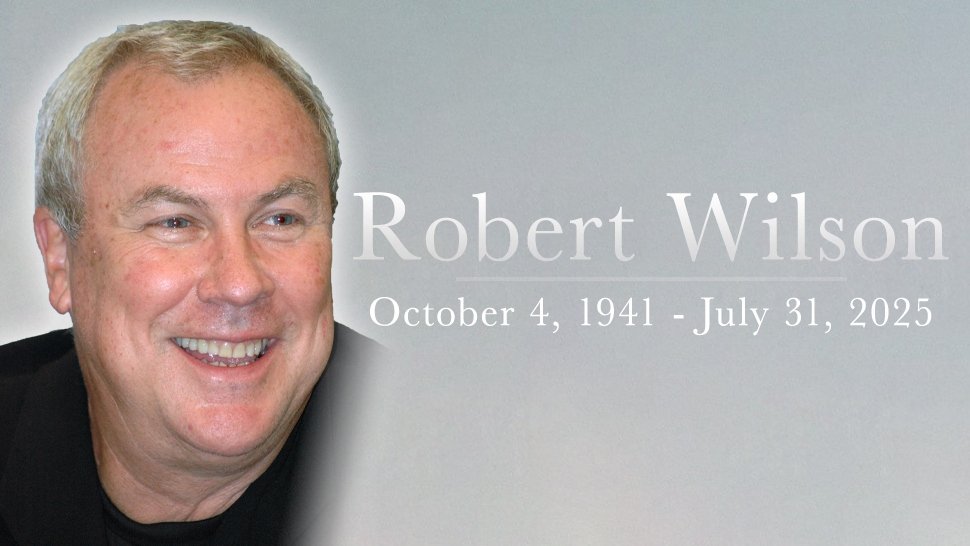
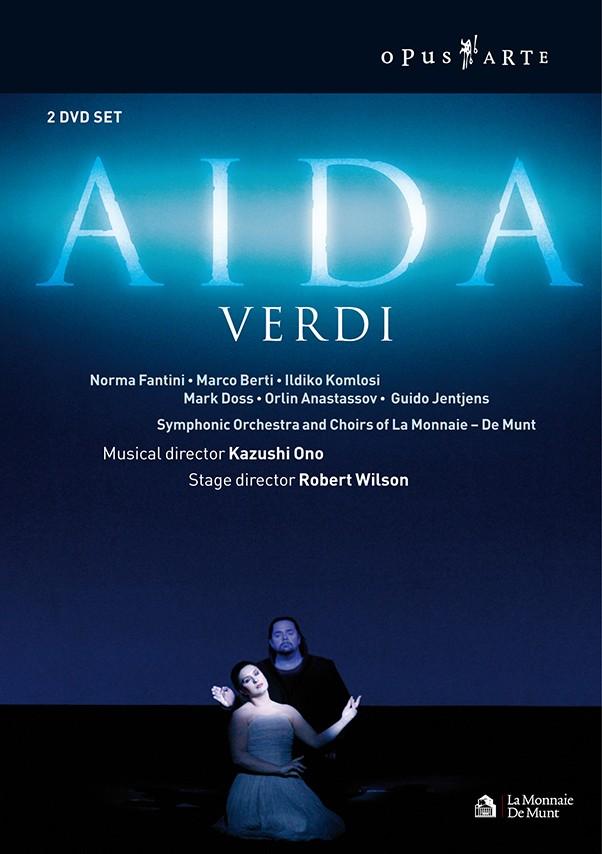
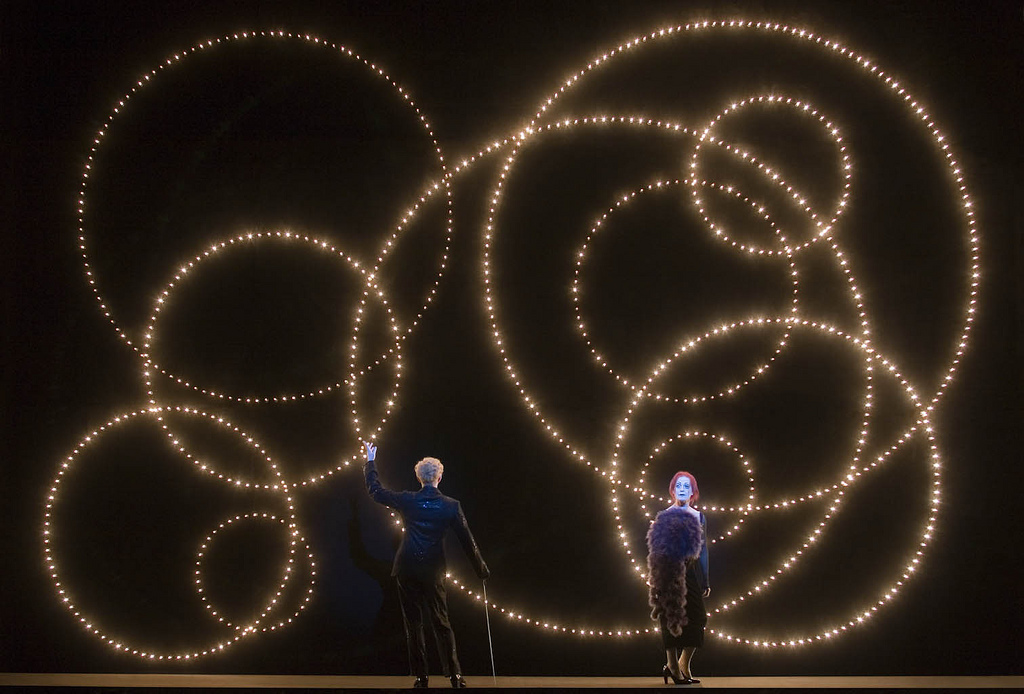
Don’t expect any elephants in this Aida from Brussels. Also, no big mass scenes and – mainly – don’t expect emotions. With Robert Wilson, everything has to be minimalist and aesthetically pleasing, which undeniably makes for nice pictures but it makes for a very large discrepancy with the music. The singers move very slowly, almost in slow motion, and their (sparse) gestures are stylised after ancient Egyptian drawings.
No one touches anyone and no one is even looking at anyone else. All the characters are mainly preoccupied with themselves and their own suffering, which, according to the director, may be the key to the drama. For me it is too far-fetched.
The staging is dominated by the colours black and blue, there are hardly any sets and/or props. Deadly dull.
The truly amazing singers seem to be trapped in a straitjacket of emotionless acting, although Ildiko Komosi (Amneris) occasionally manages to sneak in a gesture. Together with Norma Fantini (Aida), she provides most of the tension and emotion, and their duet in the first act is a vocal highlight.
Marco Berti is an excellent Radames with beautiful high notes and a touch of “Pavarotti” in his timbre, and the rest of the cast is also first-rate. Kazushi Ono conducts calmly, with great attention to detail.
Returning to the director: Robert Wilson seems to repeat himself over and over again. If you have seen one of his productions, you have seen them all. Almost..
But then……
Nothing less than phenomenal: Die Dreigroschen in Amsterdam 2009
At the end of April 2009, the renowned Berliner Ensemble visited Amsterdam. They brought with them Die Dreigroschenoper, in the magnificent staging Robert Wilson had given to the company two years earlier. Worth knowing: the Berliner Ensemble is based in the Theater am Schiffbauerdam where the work was premiered in 1928.
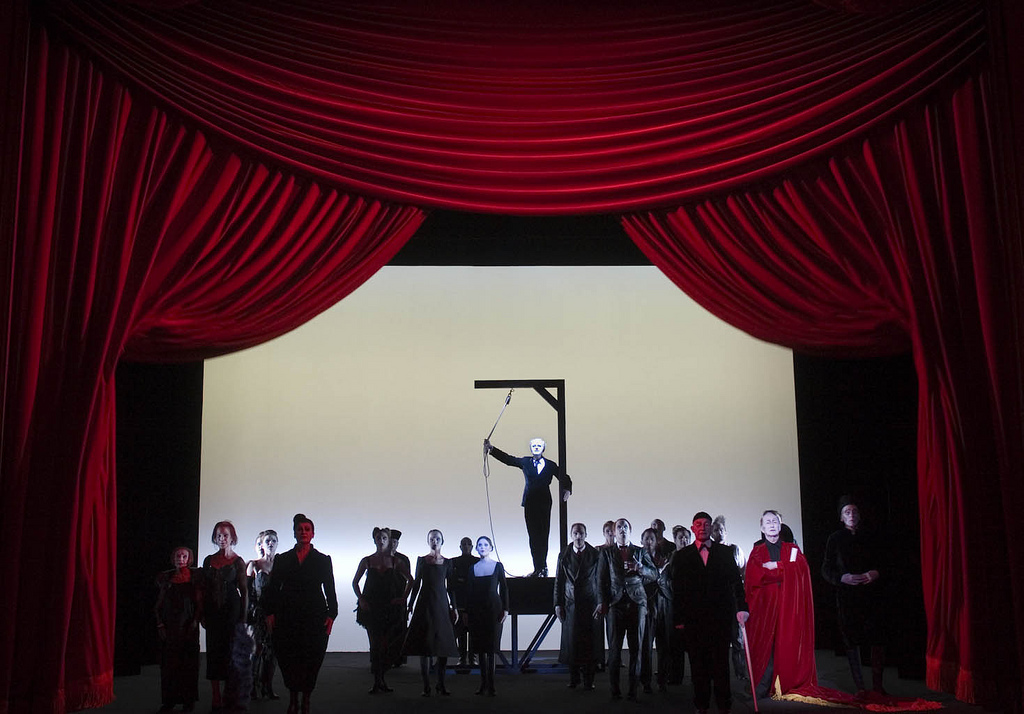
All four performances at the Muziektheater were sold out and audiences responded with frenzied enthusiasm. Perfectly justified because everything was just great. The production, the direction, the lighting, the costumes, the movements…. And the performance, of course, because isn’t that why we go to the music theatre?
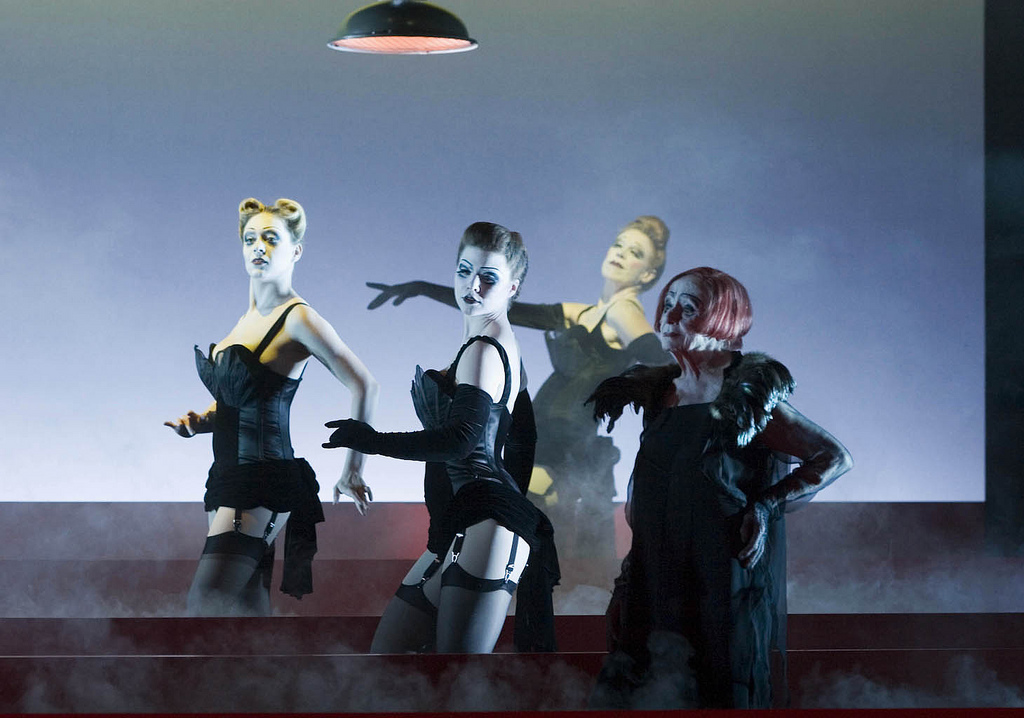
The performance was very cabaret-like, in the good sense of the word. It was grotesque and vaudeville-like with lots of slapstick, (film) quotes and whatnot without it becoming a complete farce. Occasionally I was reminded of Otto Dix.
In a word: breathtaking. And of course it was a treat to be able to hear all those well-known and still oh-so-current songs again, but now as part of a whole.
The performance did take a long time (yes folks, it was not only Wagner who took his time), over three hours, but then also you got a lot. For a start, the complete dialogues.
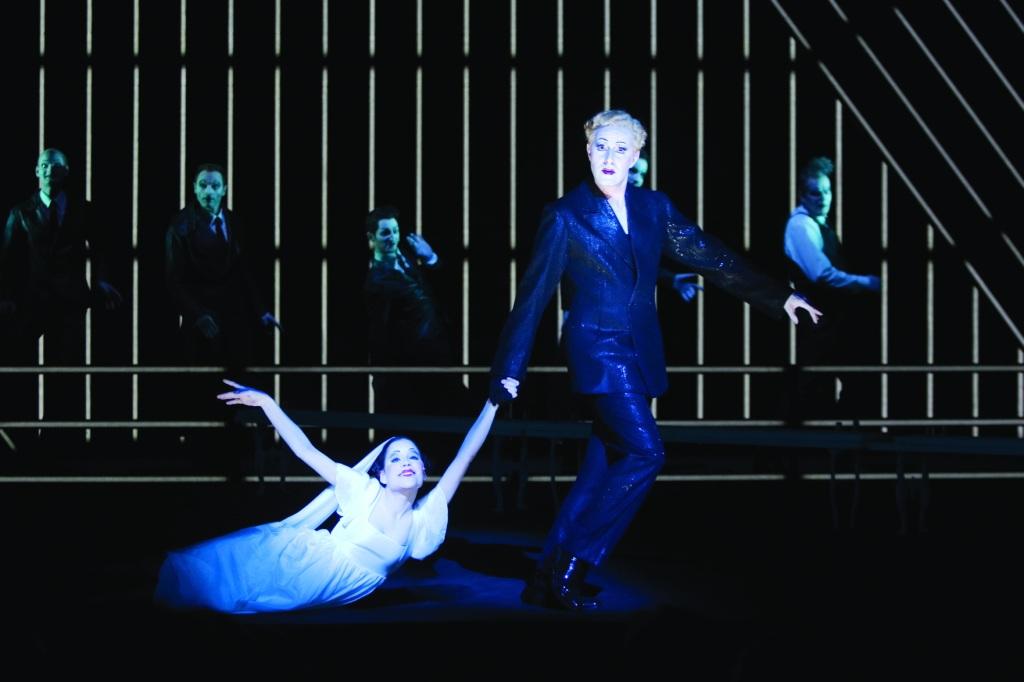
Stefan Kurt was a formidable, androgynous dandy Macheath and Angela Winkler a very moving Jenny. Also great were Jürgen Holtz as J.J. Peachum and Axel Werner as Tiger Brown, and Christina Drechsler was a terrific Polly.
On one of his latest, already his seventh, recording for Decca, Benjamin Grosvenor has taken care of Liszt. That he did so very carefully, even meticulously, he told candidly in the interview he gave to the New York Times. ‘I almost feel like you should know the notable recordings of a work like this’ he said, referring to the piano sonata. So he studied just about every possible performance of the work: Lupu, Cherkassky, Horowitz, you name it.
Whether it also influenced his own interpretation? Undoubtedly. We, humans, we are influenced even if we don’t notice it. And yet his reading of the sonata is completely his own. Virtuoso, mainly. So much so that I was breathless by just listening to it. His technique is fabulous. What I admire even more is his, how shall I put it, “acting” skills. Acting, as it were, on the piano and building the tension with only the keys at your disposal
I am slightly less charmed by the other pieces on the CD. Mainly the three Petrarch Sonets from the second book of “Années de Pèlerinage”, which I have heard more beautiful and lyrical: Arrau, Lazar Berman… And no one can really match Michael Rudy’s interpretation. In my opinion, then.
Boris Giltburg: matchless
Wow, how great is that CD! Whereas Giltburg’s performance of Rachmaninoff’s Third Concerto disappointed me a little (I thought it was too forceful and too rushed), now I just have to admit that I may have been wrong about him.
Just take the “Rigoletto paraphrases” with which he opens his recital: mamma mia! The first bar already made me sit up because this is how it should be, this way and no other. It splashes out of the boxes, but more importantly: Giltburg takes ample time to bring out Liszt’s poetic, salon-like, if you will, side. I am very much impressed..
But it’s obviously all about the 12 Études d’exécution transcendante, works previously considered unplayable and which only the all-time great master pianists dared to try.
Giltburg plays them – all of them – naturally, decidedly, as if they are nothing at all. Well; his attaque may still be fierce, but he also knows how to conjure breathtaking, enchanting, pianissimi from the keys. And those glissandi!
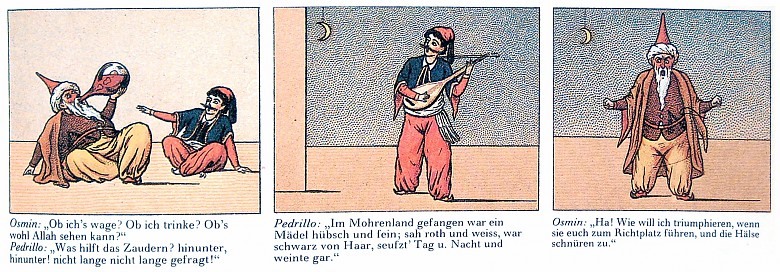
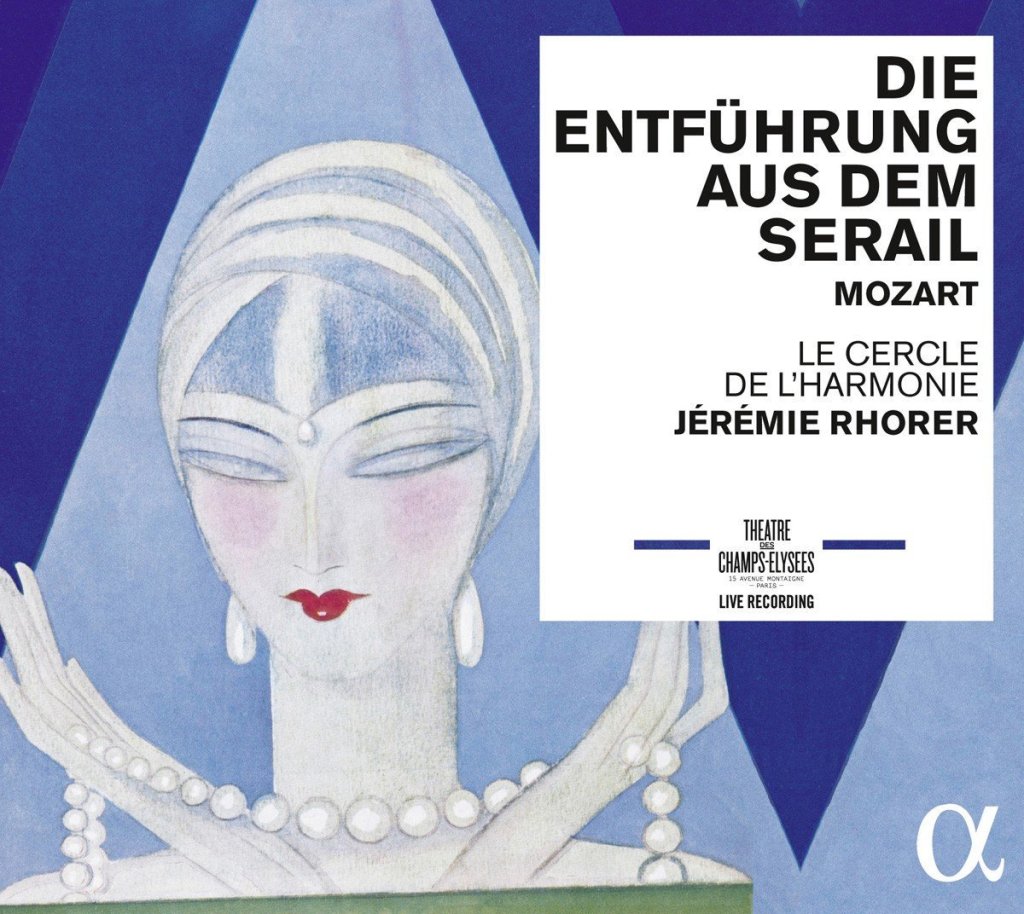
There is no shortage of recordings of Die Entführung aus dem Serail, but really good ones may be counted on the fingers of one hand. Moreover,you often have to go quite far back in time to find the real gems. But the performance recorded live at the Théâtre des Champs-Élysées on 21 September 2015 – and conducted very vividly by Jérémie Rhorer – is, for me, among the very best.
David Portillo is an extraordinarily fine Pedrillo. Light and airy,entertaining and amusing; and meanwhile singing utterly brilliantly…. Superb.
Rachelle Gilmore is a delightful Blonde. Just listen to “Welche Wonne,welche Lust”, which she sings with impeccable height and crystal-clearcolouratura! Breathtaking.
Mischa Schelomianski shines as Osmin. That he sings the role with a thick Russian accent is anything but disturbing here. It is quite right for Osmin. Jane Archibald (Konstanze) sounds a bit shrill at times, but as soon asshe starts singing “Ach ich liebte” I surrender completely.
Only Belmonte (Norman Reinhardt) I have heard better. His voice iscreamy and his timbre pleasant, but he lacks a bit of suppleness, which prevents him from being really satisfying in his “Wenn der Freude Tränen liessen”. Fortunately, “Ich baue ganz auf deine Stärke” succeeds much better, but I continue to have trouble with his ornamentation.
It’s not perfect, no, but live performances never are. It is one of the reasons why they are so much fun; after all, nothing beats live theatre! The tempi are on the brisk side but nowhere rushed, and the orchestra sparkles like a cosy fire. And there is no director to ruin it for me. This is how I want my opera’s (Alpha 242)
DVD
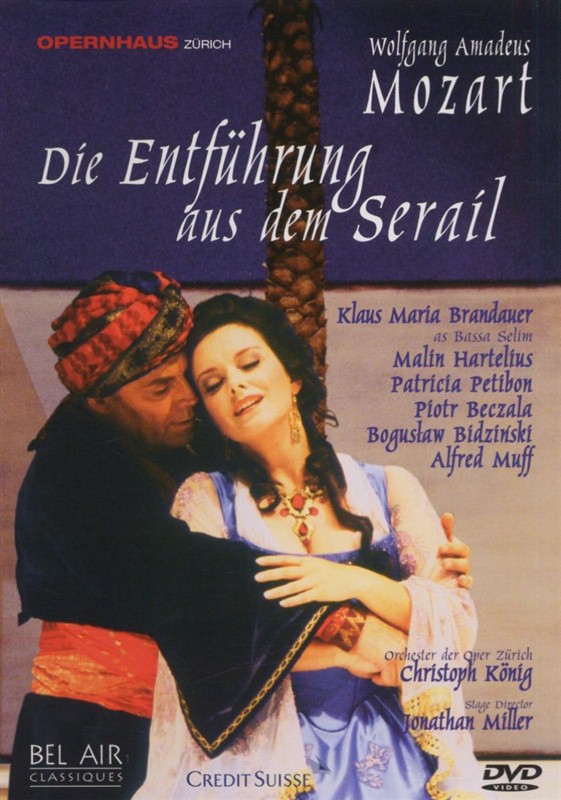
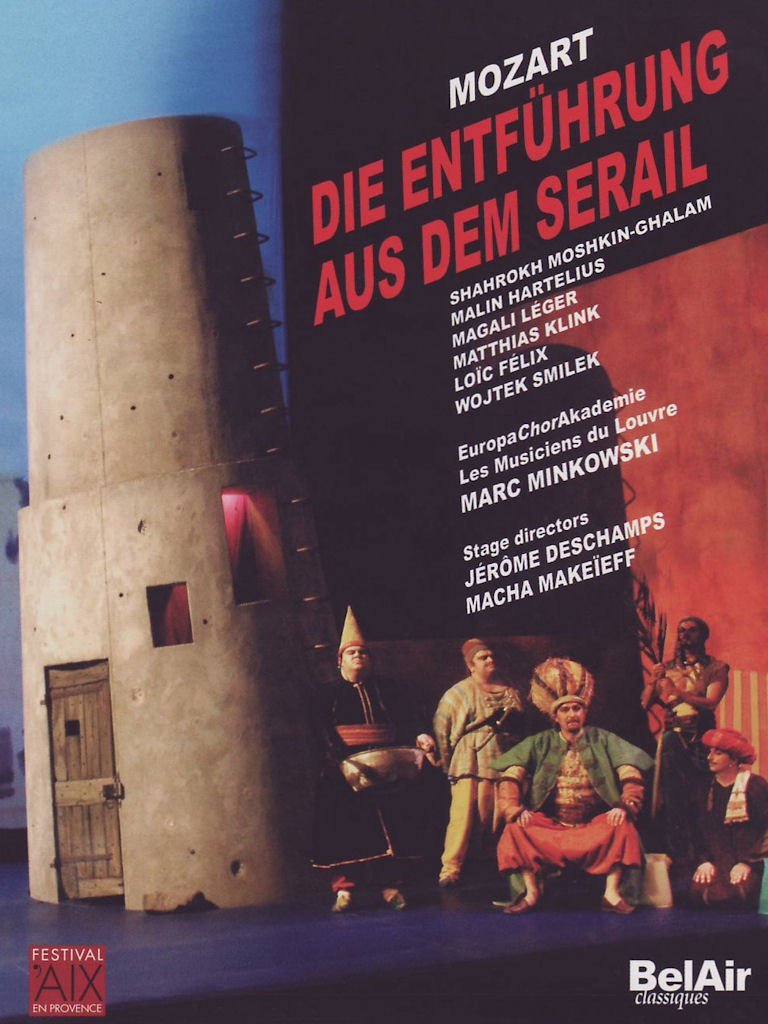
The ways of record companies are sometimes inscrutable and so it couldhappen that two different performances of Entführung aus de Serail were released within a short space of time by the same company, BelAirClassics. These are respectively a production by Jonathan Miller made for the Zürcher Festspiele in 2003 (BAC007) and a performance filmed in Aix-en-Provence in 2004, directed by Jérome Deschamps and Macha Makeïeff and conducted by Marc Minkowski (BAC028). There is aworld of difference between the two productions, it just goes to show what good (or, if you like, bad) direction can do to an opera.
Zürcher Festspiele 2003
Jonathan Miller, normally a pretty big deal, simply fails. Nothing happens. There is a palm tree in the middle and the singers come up, lean against it and sing their aria.They are totally left to their own devices, which for most results in clichéd gestures and gestures. With Patricia Petibon (Blonde), just the opposite happens: she exaggerates like her life is depending on it and she is overacting. In short: here are six characters looking for a director.
Patricia Petibon sings “Durch Zartlichkeit und Schmeicheln”:
I am not enthusiastic about the singing either, as even Piotr Beczala (Belmonte) and Malin Hartelius (Konstanze) perform far below their level.
There is one plus though: Klaus Maria Brandauer in the speaking role of Bassa Selim. Every scene with him in it turns into pure theatre. He doesn’t act, no, he just gives a masterclass in acting.
The production from Aix-en-Provence can be described in one word: precious. As soon as you see the orchestra (all wearing turbans and other exotic headgear) and the entrance of a broadly smiling Minkowski, you know you are going to be amused.
The stage is populated by a motley collection of rather weird characters in oriental costumes, one joke follows another, with no cliché shunned. It is no longer comedy, it is slapstick. And why not? Mozart can take it, especially when it comes to a singspiel.
The dancing emergence on the stage of Bassa Selim (a fantastic Shahrokh Moshkin-Ghalam, a dancer and actor very famous in France) is a story in itself. His German is abominable, but he must be forgiven, because everything else he does with the role (including a spectacular disappearing act at the end) is breathtaking
Malin Hartelius shows what a fantastic Kostanze she is. Magali Léger (Blonde), Matthias Klink (Belmonte), Loïc Félix (Pedrillo) and Wojtek Smilek (Osmin) are all fine, the orchestra fierce and Minkowski on target. But be warned: it is packed with Mohammed jokes.






 Basia con fuoco