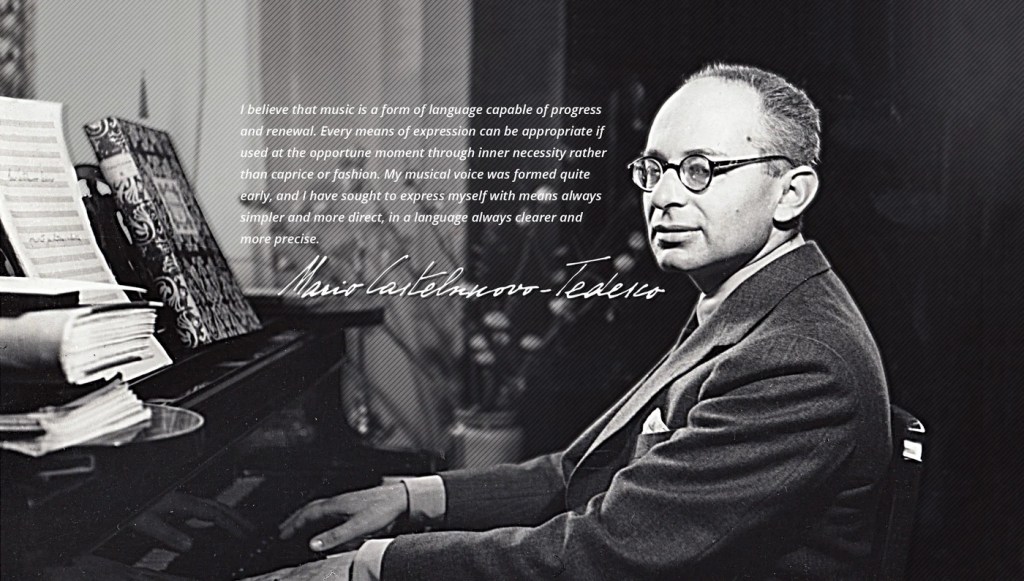
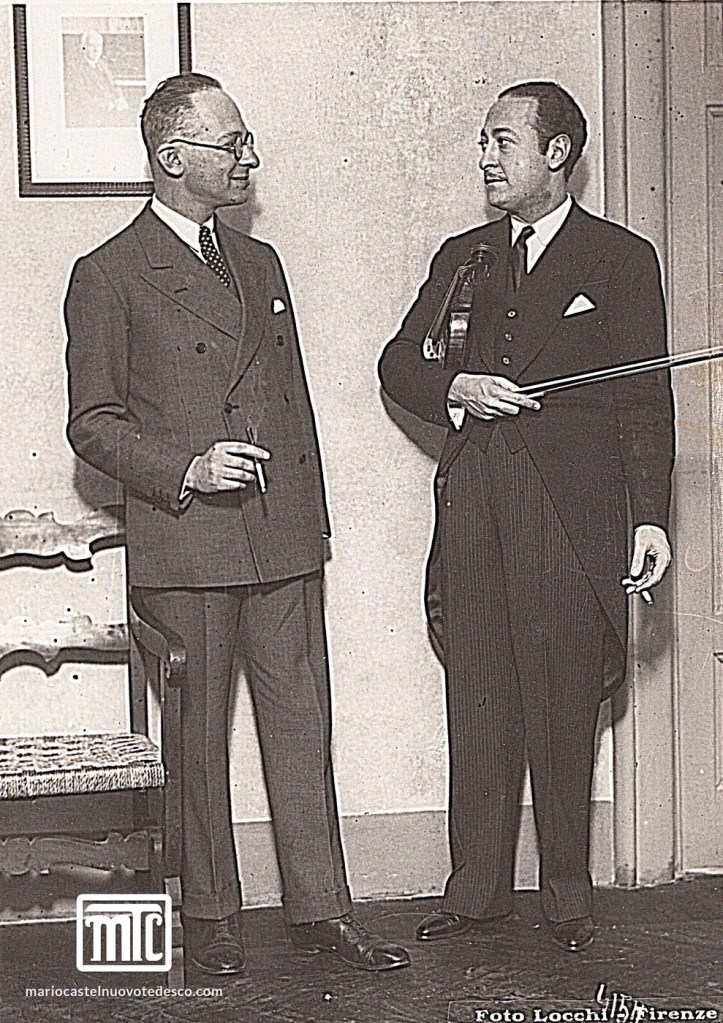
Mario Castelnuovo-Tedesco (Florence, 3 April 1895 – Beverly Hills, 16 March 1968) was born into a Jewish family of Sephardic descent (Jews expelled from Spain in 1492). He was extraordinarily creative, to his credit he worked on all sorts of things: piano works, concertos, operas…. His compositions were played by the great: Walter Gieseking, Gregor Piatigorsky, Jascha Heifetz, Casella.
Heifetz plays Mario Castelnuovo-Tedesco’s second violin concerto: ‘I Propheti’. Recording from 1954:
Today, we know him mainly for his guitar works, nearly a hundred in all, mostly written for Andres Segovia. Segovia plays the Guitar Concerto No.1 in D major, Op. 99; live recording from 1939:
In the beginning of the 1930s the composer began to explore his “Jewish Roots”, which was intensified by the rising of fascism and the racial laws. His music was not performed anymore. Helped by Arturo Toscanini, Castelnuovo-Tedesco and his family were able to leave Italy just before the beginning of World War 2.
Like most Jewish composers who fled Europe, Castelnuovo-Tedesco ended up in Hollywood. Where, thanks to Jascha Heifetz, he was appointed composer of film music by Metro-Goldwyn-Mayer.
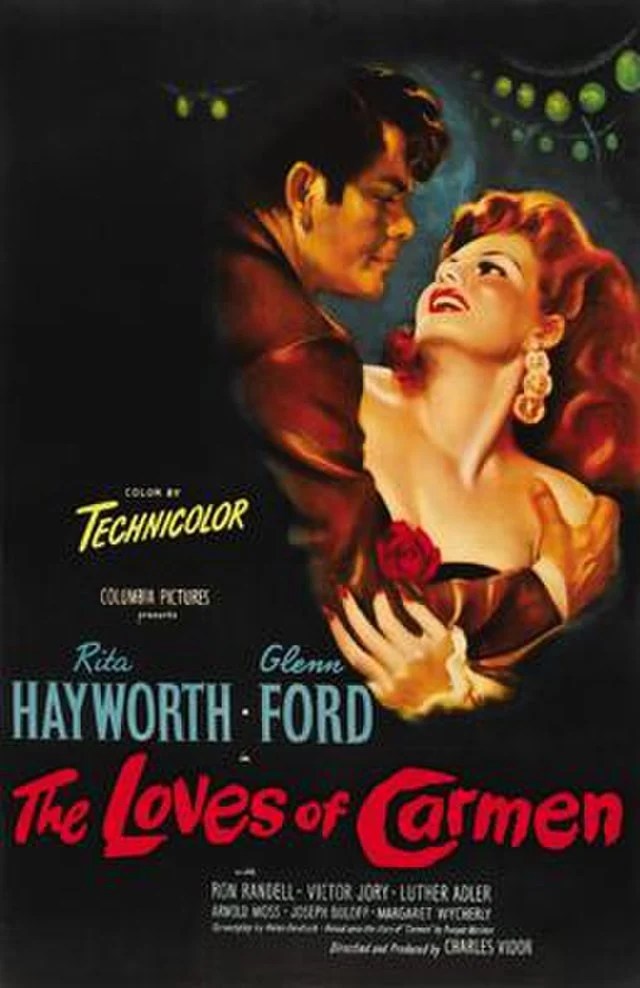
At Rita Hayworth’s special request, he composed music for the film The Loves of Carmen starring Hayworth and Glenn Ford. Below is the dance scene from the film:
During this time, Castelnuovo-Tedesco also composed new operas and vocal works inspired by American poetry, Jewish liturgy and the Bible: America offered him opportunities to deepen and develop his Italian musical heritage and his Jewish spirituality. He dreamed of hearing his Sacred Service “once in the synagogues of Florence”. It was premiered in 1950, at New York’s Park Avenue Synagogue.
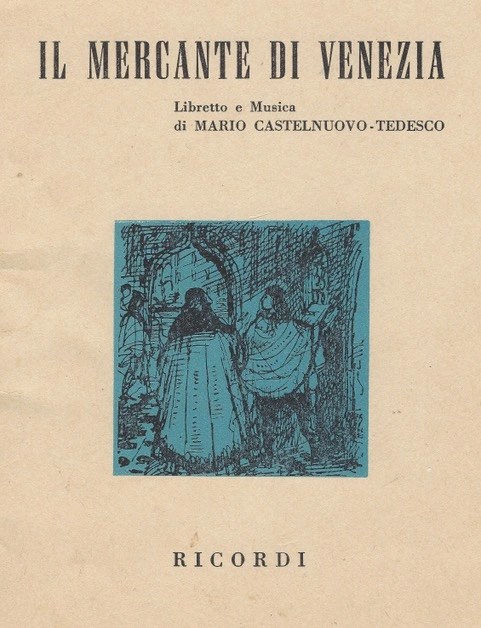
Dating from 1956, the opera Il Mercante di Venezia after Shakespeare’s The Merchant of Venice (Castelnuovo-Tedesco was a great Shakespeare lover) was performed at Maggio Musicale in Florence in 1961. Toscanini conducted and the leading roles were sung by Renato Capecchi (Shylock) and Rosanna Carteri (Portia).
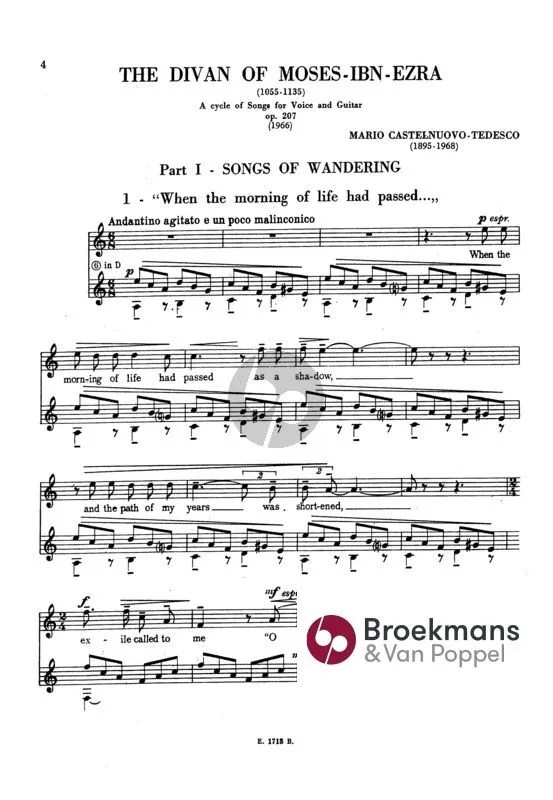
In 1966, he composed The Divan of Moses Ibn Ezra. It is a setting of nineteen poems by Rabbi Moses ben Jacob ibn Ezra, also known as Ha-SallaḠ(‘writer of penitential prayers’).
An illustration of Ibn Ezra (centre) using an astrolabe
Born in Granada around 1055 – 1060, Ibn Ezra died after 1138 and is considered one of Spain’s greatest poets. He also had a huge influence on Arabic literature. Castelnuovo-Tedesco composed the ‘Divan’ (meaning; a collection of poems) to the modern English translation.
Roberta Alexander sings The Divan of Moses Ibn Ezra
Channa Malkin and Izhar Elias in ‘Fate has blocked the way’:
The composer wrote his Cello Concerto for Gregor Piatigorsky, the premiere took place in 1935, with Arturo Toscanini conducting the New York Philharmonic. And that was it. Since then, the concerto was totally forgotten for all of eighty years. Until Raphael Wallfisch took it on.
Raphael Wallfisch plays the Allegro Moderato from Castelnuovo-Tedesco’s Cello Concerto
After World War II, Castelnuovo-Tedesco, like several Jewish composers who were forced to flee and seek refuge in Hollywood, was accused of conservatism and sentimentality. That he was inspired by Spanish folklore in many of his works, was not appreciated either.
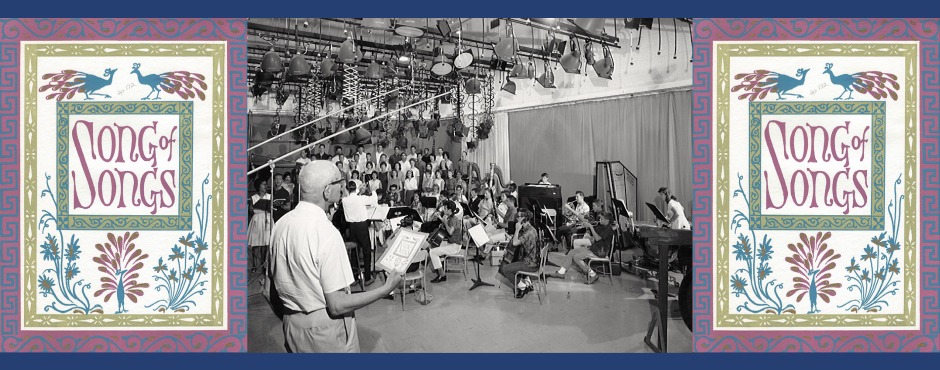
Song of Songs
In 2022, in celebration of Castelnuovo-Tedesco’s birthday on 3 April his official website presented a long-buried treasure: a recording of the world-premiere of The Song of Songs, which took place in Los Angeles on 7 August 1963
Castelnuovo-Tedesco: “In my life I have written many melodies for voice and published 150 of them (many others remaining unpublished) on texts in all the languages I know: Italian, French, English, German, Spanish and Latin. My ambition and, indeed, my deep motivation has always been to unite my music with poetic texts that stimulated my interests and feelings, to express its lyricism.”
In 2019, his biography was filmed in the movie Maestro. Below is the trailer:
Sight & Sound Experience of Gustav Klimt – Atelier des lumières Paris
On the threshold of the twentieth century, many artists were guided in their work by the desire – and the search – for a perfect world. It had to do with the spirit of the times, among other things, and it influenced many painters, writers, poets and composers in their work. But with no other artist it was as prominent as with Franz Schreker (1878-1934). The search for ‘the’ sound dominated his entire life, he was fascinated and obsessed with it. A sound that would die of its own accord, but not really, because it had to continue to be heard – if only in your thoughts. It had to be a pure sound, but one with orgasmic desire and interwoven with visions. Narcotic. In his music I really hear the perfect sound that he so desired which makes me intensely happy.
For Schreker you can wake me up in the middle of the night. The fusion of shameless emotions with undisguised eroticism and intense beauty turns me into an ‘Alice in wonderland’. I want more and more of it. Call me a junkie. I consider his operas to be the most beautiful in existence, alongside those of Puccini and Korngold.
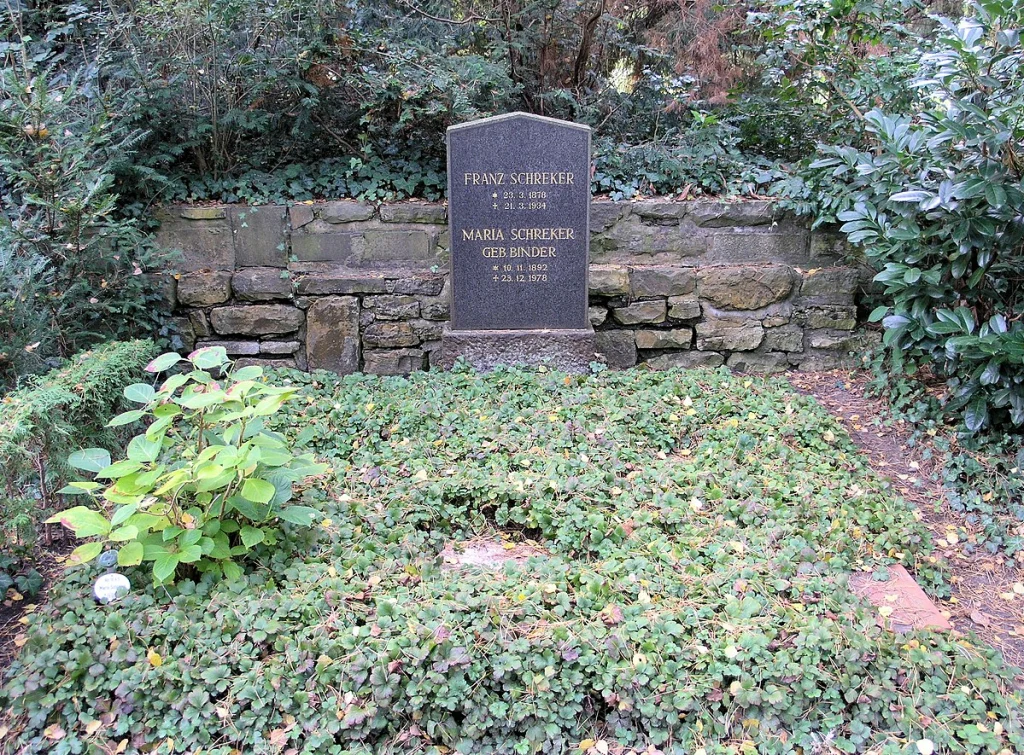
When the Nazis came to power, Schreker was labelled an ‘entartet’. His works were banned and no longer performed. In 1933 he was dismissed from all his engagements and suspended. Schreker was devastated. In December of that year he suffered a heart attack which became fatal to him. But even after the war Schreker was hardly ever performed. The same fate awaited him as (among others) Korngold, Braunfels, Goldschmidt, Zemlinsky, Waxman …. An unprecedented number of names of composers. They were once labelled ‘Entartet’ by the Nazis and banned, reviled, expelled and murdered. Forgotten.
And that was not just the fault of the Nazis. After the war, the young generation of composers did not want to know about emotions anymore. Music had to be devoid of any sentiment and subject to strict rules. Music had to become universal: serialism was born. The past was dealt with, including composers from the 1930s. It is only in the last thirty years that the once forbidden composers have regained their voices. The Saturday Matinee has played a major role in this and I thank them on my bare knees for that.
DER FERNE KLANG
, The premiere of Der ferne Klang, in Frankfurt in 1912, was very enthusiastically received. In the Frankfurter Zeitung, critic Paul Bekker wrote that “the audience could identify with the central metaphor of Schreker’s work. Everyone hears that enigmatic sound at some point”.
The protagonist is a composer with only one desire: to discover the perfect sound. On his quest for it, he rejects his beloved Grete and leaves everything he loves behind. Only at the end, when it is already too late, does he realise that he could only find the enchanting “distant sound”, along with happiness, in his love for Grete.
There are not many official recordings of the opera on the market. I myself know only one: live recording from Berlin 1991, on Capriccio (60024-2). I’ve never been devastated by that and quietly hoped that NTR will release their September 2004 performance, with Anne Schwanewilms and others. Alas.
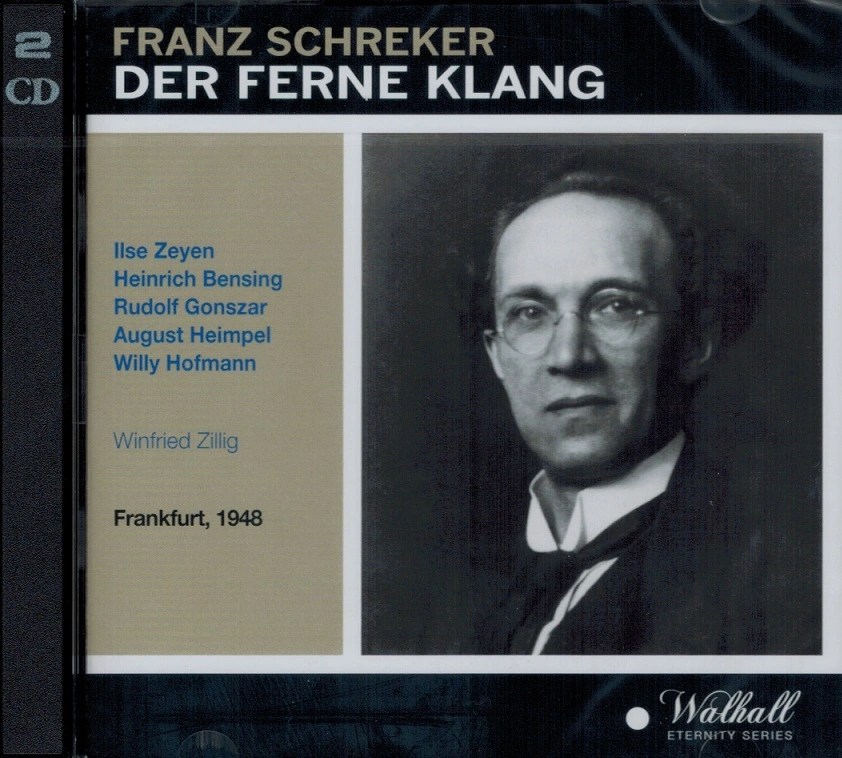
Fortunately, Walhall is now coming out with a live radio recording from Frankfurt 1948, and I am very happy about that. It is a fantastic recording, with exceptionally good sound quality for the time.
I did not know any of the singers, the greater the surprise for me. Der Ferne Klang is an opera that is not easy to cast. Both main roles require big voices that are also distinctly lyrical, and Ilse Zeyen (Grete) and Heinrich Bensing (Fritz) are very much so.
The Frankfurt radio orchestra is sublimely conducted by Winfried Zillig, a very well-known German composer, musict heorist and conductor at the time.
The idea came from Zemlinsky. He wanted to compose an opera about an ugly man – his obsession – and commissioned the libretto from Schreker. After finishing his work, it was hard for Schreker to give up his text. Fortunately, Zemlinsky abandoned the opera so Schreker started to compose himself.
Zemlinsky, Schoenberg and Schreker in Prague 1912
Like Der Ferne Klang, perhaps his best-known work, Die Gezeichneten also deals with the search for unattainable ideals. Alviano, a deformed rich nobleman from Genoa, dreams of beauty and perfection. On an island he has ‘Elysium’ built, a place where he hopes to realize his ideals. What he doesn’t know is that the noblemen abuse his island: they are engaged in orgies, rapes and even murders.
Alviano: photo from the premiere in Frankfurt 1918 via Green Integer Blog
The title of the opera is ambiguous. Not only are the main characters ‘marked’ (Alviano by his monstrous appearance and Carlotta by a deadly illness), Carlotta also makes a drawing of Alviano, in which she tries to capture his soul.
This beautiful opera, with its thousands of colours and sensual sounds (just listen to the overture, goosebumps!), is being staged more and more nowadays. In 1990 it was performed at the Saturday Matinee, with an ugly singing but very involved and therefore very vulnerable William Cochran as Alviano and a phenomenal Marilyn Schmiege as Carlotta (Marco Polo 8.223328-330).
Evelyn Lear (Carlotta) and Helmut Krebs (Alviano), scene from the second act:
On Spotify you can find several performances of the complete opera, but if you want to have images as well: below you will find the recording from Salzburg 2005:
IRRELOHE
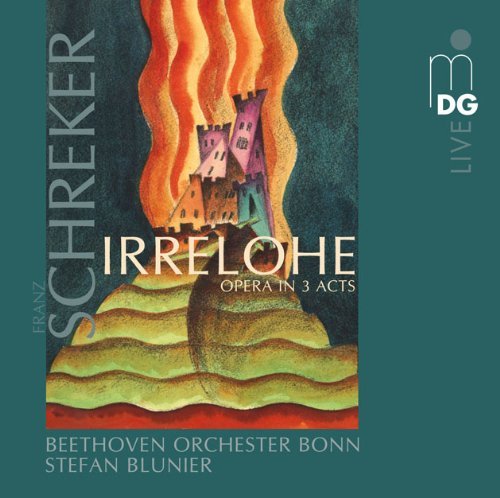
In 2010, The Opera in Bonn started a Schreker revival. Kudos! In 2010, Irrelohe was put on the stage there and recorded live by MDG (9371687-6).
The story most resembles a real horror movie. The lords of the Irrelohe castle are cursed. On their wedding day, they go mad and rape a virgin, a curse they pass on to their first-born son. Only a fire and its flames can lift the curse. And those flames do come, at the end, when the beautiful Eva (Ingeborg Greiner) prefers Count Heinrich (irresistible Roman Sadnik) to the bastard Peter (Mark Morouse). You get the idea: Peter is the first-born son of the rapist; Heinrich (who is his half-brother) was born 30 days later. All’s well that ends well, but first we shudder, shiver and enjoy…….
Roman Sadnik in scenes from Irrelohe:
Of the opera there already existed a recording on Sony, recorded live in Vienna in 1989. The Wiener Symphoniker was conducted by Peter Gülke and maybe it is his fault that it does not sound very exciting. The singers (including Luana de Vol and Monte Pederson) are certainly not to blame, although they are nothing to write home about.
Worth knowing: Schreker wrote the libretto in a very short time (it took him only a few days) in 1919. The work takes its name from a railway station called Irrenlohe which Schreker passed by on a trip to Nuremberg in March 1919.
DER SCHMIED VON GENT
I had in my possession a pirate recording of Schrekers’s last opera, Der Schmied von Gent from Berlin 1981, but I wasn’t particularly fond of it: neither the sound nor the performance could really please me. Moreover, the opera was hard to follow without a synopsis.
So I was eagerly awaiting the first commercial release of it and lo and behold: there it is! ‘The Smith’ was recorded live in Chemnitz in 2010 and released on CPO (777 647-2), kudos!
It is a “Grosse Zauberoper” with a story a bit close to ‘Der Freischütz’, it also features a devil, as well as Saint Peter and … Alva (it takes place during the Eighty Years’ War). And yes, it all works out.
The cast, including a fantastic Oliver Zwarg in the role of Smee, is excellent.
VOM EWIGEM LEBEN
I don’t think it was wise to include ‘Ekkehard’, a work Franz Schreker wrote while still in his youth. And certainly not to place it at the beginning of the CD. The symphonic overture has little to say, sounds incoherent, is boring and deters rather than invites listening. ‘Phantastische Ouvertüre’ on 15 is hardly any better and even I, a diehard Schreker fan, really had to force myself to keep listening to it.
But it could also be a bit down to the young English conductor Christopher Ward. He conducts very skilfully but lacks a real drive. Nor can I escape the impression that he doesn’t quite understand the ‘Schrekian idiom’, because somewhere between all the very neatly played notes he has quite lost the eroticism. You hear it best in Schreker’s best-known piece, his ‘Vorspiel zu einer grossen Oper’.
Fortunately, on that CD you will also find two songs; two settings to the poem by Walt Whitman, (translated into German by Hans Reisiger) entitled ‘Vom Ewigen Leben’ and here you hear the real Schreker. Sensual and languorous. That my final verdict is not negative is therefore thanks to these songs being sung beautifully, with much sehnsucht, by Australian soprano Valda Wilson.
SONGS
The unsurpassed Reinild Mees took the initiative and (of course) got behind the piano herself, to accompany and record two CDs full of Schreker’s songs. It features Jochen Kupfer, Ofelia Sala and Anne Buter and the result is truly outstanding (Channel Classics CCS 12098 and CCS 14398)
Also highly recommended is a release by Koch Schwann (3-6454-2), hopefully still for sale, which includes, in addition to the prelude to Irrelohe and ‘Vorspiel zu einer grossen Oper’, again the truly irresistible song cycle ‘Vom ewigen Leben’, after Walt Whitman’s poems.
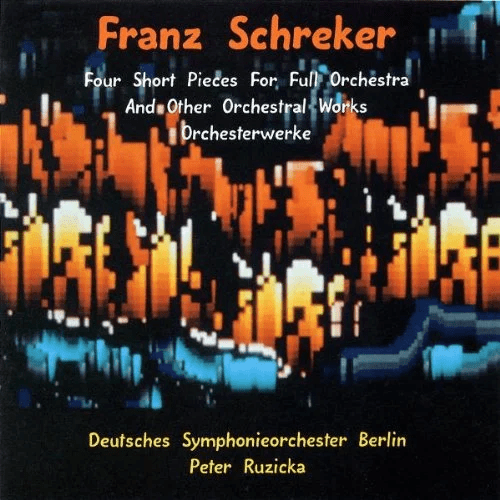
It is phenomenally sung by Claudia Barainsky – for her alone, with her radiant height and tremendous understanding of the text, you really must have the CD. Not to mention the fantastically playing Deutsche Symphonie-Orchester Berlin. The conductor, Peter Ruzicka understands exactly what Schreker’s music is all about.
For dessert, one of the most beautiful instrumental works by my beloved composer: Vorspiel zu einem Drama from 1913. The BBC Symphony Orchestra is conducted by Jascha Horenstein:
Karl Weigl, ca. 1910; the photograph was featured in Die Musik (1910) to accompany Richard Specht’s essay “Die Jungwiener Tondichter.
Karl Ignaz Weigl was born in 1881 in Vienna into an assimilated Jewish family. In 1938, he fled to New York, where he died ten years later. He was important contributor to the ferment of musical styles in Vienna in the early twentieth century. His compositions, which are still rarely being performed, are very traditional, anchored in a ‘Viennese sound’.
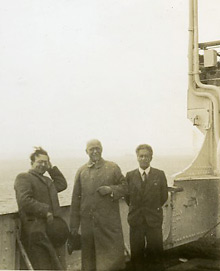
Karl Weigl on board the S.S. Statendam during the transatlantic crossing from Southampton to New York in October 1938.
That his symphonies are occasionally reminiscent of Mahler is not so surprising: Weigl worked closely with Mahler as his personal assistant at the Vienna Court Opera. But Brahms, too, is never far away.
In 1938 Arnold Schönberg wrote: ‘I have always regarded Dr. Weigl as one of the best composers of the old school; one of those who continued the glittering Viennese tradition’. No one could have put it better.rl Weigl on board the S.S. Statendam during the transatlantic crossing from Southampton to New York in October 1938.rl Weigl on board the S.S. Statendam during the transatlantic crossing from Southampton to New York in October 1938
Weigl studied with Zemlinsky, who held his pupil’s compositions in very high esteem. His works were performed by the most distinguished musicians, like Furtwängler and Georg Szell. It is truly unimaginable that he was so utterly forgotten: it was only after the year 2000 that record companies began to take some interest in his music. So huge kudos to Capriccio that, it seems, is in the process of creating a real Weigl (and more forgotten composers)-revival.
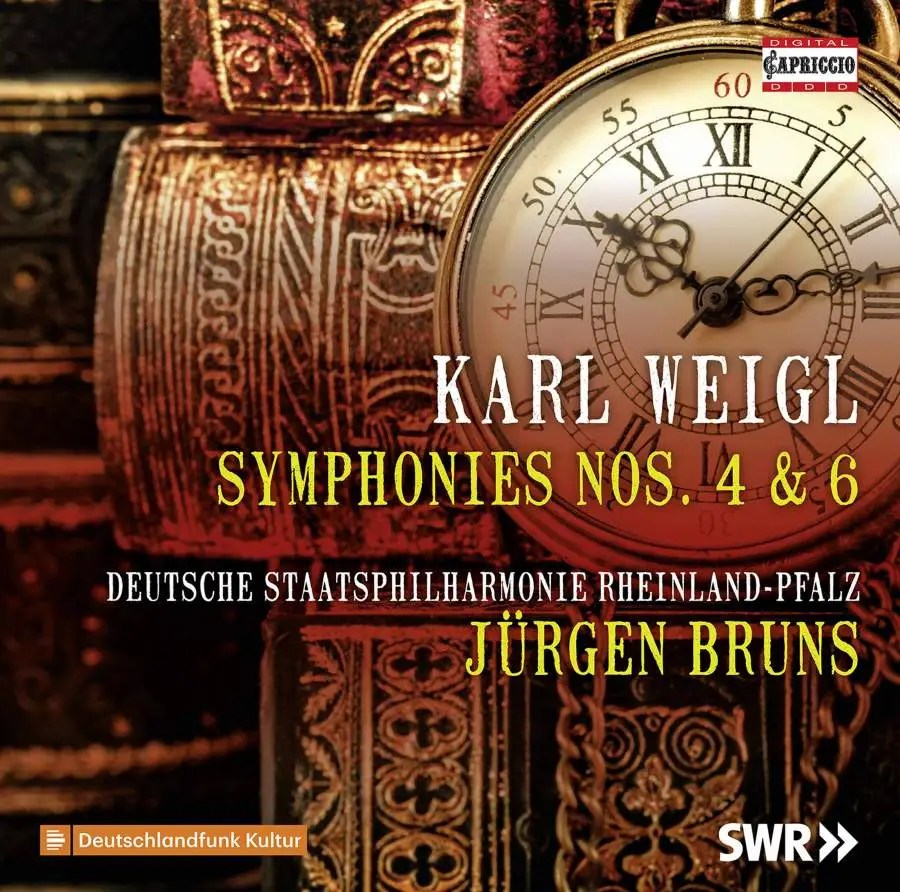
Weigl composed his fourth symphony in 1936. When I put the CD on, I first thought I was dealing with an unfamiliar version of Mahler 1; the resemblance is more than striking. But even the sixth symphony has its ‘Mahler moments’: think of the seventh! The performance by the Deutsche Staatsphilharmonie Rheinland-Pfalz conducted by Jürgen Bruns is outstanding
The ‘glittering Viennese tradition’ is Weigl’s main trademark. To put it irreverently, his music may be seen as sort of a gateway. A kind of corridor that runs from a classical Beethoven via a soul-stirring Schubert and an underground erotic Zemlinsky to finally end up in Weigl’s calm waters, and from there it finds its way to our hearts.
Weigl is not a composer I have heard much of (no, it’s not my fault) and apart from his, by the way, wonderful songs and a few of his chamber music compositions, I did not know him very well. So this CD is more than welcome, especially because the musicianship is so incredibly good.
I am most charmed by the violinist David Frühwirth. His tone is very sweet, as sweet as a Viennese Sachertarte. You can hear it best in the very Schubertian piano trio, but make no mistake! Just listen to the allegro molto, the third movement of the second violin sonata from1937 and you discover the complexity of the ‘Wiener-sound’.
And I feel free to use another quote, this time from Pablo Casals: “His music will not be lost, after the storm we will return to it, one day we will return to those who wrote real music.” It has taken a while and we are still far away, but a beginning has been made.
Toen ik mijn top tien lijstje maakte was ik een viertal geweldige uitgaven totaal vergeten. Waarom? Wie het weet maak het zeggen. Blackout? Of gewoon onnadenkendheid? Maar nu komen ze alsnog aan bod. En, geloof mij, deze vier uitgaven mag niemand missen!
Het lijstje is alfabetisch opgesteld, naar de componist, titel of de uitvoerende
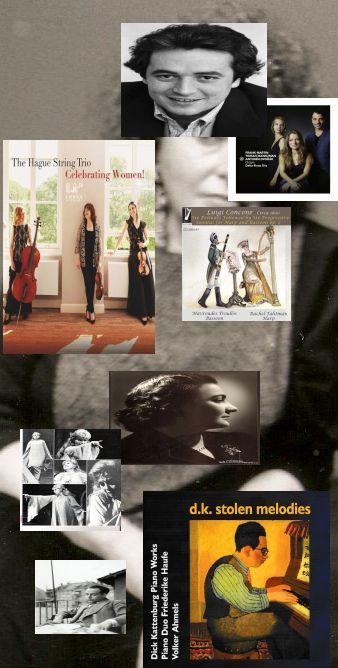
Celebrating Woman
Hoeveel vrouwelijke componisten kent u? […] The Hague Stringtrio, een ensemble die mij eerder al meer dan prettig verrast had met een pleidooi voor (veelal vergeten) werken van ‘Entartete componisten’, heeft nu een cd opgenomen die vrouwelijk componisten in the picture zet. Op hun cd met de titel Celebrating Women! hebben ze strijktrio’s van vrouwelijke componisten uit de tweede helft van de negentiende en eerste helft van de twintigste eeuw vastgelegd. Alle vier de componisten zijn zo verschillend als het maar kan. Ze komen niet alleen uit vier verschillende landen (en drie werelddelen), ook hun culturele en sociale achtergrond kan niet diverser zijn […]
Ik hoop zo dat deze CD een navolging krijgt en dat de vrouwelijke componisten steeds vaker uitgevoerd en opgenomen gaan worden. Het zijn veelal echte juweeltjes die de vergetelheid niet verdienen
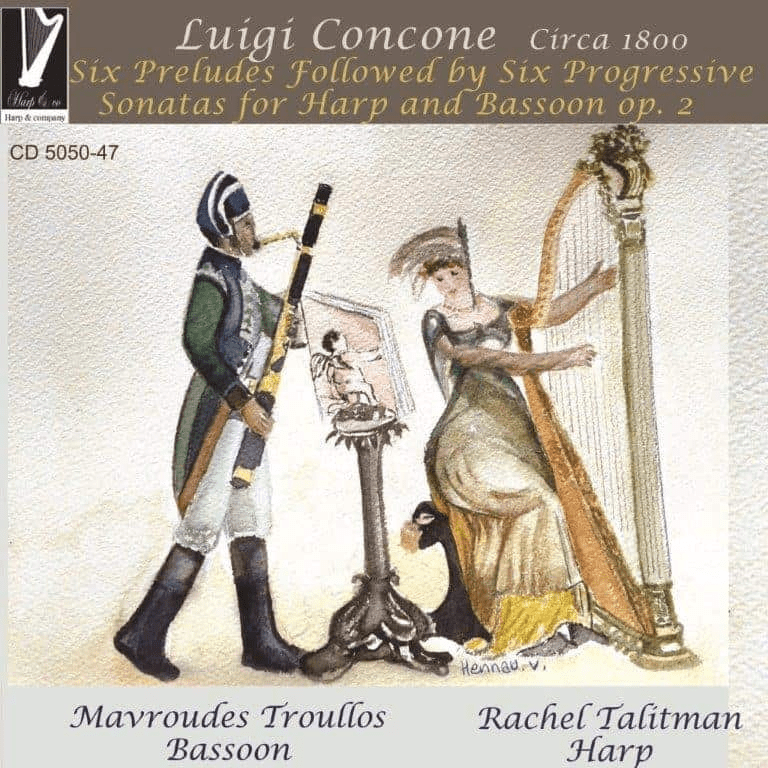
Zowel de Israëlische harpiste Rachel Talitman als de Grieks-Cypriotische fagottist Mavroudes Troullos zijn meer dan voortreffelijk. Echte vakmensen, virtuoos en inspirerend. […]
Ooit hadden we zoiets als huismuziek. Iets wat inmiddels vervangen is door house music (nomen omen?). Of zoiets. Niemand die nog luistert, het gaat om de alles verhullende herrie. Maar, als ik goed nadenk, is er eigenlijk iets veranderd, behalve de decibellen? Hebben de mensen van toen daadwerkelijk geluisterd? […]
Een paar weken geleden werd er een cd ten doop gehouden met zes sonates voor harp en fagot van ene Luigi Comencini. Niet alleen is de combinatie bijzonder, de componist zelf is het ook.
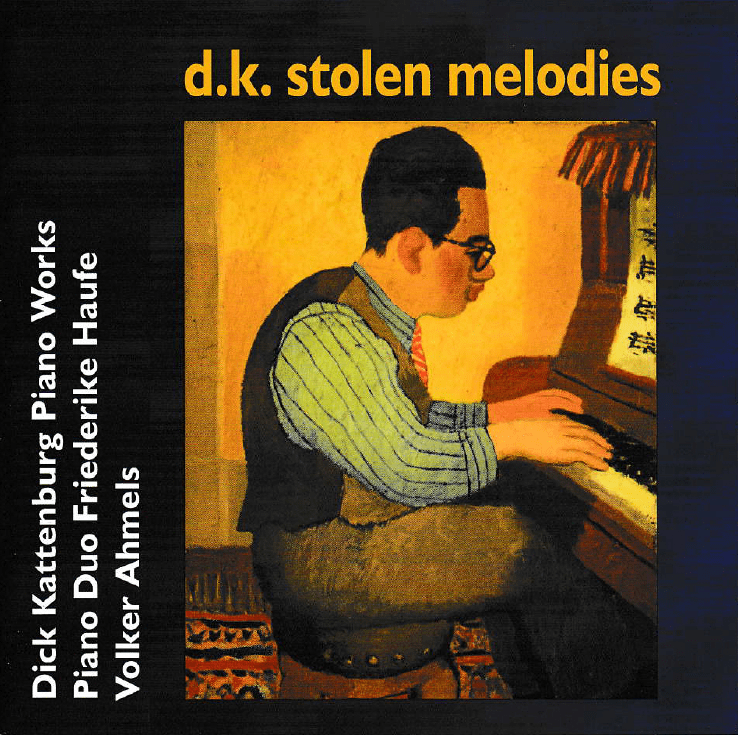
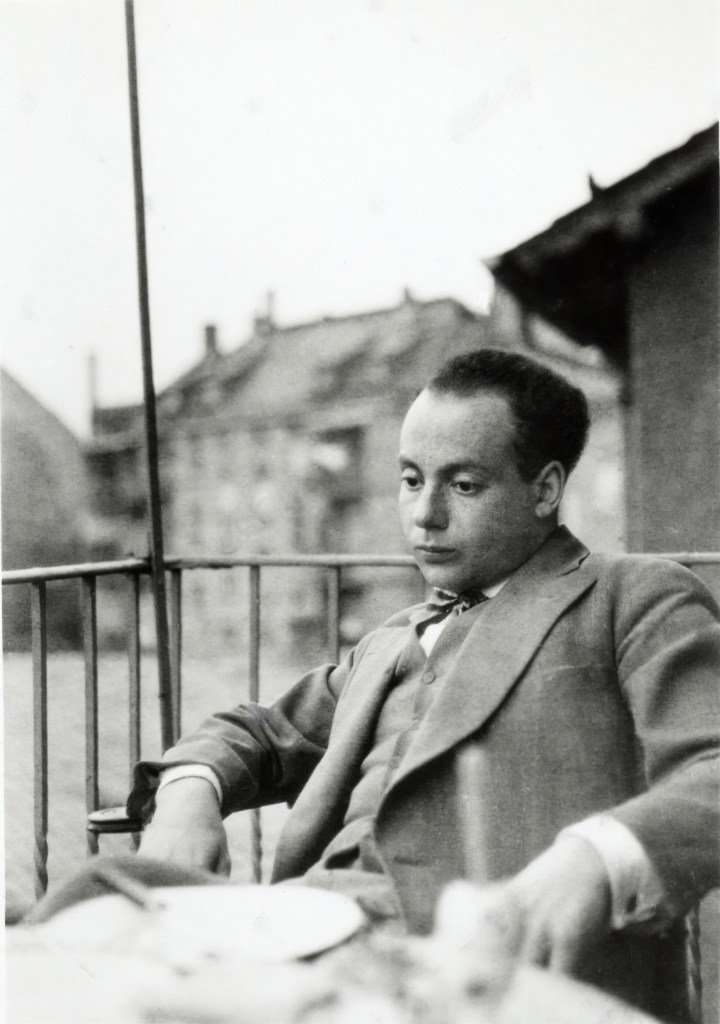
Vierentwintig is hij geworden. Vierentwintig. Meer mocht het niet van de nazi’s. Wie weet, wat hij nog meer in zijn mars had? Welke opera’s hadden we van hem kunnen verwachten? Wie weet was hij nu Wagner voorbijgestreefd, de componist die het niet zo op Joden op had? Maar misschien was hij een totaal andere richting opgegaan en werd hij een jazz gigant? […]
Hoe hij opgepakt is, is niet helemaal duidelijk, vermoed wordt dat hij tijdens een razzia werd opgepakt en kort daarop naar Westerbork werd gedeporteerd. Op 14 mei 1944 werd hij op transport gesteld naar Auschwitz. Een op 30 september 1944 gedateerde overlijdensakte vermeldt dat hij in Midden-Europa is gestorven. Daar kunnen we het mee doen. […]
De ‘Ouverture voor twee piano’s’ uit 1936 is het enige werk dat Kattenburg schreef voor twee piano’s (dus niet voor piano vierhandig). Hij was toen 17. Uit dezelfde periode stamt ook ‘Tap dance’ waar ook echt een tapdanser aan te pas moest komen.
Kattenburg maakt zelfs een zeer geslaagde tekening van de tapdanser in het manuscript. Op deze nieuwe album is deze bijzondere rol Tonio Geugelin werkelijk perfect aangemeten.
Onvoorstelbaar eigenlijk hoe veel geweldige musici ons klein landje telt! […] De pianiste Vera Kooper, de violist Gerard Sponk en de celliste Irene Enzlin hebben elkaar in 2013 in Salzburg ontmoet, waar ze alle drie toen studeerden […]
Origin is al de derde cd die ze samen hebben opgenomen, […] de titel slaat op de afkomst van de muziek waar de componisten uit putten: de onvervalste folklore als leidraad [,,,]
Delta Piano Trio: “Drie componisten drie verschillende culturen en drie verschillende tijdperken, maar met één overeenkomst: een zoektocht naar de muzikale oorsprong”.
Korngold, Braunfels, Goldschmidt, Zemlinsky, Ullmann, Schreker, Schoenberg, Toch, Weill, Krenek, Spoliansky, Holländer, Grosz, Waxman, Haas, Krasa, Schulhoff, Klein… a litany of names. Labelled “entartet” and banned by the Nazis, vilified, driven away, murdered. The composers who survived the war were forgotten, just like those who were murdered. Has this all really been the fault of the Nazis?
Today I want to tell you more about Berthold Goldschmidt, as it is his 120-th Birthday. Goldschmidt was born in Hamburg in 1903. He studied philosophy and art history, as well as composition (with Schreker) and conducting. He served as Erich Kleiber’s assistant for the premiere of Berg’s Wozzeck in 1925. His musical career began in earnest during the heyday of the Weimar Republic.
In 1925, Goldschmidt achieved his first major success with his Passacaglia which earned him the prestigious Mendelssohn Prize. Hailed as one of the brightest hopes of a generation of young composers, Goldschmidt reached the premature climax of his career with the premiere of his opera Der gewaltige Hahnrei in Mannheim in 1932.
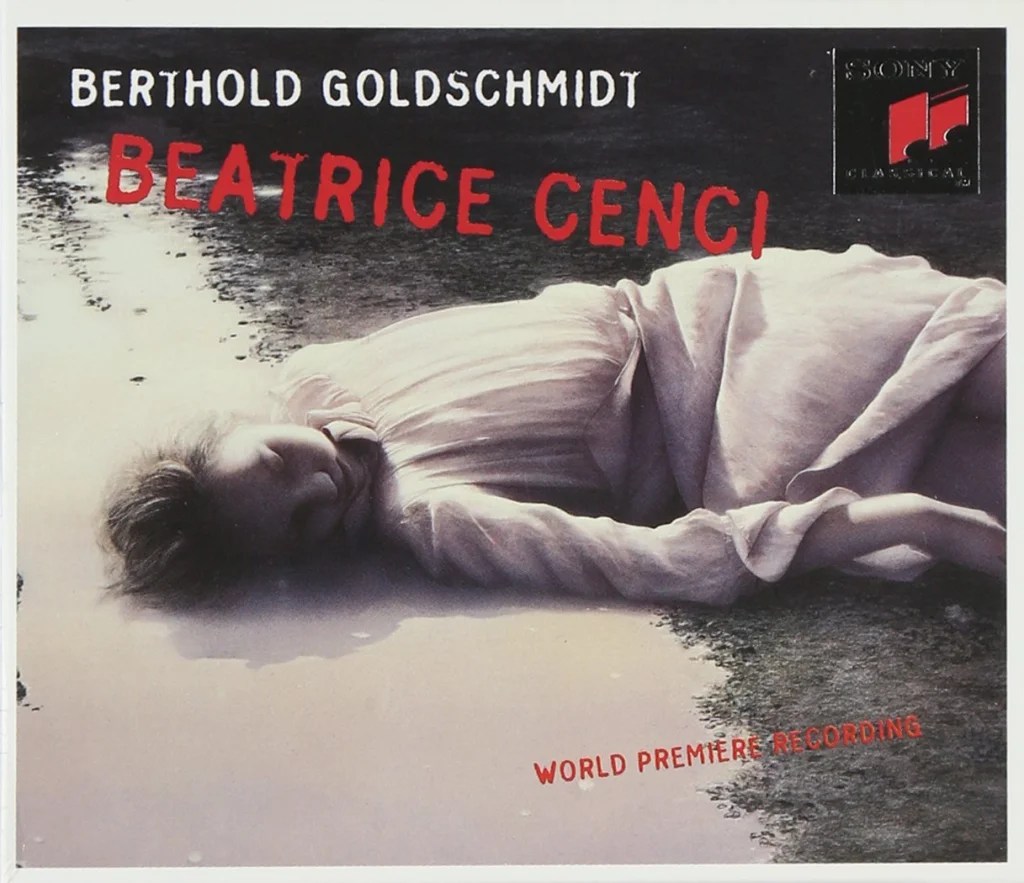
And then…. And then the Nazi’s came to power and he became “Entartet. In 1935 Berthold Goldschmidt left Germany and travelled to London. During World War II, Goldschmidt worked for the BBC and served as the Music Director of its German Service in 1944-47. While taking jobs in conducting, Against his better judgement he kept composing, but his works remained unperformed. In 1951 Goldschmidt won an opera composition contest with Beatrice Cenci, which had to wait until 1988 for its first concert performance.
In the 1980s, stimulated by the renewed interest in his work, Goldschmidt started to compose again. His Rondeau from 1995, written for and performed by Chantal Juilliet, was recorded by Decca, together with his beautiful Ciaccona Sinfonica from 1936. This CD has been out of print for years now, and the composer’s works have all but disappeared from the concert platform.
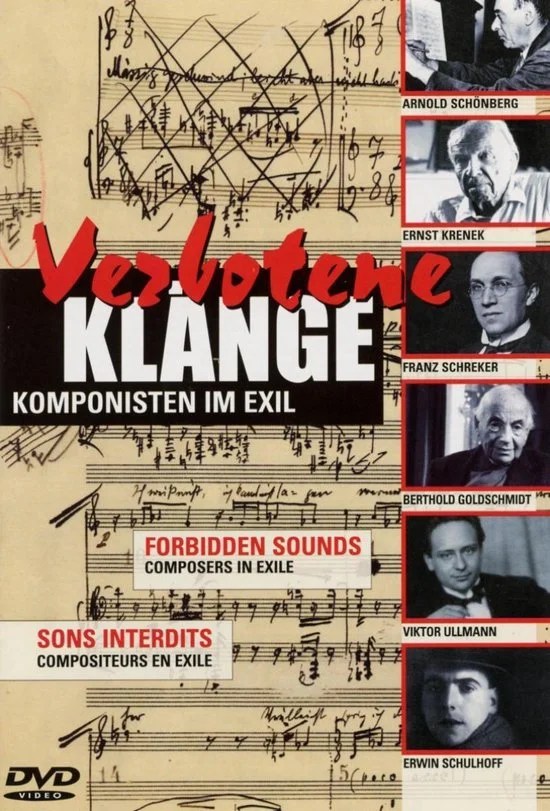
An absolute must is the DVD entitled ‘Verbotene Klange. Komponisten in Exil’ (Capriccio 93506). It is a documentary on German and Austrian composers who, as the commentator puts it, “instead of being revered, were despised”. And who, thanks to emigration, survived. With interviews with, among others, Ernst Krenek and Berthold Goldschmidt: the latter we meet at the very first recording (after 50 years!) of his string quartets.
And the almost centenarian Krenek says something that could be called typical for that generation: “I am caught between continents. In America I don’t really feel ‘heimisch’, but I would never consider going back to Europe. There is no home for me anywhere. Not anymore.
Imagine: you are young, beautiful and secretly in love with a revolutionary, who unfortunately is on his deathbed. Your relationship is “not done” and marriage is out of the question. You live in a small town, where there is no future for you.
One day, a prince presents himself. It is true: he is old and worn out. His beard and moustache are false, he wears a wig and he is a bit childish. But he is rich and actually quite nice. With his money you will be able to afford sending your lover to the Spanish sun, where he will definitely get better. And when the prince dies, there is nothing stopping you from marrying whoever you want. For this you are quite willing to sacrifice yourself, aren’t you?
Marja Alexandrowna is a cunning woman. She knows how to get her daughter Sina to agree to her little plan to hook the prince (albeit reluctantly). The prince is served a substantial meal, liberally sprinkled with wine. Sina sings an aria, the prince gets another liqueur, and yes: he asks for Sina’s hand. Alas, everything goes haywire.
Both Paul, a distant relative of the prince and in love with Sina, and Nastassja, a poor relative of Maria Alexandrowna and herself interested in the prince, throw a spanner in the works.
When the prince awakens from his nap, he readily accepts Paul’s explanation that his proposal only took place in a dream. Meanwhile, Nastasia makes sure that all the ladies of the town are informed of the incident. Mother and daughter are laughed at, Sina confesses the premeditated plan, the prince forgives her and leaves. And meanwhile, Sina’s lover dies.
Verlobung im Traum is an unusual opera. The action is captured within a frame narrative. The story is told to us by an archivist of Mordasov. In the prologue, he introduces the main characters to us; in the epilogue, we hear how things continue with Sina and her mother.
The story, literally after Dostoevsky’s “Uncle’s Dream” was adapted into a libretto by Rudolf Fuchs and Rudolf Thomas.
Trailer from Karlsruhe in 2014:
Verlobung im Traum was awarded the State Prize for Composition in 1933 and in the same year it was also performed: first for the Prague Radio and a few months later at the German Theatre in Prague. Georg Szell conducted and Hilde Konetzny sang Sina. The success was great, but further performances were out of the question. After all, it was already 1933.
The music is nowhere atonal, one detects strong influences of Poulenc, but Mahler is also quite close.
Krása sprinkles liberally with jazz influences and the saxophone takes a prominent place in the orchestra. Perhaps most remarkable is the “revenge duet” at the end of the first act: an ironic replacement for the usual “love duet”?
Anda-Luise Bogsa sings Sina:
And then we come to “Casta Diva”: Sina, in her attempt to seduce the prince, sings the beautiful aria from Bellini’s “Norma”. Instead of the original chorus, we get a quartet: the mother, the prince and, behind-the-scene, the eavesdropping Nastassja and Paul are each commenting on Sina’s singing….
Hans Krása in Teresienstadt
Born in 1899, the composer was a true “bon-vivant”. He spent his days at the coffee house, at the opera or playing chess with his friend Thomas. Little time was left for composing.
Krása spent a short time in Paris (at the invitation of his kindred spirits from “Les Six”), but nostalgia for Prague was stronger and so he returned to his homeland, just in time to be sent to Teresienstadt. On 17 October 1944, he was gassed in Auschwitz, along with Ullmann, Haas and Klein.
“Das schönste sind im Leben diese Träume, die erfüllen, was unerfüllbar ist”
Hans Krása Verlobung im Traum Christianne Berggold, Charlotte Hellekant, Juanita Lascarro, Jane Henschel, Albert Dohmen Ernst Senff Chor Deutsches Symphonie-Orchester Berlin olv Lothar Zagrosek Decca 4555872
We live in very strange times. One composer after another emerges from oblivion and starts a (re)new(ed) march to victory. At least, if he (she) is lucky, because nothing is as short as the human memory and many of the ‘excavated’ composers are already covered in a thick layer of dust, after they have been performed and/or recorded only once (or maybe twice). For: “No day without Bach” and Beethoven’s piano concertos really do have to be recorded for the hundred millionth time.
Hanns Eisler has never _really_ been forgotten, which he owes in part to his friend and author of the texts for his songs and cantatas, Bertolt Brecht. In 1998, Decca’s ‘Entartete Musik’ series released its second CD of Eisler’s music: songs he composed during his exile in Hollywood.
Eisler was not alone in seeking refuge in the Mecca of film industry and trying his luck there, and he too has participated in a few films. His main occupation, however, was teaching, first in New York and Mexico and from 1942 at the University of Southern California.
Eisler and Brecht in Leipzig
In Hollywood, Eisler was united with Brecht and in May of that year he started working on the ‘Hollywood Songbook’. For most of the songs he composed between May ’42 and December ’43, he used poems that Brecht wrote during his stay in Scandinavia in the years 1938 – 1940 (the so-called ‘Steffinsche Sammlung’),
When Brecht temporarily stayed in New York, Eisler turned to other poets: Hölderlin, Pascal, Eichendorff, Goethe. There is an essential difference between the settings: the ‘Brecht Lieder’ are often bitter, aggressive, sometimes cabaretesque in nature; the others tend to be more melancholic, more melodious, more rooted in the tradition of the art of song.
Matthias Goerne, despite his young age (he was 31 at the time of the recording), was no longer an unknown quantity and already had a few recitals to his name. He has a wonderful timbre and sings with full understanding of the texts. Unfortunately, he is far too much like his illustrious predecessor (I will not name names) and that is a bit disturbing to me, although it may be a recommendation for someone else. Peanuts, actually, because as far as I know it’s the only recording of the complete ‘Hollywood Songbook’, so if you come across it: buy it! He is accompanied by Eric Schneider in an exceptionally skilful way.
Hans Eisler The Hollywood Songbook Matthias Goerne (baritone) Eric Schneider (piano) Decca 460582-2
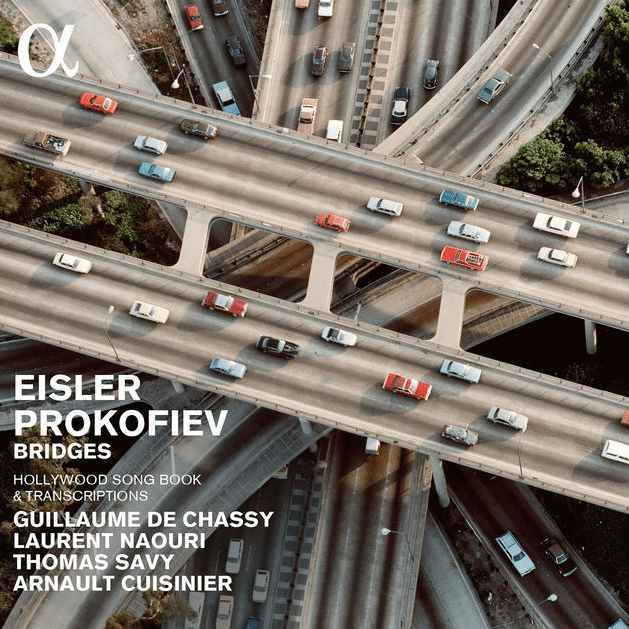
If you want to know what a jazzed-up ‘Hollywood Songbook’ sounds like, listen to Laurent Naouri. It’s quite fun to discover how very Weill-like Eisler sounds here. Listen to ‘Kalifornischer Herbst’, which could have come straight out of one of his ‘shows’. It is a CD that is best listened to at night, with a glass of whisky.
Bridges Hanns Eisler and Sergei Prokofiev Hollywood Songbook (extracts) & Improvised Variations Laurent Naouri (bass-baritone), Guillaume de Chassy (piano), Thomas Savy (clarinets) Arnault Cuisinier (double bass) Alpha 210
De vraag waarom Braunfels zo verschrikkelijk is vergeten ga ik niet eens stellen. Dat het alles met de nazi’s en de Joden te maken had, dat weet iedereen immers wel. Hoop ik. Maar de oorlog is al zevenenzeventig jaar voorbij en Braunfels is al bijna zeventig jaar dood. En nog steeds is zijn naam niet daar, waar het hoort te zijn: op de belangrijkste concertpodia en operabühnes.
In de jaren negentig kon je nog van een kleine revival spreken: EMI bracht zijn mysteriespel Verkündigung uit en Decca nam zijn bekendste opera Die Vögel op. Die Vögel dook dan weer eens in Los Angeles op, waar James Conlon al jaren bezig is om de ‘Verboden componisten’ ruim podium te geven. In de letterlijk zin van het woord.
Désirée Rancatore zingt de Nachtegaal in Los Angeles Opera:
Tot 1933 behoorde Braunfels, samen met Richard Strauss, Zemlinsky, Korngold en Schreker tot de meest uitgevoerde hedendaagse componisten. In 1933 werd hij ontslagen van zijn post als directeur van de Muziek Academie in Keulen en nadat hij ‘entartet’ werd verklaard leefde Braunfels in totale afzondering in de omgeving van de Bodensee (in zijn biografie wordt het mooi omschreven als ‘innerlijke emigratie’).
Na de oorlog ging Braunfels – op speciaal verzoek van de toenmalige kanselier Adenauer – naar Keulen terug. De aandacht die hij kreeg bleef bij een paar uitvoeringen van zijn werken. Gedesillusioneerd keerde hij terug naar de Bodensee.
Het medium kamermuziek was voor hem totaal nieuw. In de brieven uit die tijd toonde hij zich bijzonder gelukkig met het voor hem nieuw ontdekte idioom: ”Er is niets leukers, dan het werken aan een strijkkwartet” schreef hij.
Voor zijn eerste kwartet, gecomponeerd in 1944 gebruikte hij Verkündigung als zijn voornaamste inspiratiebron en in alle vier de delen citeert hij er rijkelijk uit.
Het tweede strijkkwartet is iets lichtvoetiger. De eerste twee delen zijn behoorlijk vrolijk en dansant, het vierde met zijn Oosteuropees-Joodse thema’s doet mij sterk aan Sjostakovitsj denken. Niet echt vernieuwend, maar buitengewoon leuk en inspirerend.
Er bestaat nog een derde strijkkwartet, geschreven in 1947. Die kwam ik alleen op YouTube tegen:
Ooit schreef ik dat Braunfels’ muziek twee keer is gestorven. De eerste keer toen zijn composities door de Nazi’s ‘entartet’(gedegenereerd) werden verklaard. En de tweede keer toen de naoorlogse muziekpausen alles wat tonaal was en naar romantiek riekte als ‘bedorven’ bestempelden. Inmiddels zijn we een paar jaar verder, hun esthetiek (of eigenlijk het gebrek er aan) is al lang in de stoffige archieven opgeborgen en Braunfels is niet zo onbekend meer. Dat hoop ik althans want echt uitgevoerd wordt hij nog maar zelden.
Gelukkig bestaan er nog labels zoals Capriccio, CPO en Oehms die ons met de o zo gruwelijk minder bekende of simpelweg vergeten schatten kennis laten maken.
String Quartets no 1 & 2 Auryn Quartet CPO 999406-2
The songs Anne Sofie von Otter, assisted by baritone Christian Gerhaher, sings on the CD Terezín – Theresienstadt, released in 2008 on Deutsche Gramophon (DG 4776546), belong to a variety of music genres. They have one thing in common: all of them were composed in the Terezín concentration camp and their creators who were deported there were later murdered in Auschwitz.
The initiative came from von Otter herself: for the Holocaust commemoration in Stockholm she collected a wide selection of the ‘Terezín songs’ and compiled a recital of them. This programme was then recorded for CD, ” because we must never forget. “
ILse Weber
It is a CD you really need to listen to from start to finish even though many of the songs come from the lighter genre. Most moving are the songs by Ilse Weber.
Try to keep a dry eye when listening to ‘Wiegala,’ the lullaby that Weber sang to the children in the gas chambers.
Or the terrifying words “I want to go home so badly” from Weber’s “Ich wandre durch Theresienstadt.”
Erwin Schulhoff
The beautiful violin solo sonata by Erwin Schulhoff does not really belong here, Schulhoff has never been to Terezín. He was arrested in Prague on 23 June 1941 and deported to the Würzburg concentration camp, where he died of tuberculosis in 1942. You can hear that Daniel Hope has been devoted to Schulhoff’s music for many years, as he interprets the work in an inimitable way.
Below Daniel Hope plays ‘Andante Cantabile’, the second movement of Schulhoff’s sonata. It is a recording from the CD ‘Forbidden Music’, released by Nimbus:
Ilse Weber, Hans Krása, Viktor Ullmann, Pavel Haas, Karel Svenk, Erwin Schulhoff Terezín – Theresienstadt Anne Sofie von Otter (mezzo-soprano), Christian Gerhaher (baritone), Daniel Hope (violin), Bengt Forsberg (piano), Bebe Risengf (accordion, guitar and double bass) and others.
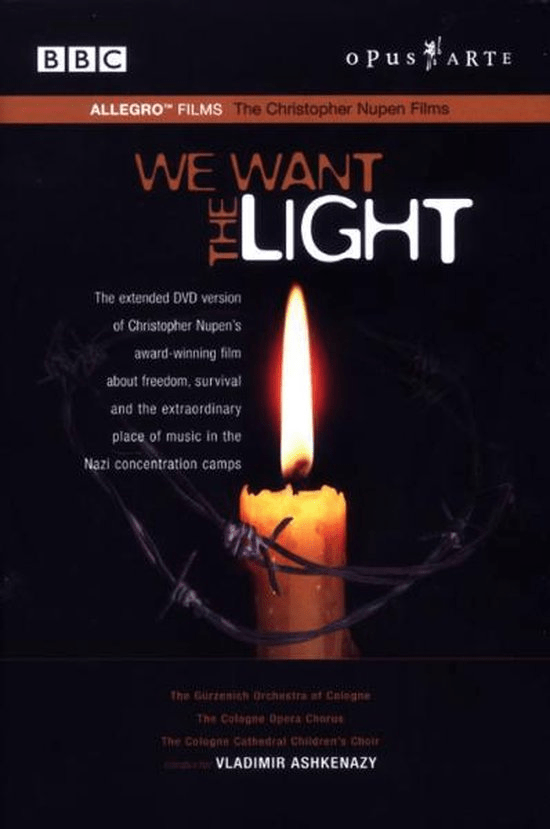
It is not easy to put into words a five-hour long, important documentary. So let’s make it very short,
By means of interviews, music fragments and archive films, Christopher Nuppen sketches a picture of the role that Jews have played in German culture: art, literature and music. Their urge for assimilation, inspired among others by Lessing, could only end in tragedy, because “that symbiosis had taken place inside our minds but not in the minds of the Germans”.
Wagner’s role in bringing about the Holocaust is also being examined. Norman Lebrecht says that “he is the one most to blame”, but the mayor of Rishon L’tzion (where, in October 2000, the first performance of Wagner’s music by an Israeli orchestra took place) denies this: “we will not let them take away the music from us, it has nothing to do with it”.
The survivors talk about the great significance that music has had in their lives: “if you could play you felt happy and healthy, the music gave us strength” says the then 98-year old Alice Summer.
The title of Christopher Nupen’s film, We want the light, is taken from a poem written in Theresienstadt by a 12-year-old girl, Eva Pickova.
Vladimir Ashkenazy:
Producer Christopher Nupen talks about the characteristics of his films, the power of music and introduces his film “We Want The Light”.
We want the light film by Christopher Nupen Vladimir Ashkenazy, Daniel Barenboim, Evgeni Kissin, Zubin Mehta, Itzhak Perlman, Pinchas Zukerman, Alice Summer and others. Opus Arte OA CN0909 D (3 DVDs)




















 Basia con fuoco