cd/dvd recensies
Michael Fabiano triumphs with his first CD recital
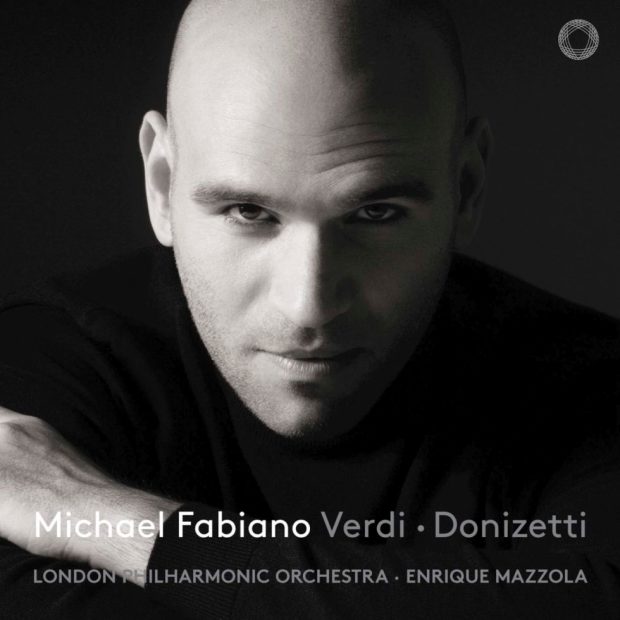
For me, the fact that Michael Fabiano was going to make it was indisputable. From the very first time I saw and heard him, in the highly recommended documentary The Audition, I knew for sure, the winner had arrived. That year (2007) the competition was extremely strong, with Jamie Barton, Angela Meade and Alek Shrader among the finalists. To stand out in that company you had to be really special and Fabiano certainly was.
THE AUDITION Documentary Met 2007 Fabiano Meade Barton
The young tenor, then only 22, who so fiercely contended all his opponents, not only showed himself to be extremely talented, but in his self-confident attitude and urge to win also a fighter a stayer. I wasn’t mistaken and now, twelve years later, Fabiano is one of the biggest tenors in the world. He has now released his first solo CD, for the Dutch record label Pentatone.
It is a dream of a recital, not only for the gorgeous voice of Fabiano (and the beautiful accompaniment of the London Philharmonic Orchestra conducted by Enrique Mazzola), but also for his choice of repertoire.
Fabiano chose arias that link Donizetti’s gradually maturing and developing belcanto (from Lucia, via Poliuto to Maria di Rohan) directly to Verdi’s early operas. In doing so (hurrah, hurrah!) he has often opted for the original versions of the arias. For instance, he sings ‘Qual sangue sparsi,’ the tenor aria from the original Saint-Petersburg version of La Forza del Destino.
Already in the first aria from Luisa Miller he totally has me in his power: his diminuendo! My God! Enough to stop the heart of any opera lover. There is a single mishap: ‘La donna é mobile’ (Rigoletto). Not that he sings it badly, although I think he has outgrown the Duke already. It’s just that it’ s superfluous.
GIUSEPPE VERDI, GAETANO DONIZETTI
Opera Arias
Michael Fabiano
London Voices, London Philharmonic Orchestra conducted by Enrique Mazzola
Pentatone PTC5186750
Translated with http://www.DeepL.com/Translator
In Dutch: Michael Fabiano overrompelt met zijn eerste cd-recital
Interview with Fabiano: MICHAEL FABIANO: interview (English)
Paul Ben-Haim’s Evocation: what a discovery

Paul Ben -Haim, who was born in Munich in 1897 as Paul Frankenburger and died almost 90 years later in Tel Aviv, remains a great unknown to many music lovers. This is a great pity, because the oeuvre of this sadly forgotten composer is very diverse and most exciting. At one time he was totally immersed in the German Romantic tradition before he almost radically broke with it when he left his native country in 1933.

He began his new life composers life in what was then known as the British Mandate of Palestine by changing his name, after which he also adapted his compositions to his new homeland. Starting in 1933, most of his works were influenced and inspired by Jewish, Israeli and Arabic melodies.
Between 1939 and 1949 Ben-Haim accompanied the at that time extremely famous folk singer Bracha Zefira. Zefira, who was of Yemeni origin, had a great influence on the musical life in what was then Palestine. It was for her that he composed the Berceuse Sfaradite, a song which had become one of her greatest successes.
Bracha Zefira:
The Violin Concerto, which dates from 1950, is probably Ben-Haim’s best-known composition, in no small part as a result of the great recording by Itzhak Perlman. The CD is still on the market, I believe, but as far as I know the Concerto is only rarely performed. Why?
Three Studies for Solo Violin is Ben-Haim’s last violin composition, dedicated to Yehudi Menuhin in 1981. Splendid. But I was most struck by the completely unknown Evocation from 1942, a work which has its premiere here and which really gave me goose bumps. Wow.
Evocation live:
Itamar Zorman, the young Israeli violinist who won the 2011 prize in the Tchaikovsky competition, has immersed himself in the composer and his work. Thanks to him, this album was compiled and released. He plays these works as if his life depends on them. He believes in them and he communicates that belief more than convincingly.
Zorman about Ben-Haim:
The accompaniment by Amy Yang (piano) and the BBC National Orchestra of Wales conducted by Philippe Bach is first-rate as well
Paul Ben-Haim
Evocation. Poem for violin and orchestra, op. 32, Three Songs without Words, Violin Concerto, Three studies, Berceuse sfaradite, Toccata from Five Pieces for Piano.
Itamar Zorman (violin), Amy Yang (piano), BBC National Orchestra of Wales conducted by Philippe Bach.
BIS-239
Translated with http://www.DeepL.com/Translator
In Dutch: Evocation van Paul Ben-Haim is een ware ontdekking
More Ben-Haim: PAUL BEN-HAIM
Michael Fabiano overrompelt met zijn eerste cd-recital

Dat Michael Fabiano het ging maken stond voor mij onomstotelijk vast. Al vanaf de allereerste keer dat ik hem zag en hoorde, in de zeer aan te bevelen documentaire The Audition, wist ik het zeker, daar stond de winnaar. De concurrentie was dat jaar (2007) buitengewoon sterk, met onder de finalisten (o.a.) Jamie Burton, Angela Meade en Alek Shrader. Om daar tussen op te vallen moest je echt bijzonder zijn en dat was Fabiano zeer zeker.
De, met een hemelse stem begenadigde jonge tenor, toen nog maar 22 die zo verbeten de strijd met al zijn concurrenten aanging, toonde zich niet alleen buitengewoon getalenteerd, maar in zijn zelfverzekerde houding en drang om te winnen ook een strijder een doorzetter. Ik heb mij niet vergist en nu, twaalf jaar later behoort Fabiano tot de grootste tenoren ter wereld. En nu heeft hij zijn eerste solo-cd uitgebracht, bij de Nederlandse platenlabel Pentatone.
Het is een droom van een recital geworden, wat niet alleen aan die prachtige stem van Fabiano (en de schitterende begeleiding van het London Philharmonic Orchestra onder leiding van Enrique Mazzola) ligt. Het is ook de keuze voor het repertoire.
Fabiano koos voor de aria’s die de parallelle lijn – en de ontwikkeling – van de Donizetti’s steeds ‘volwassenen’ worden belcanto (van Lucia, via Poliuto naar Maria di Rohan) rechtstreeks linkt aan de vroege Verdi’s. Waarbij (hulde, hulde!) hij vaak voor de originele versies van de door hem gezongen aria’s heeft gekozen. Zo zingt hij ook ‘Qual snague sparsi’, de tenoraria uit de oorspronkelijke, Sint-Petersburgs versie uit La Forza di Destino .
Al in de eerste aria uit Luisa Miller heeft hij mij totaal in zijn macht: zijn diminuendo! Mijn God! Daar gaat een hart van een operaliefhebber zowat dood aan. Er is ook een minpuntje: ‘La donna é mobile’ (Rigoletto). Niet dat hij het slecht zingt, al denk ik dat hij de Hertog al ontgroeid is. Het is gewoon overbodig.
GIUSEPPE VERDI, GAETANO DONIZETTI
Opera Arias
Michael Fabiano
London Voices, London Philharmonic Orchestra olv Enrique Mazzola
Pentatone PTC5186750
Evocation van Paul Ben-Haim is een ware ontdekking

Paul Ben -Haim, de in 1897 in München als Paul Frankenburger geboren en bijna 90 jaar later in Tel Aviv gestorven componist is nog steeds een grote onbekende voor veel muziekliefhebbers. Zo ontzettend jammer, want het oeuvre van de jammerlijk vergeten componist is zeer divers en meer dan spannend. Ooit totaal ondergedompeld in de Duitse romantische traditie brak hij er vrijwel radicaal mee toen hij in 1933 zijn geboorteland verliet.
Zijn nieuwe componistenleven in wat toen het Britsmandaat Palestina heette begon hij met het veranderen van zijn naam, waarna hij ook zijn composities aan zijn nieuwe vaderland aanpaste. Vanaf 1933 werden de meeste van zijn werken beïnvloed en geïnspireerd door Joodse, Israëlische en Arabische melodieën.
Tussen 1939 en 1949 begeleidde Ben-Haim de toen zeer beroemde volkszangeres Bracha Zefira. Zefira, die van Jemenitische oorsprong was had een grote invloed op het muziekleven in het toenmalige Palestina. Het was voor haar dat hij de Berceuse Sfaradite componeerde, een lid dat één van haar grootste successen was geworden.
Bracha Zefira:
Het uit 1950 stammende vioolconcert is wellicht Ben-Haims bekendste compositie, niet in de laatste plaats door de geweldige opname van Itzhak Perlman. De cd is nog steeds in de handel, denk ik, maar het concerto wordt bij mijn weten maar amper uitgevoerd. Waarom?
De Three Studies for Solo Violin is Ben-Haims laatste vioolcompositie, in 1981 opgedragen aan Yehudi Menuhin. Schitterend. Maar het meest getroffen werd ik door de totaal onbekende Evocation uit 1942, een werk dat hier zijn primeur beleeft en mij echt kippenvel bezorgde. Wow.
Evocation live:
Itamar Zorman, de jonge Israëlische violist die in 2011 de prijswinnaar was van de Tsjaikovski-competitie heeft zich in de componist en zijn werk ‘ingegraven’. Het is aan hem te danken dat dit album werd samengesteld en uitgebracht. Hij speelt de werken alsof zijn leven ervan afhangt. Hij gelooft er in en dat geloof geeft hij meer dan geloofwaardig door.
Zorman over Ben-Haim:
Ook de begeleiding door Amy Yang (piano) en het BBC National Orchestra of Wales o.l.v. Philippe Bach is van een grote klasse.
Paul Ben-Haim
Evocation voor viool en orkest, op. 32, Three Songs without words voor viool en piano, Vioolconcert, Three studies voor vioolsolo, Berceuse sfaradite voor viool en piano, Toccata uit Five Pieces for piano
Itamar Zorman (viool), Amy Yang (piano), BBC National Orchestra of Wales o.l.v. Philippe Bach
BIS-2398
De verbroederende hartstocht van de muziek

Men neme een Israëli, een Fransman en een in Oostenrijk geboren Iraniër, men zet ze samen op een podium in Aix-en-Provence met de partituren van de Russische en Tsjechische meesters voor hun neus. Men neemt het live op en het resultaat is een zowat de beste cd van het jaar 2019. Nu al.
De op 5 april 2018 opgenomen pianotrio’s van Tsjaikovski en Dvorák zijn natuurlijk het ‘gefundenes fressen’ voor een liefhebber van kamermuziek. Want zeg maar zelf, alleen al de beginmaten van Tsjakovski’s op. 50, die krijg je je hoofd niet meer uit.
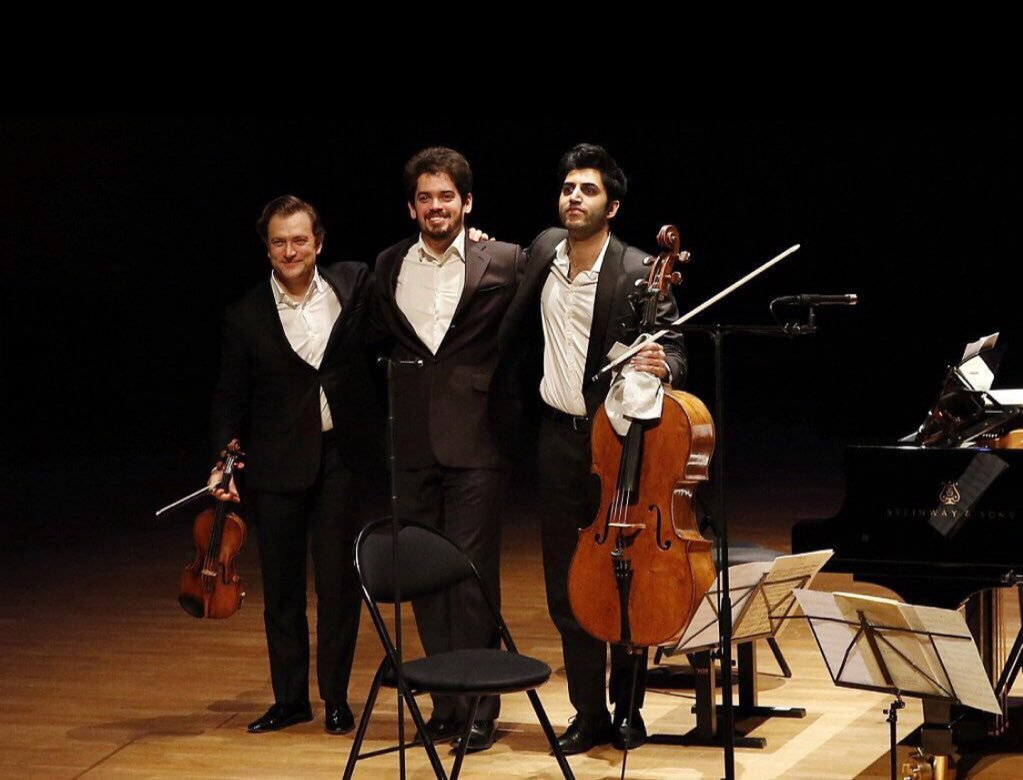
Of de uitvoering beter is dan die van het Beaux Arts Trio of het drietal Perlman/Ashkenazy/Harrell (om er maar twee te noemen)? Nee, dat denk ik niet. Maar het is zonder meer spannender. Ik wil het woord verfrissend niet in mijn mond nemen, maar dat is het natuurlijk wel. Wat je hoort is een ongepolijste klank van een echte live uitvoering. Je hoort de hartstocht.
De drie protagonisten, Laham Shani (piano), Renaud Capuçon (viool) en Kian Soltani (cello) weten niet alleen de droevige verhalen achter de noten tot leven te wekken maar ze ook voelbaar te maken. Intens. Nee, die uitvoeringen laten je niet los.
Als we de aanhangers van BDS (Boycot, Desinvesteringen en Sancties) hun zin moesten geven dan was deze cd nooit opgenomen kunnen worden. De reden is simpel: Lahav Shani, in het dagelijkse leven chef-dirigent van het Rotterdams Philharmonisch Orkest en ook nog eens een begenadigd pianist is een Israëli. En daar willen de goedbedoelende pseudo wereldverbeteraars niets van weten. Gelukkig bestaat er nog steeds zoiets als muziek, waar alle mensen daadwerkelijk ‘broeders kunnen worden’ en waar samenspelen tot het grootste goed is verheven.
Tsjaikovski: Pianotrio in a, op. 50
Dvorák: Pianotrio nr. 3 in f, op. 65
Lahav Shani (piano), Renaud Capuçon (viool), Kian Soltani (cello)
Warner 0190295525415
Sol Y Vida: Elīna Garanča goes south
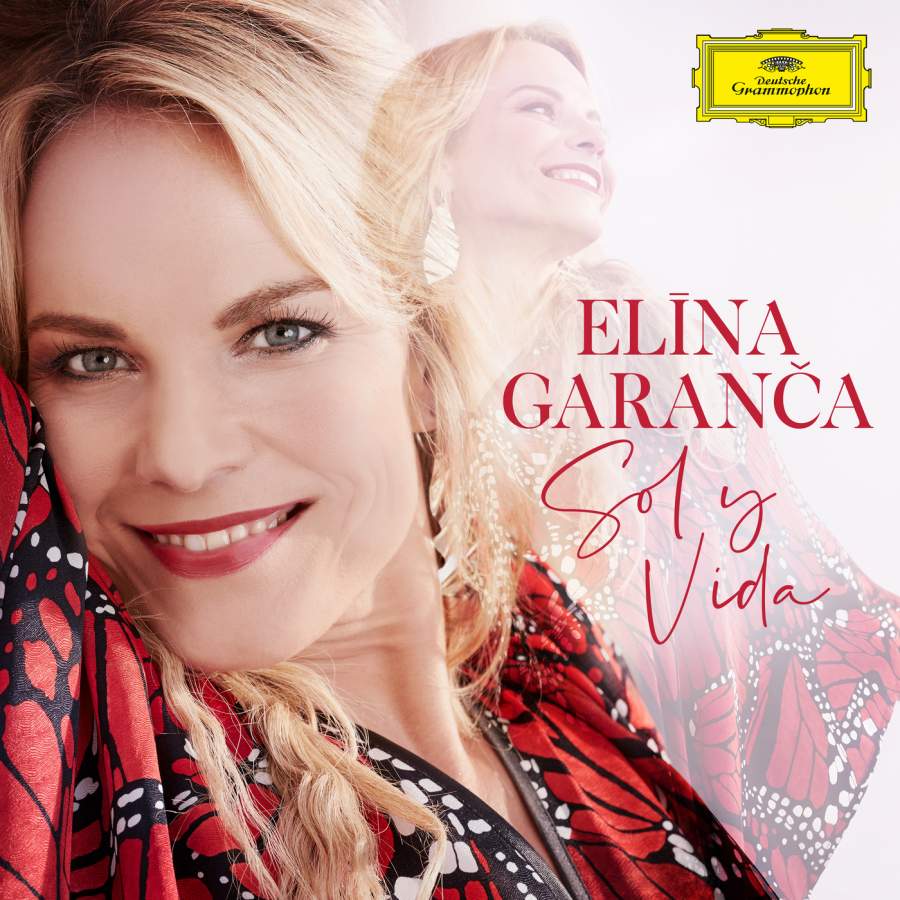
Sol y vida
(Zon en het leven) heet de nieuwste, zevende al soloalbum van Elīna Garanča voor DG. Een titel die de lading perfect dekt: de cd is een grote ode aan het goede leven en de lange, zonovergoten dagen.
Het is een verzameling van van alles wat een beetje op ‘Het Zuiden’ slaat, met een accent op Spanje. Vandaar dat we getrakteerd worden op de krakers als ‘Granada’ en ‘No puede ser’. Maar ook de Italianen ontbreken niet: Torna a Surriento, Core ‘ngrato, Non ti scordar di me, Marechiare…
Ik moest er wel even aan wennen: de meeste door haar gezongen stukken behoren tot een tenoren-repertoire. Neem alleen maar ‘Non puede ser’ uit de zarzuela La tabernera del puerto van Pablo Sorrozábal, één van de bekendste Spanstallige tenoraria’s ooit. Het voelt alsof je de ‘Habanera’ door een Domingo hoort zingen. Niet dat het niet mag, integendeel, maar raar is het wel.
Garanča is een heerlijke zangeres, met een stem die ze bij vlagen lekker zwoel laat klinken. Op haar facebook schreef zij: ‘Sol y Vida’ is my musical tribute to the people who live under southern skies, and to the beauty and diversity of their ways of life. It’s the perfect music for hot summer nights with lots of sangria!”
En dat is precies wat het is. Heerlijk als achtergrond op uw zondagse barbecue met heel erg veel wijn.
Lara, Cardillo, Curtis, Tosti, Sorozábal e.a.
Elīna Garanča
Orquesta Filarmonica de Gran Canaria olv Karel Mark Chichon
DG 483621700289
After the Darkness: the Hague String Trio brings suppressed composers back to life

The title of this CD is taken from the book with the same name by Auschwitz survivor Elie Wiesel, ‘After the Darkness: Reflections on the Holocaust’.
Gideon Klein and Hans Krása:


Hans Krása (1899-1944) and Gideon Klein (1919-1945) ended up in the Terezín concentration camp (Theresienstadt), before being deported to Auschwitz where they were murdered. But until that time they continued to compose as well as they could. In Terezín, yes. That is where both Krása’s Passacaglia & Fugue and Tanec (Dance) were composed, as well as Gideon Klein’s incredibly beautiful String Trio.
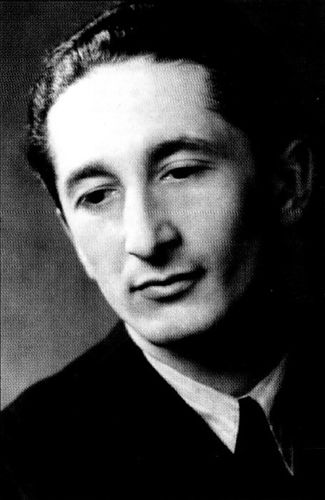
The Hungarian Lászlo Weiner (1916-1944) was deported in February 1943 to the labour camp in Lukov (Slovakia), where he was murdered a year later. I had not heard his Serenade for string trio from 1938 before. Why is that? It’s just beautiful!
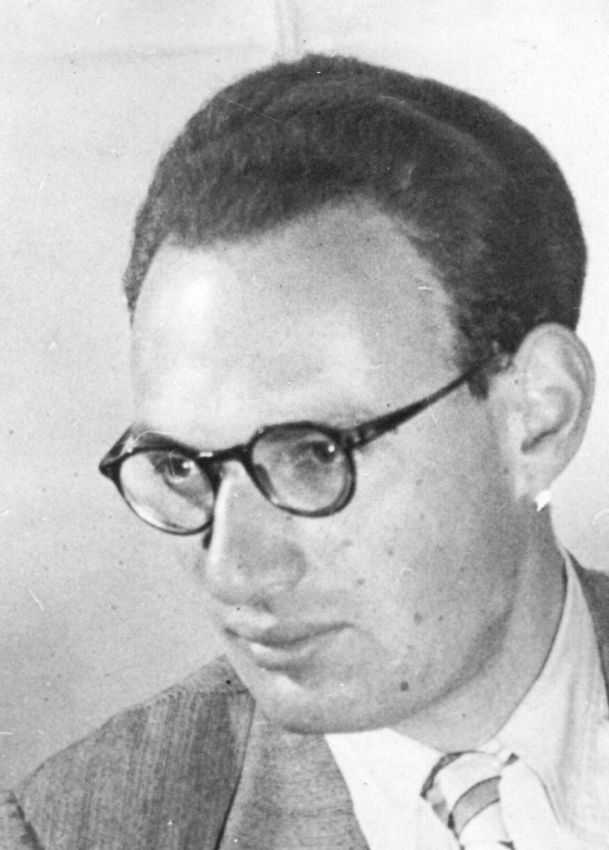
Dick Kattenburg
The Dutchman Dick Kattenburg (1919-1944) did not survive the war either: on May 19, 1944, he was deported to Auschwitz. His Trio à cordes sees its world premiere here. I can’t listen to this with dry eyes. Yes, I know, I know, one has to limit oneself to the music, but sometimes it is so damn difficult! But trust me, the standard of what is on offer is of the highest quality and that the work is still performed so infrequently is due to… What actually? Uwillingness? Guilt?
This year it is exactly seventy nine years ago that Klein, Weiner, Kattenburg and Weinberg were murdered. You would expect at least something in the form of (small) memorial concerts, wouldn’t you?

The Hague String Trio (Justyna Briefjes, Julia Dinerstein and Miriam Kirby) was founded in 2006. In the booklet they tell us that After The Darkness is a project close to their heart, which certainly can be heard. “We feel it is a privilege to bring the music of these composers to life and to create a lasting legacy, so that their voices are never forgotten”. Thank you!
Hans Krása: Passacaglia & Fugue – Tanec (Theresienstadt 1944)
Gideon Klein: String trio (Theresienstadt 1944)
Lászlo Weiner: Serenade (1938)
Dick Kattenburg: String Trio (1937/39)
Mieczyslaw Weinberg: String trio on. 48 (1950)
The Hague String Trio
Cobra Records 0065
After the Darkness
Translated with http://www.DeepL.com/Translator
Discovering Karol Rathaus
A forgotten composer, and not just because of the Nazis
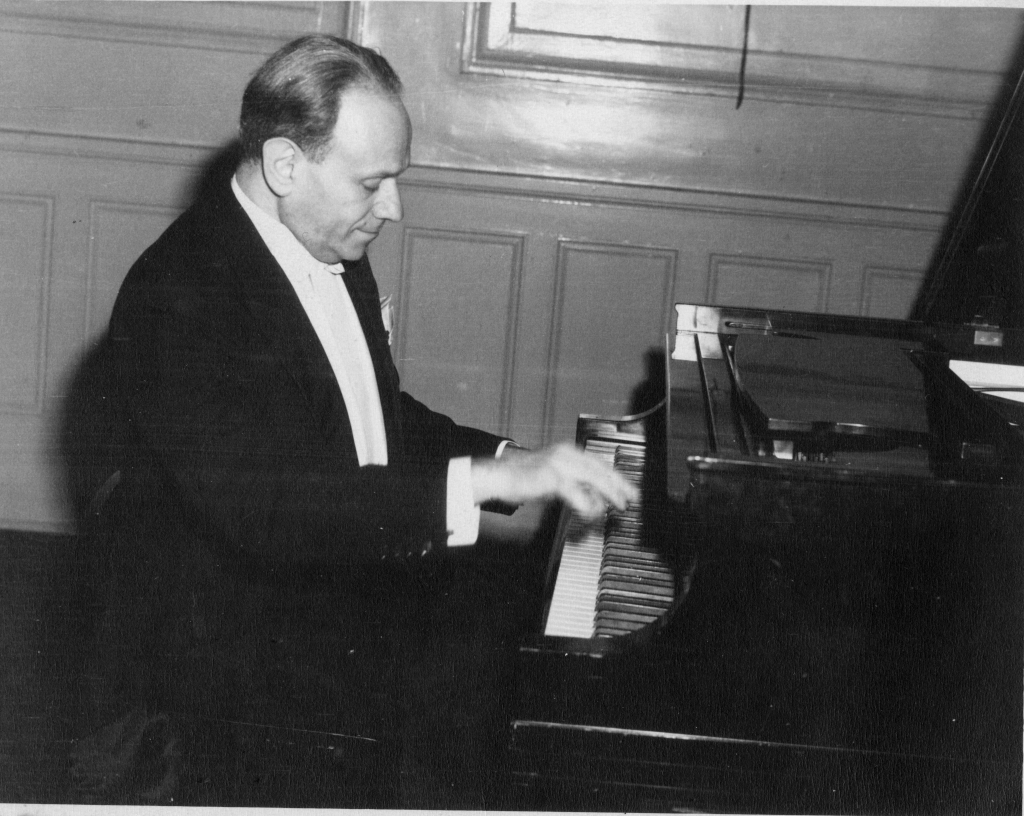
Karol Rathaus, circa 1952 (from Rathaus’ family archive
A demo/promo/proof-of-concept video for documentary film ‘Discovering Karol Rathaus’:
With his equally fascinating and individual music, Karol Rathaus met with little approval. He felt misunderstood, was actually nowhere at home, and also in the musical landscape surrounding him he sat between all chairs – and styles. His piano works have been now released on CD, for the first time.
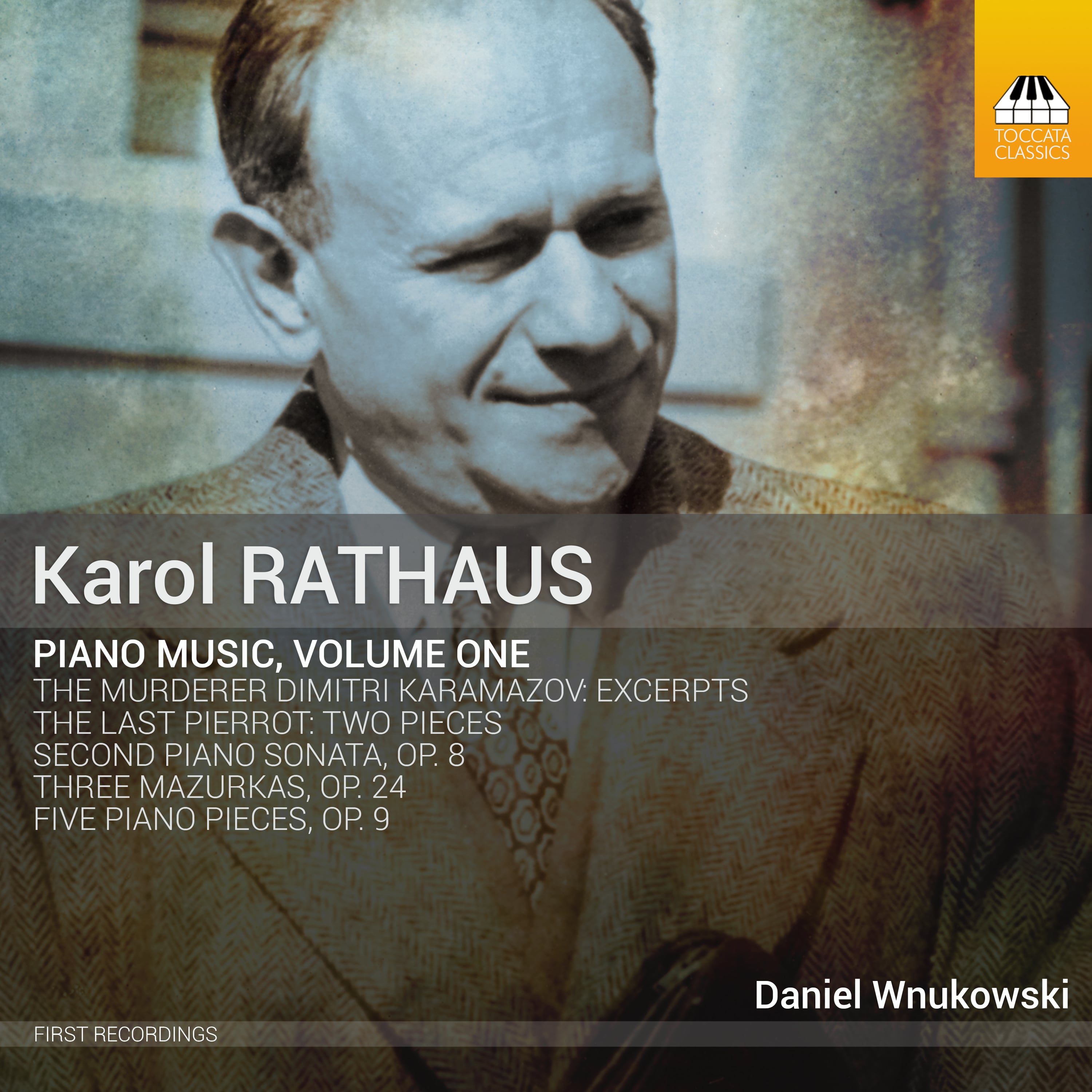
What do we know about Karol Rathaus (1895-1954)? He was born in 1895 in Ternopol, a city now in Western Ukraine but then part of the Austro-Hungarian monarchy. He spoke Polish at home and German at school, a language he mastered better than the native speakers. He studied in Vienna, emigrated to Berlin in 1926, to France in 1932 and from there to the United States. No wonder that his first biographer openly wondered whether Karol Rathaus was a Jewish, Polish, Austrian or American composer. He based himself not only on Rathaus’s life but also on the letters he wrote to his friends, in which he said that he found it difficult to adapt to his new countries and often ended up in an identity crisis. His compositions were rarely performed, something he was very bitter about.

Dance from Uriel Acosta from 1930, played by Orquesta Filarmonica Cuidad de Mexico conducted by Jascha Horenstein (live, Mexico City, 28 March 1951). The orchestra on this recording included Sally van den Berg (oboe) and Louis Salomons (bassoon), who played in the Concertgebouw before the war:
As he wrote in a letter to Jascha Horenstein in 1950: “My problem is that of the ignored independent and individual composer. My name is known, but nobody performs my works. I have no embassies, no consulates that stand behind me – no propaganda machine – in the country where I live very happily, I’m considered a non-native.“
Jascha Horenstein conducts Rathaus. World premiere, recorded on March 13, 1956 in “Farringdon” studio, BBC
The fact that Rathaus has been so forgotten is not just the fault of the Nazis. Michael Haas, the former producer of the ‘Entartete Musik’ series by Decca, one of the first to record a CD with works by Rathaus, including his ballet Der Letzte Pierrot, had a clear explanation for this: “The young generation of composers was left with feelings of guilt after the war. It was never to happen again, so they found a cure for it. We had to work on building objective music, devoid of any sentiment and subject to strict rules. Music had to become universal. Serialism was born. In Darmstadt, the past was dealt with, including composers from the 1930s”.
It is because of Michael Haas that the young Canadian pianist Daniel Wnukowski came into contact with the music of ‘Entartete composers’ (Haas prefers to speak of ‘Forbidden composers’). How did it all start?

Daniel Wnukowski, photo by Claudia Zadory
Wnukowski: “Michael Haas introduced me to a fascinating person he had met in his role as a senior researcher on the topic Holocaust music – Walter Arlen. Walter was apparently looking for a pianist to record his complete solo piano and vocal works, together with one small work for violin and piano. He had already recorded one CD set with another Viennese-based pianist Danny Driver, but for a variety of reasons beyond the scope of this note, Danny was no longer available to record the remainder of Walter’s works. “
“It was a life changing experience to learn about this man’s unique story of survival, his harrowing journey of escape to America. It was an exceptionally inspiring and moving experience to have had the composer present at all times during the entire session. I can only say that the encounter with this fascinating man was a ‘life-changing experience’ for me.”

Daniel Wnukowski, photo by Claudia Zadory
“My paternal grandparents were from Lublin. They became forced labourers on workers camps but escaped to Canada at the end of WWII in 1945, as the camps were liberated by allied forces. They kept quiet about their WWII experiences until they were well over 90 years of age. Even then, trying to pull out any details of their life experiences was a moot point. They simply wanted my father and the rest of the family to have a ‘traditional’ North American upbringing – a spacious suburban home and hockey played out on the street.
My maternal grandparents, on the other hand, remained in Lublin after the war and were much more secretive, strongly discouraging any discussion on the topic of the war in the household. My mother mentioned that it was strictly taboo to discuss any aspect of the family’s origins, throughout her entire upbringing. The situation became particularly tense in 1968, when state-backed anti-semitism launched a massive campaign to depart all Jews to Israel. My mother was only 17 at the time.
My Jewish identity plays a huge role in my current work as a pianist. I honor every drop of my Jewish blood, which has been a passionate, driving force in my overall musical activities as a concert pianist. I want to continue my efforts to keep the stories of Holocaust survivors alive at a crucial time when many of them are approaching 100 years of age and dying off at alarming rates.”
Daniel Wnukowski plays ‘Der Letzte Pierrot’:
As far as I know, this CD is the very first recording of Rathaus’s piano works. All these compositions were written between 1924 and 1931. Besides the Fünf Klavierstücke, the second piano sonata and three Mazurka’s there are also – arranged for the piano by the composer himself – two fragments from the ballet Der Letzte Pierrot and three pieces from the film music from Der Mörder Dimitri Karamasoff. These are fascinating works with very pronounced rhythms. Harmonious, but with some dissonances. Irrespectfully said: Bartók meets Szymanowski. No, Rathaus is neither Polish, nor Austrian, nor American. His music is unique, different, just… Rathaus.
Karol Rathaus
5 Klavierstücke, Piano Sonata No. 2, 3 Mazurkas, 3 Stücke aus dem ballet Der letzte Pierrot, 3 Excerpts from the Film Music for The Murderer Dimitri Karamazov
Daniel Wnukowski, piano
Toccata Classics TOCC 0451
BETWEEN TWO WORLDS
More about Rathaus:
Het leven is kort! Over La vida breve van Manuel de Falla
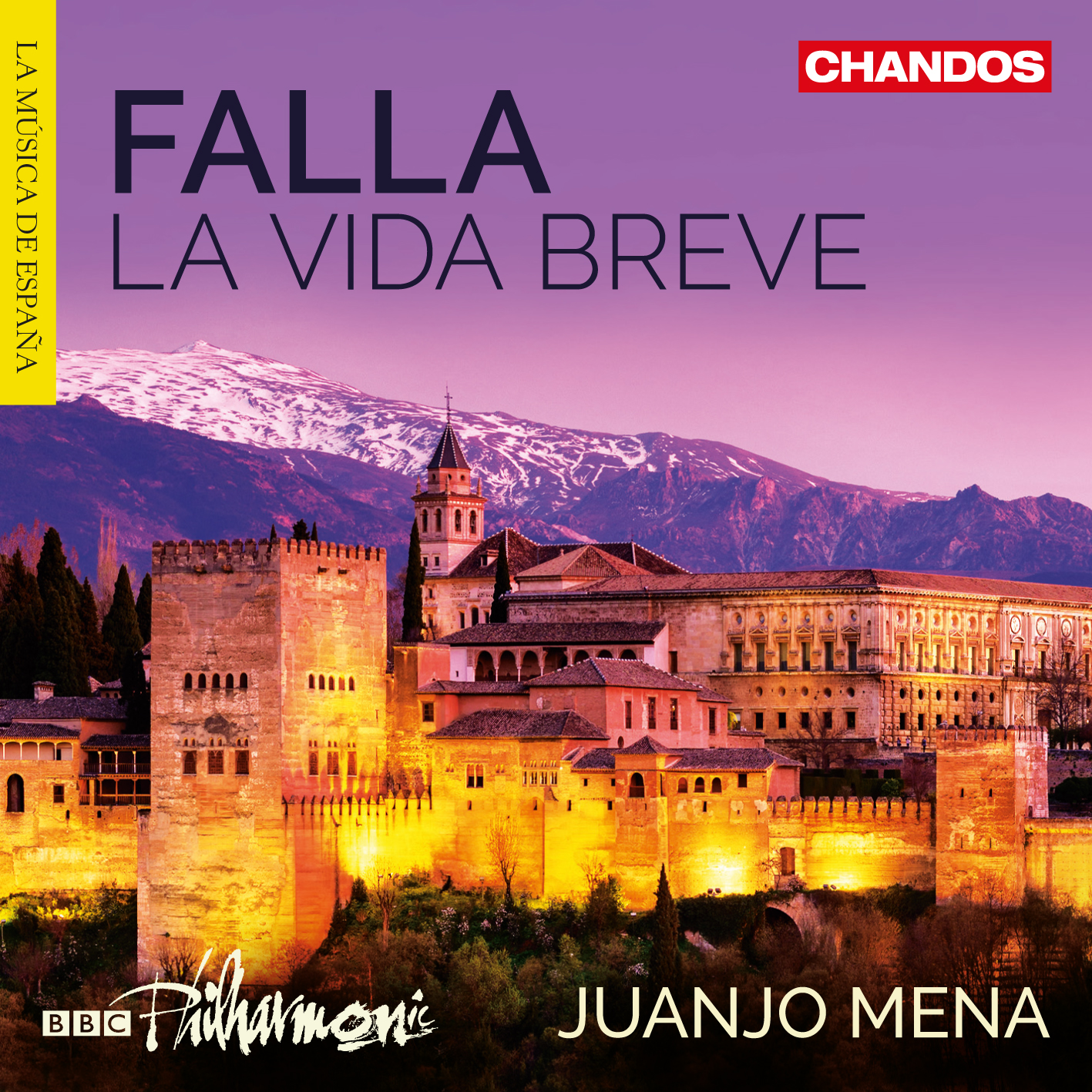
Hij heeft maar één opera geschreven, maar: wat voor één! La Vida Breve van Manuel de Falla verenigt alles waar een echte kunstliefhebber van kan dromen. Klassieke noten worden gecombineerd met rauwe gitaarklanken en flamenco gaat hand in hand met het Italiaanse verisme. Wat je krijgt is een Spaanse Cavalleria Rusticana, alleen de in de steek gelaten Santuzza heet nu Salud en zij is het die het verraad van haar geliefde met de dood moet bekopen.
 Basia con fuoco