Erich_Wolfgang_Korngold

If you want to have the future: close the door behind your past. Korngold’s Die Tote Stadt in a few recordings

“Forgetting forms a part of all actions,” Nietsche wrote in one of his pamphlets. “To (over)live, one must sometimes destroy one’s past.” Korngold should know, because with those very words you can sum up the real themes of his most famous opera, Die Tote Stadt.
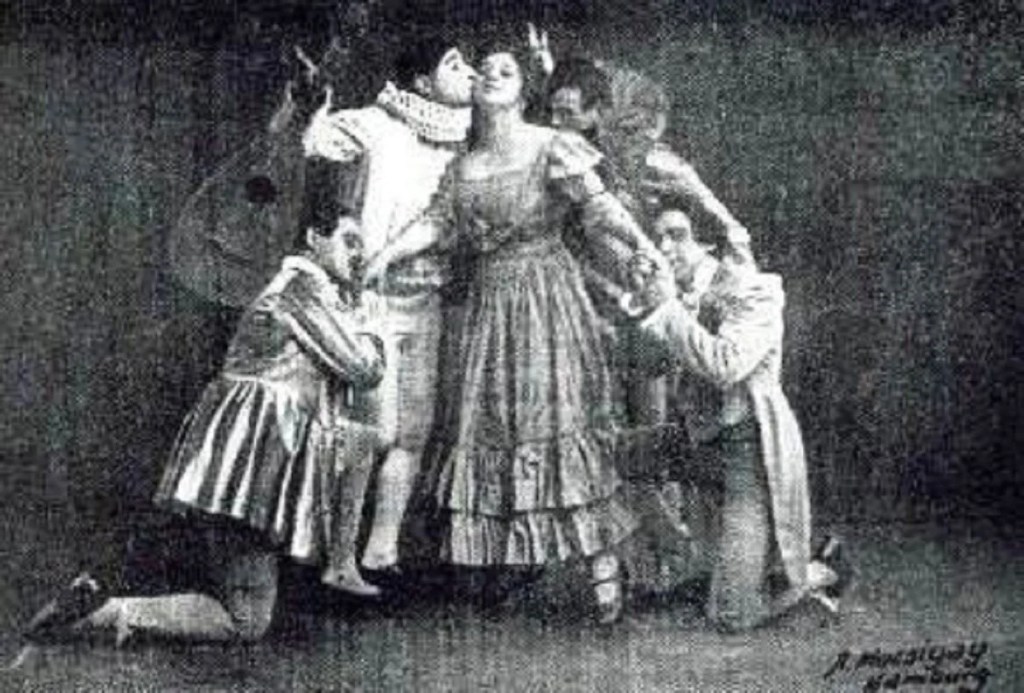
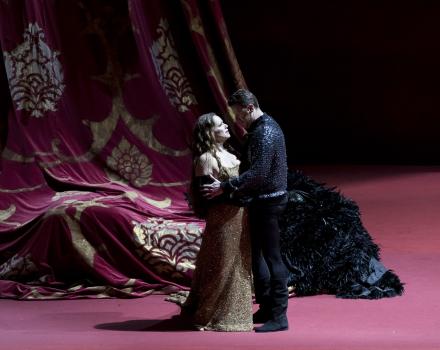
“A scene from the original 1920 Hamburg production of Die tote Stadt. From left to right: Walter Diehl (Graf Albert); Josef Degler (Fritz) Anny Münchow (Marietta); Felix Rodemund (Gaston); and Paul Schwartz (Victorin).”

Die Tote Stadt had its world premiere simultaneously in Cologne (directed by Otto Klemperer) and Hamburg on 4 December 1920, after which the whole world followed. Before the war, it was the most played of all contemporary operas.

RENÉ KOLLO (once RCA, now Sony)
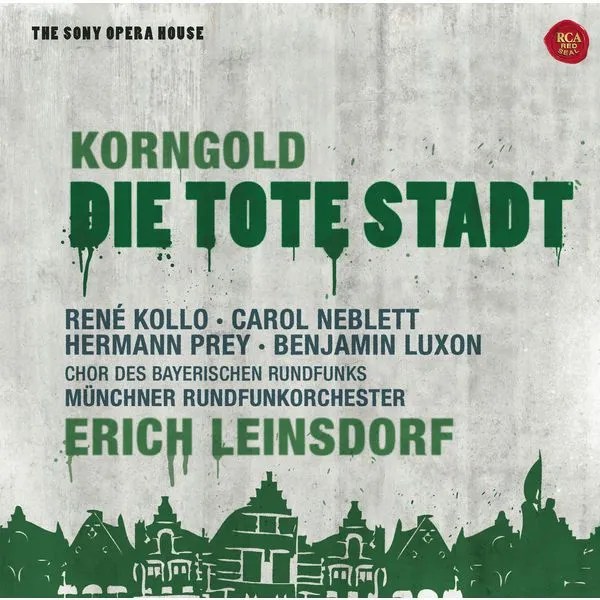
“After 1938, Die Tote Stadt was no longer performed. Only in the 1970s did a cautious comeback begin. The first studio recording of the opera dates from that time (1975).

Unfortunately, the text booklet (which is otherwise well cared for with the well reproduced synopsis and the complete libretto in two languages) does not tell the ‘why’ of that release. I would have liked to know who exactly conceived the idea of recording Die Tote Stadt, all the more so since the work was still considered inferior at the time.

Even Leinsdorf never concealed the fact that he did hold the work in high esteem. And yet he conducts it as if it were a masterpiece. Perhaps he gradually came to believe in it? He gives the opera the grandeur of a monument and the lustre of gold. Particularly exciting and energetic, he leads the brilliantly playing Munich Radio Orchestra through the score. At the end of the first act, when Marie’s portrait comes to life, you imagine yourself in the middle of the dream scene from Hitchckock’s ‘Spellbound’, and even without the image the tension is up for grabs.

There is also excellent singing, although I have a bit of trouble with Kollo in his demanding role of Paul. During the recording he shuttled between Munich and Bayreuth, where he was singing Parsifal at the time, so his voice sounds a bit tired.

Moreover, I prefer a more lyrical tenor in that role, but one with enough power to rise above the orchestra. Fritz Wunderlich could have been ideal, but he had been dead for almost a decade by then, and no one had thought of Gösta Winbergh at the time.

Carol Neblett is a fantastic Marie/Marietta, her creamy soprano possesses many colours and is well-stabilised in height. Benjamin Luxon portrays a warm and fatherly Frank and Herman Prey (Fritz) brings paradise closer with his sweetly sung Tanzlied.

Below, Herman Prey sings “Mein Sehnen, mein Wähnen”

The small role of Brigitte is also phenomenally sung by Rose Wagemann, perhaps the best Brigitte I have heard so far.

THOMAS SUNNEGÅRDH (Naxos 8660060-1)
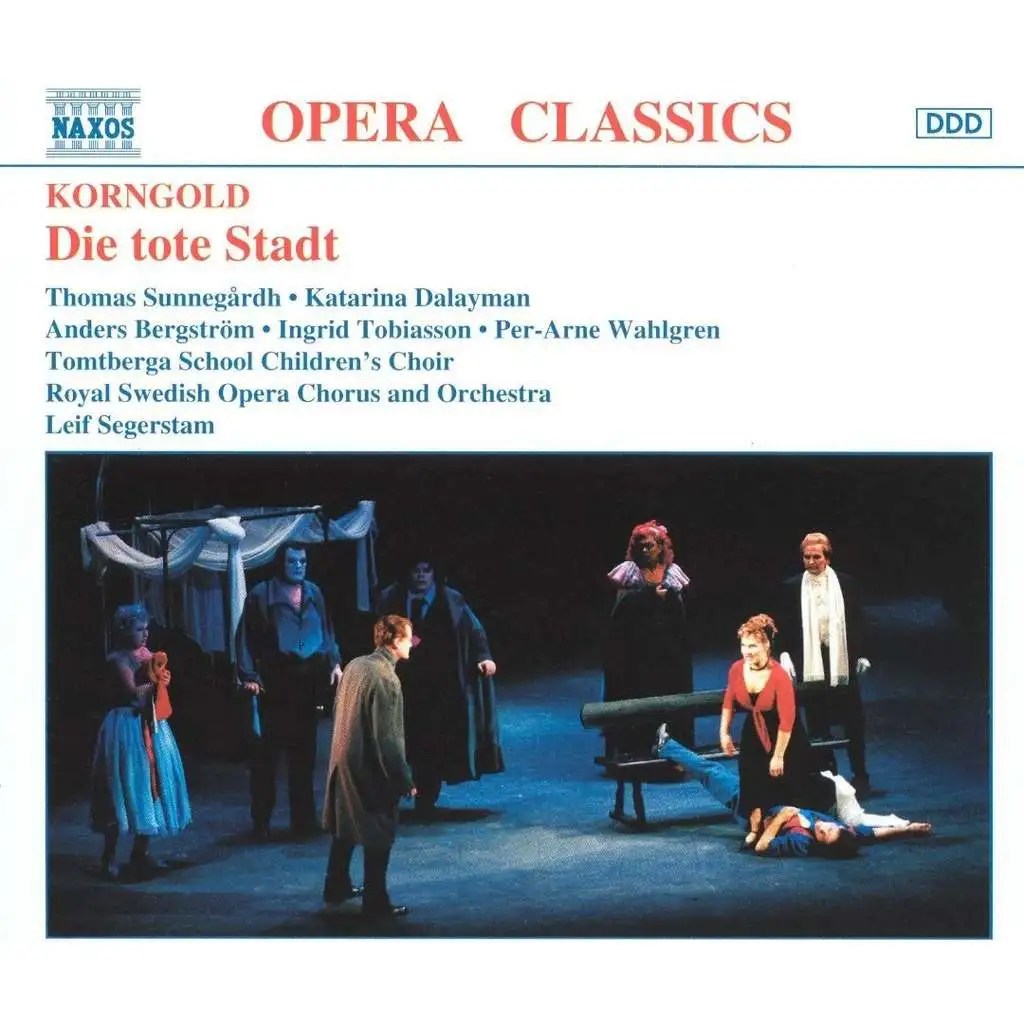
In 1996, Die Tote Stadt was put on the repertoire at the Royal Swedish Opera House in Stockholm. Two of the performances were recorded live by Naxos and released on CD. The result is definitely not bad, one feels the excitement of the theatre which in fact is always a plus. The stage noise is audible, it does not bother me, quite the contrary. Leif Segerstam conducts calmly and it is due to a few cuts that the whole thing is almost 15 minutes shorter with him than with Leinsdorf.

Paul is sung by Thomas Sunnegårdh, a Wagner tenor who impresses mainly by his volume: occasionally he degenerates into sprechgesang and the lyricism is nowhere to be seen. Superbly, on the other hand, Katarina Dalayman as Marie/Mariette and Anders Bergström (Frank) and Per-Arne Wahlgren (Fritz) also portray their roles convincingly.

TORSTEN KERL

DVD
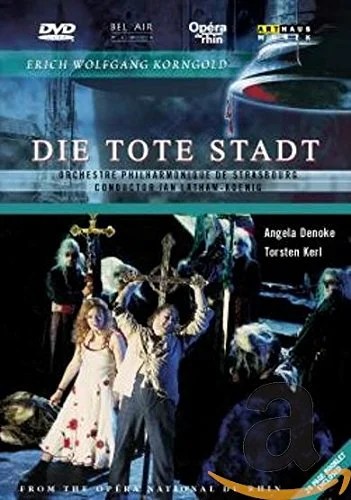
Opéra National du Rhin in Strasbourg staged Die Tote Stadt in April 2001. The highly controversial production by Inga Levant was released on DVD by Arthaus Musik (100 342).

If you thought the story of Die Tote Stadt is set in Bruges in the late nineteenth century, you are wrong. True, Korngold based his masterpiece on Rodenbach’s ‘Bruges-la-morte’ and that medieval city, with its fog and symbolism, put its stamp on both the libretto and the music, but Inga Levant knows better. So we end up in Hollywood where anything is possible and Marietta resembles not only Marie but also Marylin Monroe.

The whole thing is loaded with quotes from Fellini’s films, but fusion is in and anything goes. So I resignedly accept that ‘Mein Sehnen, mein Wänen’ is not sung by Pierrot but by the barman – played brilliantly and with a sufficient dose of schmalz by Stephan Genz

But if the libretto is violated, my patience and tolerance end. So I don’t accept Paul’s suicide because not only does he commit suicide, but also the entire opera.

Torsten Kerl (Paul) and Angela Denoke (Marie/Mariette) sing well, but the latter convinces mainly through her overwhelming stage presence and acting ability

CD Orfeo C 634 042

In the summer of 2003, this opera was performed at the Salzburg Festival. It was directed by Willy Decker and the leading roles were sung by Torsten Kerl, Angela Denoke (they seemed to have a patent on it) and Bo Skovhus. The performances were received with enormous enthusiasm by both the audience and the press, and the entire cast was rewarded with a standing ovation.

The 18 August performance was recorded live by ORF and released on CD. Why not DVD? The lack of images misses an important aspect of the performance, all the more so as the director had the roles of Frank and Fritz performed by the same singer which may have worked optically in the directorial concept, but is particularly confusing without images.

Torsten Kerl is clearly at his vocal limits, which manifests itself mainly in his pinched height. But he also has many beautiful and lyrical moments, something that cannot be said of Angela Denoke: without visuals, nothing remains of her.

The opera can also be heard on You Tube:

But I can’t get excited about Bo Skovhus either, something that is particularly hard for me: he was once one of my beloved baritones. He sings matte, without soul and his reading of “Mein Sehnen, mein Wänen” is downright pale. Too bad, because that he can do better he already showed at the beginning of his career on one of his first CD recordings:

Maria Jeritza who created the role of Marie/Mariette:
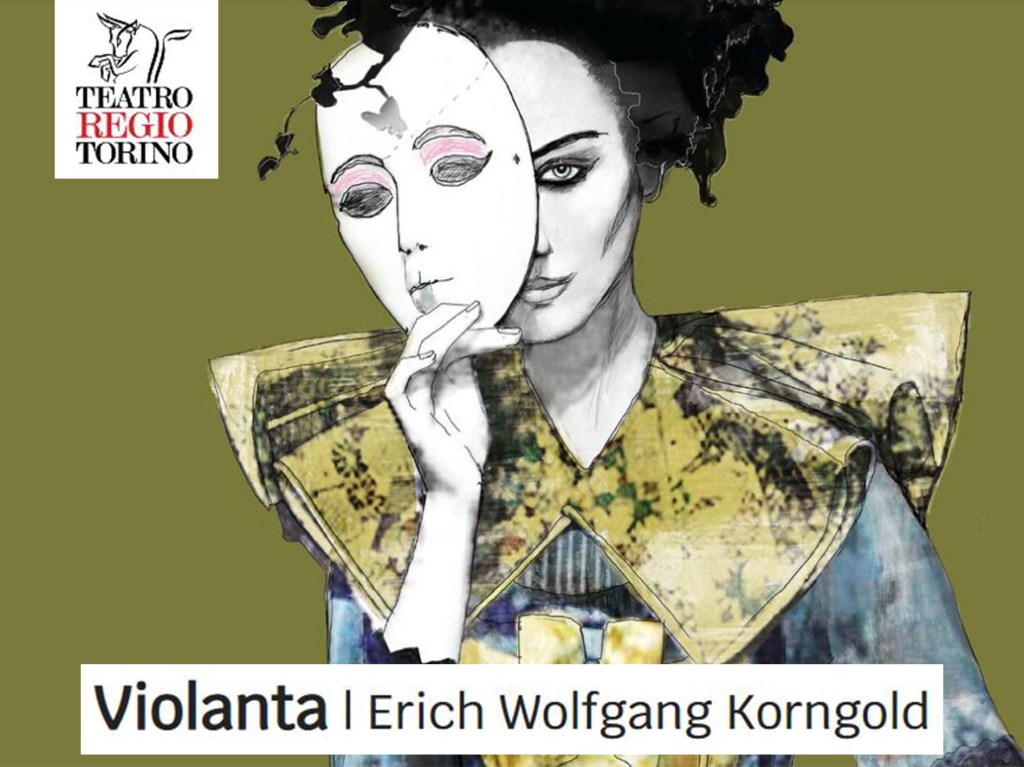
Annemarie Kremer is een Violanta uit duizenden

Tekst: Peter Franken

Korngold schreef deze eenakter toen hij pas 18 jaar was en het werk werd bij de première in 1916 zeer goed ontvangen. Vier jaar later kwam het echt grote succes in de vorm van Die tote Stadt, de opera waaraan Korngolds naam voor altijd verbonden zou blijven.

De muziek van Violanta wijst nadrukkelijk vooruit naar Die tote Stadt maar er zijn beslist ook al orkestrale passages in te horen die later vooral met filmmuziek zouden worden geassocieerd. Niet een grote carrière in Wenen maar in Hollywood stond voor deze wonderboy kennelijk in de sterren geschreven.

Van de voorstellingenreeks in januari 2020 in Teatro Regio Torino werden opnamen gemaakt die door Dynamic op Blu-ray zijn uitgebracht. Kremer overtuigt als titelheldin in deze vroege Korngold.

De vocale lijnen liggen gemakkelijk in het gehoor maar zijn zo geschreven dat zelfs iemand als Annemarie Kremer die er vaak genoeg blijk van heeft gegeven de hoogte niet te duchten bij vlagen behoorlijk moet forceren. Kennelijk heeft de jonge Korngold hier iets teveel de oren laten hangen naar een werk als Elektra. In Die tote Stadt behandelt hij zijn solisten in elk geval een stuk vriendelijker.

Violanta gaat over een lover boy die vrouwen in het verderf stort in het Italië van de 17e eeuw. Deze Alfonso is de bastaardzoon van de koning van Napels die zichzelf als het ware heeft moeten opvoeden nadat zijn moeder in het kraambed stierf.

Hij heeft een ongelukkig leven geleid en is op zoek naar ware liefde maar in de tussentijd vult hij zijn bestaan met ‘lege seks’. Violanta’s zuster Nerina die als novice in een klooster zat is door Alonso verleid waarna ze zichzelf heeft verdronken.

Tijdens het carnaval in Venetië weet Violanta de daar aanwezige Alonso weg te lokken uit een zwerm vrouwen en hem incognito een afspraak voor die avond bij haar thuis te geven. Ze haat Alonso tot in het merg en wil hem door haar man Simone laten doden. Maar tegelijkertijd vreest ze een mogelijke omslag in haar gevoelens, liefde en haat zijn beiden irrationeel en zodoende inwisselbaar als intiem contact zijn intrede doet.

En dat is precies wat er gebeurt. Alfonso vertelt zijn tranentrekkende verhaal en zij gaat door de knieën, ook al omdat haar leven als oppassende nette vrouw van een hooggeplaatste officier leeg en ongelukkig is.

Annemarie Kremer en Norman Reinhardt in ‘Reine Liebe’:

Als haar man Simone op het afgesproken teken binnenkomt om Alfonso aan het zwaard te rijgen, vangt ze de klap voor hem op. Stervend bedankt ze haar echtgenoot dat hij haar weer tot zijn vrouw heeft gemaakt, keurig en net zoals het hoort, liever dood dan geschonden. Alfonso kijkt het even aan en verwijdert zich dan stilletjes.

Pier Luigi Pizzi neemt zoals gebruikelijk niet slechts de regie maar de gehele productie voor zijn rekening. De enscenering komt overeen met de ontstaansperiode van de opera, aanvang 20e eeuw. Fraaie kostuums en een decor met veel toneelrood waarin een brede rode sofa het kernpunt vormt.

De blik op Venetië wordt gegeven in de vorm van een grote ronde opening op het achtertoneel. Dat is tamelijk realistisch gedaan, zoals van Pizzi te verwachten, met de suggestie van langsvarende gondels.

De rol van de uiteindelijk toch bedrogen echtgenoot Simone komt voor rekening van de Duitse bariton Michael Kupfer-Radecky, verdienstelijk maar niet bijzonder. Het grote duet ‘Warum sagst du mir das?’ waarin Violanta haar plan ontvouwt en tegelijkertijd haar zorg uitspreekt dat het beoogde slachtoffer misschien al onder haar huid is gekropen, volbrengt hij met moeite. Ja, eigenlijk had Korngold hier misschien beter een tenor voor kunnen schrijven.

Die rol is echter gereserveerd voor de grote verleider met het treurige verhaal. Alfonso wordt bij vlagen erg mooi vertolkt door de Amerikaanse tenor Norman Reinhardt maar ook hij heeft z’n moeilijke momenten.

Overigens is dit een personage waar ik geen moment enige sympathie voor kon opbrengen en dat zegt vooral iets over Violanta.

Deze vrouw is moeilijk te duiden. In een interview wordt Pizzi de vraag gesteld of Freud hier een passende invalshoek kan leveren, waarop hij antwoordt ’laten we die maar niet wakker maken’. Pizzi ziet het niet zo gecompliceerd, Violanta is ongelukkig en daardoor ten minste tijdelijk vrij gemakkelijk van het door haar steeds verkozen rechte pad te brengen.

Kremer staat ongeveer een uur onafgebroken op het toneel en heeft veel te zingen. En dat doet ze uitstekend, ook met prachtig acteerwerk. Dat het hier en daar niet allemaal even mooi klinkt kunnen we haar niet euvel duiden, dat is te wijten aan de onervarenheid van de jonge componist.

Interview met Annemarie Kremer:

Metamorphoses as a symbol of transfiguration of the world, after the war


It was at the end of the Second World War that Richard Strauss composed his Metamorphoses for twenty-three strings. The piece, one of his last works, is based on mythological stories by Ovid, in which the creation and history of the world are based on Greek and Roman mythology.

It is generally believed that Strauss composed the work in response to the horrors of war while also mourning the destruction of Germany. And that it was a kind of elegy to the devastating bombing of Munich, especially the Munich Opera.
The final section entitled ‘In Memoriam’ could indicate that the piece was intended as a musical monument for culture in general, and German culture in particular, which is why some, including Matthijs Vermeulen, took the composition to be a lament for Hitler and for the downfall of the Nazi regime (source: Wikipedia). I can’t imagine it, but: who am I?

According to Richard Straus (and Beethoven) specialist Dr Jürgen May, it was Strauss’s way of expressing his sorrow for “more than three thousand years of the cultural development of mankind”.

In the composition, quotations from Beethoven’s Eroica and his Fifth Symphony can also be heard, as well as from Wagner’s Siegfried Idyll. That the work is rather sombre and very emotional is obvious. Especially the ‘In Memoriam’ will not leave you unmoved.


Richard Wilson The Destruction of the Children of Niobe 1760


“Childless she sat down dejectedly […] Yet she weeps, and […] she is carried away to her fatherland; there, set on a mountain top, she wears away, and even now tears flow from the marble” (source Latin and Greek, anonymous translation).

With the other works on the CD, from Schreker and Korngold, the feeling of desolation and abandonment is coninued.

Franz Schreker composed the Intermezzo, the oldest piece (and also the shortest) on the disc, in 1900. That was a long time before he would write his greatest works and his operas would be performed with enormous success in the biggest opera houses of, in particular, Austria and Germany. Yet, in the narcotic ‘Ferne Klang’, you can already hear Schreker’s musical characteristictics.

Korngold wrote his Symphonic Serenade shortly after the Second World War, when he had left Hollywood for a while to come to Vienna. He worked on it from 1947 and at the same time he also began what he thought would be his greatest work, the Symphony in F-sharp. John Wilson with his Sinfonietta London had already recorded this Symphony with stunning result. This CD is no less impressive.


Richard Strauss, Metamorphoses
Franz Schreker, Intermezzo op.8
Erich Wolfgand Korngold, Symphonic Serenade for Strings op.39
Sinfonia of London olv John Wilson
Chandos CHS

Metamorfosen als symbool van transfiguratie van de wereld na de oorlog

Het was aan het einde van de Tweede Wereldoorlog dat Richard Strauss zijn Metamorphosen voor drieëntwintig strijkers componeerde. Het stuk, één van zijn laatste werken, is gebaseerd op mythologische verhalen van de Ovidius, waarin schepping en geschiedenis van de wereld gebaseerd zijn op de Griekse en Romeinse mythologie.

Het wordt algemeen aangenomen dat Strauss het werk componeerde als reactie op de verschrikkingen van de oorlog en rouw om de vernietiging van Duitsland. Dat het een soort van elegie was voor de verwoestende bombardementen op München, met name de Münchener Opera.

Het slotdeel getiteld ‘In Memoriam’ zou erop kunnen wijzen dat het stuk bedoeld was als een muzikaal monument voor cultuur in het algemeen, Duitse cultuur in het bijzonder, waardoor sommigen, o.a. Matthijs Vermeulen zagen de compositie als een klaagzang voor Hitler en de teloorgang van het naziregime (bron: Wikipedia). Ik kan het mij niet voorstellen, maar: wie ben ik?

Volgens Richard Straus (en Beethoven) specialist dr. Jürgen May was het Strauss’ manier om zijn treurnis voor “meer dan drieduizend jaar van de culturele ontwikkeling van de mensheid” te uiten

In de compositie zijn ook citaten uit Beethovens Eroica en diens vijfde symfonie waarneembaar, alsook uit Siegfried Idyll van Wagner. Dat het werk nogal somber en zeer ontroerend is, is nogal wiedes. Voornamelijk de ‘In memoriam’ laat je niet onberoerd.

“Kinderloos ging ze moedeloos neerzitten […] Toch huilt zij en […] is zij meegesleurd naar haar vaderland; daar, vastgehecht op de top van een berg, smelt zij weg, en ook nu nog laat het marmer tranen vloeien” (bron Latijn en Grieks, anonieme vertaling)

Met de daarop volgende werken van zowel Schreker en Korngold houd je het gevoel van troosteloosheid en verlatenheid aan.

Franz Schreker componeerde het Intermezzo, het oudste stuk (en ook de kortste) op de schijf, in 1900. Het was nog lang voor hij zijn grootste werken schreef en zijn opera’s, met enorme succes uitgevoerd werden in de grootste operahuizen van, met name, Oostenrijk en Duitsland. Toch hoor je er al in de narcotiserende ‘Ferne Klang’, Schrekers muziek zo eigen.

Zijn Symphonische Serenade schreef Korngold kort na de Tweede Wereldoorlog toen hij even Hollywood verliet en naar Wenen kwam. Hij werkte er aan vanaf 1947 en in dezelfde tijd begon hij ook aan wat hij dacht dat zijn grootste werk zou worden Symfonie in Fis. John Wilson met zijn Sinfonietta London heeft zich al eerder over de Symfonie ontfermd met een verbluffend resultaat. Deze cd doet daar niet voor onder.


Richard Strauss, Metamorphosen
Franz Schreker, Intermezzo op.8
Erich Wolfgand Korngold, Symphonic Serenade for Strings op.39
Sinfonia of London‎ olv John Wilson
Chandos CHSA5292 (SACD)


Korngold and time

“Die Zeit, die ist ein sonderbar Ding […] sie ist um uns herum, sie ist auch in uns drinnen. (Hugo von Hoffmanstal)

Yes, time is really something special, it goes by whether you want it to or not, and resigning yourself to it is an art in itself. But sometimes time returns, often too late and usually in a dream. Or as a memory.


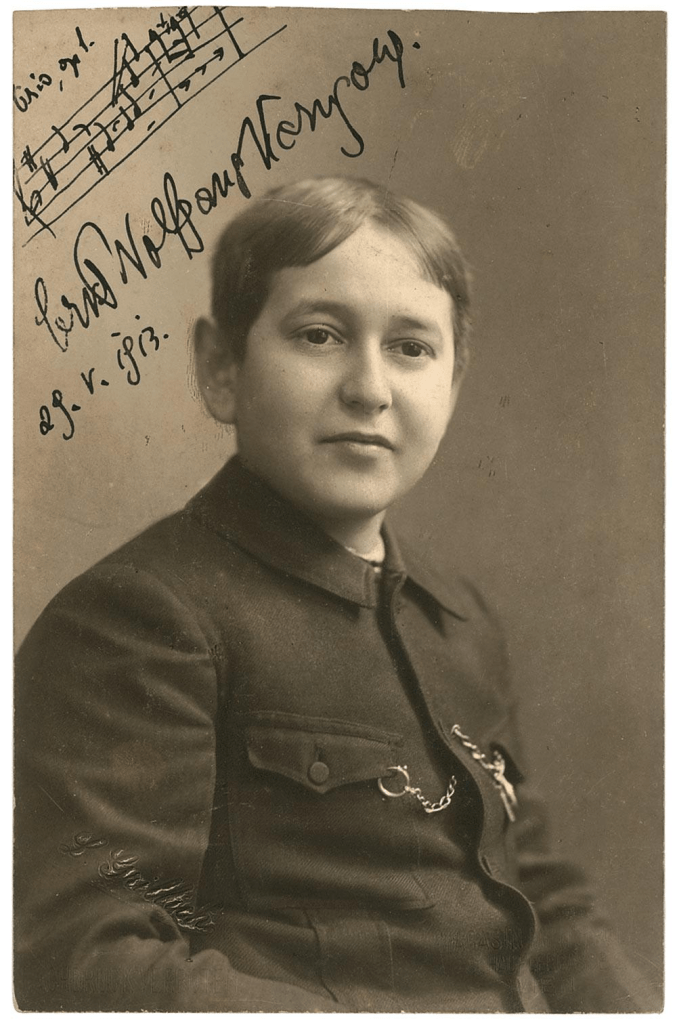
Think of Erich Wolfgang Korngold, a child prodigy who at the age of 20 was already world-famous and established as a composer. In 1934, he left for Hollywood to compose music for A Midsummer Night’s Dream. The film was a huge success and the management of Warner Bros. offered Korngold a really fantastic contract. Who thought at the time that it would save his life?

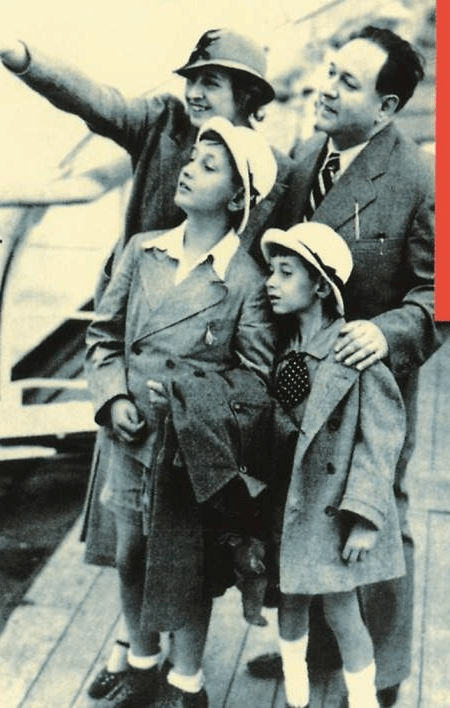
Korngold with his wife and children


In early 1938, he received a telegram asking if he could be back in Hollywood in ten days. Korngold considered it an omen: on the very last ship, on 29 January of that year, he left his beloved Vienna. And Europe.


(Original Caption) Erich Wolfgang Korngold, his son and his wife, pictured as they arrived in New York City, aboard the S.S. Normandie.


He was doing well in America and was very successful there, but he did not feel at home. His heart and soul remained in Vienna. In 1949 he travelled back to the city of his dreams, but nobody there knew him anymore. Forgotten. In just over ten years, he had become a nobody. Disillusioned, he returned to Hollywood, where he literally died of a broken heart seven years later.


Until the 1980s, he went from being a celebrated composer of countless operas, songs, concertos, symphonies, quartets and whatnot to a reviled ‘film composer’ of kitsch music.

Time… And suddenly people found out – or remembered – what a great composer he had been. Korngold was rediscovered. Today, his violin concerto is one of the most played (and recorded) violin concertos and his operas are on the bill in every opera house in the world. Rightly so, but too late for him.


Time… Just look at his string quartets. Korngold composed his second string quartet in 1933, when nothing was supposedly happening as yet, although you could already hear (and not even very far away) lightning and thunder and there were already some signs on the wall.

Korngold wrote his third string quartet twelve years later. Not only did a lot of time pass between the second and third string quartets, but a lot of things had also happened. Well, a few things…… Fascism, anti-Semitism, Kristallnacht, Anschluss, pogroms, the Second World War and the Shoah.

Time…. The second string quartet still has the schwung of the old Viennese tradition. A bit like a ‘Mozart-kugel’, or a ‘Sachertarte’. Delicious and irresistible. What a difference with the third! Korngold composed it in 1945 and you feel nostalgia and bitterness. And resignation.

Alma String Quartet


We have long known that the Alma Quartet has a great affinity with ‘Entartete composers’. Their recording of the quartets by Schulhoff is simply the best I have ever heard.

\


And now there is Korngold. Just as I expected: fascinating, breathtaking and speaking to your heart and soul. Virtuoso, perfect and emotional. Phenomenal, in other words. That is how I prefer to hear my Korngold.

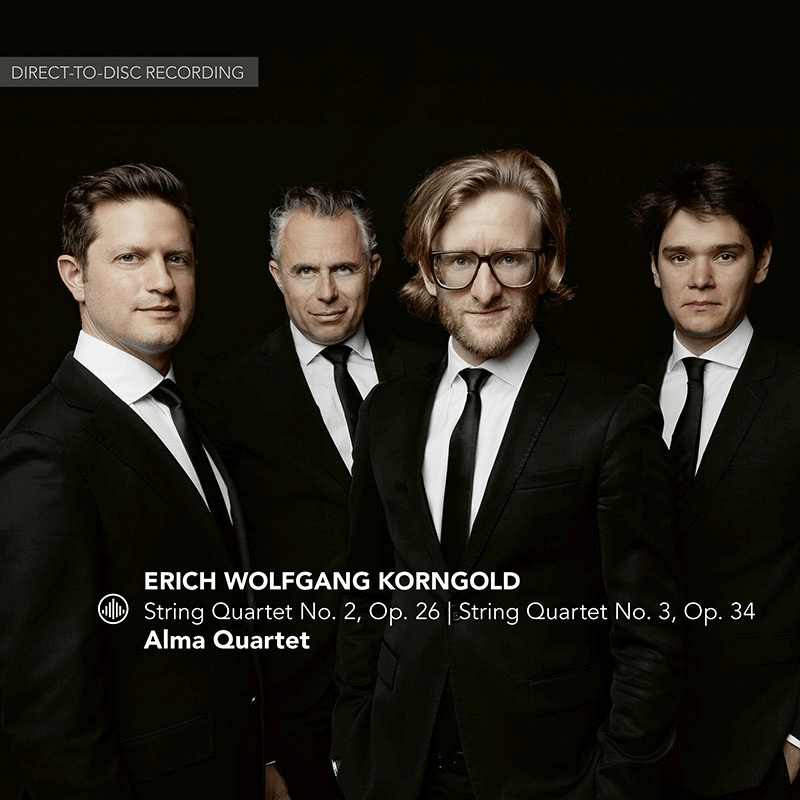
But there is more to it. Again; time… The Almas recorded the string quartets ‘direct-to-disc’. Live and without edits. No modifications: directly onto the record (CD).


In the announcement: “Because in this old recording technique, there is no digital track between the microphone and the record, there can be no editing. What you get is studio quality, but the sensation of a live performance. To reinforce that feeling, the quartet decided to play two pieces by Erich Wolfgang Korngold in concert attire”.

The first quartet is still to come: I can hardly wait!


Erich Wolfgang Korngold
String Quartet No. 2 in E-flat, op. 26 – No. 3 in D, op. 34
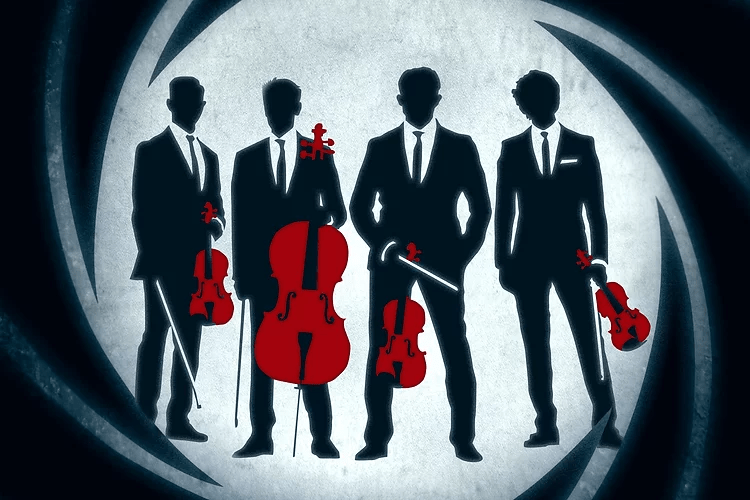
Alma Quartet: Marc Daniël van Biemen, Benjamin Peled, Jeroen Woudstra, Clément Peigné
Challenge Classics CC72869


Live performance on NPO Radio 4 ‘Podium’ at Hilversum Mediapark on November 25th, 2021


Korngold en de tijd

“Die Zeit, die ist ein sonderbar Ding […] sie ist um uns herum, sie ist auch in uns drinnen. (Hugo van Hoffmanstal)

Ja, de tijd is echt iets bijzonders, het gaat voorbij of je het wilt of niet en je je erbij neerleggen is een kunst op zich. Maar soms komt de tijd terug, vaak te laat en meestal als een droom. Of als een herinnering..

Denk aan Erich Wolfgang Korngold, een wonderkind die op zijn twintigste al wereldberoemd en gevestigd als componist was. In 1934 vertrok hij naar Hollywood om muziek te componeren voor A Midsummer Night’s Dream. De film werd het een groot succes en de directie van Warner Bros. bood Korngold een fantastisch contract aan. Wie dacht er toen aan dat het zijn leven zou redden?

Begin 1938 kreeg hij een telegram of hij binnen tien dagen in Hollywood terug kon zijn. Korngold beschouwde het als een omen: met het laatste schip verliet hij op 29 januari dat jaar zijn geliefde Wenen. En Europa. 

Hij had het goed in Amerika en was er zeer succesvol, maar hij voelde zich er niet thuis. Zijn hart en ziel waren in Wenen achtergebleven. In 1949 reisde hij terug naar de stad van zijn dromen, maar niemand kende hem er meer. Vergeten. In iets meer dan tien jaar tijd werd hij een nobody. Gedesillusioneerd keerde hij naar Hollywood terug, waar hij zeven jaar later letterlijk aan een gebroken hart overleed.

Tot en met de jaren tachtig van de vorige eeuw verwoordde hij van een gevierd componist van ettelijke opera’s, liederen, concerto’s, symfonieën, kwartetten, kwintetten en wat niet meer tot een verguisde ‘filmcomponist’ van kitschmuziek.

De tijd… En opeens kwam men erachter – of herinnerde men het zich weer – wat een geweldige componist hij toch was. Korngold werd herontdekt. Zijn vioolconcert behoort tegenwoordig tot de meest gespeelde (en opgenomen) vioolconcerten en zijn opera’s staan in alle operahuizen ter wereld op de rol. Terecht, maar voor hem te laat.

De tijd… Neem alleen maar zijn strijkkwartetten. Zijn tweede strijkkwartet componeerde Korngold in 1933, toen er zogenaamd nog niets aan de hand was, al hoorde je al (niet eens in de verte) onweren en donderen en er waren al tekenen aan de wand.

Zijn derde strijkkwartet schreef Korngold twaalf jaar later. Er is niet alleen veel tijd verlopen tussen het tweede en derde strijkkwartet maar er is ook het een en ander gebeurd. Nou ja, het een en ander…… Fascisme, antisemitisme, Kristallnacht, Anschluss, pogroms, tweede wereldoorlog en de Shoah.

De tijd…. Het tweede strijkkwartet bezit nog de schwung in de oude Weense traditie. Een beetje een ‘Mozart-kugel’, of een ‘Sachertarte’. Heerlijk en onweerstaanbaar. Wat een verschil met het derde! Korngold componeerde het in 1945 en je voelt nostalgie en verbittering. En berusting.

Dat het Alma Quartet grote affiniteit heeft met de ‘Entartete componisten’ dat weten we al lang. Hun opname van de kwartetten van Schulhoff is gewoon de beste wat ik ooit heb gehoord.

En nu dus Korngold. Net zoals ik verwachtte: fascinerend, adembenemend en tot je hart en ziel sprekend. Virtuoos, perfect en emotioneel. Fenomenaal, aldus. Zo hoor ik mijn Korngold het lief

Maar er is meer aan de hand. De tijd… De Alma’s hebben de strijkkwartetten ‘direct-to-disc’ opgenomen. Live en zonder edits. Geen montage: rechtstreeks op de plaat (cd)

https://www.facebook.com/watch/?v=1420722505056608

In de aankondiging: “Omdat in deze oude opnametechniek geen digitaal spoor zit tussen de microfoon en de plaat, kan er niet gemonteerd worden. Wat je krijgt is studiokwaliteit, maar de sensatie van een live-uitvoering. Om dat gevoel kracht bij te zetten, besloot het kwartet twee stukken van Erich Wolfgang Korngold in te spelen in concertkleding “


Live optreden bij NPO Radio 4 ‘Podium’ in november 2021

Het eerste kwartet hebben we nog te goed: kan niet wachten!

Erich Wolfgang Korngold
Strijkkwartet nr. 2 in Es, op. 26 – nr. 3 in D, op. 34
Alma Quartet: Marc Daniël van Biemen, Benjamin Peled, Jeroen Woudstra, Clément Peigné
Challenge Classics CC72869

Korngold’s The Silent Serenade: At Last!

The highest praise must go to the small labels! It is thanks to them that we finally get repertoire into our homes and out of our speakers that we could only dream of before. For example, Korngold’s Die Stumme Serenade, released on CD by CPO three years ago.

Die Stumme Serenade is Korngold’s last opera and was only known to the general public (well, not so general really)  through the Serenade. To honour the fiftieth anniversary of his death, the opera was staged in Munich in 2007, the first time since the production was recorded for Austrian radio in 1951 (Korngold himself conducted from behind the piano) and the totally unsuccessful premiere in 1954.
Two years later it was repeated in St. Gallen and then again in Freiburg, with all young people in the leading roles. And there it was recorded live.

The story is thin. It is basically a snippet about a celebrated actress and the fashion designer in love with her, who claims to have come to her house to perform a serenade for her. But since nobody has heard of it, it is called the ‘Stumme’ (Silent) Serenade.

All the Korngoldian elements are present: Viennese bonbons, languor, melody and a little (well, a lot) “schmalz”. It is a bit musical-like, in the old-fashioned sense of the word. Think of Fred Astaire and Bing Crosby. And yes, it is somewhat sweet. Think Lehár also. Actually, it is a mix of opera, operetta and revue, nothing wrong with that!

Sarah Wegener is a delightful Silvia Lombardi. Birger Radde (Andrea) is not really a high-flyer, but actually I do not mind, as I am so happy to finally own the recording.

I think it is a pity that the production has not been released on DVD, because seeing the trailer made my mouth water (unfortunately it is no longer available on You Tube).

But – something is better than nothing, so: thanks CPO!


Recording from 1951, Korngold conducts:


Iemand bezwaar voor nog meer Korngold?

Het Spectrum Concerts Berlin werd in 1988 opgericht door de cellist Frank Sumner Dodge met als doel om de hedendaagse, Amerikaanse kamermuziek te verbinden met werken uit de Europese traditie. Mooie woorden, dat wel. Maar kloppen ze wel?

Over Korngold kun je alles zeggen, behalve dat het hedendaags is: hij is in 1957 gestorven, nog geen zestig jaar oud en toen was zijn muziek al een beetje ‘ouderwets’. Begrijp mij goed: ik ben een enorme Korngold adept en liefhebber en ik kan eindeloos naar hem luisteren, maar bij ‘modern’ heb ik toch een andere klank in mijn hoofd. Ook dat ‘Amerikaanse’ klopt ook niet. Korngold woonde en werkte (noodgedwongen) in Hollywood, dat wel, maar zijn muziek was zo Weens als de bonbons en de Sachertarte.

Zijn pianokwintet componeerde hij rond 1921, hij was toen een jaar of 22. Het is een briljante compositie, waarin de emoties, de drama en expressie hand in hand samen gaan. De Suite stamt uit 1930 en daar hoor je de Korngold die, inderdaad, een beetje aan het experimenteren is geslagen. Dat komt ook een beetje door de keuze van de instrumenten: twee violen, cello en piano voor de linker hand. Hij componeerde het voor Paul Wittgenstein die  zijn rechterarm in 1914 verloor. De uitvoering van beide werken is zonder meer goed.


ERICH WOLFGAND KORNGOLD
Suite op. 23. Piano Quintet op. 15
Spectrum Concerts Berlin
Naxos 8574019

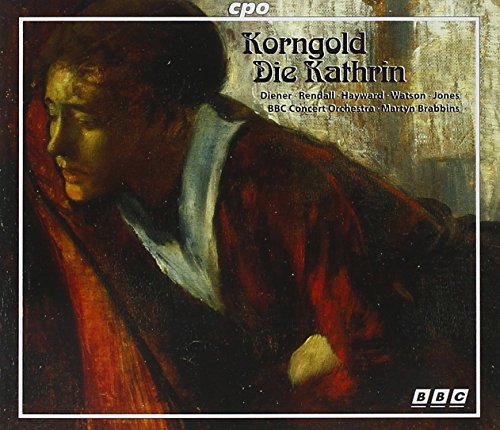
Die Kathrin, Korngold’s last opera, still awaiting rediscovery

kathrin

Through the years 1934 – 1938, Korngold commuted between Hollywood and Vienna. He worked on film music in winter and spent the summers on his “more serious” works. This was also the time of Die Kathrin, an opera that he had already begun in 1932 and which would remain his last. The story is set during the First World War and deals with the love between a French soldier and a German maid.

The premiere was planned for January 1938, but Jan Kiepura, who was to sing the role of François, unfortunately had to cancel, due to his obligations at the MET. The premiere was postponed. And then came the Anschluss.

Just in time, Korngold was called back to Hollywood, where he was required to finish his score for Robin Hood in just a few days. On January 29, he set sail on the ‘Normandie’, coincidentally together (oh, the irony!) with Kiepura and his wife.

The composer was safe, but his possessions, including the manuscripts and scores, were confiscated. In a sly manner (page by page sewn in between the safe Beethovens and Strausses) they were sent to America.

Die Kathrin was performed in Stockholm in October 1939 and it was an enormous fiasco. This was partly due to the weak libretto, but mainly due to the anti-Semitism which also prevailed in Swedish newspapers.

More than sixty years later, the opera was recorded by CPO. That is fortunate, because there is a lot to be enjoyed. It is filled with really brilliant music, presenting a fusion of opera, operetta, musical and film. A common mix in those days – a “Zeitoper” therefore. There is a lot to listen to and the many arias lend themselves to singing along.


Kathrin’s ‘letter aria’ is strikingly similar to Marietta’s song from Die Tote Stadt, and her prayer brings tears to the sensitive listener’s eyes. And of course the tenor has some lovely music of his own.


Below Anton Dermota sings ‘Wo ist mein Heim’ in a recording from 1949 conducted by Korngold himself:


The love duet is perhaps the most beautiful in all of Korngold’s operas and even the villain, Mallignac, gets to sing beautiful notes, which immediately makes him more human.


The last word on Die Kathrin has not yet been said, but will we ever get to experience a live performance? The music deserves it. Was something like this perhaps Puccini’s intention when he thought of writing an operetta?


Below, Renee Fleming sings ‘Ich soll ihn niemals mehr sehen’:

Nog meer Korngold: van alles wat

korngold 1929 Franz Loewy

Korngold in 1929 © Franz Loewy


VIOLANTA

KOrngold Violanta


Zeventien jaar oud was Korngold toen hij in 1914 aan zijn tweede opera begon, voor een libretto van Hans Müller

Het verhaal speelt zich af in de vijftiende eeuw in Venetië. Violanta wil wraak nemen op Alfonso, een prins die haar zuster heeft verleid. Helaas wordt zij zelf op hem verliefd en net als Gilda offert ze zichzelf voor hem op.

De muziek, met rijke orkestraties en mooie melodieën, doet zeer veristisch aan en de uitvoering onder leiding van Marek Janowski is schitterend. Het wordt tijd om de opera aan de vergetelheid te onttrekken. Wie wil de handtekeningenactie starten?

Walter Berry, Eva Marton, Siegfried Jerusalem;
Bavarian Radio Chorus&Munich Radio Orchestra/Marek Janowski
Sony 79229


KORNGOLD DIRIGEERT


Korngold in Vienna


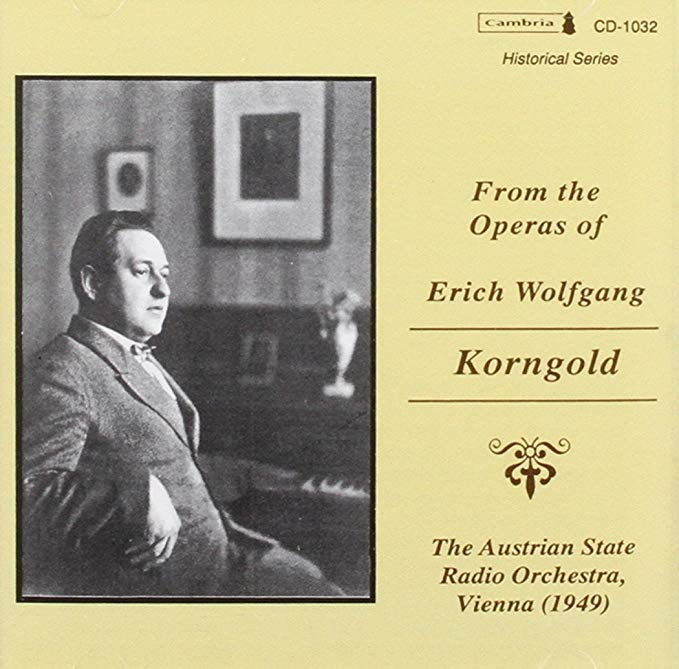
Deze opname is gemaakt tijdens het korte verblijf van de componist in zijn geliefde stad Wenen en is dus van een onschatbare waarde. Het bevat aria’s uit al zijn opera’s, met een grote selectie uit Die Kathrin.


Ze worden gezongen door onder andere Anton Dermota, Ilona Steingruber en Gundula Janowitz, en al is de klank niet geweldig, toch prefereer ik het boven veel modernere uitvoeringen. Het idee alleen al dat hij zelf voor het orkest staat! Ik hoop dat het nog ergens te koop is, anders biedt Spotify de oplossing.

From the operas of Erich Wolfgang Korngold
The Austrian State Radio Orchestra olv Erich Wolfgang Korngold
Cambria CD 1032


VIOOLCONCERT


Korngold Shaham


Korngold schreef zijn vioolconcert in 1945 voor Bronislaw Hubermann, maar het was uiteindelijk Heifetz die de première in 1947 verzorgde. Alle drie de delen van het concert waren al eerder gebruikt als filmmuziek, in respectievelijk Another Dawn, Anthony Adverse en The Prince and the Pauper.


Het is een zeer romantisch vioolconcert geworden, prachtig in zijn eenvoud en rijk aan gevoelens. Er bestaan veel opnamen van, ook van Heifetz, maar zelf vind ik de uitvoering van Gil Shaham beslist de mooiste. Het is sentimenteel en terughoudend tegelijk en overtuigend betrokken.

André Previn dirigeert congeniaal, zijn affiniteit met muziek van Korngold is verbazingwekkend.


Gil Shaham; London Symphony Orchestra/André Previn
DG 4398862


EEN DVD OVER KORNGOLD


KOrngold dvd


Dit is een leuke dvd voor de beginners. Het voegt niets nieuws toe, maar is aardig gemaakt en bevat, behalve filmfragmenten en interviews, ook de complete uitvoeringen van veel van zijn werken, inclusief het viool- en het celloconcert. Dat laatste gespeeld door Quirine Viersen:


Erich Wolfgang Korngold. The Adventures of a Wunderkind. A portrait and Concert
Arthausmuziek 100 362


Korngold boek


Mocht u geïnteresseerd zijn geraakt, dan kan ik u het boek van Brendan G. Carroll, The Last Prodigy van harte aanbevelen.


Korngold boek


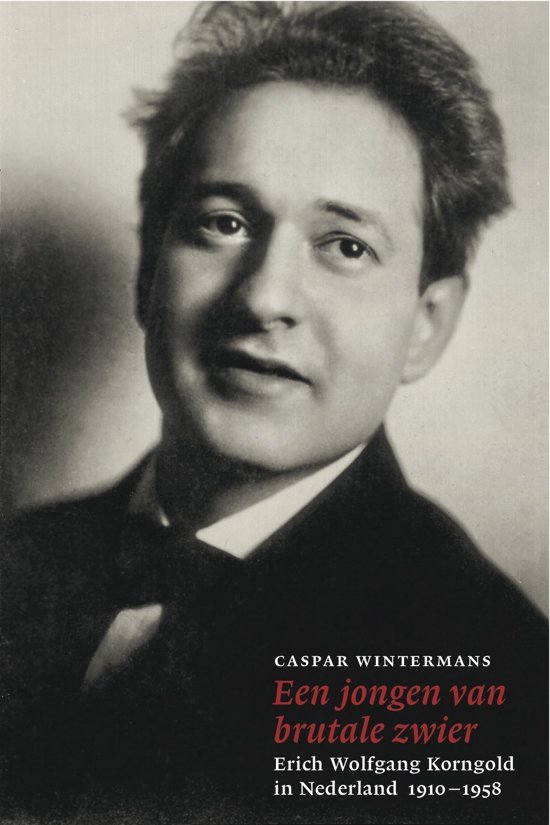
En als u wat meer over Korngold in Nederland wilt weten dan kunt u niet om Een jongen van brutale zwier van Caspar Wintermans heen.


Korngold aan de piano:


Die Tote Stadt discografie. Deel 1

Aanbeden, genegeerd, vergeten: over Erich Wolfgang Korngold en ‘Die Tote Stadt’

Wonderlijke productie van Das wunder der Heliane uit Berlijn

Das Wunder der Annemarie Kremers ‘Heliane’

TUSSEN TWEE WERELDEN

KORNGOLD: complete songs