Dmitri_Shostakovich

“Grootheidswaanzin” oftewel de Vierde van Sjostakovitsj in de Matinee


Tekst: Neil van der Linden

Shostakovich after the 1961 première of the Fourth Symphony at the Moscow Conservatory

Zo’n 110 musici op het podium voor Sjostakovitsj’ Vierde symfonie. De website van de matinee heeft het over “grootheidswaanzin”, een betiteling die Sjostakovitsj zelf gebruikte voor dit werk.
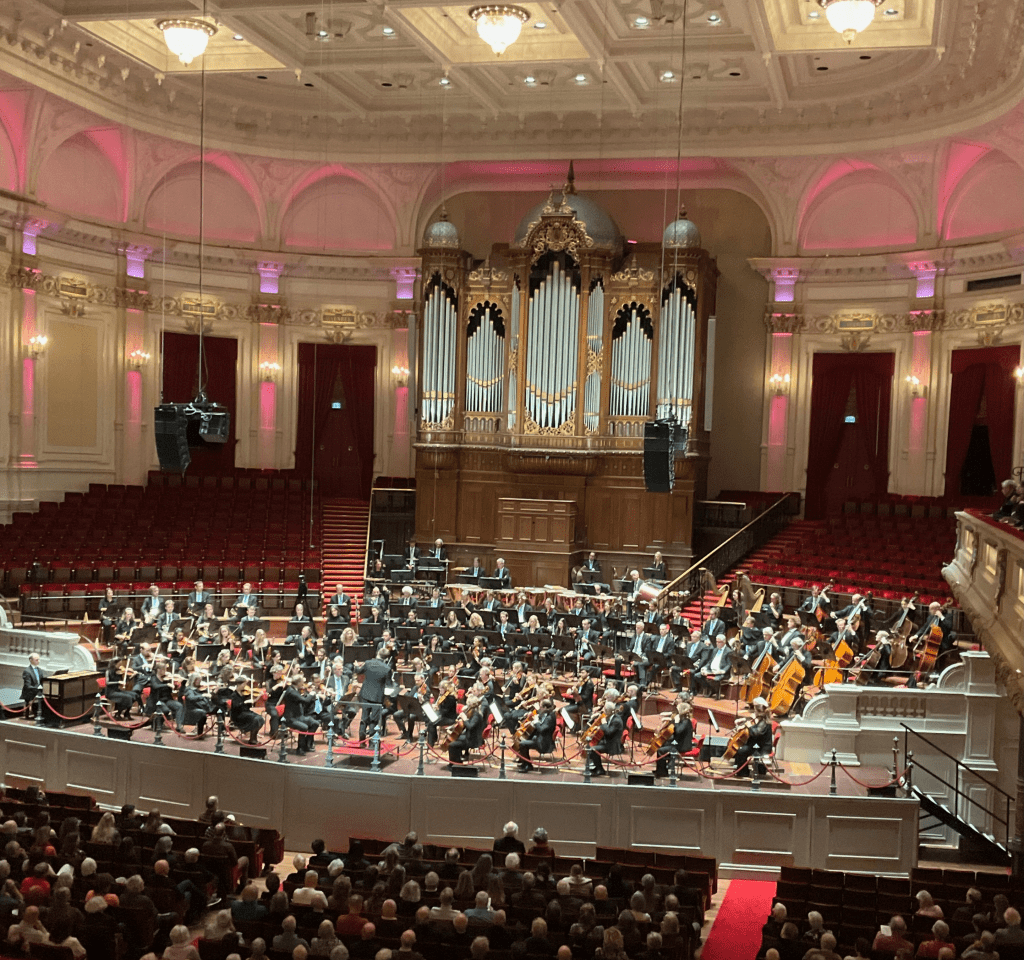
Zo’n 110 musici op het podium voor Sjostakovitsj’ Vierde symfonie. De website van de matinee heeft het over “grootheidswaanzin”, een betiteling die Sjostakovitsj zelf gebruikte voor dit werk.

Het werk heeft een geschiedenis in de Zaterdag Matinee. Naast mij zat een mevrouw die het werk al rond 1980 had gehoord, onder (de toen piepjonge) Gergiev. Ook met het Radio Filharmonisch Orkest. Deze symfonie werd toen gecombineerd met Sjostakovitsj’ eerste vioolconcert, met Vladimir Repin als solist. Toen was nog iets duidelijker wat en wie goed en fout waren. Sjostakovitsj was goed en Gergiev en Repin dus ook.

Het was toen niet eens zo lang geleden dat deze symfonie eindelijk in première ging, in 1961, onder Kirill Kondrasjin. Sjostakovitsj had het werk vlak voor de première in 1936 teruggetrokken na een vernietigend artikel in de Pravda. Was de opmerking van Sjostakovitsj dat het werk ‘bol stond van grootheidswaanzin’ een soort boetedoening tegenover het Stalin-regime? Of vond hij echt dat dit werk buitenproportioneel was? Toch werkte hij door aan deze symfonie, en het Leningrads Filharmonisch Orkest zou het in première brengen, tot het orkest er op het laatste moment voor terugdeinsde. Overigens betoonde Otto Klemperer (in die jaren beslist een voorvechter van de avant-garde) zich enthousiast over het werk toen hij een pianoversie van de partituur hoorde.

De kaartenbak met extra musici van het Radio Filharmonisch Orkest is in elk geval groot genoeg om het werk te kunnen bezetten.

Maar eerst over de twee andere onderdelen van het concert.

Als eersten verschenen slechts vier musici op het podium, de leden van het Dudok Kwartet, voor het deel Strange Oscillations uit het vierde strijkkwartet van Joey Roukens, What Remains, uit 2019.De vier musici hadd en absoluut geen neiging om in de Grote Zaal te verdrinken.

Diezelfde avond draaide Aad van Nieuwenhuizen in Vrije Geluiden op NPOklassiek ook door het Dudok Kwartet een ander deel uit dit kwartet, Motectum, de Middeleeuws-Latijnse versie van het woord motet. Wat een prachtige muziek is dit allemaal….
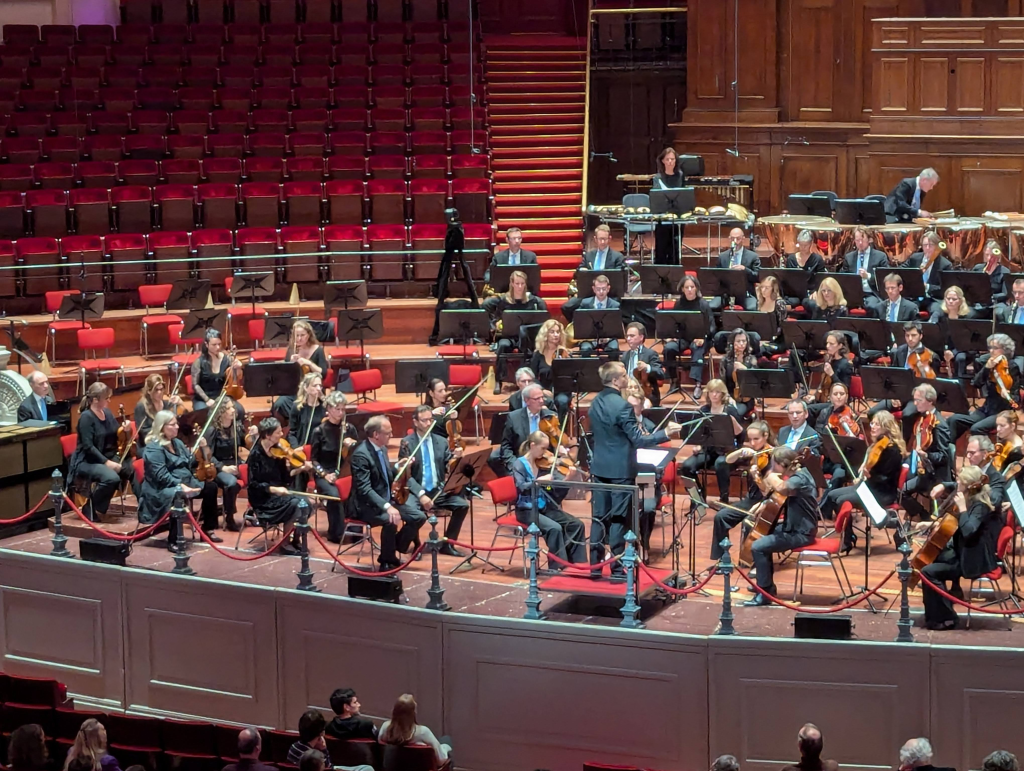
In het volgende programmaonderdeel trad het kwartet opnieuw aan, in John Adams’ Absolute Jest  (2012), voor strijkkwartet en orkest. Het is een werk vol bekende Adams-ingrediënten. Eigenlijk vooral vintage componenten: je herkent er het Wagneriaanse en Bruckneriaanse van Harmonielehre in, en de big band-jazz Duke Ellington en Count Basie-achtige orkestraties uit bijvoorbeeld The Chairman Dances. Verder voegde  hij een groot aantal Beethoven-citaten toe, met name uit de Negende Symfonie en late strijkkwartetten, en ook uit de Mondschein sonate; dus wordt het dan een beetje een De Slimste Mens quiz.

Het sterkst is de componist als hij eigen elementen gebruikt, een mooie melodische lijn in de hoorns, een paar Harmonielehre-atmosferen en puntige dialogen tussen strijkkwartet en orkest. Vasily Petrenko leidde het allemaal zuiver en precies. Het was misschien voor hem ook een interessante uitdaging, want ik weet niet helemaal zeker of dit echt zijn muziek is.
Wat wel zijn muziek is bleek na de pauze in de Sjostakovitsj symfonie. Petrenko begon er meteen vol overgave aan, nu wel overtuigd van zichzelf, alsof hij een dubbele espresso op had. Nou is het begin van deze symfonie ook wel erg energiek. Het orkest volgt hem strak, spatgelijk en zuiver. Maar ook zo soepel en speels als kan binnen zo’n immense partituur, beslist een verdienste van Petrenko.

Hier klinkt duidelijk ook de jarenlange ervaring van het orkest zelf in veelzijdig grootschalig werk door, verdienste van jarenlang werken met chef-dirigenten De Waart en Van Zweden met onder meer hun Wagners en Mahlers, James Gaffigan met zijn prachtige Prokofjevs en vervolgens Canellakis in Bruckner, Janáček en Wagner                                            .

Petrenko heeft met dit orkest eerder ook Prokofjev en Sjostakovitsj gedaan, en Rachmaninov en Rimski-Korsakovs Gouden Haan. Extra bewonderenswaardig is dat dit alles lukt in een formule waarin er meestal maar één uitvoering is, die op zaterdag in de matinee, terwijl eigenlijk altijd alles meteen raak is

Af en toe zou ik gewild hebben dat hij tussendoor nog een espressootje meer had genomen. Het energieniveau van het begin werd niet steeds volgehouden. Dat ligt een beetje ook aan de partituur, die soms wat indut. Maar al snel herpakte Petronko zich telkens. De zachte passages kneedde hij kleurrijk, ook geholpen door de muzikaliteit van de vele individuele instrumentalisten van het orkest. Sjostakovitsj maakt veelvuldig gebruik van bijzondere effecten met kwinkelerende of snerpende piccolo’s, een melodieuze althobo, diepe houtblazer tonen uit fagot en smakelijke partijen voor de basklarinet.

Petrenko gaf ze alle ruimte. Natuurlijk is het ook lekker uitpakken met de acht hoorns en het overige koper. En als dan de twee paukenisten en zeven personen divers slagwerk er ook nog tegenaan gingen (ik zag een hoboïste oordoppen indoen bij de tutti-passages) was Petrenko ook echt in zijn element. Ook in de radioregistratie van dit concert hoor je hoe alles spat zuiver en spatgelijk wordt gespeeld.

In zekere zin is deze symfonie niet eens zo afhankelijk van visie, van interpretatie, het is gewoon groot en veel. Maar dat moet dan allemaal wel goed onder controle gehouden worden. Dat gebeurde. Dat het publiek uitermate geboeid was hoor je ook in de radio-uitzending. Hoesten gebeurde voornamelijk tussen de delen in. In het eerste deel van de avond werden kwartet en orkest luid toegejuicht, na het tweede deel orkest en dirigent.

Radio Filharmonisch Orkest olv Vasily Petrenko
Dudok Quartet Amsterdam

Joey Roukens
Strange Oscillations (uit Strijkkwartet nr. 4 ‘What Remains’)

John Adams
Absolute Jest

Toegift van het kwartet: een piano-prelude van Sjostakovitsj bewerkt voor kwartet.

Dmitri Sjostakovitsj
Symfonie nr. 4 in c, op. 43

Gehoord: NTR Zaterdag Matinee, Concertgebouw, 9 november 2024

De radioregistratie:

https://www.npoklassiek.nl/uitzendingen/ntr-zaterdagmatinee/9bb98d13-2981-4e1d-9715-7720ecffa0f9/2024-11-09-ntr-zaterdagmatinee

 European Union Youth Orchestra en Vasily Petrenko met Sjostakovitsj vierde:

Foto’s: © Neil van der Linden

Isn’t it time to talk about Lady Macbeth of Mtsensk?

Lady Macbeth of Mtsensk illustration by B.M. Kustodiyev

It was supposed to be a four-part opera, an operatic tetralogy dedicated to the position of women in Russia in different eras.

A Soviet Russian Ring des Nibelungen, of which part one, `Lady Macbeth of Mtsensk’ would be a kind of Rheingold. But alas, it was not to be. Though initially no one could have suspected any impending doom.

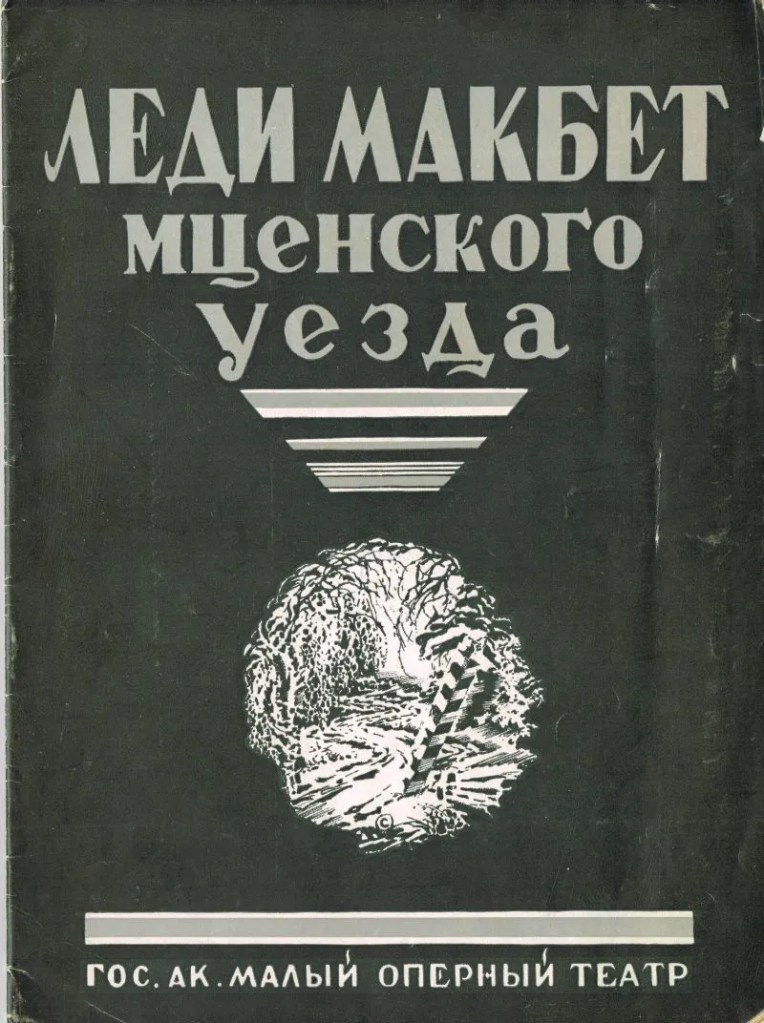
Premiere poster 1934 QED Art and press from the USSR and Central Europe


The premiere on 22 January 1934 at the Maly Theatre in Leningrad was a tremendous success, and for two years the opera was performed several times a week both in Leningrad and Moscow. The opera was also very succesful abroad: after Cleveland the New York City Opera followed , and then Stockholm, Prague and Zurich.

Until Stalin attended a performance in January 1936 and left early. The next day, an article appeared in Pravda under the headline ‘Chaos instead of music’.

It was signed by a certain Zaslavsky, but according to Shostakovich, it was written by Stalin himself. The opera was immediately dropped from the programmes and the composer was labelled an ‘enemy of the people’.


After Stalin’s death, Shostakovich revised his opera, and under a new title, Katerina Ismailova, it was first performed in Moscow in 1963. Prague and Zurich.

Shostakovich loved his heroine. To Solomon Volkov, he confessed: “Although Yekaterina Lvovna is a murderess, she is not yet lost as a human being. Her conscience torments her, she keeps thinking about the people she killed. I have sympathy for her. […] I wanted to show a woman who morally stands much higher than all the people around her. Because around Yekaterina there are only villains. She lives like in a prison and this is how she has been suffering for five years.”

“Her life is sad and uninteresting. But then comes love, a great passion. And it turns out that this passion is worth a crime to her. After all, it doesn’t matter, since otherwise life makes has no meaning to her.” (From Testimony. Memoirs of Dimitri Shostakovich.)

The opera, about the tragic fate of Katerina, who after marrying a rich merchant ends up in a kind of prison, from which she believes she can escape through her passionate love for Sergei and then ends her life in an icy river in Siberia, is a mix of tragedy and satire, seriousness and humour, lyrical melodies and – yes, indeed – chaos.

With a dizzying pace, the atmosphere changes from touching melancholy (Katja’s lament ‘Zherebyonok k kob’lke toropotsa’) to sexually charged (seduction scene), to end in actually pornographic sounds – Shostakovich has succeeded in describing ‘the deed’ through music in detail.


The premiere on 22 January 1934 at the Maly Theatre in Leningrad was a tremendous success, and for two years the opera was performed several times a week both in Leningrad and Moscow. The opera was also very succesful abroad: after Cleveland the New York City Opera followed , and then Stockholm, Prague and Zurich.

Until Stalin attended a performance in January 1936 and left early. The next day, an article appeared in Pravda under the headline ‘Chaos instead of music’.

It was signed by a certain Zaslavsky, but according to Shostakovich, it was written by Stalin himself. The opera was immediately dropped from the programmes and the composer was labelled an ‘enemy of the people’.
After Stalin’s death, Shostakovich revised his opera, and under a new title, Katerina Ismailova, it was first performed in Moscow in 1963. Prague and Zurich.

Shostakovich loved his heroine. To Solomon Volkov, he confessed: “Although Yekaterina Lvovna is a murderess, she is not yet lost as a human being. Her conscience torments her, she keeps thinking about the people she killed. I have sympathy for her. […] I wanted to show a woman who morally stands much higher than all the people around her. Because around Yekaterina there are only villains. She lives like in a prison and this is how she has been suffering for five years.”

“Her life is sad and uninteresting. But then comes love, a great passion. And it turns out that this passion is worth a crime to her. After all, it doesn’t matter, since otherwise life makes has no meaning to her.” (From Testimony. Memoirs of Dimitri Shostakovich.)

The opera, about the tragic fate of Katerina, who after marrying a rich merchant ends up in a kind of prison, from which she believes she can escape through her passionate love for Sergei and then ends her life in an icy river in Siberia, is a mix of tragedy and satire, seriousness and humour, lyrical melodies and – yes, indeed – chaos.

With a dizzying pace, the atmosphere changes from touching melancholy (Katja’s lament ‘Zherebyonok k kob’lke toropotsa’) to sexually charged (seduction scene), to end in actually pornographic sounds – Shostakovich has succeeded in describing ‘the deed’ through music in detail.


GALINA VISHNEVSKAYA, 1978


Shortly after the composer’s death, his friend, the cellist and conductor Mstislav Rostropovich, found the original score of Lady Macbeth. In 1978, the opera was recorded in full for the first time (Warner 0825646483204). Rostropovich conducted and the leading roles were performed by the best singers from the Russian tradition.
Galina Vishnevskaya is a phenomenal Katerina. In her interpretation, you can hear her character’s full range of emotions and character developments. She is bored, in love and passionate, and her despair at the end is the very deepest.

Nicolai Gedda portrays a very attractive and masculine Sergei, and Dimiter Petkov and Werner Krenn are matched as father and son Ismailov. Robert Tear is (as always, by the way) extremely convincing in his character role as the shabby labourer and only Birgit Finnila (Sonyetka) sounds a little too old-fashioned for me.

Rostropovich conducts with an eye for all the details and emphasises the contrasts. All in all: a better CD recording is unthinkable. Not that you have a choice: the only real competitor on CD, a DG recording (4375112) with Maria Ewing and Sergei Larin conducted by Myung Whun Chung, has now been dropped.


NADINE SECUNDE, Barcelona, 2002


EMI (5997309) once released a production from Barcelona (May 2002) on DVD, which may be called convincing to say the very least. It was directed by a former actor from Norway, Stein Winge, who made a very moving, mainly personal drama of it.

The setting suits the opera’s period of origin. The stage is dominated by a giant bed, which is prominently displayed even during the first bars of the music. Above it, a window with clouds, too high to see through, and too high to escape from. Good find.

Katerina’s arioso:


The staging is quite realistic without being vulgar. The lovemaking scene is particularly beautifully portrayed. Katerina ties the endless sheets to the legs of the bed, creating a kind of sea. She and Sergei disappear under it, and the commentary is left to the music (and our own imaginations), which is very evocative.

Nadine Secunde is a fine Katerina, very believable and extremely convincing both vocally and scenically. Christoper Ventris seems born for the role of Sergei: extremely attractive and very macho, he lives up to his reputation that no woman can resist him.

The rest of the cast is also phenomenal. Most impressive to me is the veteran Yevgeny Nesterenko in the small role of the old forced labourer.

And yet I still have a side note: the end of the opera. I won’t give it away to you, but it’s different from the libretto (for the umpteenth time already). Where does the new fashion of changing an opera’s ending come from anyway?


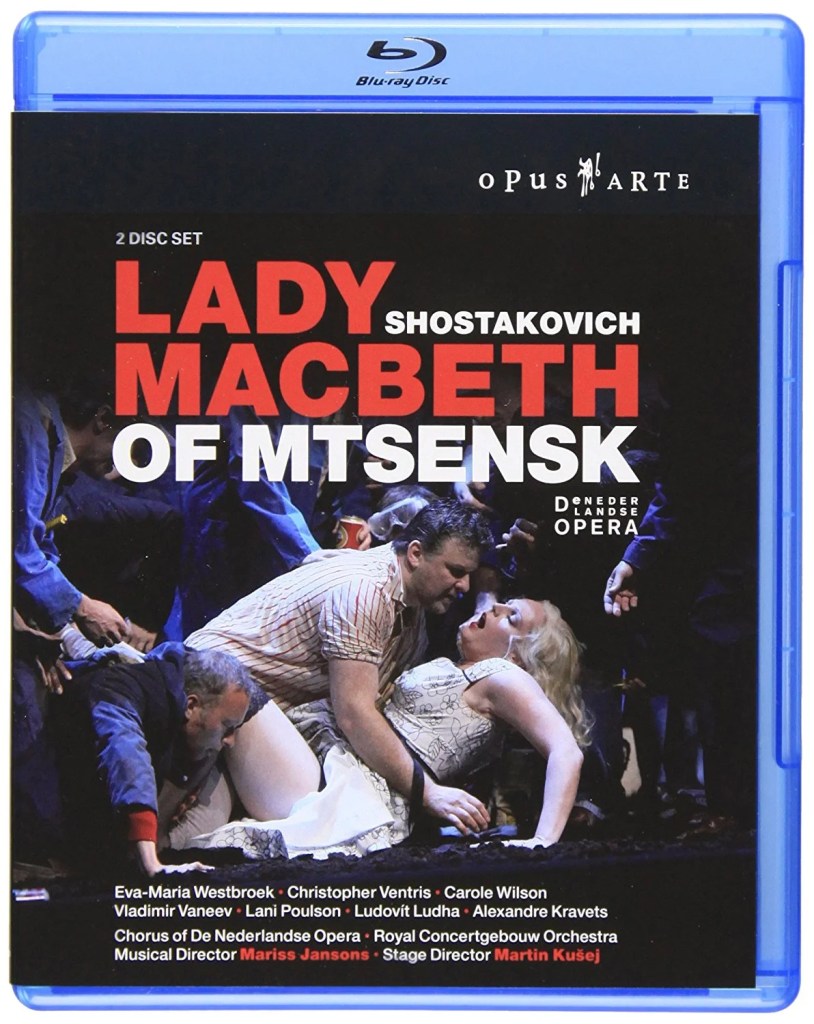
EVA-MARIA WESTBROEK, Amsterdam, 2006


In October 2006, Eva-Maria Westbroek made her widely acclaimed debut at London’s Royal Opera House as Katerina Izmailova. It was even spoken of as ‘one of the most important debuts at Covent Garden ever’

.
But we, the Dutch opera lovers, already knew it, because at the Holland Festival in June 2006, Westbroek made her debut at the Netherlands Opera in the same role, in a performance that received nothing but overenthusiastic reactions.


The production also saw Martin Kušej, a not uncontroversial Austrian opera director, make his debut in our country. In his concept, sexuality and power are closely linked and the opera is a terrible abyss, which can only be described with words like orgasm and manslaughter.

Katerina lives in a glass cage with a hundred pairs of shoes, guarded by dogs and surrounded by mud. Her longing for love and security is never satisfied, because what Sergei has in store for her is pure sex, devoid of any affection.


The musical mix of tragedy and satire, seriousness and humour, lyrical melodies and hard porn was perfectly portrayed scenically by KuÅ¡ej, which was only enhanced by the phenomenally playing Concertgebouw Orchestra conducted by Mariss Jansons. As a bonus, you get an extremely interesting ‘the making of’ documentary (Opus Arte OA 0965).


GLORIA LANE, Rome, 1976


To my knowledge, only one recording exists of Katerina Ismailova’s 1963 adaptation of Lady Macbeth, on the budget label Opera D’Oro (OPD 1388). It is an RAI recording of a broadcast on 29 May 1976 in Rome.

The differences from the original are noticeable right from the first bars: it is milder, without the biting irony, with more melancholy and sadness. The biggest differences are in the intermezzi. The first, for instance, has been replaced by completely different music. Even in the big seduction scene, the bulk of the music has been killed off and almost all the high notes have disappeared from Katerina’s music.

The performance, conducted by Yuri Ahronovich, is most certainly adequate, although I have trouble with William Cochran’s Sergei. It may be just me, but I experience his tenor as pinched rather than sexy. In the lead role, another one of those forgotten greats of yesteryear: Gloria Lane. Her Katerina is very dramatic and full of passion.he making of’ documentary (Opus Arte OA 0965).

Finally, the very interesting documentary Shostakovich against Stalin by Larry Weinstein was once released on Philips (Philips 0743117) with very much historical footage and even more music. The docu can also be found in its entirety on You Tube


Shostakovich, David Oistrach, and the memories

Rostropovich, Oistrakh, Britten en Shostakovitch

The older you get the more you think about the good old days. At least I do. Once I had fled the communist paradise (it is not the right word because I was thrown out) I could not marvel enough at everything the world and life had to offer. Marvel is the right word, because I could only sigh with longing at the overflowing shops: the clothes, the shoes and the music shops with LPs I couldn’t even dream of before.

So my very first scholarship was entirely spent in those shops. On day one, I bought Nocturnes by Chopin with Rubinstein, Christmas Oratorium by Schütz (because I had never heard of it before) and Beethoven’s Violin Concerto with David Oistrach. And a packet of Marlboro which literally put me in other realms that night.

And now for what it’s all about:

There are those compositions that are always mentioned in the same breath with one particular performer: the cello concertos by Elgar and Jacqueline du Pré, for instance. Or the violin concertos by Dmitri Shostakovich and David Oistrach.

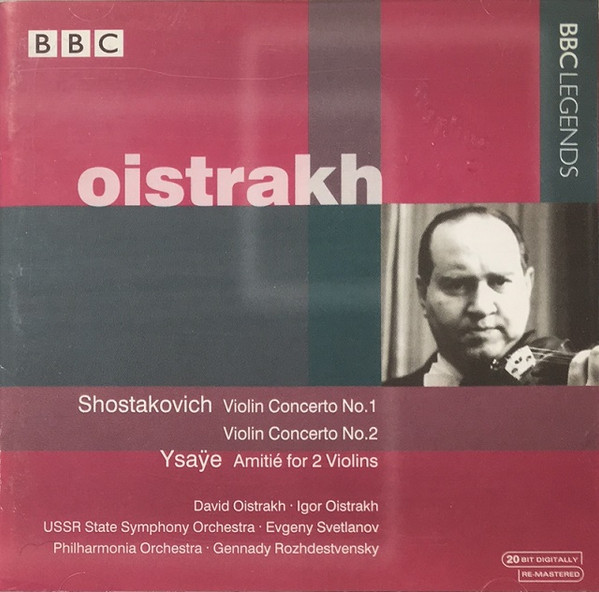
Both Shostakovich concertos were dedicated to the violinist (he received the second as a present for his 60th birthday) and it was Oistrach who performed them at their world premiere. The first, already written in 1947, but not premiered until two years after Stalin’s death, is a very personal work and bears the composer’s ‘stamp’. In the first movement, he used his own initials DSCH, something he did more often; for instance in the seventh string quartet and in the tenth symphony.

Both the violinist and the composer, who was close friends with Benjamin Britten, were welcome guests in England, where Shostakovich’s music was also very popular. So it is not surprising that the live recordings of both concerts from 1962 and 1968 respectively and dedicated to Oistrach, appeared on the BBC Legends label.

The audience is clearly present, coughing and sighing, but it is not really disturbing and their enthusiasm is infectious. I do have to warn you about the quality ot the sound though, as it is not very good.

Dmitri Shostakovich
Violinconcerto No.1
Philharmonia Orchestra olv Gennady Rozhdestvensky;
Violinconcerto No.2
USSR State Symphony Orchestra olv Evgeny Svetlanov

Eugene Ysaÿe
Amitié op. 26 for 2 violins
London Philharmonia Orchestra olv Sir Malcolm Sargent
David & Igor Oistrach
BBCL 4060-2

‘DE NEUS’ VAN SJOSTAKOVITSJ IN DE MUNT


Tekst: Ger Leppers

Illustration for ‘The Nose’ by Nikolai Gogol | by Leon Bakst

In januari 1975 organiseerde de goeie ouwe (en regelmatig avontuurlijke) Nederlandse Operastichting, geleid door de onvolprezen Hans de Roo, een korte reeks gastoptredens van het Staatstheater am Gärtnerplatz uit München. Op het programma stond de opera ‘De Neus’ van Dimitri Sjostakovitsj, en dat was in die dagen om meerdere redenen opmerkelijk.

Om te beginnen liep een groot deel van de Westerse muziekkritiek destijds nog met een grote boog om het werk van de Rus heen. Ook in Nederland. Bij de in de jaren zestig gezaghebbende criticus Ben van der Kleij, die grammofoonplaten recenseerde voor het toentertijd gezaghebbende tijdschrift Disk, stond het schuim op de lippen zodra hij beroepshalve een opname van een werk van de gelauwerde Sovjetcomponist op de draaitafel moest leggen. Het eerste pianoconcert bevatte ‘barpianistenmuziek’, de zevende symfonie was een slap aftreksel van Ravels ‘Bolero’ en de minder geslaagde symfonische gedichten van Sibelius.

Wat we toen nog het beste, maar toch spaarzaam, kenden – mede dankzij de inspanningen van Leonard Bernstein, die een onvergetelijk ‘Young People’s Concert’ wijdde aan de negende symfonie – waren de meer conformistische of in elke geval toegankelijker partituren. Maar de ongebreidelde, vaak baldadige experimenten uit de vroege jaren van de componist genoten hier amper bekendheid.

Voor mij was dat reden genoeg om die voorstelling van ‘De Neus’, in Duitse vertaling, te bezoeken. Ik koesterde de vaste overtuiging dat dit hoogst waarschijnlijk de enige kans in mijn leven zou zijn om dit exuberante buitenbeentje uit het repertoire in het theater te zien. Het was, herinner ik me na al die jaren nog steeds, een overdadige voorstelling die stond als een huis, vol tomeloze vaart, met indrukwekkende, vervaarlijke staketsels die op het vaak rijkgevulde toneel ronddraaiden, en met overgave gebracht door een uitstekend op elkaar ingespeelde cast die het beste van zichzelf gaf. Onder meer Hedi Klug, Alexander Malta en Ferry Gruber waren van de partij. De lastige hoofdrol werd met grote inzet gezongen en geacteerd door Heinz Friedrich.

Vanaf de fabuleuze ontwaakscène kort na het begin van de opera, met op het operatoneel niet vaak eerder gehoorde intieme en niet altijd even welvoeglijke geluiden zoals luidruchtig neusophalen, gesnurk, gegaap en gegeeuw, tot aan de laatste klap op de grote trom zat ik aan mijn stoel genageld.

Toen ik enkele maanden later in Frankrijk de LP-uitgave vond van de uitvoering van het Moskous Kamertheater onder leiding van Gennadi Rozjdestvenski, die slechts kort daarvoor het werk in de Sovjet Unie uit het purgatorium verloste waarin het wegens verregaand modernisme sedert 1930 had vertoefd, aarzelde ik dan ook geen moment. Ik offerde er een flink stuk van het bescheiden vakantiebudget aan op.

Een paar jaar later keerde hier in het Westen voor de muziek van Sjostakovitsj het tij met de publicatie van Salomon Volkovs boek ‘Getuigenis’. Nog steeds staat niet vast of, en zo ja, in welke mate, dat werk een vervalsing is. Hoe dan ook, de gekwelde inhoud ervan bleek precies wat nodig was om de muziek van Sjostakovitsj voor het westers publiek aanvaardbaar te maken. Binnen enkele jaren werden de concertprogramma’s ermee overspoeld, en die situatie houdt, zoals u ongetwijfeld bekend is, tot op de dag van vandaag aan.

Geen wonder dus dat wat inmiddels De Nederlandse Opera was geworden in 1996 een eigen productie van ‘De Neus’ op het programma zette. Een met inzet en liefde gemaakte voorstelling, dat straalde van de muziek af, maar de ijzig ontvangen regie van David Pountney was te realistisch en platvloers om ook maar enigszins recht te doen aan het meesterlijke, vervreemdende en verontrustende verhaal van Gogol dat aan de opera ten grondslag ligt: iemand ontwaakt, stelt vast dat zijn neus verdwenen is en ontdekt vervolgens dat zijn inmiddels mansgrote reukorgaan overal in de stad opduikt en zich tegen hem richt. De onwerkelijke sfeer van het oorspronkelijke verhaal had nergens een equivalent op het toneel. De reprise in 2002, die werd gedirigeerd door Gennadi Rozjdestvenski himself, was muzikaal een nog spetterender feest, maar de hernieuwde kennismaking met de regie was geen aanleiding tot een milder oordeel.

Hoe het wèl kan, of misschien zelfs wel moet, had ik een paar jaar eerder, in 1991, gezien in Brussel. Daar presenteerde het Paleis van Schone Kunsten een gastvoorstelling van de door Boris Pokrovski geregisseerde en inmiddels legendarisch geworden enscenering van het Moskous Kamertheater uit 1974. Opzij van een sober ingericht toneel hingen aan een kabel de kostuums voor de ongeveer tachtig rollen die de opera telt. Voor een rolwisseling hoefden de zangers alleen maar, voor de ogen van het publiek, een andere jas aan te trekken. Het decor bestond voornamelijk uit enkele zetstukken, een prachtige belichting suggereerde het interieur van de kathedraal van Kazan en suggereerde een unheimische sfeer.  In het voormalige Oostblok bleven ensceneringen vaak tientallen jaren op het repertoire, en daar was ik, zoveel jaren na de première van deze voorstelling, diep dankbaar voor.

En dan is er nu de nieuwe enscenering door Alex Ollé van de Fura dels Baus, door het Brusselse Munttheater in een coproductie met de opera van Kopenhagen Ik verwachtte dat het een uitbundige boel zou worden, dichter bij de ensceneringen van München en Amsterdam dan bij die uit Moskou. Hoe zou de confrontatie met mijn herinneringen uitvallen?

De Munt had een uitstekende en voelbaar gemotiveerde, uitgebreide zangerscast bijeen gebracht, waarvoor alle satirische buitenissigheden van de partituur gesneden koek leken. Dat verdient gesignaleerd te worden, want allen maakten in deze productie hun roldebuut.

Scott Hendricks, in de veeleisende hoofdrol van Kovaljov, de ambtenaar die zijn neus kwijtraakte en de enige echt dragende rol in de opera, zong en acteerde alsof dat zijn gewone manier van uitdrukken was. De panische angst van iemand die van het ene moment op het andere zijn greep op de wereld kwijt is, maakte hij uitstekend voelbaar.

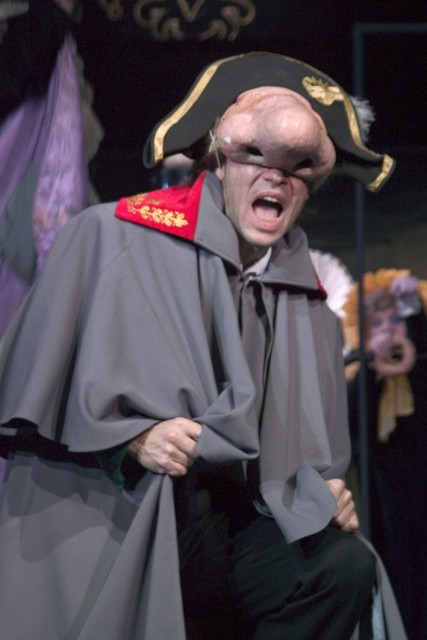
Ook Nicky Spence, in de rol van Kovaljovs verzelfstandigde neus, had geen moeite met de door de componist voorgeschreven stemacrobatiek en acteerde met een dwingende concentratie. Van de enorme verdere zangersbezetting die deze opera met zijn tientallen grotere en vooral kleinere rollen vergt, kan ik eigenlijk alleen maar zeggen dat ik er geen zwakke plek tussen heb kunnen ontdekken.

Nicky Spence verandert in ‘De Neus”:

Als er toch een speciale vermelding nodig is dan gaat die naar de zangers die de welhaast neurotische zangpartijen van het politiepersoneel voor hun rekening namen: Anton Rositsky en Alexander Kravets. Maar bij een zo geweldige ensembleprestatie heeft dat toch al iets oneerlijks.

Ook nu weer was er, net als de voorstelling van David Pountney, op het toneel de nodige portie seks te zien. Misschien was dat in 1996, toen Pountney zijn voorstelling ensceneerde, nog een heel klein beetje schokkend (al kan ik mij dat amper voorstellen), maar in de uitvoering van het geslachtsverkeer hebben zich sedertdien eigenlijk geen nieuwe ontwikkelingen van betekenis voorgedaan, dus het verrassingseffect, zo dat al aanwezig was, is er inmiddels wel af. Misschien dat de vele extreme passages in de muziek uitnodigen tot excessen, maar daar staat tegenover dat Gogol, die toch de oorspronkelijke novelle schreef, nu juist een nogal kuise auteur is. Nergens maakt hij het thema van de castratie expliciet, en dat draagt sterk bij tot de mysterieuze kracht van zijn meesterlijke novelle.

Lof verdient ook het decor, een soort plooibare wolk van ijzerdraad, een draadsculptuur die steeds andere vormen aanneemt, en aldus prachtig de mist suggereerde die zoveel aan de onwezenlijke nachtmerriesfeer van het verhaal bijdraagt. Voor de voorstelling waren niet minder dan 750 decor- en zetstukken voorzien, achter de schermen moet het er hebben uitgezien als een stapelpakhuis. Het knappe was dat het toneelbeeld niettemin, door een terughoudend gebruik van al dat materiaal, steeds heel sober bleef, en dat is ongetwijfeld wat bij deze opera – zoals denk ik bij elke opera die zich op of over de rand van het realistische afspeelt – het meest overtuigende resultaat afwerpt en de mysterieuze sfeer het best invoelbaar maakt.

Ook het orkest van De Munt weerde zich uitstekend en doorgaans met precisie in de stroom van de alsmaar de voortrazende, kolkende klankenbrij van Sjostakovitsj. De Hongaarse dirigent Gergely Madarsas, die sinds 2019 muziekdirecteur is van het orkest van Luik, maakte wat in het Vlaams heet “een felgesmaakt Muntdebuut”.

Een bijzondere vermelding verdienen de (enkel bezette en dus vaak zeer geëxposeerde) blazers en de elf slagwerkers. Zij lieten er geen twijfel over bestaan dat ‘De Neus’ een belangrijke opera is.

Maar om het werk te laten klinken als een onaantastbaar meesterwerk, daarvoor moesten we dan toch zijn bij de spitse en uiterst precieze Rozjdestvenski – daar helpt geen lieve moeder aan.

De Neus onder Rozjdestvenski uit 1979:

Trailer van de productie:

Dmitri Sjostakovitsj: De Neus cccc
Regie: Alex Ollé
Decor: Alfons Flores
Kostuums: LLuc Castells
Belichting: Urs Schönbaum
Koorleider: Jori Klomp

Met solistische rollen van:Scott Hendricks, Nicky Spence, Alexander Roslavets, Giselle Allen,  Anton Rositsky, Alexander Kravets, Natascha Petrinsky, Eir Inderhaug, Lucas Cortoos, Kris Belligh, Yves Saelens, Maxime Melnik, Leander Carlier, Byoungjin Lee, Andrzej Janulek, Bernard Giovani, Joris Stroobants, Arman Isleker, Bartosz Szulc, Pascal Macou, Kurt Gysen, Alain-Pierre Wingelinckx, René Laryea, John Manning, Hwanjoo Chung, Taeksung Kwon, Geoffrey Degives,  Luis Aguilar, Bruno Floriduz, Carlos Martinez, Tiemin Wang, Juan Tello Soto, Tristan Faes, Anton Kouzemin, Beata Morawska, Alessia Thais Berardi, Annelies Kerstens, Manon Poskin, Marioara Pop Rousselet,, Hélène Faux.

Symfonieorkest en koor van De Munt onder leiding van Gergely Madaras.

Voorstelling gezien op 27 juni 2023.


Foto’s van de productie: Foto: Bernd Uhlig

De Neus door Kameropera Moskou

Tekst: Peter Franken

Dit is de eerste opera van Dmitri Sjostakovitsj uit 1927-1928, gebaseerd op het gelijknamige verhaal van Nikolaj Gogol. De première vond plaats te Leningrad, Maly Theater, 18 januari 1930; het libretto is van Jevgeni Zamjatin, Georgi Jonin, Aleksandr Prejs en de componist zelf. Hoewel deze opera een unieke plaats inneemt in de geschiedenis van de opera, is het werk weinig bekend en het wordt zelden uitgevoerd.

Het verhaal van De Neus is volstrekt ongerijmd. De ambtenaar achtste klasse Kovaljov (‘college-assessor’) mist op zekere morgen zijn neus. Hij vermoedt dat die er af gesneden door de kapper Ivan Jakovlevitsj. Kovaljov gaat op zoek naar zijn neus en bemerkt dat die inmiddels een zelfstandig leven leidt. Het is een personage geworden dat maatschappelijk vele trappen hoger staat dan Kovaljov zelf, de Neus is staatsraad geworden en weigert hem te woord te staan.

Sjostakovitsj verwerkte het verhaal van Gogol (1809-1852) vrijwel letterlijk. Het tsaristische Rusland lag nog vers in het geheugen. De toenmalige toeschouwers konden dus hun hart ophalen aan de satire.  Dat het (muziek)theater in dat opzicht ook interessant kon zijn, kwam in Rusland vooral na 1918 tot uitdrukking toen de kunsten zich in allerlei experimenten rijkelijk ontplooiden, parallel aan wat in het westen Dada werd genoemd, alles werd op zijn kop gezet.

Al jaren voor de wereldpremière in 1930 zocht Sjostakovitsj een onderwerp op een eigentijds thema in een vorm die heel anders zou zijn dan de 19e eeuwse opera en operette tot dan te bieden hadden. Dat er nogal wat kritiek loskwam na de première in Leningrad, is niet onbegrijpelijk, want het stuk is nog steeds onbegrijpelijk in zijn vertelling en wonderbaarlijk in zijn muzikale onderlagen. Wanneer je leest dat in de jaren twintig het muziektheater in Leningrad vooral draaide op operettes van Offenbach en Léhar, dan was De Neus wel een heel erg grote sprong voorwaarts. Er kwamen destijds overigens ook positieve reacties los.

De Neus is na de eerste serie uitvoeringen van 1930 in de doofpot van het steeds repressiever wordend Stalinistische cultuurbeleid verdwenen, tot regisseur Boris Pokrovski het werk er in 1972 weer uit opdiepte. Sindsdien is het werk ook in het Westen verscheidene malen geënsceneerd. Pokrovski heeft het met zijn eigen gezelschap, de Kameropera van Moskou, talloze malen opgevoerd.

Ik heb deze productie in 1994 gezien in Rotterdam toen het gezelschap op tournee was in Nederland. De Pokrovski-enscenering bood een traditionele aanblik (voor zover dat kan bij een opera waarin een neus los rondloopt), dat wil zeggen, de handeling is zichtbaar gesitueerd in het Rusland van Gogols tijd.

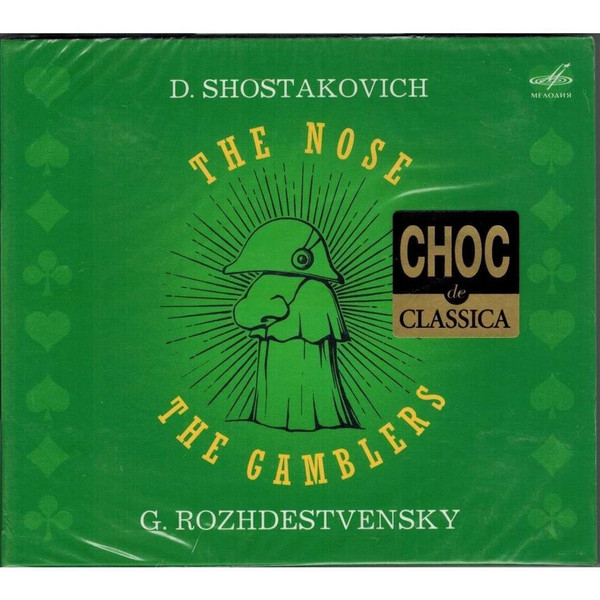
Van een voorstelling die in 1979 in het huistheater van het gezelschap is gemaakt werd in 2010 een opname op dvd uitgebracht. Omdat het theater veel te klein is voor een volwaardige operavoorstelling met groot orkest, is gebruik gemaakt van een geluidsband die in 1975 in een grotere zaal werd gemaakt met exact dezelfde bezetting en op cd is uitgebracht, samen met de onvoltooide opera The gamblers.  De synchroniteit op de dvd is bij vlagen ver te zoeken maar dat went snel.

De wijze van acteren is een hybride van Dada, operette en commedia dell’arte. Het oogt allemaal prettig chaotisch en dat effect wordt volledig ondersteund door de meelopende geluidsband.

Feitelijk beslaat het relevante deel – Kovaljov is zijn neus kwijt, ontmoet die Neus in een kerk, krijgt zijn neus weer terug – minder dan de helft van de opera. Voor het overige zijn het korte op zichzelf staande scènes waarin een heel scala aan opgewonden tijdgenoten zich met deze nieuwe roddel inlaten. Het is een gedrang van jewelste op het toneel.

In een proloog wordt getoond dat de bakker de verloren neus in een van zijn broden aantreft. De barbier krijgt de schuld van alles maar ontkent. Kovaljov probeert een advertentie te zetten in een krant waarin de neus bij de verloren voorwerpen wordt geplaatst maar die wordt geweigerd. Er zijn grenzen waar de krant binnen dient te blijven, ook waar het ‘fake news’ betreft. De politie is wel bereid naar de Neus uit te kijken en het gerucht van een als Neus rondwandelende staatraad gaat als een lopend vuurtje door de stad. Als de Neus wordt waargenomen in een park wordt hij ‘geprügelt’ waardoor er weer gewoon een losse neus te voorschijn komt. Na wat vijven en zessen komt alles weer goed met Kovaljev en zijn neus en in een epiloog bespreken een paar mensen de absurditeit van het gebeuren, met dien verstande dat men stelt dat dergelijke vreemde zaken wel degelijk elders schijnen voor te komen. Maar niet bij ons in Rusland natuurlijk.

Eduard Akimov geeft een fraaie vertolking van de ongelukkige Platon Kuzmich Kovaljov. De Neus komt voor rekening van Alexander Lomonosov. Gennady Rozhdestvensky heeft de muzikale leiding.

Van een voorstelling die in 1979 in het huistheater van het gezelschap is gemaakt werd in 2010 een opname op dvd uitgebracht. Omdat het theater veel te klein is voor een volwaardige operavoorstelling met groot orkest, is gebruik gemaakt van een geluidsband die in 1975 in een grotere zaal werd gemaakt met exact dezelfde bezetting en op cd is uitgebracht, samen met de onvoltooide opera The gamblers.  De synchroniteit op de dvd is bij vlagen ver te zoeken maar dat went snel.

De hele opera op youtube:


Zie ook : De Neus: bittere satire van het allerhoogste niveau

De Neus: bittere satire van het allerhoogste niveau

De Neus

De Neus

, de eerste opera van Dmitri Sjostakovitsj is gebaseerd op de gelijknamige novelle van Nikolaj Gogol. Voornamelijk dan, want hij gebruikte ook Gogols andere verhalen en van Fjodor Dostojevski heeft hij een volksliedje uit zijn Gebroeders Karamazov ‘geleend’

Het volstrekt absurde libretto verhaalt over de verdwijning, een desperate zoektocht en de wonderlijke terugkomst van de neus van majoor Kovaljov. Is het een droom? Een werkelijkheid? Het doet er eigenlijk niet toe. De opera is een bittere satire op een kleinburgerlijk milieu en de communistische maatschappij. Onder de groteske bovenlaag ligt heel wat leed verscholen: corruptie, onnozelheid en onbekwaamheid.

Er zijn maar liefst zeventig personages en de opera speelt zich op verschillende locaties af. Soms krijg je het gevoel midden in een film te zijn beland, zeker ook doordat de gebeurtenissen elkaar in een rap tempo opvolgen. De hoofdpersonen krijgen allemaal een persoonlijke begeleiding van een bepaald instrument, waardoor er een soort leidmotief wordt gecreëerd.

Het orkest speelt niet minder dan briljant, al legt Valery Gergiev voor mijn gevoel te veel nadruk op het groteske, waardoor de ernst van het verhaal het onderspit moet delven. Maar het klinkt werkelijk fantastisch.

De solisten zijn van het allerhoogst niveau, met Vladislav Sulimsky (Kovaljov) en Sergei Semishkur (de Neus) voorop.


Vladislav Sulimski, Alexei Tanovitski, Sergei Semishkur,Tatiana Kravtsova e.a.
Mariinski Soloists, Orchestra, and Chorus olv Valery Gergiev
Mariinsky MAR0501

‘DE NEUS’ VAN SJOSTAKOVITSJ IN DE MUNT

De Neus door Kameropera Moskou

David Oistrakh en de vioolconcerten van Sjostakovitsj

Afbeeldingsresultaat voor oistrakh shostakovich bbc

Er bestaan van die composities die in één adem worden genoemd met één bepaald vertolker: celloconcert van Elgar en Jacqueline du Pré bijvoorbeeld. Of de vioolconcerten van Dmitri Sjostakovitsj en David Oistrakh.

Zijn beide concerten heeft Sjostakovitsj aan de violist opgedragen (de tweede kreeg hij cadeau voor zijn zestigste verjaardag) en het was Oistrakh die hun wereldpremière verzorgde.

Het eerste concerto, geschreven in 1947 maar pas twee jaar na de dood van Stalin voor het eerst uitgevoerd, is een zeer persoonlijk werk en draagt het ‘stempel’ van de componist. In het eerste deel gebruikte hij zijn eigen initialen DSCH, iets wat hij overigens vaker deed, bijvoorbeeld in het zevende strijkkwartet of de tiende symfonie.

Sjostakovitsj Oistrach en meer

Rostropovich, Oistrakh, Britten en Shostakovitch

Zowel de violist als de componist, die innig bevriend was met Benjamin Britten, waren graag geziene gasten in Engeland, waar ook de muziek van Sjostakovitsj zeer geliefd was. Het is dus niet zo vreemd dat de live opnamen van beide concerten uit respectievelijk 1962 en 1968 en opgedragen aan Oistrakh op de label BBC Legends zijn verschenen.


Het publiek is duidelijk aanwezig, het kucht en het zucht, maar echt storend is het niet en hun enthousiasme werkt aanstekelijk. Wel waarschuw ik voor het geluidskwaliteit, die is namelijk niet zo best.

Als toegift krijgen we een schitterend, weinig bekend werk van Eugene Ysaÿe voor twee violen en orkest: Amitié. Hierin wordt David door zijn zoon Igor bijgestaan. Prachtig!


Dmitri Shostakovich
Violinconcerto No.1
Philharmonia Orchestra olv Gennady Rozhdestvensky;
Violinconcerto No.2
USSR State Symphony Orchestra olv Egeny Svetlanov
David Oistrakh

Eugene Ysaÿe
Amitié op. 26 for 2 violins
London Philharmonia Orchestra olv Sir Malcolm Sargent
David & Igor Oistrakh
BBCL 4060-2


HIS SONG WILL NOT BE SILENCED *

kol-david

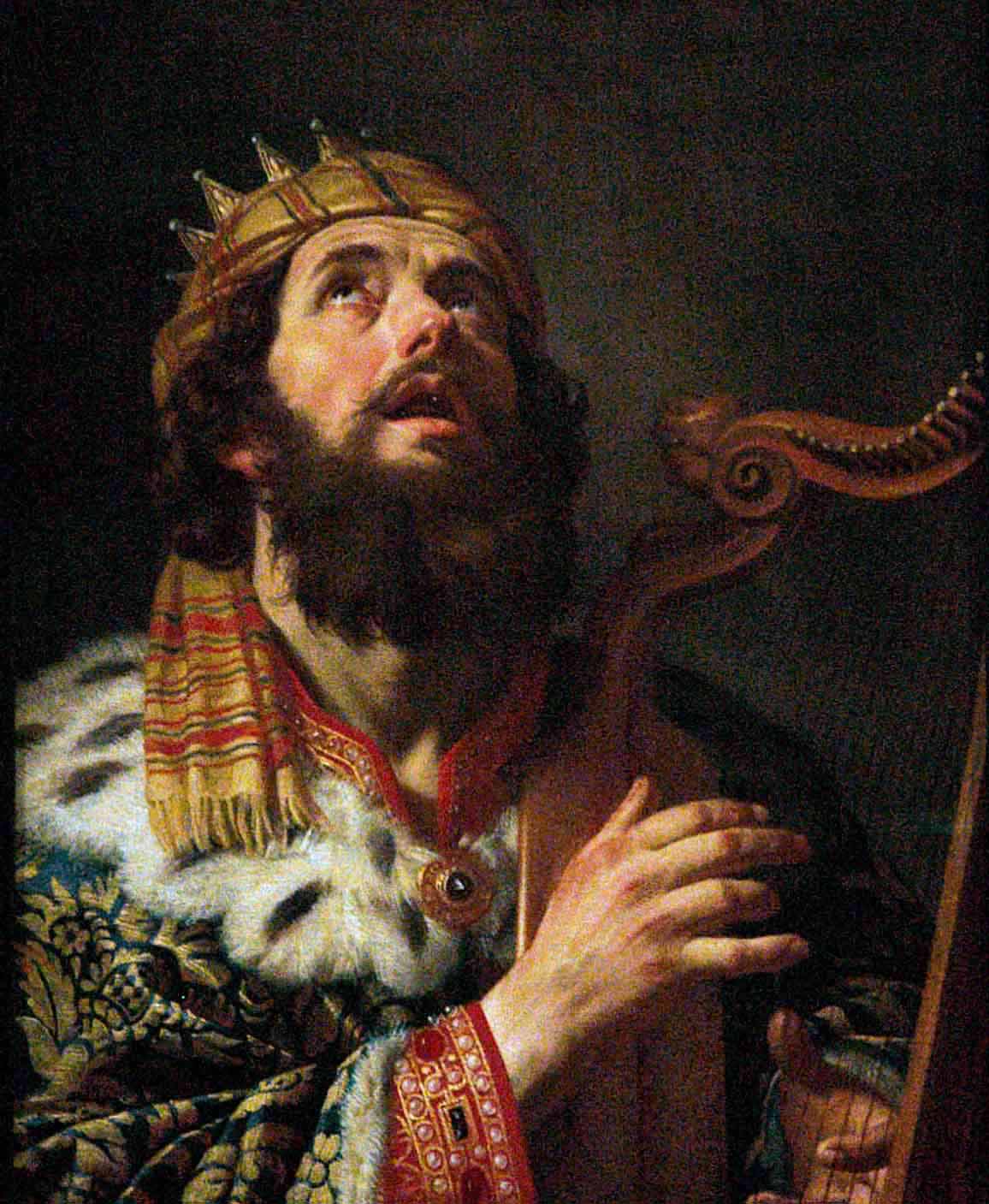
Gerrit van Honthorst (1590-1656), King David Playing the Harp (1611), Centraal Museum, Utrecht, Holland

A question of conscience: is there such a thing as Jewish music? If so, what is it? Is it klezmer?  The Chassidic Nigunim? The Spanish romanceros, the Yiddish songs, the synagogal chants, the psalms? And: can classical music be Jewish? Is it up to the composer? Is the music Jewish if the composer is Jewish? Or is it due to the themes used by him/her? A small quest.

Music played an important role in the lives of the ancient Hebrews. Just like most peoples of the East they were very musical and music, dance and singing were of great importance to them: both in daily life and in the synagogal services. They also played different instruments: for example, one of the women of Solomon brought more than a thousand different musical instruments from Egypt.

After the destruction of The Temple all instruments disappeared from the synagogues- except for the sjofar – and only in the 19th century did they return there. Unfortunately there is little written music from before the year 1700. However, in 1917 the oldest known music manuscript to date was found – it dates from around ±  1100.

KOL NIDRE

ZIJN LIED ZAL NIET VERSTOMMEN *

The best-known prayer from the Jewish liturgy is undoubtedly Kol Nidre: a request for forgiveness and for the annulment of all vows made to God and to oneself during the past year. The prayer was said to have originated before the destruction of the Temple, but there are also legends that put the origin of the prayer in the hands of the Marranos (Spanish Jews, who converted to the Catholic faith under the pressure of the Inquisition, but remained Jewish at heart).

It is certain that Rabbi Jehuda Gaon already introduced Kol Nidre in his synagogue in Sura in 720. It is also a fact that the melody, as we know it, has some affinity with a well-known Catalan song. Over the years it has been arranged by several cantors, the most famous version dates from 1871 and was made by Abraham Baer.

The melody became a source of inspiration for many composers: the best known of them is the work for cello and orchestra by Max Bruch.

The motifs of Kol Nidre can also be found in Paul Dessau’s symphony and in the fifth movement of the String Quartet Op. 131 by Ludwig van Beethoven. And then we should not forget Arnold Schönberg’s “Kol Nidre” for speaking voice, choir and orchestra. He composed it in 1939, commissioned by one of the Jewish organizations.

http://www.schoenberg.at/index.php/de/joomla-license-sp-1943310035/kol-nidre-op-39-193

INFLUENCES

Jewish folk music cannot be grouped together under one denominator and has many traditions: after their dispersion Jews ended up in different parts of Europe, Asia and Africa. The greatest development of their own culture manifested itself strangely enough in places where Jews had the least freedom. Jewish folk music was actually music from the ghetto. Where Jews lived in reasonable freedom, their own “self” faded away.

In the countries around the Mediterranean Sea lived the so-called Sephardim (from Sfarad, Hebrew for Spain). They sang their romanceros in Ladino, a kind of corrupted Spanish. After their expulsion from Spain and later Portugal, they were influenced by the music of their new host country.

Below: ‘Por Que Llorax Blanca Nina’, a Sephardic song from Sarajevo.

In countries such as Poland and Russia, Jews lived in a constant fear of persecution that often degenerated into pogroms. Chassidism emerged as a kind of “counter-reaction”, a movement based on mysticism, spiritualism and magical doctrines. It proclaimed the joy of life, a kind of bliss, which could be achieved through music, dance and singing. Only in this way could direct contact with God be achieved. Hasidic music was strongly influenced by Polish, Russian and Ukrainian folklore. With later also the music of vaudevilles and the waltzes of Strauss. However, the character of the works remained Jewish.

Bratslav nigun – Jewish tune of Bratslav (by Vinnytsia), Ukraine:

In turn, the Chassidic melodies have had an enormous influence on classical composers: just think of Baal Shem by Ernest Bloch or Trois chansons hebraïques by Ravel.

Below: Isaac Stern plays ‘Baal Shem’ by Bloch:

JOSEPH ACHRON

ZIJN LIED ZAL NIET VERSTOMMEN *

Courtesy of the Department of Music, Jewish National & University Library, Jerusalem, Achron Collection.

Arnold Schoenberg firmly believed that Joseph Achron was the most underrated composer of his generation. Schoenberg praised his originality and claimed Achron’s music was destined for eternity. Yet, despite his enthusiastic praise, Joseph Achron never became a household name. Violin buffs no doubt know his Hebrew Melody, a much loved encore of many violinists, starting with Heifetz.

Hebrew Melody is inspired by a theme Achron heard as a young boy in a synagogue in Warsaw. It is one of his earliest compositions,  dating from 1911, and his first ‘Jewish’ work.  In the year he composed it Achron joined the Society for Jewish Folk Music. His career as a composer properly started in the twenties of the last century.  In Saint Petersburg, Achron joined the composers of the New Jewish School. Several years later he moved to Berlin, where he got acquainted with the works of the French impressionists, and the Second Viennese School.

In 1924 he made a trip of several months to Palestine. He not only performed there, but also collected a huge variety of folk music. The notes he took during this trip were later used for several of his compositions. In his Violin Concerto No. 1,  Op. 60 (1925) several Yemenite themes can be heard. In the 1930s he fled, like Schoenberg, Korngold and many other Jewish composers from Europe, to Hollywood, where he died in 1943.

Jossif Hassid plays Jewish Melody by Achron:

OWN JEWISH SOUND

As early as the end of the nineteenth century a ‘Jewish national school of music’ was established in Petersburg (and later in Moscow). The composers united in it tried to compose music that would be faithful to their Jewish roots. Their music was anchored in the Jewish traditions of a mainly Hasidic nigun (melody).

The movement was not limited to Russia, think of the Swiss Ernest Bloch and the Italian Mario Castelnuovo-Tedesco who, in search of their roots, developed a completely individual, ‘Jewish style of composing’.

joods-cast

Mario Castelnuovo-Tedesco

Synagogal songs were a source of inspiration for Sacred Service by Bloch, Sacred Service for the Sabbath Eve by Castelnuovo-Tedesco, Service Sacré pour le samedi matin by Darius Milhaud and The Song of Songs by Lucas Foss.

joods-milhaud

Darius Milhaud

Below Darius Milhaud: Service Sacré pour le Samedi Matin:


Castelnuovo-Tedesco also used the old Hebrew poetry of the poet Moses-Ibn-Ezra, which he used for his song cycle The Divan of Moses Ibn Ezra:


In the USA it was (among others) Leonard Bernstein, who very deliberately used Jewish themes in his music (Third symphony, Dybbuk Suite, A Jewish Legacy).

Less well known are Paul Schoenfield and his beautiful viola concerto King David Dancing Before the Ark:

And Marvin David Levy who used Sephardic motifs in his cantata Canto de los Marranos:

The Argentinean Osvaldo Golijov (1960, La Plata) combines Jewish liturgical music and klezmer with the tangos of Astor Piazzolla in his compositions, both classical and film music. He often works with the clarinettist David Krakauer and for the Kronos Quartet he has composed a very intriguing work The Dreams and Prayers of Isaac the Blind:


DMITRI SHOSTAKOVICH

shosty

Soviet composer Dmitri Shostakovich’s once brilliant career took a dive after the official party paper criticized one of his operas in 1936. Shostakovich responded with his powerful Fifth Symphony.

The reason why the non-Jewish Shostakovich used Jewish elements in his music is not entirely clear, but at least it produced beautiful music. He wrote his piano trio op.67 as early as 1944. At the first performance, the last movement, the ‘Jewish part’, had to be repeated. It was also the last time it was played during Stalinism.

Piano trio op.67, Recorded in Prag 1946, with David Oistrakh, violine, Milos Sadlo, violoncello and Dmitri Shostakovich, piano

In 1948 he composed a song cycle for soprano, mezzo-soprano and tenor From Jewish Folk Poetry – recorded many times and (rightly!) very popular.

Old Melodia recording of the cycle:

In 1962 he composed the 13th symphony Babi Yar, after a poem by Yevgeny Yevtuchenko. Babi Yar is the name of a ravine in Kiev, where in 1941 more than 100,000 Jews were murdered by the Nazis.


In 1990, the Milken Archive of American Jewish Music Foundation was established to record all the treasures of Jewish music composed in the course of American history. The archive now consists of more than 700 recorded musical works, divided into 20 themes.

The CDs are distributed worldwide by the budget label Naxos. No one interested in the (history of) Jewish music should ignore them.

* This sentence is mentioned on the memorial stone, placed at the Muiderberg cemetery, in memory of the conductor Sam Englander, murdered by the Nazis, and his Amsterdam Jewish Choir of the Great Synagogue.

Translated with http://www.DeepL.com/Translator

in German: SEIN LIED WIRD NICHT VERSTUMMEN *|

in Dutch: ZIJN LIED ZAL NIET VERSTOMMEN *

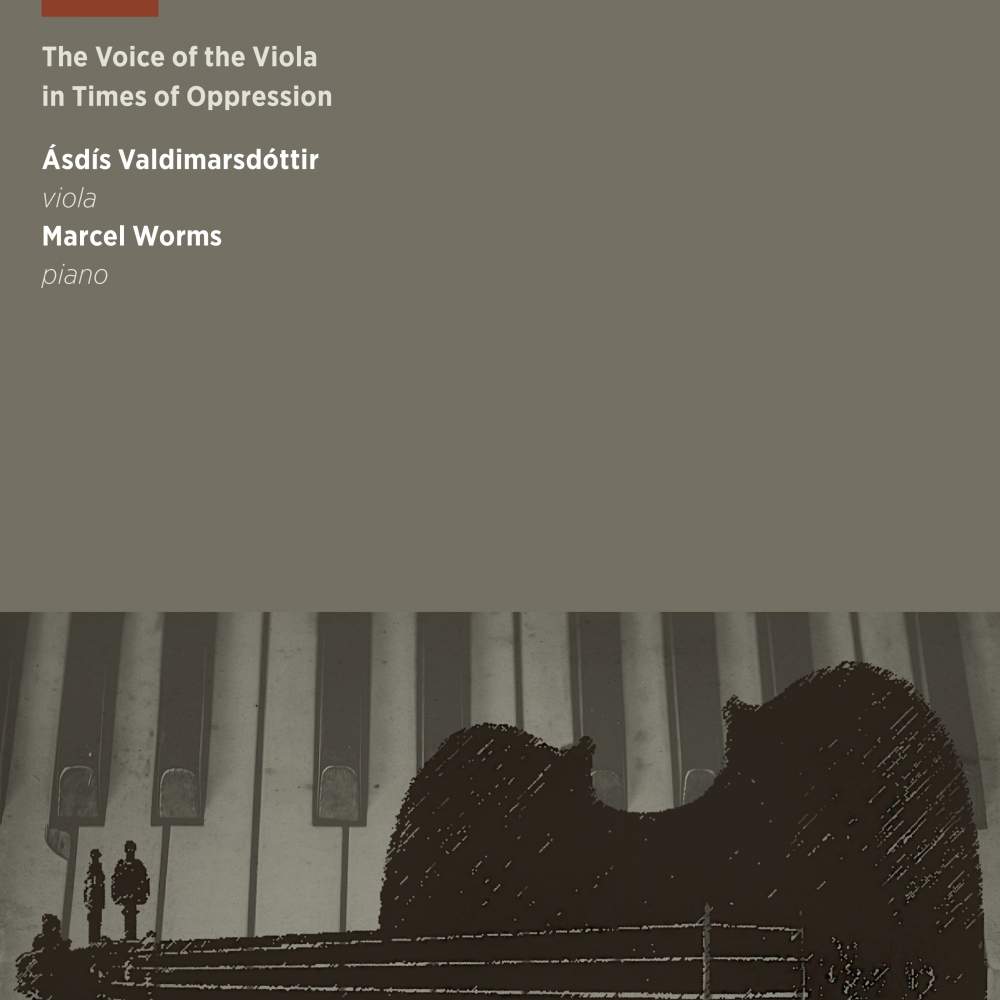
The voice of the Viola in Times of Opression: viola as a voice for the persecuted

altviool voice of the viola

The viola sonata by Dick Kattenburg (1919-1944) consists of only one movement, allegro moderato. The reason is simple: before Kattenburg could complete the work, he was arrested during a raid in a cinema and sent to Westerbork on 5 May 1944. Two weeks later, on 19 May 1944, he was deported to Auschwitz, where he was murdered. Kattenburg was only 24 years old.

Max Vredenburg (1904 -1976) is now mainly known as co-founder of the National Youth Orchestra. In the 1920s he left for Paris where he studied with Paul Dukas and Albert Roussel, composers who influenced him greatly. In 1941 he fled to Batavia and in 1942 he ended up in a Japanese camp. He survived the war but a large part of his family was murdered in Sobibor and Auschwitz. He composed the Lamento in 1953 in memory of his sister Elsa.

altvioool VredenburgMax1

Max Vredenburg © Maria Austria MAI

The sonata by Mieczysław Weinberg, originally composed for clarinet and piano, is perhaps the most complex of all the other works on this CD. It is also the only composition that is not only sad: you can also recognize fragments of klezmer and Jewish folklore in it.

And if you think you recognize the opening measures of Beethoven’s Mondscheinsonate in ‘Adagio’, you are right. Those notes are indeed in it. Just as in the adagio, the final movement of Dmitri Shostakovich’s sonata. The work, dating from 1975, was his last composition, and shortly after the completion of the sonata he died of lung cancer.

I can only be brief about the performance: the absolute TOP! The sound that Ásdís Valdimarsdóttir elicits from her viola is of a rare beauty. It is so beautiful that it hurts. Listen to the Adagio of Weinberg’s sonata. Terrifying.

Marcel Worms, surely one of the greatest pianists/accompanists of our time, keeps himself a bit in the background, giving his Icelandic colleague all the honour of wearing glasses. But just listen carefully and experience how compassionate his contribution is. That’s what I think is called ‘partners in crime’. I can’t describe it any better.

Mieczysław Weinberg, Dick Kattenburg, Max Vredenburg, Dmitri Shostakovich
The voice of the Viola in Times of Opression
Ásdís Valdimarsdóttir (viola), Marcel Worms (piano)
Zefir Records ZEF 9657

Translated with www.DeepL.com/Translator

Article in Dutch: The voice of the Viola in Times of Opression: de altviool als stem voor de vervolgden

Forbidden Music in World WAR II: PAUL HERMANN

The voice of the Viola in Times of Opression: de altviool als stem voor de vervolgden

altviool voice of the viola

De altvioolsonate van Dick Kattenburg (1919-1944) bestaat uit maar één deel, allegro moderato. De reden is simpel: vóór Kattenburg het werk kon voltooien werd hij tijdens een razzia in een bioscoop opgepakt en op 5 mei 1944 naar Westerbork gestuurd. Twee weken later, op 19 mei 1944, werd hij naar Auschwitz gedeporteerd, waar hij werd vermoord. Kattenburg is maar 24 jaar oud geworden.


Max Vredenburg (1904 -1976) is tegenwoordig voornamelijk bekend als medeoprichter van het Nationale Jeugd Orkest. In de jaren twintig vertrok hij naar Parijs waar hij met o.a. Paul Dukas en Albert Roussel studeerde, componisten die hem zeer hebben beïnvloed. In 1941 vluchtte hij naar Batavia en in 1942 belandde hij in de Jappenkamp. Hij heeft de oorlog overleefd maar een groot deel van zijn familie werd vermoord in Sobibor en Auschwitz. Het Lamento componeerde hij in 1953 ter nagedachtenis van zijn zus Elsa.

altvioool VredenburgMax1

Max Vredenburg © Maria Austria MAI

De sonate van Mieczysław Weinberg, oorspronkelijk gecomponeerd voor klarinet en piano is misschien de meest complexe van alle andere werken op deze cd, het is ook de enige compositie die niet alleen maar treurig is: je kunt er ook flarden klezmer en Joodse folklore in herkennen.

En als u denkt in ‘Adagio’ de beginmatten van de Mondscheinsonate van Beethoven te herkennen dan heeft u gelijk. Die noten staan er wel degelijk in. Net zo trouwens als in het adagio, het slotdeel van de sonate van Dmitri Sjostakovitsj. Het uit 1975 stammende werk was zijn laatste compositie, vlak na de voltooiing van de sonate overleed hij aan longkanker.

Over de uitvoering kan ik maar kort zijn: een absolute TOP! De klank die Ásdís Valdimarsdóttir haar altviool ontlokt is van een zeldzame schoonheid. Het is zo mooi dat het pijn doet. Luister even naar het Adagio van de sonate van Weinberg. Huiveringwekkend.

Marcel Worms, toch wel een van de grootste pianisten/begeleiders van onze tijd houdt zich een beetje schuil, zijn IJslandse collega alle eer gunnend om te brilleren. Maar ga maar goed luisteren en ervaar hoe ontzettend meevoelend zijn bijdrage is. Zoiets heet ‘partners in crime’, denk ik. Beter kan ik het niet omschrijven.


Mieczysław Weinberg, Dick Kattenburg, Max Vredenburg, Dmitri Shostakovich
The voice of the Viola in Times of Opression
Ásdís Valdimarsdóttir (altviool), Marcel Worms (piano)
Zefir Records ZEF 9657

The voice of the Viola in Times of Opression: viola as a voice for the persecuted