opera/operette/liederenrecitals

Hvorostovsky; Verdi, Tchaikovsky and the Bells

LA TRAVIATA


The November 2004 Venice production directed by Robert Carsen was made for the reopening of La Fenice which had totally burnt down eight years earlier. For this special occasion the first version of the opera, from 1853, was chosen. Good thinking, since the (then unsuccessful) premiere of what would become Verdi’s most beloved opera ever, had taken place precisely here. The main differences with the one-year later version, which is the one known to us, are in the duet between Violetta and father Germont, and the two final numbers of the third act.

Like no other opera, Traviata allowes itself to be updated. Incidentally, it was Verdi’s wish to stage it in contemporary costumes. Carsen’s direction is all about money, and the dollars really fall from the trees like leaves. He moves the time of action to the 1980s, the time of rising megastars, supermodels, gigaparties, as well as junkies, squatters and AIDS. As always with him, everything is implemented very logically and consistently

An absolute highlight is the opening scene of the last act, in which the now totally (also literally!) brought down Violetta watches a video of her past. A video that at some point stops and then goes on to only show ˜snow”. The scene grabs you by the throat and never lets go. The epitome of good modern directing.

Violetta is very movingly performed by the both vocally and scenically impressive Patricia Ciofi. As Alfredo, Italian-German tenor Roberto Sacca comes across very convincingly, and Dmitri Hvorostovsky is an outstanding Father Germont (Arthaus Musik107227 )

Last seven minutes of the production:


IL TROVATORE
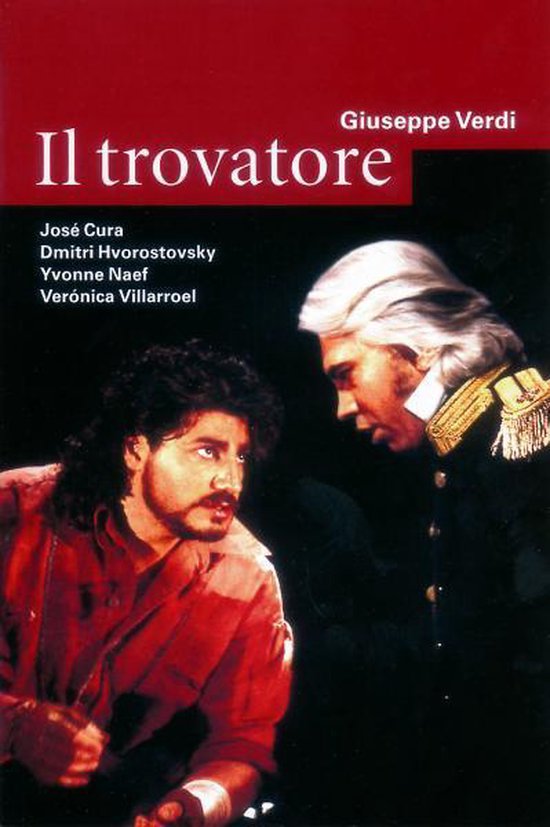


Some operas should be renamed. Verdi’s Il Trovatore should actually be called ˜Azucena” because, after all, she is the one who dominates every scene from the first moment she emerges.

It is Azucena who pulls the strings and only she can save or break all the characters. Through her thirst for revenge, she destroys everything and everyone, and no average baritone can match that. Although, average?

In his role debut as Luna, Dmitri Hvorostovsky more than surprised me in this Royal Opera House production. I still had my doubts about him in the early 1990s, but I take back everything I said about him in those days. Never did I think that there was still a baritone who could sing ˜In balen del suo sorriso” so emotionally moving. And indeed, at the ˜Sperda il sole d’un suo sguardo…” I even had to shed a tear, it was that beautiful.

EVGENI ONEGIN


I am (or should I say was?) a huge Robert Carsen-adept and I love (loved) almost everything he did. So too this Onegin , the production he made for the Metropolitan Opera in New York, which was recorded in February 2007 (Decca 0743298).

His staging is very realistic and closely follows the libretto. In the first act, the stage is strewn with autumn leaves, but everything else is basically bare and there is almost no scenery. A bed for the ˜letter scene”, some chairs in the second and third acts. At the duel, the stage is completely empty.

This is not distracting from what is happening. On the contrary. The costumes are really beautiful, but especially in the first act they remind me more of English Jane Austen film adaptations than of the Russian countryside. But that is alright, the eye wants something too, but Renée Fleming is too glamorous for a peasant girl, making her transformation into a proud princess less impressive.


Onegin (Dmitri Hvorostovsky) is primarily a dandy here, very concerned with his looks. Well, Dima is an extremely attractive singer in all aspects, but in his confrontation scene with Tatyana, he reminds us more of daddy Germont than Onegin.

Ramón Vargas was one of the best lyric tenors in 2007, but Lensky he was not. He really does his best, he also looks like a real poet, but this role needs a bit more “languish”.
Carsen’s character direction is truly unsurpassed and even Fleming seems to thaw out at times. Unfortunately, her Russian is totally unintelligible.

Fleming and Hvorostovsky in the opera’s final scene:


THE BELLS
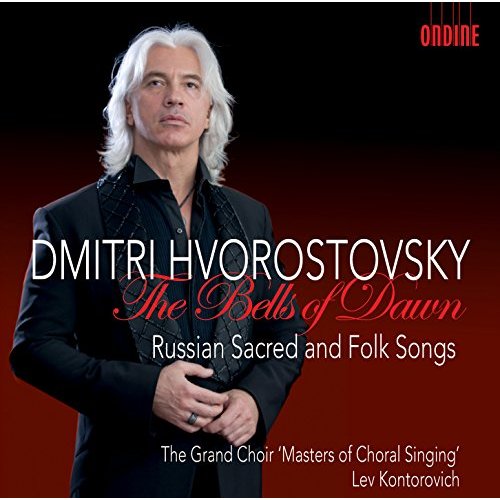


That this CD disappoints me somewhat is not because of the performance, because there is nothing to criticise about Dmitri Hvorostovsky’s voice, singing or interpretation. Those are simply perfect!

The beauty of the sound coming out of his throat is truly unimaginable. It is nothing less than the epitome of perfection.

What impresses me most about Hvorostovsky, besides his wonderful bronze sound, is his beautiful pianissimo. At times he sounds almost fragile, providing a fine contrast to the more heavily set passages.

You can hear this well in the solo ˜Prostchay, radost” (Farewell, My Joy). The moods alternate, but what remains is an all-encompassing feeling of total loneliness. After this, you can’t help but stop the music for a moment of silent reflection.


But the CD is not over yet. The feeling is still held for a while, but slowly the emotion ebbs away. The songs on the CD are hard to distinguish from each other, so it just gets boring and monotonous in the long run. At least for me; a ˜hardcore” lover of Russian spiritual songs and Slavic choirs may well enjoy this.
The Grand Choir ˜Masters of Choral Singing” is very much in the background and, under conductor Lev Kontorovich, is mostly subservient to the soloist.

Below is one of the CD’s finest tracks, ˜Vyhozhu odin ya na dorogu” by Elizaveta Shashina:


Dmitri Hvorostovsky in two live recitals

Dmitry Hvorostovsky zingt Sjostakovitsj en Liszt
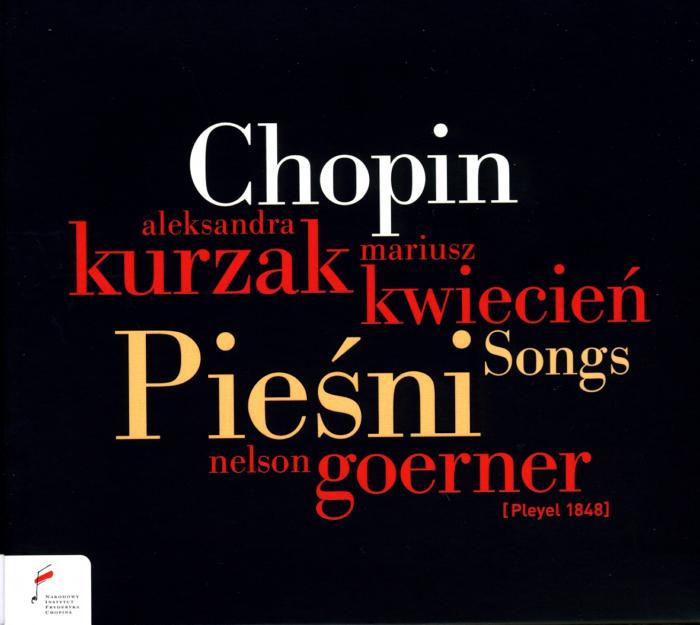
Fryderyk Chopin and his songs

Songs by Chopin… Many a song lover looks down on them with a bit of condescension. They seem so simple, so ˜no big deal”. One opens one’s throat and voila, they come rolling out naturally and easily.

That nothing could be further from the truth was proved not so long ago by Dawn Upshaw, surely one of the best song singers of our time. She approached them in completely the wrong way, creating an unintelligible mush that had nothing to do with the Polish genius’s beautiful melodies.

That you don’t really need to be Polish to understand them (should Schubert be sung exclusively by the Austrians and Rachmaninoff solely by the Russians?), had been proved long ago by one of the best performers of the songs, Elisabeth Söderstrom. Layla Gencer (admittedly, she was half Polish) also did an excellent job.

Elisabeth Söderstrom sings Chopin with Vladimir Askenazy (piano)

Leyla Gencer sings Chopin with Nikita Magaloff (piano):


In 2010, the ˜Chopin year” (he was born in March 1810), a recording of all his songs was made by the Fryderyk Chopin Institute ((NIFCCD 016). As performers, two of the most successful Polish singers worldwide (why did no one think of Piotr Beczala?) were engaged: Aleksandra Kurzak and Mariusz Kwiecien.

Aleksandra Kurzak with Jeff Cohen (piano):


The first thing that stands out is their obvious, natural way of singing. They left behind their Polish predecessors’ very irritating habit of pressing on the consonants – especially the  “Ł”  (sounds like the English W) had always been pronounced very unnaturally, Russian-style, before them.

I have always had my doubts about Kwiecien being a true Lieder singer (he sometimes gives song recitals) and I still have those doubts. He is an excellent actor and also does fantastic things with his voice, but sometimes it’s a bit too much. And I miss the lyricism. He also colours too little and sometimes goes over the top, like a whole cavalry of soldiers.

But Aleksandra Kurzak is simply irresistible. Her beautiful, lyrical soprano has a lovely silvery sheen, it is truly delightful. Her girlish timbre seems created for singing Chopin’s simple-sounding melodies, and her delivery is exquisite. And her voice… Ah, it simply cannot be more beautiful! If that does not make a person happy!

But don’t forget the pianist: Argentine Nelson Goerner is an excellent Chopin interpreter and an wonderful accompanist.

Bonus:
Teresa Zylis-Gara and Halina Czerny-Stefanska:

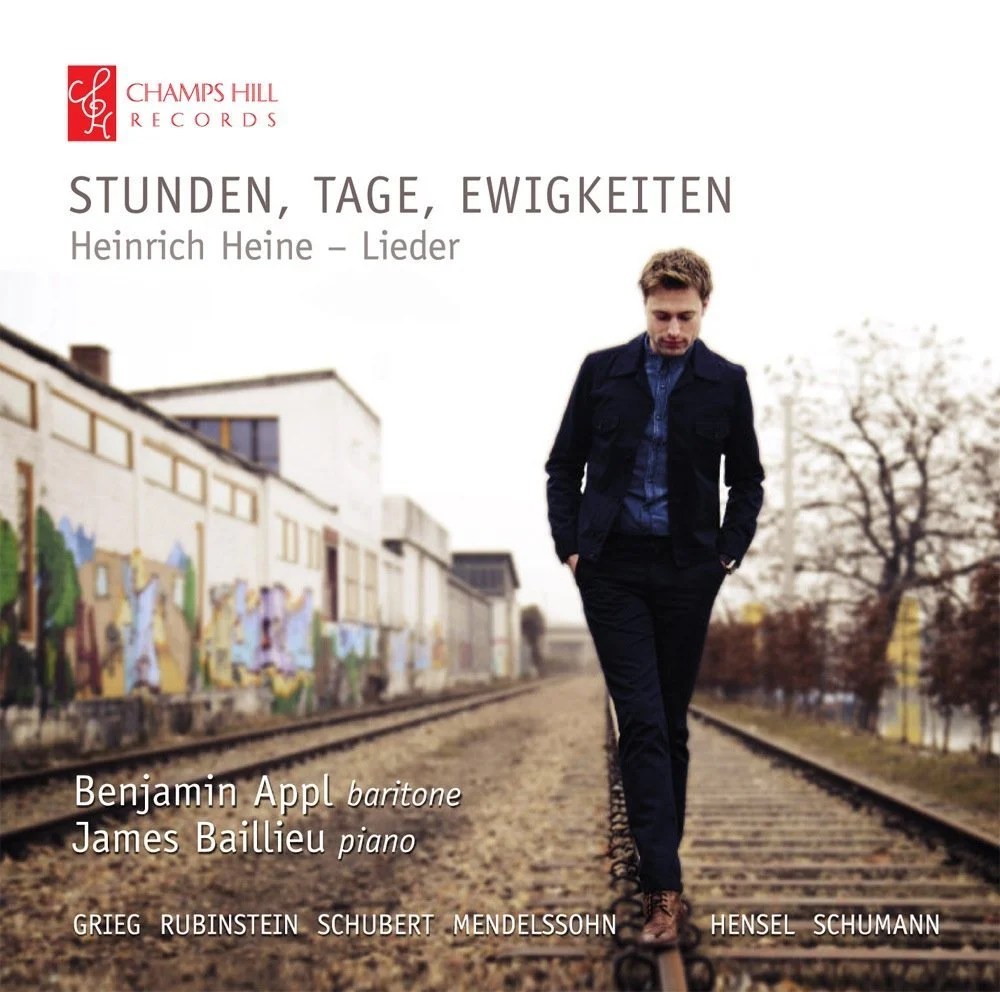
Stunden, Tage, Ewigkeiten: Heine, set to music


Sometimes, only sometimes, the words of Lieder may seem more important than the music. Especially if you take one of the greatest poets as the starting point of your recital and arrange your choice of repertoire entirely accordingly. The listener will then try to find the song lyrics faster than usual. And also pay them much more attention than would otherwise be the case.

As a singer, you then have a duty to let people know – and relive – what music can do with words, how they may be enriched by being put to a melody.

We all know Schumann’s Dichterliebe (and also the songs from Schubert’s Schwanengesang) and although the young Benjamin Appl’s interpretation is exceptionally beautiful, it would not make my heart beat any faster. But someone who calls his CD recital Stunden, Tage, Ewigkeiten is taking on obligations, and Appl takes them very seriously.

Apart from Schumann, Schubert and the Mendelssohns, Appl also tackles Anton Rubinstein’s rarely performed Heine songs. “Der Asra” I knew from Liszt’s piano arrangement, but it is my first introduction to the sung version. The song about the rich sultan’s daughter and the young slave in love with her, is poignant in its simplicity. I must honestly confess that my eyes became slightly moist and that, of course, is the best sign that it is right.

The young German possesses an improbably beautiful timbre that you will fall in love with immediately. His text control is exemplary, every word is clearly intelligible, but without being overpowering.


James Baillieu proves himself an equal partner: you can hear how beautiful his touché is in Rubinstein’s “Du bist wie eine Blume”. Chapeau!

— 

Perfume: songs with sex appeal

That the album bears the very inviting title ‘Perfum’e I can well understand. The songs collected on this CD are set to French poems from the second half of the nineteenth century and they have a special sexual appeal to the listener.

Everything about this CD is beautiful. Whether it is Maurice Ravel’s mysterious cycle ‘Sheherezade’ or Benjamin Britten’s unknown work which he wrote as a fifteen-year-old youth; they leave you stunned and feeling a bit intoxicated. Even Henri Duparc’s over-familiar ‘L’Invitation au voyage’ sounds like never before. Mysterious and unearthly beautiful.

But I was most moved and touched by Charles Koechlin’s ‘Épiphanie’. The song itself is already a beautiful gem, but in Christiane Karg’s rendition (and don’t forget about the orchestra!) it becomes like a painting overshadowed by a golden sheen.

Karg has a very suitable voice for the songs she performs: light, pure and silvery. Her interpretation is graceful and elegant, oscillating between the pastel tones of impressionism and the dark colours of symbolism. Just like the poems she sings. That it also sounds stylised at the same time adds to the mystery of ‘ womanhood’. She could be Melisande. Or even Sheherezade.

The young German conductor David Akham is a graceful partner to her, conducting as if he has an entire poetry album stored in his baton. What a great CD!

Andrea Chénier: de ultieme Franse revolutie opera 

Tekst : Peter Franken

Andrea Chénier, Tosca en Les dialogues des Carmélites zijn voor elke liefhebber herkenbaar als revolutie opera’s. Maar hoe zit het met bijvoorbeeld Marie Victoire en Germania? En wat maakt het thema revolutie eigenlijk zo aantrekkelijk voor gebruik in een opera? Als we de genoemde werken analyseren dan valt op dat ze allemaal zich afspelen in een politiestaat, een voor burgers manifest onveilige omgeving.

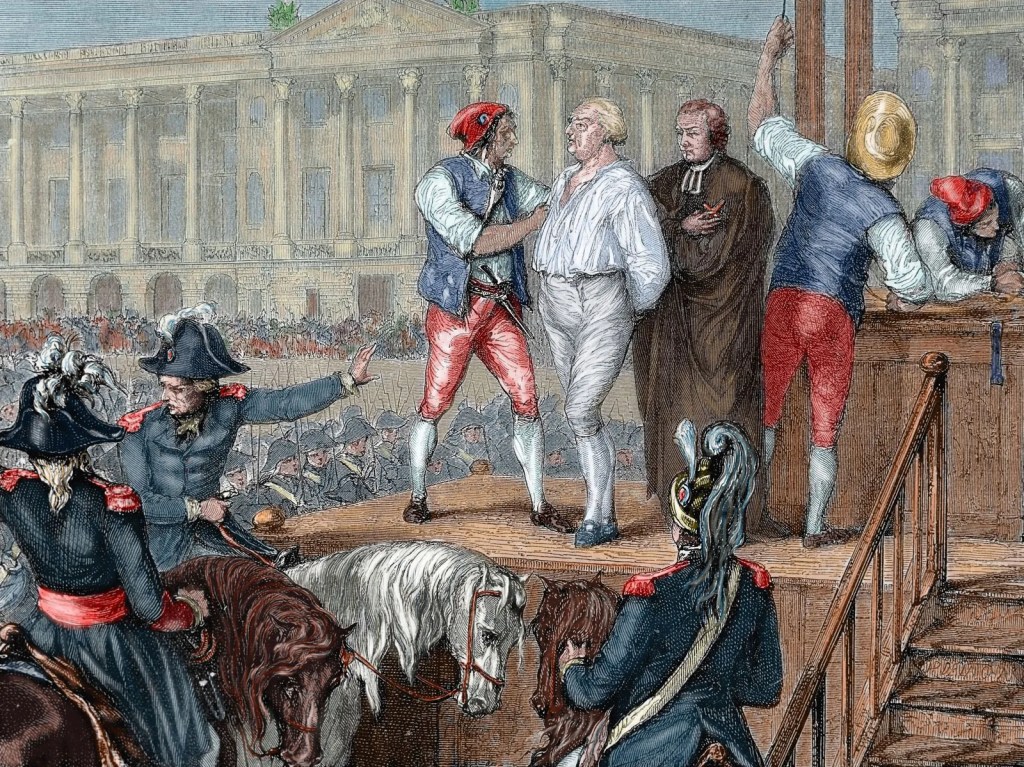
Louis XVI: execution by guillotine

In Chénier, Marie Victoire en Dialogues gaat dit nog een stap verder: daarin heerst de Terreur. In Tosca en Germania is sprake van vreemde overheersing. Tegen zo’n ontoegeeflijke achtergrond worden emoties sterk uitvergroot en problemen aangescherpt. Het gaat al gauw om leven en dood, zelfs in situaties die in normale tijden nauwelijks enige aandacht zouden krijgen. Relatieproblemen, (vermeende) ontrouw en jaloezie spelen een grote rol in alle genoemde werken, met uitzondering van Dialogues.

In die laatste opera gaat het om het onvermogen van een groep nonnen om zich aan te passen aan nieuwe leefomstandigheden. Daar waar in reguliere libretti vooral een beroep wordt gedaan op duellerende edellieden, in hun eigen gelijk verstarde vaders en jonge vrouwen die – soms maar tijdelijk – spontaan waanzinnig worden als men om emoties verlegen zit, liggen die in de revolutie opera’s voor het oprapen. De protagonisten lopen al dan niet bewust in een ‘mijnenveld’ en de kleinste stap in de verkeerde richting kan alles direct mis laten gaan.

In Andrea Chénier sterven de titelheld en zijn geliefde Maddalena op het schavot, zij gaat vrijwillig met hem de dood in. Hij is het slachtoffer van de jaloezie van Gérard, die hem ervan heeft beschuldigd een contrarevolutionair te zijn. Als Gérard zijn beschuldiging herroept, wordt hij door zijn collega’s genegeerd. Een revolutionair tribunaal komt nooit op een veroordeling terug, dat zou het geloof in het absolute karakter van de Terreur teniet doen. Door een opera te situeren in deze periode is het prijsschieten voor librettisten. Je kunt gewoon niet missen, de emoties lopen als vanzelf hoog op.

In Tosca is er een executie, een moord en een zelfmoord, voornamelijk voortkomend uit liefdesperikelen of wat daar voor door moet gaan. En de Carmélitessen moeten hun onvermogen het verstilde religieuze leven achter zich te laten met de valbijl bekopen.

Maar zo extreem hoeft het niet altijd te verlopen. In die zin zijn Respighi’s Marie Victoire en Franchetti’s Germania de buitenbeentjes in dit gezelschap. Daar lijkt alles nog op zijn pootjes terecht te komen maar ook hier heeft de politiek het laatste woord.

Andrea Chénier

Tegen de achtergrond van de Franse Revolutie laat dit werk een driehoeksverhouding zien tussen Maddalena de Coigny, Carlo Gérard en Andrea Chenier. Gérard is een lakei in het kasteel van de Comte de Coigny. Als het kleine zoontje van de majordomo mocht hij wel met zijn leeftijdgenootje Maddalena spelen maar toen hij een livrei kreeg aangemeten was hij plotsklaps een lakei die voor zijn jeugdvriendin nog slechts de deur mocht openhouden.

Aan de vooravond van de revolutie houdt hij het slaafse bestaan niet langer vol en zet tijdens een ontvangst de boel op stelten. Uiteraard wordt hij op staande voet ontslagen. De dichter Andrea Chénier was een van de gasten op die ontvangst en zijn ontmoeting met Maddalena was niet erg succesvol. Feitelijk had hij haar de les gelezen maar daarbij zoveel indruk gemaakt dat ze hem nooit is vergeten. 

Het vervolg van de opera speelt zich een jaar of zes later af, tijdens de Terreur. Gérard is een vooraanstaand revolutionair, type Danton. Hij misbruikt zijn macht om Maddalena op te laten sporen. Nu hij sociaal boven haar staat is alles anders, hij moet en zal haar krijgen na al die jaren.

Maddalena heeft Chénier benaderd in de hoop door hem in veiligheid te worden gebracht. Ze verklaren elkaar hun liefde maar raken vervolgens verstrikt in de val die Gérard voor hen heeft gezet. Chénier wordt op basis van een valse aanklacht door Gérard voor het revolutionaire tribunaal gebracht. Maddalena ruilt in de gevangenis van plaats met een andere vrouw zodat zij samen met haar geliefde de dood in gaat.

Door DG is een dvd uitgebracht van Otto Schenks productie voor de Wiener Staatsoper uit 1981. Schenk toont in zijn enscenering een toneelbeeld dat niets aan de verbeelding over laat, librettogetrouw tot in de kleinste details. Wat de dvd vooral de moeite waard maakt is de zangersbezetting met Plácido Domingo als een fenomenale Chénier.  Hij krijgt uitstekend tegenspel van Gabiela Beňačková als Maddalena en Piero Cappucilli als Gérard. Een cast om van te dromen. De productie staat nog steeds op het tableau van de Wiener Staatsoper maar recente bezettingen blijven duidelijk in de schaduw van hun beroemde voorgangers. 

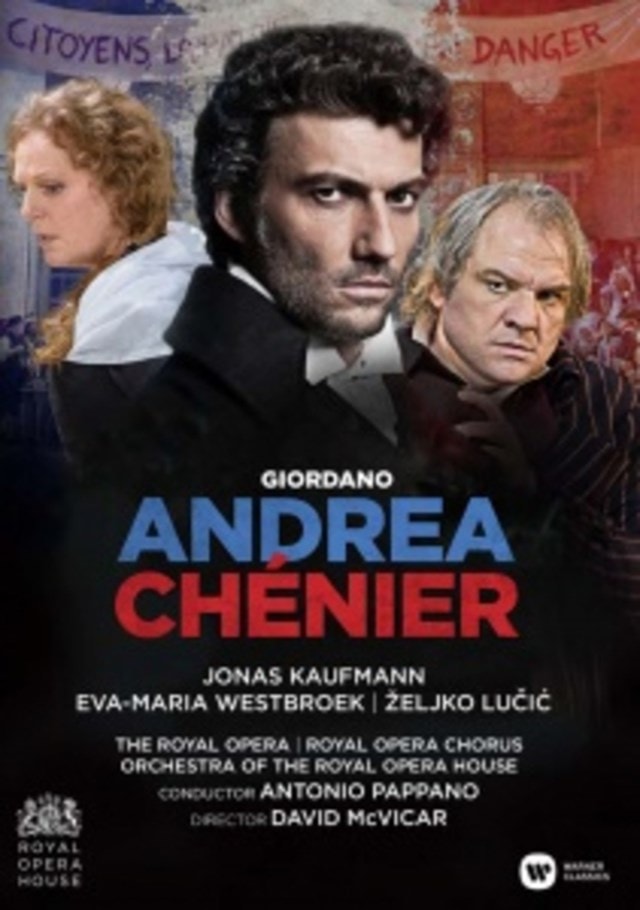
Kaufmann en Westbroek in de Royal Opera op dvd

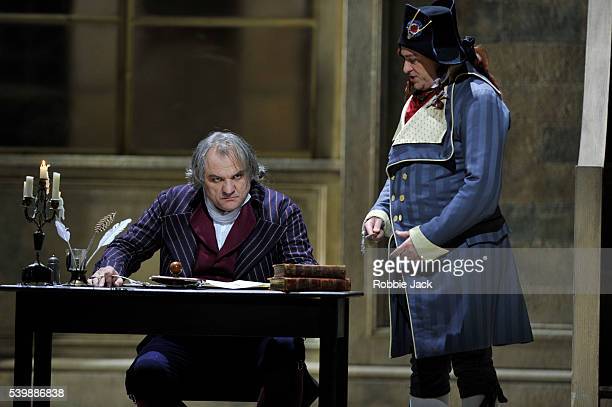
David McVicar maakte in 2015 voor ROH een productie van dit werk die tot in de kleinste details het beeld oproept van de Franse revolutie zoals dat in extenso is overgeleverd. Daar waar ik een paar kleine onjuistheden waarneem komt dat op het conto van librettist Luigi Illica. Zo verwart hij een politiespion met een Incroyable, een anti-Jacobijns personage dat pas na de Terreur zijn intrede deed in het straatbeeld.

Ach, dat is maar een klein detail. Het is een compleet kostuumdrama met schitterende decors die in elke scène volledig recht doen aan de getoonde handeling. Op een bepaald moment zien we zelfs op de achtergrond een boerenkar langsrijden met veroordeelden op weg naar de guillotine. De decors van Robert Jones en de kostuums van Jenny Tiramani maken er bijna een gedramatiseerde documentaire van die op school kan worden gebruikt tijdens de geschiedenisles.

Bariton Željko Lučić mag als Carlo Gérard het spits afbijten met een grote monoloog direct aan het begin. Zijn mooi voorgedragen ‘Compiacente a’colloqui del cicisbeo’ zet de toon voor de op handen zijnde omwenteling, eerst in huize de Coigny en later in het gehele land.

Uitgedaagd door Maddalena zingt Chénier tegen het einde van de akte zijn grote aria ‘Un di all’ azzuro spazio’ waarin hij ‘liefde’ koppelt aan scherpe maatschappijkritiek. Jonas Kaufmann maakt er een waar kunststuk van, geweldige vertolking van deze tophit.

In de tweede akte krijgt de plot snel vorm en na hun herkenningsscène zingt Maddalena haar monoloog ‘Eravate possente’ waarin ze haar lot in Chéniers handen legt. Eva-Maria Westbroek maakt hier na haar frivole gekwetter in de eerste akte duidelijk haar opwachting als de prima donna van het werk.

In de derde akte treden twee bijfiguren nadrukkelijk op de voorgrond, de ‘incroyable’ en de oude blinde Madelon. Tenor Carlo Bosi is een lichtvoetig acterende maar zeer vileine spion die zijn zang daar uitstekend mee in overeenstemming weet te brengen.

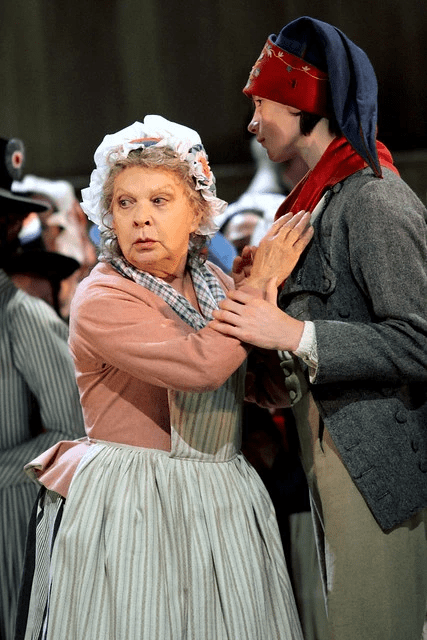
Elena Zilio: © : Catherine Ashmore 

Mezzo Elena Zilio weet zoals verwacht korte tijd de show te stelen met haar klaagzang over een dode zoon en kleinzoon, gestorven voor de Revolutie. En nu brengt ze haar jongste kleinzoon mee, niet te jong om de strijden en sterven voor het vaderland. Gérard accepteert hem en zodra hij weg is vraagt ze zich af wie haar nu zal begeleiden. Gelukkig zijn een paar vrouwen bereid de blinde vrouw bij de arm te nemen.

Lučić krijgt vervolgens de gelegenheid de aandacht te bepalen, eerst met zijn bedachte aanklacht en vervolgens de ontmoeting met zijn prooi Maddalena. Zijn personage Gérard heeft zich door de ‘incroyable’ laten overhalen om Chénier vals te beschuldigen van contra revolutionaire gedrag. Hij aarzelt, z’n gemoed speelt op, wat is er van hem geworden?

Vroeger was hij een slaaf maar nu nog steeds, van de liefde. Hij wordt erdoor verscheurd, moet en zal zijn jeugdliefde eindelijk bezitten. Als Maddalena binnenkomt maakt hij dat onomwonden duidelijk in een hartstochtelijk ‘Perché ti volli qui?’ Zij repliceert met haar topstuk ‘La mamma morta’, indrukwekkend mooi gezongen.

Lučić en Westbroek grijpen hier de gelegenheid om zich aan alle aandacht voor Kaufmanns Chénier te ontworstelen met beide handen aan. Het is van korte duur want direct volgt diens markante optreden tijdens de rechtszitting waarin hij stelt dat men hem kan doden maar zijn eer niet kan afnemen: ‘Si, fui soldato’.

Kaufmann kan in de laatste akte nog excelleren in ‘Come un bel di di maggio’ en met een mooi duet in de laatste akte neemt het onfortuinlijke liefdespaar afscheid van het leven onder de uitroep ‘Viva la morte insiem’. Een prachtig einde van een fenomenale voorstelling.

Het orkest van de Royal Opera onder leiding van Antonio Pappano heeft een groot aandeel in het welslagen van het geheel.

André ’Chénier:  “Quand Au Mouton Bêlant”

Quand au mouton bêlant la sombre boucherie
Ouvre ses cavernes de mort,
Pâtres, chiens et moutons, toute la bergerie
Ne s’informe plus de son sort.
Les enfants qui suivaient ses ébats dans la plaine,
Les vierges aux belles couleurs
Qui le baisaient en foule, et sur sa blanche laine
Entrelaçaient rubans et fleurs,
Sans plus penser à lui, le mangent s’il est tendre.
Dans cet abîme enseveli
J’ai le même destin. Je m’y devais attendre.
Accoutumons-nous à l’oubli.
Oubliés comme moi dans cet affreux repaire,
Mille autres moutons, comme moi,
Pendus aux crocs sanglants du charnier populaire,
Seront servis au peuple-roi.
Que pouvaient mes amis? Oui, de leur main chérie
Un mot à travers ces barreaux
Eût versé quelque baume en mon âme flétrie;
De l’or peut-être à mes bourreaux…
Mais tout est précipice. Ils ont eu droit de vivre.
Vivez, amis; vivez contents.
En dépit de Bavus soyez lents à me suivre.
Peut-être en de plus heureux temps
J’ai moi-même, à l’aspect des pleurs de l’infortune,
Détourné mes regards distraits;
A mon tour, aujourd’hui; mon malheur importune:
Vivez, amis, vivez en pai

Soile Isokoski, a star for the connoisseurs

She is quite well known but not famous like a Pavarotti or a Bartoli. She can still easily walk around incognito, but true voice lovers know better, and her fans follow her performances all over the world.


Her career began in 1987 when she won second prize in Cardiff, but it was only about four years ago that her name was really beginning to be recognized. Ignored by the big record companies, she had to make do with the success of her performances and word of mouth.


I first heard her as Donna Elvira in Paris, with Bo Skovhus as don Giovanni. It was Skovhus for whom I had undertaken the journey, and it was Soile Isokoski who made my heart beat faster. Her Elvira was heartbreaking and pitiful, yes, she made me really understand all those tears for the seducer.


She received a Grammy Award for her performance of Strauss’s Vier letzte Lieder, quite rightly,

and her recording of Finnish songs (all on Ondine) belongs in every song lover’s home.


It is also precisely Bo Skovhus, with whom Isokoski recorded Hugo Wolf’s Italienisches Liederbuch, with at the piano Marita Viitasalo, her regular accompanist.

Wolf’s miniatures have never had better protagonists, as both voices have a lot in common: perfect diction, musicality, the great art of ‘acting’ with your voice alone, and a somewhat sweet timbre.


Hugo Wolf
Italienisches Liederbuch
Soile Isokoski, Bo Skovhus, Marita Viitasalo
Ondine ODE 998-2 (2cd)

Vocal works by Alberto Ginastera: beautiful music, brilliantly performed

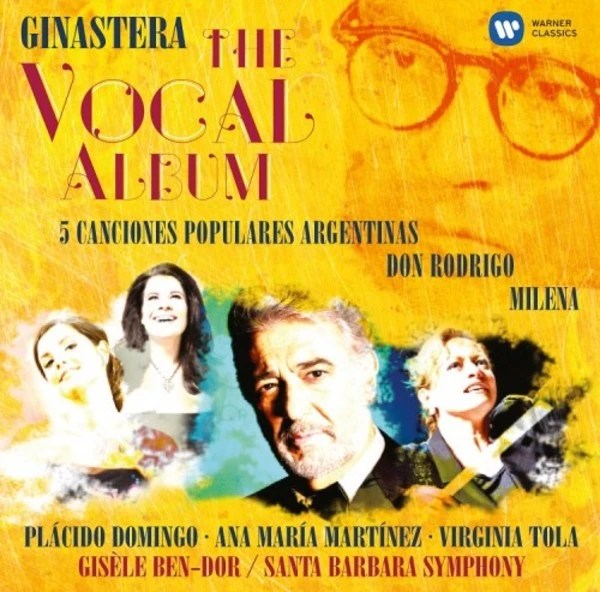
The music of Alberto Ginastera, arguably the most important Argentine composer, is still terra incognita for most of us. Warner Classics has collected several of his vocal works on a CD, with shining contributions from Plácido Domingo and Virginia Tola.

If people dó know any music by Alberto Ginastera, it will most likely be his Cinco canciones populares argentinas. Many South American (and not just South American!) singers have them in their repertoire and perform them at their recitals. No wonder really; the songs are simply wonderful.

The performance by Ana-María Martínez for Warner disappoints me a little. She has a beautiful, warm soprano voice with sharp edges here and there, but I like that. The problem: the songs are really nothing more than folk songs in disguise and Martí­nez approaches them like an opera singer: too beautiful, too cultivated.

I don’t really like Shimon Cohen’s arrangement for orchestra either. The orchestral sound is very intrusive, it all becomes too much. You can achieve more with a simple piano accompaniment. Put the beautiful performance by Raoul Giménéz with Nina Walker (Nimbus) next to it and hear the difference!


The scenes from ‘Don Rodrigo’ are no less than a gift, but: why only the two scenes? There is still no official recording of the opera, which can best be described – in terms of musical structure – as the Argentine Wozzeck.

Plácido Domingo already sang the lead role at the opera’s US premiere in 1966 (!), at the New York City Opera. It’s hard to compare his voice then and now, but his great aria “Señor del Perdón”,   still rings like a bell.

Domingo sings “Señor del Perdón”, , recording from 22 February 1966:


In 1966, the role of Rodrigo’s beloved Florinda was sung by Jeannine Crader, an American soprano who was also the first to record Ginestera’s cantata Milena. In the new recording, Domingo is joined by the brilliant Argentine soprano Virginia Tola. Her voice is childlike naïve  and dramatic at the same time. Her last words after Rodrigo’s death will continue to haunt your mind.

Like Jeannine Crader then, Tola also takes care of Milena, something I can only applaud. Milena, a cantata composed on letters Kafka wrote to Milena Jesenská is no less than a masterpiece. I am very surprised that it is not widely known and performed everywhere: the work makes such a deep impact. Virginia Tola’s dramatic approach is at once awe-inspiring and chilling. What an artiste!


Dear programmers, intendants and dramaturgs of most European (and certainly Dutch!) opera houses: there is so much more beyond Mozart, Strauss, Wagner and the occasional Verdi!


Alberto Ginastera
The Vocal Album
Plácido Domingo, Ana Maria Martinez, Virginia Tola and others;
Santa Barbara Orchestra conducted by Gisèle Ben-Dor
Warner Classics 0825646868308

— 


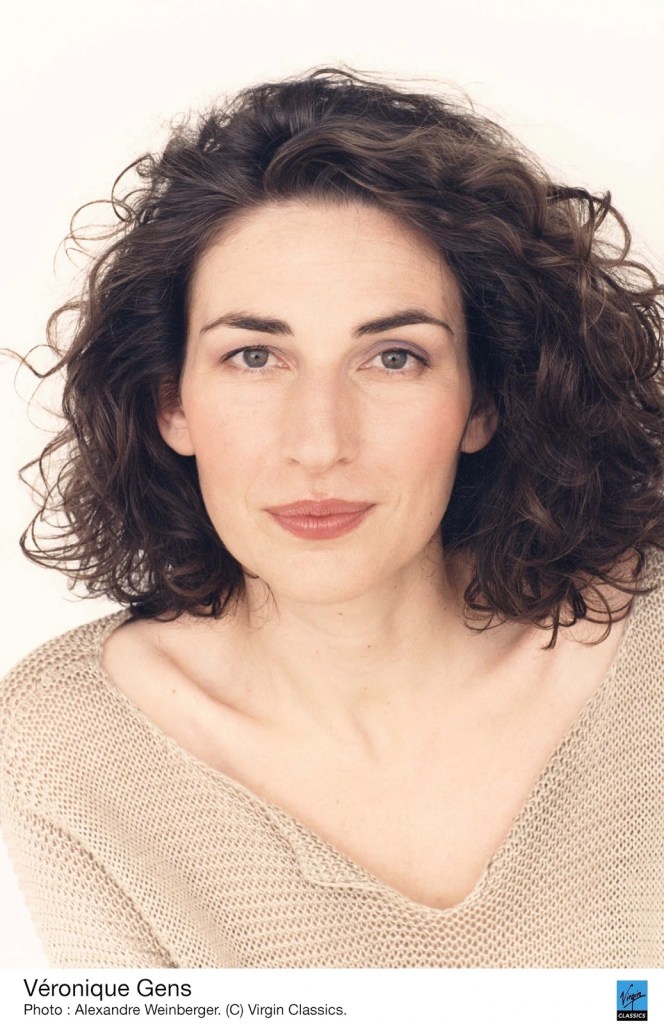
From Tragédiennes to Visions. Véronique Gens, a mini portrait

In 1999, Véronique Gens was named singer of the year by the French ‘Victoires de la Musique’, but her career began 13 years earlier, when she was introduced to William Christie.


Her voice was not yet trained and that was exactly what he was looking for. In 1986, she made her debut as a member of his famous baroque ensemble Les Arts Florissants. Very quickly she became an established singer of baroque music and she worked with the biggest names in the circuit: Marc Minkowski, Philippe Herreweghe, René Jacobs, Christophe Rousset and Jean-Claude Malgoire.


Gens sings ´Ogni vento´ from Hàndel’s Agrippina, conducted by Malgoire


It was Malgoire who gave her her first Mozart roles: Cherubino (Le Nozze di Figaro) and Vitellia (La Clemenza di Tito), but if anyone had predicted to her 20 years ago that she would one day sing the Contessa from Le Nozze or Elvira (Don Giovanni), she would surely not have believed it.


Véronique Gens as Donna Elvira in Barcelona:


She always wanted to sing, but her family of almost exclusively doctors and pharmacists didn’t like it. No steady income, no pension… So she studied English in her hometown Orléans, and then at the Sorbonne.


Since then, she has made hundreds of recordings – many of them award-winning – and her repertoire is constantly expanding: after Mozart came Berlioz – she sang the role of Marie in L’enfance du Christ, for instance – and for her recording of Les Nuits d’été she was chosen as the ´Editor’s Choice´ by English Gramophone.

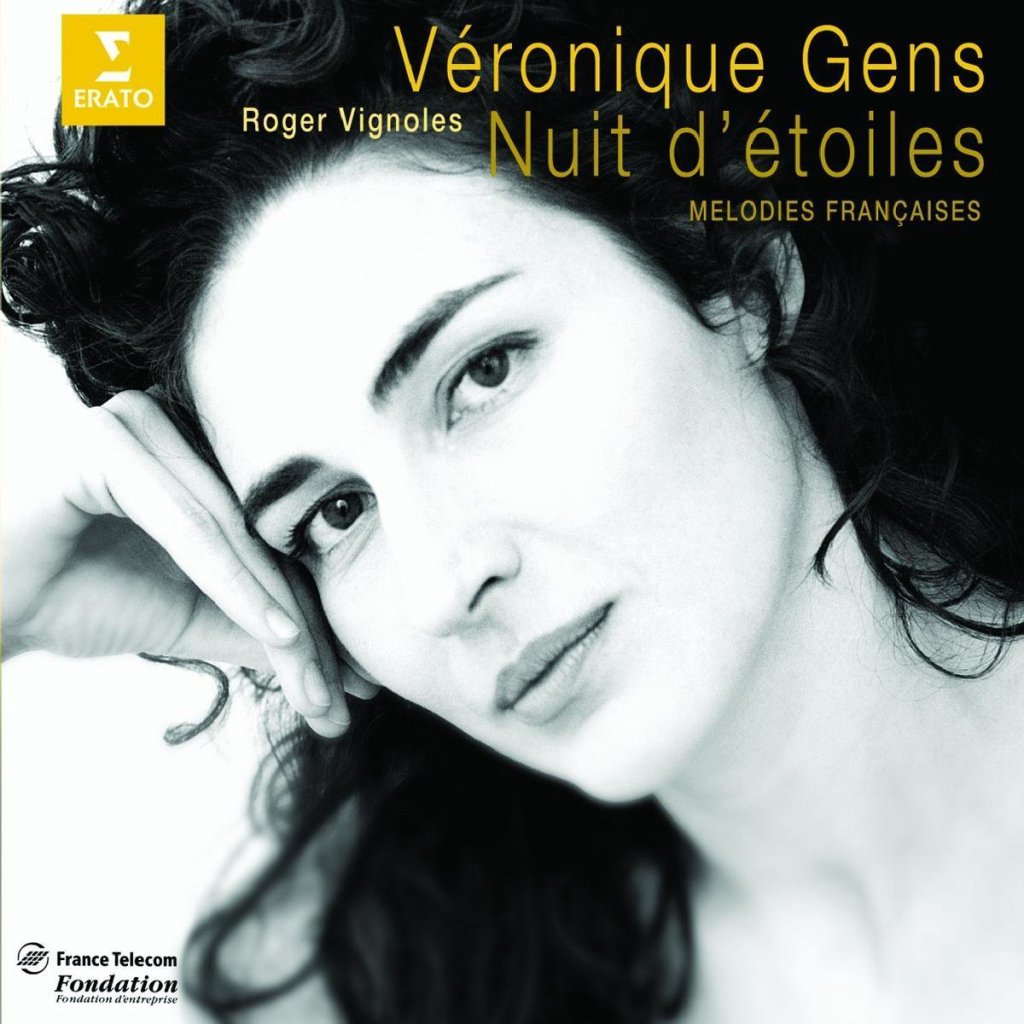
Her CD titled Nuit d’étoiles with songs by Fauré, Poulenc and Debussy was also very enthusiastically received everywhere.


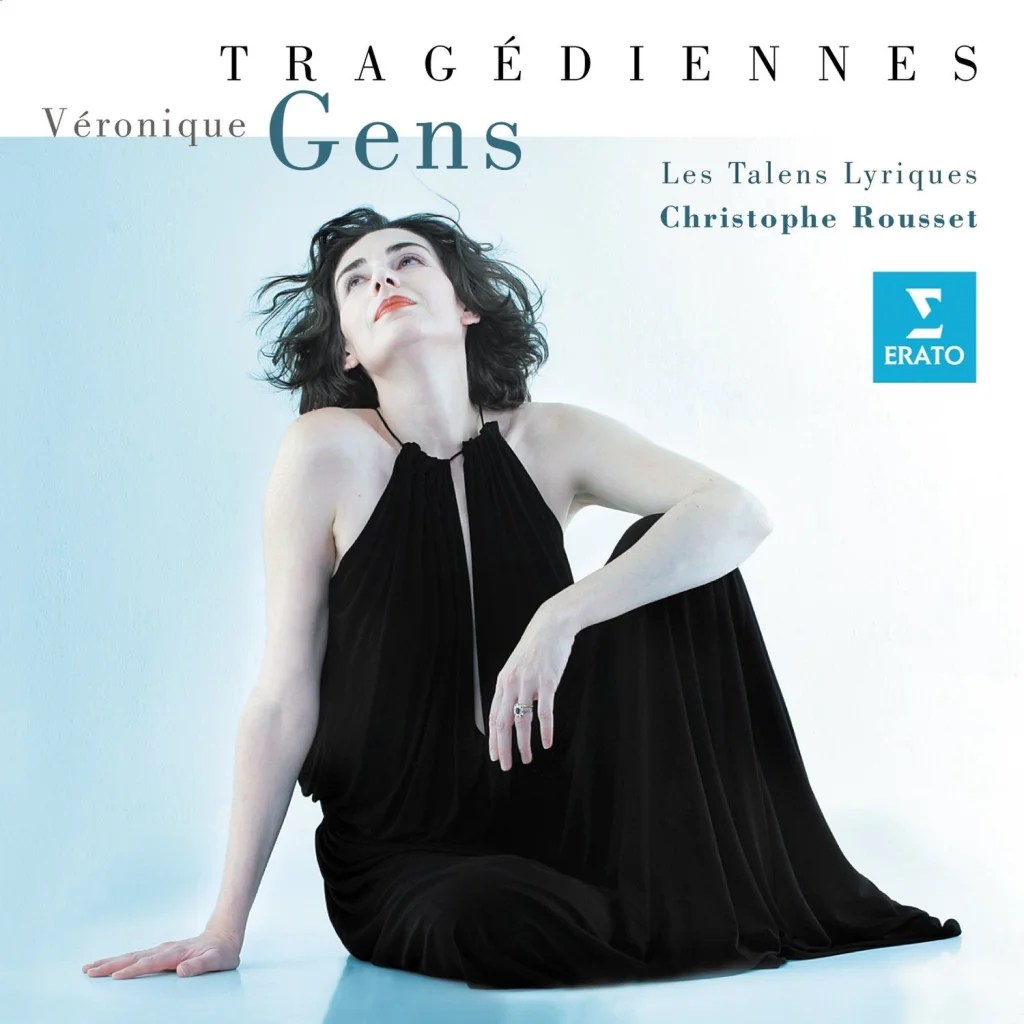
Tragédiénnes


For Virgin, she had embarked on a voyage of discovery through the mostly unknown treasures of the French Baroque in 2006, and the result is quite something.

Accompanied by the Ensemble Les Talens Lyriques, conducted by Christophe Rousset, she recorded arias from the operas of Lully, Campra, Rameau, Leclair, de Mondonville, Royer and Gluck. The so-called “tragédie-lyrique” was inspired by the great classical plays, in which the tragic element was considered the most important. It also contained long dramatic scenes, which allowed the divas of the time to display the whole range of emotions.


It fits her all like a glove. She takes us on a journey of discovery, in which a lot of forgotten gems provide immense pleasure. But however wonderful they all are, she reaches the absolute climax in ‘Dieux puissants que j’atteste…’, Clytamnestra’s poignant cry of the heart for her daughter, from Gluck’s Iphigénie and Aulide.

There she soars with the speed of a rollercoaster to enormous heights, leaving the listener gasping and palpitating. Brava.


Tragédiennes
Arias from early French operas by Lully, Campra, Rameau, Mondonville, Leclair, Royer, Gluck; Les Talens Lyriques conducted by Christophe Rousset. Virgin 346.762


Néère


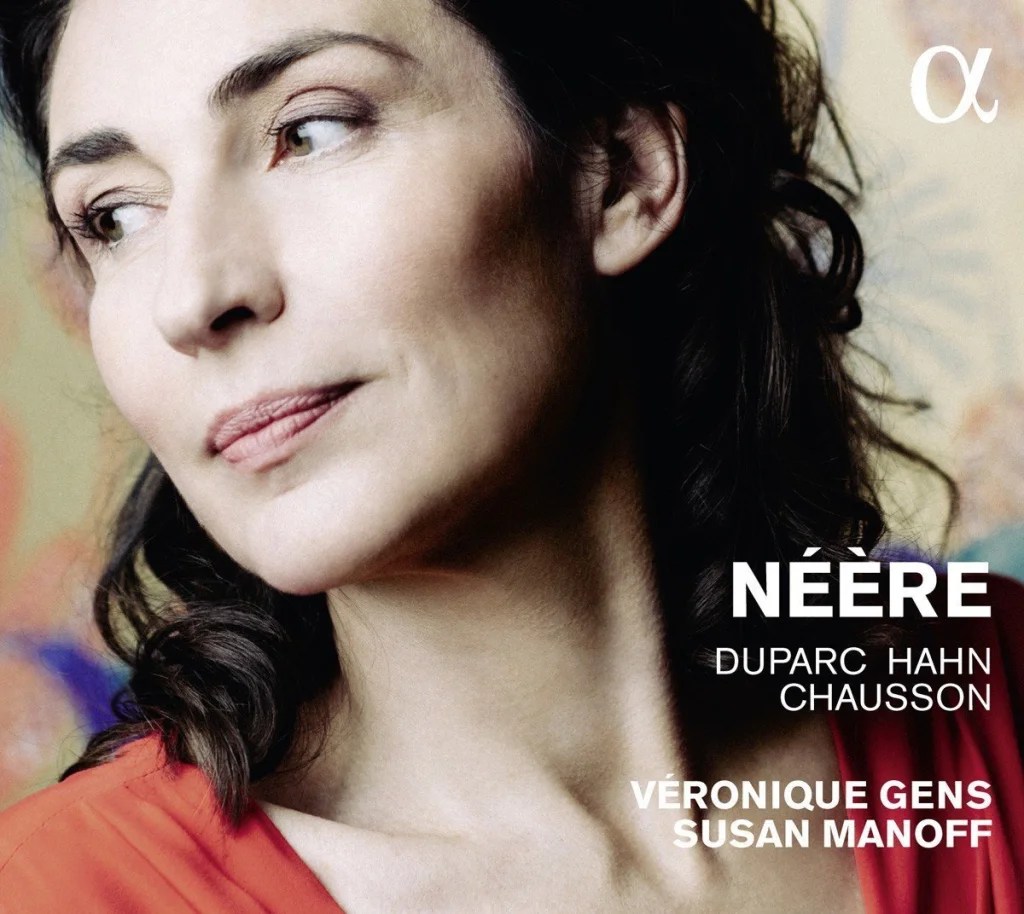
For her album Néère, named after the title of Reynaldo Hahn’s opening song, Veronique Gens has made a more than brilliant selection of the most beautiful songs by Reynaldo Hahn, Henri Duparc and Ernest Chausson.

They cannot be called cheerful: they all exude a very wistful and melancholic atmosphere and are – how could it be otherwise when the French talk about ‘amour’? –  all ‘tristesse’.

The beautiful mélodies fit Gens’s dark-toned and slightly-veiled voice with its sensual undertones like a velvet glove.

Trailer:


Nothing but praise too for the pianist. Susan Manoff plays more than sublime and in her accompaniment she sounds like Gens’ twin sister: the perfection with which she manages to transpose the rich colours so present in the singer’s voice (and there are many!) to the keys is truly unimaginable.


Rare beauty.


Néère; Songs by Reynaldo Hahn, Henri Duparc and Ernest Chausson, Alpha 215


Visions


No one can possibly ignore this CD. Palazetto Bru Zane is long overdue for a fame that transcends all countries and borders! Just look at their programming and all their releases! They are so very special!

Not only is their repertoire extremely rare and extraordinarily fascinating, their releases are done to perfection. Something that deserves not just kudos but the highest awards.

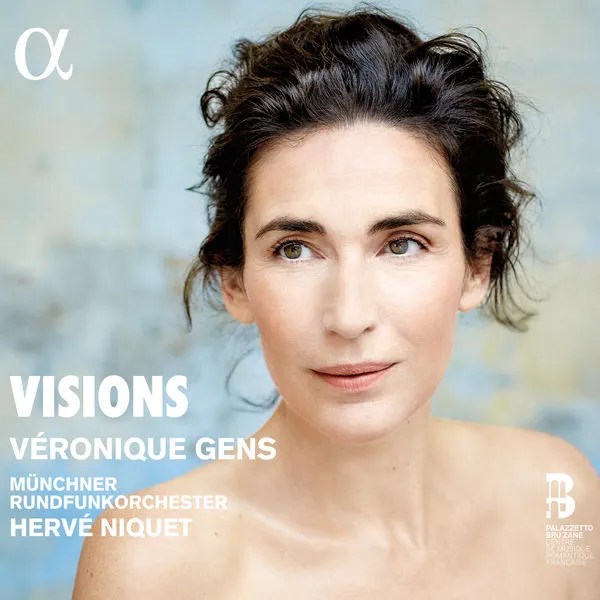
Their latest project, Visions, also exceeds all expectations and desires. At least mine. The CD is bursting with unknown arias from unknown operas and oratorios by largely lesser-known and/or forgotten composers. All the pieces collected here have the motto ‘religious visions’ and exude an atmosphere bordering on sanctuary and martyrdom but served up with the extremely grand gesture that only opera can offer.


Trailer of the recording:


Véronique Gens sings the arias with a great élan and an enormous empathy. Her delivery is dramatic, sometimes even a tad too much. That the arias call for a healthy dose of hysteria is rather obvious, but a little more devotion and piety would have made the result even better, even more impressive.


There is no point in speculating what a singer like Montserrat Caballé could have done with all this material: first, she has never sung it (apart from Massenet’s La Vierge) to my knowledge, and second, singers of her calibre really don’t exist anymore.


Montserrat Caballé sings ‘Rêve infini, divine ecstasy’ from Massenet’s La Vierge:


In this context, Véronique Gens is more than up to the task. Not only because of her exemplary diction and intelligibility, but also because her voice has developed into a true ‘Falcon soprano’ and has reached a level that more than lends itself to this repertoire.


Visions; Arias from the operas by Alfred Bruneau, César Franck, Louis Niedermeyer, Benjamin Godard, Félicien David, Henry Février, Camille Saint-Saëns, Jules Massenet, Frometal Halévy, Georges Bizet; Munich Radio Orchestra conducted by Hervé Niquet; Alpha 279

Mado Robin: the eighth world wonder?

The French coloratura soprano, born on 29 December 1918 in Yzeures=sur-Creuse  could actually be considered the eighth world wonder.
Her voice was of the soubrette type with a very pleasant girlish timbre and her coloratura technique more than sublime, but there was more: her high notes were extremely high. With her voice she not only reached the F4, but even had the C4 within her reach without any problems, one of the highest notes ever sung by a human voice

.

All her high notes in a row, with the description:

She was star of television and radio in the 1950s the fifties,  was a very celebrated radio and TV star in France, but her fame reached far beyond her national borders. She celebrated her greatest triumphs as Lakmé and Leïla (Pearl Fishers), but her Lucia and Olympia were also proverbial.

Mado Robin hits C7 Lucia di Lammermoor:

Gounod’s Mireille is not really a role we would expect from her, but it fits wonderfully well with her childishly naive timbre. I enjoyed these fragments the most, much more than her Lucia and Bellinis.

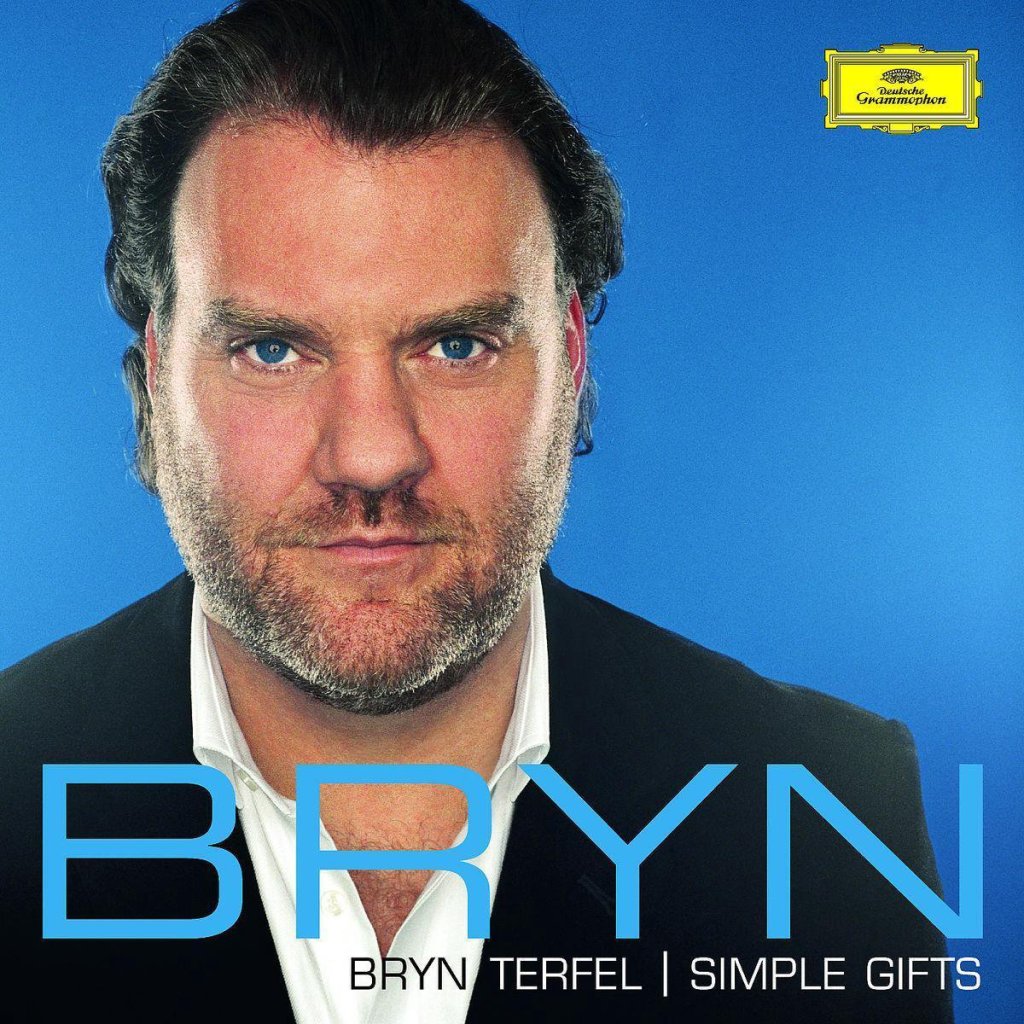
Kerstcadeautjes van Bryn Terfel

 Simple gifts luidde de titel van de cd die Bryn Terfel heeft uitgebracht in 2005. Het kwam precies op tijd voor de Kerst. En soms gebeurt het  dat de titel dekt de lading. Zeker in dit geval, want cadeautjes waren het en zijn het trouwens nog steeds. En al is het niveau van het gebodene niet altijd even hoog, het plezier om ze uit te pakken is even groot.

In 1989 won hij de “Singer of the World” competitie in de categorie liederen, een prijs die hij eigenlijk ‘op de groei’ had gekregen. Niet, dat hij het niet verdiende, zijn stem was toen al van een ongekende schoonheid, maar zijn jeugdige overmoed moest nog ietwat getemd worden, en aan zijn talen moest nog behoorlijk gewerkt worden – zelfs zijn Engels was niet helemaal vlekkeloos.

Tegenwoordig behoort hij tot de grootste baritons van onze tijd.. Niet alleen omdat hij een pracht van een stem heeft waar hij alles mee kan doen wat hij wil. Ook zijn acteertalent, fantastische tekstbegrip, muzikaliteit en een innemende persoonlijkheid zijn buitengewoon fenomenaal. Dat alles komt hem goed van pas op deze cd, waar hij van alles en nog wat op zingt: folksongs, populaire liedjes, klassiekers en evergreens.

Het lijkt net een feestje en een feestje is het. Bij een feestje moeten ook gasten uitgenodigd worden en die ontbreken dan ook niet. Met zijn bariton-collega, Simon Keenlyside zingt hij het eerste deel uit Pergolesi’s Stabat Mater en het, speciaal voor Terfel door Karl Jenkins gecomponeerde Ave Verum Corpus, tenor Aled Jones doet mee in Panis Angelicus, en de gitarist John Williams begeleidt hem in She Was Beautiful, een liedje gebaseerd op de Cavatina uit The Deer Hunter.

Terfel is een groots artiest, en alles wat hij aanraakt verandert in goud. Ook deze, op het eerste gezicht op een ratjetoe lijkende (wat het waarschijnlijk ook is), cd. Een waar geschenk. Maar even een kanttekening: het is echt niets voor de puristen.

Simple Gifts
Bryn Terfel; London Symphony Orchestra olvBarry Wordsworth
DG 4775563