Ik had Beethovens vijfde pianoconcert nog nooit in de concertzaal gehoord. En dat terwijl één van mijn eerste, mij door mijn ouders als Sinterklaascadeau gegeven LPs de opname was met Van Cliburn en Fritz Reiner uit 1961.
Beethoven vijfde pianoconcert met Van Cliburn en Fritz Reiner
Dat was in de Koude Oorlog jaren, die even doorbroken leken toen Van Cliburn in 1958 het Tchaikofski concours in Moskou had gewonnen. De jaren waarin ook optredens van Svjatoslav Richter in het Westen een begin leken van het afbreken van het IJzeren Gordijn. De toenmalige culturele revolutie rond Van Cliburn was dus ook mijn ouders niet ontgaan.
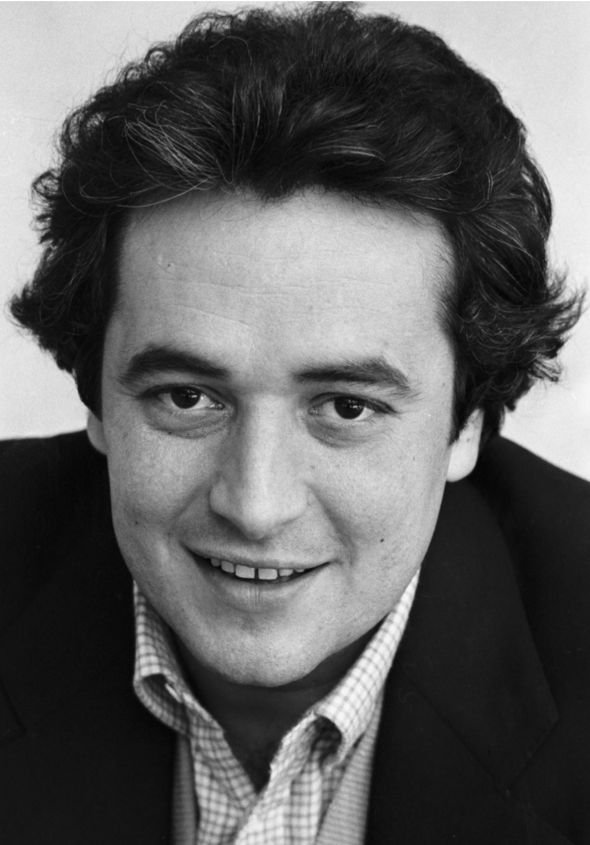
Tijden veranderen. De opvattingen over muziekinterpretatie veranderen, maar die opname, met een fors bezet Chicago Symphony Orchestra, volgens de toenmalige benadering van vroege romantiek, flink zwaar symfonisch, theatraal, was ook sprankelend helder. Er zijn natuurlijk heel veel opnamen van, maar die opname is mijn lievelingsopname gebleven, alles valt nog steeds op zijn plaats. Ik was toen overigens, ondanks mijn acht jaar, ook een beetje onder de indruk van de fraaie hoesfoto met de pianist.
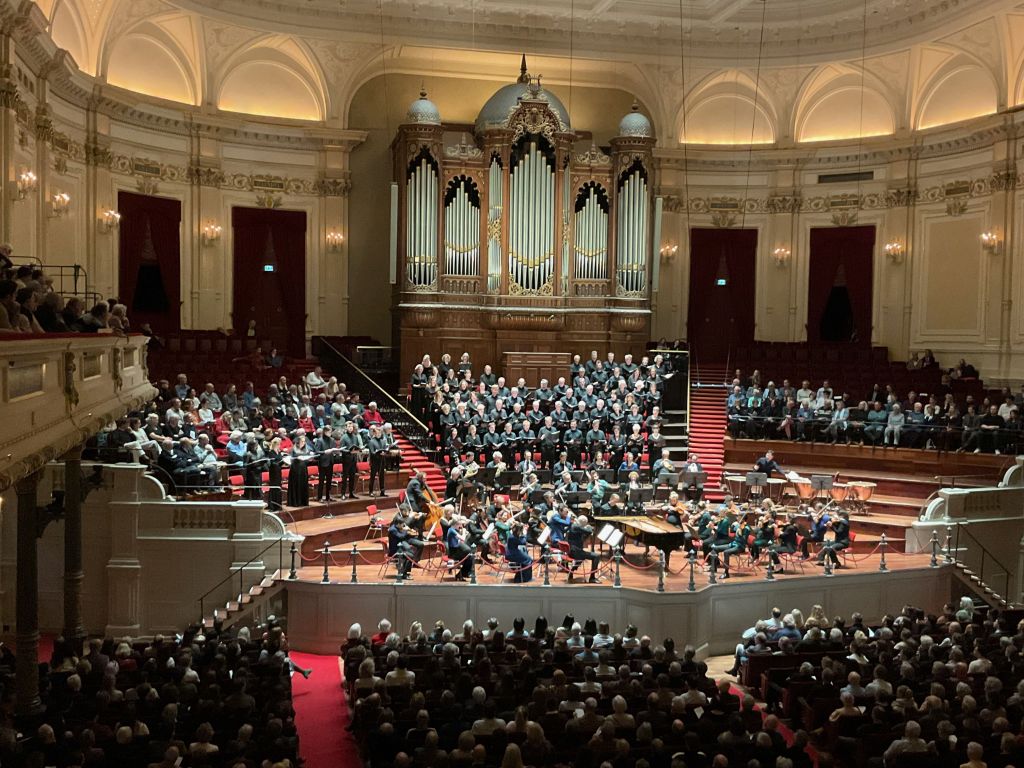
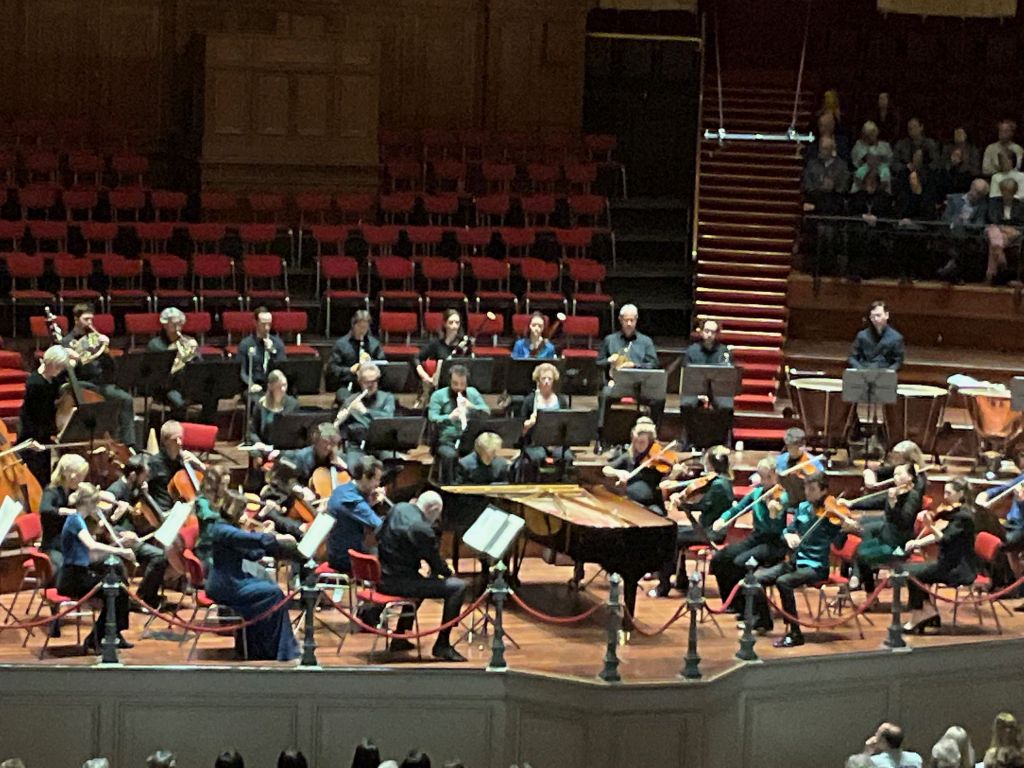
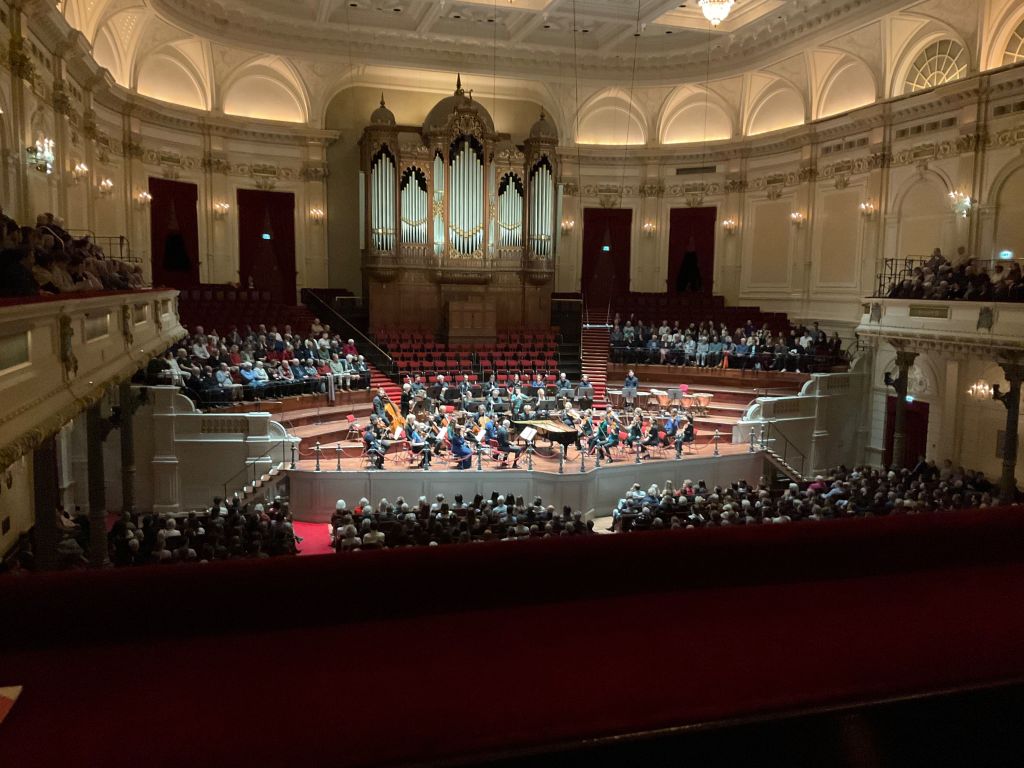
Lucas Jussen en het Nederlands Kamer Orkest kozen, mede geïnspireerd door zich steeds wijzigende instellingen, voor een verrassende opstelling, de piano in het midden, pianist met gezicht richting zaal, eerste violen links, tweede violen en altviolen rechts, blazers over de hele breedte in de achterflank, en concertmeester en pianist leiden om de beurt. Ik telde behalve de solist net iets meer dan dertig musici, kleine bezetting dus.
Misschien werd die opstelling ook al toegepast bij de eerdere afleveringen in deze serie Beethovenconcerten met de gebroeders Jussen en het Nederlands Kamer Orkest. Opstelling, bezetting en aanpak gaven ook bij dit grootst opgezette concert van Beethoven een aangename intimiteit, die duidelijk maakt dat dit werk niet een regelrechte voorloper is van Tchaikofski’s eerste pianoconcert, maar wel een afscheid van een bepaalde periode binnen de de eerste Weense school en de weg wijst naar Mendelssohn en Schumann.
Voor solist Lucas Jussen zijn de meest virtuoze, luidere en snellere passages misschien nog niet allemaal even vanzelfsprekend. Maar dat betekende ook dat je als publiek betrokken raakte bij avontuur. Belangrijk is dat hij het gevoel gaf de noten te begrijpen. In de passages waarin de piano samenspeelt met afzonderlijke instrumentgroepen gloeide een prachtige warmte op.
Ironischerwijs werd het eerste deel van dit pianoconcert, waarvan de première door de componist zelf niet meer kon worden gespeeld vanwege zijn doofheid, ontsierd door gefluit van een gehoorapparaat, waardoor tussen eerste en tweede deel kort moest worden gezocht naar wie het euvele apparaat was vergeten uit te zetten. Maar het leek alsof de uitvoerenden vervolgens des te toegewijder doorgingen. In de pauze hoorde ik mensen praten over de emotionerende uitwerking van het tweede deel. Ik concludeerde dat ik daarin niet alleen was geweest.
Het tweede deel van het concert bestond uit twee minder bekende werken van Beethoven, het eigenlijk totaal onbekende Elegischer Gesang ‘Sanft wie du lebtest’, hier in een uitvoering voor koor en strijkers, en de vroegere Chorfantasie voor piano, zangsolisten, koor, en orkest, met Arthur Jussen, het Toonkunstkoor Amsterdam en solisten van de zangopleiding van het Conservatorium Amsterdam.
De Elegischer Gesang klonk fraai sonoor, mede door de ingehouden klankpracht van het koor. Het zou wat vaker mogen klinken. Het was ook een mooie opmaat voor Ausschweifungen (te vertalen als losbandigheden) van Rick van Veldhuizen, dat tussen de twee vocale Beethovenwerken was geplaatst, een opdracht van het Nederlands Kamerorkest.
Het werk verklankt de existentiële ervaring van leven in de voluptueuze stadsnachten, althans zo schrijft Van Veldhuizen zelf van “iemand die zich te zeer te buiten is gegaan aan alle – wat minder zedige – geneugten van het leven. De held in dit sprookje is op zijn minst aangeschoten en ziet op straat voornamelijk vage vormen.”
Het stuk begint sereen, als tijdens het halfontwaken in ochtendgloren, met koor en strijkers, volmaakt aansluitend bij Beethovens Elegie, waarna de blazers als krijsende vogels de protagonist wakker schudden, maar ze verwijzen ook al naar de volgende avond en nacht, waarin de ik-figuur zijn levenswijze zal voortzetten.
Het gegeven brengt Van Veldhuizens eerdere onlangs door het Concertgebouworkest uitgevoerde mais le corps taché d’ombres in herinnering, op een tekst van Jean Genet, de schrijver die als bijna geen ander de opwinding en tegelijkertijd sleur van een leven vol seks, drugs en rock-’n-roll wist te beschrijven. En net als in mais le corps taché d’ombres maakt Rick van Veldhuizen gebruik van microtonale stemmingen, in dit geval gebaseerd op natuurlijke boventonen van de instrumenten.
mais le corps taché d’ombres van Rick van Veldhuizen door het Concertgebouworkes:
Die nemen we normaliter in ons onderbewustzijn waar, zo lichtte concertmeester en orkestleider Gordan Nikolić in een inleiding toe, het stuk wil die tot ons bewustzijn laten doordringen, en dat is dan deels een verklanking van de bewustzijnstoestand van de protagonist. En zoals in mais le corps taché d’ombres harpiste Anneleen Schuitemaker op zeker moment een reep zilverpapier tussen haar snaren moest duwen, zo schoof de paukenist van het Nederlands Kamer Orkest op zeker moment plastic zakken of doeken over zijn stokken en moest daarmee in de lucht slaan; luchtpaukenist, en dat allemaal ook weer voor wat extra boventonene.
Tot besluit klonk Beethovens Chorfantasie met Arthur Jussen als solist. Het blijft een merkwaardig, onevenwichtig werk, maar het triomfantelijke karakter paste bij de opzet van deze laatste aflevering van de serie Beethoven concerten met Lucas en Arthur Jussen, waarin ook het Toonkunstkoor Amsterdam zich van verschillende kanten kon laten zien en waarin ook jonge nog studerende solisten een kans kregen. De virtuoze pianopartij, die door de massale opzet geregeld enigszins in het gedrang komt, werd met bravoure vertolkt door Arthur Jussen.
Nederlands Kamerorkest o.l.v. Gordan Nikolić met onder meer Beethoven:
Lucas Jussen en Arthur Jussen piano Nederlands Kamerorkest Toonkunstkoor Amsterdam Zangstudenten van het Amsterdams Conservatorium
Gordan Nikolić viool/leiding Alejandro Puerta Cantalapiedra dirigent in Ausschweifungen Beethoven Pianoconcert nr. 5 in Es, op. 73 Kaiserkonzert Beethoven Elegischer Gesang ‘Sanft wie du lebtest’, op. 118 Van Veldhuizen Ausschweifungen (opdracht van het Nederlands Kamerorkest) Beethoven Chorfantasie in f, op. 80
Fotos Neil van der Linden en Alejandro Puerta Cantalapiedra
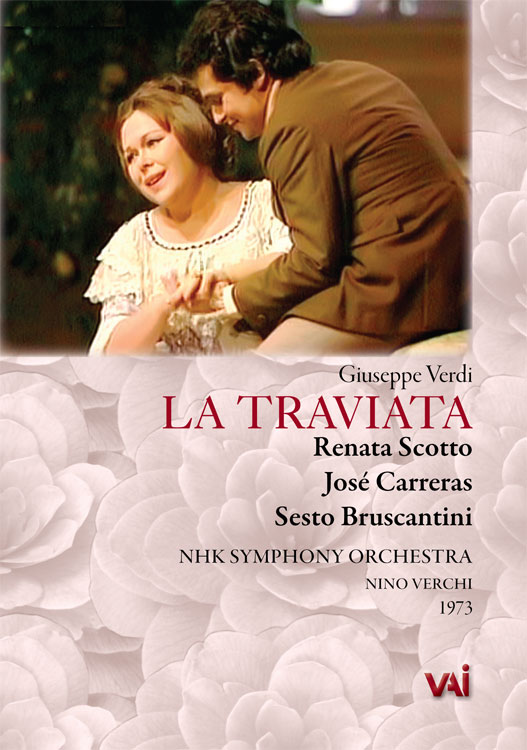
Don’t think that in the old days, when everything was done by the book, the performances were static and boring! In 1973, La Scala was on tour in Japan, and there, in Tokyo, a legendary performance of La Traviata was recorded (VAI 4434).
The leading roles were played by the then still ‘curvy’ Scotto and 27-year-old (!) José Carreras. DVD does not mention the name of the director, perhaps there was none, and the singers (and the conductor) did it all themselves? Anyway, the result is really beautiful, moving and to the point. I am not going to say any more about it, because this recording is an absolute must for every opera lover.
Finale of the opera:
L’ELISIR D’AMORE 1976
My beloved CD recording of L’elisir is live and, to be honest, far from perfect (Legato Classics LCD 218-2). Yasuko Hayashi is only so-so as Adina, she is no more than average and the use of her voice is too heavy.
But the men! José Carreras is a dream of a Nemorino – silly and hopelessly in love. On him the potion is actually well spent, it really makes him happy and elated.
Geraint Evans is a delightful Dulcamara, more than a bit exaggerated, but entirely in the spirit of the character. Thomas Allen is a very potent Belcore and the Covent Garden orchestra and choir are very spiritually and engagingly conducted by John Pritchard.
The recording (London, 1976) sounds fine. As a bonus, we get a recital that Carreras gave at Carnegie Hall 30 November 1980, on which he also sings some lesser-known arias and songs, including parts from Leoncavallo’s Lady Chatterton and Rossini’s Pietra del Paragone.
SIMON BOCCANEGRA 1977
In 1971, Claudio Abbado conducted a magisterial and now legendary performance of Boccanegra at La Scala. It was directed by Giorgio Strehler and the beautiful sets were designed by Ezio Frigerio. In 1976, the production was shown at the ROH in Covent Garden. Unfortunately, no official (there are ‘pirates’ in circulation) video of it was made, but the full cast did fortunately go into the studio, and thus the ultimate ‘Simone’ was recorded in 1977 (DG 4497522).
Abbado treats the score with such love and such reverence as if it were the greatest masterpiece of all time, and under his hands it really does transform into a masterpiece without parallel. Such tension, and with all those different nuances! It is so, so beautiful, it will make you cry. The casting, too, is the best ever. Piero Cappuccilli (Simon) and Nicolai Ghiaurov (Fiesco) are evenly matched. Both in their enmity and reconciliation, they are deeply human and always convincing, and in their final duet at the end of the opera, their voices melt together in an almost supernatural symbiosis:
Before that, they had already gone through every range of feeling and mood, from grievous to hurtful, and from loving to hating. Just hear Cappuccilli’s long-held ‘Maria’ at the end of the duet with his supposedly dead and now found daughter (‘Figlia! A tal nome palpito’).
José van Dam is an exquisitely vile Paolo and Mirella Freni and Jose Carreras are an ideal love couple. The young Carreras had a voice that seems just about created for the role of Adorno: lyrical with a touch of anger, underlining Gabriele’s brashness. Freni is more than just a naive girl; even in her love for Adorno, she shows herself to be a flesh-and-blood woman
HERODIADE 1984
This recording also may only be obtained via a pirate (or You Tube), but then it is complete and moreover with (admittedly bad) images!
Dunja Vejzovic portrays a deliciously mean Hérodiade and Juan Pons is a somewhat youthful but otherwise fine Hérode. A few years later, he will become one of the best “Hérodes” and you can already hear and see that in this recording.
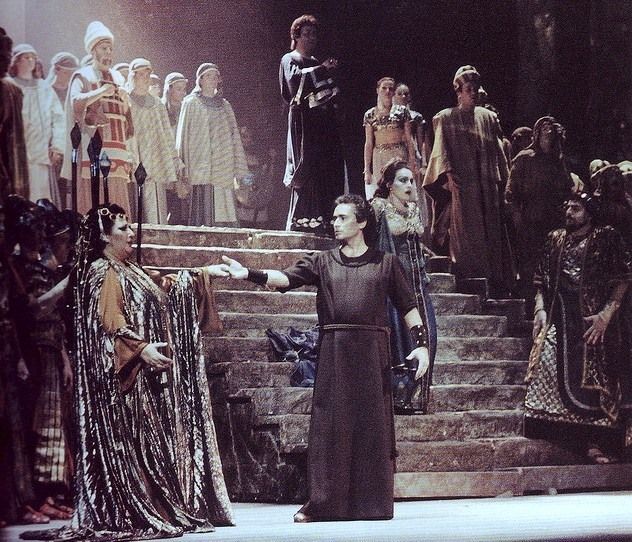
Montserrat Caballé is a fantastic Salomé, the voice alone makes you believe you are in heaven and José Carreras is very moving as a charismatic Jean.
Below, Carreras sings ‘Ne pouvant réprimer les élans’:
None of the protagonists is really idiomatic, but what a pleasure it is to watch a real Diva (and Divo)! They really don’t make them like that any more
The whole opera on you tube:
LA JUIVE Vienna 1981
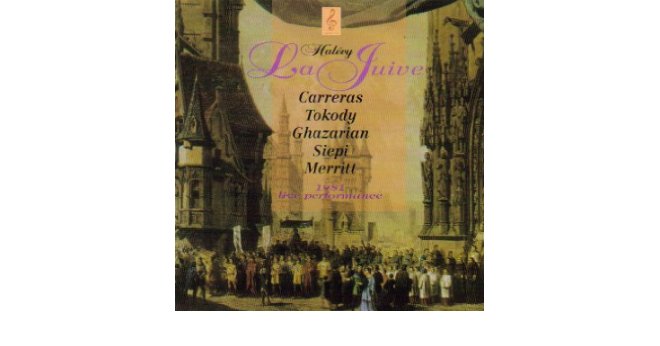
I have never been able to understand why José Carreras added the role of Éléazar to his repertoire. It did fit in with his desire to sing heavier, more dramatic roles. Roles that were one size too large for his beautiful, lyrical tenor. Which absolutely does not mean that he could not sing the role! He succeeded quite nicely and the result is more than worth listening to, but he doesn’t sound truly idiomatic.
In the live recording from Vienna 1981 Carreras also sounds too young (he was only thirty-five then!), something that is particularly noticeable in the Seider-evening scene. It is sung beautifully, but due to a lack of weight he tends to shout a bit.
José Carreras sings ‘Rachel, quand du Seigneur’.
Ilona Tokody is a Rachel of a Scotto-like intensity (what a pity she never sang the role onstage!) and Sona Ghazarian sings an excellent Eudoxie.
LA JUIVE Studio recording 1989
La Juive, recorded by Philips in 1989, marked the first studio recording Carreras made after his illness. His voice was now less sweet and smooth than before, but sounded much more alive, which improved his interpretation of the role.
Julia Varady is a beautiful Rachel, perhaps one of the best ever and Eudoxie is in excellent hands with June Anderson.
Dalmacio Gonzales is a more than decent Léopold, in any case much better than Chris Merrit and the French-American-Portuguese conductor Antonio de Almeida shows he has a real affinity with the opera. (Philips 475 7629)
LA BOHEME Metropolitan Opera New York 1982
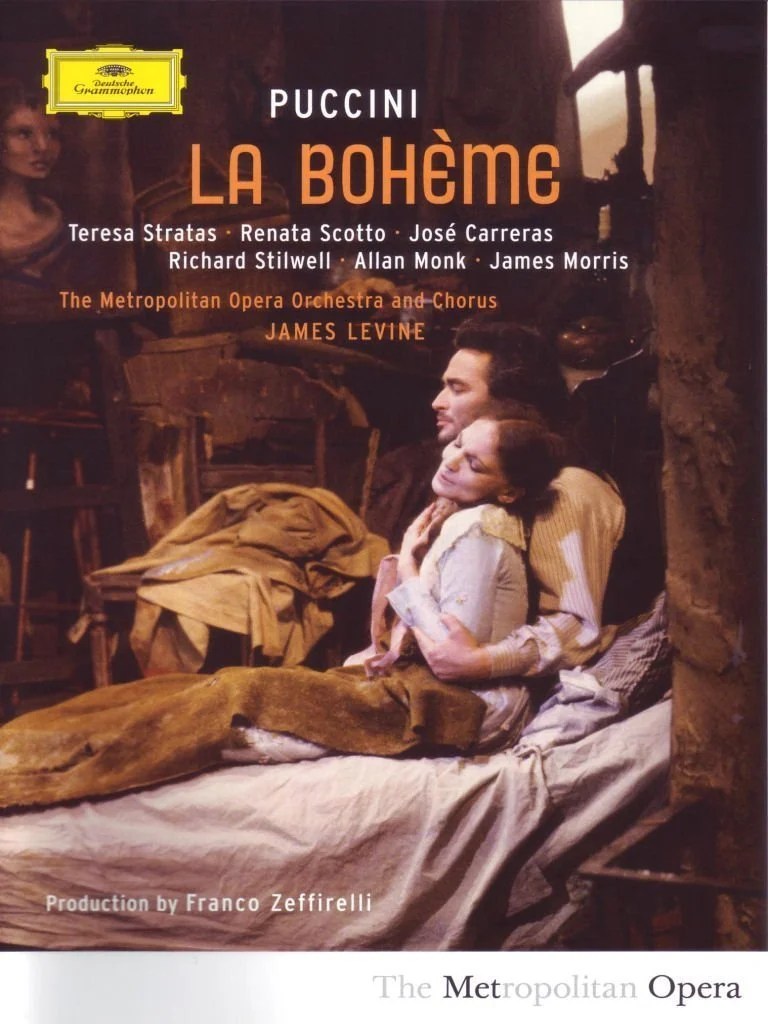
Musetta was not really a role with which we associate Scotto. Neither did she herself, but she accepted the challenge with both hands. In the Zefirelli Met production of 1982 alongside the very moving José Carreras and Teresa Stratas La_Juive
SimonIlona_she sang a Musetta to die for. (DG 073 4539 9).
TURANDOT 1983
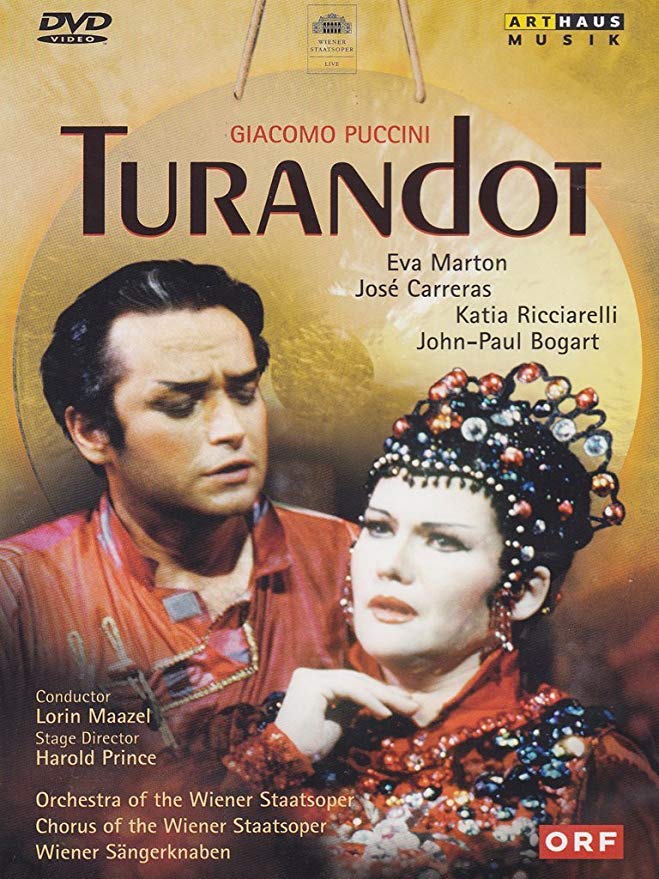
Harold Prince, with no less than 21 Tony Awards to his name, one of the biggest (if not the biggest) musical producers/directors, tackled ‘Turandot’ (Arthaus Musik 107319) in 1983, with very impressive results. He created a world of illusion ruled by fear, where the inhabitants, dressed in dazzling costumes, hide themselves (and their true feelings) behind masks. Beautiful and terrifying at the same time.
Eva Marton sings a phenomenal Turandot and Katia Ricciarelli is a fragile, pitiful Liù. Her “Signore ascolta” spun out with the most beautiful pianissimi is heartbreaking.
And José Carreras… He makes me cry too, because at the age of 37 he had one of the most beautiful (lyrical) voices in the world. But Calaf was not his role. He sings it beautifully, but one hears him crossing his own boundaries. And yet …. His hopeless macho behaviour, which goes against all odds, not only fits the concept of the director, it also illustrates Calaf’s character perfectly. At least for me.
The orchestra from Vienna is conducted by Lorin Maazel. Not my favourite conductor, but in this case, I have no reason to complain.
Voor het eerst sinds tijden klonk er weer boegeroep in de Stopera. De poging van regisseur Barry Kosky om al het gruwelijks dat in Puccini’s opera gebeurt een zinvolle nieuwe context te geven bleek toch niet in staat iedereen te overtuigen.
Of misschien werd hem vooral kwalijk genomen dat Kosky, samen met dirigent Lorenzo Viotti (die wél volop applaus kreeg!), had besloten de vertrouwde maar apocriefe door Franco Alfano na Puccini’s dood toegevoegde slotscène weg te laten, waardoor de opera eindigt kort na de zelfmoord van Liu en het publiek dus een flink deel van het vertrouwde vocale werk van de officiële sopraan en de tenor-hoofdrollen respectievelijk Turandot en Calaf onthouden wordt. Ook al is dit de versie die Toscanini bij de première van het werk verkoos; pas tijdens volgende opvoeringen dirigeerde hij Alfano’s toevoegingen erbij, in verkorte vorm, omdat hij niet gelukkig was met die toevoegingen.
Wat overblijft is wel een erg duister geheel, met weinig anders dan de zelfopoffering van Calafs trouwe bediende Liu, zonder een bijna Wagneriaanse ‘verlossing’ die de componist blijkens de nagelaten schetsen had voorzien, maar waarmee hij ook blijkens die schetsen sterk worstelde, vermoedelijk mede doordat weinig in het voorgaande vooruitwijst naar de daarvoor vereiste drastische omslag in de gedachten van de tot dan toe uitermate wrede protagoniste Turandot.
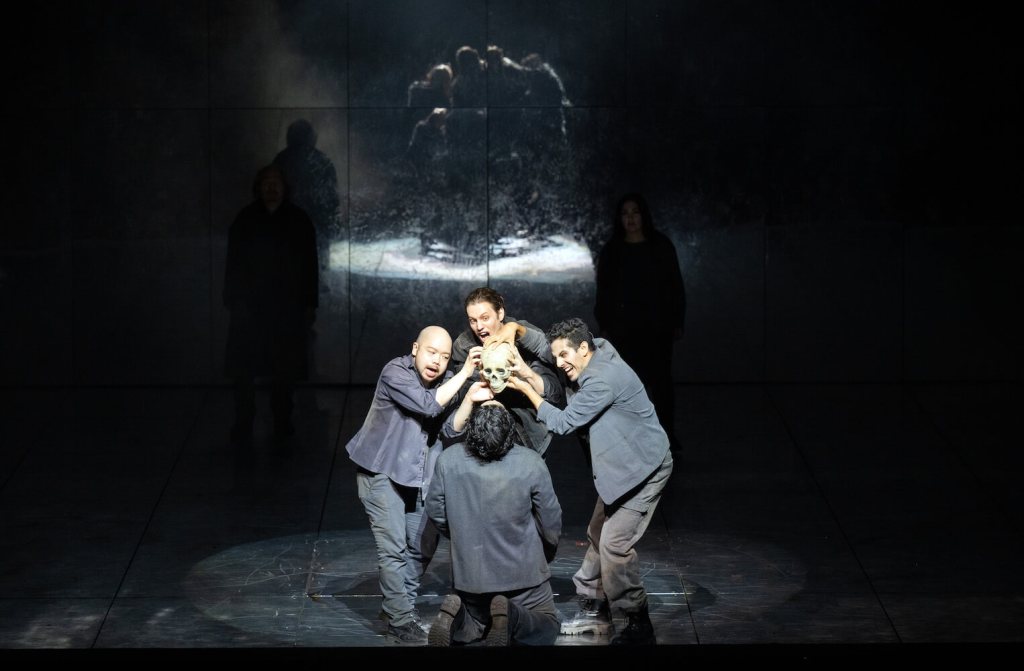
Daarvoor krijgen we in het libretto van deze opera ook te weinig te zien van Turandot. Dat laatste heeft regisseur Barry Kosky letterlijk verbeeld door het personage van Turandot alleen maar indirect ten tonele te voeren. We krijgen niets van haar te zien, en de stem van Tamara Wilson in de tot nu tot twee scenes ingeperkte rol klinkt eerst vanuit een enorm doodshoofd in het decor en later vanuit de orkestbak. Ja, inderdaad, Turandot komt nu alleen nog maar in twee scenes voor. Maar ja, dat was bij Toscanini bij de première dus ook het geval.
Vóór de uitvoering, tussen de bedrijven (de opera wordt zonder pauze uitgevoerd) en aan het eind klinken fluisterstemmen met flarden deels aan de tekst van de opera ontleende teksten. “Luister, vreemdeling,” woorden gericht tot de gelukszoekende prins, nu ook gericht tot het publiek. Er wordt gezegd dat de doden doordromen, suggererend dat wat we zien de belevingswereld is van de vele slachtoffers van het wrede regime dat we op het toneel zien. En Turandot bestaat niet, klinkt het aan het eind van de voorstelling.
Intussen zien we een gruwelijke samenleving op het toneel, waarin massa’s zich laten opjutten om de gruwelijke wensen van een kennelijk gemeenschappelijke fata morgana uit te voeren.
Ja, zo kunnen massa’s zijn, leert de geschiedenis, waaraan ook de in het programmaboek geciteerde Elias Canetti refereert, die in zijn Massa en Macht uit 1960 een diepte- en massapsychologische analyse schreef van de massavorming en de wil tot macht waarin hij ook een beeld schetst van de “paranoïde alleenheerser”, mede naar aanleiding van wat hij in de jaren dertig met eigen ogen in Oostenrijk en Duitsland had zien gebeuren.
In dit verband is het interessant te vermelden dat regisseur Barry Kosky onlangs de Prize for Understanding and Tolerance en het zich inzetten voor Joods erfgoed heeft gekregen van het Joodse Museum in Berlijn. Turandot, in 1924 onvoltooid nagelaten, in 1926 in première gegaan onder de later verwoede anti-fascist Toscanini, het ligt allemaal niet zover van die jaren dertig.
De massa, perfect gezongen en uitgebeeld door het koor van de opera, is uniform gekleed in wat deels op Mao-pakken lijkt, maar de uniformiteit is als boodschap belangrijker dan verwijzingen naar de Chinese geschiedenis van de twintigste eeuw. Al zijn in de beelden China en met name Chinoiserie nooit helemaal ver weg.
Dansers voeren choreografieën uit die mede door de veelkleurige kleding de op traditioneel-Chinese esthetiek gebaseerde opera die Puccini voor zich moet hebben gezien verbeelden. Ik vond wel een probleem dat de Oriëntalistische stijlelementen niet goed op het overige toneelbeeld aansluiten, zeker niet in de logica die Kosky in het geheel wil aanbrengen. Stellen dat het allemaal een droom is is dan niet altijd voldoende.
Prachtig kwam in deze opzet naar voren hoe gruwelijk de ‘komische’ personages Ping, Pang en Pong zijn. Uiteindelijk zijn zij het die prins Calaf met geweld willen dwingen zijn naam bekend te maken, en de jonge Liu martelen om haar Calafs naam bekend te laten maken, en haar zo tot zelfmoord dwingen.
En ja, dat is uit lijfsbehoud, en namens de gehele bevolking, als gevolg van het decreet van Turandot dat als die naam niet bekend wordt gemaakt de hele bevolking van Beijing zal worden uitgeroeid. De bevolking komt ook niet in opstand tegen het systeem, dat het in feite zelf in stand houdt.
Van de solisten waren Ping, Pang en Pong ook theatraal de sterren van de show. Met Germán Olvera als prachtige bariton, die als acteur ook heel gemeen kan zijn, en verder Lucas van Lierop als sterke tenor en Ya-Chung Huang als geweldige komiek, wiens gezichtsuitdrukking op 30 meter afstand nog tot in detail te volgen is, én als uitstekende tenor.
De andere hoofdrol is voor koor, dat vrijwel permanent op het toneel staat, of ligt, zoals bij de opening en aan het slot, als het in vaalgrijs licht op de grond ligt, als een massa doden. Waaraan overigens ook in het libretto wordt gerefereerd: ‘Op de glacis ziet men de schimmen van Turandots slachtoffers verschijnen en verdwijnen.’ En ze zingen: “Aarzel niet! Roep haar en zij verschijnt, van wie wij, doden, nog steeds dromen.
Doe haar spreken, zodat we haar horen! Ik hou van haar! Ik hou van haar!” En dan de prins: “Nee! Nee! Alleen ik hou van haar!” Ping, Pang en Pong: “Hou je van haar? Wat zeg je? Van wie zeg je? Van Turandot? Ha! Ha! Ha!”
Lagen in het libretto die vaak verborgen blijven als je het werk als een Peking opera uitvoert. En met het beeld van dode geesten is waar de opvoering eindigt. Op het punt waar ook Toscanini de eerste opvoering eindigde, en de woorden sprak: “Hier eindigt de opera, omdat op dit punt de maestro is gestorven.”
Zou de dus wél met applaus overladen dirigent Lorenzo Viotti zich een Puccini- of Toscanini-kapsel mét anno jaren twintig vorige eeuw-snor hebben aangemeten om ons aan die première te herinneren?
Musical direction Lorenzo Viotti Stage direction Barrie Kosky Set design Michael Levine Costume design Victoria Behr Lighting design Alessandro Carletti Choreography Otto Pichler La principessa Turandot Tamara Wilson L’imperatore Altoum Marcel Reijans Timur Liang Li Il principe ignoto (Calaf) Najmiddin Mavlyanov Liù Kristina Mkhitaryan (2, 6, 9, 17, 21 and 28 Dec) Ping / Un mandarino Germán Olvera Pang Ya-Chung Huang Pong Lucas van Lierop
Nederlands Philharmonisch Orkest Koor van de Nederlandse Opera, koorrepetitor Edward Ananian-Cooper Nieuw Amsterdams Kinderkoor
EMI (now Warner) recorded the opera in Paris in 1991. The conductor was Myung-Whun Chung and there is the rub: he does not really know the opera. But he was not the only culprit! Someone came up with the unfortunate idea of having Dalila sung by Waltraud Meier. Forget it.
The other studio recording, this time on DVD (DG 0730599), also has a Dalila that just doesn’t work for me: Olga Borodina. It was recorded at the Metropolitan Opera in 1998. I was there and didn’t like it – and I still don’t like it.
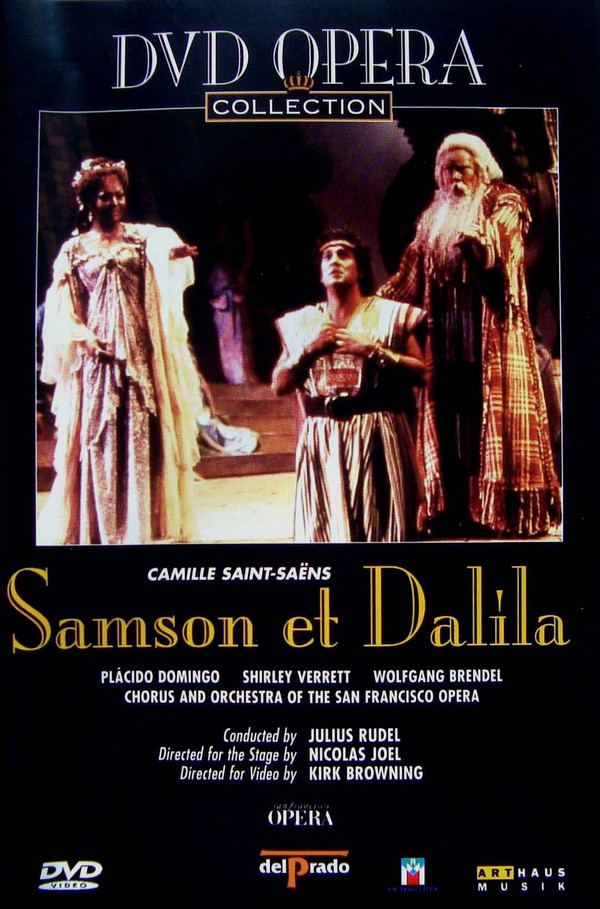
But, I’ll go for the San Francisco recording every time! It was directed by Nicolas Joel and Dalila was sung by the really sexy Shirley Verrett (Arthaus Video 100 202)
In het Wagner gedenkjaar 2013 baarde Oper Leipzig opzien met nieuwe producties van de drie vroege werken van Wagner die nooit tijdens de Bayreuther Festspiele vertoond worden, dit op dwingende aanwijzing van de meester zelf. Om dit verbod te omzeilen werd het drietal ‘Frühstücke’ opgevoerd in de Bayreuther Oberfrankenhalle (een sporthal!). Het succes was zo groot dat de première van de nieuwe Ring in de regie van Frank Castorf er enigszins door werd overschaduwd.
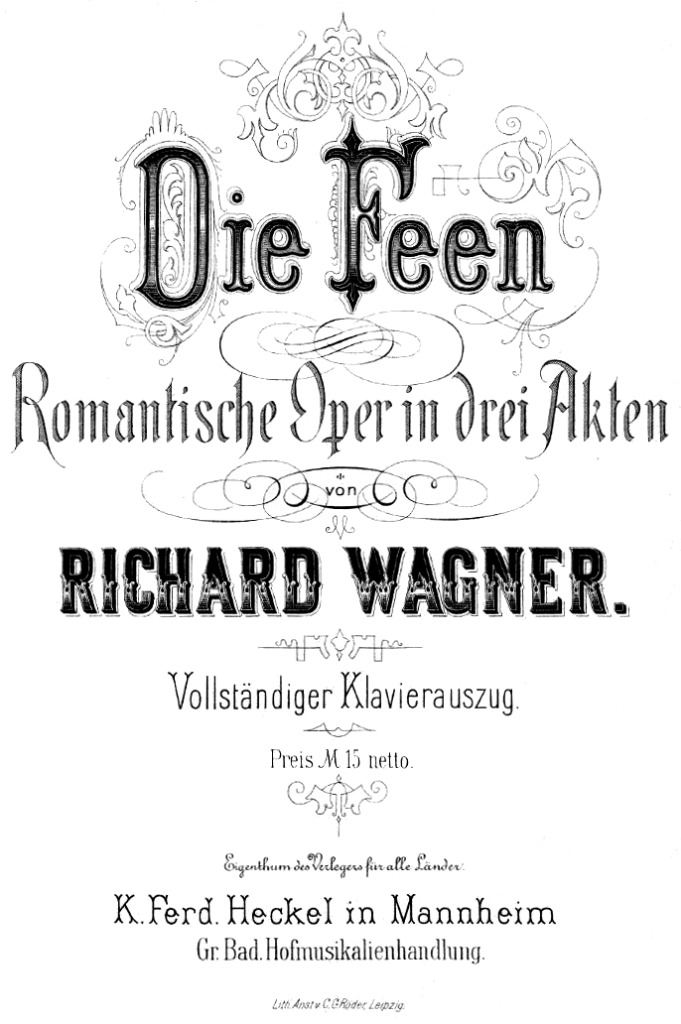
Wagner voltooide de romantische sprookjesopera Die Feen in 1833, toen hij 20 jaar oud was. Hij heeft nooit een uitvoering van zijn eersteling mogen beleven, de première liet tot 1888 op zich wachten, 5 jaar na zijn dood. Ook daarna had het werk weinig succes. Zo vond de Franse première pas in 2009 plaats in het Théâtre du Châtelet in Parijs. Veel Wagnerianen, waaronder ikzelf, hebben die productie gezien.
Waar Wagners tweede opera Das Liebesverbot kan worden opgevat als een Duitse Spieloper in de stijl van Lortzing, maar met sterke Italiaanse invloeden en Rienzi als een poging tot het scheppen van een Duitse grand opéra is, te vergelijken met werken van Meyerbeer en Halévy, is Die Feen toch vooral een ‘embryonale Wagner’. Dat zit hem vooral in het libretto waarin elementen voorkomen die Wagners latere werk zullen kenmerken.
Het begint al met de hoofdpersoon Arindal die met een onbekende feeënprinses heeft samengeleefd maar de eerste acht jaar van hun huwelijk niet naar haar naam en afkomst mag vragen. Dat hij dat een dag voor het aflopen van die termijn toch doet, heeft vermoedelijk te maken met het over het hoofd zien van een schrikkeljaar. En natuurlijk luidt deze blunder een reeks vreselijke gebeurtenissen in die de personages tot het einde van de opera in hun greep houden.
De overeenkomst met Lohengrin en Elsa is duidelijk. Aan het einde is sprake van verlossing van Arindal en zijn geliefde doordat beiden onsterfelijk worden, ook dat zien we in verschillende vormen in latere werken terug, zoals in Tannhäuser en Der fliegende Holländer. Tenslotte valt op dat het werk al lange verhaallijnen kent, iets dat daarna nooit echt meer over is gegaan.
De jonge componist heeft duidelijk veel naar muziek van Weber, Marschner en vooral Beethoven geluisterd, met name diens Negende en de opera Fidelio. Verder zijn er Italiaanse invloeden (Bellini) te bespeuren maar veel minder dan in Das Liebesverbot. Vocaal worden er hoge eisen aan de uitvoerders gesteld. Zo vormt de grote scène van Ada in de tweede akte ‘Weh’mir, so nah’die fürchterliche Stunde’ een voorbode van hetgeen Wagner later zijn Brünnhildes voor zal schotelen.
Het werk kent maar liefst drie liefdesparen die een afspiegeling vormen van de adellijke rangorde. Bovenaan staan prins Arindal en zijn vrouw Ada, dochter van de Feeën Koning. Daaronder de ridder Morald en diens geliefde Lora, Arindals zuster. Tenslotte Arindals vriend Gernot en Lora’s vriendin Drolla. Met zoveel hoofdrollen is het bijna onbegonnen werk het verhaal in het kort na te vertellen. Laat ik volstaan met te onthullen dat Ada enige tijd door haar vader in steen wordt veranderd, een thema dat later door von Hofmannsthal in Die Frau ohne Schatten wordt opgepakt.
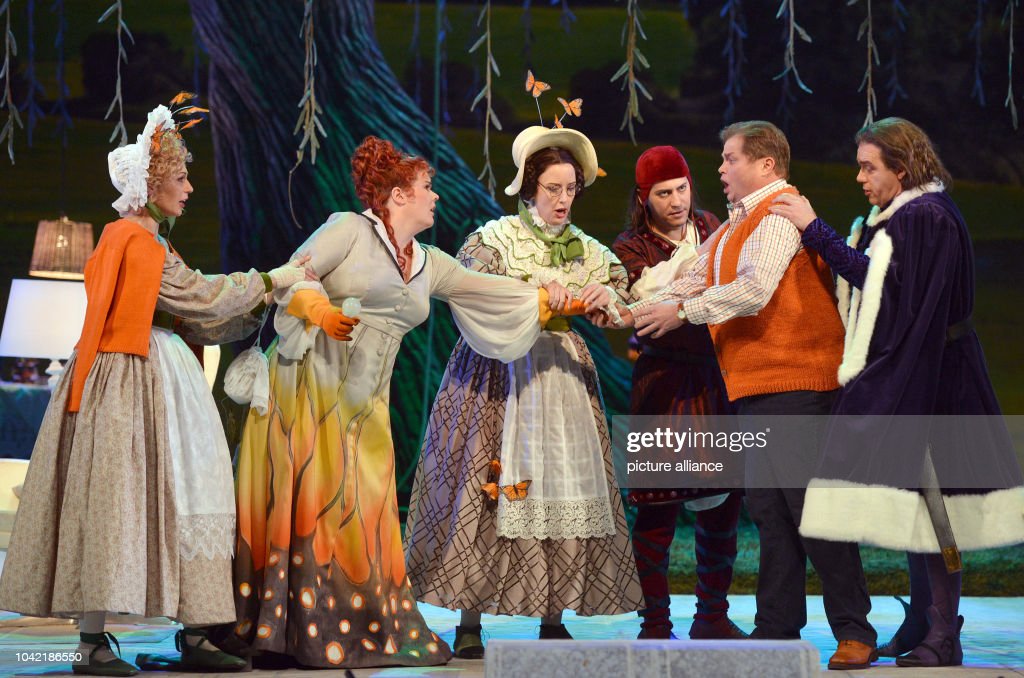
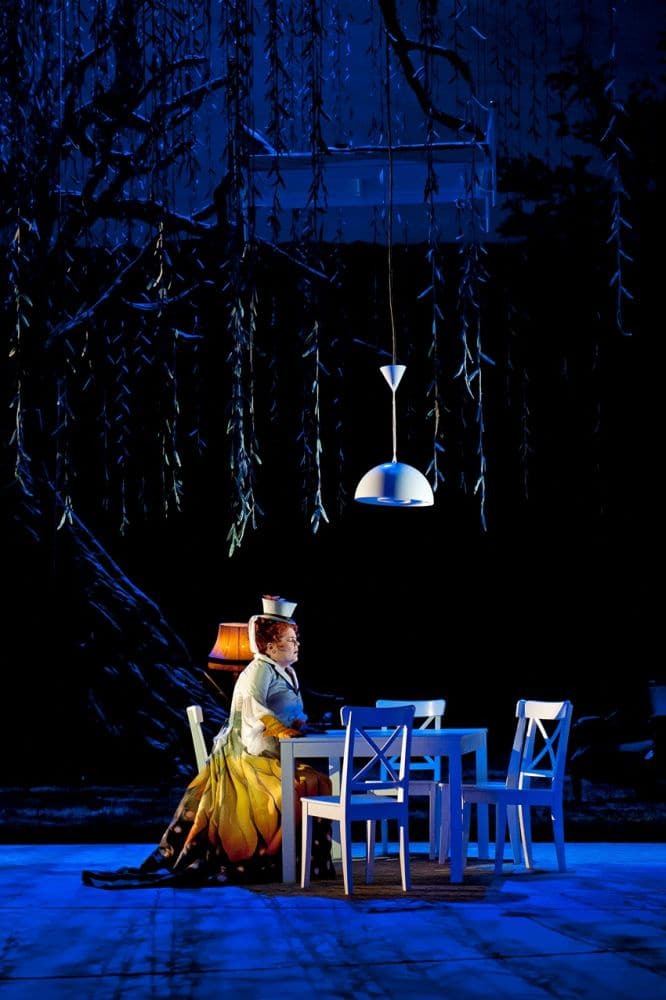
In de enscenering die Renaud Doucet voor Leipzig heeft gecreëerd is sprake van drie handelingsniveaus.
De scènes waarin Arindal centraal staat spelen zich af in een eigentijds burgerlijk milieu. Om zijn outsider rol in de feeënwereld – en zijn volstrekt gebrek aan grip op de gebeurtenissen – te benadrukken loopt hij erbij als de personificatie van de hoofdfiguur in Death of a salesman.
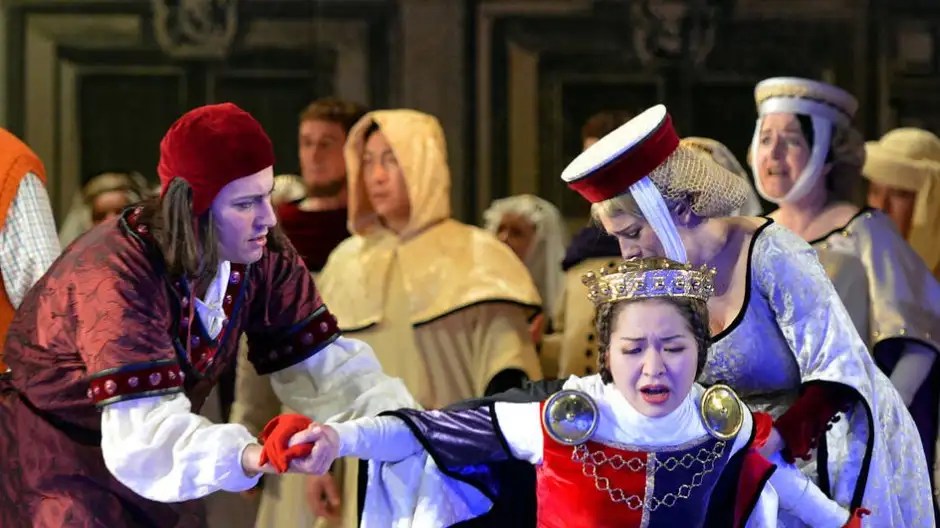
De feeënwereld is een sprookjestuin met veel groen en ‘Eftelingkostuums’. De wereld waaruit Arindal afkomstig is, het koninklijk hof waar zijn zus Lora verblijft, heeft een groots opgezette ‘Camelot-uitmonstering’ met alle denkbare clichés.
Christiane Libor – ook regelmatig te horen als Brünnhilde – was een goede keuze voor de rol van Ada. Minder dan een dramatische sopraan is voor deze vroege Wagner rol niet toereikend. Ze maakte indruk in haar grote solo in de tweede akte en wist ook de derde akte grotendeels naar zich toe te trekken. Grote stem, mooi gezongen, prima optreden.Lora werd vertolkt door Dara Hobbs die daarmee Libor naar de kroon wist te steken.
De mannelijke hoofdrol was wat minder goed bezet. Endrik Wottrich is weliswaar een tenor met een grote staat van dienst op het gebied van Wagner rollen maar had naar mijn smaak teveel moeite met zijn Arindal. De man werd ook niet geholpen door de opzettelijk zeer sullige uitstraling van zijn personage.
De overige rollen waren redelijk tot goed bezet met leuk acteerwerk van Magdalena Hinterdobler als de fee Zemina en van Jennifer Porto als Drolla. Hinterdobler wist ik mij te herinneren als Dorella in Das Liebesverbot waarin ze met een deegroller de mannen tot de orde roept.
Met het Gewandhausorchester in de bak is in Leipzig altijd sprake van een luxebegeleiding. Dirigent Friedemann Layer maakte er een potente uitvoering van, in de dramatische tweede akte sempre crescendo, met veel schwung maar mij wel iets te luid. Die ervaring had ik al eerder gehad in Leipzig en heeft tenminste voor een deel van doen met de fenomenale akoestiek van dit theater. Dat is natuurlijk fantastisch maar wellicht zou een dirigent eens in de zaal de uitvoering van een collega moeten beluisteren.
Al met al een volwassen uitvoering van Wagners eersteling, een werk waar hij waarschijnlijk heel tevreden over zou zijn geweest als hij een uitvoering had kunnen meemaken op dit niveau. Dat is een groot compliment voor Oper Leipzig.
Overigens betekent het uitvoeringsverbod in het Festspielhaus niet dat de Wagner zich geheel en al van zijn jeugdwerk had gedistantieerd. Naar verluidt speelde hij na de voltooiing van Parsifal in Palermo in huiselijke kring delen uit Die Feen. Wellicht om het einde van zijn loopbaan als componist te symboliseren.
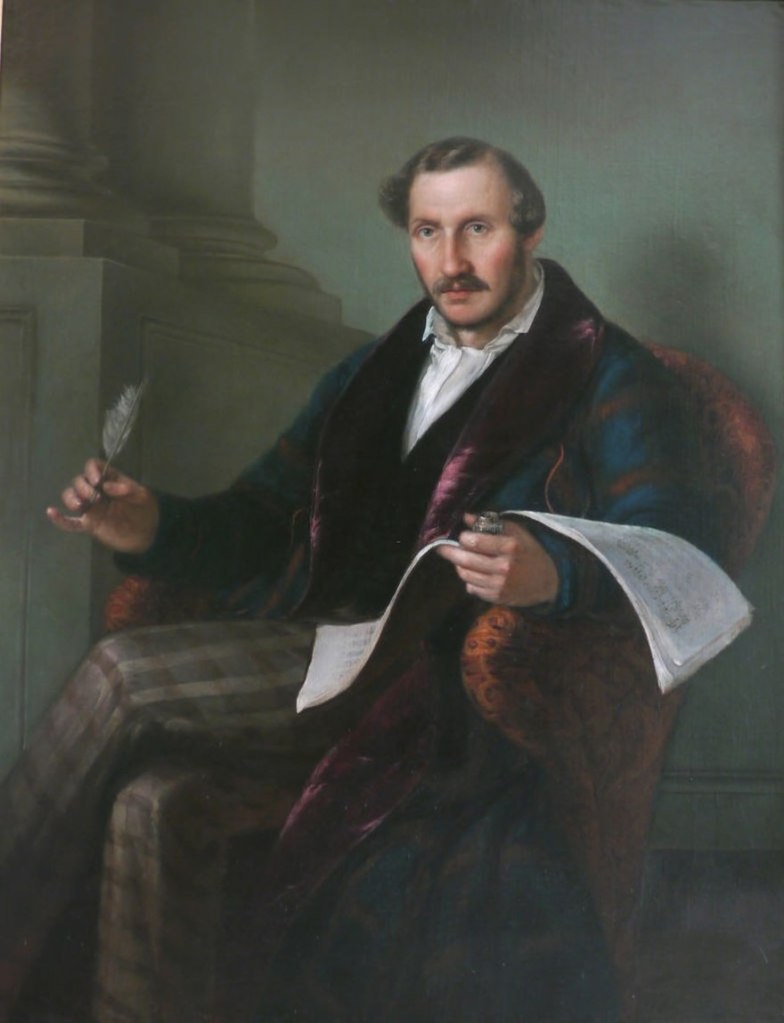
Portrait of the composer Gaetano Donizetti (1797-1848). Found in the Collection of Museo Teatrale alla Scala. (Photo by Fine Art Images/Heritage Images/Getty Images)
75 operas he wrote, the bel canto giant from Bergamo. Seventy-five! Add to that, I quote: 16 symphonies, 19 string quartets, 193 songs, 45 duets, 28 cantatas and some solo concertos, sonatas and chamber music. And how much of all that beauty do we hear these days? An average music lover gets no further than Lucia di Lamermoor, L’Elisir d’amore, Don Pasquale… Perhaps the Tudor triptych (Anna Bolena, Maria Stuarda and Roberto Devereux). And, oh yes, La Fille du Regiment, because of all those high Cs in a row.
PIA DE’ TOLOMEI
Set against the backdrop of a war between Florence and Siena, this story by Salvatore Cammarano, author of Maria di Rudenz and Il Trovatore, among others, about a castle lord’s wife unjustly accused of adultery, has been provided by Donizetti with the most beautiful arias and duets. The cast, with a truly peerless Majella Cullagh as Pia and Manuela Custer as her brother Rodrigo, is, as always at Opera Rara, truly sublime (ORC 30).
ROSMONDA D’INGHILTERRA
The story is set in twelfth-century England. King Henry II is married to Leonora of Aquitaine, but also keeps a mistress. This mistress (Rosmonda) is locked in a tower, and the page Arturo, who is supposed to look after her, has fallen in love with her himself. A – delightful, that is – dragon of a story, but the music is divinely beautiful: lyrical passages alternate with fierce ensembles.
Renée Fleming is the sweet-voiced Rosmonda, and Nelly Miricioiu the embittered Queen Leonora. Both ladies meet in the final scene, resulting in one of the most thrilling duets. (ORC 13)
PARISINA
Reuse… No one used to be averse to that, including Donizetti. Especially when the premiere was imminent and the libretto was long overdue. For Parisina he borrowed some of his own music, and for convenience he ‘cut and pasted’ the (brilliant, by the way) overture he had already composed earlier for Ugo, Conte di Parigi. Despite the tight composition time (it took Donizetti no more than a few weeks), the opera was very enthusiastically received and remained regularly on the repertoire, including abroad. Rightly so. Felice Romani was a truly gifted poet, and with Parisina he delivered one of his finest librettos. It has everything in it: love, murder, sacrifice, deceit … And with Donizetti’s beautiful cantilenes added, one cannot help but sniffle and enjoy.
Parisina has been married off against her will to an old man, Azzo. For years she has been in love (reciprocally, though platonically) with Ugo, who, it later turns out, is the son of Azzo and his first wife, who had been murdered by him out of jealousy. Parisina betrays her feelings while sleeping (can you remember Cassio’s dream in Verdi’s Otello?), Ugo is killed and she dies of grief.
Carmen Giannattasio, José Bros and Dario Solari sing their roles very creditably. An essential CD for a Donizetti (and not only) collector
LES MARTYRS
Les Martyrs started its life as Poliuto. The French libretto by Eugène Scribe was based on Polyeucte by Pierre Corneille from 1642 which was impregnated by the vision of its author that free will is a deciding factor in life.
Because of the choice of the topic – the life and martyrdom of Saint Polyeuctus – the censor had Poliuto banned, and opening night was cancelled. It was forbidden to show the persecution of Christians on stage in Naples at the time.
After Donizetti arrived in Paris he commissioned a new libretto from Scribe and rewrote and expanded the overture and composed several new arias for the title character.
He also changed the first act finale and added the required ballet music. He then considerably toned down the romantic entanglements and stressed the religious aspects even more.
In his big aria at the end of the second act Poliuto complains about the supposed disloyalty of his wife and speaks about the jealousy that torments him. His “Let me die in peace, I do not want anything to do with you, you have been unfaithful to me” from Polyeucte has been changed to the credo (now at the end of the third act): “I believe in God, the almighty father, creator of heaven and earth….”
Despite its early successes Les Martyrs failed to hold the stage. Instead Poliuto made it’s return, albeit on few occasions. After 1920 the opera was performed only sporadically (a remarkable fact: in 1942 Poliuto was performed on the occasion of Hitler’s visit to Mussolini, the title role sung by Benjamino Gigli).
Thanks to Callas, who rediscovered the opera in 1960, a short revival came about. Her live recording from La Scala with Franco Corelli left me cold. The reason for that I only understood later when I heard the live recording with Katia Ricciarelli and José Carreras. In an opera with vulnerability as its main theme big dramatic voices sound out of place.
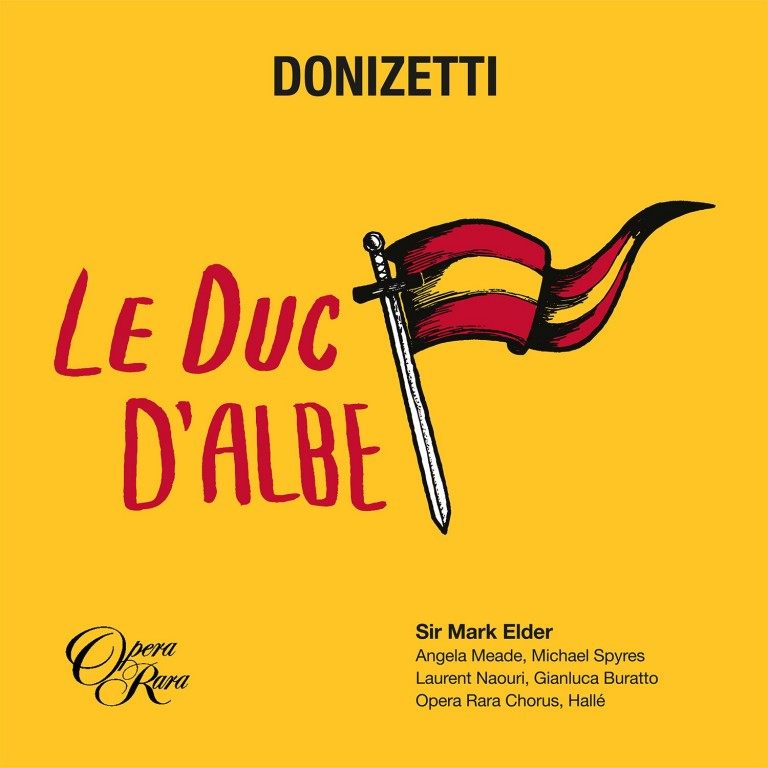
In October 2016 Opera Rara recorded Les Martyrs in the studio, followed by a concert performance in November.
Joyce El-Khoury, clearly following in the footsteps of Leyla Gencer, is the perfect Pauline: dreamy, loving and fighting like a lioness (nomen est omen) for the life of her husband who turned into a Christian. A husband she does not even love. Only because she believed her former fiancé was dead she has agreed to be married off to her father’s protégé. a
In “Qu’ici ta main glacée” she sounds very vulnerable, moving me to tears (her pianissimi!). “Dieux immortels, témoins de mes justes alarmes,” her confrontation scene with Sévère, her lover she believes to be dead (a very impressive David Kempster) is simply heartbreaking.
Joyce El-Khoury: becoming Pauline:
Michael Spyres is a very heroic Polyeucte. In “Oui, j’irai dans leurs temples” he sings a fully voiced, perfect high “E.”
The orchestra under Sir Mark Elder is on fire. The three ballet scenes halfway though the second act lighten up the mood a little, however briefly.
Much praise as well for the perfect singing of the Opera Rara Chorus (chorus master Stephen Harris). Opera Rara ORC52
LE DUC D’ALBE
The story in short: Duke Alva, King Philip’s bloody emissary, rules Flanders with an iron hand. He has the Count of Egmond beheaded, and Hélène, Egmond’s daughter, swears revenge. Her lover Henri de Bruges turns out to be really Alva’s son, and when Hélène wants to kill the tyrant, he intervenes. Henri dead, Hélène bewildered and Alva leaving for Lisbon desperate with grief. End of opera. If the libretto seems somewhat familiar to you, you are correct. Verdi also used it inhis Les vêpres siciliennes.
Donizetti composed the opera in 1839 for Paris, but the work remained unfinished. Already a few years after the composer’s death, attempts were made to complete the opera: the Italian translation of the libretto was taken as a starting point. Here and there performances were given, but the opera never became really popular. Too bad really, because this work paved the way to Verdi and his Don Carlo.
With this recording, Opera Rara (Opera Rara ORC54) limits itself to the unfinished original, so the story ends with the arrest of Henri. The rest is left to the imagination.
With Laurent Naouri, the role of Alva is more than perfectly cast. His baritone sounds authoritarian and at times terrifying. But also imploring. You could even feel sorry for him!
Angela Meade is a very firm Hélène. Her coloratures are firm and precise but don’t expect a fainting heroine like Lucia or Elvira: this lady has guts! Which is not to say she can’t also be tender and sweet with her beloved, but that revenge is her priority is rather obvious. Listen for a moment to the love duet in the second act: “Ah! Oui, longtemps en silence” and the subsequent heroic “Noble martyr de la patrie,” in which Hélène prevails.
Michael Spyres’ Henri, despite his heroic timbre, is the softest character. Not in his singing performance, oh no, because with his role he sets a new benchmark for bel canto in French; but as a character. In the confrontation with his father, he shows his most sensitive side. The scene, by the way, is one of the opera’s highlights. Donizetti at his best, this is something Verdi would not have been ashamed of.
ENRICO DI BORGOGNA
What makes the recording truly irresistible is the staging. Now ‘theatre in the theatre’ is not really anything new, but Silvia Paoli knows how to put her own spin on it and the result is not only hilarious but also really good. And those gorgeous costumes…. Stunning!
What is the opera about? Love, revenge and justice, of course. Enrico’s father had been dethroned by his brother Ulrico whose son Guido now wants to keep not only the throne but also Elisa, Enrico’s lover. Are you still here? Good, because rest assured: all will be well.
But it’s not just the staging that makes the recording so incredibly worthwhile, the singers too are unquestionably good. Anna Bonitatibus sings an excellent Enrico and his opponent Guido is excellently portrayed by Levy Sekgapane. Sonia Ganassi sings a very virtuoso Elisa. Alessandro de Marchi and the Academia Montis Regalis give a smashing performance. (Dynamic 37833)
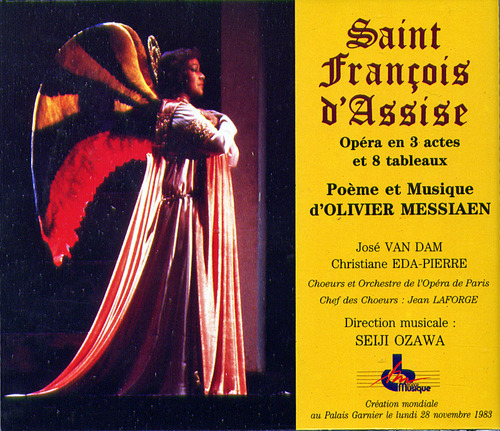
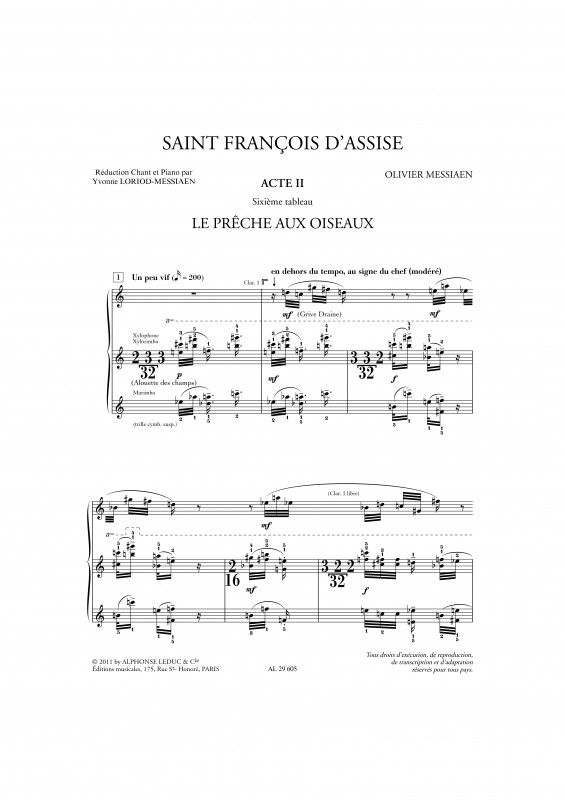
Olivier Messiaen was a very religious man and most of his works revolve around the Christian faith. For his only opera, about St Francis, he also wrote the libretto, which he considered his personal declaration of faith and a kind of testament. This was at least as important to him as the music itself. He worked on it for seven years; the premiere took place in 1983, in Paris.
The performance, with José van Dam in the lead role and conducted by Seiji Ozawa was released on CD, on the Cybélia label, unfortunately the recording is very hard to find these days. YouTube offers solace
LOTHAR ZAGROSEK
Two years later, in 1985, the opera was presented (albeit greatly shortened) in Salzburg, conducted by Lothar Zagrosek and featuring Dietrich Fischer-Dieskau as Francis, Rachel Yakar as the Angel and Kenneth Riegel as the Leper. It was broadcast live on ORF, and then released on Orfeo (C485 982).
KENT NAGANO
In 1998, ‘Francis’ returned to Salzburg, this time complete. Kent Nagano (when he was still Ozawa’s assistant he had once rehearsed the opera under Messiaen himself) conducted, and the lead role was performed by the now very grown-up José van Dam, seconded by Dawn Upshaw (the Angel) and Chris Merritt (the Leper). The opera was recorded live during the performances and released on four CDs a year later, so we now have the only complete performance of this wonderful work on CD. (DG 4451762).
This recording is also on You Tube:
The performance is a very solid one. Chris Merritt does not possess the most beautiful voice in the world, but he doesn’t have to. He is supposed to come across as vulnerable and plaintive, and he succeeds superbly. Kenneth Riegel on the Orfeo recording is perhaps slightly more impressive, but you’re not going to buy the opera for one scene, though I myself like to have that recording alongside it.
Dawn Upshaw is a radiant, mercurial Angel, more esoteric than Rachel Yakar on Orfeo, and otherworldly beautiful. Fiescher-Dieskau had already retired in 1985, but agreed to rehearse the role of Francis (well, half of it). The result is certainly not bad, but for me it is very lacking in idiom, and he does not even come close to matching van Dam’s performance.
The music is very pleasant to listen to and it exudes a certain serenity, which cannot be attributed to the influence of the Gregorian chants alone. Occasionally reminiscent of Debussy’s Peleas and Melisande, Poulenc also comes quite close.
And Messiaen would not be Messiaen without the frequent use of the ondes Martenot (played on both editions by his sister-in-law, Jeanne Loriod), and without the chirping of birds.
Saint Francois d’Assis is an opera that lends itself beautifully to listening to on CD. It is a true masterpiece, but when it plays in the background only you will still enjoy it. You can read the synopsis, occasionally watch the dialogues (which may also be read beforehand, nothing much is happening anyway) and then you know it all. You can fold the laundry and listen to it just fine. Or just sit an
De productie uit Venetië in november 2004 in de regie van Robert Carsen werd gemaakt voor de heropening van de acht jaar eerder totaal afgebrande La Fenice. Er werd gekozen voor de eerste versie van de opera, uit 1853. Goed bedacht, daar de (toen mislukte) première van wat Verdi’s meest geliefde opera ooit zal worden, juist daar had plaatsgevonden. De grootste verschillen met de ons bekende, één jaar latere versie zitten in het duet tussen Violetta en vader Germont, en de twee laatste nummers van de derde akte.
Als geen andere opera kán Traviata geactualiseerd worden. Het was overigens Verdi’s wens om haar in hedendaagse kostuums op te voeren. In de regie van Carsen draait alles om geld, en de dollars vallen ook als bladeren van de bomen. Hij verplaatst de tijd van handeling naar de jaren tachtig van de vorige eeuw, de tijd van opkomende megasterren, supermodels, gigaparty’s, maar ook junks, kraakpanden en aids. Zoals altijd bij hem, is alles zeer logisch en consequent doorgevoerd..
Een absoluut hoogtepunt is het beginscène van de laatste acte, waarin de inmiddels totaal (ook letterlijk!) aan de grond geraakte Violetta een video van haar verleden bekijkt. Een video die op bepaald moment stopt en alleen maar “sneeuw” vertoont. De scène grijpt je naar je keel en laat je nooit meer los. Het toppunt van de goede moderne regie.
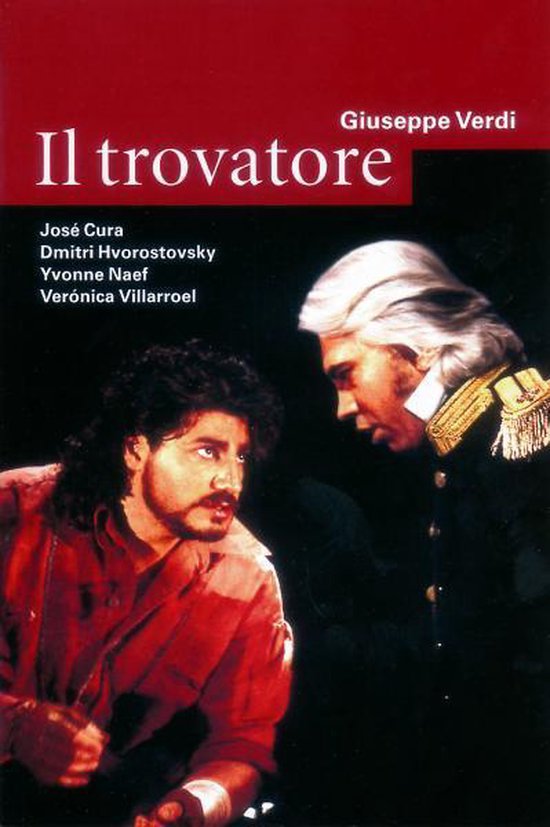
Violetta wordt zeer aangrijpend vertolkt door de zowel vocaal als scenisch imponerende Patricia Ciofi. Als Alfredo komt de Italiaans-Duitse tenor Roberto Sacca zeer overtuigend over en Dmitri Hvorostovsky is een voortreffelijke vader Germont (Arthaus Musik107227 )
Laatste zeven minuten van de productie:
IL TROVATORE
Sommige opera’s zouden herdoopt moeten worden. Il Trovatore van Verdi zou eigenlijk ‘Azucena’ moeten heten, want per slot van rekening is zij degene die de scènes beheerst, vanaf het eerste moment dat zij opkomt.
Het is Azucena die de touwtjes in handen heeft en alleen zij kan alle personages redden of breken. Door haar zucht naar wraak vernielt zij alles en iedereen, en daar is geen doorsnee bariton tegen opgewassen. Nou ja, doorsnee?
In zijn roldebuut als Luna heeft Dmitri Hvorostovsky me in deze productie van het Royal Opera House meer dan verrast. Begin jaren negentig had ik nog mijn twijfels over hem, maar ik herroep alles wat ik in die tijd over hem heb gezegd. Nooit gedacht dat er nog een bariton bestaat die zo ontroerend ‘In balen del suo sorriso’ kan zingen. En inderdaad, bij de ‘Sperda il sole d’un suo sguardo…’ moest ik zelfs een traantje wegpinken, zo mooi was het.
EVGENI ONEGIN
Ik ben (of moet ik zeggen was?) een enorme Robert Carsen-adept en vind (vond) bijna alles geweldig wat hij deed. Zo ook deze Onegin , de productie die hij voor de Metropolitan Opera in New York maakge en die in februari 2007 werd opgenomen (Decca 0743298).
Zijn enscenering is zeer realistisch en volgt het libretto nauwkeurig. In de eerste akte is de bühne bezaaid met herfstbladeren, maar voor de rest is alles eigenlijk kaal en is er bijna geen decor. Een bed voor de ‘briefscène’, verder wat stoelen in de tweede en derde akte. Bij het duel is de bühne helemaal leeg.
Het is niet storend. Integendeel. De kostuums zijn werkelijk prachtig, maar zeker in de eerste akte doen ze mij meer aan Engelse Jane Austen-verfilmingen dan aan het Russische platteland denken. Echt storend is het niet, het oog wil ook wat, maar Renée Fleming is te glamoureus voor een boerentrien, waardoor haar omschakeling naar een trotse prinses minder indruk maakt.
Onegin (Dmitri Hvorostovsky) is hier voornamelijk een dandy, zeer met zijn uiterlijk bezig. Nou is Dima in alle aspecten een buitengewoon aantrekkelijke zanger, maar in zijn confrontatiescène met Tatyana doet hij meer aan pappa Germont dan aan Onegin denken.
Ramón Vargas behoorde in 2007 tot één van de beste lyrische tenoren, maar Lensky was hij niet. Hij doet werkelijk zijn best, hij ziet er ook uit als een heuse dichter, maar die rol heeft wat meer smachten nodig.
Carsens personenregie is werkelijk onovertroffen en zelfs Fleming lijkt af en toe te ontdooien. Jammer genoeg is haar Russisch totaal onverstaanbaar.
Fleming en Hvorostovsky in de laatste scène van de opera:
THE BELLS
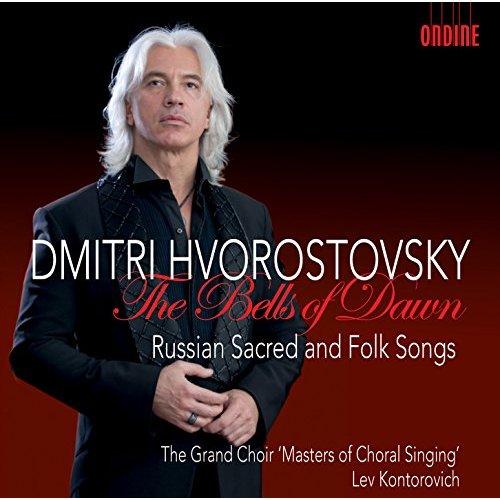
Dat deze cd mij enigszins teleurstelt ligt niet aan de uitvoering, want noch op de stem, noch de zang of de interpretatie van Dmitri Hvorostovsky valt er iets om aan te merken. Die zijn gewoon perfect
Het is werkelijk onvoorstelbaar hoe mooi het geluid is dat uit zijn keel komt. Het is niet minder dan de belichaming van een volmaakte schoonheid.
Wat mij het meest imponeert bij Hvorostovsky is, naast zijn heerlijke bronzen geluid, zijn prachtige pianissimo. Bij vlagen klinkt hij bijna breekbaar, wat een fraai contrast oplevert met de zwaarder aangezette passages.
Dat hoor je goed in de solo ‘Prostchay, radost’ (Farewell, My Joy). De stemmingen wisselen elkaar af, maar wat blijft, is een allesomvattend gevoel van totale eenzaamheid. Hierna kun je niet anders dan de muziek even stopzetten voor een moment stilte.
The Grand Choir ‘Masters of Choral Singing’ is zeer op de achtergrond opgesteld en is onder dirigent Lev Kontorovich vooral dienstbaar aan de solist.
Hieronder één van de mooiste nummers van de cd, ‘Vyhozhu odin ya na dorogu’ van Elizaveta Shashina:
King David…. One of the Bible’s most inspiring and appealing personalities. But did he really exist? We live in a time when all sorts of things are being doubted, and that is alright.
Some historians assume that King David actually existed, but that (as with King Arthur, for example) many of the stories about his life are more likely to be apocryphal and they should not be considered hard historiography. So what? There is still such a thing as faith. And it is a reassuring and lovely story, which is so much needed in our troubled times.
King David, besides being a good man, a naughty husband and a harpist, was also a brilliant poet. His psalms are still among the finest that poetry has ever produced. His influence on art and certainly on music was and is immense. His psalms have therefore been set to music by many composers, think Bach, Allegri, Schütz, Strawinski, Kodaly, among others…. which is one of the reasons I started looking into David again. Whether or not he existed does not really matter. Inspiration does not need scientific evidence and art does not need to be tested against facts.
A small (with an emphasis on ‘small’!) selection of what’s out there. The order is random.
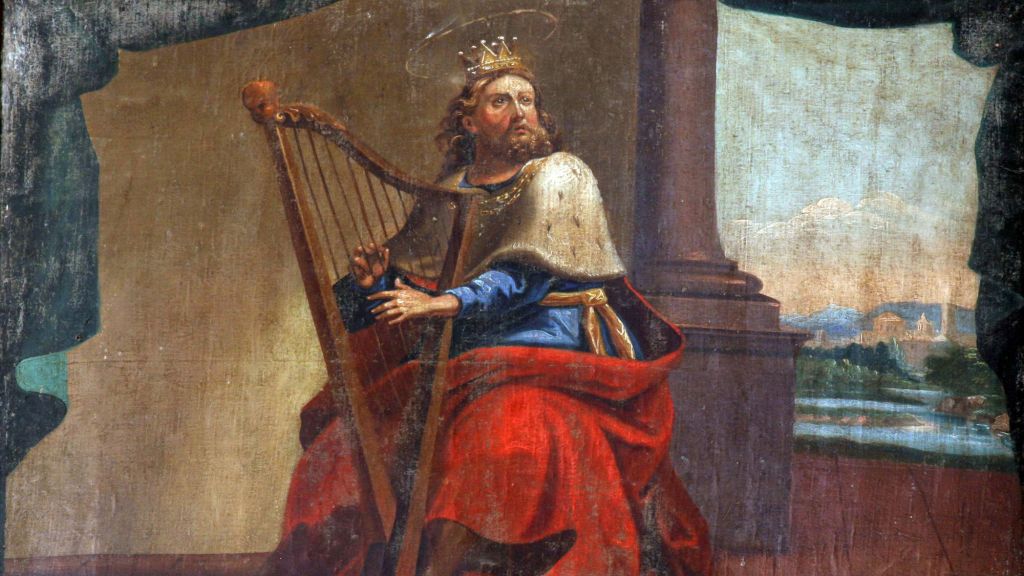
David’s harp playing soothed Saul’s mind and spirit. Gerrit van Honthorst (1590-1656), King David Playing the Harp (1611), Centraal Museum, Utrecht, Holland
Michael Levy wonders: what would his harp have sounded like? He posted a ‘live’ performance of the traditional Hebrew song “Zemer Atik” (track 5 of his 2008 album, “King David’s Lyre; Echoes of Ancient Israel”):
Zoltan Kodaly, Psalmus Hungaricus:
Schumann’s Davidsbündlertänze played by Andras Schiff:
Paul Schoenfield and his beautiful viola concerto ‘King David dancing before the ark’:
Sarah Connolly sings King David by Herbert Howells:
King David’s Suite by Lionel Hampton, first performance, 1957:
and recorded in Munich on the occasion of the Munich Summer Piano Festival in 1994. The St Petersburg State Orchestra is conducted by Alexander Tschernuschenko, Lionel Hampton plays vibraphone:
Franz Liszt, Psalms of David
Igor Stravinsky, Symphony of Psalms performed by the Radio Philharmonic Orchestra and Great Broadcasting Choir:
Krzysztof Penderecki, Psalm of David recorded at Carnegie Hall:
DAVID AND SAUL
Handel:
David symphony for Harp (act I, scene V) Sara Ãgueda, arpa doppia:
Aria of David:
Carl Nielsen, the entire opera:
Paul Ben-Haim, Sweet Psalmist of Israel. David before Saul.:
DAVID AND JONATHAN
Jonathan was the son of Saul, king of Israel, from the tribe of Benjamin. David was from the tribe of Judah. Once rivals for the crown, they became friends and probably more, but the Bible does not explicitly portray the true nature of David and Jonathan’s relationship. The traditional interpretation of their friendship emphasises platonic love, an example of ‘homosociality’. Something later described as strong personal friendships between men. Today, there is often an emphasis on what some see as homoeroticism in the story
David et Jonathas by Charpentier, recording from Ais-en-Provence:
Trudy Labij: ‘What I’ve been reading’ from the musical Foxtrot (4), 1977:

























 Basia con fuoco