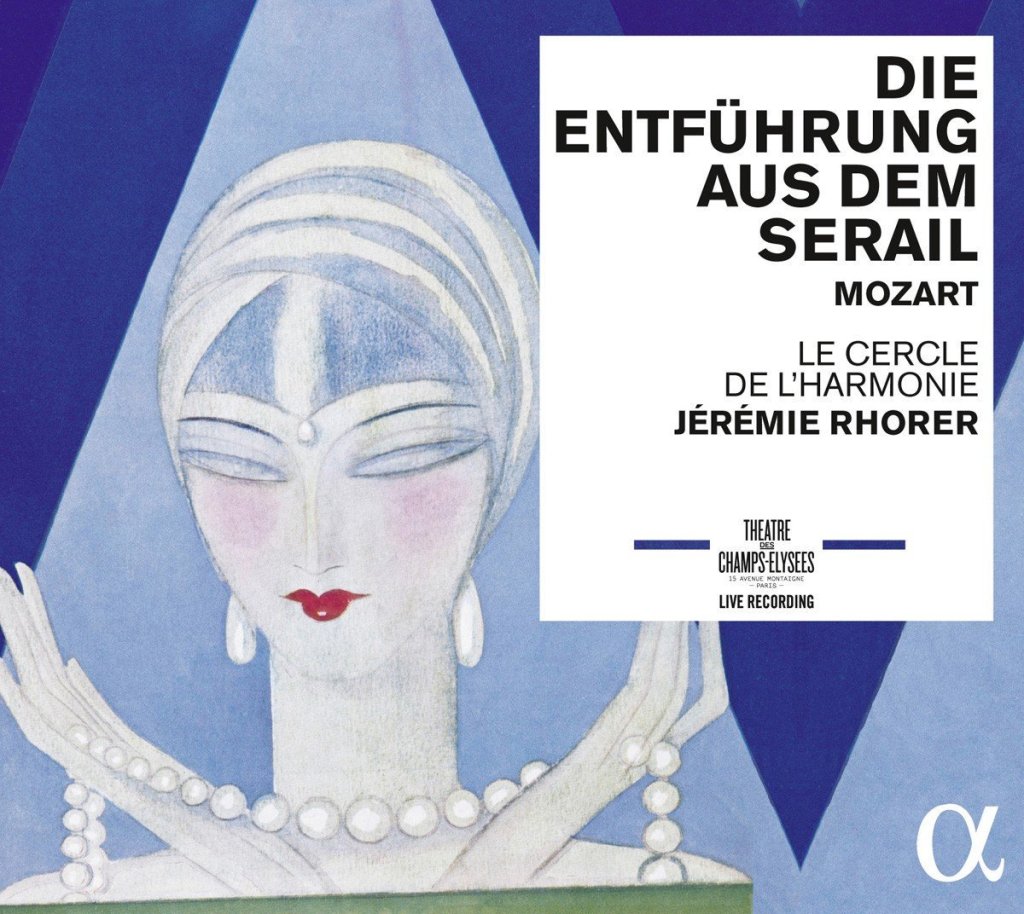
There is no shortage of recordings of Die Entführung aus dem Serail, but really good ones may be counted on the fingers of one hand. Moreover,you often have to go quite far back in time to find the real gems. But the performance recorded live at the Théâtre des Champs-Élysées on 21 September 2015 – and conducted very vividly by Jérémie Rhorer – is, for me, among the very best.
David Portillo is an extraordinarily fine Pedrillo. Light and airy,entertaining and amusing; and meanwhile singing utterly brilliantly…. Superb.
Rachelle Gilmore is a delightful Blonde. Just listen to “Welche Wonne,welche Lust”, which she sings with impeccable height and crystal-clearcolouratura! Breathtaking.
Mischa Schelomianski shines as Osmin. That he sings the role with a thick Russian accent is anything but disturbing here. It is quite right for Osmin. Jane Archibald (Konstanze) sounds a bit shrill at times, but as soon asshe starts singing “Ach ich liebte” I surrender completely.
Only Belmonte (Norman Reinhardt) I have heard better. His voice iscreamy and his timbre pleasant, but he lacks a bit of suppleness, which prevents him from being really satisfying in his “Wenn der Freude Tränen liessen”. Fortunately, “Ich baue ganz auf deine Stärke” succeeds much better, but I continue to have trouble with his ornamentation.
It’s not perfect, no, but live performances never are. It is one of the reasons why they are so much fun; after all, nothing beats live theatre! The tempi are on the brisk side but nowhere rushed, and the orchestra sparkles like a cosy fire. And there is no director to ruin it for me. This is how I want my opera’s (Alpha 242)
DVD
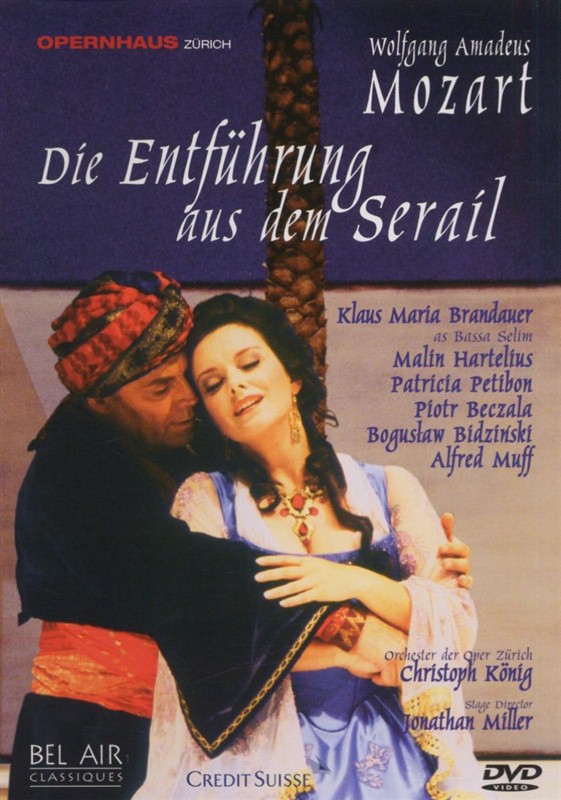
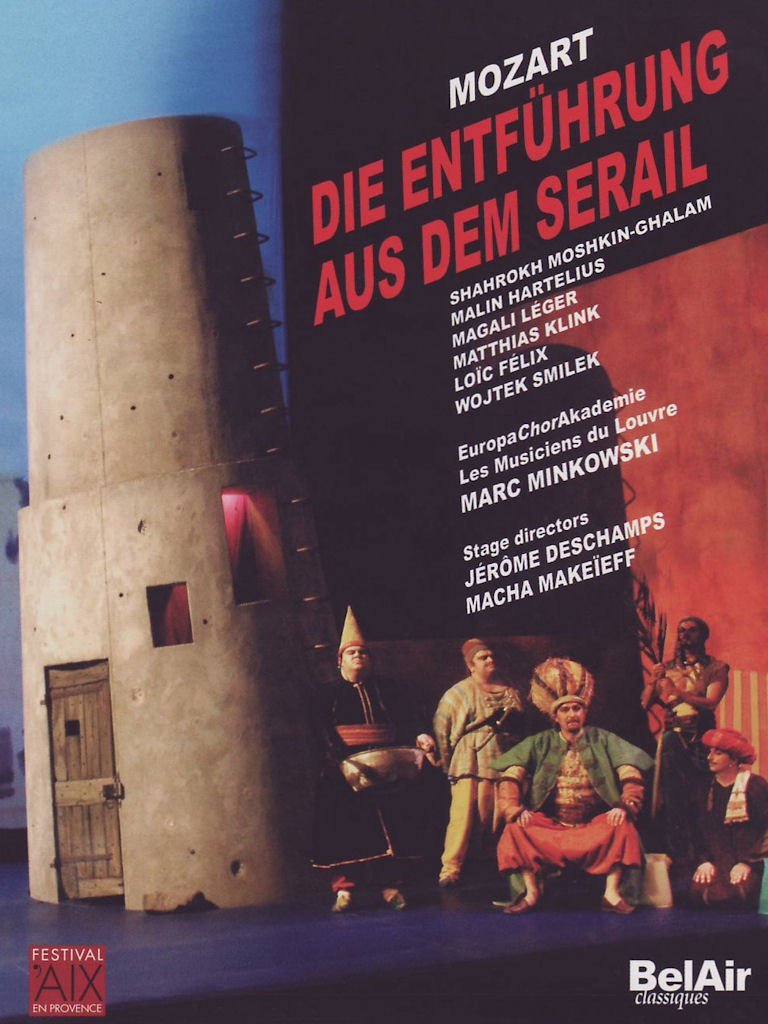
The ways of record companies are sometimes inscrutable and so it couldhappen that two different performances of Entführung aus de Serail were released within a short space of time by the same company, BelAirClassics. These are respectively a production by Jonathan Miller made for the Zürcher Festspiele in 2003 (BAC007) and a performance filmed in Aix-en-Provence in 2004, directed by Jérome Deschamps and Macha Makeïeff and conducted by Marc Minkowski (BAC028). There is aworld of difference between the two productions, it just goes to show what good (or, if you like, bad) direction can do to an opera.
Zürcher Festspiele 2003
Jonathan Miller, normally a pretty big deal, simply fails. Nothing happens. There is a palm tree in the middle and the singers come up, lean against it and sing their aria.They are totally left to their own devices, which for most results in clichéd gestures and gestures. With Patricia Petibon (Blonde), just the opposite happens: she exaggerates like her life is depending on it and she is overacting. In short: here are six characters looking for a director.
Patricia Petibon sings “Durch Zartlichkeit und Schmeicheln”:
I am not enthusiastic about the singing either, as even Piotr Beczala (Belmonte) and Malin Hartelius (Konstanze) perform far below their level.
There is one plus though: Klaus Maria Brandauer in the speaking role of Bassa Selim. Every scene with him in it turns into pure theatre. He doesn’t act, no, he just gives a masterclass in acting.
The production from Aix-en-Provence can be described in one word: precious. As soon as you see the orchestra (all wearing turbans and other exotic headgear) and the entrance of a broadly smiling Minkowski, you know you are going to be amused.
The stage is populated by a motley collection of rather weird characters in oriental costumes, one joke follows another, with no cliché shunned. It is no longer comedy, it is slapstick. And why not? Mozart can take it, especially when it comes to a singspiel.
The dancing emergence on the stage of Bassa Selim (a fantastic Shahrokh Moshkin-Ghalam, a dancer and actor very famous in France) is a story in itself. His German is abominable, but he must be forgiven, because everything else he does with the role (including a spectacular disappearing act at the end) is breathtaking
Malin Hartelius shows what a fantastic Kostanze she is. Magali Léger (Blonde), Matthias Klink (Belmonte), Loïc Félix (Pedrillo) and Wojtek Smilek (Osmin) are all fine, the orchestra fierce and Minkowski on target. But be warned: it is packed with Mohammed jokes.
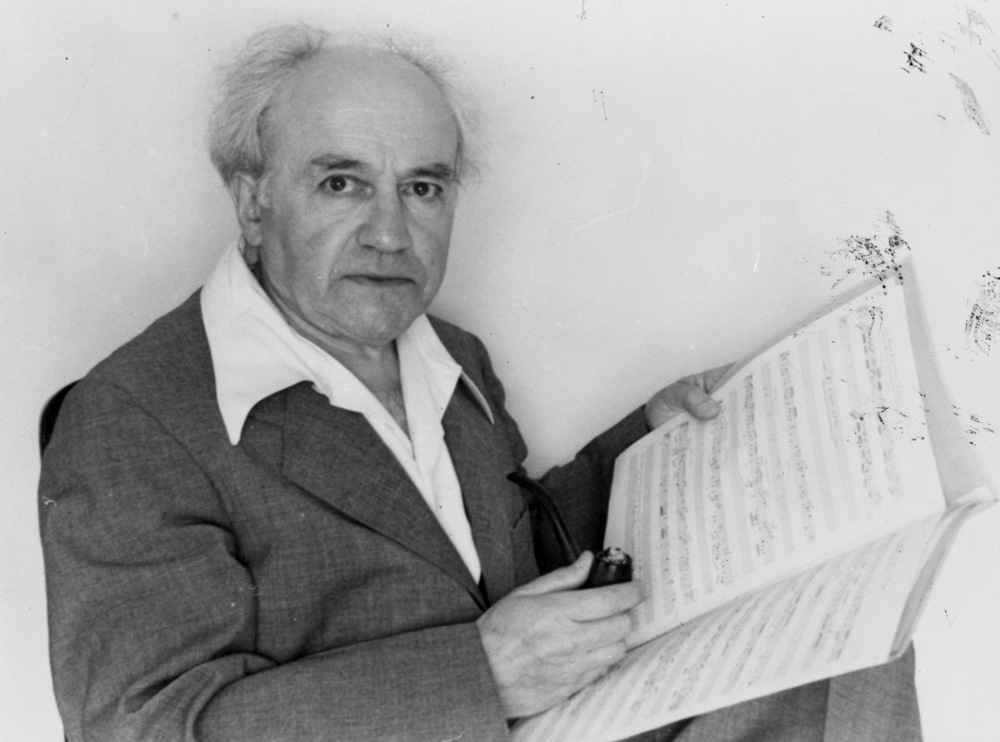
Ernest Bloch, Oct. 1948. Oreg. Hist. Soc. Research Lib., bb006122
I am often asked if there is such a thing as Jewish music ….. Well, there certainly is! Just take Ernest Bloch. He was born in 1880 in Geneva in an assimilated family. Around the age of twentyfive he became interested in everything to do with Judaism and translated it into his language – music.
“I’m interested in the Jewish soul” he wrote to Edmund Fleg, cantor and librettist of his opera Macbeth. “I want to translate all this into music.”
He developed a very personal style: his compositions reflect the atmosphere of Hebrew chant, without actually being a literal imitation of it. His intention was not to reconstruct old Hebrew music, but to write his own, good music, because, as he said, he was not an archaeologist. He succeeded.
Before the war, he was among the most played and appreciated composers. People even called him the fourth great ˜B,” after Bach, Beethoven and Brahms. It is not that people now no longer know his name, but they usually do not get any further than his cello concerto.
Baal Shem
\
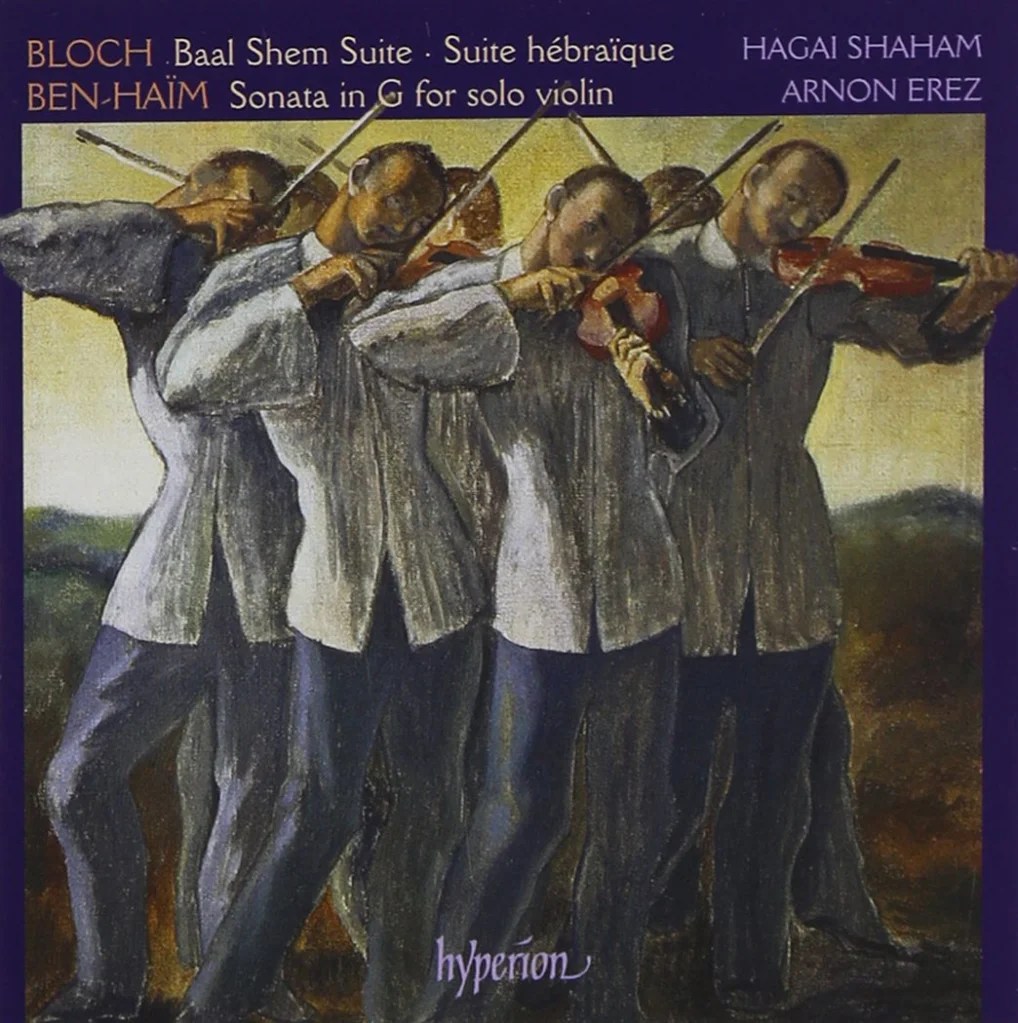
For the Baal Shem Suite (1923), one of his best-known works, he was inspired by Israel ben Eliezer (Baal Shem Tov), the founder of modern Chassidism, a movement that originated in eighteenth-century Poland and was based on mysticism, spiritualism and magical doctrines. It proclaimed a kind of bliss that could only be achieved through music, dance and song because that was the only way to achieve direct contact with God.
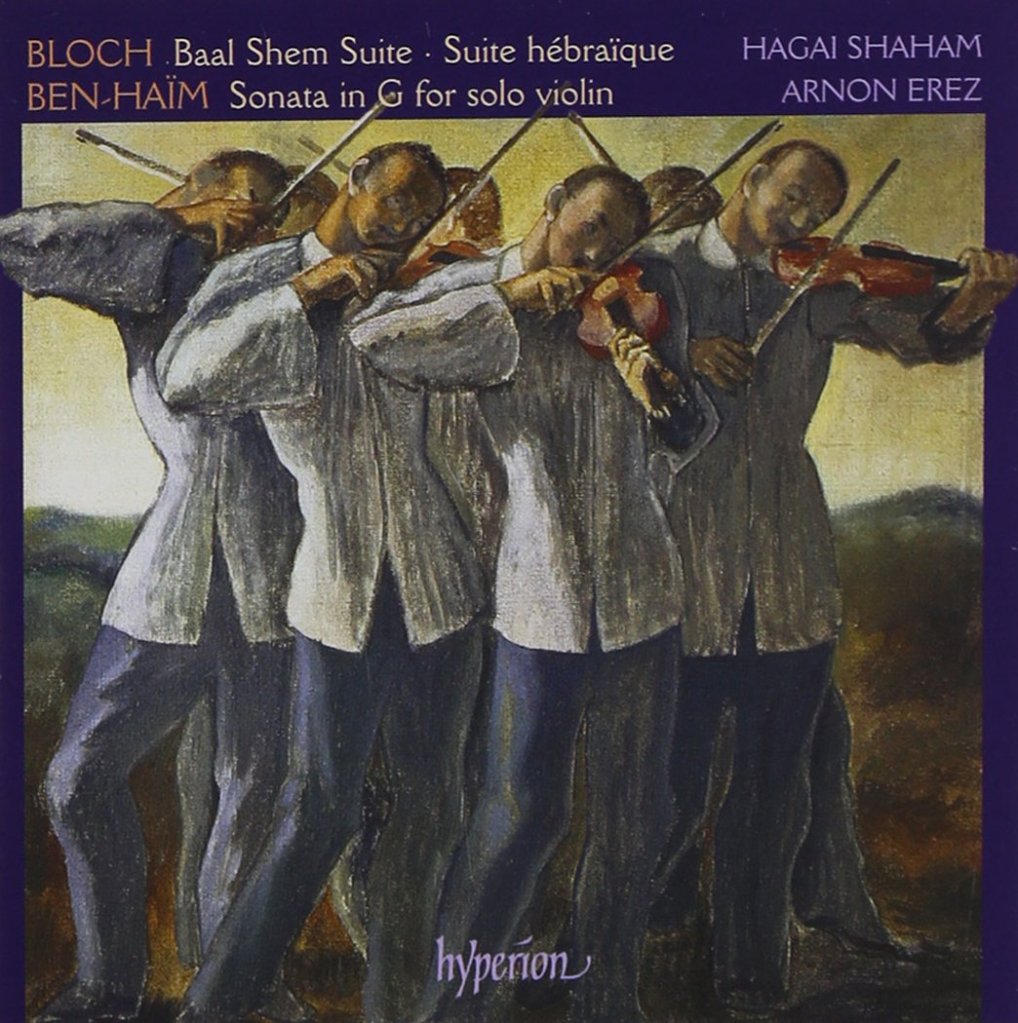
Of all the performances of those made of “Baal Shem” (and there are many), this one, played by Hagai Shaham and accompanied by Arnon Erez is for me one of the dearest. Shaham’s tone is round and warm with a healthy dose of “schmalz”. And though he often balances just on the edge, nowhere does he degenerate into banalities.
Seasons without the summer
The symphonic poems Hiver-Printemps are very evocative. Together with the beautiful song cycle ‘Poèmes d’Automne’, composed for the texts of Béatrix Rodès, Bloch’s lover at the time, and sung very emotionally by Sophie Koch (Kleenex at hand?), they form, as it were, a kind of ˜Seasons”, from which only the summer is missing.
The suite for viola is among Bloch’s best compositions and one cannot imagine a better performance than Tabea Zimmermann’s.
The Deutches Symphonie-Orchester Berlin, conSloane, plays in a very animated way
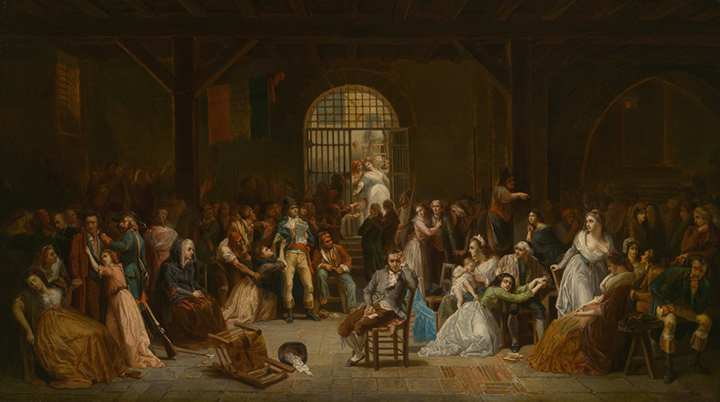
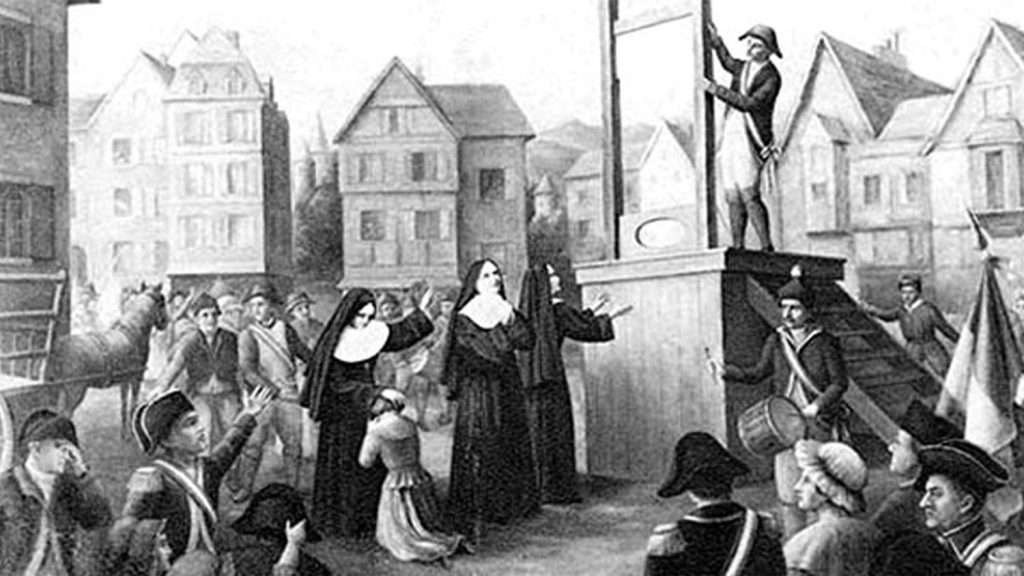
Appeal of the last victims of terror in the prison of St. Lazarus. Chénier appears seated at the foreground’s center.. Painting by Charles Louis Müller, (Musée de la Révolution française).
For me, Andrea Chénier is one of the best and most beautiful operas ever. I think the music is nothing less than divine and the story is timeless. It remains current, perhaps now more than ever. The tyrant must be cast off his throne and the people must take control. Surely, we all agree on that?
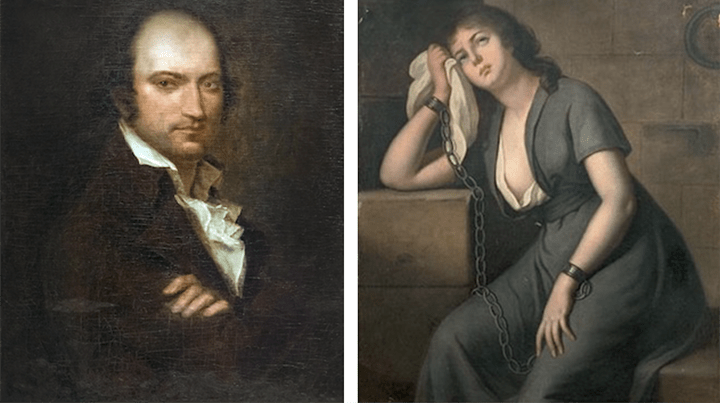
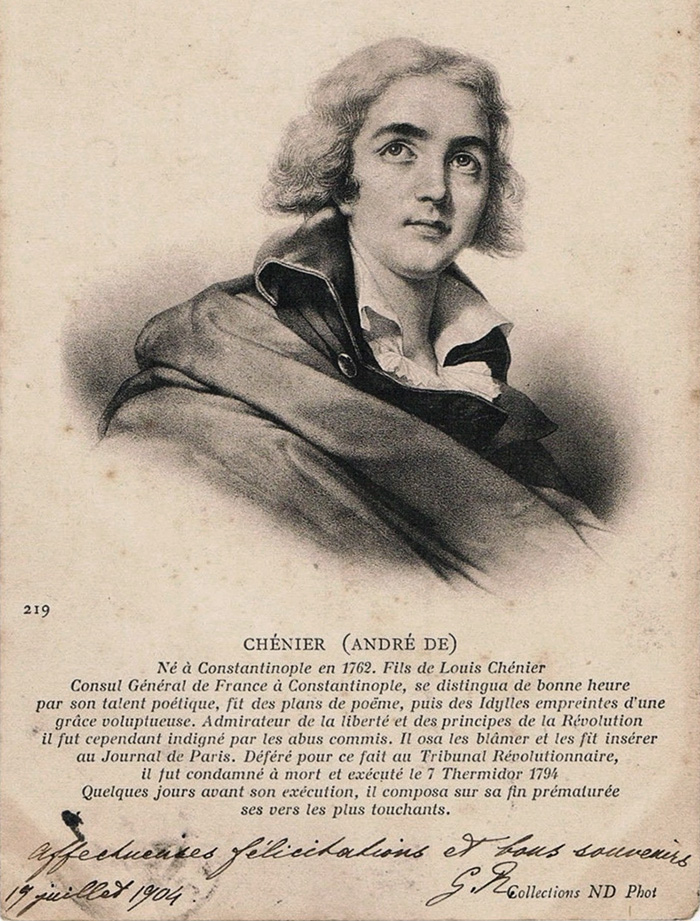
Ten days before Chénier’s death, the painter Joseph-Benoît Suvée completed this portrait of him – not exactly the romantic figure we would cast. On the right Aimée de Coigny, La Jeune Captive
If only it were that simple! Anyone who grew up in a post-revolutionary totalitarian regime knows how much horror it brings. One terror is replaced by another.
This, at least for me, is the main theme in Giordano’s biggest hit. I don’t think the real lead role is the actual poet, André Chénier (did you know that Giordano used Chénier’s poems in his arias?) nor his beloved Maddalena. It is the French Revolution, which, as Gérard (once Maddalena’s houseboy and now one of the revolutionary leaders) bitterly observes, devours its own children.
Domingo
To my great surprise, I read that Domingo didn’t much like the part of Andrea Chénier. He loved the opera, but the role, one of the toughest in the ‘lirico-spinto’ repertoire, was not really interesting for him dramatically. For him, Chénier was ‘an idealist who always has his head in the clouds’. And yet it was one of the operas he loved to sing!
I myself think the role of the poet/revolutionary fits him like a glove. Passion for love and enormous involvement in everything that happens in the world were – and still are – his trademarks.
He sang his first Cheniér in 1966 in New Orleans, as the last-minute replacement for Franco Corelli, but that was not his first performance of the opera. In the 1960/61 season he sang The Incredible and The Abbot, in Mexico.
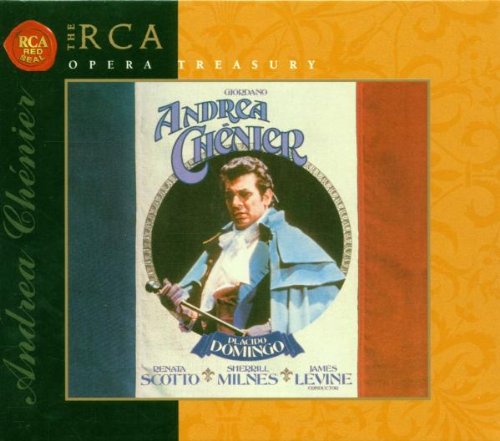
My favourite CD recording was recorded in 1976 by RCA (GD 82046). The cast is delectable. Renata Scotto sings Maddalena, Sherrill Milnes is Gérard and in the small roles we hear, among others, Jean Kraft, Maria Ewing, Michel Sénéchal and Gwendolyn Killebrew. James Levine, who conducts the National Philharmonic Orchestra, understands exactly what the opera is about. Tear jerkingly beautiful.
Scotto sings ‘La Mamma morta’:
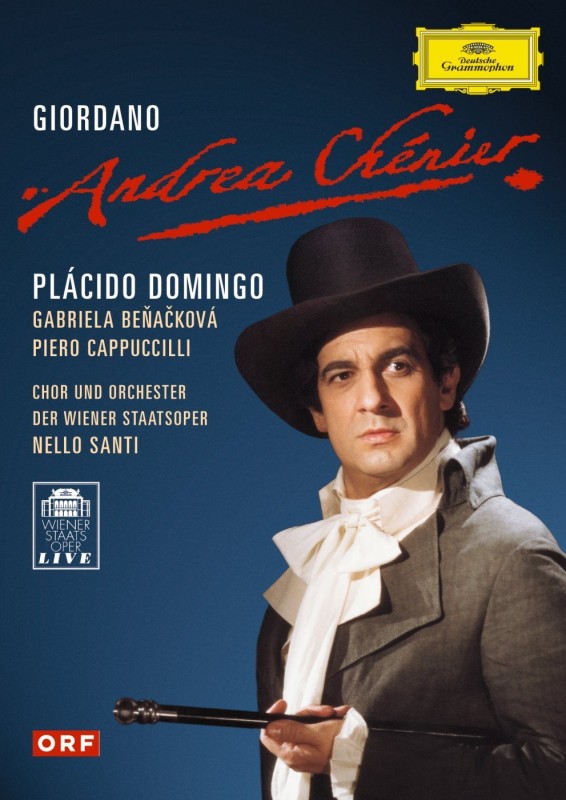
In 1981 the opera in Vienna was recorded for TV. That recording has since been released on DVD (DG 073 4070 7). Gabriela Beňačková, one of the most underrated singers in history, sings a Maddalena of flesh and blood. Horrifyingly beautiful and moving.
Piero Cappuccilli is a Gérard among thousands and the small roles are also filled by great singers: Madelon is sung by none other than Fedora Barbieri. Otto’s Schenk’s production is a feast for the eyes.
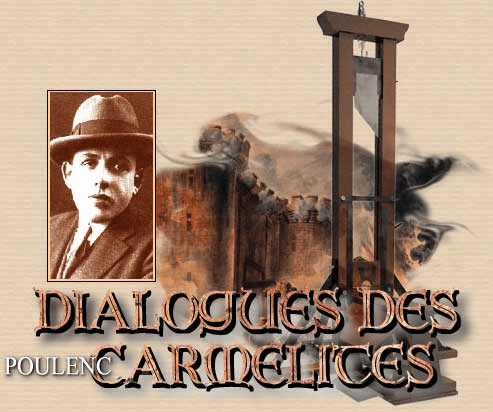
LES DIALOGUES ES CARMÉLITES
There are those operas that you just can’t spoil and Les Dialogues des Carmélites is one of them. For Poulenc, melody is the centre of the universe. His music is so poignantly beautiful and his composition so expressive that you don’t really need a director.
The opera’s themes are sacrifice, martyrdom, revolutions and ideologies, but those are just the side lines, because the main theme is an all-devouring fear that makes it impossible to live or die: “Fear is a terrible disease. I was born of fear, in fear I live and in fear I shall die. Everyone despises fear, so I am condemned to be despised.”
Just few recordings:
Milan, 1957
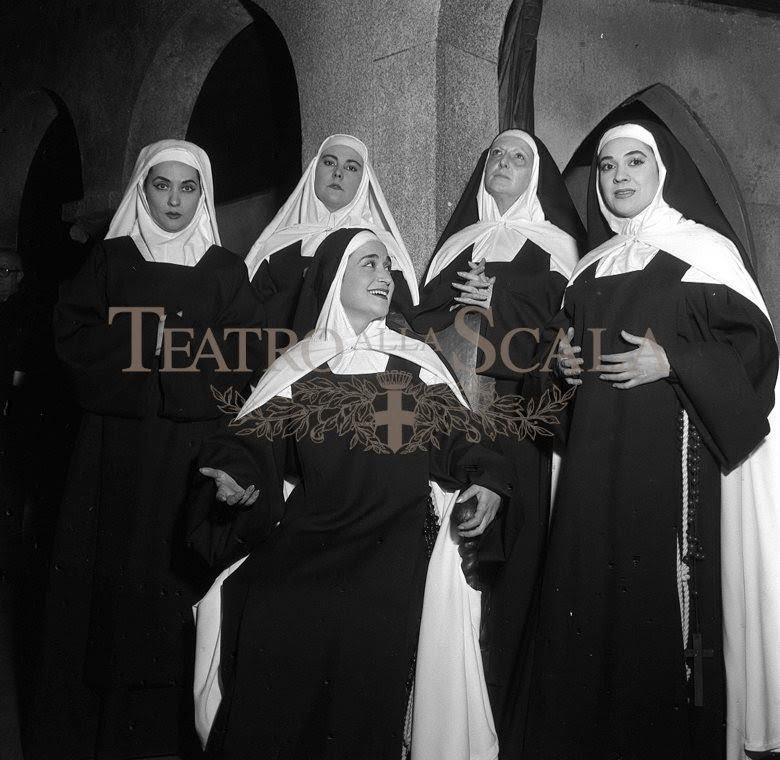
The world premiere of Dialogues des Carmélites took place on 26 January 1957 at La Scala in Milan, in an Italian translation. The cast reads like a ‘who’s who’ in the opera world, because, ask yourself: were there any bigger names in those days?
Blanche was sung by Virginia Zeani, a singer with a full, large and dramatic voice, that was suitable for both Violetta and Tosca. Marie was played by Gigliola Frazzoni, one of the best Minnies (La fanciulla del West) in history. And Madame Lidoine was given to Leyla Gencer.
With Fiorenza Cossotto, Gianna Pederzini, Eugenia Ratti and Scipio Colombo in the smaller roles, the opera sounded less lyrical than we are used to nowadays, almost veristic even. But that made the dramatic effect even more poignant.
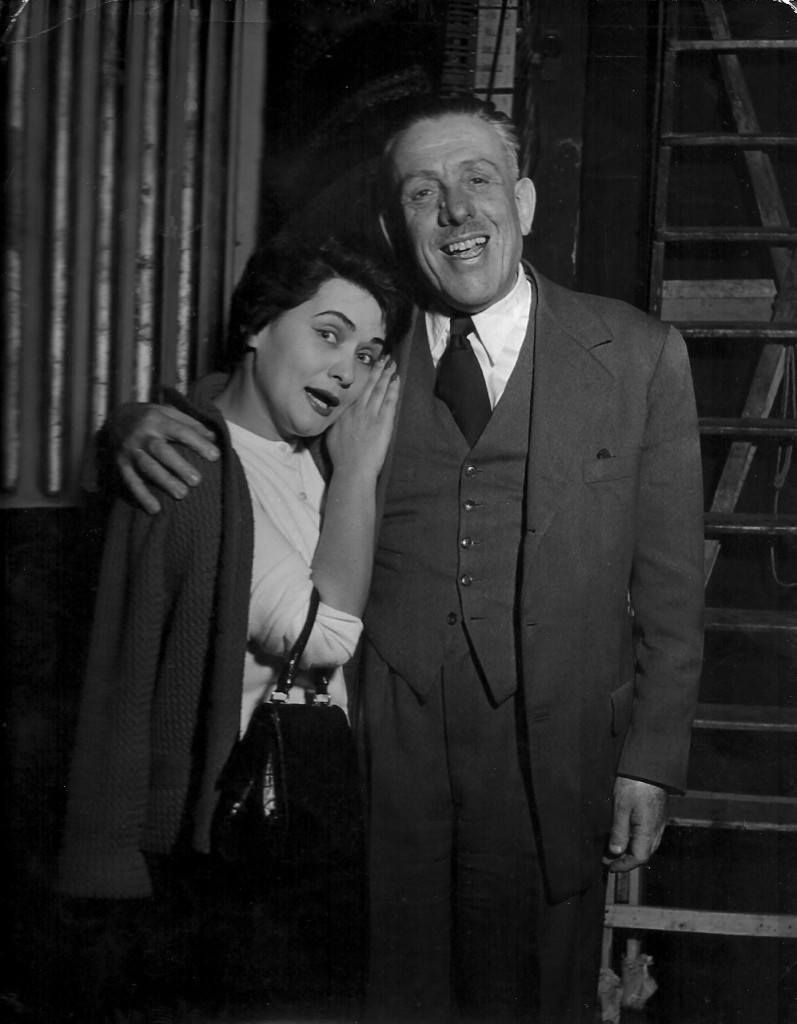
Virginia Zeani and Francis Poulenc, Milano 1957
In The Operatic PastCast, Virginia Zeani talks about Poulenc, the influence the opera has had on her life, her colleagues and the production in Milan.
The entire performance from Milan, fantastically conducted by Nino Sanzogno, is on YouTube. Do not miss it!
Paris, 1957
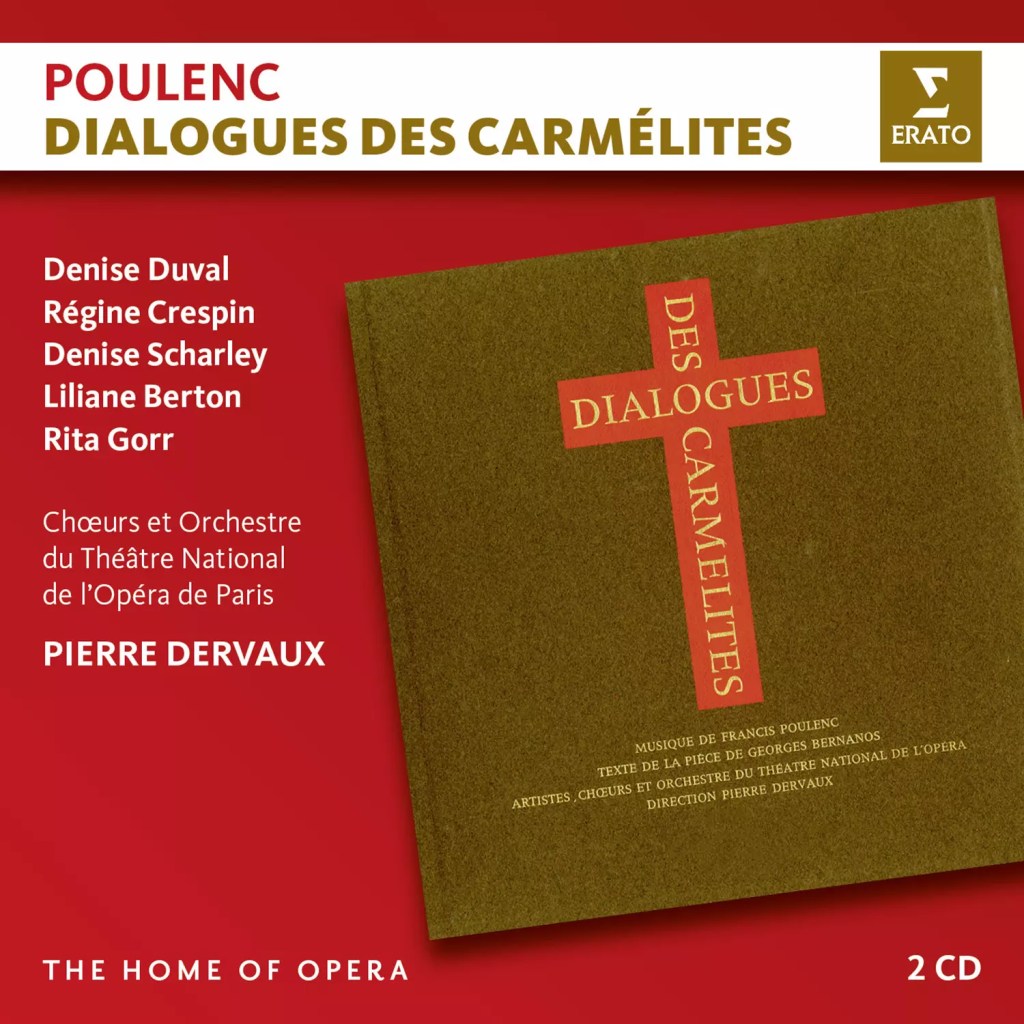
The Paris premiere of Dialogues des Carmélites followed six months later. On 21 June 1957, the opera, now in French, was presented at the Théâtre National de l’Opéra. Blanche was sung by Poulenc’s beloved soprano Denise Duval. Duval’s voice (girlishly naive, light, almost ethereal) fitted Blanche like a glove.
The rest of the cast, including Régine Crespin as Madame Lidoine and Rita Gorr as probably the best Mère Marie ever, was also chosen by Poulenc himself
Régine Crespin (Madame Lidoine) in “Mes chères filles”:
he orchestra was conducted by Pierre Dervaux and I can be very brief about him: there is no better. Full stop. (Warner 08256483211)
Milan, 2004
Robert Carsen’s production of Dialogues des Carmélites is one of the absolute highlights in the history of De Nationale Opera in Amsterdam.
Trailer from Amsterdam:
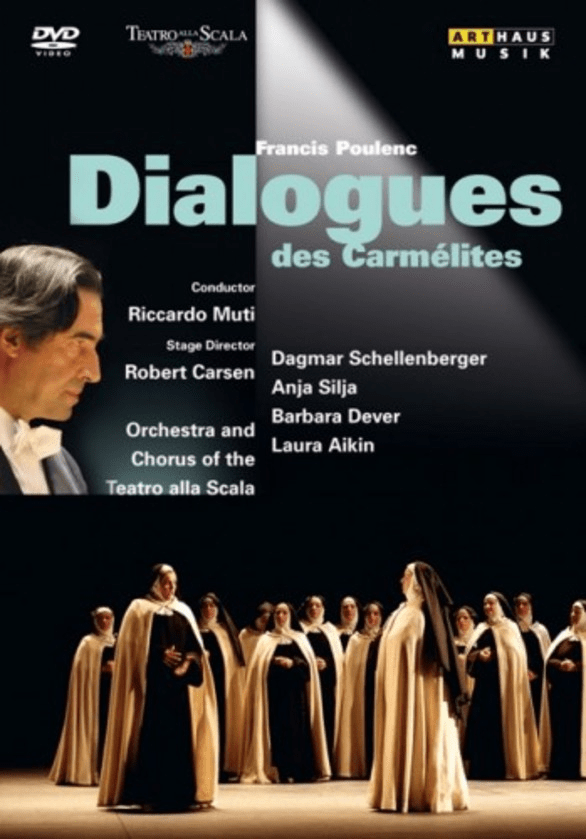
In February 2004, the production was filmed at La Scala but I am not entirely happy with it. My disappointment mainly relates to Dagmar Schellenberger’s performance as the lead role.
Admittedly, it is not easy to emulate the unforgettable Susan Chilcott (she died in 2003 of breast cancer, only 40 years old), and Schellenberger indeed cannot not do it. In the beginning her strong tremolo and her not always pure notes are irritating.. But as the opera progresses, she gains a great deal of credibility, and through her brilliant acting and complete abandonment, she makes the development of her character very tangible. And almost as a matter of course, her singing also becomes more beautiful and softer.
The role of Madame de Croissy is played by one of the best singing actresses of our time, Anja Silja. Her performance is truly breathtaking, and even though her voice is not that steady anymore – it suits the character of an old and mortally ill prioress very well. Her death struggle makes for unprecedentedly thrilling theatre, and it is a great credit to Carsen (and the rest of the cast) that the scenes that follow do not make us lose interest.
Muti conducts with verve and knows exactly how to strike the right tone. He really succeeds in translating the spectre of the revolution and its excesses into sound. He is at his very best, however, in the lyrical, contemplative scenes, and in his hands the chilling ending reaches a truly blood-curdling climax. Make sure you have a big bag of Kleenex within reach, because you really won’t keep it dry (Arthaus 107315).
Below is the trailer:
Hamburg, 2008
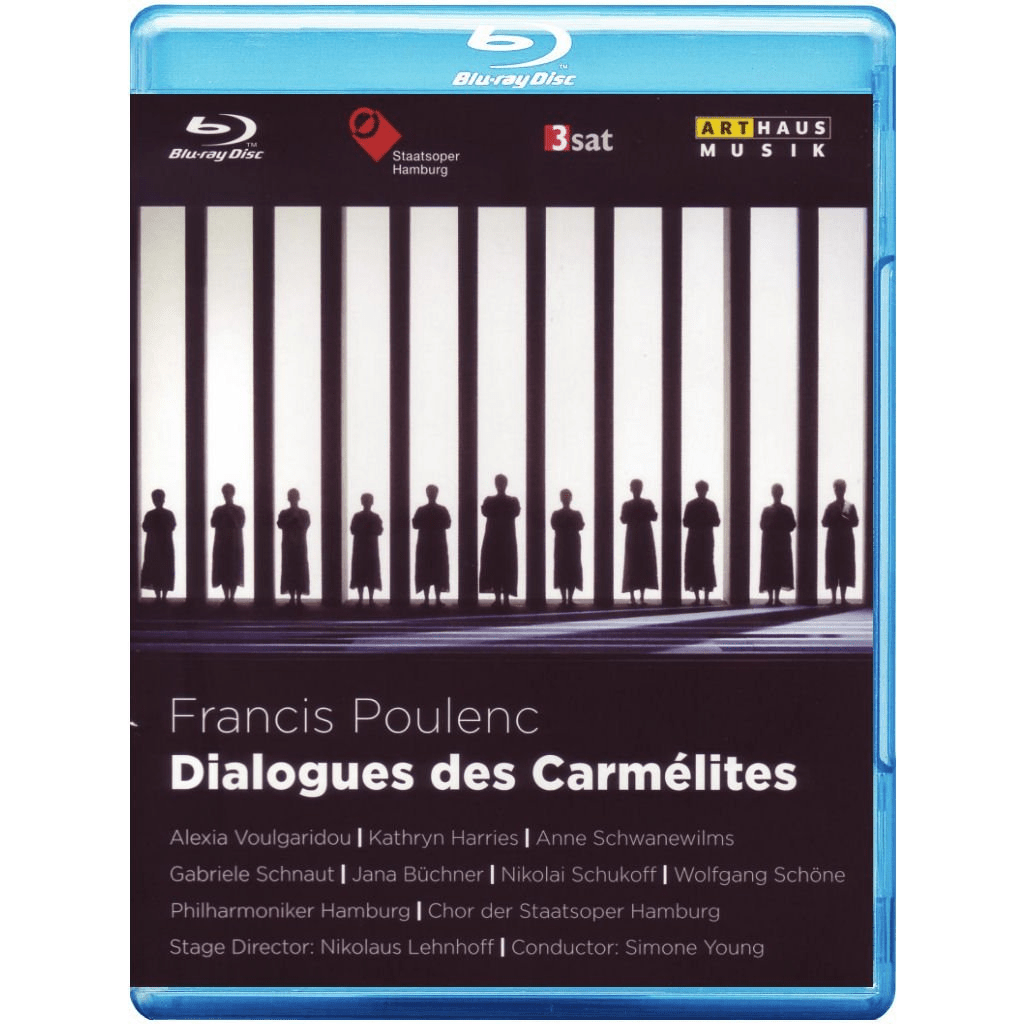
The opera came to Hamburg in 2008, it was directed by Nikolaus Lehnhoff.
His Blanche, Alexia Voulgaridou, is very much like Liu: sweet, scared but steadfast and very impressive.
Kathryn Harries as Madame de Croissy is even more impressive than Anja Silja. She acts not only with her whole body but also with her perfectly used voice. Her fear is physically palpable and her death scene cannot leave anyone unmoved.
Unfortunately, Gabrielle Schnaut’s Mère Marie is not of the same calibre. With the remnants of the once so imposing voice, she only causes irritation: not one note is pure and her terrible wobble feels like torture to your ears. How different then is warm and sweet Madame Lidoine, here sung incredibly lovely by Anne Schwanewilms!
The staging is very simple and there are hardly any sets, which is not at all disturbing. And the final scene is almost better than Carsen. (Arthouse Musik 101494)
Trailer:
Paris, 2013
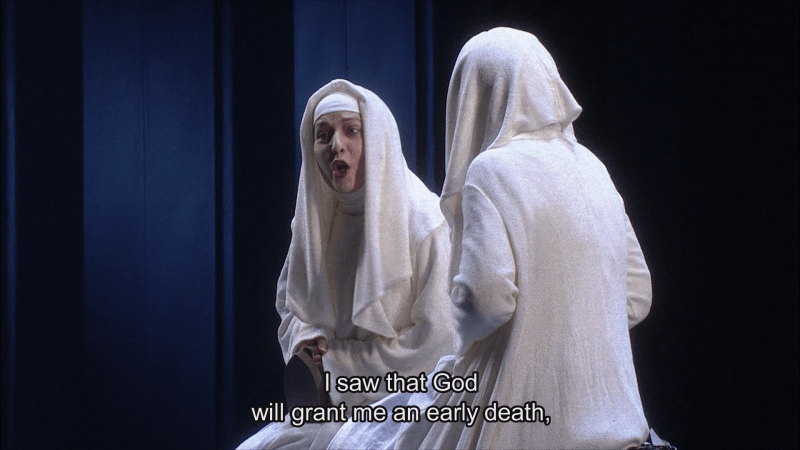
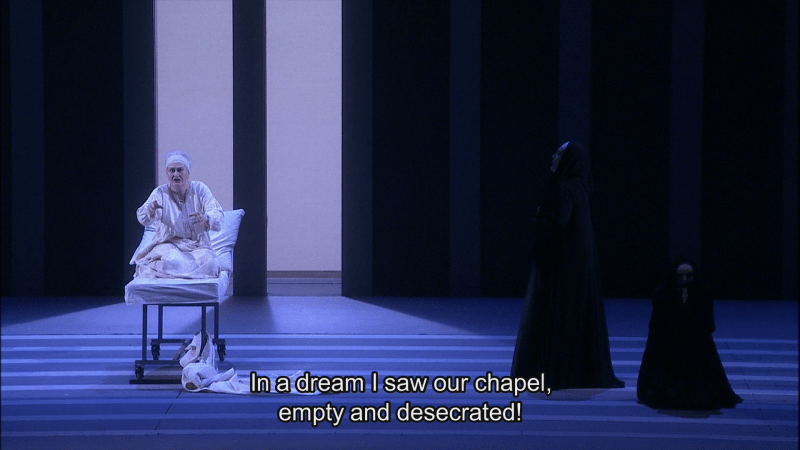
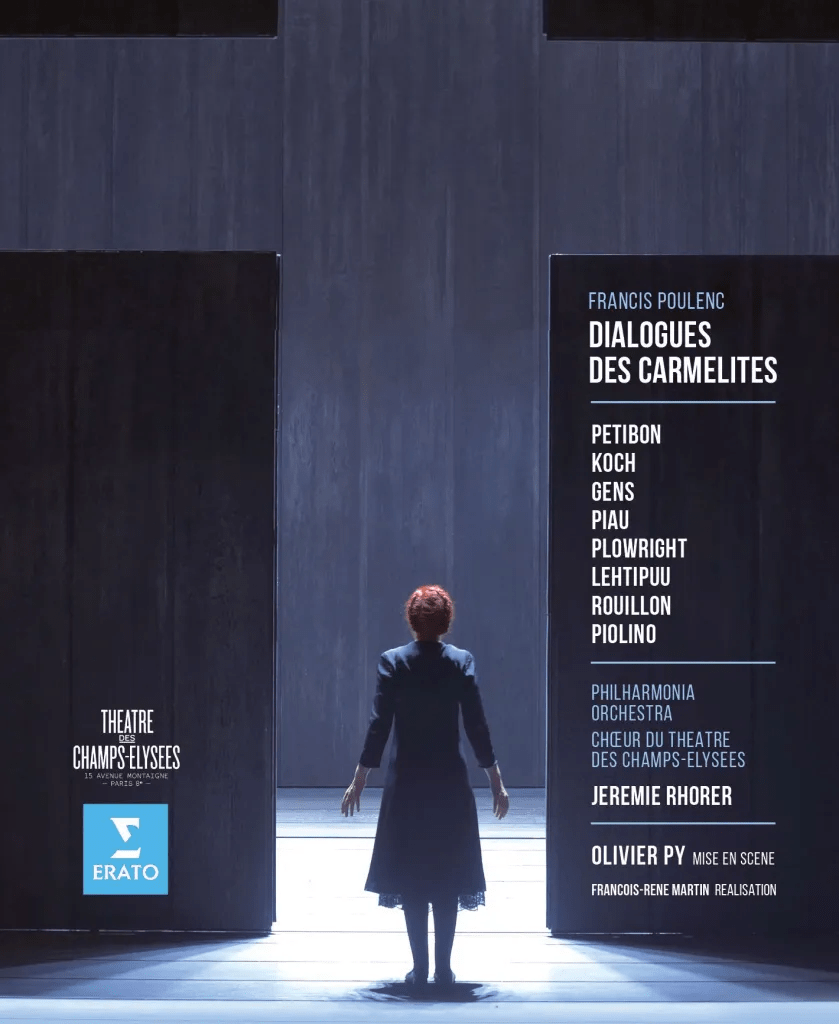
You just never know with Olivier Py, though I have to say that, apart from the awful Romeo et Juliette in Amsterdam, most of his productions are usually excellent. So too his Dialogues des Carmélites, recorded in Paris in 2013.
Patricia Petibon is a singer with a tendency to exaggerate, but here she is perfectly matched as Blanche. Watching her, I involuntarily get visions of Edith Piaf. Which of course suits the role very well: a small, skinny, frightened bird.
Her timbre is close to that of Denise Duval, but she lacks her carrying power and – mainly – her lyricism. Still, there is no denying that the role of Blanche is more or less tailor-made for her.
Sophie Koch is a strange choice for Marie. She looks far too young and lacks the confident superiority and power of persuasion so characteristic of the role. And the contrast with Lidoine (a wonderful Veronique Gens) is not great enough. Rosalind Plowright is an excellent Croissy and Sandrine Piau a delightful Constance.
Py uses the orchestral interludes to showcase religious scenes, including the evocation of the Last Supper and the Crucifixion. Sometimes a little “too much”, but the last scene, with the dark starry sky, brings a lump to my throat (Erato 0825646219537).
Here is the trailer:
Film adaptation:
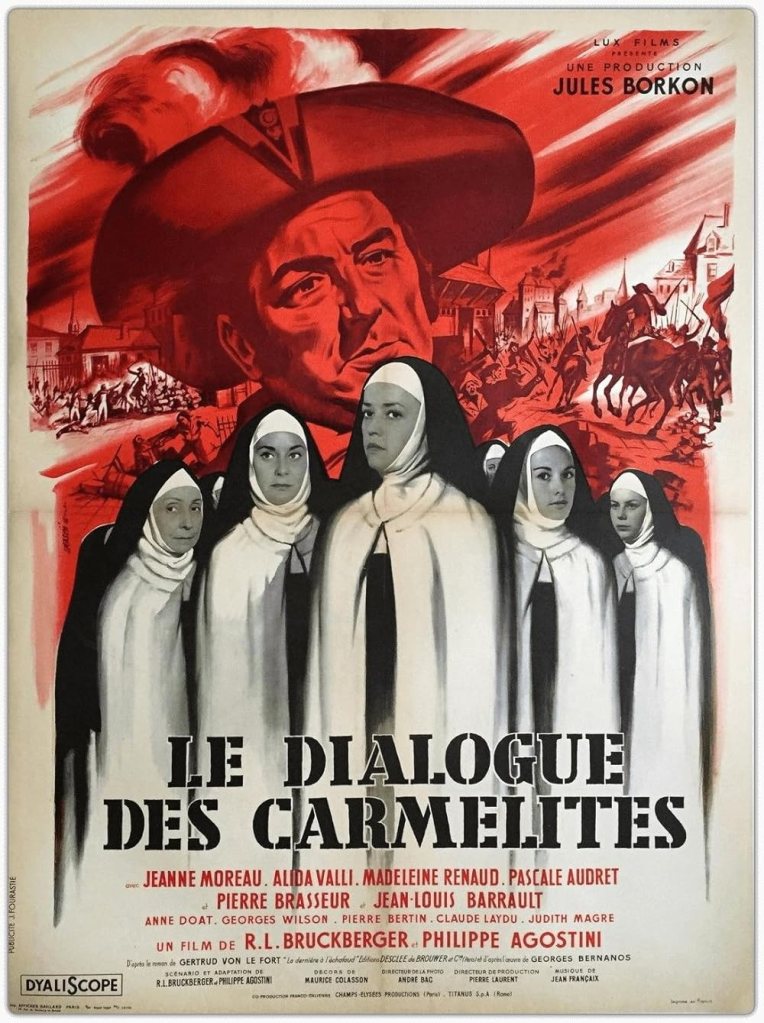
Did you know that the story of Dialogues des Carmélites was filmed in 1960? In the film you can see, among others, Jeanne Moreau as Mère Marie and Pascale Audret as Blanche.
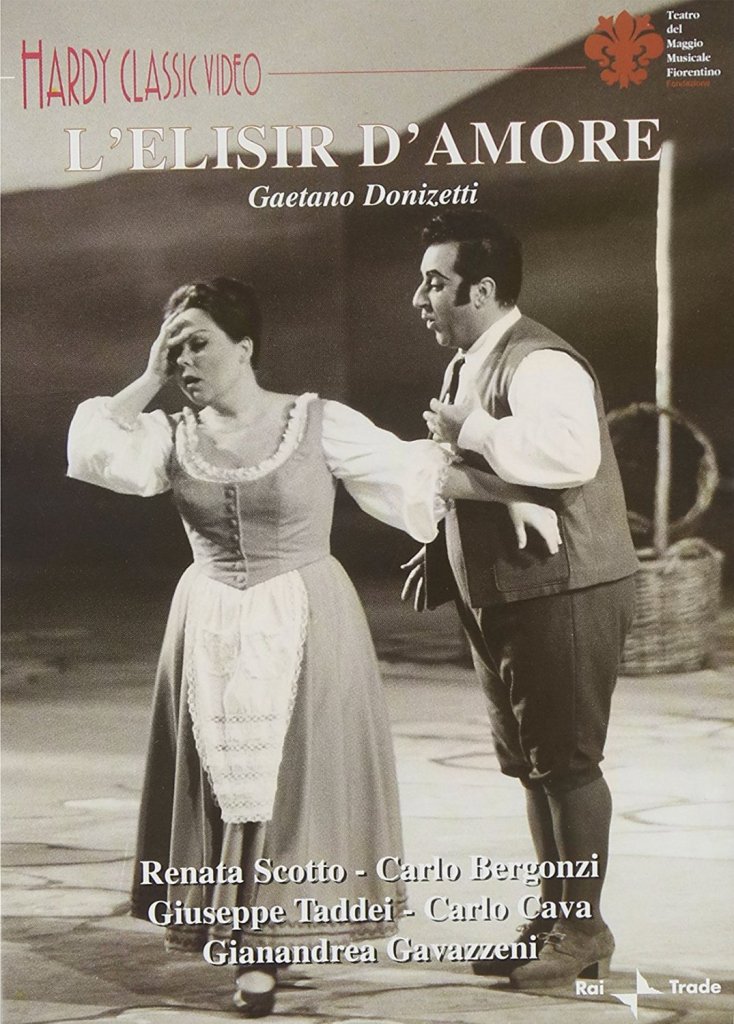
To the younger generation I would especially recommend the DVD with Renata Scotto, Carlo Bergonzi and Giuseppe Taddei (Hardy Classic Video HCD 4014). It is not only the beautiful voices of the past that impress (Scotto, Bergonzi, Taddei – who can still sing like them?), the eye is also given a lot to enjoy.
Do not think that they just enter the stage, sing an aria facing the audience and then take a bow. It is theatre pur sang and a better acting singer than Scotto has yet to be born.
The picture is black and white (the recording was made during Maggio Musicale Fiorentino in 1967) and the scenery is cardboard, but who cares?
LUCIA DI LAMMERMOOR
Renata Scotto 1967
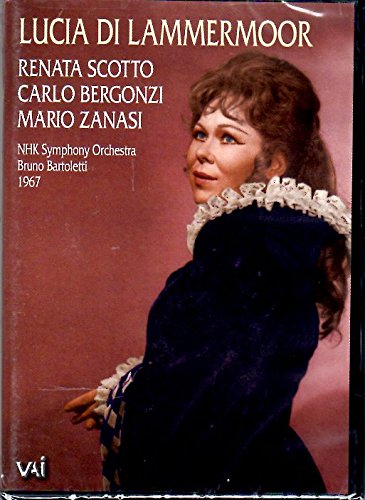
This production of Lucia di Lammermoor was recorded in Tokyo in 1967 and is available on DVD (VAI 4418). It circulated for years on pirate video, but since the sound and picture quality was particularly poor, the commercial release has made many opera lovers very happy. The sound is a little sharp, making Scotto’s high notes sound even more metallic than usual, but who cares?
Her interpretation is both vocally and scenically of an unprecedented high level. With a childishly surprised expression (my brother does this to me?) on her face, she agrees, albeit not without grumbling, to the forced marriage with Arturo (an Angelo Marchiandi who is hideous in every way).
After her mad scene, you tend to pull the plug, because everything that comes after it can only feel like a cold shower. But you are wrong about that. Edgardo’s two arias, sung by Carlo Bergonzi, will take you straight to (singer’s) heaven.
Afterwards, you can’t help but be a little sad, because where have they gone, yesterday’s singers? Small, tall, fat, skinny, with or without acting talent… None of them was a ballet dancer, but could they sing! And it was through their voices alone that they were able to convey all of the feelings that now require a whole ‘artistic team’. In spite of the cuts that were common at the time, this is an absolute must.
Below, Bergonzi sings ‘Fra poco a me ricovero’
Beverly Sills 1970
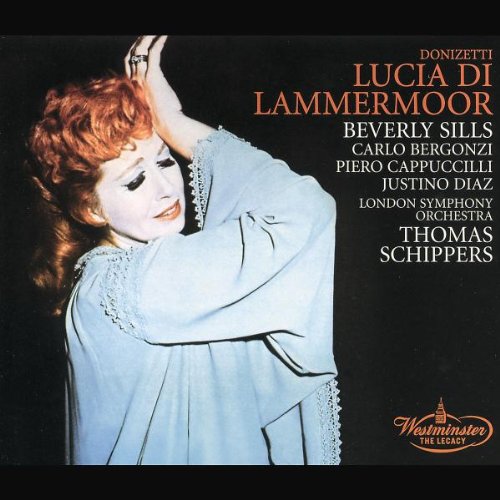
Sills’ Lucia (Westminster 4712502) for me remains one of the best interpretations ever, especially talking about studio recordings. Her portrayal unites the best of Callas and Suitherland: the virtuosity, vocal beauty and pure intonation of la Stupenda and the great acting of la Divina. Not really a great tragédienne (but then, neither is Lucia), she is more of a passive child-girl who just lets it all happen. Carlo Sills’ Lucia (Westminster 4712502) for me remains one of the best interpretations ever, especially talking about studio recordings. Her portrayal unites the best of Callas and Suitherland: the virtuosity, vocal beauty and pure intonation of la Stupenda and the great acting of la Divina. Not really a great tragédienne (but then, neither is Lucia), she is more of a passive child-girl who just lets it all happen. Carlo Bergonzi sings an elegant and outraged Edgardo and Piero Cappuccilli a brutal and cruel Edgardo and Thomas Schippers conducts very firmly.
But what makes this recording really special is the use of a glass harmonica in the madscene, exactly as Donizetti had originally prescribed it
LA BOHEME
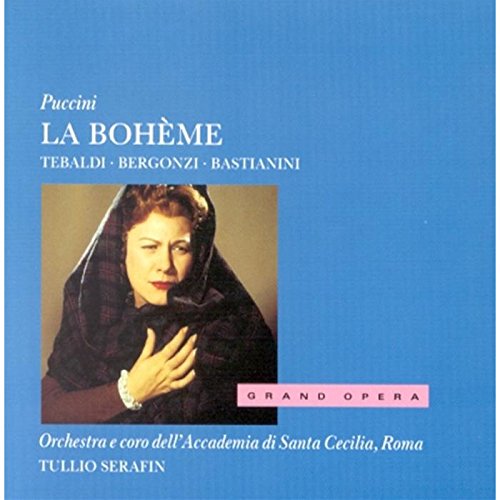
Renata Tebaldi 1958
Actually, I also find Tebaldi’s voice a bit too heavy for Mimi, a tad too dramatic too, but there is no denying that her interpretation is very exciting. You have to keep listening to it.
Carlo Bergonzi is an insanely beautiful Rodolfo; secretly, I think he is the real star of the recording. Ettore Bastianini is a very charming Marcello, but Gianna d’Angelo is not a beautiful Musetta. Her singing has nothing sensual and is vulgar at times.
Tulio Serafin conducts more than superbly and the orchestral sound is brilliant. Remarkable actually how wonderful that recording still sounds! (Decca 4487252)
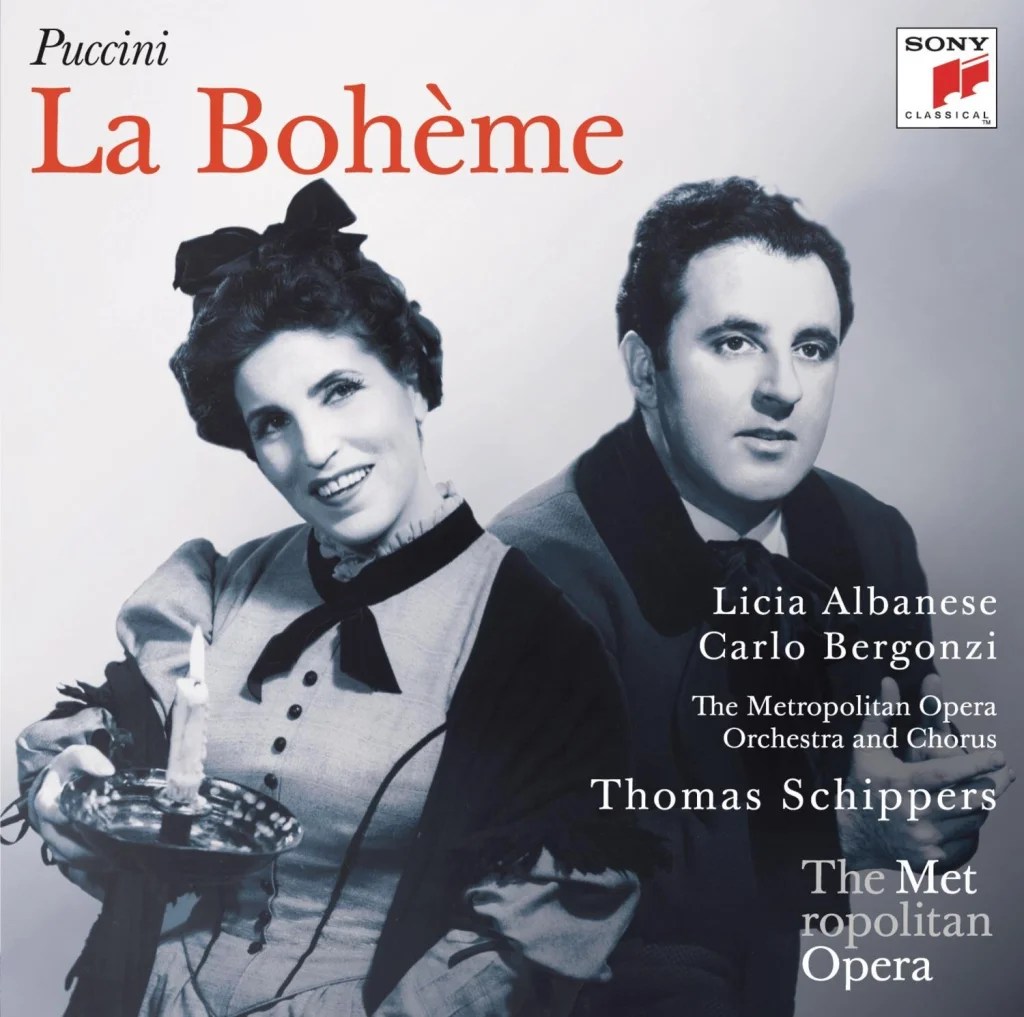
Licia Albanese 1958
A warning is in order: the sound is not great. It is sharp and dull and occasionally the radio waves are humming rebelliously, but it also has something quite endearing. As if a time machine takes you back to the afternoons of yore, when the whole family settled down in front of the radio to listen to the latest invention, the live broadcast.
The performance, too, is old-fashionedly delicious. Not that the voices are all that exceptional, apart from Carlo Bergonzi who is at his finest, the other roles could have been better cast.
Licia Albanese (almost fifty by then, which is not at all audible) was a real crowd pleaser, especially in New York. Thomas Schippers conducts very vividly (Sony 8697804632)
MADAMA BUTTERFLY
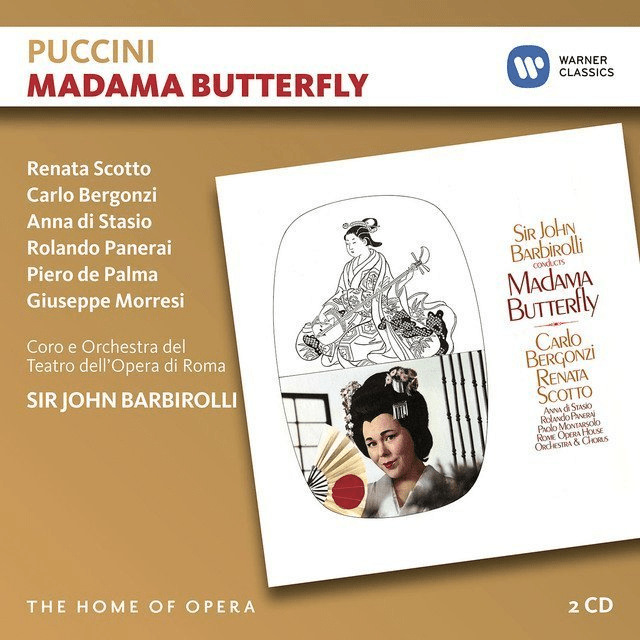
For me an absolute ‘numero uno’ is the 1966 recording by EMI (now Warner 0190295735913) under Sir John Barbirolli. One might imagine a more lyrical or alternatively a more dramatic Cio Cio San; one with less metal in her voice or maybe one with a more childlike voice. But no other singer was able to grasp the complex nature of the girl so well and to characterise her change from a naive child into an adult woman, broken by immense grief, so impressively
Carlo Bergonzi is a beautiful, lyrical Pinkerton, singing with glorious, golden ton and Rolando Panerai a very warm Sharpless.
Almost immediately, within the first bars of the overture, I spring to my feet: this will be a delight! Muti starts firmly and immediately afterwards the mood changes into an unparalleled lyricism. His tempi are generally on the high side, but nowhere do they degenerate into panting.
Stefano Vizioli’s direction is a textbook example of what an opera should look like. His conventional, 1994 staging is truly sparkling, exciting, innovative and inspiring. Comical and sentimental at the same time and with great attention to detail.
The costumes are dazzlingly beautiful and correspond to the characters of all the characters. The emergence of the good-for-nothing Ernesto (phenomenally played by Gregory Kunde) is truly precious: in slippers and a silk dressing gown, he lies down on the sofa, sipping his espresso, waiting for the luck to come by itself or with the help of Malatesta (Lucio Gallo at his best).
Ferruccio Furlanetto is a Don Pasquale in a thousand and Nuccia Focile a delightful Norina. Everyone sings and acts at an all-time high and the orchestra could charm the stars from heaven.
No sooner has it happened to me that I couldn’t find a minus point anywhere: for me it is one of the best opera’s on DVD I have ever seen, don’t miss it!
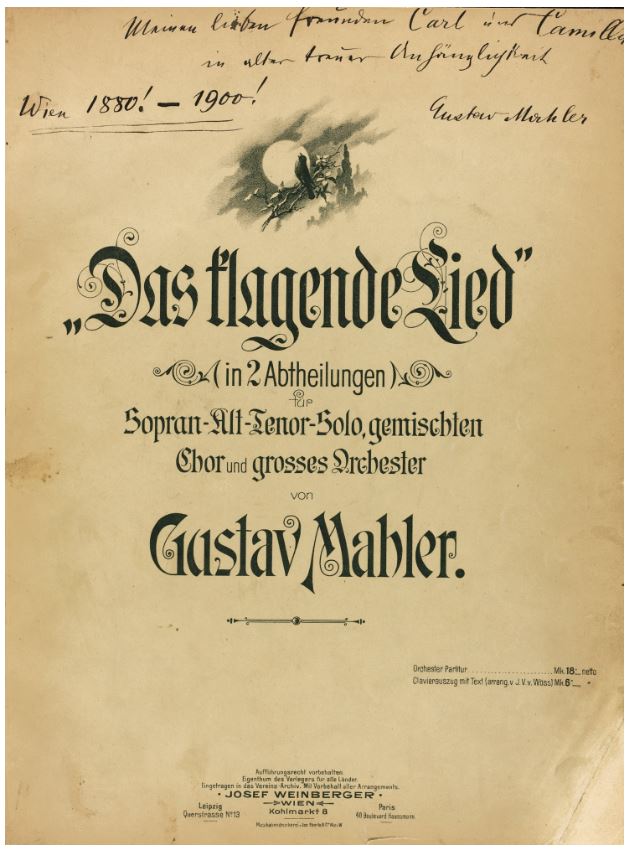
Year 1902: Vocal score of Das klagende Lied, version in two movements, signed and inscribed by Gustav Mahler
Sometimes you just don’t know. You think you understand a work well, very well indeed. You have a soft spot for it, so you’ve collected quite a few recordings and you think there cannot be any secrets left. And then an old, mastered recording drops on your doormat and it leaves you totally flabbergasted.
Until recently, you were still of the opinion that there is nothing better than Giuseppe Sinopoli and that MTT gets you carried away so nicely and completely, if only because of its very grueling tempi. But then your whole world goes haywire, because suddenly it feels as if you have awakened from a long sleep and only now everything is falling into place.
Mahler was barely 20 when he completed Das klagende Lied, the highly romantic and oh so sad fairy tale about a king’s son who murders his brother in a struggle for power and love. The composer himself considered it his opus 1 and the first work in which he found himself as “Mahler”.
Gennady Rozhdestvensky was the first to conduct Das Klagende Lied in its original, three-part version. For that alone, he deserves more than praise. I am really at a loss for words to describe the performance, because I have never heard the work performed so dramatically and at the same time so incredibly lyrical and loving.
Rozhdestvensky manages to elicit the most beautiful sounds from the BBC orchestra, most reminiscent of first the awakening and then the ending of the day, the world and the universe. You hear the birds chirping softly and the wind blowing through the trees. And then the sun sets. No, fairy tales were not always cheerful, even when the world still believed in them.
Janacek’s The Fiddler’s Child (recorded in 1979 in Prague) has never before been released on CD. I must confess that I, a big Janácek fan, did not yet know this magnificent work, and I am quite ashamed of that.
Sinopoli:
Michael Tilson Thomas London live
First recording of the version in three movements by Pierre Boulez in 1970:
Slowly, much too slowly and actually much too late, but the music world is waking up. One gap after another is finally being filled and the (consciously or unconsciously) ‘forgotten’ composers are at long last coming to our CD players.
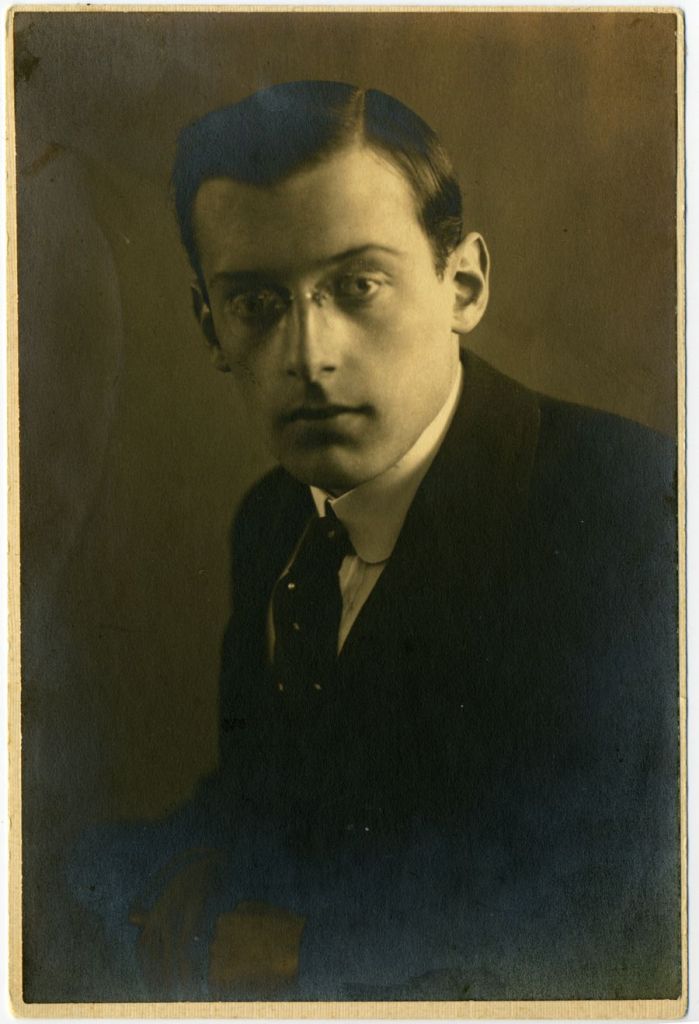
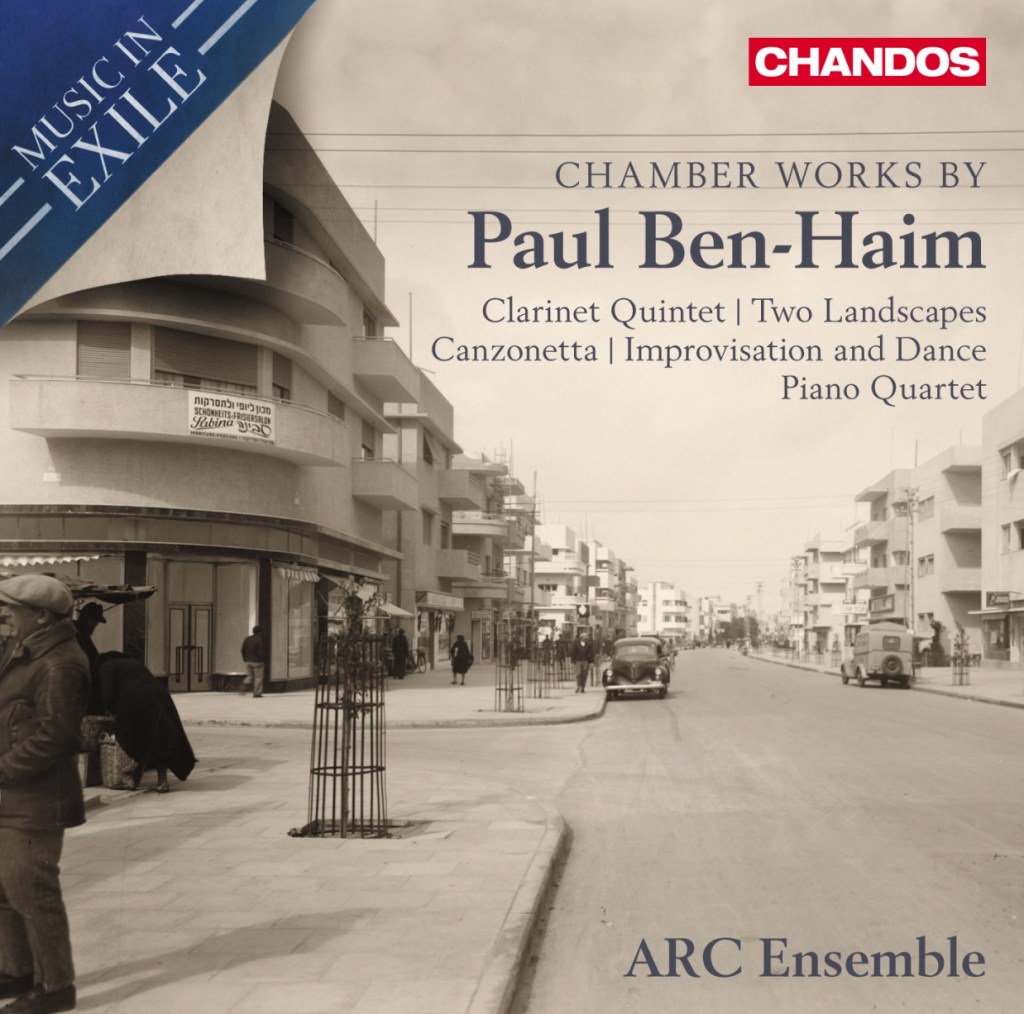
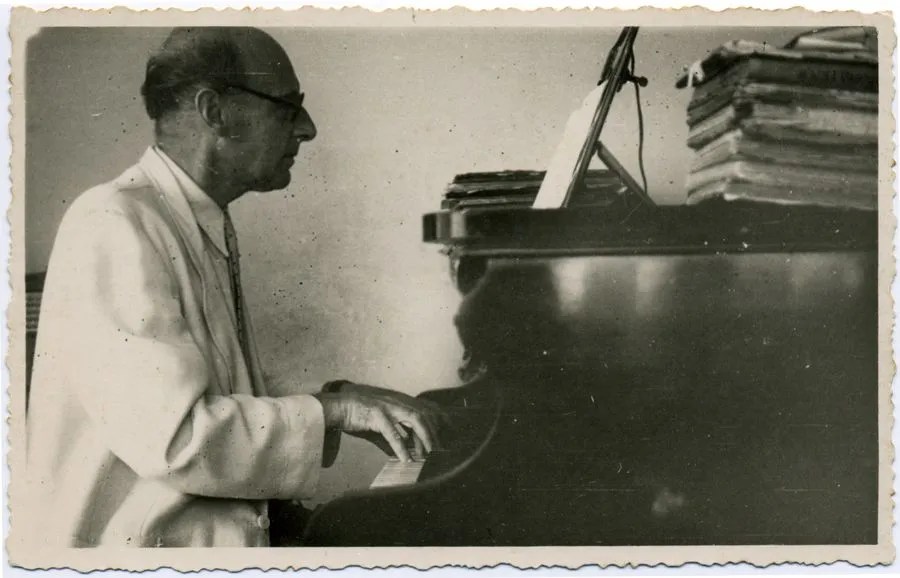
Who among you has ever heard of Paul Ben-Haim? If not, why not? The composer was born as Paul Frankenburger in Munich in 1897 and died in Tel Aviv almost 90 years later. And he left behind a really spectacular oeuvre.
Many vocal works, orchestral pieces, chamber music…. What not, actually? Most of his works are influenced and inspired by Jewish, Israeli and Arab melodies, so you may call his music “nationalistic”. Nothing wrong with that word.
Just take the opening of his 1941 clarinet quintet! The dancing clarinet part reminds one of swinging klezmer, but in a Brahmsian way.
The ARC Ensemble perform the opening movement of Paul Ben-Haim’s Clarinet Quintet at the Enav Center, Tel Aviv:
This is even more pronounced in his “Two Landscapes” for viola and piano, in which he sings the praises of his new homeland’s beauty.
Steven Dann and Dianne Werner prepare to record The Landscapes for viola and piano:
The “Improvisation and Dance”, dedicated to Zino Francescati, betrays influences from Yemeni folklore and only his oldest work on the CD, the Piano Quartet from 1920, does not yet have its own “face”.
The (very infectious playing!) members of the Canadian ARC Ensemble all work at the Glenn Gould Conservatory in daily life. A CD to cherish.
Evocation
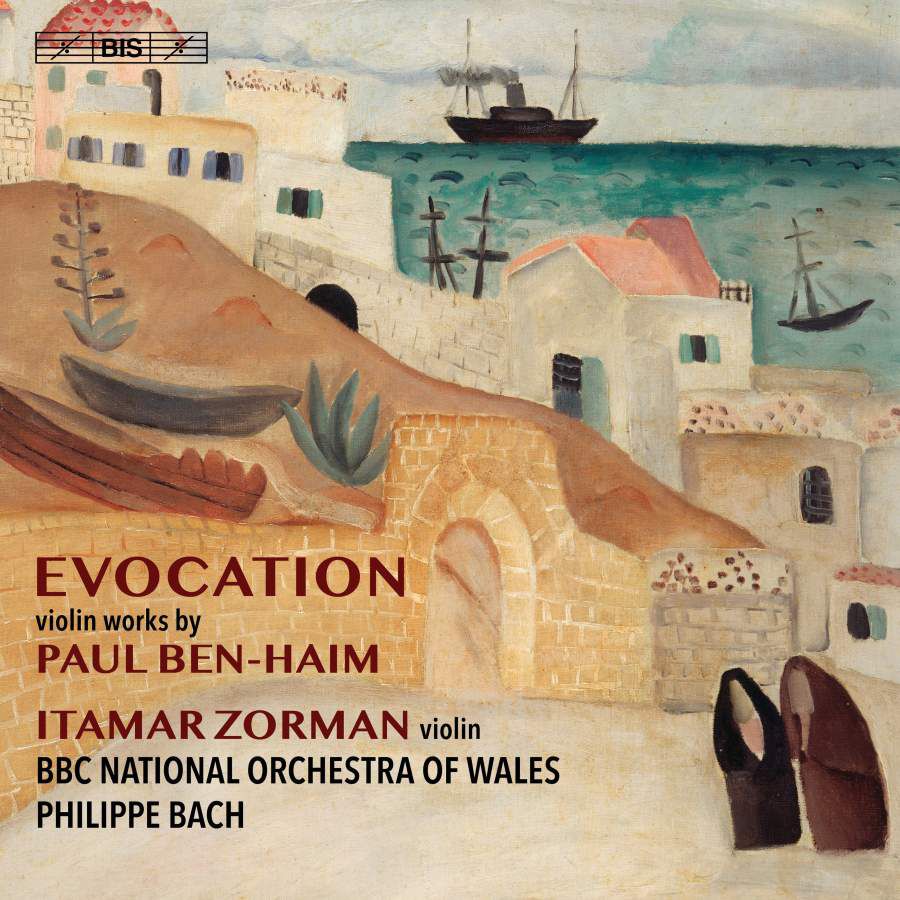
Paul Ben -Haim, who was born in Munich in 1897 as Paul Frankenburger and died almost 90 years later in Tel Aviv, remains a great unknown to many music lovers. This is a great pity, because the oeuvre of this sadly forgotten composer is very diverse and most exciting. At one time he was totally immersed in the German Romantic tradition before he almost radically broke with it when he left his native country in 1933.
He began his new life composers life in what was then known as the British Mandate of Palestine by changing his name, after which he also adapted his compositions to his new homeland. Starting in 1933, most of his works were influenced and inspired by Jewish, Israeli and Arabic melodies.
Between 1939 and 1949 Ben-Haim accompanied the at that time extremely famous folk singer Bracha Zefira. Zefira, who was of Yemeni origin, had a great influence on the musical life in what was then Palestine. It was for her that he composed the Berceuse Sfaradite, a song which had become one of her greatest successes.
Bracha Zefira:
The Violin Concerto, which dates from 1950, is probably Ben-Haim’s best-known composition, in no small part as a result of the great recording by Itzhak Perlman. The CD is still on the market, I believe, but as far as I know the Concerto is only rarely performed. Why?
Three Studies for Solo Violin is Ben-Haim’s last violin composition, dedicated to Yehudi Menuhin in 1981. Splendid. But I was most struck by the completely unknown Evocation from 1942, a work which has its premiere here and which really gave me goose bumps. Wow.
Evocation live:
Itamar Zorman, the young Israeli violinist who won the 2011 prize in the Tchaikovsky competition, has immersed himself in the composer and his work. Thanks to him, this album was compiled and released. He plays these works as if his life depends on them. He believes in them and he communicates that belief more than convincingly.
Zorman about Ben-Haim:
The accompaniment by Amy Yang (piano) and the BBC National Orchestra of Wales conducted by Philippe Bach is first-rate as well
Works for violin
The Berceuse Sfaradite is based on a Sephardic lullaby. In Hagai Shaham’s hands, the piece sounds sultry and reassuring at the same time. And the two tone poets’ violin solo suites, composed at Yehudi Menuhin’s request, turn into forgotten masterpieces in his hands. Wonderful.
More works by Ben-Haim
Psalm from Symphony no. 1:
Whole symphony:
From Israel
Sonata for two mandolins, guitar, harpsichord, harp and string orchestra:
In de aanloop naar de première van Jay Scheibs nieuwe productie van Parsifal ging de aandacht vooral uit naar een technologisch nieuwigheidje: het gebruik van AR brillen door het publiek. AR staat voor Augmented Reality wat inhoudt dat degene die zo’n bril opheeft naast de werkelijkheid ook nog veel computer gegenereerde beelden te zien krijgt. De toeschouwer ziet planeten, bomen, doodshoofden, vuur, ganzen, slangen en zo meer voorbijkomen. Het enige moment dat AR echt iets toevoegt is wanneer Klingsor de Speer naar Parsifal gooit. Dan ervaart men dat alsof die recht op je af komt. Overigens had slechts een select deel van het publiek zo’n bril op, ongeveer 300 personen gezeten in de Loge en de achterste zaalrijen. Voor de overige bezoekers was het business as usual.
Interview met Scheib:
Scheib is een toneelregisseur en heeft weinig tot geen ervaring met opera. Dat merk je direct aan de statische wijze waarop hij het koor positioneert: als een zingende muur. Verder is de aandacht kennelijk zozeer uitgegaan naar de visuele effecten dat de personenregie grotendeels is overgelaten aan de zangers zelf. Dat was indertijd ook nadrukkelijk het geval in de Ring van Castorf. De wijze waarop Andreas Schager zijn handen en armen beweegt in de dialoog met Kundry is ronduit knullig. Daar laat Scheib het duidelijk afweten en dat is helaas niet het enige moment.
Laten we alle hype en hooplah even voor wat het is dan valt op dat Scheib het libretto tamelijk volledig heeft gevolgd. Een scène tijdens de ouverture doet aanvankelijk anders vermoeden. Een figurant die dubbelt als Kundry verleidt de op de grond liggende Gurnemanz en na afloop zie je hem opschrikken. Laten we het er maar op houden dat hij het heeft gedroomd maar echte seks of niet, de chef van Montsalvat heeft duidelijk onkuise gedachten.
Dat is natuurlijk symptomatisch voor de treurige staat waarin de Graalgemeenschap verkeert sinds Amfortas de Speer is kwijt geraakt aan Klingsor en nu uitsluitend nog maar kan verlangen naar zijn einde. Zijn plicht is echter het onthullen van de Graal omdat de ridders en vooral zijn vader Titurel daar nieuwe levenskracht uit putten. Een Graalkoning die zich aan die plicht onttrekt is als Freia die het vertikt om de goden van appels te voorzien. En onder die teloorgang van de gemeenschap heeft ook het kuisheidsideaal te lijden.
Scheib heeft de verleiding niet kunnen weerstaan om dit breder te treken door een vergelijking te maken met de uitputting van de aarde door toedoen van haar bewoners die blijven graven op zoek naar steeds weer nieuwe essentiële bodemschatten om hun door technologie bepaalde cultuur in stand te houden.
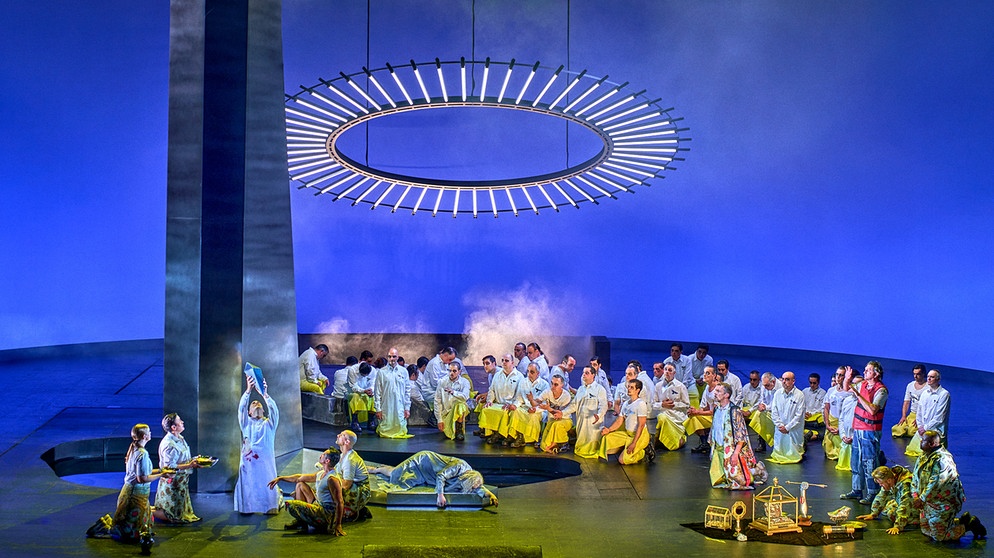
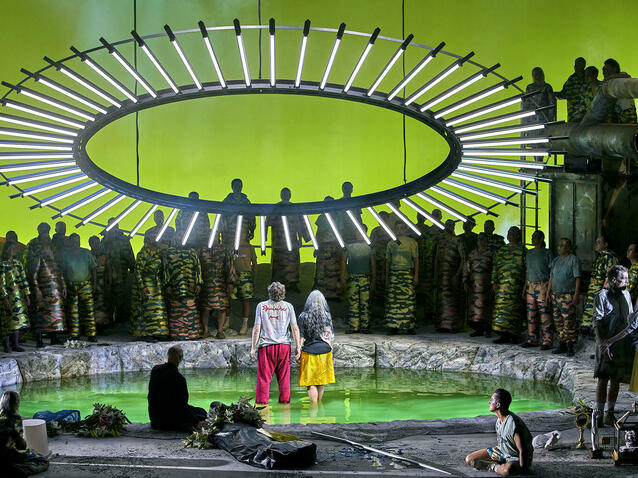
In de derde akte hoeft hij het alleen nog maar in te koppen. De Graalridders zijn vervallen tot dierlijk gedrag, van de gemeenschap als ‘gevechtscentrum op religieuze grondslag’ is niets meer over. Op het toneel zien we een vijver met blauwgroen water, overblijfsel van de kobaltwinning, en het wrak van een enorme combine die grond afgraaft en verwerkt. Dat alles staat de gebruikelijk afhandeling van het verhaal echter niet in de weg.
Die schaduw Kundry blijft de rest van de avond in beeld al heeft ze weinig te doen. Haar enige klusje (behalve dan dat prettige samenzijn met Gurnemanz) is het verzorgen van de wond van Amfortas, gezeten aan de rand van een bad dat in de toneelvloer is uitgespaard. De wond blijft zichtbaar dankzij een ronde uitsparing in zijn kleding. Zo kan hij die gemakkelijker laten bloeden als Titurel hem heeft weten te pressen de Graal te onthullen. Dit object wordt getoond als een overmaats zwartblauw kristal dat aanvankelijk onder een geel lapje verborgen is. Bloed uit de wond komt aan Amfortas’ handen en hij wast ze in een kom water. Dat wordt over het kristal gegoten en opgevangen in een ander bakje waaruit iedereen vervolgens een druppeltje mag ontvangen. Als iedereen weer zijn ‘appeltje’ heeft gekregen kan de gemeenschap er weer even een beetje tegen, vooral Titurel natuurlijk.
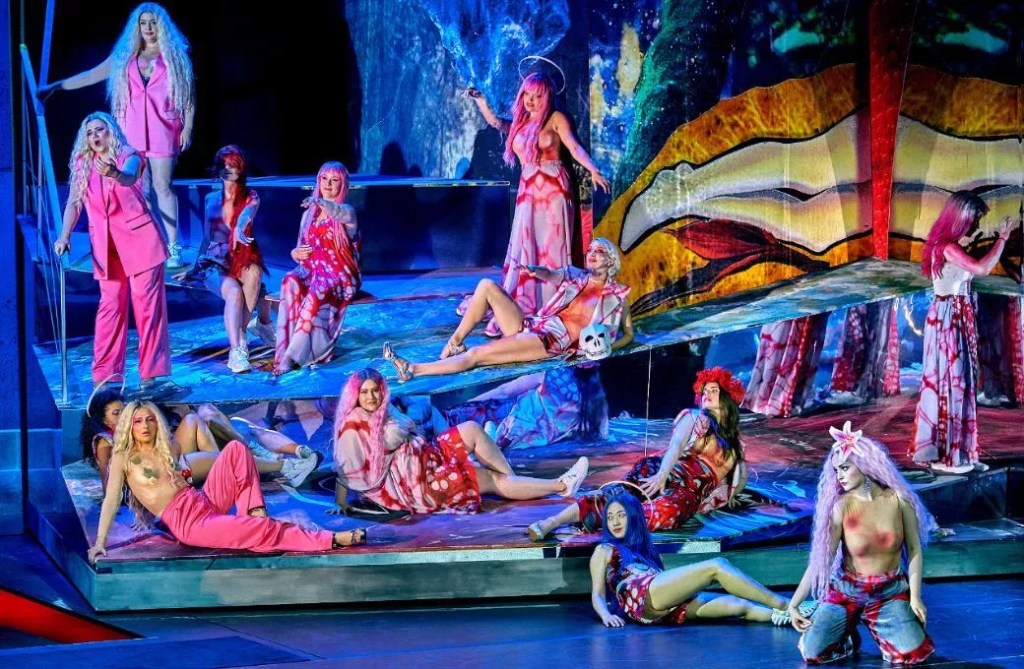
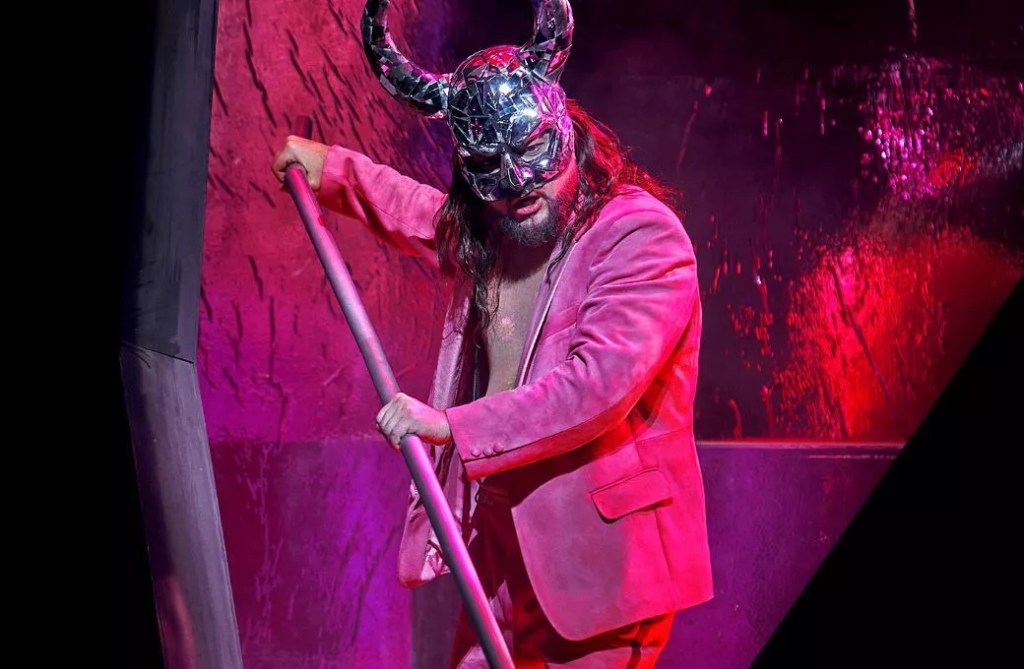
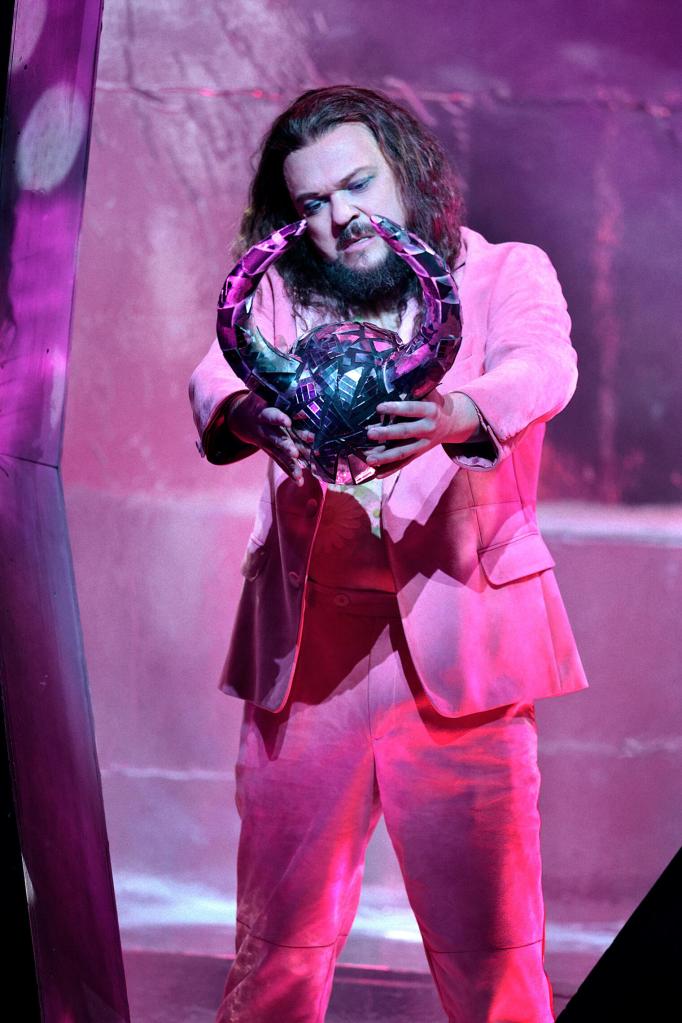
De Bloemenmeisjes worden getoond als een roze Barbieharem en Klingsor draagt een helm met hoorns op zijn hoofd. Kundry gaat in een donkere lange jurk en doordat ze nu een zwarte pruik op heeft is ze vrijwel onherkenbaar na haar optreden ervoor toen ze lange blonde haren had en een lichte jurk droeg. Amfortas pakt de Speer eenvoudig van hem af, de AR gebruikers zien dat anders.
Wat opvalt in de derde akte is de wijze waarop Kundry door Gurnemanz tot leven wordt gewekt. Hij masseert langdurig haar hand en arm en is teleurgesteld als ze ‘geen woord voor hem heeft’. Kundry is echter al weer verdergegaan: zij en Parsifal blijven aan elkaar plakken na het doopritueel. Ze knuffelen wat af en Parsifal geeft haar zelfs een kusje.
Met het opnieuw onthullen van de Graal, ditmaal door de nieuwe koning Parsifal, grijpt Scheib ten tweede male in het libretto in. Parsifal gooit het kristal met kracht op de grond waardoor het in stukken uiteen valt. Het symboliseert het einde der tijden, niet alleen van de wereld getuige dat enorme wrak op het toneel, maar natuurlijk ook van de selectieve gemeenschap die het alleenrecht koestert op een onuitputtelijke energiebron en eeuwigdurend leven. Het is een nivelleringsmoment, van nu af wordt er niet meer door de lucht gevlogen om ergens reddend op te treden en leeftijden van meer dan honderd jaar worden een hoge uitzondering.
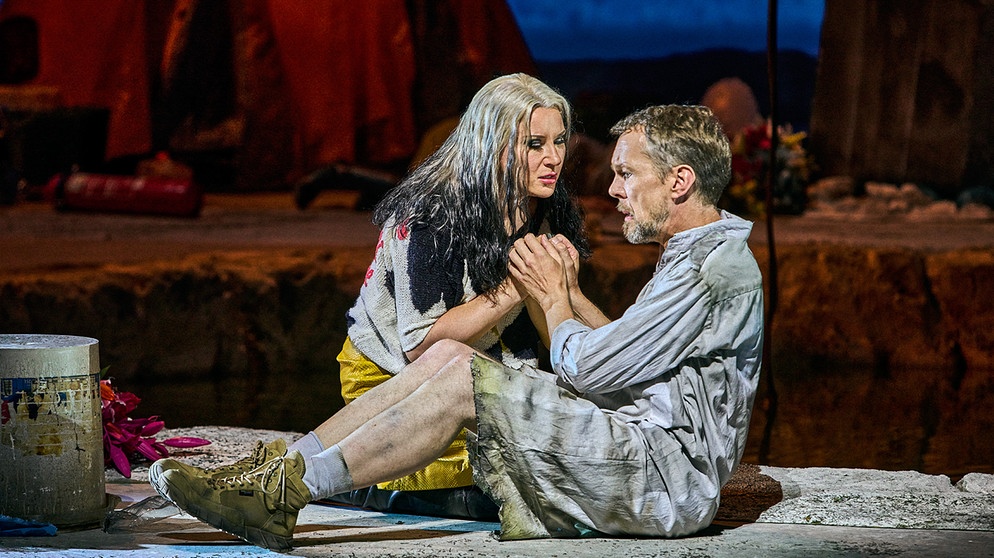
In de slotscène lopen Parsifal en Kundry samen de kobaltgroene vijver in, als waren ze een liefdespaar. Zien we hier Kundry als toekomstige incarnatie van Condviramour, de moeder van Lohengrin. Zal wel niet, bijna niemand heeft ooit van die vrouw gehoord. Gurnemanz kijkt besmuikt naar het stel en krijgt gelukkig gezelschap van de schaduw Kundry die zich liefdesvol tegen hem aanvlijt.
Alles overziend: redelijk librettogetrouw, geen concept dat sterk ingrijpt in de handeling, veel irrelevante bewegende beelden voor een klein deel van het publiek dat het in meerderheid moet doen met het in overdadige kleureffecten vormgegeven kasteel van Klingsor
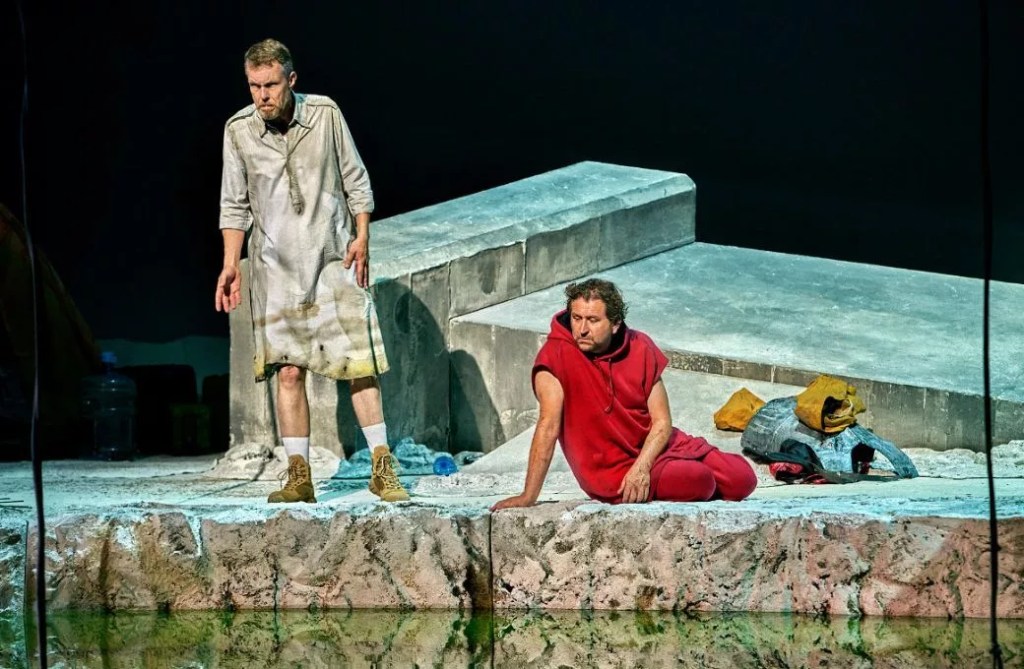
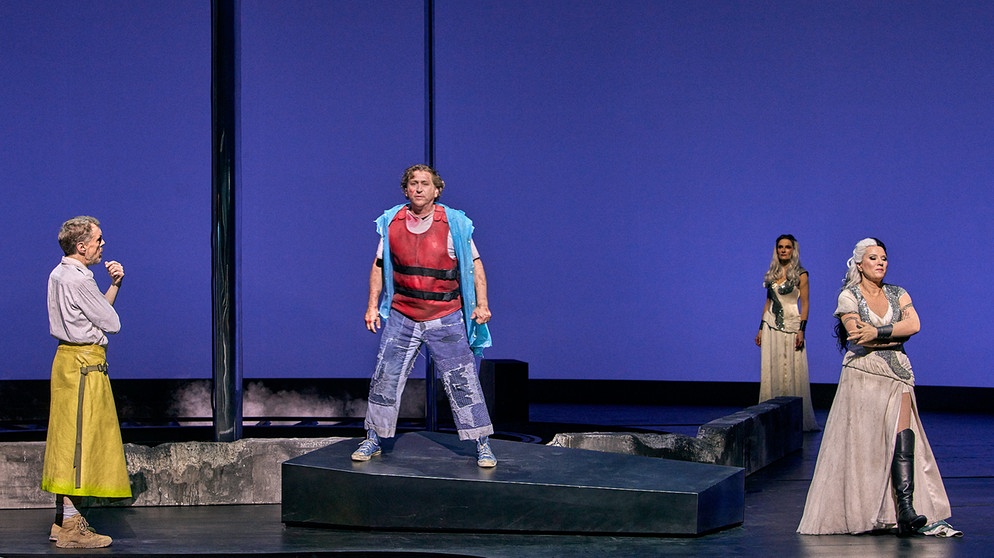
Het decorontwerp kwam voor rekening van Mimi Lien en is geslaagd in zoverre dat Scheids concept ermee wordt vormgegeven. De kostumering van Meentje Nielsen is een kwestie van smaak: vreemde kleureffecten, rommelig. Parsifal onverzorgd met kapotte broek. Gurnemanz in een gele wikkelrok, van die dingen. De belichting laat te wensen over, althans voor de videolijker. Hele kwartieren gaan voorbij waarin alles in het donker is gehuld. En natuurlijk zijn er ook videobeelden maar die heeft de videregisseur gelukkig vrijwel volledig weten te vermijden.
Derek Welton (Amfortas)
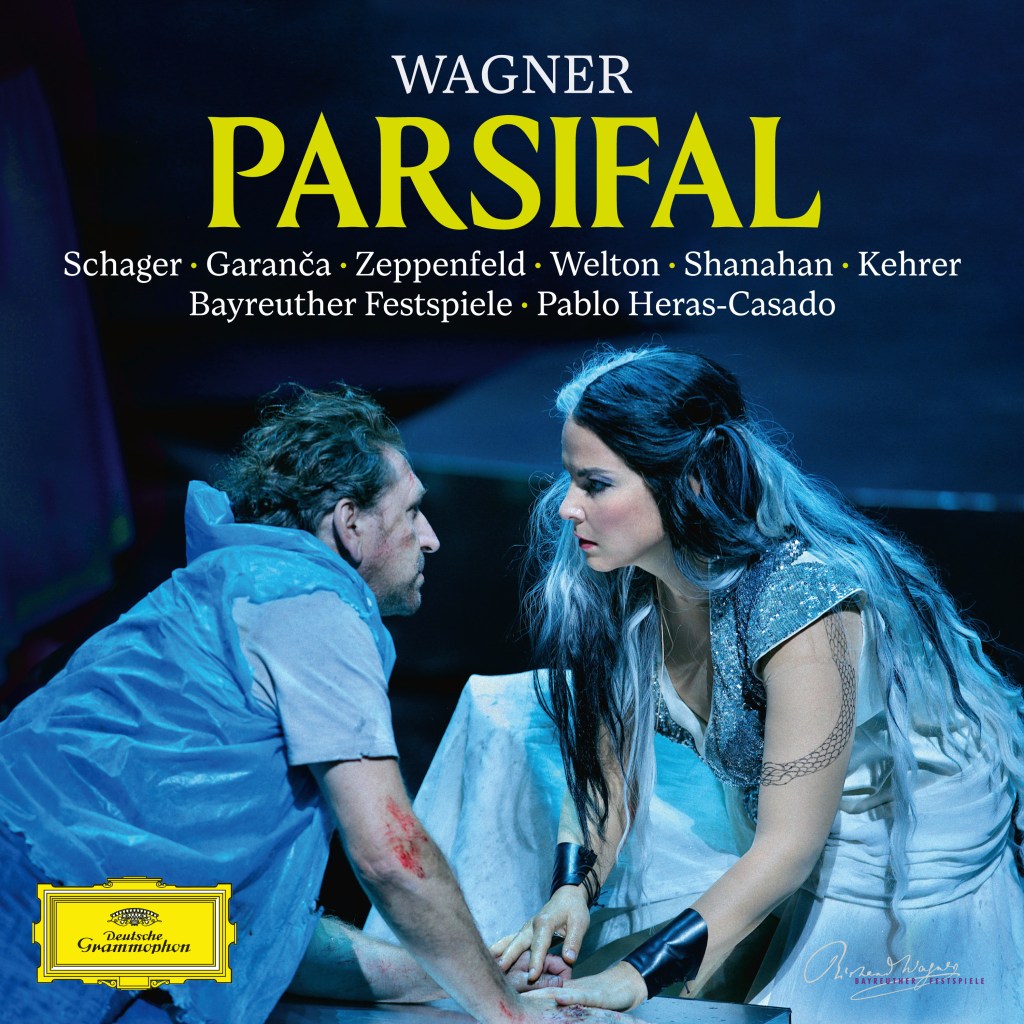
Muzikaal is dit een geweldige Parsifal met een schitterend spelend orkest onder leiding van Pablo Heras-Casado. Over de gehele linie wordt zeer goed gezongen. Derek Welton is een prachtige Amfortas en Tobias Kehrer weet zowaar iets moois uit zijn kleine rol als Titurel te halen.
Zeppenfeld (Gurnemanz) en Scgager (Parsifal)
GeorgDerek_ Zeppenfeld is sinds hij Günther Groisböck in deze is opgevolgd uitgegroeid tot de ‘eigenaar’ van de rol. Hij woont erin en dat staat garant voor een uitnemende vertolking. Zijn Gurnemanz is tamelijk goedmoedig, iemand die alles al vele malen eerder heeft gezien en beleefd en met zijn mimiek weet hij de handeling zo nu en dan haarfijn te becommentariëren.
De Klingsor van Jordan Shanahan is heel behoorlijk maar in deze rol vind ik hem uitwisselbaar met vele anderen.
Gurnemanz, Parsifal, Kundry en schaduw Kundry
Andreas Schager hoorde ik in 2018 live in de vorige Parsifal en bij die gelegenheid vond ik hem wat te luid, op het schreeuwerige af. Vooral na zijn kreet ‘Amfortas’ in de tweede akte was dat storend omdat hij dat voorgeschreven geluidsniveau vervolgens volhield tot het einde. Op dit punt heeft Schager zich enorm verbeterd en vooral in de derde akte zingt hij uitgesproken lyrisch.
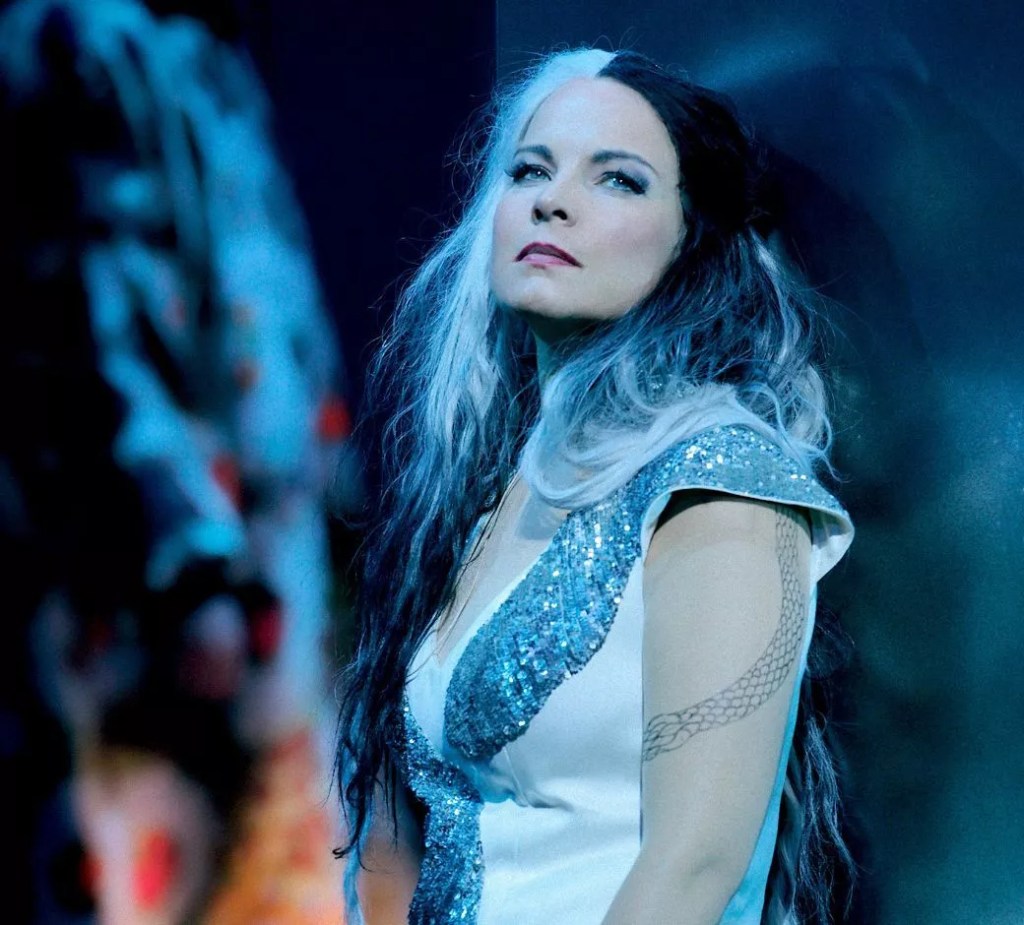
Elina Garanca is een mooie Kundry zonder dat ze iets bijzonders toevoegt. Ze brengt haar beroemdheid in en dat mag ze etaleren door als laatste te verschijnen tijdens het individuele slotapplaus.
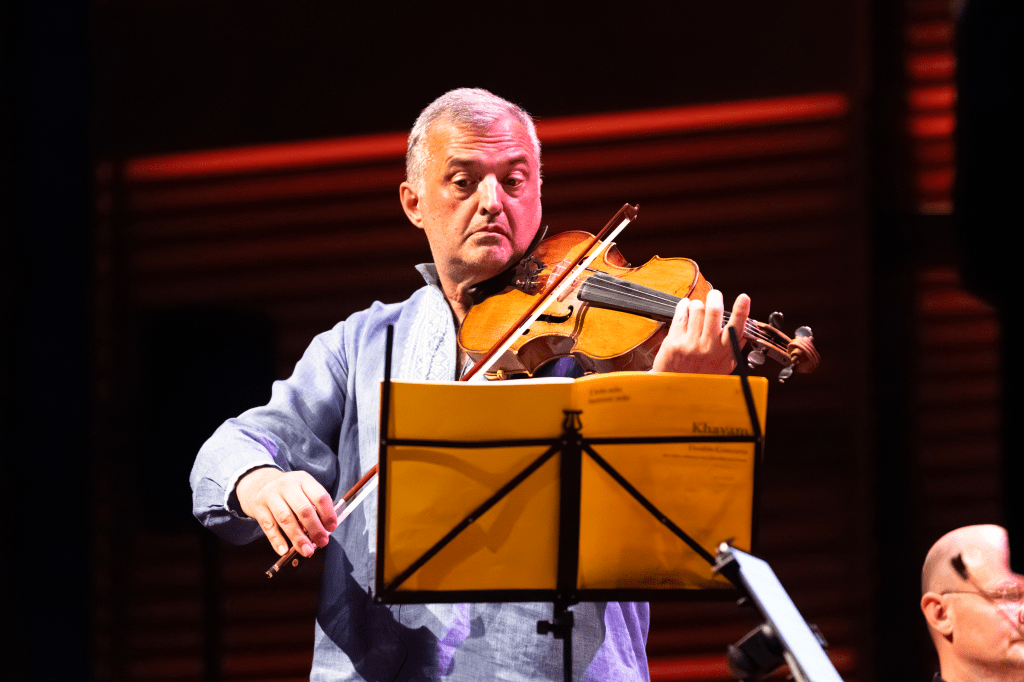
Ik heb dit jaar niet zoveel gezien van het Holland Festival als voorheen, maar voor mij eindigde het dit jaar in extase, dankzij dit concert, althans wat betreft specifiek het tweede deel van het concert, een compositie van de Iraanse Golfam Khayam, haar concert voor altviool, santur en gemengd kamerensemble.
Golfam Khayam maakt fraai gebruik van de dissonanten die ontstaan als Iraanse en Westerse modi samen worden gespeeld (en die je eigenlijk dus schijndissonanten kunt noemen). Ook horen we fraai de ‘tarab’ in de Iraanse muziek, een term uit Arabische muziek voor opwinding of liever vervoering, waarvan ik even kwijt ben of die ook in de Iraanse muziek als zodanig gebruikt wordt, maar het effect is overeenkomstig.
Ritmes die steeds stuwender worden, instrumenten die steeds wilder worden bespeeld, melodielijnen die naar steeds hogere regionen opschuiven, over steeds pregnanter baslijnen. De muziek is modaal opgebouwd, zoals de meeste traditionele Iraanse muziek. De compositie blijft binnen dezelfde toonsoort, maar daarbinnen worden alle variaties uitgeprobeerd in dramatische modale akkoordsequensen, over een basis van lange grondtonen.
Michael Gieler
De solisten, Michael Gieler op altviool en Kioomars Musayyebi op santur (een oriëntaalse broer van de cimbalom), durven ruig te spelen en allerlei kleuren uit hun instrument tevoorschijn te halen. Fraai was hoe Michael Gieler ook in de extreme grepen in zijn partituur de noten telkens opbouwde vanuit een rijke volle toon. Die op haar beurt fraai contrasteerde met de metalige achtige klank van de santur.
Kioomars Musayyebi
Khayam gaat ook prachtig om met slagwerk. Schudden van de metalen belletjes van de daf, een grote lijsttrom met belletjes eromheen. Wrijven over de vellen van de daf en de pauken. Maar natuurlijk ook slaan op de daf, de pauken en bekkens. De interactie tussen de Iraanse percussionist Reza Samani en Concertgebouworkest-slagwerker annex in dit geval tevens paukenist Bence Major was fenomenaal.
Vanwaar ik zat, rechts voor het podium, klinkt er helemaal vanaf de andere kant op zeker moment een prachtig luid arpeggio op de harp (Doriene Marselje), en horden we idem dito subtiel tussen pianissimo en fortissimo schakelende pianoklanken (Ramon van Engelenhoven). Fraai was ook het schakeren met kleurverschillen tussen de ney (oriëntaalse fluit) van Marianne Noordink en de KCO-dwarsfluit van Susana Lopes.
Golfam Khayam in 2016 tijdens het Tehran Contemporary Music Festival.
Ik kende Golfam Khayam van de 2016 editie van het Tehran Contemporary Music Festival. Zij had toen net een fraaie CD uit samen met klarinettiste Mona Mattoum Riahi, in Iran verschenen op het pionierende Hermes label, elders op ECM. Met die combinatie trad ze ook op in het festival. Sindsdien heeft ze onder meer werk geschreven voor Barbara Hannigan als dirigent van het Iceland Symphony Orchestra en masterclasses gegeven met Hannigan en was ze composer in residence in het Festival Aix-en-Provence,
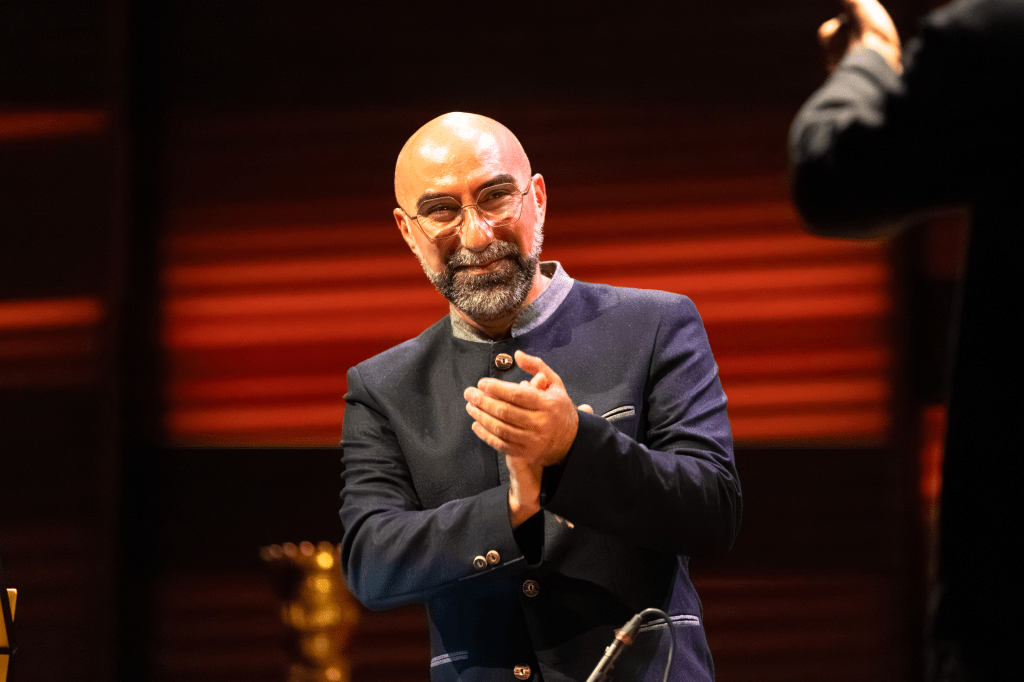
Wat ook mooi was was dat Khayam alleen incidenteel, in momenten van totale extase, het hele instrumentarium tegelijk gebruikt. Een aanwinst voor het repertoire. Jammer dat Golfam Khayyan er zelf niet was. Zij was in Tehran toen de recente oorlog daar uitbrak en was met haar familie naar het veiliger noorden afgereisd. Vandaar was het onmogelijk om op tijd in Amsterdam te zijn. Als ze haar familie op dat moment had willen verlaten.
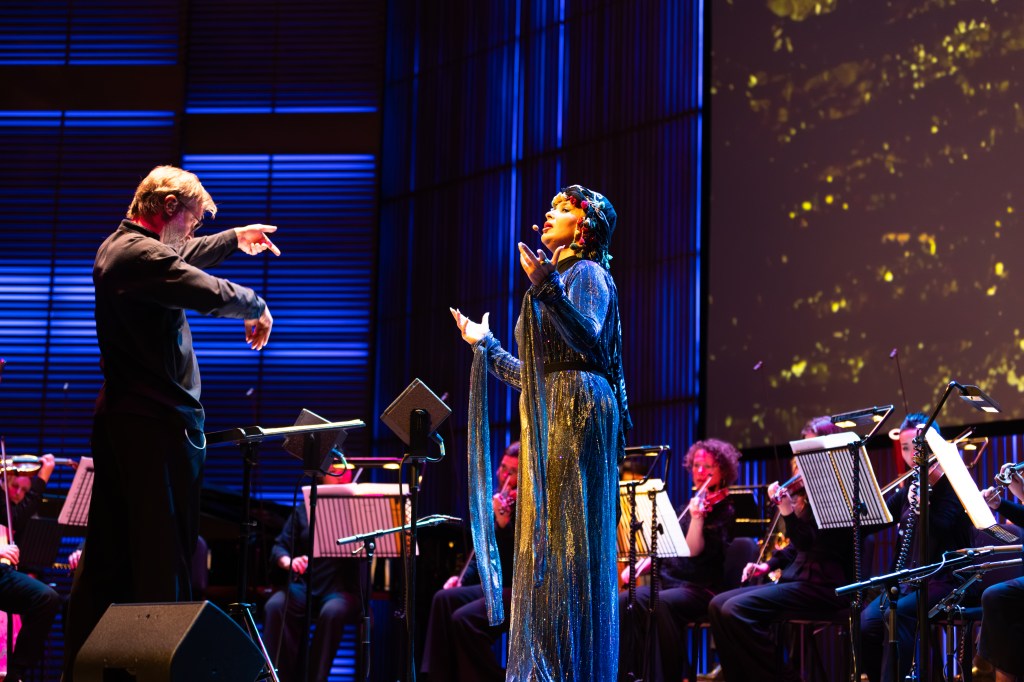
Ud(oriëntaalse luit)-speler Fouad Samiei had een fraaie solo in Forbidden Echoes, de liedcyclus van de Koerdisch-Iraanse zangeres en componiste Hani Mojtahedy. Zij werkte hiervoor samen met producer Andi Toma van het Duitse elektronische dance-muziek duo Mouse on Mars.
Hani Mojtahedy.
In Iran maakte Mojtahedy deel uit van een geheel uit vrouwen bestaand muziekensemble, Vian, waarvan de concerten in die tijd alleen door vrouwen mochten worden bijgewoond. (Dat is inmiddels soms anders; om een voorbeeld te noemen, een paar jaar geleden werd in Teheran zelfs My Fair Lady opgevoerd; bij de première neurieden anderen zachtjes mee met de solisten zodat het officieel koorzang was, maar na die première hoefde dat niet meer. Dit heet natuurlijk repressieve tolerantie, en het regime is er niet minder grimmig om gebleken.)
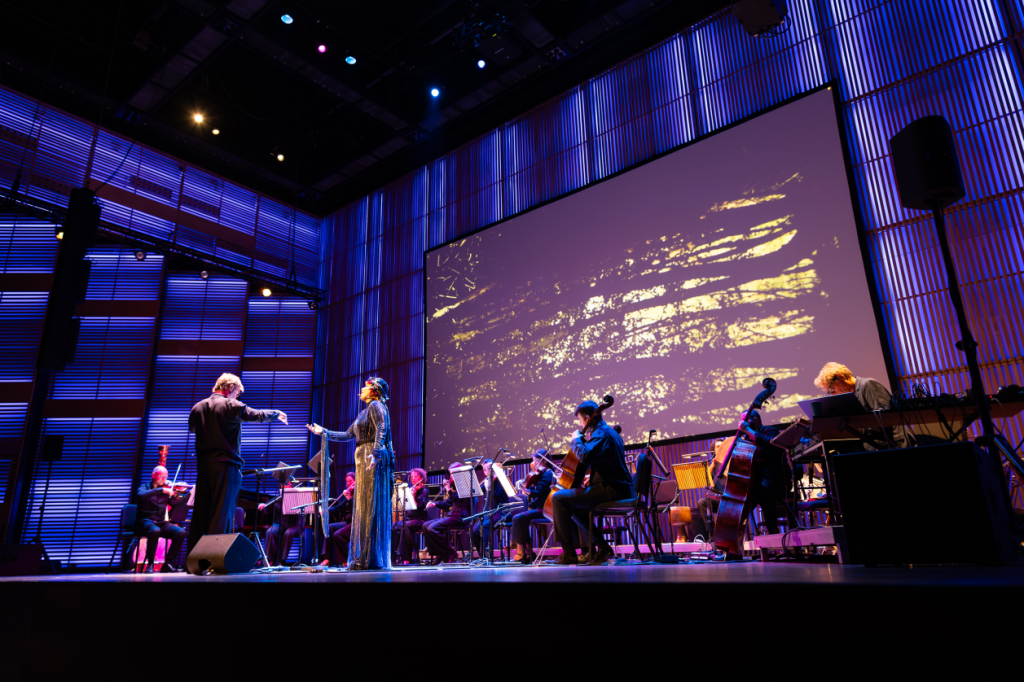
Mojtahedy woont al sinds 2004 buiten Iran en mijdt bezoeken aan haar geboorteland. Zo durfde ze zelfs de begrafenis van haar moeder niet bij te wonen. De ‘echoes’ uit de titel verwijst naar een reis die Mojtahedy maakte naar het gebergte in het Iraakse deel van Koerdistan, zo dicht mogelijk bij Sanandaj, waar ze werd geboren. Daar, aan de Iraakse kant van de grens, maakte ze opnamen van haar stem met de echo’s daarvan zoals die tussen de bergen weerklonk, ook vanaf de andere kant van de grens. Zo bereikte haar stem toch haar geboorteland. Die opnamen werden vervolgens fraai verwerkt in de compositie voor stem, elektronica en akoestische instrumenten zoals die nu weerklonk, voorzien van gedigitaliseerde beelden van de natuur in de Koerdische bergen.
Indrukwekkend, maar ik moet zeggen dat dit stuk mij na het concert voor altviool, santuur en ensemble, waarin zoveel expliciets juist impliciet werd gelaten, minder beroerde dan Golfam Khayams werk. Misschien kwam dat overigens ook doordat vanwege de projecties, waarbij het podiumbeeld donker moest worden gehouden, het contact tussen de uitvoerenden (waaronder Hani Mojtahedy en Andi Toma, die rechts op het podium elektronica bediende) en publiek afstandelijk bleef.
Het concert werd geopend met Towards Affinity van Nader Adabnejad, een kort werk voor ney (Marianne Noordink), Iraans slagwerk (Reza Samani) en strijkers, een opdrachtcompositie voor het KCO. Adabnejad experimenteert op een interessante manier met het gebruik van de Westerse strijkinstrumenten als ritme-instrumenten.
Towards Affinity van Nader Adabnejad voor ney, Iraans slagwerk en strijkers, opdrachtcompositie voor het KCO Concert voor altviool, santur en gemengd kamerensemble van Golfam Khayam, 2024, nieuwe bewerking Forbidden Echoes liedcyclus van Hani Mojtahedy met producer Andi Toma (Mouse on Mars), 2022, nieuwe bewerking door arrangeur Ian Anderson
Solo altviool Michael Gieler Santur Kioomars Musayyebi Zang Hani Mojtahedy Elektronica Andi Toma Dirigent André de Ridder Ney Marianne Noordink Ud Fouad SamieiIraans slagwerk Reza Samani
Leden van het Koninklijk ConcertgebouworkestCoproductie Koninklijk Concertgebouworkest, Holland Festival
TIDES OF LIFE: exciting arrangements of songs by Wolf, Schubert, Brahms and Barber
In the winter of 2014, Amsterdam Sinfonietta and American baritone Thomas Hampson toured Europe. In a fortnight, they gave 12 concerts in six different European countries.
Especially for this tour and commissioned by Amsterdam Sinfonietta, British composer David Matthews arranged songs by Wolf, Schubert and Brahms. Schubert’s ‘Ständchen’ was given a new arrangement by Bob Zimmerman. Only Samuel Barber’s “Dover Beach” was not given a real ‘make over’ and remained close to the original composition.
The songs are sometimes barely recognisable, but I don’t mind. It’s quite exciting to hear what an arrangement can do with familiar melodies.
The text remains the same, of course, but the melody line – and ertainly the tone – does change. In the new arrangements, Brahms’ “Vier ernste Gesänge” sound a little less sombreand Wolf’s songs (“Der Rattenfänger”!) actually become much more serious in tone and less ironic.
In Bob Zimmerman’s setting, the lovely “Ständchen” sounds a little unheimlich. A feeling reinforced by the reversal of the ‘roles’: it is now not a girl assisted by a male choir, it is now the women who accompany the man. It takes some getting used to, but beautiful it most certainly is. In any case, the National Women’s Youth Choir knows it well.
Hampson’s voice is not as beautiful and cultured as it used to be, which is only a plus here.Thus, the songs sound sort of spicy, with plenty of punch. Nice!
Amsterdam Sinfonietta proves yet again that they are one of the best chamber music ensembles in the world.
TO THE SOUL: AMERICAN SONGBOOK
For decades, Thomas Hampson has been a tireless ambassador for art songs by American composers, as well as American poetry. In 1991, he recorded a CD for Teldec with “German” songs by Charles Ives, Charles Tomlinson Griffes and Edward MacDowell
Griffes’ “Mein Herz ist wie die dunkle Nacht”:
To the Soul was released by EMI in 1997, featuring songs on texts by Walt Whitman.
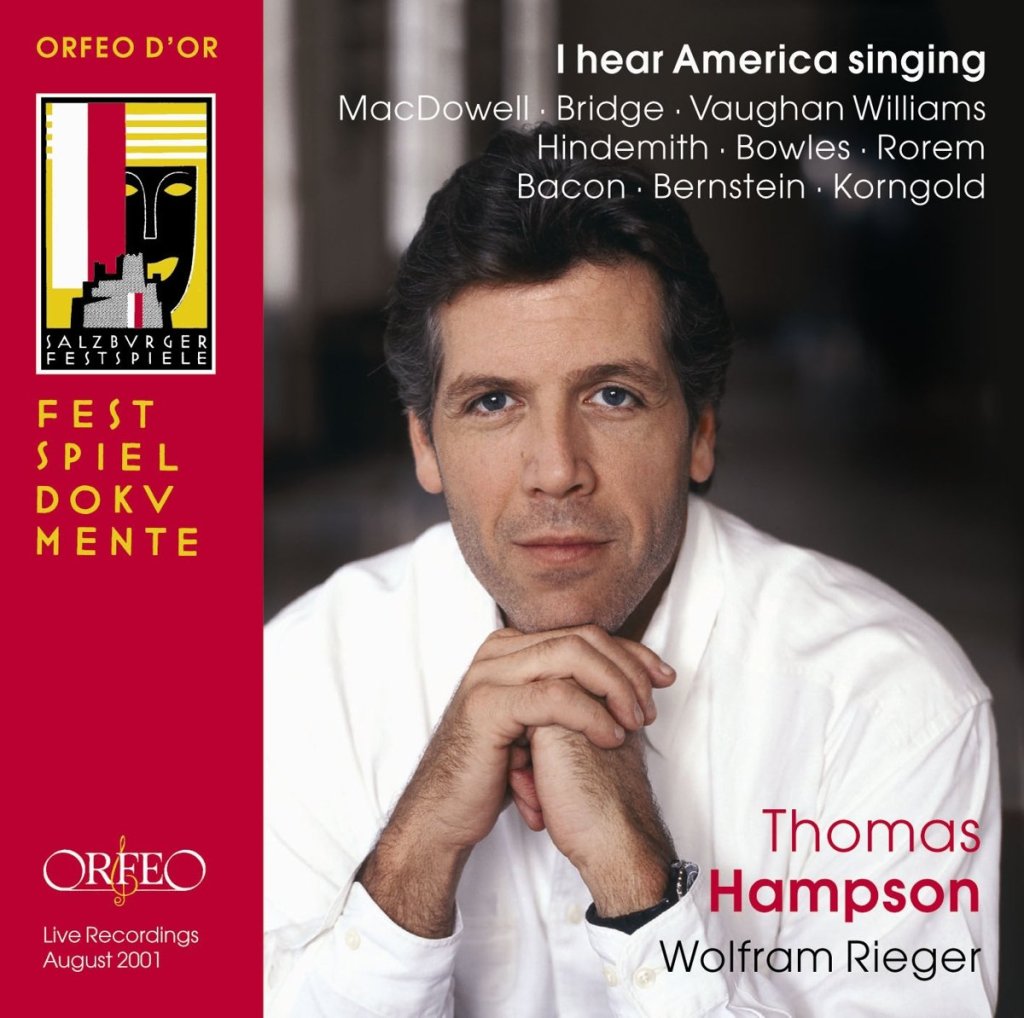
Those names were therefore not missing from the recitals he gave in Salzburg in 2001, part of what was called a “Hampson Project”.
The theme of this mini-festival (there was also a symposium) was American poetry, set to music by various, not only American, composers. Hampson did more than just sing. He introduced the songs, commented on them and talked about the composers, poets, writers and traditions.
Thomas Hampson on “American Songbook” :
To the delight of anyone who cares about American music and poetry, three of those recitals, from 12 (and not 15), 17 and 22 August 2001 respectively, were released on two CDs a few years ago. Hampson sings as we have come to expect: cultured and beautiful, and his diction and text handling are exemplary.
This clip is not from the CDs (neither found on You Tube nor Spotify), but it illustrates Hampson’s commitment to the music and poetry of his homeland:
As a bonus, we get three songs by Korngold, taken from the project Forbidden and Exiled, from Salzburg 2005.
WERTHER : Can a baritone be a convincing Werther?
In 1902, ten years after the premiere, Massenet made a new version of his Werther, this at the request of Italian baritone Mattia Battistini, who was eager to sing the lead role. Massenet did not change the key, but rewrote the vocal lines of Werther’s music, making the arias, “Pourquoi me réveiller” included, barely recognisable.
The “baritone version” of the opera was and remains an oddity; no original manuscript of the score even exists. In recent times, with its penchant for ever new challenges, there was also an increased interest in the alternative versions of well-known operas.
Thomas Hampson has always walked the lesser-known paths, and he first performed the role of Werther back in 1989. In 2004, he sang a concert performance of it at the Paris Chatelet, and that performance has been released by Virgin on two DVDs. He does an excellent job, but the manic-depressive is a bit off.
His Charlotte is sublimely sung by Susan Graham, who also performed the role in Amsterdam some years ago, where she had moved the audience and press to tears. Michel Plasson has drama in his fingertips and you can hear it.









 Basia con fuoco