ANDREA CHÉNIER
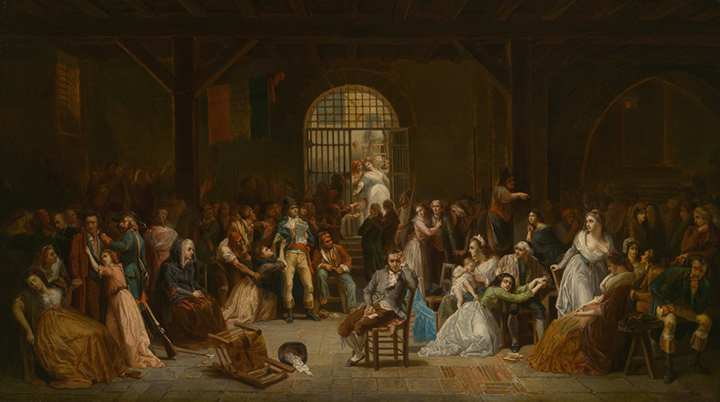
Appeal of the last victims of terror in the prison of St. Lazarus. Chénier appears seated at the foreground’s center.. Painting by Charles Louis Müller, (Musée de la Révolution française).
For me, Andrea Chénier is one of the best and most beautiful operas ever. I think the music is nothing less than divine and the story is timeless. It remains current, perhaps now more than ever. The tyrant must be cast off his throne and the people must take control. Surely, we all agree on that?
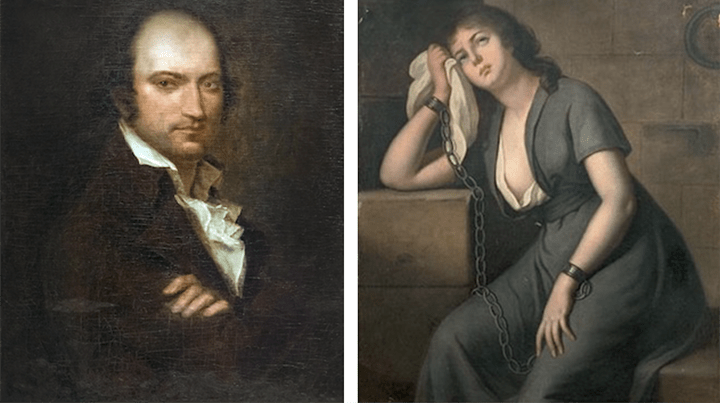
Ten days before Chénier’s death, the painter Joseph-Benoît Suvée completed this portrait of him – not exactly the romantic figure we would cast. On the right Aimée de Coigny, La Jeune Captive
If only it were that simple! Anyone who grew up in a post-revolutionary totalitarian regime knows how much horror it brings. One terror is replaced by another.
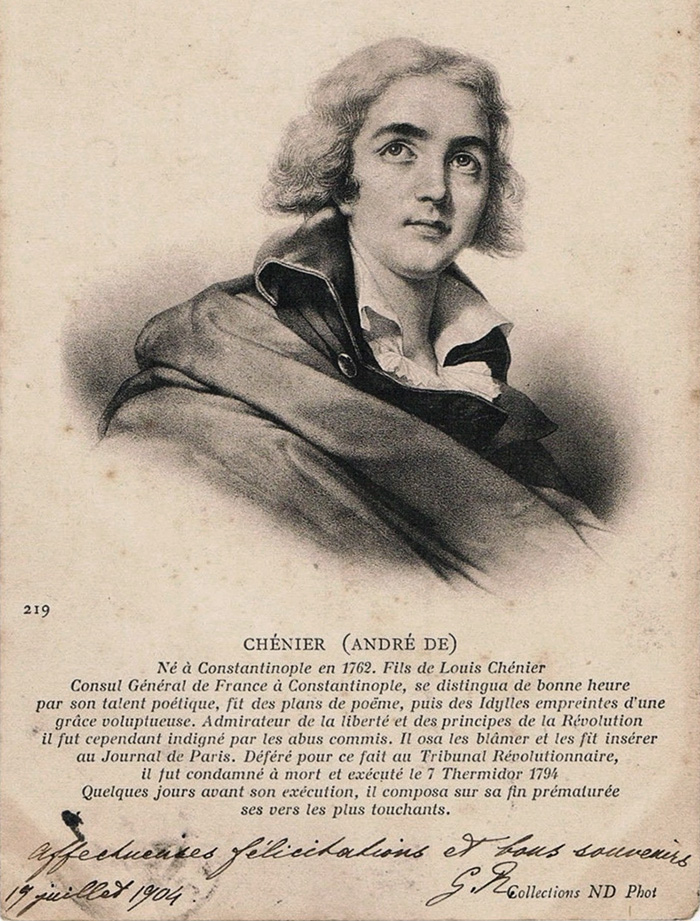
This, at least for me, is the main theme in Giordano’s biggest hit. I don’t think the real lead role is the actual poet, André Chénier (did you know that Giordano used Chénier’s poems in his arias?) nor his beloved Maddalena. It is the French Revolution, which, as Gérard (once Maddalena’s houseboy and now one of the revolutionary leaders) bitterly observes, devours its own children.
Domingo
To my great surprise, I read that Domingo didn’t much like the part of Andrea Chénier. He loved the opera, but the role, one of the toughest in the ‘lirico-spinto’ repertoire, was not really interesting for him dramatically. For him, Chénier was ‘an idealist who always has his head in the clouds’. And yet it was one of the operas he loved to sing!
I myself think the role of the poet/revolutionary fits him like a glove. Passion for love and enormous involvement in everything that happens in the world were – and still are – his trademarks.
He sang his first Cheniér in 1966 in New Orleans, as the last-minute replacement for Franco Corelli, but that was not his first performance of the opera. In the 1960/61 season he sang The Incredible and The Abbot, in Mexico.
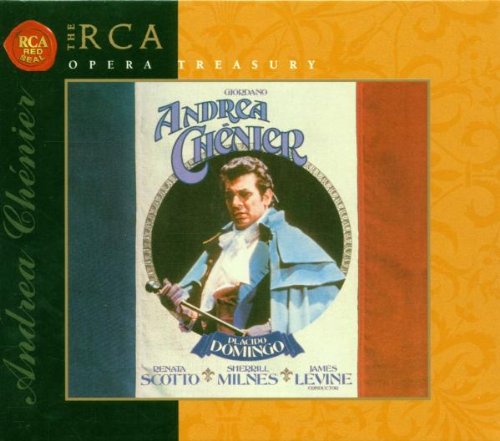
My favourite CD recording was recorded in 1976 by RCA (GD 82046). The cast is delectable. Renata Scotto sings Maddalena, Sherrill Milnes is Gérard and in the small roles we hear, among others, Jean Kraft, Maria Ewing, Michel Sénéchal and Gwendolyn Killebrew. James Levine, who conducts the National Philharmonic Orchestra, understands exactly what the opera is about. Tear jerkingly beautiful.
Scotto sings ‘La Mamma morta’:
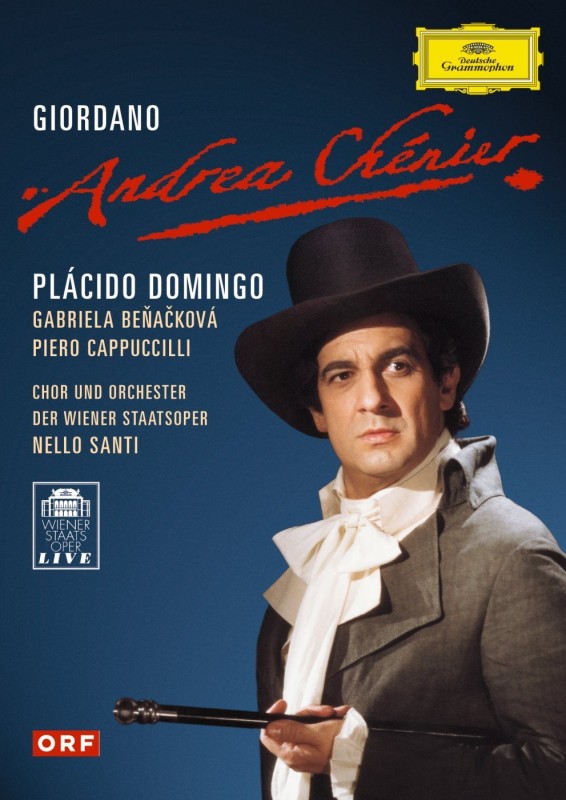
In 1981 the opera in Vienna was recorded for TV. That recording has since been released on DVD (DG 073 4070 7). Gabriela Beňačková, one of the most underrated singers in history, sings a Maddalena of flesh and blood. Horrifyingly beautiful and moving.
Piero Cappuccilli is a Gérard among thousands and the small roles are also filled by great singers: Madelon is sung by none other than Fedora Barbieri. Otto’s Schenk’s production is a feast for the eyes.
LES DIALOGUES ES CARMÉLITES
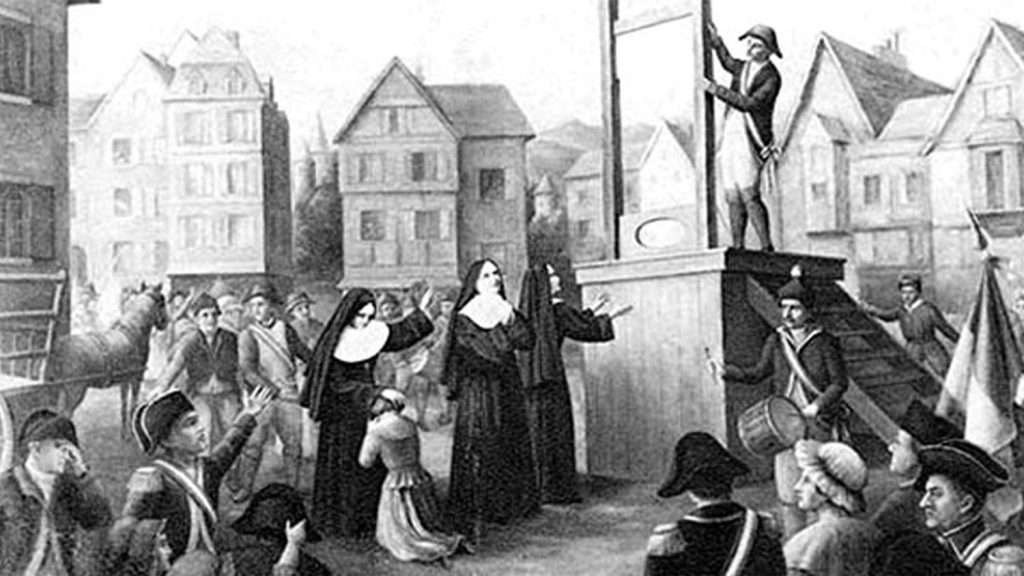
There are those operas that you just can’t spoil and Les Dialogues des Carmélites is one of them. For Poulenc, melody is the centre of the universe. His music is so poignantly beautiful and his composition so expressive that you don’t really need a director.
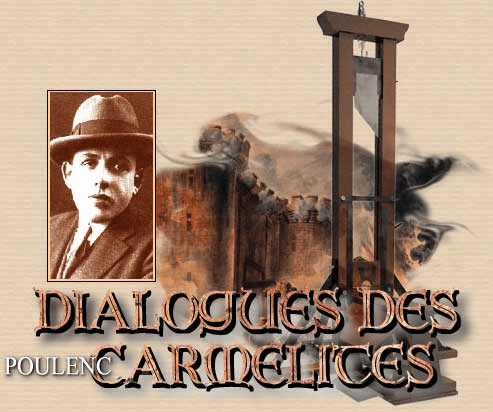
The opera’s themes are sacrifice, martyrdom, revolutions and ideologies, but those are just the side lines, because the main theme is an all-devouring fear that makes it impossible to live or die: “Fear is a terrible disease. I was born of fear, in fear I live and in fear I shall die. Everyone despises fear, so I am condemned to be despised.”
Just few recordings:
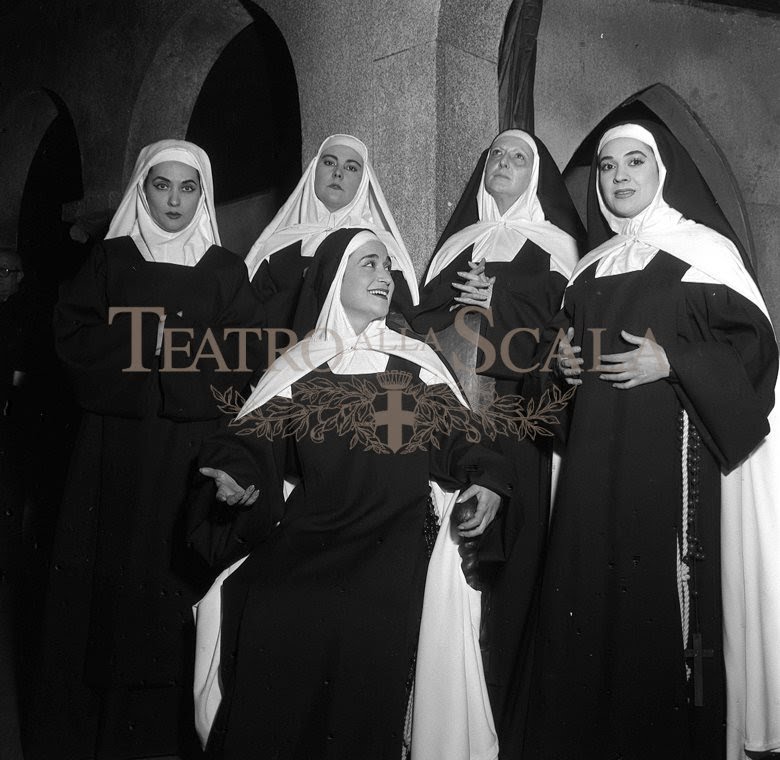
Milan, 1957
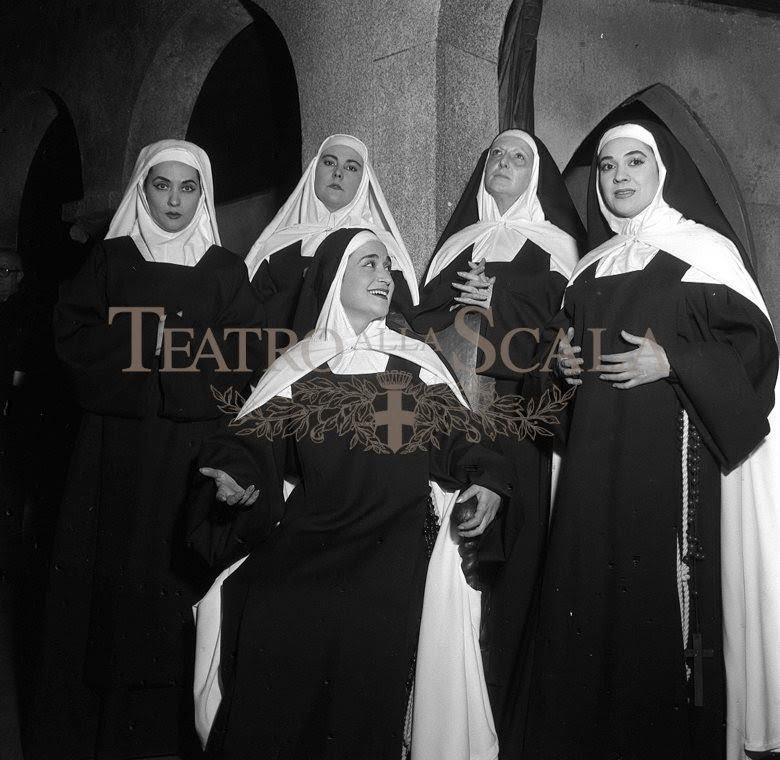
The world premiere of Dialogues des Carmélites took place on 26 January 1957 at La Scala in Milan, in an Italian translation. The cast reads like a ‘who’s who’ in the opera world, because, ask yourself: were there any bigger names in those days?
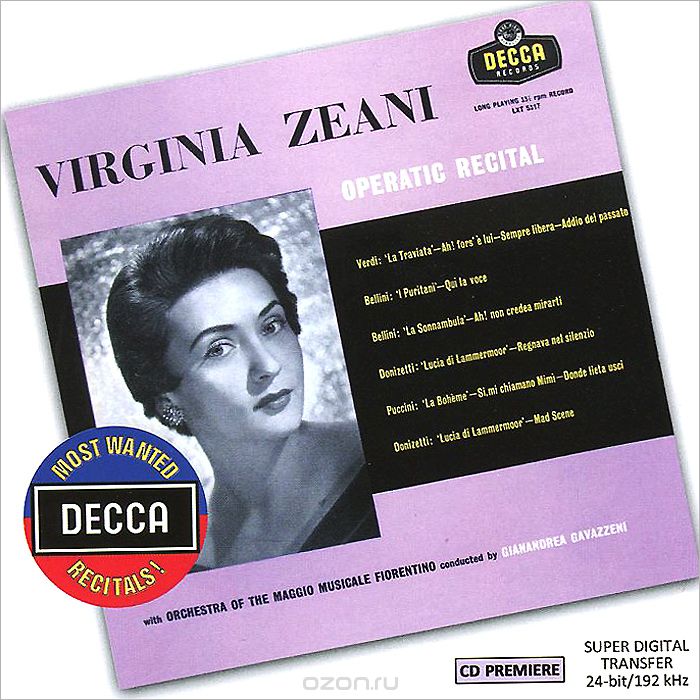
Blanche was sung by Virginia Zeani, a singer with a full, large and dramatic voice, that was suitable for both Violetta and Tosca. Marie was played by Gigliola Frazzoni, one of the best Minnies (La fanciulla del West) in history. And Madame Lidoine was given to Leyla Gencer.
With Fiorenza Cossotto, Gianna Pederzini, Eugenia Ratti and Scipio Colombo in the smaller roles, the opera sounded less lyrical than we are used to nowadays, almost veristic even. But that made the dramatic effect even more poignant.
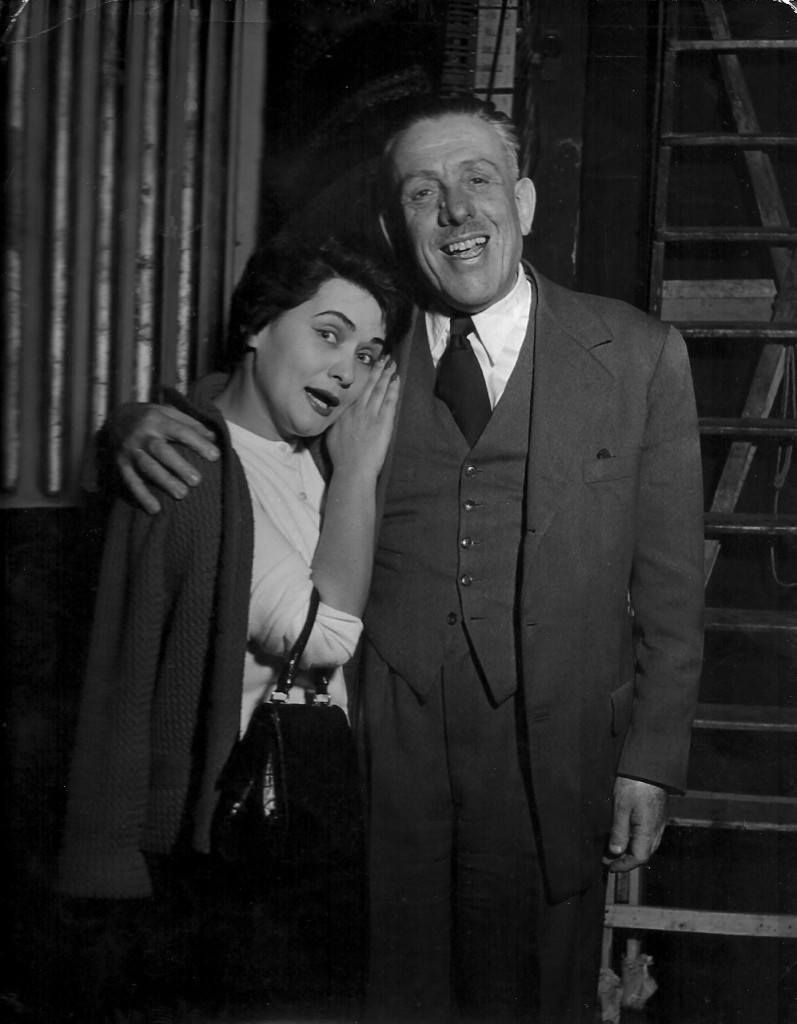
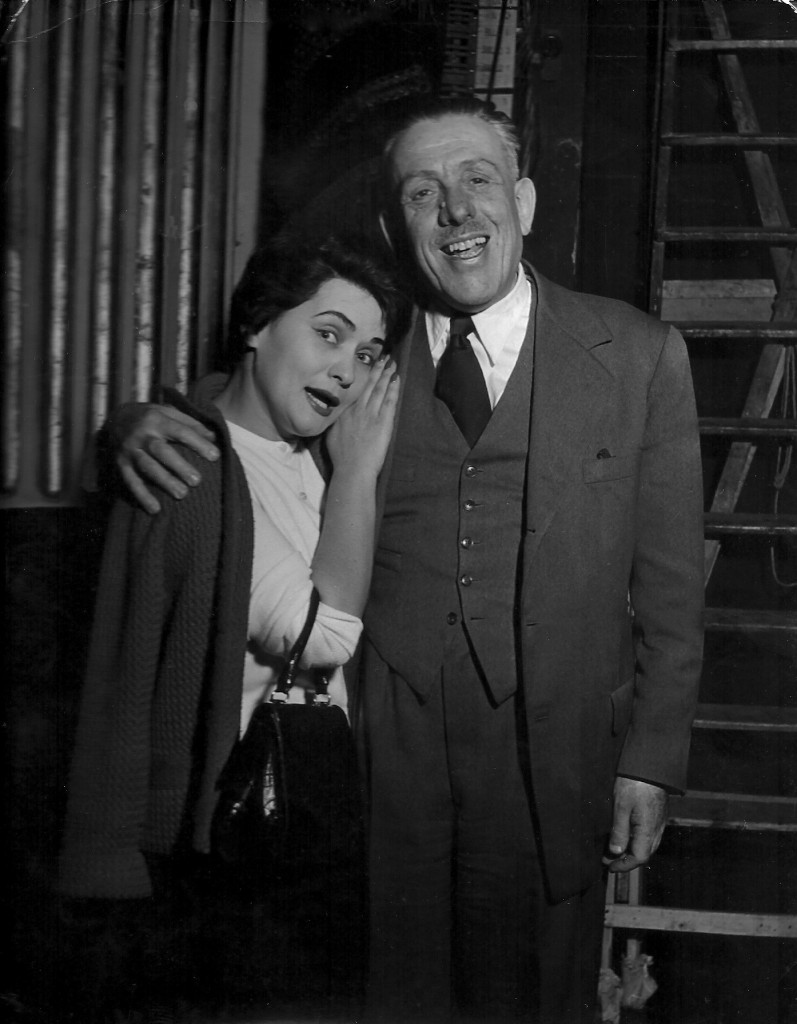
Virginia Zeani and Francis Poulenc, Milano 1957
In The Operatic PastCast, Virginia Zeani talks about Poulenc, the influence the opera has had on her life, her colleagues and the production in Milan.
The entire performance from Milan, fantastically conducted by Nino Sanzogno, is on YouTube. Do not miss it!
Paris, 1957
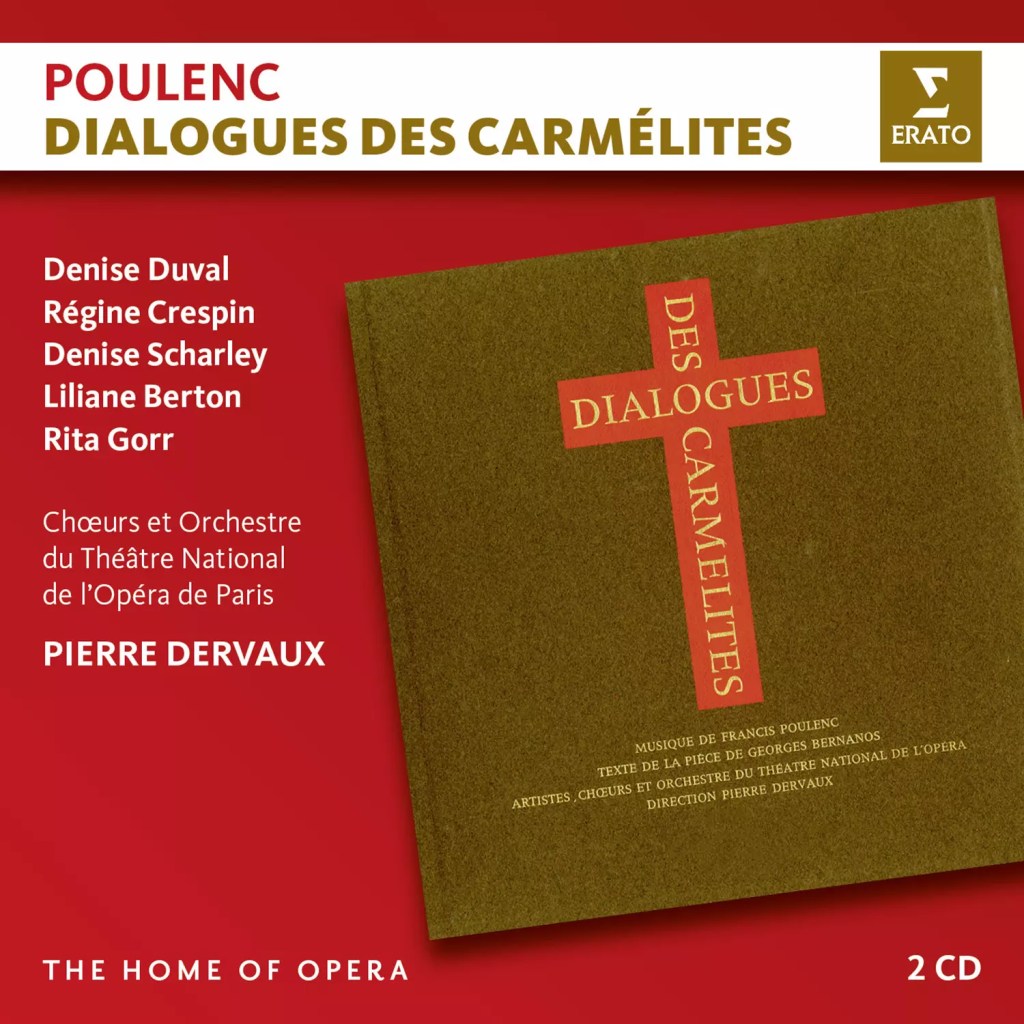
The Paris premiere of Dialogues des Carmélites followed six months later. On 21 June 1957, the opera, now in French, was presented at the Théâtre National de l’Opéra. Blanche was sung by Poulenc’s beloved soprano Denise Duval. Duval’s voice (girlishly naive, light, almost ethereal) fitted Blanche like a glove.
The rest of the cast, including Régine Crespin as Madame Lidoine and Rita Gorr as probably the best Mère Marie ever, was also chosen by Poulenc himself
Régine Crespin (Madame Lidoine) in “Mes chères filles”:
he orchestra was conducted by Pierre Dervaux and I can be very brief about him: there is no better. Full stop. (Warner 08256483211)
Milan, 2004
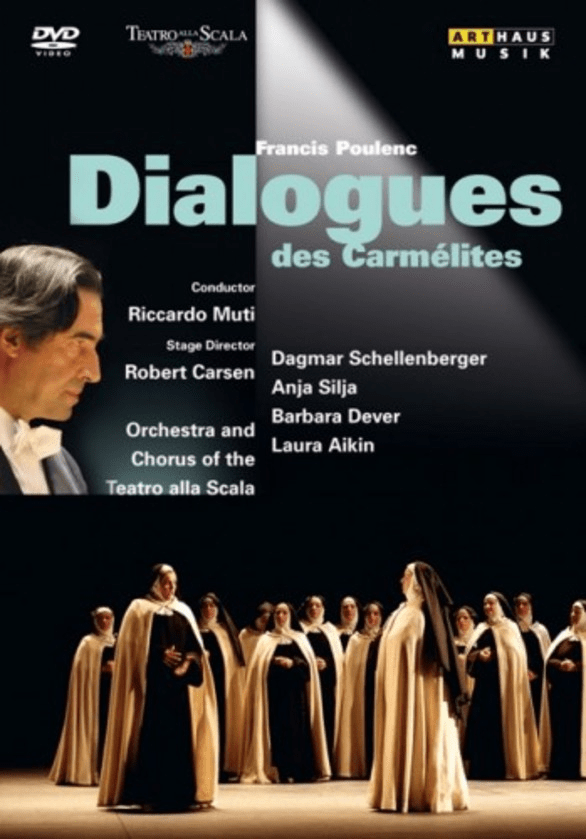
Robert Carsen’s production of Dialogues des Carmélites is one of the absolute highlights in the history of De Nationale Opera in Amsterdam.
Trailer from Amsterdam:
In February 2004, the production was filmed at La Scala but I am not entirely happy with it. My disappointment mainly relates to Dagmar Schellenberger’s performance as the lead role.
Admittedly, it is not easy to emulate the unforgettable Susan Chilcott (she died in 2003 of breast cancer, only 40 years old), and Schellenberger indeed cannot not do it. In the beginning her strong tremolo and her not always pure notes are irritating.. But as the opera progresses, she gains a great deal of credibility, and through her brilliant acting and complete abandonment, she makes the development of her character very tangible. And almost as a matter of course, her singing also becomes more beautiful and softer.
The role of Madame de Croissy is played by one of the best singing actresses of our time, Anja Silja. Her performance is truly breathtaking, and even though her voice is not that steady anymore – it suits the character of an old and mortally ill prioress very well. Her death struggle makes for unprecedentedly thrilling theatre, and it is a great credit to Carsen (and the rest of the cast) that the scenes that follow do not make us lose interest.
Muti conducts with verve and knows exactly how to strike the right tone. He really succeeds in translating the spectre of the revolution and its excesses into sound. He is at his very best, however, in the lyrical, contemplative scenes, and in his hands the chilling ending reaches a truly blood-curdling climax. Make sure you have a big bag of Kleenex within reach, because you really won’t keep it dry (Arthaus 107315).
Below is the trailer:
Hamburg, 2008
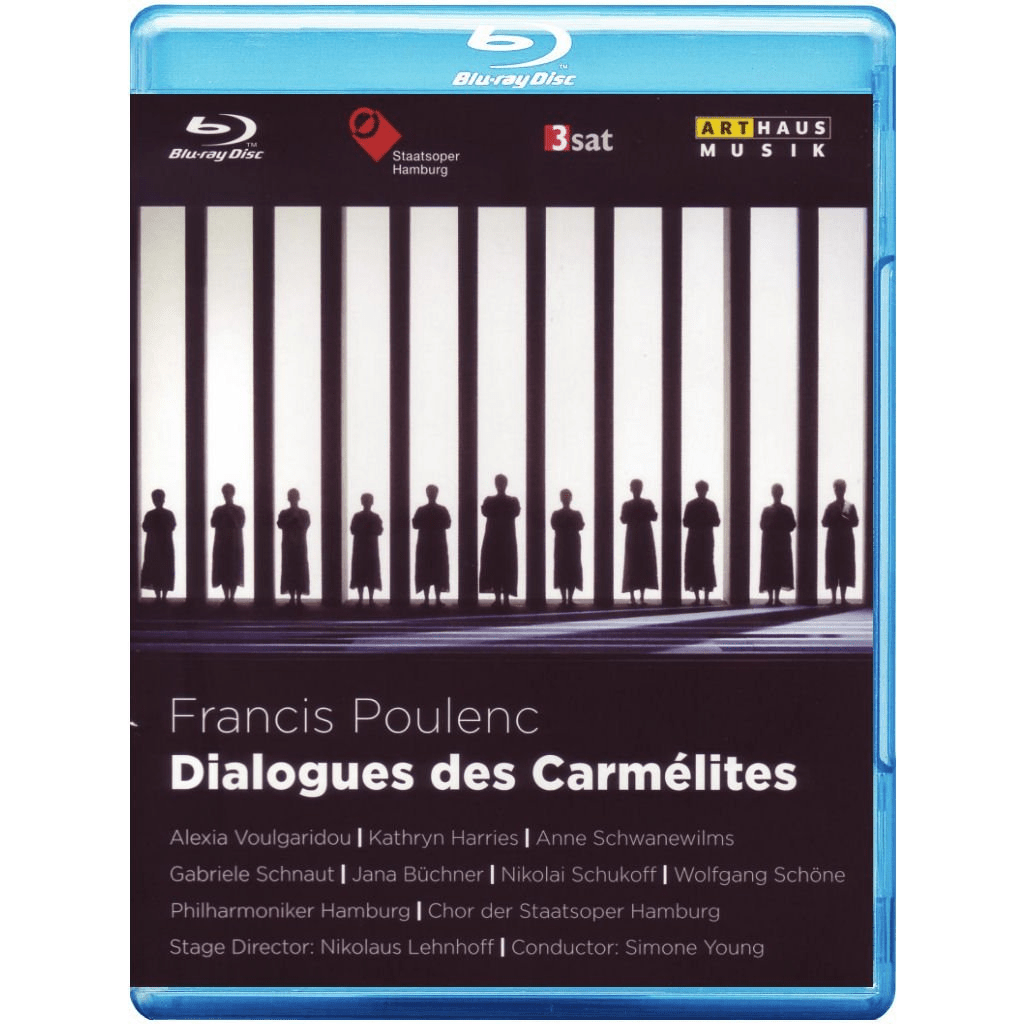
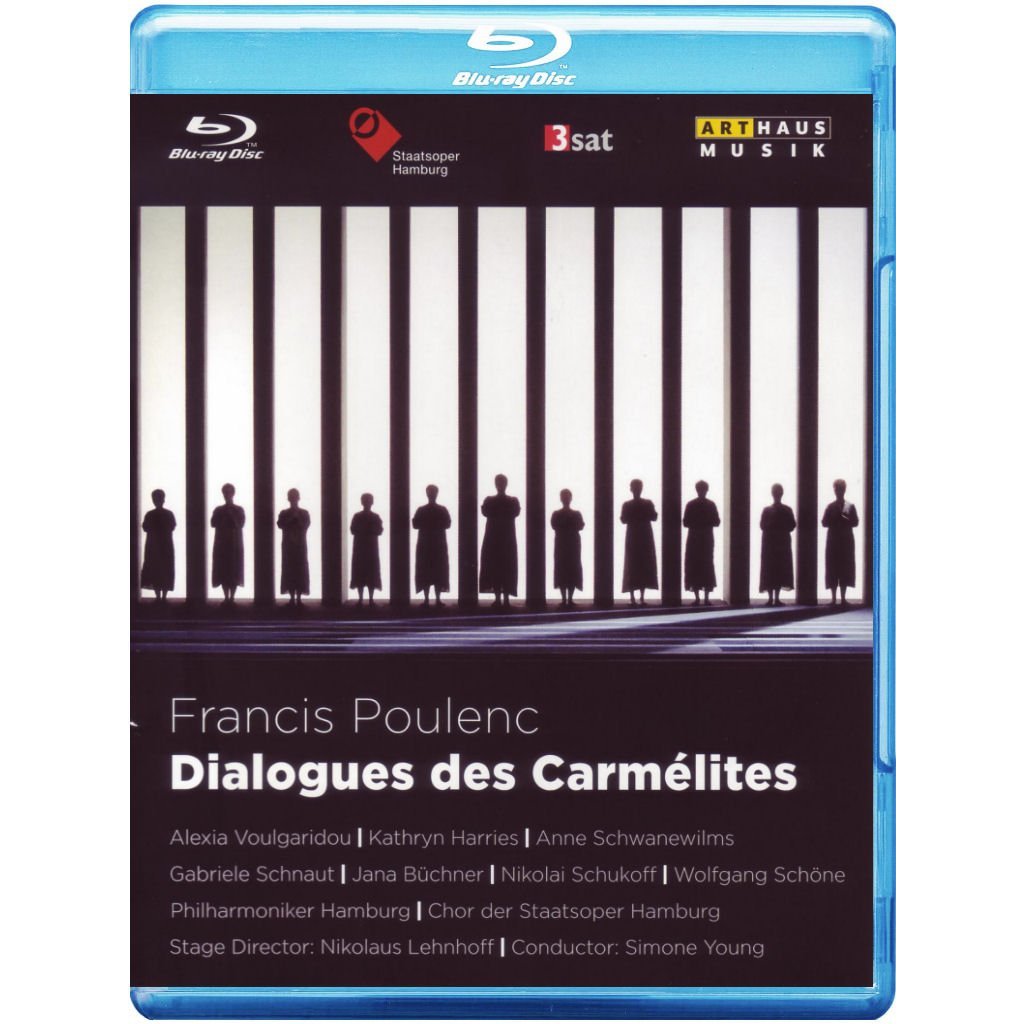
The opera came to Hamburg in 2008, it was directed by Nikolaus Lehnhoff.
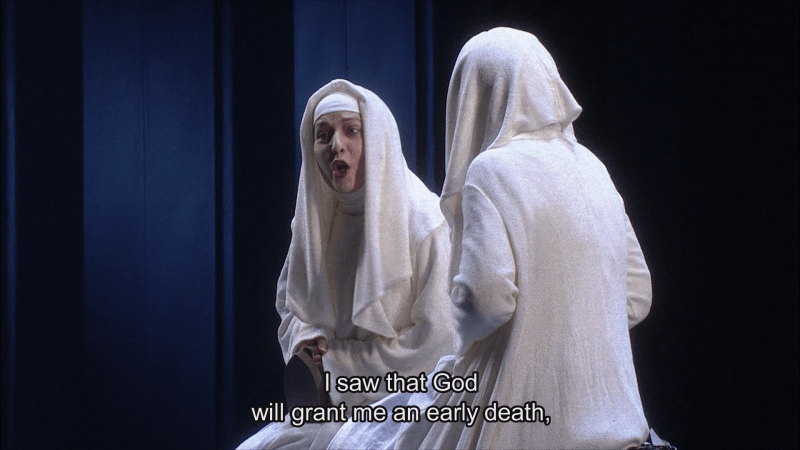
His Blanche, Alexia Voulgaridou, is very much like Liu: sweet, scared but steadfast and very impressive.
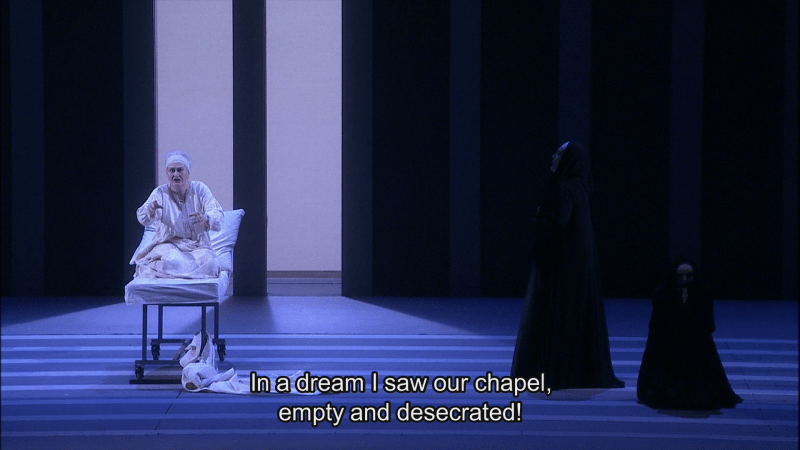
Kathryn Harries as Madame de Croissy is even more impressive than Anja Silja. She acts not only with her whole body but also with her perfectly used voice. Her fear is physically palpable and her death scene cannot leave anyone unmoved.
Unfortunately, Gabrielle Schnaut’s Mère Marie is not of the same calibre. With the remnants of the once so imposing voice, she only causes irritation: not one note is pure and her terrible wobble feels like torture to your ears. How different then is warm and sweet Madame Lidoine, here sung incredibly lovely by Anne Schwanewilms!
The staging is very simple and there are hardly any sets, which is not at all disturbing. And the final scene is almost better than Carsen. (Arthouse Musik 101494)
Trailer:
Paris, 2013
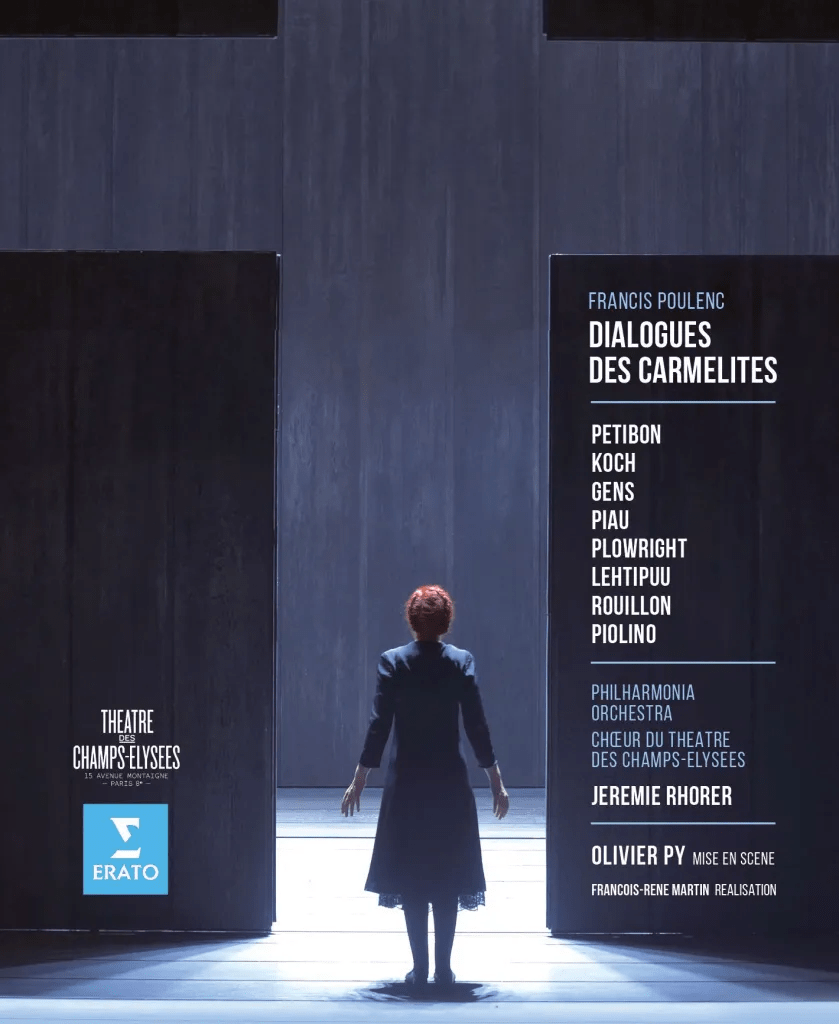
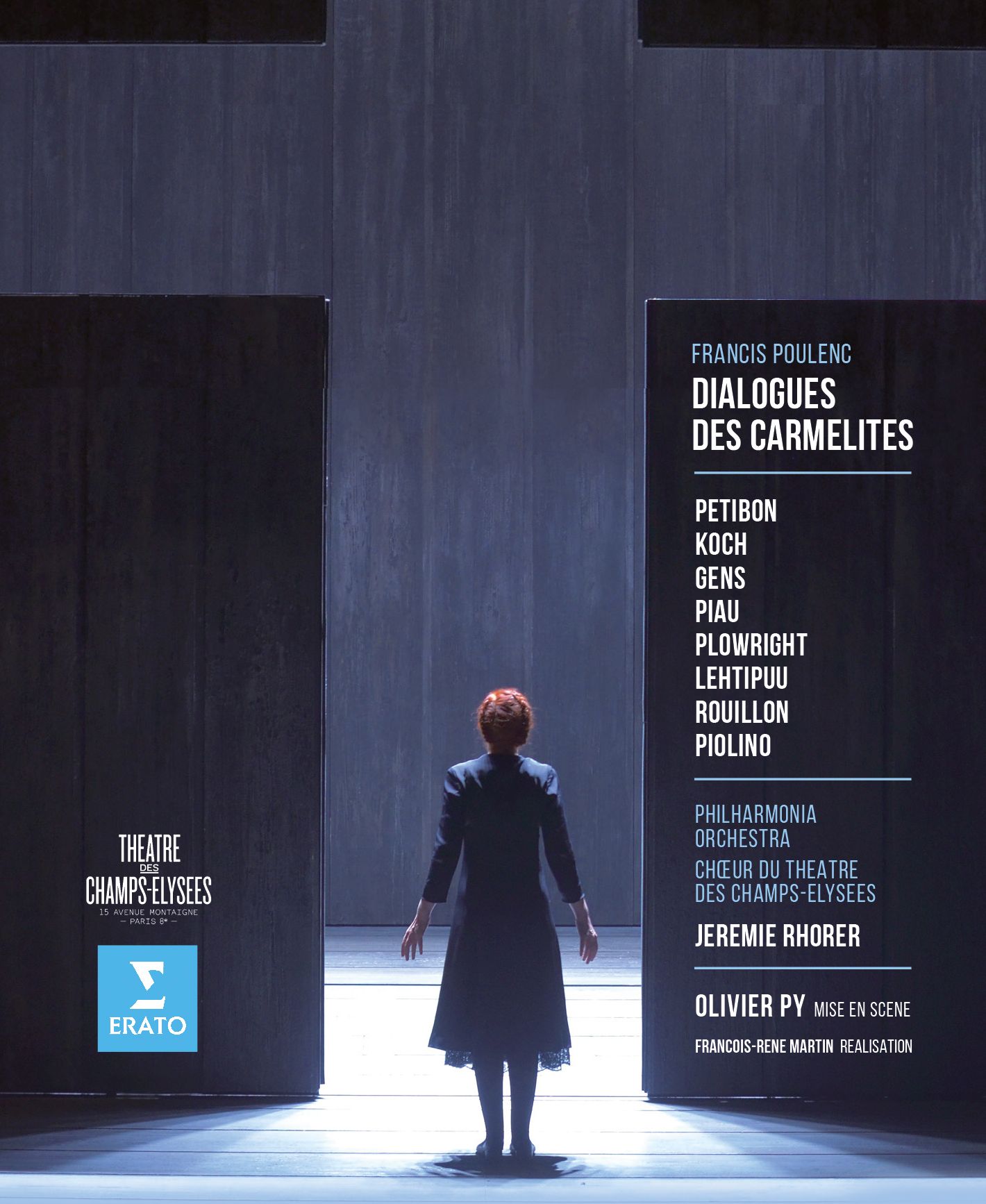
You just never know with Olivier Py, though I have to say that, apart from the awful Romeo et Juliette in Amsterdam, most of his productions are usually excellent. So too his Dialogues des Carmélites, recorded in Paris in 2013.
Patricia Petibon is a singer with a tendency to exaggerate, but here she is perfectly matched as Blanche. Watching her, I involuntarily get visions of Edith Piaf. Which of course suits the role very well: a small, skinny, frightened bird.
Her timbre is close to that of Denise Duval, but she lacks her carrying power and – mainly – her lyricism. Still, there is no denying that the role of Blanche is more or less tailor-made for her.
Sophie Koch is a strange choice for Marie. She looks far too young and lacks the confident superiority and power of persuasion so characteristic of the role. And the contrast with Lidoine (a wonderful Veronique Gens) is not great enough. Rosalind Plowright is an excellent Croissy and Sandrine Piau a delightful Constance.
Py uses the orchestral interludes to showcase religious scenes, including the evocation of the Last Supper and the Crucifixion. Sometimes a little “too much”, but the last scene, with the dark starry sky, brings a lump to my throat (Erato 0825646219537).
Here is the trailer:
Film adaptation:
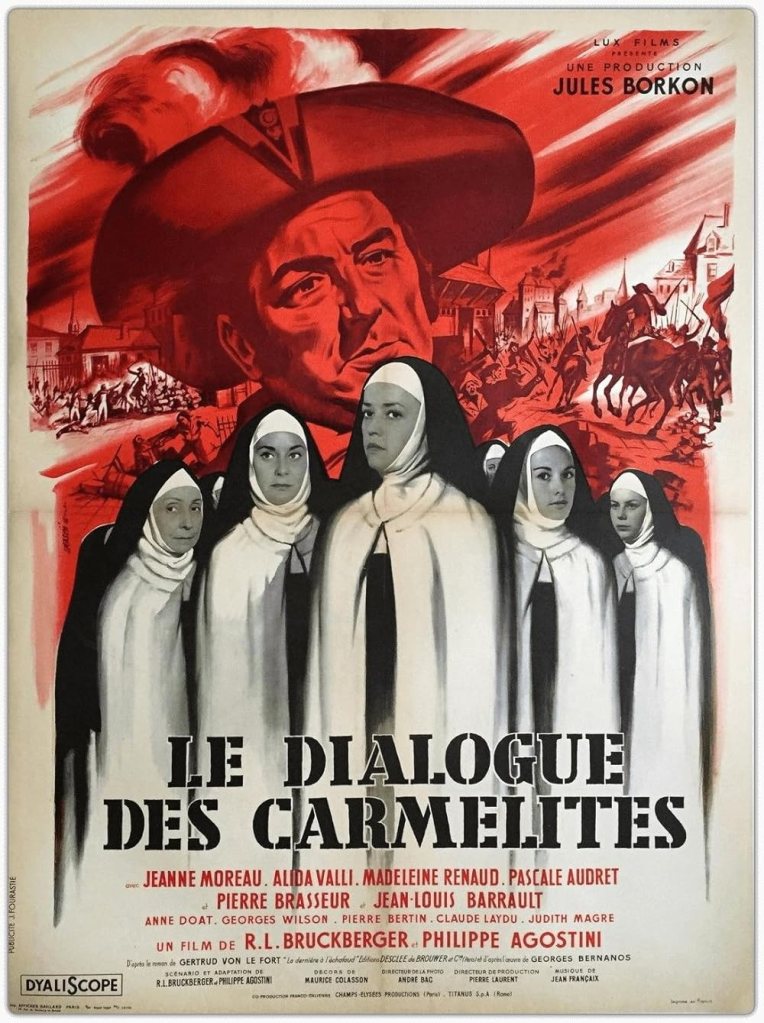
Did you know that the story of Dialogues des Carmélites was filmed in 1960? In the film you can see, among others, Jeanne Moreau as Mère Marie and Pascale Audret as Blanche.
Below is the last scene:
The whole film:
Spannende Andrea Chénier uit Bologna
DIALOGUES DES CARMÉLITES bij Deutsche Oper am Rhein in Düsseldorf, oktober 2010















 Basia con fuoco