
Eternal life, don’t we all secretly want it? Especially if you will stay young, beautiful and healthy in the process? And especially if you are an opera singer and you will be able to perfect your voice during all those hundreds of years of your life. Unfortunately, there is also a downside: you will certainly become cynical and then nothing will interest you anymore, not even sex. After all: you’ve seen it all?
Emilia Marty (or Elina Makropoulos, or Eugenia Montez, or any of the other of her former alter egos) brings turmoil to everyone’s lives, but she herself remains calm thoughout it all. Once she loved, yes, but even that was more than a hundred years ago. Now her end seems closer anyway, so she must find the elixir once invented by her father. But maybe death is the solution after all?

Janáček’s Věc Macropulos (The Makropoulos Case) is an extraordinary opera, providing much food for thought. A ˜gefundenes fressen” for a director, you might say, especially since the libretto (by Janáček himself and based on the story by Karel Čapek ) is truly genius and provided by the composer with equally genius music.
DVD

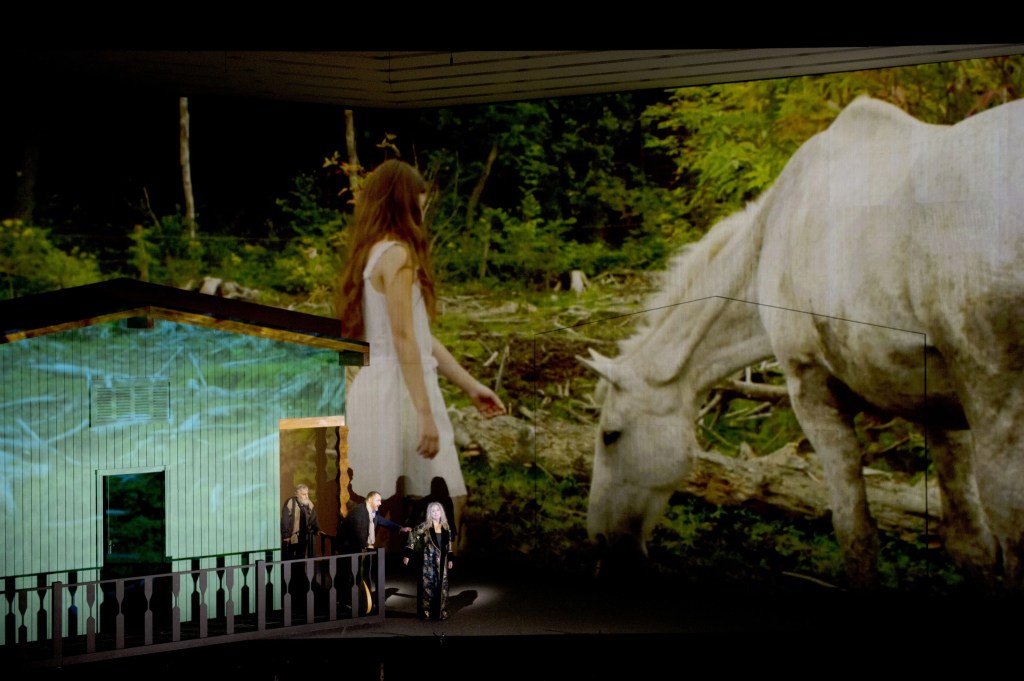
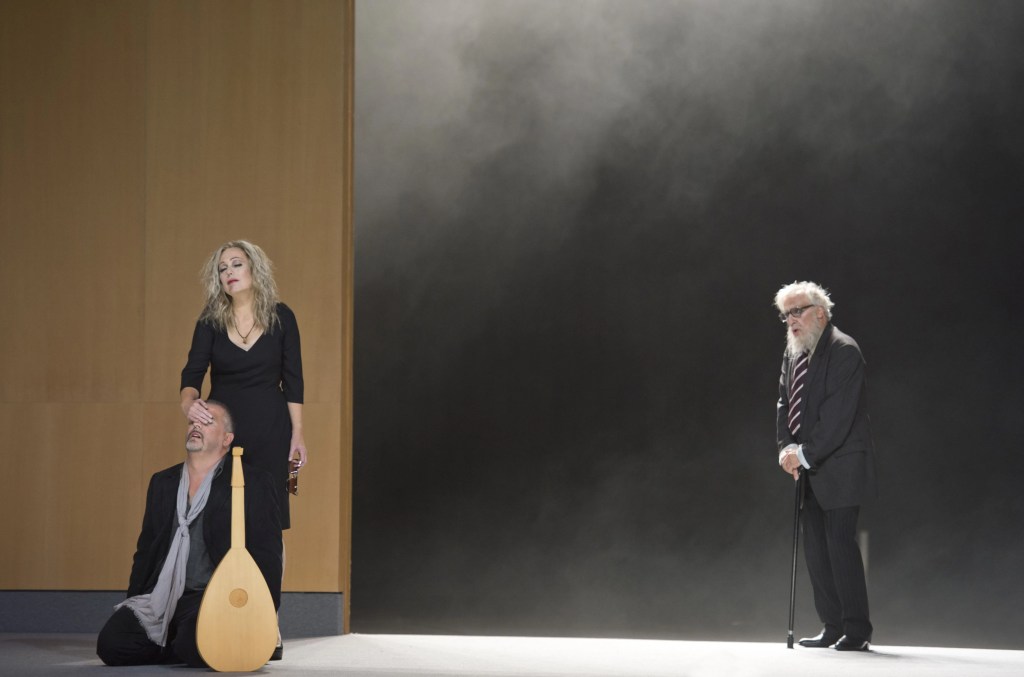
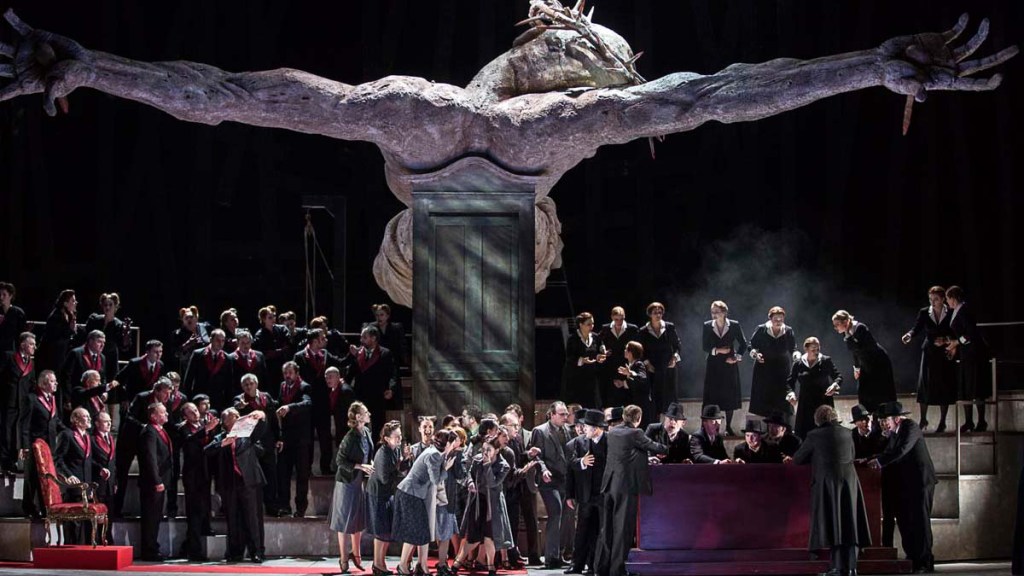
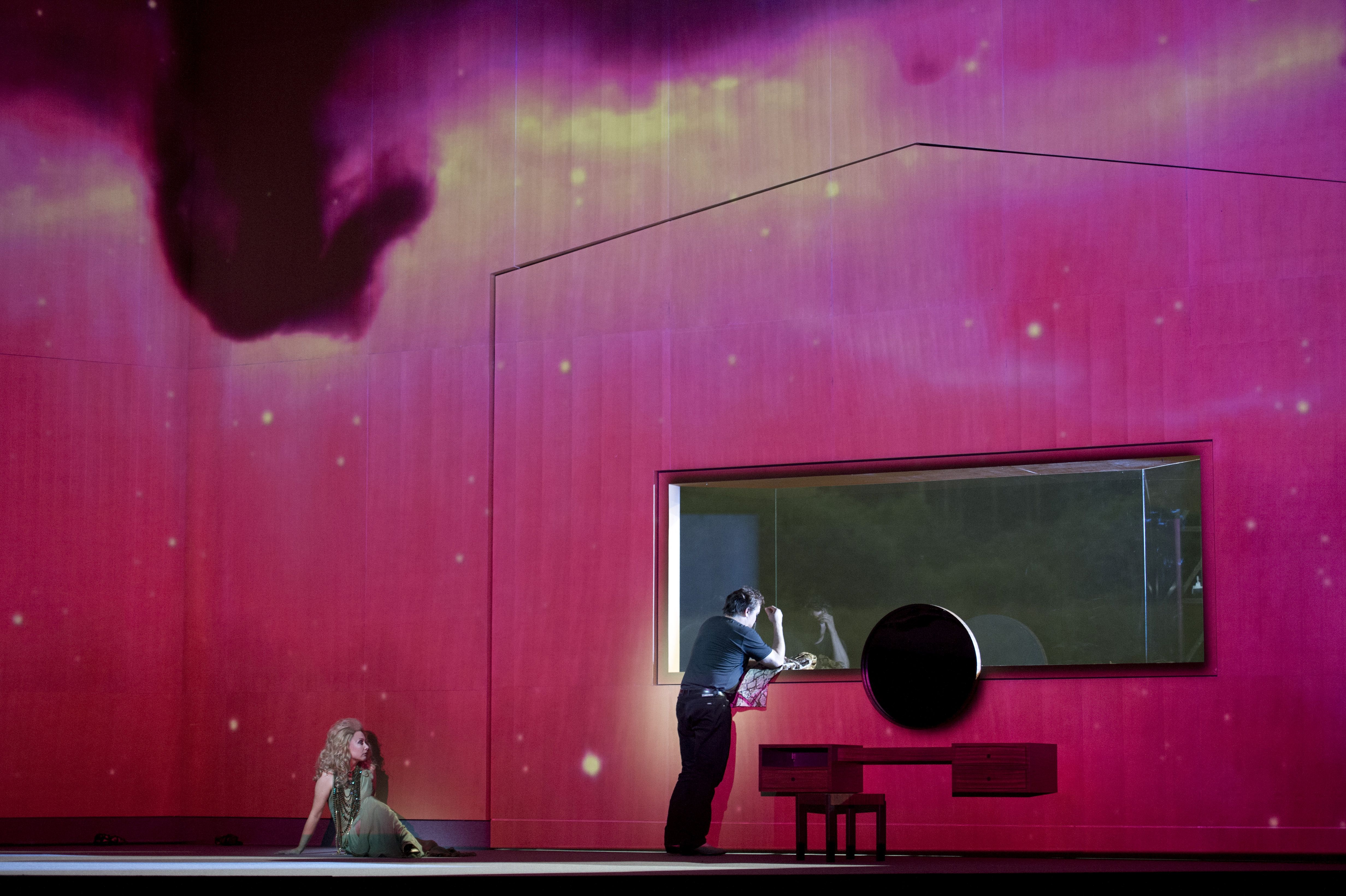
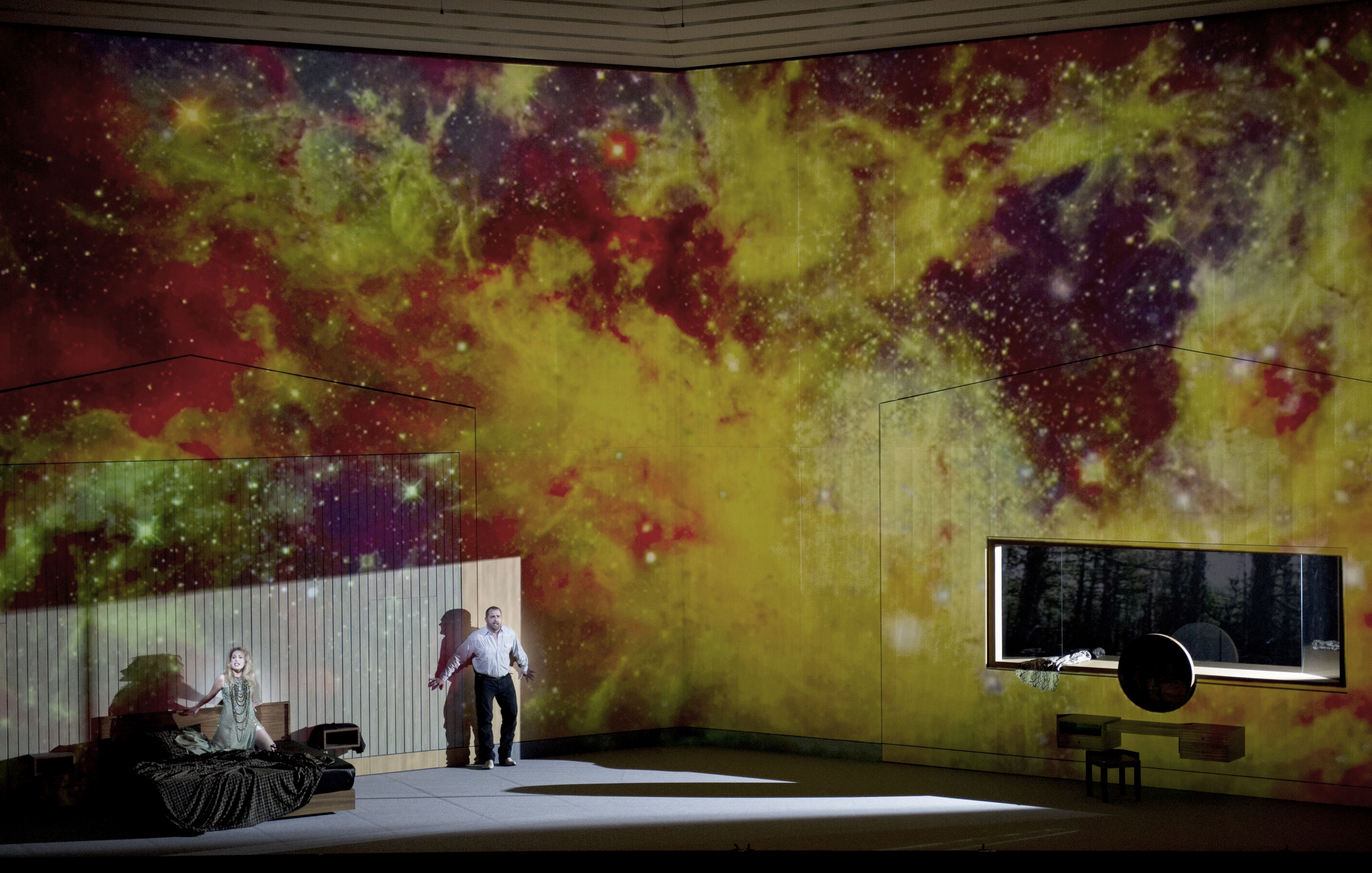
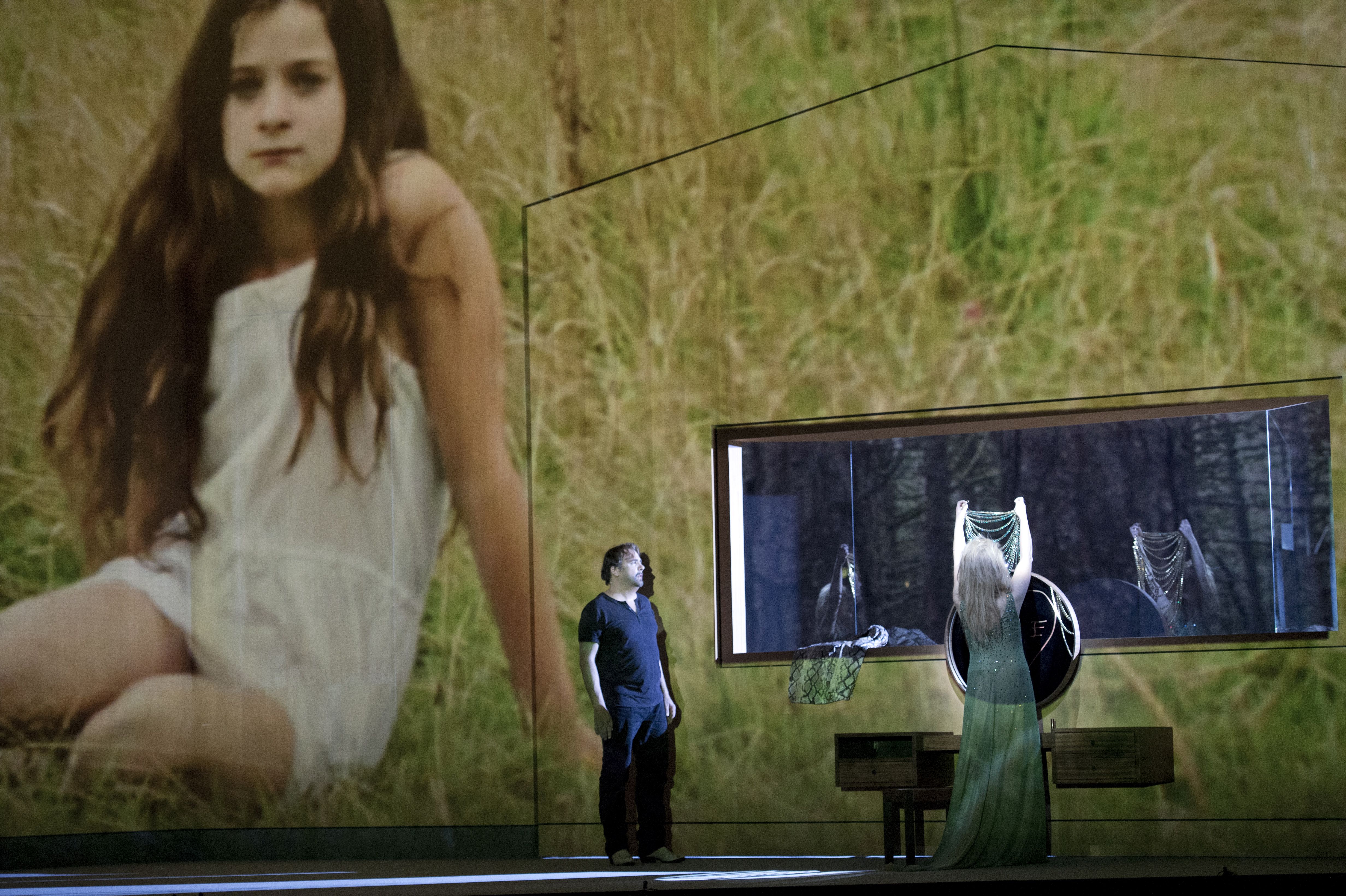
But when your name is Christoph Marthaler, you prefer to put your own stamp on the production, and he does just that. The opera begins with ˜silent” dialogue, which you can follow through subtitles. No, it’s not in the libretto, but apparently this director thought it was exciting. It took me a few hours to figure out that it wasn’t because of the DVD!

© Walter Mair
Whether it adds any value? You have to judge that for yourself. For me, it doesn’t; the opera’s message was more than clear without it. But once you get the hang of it, it is undeniably exciting, although I wonder if the audience on the left of the hall could see anything except the subtitles.

I have absolutely nothing against modern theatre, especially if it is done well and intelligently. As theatre, then, the production is certainly engaging. But Janáček it is not, also because the orchestra has too little affinity with him. Janáček is not modern, Mr Salonen! Even in this horribly inverted fairy tale, he does not lack lyricism. And the accents, the typical ‘Janáček accents’, I don’t hear them anywhere either. What a misunderstanding!
The singing is undeniably good to very good. Johan Reuter is a fantastic Prus and Raymond Very a really endearing Gregor. Angela Denoke is a fenomenal artist and although I don’t really like her voice, in her role she is more than convincing.
The reviews were almost all very complimentary. People praised the drama and the singers. Even Salonen was applauded, so the final verdict is yours.
Behind the scenes:
CDS

The 30-year-old classic conducted by Charles Mackerras still sounds great and it leaves very little room for improvement, unfortunately it is not available separately (anymore?). Decca has compiled all the Janáček operas recorded by Mackerras and put them in a 9-CD box set (4756872).
Fine in itself, especially considering the price; unfortunately you don’t get the libretto with it. But the performance is very pleasing indeed. Elisabeth Söderström is an excellent Emilia, Peter Dvorský a fine Albert and Václáv Zítek an impressive Baron Prus.

In 2006, Mackerras conducted the opera at English National Opera, in English. The (live) recording appeared on Chandos (CHAN 3138), and it is good to have it there. Cheryl Barker sings a beautiful, cool Emilia, perhaps less lived-in than Söderström, but certainly no less sophisticated. And the English is something you just have to get used to.)












 Basia con fuoco