“The” sound. That is what Schreker was obsessed and fascinated by. A sound that died off on its own, but not really, because it had to keep resounding – if only in your mind. It had to be a pure sound, but one containing orgasmic desire and it should be intertwined with visions.
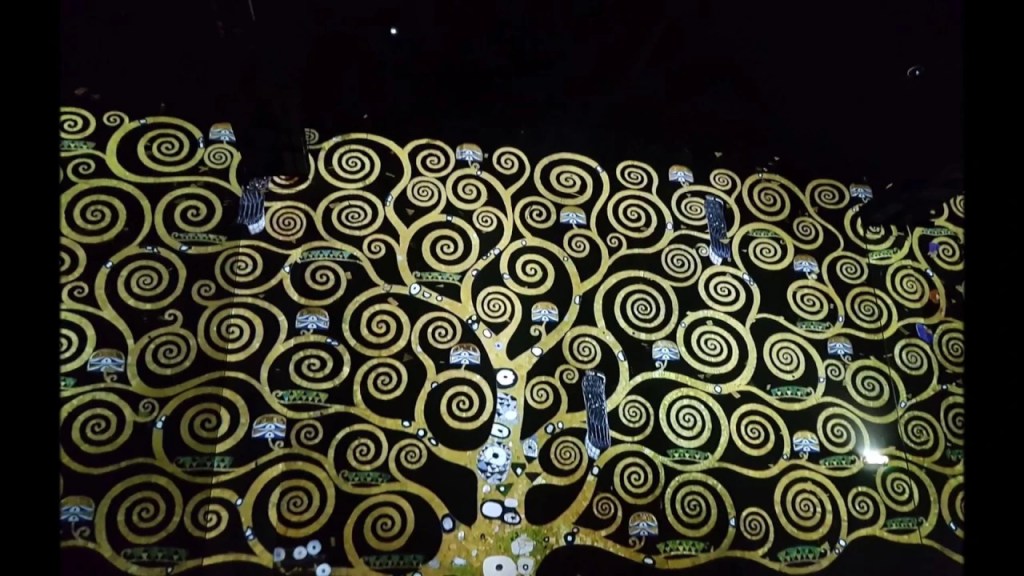
Sight & Sound Experience of Gustav Klimt – Atelier des lumières Paris
Of course, it also had to do with the spirit of that time; other artists too were experimenting with it, though perhaps not so fanatically. “The” sound, Schreker never let go of it, even when, at the end of his short life, he seemed to be going in a different direction.
This sound, which according to our chief conductor Marc Albrecht is “narcotic”, is abundant in Der Schatzgräber. It was Albrecht’s deepest wish to conduct the opera one day, a dream that came true in September 2012.
The making of Der Schatzgräber in Amsterdam:
And Albrecht is good at it, at creating the perfect sound. It still needs to be perfected, though, as the sound at the premiere was, especially at the beginning, far too loud. Fortunately, after the intermission it became more lyrical and softer, gently guiding you through the music, just like in Els’s stunning lullaby at the beginning of the third act.
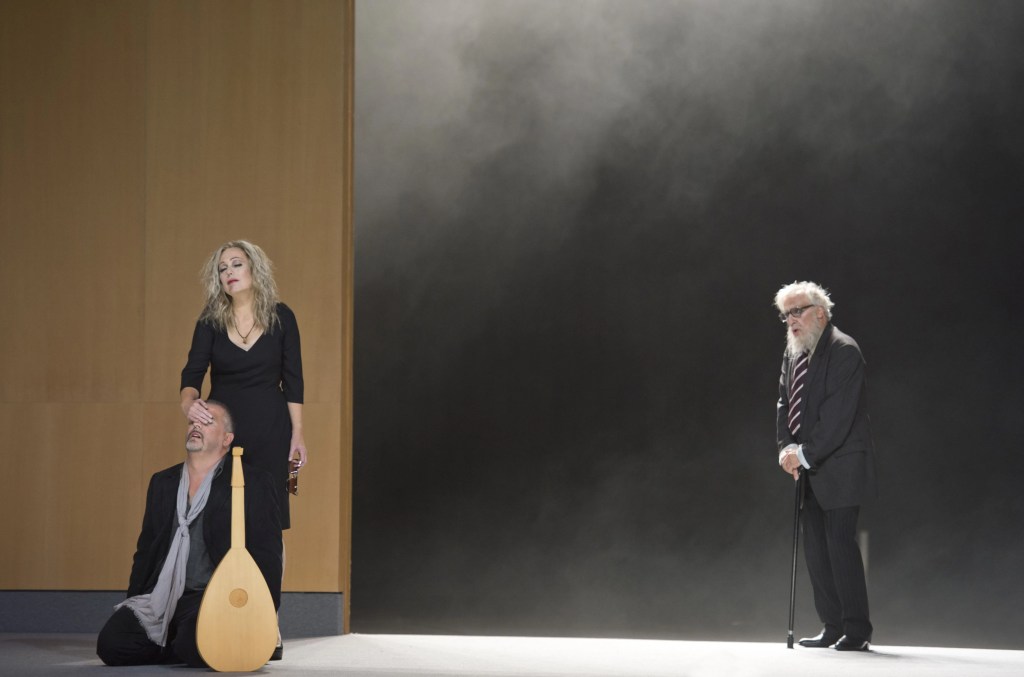
About the staging, I can be brief: it sucks. In the first two acts I was still able to somewhat relate to the neglected, aggressive cult members (?). The beautiful Els resembled Catherine Deneuve in Belle de Jour, with her blonde wig and the very high heels under her short, sexy dresses. Something that was also a bit true for the Queen (good silent role by Basja Chanowski).
But the geriatric hospital/nursing home, with stumbling old people with walkers? Sorry, that didn’t even make me reflect; I found it ugly and unnecessary. And speaking of films, I was reminded a bit of Lars von Trier’s Breaking the Waves. The ultimate sacrifice.
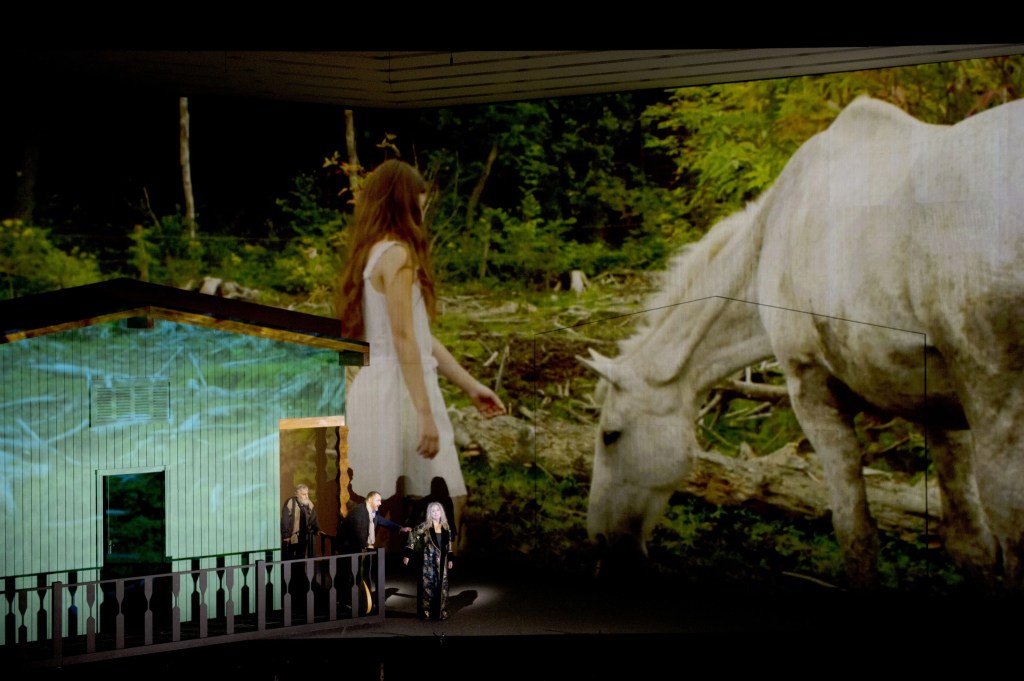
The video projections were too much of a good thing for me. A lot of them also didn’t add anything at all or were just too obvious (white horse, children being born or a twinkling starry sky during the love night – Kubrick’s ‘2001 Odyssey’?). It made me restless. Schreker’s music has to be experienced, then the images will come naturally.
I do have to admit that van Hove kept reasonably to the libretto, there were very few discrepancies between what you saw and what you read. What he did do is translate the medieval fairy tale into our contemporary (hyper)realism, and that is alright. In his introduction, he said he did not want to start from a concept, what he wanted was to create a universal drama.
It was a first for everyone. For the director, for the conductor and for the orchestra. And for all the, more than outstanding singers. Hats off!
First of all, the interpreter of the title role, Raymond Very. His tenor is lyrical and agile, he just throws his high notes into the air as if they are very easy to sing, and he manages not to overpower himself with the, at times, very intense music. What a relief to enjoy the long Schrekerian arcs so completely in style. You may notice that he is struggling towards the end, but try to walk in his shoes! Three times BRAVO!
Manuela Uhl (Els) was also a bit spent towards the end. But her performance before that borders on the impossible. Beautiful woman with above-average acting skills and with a voice that went from whispery-soft to bellows and from very low to very high, chapeau.
Kay Stieferman made a particularly strong impression. His baritone is of an immense size and blessed with thousands of colour nuances. He certainly needed all those for Der Vogt, because there were so many emotions in this character. He managed to convey them all clearly, even allowing you to have some sympathy for his actions. Very impressive.
About Graham Clark (the Jester), I can be short. He was exactly what was expected of him – nothing but really wonderful!
In mei 2022 ging bij Deutsche Oper Berlin een nieuwe productie van Der Schatzgräber in première. Christof Loy had de regie en Marc Albrecht de muzikale leiding. Het vormde het slot van een drieluik over ‘bijzondere vrouwen’ in het 20e eeuwse operarepertoire, na Das Wunder der Heliane en Francesca da Rimini. Alle drie zijn ze nu op dvd en Blu-ray uitgebracht. ‘Francesca’ heb ik nog niet gezien, over ‘Heliane’ en ‘Els’ ben ik zeer te spreken, fraaie producties met zeer goede cast.
Schreker (1878-1934) schreef negen opera’s waarvan Der ferne Klang (1912) en Die gezeichneten (1918) de bekendste zijn. De eerste was zijn doorbraak en met de tweede vestigde hij zijn reputatie als de belangrijkste operacomponist van dat moment, althans in de ogen van velen. In elk geval stak hij Richard Strauss naar de kroon.
Der Schatzgräber (1920) was een absolute triomf en in termen van aantallen gespeelde voorstellingen in Duitsland liet Schreker Wagner en Strauss achter zich. Mede door het steeds onvriendelijker wordende politiek-culturele klimaat werden zijn latere werken echter minder goed ontvangen. De première van Der Schmied von Gent in 1932 in Berlijn werd ontsierd door demonstraties van rechts radicalen en na de Machtergreifung door de nazi’s was Schrekers rol uitgespeeld. Hij stierf kort daarop en raakte lange tijd in vergetelheid, net als andere componisten die het predicaat ‘Entartet’ opgeplakt hadden gekregen.
Wie een indruk wil krijgen van Schrekers muzikale idioom kan het beste het twaalf minuten durende Vorspiel van Die gezeichneten beluisteren. Tonaal maar duidelijk chromatisch, rijk georkestreerd, welluidend en meeslepend. Onwillekeurig dringt ook de gedachte aan de latere filmmuziek van Korngold zich op en meen je flarden Strauss te herkennen.
Schrekers muziek was niet echt ‘modern’ maar toch vooral een voortzetting van de 19e-eeuwse klankwereld. In dat opzicht is hij ook schatplichtig aan Humperdinck, vooral diens Königskinder. Dat hij werd gestigmatiseerd als componist van Entarte Musik zal,behalve natuurlijk dat hij Joods was, eerder met de libretti dan met de muziek te maken hebben gehad.
Orkest repetitie:
Zo werd Schreker verweten dat ‘er geen seksuele afwijking was die hij niet op muziek heeft gezet’. Afgaande op de libretti van Der ferne Klang en Die gezeichneten was dit niet geheel en al uit de lucht gegrepen, al is dat op zich natuurlijk geen reden om de componist op de schroothoop van de muziekhistorie te laten belanden.
Ook Els, de ‘bijzondere vrouw’ in Der Schatzgräber, wordt getoond als iemand met een complexe seksualiteit. Voor Ivo van Hove was dat kennelijk aanleiding haar bij DNO op het toneel te zetten als evenbeeld van Catherine Deneuve in Belle de jour.
Overigens is de teruggang in Schrekers carrière beslist niet alleen aan de nazi’s te wijten. Die had zich al eerder ingezet doordat zijn keuze voor sprookjesachtige onderwerpen in Der Schatzgräber en het daarop volgende Irrelohe in toenemende mate als ‘out of sync’ met de harde tijden van na de crisis van 1929 werden ervaren.
Begin van de repetities:
De handeling van Der Schatzgräber speelt zich af in de vroege middeleeuwen. Centraal staat een legende over een juweel dat een eigenaar niet mag verliezen op straffe van snelle veroudering. Dat is pech voor de koningin in het verhaal want die raakt het kwijt waardoor ze haar schoonheid verliest en onvruchtbaar wordt. De koning doet een beroep op Elis, een rondzwervende minnezanger die een luit heeft met toverkracht waarmee hij verloren schatten kan opsporen. Dit op advies van zijn hofnar die als tegenprestatie bedingt dat hij een vrouw van zijn keuze zal krijgen als Elis het juweel weet te vinden.
Opkomst Els, een mooie herbergiersdochter die er een gewoonte van heeft gemaakt potentiële echtgenoten af te wijzen. Onduidelijk is waarom, je zal toch een keer moeten trouwen in de middeleeuwen. Nu probeert ze van een rijke edelman af te komen die haar te ruw is in zijn gedrag. Ze stuurt hem op een queeste om de halsketting van de koningin te zoeken en laat haar dienaar Albi hem volgen om de man ergens in het woud te vermoorden.
Inmiddels heeft Elis zich met het gevonden juweel in de herberg gemeld en geeft haar het door hem gevonden sieraad. Dat was natuurlijk tegen de afspraak maar het werkt in zoverre dat Els verliefd op hem wordt, voor het eerst een man die haar welgevallig is, vermoedelijk dankzij de invloed van dat magische juweel. Maar als het lijk van de edelman in het woud wordt gevonden laat de schout Elis vastnemen. Hij wil Els voor zichzelf en ruimt zo een concurrent uit de weg.
Vlak voordat Elis zal worden opgehangen krijgt hij door toedoen van Els nog even respijt zodat hij het juweel kan achterhalen. Als dat lukt en hij kan vertellen wie het gestolen heeft zal hij blijven leven. Omdat dit Els op zijn minst als eigenaar van gestolen goed in gevaar brengt en vragen kan oproepen naar de dood van de edelman, laat Els de luit met magische krachten door Albi stelen. Vervolgens beleven Elis en Els een liefdesnacht waarin ze het juweel draagt. Daarna geeft ze het aan hem terug onder voorwaarde dat hij haar altijd blind zal vertrouwen.
Als Elis het juweel aan de koningin heeft gegeven wordt dat groots gevierd maar het feest wordt ruw verstoord door de komst van de schout die aan Albi een bekentenis heeft onttrokken dat hij die edelman heeft vermoord, maar in opdracht van Els.
De schout eist haar executie maar dan herinnert de nar de koning aan diens belofte en vraagt om Els als zijn vrouw. Samen gaan ze er snel vandoor. Elis voelt zich bedrogen, vooral omdat Els zijn luit heeft laten stelen waardoor hij zijn ‘werk’ niet meer kon doen. Maar natuurlijk ook als haar minnaar.
Omdat Els het juweel heeft gedragen veroudert ze snel nu ze het niet meer bezit. Al na een jaar is ze stervende. De nar laat Elis komen die een prachtige ballade voor haar zingt over een paleis waarin zij beiden zullen worden verwelkomd als Prins en Prinses. Els sterft in Elis’ armen en de nar rouwt om haar dood.
Loy en zijn team hebben het werk geënsceneerd op een wijze die doet denken aan onder meer zijn Tannhäuseren Rusalka, zij het dat er nu geen ballerina’s in tutu aan te pas komen. Het ballet is er wel en voert een, in vergelijking met de nogal vrije scène in Tannhäuser, tamelijk ingehouden orgie op die de liefdesnacht van Els en Elis op het toneel vorm moet geven. Het koppel zelf is in de schemering op het achtertoneel ergens mee bezig, in elk geval zingen.
Voorspelbaar is Schrekers muziek hier uiterst broeierig. De handeling speelt zich af binnen een toneel breed eenheidsdecor dat nogal donker oogt waardoor vooral de eerste paar meters vanaf de orkestbak de aandacht trekken. De openingsscène aan het hof gaat direct over in de herbergscène waardoor aanvankelijk de gehele hofhouding nog in de verkeerde wereld lijkt te staan. Sowieso lopen de figuranten, keurig eigentijds gekleed, onbekommerd door alle scènes heen.
Voor de rol van de wegkwijnende koningin heeft Loy een mooie vrouw in witte jurk gecast, nadrukkelijk aanwezig en bijna de uitbeelding van Loys fascinatie met ballerina’s. Ach, het is een fase natuurlijk. Over een paar jaar heeft hij weer een andere fetisj.
De grote cast kent hoegenaamd geen zwakke punten en laat veel bekende namen zien. Thomas Johannes Mayer is zonder meer geweldig als de Schout (der Vogt) en de mij onbekende tenor Michael Laurenz is in alle opzichten een overtuigende Narr. Mooie acteur in een mooie rol, en hij kan ook goed zingen.
De Zweedse sopraan Elisabeth Strid maakte ik eerder mee als Sieglinde in de Ring van Hilsdorff (Düsseldorf 2018). Ze heeft ook Elisabeth en Senta op haar repertoire staan en maakt binnenkort haar roldebuut als Isolde. Strid blijkt een ideale Els in deze productie. Ze weet alles uit die rol te halen dat er qua zang in zit, heerlijk om naar te luisteren. Haar acteren completeert die invulling. Ze is een secreet maar je houdt van haar en lijdt met zowel Elis als de Narr mee als ze ten dode is opgeschreven na het verlies van ‘het juweel’.
Daniel Johansson was in 2016 een prima Lohengrin in de Aalto Opera Essen en kort na zijn Elis stond hij daar op het toneel als Tannhäuser. De opname is gemaakte op twee avonden waardoor natuurlijk wat geknipt en geplakt kon worden, net even iets anders dan een echte live opname. Maar in elk geval is Johansson hier op zijn allerbest. Zijn grote aaneengesloten ‘aria’s’ zijn sterk verhalend en vooral hier dringt de vergelijking met Königkinder zich op.
Officiële trailer van de productie
Koor en orkest van Deutsche Oper Berlin staan onder leiding van Marc Albrecht die hiermee een wens in vervulling ziet gaan, die trilogie over ‘bijzondere vrouwen’. Zijn ‘Francesca’ heb ik inmiddels besteld, binnenkort zal er op deze plek wel over te lezen zijn.
The idea came from Zemlinsky. He wanted to compose an opera about an ugly man – his obsession – and commissioned the libretto from Schreker. After finishing his work, it was hard for Schreker to give up his text. Fortunately, Zemlinsky abandoned the opera so Schreker started to compose himself.
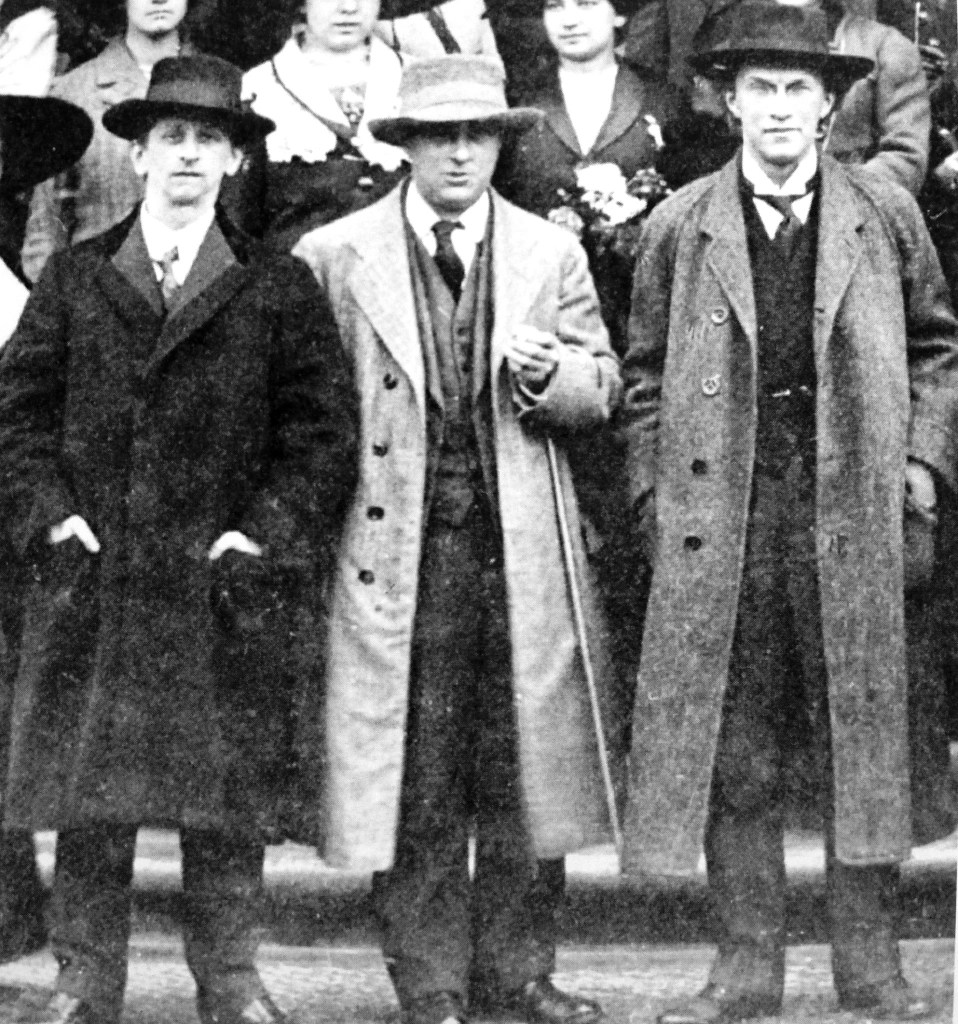
Zemlinsky, Schoenberg and Schreker in Prague 1912
Like Der Ferne Klang, perhaps his best-known work, Die Gezeichneten also deals with the search for unattainable ideals. Alviano, a deformed rich nobleman from Genoa, dreams of beauty and perfection. On an island he has ‘Elysium’ built, a place where he hopes to realize his ideals. What he doesn’t know is that the noblemen abuse his island: they are engaged in orgies, rapes and even murders.
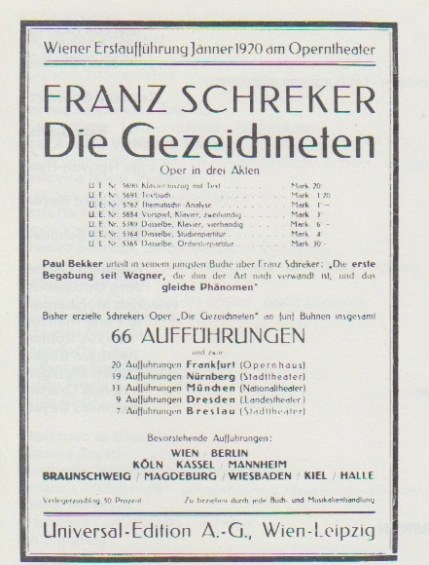
The title of the opera is ambiguous. Not only are the main characters ‘marked’ (Alviano by his monstrous appearance and Carlotta by a deadly illness), Carlotta also makes a drawing of Alviano, in which she tries to capture his soul.
EDO DE WAART 1990
This beautiful opera, with its thousands of colours and sensual sounds (just listen to the overture, goosebumps!), is being staged more and more nowadays. In 1990 it was performed at the Saturday Matinee, with an ugly singing but very involved and therefore very vulnerable William Cochran as Alviano and a phenomenal Marilyn Schmiege as Carlotta (Marco Polo 8.223328-330).
LOTHAR ZAGROSEK 1994
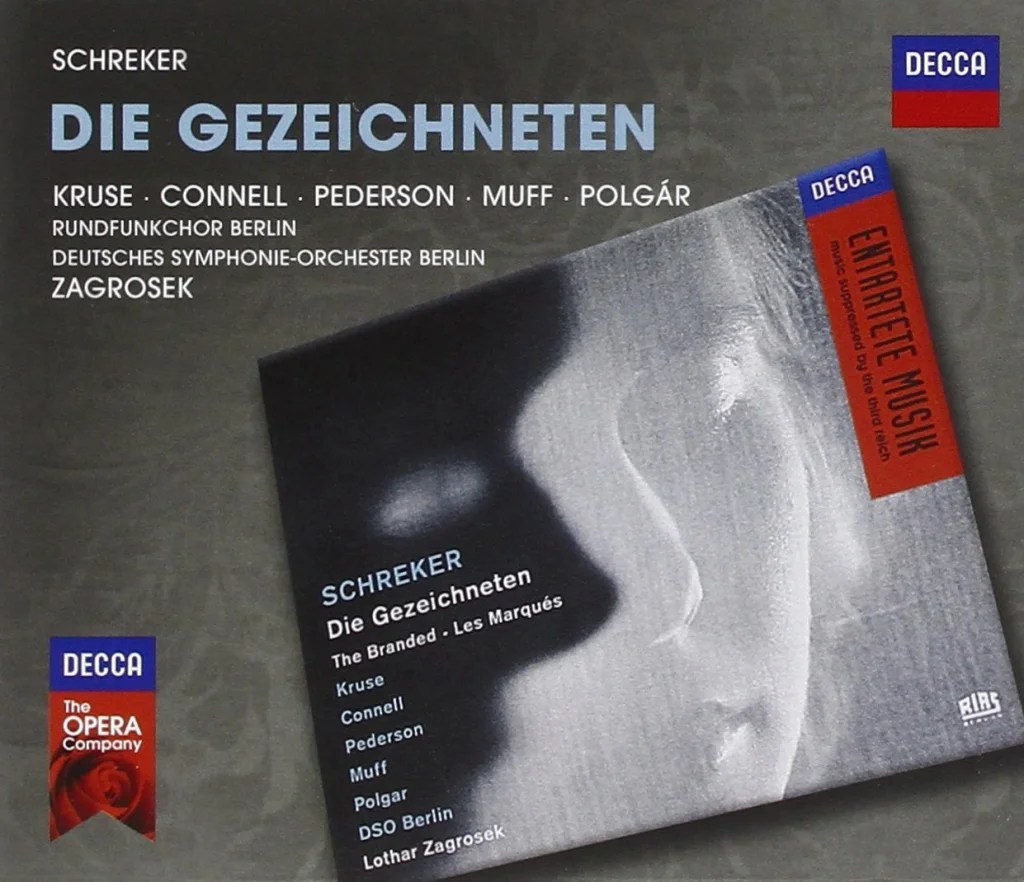
In 1994, Decca (4444422) recorded Die Gezeichneten in the ‘Entartete Musik’ series. I am not particularly enamoured with either the orchestra or the soloists, but, like Marco Polo, it is complete.
WINFRIED ZILLIG 1966
I am not very enthousiastic about Helmut Krebs in the lead role of Alviano: while his timbre is beautiful, his height is pinched. The roles of Carlotta and the sadistic seducer Tamare are perfectly cast by married couple Evelyn Lear and Thomas Stewart.
American baritone Stewart was a highly celebrated Wagner singer at the time, famous for his Wotans and his various interpretations of Amfortas. Lear was often compared to Elisabeth Schwarzkopf, I myself find her way of singing more natural and pleasant. Her beautiful appearance made her an ideal Carlotta, it is a pity that we have no footage of it.
Evelyn Lear (Carlotta) and Helmut Krebs (Alviano), scene from the second act:
However, it is the wonderful bass Franz Cras who dominates the recording in his role of Duke Adorno. Initially the sound is on the poor side, but it seems to get better as the opera progresses. Of course, it could also be that you get used to it.
I don’t really like the Norddeutsche Rundfunk under Winfried Zillig. I miss the sensuality, but it could also be down to the recording. The score is, as was usual at the time, considerably shortened. A pity, but it is nevertheless undoubtedly an extremely important release! (Walhall WLCD 0376)
FRANZ SCHREKER 1928 (extracts)
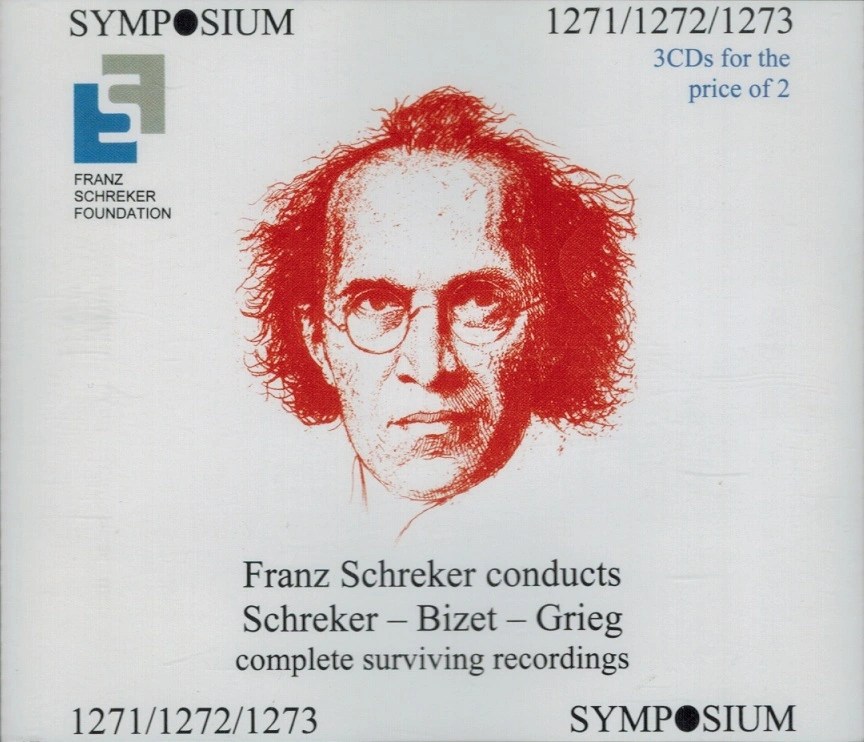
A box set of three CDs (Symposium 1271/1272/1273) on which Schreker can be admired as the conductor of his own works, among others, also includes a few excerpts from Die Gezeichneten, recorded in 1928, with his wife Maria in the role of Carlotta.
DVD: LEHNHOFF/NAGANO 2005
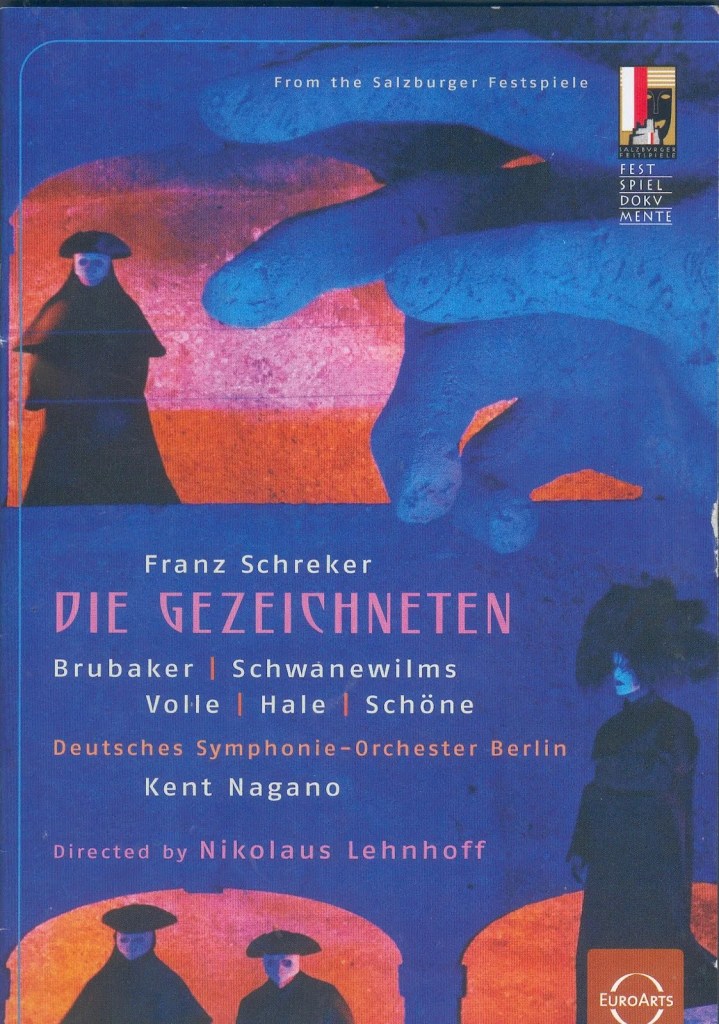
In 2005, a widely acclaimed production by Nikolaus Lehnhoff was recorded live in Salzburg and released on DVD (EuroArts 2055298). Personally, I am not unreservedly enthusiastic about it, although I must admit that it is all very spectacular and very excitingly staged.
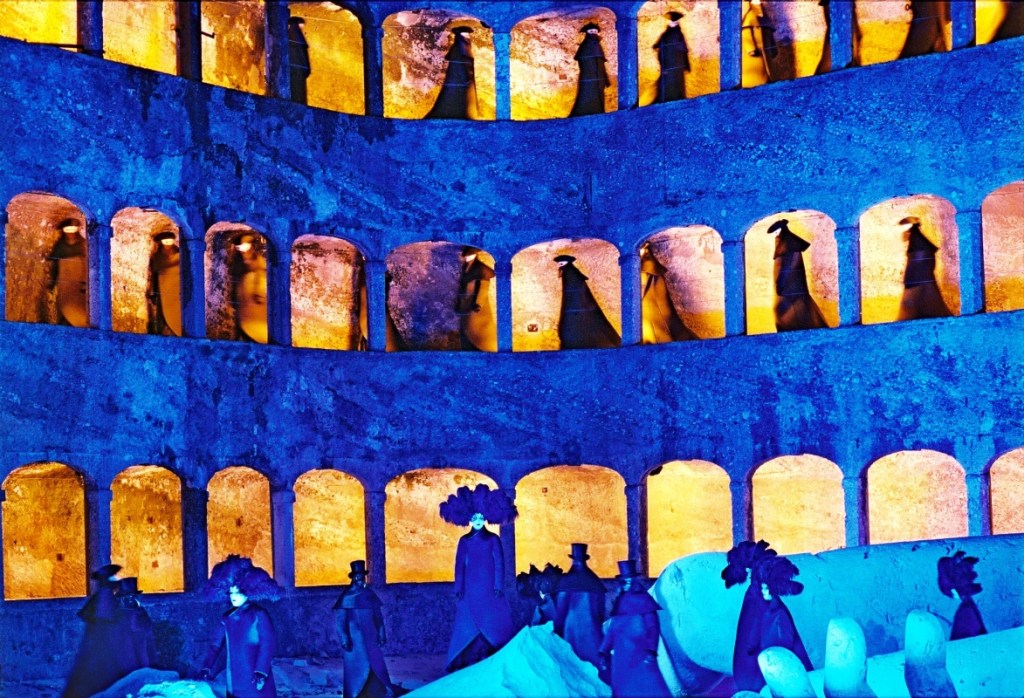
To begin with, I find the setting (the reclining body of a dead woman, the head separated from the torso, with everybody walking all over her remains) too emphatic and laden with cheap and unnecessary symbolism. I also find the final scene to be in bad taste: nowadays you need a lot more than kidnapped young virgins to shock, so Lehnhoff lets them be emphatically young.
These virgins, including Ginevra Scotti, are no more than 10 years old, so it may really be called paedophilia. Yes, that does indeed come across as shocking, but was it necessary? I’m not so sure about that.
But compared to Kušej’s horribly flat staging at De Nederlandse Opera (thankfully not recorded, but at the same time a shame because of Gabriel Sadè’s wonderfully good leading role), Lehnhoff is of course a hero.
So buy Lehnhoff anyway, because there is undeniably much to enjoy. First, there is the music itself, beautifully and very erotically played by the Berlin Deutsches Symphonie-Orchester under the direction of Kent Nagano. The visuals are beautiful, the colours (with predominantly deep blue) are lovely and the singers/actors, styled after contemporary stars like Johnny Depp and Tom Cruise, are beautiful – after all, everything here is about outer beauty, and Lehnhoff and his team manage to highlight that very clearly.
Robert Brubakker is an endearing Alviano, and although I don’t quite understand why he is put in female clothes at the beginning – he is impressive. Anne Schwanewilms is a beautiful, cool Carlotta, and Michael Volle convinces as the virile Count Tamare.
Sight & Sound Experience of Gustav Klimt – Atelier des lumières Paris
On the threshold of the twentieth century, many artists were guided in their work by the desire – and the search – for a perfect world. It had to do with the spirit of the times, among other things, and it influenced many painters, writers, poets and composers in their work. But with no other artist it was as prominent as with Franz Schreker (1878-1934). The search for ‘the’ sound dominated his entire life, he was fascinated and obsessed with it. A sound that would die of its own accord, but not really, because it had to continue to be heard – if only in your thoughts. It had to be a pure sound, but one with orgasmic desire and interwoven with visions. Narcotic. In his music I really hear the perfect sound that he so desired which makes me intensely happy.
For Schreker you can wake me up in the middle of the night. The fusion of shameless emotions with undisguised eroticism and intense beauty turns me into an ‘Alice in wonderland’. I want more and more of it. Call me a junkie. I consider his operas to be the most beautiful in existence, alongside those of Puccini and Korngold.
When the Nazis came to power, Schreker was labelled an ‘entartet’. His works were banned and no longer performed. In 1933 he was dismissed from all his engagements and suspended. Schreker was devastated. In December of that year he suffered a heart attack which became fatal to him. But even after the war Schreker was hardly ever performed. The same fate awaited him as (among others) Korngold, Braunfels, Goldschmidt, Zemlinsky, Waxman …. An unprecedented number of names of composers. They were once labelled ‘Entartet’ by the Nazis and banned, reviled, expelled and murdered. Forgotten.
And that was not just the fault of the Nazis. After the war, the young generation of composers did not want to know about emotions anymore. Music had to be devoid of any sentiment and subject to strict rules. Music had to become universal: serialism was born. The past was dealt with, including composers from the 1930s. It is only in the last thirty years that the once forbidden composers have regained their voices. The Saturday Matinee has played a major role in this and I thank them on my bare knees for that.
DER FERNE KLANG
, The premiere of Der ferne Klang, in Frankfurt in 1912, was very enthusiastically received. In the Frankfurter Zeitung, critic Paul Bekker wrote that “the audience could identify with the central metaphor of Schreker’s work. Everyone hears that enigmatic sound at some point”.
The protagonist is a composer with only one desire: to discover the perfect sound. On his quest for it, he rejects his beloved Grete and leaves everything he loves behind. Only at the end, when it is already too late, does he realise that he could only find the enchanting “distant sound”, along with happiness, in his love for Grete.
There are not many official recordings of the opera on the market. I myself know only one: live recording from Berlin 1991, on Capriccio (60024-2). I’ve never been devastated by that and quietly hoped that NTR will release their September 2004 performance, with Anne Schwanewilms and others. Alas.
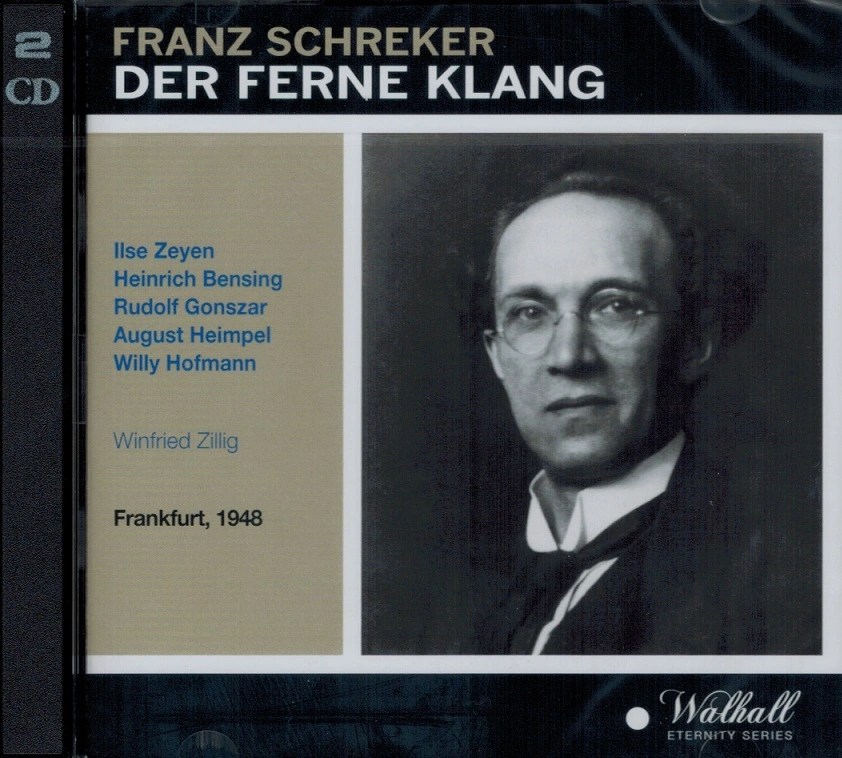
Fortunately, Walhall is now coming out with a live radio recording from Frankfurt 1948, and I am very happy about that. It is a fantastic recording, with exceptionally good sound quality for the time.
I did not know any of the singers, the greater the surprise for me. Der Ferne Klang is an opera that is not easy to cast. Both main roles require big voices that are also distinctly lyrical, and Ilse Zeyen (Grete) and Heinrich Bensing (Fritz) are very much so.
The Frankfurt radio orchestra is sublimely conducted by Winfried Zillig, a very well-known German composer, musict heorist and conductor at the time.
The idea came from Zemlinsky. He wanted to compose an opera about an ugly man – his obsession – and commissioned the libretto from Schreker. After finishing his work, it was hard for Schreker to give up his text. Fortunately, Zemlinsky abandoned the opera so Schreker started to compose himself.
Zemlinsky, Schoenberg and Schreker in Prague 1912
Like Der Ferne Klang, perhaps his best-known work, Die Gezeichneten also deals with the search for unattainable ideals. Alviano, a deformed rich nobleman from Genoa, dreams of beauty and perfection. On an island he has ‘Elysium’ built, a place where he hopes to realize his ideals. What he doesn’t know is that the noblemen abuse his island: they are engaged in orgies, rapes and even murders.
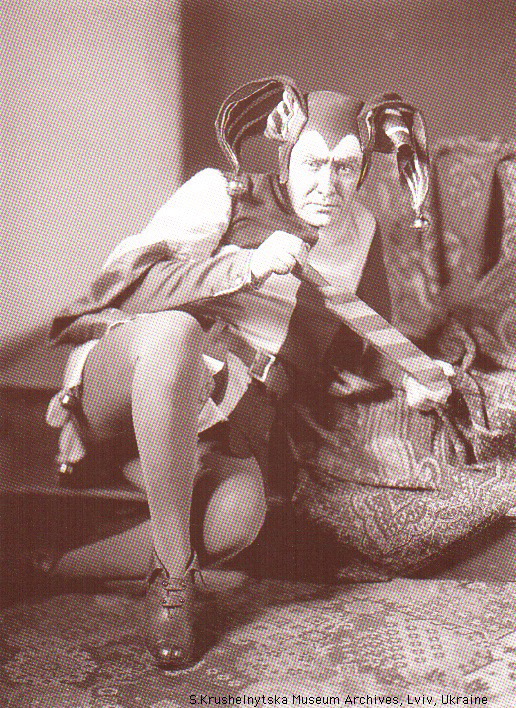
Alviano: photo from the premiere in Frankfurt 1918 via Green Integer Blog
The title of the opera is ambiguous. Not only are the main characters ‘marked’ (Alviano by his monstrous appearance and Carlotta by a deadly illness), Carlotta also makes a drawing of Alviano, in which she tries to capture his soul.
This beautiful opera, with its thousands of colours and sensual sounds (just listen to the overture, goosebumps!), is being staged more and more nowadays. In 1990 it was performed at the Saturday Matinee, with an ugly singing but very involved and therefore very vulnerable William Cochran as Alviano and a phenomenal Marilyn Schmiege as Carlotta (Marco Polo 8.223328-330).
Evelyn Lear (Carlotta) and Helmut Krebs (Alviano), scene from the second act:
On Spotify you can find several performances of the complete opera, but if you want to have images as well: below you will find the recording from Salzburg 2005:
IRRELOHE
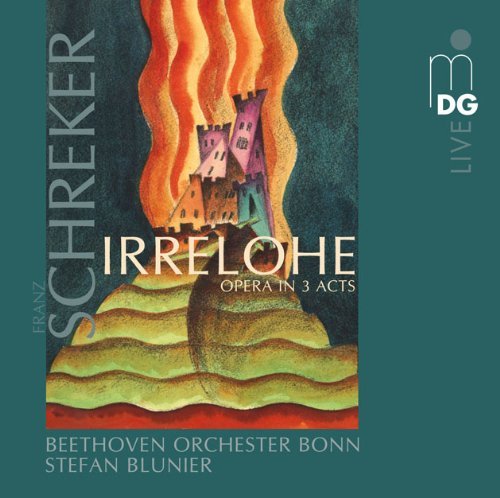
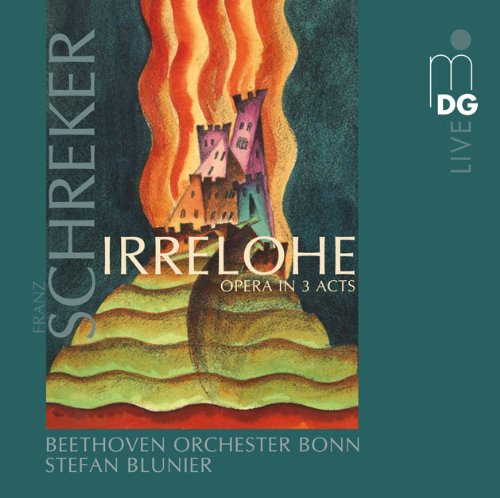
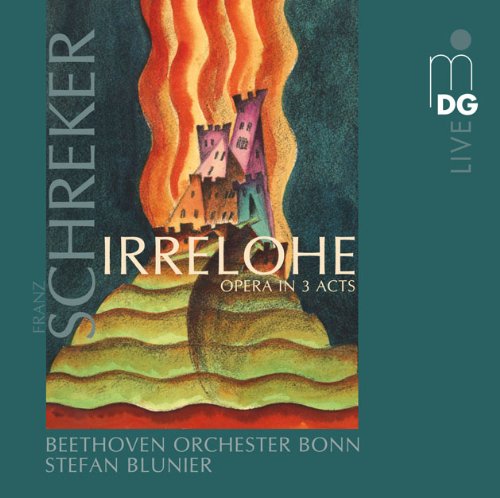
In 2010, The Opera in Bonn started a Schreker revival. Kudos! In 2010, Irrelohe was put on the stage there and recorded live by MDG (9371687-6).
The story most resembles a real horror movie. The lords of the Irrelohe castle are cursed. On their wedding day, they go mad and rape a virgin, a curse they pass on to their first-born son. Only a fire and its flames can lift the curse. And those flames do come, at the end, when the beautiful Eva (Ingeborg Greiner) prefers Count Heinrich (irresistible Roman Sadnik) to the bastard Peter (Mark Morouse). You get the idea: Peter is the first-born son of the rapist; Heinrich (who is his half-brother) was born 30 days later. All’s well that ends well, but first we shudder, shiver and enjoy…….
Roman Sadnik in scenes from Irrelohe:
Of the opera there already existed a recording on Sony, recorded live in Vienna in 1989. The Wiener Symphoniker was conducted by Peter Gülke and maybe it is his fault that it does not sound very exciting. The singers (including Luana de Vol and Monte Pederson) are certainly not to blame, although they are nothing to write home about.
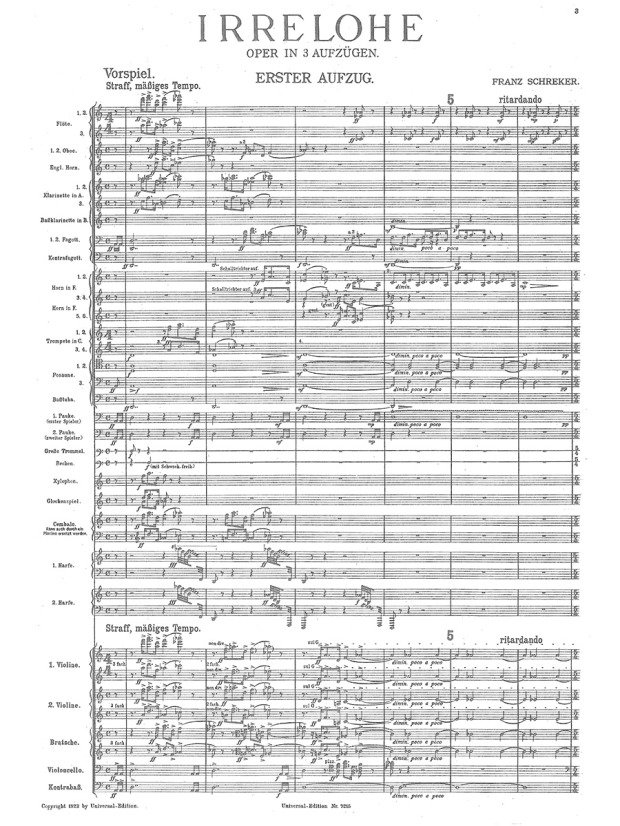
Worth knowing: Schreker wrote the libretto in a very short time (it took him only a few days) in 1919. The work takes its name from a railway station called Irrenlohe which Schreker passed by on a trip to Nuremberg in March 1919.
DER SCHMIED VON GENT
I had in my possession a pirate recording of Schrekers’s last opera, Der Schmied von Gent from Berlin 1981, but I wasn’t particularly fond of it: neither the sound nor the performance could really please me. Moreover, the opera was hard to follow without a synopsis.
So I was eagerly awaiting the first commercial release of it and lo and behold: there it is! ‘The Smith’ was recorded live in Chemnitz in 2010 and released on CPO (777 647-2), kudos!
It is a “Grosse Zauberoper” with a story a bit close to ‘Der Freischütz’, it also features a devil, as well as Saint Peter and … Alva (it takes place during the Eighty Years’ War). And yes, it all works out.
The cast, including a fantastic Oliver Zwarg in the role of Smee, is excellent.
VOM EWIGEM LEBEN
I don’t think it was wise to include ‘Ekkehard’, a work Franz Schreker wrote while still in his youth. And certainly not to place it at the beginning of the CD. The symphonic overture has little to say, sounds incoherent, is boring and deters rather than invites listening. ‘Phantastische Ouvertüre’ on 15 is hardly any better and even I, a diehard Schreker fan, really had to force myself to keep listening to it.
But it could also be a bit down to the young English conductor Christopher Ward. He conducts very skilfully but lacks a real drive. Nor can I escape the impression that he doesn’t quite understand the ‘Schrekian idiom’, because somewhere between all the very neatly played notes he has quite lost the eroticism. You hear it best in Schreker’s best-known piece, his ‘Vorspiel zu einer grossen Oper’.
Fortunately, on that CD you will also find two songs; two settings to the poem by Walt Whitman, (translated into German by Hans Reisiger) entitled ‘Vom Ewigen Leben’ and here you hear the real Schreker. Sensual and languorous. That my final verdict is not negative is therefore thanks to these songs being sung beautifully, with much sehnsucht, by Australian soprano Valda Wilson.
SONGS
The unsurpassed Reinild Mees took the initiative and (of course) got behind the piano herself, to accompany and record two CDs full of Schreker’s songs. It features Jochen Kupfer, Ofelia Sala and Anne Buter and the result is truly outstanding (Channel Classics CCS 12098 and CCS 14398)
Also highly recommended is a release by Koch Schwann (3-6454-2), hopefully still for sale, which includes, in addition to the prelude to Irrelohe and ‘Vorspiel zu einer grossen Oper’, again the truly irresistible song cycle ‘Vom ewigen Leben’, after Walt Whitman’s poems.
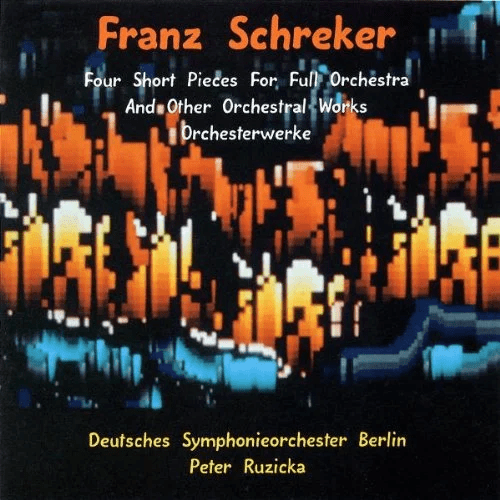
It is phenomenally sung by Claudia Barainsky – for her alone, with her radiant height and tremendous understanding of the text, you really must have the CD. Not to mention the fantastically playing Deutsche Symphonie-Orchester Berlin. The conductor, Peter Ruzicka understands exactly what Schreker’s music is all about.
For dessert, one of the most beautiful instrumental works by my beloved composer: Vorspiel zu einem Drama from 1913. The BBC Symphony Orchestra is conducted by Jascha Horenstein:
In ons ‘buurland’ is altijd sprake van een uitgebreid aanbod aan opera’s, vooral dankzij het grote aantal theaters met elk een volwaardige programmering. In een rijtje na elkaar van Hagen in het oosten tot Bonn in het zuiden treffen we Dortmund, Wuppertal, Gelsenkirchen, Essen, Duisburg, Düsseldorf en Keulen. Met het oog op komend seizoen ben ik al die operahuizen eens afgegaan, op zoek naar weinig gespeelde werken die de toch wel lange rit vanuit de Randstad de moeite waard maken. Het resultaat mag er wezen.
Theater Hagen komt komend seizoen naast een aantal minder bekende muziektheaterstukken met Tri Sestry van Peter Eötvös in een regie van Friederike Blum. De première staat gepland voor 25 maart en daarna volgen er nog vier voorstellingen.
Tri Sestry van Peter Eötvös, opname uit Wenen 2016:
Dortmund brengt vanaf 6 november een nieuwe productie van Halevy’s grand opéra La Juive in de regie van Lorenzo Fiorini. Dit werk was hier in 1995 ook al eens te zien, een productie van de toenmalige intendant John Dew die aldaar een hele reeks Franse opera’s op het toneel bracht. Maar dat is lang geleden natuurlijk. En op 26 februari gaat Adams’ opera Nixon in China in première, een productie van Martin G. Berger. Ook de rest van het programma is interessant en ambitieus maar deze twee springen eruit.
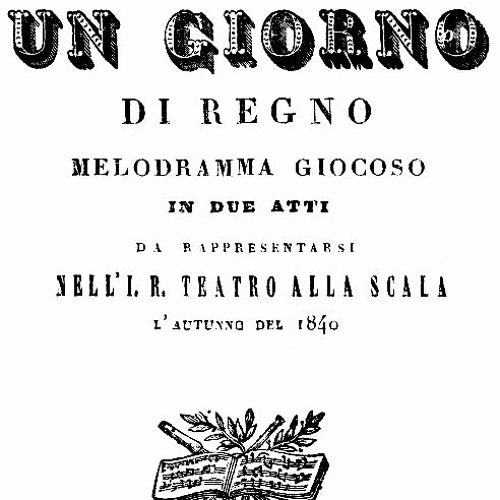
Wuppertal biedt een solide programma maar zonder uitschieters voor wat betreft het klassieke repertoire. Dat geldt komend seizoen ook voor MiR Gelsenkirchen maar helemaal aan het einde van de speeltijd biedt het huis toch iets opmerkelijks. Dan zijn er drie voorstellingen van Verdi’s zelden gespeelde tweede opera Un giorno di Regno, een productie van Opernstudio NRW. Het betreft dus een studentenvoorstelling maar dat maakt het niet minder de moeite waard. Première op 3 juni.
Jose Carreras – Pietoso al lungo pianto…Deh, lasciate a un’alma amante (from Un giorno di regno by Giuseppe Verdi)
Het seizoen van het Aalto Theater in Essen komt nog volledig voor rekening van Hein Mulders die inmiddels intendant is van Oper Köln. Een opvallende titel in Essen is Lucrezia Borgia in een productie van Ben Bauer. Première op 26 november.
Hein Mulders Foto: Sven Lorenz
Deutsche Oper am Rhein brengt de premières van drie minder gespeelde werken, allemaal in speelstad Düsseldorf. Het programma in beide steden Duisburg en Düsseldorf is verder goed gevuld met aansprekende titels waaronder een herneming van Adriana Lecouvreur.
Magda Olivero zingt Adriana Lecouvreur in Amsterdam 1965
Op 3 december gaat Tsjaikovsky’s zelden gespeelde opera Die Jungfrau von Orléans in première in een enscenering van Elisabeth Stöppler. Vanaf 26 februari gaat Bellini’s La Sonnambula in een nieuwe productie van Johannes Erath en Massenets vroege werk Hérodiade heeft première op 27 mei, een nieuwe productie van Lorenzo Fioroni.
Montserrat Caballé zingt ‘Il est doux’ in Barcelona 1984:
Met Les Troyens van Hector Berlioz wordt op 24 september het seizoen in Keulen geopend, dat is tevens de enige echt opmerkelijke titel. Johannes Erath ensceneert.
opera in Bonn
Als laatste in de rij Oper Bonn. Ooit was dit de hoofdstedelijke opera met bijbehorende prestige subsidies. Maar het huis heeft het vertrek van de regering met alles drum un dran weten te overleven en komt regelmatig met bijzondere titels. Zo ging er in mei Ein Feldlager in Schlesien van Meyerbeer. En in het verleden heb ik er voorstellingen gezien van La Rondine, Lakmé, Thaïs, Guiglielmo Ratcliff en Der ferne Klang. Wel, het komend seizoen biedt maar liefst drie uitgesproken rariteiten.
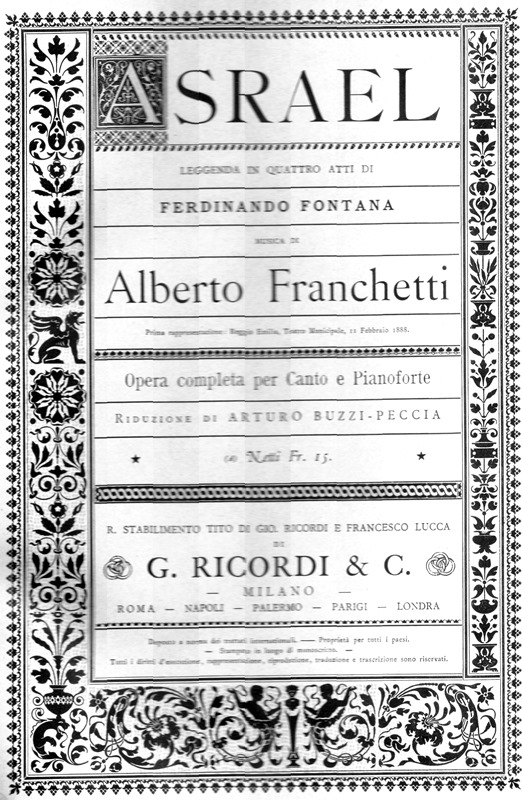
Op 16 oktober is de première van Asraël, de eerste opera van Alberto Franchetti. Hij is vooral bekend door zijn latere werken Germania en Cristoforo Colombo. Net als voor Meyerbeers Feldlager maakt men in Bonn voor Asraël gebruik van orkestmateriaal dat speciaal voor deze productie is samengebracht. Voor een idee van het klankbeeld, de opera dateert uit 1888.
Op 12 maart komt de volgende rariteit: Giordano’s zesde opera Siberia uit 1903. Met zijn Fedora op zaterdag 14 januari live from The Met zullen er komend seizoen dus maar liefst twee werken van deze componist te zien zijn.
Trailer van Siberia uit Teatro del Maggio Musicale Fiorentino 2021:
Andrea Chénier stond dit seizoen overigens in Düsseldorf op het programma maar werd vervangen door Adriana Lecouvreur, liggen toch wel een beetje in elkaars verlengde. Voor wie die Adriana heeft gemist: komend seizoen wordt het werk hernomen en gaat het ook in Luik.
Ik memoreerde al dat in Bonn Der ferne Klang te zien was geweest. Nu komt men met een wel erg onbekend werk van Schreker, Der singende Teufel uit 1928. Zijn laatste opera Der Schmied von Gent was overigens in 2020 in Antwerpen te zien.
Daarmee spant Bonn wat mij betreft de kroon als het gaat om zelden gespeelde werken die zonder meer de moeite waard lijken om extra moeite voor te doen. Al is Bonn me inmiddels te ver voor een dagtrip, dat wordt overnachten.
It was at the end of the Second World War that Richard Strauss composed his Metamorphoses for twenty-three strings. The piece, one of his last works, is based on mythological stories by Ovid, in which the creation and history of the world are based on Greek and Roman mythology.
It is generally believed that Strauss composed the work in response to the horrors of war while also mourning the destruction of Germany. And that it was a kind of elegy to the devastating bombing of Munich, especially the Munich Opera. The final section entitled ‘In Memoriam’ could indicate that the piece was intended as a musical monument for culture in general, and German culture in particular, which is why some, including Matthijs Vermeulen, took the composition to be a lament for Hitler and for the downfall of the Nazi regime (source: Wikipedia). I can’t imagine it, but: who am I?
According to Richard Straus (and Beethoven) specialist Dr Jürgen May, it was Strauss’s way of expressing his sorrow for “more than three thousand years of the cultural development of mankind”.
In the composition, quotations from Beethoven’s Eroica and his Fifth Symphony can also be heard, as well as from Wagner’s Siegfried Idyll. That the work is rather sombre and very emotional is obvious. Especially the ‘In Memoriam’ will not leave you unmoved.
Richard Wilson The Destruction of the Children of Niobe 1760
“Childless she sat down dejectedly […] Yet she weeps, and […] she is carried away to her fatherland; there, set on a mountain top, she wears away, and even now tears flow from the marble” (source Latin and Greek, anonymous translation).
With the other works on the CD, from Schreker and Korngold, the feeling of desolation and abandonment is coninued.
Franz Schreker composed the Intermezzo, the oldest piece (and also the shortest) on the disc, in 1900. That was a long time before he would write his greatest works and his operas would be performed with enormous success in the biggest opera houses of, in particular, Austria and Germany. Yet, in the narcotic ‘Ferne Klang’, you can already hear Schreker’s musical characteristictics.
Korngold wrote his Symphonic Serenade shortly after the Second World War, when he had left Hollywood for a while to come to Vienna. He worked on it from 1947 and at the same time he also began what he thought would be his greatest work, the Symphony in F-sharp. John Wilson with his Sinfonietta London had already recorded this Symphony with stunning result. This CD is no less impressive.
Richard Strauss, Metamorphoses Franz Schreker, Intermezzo op.8 Erich Wolfgand Korngold, Symphonic Serenade for Strings op.39 Sinfonia of London olv John Wilson Chandos CHS
Het was aan het einde van de Tweede Wereldoorlog dat Richard Strauss zijn Metamorphosen voor drieëntwintig strijkers componeerde. Het stuk, één van zijn laatste werken, is gebaseerd op mythologische verhalen van de Ovidius, waarin schepping en geschiedenis van de wereld gebaseerd zijn op de Griekse en Romeinse mythologie.
Het wordt algemeen aangenomen dat Strauss het werk componeerde als reactie op de verschrikkingen van de oorlog en rouw om de vernietiging van Duitsland. Dat het een soort van elegie was voor de verwoestende bombardementen op München, met name de Münchener Opera.
Het slotdeel getiteld ‘In Memoriam’ zou erop kunnen wijzen dat het stuk bedoeld was als een muzikaal monument voor cultuur in het algemeen, Duitse cultuur in het bijzonder, waardoor sommigen, o.a. Matthijs Vermeulen zagen de compositie als een klaagzang voor Hitler en de teloorgang van het naziregime (bron: Wikipedia). Ik kan het mij niet voorstellen, maar: wie ben ik?
Volgens Richard Straus (en Beethoven) specialist dr. Jürgen May was het Strauss’ manier om zijn treurnis voor “meer dan drieduizend jaar van de culturele ontwikkeling van de mensheid” te uiten
In de compositie zijn ook citaten uit Beethovens Eroica en diens vijfde symfonie waarneembaar, alsook uit Siegfried Idyll van Wagner. Dat het werk nogal somber en zeer ontroerend is, is nogal wiedes. Voornamelijk de ‘In memoriam’ laat je niet onberoerd.
Richard Wilson: The Destruction of the Children of Niobe (1760)
“Kinderloos ging ze moedeloos neerzitten […] Toch huilt zij en […] is zij meegesleurd naar haar vaderland; daar, vastgehecht op de top van een berg, smelt zij weg, en ook nu nog laat het marmer tranen vloeien” (bron Latijn en Grieks, anonieme vertaling)
Met de daarop volgende werken van zowel Schreker en Korngold houd je het gevoel van troosteloosheid en verlatenheid aan.
Franz Schreker componeerde het Intermezzo, het oudste stuk (en ook de kortste) op de schijf, in 1900. Het was nog lang voor hij zijn grootste werken schreef en zijn opera’s, met enorme succes uitgevoerd werden in de grootste operahuizen van, met name, Oostenrijk en Duitsland. Toch hoor je er al in de narcotiserende ‘Ferne Klang’, Schrekers muziek zo eigen.
Zijn Symphonische Serenade schreef Korngold kort na de Tweede Wereldoorlog toen hij even Hollywood verliet en naar Wenen kwam. Hij werkte er aan vanaf 1947 en in dezelfde tijd begon hij ook aan wat hij dacht dat zijn grootste werk zou worden Symfonie in Fis. John Wilson met zijn Sinfonietta London heeft zich al eerder over de Symfonie ontfermd met een verbluffend resultaat. Deze cd doet daar niet voor onder.
Richard Strauss, Metamorphosen Franz Schreker, Intermezzo op.8 Erich Wolfgand Korngold, Symphonic Serenade for Strings op.39 Sinfonia of London olv John Wilson Chandos CHSA5292 (SACD)
In 2010, The Opera in Bonn started a Schreker revival. Kudos! In 2010, Irrelohe was put on the stage there and recorded live by MDG (9371687-6).
The story most resembles a real horror movie. The lords of the Irrelohe castle are cursed. On their wedding day, they go mad and rape a virgin, a curse they pass on to their first-born son. Only a fire and its flames can lift the curse. And those flames do come, at the end, when the beautiful Eva (Ingeborg Greiner) prefers Count Heinrich (irresistible Roman Sadnik) to the bastard Peter (Mark Morouse). You get the idea: Peter is the first-born son of the rapist; Heinrich (who is his half-brother) was born 30 days later. All’s well that ends well, but first we shudder, shiver and enjoy…….
Roman Sadnik in scenes from Irrelohe:
Of the opera there already existed a recording on Sony, recorded live in Vienna in 1989. The Wiener Symphoniker was conducted by Peter Gülke and maybe it is his fault that it does not sound very exciting. The singers (including Luana de Vol and Monte Pederson) are certainly not to blame, although they are nothing to write home about.
Worth knowing: Schreker wrote the libretto in a very short time (it took him only a few days) in 1919. The work takes its name from a railway station called Irrenlohe which Schreker passed by on a trip to Nuremberg in March 1919.
In 2010 is het operahuis in Bonn aan een Schreker revival begonnen. Kudo’s! In 2010 werd er Irrelohe op de planken gezet en daar door MDG (9371687-6) live opgenomen. Nog meer kudo’s!
Het verhaal lijkt nog het meest op een echte horrorfilm. De heren van het kasteel Irrelohe zijn vervloekt. Op hun huwelijksdag worden ze gek en verkrachten een maagd, een vloek die ze aan hun eerstgeborene zoon doorgeven. Alleen de vlammen kunnen de vloek ontkrachten. En die vlammen komen er ook, aan het eind, als de mooie Eva (Ingeborg Greiner) de graaf Heinrich (onweerstaanbare Roman Sadnik) boven de bastaard Peter (Mark Morouse) verkiest. U snapt hem natuurlijk meteen: Peter is de eerstgeborene zoon van de verkrachter; Heinrich (die dus zijn halfbroer is) kwam 30 dagen later ter wereld. Eind goed al goed, maar eerst gaan we huiveren, sidderen en…. genieten.
Roman Sadnik in scènes uit Irrelohe
Van de opera bestond al een opname op Sony, in 1989 live opgenomen in Wenen. Wiener Symphoniker stond onder leiding van Peter Gülke en wellicht is het zijn schuld dat het niet heel erg opwindend klinkt. Aan de zangers (o.a. Luana de Vol en Monte Pederson) ligt het in ieder geval niet, al vind ik ze ook niet echt om naar huis te schrijven
Wetenswaardigheid: Schreker schreef zelf het libretto in zeer korte tijd (slechts enkele dagen) in 1919. Het werk ontleent zijn naam aan een treinstation genaamd Irrelohe dat Schreker passeerde tijdens een reis naar Neurenberg in maart 1919
Aan het woord is de mismaakte rijke edelman Alviano Salvago. Liefde heeft hij afgezworen, want er is geen vrouw ter wereld die haar leven met hem zou willen delen. En toch: daar komt hij Carlotta tegen, een bloedmooie vrouw die hem haar liefde verklaart. Tegen beter weten in trapt hij er in. Wat hij niet weet is dat de fascinatie van Carlotta, die zelf ook als ‘getekend’ door het leven gaat (zij heeft een hartkwaal waardoor zij alle emoties, zeker de erotische moet vermijden) alles te maken heeft met haar streven om een ‘ziel’, in dit geval zijn ziel in haar schilderij te vangen. Dat lukt haar wonderwel, waarna ze alle belangstelling voor hem verliest.
Maar ook Carlotta is niet tegen het verlangen bestand, in haar geval het verlangen naar de erotiek en de extase, iets wat zij met de buitengewoon aantrekkelijke graaf Tamare wil beleven. Dat zij het juist op het eiland ‘Elysium’ doet, de plek waar Alviano zijn idealen van schoonheid en volmaaktheid dacht te verwezenlijken en waar hij dacht met haar verbonden te kunnen worden maakt het verhaal extra wrang. Afijn: Carlotta overleeft de extase niet, waarna de tot de waanzin gedreven Alviano zijn rivaal vermoordt.
Het libretto van de hand van Franz Schreker zelf is niet op een bestaand verhaal, boek of zelfs een gedicht gebaseerd. Mocht je toch op zoek willen gaan naar invloeden – niets staat immers op zichzelf – denk dan aan Oscar Wilde meets André Gide.
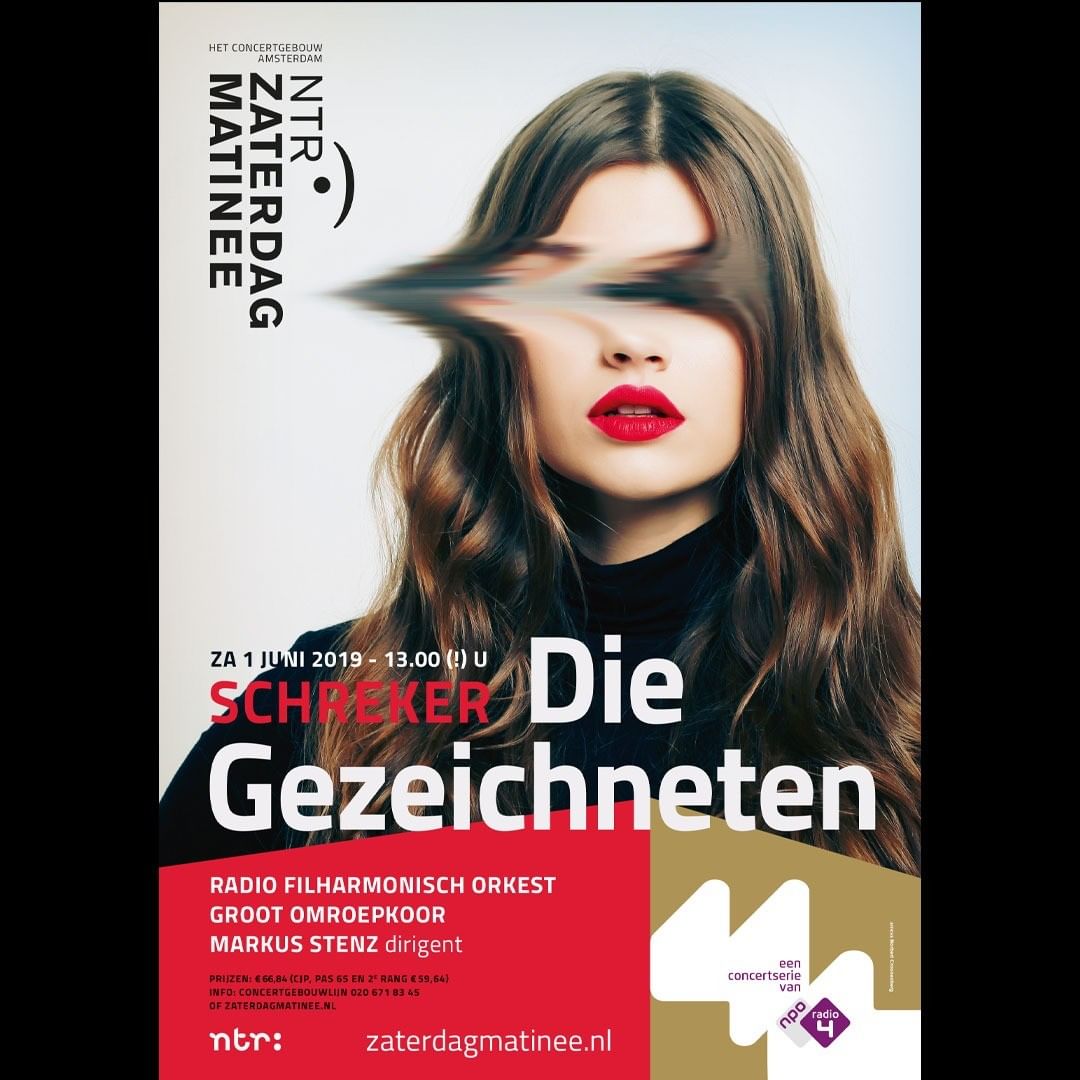
Op zaterdag 1 juni 2019 werd de bedwelmende opera van Schreker op een onnavolgbare wijze tijdens de NTR ZaterdagMatinee uitgevoerd en als u er niet bij was dan mag u er oprecht spijt van hebben. Zo onvoorstelbaar goed heb ik de partituur nog niet eerder uitgevoerd horen worden. Markus Stenz had er niet alleen affiniteit mee, hij leek er midden in te wonen. Alsof hij het zelf had gecomponeerd.
Stenz leek de muziek te aaien, nee, dat is het woord niet.. te omhelzen? Liefhebben? Liefde mee bedrijven? De volmaakte klank waar Schreker altijd op zoek naar was, die klank, die heb ik voor het eerst in het echt gehoord. Toen de muziek aan het einde van de eerste acte zachtjes vervaagde, leek het het meest op een stervensproces. Daarin hoorde je al wat er komen gaat. Wat ook gebeurde. En omdat er geen regisseur tussen de muziek en het libretto zat kon het publiek zich aan de pure schoonheid van de opera laven.
Ook de zangers waren allemaal voortreffelijk. Allemaal. Aanvankelijk had ik een beetje (let op: een beetje!) moeite met Marco Jentzsch (Alviano): hij klonk te mooi en te krachtig, waardoor dat lelijke en kreupele enigszins verloren ging. Gelukkig is de zware rol zijn tol gaan eisen waardoor zij stem vermoeid werd. Aan het eind was hij oprecht gebroken.
Markus Eiche was een meer dan uitstekende Vitelozzo Tamare. Zijn zeer aantrekkelijke bariton klonk buitengewoon erotisch. Geen wonder dat Carlotta zich aan hem wilde geven.
Carlotta werd gezongen door de Engelse sopraan Allison Oakes. Zij gaf de rol alles wat het nodig had: schoonheid, breekbaarheid en het ongekende verlangen, zelfs als het haar dood zou betekenen.
Steven Humes (Lodovico Nardi, de vader van Carlotta) was voor mij een ware ontdekking en Michael Kupfer-Radecky was een perfecte Hertog Adorno. Ook alle kleine rollen waren tot in de puntjes verzorgd. Het is onmogelijk om ze allemaal te noemen, maar voor één wil ik wel een uitzondering maken, de Egyptische mezzosopraan Gala El Hadidi (Martuccia) die mijn hart wist te stelen. Van haar gaan we veel meer horen, wat een zangeres!
De partituur werd helemaal compleet uitgevoerd, er waren geen coupures. Dat alleen, plus de fenomenale uitvoering maakte de Matinee tot ‘once in the lifetime” ervaring. Vandaar dat ik meer dan verbaasd was dat ik, op één of twee na mijn schrijfcollega’s heb gemist, hun gebruikelijke persplaatsen waren leeg. Ik neem aan dat ze allemaal voor een spektakel hadden gekozen en in de helikopters zaten. Ze hebben heel erg veel gemist.
Allison Oakes, Michael Kupfer-Radecky, Markus Eiche, Steven Humes, Marco Jentzsch, Lucas van Lierop, Emilio Pons, Gurgen Baveyan, Miljenko Turk, Nikki Treurniet, Gala El Hadidi, Wiebe-Pier Cnossen, Jeannette van Schaik, Henk Neven, Martijn Sanders, Ruben Budding e.a.
Groot Omroepkoor (koordirigent Peter Dijkstra)
Radio Filharmonisch Orkest olv Markus Stenz
Gehoord op 1 juni 2019 in het Concertgebouw in Amsterdam




























 Basia con fuoco