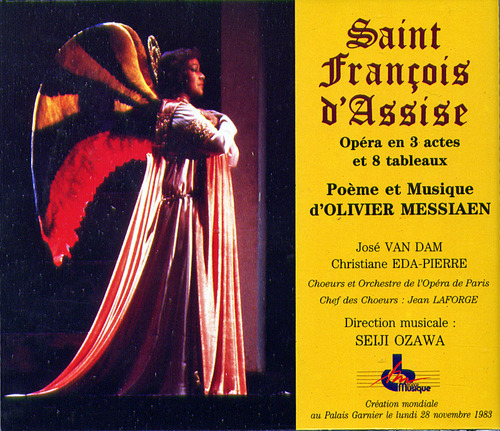
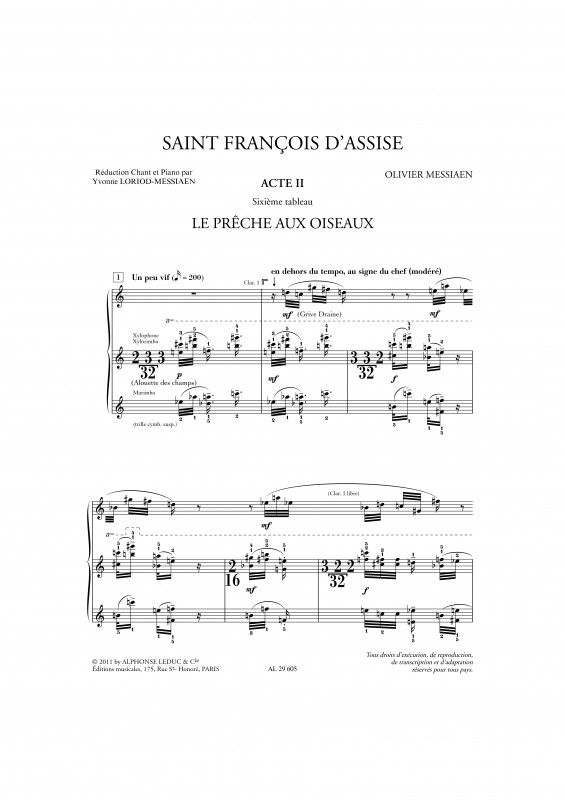
Olivier Messiaen was a very religious man and most of his works revolve around the Christian faith. For his only opera, about St Francis, he also wrote the libretto, which he considered his personal declaration of faith and a kind of testament. This was at least as important to him as the music itself. He worked on it for seven years; the premiere took place in 1983, in Paris.
The performance, with José van Dam in the lead role and conducted by Seiji Ozawa was released on CD, on the Cybélia label, unfortunately the recording is very hard to find these days. YouTube offers solace
LOTHAR ZAGROSEK
Two years later, in 1985, the opera was presented (albeit greatly shortened) in Salzburg, conducted by Lothar Zagrosek and featuring Dietrich Fischer-Dieskau as Francis, Rachel Yakar as the Angel and Kenneth Riegel as the Leper. It was broadcast live on ORF, and then released on Orfeo (C485 982).
KENT NAGANO
In 1998, ‘Francis’ returned to Salzburg, this time complete. Kent Nagano (when he was still Ozawa’s assistant he had once rehearsed the opera under Messiaen himself) conducted, and the lead role was performed by the now very grown-up José van Dam, seconded by Dawn Upshaw (the Angel) and Chris Merritt (the Leper). The opera was recorded live during the performances and released on four CDs a year later, so we now have the only complete performance of this wonderful work on CD. (DG 4451762).
This recording is also on You Tube:
The performance is a very solid one. Chris Merritt does not possess the most beautiful voice in the world, but he doesn’t have to. He is supposed to come across as vulnerable and plaintive, and he succeeds superbly. Kenneth Riegel on the Orfeo recording is perhaps slightly more impressive, but you’re not going to buy the opera for one scene, though I myself like to have that recording alongside it.
Dawn Upshaw is a radiant, mercurial Angel, more esoteric than Rachel Yakar on Orfeo, and otherworldly beautiful. Fiescher-Dieskau had already retired in 1985, but agreed to rehearse the role of Francis (well, half of it). The result is certainly not bad, but for me it is very lacking in idiom, and he does not even come close to matching van Dam’s performance.
The music is very pleasant to listen to and it exudes a certain serenity, which cannot be attributed to the influence of the Gregorian chants alone. Occasionally reminiscent of Debussy’s Peleas and Melisande, Poulenc also comes quite close.
And Messiaen would not be Messiaen without the frequent use of the ondes Martenot (played on both editions by his sister-in-law, Jeanne Loriod), and without the chirping of birds.
Saint Francois d’Assis is an opera that lends itself beautifully to listening to on CD. It is a true masterpiece, but when it plays in the background only you will still enjoy it. You can read the synopsis, occasionally watch the dialogues (which may also be read beforehand, nothing much is happening anyway) and then you know it all. You can fold the laundry and listen to it just fine. Or just sit an
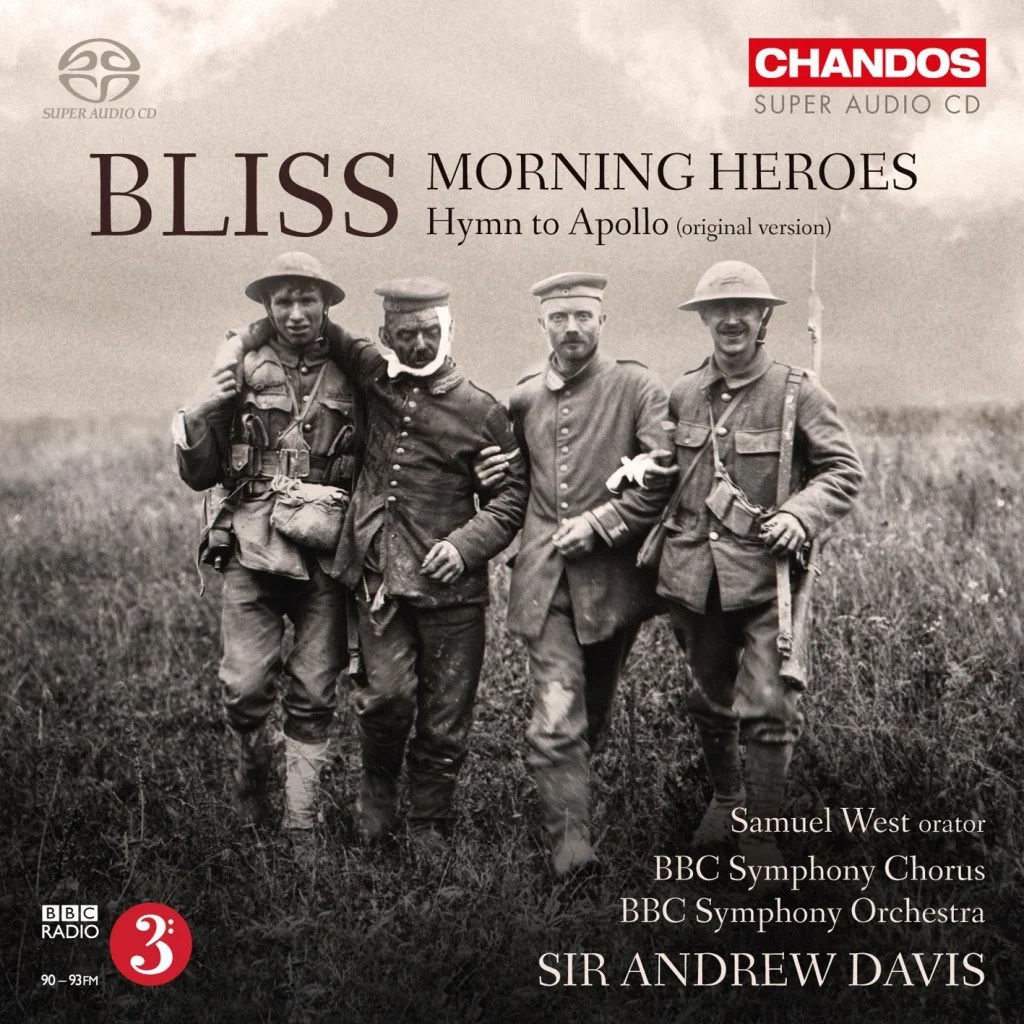
Listening to the Chandos CD of Sir Arthur Bliss’ choral works, I was very strongly reminded of War – there is no word more cruel, a poem by Soviet Russian poet Aleksandr Tvardovsky. This poem was also used by Mieczyslaw Weinberg in his Eighteenth Symphony. War is horrific and we should never forget that.
Morning heroes, the symphony for orator, choir and orchestra, composed in 1930 and ordered by Norfolk and Norwich Festival, is, like the 1926 Hymn to Apollo, dedicated to the memory of Bliss’s younger brother Kennard, who died during World War I.
Both works exude immense sadness, anguish and anger. For both works, Bliss used poems by two representatives of the so-called ‘war poets’ generation: Wilfred Owen and Robert Nichols. For Morning Heroes – basically just a requiem – Bliss also used excerpts from Homer’s Iliad and a poem by Walt Whitman.
The two works are new to me, after all they are not often performed. A pity, because both compositions are to die for; they are so beautiful. And so very moving.
The performance by the BBC choir and orchestra is undoubtedly superb. Samuel West recites Hector and Andromache’s farewell from the Iliad as only the English can do it. Subdued and at the same time deeply moving and heartfel.
SIR ARTHUR BLISS Morning Heroes, F 32; Hymn to Apollo F 116 Samuel West (orator), BBC Symphony Chorus (choral conductor: Stephen Jackson), BBC Symphony Orchestra conducted by Sir Andrew Davis Chandos CHSA 5159 – SACD – 65′
The fact that the opera has become so incredibly popular and has been performed so very frequently in recent decades is largely thanks to Joan Sutherland. Back in 1957, she brought Alcina to life in London and directed by Zefirelli. Unfortunately, we do not have a video recording of it, but La Stupenda sang and recorded the role several times afterwards and there are many both official and pirate recordings of it in circulation.
Personally, I have a soft spot for the 1959 live recording (DG, made to mark the 200th anniversary of Handel’s death), not least because of Fritz Wunderlich, who sings the role of Ruggiero. Last but not least, Dutch soprano Jeannette van Dijck sings the role of Morgana. And believe it or not, the Cappella Coloniensis, led by Ferdinand Leitner, is already playing on authentic instruments. In 1959!
The score has been considerably shortened. Thus, pretty much the entire role of Oberto has been dropped. And yet… opera is mostly about voices, isn’t it? And Sutherland’s ‘Tornami a vagheggiar’ and Wunderlich’s ‘Mi lusinga il dolce affetto’ are simply second to none. (DG 4778017)
Norma
Joan Sutherland recorded Norma twice (officially). Her first recording from 1965 (Decca 4704132) caused a real sensation. It was the very first recording of Bellini’s complete music, without any cut. Moreover, it was the first recording in the original key (Bellini composed his opera in G, but before the premiere he changed it to F).
In those days, Sutherland was considered the belcanto specialist par excellence. Her voice knew no limits and seemed to be made of elastic. High, higher, highest, and with coloraturas that sound almost inhumanly perfect.
Adalgisa was sung by Marilyn Horne, Sutherland’s alter ego in the mezzo voice. The result is dazzling, but it lacks the necessary drama, all the more so because John Alexander (Pollione) has a beautiful but insipid voice.
The orchestral playing is excellent, however, and if you like pure singing, high notes and coloratura, this recording is the best choice.
Dame Joan Sutherland Marilyn Horne Bellini, Norma: Mira o Norma chard Bonynge; Sydney Opera House – 1986
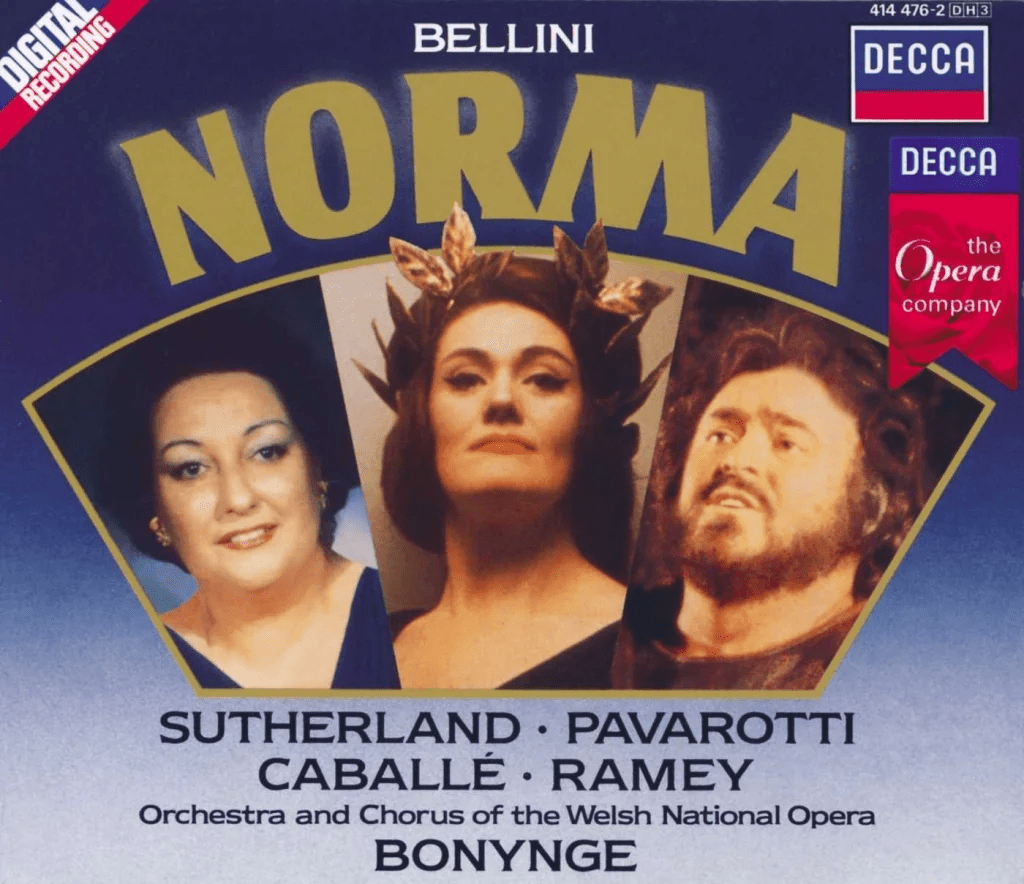
Twenty years later, Sutherland recorded the role again, this time with Montserrat Caballé (Adalgisa) and Luciano Pavarotti (Pollione). Let’s call it a mistake, although Caballé’s Adalgisa is at least interesting. It’s a pity it wasn’t thought of sooner.
Lucia di Lammermoor
Lucia di Lammermoor has always been, perhaps even more than Norma, a point of contention between the supporters of Maria Callas and Joan Sutherland. The performances of both ladies are indeed fantastic and, moreover, totally different. Which of the two should you own? That is not easy. A matter of taste, shall we say?
Joan Sutherland is unprecedentedly virtuoso and her coloraturas so perfect that they hurt. And yet I remain untouched by her. Why? Perhaps because it is too perfect? I do not know. It could just be me.
Lucia from Amsterdam 1982:
I Puritani
Elvira, like Lucia, was a showpiece for Maria Callas and Joan Sutherland, both of whom recorded it several times. In 1974, Richard Bonynge (Decca 4175882) made a peerless recording of the opera, besides Sutherland, there was the sublime male trio: Luciano Pavarotti, Nicolai Ghiaurov and Piero Cappuccilli. Sutherland sounds like a little heap of misery, and her virtuosity knows no limits. Pavarotti still possessed all his glorious long high notes in those days and he pops them out with no effort at all.
Les Huguenots
Les Huguenots, once one of the most successful operas in the history of the Paris Opera, had the misfortune, along with its creator, to be labelled ‘Entartet’ (degenerate) by the Nazis. One of the reasons why the work was ignored for decades and was only sporadically performed.
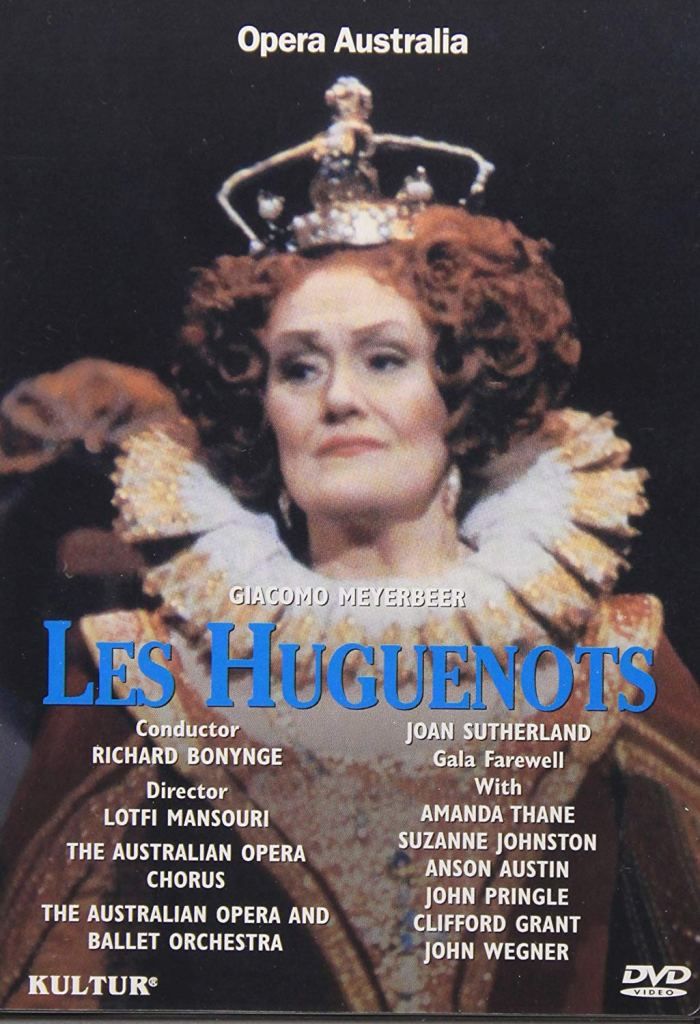
Marguerite de Valois has always been one of Joan Sutherland’s favourite roles, she sang her in 1962 at La Scala, and she chose to sing her in her last opera production on stage, on October 2, 1990 in Sydney.
The voice of the over 60-year old La Stupenda is not so solid anymore, but her height and her coloratura are still very much present, and apart from Amanda Thane (Valentine) and the really splendid Suzanne Johnston (Page), none of the singers manage to perform at her level. The acting is very good and the inevitable ballet is anything but irritating.
The costumes and the scenery are true-to-life and evocatively beautiful, and the entire stage most resembles a large, seventeenth-century painting. The very traditional production is not only beautiful to look at, but also insanely exciting: this is proof that a good director (Lotfi Mansuri) does not need concepts
The life of an opera star is no bed of roses. You are born with a voice that you then try to mould into an instrument that will always obey you. Throughout your life, you work on your technique, take language and acting lessons and you keep your body in shape because appearance is also very important, especially for a woman. And should you not only be wanting a career but also a family life, then things get tough. No wonder that at some point you start to question what is most important in your life and where your priorities really lie.
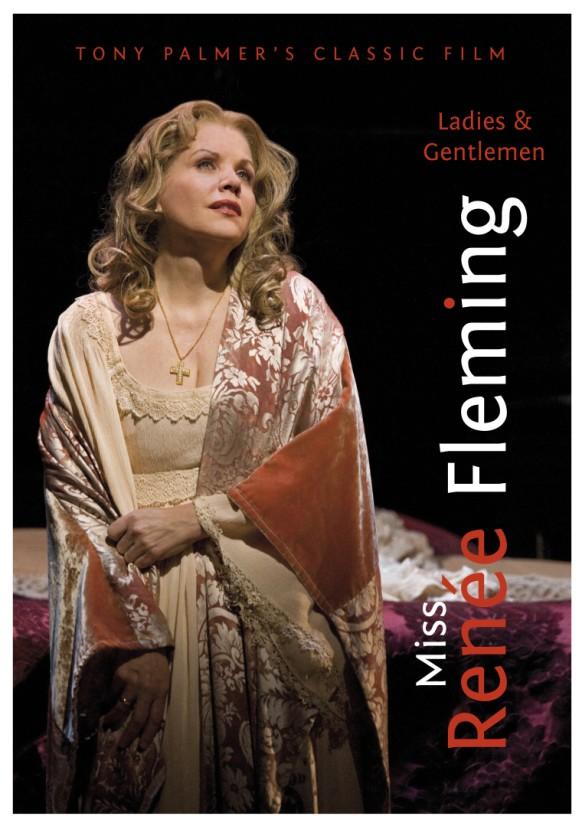
In the wonderful documentary by Tony Palmer (the maker of more wonderful documentaries, just think of the film about Maria Callas), Renée Fleming, one of the greatest opera singers of our time, talks at length about her fears and doubts. We see her during rehearsals and performances, we admire her dresses, watch home videos showing an apparently happy family life and wipe away a tear listening to her rendition of ‘Amazing Grace’ at Ground Zero.
At the presentation of a new creation from the master pastry chef: a chocolate treat called ‘La Diva Renée’, we get slightly moved. And she well deserves it.
Renée Fleming Film by Tony Palmer Decca 0741539
Renée Fleming sings Berg, Wellesz and Zeisl. A must buy!
February 2015 was the day: The French Connection, the long-awaited sequel to Piotr Beczala’s DG debut CD was out.
And it was worth the wait. Not least because of the repertoire: French opera, along with the more lyrical Verdi, is Piotr Beczala’s strong suit. I truly know of no singer who can surpass him in Massenet and Gounod.
His wonderfully juicy tenor voice is light and elegant and his Werther, Des Grieux, Faust and (certainly!) Roméo are among the best interpretations you can expect from the current generation of young tenors. You could say that Beczala is the epitome of French singing.
The tone is set with a perfectly sung “Pourquoi me réveiller” from Werther. Beczala’s languorous recitation betrays not only text understanding, but also (or perhaps mainly?) his affinity with the music. In one of his last interviews, he said he prefers to sing sad roles, roles in which he dies at the end, because then he can express all his feelings. You can really hear this.
That the Polish tenor is gradually moving towards heavier repertoire is rather logical. His voice has developed considerably in depth, without his high notes having to suffer for it.
Don José (Carmen) is therefore on his “to do list”, hopefully he will also add Don Carlos. But most of all, I would love to hear him right now in the complete Herodiade and (why not?) Robert le Diable. And most certainly in “Le Cid”: I cannot remember the last time I heard “Ô” Souverain” sung so beautifully.
The only downside I can find is the duet from Massenet’s Manon, in which he is accompanied by Diana Damrau. Her voice does not appeal to me personally and I find her a not very sexy Manon.
Other than that: a CD to have and to cherish for ever!
Trailer of the album:
The French Collection Arias by Massenet, Berlioz, Verdi, Donizetti, Boieldieu and Bizet Piotr Beczala (tenor) with Diana Damrau (soprano) Orchestre de l’Opera National de Lyon conducted by Alain Altinoglu DG 4794101
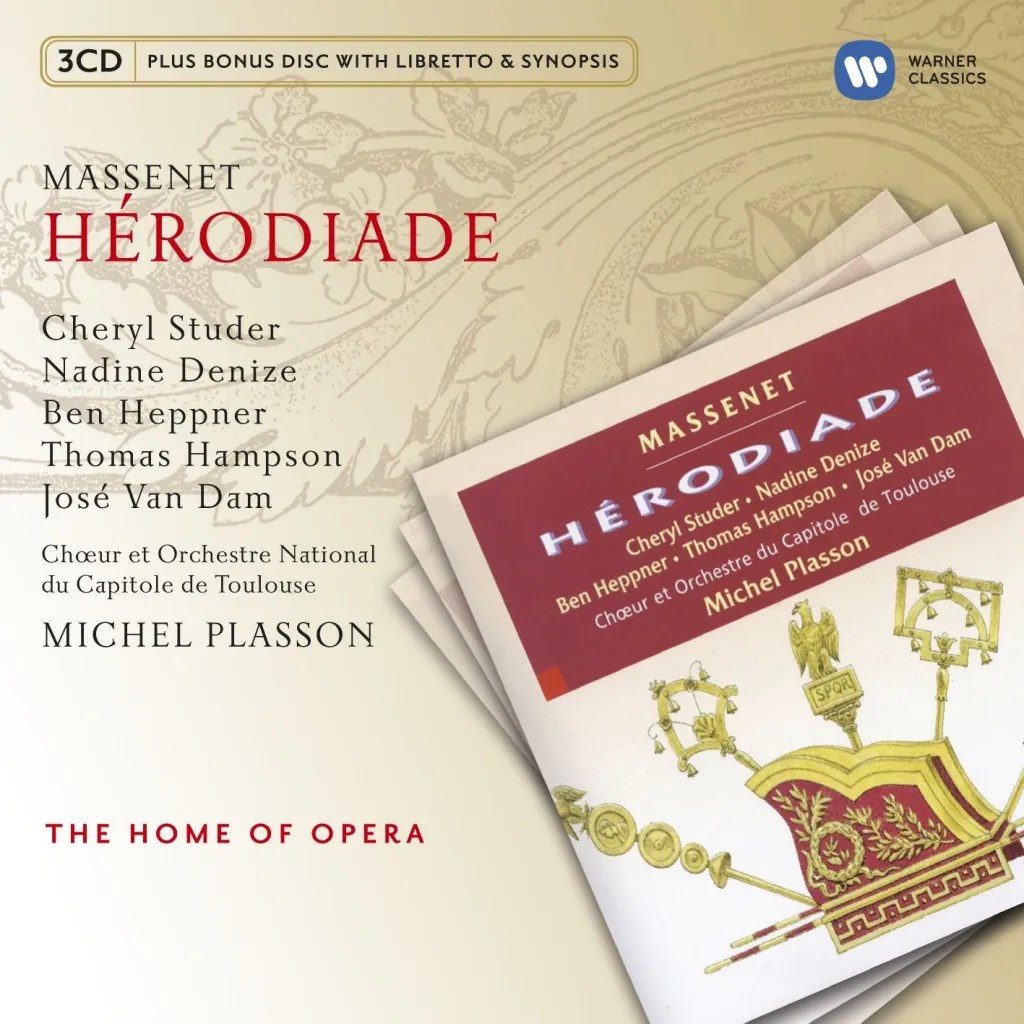
Orchestrally, this recording is really top-notch. Michel Plasson conducts the orchestra from Toulouse very energetically, with a lot of verve and drive, and he also knows how to allow space for all the subtleties. Exciting and beautiful. That is how I like to hear opera.
José van Dam is an impressive Phanuel and Nadine Denize an excellent Hérodiade., although her intonation is not always pure.
Hérode is not really a role for Thomas Hampson, but he sings it very beautifully. Something that unfortunately cannot be said of Ben Heppner’s Jean. A heroic tenor in that role is nothing but a terrible mistake.
Cheryl Studer, on the other hand, is a Salomé of everyone’s dreams: girlish, innocent and naive. Her voice shines and sways and her final words “Ah! Darned Queen, if it is true that your cursed loins have given birth to me, look! Take back your blood and my life!” leave you shuddering and desperately weeping. Brava.
STRAUSS:
SALOME
I realise that many of you will not agree with me, but for me Cheryl Studer is the very best Salome of the last fifty years. At least on CD, because she has never sung the complete role on stage (DG 4318102). Like few others, she knows how to portray the complex character of Salome’s psyche. Just listen to her question ‘Von wer spricht er?’ after which she realises that the prophet is talking about her mother and then she sings in a surprised, childishly naive way: ‘Er spricht von meiner Mutter’. Masterly.
Bryn Terfel is a very virile young Jochanaan (it was, I think, the first time he sang the role), but most beautiful of all is Giuseppe Sinopoli’s very sensual, wide- sounding conducting.
ELEKTRA
This stage production from Vienna (Arthaus Musik 100 048) 1989 is more than extraordinary. Harry Kupfer’s direction is extremely gripping and terrifying, and although he is very realistic in his approach, he limits himself to the directions in the libretto.
The scene is dominated by grey in all its shades and is particularly dark. The only colour in the performance looms when Chrysotemis, at her heartfelt cry that she wants to live and bear children, rips open her blouse and reveals a red vest.
Eva Marton (Elektra) is exceptionally convincing: moving in her longing for her father, repulsive in her contempt for her sister and terrifying during her confrontation with her mother.
Cheryl Studer is a splendid Chrysothemis. With her slightly sweet, lyrical, yet still exceptionally powerful soprano, she can portray a very strong character: her Chrysotemis is a girl disappointed in life with a strong desire to escape, but without the decisiveness to actually bring it about. Also phenomenal is Brigitte Fassbänder in her portrayal of the mentally ill queen, plagued by nightmares and guilt. Both the mother and her two daughters would be on Freud’s couch in no time – talk about hysterical women! Franz Grundheber is an exemplary Orest and Claudio Abbado conducts with an intensity that borders on the impossible.
FRAU OHNE SCHATTEN
In 1992, Solti conducted a complete performance of the work in Salzburg. Götz Friedrich’s direction was considered particularly strong at the time, but I do not find it entirely satisfactory. The mise-en-scène is undoubtedly excellent, but it fails with the direction of the characters, causing the singers to run from place to place in a rather awkward way.
The stage design is beautiful with very minimalist but realistic sets, but the costumes are a bit bizarre at times. There is a lot of use of strobe lighting, which combined with violent musical passages may come across as rather violent.
Cheryl Studer is a dream of an Empress. Her voice, with its very recognisable timbre and beautiful pitch, is soaring, transparent almost, innocent and erotic at the same time. Thomas Moser is an attractive Emperor, perhaps a tad too light for the role, causing him occasional breathlessness and pressed notes, but his singing is fine.
Marjana Lipovšek is a truly phenomenal Amme. What that woman has at her disposal in terms of colour nuances and how she handles her (very warm) mezzo borders on the miraculous. In the process, she is also a gifted actress; I couldn’t take my eyes off her. (Decca 0714259)
WAGNER
TANNHÄUSER
I have never been a ‘Wagnerian’. I could never muster the patience to sit through hours of his operas. I found them bombastic. Pathetic. And even though I had to admit that there were some beautiful melodies, I felt that I really needed a pair of scissors and radically shorten them
That this feeling has totally changed, I owe to Domingo. In my collector’s mania (I had to have everything he had done), I bought Tannhäuser (DG 4276252) in 1989. And then it happened: I became addicted.
Later, I learned to appreciate the music for itself and to this day, Tannhäuser is not only a very beloved Wagner opera, but also one of my absolute favourites.
I still consider this recording, conducted very sensually by Giueseppe Sinopoli, to be one of the best ever. Also because all the roles (Cheryl Studer as Elisabeth and Agnes Baltsa as Venus, such wealth!) are excellently cast. At the time, in the eighties and early nineties, this was not necessarily a given.
DER FLIEGENDE HOLLÄNDER
This CD recording from 1998 (DG 4377782) is particularly dear to me. First of all because of Cheryl Studer, at the time probably the most beautiful Senta one could imagine. Her wonderfully lyrical soprano with its easy and sensual height seemed made for the role.
The Holländer is sung here by Bernd Weikl. Not really the youngest anymore and you can really tell, but still very suitable for the role. Peter Seiffert is a splendid Steuerman, and in the role of Erik we hear none other than Plácido Domingo, a luxury!
But best of all is the orchestra: under the truly inspired leadership of Giuseppe Sinopoli, the Orchester der Deutsche Oper Berlin performs in a really magnificent way.
I have never been a ‘Wagnerian’. I could never muster the patience to sit through hours of his operas. I found them bombastic. Pathetic. And even though I had to admit that there were some beautiful melodies, I felt that I really needed a pair of scissors and radically shorten them
That this feeling has totally changed, I owe to Domingo. In my collector’s mania (I had to have everything he had done), I bought the recently released Tannhäuser (DG 4276252) in 1989. And then it happened: I became addicted.
At first, it was mainly Domingo who was to ‘blame’, whose deeply human interpretation of the title role gave me the goose bumps. His words: “Wie sagst du, Wofram? Bist du denn nicht mein Feind?” (sung with emphasis on ‘mein’ and ‘Feind’ and with a childish question mark at the end of the phrase) caused me to burst into tears.
Later, I learned to appreciate the music for itself and to this day, Tannhäuser is not only a very beloved Wagner opera, but also one of my absolute favourites.
I still consider this recording, conducted very sensually by Giueseppe Sinopoli, to be one of the best ever. Also because all the roles (Cheryl Studer as Elisabeth and Agnes Baltsa as Venus, such wealth!) are excellently cast. At the time, in the eighties and early nineties, this was not necessarily a given.
RICHARD CASSILY 1982
In those years there was a lack mainly of good tenors and that can be clearly heard on these two DVD – recordings. Otto Schenk’s insanely beautiful 1982 production, recorded at the Metropolitan Opera in New York (DG 0734171) dates from 1977. If you like very realistic, lavish sets and ditto costumes (I do) you can have a lot of fun with this. Just about the entire Venus grotto from Schloss Neuschwanstein was recreated for the opening scene, and the ballet presents us with a truly orgasmic Bacchanal.
The orchestra, conducted by James Levine, plays mostly lyrical and light, there is nothing to criticise at all. Eva Marton is a fine Elisabeth, Tatiana Troyanos a wonderfully sensual and seductive Venus.
Bernd Weikl, one of my favourite baritones sings an irresistible Wolfram, although he messes up his great aria by trying to give his (in principle) lyrical voice too much volume, making his voice unsteady.
And although the Landgrave (John Macurdy) is really terrible, I would not have had a problem with that recording, provided … yes … provided the tenor had not been so awful. The textbook mentions “the very highest standard”, well, I’m not so sure about that. Richard Cassilly is a physically very unattractive Tannhäuser with a pinched voice and a total lack of lyricism, giving the impression of having wandered into the wrong opera.
Arrival of the guests at Wartburg:
RICHARD VERSALLE 1989
Even worse is the 1989 recording (Euroarts 2072008) from Beyrouth. Wolfgand Wagner’s direction is mainly symbolic, thus everything takes place in a circle (circle of life? Seasons? Panta Rhei?) and already during the overture the pilgrims are walking around the stage.
The costumes are not particularly flattering to the singers, which is particularly merciless for poor Cheryl Studer (Elisabeth). Her breathtakingly sung evening prayer is of a touching beauty. Both Hans Sotin (de Landgraaf) and Wolfgang Brendel (Wolfram) are undoubtedly excellent, but yes, again, there is no good leading role.
Richard Versalle as Tannhäuser:
Richard Versalle is not much like a young man obsessed with (physical) love. There is also little of his dichotomy between the earthly and the heavenly. His voice is not pretty and devoid of any charm. A macabre fact: the fact, that his name has not yet been forgotten owes it to his death: during the premiere of Vec Makropoulos (MET 1996), he fell from a ladder, stricken by a heart attack, just after singing the words “You can only live so long”.
Trailer of the production:
In both of the above recordings, Messrs Tannhäuser and Wolfram are continuously walking around with harps, on which they ‘accompany’ themselves at the appropriate moments. That imaginary pinging should be banned, it’s so fake!
PETER SEIFFERT 2003 (for fans of Jonas Kaufmann)
The in itself nicely designed production from Zurich (once EMI 5997339) is suffering from the highly irritating TV direction, it really seems as if the TV director has taken over directing. The ‘manager of images’ likes close-ups, so that during Elisabeth’s prayer we look at the clarinetist’s fingernails. Or we are being zoomed in on Tannhäuser’s sweat-covered forehead. He also finds it necessary to film the singers behind the scenes, which very much disrupts the romance and the magic.
Once you get used to it, there is undoubtedly much to enjoy. The stage setting is beautiful, the colourful costumes – apparently from the early twentieth century – are handsome, and Jens-Daniel Herzog’s character direction is fine. But what makes this production especially worthwhile are the vocal contributions of the singers.
Isabelle Katabu is an extraordinarily beautiful and sensual Venus, darkly coloured and highly erotic. Solveig Kringelborn’s Elisabeth sounds especially pure and lyrical as does her appearance. At the time, Peter Seiffert was one of the best Tannhäusers, both vocally and as a actor. Torn between the sensual and the spiritual, he chooses the higher, which can only result in death.
Nice detail for his many fans: the small role of Walther is sung by none other than Jonas Kaufmann. Only: we don’t get to see him, as during his aria the camera focuses on the faces of Tannhäuser or Elisabeth. Incidentally, I think that recording is now sold out, but yes: fans will remain fans, won’t they?
That Nikolaus Lehnhoff can direct Wagner in a very beautiful way, yes, we already knew that. Already in his earlier productions for Baden Baden he showed that modern staging does not have to produce weird images, and that concepts are not necessarily ridiculous. This Tannäuser, previously seen in Amsterdam, is also exceptionally successful (Arthaus Musik 101 351).
Lehnhoff emphasises Tannhäuser’s search for the balance between the physical and the spiritual by creating a world where tradition goes hand in hand with innovation. He builds on a discrepancy (but also a symbiosis) between innocence and evil, and between art and kitsch. Thus, the singing competition degenerates into a kind of glorified form of ‘Idols’, and Tannhäuser’s symbolic ‘redemption’ is painfully beautiful and effective.
Musically, too, there is little to complain about. Robert Gambill sings a particularly moving Tannhäuser, his ‘Rom-Erzählung’ cutting through the marrow. Camilla Nylund is a beautiful, somewhat understated Elisabeth which makes her unapproachable and Waltraud Meier is a Venus out of thousands. Only with Roman Trekel do I have a little trouble. There is nothing wrong with his carrying, solid baritone, but for Wolfram I still opt for a bit more warm lyricism (Hermann Prey, where are you?).
Hermann Prey sings ‘O du mein holder Abendstern’:
BACK IN TIME
About ten years ago, budget label Walhall reissued two historic recordings of Tannhäuser on CD. These are respectively. the 1949 Berlin performance conducted by Leopold Ludwig (WLCD 0145), featuring Ludwig Suthaus (Tannhäuser), Martha Musial (Elisabeth) and a very young Fischer-Dieskau (Wolfram); and a performance from the MET (WLCD 0095), conducted by Rudolf Kempe in 1955, with, excluding a not very idiomatic Astrid Varnay as Elisabeth, a selection of the greatest singers of the time: Blanche Thebom, George London, Jerome Hines and Ramon Vinay.
George London sings ‘O du mein holder Abendstern’:
In both cases, the sound is entirely acceptable and the performances are of a standard that seems very hard to reach these days.
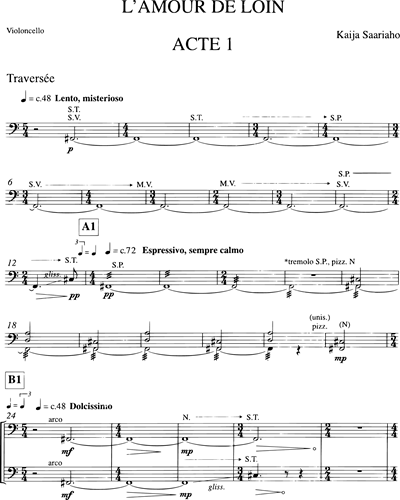
Kaija Saariaho is among the most successful contemporary composers. And rightly so. She has developed her own style, connecting the tonal with the atonal. Without concessions, but also without losing touch with her listeners.
Once a student of Brian Ferneyhough and Klaus Huber, she very quickly abandoned serialism. Saariaho uses a lot of electronics that she interweaves with polyphony. This creates a very exciting mix of styles: very modern and abstract, yet with easy-to-follow melodies.
Her music is serene, sometimes quietly rippling along (I don’t mean that in a negative way!) and very meditative, often reminding me of Messiaen. And of paintings, as her music is all about colour and colour nuances, which is not surprising when you know that she first studied at art school. I like this a lot.
L’amour de loin (Love from afar), for me her most beautiful opera, is based on a poem by an unknown 12th-century Provençal troubadour, Jaufré Rudel. In it, he sings of an imaginary distant lover, not knowing that she actually exists. A pilgrim returning from the “fairyland” (Lebanon) has seen her: she is called Clémence, she is a countess and she lives in Tripoli.
Our troubadour will have none of it; after all, love is supposed to be pure, abstract and especially distant. Still, he cannot resist the temptation and travels after his faraway lover. It doesn’t end well. Or does it? He dies, but blissfully. And in her arms.
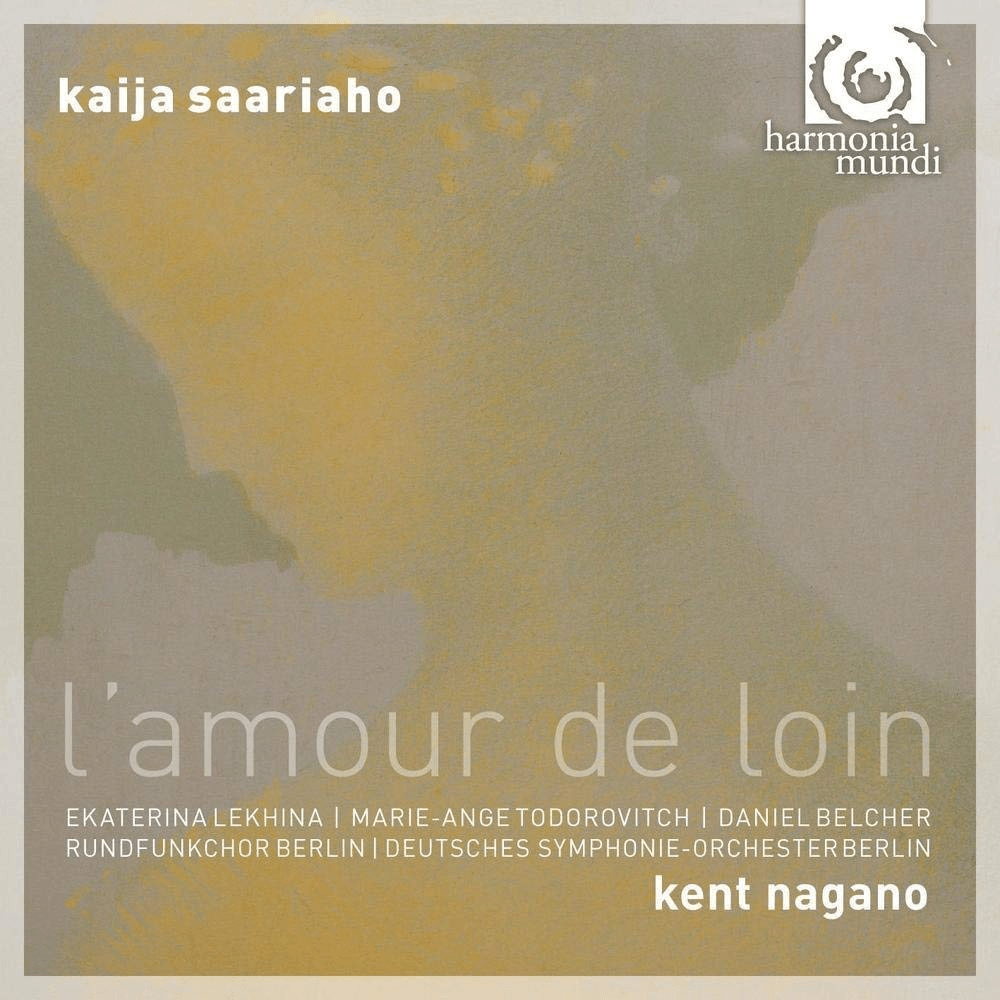
Harmonia Mundi released a recording of the opera in September 2009. The performance is truly outstanding. Daniel Belcher is very convincing as the, desperately in love, troubadour and Marie-Ange Todorovitch is a fine pilgrim.
The palm of honour, however, goes to Ekaterina Lekhina (Clémence). Her prayer at the end of the opera cannot leave anyone unmoved.
The Deutsches Symphonie-Orchester under Kent Nagano plays in a very evocative and visual way, you don’t need a director for that.
Sit back and let the music (and your own imagination) do the rest. A world will open up for you.
Kaija Saariaho L’amour de loin Ekaterina Lekhina, Marie-Ange Todorovitch, Daniel Belcher. Deutches Symphonie-Orchester Berlin en Rundfunkchor Berlin/ Kent Nagano. Harmonia Mundi HMC 801937.38
Susanna Phillips sings an excerpt of Clémence’s final prayer from Act V of Kaija Saariaho’s “L’Amour de Loin.” Production: Robert Lepage. Conductor: Susanna Mälkki. 2016-17 season
An excerpt from Act IV of Kaija Saariaho’s “L’Amour de Loin.” Production: Robert Lepage. Conductor: Susanna Mälkki. 2016-17 season.
Scène du Pèlerin (Monica Groop) avec Clémence, Comtesse de Tripoli(Dawn Upshaw)
L’Amour de loin (Kaija Saariaho) – warm-up from the Opera Ballet Vlaanderen
LÁmour de loin (complete) from the Finnish National Opera
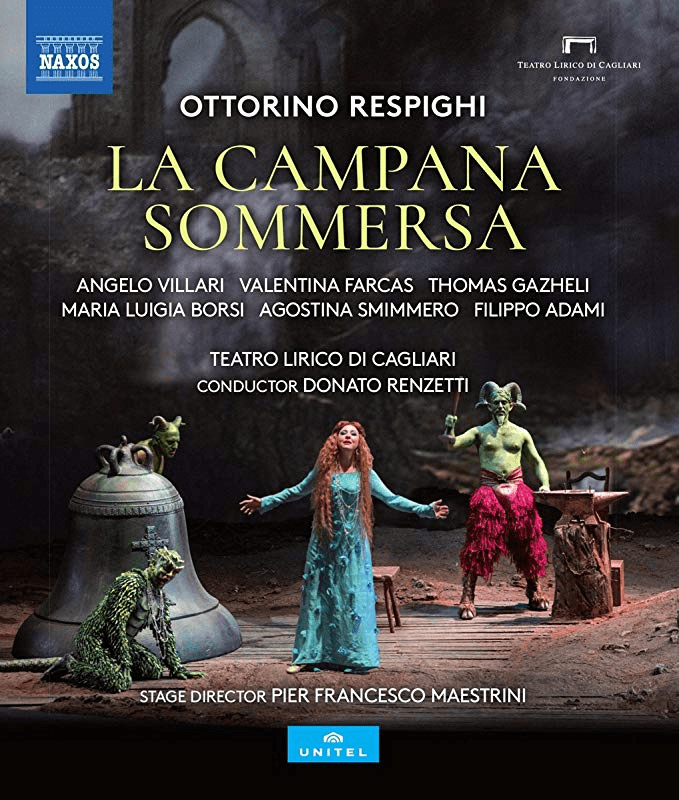
Sometimes the importance of a release is so staggering that it doesn’t really matter what the performance is like. Such is the case with Respighi’s La campana sommersa. But please don’t think the singers are bad, far from it, but only Valentina Farkas really stands out. With her silvery high notes and perfect colouratures, the Romanian soprano is a dream Rautendelein. She also acts the role in a very convincing way. But Filippo Adami (Faun) and Agostina Smimmero (the witch) are undoubtedly excellent also.
Angelo Villari is a decent Enrico but as soon as things get more intense he forces himself and his voice becomes unpleasant. Something that also harms the singing of Maria Luigia Borsi (Magda). Quite a pity because otherwise she manages to fill her role very impressively.
The libretto of this totally unknown opera is based on Die versunkene Glocke, an 1896 play by Gerhart Hauptmann. The bored water nymph Rautendelein falls in love with the church bell-maker Enrico. For her, he leaves his wife and children, starts a ‘slave business’ in order to forge the perfect church bell and only comes to his senses when his wife commits suicide.
The opera is very similar to Rusalka but Marschner’s Hans Heiling also comes to mind. And, in case you had not already noticed, Wagner is not absent either, and Alberich’s slavery pretty much gets reincarnated in Enrico’s ‘clock forge’. Rautendelein herself, a long-haired enigmatic woman, is strongly reminiscent of Melisande and she certainly reflects a lot of Maeterlinck’s symbolism.
Fairy-tale world meets symbolism and Italian verismo. The beautiful, at times magical, production is very realistic and closely follows the libretto. Still: occasionally I wished for a little less imagery, a little less naturalism, because I love to use my own imagination.
The textbook contains almost everything, although the most important thing: the synopsis, is missing! A major omission for a totally unknown opera!
“Well, it’s about sex, isn’t it?” In her introduction to the 2011 Alcina, recorded by Arthaus Musik in Vienna, American thriller writer Donna Leon argues that (we didn’t know this, of course) virtually all operas are about sex, whether it’s Der Rosenkavalier, Madama Butterfly or Dido and Aeneas. With Alcina, the story from Ariosto’s Orlando Furioso, set to music by Handel, taking the crown.
Yearning for (young) male flesh, the sorceress, once she is bored, transforms her victims into wild animals and sets out to find new food for … no … not for the soul. Until she herself finally falls in love, which will be her downfall. One could almost feel sorry for her!
ANJA HARTEROS
The DVD recording from Vienna is exceptionally fine, thanks in part to director Adrian Noble. Unlike other operas by Handel, Alcina contains a lot of ballet music, something that is seamlessly integrated into the beautiful and atmospheric staging.
Anja Harteros is an outstanding Alcina. Her ‘Regina sei tradita’ is followed by a very well-deserved applause. Kassarova is completely in her element as Ruggiero, Adam Plachetka is a delightful Melisso and the young German tenor Benjamin Bruns convinces as a hot-tempered Oronte.
But my heart is stolen by the boy soprano Alois Mühlbacher. The boy is absolutely peerless in the role of Oberto searching for his missing father. Highly recommended!
Below ‘Ah! Mio cor’ by Anja Harteros:
ARLEEN AUGÉR
Many Handel fans claim that nothing can rival the 1986 EMI (now Warner 50999 0880212) recording under Hickox, starring the unforgettable Arleen Augér. I can agree with this sentiment, as the voice of the soprano, who died far too young, is unearthly beautiful.
Della Jones (Ruggiero) and Kathleen Kuhlmann (Bradamante) are also absolutely irresistible, but the rest of the voices don’t really appeal to me. A pity, because I really like the tempi. Although I must admit that virtually the same cast in 1990 under William Christie sounds much more exciting.
Below, Arleen Auger and her version of ‘Ah! Mio cor’:
RENÉE FLEMING
In 1999, William Christie recorded Alcina live for Erato. Renée Fleming is a matter of taste, especially in the role of Alcina. But Susan Graham is a wonderful Ruggiero and Natalie Dessay perhaps the best Morgana ever. And Kathleen Kuhlmann once again gets to show why she is one of the most beautiful mezzos in history.
JOAN SUTHERLAND
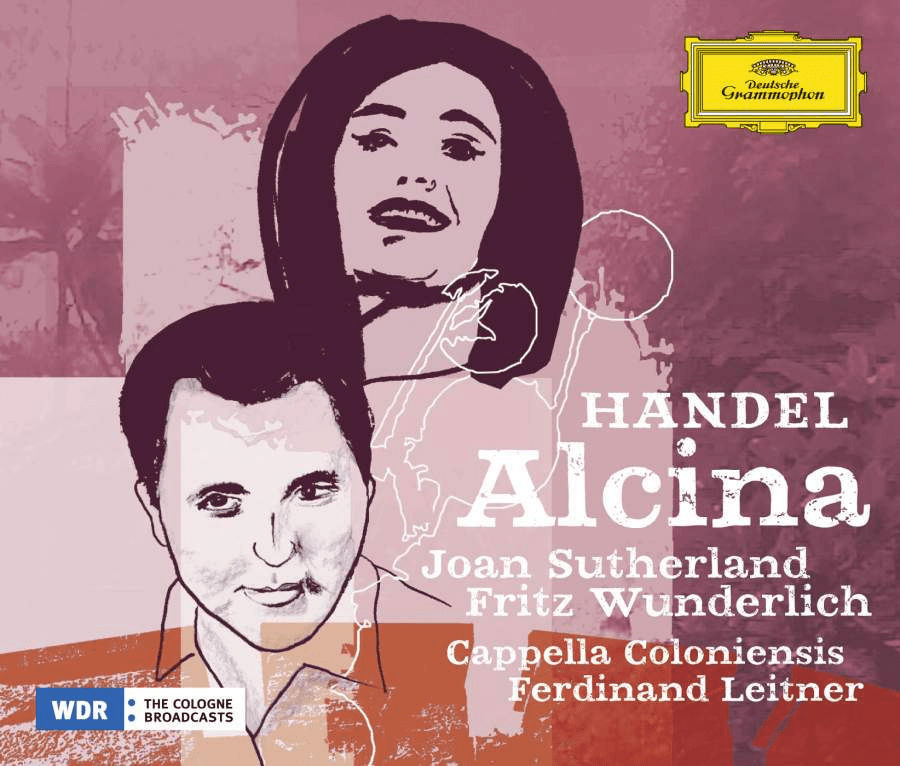
The fact that the opera has become so incredibly popular and has been performed so very frequently in recent decades is largely thanks to Joan Sutherland. Back in 1957, she brought Alcina to life in London and directed by Zefirelli. Unfortunately, we do not have a video recording of it, but La Stupenda sang and recorded the role several times afterwards and there are many both official and pirate recordings of it in circulation.
Personally, I have a soft spot for the 1959 live recording (DG, made to mark the 200th anniversary of Handel’s death), not least because of Fritz Wunderlich, who sings the role of Ruggiero. Last but not least, Dutch soprano Jeannette van Dijck sings the role of Morgana. And believe it or not, the Cappella Coloniensis, led by Ferdinand Leitner, is already playing on authentic instruments. In 1959!
The score has been considerably shortened. Thus, pretty much the entire role of Oberto has been dropped. And yet… opera is mostly about voices, isn’t it? And Sutherland’s ‘Tornami a vagheggiar’ and Wunderlich’s ‘Mi lusinga il dolce affetto’ are simply second to none. (DG 4778017)












 Basia con fuoco