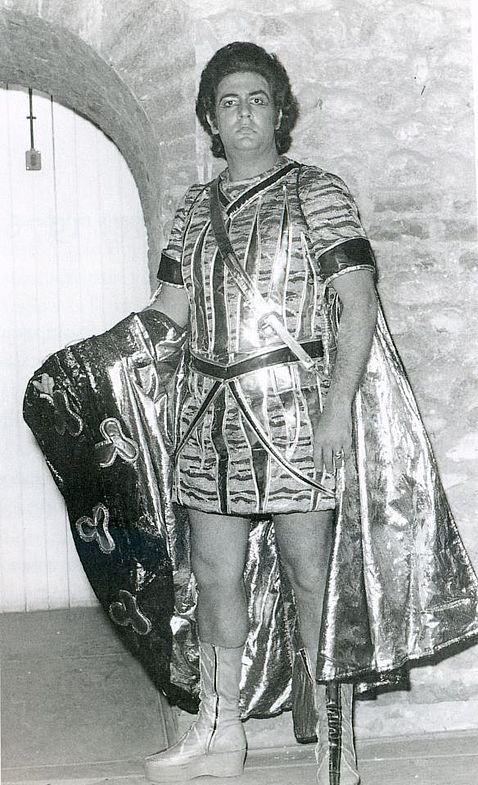
Radames was among Domingo’s favourite roles. No wonder. Here he could really ‘show it all’, because the hero is very complex. He is a ‘macho with a lot of muscles’ and a vulnerable boy at the same time, and he is torn between duty and passion. Unfortunately, the two are not compatible.
To sing Radames well you need not only a cannon of a voice but also an intellectual ability. And he has both.
He made his debut with Aida in 1968 in Hamburg and he has since sung the opera thousands of times. There are many recordings on the market, both studio and live. I would like to dwell on a recording that will not evoke an ‘aha’ moment for most of you – also because at first glance the cast is not idiomatically perfect.
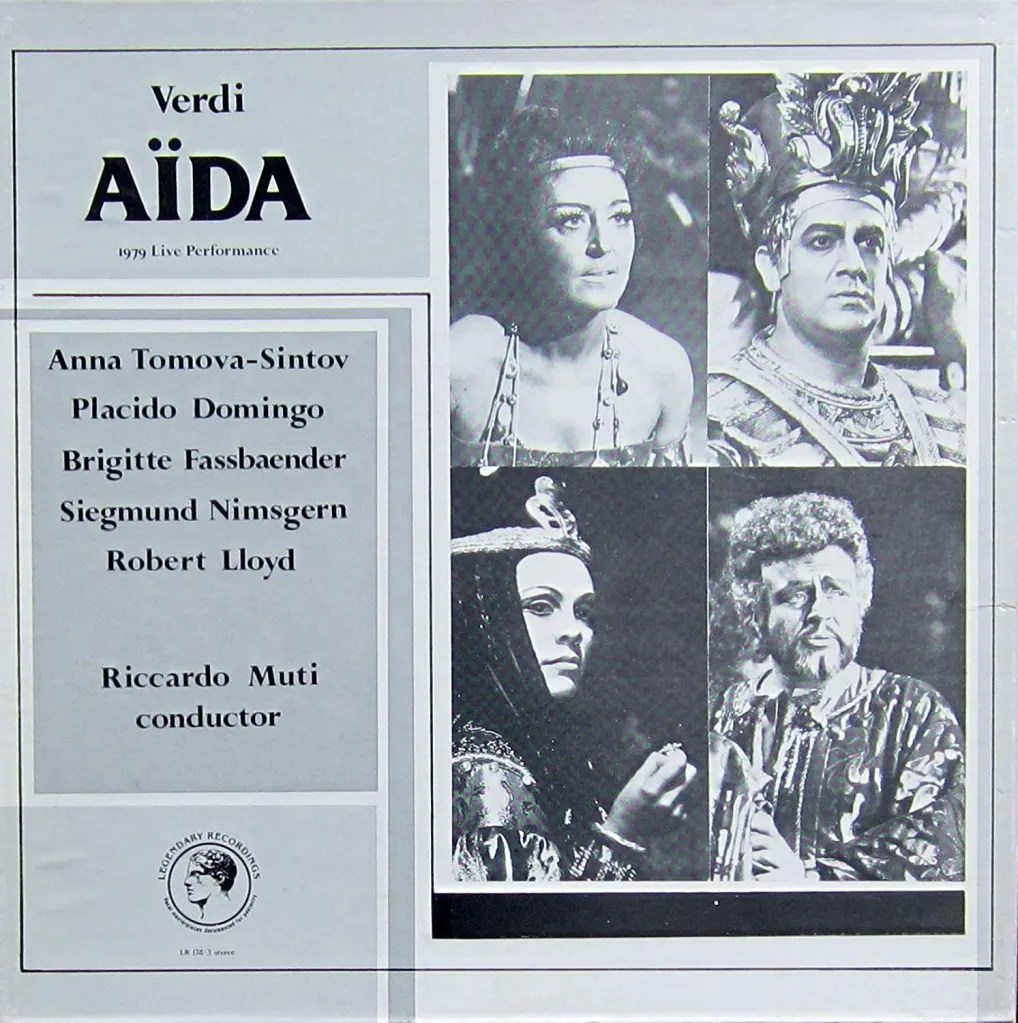
The fact that Anna Tomowa-Sintow was one of Karajan’s favourite singers had its advantages and disadvantages. She was a welcome guest in Salzburg and her name appears on many recordings conducted by the maestro. But it also meant that she was primarily rated as a Mozart and Strauss singer, while she had so much more to offer. Her Desdemona and Amelia were legendary and after her Munich Aida, Leonie Rysanek praised her performance for its pure beauty.
Fassbaender is really surprising and particularly convincing as Amneris. Just listen to what she does with the single word ‘pace’ at the end of the opera. The opera was recorded by Bayeriche Rundfunk on 22 March 1979 and released on Orfeo (C583 022).
Also noteworthy is the recording from Munich 1972, with a now almost forgotten Verdi singer, Martina Arroyo. As Amneris, we hear Fiorenza Cossotto and Cappuccilli and Ghiaurov complete the excellent cast conducted by Claudio Abbado.
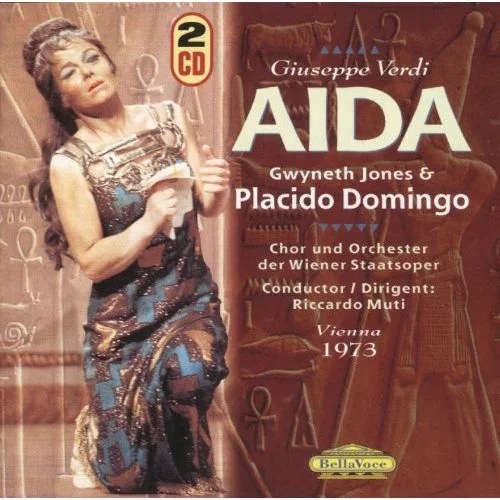
The recording from Vienna 1973 (Bela Voce BLV 107.209), under Riccardo Muti, is also of particular interest. In the leading role we meet Gwyneth Jones and Amneris is sung by an exceptional mezzo: Viorica Cortez.
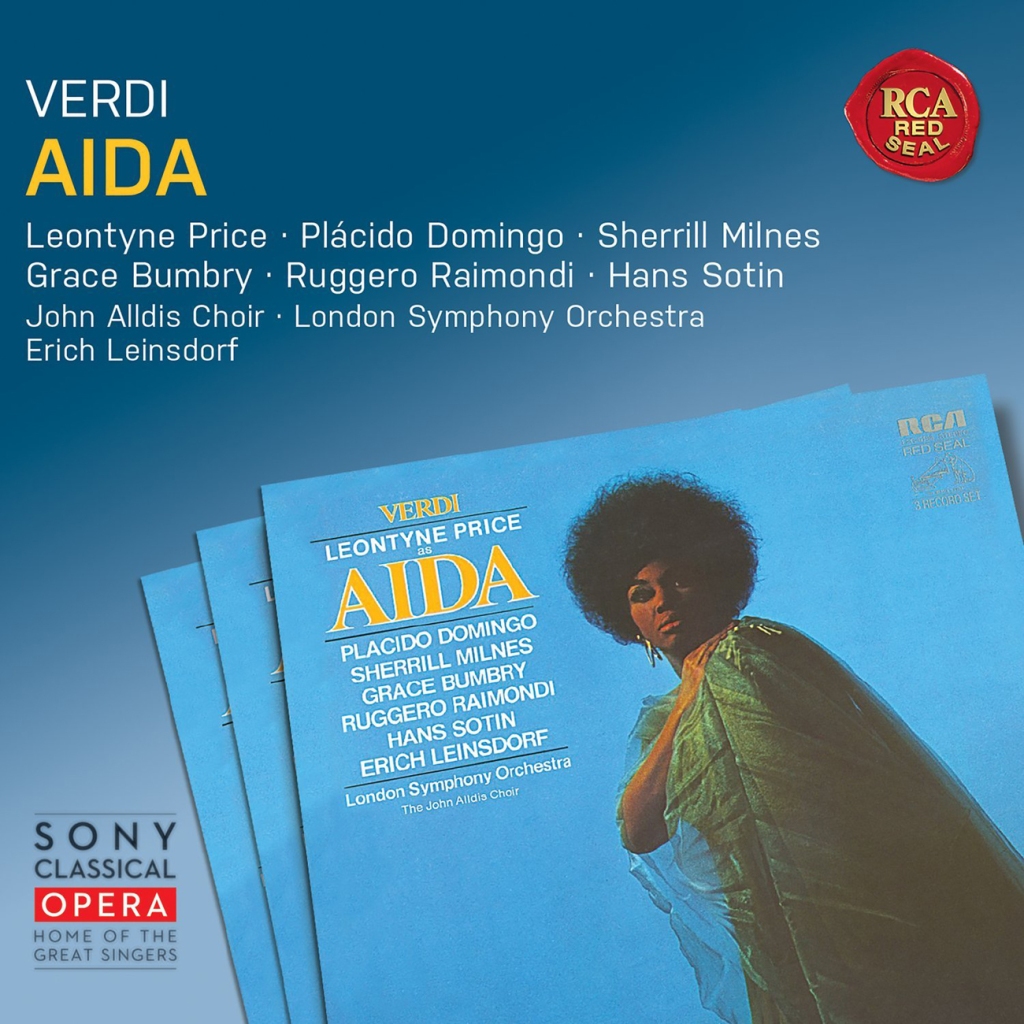
Of Domingo’s studio recordings the 1970 RCA release (probably from the catalogue), is probably the best. How could it be otherwise, when you know that the conductor is Erich Leinsdorf and the other roles are sung by Leontyne Price, Sherrill Milnes, Grace Bumbry and Ruggero Raimondi. The whole thing almost pops out of your speakers.
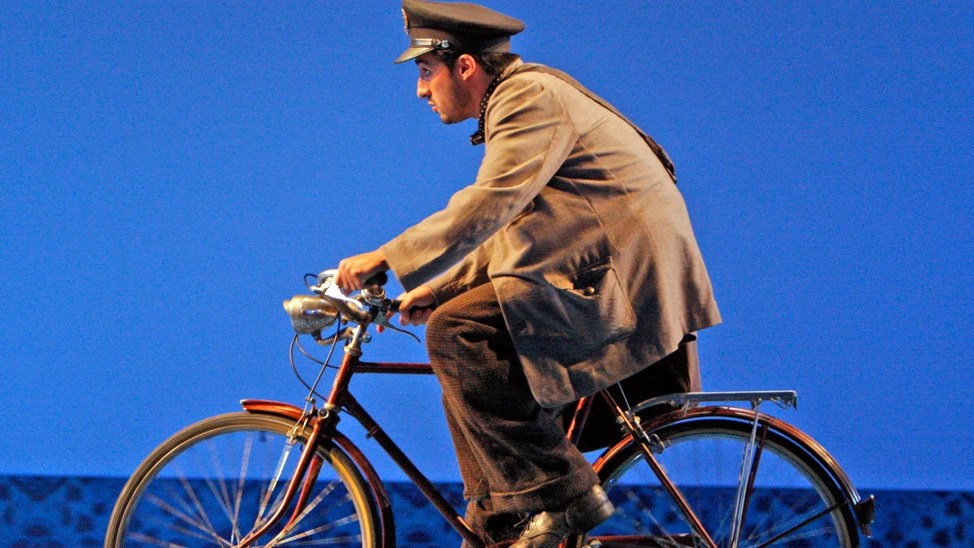
What started with a Chilean novel in 1983 turned into an opera in Los Angeles in 2010. Composer Daniel Catán followed the success of the book and two film adaptations with a wonderfully lyrical and poetic opera: Il Postino. Highly recommended.
First there was a novel, Ardente Patience (Burning Patience), written by Chilean Antonio Skármeta. The book became widely known when it was filmed in 1983, by the author himself. The film won a large number of national and international awards, including Le Grand Prix du Jury in Biarritz.
However, it did not become a real hit until 1994, when it was filmed for the second time by Michael Radford, this time under the title Il Postino (The Postman). The film gained cult status – you didn’t count if you hadn’t seen it.
It is a (fictional) story about a young postman Mario who discovers the world of poetry. Inspired and encouraged by his only “customer”, an exiled world-famous poet and communist activist (Pablo Neruda), Mario writes poems to his beloved Beatrice.
Years later, during his return to Cala di Scotto, once his place of exile, Neruda meets Pablito, Mario’s little son, who never knew his father – he was killed during a communist demonstration.
The delightfully nostalgic and moving “feel-good movie”, in which tears also flow profusely, has also conquered the world of classical music. In 2010, the opera Il Postino had its world premiere in Los Angeles, with none other than Plácido Domingo in the role of Neruda.
Daniel Catán
It was the last opera by Mexican composer Daniel Catán, who died in 2011 at 61. Catán himself produced the libretto for his opera.
With its flowing melodies and recognisable arias and duets, Catán’s music is nothing short of beautiful. Not only for us, the audience, but also for the singers. I quote George Loomis, one of the New York Times’ music critics: “His operas let singers do what they have been trained to do, and what they do in the theatre when not performing operas by contemporary composers.
And so it is, although, especially with Il Postino, I myself would prefer to use the word “poetic”. Not because one of the main characters is a famous poet, but mainly because of the language used in the libretto, to which the music is “moulded”.
Just listen to the duet “Metaforas”, in which Neruda explains to the young postman the art of using metaphors. “Is the whole world just a metaphor then?” asks Mario, who discovers that he too can write poetry… “You’ll get the answer tomorrow,” says Neruda, but we can already read it on his face.
The super-romantic love duet between Mario and Beatrice melts your heart. It could have walked right out of La bohéme and I love that. Indeed, I am touched by it.
In one of the opera’s first scenes, we are introduced to Neruda and his wife Matilde. Endearingly, he sings of how she managed to turn their “asylum” into a home (the duet ‘Los Manos’).
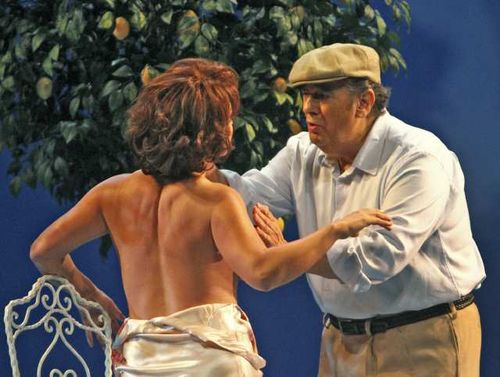
In a very erotic aria ‘Desnuda’, he sings of her beauty and undresses her with his eyes. What follows is a very poetic love scene, in which we are shown just enough to tickle our fancy.
Domingo is a dreamy Neruda. His very warm voice is full of love and passion, he transports, inspires and endears. He has hundreds of facial expressions at his disposal… and he can tango!
Cristina Gallardo-Domas (Matilde) occasionally sounds a little shrill in the upper registers, but her intensity and her role interpretation make up for everything. She is also a beautiful woman, a prototype of a South American with too big eyes and too big a mouth, behind which you can suspect one and all passion.
In Mario, Charles Castronovo has found the role of a lifetime. With his lyrical tenor – and his acting talent! – he portrays a real-life young man: shy and romantic but one with many ambitions and perseverance to achieve his goal.
Amanda Squitieri is a sparkling Beatrice and Ron Daniels’ direction is definitely sublime – his character direction is to die for! The production is very cinematic and a little reminiscent of de Sica’s Italian neorealism with Almodovár’s colours.
Susanna has a secret. Does she have a lover? That’s exactly what her jealous husband Gil thinks. In the house there is a smell of smoke, so…? Well, no. Susanna doesn’t have a lover and the cigarettes? She smokes them herself. So that’s her secret. It all meant nothing, but Ermanno Wolf-Ferrari managed to turn the sneering story into one of the funniest comic operas ever.
His music is divinely beautiful. More, in fact. In his notes, he managed to capture all moods. Angry, happy, troubled, angry, happy… You can hear it. Genius. That the opera is still rarely performed has everything to do with our contempt for anything that smells of verismo. For the peace of mind of verismo-haters: no, Il Segreto di Susanna is not a verismo opera, it is more like a commedia dell’arte. Or, flatly put, a delightful interlude.
The live recording from 2006 is excellent. Ángel Ódena is a more than convincing husband and Judith Howarth a sweet-voiced Susanna. For me, the latter is (the only) immediate downside of the recording: Surely Susanna could be a bit more outspoken! Those who know the recording with Renata Scotto know what I mean.
As a bonus, we get Wolf-Ferrari’s youth work, a Serenade for strings. And beautiful it is! The excellent playing Oviedo Filarmonia is under the very enthusiastic direction of Friedrich Haider.
“Forgetting forms a part of all actions,” Nietsche wrote in one of his pamphlets. “To (over)live, one must sometimes destroy one’s past.” Korngold should know, because with those very words you can sum up the real themes of his most famous opera, Die Tote Stadt.
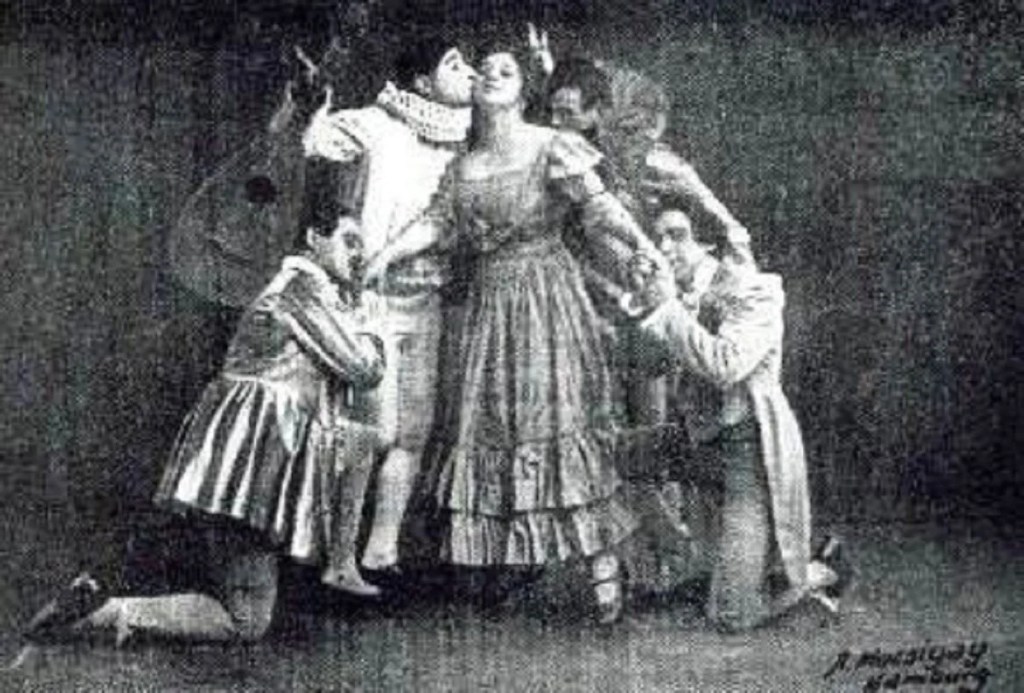
“A scene from the original 1920 Hamburg production of Die tote Stadt. From left to right: Walter Diehl (Graf Albert); Josef Degler (Fritz) Anny Münchow (Marietta); Felix Rodemund (Gaston); and Paul Schwartz (Victorin).”
Die Tote Stadt had its world premiere simultaneously in Cologne (directed by Otto Klemperer) and Hamburg on 4 December 1920, after which the whole world followed. Before the war, it was the most played of all contemporary operas.
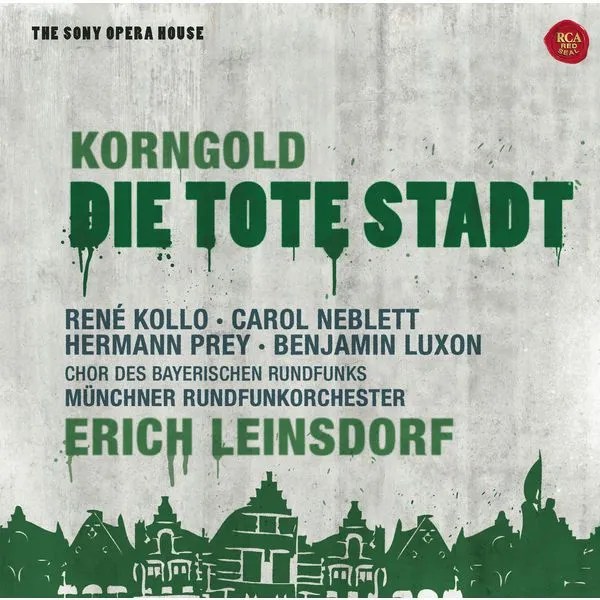
RENÉ KOLLO (once RCA, now Sony)
“After 1938, Die Tote Stadt was no longer performed. Only in the 1970s did a cautious comeback begin. The first studio recording of the opera dates from that time (1975).
Unfortunately, the text booklet (which is otherwise well cared for with the well reproduced synopsis and the complete libretto in two languages) does not tell the ‘why’ of that release. I would have liked to know who exactly conceived the idea of recording Die Tote Stadt, all the more so since the work was still considered inferior at the time.
Even Leinsdorf never concealed the fact that he did hold the work in high esteem. And yet he conducts it as if it were a masterpiece. Perhaps he gradually came to believe in it? He gives the opera the grandeur of a monument and the lustre of gold. Particularly exciting and energetic, he leads the brilliantly playing Munich Radio Orchestra through the score. At the end of the first act, when Marie’s portrait comes to life, you imagine yourself in the middle of the dream scene from Hitchckock’s ‘Spellbound’, and even without the image the tension is up for grabs.
There is also excellent singing, although I have a bit of trouble with Kollo in his demanding role of Paul. During the recording he shuttled between Munich and Bayreuth, where he was singing Parsifal at the time, so his voice sounds a bit tired.
Moreover, I prefer a more lyrical tenor in that role, but one with enough power to rise above the orchestra. Fritz Wunderlich could have been ideal, but he had been dead for almost a decade by then, and no one had thought of Gösta Winbergh at the time.
Carol Neblett is a fantastic Marie/Marietta, her creamy soprano possesses many colours and is well-stabilised in height. Benjamin Luxon portrays a warm and fatherly Frank and Herman Prey (Fritz) brings paradise closer with his sweetly sung Tanzlied.
Below, Herman Prey sings “Mein Sehnen, mein Wähnen”
The small role of Brigitte is also phenomenally sung by Rose Wagemann, perhaps the best Brigitte I have heard so far.
THOMAS SUNNEGÅRDH (Naxos 8660060-1)
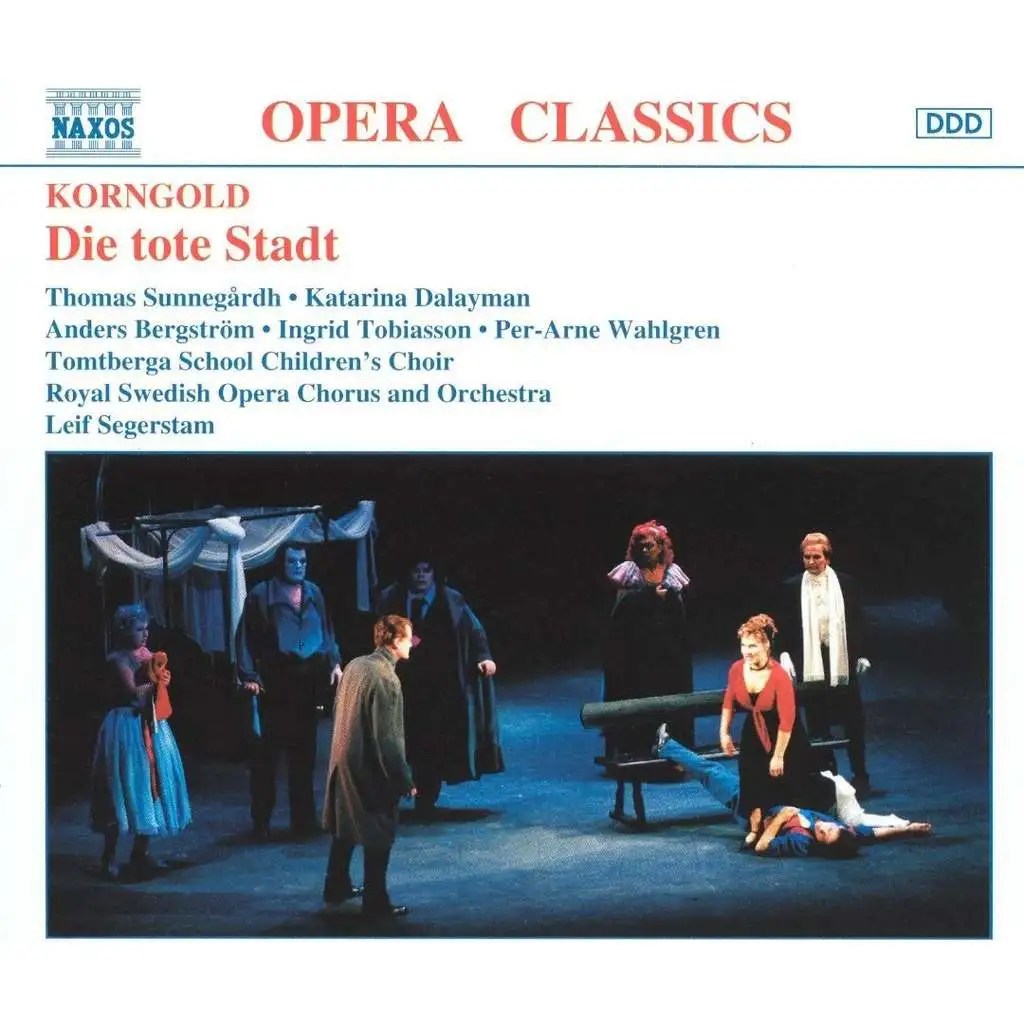
In 1996, Die Tote Stadt was put on the repertoire at the Royal Swedish Opera House in Stockholm. Two of the performances were recorded live by Naxos and released on CD. The result is definitely not bad, one feels the excitement of the theatre which in fact is always a plus. The stage noise is audible, it does not bother me, quite the contrary. Leif Segerstam conducts calmly and it is due to a few cuts that the whole thing is almost 15 minutes shorter with him than with Leinsdorf.
Paul is sung by Thomas Sunnegårdh, a Wagner tenor who impresses mainly by his volume: occasionally he degenerates into sprechgesang and the lyricism is nowhere to be seen. Superbly, on the other hand, Katarina Dalayman as Marie/Mariette and Anders Bergström (Frank) and Per-Arne Wahlgren (Fritz) also portray their roles convincingly.
TORSTEN KERL
DVD
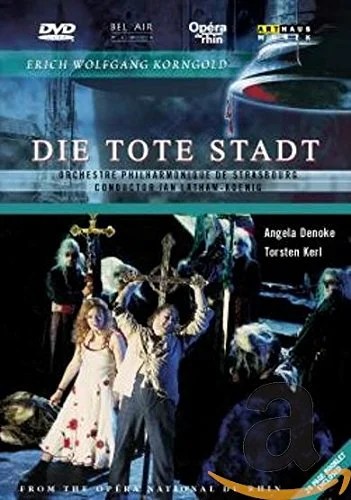
Opéra National du Rhin in Strasbourg staged Die Tote Stadt in April 2001. The highly controversial production by Inga Levant was released on DVD by Arthaus Musik (100 342).
If you thought the story of Die Tote Stadt is set in Bruges in the late nineteenth century, you are wrong. True, Korngold based his masterpiece on Rodenbach’s ‘Bruges-la-morte’ and that medieval city, with its fog and symbolism, put its stamp on both the libretto and the music, but Inga Levant knows better. So we end up in Hollywood where anything is possible and Marietta resembles not only Marie but also Marylin Monroe.
The whole thing is loaded with quotes from Fellini’s films, but fusion is in and anything goes. So I resignedly accept that ‘Mein Sehnen, mein Wänen’ is not sung by Pierrot but by the barman – played brilliantly and with a sufficient dose of schmalz by Stephan Genz
But if the libretto is violated, my patience and tolerance end. So I don’t accept Paul’s suicide because not only does he commit suicide, but also the entire opera.
Torsten Kerl (Paul) and Angela Denoke (Marie/Mariette) sing well, but the latter convinces mainly through her overwhelming stage presence and acting ability
CD Orfeo C 634 042
In the summer of 2003, this opera was performed at the Salzburg Festival. It was directed by Willy Decker and the leading roles were sung by Torsten Kerl, Angela Denoke (they seemed to have a patent on it) and Bo Skovhus. The performances were received with enormous enthusiasm by both the audience and the press, and the entire cast was rewarded with a standing ovation.
The 18 August performance was recorded live by ORF and released on CD. Why not DVD? The lack of images misses an important aspect of the performance, all the more so as the director had the roles of Frank and Fritz performed by the same singer which may have worked optically in the directorial concept, but is particularly confusing without images.
Torsten Kerl is clearly at his vocal limits, which manifests itself mainly in his pinched height. But he also has many beautiful and lyrical moments, something that cannot be said of Angela Denoke: without visuals, nothing remains of her.
The opera can also be heard on You Tube:
But I can’t get excited about Bo Skovhus either, something that is particularly hard for me: he was once one of my beloved baritones. He sings matte, without soul and his reading of “Mein Sehnen, mein Wänen” is downright pale. Too bad, because that he can do better he already showed at the beginning of his career on one of his first CD recordings:
Maria Jeritza who created the role of Marie/Mariette:
The older you get the more you think about the good old days. At least I do. Once I had fled the communist paradise (it is not the right word because I was thrown out) I could not marvel enough at everything the world and life had to offer. Marvel is the right word, because I could only sigh with longing at the overflowing shops: the clothes, the shoes and the music shops with LPs I couldn’t even dream of before.
So my very first scholarship was entirely spent in those shops. On day one, I bought Nocturnes by Chopin with Rubinstein, Christmas Oratorium by Schütz (because I had never heard of it before) and Beethoven’s Violin Concerto with David Oistrach. And a packet of Marlboro which literally put me in other realms that night.
And now for what it’s all about:
There are those compositions that are always mentioned in the same breath with one particular performer: the cello concertos by Elgar and Jacqueline du Pré, for instance. Or the violin concertos by Dmitri Shostakovich and David Oistrach.
Both Shostakovich concertos were dedicated to the violinist (he received the second as a present for his 60th birthday) and it was Oistrach who performed them at their world premiere. The first, already written in 1947, but not premiered until two years after Stalin’s death, is a very personal work and bears the composer’s ‘stamp’. In the first movement, he used his own initials DSCH, something he did more often; for instance in the seventh string quartet and in the tenth symphony.
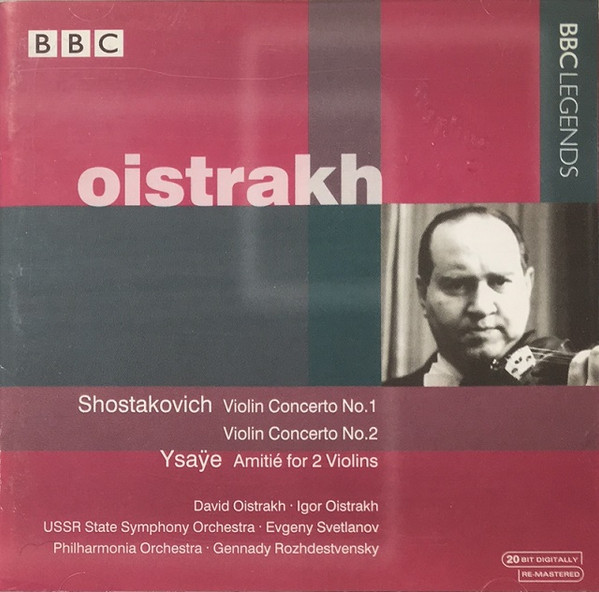
Both the violinist and the composer, who was close friends with Benjamin Britten, were welcome guests in England, where Shostakovich’s music was also very popular. So it is not surprising that the live recordings of both concerts from 1962 and 1968 respectively and dedicated to Oistrach, appeared on the BBC Legends label.
The audience is clearly present, coughing and sighing, but it is not really disturbing and their enthusiasm is infectious. I do have to warn you about the quality ot the sound though, as it is not very good.
Dmitri Shostakovich Violinconcerto No.1 Philharmonia Orchestra olv Gennady Rozhdestvensky; Violinconcerto No.2 USSR State Symphony Orchestra olv Evgeny Svetlanov
Eugene Ysaÿe Amitié op. 26 for 2 violins London Philharmonia Orchestra olv Sir Malcolm Sargent David & Igor Oistrach BBCL 4060-2
Sometimes, only sometimes, the words of Lieder may seem more important than the music. Especially if you take one of the greatest poets as the starting point of your recital and arrange your choice of repertoire entirely accordingly. The listener will then try to find the song lyrics faster than usual. And also pay them much more attention than would otherwise be the case.
As a singer, you then have a duty to let people know – and relive – what music can do with words, how they may be enriched by being put to a melody.
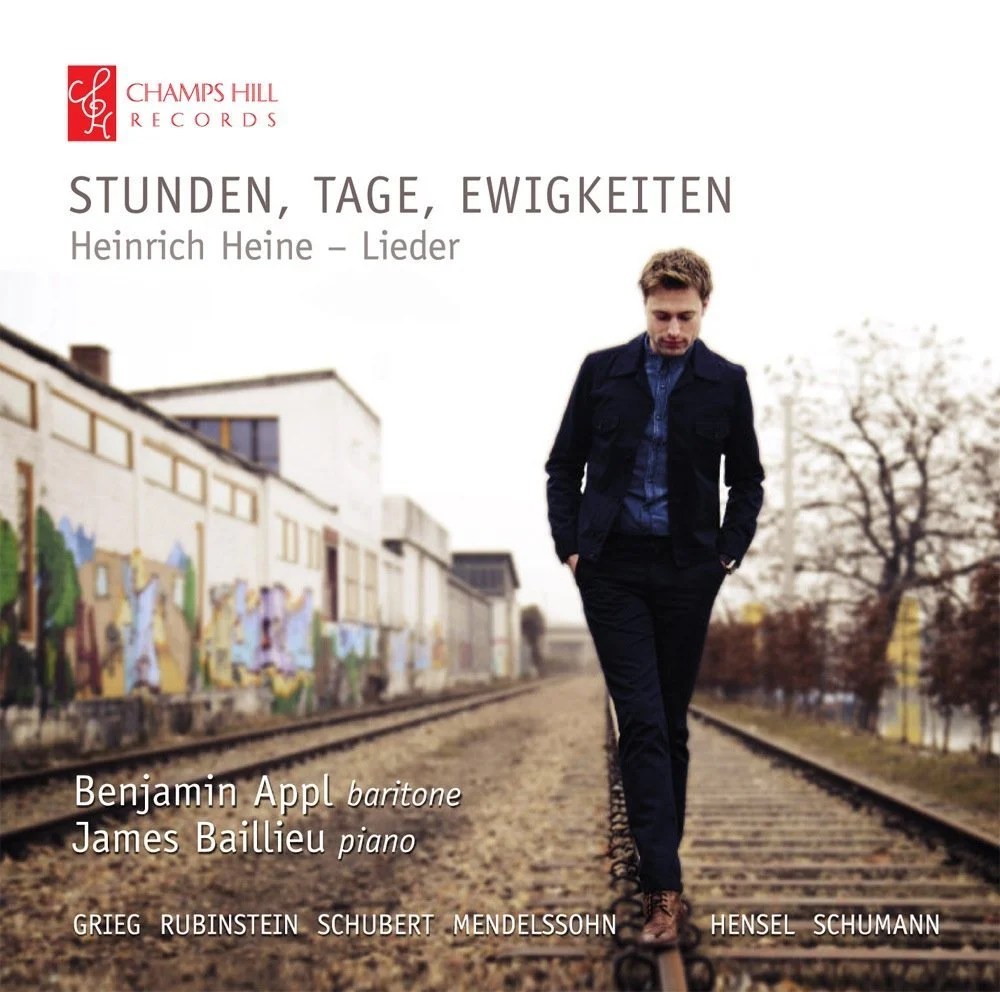
We all know Schumann’s Dichterliebe (and also the songs from Schubert’s Schwanengesang) and although the young Benjamin Appl’s interpretation is exceptionally beautiful, it would not make my heart beat any faster. But someone who calls his CD recital Stunden, Tage, Ewigkeiten is taking on obligations, and Appl takes them very seriously.
Apart from Schumann, Schubert and the Mendelssohns, Appl also tackles Anton Rubinstein’s rarely performed Heine songs. “Der Asra” I knew from Liszt’s piano arrangement, but it is my first introduction to the sung version. The song about the rich sultan’s daughter and the young slave in love with her, is poignant in its simplicity. I must honestly confess that my eyes became slightly moist and that, of course, is the best sign that it is right.
The young German possesses an improbably beautiful timbre that you will fall in love with immediately. His text control is exemplary, every word is clearly intelligible, but without being overpowering.
James Baillieu proves himself an equal partner: you can hear how beautiful his touché is in Rubinstein’s “Du bist wie eine Blume”. Chapeau!
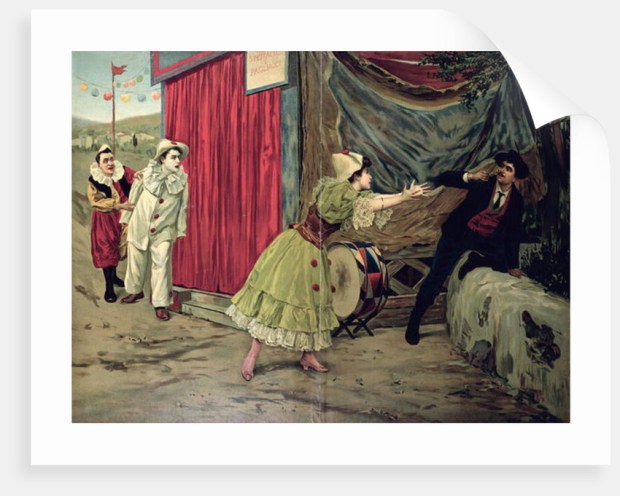
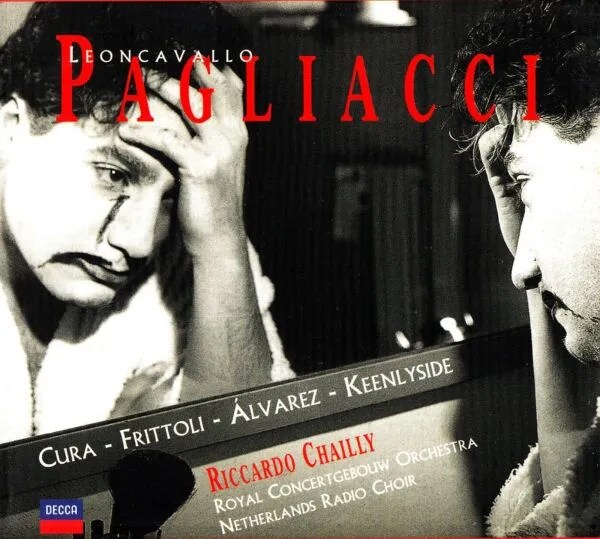
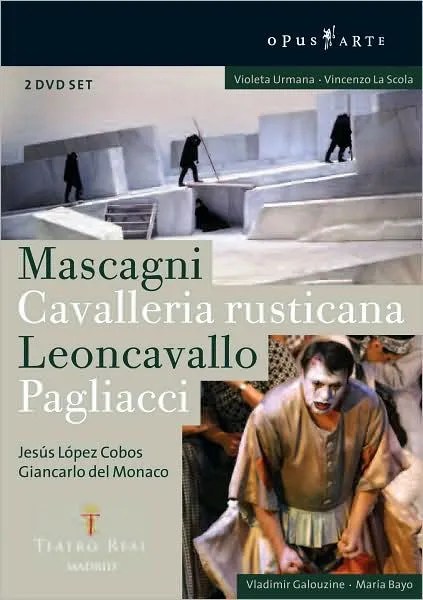
Pagliacci by Ruggiero Leoncavallo is almost always paired with Mascagni’s Cavalleria Rusticana, and has been for over a hundred years. Not that it was ever intended to be, but it makes sense. Both (short) operas were written by two very gifted young composers who were at the very beginning of their careers. Both works were created at the same time- but independently of each other – and both are set in the scorching heat: Pagliacci in Calabria and Cavalleria in Sicily. In both regions love is unconditional and adultery is punishable by death. Even in the studios, the operas were often recorded together and presented as duo packages, many times with the same singers, which did not always turn out well.
CD’s
RENATO CELLINI
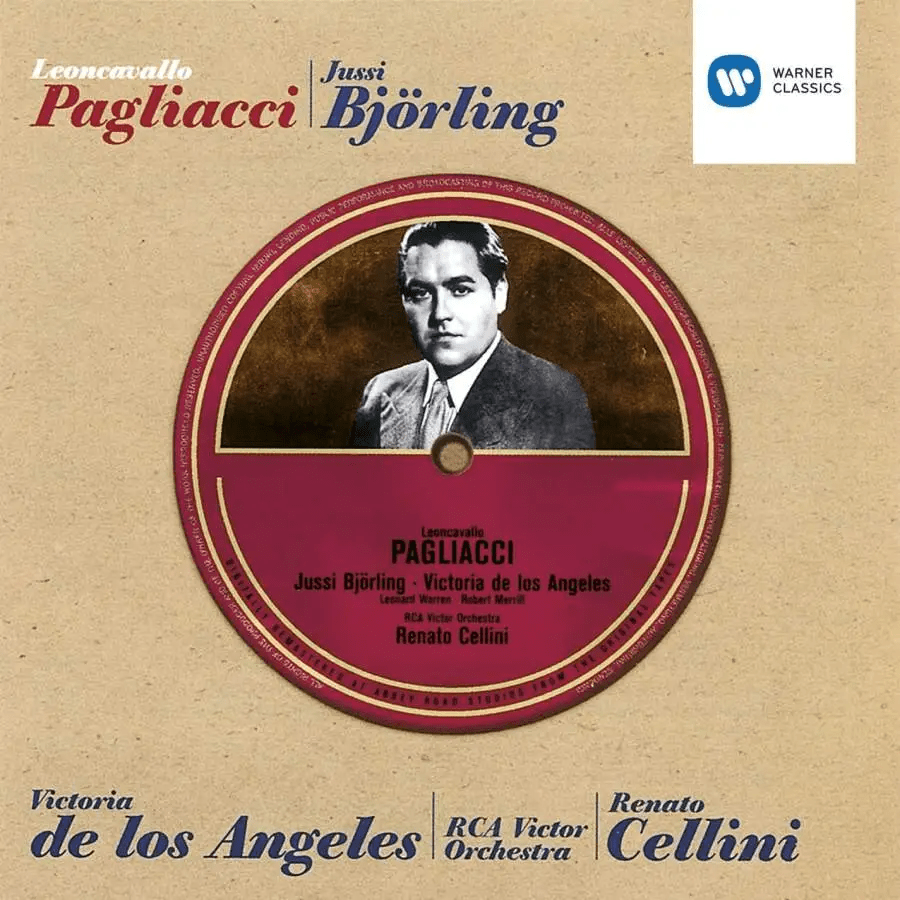
On the 1953 recording conducted by Renato Cellini (Warner Classics 5856502), Jussi Björling sings a memorable Canio and Victoria de los Angeles is a lovely, although not quite adequate Nedda. What makes the recording really special is the contribution of both baritones: Lenard Warren (Tonio) and Robert Merrill (Silvio). Just listen to Warren’s ‘Si pui…’ It makes me cry… How beautiful!
—
TULIO SERAFIN
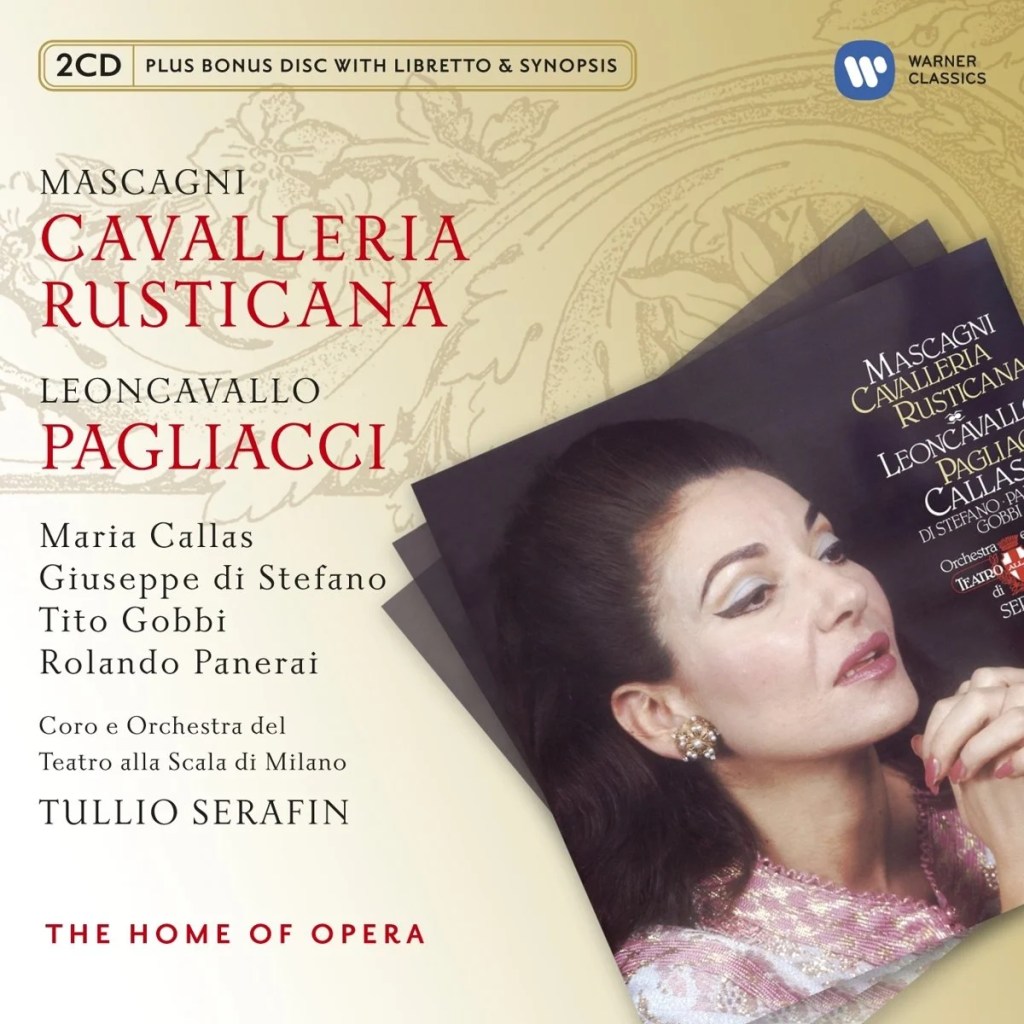
In 1955, Maria Callas recorded the roles of Santuzza and Nedda. As always, she is irresistible, although I find her Santuzza slightly more successful than her Nedda. With the latter she has audibly less affinity, which is not just down to the coloraturas. Then again, she was not particularly fond of adulterous women. As her Canio (and Turiddu) we hear Giuseppe di Stefano. Beautifully sung that is, but for me far too light and with too little profile. Tito Gobbi (Tonio), on the other hand, is nothing short of brilliant. legendary even. Tulio Serafin makes it into a real drama, his direction is very exciting.
RICCARDO MUTI
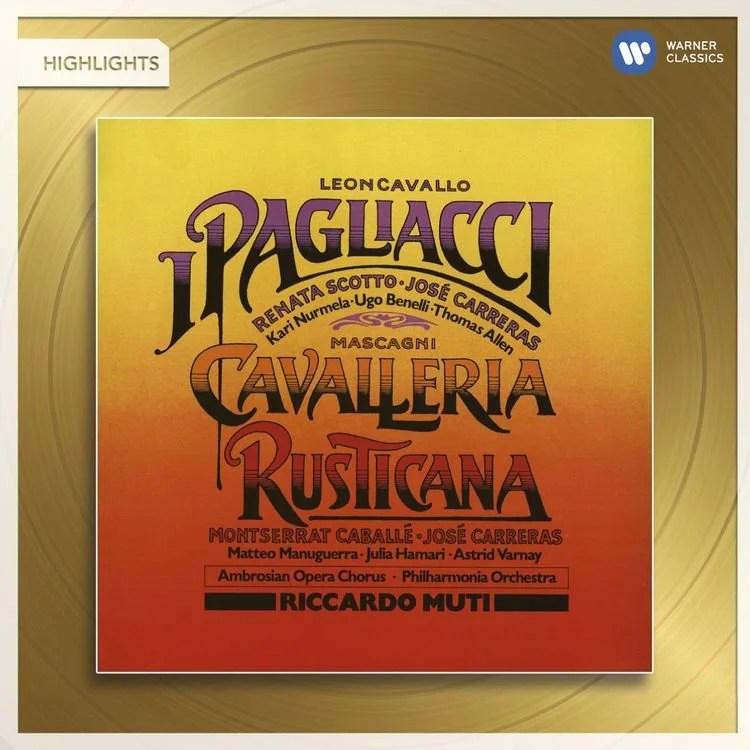
In Riccardo Muti’s recording from 1987 (EMI 7636502) José Carreras is the star connecting the two operas. I find him too light for both roles, but his interpretation of especially Canio is well thought through and believable. Montserrat Caballé is a beautiful Santuzza and Renata Scotto a ditto Nedda, though both fail to fully convince me. Kari Nurmela (Tonio) and Matteo Manuguerra (Alfio) are just boring, but Thomas Allen is an outstanding Silvio. Riccardo Muti’s direction is detached and understated.
RICCARDO CHAILLY
Do not forget the recording Riccardo Chailly (Decca 4670862) made during the Christmas matinee in the Concert Gebouw in 1999. José Cura was still very promissing then and his Canio was really good. The rest of the cast (Barbara Frittoli as Nedda, Carlos Ãlvarez as Tonio en especially Simon Keenlyside as Silvio) was also very strong.
DVD
One does not immediately expect innovation, modernisation or concepts from Giancarlo del Monaco, but with the staging of ‘Cav/Pag’ filmed in Madrid in February/March 2007, he manages to surprise everyone. Not that it is that daring: Pagliacci is fairly traditional, although he had moved the action to the 1950s/60s. The life-size posters from ‘La Dolce Vita’ and all the busy activity evoke the atmosphere of a film set, which is del Monaco’s intention; it is his homage to Fellini.
Truly innovative is the presentation of both one-acts: del Monaco sees them as intertwined Siamese twins, forever united with each other. The performance thus begins with the prologue from Pagliacci; according to del Monaco the manifesto of verism, which then flows seamlessly into Cavalleria Rusticana. The last and first scenes of both operas also blend together: among the crowd, that had first come out to greet the comedians, Turiddu’s body is being carried. The black and white Cavalleria does contrast greatly with the colourful and sensual ‘Pagliacci’. The performance is nice, but no more than that.
FILM
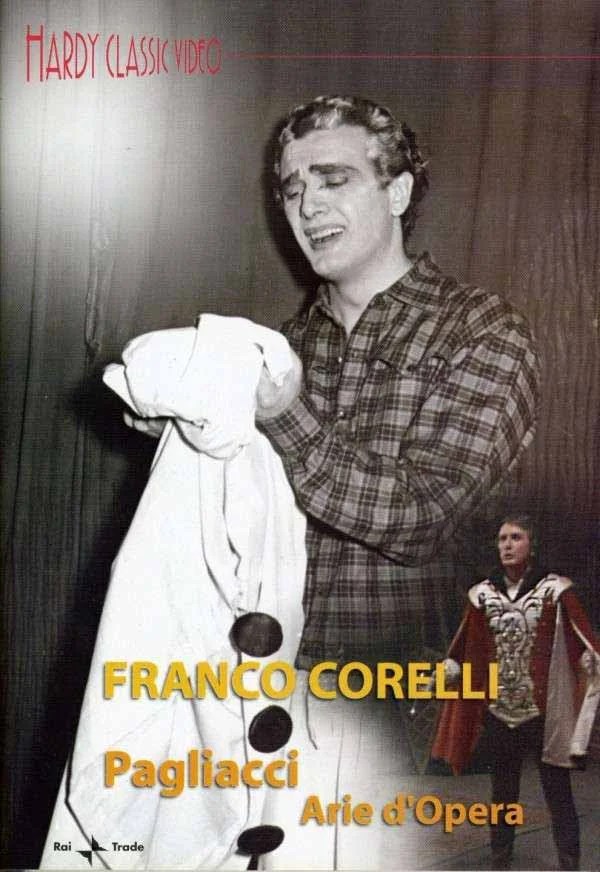
Canio was not Franco Corelli’s favourite role. He sang it for the first time in 1954, in the studio of Italian Television. The performance was taped there in that year and was released on DVD some time ago (Hardy Classics HCD 4016). His looks work somewhat against him (too handsome, too young), but then again his interpretation will leave only a heart of stone unmoved. Mafalda Micheluzzi is, also optically, a very good Nedda and with Tito Gobbi we get not only a singer and actor, but also a real Miracle Man presenting a thousand different faces.
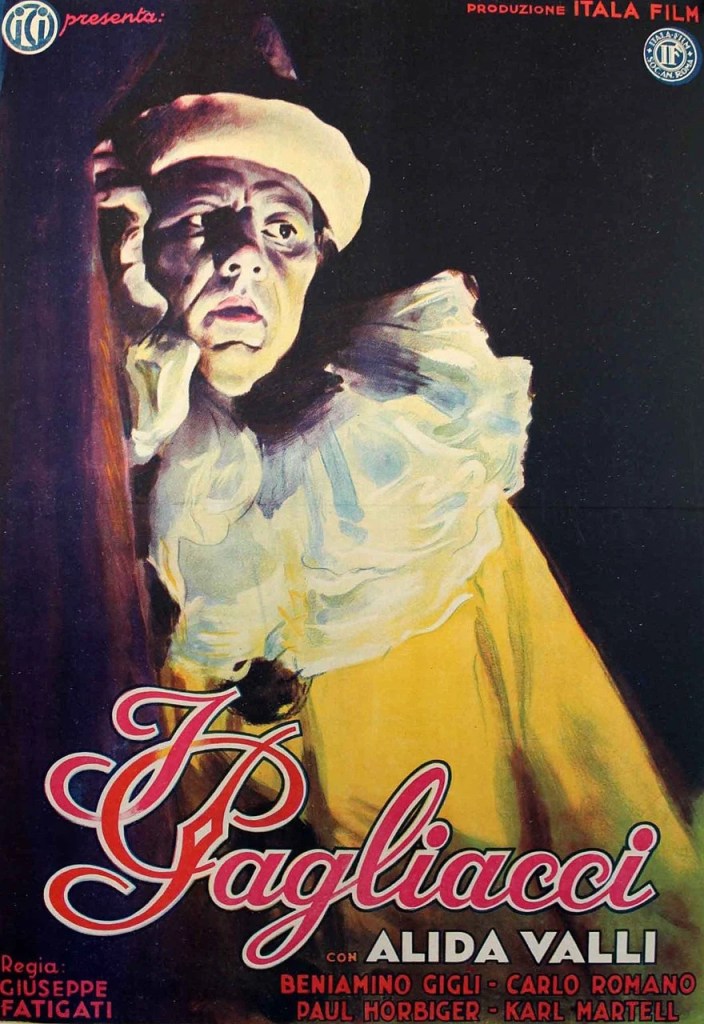
Pagliacci’s story in which reality and theatre intertwined and also influenced each other was apparently strong enough to be of interest to the film industry. Leoncavallo himself wrote his libretto, which, by his own admission, was inspired by a real event he witnessed when he was a child, In 1942, the story was filmed (directed by Giuseppe Fatigati) as part of another story: Canio is released from prison, goes in search of his daughter and tells his life story to a young composer, who then promptly turns it into an opera.
The ‘real’ Canio is played by Paul Hörbiger and his operatic alter ego by Beniamino Gigli. Alida Valli, then an Italian sex symbol is Nedda. It was released on DVD about 20 years ago (BCS D0513), in black and white and with English subtitles, but a little knowledge of Italian won’t hurt – the subtitles are not always easy to see.
VARIA
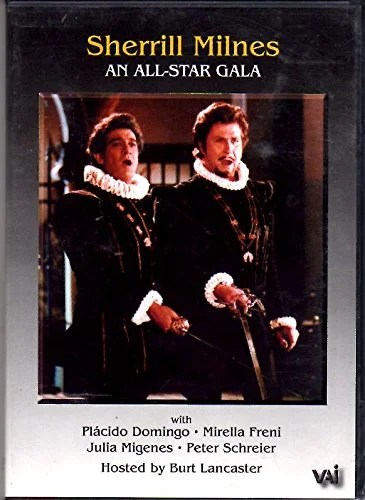
Years ago, when classical music was not yet a taboo on television and programmes about opera singers were as popular as those about pop stars, a German TV team made a portrait of American baritone Sherrill Milnes. The whole thing was commented upon by Burt Lancaster and a few fellow singers also participated: Plácido Domingo, Mirella Freni, Peter Schreier and Julia Miguenes. It began very symbolically with the prologue from Pagliacci, and ended with the Credo from Otello, two of the best roles of this great singer-actor’s career (VAI 4355)
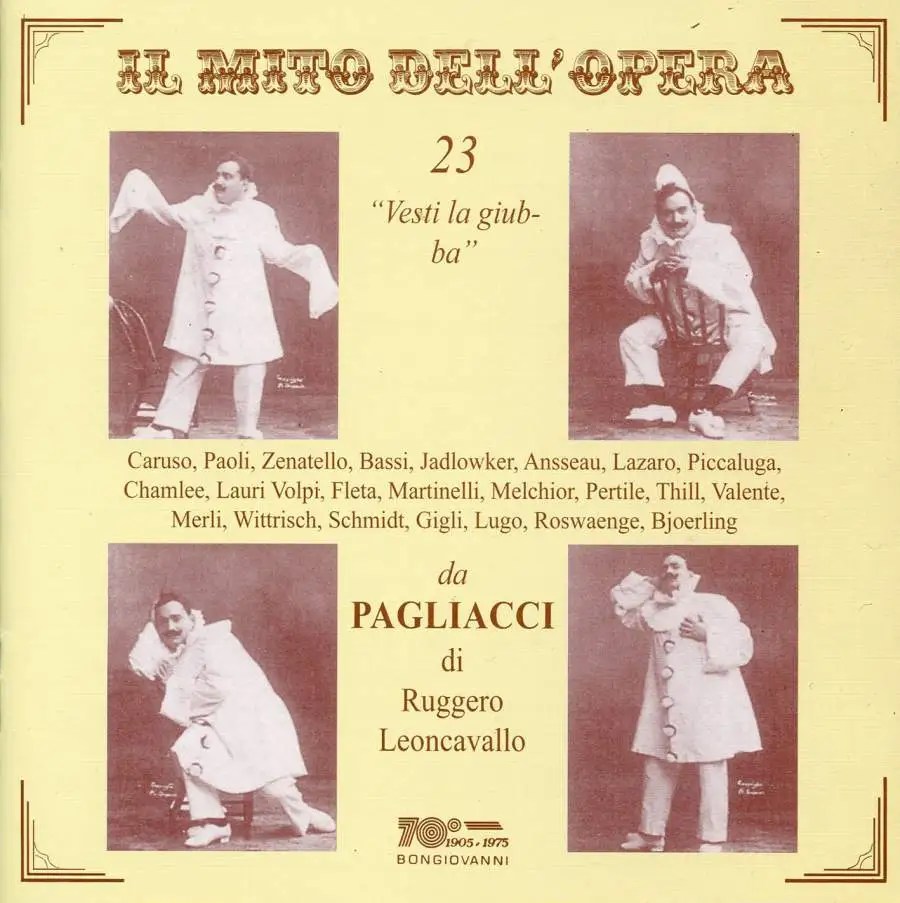
Of ‘Vesti la giubba’, the tenor aria of all time, the performances are uncountable. Most charming is a CD by Bongiovanni (GB 1071-20) on which 23 tenors give their take on it. The very first recording dates from 1907 (Antonio Paoli, the original Canio, plus Enrico Caruso), the last is from 1944 (Jussi Björling). There is singing in several languages and it is more than fun to hear who is and who is not sobbing. Note: Paoli is!
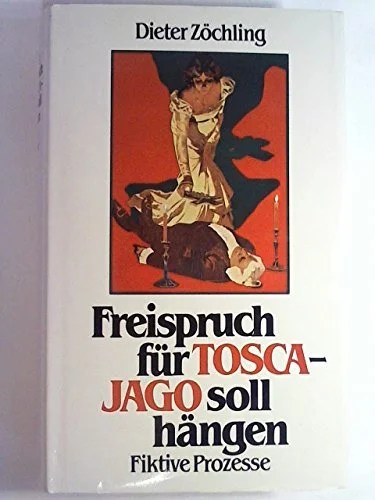
About 25 years ago, German judge and a great opera connoisseur Dieter Zöchling wrote a book about fictional trials of murderers on the operatic stage. All the major characters from the operas in question appear before the witness stand, providing additional background stories, insanely funny. Canio was sentenced to 20 years in prison! Dieter Zöchling; Freispruch für Tosca – Jago soll hängen. Fiktive Prozesse. ISBN 3784421288
Woodcut by Conrad Felixmüller of the composer Erwin Schulhoff, Prague 1924. Lindenau-Museum, Altenburg, VG Bild-Kunst
Of all the composers covered by the term ‘Entarte music’, Erwin Schulhoff is the most complex.
Contrary to what various anthologies tell us, Schulhoff was never in Theresienstadt. Nor was he murdered in Auschwitz. The hybrid Czech composer who did not fit into any pigeonhole had simply been unlucky. The Russian citizenship he applied for came two days too late, so instead of being in the Soviet Union, he ended up in the Wülzburg concentration camp, where he died of tuberculosis in 1942.
From his early childhood, Schulhoff was fascinated by everything new. Heartily embracing dada and jazz, he also had a particular liking for the grotesque. His music crossed borders and genres – sometimes even those of a “good decency”.
No wonder his music cannot be labelled: within the oeuvre for string quartet alone, one will discover a huge variety of styles.
Except for his Divertimento op.14 and string quartet op.25, all the works played by the Alma Quartet were composed between 1923 and 1925. Both, highly rhythmic string quartets betray Schulhoff’s affinity with jazz – the second a little more than the first – and also with Czech folklore.
The 1923 ‘5 Pieces for String’ dedicated to Milhaud sound quite neo-classical. Each refers to a dance or a country. In ‘Alla Valse Viennese’, the “waltzes of Ochs” are shining through and in ‘Alla Tango Milonga’ one can only think of Argentina.
Of all the existing recordings of Schulhoff’s quartets so far, the one by the Petersen Quartet (Cappricio) was always dearest to my heart. I still love their performance, but now they have to acknowledge the superiority of their Amsterdam colleagues. Grandiose.
Huge kudos also to Vruchtvlees.com for the cover and box cover design. Not only very bright and cheerful, but also perfectly suited to Schulhoff’s music.
The title, Weinberg 1945, refers to the year when all the compositions recorded on this CD were created. The first performance of the piano trio took place on 9 June 1947, by Weinberg himself and two members of the Beethoven Quartet: Dmitri Tsyganov (violin) and Sergei Shrinsky (cello).
To my knowledge, there are already at least nine performances of the trio, all good to excellent. Consider Gidon Kremer (the greatest advocate of Weinberg’s music, Yulianna Avdeeva and Giedré Dirvanauskaité (DG).
Or, my absolute favourite with Dmitry Sitkovetsky, David Geringas and Jascha Nemtsov (Hänssler).
In comparison, this performance feels a bit disappointing to me. Mainly because of the pianist: Stéphanie Salmin is too dominant and the sound of the piano drowns out the strings, but this is something that could also be due to the recording.
But the cello sonata and the Rhapsody on Moldavian themes (replace ‘Moldavian’ with ‘Jewish’, which was actually the intention) make up for everything. Here, the cellist (Romain Dhainaut) and Sadie Fields (violin) are given every chance to shine, and they certainly do! And Sadie Fields completely stole my heart in the Two songs without words, which get their first ever performance here. Indeed, until recently, these two beautiful miniatures were thought to have been lost.
Piano Trio op. 24, Cello Sonata No. 1 in C, op. 21, Two songs without words for violin and piano, Rhapsody on a Moldavian theme for violin and piano op. 47 no. 3 Trio Khnopff: Sadie Fields (violin), Stéphanie Salmin (piano), Romain Dhainaut (cello) Pavane ADW 7590
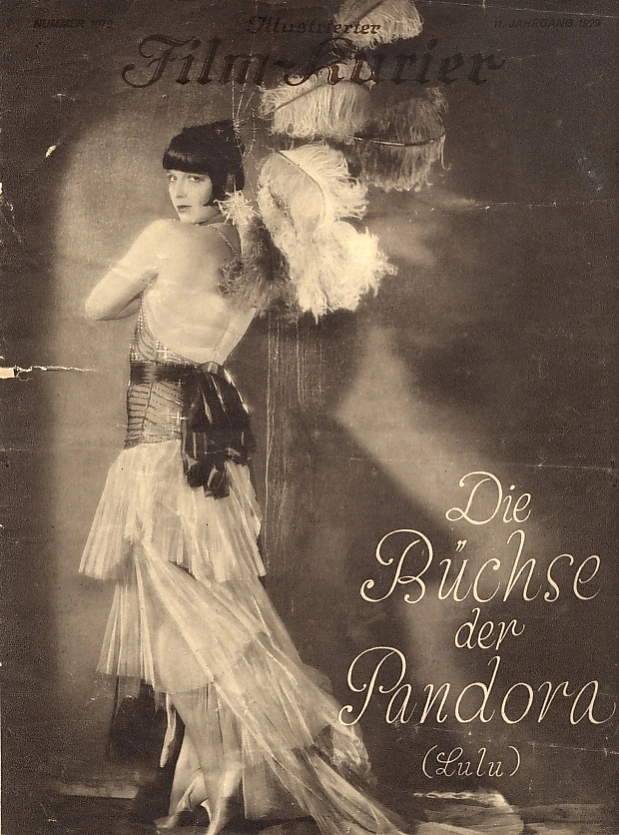
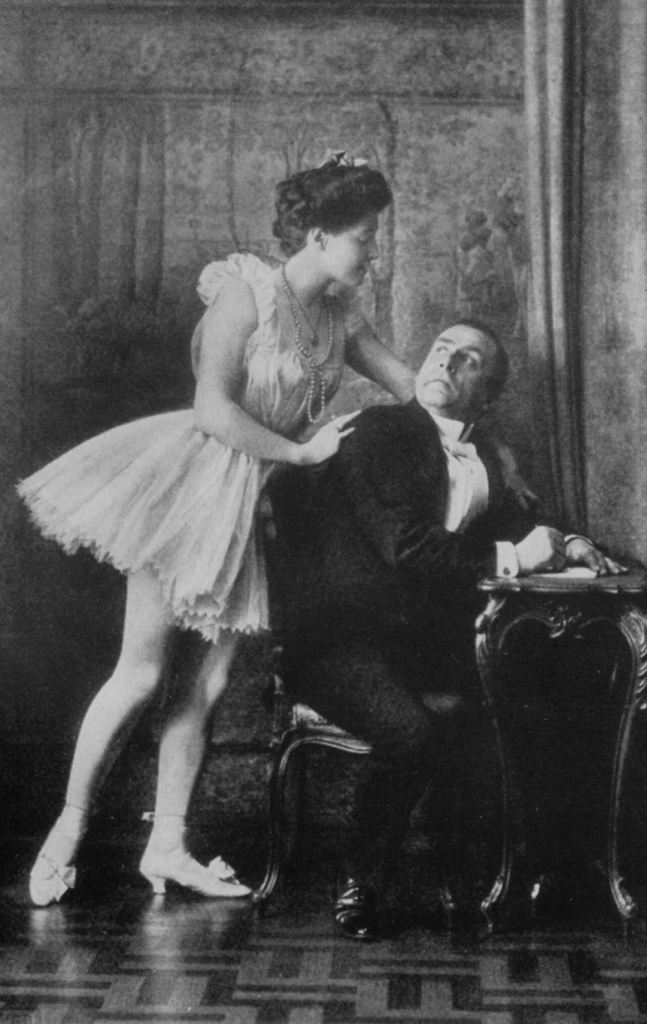
A portrait of her is painted in the first act, which then runs like a thread through the whole opera, much like the portrait of Dorian Gray. Whatever happens to Lulu, her portrait remains unchanged.
Alban Berg was quite obsessed with her character, taken from Wedekind’s plays Der Erdgeist and Die Büchse der Pandora.
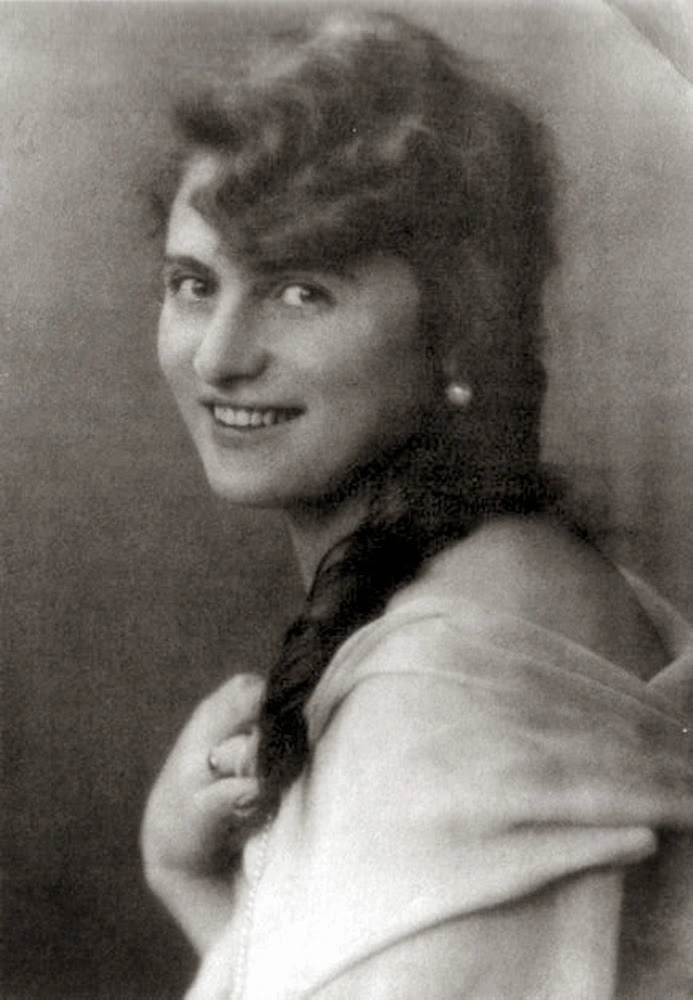
Hanna Fuchs
This may also have had to do with his personal life. She might be the personification of Czech Hanna Fuchs, Berg’s last great love. But there are also music psychologists who want to see Berg himself in Lulu
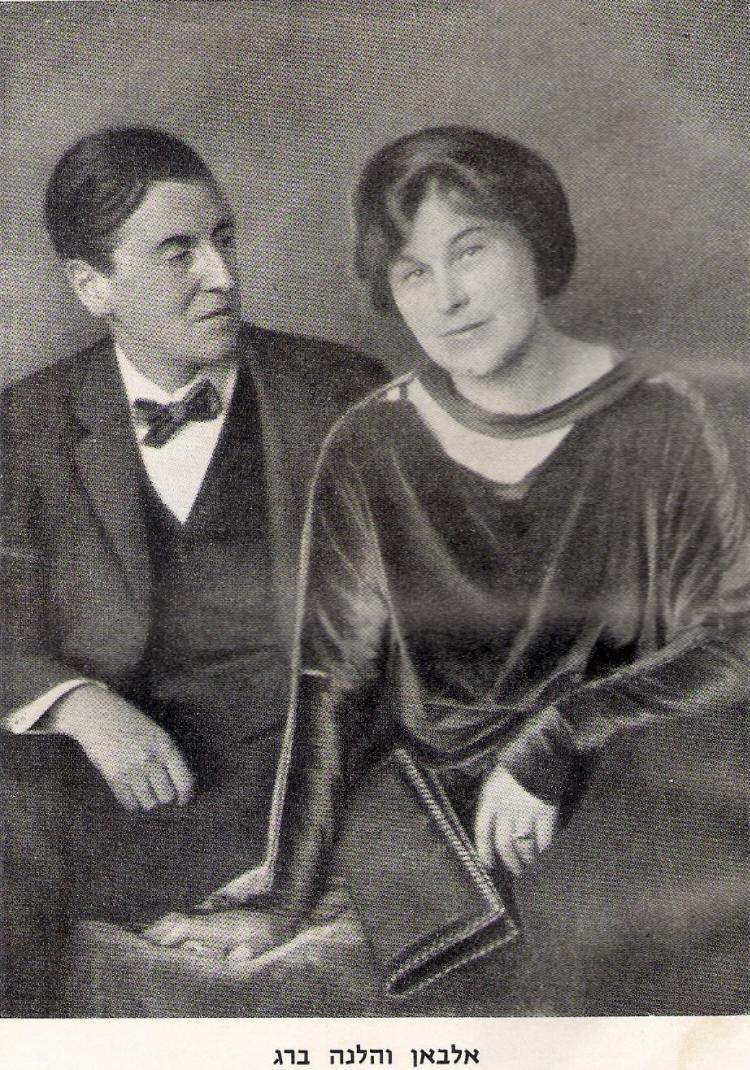
Berg and his wife
Berg did not finish his opera: when he died in 1935, the third act consisted only of sketches.
It was the Austrian composer Friedrich Cerha who orchestrated 1979’s unfinished third act; until then, only the first two acts were being performed.
CD’S
Teresa Stratas
You simply cannot live without the very first recording of the complete opera with the third act, as it was finalized by Cerha. Deutsche Grammophon made a studio recording in 1979 immediately after the Paris premiere (DG 4154892).
All fantastic Lulu’s notwithstanding, no one can match Teresa Stratas. Even without the textbook, you will not only clearly hear but also really understand every word. Robert Tear is a delightfully naive painter and Franz Mazura an unrivalled Dr Schön. Kenneth Riegel’s Alwa is a matter of taste, but his empathy is just about perfect.
Pierre Boulez’s seemingly cool and analytical approach makes the drama sizzle even more.
You can also watch the complete recording with Stratas on YouTube:
Anneliese Rothenberger
The recording made by EMI in 1968 (91233028) should really not be missing from any collection. Anneliese Rothenberger is a very light, bouncy Lulu, truly an innocent girl.
Forget about Gerhard Unger (Alwa), but Toni Blankenheim’s surprisingly light and sarcastic Dr Schön (Schigolch with Boulez) is really irrisistable.
What makes the recording extra desirable is Benno Kusche in the small role of Tierbändiger. The recording itself also sounds surprisingly good.
Ilona Steingruber
Ilona Steingruber’s name does not ring a bell these days, but in her time she was a celebrated soprano, whose repertoire included Mahler, Korngold, Strauss and Alban Berg.
On the 1949 recording directed by Herbert Häfner (including Archipel Desert Island Collection ARPCD 0540), Steingrubber sings a very sensual Lulu: erotic and exciting in her singing and remarkably childlike in the dialogues.
Otto Wiener is a very authoritarian Dr Schön and Waldemar Kmentt a not very idiomatic but very present Maler. The confrontation between the two, ‘Du hast eine halbe Million geheiratet’, is therefore particularly exciting.
DVD’S
Evelyn Lear
With her movie-star looks and angelic voice, Evelyn Lear has been referred to in the press as ‘Elisabeth Taylor meets Elisabeth Schwarzkof’. Personally, I find the American soprano, very popular in the 1960s to 1980s, much more interesting than her German colleague.
Lear was one of the greatest and best advocates of modern music. On 9 June 1962, she sang the role of Lulu in the first Austrian production of the work, at the newly reopened Theater an der Wien.
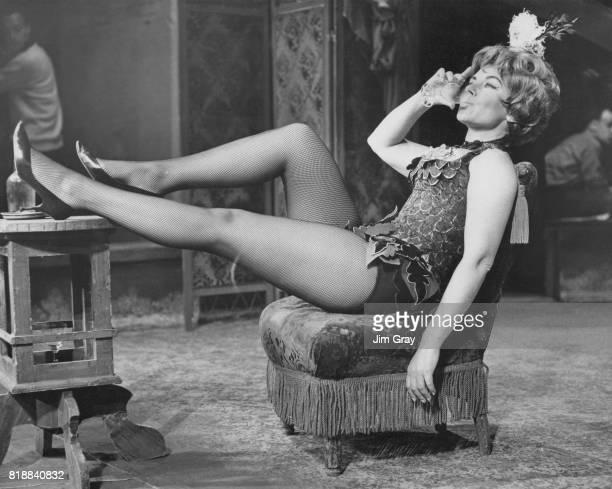
Opera singer Evelyn Lear of the Hamburg State Opera Company in the title role of the opera ‘Lulu’ at Sadler’s Wells in London, UK, 3rd May 1966. (Photo by Jim Gray/Keystone/Hulton Archive/Getty Images)
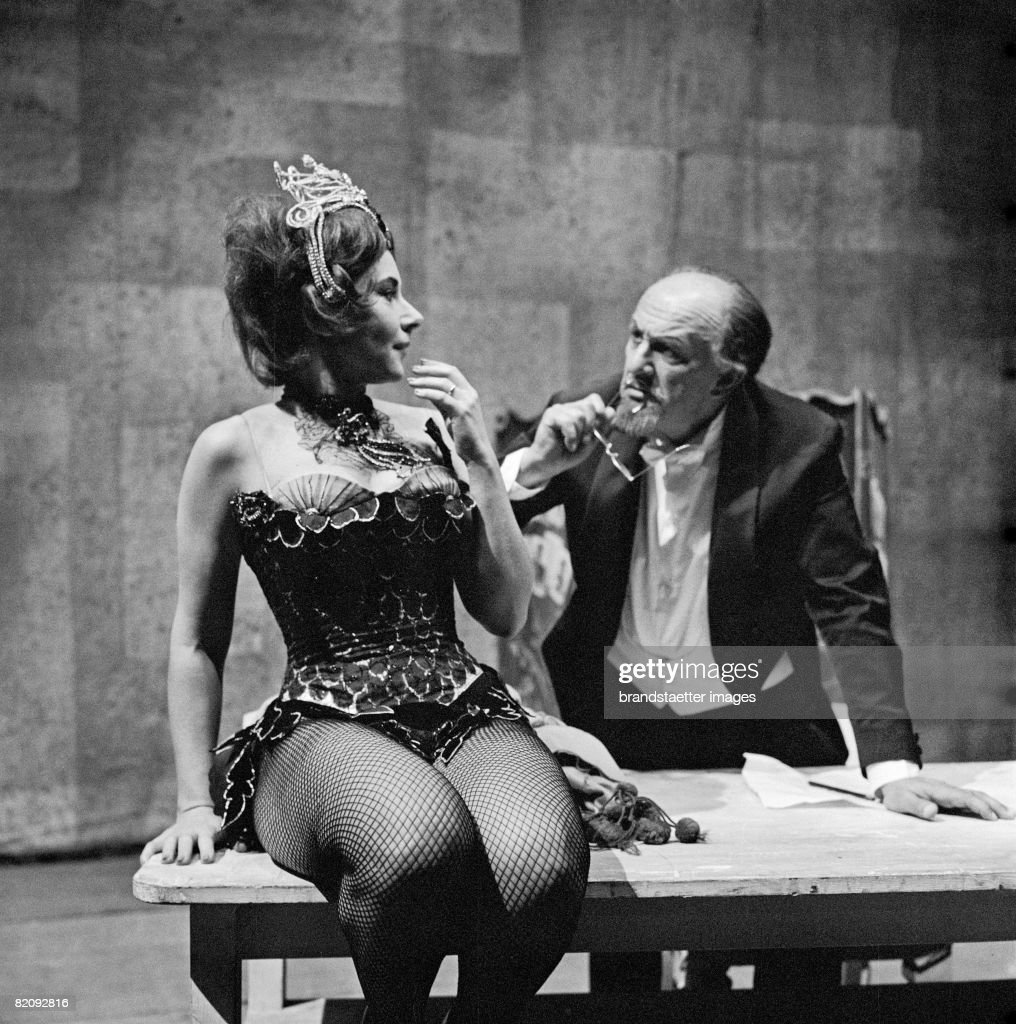
I can imagine that the posh premiere audience may have been a bit surprised to see a prima donna dressed only in a tight-fitting corset and fishnet stockings, but if so, nobody showed it.
UNSPECIFIED – CIRCA 1970: Evelyn Lear and Paul Sch?ffler in Lulu by Alban Berg in the Theater an der Wien, , Photography, 1962 (Photo by Imagno/Getty Images) [Evelyn Lear und Paul Sch?ffler in “Lulu” von Alban Berg im Theater an der Wien, Photographie, 1962]
It was directed by the then very young Otto Schenk, who followed the libretto closely. That Paul Schöffler (Dr Schön ) reminded me of Professor Unrath from Der blaue Engel is, of course, no coincidence. Nor is his resemblance to Freud.
The last scene, beginning with Geschwitz’s plea followed by images of Jack the Ripper, could just as well have been taken from one of the best Hitchcock films. Especially since Gisela Lintz, who sings the role of the Countess, looks a lot like one of the director’s beloved actresses.
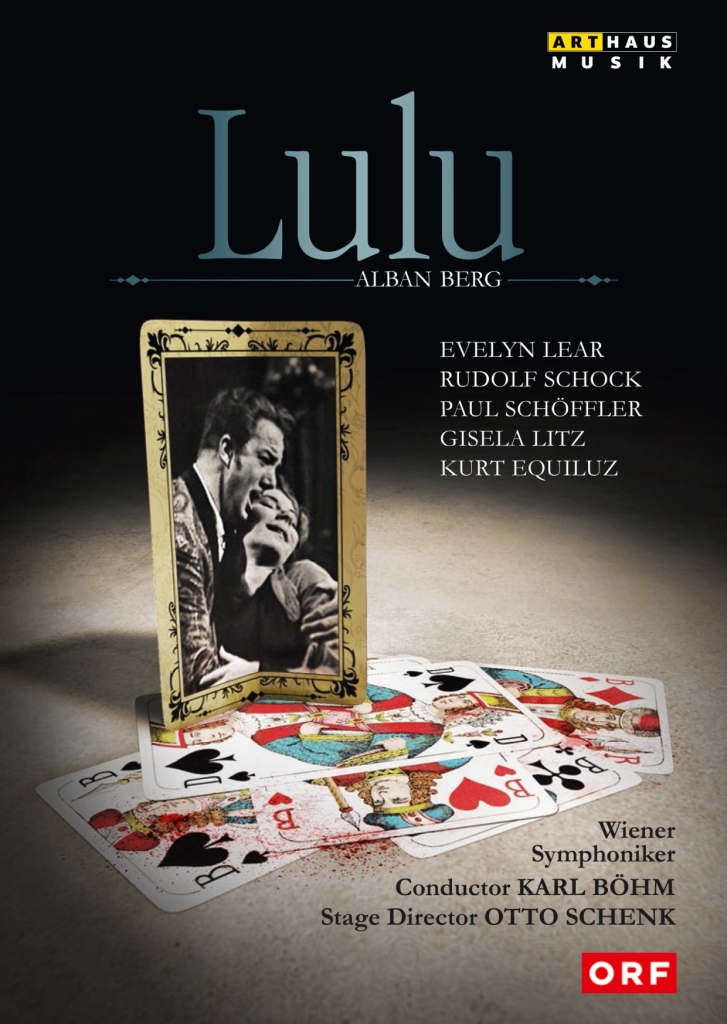
Watching Karl Böhm conducting is also extremely exciting. I have never seen him gesticulating so violently. An absolute must (Arthaus Musik 101 687).
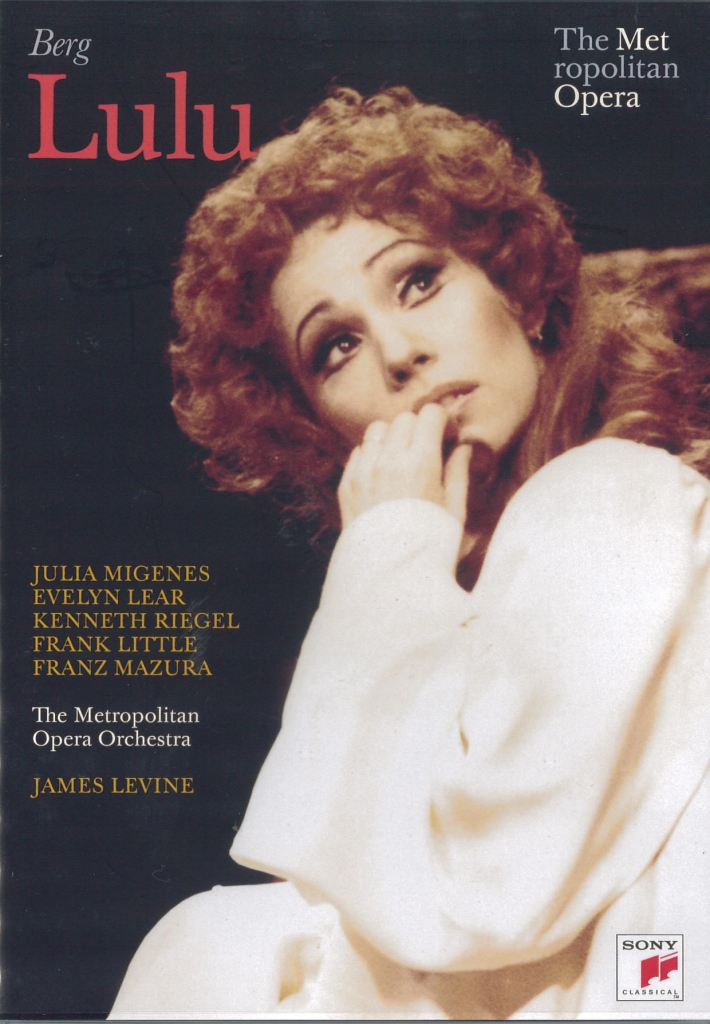
Julia Migenes
I have never understood why Julia Migenes wasn’t allowed to sing ‘real’ operas more often. She was a big star on Broadway and she triumphed in several musical films, but to my knowledge, apart from Lulu, she has performed very few other opera roles on the stage. Both her appearance and acting are so formidable that one can readily forgive her for not always singing cleanly.
Franz Mazura is a phenomenal Dr Schön. In the scene where he writes the farewell letter to his fiancée, you can almost smell his sweat. What a performanc
As Geschwitz, the now older but still gorgeous Evelyn Lear is convincing in every way. John Dexter’s very fine production was recorded at the Metropolitan Opera in 1980 (Sony 88697910099).
This totally unadorned production by Christof Loy was recorded at London’s Royal Opera House in June 2009. Loy has stripped the opera completely and reduced it to its pure essence, something I find very fascinating.
His minimalist approach allows all attention to be paid to the characters, their motivations and their development. Whatever you think of the direction: musically it is spot on. Antonio Pappano really works wonders with the orchestra; you will rarely hear this music so transparent and at the same time so emotionally charged.
Klaus Florian Vogt cannot really convince me as Alwa, but Jennifer Larmore is an exceptionally attractive Geschwitz. And Agneta Eichenholz (with her big eyes pretty much the reincarnation of Audrey Hepburn) is a beautiful Lulu in every way. Michael Volle is for me, after Franz Mazura, the best Dr Schön (Opus Arte OA 1034 D).
Below is an excerpt from the production:
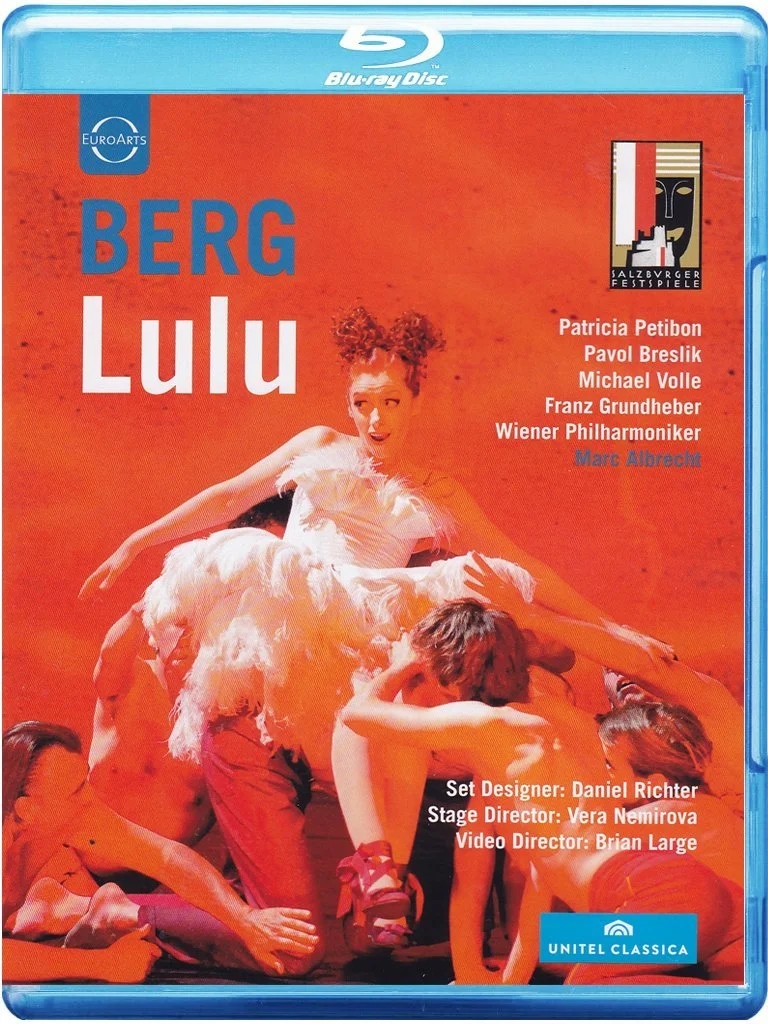
Patrizia Petibon
I am not a fan of Patrizia Petibon: I find her posturing is rather irritating. Her voice is also on the small side, so she often has to force it. Not conducive to the very high and difficult notes Berg has his lead singer sing. I also find her physically ill-suited for the role. She is not a ‘Lolita’, but an adult whore dressed like a little girl with ditto behaviour.
I also have trouble with Geschwitz (Tanja Ariane Paumfartner, an unknown to me), but the rest of the singers are more than excellent, with the unsurpassed Michael Volle as the inimitably good Dr Schön.
Thomas Piffka is an outstanding Alwa, unmistakably a composer who is constantly working on his opera. Pavol Breslik is a horny Maler, Grundhebber a fantastic Schigolch and Cora Burggraaf a sparkling Gymnasian.
Vera Nemirova’s production (Salzburg 2010) is colourful and highly expressionistic. Marc Albrecht is a perfect conductor for the work: under his direction, the Vienna orchestra shows its very best side (Euroarts 2072564).
Below the trailer:
Mojca Erdmann
Whoever came up with the unholy idea of having an unknown and unremarkable composer (have you ever heard of David Robert Coleman?) recompose Lulu for this production in Berlin in 2012, I don’t know, but I am not at all grateful.
Only the third act was adapted, because they dared not touch the real Berg. At least… the prologue has been scrapped, which totally ruins the opera. In its place we get a man, lying down quoting Kierkegaard: “Alles Erlebte tauche ich hinab.” Well well…??
Andrea Breth, by now on my no-no list of directors shows her worst side here. The production is deadly dull. Neither the ethereally singing Mojca Erdmann, nor the scorching Deborah Polaski, nor Michael Volle or Thomas Piffka can undo this cruel murder of a masterpiece (DG 0734934).













 Basia con fuoco