
Benjamin Grosvenor revitalizes Chopin

Dear people: this CD is simply magnificent! Secretly I find myself thinking that it might be one of the most beautiful piano recitals of recent times. Not that Sergei Bortkiewicz is an acknowledged genius, but since when is genius a prerequisite for appreciation and – more importantly – for pure enjoyment?
I knew the composer mainly for his vocal works and I think I once heard one of his piano works, without it making any special impression on me. Which is the reason why I put the CD in my player without much enthusiasm. And lo and behold; there I was on my couch, enjoying it shamelessly and with bated breath!
Pavel Gintov plays ‘Chaos’ from Bortkiewicz’s Esquisses de Crimée:
Bortkiewicz was born in 1877 in Kharkov, a Ukrainian city known for its many uprisings, amongst others that of the Cossack leader Khmielnicki. Since 1667, the city, together with the eastern part of Ukraine, belonged to the Russian Empire and when the Bolsheviks took over Kharkov, Bortkiewicz’s family was completely robbed of everything they owned.
Together with his wife, the composer fled, first to the Crimea and from there, along with one hundred and fifty other thousand Russian refugees, to Constantinople. On the way his mother sadly succumbed to typhus.
Helped by friends, the Bortkiewiczs continued on their way to Sofia and Belgrade, eventually reaching Vienna. In 1925, they acquired the Austrian nationality. After the Second World War, the composer was appointed head of the teaching programme at the Vienna Conservatory.
In 1952, Bortkiewicz briefly became popular but he was soon simply forgotten. His very accessible piano pieces are strongly inspired by Chopin, Liszt and early Scriabin, but Schumann is never far away either. The Esquisses de Crimée op. 8 were composed by Bortkiewicz in 1908 as an ode to the stunning landscapes of the Crimean peninsula where he was living at the time.
The Ukrainian pianist Pavel Gintov plays very beautifully, his touch is supple and his interpretation fiery.
Sergei Bortkiewicz
Esquisses de Crimée op. 8 – Minuit op. 5 – Lyrica Nova op. 59 – Lamentation and Consolation op. 17 nr. 3 & 4 – Étude in gis, op. 15 No. 6 – in E, op. 15 No. 10 – in C-sharp, op. 29 No. 3 – in E flat, op. 29 no. 6 – Prélude in B flat, op. 40 No. 2 – in F-sharp, op. 40 No. 4 – in E, op. 40 no. 7 – Consolation in E-flat, op. 17 No. 8
Pavel Gintov (piano)
Piano Classics PCL0120 – 65′

I love Khovanschina very much. The music is a combination of Russian folk songs, religious chorales, moving arias and glowing orchestral splendour and presents us with a masterpiece of an altogether unprecedented beauty. The libretto, based on historical facts, tells of religious strife, struggles for power, political manipulations, sectarianism and a collective suicide. The chorus plays a fundamental role, but the six leading roles are also particularly well developed as to their individual psychological developments.
The opera had its premiere in 1886, in Rimsky-Korsakov’s abridged version: Mussorgsky had left the score unfinished. In 1959, Shostakovich orchestrated the original piano arrangement. That version, with the ending recomposed by Stravinsky, is almost always used nowadays.
Boris Khaikin

The conductor Boris Khaikin, who was very popular in the post-war Soviet Union, is mainly known for his recordings of Russian operas, including Khovanshchina.
He already recorded the opera in 1946, with the unsurpassed Mark Reizen as Dosifej.
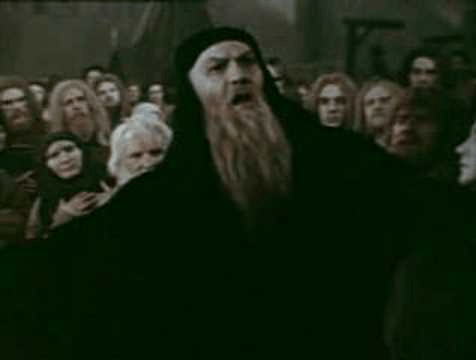
For the curious: you can find the complete recording on YouTube.

In 1974, Khaikin recorded the opera again, this time with Alexander Ognivtsev as Dossifej, Aleksey Krivchenya as Chovansky and Vladislav Piavko as his son.
Golitsin was beautifully performed by Aleksey Maslennikov. Anyone still looking for an example of a tenor from the ‘old Russian school’? Listen to Maslennikov!
The real star of the recording, however, is Irina Arkhipova. As Marfa, she is absolutely unequalled in my opinion:
If you are used to Shostakovich’s instrumentation, Rimsky-Korsakov’s version feels a bit strange. More melodious, almost fairy-tale like. The overture could just as well have been an introduction to Shéhérazade. Rimsky-Korsakov has taken the sting out of it. Unintentionally, it makes you think of old films in which even the greatest misery has been put through the technicolour filter.
In this version, Marfa’s prophecy also sounds rather bland. Mild and not very threatening, which makes it difficult to understand Golitsin’s terrified reaction.
The recording is very clear, making every word easy to understand. (Melodia MEL CD 1001867)
Boris Leskovich

A year earlier, in 1973, Boris Leskovich conducted the opera in Rome. In Italian. Despite the fact that he used Shostakovich’s version, the result is rather light and it does not “smolder”anywhere. It also lacks the “width” in the overture, but that may also be due to the poor sound quality.
The soloists are fingerlickingly good: Cesare Siepi (Dosifej), Fiorenza Cossotto (Marfa), Elena Souliotis, Veriano Luchetti, Siegmund Nimsgern and the greatest Chovanski in history: Nicolai Ghiaurov.
As a bonus, you get the complete fifth act with Boris Christoff as Dosifej in a recording from 1958 conducted by Artur Rodziński. Also in Italian (Irene Companez’ Marfa sounds just like Azucena here), but with a significantly better sound quality. (BellaVoce BLV 107.402)
Different label, same recording:
Emil Tchakarov

The much-lamented Bulgarian conductor Emil Tchakarov (he died of AIDS at the age of 42) recorded Chovanshchina in 1990, with the best Bulgarian voices available at the time, including – how could it be otherwise – Ghiaurov in the title role.
Nicola Ghiuselev is an excellent Dosifej, Alexandrina Milcheva a very charismatic Marfa and Kaludi Kaludov a very lyrical Golitsyn. He stands with both feet firm in the Russian tradition, but at the same time sings with a large dose of Italianitá.
Tchakarov keeps the orchestra very transparent. (Sony S3K 45831)
The recording can also be found on You Tube.
Below act 1:
Claudio Abbado

In 1989, Abbado conducted the opera at the Vienna State Opera. Alfred Kirschner’s direction and Erich Wonder’s staging are real masterpieces. Anchored in tradition, with a great eye for detail, strong direction of the characters and a well-developed mise-en-scène. The final scene is a dramatic climax, leaving you riveted to your seat, gasping for breath.
Paata Burchuladze sings an excellent Dosifej and Ludmila Semtchuk is a very erotic Marfa. Ghiaurov once again manages to impress as Chovansky.
(Arthaus Musik 100 310)
Michael Boder

In Barcelona (May 2007), the opera was presented in yet another version. Although the orchestration used was that of Shostakovich, the ending was recomposed by Guerassim Voronkov.
Norwegian director Stein Winge says the story is set in the 1950s, but it could just as well be 300 years ago. Or the here and now. His images are timeless and very evocative.
Vladimir Ognovenko is an excellent Chovansky and Vladimir Vaneev a ditto Dosifej. Vladimir Galouzine is without doubt one of the best Andrews I know, if not the best. With Robert Brubaker, Golitsyn sounds less lyrical than usual, but the character does gain character. Graham Clarke provides the comic note as the writer (Opus Arte OA0989 D)
Excerpt from the production:
Kent Nagano

Kent Nagano’s well-conducted and Dmitri Tcherniakov’s extraordinarily excitingly directed Munich production of Chovanshchina unfortunately has two misfits. Paata Burchuladze (Chovansky) whose career by then has lasted for too long and Doris Soffel (Marfa), whom I love very much, has ended up in the wrong opera. Not for a second can she convince me that she is a young, sexy woman. A real pity, because otherwise the production is strongly recommended.
Anatoli Kocherga is a magnificent Dosifej and Klaus Florian Vogt a ‘creepy’ Andrej. John Daszak, like Brubaker, is a ‘character Golitsyn’ and Camilla Nylund a dreamy Emma.
Tcherniakov portrays the three clashing currents – the conservative, the power-hungry and the progress-seeking – very well. The confrontation between the three rulers is chillingly exciting. Unfortunately, the tension weakens towards the end, so that the last scene feels like an anticlimax. (EuroArts 2072424)
Trailer of the production:
>




https://www.youtube.com/watch?v=qc22f6Oh3wI
Joseph Schmidt and Grace Moore in La Bohème
Two days later he died, 38 years old. He was buried in the Jewish cemetery. On his grave is written: “Ein Stern fällt”, Joseph Schmidt – “Kammersänger”

Joseph Schmidt zum 50. Todestag (ORF 1992):

What do we know about Armenian classical music? How many Armenian composers does the average music lover know? Few, I’m afraid. Except for Aram Khachatourian and his Gayaneh. But this composer also owes his relative fame to the ‘sabre dance’ and the opening tune of the once so popular TV series The Onedin Line.
And that is sad. All the more so when you consider that the Armenian culture, with its own alphabet and also its own musical notation, is one of the oldest in Europe. Fortunately, more attention has been paid to it recently, which is mainly thanks to (from origin) Armenian musicians. For example, the viola player Kim Kashkashian recorded a CD with the music of Komitas and Tigran Mansurian back in 2003.
Below: Kim Kashkashian, Jan Garbarek and Ivan Avaizovsky play Mansurian’s Lachrymae:
The latter can also be found on the CD with Armenian piano trios, recorded by Et’Cetera in 2004, with, apart from Mansurian’s ‘Five Bagatelles’, compositions by Arno Babadjanian, Gayaneh Tchebodarian and Krikor Hakhinian.
Below, the piano trio by Arno Babadjanian:
All pieces on this CD were composed between 1945 and 1985 and are all very rhythmic and extremely pleasant to listen to. Personally I have some difficulty with Hakhinian’s trio, perhaps because of its ‘baroque’ character, but I soon came to terms with that.
Levon Chillingirian, a violinist born in Cyprus to Armenian parents, is known as the leader of the Chillingirian Quartet. Here he is assisted by Viviane Spanoghe (cello) and André De Groote (piano).
I can heartily recommend this CD! The pieces played are not only interesting, they are also exceptionally beautiful and the performances are more than excellent.
Below, ‘Moderato’ from the Five Bagatelles by Mansurian:
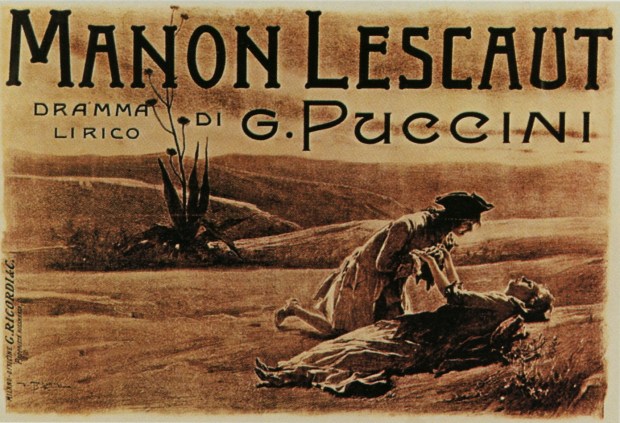
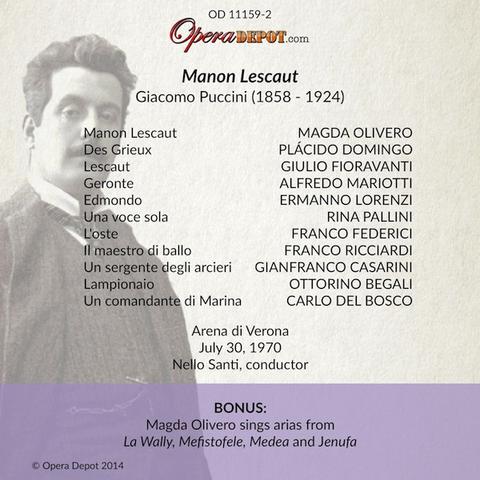
MAGDA OLIVERO

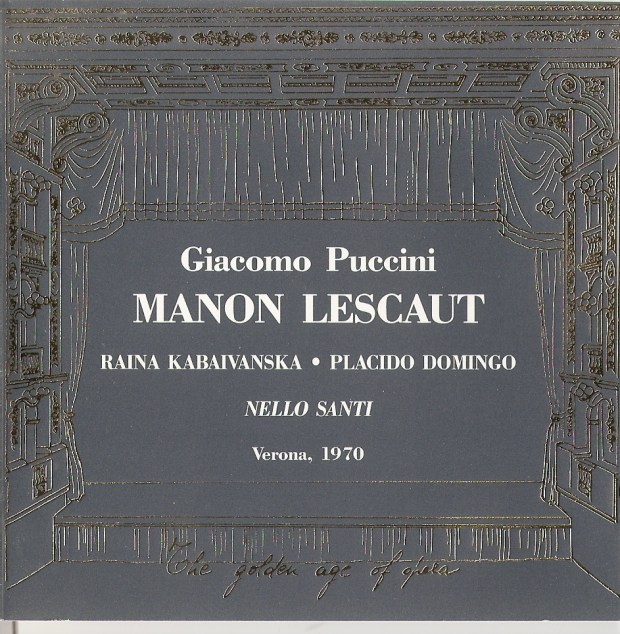
RAINA KABAIVANSKA



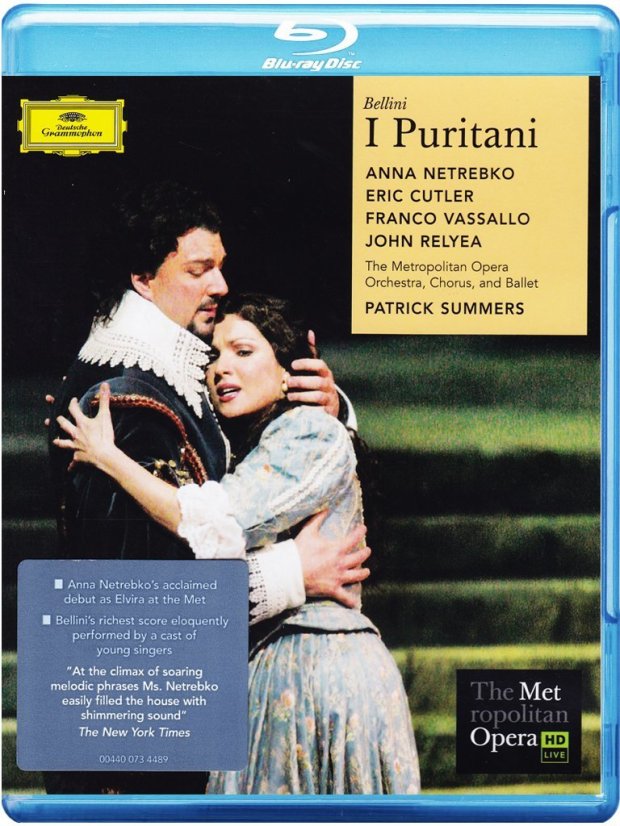


Mariella Devia:

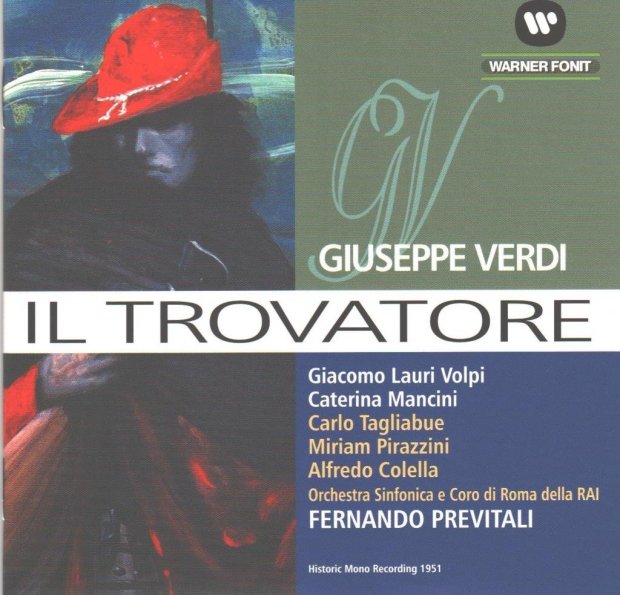


 Basia con fuoco