Leonard Bernstein with Felicia Cohn Montealegre at their wedding on Sept. 9, 1951. Bernstein’s suit had previously belonged to Serge Koussevitzky. (Courtesy Music Division/Library of Congress
During his honeymoon in 1951 Bernstein started composing his first opera, Trouble in Tahiti. He wrote not only the music, but also the libretto, which, according to his biographer Humphrey Burton, was highly autobiographical and based on his parents’ marriage. Bernstein himself described it as a “light work, inspired by popular songs” and dedicated the piece to his good friend Marc Blitzstein, who had taught him the basics of musical theatre.
Bernstein with composer and friend Marc Blitzstein. Photographer unidentified. (Music Division)
The work may be light, but it is certainly not light-hearted. Consider it a satirical caricature of the life of an average American couple in the suburbs in the 1950s. To the outside world, they appear to be a happy couple, but in reality they are deeply unhappy, both with each other and with the life they lead, despite achieving prosperity.
The opera begins with – and is commented on by – a vocal trio singing about the idyllic life of the American middle class. A kind of contemporary Greek chorus that is reminiscent of the Andrews Sisters, or the radio commercials of that era.
British director Tom Cairns filmed the opera for television in 2001 in the style so characteristic for the 1950s comedies starring Doris Day.
Karl Daymond is not to be dismissed as a vocally and scenically inimitable Sam, and Stefanie Novacek is a more than convincing Dinah.
Tom Randle, Toby Stafford-Allen and Mary Hegarty (the Greek chorus) sing and act at the highest possible level.
In 1991, Hyperion launched a new, exceptionally enjoyable, project, the Romantic Piano Concerto.
The series opened with a recording of Moszkowski’s piano concerto, which was, in those days, considered to be his only piano concerto.
At the time, no one knew that another, earlier concerto existed; it was only discovered in 2008.
Is it any good? Yes and no. It’s actually a bit of fluff, but how beautiful it is! Really something to listen to with your eyes closed, preferably in the garden in the sun (in front of the burning stove in winter is also fine), your mind switched off and… sweet dreams will come.
With its almost 54 minutes, the concerto is quite long and part four, allegro sostenuto, should really have been left out, but hey… sometimes it’s nice not to have to think and just surrender to pure romance.
Very little is known about Adolf Schulz-Ever; even his name is spelled in different ways. The Pole, who was a student of Stanislaw Moniuszko, must have been an extraordinary piano virtuoso, because his eleven-minute work really needs a master pianist. But also one who just knows how to tease out the famous “Russian soul” (the work is not called Russian Rhapsody for nothing!) and how to fill it with unabashed longing.
The Bulgarian Ludmil Angelov can do that. Together with the BBC Scottish Symphony Orchestra conducted by Vladimir Kiradjiev, he makes my heart beat a little faster.
Thank you, Hyperion. I will cherish this CD as a beautiful memory.
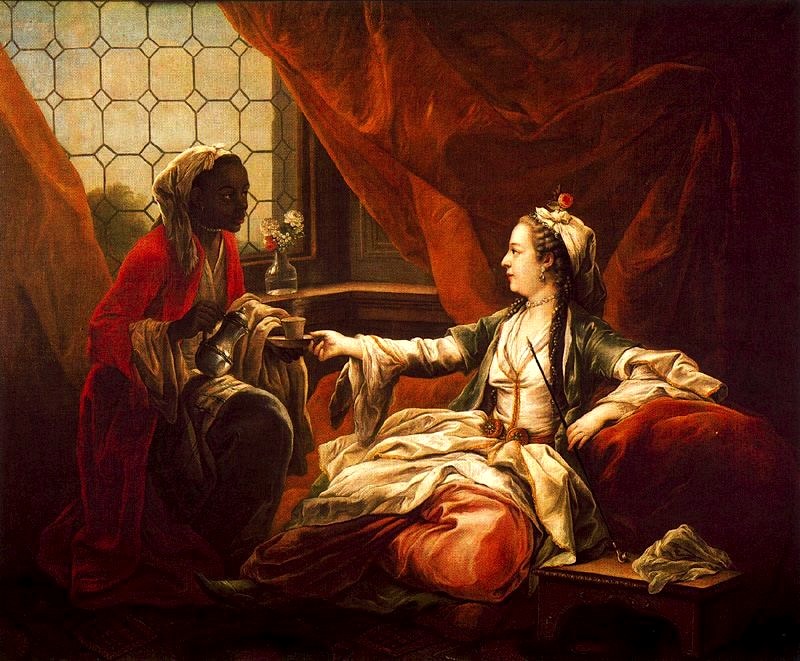
The Orient! What did we know about it in those far gone days? It was exotic, adventurous and exciting. All the men there were macho, super attractive and potent. And they smoked opium. All the women were beautiful, graceful, mysterious and seductive. It smelled of amber and wild jasmine….
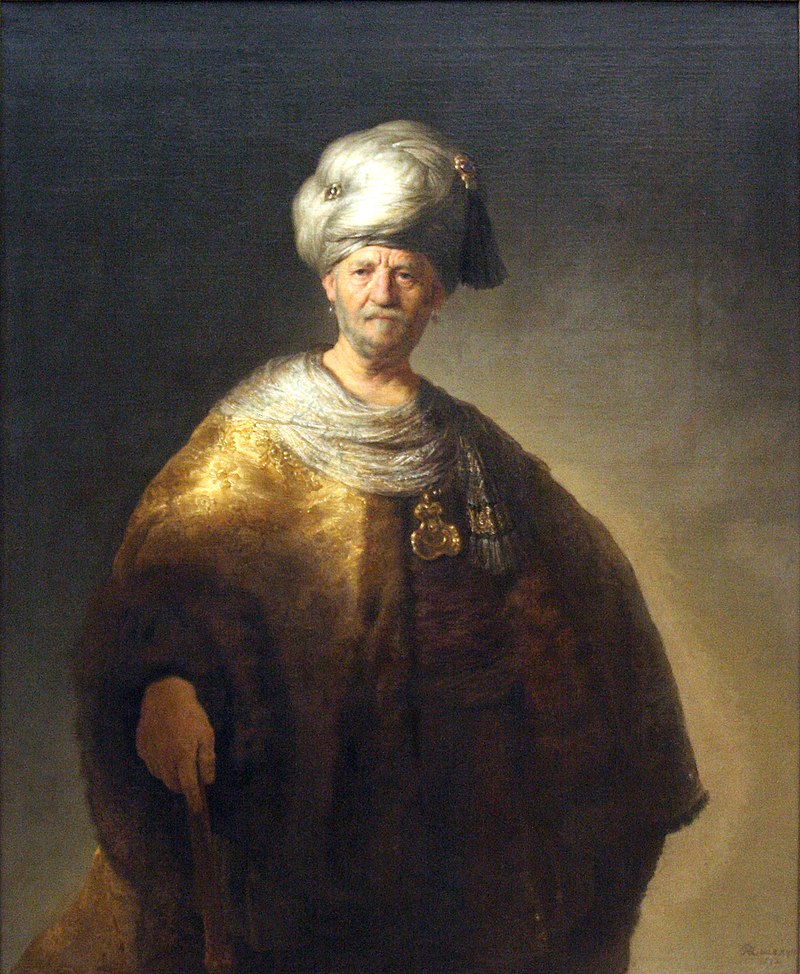
Man In Oriental Costume (“The Noble Slav”), oil on canvas, by Rembrandt, 1632. A significant example of European emulation of Ottoman dress for the purpose of portraying a dignified, elite appearance.
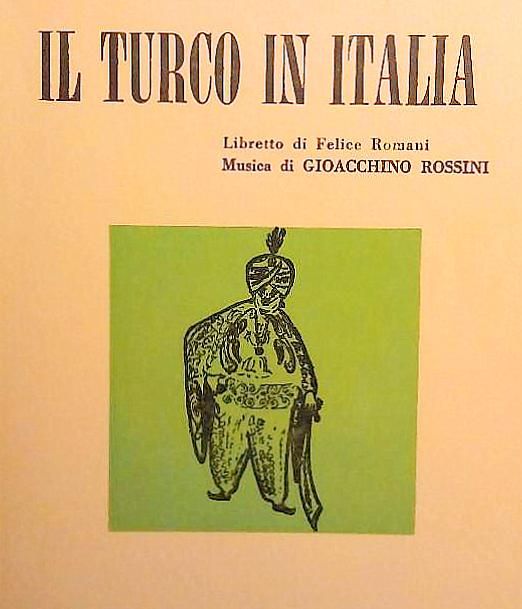
It was so incredibly far away and unknown – no wonder we were enchanted by it. No wonder, too, that our dreams sometimes ran wild. But the dreams turned out to be good for something, because they gave us the most beautiful works of art, including operas. Rossini’s Il Turco in Italia is one of them.
Believe it or not (believe it!), Turco is very similar to Mozart’s Cosi van tutte. Even the music is often reminiscent of it. The story: a Don Alfonso-like poet without inspiration, a kind of evil genius really, devises an intrigue in which he then manipulates all the characters as if they were puppets, so that everyone ends up with (almost) everyone else, but in the end everything does turn out well. Or not. In any case, our Prosdocimo tells a wonderful story.
I wonder what the ideal Fiorilla should sound like. On the recordings known by me, she is sung by all voice types: from a super light coloratura soprano to a dark coloratura mezzo with chest tones. Somehow, none of the ladies really appeal to me, not even Maria Callas, although she comes close to what I would like to hear in this role.
DVD’S
Zurich, 2002
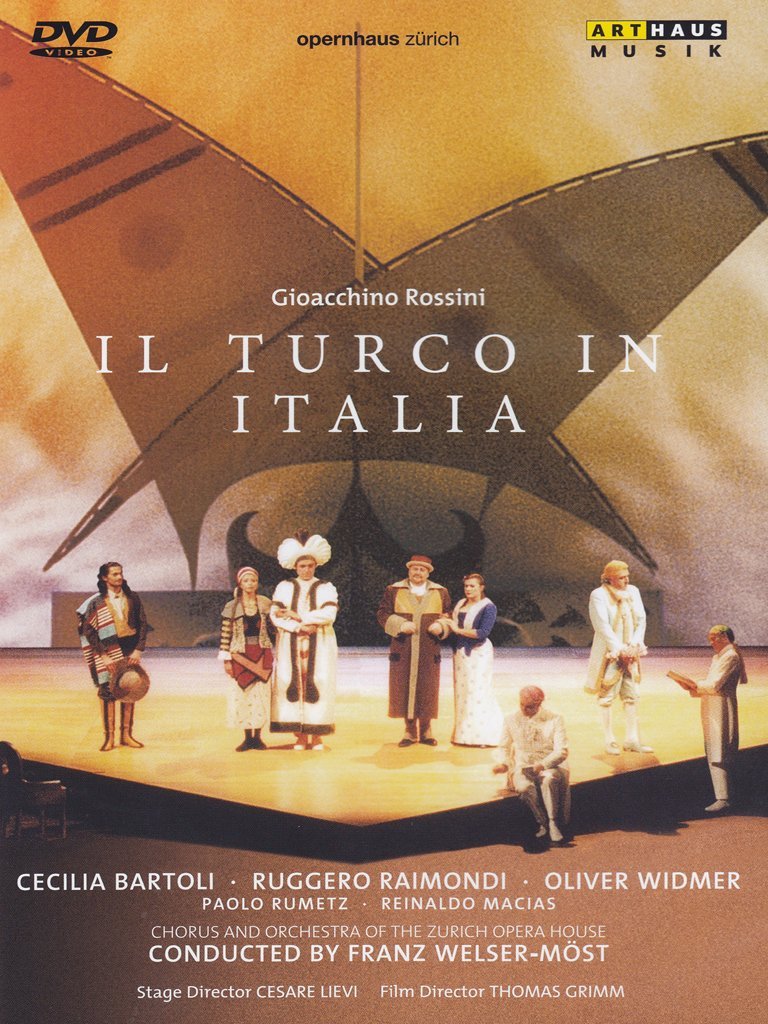
In 2002, Il Turco was staged in Zurich. The lead role was played by an old hand, Ruggiero Raimondi. His Selim is undoubtedly exciting and erotic, and he compensates for the wear and tear of his voice with overwhelming acting and tremendous charisma.
Oliver Widmer is in fine form as the cynical poet Prosdocimo, and Paolo Rumetz plays a delightfully dim-witted Geronio. The problem is Cecilia Bartoli. (Please don’t hit me, it’s just my opinion!) She is undoubtedly a virtuoso, but I find her mannerisms very irritating and her dark timbre completely unsuitable for the role.
The whole thing is cheerful, with bright colours and crazy costumes: the gypsies look like a combination of Volendam people and Peruvians (Arthaus Musik 100 369).
Pesaro 2007
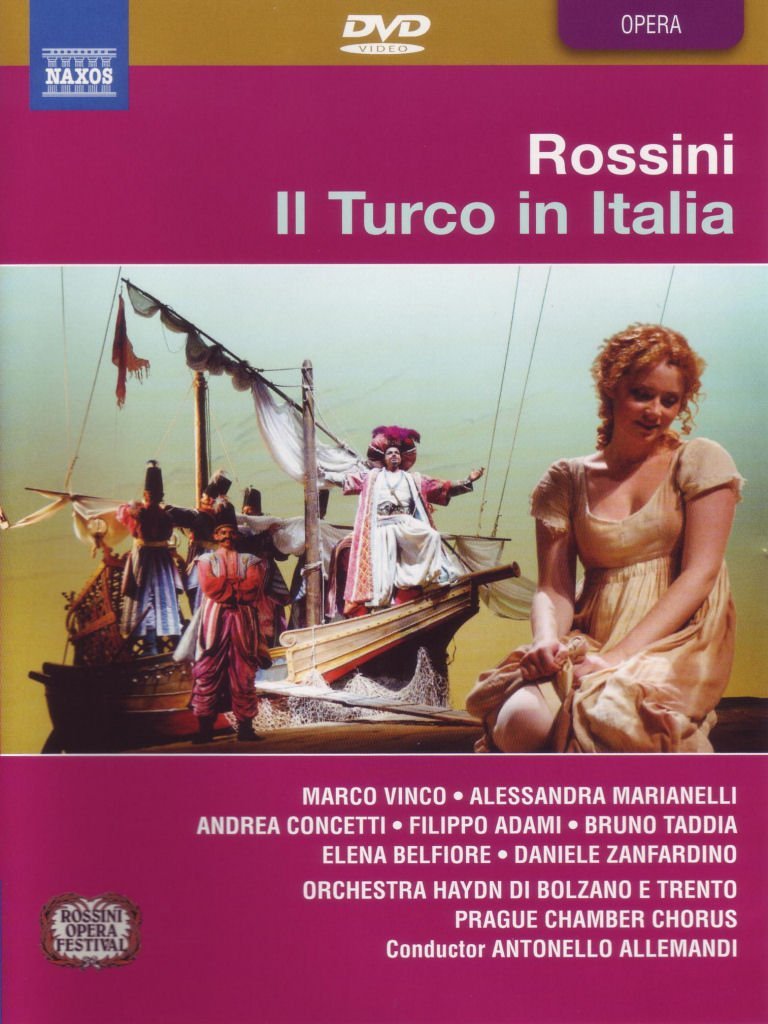
In Pesaro in 2007, a very naturalistic-looking Turco was recorded, with only young, unknown singers in the leading roles. The fact that they, with the possible exception of Marco Vinco (Selim), have remained unknown, does not say everything, but it does say a lot.
Nevertheless, there is much to enjoy. The characters are wonderfully recognisable, the colours are beautiful and the action follows the libretto closely. Definitely enjoyable! (Naxos 2.110259)
Genoa, 2009
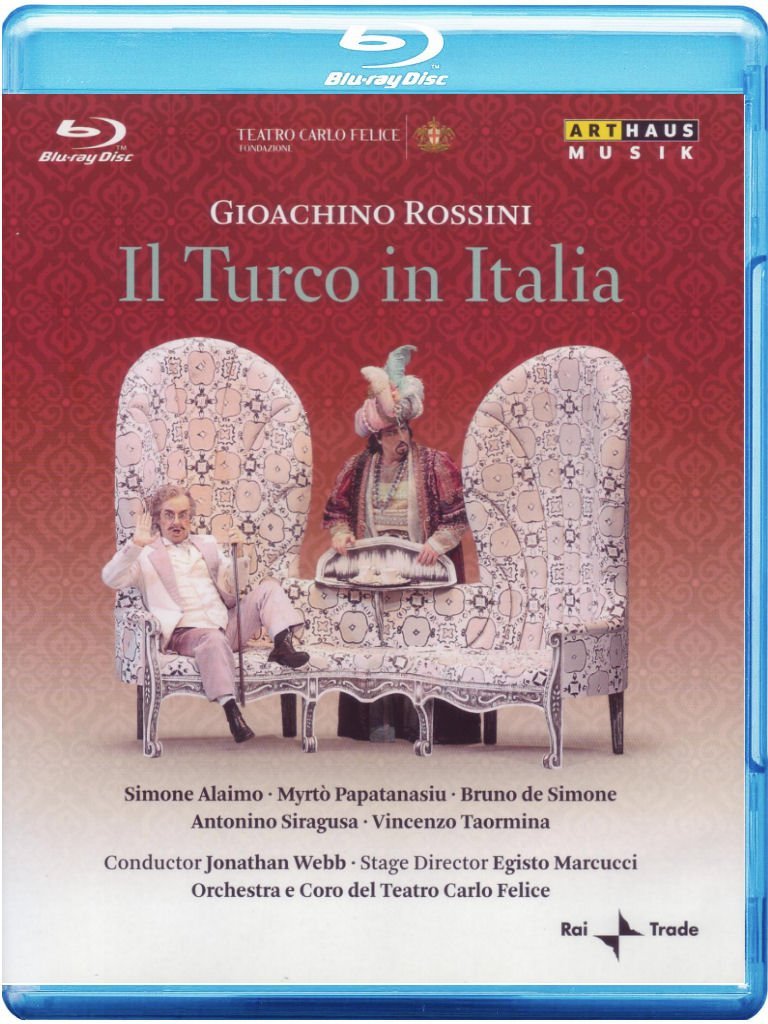
One of the newer recordings on DVD is from 2009 at the Teatro Carlo Felice in Genoa. Well, new… the production is more than 40 years old and was first seen in 1983.
That’s okay, because it’s still very entertaining, although I must admit that I sometimes feel a little dizzy from everything that’s happening on the stage: acrobats, fire-eaters, ballerinas, Arlecchinos and so on. Commedia dell’Arte at its best.
Myrtò Papatanasiu is a beautiful Fiorilla and Simone Alaimo a delightful Selim, although I think he is performing slightly below his usual high standard. Antonino Siragusa is also a tiny bit disappointing as Narciso (Arthaus Musik 101 39).
CD’s
Milan, 1954
.
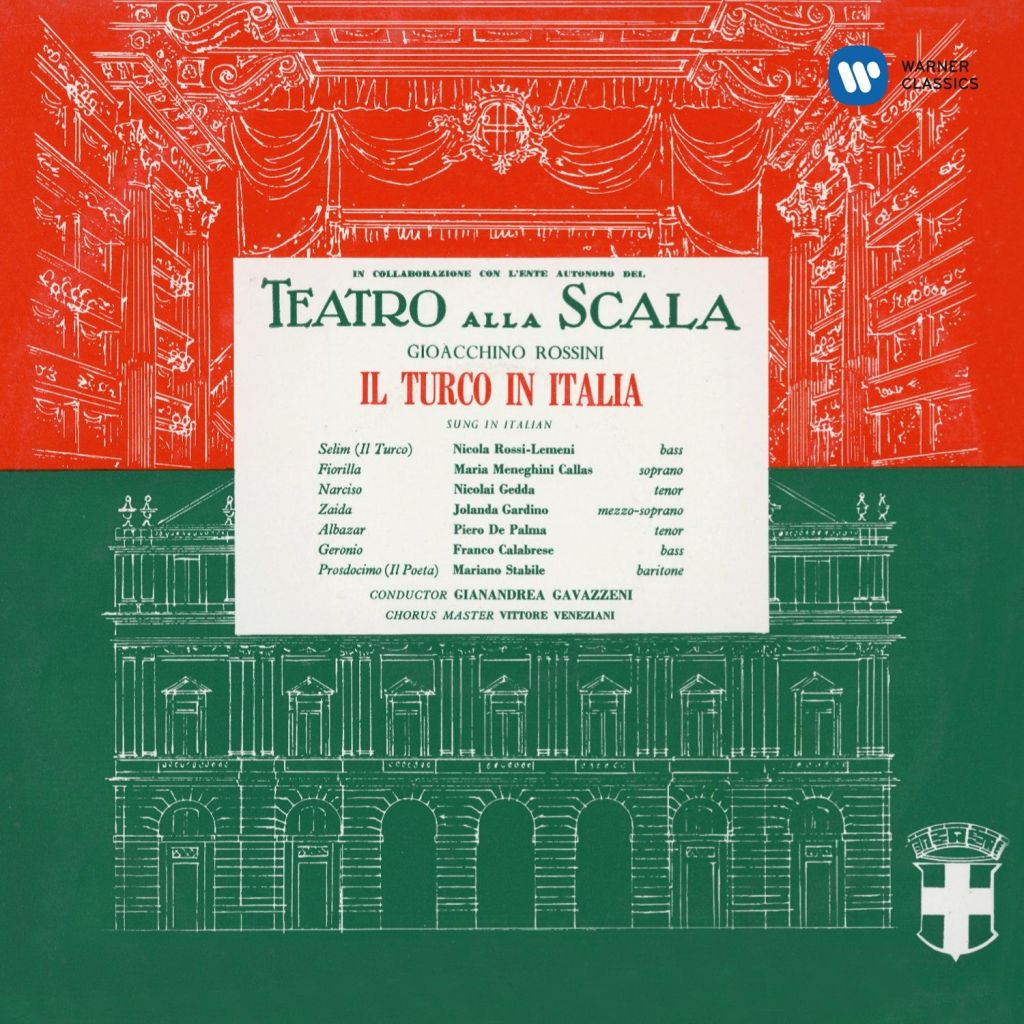
Maria Callas sang the role of Fiorilla in Rome in 1950 and four years later recorded it in the studio with La Scala in Milan. Gianandrea Gavazzeni conducted an “all-star cast” – most of the names make our mouths water today. But, apart from the fact that they were all truly fantastic, we have to ask ourselves whether it still sounds adequate to our ears.
Yes, Nicola Rossi-Lemeni would still be able to do it today, but the rest, including La Divina? With her, I often get the feeling that I am in the wrong opera and that I’m really listening to Anna Bolena. (Warner 0825646340880)
Milan, 1958
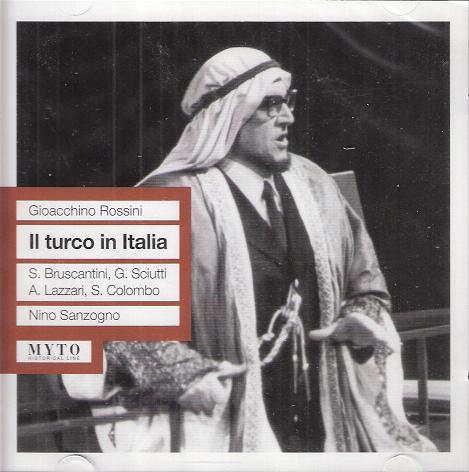
I absolutely cannot ignore Sesto Bruscantini who is a truly irresistible Selim. Scipio Colombo is delightful as the (in his interpretation) comic villain Prosdocino, and as Donna Fiorilla we hear one of the most delightful light sopranos of the time: Graziella Sciutti. A little soubrette-like, but so agile, and with such a wonderful timbre! The rest of the voices are good, but not exceptional, but Nino Sanzogno’s conducting – light and sparkling – does the opera justice. The live recording from 1958 (Milan) is rather dull. Nevertheless, it is a special document of a time that is now truly gone (Myto 00193).
Sesto Bruscantini and Graziella Sciutti in “Credete alle femmine”:
The good news: the overture is played with the curtain closed! The overture is the best-known piece of the entire opera, so it goes without saying that it is given plenty of space. Otherwise, Béatrice et Bénédict is not exactly what you would call a box office hit. No wonder: the opera is not particularly exciting, which is partly due to the endless stretches of spoken text.
The story (Berlioz himself wrote the libretto based on Shakespeare’s Much Ado About Nothing) is insignificant, but the music is at times enchantingly beautiful.
The 2016 Glyndebourne production is very disappointing to me. Laurent Pelly is one of my favourite opera directors, but he has overreached himself here. He has taken the main characters’ “thinking outside the box ” too literally, and the end result is as dull and grey as the colours of the sets, the costumes and even the singers’ make-up.
Fortunately, the singers are all excellent. In her first aria, “Je vais le voir”, Sophie Karthäuser (Héro) still sounds a little heavy, but her duet with the excellent Katarina Bradic (Ursule), “Nuit paisible et sereine!”, sounds just as it should, like a real gem.
Stephanie D’Oustrac is a fantastic Béatrice, and the sexual attraction between her and Paul Appleby (Bénédict) is palpable from the start.
But it is the young baritone Philippe Sly who really steals the show as the gangly Claudio.
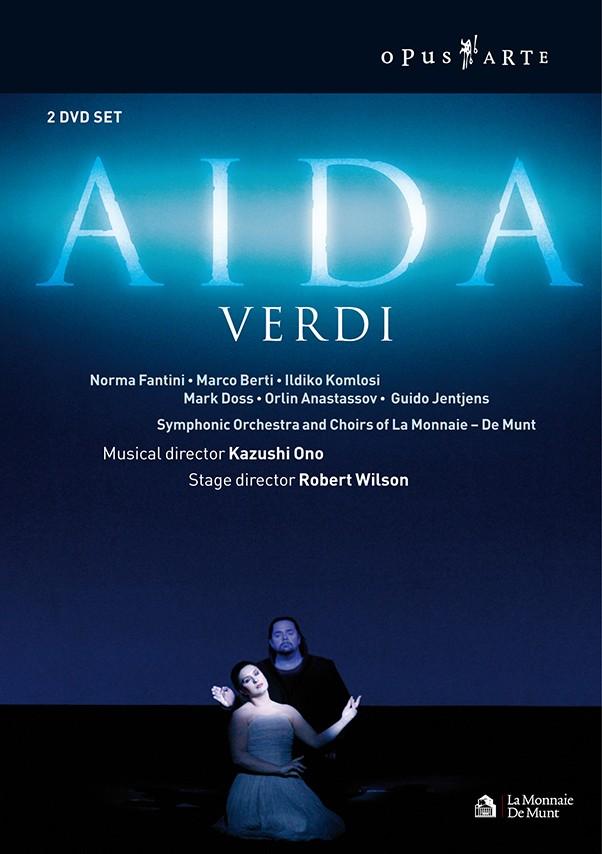
Don’t expect any elephants in this Aida from Brussels. Also, no big mass scenes and – mainly – don’t expect emotions. With Robert Wilson, everything has to be minimalist and aesthetically pleasing, which undeniably makes for nice pictures but it makes for a very large discrepancy with the music. The singers move very slowly, almost in slow motion, and their (sparse) gestures are stylised after ancient Egyptian drawings.
No one touches anyone and no one is even looking at anyone else. All the characters are mainly preoccupied with themselves and their own suffering, which, according to the director, may be the key to the drama. For me it is too far-fetched.
The staging is dominated by the colours black and blue, there are hardly any sets and/or props. Deadly dull.
The truly amazing singers seem to be trapped in a straitjacket of emotionless acting, although Ildiko Komosi (Amneris) occasionally manages to sneak in a gesture. Together with Norma Fantini (Aida), she provides most of the tension and emotion, and their duet in the first act is a vocal highlight.
Marco Berti is an excellent Radames with beautiful high notes and a touch of “Pavarotti” in his timbre, and the rest of the cast is also first-rate. Kazushi Ono conducts calmly, with great attention to detail.
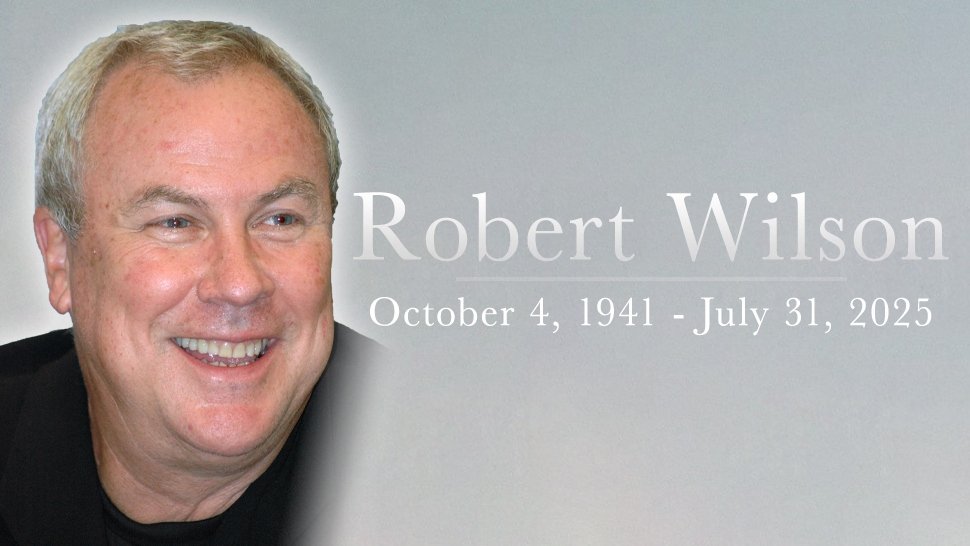
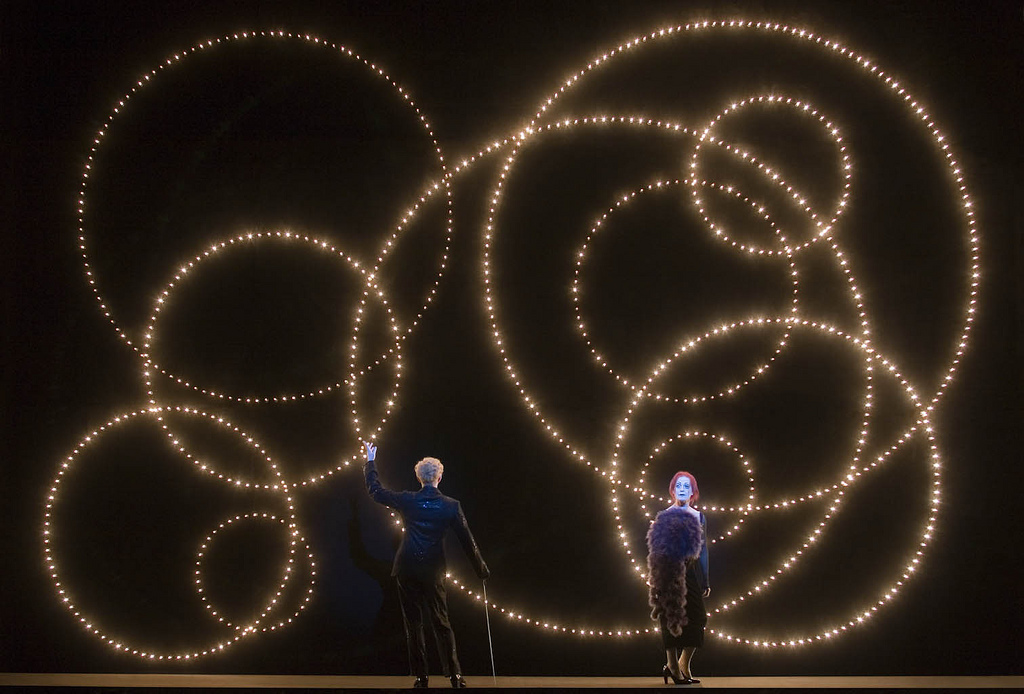
Returning to the director: Robert Wilson seems to repeat himself over and over again. If you have seen one of his productions, you have seen them all. Almost..
But then……
Nothing less than phenomenal: Die Dreigroschen in Amsterdam 2009
At the end of April 2009, the renowned Berliner Ensemble visited Amsterdam. They brought with them Die Dreigroschenoper, in the magnificent staging Robert Wilson had given to the company two years earlier. Worth knowing: the Berliner Ensemble is based in the Theater am Schiffbauerdam where the work was premiered in 1928.
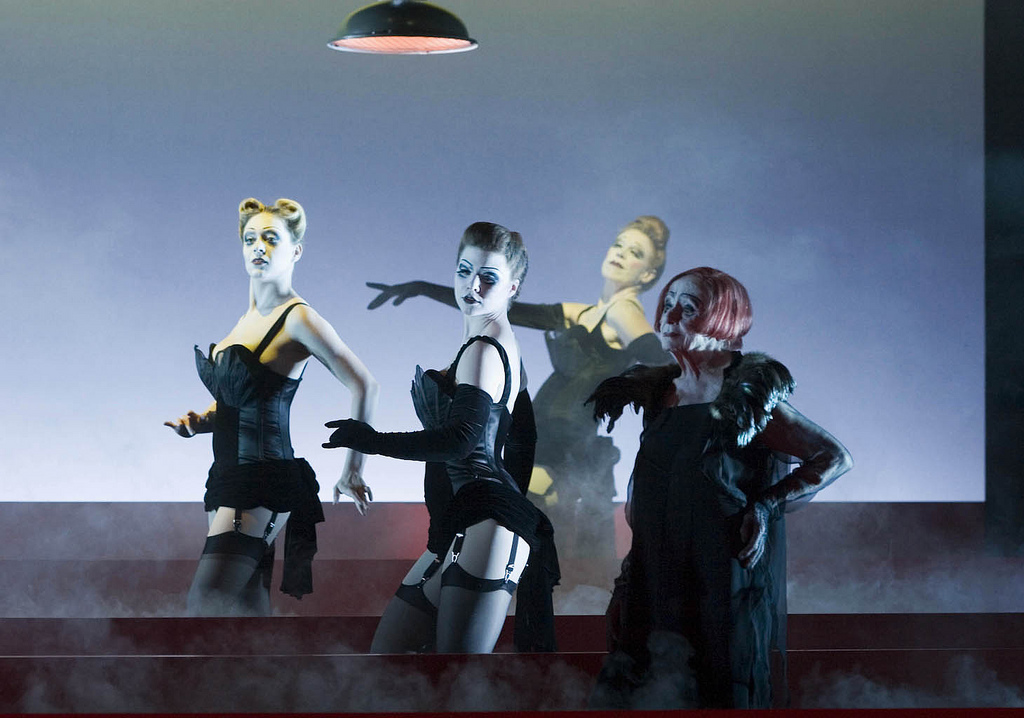
All four performances at the Muziektheater were sold out and audiences responded with frenzied enthusiasm. Perfectly justified because everything was just great. The production, the direction, the lighting, the costumes, the movements…. And the performance, of course, because isn’t that why we go to the music theatre?
The performance was very cabaret-like, in the good sense of the word. It was grotesque and vaudeville-like with lots of slapstick, (film) quotes and whatnot without it becoming a complete farce. Occasionally I was reminded of Otto Dix.
In a word: breathtaking. And of course it was a treat to be able to hear all those well-known and still oh-so-current songs again, but now as part of a whole.
The performance did take a long time (yes folks, it was not only Wagner who took his time), over three hours, but then also you got a lot. For a start, the complete dialogues.
Stefan Kurt was a formidable, androgynous dandy Macheath and Angela Winkler a very moving Jenny. Also great were Jürgen Holtz as J.J. Peachum and Axel Werner as Tiger Brown, and Christina Drechsler was a terrific Polly.
Curious man, that Henze. Once flirting with communism and dreaming of a world revolution, he was also an aesthete and an erudite which – in part – made him decide to bid farewell to Germany and move to Italy in 1953.
His music has always been highly theatrical: he never liked the strict rules of serialism and felt a close connection with opera, which, unlike the hardliners of the avant-garde at the time, he had never labelled as obsolete. His discography therefore lists more than 20 musical theatre works, performed with great regularity.
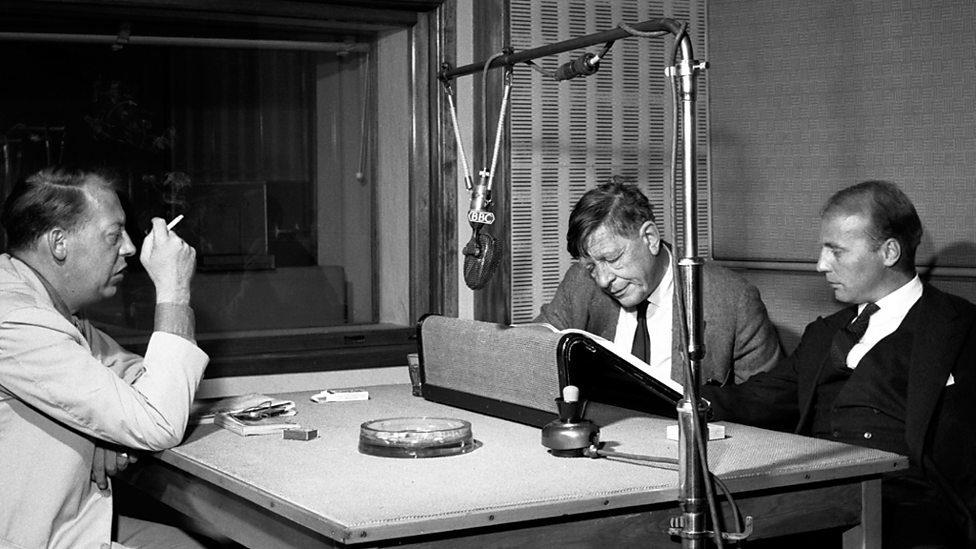
L-R: Chester Kallman, W. H. Auden and Hans Werner Henze
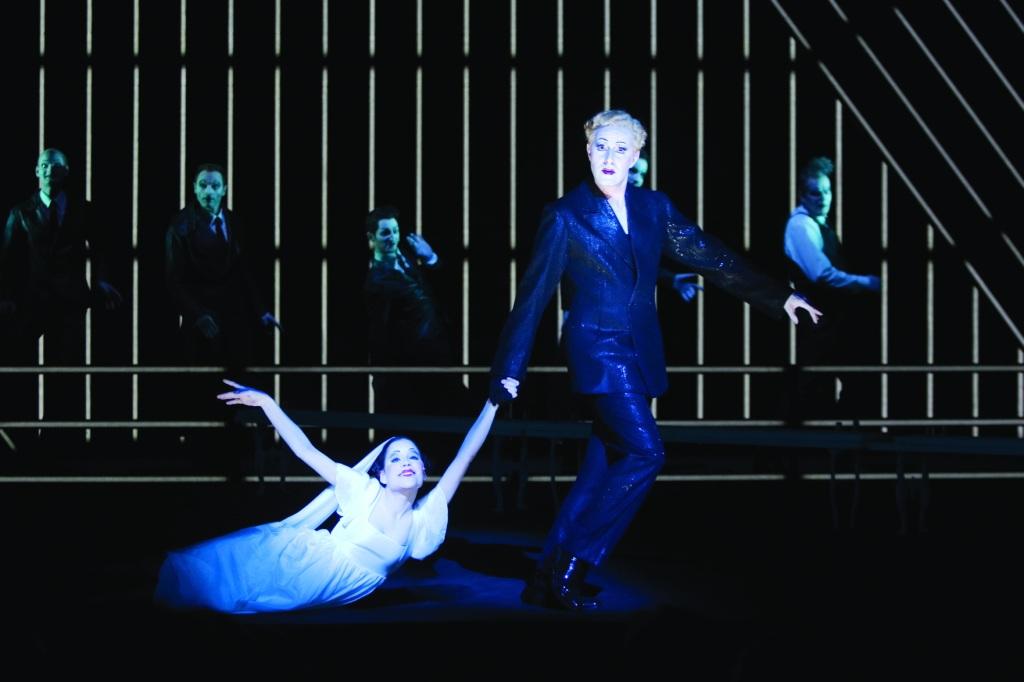
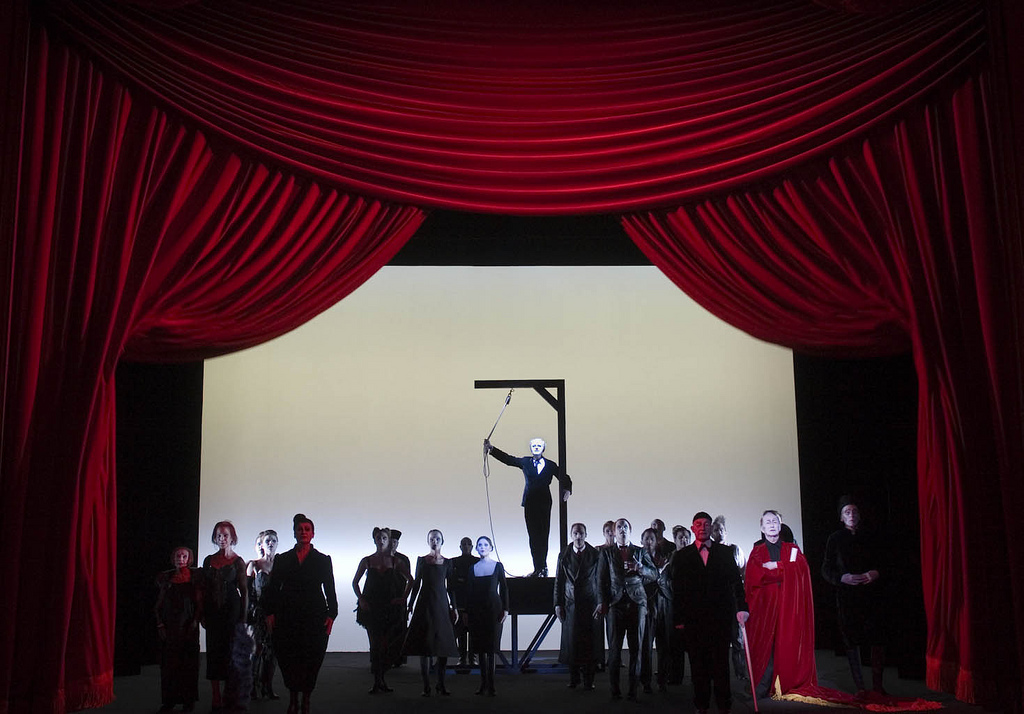
Die Bassariden is among Henze’s finest and most important compositions. The English Language libretto, after ‘The Bacchantes’ by Eurypides, was written by W.H.Auden (does anyone remember the ‘Funeral Blues’ from Four Weddings and a Funeral?) and Charles Kallman.
It became a massive, through-composed score, anchored in the Wagnerian tradition (it is whispered that the librettists insisted that Henze, before turning to composing, study the ‘Götterdammerung’) and constructed as a four-movement symphony with voices.
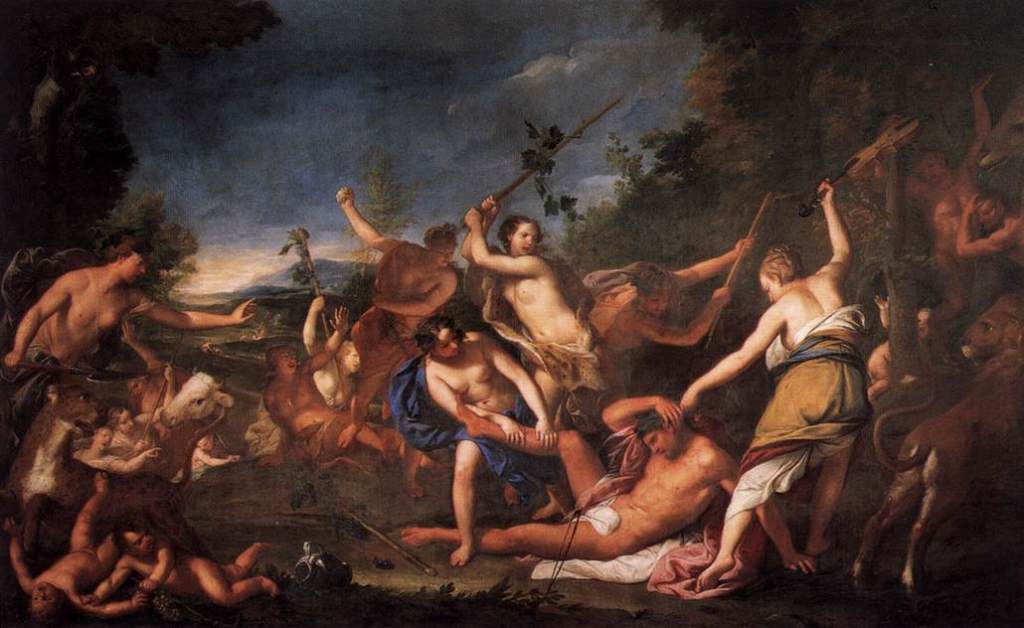
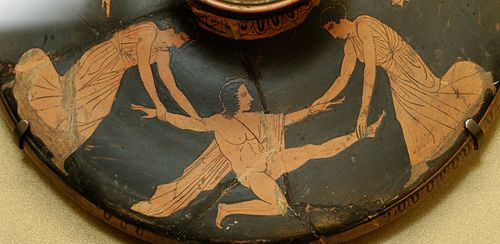
Pentheus being torn apart by Agave and Ino, Attic red-figure vase painting, c. 450-425 BC
The story of King Pentheus, who, by wanting to banish all sensuality, comes into conflict with Dionysus and his adepts and is ultimately torn apart by his own mother, serves as a metaphor for the conflict between Eros and Ratio.
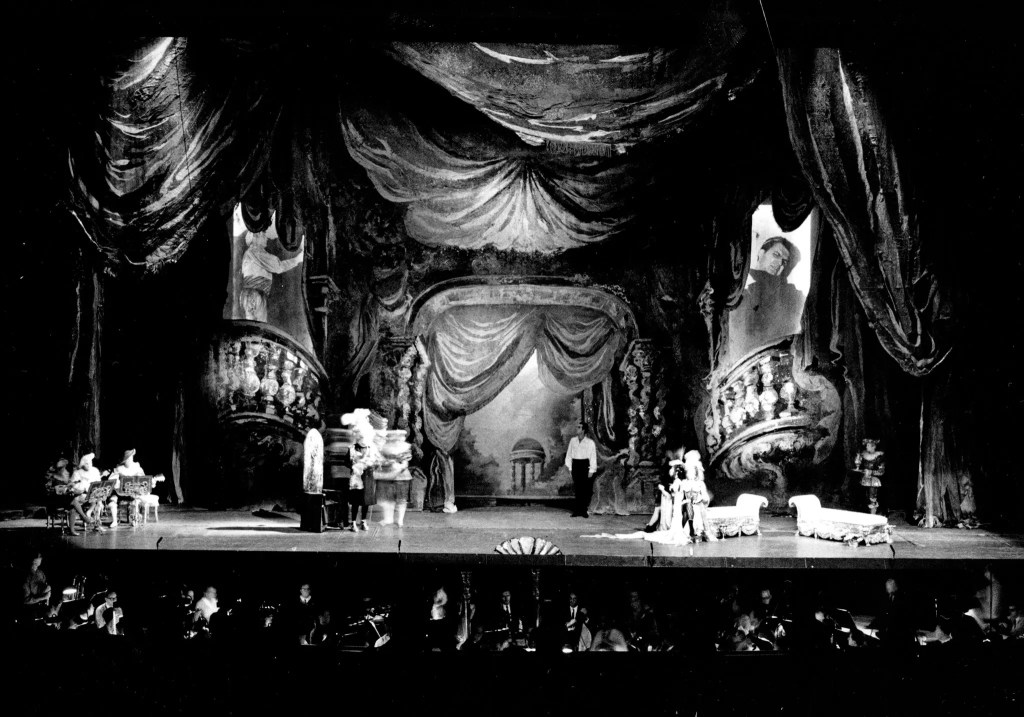
The opera premiered (in the German translation) at the Salzburg Festival in August 1966. It became a huge success, even prompting one of the reviewers to cry that Richard Strauss had finally got a successor. Henze laughingly and rightly dismissed this with a simple “where are the man’s ears?!”
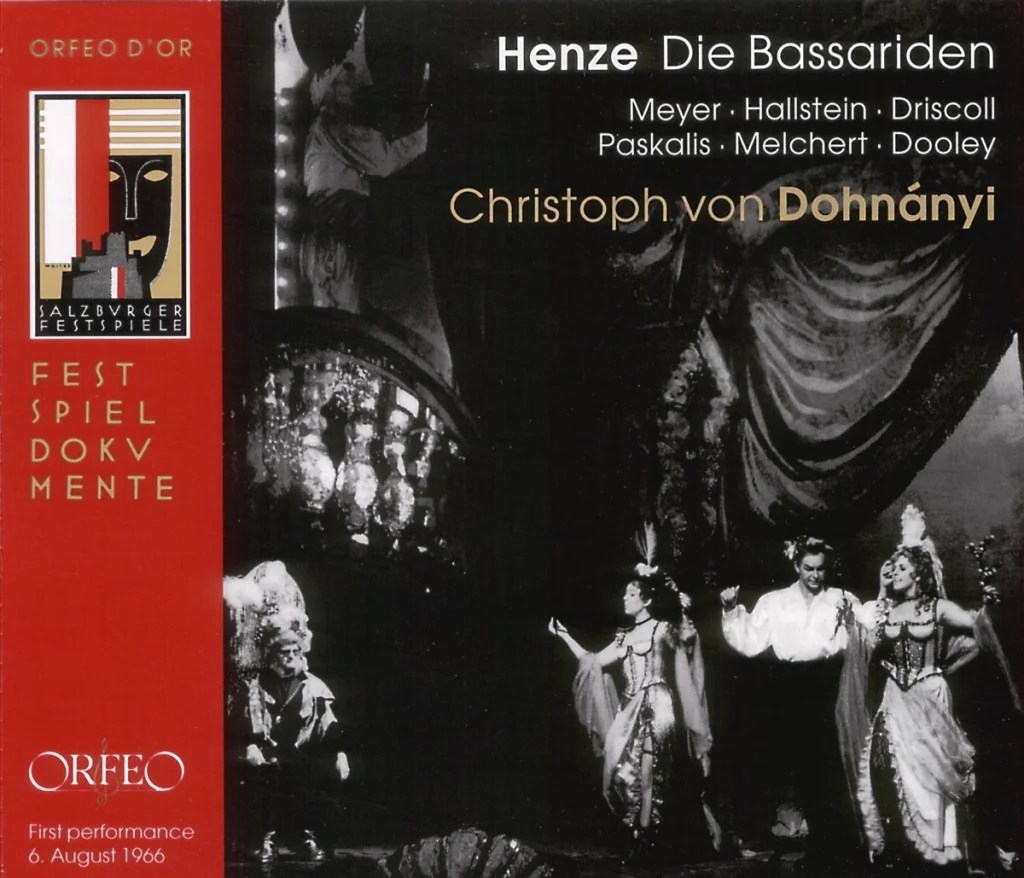
A few years ago, the live-recorded premiere performance (in German translation) was released by Orfeo (C 605 032 1). The highly emotional playing of the Wiener Philharmoniker, under the inspired direction of Christoph von Dohnányi, reaches unprecedented heights.
Kostas Paskalis is very credible in his role of Pentheus and Kerstin Meyer moves as Agave.It’s just a pity no libretto was included, after all, it’s not everyday fare.
[Editorial: A later performance of the English Language version was released on the Musica Mundi label, conducted by Gerd Albrecht, but this revised edition omits the interlude]
Das Urteil der Kalliope, interlude from Die Bassariden :
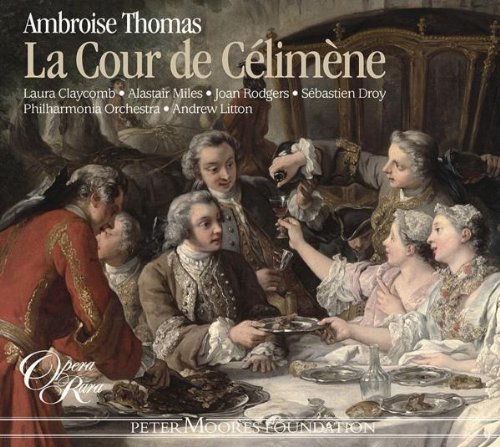
Ever heard of La Cour de Célimène by Ambroise Thomas? No, neither have I. Such a pity because that opera really is not to be sneezed at! It is a delightful, erotically tinged comedy in which a young, wealthy widow pits no less than fourteen (!) of her admirers against each other to eventually enter into a marriage of convenience with an old commander.
In between, we also get a duel, as Célimènes latest recruit, the Chevallier (brilliant Sébastien Droy) is hot-tempered, but it all works out and in exchange for a comfortable life in her manor, the commander is only too willing to accept all his wife’s lovers.
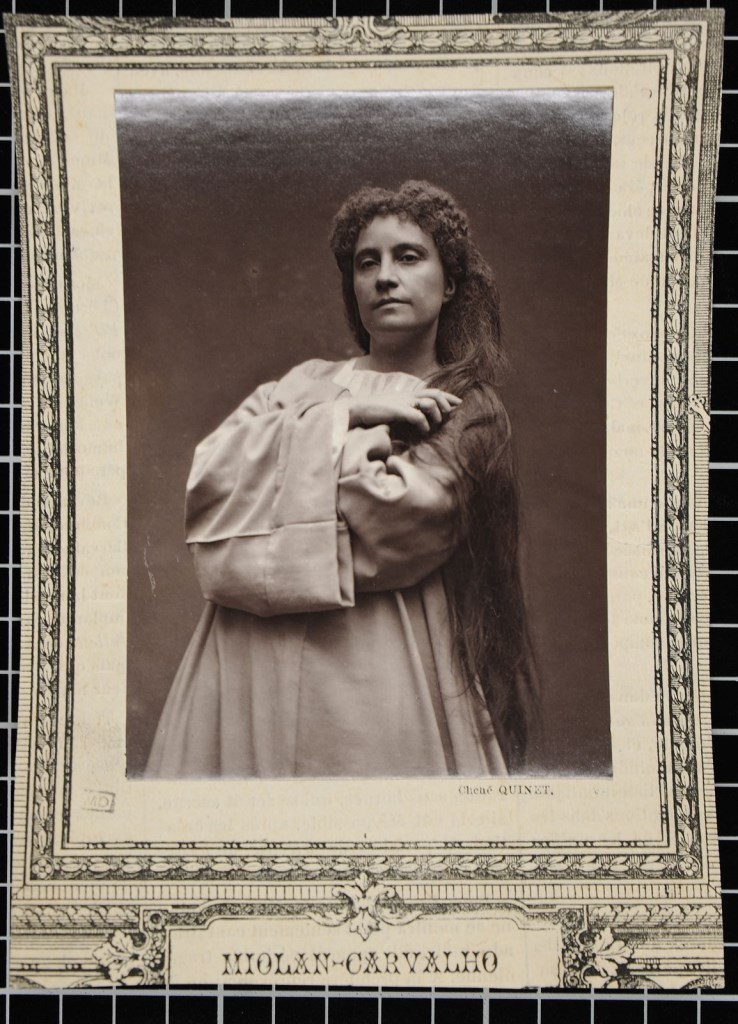
La Comtesse (a role written for the legendary colouratura soprano, Marie Miolan-Carvalho) is beautifully sung by a very virtuoso Laura Claycomb. Joan Rodgers counters her as her more serious sister and Alastair Miles is truly delightful as the Commander.
It’s entertainment of the highest order and the sparkling music is wonderful. What a treat! (ORC 37)
On one of his latest, already his seventh, recording for Decca, Benjamin Grosvenor has taken care of Liszt. That he did so very carefully, even meticulously, he told candidly in the interview he gave to the New York Times. ‘I almost feel like you should know the notable recordings of a work like this’ he said, referring to the piano sonata. So he studied just about every possible performance of the work: Lupu, Cherkassky, Horowitz, you name it.
Whether it also influenced his own interpretation? Undoubtedly. We, humans, we are influenced even if we don’t notice it. And yet his reading of the sonata is completely his own. Virtuoso, mainly. So much so that I was breathless by just listening to it. His technique is fabulous. What I admire even more is his, how shall I put it, “acting” skills. Acting, as it were, on the piano and building the tension with only the keys at your disposal
I am slightly less charmed by the other pieces on the CD. Mainly the three Petrarch Sonets from the second book of “Années de Pèlerinage”, which I have heard more beautiful and lyrical: Arrau, Lazar Berman… And no one can really match Michael Rudy’s interpretation. In my opinion, then.
Boris Giltburg: matchless
Wow, how great is that CD! Whereas Giltburg’s performance of Rachmaninoff’s Third Concerto disappointed me a little (I thought it was too forceful and too rushed), now I just have to admit that I may have been wrong about him.
Just take the “Rigoletto paraphrases” with which he opens his recital: mamma mia! The first bar already made me sit up because this is how it should be, this way and no other. It splashes out of the boxes, but more importantly: Giltburg takes ample time to bring out Liszt’s poetic, salon-like, if you will, side. I am very much impressed..
But it’s obviously all about the 12 Études d’exécution transcendante, works previously considered unplayable and which only the all-time great master pianists dared to try.
Giltburg plays them – all of them – naturally, decidedly, as if they are nothing at all. Well; his attaque may still be fierce, but he also knows how to conjure breathtaking, enchanting, pianissimi from the keys. And those glissandi!
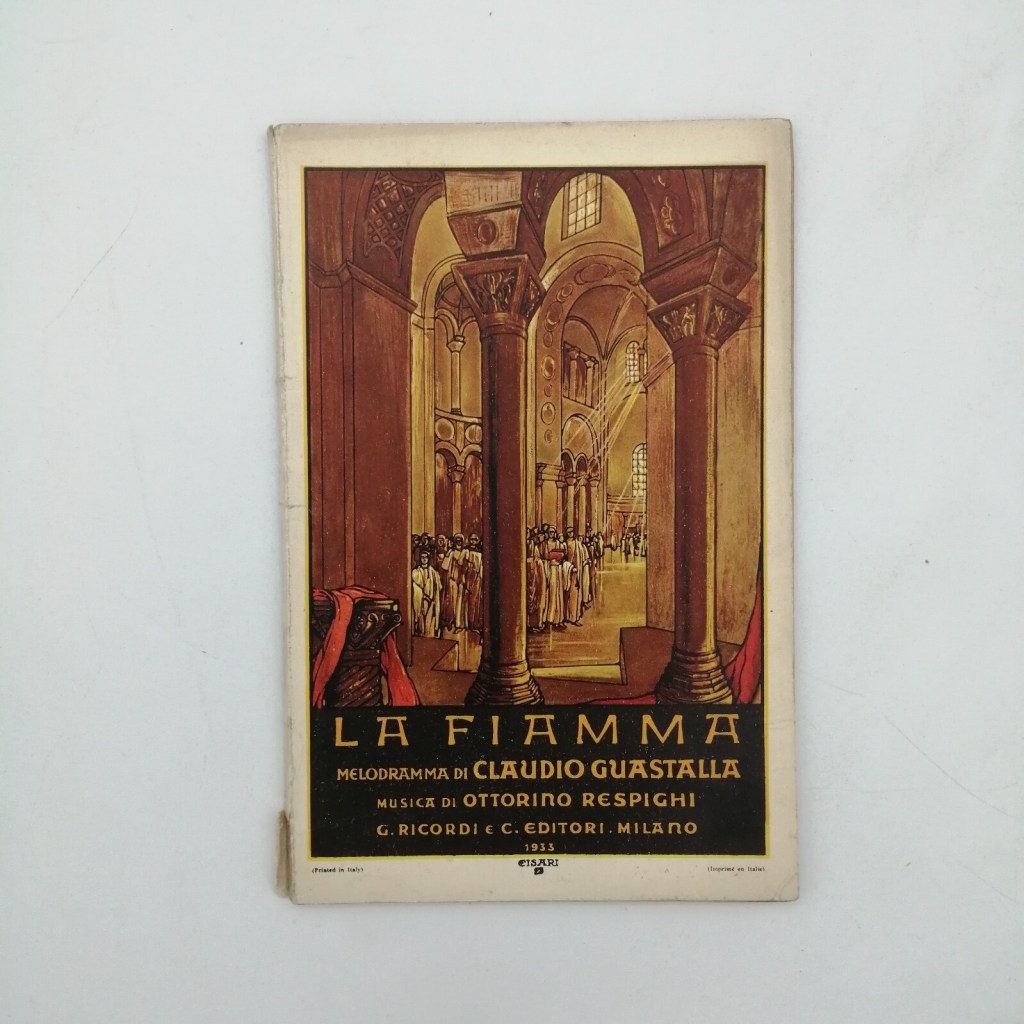
La Fiamma ging in 1934 in première en was redelijk succesvol met voorstellingen in Rome, Milaan, Buenos Aires, Montevideo, Chicago en Wenen. In 1936 ging er een Duitstalige versie aan de Staatsoper Berlin.
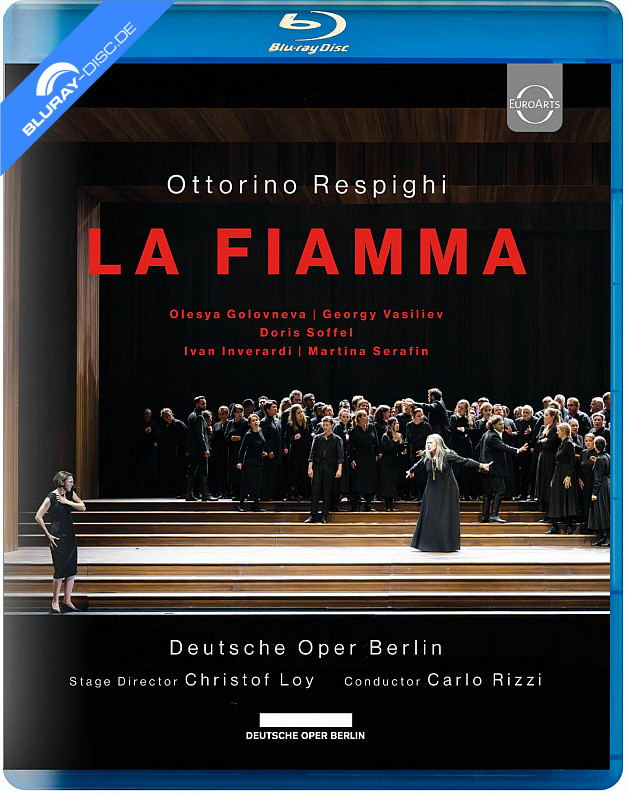
De première op 29 september 2024 van Christof Loy’s nieuwe productie voor Deutsche Oper Berlin is sindsdien de eerste keer dat dit vergeten werk in Duitsland op de bühne te zien is.
Opmerkelijk snel daarna is hiervan een opname op Bluray uitgebracht. Carlo Rizzi, artistiek directeur van ‘Opera Rara’, heeft de muzikale leiding.
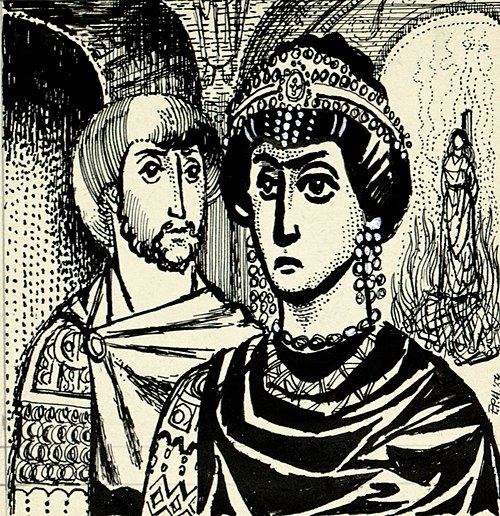
Het libretto van Claudio Guastalla is losjes gebaseerd op het toneelstuk Anne Pedersdotter, de Heks. Het gaat over een vrouw die ervan wordt beschuldigd haar stiefzoon te hebben verleid door middel van tovenarij. Na een veroordeling wordt ze als heks verbrand. Anne Pedersdotter is een historische figuur en haar proces en executie in het Noorwegen van 1590 is goed gedocumenteerd.
De gebeurtenis kan gemakkelijk worden geplaatst in de tijd dat angst voor heksen en verbrandingen wegens vermeende hekserij veelvuldig voorkwamen. Het was typisch een laat middeleeuws fenomeen en dat maakt de keuze van Guastalla om de handeling te situeren in het Byzantijnse Exarchaat begin 8e eeuw nogal opmerkelijk. Zonder enig probleem had hij Ravenna en Byzantium kunnen vervangen door bijvoorbeeld Genua zes eeuwen later. Ook met de tijdlijn neemt de librettist het niet zo nauw getuige het meermalen noemen van de Byzantijnse keizerin Irene die nog geboren moest worden toen het Exarchaat ophield te bestaan. Maar goed, het gaat uiteindelijk om een vrouw die haar stiefzoon weet te verleiden en dat hoort natuurlijk niet, ongeacht het tijdsgewricht.
Basilio is de Exarch die namens de Byzantijnse keizer het bewind voert over dat deel van Italië dat nog niet door de Longobarden is veroverd. Voor de Rooms Katholieke paus in Rome zijn beide groeperingen wezensvreemd: de Longobarden zijn Ariaanse christenen en de Byzantijnen zijn Grieks Orthodox. Eigenlijk zijn het gewoon allemaal ketters.
Basilio is betrekkelijk oud en kennelijk al geruime tijd in functie. Uit zijn eerste huwelijk heeft hij een zoon, Donello, die wordt opgeleid in Byzantium. Kort na het begin van de opera keert hij terug in Ravenna en dat zal grote gevolgen hebben.
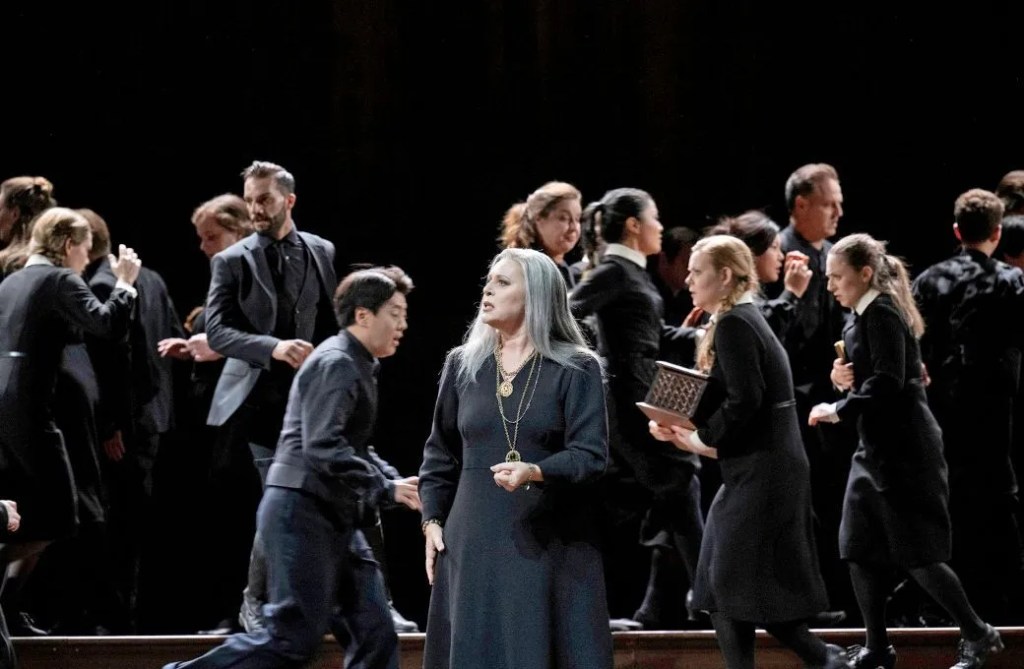
Basilio’s moeder Eudossia bestiert het hof, een dominante vrouw met onaangename trekjes in de trant van de Kosteres bij Janacek. Ze laat niet na om haar nieuwe schoondochter Silvana in te peperen dat ze door haar onbeduidende komaf niets aan het hof heeft te zoeken. In de eerste scène bezingt ze de lof van Basilio’s eerste vrouw op een wijze die sterk doet denken aan het liedje ‘My husbands first wife’ van Jerome Kern, zo leuk vertolkt door Maartje Rammeloo op haar cd ‘Longing to be loved’.
Als het verhaal zich ontrolt wordt duidelijk dat Basilio zich door een vrouw heeft laten overhalen om haar dochtertje, een kind nog, mee te nemen en met haar te trouwen. Hij beschrijft dit als een ervaring waarbij hij volledig werd overweldigd door de wijze waarop de vrouw met hem sprak en naar hem keek. Hij voelde zich gereduceerd tot een willoos object dat niets anders kon doen dan gehoorzamen.
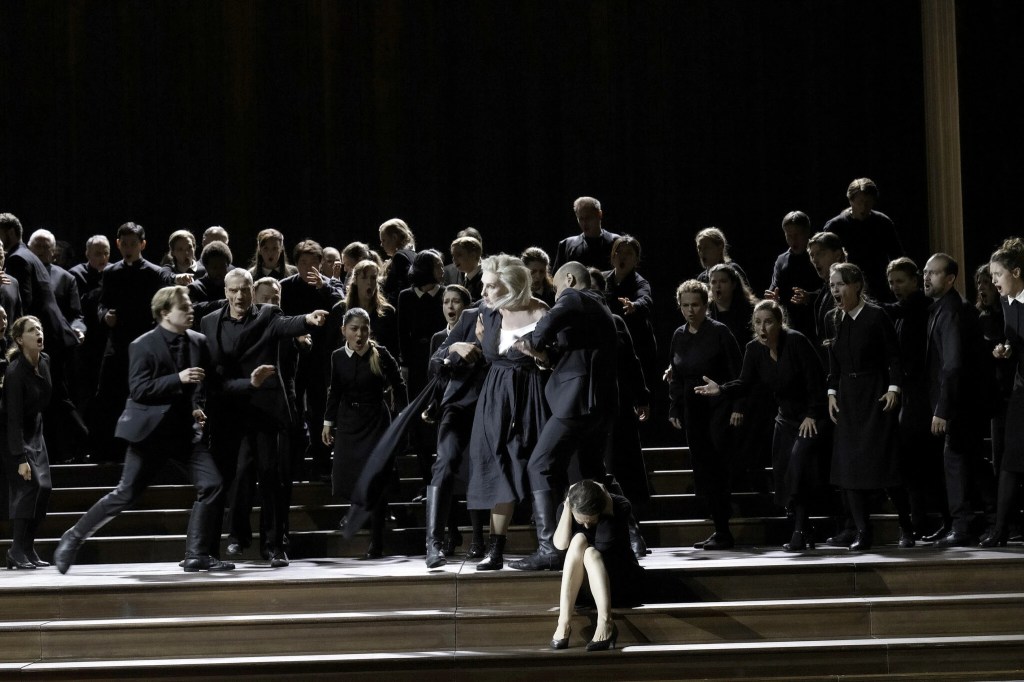
Silvana’s moeder blijkt een dubieuze reputatie te hebben en als Agnese di Cervia tijdens de eerste akte het paleis invlucht om te ontkomen aan een woedende menigte die haar van hekserij beschuldigt zinspeelt ze daarop om Silvana over te halen haar te helpen. Eudossia laat de menigte binnen als de officiële exorcist van de stad dat van haar eist en Agnese vervloekt alles en iedereen voor ze op de brandstapel sterft. Daarmee is Silvana verdacht gemaakt en Eudossia zal daar te gelegener tijd gebruik van maken.
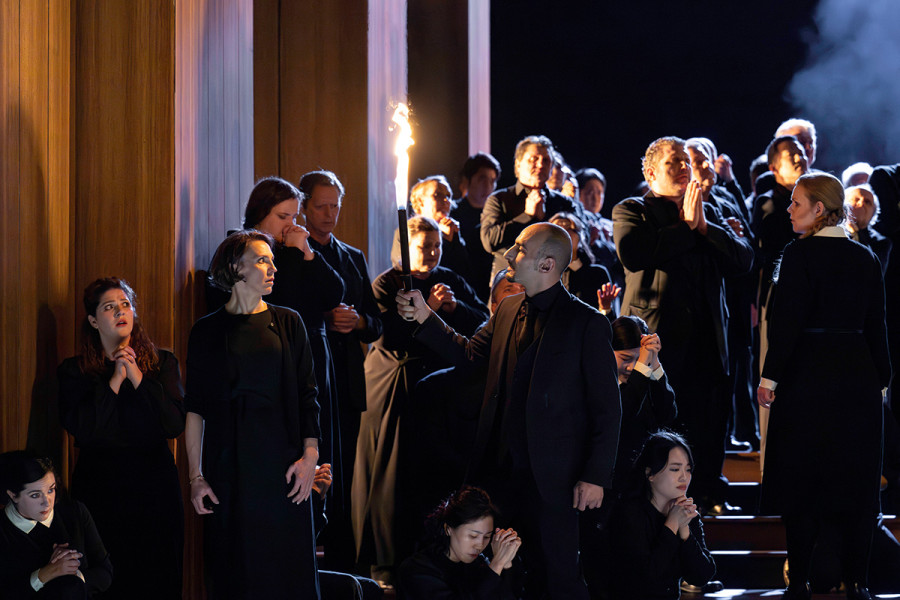
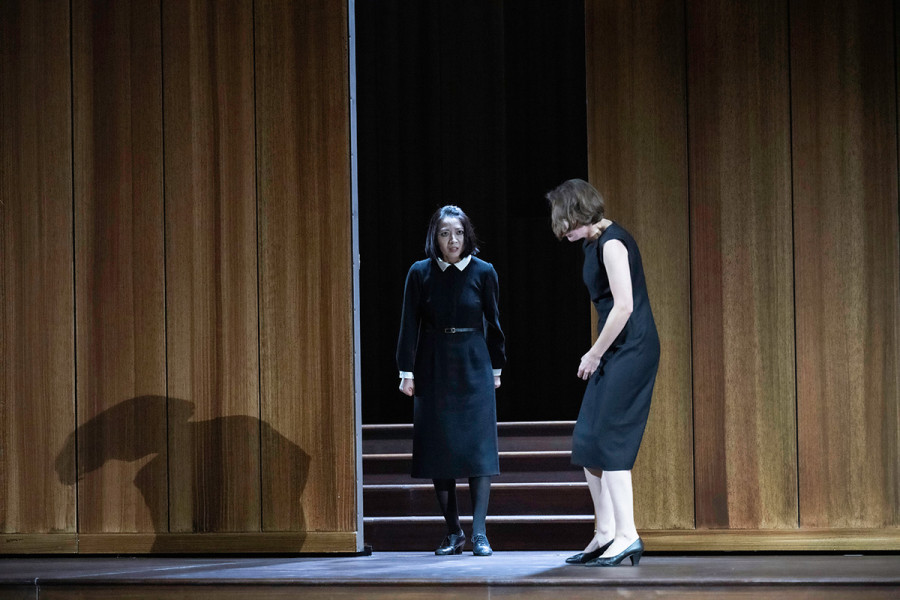
Silvana heeft een grote groep jonge vrouwen om zich heen, in deze productie doen ze denken aan kostschoolmeisjes, versterkt door hun zwarte jurkjes met witte kraag. Haar favoriete is Monica, feitelijk haar enige vriendin. Als Donello zijn opwachting maakt raakt dit meidenaquarium in grote staat van opwinding maar vooral Monica valt voor hem als een blok.
Als Silvana dat merkt reageert ze overdreven streng en stuurt Monica naar een klooster om haar voor verdere zonden te behoeden.
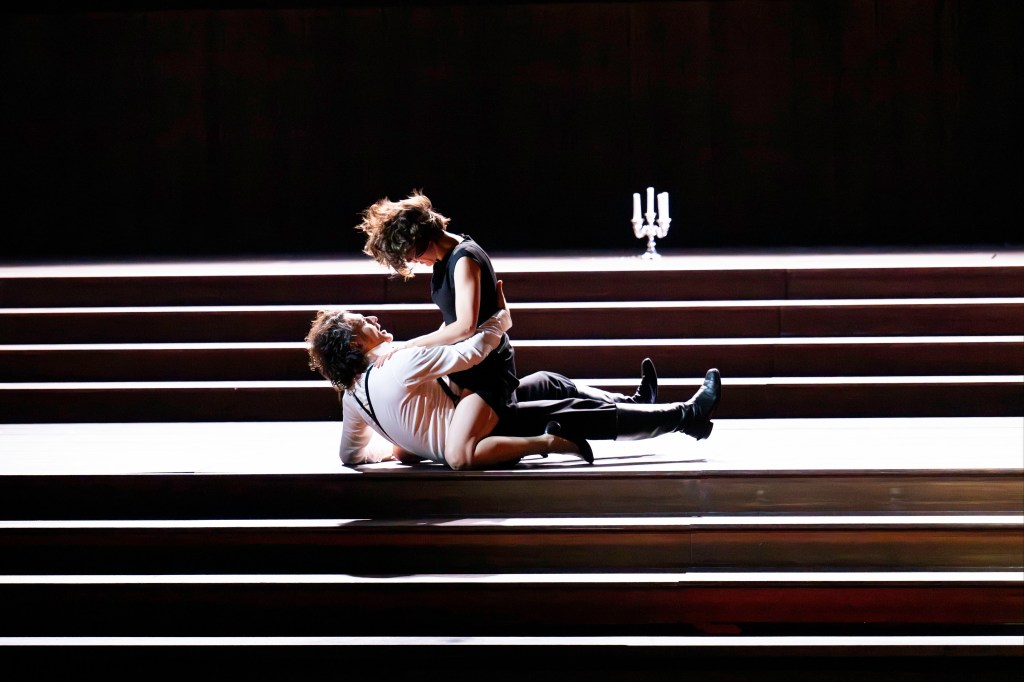
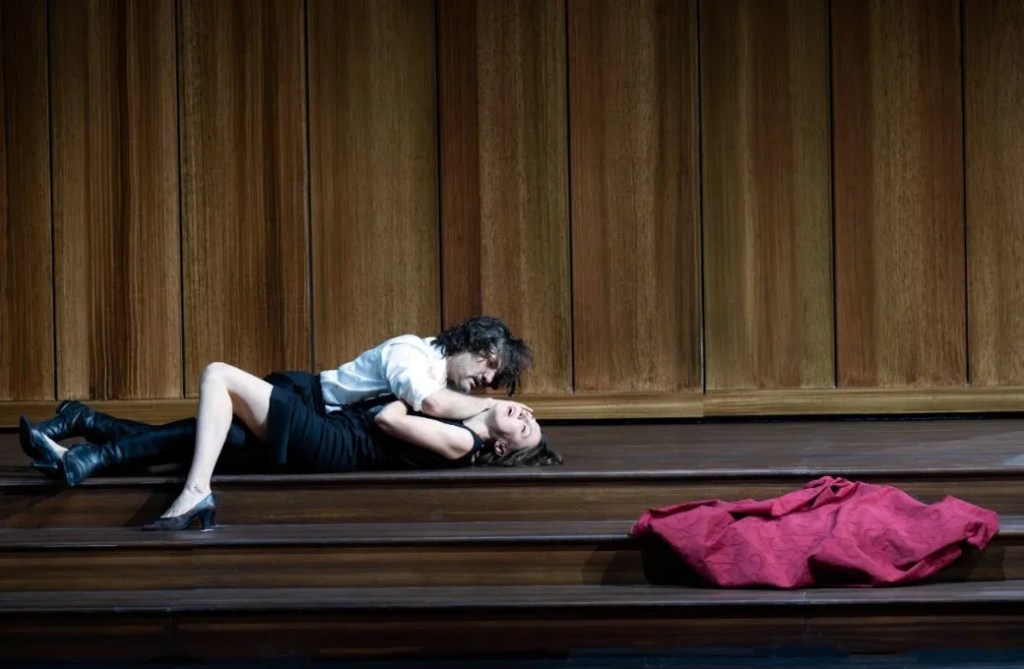
Voorspelbaar legt ze het later zelf met de jonge man aan, een leeftijdgenoot die ze ooit als kind al eens heeft gezien. Als ze van haar echtgenoot heeft begrepen hoe die door haar moeder is beïnvloed probeert ze zelf iets dergelijks met Donello. Ze wenst hem als het ware naar zich toe en als hij daadwerkelijk verschijnt is er weinig voor nodig om een affaire te laten beginnen.
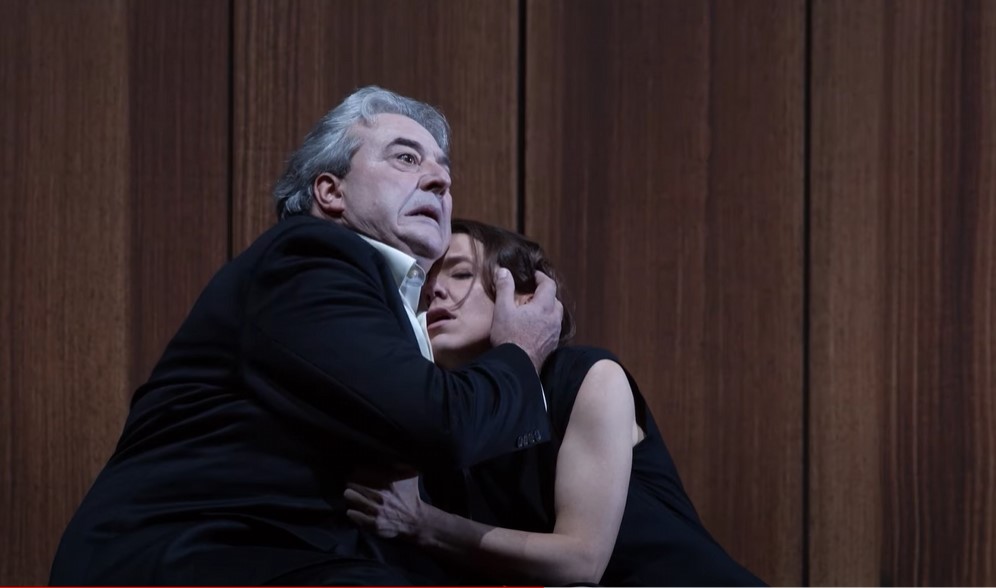
Dat loopt een paar maanden aan en Eudossia doet alsof ze het niet in de gaten heeft. Intussen is ze bezig om het hof in Byzantium zover te krijgen dat Donello terug wordt geroepen. Als dat bericht komt weigert hij te vertrekken. En Silvana bepleit zijn zaak bij Basilio: ze wil niet dat hij haar verlaat. Als ze vervolgens een tirade houdt waarin hem wordt verweten haar jeugd gestolen te hebben en dat ze hem vreselijk vindt, krijgt de man een hartinfarct en sterft.
Uiteraard wordt Silvana van moord beschuldigd maar haar verweer is dat ze slechts het pad van oprechte liefde heeft gevolgd en alleen aan god verantwoording schuldig is. Dan komt Eudossia op de proppen met het verhaal over Silvana’s moeder die haar zoon Basilio ooit heeft behekst. En nu doet haar dochter hetzelfde met diens zoon. Als Silvana hapert in het herhalen van de tekst die de bisschop haar voorspreekt om zichzelf door een eed van alle beschuldigingen vrij te pleiten, ziet men hierin het bewijs van hekserij. Ook Silvana eindigt op de brandstapel.
Teaser:
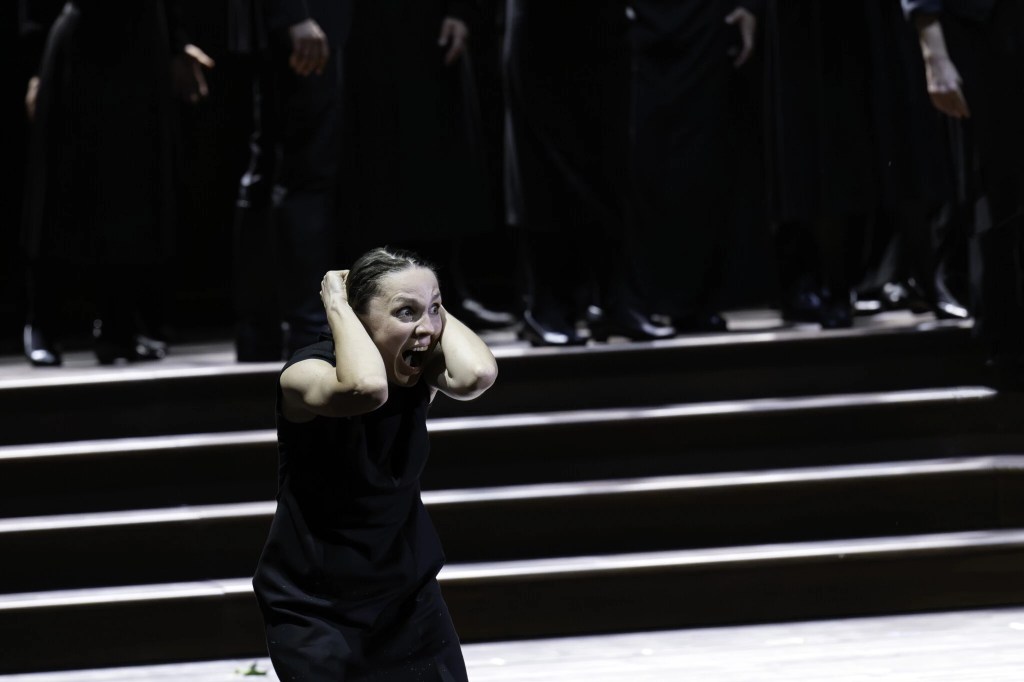
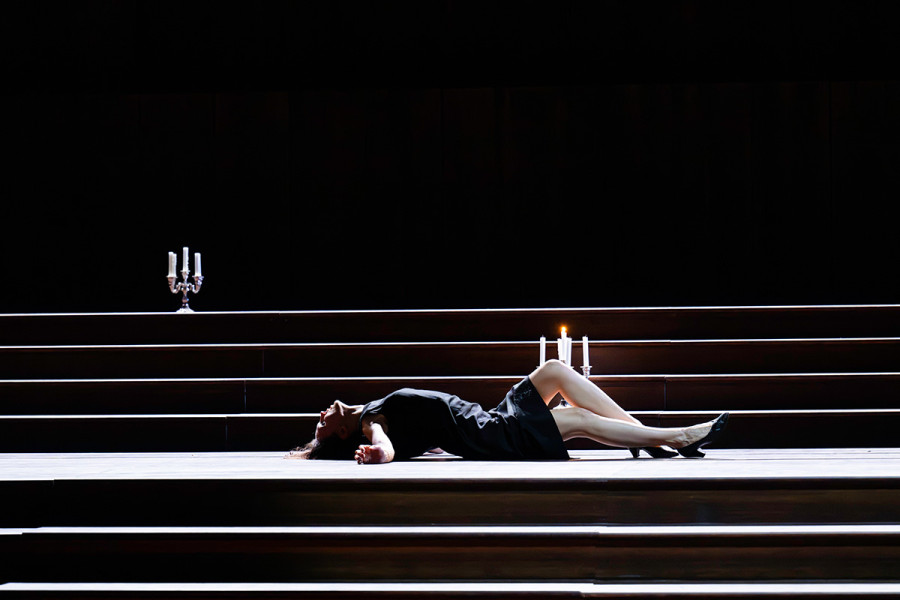
Het toneelbeeld met decor van Herbert Muraurer is sober. We zien een toneel dat trapsgewijs oploopt Daarachter een wand die soms geopend wordt en dan een minder relevantvergzicht toont, kennelijk om wat kleur in het geheel te brengen. Iedereen loopt in zwarte of donkerblauwe kledij wat de troosteloosheid van het leven voor Silvana aan het hof benadrukt. Alleen de twee mannen Basilio en Donello is enige kleur gegund. De twee verbrandingsscènes vinden op het achtertoneel plaats met de suggestie van veel vuur.
De muziek van Respighi is weinig eenduidig, nergens een consistent voorbeeld van een bepaalde stijlperiode uit de operageschiedenis. In plaats daarvan gebruikt hij een stijl die kennelijk in zijn beleving het beste bij een bepaalde scène past, of dat nu Gregoriaans, Monteverdi of Strauss is Dirigent Carlo Rizzi geeft daarvan zelf een paar voorbeelden:
Daar waar de handeling refereert aan het Griekse Byzantium en als Eudossia aan het woord is maakt Respighi gebruik van Gregoriaanse koormuziek of vergelijkbare motieven. Maar als Donello verschijnt klinkt de muziek lyrisch en wordt hij begeleid door een prachtige klarinet passage.
Het liefdesduet van Silvana en Donello aan het begin van de derde akte wordt voorafgegaan door een orkestraal intermezzo dat buitengewoon gepassioneerd klinkt. Het einde markeert het begin van de postcoïtale fase van de ontmoeting waarin de twee geliefden met elkaar beginnen te praten. Het doet sterk denken aan de tweede akte Tristan, de overeenkomst kan weinig luisteraars ontgaan. Als in een later stadium Silvana aangeeft met Donello te willen sterven gebruikt Respighi een muzikale taal die doet denken aan Monteverdi. Aldus een parafrase van een paar van Rizzi’s overwegingen.
Het volk roert zich als er iemand beschuldigd kan worden en dat gebeurt tweemaal met donderend geluid. Voor de solisten is het nauwelijks mogelijk zich daartegen staande te houden maar ook zonder koor is het erg hard werken voor met name Silvana die een partij heeft die in de hoogte een moeilijkheidsgraad heeft vergelijkbaar met Aitra of Helena in Strauss ’Die Agyptische Helena. Of gewoon Brünnhilde in het slot van Götterdämmerung.
Het koor van DOB verzorgt een uitstekende bijdrage aan de voorstelling, zowel acterend als zingend. De beperkte bewegingsruimte op het toneel wordt uitstekend benut en de massa komt dreigend over, zoals het een op hol geslagen volksmassa betaamt.
Rizzi leidt het orkest van DOB met vaste hand. Hij laat het op gezette momenten donderen maar is zeer alert zijn zangers alle ruimte te geven voor het etaleren van hun mogelijkheden. Voor zover het mogelijk is dat te beoordelen bij een volslagen onbekend werk brengt Rizzi de partituur tot leven op een wijze die Respighi voor ogen moet hebben gestaan.
De Koreaaanse sopraan Sua Jo heeft een mooie scène met Silvana als die ontdekt dat ze verliefd is op Donello. Het is een schitterend duet waarin Jo’s personage Monica met de eer gaat strijken maar niettemin wordt afgevoerd, haar zien we niet meer terug.
Veterane Doris Soffel vertolkt de rol van de gedoemde Agnese di Cervia, adequaat maar niet bijzonder. Maakt niet uit natuurlijk, geweldig om haar op het toneel te zien.
Martina Serafin kruipt in de huid van Eudossia en geeft die manipulerende vrouw de juiste toneelprésence mee. Ook qua zang komt haar personage goed uit de verf.
Bariton Ivan Inverardi is adequaat als Basilio, hij doet wat hij moet doen zonder verder veel indruk te maken. Tenor Georgy Vasiliev zet een geloofwaardige Donello neer. Hij zingt goed maar zijn rol is niet van dien aard dat ik me gemakkelijk in zijn personage kan verplaatsen waardoor het allemaal wat op afstand blijft.
Olesya Golovneva is zoals verwacht de ster van de show. Ik zag haar voor het eerst als Natacha in Oorlog en Vrede, een van de laatste producties die in 2011 in de opera van Keulen gingen voor de eindeloze renovatie een aanvang nam. Ik vond haar aandoenlijk in die rol, Natacha is natuurlijk ook aandoenlijk dus wat wil je.
Twee jaar nadien schitterde ze als Anna Bolena waarbij opviel dat ze ook een laag bereik heeft. Als Silvana is dat van minder belang, hier gaat het om topnoten en wel heel erg veel daarvan. Golvovneva acteert afwisselend als een meisje dat zich zo onopvallend mogelijk probeert te maken maar op andere momenten is ze een tijgerin. Het gaat haar gemakkelijk af, zo lijkt het en haar zang laat geen moment af. Het is een absolute triomf voor deze van oorsprong Russische sopraan.
Al met al een bijzondere opname van een absolute rariteit. Voor liefhebbers van dit genre een must, voor de overige operaliefhebbers van harte aanbevolen.
Franz Schubert (1797-1828) staat vooral bekend om zijn liederen en symfonieën. Hij heeft echter ook de nodige werken voor het theater geschreven, veelal Singspiele en een klein aantal opera’s. Geen van allen brachten ze de componist het succes waar hij zo hoopte, vooral om een reputatie te vestigen als operacomponist.
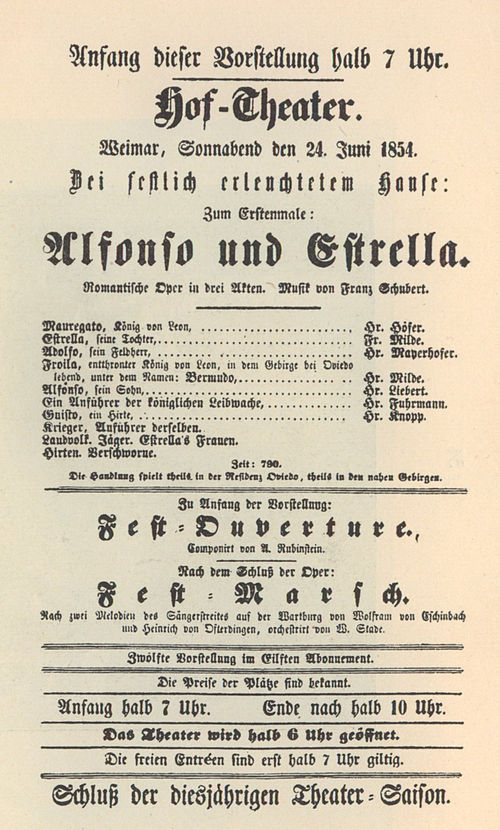
Playbill Weimar 1854, conductor Liszt
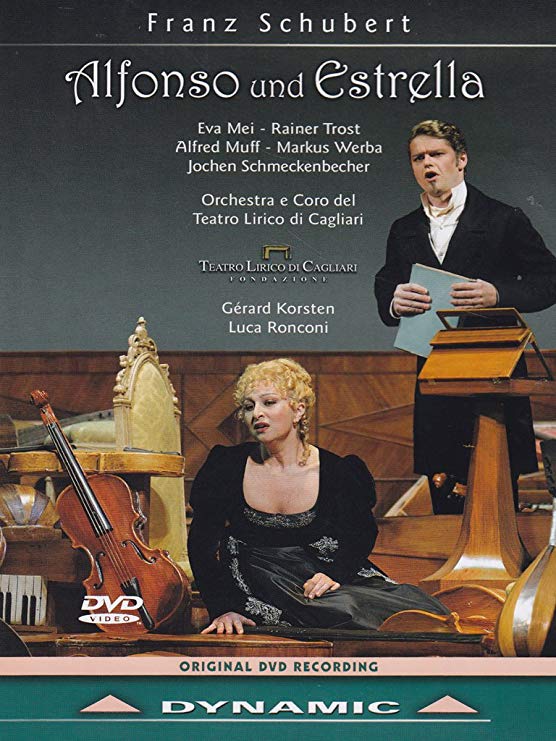
Het Teatro Lirico Cagliari kwam in 2004 met een uitvoering van zijn meest geslaagde werk: Alfonso und Estrella uit 1822. Een opname is door Dynamic op dvd uitgebracht. Het werk volgde zeer kort na Webers Der Freischütz maar werd genegeerd. De première vond pas in 1854 plaats in Weimar door toedoen van Liszt.
Het libretto van Franz von Schober gaat uit van een simpel verhaal. Koning Froila van Léon leeft al vele jaren in ballingschap in een vallei die door bergen van zijn vroegere rijk wordt afgeschermd. De usurpator Mauregato heeft het te druk met onder de duim krijgen van de Moren om zich te bekommeren om die zonderling daar achter de bergen.
Na weer een succesvolle campagne begaat Mauregato de klassieke vergissing zijn legeraanvoerder een wens te laten doen die op voorhand zal worden ingewilligd. Generaal Adolfo vraagt om de hand van zijn dochter Estrella die hem echter absoluut niet accepteert. Uit wraak komt Adolfo in opstand: als hij zelf koning is krijgt hij Estrella er gratis bij. Dat meisje is al eens verdwaald na een jachtpartij en toevallig is ze Alonso tegen het lijf gelopen, de zoon van Froila. Liefde op het eerste gezicht. Vanwege Estrella komt Alfonso de troepen van Mauregato te hulp als die dreigen te verliezen van Adolfo. Hij neemt deze veldheer persoonlijk gevangen als die Estrella bedreigt om zijn zin te krijgen. Mauregato denkt zich verslagen en geeft het op: hij laat zijn gestolen rijk weer aan Froila en zo krijgt het verhaaltje een happy end.
Bij het horen van de ouverture moest ik direct aan Schuberts symfonische muziek denken. Bepaalde wat opgewonden klimmende passages herinnerden me onwillekeurig aan Fidelio. De koormuziek is erg fraai maar doet weinig meer dan de handeling ophouden. Dat geldt ook voor veel van de aria’s. Ze klinken eerder als opgerekte liederen waar Schubert natuurlijk zijn faam aan te danken heeft dan als onderdelen van een theaterstuk.
Teatro Lirico Cagliari heeft wel een behoorlijke gok genomen met deze productie. Ik kan me niet voorstellen dat er in andere theaters veel publiek op af zou komen maar daar op Sardinië houdt men kennelijk wel van een rariteit zo nu en dan. En Dynamic is er altijd bij om dat vast te leggen.
Het speelvlak is heel opvallend. Het bestaat uit decorstukken die de vorm hebben van muziekinstrumenten, voornamelijk celli en bassen. Maar hier en daar zien we ook een trede of een plint in de vorm van een toetsenbord. Verder staan er muziekstandaards waarop een solist zogenaamd kijkt tijdens het zingen. Als de camera inzoomt blijkt er gewoon een prentenboek op te staan. Het toneel verandert niet per scène of akte, alles speelt zich daar af.
Variaties in de handeling worden uitgebeeld door op het achtertoneel marionetten op een lopende band langs te sturen. Ze zijn op normale grootte en gekleed als de personen die ze uitbeelden. Omdat ze worden bediend door in het donker gehulde toneelknechten kan men zich afvragen of het niet eenvoudiger was geweest daar normale levende figuranten voor in te zetten. Regisseur Luva Ronconi en Margherita Palli die verantwoordelijk was voor de algehele aankleding zullen daar wel hun redenen voor hebben gehad.
Wat de voorstelling muzikaal de moeite waard maakt is vooral de topcast die men bijeen heeft gebracht. Eva Mei excelleert als de koningsdochter Estrella, de enige grote rol voor een vrouw. Tenor Rainer Trost vertolkt de rol van de koningszoon Alfonso die nu eindelijk die benauwde vallei eens uit wil. Bariton Markus Werba als Froila heeft dat verboden om tenminste nog een plekje voor zichzelf te hebben. Leven en laten leven is zijn motto t.a.v. Mauregato.
Het duet van Alfonso en Froila zet de toon waar het Schuberts benadering van theatermuziek betreft. Het klinkt prachtig allemaal maar de handeling komt er geen millimeter mee vooruit. Mauregato komt voor rekening van bariton Jochen Schmechenbecher. Generaal Adolfo wordt ten tonele gevoerd door de bas Alfred Muff.
Koor en orkest van Teatro Lirico Cagliari staan onder leiding van Gérard Korsten.
P.s. (BJ) in 1978 is de opera onder Suitner opgenomen met een all star cast: Edith Mathis, Hermann Prey, Dietrich Fischer-Dieskau, Peter Schreie en Theo Adams:
P.s. 2: en vergeet Fierrabras niet, mijns inziens (BJ) een meesterwerk





 Basia con fuoco