Month: september 2020

Koor en orkest van de Met staan onder leiding van Marco Armiliato
Arnold van Mill: is there someone who still remembers him?
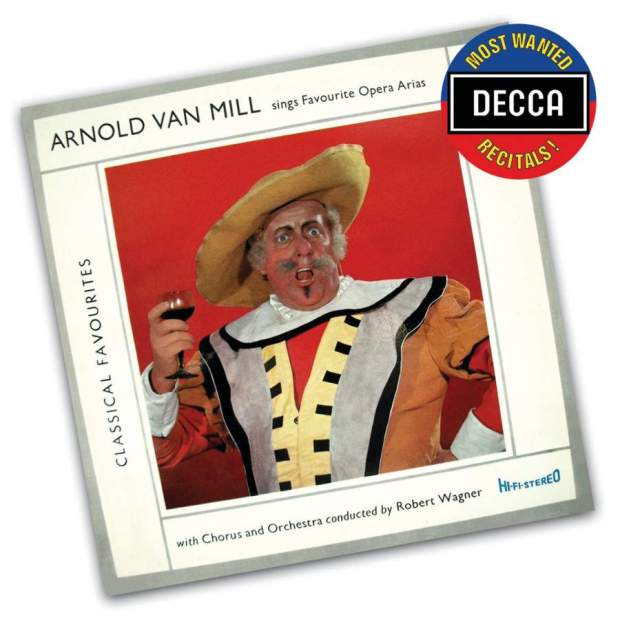
The Dutch bass Arnold van Mill is almost completely forgotten nowadays. How unfair! His voice is a bit reminiscent of the young Kurt Moll, which of course is also due to the repertoire. Beautiful!
Below is the duet from Der Fliegende Holländer. Arnold Van Mill sings Daland and George London Der Holländer:
Van Mill was mainly famous for his Wagner roles. Unfortunately they are not on this CD. But his smooth bass was also very suitable for Singspiel and operetta. His Lortzing, Cornelius, Nicolai and Weber (all present on this CD) are a pure delight for the ear. All real collector items. Thank you, Decca!
The CD is complemented by Russian songs, sung by the Bulgarian bass Raphael Arié. Another great singer who is ompletely forgotten.
The combination is not really a happy one: not only does the repertoire differ like day and night, the voices are incomparable as well; which does not prevent me from enjoying him enormously! Hopefully Decca will have more of Arié on the shelf, because my wish list with his recordings is quite long!
Below Arié sings ‘Ella giammai m’amo’ from Don Carlo
Een paar woorden over Castor et Pollux van Rameau

In tegenstelling tot bij voorbeeld Händel heeft Jean-Philippe Rameau niet een echte renaissance gekend. En al bereiken zijn werken meestal niet het niveau van de Duits-Engelse grootmeester, toch zijn zij zeker meer dan de moeite waard. Al was het alleen vanwege de belangrijke plaats die zij nemen in de ontwikkeling van de muziekgeschiedenis. En persoonlijk (niet slaan! Het is maar mijn mening!) vind ik zijn muziek mooier, evenwichtiger en prettiger om naar te luisteren dan naar de meeste van zijn meer gewaardeerde tijdgenoten.
Castor et Pollux was Rameau’s tweede ‘tragedie en musique’. Het werd in 1737 voor het eerst uitgevoerd en in 1754 totaal gereviseerd, waarbij o.a. de proloog eruit werd geknipt. In 1992, één jaar na de live opvoeringen in Aix-en-Provence, nam William Christie voor Harmonia Mundi (HM 901435.37) de eerste versie op.

Het klinkt allemaal zeer bevlogen en er wordt voortreffelijk in gezongen, voornamelijk door Agnès Mellon (Télaire), Véronique Gens (Phébé) en Jérôme Corréas (Pollux). Persoonlijk had ik iets meer vibrato willen horen, maar vooralsnog heeft deze opname geen concurrentie. Althans voor mij.
Gérard Souzay. So we don’t forget him
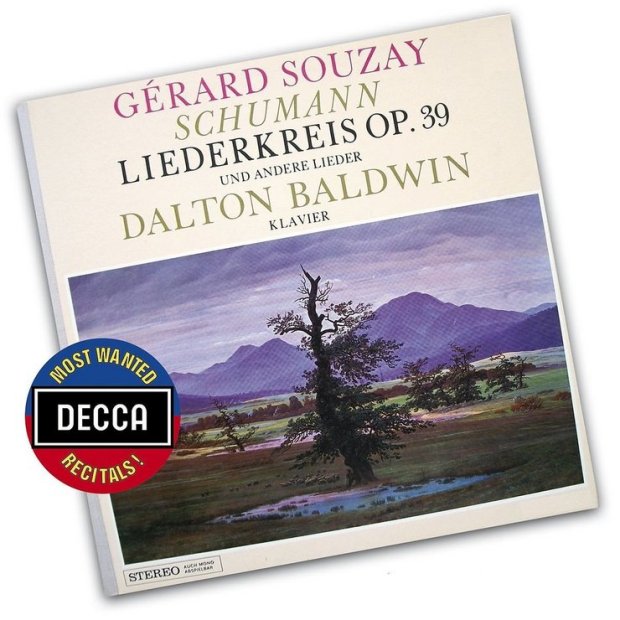
The in all respects beautiful baritone Gérard Souzay has made the big mistake to sing on for far too long. His last Philips recordings are unlistenable and with his hair dyed pitch black he looked rather pathetic. A great pity, because if you listen to his earlier recordings, you can only fall in love with him and his voice.
Souzay was without a doubt one of the greatest performers of French song and his Faurés and Ravels are a delight. But don’t underestimate his German lieder either! Listening to his recording of Schumann’s Liederkreis from 1965, one cannot escape the thought that this music should go like this, and not otherwise. Just listen to his ‘In der Fremde’; I want to bet you cannot escape the feeling of being displaced yourself.
Below Liederkreis:
His Dichterliebe is just as beautiful: with his light baritone and his sweet, sweet sound he makes you actually fall in love. The recording dates from 1953 and in addition to the cycle we get three separate Schumann songs, including an interpretation of ‘Nussbaum’, which moves me to teans unfortunatelynot available anymore)
Below Winterreise from 1959:
In these recordings Souzay’s then regular accompanist Jacqueline Bonneau accompanies him. After 1954 she gave way to Dalton Baldwin (Bonneau did not like travelling). Souzay had a kind of musical marriage with Baldwin. Their collaboration guarantees ultimate beauty
Below is Dichterliebe:
Jakob Lenz van Wolfgang Rihm uitgebracht op dvd
Tekst: Peter Franken


In maart 2015 wasakob Lenz te zien in de De Munt in een productie van Andrea Breth. De voorstelling werd verfilmd door Myriam Hoyer en de opname is in 2019 door Alpha Classics op dvd uitgebracht.
Wolfgang Rihm is een icoon van de hedendaagse muziek en met Jakob Lenz voegde hij in 1979 een tweede opera toe aan zijn alreeds omvangrijke oeuvre, kort na Die Hamletmaschine uit 1977. In deze productie wordt de titelrol vertolkt door bariton Georg Nigl, ook iemand met een grote staat van dienst in het moderne repertoire.
Jakob Lenz is een historische figuur. Hij was bevriend met Goethe en werd verliefd op diens vroegere geliefde Frederieke. Met haar werd het niets en dat was vermoedelijk wat de onder de oppervlakte aanwezige krankzinnigheid van Lenz naar boven bracht. De opera volgt de protagonist in zijn afglijden naar totale waanzin, steeds op zoek naar Frederieke die hij in een bloedstillende scène ook in een dood kind meent te herkennen.
Sta op en wandel, gebiedt hij haar. En als dat geen effect heeft komt niet geheel onverwacht de klacht dat zijn god hem heeft verlaten. Een zeskoppig koortje dat de stemmen laat klinken die Lenz in zijn hoofd hoort, moedigt hem aan te sterven. Dat is de enige manier om die dode Frederieke terug te vinden. Ze zetten in de stijl van het voorafgaande een houten kruis tegen zijn rug.
Behalve dat koortje zijn er nog twee personages die zich met Lenz bezighouden. Dominee Oberlin die hem in huis opneemt in de naïeve veronderstelling hem met wat stichtende praat wel weer op het padje terug te kunnen brengen en een wat vage figuur genaamd Kaufmann die een kennis is van Lenz. Als tegen het eind Lenz in een kennelijk door hem kapotgeslagen kamer door beide heren wordt bezocht, treffen ze hem besmeurd met zijn eigen uitwerpselen in volslagen reddeloosheid aan. Ze hijsen hem in een dwangbuis en laten hem alleen achter. Niks meer aan te doen.
Alle drie personages zijn historische figuren die leefden tweede helft 18e eeuw. Het verhaal van Lenz is opgetekend door Oberlin en door Georg Büchner in 1836 verwerkt in zijn novelle Lenz. In vergelijking met dit verhaal is Woyzeck een blijspel.
Het toneelbeeld is donker waardoor details moeilijk te onderscheiden zijn. Een opengewerkte doos op het toneel beschrijft het nog het beste. De kostuums schwanken wat tussen periode en eigentijds. De dramaturgie van Sergio Morabito stelt het incasseringsvermogen van de kijker behoorlijk op de proef.
Nigl geeft zichzelf volledig tijdens zijn optreden dat ruim een uur duurt. Hij is de perfecte keuze voor deze loodzware rol, indrukwekkend. Zijn tegenspelers bariton Henry Waddington als Oberlin en tenor John Graham-Hall als Kaufmann bieden goed tegenspel.
Franck Ollu geeft leiding aan een klein ensemble dat afkomstig is uit het symfonie orkest van de Munt. De twaalf musici bespelen celli, hout, koper en slagwerk. Ook is er een klavecimbel te horen. Muzikaal vergt het werk geen al te grote inspanning om te volgen, de handeling des te meer. Voor liefhebbers van modern repertoire een aanrader.
Is Giuseppe Valdengo really totally forgotten?
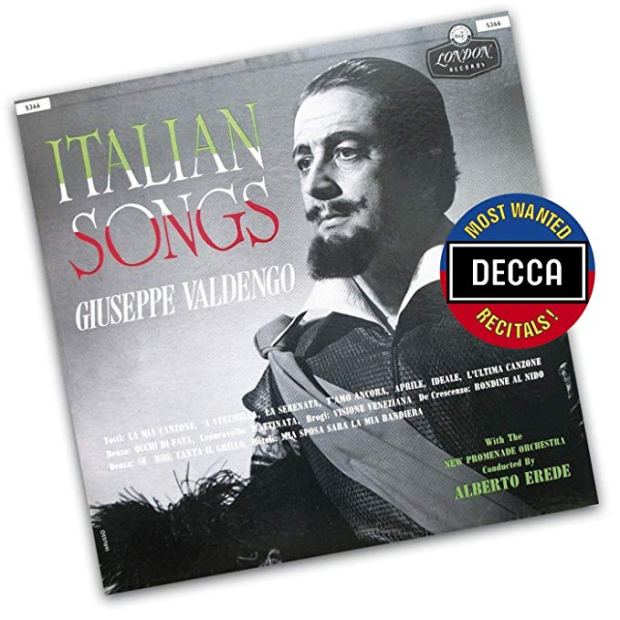
In May 2014 Giuseppe Valdengo would have turned 100 years old. A fact that has escaped everyone, because the baritone born in Turin is now almost completely forgotten. How sad! And then to think that he was one of the beloved singers of Arturo Toscanini! He can still be admired on live radio recordings of Aida, Otello and Falstaff, led by the great maestro.
Opera News wrote about Valdengo: “Although his timbre lacked the innate beauty of some of his baritone contemporaries, Valdengo’s performances were invariably satisfying – bold and assured in attack but scrupulously musical”. How true!
Below is a tribute to the baritone, made on the occasion of his hundredth birthday:
I knew him from his performance in the film Great Caruso with Mario Lanza, but he really impressed me with his role of Alfio in the RAI filmed Cavalleria rusticana, with the inimitable Carla Gavazzi as Santuzza.
Alfio is missing on the 1949 CD recorded for London, but his Tonio from Pagliacci, a role with which he celebrated unprecedented triumphs, is included. Furthermore, two very moving arias from Rigoletto, plus the Italian sung Hamlet and Valentin (Faust), sound very touching.
Most of his recital, however, is taken up by Italian songs by Tosti, Brogi, Denza and Leoncavallo. Repertoire that fits him like a glove.
The romantic voice of Cesare Siepi
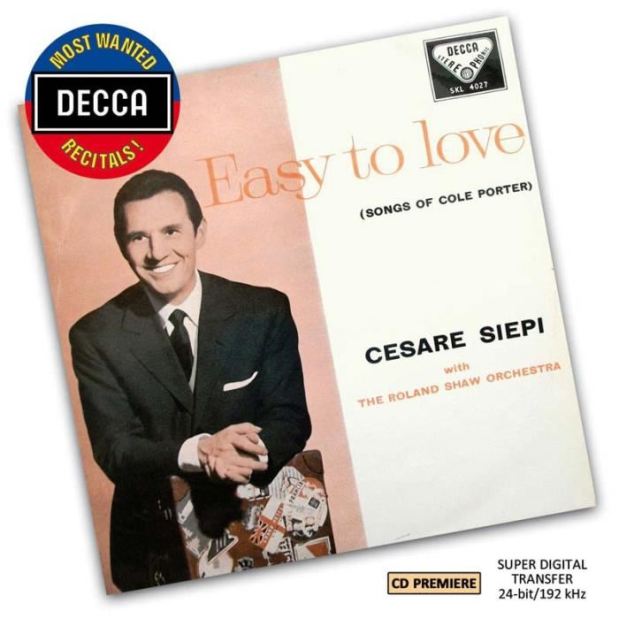
It were not only Americans that considered Broadway as something to take seriously. The Don Giovanni and one of the biggest Verdi-basses of the second half of the last century, Cesare Siepi, didn’t look down on the musical theatre either.
His CD on which he gives his vision on the songs of Cole Porter is called Easy to Love. It sounds ‘easy’ indeed, but it is not at all. Porter’s music benefits from simplicity, coupled with the best vocal chords in the world, and Siepi has it all.
His interpretation of ‘Night and Day’ is one of the most beautiful ones I’ve heard in my life. Not to mention ‘So in love’ or the delicious ‘Blow, Gabriel blow’ from Anything Goes.
As a bonus we get to hear some of his best Verdis: Nabucco, Philip II and a Boccanegra like you don’t hear anymore.
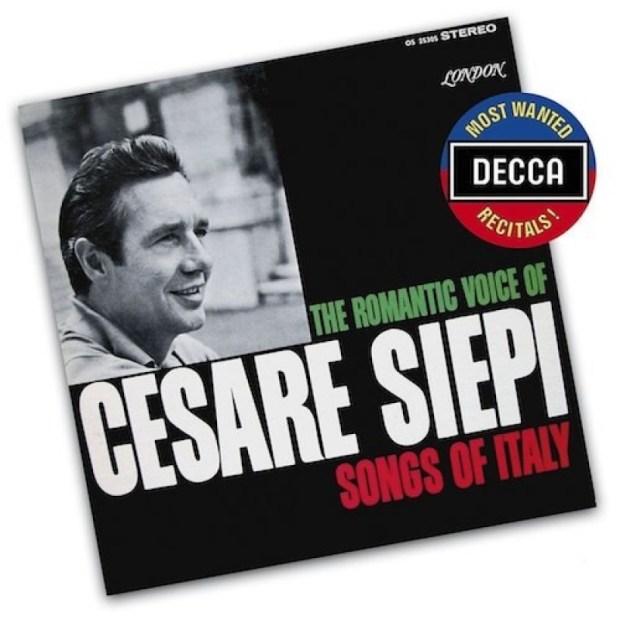
This CD is entitled The romantic voice of Cesare Siepi and that is exactly what you get: a beauty of a voice that awakens all the romantic feelings in you! No Broadway here anymore, but popular Italian songs that fit Siepi like a glove: just delicious.
What really makes the CD special are the bonus tracks, with arias from Meyerbeers Robert le Diable and Les Huguenots, La Juive by Halévy and – for most people a real rarity – an aria from Salvator Rosa by Antônio Carlos Gomes. My goodness, what beautiful music! I ask (again): when do we get to see another opera by Gomes? After the performances of his Il Guarany in 1994 in Bonn it has remained silent for much too long around this Brazilian Verdi.
Below ‘Di Sposo Di Padre Le Gioie Serene’ from Salvator Rosa van Gomes, 1954:
The album was recorded in 1961 (songs) and in 1954 (arias) and the sound is excellent. In the arias Siepi is accompanied phenomenally well by the Orchestra dell’Accademia di Santa Cecilia and Alberto Erede. At that time Erede was considered a ‘decent’ conductor, but now he would be considered one of the greatest opera conductors of all. He gives his soloist all the space he needs and allows the orchestra to breathe with him.
Twee maal Orfeo van Monteverdi op dvd
ROBERT WILSON
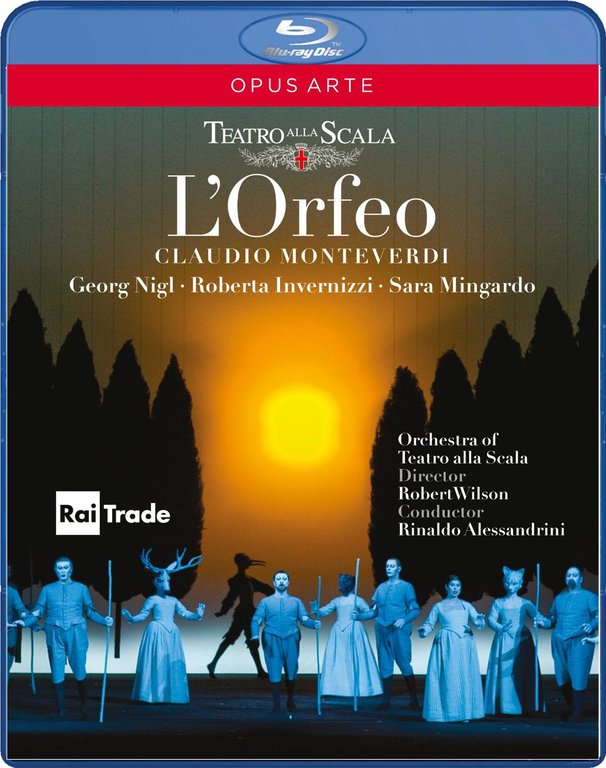
Het komt niet vaak voor dat een (vroeg)barokopera uitgevoerd wordt in La Scala. Zeker in geval van Monteverdi heb je veel meer aan de intieme sfeer van een klein theater. Maar de in september 2009 in het Milanese toptheater opgenomen Orfeo van Robert Wilson bewijst dat het toch kan. En dat het werkt. Althans, op het scherm van je tv.
De beelden zijn zo zeer gestileerd dat je soms het gevoel hebt naar ‘film stills’ te kijken. Ik ben geen groot liefhebber van Robert Wilson, maar de voor hem zo typische bewegingen en gebaren werken hier wonderwel. Het klopt.
Het zeer statische maar o zo mooie bühnebeeld, met weinig decorstukken, geeft alle ruimte aan de muziek. De werkelijk betoverende belichting creëert heel veel sfeer en de kostuums zijn prachtig.
Rinaldo Alessandrini dirigeert gespierd, met nadruk op het dansante van de muziek. Zijn tempi zijn voortvarend, zonder gehaast te klinken.
Gerg Nigl is een mooie Orfeo. Nooit gedacht dat hij na zijn optredens als Wozzeck nog zo veel lyriek in zijn stem zou hebben.
Iedereen van de verder uitstekende cast verbleekt echter bij Sara Mingardo (Messagera/Speranza). Haar stem is warm en vol kleuren. Ook permitteert zij zich gezichtsuitdrukkingen (bij Wilson meestal niet toegestaan), waardoor alle aandacht, zeer terecht, naar haar gaat (Opus Arte OA 1044 D).
Hieronder een fragment:
TRISHA BROWN
:format(jpeg):mode_rgb():quality(90)/discogs-images/R-10561841-1499946253-5600.jpeg.jpg)
De Amerikaanse choreografe Trisha Brown heeft in 1998 in Brussel een zeer dansante Orfeo geregisseerd. Als u heel erg veel van ballet houdt en Madama Butterfly van Wilson tot uw lievelingsvoorstellingen telt, dan zult u er erg van genieten. In alle andere gevallen: zet het beeld uit en geniet van het prachtige geluid, want René Jacobs dirigeert meesterlijk en Simon Keenlyside is een kanjer van een Orfeo (ja, hij danst ook!).
Er zit bij deze uitgave een aparte dvd met ‘the making of’ en de opera is ook Nederlands ondertiteld (Harmondia Mundi HMD 9909003.004).
Hieronder een fragment:
Léonore ou l’amour conjugal op dvd uitgebracht door Naxos
Tekst: Peter Franken
 Basia con fuoco