Ramón_Vargas

Hvorostovsky; Verdi, Tchaikovsky and the Bells

LA TRAVIATA


The November 2004 Venice production directed by Robert Carsen was made for the reopening of La Fenice which had totally burnt down eight years earlier. For this special occasion the first version of the opera, from 1853, was chosen. Good thinking, since the (then unsuccessful) premiere of what would become Verdi’s most beloved opera ever, had taken place precisely here. The main differences with the one-year later version, which is the one known to us, are in the duet between Violetta and father Germont, and the two final numbers of the third act.

Like no other opera, Traviata allowes itself to be updated. Incidentally, it was Verdi’s wish to stage it in contemporary costumes. Carsen’s direction is all about money, and the dollars really fall from the trees like leaves. He moves the time of action to the 1980s, the time of rising megastars, supermodels, gigaparties, as well as junkies, squatters and AIDS. As always with him, everything is implemented very logically and consistently

An absolute highlight is the opening scene of the last act, in which the now totally (also literally!) brought down Violetta watches a video of her past. A video that at some point stops and then goes on to only show ˜snow”. The scene grabs you by the throat and never lets go. The epitome of good modern directing.

Violetta is very movingly performed by the both vocally and scenically impressive Patricia Ciofi. As Alfredo, Italian-German tenor Roberto Sacca comes across very convincingly, and Dmitri Hvorostovsky is an outstanding Father Germont (Arthaus Musik107227 )

Last seven minutes of the production:


IL TROVATORE
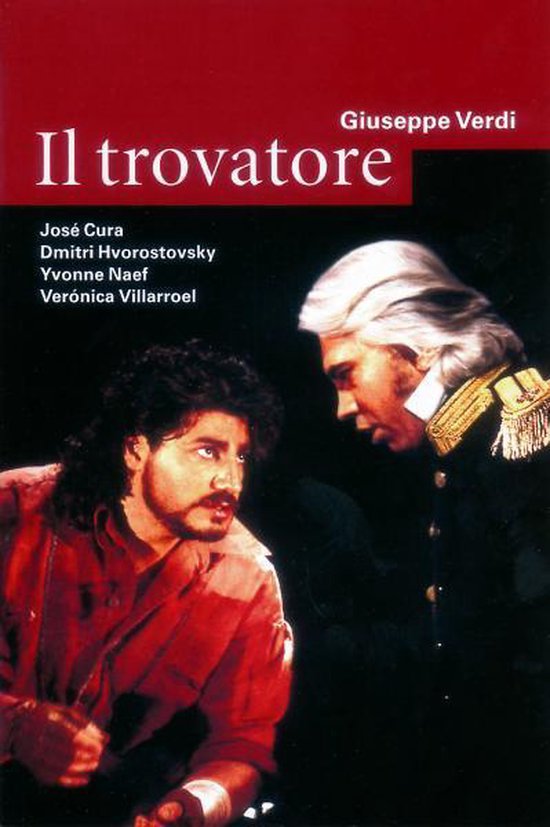


Some operas should be renamed. Verdi’s Il Trovatore should actually be called ˜Azucena” because, after all, she is the one who dominates every scene from the first moment she emerges.

It is Azucena who pulls the strings and only she can save or break all the characters. Through her thirst for revenge, she destroys everything and everyone, and no average baritone can match that. Although, average?

In his role debut as Luna, Dmitri Hvorostovsky more than surprised me in this Royal Opera House production. I still had my doubts about him in the early 1990s, but I take back everything I said about him in those days. Never did I think that there was still a baritone who could sing ˜In balen del suo sorriso” so emotionally moving. And indeed, at the ˜Sperda il sole d’un suo sguardo…” I even had to shed a tear, it was that beautiful.

EVGENI ONEGIN


I am (or should I say was?) a huge Robert Carsen-adept and I love (loved) almost everything he did. So too this Onegin , the production he made for the Metropolitan Opera in New York, which was recorded in February 2007 (Decca 0743298).

His staging is very realistic and closely follows the libretto. In the first act, the stage is strewn with autumn leaves, but everything else is basically bare and there is almost no scenery. A bed for the ˜letter scene”, some chairs in the second and third acts. At the duel, the stage is completely empty.

This is not distracting from what is happening. On the contrary. The costumes are really beautiful, but especially in the first act they remind me more of English Jane Austen film adaptations than of the Russian countryside. But that is alright, the eye wants something too, but Renée Fleming is too glamorous for a peasant girl, making her transformation into a proud princess less impressive.


Onegin (Dmitri Hvorostovsky) is primarily a dandy here, very concerned with his looks. Well, Dima is an extremely attractive singer in all aspects, but in his confrontation scene with Tatyana, he reminds us more of daddy Germont than Onegin.

Ramón Vargas was one of the best lyric tenors in 2007, but Lensky he was not. He really does his best, he also looks like a real poet, but this role needs a bit more “languish”.
Carsen’s character direction is truly unsurpassed and even Fleming seems to thaw out at times. Unfortunately, her Russian is totally unintelligible.

Fleming and Hvorostovsky in the opera’s final scene:


THE BELLS
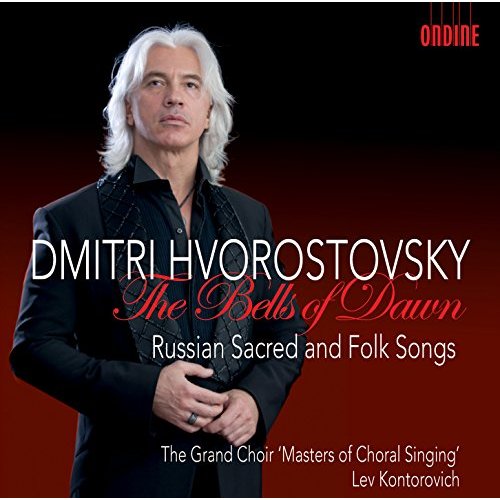


That this CD disappoints me somewhat is not because of the performance, because there is nothing to criticise about Dmitri Hvorostovsky’s voice, singing or interpretation. Those are simply perfect!

The beauty of the sound coming out of his throat is truly unimaginable. It is nothing less than the epitome of perfection.

What impresses me most about Hvorostovsky, besides his wonderful bronze sound, is his beautiful pianissimo. At times he sounds almost fragile, providing a fine contrast to the more heavily set passages.

You can hear this well in the solo ˜Prostchay, radost” (Farewell, My Joy). The moods alternate, but what remains is an all-encompassing feeling of total loneliness. After this, you can’t help but stop the music for a moment of silent reflection.


But the CD is not over yet. The feeling is still held for a while, but slowly the emotion ebbs away. The songs on the CD are hard to distinguish from each other, so it just gets boring and monotonous in the long run. At least for me; a ˜hardcore” lover of Russian spiritual songs and Slavic choirs may well enjoy this.
The Grand Choir ˜Masters of Choral Singing” is very much in the background and, under conductor Lev Kontorovich, is mostly subservient to the soloist.

Below is one of the CD’s finest tracks, ˜Vyhozhu odin ya na dorogu” by Elizaveta Shashina:


Dmitri Hvorostovsky in two live recitals

Dmitry Hvorostovsky zingt Sjostakovitsj en Liszt
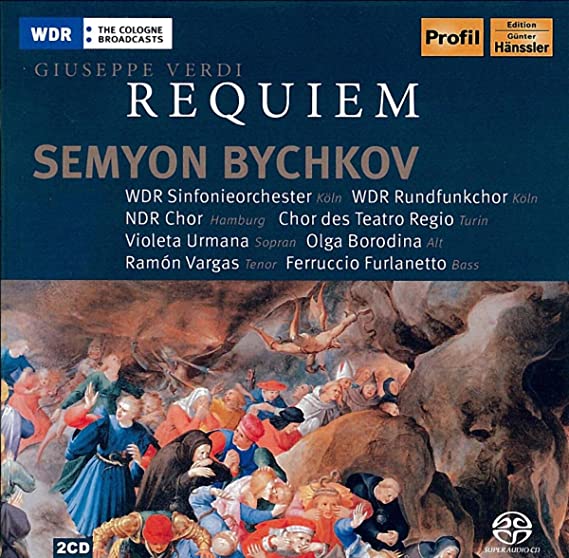
Requiem van Verdi met lange adem

Het Requiem van Verdi geldt onbetwist als een van de mooiste muziekstukken ooit geschreven. Een open deur? Beslist, en toch valt je dat telkens weer op, zeker als je het een poos niet hebt gehoord.

Op de een of andere manier was Semyon Bychkov, broer van ooit onze chef-dirigent van het Nederlands Philharmonisch Orkest en het Nederlands Kamerorkest, Jakov Kreizberg, was hier vroeger zelden gevraagd. Verbazingwekkend eigenlijk als je weet hoe hij in andere landen werd gewaardeerd.

Vanaf 1998 was hij een vaste chef-dirigent van het WDR orkest in Keulen, waarmee hij ettelijke cd’s heeft opgenomen. In 2007 kwam er, live opgenomen Verdi’s Requiem er bij.

Semyon Bychkov is een man van de lange adem: hij articuleert breed en neem rustig de tijd voor. Toch doet hij er ruim acht minuten korter over dan mijn ‘ijkpunten’, Claudio Abbado en Carlo Maria Giulini. Op zijn mooist is hij als hij de noten vloeiend in elkaar laat overlopen, zoals in ‘Lacrimosa’, in een waarlijk belcanteske stijl. Ontroerend.

Van het solistenkwartet, allen zeer ervaren Verdi vertolkers, bevallen de mannen mij het best. Ferrucio Furlanetto beschikt over een sonore, zeer warme bas, waarmee hij acteert alsof zijn leven er van afhangt.

Met zijn gave om pure lyriek met gevoel voor drama te combineren weet Ramón Vargas ‘Ingemisco’ naar de bijzondere hoogten te tillen.

Violeta Urmana, Olga Borodina, Ramón Vargas, Ferrucio Furlanetto
WDR Sinfonieorchester, WDR Rundfunchor olv Semyon Bychkov
Hänssler SACD PH08036

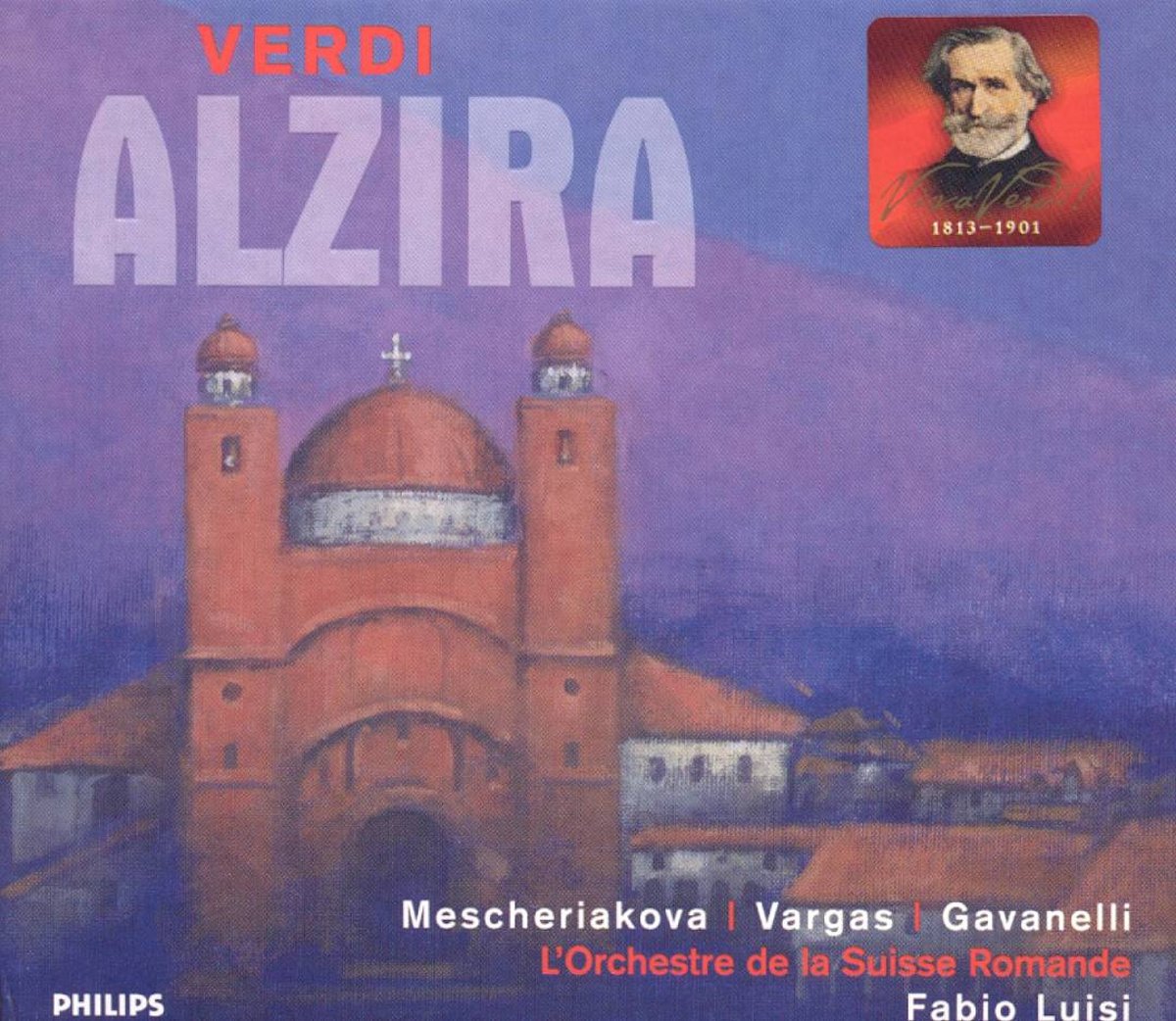
Alzira van Verdi: een mislukking of een vergeten meesterwerkje?

Alzira

Verdi zelf vond het een mislukking. Waarom? Het verhaal is niet gekker dan Il Trovatore of La Forza del destino en de muziek beslist niet minder mooi. Toch wordt Alzira nog maar zelden uitgevoerd. Ooit hoopte ik dat deze opname er iets aan zou kunnen veranderen, want niet vaak hoor je een uitvoering op een zo hoog niveau. Helaas. We zijn al bijna 20 jaar verder en … en wanneer zijn we Alzira tegengekomen? Triest.

Terug naar de (ooit Philips) opname. De bas Slobodan Stankovic geeft schitterend gestalte aan Alvaro, de Spaanse gouverneur in Peru. Als Gusmano, zijn zoon en opvolger, horen wij Paulo Gavanelli: een pracht van een bariton en toen (de opname is uit 2001) nog een belofte voor later. Hun duet in de eerste acte, waarin de vader smeekt om genade voor de Inca leider Zamoro, laat hun stemmen samensmelten tot een ontroerende eenheid.

Marina Mescheriakova schitterde al in de eerder dat jaar uitgebrachte Jérusalem, en ook hier stelt zij niet teleur: haar romige sopraan heeft zij volledig onder controle en haar hoogte is voorbeeldig. Haar stem klinkt meisjesachtig en onschuldig, wat haar geschikt maakt voor de meeste Verdi heldinnen.

Ramon Vargas ontpopt zich steeds meer als de tenor van onze tijd. Het is een genoegen om zijn smeuïge stem zo moeiteloos en zuiver door de noten heen te horen glijden.  Zijn Zamoro is temperamentvol en gepassioneerd, en het is volkomen duidelijk: Vargas is een ster. Ook het orkest en de dirigent zijn grandioos.


Verdi
Alzira
Marina Mescheriakova, Ramon Vargas, Paulo Gavanelli, Slobodan Stankovic
L’Orchestre de la Suisse Romande olv Fabio Luisi
Philips 4646282

Don Carlo uit Torino: krijgen we eindelijk een productie die om te zoenen zo mooi is, wordt er niet goed in gezongen

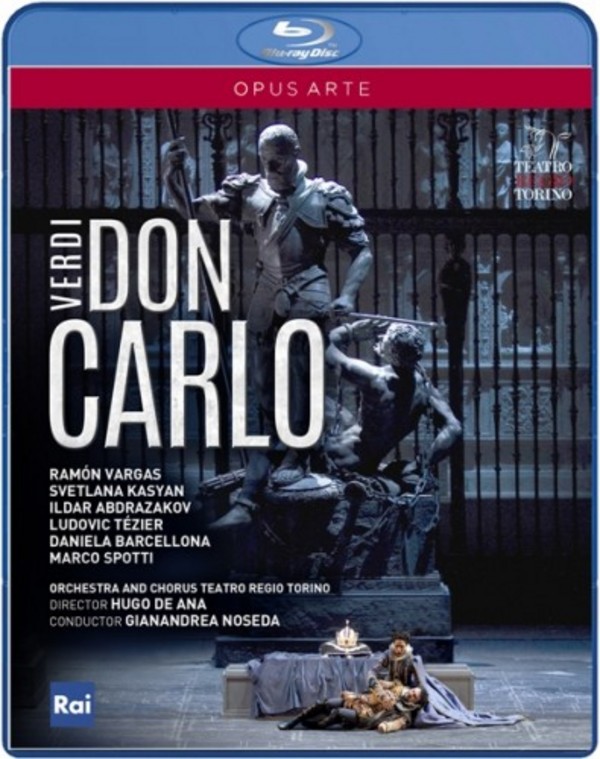
Don Carlo Torino

Het 400 jaar oude Teatro Regio di Torino werd tijdens een grote brand in 1936 totaal verwoest. Het duurde maar liefst tot april 1973 voordat het herbouwde theater zijn deuren opende.

Het heugelijke feit van die heropening werd veertig jaar later, in 2013, herdacht met een productie van Don Carlo van Verdi. Kosten noch moeite werden gespaard. Men bouwde historisch getrouwe decors, de kostuums werden tot in de kleinste details gekopieerd en er mochten honderden figuranten aanrukken…

Het resultaat is oogverblindend mooi. Je krijgt het gevoel midden in een museum te zijn gedropt, waar je mag deelnemen aan een historisch verantwoorde documentaire. Helaas gaat die documentaire wel enigszins ten onder aan te veel details en te weinig oog voor de magie van de eigen verbeelding.

Ramón Vargas, één van de beste Carlo-vertolkers van de laatste tijd, klinkt duidelijk ongedisponeerd. Svetlana Kasyan (Elisabetta) is een regelrechte ramp: veel te jong, veel te vroeg. Ze weet zich geen raad met haar rol en klinkt zeer verkrampt. En dat ze nu al met een veel te ruim vibrato zingt, is ronduit verontrustend. Zonde, want de jonge Georgische heeft een kanon van een stem. Ze zou er voorzichtiger mee moeten omspringen.

Hieronder het duet van Don Carlo en Elisabetta:

Ook Ludovic Tézier (Posa) en Daniela Barcellona (Eboli) presteren onder hun gebruikelijke niveau. Marco Spotti is een redelijk goede Grand Inquisitore en gelukkig weet Ildar Abdrazakov (Philips) het zangniveau op te krikken.

Het orkest uit Turijn onder leiding van Gianandrea Noseda klinkt zonder meer prima en de solocellist verdient een pluim voor zijn bijdrage aan ‘Ella giammai m’amo’.

Gek eigenlijk: krijgen we eindelijk een productie die om te zoenen zo mooi is, wordt er niet goed in gezongen… En ook niet zo goed geacteerd, want regisseur Hugo de Ana is de personenregie uit het oog verloren.

Hieronder de trailer van de productie:

GIUSEPPE VERDI
Don Carlo
Ramón Vargas, Svetlana Kasyan, Ildar Abdrazakov, Ludovic Tézier, Daniela Barcellona, Marco Spotti e.a.
Orchestra and Chorus Teatro Regio Torino olv Gianandrea Noseda
Regie: Hugo de Ana
OPUS ARTE OA 1128 D

DON CARLO(S). Een poging tot discografie