Raina_Kabaivanska

Il Trovatore. Little discography


Caterina Mancini, 1951


Have you ever heard of Catarina Mancini (10 November 1924 – 21 January 2011)? This soprano, born at Genzano di Roma had the true ’voce Verdiana’: she combined a beautiful height and pure coloratura with a drama that even La Divina might have envied her for.

Never heard of her? Then it’s time to make up for the damage, because I promise you a voice out of thousands. And this is exactly how her Leonora sounds in the recording from 1951 Rome (Warner Fonit 2564661890). Extraordinary.

Her Manrico was sung by the very heroic sounding (then already nearly 60 years old) Giacomo Lauri-Volpi and a very charismatic Carlo Tagliabue sang the role of di Luna. Miriam Pirazzini (Azucena) completed the cast and the whole was very impressively conducted  by Fernando Previtali.

Here are Mancini, Lauri-Volpi and Tagliabue in the trio of the first act:

Highlights on Spotify:

Price and Corelli, 1961


With their 1961 performance recorded live for Sony, both Leontyne Price and Franco Corelli made their debuts at the Metropolitan Opera. For me, Corelli, alongside Del Monaco and Domingo, is the best Manrico ever. Very masculine and very sexy, you can hardly resist that as a woman.

Mario Sereni and Irene Dalis are more than adequate as Luna and Azucena respectively, and it is a great joy to discover none other than Teresa Stratas in the small role of Inez. And Charles Anthony as Ruiz should not be forgotten

Price and Domingo, 1970


The recording made 19 years later for RCA shows a more mature Price, but her sound is still that of an excited teenager, with just about the most perfect Verdian ‘morbidezza’. Her ‘D’amor sull’ali rosee’ seems like a little prayer, weeping so beautifully.

This Trovatore was the very first opera that Plácido Domingo, then 28(!), recorded in the studio. Fiorenza Cossotto shines as Azucena, but what really makes the recording indispensable, at least for me, is one of the most delightful Lunas ever: Sherrill Milnes (88883729262).

Below Price, Domingo and Milnes in ‘E deggio e posso crederlo’:

Maria Callas, 1956
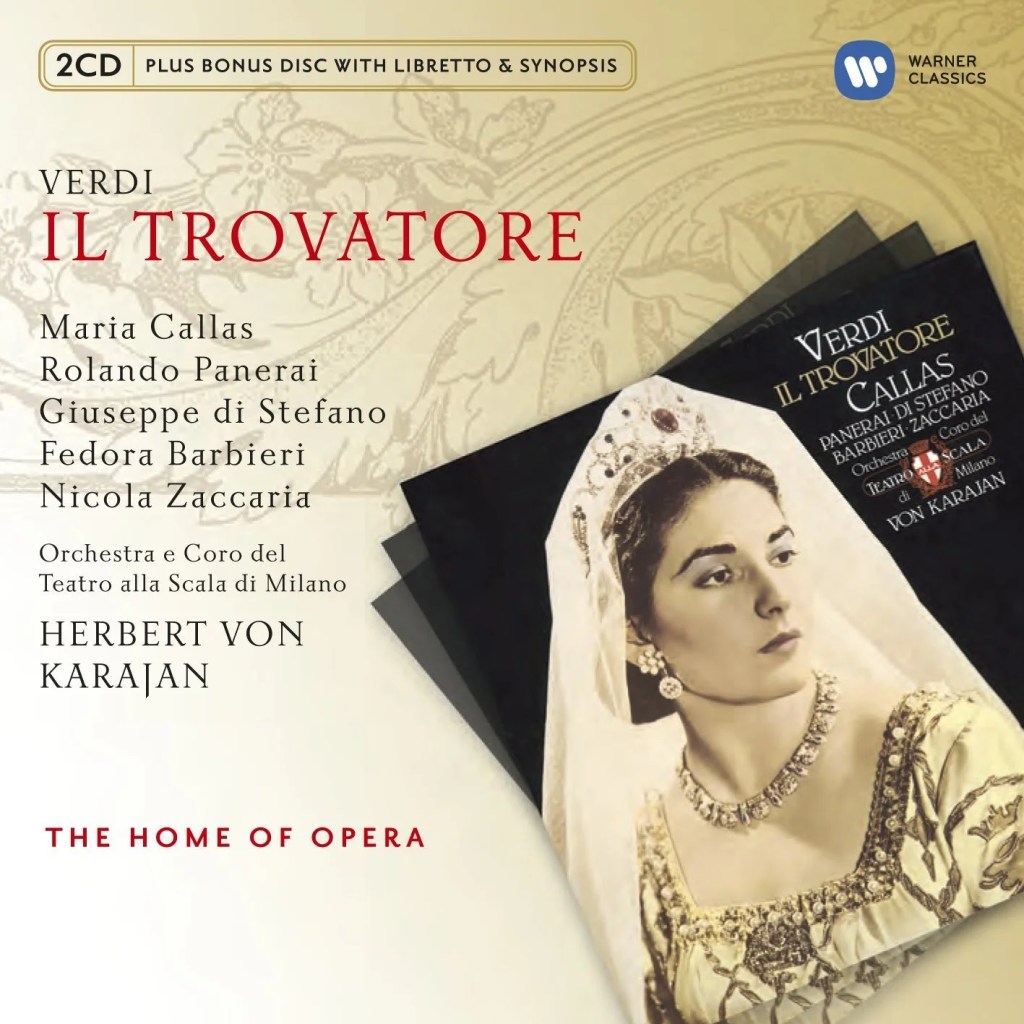


A problem in the 1956 recording conducted by Herbert von Karajan very excitingly is Giuseppe di Stefano. Beautiful though he is, for Manrico he lacks power.

Fedora Barbieri comes into her own even better here than on the Myto recording, which may be partly due to the much better sound quality. Rolando Panerai is a solid Luna, but his “Il balen” neither makes me hot nor cold, especially with Bastianini and Milnes to my ears.

And Maria Callas? Callas remains Callas. Overdramatic. Her Leonora is anything but an adolescent in love. Her ‘D’amor sull’ali rosee’ is more than beautiful, perfect almost, but it leaves me utterly cold (Warner 5099964077321).

Below Callas in D’amor sull’ali rosee’:

Leyla Gencer, 1957


I don’t think I need introduce you to Leyla Gencer. The Turkish diva enjoys a cult following comparable only to that of Olivero and Callas. Her supple, round and clear voice – with pianissimi with which she could rival Montserrat Caballé – made her exceptionally suited to Verdi operas. Her Leonora is simply perfect: you can’t get any more beautiful than that.

Nor do I think there has ever been a better, more beautiful and impressive Luna than Ettore Bastianini. Del Monaco is otherwise a very macho Manrico. His radiant height in ‘Di quella pira’ compensates for his sometimes lacklustre interpretation.

Fedora Barbieri impresses as Azucena and Plinio Cabassi is a Ferrando to kiss. The recording was made in Milan in 1957 (Myto 00127).


Gré Brouwenstijn, 1953


It is almost unbelievable, but there were times when even an opera like Il Trovatore could be cast with only Dutch singers. You can also hear them all in the performance recorded live by Osteria (OS-1001) at the Amsterdam Schouwburg in 1953.

Annie Delorie’s Azucena disappoints me a little, but Gerard Holthaus, unknown to me (is there anyone who can tell me more about him?), is a surprisingly beautiful Luna.

Gré Brouwenstijn is definitely fantastic as Leonora. And yet… her ‘Tacea la notte placida’ doesn’t really penetrate my soul. Mario Cordone was unfortunately not among the very best conductors in the world, which is a pity: sometimes I get the feeling that he is a hindrance to the singers.


Cristina Deutekom, 1976


Give me Cristina Deutekom! In the 1976 recording (Gala GL 100.536), she manages to convince me completely and penetrate deep into my heart. Unlike Callas who remains just Callas in everything she sings, she is Leonora. With her feathery coloraturas, she sounds exactly how I imagine a Leonora to be: a young girl in love with a strong tendency to exaggerate. The latter in the best sense of the word.

Jan Derksen is also a Luna to be reckoned with and secretly I think he may be even better than Bastianini and Milnes. His “Il bales” is among the best versions of the aria I had ever heard.

Carolyne James is an okay Azucena, but the reason the recording is not my absolute number one is because of the very dickish (sorry!) sounding Juan Lloveras (Manrico).

Below, Cristina Deutekom and Lloveras in ‘Miserere’:

Raina Kabaivanska 1978


Il trovatore was one of Von Karajan’s favourite operas. In 1962, he directed a series of performances in Salzburg, which were taken over and televised in Vienna in 1978. It is a very old-fashioned and static performance, with realistic sets and costumes.

Terribly underrated outside Italy, Raina Kabaivanska portrays a flesh-and-blood Leonora: her voice is dark, with an old-fashioned vibrato and clearly lined phrasing.

Domingo was a last-minute substitute for the angry runaway Bonisolli. For his ravishing ‘Ah si, ben mio’, sung with radiant top notes, he was rewarded by the audience with a minute-long ovation.

Cossotto’s Azucena has since become legendary: like no other singer, she left a mark on that role (Arthouse Music 107117)

Below Domingo, Kabaivanska, Cappuccilli and Cossotto in ‘Prima che d’ altri vivere’:

Di quella pira


For those who cannot get enough of ‘Di quella pira’: Bongiovanni (GB 1051-2) has released a CD with no fewer than 34 performances of the tenor hit, recorded between 1903 (Julian Biel) and 1956 (Mario Filipeschi).
Lauri-Volpi, here in a recording from 1923 (!), displays a radiant and long-held high c. However, he is surpassed by Aureliano Pertile: what a sound!

Helge Rosvaenge is disappointingly dull, but Richard Tauber’s 1926 recording (in German) is a delightful curio (yes, he can do it!).

Jan Kiepura can’t get enough of trills and welds them into everything, but what a ringing sound he has! Even Gigli ventures into it: something he had better leave out. The best of them all I think is Jussi Björling from 1939. Please let me know who your favourite was?


Gigliola Frazzoni


For dessert, I give you ‘Tacea la notte placida’, sung by Gigliola Frazzoni, one of Minnie’s best (La fanciulla del West). It was recorded in Amsterdam, on 16 October 1954. Marijke van der Lugt sings Ines and the Amsterdam Broadcating Orchestra (?) is conducted by Arture BasileDanny
Why do we love Manon Lescaut: discography

manon-lescau

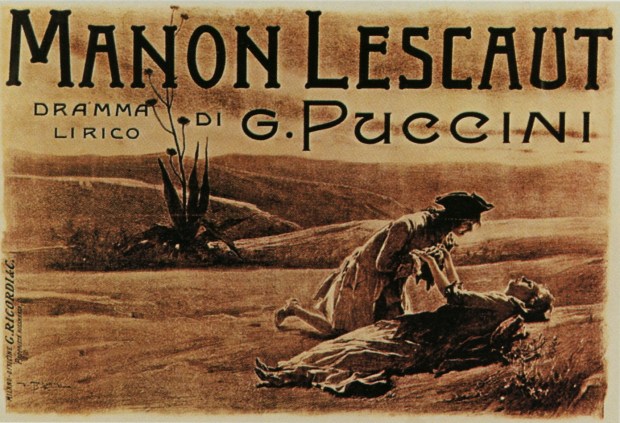
Why do we love Manon so very much? She is not really virtuous. She leaves the love of her life for an old rich man, but as soon as she gets bored, she allows her young lover to come back to her. She is willing to run away with him, but not without her jewels. A child can see that it cannot end well.

Once caught, Manon is taken prisoner and exiled to America, where she dies in the arms of her lover. The poor soul refused to leave her. Talk about real love!

It is thanks to Puccini, who captured her character in the most beautiful notes, that she never becomes one-dimensional and you must be made of stone if you do not love her.

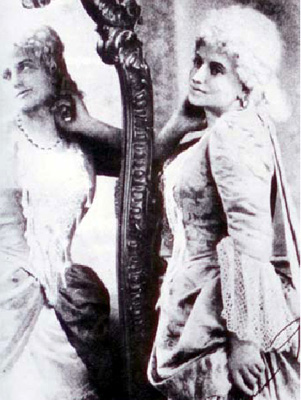
The role of Manon was created in 1893 at the Teatro Reggio in Turin by Cesira Ferrari, an Italian soprano who made her debut as Micaëla in Carmen and three years later sang the first Mimì in La bohème. Perhaps here is an indication of the type of voice that Puccini had in mind for his Manon?

How many good Manons are there nowadays? Not many, I think. The role makes very high demands on the performer. It requires a voice that can combine the childishly naive sex appeal of the silly girl in the first three acts with the real tragédienne in act four.

But Des Grieux, too, is a role that is not easy to fill. The man himself may be a sissy, but Puccini has written such violent notes for him, challenging him with such utterly emotional outbursts, that the singer must be a would-be Calaf to survive the opera with his voice intact.


MAGDA OLIVERO


manon-olivero-domingo


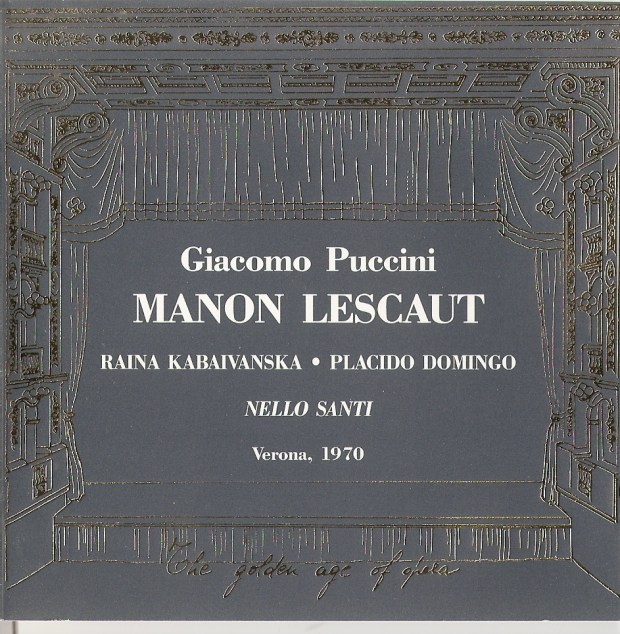
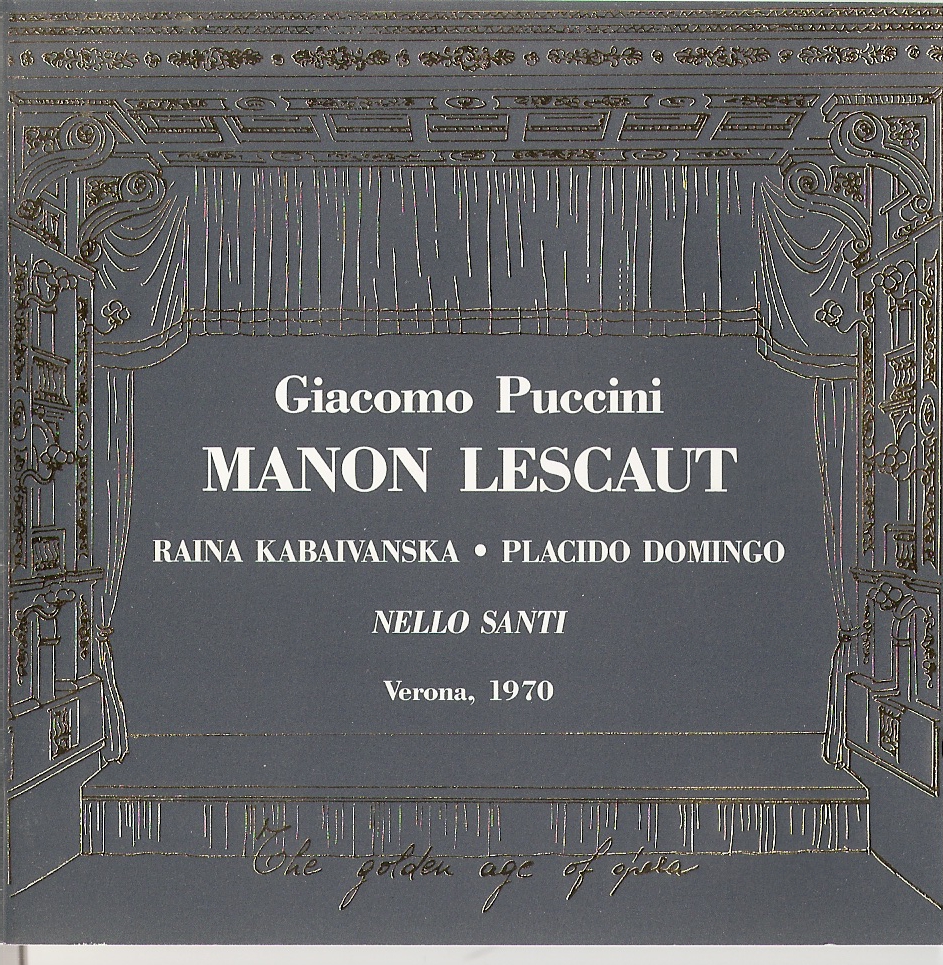
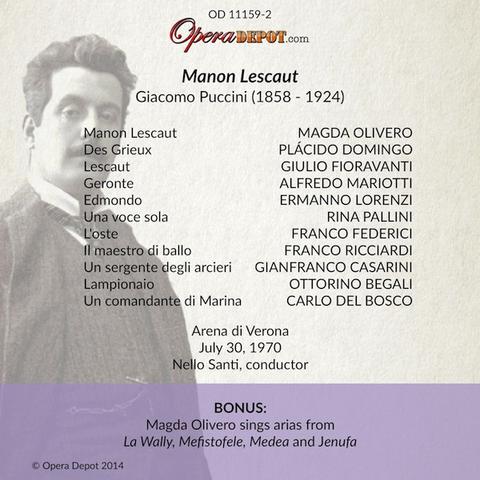
There is no doubt about it: Magda Olivero was the very best Manon Lescaut of the second half of the twentieth century. In 1970, when she was 60 (!) years old, she sang the role in Verona with the not yet 30-year-old Domingo at her side. Quite bizarre when you consider that Olivero made her professional debut eight years before Domingo was born. And yet her portrayal of the young heroine was utterly convincing. Most of her colleagues could not (and cannot) match her performance!


The role of Des Grieux was a role that could have been written for Domingo. As Renato, he was able to combine all his charm, his sehnsucht and his boyishness (something he has managed to retain to an advanced age) with a cannon-like voice. My copy was released on Foyer (2-CF 2033), but nowadays there are more releases in better sound quality and the recording can also be found on You Tube.


manon-olivero-tucker-foto


Two years later, Olivero sang the role in Caracas. The performance of 2 June 1972 was recorded by Legato Classics (LCD-113-2). The sound quality is reasonably good, but what makes the recording really desirable is Des Grieux by the then 60-year-old Richard Tucker. So yearning, so in love, so beautiful…. Sigh. Yes, folks: once upon a time, opera was made by voices, not by beautiful bodies!


Duet from the fourth act:


RAINA KABAIVANSKA


manon-kabaivanska

\

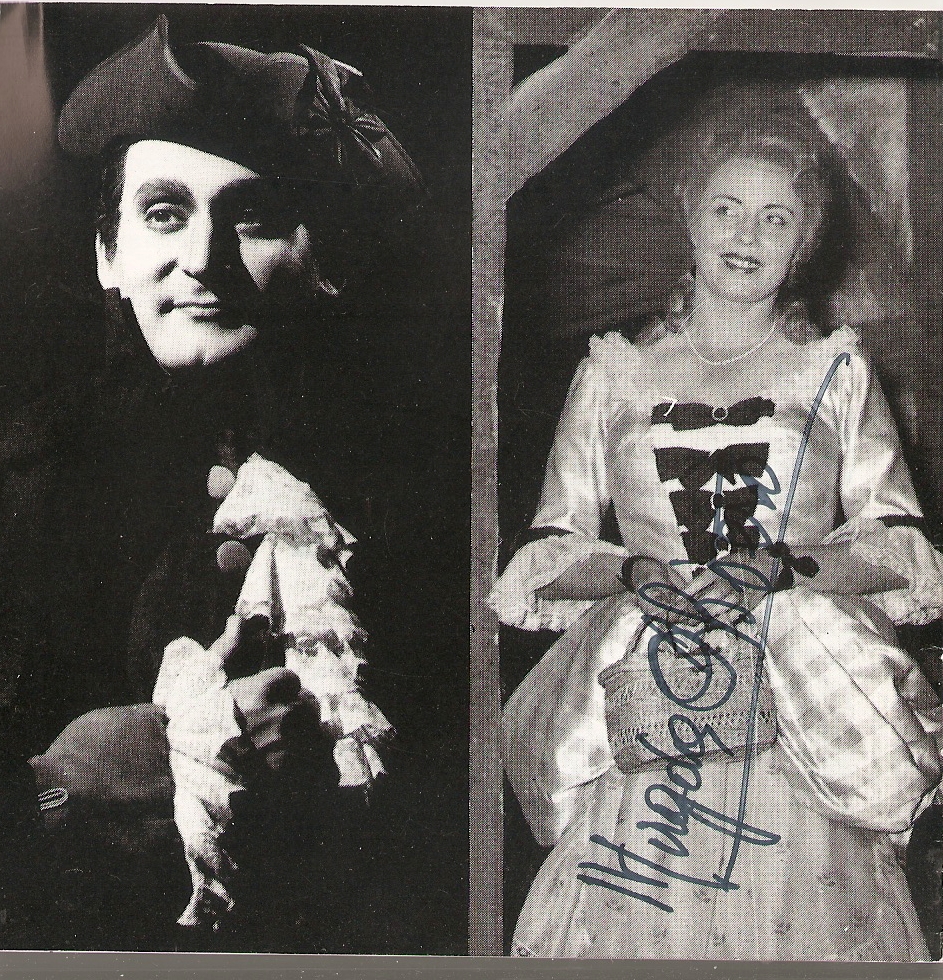
Manon was sung in Verona in 1970 not by Magda Olivero alone, but also by Raina Kabaivanska, with the same cast and the same conductor. The recording is very poor and therefore only for the diehards among us, but if you have a chance to listen to it: please do! Between Kabaivanska, who is still extremely underrated, and the young Domingo, a chemistry can be heard that, despite the poor sound quality, comes across really well.

The duet from II Tu, tu, Amore? tu?

As a bonus, you get fragments from 1953 of the live performance in Mexico, with Mario del Monaco and Clara Petrella. Not bad at all! (GAO 162/63)


MIRIAM GAUCI

manon-gauci


In 1991, the Maltese Gauci was not exactly an unknown, but her great career only took off with her role as Manon Lescaut at the Vlaamse Opera in Antwerp. The opera was the first in the Puccini cycle, created by the then fledgling Canadian director Robert Carsen. Those who were present will never forget it. Because of the magnificent production, of course, but also because of Gauci’s scorching performance.


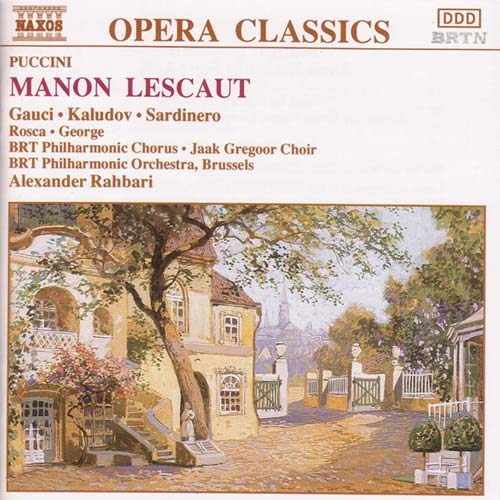
In 1992, Gauci recorded the role for Naxos (8660019-20), with Bulgarian tenor Kaludi Kaludov at her side as a very lyrical sounding Des Grieux. His “Donna non vidi mai” is very passionate, but at the same time kept within the boundaries of lyricism. To fall in love with, so beautiful. Alexander Rahbari’s direction is very intense, but also lacks many nuances. A real must because of Gauci and Kaludov.

Highlights are on Spotify:


RENATA SCOTTO

manon-scotto


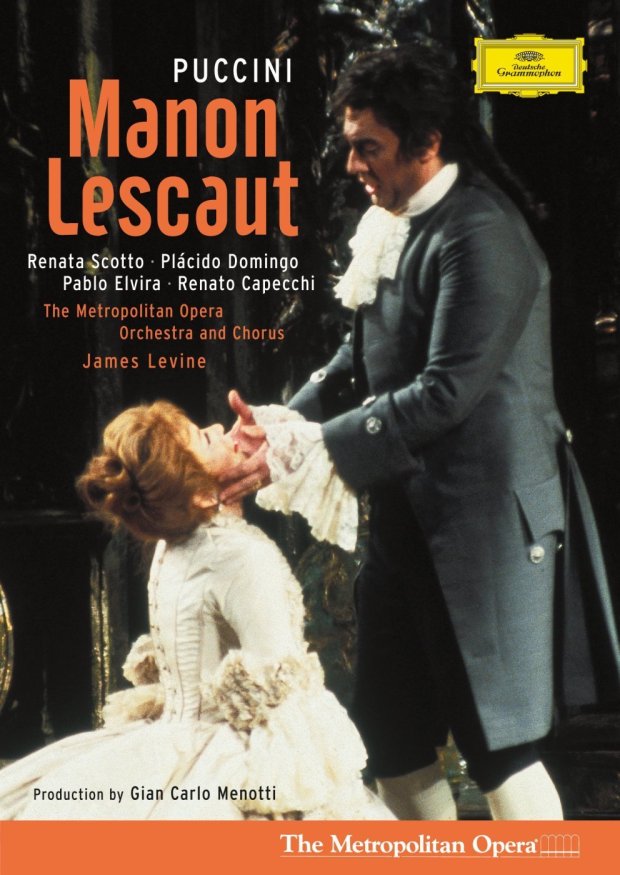
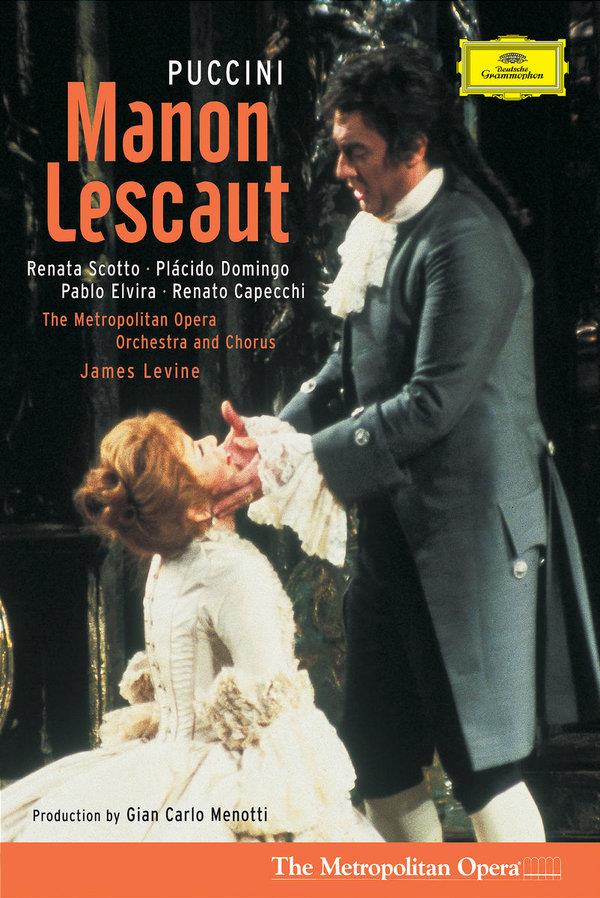
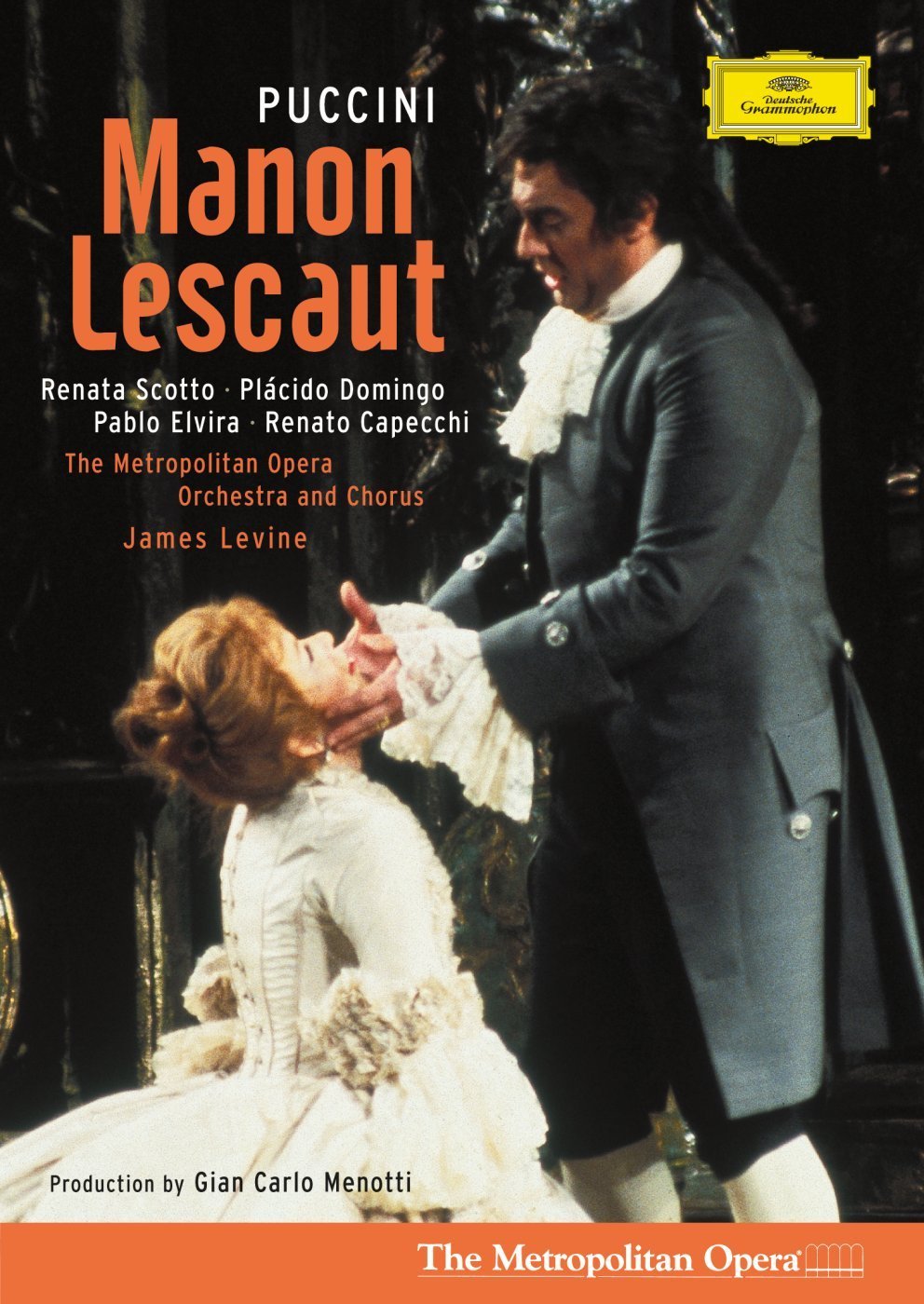
I can be very brief about the offers on DVD: buy the Menotti production with Renata Scotto and Plácido Domingo from the Metropolitan Opera (1980) and you are set for life. There is no other production that comes even close to it and I do not expect that event to happen any time soon. The compulsiveness with which many contemporary directors want to update everything can only kill the opera. Such was the case with Mariusz Trelinski’s production in Brussels a few years ago, with Eva-Maria Westbroek and Brandon Jovanovich.  And this was also the case with the latest production from the MET, directed by Richard Eyre, with Kristine Opolais and Roberto Alagna in the leading roles.

Scotto sings and acts Manon like no one else has done before, and together with Domingo she provides us with a lovely evening filled with a whole lot of old-fashioned crying. Menotti’s very realistic, true-to-nature and oh-so-exciting production could not be any better.
It is quite unique (DG 0734241).


THE VERY FIRST MANON


Back to the very first Manon. What did she sound like? There is a recording by Cesira Ferrari of “In quelle trine morbide”, made in 1905. It is on a double CD by Standing Room Only (SRO-818-2) with the title “Creators Records”. What you hear is a light, almost soubrette-like voice, but with dark undertones. And with a lot of body. You could say it’s a bit of a big-boned Lolita.

Plácido Domingo and Puccini: a match made in heaven

Puccini Domingo

Sometimes I think that Placido Domingo must be the reincarnation of Puccini. Not because they look so similar (although they are very much alike in the photos), but because of the music. It seems to have been created for Domingo’s timbre. It is as if Puccini composed with Domingo’s voice in mind.

And yet (or perhaps because of this): there is no other repertoire that shows as clearly whether a role suits him or not. He was never a memorable Rodolfo and his Pinkerton was not noteworthy. Even as Calaf, despite the great performances, he did not really identify with the role. He was too friendly, too kind, too human.


TOSCA

Afbeeldingsresultaat voor Domingo Puccini"

Domingo sang his very first Cavaradossi on 30 September 1961 and since then he has sung more performances of Tosca than of any other opera. This is the role he researched with the utmost care. He even added some qualities to the painter’s character that are not really there, in my opinion.

Personally, I find Cavarodossi’s flirtation with the revolution no more than a whim, but Domingo takes it dead serious and sees himself not only as the lover but also as the freedom fighter. From the start, he knows that the execution is actually going to take place, but he is playing along with the lie to spare his beloved Floria. Very humane and very moving.

tosca Nilsson

He sang his first Tosca at the Metropolitan Opera in 1969. It was not planned: he took over at the last minute for the sick Sándor Kónya. Birgit Nilsson was Tosca. In her memoirs, she stated that she found his acting ‘superb’ and his singing ‘gorgeous’.

It was indeed a memorable performance, not least because of Nilsson’s ‘scream’.


Fortunately, the performance was recorded for radio and was released on CD (Nuova Era 2286/870).

Tosca Scotto

Of the studio recordings, two are very dear to me. On Warner Classics (5665042), Renata Scotto meticulously sings all the notes prescribed by Puccini ( her colleagues are not always as scrupulous) and Renato Bruson is very ‘courteously dangerous’ as Scarpia.

Tosca Price

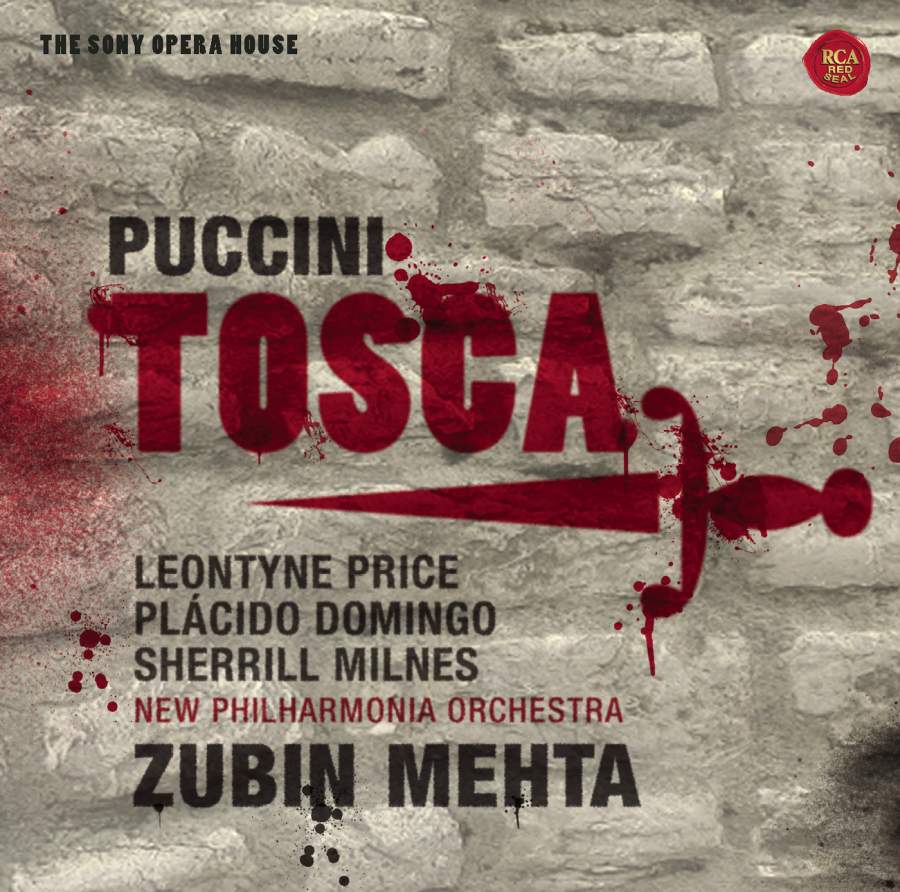
RCA (88697448122) has recorded one of the best Scarpias ever: Sherrill Milnes. I once heard him live in the role and it was a real experience! Leontyne Price is a sultry Tosca.

Tosca Kabaivanska

On DVD, I find the Decca film version (0434909) by far the most impressive. It was shot on location in 1976, which was not very common at the time. Well, location… The Palazzo Farnese was then home to the French Embassy, so filming was not allowed inside.

Milnes was once again present and the lead role was sung in a very tormented way by Raina Kabaivanska.

Domingo is so beautiful it makes you want to cry, but what gives the film that little bit extra is the tiny role of the little shepherd. It is sung by Placido junior, then 10 years old.

MANON LESCAUT

Manon Domingo

Another Puccini role that fits him like a glove is Des Grieux in Manon Lescaut. Of this opera with Domingo, there are many recordings, both studio and live. Not all of them are worth listening to and in most cases it is the interpreter of the title role who presents the problem. It is nothing new: when a record company had a new ‘star’, he or she just had to record everything available. With often disastrous results.

Manon Domingo Olivero


In 1970, Domingo sang Des Grieux in Verona, with Magda Olivero in the title role. Quite bizarre when you consider that Olivero made her professional debut eight years before Domingo was born. And yet: her portrayal of the young heroine is utterly convincing. Indeed, most of her colleagues still cannot match it! My copy was released on Foyer, but better quality editions are now available.

Manpn Domingo Scotto

In 1980, the opera was broadcast on TV. That recording is now available on DVD. Believe me: there is no better. Scotto sings and acts Manon like no one else has done before, and together with Domingo, she makes us cry with the beauty and the sadness of it all. Menotti’s very realistic, true to life and very exciting direction simply could not be better. A MUST (DG 073424)


IL TABARRO

Tabarro-Melodram-Crader


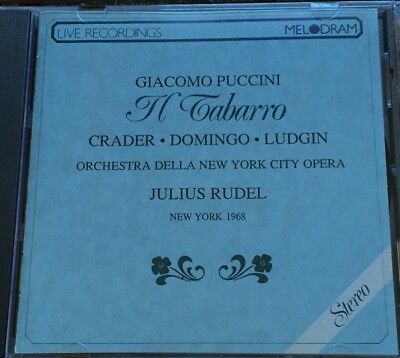
Luigi in Il Tabarro was also a role after Domingo’s own heart. His recording from 1968 with the New York City Opera, conducted by Julius Rudel (Melodram 17048) is splendid, with Jeannine Crader as Giorgietta, a wonderful singer who sadly never made it in Europe.

Il Tabarro


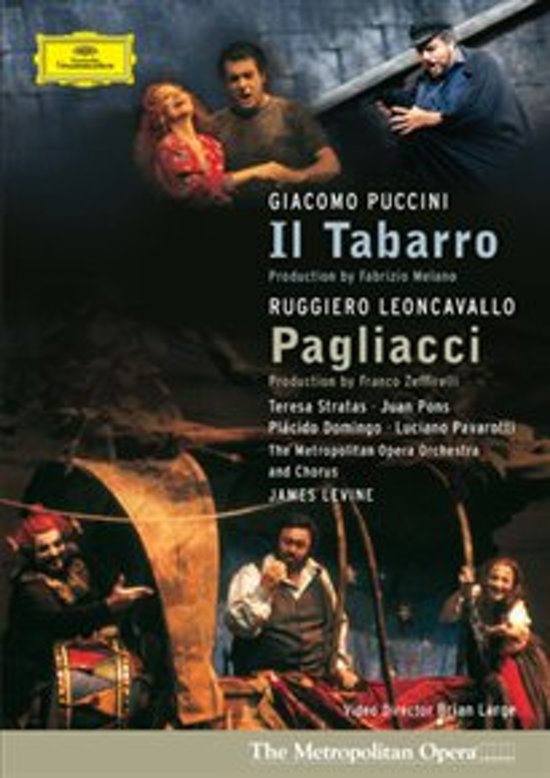
On DVD, there is a fine Zeffirelli production from New York, recorded in 1994. Giorgietta is sung by Teresa Stratas. Unfortunately, it is coupled with Pagliacci with Pavarotti and again with Stratas, in the leading roles. Not really my ‘cup of tea’ (DG0734024).


Below a curiosity: a duet from Il Tabarro with Domingo and Beverly Sills from 1967


EDGAR

Puccini Edgar

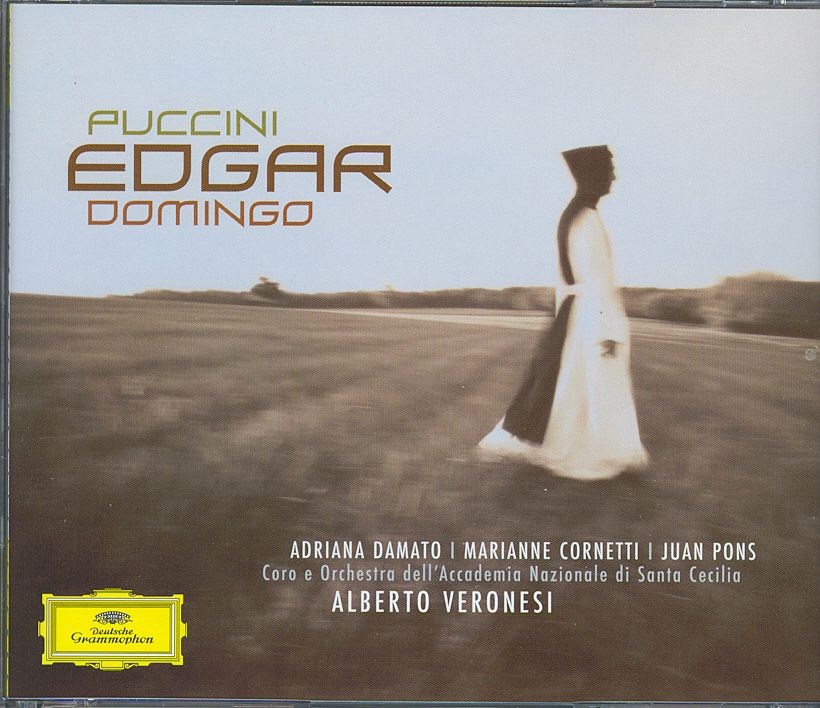
There are at least two good reasons to welcome the 2006 Edgar (DG 4776102): it is the very first studio recording of the work and it is the first time that Domingo sings the role, the only one still missing from his Puccini discography.

I never understood why the opera was so unloved. Musically, it is in line with Verdi, but one can already hear tentative fragments of the ‘real’ Puccini: a vague promise of Manon Lescaut, a study for La Bohème and creative exercises for Turandot.

With Adriana Damato and Marianne Cornetti, we can welcome a new generation of phenomenal singers and Domingo is, as always, very musical and committed.

LA FANCIULLA DEL WEST

La Faciulla Dominfgo Neblett cd

For me, the very best is a 1978 DG recording (4748402), with an underrated Carol Neblett as a very fierce Minnie. Domingo is a languorous and surprisingly lyrical Johnson, and Sherrill Milnes sounds like he’s in a real western.

La Fanciulla Domingo Zam[ieri dvd

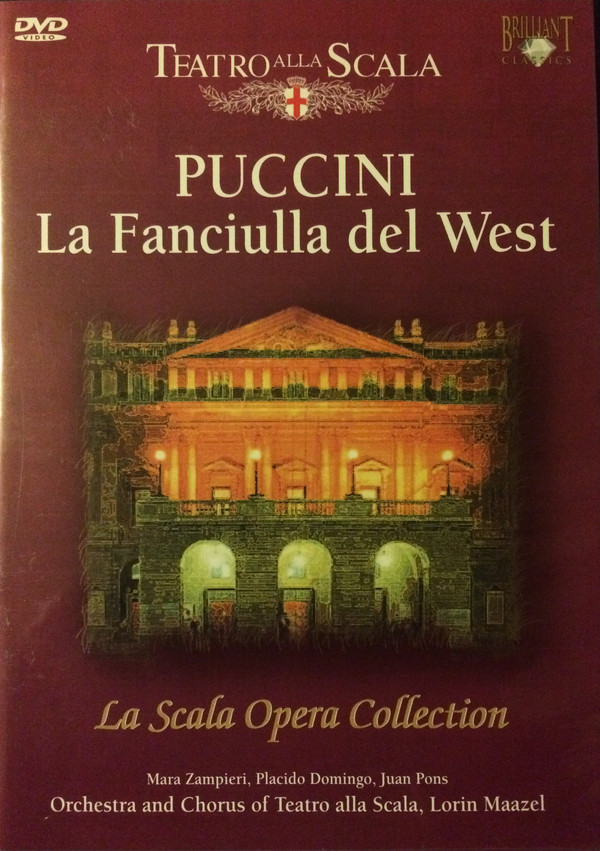
Two worthwhile recordings have appeared on DVD. One with Mara Zampieri and Juan Pons (Opus Arte OA LS3004 D) from La Scala, 1991, in a beautiful, colourful direction by Jonathan Miller.

La Fanciulla Domingo Neblett dvd

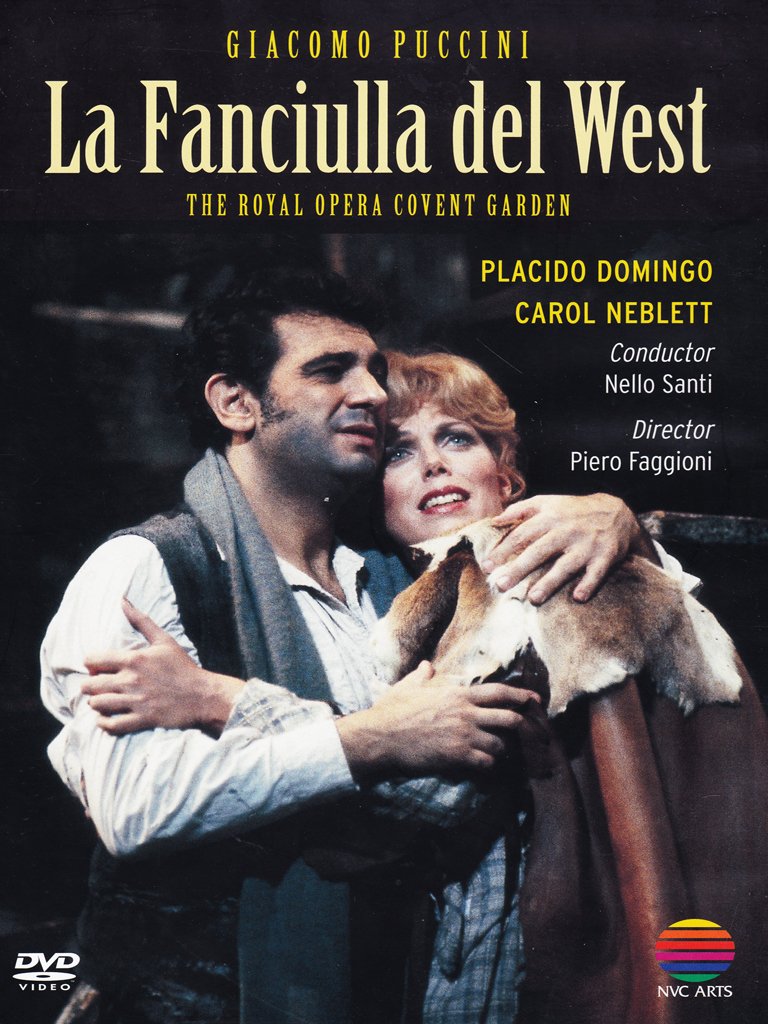
The other is with Carol Neblett and Silvano Carroli (Kultur Video 2038) from the Royal Opera House, 1982.

SONGS

Dommingo Puccini

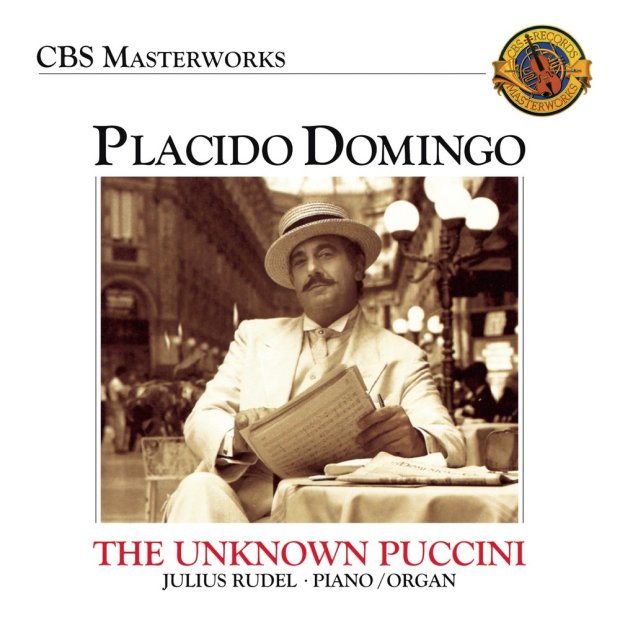
There were once plans to make a feature film about Puccini, in which Domingo would play the composer. It did not go ahead. In preparation for the project, Domingo recorded all Puccini’s songs in 1989, under the title Unknown Puccini (Sony 44981).

For the cover, he is made to look like Puccini and there he is: dressed in white, hat on his head and the moustache prominent on his face. Puccini to the life!

Anyway, it is all about the music and it is a must- have for anyone interested in Puccini. Most are first ever recordings and gradually you follow the composer on his path towards his Manon’s, Tosca’s and other ‘girls’. The renowned conductor Julius Rudel accompanies Domingo on piano and organ.


Plácido Domingo en Puccini: een match made in heaven?

Puccini DomingoSoms denk ik wel eens dat Plácido Domingo de reïncarnatie is van Puccini. Niet omdat ze zo op elkaar lijken (al hebben ze op de foto’s wel dezelfde uitstraling), maar vanwege de muziek. Die lijkt geschapen te zijn voor Domingo’s timbre. Het is alsof Puccini componeerde met Domingo’s stem in het hoofd.

En toch (of misschien juist daarom): in geen ander repertoire kan je zo goed horen of een rol hem wel of niet ligt. Hij is nooit een memorabele Rodolfo geweest en zijn Pinkerton mocht geen naam hebben. Zelfs als Calaf was hij, ondanks de geweldige prestaties, niet echt roldekkend. Hij was te vriendelijk, te aardig, te menselijk.

TOSCA

Afbeeldingsresultaat voor Domingo Puccini"

Zijn allereerste Cavaradossi zong Domingo op 30 september 1961 en sindsdien heeft hij van Tosca meer uitvoeringen gezongen dan van welke andere opera ook. Over geen andere rol heeft hij zo diep nagedacht. Hij heeft de schilder zelfs meer eigenschappen toegedicht dan er, mijns inziens, in zitten.

Zelf vind ik Cavarodossi’s flirt met de revolutie niet meer dan een gril, maar Domingo neemt het bloedserieus en ziet zichzelf niet alleen als de minnaar maar ook als vrijheidsstrijder. Vanaf het begin weet hij dat de executie daadwerkelijk plaats gaat vinden, waardoor hij ook nog eens toneelstuk voor zijn geliefde Floria opvoert. Zeer humaan en zeer ontroerend.

tosca Nilsson

Zijn eerste Tosca in de Metropolitan Opera zong hij in 1969. Het was niet gepland: hij viel op het laatste moment in voor de zieke Sándor Kónya. Birgit Nilsson was Tosca. In haar memoires heeft ze opgeschreven dat ze zijn acteren ‘superb’ vond en zijn zingen ‘gorgeous’.

Het was inderdaad een memorabele voorstelling, niet in de laatste plaats vanwege de ‘schreeuw’ van Nilsson.

Tosca Scotto

Van de studio-opnamen zijn mij twee zeer dierbaar. Op Warner Classics (5665042) zingt Renata Scotto alle door Puccini voorgeschreven noten (daar nemen haar collega’s het niet altijd zo nauw mee) en Renato Bruson is zeer ‘hoffelijk gevaarlijk’ als Scarpia.


Tosca Price

RCA (88697448122) heeft één van de beste Scarpia’s ooit geregistreerd: Sherrill Milnes. Ik heb hem ooit live in de rol gehoord, dat was een belevenis! Leontyne Price is een zwoele Tosca.


Tosca Kabaivanska

Op dvd vind ik de Decca-verfilming (0434909) verreweg de meest indrukkwekkende. Het werd in 1976 gedraaid op locatie, wat toen nog niet echt gebruikelijk was. Nou ja, locatie… In het Palazzo Farnese was toen de Franse Ambassade gevestigd, waardoor er niet in gefilmd mocht worden.

Milnes was wederom van de partij en de hoofdrol werd zeer gekweld gezongen door Raina Kabaivanska.

Domingo is om te huilen zo mooi, maar wat de film nog dat beetje extra geeft, is de piepkleine rol van het herdertje. Die wordt namelijk gezongen door Plácido junior, toen 10 jaar oud.

MANON LESCAUT

Manon Domingo

Een andere Puccini-rol die voor mij helemaal des Domingo’s is, is Des Grieux in Manon Lescaut. Van deze opera met Domingo bestaan dan ook waanzinnig veel opnamen, zowel studio als live. Niet allemaal zijn ze de moeite waard en in de meeste gevallen ligt het aan vertolkster van de titelrol. Het is niets nieuws: had een platenmaatschappij een nieuwe ‘ster’, dan moest hij/zij alles opnemen wat op te nemen viel. Met veelal desastreuze gevolgen.

Manon Domingo Olivero

In 1970 heeft Domingo Manon Lescaut in Verona gezongen, met Magda Olivero in de titelrol. Best bizar als je bedenkt dat Olivero haar professionele debuut acht jaar voordat Domingo geboren werd maakte. En toch: haar uitbeelding van de jonge heldin is volkomen overtuigend. Sterker nog, daar kunnen de meeste van haar collega’s nog steeds niet aan tippen! Mijn exemplaar werd uitgebracht op Foyer, maar inmiddels bestaan er uitgaven in betere geluidskwaliteit.


Manpn Domingo Scotto

In 1980 werd de opera op tv uitgezonden. Die opname is nu ook op dvd beschikbaar. Geloof mij: beter bestaat niet. Scotto zingt en acteert Manon zoals geen ander eerder heeft gedaan en met Domingo samen zorgt zij voor een avondje ouderwets huilen. De zeer realistische, natuurgetrouwe en zeer spannende regie van Menotti kan gewoon niet mooier. Een MUST (DG 0734241).

IL TABARRO

Tabarro-Melodram-Crader

Luigi in De Mantel was ook een rol naar Domingo’s hart. Prachtig is zijn opname uit 1968 bij de New York City Opera, gedirigeerd door Julius Rudel (Melodram 17048) met als Giorgietta Jeannine Crader, een geweldige zangeres die nooit in Europa is doorgebroken.

Il Tabarro

Op dvd bestaat een mooie Zefirelli-productie uit New York, opgenomen in 1994. Giorgietta wordt gezongen door Teresa Stratas. Jammer genoeg is het gekoppeld aan Pagliacci met Pavarotti, met wederom Stratas in de hoofdrollen. Niet echt mijn ‘kopje thee’ (DG0734024).

Hieronder een curiosum: een duet uit Il Tabarro met Domingo en Beverly Sills uit 1967

EDGAR

Puccini Edgar

Er zijn op zijn minst twee goede redenen om de in 2006 opgenomen Edgar (DG 4776102) een warm welkom te heten: het is de allereerste studio-opname van het werk en het is voor het eerst dat Domingo die rol, de enige die nog ontbrak in zijn Puccini-discografie, heeft gezongen..

Nooit heb ik begrepen waarom de opera zo ongeliefd was. Muzikaal ligt het in het verlengde van Verdi, maar men hoort al flarden van de ‘echte’ Puccini: een vage belofte van Manon Lescaut, een studie op La Bohème en vingeroefeningen voor Turandot.

In Adriana Damato en Marianne Cornetti mogen wij een nieuwe generatie fenomenale zangeressen verwelkomen en Domingo is zoals altijd zeer muzikaal en betrokken.


LA FANCIULLA DEL WEST

La Faciulla Dominfgo Neblett cd

De allerbeste is voor mij een DG-registratie (4748402) uit 1978, met een ondergewaardeerde Carol Neblett als een zeer felle Minnie. Domingo is een smachtende en verrassend lyrische Johnson en Sherrill Milnes klinkt alsof hij in een echte western was beland.


La Fanciulla Domingo Zam[ieri dvd

Op dvd zijn er twee opnamen verschenen die de moeite waard zijn. Eén met Mara Zampieri en Juan Pons (Opus Arte OA LS3004 D) uit La Scala, 1991, in een prachtige, kleurrijke regie van Jonathan Miller.

La Fanciulla Domingo Neblett dvd

De ander is met Carol Neblett en Silvano Carroli (Kultur Video 2038) uit het Royal Opera House, 1982. Deze is echter moeilijk in Nederland verkrijgbaar.

LIEDEREN

Dommingo Puccini

Ooit waren er plannen om een speelfilm over Puccini te maken, waarin de zanger de componist ging spelen. Het ging niet door. In aanloop naar het project heeft Domingo in 1989 alle liederen van Puccini opgenomen, onder de titel Unknown Puccini (Sony 44981).

Voor de cover werd hij naar Puccini gemodelleerd en daar zit hij dan: gestoken in het wit, hoed op zijn hoofd en de snor prominent op zijn gezicht. Sprekend Puccini!

Maar goed, het gaat om de muziek en dat is verplichtte kost voor een ieder die in Puccini is geïnteresseerd. Het betreft veelal primeurs en je leert de weg die de componist aflegde naar zijn Manon’s, Tosca’s en andere ‘meisjes’. De vermaarde dirigent Julius Rudel begeleidt Domingo op piano en orgel.


Waarom houden we van Manon Lescaut? Discografie.

manon-lescau

Waarom houden we zo van Manon? Echt deugdzaam is zij niet. Ze verlaat haar grote liefde voor een oude rijkaard, maar zodra zij verveeld raakt mag haar jonge minnaar terugkomen. Zij wil best met hem vluchten, maar dan niet zonder haar juwelen. Een kind kan zien dat het niet goed kan aflopen.

Eenmaal gesnapt wordt Manon gevangen genomen en voor straf naar Amerika verbannen, waar zij sterft in de armen van haar geliefde. De arme ziel weigerde namelijk haar te verlaten. Over liefde gesproken!

Het is dankzij Puccini, die haar karakter in de prachtigste noten heeft weten te vangen, dat zij nergens ééndimensionaal wordt en je moet van steen zijn wil je niet van haar kunnen houden.

De rol van Manon werd in 1893 in het Teatro Reggio in Turijn gecreëerd door Cesira Ferrari, een Italiaanse sopraan die haar debuut maakte als Micaëla in Carmen en drie jaar later ook de eerste Mimì in La bohème zong. Wellicht een indicatie voor het stemtype dat Puccini voor zijn Manon in gedachten had?

Hoeveel goede Manons zijn er tegenwoordig? Niet veel, denk ik. De rol stelt zeer hoge eisen aan de vertolkster. Het vereist een stem die het kinderlijk-naïeve sexappeal van het onnozele meisje uit de eerste drie akten met de echte tragédienne uit akte vier weet te combineren.

Maar ook Des Grieux is een rol die lastig valt te bezetten. De man zelf is weliswaar een mietje, maar Puccini heeft voor hem zulke heftige noten geschreven, daarbij hem voor de meest emotionele uithalen uitdagend, dat je eigenlijk Calaf in spe moet zijn wil je de opera met een nog gezonde stem overleven.
                                                 

MAGDA OLIVERO

manon-olivero-domingo

Geen twijfel mogelijk: Magda Olivero was zonder meer de beste Manon Lescaut van de tweede helft van de twintigste eeuw. In 1970, zij was toen 60 (!) jaar oud, zong zij de rol in Verona met aan haar zijde de nog geen dertigjarige Domingo. Best bizar als je bedenkt dat Olivero haar professioneel debuut heeft gemaakt acht jaar voordat Domingo werd geboren. En toch was haar portrettering van de jonge heldin volkomen overtuigend. Daar konden (en kunnen) de meeste van haar collega’s niet aan tippen!

De rol van Des Grieux was één des Domingo’s. Als Renato wist hij al zijn charmes, zijn sehnsucht en zijn jongensachtigheid (iets wat hij tot op de hoge leeftijd heeft weten te behouden) met een kanon van een stem combineren. Mijn exemplaar werd uitgebracht op Foyer (2-CF 2033), maar inmiddels bestaan er meer uitgaven in betere geluidskwaliteit en is de opname ook op You Tube te vinden.

Twee jaar later zong Olivero de rol in Caracas. De voorstelling van 2 juni 1972 werd door Legato Classics (LCD-113-2) opgenomen. Geluidskwaliteit is redelijk goed, maar wat de opname echt begerenswaardig maakt is Des Grieux van de toen zestigjarige Richard Tucker. Zo smachtend, zo verliefd, zo mooi…. Zucht. Ja, mensen: ooit werd opera door stemmen gemaakt, niet door mooie lijven!

manon-olivero-tucker-foto

Duet uit de vierde akte:

RAINA KABAIVANSKA

manon-kabaivanskaManon werd in 1970 in Verona niet alleen door Magda Olivero, maar ook door Raina Kabaivanska gezongen, met verder dezelfde cast en dezelfde dirigent. De opname is heel erg slecht en dus eigenlijk alleen voor de diehards bestemd, maar mocht je de kans krijgen om het te beluisteren: doen. Tussen Kabaivanska, die nog steeds bijzonder ondergewaardeerd is en de jonge Domingo was een chemie hoorbaar en dat komt, ondanks de slechte geluidskwaliteit, goed over. Als bonus krijgt u fragmenten uit 1953 van de live voorstelling in Mexico, met Mario del Monaco en Clara Petrella. Ook niet te versmaden! (GAO 162/63)
Het duet uit II Tu, tu, Amore? tu?:

MIRIAM GAUCI

manon-gauci

In 1991 was de Maltese Miriam Gauci niet echt een onbekende, maar haar grote carrière is pas met haar rol als Manon Lescaut in de Vlaamse Opera in Antwerpen begonnen. De opera was de eerste in de Puccini-cyclus, gemaakt door de toen beginnende Canadese regisseur Robert Carsen. Wie er toen bij was zal het nooit vergeten. Vanwege de schitterende productie, uiteraard, maar ook vanwege de verschroeiende vertolking van Gauci.

In 1992 nam Gauci de rol voor Naxos op (8660019-20), met aan haar zijde de Bulgaarse tenor Kaludi Kaludov als een zeer lyrisch klinkende Des Grieux. Zijn ‘Donna non vidi mai’ is een les in hoe je de hartstocht binnen de perken van lyriek kan houden. Om verliefd op te worden, zo mooi. De directie van Alexander Rahbari is zeer gedreven, maar mist veel nuances. Een must vanwege Gauci en Kaludov.

Highlights zijn op Spotify te beluisteren:


RENATA SCOTTO

manon-scotto

Over het aanbod op DVD kan ik heel kort zijn: schaf de Menotti productie met Renata Scotto en Plácido Domingo uit de Metropolitan Opera (1980) aan en dan bent u voor uw verdere leven klaar. Er bestaat geen andere productie die daar zelfs in de buurt kan komen en ik verwacht niet dat het binnenkort gaat gebeuren. De dwangmatigheid waarmee veel hedendaagse regisseurs alles willen updaten kan de opera alleen maar om zeep helpen. Zo was het geval met de productie van Mariusz Trelinski een paar jaar geleden in Brussel, met Eva-Maria Westbroek en Brandon Jovanovich.  En zo was het ook met de nieuwste productie uit de Met, geregisseerd door Richard Eyre, met Kristine Opolais en Roberto Alagna in de hoofdrollen.

Scotto zingt en acteert Manon zoals geen ander eerder heeft gedaan en met Domingo samen zorgt zij voor een avondje ouderwets janken. De zeer realistische, natuurgetrouwe en o zo spannende productie van Menotti kan gewoon niet mooier.Beter krijgt u het niet (DG 0734241)

CESIRA FERRARI: DE ALLEREERSTE MANON

manon-cesira-ferrari

Cesira Ferrari

Terug naar de allereerste Manon. Hoe klonk zij? Van Cesira Ferrari bestaat een opname van ‘In quelle trine morbide, gemaakt in 1905. Het staat op een dubbel cd van Standing Room Only (SRO-818-2) met de titel Creators Records. Wat je hoort is een lichte, bijna een soubretteachtige stem, maar met een donkere ondertonen. En met veel body. Zeg maar: een beetje uit de kluiten gewassen Lolita.