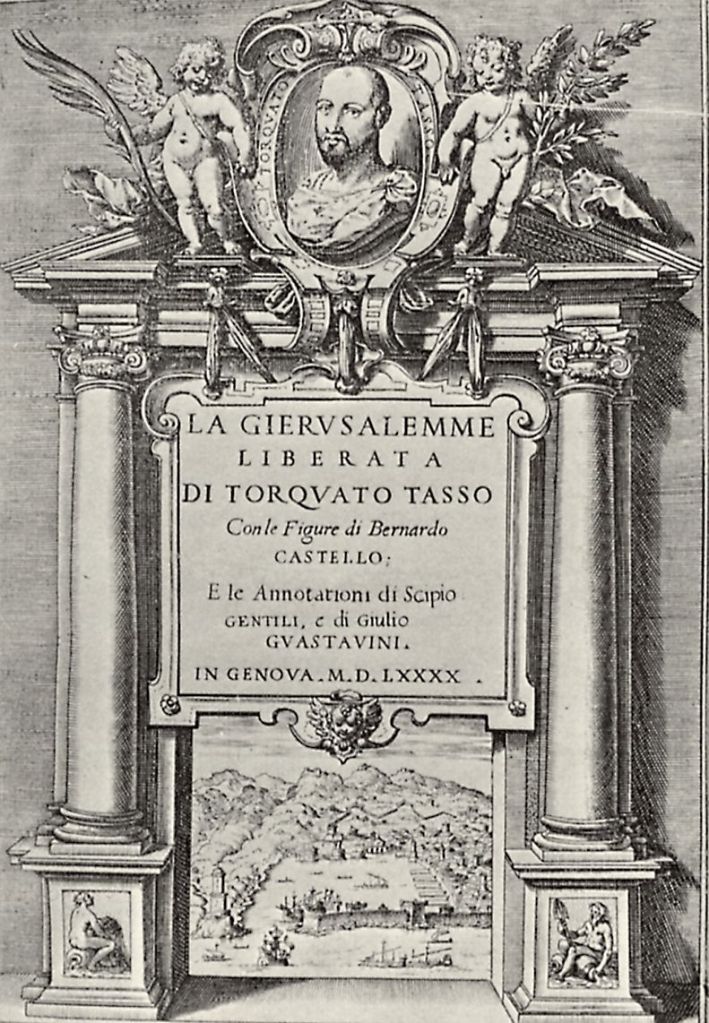
Agostino Carracci (su disegno di Bernardo Castello), Frontespizio della prima edizione illustrata della Gerusalemme Liberata, Genova, 1590
One might wonder why Torquato Tasso’s Gerusalemme liberata has inspired so many different composers from so many centuries. And not the entire epic, but specifically the Armida episode. Is it because of the magical-realistic story full of undisguised hatred, revenge, anger and passion? With characters (human or witch) torn apart by their conflicting feelings, their inner struggle between love and duty? I cannot say. Can you?
The first Armida that remains known to the general public was composed by Jean-Baptiste Lully, based on the libretto by Philippe Quinault. Gluck used the same libretto a hundred years later for his fifth “French” opera. He himself considered Armide to be his very best work, but the public (and history) thought otherwise.
I myself have never been particularly fond of it either. But the longer I have been involved with opera, the more I have come to appreciate it.
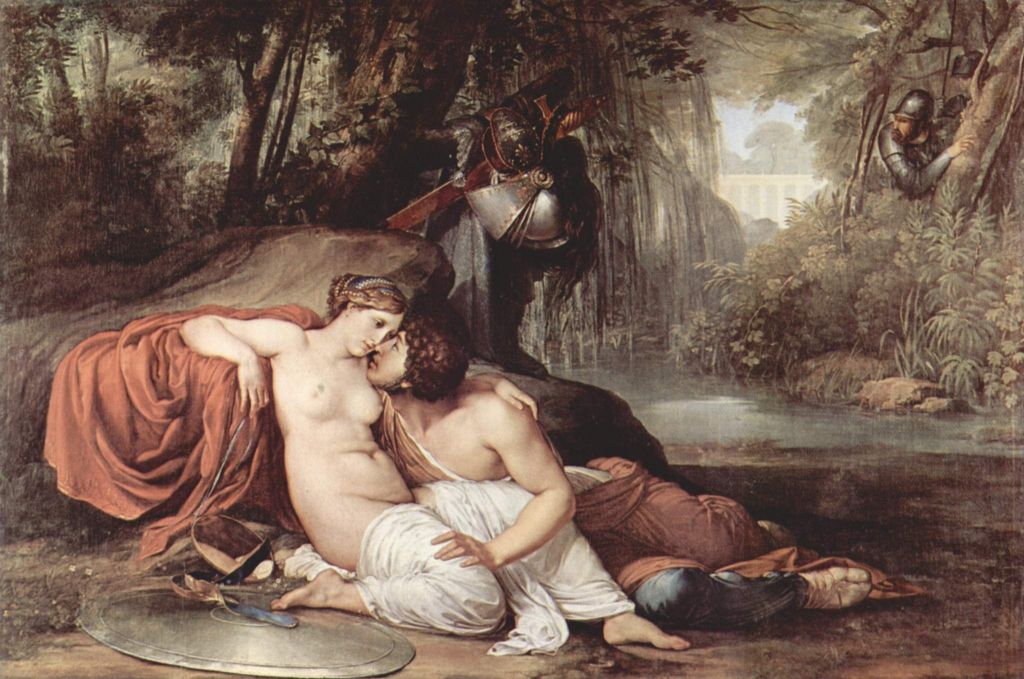
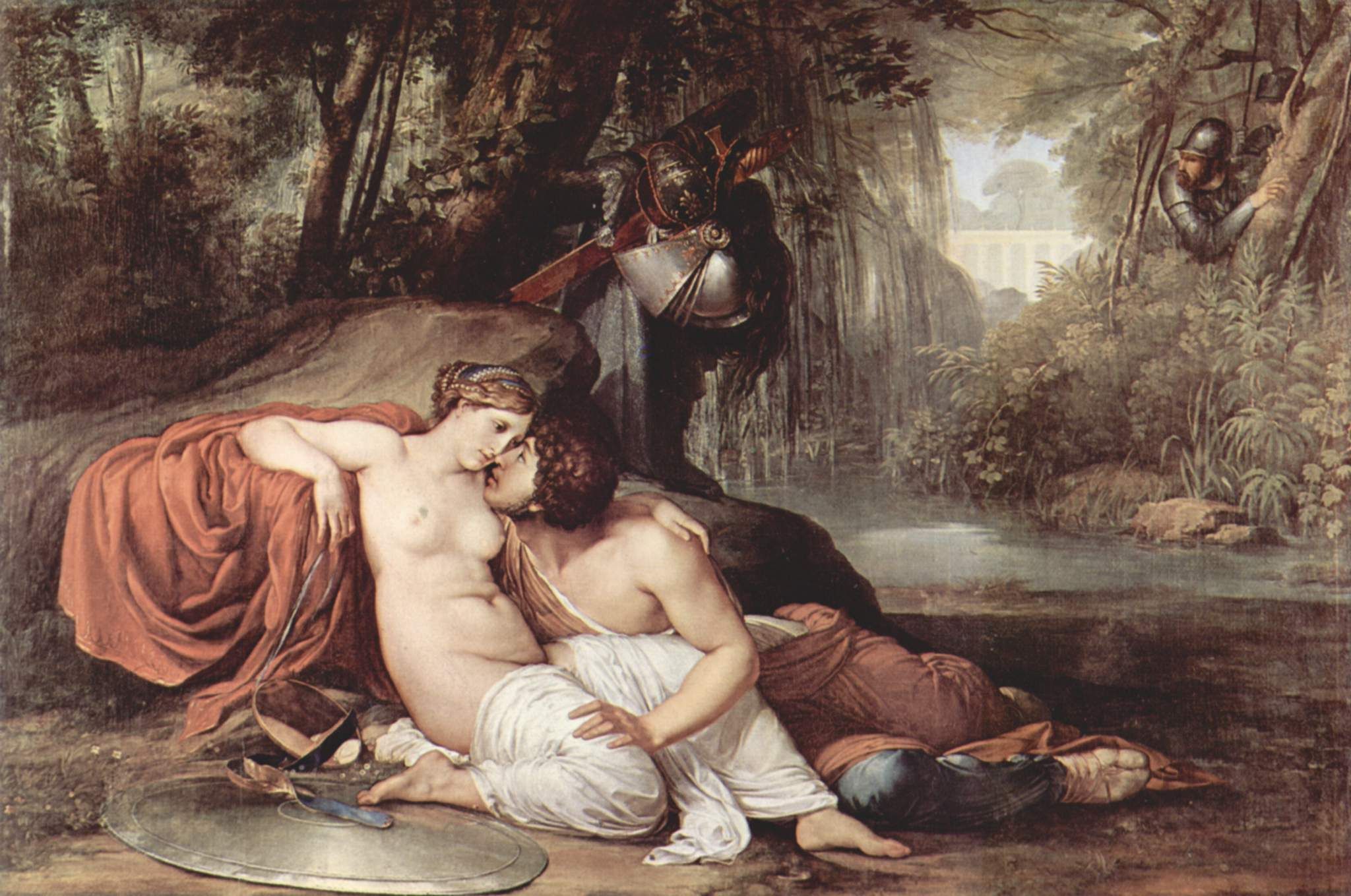
Francesco Hayez, “Rinaldo en Armida”
The opera has some magnificent arias and ensembles, with the heart-rending ‘Enfin, il est en ma puissance’ as an absolute highlight. It is a hysterical cry from the heart of the furious sorceress Armide, who has fallen in love.
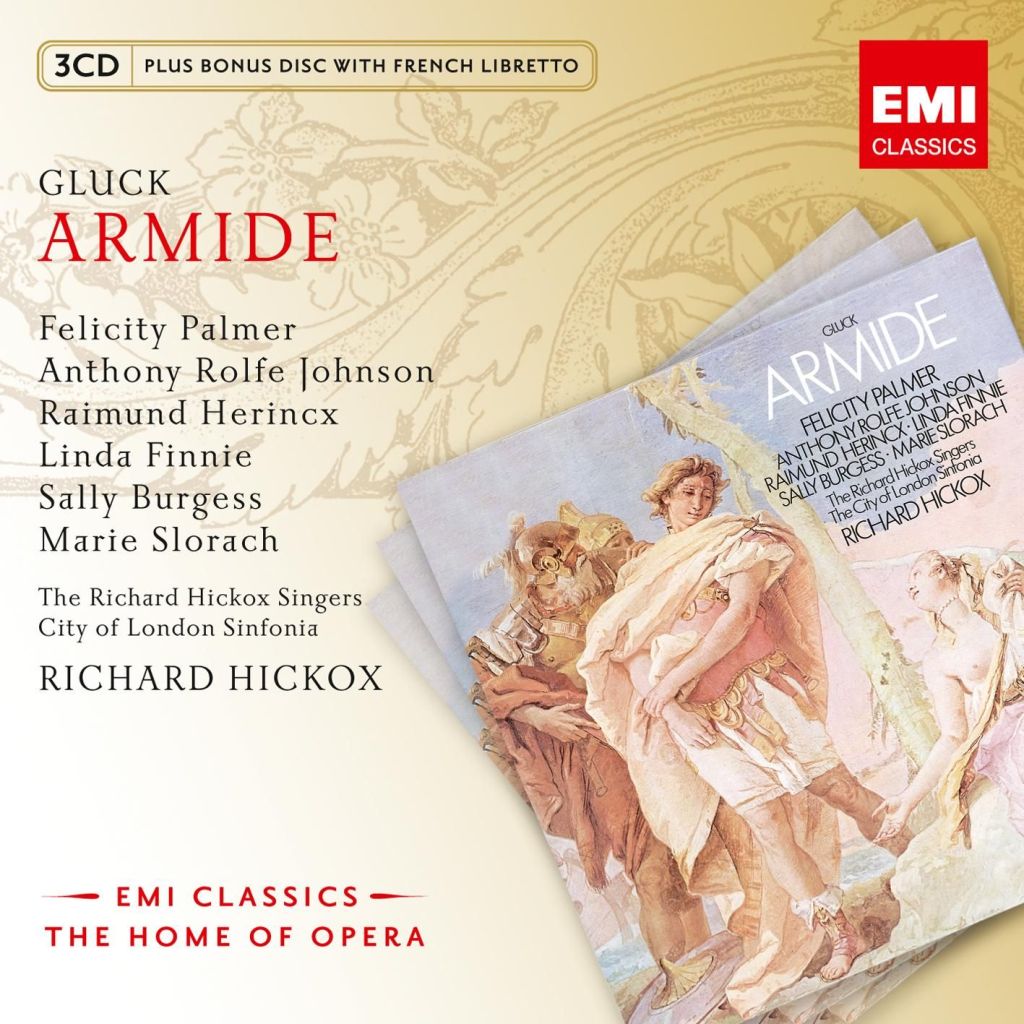
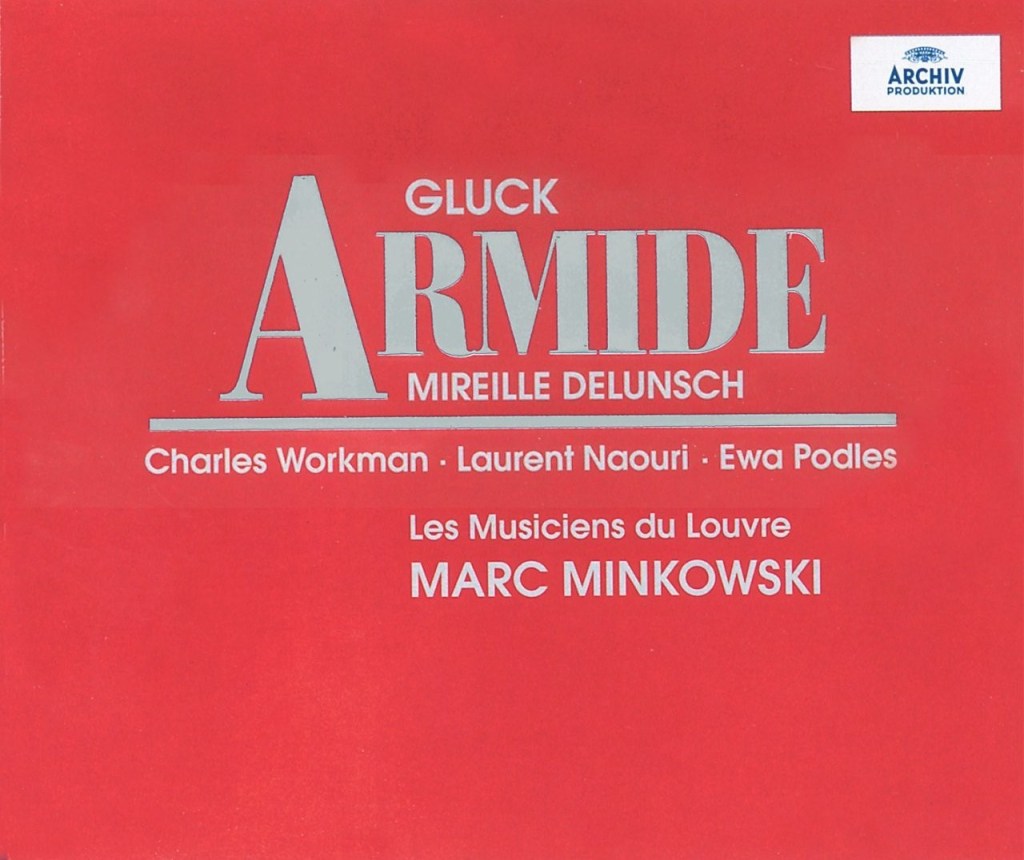
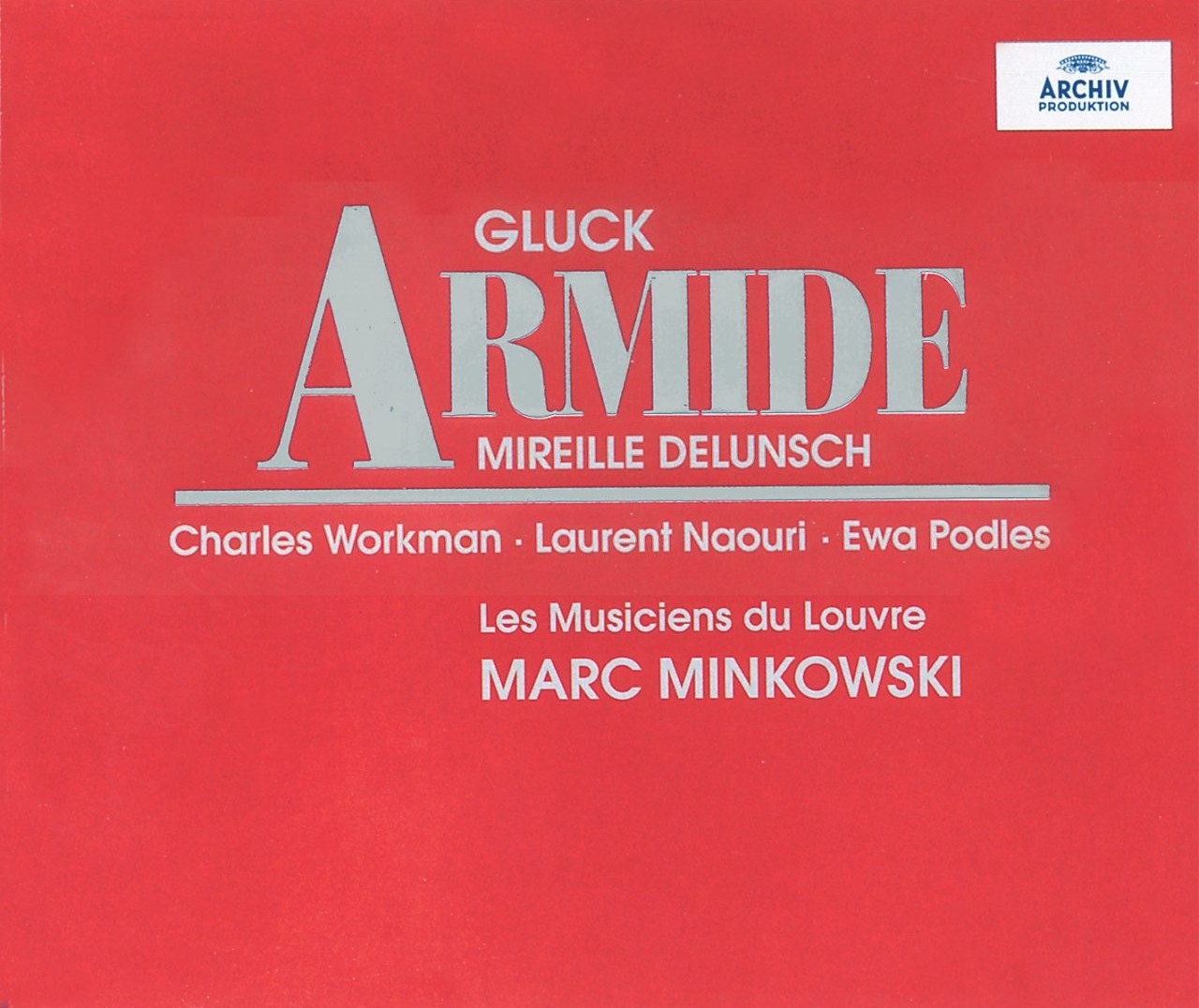
I know of only two complete recordings of Gluck’s work: one conducted by ichard Hickox on EMI (6407282) and one conducted by Marc Minkowski on Archiv (4596162). This is remarkable, considering that the opera is being erformed quite often these days.
Hicox’s recording (3 CDs) is over 26 minutes longer than Minkowski’s. I don’t know the opera well enough to be able to say whether Minkowski has made any cuts, but to be honest, I don’t think so. His tempi are simply on the fast side – except for the overture, where he is proceeds with some caution.
Hickox’s sluggishness becomes quite irritating after a while and I simply dozed off a few times. The thirty-year-old recording still sounds beautiful, although the sound does not match the clarity and transparency of Minkowski’s.
When it comes to the singers, the Frenchman easily beats his English colleague. I’m not a big fan of Mireille Delunsch, and I think her “Enfin il est en ma puissance” on Minkowski’s recording falls short of the interpretations by, for example, Véronique Gens or Anna Catarina Antonacci (why was the performance with Antonacci never officially recorded?). Nevertheless, despite her perfect diction and impeccable understanding of the text, Felicity Palmer (Hickox’s recording) is nomatch for her.
Charles Workman (Renaut) strikes a perfect balance between the heroic and the more lyrical – even my beloved Anthony Rolfe Johnson cannot compete with that.
Laurent Naouri is a very macho Hidraot, but what gives Minkowski’s recording that “superplus” is Ewa Podles’ performance in the small role of La Haine (Hate). Her voice and delivery will make your head spin. She is without peers: an alto with such a deep sound, with all the high notes at her disposal and she will leave you speechless with her interpretation!
HIckox:
Minkowski:
And a curiosity: a complete Armide from Madrid, 1985, with Montserrat ArmideCaballé:
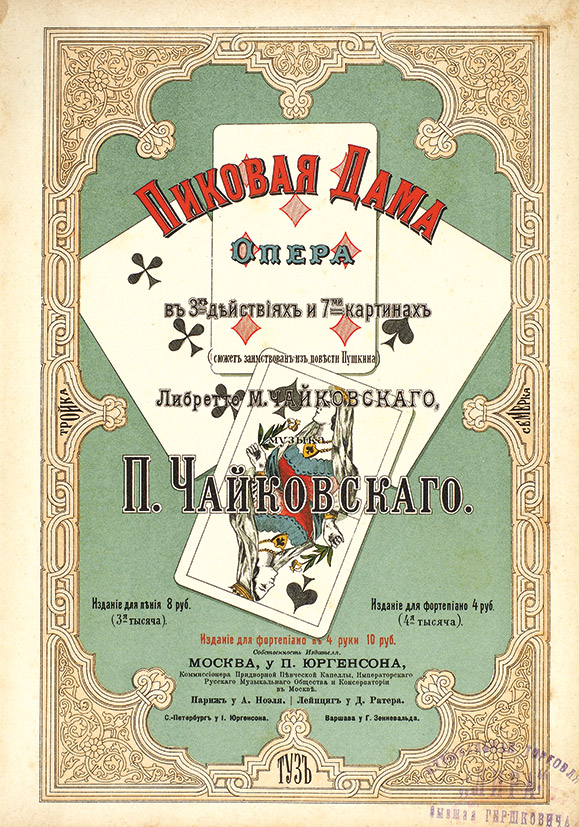
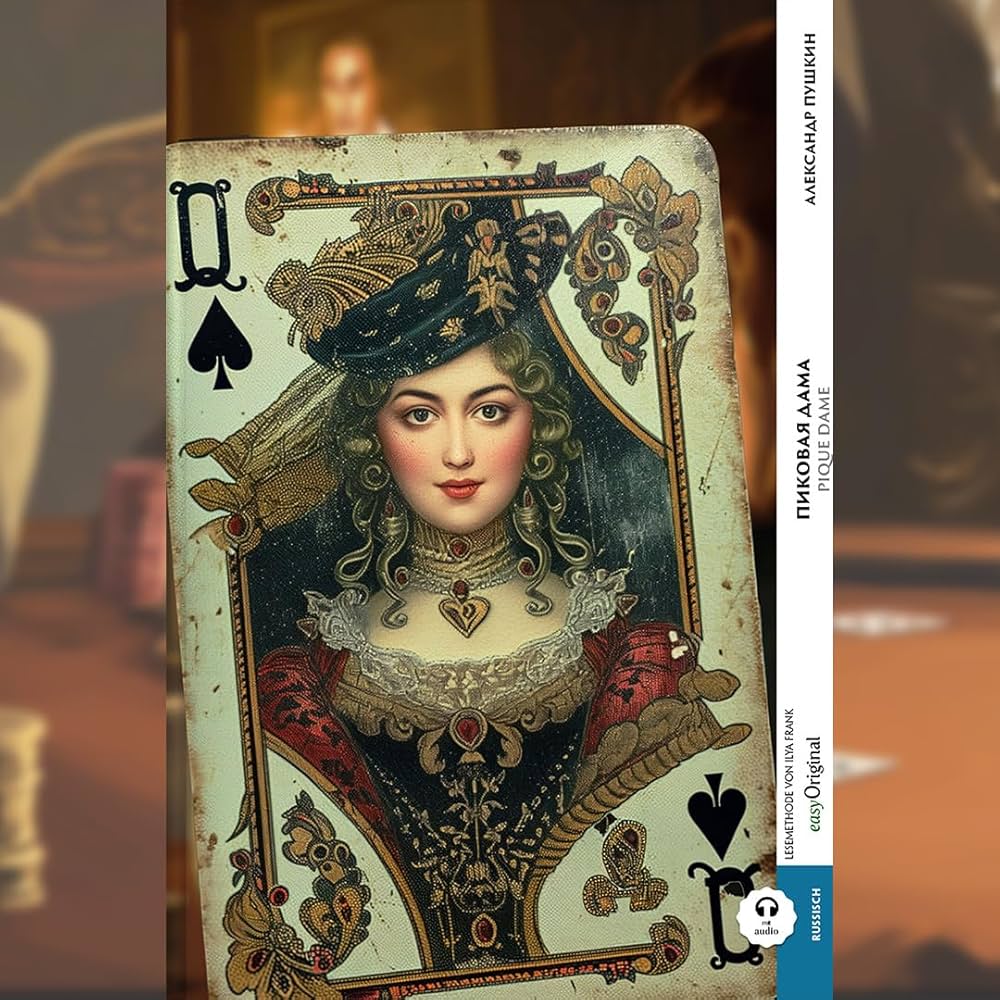
The Queen of Spades has always had something unsettling for me. I did not trust her. After all, she lacked the sweetness of Hearts, the wisdom of Diamonds and the sadness of Clubs. I experienced her as threatening
In Tchaikovsky’s opera, she symbolises the once blood-loving countess who, as legend has it, lost her entire fortune in a card game in her youth and regained it with the help of black magic.
The opera may be named after the countess’s ˜card alter ego”, but the real leading role belongs to Herman. A rather strange young man with obsessive eyes, of whom we know little to nothing. Fortunately, I would say, because this only adds to the suspense and mystery.
In Pushkin’s novel, on which the Tchaikovsky brothers based their opera, Herman is a German who at the end does not commit suicide but goes insane and is admitted to a mental institution.
Lisa (in the book not a granddaughter but companion of the countess) survives her misspent affair and marries a rich man. Do you need to know it all before going to the opera?
No, you do not! Hence also why I always sincerely hope that the directors who take Pique Dame in hand ignore the novel and stick to what the opera is about: a musical dissection of obsessions.
It is about an addiction carried to the utmost absurdum; to gambling, to love, to money, to power, to everything really. And about an all-pervading madness to which Lisa too falls prey, making her behave as if she were possessed by the devil. This is what the score also says.
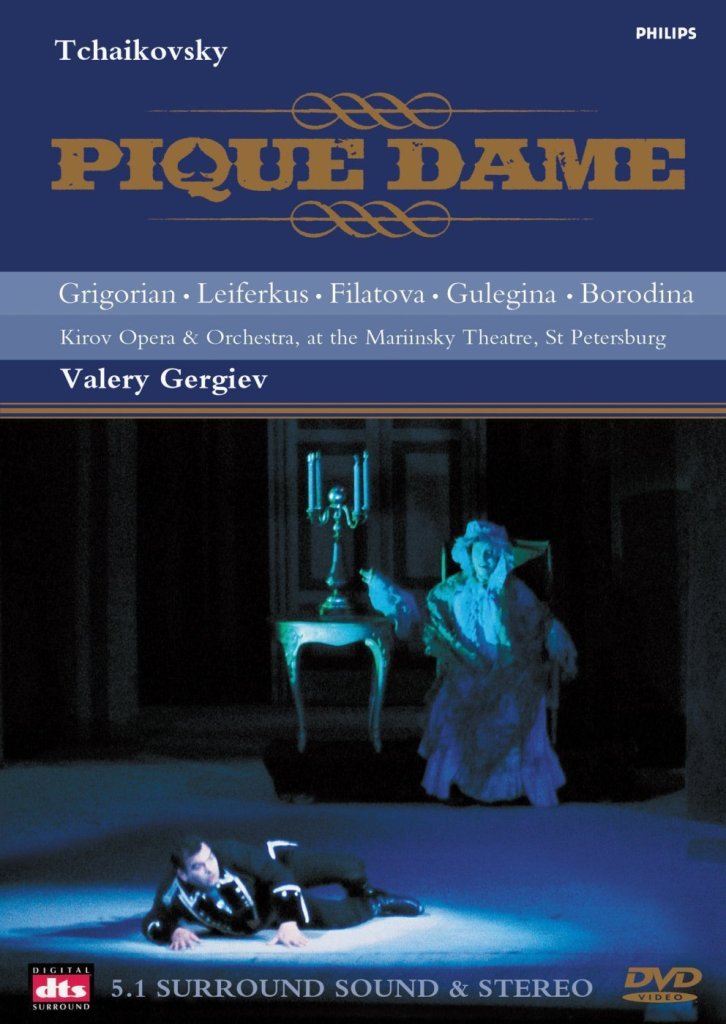
GEGAM GRIGORIAN
This 1992 Mariinsky production is a feast for the lover of traditional staging, where there is no room for updating and searching for hidden intentions. All the sets are super realistic, extensive attention has been paid to all the details and the costumes too seem to have been pulled out from under the dust.
That the whole thing nevertheless does not come across as very corny is due not so much to the director (Yuri Temirkanov, the renowned conductor and former artistic director of the Kirov), but to the truly superior team of singers.
Armenian tenor Gegam Grigorian, who died in March 2016, makes Herman a little brother to Otello, a true achievement.
Maria Gulegina, despite minor intonation problems, is a brilliant Lisa: tearful and heartbreaking.
Sergei Leiferkus puts on a solid Tomsky and Ludmila Filatova impresses as the old countess. Only Alexander Gergalov’s understated Yeletsky is not up to par, but he is soon forgiven, after all he has only the one aria to ruin.
Gergiev conducts animatedly, though he is not the subtlest. (Philips 070434-9)
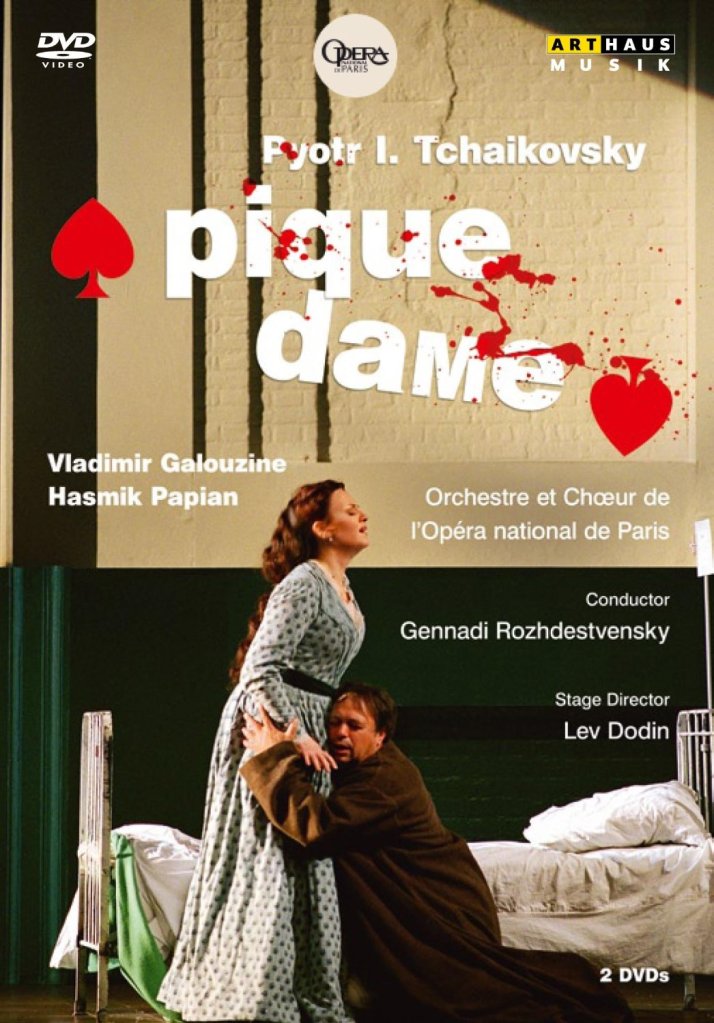
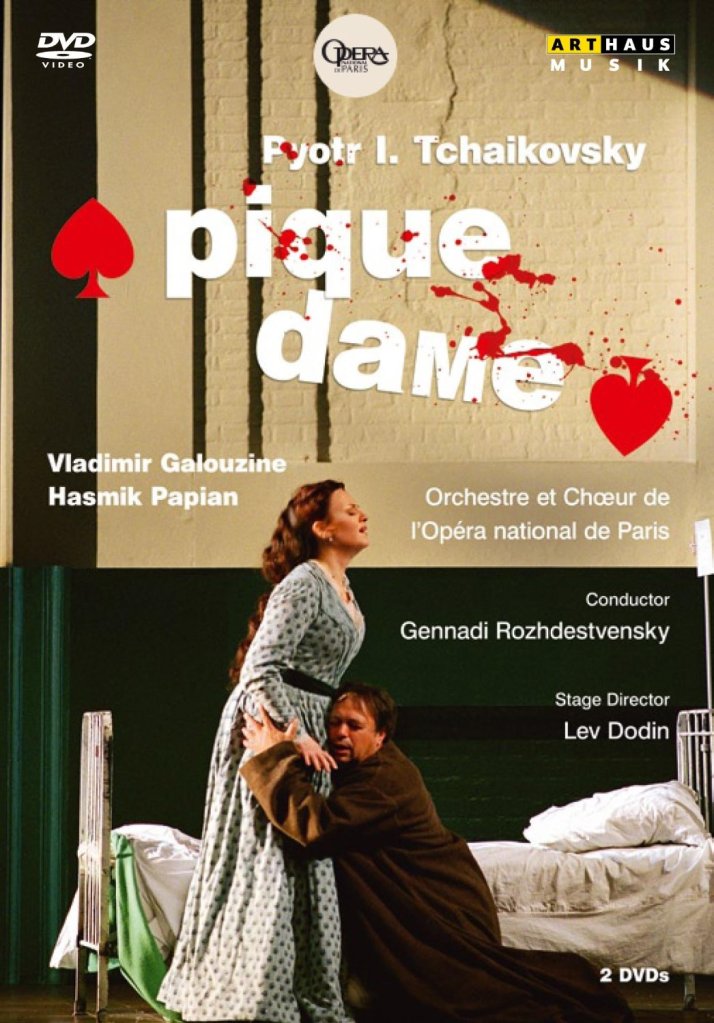
VLADIMIR GALOUZINE
We experienced Lev Dodin’s recorded in Paris production of 2005 a few years earlier in Amsterdam: DNO staged it back in 1998.
Lev Dodin is a renowned playwright and a great Pushkin enthusiast, which is why he wanted to return to the original story (here we go again!), which he felt was thoroughly botched by the Tchaikovsky brothers.
He came up with a formula that was ˜logical” in itself, in which the whole story exists only in the memories of the mentally ill Herman. I think I could probably live with it if Dodin had not subordinated the music to his concept and had not cut into the score: he deleted some 20 minutes of Tchaikovsky’s music and added a spoken text. I consider this a real crime.
The music that remains, however, is spot on. Rozhdestvensky has the score in his fingertips and there is also a lot of excellent singing, mainly by Vladimir Galouzine as Herman. He seems utterly fused with the role and commands admiration for his brilliant performance, both vocally and theatrically.
Hasmik Papian is a moving Lisa and as Polina we hear the young Christianne Stotijn (Arthouse Music 107317)
MISHA DIDYK.
This made me really go quiet This because of the unimaginably beautiful traditional production directed by Gilbert Deflo, which faithfully follows both the libretto and the score in every detail, while also being challenging and unusually exciting (Barcelona 2010).
The conductor (Michael Boder) handles the music with velvet gloves, steering it in the right direction and creating an atmosphere where pastoral scenes, sweet songs and folk dances alternate with horror, fear and death.
I fall silent too when hearing the singers, who give everything that even the most discerning person can desire. Micha Didyk ís Herman. He looks like Herman, he acts like Herman and he sings the role as only the real Herman can: passionate, obsessed and driven to madness. Truly: I don’t think there is any singer these days who can match him in the role. Peerless.
Nor can I imagine a better countess than Ewa Podleś : impressive. Superb also are the two baritones Lado Atanelli (Tomsky) and Ludovic Tézier (Yeletsky) and the warm Russian mezzo Elena Zaremba (Polina). Add the veteran but certainly not forgotten Stefania Toczyska in the small role of the governess…. Top.
I dó have a little bit of trouble with Emily Magee: she looks and sounds a little too old for the role. When I think of Lisa, I think of Natasha (War and Peace) or Tatyana (Yevgeny Onjegin): an excited young girl and not a mature woman.
Nevertheless: an absolute must-see. (Opus Arte OA BD 7085) an excerpt:
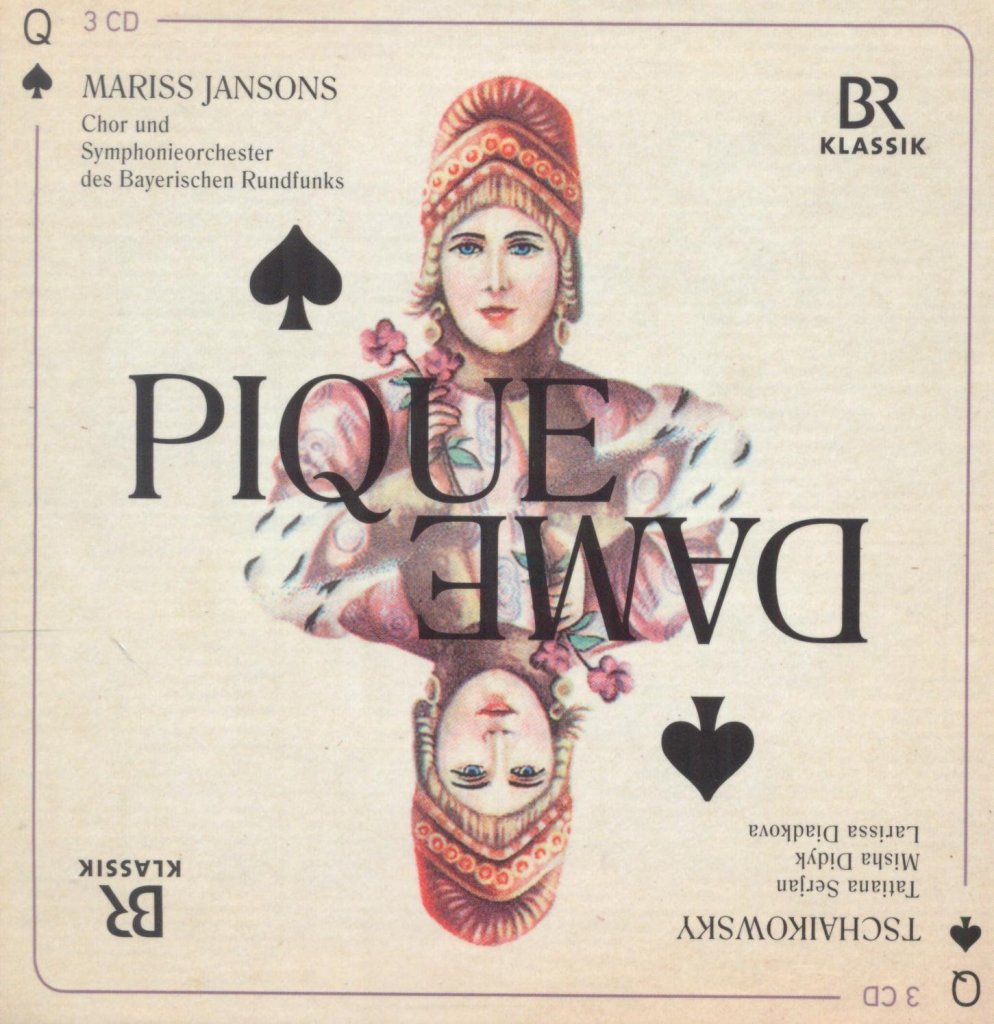
With the images of the production in your mind, you can sit back and listen to the recording under Mariss Jansons. In a manner of speaking, then, because even with Jansons the tension is cutting edge. Larissa Diadkova is an outstanding countess, very moving in her great aria ‘Je crains de lui parler la nuit’. Tatiana Suryan is a firm yet fragile Lisa and in the duet with Polina (beautiful Oksana Volkova) their two voices melt into a harmonic unity, worthy of sisters. Even without vision, Mischa Didyk is the best Herman around. The recording, recorded live in Munich in October 2014, sounds more than excellent (BR Klassik 900129)
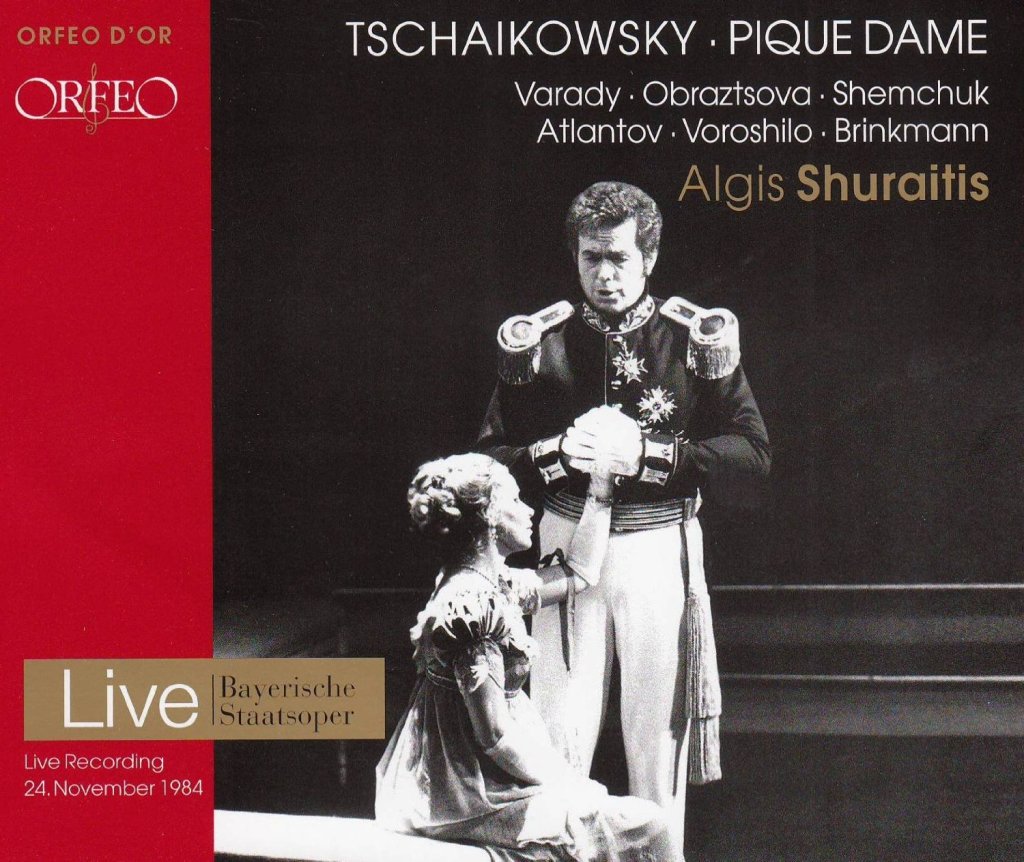
VLADIMIR ATLANTOV
Julia Varady and Vladimir Atlantov were once a ˜match made in heaven”. In Munich in November 1984, they sang just about the most ideal Lisa and Herman in history, although I also have my reservations about Atlantov.
Atlantov has a cannon of a voice, which makes everything seem so unimaginably easy with him. Very beautiful, but his Herman sounds a bit too heroic and under-tormented for me.
Varady is a perfect Lisa in every way: vulnerable, insecure and in love. Lisa’s aria ‘Otkúda eti slyózy’ and the subsequent duet with Herman ‘Ostanovítes’ is breathtaking and of a touching beauty. Elena Obraztsova is a very impressive countess.
Algis Shuraitis conducts with little subtlety, but his reading is extremely exciting with a very cinematic ending (Orfeo D’Or C8111121).
Atlantov in ‘What is our life’ Recording from a performance at Mariinsky (not on DVD to my knowledge):
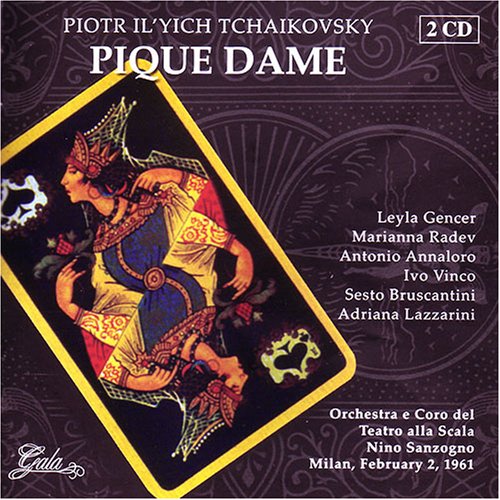
LEYLA GENCER
Version 1.0.0
You really should have this recording, of course, because of the Turkish Diva. It is in Italian and the 1961 recording sounds pretty dull, but a collector takes it all for granted.
A totally unknown for me, Antonio Annaloro, does what he can and that, unfortunately, is very little. His uninspired Herman is a real crier and sounds like a Domenico Modugno in a mini format. Soon forgotten.
But Marianna Radev’s Countess is worthy of note. And ‘Da quando il core mi donasti’ aka ‘Ya vas lyoublyu’ by Sesto Bruscantini (Yeletski) is delightful and is rewarded with a very deserved ovation.
Nino Sonzogno revives a verist heaven, though not quite rightly so here (Gala GL 100.792)
Agostino Carracci (su disegno di Bernardo Castello), Frontespizio della prima edizione illustrata della Gerusalemme Liberata, Genova, 1590
Men kan zich afvragen waar het aan ligt dat juist Gerusalemme liberata van Torquato Tasso zo veel verschillende componisten uit zo veel eeuwen heeft geïnspireerd. En dan niet het hele epos, maar specifiek de Armida-episode. Ligt het aan het magisch-realistische verhaal vol onverholen haat, wraak, woede en passie? Met personages (mens of heks) die verscheurd worden door hun tegenstrijdige gevoelens, hun innerlijke strijd tussen liefde en plicht? Ik zou het niet durven zeggen. U?
Francesco Hayez, “Rinaldo en Armida”
De eerste bij het grote publiek bekend gebleven Armida werd gecomponeerd door Jean-Baptiste Lully, op het libretto van Philippe Quinault. Hetzelfde libretto heeft Gluck een kleine honderd jaar later gebruikt voor zijn vijfde ‘Franse opera’ Hijzelf beschouwde Armide als zijn allerbeste werk, maar het publiek (en de geschiedenis) dachten er iets anders over.
Zelf ben ik er ook nooit zo van gecharmeerd geweest. Maar hoe langer ik mij met de opera heb beziggehouden, hoe meer ik hem heb leren te waarderen. De opera kent een paar schitterende aria’s en ensembles, met als een absoluut hoogtepunt het hartverscheurende ‘Enfin, il est en ma puissance’, een hysterische hartenkreet van de verliefd geworden furieuze tovenares Armide.
Ik ken maar twee complete opnamen van Glucks werk: onder Richard Hickox op EMI (6407282) en onder Marc Minkowski op Archiv (4596162). Merkwaardig eigenlijk als je bedenkt dat de opera tegenwoordig best vaker wordt uitgevoerd.
De opname van Hicox (3 cd’s) duurt ruim 26 minuten langer dan Minkowski. Ik ken de opera niet zo goed om te kunnen constateren of er bij Minkowski coupures zijn aangebracht, maar dat denk ik eerlijk gezegd niet. Zijn tempi zijn simpelweg behoorlijk aan de snelle kant – behalve de ouverture dan, daar is hij behoedzaam in.
Dat slepende van Hickox is op den duur behoorlijk irritant en ik ben een paar keer gewoon ingedut. De dertig jaar oude opname klinkt wel nog steeds mooi, al haalt de klank het heldere en transparante van Minkowski niet.
Ook wat de zangers betreft wint de Fransman het ruimschoots van zijn Engelse collega. Nou ben niet zo’n fan van Mireille Delunsch en ik vind haar ‘Enfin il est en ma puissance’ op Minkowski’s opname behoorlijk achterblijven bij de interpretaties van bijvoorbeeld Véronique Gens of Anna Catarina Antonacci (waarom is de voorstelling met Antonacci nooit officieel opgenomen?) Niettemin is Felicity Palmer (Hickox’ opname) ondanks haar perfecte dictie en onberispelijk tekstbegrip geen match voor haar.
Charles Workman (Renaut) weet een perfecte balans tussen de heldhaftige en de meer lyrische vinden – daar kan zelfs mijn geliefde Anthony Rolfe Johnson niet tegen op.
Laurent Naouri is een zeer macho Hidraot, maar wat de opname van Minkowski dat ‘superplus’ geeft, is het optreden van Ewa Podles in de kleine rol van La Haine (de Haat). Van haar stem en voordracht gaat het u duizelen. Vind maar eens een alt met een diepere klank, één die ook nog eens alle hoge noten paraat heeft en je met haar interpretatie sprakeloos achterlaat!
Hickox:
Minkowski:
En hieronder een curiositeit: een complete Armide uit Madrid, 1985, met Montserrat Caballé:
Ik ben een enorme fan van Ewa Podleś: een met borsttonen en al gewapende echte alt. Zangers zoals zij worden eigenlijk niet meer gemaakt en moeten gekoesterd worden. Maar zelfs zij kan niet alles zingen.
Het kan ook aan haar leeftijd liggen, maar ik vermoed dat de door haar gezongen Three Fragments from Poems by Jan Kasprowicz totaal ongeschikt zijn voor haar stemtype. Wat het ook is: ik vind het niet mooi. Haar interpretatie is te serieus en haar intonatie is veel te ruim. Zonde.
De prachtige jeugdliederen van Szymanowski, nog geheel en al in de neoromantiek verankerd, schreeuwen om een lichter stemtype en een minder gewichtige aanpak. Luister maar naar Piotr Beczala, die de liederen in 2004 voor Channel Classics heeft opgenomen!
Witold Lutoslawski
Het Concert voor Orkest uit 1954 is Lutosławski’s meest bekende compositie. Het ligt uiteraard aan de toegankelijkheid, de herkenbare structuur en de klassieke opbouw van het werk.
In de late jaren zestig heeft de componist geprobeerd zich er van te distantiëren maar is gelukkig snel op zijn beslissing teruggekomen. Zelfs hij kon blijkbaar niet negeren dat het niet alleen de bekendste maar wellicht ook één van zijn beste composities is.
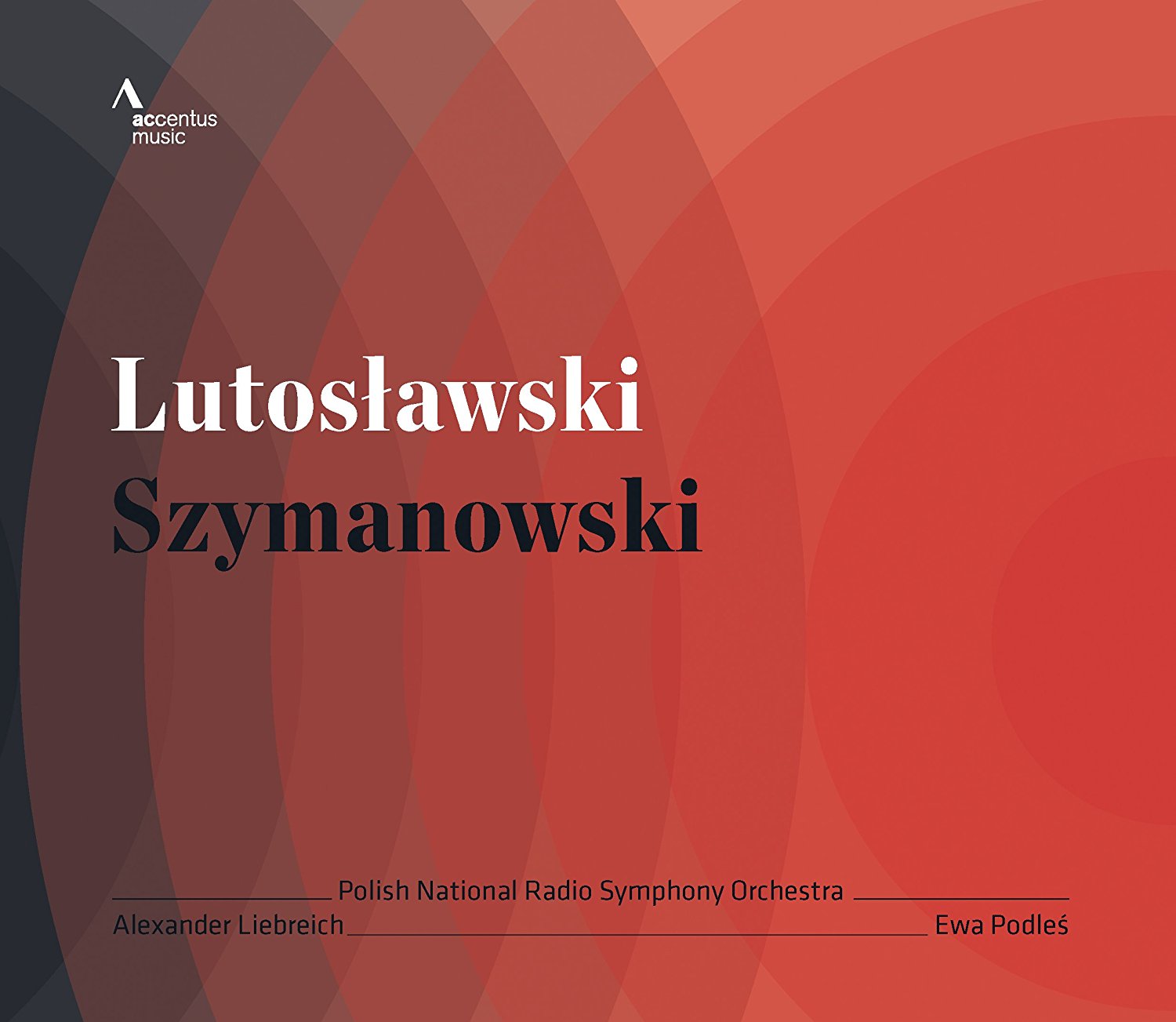
De uitvoering door het Polish National Radio Symphony Orchestra onder zijn Duitse dirigent Alexander Liebreich is zonder meer prima, maar is voor mij niet spannend genoeg.
De discografie vermeldt ettelijke opnamen van het werk, er zijn dus genoeg goede alternatieven. Zoals de opname door het BBC Orchest onder leiding van Edward Gardner (Chandos). Of die door het Poolse Nationale Radio Orkest in de jaren zestig gemaakt onder leiding van de componist zelf (ooit EMI). Maar een cd uitbrengen met nog geen 47 minuten muziek is gewoon misdadig.
WITOLD LUTOSŁAWSKI
Concerto for Orchestra (1954)
KAROL SZYMANOWSKI
Three Fragments from Poems by Jan Kasprowicz Op.5 (1902)
Polish National Radio Symphony Orchestra olv Alexander Liebreich
Ewa Podleś, contralto
Accentus Music ACC 30332 • 47’
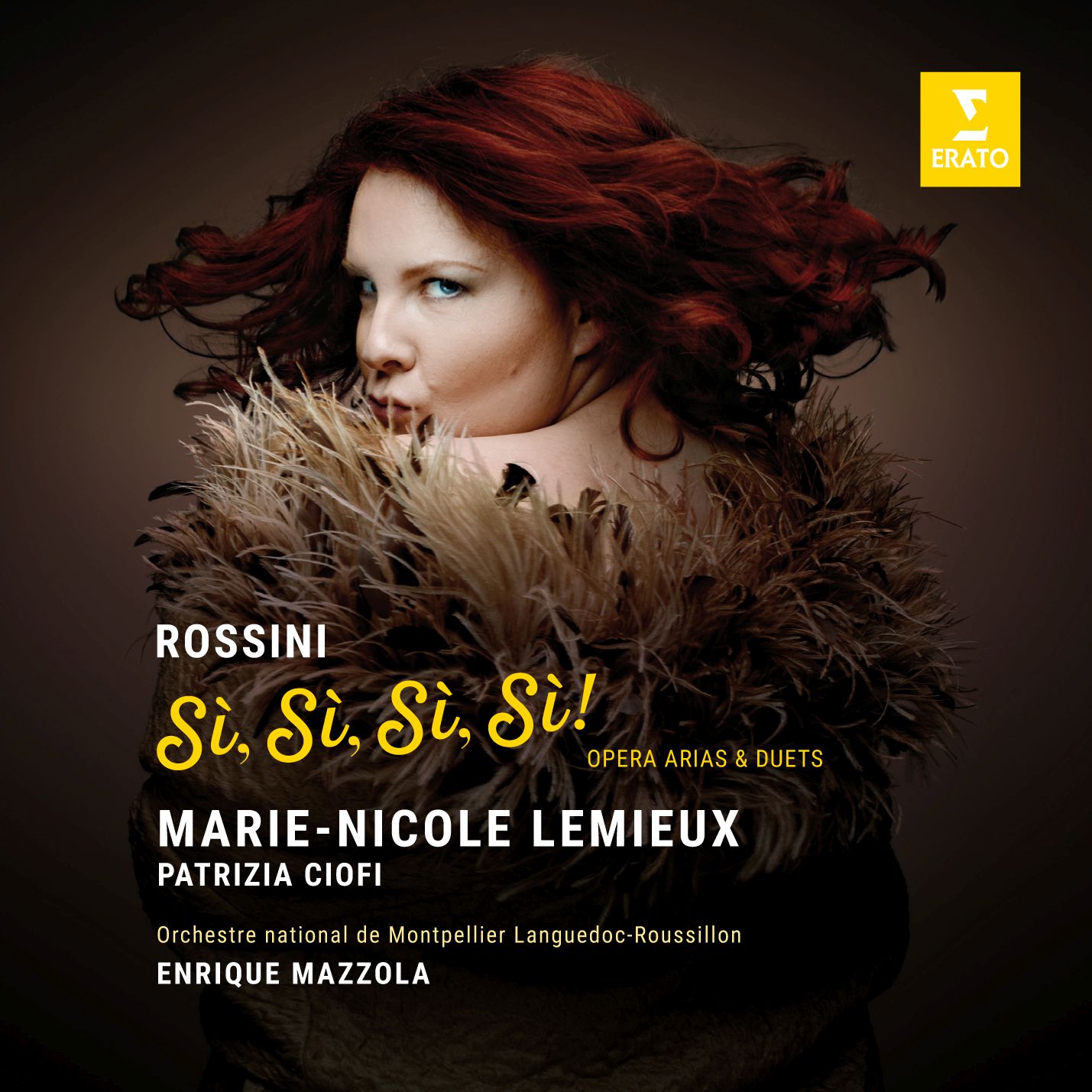
Marie-Nicole Lemieux in een interview met het OpéraOnline: “Weet je wat merkwaardig is? Met Rossini heb je twee maal zo veel te zingen, maar je bent maar half zo moe aan het eind van het optreden. Rossini begrijpt de stem volkomen”.
Andersom geldt ook: Lemieux begrijpt Rossini volkomen. Dat hoor je. Meteen al in ‘Cruda sorte!’ (Italiana in Algeri) laat ze alle remmen los en trakteert ons op één van verrukkelijkste uitvoeringen van de aria, te vergelijken alleen met Marylin Horne of Ewa Podleś. Net als in adembenemend virtuoos – én spannend! – gezongen ‘Di tanti palpiti’.
Bij ‘Lasciami: non t’ascolto’ (beide Tancredi) wordt zij bijgestaan door de sopraan Patrizia Ciofi, die in virtuositeit niet onderdoet. En ontroerend dat het is! Het Kattenduet aan het eind is precies wat het moet zijn: een verrukkelijke uitsmijter en de kers op de taart.
Een spannend én verrassend recital (deze live registratie dateert van december 2015) samenstellen is geen sinecure. Want al doe je je best, je ontkomt niet aan de onvermijdelijke krakers. Maar, beste plattenmaatschappijen: zelfs een geheel Rossini-recital kan zónder ‘Una voce poco fa’! Zeker in geval van een lang gevestigde zangeres die niets meer hoeft te bewijzen. Voor de rest niets dan lof over deze album. Marie-Nicole Lemieux: Sì, Sì, Sì, Sì!
Rossini
Sì, Sì, Sì, Sì!
Marie-Nicole Lemieux (alt). Met medewerking van Patrizia Ciofi (sopraan) en Julien Veronèse (bas)
Choeur et Orchestre de l’Opéra National Montpellier Languedoc-Roussillon olv Enrique Mazzola Erato 0190295953263
Een sprookje kent zijn eigen regels. Veel is inwisselbaar, maar waar niet aan getornd mag worden is het “happy end”. Dus: het lelijke eendje wordt een pracht van een zwaan en Assepoester wordt een prinses. Alle kwade geesten worden gestraft en we kunnen rustig gaan slapen.
Soms bid ik tot diegene in wie ik niet geloof: geef ons onze sprookjes terug, want tegenwoordig moet alles zo natuurgetrouw en zo realistisch mogelijk. Gelukkig worden mijn gebeden wel eens gehoord en zo kwam het dat ik een ouderwets avondje genieten kon beleven, met mijn poes op schoot en Assepoester op mijn scherm.
Laurent Pelly behoort zonder meer tot één van de beste hedendaagse regisseurs: hij geeft een eigentijdse draai aan alles wat hij doet, maar hij blijft het libretto en de muziek trouw. Zijn ensceneringen zijn daarbij buitengewoon geestig. Zo ook de heerlijke Cendrillon, in 2011 opgenomen in het Royal Opera House in Londen.
Joyce DiDonato (Cendrillon) hoef ik niemand meer aan te bevelen – zij is zonder meer de grootste ‘zwischenfach-zangeres’ van onze tijd.
Ewa Podleś is meer dan een heerlijke stiefmoeder en Alice Coote de charmantste van alle ‘Prins Charmants’. En daar mag je dan de werkelijk idiomatische dirigent (Bertrand de Billy) nog aan toevoegen… Het leven kan soms echt mooi zijn!
Trailer van de productie:
JULES MASSENET
Cendrillon
Joyce DiDonato, Eglise Gutiérez, Alice Coote, Ewa Podleś, Jean-Philippe Lafont e.a.
Royal Opera Choris, Orchestra of the Royal Opeara House olv Bertrand de Billy
Regie: Laurent Pelly
Virgin Classics 60250995
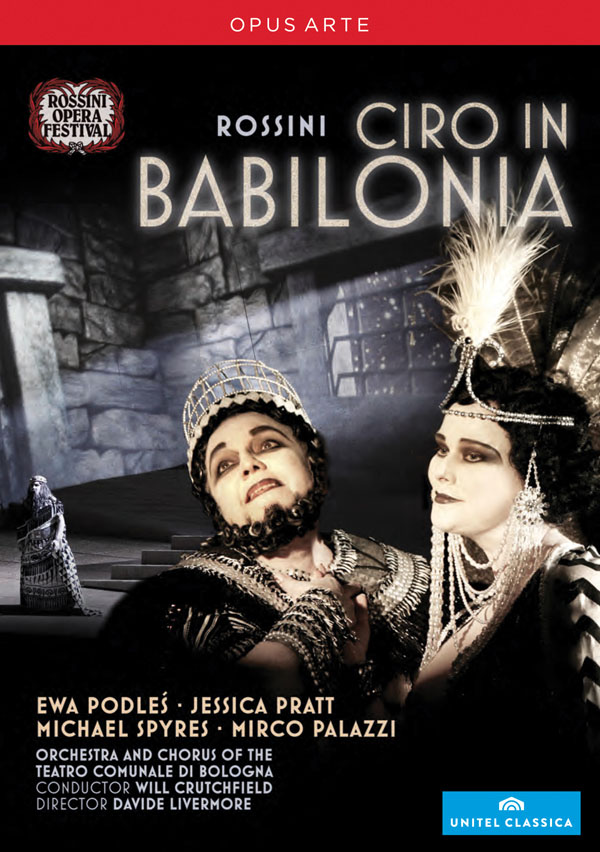
Winterblues? Last van donkere, koude dagen met aanhoudende regen? Depri? Ik weet een remedie! Ren naar de winkel en koop Ciro in Babilonia, een onbekend werk van Rossini, in 2012 live opgenomen in Pesaro.
Regisseur Davide Livermore heeft van Rossini’s ‘azione sacra’ (geschreven toen hij nog maar 20 jaar was) een soort ‘stomme film’ uit de jaren ’20 gemaakt, inclusief zwart-witbeelden, overdreven zware opmaak en voor die tijd typische kleding.
Het verhaal komt uit het boek Daniël en verhaalt over de Assirische koning Baldassare (Belshazar), die de vrouw en de zoon van zijn vijand, de Perzische koning Cirus, ontvoert en hen, als zij hem weigert, een kopje kleiner wil maken. Ook Cirus zelf valt in zijn handen, omdat diens liefhebbende echtgenote haar gevoelens niet kan bedwingen. Maar dan komen de vreemde tekens aan de wand (weet u het nog: mene tekel fares?) en loopt alles goed af.
Ewa Podleś zingt : Oh delle mie pene…T’abbraccio, ti stringo
Ewa Podleś (Ciro) is zonder meer de allerbeste alt die wij nog hebben rondlopen. Haar coloraturen zijn meer dan soepel en haar lage (en hoge!) noten zijn een lust voor je oor.
Jessica Pratt is een prachtige Amira en Robert McPherson een geweldige Arbace. Verder zingt Michael Spyres een fantastische Baldassare. Toen nog maar een beginner en inmiddels een echte ster.
Een trailer van de productie:
Gioachino Rossini Ciro in Babylonia Ewa Podleś, Michael Spyres, Jessica Pratt, Carmen Romeu, Mirco Palazzi, Robert McPherson, Raffaele Constantini; Orchestra and Chorus of the Teatro Comunale di Bologna onder leiding van Will Crutchfield; Regie: Davide Livermore Opus Arte OA 1108 D




 Basia con fuoco