Carol_Neblett

If you want to have the future: close the door behind your past. Korngold’s Die Tote Stadt in a few recordings

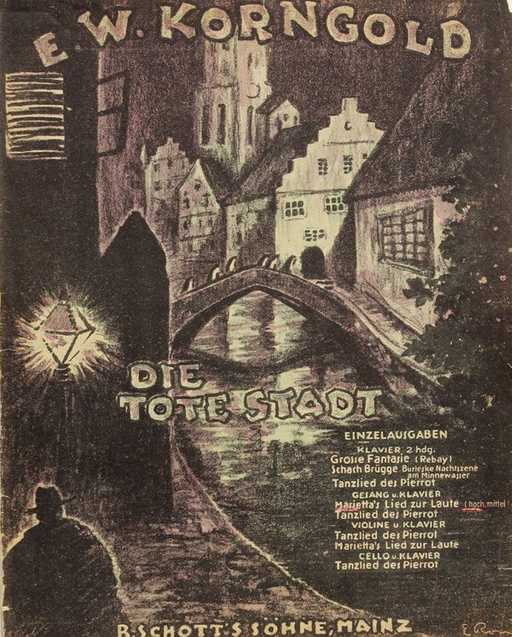
“Forgetting forms a part of all actions,” Nietsche wrote in one of his pamphlets. “To (over)live, one must sometimes destroy one’s past.” Korngold should know, because with those very words you can sum up the real themes of his most famous opera, Die Tote Stadt.
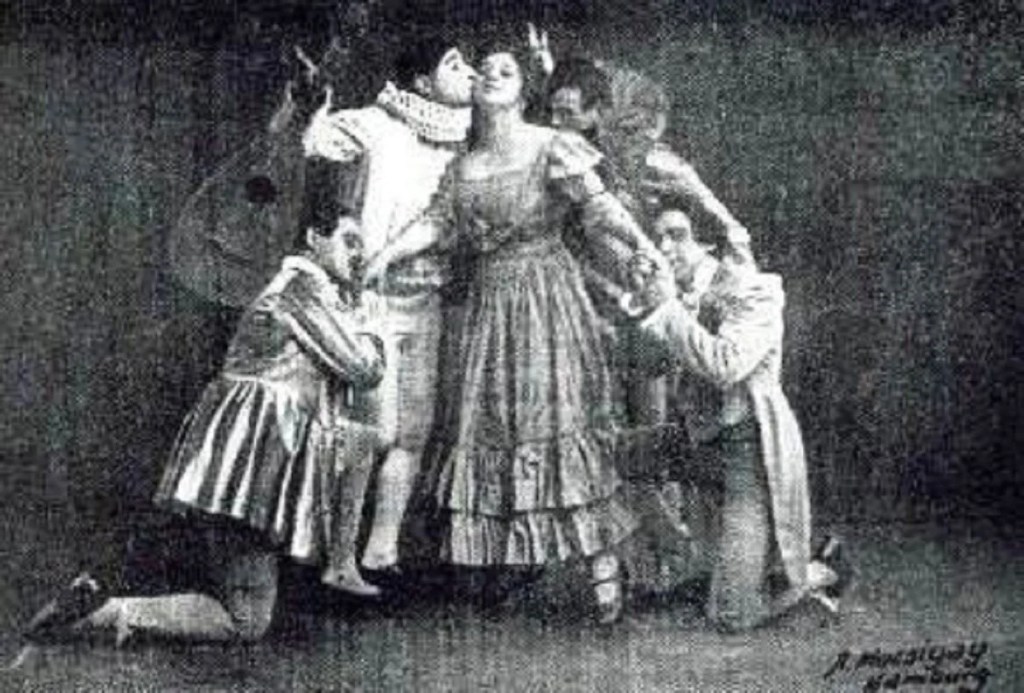
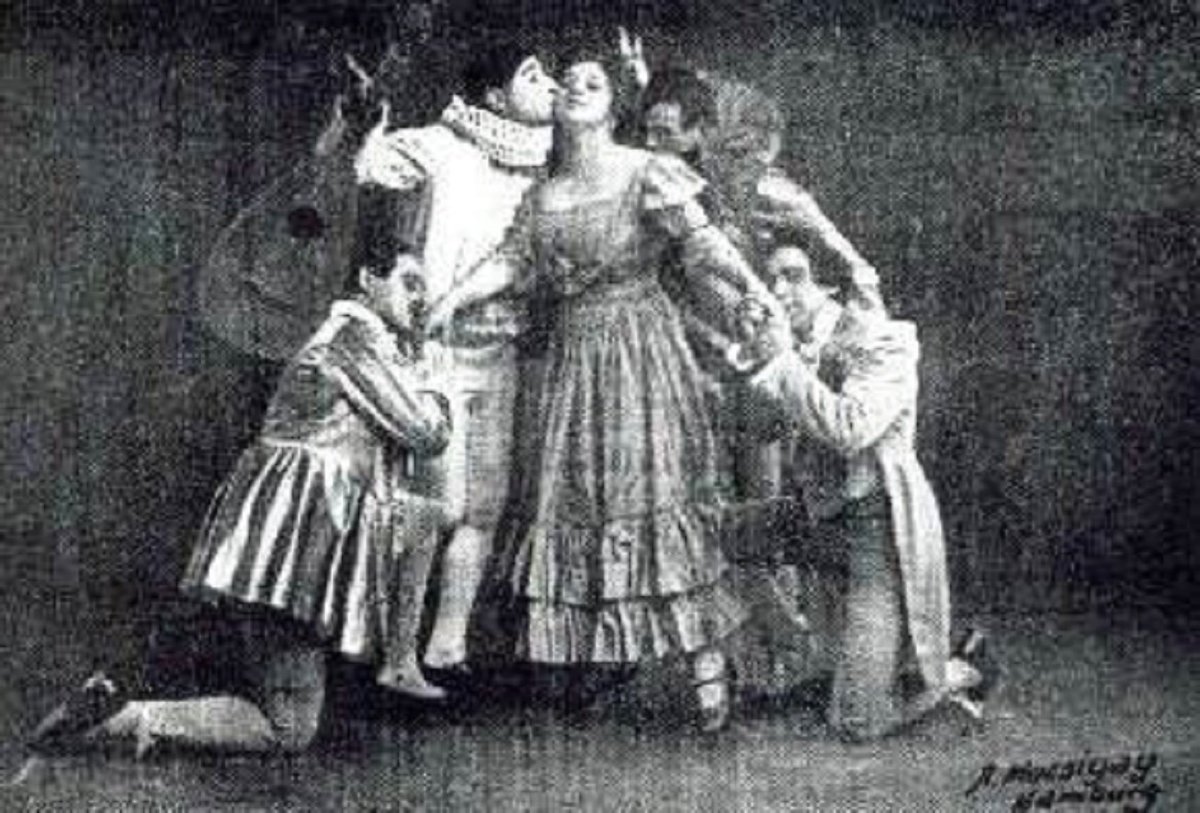
“A scene from the original 1920 Hamburg production of Die tote Stadt. From left to right: Walter Diehl (Graf Albert); Josef Degler (Fritz) Anny Münchow (Marietta); Felix Rodemund (Gaston); and Paul Schwartz (Victorin).”

Die Tote Stadt had its world premiere simultaneously in Cologne (directed by Otto Klemperer) and Hamburg on 4 December 1920, after which the whole world followed. Before the war, it was the most played of all contemporary operas.

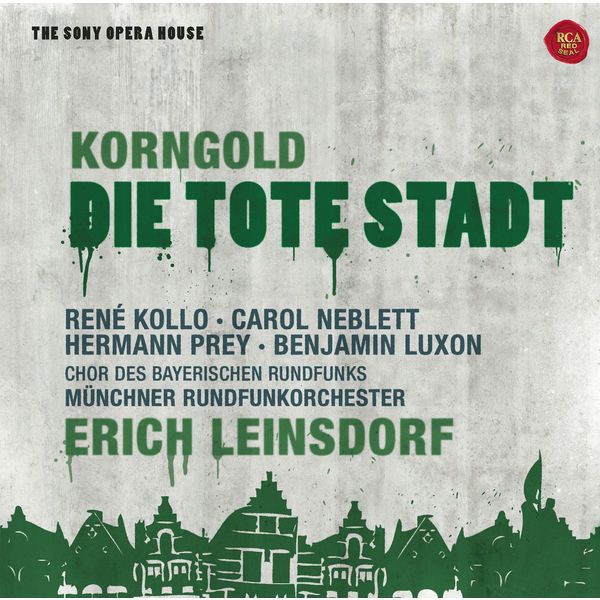
RENÉ KOLLO (once RCA, now Sony)
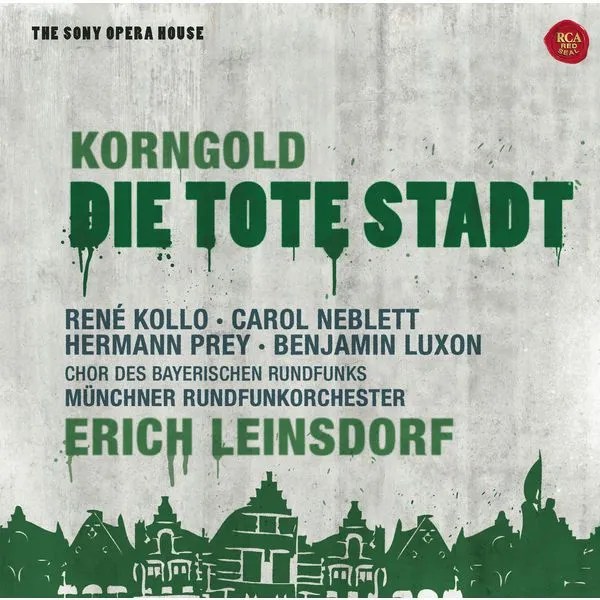
“After 1938, Die Tote Stadt was no longer performed. Only in the 1970s did a cautious comeback begin. The first studio recording of the opera dates from that time (1975).

Unfortunately, the text booklet (which is otherwise well cared for with the well reproduced synopsis and the complete libretto in two languages) does not tell the ‘why’ of that release. I would have liked to know who exactly conceived the idea of recording Die Tote Stadt, all the more so since the work was still considered inferior at the time.

Even Leinsdorf never concealed the fact that he did hold the work in high esteem. And yet he conducts it as if it were a masterpiece. Perhaps he gradually came to believe in it? He gives the opera the grandeur of a monument and the lustre of gold. Particularly exciting and energetic, he leads the brilliantly playing Munich Radio Orchestra through the score. At the end of the first act, when Marie’s portrait comes to life, you imagine yourself in the middle of the dream scene from Hitchckock’s ‘Spellbound’, and even without the image the tension is up for grabs.

There is also excellent singing, although I have a bit of trouble with Kollo in his demanding role of Paul. During the recording he shuttled between Munich and Bayreuth, where he was singing Parsifal at the time, so his voice sounds a bit tired.

Moreover, I prefer a more lyrical tenor in that role, but one with enough power to rise above the orchestra. Fritz Wunderlich could have been ideal, but he had been dead for almost a decade by then, and no one had thought of Gösta Winbergh at the time.

Carol Neblett is a fantastic Marie/Marietta, her creamy soprano possesses many colours and is well-stabilised in height. Benjamin Luxon portrays a warm and fatherly Frank and Herman Prey (Fritz) brings paradise closer with his sweetly sung Tanzlied.

Below, Herman Prey sings “Mein Sehnen, mein Wähnen”

The small role of Brigitte is also phenomenally sung by Rose Wagemann, perhaps the best Brigitte I have heard so far.

THOMAS SUNNEGÅRDH (Naxos 8660060-1)
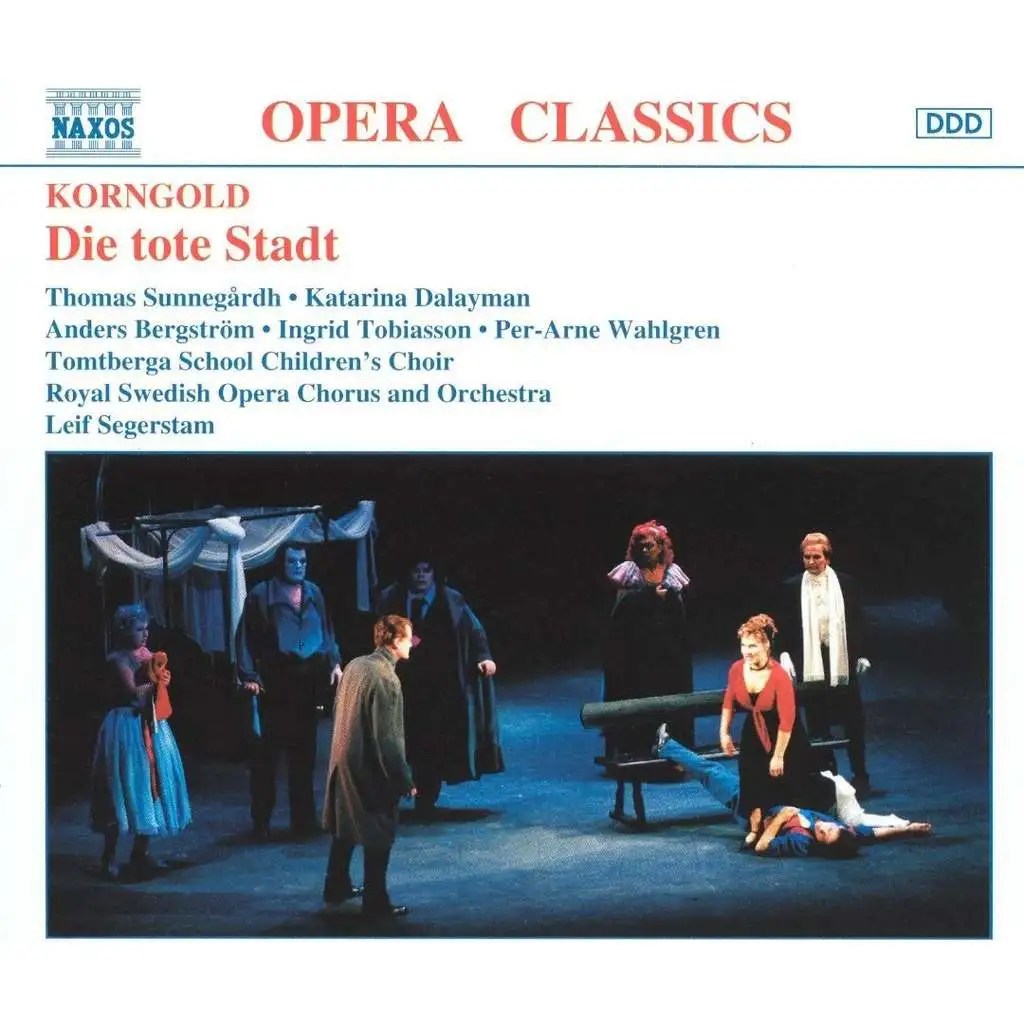
In 1996, Die Tote Stadt was put on the repertoire at the Royal Swedish Opera House in Stockholm. Two of the performances were recorded live by Naxos and released on CD. The result is definitely not bad, one feels the excitement of the theatre which in fact is always a plus. The stage noise is audible, it does not bother me, quite the contrary. Leif Segerstam conducts calmly and it is due to a few cuts that the whole thing is almost 15 minutes shorter with him than with Leinsdorf.

Paul is sung by Thomas Sunnegårdh, a Wagner tenor who impresses mainly by his volume: occasionally he degenerates into sprechgesang and the lyricism is nowhere to be seen. Superbly, on the other hand, Katarina Dalayman as Marie/Mariette and Anders Bergström (Frank) and Per-Arne Wahlgren (Fritz) also portray their roles convincingly.

TORSTEN KERL

DVD
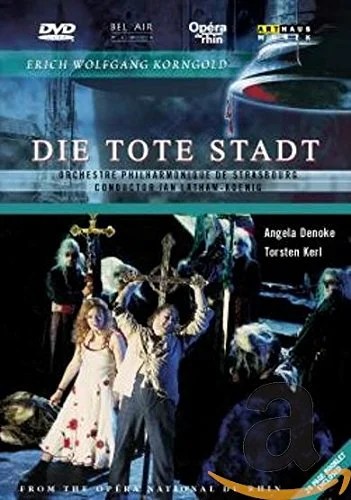
Opéra National du Rhin in Strasbourg staged Die Tote Stadt in April 2001. The highly controversial production by Inga Levant was released on DVD by Arthaus Musik (100 342).

If you thought the story of Die Tote Stadt is set in Bruges in the late nineteenth century, you are wrong. True, Korngold based his masterpiece on Rodenbach’s ‘Bruges-la-morte’ and that medieval city, with its fog and symbolism, put its stamp on both the libretto and the music, but Inga Levant knows better. So we end up in Hollywood where anything is possible and Marietta resembles not only Marie but also Marylin Monroe.

The whole thing is loaded with quotes from Fellini’s films, but fusion is in and anything goes. So I resignedly accept that ‘Mein Sehnen, mein Wänen’ is not sung by Pierrot but by the barman – played brilliantly and with a sufficient dose of schmalz by Stephan Genz

But if the libretto is violated, my patience and tolerance end. So I don’t accept Paul’s suicide because not only does he commit suicide, but also the entire opera.

Torsten Kerl (Paul) and Angela Denoke (Marie/Mariette) sing well, but the latter convinces mainly through her overwhelming stage presence and acting ability

CD Orfeo C 634 042

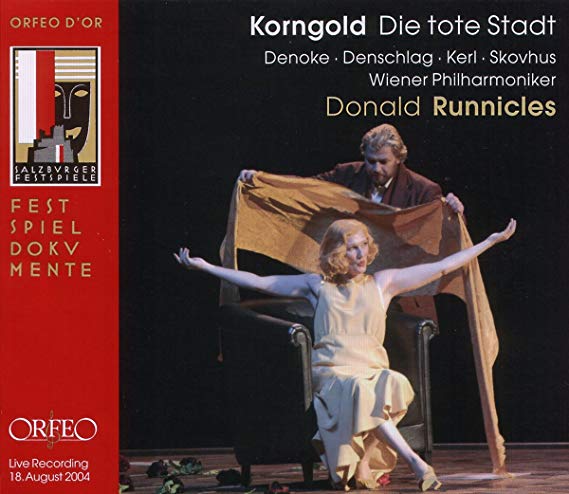
In the summer of 2003, this opera was performed at the Salzburg Festival. It was directed by Willy Decker and the leading roles were sung by Torsten Kerl, Angela Denoke (they seemed to have a patent on it) and Bo Skovhus. The performances were received with enormous enthusiasm by both the audience and the press, and the entire cast was rewarded with a standing ovation.

The 18 August performance was recorded live by ORF and released on CD. Why not DVD? The lack of images misses an important aspect of the performance, all the more so as the director had the roles of Frank and Fritz performed by the same singer which may have worked optically in the directorial concept, but is particularly confusing without images.

Torsten Kerl is clearly at his vocal limits, which manifests itself mainly in his pinched height. But he also has many beautiful and lyrical moments, something that cannot be said of Angela Denoke: without visuals, nothing remains of her.

The opera can also be heard on You Tube:

But I can’t get excited about Bo Skovhus either, something that is particularly hard for me: he was once one of my beloved baritones. He sings matte, without soul and his reading of “Mein Sehnen, mein Wänen” is downright pale. Too bad, because that he can do better he already showed at the beginning of his career on one of his first CD recordings:

Maria Jeritza who created the role of Marie/Mariette:

Plácido Domingo and Puccini: a match made in heaven

Puccini Domingo

Sometimes I think that Placido Domingo must be the reincarnation of Puccini. Not because they look so similar (although they are very much alike in the photos), but because of the music. It seems to have been created for Domingo’s timbre. It is as if Puccini composed with Domingo’s voice in mind.

And yet (or perhaps because of this): there is no other repertoire that shows as clearly whether a role suits him or not. He was never a memorable Rodolfo and his Pinkerton was not noteworthy. Even as Calaf, despite the great performances, he did not really identify with the role. He was too friendly, too kind, too human.


TOSCA

Afbeeldingsresultaat voor Domingo Puccini"

Domingo sang his very first Cavaradossi on 30 September 1961 and since then he has sung more performances of Tosca than of any other opera. This is the role he researched with the utmost care. He even added some qualities to the painter’s character that are not really there, in my opinion.

Personally, I find Cavarodossi’s flirtation with the revolution no more than a whim, but Domingo takes it dead serious and sees himself not only as the lover but also as the freedom fighter. From the start, he knows that the execution is actually going to take place, but he is playing along with the lie to spare his beloved Floria. Very humane and very moving.

tosca Nilsson

He sang his first Tosca at the Metropolitan Opera in 1969. It was not planned: he took over at the last minute for the sick Sándor Kónya. Birgit Nilsson was Tosca. In her memoirs, she stated that she found his acting ‘superb’ and his singing ‘gorgeous’.

It was indeed a memorable performance, not least because of Nilsson’s ‘scream’.


Fortunately, the performance was recorded for radio and was released on CD (Nuova Era 2286/870).

Tosca Scotto

Of the studio recordings, two are very dear to me. On Warner Classics (5665042), Renata Scotto meticulously sings all the notes prescribed by Puccini ( her colleagues are not always as scrupulous) and Renato Bruson is very ‘courteously dangerous’ as Scarpia.

Tosca Price

RCA (88697448122) has recorded one of the best Scarpias ever: Sherrill Milnes. I once heard him live in the role and it was a real experience! Leontyne Price is a sultry Tosca.

Tosca Kabaivanska

On DVD, I find the Decca film version (0434909) by far the most impressive. It was shot on location in 1976, which was not very common at the time. Well, location… The Palazzo Farnese was then home to the French Embassy, so filming was not allowed inside.

Milnes was once again present and the lead role was sung in a very tormented way by Raina Kabaivanska.

Domingo is so beautiful it makes you want to cry, but what gives the film that little bit extra is the tiny role of the little shepherd. It is sung by Placido junior, then 10 years old.

MANON LESCAUT

Manon Domingo

Another Puccini role that fits him like a glove is Des Grieux in Manon Lescaut. Of this opera with Domingo, there are many recordings, both studio and live. Not all of them are worth listening to and in most cases it is the interpreter of the title role who presents the problem. It is nothing new: when a record company had a new ‘star’, he or she just had to record everything available. With often disastrous results.

Manon Domingo Olivero


In 1970, Domingo sang Des Grieux in Verona, with Magda Olivero in the title role. Quite bizarre when you consider that Olivero made her professional debut eight years before Domingo was born. And yet: her portrayal of the young heroine is utterly convincing. Indeed, most of her colleagues still cannot match it! My copy was released on Foyer, but better quality editions are now available.

Manpn Domingo Scotto

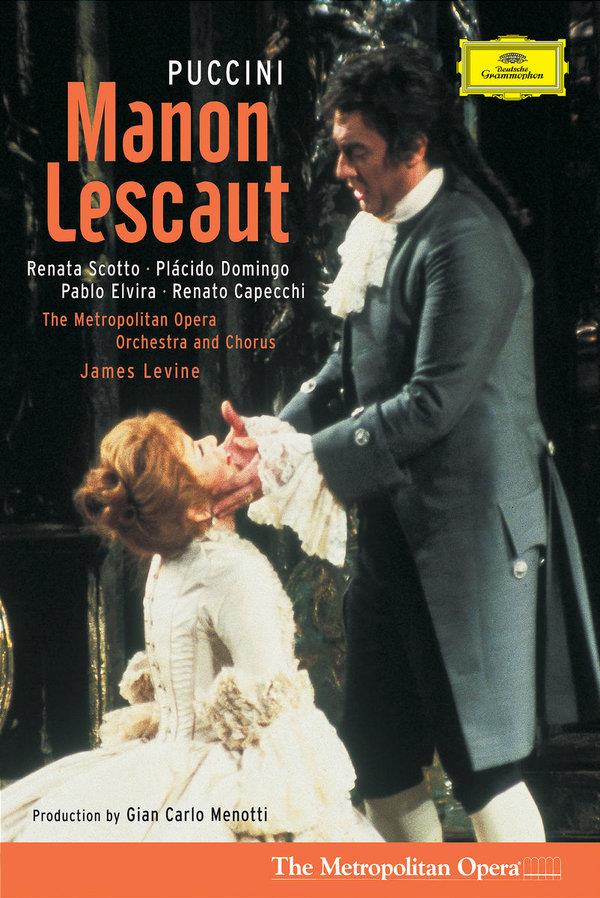
In 1980, the opera was broadcast on TV. That recording is now available on DVD. Believe me: there is no better. Scotto sings and acts Manon like no one else has done before, and together with Domingo, she makes us cry with the beauty and the sadness of it all. Menotti’s very realistic, true to life and very exciting direction simply could not be better. A MUST (DG 073424)


IL TABARRO

Tabarro-Melodram-Crader


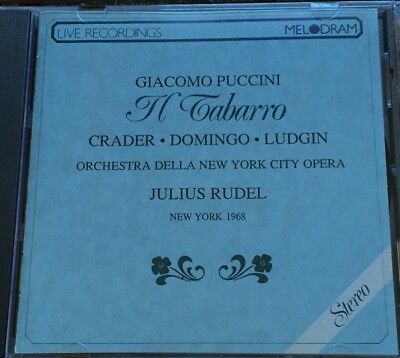
Luigi in Il Tabarro was also a role after Domingo’s own heart. His recording from 1968 with the New York City Opera, conducted by Julius Rudel (Melodram 17048) is splendid, with Jeannine Crader as Giorgietta, a wonderful singer who sadly never made it in Europe.

Il Tabarro


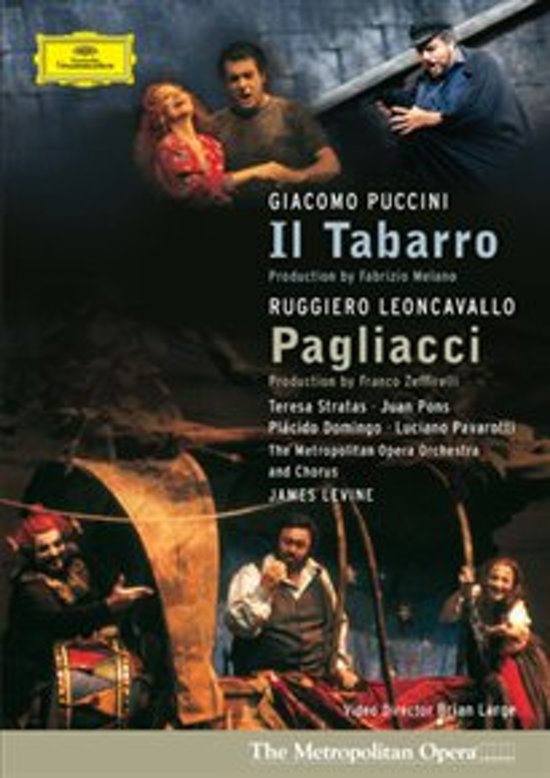
On DVD, there is a fine Zeffirelli production from New York, recorded in 1994. Giorgietta is sung by Teresa Stratas. Unfortunately, it is coupled with Pagliacci with Pavarotti and again with Stratas, in the leading roles. Not really my ‘cup of tea’ (DG0734024).


Below a curiosity: a duet from Il Tabarro with Domingo and Beverly Sills from 1967


EDGAR

Puccini Edgar

There are at least two good reasons to welcome the 2006 Edgar (DG 4776102): it is the very first studio recording of the work and it is the first time that Domingo sings the role, the only one still missing from his Puccini discography.

I never understood why the opera was so unloved. Musically, it is in line with Verdi, but one can already hear tentative fragments of the ‘real’ Puccini: a vague promise of Manon Lescaut, a study for La Bohème and creative exercises for Turandot.

With Adriana Damato and Marianne Cornetti, we can welcome a new generation of phenomenal singers and Domingo is, as always, very musical and committed.

LA FANCIULLA DEL WEST

La Faciulla Dominfgo Neblett cd

For me, the very best is a 1978 DG recording (4748402), with an underrated Carol Neblett as a very fierce Minnie. Domingo is a languorous and surprisingly lyrical Johnson, and Sherrill Milnes sounds like he’s in a real western.

La Fanciulla Domingo Zam[ieri dvd

Two worthwhile recordings have appeared on DVD. One with Mara Zampieri and Juan Pons (Opus Arte OA LS3004 D) from La Scala, 1991, in a beautiful, colourful direction by Jonathan Miller.

La Fanciulla Domingo Neblett dvd

The other is with Carol Neblett and Silvano Carroli (Kultur Video 2038) from the Royal Opera House, 1982.

SONGS

Dommingo Puccini

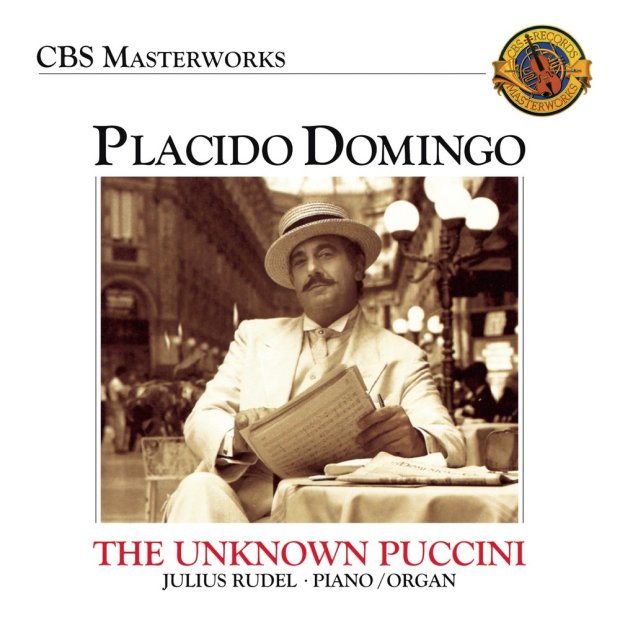
There were once plans to make a feature film about Puccini, in which Domingo would play the composer. It did not go ahead. In preparation for the project, Domingo recorded all Puccini’s songs in 1989, under the title Unknown Puccini (Sony 44981).

For the cover, he is made to look like Puccini and there he is: dressed in white, hat on his head and the moustache prominent on his face. Puccini to the life!

Anyway, it is all about the music and it is a must- have for anyone interested in Puccini. Most are first ever recordings and gradually you follow the composer on his path towards his Manon’s, Tosca’s and other ‘girls’. The renowned conductor Julius Rudel accompanies Domingo on piano and organ.


Die Tote Stadt: discografie.

tote stadt poster

,,Het vergeten vormt een deel van alle handelingen”, schreef Nietsche in één van zijn pamfletten. ,,Om te (over)leven moet men soms zijn verleden vernietigen.” Korngold zou het moeten weten, want juist met die woorden kun je de werkelijke thema’s van zijn bekendste opera, Die Tote Stadt, samenvatten.

tote stadt affiche

“A scene from the original 1920 Hamburg production of Die tote Stadt. From left to right: Walter Diehl (Graf Albert); Josef Degler (Fritz) Anny Münchow (Marietta); Felix Rodemund (Gaston); and Paul Schwartz (Victorin).”

Die Tote Stadt beleefde gelijktijdig haar wereldpremière in Keulen (onder directie van Otto Klemperer) en Hamburg op 4 december 1920, waarna de hele wereld volgde. Voor de oorlog was het de meest gespeelde van alle eigentijdse opera’s.

RENÉ KOLLO (ooit RCA, tegenwoordig Sony)

tote stadt leinsdorf

Na 1938 werd Die Tote Stadt niet meer uitgevoerd. Pas in de jaren zeventig begon men aan een voorzichtige comeback. Uit die tijd (1975) stamt de eerste studio-opname van de opera.

Jammer genoeg vertelt het tekstboekje (dat voor de rest prima is verzorgd met de goed weergegeven synopsis en het volledige libretto in twee talen) niet het ‘waarom’ van die uitgave. Graag had ik willen weten wie het idee om juist Die Tote Stadt op te gaan nemen had opgevat, des te meer daar het werk toen nog als inferieur werd beschouwd.

Ook Leinsdorf heeft nooit onder stoelen of banken gestoken dat hij het werk niet hoog achtte. En toch dirigeert hij het alsof het om een meesterwerk gaat. Wellicht ging hij er gaandeweg in geloven? Hij geeft de opera de grandeur van een monument en de glans van goud. Bijzonder spannend en energiek leidt hij het schitterend spelende Radio-orkest uit München door de partituur heen. Aan het eind van de eerste acte, als het portret van Marie tot leven komt, waan je je midden in de droomscène uit ‘Spellbound’ van Hitchckock, en zelfs zonder beeld is de spanning om te snijden.

Er wordt ook voortreffelijk gezongen, al heb ik een beetje moeite met Kollo in zijn veeleisende rol van Paul. Tijdens de opname pendelde hij tussen München en Bayreuth, waar hij toen Parsifal zong, waardoor zijn stem wat vermoeid klinkt. Bovendien prefereer ik in die rol een meer lyrische tenor, maar wel één met voldoende kracht om boven het orkest uit te kunnen komen. Fritz Wunderlich had ideaal kunnen zijn, maar die was toen al bijna tien jaar dood, en aan Gösta Winbergh had toen niemand gedacht.

Carol Neblett is een fantastische Marie/Mariette, haar romige sopraan bezit veel kleuren en is goed stabiel in de hoogte. Benjamin Luxon zet een warme en vaderlijke Frank neer en Herman Prey (Fritz) brengt het paradijs dichterbij met zijn zoet gezongen Serenade.

Hieronder zingt Herman Prey  ‘Mein Sehnen, mein Wähnen”

Ook de kleine rol van Brigitte wordt fenomenaal gezongen door Rose Wagemann, wellicht de beste Brigitte die ik tot nu toe hoorde.


THOMAS SUNNEGÅRDH (Naxos 8660060-1)

tote stadt naxos

In 1996 werd Die Tote Stadt in het Royal  Swedisch Opera House in Stockholm op het repertoire gezet. Twee van de voorstellingen werden door Naxos live opgenomen en op cd uitgebracht. Het resultaat is beslist niet slecht, men voelt de spanning van het theater wat in feite altijd een pré is. De toneelgeluiden zijn hoorbaar, mij stoort het niet, integendeel. Leif Segerstam dirigeert bedaard en het is te wijten aan een paar coupures dat het geheel bij hem bijna 15 minuten korter is dan bij Leinsdorf.

Paul wordt gezongen door Thomas Sunnegårdh, een Wagner-tenor die voornamelijk imponeert door zijn volume: af en toe ontaardt hij in sprechgesang en de lyriek is nergens te bekennen. Schitterend daarentegen Katarina Dalayman als Marie/Mariette en ook Anders Bergström (Frank) en Per-Arne Wahlgren (Fritz) zetten hun rollen overtuigend neer.


TORSTEN KERL

DVD

tote stadt strassbourg

Opéra National du Rhin in Strasbourg zette Die Tote Stadt in april 2001 op de planken. De zeer omstreden productie door Inga Levant werd door Arthaus Musik (100 342) op dvd uitgebracht.

Als u dacht dat het verhaal van Die Tote Stadt zich aan het eind van de negentiende eeuw in Brugge afspeelt dan heeft u het mis. Weliswaar baseerde Korngold zijn meesterwerk op Rodenbachs  ‘Bruges-la-morte’ en drukte die middeleeuwse stad met zijn mist en symboliek zijn stempel op zowel het libretto als op de muziek, maar Inga Levant weet beter. Zodoende belanden we in Hollywood waar alles mogelijk is en Marietta lijkt niet alleen op Marie maar tevens op Marylin Monroe.

Het geheel is gelardeerd met citaten uit de films van Fellini, maar fusion is in en alles moet kunnen. Gelaten accepteer ik dus dat ‘Mein Sehnen, mein Wänen’ niet door Pierrot maar door de barman – overigens schitterend en met voldoende dosis schmalz vertolkt door Stephan Genz – wordt gezongen.

Moet kunnen? Nee, want als ook het libretto geweld wordt aangedaan dan houdt mijn geduld en tolerantie op. Ik accepteer dus de zelfmoord van Paul niet want hiermee vermoordt hij niet allen zichzelf, maar ook de hele opera.

Torsten Kerl (Paul) en Angela Denoke (Marie/Mariette) zingen prima, maar de laatste overtuigt voornamelijk door haar overweldigende bühnepresence en acteervermogen.

CD Orfeo C 634 042 I

tote stadt salzburg

In de zomer van 2003 werd die opera tijdens de Salzburger Festspiele uitgevoerd. De regie was in handen van Willy Decker en de hoofdrollen werden gezongen door Torsten Kerl, Angela Denoke (ze schenen er een patent op te hebben) en Bo Skovhus. De voorstellingen werden zowel door het publiek als door de pers met een enorm enthousiasme ontvangen en de volledige cast werd beloond met een staande ovatie.

De uitvoering van 18 augustus werd door ORF live opgenomen en op cd uitgebracht. Waarom niet dvd? Door gebrek aan beeld mist men een belangrijk aspect van de voorstelling, des te meer daar de regisseur de rollen van Frank en Fritz door dezelfde zanger liet vertolken wat optisch wellicht in het regieconcept werkte, maar zonder beeld bijzonder verwarrend is.

Torsten Kerl zit duidelijk aan zijn vocale grenzen, wat zich voornamelijk in zijn geknepen hoogte uit. Maar hij kent ook veel mooie en lyrische momenten, iets wat niet gezegd kan worden van Angela Danoke: zonder beeld blijft van haar niets over.

Maar ook over Bo Skovhus kan ik maar niet enthousiast worden, iets wat me bijzonder zwaar valt: ooit behoorde hij tot één van mijn geliefde baritons. Hij zingt mat, zonder ziel en zijn voordracht van ‘Mein Sehnen, mein Wänen’ is ronduit bleek. Jammer, want dat hij het beter kan heeft hij  al aan het begin van zijn carrière laten horen op één van zijn eerste cd-opnamen:

Maria Jeritza sie de rol van Marie/Mariette heeft gecreerd:

Reisopera boekt groot succes met ‘Die tote Stadt’

Aanbeden, genegeerd, vergeten: over Erich Wolfgang Korngold en ‘Die Tote Stadt’

Das Wunder der Annemarie Kremers ‘Heliane’

TUSSEN TWEE WERELDEN

DIE KATHRIN

DIE STUMME SERENADE

KORNGOLD: complete songs