De Britse bariton James Newby won de Kathleen Ferrier Award in 2016. Hij was toen maar 25, best jong voor een bariton. Maar er kwam nog meer. Hij ontving de Wigmore Hall/Independent Opera Voice Fellowship, kreeg de Richard Tauber Prize en… en… en… Het houdt niet op en dat maakt een mens natuurlijk nieuwsgierig.
Onlangs heeft BIS een cd opgenomen waarop Newby liederen van Beethoven, Britten, Schubert en Mahler zingt. Alles met een zeer aansprekelijke titel ‘I wonder as I wander’, iets wat eigenlijk niet goed in het Nederlands vertaald kan worden. Wat ook niet erg is want de titel dekt de lading niet en is duidelijk door een PR-bureau bedacht.
Ik las dat de leidraad van het recital het verlangen naar het elders willen zijn is, in de buurt van de verre geliefde. Het zal wel. En eerlijk gezegd maakt het mij niets uit, want de liederen die hij zingt zijn, allemaal, onbeschrijfelijk mooi. Allemaal. Waarbij ik mijn voorkeur voor Brittens bewerkingen van volksliedjes moet bekennen.
Britten ligt de jonge bariton ook het beste. Newby beschikt over een onwaarschijnlijk mooie stem waar je waarachtig verliefd op kunt worden en zijn voordracht is onberispelijk. Het is alleen zo jammer dat het allemaal zowat hetzelfde klinkt. Om te huilen zo mooi maar op den duur gewoon saai.
Joseph Middleton blijft een beetje op de achtergrond. Jammer, want hij is een meer dan voortreffelijke begeleider.
Liederen van Beethoven, Schubert, Mahler en Britten
James Newby (bariton), Joseph Middleton (piano)
BIS 2475
We will stay with Gegam Grigorian, who would have turned 70 on 29 January. In addition to the Russian repertoire, he also frequently sang the great Italian opera roles. One of those is Don Alvaro from Verdi’s La forza del destino. Grigorian sang this role in 1998 in a remarkable production of the Mariinsky Theatre under Valery Gergiev. The director this time was the renowned Elija Moshinsky who died on 14 January this year, six days after his 75th birthday.
Elijah Mochinsky
In this very fine production, Moshinsky limited himself to directing, nothing more, nothing less. The stage setting is a meticulously recreated copy by Andreas Roller of the original work by set designer Andrey Voitenko, who had been responsible for the stage set at the 1862 premiere of Forza in St. Petersburg. At the start of each scene, an image showing Roller’s work is briefly projected, immediately followed by the reconstructed version. It is very cleverly done and miraculously brings back to life the premiere of the very first version of the opera.
For the music the choice is also on the little-performed St. Petersburg version. In my opinion, the biggest difference with the later Milan version of 1869 lies in the much shorter overture. Here it ends very quickly, whereas the later version seems to drag on endlessly. Other changes pale into insignificance compared to the countless cuts that have plagued performances of Forza over the years.
Gergiev is presenting a complete original version and the result is astounding. The all-Russian cast, soloists, chorus and dancers, are magnificently dressed in costumes derived from the period in which the work was created. Although the story is set a 100 years earlier, (in the mid-18th century), it still feels quite authentic to a contemporary audience.
A modern viewer will also be more alert to the racism that characterises the libretto of this opera. Don Alvaro is a half-breed, admittedly of Inka nobility, but still an indian. The furious way in which the Marquis of Calatrava and his son Don Carlo pour out their anger and indignation on Alvaro goes far beyond the classic case of ‘daughter elopes with a nobleman and we want our revenge.’ Here it is all about the alleged ‘pollution of the bloodline’; the ultimate affront to the Marquis and his hot-tempered son.
Prima donna Galina Gorchakova sings an almost spotless Donna Leonora. Her hesitations, fears, despair and agony are all perfectly dosed, and nowhere is her acting forced or overemphasised. She’s the whole package.
Marianna Tarasova is an, also outwardly, attractive Preziosilla. Her volume in the low register leaves something to be desired, but overall it is a fine performance. Tarasova’s acting is very strong; even had she not actually sung it, she would still have been able to recognisably perform the role.
Georgy Zastavny knows how to hold back as Fra Melitone; his monk is a somewhat frustrated, quick-tempered man who takes himself very seriously: Moshinsky clearly does not go for a buffo rendition. Melitone’s superior Padre Guardiano is in good hands with Sergei Alexashkin, a beautiful bass. A young Yevgeny Nikitin in the small role of the Alcalde is also quite pleasing.
Nikolai Putilin’s Don Carlo reminded me, particularly in the first two acts, of Detective Andy Sipowicz in the NYPD Blue series, a man with an extremely unreliable looking “ugly mug.” Also a matter of transference of course: Don Carlo does indeed lie about everything and anything. His make- up in the later acts is clearly different; now he is the revenge-seeking nobleman who has made the killing of his sister and her lover his life’s purpose. Putilin sings and acts a very convincing Don Carlo, someone you quickly come to dislike, and that is a compliment. His role fits perfectly in the line of ‘heroic baritones’ that Verdi has patented.
As so often with Verdi, the hero tenor does not get the girl, hardly even gets to sing a real duet with her and only meets his lost lover at the very end for a very brief moment of recognition and happiness. On the other hand, Don Alvaro does have very beautiful solos to sing, not as an intimate lover but more as a desperate romantic.
It is all made for Gegam Gregorian. It is the only recording I have of him singing in Italian and I can well imagine that in his glory years he took the international stage by storm. This Don Alvaro is absolutely top-notch; I am glad that, on the occasion of Grigorian’s seventieth birthday, I finally played that DVD again after at least 15 years.
Gergiev is the overall musical director and he turns it into a festive occasion. This recording comes six years after Pique Dame and it is clear that the overexploitation, that he subjected himself to during those few years, has aged him by 20 years. He has, of course, succeeded in his mission: to bring back the Mariinsky Theatre to the world stage.
Armenian tenor Gegam Grigorian died in 2016 shortly after his 65th birthday. Today he would have turned 70. For that reason, a memorial performance took place on 28 January in the Mariinsky Theatre where Grigorian achieved so many great successes under Gergiev in the 1990s. His now world-famous daughter Asmik sang the role of Lisa in Pique Dame, the opera in which her father so often starred as Herman.
For over 20 years, after travel restrictions were lifted due to the collapse of the Soviet Union, Grigorian had an unparalleled international career that took him to all the leading opera stages. He sang almost every major tenor role in the Russian repertoire, but also many others. His Italian repertoire included Radames, Renato, Don Carlo, Alfredo, Il Duca, Manrico, Otello, Pinkerton, Loris, Cavaradossi, Pollione, Count Almaviva, Maurizio, Canio and Turridu.
I am not sure that I have ever heard him sing live. In 1996, Gergiev came to The Hague with the Mariinsky for two performances of Prince Igor, a production that he had recorded for Philips. On this recording Grigorian sang Vladimir Igoryevich, but I cannot find out if he was actually present in The Hague. On other recordings that I possess, he sings Pierre Besuchow in War and Peace and Don Alvaro in La forza del Destino.
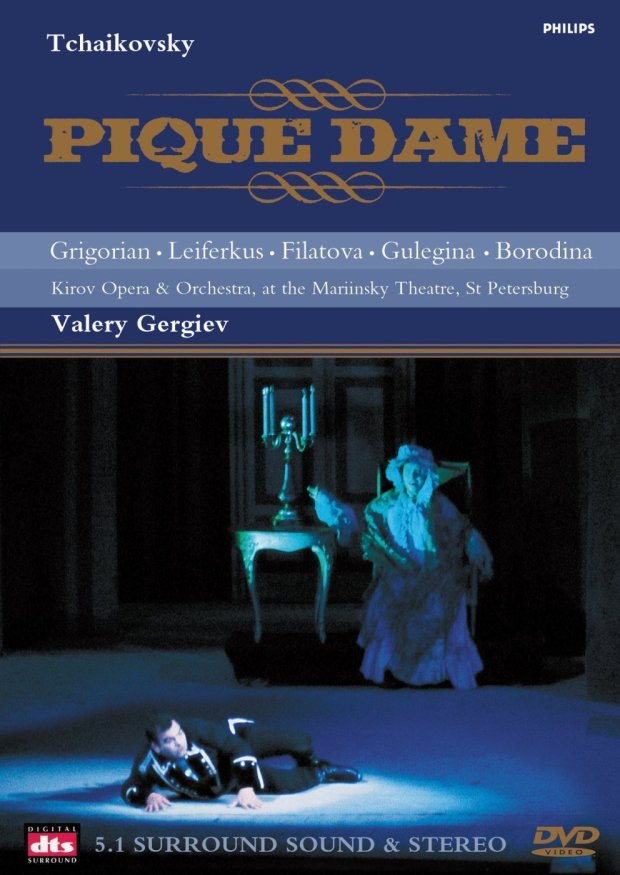
But in view of the choice that the Mariinsky made for the memorial concert, I thought it appropriate to take another look at the 1992 recording of Pique Dame. It is a live performance from the Mariinsky under a very young Valery Gergiev. The credits still refer to the Kirov Opera, as the performance took place shortly after the revolution.
Yuri Temirkanov’s production is extremely classical, both in terms of the costumes from the time of Catherine the Great and the manner of staging. Everything is done exactly as prescribed by the libretto, down to the smallest details. The cast is representative for the top quality that characterised the company in those days; there are the big names in all the leading roles.
There is the luxurious cast of Olga Borodina as Pauline and Sergei Leiferkus as Count Tomsky. Leiferkus is emphatically present; you can hardly ignore him because of his somewhat ‘over the top’ costume. His two arias about the three cards and the little birds that are allowed to sit on his branch are performed with humour and verve. Ludmilla Filatova as the Countess is rather a caricature, especially when she is given a nightcap to wear. Vocally, her contribution is adequate. The same applies to Alexander Gergalov’s Prince Yeletsky who, all considered, has only one chance to make himself heard. His declaration of love is moving, but Lisa walks away without any perceptible reaction immediately after the last note.
Lisa is sung by Maria Gulegina, and she gives an excellent performance. In her big solo in the last act, she does have to force herself a bit, but that may be blamed on the composer rather than the soprano. I would have liked to hear Asmik in this role; if anyone can handle these passages well, it is she.
But the reason I am reviewing this DVD is, of course, the Herman of the company’s star tenor at the time, Gegam Grigorian. He is 42 years old and in very good shape, Hochform as they say in Germany. His simple black costume, a kind of uniform, makes him stand out from the other men, who look a bit like tropical ornamental birds in a cage. This makes him instantly recognizable as an outsider. For that matter, Lisa’s dress is also remarkably sober, so simple indeed that she also stands out from her own entourage and thus is immediately paired up visually with Herman.
Grigorian’s Herman gets more and more touching towards the end. First he leaves his troubled Lisa to her fate and then he enters the gaming room. His behaviour is that of someone almost haunted, he is no longer in control of himself. After his winning card, the seven, he sings ‘What is our life? A game’. He is about to make a fortune, but it does not really matter to him any more. The death scene at the end, where, with his last breath, he asks Prince Yeletsky for forgiveness, reminds me of Fedora in the opera of the same name that I saw in Stockholm with daughter Asmik in the leading role. Gegam once sang the role of Fedora’s lover Loris.
I am determined to see his Forza del Destino again, not only because Grigorian sings Don Alvaro, but also because of the director of this production: the recently deceased Elijah Moshinsky. Also someone who will be sorely missed.
William Walton kennen we voornamelijk van zijn vocale werken, opera’s en filmmuziek. Want: wie kent zijn ‘Façade’ of de cantate ‘Belshazzar’s Feast’ niet? Ook het altviool concerto belandt vaak op de lessenaars. Dat hij ook kamermuziek componeerde is iets wat veel muziekliefhebbers is ontgaan. Wellicht omdat het niet zo vaak wordt opgenomen?
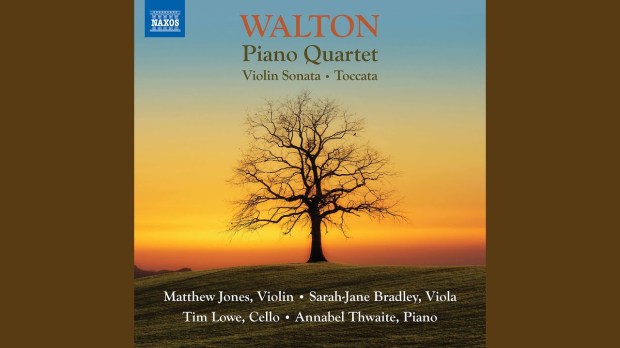
Walton was maar zestien jaar oud toen hij zijn pianokwartet in 1919 componeerde. Hij herzag het werk nog een paar keer: in 1921, 1955 en 1974-1975. Op deze Naxos -opname krijgen we de laatste versie te horen. Al is het ‘gereviseerd’: je hoort er nog het onbevangen jeugdige elan er in. Net als in de Toccata voor viool en piano uit 1923. Uiterst romantisch maar dan wel met een kwinkslag. Ik mag het wel.
Anders is het met zijn vioolsonate en de twee stukken voor viool en piano gesteld, ze zijn braver, meer gepolijst. Maar daar is ook niets mis mee. Zeker als de uitvoering goed is, en dat is nu wel het geval.
Het album is het resultaat van een onderzoeksproject ‘Walton: his voice through the violin’ van de Guildhall School, geïnspireerd door de violist Matthew Jones die een enorme liefde voor Waltons muziek heeft ontwikkeld en dat hoor je. Annabel Thwaite (piano) doet niet voor hem onder.
WILLIAM WALTON
Piano Quartet, Toccata for Violin & Piano, 2 Pieces for Violin & Piano., Violin Sonata Matthew Jones (viol), Sarah-Jane Bradley (altviool),Tim Lowe (cello),Annabel Thwaite (piano); Naxos 8.554646
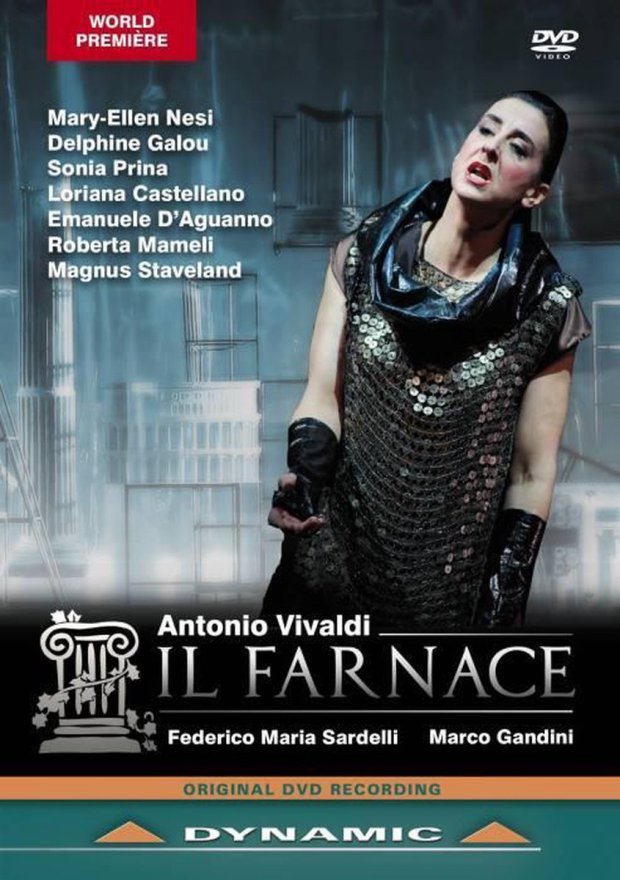
Antonio Vivaldi schreef naar eigen zeggen meer dan 90 opera’s maar daar is minder dan de helft van bewaard gebleven. Verder is dat aantal natuurlijk wat overdreven omdat ‘nieuwe’ opera’s vaak een pastiche waren van bestaand materiaal. In 1727 ging Il Farnace in première en net als Wagner met zijn Tannhäuser bleef Vivaldi hieraan ‘sleutelen’. Voor het Carnaval van 1739 schreef hij een nieuwe versie, al de zesde, die in januari 1739 première had. Deze laatste versie is door Dynamic op dvd uitgebracht. Het betreft een live opname uit de Opera di Firenze.
Il Farnace is een koningsdrama dat past in de reeks opera’s die zijn gemaakt over Mitridates, de koning van Pontus, die lange tijd de Romeinen het hoofd wist te bieden. Pharnaces is zijn zoon en als Pompeus zijn rijk onder de voet dreigt te lopen geeft hij zijn vrouw Thamires opdracht om hun zoon te vermoorden zodat deze de Romeinen niet als trofee in handen kan vallen. Dat gedaan moet ze zelfmoord plegen, hijzelf ziet nog wel.
De plot draait verder om Berenice, koningin van Cappadocië en moeder van Thamires, Selinda, de zus van Pharnaces en twee veldheren uit de vijandelijke kampen, Aquilius en Gillades, die door Selinda tegen elkaar uit worden gespeeld. Uiteindelijk kiest Selinda voor Gillades, mits deze een zeer gevaarlijke opdracht voor haar uitvoert. Hij mag er over nadenken, Vivaldi heeft geen vervolg meer kunnen geven aan deze cliffhanger aangezien hij twee jaar later zou overlijden. Mij dunkt zou er vast nog wel een zevende versie in hebben gezeten. Wagner parafraserend: ‘Ik ben de wereld nog een Farnace verschuldigd’.
De productie van Marco Gandini is semi geënsceneerd, vermoedelijk omdat de zangers lang niet alle aria’s op hun repertoire hadden staan en de kans op een vervolg elders erg klein was. Hij heeft dat overigens heel goed opgelost door de solisten op kleine verrijdbare podia te plaatsen. Op zo’n podium staat een lessenaar en verder is het een compleet decorstuk, met tl balken en sfeerverlichting. Zodoende hoeft iemand niet voortdurend achter een immobiele lessenaar te staan maar wordt met podium en al in het centrum van de actie gereden.
Op de achtergrond staan grote stellages die verder geen functie hebben maar het toneel minder kaal maken. Verder natuurlijk de onvermijdelijke videobeelden, zeer groot geprojecteerd. Een enkele keer voegt dit wat toe, zoals wanneer Thamires zingt over de vrucht van haar baarmoeder die ze moet doden. Dan is er een baby op het scherm te zien, pregnante beelden. Uiteindelijk besluit ze dat de knop nu moet worden omgedraaid. Niet langer mag ze moeder zijn maar moet ze in de rol van echtgenote haar man gehoorzamen en hun zoontje vermoorden.
Berenice voelt ongebreidelde haat jegens Pharnaces, kwestie van oud zeer, en speelt een belangrijke rol in de verwikkelingen. Uiteindelijk leidt het allemaal tot niks, het einde is nogal onbestemd en niemand legt het loodje. Wel wordt er in eindeloos lijkende aria’s gezongen over wat er allemaal zou kunnen gebeuren en hoe vreselijk dat is.
Vrouwen in mannenrollen kunnen mij altijd moeilijk overtuigen van hun romantische gevoelen en andere emoties. Op dat punt hebben Thamires, mooi vertolkt door Sonia Prina en vooral Selinda, een prachtige Loriana Castellano het gemakkelijker.
Berenice is een glansrol van Delphine Galou die toont als een wraakzuchtige Klytemnestra maar zo mooi zingt dat je dat al snel vergeet. Het toenmalige publiek kon natuurlijk de subtiele verschillen in vertolkte emoties wel naar waarde schatten maar voor mij klinkt het toch allemaal vrijwel hetzelfde en moet ik het van de gelaatsuitdrukkingen en verdere lichaamstaal hebben.
De mannenrollen worden vertolkt door de sopraan Roberta Mameli (Gilade), de tenor Magnus Staveland (Aquilio) en de tenor Emanuele d’Aguanno (Pompeus). De titelrol is in handen van mezzo sopraan Mary-Ellen Nesi, een barokspecialist die grote delen van de rol zonder blad weet te zingen. Haar mooiste moment is de grote aria aan het slot ‘Gelido in ogni vena’ ofwel ‘ik voel mijn bloed als ijs door mijn aderen stromen’ waarin de vertwijfeld Pharnaces zichzelf de schuld geeft van de (vermeende?) dood van zijn zoontje. Het is een bekende concertaria die regelmatig te horen is. Een fraai muzikaal slot van een lang uitgevallen werk met een rommelig einde.
Frederico Maria Sardelli heeft de muzikale leiding. Het orkest is het Maggio Musicale Fiorentino.
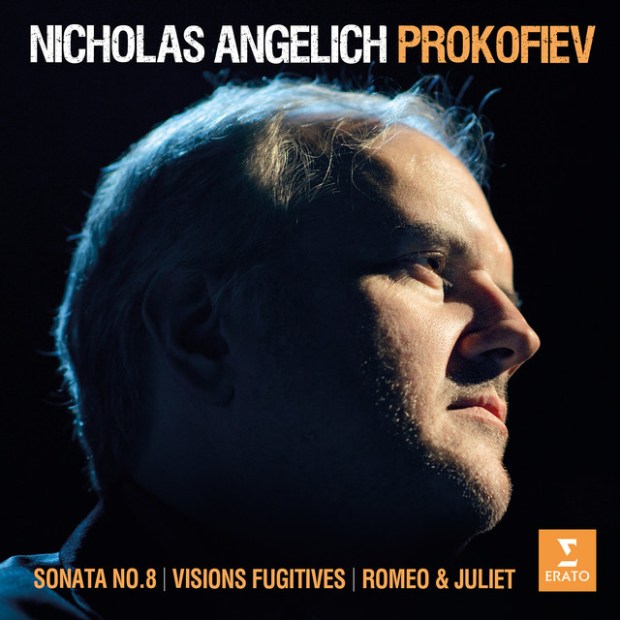
De in 1970 in Cincinnati (Ohio) geboren Nicholas Angelich kreeg zijn eerste pianolessen van zijn moeder. Angelich bleek een wonderkind te zijn: op zijn zevende debuteerde hij met de uitvoering van Mozarts nr.21 en op zijn dertiende werd hij toegelaten tot het Conservatoire National Supérieur de Musique in Parijs, waar hij les kreeg van o.a. Aldo Ciccolini en Yvonne Loriod.
Op zijn nieuwe album speelt Angelich pianowerken van Sergei Prokofjeff, zelf ook een virtuoze pianist. Zijn grootste hit Romeo en Julia ontbreekt er uiteraard niet, ook de fascinerende Vision Fugitives doet er aan mee. Prokofjeffs pianosonates zijn minder bekend, welkom dus, al is het maar één.
Even dit: het is werkelijk fenomenaal wat Angelich doet. Zijn spel is virtuoos en het is duidelijk dat hij er goed over heeft nagedacht. Ik bewonder zijn aanslag, zijn goed gekozen tempi en nog meer zijn legato en de soepele wisselingen tussen piano, pianissimo en forte.
En toch mis ik iets, en dat iets hoor ik het duidelijkst in de pianosonate. O ja, ik weet best wel dat Prokofjeff vaak balanceerde tussen het ene en de andere (zelf in te vullen), maar Angelich is hier, voor mij althans, iets te mechanisch bezig waardoor het romantiek onderspit delft. Niettemin: een aanwinst.
Visions Fugitives, Piano Sonata No. 8, Romeo & Juliet
Warner Classics 9029526768
Sometimes I think that Placido Domingo must be the reincarnation of Puccini. Not because they look so similar (although they are very much alike in the photos), but because of the music. It seems to have been created for Domingo’s timbre. It is as if Puccini composed with Domingo’s voice in mind.
And yet (or perhaps because of this): there is no other repertoire that shows as clearly whether a role suits him or not. He was never a memorable Rodolfo and his Pinkerton was not noteworthy. Even as Calaf, despite the great performances, he did not really identify with the role. He was too friendly, too kind, too human.
TOSCA
Domingo sang his very first Cavaradossi on 30 September 1961 and since then he has sung more performances of Tosca than of any other opera. This is the role he researched with the utmost care. He even added some qualities to the painter’s character that are not really there, in my opinion.
Personally, I find Cavarodossi’s flirtation with the revolution no more than a whim, but Domingo takes it dead serious and sees himself not only as the lover but also as the freedom fighter. From the start, he knows that the execution is actually going to take place, but he is playing along with the lie to spare his beloved Floria. Very humane and very moving.
He sang his first Tosca at the Metropolitan Opera in 1969. It was not planned: he took over at the last minute for the sick Sándor Kónya. Birgit Nilsson was Tosca. In her memoirs, she stated that she found his acting ‘superb’ and his singing ‘gorgeous’.
It was indeed a memorable performance, not least because of Nilsson’s ‘scream’.
Fortunately, the performance was recorded for radio and was released on CD (Nuova Era 2286/870).
Of the studio recordings, two are very dear to me. On Warner Classics (5665042), Renata Scotto meticulously sings all the notes prescribed by Puccini ( her colleagues are not always as scrupulous) and Renato Bruson is very ‘courteously dangerous’ as Scarpia.
RCA (88697448122) has recorded one of the best Scarpias ever: Sherrill Milnes. I once heard him live in the role and it was a real experience! Leontyne Price is a sultry Tosca.
On DVD, I find the Decca film version (0434909) by far the most impressive. It was shot on location in 1976, which was not very common at the time. Well, location… The Palazzo Farnese was then home to the French Embassy, so filming was not allowed inside.
Milnes was once again present and the lead role was sung in a very tormented way by Raina Kabaivanska.
Domingo is so beautiful it makes you want to cry, but what gives the film that little bit extra is the tiny role of the little shepherd. It is sung by Placido junior, then 10 years old.
MANON LESCAUT
Another Puccini role that fits him like a glove is Des Grieux in Manon Lescaut. Of this opera with Domingo, there are many recordings, both studio and live. Not all of them are worth listening to and in most cases it is the interpreter of the title role who presents the problem. It is nothing new: when a record company had a new ‘star’, he or she just had to record everything available. With often disastrous results.
In 1970, Domingo sang Des Grieux in Verona, with Magda Olivero in the title role. Quite bizarre when you consider that Olivero made her professional debut eight years before Domingo was born. And yet: her portrayal of the young heroine is utterly convincing. Indeed, most of her colleagues still cannot match it! My copy was released on Foyer, but better quality editions are now available.
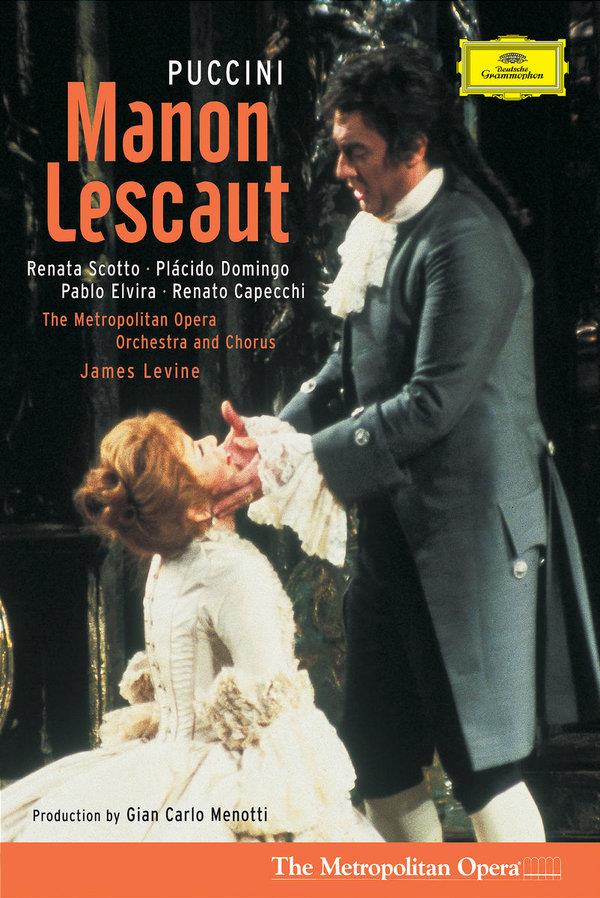
In 1980, the opera was broadcast on TV. That recording is now available on DVD. Believe me: there is no better. Scotto sings and acts Manon like no one else has done before, and together with Domingo, she makes us cry with the beauty and the sadness of it all. Menotti’s very realistic, true to life and very exciting direction simply could not be better. A MUST (DG 073424)
IL TABARRO
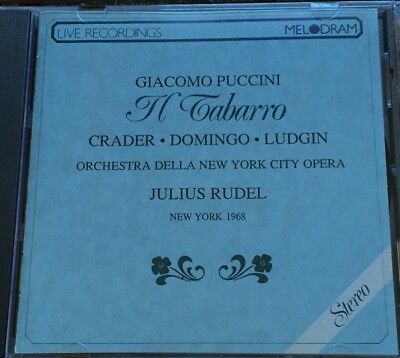
Luigi in Il Tabarro was also a role after Domingo’s own heart. His recording from 1968 with the New York City Opera, conducted by Julius Rudel (Melodram 17048) is splendid, with Jeannine Crader as Giorgietta, a wonderful singer who sadly never made it in Europe.
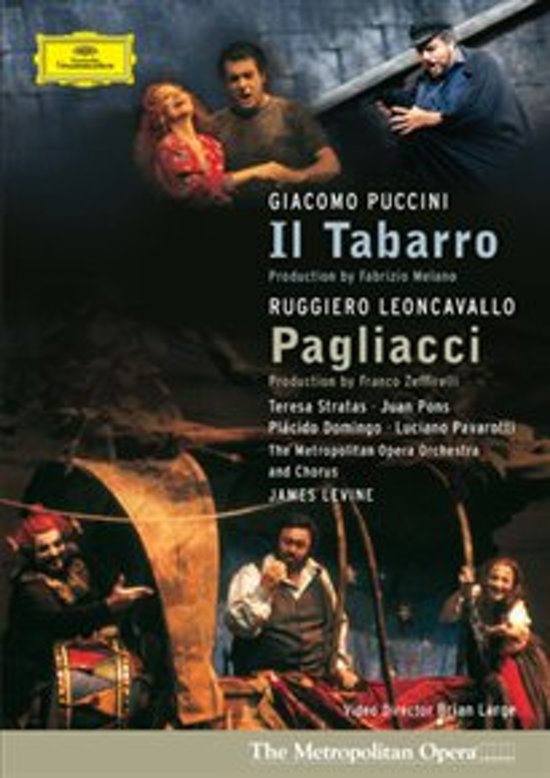
On DVD, there is a fine Zeffirelli production from New York, recorded in 1994. Giorgietta is sung by Teresa Stratas. Unfortunately, it is coupled with Pagliacci with Pavarotti and again with Stratas, in the leading roles. Not really my ‘cup of tea’ (DG0734024).
Below a curiosity: a duet from Il Tabarro with Domingo and Beverly Sills from 1967
EDGAR
There are at least two good reasons to welcome the 2006 Edgar (DG 4776102): it is the very first studio recording of the work and it is the first time that Domingo sings the role, the only one still missing from his Puccini discography.
I never understood why the opera was so unloved. Musically, it is in line with Verdi, but one can already hear tentative fragments of the ‘real’ Puccini: a vague promise of Manon Lescaut, a study for La Bohème and creative exercises for Turandot.
With Adriana Damato and Marianne Cornetti, we can welcome a new generation of phenomenal singers and Domingo is, as always, very musical and committed.
LA FANCIULLA DEL WEST
For me, the very best is a 1978 DG recording (4748402), with an underrated Carol Neblett as a very fierce Minnie. Domingo is a languorous and surprisingly lyrical Johnson, and Sherrill Milnes sounds like he’s in a real western.
Two worthwhile recordings have appeared on DVD. One with Mara Zampieri and Juan Pons (Opus Arte OA LS3004 D) from La Scala, 1991, in a beautiful, colourful direction by Jonathan Miller.
The other is with Carol Neblett and Silvano Carroli (Kultur Video 2038) from the Royal Opera House, 1982.
SONGS
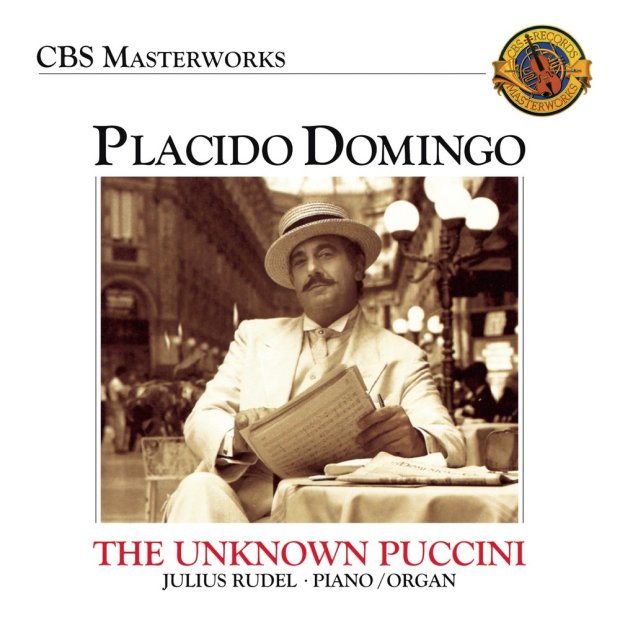
There were once plans to make a feature film about Puccini, in which Domingo would play the composer. It did not go ahead. In preparation for the project, Domingo recorded all Puccini’s songs in 1989, under the title Unknown Puccini (Sony 44981).
For the cover, he is made to look like Puccini and there he is: dressed in white, hat on his head and the moustache prominent on his face. Puccini to the life!
Anyway, it is all about the music and it is a must- have for anyone interested in Puccini. Most are first ever recordings and gradually you follow the composer on his path towards his Manon’s, Tosca’s and other ‘girls’. The renowned conductor Julius Rudel accompanies Domingo on piano and organ.
I have never been a ‘Wagnerian’. I could never muster the patience to sit through hours of his operas. I found them bombastic. Pathetic. And even though I had to admit that there were some beautiful melodies, I felt that I really needed a pair of scissors and radically shorten them
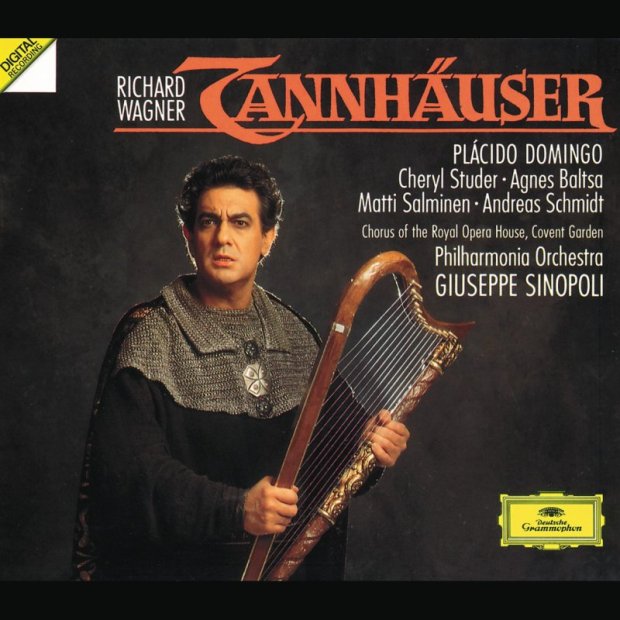
That this feeling has totally changed, I owe to Domingo. In my collector’s mania (I had to have everything he had done), I bought the recently released Tannhäuser (DG 4276252) in 1989. And then it happened: I became addicted.
At first, it was mainly Domingo who was to ‘blame’, whose deeply human interpretation of the title role gave me the goose bumps. His words: “Wie sagst du, Wofram? Bist du denn nicht mein Feind?” (sung with emphasis on ‘mein’ and ‘Feind’ and with a childish question mark at the end of the phrase) caused me to burst into tears.
Later, I learned to appreciate the music for itself and to this day, Tannhäuser is not only a very beloved Wagner opera, but also one of my absolute favourites.
I still consider this recording, conducted very sensually by Giueseppe Sinopoli, to be one of the best ever. Also because all the roles (Cheryl Studer as Elisabeth and Agnes Baltsa as Venus, such wealth!) are excellently cast. At the time, in the eighties and early nineties, this was not necessarily a given.
ERIK
For the 1998 recording of Der Fliegende Holländer (DG 4377782), Domingo added the role of Erik to his repertoire. His Erik is attractive and charming, he sings the role not only with great commitment but also very idiomatically.
This recording is particularly dear to me, not only because of Domingo, but also because of Cheryl Studer, at the time perhaps the most beautiful Senta imaginable. Her delightful lyrical soprano with its easy and sensual height is perfect for the role.
The Holländer is sung by Bernd Weikl. A little past his prime, but the role suits him and Peter Seiffert is wonderful as Der Steuerman.
LOHENGRIN
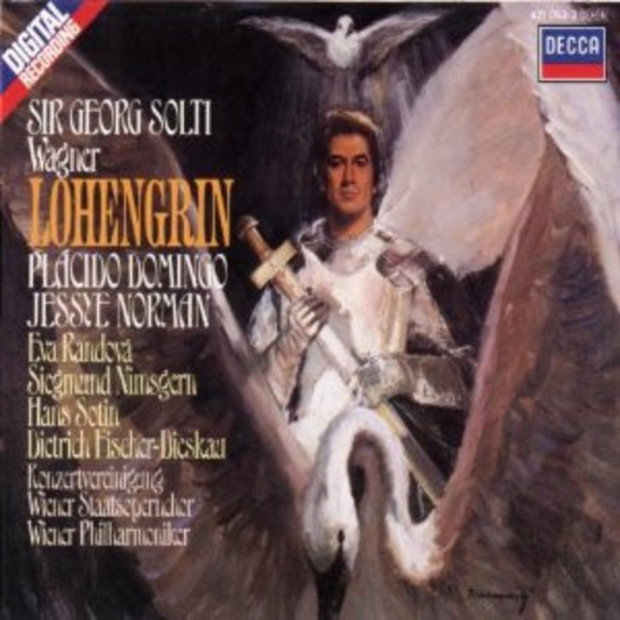
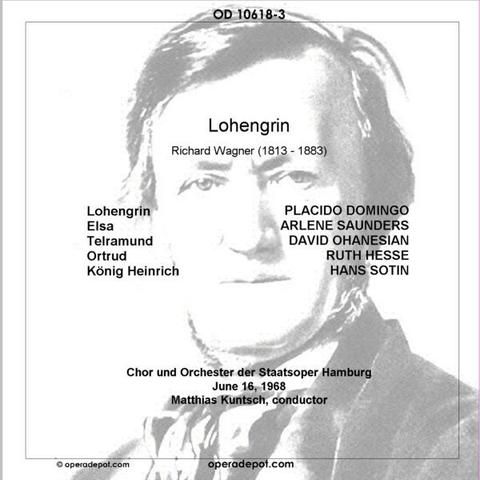
Despite all the swans, Lohengrins do not usually fall out of the sky. Before officially recording the role in 1985 (Decca 4210532), Domingo had been preparing for it for almost twenty years. And the result was worth it.
At the time, the Puritans were all up in arms: a Germanic hero performed by a Spanish bel canto singer, and with an accent too – no, that was unacceptable. I can still vividly remember the reviews from those days, written by the renowned music critics (no, I’m not going to mention any names). They not only cried shame, but also knew for sure that his career was about to end, because this was destroying his voice. Well…
Today, almost 40 years later, we know better. Not only is his voice undamaged, but nowadays it is readily admitted that this was a formidable presentation, by one of the best tenors of the last century. His Lohengrin is not only heroic, but loving and warm-blooded, less god, more of a man.
Jessye Norman was the perfect Elsa in those days: young and innocent. And when you know that the conductor is called Solti…. Simply wonderful!
Domingo’s baptism of fire in the role of Lohengrin was in Hamburg in 1968. He was then 27 (!) years old. It was not only his first Wagner, it was also the very first time he sang an opera in German, a language he did not yet master.
Fragments of the performance have been preserved (e.g. Melodram MEL 26510). His voice sounds like a bell, with a lot of bronze and a golden shine. The high notes are high and sung in full. Where can you still experience a Lohengrin like this? So beautiful that it makes you want to cry.
His Elsa was Arlene Saunders, at that time a much-loved prima donna in Hamburg, today she is totally forgotten. How unjust! Saunders was not only an amazingly good singer, she was also a beautiful woman and an exemplary actress.
PARSIFAL
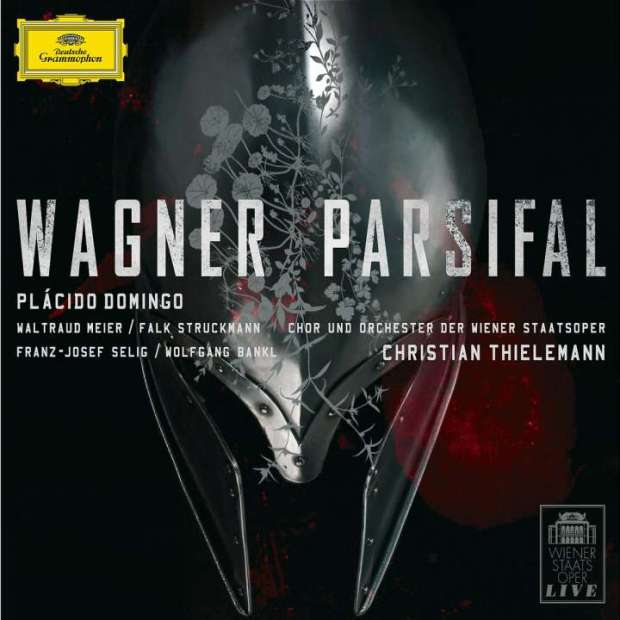
In 2006, Domingo sang his last Parsifal (officially at least). It was recorded live in Vienna by Deutsche Grammophon (DG 4776006). Although he is audibly not a spring chicken anymore, he still manages to be utterly convincing, which is actually also true of Waltraud Meier’s Kundry.
Franz-Josef Selig is a fantastic Gurnemanz. His warm bass with its splendid legato seems created for all the long monologues. Falk Struckmann also is a splendid Amfortas.
It has been said of the conductor Christian Thielemann that he is a worthy successor to Furtwängler, and there is a lot of truth in that. He makes no secret of his predilection for the great German composers and his interpretations of them are rightly praised.
He also shares his capriciousness and wilfulness with his illustrious predecessor. His interpretations are therefore often controversial. I like that, because it forces the listener to listen attentively. In Parsifal, he emphasises the human aspect of the work rather than its mysticism. The truly brilliant orchestra follows closely behind.
In 1998 Tony Palmer made a very fascinating film titled Parsifal – The Search for the Grail (Arthaus 100610). Domingo is our host and he explains not only the work, but he also tells us the history of the Holy Grail.
It is a very fascinating and enjoyable quest, illustrated by excerpts from Indiana Jones and Monty Python, among others, and from a performance in the Mariinski Theatre, with, alongside Domingo, Violeta Urmana as Kundry and Matti Salminen as Gurnemanz. Gergiev conducts.
TRISTAN
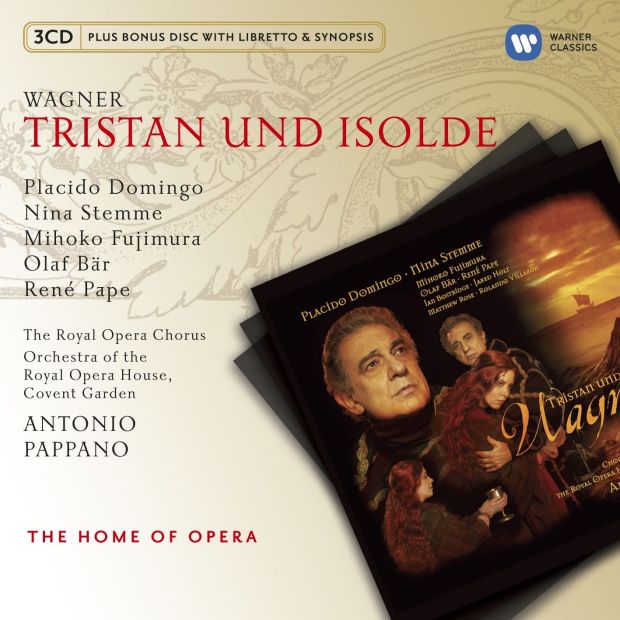
In the winter of 2004/2005 the moment had finally come: the crowning glory of Domingo’s long career. Tristan had been on his wish list for a long time and twice it had almost come true (Bayreuth and Vienna), but in the end he dared not go through with it. But he seized the opportunity to record it with both hands.
EMI (now Warner Classics 5099996686423) immediately made a true feast of it and went all out – it is said that the project cost almost a million euros!
The result is overwhelming. Nina Stemme sings a young and vulnerable Isolde and René Pape is one of the best Markes I have ever heard. His monologue ‘Tatest du’s wirklich’ is among the most beautiful and moving moments of the opera.
Domingo is a Tristan to fall in love with. He is a man, a human being of flesh and blood, if necessary heroic and strong, but also weak and fragile. He is loyal, but mostly in love, until, finally, death comes for him.
His interpretation bears little resemblance to that of other great Tristans in history. That is not surprising: he is not a heroic tenor. But singing is what matters most to me, and does he sing! Peter Alward (EMI’s outgoing A&R producer and the mastermind behind the recording) in an interview once said, that he would not be surprised if a whole future generation of Wagner tenors committed mass harakiri after listening to Domingo in the role.
SIEGMUND
Domingo als Siegmund in Washington in 2007.
By now, Domingo pretty much identifies himself with Siegmund (Die Walküre), and it was also his most frequently performed Wagner role. I heard him sing it in London, at the Proms, an experience never to be forgotten.
There are plenty of recordings in circulation, official and less official, so I assume you will have at least one of them. If you are interested, that is.
fragment of his debut in the role (Vienna 1992) with Waltraud Meier as Sieglinde:
SIEGFRIED
No. He has never tried Siegfried, at least not on the stage, and it is very unlikely that he will do so in the future, but with Domingo you never know. After all he surprises us every year with at least one new role, no small feat when you turn 80!
On a CD with the title Scenes from the Ring (once EMI 5572422, probably not available anymore) he sings all the great music from both Siegfried and Götterdämmerung and he is doing it great. Just listen to ‘Nothung’ or ‘Dass mein Vater nicht ist’, not to mention ‘Brünnhilde! Heilige Braut!’. Can it get any more impressive? What a pleasure to hear him in this role.
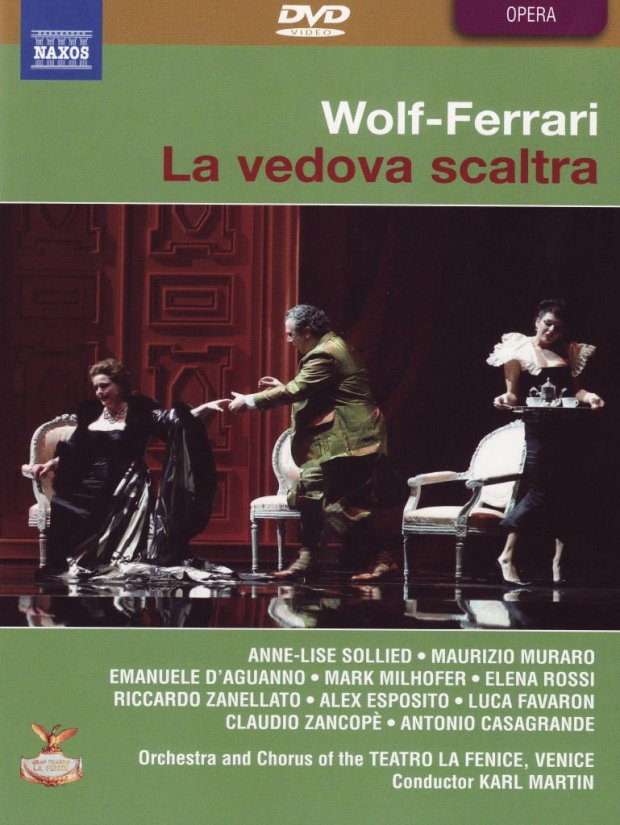
In 2007 herdacht men in La Fenice het 300e geboortejaar van Carlo Goldoni met een reeks uitvoeringen van Ermanno Wolf-Ferrari’s opera La vedova scaltra.
De titel betekent zoveel als ‘De gewiekste weduwe’ en het libretto is losjes gebaseerd op een van Goldoni’s toneelstukken. Welke doet er nauwelijks toe, ze verlopen vrijwel allemaal volgens hetzelfde stramien.
Wolf-Ferrari (1876-1948) componeerde een reeks opera’s die doen denken aan wat in Duitsland een Spieloper wordt genoemd, maar dan zonder gesproken dialogen. Hoewel hij als operacomponist carrière maakte in een periode dat het Verismo opgeld deed, bleef Wolf-Ferrari aanvankelijk hangen in de keuze voor meer klassieke onderwerpen. Pas met Il segreto di Susanna uit 1909 betreedt de componist zijn eigen leefwereld.
Des te opmerkelijker is zijn keuze voor Goldoni als inspirator voor het uit 1930 daterende La vedova scaltra. Het kan zijn dat dit (mede) ingegeven werd door de wens in fascistisch Italië vooral geen golfjes in de culturele vijver te willen maken. Gewoon op zeker spelen en dat maakt zo’n Venetiaans verhaaltje natuurlijk tot een goede keuze.
Een rijke weduwe wordt aanbeden door vier gefortuneerde heren, afkomstig uit Engeland, Spanje, Frankrijk en Italië. Laatst genoemde trekt uiteraard aan het langste eind, waarom een buitenlander trouwen als je dicht bij huis kunt blijven? We zijn getuige van de standaard verwikkelingen: list en bedrog, verwisselingen, ruzies en overdreven gespeeld komisch gedoe.
Die vier nationaliteiten geven aanleiding tot gebruik van herkenbare clichés waarbij vooral de omlijsting van de Spaanse grande, Don Alvaro di Castiglia, het leukste uit de verf komt.
Het doet een beetje denken aan Il viaggio a Reims, ook een inhoudelijk niemendalletje met hoofdpersonen uit verschillende landen, dat het vooral moet hebben van de muziek. En het vele gepraat in La vedova zien we terug in Strauss’ Capriccio al heeft de inhoud daar wel iets meer betekenis.
Muzikaal is de opera een ratjetoe, sommige scènes doen sterk denken aan de periode waarin Goldoni het verhaal plaatste, zo rond 1780 vermoed ik. Op andere momenten is het puur belcanto en dan weer klinken er plotseling flarden muziek die eerder doen denken aan het werk van illustere tijdgenoten van Wolf-Ferrari. Al met al kan de muziek mij wel een tijdje blijven boeien, bij het verhaal haak ik echter al snel af. Dat men juist dit werk in 2007 heeft geprogrammeerd zal toch vooral van doen hebben gehad met de wens de plaatselijke coryfee Goldoni te eren. Zijn standbeeld staat in deze productie prominent midden op een pleintje waar het tweede deel van de opera zich afspeelt.
De kostuums zijn ‘ancien régime’ voor de dames en bij de heren vooral op het uitlichten van nationale clichés gericht. Zo komt de Spaanse entourage van Don Alvaro op als een soort stierenvechtersfestival, met bijpassende muziek. Hier klinkt Wolf-Ferrari als Zarzuela componist.
De hoofdrollen zijn uitstekend bezet. De gewiekste weduwe Rosaura die net haar stokoude man – hij was wel 70, confronterende mededeling – heeft begraven en nu rustig een paar maanden de tijd neemt om een vervanger uit te zoeken, wordt uitstekend vertolkt door de Noorse sopraan Anne-Liese Sollied. In de tweede akte schittert ze in een solostuk getiteld ‘Nella notturna selva’ over twee geliefden die van elkaar zijn gescheiden, Daphne en Amaryllis. Ze staat zeer lang op het toneel en toont permanent een hoog niveau, zeer goed optreden.
Haar sidekick is de bediende Marionette, een Française die zich erop beroept de dochter te zijn van de meid van de voedster van de koning. Three handshakes away from he throne so to speak. Ze heeft dan ook de nodige kapsones maar flirt graag met de boodschappers die de vier heren op haar patrones afsturen. Deze komische maar vocaal eveneens veel eisende rol is in goede handen bij de Italiaanse sopraan Elena Rossi.
De vier heren worden vertolkt door de bas Maurizio Muraro als Milord Runebif, de tenor Emanuel d’Aguanno als Monsieur Le Bleau, de tenor Mark Milhofer als Il Conte di Bosco Nero en de bas Ricardo Zanellatto als Don Alvaro di Castiglia. De bariton Alex Esposito zorgt voor een extra komische noot als de go-between Arlecchino, zonder wiens personage het natuurlijk geen echte Goldoni zou zijn.
Koor en orkest van La Fenice staan onder leiding van Karl Martin (Naxos 2110234-35)
I never used to like opera. I loved violin concerts and piano solo works, very early on I learned to appreciate chamber music and when I got a bit older, songs also came my way. But opera? The mere idea that an old, fat lady would try to portray a young girl dying of TB, gave me the giggles. Talk about prejudice!
Until one memorable evening in 1982, when I turned on the TV to watch Carmen. I only did it to please my then boyfriend and then it happened! From that night on, the world was forever changed and my life gained a great love.
For years I cherished this Carmen, although I only had a badly copied but very expensive mc (does anyone remember what it was?). It was later released on various ‘pirate labels’ and finally on DVD (Arthaus Musik 109096).
Many years and a lot of experience have passed, but I still find the recording irresistible. First of all because of Domingo. Listen to his ‘La fleur que tu m’avais jetée’: if that doesn’t give you goose bumps, I don’t know what will. And also because of Carlos Kleiber, a conductor, the likes of whom do not exist anymore these days.
The most beautiful CD recording, at least to me, is the one with Teresa Berganza under Claudio Abbado (DG 4196362). It was recorded in the studio in 1978, but only after a series of live performances, and it is all the better for that! Ileana Cotrubas (Micaela) and Sherrill Milnes (Escamillo) complete the excellent cast.
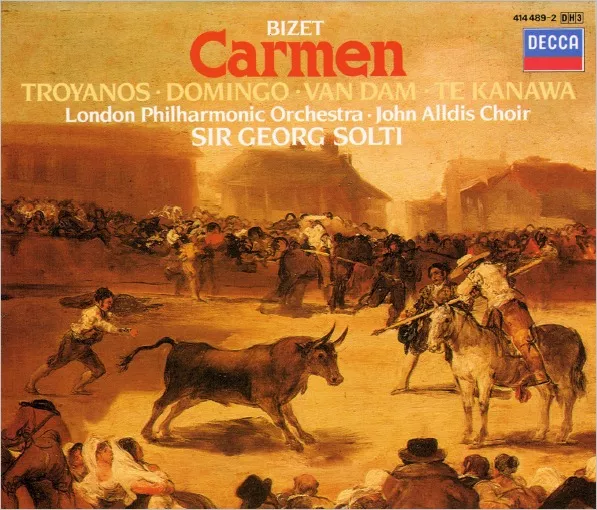
Two years earlier, Domingo also recorded the opera in the studio (Decca 4144892), but I am less enthusiastic about it. Solti conducts superbly and Tatiana Troyanos as Carmen is one in a thousand, perhaps she is even better than Berganza, but José van Dam is no Escamillo and the whole lacks the atmosphere of the theater.
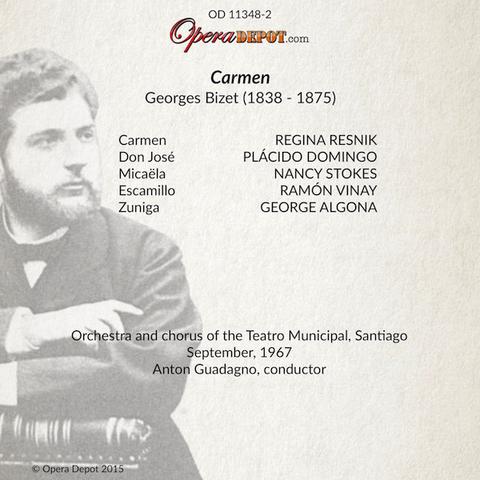
The very first recording I know, dates from 1967. It is from the Teatro Municipal de Santiago and is conducted by Anton Guadagna (Legato LCD 194-2). Regina Resnik is an excellent Carmen, but what makes the recording truly memorable is the Escamillo of Ramon Vinay, once a Don José of note himself.
Also interesting is the recording from Covent Garden, 1973 (Arkadia MP 498-3). Mainly because of Shirley Verrett in the leading role and the very young Kiri te Kanawa as Micaela.
Massenet: Werther
Werther was one of the young Domingo’s favourite roles. Unfortunately, little of it has been documented. On 18 December 1977, the opera was recorded by the Bayerische Rundfunk in Munich. This recording has been released on CD (Orfeo C 464 982). Charlotte was sung by Brigitte Fassbaender, not really a singer one would associate with the role… Well! Allow yourself to be surprised, because what happens here, happens very rarely: drama, passion, love, despair… She and Domingo really bounce from your player. An excerpt:
A studio recording of the opera was made in 1979, under Riccardo Chailly, with a totally miscast Elena Obraztsova as Charlotte. It is quite exciting, but lacks the necessary poetry.
Massenet: Manon
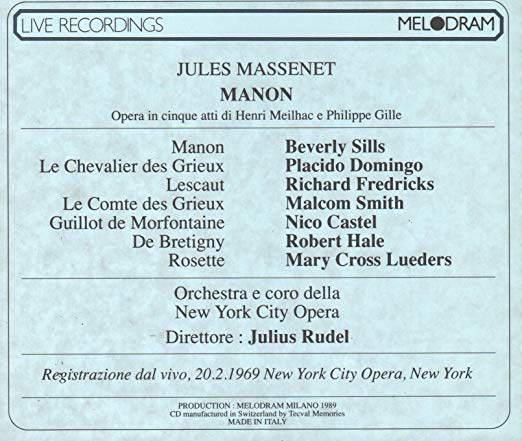
Yes, Manon was once part of Domingo’s repertoire. The only recording I know is on Melodram (MEL 27054). It was recorded live at the New York City Opera on 20 February 1969. Manon is sung by the truly irresistible Beverly Sills. Julius Rudel conducts.
Massenet: Le Cid
An oddity, certainly, but such a beautiful oddity! Sony (7454942 – check the number to be sure, they change so quickly!) recorded the concert performance in New York, 1989, live. Eve Queler conducts and Grace Bumbry shines as Chimene.
Gounod: Faust
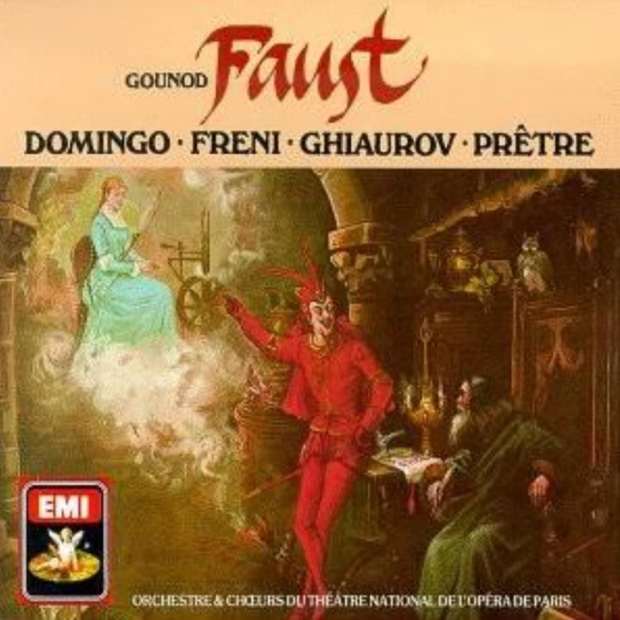
Fortunately there is a good studio recording of Domingo’s Faust. It was recorded in 1979 by EMI (now Warner) and it is easily one of the best recordings of the work. The orchestra of the Paris Opera is conducted by Georges Prêtre, one of the best conductors of French repertoire.
The cast is finger-licking gorgeous: Mirella Freni is a fragile and sensual Marguerite and Nicolai Ghiaurov a very impressive Méphistophélès. In the small role of Valentin we hear none other than Thomas Allen.
Saint-Saëns: Samson et Dalila
EMI (now Warner) recorded the opera in Paris in 1991. The conductor was Myung-Whun Chung and there is the rub: he does not really know the opera. But he was not the only culprit! Someone came up with the unfortunate idea of having Dalila sung by Waltraud Meier. Forget it.
The other studio recording, this time on DVD (DG 0730599), also has a Dalila that just doesn’t work for me: Olga Borodina. It was recorded at the Metropolitan Opera in 1998. I was there and didn’t like it – and I still don’t like it.
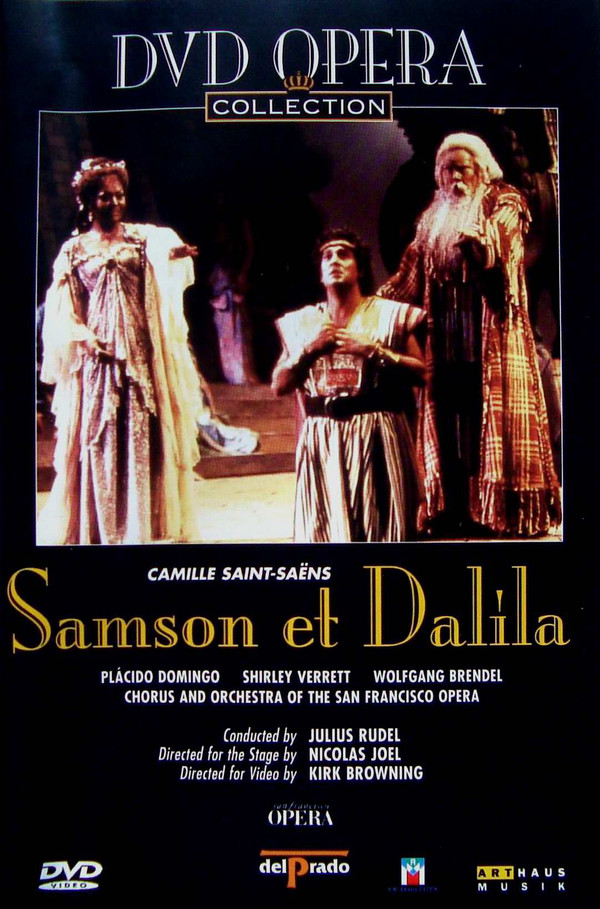
But, I’ll go for the San Francisco recording every time! It was directed by Nicolas Joel and Dalila was sung by the really sexy Shirley Verrett (Arthaus Video 100 202)
Offenbach: Les Contes d’Hoffmann
Hoffmann was one of Domingo’s greatest roles. As far as I am concerned, no other singer even comes close to him.
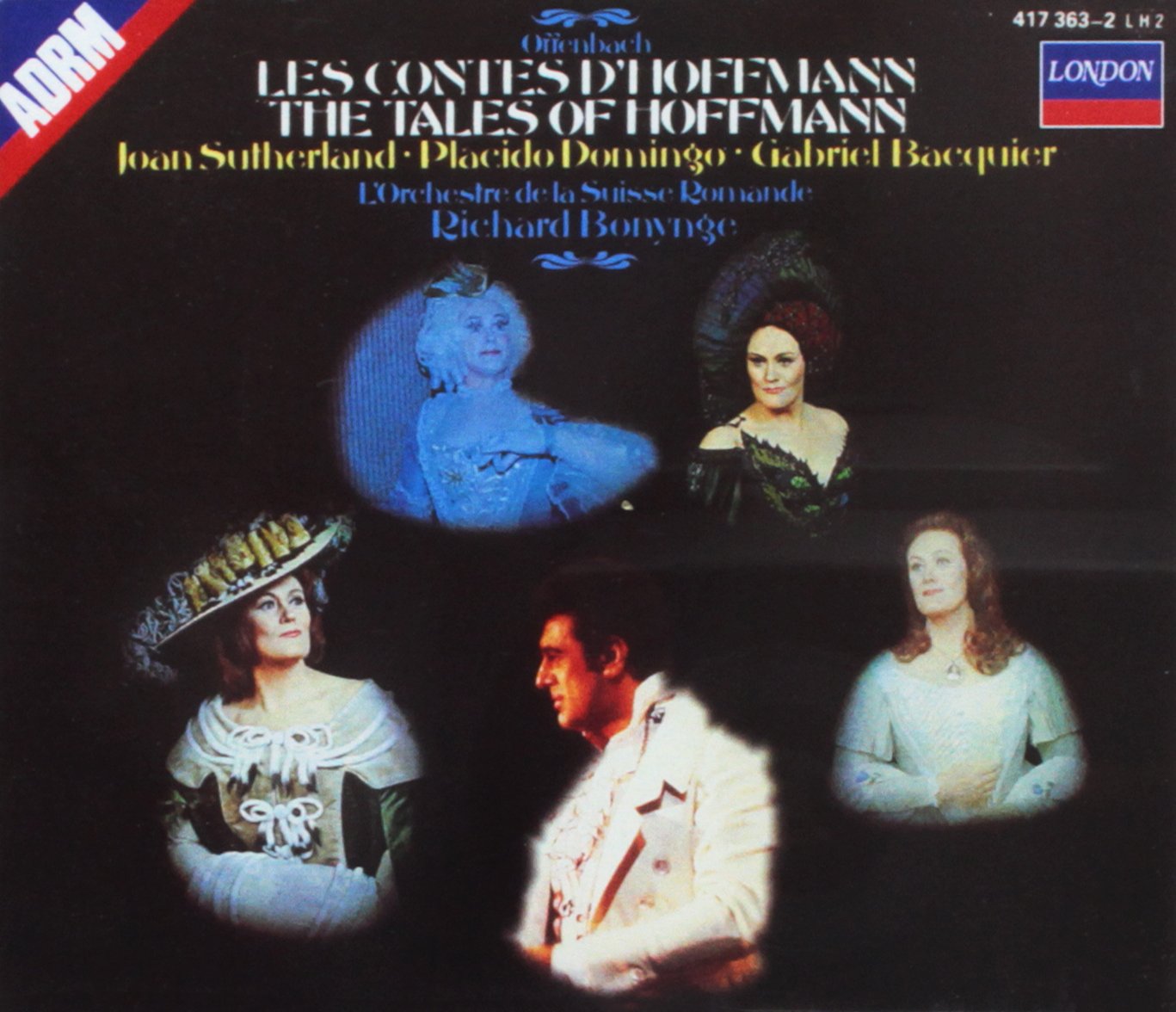
If you want the opera on CD, the Decca recording conducted by Richard Bonynge, with Dame Joan Sutherland in all three female roles (4173832) is highly recommended.









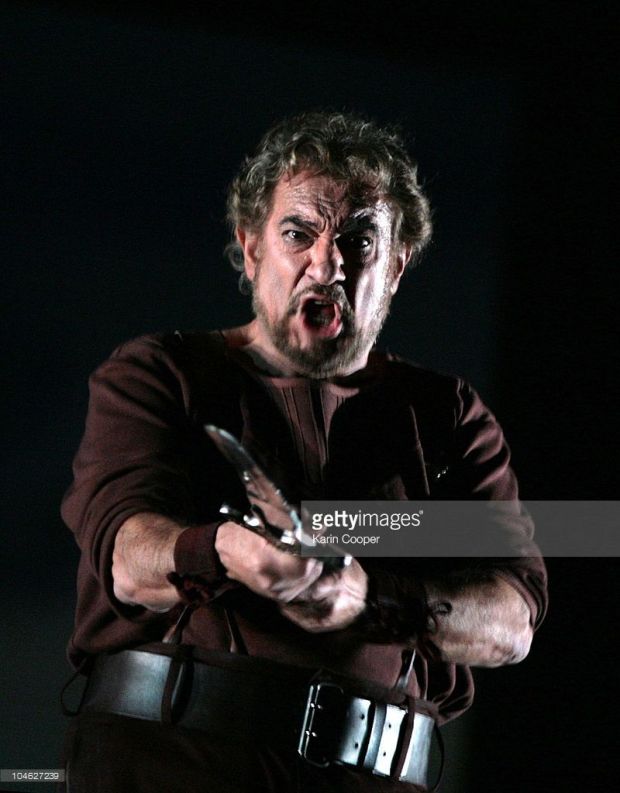 Domingo als Siegmund in Washington in 2007.







 Basia con fuoco