Rita_Gorr

Revolutions!

ANDREA CHÉNIER

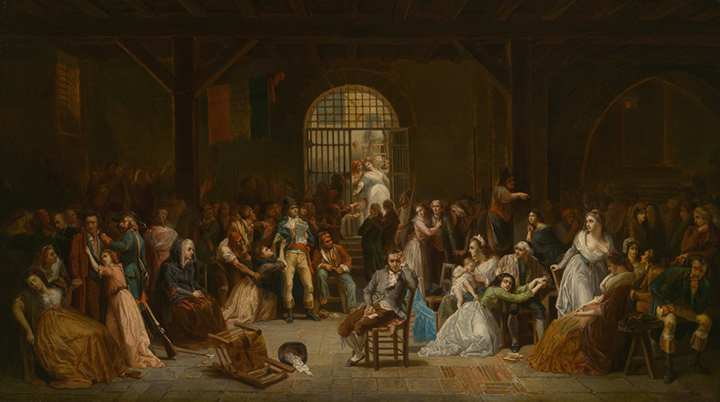
Appeal of the last victims of terror in the prison of St. Lazarus. Chénier appears seated at the foreground’s center.. Painting by Charles Louis Müller, (Musée de la Révolution française).

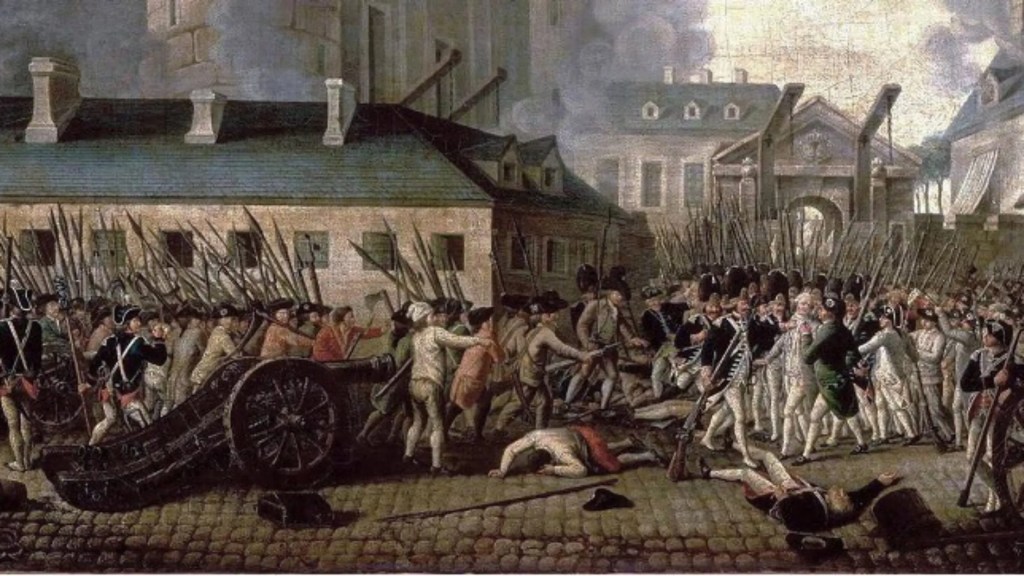
For me, Andrea Chénier is one of the best and most beautiful operas ever. I think the music is nothing less than divine and the story is timeless. It remains current, perhaps now more than ever. The tyrant must be cast off his throne and the people must take control. Surely, we all agree on that?
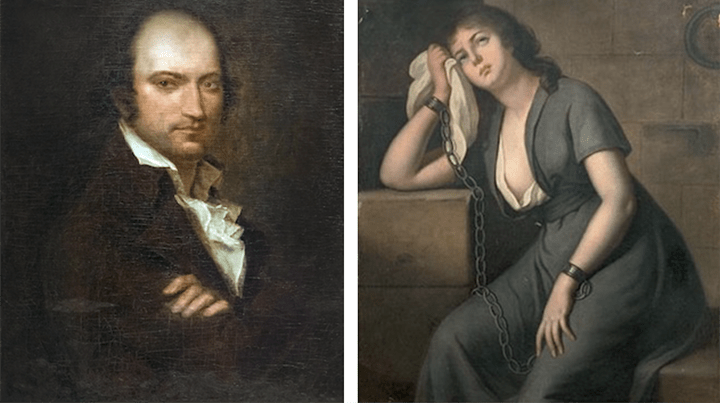
Ten days before Chénier’s death, the painter Joseph-Benoît Suvée completed this portrait of him – not exactly the romantic figure we would cast. On the right Aimée de Coigny, La Jeune Captive

If only it were that simple! Anyone who grew up in a post-revolutionary totalitarian regime knows how much horror it brings. One terror is replaced by another.
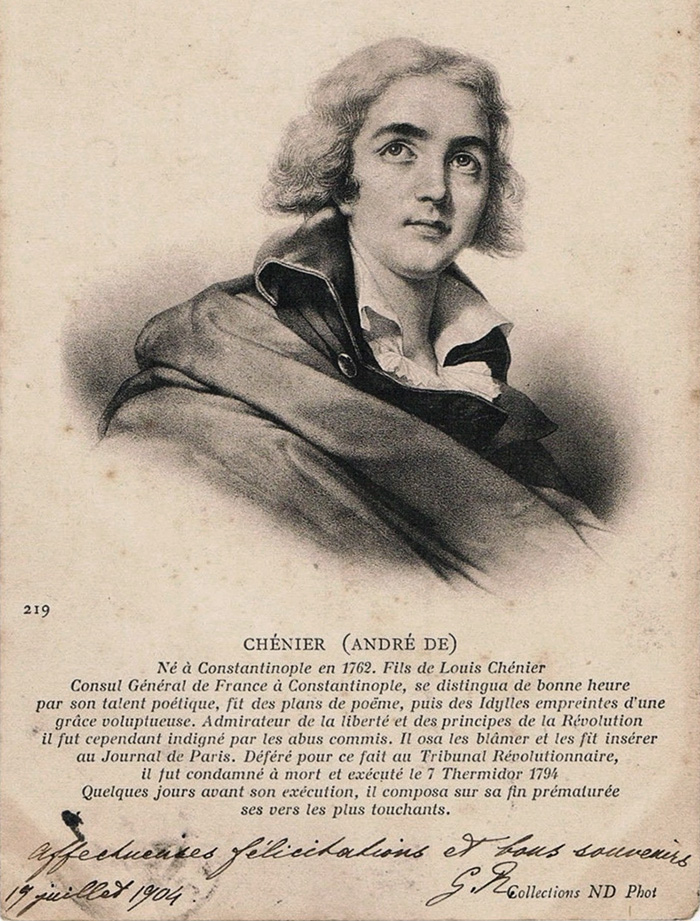
This, at least for me, is the main theme in Giordano’s biggest hit. I don’t think the real lead role is the actual poet, André Chénier (did you know that Giordano used Chénier’s poems in his arias?) nor his beloved Maddalena. It is the French Revolution, which, as Gérard (once Maddalena’s houseboy and now one of the revolutionary leaders) bitterly observes, devours its own children.

Domingo

To my great surprise, I read that Domingo didn’t much like the part of Andrea Chénier. He loved the opera, but the role, one of the toughest in the ‘lirico-spinto’ repertoire, was not really interesting for him dramatically. For him, Chénier was ‘an idealist who always has his head in the clouds’. And yet it was one of the operas he loved to sing!

I myself think the role of the poet/revolutionary fits him like a glove. Passion for love and enormous involvement in everything that happens in the world were – and still are – his trademarks.

He sang his first Cheniér in 1966 in New Orleans, as the last-minute replacement for Franco Corelli, but that was not his first performance of the opera. In the 1960/61 season he sang The Incredible and The Abbot, in Mexico.
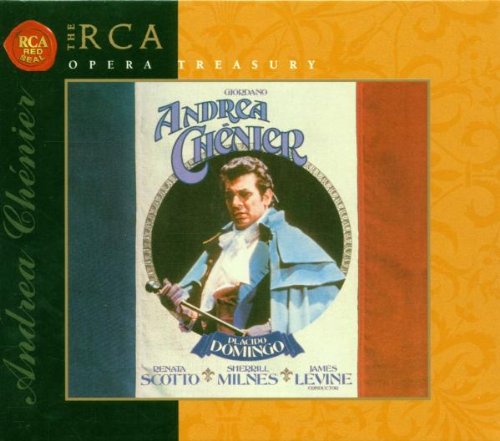
My favourite CD recording was recorded in 1976 by RCA (GD 82046). The cast is delectable. Renata Scotto sings Maddalena, Sherrill Milnes is Gérard and in the small roles we hear, among others, Jean Kraft, Maria Ewing, Michel Sénéchal and Gwendolyn Killebrew. James Levine, who conducts the National Philharmonic Orchestra, understands exactly what the opera is about. Tear jerkingly beautiful.

Scotto sings ‘La Mamma morta’:
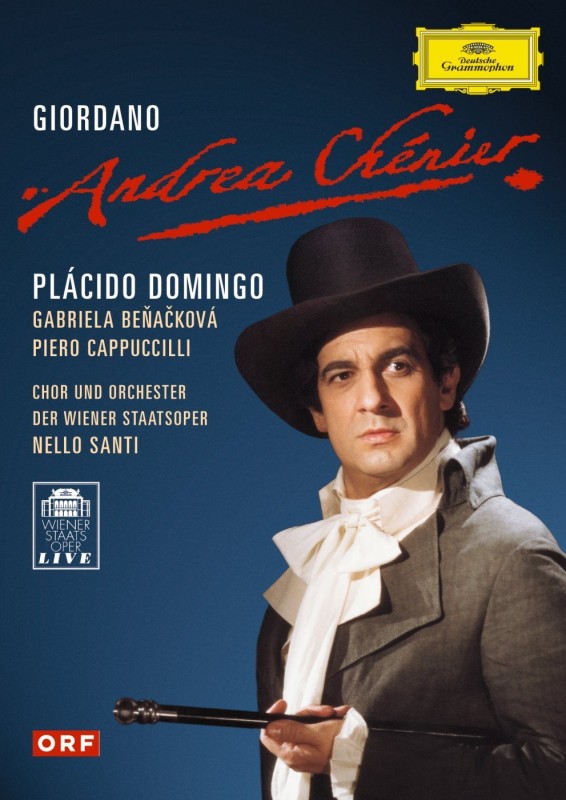
In 1981 the opera in Vienna was recorded for TV. That recording has since been released on DVD (DG 073 4070 7). Gabriela Beňačková, one of the most underrated singers in history, sings a Maddalena of flesh and blood. Horrifyingly beautiful and moving.

Piero Cappuccilli is a Gérard among thousands and the small roles are also filled by great singers: Madelon is sung by none other than Fedora Barbieri. Otto’s Schenk’s production is a feast for the eyes.

LES DIALOGUES ES CARMÉLITES
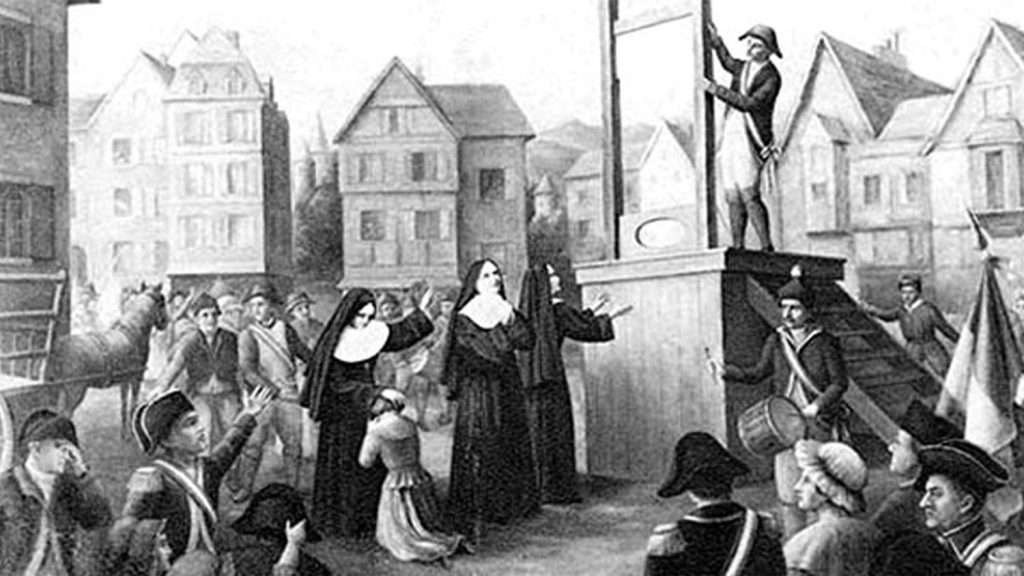
There are those operas that you just can’t spoil and Les Dialogues des Carmélites is one of them. For Poulenc, melody is the centre of the universe. His music is so poignantly beautiful and his composition so expressive that you don’t really need a director.
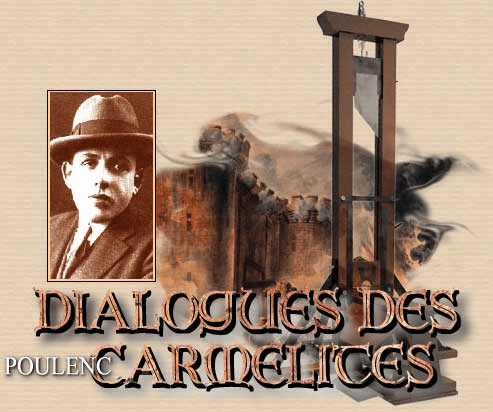

The opera’s themes are sacrifice, martyrdom, revolutions and ideologies, but those are just the side lines, because the main theme is an all-devouring fear that makes it impossible to live or die: “Fear is a terrible disease. I was born of fear, in fear I live and in fear I shall die. Everyone despises fear, so I am condemned to be despised.”

Just few recordings:

Milan, 1957
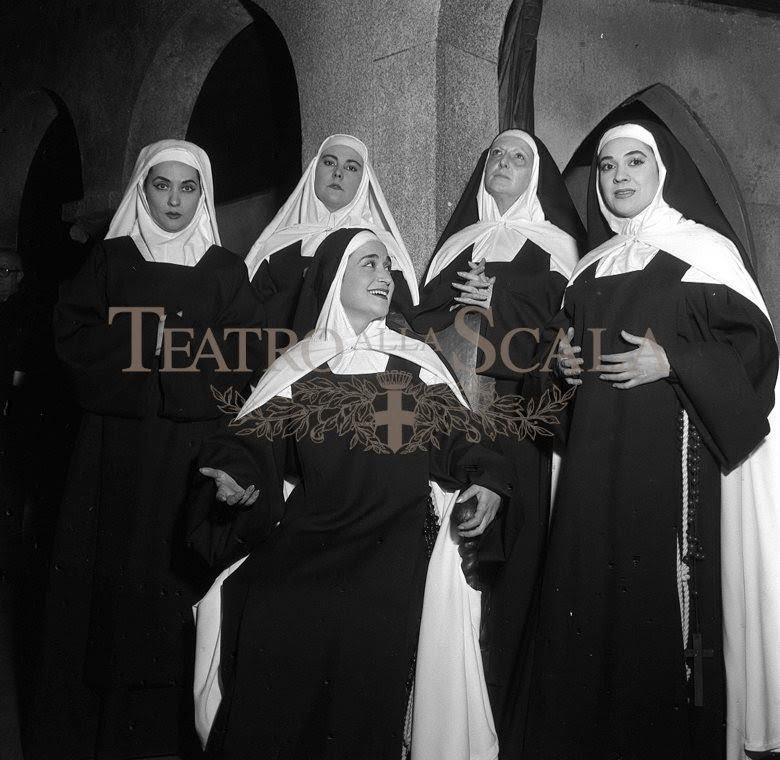


The world premiere of Dialogues des Carmélites took place on 26 January 1957 at La Scala in Milan, in an Italian translation. The cast reads like a ‘who’s who’ in the opera world, because, ask yourself: were there any bigger names in those days?

Blanche was sung by Virginia Zeani, a singer with a full, large and dramatic voice, that was suitable for both Violetta and Tosca. Marie was played by Gigliola Frazzoni, one of the best Minnies (La fanciulla del West) in history. And Madame Lidoine was given to Leyla Gencer.

With Fiorenza Cossotto, Gianna Pederzini, Eugenia Ratti and Scipio Colombo in the smaller roles, the opera sounded less lyrical than we are used to nowadays, almost veristic even. But that made the dramatic effect even more poignant.
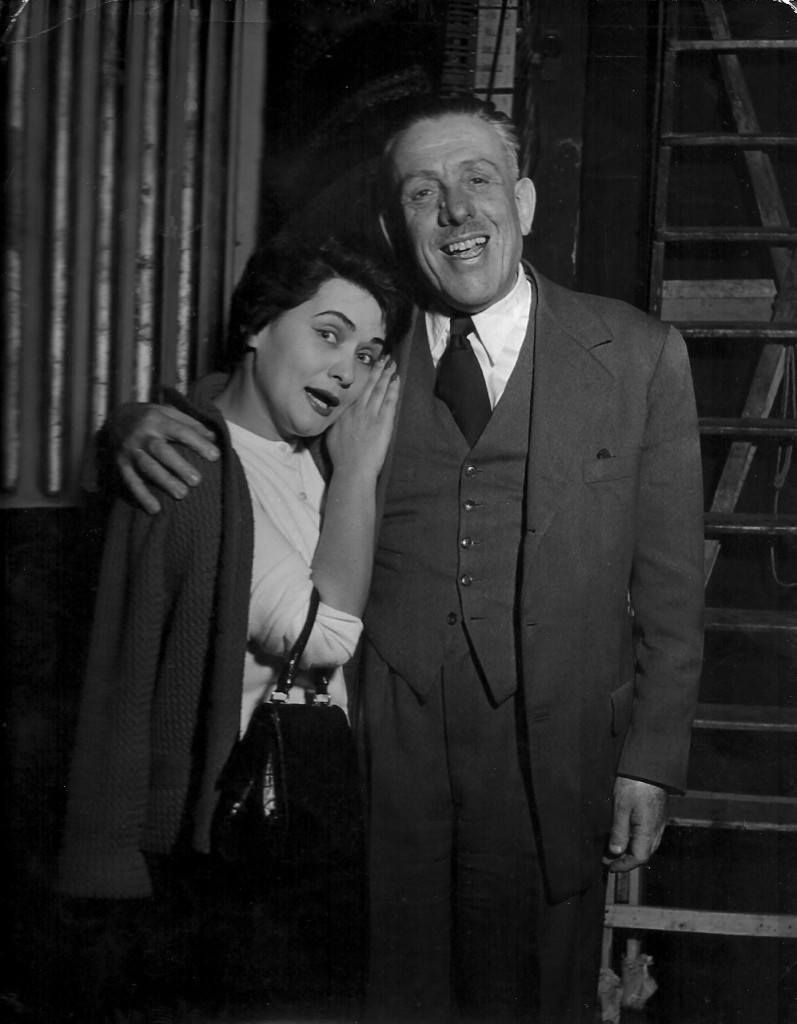
Virginia Zeani and Francis Poulenc, Milano 1957

In The Operatic PastCast, Virginia Zeani talks about Poulenc, the influence the opera has had on her life, her colleagues and the production in Milan.

The entire performance from Milan, fantastically conducted by Nino Sanzogno, is on YouTube. Do not miss it!


Paris, 1957
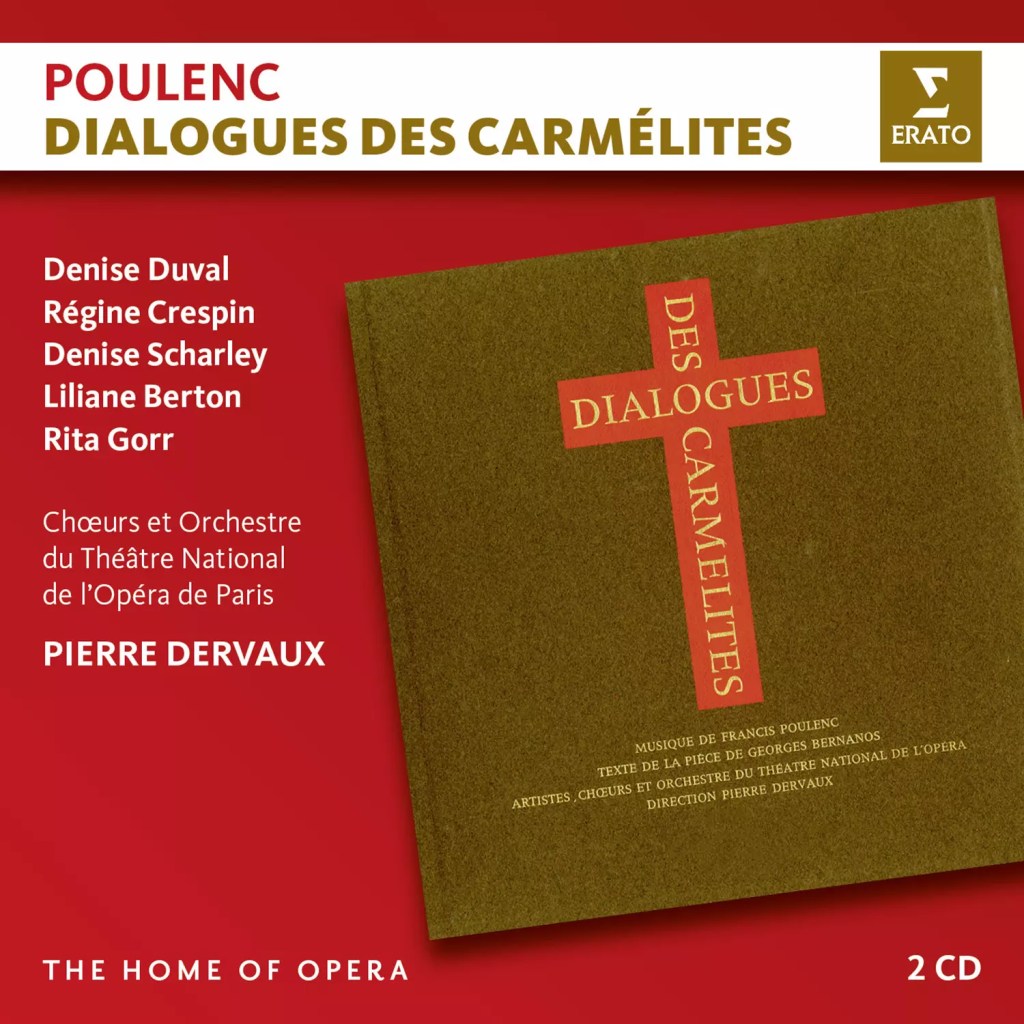

The Paris premiere of Dialogues des Carmélites followed six months later. On 21 June 1957, the opera, now in French, was presented at the Théâtre National de l’Opéra. Blanche was sung by Poulenc’s beloved soprano Denise Duval. Duval’s voice (girlishly naive, light, almost ethereal) fitted Blanche like a glove.


The rest of the cast, including Régine Crespin as Madame Lidoine and Rita Gorr as probably the best Mère Marie ever, was also chosen by Poulenc himself


Régine Crespin (Madame Lidoine) in “Mes chères filles”:


he orchestra was conducted by Pierre Dervaux and I can be very brief about him: there is no better. Full stop. (Warner 08256483211)


Milan, 2004
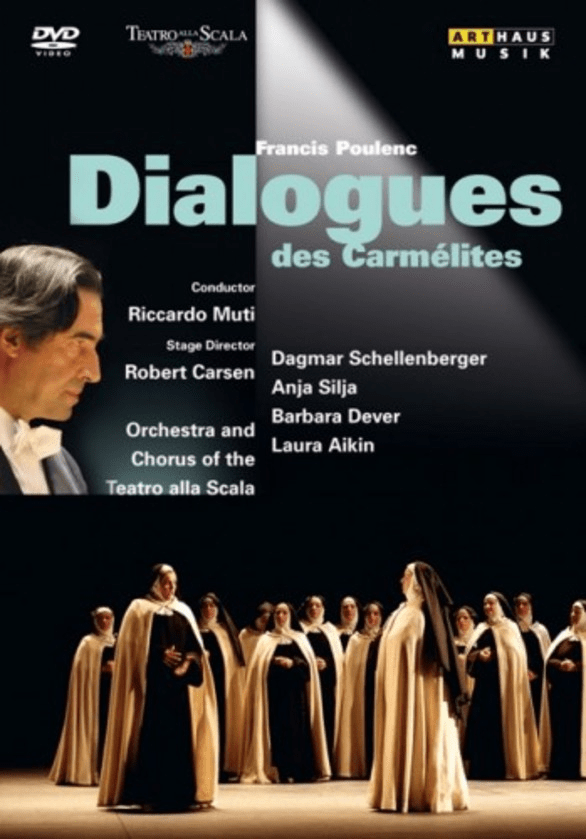

Robert Carsen’s production of Dialogues des Carmélites is one of the absolute highlights in the history of De Nationale Opera in Amsterdam.

Trailer from Amsterdam:


In February 2004, the production was filmed at La Scala but I am not entirely happy with it. My disappointment mainly relates to Dagmar Schellenberger’s performance as the lead role.

Admittedly, it is not easy to emulate the unforgettable Susan Chilcott (she died in 2003 of breast cancer, only 40 years old), and Schellenberger indeed cannot not do it. In the beginning  her strong tremolo and her not always pure notes are irritating.. But as the opera progresses, she gains a great deal of credibility, and through her brilliant acting and complete abandonment, she makes the development of her character very tangible. And almost as a matter of course, her singing also becomes more beautiful and softer.

The role of Madame de Croissy is played by one of the best singing actresses of our time, Anja Silja. Her performance is truly breathtaking, and even though her voice is not that steady anymore – it suits the character of an old and mortally ill prioress very well. Her death struggle makes for unprecedentedly thrilling theatre, and it is a great credit to Carsen (and the rest of the cast) that the scenes that follow do not make us lose interest.

Muti conducts with verve and knows exactly how to strike the right tone. He really succeeds in translating the spectre of the revolution and its excesses into sound. He is at his very best, however, in the lyrical, contemplative scenes, and  in his hands the chilling ending reaches a truly blood-curdling climax. Make sure you have a big bag of Kleenex within reach, because you really won’t keep it dry (Arthaus 107315).

Below is the trailer:

Hamburg, 2008
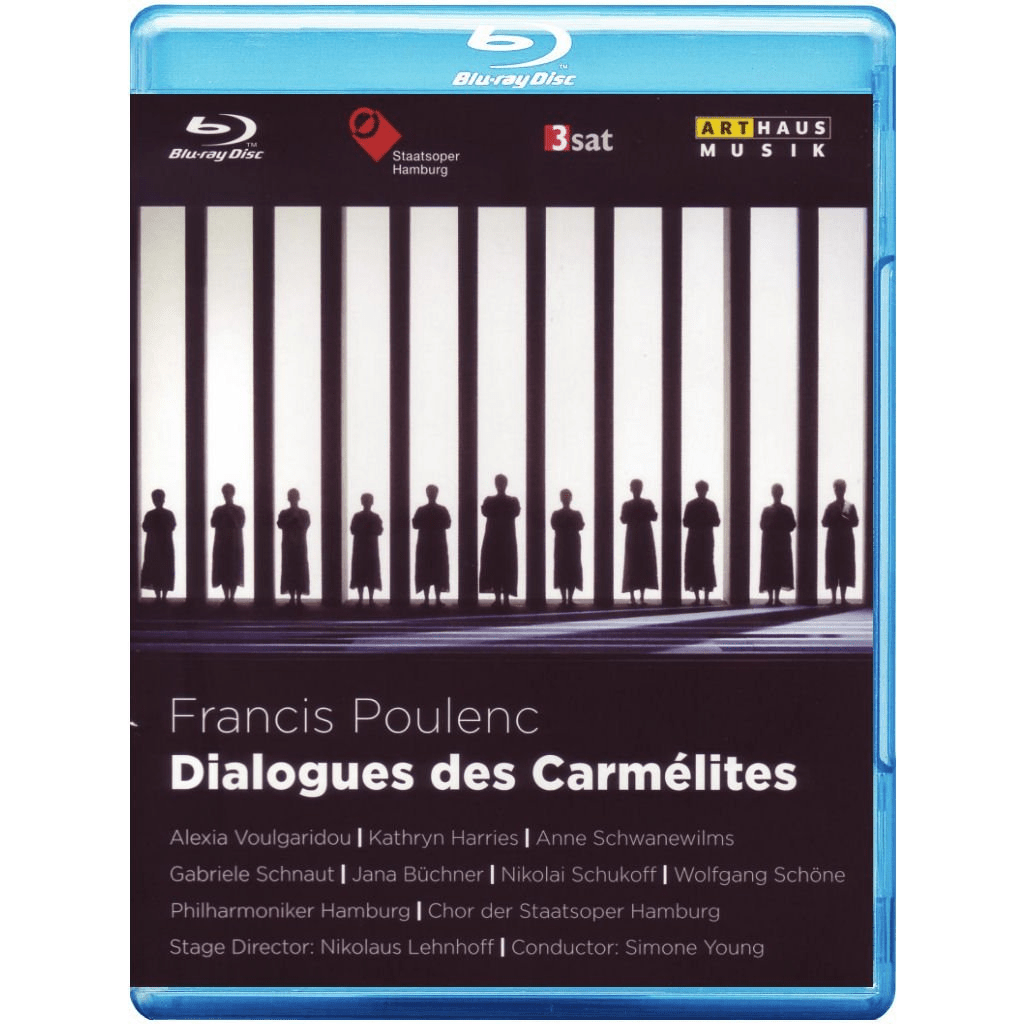

The opera came to Hamburg in 2008, it was directed by Nikolaus Lehnhoff.
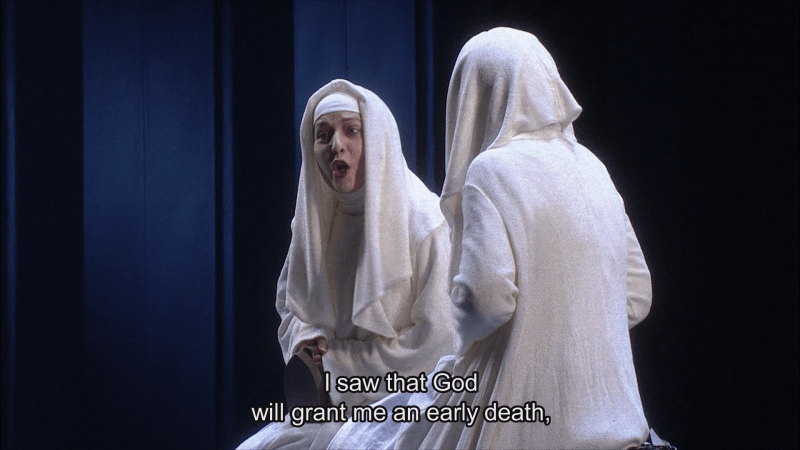
His Blanche, Alexia Voulgaridou, is very much like Liu: sweet, scared but steadfast and very impressive.
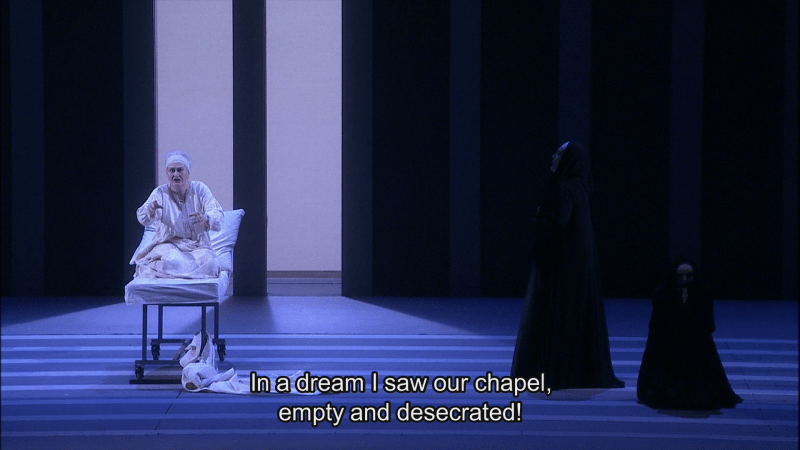


Kathryn Harries as Madame de Croissy is even more impressive than Anja Silja. She acts not only with her whole body but also with her perfectly used voice. Her fear is physically palpable and her death scene cannot leave anyone unmoved.

Unfortunately, Gabrielle Schnaut’s Mère Marie is not of the same calibre. With the remnants of the once so imposing voice, she only causes irritation: not one note is pure and her terrible wobble feels like torture to your ears. How different then is warm and sweet Madame Lidoine, here sung incredibly lovely by Anne Schwanewilms!

The staging is very simple and there are hardly any sets, which is not at all disturbing. And the final scene is almost better than Carsen. (Arthouse Musik 101494)

Trailer:

Paris, 2013
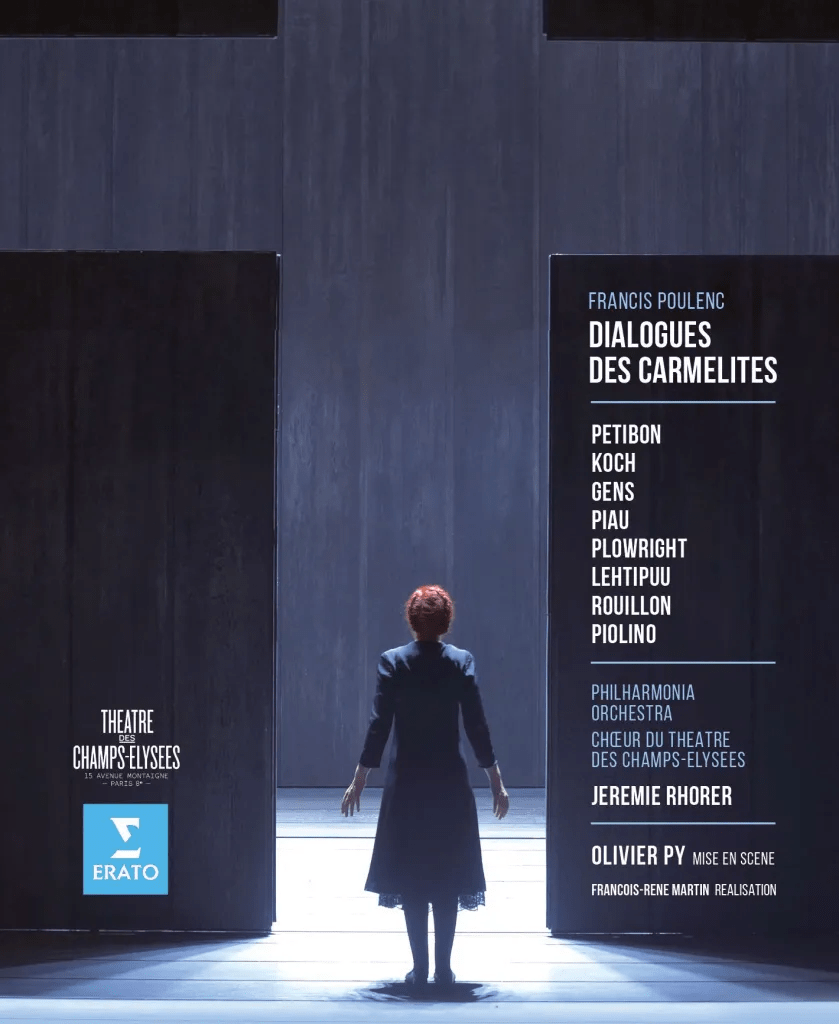
You just never know with Olivier Py, though I have to say that, apart from the awful Romeo et Juliette in Amsterdam, most of his productions are usually excellent. So too his Dialogues des Carmélites, recorded in Paris in 2013.

Patricia Petibon is a singer with a tendency to exaggerate, but here she is perfectly matched as Blanche. Watching her, I involuntarily get visions of Edith Piaf. Which of course suits the role very well: a small, skinny, frightened bird.


Her timbre is close to that of Denise Duval, but she lacks her carrying power and – mainly – her lyricism. Still, there is no denying that the role of Blanche is more or less tailor-made for her.

Sophie Koch is a strange choice for Marie. She looks far too young and lacks the confident superiority and power of persuasion so characteristic of the role. And the contrast with Lidoine (a wonderful Veronique Gens) is not great enough. Rosalind Plowright is an excellent Croissy and Sandrine Piau a delightful Constance.

Py uses the orchestral interludes to showcase religious scenes, including the evocation of the Last Supper and the Crucifixion. Sometimes a little “too much”, but the last scene, with the dark starry sky, brings a lump to my throat (Erato 0825646219537).

Here is the trailer:


Film adaptation:
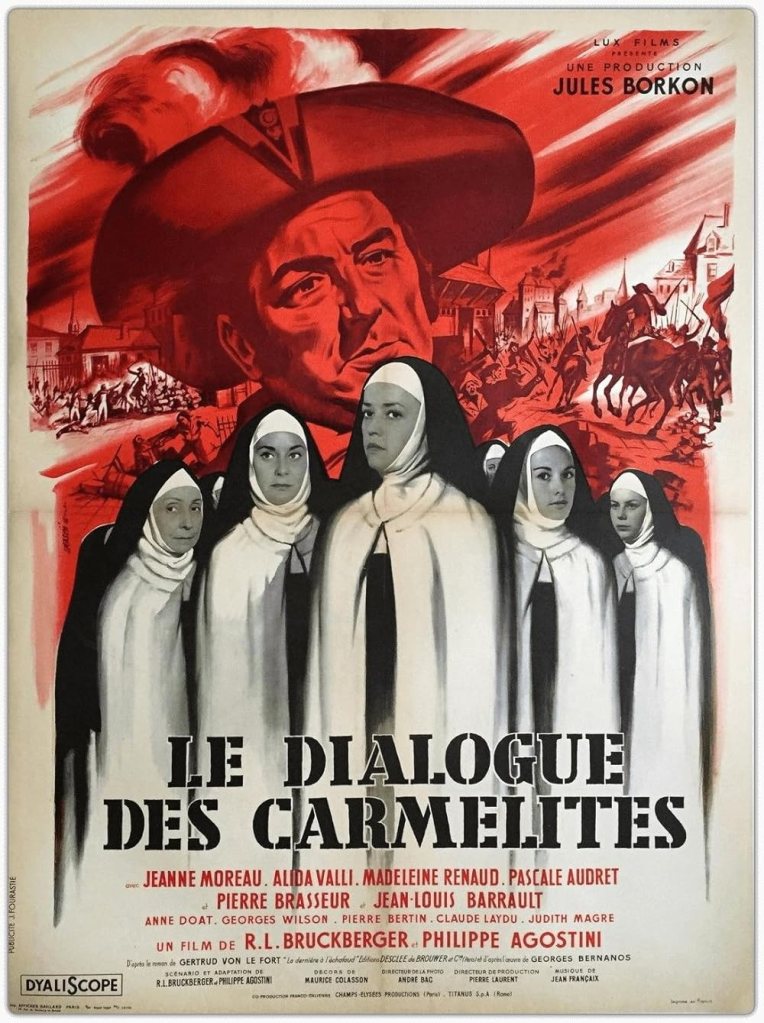

Did you know that the story of Dialogues des Carmélites was filmed in 1960? In the film you can see, among others, Jeanne Moreau as Mère Marie and Pascale Audret as Blanche.


Below is the last scene:


The whole film:


Spannende Andrea Chénier uit Bologna
DIALOGUES DES CARMÉLITES bij Deutsche Oper am Rhein in Düsseldorf, oktober 2010


For Massenet on his birthday: a small survey of some of his operas

Jules Massenet was the most prolific and, artistically as well as commercially, also the most successful French opera composer between 1870/71 and World War I, the belle Epoque of the Third French Republic. He is best known for his operas, of which he wrote more than thirty. The two most frequently staged are Manon and Werther


MANON


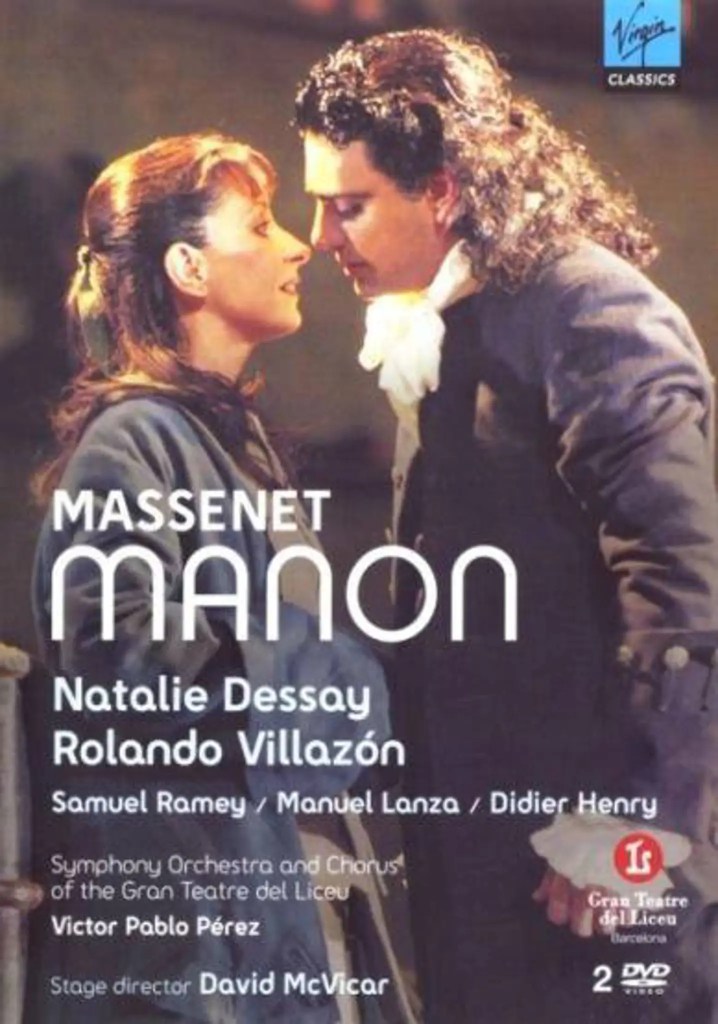
Jules Massenet’s Manon has, since its now legendary performance starring Anna Netrebko and Rolando Villazon (Berlin, April 2007), become a real hype. Anyone who had ever seen the performance could sincerely ask, like Verdi’s Ford (‘Falstaff’): ‘e sogno o realta’?


It was a reality that turned out to be a dream after all, as Netrebko found a new love, leaving Villazon with heart and voice problems. It was also not entirely clear until the last day of rehearsals whether he would sing the, scheduled for June 2007, performances of Manon in Barcelona.

He did come, and although he sang below his usual level, he managed to completely convince everyone with his acting and (sometimes a little too) intense commitment. His Manon is brilliantly portrayed by a spectacularly singing and acting, Lulu-like, Natalie Dessay.


Manuel Lanza is a fine Lescaut, but for Samuel Ramey, a singer I greatly admire, Comte des Grieux unfortunately comes too late in his career.

The mise-en-scène and character direction by David McVicar, for me still really one of the best contemporary directors, were more than excellent. The costumes were beautiful to behold and the (traditional) staging was often really surprising, all the more so as McVicar managed to give it a contemporary twist from time to time.

As a bonus, you do get a ‘peek inside’. Through a truly fascinating documentary, you can follow the stars during their rehearsals with McVicar.


WERTHER FOR BARITONE


In 1902, ten years after the premiere, Massenet produced a new version of his Werther, this at the request of Italian baritone Mattia Battistini, who was eager to sing the lead role. Massenet did not change the key, but rewrote the vocal lines of Werther’s music, making the arias, ‘Pourquoi me réveiller’ included, barely recognisable.


The “baritone version” of the opera was and remains an oddity; no original manuscript of the score even exists. In recent times, with its penchant for ever new challenges, there was also an increased interest in alternative versions of well-known operas. The baritones, tired of singing the villains, are rediscovering the repertoire, in which they can release all their lyrical melancholy.

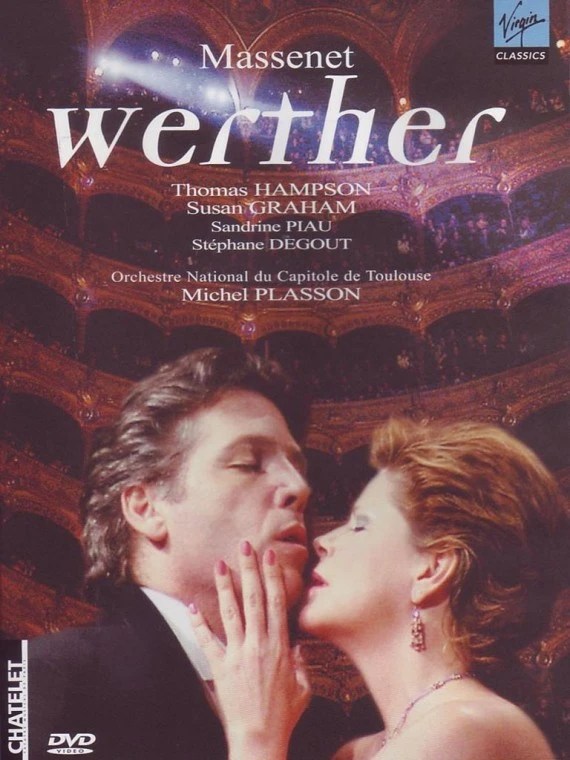
Thomas Hampson has always been an explorer of lesser-known paths and he first performed the role of Werther back in 1989. In 2004, he sang a concert performance of it at the Paris Chatelet, and that performance has been released by Virgin on two DVDs. He does an excellent job, but the manic-depressive is a bit off.

His Charlotte is sublimely sung by Susan Graham, who also performed the role in Amsterdam some years ago, where she moved the audience and press to tears. Michel Plasson has all the drama at his fingertips as you can hear.

“Pourquoi me réveiller” by three tenors

Alain Vanzo :

Sergei Lemeshev in Russian:

Jonas Kaufmann:


Piotr Beczala:

THAÏS


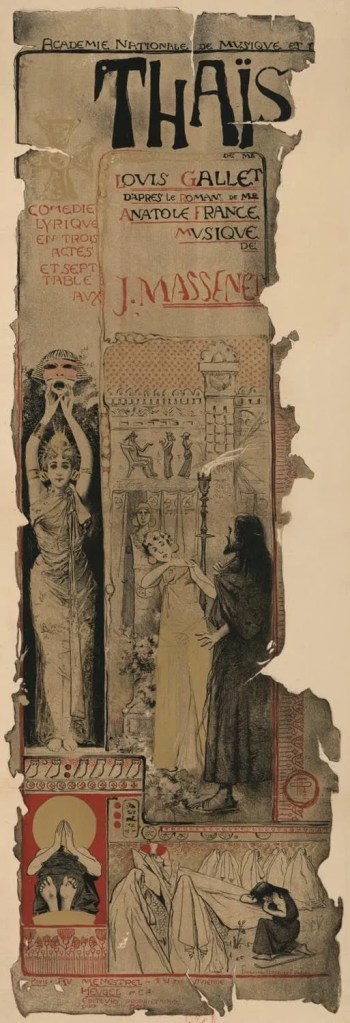
Who does not know ‘Méditation’, the sentimentally sweet but oh-so-beautiful piece of violin music? Most often it will make you cry.

Méditation in Josef Hassid’s performance:


However, not many people have ever heard, let alone seen, the opera in which this piece acts as a kind of interlude in the second act.

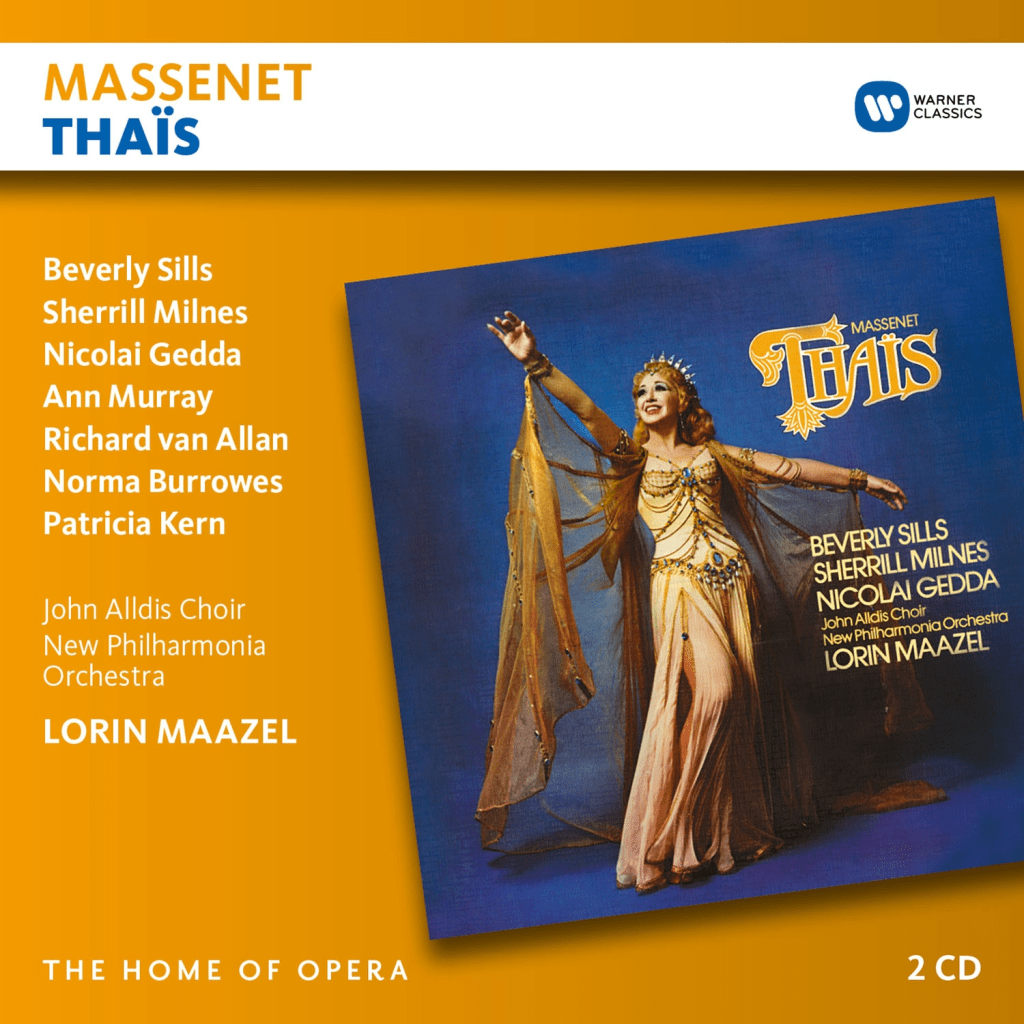
Recordings of the complete work are still scarce, I only know of three myself (with Anna Moffo, Beverly Sills and Renée Fleming), of which the one with Sills, Sherrill Milnes and Nicolai Gedda (Warner 0190295869069) is dearest to me.

Below Beverly Sills and Sherrill Milnes in the final scene of the opera:

DVD from La Fenice


Pier Luigi Pizzi’s production from La Fenice had previously been released on CD and I found it particularly strong musically and mainly vocally. I was therefore particularly curious as to whether the visuals added anything to it on Dynamic’s DVD. To which I can now say a resounding “yes”.


The sets are sparse, yet the stage seems to be completely full of them. Because of the colours (with very predominant red) perhaps, but also because of the dominant place they occupy on stage. For instance, Thaïs’ rose-covered bed, on which she – as if she were the Venus of Urbino or one of the versions of Danaë, also by Titian – lies very voluptuously. This bed is very prominently in the centre of the stage.

In the third act, when the fun life has ended and the penance begins, the roses are nowhere to be seen (a bed of thorns?) and her posture is as chaste as her white robe.


The costumes are a story apart: very opulent, oriental and barely concealing. Eva Mei doesn’t go as far as her colleague Carol Neblett, who went completely out of her clothes in New Orleans in 1973, but her see-through little nothing of a dress, from which her breasts keep escaping almost unnoticed, leaves nothing to the imagination.

Perhaps she was inspired by the very first Thaïs, Sybil Sanderson, whose breasts were also ‘accidentally’ visible during the premiere performance in 1894? Then again, it is all about the greatest (and most beautiful) courtesan in Alexandria!

Eva Mei is very virtuoso and very convincing as Thaïs . So is Michele Pertusi as Athanael. There is a lot of ballet, though. Also where it really shouldn’t be, which is very distracting at times.


Thaïs from Toronto: unearthly beautiful orchestral playing


Recordings of Thaïs are still scarce so any new releases are more than welcome. Especially if the performance is good, and this new recording on Chandos most certainly is. At least: to some extent.

The Toronto orchestra sounds so incredibly beautiful that you cannot help falling in love with it. Sir Andrew Davis truly extracts the impossible from his musicians: I have not heard the score performed so beautifully before. The pianissimi, the way they manage the quiet passages to perfection, the subcutaneous tension. Hats off! Hats off also to the violinist who manages to add new layers to the ‘Meditation’. So beautiful!

Unfortunately, the singers lag a bit behind. Erin Wall is a beautiful soprano with a crystal-clear voice, but a ‘Whore of Babylon’? More like a rather childishly naive girl.

Joshua Hopkins has the right voice for Athanael but he goes the wrong way when it comes to ‘earthly desires’. Andrew Staples is a good Nicias but he too fails to fully convince me.

CENDRILLON

A fairy tale has its own rules. Much is interchangeable, but what must never be compromised is the “happy ending”. So: the ugly duckling becomes a beautiful swan and Cinderella becomes a princess. All evil spirits are punished and we can sleep peacefully.

Sometimes I pray to those I don’t really believe in: give us back our fairy tales, because these days everything has to be totally true to nature and as realistic as possible. Fortunately, my prayers are sometimes heard and so it came to pass that I was able to enjoy an old-fashioned evening; with my cat on my lap and Cinderella on my screen.

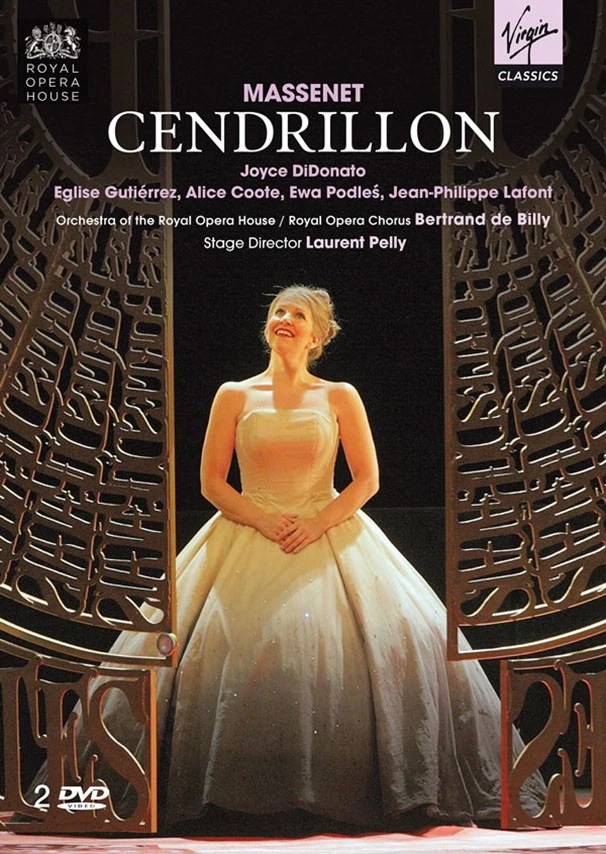
Laurent Pelly is undoubtedly one of the best contemporary directors: he puts a modern spin on everything he does, but he stays true to the libretto and the music. In the process, his staging is extraordinarily witty. As is the delightful Cendrillon, recorded at London’s Royal Opera House in 2011.


I no longer need to recommend Joyce DiDonato (Cendrillon) to anyone – she is easily the greatest ‘zwischenfach singer’ of our time. Ewa Podleś is a more than delightful stepmother and Alice Coote the most charming ‘Prince Charmant’. And to this you may add the truly idiomatic conductor (Bertrand de Billy)….
Life really can be beautiful sometimes


Trailer of the productie


HERODIADE


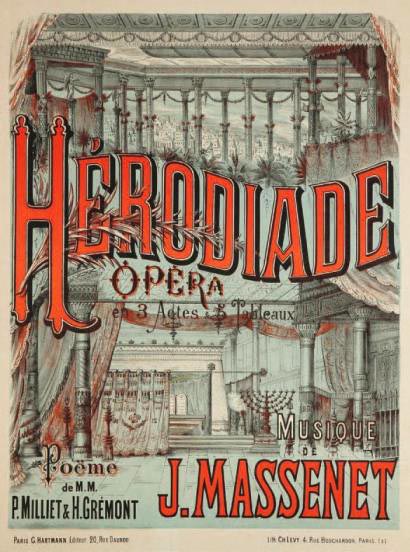
Richard Strauss composed his world hit Salome to a play by Oscar Wilde; and the latter drew his inspiration from a short story by Flaubert, ‘Herodias’. Paul Milliet and Henri Grémont also based their libretto for Massenet’s opera Herodiade on this story. Neither Wilde nor Milliet and Grémont were very faithful to Flaubert. Whereas the French novelist more or less limited himself to the biblical narrative, enriched with his poetic language and descriptions, the playwright and librettists added entirely new aspects and twists to the story.


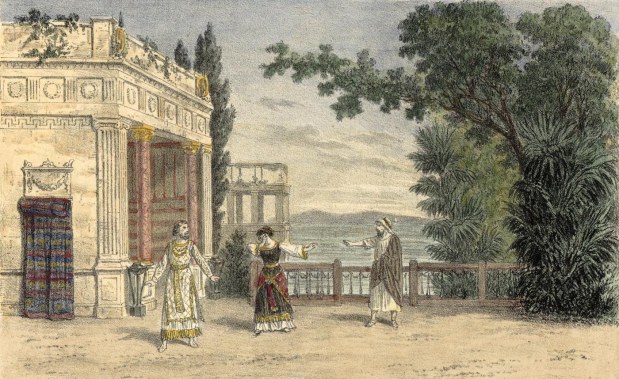
Hérodiade was first performed in the Royal Theatre of Brussels on 19 December 1881. Anyone expecting animal eroticism, blood and sweat, as with Richard Strauss, will be disappointed. Massenet’s Salome is a truly innocent and devout girl. When her mother left her to marry Hérode, she was given shelter by Jean (John the Baptist), with whom she fell in love. A love that proved to be mutual.


No opera is complete without complications: Hérode has a crush on Salome, Hérodiade becomes jealous of her and Jean is beheaded. Salome sees Hérodiade as the instigator of all evil and wants to kill her. Hérodiade whispers “I am your mother” and Salome commits suicide.

The music already exudes a hint of the perfume of Massenet’s later works, but with all those choruses, exotic Oriental scenes and elaborate ballet scenes, it is nothing less than a real Grand Opera in the best Meyerbeer tradition.

One of the earliest recorded fragments of the opera is, I think, the famous aria of Hérode ‘Vision Fusitive’ by the French baritone Maurice Renaud, made in 1908:


And from the recording Georges Thill made in 1927, we know what an ideal Jean should sound like:


Regine Crespin 1963


If you are in possession of this performance, you need look no further. It doesn’t get any better than this. There is only one problem: this recording does not exist. At least not of the complete opera.

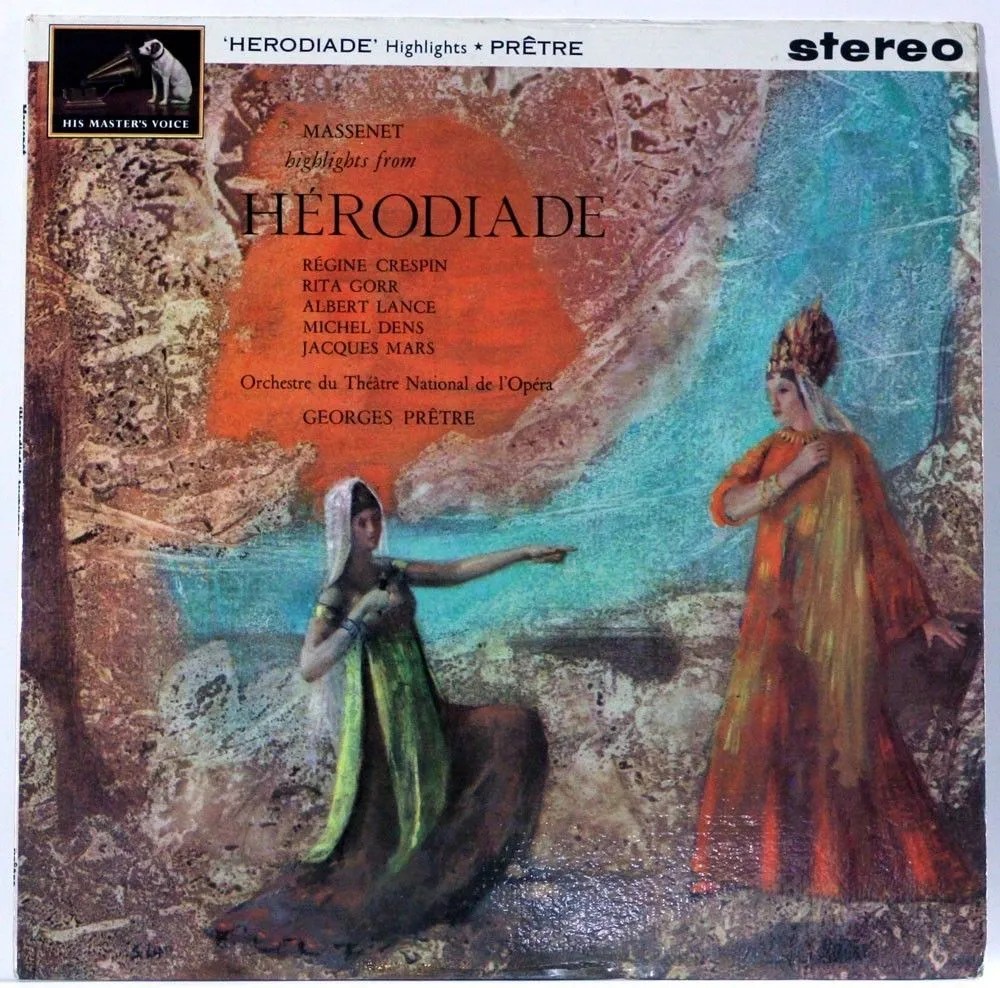
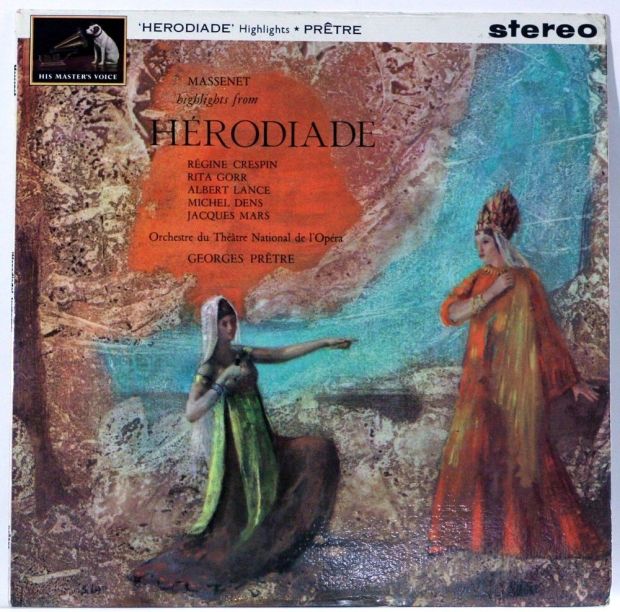
In 1963, EMI recorded the highlights of Hérodiade with the best French singers of the time (and of today, for that matter) and the answer to the “why not complete ????” will probably never be given.

Georges Prêtre conducts the orchestra of the Theater National de Paris as if his life depends upon it and every role is more than excellently cast.

Regine Crespin sings ‘Il est doux, il est bon’:


Regine Crespin’s Salomé is unequalled and so is Rita Gorr’s Hérodiade. Albert Lance (Jean) shows how that role should really be sung in the tradition of Georges Thill, and for Michel Dens as Hérode we really cannot find the right words. Such singers no longer exist.


Hopefully, Warner will one day release the recording on CD.


Montserrat Caballé (Barcelona 1984)


 This recording also may only be obtained via a pirate (or You Tube), but then it is complete and moreover with (admittedly bad) images!


Dunja Vejzovic portrays a deliciously mean Hérodiade and Juan Pons is a somewhat youthful but otherwise fine Hérode. A few years later, he will become one of the best “Hérodes” and you can already hear and see that in this recording.

Montserrat Caballé is a fantastic Salomé, the voice alone makes you believe you are in heaven and José Carreras is very moving as a charismatic Jean.


Below, Carreras sings ‘Ne pouvant réprimer les élans’:


None of the protagonists is really idiomatic, but what a pleasure it is to watch a real Diva (and Divo)! They really don’t make them like that any more

The whole opera on you tube:


Reneée Fleming 1994


In the mid-1990s, Herodiade enjoyed a short-lived revival. The opera was then performed in several opera houses and it was even recorded – officially – three times: once in the studio and twice live.

I must admit that I was a bit concerned about Gergiev as the director, but he really did an excellent job. Under his baton the opera sounds like a real Grand Opéra, grand, fiery and compelling.

Plácido Domingo (Jean) is perhaps a touch too heroic, but his voice sounds youthful and contageous, worthy of a true prophet.

Personally, I find Dolora Zajick (Hérodiade) a bit on the (too) heavy side, but her singing is undeniably excellent and there is nothing wrong with her interpretation.

Juan Pons is an excellent Hérode, but I would have liked Phanuel (Kenneth Cox) to be a bit more idiomatic. Something that also applies to the Salomé of Renée Fleming: she sings beautifully but in this role she can not totally convince me.


Nancy Gustafson 1995


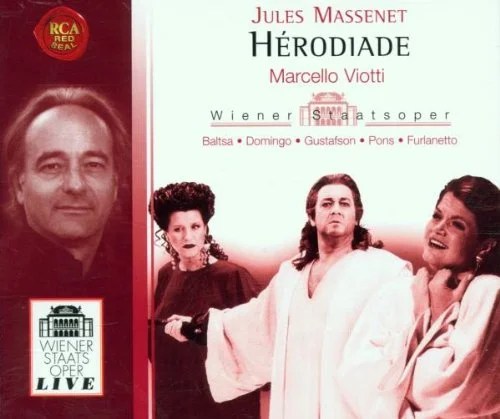
The performance in Vienna was highly praised, and that this praise was justified is proved by the recording made live in the house by ORF.

First of all, there is Agnes Baltsa’s brilliant title role: fierce and dramatic. If you ask me: apart from Rita Gorr probably the best Hérodiade ever.


Placido Domingo sings ‘Ne pouvant réprimer les élans’:


Domingo, in the role of Jean, is even more impressive here than on Sony and also Juan Pons (Hérode) actually convinces me yet more on this recording. His rendition of ‘Vision Fugitive’ is very, very moving. Unfortunately, Nancy Gustafson (Salomé) must acknowledge the superiority of Fleming (Sony), but both pale in comparison to Cheryl Studer (Warner). Not to mention Regine Crespin!

Judging by the photos in the text booklet and the sparse clips on YouTube, we should be glad that the recording appeared on CD and not on DVD.


Finale of the opera:


In any case, the sound is excellent and the Vienna Opera orchestra under the direction of Marcello Viotti plays with great passion.


Cheryl Studer 1995


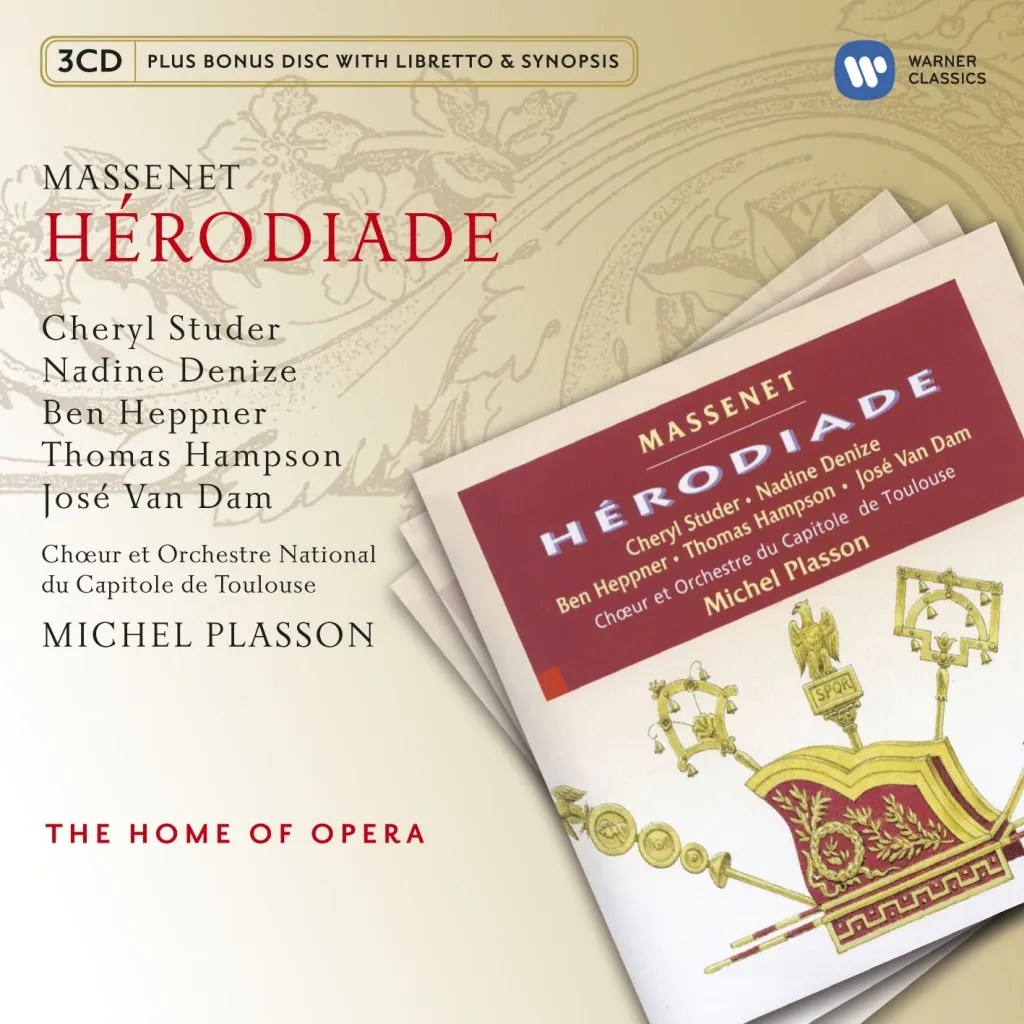
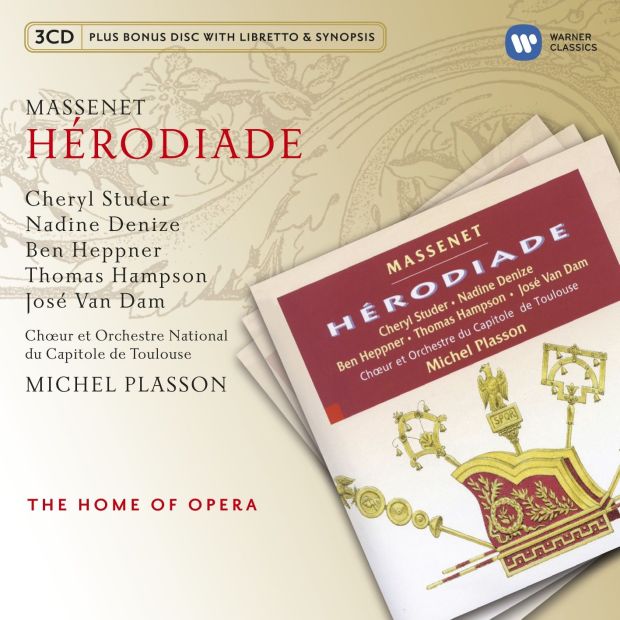
Orchestrally, this recording is really top-notch. Michel Plasson conducts the orchestra from Toulouse very energetically, with a lot of verve and drive, and he also knows how to allow space for all the subtleties. Exciting and beautiful. That is how I like to hear opera.

José van Dam is an impressive Phanuel and Nadine Denize an excellent Hérodiade., although her intonation is not always pure.

Hérode is not really a role for Thomas Hampson, but he sings it very beautifully. Something that unfortunately cannot be said of Ben Heppner’s Jean. A heroic tenor in that role is nothing but a terrible mistake.

Cheryl Studer, on the other hand, is a Salomé of everyone’s dreams: girlish, innocent and naive. Her voice shines and sways and her final words “Ah! Darned Queen, if it is true that your cursed loins have given birth to me, look! Take back your blood and my life!” leave you shuddering and desperately weeping. Brava.

Almost all about Les Dialogues des Carmélites. Part one

There are those operas that you just can’t spoil and Les Dialogues des Carmélites is one of them. For Poulenc, melody is the centre of the universe. His music is so poignantly beautiful and his composition so expressive that you don’t really need a director.

The opera’s themes are sacrifice, martyrdom, revolutions and ideologies, but those are just the side lines, because the main theme is an all-devouring fear that makes it impossible to live or die: “Fear is a terrible disease. I was born of fear, in fear I live and in fear I shall die. Everyone despises fear, so I am condemned to be despised.


Milan, 1957


The world premiere of Dialogues des Carmélites took place on 26 January 1957 at La Scala in Milan, in an Italian translation. The cast reads like a ‘who’s who’ in the opera world, because, ask yourself: were there any bigger names in those days?

Blanche was sung by Virginia Zeani, a singer with a full, large and dramatic voice, that was suitable for both Violetta and Tosca. Marie was played by Gigliola Frazzoni, one of the best Minnies (La fanciulla del West) in history. And Madame Lidoine was given to Leyla Gencer.

With Fiorenza Cossotto, Gianna Pederzini, Eugenia Ratti and Scipio Colombo in the smaller roles, the opera sounded less lyrical than we are used to nowadays, almost veristic even. But that made the dramatic effect even more poignant.

Virginia Zeani and Francis Poulenc, Milano 1957


In The Operatic PastCast, Virginia Zeani talks about Poulenc, the influence the opera has had on her life, her colleagues and the production in Milan.
The entire performance from Milan, fantastically conducted by Nino Sanzogno, is on YouTube. Do not miss it!


Paris, 1957


The Paris premiere of Dialogues des Carmélites followed six months later. On 21 June 1957, the opera, now in French, was presented at the Théâtre National de l’Opéra.
Blanche was sung by Poulenc’s beloved soprano Denise Duval. Duval’s voice (girlishly naive, light, almost ethereal) fitted Blanche like a glove.
The rest of the cast, including Régine Crespin as Madame Lidoine and Rita Gorr as probably the best Mère Marie ever, was also chosen by Poulenc himself


Régine Crespin (Madame Lidoine) in “Mes chères filles”:


The orchestra was conducted by Pierre Dervaux and I can be very brief about him: there is no better. Full stop. (Warner 08256483211)


Almost all about Les Dialogues des Carmélites: part 2

Almost all about Les Dialogues des Carmélites: part 3

Almost all about Les Dialogues des Carmélites: part 4


Hérodiade or Salome by Massenet

Herodiade Flaubert
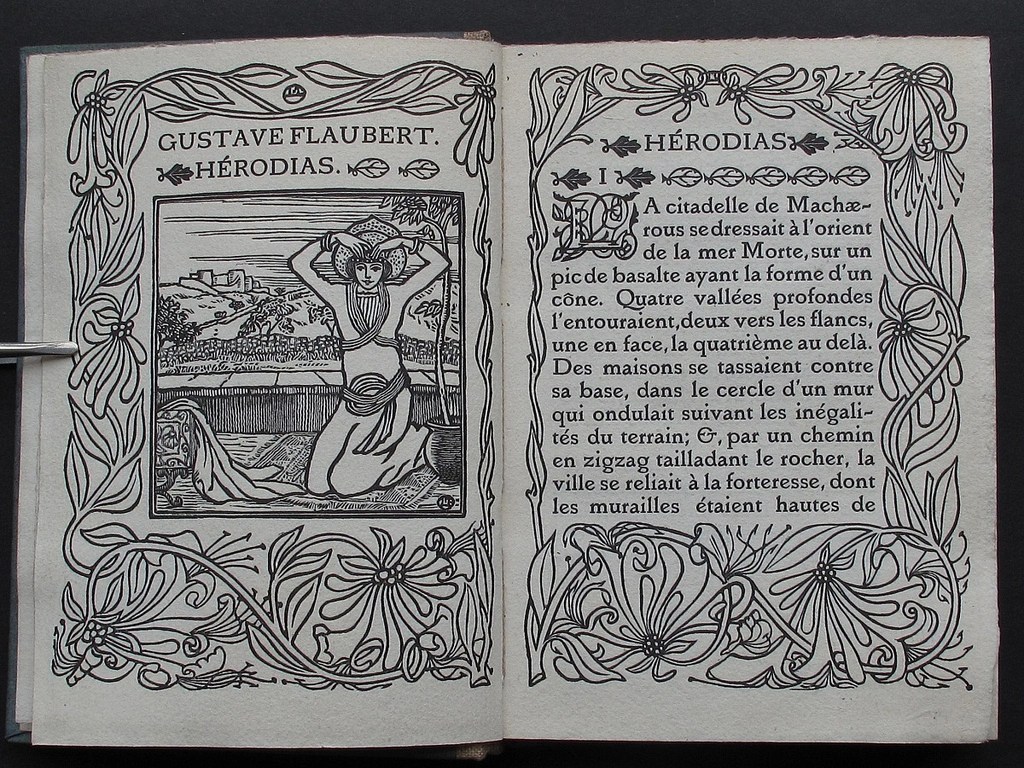
Gustave Flaubert: Herodias. Illustratie Lucien Pissarro

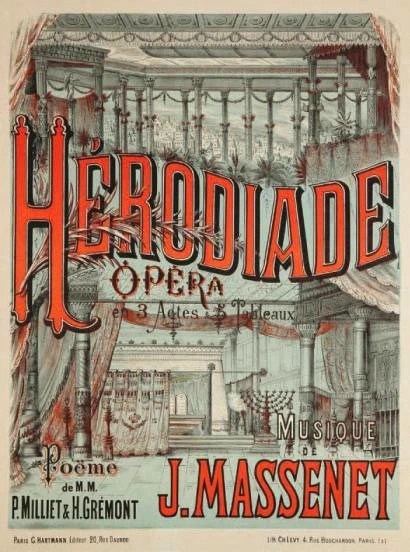
Richard Strauss composed his world hit Salome to a play by Oscar Wilde; and the latter drew his inspiration from a short story by Flaubert, ‘Herodias’. Paul Milliet and Henri Grémont also based their libretto for Massenet’s opera Herodiade on this story. Neither Wilde nor Milliet and Grémont were very faithful to Flaubert. Whereas the French novelist more or less limited himself to the biblical narrative, enriched with his poetic language and descriptions, the playwright and librettists added entirely new aspects and twists to the story.

Hérodiade was first performed in the Royal Theatre of Brussels on 19 December 1881. Anyone expecting animal eroticism, blood and sweat, as with Richard Strauss, will be disappointed. Massenet’s Salome is a truly innocent and devout girl. When her mother left her to marry Hérode, she was given shelter by Jean (John the Baptist), with whom she fell in love. A love that proved to be mutual.

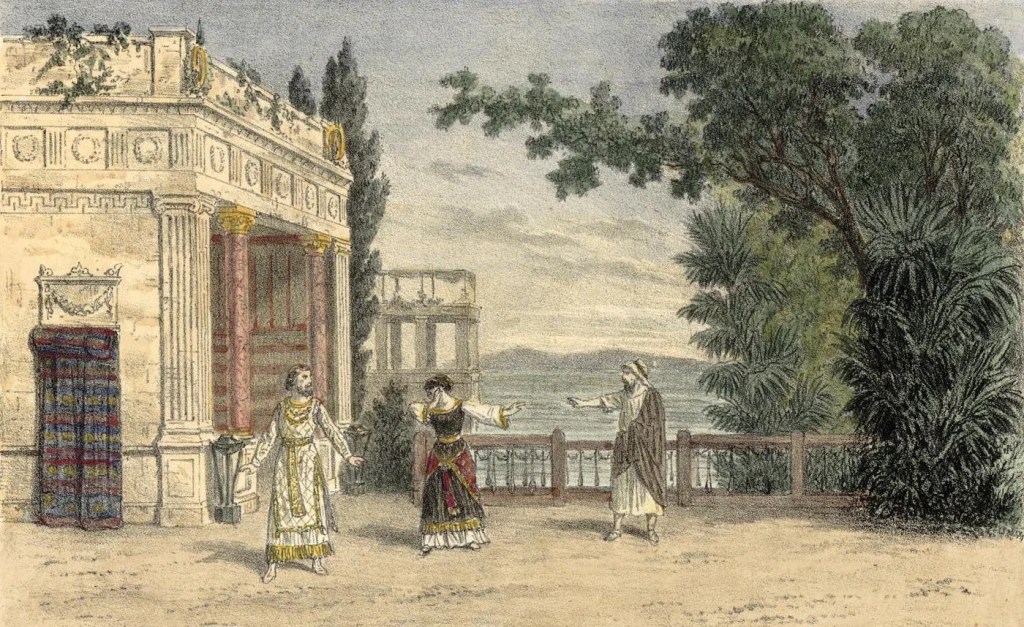
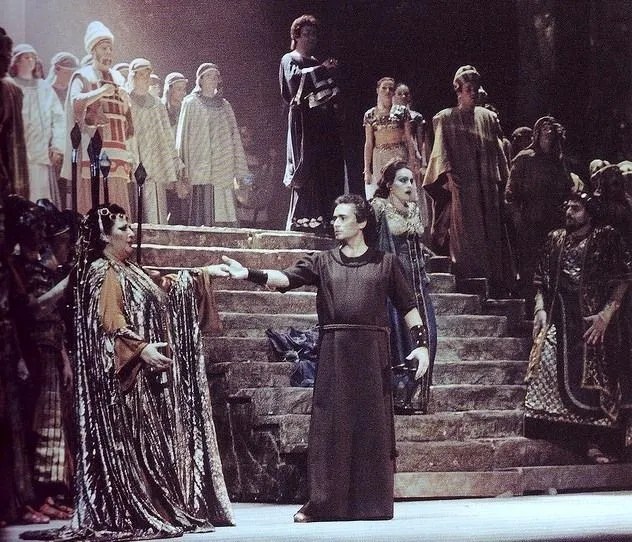
Herodiade - acte I Brussel

No opera is complete without complications: Hérode has a crush on Salome, Hérodiade becomes jealous of her and Jean is beheaded. Salome sees Hérodiade as the instigator of all evil and wants to kill her. Hérodiade whispers “I am your mother” and Salome commits suicide.

The music already exudes a hint of the perfume of Massenet’s later works, but with all those choruses, exotic Oriental scenes and elaborate ballet scenes, it is nothing less than a real Grand Opera in the best Meyerbeer tradition.

One of the earliest recorded fragments of the opera is, I think, the famous aria of Hérode ‘Vision Fusitive’ by the French baritone Maurice Renaud, made in 1908:


And from the recording Georges Thill made in 1927, we know what an ideal Jean should sound like:


REGINE CRESPIN 1963

Herodiade crespin

If you are in possession of this performance, you need look no further. It doesn’t get any better than this. There is only one problem: this recording does not exist. At least not of the complete opera.

In 1963, EMI recorded the highlights of Hérodiade with the best French singers of the time (and of today, for that matter) and the answer to the “why not complete ????” will probably never be given.

Georges Prêtre conducts the orchestra of the Theater National de Paris as if his life depends upon it and every role is more than excellently cast.

Regine Crespin sings ‘Il est doux, il est bon’:


Regine Crespin’s Salomé is unequalled and so is Rita Gorr’s Hérodiade. Albert Lance (Jean) shows how that role should really be sung in the tradition of Georges Thill, and for Michel Dens as Hérode we really cannot find the right words. Such singers no longer exist.


Hopefully, Warner will one day release the recording on CD.


MONTSERRAT CABALLÉ (Barcelona 1984)

Herodiade caballe

This recording also may only be obtained via a pirate (or You Tube), but then it is complete and moreover with (admittedly bad) images!

Dunja Vejzovic portrays a deliciously mean Hérodiade and Juan Pons is a somewhat youthful but otherwise fine Hérode. A few years later, he will become one of the best “Hérodes” and you can already hear and see that in this recording.

Montserrat Caballé is a fantastic Salomé, the voice alone makes you believe you are in heaven and José Carreras is very moving as a charismatic Jean.

Below, Carreras sings ‘Ne pouvant réprimer les élans’:


None of the protagonists is really idiomatic, but what a pleasure it is to watch a real Diva (and Divo)! They really don’t make them like that any more

The whole opera on you tube:


RENÉE FLEMING 1994 (Sony 66847)

Herodiade Domingo fleming


In the mid-1990s, Herodiade enjoyed a short-lived revival. The opera was then performed in several opera houses and it was even recorded – officially – three times: once in the studio and twice live.

I must admit that I was a bit concerned about Gergiev as the director, but he really did an excellent job. Under his baton the opera sounds like a real Grand Opéra, grand, fiery and compelling.

Plácido Domingo (Jean) is perhaps a touch too heroic, but his voice sounds youthful and contageous, worthy of a true prophet.

Personally, I find Dolora Zajick (Hérodiade) a bit on the (too) heavy side, but her singing is undeniably excellent and there is nothing wrong with her interpretation.

Juan Pons is an excellent Hérode, but I would have liked Phanuel (Kenneth Cox) to be a bit more idiomatic. Something that also applies to the Salomé of Renée Fleming: she sings beautifully but in this role she can not totally convince me.


NANCY GUSTAFSON 1995 (RCA 74321 79597 2)

Herodiada wenen


The performance in Vienna was highly praised, and that this praise was justified is proved by the recording made live in the house by ORF.

First of all, there is Agnes Baltsa’s brilliant title role: fierce and dramatic. If you ask me: apart from Rita Gorr probably the best Hérodiade ever.

Placido Domingo sings ‘Ne pouvant réprimer les élans’:


Domingo, in the role of Jean, is even more impressive here than on Sony and also Juan Pons (Hérode) actually convinces me yet more on this recording. His rendition of ‘Vision Fugitive’ is very, very moving. Unfortunately, Nancy Gustafson (Salomé) must acknowledge the superiority of Fleming (Sony), but both pale in comparison to Cheryl Studer (Warner). Not to mention Regine Crespin!

Judging by the photos in the text booklet and the sparse clips on YouTube, we should be glad that the recording appeared on CD and not on DVD.

Finale of the opera:


In any case, the sound is excellent and the Vienna Opera orchestra under the direction of Marcello Viotti plays with great passion.


CHERYL STUDER 1995 (Warner 55983525)

untitled

Orchestrally, this recording is really top-notch. Michel Plasson conducts the orchestra from Toulouse very energetically, with a lot of verve and drive, and he also knows how to allow space for all the subtleties. Exciting and beautiful. That is how I like to hear opera.

José van Dam is an impressive Phanuel and Nadine Denize an excellent Hérodiade., although her intonation is not always pure.

Hérode is not really a role for Thomas Hampson, but he sings it very beautifully. Something that unfortunately cannot be said of Ben Heppner’s Jean. A heroic tenor in that role is nothing but a terrible mistake.

Cheryl Studer, on the other hand, is a Salomé of everyone’s dreams: girlish, innocent and naive. Her voice shines and sways and her final words “Ah! Darned Queen, if it is true that your cursed loins have given birth to me, look! Take back your blood and my life!” leave you shuddering and desperately weeping. Brava.