Raphael_Wallfisch

De duivel in de nacht

Tekst: Neil van der Linden
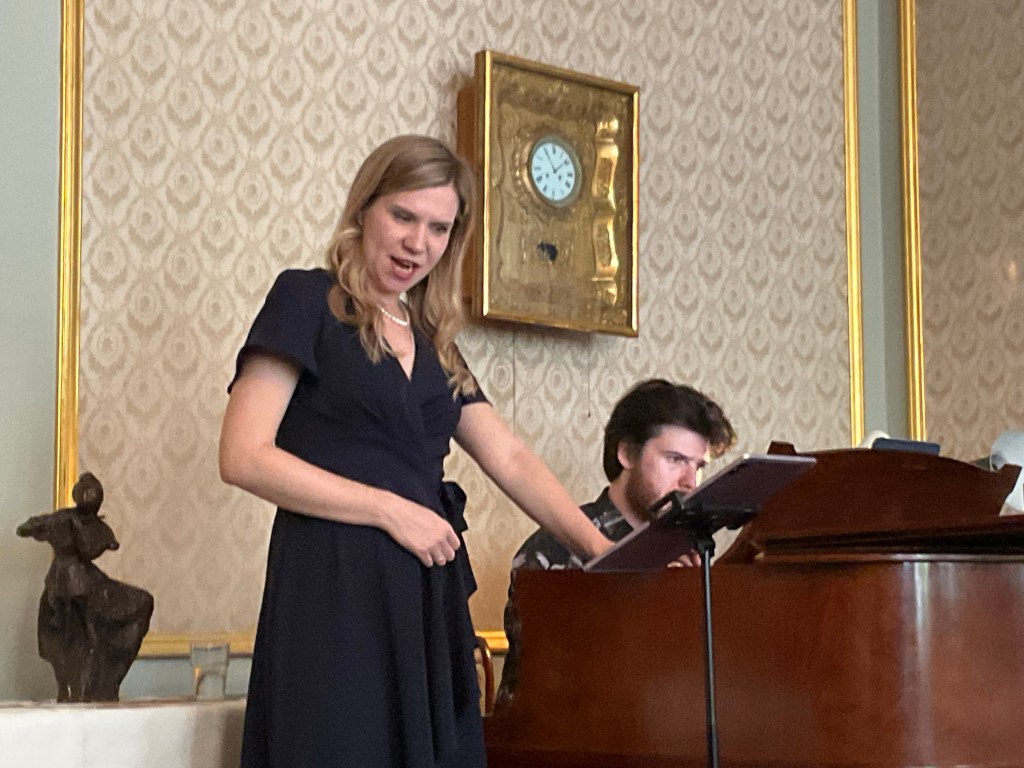
In de serie Voix Étouffées, Missing Voices presenteerde de Leo Smit Stichting een CD met werken van Henriëtte Bosmans (1895-1952). De serie heet zo omdat, net zoals zoveel componisten waaraan de Leo Smit Stichting aandacht besteed, en zoveel anderen, Henriëtte Bosmans, met een Joodse moeder, slachtoffer werd van de Nazipraktijken. In 1941 werd haar (volgens de Joodse leer dus Joods, maar volgens de Nazis ‘maar’ half-Joods) optreden als pianist verboden, ook omdat ze weigerde lid te worden van de Nederlandsche Kultuurkamer.
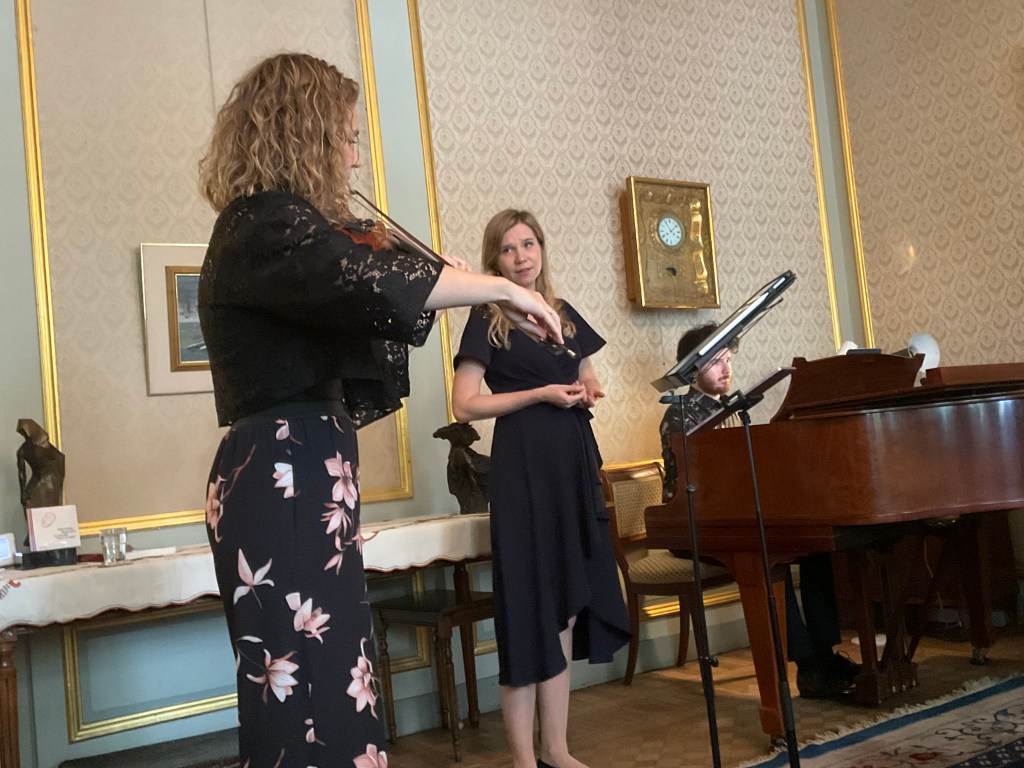
Maar ze heeft de oorlog overleefd. Anders dan de andere componist die deze middag op het programma stond, Daniel Belinfante (1893-1945) die naar een werkkamp bij Auschwitz was gedeporteerd en daar de dag voordat het kamp werd bevrijd stierf (toen de Duitsers terwijl Russische troepen naderden) de barak waar hij doodziek was ondergebracht in brand hadden gestoken. Van hem klonk zijn prachtig grimmige, maar deels ook lyrische Sonatine uit 1939.
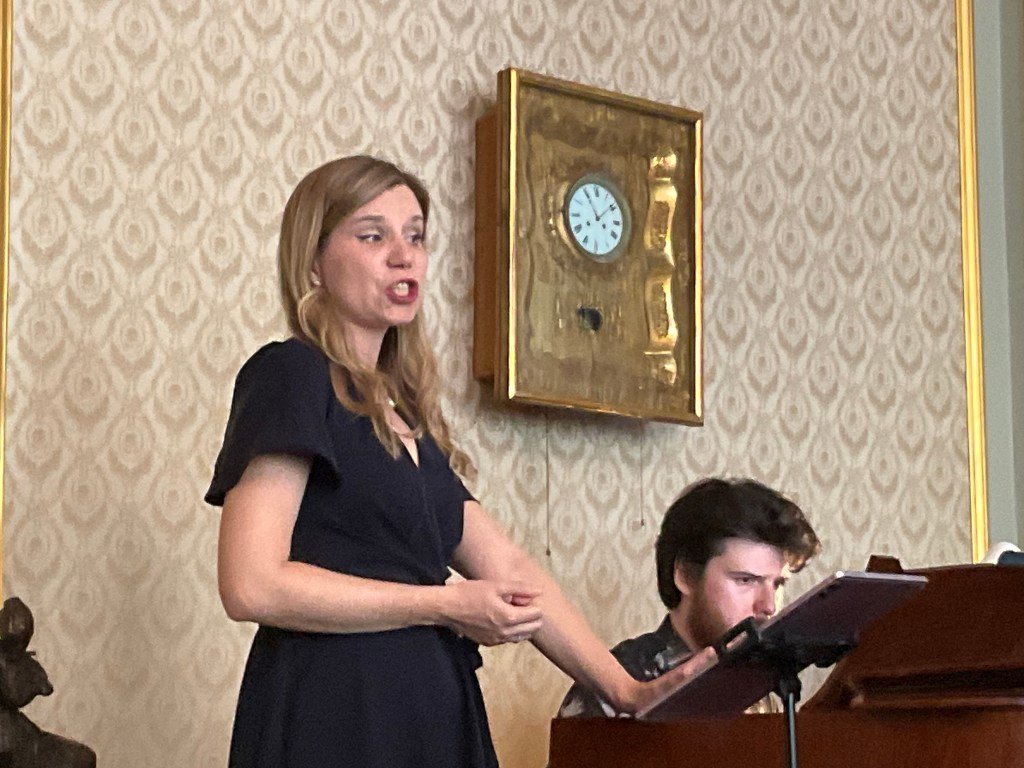
In een vergelijkbaar concert vorig jaar november van sopraan Elizaveta Agrafenina en pianist Dimitri Malignan stond naast Bosmans ook werk van Daniel Belinfante op het programma. Malignan bereid inmiddels een CD helemaal gewijd aan werk van Belinfante voor. Daniel Belinfante was trouwens een neef van celliste Frieda Belinfante, Bosmans’ levensgezellin gedurende de jaren twintig.
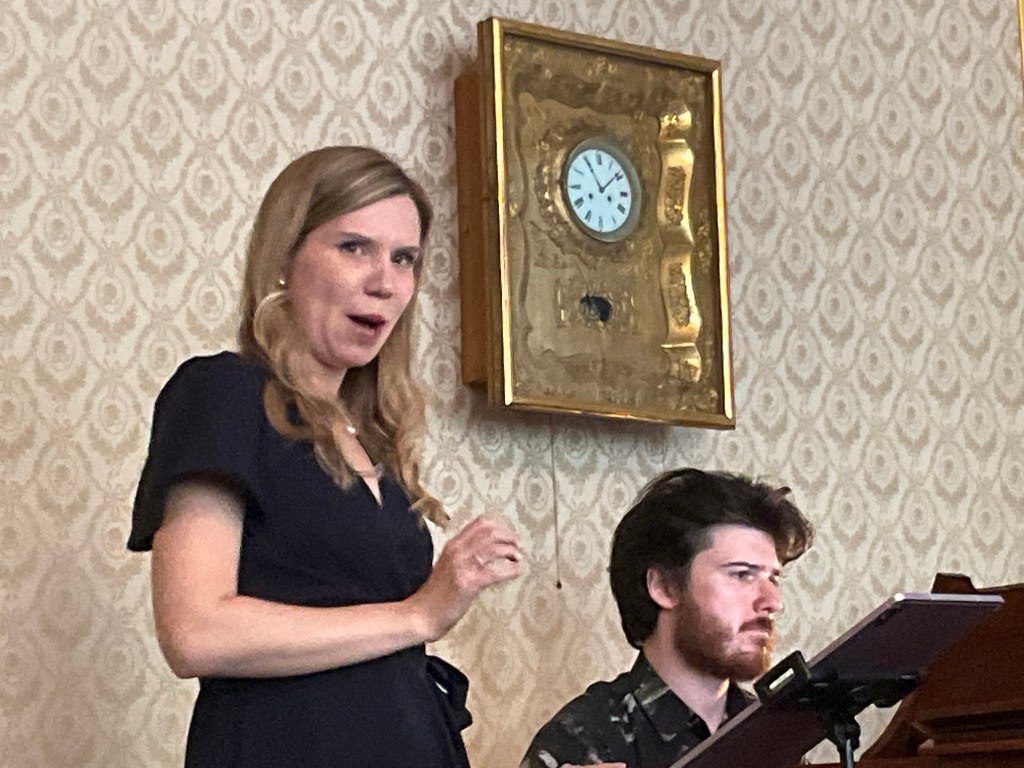
De eerste drie liederen van deze middag klonken de vorige keer ook. “Lead, kindly light” uit 1945 op tekst van de Engelse kardinaal Newman is geschreven voor Jo Vincent, die het in de orkestversie zong met het Concertgebouworkest onder Adrian Boult. Newman had ook de tekst voor Elgar’s The Dream of Gerontius geschreven. Bosmans was in die jaren bevriend met Britten. Het lied werd nu uitgevoerd in de versie voor piano, maar met een fraaie extra toegevoegde vioolpartij (bewerking Elizaveta Agrafenina), gespeeld door Sarah Bayens.
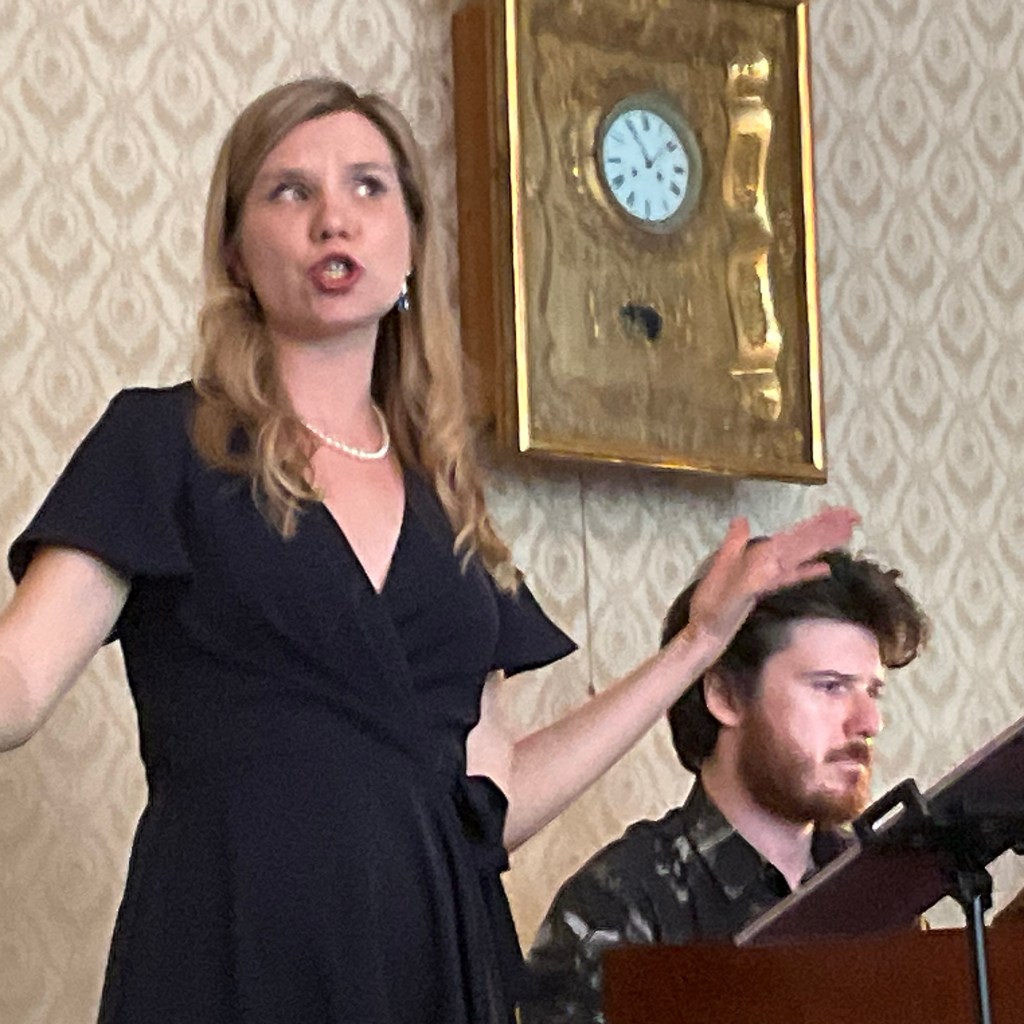
“La chanson des marins hâlés” (Het lied van de gebruinde zeelieden) uit 1949 was wat zonniger, burlesker. Maar het gaat ook over de rusteloosheid van het leven, van mensen als zeelieden die overal en nergens thuis zijn.

Het derde lied, “Le diable dans la nuit” uit 1935, waarnaar de middag vernoemd was, onderstreept de lugubere sfeer van die tijd. Het lied zit vol extreme kleuringen, in de zang en de pianopartij, fraai naar boven gehaald door Agrafenina en Malignan.

De eerste regel uit het gedicht van Paul Fort uit 1895 luidt “Le diable court dans la nuit”, “De duivel rent de nacht in”, maar in 1935 moest er eerst nóg weer een Satan komen.
Bosmans’ vier liederen die na Belinfantes Sonatine werden uitgevoerd stonden de vorige keer niet op het programma. “Complainte du petit cheval blanc” uit 1949, heeft door de combinatie van de speelse pianopartij en de tekst van Paul Fort, over een levenslustig ronddravend wit paard dat bliksem en donder tart, maar uiteindelijk door de bliksem wordt getroffen, wel iets Mahler-Wunderhorn-achtigs, ook in de Mahleriaanse harmonieën en ritmen die het beeld van het ronddravende paard oproepen.

“Pieusement” is een relatief vroeg werk, uit 1921, fraai devoot. Ik meen er ook kerkklokken ergens in een landschap in te horen, op zijn impressionistisch, zoals in werken met kerklokken als thema van Debussy en Ravel.

Het contrast met “Chanson” kon bijna niet groter zijn. In dit lied uit 1952, Bosmans’ laatste levensjaar, is ze mondain, een echt-Franse chanson, die misschien Piaff niet zou hebben misstaan, aldus Agrafenina.

Nog een contrast is er met “Daar komen de Canadezen” uit 1945 behoort tot haar Nederlandstalige liederen. Het is ook geschreven voor Jo Vincent. Ondanks dat er een satire op marsmuziek in doorklinkt, is het een ode aan het geallieerde bevrijdingsleger (en misschien is gekozen voor de Canada als bevrijdingsmacht met de minst imperialistische aspiraties).

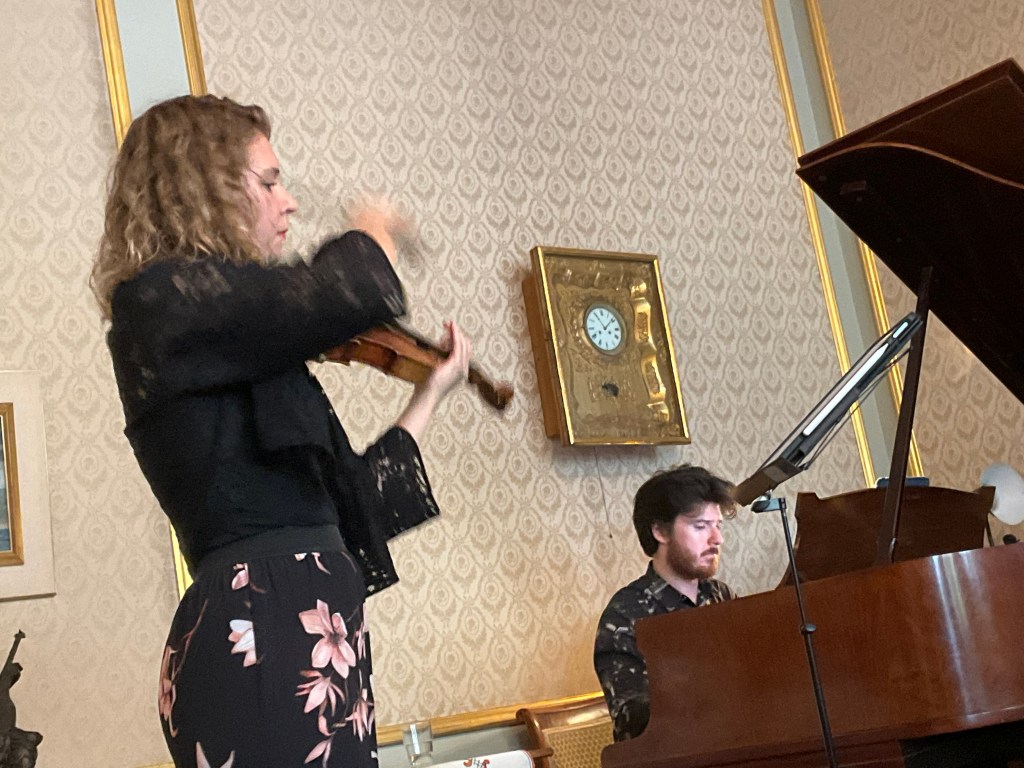
Na een fraaie uitvoering door Sarah Bayens en Dimitri Malignan van Bosmans’ vioolsonate voegde Elizeveta Agrafenina zich voor de laatste keer bij hen voor “Gebed” uit 1945, van dezelfde tekstdichter als van “Daar komen de Canadezen”, Fedde Schurer, en een meditatiever oorlogslied: ‘Heer, zegen Gij ons dierbaar vaderland
En laat ons nimmer, nimmer slaven worden.
Gelijk de blinde, teugellooze horden
Die ons verheerden lang met moord en brand.’ Het lied, waarin op de piano ook weer kerkklokken doorklinken, eindigt met een ‘Amen’.

Henriëtte Bosmans (1895-1952)

  • Lead Kindly light (arr. met viool) 1945 J.H. Newman
  • La chanson des marins hâlés 1949 Paul Fort 
  • Le diable dans la nuit 1933 Paul Fort 

Daniel Belinfante (1893-1945) Sonatine 1939

Henriëtte Bosmans

  • Complainte du petit cheval blanc 1949, Paul Fort  
  • Pieusement (1921, second song she wrote after Beau Chevalier.. first work was already 1914.) I only spoke from lieder perspective, a bit like with Schubert.. his first song was Erlkonig…. op.1 (Poet: Verhaeren)
  • Chanson 1952 Fernard Mazade 
  • Daar komen de Canadezen. 1945-1946, Fedde Schurer 

Henriëtte Bosman Sonate voor viool en piano 1918

Henriëtte Bosmans

-Gebed (arr.met viool) 1945 Fedde Schurer 

De hele CD staat op Spotify:

Er zijn nog veel meer liederen van Bosmans. Hopelijk gaan Agrafenina en Malignan die ook opnemen. Hopelijk komt het ook van opnamen van Bosmans’ liederen met orkest. In elk geval bestaat er een youtube opname van de orkestversie van “Lead, kindly light” met Elizaveta Agrafenina als solist.

Afgelopen juni en juli verschenen bij CPO twee fraaie CDs met onder meer de cellosonate en de twee celloconcerten van Bosmans, met cellist Raphael Wallfisch en Ed Spanjaard als pianist en dirigent.

­

­

Foto’s: © Neil van der Linden
Jewish music pur sang: Ernest Bloch

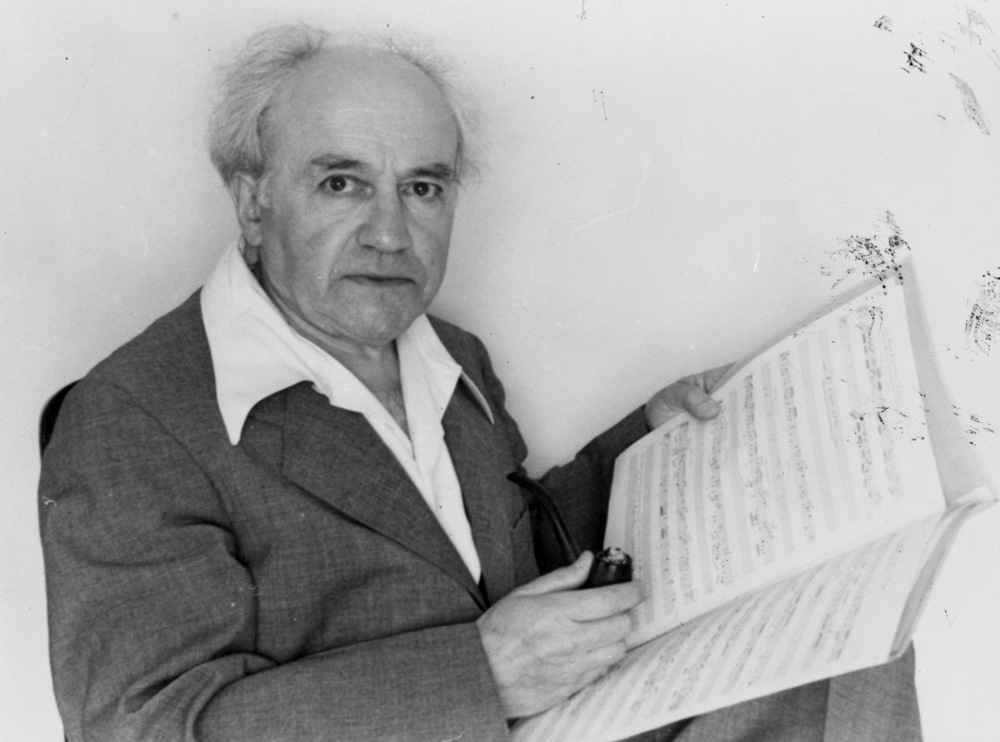
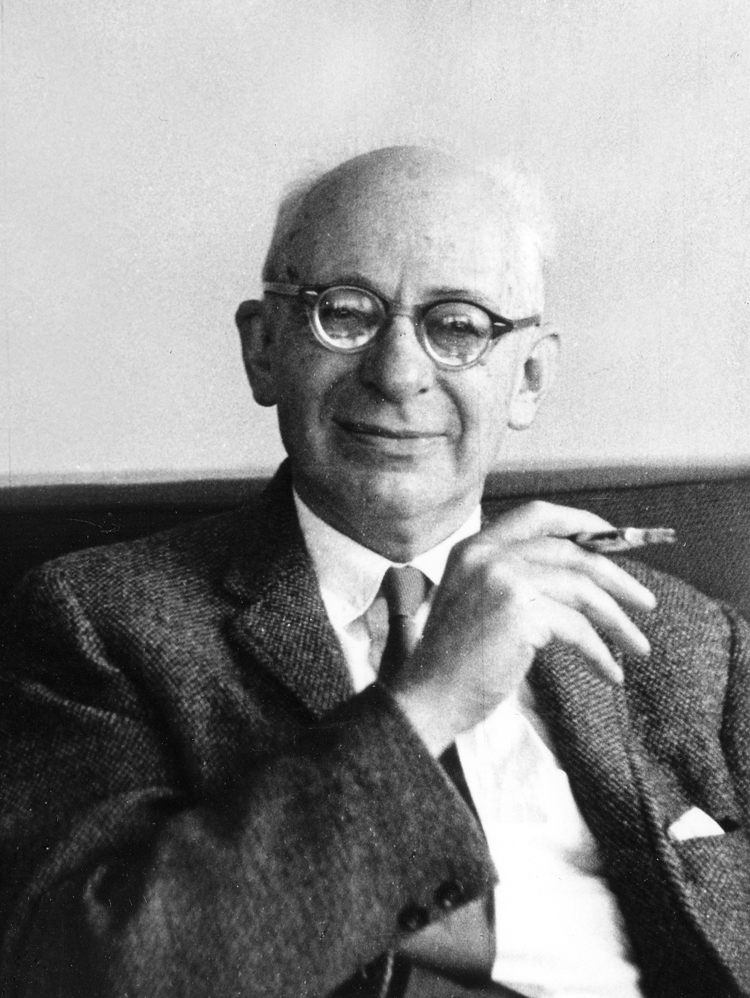
Ernest Bloch, Oct. 1948. Oreg. Hist. Soc. Research Lib., bb006122

I am often asked if there is such a thing as Jewish music ….. Well, there certainly is! Just take Ernest Bloch. He was born in 1880 in Geneva in an assimilated family. Around the age of twentyfive he became interested in everything to do with Judaism and translated it into his language – music.

“I’m interested in the Jewish soul” he wrote to Edmund Fleg, cantor and librettist of his opera Macbeth. “I want to translate all this into music.”

He developed a very personal style: his compositions reflect the atmosphere of Hebrew chant, without actually being a literal imitation of it. His intention was not to reconstruct old Hebrew music, but to write his own, good music, because, as he said, he was not an archaeologist. He succeeded.

Cello Concerto

Before the war, he was among the most played and appreciated composers. People even called him the fourth great ˜B,” after Bach, Beethoven and Brahms. It is not that people now no longer know his name, but they usually do not get any further than his cello concerto.

Baal Shem

\

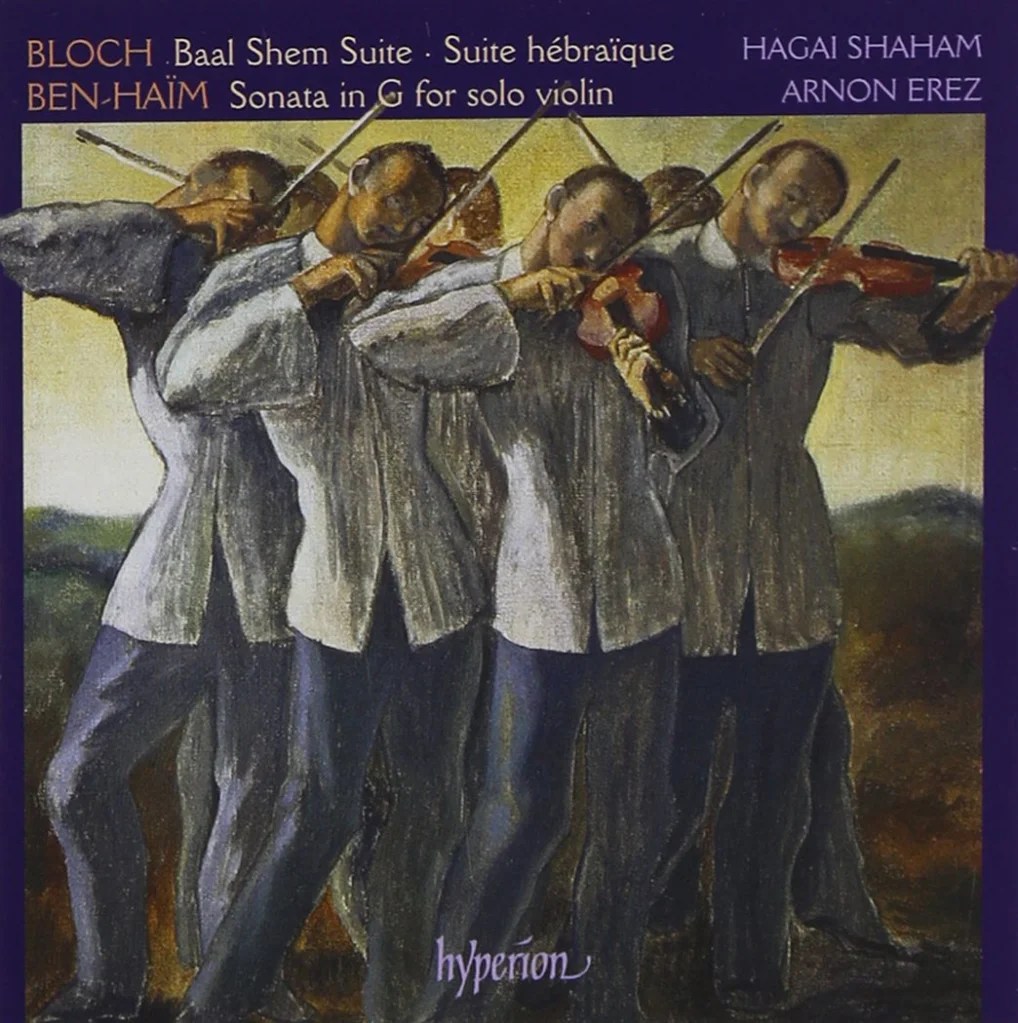
For the Baal Shem Suite (1923), one of his best-known works, he was inspired by Israel ben Eliezer (Baal Shem Tov), the founder of modern Chassidism, a movement that originated in eighteenth-century Poland and was based on mysticism, spiritualism and magical doctrines. It proclaimed a kind of bliss that could only be achieved through music, dance and song because that was the only way to achieve direct contact with God.

Of all the performances of those made of “Baal Shem” (and there are many), this one, played by Hagai Shaham and accompanied by Arnon Erez is for me one of the dearest. Shaham’s tone is round and warm with a healthy dose of “schmalz”. And though he often balances just on the edge, nowhere does he degenerate into banalities.

Seasons without the summer


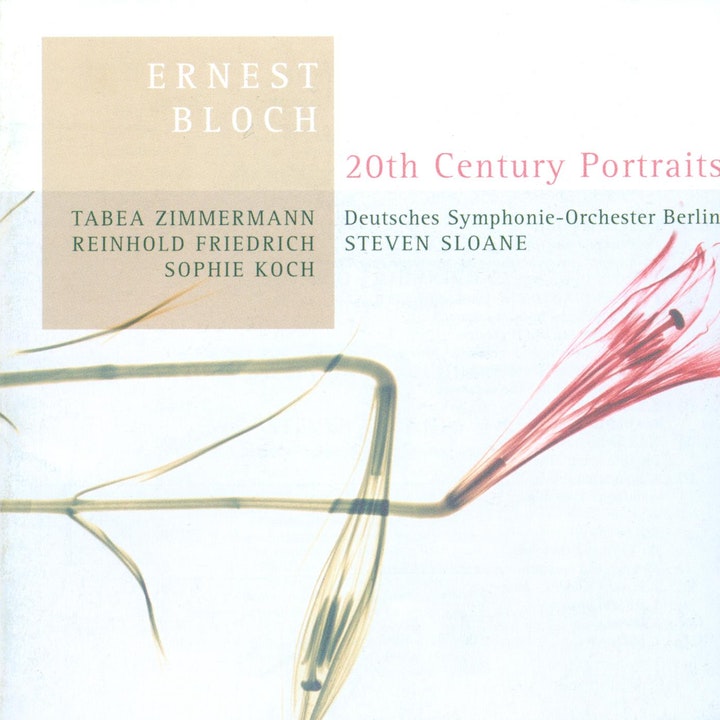
The symphonic poems Hiver-Printemps are very evocative. Together with the beautiful song cycle ‘Poèmes d’Automne’, composed for the texts of Béatrix Rodès, Bloch’s lover at the time, and sung very emotionally by Sophie Koch (Kleenex at hand?), they form, as it were, a kind of ˜Seasons”, from which only the summer is missing.

The suite for viola is among Bloch’s best compositions and one cannot imagine a better performance than Tabea Zimmermann’s.

The Deutches Symphonie-Orchester Berlin, con Sloane, plays in a very animated way


Dalia Atlas dirigeert symfonische werken van Bloch

 Macbeth by Ernest Bloch. Ever heard of?

Mario Castelnuovo-Tedesco: more than just a composer of guitar works

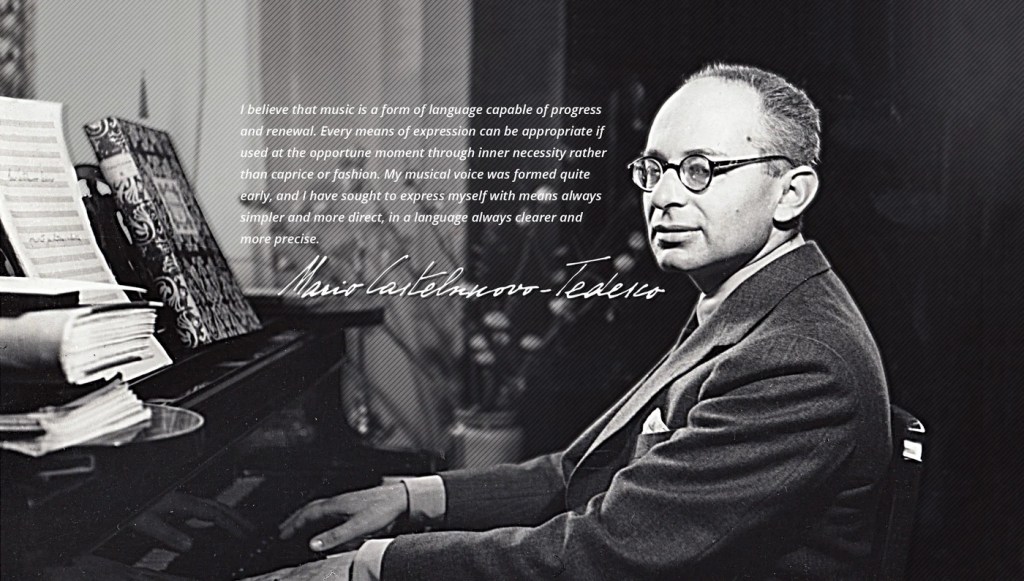
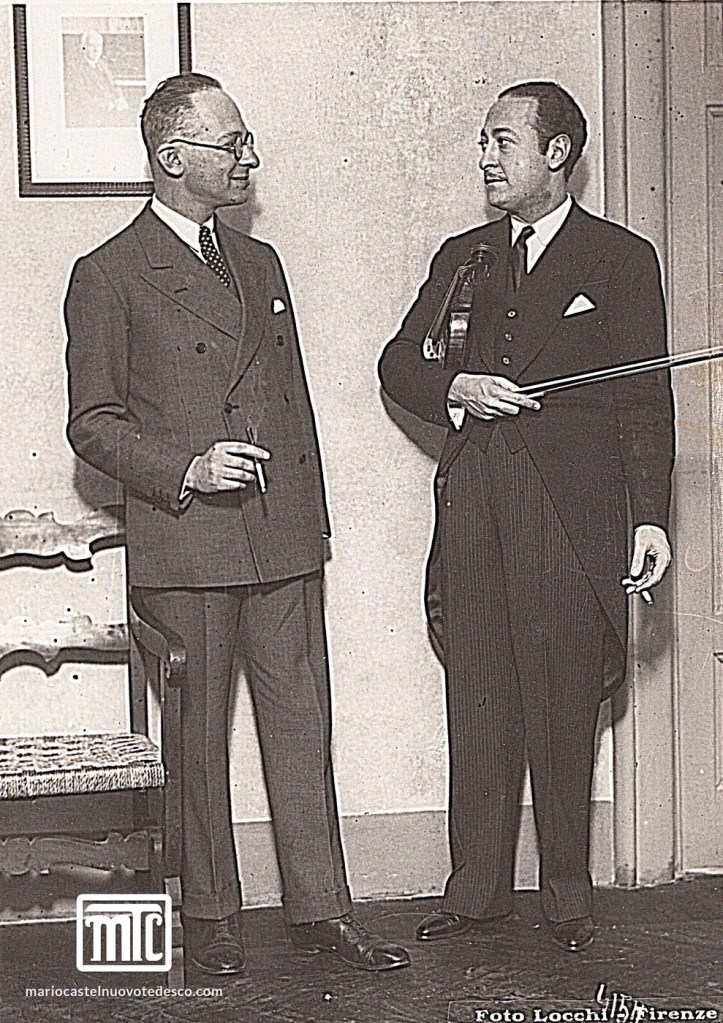
Mario Castelnuovo-Tedesco (Florence, 3 April 1895 – Beverly Hills, 16 March 1968) was born into a Jewish family of Sephardic descent (Jews expelled from Spain in 1492). He was extraordinarily creative, to his credit he worked on all sorts of things: piano works, concertos, operas…. His compositions were played by the great: Walter Gieseking, Gregor Piatigorsky, Jascha Heifetz, Casella.


Heifetz plays Mario Castelnuovo-Tedesco’s second violin concerto: ‘I Propheti’. Recording from 1954:


Today, we know him mainly for his guitar works, nearly a hundred in all, mostly written for Andres Segovia.
Segovia plays the Guitar Concerto No.1 in D major, Op. 99; live recording from 1939:


In the beginning of the 1930s the composer began to explore his “Jewish Roots”, which was intensified by the rising of fascism and the racial laws. His music was not performed anymore. Helped by Arturo Toscanini, Castelnuovo-Tedesco and his family were able to leave Italy just before the beginning of World War 2.


Like most Jewish composers who fled Europe, Castelnuovo-Tedesco ended up in Hollywood. Where, thanks to Jascha Heifetz, he was appointed composer of film music by Metro-Goldwyn-Mayer.


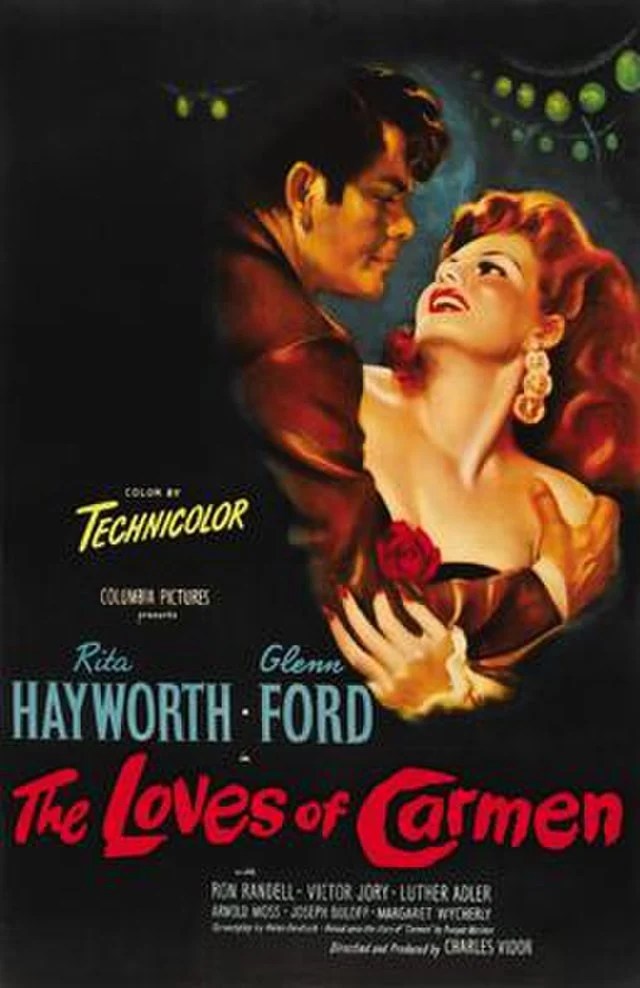
At Rita Hayworth’s special request, he composed music for the film The Loves of Carmen starring Hayworth and Glenn Ford. Below is the dance scene from the film:


During this time, Castelnuovo-Tedesco also composed new operas and vocal works inspired by American poetry, Jewish liturgy and the Bible: America offered him opportunities to deepen and develop his Italian musical heritage and his Jewish spirituality. He dreamed of hearing his Sacred Service “once in the synagogues of Florence”. It was premiered in 1950, at New York’s Park Avenue Synagogue.


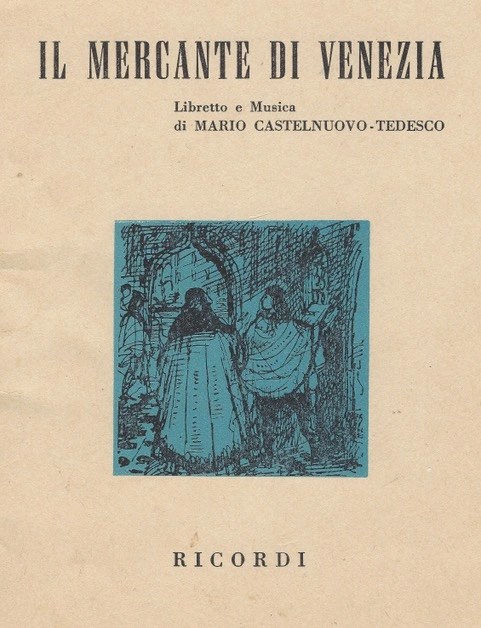
Dating from 1956, the opera Il Mercante di Venezia after Shakespeare’s The Merchant of Venice (Castelnuovo-Tedesco was a great Shakespeare lover) was performed at Maggio Musicale in Florence in 1961. Toscanini conducted and the leading roles were sung by Renato Capecchi (Shylock) and Rosanna Carteri (Portia).


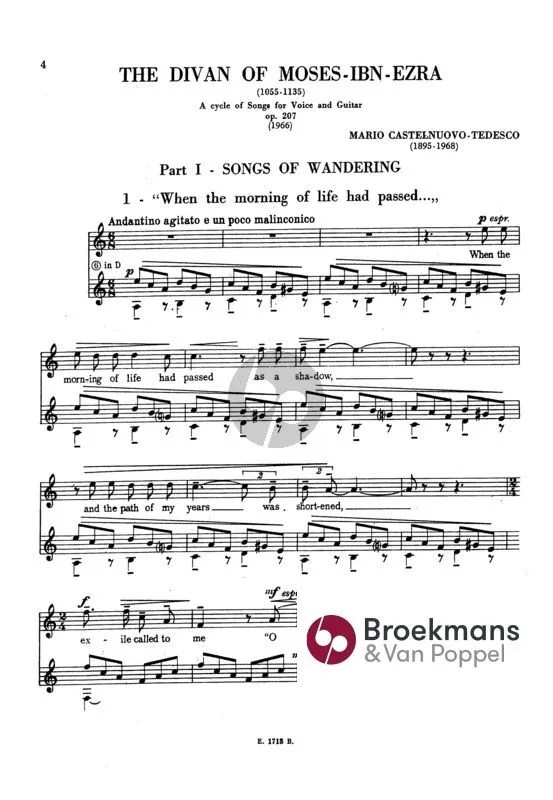
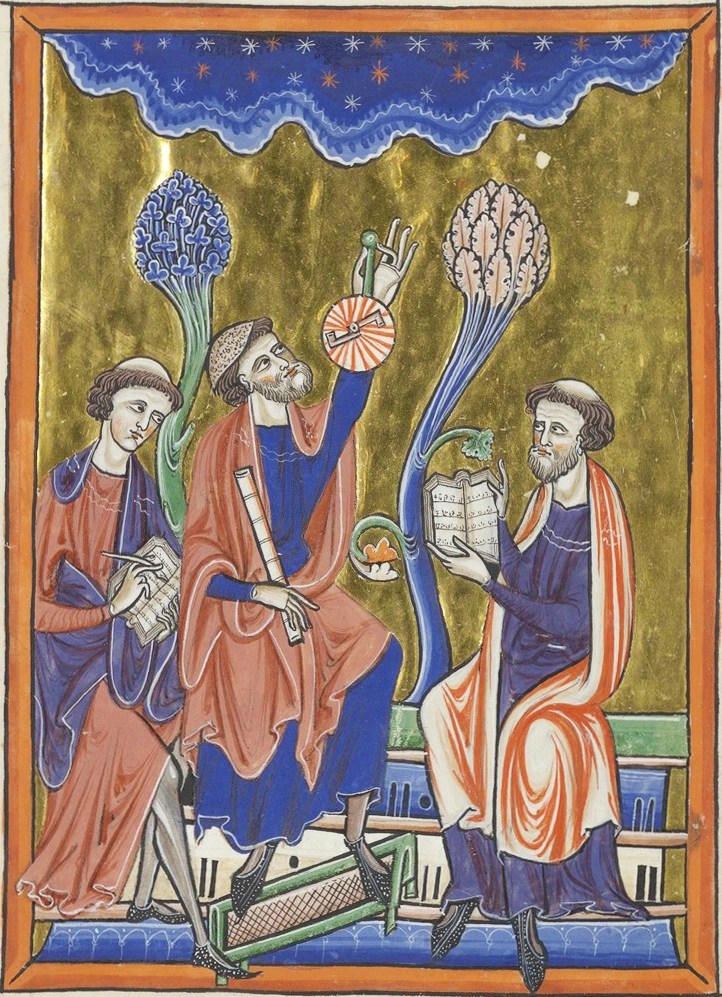
In 1966, he composed The Divan of Moses Ibn Ezra. It is a setting of nineteen poems by Rabbi Moses ben Jacob ibn Ezra, also known as Ha-SallaḠ(‘writer of penitential prayers’).


An illustration of Ibn Ezra (centre) using an astrolabe


Born in Granada around 1055 – 1060, Ibn Ezra died after 1138 and is considered one of Spain’s greatest poets. He also had a huge influence on Arabic literature. Castelnuovo-Tedesco composed the ‘Divan’ (meaning; a collection of poems) to the modern English translation.


Roberta Alexander sings The Divan of Moses Ibn Ezra


Channa Malkin and Izhar Elias in ‘Fate has blocked the way’:


The composer wrote his Cello Concerto for Gregor Piatigorsky, the premiere took place in 1935, with Arturo Toscanini conducting the New York Philharmonic. And that was it. Since then, the concerto was totally forgotten for all of eighty years. Until Raphael Wallfisch took it on.


Raphael Wallfisch plays the Allegro Moderato from Castelnuovo-Tedesco’s Cello Concerto


After World War II, Castelnuovo-Tedesco, like several Jewish composers who were forced to flee and seek refuge in Hollywood, was accused of conservatism and sentimentality. That he was inspired by Spanish folklore in many of his works, was not appreciated either.

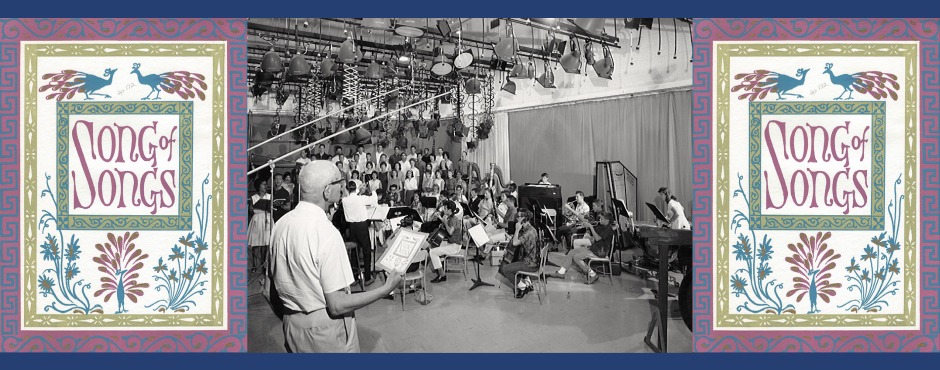
Song of Songs


In 2022, in celebration of Castelnuovo-Tedesco’s birthday on 3 April his official website presented a long-buried treasure: a recording of the world-premiere of The Song of Songs, which took place in Los Angeles on 7 August 1963

More information:

https://mariocastelnuovotedesco.com/song-of-songs-a-hidden-treasure/?fbclid=IwAR1VjUytiv8h9TnAxMbUwlffBlgU-YeLaXRxeD-XUVJbf6bXAxVmewBhyMc


Castelnuovo-Tedesco:
“In my life I have written many melodies for voice and published 150 of them (many others remaining unpublished) on texts in all the languages I know: Italian, French, English, German, Spanish and Latin. My ambition and, indeed, my deep motivation has always been to unite my music with poetic texts that stimulated my interests and feelings, to express its lyricism.”


In 2019, his biography was filmed in the movie Maestro. Below is the trailer:


Official website of Mario Castelnuovo -Tedesco:

https://mariocastelnuovotedesco.com/

:

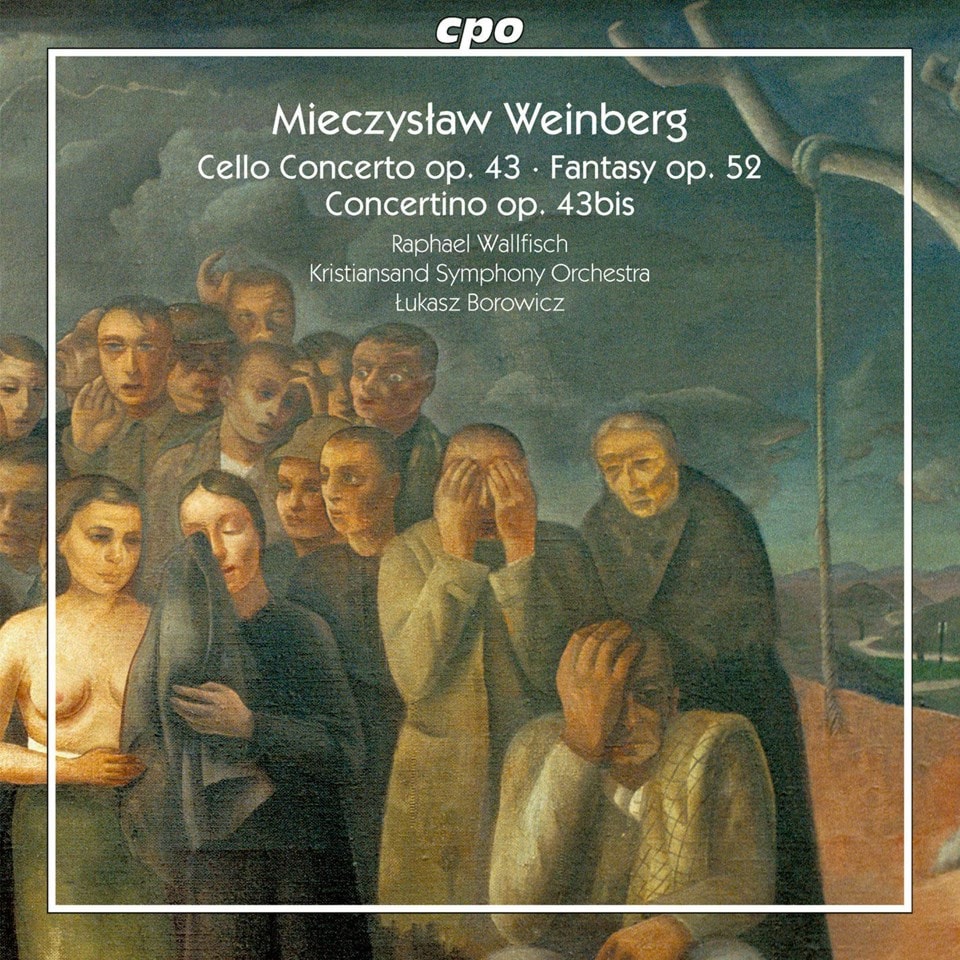
Raphael Wallfisch plays works for cello by Weinberg: a great CD!

Weinberg Wallfish

I think, no, I’m sure that Mieczyslaw Weinberg’s cello concerto is one of his best-known works. Weinberg composed it in 1948 and dedicated it to Mstislav Rostropovich, who also gave the premiere in 1957. And it did not stop there: Rostropovich was so convinced of the high quality of the composition that he included the concerto in his repertoire. He took the concerto with him to his live performances and also to the recording studios, as a result of which it is very well documented.

Now, the origin of the work is more complicated than we (or I!) thought. In short: first there was a Concertino for cello and orchestra that was just sitting on the shelf until Rostropovich came across it and appreciated it a lot. This was Weinberg’s main reason for rewriting it into a real concerto.

All this can be read in the textbook that ‘accompanies’ the new recording of the cello concerto by Raphael Wallfisch. The textbook alone is reason enough to purchase the CD. In addition we also get the original Concertino (which has now been given the designation opus 43 bis)! It was first performed in 2017 and, to my knowledge, was recorded for the first time in 2020. It is such a luxury to be able to listen to both ‘versions’ side by side!


And then there is the beautiful, melancholic Fantasy for cello and orchestra. Weinberg composed it in the winter of 1952/53 and the premiere took place on November 23, 1953, but without the orchestra. It was performed by Daniil Shafran (cello) accompanied by Nina Musinyan (piano). The piece takes only 17 minutes: but that is long enough for a whole range of emotions to pass by.

The performance by Raphael Wallfisch is unequalled, it is only natural that he has an affinity with it. The Kristiansand Symphony Orchestra under Maestro Lukasz Borowicz is also excellent. It is a huge asset.

Raphael Wallfisch speelt cellowerken van Weinberg: wat een cd!

Weinberg Wallfish

Ik denk, nee, ik weet zeker dat het celloconcert van Mieczyslaw Weinberg tot zijn bekendste werken behoort. Weinberg componeerde het in 1948 en droeg het op aan Mstislav Rostropovitsj die ook de première in 1957 verzorgde. En daar bleef het niet bij: Rostropovitsj was dermate overtuigt van de hoge kwaliteit van de compositie dat hij het concerto op zijn repertoire heeft genomen. Hij nam het concert mee naar zijn liveoptredens en naar de opnamestudio’s waardoor het een en ander goed gedocumenteerd is.

Nu is de ontstaansgeschiedenis van het werk ingewikkelder dan wij (ik, in ieder geval) dachten. In het kort: er was eerst een Concertino voor cello en orkest dat op de plank bleef liggen tot Rostropovitsj er tegenaan liep en het meer dan leuk vond. Dé reden voor Weinberg om het om te werken voor een heus concert.

Dat alles staat te lezen in het tekstboekje dat de nieuwe opname van het celloconcert door Raphael Wallfisch ‘begeleidt’. Het tekstboekje alleen al is reden genoeg om de cd aan te schaffen. Bovendien krijgen we ook het oorspronkelijke Concertino (die nu dus de aanduiding opus 43 bis heeft gekregen) er bij! Het is pas drie jaar geleden voor het eerst uitgevoerd en bij mijn weten nu voor het eerst opgenomen. Wat een weelde om beide ‘versies’ naast elkaar te kunnen beluisteren!

En dan is er nog de prachtige, weemoedige Fantasie voor cello en orkest. Weinberg componeerde het in de winter 1952/53 en de première vond plaats op 23 november 1953 maar dan zonder orkest. Het werd uitgevoerd door Daniil Shafran (cello) die begeleid werd door  Nina Musinyan (piano). Het stuk duurt maar 17 minuten: lang genoeg om een gamma aan emoties voorbij te laten gaan

De uitvoering door Raphael Wallfisch is weergaloos, het is nogal wiedes dat hij er affiniteit mee heeft. Ook het Kristiansand Symphony Orchestra onder leiding van Maestro Lukasz Borowicz doet het uitstekend. Een aanwinst.

Mieczyslaw Weinberg
Celloconcert op. 43, Fantasie voor cello en orkest op. 52, Concertino voor cello en orkest op. 43bis
Raphael Wallfisch (cello), Kristiansand Symphony Orchestra o.l.v. Lukasz Borowicz
CPO 555 234

Hans Gál and Mario Castelnuovo-Tedesco: How could we forget them?

Castelnuovo Tedesco en Gal

I regularly hear cellists complain that the repertoire for their instrument is not that large, which is why they (have to) play and/or record more or less the same pieces over and over again. But is this really true?

Well, only if you limit yourself to the more or less well-known composers. And certainly if you still ‘forget’ to look back at the black period in history, when books went up in flames and art, including their creators, was declared ‘entartet’. Fortunately, we still have enough musicians who do everything in their power to ensure that the once forbidden works are not forgotten.

In 2016, Raphael Wallfisch, one of the greatest advocates of the ‘forgotten repertoire’, recorded two previously unknown cello concertos: those by Hans Gál, originally from Austria-Hungary, and the Italian Mario Castelnuovo-Tedesco. Both composers survived the war: Castelnuovo-Tedesco in Hollywood and Gál in Scotland. Both are barely being played, although it is impossible for a serious guitarist to ignore the Italian’s oeuvre.

Castelnuovo Gal

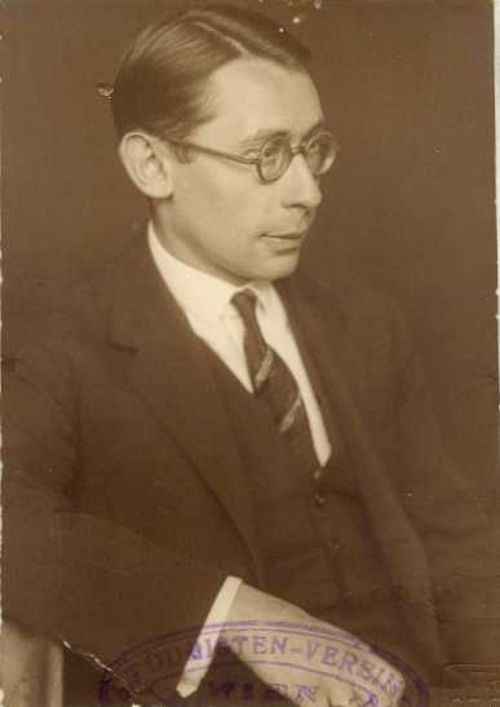
Hans Gál

Things are worse with Hans Gál’s compositions, which are still rare on concert stages. His cello concerto, composed in 1944, is not easy to dissect. Or, in other words: you don’t get it automatically ‘under your skin’. I had to listen to it a few times before I surrendered to it. Gál’s language seems rigid and even though the work is not atonal anywhere, you really have to make an effort. But maybe that’s the way it should be? Because you don’t forget it easily!

https://www.milkenarchive.org/assets/Photos/Composer-Mario-Castelnuovo-Tedesco-814.jpg

Mario Castelnuovo-Tedesco

No greater contrast than with Castelnuovo-Tedesco’s predominantly virtuoso composition! The composer wrote his cello concerto for the great cellist Gregor Piatigorsky, the premiere took place in 1935, Arturo Toscanini conducted the New York Philharmonic. And that was it. Since then, the concerto has been totally forgotten for eighty years. Until Raphael Wallfisch took care of it.

Raphael Wallfisch gives an excellent interpretation of both concertos, with sufficient attention to the various writing styles of the composers. Gál’s concerto sounds almost classicistic in his hands; for Castelnuoco-Tedesco he has enough virtuosity and romance to enthuse the listener.

Hans Gál: Cello concerto in b, op. 67
Mario Castelnuovo-Tedesco: Cello concerto in F
Raphael Wallfisch (cello), Konzerthausorchester Berlin conducted by Nicholas Milton
CPO 555 074-2

Translated with http://www.DeepL.com/Translator

Voice in the Wilderness: music as salvation

Channa Malkin and Izhar Elias in ‘Songs of Love and Exile, a Sephardic Journey’

Hans Gál en Mario Castelnuovo-Tedesco: hoe konden we ze vergeten?

Castelnuovo Tedesco en Gal

Regelmatig hoor ik de heren en dames cellisten klagen dat het repertoire voor hun instrument niet zo groot is, vandaar dat ze min of meer steeds dezelfde stukken (moeten) spelen en/of opnemen. Maar is het waar?

Wel, als je je alleen tot de min of meer bekende componisten beperkt. En zeker als je nog steeds ‘vergeet’ terug te kijken naar de zwarte periode in de geschiedenis, toen boeken in de vlammen op gingen en kunst, inclusief hun scheppers ‘entartet’ werd verklaard. Gelukkig hebben we nog voldoende musici die er alles aan doen om de ooit verboden werken aan de vergetelheid te onttrekken.

In 2016 heeft Raphael Wallfisch, één van de grootste pleiters van het ‘vergeten repertoire’, twee tot dan toe onbekende celloconcerten opgenomen: die van de van oorsprong Oostenrijk-Hongaarse Hans Gál en de Italiaanse Mario Castelnuovo–Tedesco. Beide componisten hebben de oorlog overleefd: Castelnuovo-Tedesco in Hollywood en Gál in Schotland. Beiden worden amper nog gespeeld, al kan een beetje gitarist niet om het oeuvre van de Italiaan heen.

Castelnuovo Gal

Hans Gál

Met de composities van Hans Gál is het droeviger gesteld, nog steeds kom je ze zelden tegen op de concertpodia. Zijn in 1944 gecomponeerde celloconcert laat zich niet makkelijk ontleden. Of, anders gezegd: je krijgt hem niet vanzelfsprekend ‘under your skin’. Ik moest er een paar keer naar luisteren voordat ik mij aan over gaf. Gáls taal lijkt stug en al is het werk nergens atonaal, je moet er werkelijk moeite voor doen. Maar misschien hoort het ook zo? Want gauw vergeten doe je het niet meer!


https://www.milkenarchive.org/assets/Photos/Composer-Mario-Castelnuovo-Tedesco-814.jpg

Mario Castemnuocvo-Tedesco

Geen groter contrast dan met de voornamelijk virtuoze compositie van Castelnuovo-Tedesco! Zijn celloconcerto schreef de componist voor de grote cellist Gregor Piatigorsky, de première vond plaats in 1935, Arturo Toscanini dirigeerde het New York Philharmonic. En dat was het dan. Sindsdien werd het concerto totaal vergeten, tachtig jaar lang. Totdat Raphael Wallfisch zich daarover ontfermde.

Raphael Wallfisch geeft beide concerten een uitstekende vertolking, met voldoende aandacht voor de diverse schrijfstijlen van de componisten. Het concerto van Gál klinkt onder zijn handen bijna classicistisch nuchter, voor Castelnuoco-Tedesco heeft hij voldoende virtuositeit en romantiek in huis om de luisteraar te enthousiasmeren.


Hans Gál: Celloconcert in b, op. 67
Mario Castelnuovo-Tedesco: Celloconcert in F
Raphael Wallfisch (cello), Konzerthausorchester Berlin o.l.v. Nicholas Milton
CPO 555 074-2

Muziek als redding. Voice in the Wilderness

ZIJN LIED ZAL NIET VERSTOMMEN *

Voice in the Wilderness: music as salvation

Wallfisch BBC

Anita Lasker-Wallfisch ©BBC

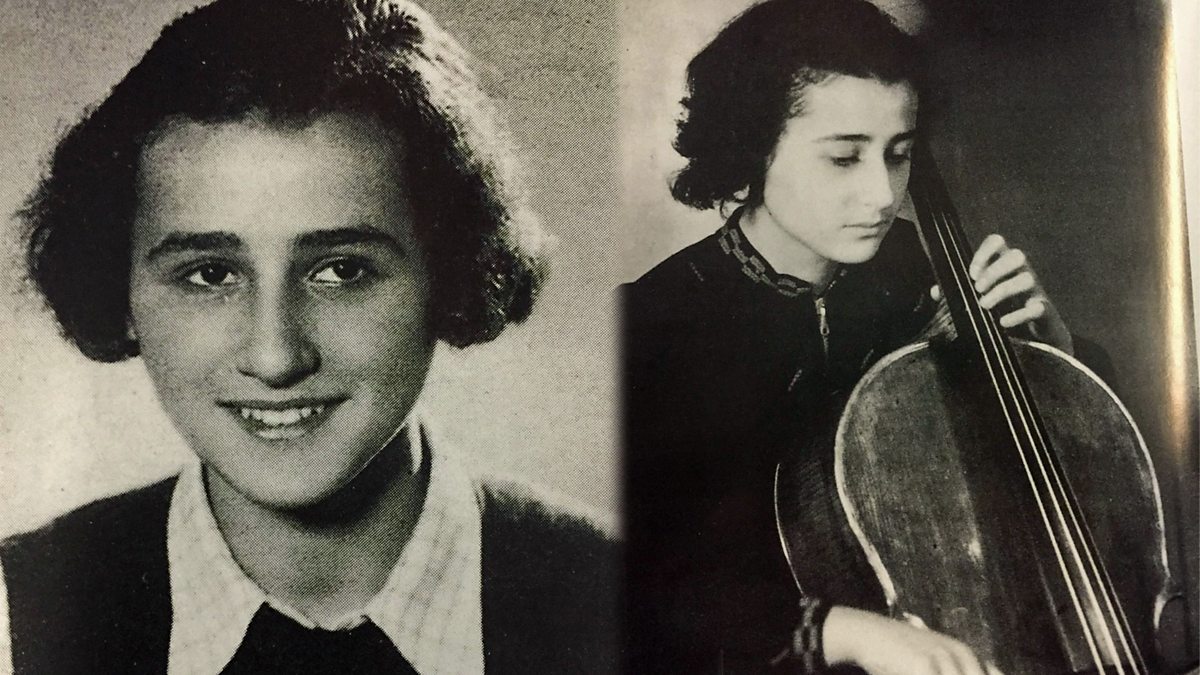
Music can save your life. Literally. Anita Lasker-Wallfisch has survived Auschwitz. And also Bergen Belsen. She knows for sure that music was the cause of this. She was 16 when she was arrested. Her parents were already dead, but she didn’t know that yet.

wallfisch100_v-panorama

Young Anita played the cello and once in Auschwitz she was deployed in the Women’s Orchestra, which was conducted by Alma Rosé, Gustav Mahler’s niece. After the war she came to London, married pianist Peter Wallfisch and was a co-founder of the English Chamber Orchestra.

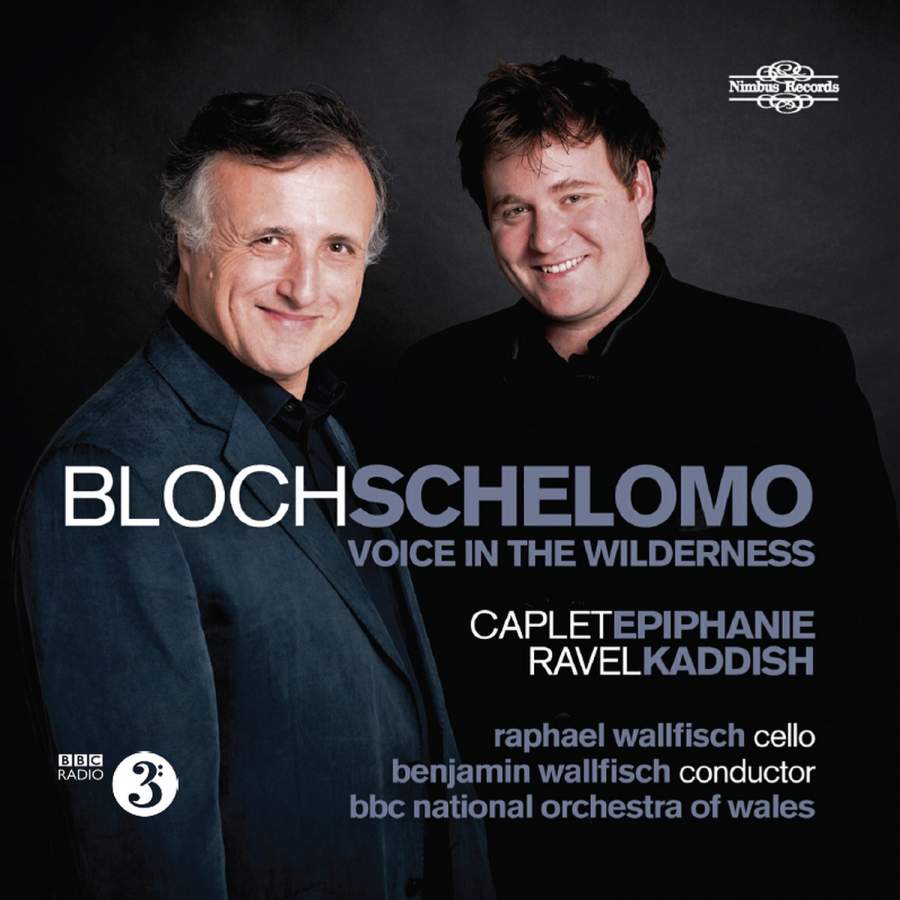
Her son, Raphael, is also a cellist. A famous one too, with many recordings to his name. And his son, Benjamin, is a conductor. Father and son Wallfisch made a recording together, which they dedicated to their relatives who were killed in the camps. The CD was released just before Holocaust Memorial Day on 27 January 2014.

wallfisch nimbus

It has become a surprising CD, because besides Bloch’s almost inevitable Schelomo also his rarely played Voice in the Wilderness is included and Ravel’s Kaddish follows André Caplet’s Epiphanie (d’après une légende éthiopienne). The latter escapes me a bit, it feels like the odd one out. I have to admit that I have no affinity with the work whatsoever. It just ripples on.

Instead I would have preferred to hear Baal-Shem by Bloch. Or something from Joseph Achron. Or Alexander Krein. Or the other two Mélodies hébraiques by Ravel. And even if I prefer the sung version of ‘Kaddish’ (can I make a recommendation? Gerard Souzay!) I have to admit that Raphael Wallfisch with his cello stole my heart. But the most beautiful thing is the orchestra. Soft. Dear. Loving.

Raphael Wallfisch discusses his Jewish music release:

ERNEST BLOCH

Wallfisch Bloch

I am often asked if there is such a thing as Jewish music ….. Well, there certainly is! Just take Ernest Bloch. He was born in 1880 in Geneva in an assimilated family. Around the age of twentyfive he became interested in everything to do with Judaism and translated it into his language – music. “I’m interested in the Jewish soul” he wrote to Edmund Fleg, cantor and librettist of his opera Macbeth. “I want to translate all this into music.”

He developed a very personal style: his compositions reflect the atmosphere of Hebrew chant, without actually being a literal imitation of it. His intention was not to reconstruct old Hebrew music, but to write his own, good music, because, as he said, he was not an archaeologist. He succeeded.


Ernest Bloch – Voice in the Wilderness; Schelomo. Rhapsody hébraïque
André Caplet – Epiphany (d’après une légende éthiopienne)
Maurice Ravel – Mélodie hébraïque, Kaddish
Raphael Wallfisch, cello
BBC National Orchestra of Wales conducted by Benjamin Wallfisch
Nimbus NI 5913

Translated with http://www.DeepL.com/Translator

In Dutch:
Muziek als redding. Voice in the Wilderness

Muziek als redding. Voice in the Wilderness

Wallfisch BBC

Anita Lasker-Wallfisch ©BBC

Muziek kan je leven redden. Letterlijk. Anita Lasker-Wallfisch heeft Auschwitz overleefd. En ook Bergen Belsen. Dat het door de muziek komt, dat weet zij zeker. Zij was 16 toen zij opgepakt werd. Haar ouders waren toen al dood, maar dat wist zij nog niet.

wallfisch100_v-panorama

Jonge Anita speelde cello en eenmaal in Auschwitz werd zij ingezet in het Vrouwenorkest, dat geleid werd door Alma Mahler, het nichtje van Gustav. Na de oorlog kwam ze naar Londen, trouwde met de pianist Peter Wallfisch en was een medeoprichtster van het English Chamber Orchestra.

Haar zoon, Raphael is ook een cellist. Een beroemde ook nog, met veel opnamen op zijn naam. En zijn zoon, Benjamin, is een dirigent. Vader en zoon Wallfisch hebben samen een opname gemaakt, die zij aan hun in de kampen gedode familieleden hebben opgedragen. De cd is vlak voor de Holocaust Memorial Day op 27 januari 2014 uitgebracht.

Walfisc

Het is een verrassende cd geworden, want naast – bijna vanzelfsprekende – Bloch’s Schlemo staat er ook diens  zelden gespeelde Voice in the Wilderness bij en Ravel’s  Kaddish  volgt op André Caplet’s Epiphanie (d’apre une légende éthiopienne).

Dat laatste ontgaat mij een beetje, het voelt als een vreemde eend in de bijt. Ik moet ook eerlijk bekennen dat ik geen affiniteit met het werk heb. Het kabbelt maar voort. Daarvoor in de plaats had ik liever Baal-Shem van Bloch gehoord.
Of iets van Joseph Achron. Of van Alexander Krein.

Of de andere twee van Ravel’s Mélodies hébraique. En al prefereer ik de gezongen versie van ‘Kaddish’ (mag ik een aanbeveling doen? Gerard Souzay!) dan moet ik bekennen dat Raphael Wallfisch met zijn cello mijn hart heeft gestolen. Maar het allermooiste vind ik het orkest. Zacht. Lief. Liefdevol.


ERNEST BLOCH

Wallfisch Bloch

Ernest Bloch

Vaak wordt mij gevraagd of er zoiets bestaat als Joodse muziek …. Nou en of!
Neem alleen maar Ernest Bloch. Hij werd geboren in 1880 in Genève in een geassimileerd gezin. Rond zijn vijfentwintigste raakte hij geïnteresseerd in alles wat met het Jodendom te maken had en vertaalde het in zijn taal – muziek.

“Ik ben geïnteresseerd in de Joodse ziel” schreef hij aan Edmund Fleg, voorzanger en librettist van zijn opera Macbeth. “Dat alles wil ik in muziek vertalen”.

Hij ontwikkelde een zeer eigen stijl: zijn composities geven de sfeer weer van Hebreeuwse gezangen, zonder het in feite te zijn. Het was namelijk zijn bedoeling niet om oude Hebreeuwse muziek te reconstrueren, maar om zijn eigen, goede muziek te schrijven, want, zoals hij zei, hij was geen archeoloog. Het is hem gelukt.

Hieronder vertelt Raphael Wallfish over zijn opname:

Ernest Bloch – Voice in the Wilderness; Schelomo. Rapsodie hébraïque
André Caplet – Epiphanie (dápres une légende éthiopienne)
Maurice Ravel – Mélodie hébraïque, Kaddish
Raphael Wallfisch, cello
BBC National Orchestra of Wales olv Benjamin Wallfisch
Nimbus NI 5913


ZIJN LIED ZAL NIET VERSTOMMEN *

JOSEPH ACHRON. Muziek om verliefd op te worden

JASCHA NEMTSOV en de Joodse muziek

SZYMON LAKS. Muziek uit een andere wereld

Hans Gál en Mario Castelnuovo-Tedesco: hoe konden we ze vergeten?