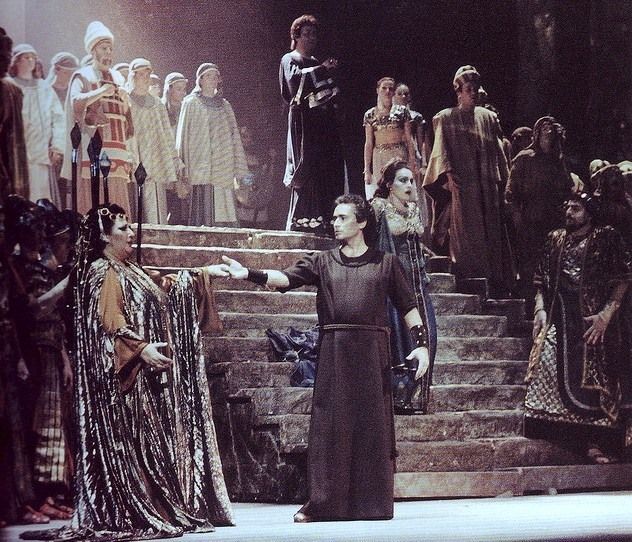
Montserat_Caballé

Teschek, bedien dich! Arabella… A fairy tale or…?

arabella-uesuleac

Richard Strauss met de allereerste Arabella (Viorica Ursuleac) en Mandryka (Alfred Jerger)

“Teschek, bedien dich”!
You really cannot escape the fact that Mandryka’s words, endlessly repeated by Graf Waldner, settle in your ears like the proverbial earworm. ‘Teschek, bedien dich‘ sings Mandryka as he pulls out his thick wallet and holds out banknotes, like chocolates, in front of his father-in-law-to-be.

For those not so familiar with “Viennese”, Teschek is not only a person who is always on the losing end, but also a card game and perhaps a “delicate” reference to the count’s addiction, which has left the family financially ruined, the youngest daughter having to go through life dressed as a boy and the eldest, Arabella, to be sold to the highest bidder. Well, in a manner of speaking.

How well do you know the opera? Honestly! I’m the first to admit it: until recently, I knew this opera only so-so. Once I saw it (and forgot about it), once I heard something wonderful on the radio (Lucia Popp and Bernd Weikl! I still haven’t managed to get hold of that recording), a snippet here and there …. Nothing more. Nice little snippet,  though.

But now, after a few weeks on “an Arabella diet” I have become a real worshipper. Why is that? Mainly because of the libretto, I think. The opera is seen as a light comedy, a kind of fairy tale where everything is going to be all right at the end. But is that really the case? I think not. Actually, it’s not a fun opera at all. Because let’s face it: everybody is cheating on everybody here and the chances of anyone ending happily ever after are just as high as in Snow White.

To start with Zdenka, the almost “discarded” daughter: do you actually think Matteo has suddenly come to love her? Well, I don’t! He has to marry her because she lured him into her bed. And that, even though he thought she was a man. Anyway, Mandryka is paying, and since everything in this opera is about money…

Anyway, relax and sit back, because the opera is more than worth it. And there are so many good performances out there!


Otto Schenk 1

If you have never seen the opera, you would do well to start with Otto Schenk’s 1977 film (DG0743255). Larger than life, with lifelike sets. Of course, no ordinary live performance can compete with that.

Gundula Janowitz is a delightful Arabella. Perhaps not the best actress in the world, but her high notes are so very beautiful. Sona Ghazarian is a good Zdenka, but what really makes the recording, alongside the very erotic playing of the Wiener Philharmoniker (Solti!), more than worthwhile, is Bernd Weikl’s Mandryka. Any woman would certainly want to be kissed awake by him.

The minor roles are also fantastically cast: René Kollo is a Matteo out of thousands and I know of no better Fiakermilli than the young Gruberova. Add to this the very young (30!) Kurt Rydl as Lamoral and Margarita Lilova (Adelaide).  It is definitely very good.

Below Gundula Janowitz and Bernd Weikl in the last act:


Otto Schenk 2


We stay with good old Otto Schenk for the moment: his production was recorded at the Met in 1995 (DG 0730059). Kiri te Kanawa is an exemplary Arabella; there are few singers who can match her in this role. Strauss has always been a bit like her personal composer and optically, of course, she is a dream Arabella.

Her sister Zdenka (Marie McLaughlin) is also wonderful, something that cannot be said of Wolfgang Brendel (Mandryka). He doesn’t succeed in making my female heart beat any faster. Thielemann conducts well, but he lacks the sensuality of Solti.

Below is a scene with Kiri te Kanawa and Marie McLaughlin:


Renée Fleming


And then there is Renée Fleming (Decca 074363). Optically just about the most beautiful Arabella ever. Not only beautiful but also very full of herself; you can almost see her asking, “mirror, mirror on the wall….”

Impossible to ask Strauss now, but I suspect she could have modelled Arabella for him. Her vervet soft tones too; as if you are resting below the softest down comforter.

Julia Kleiter is a good Zdenka, but Morten Frank Larsen (Mandryka) is just a Dane. He looks Danish and sings Danish. A pity, because Götz Friedrich’s direction  (Zürich 2007) is really exciting.


Below a scene with Renée Fleming and Julia Kleiter:


Sven-Eric Bechtolf
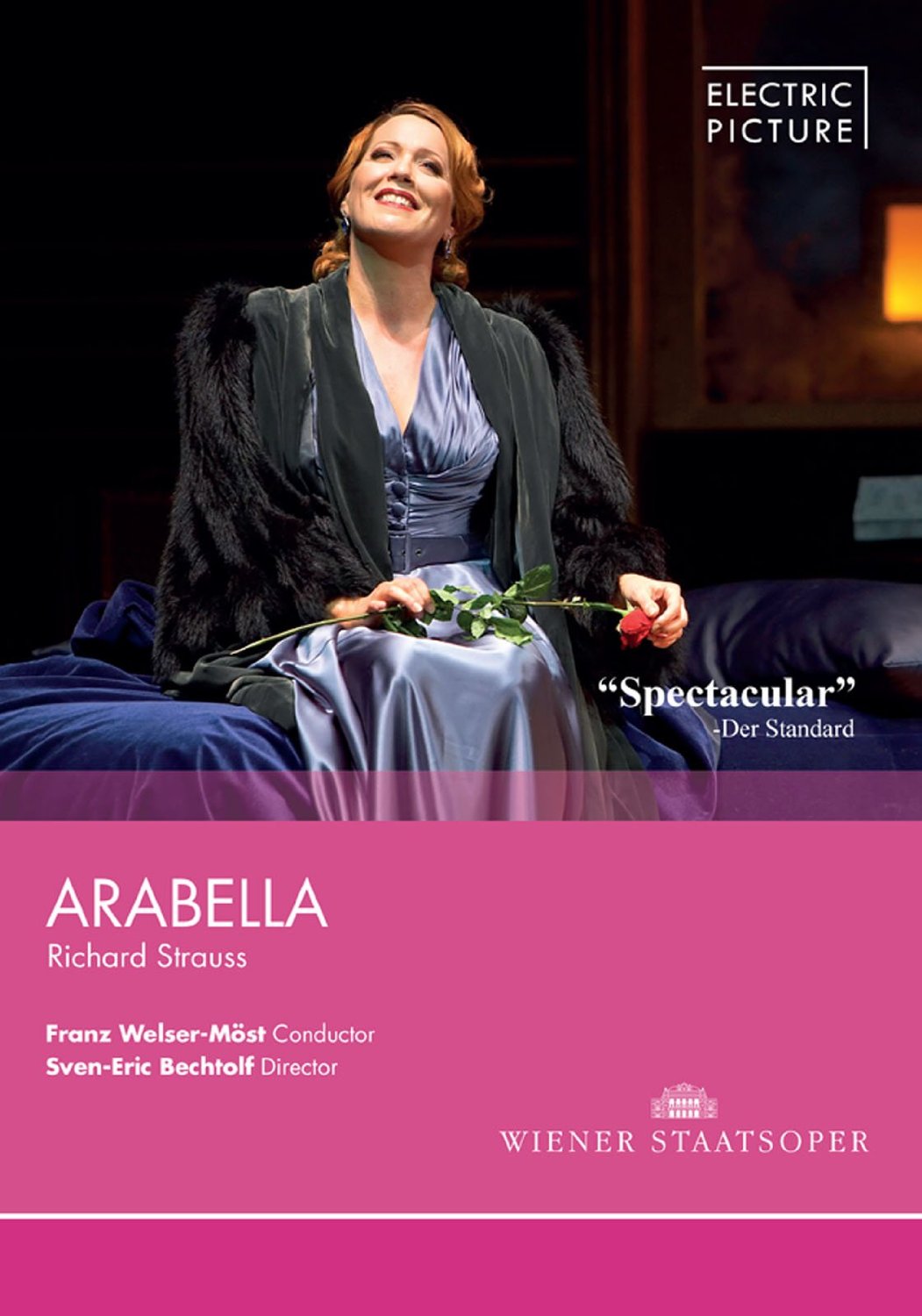

The latest production on my list comes from Vienna (BD EPCO 48D). Sven-Eric Bechtholf has surprised me. He adheres well to the libretto and everything just looks very beautiful.

Emily Magee lacks the sensuality of a Fleming or te Kanawa, but she does hold her own very well. Genia Kühmeier is a sensational Zdenka and Tomasz Konieczny an (indeed) “East European guest worker” with a lot of money. In terms of voice, he can easily match Weikl.

Trailer of the production:


Lisa Della Casa


And now back in time. For me, Lisa Della Casa is the Strauss singer pur sang. Just listen to her interpretation of the Vier letzte Lieder! Starting out as a very good Zdenka, she grew into a great Arabella.

In 1958, she recorded the role under Solti (Decca 4781400). I can never get enough of that. Hilde Güden is her sister and the duet of the two girls is of an unparalleled beauty. Two voices coming together and embracing each other almost as if they were not sisters, but lovers. You really rarely achieve such perfection.

And then the very erotic way Solti handles the score… It is all so sensual and fairy-like. Not only in terms of the singing, but also in terms of the orchestral sound. And George London sings Mandryka. Need I say more?


Montserrat Caballé


Montserrat Caballé as Arabella… Strange? Well no – she was one of the best Salome’s ever, did you know? She is also a fantastically sensual Arabella (BLV 107225). Don’t ignore the recording, especially since Zdenka is sung here by the very moving Oliviera Miljakovic.

Below Caballé and Miljakovic in the duet ‘Er ist der richtige’:


English Arabella


‘Arabella’ in English? (Andromeda andrcd 5013). Why not? Unimaginable how different the opera sounds in this language. It’s like listening to, say, Vanessa. Something to think about.

Eleanor Steber lacks the velvet in the voice, but her involvement makes you understand a little more of the woman. Hilde Güden also sounds different here. It is as if she gains volume and eloquence. I love it. And then George London with his ‘I am the Mandryka, no one else’. Why do I find it even more impressive in English than in German? Rudolf Kempe is conducting.


Kiri te Kanawa


And then, finally, we have Kiri te Kanawa on CD (Decca 4783460). I find Zdenka (Gabriele Fontana) too heavy and in the duet she drowns out her sister – it not very beautiful. Tate conducts unevenly. But what a Matteo! Peter Seiffert is more than delightful to listen to. And Franz Grundhebber (Mandryka) also makes the recording very much worth listening to.
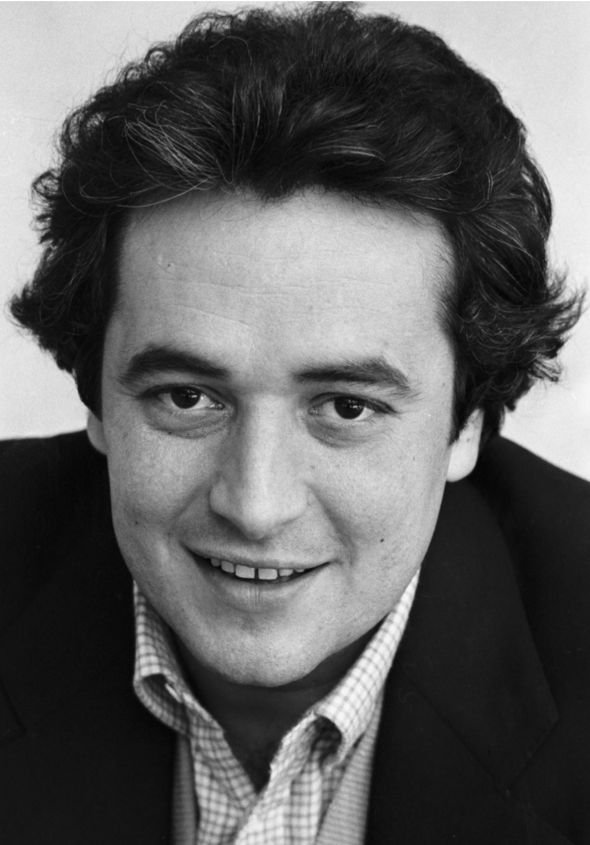

José Carreras in just few of his many roles

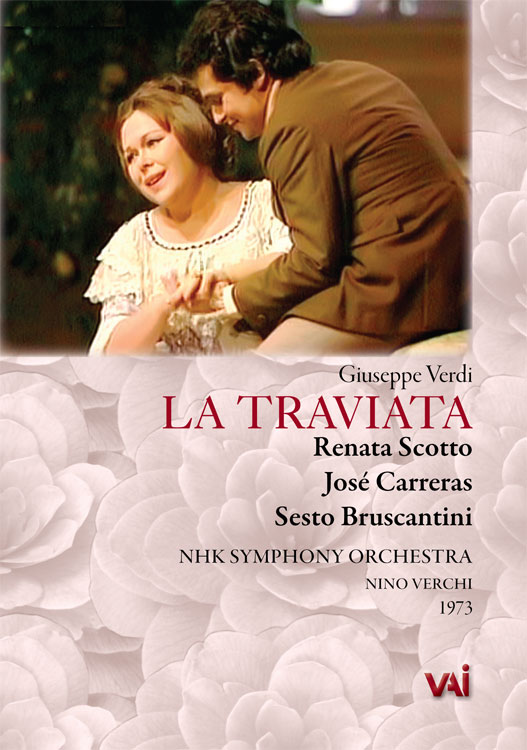
LA TRAVIATA Tokyo 1973


Don’t think that in the old days, when everything was done by the book, the performances were static and boring! In 1973, La Scala was on tour in Japan, and there, in Tokyo, a legendary performance of La Traviata was recorded (VAI 4434).

The leading roles were played by the then still ‘curvy’ Scotto and 27-year-old (!) José Carreras. DVD does not mention the name of the director, perhaps there was none, and the singers (and the conductor) did it all themselves? Anyway, the result is really beautiful, moving and to the point. I am not going to say any more about it, because this recording is an absolute must for every opera lover.

Finale of the opera:

L’ELISIR D’AMORE 1976

My beloved CD recording of L’elisir is live and, to be honest, far from perfect (Legato Classics LCD 218-2). Yasuko Hayashi is only so-so as Adina, she is no more than average and the use of her voice is too heavy.

But the men! José Carreras is a dream of a Nemorino – silly and hopelessly in love. On him the potion is actually well spent, it really makes him happy and elated.

Geraint Evans is a delightful Dulcamara, more than a bit exaggerated, but entirely in the spirit of the character. Thomas Allen is a very potent Belcore and the Covent Garden orchestra and choir are very spiritually and engagingly conducted by John Pritchard.

The recording (London, 1976) sounds fine. As a bonus, we get a recital that Carreras gave at Carnegie Hall 30 November 1980, on which he also sings some lesser-known arias and songs, including parts from Leoncavallo’s Lady Chatterton and Rossini’s Pietra del Paragone.

SIMON BOCCANEGRA 1977

In 1971, Claudio Abbado conducted a magisterial and now legendary performance of Boccanegra at La Scala. It was directed by Giorgio Strehler and the beautiful sets were designed by Ezio Frigerio. In 1976, the production was shown at the ROH in Covent Garden. Unfortunately, no official (there are ‘pirates’ in circulation) video of it was made, but the full cast did fortunately go into the studio, and thus the ultimate ‘Simone’ was recorded in 1977 (DG 4497522).

Abbado treats the score with such love and such reverence as if it were the greatest masterpiece of all time, and under his hands it really does transform into a masterpiece without parallel. Such tension, and with all those different nuances! It is so, so beautiful, it will make you cry.
The casting, too, is the best ever. Piero Cappuccilli (Simon) and Nicolai Ghiaurov (Fiesco) are evenly matched. Both in their enmity and reconciliation, they are deeply human and always convincing, and in their final duet at the end of the opera, their voices melt together in an almost supernatural symbiosis:

Before that, they had already gone through every range of feeling and mood, from grievous to hurtful, and from loving to hating. Just hear Cappuccilli’s long-held ‘Maria’ at the end of the duet with his supposedly dead and now found daughter (‘Figlia! A tal nome palpito’).

José van Dam is an exquisitely vile Paolo and Mirella Freni and Jose Carreras are an ideal love couple. The young Carreras had a voice that seems just about created for the role of Adorno: lyrical with a touch of anger, underlining Gabriele’s brashness. Freni is more than just a naive girl; even in her love for Adorno, she shows herself to be a flesh-and-blood woman

HERODIADE 1984


 This recording also may only be obtained via a pirate (or You Tube), but then it is complete and moreover with (admittedly bad) images!


Dunja Vejzovic portrays a deliciously mean Hérodiade and Juan Pons is a somewhat youthful but otherwise fine Hérode. A few years later, he will become one of the best “Hérodes” and you can already hear and see that in this recording.

Montserrat Caballé is a fantastic Salomé, the voice alone makes you believe you are in heaven and José Carreras is very moving as a charismatic Jean.

Below, Carreras sings ‘Ne pouvant réprimer les élans’:


None of the protagonists is really idiomatic, but what a pleasure it is to watch a real Diva (and Divo)! They really don’t make them like that any more

The whole opera on you tube:

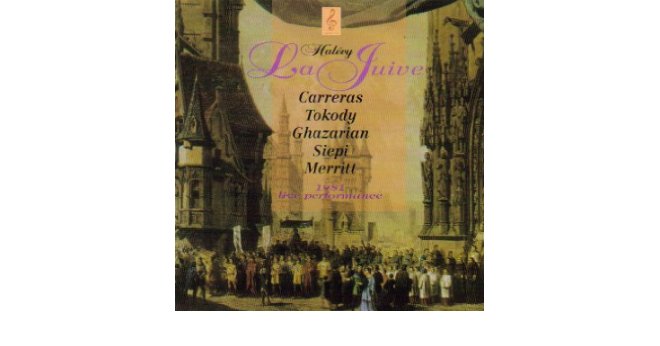
LA JUIVE Vienna 1981

I have never been able to understand why José Carreras added the role of Éléazar to his repertoire. It did fit in with his desire to sing heavier, more dramatic roles. Roles that were one size too large for his beautiful, lyrical tenor. Which absolutely does not mean that he could not sing the role! He succeeded quite nicely and the result is more than worth listening to, but he doesn’t sound truly idiomatic.

In the live recording from Vienna 1981 Carreras also sounds too young (he was only thirty-five then!), something that is particularly noticeable in the Seider-evening scene. It is sung beautifully, but due to a lack of weight he tends to shout a bit.

José Carreras sings ‘Rachel, quand du Seigneur’.

Ilona Tokody is a Rachel of a Scotto-like intensity (what a pity she never sang the role onstage!) and Sona Ghazarian sings an excellent Eudoxie.

LA JUIVE Studio recording 1989

La Juive, recorded by Philips in 1989, marked the first studio recording Carreras made after his illness. His voice was now less sweet and smooth than before, but sounded much more alive, which improved his interpretation of the role.

Julia Varady is a beautiful Rachel, perhaps one of the best ever and Eudoxie is in excellent hands with June Anderson.

Dalmacio Gonzales is a more than decent Léopold, in any case much better than Chris Merrit and the French-American-Portuguese conductor Antonio de Almeida shows he has a real affinity with the opera. (Philips 475 7629)

LA BOHEME Metropolitan Opera New York 1982


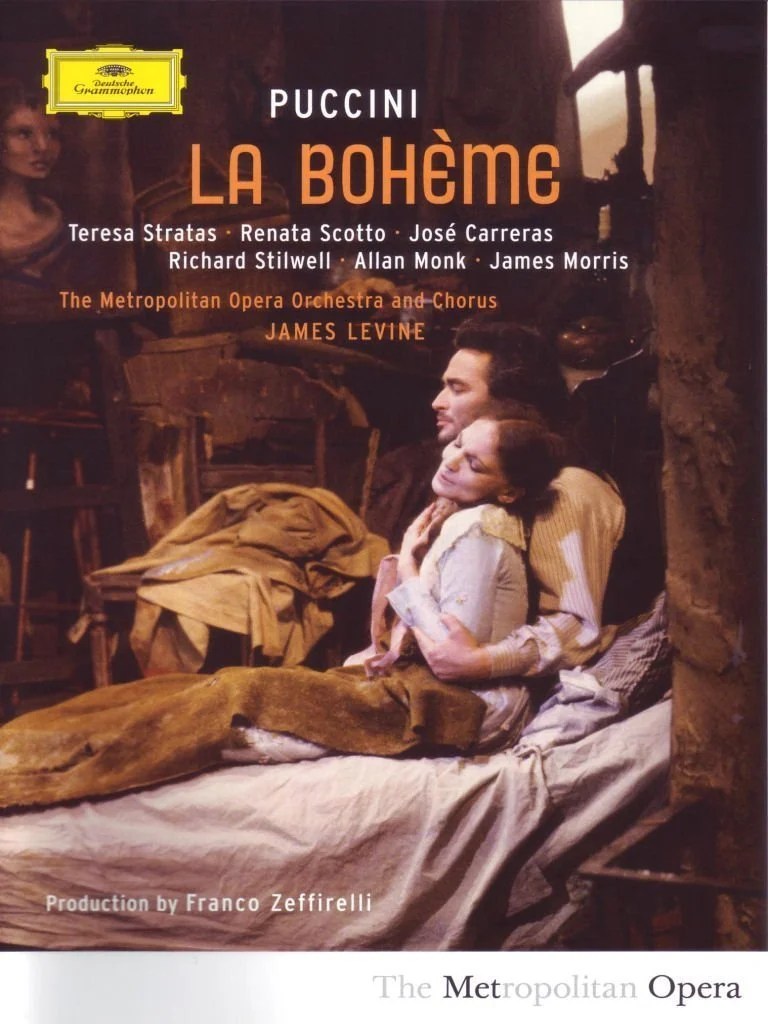
Musetta was not really a role with which we associate Scotto. Neither did she herself, but she accepted the challenge with both hands. In the Zefirelli Met production of 1982 alongside the very moving José Carreras and Teresa Stratas La_Juive

SimonIlona_she sang a Musetta to die for. (DG 073 4539 9).


TURANDOT 1983

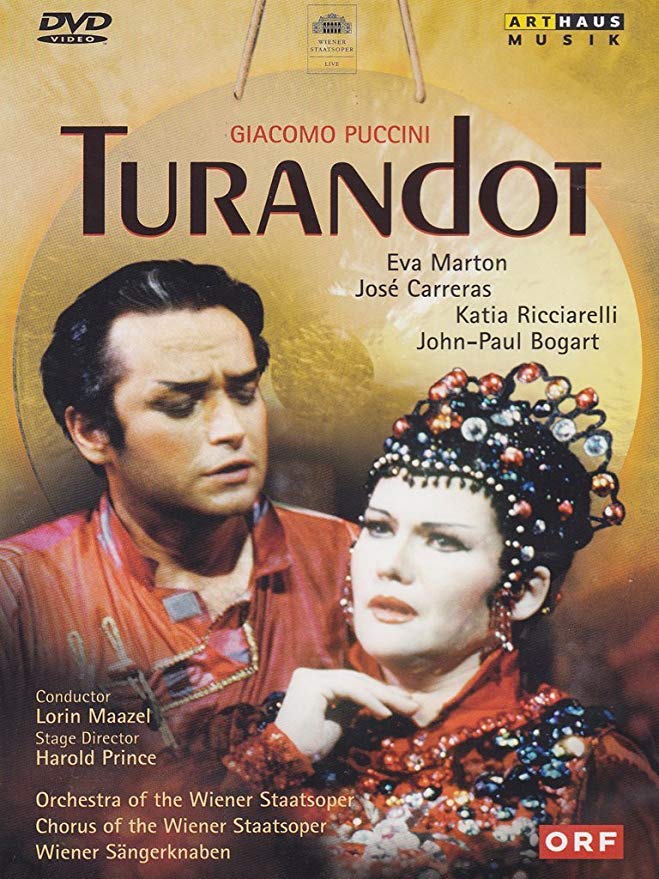
Harold Prince, with no less than 21 Tony Awards to his name, one of the biggest (if not the biggest) musical producers/directors, tackled ‘Turandot’ (Arthaus Musik 107319) in 1983, with very impressive results. He created a world of illusion ruled by fear, where the inhabitants, dressed in dazzling costumes, hide themselves (and their true feelings) behind masks. Beautiful and terrifying at the same time.

Eva Marton sings a phenomenal Turandot and Katia Ricciarelli is a fragile, pitiful Liù. Her “Signore ascolta” spun out with the most beautiful pianissimi is heartbreaking.

And José Carreras… He makes me cry too, because at the age of 37 he had one of the most beautiful (lyrical) voices in the world. But Calaf was not his role. He sings it beautifully, but one hears him crossing his own boundaries. And yet …. His hopeless macho behaviour, which goes against all odds, not only fits the concept of the director, it also illustrates Calaf’s character perfectly. At least for me.

The orchestra from Vienna is conducted by Lorin Maazel. Not my favourite conductor, but in this case, I have no reason to complain.

L’Africaine. How loving Vasco da Gama proved fatal for an African queen

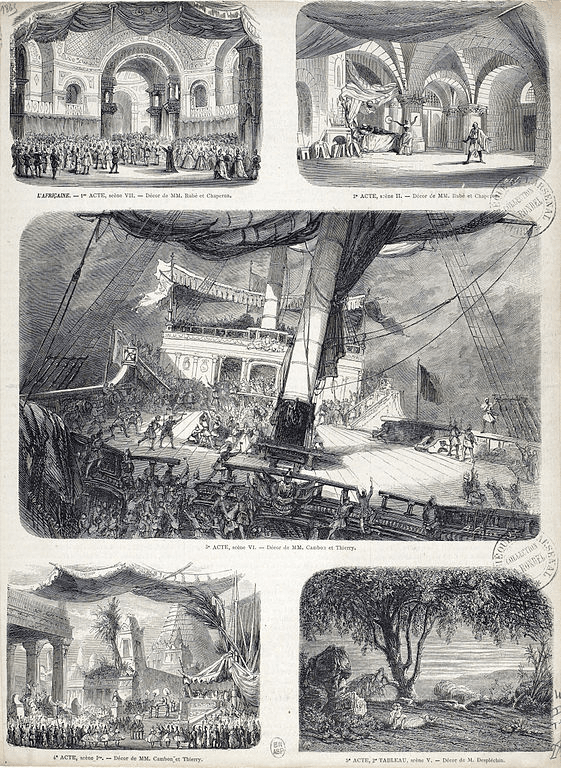
Settings for the 1865 premiere of a L’Africaine (press illustrations). The stage designs for Act I (Council Scene) and Act II (Dungeon Scene) were created by Auguste-Alfred Rubé and Philippe Chaperon; for Act III (Sea Scene and Shipwreck) and Act IV (Hindu Temple), by Charles-Antoine Cambon and Joseph-François-Désiré Thierry; for Scene 1 of Act V (Queen’s Garden, not shown), by Jean Baptiste Lavastre; and for Scene 2 of Act V (The Machineel Tree), by Edouard-Désiré-Joseph

SHIRLEY VERRETT

Shrirley Verrett (Selika)and Plácido Domingo (Vasco da Gama) in San Francisco


Vasco da Gama (yes, the Vasco da Gama) loves Inès, but when his own life is in danger, he takes refuge with the African queen, Sélika. Poor Sélika! She loves him wholeheartedly, but as soon as Inès reappears on the scene, she has to step asie. She does so literally; by smelling a poisonous flower.

Of course, much more happens in the opera, especially in the music. I wonder why it is that the opera is performed so little.
Is it due to the weak male lead, who mainly pursues fame? In any case, Meyerbeer gave him a magnificent aria, probably one of the most beautiful ever: ‘Pays merveilleux/Oh paradis’:


Domingo has always had faith in the opera and he has sung da Gama several times. It is also thanks to him that the opera experienced a minor revival in the 1970s.

There is a pirate recording on CD (Legato Classics LCD-116-3), starring Shirley Verrett and a truly brilliant Norman Mittlemann as Nélusco. It is from 1972, but there is no mention of where it was recorded. But since Verrett sang a series of performances that year, in San Francisco, it is actually quite clear.


The sound quality is poor, but not to worry: the opera was later also recorded for television, so that we can now enjoy it to the full on DVD (Arthaus Music 100217).


The truly wonderful production was created by Lotfi Mansouri (direction) and Wolfram and Amrei Skalicki (stage and costumes). Inès is sung by a (literally) beautiful, light coloratura soprano Ruth Ann Swenson and Justino Díaz does his best to convince us that he is scary. You should really watch it!


MONTSERRAT CABBALÉ


In 1977, the opera was recorded at the Teatre Liceu in Barcelona, again with Plácido Domingo as da Gama. But should I really recommend this recording? Probably not. Montserrat Caballé is a fine but unconvincing Sélika, Juan Pons has seen better days and Christine Weidinger is a merely decent Inez (Legato Classics LCD 208-2).


MARTINA ARROYO


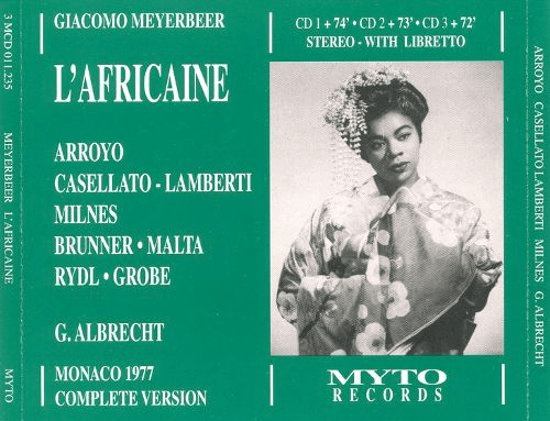
In November 1977, L’Africaine was recorded live in Monaco with a fine Martina Arroyo in the leading role. The textbook says it is probably the most complete performance of the score ever recorded. Unfortunately, Giorgio Casellato-Lamberti is a weak Vasco da Gama, but Sherrill Milnes’ superb Nélusco makes up for a lot (Myto 3MCD 011.235).