
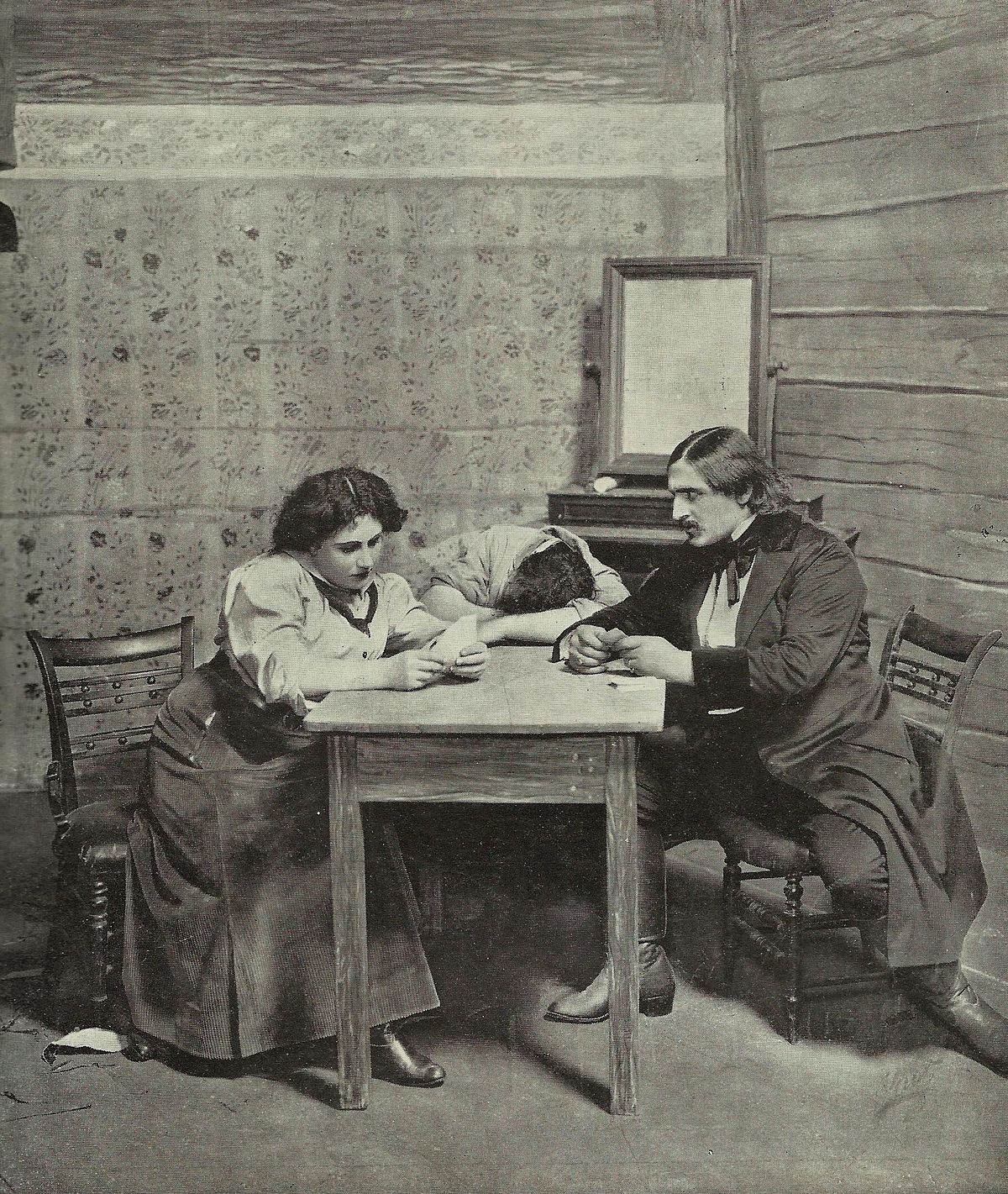
Richard Strauss met de allereerste Arabella (Viorica Ursuleac) en Mandryka (Alfred Jerger)
“Teschek, bedien dich”!
You really cannot escape the fact that Mandryka’s words, endlessly repeated by Graf Waldner, settle in your ears like the proverbial earworm. ‘Teschek, bedien dich‘ sings Mandryka as he pulls out his thick wallet and holds out banknotes, like chocolates, in front of his father-in-law-to-be.
For those not so familiar with “Viennese”, Teschek is not only a person who is always on the losing end, but also a card game and perhaps a “delicate” reference to the count’s addiction, which has left the family financially ruined, the youngest daughter having to go through life dressed as a boy and the eldest, Arabella, to be sold to the highest bidder. Well, in a manner of speaking.
How well do you know the opera? Honestly! I’m the first to admit it: until recently, I knew this opera only so-so. Once I saw it (and forgot about it), once I heard something wonderful on the radio (Lucia Popp and Bernd Weikl! I still haven’t managed to get hold of that recording), a snippet here and there …. Nothing more. Nice little snippet, though.
But now, after a few weeks on “an Arabella diet” I have become a real worshipper. Why is that? Mainly because of the libretto, I think. The opera is seen as a light comedy, a kind of fairy tale where everything is going to be all right at the end. But is that really the case? I think not. Actually, it’s not a fun opera at all. Because let’s face it: everybody is cheating on everybody here and the chances of anyone ending happily ever after are just as high as in Snow White.
To start with Zdenka, the almost “discarded” daughter: do you actually think Matteo has suddenly come to love her? Well, I don’t! He has to marry her because she lured him into her bed. And that, even though he thought she was a man. Anyway, Mandryka is paying, and since everything in this opera is about money…
Anyway, relax and sit back, because the opera is more than worth it. And there are so many good performances out there!
Otto Schenk 1

If you have never seen the opera, you would do well to start with Otto Schenk’s 1977 film (DG0743255). Larger than life, with lifelike sets. Of course, no ordinary live performance can compete with that.
Gundula Janowitz is a delightful Arabella. Perhaps not the best actress in the world, but her high notes are so very beautiful. Sona Ghazarian is a good Zdenka, but what really makes the recording, alongside the very erotic playing of the Wiener Philharmoniker (Solti!), more than worthwhile, is Bernd Weikl’s Mandryka. Any woman would certainly want to be kissed awake by him.
The minor roles are also fantastically cast: René Kollo is a Matteo out of thousands and I know of no better Fiakermilli than the young Gruberova. Add to this the very young (30!) Kurt Rydl as Lamoral and Margarita Lilova (Adelaide). It is definitely very good.
Below Gundula Janowitz and Bernd Weikl in the last act:
Otto Schenk 2

We stay with good old Otto Schenk for the moment: his production was recorded at the Met in 1995 (DG 0730059). Kiri te Kanawa is an exemplary Arabella; there are few singers who can match her in this role. Strauss has always been a bit like her personal composer and optically, of course, she is a dream Arabella.
Her sister Zdenka (Marie McLaughlin) is also wonderful, something that cannot be said of Wolfgang Brendel (Mandryka). He doesn’t succeed in making my female heart beat any faster. Thielemann conducts well, but he lacks the sensuality of Solti.
Below is a scene with Kiri te Kanawa and Marie McLaughlin:
Renée Fleming

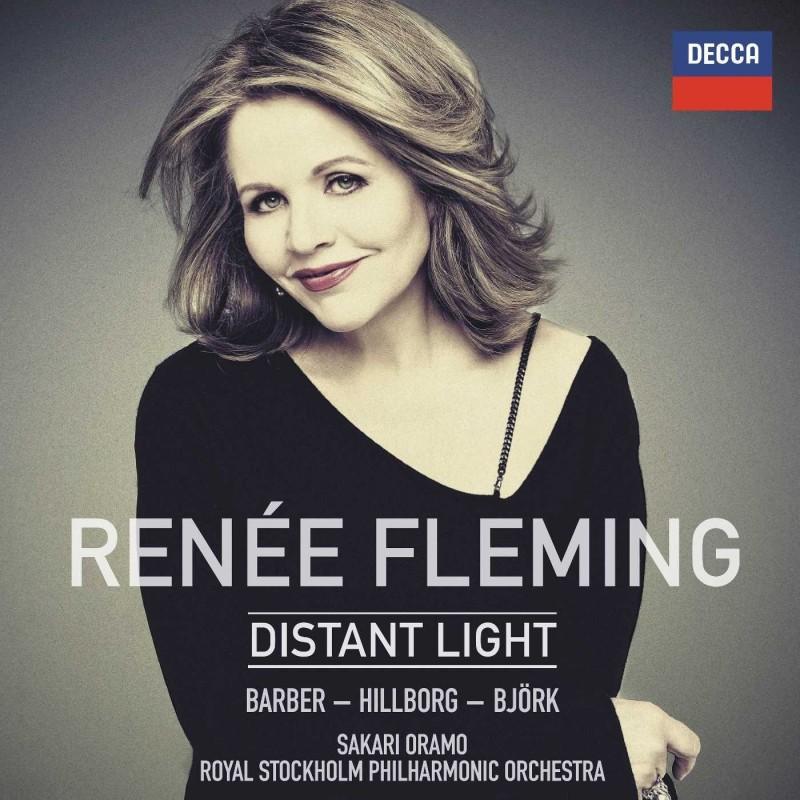
And then there is Renée Fleming (Decca 074363). Optically just about the most beautiful Arabella ever. Not only beautiful but also very full of herself; you can almost see her asking, “mirror, mirror on the wall….”
Impossible to ask Strauss now, but I suspect she could have modelled Arabella for him. Her vervet soft tones too; as if you are resting below the softest down comforter.
Julia Kleiter is a good Zdenka, but Morten Frank Larsen (Mandryka) is just a Dane. He looks Danish and sings Danish. A pity, because Götz Friedrich’s direction (Zürich 2007) is really exciting.
Below a scene with Renée Fleming and Julia Kleiter:
Sven-Eric Bechtolf
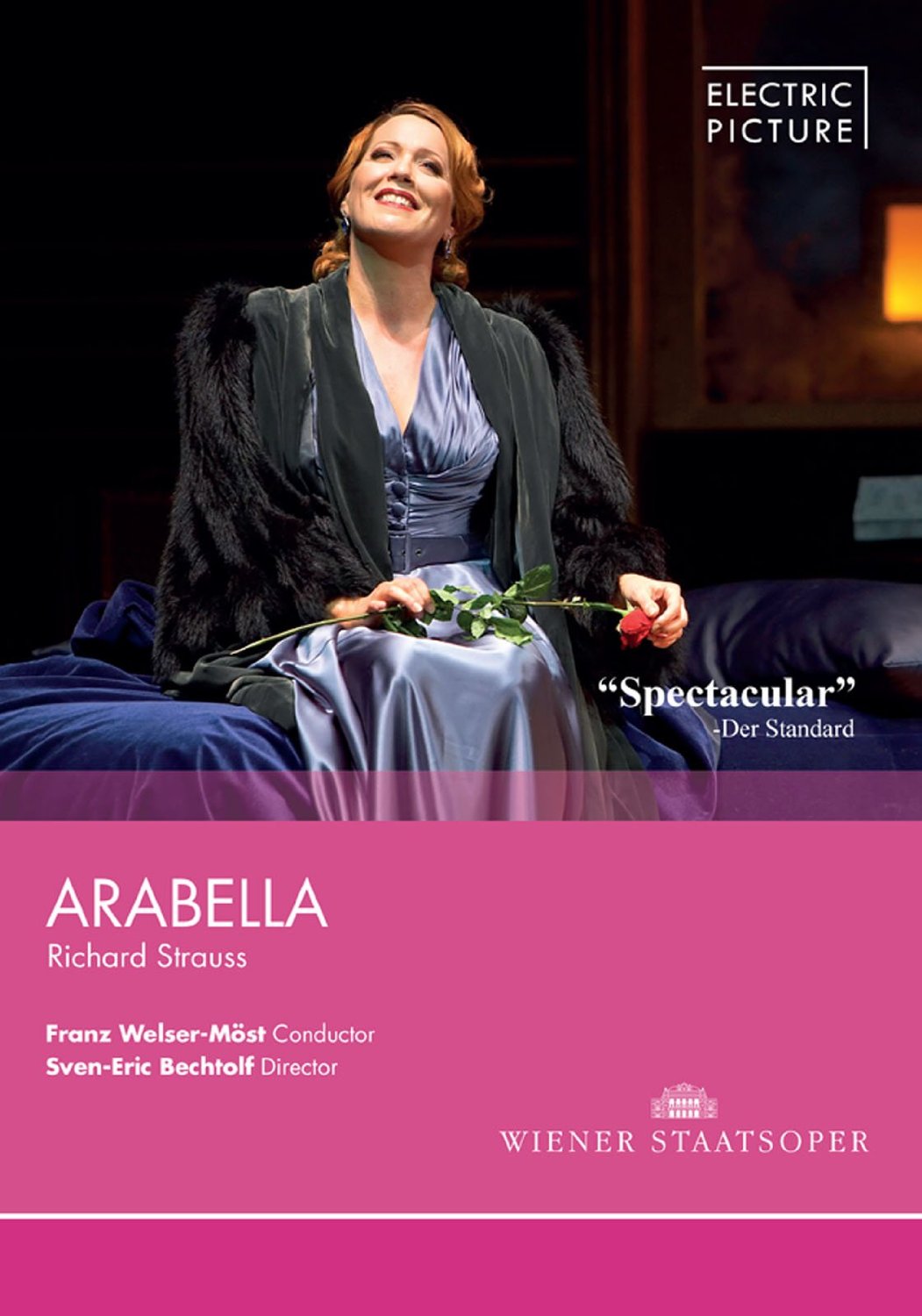
The latest production on my list comes from Vienna (BD EPCO 48D). Sven-Eric Bechtholf has surprised me. He adheres well to the libretto and everything just looks very beautiful.
Emily Magee lacks the sensuality of a Fleming or te Kanawa, but she does hold her own very well. Genia Kühmeier is a sensational Zdenka and Tomasz Konieczny an (indeed) “East European guest worker” with a lot of money. In terms of voice, he can easily match Weikl.
Trailer of the production:
Lisa Della Casa

And now back in time. For me, Lisa Della Casa is the Strauss singer pur sang. Just listen to her interpretation of the Vier letzte Lieder! Starting out as a very good Zdenka, she grew into a great Arabella.
In 1958, she recorded the role under Solti (Decca 4781400). I can never get enough of that. Hilde Güden is her sister and the duet of the two girls is of an unparalleled beauty. Two voices coming together and embracing each other almost as if they were not sisters, but lovers. You really rarely achieve such perfection.
And then the very erotic way Solti handles the score… It is all so sensual and fairy-like. Not only in terms of the singing, but also in terms of the orchestral sound. And George London sings Mandryka. Need I say more?
Montserrat Caballé

Montserrat Caballé as Arabella… Strange? Well no – she was one of the best Salome’s ever, did you know? She is also a fantastically sensual Arabella (BLV 107225). Don’t ignore the recording, especially since Zdenka is sung here by the very moving Oliviera Miljakovic.
Below Caballé and Miljakovic in the duet ‘Er ist der richtige’:
English Arabella

‘Arabella’ in English? (Andromeda andrcd 5013). Why not? Unimaginable how different the opera sounds in this language. It’s like listening to, say, Vanessa. Something to think about.
Eleanor Steber lacks the velvet in the voice, but her involvement makes you understand a little more of the woman. Hilde Güden also sounds different here. It is as if she gains volume and eloquence. I love it. And then George London with his ‘I am the Mandryka, no one else’. Why do I find it even more impressive in English than in German? Rudolf Kempe is conducting.
Kiri te Kanawa

And then, finally, we have Kiri te Kanawa on CD (Decca 4783460). I find Zdenka (Gabriele Fontana) too heavy and in the duet she drowns out her sister – it not very beautiful. Tate conducts unevenly. But what a Matteo! Peter Seiffert is more than delightful to listen to. And Franz Grundhebber (Mandryka) also makes the recording very much worth listening to.





 Basia con fuoco