Plácido Domingo heeft in zijn glorieuze carrière de rol van Otello honderden keren gezongen. Toen hij er in 1995 mee in de Met optrad stond de teller al op 200. Van een van de voorstellingen is een opname op dvd uitgebracht. Het betreft een productie van Elijah Moshinsky die het libretto zeer getrouw weet te volgen.
De protagonist die de handeling initieert en gaande houdt is Iago. Alle anderen zijn slechts marionetten in zijn spel. Om die reden was er wel wat voor te zeggen geweest de opera ‘Iago’ als titel te geven, wat librettist Boito ook daadwerkelijk heeft overwogen. De bekendheid van het ‘merk’ Otello en de gedachte dat het publiek zich liever identificeert met een tragisch slachtoffer dan met een doortrapte schurk, zal de doorslag hebben gegeven bij de titel van Shakespeares drama te blijven.
Die Iago vind ik een moeilijk te duiden personage ook al doet hij veel moeite zichzelf uit te leggen in zijn credo, het muzikale hoogtepunt van zijn optreden. Het wil er bij mij niet in, die tekst, veel te glad. In plaats van de slechtheid in persoon doet Iago meer denken aan iemand die dwangmatig alles de grond inboort wat niet tot zijn grimmige belevingswereld behoort. Als een doorgeschoten criticus die parasiteert op de creatieve energie van anderen. En zoals iemand met hoogtevrees de zuigende werking van de diepte voelt, zal Iago de sterke drang ervaren alles wat mooi en goed is in zijn omgeving te vernietigen. Hij is een ordinaire psychopaat die net zo goed voor een carrière als seriemoordenaar had kunnen kiezen. Dat hij is gepasseerd voor promotie heeft zijn gedrag getriggerd, de lont aangestoken. Maar het kruitvat was er al die tijd al.
Het toneelbeeld is zeer klassiek, een echt kostuumdrama en Otello is zwart geschminkt, net als Amonasro in Moshinsky’s productie voor de Royal Opera het jaar ervoor.
Otello weet zich door zijn afkomst niet geaccepteerd in zijn nieuwe functie van gouverneur. Als veldheer was hij meer op zijn plaats mede doordat daar de krijgsdiscipline in zijn voordeel werkte. Als politicus staat hij er alleen voor en dat maakt hem onzeker. Vandaar ook dat hij zo’n gemakkelijke prooi is voor Iago.
Behalve dat aspect speelt natuurlijk ook onverholen racisme een rol. Wat moet die zwarte man met zo’n mooie blanke vrouw. Is het nog niet erg genoeg dat hij tot gouverneur is benoemd? Desdemona in bed met Otello is voor zijn omgeving like adding insult to injury. Zo bekeken is die zwarte schmink ook wel functioneel. De toeschouwer wordt gedwongen de man te zien door de ogen van zijn ondergeschikten.
James Morris is een uitstekende Iago maar wordt een beetje gehinderd door het beeld dat ik van hem heb als Wotan. Kijk je daar doorheen dan zie je een zeer vilein personage, precies zoals het moet zijn.
Renée Fleming is een prachtige Desdemona, mooi en heel naïef maar haar onvermogen om non verbale signalen op te pikken wordt haar fataal. Ze blijft maar doorzeuren over Cassio terwijl toch duidelijk is dat Otello daar niet van is gediend. Dat ze zijn jaloezie aanwakkert ontgaat haar volledig, zozeer overtuigd van haar eigen onschuld dat het kennelijk niet in haar opkomt zich af te vragen of zij de oorzaak is dat haar echtgenoot met rook uit zijn oren rondloopt. Fleming acteert prima en zingt wonderschoon.
Domingo is de man waarom alles draait. Zijn aftakeling begint al vrijwel direct en hij snelt met open ogen zijn einde tegemoet. De scène waarin hij Desdemona wurgt wordt door beiden zeer realistisch geacteerd. Daarna is Domingo’s Otello nog slechts een wrak.
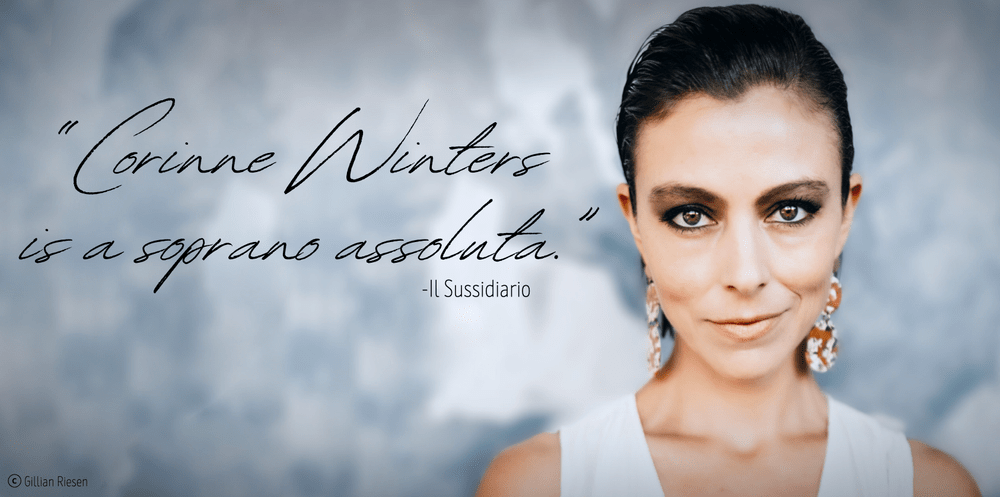
A recording of Halka from the Theater an der Wien was released on DVD in January 2022. In the title role American soprano Corinne Winters, who had been steadily gaining fame in Europe in previous years. The recording dated from 2019 and Winters’ career had been at a low ebb since then as a result of the Covid epidemic. But 2022 was going to be a great year for her. For those not yet really familiar with Corinne Winters, now first a retrospective.
Born in 1983, she first performed in a professional production in ….. 2011. That was a late career start and this fill-in for a pregnant Mélisande in St.Louis turned out to be the starting point for a real catch-up. Winters was advised to audition for ENO and in 2013 she sang Violetta there in Konwitschny’s production of La traviata. There seem to have been quite a few casting directors and intendants in the premiere audience, including reportedly Sophie de Lint. Be that as it may, her performance attracted strong attention. Bachtrack wrote about it: ‘Corinne Winters was an outstanding Violetta, who proved capable of controlling the various aspects of vocal technique demanded by Verdi’s operatic tour de force.’ And on the Planet Hugill blog we read: ‘Winters is a lyric soprano, but one with the resources to not only sing La traviata without an interval but to take her through Act 3 with flying colours. She did everything asked of her and more, and was simply mesmerising. She has quite a bright voice, without excessive vibrato so that it was a beautifully clean expressive performance. I do hope that we hear her again soon in the UK.’
Winters with Michael Spyers in Benvenuto Cellinii in the ENO
The wait didn’t last too long: in 2014 Winters sang in that madcap production Terry Gilliam made of Berlioz’s Benvenuto Cellini. Bachtrack: ‘Corinne Winters, returning to the Coliseum after her spectacular debut as Violetta last season, wowed us once again as Teresa. Her Act I aria “Hearts full of love” was wonderfully sung, but the cabaletta which followed treated us to a cascade of coloratura, glittering with diamonds. Winters displayed bags of personality, including a knack for comedy.’
Interest in Winters was piqued among European casting directors and engagements at Opera Vlaanderen followed as Donna Anna and Desdemona, and then also the role she had already performed in America: Mélisande. A recording of that performance in Zurich has been released on DVD. Soon after, she made her debut at the Royal Opera House as a brilliant Fiordiligi in Cosi fan tutte, also released on DVD. From then on, she has definitely managed to add Europe and the very best opera houses to her field of activity.
Of course, there were also performances in the United States, including, in 2017, her role debut in Seattle as Katia in Janáček’s Katia Kabanova, which would become her signature role. A review said: ‘Maryland soprano Corinne Winters was vocally secure and dramatically intense, in the challenging role of Katya. Winters conveyed the soul-searing turmoil of a woman with deeply-held religious belief that extra-marital sexual thoughtsare mortal sins, yet who accedes to a liaison with Boris while her husband is away.’ ‘
My first meeting with Corinne Winters dates from 2019 when I saw her as Rachel in Halevy’s La Juive. It was a production by Konwitschny which I saw in Gent. I wrote about it: ‘In the big scene with her rival Eudoxie, Rachel sings from the auditorium. This creates a literal rift between the two. Soprano Corinne Winters used the parterre row 6 and was immediately in front of me. She had a very big voice, never forced herself and was always in control, with her wonderful timbre and no trace of any vibrato. In the revealing scene her acting was also very strong, she was truly convincing the audience of her disbelieve and I got the impression that she was on the verge of berating Léopold in a very ranting Italian.’
La Juive:
Shortly afterwards came Halka and what immediately stands out in that production is her great range. She initially ‘was’ a mezzo and decided to make the transition to the soprano profession. But this has not come at the expense of the low register. Most of the time, as Halka, she is just a real mezzo who can also handle the heights effortlessly. And, what I find so important: she can sing very softly in all registers
I have never heard and seen her as Butterfly but I can hardly imagine her Cio-Cio-San cutting through the soul even more than Halka does. It is the most moving performance I know of her to date.
Meanwhile, we are back in that stellar year 2022 when I got to experience Corinne Winters as Giorgetta and Suor Angelica. This was a production of Il trittico at La Monnaie Brussels. Due to the Covid epidemic the premiere was sung by a colleague but fortunately I was in the audience for the last performance and she totally lived up to my expectations.
Those Puccini heroines were all role debuts and right after followed another: Jenufa in the opera of the same name. This was a production by Tatjana Gürbaca in Geneva, where Winters would return later in the year for Gürbaca’s Katia Kabanova. That it would become her signature role has been proven by now, especially after her debut as Katia at the Salzburg Festival where she was so very successful. We will surely see her there more often in the future, be it not in 202
Kat’a Kabanóva:
Jenufa:
:
The year ended with Les dialogues des Carmélites in Rome. She sang Blanche de la Force there in a production by Emma Dante, and with great success. Jenufa is scheduled for januari 2023 in Valencia but since she was already there she had to jump in last minute as Mimi in La Bohème at the end of December ’22. This lady is a real jack of all trades and although Katia has become her calling card, I hope that in the future she will give us many more performances of all the other roles in her repertoire: Yolanthe, Tatjana, Fiordiligi, Desdemona and so on.
Les dialogues des Carmélites;
When asked, she was able to tell on her fanpage that a DVD of Katia in Salzburg will probably be released in due course: ‘stay tuned’. That is something to look forward to and in the meantime, of course, there are those recordings with her Mélisande, Fiordiligi and Halka. Corinne Winters has made it all the way and that is worth some heartfelt congratulations.
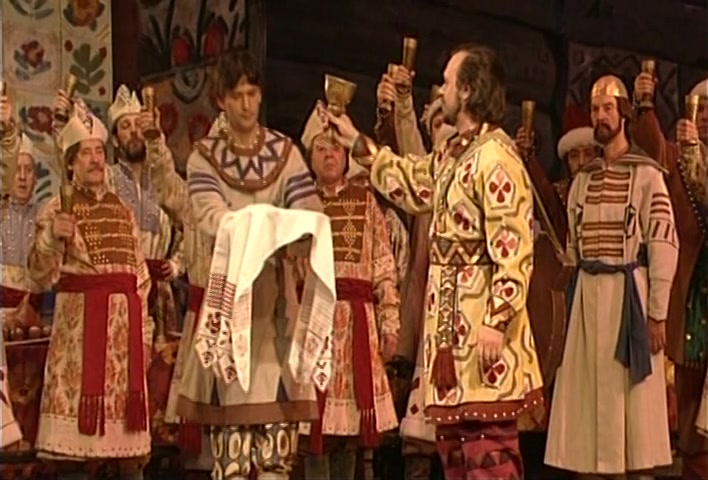
Wilt u een Russisch sprookje zien in al haar pracht en praal, met alles daarop en daaraan, dan kunt zich het beste tot Sadko wenden, in 1996 in Mariinski live voor dvd opgenomen (Philips 0704399).
Ik krijg er niet genoeg van, al heb ik de DVD al tig keren bekeken. Het is een lust voor het oog, maar ook het oor komt niets te kort. Vladimir Galutsin, Gegam Grigorian, Sergei Aleksashkin, Larissa Diadkova, Marianna Tarasova, Gennadi Bezzubenkov (als Bard te bewonderen in de Amsterdamse ‘Kitesj’), mooier en beter kan je het niet verzinnen.
Het verhaal, over een koopmaan die, ondanks dat hij getrouwd is verliefd wordt op de dochter van de zee-tsaar, is inderdaad een echt sprookje. De koopman wordt rijk, keert naar zijn echtgenote terug en de tsaar’s dochter verandert in een rivier, tot groot genoegen van de bewoners van Novgorod. Eind goed al goed..
Sadko is, denk ik, de bekendste opera van Rimski-Korsakov, niet in de laatste plaats vanwege de waanzinnig mooie tenoraria van de ‘Indian Soul’.
Een van de allermooiste versies van de aria werd volgens mij ooit gezongen door de legendarische tenor Sergei Lemeshov:
Imagine: you are young, beautiful and secretly in love with a revolutionary, who unfortunately is on his deathbed. Your relationship is “not done” and marriage is out of the question. You live in a small town, where there is no future for you.
One day, a prince presents himself. It is true: he is old and worn out. His beard and moustache are false, he wears a wig and he is a bit childish. But he is rich and actually quite nice. With his money you will be able to afford sending your lover to the Spanish sun, where he will definitely get better. And when the prince dies, there is nothing stopping you from marrying whoever you want. For this you are quite willing to sacrifice yourself, aren’t you?
Marja Alexandrowna is a cunning woman. She knows how to get her daughter Sina to agree to her little plan to hook the prince (albeit reluctantly). The prince is served a substantial meal, liberally sprinkled with wine. Sina sings an aria, the prince gets another liqueur, and yes: he asks for Sina’s hand. Alas, everything goes haywire.
Both Paul, a distant relative of the prince and in love with Sina, and Nastassja, a poor relative of Maria Alexandrowna and herself interested in the prince, throw a spanner in the works.
When the prince awakens from his nap, he readily accepts Paul’s explanation that his proposal only took place in a dream. Meanwhile, Nastasia makes sure that all the ladies of the town are informed of the incident. Mother and daughter are laughed at, Sina confesses the premeditated plan, the prince forgives her and leaves. And meanwhile, Sina’s lover dies.
Verlobung im Traum is an unusual opera. The action is captured within a frame narrative. The story is told to us by an archivist of Mordasov. In the prologue, he introduces the main characters to us; in the epilogue, we hear how things continue with Sina and her mother.
The story, literally after Dostoevsky’s “Uncle’s Dream” was adapted into a libretto by Rudolf Fuchs and Rudolf Thomas.
Trailer from Karlsruhe in 2014:
Verlobung im Traum was awarded the State Prize for Composition in 1933 and in the same year it was also performed: first for the Prague Radio and a few months later at the German Theatre in Prague. Georg Szell conducted and Hilde Konetzny sang Sina. The success was great, but further performances were out of the question. After all, it was already 1933.
The music is nowhere atonal, one detects strong influences of Poulenc, but Mahler is also quite close.
Krása sprinkles liberally with jazz influences and the saxophone takes a prominent place in the orchestra. Perhaps most remarkable is the “revenge duet” at the end of the first act: an ironic replacement for the usual “love duet”?
Anda-Luise Bogsa sings Sina:
And then we come to “Casta Diva”: Sina, in her attempt to seduce the prince, sings the beautiful aria from Bellini’s “Norma”. Instead of the original chorus, we get a quartet: the mother, the prince and, behind-the-scene, the eavesdropping Nastassja and Paul are each commenting on Sina’s singing….
Hans Krása in Teresienstadt
Born in 1899, the composer was a true “bon-vivant”. He spent his days at the coffee house, at the opera or playing chess with his friend Thomas. Little time was left for composing.
Krása spent a short time in Paris (at the invitation of his kindred spirits from “Les Six”), but nostalgia for Prague was stronger and so he returned to his homeland, just in time to be sent to Teresienstadt. On 17 October 1944, he was gassed in Auschwitz, along with Ullmann, Haas and Klein.
“Das schönste sind im Leben diese Träume, die erfüllen, was unerfüllbar ist”
Hans Krása Verlobung im Traum Christianne Berggold, Charlotte Hellekant, Juanita Lascarro, Jane Henschel, Albert Dohmen Ernst Senff Chor Deutsches Symphonie-Orchester Berlin olv Lothar Zagrosek Decca 4555872
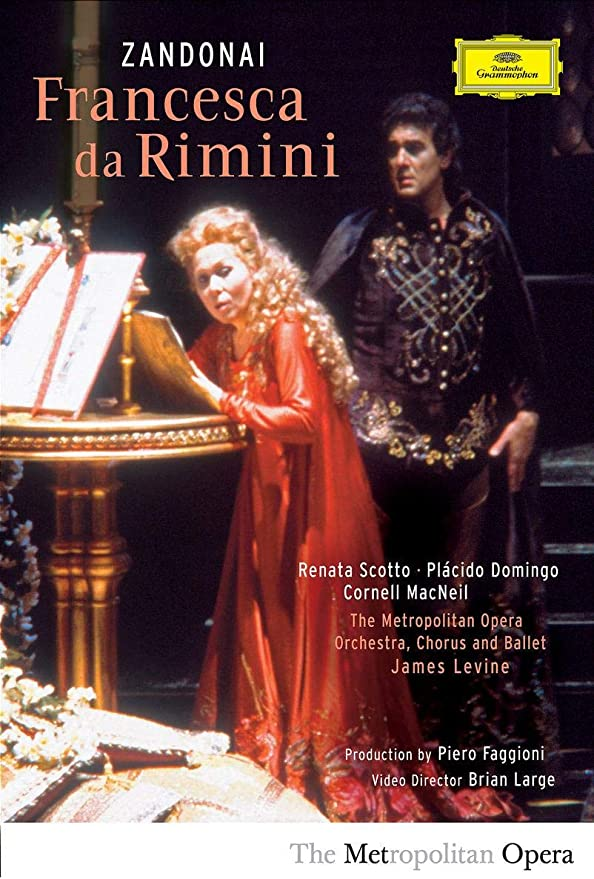
Plácido Domingo heeft een enorme staat van dienst in de Metropolitan Opera en vertolkte daar vele rollen uit het ijzeren repertoire. Maar daar bleef het niet bij, in 1984 stond de befaamde tenor op het toneel als Paolo in Zandonai’s weinig gespeelde opera Francesca da Rimini.
Dit werk ging in 1914 in première en heeft sindsdien een leven in de luwte geleid. In New York was de opera elfmaal te zien tijdens het seizoen 1916-17. Daarna zou het tot 1984 duren vooraleer de Met het opnieuw probeerde, met twee wereldsterren als het gedoemde liefdespaar: Renata Scotto en Placido Domingo. Een opname uit die reeks is op dvd uitgebracht door DG.
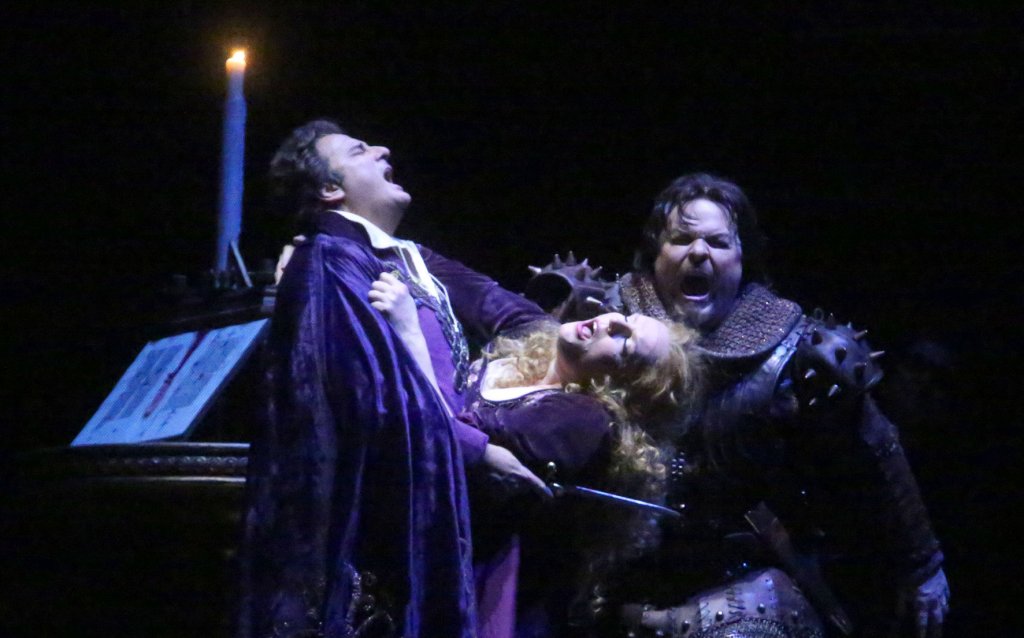
Het verhaal van Francesca da Polenta en Paolo Malatesta is gebaseerd op personages uit de 13e eeuw. Paolo, bijgenaamd Il bello, wordt naar Francesca gestuurd als huwelijksmakelaar voor zijn oudere broer, de weinig aantrekkelijke manke Giovanni. De twee worden op slag verliefd en beginnen een affaire. Ze worden echter ontmaskerd door Malatestino, de jongste broer van het stel en die zorgt ervoor dat Giovanni het koppel in flagrante weet te betrappen. Beiden worden samen aan het zwaard geregen en sterven in hun laatste omhelzing.
Francesca wordt wel de Italiaanse Tristan genoemd. Ook hier de aantrekkelijke jonge man die een bruid moet werven voor een onaantrekkelijke partij. Giovanni in de rol van Marke en Malatestino als Melot. Saillant detail is echter dat in de literatuur geen nadrukkelijk moreel oordeel over die liefdesrelatie wordt geveld. Dit in tegenstelling tot die van Francesca en Paolo, met dank aan Dante en zijn Goddelijke Komedie. Dante plaatst het tweetal in Canto 5 in de Tweede Kring van de hel, op zich ver verwijderd van Canto 34 in de Negende Kring waar Lucifer te vinden is, maar evengoed in de hel. Het is de straf voor diegenen die zich niet hebben kunnen beheersen en zich overgaven aan wellust. In een wervelende wind is het liefdespaar voor eeuwig aan elkaar gekoppeld, ze delen het verblijf in de hel. Daarmee vergeleken is het aardse huwelijk een korte flirt. Een plekje in het Purgatorio zou ons vandaag de dag voor Francesca wat meer geëigend hebben geleken.
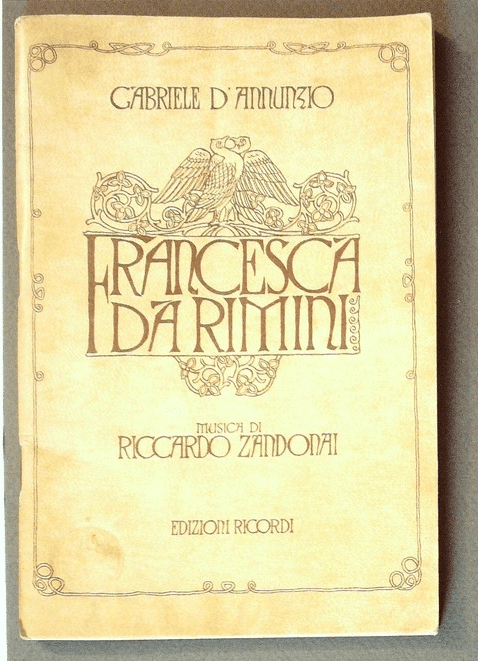
Francesca heeft vele componisten geïnspireerd tot het schrijven van een opera. Als ik goed heb geteld was die van Zandonai nummer 26. Zijn librettist Tito Ricordi baseerde zich op een toneelstuk van Gabriele d’Annunzio waarbij hij zich vooral concentreerde op de liefdesaffaire van de protagonisten. Bij Ricordi komt Paolo er een stuk slechter af dan Francesca. Eerst bedriegt hij haar om zijn oudere broer een dienst te bewijzen en vervolgens dringt hij zich zo aan haar op, zonder acht te slaan op smeekbeden haar met rust te laten, dat ze door de knieën gaat. Francesca valt weinig te verwijten, ze heeft zich tot het uiterste tegen zijn avances geweerd. Paolo verdient eerder een plek in de Achtste Kring, ergens in Canto 18 of 23, in elk geval de straf voor bedrog en verleiding.
Francesca da Rimini’s Act II battle between the Guelphs and the Ghibellines, with Paolo, Gianciotto and Malatestino on the ramparts and Francesca below (Plácido Domingo as Paolo, Cornell MacNeil as Gianciotto, William Lewis as Malatestino and Renata Scotto as Francesca
De productie van Pierro Fagioni is overdadig en verzuipt bijna in de naturalistische details. De kostumering is een parade van laat middeleeuwse clichés. In de tweede akte zien we een groot aantal figuranten die de belegering van het slot van de Malatesta’s aanschouwelijk moeten maken. Hier spreken van een librettogetrouw kostuumdrama is bijna een eufemisme.
De cast is goed verzorgd, over de volle breedte. Van de hofdames en de intriganten tot de drie broers Malatesta en hun gemeenschappelijk liefdesobject Francesca, immers Malatestino is ook verliefd op haar. Nicole Lorange heeft een aardig optreden in de eerste akte als het jongere zusje Samaritana die bij Francesca op de kamer slaapt, het zijn duidelijk nog tieners die twee.
Isola Jones is een prachtige Smaragdi, in beeld en geluid. Een echte eyecatcher die als Francesca’s huisslavin door haar relatief eenvoudige kledij veel overtuigender overkomt dan al die opgetutte vrouwen om haar heen.
Bariton Cornell Macneil als Giovanni is een griezelige potentaat, je begrijpt direct dat alleen bedrog een huwelijk met de jonge mooie Francesca mogelijk heeft kunnen maken. Iets waar overigens beide families volledig aan mee hebben gewerkt. Zijn zang is dienovereenkomstig, overheersend en bedreigend. Hij doodt zijn broer Paolo en krijgt vermoedelijk van Dante een plaatsje in de Zevende Kring.
Het liefdespaar komt zoals gezegd voor rekening van Scotto en Domingo. Scotto gaat voluit in haar poging een geloofwaardige Francesca op het toneel te zetten maar ik kan er niet echt van onder de indruk raken. Domingo weet zich beter raad met de rol van de verliefde jongeman die net als Tristan het daglicht ziet als zijn vijand en het liefst alleen nog maar ’s nachts wil leven. Er zit zeker in de vierde akte erg veel Tristan in het libretto, het is bijna een commentaar op Wagners verhaal. Goed beschouwd is Domingo’s optreden de enige reden om deze opname nog eens te bekijken.
De muzikale leiding is zoals gebruikelijk in handen van James Levine.
Finale:
Voor wie dit op prijs stellen: 10 beste Francesca’s op een rijtje althans volgens Opera News
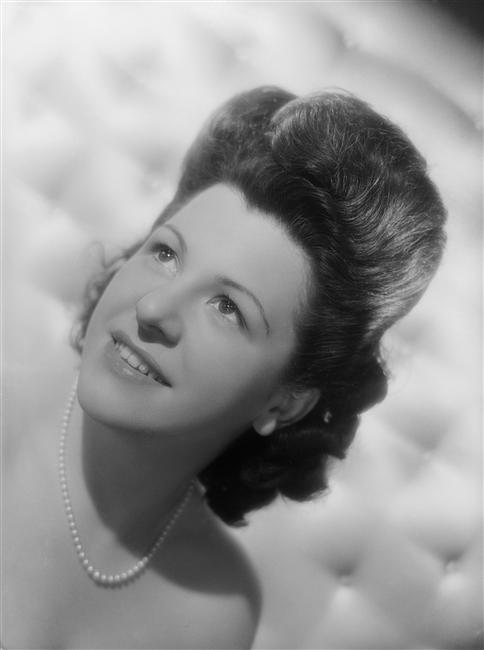
The French coloratura soprano, born on 29 December 1918 in Yzeures=sur-Creuse could actually be considered the eighth world wonder. Her voice was of the soubrette type with a very pleasant girlish timbre and her coloratura technique more than sublime, but there was more: her high notes were extremely high. With her voice she not only reached the F4, but even had the C4 within her reach without any problems, one of the highest notes ever sung by a human voice
.
All her high notes in a row, with the description:
She was star of television and radio in the 1950s the fifties, was a very celebrated radio and TV star in France, but her fame reached far beyond her national borders. She celebrated her greatest triumphs as Lakmé and Leïla (Pearl Fishers), but her Lucia and Olympia were also proverbial.
Mado Robin hits C7 Lucia di Lammermoor:
Gounod’s Mireille is not really a role we would expect from her, but it fits wonderfully well with her childishly naive timbre. I enjoyed these fragments the most, much more than her Lucia and Bellinis.








 Basia con fuoco