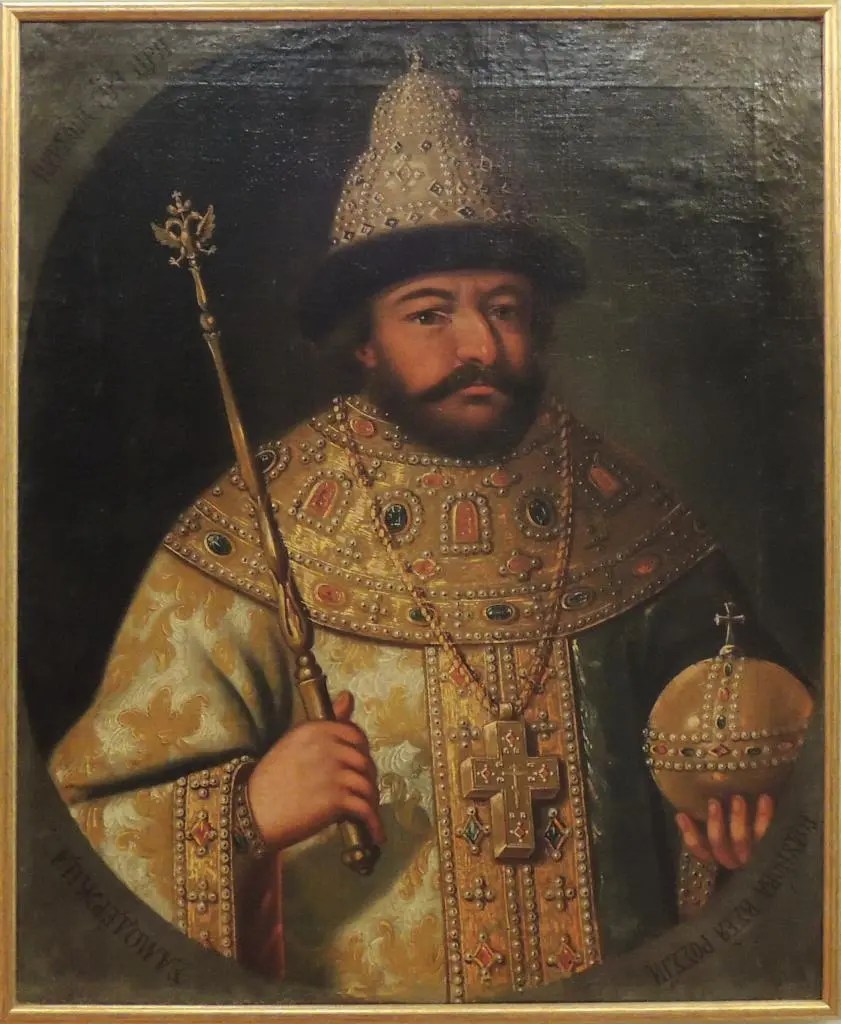
I am not going to bore you with a detailed explanation of the various versions of Boris Godunov – two of them by Mussorgsky himself. Enough has already been written about it and if you want to know more, you can find some on the internet. Besides: really getting sidetracked by this doesn’t work, I’m afraid. Hence I judge these few selectively chosen recordings purely on performance (and direction).
ANDREI TARKOVSKY
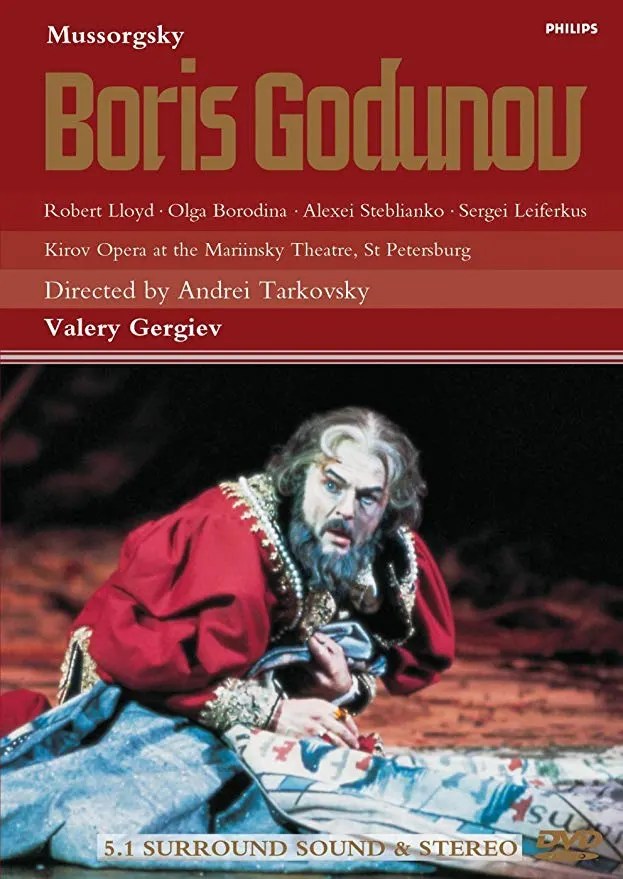
In 1983, Andrei Tarkovsky staged ‘Boris Godunov’ for Covent Garden. It was his first opera direction and also his last. Something very regrettable because his vision of Mussorgsky’s magnum opus is truly breathtaking.
The staging exudes the same style so characteristic of all his films: visionary and poetic. The whole shows itself as a colourful film with lots of Christian symbolism, images in slow motion and an enormous attention to every detail. In 1990, the production was taken on by the Mariinsky theatre and broadcast live on English television, a first at the time.
The lead role was also performed in London by the English bass, Robert Lloyd, and his interpretation is among the most impressive I have ever seen in my life. His voice was still truly great then, both in volume and timbre, and in his acting he was not inferior to the best stage actor. In the process, he managed to hold his own excellently among the otherwise exclusively Russian cast.
About the cast by the way, which apart from Lloyd includes (among others) Olga Borodina, Alexei Steblianko and Sergei Leiferkus. Nothing but praise, by the way. Valery Gergiev has the opera at his fingertips. An absolute must. (Philips 0750899)
WILLY DECKER

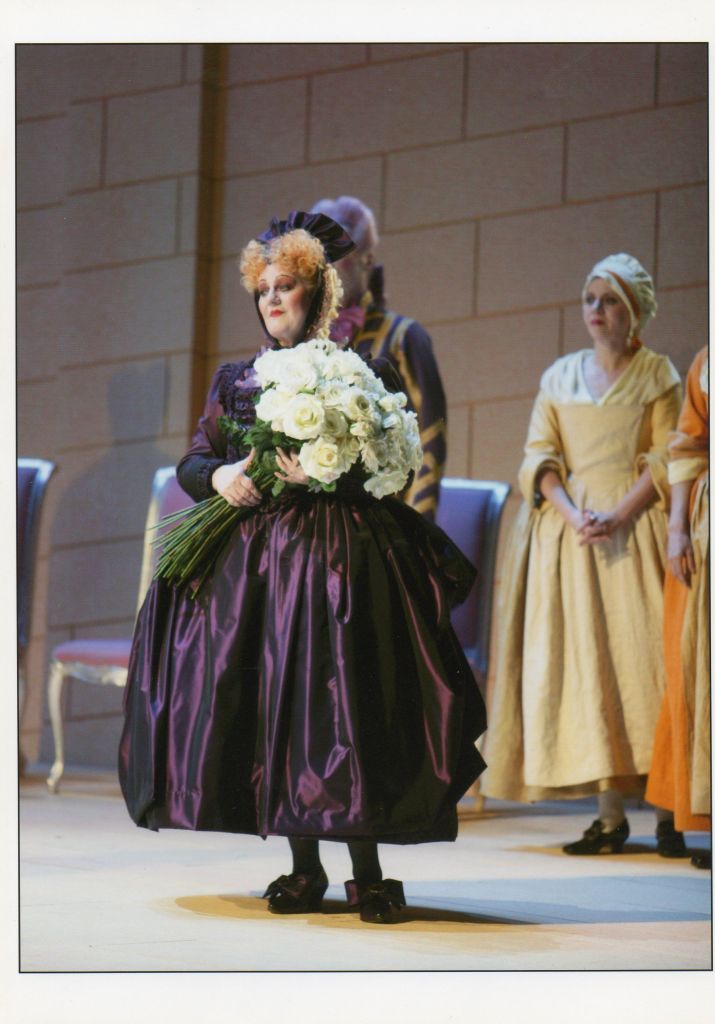
Filmed in Barcelona in 2004, Willy Decker’s production had already been presented in Amsterdam in 2001. The direction is heavily centred around the protagonist: for Decker, the drama is psychological rather than historical. The setting betrays Russia of the early 20th century, just before the revolution, and the scenery is very minimalist.
The chairs and tiny houses, Decker’s trademark are obviously present, a giant seat dominates the mise-en-scéne from the start. It makes for some very nice scenes – the ascent to the throne, for instance.
Eric Halfvarson is a bit of a weak Pimen, but the rest of the cast, with Matti Salminen (Boris), Anatoli Kotscherga (Varlaam) and Philip Langridge (Shuisky) leading the way is truly outstanding.
And then there’s Fyodor sung by the unforgettable Brian Asawa, who left us far too soon.
Alex Grigoriev deserves special mention for his superb performance in the role of Yuriodivy. (Arthaus Musik 107 237)
CALIXTO BIEITO

Sometimes I suspect that opera directors imagine themselves to be some kind of modern-day dictator, trying to force their own opinions down our throats. And if we don’t want to swallow it then we are mistaken for stupid.
That the abuse of power is a product of all times is clear; even toddlers know that these days. The news, whether we want it or not, invades our households and there is no shortage of images – on Youtube or otherwise. So I don’t think we need a director to tell us yet again that Putin or Blair (?) is the new Godunov, with the gory images included, otherwise the opera won’t do any more.
If I want to watch Boris Godunov by Mussorgsky, I don’t expect Putin and I don’t expect Pussy Riot. I expect the boyars, the monks, the ‘Old Believers’ and the church bells of St Petersburg. I can make the link to the present myself.
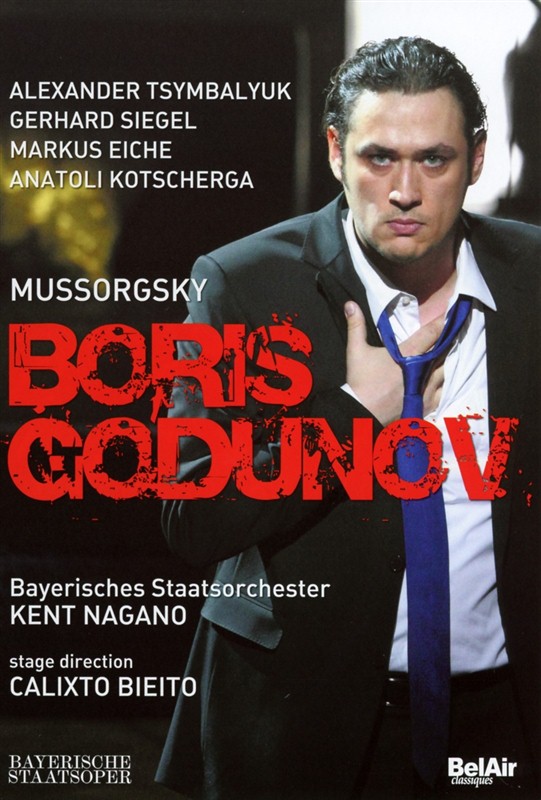
You get the point: Calixto Bieito’s Boris Godunov (Munich 2013) just cannot charm me, and I am putting that mildly here.
I prefer Willy Decker’s production, which was also shown in Amsterdam. It also had better singing.(BelAir BAC102)he role of Yuriodivy. (Arthaus Musik 107 237)
FILM

‘Boris’ was filmed in Russian studios in 1954. It was directed by Vera Stroyeva, a grand lady of Soviet cinema, who captured the opera in the best social-realist (think Eisenstein!) traditions.
It is a mix of all versions with many cuts but it doesn’t matter: you must have seen it at least once. Just for the atmosphere the film exudes, which really brings you frighteningly close to the story.
And it features insanely good singing by the likes of Alexander Pirogov, Georgi Nelepp and Ivan Kozlovsky, the then stars of the Bolshoi. Legendary (VAI 4253).
Boris’ death scene
CDS
Martti Talvela
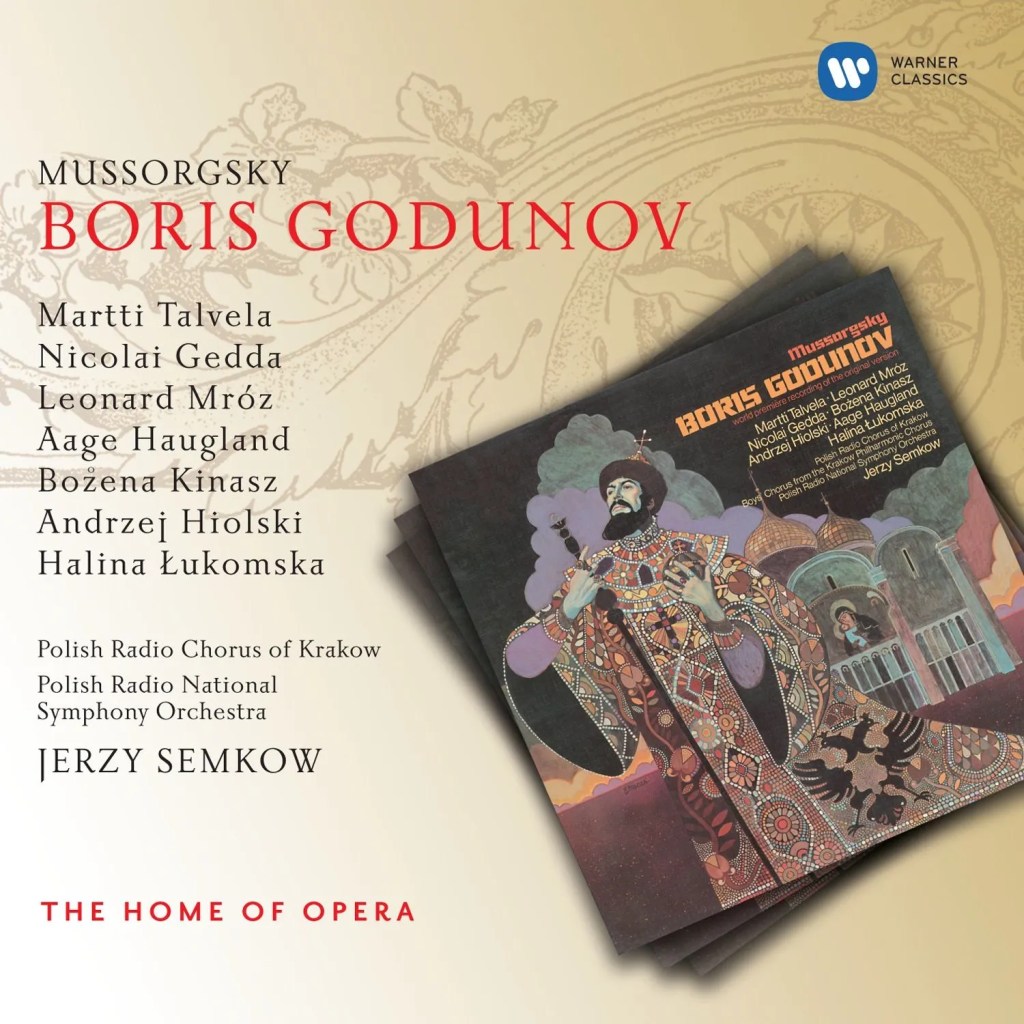
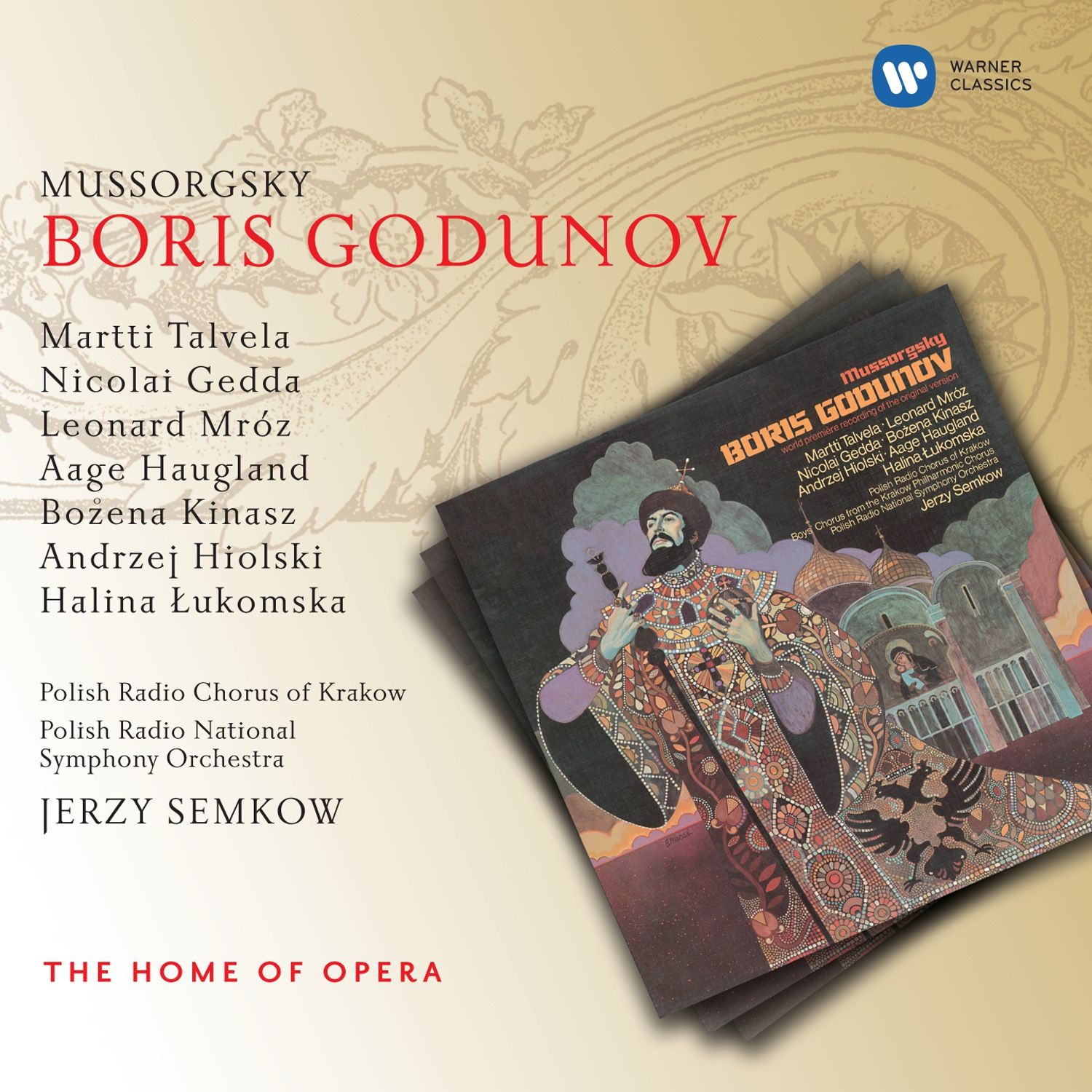
The first ever recording of Mussorgsky’s original score, (the revised version from 1872) was made in 1976. Anyone familiar with Rimsky-Korsakov’s polished arrangement(s) (which at the time was most of us) was in for a shock by the rough-hewn sounds. But once you adjust to the shock, you could not help but give in. Less beautiful, though it may be, it fits the story much better.
The all-Polish cast, except Martti Talvela (Boris), Aage Haugland (Varlaam) en Nicolai Gedda (Grigori/Dimitri) is more than up to the job, but not quite thrilling under the direction of Jerzy Semkow.
Boris Christoff
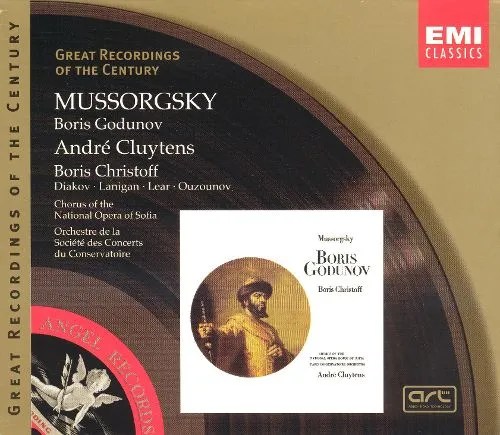
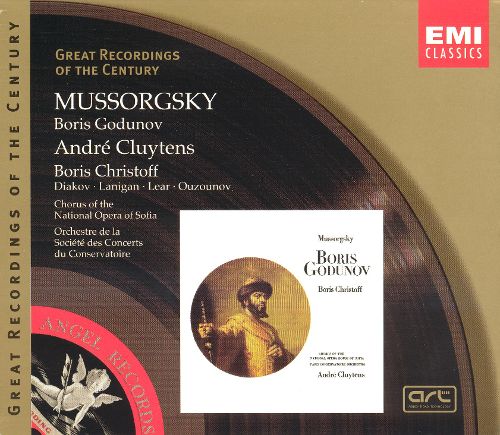
We cannot ignore Boris Christoff, one of the all-time great Borises. He has recorded the role several times, of which the performance under André Cluytens is dearest to me.
Here, apart from Boris, he also sings Pimen and Varlaam, which is a bit confusing at times, but gives him the opportunity to showcase different possibilities of his fantastic bass. The version is of course by Rimsky-Korsakov, and the 1962 recording still sounds fine. (once EMI 5678772)

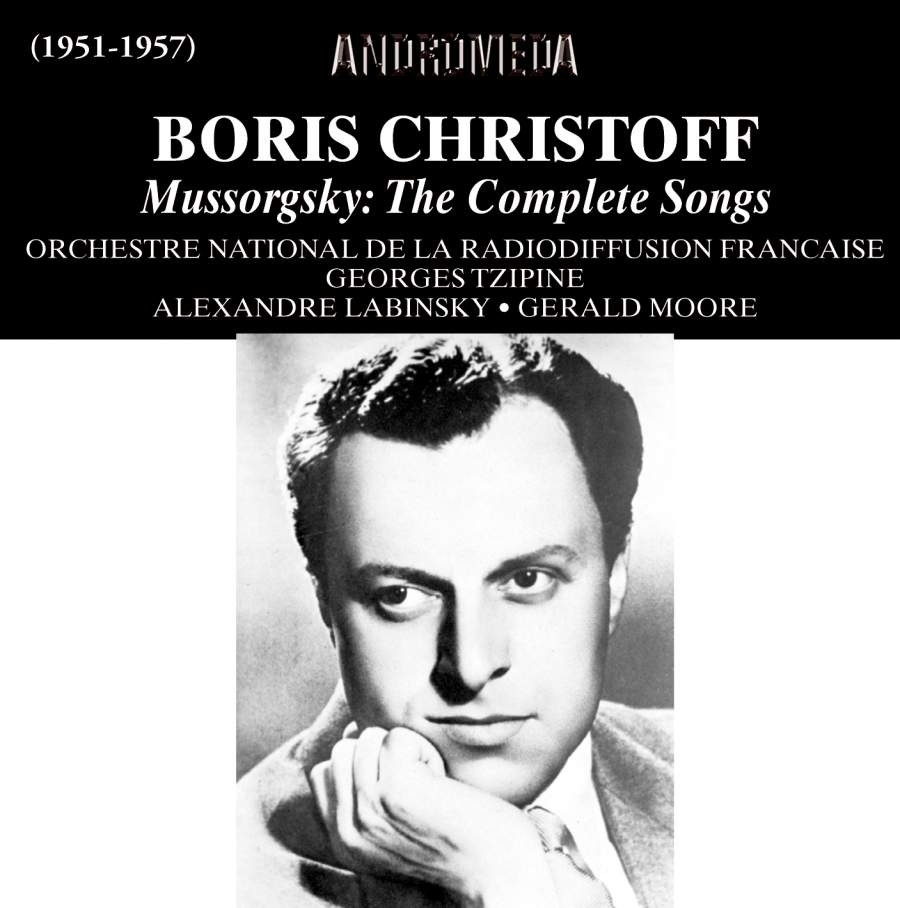
Speaking of Boris Christoff, not long ago the budget label Andromeda reissued a 3-CD box set of all the songs of Mussorgsky he sang. The recordings, with both piano and orchestral accompaniment were made in 1951, 1955, 1957 respectively. Unfortunately no lyrics, nor any liner notes. (ANDRCD 5098)
Bonus: George London as Boris:








 Basia con fuoco